Tag: no-latest

  • Early voting begins in US midterm elections that could flip control of Congress

    Early voting begins in US midterm elections that could flip control of Congress

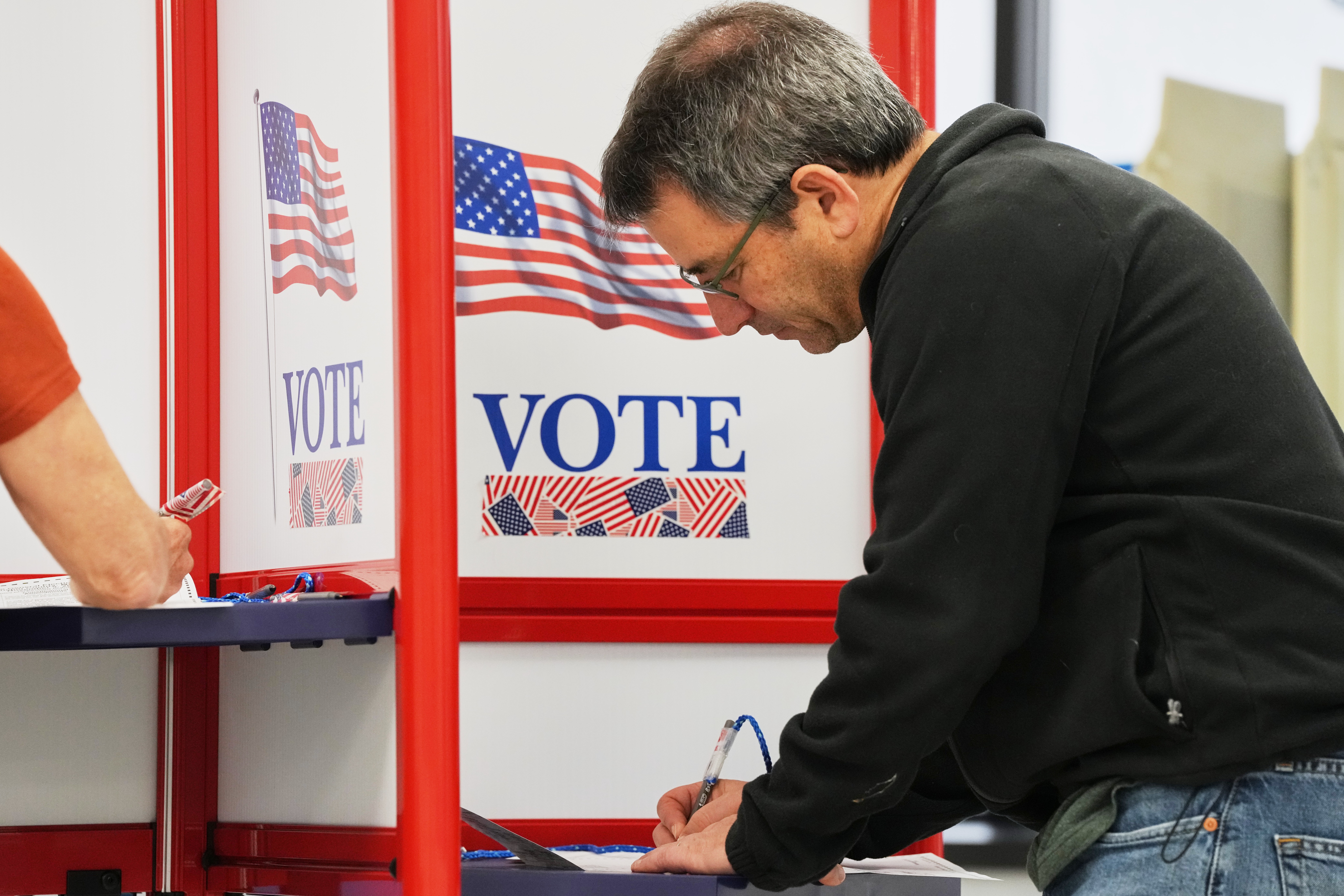
    HENRICO, Va. — In-person voting for this year’s midterm elections began Friday, ushering in the final six weeks for Americans to decide which party they trust to lead Congress through a cost-of-living crisis, a prolonged war in Iran, and other pressing issues.

    Election administrators say they are prepared and confident the vote will be accurate and secure. Nevertheless, President Donald Trump has continued efforts to denigrate certain voting methods and reshape how elections are run, through court challenges, a federal hunt for noncitizen voters, and a pressure campaign to force election officials to share sensitive voter data.

    Friday was the start of early voting in Virginia. Voters in a few other states, including Minnesota and South Dakota, can cast absentee ballots in person, typically at a local election office or voting center. More expansive early voting is scheduled to begin in those and other states in the coming weeks.

    At a voting location in Fairfax, Va,. 18-year-old college student Sanya Singhal was among the first to vote early in person Friday morning, arriving well before the site opened to get in line.

    “Why not just have a little fun in life, you know, try to be the first early voter?” she asked. “I really want to participate in my democracy.”

    At a voting location in suburban Richmond, a poll worker rang a bell as the building opened and about a dozen voters in line began to file in. Stephen Gura was excited to be the first.

    “This election is critical. We need to stop the Trump agenda,” said Gura, who added that he voted for U.S. Sen. Mark Warner, a Democrat, and Shannon Taylor, the Democratic nominee against Republican incumbent Rob Wittman in the 1st Congressional District.

    The Nov. 3 election includes votes for governor and state legislature in most states and will determine whether Republicans maintain control of the U.S. House and Senate. If Democrats retake Congress, it will alter the trajectory of the final two years of Trump’s term, most likely leading to investigations and other oversight efforts.

    Votes underway after redistricting, Trump’s bid to control elections

    At the suburban Richmond voting center, a steady stream of voters flowed in and out. William Curry, a 74-year-old retiree who described himself as a libertarian-leaning independent conservative, voted for Warner’s Republican challenger, Bert Mizusawa, and Wittman. Curry said he generally approves of the job Trump has done, apart from the war with Iran.

    “He’s in a mess he can’t get rid of,” Curry said of the conflict.

    On a rainy day in Sioux Falls, S.D., Bill Goehring, 67, said he voted early at the county office because he will be traveling later. He voted for a mix of Democrats and independents, and said Trump’s “dictatorial tendencies are bad for America.”

    John Thomas, a conservative retired police officer at the Sioux Falls office, said his biggest concerns were public safety and election integrity. He said he doesn’t want to see votes in federal elections from immigrants living in the country illegally. Such fraudulent voting has been found to be extremely rare.

    Trump’s immigration agenda is “spot on,” the 77-year-old said.

    “We wouldn’t be a country that much longer if it had stayed the same for another four years,” he said.

    The start of early voting comes at a time of deep angst and division among many Americans about issues including rising gas and grocery prices, the war in Iran, the looming risks of artificial intelligence, and Trump’s aggressive immigration enforcement campaign.

    It also follows an unprecedented spate of mid-decade redistricting for the House that began when Trump urged the Republican-controlled legislature in Texas to redraw its congressional map to help the party. California and other states followed.

    The changes affect millions of people: Research shows 1 in 10 Americans this fall is a resident of a different congressional district than in 2024.

    Those partisan efforts are expected to continue before the 2028 elections after a landmark ruling this year from the U.S. Supreme Court weakened the federal Voting Rights Act’s protections against racially discriminatory redistricting.

    As the start of early voting approached, Trump was focused on efforts to assert federal control over election administration, even as the Constitution bestows the power to run elections on the states and, in some cases, Congress. The nation’s highest court this week rejected Trump’s bid to restrict mail ballots, but several of his administration’s other efforts to influence the voting process and investigate state voter lists continue.

    Virginia’s Democratic attorney general warned Thursday that Trump’s administration may have violated the state’s laws after a whistleblower accused federal employees of misrepresenting themselves on voter lookup tools to hunt for noncitizen voters.

    Trump for years has raised the specter of widespread noncitizen voting in U.S. elections, and this year is no exception. But research continues to show noncitizen voting is exceptionally rare.

    David Becker, executive director and founder of the Center for Election Innovation and Research, said he wouldn’t be surprised if the Republican president continues “his disinformation campaign and his attack on election officials.” But he said he thinks “the process will hold as it has in past years.”

    At least a few Friday voters were motivated to vote early in part because of Trump’s actions.

    In Minneapolis, 47-year-old business processing engineer Dragan Colakovic said he didn’t want to wait until Election Day for fear of being stopped by immigration agents. He said Trump’s surge of agents to Minnesota in an immigration crackdown earlier this year terrified him. He is a naturalized U.S. citizen who moved from Bosnia in 1997 and saw the horrors of war in the former Yugoslavia.

    “This echoed what I saw in Bosnia,” he said of the heavily armed immigration agents who repeatedly swept through his neighborhood, which has many immigrants.

    “These were my neighbors, my friends,” being arrested, he said.

    Democratic voter Laura Bland, 63, in Virginia’s Henrico County said she cast a ballot early to send “a signal that we’re still here” despite Trump’s efforts to curtail mail voting.

    “Regardless of whether you vote for a Democrat, Republican, people are not going to be stopped or intimidated from participating in our elections,” Bland said, nearly moved to tears.

    Advocates suggest voters cast their ballots early

    Voting rights advocates have encouraged voters this year to cast mail ballots early, in part because of concerns about recent changes in U.S. Postal Service operations that could delay the application of postmarks to ballots.

    Voting early “gives voters options, eases lines on Election Day, and can even mean faster results,” said Hannah Fried, co-founder and CEO of the voting rights group All Voting Is Local.

    The top official at the U.S. Postal Service also encouraged voters who cast ballots by mail to get them in a week before they’re due.

    “Everything is solved if people vote early,” Postmaster General David Steiner said in an interview.

    In a news briefing Thursday, Minnesota Secretary of State Steve Simon urged people not to be swayed by stories they might have seen or read that cast doubt on election operations. They would be able to vote “just like they always have,” he said.

    “I just want to reaffirm that Minnesota’s elections are fundamentally free, fair, accurate, honest, and secure,” he said.
  • Blanche’s partisan activity before midterms dismantles another principle

    Blanche’s partisan activity before midterms dismantles another principle

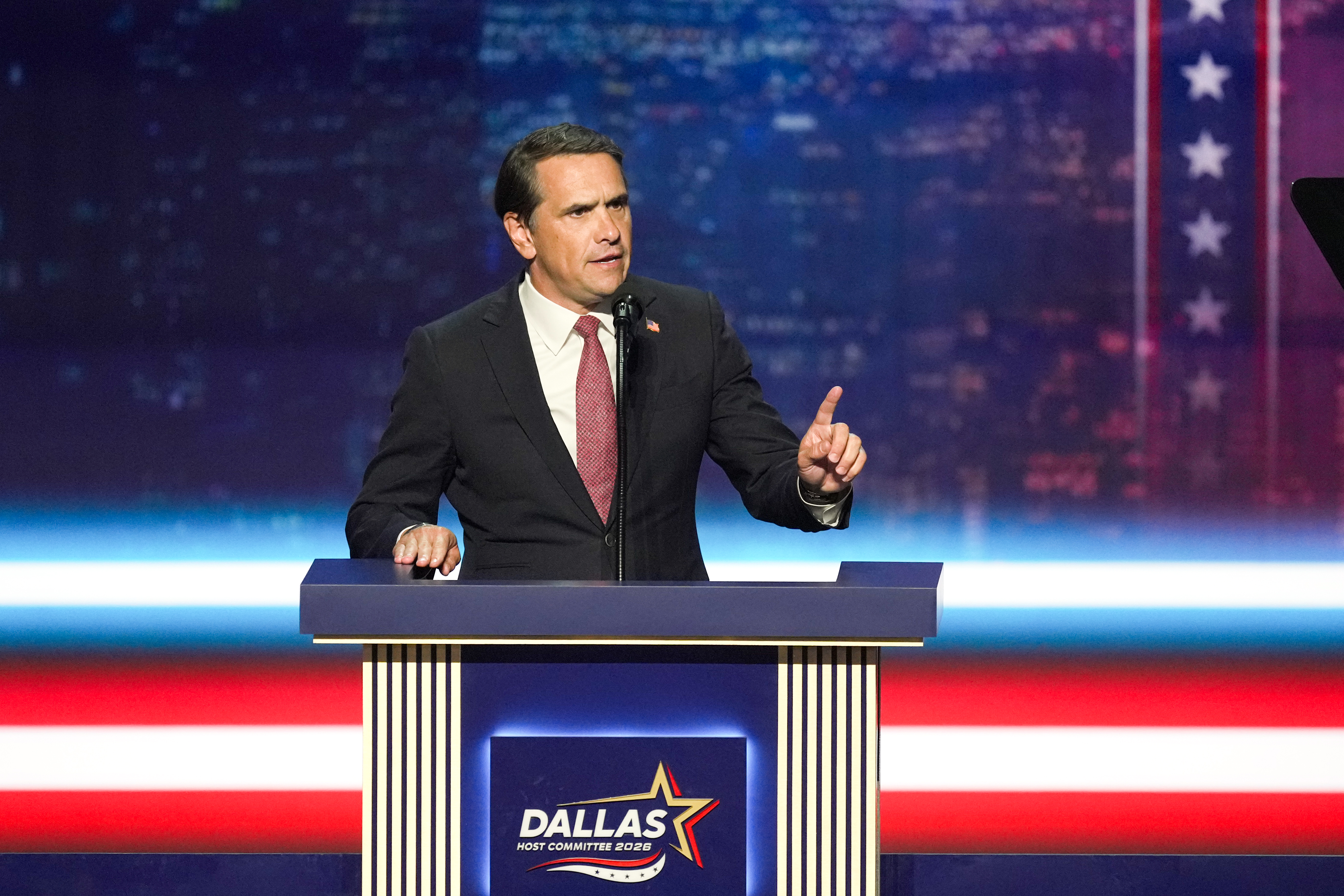
    WASHINGTON — Attorney General Todd Blanche has repeatedly participated in campaign events and spoken in partisan terms about the coming midterm elections since his confirmation last month, despite criticism that he violated a long-standing Justice Department principle of steering clear of electoral politics.

    This week, he waded again into those waters — twice.

    Since August, Blanche has come under fire for making campaign-tinged public appearances and comments. Last month, at a rally-style event on Long Island, N.Y., he praised Bruce Blakeman, the Republican candidate for governor of New York. Last week, Blanche delivered remarks at the Republican Party’s midterm convention.

    On Tuesday, he stood at the White House podium and disparaged Democratic lawmakers while invoking the coming election, dismissing their concerns about artificial intelligence as “nothing but an effort to influence the midterms.”

    And Wednesday, Blanche spoke at a campaign rally for Michael Whatley, the Republican Senate candidate in North Carolina. Echoing his convention speech, he portrayed crime rates, which continued a long-term downward trend to reach new lows in 2025, as “President Trump and Vice President Vance delivering on a promise.”

    Worries about the Justice Department abandoning its long-held commitment to appear apolitical in order to maintain institutional credibility may seem beside the point. Since January 2025, dozens of judges have viewed its representations with suspicion, eroding the traditional bonds of trust, known as the “presumption of regularity,” that the courts typically grant the department.

    The second Trump administration has also unabashedly destroyed the post-Watergate norm of Justice Department independence from the White House in investigative decisions. Early on, Blanche’s predecessor, Pam Bondi, declared, “We are so proud to work at the directive of Donald Trump.” Last September, after Trump publicly demanded that she charge several perceived adversaries, the department pushed through short-lived indictments of two of them.

    Still, Blanche is dismantling another post-Watergate principle: that Justice Department leaders stay away from partisan politicking.

    Joseph Tirrell, the Justice Department’s senior ethics official until the Trump administration dismissed him in July 2025, this week criticized Blanche’s participation in the Republican convention. He called the attorney general’s comments at the White House briefing “borderline” unethical, and his participation in the North Carolina rally “terrible.”

    “In my former role, I would have advised the attorney general not to go to the White House and not to make comments about members of Congress within 45 days of an election,” Tirrell said. Referring to a law restricting partisan political activity by government employees, he added, “I’d say, ‘That rally sounds like a Hatch Act violation to me, and I’d advise you not to do it.’ I would want to scare that person straight.”

    Stephen Gillers, a New York University law professor who specializes in legal ethics, said Blanche’s political statements and activities were protected by the First Amendment and did not violate professional conduct rule, even if they were ill-advised.

    “Any attempt to discipline him will fail,” Gillers said. “That’s unfortunate. He has the ability to do what he’s doing, and he’s chosen to do it.”

    The Justice Department did not respond to a request for comment.

    When the group Public Citizen filed a Hatch Act complaint about Blanche’s comments praising Blakeman, the Justice Department told Government Executive in a statement that it was “baseless” and “a politically motivated complaint designed to weaponize the Hatch Act against the attorney general for his support of law enforcement.”

    And in response to criticism last week by Democrats on the House Judiciary Committee over Blanche’s convention appearance, the department shot back on social media, “Todd Blanche’s appearance this evening in his personal capacity is legal (and has been approved by ethics).”

    Legal questions center on the Hatch Act, which is ambiguous and difficult to enforce when an administration does not want to strictly adhere to it. The law and related regulations allow some political appointees, while off duty, to attend partisan events, like fundraisers and campaign rallies. Some law enforcement officials are restricted from any partisan activity, but the attorney general is not listed among them, and it is disputed whether that part of the legal limits applies to them.

    Even for those who can engage in political activity in a personal capacity, the traditional test is not just whether such officials say they are doing so, but whether people would reasonably perceive them as acting in their government roles.

    Cynthia Shaw, who ran the Justice Department’s ethics office throughout Trump’s first term, said the notion that high-ranking officials could simply say they are acting in a personal capacity to get around that threshold was a misunderstanding.

    “The bigger the job you get, the less personal capacity you have, because when you speak, people are going to see you in your official capacity and representing the agency that you are head of,” she said.

    Federal law enforcement needs to not just be fair, she added, but to be seen as fair for the long-term good of the department and society.

    For that reason, the Justice Department had long held itself to a higher standard than the Hatch Act and its ambiguities. For decades, its ethics policies went beyond the statute in pushing officials to avoid events like political fundraisers and campaign rallies.

    In 2022, Attorney General Merrick Garland flatly banned political appointees from participating in partisan activities — even in their personal capacities, and even if their family members were the candidates.

    But in March of this year, Bondi rescinded that policy, freeing political appointees to attend such events in their personal capacities subject only to the lower standards of the Hatch Act.

    That weakening of ethics rules is one reason the department’s claim that Blanche’s appearance at the Republican Party convention was “approved by ethics” merits scrutiny. Another is that the administration has changed who makes ethics recommendations.

    After firing Tirrell, the administration left his position vacant for nearly a year before appointing Kristina Spencer, a former aide to Vice President JD Vance who had no prior department experience.

    The office of the deputy attorney general can also overrule the ethics office’s recommendations. For decades, the decision-maker was a career official, but the Trump administration moved that authority to political appointees.

    The principle that the Justice Department should strive to appear apolitical took root after Watergate. President Richard Nixon’s first attorney general, John Mitchell — who later went to prison for his role in the scandal — was so deeply partisan that he resigned to run Nixon’s 1972 reelection campaign.

    The attorney general immediately after established the modern norm of not acting as a political operative while in office: Edward Levi, a University of Chicago legal scholar.

    Maintaining a nonpartisan image has proved difficult, partly because of the department’s power and an increasingly polarized political atmosphere. Under both parties, one attorney general after another has been accused by political opponents of politicizing the Justice Department.

    In 2013, Attorney General Eric H. Holder Jr. called himself President Barack Obama’s “wingman,” clashing with the principle of Justice Department independence. Asked last week about Blanche’s speech at the Republican convention, Holder said, “It’s unprecedented, and it’s disgraceful. Attorneys general don’t talk about political things. He shouldn’t be there.”

    Holder, while serving as attorney general, never spoke at the Democratic convention or at campaign rallies. Nor did Republican attorneys general frequently accused by Democrats of politicizing the department, including Attorney General William Barr during Trump’s first term.

    Gillers said that shifting standards for the conduct of attorneys general would harm the rule of law, especially if Blanche’s successors followed his example.

    “This is new,” he said. “The changing image of what an attorney general should be seen to do, and how officials high in the Justice Department should behave, will not be good. We just don’t know yet how bad it will be.”

    This article originally appeared in the New York Times.

  • String of daring Russian plots is testing Washington’s restraint

    String of daring Russian plots is testing Washington’s restraint

    An airstrike on a train line that endangered the lives of former European leaders and CIA officers.

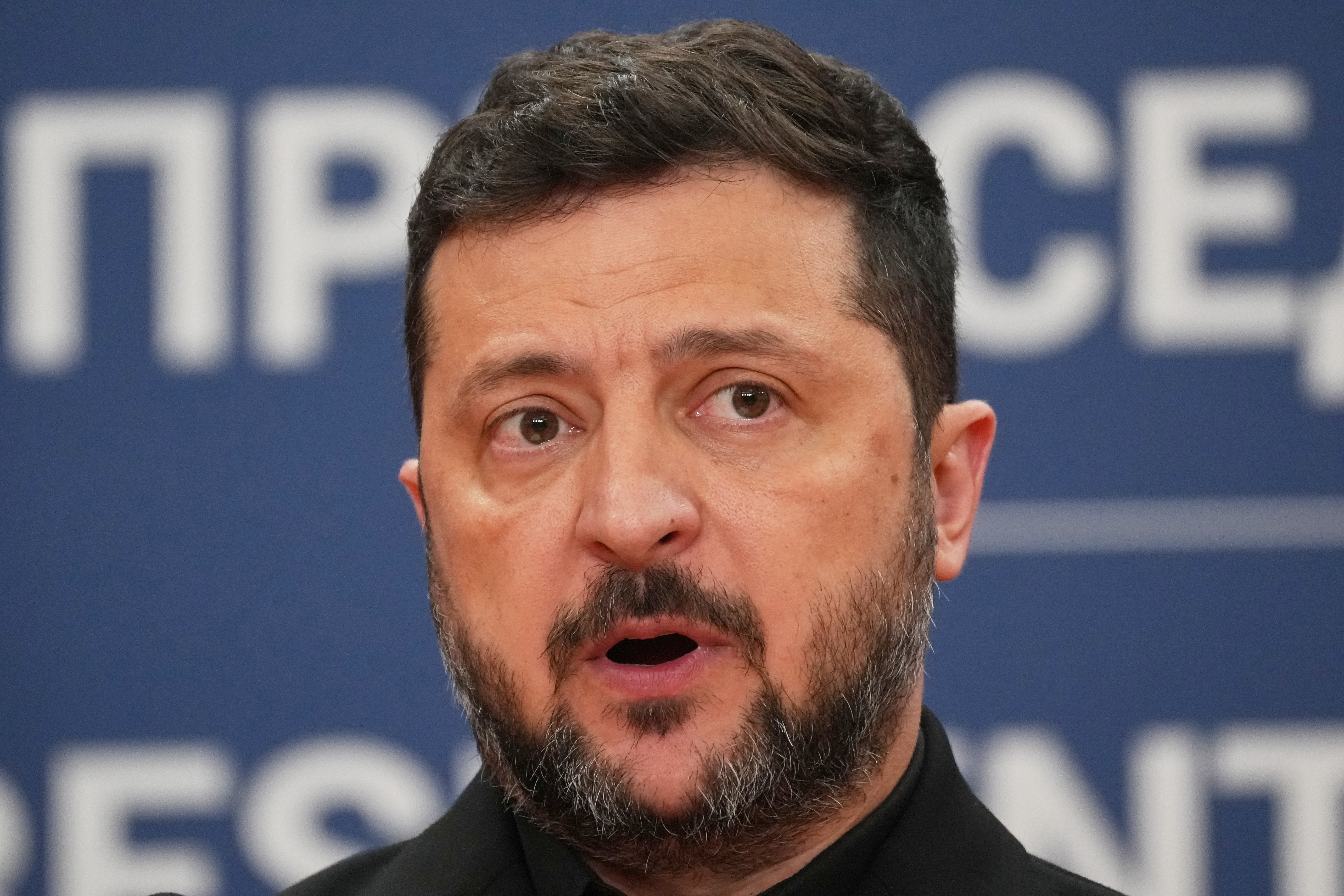
    Armed drones in Moldova suspected of stalking the plane of Ukrainian President Volodymyr Zelensky.

    A clandestine effort to assemble an international network of assassins, including plans to “eliminate” a Kremlin critic in Washington.

    In a matter of weeks, Russia has been linked to a stunning series of attacks and plots that — had any one of them turned deadly — carried the potential to trigger a dangerous escalation in the war in Ukraine and the West’s broader conflict with Moscow, according to security officials and experts.

    The spate of attacks — at a moment when the Trump administration is pushing to revive peace negotiations — has put security agencies on edge, officials said, threatened travel routes that are critical to Ukraine’s ability to maintain ties with its supporters, and raised concerns that Russia once again is probing how far it can go in widening the war as it seeks to break the will of Kyiv’s backers.

    Russia’s drone strike on a train near the Ukraine-Poland border early Sunday seemed to mark a worrisome new development in Moscow’s calculations, officials said.

    The attack destroyed a locomotive on a section of track where a delegation of diplomats and former top European officials — including former British Prime Minister Boris Johnson — had passed a short while earlier after attending an annual Yalta European Strategy conference in Kyiv.

    Former CIA director David Petraeus and two other former agency officials were on a separate train that was evacuated minutes before the explosion, officials said.

    Former officials and experts said Moscow probably intended to send a signal of intimidation but that a minor mistake in timing or coordinates could have left dozens dead and put pressure on the United States and its allies to retaliate.

    “My assessment was that it wasn’t intended to kill Boris Johnson or David Petraeus,” said Glenn Corn, a former senior CIA official with responsibilities for operations in Russia and Eurasia who was also aboard the evacuated train. “But it was definitely premeditated and intended to send a strong message: We don’t want you coming to Ukraine. This is our sphere of influence. This is a warning.”

    An errant strike on trains carrying Johnson or Petraeus risked unleashing a “snowball effect,” Corn said, an “escalatory chain” that could test the restraint of Moscow and Washington.

    French President Emmanuel Macron warned Friday that “the Russian hybrid threat has been intensifying” in recent weeks.

    “The nature of Russian aggression, and its threats in Europe, are changing,” he told reporters after a meeting with leaders of France’s political parties, along with military and security chiefs. He cited the train strike and repeated drone incursions into European airspace, among other incidents. He said he has instructed French authorities to increase vigilance.

    The strike came just days after Zelensky said his government plane was targeted by Russian drones at an airstrip in Moldova as he was traveling to the Sept. 9 funeral of the king of Norway, a country that has been a staunch supporter of Ukraine since Russia’s 2022 invasion.

    “In Moldova, my presidential jet was there, and that’s why they attacked Moldova,” Zelensky said in an interview with CBS. “When we went back home, again through Chisinau, they did the same.”

    Ukrainian and Moldovan officials confirmed that Russian drones had crossed into Moldovan airspace while Zelensky’s jet prepared to depart Chisinau International Airport, though officials said that one of the drones was destroyed near the border about 100 miles from the airport and that Zelensky’s plane was never in danger.

    On Tuesday, the U.S. government exposed another alleged front in Russia’s campaign against perceived external adversaries. A criminal indictment unsealed by the Justice Department accused operatives in Russian intelligence services of using encrypted communications apps to recruit assassins to kill dissidents or critics of Moscow.

    The indictment, filed in the Southern District of New York, describes communications in late August between alleged agents in Russia and an unidentified U.S. resident as part of a plot to “eliminate” or “disappear” a Russian dissident in Washington.

    The network also sought an assassin to kill a Russian dissident in Lithuania, according to the indictment, as well as other recruits to carry out terrorism attacks in the Czech Republic. At one point, according to the indictment, a Russian intelligence officer identified as Yuri Khrameev suggested killing an alleged Kremlin critic by “throwing a bottle of gasoline” or “sticking a knife” in him.

    Kremlin spokesperson Dmitry Peskov dismissed the allegations this week, saying Russia had not seen “any coherent evidence or arguments based on anything tangible.”

    Officials emphasized that Russia has been linked to assassinations, and to plots targeting alleged dissidents, in Europe for decades, and that in recent years Moscow has pursued other plots that similarly alarmed security services.

    In 2024, Russia’s GRU spy agency used operatives recruited online in a plot to place incendiary devices aboard cargo aircraft, causing parcels to catch fire in Britain, Poland, and Germany.

    The Biden administration was so alarmed by the prospect of explosions on trans-Atlantic cargo planes that CIA Director William J. Burns and national security adviser Jake Sullivan were enlisted to issue warnings to their counterparts in the Kremlin.

    It is not clear if President Donald Trump, who recently scolded Ukraine for carrying out attacks on energy targets in Russia, has taken similar steps to caution Moscow about the train strike or the potential targeting of Zelensky’s aircraft.

    European officials have repeatedly denounced Russia in recent months for drone incursions, arson attacks, and other plots attributed to Kremlin security services. German authorities last month found a drone carrying explosives near a Ukrainian cargo plane at an airport in Leipzig.

    Polish Prime Minister Donald Tusk warned on Thursday that Russia could launch “hybrid drone and missile strikes” against NATO countries while depicting them as accidental.

    “Don’t underestimate it,” Macron said of the Leipzig incident, in remarks to the press Friday. He added, “The consequences would have been tragic. … What happened in Leipzig could happen in any European city.”

    Russia’s ability to strike trains near the Polish border or violate Moldova’s airspace has been driven by new military capabilities, including the development of powerful jet-powered drones whose speed and high-altitude trajectories overwhelm Ukraine’s air defenses and have altered the war’s dynamic, according to officials and experts.

    Russia rarely succeeded in striking moving targets including trains early in its invasion because of the technical limitations of its air force and the inexperience of its targeters, experts said. Advanced drones, combined with experience, have reduced these shortcomings. As a result, a war in which the front lines have been effectively frozen is now characterized by penetrating strikes by both sides meant to disrupt and exhaust the enemy.

    Ukraine has “been doing well at the front and it’s their best year since 2023 in terms of combat performance,” said Michael Kofman, a military analyst at the Carnegie Endowment for International Peace. But now “it is the rear, the infrastructure in cities, that looks increasingly precarious heading into winter.”

    With Ukraine running extremely low on interceptors and other air defenses, Russia has been bombing civilian targets including shopping centers and distribution warehouses used for food and medicine, leading to some shortages. In a diplomatic gesture, Putin agreed to halt attacks on Kyiv for 72 hours while U.S. envoys Steve Witkoff and Jared Kushner made their first visit to Kyiv since Trump’s return to the presidency.

    Ukraine’s airspace has been closed since the start of the invasion, so visiting dignitaries almost universally arrive by railroad.

    The number of attacks on trains, however, has “grown exponentially” over the past year as part of a Russian drone campaign aimed at crippling Ukraine’s economy and infrastructure, Ukrainian Railways boss Oleksandr Pertsovsky said this week. He said about 40 trains were hit in August alone, among 400 targeted since the invasion’s outset.

    In an interview, Petraeus, who was a four-star U.S. Army general before becoming CIA director under President Barack Obama, said that his recent train trip to and from Kyiv was the 11th he has made since the invasion of February 2022. Petraeus, who attended the YES conference, said he had never before been forced to evacuate a train on the overnight journey, but that his train was evacuated three times this week because of the drone threat.

    Asked whether he believed that Russia intended to kill him or other dignitaries who had attended the conference, Petraeus said, “I think that would have been unwise.”

    Doing so would be likely to bolster Western resolve in its support for Ukraine, a response that “would undermine what it is [that Russia] is trying to achieve, and they would recognize that.”

  • Iran war will make winter more expensive for some Americans

    Iran war will make winter more expensive for some Americans

    Jonathan Robidoux, a resident of Long Island, N.Y., calls his heating oil supplier every fall to have his tank filled for the coming winter. He spent $1,200 on the fuel last winter.

    This year, he will likely pay a lot more.

    The price of heating oil, a fuel that is similar to the diesel used in trucks, is up roughly 60% since Israel and the United States started attacking Iran on Feb. 28.

    The war has sent oil and fuel prices soaring, leaving Robidoux and many others facing difficult financial decisions. About 3% of U.S. households use heating oil, and most of them live in the Northeast or Alaska.

    Robidoux, who rents a home in New Hyde Park, N.Y., is trying to decide if he should buy heating oil now or wait until the weather gets colder, in the hope that prices will drop.

    “I might just buy some now, but I don’t have that much liquidity, so it’s a tough decision,” said Robidoux, 41.

    People who use natural gas or electricity to heat their homes are expected to face more modest increases in heating bills but many of them could also find it hard to make ends meet, energy experts said.

    Many Americans are heading into a “much more expensive” winter, said Mark Wolfe, executive director of the National Energy Assistance Directors Association, which represents state officials that help dispense government aid to residents who meet certain income-based qualifications. The organization urged Congress in July to offer more financial assistance to families struggling with rising energy costs.

    “Those numbers, if you’re middle class, that’s a significant hit to your budget,” he said.

    Who will face higher costs and why?

    As with gasoline and diesel, heating oil prices can vary a lot based on where you live. The national average, which was $4.10 a gallon the week before the war, jumped 35% to $5.54 just a month later, according to weekly data from the Energy Information Administration, which will begin releasing weekly price data for heating oil in the fall.

    In New York, the average price of heating oil was $6.14 a gallon the week of Sept. 14, up from $3.70 a year earlier, according to the state’s Energy Research and Development Authority.

    More than 80% of U.S. heating oil is used in the Northeast. In the winter of 2023 to 2024, 4.79 million households used oil as their primary heating fuel, according to the EIA.

    Despite skyrocketing prices, investors are expecting them to fall. Futures contracts for heating oil delivered in December were trading at $4.61 a gallon on Thursday afternoon, compared with $5.10 a gallon for the October contract. Retail prices paid by residents are higher than those for futures contracts.

    Of course, traders have been wrong before. Oil and fuel prices dropped sharply after President Donald Trump and Iranian officials announced a tentative agreement to pause the war in June. But prices began climbing again when hostilities resumed.

    The uncertainty about what heating oil will cost in a few months is prompting many people to make anxious calls to oil suppliers like the Energy Co-op of Vermont.

    “There’s definitely been people trying to hold off that way or make plans of getting a minimum amount of gallons delivered at this point, hoping to stretch it till the next time, hoping that’ll be a little bit lower in cost,” said Rose Friedlander, the co-op’s marketing manager.

    What other options are available to stay warm?

    Many people use oil because switching to a different source of heat can be expensive or difficult.

    Natural gas is not an option in many rural and suburban areas because laying pipelines over long distances is often financially unfeasible. Some states have offered incentives to get residents to switch to electric heat pumps, which are much more energy efficient and contribute much less to climate change, but installing the devices can still cost residents thousands of dollars.

    Consider Vermont, where 35% of homes use heating oil. Of its 285,000 homes, about 80,000 have heat pumps, said Philip Picotte, a utilities economic analyst with the Vermont Department of Public Service. Around 8,000 to 10,000 heat pumps are installed in Vermont every year.

    That said, the use of heating oil has been dropping. In 2010, about 6% of Americans used it. Some states have weaned a lot residents off the fuel. Maine has decreased the number of homes that primarily rely on heating oil from 62% in 2018 to around 50% in 2025.

    One hurdle to heat pumps is that electricity rates tend to be higher and homes tend to be older in the Northeast than in other regions. That means using heat pumps may not lower heating costs unless they are paired with other home upgrades like insulation and sealing that help minimize energy use.

    Another option is propane, a fuel made from the processing of natural gas or crude oil. Around 5% of American households use it, and prices for the fuel have climbed modestly this year — in New York, they’re up about 5.7% compared with last year. But switching to propane also requires replacing home heating equipment, which can be beyond the means of many people.

    Natural gas and electricity prices are up less

    Households outside the Northeast and Alaska generally will not face as big a financial shock this winter. That’s because about 47% of U.S. homes heated with natural gas as of 2024 and the United States has plenty of it on hand, unlike Europe, where the price of that fuel has been rising sharply.

    “We’re really very well supplied for natural gas, and that’s where you see prices where they are,” said Matt Smith, director of commodity research at Kpler.

    The wholesale price of natural gas in the first week of September has actually been lower than prices in September last year, according to the EIA.

    But the price of gas delivered to homes, which also includes the cost of maintaining pipelines, has been rising. In June, the average retail price was $24.09 per thousand cubic feet, up 3.6% from a year earlier, according to the EIA.

    About 42% of U.S. homes used heat pumps or other electric heaters as of 2024, according to RMI, a research group formerly known as the Rocky Mountain Institute. These people will likely also pay somewhat more this winter. In June, the national average residential electricity rate was 18.34 cents per kilowatt-hour, up about 5% from a year earlier, though rate increases vary a lot by state and utility.

    This article originally appeared in the New York Times.

  • Trump refers to Black man from racially offensive 1988 campaign ad while stumping in North Carolina

    Trump refers to Black man from racially offensive 1988 campaign ad while stumping in North Carolina

    As President Donald Trump tries to convince voters that Democrats have let crime run amok, he’s digging into the country’s political past to cite one of the most controversial campaign advertisements — one that relied heavily on racist tropes.

    During a campaign stop Wednesday in Gastonia, N.C., to stump for Republican U.S. Senate candidate Michael Whatley, Trump resurrected a 1988 George H.W. Bush presidential campaign ad featuring Willie Horton, a Black man convicted of rape and assault after his release through a Massachusetts prison furlough program.

    A grainy black-and-white prison photo of Horton was used in the ad targeting then-Massachusetts Gov. Michael Dukakis, who was ahead of Bush in the polls. On Wednesday, Trump evoked the Horton ad in an effort to convince voters Democratic former Gov. Roy Cooper, Whatley’s opponent in the Senate race, is soft on crime.

    “Willie Horton was a bad guy, really bad guy,” Trump said, before comparing Dukakis’ release of Horton to the pretrial release of a Black man who faces a murder charge for last year’s killing of a white Ukrainian refugee in Charlotte, N.C.

    But Cooper was not the governor when the man was released or when he was later charged with killing the refugee.

    “Same thing as this, same as, same exact thing,” the president told the crowd in Gastonia.

    It’s the second time Trump has invoked Willie Horton while campaigning for his party. Last month during a speech in Las Vegas, Trump called the Charlotte killing a “Willie Horton — modern day” tragedy.

    “After the Willie Horton ad dropped, Bush established a lead in the polls and never looked back,” said Andra Gillespie, a political scientist at Emory University outside Atlanta. “They showed the picture, and you ascribed race onto it. It wasn’t sufficiently condemned as racism.”

    A spokesperson for the Republican National Committee, which organized the Gastonia campaign rally, defended Trump’s reference to Horton.

    “Roy Cooper emptied prisons and released thousands of violent monsters onto North Carolina streets,” RNC National Press Secretary Natalie Baldassarre said in a statement to the Associated Press. “The results had deadly consequences, and every Democrat who supports abolishing or defunding the police, paroling criminals, and implementing lax bail policies will have to answer for their dangerous records in November.”

    Trump paints North Carolina as a ‘dangerous state’

    Wednesday’s rally cited the Aug. 22, 2025, killing of white 23-year-old Iryna Zarutska on a commuter train in Charlotte.

    Decarlos Brown Jr., who is Black, faces murder and other charges in Zarutska’s stabbing, which was captured on video. Court records showed that at the time of the attack, Brown had 14 prior cases in Mecklenburg County, including serving five years for robbery with a dangerous weapon. Doctors had diagnosed him with schizophrenia.

    Republicans and other influential voices in Trump’s Make America Great Again movement claimed the attack showed how Democratic elected leaders in large cities across the U.S. failed to protect residents, while some conservative commentators suggested Democrats were ignoring an unfounded “black-on-white” crime problem.

    “He should have been locked up for many, many years,” Trump said Wednesday of Brown.

    “Nobody used to think of North Carolina as a dangerous state, criminally dangerous,” Trump added while blaming Cooper. “It was apple pie, right? Now, it’s one of the most violent, one of the worst in the whole nation.”

    According to 2024 FBI crime data, North Carolina ranked 19th for statewide violent-crime rates in a 50-state comparison.

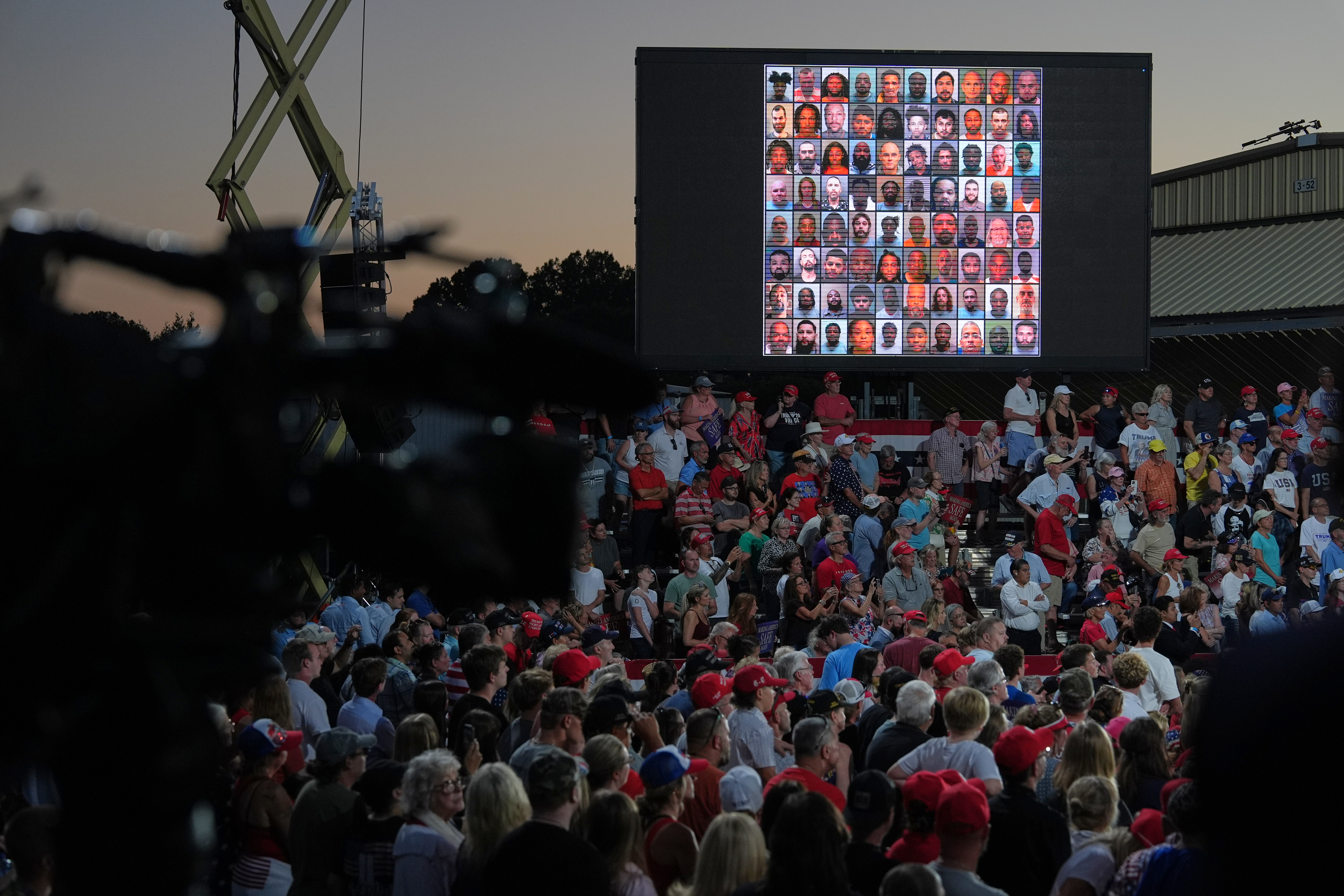
    During the Gastonia rally, a mosaic of mug shots was displayed on a large screen for the crowd. Trump claimed Cooper had cut a deal with “radical activists” to release “some of the worst criminals in the nation into North Carolina.”

    “He released these people. This is just a small group of them,” the president said, pointing to the mug shots that overwhelmingly featured Black people.

    Although it is unclear under what circumstances the people in the mug shots were released, state corrections officials have said Brown was not released early from prison or under Cooper’s COVID-era prisoner-release settlement that Trump referenced.

    Before fatally stabbing Zarutska, according to court records, Brown had been on a pretrial release over a misdemeanor offense that was ordered by a magistrate after Cooper left office.

    ‘Tapping into anger’

    Republicans are under pressure to win over swayable voters as the November midterms approach with Democrats pushing to gain control of the House, the Senate, or both. Some political strategists say part of the ploy of adding Horton to the North Carolina Senate campaign is to rile up Trump’s base.

    “He’s tapping into the anger to remind Republican voters of what he thinks their first principles are in hopes that will be successful for Republican candidates,” Gillespie said.

    “He’s doing this to try and divert attention away from criticism of how he’s governing at the moment,” she added. “Democrats want to make the story of this election Trump’s low approval numbers, the war in Iran, inflation, being preoccupied with things that don’t make a whole lot of sense when there are really serious things going on in the country.”

    Dewey Clayton, professor emeritus of political science at the University of Louisville, said Trump and other Republicans may be thinking that what worked before in the 2016 and 2024 elections presumably will work again in this year’s midterms.

    “It was very effective,” Clayton said. “You do not necessarily have to look at it as racial, in and of itself, although (race) clearly becomes a component. In 2026, talking about ads going back in the 1980s? I’m sure he had consultants that were basically saying this is tried and true.”

    The GOP may need the push in November, Gillespie warns. “I think the motivation by going back to these old strategies is there is real concern about Republican enthusiasm and you might see lower Republican turnout,” she said.

    Rhetoric attempts to divert voters’ attention from rising costs

    The tactic speaks to desperation by Trump and the Whatley campaign, according to Morgan Jackson, a partner with Nexus Strategies in Raleigh.

    “Trump brings up Willie Horton to stoke racial division, something he’s used for the last 10 years,” said Jackson, who is chief strategist for Cooper’s campaign. “It is very clear from the president’s speech last night their only goal is to sow division and hate and lies. Michael Whatley doubles down in support of that effort.”

    Jackson also said Trump and Whatley are trying to change the election’s message of “rising inflation and the cost of everything.”

    “They want to use inflammatory rhetoric, hate speech and lies to sow division in a chance to win an election,” he said. “By referencing Willie Horton, they are showing their hand very clearly.”

    The AP sent an email Thursday seeking comment from Whatley’s Senate campaign.

  • Duncan Sheik, Tony- and Grammy-winning ‘Spring Awakening’ composer and pop star, dies at 56

    Duncan Sheik, Tony- and Grammy-winning ‘Spring Awakening’ composer and pop star, dies at 56

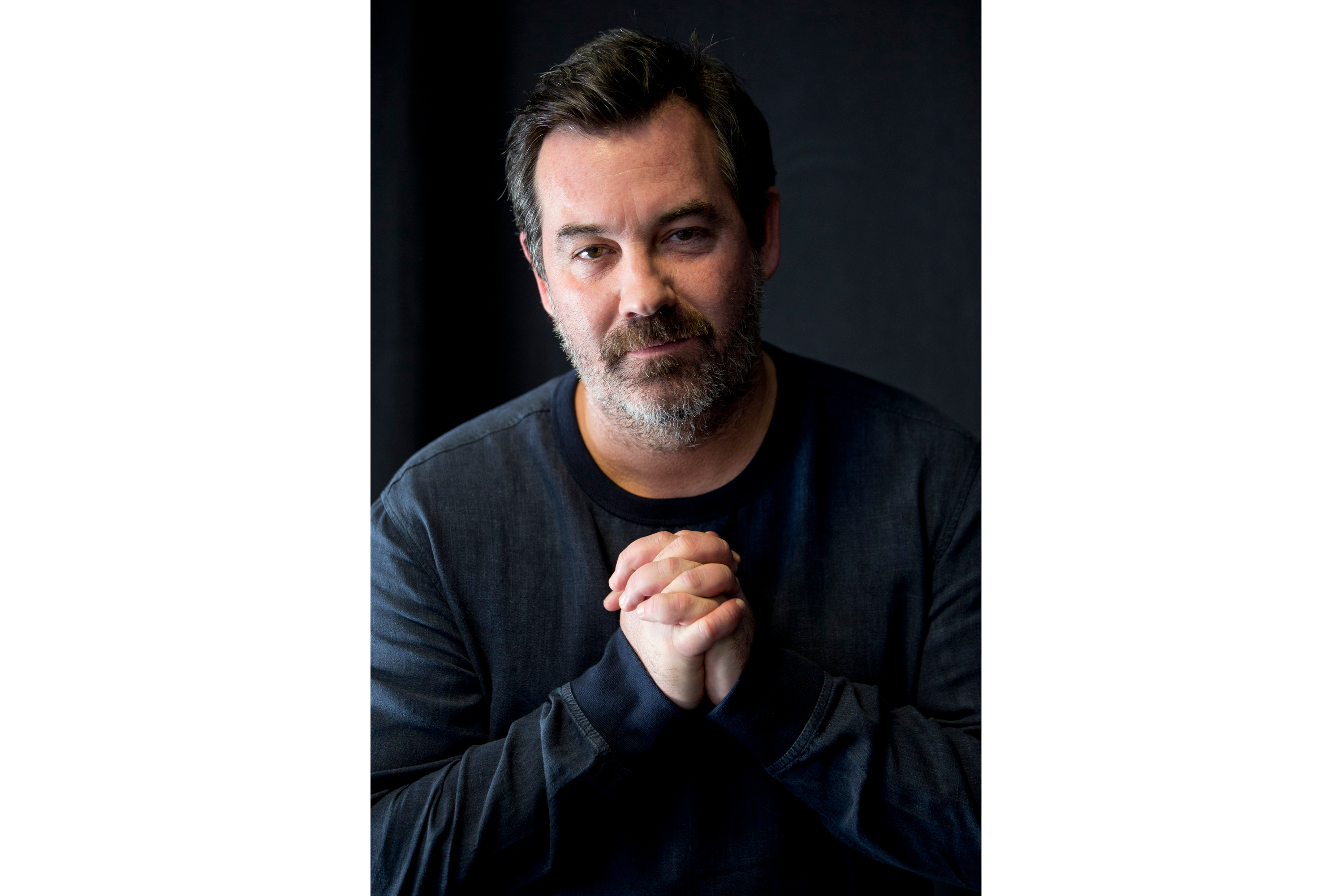
    NEW YORK — Duncan Sheik, the Tony- and Grammy-winning singer-songwriter who crafted the music for “Spring Awakening,” has died. He was 56.

    Sheik died Thursday from organ failure, his mother Suzanne Sheik told The New York Times. The Associated Press emailed his representatives for comment.

    Sheik had been best known for his lasting radio hit “Barely Breathing” when he turned his sights on Broadway with “Spring Awakening,” resulting in the envelope-pushing show that musicalized teenage angst.

    “With the exception of our director, we are all kind of Broadway outsiders. We wanted to shake things up a bit. And we just set out to make this really cool piece of theater,” Sheik told The Associated Press in 2007, as the show swept Tony nominations.

    Sheik also tackled musicals based on “American Psycho” and “Alice in Wonderland,” and “Barely Breathing” spent 55 weeks on the Billboard Hot 100, peaking at No. 16. But he was probably best known for “Spring Awakening,” which ran for over 860 performances on Broadway starting in 2006.

    ‘Spring Awakening’ roused a new side of Sheik — and Broadway

    The musical — adapted from a 19th-century play by German playwright Frank Wedekind, with music by Sheik and lyrics by playwright Steven Sater — is frank in its portrayals of incest, abortion and suicide. It’s intended partly as a warning that teens need good information about sex to avoid tragic mistakes.

    “I don’t mean to be disrespectful to more traditional theater composers,” he told the Los Angeles Times in 2015. “I love Stephen Sondheim. But it’s my mission to make sure that the theater is paying attention to what the rest of the world is listening to.”

    Sheik and Sater were practicing Buddhists who met while chanting. They were collaborating on Sheik’s third album, “Phantom Moon,” when Sater mentioned he was working on a new production. Neither had ever written a musical before.

    “I said to Steven, ‘I’m happy to do this musical, but I only want to do it if the music in the play is the kind that I and my peers can get behind stylistically and relate to and enjoy,’” Sheik recalled to the AP in 2006.

    They made a pact: They’d retain the provincial, 19th-century Germany setting but with, as Sater put it, “the characters breaking into pop-contemporary when they sing.”

    “Spring Awakening” won eight Tony Awards, including for best musical, as well as the Grammy for best musical show album.

    “Sheik’s music, spare in its simple orchestrations, lush in the lapping reach of its seductive choruses, embodies the shadowy air of longing that infuses the show, the excitement shading into fear, the joy that comes with a chaser of despair,” The New York Times said in its review.

    The show is beloved in the musical theater community for breaking ground in terms of staging and content, alongside the likes of “Rent” and “Hamilton.” It returned to Broadway in 2015 in a well-received production by Deaf West Theatre. An off-Broadway version is slated to open this fall.

    The cast of the original show was loaded with breakthrough actors like Jonathan Groff, Lea Michele, Lilli Cooper, Jennifer Damiano, Gideon Glick, John Gallagher Jr., Lauren Pritchard and Krysta Rodriguez, who have each gone on to fame in TV, film and stage. Groff would go on to earn a Tony with “Merrily We Roll Along,” and Michele became a superstar with “Glee.”

    Sheik blended musical theater with pop music

    Sheik next channeled the music he heard getting past the velvet ropes of trendy, late-1980s Manhattan clubs for a Broadway adaptation of the Bret Easton Ellis novel “American Psycho.”

    The 1991 novel — later made into a 2000 movie starring Christian Bale — chronicles a homicidal New York yuppie named Patrick Bateman who is obsessed with high-end clothes and beauty products even as he slashes his way through Manhattan. Sheik, who also supplied lyrics, recalled only getting halfway through the book before throwing it across the room as a Brown University student.

    For one standout song, “You Are What You Wear,” he reached out to old girlfriends to ask a question: What were you really into wearing in the late ’80s? He put the answers in the tune about high fashion: “Chanel, Gaultier, or Giorgio Armani/Moschino, Alaïa, or Norma Kamali/Should I rock/The Betsey Johnson/Or stick with classic/Comme des Garçons?”

    “Duncan is really a genius and an intellectual and brings something both uniquely his but importantly of this period to the stage,” producer Jesse Singer told the AP at the time.

    Because Bateman, played onstage by Benjamin Walker, fancies himself a bit of a music critic — spewing mostly inane ruminations about Phil Collins and Huey Lewis and the News — Sheik also peppered his score with sly reworkings of “In the Air Tonight” and “Hip to Be Square.”

    “There’s definitely an art to be able to write a song that on one level is a pop song and one that also has to tell a story and keep an audience engaged in terms of a larger narrative arc,” Sheik told the AP in 2013. “When you’re writing a song for the theater, it has to accomplish all this other stuff. It has to work in tandem with all these other agendas and creative impulses.”

    The show, directed by Rupert Goold and with a story by Roberto Aguirre-Sacasa, made its premiere in 2013 in London. On Broadway in 2016, it bombed, lasting less than 90 performances.

    “We were all sort of worried that it might be too violent for people and it might seem too misogynist,” Sheik told the AP on the eve of the opening. “But, in fact, the truth is this piece is a critique of a certain way of thinking about things. So in truth it’s better to go all-in.”

    ‘Barely Breathing’ was nominated for a Grammy

    Growing up between South Carolina and New Jersey, Sheik learned guitar as a child and got his first synthesizer when he was 12. He was heavily influenced by Talk Talk, David Sylvian and Nick Drake. His self-titled debut album was released in 1996 and Rolling Stone gave it a four-star review, calling it “a defiant debut — beautiful and benevolent of spirit.”

    “Barely Breathing,” from that album, was nominated for best pop vocal performance in 1998 and would be kept alive on TV shows like “Glee” and “Girls.”

    Other projects include “Whisper House,” an album and musical — a ghost story that ran in 2010 at the Old Globe Theatre in San Diego — and “Legerdemain,” an album that explored the tension between art and commerce. His most recent album was 2022’s “Claptrap.”

    But for someone who had once been a total stranger to Broadway, he told AP in 2016 that he had a sense of mission.

    “I feel like it’s become my project to kind of drag different people who might not normally go to musical theater pieces to come see a piece of musical theater,” he said.

  • MIT report warns AI is causing ‘cognitive surrender.’ Universities are in a bind.

    MIT report warns AI is causing ‘cognitive surrender.’ Universities are in a bind.

    The worries that artificial intelligence is degrading education have been building for months. Students are using it for everything, including cheating, and a recent report out of the Massachusetts Institute of Technology said it is triggering “cognitive surrender.”

    Many university leaders are embracing AI with enthusiasm anyway.

    As AI leaders warn about the dangers of their own technology, the dissonance between the optimism of university leaders and the fears of many students and professors may increase. Professors and students are often in a bind about what they should do: Use more AI to stay relevant, or dial back to preserve learning and thinking?

    While some politicians and AI leaders are warning about possible doomsday scenarios for humanity as AI models advance, many campus leaders are focused on the existential threat the technology poses to universities.

    The committee at MIT studying AI use released a number of alarming findings, including that the technology has caused “major shifts in campus culture,” isolating students who are skipping office hours and ditching communal studying. Getting answers from a bot can create “the illusion of learning” for students who reach for AI “at the first hint of struggle,” the MIT committee wrote in its August report.

    At the same time, “the potential of these technologies to augment work across campus is immense,” the committee wrote.

    The MIT report crystallized some of the thinking in higher education about AI, but top administrators have been embroiled in debates for several years. Administrators have often been the most eager to champion AI efforts, while many faculty and students remain more skeptical.

    “I think you have to lean in, but you have to do so in a way that’s thoughtful and ethical and asks the right questions,” said Wendy Hensel, the president of the University of Hawaii, where she presented an AI strategy to regents in July. “The right answer to AI is not just ‘no.’ It can’t be. It has to be approached with curiosity and understanding of the implications.”

    The hodgepodge of policies universities have created to respond to AI often reflect the confusion about how to proceed — with some clear do’s and don’ts, but often a lot of wiggle room for faculty and students to figure it out on their own.

    Experts warn that AI harms learning

    For a motivated student, an AI chatbot can function as a sort of tutor. Chatbots can break down the steps in a math problem, surface unexpected sources for research papers, and offer feedback on writing.

    Still, a growing body of research suggests that AI use can also harm learning.

    A recent study of 26,000 Chinese secondary-school students found that AI adoption led to an 18% increase in homework scores, but a 20% decline in scores on secure exams. The implication was that rushing through homework with help from chatbots degraded the deeper learning needed to perform well when the technology was not available.

    One 2025 study out of MIT found that people who used chatbots as writing assistants struggled to remember what they had written only minutes after finishing their essay. “You basically didn’t engage any of the memory networks that would actually help you remember,” said Nataliya Kos’myna, an MIT researcher who worked on the study.

    Other research has shown that people who have greater trust in AI and rely on it more are more likely to have lower cognitive engagement.

    But AI can be hard to avoid. Chatbots are embedded within the Google Classroom suite, which is nearly ubiquitous in schools, and within many online learning systems used by universities.

    Some tools block outright cheating or plagiarism and allow professors to toggle specific AI capabilities on and off. But the most popular chatbots among students will instantly complete entire assignments, including research papers, on a student’s behalf.

    Many universities are embracing AI anyway

    Sian Leah Beilock, the president of Dartmouth College, has argued that preparing graduates to use AI is an existential requirement of institutions of higher education.

    “In a world that promises to be defined by AI, universities that fail to produce graduates who can use it productively will consign themselves to irrelevance,” she wrote recently.

    Harvard University President Alan Garber said in public remarks this month that AI-backed research is on the cusp of a boom that may drive the pace of knowledge faster than at any other time in human history. Garber has said that researchers in many fields are now unlikely to be at the leading edge of their disciplines without AI.

    Ohio State is integrating AI into every major, with the expectation that every student will be fluent in their field of study by graduation. The university has directed every department and major — from business and engineering, to English and veterinary medicine — to train students on how to use AI in their respective fields, and when not to.

    “What is OK to off-load to AI, and what is not?” Ohio State University President Ravi V. Bellamkonda said in an interview in July. “The answer to that depends on the field and depends on your stage of learning.”

    Elizabeth Kiss, the president of Union College, said universities have to educate students on both the thoughtful use of AI and on the things AI doesn’t do, such as “lead teams, push the boundaries of knowledge.”

    Still, some schools are creating boundaries

    The University of Chicago has banned AI in certain required social sciences courses, while the university’s law school banned phones, tablets, and laptops in first-year classrooms. The university is one of a handful that recently adopted new academic integrity rules.

    The law school at the University of California, Berkeley, adopted a policy forbidding the use of AI “to conceptualize, outline, draft, revise, and edit” work submitted for credit.

    Cornell University has created a disciplinary process meant to correct AI cheating while avoiding black marks on students’ records. Now, students accused of minor misuse will be allowed to accept responsibility and complete a workshop and some reflective work.

    Steve Jackson, the vice provost for academic innovation, said the program would not be used for plainly egregious misconduct. “This is a chance to sanction something, catch it, not let it go unnoted or to let it pass,” he added.

    Like many institutions, Harvard does not have a central set of AI rules. David Deming, dean of Harvard College, wrote in a note to students arriving for the fall semester that he favors more AI where “it can deepen learning,” but that the school was also looking to AI-proof some assignments.

    That would mean more in-class tests, Deming said, and fewer take-home assignments, where the temptation to cheat is powerful. He said he intends to produce a set of guidelines for AI use at the college by the end of the academic year.

    For younger students, some school districts are proceeding cautiously. This month, the nation’s largest school district, in New York City, vastly limited student AI use in grades K-8, while the second-largest district, in Los Angeles, essentially banned student use of chatbots at every grade level.

    Policing ai use is hit or miss

    Students are often navigating this landscape without clear guidance from their colleges.

    Most institutions leave it up to individual instructors — who may have little experience with AI — to set rules on how the technology is used in each class.

    It may seem clear that submitting chatbot-generated text is cheating, while using a chatbot to revise one’s own writing is allowed. But the line between those two capabilities is thin, and much AI use lies in an ethical gray zone.

    Many educators “don’t even know where to start,” said Annie Chechitelli, chief product officer at TurnItIn, a company that makes software that can detect plagiarism and track and guide AI use. “What is OK? What’s not OK?”

    Many instructors have already moved to on-paper assignments in the classroom, or locked-down computer browsers that limit AI misuse. Others report success in using AI detection software, which has recently improved in its ability to flag chatbot-written text while avoiding false positives.

    Some see AI as a crucial partner for thinking and writing and put few limits on how students use the technology. Others subscribe to the notion of “AI literacy,” assigning students to use chatbots to produce an essay or poem, for example, and then critique and try to improve the output.

    In Australia, the University of Sydney has adopted the “two-lane approach,” seen as a global model. Across disciplines, students must complete some assessments in person, under secure conditions meant to restrict AI. But other assignments must use AI, to help familiarize students with the technology that is reshaping the economy.

    “It’s almost like sex ed,” said Anita Sarma, a professor of computer science at Oregon State who has studied the impact of AI on student cognition. “They will do it anyway,” she said. “How do we teach them responsible use?”

    This article originally appeared in the New York Times.

  • Why Democrats are starting to feel bullish about a midterm wave

    Why Democrats are starting to feel bullish about a midterm wave

    Democrats’ wary optimism about the midterms gave way to growing confidence this week.

    The party has seen strong post-Labor Day polls in key battlegrounds — and even in traditionally red areas. Recent escalations in the war in Iran, including an attack on a major pipeline in Saudi Arabia, mean the rising gas prices bedeviling Republicans will not be going down anytime soon. Republicans have not been able to bring prices under control more generally. And President Donald Trump’s unpopularity is at near-record levels.

    Considering all this, Democrats now think conditions are right for the party to retake control of the House and possibly the Senate later this year.

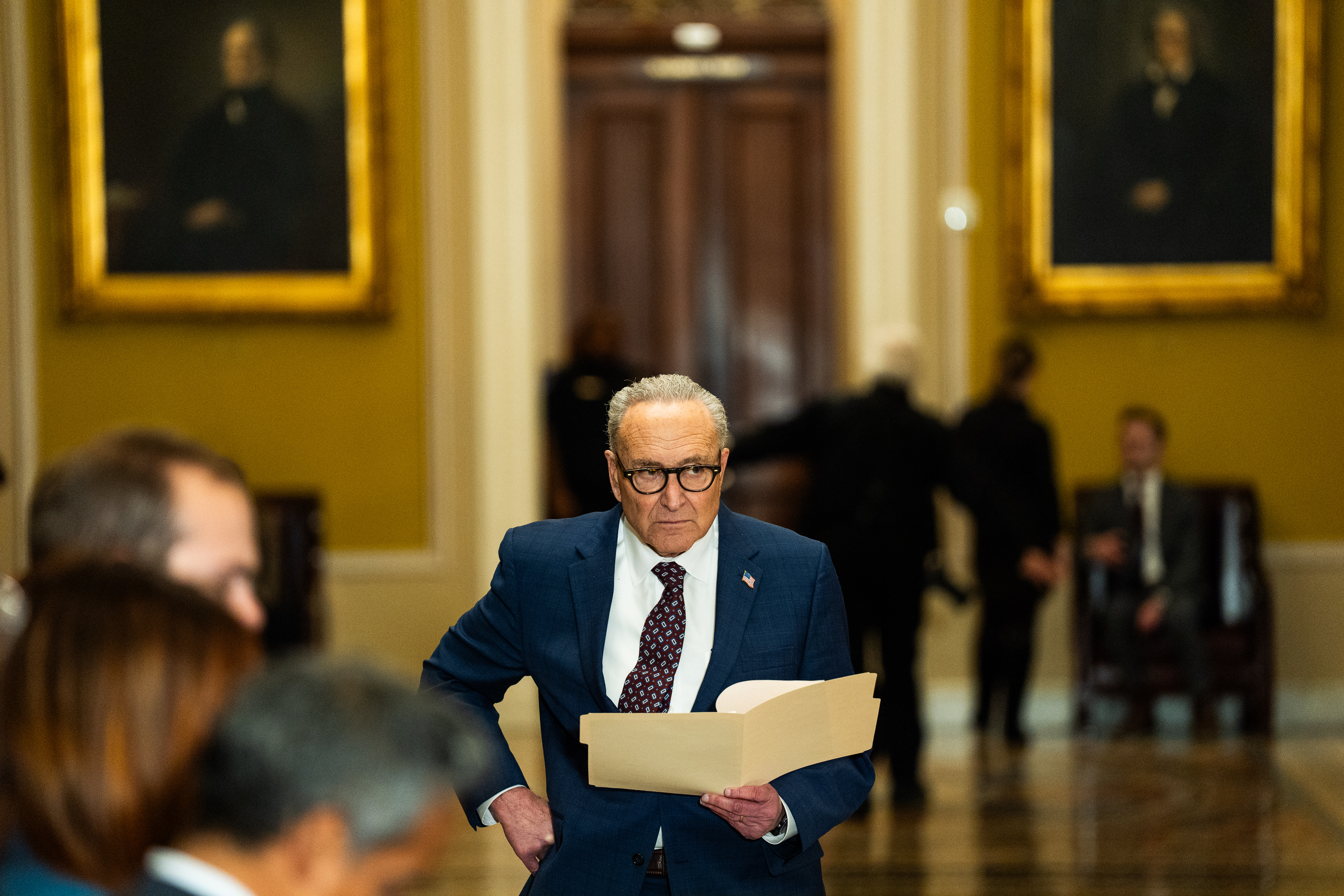
    “If the election were held today, we would win the majority,” Senate Minority Leader Chuck Schumer (New York) said in an interview with The Washington Post.

    Schumer said he felt “considerably more bullish” about Democrats’ chances of retaking the Senate than he did a few months ago. He described the environment as uncannily similar to 2006, when discontent with the war in Iraq helped Democrats recapture the Senate and the House.

    House Minority Whip Katherine Clark (D-Massachusetts) said Democrats’ recent momentum is driven by their focus on the economy, with voters believing that the party understands the financial pain they’ve felt in the years since Republicans swept into unified control.

    “That is what is driving these polls,” Clark told The Post on Thursday.

    Still, Democratic fears remain.

    Democrats need at least four more seats to take the Senate majority and would have to win at least two in states Trump carried by double-digit margins in 2024. Republicans are seeking to blunt any Democratic gains by flipping Democratic-held open seats in Michigan and New Hampshire, where polls show competitive races. The nonpartisan Cook Political Report shifted its rating of the Senate contest in New Hampshire from “Lean Democrat” to “Toss Up” this week.

    Republicans focused on keeping control of the House argue that they have a more favorable map, partly because a GOP redistricting effort has limited the number of battleground districts, and partly because they believe that Democratic primary voters nominated weak candidates in a handful of key races.

    Then there is the incoming flood of GOP money.

    Republicans are set to spend nearly $140 million more on ads than Democrats are in the nine most competitive races in the final weeks of the campaign, according to ad tracking firm AdImpact. The disparity is especially yawning in the Senate contest in Texas, where Republicans have reserved $39.6 million in ads and Democrats have reserved just $5.1 million.

    On the House side, the National Republican Congressional Committee plans to run coordinated ads in 39 districts, with more than $24 million in ads reserved.

    The Democratic Congressional Campaign Committee has plans for coordinated ads in 14 districts.

    “The Republican campaign engines are firing on all cylinders, and we are burying House Democrats in battleground districts across the country,” said Mike Marinella, spokesperson for House Republicans’ campaign arm. “Republicans have the historic fundraising advantage, a more favorable map, stronger candidates, and the firepower to defy history and grow our House majority.”

    Schumer acknowledged Republicans’ financial advantage but said it would not stop Democrats from retaking the Senate.

    “We don’t need as much money as them given the political climate, given the terrain,” he said. “All we need is enough to stay in the ballpark and be able to answer them.”

    Republicans have begun to openly acknowledge electoral concerns in recent weeks, particularly with polls showing that Democrats are far more eager to vote than Republicans are.

    Sen. John Kennedy (R-Louisiana) told reporters Thursday that he was going to Kansas, Nebraska and Iowa to raise money for GOP Senate candidates.

    “If you told me six months ago I was going to be having to spend my time in those three states, I wouldn’t have believed you. Those ought to be fat guy layups for us,” he said, though he predicted Republicans would hold those seats.

    “The far left, they’re angry,” Sen. Ted Cruz (R-Texas) said this week on the “Pod Force One” podcast, describing this as a “challenging environment” for his party. “They hate President Trump with a burning passion. And they’re going to crawl over broken glass to vote.”

    Senate Majority Leader John Thune (R-South Dakota) acknowledged Wednesday that Republicans are facing “headwinds” but said the Senate races that will decide control of the chamber remain competitive.

    “It’s not a great environment for us,” Thune said. “But we’ve got really quality candidates in all the competitive races, and the polling that we’re seeing in those races shows that these races are tight.”

    Republicans have been debating how to increase enthusiasm beyond spending more money. Some, largely those closely tied to the president and his political operation, argue that the path to victory is to re-create the electorate Trump built in 2024. Other Republicans — primarily those in battleground districts where private and public polls show that voters are deeply upset with the president — believe the way to win is to distance themselves from the administration and its policies, a difficult task following a decade of Trump remaking the party in his own image.

    “I’m asking you to pretend that I’m on the ballot,” Trump said during one of two speeches he gave at the Republicans’ midterm convention in Dallas recently. “Just one more time.”

    Trump has made it difficult for many candidates, especially those in tight races, to embrace this tactic. In large part, that’s because he has repeatedly dismissed the issue that voters say is their main stressor: prices. His trade war has raised prices on goods across the country. And gas prices, which have shot up because of the president’s war against Iran, are nearing $4.50 per gallon on average.

    However, speaking at a campaign rally Wednesday in North Carolina, a state he has won in three straight presidential elections, Trump said high fuel prices were “a very inexpensive price to pay for what we have done” in Iran.

    A Republican operative working on House races, speaking on the condition of anonymity to be candid, responded to Trump’s comments with an animated image of actor Bryan Cranston screaming, “F—!”

    The president has promised to get out the vote for Republican candidates, including those in trouble deep in Trump country. Some have taken him up on his offer, but not every candidate wants him around, and administration officials’ visits to red states have been seen as warning signs for Republicans.

    Vice President JD Vance traveled to Kansas this week to stump for Republican Sen. Roger Marshall, who is in a tighter-than-expected race against Democrat Adam Hamilton. Trump and Vance won Kansas by 16 percentage points in 2024.

    Vance is also set to campaign in Iowa on Friday. But the state’s Republican Senate nominee, Rep. Ashley Hinson, will not appear next to the vice president. A Hinson spokesperson cited previously scheduled events, but the absence comes as the candidate seeks to tout her bipartisan record in a state Trump won by 13 percentage points in 2024. Hinson is locked in a tight race against Democratic state Rep. Josh Turek.

    And in South Florida, an area Trump dominated in 2024, Republican Rep. María Elvira Salazar openly broke with the president Thursday.

    “Mr. President, some of your immigration enforcement efforts have gone too far,” Salazar says directly to the camera in a new campaign ad. “The same Hispanics who helped you get to the White House in 2024 feel betrayed today.”

    Democrats say they began to see a change during what was supposed to be Republicans’ hallmark 2026 event: the party’s unorthodox midterm convention. The gathering was billed as a way for the GOP to showcase its front-line candidates, but instead it featured Trump defending his record and pledging to give each American adult a $5,000 check if Republicans hold Congress this year, a proposal many Democrats saw as a sign of desperation.

    “We’re not measuring the drapes, but the ground has shifted,” said Xochitl Hinojosa, a longtime Democratic operative and top spokesperson at the Democratic National Committee after the 2016 election.

    Some Democratic operatives running campaigns said they had been waiting to see whether Republicans would coalesce around a clear affordability message during the Texas event. But when it became obvious that the event would be a Trump-centric celebration that offered no direct case for why Republicans deserved unified control for two more years, their confidence grew.

    “Turns out breaking all your campaign promises and doing everything possible to make life more expensive for everyone is bad politics,” said Viet Shelton, spokesperson for House Democrats’ campaign arm. “Shocker.”

    The last time Democrats experienced a wave election was in 2018, when the party swept into control of the House two years after Trump’s first presidential win.

    Meredith Kelly, a Democratic operative who was the top spokesperson at House Democrats’ campaign arm at the time, said that there are plenty of similarities between that year and this one — primarily around Trump’s unpopularity — but that the biggest difference is how Republicans’ worries are coming from voters who helped them win in 2024, such as rural voters and Black and Latino men.

    “Their coalition’s floor is falling out from underneath them,” said Kelly.

    The prospect of a wave election has Democratic candidates in districts once thought entirely unreachable for the party feeling like they may have a shot to do the unexpected in November.

    Eileen Laubacher, a retired Navy veteran running against GOP Rep. Lauren Boebert in a district that spans eastern Colorado, knows that her odds of winning have always been long. Trump won the district less than two years ago by 18 percentage points. But powered almost entirely by anger at Washington and voters’ fears about their personal finances, Laubacher thinks she has an opportunity to take down her outspoken Republican opponent.

    “People vote frequently about their pocketbooks and their wallets, but I think the situation is growing ever more fraught for people,” said Laubacher. “Every aspect of their life has become more expensive, and they do not feel that the government is doing anything about any of it.”

    Jarrell Dillard contributed to this report.

  • Postal Service chief says work stopped on computer system key to Trump effort to limit mail voting

    Postal Service chief says work stopped on computer system key to Trump effort to limit mail voting

    WASHINGTON — The top official at the U.S. Postal Service said Thursday that the agency has stopped work on developing a controversial computer system that was central to President Donald Trump’s effort to limit mail voting after the Supreme Court rejected his executive order this week.

    “There’s an injunction so we’re not doing anything,” postmaster general David Steiner told The Associated Press in an interview.

    Steiner, a onetime chief executive of Waste Management, has spent most of the past year atop the postal service navigating political and financial challenges. He’s pressing Congress for changes that would help him resolve what he has called a “liquidity crisis.”

    And Trump’s efforts to largely eradicate mail voting turned the postal service into an unlikely arbiter of who is eligible to vote just months before this year’s critical midterm elections, a role Steiner seemingly had little interest in playing. Unlike Trump, who was sharply critical of the Supreme Court decision and ridiculed some of the justices, Steiner offered no assessment of the court’s action.

    Steiner also declined to take a position on Trump’s policy, presenting himself as the leader of an “independent agency of the executive branch” whose influence over the president’s order was limited to operational concerns.

    “I don’t get to decide what rules that are put on us that I decide to accept or not accept,” he said. “I looked at it more from the execution side.”

    The postal service has asserted its independence in the past, including during a 2019 standoff when the first Trump administration sought to pressure the agency as the president was in a dispute with Amazon. Steiner said he wouldn’t get into the “nuance” of that.

    But the pressure has grown so intense at points that it’s fueled talk of whether Steiner might resign, a notion he denied.

    “There’s no truth to that,” he said. “I think I know the motivation behind it. I think it’s somebody that would like to see me out of a job.”

    Inserting the Postal Service into elections

    The executive order Trump signed in March directed several federal agencies to develop state citizenship lists. Those lists would have been delivered to an online portal at the Postal Service, which would have been allowed to send mail ballots only to voters who were cleared through the process. Steiner said he knew about the order about a month before it was unveiled but said his focus was largely on implementation, not the policy’s merits.

    A whistleblower report released earlier this month by Sen. Richard Blumenthal, D-Conn., argued the system was hastily built and riddled with errors.

    Steiner said he read “portions” of the whistleblower report and acknowledged the obstacles associated with building such a massive platform quickly. Still, he said he had confidence in colleagues working on the project and had planned to unveil it around Sept. 15.

    “There’s absolutely no doubt that we worked fast,” he said. “My personal opinion is it was a monumental task and I’m very proud of our IT department for being able to do it that fast.”

    In addition to the voter list, Trump’s order would have required states to adopt a uniform envelope style that included barcodes, something states said would have been arduous so close to the election.

    Following the Supreme Court’s ruling, a memo sent to all postal service employees Wednesday and obtained by the AP said the agency will “not be enforcing any of these new rules in the 2026 federal election.”

    “First and foremost, for Election Mail it is business as usual,” according to the memo. “We continue to follow established protocols, and we remain entirely focused on our core mission: delivering the mail safely and securely for voters and election officials across the country.”

    Though the Supreme Court rejected Trump’s executive order for this year’s election, Justice Brett Kavanaugh indicated he might rule in favor of the administration if the issue comes back before the court at a later time.

    Steiner encourages voters to cast ballots early

    Steiner said the postal service would still encourage the use of envelopes and barcodes in future elections, which it has long recommended. He said such changes wouldn’t be required but those who don’t comply may have to pay more.

    “If you use the barcode in the envelope, we’ll charge you a lower price,” he said. “If you don’t, we’re going to charge you a higher price because it’s harder for us to process.”

    While the postal service isn’t moving forward on Trump’s order, there are still concerns about postmark delays that could have an impact on this year’s elections. The number of ballots rejected for late postmarks has soared in the vote-by-mail states of Washington and Oregon, according to recently released data highlighting concerns about recent changes in postal service operations.

    Steiner said there were no plans to alter those operations and encouraged voters who use mail to get their ballots in early.

    “We say seven days,” he said. “Everything is solved if people vote early.”

  • Blanche’s partisan activity before midterms dismantles another principle

    Blanche’s partisan activity before midterms dismantles another principle

    WASHINGTON — Attorney General Todd Blanche has repeatedly participated in campaign events and spoken in partisan terms about the coming midterm elections since his confirmation last month, despite criticism that he violated a long-standing Justice Department principle of steering clear of electoral politics.

    This week, he waded again into those waters — twice.

    Since August, Blanche has come under fire for making campaign-tinged public appearances and comments. Last month, at a rally-style event on Long Island, he praised Bruce Blakeman, the Republican candidate for governor of New York. Last week, Blanche delivered remarks at the Republican Party’s midterm convention.

    On Tuesday, he stood at the White House podium and disparaged Democratic lawmakers while invoking the coming election, dismissing their concerns about artificial intelligence as “nothing but an effort to influence the midterms.”

    And Wednesday, Blanche spoke at a campaign rally for Michael Whatley, the Republican Senate candidate in North Carolina. Echoing his convention speech, he portrayed crime rates, which continued a long-term downward trend to reach new lows in 2025, as “President Trump and Vice President Vance delivering on a promise.”

    Worries about the Justice Department abandoning its long-held commitment to appear apolitical in order to maintain institutional credibility may seem beside the point. Since January 2025, dozens of judges have viewed its representations with suspicion, eroding the traditional bonds of trust, known as the “presumption of regularity,” that the courts typically grant the department.

    The second Trump administration has also unabashedly destroyed the post-Watergate norm of Justice Department independence from the White House in investigative decisions. Early on, Blanche’s predecessor, Pam Bondi, declared, “We are so proud to work at the directive of Donald Trump.” Last September, after Trump publicly demanded that she charge several perceived adversaries, the department pushed through short-lived indictments of two of them.

    Still, Blanche is dismantling another post-Watergate principle: that Justice Department leaders stay away from partisan politicking.

    Joseph Tirrell, the Justice Department’s senior ethics official until the Trump administration dismissed him in July 2025, this week criticized Blanche’s participation in the Republican convention. He called the attorney general’s comments at the White House briefing “borderline” unethical, and his participation in the North Carolina rally “terrible.”

    “In my former role, I would have advised the attorney general not to go to the White House and not to make comments about members of Congress within 45 days of an election,” Tirrell said. Referring to a law restricting partisan political activity by government employees, he added, “I’d say, ‘That rally sounds like a Hatch Act violation to me, and I’d advise you not to do it.’ I would want to scare that person straight.”

    Stephen Gillers, a New York University law professor who specializes in legal ethics, said Blanche’s political statements and activities were protected by the First Amendment and did not violate professional conduct rule, even if they were ill-advised.

    “Any attempt to discipline him will fail,” Gillers said. “That’s unfortunate. He has the ability to do what he’s doing, and he’s chosen to do it.”

    The Justice Department did not respond to a request for comment.

    When the group Public Citizen filed a Hatch Act complaint about Blanche’s comments praising Blakeman, the Justice Department told Government Executive in a statement that it was “baseless” and “a politically motivated complaint designed to weaponize the Hatch Act against the attorney general for his support of law enforcement.”

    And in response to criticism last week by Democrats on the House Judiciary Committee over Blanche’s convention appearance, the department shot back on social media, “Todd Blanche’s appearance this evening in his personal capacity is legal (and has been approved by ethics).”

    Legal questions center on the Hatch Act, which is ambiguous and difficult to enforce when an administration does not want to strictly adhere to it. The law and related regulations allow some political appointees, while off duty, to attend partisan events, like fundraisers and campaign rallies. Some law enforcement officials are restricted from any partisan activity, but the attorney general is not listed among them, and it is disputed whether that part of the legal limits applies to them.

    Even for those who can engage in political activity in a personal capacity, the traditional test is not just whether such officials say they are doing so, but whether people would reasonably perceive them as acting in their government roles.

    Cynthia Shaw, who ran the Justice Department’s ethics office throughout Trump’s first term, said the notion that high-ranking officials could simply say they are acting in a personal capacity to get around that threshold was a misunderstanding.

    “The bigger the job you get, the less personal capacity you have, because when you speak, people are going to see you in your official capacity and representing the agency that you are head of,” she said.

    Federal law enforcement needs to not just be fair, she added, but to be seen as fair for the long-term good of the department and society.

    For that reason, the Justice Department had long held itself to a higher standard than the Hatch Act and its ambiguities. For decades, its ethics policies went beyond the statute in pushing officials to avoid events like political fundraisers and campaign rallies.

    In 2022, Attorney General Merrick Garland flatly banned political appointees from participating in partisan activities — even in their personal capacities, and even if their family members were the candidates.

    But in March of this year, Bondi rescinded that policy, freeing political appointees to attend such events in their personal capacities subject only to the lower standards of the Hatch Act.

    That weakening of ethics rules is one reason the department’s claim that Blanche’s appearance at the Republican Party convention was “approved by ethics” merits scrutiny. Another is that the administration has changed who makes ethics recommendations.

    After firing Tirrell, the administration left his position vacant for nearly a year before appointing Kristina Spencer, a former aide to Vice President JD Vance who had no prior department experience.

    The office of the deputy attorney general can also overrule the ethics office’s recommendations. For decades, the decision-maker was a career official, but the Trump administration moved that authority to political appointees.

    The principle that the Justice Department should strive to appear apolitical took root after Watergate. President Richard Nixon’s first attorney general, John Mitchell — who later went to prison for his role in the scandal — was so deeply partisan that he resigned to run Nixon’s 1972 reelection campaign.

    The attorney general immediately after established the modern norm of not acting as a political operative while in office: Edward Levi, a University of Chicago legal scholar.

    Maintaining a nonpartisan image has proved difficult, partly because of the department’s power and an increasingly polarized political atmosphere. Under both parties, one attorney general after another has been accused by political opponents of politicizing the Justice Department.

    In 2013, Attorney General Eric H. Holder Jr. called himself President Barack Obama’s “wingman,” clashing with the principle of Justice Department independence. Asked last week about Blanche’s speech at the Republican convention, Holder said, “It’s unprecedented, and it’s disgraceful. Attorneys general don’t talk about political things. He shouldn’t be there.”

    Holder, while serving as attorney general, never spoke at the Democratic convention or at campaign rallies. Nor did Republican attorneys general frequently accused by Democrats of politicizing the department, including Attorney General William Barr during Trump’s first term.

    Gillers said that shifting standards for the conduct of attorneys general would harm the rule of law, especially if Blanche’s successors followed his example.

    “This is new,” he said. “The changing image of what an attorney general should be seen to do, and how officials high in the Justice Department should behave, will not be good. We just don’t know yet how bad it will be.”

    This article originally appeared in The New York Times.