Tag: no-latest

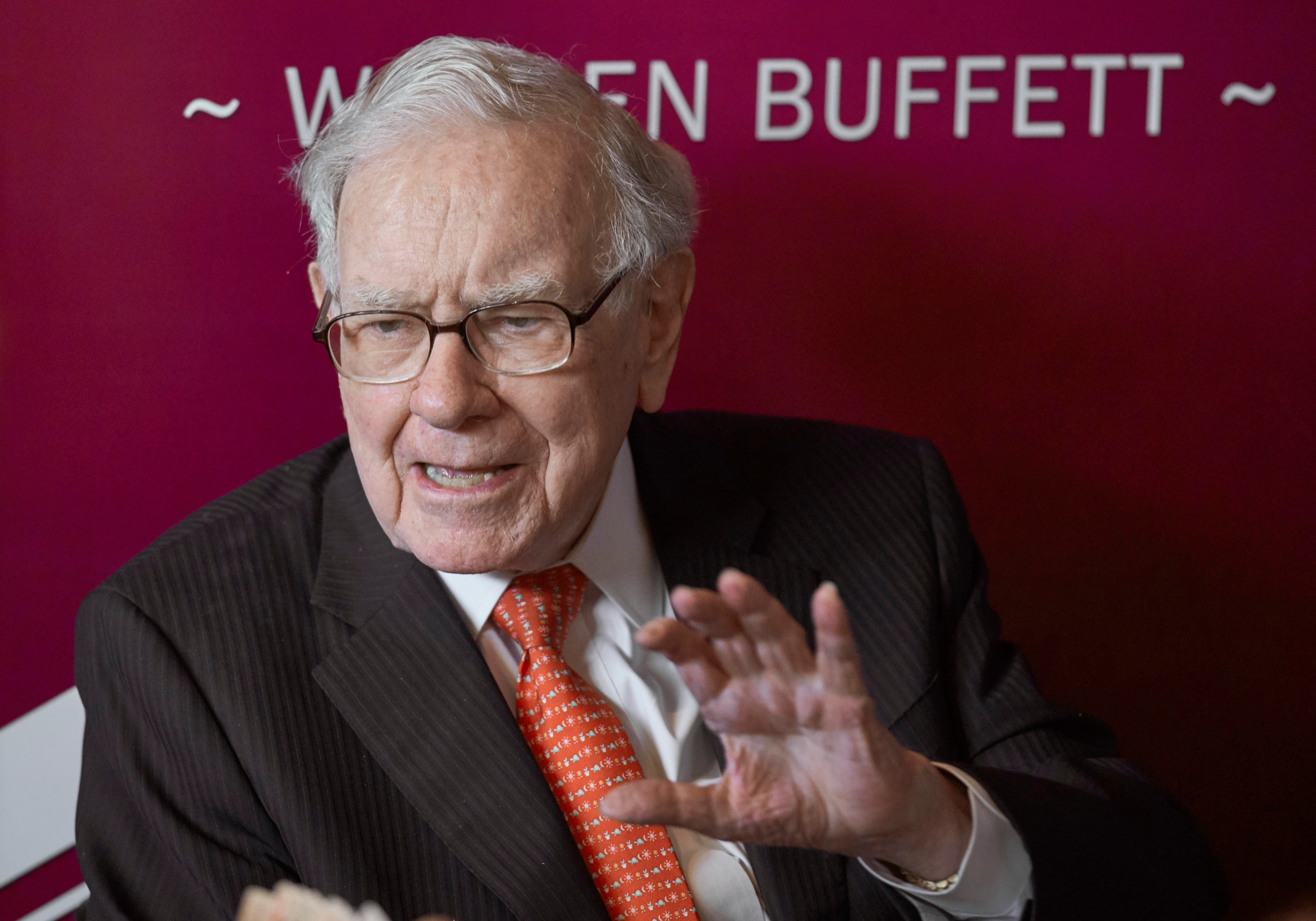
  • Warren Buffett steps down as Berkshire Hathaway chairman

    Warren Buffett steps down as Berkshire Hathaway chairman

    OMAHA, Neb. — Warren Buffett is stepping down as chairman of Berkshire Hathaway in the next step of the transition at the top of the $1 trillion conglomerate he led for more than six decades.

    Buffett, 96, will become chairman emeritus and will take on his new role immediately, the company said Friday. His son Howard will become Berkshire Hathaway’s new chairman, part of a long-planned succession. Howard Buffett has been on the Berkshire Hathaway board since 1993.

    Warren Buffett, known by a legion of financial market followers as the Oracle of Omaha, will remain a director. He had been Berkshire Hathaway’s chairman since 1970, but he took control of the struggling New England textile company in 1965.

    Greg Abel took over for Buffett as the CEO of the conglomerate at the start of this year though Buffett continued to come into the office each day to look for new investments and deals and offer Abel any advice. It’s not clear whether Buffett will change his routine at all now.

    “I have served Berkshire since 1965,” Buffett said in a letter to shareholders. “Sixty-plus years in, I still have the best job in the world. That is not something many people my age can say, and I have never felt better about what comes next.”

    Investor Adam Mead, who wrote The Complete Financial History of Berkshire Hathaway, said Buffett seems to trying to lessen the impact on Berkshire when he eventually dies by taking this step now. Berkshire’s announcement didn’t reveal any health issues for Buffett, but Mead said “He’s now 96, so even a cold could be a health scare.”

    Greg Abel will continue as CEO with Howard Buffett becoming chairman

    Buffett said that he is confident with Abel and his son Howard leading Berkshire Hathaway.

    “Greg runs the company; Howard will guard its culture and values — both worth more than anything on our balance sheet,” he said. “Think of Howard as a policy the shareholders own and hope never to claim against.”

    Abel started managing all of Berkshire’s non-insurance businesses in 2018 when he was elevated to vice chairman, so he knows the various companies well, including BNSF railroad, the utilities and manufacturing operations, as well as name brands like Dairy Queen and See’s Candy. But CFRA Research analyst Cathy Seifert said investors still have questions about how well Abel will be able to deploy Berkshire’s massive $365 billion cash pile.

    “There was a premium awarded Berkshire stock because of their financial strengths and because of this famed investor who was allocating capital. I think it’s naive to assume that this is business as usual. It’s not,” Seifert said. “What this does is amplify some of the execution risk in the strategy and the significance of the transition.”

    The next orderly step in Warren Buffett’s succession plan

    Michael Withers, professor of management at the University of Notre Dame’s Mendoza College of Business, said Buffett took a deliberate approach to Berkshire Hathaway’s succession plans and has carried out the transition step by step.

    “Buffett seems to have understood that succeeding him wasn’t just about finding another extraordinary leader,” he said. “It was about building a structure that could preserve what makes Berkshire different long after he has stepped away. The test moving forward will be whether Abel and Howard can honor that legacy while still giving Berkshire room to adapt to a market that looks very different from the one Buffett mastered.”

    Buffett’s fortune has been amassed through Berkshire Hathaway stock. Buffett built the company into an investing conglomerate and an icon of Wall Street by buying insurance companies and reinvesting the money from premiums in stocks and other companies. In 2024, Berkshire Hathaway became the first non-tech companies valued at more than $1 trillion.

    Buffett, a longtime philanthropist, has given away roughly $66 billion worth of stock since 2006 with the bulk of that going to his friend Bill Gates’ foundation. But this summer he announced that his three children will now take over all of the charitable decisions and distribute the rest of his fortune by the end of 2035.

    Buffett’s take on finance has created its own gravitational pull. When Berkshire Hathaway reveals the stocks that the company has acquired or sold in public disclosures, it can shake markets.

    During his time as CEO of Berkshire Hathaway, the company nearly doubled the returns of the S&P 500, with a 19.9% compounded annual growth rate compared with the index’s 10.4% gain.

    “Warren’s impact on Berkshire and its owners is without parallel in the history of American business,” Abel said in a prepared statement. “The culture Warren built and the values he championed will remain at the heart of Berkshire, and Howard will be their guardian.”

    Shares of Berkshire Hathaway edged up 0.1% on Friday.

  • Letters to the Editor | Sept. 18, 2026

    Letters to the Editor | Sept. 18, 2026

    El Bloque de Oro

    A friend and I took a taxi to the Feria del Barrio Festival on North Fifth Street on Sunday and used the opportunity to visit my old house on Orianna Street, along with my former school and church at Sixth and Tioga.

    As we walked from Fifth Street toward the school and church, we met many friendly people. A driver described how Orianna Street has changed since she moved there in 1993, including the many empty lots now there. A concerned young woman stopped to ask if we were lost, an older woman at the Sixth and Tioga bus stop shared stories about herself and her family, an Eagles fan offered the expected “Go Birds,” and a lovely woman with two teenage boys introduced us to tamarindo water ice near the Rivera Recreation Center.

    Everywhere we went, people were kind and welcoming. Even the Route 47 bus back to Center City was on time. It was a terrific day. My thanks and warm regards to the people of El Bloque de Oro.

    Catherine V. Beath, Yardley

    Selective scrutiny

    A recent front-page article in The Inquirer raised questions about how Pennsylvania’s Redevelopment Assistance Capital Program granted a Philadelphia restaurant $1.5 million to expand. The recipient of the grant was no faceless chain franchise. Friday Saturday Sunday is a Philadelphia institution that’s locally owned and Michelin-rated. I’m guessing that compared with its profit, the grant constitutes a fortune.

    Later in the article — buried in an obscure paragraph — The Inquirer barely mentioned that another local institution also got a grant, one for $1.4 million. Comcast Spectacor had a profit of almost $6 billion just for the first half of 2026. It takes a lot of you-know-what to come hat in hand to a grant program. And, unlike the restaurant, there’s no guessing about the financial stakes: Compared with its profit, the grant is chump change. Worse, Comcast has more than $7 billion in cash lying around, and yet it acts like CEO Brian Roberts must sell apples on Arch Street to save up for a winter scarf.

    The Inquirer calls into question a small, popular restaurant, yet it hardly mentions a behemoth that’s raked in billions over the years.

    What’s wrong with this picture?

    Rob Weiss, Mount Laurel

    Muted voices

    This is not meant to be a comment in support of Macklemore’s sentiments regarding Palestine, Gaza, and the West Bank. Whether you agree with Macklemore’s sentiments is not the point. The point is that powerful people like Robert Kraft shouldn’t try to silence a controversial view. People in power do not like their athletes and performers to have a voice, and their “shut up and play” response is bullying and insulting. But what they don’t understand is that, in the end, their bullying just amplifies the controversial sentiment. It has put someone like Ed Sheeran in a difficult position because he really just wants to play and avoid controversy, but maybe he should be in support of free speech. Just sayin’, Ed.

    This smells of what happened to Colin Kaepernick. We just never learn.

    Bill Maginnis, North Wales

    Missing integrity

    We have reached a new low point in America. From the man who has sown doubt in the integrity of the American electoral process simply because he lost an election came an offer to pay voters if his party prevailed in the upcoming midterm elections. It cannot be explained away as a slip of the tongue or impassioned rhetoric, as the offer to pay each adult American $5,000 if his party prevailed in November was repeated on consecutive days. What greater assault on the integrity of the electoral process can there be than an offer to buy someone’s vote? Never mind that this partisan payment would come out of taxpayer dollars regardless of party affiliation, would add over $1 trillion to the national debt, and would require congressional approval. Where was the outrage about this assault on our democracy? It was muted at best on both sides of the aisle. Where has our sense of integrity and accountability gone?

    Mary Ellen Nepps, East Norriton

    . . .

    If the policies and programs of the Trump administration and the Republican Party are so beneficial to the American public as a whole, why does the president have to offer an inducement for voters to reelect Republicans to continue with their efforts?

    Susan Olson, Ambler

    . . .

    Democrats, independents, and Republicans who care about their country — not Donald Trump — need to pay attention to the upcoming election. While Kash Patel is threatening to send federal agents to polling places, Trump is working to swing the vote any way he can. He has offered $5,000 to everyone if the Republicans hold Congress. He told attendees at the Republican “Trumpalooza” to go out and vote whether or not they are registered and “to cheat like hell.” This is from the man who is screaming “voter fraud” at every opportunity. Everyone who loves this country and is a registered voter needs to go out on Nov. 3 and vote to stop the lunacy, corruption, and incompetence of the current administration and Congress.

    Mary Ann Furin, Philadelphia

    Don’t displace

    Peter Dobrin’s excellent article on the Academy of Natural Sciences claims that a closure won’t stop “its beating heart.” This may be wishful thinking promoted by those who would rather lose the Academy as it is known in the world and take unnecessary chances with priceless collections and scientists than miss out on — or stand in the way of — a real estate deal worth millions.

    The reason for closing the museum, relocating the collections, and selling the building in Center City is cited as Drexel’s ongoing financial challenges. But how will selling the museum and longtime home to the Academy guarantee Drexel will be able to fund and will continue to allow the Academy to continue as it operates now, even if finances are not a question? How are relocations of the collections and safe storage for them being paid for? Is there any way to guarantee that critical Academy scientists will also make the move and not leave for other opportunities? Is there any guarantee that the public would still have access to the exhibits? Is there any guarantee Drexel will continue the same public programs? No. The only things that are guaranteed by closing the museum, farming out the exhibits, relocating collections, and giving complete control to another institution is that Center City would be stripped of one of its best-loved and most respected institutions.

    The Academy, its Parkway headquarters, and the museum also have a distinction that is rare among Philadelphia’s many storied “firsts.” Unlike some “Philadelphia firsts,” the Academy of Natural Sciences is not just historical; it has maintained its “first” status among its peers on a national and even global scale. It doesn’t just maintain historical collections and exhibits; its scientists and its collections continue to contribute to scientific research and learning. As Dobrin notes, researchers from around the world come to Philadelphia to access the Academy of Natural Sciences.

    The Academy was the first natural science museum; it was the first place to fully put together a complete dinosaur. It is housed in a building that itself is a century-old gem among gems on the Parkway. It has shared the wonders of science with children and adults for centuries.

    The costs of displacing the Academy of Natural Sciences from its long home on the Ben Franklin Parkway go beyond the monetary costs of moving the collections to some unknown place. They go beyond the cost of losing the dinosaurs and other exhibits to some other city while depriving regional children and adults. It goes beyond potentially losing the people behind the collections.

    It will cost the city of Philadelphia immeasurable harm by allowing it to happen. Other cities and states would do anything to keep this treasure from being disrupted and dislocated.

    Philadelphia’s leaders — private and public — must rise to the occasion and save all of the Academy.

    Lisa K. Hastings, Philadelphia

    Join the conversation: Send letters to letters@inquirer.com. Limit length to 150 words and include home address and day and evening phone number. Letters run in The Inquirer six days a week on the editorial pages and online.

  • Horoscopes: Friday, Sept. 18, 2026

    Horoscopes: Friday, Sept. 18, 2026

    ARIES (March 21-April 19). What you thought would be easy to acquire is much more challenging than anticipated, and that is making you want it all the more. You can use this principle to create demand for what you provide, too.

    TAURUS (April 20-May 20). The great thing about your many responsibilities is they’re yours to prioritize and schedule. Certain people around you are in a rush, but their timing doesn’t automatically have to be yours. Go at your own pace.

    GEMINI (May 21-June 21). Today, say what you think in as few words as possible and only if the situation really calls for it. Maybe you’ll need to stand up for yourself or your people. You can do it in a kind way. When people understand what you need, they’ll help.

    CANCER (June 22-July 22). You know what you’re good at, but you don’t always have the opportunity to do it uninterrupted and repeatedly, which is what it takes to get better. Your chance is coming. Seize it. This is how you’ll set yourself apart from the crowd.

    LEO (July 23-Aug. 22). When you want something, it can be hard not to act weird in its presence. Desire can make one self-conscious and overly aware of the dynamics in play. It may help to remind yourself that if you get it or don’t get it, you’ll be perfectly fine either way.

    VIRGO (Aug. 23-Sept. 22). You won’t make the deal because you’re now beyond needing to. No more holding out your hand for the handshake, the funds or a key. You (SET ITAL)are(END ITAL) the key and the lock, too. You are the fate, and the fate is you.

    LIBRA (Sept. 23-Oct. 23). Knowing how to enjoy free time in a satisfying way is a skill many people never develop, and you’re not about to let that happen to you. Even before you acquire the free time, it’s worth working on the skill in whatever way you can.

    SCORPIO (Oct. 24-Nov. 21). If you don’t have the luxury of a coach or a cheering squad today, take heart. The results will be your teacher. The greatest lessons of all time have been learned through trial and error. Cheer yourself on!

    SAGITTARIUS (Nov. 22-Dec. 21). Catchy passwords, fascinating facts, comforting quotations — all are useless when you cannot remember them. It’s a day to consider your systems for noting, organizing and generally keeping track of things.

    CAPRICORN (Dec. 22-Jan. 19). Compartmentalization is necessary to protect concentration, allow for rest and keep one event from swallowing the whole day. But today, the compartments won’t lock, and it’s actually a good thing when they spill into each other.

    AQUARIUS (Jan. 20-Feb. 18). You may feel like you’re bouncing from one thing to another, but there’s actually a common thread — experimentation. On some level, you know what you want and your intuition is racing ahead, finding ways to get at it.

    PISCES (Feb. 19-March 20). People will care more about the quality of your work than how quickly you finished it. If you can do it fast, maybe don’t tell them. It took you a long time to get this good. Consider it a trade secret.

    TODAY’S BIRTHDAY (Sept. 18). It’s your Year of the Aves, and like the class of animal that’s been on Earth over 100 million years, you have all the adaptations you need to see more of the world, thrive in your flock and find what you need to fly. More highlights: Love returns in new forms. A focus physicality brings vitality, strength and camaraderie. Your efforts on behalf of a group lead to personal adventure. Gemini and Capricorn adore you. Your lucky numbers are: 32, 11, 16, 38 and 5.

  • Dear Abby | Friend grows distant after personal struggle

    Dear Abby | Friend grows distant after personal struggle

    DEAR ABBY: A dear friend of 10 years experienced a severe mental health crisis. I did my best to reach out to her, but she pushed me away and flaked on plans and important events at the last minute at least a dozen times. Once her mental health began to improve, I approached her and told her I understood her behavior had been largely out of her control, but it still hurt when she pushed me away and canceled at the last minute for meaningful events in my life. She apologized, I accepted, and I thought we could move on again as close friends.

    She is now engaged to a man and seems to put no time or value into our friendship. I am grieving the loss of a dear friend and struggling to accept that it is over. I have many questions: Did we simply drift apart? Is her new fiancé more important to her? Is she upset that I confronted her, and was I wrong to do so? Do 10 years of friendship mean nothing? I’m afraid another difficult conversation will create a worse outcome, but I miss the friend I once had. Where is the line to excuse behavior under the duress of mental health and at what point do I simply accept that she is no longer a good friend, mental health crisis aside?

    — NOT OVER IT IN OREGON

    DEAR NOT OVER IT: As much as this close friendship may have meant to you, it’s time to realize that these relationships are not always static. They can evolve, devolve and change. You were within your rights to express to the woman that you felt pushed away during her mental health crisis. Those were your feelings, and you were entitled to them.

    The time has come now for you to lighten up. Your friend is happily engaged to someone who makes her happy, and her attention and priorities have shifted away from her close friendship with you. Of course her fiancé is more important to her than you are. It isn’t that you are no longer good friends, it’s that the intensity has lessened. Handle that as you wish, but I see nothing positive to be gained by another confrontation.

    ** ** **

    DEAR ABBY: My daughter is getting married to “Bob,” who has an 8-year-old son, “Ricky,” from a previous marriage. The plan was to have Bob’s son be the ring bearer and have my 2 1/2-year-old grandson, “Aiden,” be the flower boy. However, Ricky has autism, and Bob has decided that it would be better to not include him in the ceremony. Now he says he doesn’t want Aiden to be in the ceremony, either. I can understand Bob’s feelings, but it does not seem fair to me.

    — NEW MEXICO GRANDDAD

    DEAR GRANDDAD: You may feel let down by this decision, but trust that your grandson will never know the difference. When planning a wedding, the bride and groom organize the ceremony in whatever way they feel will best celebrate their union. Fairness doesn’t play a role in it, and no one is owed a place in the wedding party. Attend the wedding with joy in your heart, and show your daughter how much you love her by respecting her decision.

  • Crashing a plane for clicks: Influencers push shock content to get views

    Crashing a plane for clicks: Influencers push shock content to get views

    In 2021, Trevor Jacob, a former U.S. Olympic snowboarder, flew a 1940 Taylorcraft plane far above the hills of Los Padres National Forest in Southern California and made a decision he would spend years wishing he could undo.

    Cameras he had mounted to record his flight for an online audience captured him announcing that the plane had engine trouble before he bailed out.

    A camera attached to a selfie stick he held recorded him parachuting safely to the ground, while cameras fixed to the plane captured it slamming into a hillside.

    He posted a 13-minute video on YouTube titled I Crashed My Plane, which amassed some 5 million views. As it turned out, it was a confession.

    Federal investigators later determined that the plane had never malfunctioned: Jacob had staged the crash, hoping for online fame.

    The attention was fleeting.

    The stunt eroded his life and led to a federal prison sentence.

    Jacob is among a growing number of social media influencers who push the boundaries of safety and good taste in the quest for views, experts said.

    Influencers, sensing that the algorithms reward extreme content over routine videos, are navigating this landscape, one where outrage, fear, and awe hold viewers’ attention a little longer than tamer fare.

    Gone are the years when internet fame was within reach for a teenager filming dance routines in a bedroom, or a parent teaching recipes from a kitchen.

    Attention is currency, and sometimes it’s costly.

    Around the world, aspiring influencers trespass on skyscraper roofs. They block highway traffic. They provoke strangers in grocery stores, airports, and malls. They dangle from helicopters, cranes, trains, and cliffs for clips lasting only seconds.

    Some are arrested. Others are hospitalized. And, in tragic cases, some have died.

    Psychologists who study this field are not surprised.

    “As the tech has evolved and influencers stand to earn fame and wealth, it is probably not surprising that some people are willing to risk prison or even death,” said Kaveri Subrahmanyam, a psychologist at California State University.

    That bet — fame and wealth weighed against the risk of prison or worse — is one that Dalton Eatherly appears to have made.

    To his thousands of followers he’s known as Chud the Builder. A self-described “America-first” influencer, he has garnered views by livestreaming confrontations with Black people, which often included racial slurs and harassment.

    In May, one of Eatherly’s confrontational pursuits for clicks almost proved fatal.

    A dispute with a man outside the Montgomery County Courthouse in Clarksville, Tenn., ended with gunfire as both men wielded firearms.

    A video later surfaced of Eatherly on a stretcher with a microphone attached to his lapel.

    Eatherly claimed self-defense but was later charged with several counts, including attempted murder. The case remains pending.

    He and his lawyer could not be immediately reached for comment.

    Social media platforms TikTok, Kick, and YouTube (which is owned by Google’s parent company, Alphabet) and Facebook and Instagram (which are owned by Meta) said that they enforce community guidelines meant to restrict objectionable and dangerous content and that they ban users who violate their policies.

    “To prevent copycat behavior, we prohibit people from facilitating, organizing, or promoting harmful activities,” a Meta representative said in a statement.

    Experts who have studied digital behavior and online incentives said boundary-pushing stunts are unlikely to ease as long as social media platforms reward such content.

    “In many cases, that means escalating toward ever more extreme claims and risky behaviors that can endanger not only creators themselves but also their audiences, for whom it’s increasingly difficult to distinguish between what’s truly beneficial and what may be outright harmful,” said Jasmina Tacheva, an assistant professor at the School of Information Studies at Syracuse University.

    Eatherly is not the only influencer to have courted danger.

    In Loudoun County, Va., Sheriff Mike Chapman’s department responded to a call involving Tanner Cook, a YouTuber behind a channel called Classified Goons.

    Cook, who is known for harassing unsuspecting strangers, repeatedly confronted a DoorDash driver in the Dulles Town Center in Sterling, Va.

    Cook shoved a phone into the driver’s face while a vulgar phrase played in a loop in what was an escalation of confrontational stunts he has filmed in other places.

    The driver, Alan Colie, shot Cook, who survived.

    A jury acquitted Colie of aggravated malicious wounding, finding that he acted in self-defense, but convicted him of discharging a firearm in an occupied building.

    After the verdict, Cook said the shooting would not change his approach.

    “We are going to continue the videos and keep it pushing,” said Cook, whose YouTube channel has 66,000 subscribers. “It is what it is.”

    Recent uploads show him streaming in stores, falsely accusing a stranger of stealing and of him being thrown out of businesses. A video posted in early 2026 is titled “I almost got shot again!”

    Cook and Colie did not respond to multiple requests for comment.

    Chapman’s office regularly warns residents about viral challenges and online trends. The pursuit of a laugh, he said, can carry real-world consequences.

    “You may think this is funny,” Chapman warned, “but this could end up as a disaster.”

    The trend stretches beyond the United States.

    The British government recently called on social media companies to remove more dangerous content, including videos of users filming themselves driving dangerously, after a string of deadly crashes that were linked to online stunts.

    A press officer for Ofcom, the government’s regulator of communications services, said it opened an investigation into TikTok’s compliance with its child-safety responsibilities in July.

    “Online content which encourages dangerous behavior and treats it as entertainment is totally unacceptable, and can have tragic and heartbreaking consequences,” the official said in a statement.

    A TikTok representative said content that promotes dangerous behavior or could lead to serious injury violates its community guidelines, which prohibit criminal behavior, hate speech, and physical or sexual abuse, among other categories.

    The platform has been redirecting videos of dangerous challenges to a safety center page. Violators can also be permanently banned, the representative said.

    In France, Raphaël Graven, an internet personality who routinely subjected himself to acts of violence and verbal humiliation for an audience, died last year during a live broadcast on the platform Kick.

    Some bruises on Graven’s body were found during an autopsy but none that could explain his death, French officials said.

    The two men who ran the livestream channel, Owen Cenazandotti and Safine Hamadi, were not accused of causing the death but were convicted in August of aggravated violence, incitement to hatred, and violence online. Both received suspended prison terms and were fined.

    In a statement, Kick cited its community guidelines and terms of service, saying that users “must comply with all laws and regulations in their country” and that violators could have their content removed, be suspended, or banned.

    The company’s rules prohibit extreme violence, depictions of self-harm, and graphic gore as well as content that puts personal safety at risk.

    Kick said it moderates livestreams while considering “the full context” to evaluate potential violations.

    Today, Jacob reflects on the lessons he learned from his plane crash stunt.

    “I don’t regret what I did because it’s taught me a massive life lesson, and I’ve become somebody that I never otherwise would have become,” he said. “But that doesn’t mean that it was OK, and that I didn’t make a terrible decision.”

    Looking back, he said there were other motivations, including money, curiosity, and a desire to make a spectacular feat a reality. But attention was always part of the calculation.

    He decided then that the risk was worth taking. Federal authorities and YouTube concluded otherwise.

    “We have clear policies prohibiting extremely dangerous challenges, dangerous or threatening pranks, and other harmful or dangerous acts,” a YouTube representative said in a statement. “For example, the plane crash video was removed and the creator was suspended from the YouTube Partner Program after the incident.”

    Prosecutors later said that Jacob intentionally destroyed evidence by removing the wreckage and lying to investigators about its location.

    Jacob, who pleaded guilty to one federal count of destruction and concealment and served a little over four months of a six-month prison sentence, said that the legal case consumed roughly five years.

    The consequences stretched far beyond the courtroom.

    “It completely decimated my entire life,” he said. “I was homeless. I lost all my money. It’s been a hell of a climb out of hell.”

    (STORY CAN END HERE. OPTIONAL MATERIAL FOLLOWS.)

    For younger viewers, the rewards from creating a spectacle — which come in the form of comments and views — may leave a strong impression, tempting them to perform their own dangerous acts.

    Often, experts said, younger viewers give little thought to the consequences.

    “When you’re younger, you’re thinking less about the possible outcomes,” said Anton Ivanov, an assistant professor of information systems at the Gies College of Business at the University of Illinois. “You’re more interested in the immediate results.”

    This article originally appeared in the New York Times.

  • Trump withdraws Lance Schroyer, a former Oklahoma state trooper, as his nominee to lead ICE

    Trump withdraws Lance Schroyer, a former Oklahoma state trooper, as his nominee to lead ICE

    WASHINGTON — The White House said Thursday that it was withdrawing its nomination of Lance Schroyer, a former Oklahoma state trooper, to lead U.S. Immigration and Customs Enforcement, ensuring that an agency at the forefront of President Donald Trump’s domestic agenda will remain without a Senate-confirmed leader for at least a while longer.

    Schroyer, who has little experience in immigration, is close to Homeland Security Secretary Markwayne Mullin, a former U.S. senator from Oklahoma.

    The White House offered no comment in a brief statement.

    The latest setback comes as the agency remains under withering scrutiny over its handling of enforcement operations. Critics have question how ICE has recruited and trained officers as it raced to hire thousands to carry out Trump’s promise of mass deportations. Officers have shot and killed multiple people, including two American citizens in Minneapolis earlier this year.

    Sen. Rand Paul, the chairman of the Senate Homeland Security and Governmental Affairs Committee, had refused to hold a hearing on the nominee until DHS provided him with information he had been seeking about civilian deaths during ICE enforcement operations.

    “I don’t have a concern with who the nominee was. I had asked them to give me an update on the internal investigation into civilian deaths,” Paul (R., Ky.) told the Associated Press.

    “And I’m still waiting.”

    When Mullin took over DHS in March, he pledged a lower-profile approach to immigration enforcement, pulling back on the aggressive, tumultuous crackdown on the streets of large cities that sparked widespread public condemnation.

    Arrests have continued to accelerate, reaching nearly 51,000 in August, the highest single monthly arrest total during the second Trump administration.

    Paul said he intended to hold a hearing on Schroyer’s nomination but it never came to that. He only heard about the nomination being withdrawn when the White House made it public Thursday.

    ICE has not had a Senate-confirmed leader since the Obama administration. David Venturella, a former executive at a private prison operator, returned to the agency as acting director earlier this year after Todd Lyons resigned.

    When Trump nominated Schroyer in June, Trump said on his Truth Social platform that his pick was “a PATRIOT with real operational experience” and a “proven leader with DECADES of experience locking up the worst of the worst.”

    The administration did not indicate when it might announce another pick for the position.

  • Hundreds arrested in Indiana during recent five-day ICE crackdown

    Hundreds arrested in Indiana during recent five-day ICE crackdown

    U.S. Immigration and Customs Enforcement arrested more than 400 undocumented immigrants in Indiana during a five-day operation in late August and early September, the agency announced this week.

    Most of the arrests occurred in Indianapolis, the state’s capital city and population center.

    The agency didn’t specify how many of the 426 immigrants detained in Operation Safe Community-Indiana have a criminal history. But it said some had records including sex crimes, assault, domestic violence, and drug trafficking.

    The arrests were part of a summer surge of ICE enforcement that has drawn less public attention than the mass deployments of agents to Minneapolis and other cities early this year. ICE arrests nationwide totaled more than 49,000 in July, the highest single-month tally during the second term of President Donald Trump. More than half of the people arrested did not have a criminal record.

    ICE applauded unnamed local police partners in the Hoosier State for cooperating with the recent crackdown. Gov. Mike Braun, a Republican, last year signed an executive order encouraging local law enforcement agencies to partner with ICE and assist in immigration arrests and requiring state law enforcement agencies to do so. As of early September, 39 Indiana departments had signed on to ICE cooperation agreements, according to the Indianapolis Star.

    “This is what it looks like when ICE has a blank check to do enforcement,” said Lisa Koop, the Indiana-based director of legal services at the National Immigrant Justice Center. “It’s just devastating for communities.”

    Also in 2025, the state agreed to a Department of Homeland Security request to add about 1,000 beds for immigrant detainees at the Miami Correctional Facility, a state prison about 60 miles north of Indianapolis. In a statement, then-DHS Secretary Kristi L. Noem dubbed the facility the “Speedway Slammer.”

    Indianapolis Mayor Joe Hogsett, a Democrat, denounced the recent ICE arrests, saying in a statement that his office got no advance notice of increased enforcement activity and pledging support for immigrant communities.

    “Our city prides itself on being a welcoming community and firmly recognizes the invaluable contributions of all our neighbors,” he said.

    Many undocumented immigrants who are arrested face detention and eventual deportation, although some are able to fight it in U.S. immigration courts.

    A report published this week by Minnesota Public Radio showed that a large majority of the undocumented immigrants arrested in that state earlier this year ended up removed from the country.

    That crackdown, known as Operation Metro Surge, sparked a huge public backlash, along with widespread outrage at the deaths of two U.S. citizens who were protesting ICE actions.

    More than 3,700 immigrants were arrested, and at least 2,300 ended up deported or out of the country, according to an analysis of data from the Deportation Data Project, a group of academics and lawyers that obtained the material though a Freedom of Information Act lawsuit.

  • Why Karl Rove, a father of the modern Texas GOP, is voting for a Democrat

    Why Karl Rove, a father of the modern Texas GOP, is voting for a Democrat

    Legendary Republican operative Karl Rove has said that he plans to do something in November that, for him, is radical: For the first time since 1994, he will vote for a Democrat.

    His reason, as Rove explained in his Wall Street Journal column Wednesday, is the unsubtle racism and nativism regularly expressed by Bo French, the GOP’s nominee for a seat on the powerful Texas Railroad Commission, which regulates the oil and gas industry.

    The final straw for Rove was when, after the University of Texas at Austin’s stunning win Saturday night over top-ranked Ohio State, French posted a photo of jubilant brown-skinned students celebrating and wrote: “I heard UT graduation this year looked like this. I didn’t believe it. The problem is now obviously far worse than anyone imagined.”

    Rove wrote: “These people are diminishing the Republican Party, not building it. I’ll have no part of it.” So he will vote for Democrat Jon Rosenthal.

    French’s comment brought denunciations from many Texas Republicans, including the state’s lame-duck U.S. senator John Cornyn. But two powerful and influential party leaders, both of whom are on the ballot this year, were notable for their refusal to condemn French.

    Gov. Greg Abbott, without addressing French’s comment directly, issued a statement saying it was “not my message,” but also boasted that Texas leads the country in having “the toughest immigration laws of any state in America and freezing H1B visas at our universities.”

    Attorney General Ken Paxton, who trounced Cornyn in the U.S. Senate primary, responded by accusing his Democratic opponent, state Rep. James Talarico, of racism.

    Rove would understand better than most that the modern Republican Party in Texas did not start out this way. Nor did it reach this point overnight.

    He is best known as George W. Bush’s bare-knuckled chief political strategist, whom Bush credited in his presidential reelection victory speech as “the architect.” But starting decades before that, Rove was instrumental in making Texas the Republican stronghold it is today.

    When Rove arrived in the Lone Star State from Virginia as a direct-mail consultant in late 1970s, the GOP held exactly one statewide office. By the time he left for Washington with Bush in 2001, Republicans were sitting in all 29 of those positions. Most of those officials — including the governor, lieutenant governor and both senators — had at one time or another employed Rove.

    But where Bush and Rove espoused “compassionate conservatism” as their brand of politics, the party they left behind in Texas has since taken hard turns to the right — nowhere more drastically than on immigration.

    Texans traditionally took a live-and-let-live attitude toward peaceful residents who were living without documentation in their midst. Illegal immigration helped shape the state’s culture and drive its economy.

    In 2001, for instance, Texas had passed a first-in-the-nation law allowing qualified undocumented residents who had lived and attended high school in Texas to pay lower in-state tuition rates at state colleges. The law’s passage had the support of virtually the entire legislature, including all but two Republicans in the House and three in the Senate.

    “We must say to every Texas child learning in a Texas classroom, ‘We don’t care where you come from, but where you are going, and we are going to do everything we can to help you get there.’ And that vision must include the children of undocumented workers,” then-Gov. Rick Perry said several months later.

    When Perry was running for the 2012 Republican presidential nomination, he touted the in-state tuition law and said of his opponents, led by eventual nominee Mitt Romney, who criticized it: “I don’t think you have a heart.”

    However, that law went by the wayside in 2025, when President Donald Trump’s Justice Department filed a lawsuit against it, which was quickly and enthusiastically joined by the state.

    “Today, I entered a joint motion along with the Trump Administration opposing a law that unconstitutionally and unlawfully gave benefits to illegal aliens that were not available to American citizens,” Paxton said in a statement at the time. “Ending this discriminatory and un-American provision is a major victory for Texas.”

    Nor was that the only question on which Texas Republicans took a U-turn with regard to immigration. In 2012, for instance, the state party adopted as part of its platform a business-backed “Texas solution” calling for a national guest-worker program. At its convention two years later, the party voted to remove that plank.

    Alarm over illegal immigration grew in Texas with the rise of the tea party movement a decade and a half ago, and increased drug-gang violence on the border. It was fanned by Trump and by the Biden administration’s inaction regarding the massive influx of migrants that sparked chaos on the border during its watch.

    But as the issue moved to the forefront, so did toleration of what would earlier have been denounced as bigotry and xenophobia. “The GOP has a growing number of Bo Frenches — and not only in Texas,” Rove wrote.

    Ironically, the University of Texas at Austin has moved toward becoming more of a meritocracy. Under its current policy, students who graduate in the top 5% of Texas high school classes are automatically admitted.

    So the celebrating Longhorn fans to whom French pointed are among the state’s best and brightest. They are also part of the hope for its future.

  • Sweden swings back left, bucking a trend in Europe

    Sweden swings back left, bucking a trend in Europe

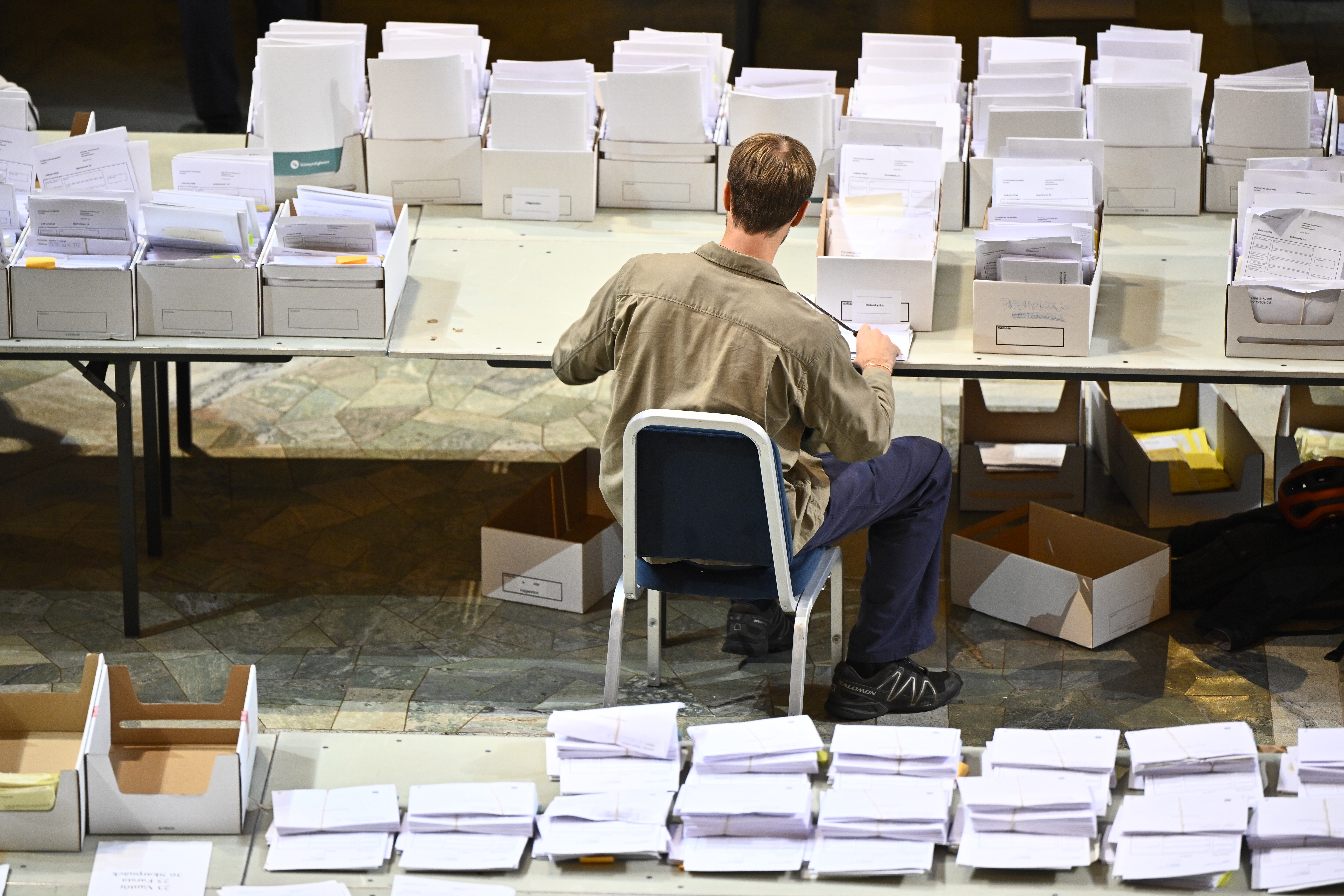
    Sweden’s center-left political parties squeaked to victory in elections this week, according to results released Thursday, making the country one of the first in Europe to tap the brakes on the far right’s seemingly steady march toward power.

    Voters cast their ballots Sunday, but the contest was so tight that it took days to count the last stray votes before a conclusion could be reached.

    The next prime minister is likely to be Magdalena Andersson, leader of Sweden’s stalwart center-left party, the Social Democrats, though experts predicted that there could be weeks of sticky negotiations before the next government is announced.

    As in other parts of Europe, Swedish nationalists had made big gains in recent elections by railing against migration and blaming migrants for crime.

    This election showed that in Sweden at least, the far right, which was essential to the outgoing center-right coalition’s hold on power, had become a victim of its own success. Experts said the country had cracked down so decisively on crime and migration that it essentially took those issues off the table.

    “The general sense is crime is now under control; migration is now under control,” said Lisa Pelling, the director of a progressive research group in Stockholm.

    The consequence, she said, is that “people want something else from the government.”

    Polls before the election showed that voters were prioritizing healthcare and education, issues that tend to favor the left.

    According to the election results, the center-left won 49.5% of the vote, compared with 48.8% for the center-right. That gives them a slight edge in parliament: 176 seats to 173. The turnout was characteristically high, at 85%.

    Andersson, a familiar face, was chosen as Sweden’s first female prime minister a few years ago and served as finance minister before that, when her Social Democratic Party dominated Swedish politics.

    If she can hash out a government in the coming weeks, it is likely to embrace many of the positions the party had pushed before, including what it called a “feminist foreign policy” that prioritized reproductive freedom and got into tangles with Saudi Arabia over its treatment of women.

    But forming a government won’t be easy. Sweden’s center-left is a real mishmash. It includes a formerly communist party and a pro-business one influenced by farmers. Parts of the coalition have already voiced doubts about working with each other.

    And Andersson’s Social Democrats are coming into this as a weakened force, having earned just 28% of the vote, one of their worst performances ever.

    Social democratic parties across Europe have lost ground to right-wing parties that present themselves as the new protectors of the working class, said Ann-Cathrine Jungar, a political scientist at Sodertorn University in Sweden.

    “What is noteworthy about this election is that socioeconomic issues were their home turf, and yet they were unable even to maintain their support,” she said of the Social Democrats.

    Part of the explanation, Jungar said, may be that center-left politicians have themselves moved toward tougher positions on immigration and crime, driven by the far-right Sweden Democrats, the biggest loser in this election.

    The Sweden Democrats have tried hard to distance themselves from their neo-Nazi roots. But in this election, they went from being the second-most popular party to the third, going from 20.5% of the vote in the last election to 17.5% this time. It was the party’s first significant erosion of support since it roared onto the scene in the late 1980s, which could raise questions about its future.

    Jonas Hinnfors, a political scientist at Gothenburg University, said Swedish society was growing uncomfortable with the extreme positions the far right has been advocating on migration, such as deporting large groups of lawful migrants, including teenagers. That is too extreme for most Swedes, Hinnfors said, and many people in Sweden have come to appreciate how important migration is for their labor market.

    “There is a kind of developing consensus that immigrants are needed,” he said. “And that is not where the Sweden Democrats are.”

    He doesn’t expect the far right to evaporate. But he said this election was “a big blow to them.”

    This article originally appeared in The New York Times.

  • Judge orders Kennedy Center to provide 30 days’ notice before making any major physical changes

    Judge orders Kennedy Center to provide 30 days’ notice before making any major physical changes

    WASHINGTON — A federal judge on Thursday ordered the Kennedy Center to provide 30 days’ notice before making any major physical changes to the building, including demolishing it as President Donald Trump has threatened.

    U.S. District Judge Christopher Cooper said his ruling would “avoid any confusion on that score given more recent events,” including the sudden closure of the building to the public on Wednesday.

    Matt Floca, the Kennedy Center’s executive director and chief operating officer, said he closed the iconic performing arts center temporarily due to “acute risks to public safety resulting from continued structural deterioration” of the aging building. The building will be closed for at least seven days to “assess existing safety risks in those portions of the main building exhibiting severe structural deterioration,” Floca said.

    The temporary closure, which occurred without notice Wednesday, is separate from a vote Tuesday by the Kennedy Center’s board to close the performing arts center indefinitely for repairs, Floca and other officials said. The closure was based on an inspection of the roof terrace canopy and a partial ceiling collapse earlier this month, Floca said. The closure may be extended after evaluation next week, he said.

    The announcement of the closure came in response to a court case filed by a Democratic congresswoman who is a trustee and sought an emergency court hearing to prevent what she called the building’s “unlawful closing.”

    Rep. Joyce Beatty, an Ohio Democrat and an ex-officio member of the Kennedy Center board, has led efforts to block President Donald Trump’s name from being added to the building. Beatty had a verbal confrontation with the Republican president Tuesday during a virtual board meeting.

    Beatty’s lawyers said in a court filing Thursday that the board members’ “rationale that they are only temporarily closing the Kennedy Center is a plain pretext to justify shutting down the Center permanently. The facts before the Court are deeply concerning.”

    Cooper denied a request by Beatty’s legal team to hold a hearing to clarify the board’s actions and intent. But he agreed to their request “to make crystal clear” that his order prohibits demolition of the building.

    The Trump-aligned board, chaired by the president, voted to close the center after Cooper blocked the institution from returning Trump’s name to the building.

    Trump, who was named the Kennedy Center’s chairman last year by loyalists on the board, said Wednesday that his efforts to restore the aging building deserve recognition, “because frankly, if we don’t do that, it’s going to close. It’ll end up being ripped down. It’s in very, very bad shape, very dangerous shape.”

    Congress has allocated $257 million to cover the repairs, but Trump said they only would happen if the board was permitted to move forward with plans to add his name to the building.

    On Thursday, Barbra Streisand, a Kennedy Center honoree in 2008, questioned the closing of the center for repairs and called the controversy surrounding its operation “galling and painful to witness.”

    Of Trump’s attempts to add his name to the center, she said in a statement to The Associated Press: “You can easily imagine my indignation at seeing this revered institution become the subject of such a bitter struggle over one man’s name and unchecked ego.”

    The Kennedy Center board voted in August to inscribe Trump’s name on the Kennedy Center’s facade so it would read “The John F. Kennedy Center for the Performing Arts Restored and Renovated By President Donald J. Trump.” If the Trump Kennedy Center Fund reached $100 million, another inscription would be added reading “Endowed by the Trump Kennedy Center Fund.”

    The plaza in front of the Kennedy Center would also have been renamed in Trump’s honor.

    All of those proposals were shot down Tuesday by Cooper, who ruled that nothing could happen “without Congress’s blessing.”

    Cooper ruled in May that the Kennedy Center illegally added Trump’s name to the building, ordering it removed. The institution’s leaders complied in June but left a tarp and scaffolding in place where Trump’s name was once displayed.

    Streisand told AP she was deeply honored to be included in the 31st annual class of Kennedy Center Honorees, adding, “for me, and for so many artists, that honor represented something larger than a career recognition. It represented a belief in the importance of art to the life of a democracy.”