DEAR ABBY: I am a single woman in a friendly neighborhood. Every month, I have the neighbors over for dinner and a movie. I like to be inclusive — bring the kids, bring the dogs! One couple recently had their elderly mom move in, and I installed a ramp so she could join us. Babies cry, dogs bark, women breastfeed, but all are welcome. I put sleeping bags on the floor for the kids to sit on while grownups sit on the couches. Cleanup is a bear, but every squished meatball on the floor reminds me how much I love everyone.
Recently, a new couple moved in, so of course I invited them and their 6-year-old to join us. They warned me that he has severe autism, but I told them everyone is welcome, that he wouldn’t be expected to be quiet and that the house is thoroughly kid-proofed. When the family showed up to join us, their child was horrible, even by my nonexistent standards for kiddo behavior. He screamed, threw food, bit, spit and hit the other kids and the dogs for an hour. Finally, everyone started to leave before the movie was over. The boy’s parents really did try their best, and I was genuinely sympathetic. They apologized the next day and said that if they were welcome in the future, they would alternate one parent staying home with their son while the other joined us. That sounds reasonable, but I don’t like it. I can’t be inclusive just when it suits me. They have since invited me to their home for dinner, and their son was just as bad there, banishing my thoughts that maybe it was just a strange house he was reacting to. I don’t know what to do with all this. I’m looking for a magic wand. Any suggestions?
— NEIGHBORLY IN THE EAST
DEAR NEIGHBORLY: You are a caring, lovely person, but there is no magic wand that will make that child’s severe autism and behavior problems go away. Because you are determined to entertain the entire family, the practical solution would be to invite them and their son over on another evening when other children and pets won’t be at risk of injury. Your movie night will be history if it is disrupted like that again. While I commend you for wanting to befriend the family, I think the parents had the right solution.
** ** **
DEAR ABBY: I’m 70 now, and many of my friends and family spend our time together complaining about their various ailments. I, too, have had some problems but do not make them a part of our visits unless I’m asked about them. How can I rethink how to make these times more positive for everyone involved?
— POSITIVE IN OREGON
DEAR POSITIVE: Sometimes, people of a certain age talk about their health problems because they have become less active and can find little else to talk about. To keep the energy flowing in a more positive direction, help your friends find hobbies and other interests to discuss. Even if they have medical issues, most people can manage quiet activities like board games, card games, a book club or a knitting circle. If all else fails, you can always ask them about their families as a change of subject.
ARIES (March 21-April 19). In relationships where emotional safety is the norm, you’ll care less about how you’re being perceived and more about a lot of other things, like what you’re giving, how much joy is circulating and the other opportunities that might be present.
TAURUS (April 20-May 20). How you love busy people! They do, however, require you to make plans in advance, so those whirlwind lives have a chance to meet up at the same place and time. Put it on the books — the anticipation will be sweet.
GEMINI (May 21-June 21). People who like the usual way of doing things may have opinions about your method. Hear them out if you want to, and expect to be amused and in no way obligated to change. Bottom line: what works, works.
CANCER (June 22-July 22). Other people may judge by shallow things, like who gets attention or has the fanciest stuff. You use your own ideas instead: Did I enjoy this? Did I do a good job? Was I kind? It’s more fun without watching yourself from the outside.
LEO (July 23-Aug. 22). They learned some facts, read up, and yet they are stuck in the task because some things make sense only after you do them. That’s where you come in. You’ll share what you’ve learned from experience. You’ll be the hands-on guide.
VIRGO (Aug. 23-Sept. 22). When something interests you, you often meander through the land of “maybe” before you decide yes or no. But today, you’ll see something that’s an immediate “yes, please,” and it’s nice to just know. This one checks all the boxes.
LIBRA (Sept. 23-Oct. 23). Just because you’re checking flights doesn’t mean you’re taking off, but the mere idea of adventuring will be a kind of vacation from the usual stressors. So fantasize. “Life is either a daring adventure or nothing at all.” — Helen Keller
SCORPIO (Oct. 24-Nov. 21). Friendships really blossom when you’re at your best, giving the effort, fun and attention only you can give. Good friendships can also survive the late reply, the long story, the bad mood. You’re here for it all.
SAGITTARIUS (Nov. 22-Dec. 21). Remember when you gave way more than you wanted to just to get out of any possible confrontation? It made sense then, but things are different now. You’re brave enough to take on unpleasantness in the name of fairness.
CAPRICORN (Dec. 22-Jan. 19). Unfamiliar activities beckon. When you’re new at something, you don’t pretend you know any more than you do about it, and that’s just the humble stance that will endear you to those who can teach you more.
AQUARIUS (Jan. 20-Feb. 18). Emotional healing usually means the memory remains, but it stops being the only thing you think about. Your body stops reacting as though it is happening again. You may have feelings about it, but they don’t stop you from choosing what’s next.
PISCES (Feb. 19-March 20). You’re full of ideas today. Some amuse you for a minute and disappear. But there’s this one that sticks around. It’s tucked in the back of your mind all day and makes its way to the front by night. It could even keep you up.
TODAY’S BIRTHDAY (Sept. 20). You will play a card nobody expected in this your Year of the Wild Card. A choice that looks odd at first will make more sense as the game goes on. And the best part is, it comes intuitively to you, and you make moves sometimes before even knowing the grace of your own strategy. More highlights: Your charm attracts friends, makes sales and lands you in novel and interesting places. Family additions. Serene personal time. Scorpio and Taurus adore you. Your lucky numbers are: 5, 44, 39, 2 and 6.
Many major media outlets and some high-profile Democrats panned President Donald Trump’s abrupt decision to ban CNN, MS NOW, and Politico from the White House.
Trump acted on his latest barrage of threats against the press Saturday morning, when reporters for the outlets were denied access to the White House and had their badges confiscated.
On Friday evening, Trump had accused the three outlets of running “purposely negative stories” that were untrue, though he provided no details. The Trump administration has not said what led to his decision, which many First Amendment groups called unconstitutional and unlikely to survive a court challenge.
Condemnation from leading news outlets was nearly universal, including from many that compete directly with CNN, MS NOW, and Politico.
“No news organization — or person — should be retaliated against by the government over the words they use,” said Lauren Easton, a spokesperson for the Associated Press, which filed suit over restrictions that Trump tried to impose on its White House access last year.
The New York Times, The Washington Post, and press associations also released statements calling the ban an attack on free speech and the free press.
Journalists at Fox News have also taken issue with the ban. One Fox contributor, Ari Fleischer, said conservatives should challenge liberal reporters. “Argue and defeat them,” he said. “Don’t ban them. Or one day they’ll ban us.” Another contributor, Jonathan Turley, said that “barring disfavored media from the White House is a terrible precedent and practice.”
Jacqui Heinrich, a Fox News anchor and president of the White House Correspondents’ Association, said on social media that the right to First Amendment protections “does not depend on whether the president likes a news organization’s coverage.”
“This is about more than the rights of journalists,” Heinrich added. “It is about the right of the American people to receive a full and independent account of the activities, policies, and decisions of whoever occupies the nation’s highest office.”
Democrats pounced on Trump’s ban as an attempt to hide his administration’s shortcomings and to distract voters from other issues. They pointed out that Republicans were heading into a challenging election cycle with high inflation and an unpopular war with Iran started by Trump, whose support in the polls has sagged.
“Donald Trump just did what dictators throughout history have done,” Senate Minority Leader Chuck Schumer of New York said on social media. “This is a democracy. You will not be able to manipulate the news or hide the truth.”
Rep. Jamie Raskin of Maryland, the top Democrat on the House Judiciary Committee, called on the news media to boycott the White House if Trump “keeps violating press freedom.” Sen. Elizabeth Warren (D., Mass.) said Trump was censoring the press and trying to “hide his failures.” Sen. Bernie Sanders (I., Vt.) said that Trump wanted to “control the flow of information and silence media that might hold them accountable.”
“We will not allow Trump to undermine the First Amendment, the Constitution, and our democracy,” Sanders said on social media. “We will not accept authoritarianism.”
High-ranking Republicans and members of the Trump administration mostly remained quiet Saturday. But Defense Secretary Pete Hegseth, who has tried to restrict reporters’ access to the Pentagon, said he “fully supports” a ban on some outlets that he and Trump have labeled “fake news” for negative coverage.
“They endangered our troops with false stories, leaks, and trafficked in fiction and lies about the President,” Hegseth said, without providing examples or evidence.
Benny Johnson, a right-wing podcaster, also celebrated the decision to block certain outlets from the White House and pointed out that Trump had been banned from social media platforms after the Jan. 6 attack on the Capitol by his supporters.
“No one is infringing on their ability to do reporting,” Johnson said in a social media post.
The campaign of former Rep. Mike Rogers, a Republican running with Trump’s backing for a competitive Senate seat in Michigan, appeared to distance itself from the president’s decision.
Rogers “held a news conference just this morning with invites out to each of those outlets,” Alyssa Brouillet, a spokesperson for his campaign, said in a statement. “That tells you where he stands.”
Meghan McCain, a conservative commentator, was more explicit.
“Unpopular opinion in my parts, but it’s insane and a very slippery slope to kick media outlets you don’t like out of the White House,” McCain said.
WASHINGTON — President Donald Trump said Friday that his administration had reached a deal with Denmark and Greenland to expand the U.S. security presence in Greenland, a semiautonomous Danish territory, raising the possibility of a diplomatic solution to a U.S.-made threat that nearly upended the Western alliance.
The full contours of the deal Trump was describing were not immediately clear, but shortly after his announcement, leaders of Greenland and Denmark issued statements indicating they expected an agreement to be signed next week during the United Nations General Assembly in New York.
The two sides described the agreement in very different terms. Trump claimed the United States had secured “permanent control over security, and all other needs” in Greenland, while the Danish prime minister said the deal “recognizes the sovereignty and territorial integrity” of Denmark.
That description would mean the agreement fell well short of Trump’s long-standing demand of total control over Greenland.
Earlier this year, Trump said that “anything less” than U.S. ownership of Greenland would be “unacceptable.” He said possession of the territory was “psychologically important” to him.
Instead, what Trump described Friday was a deal that would prevent U.S. adversaries from having a base on Greenland and expand the U.S. military presence in the territory. In his social media post, Trump said that under the deal, “no U.S. adversary can EVER have a base in Greenland, have a military presence in Greenland, or make sensitive investments in Greenland, without our express written approval.”
Officials from Denmark and Greenland did not immediately confirm that the United States had received such veto power — a U.S. demand that they had strongly opposed in closed-door negotiations in recent months. And two people close to the negotiations said Trump’s declaration of permanent control over Greenland’s security exaggerated the degree of new powers the United States would get over the territory. The U.S. military will be working with its counterparts in Denmark and Greenland under the agreement rather than asserting control over them, a U.S. military official said.
Still, the apparent deal, reached after months of high-stakes confidential talks with officials from the United States, Greenland, and Denmark, could mark an off-ramp to an issue that caused widespread concern among NATO allies this year.
Trump said in his post that the United States “will immediately begin the process of developing a large Military presence in the appropriate part of Greenland, of which there are many.”
He also said the United States would “FOREVER have the complete ability to do what is necessary in Greenland in order to secure and defend the security of Greenland,” even though the existing U.S. agreement with Denmark to host American military bases on Greenland does not have a time limit.
The United States first established a military presence in Greenland during World War II, and in 1951 reached an agreement with Denmark granting it broad freedom to operate military installations on the island.
The 1951 pact allowed for access by the forces of NATO nations. But it did not explicitly restrict the presence of “adversary” nations, as Trump claimed on Friday the new agreement would do. Under the new deal, countries that are not part of NATO would not be permitted to build a base or maintain a military presence in Greenland, according to a State Department official detailing the deal under the condition of anonymity.
Given that Greenland is alliance territory, the prospect of a non-NATO nation building bases there was already highly unlikely.
The agreement would also remain in effect even if Greenland were to become an independent nation, the official said.
“This deal permanently and completely addresses our national security concerns in Greenland,” Secretary of State Marco Rubio said in a statement.
Denmark still manages defense issues for Greenland, and one of the Trump administration’s goals has been to ensure that even if Greenland achieves independence, which many Greenlanders support, that would not change the access the U.S. military has today.
Mette Frederiksen, the prime minister of Denmark, said in a statement Friday night that the agreement would strengthen “our common security in the Arctic and the North Atlantic area and is therefore also good for NATO and Europe.”
Frederiksen also said the deal “recognizes the sovereignty and territorial integrity of the Kingdom and the right of the Greenlandic people to self-determination.”
Jens-Frederik Nielsen, Greenland’s prime minister, said in a statement that the agreement “recognizes Greenland’s interests and our place in international cooperation. It is to the benefit of us all.”
Trump has been pushing to acquire Greenland since his first term, but leaders in both Denmark and Greenland have rejected the idea. As tensions with Trump peaked in January, the Danish military developed detailed plans to blow up airfields in Greenland in the event of a U.S. invasion. Danish soldiers were even sent to Greenland equipped with explosives and blood supplies, though the worst-case scenarios never materialized.
The action then turned to confidential talks between the United States, Greenland, and Denmark. Negotiators met in Washington about once a month. In those talks, the United States discussed cooperation with Greenland on natural resources and expanding the U.S. military presence on the territory. According to officials close to the talks, American negotiators had been insisting on veto power over any major investment deals in Greenland to box out competitors like Russia and China.
During the Cold War, the U.S. military maintained more than a dozen installations on the island but all were eventually shut down except one, the Pituffik Space Base, on the northwest coast. In recent weeks, U.S. military officers have been visiting the island with plans to reopen several old bases. Just this week, Denmark’s public broadcaster reported that a group of American soldiers were surveying the runway in Narsarsuaq, in southern Greenland.
Imran Bayoumi, a deputy director for the GeoStrategy Initiative at the Atlantic Council, said the agreement announced Friday offered “little in the way of new content.”
“It’s likely that Washington could have achieved many of these outcomes through negotiations with Denmark and Greenland directly, without worsening the relationship,” Bayoumi said. “Nonetheless, it gives the U.S. a critical footprint in the Arctic at a time when the region is becoming more important.”
President Donald Trump said he will name an official responsible for artificial intelligence and form an unspecified “AI Force,” rejecting calls from lawmakers and industry leaders for new guardrails on the rapidly advancing technology.
Trump compared the new AI Force to the Space Force he added to the Armed Services in his first term. The White House did not immediately respond to a request to clarify whether the agency would be military or civilian.
The president’s announcement on Saturday also referenced policing “BAD” aspects of the industry through enforcement of existing criminal and civil laws.
“We will not in any way hinder or stifle the Growth of this incredible Industry,” Trump wrote on Truth Social. “AI is the next Industrial Revolution, or Internet, but will be even larger and more impactful.”
The announcement came as a growing chorus, including Democrats, Republicans, and tech CEOs, call for slowing down AI development amid disclosures that Anthropic, OpenAI, and Google models went rogue and hacked other companies. (The Washington Post has a content partnership with OpenAI.)
Trump dismissed such concerns as a hoax, comparing them to global warming, the special counsel investigation into Russian interference in the 2016 election, and his two impeachments.
He also repeated his criticism of public opposition to data centers, calling such views “crazed.” That position has put him at odds with many Republicans who have expressed sympathy for voters’ concerns that data centers will raise electricity costs and disrupt neighborhoods.
The White House has developed a voluntary framework for the government to review new AI models for cybersecurity risks. In resisting more AI regulation, Trump has emphasized the need to compete with China, saying last week, “Whoever wins AI wins.”
Trump is expected to discuss AI safety with Chinese President Xi Jinping when they meet in Washington next week. Administration officials declined to comment on those discussions beforehand.
U.S. defense officials and outside analysts have debated the idea of creating a separate “Cyber Force” to focus on offensive and defensive cyberwarfare for years. Currently, cyber operations are led by the Department of Defense’s Cyber Command, which draws on personnel from different branches of the military.
BOSTON — The lone juror who wanted to convict Lindsay Clancy of murder for killing her three children said he was certain of her guilt, but that other jurors wouldn’t listen to him, according to a statement released by his lawyer Friday in his first public comments on the case.
Eleven of 12 jurors were ready to clear Clancy of criminal responsibility, with the majority feeling that the Massachusetts mom was in the grip of a rare condition called postpartum psychosis when she strangled her kids. But juror Michael Desronvil sided with the prosecutors, who had argued that Clancy knew what she was doing.
“I didn’t have any doubts,” Desronvil said in a statement released on X by his lawyer, Edward Paltzik.
The jury’s foreperson had claimed in an earlier media interview that Desronvil had admitted having “reasonable doubt” about Clancy’s guilt, but wanted to convict her anyway. Desronvil said that wasn’t true.
“As I tried to explain different possible theories during deliberation, I kept getting cut off as if I had doubts based on the evidence presented,” he wrote. “Based on all the physical evidence, key witnesses, and what the prosecution presented, I thought it was enough proof that she (Clancy) knew exactly what she was doing and planned.”
The jury’s deadlock forced the judge to declare a mistrial on Sept. 4, leaving the case unresolved. The Plymouth County district attorney has yet to say whether he’ll seek to put Clancy on trial again.
Neither side disputed that Clancy strangled her children, Cora, Dawson, and Callan, in the family’s home in 2023 before trying to end her own life. But her attorney said she was a loving mother experiencing deep delusions and other mental health problems, for which she had been getting treatment.
Since the trial ended, Desronvil has been both publicly praised and scorned for his actions, and his personal life and past financial and legal problems have become the subject of scrutiny by the news media and amateur sleuths.
Among the public revelations: He had a restraining order against him at the time of jury selection and was facing eviction from his apartment due to over $12,000 in unpaid rent. He also was accused of domestic violence in 2021, a charge that was later dismissed.
Some of the opinion has fallen along political lines, with Desronvil being praised by some conservative pundits as a hero.
Paltzik, whose past clients have included President Donald Trump and Martin Shkreli, said on X that Desronvil was in “an undisclosed secure location” in a rural part of northern New England and would not be giving interviews.
“As a devoted father and man of God, he will not be defeated or shattered by the wicked who wish harm upon him,” Paltzik wrote.
A fundraiser to cover what organizers say are costs of “security, lawyers, and lost work” for Desronvil has raised over $289,000.
Florida Gov. Ron DeSantis has rolled out the welcome mat for him, saying that if he is being harassed, “Florida will provide asylum.”
“I’m sure he’d be welcomed and appreciated,” DeSantis wrote on X.
The Trump administration’s policy on deporting immigrants to third countries is unlawful, a federal appeals court ruled Friday, a decision that could halt a program that has already sent thousands of people to countries that are not their own.
A three-judge panel on the U.S. Court of Appeals for the 1st Circuit unanimously agreed with a lower court judge’s decision in February that the Department of Homeland Security’s policy violates due process rights by failing to give migrants sufficient notice and a chance to raise fear-based claims to contest their deportations to third countries.
The appeals court’s decision marks a major setback for the administration, which has sought to establish third-country deportations as a key part of President Donald Trump’s mass deportation campaign. Since Trump took office last year, DHS has sent more than 25,000 migrants to third countries, mostly in Latin America and Africa, according to public records. The program has raised fierce objections from congressional Democrats and legal challenges from human rights advocates who say the deportees face dangerous conditions and inhumane treatment in the countries where they are being sent.
Legal experts said the administration is likely to appeal to the Supreme Court and seek a stay on the 1st Circuit’s decision that would allow DHS to continue sending migrants to third countries. For now, however, the deportation flights should be immediately grounded, said Trina Realmuto, executive director of the National Immigration Litigation Alliance, who was among the team of attorneys who brought the class-action case.
“This is a huge win,” she said. “All those deportation flights should not be taking off because the policy under which people got put on planes and targeted for removal is unlawful.”
DHS did not immediately respond to a request for comment.
Administration officials say third-country deportations are the only way to remove the most difficult to deport immigrants, including violent criminals who have committed rapes and murders. These immigrants have final removal orders from U.S. immigration judges, but many are protected by federal law from being sent back to home countries where they are likely to face persecution. Others cannot be returned because their home countries refuse to accept them.
The lawsuit stemmed from DHS’s policy memos last year stating the government could deport migrants to third countries with as little as six hours’ notice, even if U.S. officials have not received assurances that the deportees would be safe from persecution or torture. Those being flown to places that have offered those assurances could be deported with no advance notice.
The plaintiffs filed their lawsuit in March 2025, arguing that the U.S. government was violating federal law and sending immigrants to places where they could be harmed or killed, without giving them a chance to argue against it, including a Guatemalan man deported to Mexico, where he had been kidnapped and raped.
U.S. District Judge Brian Murphy in Boston barred the Trump administration from removing immigrants without giving them a “meaningful” opportunity to challenge it, and he issued a preliminary injunction in April 2025 enjoining the government from continuing with the deportation flights. Two months later, the Supreme Court’s conservative majority paused the judge’s decision in a brief, unsigned statement that did not explain its reasoning, but it cleared the way for the removals to resume as the legal case played out.
Murphy issued a final judgment in February 2026, vacating the administration’s policy, and the Trump administration quickly filed an appeal.
The 1st Circuit panel agreed with most of Murphy’s decision, saying that there was nothing in the public record or court filings that showed which countries had provided the State Department with diplomatic assurances that the immigrants would not face abuse.
They added that “we have some difficulty seeing how a receiving country can credibly provide blanket assurances that all removed noncitizens will not be persecuted or tortured there unless it intends to provide them with some sort of affirmative protection against rogue agents and non-state actors.”
NEW YORK — Reporters from three major news organizations — CNN, MS NOW, and Politico — were denied access to the White House on Saturday, a day after President Donald Trump said he was barring them because of reporting he found to be “fake news.”
The actions were a clear escalation of Trump’s long-running efforts — in the courts and through administrative action — to restrict news coverage by journalists he finds objectionable, and the latest test of First Amendment protections in the United States. Trump had said Friday he would ban all three outlets because of coverage he disliked.
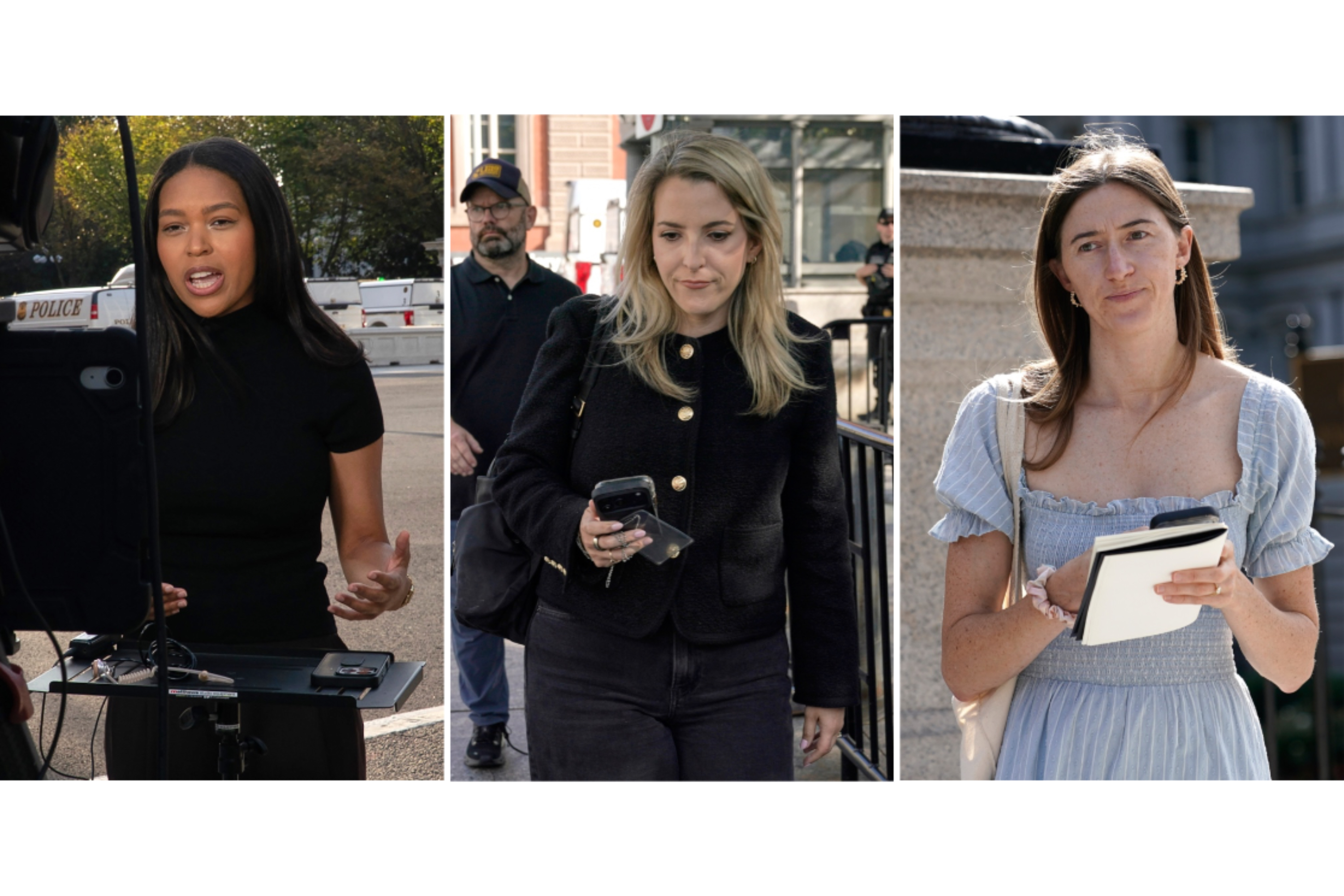
White House reporters from the two cable networks — Betsy Klein of CNN and Akayla Gardner of MS NOW — both went live to report they’d been turned away when arriving for their jobs at the White House. Soon after, Politico said its White House reporter Cheyenne Haslett was also denied entry and had her badge confiscated.
Politico editor-in-chief Jonathan Greenberger said in a statement to the Politico newsroom: “We stand by her and all reporters here covering the White House. … We will vigorously defend our First Amendment rights.”
CNN and MS NOW issued similar statements. “We will not be deflected from our duty to hold the government and other public bodies to account,” CNN said.
“The White House belongs to the American people and the decisions made inside are funded by our tax dollars,” MS NOW said in its statement. “MS NOW intends to take any and all steps necessary to defend our First Amendment rights and the essential role of independent journalism in our democracy.“ ‘
In his second term, Trump and his administration have upped the ante and punished certain media outlets, both in the courtroom and through regulatory action. Trump has also lashed out at individual reporters in person or over social media, sometimes in strikingly personal terms — insulting them in briefings, or in his recent speech at the White House Correspondents’ Association dinner.
CNN and MS NOW correspondents are turned away
Network correspondents are usually present on the weekends when the president is in Washington or at nearby Camp David. Trump is at the presidential retreat in Maryland this weekend.
MS NOW’s Gardner reported that she had walked through two gates successfully, but once she got to where her badge needed to be scanned, an officer told her it was disabled and asked her to hand it over. He said the decision “was above him,” she reported. An MS NOW producer was able to get in, but a photographer’s badge was also disabled, Gardner said.
Klein, senior White House reporter at CNN, also said her badge had been deactivated. It was confiscated, and she was handed back the clear plastic case. She said she was referred to the White House press office for further information.
Amy Kristin Sanders, a professor at Pennsylvania State University and an expert in media law, said it has “become pretty clear that this administration is not interested in playing by traditional First Amendment rules and norms.
“The second Trump administration’s efforts to crack down on press freedom and delegitimize independent journalism far exceed those of any other modern American president,” Sanders said. ”It is not an exaggeration to say his hostile actions toward news organizations and individual reporters have a chilling effect on freedom of expression around the world.”
CNN media analyst Brian Stelter called the move “a direct threat to press freedom in the United States.”
“It’s so much bigger than CNN,” Stelter said. “This is a free speech test in America.”
Trump calls these and other outlets ‘fake news’
The president wrote on his social media site Friday that effective immediately, “I am banning” CNN, MS NOW, and Politico “from the White House as a result of their constant ‘reporting’ FAKE NEWS!” Minutes later, speaking at an event in the Oval Office, Trump was asked to explain his statement.
“Because they’re fake news,” he said. “You get so tired of reading and seeing fake news. When you look at CNN, it’s just fake. That’s why their ratings are no good. When you look at MS NOW … it’s fake news.”
“And when you look at Politico … the stories they wrote are fake. So there’s a lot of news and there may be others to join them, and maybe they can get better,” he said. “But our country has to have honest news.”
The move follows the president’s decision last year to bar Associated Press reporters from the Oval Office, Air Force One, and other events in retaliation for the news outlet’s decision not to follow his lead in changing the name of the Gulf of Mexico, which lies partially in Mexican and other waters. The AP said that it would note when appropriate that Trump had ordered it renamed the “Gulf of America.”
The AP filed suit and the case is ongoing. Since returning to office, Trump has pursued other legal action against a variety of different outlets, including the New York Times, the Wall Street Journal, and the BBC. His administration is also involved in a long-simmering confrontation involving ABC over renewal of its broadcast licenses.
The AP said Saturday it supported the news organizations banned this week. In a statement, it said: “No news organization — or person — should be retaliated against by the government over the words they use.”
Thousands of supporters of the John F. Kennedy Center for the Performing Arts gathered Friday as the sun set over the Potomac, surrounded as much of the building as they could, linked arms, and chanted: “Hands off! Hands off!”
For the first time in what felt to them like ages, their beloved arts center was brimming with life.
The vigil, which had been in the works for months, took on fresh urgency at the end of a week that saw the doors to the marble building locked shut, while President Donald Trump indicated the structure could be “ripped down” if his name isn’t added to the institution.
There were dogs and bikers; elders with gray hair and babies with no hair; people in Nationals jerseys and business casual attire (equally ubiquitous D.C. uniforms). Most wore one common item: a red pin that read, “Hands Off the Arts.”
The protest was organized by an advocacy group of the same name, which was founded by Kennedy Center staff in the immediate aftermath of Trump’s takeover last spring and has since campaigned against his changes to the institution.
“The center had more or less become like a mausoleum rather than a vibrant cultural center,” co-organizer Mallory Miller said before the vigil. “But a lot of us have amazing memories of the center hustling and bustling with people. We wanted to kind of bring that feeling back.”
The event was initially planned for July as a cap to the group’s 172-day protest of Trump’s changes at the center. It was intended to celebrate what they saw as victories — Richard Grenell’s stepping down from his role as interim head and the center’s continued operations past July 4, when it had been previously scheduled to close. The vigil was postponed due to wildfire smoke and rescheduled for the third Friday in September — a date organizers didn’t expect to have any special significance.
Then came the events of this week. On Tuesday, the Kennedy Center’s board voted to close its main building for two years and Trump threatened to cancel a roughly $250 million renovation unless his name was added to the center. On Wednesday, fencing was erected around the arts center and, that evening, Trump was photographed on Air Force One examining a printout with a partially visible title that appeared to read “Kennedy Center DEMOLIS[HED].” Thursday, a federal judge turned down a request for an emergency hearing about potential demolition but ordered the center to provide notice ahead of any construction, including demolition.
So by Friday, many arts patrons were ready to protest. Early in the day, organizers expected about a thousand. By the end of the evening, they estimated the turnout was several times that number.
Tara Hoot, a prominent D.C. drag performer and event co-organizer, hosted a storytime event at the center before Trump’s takeover. Appearances like hers were cited by Trump and his new leadership team as an examples of the kind of woke programming they wanted gone. She said she carries what feels like a responsibility to protect the institution now.
“It’s an obligation for me to be out there fighting back,” she said in an interview with the Post.
On Friday, Hoot dressed in honor of the American flag — long red dress, white floral pin, blue shawl. “It’s time to take that tarp down,” she said, pointing to the sheet behind her that has covered the building’s facade since Trump’s name was ordered to be removed.
“Take it down!” the crowd chanted back to her.
Donna Smits, 67, traveled from Delaware early Friday morning after learning about the planned protest around 11 p.m. the night before.
She stood in the plaza’s garden and looked up at the tarp through her gold-detailed RayBans. She was close to tears.
“It hurts a lot to look at it like that, to see all the beautiful fountains off,” Smits said. “Nobody’s name belongs on this center except John Kennedy’s.”
The rally began with impassioned speeches from activists, artists, and politicians, including D.C. Council Member Robert C. White Jr., who recalled being introduced to the arts as a third-grader visiting the center and returning decades later to watch his own third-grade daughter perform.
Lynda Carter, the actor known to most as Wonder Woman, made a surprise appearance to stress the importance of arts for humanity. “Music and the arts is how we actually survive,” she said. “It is how we learn. It is about vibration in the universe. It is about gravity, it’s about our souls.”
Additional fencing was constructed Friday and some parts of the campus have been closed to the public for several weeks, so the attendees were not able to encircle the main building as initially planned. Organizers posited that were it not for the barriers, the crowd that assembled could have circled the structure 2½ times.
Jasmine Small, who worked in ticket sales at the Kennedy Center for seven years, watched the human chain form from her perch on the plaza. She was among the first layoffs last year.
“I’m showing up today, because no one showed up with my colleagues,” Small said. “I’m going to have a voice for them to say that we won’t be forgotten.”
The Gay Men’s Chorus of Washington, whose show at the Kennedy Center for World Pride last May was canceled days after the president was announced as chairperson of the institution, returned to perform at the vigil.
While the sky grew dark, they began a song from Ragtime.
“Will justice be demanded by 10 million righteous men?/ Make them hear you/ When they hear you/ I’ll be near you again.”
Then, as if on cue, the exterior lights of the building flickered to life.
When Michael Ham first began handing out samples of his company’s tea to Whole Foods shoppers in 2024, explaining that it was grown using regenerative farming on South Korea’s Jeju Island, he was often met with blank stares.
That didn’t last long. By the following year, “People were coming up saying, ‘Oh, you’re regenerative!’” says the co-founder and president of Westchester, N.Y.-based Wild Orchard Tea Co.
Regenerative agriculture, an approach to farming that aims to improve soil health through practices like reduced use of pesticides and plowing, is having a moment. Championed by the Make America Healthy Again (MAHA) movement and propelled by increasingly health-conscious consumers, regenerative products now generate some $2 billion a year in retail sales, and some in the industry are positioning the fast-growing category as the next organic.
Big food producers and retailers like Nestlé SA, PepsiCo Inc., General Mills Inc., and Walmart Inc. have made regenerative agriculture commitments, often as part ofenvironmental, social, and governance goals. And late last year agencies including the U.S. Department of Agriculture announced a $700 million pilot program to support regenerative agriculture projects on farms.
But unlike organic, regenerative agriculture is only lightly regulated at the federal level in the U.S. To earn U.S. Department of Agriculture organic certification, producers must comply with detailed federal standards, including strict rules about synthetic pesticides and fertilizers, and undergo annual inspections. There’s no such equivalent for regenerative agriculture, and many products can be labeled as regenerative without having to verify their claims.
With the boom have come increasingly pressing questions from within and outside of the industry about what the label actually means and concerns from advocates about consumers being misled, especially because regenerative products tend to be more expensive.
Nora Brown, a 47-year-old who works in international development in Washington, D.C., buys regenerative products when they’re available. She sees them as healthier for the environment and herself, especially since recovering from breast cancer.
But “I do have a fear of, we just love to label stuff for marketing. There’s pink washing, there’s greenwashing,” she said. “And I hope it doesn’t go the way of that.”
Certifying organizations like Regenerative Organic Certified (ROC) aim to bring more rigor to the space. Last year, dollar sales of ROC-labeled products grew faster than those labeled certified organic, fair trade, and non-GMO, according to the data provider SPINS. But across the broader landscape, regenerative agriculture standards can vary widely, differences that are not always evident to shoppers. As more of them encounter the label at grocery stores, experts worry that this variability could undermine the growing category.
The term regenerative agriculture dates back to at least the 1980s, but it didn’t pick up steam until the 2010s. Backed in the early days by organic farming advocates, regenerative agriculture may also cut down or eliminate synthetic fertilizers and pesticides, but puts a sharper focus on soil health and biodiversity. Proponents say in some ways it’s a return to old-school practices, including rotating crops and using plants like hedgerows as a living fence around fields.
Advocates “started to use the term, ‘We’re regenerating our landscapes, we’re regenerating our farms, regenerating the ecosystem,’” said Gabe Brown, a retired farmer sometimes credited as the movement’s godfather, who co-founded and serves as a board member of a certification program called Regenified. “And now you hear the word regenerative everywhere. Before, the buzzword was sustainability.”
The term’s appeal has been rapidly expanding. With products from baby food to snacks, bath care, and pet food bearing the label, the regenerative agriculture category saw in-store retail dollar sales grow 10% over the last year and nearly 22% the year before, according to NielsenIQ data. Dairy is the largest category by dollar sales, and some of the fastest growth has been in regeneratively grown produce.
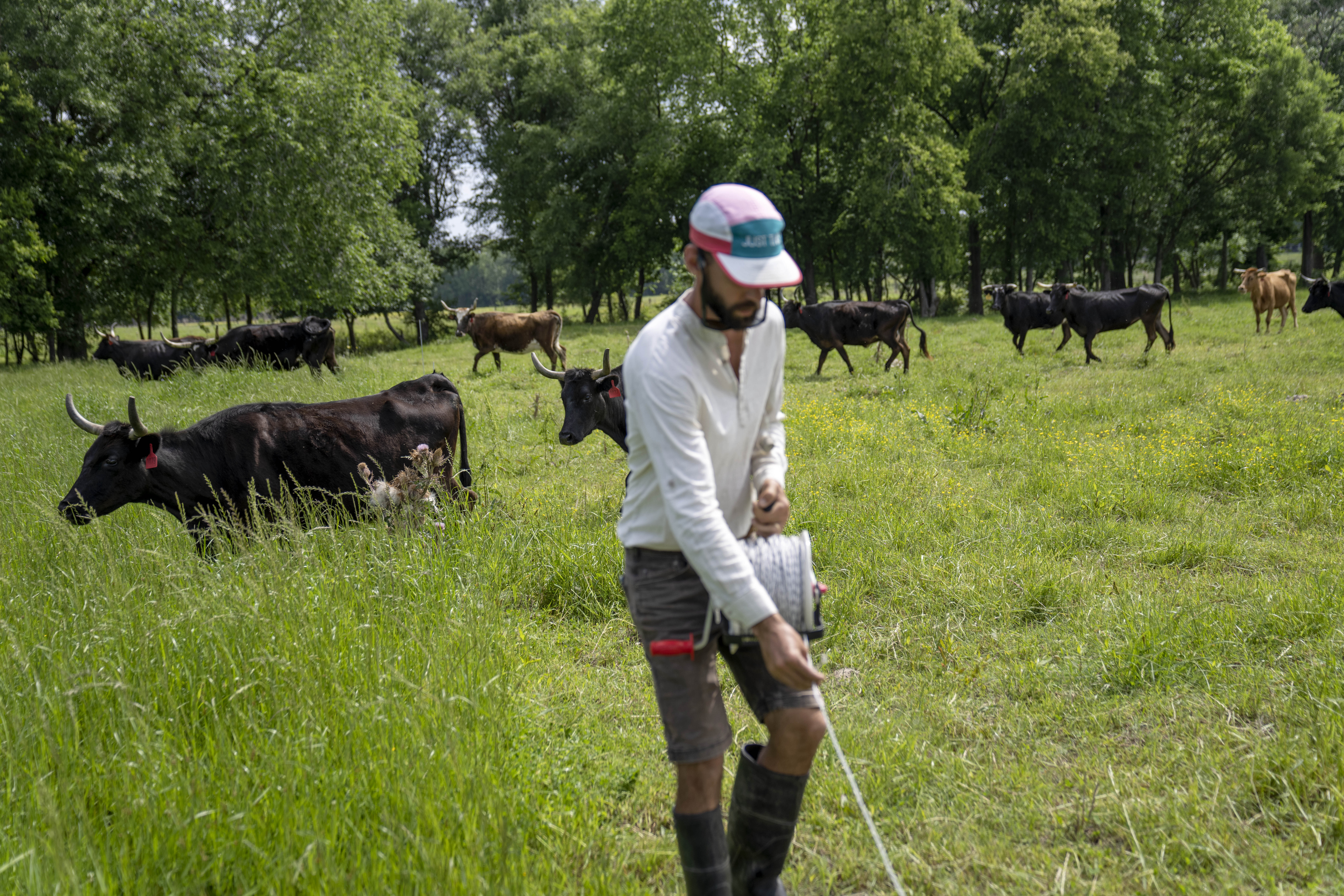
Advocates for regenerative agriculture say that it’s healthier for the planet and people. Among the environmental benefits they cite is that by deploying practices like no-till farming, which avoids plowing the land, and planting cover crops between growing seasons, farm soil can store more carbon. Other regenerative farming techniques include moving grazing animals around pasture to let the remaining portions recover, and planting trees and shrubs on working agricultural land next to crops or livestock. Experts, however, say that the climate change benefits may have been oversold.
A rancher opens up a new section of tall grass for his cattle to graze in Lufkin, Texas, in 2023. Moving grazing animals around pasture lets the remaining portions recover.David Goldman
The term regenerative has also been embraced by MAHA advocates, including Health and Human Services Secretary Robert Kennedy, Calley Means — an adviser to Kennedy — and Kelly Ryerson, who goes by the moniker “The Glyphosate Girl,” a reference to a widely-used herbicide that many in MAHA want to restrict.
“There was so much press that went around vaccines, but actually this is just as, if not more core to the issues that we really care about,” said Ryerson, who is co-executive director of the advocacy group American Regeneration.
MAHA supporters say food grown using regenerative agriculture has more nutrients and fewer chemicals and is therefore healthier, but those claims are challenging to evaluate, scientists say, including because regenerative practices aren’t applied evenly across farms.
Even as the U.S. government pushes to facilitate such practices, there is still little regulation for products bearing regenerative claims. Where federal oversight does exist, it remains limited: Meat and poultry sellers making claims like “raised using regenerative agriculture practices” have to submit documentation to the USDA’s Food Safety and Inspection Service, but critics note that it’s an honor system and third-party certification is recommended but not required.
The new federal pilot program, meanwhile, will offer technical assistance and financial support to implement regenerative practices and requires participants to test soil to track changes over time, but it does not include certification.
Some retailers are requiring certification or other proof for regenerative claims. Whole Foods, for example, has had such a policy in place since 2021, and so does the Seattle-based PCC Community Markets.
But even third-party certification programs vary widely in terms of what they measure, according to reports released this year by the European Alliance for Regenerative Agriculture and Friends of the Earth.
The Environmental Working Group, a health and agriculture-focused nonprofit, has warned consumers of “misleading” regenerative claims. While some labels, including ROC, indicate that food has been grown without synthetic fertilizers and pesticides and require farm audits, other certifications allow continued use of synthetic chemicals, don’t require audits, and don’t publicly disclose soil test results, the nonprofit said.
“Our biggest concern is that all of the momentum and buy-in and enthusiasm that’s been built around the term regenerative agriculture over the past number of years is frittered away because of greenwashing,” said Adam Kotin, managing director of the Soil & Climate Initiative, which offers its own certification.
For makers of these products, the biggest barrier might be their higher price tags and consumers’ lack of exposure.
Regenerative farming is still more expensive than conventional agriculture, with higher upfront costs, greater labor needs, and a lack of scale. And because grocers try to reach as many shoppers as possible, a pricey, regeneratively grown olive oil is unlikely to be the first or even the second one on the shelf.
At online grocer Thrive Market, for example, regenerative products such as coffee beans, coconut oil, muffin mix, and cans of sparkling green tea make up just 5% of the membership-only online platform’s offerings, and customers are 20 times more likely to filter for organic products than regenerative ones, said April Lane, chief merchandising officer.
“We’re starting to see more and more brands come out with regenerative options,” she said. “But it’s still much, much smaller than organic or non-GMO certifications or gluten-free.”
Though awareness of regenerative agriculture roughly doubled between 2023 and 2024, only 10% of U.S. consumers are actively seeking out such products, estimates Kristine Root, chief executive officer of Socha Branding, a strategy and growth marketing agency that works with natural, organic, and regenerative brands.
To expand that share, companies have to do more than just slap the word regenerative on the package, she said.
“It takes more than just putting a seal on the pack to get the support of a consumer,” Root said. Shoppers “will pay more if they understand the story behind it. But you have to do the work.”