Tag: no-latest

  • A government-commissioned study found drinking risks. U.S. guidelines didn’t feature its findings

    A study commissioned by President Joe Biden’s administration to investigate alcohol-related health harms was released independently on Tuesday, after President Donald Trump’s administration decided not to feature the researchers’ findings in new dietary guidelines as it faced pushback from the alcohol industry and a congressional committee.

    The findings of the study, in the Journal of Studies on Alcohol and Drugs, were in line with years of research, saying that health risks go up with just one drink a day and no level of alcohol has a protective effect on mortality. Even levels considered “moderate” raise the risk of premature death and more than 200 diseases, including heart disease and cancer, researchers found.

    The new study was one of two government reviews meant to help inform the new dietary guidelines. Released earlier this year, the guidelines advised consuming “less alcohol for better overall health.” The authors of the independently released study say that didn’t provide detailed practical advice about the risks of drinking.

    One of the officials involved in the study commissioned by Biden’s Democratic administration accused Trump’s Republican administration of “sidelining” the research — an allegation the Trump administration denies.

    Robert Vincent, a former Substance Abuse and Mental Health Services Administration alcohol policy official who led the yearslong effort, made the accusations in an editorial published alongside the study. Vincent was laid off last year as part of a government reduction in force.

    “The challenges confronting alcohol policy today are not rooted in scientific uncertainty,” Vincent wrote. “What remains contested is whether evidence will meaningfully inform policy when it conflicts with commercial interests.”

    The dispute over the study underscored the increasingly tense relations between the medical and scientific community and the Trump administration, which has questioned or ignored longstanding science in its policymaking, fired a slew of veteran scientists from the federal workforce, and cut scientific grants that proponents say help keep the U.S. at the forefront of medical innovation.

    Industry and congressional Republicans pushed back

    After the study’s researchers released a draft report last year, the alcohol industry mobilized against it, launching campaigns to discredit its work. The House oversight committee also criticized the study, releasing a report earlier this year that called it “fraught with bias” and accused the study authors of having predetermined conclusions based on their past research and affiliations.

    Emily Hilliard, a spokesperson for the U.S. Department of Health and Human Services, denied any notion that the study wasn’t considered.

    HHS and the U.S. Department of Agriculture “reviewed the study alongside the broader body of available scientific evidence and followed the established process for developing the 2025–2030 Dietary Guidelines for Americans,” she said. “The Guidelines are informed by the totality of the scientific record, not any single report or analysis.”

    Vincent told the Associated Press in an interview that the researchers were thoroughly vetted for conflicts and the findings were scientifically sound. He said that while he was in the Trump administration, he was “asked to kill the study” but did not. HHS didn’t immediately respond to that claim. The department said the Substance Abuse and Mental Health Services Administration wasn’t involved in the review or the clearance of the study for publication.

    Amanda Berger, senior vice president of science and research for the alcohol trade association the Distilled Spirits Council of the United States, said in an email to the AP that the congressional committee’s findings showed the study was “irretrievably flawed.”

    Findings support more forceful alcohol intake recommendation

    The Trump administration earlier this year released new dietary guidelines that advised consuming “less alcohol for better overall health.” The researchers said that they don’t dispute that advice but that their findings support a more detailed and forceful recommendation that current adult drinkers consume one drink or fewer a day.

    “I’m glad that they had a message that corresponds with our science, and that is that less is best,” said Timothy Naimi, director of the University of Victoria’s Canadian Institute for Substance Use Research and one of the study’s authors. “But giving people quantity information is necessary to make a truly informative guideline.”

    The study differed from the other research commissioned by the government to help inform the dietary guidelines on the issue, which said moderate alcohol use was associated with a decreased risk of mortality from all causes but also an increased risk of some diseases.

    Priscilla Martinez-Matyszczyk, one of the authors of the new study and a deputy scientific director at the Public Health Institute’s Alcohol Research Group, said their study didn’t look at mortality from all causes but instead examined mortality specifically attributed to alcohol to avoid confounding factors.

    Martinez-Matyszczyk also addressed an issue raised by Centers for Medicare and Medicaid Services Administrator Mehmet Oz in his explanations of the new guidelines: that drinking is “a social lubricant that brings people together” and that even though not drinking is preferred, being social has health benefits.

    “I don’t know of any studies that have teased out the social effect from the health effect,” she said.

    Research aligns with other recent findings

    The new findings are “in line with the latest science that basically shows less is better when it comes to health,” Naimi said.

    For example, a 2019 study in Lancet found that moderate drinking slightly raised the risk of stroke and high blood pressure and offered no protective effects on health.

    Moderate drinking was once thought to have benefits for the heart, but better research methods have thrown cold water on that idea. Older studies compared groups of people by how much they drink instead of randomly assigning people to drink or not, so they couldn’t prove cause and effect. When researchers adjusted for things like education levels, income, and healthcare access, the benefits tended to disappear.

    About half of Americans age 12 or older had a drink in the past month, researchers said, making it the most commonly used addictive substance in the U.S. One drink is the equivalent of about one 12-ounce can of beer, a 5-ounce glass of wine or a shot of liquor.
  • Trump previews fall strategy with baseless claims of California vote fraud

    Trump previews fall strategy with baseless claims of California vote fraud

    WASHINGTON — For President Donald Trump, any Democratic election victory is suspicious on its face. Even, apparently, in one of the most liberal cities in America.

    “Not possible for Spencer Pratt to have lost the L.A. runoffs after the big lead he had,” Trump wrote on social media on Monday. “3rd World Nation.”

    On election night last Tuesday, Pratt — the reality-television personality and Trump-endorsed Republican — led progressive City Council member Nithya Raman for second place to advance to November’s mayoral runoff, behind the incumbent, Mayor Karen Bass, who is also a Democrat.

    But as election officials spent the following week counting late-arriving mail ballots, which were disproportionately from Democrats, Raman edged ahead of Pratt. On Monday evening, the Associated Press said she had indeed prevailed.

    Such fleeting Republican leads are common enough to have a name — the “red mirage” — yet Trump, as he did in his own 2020 loss, cast the slow count as proof of theft. By baselessly framing Raman’s rise as a Democratic scam, Trump extended his long-running project to erode public faith in elections — and gave an unusually clear preview of how he could greet any disappointing results for his party in November, when control of Congress is at stake.

    He has been anything but subtle about his desire to limit the ability of Democrats to vote by mail, implying, with no evidence, that simply choosing that widely used means of casting a ballot is inherently suspect. Addressing a gathering of Republican lawmakers in March, he said the way to hold their majority was to pass a strict voter identification law cracking down on mail ballots.

    “It’ll guarantee the midterms,” he told them, warning that failure would bring “big trouble.”

    Privately, according to one senior adviser, he has pressed aides to find ways to “stop them stealing it from us.”

    What is striking so far is how little of this has survived contact with reality. Voting legislation he has championed, the SAVE Act, cleared the House but stalled in the Senate, where Republicans lack the votes to break a Democratic filibuster. Among other things, the bill would require proof of U.S. citizenship to register to vote and would compel states to share voter rolls with the federal government.

    An executive order he signed in March directing the Department of Homeland Security to assemble a federal list of eligible voters and barring the Postal Service from delivering mail ballots to anyone left off it was condemned by election experts as illegal and drew multiple lawsuits.

    Still, even if Trump fails to change election laws or processes, he can sow substantial chaos simply by trying to convince voters that the results were fraudulent.

    More than five years after his supporters, fueled by lies about a stolen election, stormed the Capitol to stop the transfer of power, Trump has tried to recast Jan. 6, 2021, as a day of “peace,” claiming his supporters were led astray by FBI officers in a false-flag operation. He has produced no credible evidence, yet he has pardoned rioters who breached the Capitol and has entertained paying restitution to some of them, over the objections of even some in his own party.

    His fraud claims about California could matter especially in November. The House majority rests on a thin margin, with Republicans holding 218 seats to Democrats’ 213. After California voters approved Proposition 50 in November — a constitutional amendment pushed by Gov. Gavin Newsom to permit a redrawing of the state’s congressional map — Democrats have a chance to flip as many as five Republican-held seats, potentially enough to take the chamber.

    Many of those seats lie in the same Central Valley and Orange County districts whose ballots take days or weeks to tally. In other words, the races that may decide control of Congress could be counted in precisely the slow way Trump reflexively calls fraud. Elon Musk has amplified the message, arguing that the combination of no voter ID and mail-in ballots amounts to legalized fraud.

    Trump has leveled the same accusation at California’s governor’s race, in which Republican Steve Hilton is fighting for the second spot that would set up a November runoff against Democrat Xavier Becerra.

    After complaining about “rigged elections” in his Monday social media post, the president added: “Now they’ll be working on great guy Steve Hilton. Won’t have results for, possibly, TWO WEEKS, according to officials.”

    This year, California had an unusually competitive primary election for governor, driving up turnout and raising the stakes of the statewide count. To add to the issue, many Democrats waited to return their mail ballots as the field shifted and as some were concerned that Democrats could get locked out of the top two spots.

    Asked whether Trump had any evidence to support his claims that the California elections were being rigged, Abigail Jackson, a White House spokesperson, said he was “committed to ensuring that Americans have full confidence in the administration of our elections.” That pledge, she added, is “why millions of Americans sent him back to the White House,” adding that Trump would implement measures to “secure our elections for generations to come.”

    During his losing 2020 campaign, Trump repeatedly made baseless claims that mail-in voting was rife with fraud. In that election, Democrats, many of whom were strictly adhering to pandemic protocols, were much more likely to vote by mail than Republicans, who tended to prefer to vote in person on Election Day — a partisan divide that persists today. Yet Trump’s crusade against mail-in votes that year alarmed Republican legislative leaders, who privately tried explaining to him that many of the party’s own voters were older and cast ballots that way.

    Several states took days to finish counting mail-in ballots in 2020. In Pennsylvania, Joe Biden’s share of the vote grew each day, eventually allowing him to overtake Trump in the state and win the election.

    Since 2020, many states have made significant investments to speed up their abilities to count mail-in votes quickly. In California, however, it is still common for it to take days or even weeks before enough votes have been counted for news organizations to declare a winner.

    This year’s election in California was primed to create even more of a red mirage effect than normal. Facing late upheaval in the governor’s contest after the departure from the race of Eric Swalwell, a member of Congress at the time, many Democrats waited until the last minute to return their ballots. That meant that the first ballots to be counted and reported were more Republican than normal, and the ballots reported after Election Day have been even more Democratic than is typical.

    Paul Mitchell, vice president of Political Data Inc. in Sacramento and an expert in California voter turnout, said his firm’s data showed that the share of Democratic voters’ ballots being processed has far outpaced the share of Republican ballots in recent days, and that the distance had widened.

    California sends every regular voter a mail ballot that can be returned at their convenience. It gives a weeklong grace period for ballots to arrive as long as they are postmarked by Election Day. The state allows voters registered at old addresses or those not registered at all to fill out provisional ballots that become valid if election officials verify their information and deem them eligible. And it allows voters with mismatched signatures on file to resolve discrepancies once they are detected.

    All of those provisions make voting easier for residents in California than in many other states, but they add various checkpoints in the system to ensure security, each of which costs time.

    “In California and Los Angeles, we have our election laws written in a way that maximizes participation,” said Mike Sanchez, a spokesperson for the Los Angeles County registrar of voters.

    Mitchell, who is a Democratic consultant, said that, paradoxically, the most effective way to speed up California’s count would be to eliminate security protocols, like cutting ballot signature verification or checks on voter registration for provisional voters.

    “I don’t think Republicans would want that,” he said.

    Other election experts said California suffered from logistical problems. Each of California’s 58 counties is responsible for running its own election, and many lack sufficient resources to verify mail ballots and count votes quickly. They may not have enough workers, space, or machines to process ballots in quick order.

    State lawmakers passed at least three bills last year designed to speed up the count, but the changes seemed to have marginal effect, given where things stood on Monday, with only about three-quarters of the ballots counted six days after the election.

    The bills shortened the deadline to finish counting most ballots, to 13 days from 30 days. They also allowed election officials to begin processing ballots earlier than before and required slightly more frequent updates of results.

    But elections are largely county-funded, and most of California’s counties lack the resources to keep staff on constant rotation, said Kim Alexander, who runs the nonpartisan California Voter Foundation.

    “We expect our counties to provide all these services to facilitate elections, and the state and federal governments aren’t paying their fair share of the cost,” she said.

    This article originally appeared in the New York Times.

  • In Trump’s second term, fewer seats for women at the table

    In Trump’s second term, fewer seats for women at the table

    Nearly 10 years after their first bilateral meeting inside Beijing’s Great Hall of the People, President Donald Trump and Chinese President Xi Jinping again gathered last month for discussions about U.S.-China relations.

    Much had changed over the preceding decade. Wars had broken out in Europe and the Middle East, shifting global alliances; the coronavirus pandemic had killed millions around the world and transformed the global economy; and at the table in Beijing, the makeup of aides and advisers sitting alongside each leader for the high-level talks was visibly different.

    Images from Trump’s meeting with Xi in 2017 show Trump sitting alongside a large group of senior U.S. officials, including three women. Xi’s staff at the table also included a woman.

    During their most recent meeting inside the same room in May, every U.S. and Chinese official at the table was a man.

    The all-male delegation exemplifies a broader trend within the Trump administration’s hiring practices for senior executive branch roles that require Senate approval. Data reviewed by the Washington Post shows that Trump has selected fewer women to serve in these senior roles than during the same period of his first term. There also has been a historic amount of turnover among women in Trump’s cabinet.

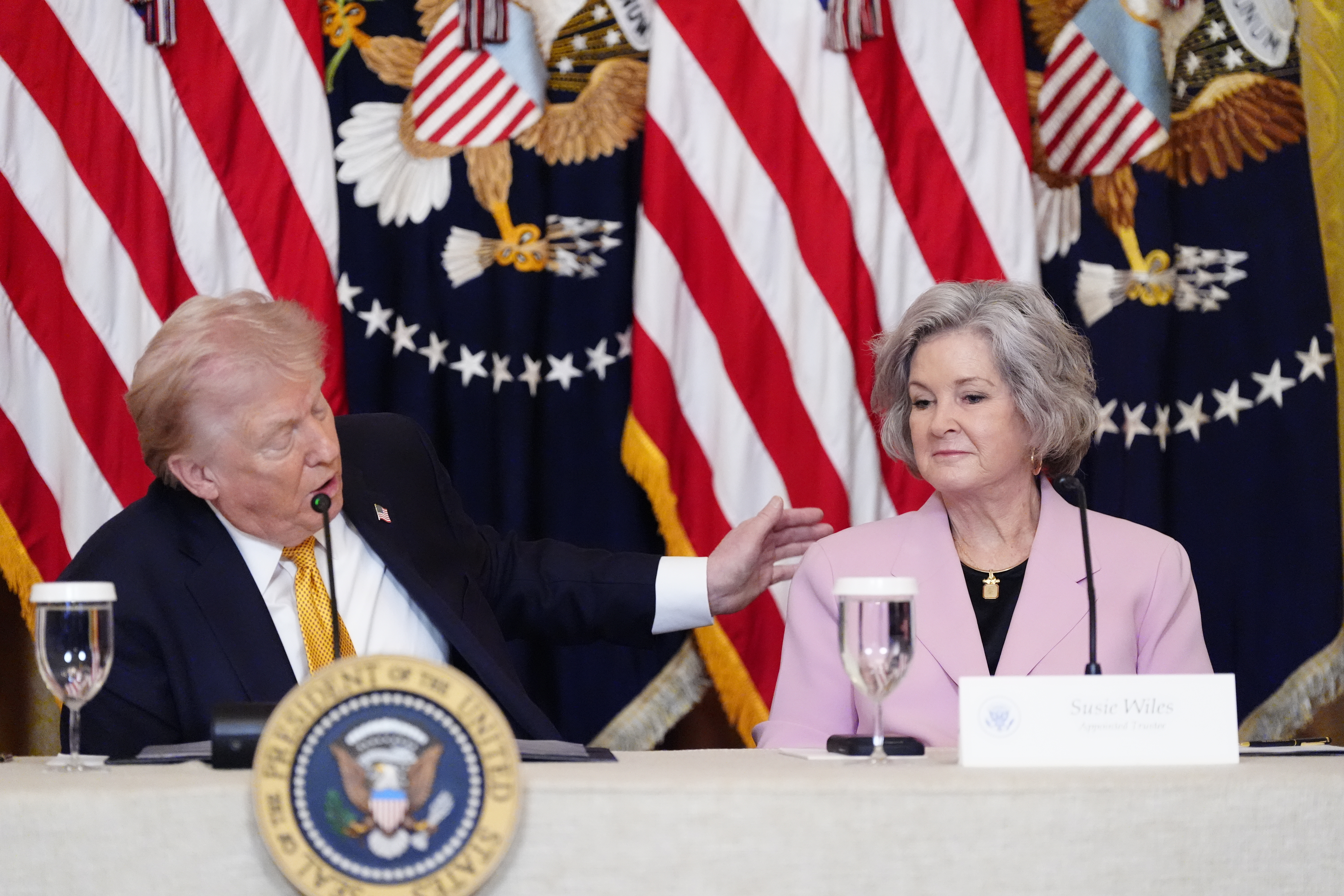
    The Trump White House has expressed pride in the fact that some key senior staff have been the first women to hold certain titles, including Susie Wiles as chief of staff, and defended the president’s hiring choices in a statement to the Post.

    “President Trump has assembled the greatest Administration in history, selecting each member of his incredible team based on one criterion: their ability to deliver for the American people,” Taylor Rogers, a White House spokesperson, said in a statement. “Unlike the identity-politics-obsessed Democrats, the President judges individuals on merit and qualifications, not immutable characteristics.”

    Lower rate of female political appointees

    According to the Partnership for Public Service, a nonprofit that says it aims to build a better government and a stronger democracy, Trump’s Senate-confirmed appointees are made up of the smallest percentage of women of any administration since George W. Bush.

    A PPS political appointee tracker, launched with the Post in 2016, monitors appointments to roughly 800 executive branch positions, a portion of more than 1,300 positions that require Senate confirmation. It includes all full-time, civilian positions in the executive branch that require Senate confirmation except for judges, marshals, and U.S. attorneys. (Military appointments and part-time positions requiring Senate confirmation are not included.)

    When excluding ambassadors and holdovers from previous administrations, PPS data show that so far in this administration, about a year and four months in, 14.53% of all nominees or Senate-confirmed political appointees — 51 out of 351 total roles — are women.

    At this point in President Joe Biden’s term, women had been nominated for 199 out of 379 roles, comprising 52.5% of appointees. And at this point in Trump’s first term, women had been nominated or announced for 41 of 173 of those roles, comprising 23.7% of appointees.

    Heather Higgins, CEO of the conservative nonprofit Independent Women’s Voice, told the Post that “the confirmation gantlet falls hardest on conservative women who can expect their families, faith, and reputations to be put through the wood chipper.”

    “Plenty of enormously talented women make the entirely rational choice to serve the country some other way,” she added. “That’s not a deficit of ambition but a market signal that women don’t necessarily see politics as the only or best lane for influence. And looking at the life of those in those roles, which is no picnic, I’d say that that’s a testament to the groundedness and judgment of women on the right.”

    But Max Stier, the president and CEO of the Partnership for Public Service, expressed concerns about the trend.

    “The evidence is clear that drawing on people with different backgrounds creates a higher-performing organization,” Stier said in a statement. “At the end of the day, our government needs leadership that reflects the diversity of the American people in order to understand and best serve them.”

    Turnover in Trump’s cabinet

    The first female cabinet member was Frances Perkins, who served as secretary of labor from 1933 through 1945. But it wasn’t until the 1970s under President Jimmy Carter that more than one woman was part of the president’s cabinet at the same time.

    Trump selected nine women to serve in his cabinet or in cabinet-level positions at the start of his second term. One of those cabinet-rank members, White House chief of staff Susie Wiles, does not require Senate confirmation. Another pick, Elise Stefanik, withdrew her nomination as U.S. ambassador to the United Nations.

    Among Trump’s presidential predecessors, only Biden successfully nominated more women to serve in his cabinet toward the start of his presidency.

    But nearly a year and a half into Trump’s second term, every departure from his cabinet has been a woman. And more female cabinet and cabinet-level officials have left their positions during this term than at this point in any previous presidential administration, according to an internal count by the Post based on a list of female cabinet members through U.S. history collected by the Rutgers University Center for American Women and Politics.

    Most recently, Tulsi Gabbard announced last month that she would step down as the director of National Intelligence effective June 30. Along with Gabbard, Attorney General Pam Bondi, Labor Secretary Lori Chavez-DeRemer, and Homeland Security Secretary Kristi L. Noem all have left the cabinet. A man was chosen to replace each of them.

    Fewer Republican women running for federal office

    The start of Trump’s second presidency also marked the first Congress since 2011 in which the number of women serving in the House and Senate declined, due to a decline in Republican women. While Democrats set a record by sending 110 female lawmakers to the House and Senate at the start of 2025, Republicans elected 40, according to data from CAWP. The number of Republican women in the House and Senate hit record or near-record levels after the 2022 midterm elections.

    There’s also been a decline in Republican women running for federal office, according to data from the Center for American Women and Politics at Rutgers. Republican women as a percentage of Senate and House candidates reached their peak in 2022.

    A record-setting 38 women filed as Republican Senate candidates in 2022. The number of candidates dropped to 21 in 2024 and has risen slightly to 27 candidates filing to run in 2026.

    Similarly, the number of Republican women registering to run for House seats hit a peak in 2022 with 261. That number dropped to 166 in 2024. So far in 2026, the number of female Republican candidates filing to run for House seats has declined further to 155 candidates.

    “Republican women are underrepresented across the board, across states, even when we look at them as a percentage of their own caucus in highly Republican states,” said Kelly Dittmar, director of research and CAWP scholar at Rutgers. “This change in a Republican administration is consistent with what we have seen before: When Republicans are in office, when they hold a state legislature, the majority party — we know that almost always there are going to be fewer women.”

    Public polling suggests that waning female representation in Washington may not be seen as much of a problem for many Republicans.

    A 2023 Pew Research study found that 5% of Republicans and Republican leaners say it is extremely or very important to them that the U.S. elects a woman as president in their lifetime. Among Democrats, 31% said it was extremely or very important. Republican women were also about twice as likely as Republican men to say there are too few women in high political offices in the country.

    “It’s odd to assume that women are succeeding only if they’re found in government rosters. That’s a surprisingly narrow definition of success,” Higgins, the Independent Women’s Voice CEO, said. “One of the lessons of the last several decades is that women don’t all want the same things, don’t make the same choices, and shouldn’t be expected to. Equality means respecting those choices, not treating every statistical difference as evidence that something has gone wrong.”

  • Pentagon labels tech giant Alibaba and electric car maker BYD as aiding Chinese military

    WASHINGTON — The Pentagon has added several prominent Chinese businesses, including the tech giant Alibaba, electric car maker BYD and search engine Baidu, to its list of Chinese military companies, preventing them from getting U.S. defense contracts.

    The list, updated and published Monday by the Pentagon, now sanctions well-known, non-state-owned Chinese companies that are not traditionally considered to be in the defense or security sector. It reflects growing wariness of Beijing’s strategy of tapping the strength of non-state businesses for military purposes.

    Created in 2021 by a congressional mandate, the list seeks to identify Chinese companies that the Pentagon considers to have links to the Chinese military — not only those directly controlled by the Chinese military and security forces but also those contributing to the country’s defense industrial base.

    When updating the list last year, the Pentagon said the Chinese military sought to acquire advanced technologies and expertise developed by Chinese companies, universities and research programs that “appear to be civilian entities.”

    The Chinese Embassy on Monday accused the U.S. of “overstretching the concept of national security and making discriminatory lists to go after Chinese companies.” It said Chinese companies observe the laws and regulations of the countries where they do business. “The U.S. should stop its wrong practice and create a fair, just and non-discriminatory environment for Chinese companies,” the embassy said in a statement.

    Alibaba, BYD and Baidu said there is no basis for including them on the list. “Alibaba is not a Chinese military company nor part of any military-civil fusion strategy,” a statement from the leading e-commerce company said. Baidu, which has expanded into artificial intelligence and self-driving taxis, said the suggestion that it is a military company is “entirely baseless.”

    BYD said in a statement it is “not a military enterprise” and that the determination “seriously contradicts the facts.” It also said it “will actively safeguard its legitimate rights and interests through all feasible administrative and legal means.”

    This year’s list has grown to 188 Chinese entities, up from last year’s roughly 130 named by the Pentagon. It already had covered companies such as DJI, a major maker of consumer drones. While a company on the list can still do business in the U.S., it faces reputational damage and could be subject to more restrictions.

    After the Pentagon released the updated list, the House Select Committee on the Chinese Communist Party called it “a warning to American businesses, all levels of government, and the American people.” It said the companies on the list that are traded publicly on U.S. exchanges should be delisted and no American company should do business with those on the list, “otherwise they are enabling China’s military ascendance.”

    In naming Alibaba, the Pentagon said the tech giant helps boost China’s defense industrial base because it is affiliated with the country’s Ministry of Industry and Information Technology. Alibaba is traded on the New York Stock Exchange.

    The Pentagon said BYD and Baidu are affiliated with the same ministry, which oversees China’s technology and industrial policies. BYD is dominant in the global electric vehicle market, and President Donald Trump said in January that he would welcome Chinese carmakers such as BYD if they built plants in the U.S. and hired American workers.

    However, a number of U.S. lawmakers have said they will seek a ban on Chinese electric vehicles.

    Another addition is the Chinese robotics company Unitree, whose dancing robots impressed Simon Cowell on NBC’s “America’s Got Talent.” The Pentagon said the company “knowingly received assistance” from the Chinese government through its designation as a small or medium-sized company that is highly innovative, highly competitive globally and critical to the country’s supply chain. Unitree did not immediately respond to a request for comment.

  • Health risks of alcohol accelerate after one drink a day, study finds

    Health risks of alcohol accelerate after one drink a day, study finds

    A government alcohol study published Tuesday concluded that the health risks of alcohol start at a single drink a day. The report was caught up in controversy after drawing the ire of the alcohol industry.

    At one drink a day, the researchers found, there was an increased risk of premature death from an illness or injury directly attributable to alcohol, though it was small — 1 in 1,000 people. But the risk of premature death jumped to 1 in 25 for those who had two drinks a day, a level long considered safe for men, according to the study, which was published in the Journal of Studies on Alcohol and Drugs.

    The Alcohol Intake and Health Study was one of two reports commissioned during the Biden administration to inform an update to the U.S. dietary guidelines.

    The second report, from a panel appointed by the National Academies of Sciences, Engineering and Medicine, or NASEM, came to very different conclusions. It suggested that moderate drinking (up to two drinks a day for men and one for women) was healthier than not drinking at all, although it noted that moderate drinking was also linked to a higher breast cancer risk. Some of the panelists behind that report had financial ties to the alcohol industry.

    The second report’s finding was more palatable to the alcohol industry, which had called the Alcohol Intake and Health Study ideologically driven and scientifically flawed, and said it had communicated its concerns repeatedly to government officials over a period of several years.

    When the Trump administration finally issued the new dietary guidelines in January, they advised Americans to drink less for better health but omitted any recommendation for daily limits, in a departure from previous years.

    “The new dietary guidelines say that consuming less is better for your health, but don’t say what consuming less means,” said Priscilla Martinez-Matyszczyk, one of the authors of the new paper and the deputy scientific director of the alcohol research group at the nonprofit Public Health Institute. “This paper does, and it says that having no more than one drink a day is best for health, and that drinking above that comes with significant risks.”

    A standard drink is defined as 12 fluid ounces of regular beer, 5 ounces of wine or 1.5 ounces of distilled spirits.

    In an editorial accompanying the new paper, Robert M. Vincent, the former government official who commissioned the study, said he believed he was fired because the report produced evidence “at odds with commercial interests.” Vincent lost his job as associate administrator for alcohol prevention and treatment policy at the Substance Abuse and Mental Health Services Administration during a reduction in force last year.

    “It was going to cost the alcohol industry money,” Vincent said. “They didn’t like going from two to one for men, and they didn’t like the mention of cancer.”

    A spokesperson for the Department of Health and Human Services did not respond to a request for comment about Vincent’s statement.

    The new study, which relied exclusively on U.S. health data, assessed relationships between average alcohol consumption and the risk of disease or death from causes that were directly attributed to drinking.

    Women who had one drink a day were more likely to die of liver cancer or breast cancer than women who did not drink. And at one drink a day, both men and women were at increased risk of dying from liver cirrhosis, oral and esophageal cancers, and injuries, the paper found. The risks continued to climb with higher levels of consumption.

    Consuming more than one drink per occasion was associated with progressively higher risks of breast cancer, cardiovascular disease and injury.

    The report did find that one drink a day was associated with a lower risk of diabetes for women and a lowered risk of stroke for both men and women. However, occasional heavy drinking nullified the protective effects against stroke.

    One reason the studies reached such different conclusions is that while the new study examined deaths from causes directly attributable to alcohol, the NASEM report commissioned by Congress looked at overall death rates of moderate drinkers, including deaths not causally related to alcohol.

    Critics of the NASEM report say that people who drink in moderation often have other healthy lifestyle habits that contribute to their longevity. The moderate drinking group also included many people who consumed less than two drinks a day. Both of these factors could make the health effects of moderate drinking look less significant than they might be.

    Dr. Ned Calonge, an epidemiologist at the University of Colorado Anschutz Medical Campus who led the NASEM study, said he stood by its conclusions.

    “Alcohol research is complex and I am not surprised by different methods producing different results,” Calonge said, adding that modeling studies like the Alcohol Intake and Health Study, which use data to estimate the lifetime risk of diseases and deaths caused by alcohol, also come with potential biases.

    At the same time, he added, “I don’t believe anyone should start drinking for health reasons.”

    This article originally appeared in The New York Times.

  • U.S. says it has begun strikes against Iran following crash of Army Apache helicopter off Oman coast

    DUBAI, United Arab Emirates — The U.S. military said Tuesday that it carried out strikes on Iran following the crash of an Army helicopter near the Strait of Hormuz that President Donald Trump blamed on the Islamic Republic.

    U.S. Central Command said on social media that the strikes would be “a proportional response to unjustified Iranian aggression.” Iranian state media reported that explosions were heard on Qeshm Island in the Strait of Hormuz, a critical shipping lane that Iran has effectively closed during the war, before saying that the wave of American attacks in the south has “subsided.”

    Trump said earlier in a social media post that Iran had shot down the aircraft while it was on patrol over the strait and declared that the U.S. “must, of necessity, respond to this attack.” Iran’s top diplomat said foreign military forces near the country’s territory “are at constant risk.”

    The downing of the helicopter and the resulting strikes by the U.S. military further strained a two-month ceasefire a day after Iran and Israel exchanged fire for the first time since the fragile truce took effect. Iranian state television said Tuesday that the Israeli attacks killed at least two members of the country’s air-defense units.

    Since the U.S. and Israel began striking Iran on Feb. 28, the war has shaken the global economy, driven up energy prices around the world, and made many basics, including food, more expensive.

    Officials have been unable to turn the April ceasefire into a deal to permanently end the conflict, particularly as Israel intensifies and expands its military campaign in Lebanon against the Iranian-backed militia Hezbollah.

    U.S. helicopter collided with Iranian drone, official says

    The Army AH-64 Apache attack helicopter went down after colliding with an Iranian drone, according to a U.S. official, who spoke on condition of anonymity to discuss an ongoing investigation.

    It wasn’t clear whether the collision was intentional, and official statements only said the crash is under investigation. CNN, CBS News, and other outlets earlier reported the collision.

    In the first known operation of its kind by the American military, a drone boat rescued the two aviators who were aboard the Apache attack helicopter when it went down near the critical shipping lane that Iran has effectively closed during its war with the U.S. and Israel.

    Trump said in a social media post that military officials told him “the Iranians shot down one of our highly sophisticated Apache Helicopters.” Both service members “are safe and uninjured,” he added.

    “Nevertheless, the United States must, of necessity, respond to this attack,” Trump wrote.

    Soon after Trump made his accusation, Iranian Foreign Minister Seyed Abbas Araghchi said in a social media post that the strait is “thousands of miles away from U.S. shores.”

    “Foreign forces in proximity to our territory are at constant risk on account of their own human errors, plain accidents, or potentially being caught in crossfire,” Araghchi wrote. “To reduce risk, best solution is for them to leave.”

    The downing of the helicopter further strained a two-month ceasefire a day after Iran and Israel exchanged fire for the first time since the fragile truce took effect. Iranian state television said Tuesday that the Israeli attacks killed at least two members of the country’s air-defense units.

    Since the U.S. and Israel began striking Iran on Feb. 28, the war has shaken the global economy, driven up energy prices around the world, and made many basics, including food, more expensive.

    Officials have been unable to turn the April ceasefire into a deal to permanently end the conflict, particularly as Israel intensifies and expands its military campaign in Lebanon against the Iranian-backed militia Hezbollah.

    Army crew members picked up by drone boat

    The Army aviators were rescued at 3:30 a.m. local time Tuesday, about two hours after their helicopter went down during a patrol off the coast of Oman, U.S. Central Command said.

    The U.S. service members were spotted and picked up by a drone boat that took them to another location on the water, where they were picked up by a helicopter, said Capt. Tim Hawkins, a spokesperson for U.S. Central Command. Hawkins initially said the drone took the two to shore, and he did not elaborate on the updated timeline.

    It was the first known drone rescue at sea by the U.S. military, Hawkins said.

    AH-64 Apache helicopters have been a key asset for the American military as it enforces a blockade on Iranian crude oil shipments and tankers, seeking to pressure Tehran into a deal. The helicopters have also been used by the United Arab Emirates to shoot down Iranian drones.

    The drone used to perform the rescue was a 24-foot vessel called a Corsair, Hawkins said. It’s manufactured by Saronic Technologies.

    The drone was assigned to the Navy’s Task Force 59, established in 2021 as the Navy’s first uncrewed and artificial intelligence unit that focuses on maritime security in the Middle East, including the Strait of Hormuz and the Suez Canal.

    Trump insists an Iran deal is coming

    Before he accused Iran of downing the U.S. helicopter, Trump had expressed renewed optimism over negotiations with Iran.

    “We have a good chance” of signing a deal in “two or three days,” Trump said late Monday. But he did not provide any details on why there was reason for new optimism. In the two months since the U.S. and Iran agreed to an initial ceasefire, Trump has repeatedly predicted that a deal is near.

    “We’re very close to having a very, very good, strong, powerful deal,” the president said.

    Mediators, led predominantly by Pakistan, have been trying for weeks to get a deal across the line. However, both Iran and the U.S. have taken hard-line positions.

    The U.S. wants to see Iran give up its stockpile of highly enriched uranium, which is believed to be entombed in the aftermath of American airstrikes that happened during the 12-day war in 2025. But Iran is refusing that and demanding relief from sanctions. It also wants the release of frozen assets even before a final agreement is in place, something rejected by Trump.

    Before Trump’s comments on negotiations, Qalibaf said Monday that Trump’s remarks so far on a possible deal “contradicted the agreed-upon sections,” showing that the U.S. is “neither seeking a ceasefire nor dialogue.”

    The continued fighting between Israel and Hezbollah is still a top Iranian priority as well. Lebanon’s army chief, Gen. Rodolphe Haykal, traveled to Pakistan on Tuesday. There, he met Pakistan’s army chief, Field Marshal Asim Munir, who has been a key figure in the Iran-U.S. talks.

    Haykal’s visit comes as Lebanon’s government takes an increasingly hard line on Hezbollah but remains unable to disarm the powerful militia. Hezbollah thanked Iran on Tuesday for attacking Israel “in defense of our Lebanese people,” suggesting that Lebanon’s government should take this opportunity to improve relations with Tehran.

    Israel issues a warning for Tyre, Lebanon

    Meanwhile, the Israeli military issued an evacuation warning for Lebanon’s southern port city of Tyre, including the Christian quarter, which has so far been spared from airstrikes on the city.

    Last week, Israel warned the Christian neighborhoods in Tyre that it believed Hezbollah members were among them. Many Lebanese Shiite Muslims fled to those areas as Israeli strikes hammered the Mediterranean coastal area over the past two weeks.

    After last week’s warning, the Lebanese army deployed to the Christian district of Tyre in an effort to prevent Israeli attacks there and to show that Hezbollah has no armed presence in the area. But Avichay Adraee, the Israeli military’s Arabic-language spokesperson, posted on X on Monday that the Israeli military “will have to act against their terrorist activities in the neighborhood soon.”

  • Letters to the Editor | June 9, 2026

    The Iran war

    As our administration wages war against Iran, we are reminded daily that Iran is a nation defined by religious nationalism — a system where political authority is fused with a single religious ideology, and dissent is treated as a threat to the nation’s spiritual purity. We are told this is dangerous, destabilizing, and incompatible with democratic values. On that point, I agree.

    What’s harder to ignore is the irony that, while condemning Iran’s model abroad, we are watching a homegrown version of Christian nationalism gain traction here. This ideology insists that America was founded as a Christian nation, that government should enforce a particular religious doctrine, and that political authority can be divinely sanctioned. These are not expressions of personal faith. They are political claims dressed in theological language.

    The consequences are already visible. FBI data show that in recent years, hate crimes have surged to their highest levels in decades, with sharp increases in incidents targeting religious minorities, LGBTQ Americans, and racial and ethnic communities. When leaders describe opponents as ungodly, when groups are cast as existential threats to the nation’s spiritual identity, and when political conflict is framed as “spiritual warfare,” it creates a permission structure for real‑world harm.

    In other words, we are condemning Iran for the very dynamic we are beginning to tolerate at home: a fusion of religion, nationalism, and grievance that inevitably produces intolerance and, too often, violence. It is difficult to claim we are defending democracy abroad if we are quietly eroding it within our own borders.

    Steve Abramovitz, Cherry Hill

    . . .

    Remember when Barack Obama was president and negotiated the nuclear deal with Iran? Former Sen. Pat Toomey and other Republican senators wrote directly to Iran to try to kill the deal. Why not have Democrats do the same, but in this case, end the war and reinstate the Obama deal that was working?

    George Magakis Jr., Norristown

    Protect peaceful protests

    I’ve visited Delaney Hall twice since late April. The stories that detainees shared with me about the poor conditions inside were heartbreaking, and U.S. Immigration and Customs Enforcement’s (ICE) track record hasn’t earned the agency any benefit of the doubt.

    I’m proud of New Jersey’s delegation for its continual in-person oversight, especially since congressional visits are about the only access the outside world can get to Delaney Hall right now. I’m also grateful to Gov. Mikie Sherrill for fighting to change that, and for her balancing act to sustain pressure on those running Delaney Hall while maintaining public safety.

    Across the country, we have witnessed heavy-handed tactics by federal immigration agents who repeatedly turn tense situations into dangerous — and even fatal — encounters. Sherrill’s decisiveness to get ICE out of the protests and reestablish local control potentially saved lives — and will make it safer for demonstrators to peacefully organize.

    And the peacefulness of those demonstrations is critical. When my dear, late friend John Lewis promoted “good trouble,” he specifically called for nonviolent civil disobedience — not assaulting law enforcement or destroying property.

    With the ability to peacefully demonstrate no longer threatened by ICE, the opportunity is now to put the focus back on the core issue: The need to stop the Trump administration’s gross mistreatment of detainees at Delaney Hall.

    Donald Norcross, U.S. House of Representatives, New Jersey’s 1st Congressional District

    Join the conversation: Send letters to letters@inquirer.com. Limit length to 150 words and include home address and day and evening phone number. Letters run in The Inquirer six days a week on the editorial pages and online.

  • Dear Abby | Impromptu family reunion becomes source of contention

    DEAR ABBY: I recently hosted a family gathering that included my adult cousin and his wife, who live locally, and my son, daughter-in-law, and their son, who traveled from Georgia to Pennsylvania to visit.

    Since my son and family rarely see relatives, I thought it would be great to get everyone together. At the gathering, my son barely acknowledged our cousins. He and his wife didn’t participate in the conversation — instead, they pulled out their phones and generally looked bored and anxious for the company to leave.

    My son is a neurosurgeon. His wife is a nurse-practitioner. They are in their early 40s. I was so embarrassed.

    The next day, I sent a message to them, telling them how upset I was. My message was ignored. I followed up with another message, asking if they received the previous communication. Again, no response.

    I’m embarrassed for my cousins and disappointed in my son and daughter-in-law. I have no outlet for these emotions because they will not respond to me. I am physically sick over the situation since I have no way to resolve it. Help!

    — BEST OF INTENTIONS

    DEAR BEST: How socially aware are your son and daughter-in-law? Were they on their phones because of some medical problem that sprang up in their absence? Could they have been uncomfortable because you foisted these relatives on them with no warning?

    I keep looking for excuses that might explain their rudeness to the relatives. But I can find none for their ignoring your messages other than that they simply do not care. You should be furious. But please, don’t turn it inward, because that is what is making you ill.

    ** ** **

    DEAR ABBY: I am a mature female who hasn’t been in any kind of relationship for 25 years. When I realized I needed and wanted a relationship with someone compatible, I went on a dating site and found someone. But I messed up because I was insecure.

    I wanted more communication, and he is involved in many activities, which I understood. I tried to call him twice, but he didn’t pick up. I thought he was still communicating with other women on the dating site. I went to his house and told him that I had moved on because I hadn’t heard from him and he didn’t answer my calls. He said he broke his phone and was dealing with a son in jail and a sick mother.

    I don’t know if he was telling the truth, but if it’s true, that’s a lot of things to deal with. I felt awful and knew I had ruined things because of my impatience. I texted him, and I’m waiting to hear back. I really like him. We had been intimate, but I’m afraid I’ve lost him. What do I do?

    — ANXIOUS IN INDIANA

    DEAR ANXIOUS: Sometimes mature people can react immaturely. Once your insecurities took over, you came on a little too strong. Apologize for it and tell him that you have not “moved on.” But realize that the ball will be in his court, and if you don’t hear from him in a reasonable amount of time, you will have to look elsewhere for companionship.

  • Horoscopes: Tuesday, June 9, 2026

    ARIES (March 21-April 19). The gift that would make the biggest difference at home these days is organization. A good logistical flow is the mood-lifter that lends a sense of progress, ease, and accomplishment. Even one cleaner drawer is enough to start luck rolling in.

    TAURUS (April 20-May 20). Hope wafts in like a fresh breeze to delight the senses, especially the olfactory realm. The scents you love will relax your nervous system and convey signals of safety, luxury and goodness. Getting these feeling right leads to more luck.

    GEMINI (May 21-June 21). What contributes most to a lovely home life is clear communication with everyone and everything that lives there. Relationships need the lines open, but so do pets, plants, and the inanimate world that is always “talking” to you.

    CANCER (June 22-July 22). More than decor or upgrades, what changes everything now is tenderness. Because your home thrives on emotional atmosphere. A kind tone, a shared meal, a softer landing after hard days — comfort multiplies when people feel genuinely cared for.

    LEO (July 23-Aug. 22). Beauty is the blessing that transforms your environment now. A home should feel expressive, alive, and welcoming to the senses. Art, color, music, lighting — every dramatic flourish is a reminder that life is supposed to feel enjoyable.

    VIRGO (Aug. 23-Sept. 22). Functionality can be the greatest luxury. Tiny inefficiencies have a way of draining psychic energy over time. A repaired system, useful tool, or cleaner routine restores peace of mind and frees up attention for more creative and fulfilling pursuits.

    LIBRA (Sept. 23-Oct. 23). Harmony is the true wealth of a household. You’ll notice how much easier everything becomes when everyone or everything is included and respected in the picture. To consider the physical balances in play, as well as labor, emotion, and design elements, is to live in grace.

    SCORPIO (Oct. 24-Nov. 21). A restorative home contains spaces where secrets, feelings, and unfinished thoughts can exist without intrusion. You’ll have the privacy and protection that matter now. Creating more emotional safety will strengthen every relationship, including the relationship to self.

    SAGITTARIUS (Nov. 22-Dec. 21). Fresh energy is the blessing your home life craves. Open the windows, rearrange the furniture, invite fascinating people over, or bring symbols of possibility into your environment. A household grows luckier where there’s movement, humor, and room to dream bigger.

    CAPRICORN (Dec. 22-Jan. 19). Reliability is the cosmic gift that keeps good stuff flowing your way. When the practical foundations are handled well, everyone relaxes. Timely tending to maintenance creates a secure and sustaining home environment from which to build your beautiful life.

    AQUARIUS (Jan. 20-Feb. 18). Freedom is essential to domestic happiness and abundance. It’s having room to think, create, and exist without excessive scrutiny that allows for flourishing. Small adjustments toward more individual expression within the household will lighten and improve the mood.

    PISCES (Feb. 19-March 20). Your home absorbs emotional and spiritual tone like a sponge. What you actually do at home makes your place an auspicious environment. Music, prayer, laughter, imagination, study, and embodied expressions of health and joy infuse the space with inspired compassion.

    TODAY’S BIRTHDAY (June 9). It’s your Year of the Labyrinth. Unlike a maze, your path does not contain tricks, dead ends or wrong turns. There is only one path — a creative and magical winding way, which you’ll follow in grace and certainty. More highlights: Sweet, funny company when you want it. Tickets of all kinds open the door to fantastic and thrilling experiences. You’ll share what you have in abundance and be provided for in kind. Leo and Taurus adore you. Your lucky numbers are: 6, 16, 8, 11, and 19.

  • Trump nominates Todd Blanche for attorney general

    Trump nominates Todd Blanche for attorney general

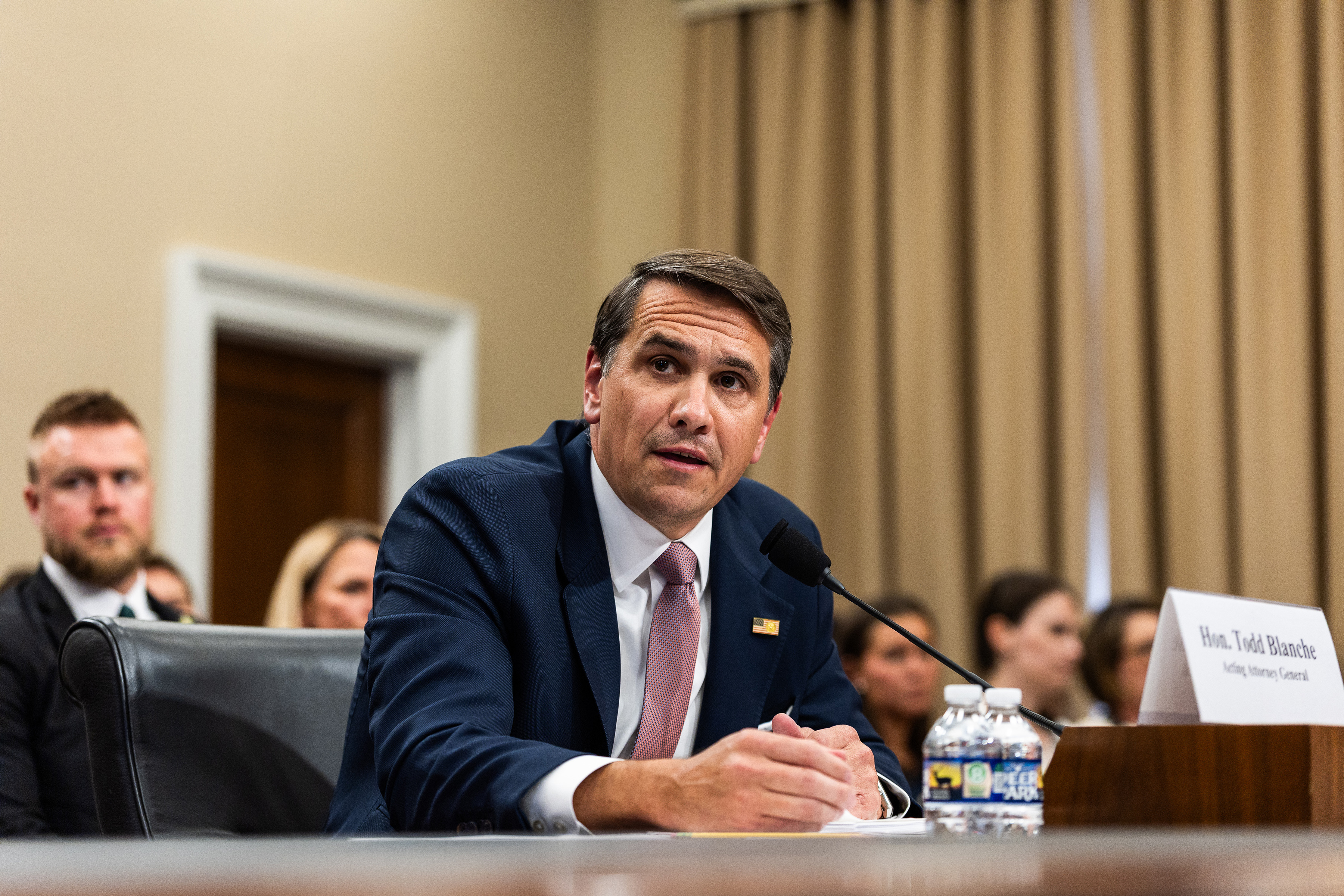
    WASHINGTON — President Donald Trump on Monday nominated his former personal lawyer Todd Blanche to serve as attorney general, elevating a loyal and trusted ally who as acting attorney general has shown a willingness to execute Trump’s maximalist demands.

    The announcement, teased by White House officials last week, comes as public scrutiny of Blanche intensifies over his role in an administration push for a $1.8 billion fund with taxpayer money to pay those claiming they were victims of government mistreatment, most likely including rioters who attacked the Capitol on Jan. 6, 2021.

    The nomination was disclosed in a notice Monday on the White House’s website, saying that Trump had sent Blanche’s name to the Senate.

    It remains unclear if Blanche, who promoted an expansive view of executive power at the expense of the legislative branch both as Trump’s defense lawyer and as the Justice Department’s second in command, will have sufficient support in the Senate to be confirmed as tensions grow between the White House and congressional Republicans.

    A confirmation hearing for Blanche could pose a tricky political test for Republicans as the party prepares for midterm elections this year. A recent closed-door meeting between Blanche and Senate Republicans was described as blistering, with dozens of lawmakers sharply criticizing Blanche over the $1.8 billion fund.

    Senators, however, failed to pass restrictions on any such payouts, suggesting their unhappiness with the White House may have ebbed.

    His path to the permanent appointment he has long coveted will also be complicated by lingering anger — and unanswered questions — related to his handling of the release of millions of pages of investigative files related to convicted sex offender Jeffrey Epstein.

    In recent weeks, his predecessor, Pam Bondi, who was fired in April after Trump privately vented over her failed efforts to prosecute his political enemies, placed primary responsibility for the release of the Epstein files on Blanche during an interview with a House committee.

    Blanche, a former federal prosecutor in Manhattan, has shed his reputation as a mildly moderating voice within the department as he has energetically pursued a job whose main prerequisite, in the view of current and former officials, is never saying no to the boss.

    A wide range of former law enforcement officials have sharply criticized Blanche’s brand of justice, saying he has deployed prosecutorial power to punish Trump’s perceived foes, and in the process badly damaged the department’s reputation with the courts and the public.

    As acting attorney general, Blanche has taken a series of actions against Trump targets, including green-lighting the indictment of former FBI Director James Comey for posting to social media an image of seashells arrayed to read “86-47,” which Blanche has described as a credible threat of violence against a sitting president. (The phrase “86” is a slang term evolved from restaurant parlance for throwing something out, and “47” refers to Trump, the nation’s 47th president.)

    Blanche expressed internal reservations about the highly unusual plan to establish the fund, which also included a broad shelter from tax investigations for Trump, his family, and his businesses that could be worth more than $100 million.

    But Blanche and one of his top aides, Stanley Woodward Jr., signed off on the plan, unlike some first-term Trump appointees who resigned or offered fierce resistance when confronted with demands they considered questionable. It was immediately assailed as a political slush fund by Democrats and Republicans alike.

    Testifying before lawmakers last week, Blanche said the Justice Department was giving up the plan for the fund but would keep Trump’s shelter from tax investigations in place. Trump later cast doubt on the abandoning of the fund, saying, “I love it.”

    “Todd Blanche has never stopped acting as Donald Trump’s personal lawyer,” said Stacey Young, the founder of Justice Connection, an organization of former department employees that includes many career prosecutors forced out by Blanche as he has sought to reshape the department to Trump’s liking.

    “He has used his high position at the department to enter into a corrupt deal with the president and his family, advance vindictive prosecutions, illegally fire career employees, smear whistleblowers, and attack the judiciary,” she added.

    The fund was the result of secret talks between Trump’s private lawyers and officials working for Blanche, as a means of settling a $10 billion lawsuit Trump had filed against the government over the leak of his tax returns, and unrelated claims for about $230 million that Trump had filed against the Justice Department and the FBI over past investigations and prosecutions.

    Blanche and his team sought to create a settlement that would prevent the government from paying taxpayer money to Trump, which they saw as a potential ethical, legal, and political catastrophe.

    In his testimony to lawmakers last Tuesday, Blanche insisted the protection of Trump and his family from tax audits or investigations would not be affected by the withdrawal of the fund proposal, and would remain in place.

    “So the blanket immunity is not something that you’re going to move back on?” asked Rep. Rosa DeLauro (D., Conn.), who accused Blanche of prioritizing the president’s financial interests over the public good.

    “You do not belong in this job,” she added.

    But Trump, who has said he owes his freedom to Blanche’s hard-nosed legal efforts on his behalf in the criminal cases against him, appears to believe otherwise.

    Blanche first gained the confidence of Trump while he was out of office, battling multiple investigations and indictments. Blanche became Trump’s defense lawyer in 2023, and represented him when he went on trial a year later in New York City; Trump was convicted on charges of falsifying business records.

    Since becoming the deputy attorney general in early 2025, Blanche has executed sweeping changes at the Justice Department, where he has proudly described firing more than 200 agents and prosecutors who worked on cases involving Trump or his allies. He has also talked of being at war with federal judges.

    This article originally appeared in the New York Times.