Tag: no-latest

  • Supreme Court allows Trump administration to end legal protections for Haitians, Syrians

    WASHINGTON — The Supreme Court on Thursday allowed the Trump administration to end legal protections for migrants fleeing violence and natural disaster in Haiti and Syria, exposing hundreds of thousands more people to potential deportation.

    The 6-3 decision overturns lower court orders and allows the Department of Homeland Security to swiftly end temporary protected status, a program that protects a total of 1.3 million people from 17 countries.

    It marked another victory at the high court for Republican President Donald Trump’s sweeping crackdown on immigration. Though the conservative-dominated court has put the brakes on some of Trump’s immigration policies over the last year, it handed him a second win Thursday in a decision clearing the way for the revival of a policy restricting immigrants seeking asylum.

    The court’s conservative majority found that immigration authorities have sole authority over the program, and the law doesn’t allow judges to intervene.

    The majority opinion from Justice Samuel Alito also brushed aside arguments that derogatory comments from Trump about Haitians showed the decision was unlawfully tinged by prejudice. He called the statements “insufficient to show that the termination of Haiti’s TPS designation was based on the race of the Haitian people.”

    Justice Elena Kagan forcefully disagreed, calling Trump’s comments “so repellent and racially inflected that the majority declines to put them in print.” She pointed out that Trump had said Haitians in the U.S. “probably have AIDS,” and he also amplified false rumors during the 2024 campaign that Haitian immigrants in Ohio were abducting and eating dogs and cats.

    Lawyers said Haitian immigrants would be in serious danger if they are sent back. “Simply put, the Supreme Court’s ruling will directly result in thousands of innocent people dying violent, needless deaths,” Geoff Pipoly and Andy Tauber said.

    They urged the Senate to approve an extension of deportation protections for Haitians that’ passed the House on a rare bipartisan vote in April.

    “Families are here, kids are going to school, parents are going into work, folks are trying to commute, and it’s like the Supreme Court just put all those activities on stop and put folks in limbo,” said Viles Dorsainvil, who runs a support center for Haitians in Springfield, Ohio.

    Derrick Johnson, president and CEO of the NAACP, called the “a devastating betrayal of Haitian families who have lived, worked, and contributed to this country for years — only to be cast out based on anti-Black immigration sentiment.”

    Haitians with TPS are also a key part of the workforce in long-term care facilities. “This would be a dreadful loss for all seniors in our community,” said Rita Siebenaler, a resident at Goodwin Living, a senior living community in Virginia.

    The Justice Department appealed to the Supreme Court after judges postponed the end of the program for about 350,000 Haitians and 6,000 Syrians. The high court sided with the administration before and allowed the end of the program for people from Venezuela.

    Federal authorities deny prejudice played a role. They also cited a Supreme Court decision from Trump’s first term that rejected bias claims based on his social media posts and upheld a travel ban on several Muslim-majority countries.

    James Percival, DHS general counsel, applauded Thursday’s ruling. He said the program had, in many cases, become “de facto amnesty. This is a win for the rule of law and common sense.”

    Since Trump returned to the White House in January 2025, Homeland Security has ended the protections, including some that had been in place for more than a decade, for people from 13 countries.

    The terminations were made even though countries such as Haiti and Syria remain dangerous, immigration lawyers said. Four Haitian women who were deported from the United States in February were found beheaded and dumped in a river several months later, lawyers said in court documents.

    The United States first granted protections to Haitians in 2010 after a catastrophic earthquake and extended them multiple times amid ongoing gang violence that has displaced more than a million people, according to court documents.

    Syrians were first granted protected status in 2012, during a civil war that lasted for more than a decade before the fall of President Bashar Assad’s government in late 2024.

    “Today, many of our community members they feel lost,” Farrah AlKhorfan of Immigrants Act Now said about Syrian immigrants losing TPS protections. “They are trying to understand … what this decision means for them and how it will be implemented and how much time they will have to prepare for what comes next.”

    The program was created by Congress in 1990 to prevent deportations to countries suffering from natural disasters, civil strife and other instability. It allows people already in the country to stay with work permits in increments of up to 18 months, but it does not provide a path to citizenship.

  • David Clayton-Thomas, powerhouse lead singer of Blood, Sweat & Tears, has died at 84

    NEW YORK — David Clayton-Thomas, the lead singer of Blood, Sweat & Tears, whose husky, high-strung tenor on “Spinning Wheel,” “And When I Die,” and other hits helped make the so-called “brass rock” band among the most popular acts of the late 1960s, has died at age 84.

    Spokesperson Eric Alper said that Mr. Clayton-Thomas died “peacefully” Wednesday at St. Michael’s Hospital in Toronto. Alper did not cite a specific cause.

    Mr. Clayton-Thomas was a onetime street fighter and petty thief from Canada who briefly became a rock superstar, the front man of a nine-member group that sold millions of records and won two Grammys for Blood, Sweat & Tears, which beat out the Beatles’ Abbey Road for best album of 1969. Calling out amid a jazzy parade of horns, keyboards, and percussion, Mr. Clayton-Thomas’ urgent shout was a signature voice of the era, preaching love on the Motown cover “You’ve Made Me So Very Happy,” a lasting legacy on Laura Nyro’s “And When I Die,” and a cool head on his own “Spinning Wheel.” Meanwhile, Blood, Sweat & Tears helped inspire a wave of horn-led bands, among them Chicago, the Electric Flag, and Ten Wheel Drive.

    “A lot of the guys [in Blood, Sweat & Tears] would play a Broadway show matinee, then go up to Harlem and play Latin music or R&B and funk at night, or come down to the Village and play pure jazz the next night,” Mr. Clayton-Thomas told bestclassicbands.com in 2023. “I was just a blues player: give me three chords and I’ve got a song.”

    At its peak, Blood, Sweat & Tears’ appeal was so broad it helped lead to the band’s downfall.

    Hip enough to perform at the 1969 Woodstock festival, where they were among the highest paid acts, they also were known enough to the establishment to tour Eastern Europe the following year on behalf of the State Department. When Mr. Clayton-Thomas and other band members denounced the Communist regimes on the other side of the Cold War, Rolling Stone’s David Felton wrote that “the State Department got its money worth.” Yippies would turn up at a 1970 Blood, Sweat & Tears show at Madison Square Garden, carrying obscene banners outside and dumping manure by the front gate.

    The band had practical reasons for going along with the government: Mr. Clayton-Thomas, who had allegedly wielded a gun at his girlfriend, had been denied a green card and faced deportation. But after topping the charts in 1970 with the album Blood, Sweat & Tears 3, their appeal soon faded. A burned out Mr. Clayton-Thomas left the group in 1972, and neither he nor the remaining musicians ever regained their old stature. Blood, Sweat & Tears would continue recording over the next few years, and even briefly reunited with Mr. Clayton-Thomas, who went on to release more than a dozen solo albums and tour on his own for decades.

    Mr. Clayton-Thomas was inducted into the Canadian Music Hall of Fame in 1996. “Spinning Wheel,” covered by everyone from James Brown to TV star Barbara Eden, was voted into the Canadian Songwriters Hall of Fame a decade later.

    Mr. Clayton-Thomas is survived by his daughters, Ashleigh Clayton-Thomas and Christine Graham.

    Up from the streets

    Born David Henry Thomsett in Surrey, England, and raised near Toronto and Ottawa, he was the son of a Canadian World War II veteran and of a pianist-entertainer who helped inspire her son’s interest in music. Thomsett was lucky to have the chance. He fought violently with his father, was living in the streets by his mid-teens and by age 20 was serving time in a reformatory for vagrancy, assault and other crimes.

    An old guitar, left behind by a fellow inmate, changed his life. He taught himself to play and began spending extensive time in the early 1960s around Toronto’s Yonge Street music “strip,” where peers included the American rockabilly star Ronnie Hawkins, a mentor to Robbie Robertson and other future members of the Band and a guide for Thomsett early in his career.

    Anxious to reinvent himself, he changed his last name to Clayton-Thomas while leading his own groups. In the mid-60s, he released such albums as Sings Like It Is and had a hit single with the anti-war rocker “Brainwashed.” He would also befriend a rising star, Joni Mitchell, whose childlike “Circle Game” helped inspire “Spinning Wheel,” and the venerable John Lee Hooker, who would indirectly contribute to Mr. Clayton-Thomas’ breakthrough in the U.S.

    America beckons

    Hooker had encouraged Mr. Clayton-Thomas to move to New York, where the American bluesman had an engagement at the Cafe Au Go Go in Greenwich Village. When Hooker unexpectedly departed for a tour of Europe, club owner Howard Solomon needed a replacement and recruited Mr. Clayton-Thomas.

    “So I played him a couple songs on the guitar,” Mr. Clayton-Thomas told bestclassicbands.com. “He said, ‘Do you have a band?’ I said, ‘Sure,’ and went out into Greenwich Village looking for anybody carrying a guitar case or even looking like a musician, and we put together a little band and we opened there that night. We ended up staying there for several months.”

    Around the same time, session man-producer Al Kooper was looking to a form jazz-rock group and was joined by such musicians as guitarist Steve Katz, drummer Bobby Colomby, and horn players Randy Brecker and Jerry Weiss. They called themselves Blood, Sweat & Tears, releasing the debut album Child Is Father to the Man early in 1968. Although praised by Rolling Stone publisher Jann Wenner as “a fine, exemplary group,” members were torn between those allied with Kooper and those who thought his vocals too weak to attract a substantial audience.

    By the end of the year, Kooper and others had departed, and the band was seeking a new singer. After Judy Collins saw Mr. Clayton-Thomas perform, she recommended him to Colomby.

    “I got home and just a couple of days later, Bobby Colomby called me up and said, ‘Hey, Kooper’s gone. We got four guys left out of the nine. And we still got a record contract with Columbia. Do you want to come down and try out for the band?”’ Mr. Clayton-Thomas told bestclassicbands.com. ”I said, ‘You’re damn right.’ I knew [bassist] Jim Fielder real well and I knew they were superb musicians. So I was on the next plane. We had a rehearsal that afternoon, an audition, and it was instant magic. We just knew right off the bat.”

  • New acting intel czar Bill Pulte starts trimming staff as Trump urged

    New acting intel czar Bill Pulte starts trimming staff as Trump urged

    Acting director of national intelligence Bill Pulte, installed Friday by President Donald Trump, has at Trump’s urging begun trimming his organization, which coordinates the nation’s 18 spy agencies.

    This week Pulte fired a half-dozen political appointees and notified several dozen career officers on loan to the Office of the Director of National Intelligence that they were being sent back to their home agencies.

    Pulte’s immediate predecessor, Tulsi Gabbard, had already culled hundreds of personnel, boasting that she had slashed the staff by 40%. Trump has long been distrustful of what he calls the “deep state” intelligence community, and the cuts by Pulte are the latest in a series of shocks that have roiled the ODNI.

    Gabbard, who left office last week, had a stormy tenure, falling in and out of favor with Trump’s White House. Current and former officials criticized as ham-handed her release of files related to President John F. Kennedy’s assassination. She selectively declassified data on Russia’s interference in the 2016 U.S. election and other matters that supported Trump’s views.

    In recent months, the ODNI has seen a number of high-level resignations and a roller coaster of leadership announcements by Trump.

    The agency “is being so hollowed out that its new name might become DNR — do not resuscitate. It’s on life support already,” said Beth Sanner, a former ODNI deputy director who served as Trump’s intelligence briefer in his first administration.

    While a number of current and former intelligence officials note that there are merits to shrinking the ODNI, the Trump administration, they say, has gone about it in a haphazard way that could undermine the intelligence coordination that Congress created the agency to do.

    “Reasonable people can debate ODNI’s size and mission, but sacking dozens of seasoned officers in your first week isn’t reform — it’s performative firing to please a president who treats his own intelligence community as the enemy within,” said Julia Curlee, who served as a director for intelligence programs in Trump’s White House until last year and recently resigned from the CIA after 20 years as an analyst.

    Pulte asked program heads for a rank-ordered list of personnel to guide decisions on who could be let go, according to former intelligence officials, who spoke on the condition of anonymity for fear of retribution.

    One apparent casualty of the personnel moves that began under Gabbard is the National Intelligence Council, which was staffed primarily by career officers on loan from other agencies, such as the CIA. The NIC is considered the most authoritative intelligence analysis unit, producing in-depth reports on key topics for top government officials using information gathered by multiple spy agencies.

    About 20 NIC personnel have been removed or have chosen to leave, including several senior officers who oversaw the production of analysis on Russia, China, and Europe.

    The deputy director for mission integration, Will Ruger, who effectively led the council, was placed on administrative leave, according to three former intelligence officials.

    It is unclear whether and to what extent the vacancies will be filled. When the principal deputy intelligence officer for Russia left last year, the position was kept open.

    Trump told the Wall Street Journal this month that he’d like to see a “smaller” ODNI. “I think there are a lot of people in there that shouldn’t be there,” Trump said, noting that he was referring to holdovers from the Biden and Obama administrations.

    Senate Intelligence Committee Chairman Tom Cotton said on the Senate floor Wednesday that “mass firings” were not taking place. He said Pulte told him that “a small handful of front-office personnel” were leaving, “which is not at all uncommon when a senior leader leaves an agency or one comes into an agency.” He added that “around 45 or 50 career officers” were returning to their home agencies.

    “I think that’s a step in the right direction,” said Cotton, who has long called for shrinking the ODNI and last year proposed legislation that would cap its full-time staff at 650.

    Some agency insiders have heard that there could be subsequent rounds of cuts and that keeping each round relatively small will help avoid congressional blowback, according to one former intelligence official.

    Trump’s appointment of Pulte, who has no intelligence or national security experience, has alarmed Democratic lawmakers, as well as some Republicans. Some current and former intelligence officials fear he will use the post to further Trump’s agenda, including weaponizing intelligence against the president’s enemies.

    As head of a federal mortgage regulation agency, Pulte has launched mortgage fraud probes of people Trump considers adversaries, including Sen. Adam Schiff (D., Calif.) and Federal Reserve Board member Lisa Cook.

    Government reorganization efforts under Trump have been marked by chaos and missteps, such as when Elon Musk’s Department of Government Efficiency last year dismantled the U.S. Agency for International Development and conducted mass firings at the State Department and other agencies.

    The Office of the Director of National Intelligence was created by Congress in the wake of the September 2001 terrorist attacks, after investigations found that the CIA, the FBI and other agencies had failed to share critical information about al-Qaeda plots.

    The ODNI had a little more than 2,000 employees at the start of Trump’s second term. By the time Gabbard left last week, the number had shrunk to 1,300, according to congressional aides.

    Morale was shaken last year when Gabbard dismissed the chair and vice chair of the NIC after it produced a report that found that the Venezuelan government was most likely not directing the activities of Tren de Aragua, a criminal gang that Trump has vilified. The finding contradicted his rationale for invoking the Alien Enemies Act and deporting alleged Venezuelan gang members without due process.

    “Getting [the agency] smaller makes sense, but this isn’t the way to do it,” said John Sipher, a 28-year veteran CIA operations officer and former Moscow station chief, who has argued that the ODNI should be dismantled.

    Sipher said the ODNI’s problem is that it suffers not just from bureaucratic bloat, but from political interference. “The office that was meant to safeguard intelligence from fragmentation has become another perch from which intelligence can be politicized and bent toward partisan narratives,” he wrote in the Bulwark.

    This week’s cuts do not appear to have significantly affected the agency’s largest component, the National Counterterrorism Center, which was set up by Congress to be the government’s primary organization for analyzing international terrorism and which in its heyday had more than 1,000 personnel, according to former senior intelligence officials.

    Trump has nominated Jay Clayton, U.S. attorney and former Securities and Exchange Commission chairman, to be the permanent director of national intelligence.

    But last week, Trump abruptly froze Clayton’s nomination, prompting the Senate to postpone a confirmation hearing, in a fit of pique over lawmakers’ failure to pass unrelated election legislation.

  • Federal judge halts Trump’s election executive order seeking to create a federal voter list

    BOSTON — A federal judge on Thursday halted President Donald Trump’s executive order that sought to create a federal voter list and limit who can receive a mail ballot.

    U.S. District Court Judge Indira Talwani, who was nominated by Democratic President Barack Obama, sided with a coalition of nearly two dozen states that challenged the Republican president’s order in granting a summary judgment. Her ruling applies to this year’s midterm election cycle.

    Plaintiffs argued in two lawsuits, both filed in federal court in Boston, that Trump’s order should be found unconstitutional because the states and Congress, not the president, have the power to set election rules. The judge agreed, noting in her ruling that the provisions of Trump’s order “unconstitutionally violate the separation of powers.”

    It was the second ruling in as many days against executive orders Trump has signed seeking oversight of the nation’s elections. A separate ruling Wednesday prohibited an executive order he had signed last year that would have required people to show documents proving their citizenship when registering to vote.

    The administration, in its motions to dismiss the lawsuits challenging the order seeking to establish a federal voter list, argued that the motions are premature and that plaintiffs lacked the legal basis to bring their claim based on the Administrative Procedure Act, which governs how federal agencies develop and issue regulations.

    But in an interim order before Thursday’s ruling, Talwani said the motions pertaining to this year’s election cycle were relevant: “In light of the EO’s specific deadlines over the next three months, and the reality that elections will be occurring throughout this period with the November 3, 2026 midterm occurring in just five months, postponing judicial review is impracticable and may inflict significant hardship on Plaintiffs,” she wrote. That order denied the Trump administration’s motion to dismiss the challenges.

    Trump’s executive order, the second one aimed at elections during his second term, comes as he continues to raise the specter of widespread voting by noncitizens as a reason to change election rules. But states already have detailed processes aimed at keeping their voter rolls accurate, and voting by noncitizens has been shown to be rare. It also is a felony that can be punishable by deportation.

    Trump issued his second order in March after a bill he supported to overhaul voting stalled in Congress. The order would have had the federal government create a list of eligible voters and then directed the U.S. Postal Service to deliver mail ballots only to those on the list. Election officials argued that it was ripe for abuse and could cause chaos, and the postal union has objected to the idea of mail carriers policing ballots.

    The Postal Service has published a proposed rule required by Trump’s executive order in the Federal Register. Among other things, the rule would not apply to primary elections or overseas ballots.

    The lawsuit seeking summary judgment was filed by Democratic attorneys general representing 22 states and the District of Columbia. Also signing on were attorneys representing Democratic Gov. Josh Shapiro of Pennsylvania, which has a Republican attorney general.

    “Donald Trump’s illegal and unconstitutional Executive Order sought to undermine eligible voters’ ability to make their voices heard in our democracy,” Pennsylvania Shapiro posted on X Thursday. “Our Constitution is clear: the authority to set our election rules belongs to the states.”

    The states also told the court that the move imposes a costly burden on election officials to comply and would spread fear about the possibility of prosecution. Stephen Pezzi, a lawyer for the Trump administration, had argued that no one would be prosecuted for violating the order.

    In a separate lawsuit filed against the executive order, a federal judge in Washington, D.C., in May agreed with the Trump administration that it was too early to block the order because it had yet to be implemented. That lawsuit was brought by Democratic and civil rights groups, who have appealed.

    Since his 2020 presidential election loss to Democrat Joe Biden, Trump has groundlessly claimed mail voting is rife with fraud and has launched a federal investigation into that year’s vote, even though repeated audits and investigations, including ones run by Republicans, found it was free of widespread fraud. Trump also has said he wants to “take over” election administration in Democratic areas.

  • Big companies aim to ease AI transition for American workers

    Big companies aim to ease AI transition for American workers

    Congress has failed to address the workforce disruption that artificial intelligence could generate. The White House, excited about the upside for stocks and investment, has downplayed the potential for widespread job losses.

    Now, amid growing public anger over AI and a debate over how to regulate it, a group of employers, state governors, and foundations has raised $500 million to try to answer some of those questions themselves.

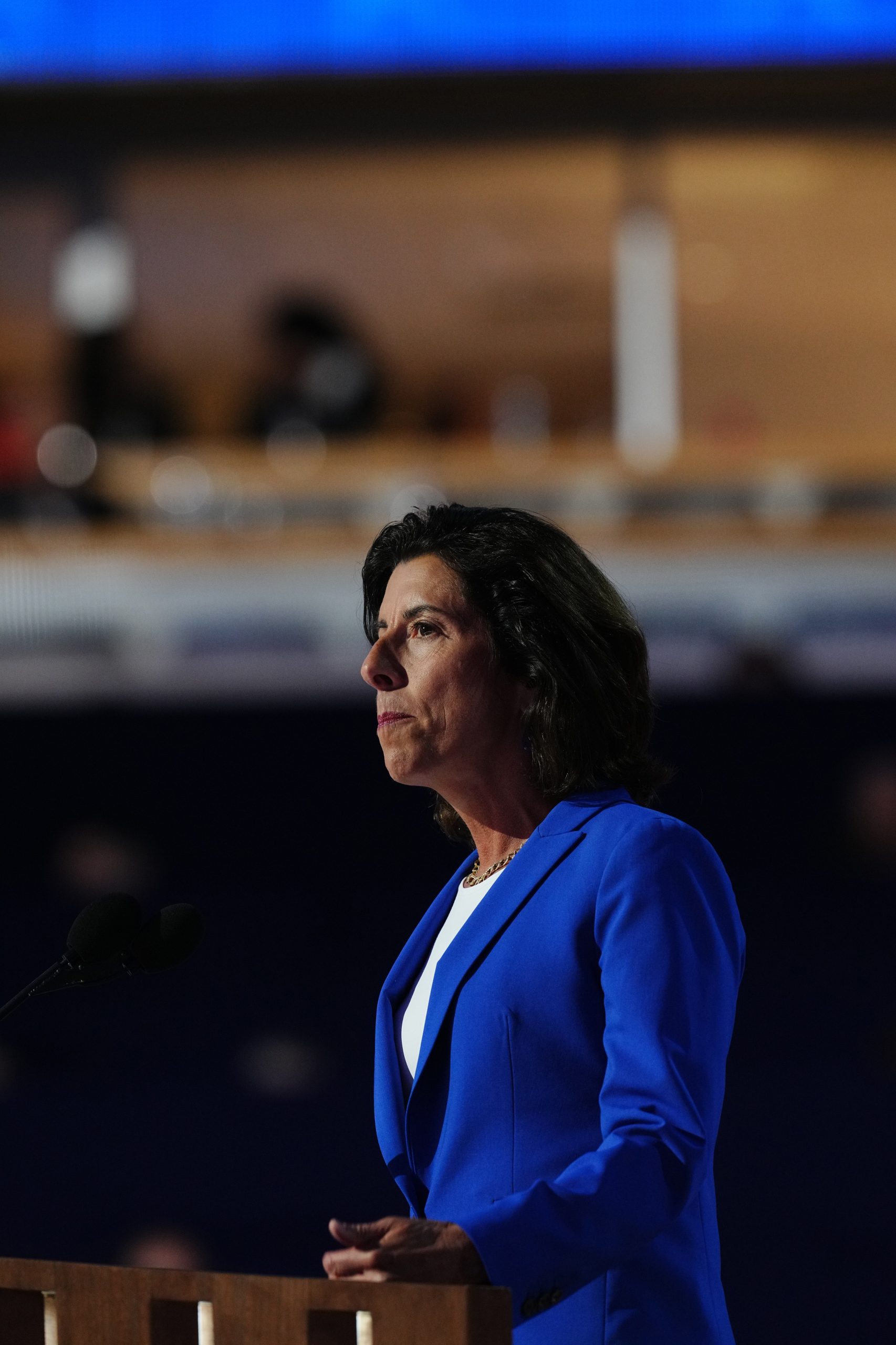
    The funders include AI labs preparing to go public, like OpenAI and Anthropic, as well as established corporate giants such as Bank of America and Amazon. Their new nonprofit, called Raise Us, is led by Gina Raimondo, a former commerce secretary and Rhode Island governor who since leaving office has called for companies and the government to do more to orient American workers in a new AI era.

    Tech companies and other corporate giants have signed on to an effort called Raise Us led by Gina Raimondo, former commerce secretary and Rhode Island governor.JAMIE KELTER DAVIS

    “This is an independent effort,” Raimondo said. “It’s the first one I know of where competitors in the tech industry have put aside their competition to say, ‘We’re going to write big checks and, in the service of our country, do what we can to figure out this transition.’”

    Estimates of the magnitude of job dislocation in store for the American workforce vary widely, from half of all entry-level white-collar jobs to a few thousand jobs here and there. Although layoffs are currently very low across the economy, the employee ratings site Glassdoor has found that worker sentiment toward AI has been worsening. Companies have made headlines by citing AI as a reason for deep job cuts. They include Workday and IBM, which are part of the new nonprofit, as well as Meta and Oracle, which are not.

    The organization will work primarily with governors, starting with those in Utah, Arkansas, Maryland, and Connecticut. The theory: States generally control their community college systems, which can translate workforce policy through course offerings and industry partnerships. The bulk of the budget will fund pilot programs overseen by about 15 staff members and consultants.

    For example, Maryland will establish a “service year” for recent high school graduates to provide experience in fields where there are shortages, such as healthcare. In other states, Raise Us hopes to offer “wage insurance” for workers who take lower-paying jobs rather than dropping out of the workforce entirely.

    The group plans to furnish technical assistance for companies that want to retain workers as AI changes their roles, rather than eliminating them. Microsoft, one of the companies backing the organization, said it had already found a promising model: cross-training its entry-level lawyers in different parts of the organization and equipping them with AI skills in order for them to be repositioned as technology evolves.

    “You can think of doing that with almost any job we have,” said Brad Smith, vice chair and president at Microsoft. “It creates an opportunity to transfer people from jobs that are being eliminated to jobs that are being created.”

    Retraining displaced workers has always been a difficult task, and historically not a very successful one. Raimondo called past efforts “ineffective.”

    Sam Manning, a senior research fellow with GovAI, a think tank, said the new group’s work offered a new opportunity to learn about what could work best.

    “This model — of let’s work within states and try to do pilots and demonstration programs, build more evidence, learn what works for different types of workers with different constraints — does seem to me like a pretty good thing to do,” Manning said.

    Congress has slashed funding for its flagship workforce development law since passing it in 1973. Planned overhauls of the statute have sputtered out. Research has found that while federal workforce programs do help place workers in new jobs, their long-term success is limited by the lack of high-paying positions for workers without college degrees.

    Jane Oates ran the Labor Department’s Employment and Training Administration under President Barack Obama. Despite funding cuts, she said, states as disparate as Texas and Massachusetts have found ways to raise private capital and work with employers to meet their talent needs.

    “I don’t know that she’s been anywhere else to look at the amazing, innovative things that are done in small and large places around the country,” Oates said of Raimondo.

    Part of the Raise Us mission is to adapt existing budgets to the particular challenges of AI-driven disruption. The nonprofit includes a policy lab, funded by philanthropies rather than corporations, that will incubate new ideas that governments may carry out down the line.

    Raimondo also serves as a chair on a commission, organized by the right-leaning American Enterprise Institute and the left-leaning Urban Institute, that will come up with policy recommendations to address the effect of AI on the workforce and the demands it may create. That effort is funded by Google.

    On the policy front, the groups join a crowded landscape. The air has been thick in recent months with proposals for minimizing the potential downsides of AI while harnessing its benefits.

    Sen. Bernie Sanders (I., Vt.) has suggested confiscating half of the stock value of top AI companies and depositing it in a publicly owned fund. Others have floated the idea of shifting the tax burden from payroll taxes to the computing power that is necessary to run sophisticated AI models. The Raise Us board includes Liz Shuler, president of the AFL-CIO, the labor federation, which has a technology institute that has emphasized protections for workers as AI develops.

    Raimondo’s initiatives, underwritten by corporations that have much at stake, may seem ill-positioned to make recommendations that would burden the engines of America’s AI dominance. But Harry Holzer, a professor of public policy who is part of the joint American Enterprise Institute-Urban Institute commission, said its members would not shy away from doing so.

    “I don’t think we’re going to hesitate to talk about resources,” Holzer said. “If the AI companies and tech companies start making money hand over fist, there might be an excess-profits way of dealing with that.”

    Raimondo and her colleagues are not fans of a universal basic income, an idea that has gained popularity in Silicon Valley as an answer to job disruption. They emphasize that work provides more than just wages, and plan to focus on helping people find pathways to new jobs.

    But it’s unclear whether AI will create jobs at the rate that it will destroy them. Jack Malde studied workforce policy for the Bipartisan Policy Center and is now going to work for the Windfall Trust, another AI-focused think tank. He said long-term income support might be necessary, even if better models for transitioning workers were found.

    “The truth is, there’s still a lot of uncertainty,” Malde said. “What we think is resilient now might not be resilient later. We’re not going to get everything right, so we’re going to need those strong safety-net programs.”

    Eventually, the backers of Raise Us think, federal action will be necessary to replicate successful policies across states and employers who aren’t early adopters. Raimondo said she had been in touch with the acting labor secretary, Keith Sonderling, whose department is establishing its own data hub for AI effects.

    But at the moment, she thinks that there’s no time to wait for alignment from Washington. As a historical parallel, she cited the Committee for Economic Development, an organization formed by big businesses in 1942 with the goal of absorbing American soldiers back into the economy after World War II ended and defense production was scaled back. It encouraged ways to fight inflation and foster full employment, helping to head off postwar stagnation.

    “I think this technology will lead to more productive people, new jobs and new industries, and I want to get there,” Raimondo said. “But I also worry about the transition, and a window where people could get hurt. The politics could get uglier. So I just want to get started now to build the infrastructure to be prepared to manage the transition.”

    This article originally appeared in the New York Times.

  • Bill to raise minimum wage to $25 an hour will be introduced in Senate

    Bill to raise minimum wage to $25 an hour will be introduced in Senate

    The minimum wage would be raised to $25 an hour under a new bill to be introduced by Sen. Chris Murphy (D., Conn.) on Thursday, in a bid to enthuse the working-class voters who have abandoned the Democratic Party.

    The legislation, dubbed the Living Wage for All Act, has a companion bill already introduced in the House.

    Murphy, whose name is frequently floated as a potential 2028 presidential candidate, said he is pushing his party to take more aggressive stances on affordability, following its punishing defeats in the 2024 elections.

    “Democrats need to offer solutions that are as big as the problems people are facing,” Murphy said in an interview. “The way you solve people’s basic economic problem — not having enough money to pay the bills — is by making a minimum wage be a living wage.”

    The bill would incrementally increase the minimum wage from its current rate of $7.25, with the first jump to $12 an hour in the first year of enactment. Major corporations would have six years to work up to a $25 minimum wage, while smaller employers would have a 13-year runway. The legislation would also do away with subminimum wages for tipped workers, such as restaurant servers, youth workers and workers with disabilities. Nearly half of the American workforce makes less than $25 an hour.

    The legislation is unlikely to get very far in this Congress, with Republicans in control of both chambers, but the $25-an-hour push is one of the more significant proposals aimed at boosting Americans’ wages, which have been rising but not as quickly as inflation, especially in recent months.

    Some 34 states, territories or districts, including Washington, D.C., have increased the minimum wage above the federal minimum, according to the National Conference of State Legislatures.

    Saru Jayaraman, president of One Fair Wage, a left-leaning advocacy group that worked with Murphy on the bill, credited support for a $25 minimum wage for primary wins in competitive races in Illinois, New Jersey, Pennsylvania, and California. She said she has heard support for the proposal from liberal and MAGA voters alike.

    The $25 figure was drawn from calculations by MIT that analyzed a living wage, which takes into account costs such as food, childcare, healthcare, housing and transportation.

    Democrats have long advocated raising the federal minimum wage from its current $7.25, but Murphy’s bill would set the highest floor of any proposal in the Senate. Rep. Delia C. Ramirez (D., Ill.) is leading a House version of the bill, which she introduced earlier this year with wide support across the Democratic caucus. A similar bill by Sen. Bernie Sanders (Ind., Vt.) would set a $17 minimum wage and has 33 Democratic senators as cosponsors, including Murphy.

    Murphy’s bill also has the backing of Democratic Sens. Richard Blumenthal (Connecticut), Andy Kim (New Jersey), and Ron Wyden (Oregon).

    Congress has not raised the federal minimum wage since 2009, though only about 1% of workers make $7.25 an hour or less.

    Business groups have often campaigned against raising the minimum wage, suggesting that the economy works best when employers are responsive to market forces.

    A higher federal minimum wage could create “really damaging consequences,” including businesses closing or cutting jobs, especially in rural areas where the cost of living is low, said Ryan Bourne, an economist at the libertarian Cato Institute.

    He said the rising average wage shows that state and local governments are already responding to market changes.

    “I think it makes much more sense for it to be set at a local level where policymakers have a better sense of the local industries,” Bourne said.

    Murphy called those kinds of arguments a “red herring,” saying cities that have already established a $15 minimum wage have not seen major adverse effects. He said the staggered adoption would help assuage employers’ concerns.

    “The business community cried murder, and the job losses they predicted did not materialize,” Murphy said.

    Alex Jacquez, the chief of policy and advocacy at the left-leaning Groundwork Collaborative and a former Sanders aide, helped craft a $15 minimum wage proposal that Democrats attempted to include in their climate and economic policy bill in 2021. He said the surge in wage growth as the economy recovered from the coronavirus pandemic has led more liberal policymakers to believe that a $15 minimum wage would now be too low.

    “It’s also an organizing tool,” he said. “It’s something big and bold that people can hang on to and run on and be able to see the Democrats are fighting for them.”

    So far, most congressional action has tried to address affordability through tax cuts, including the child tax credit, covid-era Affordable Care Act credits or the numerous tax cuts in Republicans’ One Big Beautiful Bill.

    While Murphy supports programs such as the child tax credits and student loan forgiveness, he said tax cuts have proved insufficient in motivating voters.

    “People don’t want to be written a check. People want to work for pay,” Murphy said. “[Tax breaks] are designed to compensate for a rigged system. Why don’t we just unrig the system?”

  • Judge throws out federal suit against 4 N.J. ‘sanctuary’ cities

    Judge throws out federal suit against 4 N.J. ‘sanctuary’ cities

    A federal judge on Wednesday tossed out a lawsuit filed by the Justice Department that accused four New Jersey cities of having “sanctuary” policies that shield immigrants in the U.S. illegally from federal immigration enforcement.

    Justice Department lawyers had sued the mayors and City Council members of Newark, Jersey City, Hoboken, and Paterson last month as tensions were rising between local governments in the Garden State and immigration authorities.

    The complaint accused local officials of thwarting federal immigration enforcement by impeding access to immigrants in local custody, restricting the ability of local officers to turn over immigrants to agents, and barring “willing local officers from providing mission-critical information to federal immigration authorities.”

    But Judge Evelyn Padin, who was appointed by President Joe Biden, ruled that the federal lawsuit had “a fundamental flaw” because it challenged only the cities’ policies and did not take into account an order from the state attorney general’s office, known as the immigrant trust directive, that dictates how local law enforcement officers must engage with immigration authorities.

    That 2008 directive, which has been upheld by previous court rulings, was not raised in the lawsuit, Padin wrote. That means, as a legal matter, the federal government lacks the standing to file the suit.

    The judge dismissed the lawsuit without prejudice, meaning the Justice Department could refile it. A spokesperson for the department did not immediately return a request for comment.

    The ruling came as protesters have swarmed Delaney Hall, an immigration facility in Newark, with nearly daily demonstrations.

    Local officials praised Padin’s ruling, saying the immigrant trust directive was one key to maintaining good relationships between local police agencies and immigrants without permanent legal status. Police departments depend on cooperation in immigrant neighborhoods to stop crime.

    Amol Sinha, the executive director for the American Civil Liberties Union of New Jersey, wrote in a statement that the sanctuary policies “help people access public services” without fear of being detained, separated from their families and perhaps deported.

    “Public safety is strengthened when people can report crimes, and public health is improved when people can seek medical care,” he said.

    This article originally appeared in The New York Times.

  • Ibuprofen vs. acetaminophen: Which pain reliever should you use?

    Ibuprofen vs. acetaminophen: Which pain reliever should you use?

    Most of us have woken up with a headache, achy back, or a low-grade fever and rummaged through the medicine cabinet looking for an over-the-counter solution. And you’ve probably had more than one to choose from, including acetaminophen (the active ingredient in Tylenol) and ibuprofen (the active ingredient in Advil and Motrin). But which one is the right choice for your health issue?

    While both medications can relieve pain and reduce fevers, the science suggests there are times when one may have an advantage over the other. We spoke to health experts and looked at current research to help you decide.

    Acetaminophen capsules. (AP Photo/Chris Carlson)Chris Carlson

    If you have a headache

    Both acetaminophen and ibuprofen can be used to treat headaches.

    But the two medications have different mechanisms of action. Ibuprofen is a nonsteroidal anti-inflammatory drug (NSAID), a class that includes naproxen (Aleve) and aspirin. These medications block enzymes that produce prostaglandins, which are pain- and inflammation-causing compounds released by the body in response to injury.

    So in addition to treating pain and fever, ibuprofen is a better choice for pain accompanied by inflammation and swelling.

    Acetaminophen works better for pain that is not primarily caused by inflammation, such as headaches.

    And because it generally has fewer cardiovascular, gastrointestinal, and kidney-related side effects and fewer drug interactions than ibuprofen, it may be a better option for some older people, those with certain cardiovascular or gastrointestinal conditions or those taking certain medications, said Gabriel Gavrilescu, chair of internal medicine and geriatrics at Cleveland Clinic in Florida.

    Adults can take 650 mg of regular-strength acetaminophen every four to six hours as needed or 1,000 mg of extra-strength acetaminophen every six hours, not to exceed 4,000 mg per day. However, some experts recommend a maximum limit that’s lower. “For the elderly or people of lower weight, probably 2,000 to 3,000 milligrams would be a safer limit,” Gavrilescu said.

    Acetaminophen is generally safe for most people if you stick with the recommended amounts. However, taking too much — more than 4,000 mg per day — can cause severe liver damage, even liver failure. It should not be combined with heavy alcohol use, and people taking medications that affect liver function should check with their doctor before using it.

    If you have muscle aches

    Because it helps reduce inflammation, ibuprofen may be more effective for muscle aches, toothaches, joint pain or acute injuries such as sprains and strains, said Amber Borucki, an anesthesiologist and pediatric pain medicine specialist at Stanford Medicine Children’s Health.

    Adults can take 200 to 400 mg of ibuprofen — preferably with food — every four to six hours, not to exceed up to 1,200 mg per day.

    To manage more severe or persistent pain, it can also be combined with acetaminophen for short-term use (typically less than a week), with each medication taken every 6 hours and staggering so that a dose of one or the other is taken every three hours, Borucki said.

    And for acute pain — such as pain after surgery — the combination of acetaminophen and ibuprofen can provide more effective pain control than taking either one alone, research shows.

    In some cases, healthcare providers may prescribe higher doses of ibuprofen. Both ibuprofen and acetaminophen can be used longer-term to manage chronic pain, with close monitoring by a provider. But in general, experts recommend using the lowest effective dose for the shortest duration possible.

    If you have joint pain

    Some studies have found that NSAIDs, including ibuprofen, may provide greater pain relief than acetaminophen for some people with osteoarthritis, the most common type of arthritis, which often occurs with aging and causes joint pain.

    In cases of chronic inflammatory pain that requires ongoing treatment — such as osteoarthritis or rheumatoid arthritis, an autoimmune condition — a doctor may recommend a selective NSAID, which is a prescription medication such as celecoxib that selectively blocks the COX-2 enzyme involved in inflammation. This may reduce pain and inflammation while also potentially lowering the risk of gastrointestinal side effects, such as ulcers, compared with traditional NSAIDs, Borucki said. Selective NSAIDs carry other risks, however, including cardiovascular events and other potential complications for some people with certain medical conditions.

    Gavrilescu said he also recommends topical NSAIDs such as diclofenac (which can be applied to the skin in a patch, gel, spray, or cream) for chronic joint pain because they may reduce the risk of systemic side effects compared with oral NSAIDs, and he often encourages people to address the underlying cause of persistent pain and discomfort with physical therapy or other nonmedicinal treatments.

    If you have a cold or flu

    Both acetaminophen and ibuprofen can help relieve symptoms related to a cold, COVID, flu, or any other respiratory infection. However, one medication may work better than the other, depending on your symptoms.

    Ibuprofen is often preferred for sore throats to help reduce pain associated with throat swelling. For fevers and related body aches, on the other hand, either acetaminophen or ibuprofen can be taken alone or together, alternating them to help control fever and pain while reducing the need for high doses of either medication, Gavrilescu said.

    Keep in mind that many other over-the-counter pain relievers, cold and flu medications, and even opioids also contain acetaminophen. When taking acetaminophen along with combination drugs intended to treat nasal congestion, cough, and fever, for instance, people may accidentally take more than the 4,000 mg daily limit without realizing it, increasing the risk of severe liver damage, said C. Michael White, a pharmacologist and pharmacist and chair of pharmacy practice at the University of Connecticut.

    If you have cramps

    Although either acetaminophen or ibuprofen can reduce pain from menstrual cramps, some research suggests that NSAIDs such as ibuprofen may provide slightly better pain relief because they reduce the production of prostaglandins, which trigger the uterine contractions that cause cramping.

    If you have dental pain

    Both medications can treat dental pain, but ibuprofen can help target inflammation or swelling associated with some dental issues.

    Combining the two can be effective as well, particularly for more severe pain. A 2025 study found that a combination of acetaminophen and ibuprofen after dental surgery for impacted wisdom teeth provided better pain control than a prescription opioid combined with acetaminophen.

    If you are pregnant

    Ibuprofen is not recommended during pregnancy because NSAIDs have been linked to fetal complications, particularly later in pregnancy, Borucki said. Acetaminophen is generally considered the preferred first-line treatment for pain and fevers during pregnancy, according to the American College of Obstetricians and Gynecologists (ACOG).

    Amid federal health concerns about Tylenol in pregnancy, the Food and Drug Administration announced last year that it was initiating the process for a label change “to reflect evidence suggesting that the use of acetaminophen by pregnant women may be associated with an increased risk of neurological conditions such as autism and ADHD in children.” The World Health Organization (WHO) stated, however, that there is no conclusive evidence confirming a possible link. And in separate statements, ACOG, the American Academy of Pediatrics, the American College of Medical Toxicology and the Society for Maternal-Fetal Medicine said acetaminophen remains appropriate for treating fever and pain during pregnancy when used as directed.

    Avoiding the medication when it is needed to treat fever could lead to potential harm as “there is a significant risk with uncontrolled fever, both to the mother and to the fetus,” Gavrilescu said.

    If you have certain health conditions or are taking certain medications

    People who have liver disease, are heavy alcohol consumers, or taking certain medications that affect liver function should consult their doctor before taking acetaminophen. As we mentioned, exceeding the maximum daily dose of 4,000 mg can lead to severe liver damage, including liver failure.

    In people with high blood pressure, a history of heart attack or stroke or heart failure, NSAIDs such as ibuprofen can increase the risk of serious cardiovascular events. NSAIDs can also raise the risk of gastrointestinal complications, including bleeding, especially in people with a history of stomach ulcers. And because they can reduce blood flow to the kidneys, people with kidney disease should consult a doctor before taking ibuprofen, White said.

    Ibuprofen can interact with certain medications, as well. It can increase bleeding risk when taken with blood thinners such as warfarin, and it can interfere with some blood pressure medications, including angiotensin-converting enzyme (ACE) inhibitors, angiotensin receptor blockers (ARBs), beta blockers and diuretics, potentially making them less effective, White said.

    Although both acetaminophen and ibuprofen “can be very helpful, use them judiciously. And when you’re able to come off of them, definitely wean yourself off of them,” Borucki said.

  • Letters to the Editor | June 25, 2026

    Where’s our good deal?

    Americans deserve a just outcome of the war that Donald Trump began with Iran. Trump recklessly and without provocation ordered the attack on the sovereign country of Iran. Although our national pride is trying to convince us to believe we should be getting a “good deal,” we should be searching for a just deal.

    A just deal requires that we pay retribution to Iran for this attack, the Iranian lives lost, sacred and historical sites ruined, and the destruction of infrastructure. A just deal also requires that Trump and his enablers be held accountable for the suffering Americans experienced, including lives lost, life-altering injuries received, financial hardships endured, and billions of hard-earned tax dollars wasted.

    A just deal will only be delivered to Americans if we, as a nation, agree that the justice we deserve will not come from something Iran cedes to us. Justice will come only from our country paying for the destruction caused by this war of choice, and from Americans holding Trump and his Republican enablers accountable for the harm they brought to Iran, our country, and others around the world. Justice will come when we, as Americans, insist that they are prevented from executing such a harmful whim again.

    Donna Nawalkowsky, Philadelphia

    Hatred finds voice

    You don’t need to search too far to find examples of distrust and dislike among Americans. At a recent conference I attended, a white woman fingered her cross necklace, telling me she was shaken when a prominent speaker said twice, “Some of my best friends are white,” a statement that led to a nodding, laughing agreement from hundreds of audience members. “This is the statement traditionally used by those who hate Jews … the word Jew is used, rather than white,” she explained. An unnecessary explanation, as I am Jewish. Soon after, I heard about the Cornell University student who turned down a potential job at a tech start-up because the founders are Jewish. He has received more than $19,000 from supporters who blame Jewish people for trying to “ruin” his reputation. I was even more sickened by the vicious remarks made about Michelle Obama by one of the fighters brought to the White House lawn in celebration of Donald Trump’s 80th birthday, as our 47th president sat silently.

    Following the conference, I contacted a Black colleague, asking how best to address entrenched hatred. We spoke about the necessity of intense, far-reaching grassroots efforts to bring people together, including truthful examinations of our history. We also agreed on the necessity of deep listening to the experiences of others, in which we all do our best to free ourselves from bias and assumptions.

    A neighbor recently asked if I thought today’s ugliness and dangers were new. My response was that the potential toward hate, a virulent, contagious, ever-sleeping monster, has always been there. The difference today is that the monster is being awakened, courted, and embraced by officials who will do all possible to destroy a precious, hard-won, ever-vulnerable democracy. They will stop at nothing to maintain their power and control, including the use of a war they instigated to call off a forthcoming presidential election.

    SaraKay Smullens, Philadelphia

    Join the conversation: Send letters to letters@inquirer.com. Limit length to 150 words and include home address and day and evening phone number. Letters run in The Inquirer six days a week on the editorial pages and online.

  • Dear Abby | Woman’s antics at the office negatively impact co-workers

    DEAR ABBY: I have worked with “Bev” for 12 years. She is insufferable. I love my job and my other co-workers, but they all feel the same way as I do. Bev is a domineering, bullying, entitled woman in her late 50s. She has two “friends” in the entire facility and, unfortunately, considers me one of them, as well as our boss, “Janet,” who I am sure merely tolerates her as I do.

    Bev calls me incessantly during the day to talk about her personal life. She demeans people and is controlling and rude. She says she is “so busy,” but other people end up doing her work for her while she takes all the credit. When my phone rings and it’s her, I can feel the life being sucked out of me, and I want to throw my phone at the wall.

    The problem is that her other “friend” is Janet. Bev constantly says that nobody can say anything about her because the boss will tell her, which makes it hard for the rest of us who all feel the same way about her. It is affecting my mental health. She calls no fewer than 10 times a day, and then she complains about how busy she is, after she has kept me on the phone 15 minutes or more talking about her personal life. I feel like one day I’m going to explode, and I do not want to lose my job. Help!

    — VAMPIRE VICTIM

    DEAR VAMPIRE VICTIM: Do you know for a fact that Janet considers Bev a friend? You may see them talking frequently, but that doesn’t mean Janet is enjoying it. If, as you say, everyone else in the workplace dislikes her, it’s hard to believe the boss hasn’t noticed.

    Have a private chat with Janet. Tell her about the long, unwelcome chats, the bullying and the rudeness. Be as specific as you can. Ask her if she really supports Bev’s habit of invoking their friendship to avoid social consequences. If Janet takes Bev’s side in everything — which is doubtful — at least you’ll know where you stand.

    ** ** **

    DEAR ABBY: I have a male friend I would really like to get to know better. I would love to date him. We are both divorced and have relatives who no longer speak to us. I know he’s single and not seeing anyone.

    I haven’t had a relationship in three years. I sometimes wonder what’s wrong with me. I’m a bit overweight but I have a great personality. I can’t understand why I can’t get a man interested in me. What can I do to get this man (or any man) interested in me?

    — READY IN NORTH CAROLINA

    DEAR READY: You say your personality isn’t the problem. Not every man finds skinny women attractive. However, if you suspect that your weight is what’s keeping him (and other men) away, it may be time to address it. Talk with your doctor about a healthy eating plan and join a gym.