Tag: no-latest

  • We’ll soon get a glimpse of future temperatures, thanks to this record El Niño

    We’ll soon get a glimpse of future temperatures, thanks to this record El Niño

    This year’s record-smashing El Niño will do more than just shift and enhance patterns of heat, extreme rainfall, and drought around the world.

    It will also give the planet a preview of the late 2030s.

    That’s because this El Niño will act like a climate time machine, temporarily pushing global temperatures to levels that might not otherwise be reached for another decade or so.

    According to an analysis by climate scientist Zeke Hausfather that was shared with the Washington Post, there’s around a 95% chance that 2027 will become Earth’s hottest year on record — soaring past the last record in 2024 — because the combination of El Niño and climate change could spike global temperatures to around 3.17 degrees Fahrenheit above preindustrial averages.

    Described as “stunning” by Hausfather, who researches and analyzes the climate for Stripe, Carbon Brief, and Berkeley Earth, this value would be so far above the warming trend of the past decade that it could bring global temperatures to levels not otherwise expected under that trend until around 2037.

    “I’m not sure folks have realized just how crazy the second half of 2026 and 2027 will be for global temperatures — on the back of a record-smashing El Niño event,” wrote Hausfather on X.

    It’s currently close to a coin flip whether 2026 would become the warmest year on record, according to Hausfather’s analysis, which considers the average of several different temperature data sets. It’s possible that 2026 sets a record in some, but not all, of these data sets.

    Jim Hansen, director of the Program on Climate Science, Awareness, and Solutions at Columbia University, said he expects 2026 to become the warmest year, but to hold that crown only until 2027 exceeds it.

    There is a much stronger signal for record warmth in 2027 because increasing air temperatures caused by El Niño lag slightly behind increasing ocean temperatures.

    A global temperature of 1.76 degrees Celsius above preindustrial levels in 2027 would be about 0.29 degrees Celsius higher than what’s expected based on the warming trend of the past decade.

    According to Hausfather’s temperature predictions for next year, the middle 50% of forecasts range from 1.67 degrees Celsius to 1.85 degrees Celsius above the preindustrial average.

    At the high end of that range, global temperatures in 2027 would jump roughly 13 years ahead of the recent warming trend, reaching levels that might otherwise become typical around 2040. The low end would represent a 7-year boost, to around 2034.

    Hausfather said that this El Niño event is happening on top of a “strong acceleration in the rate of warming associated with continued emissions of greenhouse gases.”

    Both Hausfather and Hansen also mentioned that decreasing atmospheric aerosols — which have historically offset some warming — are contributing to the acceleration in warming.

    Although Hausfather expects 2028 to be cooler than 2027, he added that “human emissions are adding a permanent El Niño worth of heat to the climate system each decade.”

    In other words, global temperatures in 2027 will take a big but temporary upward stairstep, and they are unlikely to permanently continue at or above those levels for now.

    These temperature increases will also have consequences for atmospheric water vapor. Because the water vapor-carrying capacity of air increases at a rate of 7% per degree Celsius, it’s possible — if not likely — that 2027 also sets a new global moisture record, surpassing 2024. In 2025, the Post mapped the planet’s rising moisture zones and showed how they are closely connected to an increasing risk for rainfall extremes.

    The role of El Niño

    During El Niño, huge stores of ocean heat from the western Pacific spread eastward, eventually reaching the west coast of South America. Thunderstorm activity shifts with that warmth, transferring heat from the ocean and pumping it high into the atmosphere. Winds and atmospheric circulation then redistribute that heat beyond the tropical Pacific and around the globe, raising global temperatures.

    That’s why strong El Niño events often appear as an upward stairstep in long-term plots of global temperatures.

    But this El Niño isn’t just going to be strong. Boosted by the planet’s long-term warming trend, it’s probably going to dwarf the six strongest that came before it in 2015, 1997, 1982, 1972, 1888, and 1877 — the latter contributing to a global famine that caused 3% to 4% of the global population to perish.

    Ocean temperatures in the central equatorial Pacific, where El Niño’s strength is measured, have already broken records for 75 days straight.

    That streak isn’t expected to end anytime soon.

    Temperatures in the equatorial Pacific Ocean may surge more than 7.2 degrees F above average by December, breaking the previous record.

    Those weather effects will vary from place to place.

    But the temperature spike will briefly push the entire planet into its warmer future.

  • Trump’s vaccine plan would require millions of individual shots last used decades ago

    Trump’s vaccine plan would require millions of individual shots last used decades ago

    WASHINGTON — Public health experts have been quick to condemn an executive order from President Donald Trump aimed at upending childhood vaccinations in the U.S., but the biggest obstacles may be the unprecedented financial and logistical challenges it would impose on parents, health providers, and drugmakers.

    Monday’s announcement by the Republican president calls for separating combination shots — including the measles, mumps, and rubella, or MMR, vaccine — into separate injections. Appointments for that and other vaccinations should be spaced out whenever possible, the order states.

    To accomplish that, drugmakers would need to revive a slate of individual vaccines that have not been marketed separately in the U.S. for decades. They would also have to build new manufacturing plants capable of producing millions more vaccine doses than the nation currently uses.

    For parents, unbundling the MMR vaccine and spacing out the shots would mean returning to the doctor’s office many more times than is currently needed. Those appointments could also strain pediatricians who typically administer the shots, while driving up costs tied to syringes and other medical supplies.

    Studies in the U.S. and other countries have shown that combination vaccines increase the likelihood that children will be fully protected from infectious diseases before starting school.

    Health experts say there is no scientific basis for changing course.

    “We do things that are less convenient and more expensive if there’s a good reason to do it,” said Anna Durbin, of the Johns Hopkins Bloomberg School of Public Health. “There is no good justification for this. I think it’s very bad public health policy.”

    Trump’s plan would require vaccine manufacturing overhaul

    Under Trump’s executive order, federal officials are instructed to develop within 90 days plans for breaking up the MMR shot and spacing out other vaccines.

    But pharmaceutical scientists and former regulators say those changes would likely take years and require drugmakers to spend tens of millions of dollars on new studies and manufacturing facilities.

    Currently, there are no individual vaccines in the U.S. for measles, mumps, or rubella. All the vaccines approved for those viruses by the Food and Drug Administration are combination shots. That three-in-one approach has been the standard in the U.S. since the early 1970s.

    Jesse Goodman, a former FDA vaccine chief, said companies would have to conduct large studies showing new individual shots produced immune system-boosting reactions in children similar to the current versions.

    Companies might also have to demonstrate the safety of new manufacturing facilities and procedures, given that individual measles shots haven’t been widely produced in the U.S. for roughly a half-century.

    “The question is how much has changed since then and how comfortable will the FDA and the companies be relying on those comparisons?” said Goodman, who is now a professor at Georgetown University.

    Designing, constructing, and getting federal sign-off for new vaccine plants typically takes about five years, according to industry experts.

    Additionally, Goodman said, the FDA would have to review and license each unbundled vaccine separately, a process with no precedent.

    “I don’t think there’s any comparable example of removing hugely effective public health measures that protect babies for no documented scientific reason,” he said.

    Individual shots for measles and related diseases tend to be used by lower-income countries that can’t afford the MMR shot. Merck, GSK, and the handful of other companies that supply U.S. childhood vaccines make only the combination shot.

    In separate statements, Merck and GSK said they stand by the safety and effectiveness of their products. Neither discussed plans to unbundle their shots.

    “To date, there has been no published scientific evidence that shows any benefit in separating the combination MMR vaccine into three individual shots,” Merck said in an emailed statement.

    Many more trips to the doctor

    The MMR shot is currently delivered in two doses — the first at the age of 1 and the second dose after age 4. Splitting up the shot into its three separate components would mean six office visits. Spacing out other shots for pertussis and other infectious diseases could multiply the number of visits many more times.

    As the number of visits goes up, parents are more likely to miss appointments or stop making them, according to Durbin.

    “It’s going to be less convenient, more expensive, and you’re going to have fewer people getting vaccinated,” she said.

    Since last year, Trump has repeatedly expressed concern about the number of vaccinations U.S. children are receiving and called on Health Secretary Robert F. Kennedy Jr. to reduce the number. Kennedy and other officials have pointed to smaller countries, such as Denmark, that recommended slightly fewer vaccines than the U.S.

    But breaking up combination shots will result in kids receiving many more individual shots than other comparable nations, Durbin notes.

    White House spokesperson Kush Desai said the Trump administration’s efforts on the MMR vaccine “will give parents more options on timing and frequency for their children, which ultimately will increase vaccination rates for all three diseases.”

    Vaccine order is not legally binding

    Despite the precedent-breaking nature of Trump’s order, some experts are skeptical it will result in meaningful changes.

    Neither the White House nor the FDA can compel drugmakers to develop and seek approval for new vaccines. And from a business perspective, companies have little incentive to develop individual versions of vaccines they already sell in combination shots.

    “They’d be competing against themselves, and there’s no reason to do that,” said Paul Offit, a Children’s Hospital of Philadelphia vaccine researcher and former government adviser.

    While Trump’s order calls for more federal research and recommendations, only state governments have the legal authority to require vaccinations for schoolchildren. The order simply advises states to consider updating their laws to reflect the Trump administration’s approach.

    “I think states will ignore this,” Offit said. “I think that bottom line is that we don’t need to look to Donald Trump for our medical advice.”

  • U.S. military has lost roughly 25% of its Reaper drones as Iran war depletes arsenal

    U.S. military has lost roughly 25% of its Reaper drones as Iran war depletes arsenal

    The U.S. military has lost at least 45 MQ-9 Reaper drones during the war with Iran, or roughly 25% of its fleet, according to three U.S. officials familiar with the matter.

    The Reaper is used to conduct surveillance and targeted strikes, and it can cost between $30 million to $50 million depending on the type of sensors and weapons it carries, according to the Air Force. The potential taxpayer cost of recent losses is over $1.3 billion for that weapon system alone.

    The aircraft have seen heavy use around the Strait of Hormuz, the vital shipping route that has become a major flash point in the conflict — and a key obstacle to negotiating a lasting peace deal. But the drones fly slowly and often at low altitudes, making them relatively easy targets for Iran’s military and its regional proxies in Yemen and Iraq.

    A fourth U.S. official, who like the others spoke on the condition of anonymity to discuss Pentagon data, said that not all of the lost Reapers were shot down. An unspecified number crashed after their operators’ communications link to the drones failed, the official said.

    The Reaper joins a growing list of U.S. weapons and munitions that have been drained by the Iran war and years of American military support for Ukraine in its conflict with Russia. As the Washington Post and others have reported, the shortages have constrained President Donald Trump’s military options as tensions with Iran remain high.

    The Pentagon, which declined to comment for this article, has consistently denied reports that its weapons stockpiles are running low. At the same time, the Trump administration has asked Congress for tens of billions of dollars in funding to offset costs incurred by the Iran war and to replenish supplies.

    As the Post reported last week, Trump confronted Defense Secretary Pete Hegseth about the state of the U.S. stockpile. The encounter occurred July 31, on the sidelines of a cabinet meeting at Camp David, the presidential retreat in Maryland.

    The shortages have appeared to embolden Iran, which has intensified its demands for control of the Strait of Hormuz and reparations for damage the country has sustained since Trump ordered the start of hostilities on Feb. 28.

    There were approximately 185 Reapers in the U.S. military fleet — 165 in the Air Force and 20 in the Marine Corps — before the conflict began, according to public budget data and the services. That figure does not include Reapers operated by U.S. intelligence agencies. To date, none of the Marines’ Reapers have been lost, a spokesperson, Lt. Col. Joshua Benson, said in a statement. Those operate primarily in the Asia-Pacific.

    In May, Lt. Gen. David Tabor, a senior Air Force officer at the Pentagon, told the Senate that the number of remaining drones had fallen to about 135. At the time, Tabor told lawmakers he was “concerned” about the losses and that the Air Force was exploring how to quickly replenish its fleet.

    The Pentagon is phasing out the General Atomics-produced Reaper and envisions a replacement fleet of less expensive armed surveillance drones that can swarm their targets.

    Meanwhile, the Trump administration is trying to shore up lawmaker support for a $67 billion Iran war supplemental budget that it says is vital to restocking the Pentagon’s arsenal. Even if Congress approves the funding, it will be years before stockpiles depleted by the conflict in Iran and the munitions sent to Ukraine are reconstituted.

    Hegseth told the Senate in July that the Pentagon would have to curtail military trainings without a quick infusion of additional funding as the Iran war strains the defense budget. He estimated that the conflict would cost $37.5 billion through the end of September, though that total does not include the cost of rebuilding U.S. bases in the Middle East damaged by Iranian strikes.

    Republicans in Congress are divided on the best strategy to secure the war-related funding and have left Washington for their August recess.

    This week, the right-leaning American Enterprise Institute think tank released a report examining the military’s effort to increase production of critical munitions. It found that in some cases the Pentagon’s plans have “key dependencies,” including a significant expansion of the defense industry’s factory output.

    For example, it could take years to replenish Terminal High Altitude Area Defense (THAAD) interceptors used throughout the war, the report found. The missile defends against incoming ballistic missiles and, as the Post reported previously, U.S. forces have used hundreds of them during the conflict.

    The U.S. Missile Defense Agency’s maximum production rate is 96 a year — but the Pentagon seeks 857 of them in next year’s defense budget, and almost 2,600 total over the next five years. At current production rates, it would require “approximately 27 years” to the fulfill the request, AEI found.

    It takes almost three years to manufacture a single THAAD interceptor, said AEI senior fellow Todd Harrison, the report’s author.

    “Even if you ordered them today, delivery wouldn’t be until President Trump leaves office,” Harrison said.

    Other U.S. munitions reviewed by AEI had similar timelines, the report showed.

    Although Hegseth has met with many of the companies responsible for building key munitions, and secured what the Pentagon calls framework agreements to increase production, there are no contracts or funding yet for those firms to move forward.

  • Rep. Max Miller’s ex-wife sues after sensitive image of child was publicly shared

    Rep. Max Miller’s ex-wife sues after sensitive image of child was publicly shared

    Rep. Max Miller’s ex-wife filed a federal civil rights lawsuit Wednesday against the Ohio Republican and his attorney, alleging that they “recklessly published” a nude image of Miller’s 2-year-old daughter online.

    The claim stems from a livestream Miller hosted this month to defend himself against charges of domestic violence by his ex-wife, Emily Moreno. In an attempt to support his assertion that Moreno made up the allegations, Miller released a trove of documents through a publicly accessible Dropbox account.

    In her lawsuit, Moreno says the folder included a picture of their daughter in which her genitalia was visible, and which remained available for anyone to download for 23 hours.

    Miller’s lawyer, Aaron Minc, apologized the following day in an email, included in the lawsuit, writing that he inadvertently published an unedited version of the image and deleted it as soon as he found out. He later disputed the characterization that genitals were visible.

    Moreno is seeking $150,000 in damages for each time the photo of her daughter was downloaded from the Dropbox account, which she says in the lawsuit was viewed hundreds of thousands of times.

    “This child is an entirely innocent victim who has become collateral damage to her father’s political ambition,” Moreno’s attorney, Subodh Chandra, said in a statement.

    Miller and Minc did not immediately respond to requests for comment.

    Following their divorce last year after three years of marriage, Moreno has alleged in court filings that Miller threw hot water on her from a pan of eggs he had just cooked, once held a gun to her head, and hurt their daughter, who suffered a fractured collarbone in February. Miller has dismissed the accusations, which are now being investigated by the House Ethics Committee, as fabrications during a messy custody battle.

    Some Republicans subsequently sought to pressure Miller, who represents a conservative House district stretching south from the Cleveland suburbs, to drop his bid for a third term. But Miller vowed to push ahead with his campaign, saying that he did not want his daughter to view him as “a quitter.”

    National Democrats are now taking greater interest in the race, sensing an opportunity to flip what would have been a safe Republican seat. The Democratic Congressional Campaign Committee, the political arm for House Democrats, announced Tuesday that it is adding Miller’s challenger, Brian Poindexter, to its priority Red to Blue program.

    The designation, which has been given to 30 other candidates seeking to flip GOP-held districts in November, opens up additional party resources, strategic guidance, and fundraising support for Poindexter, a union ironworker and city council member in a Cleveland suburb.

  • Senate Democrats request audit of Trump’s ballroom project

    Senate Democrats request audit of Trump’s ballroom project

    Minority Leader Chuck Schumer and other top Senate Democrats are requesting an audit of spending on the White House East Wing and ballroom, saying in a letter Wednesday that the Trump administration’s handling of the project raises “serious concerns about transparency, accountability, and stewardship of this national landmark.”

    The D.C. Circuit Court ruled Friday that Trump needed congressional approval to continue work on the ballroom, setting up a likely Supreme Court showdown.

    For months, President Donald Trump said the project would be fully funded by private donors; more recently, he has said that taxpayers will be paying for major security components of the East Wing. The White House maintains that the ballroom itself will be privately funded.

    On Wednesday, the Washington Post, citing confidential contracts and other documents, reported that the administration is now planning to spend at least $927 million on White House campus projects, including the East Wing, with most of the money coming from taxpayers. Over $500 million of that is coming from the Secret Service and the White House Military Office, records show.

    In their letter to the Government Accountability Office, an independent, nonpartisan agency that works for Congress, the eight senators took issue with the administration using public funds in ways that they say Congress did not approve.

    Led by Sen. Jeff Merkley of Oregon, the top Democrat on the Budget Committee, the lawmakers said the administration has not “provided any planning details or justifications that would allow for informed consideration of the White House’s plans that would be a prerequisite for authorization or appropriation of funds.”

    In a statement to the Post, White House spokesperson Davis Ingle said that the renovations are “long-overdue and necessary.”

    In response to questions from the Post for its report Wednesday, the White House did not give a tally of the total expected construction costs or funding sources but said all the public dollars were being spent in a “manner consistent with” Congress’ original intent.

    The Circuit Court decision halts East Wing construction but does not go into effect until 14 days from the Aug. 7 ruling, giving the administration time to appeal.

  • Sizing up the 2028 Democratic presidential contenders

    Sizing up the 2028 Democratic presidential contenders

    The Democratic field for president is still wide open and unsettled. The very early list includes former presidential candidates, governors, senators, House members and celebrities. While no one on this list has officially declared, some candidates have been more open than others about wanting to run.

    Ahead of November’s midterm elections, the field is starting to take shape as a major debate roils the party: Is the surging progressive movement helping or hurting Democrats’ chances to take back the White House in two years?

    Some Democrats argue it’s time to embrace bold, progressive policies to boost their party’s popularity among working-class voters. Others think centrists will stand out.

    “I think Democratic voters are going to get incredibly pragmatic when it comes to 2028,” said John Anzalone, who served as the chief pollster for President Joe Biden’s winning 2020 campaign.

    Here’s how the field is shaping up. (This is our fourth ranking so far. Our most recent ranking of potential Republican candidates is here.)

    The standouts

    Jon Ossoff, Wes Moore, Raphael Warnock and other newish names: The Democratic base seems hungry for new leaders right now. Ossoff, the 39-year-old Democratic senator from Georgia, is fitting that bill in a big way. He’s getting millions of views for his sharp social media posts and campaign speeches that mercilessly criticize President Donald Trump.

    “This is the cruelest and most arrogant group of people who have ever ascended to high office in modern American history,” Ossoff told supporters in July.

    He is running for reelection in Georgia, and his race will be one of the most competitive in the country.

    Other Democrats point to Ossoff’s fellow senator from Georgia, Raphael Warnock, as a potentially strong contender. (Warnock is not up for election in November.)

    “For the first time since Obama, there’d be a candidate that unites the progressive Democratic lane and Black voters,” Texas-based Democratic pollster Nancy Zdunkewicz said.

    Moore, the first-term Maryland governor and only sitting Black governor, is described by some Democrats as young and vibrant.

    “Ossoff is currently on fire,” Anzalone said, “and Moore is also the type of guy who could really catch fire.”

    Kamala Harris: This summer, Democrats recommended South Carolina vote first in the 2028 Democratic nominating process. That boosts Black voters’ representation in picking the nominee and Harris’s fortunes, given the former vice president and 2024 nominee is probably the candidate on this list with the most support among Black women. She’s been rallying voters for the midterm elections by touting her “controversial” plan to abolish the electoral college and add justices to the Supreme Court. “They are ruthless! We need to be ruthless too,” she said recently of Republicans. Some Democratic insiders don’t see her as a viable candidate, given she lost to Trump.

    Gavin Newsom: The other California Democrat on this list aside from Harris has used his position as governor of the largest Democratic-run state to consistently oppose Trump. This summer he announced he and his wife were under federal investigation. (The Post has reported prosecutors are looking into potential tax crimes related to a nonprofit Newsom’s wife is linked to.) Newsom framed it as a compliment: “He’s coming after me because I’m considering running for president,” Newsom said of Trump.

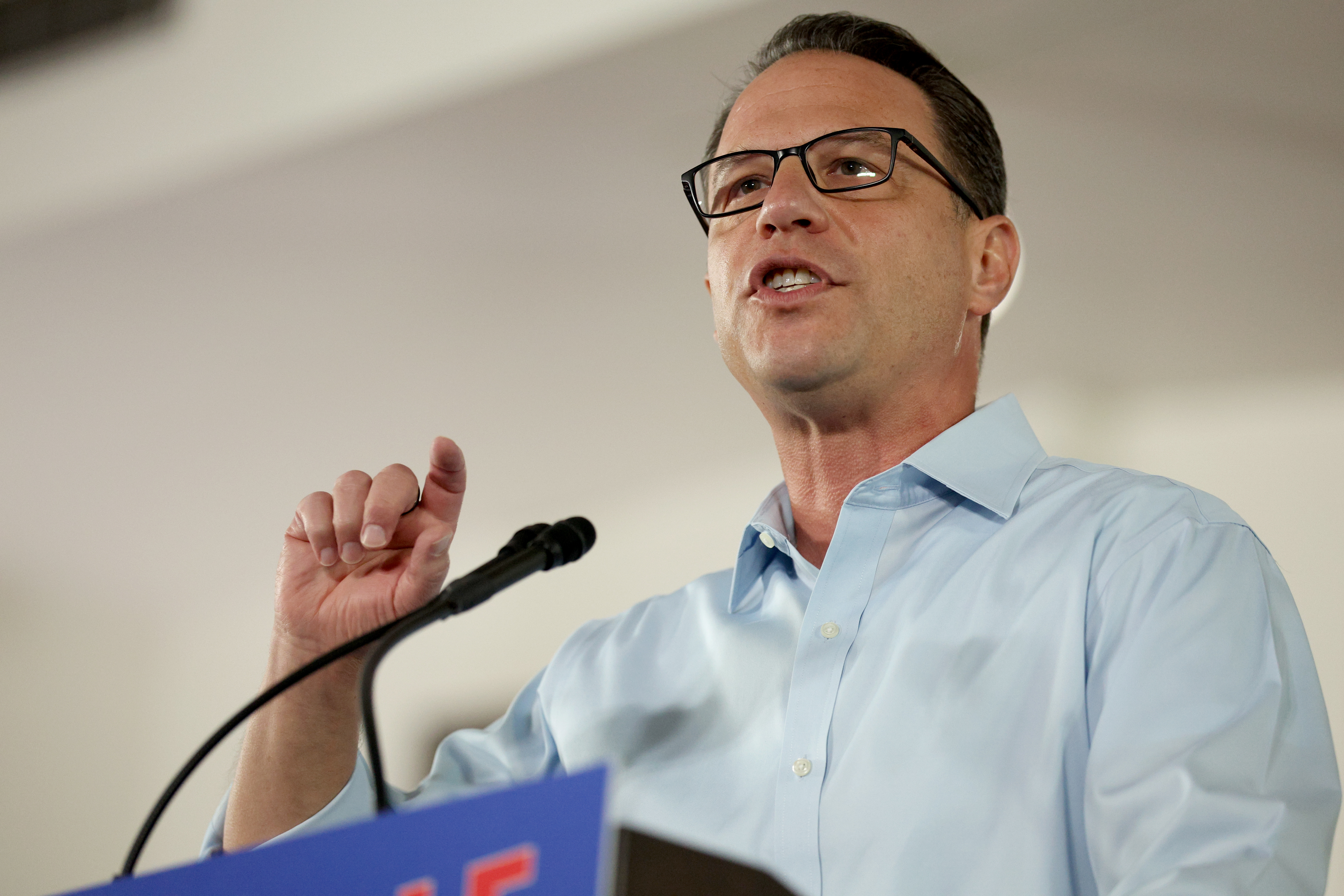
    Josh Shapiro: The popular Pennsylvania governor has had a relatively low-profile summer compared to other candidates on this list. He appeared in a music video. He has declined to take sides on the progressive-versus-centrist split in the party (at least for now). His breakout moment may be coming. He’s up for reelection in November and is trying to help Democrats take back control of the House by helping his party win four of the most competitive races in the nation, all in his state.

    Alexandria Ocasio-Cortez: Democratic socialists are having their own moment. After helping elect New York City’s mayor earlier this year, they and the broader progressive movement ousted longtime members of Congress in deep blue cities and won a hard-fought primary in Michigan. Ocasio-Cortez, a congresswoman from New York, was one of the first members of the Democratic Socialists of America to win federal office, and she’s an obvious pick for the broader progressive movement to get behind if she runs for president. She hasn’t ruled it out, though she could also run for Senate.

    Mark Kelly: The senator from Arizona has emerged as a forceful pushback against his party’s turn to the left. He’s also a candidate some Republicans say scare them: He’s a former astronaut (at a time when astronauts are cool again) and an astronomical fundraiser from a swing state.

    Pete Buttigieg: President Joe Biden’s transportation secretary is cited by Democrats as one of the party’s best messengers and another young candidate who can catch fire. Despite not currently holding office, he’s near the top of several polls of Democratic primary voters.

    The middle of the pack

    Any other number of governors: JB Pritzker, the billionaire governor of Illinois, has urged his party to focus more on economic issues than Trump: “You don’t win elections talking to the public about democracy,” he said.

    Kentucky’s Democratic governor Andy Beshear has been pitching himself as someone who can turn rural America against Trump. When Sen. Mitch McConnell (R-Kentucky) was hospitalized for weeks without many updates, Beshear demanded McConnell prove his “capacity to serve” or resign his seat.

    Jared Polis is on his final year as governor of Colorado. He’s a wealthy businessman who has received some credit for turning a reddish state more blue. He recently shocked his party by commuting the prison sentence of former election official Tina Peters, who was convicted on charges tied to Trump’s efforts to stay in power after losing the 2020 presidential election.

    No longer on our list is Gretchen Whitmer. This year marks her final term as governor of Michigan, and she’s repeatedly indicated she’s not interested in running.

    Any other number of U.S. senators: Sen. Cory Booker of New Jersey is a fiery presence in the Senate. Last year he broke the Senate record for the longest individual floor speech. This month, in a committee hearing he declared Republicans’ food stamp cuts as “effing ridiculous.”

    Sen. Elissa Slotkin of Michigan, one of the few women on this list, served combat tours as a CIA analyst and represents a swing state. She’s crisscrossing the Midwest to connect with voters. The centrist could play an interesting role in trying to help left-wing Democrat Abdul El-Sayed win the state’s other Senate seat in November.

    Sen. Chris Murphy of Connecticut has been a prominent Democratic voice on foreign policy for many years. Like many candidates on this list, he’s been critical of Israel’s violence in the Gaza Strip. He also made headlines recently saying he’d support a “bad deal” with Iran to end the war.

    “There’s only a couple of Democrats that are thinking of running for president that have won red states,” Sen. Ruben Gallego of Arizona said recently. “I’m one of them. There’s only a couple of Democrats that can speak to working-class America, especially Latino men. I’m one of them.”

    Rahm Emanuel: The former Chicago mayor was previously President Barack Obama’s chief of staff. Emanuel is leaning hard on policy. He outlined a proposal for Israeli-Arab peace while traveling to Israel last month. Back home, he’s proposed a national social media ban for children, a mandatory retirement age for federal politicians and judges, and bringing back accountability systems for teachers.

    Ro Khanna: The congressman from California has the eye of some progressives for being one of the first voices in the House to speak out against Israel’s military action in Gaza, for playing a leading role in bringing the Justice Department’s Jeffrey Epstein files to light, and for being willing to regularly go on Fox News.

    The dark horses

    A celebrity or other political figure: ESPN commentator Stephen A. Smith is considering a run as a centrist. United Auto Workers president Shawn Fain is popping up as a possibility among some on the left.

    Democrats I’ve talked to say to leave room for surprise candidates. “There may be someone running we’ve never thought of,” Anzalone said.

  • Record El Niño to give Earth a preview of its warmer future

    Record El Niño to give Earth a preview of its warmer future

    This year’s record-smashing El Niño will do more than just shift and enhance patterns of heat, extreme rainfall and drought around the world.

    It will also give the planet a preview of the late 2030s.

    That’s because this El Niño will act like a climate time machine, temporarily pushing global temperatures to levels that might not otherwise be reached for another decade or so.

    According to an analysis by climate scientist Zeke Hausfather that was shared with The Washington Post, there’s around a 95 percent chance that 2027 will become Earth’s hottest year on record — soaring past the last record in 2024 — because the combination of El Niño and climate change could spike global temperatures to around 1.76 degrees Celsius (3.17 degrees Fahrenheit) above preindustrial averages.

    Described as “stunning” by Hausfather, who researches and analyzes the climate for Stripe, Carbon Brief and Berkeley Earth, this value would be so far above the warming trend of the last decade that it could bring global temperatures to levels not otherwise expected under that trend until around 2037.

    “I’m not sure folks have realized just how crazy the second half of 2026 and 2027 will be for global temperatures — on the back of a record-smashing El Niño event,” wrote Hausfather on X.

    It’s currently close to a coin flip whether or not 2026 would become the warmest year on record, according to Hausfather’s analysis, which considers the average of several different temperature datasets. It’s possible that 2026 sets a record in some, but not all, of these datasets.

    Jim Hansen, director of the Program on Climate Science, Awareness and Solutions at Columbia University, said he expects 2026 to become the warmest year, but to only hold that crown until 2027 exceeds it.

    There is a much stronger signal for record warmth in 2027 because increasing air temperatures caused by El Niño lag slightly behind increasing ocean temperatures.

    A global temperature of 1.76 degrees Celsius above preindustrial levels in 2027 would be about 0.29 degrees Celsius higher than what’s expected based on the warming trend of the past decade.

    According to Hausfather’s temperature predictions for next year, the middle 50 percent of forecasts range from 1.67 degrees Celsius to 1.85 degrees Celsius above the preindustrial average.

    At the high end of that range, global temperatures in 2027 would jump roughly 13 years ahead of the recent warming trend, reaching levels that might otherwise become typical around 2040. The low end would represent a 7-year-boost, to around 2034.

    Hausfather said that this El Niño event is happening on top of a “strong acceleration in the rate of warming associated with continued emissions of greenhouse gases.”

    Both Hausfather and Hansen also mentioned that decreasing atmospheric aerosols — which have historically offset some warming — are contributing to the acceleration in warming.

    Although Hausfather expects 2028 to be cooler than 2027, he added that “human emissions are adding a permanent El Niño worth of heat to the climate system each decade.”

    In other words, global temperatures in 2027 will take a big but temporary upward stairstep, and they are unlikely to permanently continue at or above those levels for now.

    These temperature increases will also have consequences for atmospheric water vapor. Because the water vapor-carrying capacity of air increases at a rate of 7 percent per degree Celsius, it’s possible — if not likely — that 2027 also sets a new global moisture record, surpassing 2024. In 2025, The Post mapped the planet’s rising moisture zones and showed how they are closely connected to an increasing risk for rainfall extremes.

    The role of El Niño

    During El Niño, huge stores of ocean heat from the western Pacific spread eastward, eventually reaching the west coast of South America. Thunderstorm activity shifts with that warmth, transferring heat from the ocean and pumping it high into the atmosphere. Winds and atmospheric circulation then redistribute that heat beyond the tropical Pacific and around the globe, raising global temperatures.

    That’s why strong El Niño events often appear as an upward stairstep in long-term plots of global temperatures.

    But this El Niño isn’t just going to be strong. Boosted by the planet’s long-term warming trend, it’s probably going to dwarf the six strongest that came before it in 2015, 1997, 1982, 1972, 1888 and 1877 — the latter contributing to a global famine that caused 3 to 4 percent of the global population to perish.

    Ocean temperatures in the central equatorial Pacific, where El Niño’s strength is measured, have already broken records for 75 days straight.

    That streak isn’t expected to end anytime soon.

    Temperatures in the equatorial Pacific Ocean may surge more than 4.0 degrees Celsius above average (7.2 degrees Fahrenheit) by December, breaking the previous record by more than a degree Celsius.

    The Post is tracking these records on a regular basis — and mapping the potentially significant weather ripple effects — in an El Niño tracker.

    Those weather effects will vary from place to place.

    But the temperature spike will briefly push the entire planet into its warmer future.

  • Prescription drug prices record sharpest drop in more than 60 years

    Prescription drug prices record sharpest drop in more than 60 years

    Prescription drug prices recorded the biggest year-over-year drop in more than 60 years in July, a startling reduction experts chalked up to an array of factors, including more generics and discount GLP-1 weight-loss drugs.

    While overall costs for medical services continued to rise, prices for medicinal drugs fell 2.7% over the 12 months ending in July, the largest annual drop on record, according to Bureau of Labor Statistics data released Wednesday. Prescription drugs, part of the medicinal drug category, fell by 3.1%, the steepest annual decline since March 1963.

    The White House took credit for the good news, saying President Donald Trump’s efforts to slash drug prices were working. Some experts said a Biden-era policy that requires Medicare to negotiate prices for some popular prescription drugs is more likely to be driving down costs.

    The drop in prescription drug prices is one of the few bright spots in the U.S. Consumer Price Index, which provides a snapshot of inflation. “Just what the doctor ordered!” Renaissance Macro, an investment research company, posted to X on Wednesday.

    Inflation has been running high for more than five years, sparked by the economic disruptions of the coronavirus pandemic and Washington’s response to it. More recently, prices have been rising because of energy pressures fueled by the war with Iran.

    Prescription drug prices, on the other hand, have slid sharply over the past six months, Renaissance Macro said, at a seasonally adjusted annual rate of 6.6% — “the sharpest six month drop on record.”

    While the results are stark, teasing out the cause is complicated, independent experts said.

    President Donald Trump has long pledged to bring down prescription drug prices, and the White House made the case Wednesday that the president’s pricing agreements with drug companies and a new initiative, the direct-to-consumer site TrumpRx, are responsible for the lower prices.

    “No president in modern history has been able to drastically reduce prescription drug prices across the board except for President Trump,” White House spokesperson Kush Desai said in an email. “This is a direct result of the President’s willingness to push the envelope with bold policies that actually put Americans and America First.”

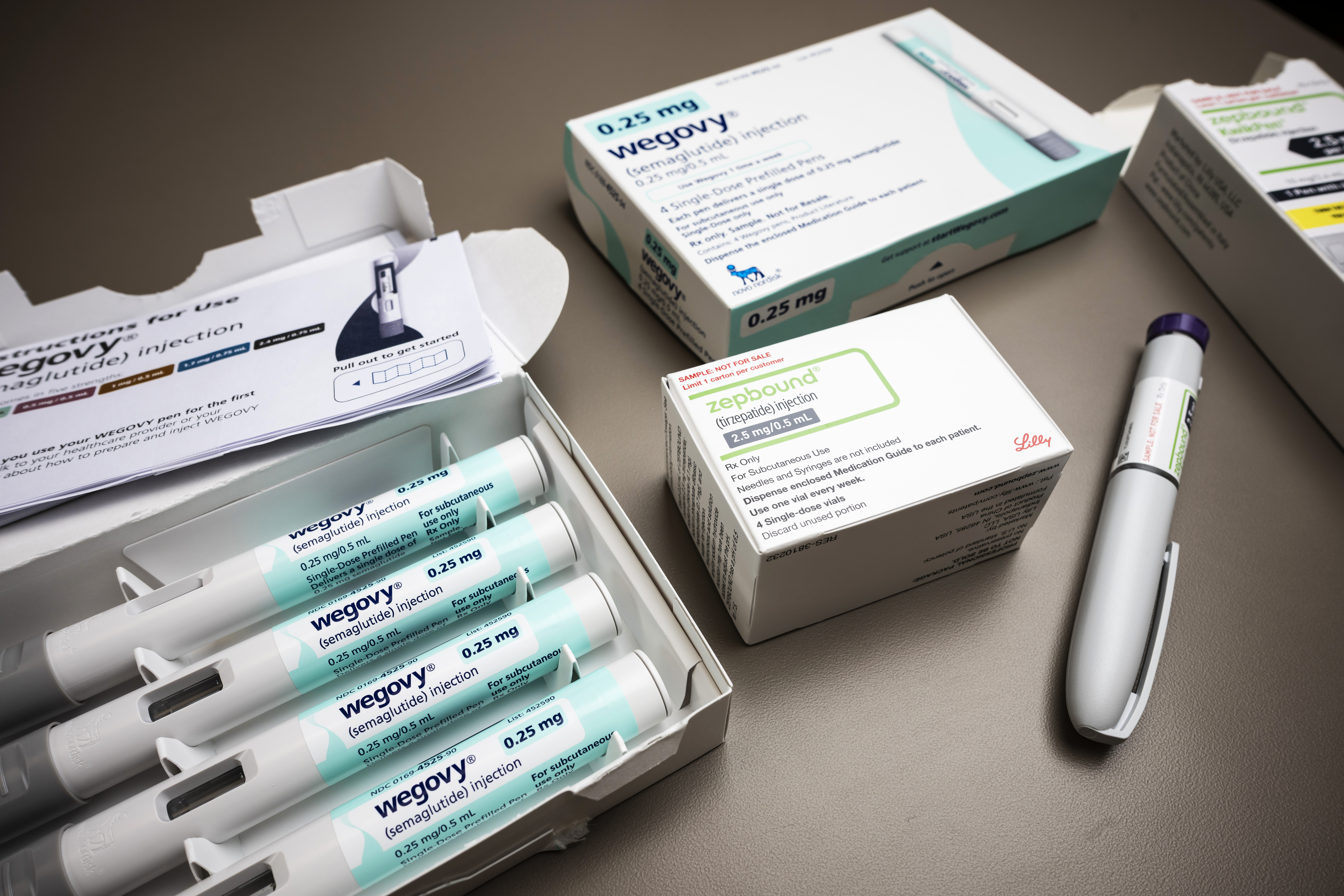
    White House officials pointed particularly to the costs of GLP-1 weight-loss drugs, which Trump calls the “fat drug.” TrumpRx, which launched earlier this year, offers GLP-1 drugs for as low as $150 for a starting dose. And under a Medicare pilot program that the administration launched in July, drugmakers Novo Nordisk and Eli Lilly agreed to charge the government just $245 a month for their products, Wegovy, Zepbound, and Foundayo.

    Monthly prices charged to insurance companies previously had topped $1,000. Trump and the drug companies began negotiating last year and announced the rough outlines of the deals in November.

    “In a matter of months, we got up and running these discounts in a way that they were meaningful for American patients,” said a White House official, speaking on the condition of anonymity because administration staff are not authorized to speak publicly.

    But bigger trends in the GLP-1 marketplace were already driving down prices independent of Trump’s negotiations, according to experts on drug pricing. Spotty insurance coverage for Wegovy and Zepbound for weight loss has produced enormous demand for lower consumer prices. And cheaper compounded drugs have posed genuine competition for the brand-name companies, adding even greater downward pressure.

    Richard Frank, a senior fellow at the Brookings Institution and a professor emeritus of health economics at Harvard University, said he doubts Trump’s initiatives are behind the drop in drug prices.

    “If I was a betting guy on what mattered most, it would be probably stuff around the Inflation Reduction Act,” Frank said, adding that Trump’s efforts “wouldn’t be where I’d place my money.”

    The Inflation Reduction Act was a signature accomplishment of former President Joe Biden, a sprawling measure enacted in 2022 that aimed to lower prescription drug prices by requiring Medicare, the federal health program for the elderly, to begin negotiating the prices it pays drugmakers for an array of popular and costly prescription drugs.

    The first price reductions took effect at the beginning of this year. Using 2023 prices as a benchmark, the Centers for Medicare and Medicaid Services has estimated taxpayer savings of $6 billion from that first round.

    The Trump White House argues that the Inflation Reduction Act gets too much credit for lowering prices, in part because it took four years to take effect.

    Stacie Dusetzina, a health policy professor at Vanderbilt University, said the Inflation Reduction Act is a more plausible contributor to the decline in prices than Trump’s initiatives.

    While only 10 drugs have had their prices negotiated so far, they are commonly used ones “and their prices would likely be reflected in the prescription drug index,” she said via email. TrumpRx, on the other hand, covers “a limited number of branded drugs,” Dusetzina said, and “aside from GLP1s, they may not be high enough volume to be included.”

    Dusetzina said another Trump policy — most-favored-nation pricing, which ties U.S. prices to lower ones paid abroad — could not explain the drop in prices either, “as the models that are supposed to use this form of pricing haven’t even launched.”

    The Bureau of Labor Statistics category for prescription drugs does not track what drug companies charge. It tracks how much a pharmacy actually receives when it fills a prescription. That means it includes a customer’s payment at the counter plus whatever is paid by their private insurance or by Medicare Part D, the program that pays for drugs picked up from a pharmacy.

    A drop in this index does not necessarily mean drugmakers have cut their prices. It can also reflect insurers and Medicare striking better deals or people switching to cheaper drugs.

    Which brings up another, less glamorous source of lower prices: generics. When a brand-name drug loses patent protection, BLS waits about six months, swaps the brand in its sample for the cheaper generic and records the difference as a reduction in price.

    A wave of blockbuster drugs lost exclusivity over the past year, and Dusetzina said that could be pushing the index down — “especially if the drugs were commonly filled.”

  • Chatbots are doing the work of Congress with little oversight

    Chatbots are doing the work of Congress with little oversight

    The amendment was one of hundreds filed this summer to an annual defense bill making its way through Congress. Along with her proposed change, Rep. Anna Paulina Luna’s office had sent a summary of what it would do.

    But the first line made no sense.

    “increasing example specific factors. Identical to H.R. 100 (118th Congress).11:25 AM????Claude responded:”

    One of Luna’s staffers had copied a chatbot’s answer — time-stamp and all — and pasted it into the public record of the National Defense Authorization Act.

    As a screenshot of the garbled text circulated on social media, the Florida Republican was nonchalant.

    “Not a shocker,” she wrote. “Most staff use it.”

    Asked later about the incident, Luna went further. “A lot of staff will use ChatGPT, Claude, Grok. I personally like Grok better, but my staffer prefers Claude,” she told The Washington Post. “I’m not gonna knock him for that. There’s nothing illegal about him doing a summary.”

    Across the Capitol, lawmakers and staffers are using artificial intelligence to write speeches and news releases, sort constituent mail, prepare questions for congressional hearings and draft amendments.

    Even as politicians are debating how to govern AI for the rest of America, Congress has already settled how it will use the technology: quickly, broadly and with little oversight.

    Both chambers have cleared members and staff to use chatbots — Copilot, ChatGPT, Gemini and, in the House, Claude — for official work, with more under review. The House bought 6,000 Microsoft Copilot licenses last year and encouraged staff to use them.

    Having someone else put words in a lawmaker’s mouth is nothing new. For almost as long as Congress has existed, staffers have been ghostwriting speeches for their bosses. But a speechwriter can be summoned or fired. Chatbots are products built by the tech companies lawmakers are in charge of regulating.

    Amid the rapid adoption of AI on the Hill, lawmakers face a key question: How much of their responsibilities are they willing to hand over?

    Interviews with more than two dozen lawmakers and staffers — some of whom spoke on the condition of anonymity to discuss internal operations — along with internal House and Senate policies obtained by The Post, show that the institution has left that question largely unanswered. The few House and Senate rules that exist are poorly understood and seldom enforced. In practice, AI use is left up to the hundreds of individual congressional offices to settle for themselves. It’s not clear how many offices have internal written policies on AI.

    And no one The Post asked knew of any instance where a staffer was formally disciplined by the House or Senate for breaking its rules.

    Luna was right. There was nothing illegal about having AI edit, spell-check — or even write — legislative materials. It wasn’t against House rules, either.

    Her staffer’s only mistake was letting Claude sign its work for others to see.

    Congress’s newest staffer

    Sen. Tommy Tuberville has found a new way to pass the long drives across Alabama: talking to ChatGPT.

    He asks it about Medicare and Medicaid, and listens as the machine’s voice talks back.

    “It’s kind of like you can sit there and talk to an expert,” said the Alabama Republican. “You don’t know whether or not they’re 100 percent correct. But they put you on the right path.”

    Rep. Mike Flood (R-Nebraska) said he consulted a chatbot while working on a bipartisan housing bill that passed this year, asking it where private equity was buying up single-family homes. Sen. Elizabeth Warren (D-Massachusetts), who has proposed stricter legislation on tech companies, uses ChatGPT to look up demographic information.

    One GOP staffer’s boss uses chatbots to generate the occasional cartoon of himself, she said with a laugh. Her explanation: “He’s a boomer.”

    But the real power users are the thousands of staffers who do most of Congress’s work.

    Earlier this year, Rep. Cleo Fields (D-Louisiana) had a town hall coming up in Natchitoches, a city in his district that his press secretary didn’t know well.

    So that aide, Sydney Broome, asked Claude for a list of TV stations in town, its newspapers, and reporters’ names and contacts. Then, she started calling each one.

    At 22, Broome is the youngest full-time staffer and only press secretary for Fields. AI saves her three or four hours of work a week, she said. Her boss does not use it at all.

    ChatGPT first emerged when Broome was still in college. Her professors, unable to stop students from using AI, urged restraint and ran their assignments through AI detection. Students could use it for research, they warned, but never to write from scratch.

    Congress has no such checks. So Broome has imposed them herself.

    She’ll use Claude to find a reporter’s email, but not to write to them. She doesn’t use it to produce anything in her boss’s name. “That’s just kind of a bit of a gray area,” she said.

    Many staffers say they are aware of AI’s limitations. The tools occasionally invent nonexistent bills. Other times, the writing is formulaic and clunky. Still, chatbots help speed up their work.

    A GOP aide in another office said he uses Copilot to write appropriations amendments. The subcommittee he works for used AI to suggest witnesses for a hearing and to help generate the questions lawmakers should ask them.

    Another Republican aide has taken AI even further. He exported all his phone contacts and text messages — years of conversations — into a personal Claude account and told it to build a database of every reporter he has ever dealt with: what he pitched them, which ones they accepted, which exchanges went badly. The chatbot auto-updates itself with each new conversation.

    Recently, his boss wanted to do a TV interview about surveillance law. The aide asked Claude whether he had ever pitched a TV booker on that topic and how it went. It came back instantly with a contact.

    Claude also runs that staffer’s office’s communications budget — the taxpayer-funded mail and ads sent to constituents. “I don’t really have to touch the data in Excel much anymore,” he said.

    The aide said he’s not sure what exactly is permitted by congressional rules. “You’re still not supposed to put constituent data into AI,” he said. “There are weird things around where the rules are. I don’t know all of them.”

    When nobody’s looking

    In 2024, the House Administration Committee convened a private, bipartisan meeting with House officers and outside AI experts to talk through how far to let AI into the legislative process. About 150 chiefs of staff attended.

    Out of it came the first AI guidance for Capitol Hill.

    Internal House and Senate policies obtained by The Post and interviews with people familiar with them show how Congress has embraced the use of AI.

    Last summer, the House bought 6,000 Copilot licenses. The tool was a natural fit for a chamber that already ran on Microsoft and a more secure way to keep congressional work inside a single system, officials believed. Starting in January, offices could sign up for access.

    They came with a major guardrail built into the system: Copilot is designed to refuse political requests. Ask it to criticize a party, politician or political group, and the machine declines.

    “I can’t create content that criticizes or condemns political parties, politicians, or political groups,” read one Copilot response shared by a staffer. “That includes writing tweets that attack Democrats, Republicans.”

    Roughly half the licenses are now in use, and House officials have extended the deal.

    The rules Congress wrote for itself are loose. Off limits under current House guidance: putting sensitive material such as constituent information into a chatbot, generating deepfakes, making personnel decisions and finalizing legislation.

    A machine may help write a bill but may not be the last hand on it. It may draft a reply to a constituent but can’t be told who the constituent is.

    In theory, a staffer breaking those rules can be stripped of access to AI tools, suspended, fired, even fined and imprisoned.

    But no one could name a single case of that happening. People familiar with House operations said they’re not aware of any enforcement action by the chief administrative officer. A spokesperson for the CAO said the office can’t comment on potential enforcement actions. A spokesperson for the Senate sergeant at arms didn’t respond.

    Catching violations largely falls on staffers, who would have to report a colleague, or themselves.

    Most said in interviews that they don’t know the rules. A former senior Republican House staffer said that his office subscribed to both ChatGPT and Claude and that staff used them however they liked. He wasn’t sure what the rules were, or whether his team followed them. “We just had a free-for-all,” he said.

    The House and Senate encourage individual offices to implement their own written AI policies. If a House office wants Copilot, in theory, it must have a policy in place.

    One reason Congress has moved so quickly to adopt AI tools is to keep pace with the executive branch, said people familiar with internal House operations. The Trump administration has spent the past year and a half pushing AI into every corner of the government.

    “If we are not keeping pace with how the executive branch is functioning,” one person said, “then we’re not performing effective oversight.”

    AI for everything

    The new frontier has left some lawmakers pondering how to proceed.

    “We want to make sure we’re using AI, and AI isn’t using us,” said Rep. Jamie Raskin (Maryland), a constitutional law professor and the top Democrat on the House Judiciary Committee.

    Sen. Elissa Slotkin (D-Michigan) recently worked with her staff on a new policy for her office. They can use AI to “enhance and streamline” work but not to generate “final products” — like floor speeches or public remarks. They have to take AI training. Nothing with personal information about constituents or the senator can be uploaded. And her office is holding unannounced “spot check” inspections.

    “We didn’t want to prohibit the use of the newest tools, but we also didn’t want absolute schlock showing up in my memos,” Slotkin said. “What I’m not willing to do is put my head in the sand and pretend that my young staff aren’t going to find new and interesting ways of doing this.”

    In recent months, one Democratic staffer said his office has been exploring something new: feeding AI his boss’s past statements so the tool can write in the lawmaker’s voice. He heard another office was pulling it off and wanted to try himself.

    In the same building, a GOP press secretary whose office has stricter AI limits said it’s unfair other offices get an advantage. “We could churn out so many op-eds if we were more comfortable with AI,” she said.

    Recently, she found her own press assistant using AI in violation of their office’s policy. “We had to have a very robust conversation about how not to use AI for things in [the boss’s] voice,” she said.

    A preview of what more rampant AI use could look like already exists in state legislatures — many of which have no rules or policies at all.

    Amber Hulse serves in the South Dakota state Senate, where money is tight and lawmakers have no full-time staff. Hulse, a Republican, uses AI for almost everything — policy research, constituent email, speeches, writing legislation.

    Lately, she said, the signs of AI’s effects are getting easier to spot.

    “It’s funny,” Hulse said, “how your ears will start to pick up on the floor someone who’s giving a speech that was very clearly written by AI.”


  • What doctors want you to know about ‘catch-up’ sleep

    What doctors want you to know about ‘catch-up’ sleep

    You’ve spent Monday through Friday running on five hours of sleep, working late nights, and waking up early just to do it all over again. On Saturday, you get 12 glorious hours of shut-eye and feel instantly refreshed when you wake up. You’re all caught up on your sleep, right?

    Actually, not quite. The idea that a single morning or weekend spent logging extra hours in bed can wipe away a week’s worth of sleep deprivation is one of the most persistent sleep myths out there.

    Here’s what sleep experts wish everyone understood about how “catch-up” sleep actually works and why your z’s can’t just be topped off like a gas tank.

    Sleep debt explained

    Sleep debt is essentially the difference between how much sleep your body needs and how much it gets, according to Kimberly Fenn, professor of cognition and cognitive neuroscience at Michigan State University. Put another way, it is the cumulative amount of lost sleep an individual has experienced.

    In general, you should aim to get at least seven hours of sleep each night, and most people need between seven and nine hours of sleep to function well the next day, said Ulysses Magalang, board-certified physician and director of the Sleep Medicine Program at Ohio State University. The ideal amount for you is whatever allows you to wake up feeling rested and like you have enough energy to make it through the day, according to Fenn.

    Each night you don’t sleep a sufficient amount, it adds to the “debt,” Fenn explained. For example, if you need eight hours of sleep every night to feel your best and on Sunday night you sleep for only six hours, on Monday, you’ll have a debt of two hours. If this pattern continues all week, then by Saturday, your cumulative amount of sleep debt would be 10 hours.

    Short-term side effects of not getting enough shut-eye include tiredness, trouble concentrating, difficulty paying attention, irritability, and memory impairment, Magalang said. Long-term sleep deprivation is associated with health issues such as a weakened immune system, high blood pressure, heart disease, stroke, increased inflammation, cognitive impairment, and insulin resistance, according to research.

    There’s also some evidence to suggest that people who consistently get fewer than six hours of sleep each night have shorter lifespans than those who get more than six hours of sleep each night.

    Why catching up on sleep isn’t the best strategy

    While you might feel refreshed in the short-term after a morning of sleeping in, changing your bedtime and wake-up time drastically can make you feel even groggier or more fatigued, according to Fenn. “Sleep consistency is important for feeling well rested, and straying too far off course can throw off your internal clock,” she said.

    She emphasized that maintaining the same bedtime is especially important. If you go to bed at your normal time but have accumulated sleep debt, you can let yourself sleep an additional hour or so in the morning.

    “Typically, due to the strength of the circadian rhythm, unless there are other factors involved — like alcohol or other drugs, or extreme sleep loss — most people won’t sleep more than an hour past their habitual wake time,” Fenn said.

    But your health might still be compromised, depending on the severity of your sleep debt, according to Fenn. For instance, a small 2019 study in Current Biology found that a weekend of recovery sleep isn’t a good way to prevent the metabolic damage associated with chronic sleep deprivation.

    “We know that sleep deprivation is associated with high blood pressure, but there’s really no definitive study that says if you have developed high blood pressure [due to chronic lack of sleep], and then you lengthen your sleep, your high blood pressure will be reversed,” Magalang added.

    Additionally, sleep consistency is just as important for your health as the amount of sleep you get, according to Magalang. Sticking roughly to the same bedtime and wake time daily is essential for aligning your body clock, or circadian rhythm, which moderates everything from hormone levels and metabolism to digestion. One large study found that people with the most irregular sleep schedules were 26% more likely to experience a major cardiovascular event, including heart attack and stroke. Another linked irregular sleep to a higher risk of early death compared to those with consistent routines.

    What to do instead

    The best way to combat the health effects of sleep deprivation, according to both experts, is to do your best to aim for that sweet spot of seven to nine hours of shut-eye each night. Prioritizing sleep isn’t always possible though, Fenn acknowledged.

    If you do have a few nights where you can’t get the sleep you need and find yourself craving a sleep-in to make up for it, a 20-minute nap during the day can be an effective way to power through the day and maintain your consistent sleep and wake time, according to Fenn.

    “This length is considered optimal because it’s sufficient to increase energy, mood, and attention, but is typically not long enough to get into deep sleep,” Fenn said. With lengthier naps, there’s a high probability that you’ll wake up in the midst of deep sleep and experience sleep inertia, which is a state of grogginess and reduced cognitive and neuromuscular function, she said.

    “That’s why people say that they awake from a nap more tired than they started,” she said. “Being in a state of sleep debt also increases sleep inertia, so taking a long nap after insufficient sleep is even more problematic.”

    Sleep is like any other biological necessity — if you skimp on it here and there, you’ll probably be fine in the long term, Fenn said. Your body is resilient and will find ways to manage and forge ahead. But being sleep-deprived for months on end is going to do some serious damage, she said, which is what you want to try to avoid as best as you can.