Tag: no-latest

  • Russian drones kill a woman and 9-year-old son at home as Ukrainian civilian casualties surge

    Russian drones kill a woman and 9-year-old son at home as Ukrainian civilian casualties surge

    KYIV, Ukraine — Russian jet-powered drones struck a home in northern Ukraine on Friday, killing a 29-year-old woman and her 9-year-old son, officials said.

    The strike came a day after the United Nations said July was the deadliest month for Ukrainian civilians since the weeks following Moscow’s all-out invasion of its neighbor more than four years ago.

    At least 437 civilians were killed and 2,610 wounded last month, the U.N. monitoring mission in Kyiv said, as Russia escalated its bombing of Ukrainian towns and cities. That was 70% higher than in July last year and 30% up on June of this year.

    Overall, since Russia’s invasion on Feb. 24, 2022, U.N. human rights monitors say the war has killed at least 16,874 civilians, including 820 children, and wounded 51,273, including 3,126 children.

    “Every month this year the number of killed and injured civilians has increased. That trend accelerated sharply in July,” said Danielle Bell, head of the U.N. human rights monitoring mission in Kyiv. “The number of civilian casualties in July was the highest we documented in a single month since March 2022.”

    The Russian strike in northern Ukraine’s Sumy region early Friday also wounded four other people, including the dead boy’s father and grandmother, who were hospitalized with severe burns, the regional military administration chief Oleh Hryhorov said.

    Russia’s top diplomat says Moscow will intensify attacks

    Russian Foreign Minister Sergey Lavrov warned that Moscow is planning to escalate its strikes on Ukraine, even as U.S. diplomatic efforts to end the war are set to continue.

    “We will use much harsher methods to destroy everything that feeds Kyiv’s war machine from the West,” Lavrov said in an interview with Russian state TV broadcast Friday, referring to military aid Kyiv receives from abroad.

    Officials in Washington said last month that Steve Witkoff and Jared Kushner, President Donald Trump’s main envoys, would travel to Kyiv sometime in the future. No date for the trip is publicly known, as the U.S. focuses on the Iran war.

    President Volodymyr Zelensky has accepted an unconditional ceasefire demanded by Trump, but Putin has refused, demanding a comprehensive peace agreement first, and Lavrov said that position hasn’t changed.

    “We will only stop when there’s a long-term, reliable, and sustainable settlement,” he said.

    Russian glide bombs hit residential areas near front line

    In Ukraine’s eastern Donetsk region, a Russian glide bomb demolished six floors of a 10-story apartment block, killing one person and wounding 16 others, Zelensky said.

    Russia is launching around 220 glide bombs every day against settlements near the front line in eastern and southern Ukraine, Zelensky said in a social media post Friday.

    Russian forces crush settlements with the brute force of 3,000-pound glide bombs, artillery, missiles, and drones, then send in infantry units to attack the exposed defenders. The tactic has rendered many towns and villages uninhabitable.

    In addition, Russian forces struck two tugboats in the Black Sea that were escorting cargo ships carrying Western weapons for Ukraine, the Defense Ministry in Moscow said.

    It also said that its drones overnight hit the railway station in Ukraine’s southern port of Izmail that it said is used for transporting military cargo and fuel for the Ukrainian armed forces.

    In all, Russia attacked 12 Ukrainian regions overnight, wounding dozens of people, Zelensky said.

    Ukrainian drones strike a major port north of Moscow

    Ukrainian forces, meanwhile, extended their long-range strike campaign against Russian infrastructure, hitting the port of Ust-Luga in the Leningrad region north of Moscow and starting a brief fire, its governor Alexander Drozdenko said.

    Ust-Luga is one of Russia’s largest oil and gas export terminals, located more than 500 miles from Ukraine.

    It has been a frequent target of Ukrainian drone attacks this summer, as Kyiv seeks to undermine Russian oil exports that provide Moscow with vital revenue for its war effort.

    Ukraine also launched another attack on the premises of Wildberries, Russia’s biggest online retailer, which Kyiv says helps supply the Russian military.

    The attack damaged a wall of a Wildberries warehouse in the Tver region north of Moscow, the region’s acting governor, Vitaly Korolyov, said.

    Wildberries reported “insignificant damage” and said the goods stored at the site were not damaged.

    The Russian Defense Ministry said Friday its air defenses overnight intercepted 553 Ukrainian drones over 18 Russian regions, as well as occupied Crimea and the waters of the Azov and the Black seas.

    NATO warplanes shoot down a drone over Latvia

    NATO fighter jets shot down a drone that entered Latvian airspace in the early hours of Friday, the Latvian army and an official for the military alliance said.

    Latvian authorities did not say what the origin of the drone was, but said it had entered Latvia “as a result of Russian electromagnetic warfare.”

    Several drones have previously crossed the border into Latvia. Most of them are thought to be Ukrainian drones that strayed off course due to Russian electronic jamming.

    Two Italian Eurofighter jets were scrambled to tackle the drone and one of them shot it down, NATO spokesperson Allison Hart said.

    Two Turkish fighter jets were also deployed, she said.

    Residents in five municipalities in eastern Latvia were warned about the threat to airspace and told to take shelter.

    Another drone crashed in woodland in Romania 3.1 miles from the border with Ukraine, the NATO member’s Defense Ministry said Friday.

    Military radars did not detect the drone, which landed in eastern Tulcea County, because it was flying at a “very low” altitude, it said without providing details about the drone’s origin.

    The ministry said later that another drone was found Friday in the village of Plauru, also in Tulcea County, which is situated across the Danube River from Ukraine’s port of Izmail. A specialist team was deployed to the area, which was secured, it added.


  • Ward Churchill, professor who challenged his dismissal over 9/11 essay, has died at 78

    Ward Churchill, professor who challenged his dismissal over 9/11 essay, has died at 78

    Ward L. Churchill, a professor whose firing by the University of Colorado in 2007 inspired a lawsuit that became a landmark case about academic freedom and free speech, has died. He was 78.

    The death was confirmed by his former lawyer, David Lane. No further details were provided.

    When he was dismissed, Mr. Churchill had been a tenured professor at the university’s Boulder campus since 1991 and had served as chairperson of its ethnic studies department. In 2007, a faculty panel found that he had plagiarized and falsified parts of his research on Native Americans, prompting his dismissal.

    He filed a wrongful termination suit against the university, claiming that the real cause for his firing was to punish him for an essay he had written on Sept. 12, 2001, and published online a few days later, in which he argued that the United States had brought on itself the 9/11 terrorist attacks.

    In the essay, he compared office workers who had been killed with Adolf Eichmann, a Nazi official whose later defense that he was merely “following orders” helped inspire writer Hannah Arendt to develop the concept of “the banality of evil.”

    In Mr. Churchill’s essay, titled “Some People Push Back: On the Justice of Roosting Chickens,” he wrote that the financial workers who died at the World Trade Center were not innocent bystanders, but “little Eichmanns” who were part of “a technocratic corps at the very heart of America’s global financial empire.”

    The essay garnered little notice at the time of its release, nor when it was expanded and published as a book in 2003. But when Mr. Churchill was invited to speak at Hamilton College in New York in 2005, it resurfaced and caused an uproar, and the organizers canceled the event.

    Under pressure, including from Colorado Gov. Bill Owens, the university formed a panel to investigate Mr. Churchill’s conduct. It concluded that he had committed serious academic misconduct, including falsifying and fabricating historical details and plagiarizing work by an environmental group and another scholar.

    The panel was divided about whether he deserved to be dismissed, with three of the five members in favor, and two recommending a two-year suspension.

    The university’s leaders decided to fire him, prompting Mr. Churchill to start his legal challenge. When the lawsuit went to trial in March 2009, Mr. Churchill’s lawyers described the university panel’s search for professional misconduct as a pretext for a foregone decision to dismiss him. Lane, his lawyer, said at the time that Mr. Churchill was the victim of a “howling mob” of university administrators, conservative media, and politicians “falling over themselves” to secure his removal.

    In April 2009, the jury found that Mr. Churchill had been wrongfully dismissed, awarding him a symbolic $1 in damages. It found that his political views had been a “substantial or motivating” factor in his dismissal, and that the university had not shown that he would have been dismissed anyway for his academic misconduct.

    “The jury’s award is some vindication,” Mr. Churchill said. “I didn’t ask for money, I asked for justice.”

    A Denver District Court judge ruled that the university did not have to reinstate or compensate Mr. Churchill, a decision upheld by the Colorado Court of Appeals. In 2012, the Colorado Supreme Court affirmed the lower courts’ rulings.

    Ward LeRoy Churchill was born Oct. 2, 1947, in Urbana, Ill., to Jack LeRoy Churchill and Maralyn Lucretia Allen. They divorced when he was a year old. In a 2003 essay in an academic journal, he claimed to be of Muscogee Creek descent through his father and an enrolled member of the United Keetowah Band of Cherokee Indians through his mother.

    The Cherokee tribe said in 2005 that he was an associate member rather than a full member. A former member of the tribe’s enrollment committee said Mr. Churchill could not prove his eligibility by blood but was granted associate status based on his advocacy work.

    Mr. Churchill grew up in Elmwood, Ill., and graduated in 1965 from Elmwood Community High School, where he played football and basketball. Former classmates told the Denver Post in 2005 that he liked to debate politics, even as a teen.

    He joined the U.S. Army in 1966, training as a light-truck driver and projectionist, then served in Vietnam. He told the Denver Post in a 1987 interview that he had attended paratrooper school and was assigned to an elite reconnaissance patrol unit, details that did not appear on his Army record.

    He was discharged from the Army in 1968. He said in the 1987 interview that he became active in anti-war leftist circles in Chicago after he returned from Vietnam.

    He earned a bachelor’s degree in technological communications from Sangamon State University in Springfield, Ill., (now the University of Illinois Springfield), in 1974, and a master’s degree in communications theory from Sangamon State in 1975.

    He was hired by the University of Colorado in 1980 to be the acting director of its American Indian Equal Opportunities Program. In 1991, he became an associate professor in the communications department and received tenure. He became a full professor and transferred to the ethnic studies department in 1997.

    His classes were popular enough that up to 60 students would be on the waitlist, Arturo Aldama, a professor in that department, told the Denver Post in 2005.

    Mr. Churchill was married four times. His first wife, Dora-Lee Larson, filed to end their common-law marriage in 1984 and accused Mr. Churchill of “past violence and threats.” His second marriage, to Marie Annette Jaimes, a colleague at the University of Colorado, ended in divorce in 1995. That same year, he married Leah Kelly, who was struck and killed by a car while crossing a street near Boulder in 2000 at age 25.

    Mr. Churchill’s fourth wife, Natsu Saito, was a fellow professor in the University of Colorado’s ethnic studies department. In 2006, while he was being investigated by the university, Saito resigned to teach at Georgia State University.

    Information about his survivors was not immediately available.

    In 2017, Mr. Churchill returned to speak at the Boulder campus, and he remained defiant. “Academic freedom in America is dead,” he told the crowd. “I had my identity before I was a professor, I had it while I was a professor, and I have it now.”

    This article originally appeared in The New York Times.

  • John Crowley, whose fantasy novels blurred reality and dream, dies at 83

    John Crowley, whose fantasy novels blurred reality and dream, dies at 83

    John Crowley, an author of sweeping fantastical narratives whose ability to blend such disparate material as American history, dreams of lost utopias, and Alice in Wonderland-tinged occult allowed him to transcend the fantasy genre in novels like Little, Big, which critic Harold Bloom called a “neglected masterpiece,” died Sunday at his home in Conway, Mass. He was 83.

    His wife, Laurie Block, said the cause was complications of dysphasia and dementia.

    The author of 14 novels and 10 volumes of essays and short fiction, Mr. Crowley explored a considerable range of subjects and genres. His first novel, The Deep (1975), was set on a disc-shaped world and involved a war between two factions, the Reds and the Blacks, loosely based on the 15th-century War of the Roses in England.

    Even his most straightforward, realistic novel, Four Freedoms (2009), about the workers at an airplane factory in Oklahoma during World War II, is an alternative history of the homefront, in which Americans of marginalized identities — Black Americans, women, disabled people — find themselves liberated by a common purpose.

    His work drew comparisons to C.S. Lewis, J.R.R. Tolkien, and Thomas Pynchon; reviewers recognized notes of Dante, William Shakespeare, and Lewis Carroll. Writing in the Washington Post in 2000, critic Michael Dirda called Mr. Crowley “arguably the most original and accomplished American fantasy writer ever.”

    Despite his wide range, certain themes persisted. He was consistently interested in the way that narrative shapes perception; in the sometimes murky line between fantasy and reality; and in the possibility, as he wrote in his 1987 novel, Aegypt (eventually republished as The Solitudes), that “there is more than one history of the world.”

    Little, Big, Mr. Crowley’s fourth novel, was his best known and most widely read. Its plot revolves around the long marriage of Smoky Barnable and Daily Alice Drinkwater, which plays out against a tableau of urban decay, a fascist takeover of the United States, and a rural manse that offers a gateway to a realm of fairies and, possibly, a redemptive future.

    Any summary of its plot makes it sound twee; in fact, it is an achingly melancholic and deeply humane meditation on mortality and memory.

    Like all Mr. Crowley’s books, Little, Big reads almost like a fable, starting with its first sentence: “On a certain day in June, 19 —, a young man was making his way on foot northward from the great City to a town or place called Edgewood, that he had been told of but had never visited.”

    Mr. Crowley continued, “His name was Smoky Barnable, and he was going to Edgewood to get married; the fact that he walked and didn’t ride was one of the conditions placed on his coming there at all.”

    Poet James Merrill was a gushing fan of Little, Big and arranged for Mr. Crowley to receive a grant from the Ingram Merrill Foundation, which Merrill directed. Eminent fantasy writer Ursula K. Le Guin said that it “calls for a redefinition of fantasy.” Bloom, the critic, wrote that it was “literally the most enchanting 20th-century book I know.”

    It was named the best novel at the 1982 World Fantasy Awards, the highest prize in the genre.

    Mr. Crowley was unafraid of boldly original stories and sprawling epics. The four books in his Aegypt cycle, written over two decades, follow the waking and dream life of a historian named Pierce Moffett, with parallel story lines set during the Renaissance. His 2017 novel Ka: Dar Oakley in the Ruin of Ymr centers on a sentient, immortal crow as it follows the course of human history.

    “The kind of fiction that always interested me,” Mr. Crowley told the Believer magazine in 2009, “is stuff that somehow manages to be convincingly actual — in the sense that you believe that truths are being told about the world you live in — and are also somehow connected to the imaginary in some way.”

    John Michael Crowley was born Dec. 1, 1942, in Presque Isle, Maine, where his father, Joseph, was a doctor with the Army. His mother, Patience (Lyon) Crowley, managed the home and later worked as a librarian.

    The family moved frequently because of Joseph Crowley’s work, living in Vermont, eastern Kentucky, and finally Indiana.

    Though he at times dreamed of becoming an archaeologist or a set designer, John Crowley studied English at Indiana University. As a freshman, he was a member of the university’s quiz team, which won the 1961 GE College Bowl, an event broadcast on national television.

    After graduating in 1965, he moved to New York, where he wrote documentary screenplays.

    He moved to western Massachusetts in the mid-1970s, where he began writing fiction. He continued to write documentaries, eventually joining his wife, Block, in forming Straight Ahead Pictures, a nonprofit production company.

    His film scripts include The World of Tomorrow (1984), about the 1939 World’s Fair, and, with Block, Fit: Episodes in the History of the Body (1991), about American fitness culture.

    Mr. Crowley and Block married in 1984. He is also survived by their children, Hazel and Zander Crowley, and his sister, Jo Busha.

    Thanks to the presence on the Yale English faculty of two of his great admirers, poet John Hollander and Bloom, Mr. Crowley became a lecturer there in 1993, retiring in 2018.

    Mr. Crowley insisted to his students and readers that fantasy was, at its heart, no different from any other genre, and could achieve greatness if it followed the rules of literature.

    “To actually articulate a way of being in a literary world without boundaries between reality and fantasy — it can’t just be a bunch of craziness and surreal carrying on,” he told Locus magazine in 2010.

    He added, “Fantasy fiction at bottom, or at its best, is about making true fictions by the rules, in worlds you make up out of whole cloth, or out of your heart.”

    This article originally appeared in The New York Times.

  • Alfonso Fanjul Jr., Cuban American sugar baron, dies at 89

    Alfonso Fanjul Jr., Cuban American sugar baron, dies at 89

    Alfonso Fanjul Jr., the patriarch of a family that lost one of Cuba’s largest sugar businesses in the revolution of 1959 and fled to the United States, where, thanks to pluck and government price supports, they built an even vaster empire, died Aug. 3 in South Florida. He was 89.

    The death was announced by Florida Crystals Corp., part of the privately held family business that Mr. Fanjul presided over. The company provided no further details.

    A billionaire who called himself a farmer and lived a luxurious life in Palm Beach, Fla., where he docked a 95-foot yacht, Mr. Fanjul, known as Alfy, was co-chair and co-CEO of the family businesses alongside his younger brother José, known as Pepe.

    Their two other brothers and sister also have interests in the empire, which includes the world’s largest cane sugar refiner and the Domino and C&H brands.

    Alfy and Pepe Fanjul became major donors to both political parties in the United States, a lesson in realpolitik that they learned after Cuban communists confiscated 90,000 acres of the family’s property as well as its mansions and an art collection.

    “One of the reasons we get involved in American politics is because of what happened to us in Cuba,” Alfy Fanjul told Vanity Fair in an article published in 2011.

    He gave generously to Democrats and was a co-chair of Bill Clinton’s 1992 presidential campaign in Florida. Pepe Fanjul has donated more than $2.5 million to the political campaigns of President Donald Trump, a longtime friend whose protectionist tariffs have benefited the Fanjuls.

    Clinton and former Speaker Nancy Pelosi attended Mr. Fanjul’s funeral in Palm Beach on Saturday.

    During one of the few in-depth interviews he gave to the press, Mr. Fanjul was described by Marie Brenner of Vanity Fair as having “the old-world manners of a Spanish aristocrat, a cool detachment that indicates he is accustomed to being in control.”

    For decades, the Fanjuls attracted critics of their labor, environmental, and business practices. Environmentalists accused Florida Crystals of spoiling the Everglades with chemical runoff from their 180,000 acres of cane around Lake Okeechobee. (As evidence that it was a good environmental citizen, the company pointed to a renewable energy plant that it built, as well as to sustainable practices on its farms.)

    Even sharper criticism came from free trade advocates, who said the Fanjuls profited from import quotas that ensured American sugar farmers got an inflated price, some three times higher than the rest of the world’s price. The difference was said to cost American consumers billions of dollars a year. The libertarian Cato Institute called Big Sugar in the United States a “candy-coated cartel.”

    The Fanjuls, usually speaking through public relations specialists, responded that they had built their business over decades of hard work and determination — in the best tradition of the American dream.

    Mr. Fanjul was born in Havana on June 27, 1937, to Alfonso Fanjul Sr. and Lillian (Gómez-Mena) Fanjul. His parents’ marriage united two wealthy Cuban sugar families, whose properties included 10 mills, mansions, and the Manzana de Gómez, a full-block commercial building in central Havana that is now a luxury hotel.

    Alfy, who was sent to Fordham University in New York for college, was back home on New Year’s Eve in 1959, watching the fireworks at the Havana Yacht Club, when Cuban dictator Fulgencio Batista fled the country ahead of the advancing communists.

    Mr. Fanjul later told the story of a meeting in the family office soon after with Fidel Castro’s guerrillas, who opened the discussion by laying their machine guns on a table. The family lost all its assets and left for New York.

    Mr. Fanjul, his father, and his maternal grandfather, Pepe Gómez-Mena, set out to rebuild the business in America; they had already sent some money out of Cuba.

    With other wealthy exiles, they raised $640,000 (about $7.3 million today) and bought 4,000 acres of land in western Palm Beach County and three rundown Louisiana sugar mills. The mills were shipped to Florida, where the first cane harvest was cut in 1961. Over the years, much of the cane was harvested by Jamaican workers on temporary visas.

    Seven years older than his brother Pepe, Alfy became the leader of the Fanjuls’ rise in America. He took over as chairperson and CEO of the companies in 1980, after his father died.

    The business expanded in 1984 when it acquired large holdings in Florida and the Dominican Republic from Gulf & Western, a conglomerate that then included Paramount Pictures. According to Forbes, in 2025 the family-controlled businesses were worth about $4 billion.

    The family’s holdings also include a 7,000-acre luxury resort in the Dominican Republic, Casa de Campo, which is known for golf courses, a marina, and an equestrian center.

    The Fanjul portfolio includes a stake in Central Romana Corp., a large sugar producer in the Dominican Republic. Last year, Trump officials lifted a ban that had been imposed by the Biden administration on imported sugar from Central Romana because of accusations that it used forced labor. Labor rights groups have said the company has not improved those practices.

    Besides political donations, Mr. Fanjul gave to educational institutions and charities. He was a trustee of the University of Miami and the Brookings Institution, and a co-founder of Mission International Rescue Charities in the Dominican Republic. The Fanjul family has supported hospitals, schools, and civic groups in Palm Beach County.

    Mr. Fanjul’s marriage to Maria Cristina de los Reyes ended in divorce, and in 2007 he married Raysa Herrera, who survives him, along with his brother Pepe; their three siblings, Alexander, Andres, and Lillian Fanjul; two daughters from his first marriage, Crista Ryan and Lillian Fernandez; a stepdaughter, Raissa Enis; five grandchildren; and seven great-grandchildren.

    From his waterfront home in Palm Beach, Mr. Fanjul liked to set to sea on his yacht for big-game saltwater fishing. He was twice a member of winning teams in the Sailfish Club of Florida’s Gold Cup tournament, in 1979 and 2007.

    Unlike some members of the Cuban exile community, he did not obsess over how to reclaim his family’s lost holdings on the island they fled.

    “My father spent the last years of his life trying to figure out how to get to Cuba,” he told Vanity Fair.

    But Mr. Fanjul understood that the family’s future was American.

    This article originally appeared in The New York Times.

  • Trump says record-setting Navy deployment to support Iran operations ‘not nearly long enough’

    Trump says record-setting Navy deployment to support Iran operations ‘not nearly long enough’

    WASHINGTON — President Donald Trump on Friday downplayed the toll on American sailors enduring a record-setting deployment of nearly nine months on the USS Abraham Lincoln as concerns escalated about mental health and supply issues aboard the aircraft carrier supporting U.S. operations against Iran.

    In a brief exchange with reporters before flying to New York for an event to highlight falling violent crime rates across the U.S., Trump refuted that family members have raised concerns about the deployment’s length and even said that the more than 260-day deployment is “not nearly long enough.”

    “That ship is moving right now, or very shortly, and it’s being replaced with another very similar ship,” Trump said when asked about the lengthy deployment.

    The Lincoln has been supporting the U.S. war against Iran, and several Democratic lawmakers, including Sens. Richard Blumenthal of Connecticut and Ruben Gallego of Arizona, are pressing for accountability from the Pentagon over conditions aboard the carrier, which Defense Secretary Pete Hegseth on Thursday said were “completely misrepresented.”

    Rep. Jason Crow (D., Colo.), who served three tours in Iraq and Afghanistan with the 82nd Airborne Division and 75th Ranger Regiment before being elected, took to social media to criticize Trump’s comments, saying on X that “President Trump does not care about our servicemembers or their families.”

    Extended deployments of carriers during the Iran conflict have raised concerns about the impact on service members who are away from home for long periods as well as the increasing strain on the ship and its equipment.

    While hostilities between the U.S. and Iran have calmed in recent weeks, the Navy has reimposed a blockade on Iranian ports in the crucial Strait of Hormuz, and the Trump administration has offered no clarity on how it intends to wind down the war. Hegseth said that the U.S. military can maintain the blockage of Iranian ports “indefinitely.”

    Another aircraft carrier, the USS George Washington, left port in Da Nang, Vietnam, last week, and is expected to replace the USS Lincoln, one of two aircraft carriers currently deployed in the Middle East.

    After reports emerged that sailors on the Lincoln are struggling with mental health concerns, the Navy said it has “not observed an increase in suicidal ideations or attempts aboard the ship,” though officials have declined to provide data, citing operational security and patient privacy concerns.

    A Navy official said that a sailor aboard the Lincoln went overboard in early August but that the person was quickly recovered, treated by the ship’s medical department, and transferred off ship for follow-on care. The official would not say whether it was being considered a suicide attempt.

    U.S. Central Command, which oversees military operations in the Middle East, has also pushed back on reports about poor conditions.

  • Farage wins special U.K. election that he initiated, as expected

    Farage wins special U.K. election that he initiated, as expected

    LONDON — Nigel Farage, the leader of Reform U.K., Britain’s populist right-wing party, won a special election on Thursday that he initiated when he resigned amid a parliamentary investigation into possible financial impropriety.

    As expected, Farage easily defeated dozens of fringe and novelty candidates, including Count Binface, who wears a trash-can-themed costume. None of Britain’s other major parties participated in the race, calling it a political stunt engineered by the Reform leader to distract from the investigation.

    Farage, who did not attend the official announcement of the result in a departure from political tradition in Britain, received 22,239 votes. Count Binface, a character played by Jon Harvey, 46, a writer and comedian, received 9,455 votes.

    Turnout was slightly higher than expected, with 35,401 voters — 44% of those eligible — participating in the election, the BBC said.

    The Reform leader is under investigation by the parliamentary standards commissioner for failing to declare a 5 million pound gift, about $6.7 million, that he received in the weeks before the 2024 general election. Farage has given varying explanations for the gift, which he received from Christopher Harborne, a British crypto-billionaire based in Thailand. At one point Farage said it was a reward for Brexit, while at other times he has said it was to pay for his personal security.

    Last month, Farage abruptly resigned the seat, which he had held since 2024, and immediately announced he would run again in the ensuing by-election, saying he wanted a new mandate from his constituents in Clacton, a coastal area in Essex, England, to show that his voters did not care about the allegations.

    “The people of Clacton should be the judges of my actions,” he said in his resignation speech in July. “This will be a people-versus-the-establishment by-election.”

    Farage referred in the speech to the standards investigation into the Harborne gift, and also said that “yet another standards investigation is underway.” Days before, the Sunday Times of London had reported that one of Farage’s close aides, George Cottrell, had provided undisclosed benefits to Farage, including security, social media employees, and accommodation. Farage has since said he did not need to report the benefits because they were received before his election to Parliament.

    The parliamentary code of conduct says that lawmakers must register any benefits received in the 12 months before they are elected, unless they could be considered “purely personal gifts.” It adds: “Both the possible motive of the giver and the use to which the gift is to be put should be considered. If there is any doubt, the benefit should be registered.”

    Farage is an ally of President Donald Trump who has long warned of an “invasion” of migrants and railed against “the establishment.” In May, Reform won almost 1,500 seats on municipal councils. But its overall share of the vote was only about 26%, down from more than 30% the previous year.

    Several recent polls have shown support for the party falling to under 25% and Labour taking the lead. The polls have shown a continued decline as the accusations about improper disclosure of financial support have increased.

    Reform officials were always very confident, however, that Farage would recapture his seat in Clacton, which voted by a large margin for Brexit, his signature cause. The last time he ran there, during the 2024 general election, he won with 46.2% of the vote, and the Conservative Party candidate came second with 27.9%.

    This article originally appeared in The New York Times.

  • With Trump’s Hamas deal in peril, Kushner set to visit Israel for Gaza talks

    With Trump’s Hamas deal in peril, Kushner set to visit Israel for Gaza talks

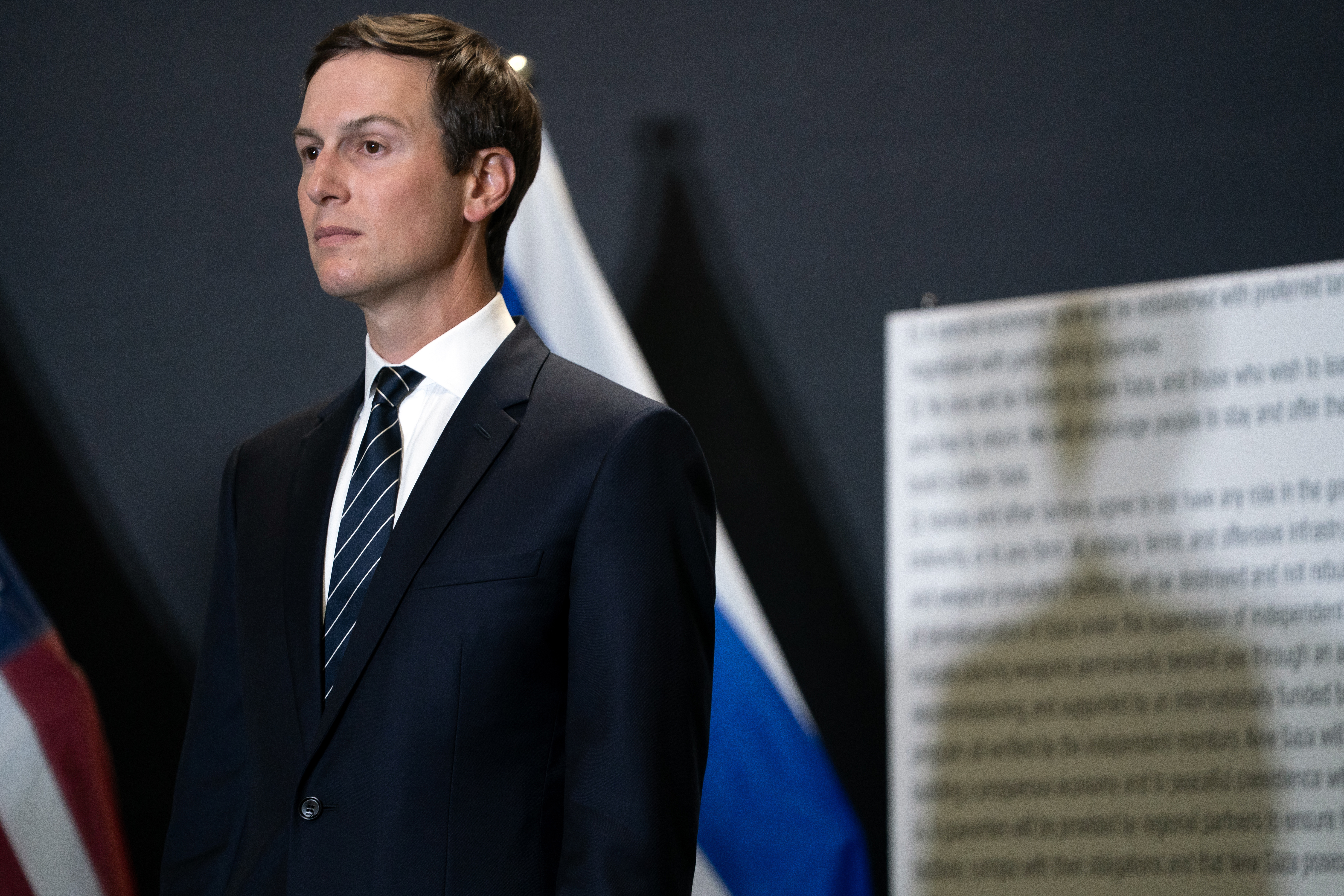
    TEL AVIV, Israel — Jared Kushner, President Donald Trump’s senior aide and son-in-law, is set to visit Israel early next week, according to four people familiar with the plans, days after the Israeli government rejected a U.S.-brokered disarmament deal with Hamas.

    Kushner is expected to meet with Israel’s prime minister, Benjamin Netanyahu, to discuss the Gaza Strip, the people said, speaking on condition of anonymity to divulge details about Kushner’s schedule.

    The deal, agreed to late last month between Trump’s Board of Peace and the militant group Hamas, called for the disarmament of Palestinian factions in Gaza and the withdrawal of Israeli forces there.

    The Board of Peace is a new international organization chaired by Trump that has focused on plans for governing and rebuilding Gaza. Kushner is a senior member of its executive board and was involved in ceasefire negotiations between Hamas and Israel.

    Netanyahu said Sunday that Israel rejected the deal, a move that was seen as an appeal to his right-wing voting base before national elections in October. Yet the prime minister also ordered the Israeli military to pause its strikes in Gaza, in an apparent effort to appease the Trump administration.

    For days after the announcement, the Israeli military conducted no airstrikes in Gaza, until Wednesday, when the military carried out a fresh attack, saying it was targeting Hamas militants. It conducted further attacks Thursday.

    Hamas officials have condemned the strikes, calling on mediating countries in the region to pressure Israel to halt them.

    Hamas remains in control of about half of Gaza, where most of its people live. The group said that among those killed by Israel this week was the head of the police force in the Gaza City area.

    Nickolay Mladenov, the Board of Peace’s high representative for Gaza and former United Nations envoy, will join Kushner in Israel, according to two of the people with knowledge of the visit. Mladenov has played a leading role in the negotiations with Hamas over disarmament, frequently meeting with officials from the group in Egypt.

    Kushner and Mladenov were also expected to visit Egypt next week to meet with regional mediators, according to two of the people.

    The deal with Hamas says that, as part of the disarmament process, Israel should first uphold its side of the ceasefire, which was agreed to in October last year. That includes halting airstrikes and allowing more aid into Gaza.

    The 15-point document leaves elements of the disarmament process vague, however. It calls for a “gradual, sequential, and time-bound manner” for decommissioning and storing heavy weapons, with an exact timetable still to be determined.

    It adds that, at the “end of the process,” the National Committee for the Administration of Gaza will “hold, control, or store weapons in Gaza.” The committee, a body of Palestinian technocrats, was assembled by the Board of Peace to take over governing Gaza under the board’s supervision.

    Many Israelis remain skeptical that Trump’s Board of Peace can successfully disarm Hamas. The group has long touted armed struggle against Israel as the core of its ideology, and members have said they regard disarmament as tantamount to surrender.

    This article originally appeared in The New York Times.

  • DOJ files charges against woman accused of vandalizing World War II Memorial

    DOJ files charges against woman accused of vandalizing World War II Memorial

    The Justice Department filed two felony charges against the woman accused of vandalizing the World War II Memorial in Washington, according to court records.

    “Vandalizing our World War II Memorial is a despicable attack on a sacred monument honoring the Americans who fought and died for our freedom,” U.S. Attorney for D.C. Jeanine Pirro said in a statement announcing the charges on social media. “Those Americans include my father and grandfather.”

    On Thursday afternoon, part of the memorial on the National Mall was tagged with graffiti, and soapy bubbles overtook a fountain. Red graffiti spelled out “Clean hands dirty $” beneath the Atlantic Arch, and red and green paint was splattered on some of the granite stonework.

    Pirro said the woman suspected of vandalizing the memorial, Melissa L. Farris, was in custody. Two felony charges — depredation against U.S. property and destruction of veterans’ memorials — were filed against her, according to court records. Both charges carry a prison sentence of up to 10 years.

    Around 2 p.m. on Thursday, members of the U.S. Park Police and U.S. Park Rangers responded to a call about a disorderly person at the memorial, according to court records.

    On her Facebook account, Farris livestreamed herself at the memorial. In the video, she alternated between narrating her actions and getting emotional about the state of her life and of the country. She said she has autism and ADHD but that she was not suffering from psychosis.

    Farris also said that Thursday was her 41st birthday. Her current address is listed in Kentucky, according to public records.

    Later, Farris filmed herself dropping an item into the fountain near the Atlantic Arch. “Oops,” she said. Then, she shook spray-paint cans and livestreamed herself adding graffiti to the granite.

    “It was me. I’m doing it. I’m on camera,” she said.

    She said she was willing to be arrested because she wanted her day in court. The court filing said that as a ranger approached her at the Atlantic Pavilion, she fled.

    After spraying the graffiti, she said, “It’s time for a tea party, kids.”

    “This is democracy sometimes, guys,” she said as the livestream showed the fountain filling with bubbles. “And I didn’t have to shoot somebody. I didn’t have to go to war. I didn’t have to make choices that harmed another human being.”

    Shortly before 4 p.m., according to the court filing, Farris posted another video to Facebook, in which she said: “I was just allowed to deface Federal f—ing property, and nobody batted an eye, and that is very strange.”

    The Interior Department condemned the incident Thursday as an “utter disgrace” that “will not be tolerated.”

    The incident comes weeks after the White House blamed vandals for disturbing the nearby Reflecting Pool after President Donald Trump’s renovations quickly degraded, causing algae blooms and a peeling liner.

    Pirro eventually dropped the vandalism charges against four people and blamed the damage on flawed installation.

    In response, Trump said Pirro “folded like an umbrella.”

    “I just think she was totally wrong,” Trump told reporters earlier this month, noting that National Park Service employees had told authorities they saw vandals in action. He described problems with the contractor as “a couple of little things.”

    It’s unclear what material was used to create the bubbles in the fountain. Ryan Compton, owner of Domain Aquascapes in Northern Virginia, said adding standard bubbles to a fountain generally doesn’t cause system damage but is a “maintenance nightmare.” It requires draining, cleaning out, and rinsing the fountain and pump system.

    “That’s going to be a lot of man hours and work involved,” he said.

    Trump denounced the World War II Memorial vandalism in a Friday morning post on Truth Social.

    “THERE CAN BE NO GREATER INSULT TO THOSE AMERICAN HEROES WHO DIED IN WORLD WAR II,” Trump wrote. “First the Reflecting Pool, now this. We are on their trail! Where do these animals come from???”

    A preliminary estimate of the costs to clean and restore the memorial already exceeds $1,000, according to court records.

    The Washington Post was unable to immediately reach a representative of Farris for comment. Her sister declined to comment.

  • Trump signs memo authorizing private sector to launch cyberattacks

    Trump signs memo authorizing private sector to launch cyberattacks

    President Donald Trump signed an order Wednesday authorizing select private companies to carry out government-sponsored cyberattacks against foreign criminal hacking groups — actions that have until now been the domain of U.S. national security agencies.

    The memorandum enables the government to contract with U.S. firms to hack into and disrupt overseas digital networks belonging to “cyber-enabled transnational criminal organizations.”

    The memo stipulates that the companies, under the supervision of the federal government, may breach computer systems to conduct surveillance and manipulate or destroy digital or physical infrastructure “controlled by information systems” but are barred from targeting foreign governments or taking actions that result in the “loss of life” or “serious injury.”

    The move marks a significant shift from the more restrained approach of previous administrations, which prohibited companies that suffered intrusions from “hacking back” into their attackers’ systems for fear of geopolitical blowback. Now the Trump administration wants to enlist the private sector to help take the fight to criminal hackers.

    “President Trump is unleashing every available tool to stop foreign-based organized criminal organizations that exploit Americans in cyberspace,” the White House said in a fact sheet accompanying the memo.

    Some analysts and industry executives hailed the move, saying it should help the government degrade foreign criminals’ abilities to hack Americans. “Cyberattacks are cheap to launch and expensive to defend against,” said Joe Lin, co-founder and CEO of a Northern Virginia startup that builds large-scale cyber offense platforms for the U.S. government. “The more we can disrupt adversaries at scale using vetted commercial partners, the less our adversaries will be able to attack the United States.”

    Other experts say it could pose legal and geopolitical risks for the federal government and the companies themselves.

    “What if a company carries out an operation against what it thinks is an Iranian or Russian criminal group, but that group is actually controlled, influenced, or protected by Tehran or Moscow?” said Matt Curtis, who served as White House senior director for cyber policy in the Biden administration.

    “Suddenly, what was intended as an operation against criminals could be viewed as a U.S.-authorized cyber operation against a nation-state actor … and potentially trigger retaliation or escalation,” he said.

    The memo establishes a national coordination center to be run jointly by the Justice Department and the Department of Homeland Security, which will vet participating companies. The firms could be fined up to $1 million for contract violations.

    The order raises questions about potential liability for companies under the Computer Fraud and Abuse Act, which makes it a federal crime to gain unauthorized access to internet-connected computers. If the company is acting as an agent of the U.S. government, it probably would not be bound by this law, some analysts say, but would still have to comply with Fourth Amendment protections requiring a warrant to hack into a domestic system. The order does not directly address this issue.

    The FBI’s top cyber official says the memo is an effort to normalize what is currently “ad hoc” collaboration between industry and government.

    Just last month, for instance, the FBI and Google disrupted a botnet used by hundreds of criminal and nation-state hackers who didn’t want their attacks traced back to Beijing, Tehran, and Moscow, and so routed them through at least 2 million proxy IP addresses to TV streaming boxes and home routers, FBI Assistant Director for Cyber Brett Leatherman said in an interview with the Washington Post.

    Armed with a court order, the FBI seized hundreds of proxy domains and Google disabled accounts on its own networks that the botnet was using to control the malware.

    The presidential memo, he said, is about “providing additional authority and capability” to “empower” U.S. industry in helping the government battle foreign cybercriminals.

    Leatherman pointed to the Chinese state-sponsored Salt Typhoon espionage hack, discovered in late 2024, which compromised several of the largest American telecommunications firms and targeted the cellphones of U.S. political figures, including then-presidential candidate Donald Trump and his running mate JD Vance. At least one Chinese company assisted the campaign and was punished by the Treasury Department last year, Leatherman said.

    China and Russia often leverage private companies to carry off hacks that provide a measure of state deniability.

    “They are industry people [in China] that are doing this,” Leatherman said, referring to Salt Typhoon. “If we don’t close the gaps … we’re going to continue to fall behind.”

    U.S. agencies such as the FBI, the military’s U.S. Cyber Command, and the National Security Agency may legally hack systems overseas. But private-sector companies do not have such independent authority.

    Jason Kikta, a former U.S. Cyber Command operator, said using contractors to perform government work “makes us no better than China and Iran,” where, he noted, industry has conducted ransomware operations, attacked U.S. banks, and carried out indiscriminate cyberspying operations.

    “The U.S. has fought against such abuses for years, and this now makes us look hypocritical,” said Kikta, now chief technology officer at Automox, a cybersecurity firm.

    Former military cyber lawyer Gary Corn noted that Cyber Command’s primary focus is on countering foreign nation-state threats — not criminals. The command lacks the numbers and resources to take on the criminal threat. So the administration’s move could help fill that “big gap,” said Corn, who was formerly the command’s top lawyer and now directs American University’s Technology, Law & Security Program.

    Former White House aide Curtis, now CEO of the cybersecurity firm 190 Intel, said private companies have tremendous technical capability, data, and speed. With the right guardrails, he said, “this could be a very effective way to disrupt criminal networks that are otherwise hard to reach.”

    Charlie “Tuna” Moore, a former deputy commander of U.S. Cyber Command, has long called for the government to team with the private sector in conducting cyber offense. “It’s the only way to scale quality and quantity to defend the nation,” said Moore, now a visiting professor at Vanderbilt.

    The memo contains a classified annex, which describes how the companies and law enforcement agencies will coordinate their actions with the military and intelligence agencies, a process known as “deconfliction.”

    Moore noted that the military and spy agencies have extensive deconfliction rules, and it will be “critical” to see how well thought-out the new process is, he said.

    “The overarching approach is very good,” he said. “The devil’s in the details.”

  • Luigi Mangione pleads guilty to federal stalking charges in the killing of UnitedHealthcare CEO

    Luigi Mangione pleads guilty to federal stalking charges in the killing of UnitedHealthcare CEO

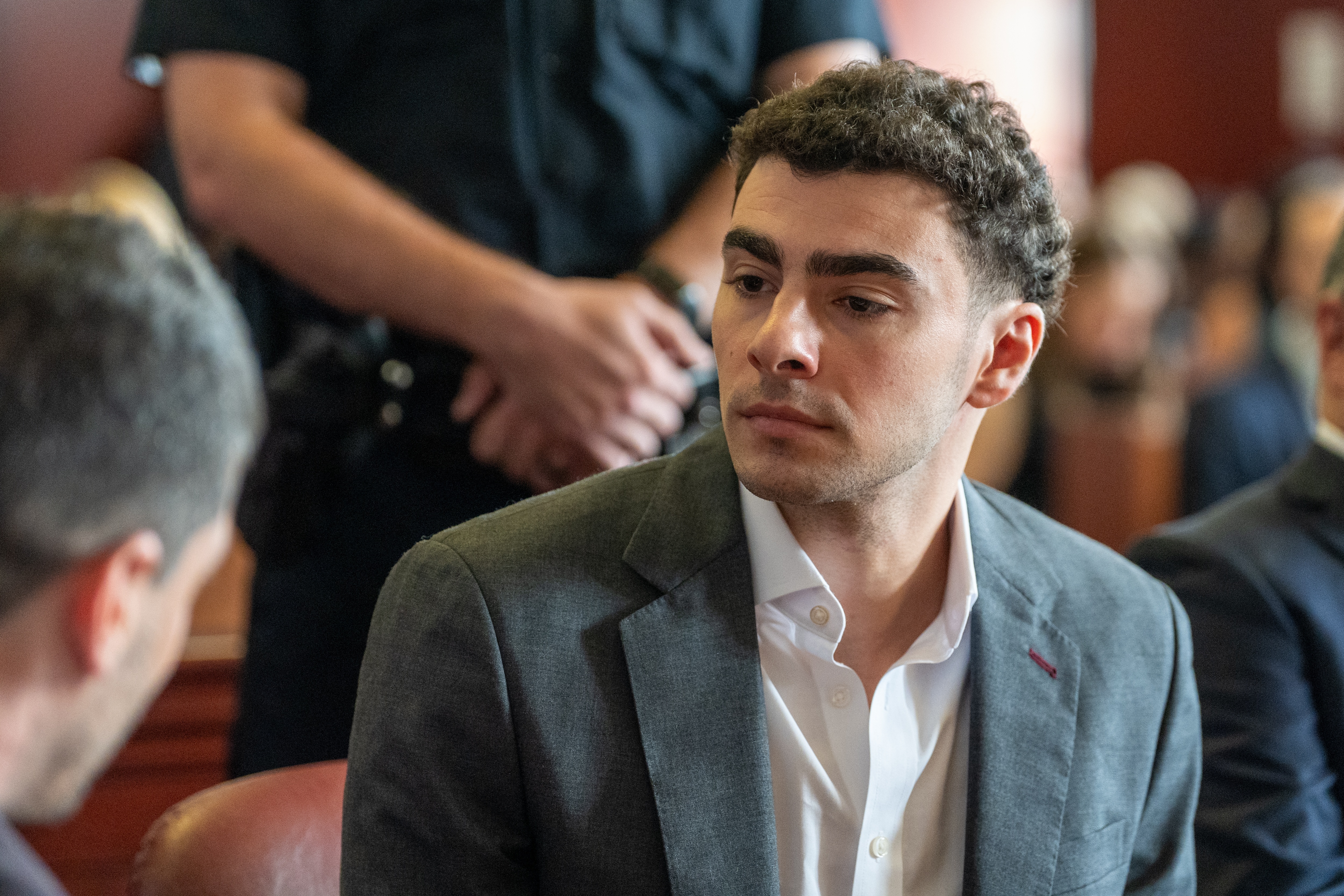
    NEW YORK — Luigi Mangione pleaded guilty on Friday to federal stalking charges in the killing of UnitedHealthcare CEO Brian Thompson, admitting matter-of-factly that he trailed the executive to an investor conference in 2024 and gunned him down on a New York City street.

    Mangione, 28, said he even used a ruse to glean information about the event, contacting the health insurance company ahead of time under the guise of being an investor at a multibillion-dollar firm.

    “On the morning of Dec. 4, 2024, I shot Mr. Thompson in Manhattan, and he died,” Mangione told the court as Thompson’s wife, Paulette, took several deep breaths and repeatedly wiped tears from her eyes. A supporter put an arm around the wife and held her tight.

    Mangione is set for sentencing Dec. 18. When U.S. District Judge Margaret M. Garnett asked whether he understood that he could spend the rest of his life in prison, Mangione answered neutrally: “Yes.”

    Mangione entered the plea at a hastily scheduled hearing in Manhattan federal court, resolving one of two cases against him in connection with Thompson’s death. Mangione’s lawyers could now seek to have his separate New York state murder case thrown out on double jeopardy grounds.

    Surveillance video of the ambush showed a masked gunman shooting Thompson, 50, from behind. Police say “delay,” “deny,” and “depose” were written on the ammunition, mimicking a phrase used to describe how insurers avoid paying claims. That detail — and revelations that Mangione’s private writings lambasted health insurers as greedy, according to authorities — made the case a fulcrum for debate about the industry and made Mangione a cause célèbre for some of its critics.

    Mangione told the court Friday that he pursued Thompson “after years of enduring severe pain from a broken back and navigating the obstacles of the health insurance system.”

    Mangione never was a UnitedHealthcare customer, according to police and the company. A University of Pennsylvania graduate from a wealthy Maryland family, he was arrested five days after the shooting, when he was spotted at a McDonald’s in Altoona, Pa. It’s about 230 miles west of Manhattan.

    Thompson led one of the United States’ largest health insurers, but he wasn’t well known outside the industry. Trained as an accountant, he had worked at parent company UnitedHealth Group Inc. for 20 years and became CEO of its insurance arm, UnitedHealthcare, in 2021. He and his wife had two sons, who were in high school when their father was killed.

    Both the federal and state cases could lead to a life prison sentence for Mangione. A federal judge earlier this year tossed out additional charges that could have exposed him to a potential death penalty.

    Mangione had complained about the prospect of two trials, telling a judge in February: “It’s the same trial twice. One plus one is two. Double jeopardy by any commonsense definition.”

    Under New York law, a state prosecution could potentially be barred if the federal case is resolved first.

    The state’s double jeopardy protections kick in if a jury has been sworn in a prior prosecution, such as a federal case, or if that prosecution ends in a guilty plea. Mangione’s cases involve different charges arising from the same course of conduct.

    In a letter last month, state prosecutors objected to the possibility of a guilty plea in the federal case wiping out the state case.

    Garnett has delivered some setbacks to the defense, including ruling in January that prosecutors could use items collected from Mangione’s backpack during his arrest as evidence against him.

    They included a 3D-printed pistol that investigators said matched the one used to kill Thompson and a notebook in which authorities say Mangione described his intent to kill an insurance executive.

    In June, Mangione’s lawyers said they would pursue a psychiatric defense in the state case but reversed course a day later. The defense, involving claims that he was suffering from extreme emotional disturbance at the time of the killing, isn’t allowed in federal court.