Tag: no-latest

  • Angry at the Supreme Court, liberals push a slew of plans for overhauling it

    Angry at the Supreme Court, liberals push a slew of plans for overhauling it

    One bill proposes increasing the number of Supreme Court justices from nine to 13. Another would cut their lifetime terms to 18 years. Others would create an enforceable ethics code and place standards on how the court rules from its relatively opaque “shadow docket.”

    The latest wave of proposals to overhaul the Supreme Court have reached something of a fever pitch over the past few months, as Democrats grow increasingly frustrated with the court’s rightward turn. While the court blocked several of President Donald Trump’s key initiatives this past term, it also delivered significant conservative victories that pared back the 1965 Voting Rights Act, loosened campaign finance rules, and increased presidential power.

    Democrats’ anger is fueled by a conviction that many of these rulings are more about politics than the law.

    “There’s constant and building dismay about the increasingly appalling record of the court,” Sen. Sheldon Whitehouse (D., R.I.), who recently introduced a term limits bill, said in an interview. “And I think the continuing interest in reform springs from continued dismay and concern about the court’s misbehavior.”

    The pitches coincide with record levels of disapproval of how the Supreme Court is doing its job, as well as perceptions that the justices are ruling based on their ideology — a viewpoint largely embraced by liberals, according to a July Washington Post-Ipsos poll.

    Those perceptions have only magnified as the justices have weighed in on issues that could directly affect the upcoming midterm elections. House Minority Leader Hakeem Jeffries (D., N.Y.) said Thursday that there are a “variety of different options that are on the table, and I think we can’t foreclose on any single one of them.”

    Conservatives dismiss the proposals as efforts by liberals to intimidate and undermine a court that is not ruling the way they want.

    “All of these ‘reforms’ are because the left doesn’t like the decisions coming out of the Court,” Mike Fragoso, a former chief counsel to Sen. Mitch McConnell (R., Ky.), said in an email. “The goal is to intimidate the Court into changing the course of decisions. It’s reprehensible.”

    Liberals concede that the measures cannot succeed without Democrats solidly in control of Congress, and even then, only if the filibuster is eliminated — otherwise any proposal would require 60 votes in the Senate, which is highly unlikely.

    Last month, Whitehouse and other Senate Democrats proposed a law that would limit justices’ terms to 18 years. Under that system, a president would nominate a justice every other year — a design intended to maintain a measure of ideological balance on the bench.

    Some advocates say specified terms also would lower the stakes of Supreme Court confirmation battles, since they would not be for lifetime appointments. These battles in recent years have become all-out, nasty, and often personal.

    “Even in a Congress like this one, where these bills have no chance of passage, it’s really important to file them and to stand by them, because they reassure people that there is in fact a mechanism by which the court could be restored to some degree of better order,” Whitehouse said.

    Democrats in 2020 also offered a flurry of plans to overhaul the Supreme Court, angered that Trump was able to name three justices thanks to maneuvering by McConnell, who at that time was the Senate majority leader.

    But President Joe Biden did not pursue those proposals. And the court’s solidified conservative majority has since overturned a string of precedents — including those guaranteeing the right to an abortion and upholding key parts of the Voting Rights Act — prompting fresh fury among liberals.

    Congressional Democrats have introduced about a dozen proposals in recent months for revamping the court.

    They call for expanding its size, requiring the justices to place certain assets into blind trusts, and creating standards for the court’s emergency docket, critically referred to as the “shadow docket.” In emergency docket cases, the justices have been criticized for ruling on consequential matters based on a limited record while offering relatively brief explanations for their decisions.

    Democrats outside the Beltway are also pitching court reform. Former Vice President Kamala Harris, whom some Democrats expect to run again for president in 2028, said at a recent event at that “we need to revisit” the notion of expanding the court to 13 justices.

    James Talarico, a Democrat running for U.S. Senate against Republican Ken Paxton, has called for an “overhaul” of the Supreme Court, including term limits and a binding code of conduct. In an interview with TheGrio, Talarico described the court’s recent rulings on civil rights, including a recent decision that weakened the Voting Rights Act, as a “five-alarm fire.”

    “Black Texans, Black Americans, have been ringing the alarm about the Supreme Court,” Talarico said. “And I think it’s time for all of us to realize the crisis that we face on the highest court in this country.”

    Tom Jipping, a senior fellow at Advancing American Freedom, an advocacy organization founded by former Vice President Mike Pence, argued that such criticisms only highlight Democrats’ fixation with results rather than the law, exposing their calls for reform as superficial.

    “They never say how the Supreme Court got it wrong on the law,” Jipping said. “The only the thing they do is mention the result and tack on a few bombastic pejoratives.”

    The court has regularly undergone periods of fierce scrutiny. Under Chief Justice Earl Warren in the 1950s and 1960s, conservatives complained bitterly that it was making up new liberal doctrines. Most notably, President Franklin D. Roosevelt, frustrated by the justices’ rejection of many elements of the New Deal, in 1937 proposed expanding the court, leading to pushback from Republicans as well as many fellow Democrats.

    Still, some academics say the current Supreme Court faces real problems unrelated to its ideological composition.

    The high court has turned into a political football in which justices on both sides are expected to vote along ideological lines on the most controversial issues, said Daniel Epps, a law professor at Washington University who has advocated for efforts to “depoliticize” the court.

    Gone are the days of the “swing” justices like Anthony M. Kennedy, Sandra Day O’Connor, and Lewis F. Powell Jr., all Republican-appointed justices whose votes were less predictable when it came to hot-button issues such as affirmative action, abortion, and LGBTQ+ rights, Epps noted.

    “This is the first time where you have a court where the ideology really maps onto partisan affiliation,” Epps said.

    Epps and Vanderbilt Law School professor Ganesh Sitaraman argued in a 2019 paper against popular proposals such as term limits and expanding the court’s size. They say both risk further politicizing the court.

    Instead, Epps and Sitaraman have suggested a “lottery” model, in which cases would be decided by panels of justices selected randomly from a pool — similar to the way federal appeals courts decide cases.

    They have also recommended a “balanced bench” structure, in which the court would be composed of an equal number of justices selected by Democrats and Republicans, with an additional judge selected from a lower court to break ties.

    Chief Justice John G. Roberts Jr. and his colleagues have repeatedly said they issue rulings based on the law, not their political biases. But critics argue that the growing perception, among liberals at least, that the court is politically driven risks hurting its credibility in a way that could be damaging for the long term.

    “The court only works as an institution if it is capable of deciding the hard cases in ways that seem credible to the country,” Epps said. “And if you have half the country that just sees the court as a partisan institution — and the court behaves in a way that seems largely consistent with that — half the country just can be like, ‘Screw these guys.’”


  • Trump backed away from a wall at Big Bend, but the bulldozers are there

    Trump backed away from a wall at Big Bend, but the bulldozers are there

    Texans were caught off-guard several months ago when the Trump administration appeared poised to construct a 30-foot wall through Big Bend National Park, a rugged expanse of moonlike desert that is a point of pride for many in the state.

    But after bipartisan opposition grew, the wall was removed from the federal government’s border construction map. Many exhaled, believing that the West Texas park, with its towering mountains and cliffs, would be spared.

    Then the bulldozers arrived this month.

    The sight of the earthmoving machines along the Rio Grande near the Santa Elena Canyon, one of the park’s major attractions, pointed to the most significant evidence of border barrier construction in the park. Contractors ripped through mesquite trees and brush and leveled the ground for more than 1 mile of what appeared to be a future roadway.

    Big Bend is beloved by Texans and many across the country, even those who are not among its more than 500,000 annual visitors. It is a place to feel the immense and inhospitable wilderness of West Texas, where the stars at night actually are big and bright.

    The construction sparked a fresh wave of anger and outrage from all sorts of people — environmentalists, former park officials, local sheriffs — who again insisted that such infrastructure was unnecessary in a border region so remote and dangerous that people have rarely tried to cross there, even at the peak of unauthorized migration.

    Both John Cornyn, the state’s outgoing Republican senator, and James Talarico, the Democrat running to replace him, expressed concern this month about the start of construction inside the park.

    “My constituents believe that the 1,000-foot riverbank cliffs and remote Big Bend terrain offers its own source of deterrence,” Cornyn said in a letter to Homeland Security Secretary Markwayne Mullin.

    Other Republican state leaders, including Gov. Greg Abbott and Attorney General Ken Paxton, who defeated Cornyn in the Senate primary, have not weighed in directly on the construction.

    On Friday, a local nonprofit and an outdoor recreation business represented by state Sen. Roland Gutierrez, a Democrat, filed a federal suit to try to halt the project. A day earlier, a bipartisan group of Texas legislators sent Abbott a letter urging him to ask federal officials to stop the construction.

    “It’s gotten to the point where people are picking up the torches and marching in the street right now,” said Tex Toler, a former tourism director for Marfa, Texas, northwest of the park. “This is one of Texas’ and the country’s last wild places.”

    After days of confusion among West Texas residents, senior Trump administration officials explained their plans and rationale Thursday. There would be no wall, but there would be construction.

    “CBP is building one new access road, improving existing roads, installing detection technology and placing vehicle barriers in limited, strategic locations,” Rodney Scott, the U.S. Customs and Border Protection commissioner, said in a statement.

    The park’s land sits along 118 miles of the U.S.-Mexico border, and a patrol road is slated to run along much of it. A few areas would have miles of 4- to 6-foot-tall vehicle barriers.

    The bulldozers and excavators have been engaged this month in “survey and design work,” Scott said.

    Fewer than six migrants a day have been encountered crossing from Mexico in recent months in the entire Big Bend patrol sector, which includes the park and hundreds of other miles of border, federal statistics show.

    Officials have said that while unauthorized crossings are currently at record lows, they could increase in the future.

    The Trump administration has been furiously building new border barriers, and Scott said the Big Bend construction was necessary to fill in gaps. Southwest Valley Constructors, one company currently at work in the region, was awarded a $1.7 billion contract. The company directed questions to federal officials.

    “We will not leave Big Bend as an opening for cartels to exploit by shifting their routes and tactics,” Scott said in the statement.

    Many of those who oppose a wall are also against building a patrol road. They include local sheriffs who have insisted that major border infrastructure projects are not necessary.

    “What security problem are we trying to solve?” Sheriff Thaddeus Cleveland of nearby Terrell County, a Republican and a former Border Patrol agent, wrote on social media. “Can the same security objective be accomplished more effectively another way?”

    On Wednesday, people gathered for a demonstration against the construction at the Santa Elena Canyon. Many carried signs protesting the construction — “Stop the Steel,” “No Wall” — or held handmade depictions of javelinas and other wildlife that could be affected by the construction along the river. Some feared the road plan would require building bridges and blasting along Mariscal Mountain, a remote peak.

    “There will be no coming back,” said Michael Ryan, a former Big Bend park ranger who attended the protest. “They’re taking taxpayer dollars to ruin this national park.”

    This article originally appeared in the New York Times.

  • The U.S. homeownership rate may not be as high as you think

    The U.S. homeownership rate may not be as high as you think

    Americans often think of homeownership as both a goal and a norm — after all, the U.S. homeownership rate is 65%, and as high as 75% in some states.

    But one Federal Reserve economist says that we’ve been measuring homeownership the wrong way and that U.S. adults are about as likely to rent or live in someone else’s home as they are to own their own.

    Erik Hembre says his work “should reframe the basic number we have in our head. I went from a baseline of about two-thirds of people own their homes and that’s just the way it’s always been, to: Well, it’s closer to half.”

    The difference in the standard numbers vs. Hembre’s numbers basically comes down to whether to count houses or people.

    The homeownership rate is generally given as the percentage of homes that are occupied by their owners. If there are 10 homes on a street and seven of them are owner-occupied while three are rented, that’s a 70% homeownership rate.

    Hembre, instead, came up with what he calls HPOP: the homeowners-to-population ratio. He counted up all Americans over 18 years of age, then looked at how many of them live in a home they own. The number is 53%.

    The reason Hembre’s homeownership rate is so much lower than the standard 65% national owner-occupancy rate is that many adults live in a home where the owner lives, but they aren’t the owners of the unit. If you’re living with a relative in the relative’s house or renting a room from a friend who owns the house, you don’t count as a homeowner in Hembre’s metric.

    Hembre attributed the difference to several causes. A small amount comes from roommates and from elderly parents who reside in their adult children’s homes; a bit more comes from other relatives such as siblings. The largest share by far is due to the high rate of adult children who live in their parents’ homes.

    “Younger households are becoming less likely to be homeowners. HPOP really makes that point more clear,” Hembre said.

    Overall, both HPOP and the owner-occupancy rate have fallen about 2% nationwide since 2006, but the patterns of who owns homes have changed. While adults in their 20s and 30s struggle to buy homes, the HPOP for people over 70 has risen five points since 2006, as elderly people remain in their own homes longer. “Those are kind of balancing each other out,” Hembre said.

    He also analyzed the HPOP of different groups, such as ethnic groups and married-vs.-single people. The differences indicate who is most likely to live in owner-occupied homes without being owners themselves. Married people have a 76.9% HPOP, not much lower than their 80.8% owner-occupancy rate. People who have never been married have a 17% HPOP, far below their 36.4% rate of living in owner-occupied homes. (Widowed, divorced, and separated people all fall somewhere in between.)

    For calculation purposes, Hembre treated both partners as the owners of a home if one partner owns it, for both married and unmarried couples.

    Michael Neal, a housing analyst at the Urban Institute, said Hembre’s measure avoids one of the pitfalls of standard metrics, which tend to lump everyone under the demographics of the person considered the head of household.

    “There are interracial couples where the head of household is not Black; we might be missing some families where there’s homeownership by a Black person. … Maybe there are two people who are two different age groups who are married,” Neal said. “In some cases, this can really matter for being accurate and providing accurate measures for policymaking.”

    States with expensive housing, such as Hawaii and California, tended to have the biggest differences between their owner-occupancy rates and their HPOPs.

    Dennis Shea, who leads the Bipartisan Policy Center’s housing program, found Hembre’s metric interesting but cautioned against discounting the standard measure of U.S. homeownership too much. Many of the non-homeowners tallied in HPOP, he noted, are people such as college students and nursing home patients who wouldn’t be expected to be homeowners.

    “I think it’s a useful new analytical approach that might provide insights about where people truly are in their economic journey,” Shea said. “I wouldn’t draw some drastic conclusion that somehow the true picture of homeownership in the United States has been radically changed by this new approach.”

    Hembre noted that the idea that only half of adults are homeowners doesn’t mean half will always be renters or guests in someone else’s home. “Between the ages of 18 and 70 or 80, most people do become homeowners at some point. This is about if they are at any given time.”

  • Letters to the Editor | Aug. 16, 2026

    Letters to the Editor | Aug. 16, 2026

    Legal equality

    In his recent column on the lawsuit settlement at Haverford College, Jonathan Zimmerman problematically champions the “Jerusalem Declaration on Antisemitism.” But I agree with those critics who argue that definition runs afoul of international human rights law, denying Jews equal protection of the legally binding International Covenants on Civil and Political Rights and Economic, Social and Cultural Rights, which both respect the right to collective national self-determination. Just like anti-Palestinian discrimination that denies Palestinians the right to self-determination is morally and legally indefensible, denying Jews and Israelis their equal and parallel right to self-determination and their collective identity is also a violation of international human rights law. To the extent that it entails discrimination on the basis of religion and ethnicity and Israeli nationality and origin, it also violates U.S. civil rights law, which colleges and universities are legally obligated to respect. We can simultaneously support free speech and freedom from discrimination, harassment, and abuse without excluding Jews and Israelis.

    Noam Schimmel, Albany, Calif.

    Physician’s perspective

    As a pediatrician, I pored over your article about how the Trump administration may be forcing immigrant parents to choose between green cards and benefits for their U.S.-born children.

    Fear is now a more effective deterrent to public benefits than eligibility rules ever were. That’s the reality facing mixed-status families under the revived public charge rule.

    As a physician, I don’t see immigration status in the exam room. I see a baby who needs her 2-month vaccines, a toddler whose growth curve is flattening, a child with asthma who needs a nebulizer covered by Medicaid. All of them happen to be U.S. citizens who are legally entitled to that care regardless of their parents’ immigration status. Yet, the U.S. Department of Homeland Security itself projects that more than 950,000 people will unenroll from or avoid these public benefits not because they are ineligible, but because they are afraid.

    No child should go without medical care because their family is afraid to ask for it. Our responsibility is to protect the children in front of us, not create policies that punish families for seeking essential care. When this rule takes effect on Sept. 18, its consequences will fall hardest on the very children we are entrusted to protect.

    Francisca Bermudez, Merion Station

    Join the conversation: Send letters to letters@inquirer.com. Limit length to 150 words and include home address and day and evening phone number. Letters run in The Inquirer six days a week on the editorial pages and online.

  • Dear Abby | Former spouse accused of murdering one of her offspring

    DEAR ABBY: I am writing for advice on how to be supportive of my adult children in light of an alleged crime committed by their mother. She was arrested for first-degree murder. The victim was my children’s younger half-sibling.

    I am especially challenged dealing with my daughter. She is supporting her mother in this. She says she has already lost a sibling and doesn’t want to lose her mother too. Their mother was always critical of psychotherapy. Not only did she doubt it, but she criticized anyone seeking mental health support. Abby, now she’s pleading not guilty by reason of insanity! How do I support and counsel my daughter?

    — MANAGING THE REPERCUSSIONS

    DEAR MANAGING: Women in their right minds do not kill their children. Sometimes people are critical of mental health care because they’re insecure about their own status. As upset as you are about this, your daughter has every right to support her mother through this tragedy if she wishes. The most effective way you can support your daughter would be to refrain from questioning her choice to be there for her mother.

    ** ** **

    DEAR ABBY: What are your thoughts about meeting another couple for lunch or dinner at a specific time only to find that they have already been seated and are enjoying appetizers? This has happened to us on numerous occasions, and, to us, it totally ruins the continuity of the meal together. We could understand it if we were late in arriving, but we’re not. This has happened with more than one couple.

    — FUMING IN TEXAS

    DEAR FUMING: Personally, I think what they did is rude. However, it’s one thing to be seated and chomp on a breadstick and quite another to be enjoying cocktails and calamari. It throws off the timing of the meal for the couple who arrive when they are supposed to. That said, when someone’s blood sugar level drops, they may not be at their best, so it might be better to get some food than stand on ceremony.

    ** ** **

    DEAR ABBY: I am a 48-year-old female who had to move in with my parents. It’s not working. I know I am messy and tend to procrastinate. The issue is my mother. She constantly goes into my room to snoop. She tells me I’m worthless and dumb. Last night, I was eating a pork chop, and she said I was using the wrong knife. She took my knife and gave me a butter knife! I lost my job, so moving out isn’t an option. But her comments and obvious disdain for me are not good for my self-esteem. Help!

    — TRAPPED IN LONG BEACH

    DEAR TRAPPED: This advice may seem to come from left field, but I’m suggesting that you talk to your doctor about your messiness, procrastination and job situation. There may be a medical explanation for these issues. If there is, proper treatment may make a world of difference. However, if your problem isn’t medical, your doctor can still refer you to a licensed family counselor who might help you coexist peacefully with your mom.

    As for moving out, it’s your best option in the long run. It’s true that you’re not ready now, but all your efforts must be focused on reaching that goal.

  • Horoscopes: Sunday, Aug. 16, 2026

    ARIES (March 21-April 19). When you try new things, you’re also trying a new you — the you who does pottery or archery. The you who explores Toronto. The you who strikes up the conversation with the interesting stranger. Today, you’ll show up bold.

    TAURUS (April 20-May 20). You’re working things out like a pro negotiator, seeking resolution, not conquest. You know when to hold your ground and when to let a small point go. By the end, everyone can shake hands and mean it.

    GEMINI (May 21-June 21). Events of the day have you low-key taking charge. You lead through observation. It’s so typical of you to notice what people are good at and call it out. People feel seen and valued. They give their best.

    CANCER (June 22-July 22). You’re still uncertain about what lies ahead, but even the most educated on the subject can’t predict the whole journey. Embark anyway with a half-full notebook, an educated guess and a willingness to learn through the next step.

    LEO (July 23-Aug. 22). You’ve been conserving your energy because you know yourself. You know that when the opportunity is right, you put everything into it, engaging every talent, coordinating every resource and working with unmatched intensity. These reserves fuel tomorrow’s full effort.

    VIRGO (Aug. 23-Sept. 22). You could minimize your energy and blend in, but this scene will get better if you decide to go the other way. Give them a taste of what you can do and stop before anyone could accuse you of showing off.

    LIBRA (Sept. 23-Oct. 23). You make a decision that’s all yours. You’d make the same choice regardless of who saw or what they thought because your approval is the one that counts here. Action feels liberating. Now you’re on your way.

    SCORPIO (Oct. 24-Nov. 21). Collaborations work best in threes today. One person solves the puzzle while another frames the picture. A third catches the missing piece. The finished result is marked by the fingerprints from every chair around the table.

    SAGITTARIUS (Nov. 22-Dec. 21). Listening well can be more challenging with your nearest and dearest because your mind assumes you already know the drill. Take a moment to direct yourself to drop assumptions and pretend this is the first time you’re hearing it.

    CAPRICORN (Dec. 22-Jan. 19). Talent helps, but effort is more necessary. Some would say that the drive to put in the work is the talent. Today, you feel lucky you’ve found endeavors you love enough to keep coming back time after time.

    AQUARIUS (Jan. 20-Feb. 18). You don’t have to know someone a long time to be connected in a moment. Fast friends can be good friends. Sometimes, all it takes is one conversation that picks up where another lifetime might have left off.

    PISCES (Feb. 19-March 20). Your responsibilities will be many and your helpers few. But there’s a kind of peace in working solo. You make up your own little tricks as you maneuver in the manner most comfortable to you. And your mind wanders in pleasant ways through the repetitive parts.

    TODAY’S BIRTHDAY (Aug. 16). This is the Year of Passion’s Blaze. You’ll hold out for the truly inspiring projects, people and purposes. When things start to feel too familiar or more like work, you’ll push through, finish what you started and feel passion at a whole new level. More highlights: You’re noble and fair, yet still in it to win it, which your earnings reflect. Small lifestyle tweaks produce outsized results. You’ll be lucky in love. Pisces and Aries adore you. Your lucky numbers are: 12, 25, 37, 8 and 46.

  • Indiana authorities say at least 5 people have died in flooding across the state

    Indiana authorities say at least 5 people have died in flooding across the state

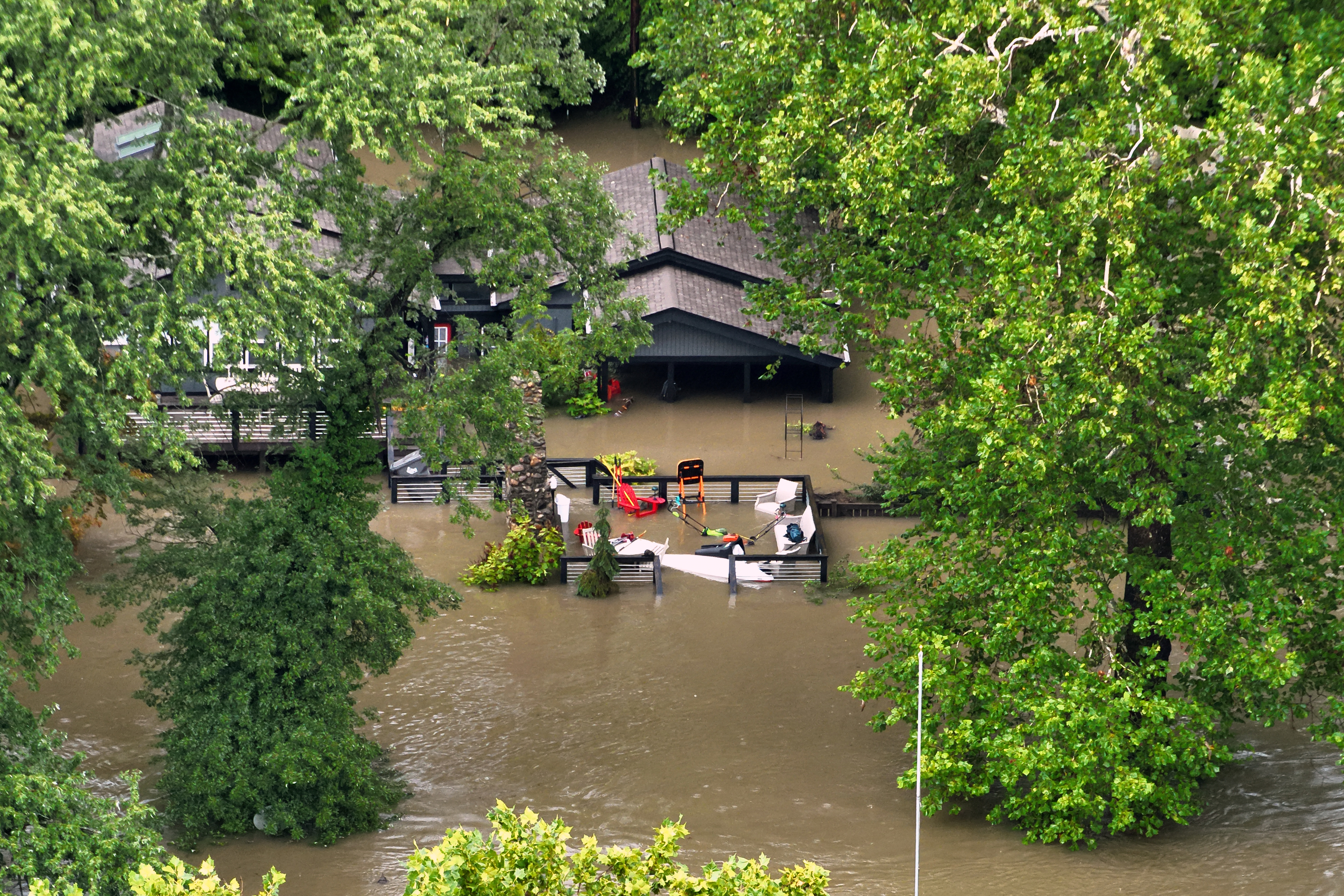
    Indiana authorities say at least five people have died in flooding across the state this week, as first responders worked to rescue more people Saturday from rising waters in neighborhoods along the White River in Indianapolis.

    The state has been hammered over the past week by heavy rains, resulting in rivers and creeks surging.

    More than 90 people and their pets were rescued Saturday as floodwaters rose along the White River in Indianapolis and authorities in central Indiana responded to what many described as historic flooding.

    The damage so far was concentrated along the river corridor from Hamilton County and into the northern Indianapolis suburbs. Farther east in Delaware County, sheriff deputies on Friday found the body of a 58-year-old woman who they believe died after trying to drive through floodwaters.

    Gov. Mike Braun confirmed Saturday that President Donald Trump intends to approve his request for federal resources to help in response to the flooding and the recovery.

    Braun said his heart is with the families who have lost loved ones due to the flooding over the past week. He also warned people to take the flooding seriously and stay away from floodwaters.

    Indianapolis Mayor Joe Hogsett was joined by emergency managers during a briefing Saturday as he urged residents along the river to evacuate. A day earlier, he had declared a local emergency as heavy rains resulted in creeks and streams swelling throughout central Indiana.

    “This is one of those once-in-a-lifetime type floods,” Jacob Spence, director of Marion County Emergency Management, told the Associated Press. “So yeah, this is an unprecedented event and unfortunately we’re setting some new records.”

    The National Weather Service reported that more than 11 inches of rain fell over a two-day period in some areas. The White River crested at more than 24 feet in the communities of Anderson and Noblesville, surpassing records set in 1913.

    Flash-flood warnings and watches were issued across a swath of central Indiana on Saturday, and forecasters with the National Weather Service warned that more showers and thunderstorms would be moving into the area throughout the day. In Warren County, forecasters reported 2 inches of rain falling in six hours.

    Forecasters expected the White River to crest Saturday evening in the Indianapolis area, where National Guard vehicles were among those helping with the rescue efforts. Rita Reith, a spokesperson with the Indianapolis Fire Department, put the number of rescues at 91 people and 45 pets as of early afternoon.

    “The water is still rising, so heed the warnings,” said Todd Wilson, director of the city’s public works department.

    Residents posted videos on social media that showed vehicles stranded in high water, a power pole being toppled by rushing water, and flooded intersections.

    Earlier this week, severe storms wreaked havoc across other parts of the Midwest, causing tornadoes, heavy rains, and flash flooding. Storm damage was reported from the Chicago area all the way to western Pennsylvania.

  • Democrats’ 2028 presidential calendar gives Black and Latino voters and union members an early say

    Democrats’ 2028 presidential calendar gives Black and Latino voters and union members an early say

    AUSTIN, Texas — Democrats seeking the party’s presidential nomination in 2028 will need to prove themselves early on in states where Black and Latino voters and union members are key supporters, under an election-year calendar approved Saturday.

    The primary lineup pushes Iowa from the traditional top spot and makes South Carolina the leadoff state, voting on Jan. 22, 2028, followed by Nevada on Feb. 1. New Hampshire, New Mexico, Michigan, and Virginia round out the early states throughout February, according to the plan endorsed by the Democratic National Committee at its meeting in Texas.

    DNC Chairperson Ken Martin said that to win the general election, “You have to be battle-tested in a way that you already have campaigned in front of and for the support of various communities throughout the country.” That is why the calendar designed by the party matters, he said in an interview.

    Some potential candidates in what is expected to be a large field have visited early-voting states such as South Carolina. Party leaders have said the order gives candidates the best shot at winning back the White House after Republican President Donald Trump’s second term.

    “They have to show that they can go to the South and talk to Black voters and rural voters, as well as out West, talking ranching and mining issues, to a border state, to union members,” said party strategist Karen Finney, who has worked on multiple presidential campaigns. “Whoever survives will be battle-tested.”

    Former presidential candidate Howard Dean, a onetime Vermont governor, recalled his tenure as national party chairperson, when Democrats solidified Nevada and South Carolina as early states behind Iowa and New Hampshire. The latest change is even better, he said.

    “These states look more like the country” as a whole, he said, “whereas Iowa and New Hampshire don’t.”

    Rita Hart, chairperson of the Iowa Democratic Party, said bypassing her state in the early going would sideline important voter voices and give a political edge to Republicans, who are expected to keep Iowa atop their calendar.

    Nonwhite voters claim top billing

    As the first-in-the-South primary, South Carolina was more decisive than Iowa and New Hampshire for nominees Barack Obama in 2008, Hillary Clinton in 2016, and Joe Biden in 2020. All three dominated among South Carolina’s large Black population, which can yield more than half the state’s Democratic primary electorate.

    With Nevada and New Mexico following, candidates will be required to court more Latino voters early in the process.

    Shifting from Iowa and New Hampshire does not mean little-known candidates cannot catch fire, as Pete Buttigieg did in Iowa and New Hampshire in 2020, when he was a 37-year-old former mayor. They just will not be able to do it with an almost entirely white audience.

    “If you can’t go to every part of this country and make your case, you should not be running for president,” Finney said.

    The progressive vs. establishment dynamics may shift

    There is disagreement over how Democrats’ split between progressives and mainstream liberals may or may not surface in the nominating calendar.

    “I think our primary voters up north are probably a little different than primary voters in South Carolina,” said Boyd Brown, a former DNC member from South Carolina. “It’s not the woke ideologies that we just can’t get away from” in other places.

    Nina Smith, a former Buttigieg adviser who now works closely with progressive causes, disagreed. Smith said Black South Carolinians, especially, have gravitated to more moderate candidates — twice rejecting Vermont Sen. Bernie Sanders in favor of Clinton and Biden.

    But, she said, “Southern Black voters are more progressive than they’re given credit for” on policy but also “realists” about what is possible.

    “Living through Jim Crow and other oppressive structures will force you to be take that approach,” she said.

    Smith said that with South Carolina leading off and many Southern states following on Super Tuesday soon after the early lineup concludes, progressives will have to take the time to listen and then tailor their messages.

    “A lot of Black voters don’t necessarily see themselves in the ideas and arguments that progressives put forward,” she said.

    Unions will get a spotlight in the early-voting states

    Nevada has the service industry unions because of Las Vegas; Michigan has the auto industry and associated manufacturing support industries; Virginia is home to more federal workers than any other state.

    “Labor is still so important,” Dean said.

    Beyond seeking the backing of organized labor, the campaigns and the party will look to unions for help in spreading Democrats’ message to voters and getting people to the polls.

    More scheduling efficiency for candidates

    Campaigns struggle to balance many demands such as meeting voters in person, raising money, and dealing with the logistics of travel. As a result, places such as Nevada have gotten short shrift in the past because candidates, most from the eastern part of the country, have concluded the investment of time is not worth it.

    An expanded calendar offers more clustering opportunities.

    A swing to the West could hit two early states — Nevada and New Mexico — and include a fundraising stop in California, full of Democratic donors. A South Carolina trip could mean fundraisers and public appearances in Atlanta, Charlotte, and Raleigh, both in North Carolina. Virginia offers proximity to donors and national TV studios in Washington; the same options are available by adding a New York City stop on the way to New Hampshire.

    Bre Maxwell is a DNC member from South Carolina who said the state’s smaller size and lower media costs are a financial equalizer, allowing not only the best-funded candidates to have an impact.

    “They can campaign from the top to the bottom in a day,” Maxwell said.

    It’s about primaries, with a clear look to November

    Of the six early states, all but South Carolina have been competitive in general elections.

    That means that even before Super Tuesday, the Democratic candidates will have spent significant time and resources in states worth a combined 43 Electoral College votes. That is not insignificant on the way to the 270 needed to win.

    Television ads and news coverage can spill over, as well. Markets targeting parts of South Carolina also reach portions of North Carolina and Georgia.

    After all, Brown said, the point is to put a Democrat in the White House.

    “This is not a social or a debate club. It is a political party,” he said.

  • Entrenched, embattled, and defiant, the Taliban celebrate 5 years in power

    Entrenched, embattled, and defiant, the Taliban celebrate 5 years in power

    The black and white flags of the Taliban were flying high along the streets of Kabul, Afghanistan’s capital, as the group celebrated five years in power on Saturday.

    A shiny Mercedes drifted in front of graffiti praising the Taliban fighters’ “sacrifice,” the word painted in crimson, with depictions of drops of blood. Young Afghans chanted independence songs below posters hailing how “the carpet of democracy” had been removed for Islamic rule.

    But the triumphant tone is only half the story. The Taliban may be boisterous in Kabul and have a tight grip on power, yet elsewhere they find themselves targeted and face crises both at home and abroad.

    They face a conflict just short of open war with neighboring Pakistan. They’re dealing with new waves of attacks from armed groups that want to topple them. Add to that mass unemployment, international isolation, and growing domestic discontent, and the Taliban face their most serious threats since their return to power in 2021.

    It is too early to tell whether all those challenges will escalate and threaten their survival as a governing force. And as the scenes of celebration on Saturday showed, the Taliban are popular among many.

    Still, the threats they face have cracked the veneer of security and stability that the Taliban have heralded as their primary achievement — and their main selling point to the world.

    As workers were preparing Kabul for celebrations Thursday, a resistance group claimed responsibility for the killing of the Taliban mayor of a provincial capital in northern Afghanistan. Two weeks earlier, another Taliban official had been assassinated in the same province.

    A tight grip on power — and yet

    The Taliban are holding Afghan society in a chokehold that spares no one. Girls and women face restrictions to a degree unseen anywhere else in the world. Religious minorities are witnessing the forced closure of their places of worship. Anyone who voices criticism is repressed. United Nations staff members face arrests; journalists and rights workers suffer forced disappearances.

    The Taliban are collecting taxes and building roads, dams, and canals. European countries have welcomed them in Brussels to facilitate the deportation of Afghan migrants and asylum seekers. They have expanded trade ties with Central Asian states and want the Trump administration to come back to Afghanistan.

    Whenever a sign of dissent emerges in a province, the country’s secretive and ultraconservative leader, Sheikh Haibatullah Akhundzada, places a key ally in a leadership position to keep things in check.

    And yet the signs of trouble that have appeared in recent months are impossible to ignore.

    Troubles in the North

    Sporadic sounds of gunfire reverberated across the remote mountains of northeastern Afghanistan on a recent evening. Weary Taliban fighters peppered drivers with questions at checkpoints dotting the main road snaking through the province of Badakhshan.

    On the same road, two attackers had killed a senior provincial Talib official a week earlier. A small group of anti-Taliban fighters had briefly seized control of a police headquarters in a nearby district.

    Now fighting between the Taliban and another group opposing their rule was continuing in another district of Badakhshan. The province, bordering China, Pakistan and Tajikistan, is emerging as a hot spot.

    On a trip to the province this month, we talked to residents ready to support anti-Taliban groups because they said they were fed up with the Taliban’s iron grip, the lack of job opportunities, and the government’s confiscation of natural resources.

    We drove through dozens of checkpoints and witnessed the heavy presence of intelligence officers in the isolated village where anti-Taliban fighters had stormed police headquarters.

    The clashes and the attacks have so far been scattered. The leader of one of the anti-Taliban groups described them as “opportunity targets” aimed at challenging the Taliban’s sense of control. But the leader, speaking on condition of anonymity to discuss the group’s strategy, said the number of attacks would only increase in coming months.

    Tensions in the East

    An underequipped Afghan army waits nervously at the border with Pakistan. Once a sponsor of the Taliban, Pakistan has launched dozens of airstrikes on Afghanistan, killing 500 civilians since October, according to the United Nations, and has threatened to use even more force if the Taliban don’t rein in militants who are staging attacks on Pakistani territory.

    The mistrust goes both ways: The Taliban have accused Pakistan of supporting the armed groups that have attacked Taliban outposts in Badakhshan.

    Whether, or to what extent, Pakistan is actively supporting anti-Taliban groups is not clear, but suspicions are running high.

    “The Pakistanis are happy to be portrayed now as a potential patron for the armed opposition to the Taliban, because that increases their leverage over the group,” said Fabrizio Foschini, a researcher at the Afghanistan Analysts Network.

    Food, education, and the economy

    The picture on the domestic front is also grim. Extreme hunger has been spreading fast from one province to another after aid cuts last year plunged millions into deeper food insecurity. The Taliban’s ban on secondary and university education for women and girls is stifling development, experts say.

    The Taliban have deprived 2.4 million Afghan girls of an education, according to UNESCO — the equivalent of all school-age girls in New York, Mexico City, and Moscow combined — and they are forced to stay home indefinitely.

    Some scattered signs of discontent have popped up. At a rare protest in June, demonstrators chanted “Work, education, freedom,” similar to what their Iranian neighbors chanted in 2022. And the leader of a large religious minority warned the Taliban in May: Don’t squeeze Afghan society too much, or it will explode.

    The potential to spiral?

    The Taliban know the world wants a stable Afghanistan — one that isn’t a source of refugees, drugs, or terrorism.

    They assert that the country no longer poses a security threat to the region or the West. They say that they have cracked down on the Islamic State militant group, and that they want peaceful relations, based on trade and diplomacy, including with the U.S.

    Since the Taliban no longer carry out suicide attacks, bomb schools, or target the security forces they now represent, their main argument may hold.

    “The greatest achievement we have had over the past five years is security,” Afghanistan’s foreign minister, Amir Khan Muttaqi, said in an interview with the New York Times in Kabul on Wednesday.

    They don’t want their various crises to spiral either.

    All the ingredients for things to get out of control in Afghanistan again are here, analysts say: A vast population of unemployed young Afghans are fertile ground for radicalization, especially as economic opportunities are nearly nonexistent. And with animosity growing between Pakistan and Afghanistan, it is unclear who might come to the Taliban’s aid: Afghanistan is, once again, a pariah state, with barely any allies.

    The past five years have brought some predictability and an end to almost two decades of fighting, which many Afghans have welcomed, despite the immense hardship and repression. But the country remains shattered, and the fragile peace is already at risk.

    This article originally appeared in the New York Times.

  • Navy weighs major warship redesign to match Trump’s preferences

    Navy weighs major warship redesign to match Trump’s preferences

    The U.S. Navy is considering a major redesign of its new aircraft carriers to better match President Donald Trump’s preferred aesthetic for the warships, according to seven current and former U.S. officials familiar with the matter.

    The service is evaluating the feasibility of moving the multistory tower that acts as the carrier’s command center farther forward, toward the middle of the ship, to resemble older vessels, the officials said. The review, which has not been previously reported, is in response to Trump’s concerns about the “look” of the new Ford-class ships, where the tower is near the rear, these people said.

    The timing and extent of the Navy’s evaluation is unclear, with current and former officials cautioning that the service was concerned that such a change would require significant time and money. Like others, they spoke on the condition of anonymity to discuss a sensitive situation.

    Moving that command center, known as the “island,” would be the second major design change prompted by the president, who on Thursday issued a national security memorandum directing the Navy to develop a plan to revert to older steam-powered catapults on future carriers. The systems help launch jets off the ships’ flight decks.

    Trump’s preference, current and former officials said, is for the new aircraft carriers to look more like those that were in service during World War II.

    The Navy also examined the issue during his first term as president, said a former senior U.S. official. A study found that moving the island could cost billions of dollars in redesign costs and significantly delay the program, this person said.

    “It came back that the cost and time to do so would just be extraordinary,” the former official said.

    There are three Ford-class carriers in various stages of development. The USS John F. Kennedy is undergoing sea trials and getting closer to joining the fleet while the USS Enterprise and USS Doris Miller are under construction. The first carrier in the class, USS Gerald R. Ford, is already in service and recently finished a lengthy combat tour in the Middle East.

    Plans call for building up to 10 Ford-class carriers over the next four decades, at a projected future cost of $22 billion each, according to the nonpartisan Congressional Budget Office and the Navy’s most recent shipbuilding plan.

    Relocating the island would be “a major redesign,” said Bryan Clark, a former Navy officer who studies the service at the Hudson Institute, a right-leaning think tank in Washington. Such an alteration to the carrier’s layout, he said, would affect the ship’s buoyancy and weight and come at a significant cost.

    “You could change it,” he added, “but it’s very disruptive.”

    The Pentagon and the Navy referred requests for comment to the White House, which pointed to the new national security memorandum when asked about Trump’s desire to relocate the island on future Ford-class aircraft carriers. The memorandum does not address the issue.

    Another U.S. official familiar with both the potential changes to the catapult and the island said that the Navy is taking both matters seriously because of the delays and severe cost overruns they could create.

    Trump’s interest in the redesign modification marks the White House’s growing influence over the complex mechanics of naval shipbuilding.

    Since returning to office, Trump has promised to “resurrect” the lagging industry, and he has already issued multiple executive orders addressing the matter.

    Thursday’s national security memorandum would, among other changes, revert the Ford class’ advanced electromagnetic catapult system to steam power. The document emphasizes the administration’s preference for “proven, reliable,, and affordable technologies and ship designs.”

    Such a change, multiple officials said, also could run into the billions of dollars and exacerbate chronic delays in the U.S. shipbuilding industry.

    The lead Ford-class carrier, the USS Gerald R. Ford, required 17 years to construct. Its design incorporated new technology that led to delays — including the electromagnetic catapult, a feature the Navy has since credited as being highly effective.

    The Ford class of carriers will phase out its predecessor, the Nimitz class, which dates back to the late 1960s.

    Relocating the island to the back of the newer vessels was done for efficiency and safety, three U.S. current and former officials familiar with the program told the Post. It not only creates more parking space for aircraft close to the carriers’ catapults, allowing crews to reduce the amount of time it takes to launch jets, it also improves landing safety by reducing the chance for turbulence when planes come back to land, the officials said.

    The Navy’s surface fleet has been plagued by years of delayed maintenance and low readiness rates, in part because of how often past U.S. administrations have deployed carriers to confront global crises.

    Amid the ongoing Iran war, the Pentagon under Trump has further stretched the readiness of its carrier fleet while surging naval assets to the Middle East to conduct strikes and enforce a blockade of Iranian ports.

    The USS Ford itself faced an extended deployment that ended earlier this year after a fire rendered many crew members’ sleeping quarters uninhabitable. Officials also acknowledged that the Navy’s newest carrier experienced problems with the “vacuum collection, holding, and transfer” system that supports hundreds of toilets on board.

    Democratic lawmakers this week called on Defense Secretary Pete Hegseth to investigate new reports of rapidly worsening conditions aboard the USS Abraham Lincoln, which has been deployed to the Middle East since November. Families of sailors aboard the Lincoln have been outspoken about the situation, and the Navy is investigating a man-overboard incident it says may be connected to mental health issues.

    While speaking to reporters on a trip to Panama on Thursday, Hegseth called the reports “completely misrepresented.”

    On Friday, as questions continued to swirl around conditions on the ship and its lengthy deployment, Trump told reporters at Joint Base Andrews that the Lincoln’s time at sea had been “not nearly long enough.”

    The Lincoln is on an extended combat deployment that has seen its sailors at sea for 200 days without a port call to provide the crew some rest. It is scheduled to be relieved by the USS George Washington in the coming weeks.

    Trump has repeatedly shown interest in the design of Navy warships. Last year he unveiled plans for a new class of battleships to lead his vision for a Golden Fleet, prompting criticism from many naval analysts and lawmakers who argued the ships would waste scarce American shipbuilding power on a design the service does not need.

    The Congressional Budget Office has since estimated that the Trump Class battleships would cost about $275 billion over 30 years, coming at a cost of $18 billion per ship after finishing the first one.