Tag: no-latest

  • Dear Abby | Struggling daughter seems uninterested in helping herself

    DEAR ABBY: I am the single mom of a 19-year-old daughter who copes with bipolar 2, ADHD, anxiety and depression. She has a mental age that’s younger than her adult self. Over the years, she has gone through therapy and changes in medication.

    It has been recommended that my daughter attend a residential therapy program, but she refuses. Since finishing high school, she has refused everything: college classes, job applications, exploring other therapies or taking any small steps toward independence in the future.

    Her goals now center around socializing and smoking marijuana with a few friends. She rarely leaves her room except when they call. There are days I doubt she’s med compliant or wants the help others try to give.

    It’s heartbreaking watching her being “stuck,” but I am also tired of being held hostage to her behavior and actions. Many days I want to pack up her stuff and tell myself she’ll figure things out. (I would continue to be here when she needs me.) Is this fair given her mental health challenges? Because she is at risk, I feel like anything I do is wrong.

    — BURNED-OUT MOM IN COLORADO

    DEAR MOM: I know of few people who, if given the choice, wouldn’t like life to be a constant party. You may need the services of a licensed psychotherapist to decide what to do to help your daughter. It’s apparent to me that unless there are consequences for her unwillingness to help herself, nothing will change and she will continue floating on a cloud of cannabis in perpetuity.

    I suggest you make her continuing to live with you contingent upon her participation in the program that will help her gain some independence. If you need more guidance about this, contact NAMI — the National Alliance on Mental Illness. It’s the nation’s largest mental health organization, dedicated to building better lives for the millions of Americans affected by mental illness. You will find more information about it at nami.org.

    ** ** **

    DEAR ABBY: My mother died five years ago, and my stepfather passed away a month ago. Both were cremated with no service, no obituary and no celebration of life. My parents’ wish was to be placed together at their home.

    I asked my brother, stepsister and stepbrother if I could have a small amount of their ashes to place in a small urn or a piece of memorial jewelry. My stepbrother is fine with my request; the other two are appalled.

    I am the oldest, but my stepfather gave my brother power of attorney. I think this authority has gone to his head, as he tells us he is the boss. Was it wrong to request some of my parents’ ashes?

    — GRIEVING DAUGHTER

    DEAR GRIEVING DAUGHTER: Please accept my condolences for the loss of your parents. Of course your request was not wrong or even unusual. Families often divide a loved one’s ashes just as you described. If your brother continues to ignore your appeals as a grieving sibling, you must decide whether this is important enough to bring a lawyer into the discussion.

  • U.S. Rep. Ro Khanna says he was detained by Israeli military and settlers in the West Bank

    U.S. Rep. Ro Khanna says he was detained by Israeli military and settlers in the West Bank

    U.S. Rep. Ro Khanna said Saturday that he was detained by settlers and the Israeli military in the occupied West Bank and released only after calls to the American Embassy in Jerusalem. The Israeli Defense Forces denied detaining any visitors in the incident, the latest example of escalating political tensions involving Israel and its ally’s Democratic Party.

    A representative for Khanna, a California Democrat who is an outspoken progressive, said the confrontation occurred Wednesday in the middle of a three-day tour of the West Bank. As the congressman visited a Palestinian village that had been abandoned after settler attacks, masked men with guns stopped his group and refused to let them leave.

    The New York Times said the incident was witnessed by one of its photographers. Khanna’s office said it occurred in the town of Khirbet Zanuta.

    Khanna said that when Israeli soldiers arrived he was dispirited to see them interact in a friendly manner with their captors and also block the exit for the congressman’s party. Not until the U.S. Embassy and Israeli police were called was Khanna’s group allowed to proceed.

    “If this can happen to an American member of Congress, imagine what life is like for Palestinians who have no smartphones, no security, and no national platform,” Khanna, who is exploring a presidential bid in 2028, said in a fundraising email he sent out shortly after his post Saturday about the incident.

    In a statement, the IDF said it received a report of Israeli citizens blocking foreign nationals and media in Khirbet Zanuta.

    “Upon receiving the report, IDF troops were dispatched to the scene, quickly dispersed the Israeli civilians, and reopened the blocked road,” the military said in a statement. “The IDF soldiers operating in the area did not take part in blocking the road.”

    Democratic politicians from the United States have stepped up their criticism of Israel amid a sharp turn against the country by the party’s voters. This week, former Chicago Mayor Rahm Emanuel, whose father was born in Jerusalem and fought in Israel’s war of independence, gave a blistering speech in Tel Aviv in which he said Israel has become a “territorial pariah.” Emanuel also is a potential White House contender.

    In a recent survey by the Associated Press-NORC Center for Public Affairs Research, about 58% of Democrats said the U.S. is “too supportive” of Israelis.

    Also Saturday, the Israeli military said it detained four suspects who were attacking foreign journalists traveling to Sinjil, another West Bank community. The assailants blocked the journalists’ vehicle and damaged it and were armed with clubs and knives, according to the military’s statement.

    CNN reported that it had a team among the journalists who were attacked. The network said the journalists were there to cover the one-year anniversary of the killing of a Palestinian-American man who was beaten to death by Israeli settlers.

  • Trump tried to block Canada’s bridge to Detroit from opening, but it will open anyway

    Trump tried to block Canada’s bridge to Detroit from opening, but it will open anyway

    OTTAWA, Ontario — Despite the best efforts of President Donald Trump, the Gordie Howe International Bridge spanning Detroit and Windsor, Ontario, will open on July 27, the government of Canada announced on Friday evening.

    The soaring 6.4 billion Canadian-dollar ($4.5 billion) structure has reshaped the skylines of the two border cities, between which roughly $300 million in trade flows each day. It is also precisely the kind of large infrastructure project Prime Minister Mark Carney has championed as a bulwark against the economic damage caused by Trump’s trade war with Canada.

    Two senior officials in the United States said the two countries reached a deal on Thursday about how tolls would be distributed, allowing the bridge to finally open.

    The bridge was largely finished early this year, nearly 13 years after Canada and Michigan signed an agreement that allowed construction to begin — a timeline stretched by pandemic-related delays.

    In February, Trump said in a rambling social media post that he intended to block the bridge’s opening. A ceremony scheduled for early June was called off after invitations had already gone out, and the Trump administration spent the months that followed his first post offering shifting explanations for the president’s opposition.

    Trump’s initial post came hours after Matthew Moroun, the billionaire scion of the family that has owned the Ambassador Bridge upstream from the Gordie Howe Bridge since 1979, met in Washington with Commerce Secretary Howard Lutnick, the New York Times reported. Less than a month before that meeting, Moroun had donated $1 million to a super political action committee supporting the president.

    Trump’s early objections included a desire to punish Canada for what he described as its exploitation of the American economy and its renewed trade ties with China. He also falsely claimed that no American workers or steel had been used in the bridge’s construction.

    Then Pete Hoekstra, the United States ambassador to Canada, indicated that the Trump administration was upset about the toll arrangement worked out by Canada and Michigan in 2012.

    Canada bore the full cost of construction, and the bridge is jointly owned by Canada and Michigan. Under the original agreement, once tolls recover the construction costs, perhaps 50 years from now, the two governments would split any revenue not needed for maintenance and operations.

    Hoekstra, who also falsely claimed that it was a “hoax” that Canada paid for the bridge, later suggested that the United States was looking for a way for Michigan to see revenue from the bridge sooner.

    Under the new agreement, the Canadian official said, half of the tolls will go into a regional economic development fund for the first 15 years of operation. A U.S. official said the money will be collected by the United States government and the development fund will only be available to Americans. The United States will also have to approve toll increases beyond 10%, a U.S. official said. Previously, tolls were to be managed by an authority composed of representatives of Canada and Michigan.

    Michigan’s government was initially cool to the federal intervention on tolls, though its position has since softened.

    “It’s good for Michigan workers and it’s good for Michigan’s auto industry,” Stacey LaRouche, the press secretary for Gov. Gretchen Whitmer, said in a statement last month. “This project has been a tremendous example of bipartisan and international cooperation.”

    On Friday, Whitmer welcomed the end of the saga.

    “The Gordie Howe International Bridge has always been a great deal for our state,” she said in a statement. “I’m proud to have fought for its opening and congratulate my partners who have worked on this issue alongside me for years.”

    The Morouns, who made their fortune largely through trucking before expanding into real estate, have long been unpopular on both sides of the border. In Detroit, many of their decaying landmark properties became unwelcome symbols of the city’s struggles.

    In Windsor, the Ambassador Bridge is a notoriously bad neighbor. At times, poor maintenance caused pieces of the bridge to crash to the ground. The bridge company further tarnished its reputation when it bought a swath of a neighborhood in preparation for its unfulfilled new bridge. The houses were boarded up and left to rot.

    For a critical trade crossing, the Ambassador Bridge is oddly disconnected from expressways. The long lines of trucks traveling to and from it are forced into a gear-griding slog along a city road lined with traffic lights.

    Fare hikes on the Ambassador Bridge have prompted large numbers of commercial drivers to detour and cross on a Canadian government-owned bridge about 100 miles to the north between Port Huron, Mich., and Sarnia, Ontario.

    This article originally appeared in the New York Times.

  • Trump, ending decades of protection, opens wild habitats to drilling and mining

    Trump, ending decades of protection, opens wild habitats to drilling and mining

    The Trump administration on Friday moved to open the habitats of imperiled animals to farming, drilling, mining, real estate development, and other activities in what environmentalists characterized as the most severe erosion of protections for wildlife in half a century.

    It did so by recasting a single word: “harm.”

    For more than 50 years, the federal government has used a broader definition of harm to animals under the Endangered Species Act, a bedrock environmental law. It included any significant “modification or degradation” of habitat that kills or injures animals by impairing their ability to eat, shelter, or breed.

    The Supreme Court upheld this interpretation in 1995, ruling against property owners who argued that harm should only mean directly killing or injuring an endangered animal.

    But on Friday, the Interior Department and the Commerce Department announced a final rule that rescinded this long-standing interpretation. Under the rule, destroying an endangered species’ nest or habitat would no longer be considered illegal.

    The change could open the door for fossil fuel companies, agricultural interests, land developers, and others to disturb or destroy the habitats of vulnerable species. Many species are already running out of places to live, and the new rule is likely to add extreme pressure, experts said.

    Earthjustice, an environmental law firm, said it planned a legal challenge. But if the case were to reach the current Supreme Court, its conservative supermajority could enshrine the change, preventing future administrations from reversing it, said Karrigan Börk, an environmental law professor at University of California Davis.

    The move on Friday was the latest in a series of extraordinary efforts by the Trump administration to weaken environmental regulations designed to fight climate change and prevent species extinction. In March, a panel of administration officials voted to exempt oil and gas drilling in the Gulf of Mexico from measures to protect endangered whales and other imperiled species.

    In a news release, the Interior and Commerce departments said they were taking action to restore the Endangered Species Act to its original intent. They argued that in recent years, environmentalists and Democratic administrations had weaponized the act to block drilling and other development nationwide.

    “For years, federal agencies abused the ESA to obstruct lawful land use and burden American families and businesses,” Interior Secretary Doug Burgum said in a statement. “That approach turned routine activity into a regulatory trap, drove up costs that impacted people’s lives, and expanded federal authority beyond what Congress intended.”

    The National Mining Association, a trade association, applauded the announcement.

    “Our industry is absolutely committed to the conservation and recovery of threatened and endangered species — and their habitats — but the definition of ‘harm’ has long been abused to serve as a punitive obstacle impeding critical projects,” Tawny Bridgeford, the group’s general counsel and senior vice president, said in a statement.

    Legal scholars said the government was acting without conducting scientific research into the impact of the change, a step that would typically precede a move of this kind.

    The change is “undermining the fundamental purpose of the Endangered Species Act,” said Lynn Scarlett, who served as deputy interior secretary under President George W. Bush.

    Habitat modification or degradation caused by human activity is often the main reason that species face extinction. An intergovernmental body of leading scientists has found it to be the top driver of biodiversity loss worldwide.

    Modifying habitats can easily harm individual animals without intentionally or immediately killing or injuring them, said Gary Frazer, who oversaw the U.S. Fish and Wildlife Service’s endangered species program for two decades before retiring in 2025.

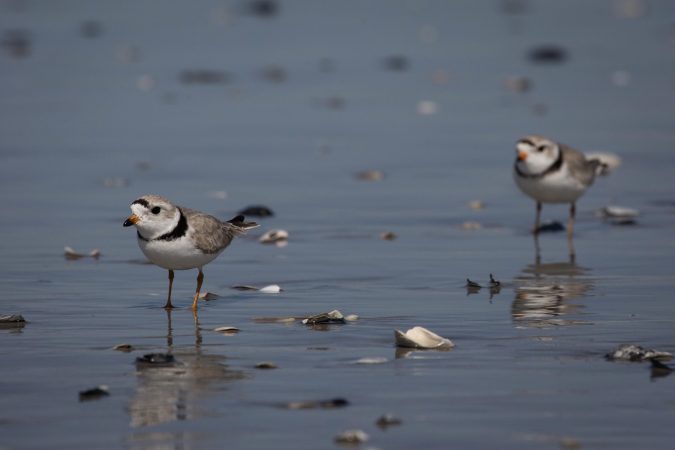
    Piping plovers, for instance, need undisturbed beaches to nest and raise their young. They return to the same sites year after year but only occupy them in the spring and summer. During winter, when the birds have migrated south, a property owner could develop a beach without immediately hurting any individual piping plovers. But come spring, the returning plovers would find themselves without a place to feed, nest and raise their chicks.

    Or take red-cockaded woodpeckers, which are not migratory but require mature pine trees to hollow out the cavities where extended families roost. Even if a timber company or developer cut down those trees without causing direct injury to any birds, they could not survive without other unoccupied old trees.

    Amphibians like California tiger salamanders begin their lives in seasonal ponds but move into upland burrows after metamorphosis. If a pond were drained during the summer, the salamanders that returned to the spot would not have the water they need to produce the next generation.

    “We are at the precipice of losing 50 years of progress in the protection of America’s wildlife, because we know that the challenges for most animals are not that they’re getting shot,” said Justin Pidot, a professor of environmental law at the University of Arizona who served as general counsel at the White House Council on Environmental Quality during the Biden administration.

    After the rule was proposed last year, it triggered roughly 220,000 public comments. About 99% were against the change, according to an analysis by the New York Times that used artificial intelligence.

    Among those asking the administration to reconsider were state wildlife agencies in some Republican-governed states.

    “Threatened and endangered species are entirely dependent on healthy habitats,” wrote Bruce Kreft, chief of the conservation and communications division of the North Dakota Game and Fish Department. The proposed change, he said, “would have dire consequences.”

    Ted Will, who was the director of the Georgia Department of Natural Resources Wildlife Resources Division at the time, wrote that “the greatest threat to the vast majority of species of greatest conservation need in Georgia, whether federally listed or not, is habitat loss.”

    Attorneys general from 16 states — including Arizona, California, Illinois, and New York — said the rationale for the change was “arbitrary, capricious, an abuse of discretion and contrary to law.”

    Those supporting the change included industries affected by habitat restrictions. Oil and gas trade groups including the American Petroleum Institute wrote that harm must involve a direct injury to a particular animal.

    But the vast majority of commenters appeared to be individuals, often begging the government to reconsider.

    “Everyone knows a species cannot live without its habitat,” wrote Ashleigh Smith of Port Angeles, Wash.

    Environmental lawyers and activists said that projects are rarely blocked because of habitat restrictions. More often, individuals or companies have to create “habitat conservation plans,” which describe the expected effects on endangered species and detail steps that will be taken to minimize them, they said.

    With the change, people and governments will still need permits for actions that would, say, crush or bury endangered animals, but not for felling a tree or polluting a river that the animal relies on, said Jane Davenport, a senior attorney with Defenders of Wildlife, a conservation group. That means landowners would take fewer measures to protect endangered species, and also contribute less to offsetting their actions by helping the species elsewhere.

    “A lot of our endangered species are on the edge,” Börk said. “If you lose that species, it is gone.”

    This article originally appeared in the New York Times.

  • Minnesota school faces threats after Trump posts clip of Somali kindergartners

    Minnesota school faces threats after Trump posts clip of Somali kindergartners

    Hateful emails and phone calls targeted a Minnesota school serving Somali families after President Donald Trump shared a video of its kindergartners on Truth Social this week, an episode that many Somali Americans see as an escalation of a sustained campaign of political and rhetorical attacks during Trump’s second term, community leaders said.

    On Wednesday, Trump reposted a video from a kindergarten graduation ceremony at Gateway STEM Academy, a K-8 charter school in St. Paul. In the clip, children wearing blue graduation gowns, including girls wearing hijabs beneath their mortarboards, sing in Somali as they celebrate the end of the school year.

    Trump amplified another user’s caption: “Every girl is in a hijab … in kindergarten.”

    The faces of the young children were clearly visible in the video shared with Trump’s 12.9 million followers. Members of the Somali community said that exposure could open the door to attacks on some of the community’s most vulnerable members. The replies to Trump’s post quickly filled with anti-Muslim invective, including one user who called the children “future terrorists.”

    For many Minnesotans of Somali descent, the post was the latest salvo in a monthslong campaign in which Trump has repeatedly singled them out while his administration has mounted an aggressive immigration and law enforcement operation in the Twin Cities.

    “The first term of Donald Trump was a cakewalk compared to this,” said Suleiman Adan, deputy executive director of the Council on American-Islamic Relations’ Minnesota chapter. “In the first term, you saw attacks on equality, belonging, and justice. In the second term, it’s an attack on basic human dignity. Right now, the crosshairs are on the Somali community.”

    Adan said he and other advocates had been in contact with officials at the school, who told them they have been contending with hateful emails, phone calls, and social media posts.

    Reached Friday, the White House did not directly address questions about the president’s decision to share the video, the harassment the school says followed, or concerns about posting identifiable children to millions of followers.

    “President Trump is right,” White House spokesperson Abigail Jackson said. “Aliens who come to our country, complain about how much they hate America, fail to contribute to our economy, rip off Americans, and refuse to assimilate into our society should not be here.”

    The ceremony featured in Trump’s post took place on the last day of school for the rising first-graders, who have not been back to the building since, Adan said.

    The school is mulling safety measures for when classes restart. The incident has also increased concern around Saturday schools that teach Somali language and culture.

    Gateway STEM Academy’s parent handbook describes the school as a STEM-focused charter that seeks to “embrace” students’ cultural backgrounds and encourages family participation in cultural celebrations, while emphasizing academic rigor, attendance, and discipline. It also offers Arabic among its electives alongside science, technology, and math programming.

    The video featured in the social media post began as a recording of an ordinary school celebration before ricocheting through the online right. The song, in Somali, is benign: it speaks of the pride of being a student, the joy of reaching a milestone, and hopes for continued success, said Malika Dahir, the executive director of Reviving the Islamic Sisterhood for Empowerment.

    Members of the Somali community routinely stream milestone moments for friends and relatives who live in other countries or states, Dahir added.

    “There isn’t a graduation or a wedding that isn’t livestreamed,” she said. “We share these online, because family members are all over the world. It’s a way to share momentous occasions. To feel like now these moments might be weaponized, there’s just a sense of loss, like our joy has been stolen.”

    The video was circulated by End Wokeness, an influential conservative social media account, with a caption drawing attention to the girls’ hijabs. Trump reposted the clip, first without explanation and later with the account’s caption attached.

    The post was consistent with Trump’s frequent use of Truth Social to share racially charged, often inflammatory, imagery. Earlier this year, his account posted a video depicting Barack and Michelle Obama as apes, which was deleted after bipartisan condemnation. He later shared a doctored image of the Obamas beside a graffiti-covered Air Force One bearing “BLM” and Arabic writing.

    Minnesota is home to roughly 80,000 people of Somali descent, the largest Somali community in the United States. Trump has repeatedly singled out Somali immigrants during his second term, seizing on a series of sprawling fraud investigations involving state and federal social-service programs. Many of those charged are Somali or Somali American.

    The largest fraud allegation centered on a nonprofit whose operators and affiliates were accused of diverting about $250 million from a federally funded child-nutrition program. Federal prosecutors have also brought separate cases involving programs intended to provide housing assistance to vulnerable adults and therapy for children with autism. Prosecutors say defendants used some of the money to buy cars, real estate, and other personal luxuries.

    Trump has used the scandals to justify large-scale federal intervention in Minnesota, dispatching thousands of immigration officers to the Twin Cities in an operation that extended well beyond the people accused of fraud. The deployment prompted weeks of protests and confrontations between agents and residents.

    During the operation, federal officers fatally shot Renée Good and Alex Pretti, both 37-year-old U.S. citizens, in separate encounters that were captured on video and became flash points in the national debate over Trump’s immigration crackdown.

    The administration subsequently changed leadership of the operation and began drawing down the federal presence. In February, border czar Tom Homan announced that 700 officers would leave Minnesota, although he attributed the withdrawal to increased cooperation from state and local authorities rather than directly to the shootings.

  • Times journalists subpoenaed as Trump escalates pressure on media

    Times journalists subpoenaed as Trump escalates pressure on media

    The Trump administration issued subpoenas Friday to several journalists for the New York Times, after the news outlet reported this week on security concerns involving President Donald Trump’s new Qatari-donated Air Force One.

    The subpoenas — which seek to force the reporters to testify before a federal grand jury in New York on Wednesday — were an extraordinary escalation in Trump’s efforts to threaten and intimidate independent news organizations.

    In some cases, the subpoenas were delivered by federal agents who showed up at reporters’ homes.

    The Times denounced the administration’s actions.

    “The appearance of federal law enforcement agents on the doorstep of news reporters should shock the conscience of any American who believes in the Constitution and the press freedom it protects,” David McCraw, the Times’ top newsroom lawyer, said in a statement Friday evening.

    “Our journalists report the facts and advance the American public’s right to know how their government is operating and their taxpayer dollars are being used,” McCraw wrote. “This brazen act should be seen as nothing more than an attempt to prevent the public from knowing what is happening in their country by intimidating journalists from doing their jobs.”

    The subpoenas contain few specifics, asking only that the journalists testify “in regard to an alleged violation of federal criminal law.” They were issued by Jay Clayton, the U.S. attorney in Manhattan. Clayton, who leads one of the country’s most prominent law enforcement offices, was recently nominated by Trump to serve as director of national intelligence.

    Representatives for the White House and the U.S. attorney in Manhattan did not immediately respond to inquiries Friday evening.

    The Times journalists who received subpoenas included Julian E. Barnes, Eric Lipton, Tyler Pager, and Eric Schmitt, who reported Wednesday that Trump had departed Turkey on the old Air Force One as a security precaution at the urging of the Secret Service. On Thursday, the Times reported that the new Air Force One, a Qatari-donated Boeing 747-8, lacked some of the advanced security features of the older aircraft, including anti-missile capabilities. Both articles cited sources who spoke on the condition of anonymity to discuss sensitive security issues.

    Before the Wednesday article was published, a senior official at the FBI contacted the Times to ask that the article be held, calling it an issue of national security, according to a person familiar with the conversation. The FBI official spoke with a reporter and a senior editor in the Times’ Washington bureau; the official declined to explain the security issue when asked. (A spokesperson for the Times, Charlie Stadtlander, confirmed the account.)

    Trump has long been a harsh critic of the news media. But in his second term in office, he has moved aggressively to use the immense powers of the federal government in his efforts to attack the press.

    Earlier this year, the Justice Department sought to compel testimony from journalists at the Wall Street Journal and the Washington Post. The Justice Department withdrew the subpoenas after both news organizations fought back in sealed filings.

    Both Democratic and Republican administrations have initiated leak investigations into the disclosure of classified information. But subpoenas aimed at journalists are not common, and First Amendment advocates say they can chill the work of news gathering.

    In January, FBI agents took the rare step of searching the home of a Washington Post reporter, Hannah Natanson, as part of an investigation into a government contractor’s handling of classified material. The agents seized phones, laptops, and a smartwatch after executing a search warrant. Natanson had spent months speaking with government employees while reporting on the Trump administration’s efforts to shrink the federal workforce.

    The Times is a party to several lawsuits involving Trump and his administration.

    The president sued the Times last year, accusing it of defaming him, disparaging his reputation, and seeking to undermine his 2024 candidacy.

    In December, the Times sued the Defense Department after it imposed restrictions on reporters who cover the military. The company sued again after the agency reduced reporters’ physical access to the Pentagon.

    In May, the Equal Employment Opportunity Commission sued the Times, accusing it of employment discrimination. On Friday, the Times filed a counterclaim, saying the lawsuit was an act of retaliation for its coverage of the Trump presidency and a violation of its First Amendment rights.

    This article originally appeared in the New York Times.
  • Trump denies this Congress what could be its last major bill-signing ceremony

    Trump denies this Congress what could be its last major bill-signing ceremony

    Invitations were sent. American flags lined the back of the red stage set in Statuary Hall. Bright spotlights lit the signing table donned with the presidential seal.

    President Donald Trump so abruptly canceled what might have been the last major presidential signing ceremony of this Congress that it caught lawmakers, top aides and housing industry officials all completely by surprise.

    Trump said he would not sign the bipartisan 21st Century Road to Housing Act, but it went into law anyway on Friday without his signature.

    The axed signing ceremony delivered Trump’s punishment of lawmakers for failing to pass his bill to limit voting rights ahead of the midterms, even though the housing bill represents the most significant housing legislation since the aftermath of the financial crisis.

    Trump doubled down on his decision not to sign the bill in a Truth Social post Friday morning.

    “I will not sign the Housing Bill, which has been fully approved by Congress and sent to the White House, in PROTEST over the fact that the United States Senate is not capable of passing THE SAVE AMERICA ACT,” Trump wrote. “THE SAVE AMERICA ACT’S non-passage is CRAZY, and a serious threat to any politician who votes against it!”

    Trump’s decision to ax the signing ceremony, and his comments referring to the bill as a “yawn,” represent a missed opportunity for lawmakers and the president to demonstrate to Americans that they are addressing their affordability concerns, some congressional watchers say.

    “This is the exact kind of bill they want to point to and say Republicans are working on issues that their voters care about, and Democrats would want the same,” said Julian Zelizer, a history and public affairs professor at Princeton University. “That’s not the signal that the administration is sending.”

    One housing leader who received an invite to the ceremony from House Speaker Mike Johnson’s office said they were on the way to the event in their Lyft when they received a text with a screenshot of Trump’s post that read: “Today’s Housing News Conference and Signing is hereby cancelled until such time as we pass the desperately needed SAVE AMERICA ACT.”

    The housing leader, who spoke on the condition of anonymity, said they then received an email from the speaker’s office shortly after. The housing leader’s first reaction: “incredibly disappointed, but not shocked.”

    One business lobbyist who was set to attend the signing ceremony was standing on the Capitol steps, when another attendee told them to check their email, as the event was canceled. Seconds later they received a message with a screenshot of Trump’s Truth Social post.

    “When I found out the reason why, it was disappointing, but it wasn’t shocking,” said the lobbyist, who spoke on the condition of anonymity. “With the president in the White House, things can happen on a dime.”

    Trump’s last-minute decision to cancel the signing ceremony represents a broader pattern of the president suddenly reversing course on policies previously deemed a priority, including a canceled public signing ceremony in May for an executive order to create a system to vet powerful new AI models before they are released publicly. Trump ultimately signed a revised version of the order weeks later.

    Lawmakers were equally blindsided by Trump’s decision on the housing bill. Especially considering that Senate Republicans had already expressed they lacked enough support to pass the Save America Act, which would impose stricter election rules.

    House GOP leadership was in the middle of a news conference when Trump canceled the ceremony on social media. House Financial Services Committee Chairman French Hill (R., Ark.) had just discussed his work with Senate Banking Committee Chairman Tim Scott (R., S.C.) to get the bill through both chambers.

    When Johnson opened the floor for questions, a reporter notified him of Trump’s social media post. When asked if Trump would sign the bill at a later date, Johnson said, “It’s my estimation he’ll do it within that 10-day window.”

    A president has 10 days, excluding Sundays, to either veto or sign a bill after they receive it from Congress. If the president does not act within the window, the bill automatically becomes law if Congress is in session. So Congress is poised to notch a concrete legislative achievement to tout on an issue widely expected to loom large in the midterm elections.

    Johnson sent the bill to Trump on Monday, June 29, which meant the 10-day window closed at the end of Friday at midnight.

    While many housing advocates have said the bill does not go far enough to address the nation’s housing shortage, they argue it is an important first step.

    The bill, which received overwhelming bipartisan support in Congress, would bar institutional investors from buying more than 350 single-family homes, expand federal grant programs to give cities money for building new homes and eliminate an outdated federal construction rule to make manufacturing mobile homes cheaper, among other measures.

    Zelizer said Trump’s negative comments about the bill could make it more difficult for some lawmakers, particularly vulnerable Republicans, to sell that idea to voters.

    The business lobbyist who was planning to attend the signing ceremony said the cancellation and Trump’s comments hurt the positive momentum around the bipartisan success in passing the bill, but they don’t see that having much sway on Americans’ minds on the matter.

  • Trump tanked EV sales, but car shoppers have found another way to save fuel

    Trump tanked EV sales, but car shoppers have found another way to save fuel

    Toyota took heat for years for being slow to jump on the electric-vehicle bandwagon.

    But the world’s largest automaker was planning later this year to showcase its revved-up EV ambitions with the debut of a new flagship Lexus EV. It was supposed to kick-start Toyota’s hopes of making the brand all-electric by 2035. Bye-bye, gas.

    Then President Donald Trump killed off the $7,500 tax credit for buying or leasing a new EV, allowing the popular program to expire in September. The White House rolled back fuel economy standards. Auto loans got more expensive as interest rates shot up.

    Within months, U.S. EV sales cratered — down 27% in the first quarter this year compared with 2025, said Cox Automotive.

    As a result, automakers have been busy scrapping EV models and writing off billions in investments.

    In May, Toyota abandoned its electrified Lexus “in light of the surrounding environment.” Honda canned three EV models for the American market and took a $9 billion EV-related write-down. Even all-electric Tesla mothballed its Model S and Model X vehicles. Stellantis said it would suffer a $26 billion charge due, in part, to “the cost of overestimating the pace of the energy transition.”

    But automakers have not seen a surge in consumers buying traditional gas vehicles. Buyers instead are pivoting to the market’s surprising bright spot: hybrids.

    Sales of hybrid vehicles have increased more than 80% from 2023 to 2026, to a pace of more than 2 million vehicles a year, according to Cox.

    Hybrids — which use a mix of electric and gas power — made up a record high of 14.1% of new vehicle sales, nearly three times as much as EVs, in the first quarter this year.

    The bulk of new cars and trucks sold still run on gas alone. But hybrids have more than doubled their market share over the past three years — taking gains from the shrinking share going to EVs and gas vehicles.

    “Hybrids are definitely having their moment,” said Stephanie Valdez Streaty, director of industry insights at Cox.

    The success of hybrids has received less attention than the politicized downfall of EVs, which can seem to reduce car-buying options to either environmentally conscious EVs or gas-guzzling behemoths. The future vs. the past.

    But the rapid rise of hybrids shows that American car buyers are open to electrified vehicles while hedging their bets. They want better fuel efficiency without sacrificing the things they love about their cars and trucks, according to analysts.

    “I think the future is still electric,” Streaty said. “The timeline has just shifted.”

    Car buyers want both more miles per gallon and familiarity, said Joseph Yoon, a consumer insights analyst at Edmunds, an automotive research platform. They want a vehicle they already know. And they can’t afford to pay too much more for it. The average new vehicle costs about $50,000.

    Yoon said Edmunds ran a small survey of car shoppers just before the EV tax credit expired and found that one of the main reactions was people wanting an electrified version of their favorite vehicle. With price a priority, that often meant a hybrid.

    “For a lot of people, hybrids add a layer of fuel savings without changing anything else in their life,” Yoon said. “I think that’s a heck of a value proposition.”

    Today, some hybrid models outsell traditional gas ones. A majority of Toyota Highlanders sold earlier this year were hybrids — same with Hyundai Sonatas and Honda CRVs.

    “It’s the stealth rise of hybrids,” Yoon said.

    The United States’ EV struggles are an outlier. Worldwide, about 25% of vehicles sold last year were EVs, said the International Energy Agency. In China, EVs amounted to more than half of new cars. By contrast, in the U.S., EVs accounted for less than 10% of sales for the entire year, boosted by the tax credits.

    So far, the spike in gas prices caused by the war in Iran hasn’t boosted U.S. EV sales. Consumers have been looking and researching EVs more, Yoon said, but that hasn’t translated into more sales.

    “It’s hard for us to say what’s going on,” he said.

    Electric vehicles tend to be more expensive than gas and hybrid ones. The tax rebates are gone. Interest rates are high.

    “Buyers are more focused on value than trying to get into a new platform,” he said.

    Automakers, once full of plans for EVs, have been forced to change directions.

    Ford replaced its fully electric F-150 Lightning with a hybrid model.

    The long-delayed plan to launch an all-electric Ram 1500 pickup is gone, replaced by the promise of a hybrid truck.

    “What we are registering is a higher interest on hybrids. This is the power train that is fastest-growing in the market, hybrids,” Antonio Filosa, CEO of Stellantis and owner of Ram, said on an April earnings call.

    General Motors CEO Mary Barra said the automaker was scaling back its EV production because it was “operating in a U.S. regulatory and policy environment that is increasingly aligned with customer demand.” But Barra said GM wasn’t giving up entirely on EVs.

    “We know EV drivers don’t often go back” to internal combustion engines, Barra said.

    The popularity of hybrids has been a win for Toyota’s original strategy.

    The automaker’s entire fleet has been slowly shifting to hybrid-only. Its Sienna minivan went that route in the 2021 model year. The Land Cruiser went hybrid with its 2024 model. The Camry followed the next year. The biggest switch came with the 2026 model of the RAV-4 — America’s best-selling compact SUV.

    It is available only as a hybrid. Sales have held up.

    “The conundrum for the industry is there is interest in electric vehicles,” said Stephanie Brinley, associate director at S&P Global Mobility. “We’re just not quite there yet.”

  • Horoscopes: Saturday, July 11, 2026

    ARIES (March 21-April 19). When you think about it, there are many things you feel very fortunate to have in your life right now. Use a little of your good fortune on joy. The purchase doesn’t have to be sensible, and the plan doesn’t have to be productive.

    TAURUS (April 20-May 20). There are many ways to think about today’s dilemma, and you’ll explore several. But eventually the theories run out and what remains is just a choice. What moves the situation forward won’t be another thought. It will be action.

    GEMINI (May 21-June 21). Maybe it feels like you have to choose between keeping the peace and telling the truth. But the honesty you want to share will be palatable, especially if you deliver it quickly and lightly.

    CANCER (June 22-July 22). As they say, you have to draw the line somewhere. Boundaries are definitions. The lines may be hard or soft, spoken or unspoken. They may be agreed upon or battled over, but if they don’t exist, neither does the relationship.

    LEO (July 23-Aug. 22). The bee doesn’t spend the morning arguing with a closed flower. It visits the blossoms with petals stretched to welcome the sun and returns later. There’s wisdom in directing your attention toward what’s open.

    VIRGO (Aug. 23-Sept. 22). You’re always connecting interesting people. You make introductions, strike up friendships, host meetings and events and create a generally attractive atmosphere that draws people in. People associate you with opportunities. They keep showing up where you are.

    LIBRA (Sept. 23-Oct. 23). You’re drawn to people who don’t quite fit the mold because they remind you that you don’t either. The conversation will be refreshingly free of performance. Nobody is trying to impress anyone. That’s the magic.

    SCORPIO (Oct. 24-Nov. 21). The prospect ahead makes your pulse quicken for more than one reason. That’s often how worthwhile things begin. Follow what draws you in. Later you’ll be able to say that it was attraction, not fear, that drove you.

    SAGITTARIUS (Nov. 22-Dec. 21). People don’t want what makes sense. They want what they want. When you understand what matters to them (instead of what (SET ITAL)should(END ITAL) matter to them) many mysteries disappear. Motivation explains a surprising amount of human behavior.

    CAPRICORN (Dec. 22-Jan. 19). You’ll be given more responsibility or access or opportunity. This is a little about luck and a lot about reputation. You’re reaping the reward of your consistently excellent work.

    AQUARIUS (Jan. 20-Feb. 18). You appreciate competence, but today you’re charmed by someone who does things their own way, inefficiently so. It’s weird how a meandering approach can achieve something a carefully optimized one never could.

    PISCES (Feb. 19-March 20). According to columnist L.M. Boyd, “There are 350 varieties of shark, not counting loan and pool.” Today you’ll be metaphorically swimming with others who fit the description and doing just fine, going quickly and staying focused on your own goals and instincts.

    TODAY’S BIRTHDAY (July 11). It’s your Year of the Pearl. Formed grain by grain around an irritation, the pearl transforms discomfort into something precious. What once seemed like a nuisance becomes a source of value, beauty and strength. More highlights: You master your interest for fun and profit. New companions sweeten the scene while familiars give it depth. A dream trip moves from fantasy to reality. Virgo and Leo adore you. Your lucky numbers are: 4, 10, 2, 22 and 17.

  • Dear Abby | Wife who married young has often heard she missed out

    DEAR ABBY: I married when I was 20 and my husband was 32. I grew up with a conservative view of marriage, so in a sense, I believed marrying early would grant me the most freedom as a woman. We have been married for five years and have a child. Over the years, many people have offered unsolicited advice about how I “missed out on my 20s,” or how our age gap is “disturbing.” I have done my best to brush off these comments, but as I’ve grown and my views about life have evolved, these negative sentiments are becoming constant background voices in my head. Our marriage has been generally good except for the expected stressors that come with being parents and other unforeseen struggles.

    There is also a big disconnect in our intimate life, and I wonder if it is due to our age gap. I don’t know if we are in love or if my view on feeling in love has been romanticized by TV show depictions. My husband is kind, and he has given me the space to become the person I am today.

    My question is: How do I deal with these nagging thoughts that I have missed out on life as a single woman? Am I being ungrateful for the kind and loyal husband I have, or is it OK to explore the possibility of returning to a single life and eventually, maybe, finding love again?

    — DREAMING OF POSSIBILITIES

    DEAR DREAMING: Have you expressed these thoughts to your husband? If he’s as kind as you say, he should be willing to show you the romance you feel you’ve missed out on. I don’t recommend looking for adventure outside the marriage until the two of you have made a sincere effort to satisfy these urges together. If you’re not sure where to start, a licensed couples counselor may be of help.

    ** ** **

    DEAR ABBY: I work as a sports reporter, and I have been in an on-and-off relationship with my co-worker. We are both out gay men, but I am struggling to figure out how to take our relationship to the next level. We both enjoy going on cute dates at local sporting events and always get excited when the team puts us on the KissCam. What can I do to convince him that I am boyfriend material and even future husband material?

    — LOOKING AHEAD IN INDIANA

    DEAR LOOKING: Because you and your co-worker have been dating consistently and kissing on camera, many people in your community may already assume you are a couple. It seems the time has come for a conversation with him about your relationship and whether he thinks there might be a future for the two of you. Even if his answer is no, it is important for you to know if the feelings are mutual.

    Tell him teams do better than individual players, and you hope that by speaking up you won’t strike out.