Tag: no-latest

  • Eating this food regularly could lead to greater longevity| Expert Opinion

    Eating this food regularly could lead to greater longevity| Expert Opinion

    Q: I’ve heard spicy food can be good for you. Is that true?

    A: Here’s great news for people who love to feel the burn: The purported benefits of spicy foods have a strong scientific basis.

    In 2015, a major study published in the British Medical Journal showed an association between consuming spicy foods and living longer. From 2004 to 2008, scientists enrolled more than half a million adults in China and tracked their health over the next several years. Several thousand in the group, not surprisingly, died during that time.

    But the surprising part? Even after controlling for multiple possible confounders — such as smoking, physical activity, and intake of red meat and fresh fruits and vegetables — adults whose spicy food intake averaged six or seven days a week had a 14% lower relative risk of dying than those whose intake averaged less than once a week. Eating spicy foods was associated with a reduced risk of death from cancer and heart and lung diseases.

    Two years later, a similar study done in the United States corroborated those findings: Americans who consumed hot red chile peppers were about 13% less likely to die at any given point during the study compared with those who did not.

    Scientists think capsaicin — the main active component in chile peppers — may be beneficial because of its effect on the receptors in our nerve cells that perceive heat, both from temperature and spice. Known as TRPV1 receptors, they’re expressed throughout our bodies, including the skin, gastrointestinal tract, and many immune cells.

    So move aside peptides: Should we all grab some chile paste from the grocery store to live longer?

    Well … not necessarily (and, for the record, peptides should stay on the shelf for now too).

    While the benefits of spicy foods are backed by strong research, we haven’t proved that spicy foods cause this apparent boost in longevity. And in some areas, the data are more uncertain. For instance, some — though not all — studies have found an elevated risk of stomach cancer among people who frequently eat spicy foods.

    Here’s what else we know about how spicy foods affect our health.

    Heart health

    Multiple observational studies in humans have shown an association with spicy food intake and a lower risk of heart disease and stroke. The mechanisms aren’t entirely known, but limited human randomized controlled trials point to capsaicin’s ability to increase HDL, or “good” cholesterol, low levels of which are a known risk factor for heart attacks. It may also help burn calories faster.

    Also, the spicier your food, the less you reach for the salt shaker. A 2017 Chinese study of around 600 adults found that people who preferred spicier foods gravitated toward less salty ones, eating about a half teaspoon less salt every day with corresponding decreases in their blood pressure.

    The same researchers performed a separate randomized controlled trial in which they scanned participants’ brains after stimulating them with salt mixtures. They found that capsaicin amplified how intensely people perceive saltiness — meaning, the same splash of soy sauce tastes even saltier when you stir chile into the mix.

    Gut health

    IBS and abdominal pain: What’s fascinating about TRPV1 receptors is that they’re also critical for pain signaling. They’re more concentrated in the colons of people with irritable bowel syndrome, for instance.

    That’s why, seemingly paradoxically, capsaicin creams actually can help treat pain. Capsaicin can overwhelm our pain-sensing nerves and, in doing so, help blunt alarm signals from reaching the brain.

    Capsaicin has even shown a benefit in small human trials for chronic abdominal pain. For some people, capsaicin can make abdominal discomfort worse in the short term. But after a few weeks of habitual consumption, those receptors become desensitized and the discomfort may actually improve.

    Stomach acid and ulcers: Despite a common misconception, capsaicin does not damage a healthy stomach lining. Capsaicin actually reduces acid production in the stomach. Because of this, and because capsaicin stimulates more blood flow to the stomach, it has been shown to protect against the risk of gastrointestinal ulcers.

    So why are spicy foods notorious for making acid reflux symptoms seem worse? We feel like we have heartburn after eating a spicy meal because capsaicin activates TRPV1 receptors in the esophagus. This is what causes that unpleasant burning sensation in the chest, which we would normally attribute to acid.

    Hemorrhoids: While I’m sure I don’t need to overexplain the meaning of the Hungarian saying “paprika burns you twice,” a 2006 randomized placebo-controlled trial found that capsaicin did not aggravate hemorrhoid symptoms. So if that’s your specific concern, the science has your back … side.

    Cancers: Regarding gastrointestinal cancers, the data is a bit mixed: Most studies have found that capsaicin protects against cancer, while some have found that it seems to bolster tumor growth. This is an area where we still need more research, but the overall trend so far is reassuring that spicy foods may well be protective.

    What I want my patients to know

    If you like spicy foods, by all means enjoy them, particularly in moderation. Personally, I get a bit of a thrill eating food spicy enough to make my nose run but not quite cry at the dinner table. But if you’re someone who feels ill when you eat chile peppers, this data shouldn’t push you to do anything that makes you uncomfortable. We’re all different in how we respond to capsaicin, so I wouldn’t regard vindaloo as the elixir of life.

    The eating pattern still most consistently linked to numerous health benefits, including longevity, remains the Mediterranean-style diet, which emphasizes whole foods, complex carbohydrates and polyphenols. Chile peppers can definitely be a part of that pattern, but they’re just one component.

    Trisha Pasricha is a physician and scientist at Beth Israel Deaconess Medical Center and an assistant professor of medicine at Harvard Medical School. She is the author of “You’ve Been Pooping All Wrong.”
  • Trump says US will blockade Iran in the Strait of Hormuz and will charge ships for safe passage

    Trump says US will blockade Iran in the Strait of Hormuz and will charge ships for safe passage

    DUBAI, United Arab Emirates — U.S. President Donald Trump says the United States is “reinstating” a blockade on Iran in the Strait of Hormuz and will charge ships for safe passage.

    He made the announcement in a post on social media Monday, after another exchange of fire between the United States and Iran over the critical waterway.

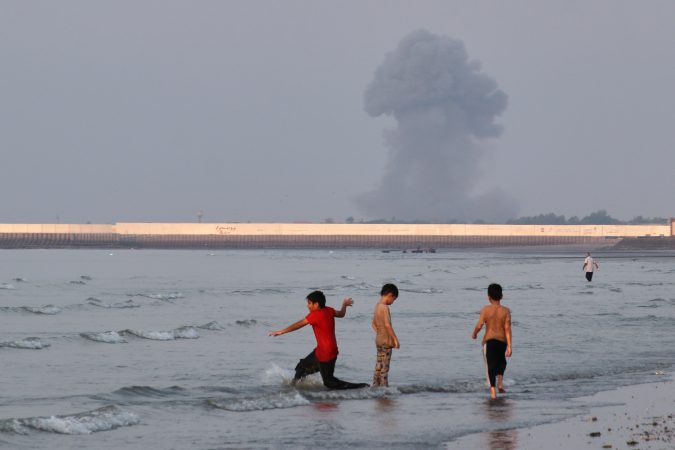
    A fifth of the world’s oil and gas passed through the strait before Iran asserted control over it after the start of the war.

    The United States and Iran each asserted Monday they controlled the Strait of Hormuz after a weekend of attacks across the Middle East, further threatening any diplomacy to end the war.

    The latest exchange was sparked by an Iranian attack on a container ship on Sunday in the Strait of Hormuz. Iran has asserted control over the critical waterway for international oil and gas since the United States and Israel started the war on Feb. 28.

    Iran says it has the right to manage traffic through the strait and potentially charge fees in accordance with an interim peace deal reached last month. The U.S. and others dispute that, citing international law on freedom of navigation, and the American military has tried to establish an alternative route outside of Iranian control.

    Calling into Fox News on Monday, U.S. President Donald Trump said, “we’re taking over the Strait.” Trump also said that “everything was agreed to” in an 11-hour meeting Sunday, but that Iranian negotiators had called back later and suggested changes. He did not elaborate.

    Iran and the U.S. are nearly halfway through the 60-day period in which they were supposed to negotiate a permanent end to the war and an agreement on Iran’s disputed nuclear program. Instead, a series of attacks over the strait have raised fears of a return to all-out war and further disruption to the global economy.

    Oil prices jumped nearly 5% on Monday before falling back. U.S. benchmark crude, which had risen to nearly $120 a barrel at the height of the war, was trading at around $72.92. Markets were mixed.

    US says it has struck dozens of targets in Iran

    The U.S. military said it struck dozens of sites in the strikes Monday, including air defense systems, radar sites, missile and drone equipment, and small boats. It said Iran does not control the Strait of Hormuz.

    The European Union’s top diplomat, Kaja Kallas, called for the strait to be open, as it was before the war. “Freedom of navigation has to be respected,” she said.

    Mohammed Mokhber, an adviser to Iran’s supreme leader, wrote that Tehran would fight for the strait.

    “We defend it so that in the future, for the passage of our ships, we are not forced to pay tribute to the enemy!” he wrote on X. “Retreating from this vital matter has no place in the mind of any friend of Iran.”

    Iran’s paramilitary Revolutionary Guard, a key power center in the country’s theocracy that controls its ballistic missile arsenal, said the Strait of Hormuz is “our territory, and we will not allow a rogue and child-killing army from the other side of the world to continue its illegal interference in it.”

    U.S.-allied Arab states report another wave of attacks

    Missile alert sirens sounded three times Monday in Bahrain, home to the U.S. Navy’s 5th Fleet, and Kuwait said it was intercepting hostile fire. There was no immediate word on damage in either country.

    In Jordan, the kingdom’s military said it shot down four Iranian missiles in an incident that “resulted in zero casualties or material damage.” Jordan also hosts U.S. military forces and aircraft.

    In Iran, authorities reported attacks in Hormozgan, Khuzestan and Markazi provinces and said at least two people were killed, according to state-run IRNA news agency. Semiofficial Iranian media also reported strikes in the eastern Sistan and Baluchestan province, which is on a coast of the Gulf of Oman.

    The attacks continued hours after the U.S. ended its strikes — again raising the possibility of Gulf Arab states retaliating against Iran. There were unclaimed attacks on Iran on Thursday.

    A base belonging to the armed wing of an Iranian Kurdish opposition group based in Iraq’s semiautonomous Kurdistan region came under drone attack on Monday, according to Rebaz Sharifi, a local commander. There were no immediate details on casualties or damage.

    No group immediately claimed responsibility. Iran supports a number of powerful militias in Iraq.

    Fighting focuses on the status of the strait

    Early on Sunday, the U.S. military said it hit some 140 targets, including missile and drone launch sites, ammunition dumps and communication equipment — a far-heavier set of attacks than in two previous rounds of strikes in the last week.

    Iran retaliated by attacking nations in the region hosting U.S. military forces.

    Sunday’s attacks stretched to Bahrain, Kuwait, Qatar, Jordan and even Oman — which shares the strait with Iran. Oman, which long has been an interlocutor between Tehran and the West, summoned an Iranian diplomat to criticize the attack.

    Iran’s chokehold on the strait has loosened as the U.S. military supports vessels moving along a southern route hugging the coastline of Oman. That new route has angered Iran, which has launched repeated attacks on ships using it.

    Traffic through the Oman route dropped over the weekend “to minimal levels, indicating that operators continue to prioritize perceived security over more direct transit options,” the ship-tracking website MarineTraffic.com said.

    Iran’s Foreign Ministry spokesperson Esmail Baghaei blamed Washington for the chaos gripping the region.

    “Considering the memorandum of understanding’s fourteen clauses, the Americans have, in this brief period, in one way or another, slaughtered its various components,” Baghaei told journalists Monday.

    Baghaei also said Iran wouldn’t agree to visits by the International Atomic Energy Agency to nuclear sites the U.S. bombed in 2025, where Tehran’s stockpile of highly enriched uranium is believed to be entombed.

    Trump suggested last week that the interim deal in the war was “over.” But mediators, including Pakistan, Qatar and Egypt, have continued efforts to reach a final agreement to end the war.

    A regional official involved in mediation, speaking on condition of anonymity to discuss the sensitive talks, said efforts to shore up the ceasefire continued Sunday. Pakistan said its foreign minister spoke by phone with Iran’s top diplomat and urged “de-escalation” on both sides.

  • Businesses brace for years of inflation as new costs pile up

    Businesses brace for years of inflation as new costs pile up

    American businesses are increasingly convinced that higher inflation is here to stay.

    Even if Tuesday’s inflation report shows the cooling economists anticipate after a recent easing of gasoline prices, few forecasters or executives expect the relief to last.

    Instead of fading, the forces pushing prices higher are multiplying. Tariffs are still grinding through supply chains, the Middle East war is keeping oil markets on edge, and another wrinkle — a boom in artificial-intelligence infrastructure — is driving up the cost of electronic components and electricity.

    The result is that prices may rise faster than normal for many months.

    “People hate inflation,” said Douglas Holtz-Eakin, president of the conservative American Action Forum. “Right now, we’ve got no real wage growth. That’s a broadly distributed pain that hurts the people who are felt to be responsible — the party in power. So Republicans have to worry about every election while that continues.”

    For some smaller manufacturers, the effects of tariffs have proved more persistent than many economists initially expected.

    “My biggest heartache is still steel,” said Glen Calder, president of Calder Brothers, a family-owned maker of asphalt-paving machines in Taylors, South Carolina, where the price of steel has roughly doubled in 15 months, to as much as 72 cents a pound from the mid-30s.

    “It just keeps climbing,” he said.

    Indeed, many companies already plan to keep hiking prices, in response to tariffs, over the coming months. In surveys published last week by the Federal Reserve Bank of New York, nearly half of the firms that paid tariffs said they still expected to raise prices again to make up for tariff costs, some in six months or later. Businesses reported they have been waiting for some previously negotiated contracts to expire, absorbing higher costs in the meantime. And some companies acknowledged they plan to raise prices in deliberate increments to avoid alienating customers.

    “[I]n an ever-changing tariff environment, many firms are spreading price increases across extended periods — meaning that inflationary pressures due to tariffs may well last for some time to come,” the researchers wrote.

    In Madison, Indiana, John Grote’s 125-year-old family company, Grote Industries, which makes lighting and wiring systems for trucks and trailers, is being hit from nearly every direction at once.

    Resin for its molded plastic lenses is tied to oil prices and is up 30 percent to 40 percent. Tariffs have hiked prices for copper, which the company uses in a 53-foot harness system that powers lights, cameras and brakes for trailers. And electronic components have more than doubled as AI data centers bid up scarce capacity.

    “We’re getting squeezed,” Grote said. Because his prices can’t be adjusted off-cycle, the company has eaten much of the increase. His profits are down 20 percent to 30 percent, and he expects to raise prices in January.

    How long the squeeze lasts is clouded by uncertainty on at least two fronts. The war in Iran remains volatile. The U.S. and Iran exchanged some of their heaviest strikes in months over the weekend, renewing concerns about energy supplies and fuel costs.

    Meanwhile, businesses could soon face another round of tariff uncertainty. One set of 10 percent global tariffs, which cover roughly one-third of U.S. imports, is set to expire in late July, leaving businesses unsure what to expect next. The Trump administration is expected to use different legal authorities to replace the expiring tariffs.

    Companies are already contending with persistent inflation pressures. Delta Air Lines said Friday that record fuel costs — the highest in the company’s history — weighed on quarterly profits despite a double-digit jump in revenue. Executives said the industry had little choice but to maintain recent fare increases because inflation in both fuel and non-fuel costs remained significant.

    Seneca Foods, the canned-vegetable giant, told shareholders last month that last spring’s steel-tariff increases are only now flowing fully into its container costs and have been built into its selling prices, adding that the tariffs “simply cannot be absorbed long term.” The company also noted that prices for canned fruit and vegetables have risen more than 48 percent since 2019, nearly double the pace of fresh alternatives, largely because of tariffed tin.

    And Winnebago Industries said its model-year 2027 price increases could reach low double digits for some products, as some of its brands face significantly higher raw-material costs than others.

    Some economists argue the inflation pressures run deeper than any single shock.

    Even without the conflict in Iran or a trade war, inflation would probably be running well above the Fed’s 2 percent target, said Michael Strain, director of economic policy studies at the right-leaning American Enterprise Institute.

    That’s because the economy itself is running hot: Consumer spending remains strong, the government is running massive deficits that pump demand into the economy, and financial markets show little sign that the Fed’s interest rates are biting.

    “The Fed thinks it has its foot on the brake pedal,” Strain said, “but it actually has its foot on the gas.”

  • Lindsey Graham died of an aortic dissection. What does that mean?

    Lindsey Graham died of an aortic dissection. What does that mean?

    On Saturday night, Sen. Lindsey Graham, R-S.C., died of an aortic dissection — a rip in the aorta, the main artery carrying blood from the heart to the rest of the body.

    Such a tear is a medical emergency. Fifty percent of patients make it to the hospital, and about half survive, said Dr. Michael Mack, a heart surgeon who is chair of the research institute Baylor Scott & White Health in Dallas.

    Mack added that an aortic dissection is the first thing that comes to mind when a patient who is feeling well dies suddenly.

    The wall of the aorta has three layers, said Dr. Kendra J. Grubb, a heart surgeon formerly at Emory University and now at Medtronic, the medical device company. A dissection occurs in the inner layer, allowing blood to pour in between the layers of the tubelike vessel.

    It’s most likely caused by an underlying aortic aneurysm — a bubble in the vessel, similar to what can occur in old bicycle tubes. Aortic aneurysms can be caused by high blood pressure, atherosclerosis or some rare underlying genetic conditions, like bicuspid aortic valves.

    Patients usually describe an excruciating pain, from the chest to the back, “like a knife to the heart,” Grubb said.

    Treatment depends on where in the artery the tear is. If it occurs after the section that goes to the brain, doctors can try to repair it, threading a wire from the groin to the aorta that carries material on the vessel to seal the rip.

    If the tear occurs in the part of the aorta that carries blood to the brain, treatment involves emergency open-heart surgery. The patient is put on a heart-lung machine, the body is cooled, and a surgeon cuts out the torn section of the aorta. The surgeon then inserts a graft made of fabric.

    This article originally appeared in The New York Times.

  • With Lindsey Graham gone, Ukraine loses an ally in Trump’s ear

    With Lindsey Graham gone, Ukraine loses an ally in Trump’s ear

    Hours before his sudden death, Sen. Lindsey Graham returned to Washington from his 10th wartime trip to Ukraine, the latest visit in a four-year campaign he had waged to persuade Americans, often including his close ally President Donald Trump, to treat that country’s fight against Russia as their own.

    Since the war began, the South Carolina Republican had been among a small group of senators whose trips to Kyiv had mirrored those often undertaken by senior diplomatic officials within the administration.

    He met repeatedly with President Volodymyr Zelenskyy, toured towns and communities that had been reduced to rubble by Russian bombardment, and would return to Washington with fresh zeal and firsthand accounts of the war as he pressed fellow Republicans to sustain military and economic support.

    Graham’s death leaves Ukraine without its most influential champion inside Trump’s political orbit. He was one of the few lawmakers who had both an unwavering belief in a muscular American role abroad and a direct line to the president. It was a rare combination in the era of Trump, who has surrounded himself with advisers keen on withdrawing from the global stage in favor of a more inward-looking, “America-first” approach to foreign policy.

    Graham was not alone among Republicans in his support for Ukraine, and he almost always deferred when the president resisted supporting the nation’s battle for survival. But his closeness with Trump gave him a unique perch that he used to urge an often reluctant president to confront Russia directly and to ensure Ukraine had the weapons and resources it needed to continue fighting.

    He was doing so in the hours before he died, reaching what he said was a breakthrough with fellow senators in both parties and the White House to impose harsh new sanctions on Russia.

    “I’ve never been more optimistic today that we have the formula to end this war,” Graham said during a news conference in Kyiv on Friday before traveling back to Washington.

    Graham’s commitment to Ukraine was rooted in a worldview he embraced throughout his career. A military lawyer stationed in West Germany during the final years of the Cold War, he often described himself as “a Ronald Reagan Republican,” arguing that the United States should shape world events according to its values rather than retreating from them.

    Alongside his close friend Sen. John McCain, who died in 2018, he became one of Congress’ leading defenders of the trans-Atlantic alliance and an interventionist foreign policy hawk, warning repeatedly that American disengagement would embolden authoritarian adversaries.

    “When America leads, the world is safer,” he said in a speech on the Senate floor last May. “When we disengage and when we retreat, like we saw for the last four years under the Biden administration, chaos fills the void.”

    His focus on Ukraine far predated Russia’s full-scale invasion. After Moscow illegally annexed Crimea in 2014, Graham was as an early advocate for providing Ukraine with defensive weapons, arguing that helping Kyiv resist Russian aggression was both a strategic necessity and a moral obligation.

    “If Putin’s actions in Crimea are permitted, it will set a dangerous global precedent that will damage international stability and U.S. national security interests,” he said in a statement at the time, along with former Sen. Kelly Ayotte. “The U.S., working with our international partners, must make clear that Putin will incur increasingly severe diplomatic and economic consequences if he does not end his aggression in Ukraine.”

    His support was often paired with public criticism of Democratic administrations that he said had created the conditions for authoritarian leaders such as President Vladimir Putin to act with impunity.

    “Putin basically came to the conclusion after Benghazi, Syria, Egypt — everything Obama has been engaged in — he’s a weak indecisive leader,” Graham wrote in a social media post in 2014.

    Through a number of administrations, and as control of Congress changed partisan hands, Graham remained one of the Senate’s most consistent voices pressing administrations of both parties to move faster on a number of military aid packages and foreign assistance programs.

    When Trump returned to the White House last year for his second term, Graham ascended to an important, if often informal, role as an intermediary between Kyiv and the White House. Before the explosive Oval Office confrontation between Trump and Zelenskyy earlier this year, Graham met privately with the Ukrainian president in an effort to smooth tensions and encourage a productive meeting.

    In the months that followed, he continued speaking with both leaders, attempting to bridge deep disagreements over military aid and negotiations even as the administration adopted a more skeptical posture toward Ukraine.

    During a meeting with Zelesnkyy in Kyiv last week, his influence was noted after Trump announced a pledge to give Ukraine a license to produce Patriot air-defense systems.

    Zelesnkyy told Graham that it was a “positive signal” and “very important.”

    Trump, who said Sunday that he had spoken with Graham shortly before his death, described the senator as tired after returning from Ukraine but praised him as one of his closest advisers.

    “He was a very strong military person,” Trump said in an interview on CNN after the announcement of Graham’s death.

    In mourning Graham, Zelenskyy recalled not only his repeated visits but his steadfast support throughout the war, describing him as a true friend of Ukraine who never stopped advocating for the country’s freedom.

    “We will always be especially grateful for the recognition of our people and words of admiration for the courage of Ukraine’s defenders,” Zelenskyy said in a statement. “America and the world have lost a determined leader.”

    This article originally appeared in The New York Times.

  • Sam Neill, versatile actor who starred in ‘Jurassic Park,’ dies at 78

    Sam Neill, versatile actor who starred in ‘Jurassic Park,’ dies at 78

    Sam Neill, a New Zealand actor who brought a quiet intensity to art-house fare and Hollywood blockbusters alike, including as a rigid husband vexed by his wife’s love of music in The Piano and a fedora-clad paleontologist fleeing a T-rex in Jurassic Park, died Monday in Sydney. He was 78.

    In a social media statement, Mr. Neill’s family described his death as “sudden and unexpected” but did not disclose a cause. He was diagnosed in spring 2022 with angioimmunoblastic T-cell lymphoma, a form of blood cancer, but in April, he announced he was cancer free after a clinical trial of a new therapy. His family said Monday that he remained free of the disease.

    In roles as loners, scoundrels, madmen, and everymen, Mr. Neill proved a versatile performer comfortable in leading or supporting parts. He had started acting as a schoolboy, discovering that his childhood stutter disappeared when he was performing onstage, and went on to appear in more than 150 movies and TV shows across five decades.

    Mr. Neill helped launch a new wave of New Zealand cinema while starring in the dystopian thriller Sleeping Dogs (1977), the first feature film made in the country in years, and gained wider notice in Australian director Gillian Armstrong’s period drama My Brilliant Career (1979), as a handsome blue-blood — tousled hair, mellifluous voice — courting an aspiring writer (Judy Davis).

    The film’s admirers included British-born movie star James Mason, who tracked down Mr. Neill’s phone number, called him up and invited the younger actor to his home in Switzerland. He became a mentor, helping Mr. Neill get a London agent and offering what Mr. Neill recalled as “good practical advice” for screen acting: “Never eat, drink, or smoke in a scene. If you do, you’ll be eating, drinking, and smoking all day.”

    Mr. Neill said he modeled his approach to work after Mason, whom he described as an actor who “was prepared to show the darker sides of light characters and vice versa.”

    That also became true of Mr. Neill, who delivered multifaceted performances in films including the horror thriller Possession (1981), as a spy whose marriage and wife are both unraveling; A Cry in the Dark (1988), also known as Evil Angels, in which he and Meryl Streep played the parents of a missing child; and the thriller Dead Calm (1989), as a grieving father trying to save his wife, Nicole Kidman, from an intruder at sea.

    For The Piano (1993), an erotic drama that brought him back to New Zealand to work with director Jane Campion, Mr. Neill played a 19th-century bachelor who arranges to marry a mute Scottish woman (Holly Hunter) who has a young daughter (Anna Paquin). His character is patient but remote, seemingly uncertain of his new situation, until he learns that his wife is in love with another man (Harvey Keitel). He responds by cutting off one of her fingers with an ax.

    “Neill’s taciturn husband conceals a universe of fear and sadness behind his clouded eyes,” wrote film critic Roger Ebert, calling the movie “as peculiar and haunting as any film I’ve seen.”

    Less than a month after The Piano won the top prize at the Cannes Film Festival, Mr. Neill starred in Jurassic Park (1993). As Alan Grant, a crusty paleontologist invited to tour a theme park of resurrected dinosaurs, he helped bring a human touch to a movie that set a new benchmark for computer-generated imagery and jumbo-sized animatronics.

    When the time came for Steven Spielberg to unveil his CGI dinosaurs on-screen, the director pointed his camera at Mr. Neill, who was shown tossing off his hat, setting aside his sunglasses, and hopping out of a jeep in astonishment. “It’s — it’s a dinosaur,” Grant says, pointing upward as a brachiosaurus takes a bite out of a tree.

    On location in Hawaii, Mr. Neill and his human co-stars (including Laura Dern and Jeff Goldblum) had been instructed to look at a piece of paper with an X on it, marking the spot where the dinosaur would be inserted in postproduction.

    The film grossed more than $1 billion, won three Academy Awards, and inspired five sequels, although Mr. Neill was skeptical that the effects-driven movie would make him a superstar. “Maybe the T-rex,” he told the Toronto Star, “but not me.”

    But the film’s success did help him find new opportunities in Hollywood, including roles opposite Robert Downey Jr. in Restoration (1995), Robert Redford in The Horse Whisperer (1998), and Robin Williams in Bicentennial Man (1999).

    Still, he preferred to make movies closer to his homes in Sydney and New Zealand, where he ran a winery and was knighted in 2022 by a representative of Queen Elizabeth II. By his account, he was more interested in growing grapes than in cultivating the kind of consistent, recognizable screen persona expected of a movie star.

    “I’ve never had an image,” he told the Chicago Tribune in 1995, “nor have I fostered one or wanted one, which has meant that I’ve had fantastic freedom to do whatever it is that appeals at the time.”

    When he wasn’t acting, Mr. Neill was by all accounts self-deprecating and unpretentious, far warmer than many of the rascals he played on-screen. He steered interviews toward discussions of climate change and his left-leaning politics, avoiding examinations of his acting style or personal life. “I’m just Mr. Triviality, as shallow as my wash basin,” he told Scotland’s Glasgow Herald newspaper in 2001. “No deep glacial lakes of profundity here.”

    For decades, he continued to mix independent films and big-budget productions, starring as a pipe-smoking observatory chief in the Australian comedy The Dish (2000), a brutal police inspector in the British drama series Peaky Blinders (2013-14), and a cantankerous foster parent in Hunt for the Wilderpeople (2016), a comic drama directed by New Zealand native Taika Waititi.

    He also slipped comfortably back into character as Grant, battling a pack of angry velociraptors in Jurassic Park III (2001) and reuniting with Dern and Goldblum in the franchise’s Jurassic World Dominion (2022).

    “I get stopped for different reasons on the street, but Jurassic Park would be the most universal of them,” he told Entertainment Weekly. “If I go to the Philippines or Rwanda or something, people just know me all around the world. And they’ll start roaring like dinosaurs.”

    ‘A sense of complexity’

    The second of three children, Nigel John Dermot Neill was born in Omagh, Northern Ireland, on Sept. 14, 1947. His mother was an English homemaker, and his father was a New Zealander who served as a British army major before joining the family business, a wholesale company that sold wine and other goods.

    When Mr. Neill was 7, his family moved to New Zealand, settling near the South Island city of Dunedin. Four years later, Mr. Neill discarded his first name — “probably the best decision I made in my life,” he wrote in his memoir — and began using the nickname Sam, which he considered less “effete.”

    He went to boarding school in Christchurch, where he started acting as a way to meet girls, and graduated from Victoria University of Wellington, the capital.

    Finding limited opportunities to act on-screen, Mr. Neill joined the New Zealand National Film Unit, directing and editing documentary shorts and picking up some of the techniques that he later used to make an hourlong documentary, Cinema of Unease (1995), about the history of New Zealand cinema.

    After his early breakthroughs, he acquired a reputation for playing, as he put it, “men with cold blue eyes that can drill holes through steel at 100 paces,” whether as Damien the Antichrist in Omen III: The Final Conflict (1981) or a demented spaceship designer who, in Event Horizon (1997), vivisects a colleague, gouges out his own eyes, and declares, “Where we’re going, we won’t need eyes to see.”

    Other films highlighted his rugged physicality. He had action roles in Attack Force Z (1981), a World War II film with Mel Gibson, and The Hunt for Red October (1990) as the second-in-command to Sean Connery’s Soviet submarine captain. He also drew praise for starring as a cold-blooded and womanizing secret agent in the British miniseries Reilly: Ace of Spies (1983).

    The show helped bring him steady work on television, including roles as a KGB colonel in the ABC miniseries Amerika (1987), Cardinal Thomas Wolsey in Showtime’s The Tudors (2007) and the magical title character in NBC’s Merlin (1998), which earned him an Emmy nomination. He received a second nomination for narrating New Zealand: Earth’s Mythical Islands (2016), a documentary miniseries.

    The rural life

    When he was in his early 20s, Mr. Neill had a son, Andrew, who was given up for adoption. They reconnected 25 years later, according to Mr. Neill. He also had a son, Tim, from a relationship with New Zealand actor Lisa Harrow, his on-screen love interest in Omen III.

    In 1989, he married Noriko Watanabe, a Japanese makeup artist who worked on Dead Calm. They had a daughter, Elena, and Mr. Neill also adopted Noriko’s daughter from an earlier marriage, Maiko. The couple separated in 2017, and in recent years Mr. Neill was reportedly in a relationship with Australian political journalist Laura Tingle.

    Information on survivors was not immediately available.

    During the coronavirus pandemic, Mr. Neill was a soothing presence on social media, posting videos of himself playing the ukulele and relaxing on his winery, Two Paddocks. Located in South Island’s Central Otago region, the estate was home to animals that Mr. Neill named after some of his friends, including Laura Dern (a cow), Jeff Goldblum (a ram), and Meryl Streep (a chicken that ended up getting killed by a ferret).

    Mr. Neill posted playful videos of himself doing morning stretching routines with one of his pigs and reciting positive mantras to his duck, Charlie Pickering. But the farm was no joke: He was a serious vigneron and had been interested in fine wine ever since Mason poured him his first glass of Burgundy.

    “My wine has many more dimensions than I could possibly aspire to have,” he told the Times of London in 2014. “I don’t expect people to take me seriously, but I’m determined that they respect my wine. A few weeks ago it won a trophy and two gold medals in London. I call that the ‘up yours’ factor.”

  • Letters to the Editor | July 13, 2026

    Letters to the Editor | July 13, 2026

    Social democrats

    I respectfully disagree with Allan Lichtman’s op-ed regarding socialism in the Democratic Party.

    Democratic socialism involves a respect for private property tempered by a generous, taxpayer-funded welfare state. By contrast, the current wave of progressive candidates believes in confiscation of wealth, class struggle, and an abiding hatred of “Zionists,” whatever that means. They are in spirit closer to left-wing populists than to social democrats of the Nordic variety.

    The fear that these candidates will cause permanent damage to the party and the country is rational.

    Michael A. Livingston, Philadelphia

    . . .

    As a lifelong Republican who has become politically homeless due to a racist cult hijacking my party, I read the piece by Allan Lichtman on the state of the Democratic Party with great interest. After the 2024 election, I was convinced the Democratic Party would take the wrong message from the results. Mr. Lichtman’s column confirms I was right. Somehow, the party has concluded that the path to victory is to move even further to the left. They are now being wooed by the siren song of socialism. Never mind that only the most enthusiastic voters in any party vote in primaries. James Carville knows that rational Republicans like me and centrist independents will never vote for a socialist. Ever. He knows we will never vote for a man with a Nazi tattoo. Ever. He knows the vast majority of the electorate finds the idea of “seizing the means of production” terrifying. He knows the vast majority of the electorate knows Hamas is a terrorist organization. Mr. Carville knows what Mr. Lichtman seems not to. These are wholly unelectable candidates on a national scale to the vast majority of the electorate. Mr. Carville is warning the party they are embracing these unelectable candidates at their own peril. He knows the truth. The party that should see people like me as gettable is choosing instead to leave us politically homeless?

    Kenneth Rayca, Cinnaminson

    More perfect union

    As a retired social worker and active community volunteer, I have seen hardship. And although I am of modest means by most people’s standards, I am able to afford my housing, medical care, food, and a sense of security. I know how fortunate I am. I know because I see my neighbors suffer in crisis numbers like never before. They are at our community fridges, food pantries, and shelters in record numbers. Our cities are on fire, and floods rain down.

    True leadership is not about power and greed. It does not measure value by creed, origin, race, or wealth. It is about knowing that every living person and creature has value and meaning, contributing to the health and well-being of our nation, world, and planet. I pray, as our esteemed Liberty Medal-winning Pope Leo XIV does, for a “recommitment” to American values.

    Marilyn Frazier, Ambler

    Join the conversation: Send letters to letters@inquirer.com. Limit length to 150 words and include home address and day and evening phone number. Letters run in The Inquirer six days a week on the editorial pages and online.

  • Horoscopes: Monday, July 13, 2026

    ARIES (March 21-April 19). It feels like the other person controls the pace of a relationship, responding in their own sweet time. But you have complete authority over how much of your attention, energy, imagination and time gets organized around that fact.

    TAURUS (April 20-May 20). Someone’s mixed signals have you constantly interpreting clues. Maybe they subconsciously love how this snags your attention. But you don’t need to solve every mystery. The energy you spend decoding can be redirected toward observing. Patterns tell the story without requiring a detective.

    GEMINI (May 21-June 21). You’re not waiting to be chosen. Maybe it seems like they’re deciding what role you play in their life, and maybe you don’t yet feel any which way about that because you’re busy deciding what role they play in yours.

    CANCER (June 22-July 22). Human interactions are complex, detailed and varied from person to person, so it’s impossible to get them exactly right for everyone. But if you try and please yourself, you have a good chance of succeeding with at least one person.

    LEO (July 23-Aug. 22). Initiation is a form of power. You start the ball rolling and influence where it’s going. You’re socially courageous and curious. The question isn’t whether you’re reaching out. It’s whether you’re reaching toward people who reach back.

    VIRGO (Aug. 23-Sept. 22). Does it seem like a relationship would improve if the other person changed one particular behavior? You could be right, although your leverage isn’t in changing them. It’s in deciding what you can tolerate, encourage, reciprocate and build around.

    LIBRA (Sept. 23-Oct. 23). You’re taking responsibility for another person’s happiness, as if their happiness (or your own, for that matter) is really up to you. Happiness is like a butterfly. All you can do is grow the right flowers to make a visitation more likely.

    SCORPIO (Oct. 24-Nov. 21). Just because you care a lot doesn’t mean the other person holds all the cards. Caring deeply isn’t weakness. Remember, your feelings belong to you, not to the person who inspired them.

    SAGITTARIUS (Nov. 22-Dec. 21). You really do accept what you cannot control, and it gives you a serenity around relationships today. People feel easygoing and real around you. Without all the “fronting,” you learn what’s actually going on.

    CAPRICORN (Dec. 22-Jan. 19). You know where you stand with someone even though they have not explicitly stated it. You pay attention to actions, which usually give much more accurate and comprehensive information.

    AQUARIUS (Jan. 20-Feb. 18). Ask for what you want. A clear request may change the relationship, but uncertainty would change it, too. Being honest at least gives you the chance to change things in a direction aligned with the truth.

    PISCES (Feb. 19-March 20). The other person seems to have more options than you do, but this is an illusion. They have the freedom to choose their actions. You’re free to choose your response, your investment, your availability and your future.

    TODAY’S BIRTHDAY (JULY 13). It’s your Year of Quirky Logic. You’ll dream both silly and practical things and attract collaborators with your proprietary blend of originality meets straight-forward good sense. Your creativity will be applied to lucrative effect. More highlights: new friendships, joint ventures and exciting escapades. A deal in which you expect nothing and get everything. Uncanny powers of prediction. Sagittarius and Capricorn adore you. Your lucky numbers are: 5, 40, 22, 13 and 25.

  • Dear Abby | Pet adoption puts strain on couple’s time and finances

    DEAR ABBY: My fiancé and I often talked about maybe getting a dog. He really wanted one, but I never fully committed because I knew it would be additional work and responsibility I don’t have time for. I work full time, do part-time work as well and manage the household tasks, shopping, cleaning, etc. When I ask him to pitch in, he always does, but I’m at max capacity with work.

    Not long ago, he asked me to go look at dogs. I agreed but only to look. When we arrived, I told him and the dog owner that the puppies looked very sweet but added that we were just not ready. I reiterated this several times, but my fiancé placed the money on the counter despite my objections and now we have a dog, “Butch.”

    Fast-forward: Butch is a sweet, loving pup. I adore him, but he’s a ton of work. My fiancé is back in school and working so he’s not happy stopping multiple times a day to take Butch out for air and exercise as the dog is an active breed. He does it, but some days are stressful for us both.

    Abby, I resent him for this. We’re both overloaded and now have another full-time responsibility plus extra bills. We love Butch but are overwhelmed. I would be miserable giving him away, which is what my fiancé now suggests.

    We treat Butch well. We love him and give him the best of everything, and he is sensitive and sweet. I don’t think another person or family would treat him as well, and I would be sick with worry if he weren’t here. We paid for daycare and walks; that helped immensely, but we can’t afford it anymore. What do I do?

    — PET PROBLEM IN MARYLAND

    DEAR PET PROBLEM: Why do you think another family would not appreciate Butch and treat him as well as you have? If he is sensitive and sweet, is housebroken and has been taught basic manners during the time he has been with you, he might find a very loving home — hopefully one with children he can play with.

    Contact pet rescue groups in your area and explain the situation, and you may be pleasantly surprised. And the next time your fiancé pulls his money out and puts it on the counter when you have told him you don’t want something, tell him to put it back.

    ** ** **

    DEAR ABBY: Our new neighbors have been out of town for several weeks, and their newspapers keep piling up outside their home. We don’t know them well enough to have their contact information to ask if they need help with the newspapers. At what point can we pick them up and place them in our recycling bin?

    — MINDFUL NEIGHBOR

    DEAR NEIGHBOR: Newspapers piled in front of a house are like an invitation to an open house. Your neighbors should have called the newspaper before they left and told them they wanted their newspapers held until they returned. It would be kind of you to pick the papers up and save them for your neighbors rather than dispose of them.

  • McConnell says a fall led to his hospitalization, breaking weeks of silence about health condition

    McConnell says a fall led to his hospitalization, breaking weeks of silence about health condition

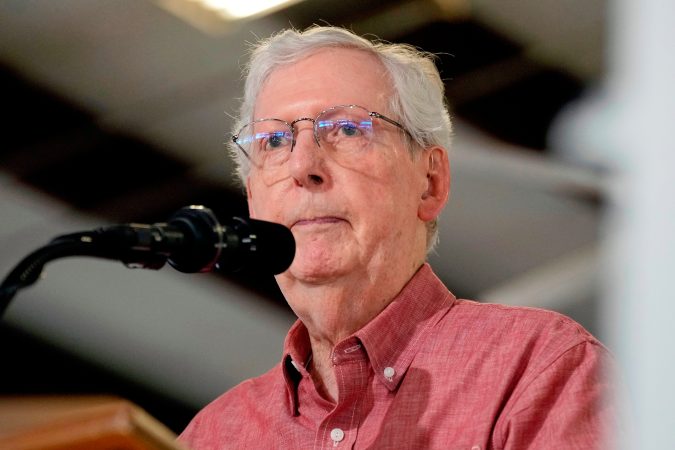
    WASHINGTON — Sen. Mitch McConnell on Sunday revealed for the first time that a fall led to his hospitalization, breaking the silence about his condition after weeks of mounting speculation about the Kentucky Republican’s health.

    McConnell, 84, said in a statement that he has undergone a battery of tests as doctors try to determine what led to his fall. He explained the long silence about his condition by saying that “folks of my generation often hesitate to share the vulnerability that comes with growing older.”

    “Even in the public eye, I feel that same instinct — I can’t help it,” he said.

    McConnell said he is now in a rehabilitation center and will not be returning to the Senate “quite yet.” He said he continues to work with his staff on Senate business in the meantime.

    The statement included a smiling picture of the senator with his wife, Elaine Chao, a tacit response to speculation online that McConnell had died or was incapacitated.

    It comes following his hospitalization on June 14. McConnell’s office for weeks provided little information, insisting only that he was “receiving excellent care” and recovering. As his hospital stay grew longer, speculation mounted about his condition. It grew so intense that Kentucky’s Democratic Gov. Andy Beshear took the extraordinary step of asking that McConnell update the public about his health in a “transparent manner.”