Tag: no-latest

  • Assigning FEMA staff to immigration enforcement hurt disaster work, House report says

    The Department of Homeland Security misused Federal Emergency Management Agency resources when it diverted dozens of staff to help with immigration enforcement, says a new report by a group of House Democrats shared first with the Washington Post. The lawmakers describe the deployments as an example of how the Trump administration has hindered FEMA’s ability to properly prepare for and respond to disasters.

    Beginning last summer, the Trump administration reassigned FEMA personnel to immigration enforcement roles that were largely outside the scope of emergency and disaster work for long stretches of time when the agency was grappling with extensive cuts and leadership changes, according to the report from Democrats on the House Transportation subcommittee on economic development, public buildings, and emergency management. The probe was based on interviews with 15 current and former FEMA employees and disaster and immigration policy experts.

    “Overall, the Administration’s sweeping immigration agenda has used FEMA resources and personnel to aid in carrying out large-scale immigration enforcement operations, distracting the agency from its statutorily required responsibilities, jeopardizing its workforce levels and expertise, and reducing its ability to respond to disasters and aid survivors,” the report said.

    To assess the probe’s findings, the Post separately reviewed previously unreported documents from the Government Accountability Office related to the report, and spoke with two current FEMA employees with direct knowledge of the agency’s immigration deployments, as well as four former senior FEMA officials and two federal officials who specialize in homeland security.

    Two current and former FEMA officials interviewed said some of the lawmakers’ findings were mischaracterized, because DHS has called on FEMA personnel and specialized teams to support immigration work in the past. They did, however, agree with the report’s conclusion that FEMA’s primary mission “has been measurably undermined by DHS’ policy goals surrounding border security.”

    DHS and FEMA did not provide a comment to the Post by the time of publication.

    The Post reported in August that DHS began to move dozens of FEMA staffers to help immigration agencies with vetting and onboarding new hires, as well as other administrative work. The lawmakers’ report, as well as separate interviews with six current and former federal officials and documents from GAO reviewed by the Post, reveal in greater detail how involved FEMA was with immigration initiatives for nearly a year.

    At the time, some FEMA leaders raised concerns about the legality of using disaster-funded resources for this kind of work, according to one former senior official with direct knowledge of the situation who, like others interviewed for this story, spoke on the condition of anonymity because they were not authorized to speak publicly about FEMA’s immigration work.

    But “they still were sent over,” the former official said.

    FEMA employees worked in detention centers, including in Minneapolis, where protesters surrounded one staffer en route to an Immigration and Customs Enforcement facility, according to witness accounts summarized in the report. FEMA human resources staffers reviewed applications and issued job offers for the surge of new immigration enforcement officers, according to details the agency sent to GAO in connection to the probe and reviewed by the Post.

    “ICE could not have done this work without FEMA,” a former agency official who specialized in national incident management and homeland security, and who had field experience at a Texas detention facility, told lawmakers for the report. “ICE is good at law enforcement, but operations, strategy, and the big picture — FEMA created that structure for them, building the plan and the operation toward the mission end-goal.”

    The influx of immigration work consumed FEMA’s hiring and administration capacity and delayed its ability to process some work, even as disaster staffers were losing their contracts, according to the report. A current FEMA official with knowledge of the situation also described the strain on that department.

    “Basically all human resourcing actions ground to a halt,” the official said. “We couldn’t process even simple things like annual salary adjustments for current staff on time.”

    FEMA helped oversee a group of civilians who volunteered with the Defense Department for immigration enforcement, and whose duties included planning support for arrests, raids, and patrols, and “managing the physical flow of detained noncitizens from arrest to deportation,” according to one GAO document. The current FEMA official similarly described how staffers managed that workforce.

    Because the agency can quickly coordinate resources and logistics, previous administrations have tapped FEMA to support or lead complex missions outside its usual scope. That has included processing the entry of refugees; helping shelter, transport, and provide medical support to migrants; or leading the nation’s coronavirus pandemic response.

    Still, five current and former agency officials described a stark difference in how this administration has deployed FEMA — not for humanitarian work, as had happened in the past, but for coordinating and supporting mass immigration raids, arrests, and deportations across the United States. Former FEMA leaders said this administration’s use of the agency sets a new precedent.

    “I’ve spent almost two decades in emergency management, including leading FEMA. The agency has always faced resource constraints and competing pressures. That’s not new,” said Pete Gaynor, who ran FEMA during President Donald Trump’s first term and oversaw the agency’s coronavirus operation. “What these findings describe, however, raises serious questions that deserve honest answers.”

    Chris Currie, GAO’s director for emergency management issues, said that while FEMA has been asked to do a wide range of tasks outside disaster response and recovery, he was not aware of any previous situation in which FEMA personnel were reassigned to other agencies for the purpose of hiring employees for those agencies.

    Other aspects of the reassignments also raised questions, he said.

    “A valid question is to what extent were they making decisions in the hiring of those candidates? Were they involved in interviews? Were they making qualitative decisions about their ability to perform the function?” Currie asked. “But given the number of ICE officers hired in the last year, it’s clear that DHS needed additional help.”

    The reassignments came as FEMA was mired in internal upheaval.

    Since January 2025, FEMA has lost about 30% of its staff — about 5,000 people, according to the probe — a number higher than previously reported. The losses reflect cuts by the Trump administration, voluntary departures, and involuntary reassignments, the report notes. FEMA has also lacked a Senate-confirmed leader since Trump returned to office last year.

    FEMA has long had a workforce problem, Currie said. Even before the latest Trump administration took over, numerous GAO reports over the years identified staffing issues that contributed to prolonged disaster recoveries, he said.

    “So it’s concerning anytime I see resources redirected away from FEMA,” he said. “Because they have struggled for so long.”

    In May, FEMA told Currie’s office that starting in August 2025, DHS reassigned about 125 people from its security and human resources offices. Earlier that year, 41 FEMA employees volunteered to help DHS at the southern border as part of an internal immigration enforcement mission.

    DHS offered in some cases to renew the expiring contracts of disaster-specific workers if they raised their hands for immigration assignments, according to the lawmakers’ report. Some of these workers, known as CORE, or Cadre of On-Call Response/Recovery Employees, were dismissed en masse last winter, only to then be rehired months later when new FEMA leaders came in.

    In response to questions from GAO, FEMA said DHS instructed the agency to permanently reassign two staffers to ICE. One person declined and chose to voluntarily transition out of DHS. The other initially accepted but resigned before their start date.

    Many FEMA employees stayed in their immigration roles for periods “far exceeding prior administrative practice,” the report found, including for longer than 120 days, which former FEMA administrator Deanne Criswell said was a timeline the agency’s Office of Chief Counsel developed years ago. Some assignments lasted more than 200 days, which Criswell said is concerning because “these employees are hired under special hiring authority to be used to support disaster response and recovery.”

    FEMA told GAO in writing that all details should have ended in May.

    One current FEMA official with knowledge of the situation said that FEMA’s new leaders were winding down the agency’s involvement in immigration support “so we can pivot to our core mission and focus on hurricane season.”

    The lawmakers’ investigation includes other examples of how the Trump administration has hindered FEMA’s ability to coordinate large-scale disaster response efforts.

    During the disastrous Texas floods that killed at least 137 people last July, internal documents included in the report note that lapsed contracts for call centers, which were not renewed by then-Homeland Security Secretary Kristi L. Noem, kept hundreds of disaster survivors waiting in exceptionally long call lines. Emails show how FEMA had warned about the lapse and was trying to work around it, all while processing 60,000 disaster survivor caseloads.

    Rep. Greg Stanton (Ariz.), the subcommittee’s ranking Democrat who led the report, said in an interview that federal law put in place due to failures after Hurricane Katrina was meant to protect FEMA from “politics getting in the way of delivering disaster response.”

    “I’m very angry about what I learned,” he said. “I think the American people will be pretty shocked and disappointed that the United States is not focused on natural disaster preparation and response, that a third of [FEMA] employees are gone, and some that are left are being used for other purposes, especially supporting an agency that has an ungodly amount of increased resources.”

    The lawmakers lay out recommendations that call for strengthening the autonomy and oversight of FEMA. Those include a call to make FEMA an independent, Cabinet-level agency — which has previously been a bipartisan push — and a suggestion that DHS reimburse the disaster agency for its immigration work.


  • Trump fires members of bipartisan elections commission

    Trump fires members of bipartisan elections commission

    President Donald Trump dismantled a long-standing bipartisan elections board Thursday, four months before a midterm contest that will determine which party controls Congress.

    Trump dismissed members of the Elections Assistance Commission less than two weeks after the Supreme Court gave the president broad leeway to reshape boards that were designed to be independent. Congress created the panel to strengthen and secure elections in response to the challenges of the 2000 contest and structured it so no more than two of its four members belong to the same political party.

    Trump’s actions weaken the commission, which is responsible for maintaining the federal voter registration form and certifying electronic voting equipment. New appointees would need to be confirmed by the Republican-controlled Senate.

    The move is the latest in Trump’s broad effort to exert authority over elections as he falsely claims the 2020 election was stolen from him. Trump has spent years casting doubts on elections and pushed to limit the use of mail ballots and voting machines.

    In recent months, Trump has sought to overhaul how the midterm elections will be run, in part by directing the commission to redesign a form so that people would have to provide proof of citizenship to register to vote. Many of Trump’s actions on elections, including his attempt to change the form, have been thwarted by courts.

    The White House said the president “reserves the right to remove individuals that may not be totally aligned with the important task of securing America’s elections and ensuring every legal vote is counted.” It did not say whether he planned to name replacements and when he might do so.

    Late last month, the Supreme Court ruled Trump could fire a Democratic member of the Federal Trade Commission in a decision that gave presidents broad powers to determine who controls federal agencies. The ruling was tempered by a separate decision that came the same day that prevented Trump from dismissing a member of the Federal Reserve Board. His latest actions could prompt new litigation and determine the extent of the president’s authority.

    Trump on Thursday fired the two Democratic members of the elections commission, Thomas Hicks and Benjamin Hovland, and accepted the resignation of a Republican member, Christy McCormick. The other Republican member, Donald Palmer, resigned this spring.

    Despite the firings, the commission’s staff can certify voting equipment, disburse funds, and maintain the federal voter registration form, according to the Institute for Responsive Government, a nonprofit group aimed at making government more accessible. The staff cannot establish new policies or guidelines without commissioners, the group said.

    Trump’s move “is a blatant part of his plan to politicize our elections,” said Sen. Alex Padilla (Calif.) and Rep. Joe Morelle (N.Y.). The two are top Democratic members of committees that oversee election policies.

    “Americans deserve elections that are safe, secure, and run free from political interference — not overseen by partisan loyalists and election deniers beholden to Trump,” they said in a statement.

  • How Jefferson is Deepening its Community Ties to Improve Health Outcomes

    How Jefferson is Deepening its Community Ties to Improve Health Outcomes

    From the Poconos to Cherry Hill, Jefferson has become a familiar presence. As the largest academic health system in the Greater Philadelphia region, the nonprofit institution sees millions of patients each year across its 33 hospitals and more than 700 care sites spanning Pennsylvania and New Jersey. That reach, said Keith Leaphart, the executive vice president and Humana chief health equity and community impact officer at Jefferson, gives the organization a particular responsibility to its communities.

    “We are the primary safety net system here,” Leaphart, who also serves as vice chair of The Inquirer’s board of directors, said. “We’re serving a lot of people who are uninsured and underinsured, and we’re not turning them away.”

    Jefferson’s 2025 Community Impact Report, “Driven to Improve Lives,” explains how the anchor institution is using its unique model as an integrated health system that includes a university and a not-for-profit health plan to address the region’s needs. The report highlights more than $2.7 billion in community funding, including investments in access to care, health professionals’ education, and community-based services. It also offers a road map for Jefferson’s community partnerships and initiatives: building trust through neighborhood partnerships, expanding access to nutritious food, creating pathways into healthcare careers, and preparing the next generation of providers to meet people where they are. “At Jefferson, we believe our responsibility goes far beyond the walls of our hospitals,” Jefferson CEO Dr. Joseph Cacchione said.


    Building Bridges to Bring Healthcare to All

    Jefferson’s 2025 Community Impact Report that approach through investments in initiatives like the Community Health Worker Academy, a paid job-training program for new healthcare professionals who help their neighbors navigate health and social services.

    The program is an example of how Jefferson has been intentional about mobilizing health workers who come from the same communities that they serve and are often able to speak with patients in their preferred languages. Empowering community members to provide care creates a powerful access point for residents who may not otherwise connect with care systems. Community health workers also help build trust between their neighbors and health institutions.

    Similarly, Jefferson’s Inspire Network, which launched last November, partners with faith-based organizations across the region to empower faith leaders to help their congregants better understand the healthcare system. “When someone gets sick or they need care, they’re often going to a community of faith and asking for prayers and support and comfort and meal trains,” Leaphart, the Jefferson leader, said. By teaming up with faith leaders, Jefferson can help them meet their congregations’ needs directly. The health system also invites faith leaders to its quarterly Partners in Purpose events to foster relationships and collaborate on their work together. To date, Jefferson has partnered with more than 150 faith-based organizations to offer health services like screenings. The organization also hosts family-friendly events like Night at the Zoo, an annual visit to the Philadelphia Zoo that provides residents with access to affordable health options. Last year’s occasion drew 4,000 residents.

    To build on the success of partnerships like these and create opportunities for future collaborations, Jefferson recently launched a community engagement request form through which workers with community-based organizations can request a JeffCARES team visit to their place of worship or social event to provide free screenings and other health services.

    Cortney Reed, Jefferson Health’s director of Community Engagement, at the JeffCARES Community Food Pantry, which offers fresh food and recipes to support healthy eating, at Jefferson Einstein Philadelphia Hospital.Courtesy Jefferson Health

    A Recipe for Expanding Food Access

    Jefferson’s community-impact report also shines a light on the work the organization is doing to increase access to healthy meals in the Philadelphia region, where more than 600,000 people experience food insecurity. The health system partners with food banks like Philabundance and Second Harvest Food Bank of the Lehigh Valley and Northeast Pennsylvania and runs a number of community pantries, volunteer programs, and initiatives, including custom meal plans that support cancer patients undergoing treatment in Willow Grove.

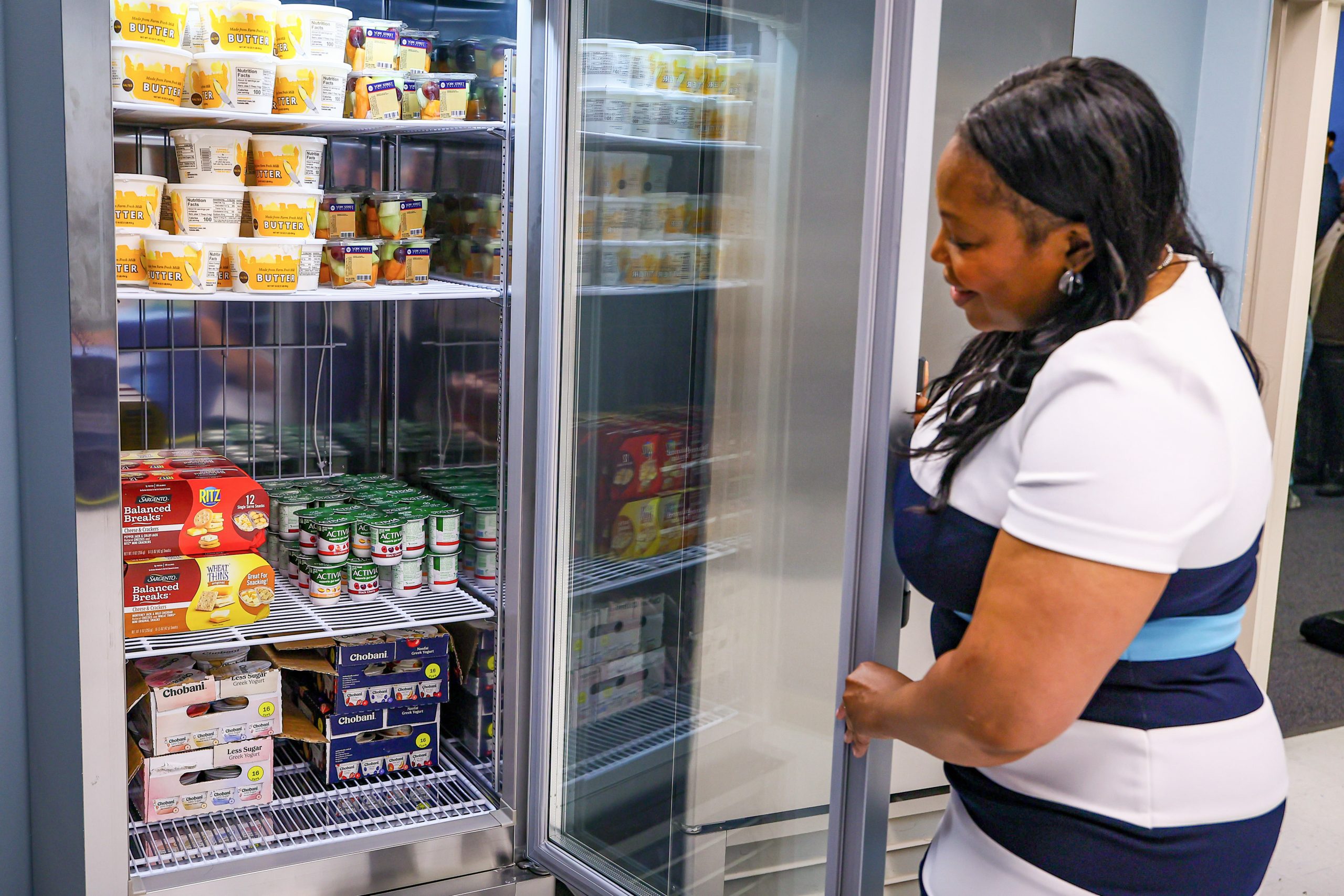
    One highlight from the report is the JeffCARES Community Food Pantry, the first Philabundance food pantry located within a hospital. It opened in April 2025 at Jefferson Einstein Philadelphia Hospital in North Philadelphia. “Philabundance has been a valued partner of ours for many years, but establishing a hospital-based site was something our community truly needed,” Dixie James, the president of Jefferson Health’s Central Region and the chair of the Philabundance Board of Directors, said.

    In addition to fresh dairy products, meat, and shelf-stable items, the pantry provides recipes for nutritious meals tailored to support a variety of health conditions, including diabetes. The pantry is open to patients, community members, and Jefferson colleagues.

    “Access to safe, healthy, nutritious foods, [and] fresh produce is something that we know is directly connected to overall better health. If you’re able to eat healthy, you’re going to have better health in general. We want to be at the center of that,” Leaphart said. “That doesn’t happen without partnerships.” Jefferson serves around 150 meals per week to families and has distributed about 6,700 bags of food so far this year.

    Jefferson’s $2.7 billion investment in community impact expands access to care and inspires future healthcare professionals through education and a school speaker series.Courtesy Jefferson Health

    Careers That Grow With Community Partnerships

    Another important part of Jefferson’s community-impact work, as detailed by the report, is career development. “One of the things that we’ve been really intentional about is building out pathway programs and pipeline programs for young people to be exposed really, really early to careers in medicine,” Leaphart said. The organization, which is the region’s largest employer with 65,000 employees, is getting kids interested in the healthcare industry by inviting staffers to visit classrooms to talk about their careers as Jefferson School Speakers.

    Jefferson has more than 20 programs across the enterprise engaging students from elementary to high school in career exploration, as well as pipeline initiatives with reputable workforce development organizations. Jefferson also runs dedicated programs for high school and college students through partnerships with educational institutions. “One that we’re really excited about is the Jefferson Workforce Development Program, a partnership between the School District of Philadelphia, North Philadelphia’s Esperanza College, and Jefferson Health,” Leaphart said. The program offers free training to high school students interested in careers as patient care technicians or medical assistants.

    Students who successfully complete the training are qualified to enter the healthcare industry as entry-level workers. Since launching the program last April, Jefferson has hired 27 students who earned their certification in the course.

    Community partnerships are also emphasized within Jefferson’s own academic institution. Students at Thomas Jefferson University, for instance, are encouraged to actively volunteer in the community. “Volunteering is core to everything that we do,” Susan Aldridge, Ph.D., the president of Thomas Jefferson University, said. “When you start here at Jefferson as an undergraduate student, within your first week, you’re volunteering in the local community, which is really unique and reflects the culture of our institution.”

    Many medical students with Sidney Kimmel Medical College volunteer with the student-run program JeffHOPE, through which they work alongside physicians to provide health screenings to vulnerable populations through a network of free drop-in clinics at homeless shelters — yet another example of how Jefferson is committed to expanding access to care. To date this year, Jefferson has hired 1,308 Thomas Jefferson University graduates.

    Community-First Leadership

    For Jefferson, improving access to health and education extends beyond hospital campuses and care sites into schools, shelters, food pantries, houses of worship, and community events — places where people feel comfortable and are already seeking support.

    “As a leading academic health system, we have both the reach and the obligation to improve health across entire communities — by expanding access, investing in people, and partnering in ways that create lasting impact,” Cacchione said. As the report makes clear, Jefferson’s mission to improve lives depends on building the partnerships, pathways, and trust that help communities thrive.


    Chloé Pantazi-Wolber is a writer and editor. Her work has appeared in Business Insider, Philadelphia magazine, The Rooted Journal, Travel Bulletin, The Paris Review, and more.

  • 90 percent of U.S. adults have this syndrome — but most have never heard of it

    90 percent of U.S. adults have this syndrome — but most have never heard of it

    Susan Gilchrist, a preventive cardiologist and epidemiologist, sees patients all the time at the University of North Carolina Cardiovascular-Kidney-Metabolic (CKM) Syndrome Clinic who don’t know what CKM is and are not sure why they’re in her clinic.

    It’s not surprising — CKM syndrome was only recently coined, in 2023, by the American Heart Association (AHA). And roughly 9 in 10 U.S. adults — about the same number of people estimated to have it — have never heard of it.

    CKM syndrome is not one disease but rather “a broad disorder that recognizes the overlap between cardiovascular, kidney and metabolic conditions such as diabetes and obesity,” said Muthiah Vaduganathan, a cardiologist at Brigham and Women’s Hospital who has conducted landmark studies on CKM syndrome. Doctors have long known that people often have more than one of these conditions at once. CKM syndrome reflects a newer understanding that the very same factors — specifically, extra weight, high blood pressure, high blood sugar, abnormal cholesterol and reduced kidney function — can contribute to the onset and progression of all three types of disease, Vaduganathan said.

    The good news is that a similar set of therapies can be used to manage conditions across the CKM triangle, Vaduganathan said.

    How does CKM syndrome start and progress?

    Researchers have defined CKM syndrome as a four-stage continuum, reflecting how symptoms and risk factors progressively pile up, raising the likelihood of a heart event or kidney failure.

    • Stage 1: Includes people with extra fat tissue — defined as a body mass index (BMI) of 25 or higher, or a waist circumference of 88 centimeters or greater in women and 102 centimeters or greater in men — and those with “dysfunctional” fat tissue, who may not have a larger body but show signs of poor glucose tolerance, like prediabetes. Because BMI can’t distinguish lean body mass from fat, it can misclassify short or muscular people as overweight, which is why Gilchrist said experts often use it in tandem with the other metrics here to pinpoint those who fall in this risk bucket.
    • Stage 2: Includes people with metabolic risk factors that often flow from extra fat tissue, like high blood levels of a type of fat called triglycerides, high blood pressure, metabolic syndrome (a cluster of symptoms that can include either of the previous two, as well as a large waist, poor cholesterol and high blood sugar), diabetes or chronic kidney disease. At this stage, people still tend to be asymptomatic, Vaduganathan said. Getting categorized requires bloodwork, usually done at a routine physical.
    • Stage 3: Includes those from prior stages who’ve developed presymptomatic heart disease, such as atherosclerosis or heart failure, and those with very high-risk CKD or a risk greater than 20 percent of a heart event in the next 10 years, based on the AHA’s PREVENT calculator. Since the disease might still be silent at this point, a person would be classified when their doctor orders screenings based on the above risk factors.
    • Stage 4: Includes people from the above stages who’ve been diagnosed with a stroke, heart failure, coronary heart disease, peripheral artery disease or atrial fibrillation. This stage, which can occur with kidney disease (stage 4b) or without (stage 4a), covers the most severe outcomes of CKM syndrome and brings a high risk of future heart events, too.

    This framework has helped Gilchrist explain to patients why weight matters for health: Carrying extra weight alone does not equate to disease — but it may put you on a path toward it. A large waist circumference and high blood sugar, in particular, are signs of what Gilchrist called “metabolically dangerous” fat. It releases inflammatory proteins into the blood and can rev up your body’s “fight or flight” stress state, she said.

    That combination can raise blood pressure and levels of certain fats in the blood, and make cells resistant to insulin (which helps with sugar uptake), dumping even more sugar in the blood. Both high blood sugar and high blood pressure can damage the tiny blood vessels feeding the kidneys, harming their ability to filter waste and extra fluid, said Joshua Joseph, an endocrinologist at the Ohio State University Wexner Medical Center. The fluid backup increases blood volume, straining the heart and further raising blood pressure, Joseph said, setting off a downward spiral toward heart events and kidney failure.

    Why is CKM syndrome becoming a more common diagnosis?

    The CKM framework was only formalized in 2023, and the physician guidelines for identifying and managing it, in June 2026, so the syndrome is just now gaining recognition.

    CKM syndrome affects 90 percent of Americans because it’s broadly defined to capture everyone on the continuum from those who might feel well but have early metabolic risk factors, to those with full-fledged heart disease. “It doesn’t mean that 90 percent of Americans require treatment,” Vaduganathan said. The goal isn’t to overmedicalize but to push prevention: “It’s more that 90 percent of Americans should be aware that they are at least at risk for progression of one or more of these conditions — metabolic, kidney or heart — and that early lifestyle management can help.”

    Gilchrist pointed out that the guidelines even describe a “Stage 0,” which includes the other 10 percent of Americans. They may not technically have the syndrome but are still at risk for developing it if they don’t actively subscribe to a healthy lifestyle, she said.

    So much of the American public falls between Stage 1 and Stage 4 CKM syndrome because of our typical lifestyle behaviors, said Joseph. “We live in a 24-hours-a-day society where we may struggle to eat healthy foods, be physically active and get enough sleep,” he said. Roughly 20 percent of U.S. adults also use tobacco products, he added, which ratchets up risk, too.

    But our behaviors also occur in the context of our environments, Joseph pointed out. You might live in a rural area without easy access to a grocery store or in a city lacking green spaces or other safe areas to go out and be active. Or maybe your home is surrounded by factories that pump pollutants into the air. “Both the environmental foundation and the lifestyle behaviors are levers we’re trying to move,” Joseph said.

    What are the treatments for CKM syndrome?

    At early stages, treatment centers on lifestyle interventions. For instance, “we know that a Mediterranean-style diet can not only help mitigate blood pressure and blood sugar, but has also been shown to reduce long-term cardiovascular risk,” Joseph said. Beyond diet, the AHA guidelines for CKM syndrome also note being physically active, avoiding nicotine products and getting quality sleep plus, in people with extra weight, behavioral weight loss programs led by clinicians.

    A handful of long-used medications are also still recommended to tackle specific risk factors and diseases in people at higher stages — for example, metformin to lower blood sugar, statins to combat high cholesterol and angiotensin-converting enzyme (ACE) inhibitors to control blood pressure.

    But the biggest focus for people across the CKM spectrum is on new medications with broader effects across organs, the experts said. For instance, glucagon-like peptides (GLP-1s) can help with weight and lower blood sugar by slowing down digestion, which has been shown to benefit the heart and kidneys. Then there’s sodium-glucose cotransporter 2 (SGLT2) inhibitors, which help you urinate out sugar and are also proven to reduce heart failure admissions and stabilize kidney function, Joseph said. And nonsteroidal mineralocorticoid receptor antagonists (nsMRAs) can limit fluid backup in the kidneys with upstream benefits for the heart.

    We’re in such a “great era of medicine,” Gilchrist said, because we don’t just have drugs that lower one risk factor. With the CKM framework, we can find people at risk, she said, and “we can offer medicines that may actually help them stay out of the hospital and live longer.”

  • Trump administration fires members of independent election group

    Trump administration fires members of independent election group

    The Trump administration has forced out the three remaining members of an independent, bipartisan commission that supports states in administering their elections, the White House confirmed on Thursday. The move comes as President Donald Trump seeks to cast doubt on the outcome of the upcoming midterms and impose control over how ballots are counted.

    Trump terminated, effective immediately, Thomas Hicks and Benjamin Hovland, two members selected by congressional Democrats to serve on the Election Assistance Commission, and accepted the resignation of a Republican member, Christy McCormick.

    The board has no other remaining members, as its fourth commissioner resigned this spring.

    An unidentified White House official issued a statement saying that Trump reserved the right to remove individuals who “may not be totally aligned with the important task of securing America’s elections and ensuring every legal vote is counted.” The White House official cast the dismissals as part of the federal government’s strategy to work across agencies to safeguard elections from fraud and abuse.

    The official pointed to the recent decision in which the Supreme Court ruled that Trump had the authority to fire most independent regulators for any reason, ushering in a vast expansion of presidential power. Trump had hailed the decision as “the Greatest Increase in Presidential Power in the last 100 years.”

    Trump has been laying the groundwork for months to claim that Republicans would face a tough midterm election, not because of the broadly unpopular war in Iran and plummeting approval ratings on the economy, but because the country’s election system is fraudulent.

    Trump, who has falsely claimed that the election he lost in 2020 was “rigged,” has been pushing legislation that would impose stringent voter identification requirements. He has called for significantly curtailing the use of mail-in ballots, which he has claimed without evidence that Democrats have used to cheat. (Trump voted by mail in a special election in Florida in March.)

    The Election Assistance Commission, which was established in 2002, is a crucial guardrail for ensuring election security across the country. According to its website, it guides states in ensuring they meet voting requirements, oversees testing and certification of voting systems and disperses funding to help states meet requirements. It serves as a national clearinghouse for information on election administration and maintains the national mail voter registration form established by the National Voter Registration Act of 1993.

    Last year, Trump issued an executive order that calls on the Election Assistance Commission to require people to show government-issued proof of U.S. citizenship to register to vote in federal elections and directs state or local officials to record and verify the information. It also seeks to require states to count ballots by Election Day. A judge permanently blocked the order, saying the president exceeded his authority.

    Michael Waldman, the president and chief executive of the Brennan Center for Justice at the New York University School of Law, in a statement called the terminations “deeply concerning in light of President Trump’s relentless efforts to try to interfere in elections.”

    This article originally appeared in The New York Times.

  • New Air Force One lacks defensive countermeasures of previous model, officials say

    New Air Force One lacks defensive countermeasures of previous model, officials say

    The new Air Force One, which President Donald Trump flew on earlier this week to Turkey, lacks the same defensive countermeasures that were security features of the old model, including its advanced antimissile capabilities, according to multiple officials who have been briefed on how the jet was retrofitted.

    Experts say the absence of those capabilities on the Boeing 747-8 aircraft, which was donated by Qatar, creates potential risk in using the jet abroad, a dynamic underscored by the abrupt decision Wednesday for Trump to leave Turkey on the old Air Force One at the urging of the Secret Service.

    The episode is intensifying the focus on Trump’s demands to rapidly retrofit the donated 747 to replace an aging fleet that had served as the official presidential planes.

    Lawmakers have called on the administration to disclose whether the overhaul of the Qatari plane, which the Air Force oversaw in the course of the past year, provided sufficient security upgrades. The safety of the aircraft is critical not only for the president, but also for the large entourage of White House staff, Secret Service officials, journalists, and guests who fly aboard.

    Trump pushed for the new plane to be put into use as quickly as possible and frequently complained that the old presidential aircraft was not impressive enough to take on international trips.

    On Thursday, the White House did not address specific questions about the new plane’s capabilities, but defended its safety.

    “The new Air Force One is a state-of-the-art aircraft that has been fitted with high-level security protocols that ensure the safety of the president and his staff,” Steven Cheung, the communications director, said in a statement. “As the president has said recently, there are many enemies of America who have their sights on him, and we use every tool at our disposal to address those threats.”

    The Air Force has declined to discuss specifics around security systems on the retrofitted Qatari plane, which is being used as a “bridge” aircraft while two Boeing jets that will be part of the permanent presidential fleet are being finished.

    But in a statement it made when it announced that the donated jet was ready to transport the president, it acknowledged that the temporary plane did not have all the equipment usually found on an Air Force One.

    “No risk was taken in security, safety, or mission communications,” the Air Force said in a statement on June 19. “But the collective team made trades on some of the less commonly used mission sets that Boeing must deliver to support the next 40 years.”

    The Air Force would not say what it meant by “less commonly used mission sets.”

    However, officials who have been briefed on the retrofitting of the Qatari jet, who spoke on the condition of anonymity to describe its security features, said it did not have the same counter-defensive capabilities of the previous model.

    Two former Air Force officials, who had both been involved in the effort to replace the older Air Force One planes, said they were surprised to see Trump fly on the new jet overseas, where there are greater security risks. Turkey, where Trump attended a NATO summit, borders Iran, which the United States pummeled with renewed strikes this week.

    The former officials were not involved with the retrofitting of the Qatari jet, but said the speed of the project meant there would not have been enough time to make all of the security modifications that are traditionally associated with a fully equipped presidential aircraft.

    “Time didn’t permit all the normal Air Force One modifications, so some mix of security, communications and support is missing,” said Frank Kendall, the former Air Force secretary who was in charge of the department as it tried to push Boeing to accelerate its long-delayed contract to deliver two new Air Force One planes.

    “With the Iran situation, this could be of concern,” Kendall said. “Frankly, I’m surprised to see this plane used outside the U.S.”

    Andrew P. Hunter, the former Air Force assistant secretary who was in charge of the Air Force One program during the Biden administration, also said that a true retrofit of a 747 jet to prepare it to become Air Force One would require more than a year of work.

    The day before Trump left for Turkey, Senate Democrats wrote to the Air Force asking questions about the modifications to the Qatari plane and questioning whether it had all the necessary security upgrades.

    “Trump’s own statements — including his celebration of ‘a level of luxury that nobody’s ever seen before’ — make it clear that these decisions prioritized Trump’s personal comfort and tastes over U.S. national security,” they wrote in the letter sent by Sen. Christopher Murphy (D., Conn.) and 12 other senators.

    The older planes that served as Air Force One included a defensive system designed to defeat heat-seeking missiles. That capacity is also planned to be included in the new Boeing planes, according to three former Pentagon officials.

    Different parts of the defensive systems are visible on the old Air Force One, under the wing of the plane and on its tail. They are not observable in photographs of the new Qatari plane, according to a third former Air Force official, who spoke on the condition of anonymity to describe the security protocols.

    Missile defense systems on Air Force One have seen little use in the history of the aircraft, but have nevertheless been considered critical aspects of the plane’s security features.

    The Pentagon published specifications for the Boeing aircraft now under construction that indicate the new jets will include a “self-defense system” and “mission communication system,” as these and other upgrades are needed “to enable the president to execute the duties of head of state, chief executive, and commander in chief.”

    U.S. officials have said that Iran has been targeting Trump since he ordered the drone strike that killed Qassem Soleimani, in January 2020. During the 2024 campaign, the Secret Service increased protection for Trump, even before the attempt on his life in Butler, Pa., because of intelligence about Iran’s plotting against him.

    Despite the resumption of intense U.S. strikes on Iran, U.S. policymakers briefed on the current intelligence do not believe that Iran has a current plan to kill Trump during this period. A U.S. official, who spoke on the condition of anonymity to describe intelligence assessments, said that Iran had a clear understanding of what kind of deep provocation any attempt on Trump’s life would be and the intensity of a U.S. response.

    Nevertheless, the Secret Service was concerned enough about Trump’s proximity to the country while in Ankara to force the president to swap planes on the way out of the country, as the New York Times first reported Wednesday.

    In announcing the change, Trump offered a different story: He claimed that he was flying out on the old plane so the new jet could leave early and make stops at U.S. military bases to show it off to the troops because the aircraft is “magnificent.”

    One former senior White House official involved in discussions about military aircraft used for presidential travel said that there were frequently points of tension between White House staff and the military advisers and Secret Service over travel plans when security questions emerged.

    But when the military experts demanded changes, White House officials generally let them prevail, with “course of action” plans that mitigated potential threats.

    This article originally appeared in the New York Times.

  • Mysterious airstrikes target Iran after US attacks, raising questions of who launched them

    Mysterious airstrikes target Iran after US attacks, raising questions of who launched them

    DUBAI, United Arab Emirates — A series of mysterious, unclaimed airstrikes that hit Iran after the U.S. said it finished its attacks have again raised questions of who else may be targeting the Islamic Republic.

    The strikes Thursday, just as Iran prepared to bury the late Supreme Leader Ayatollah Ali Khamenei, hit areas across southern Iran. The country’s theocracy hasn’t directly blamed anyone for the strikes, though one lawmaker issued a warning to the United Arab Emirates over allegedly providing support to the United States in its campaign against Iran.

    Gulf Arab states, which repeatedly have been targeted by Iran since the war began Feb. 28, did not immediately respond to requests for comment Friday over the strikes. The attacks come as they and the U.S. insist the Strait of Hormuz must be open and free to ships to transit. Iran insists the strait, through which about a fifth of all oil and natural gas passes, must now be under its sole control and that vessels should begin to pay fees to Tehran — even though the world for decades has considered it an international waterway.

    Iran’s grip on the strait during the conflict led to an global energy crisis, though oil prices have sharply dropped since wartime highs of $120 a barrel.

    Israel, which took part in the Iran war, also has not claimed any recent attacks on Iran.

    Unclaimed strikes came after US ended its attacks

    The U.S. military’s Central Command said Thursday around 6:30 a.m. local Iran time that it had concluded a round of strikes that saw some 90 targets hit. Shortly after that, Iranian news outlets and state media reported a series of airstrikes and explosions targeting the country’s Bushehr and Sistan and Baluchestan provinces, the cities of Ahvaz and Chabahar and other areas.

    Central Command did not respond to a request for comment over the additional strikes.

    Iran responded to the strikes Thursday by launching a wider volley of attacks across the Mideast, targeting Bahrain, Jordan, Kuwait and Qatar. Missile alert sirens sounded in the four countries, sending people to seek shelter. One person was reportedly hurt in Kuwait as air defense systems targeted the incoming fire across the region.

    The leader of the UAE, Sheikh Mohammed bin Zayed Al Nahyan, traveled to Kuwait immediately after the Iranian attack for a meeting with the small, oil-rich nation’s ruling emir. Gulf Arab countries also held calls with Qatar’s foreign minister, who has been deeply involved along with Pakistan in mediating talks between Iran and the U.S. over the interim deal now in place to halt the return of open warfare.

    During the Iran war, officials say both Saudi Arabia and the UAE launched airstrikes targeting Iran, after Tehran struck energy sites in their countries.

    Israel, which under Prime Minister Benjamin Netanyahu has engaged in an intense campaign against Iran, has not attacked the Islamic Republic since June. Israel also broadly immediately claims its attacks on Iran.

    Israel’s government said Netanyahu spoke with Trump on Thursday night, with Trump updating Netanyahu “on American moves in the Gulf.”

    Israel Katz, Israel’s defense minister, also renewed threats that his nation stood ready to confront Iran if needed.

    The Israel military “is on alert and ready to renew the campaign, to reestablish aerial superiority, and to carry out a blue-white (Israeli) strike in Iran to remove threats, even for a third time,” Katz told a military ceremony. “If we will have to return, we will return with even greater force.”

    Iran keeps up its threats

    On Friday, Iranian state media quoted Esmail Kousari, a member of the Iranian parliament’s national security committee and a former commander in the paramilitary Revolutionary Guard, as warning the UAE would “pay the price for its cooperation with the United States.” He accused the Emirates of having a “behind-the-scenes” role in the recent U.S. attacks.

    Iran repeatedly accused Gulf Arab states of actively supporting the U.S. war effort, something they denied during the war. The U.S. since the 1991 Gulf War has maintained a broad footprint of military bases across the Gulf Arab states, including in Bahrain, which is home to the U.S. Navy’s 5th Fleet headquarters.

    Meanwhile, Iran insists it must be the sole controller of the Strait of Hormuz. But the U.S. is continuing to urge mariners to travel on a southern route through Oman’s territorial waters to avoid Iran.

    The Joint Maritime Information Center, a multinational body overseen by the U.S. Navy, issued a new advisory Friday urging ships to travel that route. A similar message for ships to use that route sparked an Iranian attack on Tuesday that saw three vessels hit.

    “Notwithstanding recent unprovoked attacks on merchant vessels, mariners are reminded that the southern route of the (strait) has been expanded and remains available for all traffic,” the maritime center said.

  • Why does cancer seem so common right now? An oncologist explains. | Expert Opinion

    Why does cancer seem so common right now? An oncologist explains. | Expert Opinion

    Q: I know so many people who have been diagnosed with cancer. Are rates really going up? Why does it seem so common now?

    A: Cancer is a global problem. If it seems like there are more cancer diagnoses than ever, you’re right: In 1975, about 400 per 100,000 people in the United States were diagnosed with cancer. In 2023, the incidence was 456 per 100,000, though overall rates have been mostly stable since 2014.

    While more people are being diagnosed with cancer today compared with 50 years ago — either because of an increase in actual cases, better detection, or a changing definition of what’s considered cancer — the good news is that fewer are dying of it. Since 1999, age-adjusted cancer death rates fell dramatically, from 201 per 100,000 people in 1999, to 142 per 100,000 people in 2023.

    To understand how these can both be possible at the same time — and how, ultimately, the outlook for those diagnosed with cancer is quite positive — it helps to first understand what cancer is, how it occurs, and how modern treatments have learned how to exploit the diagnosis for good.

    What is cancer and how does it start?

    Put simply, cancer involves the uncontrolled growth of cells in the body. While there are a number of possible causes, they are all related to errors that happen in the cell’s genetic instructions, or DNA.

    The cell can make a random mistake when replicating, resulting in a cell that grows faster than other cells around it. Or, the cell can be damaged by carcinogens, such as ultraviolet light or the chemicals in cigarettes.

    Some cancers can also occur when a cell’s “self-destruct” code malfunctions. Our bodies recognize when cells are damaged, grow too rapidly, or otherwise behave abnormally, then react by sending out chemical signals that tell the cells to stop growing or self-destruct. Errors can alter that signal or affect a cell’s ability to recognize it; the cell turns a deaf ear to the instructions from the body to cease and desist.

    Most genetic errors that cause uncontrolled cell growth occur because of bad luck. The longer we live, the more of our cells divide, increasing the statistical likelihood that one of those cells will make a mistake when replicating and develop into cancer. This is why most cancers are diagnosed in older adults.

    Another form of bad luck includes genetic mutations we’re born with. It is estimated that up to 10% of cancers are caused by inherited genetic abnormalities such as BRCA1 and BRCA2, which are linked to breast, ovarian, and prostate cancers, among others.

    Some genetic errors are introduced by viruses. Anywhere from 13 to 20% of cancers worldwide are thought to be due to viruses, such as human papilloma virus, or HPV, Epstein-Barr virus and hepatitis B and C, and bacteria, such as Helicobacter pylori.

    Other extrinsic or “outside of the body” factors can break or damage a cell’s DNA and lead to cancer, including smoking, alcohol intake, and exposure to ultraviolet radiation from the sun or other sources, such as tanning beds. Less common DNA-damaging culprits include environmental exposures such as industrial chemicals, nuclear radiation, chemotherapy, or radiation therapy used to treat other cancers.

    Once created, cancer cells are insidious: They can instruct blood vessels to grow toward tumors, thus ensuring their own survival by having an adequate supply of oxygen and nutrients; they can hide from the immune system, cloaking themselves to prevent their own destruction; and they can even trick the immune system into helping them survive and thrive.

    Why have cancer rates increased over time?

    Overall, people are living longer because deaths from cardiovascular disease, stroke, and other medical conditions have declined. As we extend our life span, though, we increase that statistical likelihood that our cells accumulate genetic mutations.

    Cancer rates can also change depending on how we define “cancer.” For example, many of my patients have a type of bone marrow cancer called myelodysplastic syndromes. It was only about 25 years ago that the Centers for Disease Control and Prevention and the National Cancer Institute formally recognized this condition as a cancer, and started tracking it alongside more common cancers like those of the lung, breast, or prostate. Once these government agencies decided to call myelodysplastic syndromes a cancer, overnight the numbers of cancers diagnosed in the U.S. increased by about 20,000 per year.

    And much of the increase in cancer diagnoses can be attributed to better detection. Radiology scans have become more refined and sensitive, making them better at detecting abnormalities that lead to cancer diagnoses. Laboratory tests have been developed to identify markers in the blood (such as certain proteins) that suggest cancer may be present before it otherwise would have been discovered.

    Cancer screening programs, which are designed to detect cancer in its early stages, when it is potentially more curable, have uncovered more slower-growing cancers — including ductal carcinoma in situ of the breast in women or early stage prostate cancer in men — that previously never would have been diagnosed.

    While there are increases in certain kinds of cancer (which generate a lot of discussion), such as colorectal cancer in people under 50, it’s also true that cancer rates are dropping in other groups, like colorectal cancer in people over 50.

    Treatments to target and eliminate cancer keep getting better

    There is some good news: People are living longer than ever following a cancer diagnosis. The National Cancer Institute’s Division of Cancer Control & Population Sciences estimates that there are over 18 million cancer survivors in the U.S. and that this number is expected to grow to 26 million by 2040. Seventy percent of survivors live five or more years following their diagnosis, approximately half live 10 or more years and three-quarters of survivors are 60 years or older.

    While some of the improved survival from cancer can be attributed to the increased number of early-stage cancers detected, we can also thank advancements in cancer therapies. Traditional chemotherapies damage cells during the division process, taking advantage of those rapidly dividing cancer cells. Other drugs, called angiogenesis inhibitors, help prevent the growth of blood vessels that feed the tumor. These treatment approaches, though, are not always specific to a given person’s cancer, and tend to affect the growth of noncancerous cells, too.

    But over the past two to three decades, medications have been developed that target specific genetic mutations within the cancer cells, such as the HER2 abnormality in breast cancer, ALK in lung cancer, FLT3 in leukemia, and more recently KRAS in pancreatic cancer, among many, many others.

    And within the past 10 to 15 years, there has been a revolution in the use of immunotherapy to treat cancer, with drugs that specifically target proteins on the outside of cancer cells, or that harness a patient’s own immune system to essentially train it to find and eliminate cancer. These newer, innovative treatments have improved the rates and duration of remission and even survival for a number of cancers, and have retooled how we treat cancer.

    So while it is true that there seems to be more cancer than ever, there is also more hope than ever, as cancer is being detected earlier, eliminated more effectively, or transformed to a chronic condition rather than a life-threatening one.

    Mikkael A. Sekeres, MD, MS, is the chief of the division of hematology and professor of medicine at the Sylvester Comprehensive Cancer Center at the University of Miami. He is author of the books “When Blood Breaks Down: Life Lessons from Leukemia” and “Drugs and the FDA: Safety, Efficacy, and the Public’s Trust.”

  • As consumers pare spending, grocery stores race to cut prices

    As consumers pare spending, grocery stores race to cut prices

    America’s grocery stores are cutting prices to attract consumers who have pared back spending to cope with rising costs.

    Walmart, the nation’s largest retailer, said Monday that it would lower the price of ground beef rolls, fresh corn, cherries, potato chips, and Coca-Cola as part of a slew of summertime discounts.

    It’s the latest grocery chain to do so, increasing competition in a relatively low-margin industry reliant on people buying shopping carts packed with items, including some at more profitable prices.

    The grocery industry has struggled over the past 18 months as higher food bills, reductions in food stamp programs, and the rise in the use of weight-loss medications have resulted in shoppers buying less. On top of that, elevated gas prices because of the war with Iran are hitting shoppers’ wallets.

    A May CNN poll found that 61% of Americans had changed which groceries they bought in order to stay within their budget.

    High grocery prices have been a political issue for several years, so much so that President Donald Trump sought to take credit for Walmart’s announcement, posting on social media that the retailer “will be lowering prices, by a lot, at my administration’s request to celebrate our great country’s 250th birthday.”

    Walmart did not mention Trump or his administration in its news release.

    But while shoppers may get better deals on some items, it’s unlikely that their overall grocery bill will fall. Prices across all food categories are expected to rise 3.2% in 2026, according to the Department of Agriculture’s Economic Research Service.

    While egg prices have dropped from last year’s record levels, the USDA predicts that prices for beef, pork, poultry, sweets, nonalcoholic beverages, fresh vegetables, and fresh fruit will increase this year. That comes on top of the 18% price increase in food consumed at home since the beginning of 2022, according to the U.S. Bureau of Labor Statistics. Beef prices continue to hit record levels this year; Walmart said it would reduce the price of its 1-pound log of ground beef to $5.94 from $6.74.

    In the four weeks ending in late June, prices in 61 food categories rose 3.4% from the same period a year ago, while the volume of goods sold slid by 2.1%, according to analysts at Stifel, a financial services firm.

    To lure consumers in their doors and, hopefully, persuade them to buy more, several grocery store chains have reduced prices on a few dozen items, or the top 10 food products consumers typically buy. They have also increased the number of less expensive store brand products on their shelves.

    “It’s not going to be across the board. It’s not going to be across 40,000 items,” said Phil Lempert, a food industry analyst and the editor of Supermarketguru.com.

    Consumers are also changing where they shop and are making fewer trips to traditional grocery stores in favor of discount grocery chains like Aldi, a company that originated in Europe and is quickly expanding in the United States, according to a grocery shopper study by consulting firm AlixPartners.

    Retailers, still trying to maintain profits to keep investors happy, are looking for ways to fund the price reductions. On a call with analysts in May, Walmart executives said that at least some of the price cuts could be funded by the $2.4 billion it has filed for in reimbursements after the Supreme Court ruled in February that Trump exceeded his authority in establishing sweeping tariffs on imported goods.

    In many cases, the reduced grocery prices likely reflect better deals grocery retailers have gotten from manufacturers, Lempert said. Food and beverage manufacturers, eager for consumers to put more of their foods in shopping carts, oftentimes offer discounts or other promotions to retailers, he explained.

    “The average grocery retailer is only making 1.5% to 2% net profits on groceries,” he said. “There’s not a lot they can do to take price cuts on their own.”

    Earlier in the year, executives at PepsiCo said the company was lowering some prices to drum up demand, or volume, for its snacks and foods. On Thursday, PepsiCo reported that prices in its North American food business, which includes Frito-Lay chips as well as Quaker Foods breakfast and snack bars, were down 2% in the second quarter compared with the previous year.

    Executives said the lower pricing at many stores had helped boost demand in the quarter. They noted, however, that higher gas prices translated into weaker sales at convenience stores.

    Executives at Kroger said on an earnings call in June that the retailer would push harder in negotiations with suppliers but would also fund discounts by cutting its own expenses.

    In May, Stop & Shop, a unit of Dutch supermarket operator Ahold Delhaize, said it was lowering prices on more than a dozen food items in its New Jersey and New York stores. The price of a rotisserie chicken fell $1 to $6.99 and a can of Bumble Bee tuna was cut to $1.99 from $2.29.

    The grocery retailer chose the products based on customers’ everyday purchases across a variety of departments, Daniel Wolk, a spokesperson for Stop & Shop, said in an email.

    Since making the price cuts, Wolk said the chain was seeing “encouraging signs that customers are filling their baskets with more volume.” He added that the original cuts were part of a phased approach and that, since then, prices on “thousands of items” in stores throughout Massachusetts, Rhode Island, Connecticut, New York, and New Jersey had been reduced.

    Costco said in May that it cut prices on everyday goods including eggs and beef, which had slightly impacted the retailer’s margins. The warehouse club slashed prices on items like chicken wings and chocolate almonds.

    “Our goal is to be the first to lower prices where we see opportunities to do so,” Gary Millerchip, the chief financial officer of Costco, told investors on a conference call.

    Target said in March that it would reduce prices for “pantry staples,” after lowering prices on thousands of food items late last year.

    Retailers are also increasingly leaning into placing more of their own brands onto shelves, hoping to drive customer spending on less-expensive store versions of spaghetti sauce, frozen waffles, and baked goods.

    Whole Foods Market, which was famously nicknamed Whole Paycheck for its higher prices, has been trying to alter that perception by expanding its store brand offerings and cutting prices.

    “We’ve reduced prices on more than 900 products across private brands, including the 365 by Whole Foods Market private label selection,” a spokesperson for Whole Foods said in an email.

    This article originally appeared in the New York Times.

  • Letters to the Editor | July 10, 2026

    Letters to the Editor | July 10, 2026

    The winner is …

    Can we please not fixate on the direct economic benefits that the FIFA World Cup is bringing to Philadelphia? The more important and enduring impact is on the city’s image and reputation. We have answered all questions and indisputably proven that we are more than capable of handling a global event like the World Cup. And more importantly, we are showing every visitor who comes to Philadelphia that we are indeed a world-class city. I am lucky enough to serve as a FIFA volunteer in Philadelphia, and my fellow volunteers and I can personally attest to the overwhelmingly positive reaction we are receiving from these visitors. They love the city, the historical attractions, the food and restaurants, and the overall positive and friendly vibe they are soaking in from our City of Brotherly Love and Sisterly Affection. They all talk about how they will spread the word when they go back home. Having spent time at Love Park, the Liberty Bell, Independence Hall, the Art Museum, the Rocky steps, and Fanfest, it’s clear Philadelphia is the biggest winner this summer.

    Scott Applebaum, Philadelphia

    . . .

    I live in Old City, which is a tourist magnet with several major hotels. Thus, during the past month, I had the good fortune to share our local parks, pubs, and places — both famous and obscure — with visitors from around the world. Tens of thousands of folks came here to attend World Cup games and ceremonies. I encountered and interacted with individuals, families, and travel groups from Brazil, Croatia, Ecuador, France, and Ghana. These sightseers were almost universally celebratory, colorful, and comradely. I felt proud of Philadelphia’s warm and welcoming embrace of the international community. I am very thankful for the opportunity to have been a part of a planetary fiesta. Philly’s hosting of the World Cup reminded me how diversity enhances our lives and how building walls and enacting policies to keep the world out diminish our nation.

    Terry Rumsey, Philadelphia

    . . .

    Working in economic development for Philadelphia, I learned what makes people want to visit our city, live in it, and invest here.

    Fifteen million dollars is a significant amount to host a Fourth of July concert, yes. But the moment that concert marks is just as important: America turning 250 in the city where it was born — at the same time that we’re hosting the World Cup and gearing up for the MLB All-Star Game. The world’s eyes are on Philly — as they should be — and we are looking good. A concert on our magnificent Parkway, open to anyone who walks in, is not a waste. It fills hotel rooms, restaurants, and streets, and it gives the whole city something to share.

    Music and art bring people together safely and joyfully, and they show what kind of city we are: one that opens its arms to every person of every background.

    Mayor Cherelle L. Parker is simply leading Philly as the world-class city it already is.

    Alba Martínez, former director, commerce, City of Philadelphia

    Join the conversation: Send letters to letters@inquirer.com. Limit length to 150 words and include home address and day and evening phone number. Letters run in The Inquirer six days a week on the editorial pages and online.