
Tag: no-latest

  • European troops and warplanes join Paris Bastille Day parade in a show of unity for Ukraine

    European troops and warplanes join Paris Bastille Day parade in a show of unity for Ukraine

    PARIS — Ukrainian fighter pilots and troops took pride of place in France’s national Bastille Day celebrations Tuesday as a massive parade showcased support for Ukraine and symbolically flexed European military muscle.

    On President Emmanuel Macron’s last Bastille Day as president, he hosted around 30 other leaders for an event that appeared aimed at showing both Russian President Vladimir Putin and U.S. President Donald Trump that Europe is united and stepping up to defend itself.

    Ukrainian President Volodymyr Zelensky was given an ovation from the assembled European leaders and his country’s troops got the biggest cheers of the day from crowds on the tree-lined Champs-Elysees avenue. Zelensky and Macron shared repeated hugs at the end of the parade.

    France’s biggest national holiday coincided with raging forest fires and a red-alert heat wave that forced the cancellation of traditional fireworks and firefighters’ balls — and with a highly anticipated World Cup semifinal pitting the national soccer team against Spain.

    Here’s what to know about Bastille Day this year.

    It commemorates the start of the French Revolution

    It’s celebrated on July 14 because that’s the day Parisians stormed the Bastille fortress and prison in 1789, helping spark the French Revolution that overthrew the monarchy and sent King Louis XVI and his queen Marie-Antoinette to the guillotine.

    The Bastille Day holiday is central to the French calendar and national identity. Presidents use it to vaunt France’s accomplishments, mayors across the country host village festivals, and families gather for holiday picnics.

    The centerpiece is the Paris parade beneath the Napoleon-era Arc de Triomphe and along the Champs-Elysees, which inspired Trump to stage his own parade last year.

    A huge French tricolor flag hanging below the monumental arch rippled in the wind as a military band on horseback rode down the tree-lined avenue followed by Macron standing in an open military vehicle to kick off the parade.

    Spectators wore hats and brandished small fans to fend off the heat as a formation of air force planes roared overhead trailing red, white, and blue smoke.

    Ukraine is a special guest

    Zelensky joined Macron along with some 30 other heads of state or government in the special viewing area for the parade.

    Ukrainian troops marched along the cobblestoned avenue, and Ukrainian co-pilots trained in France were on board two Mirage 2000B fighter jets alongside French air force pilots.

    “I feel very proud for the fact that they’re here and for the fact that we’re marching alongside of them and I think it as well it will create better ties with them and NATO and to be a part of that history,” 21-year-old U.K. soldier Lance Cpl. Patrick Risso told the Associated Press, speaking of the Ukrainian involvement.

    Troops from around Europe are marching

    On the ground, the parade opened with around 500 troops from the ″coalition of the willing″ grouping of countries that have pledged to help with Ukraine’s postwar security. Many served in NATO operations, and NATO’s chief was also in attendance.

    Macron said Monday night that it’s a ″great honor″ to welcome to the parade ″all the partners in the coalition of the willing and our Ukrainian friends who will march with us and illustrate its strategic reawakening and our unity.″

    The foreign fighters in combat fatigues and dress uniforms marched with their national flags, in a break with tradition.

    In the skies, aircraft from Germany, the United Kingdom, Poland, Denmark, Greece, Sweden, Norway, Spain, and Italy took part.

    The parade set a record in terms of number of troops: The Paris military governor said 7,600 troops were marching this year, compared with 5,810 in 2025. Thousands of soldiers started taking up positions early Tuesday, many taking selfies as helicopters flew overhead.

    World Cup excitement coincides with the holiday

    As the parade wound down, France’s attention turned to Tuesday’s standoff against Spain in the soccer World Cup semifinal in Texas. As Macron greeted crowds on the Champs-Elysees, spectators chatted with him about France’s chances of victory.

    The French tricolor is everywhere — in sidewalk cafes and bars, and the hundreds of fan zones set up in cities and small towns around France. They started filling up hours before the match.

    Bastille Day also coincides with the annual Tour de France cycling race, which adjusted the timing of Tuesday’s stage to ensure that the finish line arrivals wouldn’t compete for viewers with the parade.

    Heat complicates celebrations

    Forest fires are raging in the Fontainebleau forest south of Paris and in areas of southern France, as the country suffers through its third heat wave this year.

    As a result, authorities in some regions — including the French capital — banned fireworks and firefighters’ balls customarily held around Bastille Day.

    The Eiffel Tower’s fireworks and drone show was maintained, however, and held Monday night, including a drone formation shaped like the Statue of Liberty — a gift from France to the United States.

  • ‘We’re fighting Satan’: The war to save bees from a hornet invasion

    ‘We’re fighting Satan’: The war to save bees from a hornet invasion

    Jackie Currie had never seen anything like it. She had raised bees in South Carolina for more than a decade, and her insects had almost always been eager to fly out and collect pollen. But one day last summer, she found her bees huddled at the entrance of their hive, like frightened beachgoers after a shark attack.

    The bees were right to be reluctant. There were murderers in their midst.

    Hovering like hummingbirds just outside the hive were two yellow-legged hornets. Despite being shorter in length than a paper clip, these predatory insects possess a venomous sting and a seemingly sadistic streak when killing honeybees. Once they snatch their prey, the hornets butcher the bee by removing its head, legs, and wings to gain access to the nutritious abdomen.

    Currie’s bees faced a dangerous dilemma: Leave the nest and risk dismemberment or allow the hive’s resources to dwindle, putting the entire colony at risk of collapse.

    “What’s heartbreaking is that my bees don’t know how to defend themselves,” Currie said in June as she watched several yellow-legged hornets hunt outside her apiary. “The bees that know how to deal with yellow-legged hornets are in Asia, not here.”

    Natives of Southeast Asia, yellow-legged hornets first appeared in South Carolina in late 2023 and have spread rapidly throughout the Lowcountry, an idyllic stretch of coastline known for its beaches and golf courses. The region’s balmy weather and bevy of bees make it a hornet heaven, said Brad Cavin, an apiary inspector with Clemson University’s department of plant industry.

    As the state honeybee inspector, Cavin, who has a billowing beard and wears a neon vest whenever live hornets are in the area, is helping to spearhead an effort to track and remove the hornets. In 2024, Cavin’s team discovered 16 yellow-legged hornet nests; this year, the team had already removed 345 nests from the Lowcountry by late June.

    Cavin lives in Greenville, S.S., and makes the nearly 250-mile drive to the Lowcountry multiple times a month. The son of a pastor, he often likens his team’s mission to save this coastal paradise from a plague of invasive insects to a biblical bout between good and evil.

    “This is the Garden of Eden,” he said, “and we’re fighting Satan.”

    A buffet of bees

    With their orange faces, large eyes, and legs that look like they were dipped in Carolina gold barbecue sauce, yellow-legged hornets are visually striking. Yet these eye-catching insects have managed to sneak aboard cargo ships and have moved far outside their native range. They arrived in Europe via France in 2004 and in recent years have popped up everywhere from North Africa to New Zealand.

    Yellow-legged hornets were first observed in the United States by a beekeeper near Savannah, Ga., during the summer of 2023. The insects had likely entered through the Port of Savannah and subsequently spread into South Carolina. (This year, a yellow-legged hornet sighting was reported at a port in Washington state, though the U.S. Department of Agriculture was unable to verify it.)

    Georgia and South Carolina’s Lowcountry provide yellow-legged hornets with a buffet of bees. Georgia is the nation’s third-largest producer of honey, and as of 2022, South Carolina was home to nearly 24,000 bee colonies.

    And the hornets have no shortage of things to eat beyond bees. They feed on everything from deer carcasses to oyster shells and discarded prawn heads. Cavin has seen them pecking at dead alligators.

    To curb this spread, the Clemson team has been focusing on finding and removing the hornets’ nests, which the insects fashion out of wood and plant fibers that they chew into a cementlike paste. The comblike structures are encased in a protective shell covered in swirling patterns that resemble oyster shells.

    When queen yellow-legged hornets emerge at the beginning of spring, they build an embryo nest the size of a Ping-Pong ball. Once the queen and the first generation of her offspring outgrow the embryo nest, they construct what’s called a primary nest, a cantaloupe-size structure that can be fabricated anywhere from a sprinkler valve box to the eaves of a building. Once the primary nest reaches the size of a basketball, the hornets build an even larger structure, known as a secondary nest, usually high up in the trees. With plenty of treetop real estate, these nests can grow larger than beach balls and contain thousands of hornets.

    To find these nests, the team set up a public reporting system last year. The resulting deluge of tips has not always been reliable. Many are cases of mistaken identity, calling out the nests of bald-faced hornets or paper wasps. One reported embryo nest proved to be something even more innocuous: the husk of a hickory nut.

    Trapping and tracking

    The team’s other technique is to find the hornets outside the nest. So far in 2026, the team has deployed more than 4,300 traps throughout South Carolina, fashioned out of plastic buckets and jugs and hung from tree branches.

    To entice the hornets, the team brews up an irresistible bait: a mixture of grape juice and brown sugar syrup that Cavin calls “Georgia juice,” a nod to his mother, who is from Savannah. This sticky concoction has proved effective at catching hornets without attracting beneficial insects like honeybees. Cavin initially bought cases of grape juice from Costco but now buys the juice by the pallet. This year, by the end of June, the team had already used some 4,100 gallons of grape juice and more than 9,000 pounds of brown sugar.

    One recent morning, Cavin’s colleague Miguel Martinez mixed up a batch of Georgia juice in a jug on the bed of a pickup truck. “At the end of the day, I end up smelling like vinegar or wine,” Martinez said. “It’s not the most appealing scent.”

    Martinez and Cavin were preparing to check and refill a string of traps running across Coosaw Island, a mosaic of marshes and pine forests near Beaufort, S.C. Most of the traps were spaced a quarter-mile apart and located right off the road, making the monitoring effort fairly easy. Some of the swampier trapping locales, Martinez noted, were home to alligators and snakes.

    The traps are meant not to eradicate yellow-legged hornets but to help researchers pinpoint where the insects are congregating. Several hornets in a trap are likely to mean a nest is nearby. This morning’s catch was relatively small: five yellow-legged hornets across nearly 10 traps.

    When the team members come across a trap containing dozens of yellow-legged hornets, they place additional traps, using triangulation to help locate the nest. Eventually, they convert some traps to open-lid bait stations and observe the flight paths of the various hornets, which usually fly straight back to their nests after gorging themselves on Georgia juice.

    Despite their targets’ small size, the team members are also experimenting with tracking techniques. The most rudimentary: a brightly colored paint pen, which they use to mark trapped hornets before release. A splotch of blue, red, or yellow paint makes it easier to follow the hornets’ flight path through the Lowcountry’s dense foliage.

    A more sophisticated approach involves electronic trackers. The team in Georgia utilizes high-frequency radio tags that are only slightly larger than a grain of rice and weigh just 0.14 grams, about the same as a quarter of a raisin. After a hornet is extracted from a trap, it is placed on ice as a form of anesthesia. The team then secures a tag to its waist using Kevlar thread, and gives it a meal of fresh honey to provide energy for the return trip to the nest.

    After the hornet takes off, the team tracks it using a simple beeping scanner that increases in volume when pointed in the right direction. This lets the team follow a tagged insect until — hopefully — the nest becomes visible in the treetops.

    Swarms, and a deafening buzz

    Once a nest is confirmed, Cavin calls in removal experts. Among the most reliable are Nathan Krelis and Wes Long from Hilton Head Exterminators, who have removed hundreds of nests since the insect first appeared in the state, including one last summer that was the size of a car engine.

    Removing nests takes skill and steely nerves. The exterminators are often met by swarming hornets and a nearly deafening buzz. To limit the amount of pesticide they spray into the environment, the pair plugs the nest’s entrance with a small piece of sponge, creating a self-contained chamber.

    After the hornets cease swarming, the exterminators scrape the nest off and place it inside a clear plastic bag, like a takeout order. Back at his team’s headquarters, Cavin freezes the nest to kill off any surviving hornets and places the structure in a kiln to dry for preservation.

    One afternoon in June, the team conducted several removals along U.S. Route 278, a road leading out to Hilton Head Island that is lined with gated communities and shopping plazas. The exterminators suited up in beekeeping garb and climbed their ladders to remove nests from maintenance sheds, storefronts. and several houses. (When removing secondary nests from trees, the exterminators use construction lifts.)

    At one house, Karen Opderbeck watched Long remove a nest that was tucked underneath the roofline. Opderbeck, who had reported the nest, recalled a recent visit to an apiary with her garden club, where she witnessed a yellow-legged hornet hunting spree. “They were nabbing bees and going up into the trees with them,” she said.

    Long removed the softball-size nest and held it out in his gloved hand for Opderbeck to inspect. Lodged inside, like a Russian nesting doll, was the original embryo nest.

    “It’s like having a stalker right at your front door,” Opderbeck said.

    This article originally appeared in the New York Times.

  • Is AI ready to take over your prescriptions? Doctors are wary of Utah’s automated refill program

    WASHINGTON — A prescription refill program that quietly launched in Utah earlier this year has kicked off a big medical debate: Is artificial intelligence ready to take over tasks that, until now, could only be performed by doctors?

    The program allows Utah residents to skip the doctor’s office and get their prescriptions refilled online by an AI chatbot called Doctronic. It’s a seemingly simple step toward making healthcare more convenient for patients and prescribers.

    But it’s also a precedent-shattering milestone that has set off alarm bells for doctors, lawyers, and public health experts. The pilot program has laid bare a host of questions about the role of AI in medicine, including how it should be regulated, whether doctors should be able to veto it, and what kind of safety measures are needed to protect patients.

    At the center of the debate: State and federal laws limit prescribing to licensed medical professionals. Proponents say those laws, which have underwritten American medicine for over 100 years, should be updated to include AI chatbots and other new technologies.

    “We have crossed a threshold in terms of giving something that is not human a medical license, whether or not we want to call it that,” said Eric Bressman, a professor of medicine at the University of Pennsylvania.

    AI cannot practice medicine under current laws

    Bressman and other experts say they aren’t opposed to AI prescribing. But they say it should have to meet rigorous standards akin to human doctors, who undergo years of testing and training before being licensed to practice medicine.

    In Utah, Doctronic was able to launch thanks to a “regulatory sandbox” that allows state officials to waive laws for AI companies offering promising technology.

    The refill program is currently overseen by a five-member board of AI specialists, none of whom are doctors, who say they have implemented numerous safeguards. During the program’s initial phase, for example, human doctors review all Doctronic refill orders. The company expects to soon transition to fully automated refills.

    The head of the state’s medical licensing board says he and his colleagues learned of the program when its January launch was reported in the news. In a March letter to the state, 11 board members called for the program to be halted, citing the risks of automatically renewing medicines that can have side effects or drug interactions.

    “We were essentially told: ‘Yes this is going on. And no, you don’t have a say in it,’” said Alan Smith, a family physician who heads the board but said he was speaking only for himself.

    Complicating the picture is the fact that medical technology is traditionally regulated at the federal level, while medical professionals are overseen by states.

    Doctronic executives consider their AI part of the state-regulated practice of medicine. But the federal Food and Drug Administration is supposed to oversee AI that directly impacts medical care or decision making, a line that some experts believe Doctronic has crossed.

    Some states are clearing the way for AI in healthcare

    In an interview, Doctronic’s executives wouldn’t say whether they have sought permission from the FDA.

    “Our goal here is really just to meet patients where they need healthcare,” said Adam Oskowitz, who cofounded the company with a tech industry entrepreneur. “We try not to get too deep into the weeds on the regulatory side.”

    In Utah, residents can visit a Doctronic website built for the refill program. After confirming their identity, the AI chatbot asks users about their prescriptions and medical history, verifying that they have a valid prescription by tapping into a national pharmacy database. If there are no issues, the AI can renew the prescription and send it to a local pharmacy. If the request requires more attention, the chatbot transfers the patient to a doctor who works for Doctronic’s telehealth service.

    Oskowitz envisions a future where many routine medical tasks, including ordering tests and analyzing results, can be offloaded to Doctronic, allowing doctors to manage thousands more patients than they can today.

    Other states are also waiving rules for AI, including Texas and Wyoming.

    Meanwhile, lawmakers in Iowa, Idaho, and elsewhere have introduced legislation to formally license AI medical services. Many of the bills are based on a template from the nonprofit Cicero Institute, a pro-AI think tank founded by Joe Lonsdale, co-founder of the artificial intelligence software company Palantir.

    Pushback against medical AI mainly stems from the economic fears of doctors and other health workers, says Cicero’s director for health policy.

    “Whoever goes first is going to take the slings and arrows because there’s economic interests, concerns about the workforce and what that’s going to mean for jobs,” said Cicero’s Adam Meier.

    Doctors see potential risks to AI prescription refills

    Smith, the medical board chair, says the risks to patients are real. He points out that Doctronic’s list of 190 refillable medications includes blood thinners, which can become dangerous if patients develop stomach ulcers or other conditions that cause internal bleeding.

    “Many times when I see people after six months I find that their medical history or situation has changed,” Smith said. “Just because something was prescribed before does not mean it’s appropriate now.”

    The American Medical Association has voiced similar concerns, warning that “prescription renewals aren’t routine checkboxes.”

    Zach Boyd, who heads Utah’s AI office, said Doctronic has thus far been overly cautious, often elevating uncontroversial decisions to doctors. In response to safety concerns, several medications have been removed from the list eligible for refills, including a drug for irregular heartbeats.

    Utah has released some initial data on the program and Doctronic plans to publish peer-reviewed studies later this year. Currently the only publication about its technology is a paper written by company scientists that was not independently reviewed.

    The study looked at whether Doctronic could correctly diagnose medical conditions based on records from 500 telehealth consultations. In the study, Doctronic’s diagnoses matched that of human doctors 80% of the time.

    The FDA is taking a hands-off approach

    Bressman says Utah should have demanded data on prescription refills up front, not after Doctronic was up and running.

    “Mostly they’re accepting the company’s word on good faith that they’re up to the task,” he said.

    The current approach to AI mirrors the haphazard medical standards of the early 20th century, Bressman says, before medical schools, medical boards, and other authorities agreed on national benchmarks for training and licensing.

    National guidelines on medical technology would typically come from the FDA, but the agency has indicated it plans to take a hand-off approach, at least under the current administration.

    An FDA spokesperson said the agency has not authorized any AI chatbots but “is committed to encouraging medical innovation and helping bring promising new technologies to patients, while keeping safety at the center of every decision.”

    For now, Doctronic and other companies are likely to expand across states with different regulatory approaches.

    “Companies may benefit in the short term by expanding their business models and kind of having the technology go beyond the evidence,” says Daniel Aaron of University of Utah’s law school. “But in the long-term, I think they risk compromising public trust and fueling backlash.”

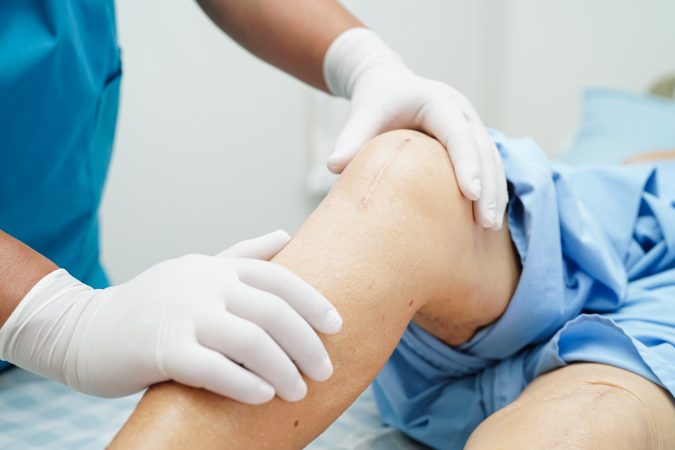
  • Knee pain? Ragged cartilage? Research suggests surgery’s not the best answer

    Knee pain? Ragged cartilage? Research suggests surgery’s not the best answer

    Thousands of Americans who undergo a common knee surgery might be making their problems worse rather than better.

    Researchers who followed patients for 10 years after they received either the actual procedure, arthroscopic knee surgery to trim degenerative cartilage tears, or merely “sham surgery” — a skin incision — for knee pain, found that the surgery provided little or no benefit and was, in fact, associated with accelerated osteoarthritis and higher rates of reoperation. That generally meant a total knee replacement.

    “I don’t know how I would defend this procedure at all,” said one of the study’s authors, Teppo Järvinen, an orthopedist and the head of the Finnish Centre for Evidence-Based Orthopaedics. “What has been shown dramatically is that patients who have this procedure have more pain — they do worse. All the scores pointed in the same direction.”

    Järvinen said the Finnish study, published in April in the New England Journal of Medicine, was the first to show the surgery left many patients worse off. Though the study was small, the results were compelling, he said, because his team picked the patients “most likely to benefit.”

    The study does not apply to cartilage tears incurred from an acute pain-causing injury. It included subjects middle-aged or older who were experiencing knee pain and whose MRIs showed cartilage tears.

    Evidence has been accumulating steadily for over a decade that arthroscopic knee surgery to shave torn, degenerative cartilage does not help more than physical therapy. Arthroscopic rates in Finland have dropped 90%, Järvinen said. They have been falling in the U.S., too, but at a far slower rate.

    One study of commercial claims in the U.S., which counted over 2 million meniscus surgeries from 2010 to 2020, found the number decreased by about 4% each year. Most procedures were performed on women and patients in their 50s.

    In the traditional Medicare fee-for-service program, the number of procedures has declined steadily in recent years, from about 169,000 in 2014 to 91,000 in 2024, federal data show. These figures do not include beneficiaries in Medicare Advantage, private insurance plans that cover more than half of Medicare enrollees.

    Prior studies of scans have found that such tears are common in people over 50, the result of wear and tear and often not painful.

    “Nothing supports the idea that a patient’s pain comes from the meniscus,” Järvinen said.

    Robert Brophy, director of the Orthopaedic Clinical Research Center at Washington University in St. Louis, said that “evidence is growing for judicious use of this surgery in this population.” But, he noted, “many patients do benefit.”

    All the same, he acknowledged that current practice among his peers is “all over the map.” For example, data show that surgery for meniscus tears in the Medicare population is far more common in the South than in the Northeast.

    A massive study committee of orthopedic societies in Europe and the U.S. last June released a consensus statement noting that “degenerative meniscus lesions can be treated with comparable results with either non-operative (including physical therapy) or surgical approach.” It recommended a trial of physical therapy before surgery but still endorsed the operation.

    A concerted campaign by orthopedic specialty societies called the Save the Meniscus Society has been ongoing for years. The group advocates for protecting and maintaining long-term knee health through nonsurgical treatments, surgical repair, and other therapies.

    One inherent issue in all medical specialties is that appropriate treatment is often in the eye of the physician beholder, meaning that specialists create the guidelines for when a treatment is in order. And financial considerations may influence that decision, Järvinen said.

    In the U.S., physician payments are decided by the Relative Value Scale Update Committee, or RUC, a committee of the American Medical Association composed largely of specialists. Department of Health and Human Services Secretary Robert F. Kennedy Jr. and his advisers have reportedly looked into wresting control of that committee from the association, though it’s not clear how that could be done, since the AMA owns the billing codes used to calculate patients’ charges.

    Arthroscopic knee surgery takes 30 to 60 minutes in the operating room, and the patients spend a few hours recovering in a surgery center or in a hospital outpatient department. Medicare allots on average $2,159 to $3,875 for the procedure, depending on where it is performed; patients pay 20% of the fee as coinsurance. There may be additional costs, for example, if more than one doctor is involved in the procedure. Commercial insurers average well more than twice that, said Marcus Dorstel, a senior vice president at the data analytics firm Turquoise Health, adding that the amount providers charge for the procedure varies widely. Those charges do not include the fees of the surgeons and the anesthesiologist.

    Treating chronic knee pain has a variegated history.

    Fifty years ago, the treatment for cartilage tears, from acute injury or from wear and tear, was to remove the entire piece of cartilage. At that time, doctors did not consider it a shock absorber but a useless, vestigial piece of tissue like the appendix.

    Today, the first-line therapy for a painful knee with degenerative tears is physical therapy and, for some people, weight loss. Then there is arthroscopic surgery, depending on the view of the surgeon about its utility.

    There is also a menu of injections: Steroids have proved scientifically valuable in the short term. And injections of stem cells and plasma-rich protein are widely offered but are controversial — and not covered by most insurance — because studies have been at best inconclusive about their benefit.

    And as orthopedists are backing away from shaving off meniscus tears, they are highlighting a newer procedure — sewing the torn cartilage back into a whole. But that is typically an option for patients under 50 with acute injuries and clean tears, and it is unclear exactly which patients might benefit.

    When all else fails, there’s a different surgery that’s also a big moneymaker for hospitals and doctors: knee replacement.

    KFF Health News is a national newsroom that produces in-depth journalism about health issues and is one of the core operating programs at KFF — the independent source for health policy research, polling, and journalism.

  • What we know about the ICE shooting in Maine

    What we know about the ICE shooting in Maine

    An Immigration and Customs Enforcement agent shot and killed a man in a vehicle on Monday morning in Biddeford, Maine. It was the second fatal episode in a week, as the Trump administration continues its immigration crackdown, and the latest in a string of encounters between agents and people in cars.

    The man was identified as Joan Sebastian Guerrero, according to Matthew Felling, a spokesperson for Sen. Angus King, I-Maine.

    The Homeland Security Department said in a statement Monday that ICE agents had been monitoring what they believed to be the residence of someone who was in the country illegally and for whom they had a removal order.

    It was unclear from the department’s statement whether Guerrero was the person agents had been seeking.

    Video recorded early Monday and posted to social media showed agents surrounding a body next to a car with bullet holes in the windshield.

    “I heard agony,” said Mary Hayes, a local resident, who said she saw a screaming woman on her knees, next to a young girl. “I heard a howl that came from your soul, that your whole life had just changed and it was never going to be the same.”

    Here’s what we know:

    Witnesses heard gunfire early Monday morning

    On Monday morning, agents tried to stop a vehicle that had departed from the residence they were monitoring, DHS said in its statement, which came nearly 12 hours after the shooting.

    “The vehicle attempted to flee the scene and, fearing for public safety, an officer discharged his weapon,” the statement continued. The driver was struck and died from his injuries.

    In a separate communication received by some members of Congress, the department used more pointed language, saying the driver had “weaponized his vehicle toward law enforcement.”

    As of Monday evening, no video evidence confirming the government’s version of events had emerged.

    People who live nearby reported hearing gunfire at an intersection at around 7:15 a.m. Several reported seeing a body on the ground next to a car.

    Rep. Chellie Pingree, a Democrat who represents the area, said in a phone interview Monday that “we have gotten reports that ICE officers shot through a car window, and the individual in the car was killed.”

    Immigration officials have said little about the victim

    Though King’s office named Guerrero as the victim, the DHS statement did not.

    Three advocacy groups released information about the victim in the shooting but did not name Guerrero. In a joint statement, the Maine Immigrants’ Rights Coalition and Presente! Maine, identified him as a 26-year-old Colombian man. A third group said he had a partner and a young child. The source of the advocates’ information was unclear, and could not be immediately confirmed with authorities.

    The Colombian Embassy said in a statement Monday that it was assisting the family of a Colombian national who had died in Biddeford. The embassy said it was also requesting information from DHS “regarding the circumstances surrounding this lamentable death.”

    King said Monday that he had spoken with Markwayne Mullin, the homeland security secretary. King said that Mullin had told him that the man had been the target of an arrest warrant “based upon his immigration status.”

    But Felling said later that Mullin called the senator again and told him the driver had not been the target of any warrant. “He said they were looking for someone, essentially, and the person they shot was not the person they were looking for,” Felling said.

    Officials are demanding a full investigation

    Gov. Janet Mills, a Democrat, said in a statement that the State Police and other agencies were consulting with federal officials to “determine the facts of what occurred this morning.”

    Sen. Susan Collins, R-Maine, called for a “full and impartial investigation.”

    “We will get answers, but we do not have them yet,” said Biddeford Mayor Liam LaFountain, who also pushed for an investigation.

    This is the second death in a week involving an ICE agent firing into a vehicle

    Amid a national surge in immigration enforcement, a federal agent last week shot and killed another individual in a vehicle: Lorenzo Salgado Araujo, a Mexican man who died after a traffic stop in Houston.

    Salgado Araujo, a construction worker and father of three who had lived in the country for more than 30 years without legal status, was not the initial target of the officers who pursued his vehicle, according to immigration officials.

    The Houston and Maine killings add to a growing list of encounters between immigration agents and people in vehicles.

    About 20 people have been shot at in their cars, some of them fatally. Federal officials have in several cases claimed that the agents’ actions were justified because their lives had been endangered by “weaponized” vehicles. Witnesses of the Houston shooting said that Salgado Araujo had not used his vehicle as a weapon.

    As in the shooting of Salgado Araujo, it appeared that federal agents were not wearing body cameras Monday, King said. So “we have no video evidence of what occurred in this case,” he added.

    Immigration arrests are on the rise nationwide

    Daily arrests of immigrants in the United States doubled in the last week of June and have continued to increase, signaling a reinvigoration of the president’s crackdown after a spring slowdown.

    Immigrants make up about 5% of Maine’s population and have helped prop up the state’s economy, hampered by its aging population. Over the years, Maine has welcomed waves of refugees fleeing conflict in the Middle East and several African countries.

    In January, ICE detained hundreds of immigrants in the state during an enforcement surge the agency called “Operation Catch of the Day” — a reference to Maine’s commercial seafood industry.

    Now, locals say agents have returned, making frequent appearances in Biddeford in recent months. Biddeford, a working-class city of roughly 22,000, contains a growing community of Latin American immigrants.

    Talla Fall, who is originally from Senegal, lives near where the shooting took place Monday. ICE agents have been in the neighborhood “every day, every week,” he said.

    This article originally appeared in The New York Times.

  • Graham’s death complicates GOP agenda in Congress

    Graham’s death complicates GOP agenda in Congress

    WASHINGTON — Still shaken from the sudden death of Sen. Lindsey Graham of South Carolina, Senate Republicans returned to Washington on Monday and were immediately forced to confront the policy and political complications caused by his absence.

    Coupled with the extended leave of Sen. Mitch McConnell, R-Ky., who was hospitalized last month and has not said when he will return to the Senate, Graham’s death Saturday has created further difficulties for an election-year legislative agenda that already faced significant hurdles.

    The loss of Graham and the absence of McConnell have temporarily whittled down an already slim Republican majority and are threatening to stall spending bills, a major budget measure the party had hoped to use to push through hundreds of billions of dollars of military spending, and at least one crucial nomination.

    It also left uncertain the fate of a new package of sanctions against Russia that Graham had negotiated in the days leading up to his death, which now lacks its most influential Republican champion in the Senate.

    In the coming days, Senate Republicans had hoped to quickly confirm President Donald Trump’s pick as attorney general, Todd Blanche, whose confirmation hearings are set for Wednesday and Thursday. They are also eager to pass annual spending bills before a Sept. 30 deadline to fund the government. And with the midterms looming, many Republicans are hoping to find a way to push through sweeping policy initiatives in an arcane budget process known as reconciliation that allows them to skirt a Democratic filibuster.

    All of those are up in the air with the loss of Graham. He sat on the Appropriations and Judiciary committees, where Republicans could now find themselves short of a majority to approve legislation or nominations, and was the chair of the Budget Committee, which would drive the reconciliation process.

    Sen. John Thune, R-S.D., the majority leader, who was a longtime friend of Graham’s dating to their early years together in the House, had already been skeptical that he and his fellow Republicans could push through a politically charged, one-party budget bill so close to the November election.

    “Obviously there are a lot of considerations that we have to work through: how big it is, what the offsets are, what our limitations are,” Thune said. “To get that done and get the requisite number of votes in both the House and Senate will be a heavy lift.”

    Thune and other senators were visibly affected by the death, and Graham’s Senate desk was draped in black velvet and held a vase of white roses.

    With senior roles on the panels overseeing the Justice Department, spending and budget policy, Graham was seen as an important Republican voice in all three efforts. And as Republicans try to take advantage of their governing trifecta before the elections, Graham was viewed as a crucial link between the Senate and the White House.

    Many of Graham’s colleagues acknowledged that he would have been particularly valuable helping Senate Republicans navigate an increasingly tense relationship with Trump, who has grown frustrated by their refusal to bow wholeheartedly to his agenda.

    “His voice is going to be really, really missed in terms of the relationship that Senate Republicans have with the president and his team,” Thune said in a CNN interview Monday. “Because he was so good and so effective at talking to the president, and it was so respected by the president.”

    That connection would have been central to any attempt to push through a third reconciliation bill.

    Trump last week urged congressional Republicans to turn to the procedure — which allows bills that affect government revenues to pass the Senate on a simple-majority vote — to provide $350 billion to the Pentagon and to impose long-sought restrictions on elections.

    As chair of the Senate Budget Committee, Graham would have overseen that process, steering any measure through complex rules that govern what provisions can be included. Before his death, he signaled a willingness to try to meet Trump’s demand, even as many Republican senators, including Thune, have been skeptical that they could muster the necessary support to pass such a measure given disputes about how to pay for new spending with compensating cuts elsewhere.

    Though Thune has not yet named a successor, Sen. Ron Johnson, R-Wis., is widely viewed as the next in line to lead the budget panel. But Johnson is among the staunchest fiscal conservatives in Congress, and his approach to spending cuts may rankle vulnerable lawmakers who do not want to slash government programs.

    Asked about the path forward Monday, Johnson brushed off questions. “Look, I just walked by Lindsey’s desk,” he said. “It’s kind of one step at a time.”

    Thune’s most immediate challenge may come with Blanche’s nomination. While some Republicans have voiced concerns about Blanche’s role in establishing a Justice Department fund for people claiming to be victims of unfair prosecution, Graham, a senior member of the Senate Judiciary Committee, was seen as a reliable supporter who would have helped Blanche advance.

    But after Graham’s death, Republicans on the committee hold only an 11-10 edge on, meaning objections from any one Republican senator on the committee could stymie Blanche’s nomination. Two of them, Sens. Thom Tillis of North Carolina and John Cornyn of Texas, have raised questions about Blanche. Cornyn reiterated his concerns Monday after a federal judge in Miami assailed a settlement that Blanche brokered between Trump and the IRS that protected the president and his family from tax audits.

    “It certainly is another area that I plan to ask about, and I’m certainly not making any commitments until after the hearing,” Cornyn said.

    Advancing legislation to fund the government out of the Senate Appropriations Committee was already going to be difficult with McConnell’s absence, and the committee has already been at a partisan impasse.

    But Graham’s death could make it nearly impossible to move any spending bills without major bipartisan support. Republicans will now need all their senators on the panel to be present and voting to overcome unanimous Democratic opposition.

    Sen. John Kennedy, R-La., said the two primary actions Congress must take are to fund the government and keep it open after Sept. 30, probably through a stopgap bill, and provide money for the conflict in Iran. He predicted that progress would be difficult.

    “I’m not terribly optimistic about the next four weeks,” Kennedy said.

    This article originally appeared in The New York Times.

  • New York to impose the country’s first statewide moratorium on data centers

    New York to impose the country’s first statewide moratorium on data centers

    NEW YORK — No large data centers can be built in New York for up to a year as the state creates rules to protect the environment and its energy grid from the power-hungry facilities fueling artificial intelligence.

    Gov. Kathy Hochul signed an executive order Tuesday imposing the country’s first statewide moratorium on hyperscale data centers, which house thousands of computer servers and require massive amounts of energy and a steady supply of water to keep cool.

    The move pushes the state into a raging debate over how to regulate the AI industry, as concerns over rising electric bills and environmental risks collide with a desire to stimulate local economies and foster the U.S. tech sector.

    “The bottom line is that progress shouldn’t arrive with a higher utility bill, deleted water supply, or noise pollution, so we have no choice but to address these challenges created by these massive facilities,” Hochul said at a celebratory signing ceremony in Brooklyn.

    President Donald Trump has warned states not to slap regulations on the AI industry, echoing tech companies in arguing such moves hamper job growth and cede ground to China in a race to lead in the rapidly growing field.

    Earlier this year, Maine seemed poised to establish a similar moratorium. But the measure was vetoed by Democratic Gov. Janet Mills because it would have blocked a proposed data center in a town that has struggled after a mill closed.

    Moratoriums have been proposed in at least a dozen states but have not gotten far, though some counties and municipalities have imposed their own temporary bans.

    New York’s executive order pauses state permitting for new large data centers and directs state regulators to create standards that address environmental impacts, energy demand, water usage, and other factors, the governor’s office said.

    The decision in New York also carries political significance for Hochul’s reelection campaign and the state’s tight congressional races this fall, as Democrats move to address affordability concerns over high utility bills. In addition, the governor this year softened New York’s ambitious goals to reduce greenhouse gases, citing rising energy costs for consumers.

    Hochul’s Republican opponent in the governor’s race, Nassau County Executive Bruce Blakeman, opposes a statewide moratorium and says local governments should be allowed to strike deals with tech companies for data center projects that promise enough economic benefits.

    In a statement Tuesday, Blakeman said the governor “doesn’t work with local governments and business leaders to figure out how to get things done,” while pledging to “modernize our economy to bring costs down and create good jobs.”

    The state Legislature this year approved its own moratorium bill, but Hochul’s office described the legislation as complex and said it needed additional work. Instead, the governor opted for an executive order that would take effect immediately.

    State Sen. Kristen Gonzalez, a Democrat who sponsored the legislation, joined the governor during the signing ceremony. “If Big Tech is coming onto our turf, it should be on our terms,” she said.

    New York, at this stage, has not been a destination for the largest hyperscale data centers.

  • Letters to the Editor | July 14, 2026

    Letters to the Editor | July 14, 2026

    Judicial overreach

    One of your recent editorials detailed the U.S. Supreme Court’s political overreach, which only underscores my belief that reforming the court is the most urgent issue of constitutional reform facing the United States. It has long been the most conservative — if not reactionary — branch of the federal government, and also the most unaccountable. Its justices serve life terms with no binding ethics code over their conduct, which has grown increasingly corrupt. Since John Marshall’s obiter dictum in Marbury v. Madison (1803), it has exercised an unquestionable power — conferred on it nowhere in the Constitution — to alter and overturn duly passed legislation. In fact, theirs is a power that, as noted by Thomas Jefferson, would — if exercised — fatally undermine the rule of law. It has done so ever since, giving sanction to a century of slavery and another of Jim Crow, among the many rulings that have over the years impeded the progress of freedom and democracy for all Americans, most recently in the gutting of the Voting Rights Act. Now, following the template of a former Republican operative and Supreme Court justice himself, Lewis Powell, it has achieved a standing right-wing majority that may, if unchecked, endure for decades, and has already, in the current Roberts Court, inflicted great damage on matters ranging from gun laws to environmental protection to campaign financing and election districting. No genuine reform of the many problems that face and divide us can be hoped for without dealing with a Supreme Court that is now at war with the other branches of the state and federal judiciary. Jefferson was right: We have created a monster. It is time to cut the claws it has grown.

    Robert Zaller, Bala Cynwyd

    Atrocity of ICE

    The killing of Lorenzo Salgado Araujo by a U.S. Immigration and Customs Enforcement agent in Houston isn’t just a tragedy — it is a systemic outrage. Coming on the heels of the fatal federal shootings of Renée Good and Alex Pretti in Minneapolis, a terrifying pattern is undeniable: federal immigration enforcement is operating above the law, destroying lives on American soil with zero transparency.

    The corruption runs deeper than the pull of a trigger. It has been reported that three other people were in the vehicle with Mr. Salgado Araujo during the incident. Instead of being protected as vital witnesses to a fatal shooting, they are currently being pressured by the government to sign self-deportation orders, according to a civil rights organization. ICE is actively and deliberately attempting to eliminate them to bury the truth.

    Polite concern will not stop this. Citizens must aggressively pressure Congress to mandate independent, external criminal investigations into federal use-of-force incidents, ending the corrupt practice of internal self-policing. Federal agencies must be answerable to the public, starting with the mandatory release of unedited body-camera footage. We must force systemic accountability before more blood is shed.

    Maria Duca, Philadelphia

    Join the conversation: Send letters to letters@inquirer.com. Limit length to 150 words and include home address and day and evening phone number. Letters run in The Inquirer six days a week on the editorial pages and online.

  • Dear Abby | In-law’s sunny comments get on woman’s nerves

    DEAR ABBY: My husband and I have four children, two of whom have congenital health issues we’ve been managing. One child is leading a “normal” life and is a spunky little kid. Our other child may be more impacted down the road, and we continue to seek answers. If people ask how either one of them is doing, we are open to sharing. Depending on how close we are to family or friends, we may share a bit more or a bit fewer of the details. It’s an approach that has been working, and in return, we mostly receive supportive feedback.

    The issue is that my father-in-law always has a comment to make. I am sure he means well, but he tends to give responses like, “Oh, that’s probably nothing,” “Well, she looks fine to me,” or “One day, this will all be behind you.” It gets under my skin. His responses are either dismissive of our concerns or they downplay the extent of the illness, especially when it’s related to the underlying health concerns.

    I always bite my tongue. With our more impacted child, I have been hesitant to share anything because I don’t want to hear his comments. The matter is serious from what we know right now, and my husband did share some of it with his parents because he felt they needed to know. With things now in the open, I expect follow-up questions from them.

    To prepare for more comments, how can I respectfully let my FIL know they are unnecessary and, at times, hurtful to us because we are doing so much to care for our children? I’m afraid one of his next comments will be the last straw for me, and I don’t want to react disrespectfully.

    — ANXIOUS DAUGHTER-IN-LAW

    DEAR DIL: Your father-in-law may be attempting to put a positive spin on a difficult subject when he downplays the problems your child is facing. The way to deal with this would be to gather your thoughts and have an honest conversation with him about how it makes you feel. If you do, there is less likelihood of your exploding upon hearing what may be his attempt to be supportive.

    ** ** **

    DEAR ABBY: I am writing for your help in bringing attention to a disability issue I find unacceptable. I am partially deaf. I use closed captions on televisions and online. However, I am increasingly frustrated that televisions in public places like hospitals, doctors’ waiting rooms, restaurants, etc., never have closed captions activated. Public places are required to have disability parking, so why can’t my disability be accommodated? I’m hoping you can make these public places aware of this simple accommodation for the hearing-impaired public.

    — CINCINNATI CC ADVOCATE

    DEAR CC ADVOCATE: In many regions and many businesses, it is the norm to mute the volume and turn on the captions for the comfort of everyone. Often, the television chatter is an unwelcome distraction, or, in a more social space, it would be impossible to hear the audio even if you wanted to. For those who haven’t caught on that this is the practical way to go, I’m happy to spread the word. In public areas, television programs are better seen than heard!

  • Horoscopes: Tuesday, July 14, 2026

    ARIES (March 21-April 19). Your new moon paradox: Certainty and wonder held together. The secret is letting convictions provide direction while curiosity keeps them alive. Beliefs are likely to change over time, but values don’t have to. Mantra: “I stand for what I know and stay open to discovery.”

    TAURUS (April 20-May 20). Your new moon paradox: Trust yourself and learn from others. The secret is remaining teachable without surrendering your inner authority. Advice becomes useful when filtered through your own experience. Mantra: “I listen with respect and choose my own path.”

    GEMINI (May 21-June 21). Your new moon paradox: Shine and share the spotlight. The secret is understanding that another person’s success doesn’t diminish your own light. Generosity turns achievement into connection rather than competition. Mantra: “I celebrate what is mine and what belongs to others.”

    CANCER (June 22-July 22). Your new moon paradox: Lead and listen. The secret is trusting your vision while remaining open to wisdom, which can come from any direction. Influence grows where people feel heard. Mantra: “I offer my perspective and welcome what others see.”

    LEO (July 23-Aug. 22). Your new moon paradox: Play a role and stay real. The secret is to remember that what you do is not who you are. Mantra: “My title is a tool, not a prison. My heart shines through all I do.”

    VIRGO (Aug. 23-Sept. 22). Your new moon paradox: Be important and be ordinary. The secret is realizing that a meaningful life is built from small moments as much as grand ones. Significance wears everyday clothes. Mantra: “I value my place in the story and the day before me.”

    LIBRA (Sept. 23-Oct. 23). Your new moon paradox: Discipline creates freedom. The secret is recognizing that structure can support spontaneity rather than limit it. The practices you maintain today become options available tomorrow. Mantra: “I build strong foundations for a life that can expand.”

    SCORPIO (Oct. 24-Nov. 21). Your new moon paradox: Be yourself and keep evolving. The secret is knowing that authenticity isn’t a fixed destination. Growth doesn’t betray who you are. It reveals more of you and expands what’s possible. Mantra: “I welcome change without abandoning myself.”

    SAGITTARIUS (Nov. 22-Dec. 21). Your new moon paradox: Take the game seriously and remember it’s a game. The secret is full participation without attachment to the outcome. Effort matters, but so does delight. Mantra: “I give my best and leave room for surprise.”

    CAPRICORN (Dec. 22-Jan. 19). Your new moon paradox: Stand out and belong. The secret is contributing your distinct gifts without requiring everyone to mirror your perspective. Strong communities are diverse. Mantra: “I bring my whole self to the circle and make room for others.”

    AQUARIUS (Jan. 20-Feb. 18). Your new moon paradox: Create yourself and accept yourself. The secret is building toward the future without declaring war on the present. Ambition and self-respect can travel together. Mantra: “I honor who I am while welcoming who I’m becoming.”

    PISCES (Feb. 19-March 20). Your new moon paradox: Seek recognition and stay grounded. The secret is enjoying appreciation without making it the source of your worth. Applause is pleasant, but identity runs deeper. Mantra: “I receive praise with gratitude and remain rooted within.”

    TODAY’S BIRTHDAY (July 14) You are remarkably equipped and perfectly adapted to getting what you need in this Year of the Hummingbird. Your “wings” create astonishing movement. You’ll accomplish much through precision and keen observation — it’s like you can smell opportunity. More highlights: Your talent pays dividends. Family closeness; nuanced and specific communication. Important introductions at festive occasions. Leo and Aquarius adore you. Your lucky numbers are: 6, 31, 12, 8 and 14.