Tag: no-latest

  • Chesley Sullenberger, pilot of the ‘Miracle on the Hudson,’ says he has Alzheimer’s

    Chesley Sullenberger, pilot of the ‘Miracle on the Hudson,’ says he has Alzheimer’s

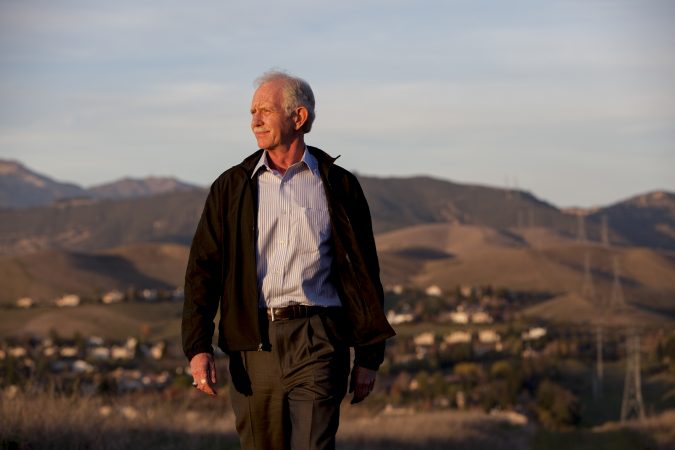
    Chesley B. Sullenberger III, the pilot known as Sully who guided a passenger jet to a water landing in 2009 in what became known as the “Miracle on the Hudson” after he saved 155 lives, has been diagnosed with Alzheimer’s disease, he said in a statement Tuesday.

    The diagnosis is “early stage,” he said, adding, “I am in the beginning of this long journey.”

    Sullenberger, 75, retired as a commercial pilot in 2010, a year after his famous landing on the Hudson River. On Jan. 15, 2009, he was piloting US Airways Flight 1549 on a flight from LaGuardia Airport to Charlotte, N.C., when both of the plane’s engines lost power after it struck a flock of geese shortly after takeoff.

    Sullenberger guided the Airbus A320 safely into the Hudson River, and everyone on board was safely rescued. He was hailed as a hero after the landing, with President Barack Obama inviting the captain and his five-person crew to his 2009 inauguration days after the emergency landing.

    Significant media coverage followed, as well as the 2016 movie Sully directed by Clint Eastwood and starring Tom Hanks.

    After the incident and the attention it brought, Sullenberger called for new safety measures in aviation, including increased pilot training, more pilot rest, and a rule requiring two pilots to be in the cockpit at all times. In 2021, President Joe Biden nominated him to be an ambassador to the International Civil Aviation Organization, a United Nations agency that helps develop policies and standards for global aviation.

    In the announcement of his diagnosis, Sullenberger nodded to his work as an ambassador, as well as his time in the U.S. Air Force and as an aviation accident investigator, saying he “spent his life in service.”

    “So this new phase of my life has challenged what it means to be of service,” he wrote. “And the answer is to speak up. It is my hope that by sharing this, other families living in the shadows with this disease will feel they too can step forward.”

    An estimated 7.4 million Americans are living with Alzheimer’s disease, a form of dementia, according to the Alzheimer’s Association. The disease worsens over time, and early-stage symptoms — as Sullenberger said he was experiencing — include memory loss as well as difficulties with problem solving and completing tasks.

    “For now, this means a name may not come easily to me, I forget a story I have recently told, or I don’t sleep as well,” he wrote.

    The Alzheimer’s Foundation of America praised Sullenberger’s announcement.

    “His decision to publicly disclose his diagnosis will help raise awareness, reduce stigma, and show support for the many others living with Alzheimer’s disease and dementia-related illnesses,” the foundation said in a statement attributed to Charles J. Fuschillo Jr., the organization’s president.

    This article originally appeared in The New York Times.

  • 1 dead and 3 missing after boat carrying mostly family members sinks near Alcatraz Island

    1 dead and 3 missing after boat carrying mostly family members sinks near Alcatraz Island

    SAN FRANCISCO — One person died, three people were missing and 16 were rescued from the waters off San Francisco after a pontoon boat sank Tuesday afternoon while carrying mostly family members as part of a memorial service, authorities said.

    Crews arriving on the scene near Alcatraz Island found a three-deck pontoon vessel almost fully under water with the motor still running and leaking fuel, San Francisco Fire Chief Dean Crispen said.

    By Tuesday evening, authorities were searching for the missing in open ocean on the western side of the Golden Gate Bridge. The search, which involved divers, helicopters and vessels, was expected to continue all night, officials said.

    Authorities updated the initial number of missing people from two to three after hearing from witnesses.

    “Right now we are in full rescue mode,” Crispen said, adding that three people who suffered injuries falling from the boat were taken to a hospital and expected to be released Tuesday night.

    Alcatraz Island, once a federal prison infamously inescapable due to the strong ocean currents and cold Pacific waters that surround it, is now a tourist destination. It is located in San Francisco Bay about a mile north of the city’s shoreline, in an often windy area that attracts sailboats and other recreational vessels.

    Videos of the scene showed boats deployed to rescue people who had been on the vessel, which was largely submerged with objects floating nearby.

    The boating mishap was initially reported as a fire, “but we now don’t have any evidence of that,” Crispen said.

    The person who died was alive when plucked from the frigid waters by rescue crews but later died. A dog onboard also died.

    All those rescued were taken to Gashouse Cove Marina, a small craft harbor in San Francisco.

    Aaron Anfinson, captain of the Bass-Tub, told the San Francisco Chronicle his boat was carrying guests toward the Golden Gate Bridge in “pretty windy, a little choppy” waters when a man on a smaller vessel flagged them down and pointed to a pontoon boat in the middle of the bay that appeared to be on fire.

    By the time the Bass-Tub reached it, the flames were out, but the pontoon was sinking. Some people were already in the water while others remained aboard, Anfinson said, adding that they tried to hand out life jackets to the passengers.

    One woman’s head was injured.

    “We figured we would get her first,” Anfinson said. A deckhand lowered a swim ladder and threw a life ring into the water to help pull her aboard.

    “It was scary,” Anfinson said. “I don’t want to see anybody in that situation.”

    Fire Lt. Mariano Elias said the vessel, described as a “pontoon pleasure boat,” was about 600 yards from Alcatraz and the emergency call came in just after 3:30 p.m.

    Crispen said the vessel was believed to have launched near the St. Francis Yacht Club in San Francisco. A person who answered the phone there said the club did not have any information on what happened.

    Live video from the scene showed a man and a woman wrapped in blankets and sitting on a curb before walking to a nearby ambulance. A yellow tarp covered a body on the dock.

    The Coast Guard and Oakland police also helped in the rescue, Elias said.

  • Letters to the Editor | July 15, 2026

    Letters to the Editor | July 15, 2026

    Behind the masks

    Who is keeping count of the people killed by U.S. Immigration and Customs Enforcement agents? Reports indicate that 10 people have died at the hands of ICE during President Donald Trump’s second term. Here’s another bleak number: zero. That’s how many trials we’ve witnessed in connection with those deaths. There are so many unanswered questions: How are these masked men not in jail awaiting trial? Who are they? How many, if unmasked, would be insurrectionists pardoned by the president? How many are his “stand down,” white, right wing, radical, racist extremists like the Proud Boys, Oath Keepers, or Patriot Front? Are their actions acceptable? Are murders now legalized anywhere in this country? How many more lives will be lost? Why should the murders cease, when the killers face no retribution or penalty? You tell me, what will it take to end this ever expanding “legalized lawlessness”?

    William Cohen, Huntingdon Valley

    Missing context

    I was gratified to read Paul McElhinney’s op-ed about the Dreyfus affair. Many are still not aware of the extent to which antisemitism pervaded the French world of the 1890s when the Jewish French Army captain Alfred Dreyfus was falsely accused of spying and exiled for five years. My talented great aunt — who was Jewish — painted many oil copies of Renoir paintings; I still wonder if she was even aware of Renoir’s deep antisemitism and anti-Dreyfusard sentiments. When the writer asks what we have learned, I must ask why our great museums like the Barnes and the Philadelphia Museum of Art have never confronted the antisemitism of the times and the deep involvement of Renoir and Degas, among others, in the French art world’s stirring debates over the Dreyfus case.

    Susan Dyshel Sommovilla, Elkins Park

    …

    Paul McElhinney’s excellent analysis of the Dreyfus affair omitted two key elements. Theodor Herzl, an assimilated Jewish journalist covering Dreyfus’ arrest, was incensed that Jews were still subjected to antisemitism when they tried to join European society. Herzl became obsessed with the idea that Jews should have their own country. After Dreyfus’ conviction and exile to Devil’s Island, Herzl wrote Der Judenstaat, The Jewish State; organized the first Zionist Congress, which sparked some Jews living in Eastern Europe to migrate to their ancestral homeland; and lobbied the crown heads of Europe to support a Jewish state in what was then Palestine.

    After Dreyfus’ exoneration, he rejoined the French Army as a major. He retired a year later but served in World War I as a lieutenant colonel. Last year, France posthumously promoted him to the rank of brigadier general, a position he would’ve easily had if he hadn’t been scapegoated.

    Paul L. Newman, Merion Station

    Thanks, SEPTA

    Kudos to SEPTA for their service during the World Cup. Instead of raising the price of a ride, like NJ Transit, SEPTA kept its normal price and provided free rides and DJ entertainment for people waiting for the trains. I’m certain that our guests left Philly with wonderful memories.

    Joseph Grinkewicz, Philadelphia

    Scientific research

    Thank you, Ayaan Shah for your op-ed on how a new proposal in Washington could gut American science. For those who missed it, I share the following.

    How would you like to go to your doctor’s office with a medical need (important to you) only to be told by the person responsible for scheduling office visits, that you would not be put on the schedule because your needs were not in “the national interest.”

    This is what the Office of Management and Budget (OMB) is proposing in its published 100-page proposed rules. This is a plan to restructure who gets to cut research funding and decide which studies are allowed.

    The OMB plan is to have political appointees make decisions about whether or not rigorous, peer-reviewed grant proposals get approved and which grants in process are allowed to continue. People with no experience, unqualified to make scientific evaluations will determine what will affect all of us in the years ahead.

    And, ask yourself like I have, what is “the national interest” anymore and why do unqualified people get to define this term in the various offices they hold? This is another test of loyalty to the administration. One that will hurt all of us and generations to come. So — speak your mind. Share your stories of why scientific research decisions must remain in the hands of those with knowledge, not the gatekeeper who is not qualified.

    Judy Endicott, Dresher

    Uncomfortable truths

    Sen. John Fetterman (D., Pa.) recently stated that he would leave the Democratic Party if it became anti-Israel and did not support Israel’s right to defend itself.

    But destroying the means of sustaining human life in Gaza is not self-defense. This includes Israel’s devastation of Gaza’s fields, orchards, greenhouses, water infrastructure, and homes.

    After the ceasefire began, Israel destroyed an additional 1,500 buildings in Gaza. Multiple United Nations agencies and humanitarian groups also report that Israel has blocked or severely restricted shelter supplies, including tarps, timber, plywood, and sandbags from entering the Gaza Strip. Families are forced to live in permanent tent cities, with their makeshift homes infested with rats and parasites.

    Israeli Finance Minister Bezalel Smotrich said, “We are disassembling Gaza, and leaving it as piles of rubble. And the world isn’t stopping us.”

    Being pro-Israel should not mean downplaying or denying the atrocities Israel has committed.

    Terry Hansen, Grafton, Wis.

    Storm cleanup

    The microbursts on Saturday uprooted at least four large trees within five blocks of my house. The electricity was out and my neighbors and I figured it was going to take a long time to recover. Peco was on our block within four hours to get the electricity back on. Tree specialists came out the next day to get the trees off destroyed cars and out of the streets.

    Neighbors made new friends, consoling and supporting each other.

    Thanks to the city for a quick and efficient response!

    David Tatgenhorst, Philadelphia

    Join the conversation: Send letters to letters@inquirer.com. Limit length to 150 words and include home address and day and evening phone number. Letters run in The Inquirer six days a week on the editorial pages and online.

  • Horoscopes: Wednesday, July 15, 2026

    ARIES (March 21-April 19). Waking up to: an internal voice that now has new maturity. It feels like empowerment. You have options that are like hidden doors you just didn’t see before, and now you can’t unsee them. Your next move is one that didn’t occur to you before.

    TAURUS (April 20-May 20). Waking up to: Your power in a relationship. It can come in odd forms, like knowing what someone likes, embodying an archetype they respond well to, needing them in a way that makes them feel purposeful or having talents they lack.

    GEMINI (May 21-June 21). Waking up to: an invisible source of support. A friend, skill, resource, connection, or strength you’ve overlooked becomes useful now, and the beautiful thing is, all you have to do is ask. The right one says yes.

    CANCER (June 22-July 22). Waking up to: the value of a trait you’ve spent years trying to minimize. Sensitivity, intensity, caution, enthusiasm, depth, humor … What seemed inconvenient in one environment is a remarkable advantage in another.

    LEO (July 23-Aug. 22). Waking up to: how much energy is spent managing appearances. You’ll let go of trying to see yourself through their eyes, and the relief is immediate. You’re not rehearsing for every outcome, only the one you want.

    VIRGO (Aug. 23-Sept. 22). Waking up to: how perfectly suited you are to the life you’re building, even in the early stages and the transitions. Because you’re arriving instead of striving. Sure, you’ll get “there,” but it’s fun right now.

    LIBRA (Sept. 23-Oct. 23). Waking up to: a desire beneath the desire. It turns out the thing you thought you wanted was standing in for something deeper. Once you identify the real hunger, the path toward satisfaction becomes direct.

    SCORPIO (Oct. 24-Nov. 21). Waking up to: your freedoms. Where you were once stuck, you now see the wiggle room, the lever to push, the escape route. You can soar with birds. Sometimes it starts in imagination, and other times it takes a physical move.

    SAGITTARIUS (Nov. 22-Dec. 21). Waking up to: a talent you’ve treated as ordinary because it comes naturally. Others struggle where you thrive. What feels effortless to you is the very thing you’re meant to contribute, develop and share.

    CAPRICORN (Dec. 22-Jan. 19). Waking up to: the difference between a real obstacle and a familiar fear. One requires action. The other dissolves when examined. What looked like a wall may turn out to be a shadow cast across your path.

    AQUARIUS (Jan. 20-Feb. 18). Waking up to: the possibility that nobody is stopping you. Rules, expectations and habits can feel identical from the inside. A fresh perspective reveals which barriers are real and which ones you’ve been carrying yourself.

    PISCES (Feb. 19-March 20). Waking up to: the fact that you’ve outgrown a story about yourself. It may have protected you once. It may even contain some truth. But it no longer explains your full range of choices or possibilities.

    TODAY’S BIRTHDAY (July 15) It’s your Year of the Firefly. Others experience your light as magical, though you are also doing practical work — sending signals, celebrating the season, attracting the exact right match for you. More highlights: Your influence spreads through rooms, conversations and circles of people with shared fascinations. A creative project gains a champion and funding. You’re around those who take genuine pleasure in your wins. Libra and Sagittarius adore you. Your lucky numbers are: 8, 21, 30, 5 and 16.

  • Dear Abby | Wife suspects man is still up to his usual tricks

    DEAR ABBY: How can I tell if my husband loves me? We have been married 41 years, and during our entire marriage he’s been cheating on me with other women. He takes good care of me and is always there for me and our family. We hardly have sex. I try to give him a romantic kiss, but he only gives me a peck. I have suggested that we go on date nights and go out to breakfast or dinner once or twice a month. I also told him that we should be jumping all over each other because our kids are grown and on their own with their own families. My gut instinct tells me he is still cheating. What should I do?

    — DISILLUSIONED IN ARIZONA

    DEAR DISILLUSIONED: Your husband may love you, but not in the way you would like him to. Or he could be following his usual pattern but staying married to you because he doesn’t want the expense of a divorce. If your gut instinct tells you he is still cheating, he probably is, and you should be tested for STDs. (Sorry.) If you want proof that he has been straying, hire a private detective. If you are right, you will then have to decide whether you want to stay married under these circumstances.

    ** ** **

    DEAR ABBY: I recently turned 80, and my health is excellent. I have worked hard to become financially independent, I have long-term care insurance and an elevator in my home so I can stay, and I exercise regularly.

    My friends have collectively and individually started a not-so-subtle campaign to move in with me or for all of us to buy a house together. I call this the “Golden Girls Campaign Movement.” I love my friends, but I also love my independence. I have repeated this tactfully numerous times, and on one occasion replied bluntly, “Never happening.” But it’s falling on deaf ears. I want friends, not roommates. Help!

    — ANNOYED IN CALIFORNIA

    DEAR ANNOYED: From now on, when your friends raise the subject, smile and say, “I want friends, not roommates. I prefer to live independently.” Repeat it as often as necessary. It’s the truth.

    ** ** **

    DEAR ABBY: My brother-in-law was recently diagnosed with Alzheimer’s. He’s a retired doctor and knows what to expect in the coming years. We’re a close family and are always honest with each other. My wife and I do not know the best ways to support my sister. She is also a health professional who knows what is in store. Any help you may suggest will be shared among our family members, as we want to present a united approach.

    — FAMILY IN OREGON

    DEAR FAMILY: I’m sorry for your brother-in-law’s diagnosis. Because he and his wife are well-equipped to tell you what they will need from you, ask them. Refrain from “going the extra mile” with assistance they have not requested. (You do not want to smother them.)

    Closeness and honesty will be your greatest assets as you navigate this chapter of your BIL’s life. For additional support, the Alzheimer’s Association (alz.org) has resources, both for the affected person and for caregivers.

  • At 91, he’s hiking the Appalachian Trail. Again.

    At 91, he’s hiking the Appalachian Trail. Again.

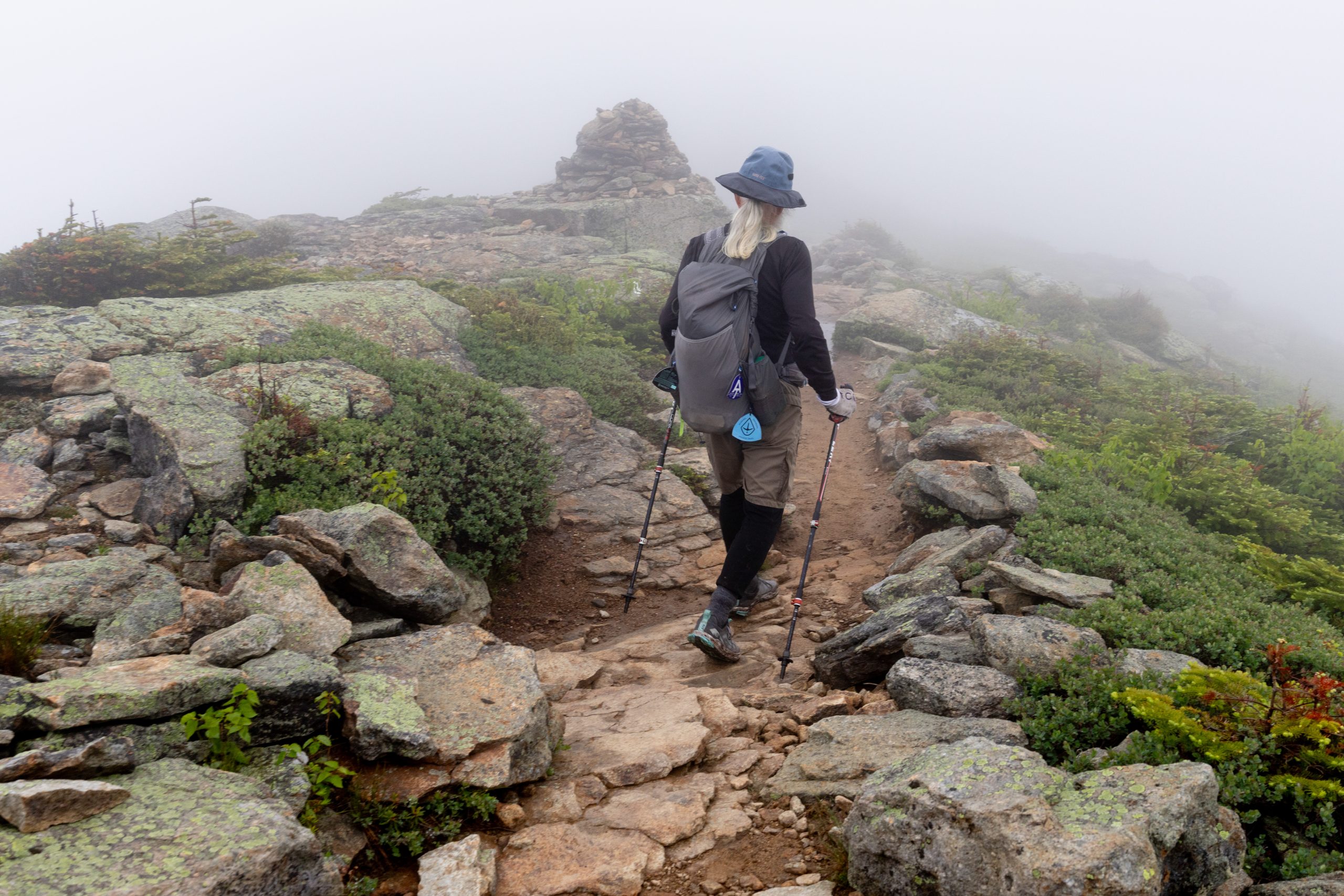
    On the first day of summer, just after dawn, Dale Sanders, 91, prepared to start the steep, rocky hike up to Franconia Ridge in New Hampshire’s White Mountains.

    Sanders’ mantra might resonate with anyone in their 10th decade: “It’s a ‘don’t fall’ day today,” he said, slinging a small backpack onto his compact, wiry frame.

    The roughly 2,190-mile Appalachian Trail runs from Georgia to Maine. Sanders had been chipping away at it since September, in a bid to reclaim his record as the oldest person to hike the full length. (His goal is to complete a thru-hike, by walking the entire trail in a 12-month period.)

    If Dale “Grey Beard” Sanders continues at his current pace, the age record will be his again before a 365-day deadline. Sanders said he will soon have to look for a new record: “I’m not going to stop unless physically I simply cannot do it anymore.” Luke Piotrowski

    He was roughly 70% finished, but some of the toughest miles were ahead. I joined him for two especially challenging days.

    The White Mountains are known for extreme weather, and Sanders said he had been turned away by a concerned trail steward during a heavy storm the previous week: “He said, ‘You know, you’re going to die if you keep going.’”

    The weather had calmed somewhat, but soon after he emerged above the tree line and began his traverse of the ridge, roaring gusts of wind brought dense fog and sharp, sideways rain.

    The route frequently requires hikers to scramble. As he reached the bottom of a rock slab, he realized he had no memory of this obstacle from the last time he had hiked the trail. That was in 2017, when, at 82, he first set the record. After carefully climbing the ledge, he estimated the hike was twice as hard this time.

    Thru-hikers typically use trail names; Sanders is better known as “Grey Beard.” That morning, he had set out with an experienced 28-year-old hiker from Georgia, Garrison Gandy, or “Doublewide,” who had been crashing at the same hostel.

    Despite the conditions, the pair made steady progress toward the day’s goal, an off-grid shelter 8 miles down the trail where a hot meal and a bunk were waiting.

    The next morning, the first hour of hiking was strenuous — a steep mile to the summit of Mount Lafayette. Sanders lamented that despite hard training, his fitness hit a ceiling that hadn’t existed in earlier decades. “I wanted it to be pretty close to where I was in 2017, and I’ve never reached that,” he said.

    As he caught his breath on the summit, the clouds had cleared, revealing a sparkling view of the Pemigewasset Wilderness.

    12 miles a day

    It was the allure of setting a record that first drew Sanders to the trail.

    Sanders, who lives with his wife near Memphis, retired in 2002 after a career working in parks and recreation for the Navy. He marked his 80th birthday by becoming the oldest person to paddle the full length of the Mississippi River, and soon began searching for other age records.

    He learned he could set a record by completing the Appalachian Trail. Though he had never spent extended time hiking, his competitive streak was activated.

    Sanders credits this part of his personality to being bullied in school while growing up on a Kentucky tobacco farm, and the escape he found through sports.

    “I wasn’t good in the books,” he said. Physical activity, on the other hand, “gave me something real.”

    His first Appalachian Trail age record was broken in 2021 by a hiker named M.J. Eberhart, trail name “Nimblewill Nomad.” Sanders befriended Eberhart that year and encouraged him to set a new mark.

    “He was going to quit several times,” Sanders said. “I actually went up and hiked with him the last few days so that he wouldn’t quit. We’re really close friends.”

    Still, Sanders wanted the record back. For the current attempt, he planned to hike 12 miles a day, with one day off a week.

    Most thru-hikers tackle the trail from the south to north, starting in Georgia and ending in Maine. But as long as Sanders walks every section of the trail, he can do it in any order and direction he chooses.

    To maximize the year’s hiking weather, he began his hike headed south from Harpers Ferry, West Virginia, then returned to that spot to complete the northern half.

    The White Mountains are home to a system of backcountry huts, where dinner and breakfast are served to overnight guests.Luke Piotrowski

    While most thru-hikers sleep in a tent or in lean-to shelters, Sanders prefers his truck camper, a simple shelter, labeled “Base Camp on Wheels,” that sits in the bed of a pickup truck. It’s driven by a rotating cast of volunteers, who also cook his dinner and help plan the next day’s mileage. For the first 800 miles, one driver was Eberhart, now 87, who’s helping to break his own record.

    Two friends from his Mississippi River descent, Craig and Katie Heaton, a married couple in their mid-60s, are also among Sanders’ crew.

    “He won’t tell you how to live your life,” Heaton said, “but he shows by example, and I think that’s what touches me the most.”

    Selfies and high fives

    Sanders’ appetite for continuing to push his limits in old age has earned him many fans along the trail.

    Emma Bartlett — also known as Comfy — had been hiking since March when she paused for a picture as she passed Sanders on the climb up to Franconia Ridge. “Everyone has been talking about you since Georgia,” she told him.

    “If I’m even walking at 91, I will be jumping for joy,” said Bartlett, who is 23.

    Sanders is comfortable hiking alone, but he would always prefer company. As we parted ways, he found an impromptu hiking partner to accompany him for the next leg.

    Nicholas Loukides, 29, who has hiked in the White Mountains since he was in grade school, said the chance to tackle a few miles with Grey Beard was a highlight of his trip. “Every mountain I climb,” he said, “I’m like, ‘Dude, you did this?’”

    Dale “Grey Beard” Sanders, who once held the record as the oldest person to complete the 2,190-mile Appalachian Trail and, in the summer of 2026 was months into a bid to complete it again at age 91.Luke Piotrowski

    There are formidable obstacles remaining, like Maine’s 100 Mile Wilderness, the trail’s most remote stretch, where there will be very few opportunities for supplies or crew assistance for days. And Sanders still has to finish a section of the Smoky Mountains in North Carolina. But if he continues at his current pace, the age record will be his again before his 365-day deadline.

    Sanders said he plans to finish, even if he runs out of time for it to count officially. Either way, he said he will soon have to look for a new record: “I’m not going to stop unless physically I simply cannot do it anymore.”

    This article originally appeared in The New York Times.

  • Senate Democrats block $1 trillion defense bill in protest over Iran war

    Senate Democrats block $1 trillion defense bill in protest over Iran war

    WASHINGTON — Senate Democrats blocked a $1 trillion annual defense bill Tuesday, refusing to advance the bipartisan package that would substantially increase Pentagon spending, including a pay raise for the troops, in protest of President Donald Trump’s war against Iran.

    Senate Democratic Leader Chuck Schumer announced his opposition and other key Democrats said they could not support the annual bill, known as the National Defense Authorization Act, as the war drags into a fifth month with no clear endgame in sight. The tally was 50-46, failing largely along party lines to reach the threshold needed.

    “The NDAA cannot become a permission slip for that recklessness that we see occurring in Iran,” Schumer, of New York, said ahead of voting.

    “Donald Trump does not get to drag the American people deeper into a war he cannot explain and does not know how to end — and then demand that Congress look the other way.”

    The Senate vote comes a day after the White House formally notified Congress that it had resumed bombing strikes against Iran, effectively undoing the fragile ceasefire in the U.S.-Israel led conflict that has resulted in economic disruptions, including volatile gas prices, ahead of the midterm elections.

    Congress has tried repeatedly to slap guardrails on the administration, voting more than 10 times on various war powers resolutions that would halt hostilities. But those efforts have not succeeded, and most Republicans in the House and Senate majorities back Trump.

    Senate Majority Leader John Thune called the defense package a good bill and implored his colleagues to provide the resources to ensure the U.S. is kept safe.

    “We have an obligation here in Congress to ensure that they have everything they need for whatever the mission may be,” he said.

    After the bill failed to advance, Thune switched his vote in a procedural move that will allow the leader to bring it back up for consideration again later.

    For decades, Congress had made sure to approve the annual defense bill each year, setting the policy and direction for the department and authorizing the funds that would later be allocated to carry out its investments in systems, supplies, and missions.

    This year, the 66th annual NDAA is running into a double whammy of opposition. Lawmakers are fuming over Trump’s military action against Iran and resisting the White House request to substantially increase Pentagon spending to $1.5 trillion, up from about $900 billion last year.

    The sizable boost of funds aligns with the White House’s 2027 budget request as the Trump administration seeks a generational investment to modernize the Defense Department, which it refers to as the Department of War under Secretary Pete Hegseth.

    Hegseth was scheduled to meet later Tuesday evening with House Republicans as Congress considers providing additional money through a separate budget reconciliation bill the party can pass on its own, overpowering the opposition from Democrats.

    The White House has requested $350 billion from Congress under the budget reconciliation process, but House GOP leaders have indicated it is likely to be a much smaller amount, more in line with $87 billion the White House requested last month as supplemental funding for Iran.

    But Republican deficit hawks are skeptical of the big budget numbers, despite support for the war within their ranks.

    The extra defense funding comes on top of the additional $150 billion Republicans already provided the Pentagon last year under Trump’s big tax breaks bill that some say has not been spent or fully accounted for.

    At the same time, senators want to impose restraints on Hegseth if he fails to comply with their demands for more information about department procedures and accounts.

    The Senate bill would block the secretary’s travel funds unless he provides reports they have requested, including one on a deadly Iran school strike at the start of the war.

    Democrats, however, are pushing for further limits in line with a war powers resolution that would force the cessation of military actions.

    Sen. Tammy Duckworth (D.,Ill.), a veteran who flew helicopter combat missions in Iraq, said she would oppose the bill unless it included her amendment to end the war.

    “Simply throwing more money at an out-of-control military operation is not strategy. It’s a recipe for a forever war.”

  • Pat Oliphant, prizewinning giant of political cartooning, dies at 90

    Pat Oliphant, prizewinning giant of political cartooning, dies at 90

    When Pat Oliphant assembled his entry for the 1967 Pulitzer Prize for editorial cartooning, he included a dozen cartoons he had drawn for the Denver Post: 11 he was proud of, and one he didn’t think was any good but was targeted to appeal to the jury’s politics.

    He won the prize — for the one cartoon he didn’t like, an image of North Vietnamese leader Ho Chi Minh holding a dead body, captioned, “They won’t get us to the conference table … will they?”

    Mr. Oliphant was enraged. For years afterward, he condemned the Pulitzers, never again submitting his work for a prize that was awarded, in his view, more on the basis of politics than skill. “It’s a fraudulent award,” he said.

    The Pulitzers were just one of many targets for Mr. Oliphant, a self-described “equal-opportunity cartoonist” who took on powerful people, and institutions, with glee.

    Across his six-decade career, he was just as likely to go after D.C. Mayor Marion Barry — whom Mr. Oliphant depicted as an Idi Amin-like ruler, the tea-addicted “King of Kolumbia” — as he was President George H.W. Bush, whom he skewered as a purse-carrying wimp and as a would-be Lawrence of Arabia.

    “If Pat Oliphant couldn’t draw,” a critic once said, “he’d be an assassin.”

    Mr. Oliphant, who helped revolutionize political cartooning in the United States with his slashing humor and sophisticated artistry, died Monday at his home in Santa Fe, N.M., at age 90, according to his son, Grant Oliphant.

    By the time he won the Pulitzer, Mr. Oliphant’s comics were reaching an international readership through syndication. His audience only grew after he moved to the Washington Star in 1975 and, six years later, struck out on his own, working independently without being tied to a single paper.

    At the height of his popularity, his work appeared in more than 500 newspapers, influencing fellow Pulitzer winners including Tom Toles, Tony Auth, Ann Telnaes, and Jeff MacNelly.

    “He saw himself as participating in the long tradition of political caricature, going back especially to Delacroix, to Daumier, these major figures of the 19th century,” said Molly Schwartzburg, a Harvard University curator of printing and graphic arts who helped organize a 2020 exhibition of Mr. Oliphant’s work. “His work has a sort of intellectual history that brought an aesthetic seriousness to political cartooning in the 20th century. He’s a trenchant critic of the hypocrisy of politics, and he’s always seeing exactly what the politicians are up to.”

    At a time when other political cartoonists were using a vertical or strip format for their work, Mr. Oliphant helped popularize the use of a horizontal panel. He also proved influential in the way he shaded all his cartoons by hand. Twice he was awarded the National Cartoonists Society’s Reuben Award, for cartoonist of the year.

    Mr. Oliphant’s work was not without its critics. The Catholic League denounced him as “one of the most viciously anti-Catholic editorial cartoonists ever to have disgraced the pages of American newspapers,” taking particular issue with cartoons he drew about sexual abuse within the clergy. (One memorable example was captioned, “Celebration of Spring at St. Paedophilia’s — the Annual Running of the Altar Boys.”) Other cartoons sparked criticism from the American-Arab Anti-Discrimination Committee, which accused him of racism, and the Simon Wiesenthal Center, which said he demonized Israel.

    If there was somebody who could be offended, Mr. Oliphant probably did so. As he saw it, political cartooning was a “confrontational art,” one that thrived on provocation. “We are drowning in political correctness and somebody’s got to kill it,” he told the New York Times in 1997. “It’s the ruination of my business.”

    Finding a calling, and a penguin

    Patrick Bruce Oliphant was born in Adelaide, Australia, on July 24, 1935. As a child, he sought to emulate the work of his father, Donald, a government draftsman. He also took inspiration from his uncle Mark Oliphant, a physicist who worked on the Manhattan Project, was knighted, and became governor of South Australia.

    “People knew Sir Mark — his reputation was known throughout Australia,” Grant Oliphant said in the 2025 documentary A Savage Art: The Life & Cartoons of Pat Oliphant. “And I think part of what motivated my father to become great in his own right was he got tired of always being asked if he was related to Sir Mark, and he wanted to be his own guy.”

    At 18, Mr. Oliphant landed a job as a copy boy at the News, an Adelaide newspaper owned by Rupert Murdoch’s father, Keith Murdoch. He had aspired to work as a reporter, but in 1955 he left the News for its rival, the Advertiser, and began doing minor illustration work, drawing maps and retouching photos. Soon, he said, “drawing won out,” and he left writing behind to be the Advertiser’s editorial cartoonist.

    When editors disagreed with some of his cartoons, Mr. Oliphant began adding a tiny character at the margins, Punk the penguin, to voice his forbidden political views.

    Inspired by a real-life penguin that had washed ashore in Adelaide, the character remained a staple of his cartoons for decades. It was through Punk that Mr. Oliphant called President Ronald Reagan a “soldier of importune” during the Iran-Contra scandal, suggested Ted Kennedy should run away rather than run for president, and quipped that a $10 million book deal President Bill Clinton secured for his memoir was “not bad bucks for fooling all of the people all of the time.”

    Mr. Oliphant was eager to leave Australia, which he dismissed as “a country where nothing happens.” He moved to the United States to join the Denver Post in 1964, and within a year his cartoons were syndicated internationally.

    After moving to Washington to work for the Star, an afternoon paper that folded in 1981, Mr. Oliphant continued to refine his technique. For years, he attended a twice-weekly figure-drawing class that William Christenberry taught at the Corcoran School of the Arts and Design, developing what his colleague Telnaes once described as “a great sense of composition.”

    In addition to his political cartoons, Mr. Oliphant made paintings and sculptures, which he exhibited at a Georgetown art gallery owned by Susan Corn Conway. She and Mr. Oliphant married in 1996 and moved to Santa Fe in 2004.

    His wife died in December. His previous marriages, to Hendrika de Vries and Mary Ann Kuhn, ended in divorce. In addition to his son, Grant, survivors include two daughters, Laura and Susanne Oliphant; two stepchildren, Pauline and Daniel Conway; a brother; four grandchildren; and two great-grandchildren.

    Mr. Oliphant retired from cartooning in 2015, as his eyesight began to fail. But two years later, he made a brief reappearance with two editorial cartoons that were published online by the Nib, mocking President Donald Trump — depicted in a Nazi uniform — and White House strategist Stephen K. Bannon.

    “We thought that Watergate was a unique condition. But it sort of pales in comparison to what we’ve got now,” Mr. Oliphant told the Santa Fe Reporter that year.

    He had found a dream subject in Trump, he said, but his eyes made it all but impossible to draw. “I’ve been in this business 60 years. And I’ve waited 60 years for this [guy] to come along. And I can’t do anything about it because of my eyes.”

  • Trump sharply cuts the size of two national monuments in Utah

    Trump sharply cuts the size of two national monuments in Utah

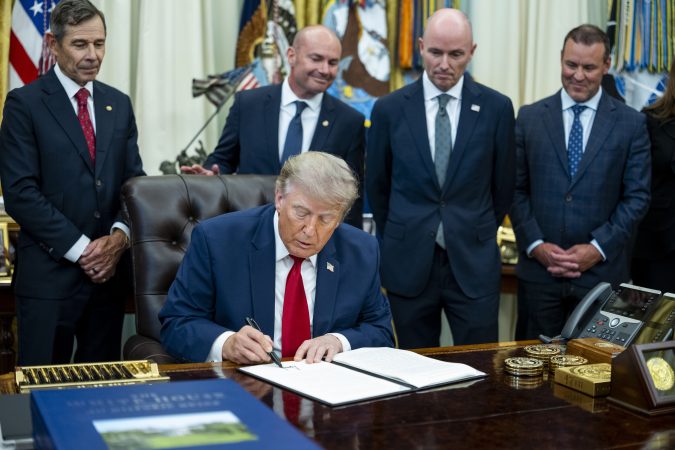
    WASHINGTON — President Donald Trump on Monday reduced the size of two national monuments in Utah by nearly 3 million acres, teeing up a legal battle over whether presidents have the power to shrink such sites in the first place.

    Trump signed two executive orders to sharply cut the Bears Ears and Grand Staircase-Escalante National Monuments to less than 10% of their current size. Both sites are known for their sandstone canyons and vast mesas, which are rich in wildlife habitat as well as archaeological sites of importance to Native American tribes.

    During his first term, Trump similarly shrank both monuments at the urging of top Republicans from Utah, opening about 2 million acres to oil drilling, uranium mining, and other development. But tribes and environmentalists sued over Trump’s move, and President Joe Biden subsequently restored sweeping protections to both sites before a court could issue a final decision.

    Tribes and environmentalists are expected to lead another lawsuit over Trump’s latest effort to shrink the monuments. The legal fight could have far-reaching implications for the future of land conservation, potentially putting dozens of other monuments at risk and opening millions of additional acres to commercial activities.

    The Trump administration has already taken a flurry of other steps to encourage development and recreation on federal lands across the country. In May, for instance, Trump moved to lift restrictions on off-road vehicles in most national parks.

    Before signing the executive orders in the Oval Office on Monday, Trump boasted that he was making bigger reductions to both monuments than he did in his first term, when he shrank Bears Ears by 83% and cut Grand Staircase by 47%.

    “We’re actually giving more than we did the first time back to the people of Utah,” Trump said.

    The six members of Utah’s congressional delegation attended the event in the Oval Office, as did Utah’s governor, Spencer Cox. All are Republicans.

    “It’s very clear that these monument designations are supposed to be the smallest area possible to protect the antiquities, and these multimillion-acre monuments that are bigger than the state of Delaware certainly do not fit that designation,” Cox said.

    National monuments are lands that are legally protected from development. They are similar to national parks, but while national parks are created by Congress, national monuments are created by presidents through the Antiquities Act of 1906.

    Many tribal leaders and environmental lawyers say the Antiquities Act does not authorize Trump to reduce the size of Bears Ears and Grand Staircase. The century-old law, they say, grants presidents the authority to designate monuments but not to abolish or shrink them.

    But many Republicans, ranchers, and oil drillers say previous presidents abused the Antiquities Act by putting vast stretches of land off-limits to development. They note that the law says presidents should limit monuments to the “smallest area compatible with proper care and management of the objects to be protected.”

    President Barack Obama designated Bears Ears during his final weeks in office in 2016. President Bill Clinton classified Grand Staircase in 1996, halting plans for a coal mining project there.

    After Trump shrank both monuments in his first term, his administration sold oil and gas leases on more than 76,000 acres of land adjacent to Bears Ears. But the Biden administration subsequently canceled most of those leases, and the oil industry has little interest in drilling within the monument itself, according to Melissa Simpson, the president of the Western Energy Alliance, an industry trade group.

    “Despite years of rhetoric from environmental advocacy groups, Bears Ears has never been a significant oil and natural gas prospect,” Simpson said in a statement.

    Bears Ears is named for a pair of buttes, or flat-topped hills, that rise thousands of feet above the surrounding canyons. The two symmetrical structures dominate much of the nearby landscape in southeast Utah.

    Grand Staircase is named for a sequence of sedimentary rock layers that stretches from Bryce Canyon National Park to the Grand Canyon. Paleontologists have made extraordinary discoveries there, excavating the fossils of tyrannosaurs and other dinosaurs that roamed the region more than 74 million years ago.

    Today, both monuments provide crucial habitat for hundreds of species, including bighorn sheep, elk, and mule deer. They also contain thousands of archaeological sites that Native American tribes consider culturally significant, including the remains of burial grounds, cliff dwellings, and rock art panels.

    Bears Ears is the ancestral homeland of five tribes in the region: the Navajo Nation, Hopi Tribe, Ute Indian Tribe, Ute Mountain Ute Tribe, and Pueblo of Zuni. The Biden administration reached a unique agreement with a coalition of the tribes, authorizing them to jointly manage the monument with the federal government.

    Anthony Sanchez Jr., the head council member for the Pueblo of Zuni and the co-chair of the Bears Ears Inter-Tribal Coalition, described a feeling of whiplash.

    “You have an administration that backs you up, and then you’re back to square one again,” he said in an interview Monday.

    Sanchez said he worried about the potential for vandals to damage or destroy the rock art at Bears Ears.

    “Even now, with the boundaries not reduced, we still run into that trouble,” he said.

    Scott Braden, the executive director of the Southern Utah Wilderness Alliance, said the nonprofit environmental group would sue over Trump’s effort to shrink the monuments.

    “The Southern Utah Wilderness Alliance is committed to defending the monuments and will challenge this unlawful decision in federal court,” Braden said in a statement. “We are confident that President Trump’s reckless and unlawful acts will be rejected and the monuments restored.”

    But Ben Burr, the executive director of the BlueRibbon Coalition, a group that supports opening public lands to off-road vehicles, vowed to defend Trump’s move in court.

    “Right-sizing these monuments to what the statute actually allows isn’t an attack on public lands; it’s how we keep them open for all Americans to enjoy,” Burr said in an email. “We plan to continue fighting in the courts and in the Congress to ensure that abuse of the Antiquities Act becomes a thing of the past.”

    The litigation over Bears Ears and Grand Staircase could eventually reach the Supreme Court, where Chief Justice John Roberts has suggested that the Antiquities Act is ripe for review.

    “Any land reserved under the act must be limited to the smallest area compatible” with proper management, Roberts wrote in 2021. “Somewhere along the line, however, this restriction has ceased to pose any meaningful restraint.”

    This article originally appeared in the New York Times.

  • Hundreds protest in Maine over the fatal shooting of a Colombian man by ICE

    Hundreds protest in Maine over the fatal shooting of a Colombian man by ICE

    BIDDEFORD, Maine — Hundreds of people protested in Maine on Tuesday over the killing of a Colombian driver by an Immigration and Customs Enforcement officer, after federal officials appeared to shift their narrative about the deadly encounter.

    The Department of Homeland Security said an ICE officer, “fearing for public safety,” shot and killed the driver Monday in Biddeford while officers were watching the home of someone they believed was in the U.S. illegally and had a final order of removal from the country.

    The department said in a post on X that when ICE tried to stop the vehicle driven by someone coming from the home, the vehicle attempted to flee and the officer fired his weapon. That was a shift from how Maine Sen. Angus King described the encounter hours earlier when he said Homeland Security Secretary Markwayne Mullin told him the officer opened fire after the man tried to use his vehicle as a weapon against the ICE officers.

    King said Mullin told him the officers were trying to serve an arrest warrant, but not for the man who was shot.

    The driver was Johan Sebastián Durán Guerrero, a 26-year-old Colombian national, the Colombian Embassy told the Associated Press in a statement Tuesday.

    Protesters gathered Tuesday outside of an ICE detention center in Scarborough, just up the coast from Biddeford.

    “These people are killers and they must leave our state now,” organizer Todd Chretien told the gathering, including some who held signs reading “Stop the murder” and “End this terror.”

    A small group of counterprotestors briefly disrupted the rally. Protesters drowned out their voices with whistles.

    Questions surround what led to latest ICE shooting

    Durán Guerrero’s shooting marked the second time in a week that ICE used deadly force and at least the ninth death since President Donald Trump began his immigration crackdown.

    The officers involved in the shooting in Biddeford, which is about 15 miles southwest of Portland, didn’t have body cameras, leaving many questions about what transpired. Among them are how close the officer was to the vehicle when they fired, whether officers told Durán Guerrero to stop, and how ICE believes he had put the public in danger.

    “We are always evaluating our procedures to keep our officers safe and criminals off our streets. We will not disclose or discuss law enforcement tactics,” an ICE spokesperson said in a statement.

    DHS, which oversees ICE, didn’t immediately respond to an email seeking clarity on what led to the shooting.

    Maine’s other senator, Republican Susan Collins, said Mullin told her that DHS’ Office of Inspector General is investigating in cooperation with the FBI.

    Photos showed bullet holes in the vehicle’s windshield.

    The Maine attorney general’s office, which is also investigating, said initial statements suggest the driver was trying to flee in the direction of the officer, whose name hasn’t been released and who has been placed on leave.

    Video shows aftermath of the shooting

    Video from a security camera at a nearby business, obtained by the Associated Press, shows a white vehicle approaching an intersection at a modest speed before making several slow circles. A law enforcement SUV blocked its path and two officers opened the driver’s door and dragged out a limp body.

    It isn’t clear from the video when the shots were fired.

    Daniel Boucher said he looked out his third-floor window after hearing a “pop, pop, pop” sound. He saw the car moving down the street until the SUV hit it.

    “His face was bloody. His head was bloody,” Boucher said, getting choked up. “I clearly heard the victim say, ‘I tried to stop.’”

    At one point, Boucher said, the officer who shot the man walked close to him.

    “I was emotional and I just let him have it, and he looked at me and said, ‘He tried to run me over,’ or something to that effect,” Boucher said. “I don’t remember his exact words.”

    Durán Guerrero lived in Maine with his family

    Two advocacy groups — the Maine Immigrants’ Rights Coalition and Presente! — said Durán Guerrero was authorized to work in the U.S.

    Mary Hayes, who lives close to the scene, said the man lived nearby with his wife and daughter.

    “I watched a wife fall to her knees looking at her husband’s dead body on the ground,” Hayes told the AP as she held a sign saying “No ICE Stop ICE.”

    Just last week in Texas, an ICE officer fatally shot 52-year-old Lorenzo Salgado Araujo, of Houston, after federal authorities driving unmarked vehicles pursued him while he was driving to a construction job site.

    The two shootings come amid a Trump administration push to carry out its mass deportations agenda. Over five days at the end of June, ICE arrested more than 10,000 people.

    The figures indicate that while the administration is no longer cracking down on individual cities, arrests are surging. The administration’s enforcement efforts were widely condemned last winter after the killings of Alex Pretti and Renee Good in Minnesota.