Tag: Main Line

  • Past Present Future, beloved Main Line gift and craft store, is closing its doors

    Past Present Future, beloved Main Line gift and craft store, is closing its doors

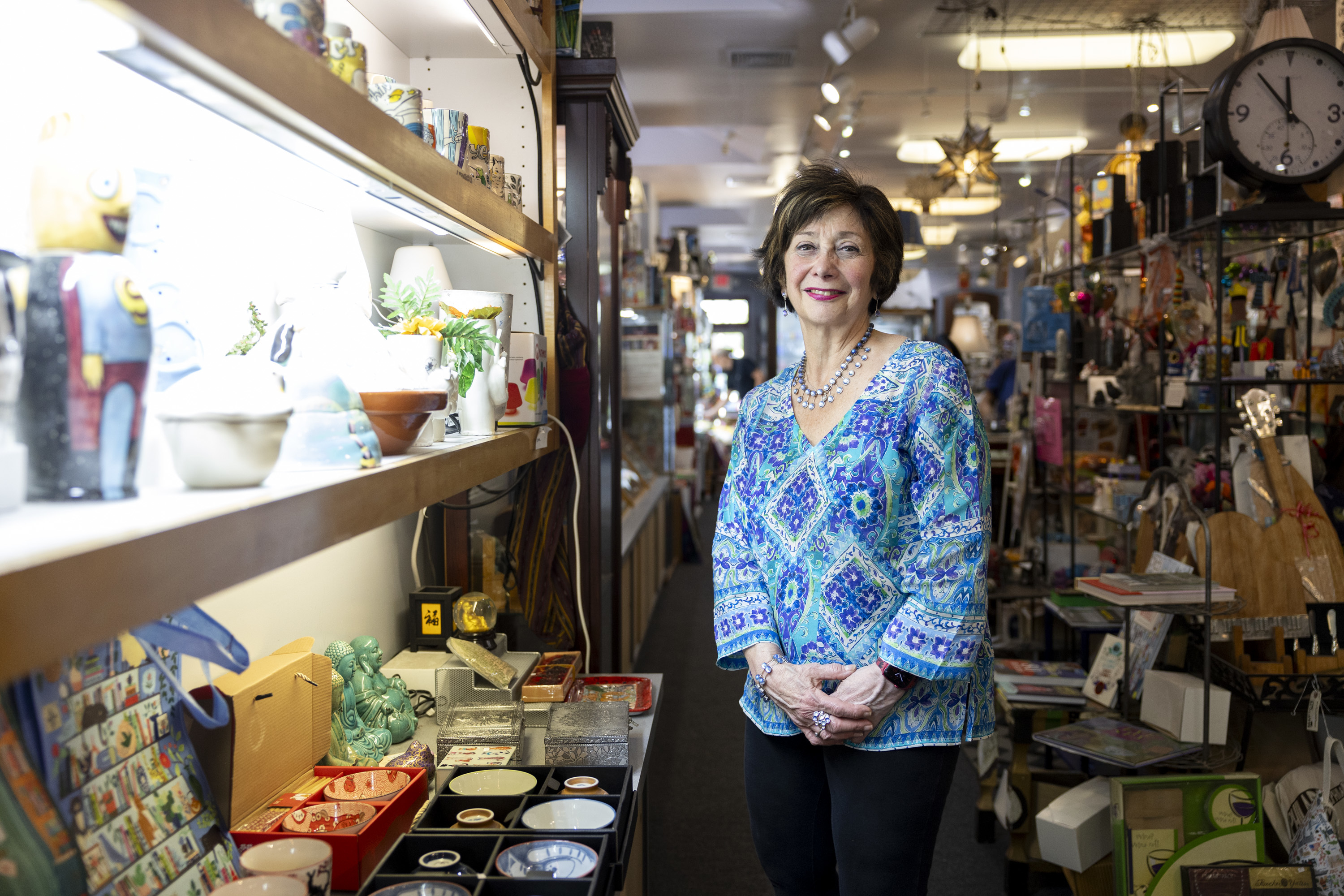
    The interior of Past Present Future, downtown Ardmore’s beloved gift and craft store, is unmistakable. Each wall is adorned with art and collectors’ items, from hand-beaded necklaces to fruit-shaped bowls and ceramic tropical fish. Cases of jewelry sit under hanging lanterns and mobiles, and trinket boxes share shelves with colorful purses and glass figurines.

    Past Present Future, located at 15 Lancaster Ave., is the 50-year work of owner Sherry Tillman, who first opened the store in Center City in 1976 as a young graduate of the Philadelphia College of Art, before moving to Ardmore in the mid-1990s. Tillman calls the shop “part gift store, part mini-museum,” and prides herself on grouping items, from lamps to clocks to mirrors, in “ways that maximize their funky diversity.”

    Now, five decades, four storefronts, and thousands of customers later, Past Present Future is officially closing, marking the end of a chapter that Tillman says has been defined by eclectic art, changing times, and deep community ties. While Tillman is “gutted” to close up shop, in her words: “It’s time.”
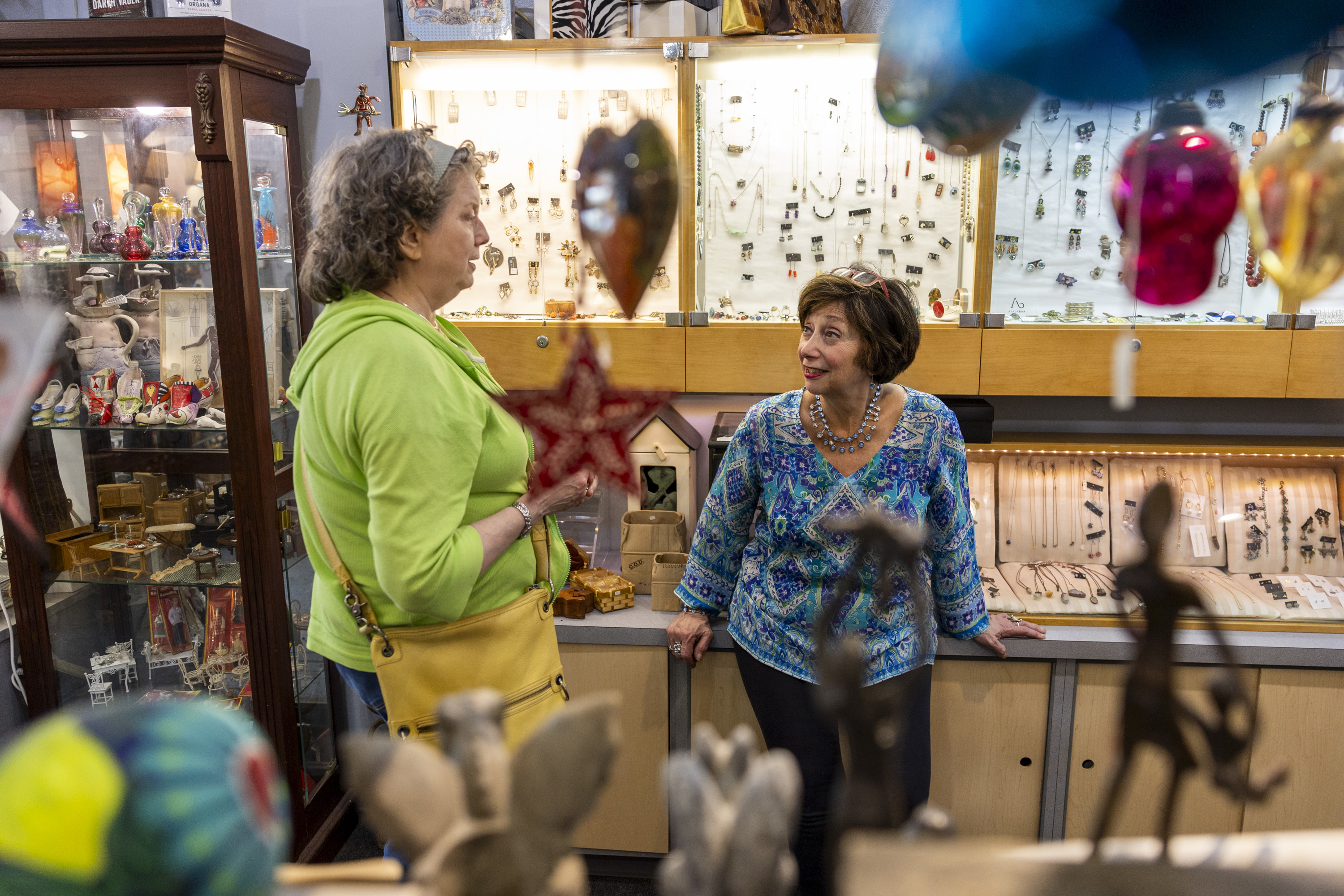
    Sherry Tillman, owner of Past Present Future, chats with Ellen Balze, of West Philadelphia, a regular for many years, during Tillman’s party for friends and long-time customers in Ardmore, Pa., on Friday, June 5, 2026.Tyger Williams / Staff Photographer

    Tillman first opened Past Present Future as a toy store on the corner of 13th and Pine Streets in Center City, next to a friend’s science-fiction bookstore. The Philadelphia Daily News in 1979 called Tillman’s store “one of the wonders of the city,” a “throwback to the age of handcrafted wooden playthings, one-of-a-kind soft toys and sculptures, old-fashioned balance toys and Rube Goldberg-ish do-nothing machines.” Tillman, then a 20-something artist, took orders from customers and handcrafted toys from her workshop.

    After three years, Tillman left the Gayborhood and moved to 17th and Locust Streets, where the scope of Past Present Future began to shift, bringing in more crafts and jewelry. Four years later, Tillman moved to 18th Street between Market and Chestnut Streets. She had 2½ floors of a four-story building and, according to a 1990 Inquirer story, stocked “zingy jewelry, kaleidoscopes, cards, clocks, handmade ceramic diners that light up” and had a “top-floor gallery devoted to fun-and-funky craft items for adults.”

    By the mid-1990s, much of Tillman’s customer base had moved out to the suburbs, and the confounding pressures of crime, high taxes, and a lack of parking, plus raising her own growing family in Ardmore, spurred her to pack up her Center City store and move to the Main Line. She opened on Lancaster Avenue in 1996.

    “The fact that my business could be where my home is was so important to me,” Tillman said, reflecting on her move to Ardmore. “To be embraced and connected to this community is also important to me.”
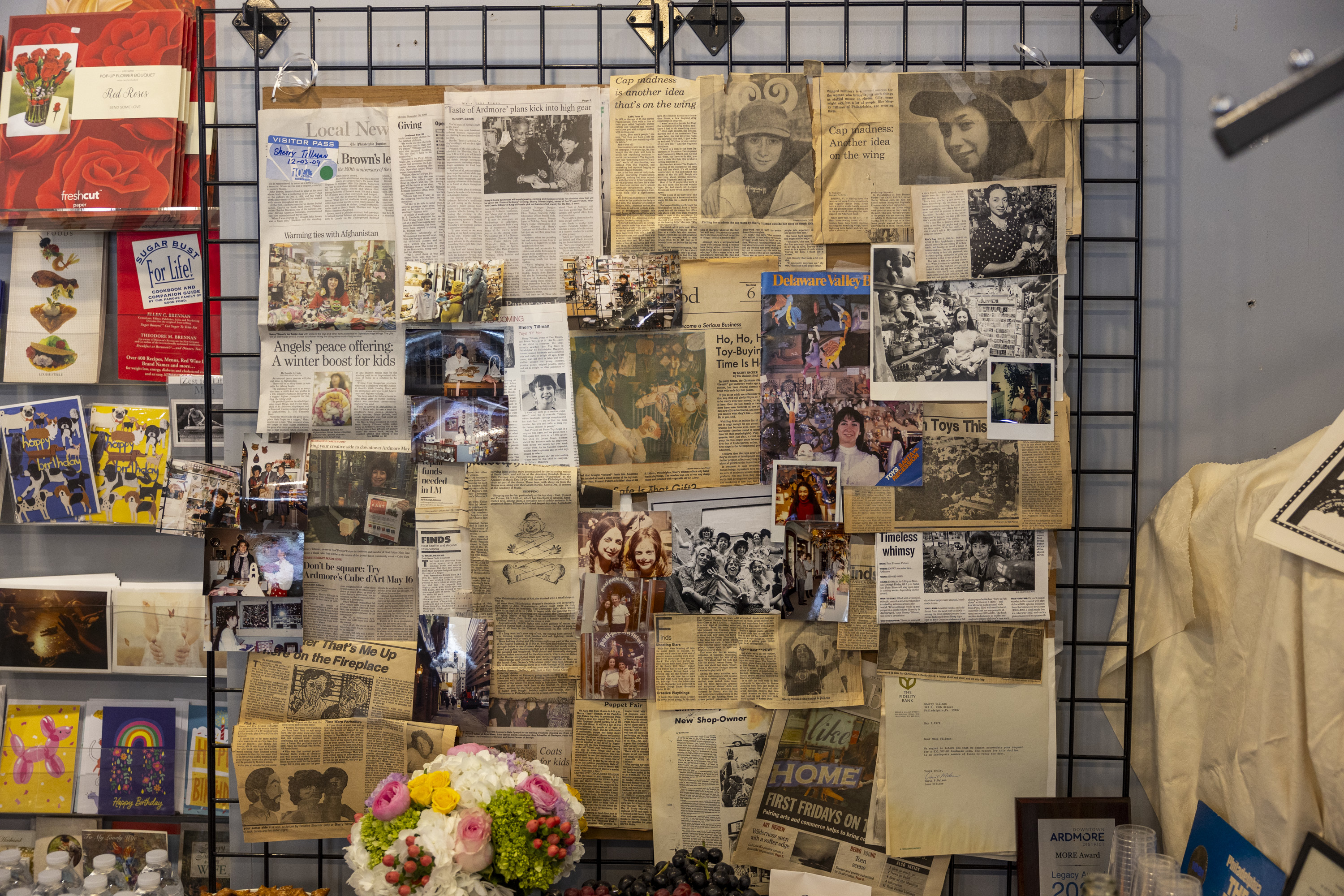
    Sherry Tillman, owner of Past Present Future, made a board of all her articles and photos of her for her small party for friends and regular customers in Ardmore, Pa., on Friday, June 5, 2026.Tyger Williams / Staff Photographer

    Tillman’s store quickly became a magnet for artsy types, window shoppers, gift givers, touring musicians, and spiritually minded Main Line residents.

    “It’s incredible,” she said. “People come in and we talk, other people come in and they join the conversation. It’s a place where people just feel so comfortable.”

    Lorig Buckley, otherwise known as Mystic Lor at Mystic of the Main Line, said she thinks of Past Present Future as “a staple” in Ardmore.

    When people strolled into Past Present Future looking for a palm reading, Tillman would send them down the block to Mystic of the Main Line. When clients of Buckley’s needed to shop for a gift, she’d pass them along to Past Present Future.

    “My heart sank when I saw that she was closing, because it really brought a different spirit to the area,” Buckley said.

    Shannon Gallagher, a business coach who lives in Ardmore, always bought her clients gifts from Tillman’s shop, from crystals to wooden boxes with tarot cards. When she first moved to Ardmore four years ago, Tillman gave her the lowdown on all of the locals’ favorite spots.

    “She just made it feel so comfortable for us,” Gallagher said.
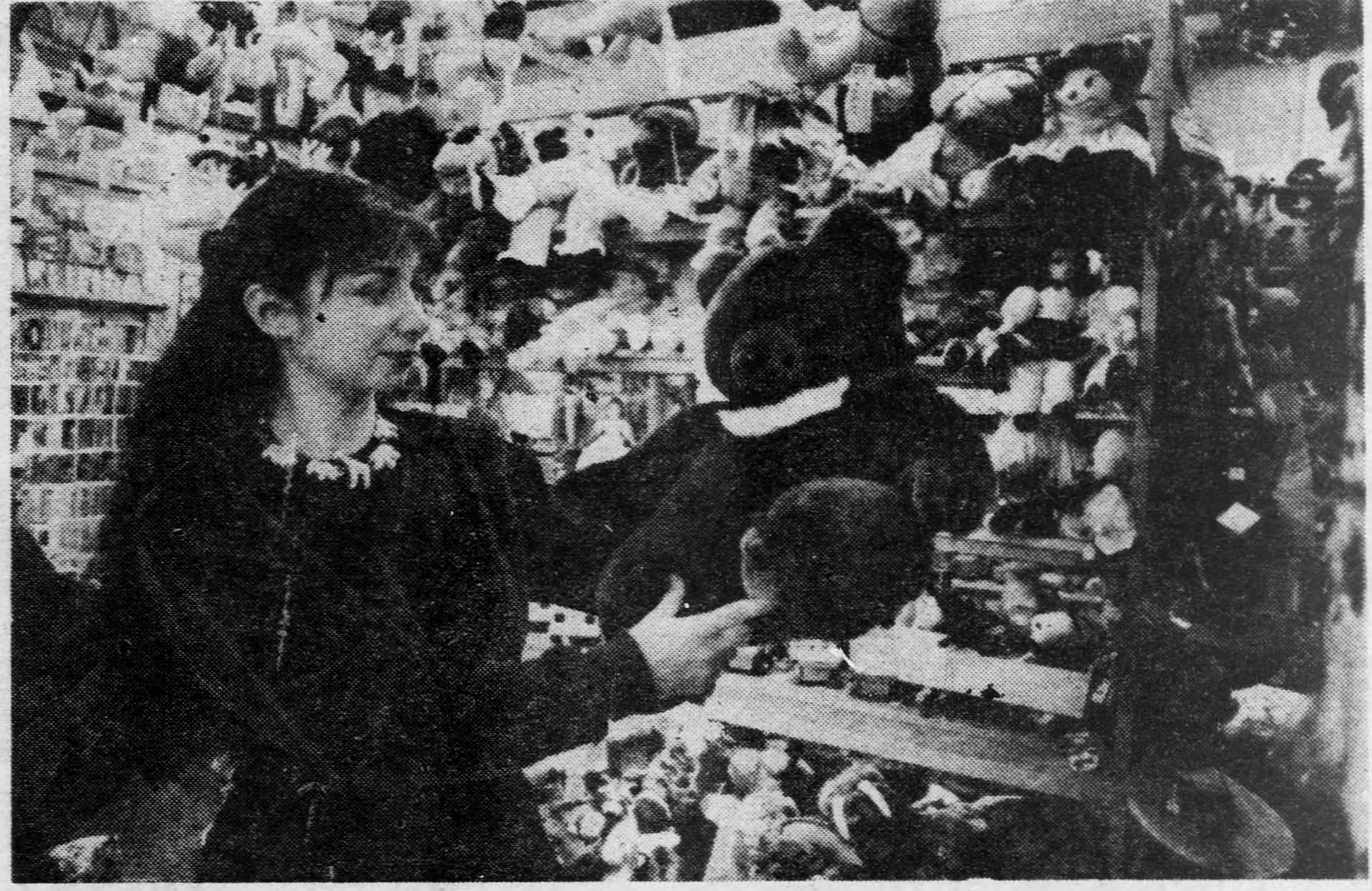
    Sherry Tillman, featured in the Philadelphia Daily News in 1982, holding a teddy bear at Past Present Future, back when it was located at 243 S. 17th St. in Center City. Tillman has operated the toy and art store for 50 years, first in Philadelphia and, for the last three decades, in Ardmore.Sam Psoras / Staff Photographer

    In addition to running Past Present Future, Tillman organized First Friday Main Line, a monthly arts crawl that brought music and art to the streets of Ardmore. Alongside Broomall surgeon Lt. Col. Kenneth Marx, Tillman helped create Operation Angel Wings, a donation drive that sent clothes and toys to children in Afghanistan. Most recently, she spearheaded a contest to paint a mural on the side of her storefront. The first of five winning murals will be up by July 1.

    Tillman said Ardmore has “blossomed a lot” in the years since she moved to town. Street art, interesting shops, and live music sprawl across downtown, from the newly painted Schauffele Plaza to Ardmore Music Hall (many of the traveling performers stop into Past Present Future before their shows, Tillman said).

    “There’s expressions of art around us,” Tillman said.

    Tillman doesn’t have an exact closing date yet. Past Present Future has marked down its merchandise by 20%, and Tillman said she’ll be open until there’s nothing left (“hopefully”). Tillman plans to sell the 15 Lancaster Ave. building, which she has owned for years.

    “It’s really hard,” she said, “when you think that your entire life has been this one thing, to say goodbye.”

    This suburban content is produced with support from the Leslie Miller and Richard Worley Foundation and The Lenfest Institute for Journalism. Editorial content is created independently of the project donors. Gifts to support The Inquirer’s high-impact journalism can be made at inquirer.com/donate. A list of Lenfest Institute donors can be found at lenfestinstitute.org/supporters.

  • Main Line Health, UnitedHealthcare contract dispute could leave 32,000 patients out of network later this month

    Main Line Health, UnitedHealthcare contract dispute could leave 32,000 patients out of network later this month

    Chris Feaster sees Main Line Health clinicians for mammograms, breast MRIs, and other preventive screenings required due to her high risk of breast cancer.

    The 61-year-old Montgomery County resident has been panicked in recent weeks after Main Line sent patients a letter warning that the nonprofit health system’s contract with her insurer, UnitedHealthcare, may end later this month.

    Main Line is a leading provider of care across Philadelphia’s western suburbs, where it has four hospitals. Feaster has relied on its facilities for care for 40 years.

    “They know me,” she said of her Main Line providers in an interview. “I have been getting monitored there since the time I was in my early 30s.”

    Feaster, who lives in Trooper, has already experienced a healthcare disruption caused by another insurance dispute. Two years ago, Axia Women’s Health and United failed to reach adeal. That forced Feaster to find a new gynecologist after 40 years.

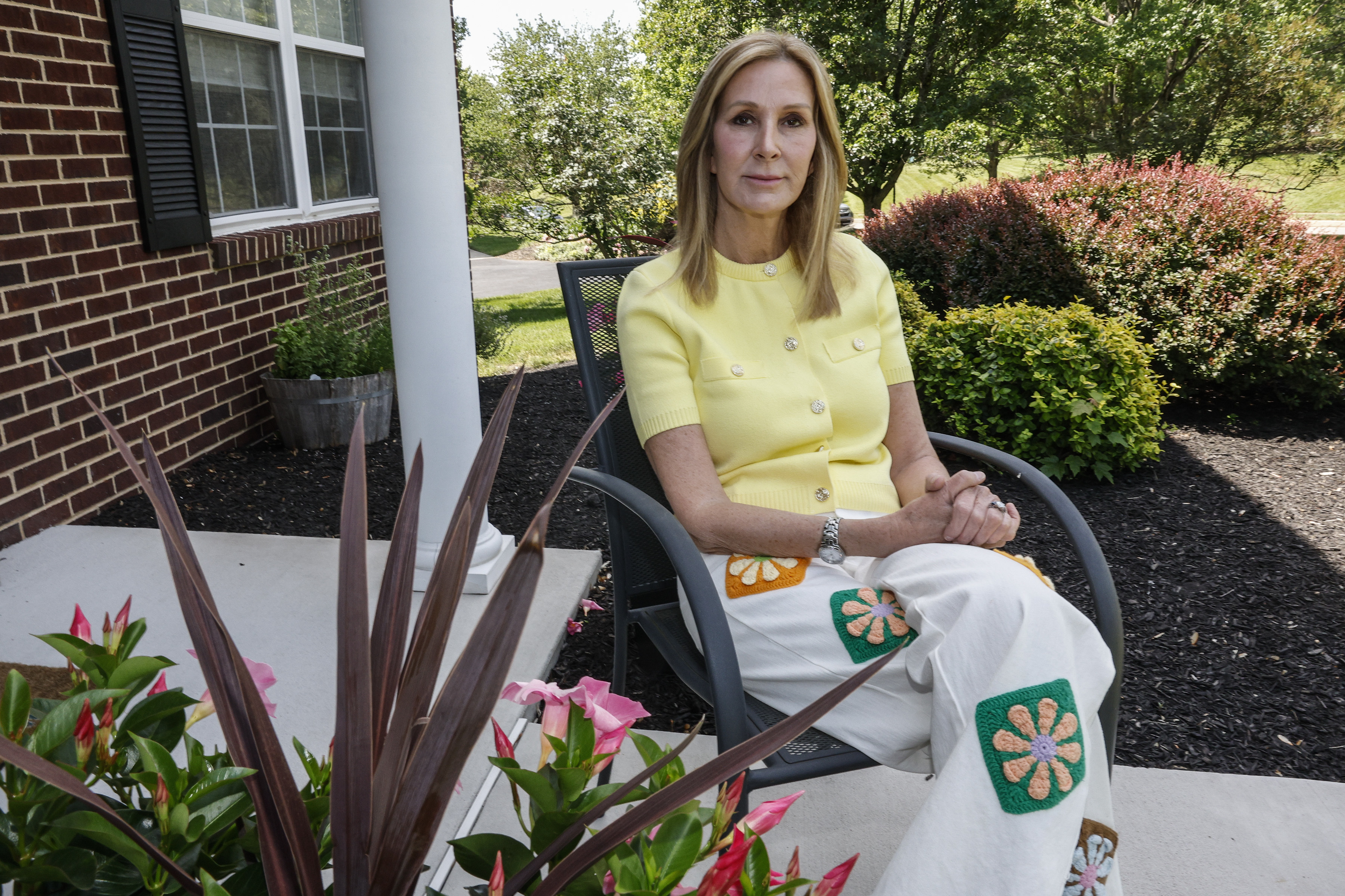
    Chris Feaster is among thousands of Main Line Health patients worried about the prospect of Main Line Health going out of network with UnitedHealthcare at the end of this month.Steven M. Falk / For The Inquirer

    If no deal is reached by June 30, Feaster could be facing a repeat. She is among 32,000 affected Main Line patients who have United insurance through Medicare Advantage plans and commercial insurance from employers.

    It’s not unusual for health systems and insurers to go down to the wire when negotiating contracts, but Axia’s failure to reach a deal — and the decision by Jefferson Health’s Lehigh Valley Health Network to go out of network with United — has people on edge.

    Main Line Health said that United had been engaging more meaningfully in negotiations in recent weeks. “We are hopeful that momentum continues. We remain committed to reaching a resolution before June 30,” its statement said.

    For Main Line, which is far less profitable than it was before the pandemic, the dispute is not just about rate increases. The nonprofit health system also wants to reduce claim denials, prior authorization delays, and excessive audits.

    UnitedHealthcare focused on prices in a statement, and the impact high costs have on employers who pay for health benefits.

    “Main Line Health is seeking price hikes that would significantly increase costs for families and employers,” UnitedHealthcare said.

    United added that self-insured companies would absorb the biggest hit ”impacting the money they have to grow their business and compensate their employees.”

    Worries about maternity care

    Jessica Geida, a Newtown Square resident and an ob/gyn who is not currently practicing, is particularly worried about access to maternity care in Delaware County, given that Axia is already out of network with United.

    Main Line operates the only practice that delivers babies at Riddle Hospital for people with UnitedHealthcare (UHC), said Gaida, who has worked at Axia and Main Line. “If they drop UHC, there would be no access to care in the Delaware County,” she said.

    Maternity care has been under pressure in Delaware County since the maternity unit closed at Delaware County Memorial Hospital in early 2022, followed by the shutdown of Crozer-Chester Medical Center a year ago as part of the Prospect Medical Holdings bankruptcy.

    Mercy Fitzgerald Hospital in Darby closed its labor and delivery unit more than 20 years ago.

    If Main Line and United fail to reach a deal, UnitedHealthcare patients might have to go to Penn Medicine’s Chester County Hospital in West Chester, which is already busy.

    Patients who get into Penn’s ob/gyn practice at Penn Medicine Radnor deliver babies at the Hospital of the University of Pennsylvania in Philadelphia, according to that group’s web site.

    A disappointing call

    Feaster said a call from UnitedHealthcare Friday left her feeling very uncertain about her care.

    Feaster grew up in Wayne and kept seeing Main Line doctors when she moved to Trooper, which is north of King of Prussia.

    Feaster would have to specially request a continuation of care to keep seeing each of her Main Line doctors at in-network prices, the UnitedHealthcare representative told her.

    The temporary stopgap is designed to help people who have significant needs — including cancer patients in the middle of treatment — avoid gaps in care while they switch to doctors who accept their insurance.

    Feaster would have to fill out part of the form, and her doctors would have to complete another part. She’d also have to take the same steps for Main Line providers of her regular mammograms, breast MRIs, and DEXA bone density scans.

    UnitedHealthcare would then review each request to determine whether to approve.

    “I’m really worried,” she said.

  • The hottest musical act in Philly? A group of middle-aged guys in khaki slacks and sensible loafers.

    The hottest musical act in Philly? A group of middle-aged guys in khaki slacks and sensible loafers.

    As a general rule, Sam Marshall is not used to drawing a crowd.

    At 70 years old, with glasses and a plop of silver hair, the Haverford grandfather is a semiretired regulatory lawyer with a fondness for trains and the print version of the Wall Street Journal.

    Yet, there he was last month, at a wedding in Big Sky, Mont., loitering near the dance floor when a young woman approached.

    “You’re famous!” she said.

    Before Marshall could respond, the woman was grabbing her friends and pulling them over.

    “Hey!” she called out. “This is the guy from that group we follow!”

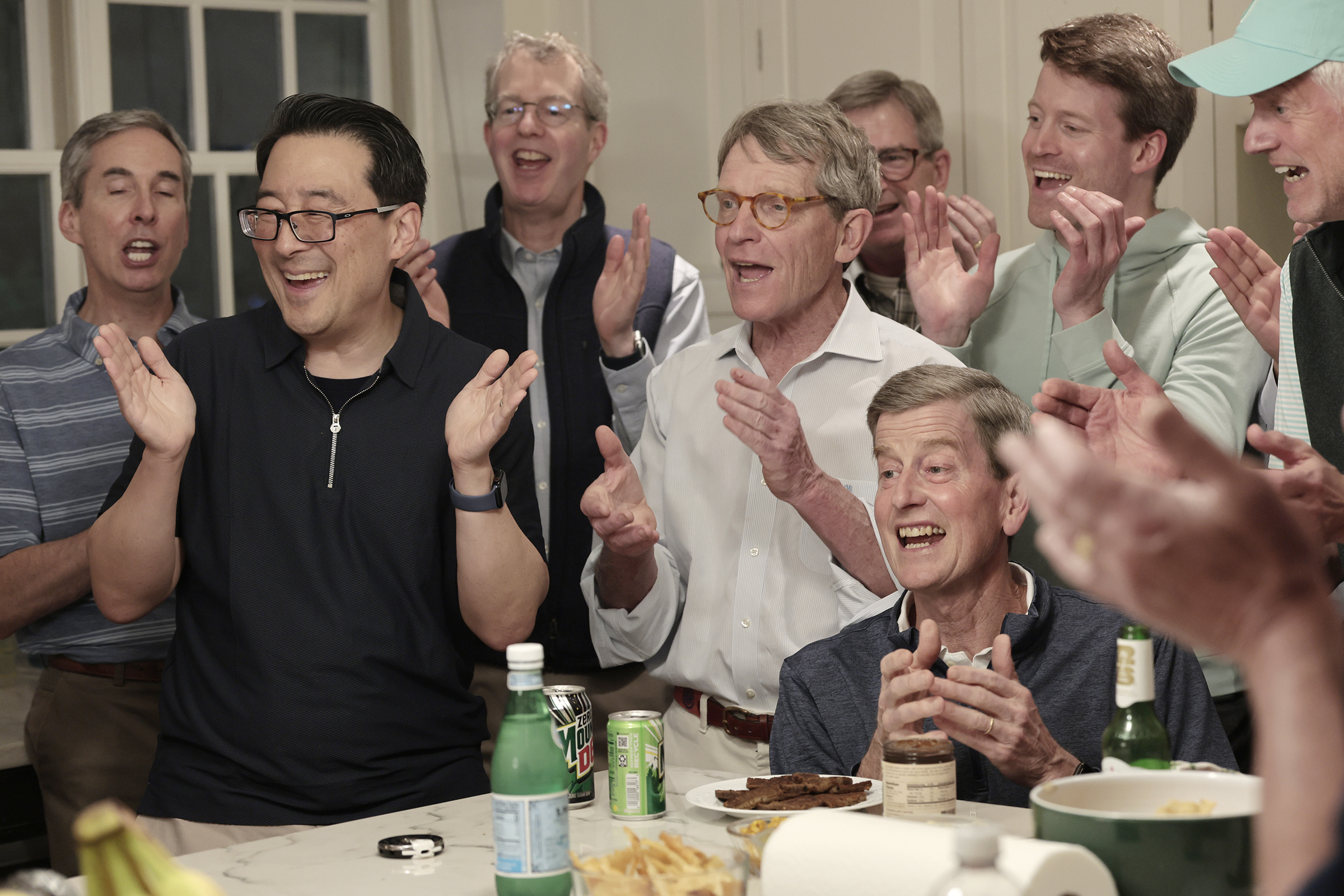
    Such is life these days for the Tonics, a men’s a cappella group made up largely of Main Line fathers and grandfathers who might very well be the city’s hottest musical act.

    Since videos of the group’s endearing kitchen rehearsal performances began circulating on social media recently — racking up millions of views — no one can seem to get enough of Philly’s a ca-fellas.

    In the comments section of their videos, the Tonics’ most ardent fans break down everything from their impressive hairlines to their choice of rehearsal snacks.

    Elizabeth Robertson / Staff Photographer

    Online, the Tonics are putting up kittens-doing-cute-things numbers: 2.9 million Instagram views for a rousing rendition of “Lean on Me”; 4.1 million for a performance of “Werewolves of London.”

    Supermodel Gigi Hadid is a fan. The singer Michael Bublé responded to their rendition of his song “Haven’t Met You Yet” with a string of heart emoji.

    So meteoric has been their rise, meanwhile, that they’ve broken U.S. containment.

    “Evidently,” says Mike Reese, a 46-year-old Wayne resident who sings second tenor for the group, “we’re very popular in Australia.”

    The appeal is undeniable; in a digital world where every piece of content seems carefully curated, the Tonics have remained their unassuming selves.

    Of the group’s 19 members, most are middle-aged and older — with full-time careers as doctors, lawyers, and educators. Their collective look — an assortment of khaki slacks, quarter-zip sweaters, and sensible loafers — might best be described as CPA chic. It is not uncommon, meanwhile, for one of the group’s members to pull a handkerchief from his pocket mid-performance and blow his nose.

    During a Saturday afternoon performance at a restaurant in Wayne last month — where even the waitstaff couldn’t help clapping along — supporters clamored to make clear they’d been fans before the group’s mainstream success.

    “I have all of their CDs,” said a woman named Esther, from her perch at the bar. “I put them on when I’m paying bills.”

    Unlike many of their musical contemporaries, the Tonics did not set out for musical stardom.

    Back in 1990, a couple of them — who’d previously been part of a cappella groups and missed the camaraderie — got to thinking: Why not get some guys together and do a little jamming?

    They began meeting every Thursday night, rotating between members’ homes, where for two hours they could leave their stresses — family responsibilities, demanding careers — at the door and enjoy a little old-fashioned harmonizing with the boys.

    “There’s something very spiritual that happens when you’re standing in a group and singing a song, making harmony together,” says Peter Evans, one of the group’s original eight members.

    It wasn’t long before they were movin’ and snappin’ their way into the hearts of the masses — or at least the occasional graduation party, bat mitzvah, and assisted-living facility.

    Through the years, they managed to achieve a modicum of local renown. They performed “The Star-Spangled Banner” at Phillies games. They recorded four studio albums. A catalog of their music — covers of hits spanning the decades — is available to stream on Spotify and Apple Music.

    It wasn’t until earlier this year, however, that things started to get a ca-crazy.

    Youngmoo Kim (right) serves as the Tonics’ music director and de facto social media manager. Elizabeth Robertson / Staff Photographer

    The Tonics’ crescendo

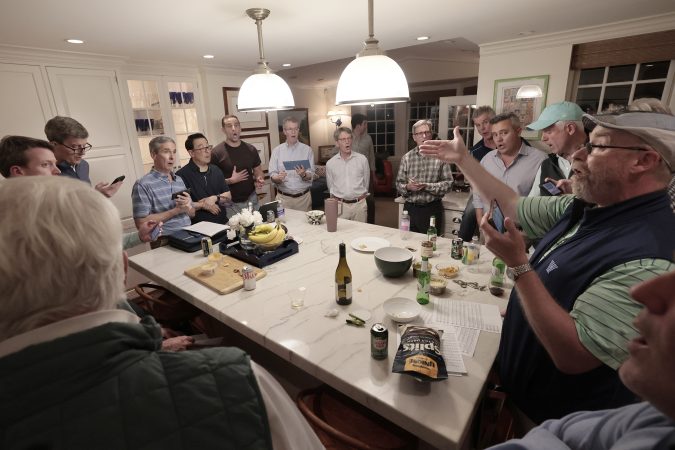
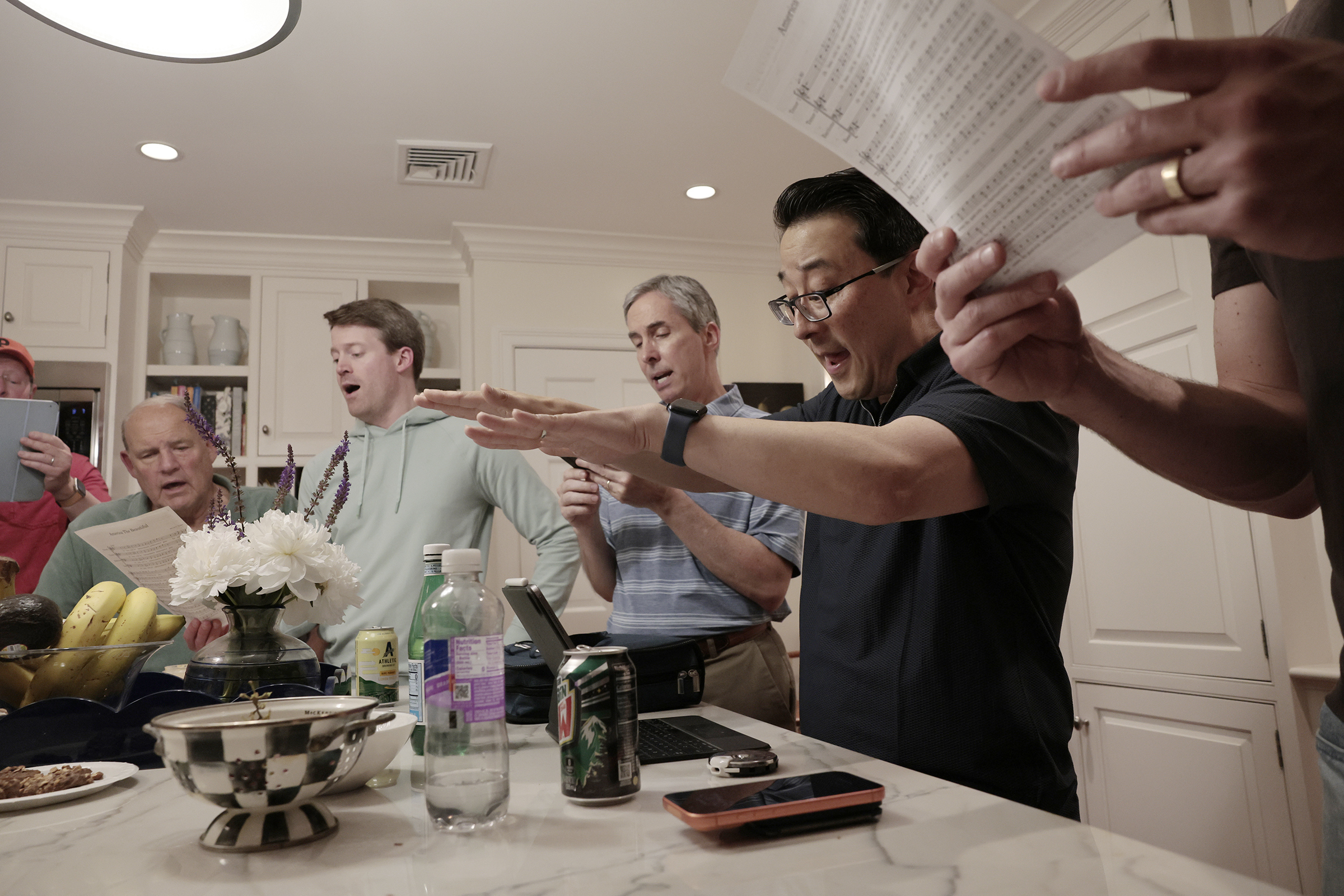
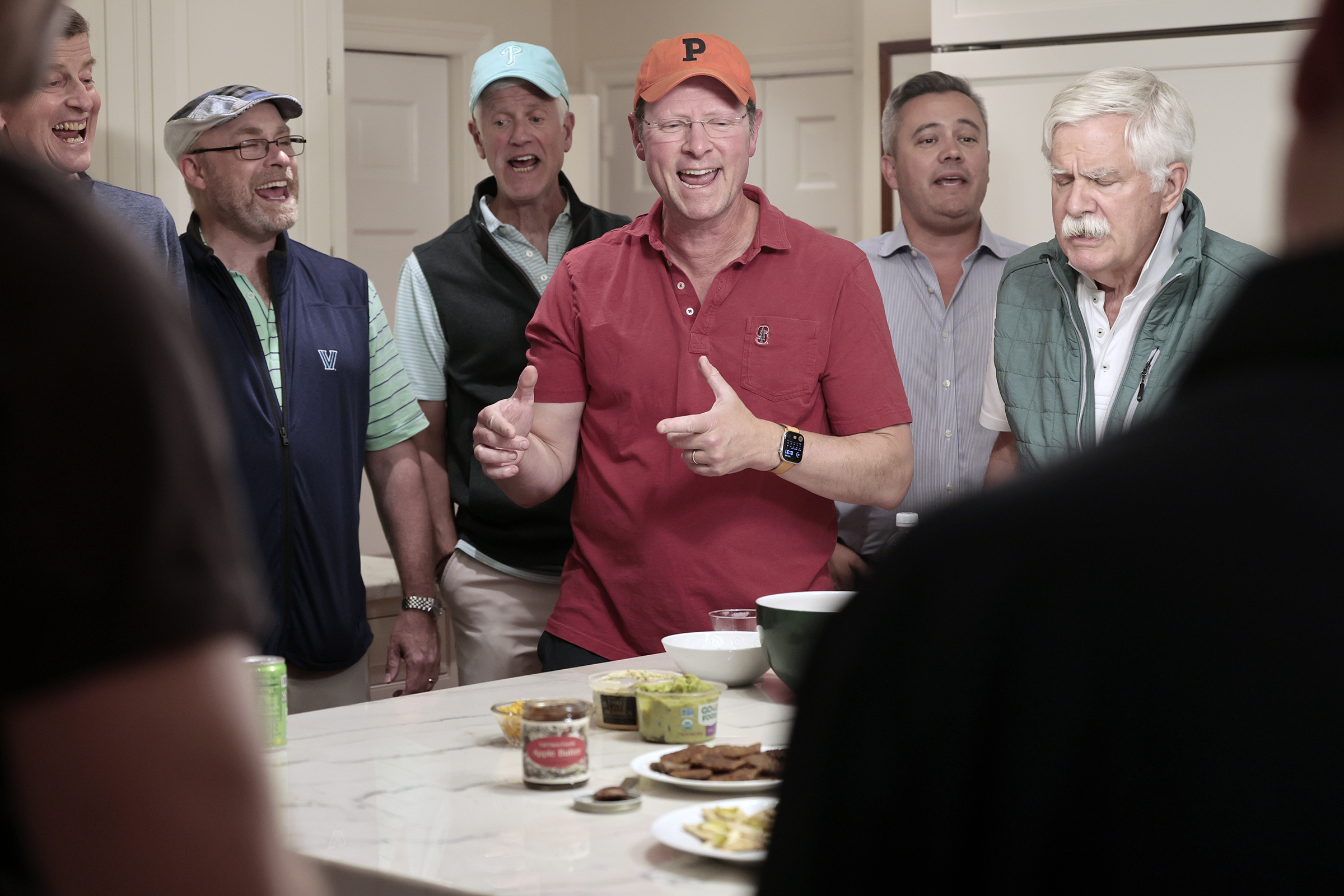
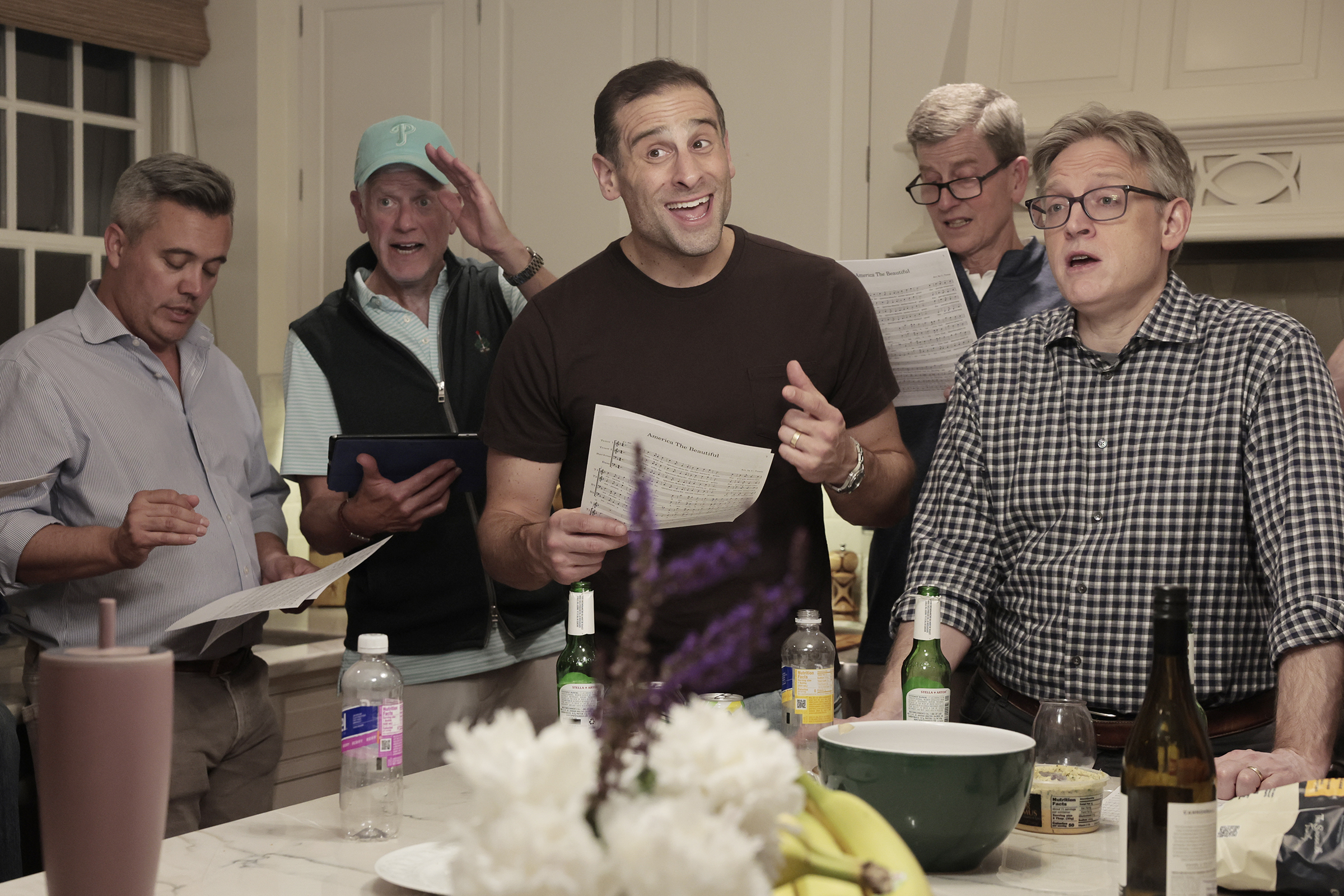
    During a rehearsal one evening last November, the group’s members stood around a well-appointed kitchen island, belting out a rendition of “Drift Away.” Someone captured a short video of the performance, and afterward, Youngmoo Kim — the Tonics’ 53-year-old music director — posted it to the group’s sparsely followed Instagram page, thinking little of it.

    Maybe it was their wholesome vibe. Or the earnestness of their instrument-less performance.

    Maybe, at a time when adult males — especially those over 50 — report feeling increasingly lonely, it was simply the novelty of a group of men gathering to do something that didn’t involve “golf and cigars and bourbon,” says Philip Pearson, a 57-year-old Tonic from Chestnut Hill.

    “To be able to carve out a couple hours to do something special with a bunch of guys you like to hang out with is a pretty special thing these days,” adds Reese.

    Whatever the reason, the Tonics struck a chord.

    When Kim checked the group’s Instagram page a few days later, he was astounded.

    “I’m used to seeing 300 views,” he says. “All of a sudden, it was 300,000.”

    The majority of the group’s 19 members were part of college a cappella groups, including several who performed with the renowned Tigertones at Princeton University. As for the viral success? “We have no idea why this happened,” said Philip Pearson, a longtime member of the Tonics. Elizabeth Robertson / Staff Photographer

    More videos followed, and soon, Instagram feeds across the world were filling with a dozen or so middle-aged guys from the Philadelphia area cutting loose around a kitchen island — their impassioned performances rivaled only by the stream of good-natured jokes that accompanied them.

    “Room full of good credit,” read one comment on Instagram.

    “A case of sparkling water hates to see these fellas coming,” read another.

    “I just know they have a [favorite] length of grass.”

    These days, everyone’s jockeying for a piece of the Tonics.

    There were the folks from North Carolina who wanted to book the group for a summer wedding. And the woman from Chicago who begged the group to record a “Happy Birthday” video for her fiancé, a huge fan. (The Tonics — whose performance fee ranges from free dinner to $1,000 — agreed, but only after ensuring they weren’t being pranked.)

    There have been collaboration requests and brand partnership offers, including one — much to the confusion of the group’s members — from a company selling skinny jeans.

    “You’ve seen our shapes — our shapes are not all great,” says Jim Buck, 66, of Bryn Mawr, a cofounder of the Tonics. “But if they’re really looking to appeal to a bunch of 40-to-70-year-olds, then we’re your guys.”

    In addition to serving as the Tonics’ beatboxer, Ed Glassman (center) is a teacher at Springside Chestnut Hill Academy. When the group went viral recently, his students didn’t miss a beat. “It was a full day where every kid that came up to me that day had seen that video,” Glassman said. “They were having a good time with it.”Elizabeth Robertson / Staff Photographer

    Their future

    The Tonics, of course, would not be the first band to succumb to the pressures and temptations that accompany overnight fame.

    But while there has been the occasional sign of their newfound stature — “I do notice that maybe people comb their hair a little more before rehearsal,” says Marshall — the group’s members insist that they have remained cool and levelheaded about the whole thing.

    Indeed, at a recent Thursday night rehearsal in a leafy Haverford neighborhood, there were no signs of swollen heads or raging egos. As they trickled in, the group’s members mingled and backslapped. They picked from an assortment of snacks — a family-size box of Triscuit crackers, some Di Bruno’s-sourced cheeses — and hammed it up in that uniquely suburban-dad kind of way.

    “We got a photographer here tonight,” someone quipped. “Don’t pick your nose!”

    “Bad-lookin’ guys in the back!” called another.

    On this night, however, there was plenty to do. There was their suddenly packed calendar of gigs to prepare for — at the Woodmere Art Museum, the Wayne Music Festival, the Philadelphia Cricket Club.

    And their forthcoming live performance on Australia’s The Morning Show.

    And so, as the evening sunlight dwindled and the diet soft drinks flowed, the Tonics took their places around the kitchen island — van Gogh at his canvas — and got to work.

    The Tonics’ members have a variety of careers. Among the group are teachers, attorneys, and several doctors. “We have pretty much every affliction covered,” joked Tonics cofounder Jim Buck. Elizabeth Robertson / Staff Photographer
  • Pa.’s new budget has financial help for Delco’s Riddle and Mercy Fitzgerald Hospitals

    Pa.’s new budget has financial help for Delco’s Riddle and Mercy Fitzgerald Hospitals

    Pennsylvania’s new budget has $5 million in supplemental payments for the two Delaware County Hospitals that have seen significant increases in patient volumes since Crozer-Chester Medical Center and Taylor Hospital closed in the spring.

    Main Line Health’s Riddle Hospital, near Media, is getting $3 million. The amount for Trinity Health Mid-Atlantic’s Mercy Fitzgerald Hospital, in Darby, is $2 million, according to budget documents.

    The $5 million will be doubled by a federal match, said Democratic State Sen. Tim Kearney, who represents part of Delaware County. The $5 million is from a fund used to help hospitals the serve a large number of patients with Medicaid and used to go to Crozer Health, Kearney said Friday.

    Main Line said in a statement Thursday that the money will help it maintain services in the county.

    “Since Crozer’s shutdown in April, Riddle’s Emergency Department has experienced an unprecedented surge — 46% more patients than the same period last year, an increase of nearly 4,000 overall,“ the nonprofit said.

    Main Line, which also owns Lankenau Medical Center, Bryn Mawr Hospital, and Paoli Hospital, said it has seen 55,000 patients from the Crozer market — a 15% increase over the same time period last year. That figure includes 8,000 patients who went to a Main Line facility for the first time, the health system said.

    Trinity Health did not respond to a request for comment.

    Shuttered hospitals in limbo

    While Riddle and Mercy Fitzgerald have scrambled to accommodate patients who used to rely on Crozer Health, efforts are underway to bring healthcare services back to at least Taylor Hospital in Ridley.

    Local investors bought that facility in September for $1 million and are trying to entice one of the region’s nonprofit health systems to bring it back as a hospital.

    A group from New Jersey called Chariot Allaire Partners LLC has agreed to pay $10 million for the former Crozer-Chester Medical Center in Upland but has not disclosed its plans. That facility served as a key safety provider for a low-income area of Delaware County.

    A partnership of Restorative Health Foundation and Syan Investments won an auction for Springfield Hospital for $3 million, but it does not have support from township officials.

    Delaware County legislators also obtained $1 million from the state to buy emergency department equipment if one of the closed hospitals, such as Taylor, reopens, Kearney said.

    Editor’s note: This story has been updated with additional detail on the funding.

    This suburban content is produced with support from the Leslie Miller and Richard Worley Foundation and The Lenfest Institute for Journalism. Editorial content is created independently of the project donors. Gifts to support The Inquirer’s high-impact journalism can be made at inquirer.com/donate. A list of Lenfest Institute donors can be found at lenfestinstitute.org/supporters.