After giving birth to her first child, Jennifer O’Mara sought therapy forpostpartum depression.
But when O’Mara left her Delaware County home to visit her in-laws in North Carolina, her counselor had to cancel a virtual session because she wasn’t licensed to practice outside of Pennsylvania.
“My therapist had always asked me if I was in Pennsylvania before a session started, and there was actually a time where I was not, and we couldn’t meet, and I didn’t understand why,” O’Mara said. “I was confused.”
Unbeknownst to the new mother, Pennsylvania counselors need a separate license for each state they practice in.
O’Mara, a Democrat elected as a state representative in 2018 and a co-chair of the legislature’s Mental Health Caucus, said she’s been working to change that regulation since that canceled therapy session.
Four years later, O’Mara’s efforts are about to pay off under a bill expected to soon go to Gov. Josh Shapiro for his signature.
The legislation would make Pennsylvania the 40th state to join the Interstate Counseling Compact. It enables counselors who are licensed in Pennsylvania to practice in any state that is part of compact.
Pennsylvania will join already participatingstates, including Delaware, New Jersey, Maryland, Ohio, and yes, North Carolina.
The bill only applies to licensed professional counselors, or LPCs. Pennsylvania separately participates in multistate healthcare compacts for psychologists, doctors, nurses, and physical therapists to provide inpatient care or telemedicine across state lines.
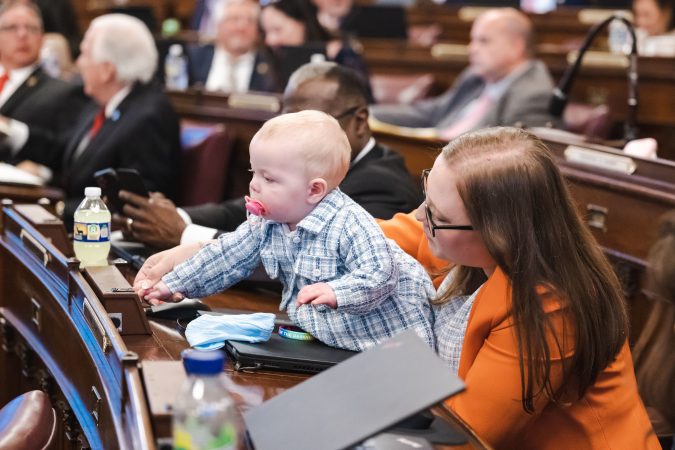
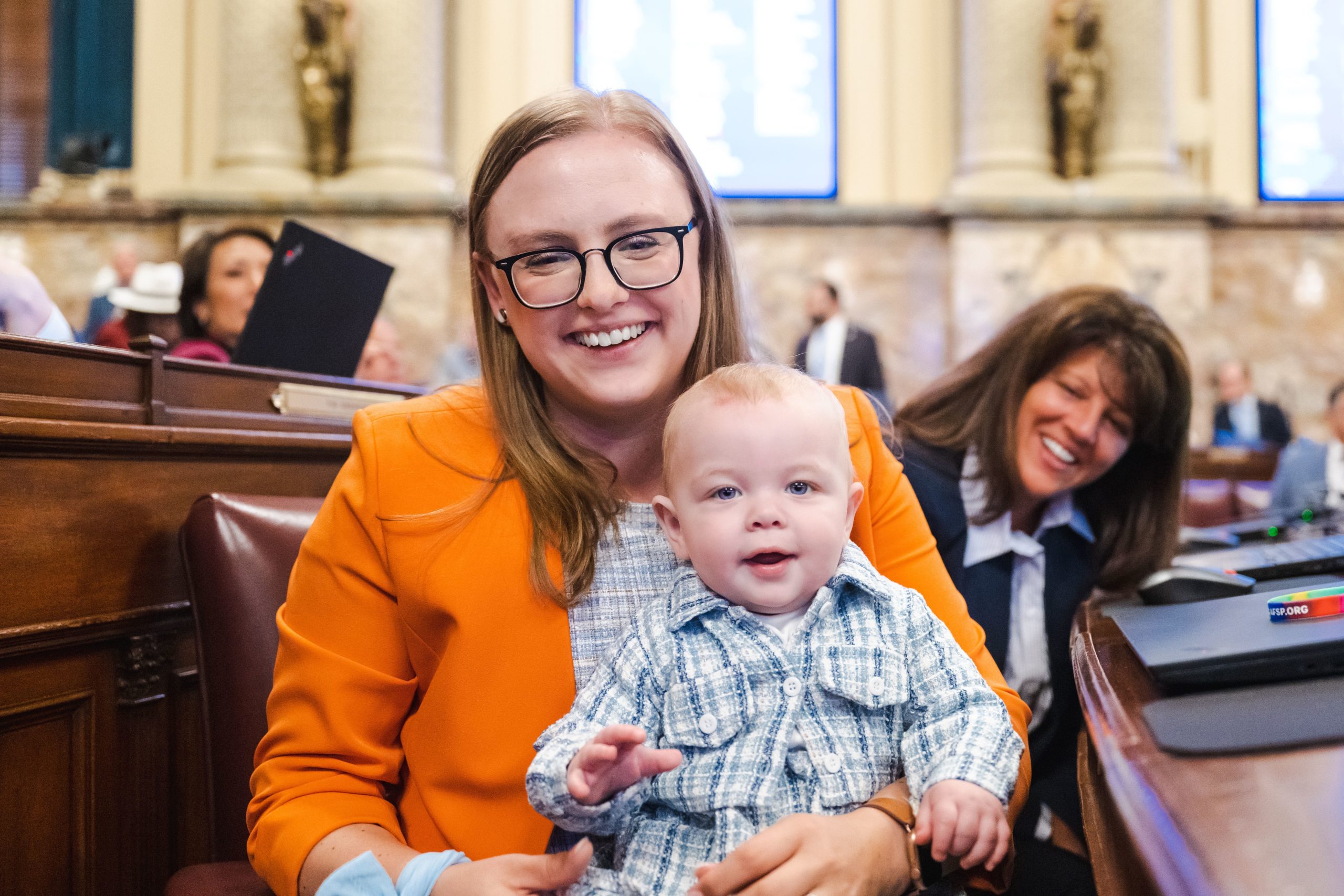
State Rep. Jennifer O’Mara (D., Delaware County) with her daughter, Katherine, now 4, in 2023. O’Mara helped usher the Interstate Counseling Compact bill through the Pennsylvania House in late June. The bill would allow licensed professional counselors (LPCs) to practice across state lines. Courtesy of Jennifer O'Mara
Shapiro plans to sign it
O’Mara helped advance the bill in the House. The Senate had passed it in July 2025 by a 45-5 vote. The House approved it last week by an 188-to-14 vote.
It now goes back to the Senate for a perfunctory, final signature by that chamber’s president before heading to Shapiro’s desk, according to a spokesperson for Sen. Lisa Boscola (D., Lehigh and Northampton), the bill’s prime Senate sponsor.
O’Mara and leaders of the Pennsylvania Counseling Association (PCA), which has about 700 members statewide, said they expect Shapiro to sign the bill into law once it gets to his desk. A spokesperson for Shapiro confirmed on Tuesday that he plans to sign it.
The bill aims to benefit recent high school graduates who want to keep the same therapist but plan to attend college out of state; active duty military members who are deployed outside Pennsylvania; and residents who physically work in New Jersey or Delaware and opt to do sessions during their lunch break, according to O’Mara.
“This feels like a small bill that will make a big difference,” O’Mara said.
Addressing a shortage of counselors
Post-pandemic, the demand for mental health services has increased, and providers have struggled to keep up. The nation is expected to have a shortage of more than 40,000 counselors by 2030, and roughly 62% of Pennsylvania communities lack adequate mental health services, according to the PCA.
The legislation is designed to ease that burden, said Nicole Palman, a counselor at the Main Line Counseling and Wellness Center in Haverford.
“We’ll be able to continue to see clients when they move to New Jersey or when they move to Delaware without having to end care that may have been going on for years,” saidPalman, a PCA member who advocated for the bill.
It’s not always easy to find a new counselor, she noted.
“A lot of people get discouraged,” Palman said. “The process is worse than dating to find a therapist you align with.”
Editor’s note: This story has been updated to clarify that psychologists are included in Pennsylvania’s multistate compacts for health professionals.
Inquirer staff writer Gillian McGoldrick contributed to this article.
Rothman Orthopaedics plans to open three new surgery centers over the next year and keep adding doctors in its Philadelphia-area market, as the large physician-owned group refocuses growth efforts on its original territory.
“Our biggest priority in the near term is strengthening our core business here, in Southeastern Pennsylvania and New Jersey,” Rothman CEO Christian Ellison said. “We’re not gonna ignore opportunities. We’ll be opportunistic around things that make strategic sense.”
Rothman has seen more success after following the lure of fast population growth to Florida, where it opened offices in the Orlando area in 2020 in partnership with AdventHealth.
“Florida has been a big success, because we’ve had the partnership down there with Advent Health that’s been kind of mutually beneficial,” said Ellison, who became Rothman’s CEO last fall.
The Philadelphia draw
The practice headquartered in Center City already has 24 locations in the Greater Philadelphia market. That number includes facilities that Rothman operates in partnership with Jefferson Health, Main Line Health, AtlantiCare, and RWJ Barnabas.
Rothman located itsnewest office in West Chester, an area where Rothman had little market share, according to Ellison. He also sees opportunity in other parts of the Philadelphia region and contiguous markets.
To make that growth possible, Rothman is partway through an effort to hire 41 physicians by the end of this year. That represents a 20% increase and will bring Rothman’s total to 214 physicians, the company said.
The need for ambulatory surgery centers
Rothman is a partner in nine surgery centers in Pennsylvania and New Jersey and two surgical hospitals (Rothman Orthopaedic Specialty Hospital in Benslam and Physicians Care Surgical Hospital in Limerick).
Those outpatient facilities account for nearly two-thirds of Rothman’s surgeries. Even the surgical hospitals function primarily as ambulatory centers, Ellison said. The remaining third of surgeries takes place in acute-care hospitals.
“We are challenged for operating room capacity right now, both in the acute care hospitals, as well as in our ASCs, and so we feel like we need to bring more operating rooms online,” Ellison said.
What’s more, Medicare and private insurers want more procedures done in lower-cost surgery centers. In the future, insurers will pay the same price for an outpatient knee replacement whether its done in a hospital of freestanding surgery center, Ellison predicted.
Rothman hasn’t finalized locations for the new surgery centers, but Ellison said he expects two to be in Southeastern Pennsylvania and one in New Jersey. The centers will likely be in areas where Rothman has an established patient base.
The physician group prefers to open the new centers independently, as opposed to going through partnerships like it has historically. “We think we’re uniquely positioned to manage that patient experience in the surgical environment,” Ellison said.
Danny’s Guitar Shop, an independent guitar store and lesson center run by musician Dan Gold, closed its doors after 17 years in downtown Narberth.
Over nearly two decades, Gold forged connections along the Main Line, sold guitars to celebrities, brought outdoor music to Narberth’s streets, and, briefly, starred in a TV show that drew on his talents as a self-proclaimed “kibitzer.”
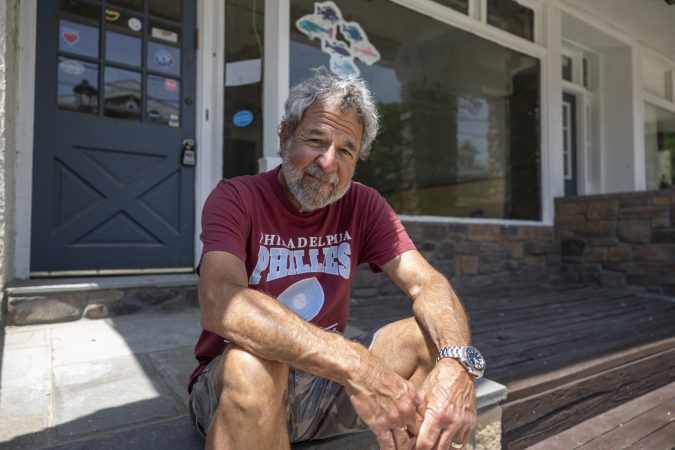
Gold, 72, said retirement was already on his mind when his landlord raised the rent beyond what Gold could pay. Danny’s officially closed at the end of May. As Gold prepares for the next chapter, which will be filled with swimming, traveling, and playing bassin Broken Arrow, his Neil Young cover band, he said his time in Narberth was “just perfect.”
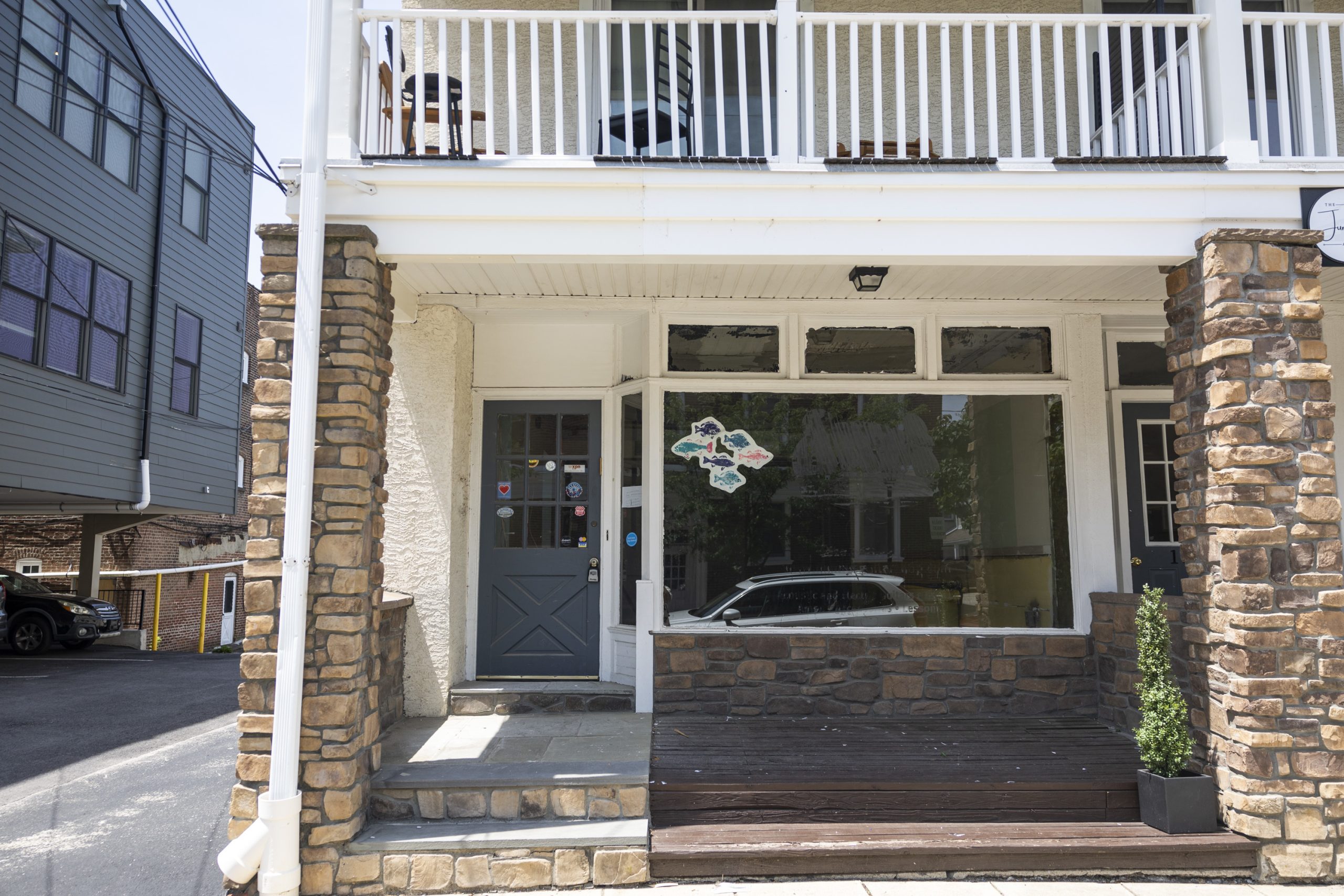
The former storefront of Danny’s Guitar Shop in Narberth. Tyger Williams / Staff Photographer
Gold opened Danny’s Guitar Shop in June 2009, right as the country had begun to dig itself out of the Great Recession. Guitar store Medley Music of Bryn Mawr had closed the year prior, and Center City’s 8th Street Music had moved across the bridge to New Jersey, leaving a vacuum for guitar lovers in Philly’s western suburbs.
Gold, a Newtown Square resident, grew up in Havertown and graduated from Haverford High School and Temple University. He started his career as a schoolteacher before taking a gig as a district sales manager for Fender Guitars, traveling across the region, from rural Pennsylvania to North Jersey, selling instruments and accoutrements.
Though it was risky to open a brick-and-mortar store at the heels of the financial crisis, Gold was bullish on the prospect. His mentors told him that as long as he ran guitar lessons, he’d be able to pay the rent. Gold had always loved Narberth’s “very distinct, charming personality” and was smitten with the Forrest Avenue storefront right away, with its ample natural light and welcoming front porch.
When Danny’s opened in 2009, the Main Line Times described it as having promptly “established itself as that rare kind of clubhouse — the kind where everybody’s allowed in.”
Over the years, the storefront’s shaded porch became the site of dozens of guitar recitals and summer evening jam sessions. Narberth residents gathered outside of Danny’s to talk about the news and the neighborhood gossip, and Gold always had treats for local dogs. Gold helped bring live music to Narberth during First Fridays and the annual July Fourth celebration. Ahead of a recital last fall, Gold posted on Facebook: “Students playin’ on the porch this Sunday 3:00! Bring a chair and come hang out!”
“Danny is loved around here and for good reason,” said Ed Ridgway, president of the Narberth Business Association, who took guitar lessons at Danny’s.
Ridgway described Danny’s as resembling an“old-timey barbershop.” If you asked Ridgway to make a list of 10 things that define Narberth’s downtown, he said Danny‘swould be on the list.
“He was just such a good presence in Narberth,” said Tracy Tumolo, owner of Narberth art and gift shop Sweet Mabel Store.
“This place,” Gold said. “It just fit me like a glove.”
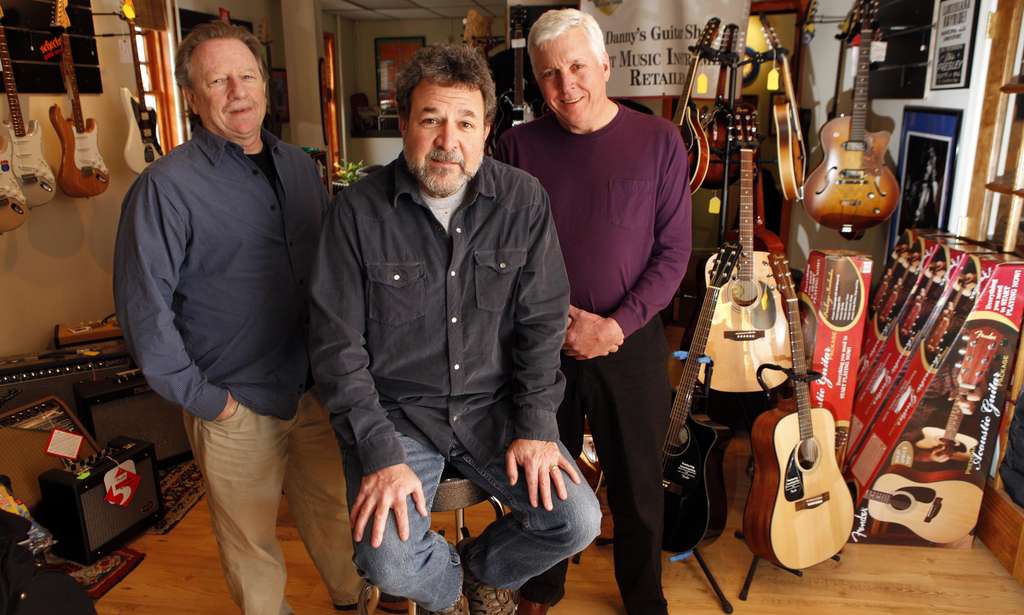
Danny Gold (center) pictured at Danny’s Guitar Shop in Narberth in 2018 with partners Larry Freedman (left) and Ron Stanford. LAURENCE KESTERSON / Staff Photographer
Every once in a while, a star or two would stop into Danny’s Guitar Shop while visiting the area or prepping for a show at Ardmore Music Hall. The Eagles’ Timothy B. Schmit bought a few guitars and gave Gold backstage passes when the band played Atlantic City. Wilco’s John Stirratt stopped by, as did Dweezil Zappa, Frank Zappa’s son. Tumolo said Gold always encouraged them to shop at Narberth’s other businesses.
In 2014, Gold starred in a 13-episode series on WHYY-TV’s YArts cable channel, which aimed “to do for guitars what Anthony Bourdain has done” for international cuisine or ”Mike Rowe for the art of cleaning septic tanks,” according to an Inquirer story from the time. In the series, Gold explored the origins of Klezmer music, interviewed the scholar who wrote the definitive book on the history of the accordion, and spent quality time with electric guitar giant Paul Reed Smith.
Lessons were the biggest part of Gold’s business model at Danny’s, as his mentors predicted. He did a large consignment and secondhand business, as well, as he was mostly selling to first-time and beginner players.
“The lessons made me a destination store. It’s never like I carried away wheelbarrows full of money, but we were able to make a modest living and enjoy doing what we were doing,” Gold said.
Like many brick-and-mortar merchants, Gold said it became more difficult over time to keep up with the ubiquitous online marketplace. Consumers can now buy any model of guitar, in any color, at any time. Music stores across the countryhave shuttered in recent years, pointing to online shopping as a factor in their decline.
On one hand, Gold feels somewhat liberated from the day-to-day responsibilities of running his namesake storefront. On the other hand, there’s a lot he’ll miss — the people, the borough, watching the neighborhood kids grow up.
At the end of the day, Gold said, “It’s been a great run.”
This suburban content is produced with support from the Leslie Miller and Richard Worley Foundation and The Lenfest Institute for Journalism. Editorial content is created independently of the project donors. Gifts to support The Inquirer’s high-impact journalism can be made at inquirer.com/donate. A list of Lenfest Institute donors can be found at lenfestinstitute.org/supporters.
MAX Surgical Specialty Management, a private-equity backed company consolidating oral and maxillofacial surgery groups in the Northeastern U.S., has acquired two more practices in the Philadelphia area.
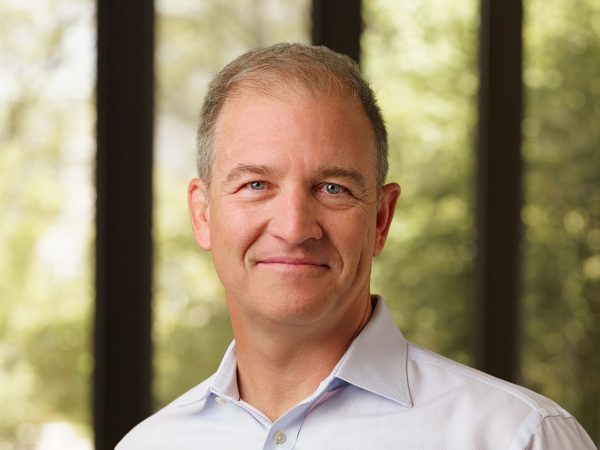
The latest deal, announced Friday, gives the Hackensack, N.J., firm 12 surgeons at 12 locations in Pennsylvania. Surgeon Jason M. Auerbach founded MAX in 2022 with private-equity backing and entered Pennsylvania two years later.
The two newly acquired practices have six offices in Bucks and Chester Counties.
Oral and Maxillofacial Surgeons P.C. has three surgeons, and offices in Doylestown, Quakertown, Warminster, and Chalfont. Oral Associates of the Main Line has two surgeons and offices in Exton and Paoli.
MAX did not disclose financial terms of the transactions.
In addition to New Jersey and Pennsylvania, MAX has practices in Connecticut, New York, and Vermont. The company — a management services organization — is majority-owned by its physicians, Auerbach said.
Oral and maxillofacial surgeons work at the crossroads of dentistry and medicine. Most have dental degrees, but some also have medical degrees. They remove wisdom teeth, install dental implants, repair facial traumas, and treat jaw injuries, among other services.
North Jersey origins
Auerbach founded Riverside Oral Surgery in Bergen County in 2007 and grew it to 12 locations before founding MAX with private equity partners. Part of his motivation was to create a home for independent physicians, Auerbach said in a May interview.
The Philadelphia region still has a high concentration of independents, with strong patient demand. “It’s hard nowadays to be an independent oral-maxillofacial surgeon, in terms of the complexities in running a healthcare business,” Auerbach said.
Robert Mogyoros, whose Greater Philadelphia Oral Surgery is in Elkins Park, said he valued his independence above all, but decided to look for a group to joinafter the business side had gotten too challenging.
Physician groups get better prices from vendors, better deals with insurers, and have an upper hand in physician and employee recruitment, said Mogyoros, who became part of MAX last July.
“What attracted me to MAX was that it’s doctor-driven and doctor-run,” he said in a May interview.
Rothman and Kim Oral & Maxillofacial Surgery, with offices in Northeast Philadelphia and Cinnaminson, was MAX’s first acquisition in Southeastern Pennsylvania. That deal also happened last year when MAX announced that it had borrowed $77 million to support growth.
When doctors sell their practices to MAX, they typically invest about 30% of the value into MAX, Auerbach said. MAX’s outside investors are MedEquity Capital near Boston, RF Investment Partners in New York, and Kian Capital in Charlotte, N.C.
Editor’s note: This article was update to correct the year when MAX made its first Pennsylvania acquisition.
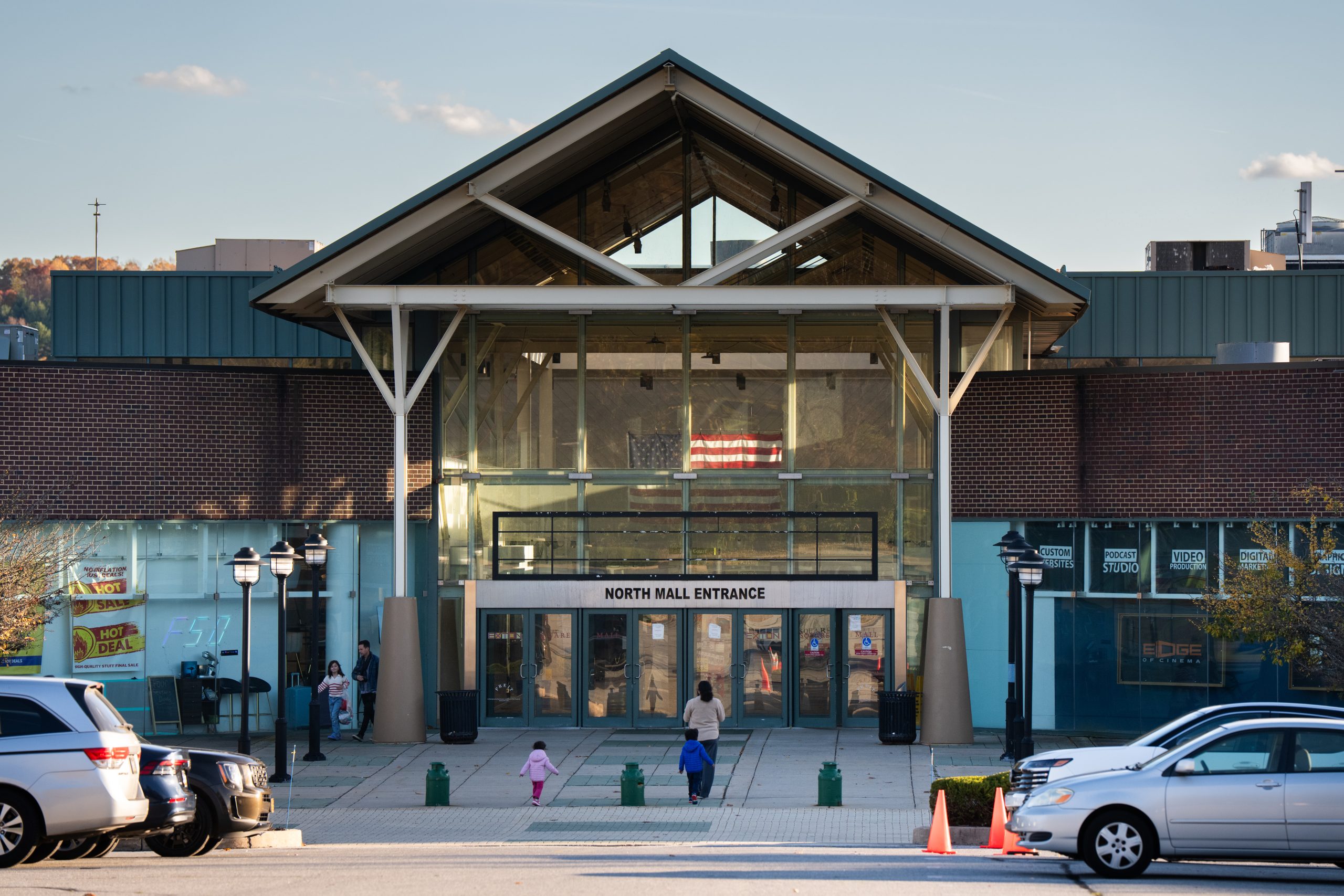
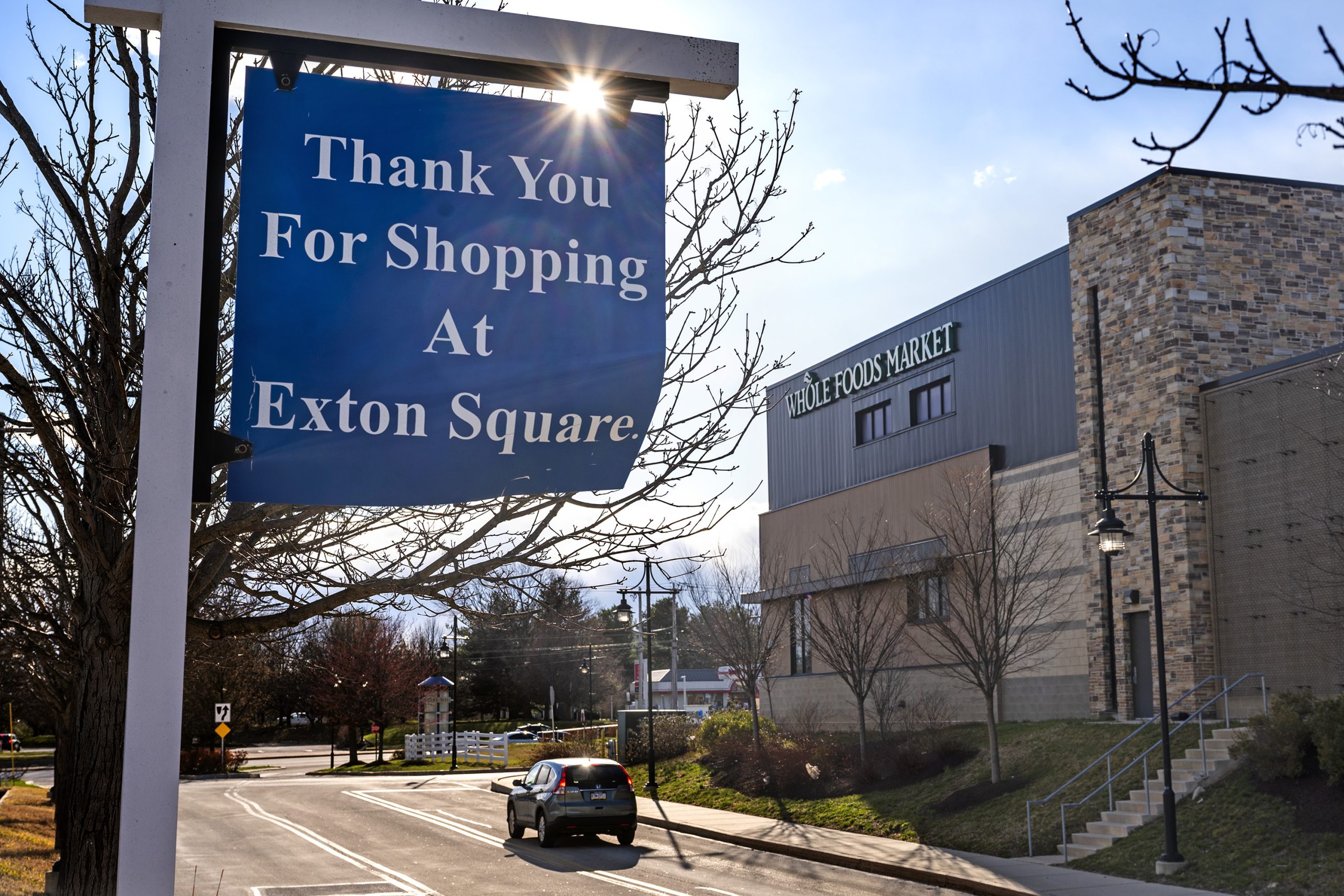
Chester County’s only enclosed mall will soon shut its doors for good.
After five decades as a retail hub, the nearly 1-million-square-foot Exton Square Mall is set to close Tuesday, June 30, according to mall owner Abrams Realty & Development. The Elkins Park-based company has been mired in a legal dispute with local officials over its redevelopment.
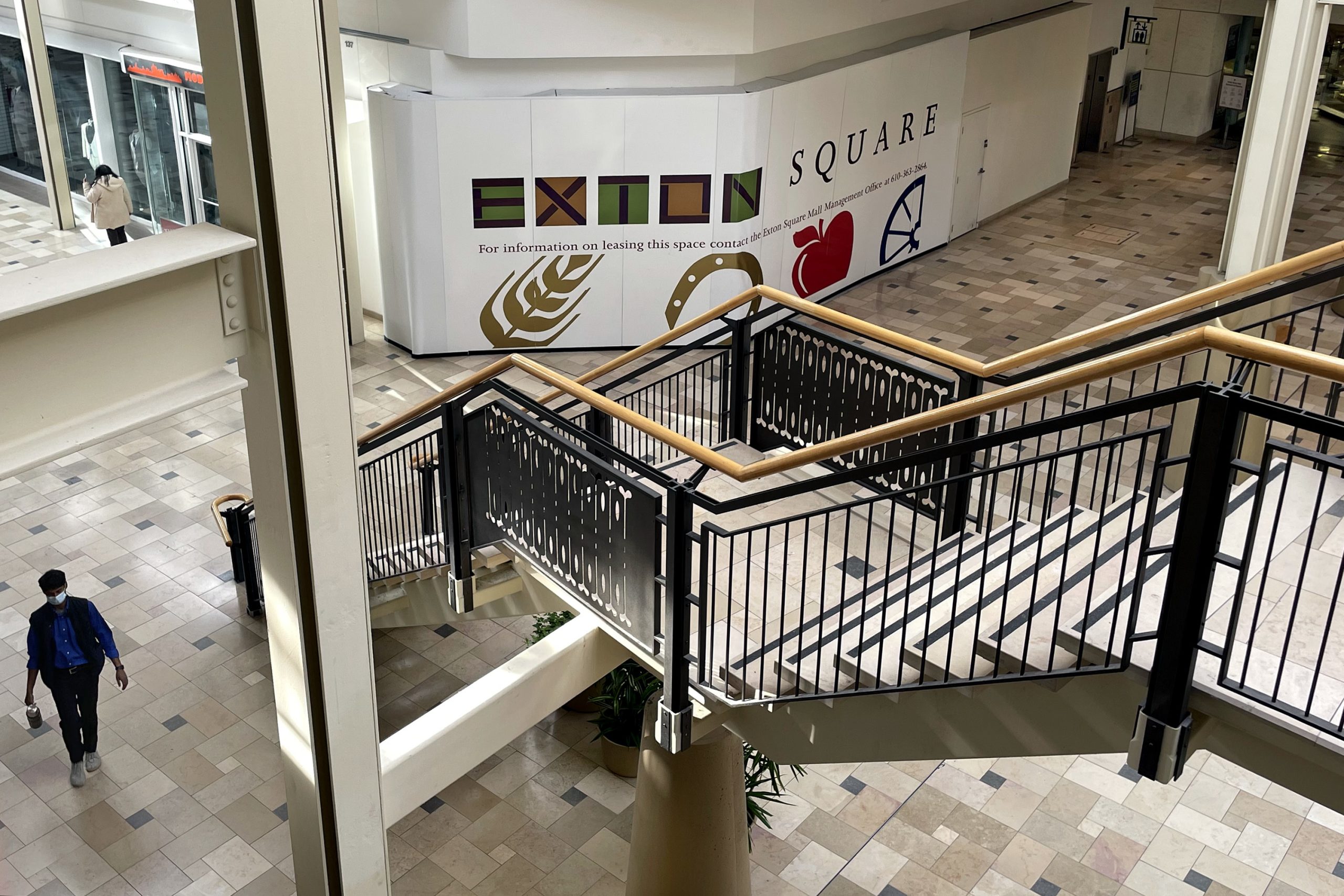
Once a bustling destination that sparked a commercial boom in Exton, the complex has been languishing for years with a desolate interior and only a handful of stores.
Peter Abrams said his firm had no choice but to shutter the mall.
“Operating the interior of the property has become untenable due to deteriorating conditions and rising utility costs,” he said in a statement.
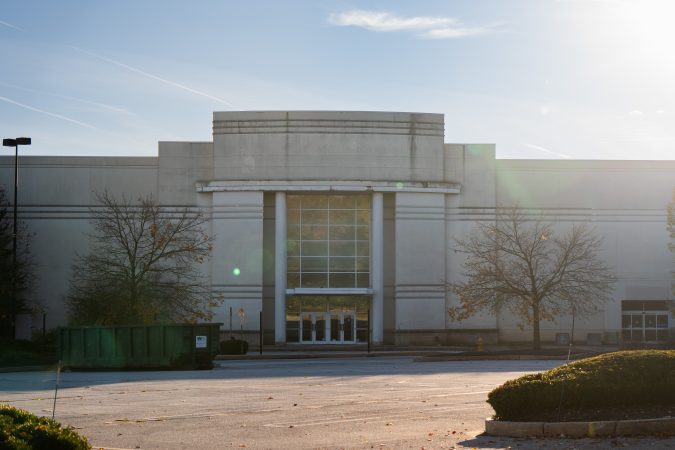
A handful of shoppers walk into the Exton Square Mall in November.Jessica Griffin / Staff Photographer
The Boscov’s, Main Line Health offices, and Round 1 entertainment venue will remain open.
Brian Dunn, chair of the West Whiteland Township Board of Supervisors, declined to comment on the mall’s closure, citing the ongoing litigation.
Abrams, who bought the mall from PREIT for more than $34 million, wants to transform the site into a mixed-use complex with hundreds of townhouses, rental apartments, a 55+ community, and a town center with shops, restaurants, medical offices, and green space.
This fall, despite the planning commission’s recommendation, Dunn and fellow Township Supervisor Rajesh Kumbhardare rejected Abrams’ proposal over sewer, traffic, and density concerns. Abrams then sued the supervisors in an attempt to reverse their decision, saying the plan meets the township’s zoning requirements.
Litigation between Abrams and the supervisors was ongoing as of Wednesday, according to the company, which wants to complete the project by 2028.
The Exton Square Mall opened in 1973 with more than 100 stores, including a Strawbridge & Clothier.
The mall’s construction would prove a harbinger of Exton’s commercialization. “Developers seem bent on heaving this lazy rural area into the mainstream of metropolitan Philadelphia,” The Inquirer reported in 1973.
In the 1990s, the Exton Bypass made the area easier to access from the city and other suburbs. And by the 2000s, more retail complexes, including the Main Street at Exton town center, had opened near Exton Square Mall, which also underwent an expansion.
The Exton Square Mall is shown in 2022, when tenants were already starting to dwindle.TOM GRALISH / Staff Photographer
The community has seen a subsequent rise in residential development, with millennials and baby boomers fueling demand for high-end, low-maintenance living. In the past five years, about 3,000 luxury apartments and townhouses have been built in the 13-square-mile township, supervisor Kumbhardare said this fall, and each new complex is at least 90% occupied.
On Tuesday, as word spread about the mall’s closing date, one user posted a video on Facebook with the caption: “It’s official. They’re tearing down the Exton Square Mall, and with it, my entire childhood.”
“They can tear the building down, but they can’t take away the memories of buying graphic tees at Wet Seal and CD shopping at FYE. RIP.”
This week in Philly music features a DJ Jazzy Jeff Juneteenth block party, country star Charley Crockett at the Met, Meek Mill’s Lit in AC show down the Shore, rock and roll legend Dion in Glenside, a classic reggae band on the Main Line, and a terrific Spoon and the Beths double bill in Fishtown.
Wednesday, June 17
Black Uhuru
The band was founded in Kingston, Jamaica by Derrick “Duckie” Simpson and built a global audience with albums like Sinsemilla in 1980 and Guess Who’s Coming to Dinner in 1983. Its body of work from that decade places the band in the pantheon of the great reggae groups of all time. With Ear Me Now. 8 p.m., 118 North, 118 N. Wayne Ave., Wayne, 118NorthWayne.com
Brother Wallace plays a free show in Malvern on Wednesday. Hana Snow
Brother Wallace
West Point, Ga., native Brother Wallace’s music exudes a joyous, Southern soul energy. He impressed this spring at a WXPN-FM (88.5) Free at Noon and the Non-Commvention and now he is playing the free Chill on the Hill concert series in Malvern. Philly-based Mexican Japanese art rockers Kikashima open. 6:30 p.m., Valley Creek Park, 361 N. Morehall Road, Malvern, EastWhiteland.org
Basic
Basic is the self-titled sophomore release on No Quarter records from the experimental rock trio featuring Philly guitarist Chris Forsyth, who also fronts the Solar Motel Band, and the Neil Young jam band Coca Leaves & Pearls. The group, named in honor of a 1984 project by Robert Quine and Fred Maher, rides a mighty groove of improvised music and includes drummer and percussionist Mikel Patrick Avery and bassist Douglas McCombs. Victor Viera Branco’s Bark Culture and Emily Robb’s the ER Band also play. 8 p.m., Johnny Brenda’s, 10201 N. Frankford Ave., johnnybrendas.com
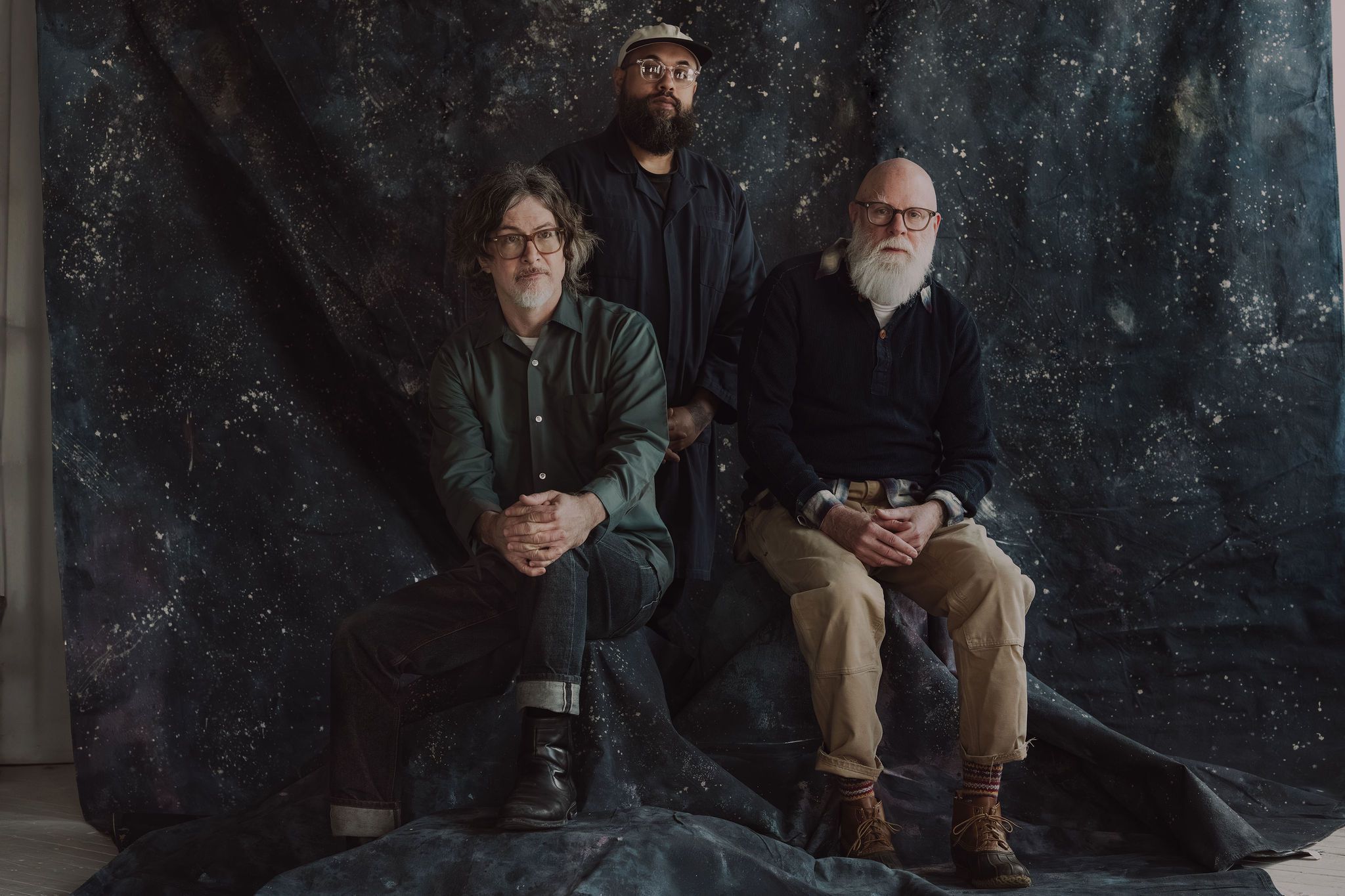
From left: Chris Forsyth, Mikel Patrick Avery, and Doug McCombs of Basic. The band plays Johnny Brenda’s on Wednesday.Linette Messina
Wednesday, June 17 and Thursday, June 18
Paul Thorn
Like Elvis Presley and Diplo, Paul Thorn hails form Tupelo, Miss. The Southern rock, country, and blues songwriter — and former middleweight boxer, who once fought Roberto Duran in Atlantic City — is out with his latest album. Life Is a Vapor is partly inspired by eating ice cream with John Prine. 7:30 p.m., Wednesday, Sellersville Theater, 18 W. Temple Ave., Sellersville, st94.com and 7:30 p.m., Thursday, Levoy Theatre, 126 N. High St., Millville, N.J., levoy.net.
Algernon Cadwallader
Philly emo band Algernon Cadwallader released Trying Not to Have a Thought, its first album in 14 years, last September. Now the band is playing two hometown shows before touring England later this month. 7:30 p.m., Wednesday and Thursday, Ruba Club, 415 Green St., algernoncadwallader.com
Thursday, June 18
Dion
At Bruce Springsteen’s “Music America: The Songs That Shaped Us concerts” this month in New Jersey, Dion DiMucci displayed both his 1950s rock and roll beginnings and his 1960s folk rock transformation with “The Wanderer” and “Abraham, Martin and John.” For this show, he’s billed as “The Rock N’ Roll Philosopher.” 8 p.m., Keswick Theatre, 291 N. Keswick Ave., Glenside, keswicktheatre.com.
Philly emo band Algernon Cadwallader plays two shows at the Ruba Club this week. Scott Toyan
Inara George
One half of the Bird & the Bee, Los Angeles songwriter and song interpreter Inara George is always up to something intriguing. Her new album, Songs of Douglas and Littell, is a gorgeously executed collection spotlighting Los Angeles theater veterans Eliot Douglass and Philip Littell. 7:30 p.m., The Loft at City Winery, 990 Filbert St., CityWinery.com/philadelphia
Fiery Furnaces
Last year, experimental art-rock sibling band the Fiery Furnaces reissued its 2004 breakthrough Blueberry Boat. Now, singer Eleanor and keyboard player Matthew Friedberger are on a limited tour, with Philly being the last of only six headlining dates. 8 p.m., Philadelphia Ethical Society, 1906 Rittenhouse Square, r5productions.com
DJ Jazzy Jeff performing at the Plateau Stage at The Roots Picnic in Philadelphia, on Saturday, May 30, 2026. He spins at the African American Museum’s Juneteenth block party on Friday.Tyger Williams
Friday, June 19
Hurray for the Riff Raff
Alynda Lee Segarra, the Puerto Rican songwriter and activist who leads Hurray for the Riff Raff, was born in the Bronx and spent 20 years in New Orleans before recently relocating to Chicago. The band’s 2024 studio album, The Past Is Still Alive, nods to Bob Dylan and William Faulkner, and the new Live Forever was recorded at Chicago’s Old Town School of Folk Music. 8 p.m., Concerts Under the Stars, 175 W. Valley Forge Road, King of Prussia, concertsunderthestarskop.com
Sound of History
Philly musicians Zeek Burse and Laurin Talese’s Sound of History project grew out of residencies at the Museum of the American Revolution. Their Juneteenth performance piece is in partnership with ArtPhilly and Black Music City. Free at Noon, World Stage, 3025 Walnut St., xpn.org and 6 p.m., Museum of the American Revolution, 101 S. Third St., artphilly.com/projects/sound-of-history
Juneteenth Block Party with DJ Jazzy Jeff
DJ Jazzy Jeff — who will be reuniting with Will Smith on the Ben Franklin Parkway in July — headlines this free outdoor event. Also on the daytime show: rappers Slick Rick and Doug E. Fresh and singer Leah Jenea. Patty Jackson is the emcee. Noon, African American Museum in Philadelphia, 701 Arch St., July4Philly.com
Los Lobos & Los Lonely Boys
“Let’s get Los. The Brotherhood Tour” pairs Los Lobos, the great Chicano band from East L.A. (that also features Steve Berlin, a Jewish guy from Philly, on saxophone) with Los Lonely Boys, the “Texican” rock and roll, brown-eyed soul band from San Angelo, Texas. 8 p.m., Tropicana Showroom, 2831 Boardwalk, Atlantic City, caesars.com/tropicana-ac
Saturday, June 20
Meek Mill’s Lit in AC
Father’s Day weekend down the Shore with Meek Mill: The Philly “Dreams and Nightmares” rapper is the headliner on a multi-act bill that includes T.I. Eve, Havoc of Mobb Deep, Shyne, and Ms. Jade. 7 p.m., Boardwalk Hall, 2301 Boardwalk, boardwalkhall.com.
Kinkstravaganza
Celebrating 60 years of British Invasion greats the Kinks, this benefit includes the 1971 album Muswell Hillbillies played in its entirety. Wesley Stace, Adam Weiner, John Faye, Roberta Faceplant, the No Good Crowd, and Citizen Riot are among the performers. Proceeds go to Juntos, the South Philly Latino immigrant organization. 8 p.m., The Fallser Club, 3721 Midvale Ave., thefallserclub.org.
Charley Crockett plays the Met Philly on Monday.Courtesy of the Artist
Monday, June 22
Del Amitri
Scottish rock band Del Amitri, which scored 1990s hits like “Roll to Me” and “Nothing Ever Happens,” is touring the U.S., timed to the Scottish soccer team’s East Coast World Cup dates. The Tisburys open. 7:30 p.m., Underground Arts, 1200 Callowhill St., undergroundarts.org.
Charley Crockett
Super-prolific country singer Charley Crockett is a busy guy. He’s released 17 albums since 2015, including Age of the Ram and Clovis this year. Last summer, his tour with fellow Texan Leon Bridges was one of most rewarding of the season. 8 p.m., Met Philly, 858 N. Broad St., themetphilly.com
Spoon plays the Fillmore on Tuesday, with The Beths.Olivia Wolf
Tuesday, June 23
The Animeros
Austin, Texas instrumental band the Animeros were standouts at the NonCommvention this year. Their self-described sound moves “between the lush jungles of Colombia, the palm-lined streets of 1960s coastal Mexico, and the dusty cantinas of West Texas.” They’re signed to Black Keys leader Dan Auerbach’s Easy Eye Sound label. 8 p.m., Ortlieb’s, 847 N. Third St., ortiebsphilly.com
Spoon & The Beths
A top-notch double bill. Spoon, the remarkably consistent indie band from Austin, Texas, is led by Britt Daniel and Jim Eno. They are playing with New Zealand indie power pop outfit The Beths, led by Elizabeth Stokes, whose 2025 album Straight Line Was a Lie was one of the year’s best. 8 p.m., Fillmore Philadelphia, 29 E. Allen St., thefilllmorephilly.com
Main Line Health is adding a 108-bed patient pavilion to its Paoli Hospital campus as part of a push to expand its capacity in Chester and Montgomery Counties, the nonprofit health system announced Tuesday.
The building, expected to cost between $220 million and $240 million, is scheduled to open in early 2029. The project will expand Paoli’s capacity by more than 40%.
Patient rooms will occupy three of five floors. They will be convertible from standard hospital rooms into rooms for intensive care. One floor will be used for diagnostics, such as radiology and perinatal testing. The roof will have a landing pad for helicopters.
Beyond Paoli, Main Line is adding to its outpatient capacity in Downingtown, where a large facility that has township approval will include surgical care. The health system also has shared an early-stage proposal for outpatient offices in the Collegeville area, while it considers building there what would be its fifth hospital in Philadelphia’s western suburbs.
“While many communities face declining access to care, Main Line Health is moving forward with optimism, investing in this region’s future and reaffirming our commitment to exceptional care where people live and work,” Main Line CEO Ed Jimenez said in the announcement.
Paoli hospital currently has 261 licensed beds and employs nearly 1,400 people, according to Main Line. The hospital had 53,000 emergency department visits in the year that ended June 30, 2025. Main Line Health completed its last major expansion of Paoli Hospital in 2009, doubling the facility’s size.
Like other Philadelphia-area health systems, Main Line has experienced tough times financially since the pandemic, which led to broadly higher costs in healthcare. In the nine months that ended March 31, Main Line had a $214,000 operating profit on $2.1 billion in revenue.
More Main Line projects
Separately, about 12 miles west of Paoli Hospital, in Downingtown, Main Line plans to open a large outpatient facility next summer. Main Line Health Downingtown, at the intersection of Lloyd and Manor Avenues, willcost $150 million and include a surgery center and substantial imaging capabilities.
Incentral Montgomery County, as well, Main Line recently made a presentation to the Upper Providence Township Board of Supervisors about a major development in an area where the health system has seen substantial growth.
The long term could see Main Line builda 108-bed hospital, but more immediately itneeds to add outpatient office space in the Collegeville area, Main Line said.
Half of the nonprofit health systems in Southeastern Pennsylvania had operating losses in the first nine months of fiscal 2026, the systems’ latest reports to municipal bond investors showed.
All had strong revenue growth, with the exceptions of Redeemer Health and Tower Health, the two smallest systems by revenue. The gains at Jefferson Health and Penn Medicine benefited from acquisitions in fiscal 2025.
The reports are not perfectly comparable because of variations in accounting practices.
For example, Jefferson, Main Line Health, and ChristianaCare changed their depreciation rates, which reduced their expenses relative to competitors. Jefferson includes investment income in its revenue, boosting its results.
Here’s a summary in order of revenue, from the region’slargest to smallest systems:
Jefferson Healthhad a $252.6 million operating loss, which it attributed to severe winter weather, restructuring costs related to layoffs, and shortfalls in insurance reimbursement. Total revenue was just shy of $13 billion, up from $11.6 billion last year, which included only eight months of results from Lehigh Valley Health Network.
Children’s Hospital of Philadelphia had a $271 million operating profit in the first nine months of fiscal 2026, up from $195.8 million the year before. Total revenue rose 9% to $4.1 billion from $3.7 billion, thanks to strong gains in payments for hospital patients and unspecified other operating revenue.
Temple University Health System had an operating loss of $9.9 million, recovering largely from a $50.5 million loss in the first half of fiscal 2026. In the same period a year ago, Temple had a $10.9 million operating loss. The health system’s revenue was $2.6 billion, up from $2.3 billion last year.
Main LineHealth reported a small operating profit of $214,000, following a winter quarter setback. The four-hospital nonprofit system recorded an $8.5 million loss in the three months that ended March 31. Severe winter weather reduced patient visits, and the health system increased its reserves for medical malpractice expenses.
Tower Health swung to a small operating loss of $3.6 million. During the same period a year ago, Tower had a $4.2 million operating profit. Revenue increased 1.6% to $1.6 billion.
Steep losses continued at Redeemer Health, which reported a $29 million operating loss, compared to a $33 million loss last year. Redeemer’s total revenue rose by less than 1%, to $332 million. Redeemer owns Holy Redeemer Hospital, a 239-bed facility in Abington Township, Montgomery County, not far from Jefferson Abington Hospital.
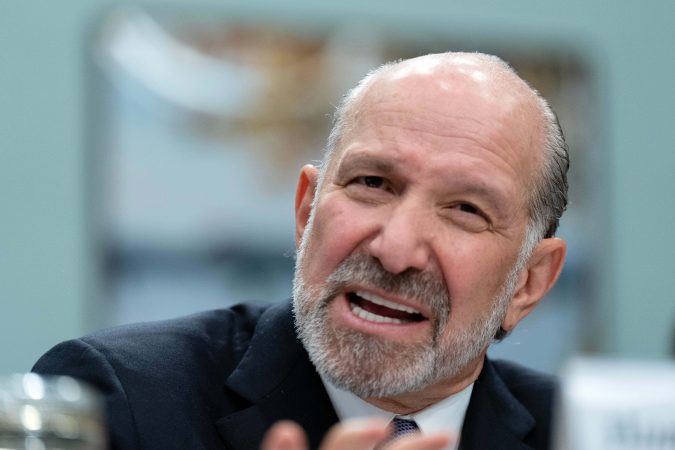
Haverford College students have publicly advocated for the school to consider removing U.S. Commerce Secretary and mega donor Howard Lutnick’s name from the library.
Behind the scenes, an older group has been pushing, too.
About a dozenvocalHaverford alumni have come out in strident disagreement with president Wendy Raymond’s decision in April not to take stepstoward considering the removal of Lutnick’s name.
Several in the group have called for Raymond’s resignation, while at least one said he had withheld his donation. Some were critical of Lutnick even before Department of Justice documents released earlier this year showed he had contact with sex offender Jeffrey Epstein as recently as 2018, long after Epstein pleaded guilty to obtaining a minor for prostitution and soliciting a prostitute.
Haverford College president Wendy Raymond has led the college for seven years and previously announced she would step down next June.Courtesy of Haverford College
But Raymond stood by and explained her decision during a Zoom call last week with former board members, and the current board chair said Lutnick himself feels that he is being targeted in a witch hunt, according to accounts of the meeting.
Among the concerned alumni is Norm Pearlstine, a 1963 graduate who served on Haverford’s board of managers from 1986 to 1989 and is a former editor of the Wall Street Journal, Forbes Magazine, the Los Angeles Times, and Time Inc. and former chief content officer at Bloomberg.
“I am appalled,” Pearlstine wrote to Raymond on May 3, days after she announced she would not initiate a committee to consider removing Lutnick’s name from the library. “You should resign immediately so Haverford‘s board can replace you with a leader who puts principle ahead of principal.”
Another alumnus wrote that he would not advise his grandchildren to attend Haverford.
“I cannot imagine that my granddaughters or grandsons would want to enter the Lutnick library or the Lutnick cafe or for that matter, any other building on campus with his name on it,” wrote Joseph Schulze, a 1963 graduate and retired Michigan school superintendent who grew up in the Philadelphia area.
Adi Ignatius, a 1981 graduate and journalist who is editor at large of the Harvard Business Review, said he donated to Haverford every year until 2025, when he withheld his money because of the Lutnick matter.
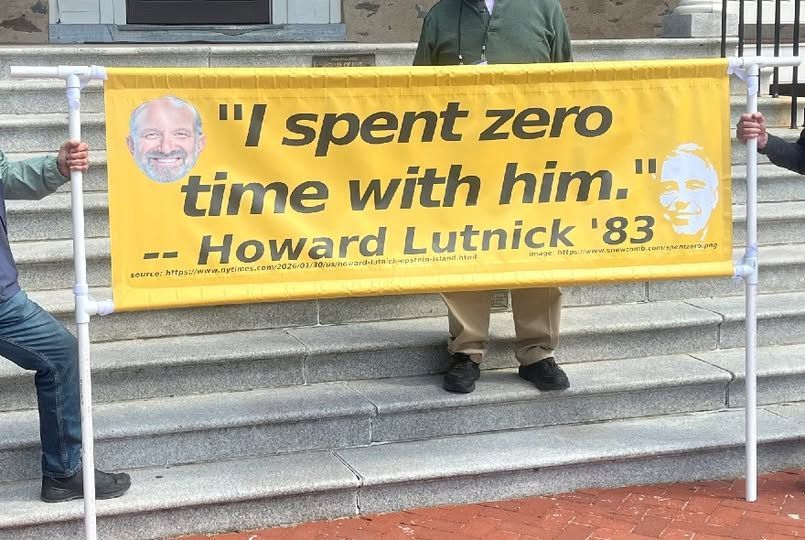
Haverford College alumni from 1971 hold a banner on campus about Howard Lutnick during alumni weekend.Courtesy of Chuck Durante
Haverford in a statement said many community members who oppose removing Lutnick’s name have also written to the college or told Raymond they are againstthe creation of a review committee that was requested through a student resolution this spring.
“President Raymond felt it was in the best interest of the college to reject the resolution because she did not believe this matter met the threshold necessary to constitute a committee given the college’s established standards and the information available to us at that moment,” the statement said.
But, the college said, “the matter is not closed.” Haverford is continuing to monitor “publicly available information” and “community sentiment” on the issue and Raymond or her successor could choose to initiate a committee, the college said.
Haverford not ready to make an ‘indictment’
Raymond, in the June 11 Zoom call with former board members, said she regarded creating a committee close to an “indictment” and did not think the threshold had been met, according to an email account of the meeting by Pearlstine obtained by The Inquirer. Some concerns about Lutnick are political, she said, and she is not willing to consider politics in her decision-making about a renaming committee, according to accounts of the meeting.
Students and alumni have pointed out that Lutnick had previously said he had not been in a room with Epstein, whom he found “disgusting,” since 2005, yet he testified to Congress earlier this year that he had visited Epstein’s private island with his family in 2012 and exchanged emails with him in 2018.
ButRaymond, who has led the college for seven years and previously announced she would step down next June, said in Tuesday’s meeting that she did notthink Lutnick’s lying about when he last had contact with Epstein was enough of a trigger.
Some alumni, supporting Raymond’s decision, have noted there is no evidence Lutnick participated in Epstein’s crimes or improprieties.
“I understand that students might feel strongly in support of wanting to change the name, but I don’t believe there’s a basis to do so,” said Robert Swift, a Philadelphia lawyer and former board member who was on the call Tuesday. “I have serious differences with Howard politically, but that’s not relevant either.”
Swift, 79, a 1968 Haverford graduate who served on the board for 12 years, said Lutnick, a former chair of the college’s board of managers, was generous and served the board well.
“His heart was in the right place,” Swift said.
Some were calling for Lutnick’s removal even before the Epstein connection because they did not like his politics, said one alumnus who asked not to be named because of the sensitivity of the matter.
“I don’t think it’s fair to remove someone’s name from a building simply because you don’t like their politics,” the alumnus said.
George Parker, a 1960 alumnus and a professor of finance at Stanford’s Graduate School of Business, said Haverford should rely on its Quaker roots, which requires governing by consensus.
“We do not have consensus,” Parker, a Quaker originally from the Philadelphia area, said of the Lutnick matter, “and where we do not have consensus, I do not think we should take action.”
Lutnick’s relationship with Haverford
Haverford has been in contact with Lutnick. Michael B. Kim, chair of Haverford’s board of managers and a private equity firm leader in Korea, said during the Zoom call that Lutnick communicated he is especially hurt that his alma mater is taking part in what he feels is a witch hunt, according to meeting accounts.
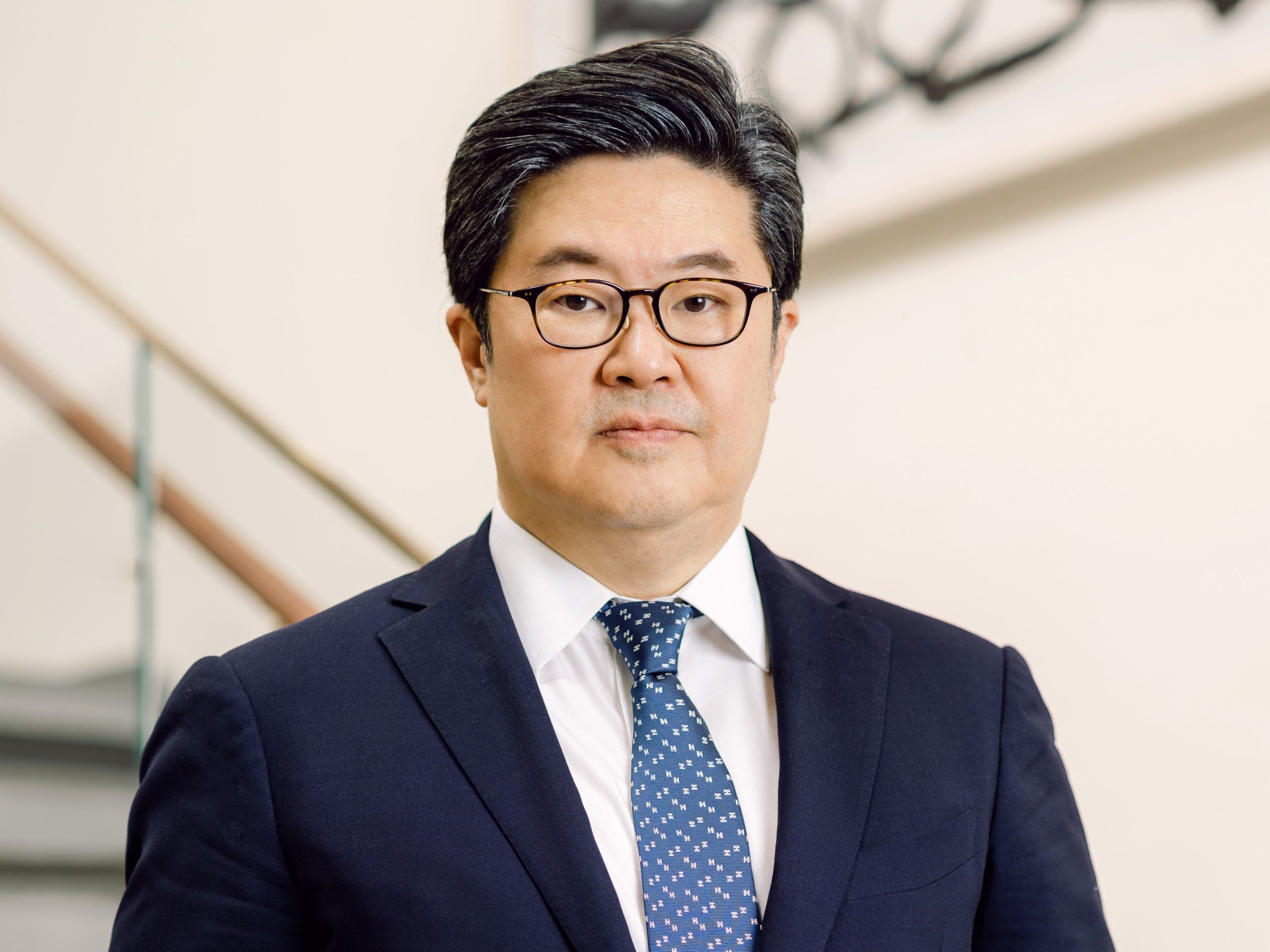
Michael B. Kim, chair of Haverford College’s board of managers.Courtesy of Haverford College
The board agrees with Raymond’s decision, he said.
Lutnick’s relationship with the highly selective, small liberal arts college on the Main Line goes back decades. He lost his mother to cancer when he was in high school and then his father one week into his freshman year. Haverford’s president at the time waived his costs and he graduated in 1983 with an economics degree.
Former chairman of financial firmCantor Fitzgerald, he served on Haverford’s board for 21 years, the last three as chair, until 2015. His name was put on the library after a then-record $25 million donation he and his wife made in 2014. Lutnick has given the school $65 million and is one of its biggest donors.
His Epstein ties gained scrutiny earlier this year. A Commerce Department spokesperson told the Associated Press that Lutnick had had “limited interactions” with Epstein, with his wife in attendance, and had not been accused of “wrongdoing.”
A request to the Commerce Department’s press office to speak with Lutnick got no response.
Under Haverford’s gift policy, the school can rename a building if “the continued use of the name may be deemed detrimental to the college, or if circumstances change regarding the reason for the naming.”
Schulze, the former school superintendent, said he thinks that threshold has been met and a full discussion is needed.
“Somebody else should take over if [Raymond’s] not ready to do that,” he said.
Rob Riordan, a 1964 graduate and Trenton native who lives in Cambridge, Mass., said he was upset Raymond did not honor a request from an overwhelming majority of students at a plenary meeting who requested a committee be formed
“To me, that felt like a violation,” said Riordan, 84, an educator who helped start charter schools in the San Diego area.
Several alumni pointed out that nearby Bryn Mawr and Swarthmore Colleges have removed names of controversial figures from buildings in recent years.
Pearlstine, who was on the Tuesday call, first wrote to Raymond and Kim in July 2025, urging that Lutnick’s name be removed. His concerns are not political, he said, but rather about behavior that conflicts with Haverford’s values.
“Howard Lutnick is a powerful Trump administration cabinet officer who proudly helps the most lawless President in our country’s history implement policies that trample upon human rights, due process, rule of law, and respect for the independence and integrity of institutions of higher learning,” he wrote.
It was not always that way. Ignatius, 67, who lives in Stonington, Conn., said he recalled interviewing Lutnick on stage at Haverford in 2015 and the good will in the audience toward him. Lutnick, who lost his brother andmany of his company’s employees in 9/11, talked about the aftermath and how the company helped care for victims.
“His trajectory since then has been similar to Rudy Giuliani’s,” Ignatius wrote to Raymond and Kim last August. “He has squandered the goodwill he built up after 9/11 and become a partisan troll, espousing values that are inconsistent with — and offensive to — the ideals that Haverford stands for.”
Independence Blue Cross, the Philadelphia region’s largest health insurer, launched this month a policy designed to move care into lower-cost surgery centers and away from hospitals and clinics that can generate payments twice as high for the same treatment.
The policy started June 1 echoes Medicare’s efforts to slow federal healthcare spending by paying the same price for outpatient procedures such as colonoscopies and knee surgery in hospitals as in surgery centers.
Pressure from employers to control costs has similarly motivated IBX and a newer regional competitor, Pittsburgh-based Highmark, which implemented a similar policy on Jan. 1. Both companies’ policies affect people with low risk of complications who are covered by commercial insurance or Medicare Advantage.
When doctors seek insurance authorization for certain procedures, IBX reviewers will ask whether doctors can treat low-risk patients in a surgery center, according to the company’s chief operating officer Richard Snyder.
“This is a gentle move,” Snyder said. “We’re not willing to force you to change doctors to have your colonoscopy or your service, but we want docs to get privileges in ambulatory surgery centers.”
The region doesn’t have enough low-cost surgery center capacity for a large-scale move to that setting, Snyder said. That means the policy might not hit hospital finances right away.
But the implication is that the policy could take a harder edge in the future. IBX’s goal is to spur the development of more surgery centers — either by the incumbent health systems or by new competitors, Snyder said.
Even now, the potential for delayed care and denied coverage has several regional health systems worried. Temple University Health System, for example, does not own ambulatory surgery centers, so the time could come when it has to coordinate care with outside providers.
The money at stake
Surgery to remove torn cartilage on the knee can cost $7,190 when performed on an outpatient basis in a hospital, nearly three times the $2,477 cost in ambulatory surgery centers, according to Philadelphia-area commercial insurance averages from heath prices data firm Turquoise Health.
Smaller gaps exist for hernia repairs and colonoscopies with a biopsy, Turquoise reported. Another data firm, Medscout, showed that a majority of those colonoscopies had already shifted to ambulatory surgery centers by 2024. The shift was far less advanced for hernia repairs— a procedure IBX is targeting.
(function(){function e(){window.addEventListener(`message`,function(e){if(e.data[`datawrapper-height`]!==void 0){var t=document.querySelectorAll(`iframe`);for(var n in e.data[`datawrapper-height`])for(var r=0,i;i=t[r];r++)if(i.contentWindow===e.source){var a=e.data[`datawrapper-height`][n]+`px`;i.style.height=a}}})}e()})();
Some physicians’ groups already are seeing opportunity in commercial and government insurers’ increased emphasis on surgery centers as a way to reduce spending — as well as regulatory changes that allow more procedures to be done in free-standing surgery centers.
Restore Orthopaedic Surgical Institute in Chadds Ford, founded by a group of Delaware doctors, has been quickly become a high-volume joint-replacement center.
In the coming year, Rothman Institute plans to open three surgery centers in the Philadelphia region, the private practice’s CEO Christian Ellison said.
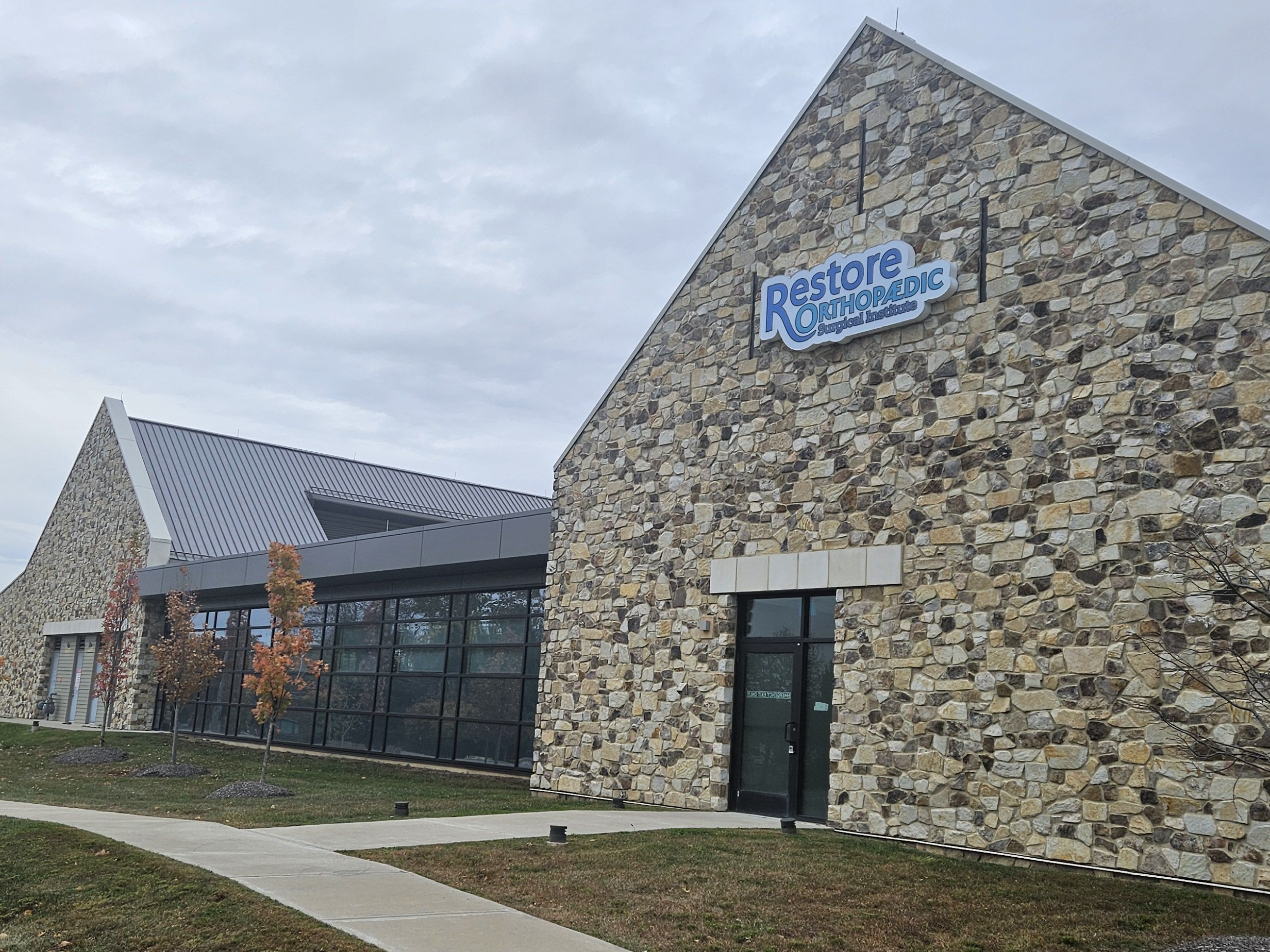
Restore Orthopaedic Surgical Institute in Chadds Ford has grown quickly to become one of the top joint replacement destinations in Southeastern Pennsylvania after opening in March 2023. The center is positioned to take advantage of an effort by Highmark and IBX to move outpatient procedures from high-cost hospitals to lower-cost surgery centers.Restore Orthopaedic Surgical Institute
Potential consumer impact
Several major health systems said the new site-of-care review policies raise questions about the potential impact on patients, without commenting on the implications for their finances.
Because Temple University Health System does not have any ambulatory surgery centers, “the policy will require certain studies and procedures to be referred outside the health system. This could create additional coordination requirements and may contribute to delays in testing, crucial diagnosis, and/or treatment,” Temple said in an email.
Main Line Health also said it anticipates the policy “could disrupt established care pathways, including in circumstances where surgeons lack privileges at available free-standing surgery centers,” the nonprofit said in a statement. Main Line has ownership interest in three surgery centers in Philadelphia’s western suburbs.
The University of Pennsylvania Health System said it will “advocate for our patients’ best interest and appeal any service denials based on the clinical and nonclinical exceptions outlined in the policy.”
Additional concerns for consumers include complexity, confusion, and possibly more risk of having care denied to what can already be a burdensome prior authorization process, said Christine Monahan, assistant research professor at Georgetown University’s Center on Health Insurance Reforms.
Monahan said she understands insurers’ impulse to steer people to lower-cost settings, but called policies like IBX’s “maybe not the most efficient way to handle the inefficient pricing in the system.”
The economic and political backdrop
The biggest increases in healthcare costs in 15 years are hitting employers this year, according to Mercer’s National Survey of Employer-Sponsored Health Plans.
The average increase was 6.7%, according to the February survey of 161 chief financial officers, who were not identified.
The increases are substantially higher than broader inflation. “It becomes more of a tax on employers,” Snyder said. “Next to salaries, many will tell you, that’s the biggest line item” in their expenses.
IBX has taken other steps to reduce healthcare spending, such as in 2015 introducing a benefit design that includes a preventive colonoscopy with no out-of-pocket costs for the patient at what are called Preventive Plus facilities. Elsewhere, they have a $750 co-pay.
Highmark and IBX have new policies designed to move more outpatient procedures and treatments out of high-cost hospitals and into lower-cost surgery centers.Pablo Martinez Monsivais
Medicare has pushed for the last decade to pay the same for services in hospital outpatient departments as in doctors’ offices and surgery centers.
Medicare prohibited most new off-campus hospital clinics from billing at hospital rates in 2017. So-called site-neutral payments expanded in 2019 to include clinic visits. This year, the government applied the standard to payments for drug administration, such as chemotherapy.
Highmark Health Plans’ approach
In the first five months of under new policy, Highmark Health Plans has found some health systems are willing to accept lower surgery center rates for procedures performed within hospitals.
“What we’ve found is that a number have been willing to do that,” said Kate Musler, chief financial officer for Highmark’s insurance arm. “It may be advantageous for them to have that volume flow through the hospital and keep some volume there, it’s just not necessary in terms of the expense level.”
Musler cited bariatric surgery as an example of how technology and surgical practices have advanced to the point where a hospital is no longer needed.
It’s too early to say how much savings the new policy has generated, including in Southeastern Pennsylvania, Musler said. Highmark has seen its policy accepted at different levels across the five states where it took effect.
Some hospital systems are proactively shifting care to surgery centers to reduce costs, said Musler, who oversees Highmark underwriters helping employers understand their health expenses.
“We hear directly from employers who are making very difficult decisions,” she said. “It is now more than ever a question of whether they can afford employee health.”