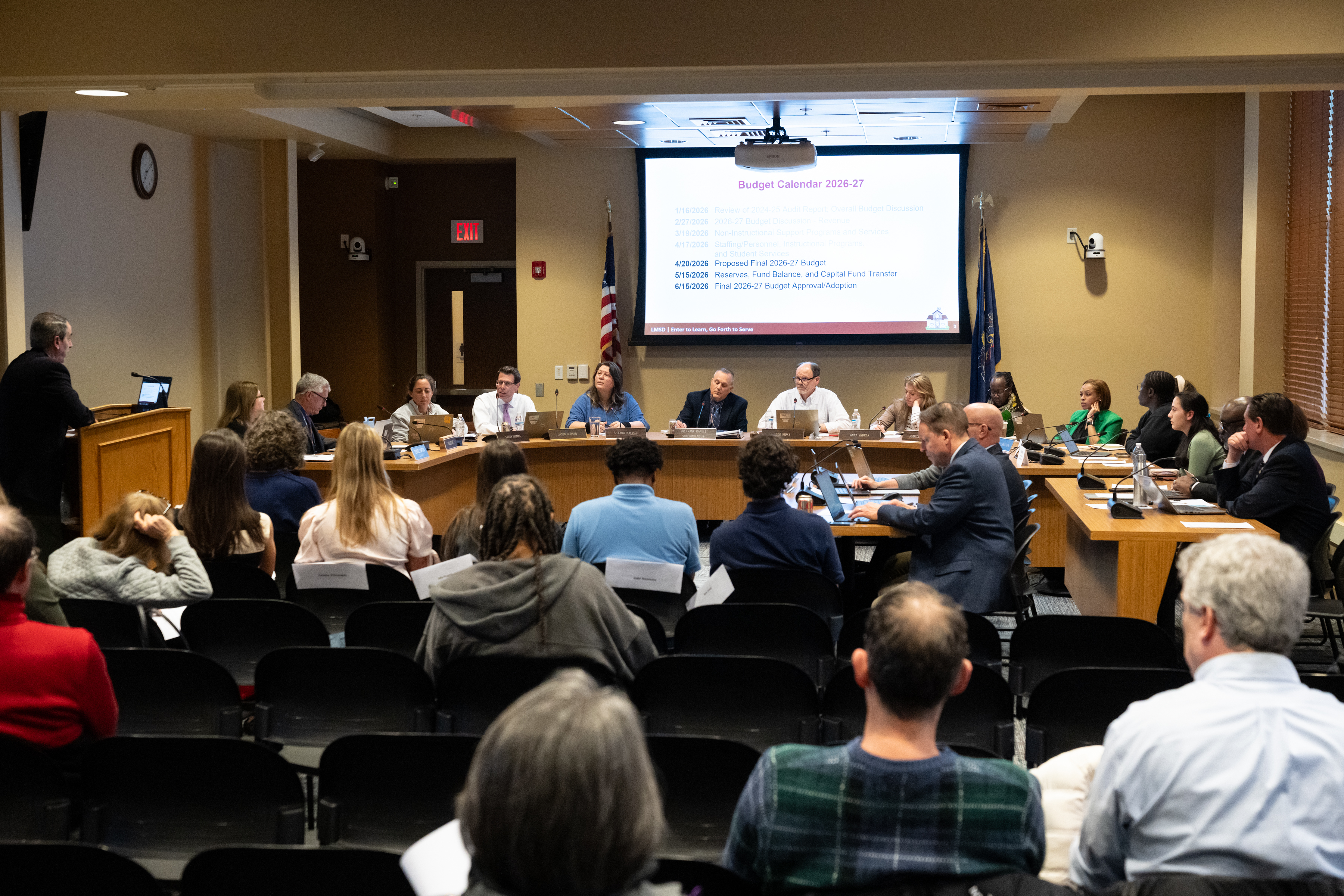
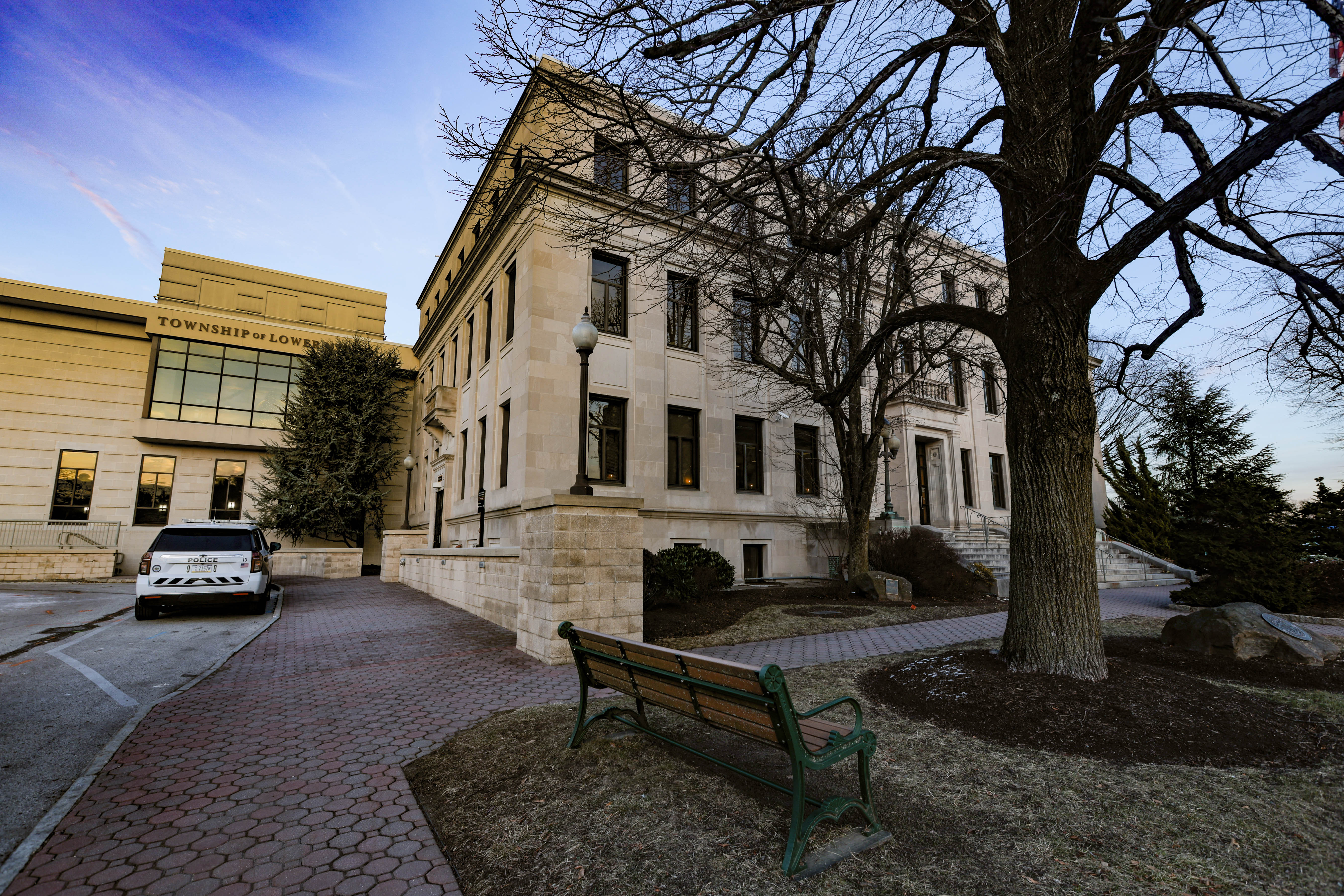
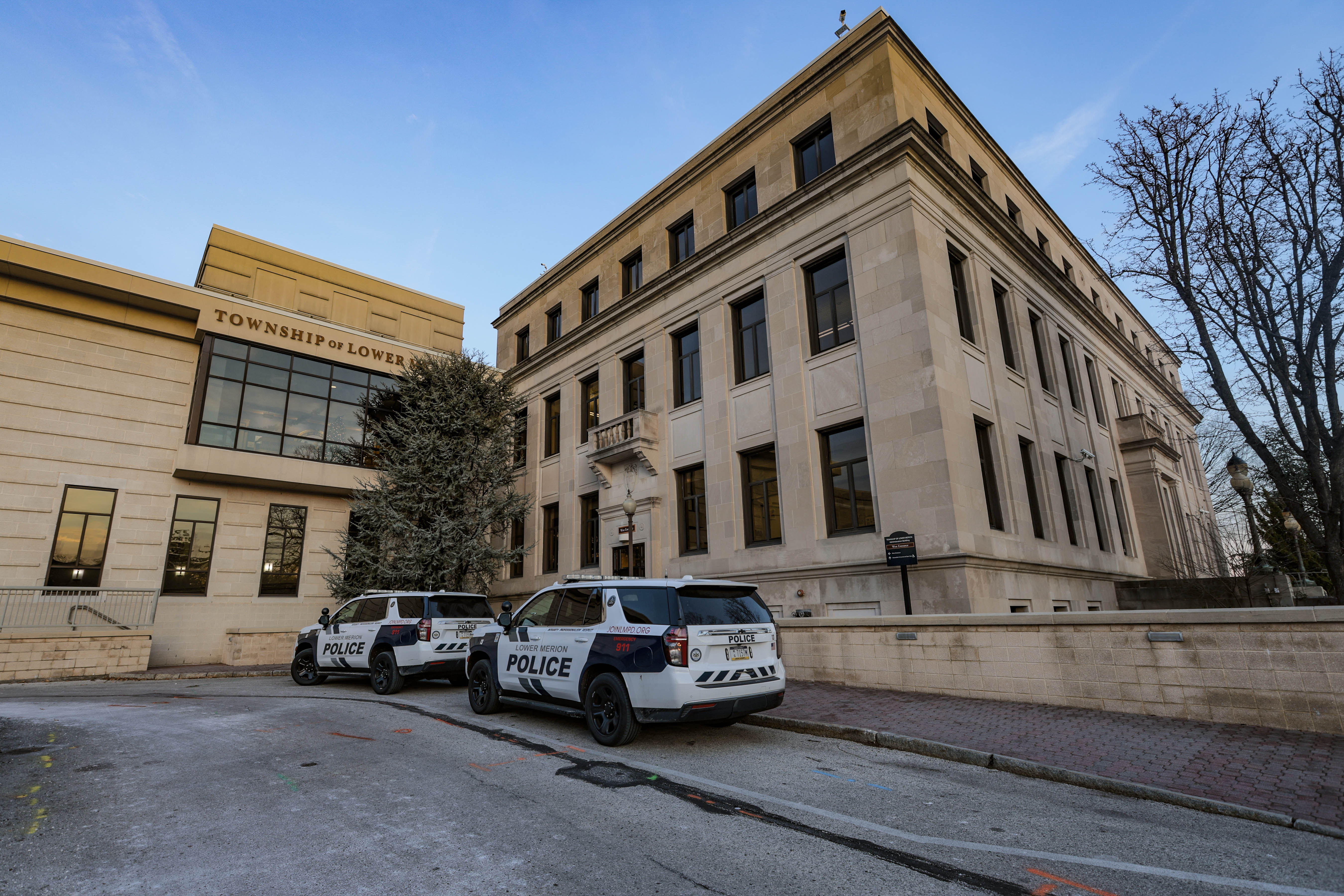
The Lower Merion School District has lifted a ban on two parents it barred from school board meetings in August after they shouted during discussions about the district’s technology policy.
Under the Nov. 16 settlement, the district agreed to lift the ban starting Dec. 1.
While a school board or other government body can limit speech, “it can only do so pursuant to clear guidance and it must give individuals an opportunity to be heard,” Solomon Furious Worlds, a staff attorney for the ACLU-PA, said in a statement Monday.“The school district’s restrictions didn’t meet these criteria.”
The parents, who are part of a Pencils Over Pixels group that has been pushing the district to reduce screens in classrooms, had shouted at school board members after they cut off public comment at an Aug. 3 meeting. The district’s solicitor, Kenneth Roos, told Foscolo and Smyth they had violated Lower Merion’s civility policy, which says that “rude, abusive, or intolerant behavior erodes education and that disrespect shall be addressed when it occurs.”
In a Sept. 9 letter to Roos, Worlds and Brynne Madway, a senior staff attorney with the ACLU-PA, told the district its civility policy was “unconstitutionally vague, impermissibly discretionary, and overly broad.”
The ban on Foscolo and Smyth, the attorneys said, “violates their free-speech and due-process rights.”
Amy Buckman, a spokesperson for Lower Merion, said in an email Monday that the board “acknowledges reaching an agreement with two community members that will allow them to attend future school board meetings.”
“The agreement supports the board’s goal of encouraging public participation in alignment with our civility policy, so that we can best serve our students, staff and community,” Buckman said.
In the ACLU statement Monday, Foscolo said that “parents should never have to choose between remaining silent and risking exclusion from the very public forums where decisions affecting their children are made,” while Smyth said he hoped the board “won’t continue to weaponize decorum to stifle serious questions, especially since ACLU-PA is going to give the district feedback on its ‘civility’ policy.”
“Despite the district’s past stonewalling, I hope this episode will lead to fewer bans and more transparency and disclosure as we grapple with the ed-tech overhaul of learning,” Smyth said.
Lower Merion in August announced a new technology policy that scaled back on the assignment of individual iPads and laptops to the district’s youngest students, while placing new limits on screens at other grade levels.
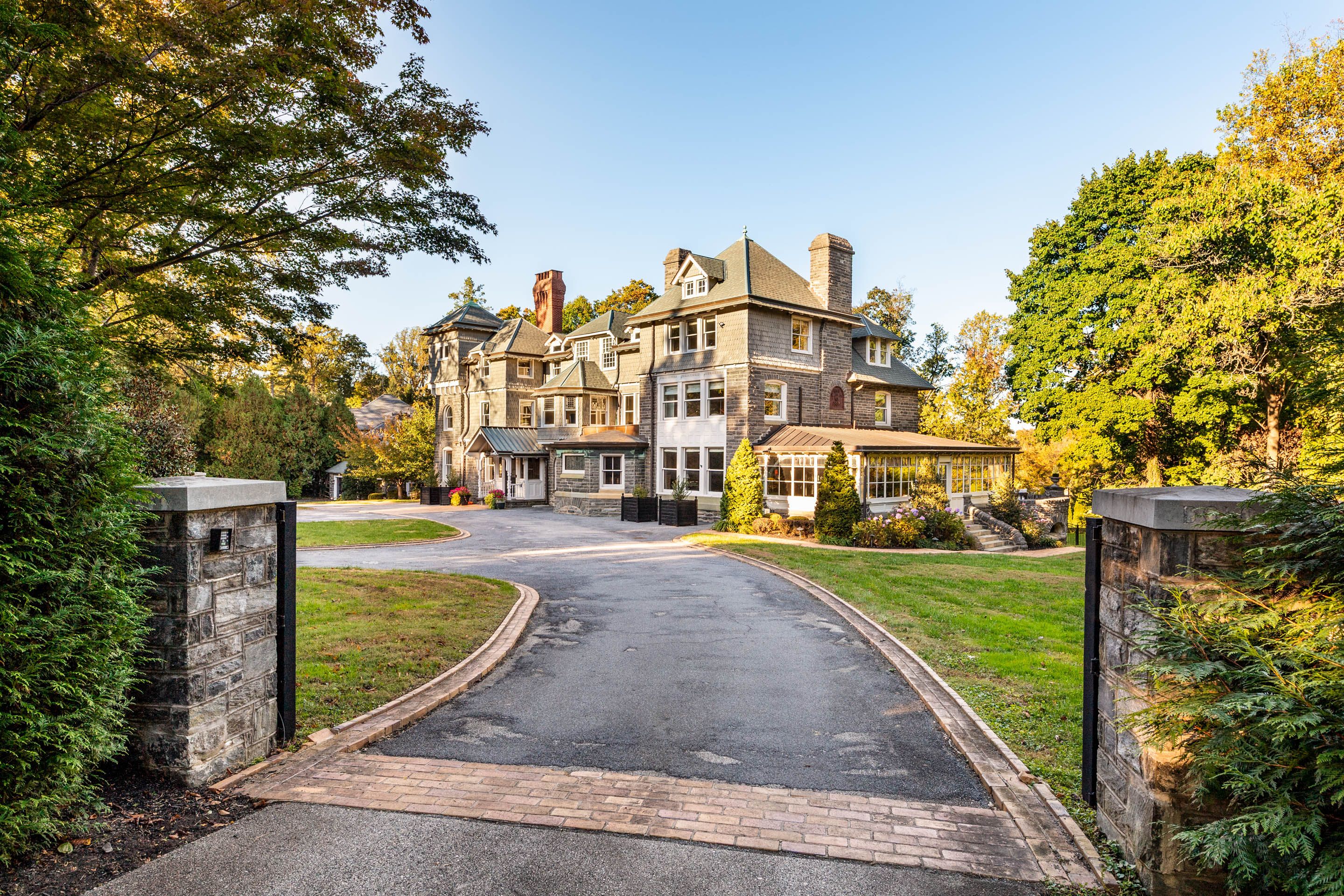
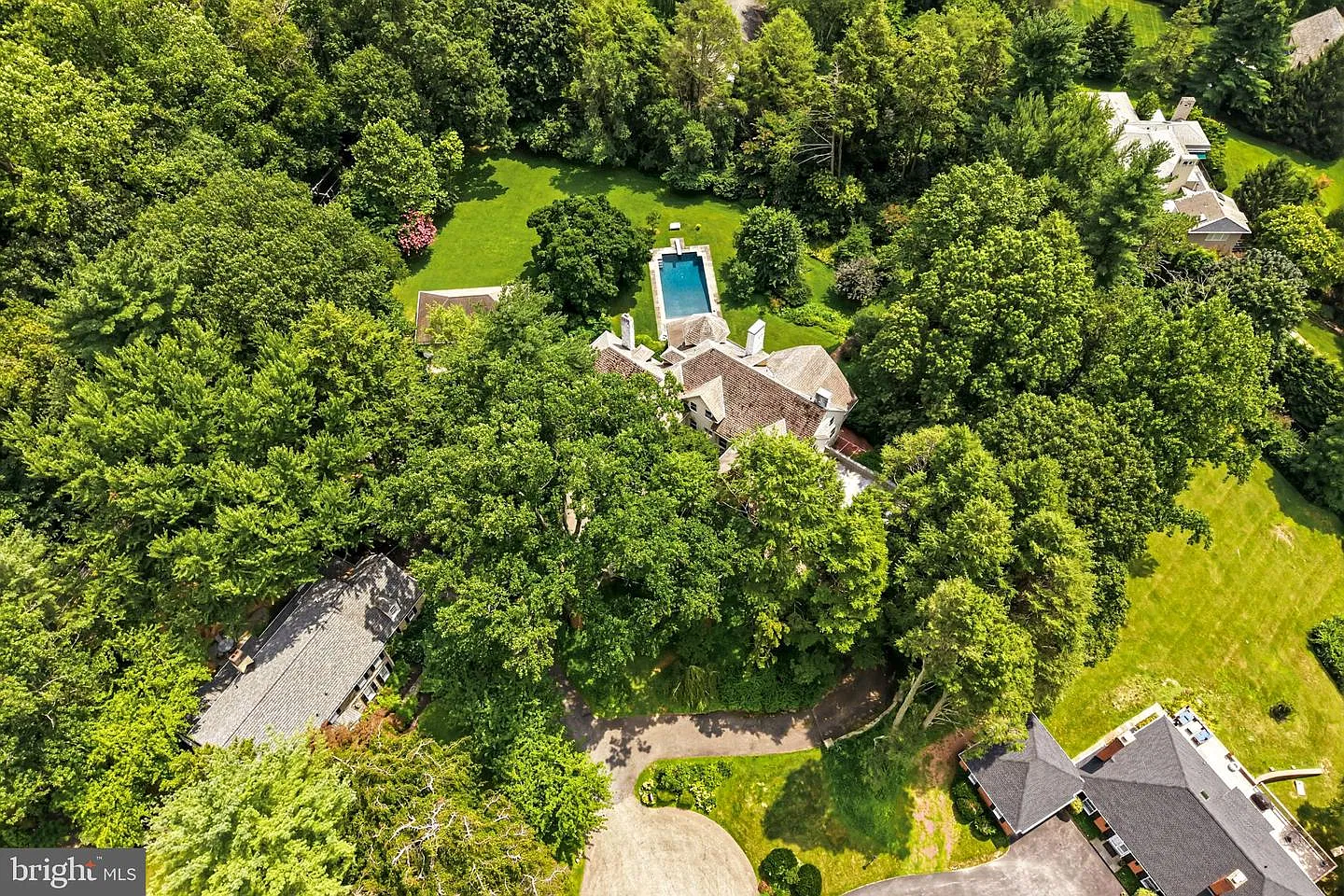
A Gilded Age mansion on the Main Line that was designed by famed Philadelphia architect Frank Furness and built for one of the wealthiest men in the world at the time is on the market for $4.45 million.
The house was built in the late 1800s for Clement Acton Griscom, who was a shipping magnate and a director of the Pennsylvania Railroad, the United States Steel Corp., and many other institutions. When Griscom died in 1912, he was the chair of the board of directors of the International Mercantile Marine Co., whose subsidiary owned and operated the R.M.S. Titanic, which had sunk earlier that year.
Griscom’s home was designed by Furness and partner Allen Evans. The historic Dolobran estate spanned almost 150 acres by the end of the 1800s and included gardens, farmland, and a golf course. The current property in the prestigious Northside Haverford section of Lower Merion Township is almost two acres.
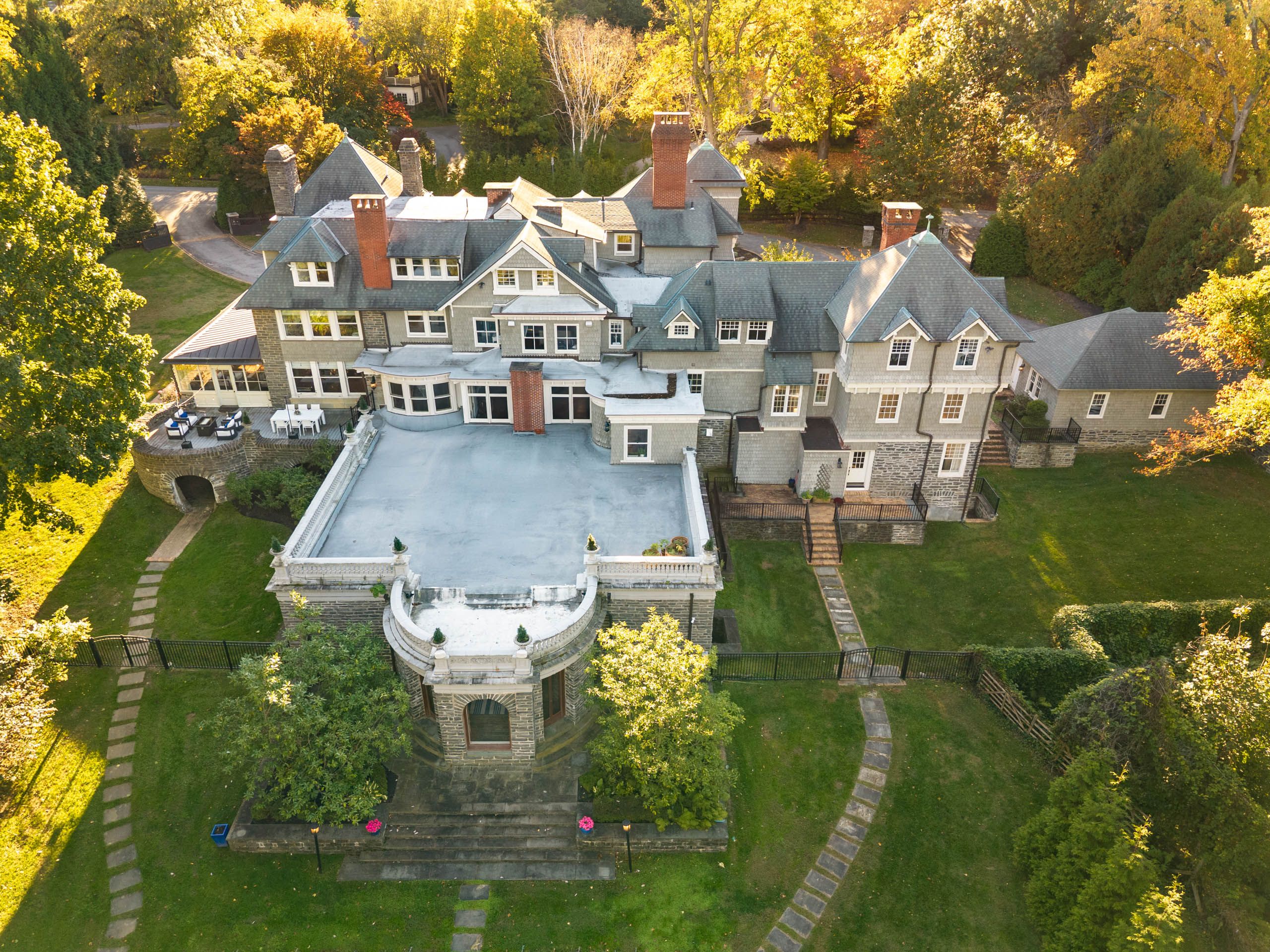
The Dolobran estate’s residence spans almost 15,000 square feet and has several terraces.Ben Floyd Photography
It’s “prime, prime real estate” in “the hottest neighborhood on the Main Line,” said listing agent Jody Kotler, with Compass Real Estate.
The home combines “architectural distinction and modern luxury,” according to the listing.
The property’s four-story residence is 14,914 square feet with 10 bedrooms, seven full bathrooms, and two half bathrooms. It includes 12 fireplaces, several terraces, and several guest suites. There’s a four-car detached garage and enough space in the driveway to fit 10 vehicles.
Tiled artwork on several walls was gifted to Griscom by a Dutch queen, Kotler said. The queen had honored Griscom for the rescue of passengers and crew of a disabled Dutch ship, according to the New York Times.
This staircase connects the lower level with the main level.Ben Floyd Photography
The original home’s ballroom on the lower level has been turned into an entertainment space that includes a theater, a custom bar, and a gym. It opens to the backyard, which has an in-ground pool and hot tub.
A grand wooden staircase connects this lower level with the home’s main level.
“The house is incredibly built,” Kotler said. “It’s in great condition.”
A dining room opens to one of the home’s terraces.Ben Floyd Photography
The home was partially restored in 2014, and renovated spaces include many of the bathrooms and the kitchen, he said.
The kitchen has granite countertops, a large island with a sink and seating for four, and a double oven.
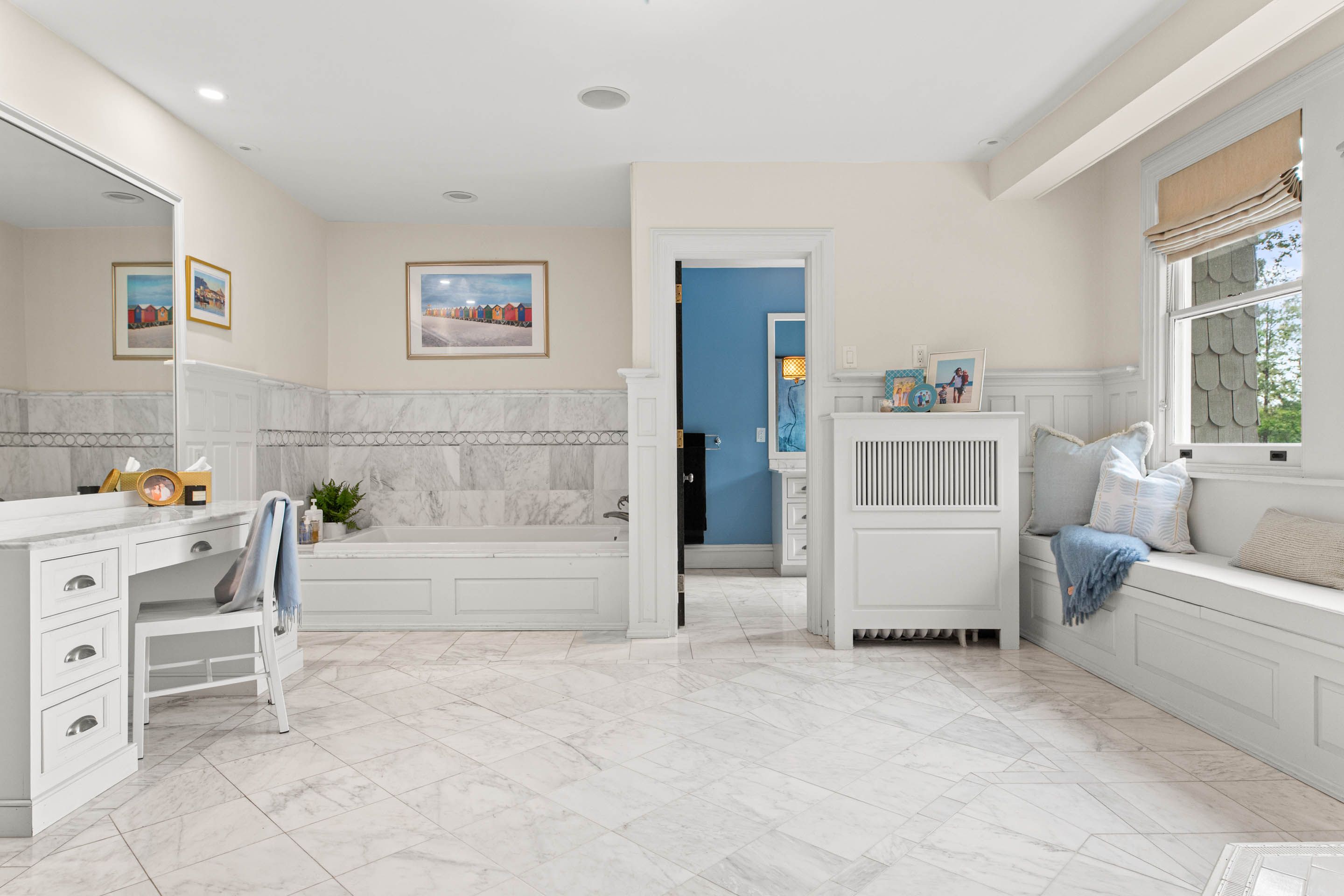
The primary suite includes a large dressing room and a bathroom with a fireplace and separate makeup vanity.
The primary bathroom includes built-in seating and a separate makeup vanity.Ben Floyd Photography
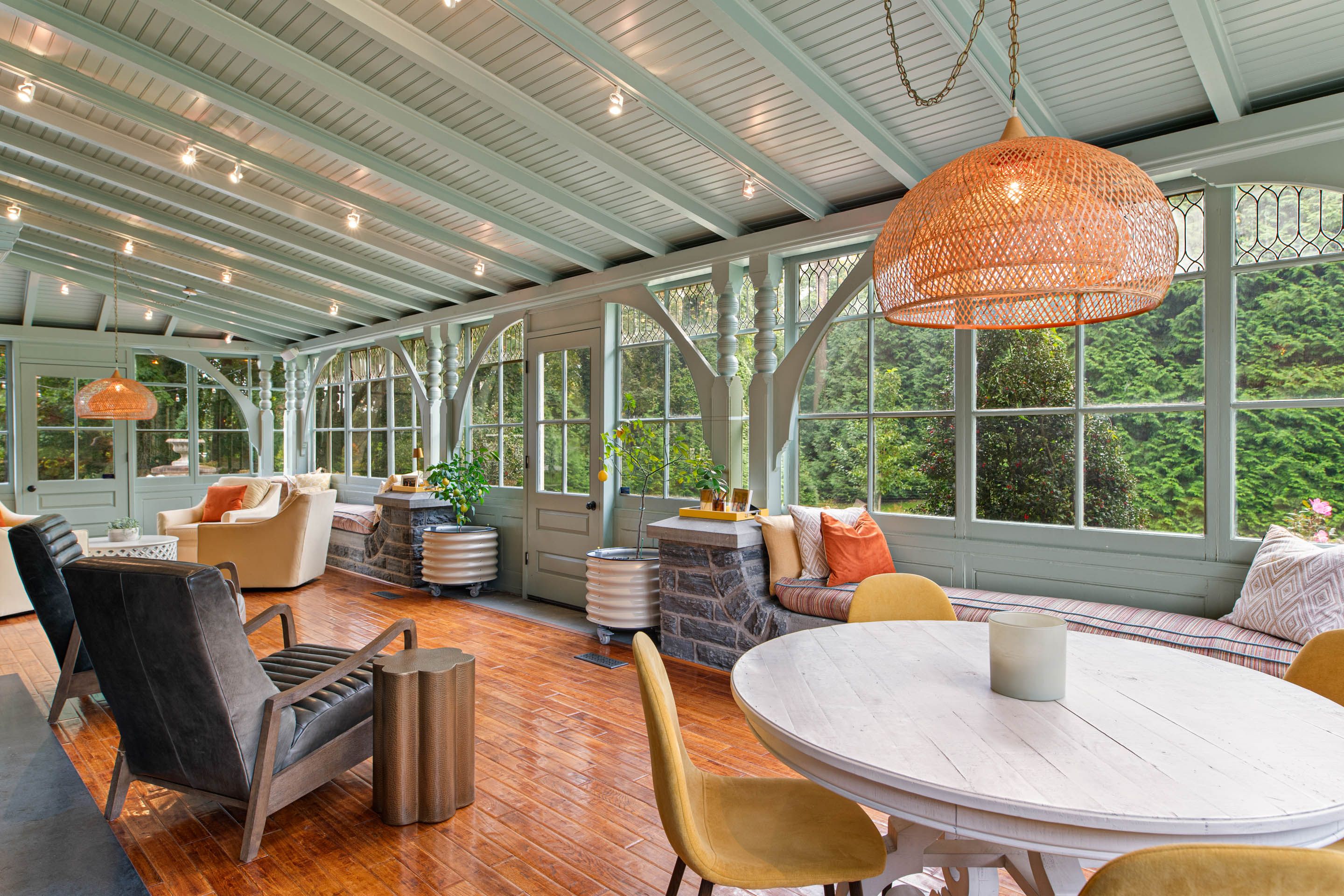
A sunroom on the side of the house can host large gatherings and includes built-in seating.
The home is down the street from the Merion Cricket Club and close to SEPTA’s Haverford station on Regional Rail and Ardmore’s Suburban Square shopping center.
Township staff have proposed another tax increase for next year, which, if approved, would be the third consecutive hike. Here’s what to know. Also, the township’s board of commissioners voted last week tobuy a house for volunteer firefighters, we unpack why Main Line Health had to add $134 million to its medical malpractice reserves, plus we take a closer look at the conservative Main Line lawyer preparing to defend Trump administration officials come January.
Lower Merion residents are facing a potential tax increase in 2027 after township staff proposed a 19% hike to offset rising costs.
If passed, it would be the third consecutive tax increase after 13 years without one. The proposal is more than double the 8% increase imposed in 2026 and nearly three times the 6.5% jump in 2025.
Commissioners are slated to adopt the budget next month, and some have signaled they’ll favor a lower rate.
Main Line Health, which owns Bryn Mawr Hospital and Lankenau Medical Center, posted a $33 million loss in fiscal 2026 after adding $134 million in medical malpractice reserves. Here’s why the system deemed the move necessary.
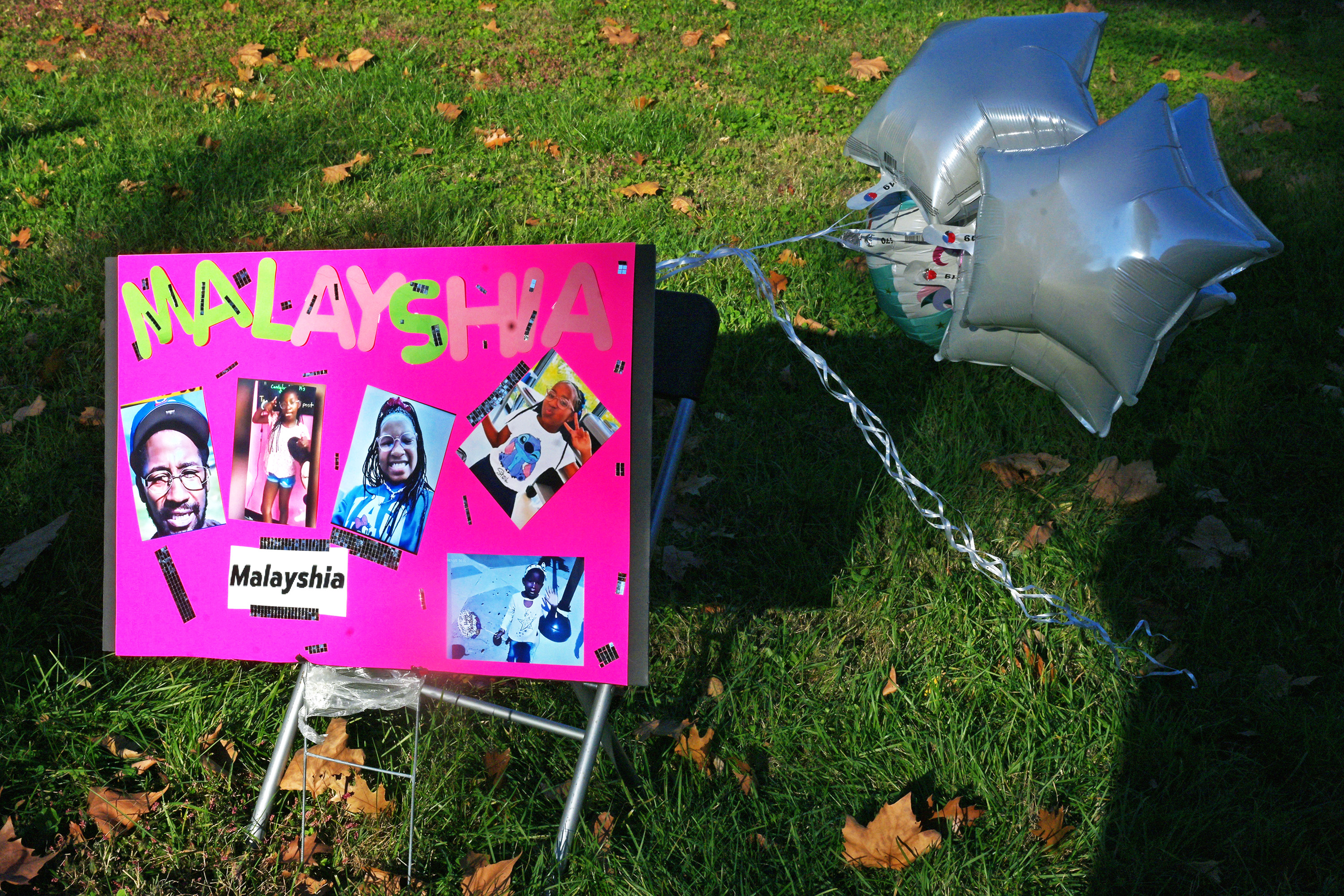
Carprice Williams, the Philadelphia teacher who was charged this month with killing her 10-year-old foster child Malayshia Allford and leaving her body in the trunk of a car, has ties to the local community,Inquirer reporters Samantha Melamed and Kristen A. Graham found. Williams attended Lower Merion High School and Rosemont College.
Downtown Ardmore District opened a retail pop-up yesterday at 18 E. Lancaster Ave. that houses three small businesses: Jessie Husband Designs, which specializes in maps and lyric arts; soap and personal care brand BathKafe; and Blue Lotus Tea Shoppe, which sells loose-leaf tea and tea accessories. The pop-up will remain open through the holiday season.
Chase Bank wants to build a new branch at 18 E. Wynnewood Rd. in Wynnewood, on the site of a vacant gas station. A conditional use hearing will be held this afternoon.
Three area businesses are teaming up for a culinary pop-up. Kismet Luncheonette in Penn Valley is hosting The Blue Elephant for a “Guest Check” pop-up dinner in collaboration with Mjuk Mjuk tonight at 6:30 p.m. The $75 prix fixe BYOB menu includes a Philly roll, wasabi Caesar salad, and a kobe beef burger.
🎳 Things to do
🎄A Longwood Christmas: This year’s “Cosmic Christmas”-themed display is worth the drive. It will feature what the garden describes as “an out-of-this-world display of stellar spectacles and luminous lights.” Reservations are required. ⏰ Friday, Nov. 20-Sunday, Jan. 10, 10 a.m.-11 p.m. daily 💵 Free for members, prices vary for non-members 📍 Longwood Gardens, Kennett Square
🎶 Paula Cole: The Grammy Award-winning singer-songwriter is marking the 30th anniversary of her album, This Fire, featuring hits“Where Have All the Cowboys Gone?” and “I Don’t Want to Wait.” ⏰ Friday, Nov. 20, 8 p.m. 💵 $46.32-$71.42 📍 Ardmore Music Hall
📿 Fall Craft Fair: Browse jewelry, candles, and other goods. ⏰ Sunday, Nov. 22, 10 a.m.-4 p.m. 💵 Pay as you go 📍 Belmont Hills Library, Bala Cynwyd
🎞️ Silver Linings Playbook: Catch a screening of the critically acclaimed 2012 film starring Jennifer Lawrence and area native Bradley Cooper. ⏰ Monday, Nov. 23, 7:15 p.m. 💵 $17.75 📍 Bryn Mawr Film Institute
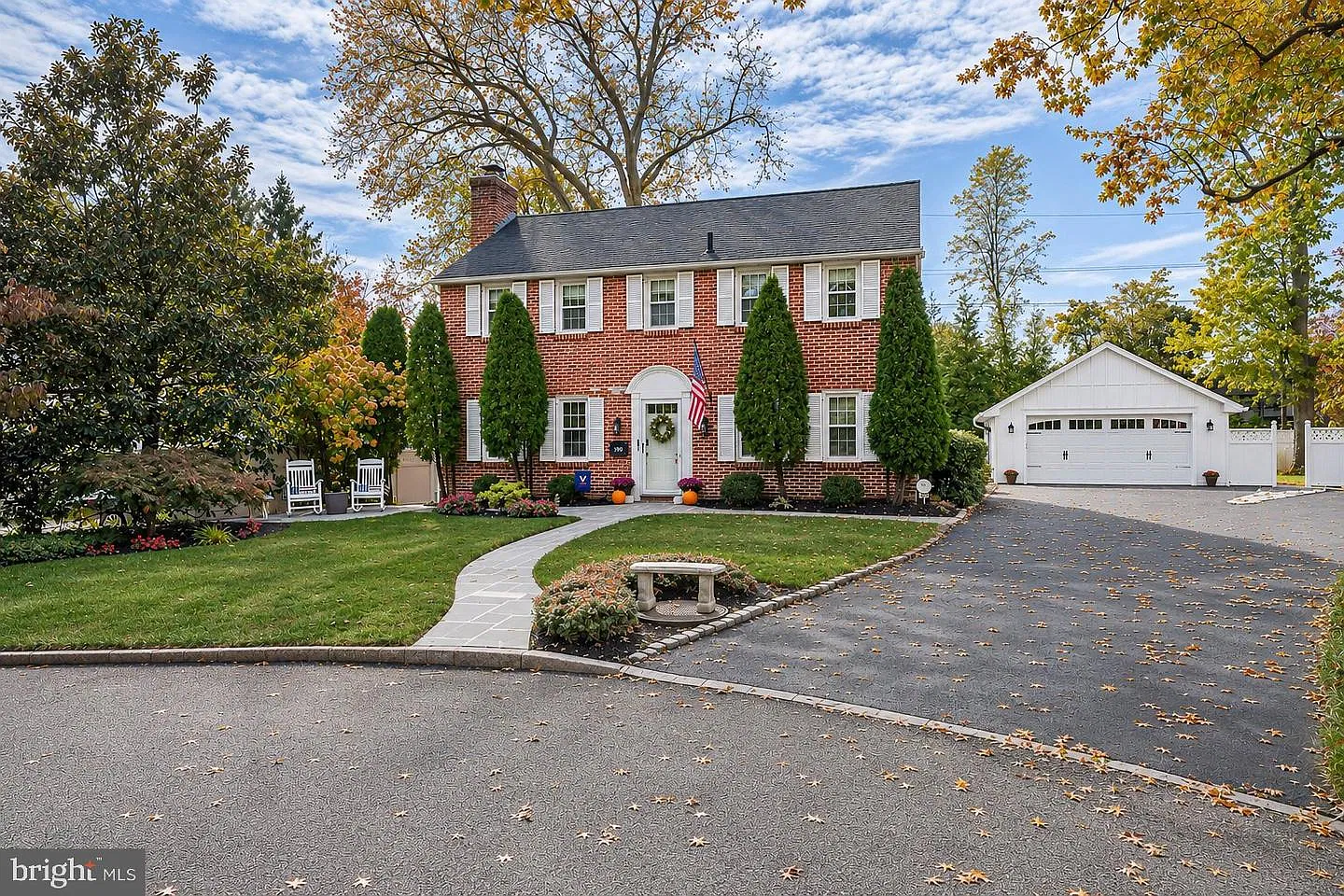
This brick-front Colonial has undergone a number of recent updates, including a new patiothat opens onto a fenced yardand the addition of a detached two-car garage. The home has a living room with a fireplace, a dining room, and an eat-in kitchen with granite countertops. It has four bedrooms upstairs and additional living space in the finished basement. There are open houses today from 11 a.m. to 1 p.m., tomorrow from 11 a.m. to 2 p.m., and Saturday from noon to 2 p.m.
By submitting your written, visual, and/or audio contributions, you agree to The Inquirer’s Terms of Use, including the grant of rights in Section 10.
This suburban content is produced with support from the Leslie Miller and Richard Worley Foundation and The Lenfest Institute for Journalism. Editorial content is created independently of the project donors. Gifts to support The Inquirer’s high-impact journalism can be made at inquirer.com/donate. A list of Lenfest Institute donors can be found at lenfestinstitute.org/supporters.
Malayshia Allford’s parents were arguing in the parking lot of a Springfield Township strip mall when someone called police. Her mother tried to board a SEPTA bus with the girl — but herfather pulled them back to the sidewalk. Then, he struck the mother in the head, police said.
That 2020 incident, and the investigations that followed, prompted a caseworker to remove Malayshia, then just 4 years old, from her mother’s home in Philadelphia.
Over the next six years of her short and tumultuous life, she would be shuffled through at least three homes by Philadelphia’s child-welfare system. On Nov. 5, one of those foster parents, Carprice Williams, was charged with killing the 10-year-old girl and leaving her body in the trunk of a car.
Williams was a Philadelphia fifth-grade teacher whose disciplinary style, including withholding lunch from students, worried colleagues and drew complaints from some children and parents. She had been a foster mother to at least four children dating back to 2019 or earlier. In 2021, another child who was placed in her care was hospitalized with what a doctor deemed near-fatal injuries.
The story of how their paths collided raises serious questions about the systems the city and state have in place to keep children safe, and to vet those who care for them.
Malayshia Allford, 10, was missing for more than a week before her remains were found inside the trunk of a car in South Jersey.Courtesy of Philadelphia police
Years in the system
Some of Malayshia’s relatives had not seen the child since she was a 4-year-old with a heart-melting smile and an affinity for Minnie Mouse. That’s how long she had been in the child-welfare system.
A caseworker had temporarily removed Malayshia from her mother’s home after the domestic incident. In April 2021, a Philadelphia Family Court judge found the home unsafe, noting that drugs had been found in the child’s bedroom and that the mother failed to seek care after she suspected her daughter had been sexually abused.
Malayshia was placed with a relative, and allowed weekly supervised visits with her parents.
The court noted that Malayshia’s parents, Everine Brown-Ward and Nazir Allford, had not cooperated with the child-welfare agency, and had sent threatening messages, including a shooting threat, to the relative who was caring for the child. The father also assaulted a child-welfare caseworker, according to court records. Allford’s brother, Nafis Horne, said the parents were grieving and not ready to comment.
A lawyer, Michael Graves Jr., was appointed to represent Malayshia’s interests, according to court records dating to 2021. Graves did not respond to messages.
Frank Cervone, who for years led the Support Center for Child Advocates, said his office and the city’s public defender both require lawyers to conduct twice-a-year in-home visits. But there are no such standards for private, court-appointed lawyers such as Graves.
“Most of them simply don’t do that,” Cervone said. “They don’t see it as part of their practice.”
In 2022, both parents were arrested after taking Malayshia from a supervised visit at Catholic Community Services in Northeast Philadelphia. Both pleaded guilty to interfering with custody. After that, they no longer were allowed visits, relatives said.
Still, multiple family members said, there were other options for the girl, who had three siblings — two in foster homes, and one living with a maternal aunt, Yolanda Brown.
By last year, Malayshia was in a different foster home. But caseworkers found that she was physically and sexually abused there, according to Nadeem Bezar, a lawyer representing Malayshia’s estate.
That’s why she was removed from that home and placed with Williams, he said.
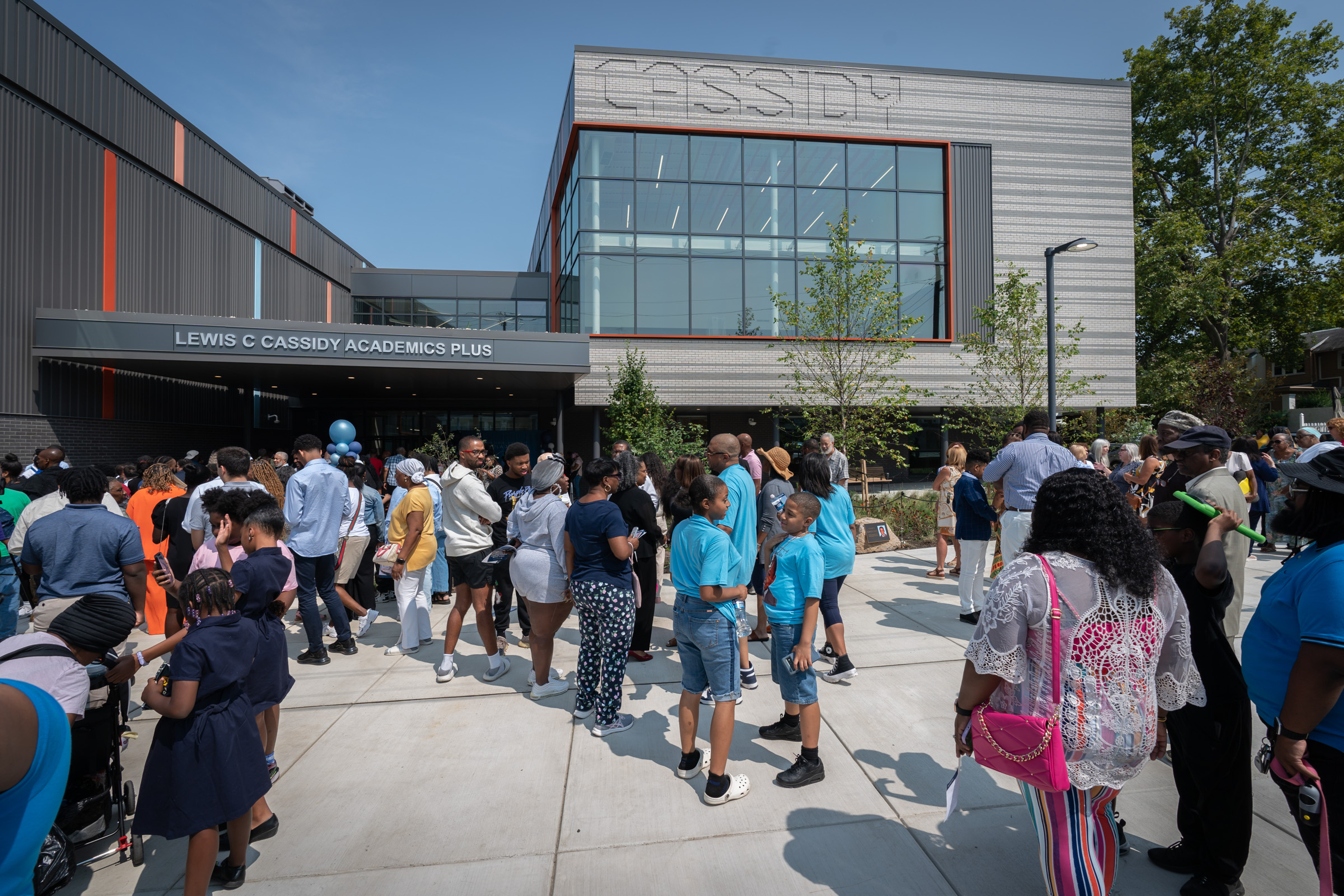
Visitors attend the opening of the Lewis C. Cassidy Academics Plus School in a 2024 file photo.Jessica Griffin / Staff Photographer
‘The care just wasn’t there’
A fifth-grade teacher at Lewis C. Cassidy Academics Plus in Overbrook, Williams, 36, was known as a disciplinarian with what some coworkers described as an imperious attitude.
She demanded to be called Dr. Williams, according to two coworkers and a parent, and touted a doctoral degree from Drexel University on her LinkedIn page. Asked to confirm that, a Drexel spokesperson said only that Williams had earned a master’s degree from the university in 2015.
A parent and a school staffer both said they had complained to the principal about what they viewed as harassment by Williams, and believed others had as well.
Cassidy parent Justin Forte said Williams seemed frazzled by her large class and ill-equipped to manage behavioral issues.
“She wasn’t handling things right,” said Forte, who said Williams had singled his 11-year-old son out for reprimands and repeatedly prevented him from eating lunch, in violation of district policy.
“The first thing a teacher’s supposed to do is care for children,” he said, “and it seems like the care just wasn’t there.”
Stephen Ford, who taught fifth grade alongside Williams, said she was an effective teacher, but stern. While some other teachers try to infuse teaching with humor, he said, “I didn’t hear a lot of laughing in her room.”
A Cassidy gym teacher, Corey Blakey, who also runs after-school and summer programs, said Williams repeatedly punished students in her class by forcing them to spend their lunch period in her classroom. He said the principal ended up warning her against such discipline.
Cassidy principal Herman Douglas did not respond to a request for comment.
“She’s really possessive,” Blakey said, adding that she urged students not to join an enrichment program and told him to remove certain students from after-school programs.
After observing a tense altercation between Williams and another staffer, Blakey urged the other staffer to file a complaint, he said.
Williams attended Lower Merion High School and Rosemont College, and was first licensed as a teacher in Pennsylvania in 2013.
She was hired by the Philadelphia School District as a substitute in 2015, taught at Young Scholars Charter School for the 2015-16 school year, and was a district teacher from 2017 through 2023, including at Thomas Mifflin School in East Falls. Philadelphia School District officials declined to provide further details about her postings or to comment.
A former friend of Williams’, whose daughter was in the teacher’s fifth-grade class at Mifflin, said troubling patterns were apparent back then: Williams was harsh with some children, but overly involved with others, ordering them UberEats to her classroom and hosting them in her home.
The friend, who asked not to be identified because she did not want to be associated with Williams’ alleged criminal conduct, said her daughter and some peers were enthralled with the teacher because she was “was more on their level. If they talked to each other crazy, she did it, too.”
Then, while visiting her home, the woman said, Williams punched her daughter with a closed fist.
“I put Carprice out of my house when she punched her,” the friend said.
In 2019, Williams took in a 14-year-old foster daughter, Maria Campbell, who said Williams punished her for taking snacks — locking her in her room during the pandemic for what seemed like months and forcing her to write out an apology over and over. When she got the chance, Campbell, now 21, said, she ran away and never saw Williams again.
On June 27, 2020, Williams took in two foster children in her rented rowhouse on Simpson Street in West Philadelphia. Six months later, records show, they were removed after one was hospitalized with severe brain bleeds, malnutrition, and vitamin deficiencies that a doctor said indicated that food had been withheld. Because of the apparent abuse and neglect, a state “near fatality” review team recommended that Williams “never be permitted to care for other foster children.”
Police investigated, according to the state review, but made no arrests because the child did not disclose what caused the hemorrhaging. In October, according to a lawsuit that did not name Williams and was later settled out of court, a child protective services report laid out detailed allegations of abuse by Williams — grabbing a child by the braids and slamming her head to the floor, smacking her in the face, forcing her to squat for long stretches.
Yet, the state review team report, finalized more than a year later in November 2022, makes no mention of that information. A state spokesperson said Williams had successfully appealed the finding of child abuse and had her record expunged.
Though the state maintains a registry of foster care providers, it is not clear if the information about that incident made it into the registry. Nor is it clear whether the Family Court judge, the Philadelphia Department of Human Services (DHS), or the foster care agency that certified Williams consulted that database. The agency, Pennsylvania Mentor, did not respond to requests for comment. Philadelphia DHS Commissioner Kimberly Ali said Saturday that she could not comment on any individual case, but that under state law it is the foster agency that is in charge of approving caregivers.
By early 2025, Williams had a young son of her own and was hired at Cassidy. And that summer, she took in another foster child, Malayshia.
She called the little girl May May. And, according to her friend, Williams said she had plans to adopt the child.
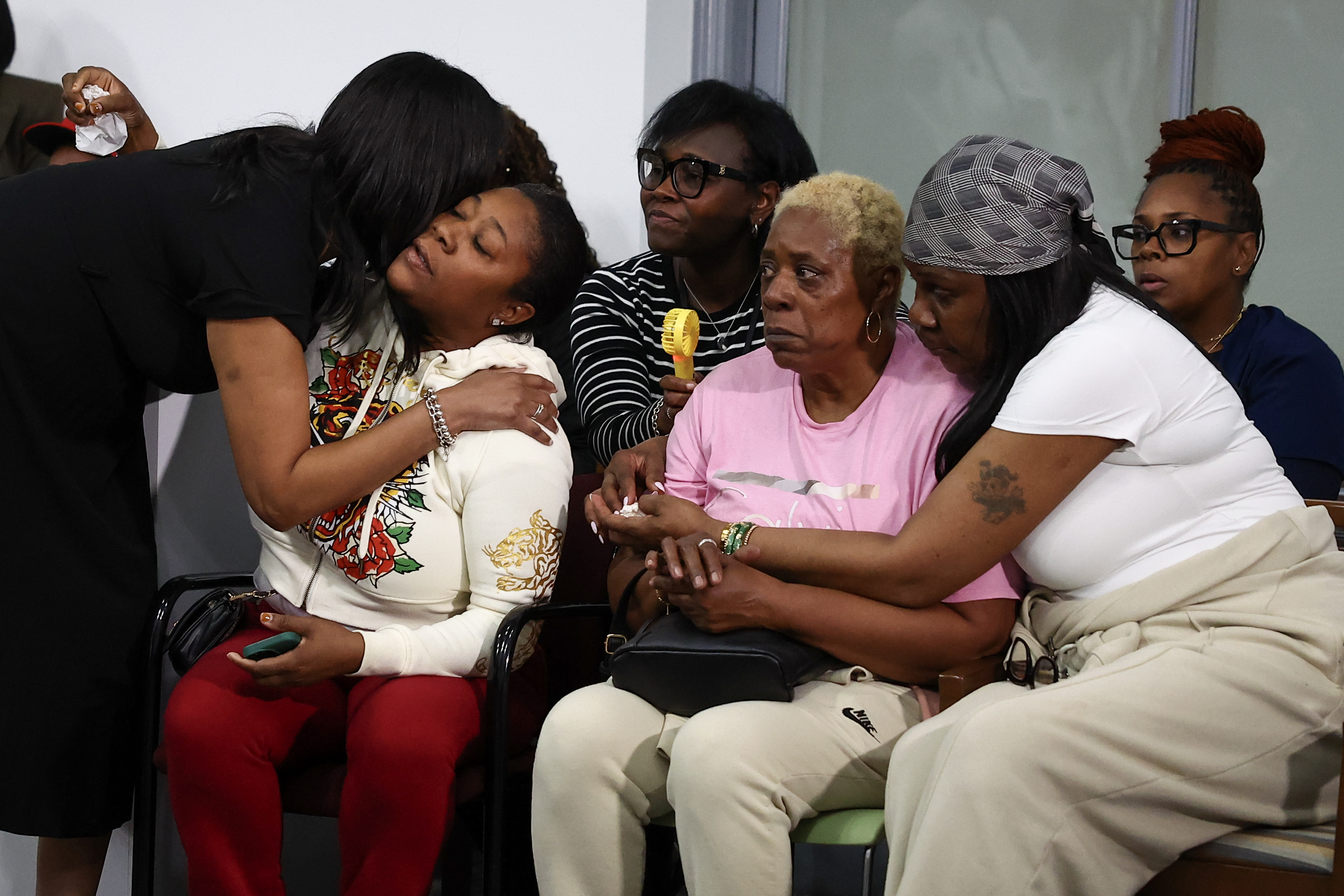
State Representative Morgan Cephas hugs Malayshia Allford’s aunt Marketa Brown, at a press conference at Philadelphia District Attorney Larry Krasner’s office on Thursday, Nov. 5. The family had gathered as Krasner announced charges against Carprice Williams.Monica Herndon / Staff Photographer
‘A really good kid’
This spring, according to Blakey, Williams asked to enroll Malayshia in summer programs he runs at the school and with the Tiger Woods Foundation. That is when he got a chance to meet the girl.
Blakey was impressed by the 10-year-old’s enthusiasm and curiosity.
“She was not a perfect student, but near to that. She was happy-go-lucky. She wanted to be in the program. She wanted to do all the activities. She wanted to do everything,” he said. “She was a really good kid.”
But Malayshia did not show up at Robert E. Lamberton School on Friday, Oct. 23.
Over that weekend, two witnesses who visited the home saw the child in bed, not moving, according to a police report. Williams did not report the girl missing until Monday afternoon. And when she did, she told Malayshia’s aunt that the girl’s parents had taken her.
As police, FBI, relatives, and neighbors began a frantic search, according to the report, Williams faked affectionate texts to cover her tracks. One phony text from Malayshia read, “Mommy I know you are waiting for me to come home but my family they don’t want me to be adopted. … I love you.”
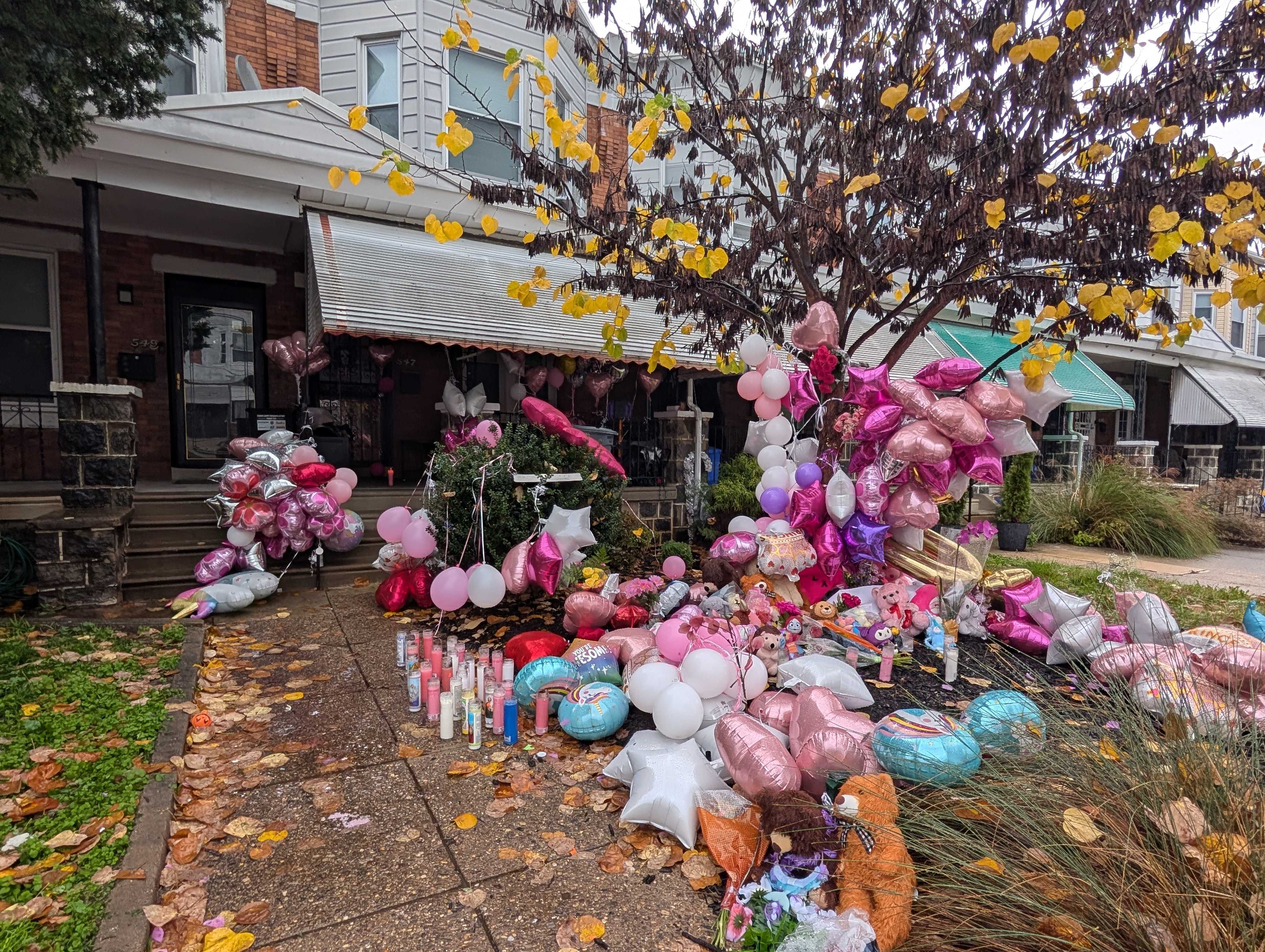
Mourners placed candles, balloons, and stuffed animals outside 547 North Simpson Street, where Malayshia Allford lived with her foster mother Carprice Williams.Jesse Bunch
Days later, investigators identified a man caught on video leaving Williams’ home dragging a cumbersome, oddly shaped bag with a long strand of braided hair trailing from it. The man, a relative of Williams’, eventually led them to a car parked in Lindenwold, South Jersey. Malayshia’s body — bruised and battered, with a fractured rib and whiplike marks on her legs — was in the trunk.
Witnesses later told police that Williams had thrown Malayshia down stairs, beaten her with a phone cord, deprived her of food, and forced her to wear a heavy vest and walk up and down the stairs. Williams denied that, telling police that the vest was only calming, and that Malayshia might have fallen but was not pushed.
But Malayshia’s relatives said they are still trying to understand how a failure this profound was possible.
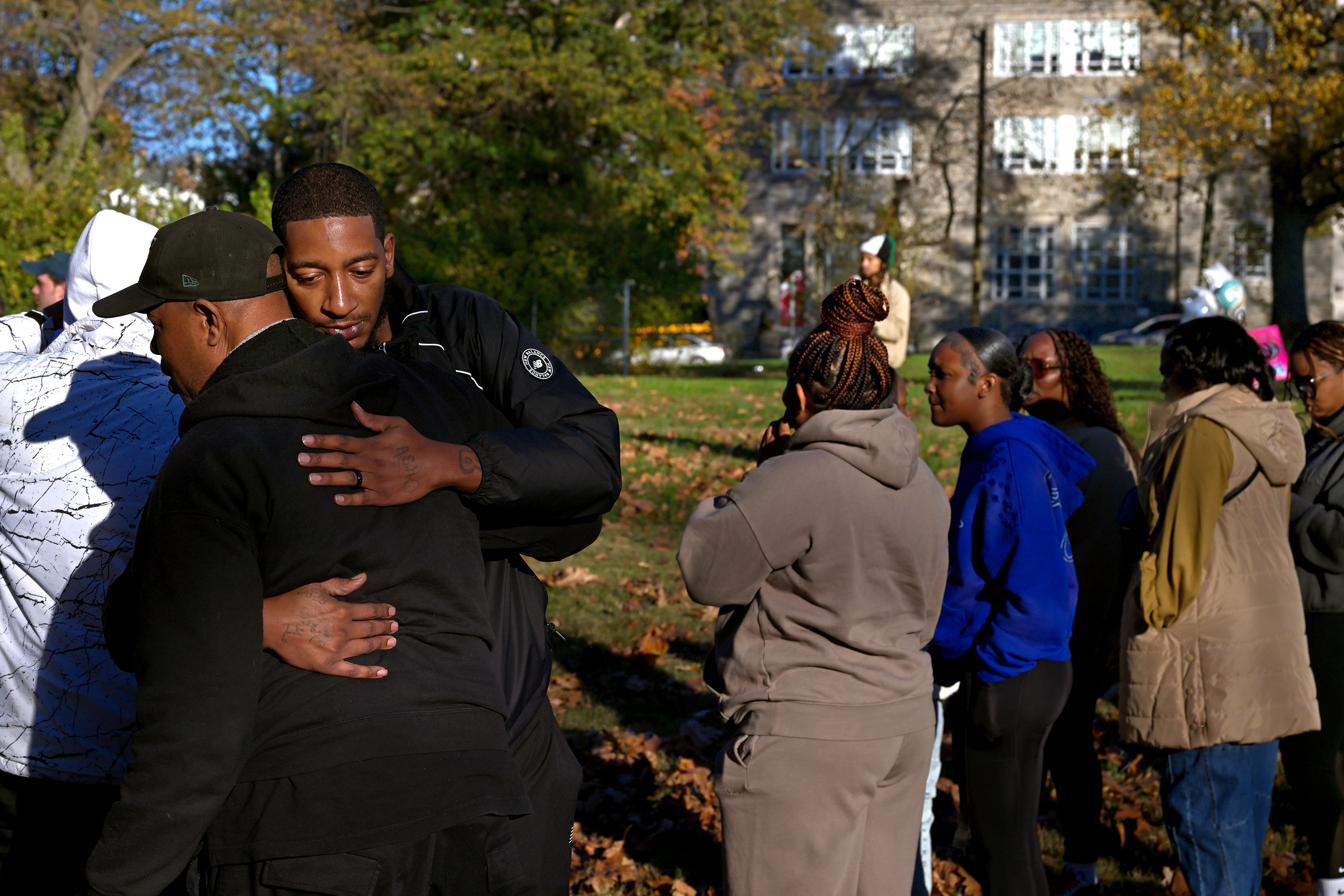
Nafis Horne, Malayshia Allford’s uncle, embraces a family member on Sunday, Nov. 8 in Morris Park in Overbrook as they gathered remember the young girl.Tom Gralish / Staff Photographer
Last weekend, more than 200 people gathered in Morris Park in Overbrook to release balloons in Malayshia’s memory.
Nafis Horne, her paternal uncle, said he would have gladly taken in his niece. But no officials ever reached out, he said.
He said his sister, Nyfisha Allford, had sought custody of the little girl but got nowhere, despite city and state policies prioritizing placements with relatives over foster care.
“My sister tried to get her,” Horne said, “but that fell through the cracks.”
Staff writers Ellie Rushing, Jillian Kramer, and Jesse Bunch contributed to this article.
Lower Merion is weighing a property tax increase for the third year in a row as personnel and infrastructure costs strain the township’s budget.
Township staff have proposed raising real estate taxes by 19% in 2027, which they say would bring in an additional $6.8 million to help offset costs from increased staffing, healthcare and pension obligations, storm response, and police overtime.
If passed by commissioners, it would be the third consecutive annual increase in Lower Merion after 13 years of no increases. The township raised taxes by 6.5% in 2025 and 8% in 2026.
Though the 19% recommendation from staff hasprompted sticker shock from some residents, any tax increase will ultimately be decided by the board of commissioners, which is set to adopt the 2027 budget on Dec. 16 after a series of public hearings.
The board has amended staff recommendations in the past (commissioners last year approved an 8% tax increase despite staff suggesting 9.5%), and some commissioners at a Wednesday night meeting seemed poised to favor a lower rate for next year.
With the proposed increase, property owners with the median assessed home in Lower Merion of $287,600, which equates to a market value of about $966,000, would owe an extra $263 annually.
Lower Merion property owners continue to pay real estate taxes calculated on property values established in 1998, the last time Montgomery County reassessed property, according to a report in the 2027 proposed budget penned by township manager Ernie McNeely.
Commissioner Gilda Kramer said at the meeting that more than adecade without an increase left the township needing to levy higher taxes.
“Our residents have had the benefit of tremendous stability and no increases while our costs have gone up for many, many, many years,” Kramer said.
Board president Todd Sinai argued the township has little room to cut spending given the many rising costs baked into the budget.
“There aren’t a whole lot of places that we have much discretion, unfortunately,” Sinai said.
Township staff said they can look into trimming the budget, but warned that cuts would likely mean eliminating staff. Two-thirds of Lower Merion’s general fund expenditures go toward staffing.
Officials say Lower Merion is facing considerable budgetary headwinds, including higher pension obligations and a 19% rise in employee healthcare costs.
“We are getting hit hard by healthcare,” Adam Szumski, Lower Merion’s chief financial officer, told commissioners.
The township hired a number of employees in 2026, including 17 newpolice officers.
Lower Merion also faces high remediation expenses from winter and summer storms and plans to direct money to its solid waste fund, which is facing acute budget pressures.
While the township is projected to bring in $6 million more than expected in revenue in 2026, due largely to strong business and transfer tax revenue, investment income, and licenses and permits, spending is expected to be$1.7 million over budget. The township is projected to end 2026 with a fund balance of $23 million.
According to McNeely’s report,Lower Merion has two main avenues for raising revenue: increasing property taxes or levying an earned income tax.
The township is among the 3% of municipalities in Pennsylvania without an earned income tax. Local governments across the commonwealth, many facing similar budget pressures, have moved toimplement earnedincome taxes in recent years, in many cases reducing their reliance on regular property tax increases.
Lower Merion staff have recommended against an earned income tax, however, arguing that even with the proposed 19% property tax increase, the township’s millage rate would be around average for the county, and that, per the report from McNeely, an earned income tax would be “much more disruptive and significant” for taxpayers.
The first public hearing on the budget will take place on Nov. 18.
This suburban content is produced with support from the Leslie Miller and Richard Worley Foundation and The Lenfest Institute for Journalism. Editorial content is created independently of the project donors. Gifts to support The Inquirer’s high-impact journalism can be made at inquirer.com/donate. A list of Lenfest Institute donors can be found at lenfestinstitute.org/supporters.
Lower Merion Township will purchase a residential home in Bala Cynwyd to house volunteer firefighters, a move officials say is key in recruiting and retaining personnel as the firedepartment contends with dwindling volunteer participation and increased calls for service.
The township’s board of commissioners voted unanimously to authorize the purchase of 303 Tregaron Rd. last night.
Lower Merion will put $500,000 toward purchasing the building, and the Union Fire Association, one of the seven fire companies that make up the Lower Merion Fire Department, will pay $205,000 plus closing costs as an interest-free loan to the township.
The Union Fire Association, based in Bala Cynwyd, provides fire and emergency services to the township’s Bala Cynwyd and Merion sections. The four-bedroom, three-bathroomresidence will houseup to four active volunteer firefighters serving in any township fire company.
In 2022, the Union Fire Association began investigating how to improve overnight accommodations for its firefighters, both career and volunteer. The fire station at the time decided that its existing second-floor social hall should be converted to add bunk rooms and living facilities. The township committed $500,000 toward the project.
Yet bids received earlier this year put the project $1 million over budget, prompting the township and Union Fire Association to consider alternatives.
When an adjacent residential property, 303 Tregaron Rd., came on the market this summer, the property owner, township, and fire company agreed on a sale price of $705,000.
The township will pay for insurance and major repairs, and the fire company will be responsible for routine maintenance, administrative responsibilities for the live-in firefighter program, and minor repairs.
At the Wednesday meeting, board president Todd Sinai said it’s “a delight to be able to help” the fire company.
Providing living quarters for firefighters is seen as an important recruitment and retention tool in the township, which is facing a drop in participation from volunteer firefighters, who make up the bulk of its labor force.
The Gladwyne Fire Company, also a member of the Lower Merion Fire Department, houses volunteer firefighters at its station, a nearby apartment, and a single-family home.
Gladwyne’s housing program “continues to be one of the most effective and robust recruitment and retention tools not only within Lower Merion Township but throughout the region,”Blaine Leis, Gladwyne’s fire chief, wrote in a 2025 report.
The Lower Merion Fire Department has asked the township for a significant funding boost in 2027, citing rising costs, increased calls for service, and the dwindling volunteer base, which fire department officials say requires hiring additional full-time personnel.
This suburban content is produced with support from the Leslie Miller and Richard Worley Foundation and The Lenfest Institute for Journalism. Editorial content is created independently of the project donors. Gifts to support The Inquirer’s high-impact journalism can be made at inquirer.com/donate. A list of Lenfest Institute donors can be found at lenfestinstitute.org/supporters.
P.S. The Inquirer is looking for submissions to its “Life Partners” series about unexpected intimacies across the region. Tell us about your creative co-parenting arrangements, rekindled relationships after divorce, or dating across fault lines at lifepartners@inquirer.com, and one of our reporters might reach out.
Lower Merion’s fire department is seeking additional funding from the township as the number of volunteer firefighters dwindle and calls increase.
The department has requested an additional $1.1 million from the township next year, funds that would allow it to hire a fourth full-time firefighter at each of Lower Merion’s six fire stations. The funding would also go toward rising operating costs.
“Our volunteer system is stressed,” Merion Fire Company president Brooke McMullin told commissioners.
The township’s fire houses are currently slated to receive roughly $2.5 million next year, a figure that could change as the township finalizes its budget in the coming weeks. There are budget meetings scheduled for Nov. 18 and Dec. 2 before potential adoption on Dec. 16.
A still image from “I Don’t Know What I’m Doing Here.”Courtesy of Jacob Pincus
A Lower Merion native is gearing up for the premiere of her new documentary, which explores her family’s history during the Holocaust.
Madeline Kohn, 23, began working on I Don’t Know What I’m Doing Here in 2024, taking a 10-day journey to retrace her grandmother’s steps in her native Romania.
Kohn said the film at its core is about “chasing belonging and finding familiarity,” and that visiting significant places from her family’s past gave her a sense of “rootedness.”
It will premiere Tuesday at the Weitzman National Museum of American Jewish History.
As students increasingly strive for perfection, Bryn Mawr College has taken a new approach to teaching them that failure is a part of life through its “Institute of Failure.”
Lower Merion is slated to get four new electric vehicle charging stations at the township lot in Bryn Mawr, part of $37 million in funding Gov. Josh Shapiro announced for southeastern Pennsylvania.
Gratz College recently opened its Bala Cynwyd campus at 382 Bala Ave. Known as Gratz Commonspace, the project combinedtwo properties with a glass atrium. There’s an open house Sunday from 11 a.m. to 4 p.m.
Haverford resident Jeff Yass’ wealth continued to climb this year, according to the latest Forbes 400 ranking of wealthiest Americans. The cofounder of Susquehanna International Group has an estimated net worth of $77.8 billion, making him the wealthiest person in the state and the 18th wealthiest in the nation. He’s followed at No. 59 by SIG cofounder Arthur Dantchik, who lives in Gladwyne and has a $19.5 billion net worth. Fanatics CEO Michael Rubin ($11.7 billion), Morgan Properties founder and chairman Mitchell Morgan ($6.7 billion), and Phillies managing partner John Middleton ($4.9 billion), all Bryn Mawr residents, also made the list along with Wynnewood resident and Eagles owner Jeffrey Lurie ($8.8 billion).
Montgomery County commissioners released the proposed 2027 budget this week, which calls for no county tax increase. There will be public hearings on Dec. 3 ahead of an expected adoption vote on Dec. 17.
🗺️ Other nearby news
Mirvan Dinler, the Uber driver who pleaded no contest to raping an unconscious Villanova University student in her dorm room in 2024, has been sentenced to three to six years in state prison and must register as a sex offender. He also faces deportation to his native Turkey.
Main Line restaurant Sangkee expanded its footprint this week, soft opening Sangkee Peking Duck at Wayne’s Gateway Shopping Center. The new spot specializes in its namesake dish and other duck offerings such as duck stir-fried noodles, Peking duck bao, and duck soup, along with other Chinese dishes.
A new restaurant, Koutouki, opened at 24 E. Eagle Rd. in Havertown Monday. Chef Tony Procopos’ joint dishes up traditional Greek cuisine such as spanakopita, souvlaki, lamb chops, and moussaka.
🎳 Things to do
🧶 Ornament Workshops: Stoneleigh is hosting two DIY holiday ornament workshops, one geared toward experienced crocheters on Friday and another on Saturday for families with kids ages 6 to 12. ⏰ Friday, Nov. 13, 10 a.m.-noon and Saturday, Nov. 14, 10-11:30 a.m. 💵 $30-$40 for the crocheting event, $25-$30 for the family event 📍 Stoneleigh, Villanova
🦸 The Incredibles: Catch a screening of the 2004 Disney Pixar animated film. ⏰ Saturday, Nov. 14, 11 a.m. 💵 $6.75-$7.75 📍 Bryn Mawr Film Institute
🖼️ 23rd Annual Betsy Meyer Memorial Exhibition and Opening Reception: See the works of three contemporary artists, which will be unveiled at an opening reception and on display for the next month. ⏰ Opening reception is Saturday, Nov. 14, 6-8 p.m., exhibit is on display through Friday, Dec. 18 💵 $10 suggested donation for the opening reception 📍 Main Line Art Center, Haverford
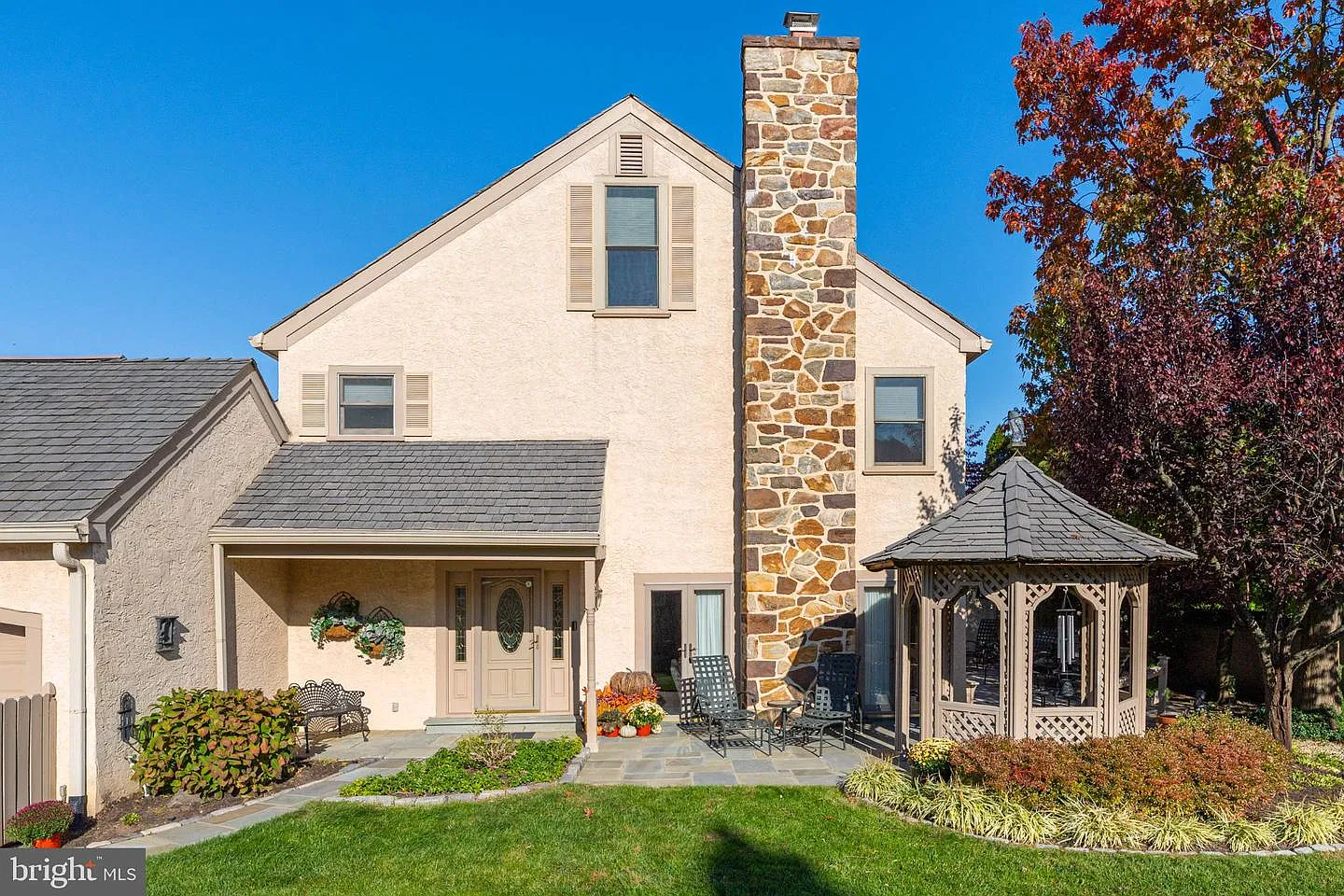
This Gladwyne townhouse has lots of living space thanks to a living room with a fireplace, a sunny family room, and a finished basement. Its updated kitchen has a large island and stainless steel appliances. It has three bedrooms and a home office. Outside, there’s a deck and a patio with a gazebo.
By submitting your written, visual, and/or audio contributions, you agree to The Inquirer’s Terms of Use, including the grant of rights in Section 10.
This suburban content is produced with support from the Leslie Miller and Richard Worley Foundation and The Lenfest Institute for Journalism. Editorial content is created independently of the project donors. Gifts to support The Inquirer’s high-impact journalism can be made at inquirer.com/donate. A list of Lenfest Institute donors can be found at lenfestinstitute.org/supporters.
Madeline “Mima” Kohn’s late grandmother, Esther Rasch, grew up in Săcel, Romania, a small village once home to a vibrant Orthodox Jewish community.
But like many Jewish Europeans during the Holocaust, Rasch was stripped of her citizenship, forced from her home, and deported to Auschwitz with her parents and nine siblings.
Only she and five of her siblings survived.
An image of Madeline “Mima” Kohn wearing a traditional Maramures outfit in Breb, Romania. (Still image from “I Don’t Know What I’m Doing Here”).Courtesy of Jacob Pincus
After World War II, Rasch migrated to Hillside, N.J., in the late 1940s. She died in 2007 when Kohn was 3 years old, leaving her granddaughter with only faint memories of her.
“I was very close with my Jewish community. That history was really important, but I didn’t actually know anything about their lives before they came to the U.S.,” Kohn, 23, said. “They just appeared here one day, and I think subconsciously, I was exploring that.”
Growing up in Lower Merion, Kohn learned about her grandmother through stories told by her mother, Monica Rasch. But when her mother died in 2015, Kohn lost another connection to her family’s past.
What remained were 50 photographs of her grandmother and a nine-hour video documenting Esther Rasch’s return to Romania in the 1980s. Much of what Kohn knew about her grandmother’s early life came from watching that footage.
Kohn, then a 21-year-old student at the University of Pennsylvania,wanted to walk the same pastures, elementary school hallways, and synagogue aisles her grandmother had described in the video.
She hoped to create her own memories of the village and understand why, decades after the Holocaust, her grandmother had chosen to return.
“I had to go to Romania to realize that my grandmother was actually from there,” Kohn said. “So much of the discovery was almost self-evident, but at the time, I didn’t really feel like I could internalize that.”
Madeline “Mima” Kohn (center) with director Jacob Pincus and translator Ayana Stefanescu in her grandmother’s village in Săcel, Romania. (Still image from “I Don’t Know What I’m Doing Here”).Courtesy of Jacob Pincus
The film begins with Kohn’s friend, Jacob Pincus, 23, who directed the documentary, flying from Los Angeles to meet Kohn in Cluj, Romania.
With 18-year-old translator Ayana Stefanescu as their guide, they visit shops, restaurants, and historical sites, including the Ethnographic Museum and Elie Wiesel Memorial House.
They walk through the Romanian heat to the Maramureș County Branch of the National Archives, where Kohn discovered her grandmother’s birth and school records.
Although Kohn couldn’t locate anyone who knew her grandmother, or other documents that could speak to her family’s history, she found a sense of “rootedness” in her visit.
“That was something I never felt before,” she said.
“In college, I didn’t feel I had a set professional aspiration. I didn’t know what I was doing here, and I think subconsciously, I knew that I needed some inspiration from earlier generations. I needed to go back and look at something concrete.”
When she was growing up, Kohn said, her grandparents avoided talking about their home countries due to the trauma and loss they endured during World War II.
“I was told, ‘Forget about that chapter. It’s bad,’” Kohn said. “There are a lot of people, especially from my parents’ generation, who refused to go [back] to Germany and Poland because they don’t want to support the economies of these countries, and I deeply understand that.”
But Kohn believes that she and others who are generations removed from the Holocaust can benefit from making these journeys. By avoiding these experiences, she said, they are “cutting [themselves] off from the positive and fulfilling aspects of the history.”
Pincus said that was the most significant theme they wanted to convey in the film.
“We all come from a place,” he said. “It’s not just specific to Romania. We’re all drawn to certain places because we’re from there. That was me at age 16 going to Poland, where most of my family is from. That feeling is what I connected with.”
A ‘gift’ for future generations
For Kohn, the journey began as a historical research project.
She received a $2,500 grant from Penn to travel to Romania, which she used to cover airfare, lodging, research, and a translator.
Making a documentary film was not in the plans until Pincus came along for the journey. The two friends met at age 16 during a Holocaust history trip to Poland, and have traveled together extensively in the years since.
Pincus, who dropped out of film school at the University of Southern California before flying to Romania, brought a 15-year-old point-and-shoot camera, a microphone, and a few film accessories tucked into a toiletry case.
During their trip, he compiled vlog-style testimonies from Kohn and B-roll of the Romanian landscape and historical sites. They soon realized the impact this story could have for an audience, so Pincus spent nearly a year repackaging the footage into a more comprehensive visual experience.
In the time since the trip, Kohn moved to Brooklyn to pursue a career in real estate development, with an interest in urban religious communities, including those across the Jewish diaspora.
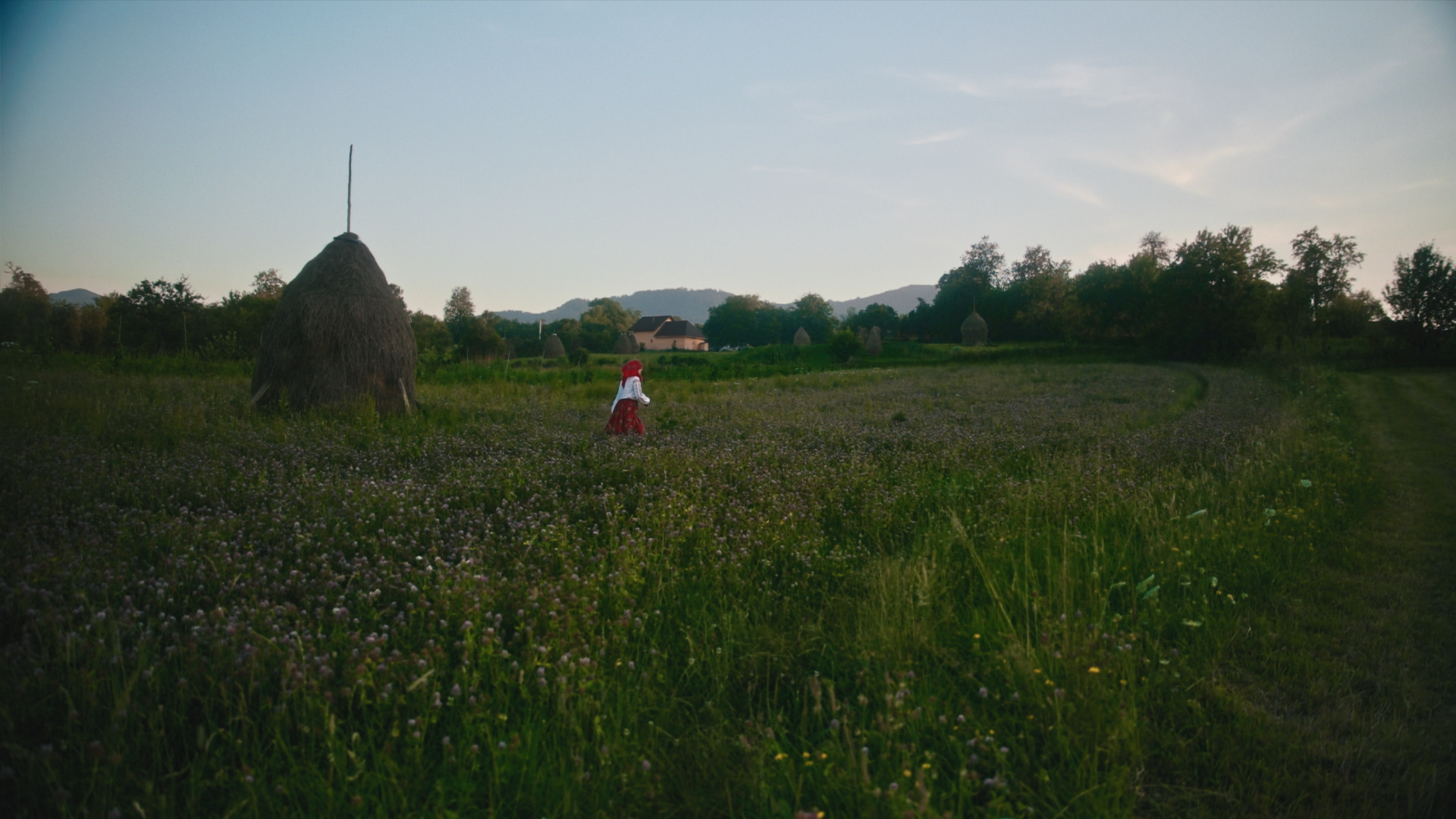
An image of Madeline “Mima” Kohn wearing a traditional Maramures outfit in a field in Breb, Romania. (Still image from “I Don’t Know What I’m Doing Here”).Courtesy of Jacob Pincus
At its core, Kohn said, the film is about “chasing belonging and finding familiarity.” And while she left Romania with unanswered questions about her lineage, she and Pincus felt “gratitude” because of the lives they had in the United States.
Pincus said those lives wouldn’t be possible without the sacrifices of earlier generations.
“We’re trying to help people remember that we come from people who sacrificed for us to be alive. And as soon as that’s lost, we are lost,” he said.
For Kohn, that feeling came full circle when she incorporated footage from an oral history video her mother had made into the documentary. Hearing the voices of three generations who share “strikingly” similar views of the world, Kohn said, provided “all the validation I was looking for.”
It also helped her answer the existential question posed in the film’s title.
“I discovered I do have roots. I do have role models, even if I didn’t spend that much time with them. I do have a path. I do belong,” she said.
“I Don’t Know What I’m Doing Here” is screened as part of Philadelphia Jewish Film and Media Festival on Nov. 17, at 7 p.m., at the Weitzman National Museum of American Jewish History, 101 S. Independence Mall E, Philadelphia, phillyjfm.org
Lower Merion’s firefighters are asking the township to help bridge financial gaps as volunteer participation wanes and operating costs and calls for service rise.
Lower Merion Fire Department officials made their case before the board of commissioners on Wednesday night, arguing that the township’s typical financial contribution to the fire department will not be sufficient in 2027 as they respond to more calls with fewer volunteers, and as everything from health insurance to truck maintenance costs more than it once did.
The Lower Merion Fire Department is made up of seven independent fire companies: six in Lower Merion, which receive funding from the township, and one in Narberth. Each are staffed largely by volunteers and are supplemented with a handful of full-time personnel.
The fire department is asking the township for an additional $1.1 million in funding in 2027 to meet operational and personnel needs. The department’s request is on top of the nearly $2.5 million Lower Merion is already poised to allocate to the fire department next year. Fire department officials say the additional funds will be used to hire a fourth full-time firefighter at each of Lower Merion’s sixfire stations and bolster the department’s finances as it strains to meet mounting operating costs.
Lower Merion’s 2026 budget projected net expenditures of $167 million.
Lower Merion’s fire companies are funded largely through contributions from the township, fundraising events, donations from residents, grants, and investment revenue. Since 2017, the township has approved modest annual funding increases for the fire department within the 2%-3% range.
“Our volunteer system is stressed right now,” Brooke McMullin, president of the Merion Fire Company, told commissioners.
Lower Merion’s volunteer firefighting apparatus is more than a century old. The Merion Fire Company was founded in 1890 by a group of citizens who rented a garage and borrowed horses to respond to incidents. In 1908, the volunteers raised funds to build a firehouse on Greenfield Avenue, where the Merion Fire Company still operates. By 1946, Lower Merion had a network of six volunteer fire departments, and Narberth had its own.
In the mid-1960s, it became apparent that volunteer fire departments were having difficulty responding to calls during the day, McMullin said, prompting the township to fund three paid firefighters for each department. Lower Merion’s firefighting system has operated that way ever since.
Now, a cascade of factors has made it more difficult for Lower Merion’s fire companies to respond to calls.
At the same time, calls to Lower Merion’s fire companies increased 30% between 2017 and 2025.
Demand on township firefighters has risen in part due to the 2018 implementation of a mutual aid system that dispatches crews from multiple fire companies to incidents, a policy that allows Lower Merion to meet personnel standards set by the National Fire Protection Association but requires more manpower.
Coinciding with staffing challenges, the cost of everything from health insurance to fuel has also risen, said McMullin.
Truck maintenance costs alone have increased 136% from 2019 to 2026, according to data presented to commissioners at the meeting.
“It’s eating into our reserves and also forcing us to raise more money,” McMullin said.
While firefighting costs have risen 31% over the past six years, McMullin said, township funding has only gone up 17%.
Efforts to support volunteers have helped, officials said.
Some Lower Merion firehouses have set up remote work stations so volunteers can respond to calls more quickly during the work week. In Gladwyne, subsidized housing is offered to firefighters, many of whom wouldn’t otherwise be able to afford living in the expensive community.
Lower Merion Township offers a 100% property tax rebate for volunteer firefighters and ambulance personnel who meet a certain number of volunteer hours each year.
In making the case for bolstering Lower Merion’s volunteer department, McMullin pointed to Cherry Hill, a demographically comparable community to Lower Merion, which largely phased out volunteers and created a consolidated township fire district in 1994.
The Cherry Hill Fire District’s 2025 budget was $33 million. Lower Merion’s proposed 2027 budget, according to McMullin, is closer to $6 million.
Having a volunteer force supplemented by career firefighters is a “bargain that the citizens of Lower Merion Township are receiving,” he said.
Commissioner Daniel Bernheim at the meeting said asking volunteer firefighters to fundraise for their budget may be untenable.
“[Residents] don’t recognize that the backbone of our fire service are the volunteers, and we are asking the volunteers to volunteer more of their time to raise money so they can volunteer to save life and property. There’s something where that paradigm, back maybe in 1890, made sense[and] does not anymore,” Bernheim said.
This suburban content is produced with support from the Leslie Miller and Richard Worley Foundation and The Lenfest Institute for Journalism. Editorial content is created independently of the project donors. Gifts to support The Inquirer’s high-impact journalism can be made at inquirer.com/donate. A list of Lenfest Institute donors can be found at lenfestinstitute.org/supporters.
As data center proposals proliferate throughout the region, the township is looking to restrict where they can be built. Here’s what that could look like. Also this week, a new Verizon telephone pole is in the works in Narberth, Gladwyne Fire Company’s model is being used elsewhere to recruit volunteers, plus a new taco joint has opened at Ardmore Farmers Market.
The Ironworks at Pencoyd Landing sits in one of the potentially allowable areas for data centers. TIM TAI / Staff Photographer
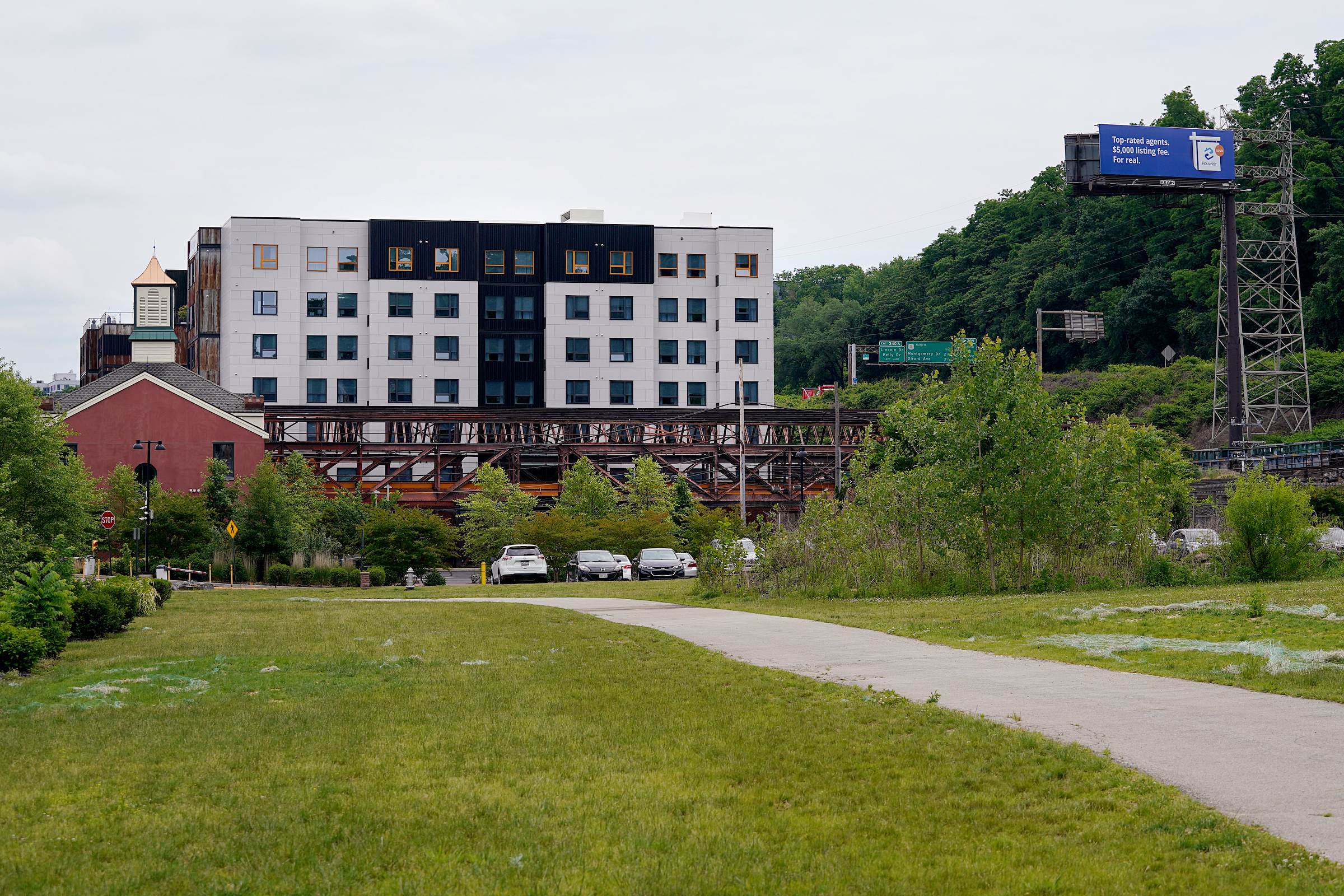
Lower Merion officials are looking to put guardrails in place for any future data center proposals, restricting their development to a former industrial corridor in Bala Cynwyd.
While there aren’t any data center proposals currently, the township wants any future ones to be limited to the light industrial zoning district along part of the Schuylkill River and a section of Righters Ferry Road.
The planning commission voted Monday to recommend the proposed draft ordinance, albeit with two changes for consideration. Rather than having data centers be approved by special exception, they suggested requiring conditional use approval. They also wanted to revise the definition of a data center to make it clear that certain telecommunications infrastructure isn’t included.
Montgomery County fire departments are grappling with more calls and fewer volunteer firefighters, forcing some, like Gladwyne Fire Company, to get creative with their recruitment efforts. Recognizing the high cost of living in the community, the company has purchased multiple propertiesto offer reduced rent to its firefighters. It’s also added a gym in the station. Its model is now being duplicated elsewhere nearby, The Inquirer’s Jess Rohan reports.
Main Line Health, which owns Lankenau Medical Center and Bryn Mawr Hospital, is no longer accepting cash or checks for any transactions, including patient copays and gift shop purchases. Here’s why.
Gov. Josh Shapiro’s campaign stopped in Narberth Monday ahead of the Tuesday election, when he overwhelmingly defeated opponent Stacy Garrity. Shapiro said that the borough “symbolizes a place of kindness, a place where people from all different walks of life come together, a place where we respect one another, and where we try and lift up our neighbors.”
The township is expected to release its proposed 2027 budget this week, with the first presentation Wednesday.
Starting Monday and continuing through Nov. 18, Harriton Road will be closed between Old Gulph Road and Morris Avenue for bridge repairs on weekdays from 8 a.m. to 4 p.m.
Work on Wynnedale Road is scheduled to begin today, with possible intermittent closures near its intersection with Shady Lane.
Ardmore plant and gardening shop Plant 4 Good recently moved half a block from its home at 100 Cricket Ave. to 123 Cricket Ave. Its new space will debut Saturday.
Maeve, Anthropologie’s popular in-house brand, is opening a standalone store in Ardmore’s Suburban Square today.
A Kobe Bryant jersey that the NBA All-Star wore during his tenure with the Aces sold at auction last week for roughly $2.2 million, making it the highest-ever price tag for a high school jersey sale, according to Bleacher Report.
Have unwanted election signs? You can drop them off at Lower Merion Transfer Station through Nov. 12 for recycling.
Developer Brian O’Neill, who was seeking to build a nearly 5-million-square-foot data center campus in King of Prussia, is suing township officials again after they rejected his proposal. This time he’s also seeking monetary damages.
🏫 Schools briefing
Lower Merion is among the best school districts in Pennsylvania for 2027, according to the latest ranking from data firm Niche. The district came in number five in the state and got an “A+” grade.
🎸 Eggy: The jam band will perform for two nights. ⏰ Friday, Nov. 6 and Saturday, Nov. 7, 8 p.m. 💵 $35.67-$72.42 📍 Ardmore Music Hall
🐉 How to Train Your Dragon: Catch a screening of the 2010 animated film. ⏰ Saturday, Nov. 7, 11 a.m. 💵 $6.75-$7.75 📍 Bryn Mawr Film Institute
🔎 Narberth Scavenger Hunt: Gather your team and follow clues on an adventure throughout the borough. ⏰ Saturday, Nov. 7, 6-9 p.m. 💵 $25 per person 📍 Throughout Narberth, events kick off and end behind Greeks Next Door
Built in the late 1800s, this Bryn Mawr estate was once home to railroad magnate Martin W. Clement, the late president of the Pennsylvania Railroad, according to its listing. Known as Crefeld, the home features original architectural details like lattice-style millwork, crown moldings, and chair rails. Designed for entertaining, the first floor features a large living room, a hall, a family room, a sunroom, and a kitchen with an adjoining butler’s pantry. The home has seven bedrooms as well as an in-ground pool and terrace. There are open houses Nov. 14 from 1 to 3 p.m. and Nov. 15 from 10 a.m. to noon.
By submitting your written, visual, and/or audio contributions, you agree to The Inquirer’s Terms of Use, including the grant of rights in Section 10.
This suburban content is produced with support from the Leslie Miller and Richard Worley Foundation and The Lenfest Institute for Journalism. Editorial content is created independently of the project donors. Gifts to support The Inquirer’s high-impact journalism can be made at inquirer.com/donate. A list of Lenfest Institute donors can be found at lenfestinstitute.org/supporters.