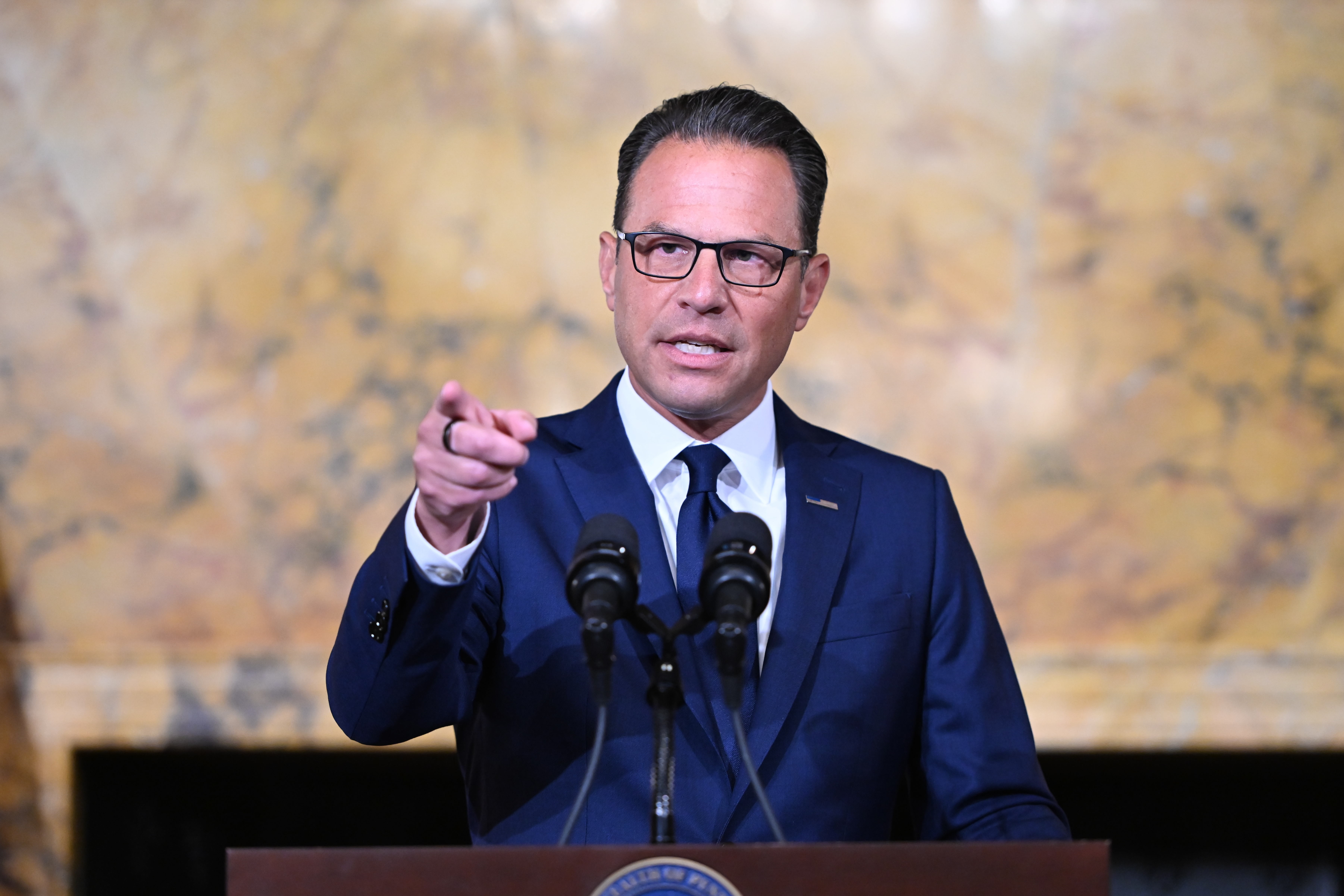
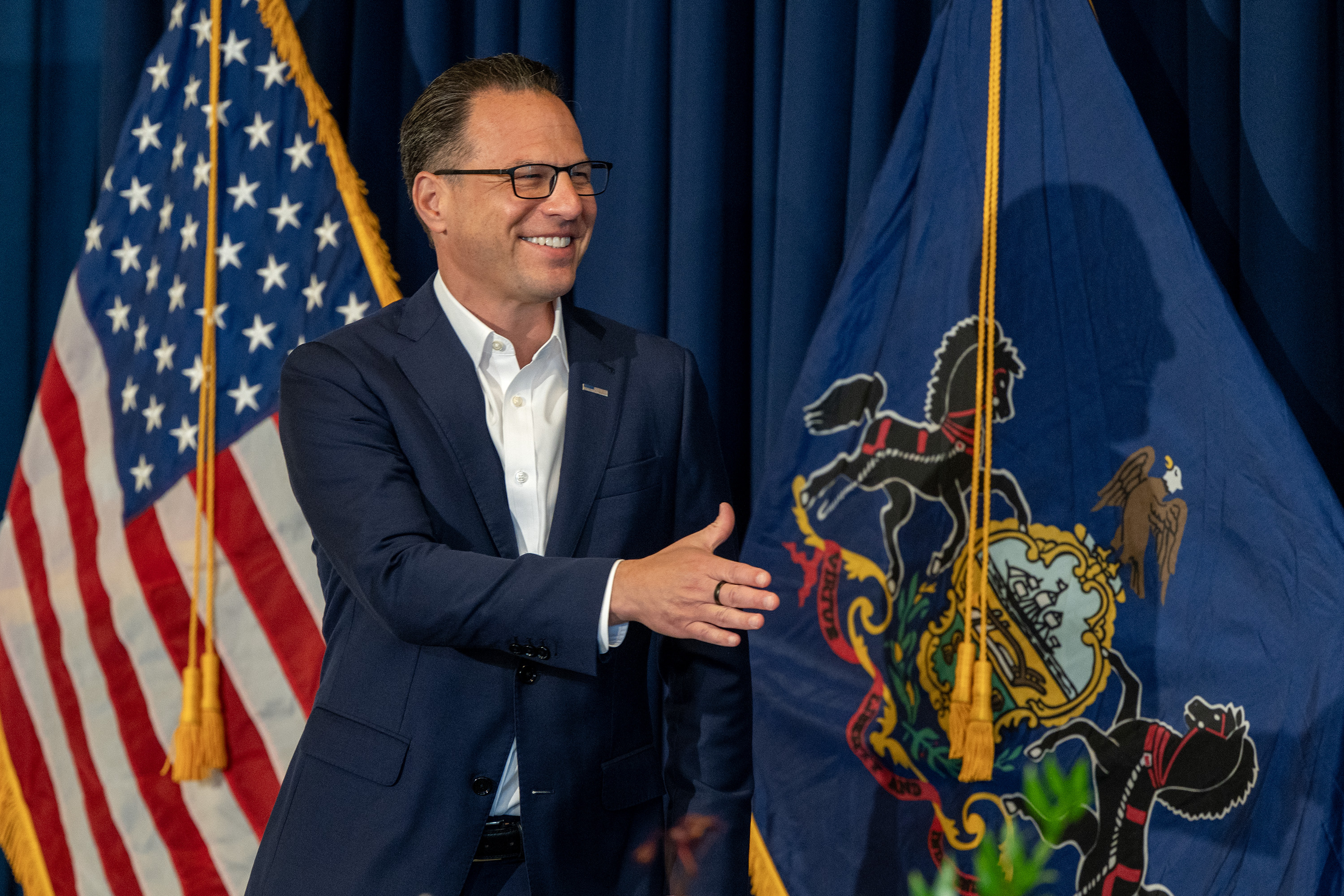
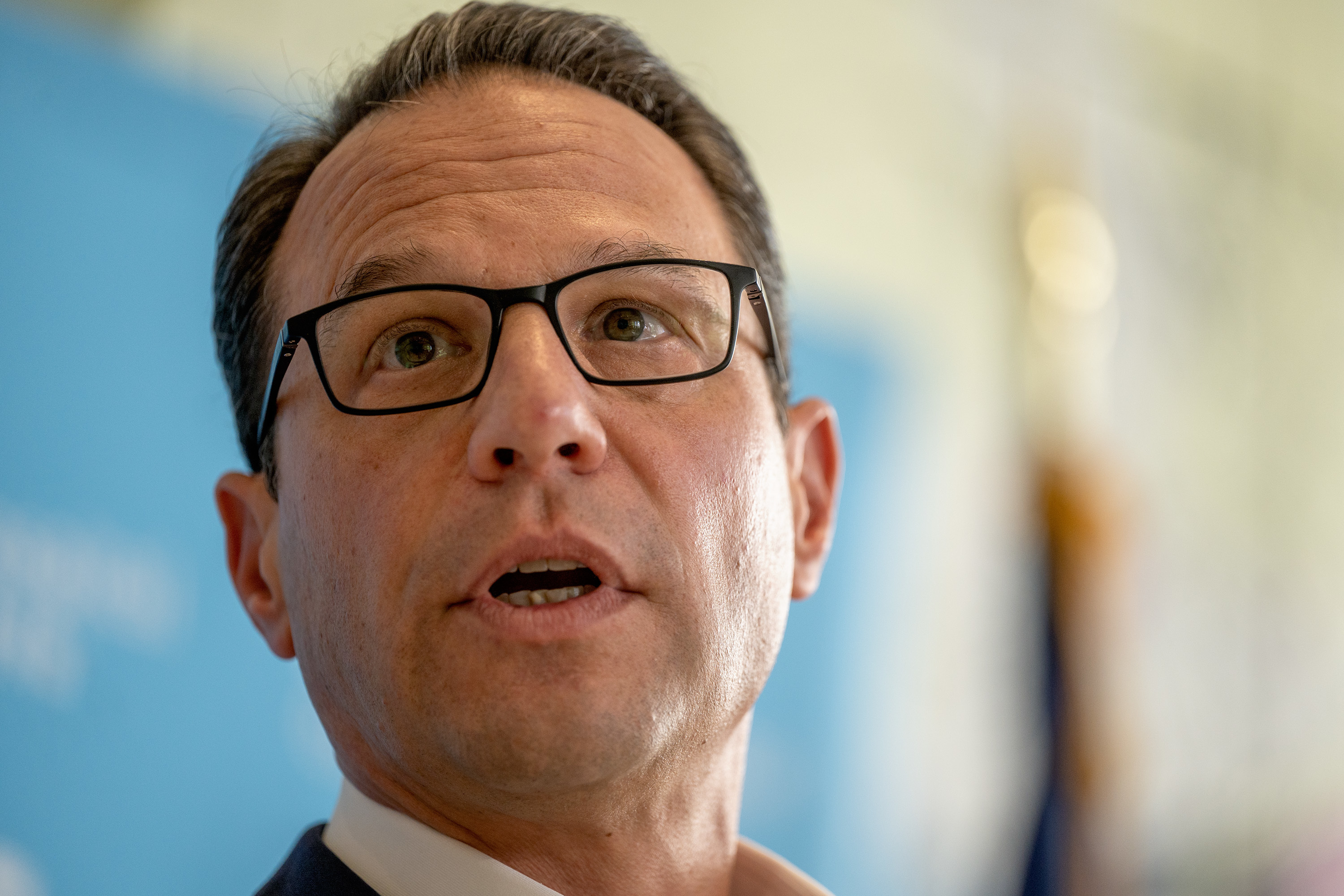
Pennsylvania Gov. Josh Shapiro has “real concerns” about the way Flock cameras — automated license plate readers that capture and store data gleaned from moving cars — are being used in the state, a spokesperson said Wednesday.
Open to banning the technology, Shapiro is wary of how Pennsylvanians’ privacy can be protected, Rosie Lapowsky, Shapiro’s spokesperson, said in a statement. Flock cameras can record license plates and other vehicle features such as bumper stickers of every car that passes them.
Lapowsky added that commonwealth agencies, including the Pennsylvania State Police and the Department of Transportation, “do not own Flock cameras and will not allow them to be used or installed on Commonwealth property.”
Shapiro, a Democrat up for reelection in November, has pointed out that there a several proposals being weighed by the Pennsylvania General Assembly that would either ban or strictly regulate this technology, Lapowsky said.
“And,” she added, “our administration is working with the General Assembly on what piece of legislation could make it to the governor’s desk in order to protect Pennsylvanians’ privacy.”
A bipartisan proposal would establish statewide privacy and accountability protections for automated license plate reader systems. The bill, which was introduced by Philadelphia Democratic State Rep. Tarik Khan, would create guardrails to prevent the misuse of personal data and to protect civil liberties.
In a statement Wednesday, Flock spokesperson Paris Lewbelcharacterized the cameras as “important public safety tools … helping [law enforcement] officers solve serious crimes and find missing people.”
But organizations such as the American Civil Liberties Union call the cameras “creepy” and part of what could grow into a nationwide, warrantless surveillance system.
Last week at a news conference in Franklin County, Shapiro said, “I think law enforcement needs to have tools to keep communities safe. Flock cameras are not a tool that I support. I would welcome bipartisan legislation to ban these across the state.”
The county announced it would terminate its contract with Flock, even though the sheriff’s department supported the technology.
Similarly, the Abington Township Police Department ended a contract last month that supplied the agency with Flock cameras over concerns about data security. The governor resides in Abington.
Concerns grew after it was learned that the network uses artificial intelligence to identify cars that frequently drive together, and allows officers to search for vehicles by behavior, rather than plate number.
Lewbel added that the company would “support thoughtful, bipartisan legislation that puts strong privacy, transparency, and accountability guardrails in place while preserving law enforcement’s ability to use technology responsibly to keep people safe.”
After the threat of a possible split, the Academy of Natural Sciences and Drexel University reached a tentative agreement that will continue their affiliation and maintain Drexel’s financial support of the Academy, multiple sources confirmed Wednesday. It will also give the university control over its major decision-making.
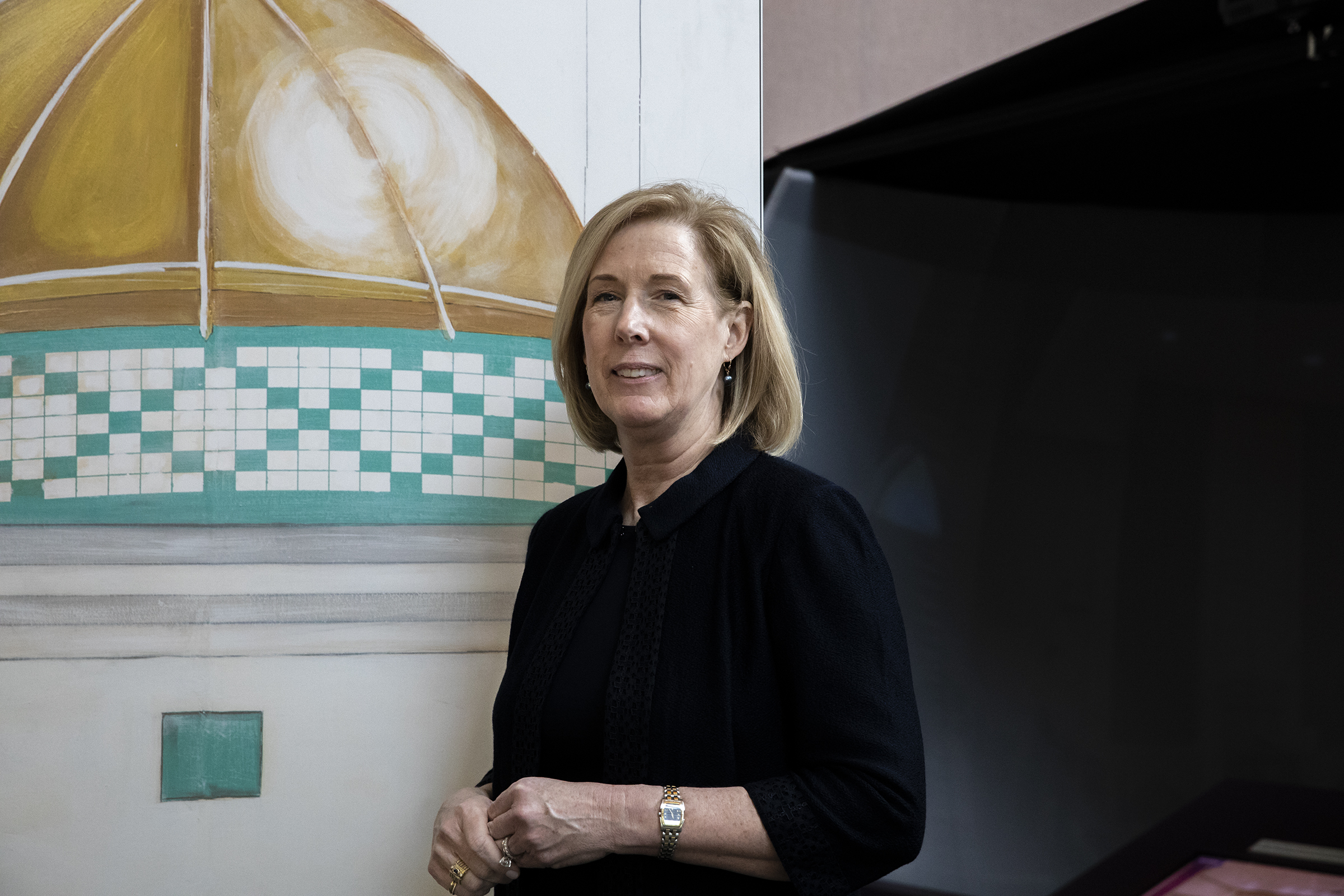
Also on Wednesday, Drexel and the Academy appointed Patricia “Trish” Wellenbach to temporarily lead the Academy, serving as its senior adviser. She is deputy mayor to Philadelphia Mayor Cherelle L. Parker’s administration and previously president and CEO of the Please Touch Museum. Wellenbach is on loan from the city and will not receive any compensation from Drexel or the Academy for her new role.
Drexel holds the reins
The announcement comes one day after Drexel and the Academy said they would close the Academy’s museum effective Sept. 30 and that Academy CEO Scott Cooper would be stepping down immediately. Sept. 27 will be the last day the museum will be open to the public.
Though not part of the new terms, the goal now is to relocate the Academy’s collections and sell its 1876 building at 19th and the Benjamin Franklin Parkway, which has numerous deferred maintenance needs, said a source close to the talks between Drexel and the Academy who asked not to be identified.
The new “nonbinding” terms of the letter of intent maintain Drexel’s financial support of the Academy, modify the governance structure, and preserve the right of the Academy board to de-affiliate from Drexel and find a new partner or partners for its collections should it wish to do so.
The terms cover issues such as selection of an interim leader and a permanent leader of the Academy and budgeting, according to a source close to the talks. While Drexel and the Academy will engage in a collaborative process to find a new leader, the final decision will rest with Drexel, the source said.
Dinosaur Hall at the Academy of Natural Sciences on Wednesday, Aug. 5, 2026.Allie Ippolito / For The Inquirer
“It’s fair to say all decisions of importance have to be approved by Drexel,” the source said, including the budget, which is about $25 million annually.
Under the affiliation agreement in 2011, Drexel provided substantial financial support to the Academy and covered its deficits.That will continue, and Drexel also will cover the costs of relocation of the collection and other transition expenses, the source said.
Academy board chair Suzanne Biemiller did not respond to messages seeking comment.
A ‘solid’ but nonbinding resolution
Of the new terms, another Academy board member said:
“I’m hopeful that something positive will come of it. The goal is to find a way to keep the Academy in existence and achieve its mission, so I think it’s a solid resolution,” said the board member, who asked that their name not be used.
Like most letters of intent, the agreement is nonbinding until the two sides come to a complete binding agreement, the source said.
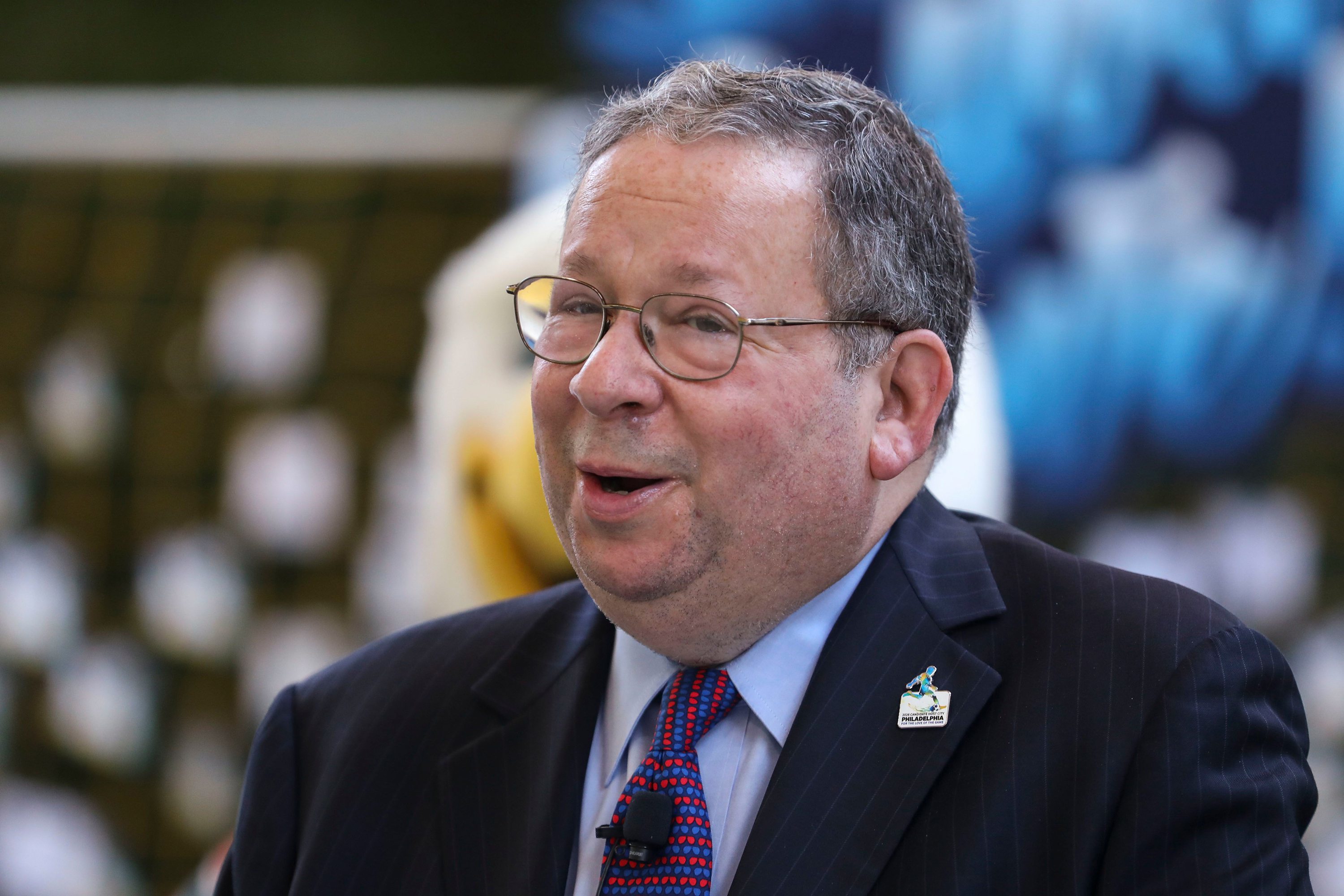
The Inquirer reported in April that Drexel was seeking to totally take over the Academy or end the partnership. The terms signed Tuesday were brokered by former Comcast executive and U.S. Ambassador to Canada David L. Cohen at the behest of Gov. Josh Shapiro.
Sept. 27 is the last day the Academy of Natural Sciences of Drexel University will be open to the public.Elizabeth Robertson / Staff Photographer
The leaders of Drexel and the Academy signed the terms sheet on Tuesday, Cohen said. But there are significant ongoing issues for the Academy and Drexel to work through, he added.
“They include the responsible move of the collections, and a variety of other transition activities,” he said. “The Academy needs a senior representative, a senior voice in these ongoing discussions both to communicate internally at the Academy and with other stakeholders including Drexel.”
She will have a voice in discussions on finding another location to display some of the collections, now that the museum will be closed, Cohen said.
Patricia Wellenbach, former president and CEO of the Please Touch Museum.Heather Khalifa / Staff Photographer
A temporary leader
Wellenbach will be based at the Academy part of the week while also continuing in her city role. She will lead temporarily while Drexel and the Academy search for an interimleader.
“Ms. Wellenbach has had a distinguished career spanning nonprofit leadership, healthcare, governance and public service,” said the announcement from Drexel president Antonio Merlo and Biemiller.
Mayor Parker in a statement called the Academy “a critical, longstanding part of Philadelphia’s cultural and educational landscape” and said she was pleased to loan Wellenbach to the effort.
“We are working collaboratively with Gov. Shapiro, Ambassador Cohen, the Academy and toward the outcome we all seek for the City of Philadelphia,” Parker said.
The Academy museum is ending operations after nearly two centuries because of declining visitorship and rising expenses, according to the Academy and Drexel.
“Over time, it became clear that these were not temporary pressures, but fundamental changes in the economics of the Academy’s operational model, costs that have imperiled the Academy’s ability to discharge its overall mission and preserve its legacy,” the two institutions said in a joint statement Tuesday.
Biemiller and others have pledged to not abandon the Academy’s role in educating the broader public about the natural world.
While it was “incumbent upon us to find places and ways” for the museum to continue, she said earlier this week, the exact form it would take has not been determined.
While Drexel has the major decision-making power, the Academy board will continue to be the fiduciary board and decision-maker for the Academy’s endowment, though management of it has been delegated to Drexel’s investment office, according to the source close to talks.
One of the fastest-growing occupations is also a hot spot for wage theft complaints in Pennsylvania. A new initiative by state regulators aims to help change that.
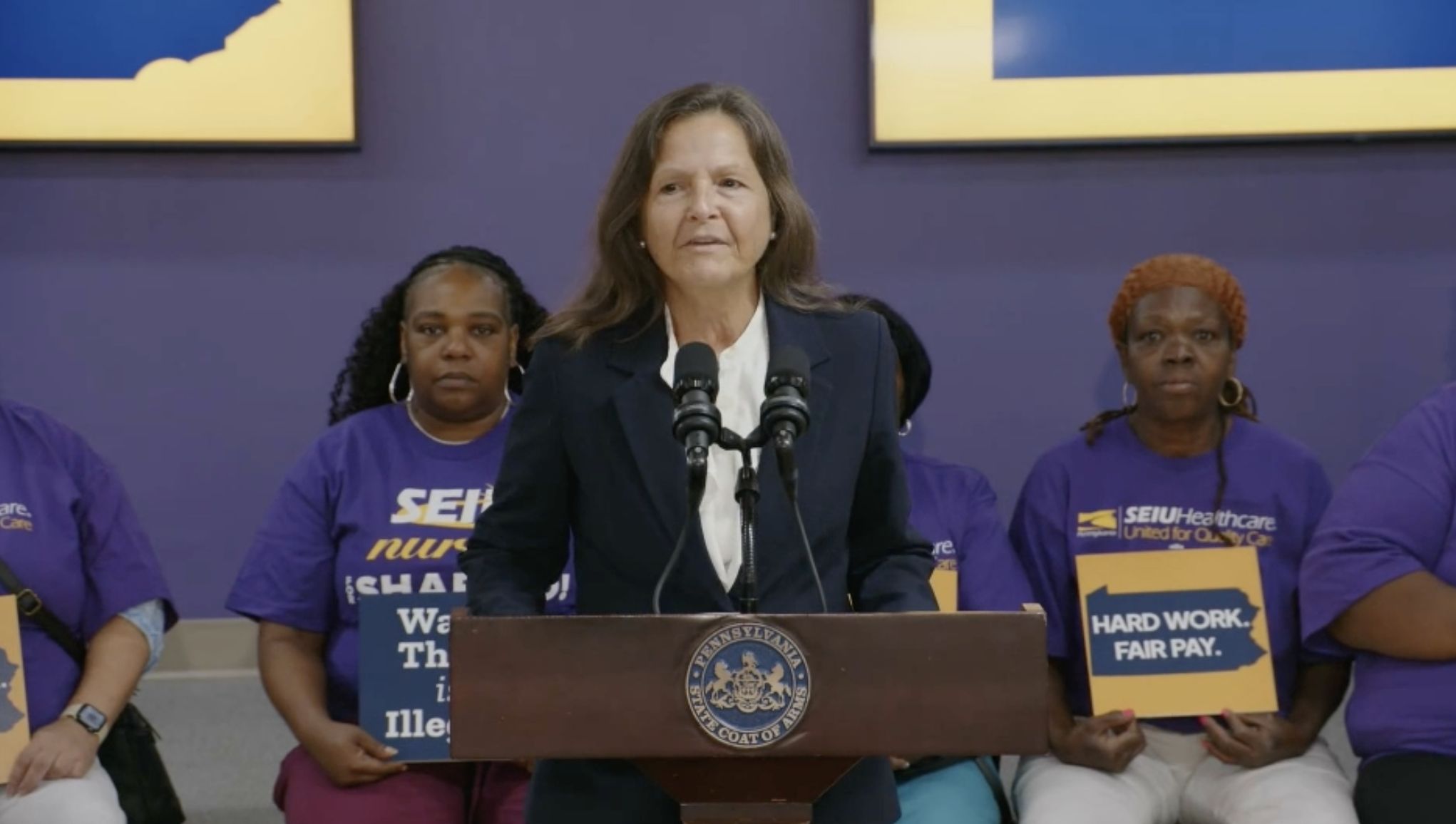
Nearly 40% of the minimum-wage complaints sent to Pennsylvania’s Department of Labor and Industry are from the home healthcare industry, State Labor Secretary Nancy Walker said at a news conference Tuesday.
Under the new initiative, the state won’t wait to receive new complaints, said Walker. Instead, regulators will audit home healthcare agencies, making “legal demands for wage and hour information,” said Walker, to find potential wage violations.
“We’re here today because these workers are not receiving the wages they earned, and that changes now,” Walker said.
Demand for home healthcare is expected to continue growing, but attracting workers to the industry has been a challenge.
Many home healthcare workers, who help patients with daily living needs, have been shorted on their overtime pay in Pennsylvania in recent years and employers have ultimately had to pay back millions in some instances. One contributing factor is that Medicaid doesn’t pay home healthcare employers extra for overtime.
“The workers doing this care are not always treated the way we should be,” Marshene Ellis, a home care worker for over 17 years, said at Tuesday’s news conference. “I’ve worked for different agencies and seen the broken promises and low wages.”
Making ‘good jobs’ in home healthcare
Pennsylvania is home to more than 257,000 home care workers, according to the Bureau of Labor Statistics, but more are needed to meet demand, especially as the population ages.
Nationally, home health aide is expected to be one of the fastest growing jobs in the coming decade, according to BLS, which predicts 847,300 more home health jobs by 2035.
In Pennsylvania, some 112,000 care shifts go unfilled every month, according to Matt Yarnell, president of the SEIU Healthcare Pennsylvania union.
“That means somebody who cannot get themselves out of bed, is laying in that bed hoping someone shows up,” said Yarnell. “We have a lot of work to do in this space.”
Those in need may find themselves in the emergency room instead, Yarnell added.
“When families cannot find a home care worker, the impact is immediate,” said Gabrielle Szymanski, of Pennsylvania’s Department of Aging. “Family caregivers are forced to leave work or take on additional responsibilities, and providers struggle to meet demand — and too often people end up in more restrictive and more costly settings.”
Attracting and retaining home-health workers has been challenging. Turnover is high in the industry, and wages are low. The median wage in Pennsylvania is $14.14 per hour.
Workers deserve higher wages, said Mia Haney, CEO of Pennsylvania Homecare Association in a statement on Tuesday and pointed to low Medicaid rates as part of the issue.
“We support holding bad actors accountable, but they should not define an industry overwhelmingly made up of providers committed to their workers and the people they serve,” said Haney, whose organization represents nearly 700 home care and hospice providers.
David L. Cohen, the former U.S. ambassador to Canada and Comcast executive, said the governor asked him to be his “agent” in helping to broker a deal between Drexel University and the Academy of Natural Sciences.
No one, he said, wanted to see another University of the Arts, which abruptly closed in June 2024, leaving a hole in the city’s arts landscape and sending students and staff scrambling.
“I don’t want to lose the Academy on my watch, and neither does the mayor,” Gov. Josh Shapiro told Cohen, Cohen said. “Can you figure out if there’s a solution here? If there’s a solution, can you help convince the Academy and Drexel to pursue that solution.”
That’s what Cohen said he has been doing, holding 40 or 50 meetings over the last several months in search of an agreement and producing a draft proposal for the future of the Academy.
The two entities, he said, are close to agreeing to terms on governance and finances. While the museum is closing, as Drexel and the Academy announced Tuesday, the larger agreement would allow for the continued operation and growth of the Academy in Philadelphia, without jeopardizing Drexel, which is facing its own financial challenges.
“We want to preserve the Academy,” he said, “but we also don’t want to jeopardize Drexel.”
“Drexel and the Academy are working with my office, with Gov. Shapiro’s office, and with Ambassador David L. Cohen, as the governor’s representative, to preserve the essential mission of the Academy. We are working collaboratively toward the outcome we all seek for the City of Philadelphia,” Mayor Cherelle L. Parker said in a statement.
The governor’s press office did not responded to requests for comment.
The exterior of the Academy of Natural Sciences on Wednesday, Aug. 5, 2026.Allie Ippolito / For The Inquirer
Cohen has long been a negotiator in many major city issues, formerly serving as chief of staff to former Philadelphia Mayor Ed Rendell and leading the board of trustees of the University of Pennsylvania.
Shapiro, he said, was clear about the objectives.
“The goal that the governor articulated to me and the mayor was to preserve the essential mission of the Academy, all three legs on the stool,” he said citing research, education and public engagement with the collection. “Some of the legs might be a little shorter. They might be a little skinnier. But the goal is that the Academy survives and has a foundation to thrive and grow in Philadelphia. This is a matter of civic importance.”
Drexel and the Academy are exploring establishing another museum, maybe a smaller one, in another location through a third partner, Cohen said.
“That’s a work in process,” he said. “I had an hour and a half meeting yesterday with one of the potential institutions that could serve that function for the Academy and for Drexel.”
Cohen said he hopes ultimately the community rallies around the Academy and helps to support it.
“We don’t need a single savior here,” he said. “This can be a community effort. I know the Philadelphia nonprofit and foundation community, and time and again this community has stepped up, and I have every hope that we, and it’s a we, will step up again.”
Cohen credited both Drexel and the Academy for their cooperation and willingness to “focus on a common need for the community as a whole. They really deserve the credit for doing this.”
The mayor, too, commended Drexel University and the Academy of Natural Sciences “for its significant, ongoing work to preserve the Academy’s educational mission and extraordinary two-century legacy as a natural history institution, including its world-renowned collections.”
Cohen said he first got involved in the matter about a year ago when he was home recovering from back surgery and got a call from two members of the Academy board about the issues they were having with their partner, Drexel.
The Academy was looking at possibly leaving the city, though it really didn’t want to do that, he said. He suggested they talk to the mayor and the governor. The board members told him they had been trying to do that but were unable to get attention.
Cohen texted the governor and mayor on the spot from his living room, he said. Meetings were convened, and that led to the governor seeking Cohen’s help.
“My wife says to me ‘why in the world did you take this on,” Cohen recalled. “Let me tell you, this legacy, this mission, this institution is worth fighting for. There is real history here, real value.”
Philadelphia’s Academy of Natural Sciences of Drexel University is closing its museum after nearly two centuries in existence, citing financial pressures and dwindling attendance.
The museum, which opened to the public in 1828, will cease operations at the end of the business day Sept. 30. Its last day open to the public with regular hours will be Sunday, Sept. 27, staff were notified on Tuesday.
Visitorship at the museum had slipped in recent years, according to a statement signed by Drexel president Antonio Merlo and Academy board chair Suzanne Biemiller. Though the Academy had worked to rebuild attendance after the pandemic, “patterns of visitation and audience behavior changed in lasting ways, while the costs of operating the museum continued to rise,” the statement said.
“Over time, it became clear that these were not temporary pressures, but fundamental changes in the economics of the Academy’s operational model, costs that have imperiled the Academy’s ability to discharge its overall mission and preserve its legacy.”
Closing the current Parkway museum, was, therefore, “a difficult decision taken to concentrate resources on the Academy’s enduring scientific assets and research,” said the statement.
The aim is ultimately to relocate the Academy’s collections and sell the building, which, is owned by the Academy, and has a lot of deferred maintenance needs, said a source close to the talks between Drexel and the Academy, who asked not to be identified.
The Academy building on the Benjamin Franklin Parkway at 19th Street, “will continue to house collections and laboratories while we consider possible pathways forward that place the utmost priority on preservation and support of the collections, library, archives, and research initiatives,” a Drexel spokesperson said.
Biemiller declined to comment on the potential relocation of the collections.
The museum cut back its hours of operation from five days a week to three — Friday through Sunday — as of last Oct. 1 (though it added back Thursdays in July and August for its Dino-Mite Summer program).
One of two shell sculptures placed on either side of the 19th Street entrance to the Academy of Natural Sciences of Drexel University on Aug. 17.Tom Gralish / Staff Photographer
Drexel said 27 of the Academy’s 80 employees — about a third — will be “impacted” by the closure. The university did not say whether that meant they would be laid off or transferred, and did not respond to a question on how much money the move will save.
Simultaneously Tuesday, the university and science institute announced that Scott Cooper, Academy of Natural Sciences president and CEO for nearly nine years, is stepping down immediately.
The Drexel and the Academy boards will “continue working together to identify an appropriate governance structure and interim and permanent leadership for the Academy,” the statement said.
Former Comcast executive and U.S. Ambassador to Canada David L. Cohen, who has been helping to broker an agreement between Drexel and the Academy, said the two institutions are close to striking a deal on a “term sheet” on governance and finances.He has been tapped by Gov. Josh Shapiro to serve as a third-party facilitator in the process, the university said in its message.
“We want to preserve the Academy,” he said, “but we also don’t want to jeopardize Drexel.”
Collections and research will remain unaffected
The Academy, which became affiliated with Drexel in 2011, is known to the general public for its museum that features a Dinosaur Hall with dinosaur bones and full-scale replicas. Its exhibitions have explored environmental issues and centered on the Academy’s collection of approximately 19 million specimens, as well as historically significant items associated with Thomas Jefferson and Lewis and Clark.
It offers hands-on science experiences, like a “big-dig” fossil exhibit, and old-school dioramas of bison, bears, tigers, and other animals in their ecosystems. The museum’s current “Botany of Nations” show “reshape[s] the historic tale of Lewis & Clark through Indigenous perspectives,” says an exhibition description.
Closure of the museum does not affect the rest of the institution, which builds and maintains the collections and conducts research through departments such as the Patrick Center for Environmental Research, all housed in the Parkway structure. All of that will remain there, the university said.
Biemiller said that “the trustees of the Academy know that this news about the closure of the museum is going to be a blow to Philadelphians, and I would love for them to know we share their feelings of loss about this beloved space and place. And we also know that work remains to develop and fund a new strategic and operating model that will ensure that the Academy’s important centuries-long mission to understand the world and inspire us to care for it continues.”
Asked whether the intent was to reopen a museum, Biemiller said: “I would hope so. That’s the goal. I think we have not given up on that part of our mission. The Academy is research, it is [specimens and library] collections, and it is public engagement.”
While she said it was “incumbent upon us to find places and ways” for the museum to continue, what form it would take has not been determined.
“It could be at the current location in a different configuration, it could be a new location, it could be imagined in different ways.”
What’s important, she said, was the “fundamental goal to ensure that people have access to the natural world, can see these birds from North American or dinosaur bones and fossils the Academy scientists have collected and understand how they connect to the world.”
“It’s a sad day to see it close,” said Franklin Institute president and CEO Larry Dubinski of the Academy museum, which is about a block from the institute. “It’s a profound loss for the community and for the city and the region. And it’s one of those days that I hope the community takes stock in. This is a city driven by arts and culture. We have a phenomenal city of arts and culture, unlike almost any other in the United States.”
However, Dubinski said, the arts here are “underresourced and underfunded, and that does continue to challenge the ability to have a sustainable arts and culture community. I think today’s another wake-up call to that issue.”
Dinosaur Hall at the Academy of Natural Sciences Aug. 5, 2026.Allie Ippolito / For The Inquirer
Ongoing financial challenges at Drexel
The museum closure comes amid financial challenges at Drexel University, which has been seeking to overcome a budget deficit, overhaul academic programs, change from a quarter-based calendar to semesters by fall 2027, and cope with another national dip in high school students beginning this year.
Over about the last decade, the West Philadelphia university has lost about 20% of its enrollment. Last fall, Drexel saw a 19% drop in freshmen; numbers for this fall aren’t yet available, though the school is projecting a 16% jump in first-year students. And the school, which enrolled 20,868 undergraduate and graduate students in 2025-26, is projected to continue to run deficits through fiscal year 2028, according to a report from Moody’s, a global financial services company that releases credit ratings.
Merlo, Drexel’s president, told The Inquirer in April that the school projected ending the year with a $20 million deficit, down from almost $40 million last year and $63 million in 2024. In May, the school said it had implemented $93 million of “permanent strategies” to deal with the “structural imbalance” and had identified $11 million more.
The Academy has become a drain on the university, a source familiar with the situation, who was not authorized to speak about the matter and asked not to be identified, told The Inquirer in April.
The university has provided the Academy with substantial support — $8,288,000 and $8,914,000 for operations in fiscal years 2025 and 2024, respectively, according to financial statements posted on the Academy website. These numbers include in-kind support that Drexel is providing to the Academy.
Friction between the Academy and Drexel became public in April, The Inquirer reported, revealing Drexel’s wish to totally take over the Academy, or end the partnership.
Uncertain long-term future for the Academy
Talks are continuing between the two institutions, with the offices of Gov. Shapiro and Mayor Cherelle L. Parker involved, underscoring the importance of the Academy to both the city and the state.
“I don’t want to lose the Academy on my watch, and neither does the mayor,” Shapiro told Cohen, according to Cohen, who has led dozens of meetings over the last eight months and created a draft proposal for an agreement between Drexel and the Academy.
“Drexel and the Academy are working with my office, with Governor Shapiro’s office, and with Ambassador David L. Cohen, as the governor’s representative, to preserve the essential mission of the Academy,” Parker said in a statement.
“We are working collaboratively toward the outcome we all seek for the City of Philadelphia.”
The governor’s press office did not respond to The Inquirer’s request for comment.
Cohen has long been a negotiator in many major city issues, formerly serving as chief of staff to former Philadelphia Mayor Ed Rendell and leading the board of trustees at the University of Pennsylvania.
“Together, we are advancing discussions focused on the Academy’s long-term future and identifying new opportunities to strengthen its scientific mission, ensure access to its world-renowned collections, expand public engagement in the natural sciences, and maintain the Academy’s enduring presence in Philadelphia,” the statement said.
The Academy of Natural Sciences on the Parkway, Aug. 5, 2026.Allie Ippolito / For The Inquirer
The Academy’s affiliation with Drexel is 15 years old. It announced a partnership agreement with Drexel in 2011 that blended the two organizations somewhat, but stopped short of being a full merger. The two groups maintain separate boards.
According to a 2013 Drexel audit, the 2011 affiliation agreement between the two institutions stated that the Academy would retain its status as separate nonprofit organization, but that as of September 2012 it would become a Drexel subsidiary owned 100% by the university.
A Drexel spokesperson said in April that the school had “invested a substantial amount annually in the Academy to maintain access to the Academy’s collections while we worked with the Academy and the community to identify a sustainable path to keep this resource in Philadelphia.”
Cooper was named the Academy’s leader in 2017 after serving as vice president of collections, knowledge and engagement at the Royal British Columbia Museum in Victoria, Canada. Before that, he was director of museums at the Qatar Foundation in Doha, Qatar.
Under his leadership, the Academy “renewed its public and scientific mission,” Tuesday’s joint statement from Drexel and the Academy said. “It revitalized galleries, developed original exhibitions showcasing its collections and research, and advanced co-curatorial approaches that brought new voices into programs and interpretation.”
Cooper, who will remain for a time as a consultant to the Academy, was not available for comment, a spokesperson said.
“We’re sorry he’s leaving, but understand his decision,” said Biemiller.
“It’s a competitive world that museums inhabit, and people make choices every single day,” Cooper told the Inquirer after his 2017 announcement. “We need to ensure that when they come to the Academy they are getting a reward for their investment of time.”
Philadelphia’s police union on Tuesday endorsed Gov. Josh Shapiro’s reelection bid, announcing its continued support for the first-term Democratic governor while touting his commitment to law enforcement.
“Every day, he has shown a commendable ability to work with local law enforcement and deliver the resources and support we need to protect and serve our friends, families, and neighbors,” said Roosevelt L. Poplar, president of the Fraternal Order of the Police Lodge 5, which represents over 14,000 active and retired Philadelphia police officers and sheriff’s deputies.
In a statement, Shapiro said he was “honored” by the endorsement.
“I’m going to keep fighting for the brave law enforcement officers who work to keep Philadelphia safe every single day,” he said. “I believe all Pennsylvanians deserve to be safe and feel safe in their communities — and we have focused every day on funding law enforcement and supporting the men and women that protect and serve our Commonwealth.”
It marks the second time the police union has embraced Shapiro for governor after endorsing him in 2022 over Republican candidate Doug Mastriano, who the then-president of the union said couldn’t be trusted to protect their collective bargaining rights. Shapiro, a former state attorney general, was a reliable government official who the union said was “there to help us with whatever we need to do.”
This election cycle, Shapiro holds a commanding lead over his Republican opponent, Treasurer Stacy Garrity, according to a recent poll from The Philadelphia Inquirer, the New York Times, and Siena University. The union has previously supported President Donald Trump, but Shapiro attracted its backing over Garrity, who Trump has endorsed in the Pennsylvania governor’s race.
Shapiro has also received support from other organized labor unions, including the Pennsylvania AFL-CIO and the Pennsylvania Professional Fire Fighters Association. On Monday, he received the backing of the Pennsylvania State Troopers Association.
Shapiro has maintained a comfortable relationship with law enforcement, and his campaign noted that he has signed multiple state budgets funding 2,000 additional officers across Pennsylvania and allocated more than $1 billion in community-based violence prevention grants.
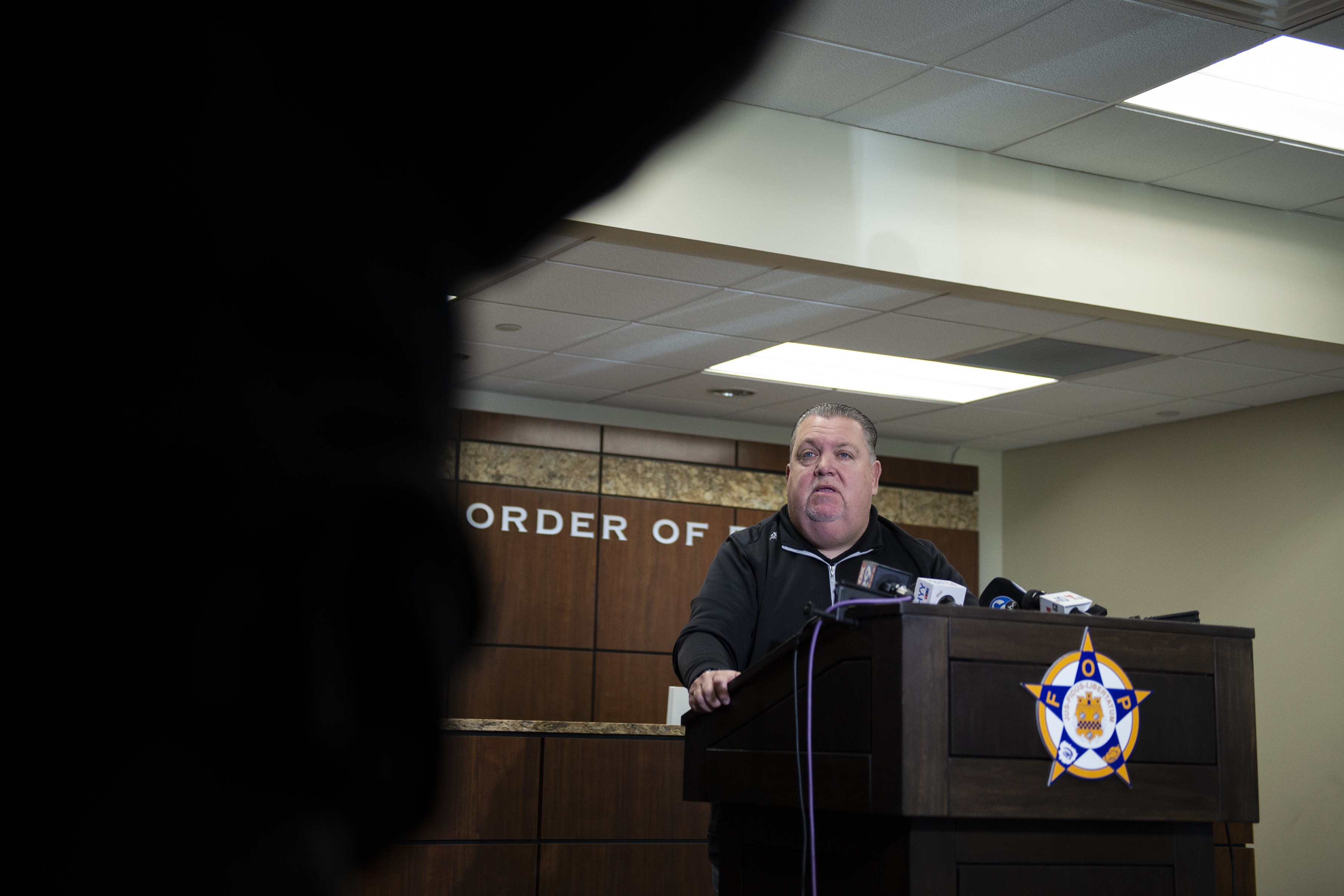
Roosevelt Poplar, president of Fraternal Order of Police Lodge 5, on Jan. 26, 2024.Elizabeth Robertson / Staff Photographer
In his statement, Poplar also commended Shapiro for providing funding for police department needs.
“The Governor has delivered on his promise to invest in public safety, he has shown up with us in times of tragedy, and he has proven his commitment to keeping our officers and the communities we serve safe,” he said.
The police union’s endorsement of Shapiro is notable for an organization that just a few years ago was seen by some Philadelphia Democrats as politically toxic.
In the aftermath of the 2020 Minneapolis police killing of George Floyd, protests by racial justice activists swelled in Philadelphia and across the country with many of the movement’s participants calling to “defund” or abolish the police. They pressed local lawmakers to redirect police funding to social services, and Philadelphia City Council in June 2020 canceled a planned increase to the Philadelphia police budget.
Amid the calls for reform, the FOP was a major point of contention, as was its bombastic former leader, John McNesby. Activists — and many of their allies in elected office — said the union was too resistant to change and protected bad cops.
Former FOP president John McNesby holds a news conference on Oct. 19, 2022.Joe Lamberti
At the time, Shapiro was running for reelection as the state attorney general, and his campaign presented him as a “progressive reformer” who had established a unit in his office to review criminal convictions that may have been unfairly applied and a council to support people leaving prison with housing and employment opportunities. The FOP endorsed Shapiro’s 2016 and backed his 2020 campaign for attorney general.
Unlike some Philadelphia Democrats, Shapiro — who has rumored ambitions for a presidential run in 2028 — did not embrace the “defund” movement. He argued during a 2020 trip to Philadelphia that addressing structural inequities in the department and having strong law enforcement, especially in communities with high levels of poverty, were not mutually exclusive endeavors.
“We reject that poverty or institutionalized indifference and marginalization should mean that some people don’t get to have a safe community to live in,” he said. “We won’t give up on the belief [of] law enforcement showing up in a community to make people feel safer.”
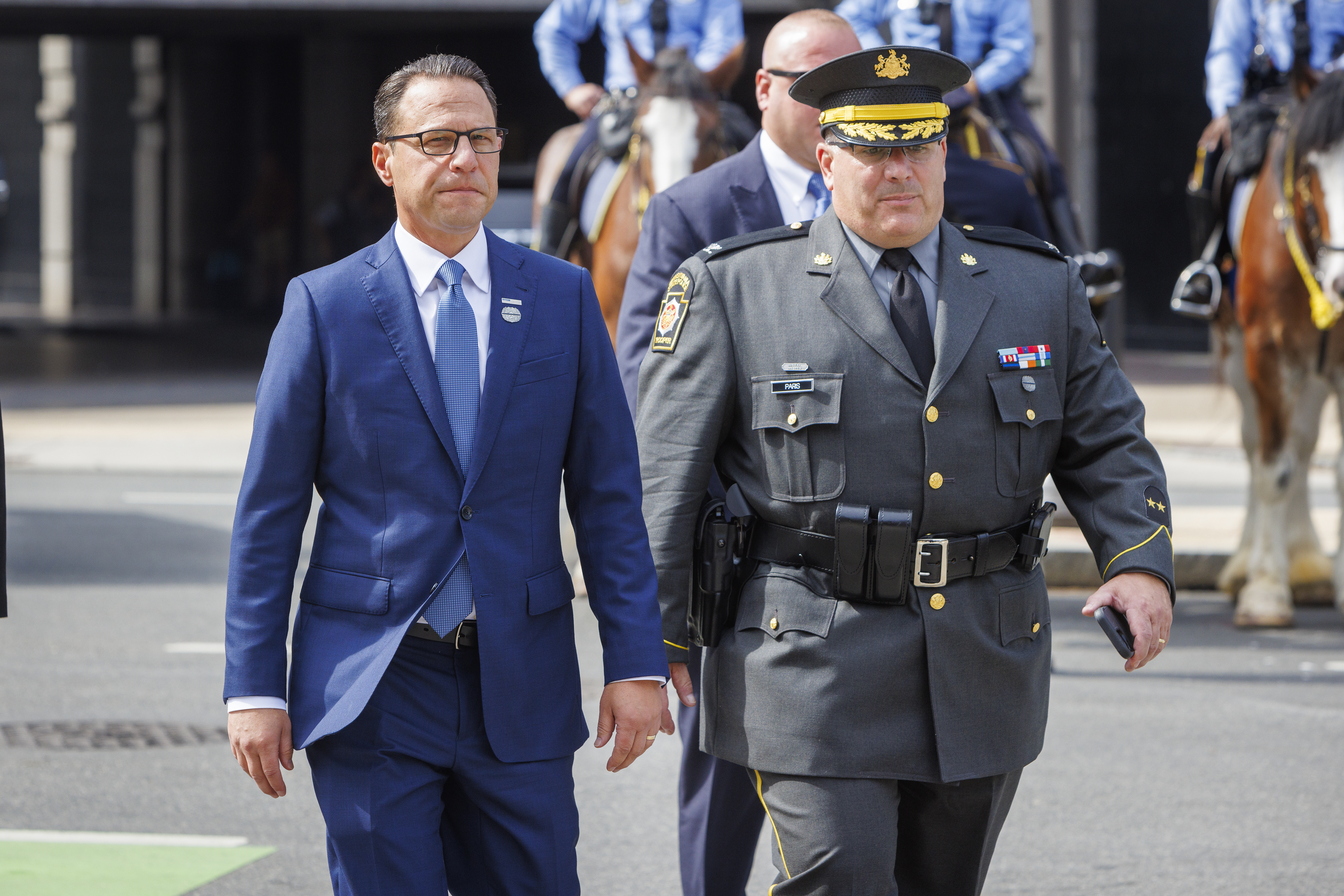
Gov. Josh Shapiro with Pennsylvania State Police Col. Christopher L. Paris. They were attending the funeral for Philadelphia police officer Jaime Roman at the Cathedral Basilica of SS. Peter and Paul on Sept. 19, 2024.Alejandro A. Alvarez / Staff Photographer
In the years following 2020, public support for police in Philadelphia appeared to grow. The city saw a historic spike in gun violence, and Republicans nationally portrayed Democrats as soft-on-crime. When a half-dozen Democrats were fighting for the mayoral nomination in 2023, polling showed that most voters saw public safety as the No. 1 issue driving the race. None of the candidates embraced “defund,” and most of them supported proposals to provide additional resources to the police department as it sought to solve shootings.
In the end, the tough-on-crime mayoral candidate — then-City Councilmember Cherelle L. Parker — won decisively.
The two deaths reported by Pennsylvania — the first in the country this year — were not included because ”available information does not establish whether measles caused or contributed to the deaths or whether the individuals died from other causes while infected with measles,” the agency says in an update posted to the CDC’s website Sunday.
President Donald Trump’s head of the Department of Health and Human Services, Robert F. Kennedy Jr., has disputed what Democratic Gov. Josh Shapiro and state health officials have disclosed about the deaths.
Kennedy, a longtime anti-vaccine activist, wrote on X that the deaths may have been “fabricated” by the Shapiro administration, which has confirmed the deaths announced last Tuesday were “measles-associated.”
Pennsylvania “thoroughly reviews” all reported measles cases to ensure they meet CDC definitions and has provided “all required epidemiological data” on the measles-associated deaths to the CDC, state health department spokesperson Neil Ruhland said in a statement.
The state health department said it has death and medical records associated with the cases and the department’s investigation of them. The state does not disclose death certificates but does provide “de-identified” information to the CDC.
“DOH values its long-standing collaborative relationship with professional staff at the CDC and will continue to work with federal partners moving forward to address the ongoing measles outbreak,” Ruhland said.
The department declined to comment on “information the CDC may have obtained from third parties.” Kennedy said last week on social media the state was not providing requested information to the CDC.
“CDC has a responsibility to ensure its reporting accurately and transparently reflects what is known and what remains unconfirmed,” HHS press secretary Grace Davis Jamison said in a statement Monday, adding that Pennsylvania’s two announced measles-associated deaths “have not been confirmed based on the information currently available to CDC.”
Shapiro’s administration did not respond to a request for comment. He told reporters on Friday that “getting into a back-and-forth with people online who are spewing irresponsible conspiracy theories” does not “serve the public interest.”
Measles cases in Pennsylvania
The CDC publishes weekly updates tallying measles cases and deaths by state, tracking the spread of a highly contagious disease that was once considered eradicated in the United States due to widespread vaccination.
(function(){function e(){window.addEventListener(`message`,function(e){if(e.data[`datawrapper-height`]!==void 0){var t=document.querySelectorAll(`iframe`);for(var n in e.data[`datawrapper-height`])for(var r=0,i;i=t[r];r++)if(i.contentWindow===e.source){var a=e.data[`datawrapper-height`][n]+`px`;i.style.height=a}}})}e()})();
As of Thursday, 2,887 confirmed measles cases were reported by 47 states, with another 16 cases reported among international visitors, according to the CDC’s latest update.
As of Monday, Pennsylvania had reported 497 measles cases in 2026, with 87 hospitalizations, amid the state’s largest outbreak in three decades. Officials said they had recorded 100 new cases in just a week, and half of Pennsylvania’s counties have now reported at least one measles case this year.
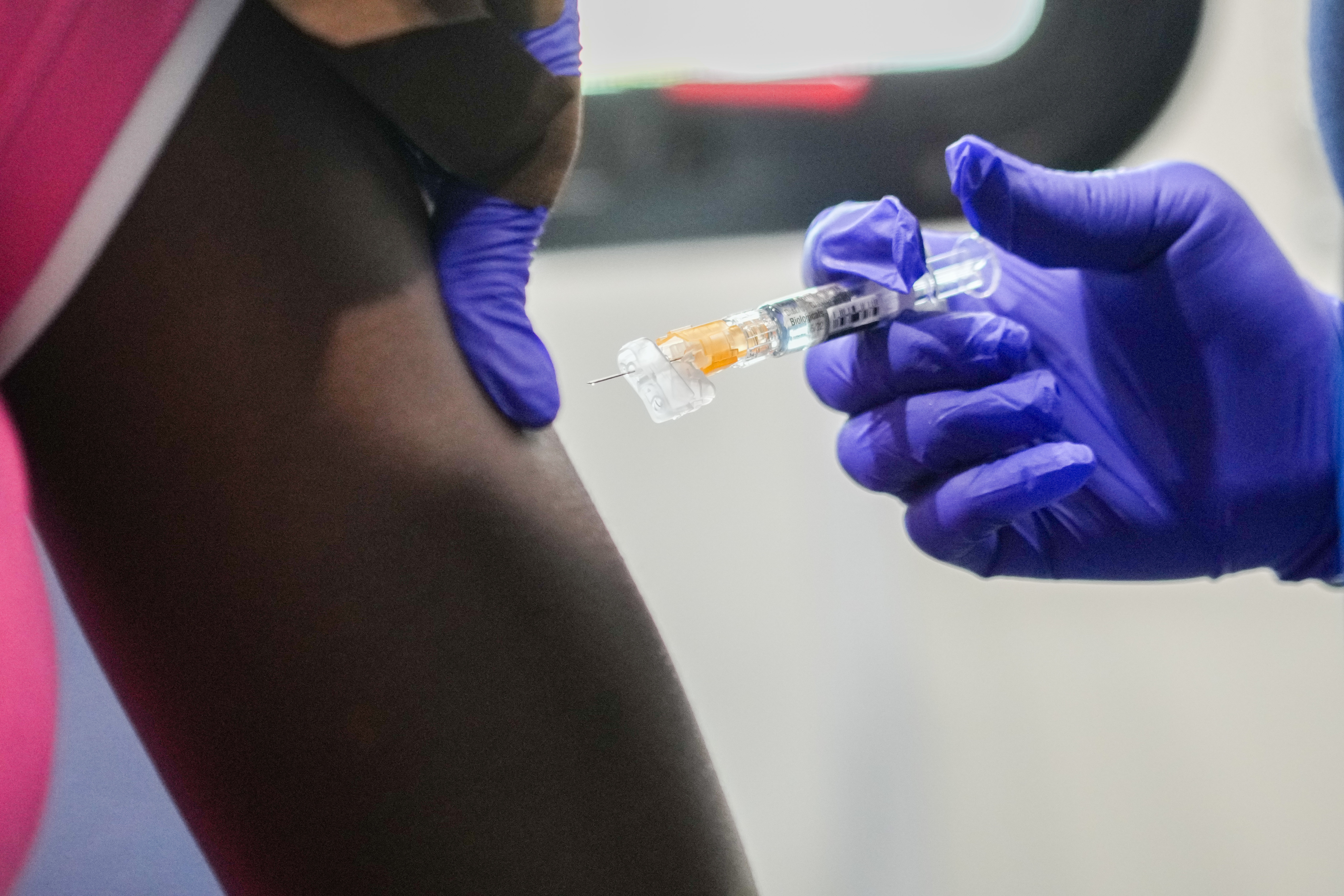
About a third of the cases were diagnosed in children under 18. All were in unvaccinated residents. The disease is so contagious that it can infect nine in 10 unvaccinated people.
(function(){function e(){window.addEventListener(`message`,function(e){if(e.data[`datawrapper-height`]!==void 0){var t=document.querySelectorAll(`iframe`);for(var n in e.data[`datawrapper-height`])for(var r=0,i;i=t[r];r++)if(i.contentWindow===e.source){var a=e.data[`datawrapper-height`][n]+`px`;i.style.height=a}}})}e()})();
Pennsylvania health officials have said they define “measles-associated deaths” as deaths of people where evidence of measles is present, even when the highly contagious disease may not be assessed by the coroner as the immediate cause of death.
The state has not provided any additional information on the deaths beyond confirming both people were unvaccinated residents of Lancaster County, and one patient was a newborn.
Measles deaths are rare. Although most patients recover after mild illness, the virus can cause pneumonia and brain swelling and kills about one to three patients in 1,000.
Controversy around communications
Public health experts have said that, by not disclosing information like the victims’ ages, reasons for being unvaccinated, and causes of death, state officials created an information vacuum in which conspiracy theories could spread.
Officials said that state law prevents them from revealing more details about the deaths.
“There’s been a complete politicization of this event,” said Paul Offit, a Children’s Hospital of Philadelphia physician who heads the hospital’s Vaccine Education Center.
A longtime Kennedy critic, Offit said the state should have released more information on the deaths to prevent a “void” for conspiracy theorists to fill.
He’s also concerned that debate over the deaths will obscure efforts to address the growing outbreak centered in Lancaster County, which has some of the lowest kindergarten vaccination rates in the state.
“It’s August. This is only going to get worse. What can we do to prevent more children suffering and being hospitalized?” he said. “That’s really the question, and that’s not the question we’re asking.”
Democratic state lawmakers who are also medical professionals came to Shapiro’s defense on Monday, saying that the governor was right to announce the deaths and that it wasn’t surprising to see the ensuing public debate.
“Our governor had a responsibility to speak out. We’re glad that he did,” said State Sen. Maria Collett, a Montgomery County Democrat and registered nurse.
State Rep. Arvind Venkat, an Allegheny County Democrat and an emergency physician, said an immediate determination of death can be imprecise and require further evaluation. He urged the public to not “get distracted by this debate about the immediate versus underlying cause of death” when there is no doubt that the infant contracted measles in utero.
“I’ve had to fill out death certificates,” Venkat said. “It’s not a simple thing, and I’m not surprised that there is this controversy. But I think we’re losing the forest for the trees.”
State Rep. Bridget Kosierowski, a Lackawanna County Democrat and nurse, said advocating for vaccination to stop the spread of measles was personal.
On Monday morning, she was receiving treatment for breast cancer and considering the outsized impact measles would have on her and other patients if they weren’t vaccinated.
“It is really dangerous, and the outcomes can be catastrophic for people that are fighting cancer right now,” Kosierowski said.
What’s known about the measles death
Lancaster County’s coroner has said he handled one of the deaths, a newborn who died shortly after birth.
The coroner, Stephen Diamantoni, has said the child had a measles infection acquired before birth and died from a ruptured spleen, citing trauma to the torso. Diamantoni, a Republican elected official, said he was still investigating and that he does not believe measles was the cause of death. Measles can cause the spleen to become fragile, heightening the risk of rupture, Offit has noted, saying the coroner’s statements were also adding to the public confusion.
Diamantoni told The Inquirer last weekthat he had spoken with the CDC about his conclusions on the child’s death. He did not respond to an additional request for comment on the child’s death certificate on Monday.
Measles was listed on the baby’s death certificate, he told the Pittsburgh Tribune-Review, in a section of the certificate that reports other “conditions contributing to death but not resulting in the underlying cause.” Measles was included on the death certificate “to offer a broader view of the general health of the child,” he told the Pittsburgh paper.
The CDC’s latest measles update features an asterisk in lieu of a number for measles deaths in 2026, explaining that the agency is reviewing “additional information regarding the circumstances and causes of death.”
The agency updated the dashboard multiple times this weekend, and at one point had included the two deaths, the Washington Post reported.
“The information currently posted reflects the best available information and our commitment to transparency and telling the American people the truth — a foundational principle of the Trump Administration,” said Jamison, the HHS press secretary.
Lancaster Online reported late on Monday that Diamantoni said his office is investigating another death of a person infected with measles.
He would not provide details on the circumstances of the person’s death and said he was investigating “if measles has played any role.”
State health officials would not confirm whether the case Diamantoni is investigating is the second-measles associated death announced last week, Lancaster Online reported, adding that Diamantoni said his office “did not get information about the death from the state.”
A Lancaster family grieves
An Amish family in Lancaster County detailed in an article published Sunday in The Atlantic how their son had died shortly after birth earlier this month, after his mother was infected with measles.
The child had died on the same day as the newborn whose death was investigated by Diamantoni, who would not confirm the baby’s identity to The Atlantic.
The family has 13 surviving children, all of whom recently contracted measles. Only the father, identified by a pseudonym in The Atlantic, had been vaccinated against measles. Both parents said they did not have “strong feelings against vaccination.”
They had not known that their child’s death was potentially at the center of a national controversy and did not know who Shapiro or Kennedy were, they said.
They also hadn’t spoken to the coroner about the cause of their child’s death, but assumed that his mother’s illness had contributed.A midwife had told them measles was likely a factor in the boy’s death, they said in the report.
Still grieving the loss of their child, they said his death was “part of God’s plan,” the magazine reported.
The father confirmed to an Inquirer reporter that he had spoken to the Atlantic but declined to comment further.
Inquirer staff writers Sam Janesch and Michelle Baruchman contributed to this article. Editor’s note: This story has been updated with additional comment and developments.
U.S. Sen. John Fetterman said Monday he agreed with President Donald Trump’s call to “Let Data Reign” after the president made a lengthy post criticizing the widespread backlash to data centers.
“There’s nothing more damaging to a Democrat than agreeing with Trump AND data centers — but what’s right is right,” said Fetterman, who has repeatedly angered members of his own party by backing Trump’s agenda.
“We must win the war for AI supremacy over China. They foment the ‘anti’ argument through misinformation,” Fetterman said on X.
The issue has increasingly taken center stage ahead of the midterm election, including in Pennsylvania. Fetterman, who does not face reelection until 2028, blamed China for fueling the public outcry against data center development in the U.S. as the two nations compete in the AI industry.
Fetterman has remained supportive of development even as voter sentiment has turned sharply against the industry. Six in 10 likely Pennsylvania voters said they opposed the construction of data centers to support artificial intelligence in a poll released last week by The Inquirer, New York Times, and Siena University.
Trump made similar arguments on his Truth Social platform earlier in the day, saying that China “could not be happier” with the political movement against data centers.
“The only reason that communities throughout the U.S.A. should not want Data Centers is if they want to end up being backwards and poor. If they want to be successful and rich, with far lower taxes and jobs all over the place, let Data Reign,” Trump said.
That Fetterman backed the president on data centers may not have come as a surprise to voters who’ve been following the senator’s moves.
Two-thirds of Pennsylvania Democrats who are likely to vote this year believe Fetterman supports Trump too frequently, according to last week’s poll.
Overall, 69% of Democratic voters have an unfavorable opinion of him, which could be trouble if he seeks reelection as a Democrat in 2028.
And Democrats were also the voters most likely to oppose data centers — with 77% opposing their construction in the Pennsylvania poll.
Fetterman’s post in support of data centers comes as the state’s other top Democrat, Gov. Josh Shapiro, has been backing away from his previous support.
Shapiro issued an executive order two weeks ago enacting a host of restrictions for new projects. And the governor has traded attack ads with his Republican opponent Stacy Garrity over who has been more supportive of the industry.
Fetterman, on the other hand, said in a post last week that China would benefit from an overreaction by U.S. politicians.
“I reject the political pandering and hyperbole over data centers or AI doomsdaying,” he said.
Gov. Josh Shapiro came to the Philadelphia suburbs on Friday morning to announce a new investment in a local police department. But the first question he fielded at a news conference concerned the growing confusion and political intrigue surrounding his administration’s response to two deaths associated with the state’s spiraling measles outbreak.
For the last three days, Shapiro, a Democrat, and Robert F. Kennedy Jr., the Republican heading the federal Department of Health and Human Services, have clashed over what the state has disclosed about the deaths and the consequences of Kennedy’s longtime anti-vaccination activism.
By Friday, Shapiro wanted to bring the focus back to an outbreak that has grown to more than 400 cases so far this year, saying “getting into a back-and-forth with people online who are spewing irresponsible conspiracy theories” does not “serve the public interest.”
But public health and communications experts say that the state’s initial refusal to share more information on the deaths created an environment in which anti-vaccination skeptics could spread their own narrative.
State officials announced the deaths of two unvaccinated Lancaster County residents at a news conference Tuesday, calling the deaths “measles-associated.” Their ages, causes of death, or their medical histories were not disclosed by the governor or his health secretary.
Within hours, other voices started filling the information vacuum. Lancaster County’s coroner told reporters that he had handled just one of the deaths. Coroner Stephen Diamantoni, a Republican elected official who is also a physician, said his office had examined a newborn who had tested positive for measles, but said the baby had not died from measles.
Soon misinformation and innuendo were spreading online out of the seemingly contradictory and limited details being disclosed by state officials, the local coroner’s office, and federal health leaders — all with their own political affiliations at a time when the safety of the measles vaccine increasingly divides Democrats and Republicans.
In response to the coroner’s statements, state health officials said they define a “measles-associated death” as one in which measles was present, even if measles is not identified as the immediate cause of death. Shapiro’s administration confirmed the newborn’s case was one of the two announced deaths, but offered no information on the second death.
President Donald Trump’s health secretary, Kennedy, pounced on the missing details the next day to spread misinformation. He wrote on X that the deaths may have been “fabricated” by the Shapiro administration and said in a television interview that “they cannot find any measles deaths in Lancaster County.”
Shapiro’s administration has called this inaccurate. Still, his administration has not revealed details of its medical review, beyond saying the state Department of Health’s epidemiology team had “thoroughly investigated.”
By late week, the Centers for Disease Control and Prevention, which operates under HHS, posted on X that state health officials were not sharing “information relevant to the outbreak” as it worked “to clarify conflicting information from Pennsylvania officials about whether the two reported deaths were caused by measles.”
State officials, including Shapiro, have repeatedly said the state is cooperating with the CDC.
But Pennsylvania health officials could have shared information on the patients’ ages, causes of deaths, and reasons for being unvaccinated, said Paul Offit, a physician at the Children’s Hospital of Philadelphia who heads the hospital’s Vaccine Education Center and is a vocal critic of Kennedy.
“It created fertile ground for conspiracy theories to thrive,” he said.
In a statement, a Shapiro spokesperson said the governor understands the “desire for as much information as possible to be made public.”
“However, when an individual dies, it is our legal responsibility to protect their right to privacy by maintaining patient confidentiality,” the statement said, noting this is critical to maintaining trust among communities statewide.
In a highly politicized environment in which measles cases are rising — and vaccination rates dropping — public health experts say it’s imperative for health officials to communicate accurately and transparently.
“You have to be transparent, be very clear about what you know, what you don’t know, what you’re trying to find out, and what questions are outstanding,” said Amesh Adalja, an infectious disease physician at the University of Pittsburgh Medical Center and a senior scholar at the Johns Hopkins Center for Health Security.
A lack of information from the state, he said, “created an information vacuum with people very adept at using information vacuums to spread their message.”
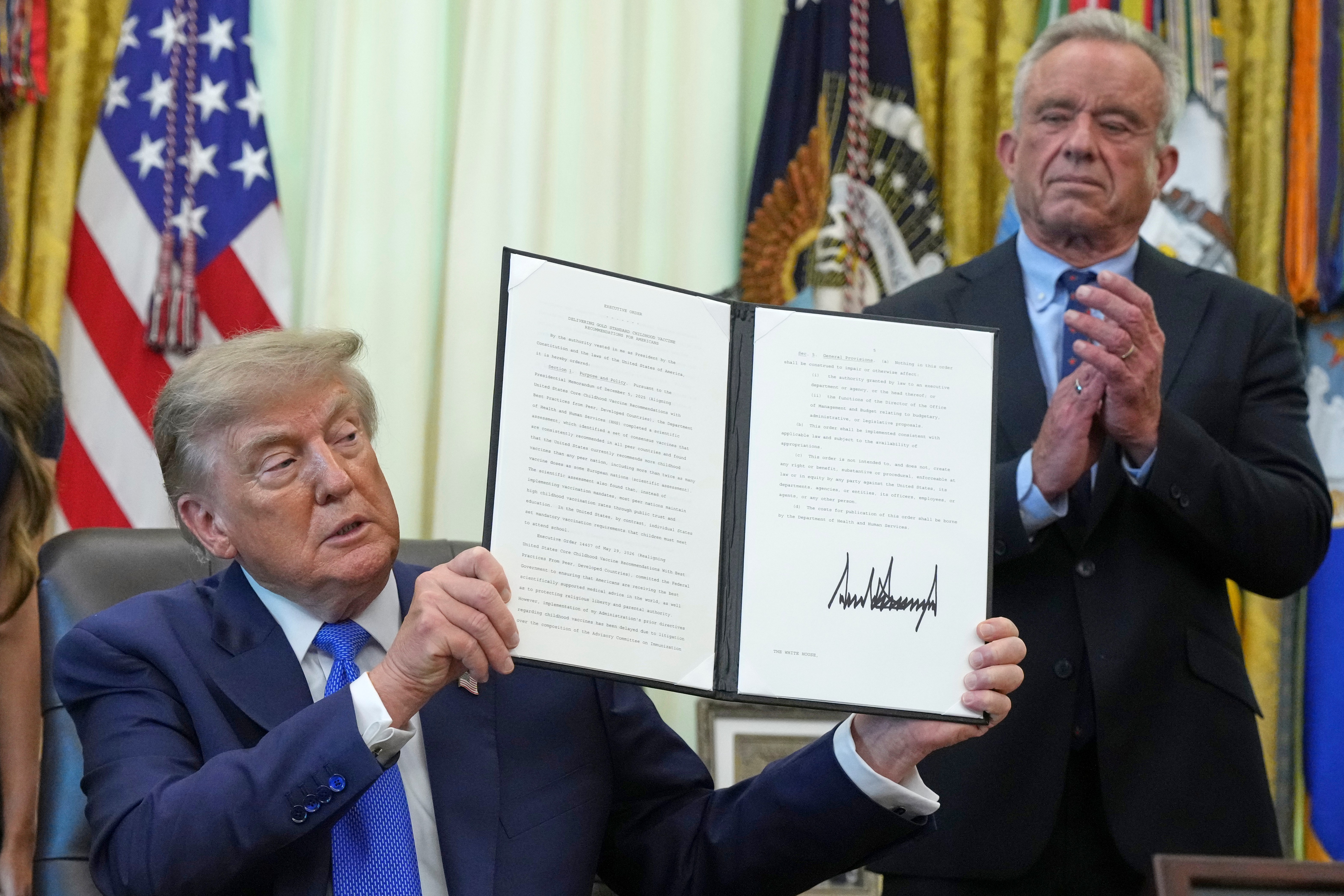
President Donald Trump holds a signed executive order about vaccines as Health and Human Services Secretary Robert F. Kennedy Jr. looks on Aug. 10 in the Oval Office of the White House. Jacquelyn Martin
What’s known about the Lancaster County deaths
Diamantoni said Friday that the baby died shortly after birth at a Lancaster County birthing center on Aug. 14.
Postmortem testing of the baby’s lung tissue showed that the baby had an active measles infection acquired before birth, he said.
He has not talked to the baby’s mother or the midwife who delivered the baby, and has not fully reviewed records from the birthing center where she gave birth, he said in interviews.
He told the Pittsburgh Tribune-Review that measles was listed on the baby’s death certificate, in a section of the certificate that reports other ”conditions contributing to death but not resulting in the underlying cause.”
He told the outlet that measles was included on the death certificate “to offer a broader view of the general health of the child.”
Babies can become infected with measles in utero if the mother is infected with measles and develops a rash within 10 days of giving birth, Offit said.
Diamantoni said a forensic pathologist in his office concluded the baby died of a ruptured spleen and cited trauma to the baby’s torso. He said he was unsure what had caused the trauma, and added that the baby’s spleen did not appear enlarged or infected.
Offit said that measles can cause an enlarged spleen that is then more likely to rupture — including during birth — and that it’s often difficult to tell whether a spleen has become enlarged once it ruptures.
A spleen also doesn’t have to become “massively” enlarged to rupture, he said: Measles can cause the spleen to become fragile, which also heightens the risk of rupture.
In conversations with state health officials, Offit said he learned that the patients who died in Pennsylvania would not have died were they not infected with measles.
He said the coroner should explain why the spleen ruptured, if it was not damaged from measles. Diamantoni said the office is still investigating the cause.
The state has released no additional information on the second death, and Diamantoni said his office was not handling it. He said his chief deputy spoke to the department prior to Shapiro’s news conference Tuesday.
“At no point was the Pennsylvania Department of Health told that this was not a measles-associated death,” a state spokesperson said on Friday. “The Shapiro Administration stands firmly by their comments on Tuesday.”
Public health communications
Pennsylvania’s health department has cited a state law prohibiting public access to death records, saying they cannot release more information on the deaths. Another state law requires the state to keep records of diseases confidential, except when it’s necessary to inform the public of the risk of communicable disease, a department spokesperson said in a statement.
The department “works hard to build and maintain trust in communities all over the Commonwealth — which includes doing everything possible to keep people’s identities confidential,” the statement read.
The department didn’t share information that could be used to “personally identify individuals or their grieving families” because “the circumstances of these individuals’ deaths do not change the Commonwealth’s response: Measles is a serious, highly contagious and preventable disease, and our focus remains on protecting Pennsylvanians, getting people vaccinated, and stopping the spread of this outbreak,” the spokesperson said.
But the state could have been more transparent about how they characterize deaths in a measles outbreak, said Kathleen Hall Jamieson, director emerita of the Annenberg Public Policy Center at the University of Pennsylvania.
People who are not trained in medicine may not understand the term “measles-associated,” for example, or how it differs from a cause of death, and state officials should have taken time at the news conference to explain what they meant by that term.
“You have an obligation to make sure that people don’t mishear on something as fraught as this topic,” she said.
Jamieson added that the political clashes around the deaths could overshadow a crucial point: A highly contagious disease is spreading in an under-vaccinated community, exposing children — including newborns unable to be vaccinated — to a serious illness.
“If we miss that moment, then the public health community has failed,” she said.
This week’s edition of Shackamaxon covers data centers, property assessments, and more woes at the Philadelphia Sheriff’s Office.
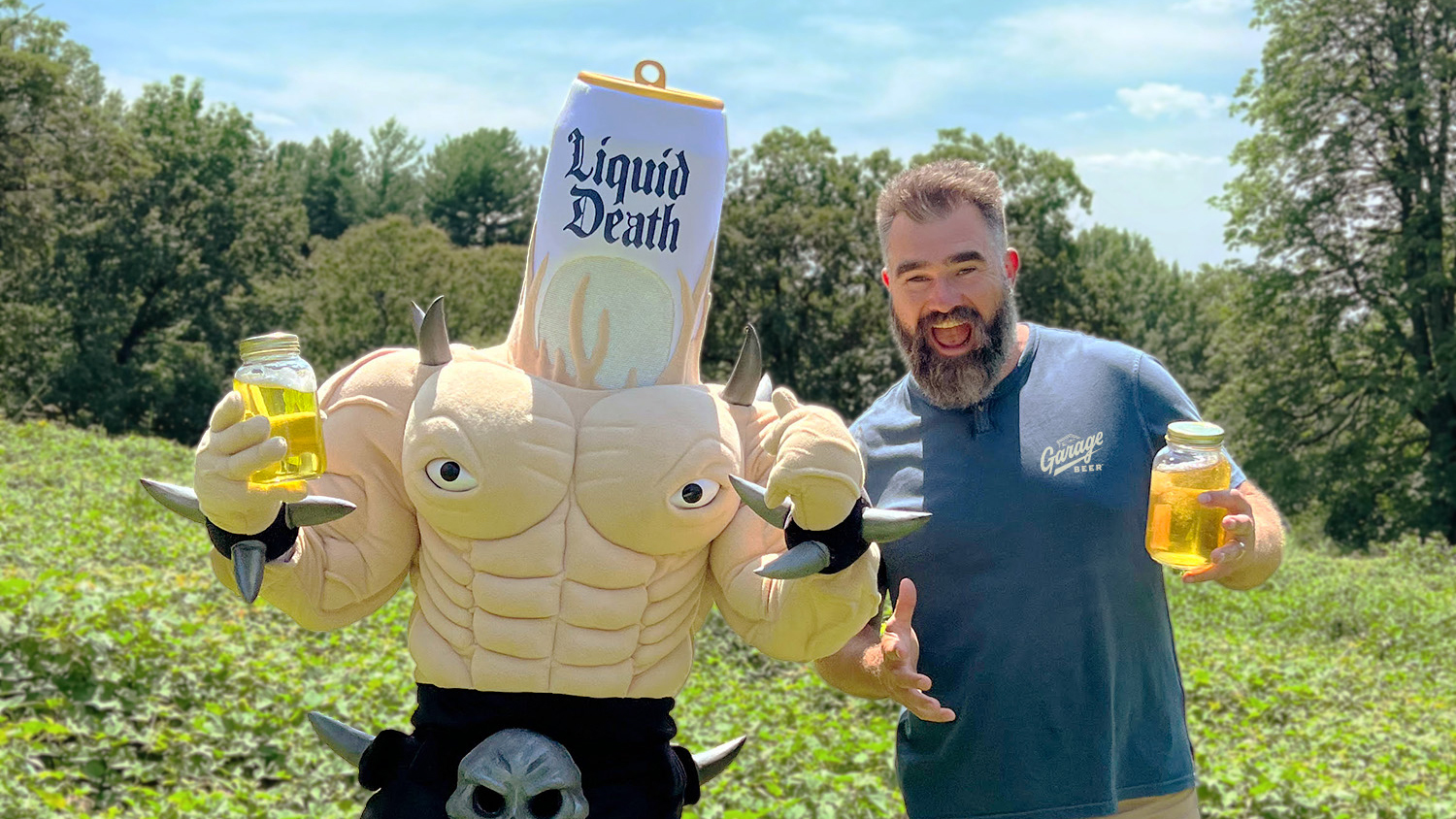
Jason Kelce with Liquid Death mascot Murder Man in an ad for the canned water and Garage Beer.Garage Beer
Sports data center
Former Eagles offensive lineman Jason Kelce seems to be more omnipresent in retirement than he was during his career. Most recently, he filmed a commercial for Garage Beer and Liquid Death that asked Americans to send him their urine to supply data centers.
While conjuring a negativeimage of yellow liquid in a cup is probably an unwise strategy for someone who co-owns a light beer company, Kelce’s commercial had another major problem — data centers don’t actually use as much water as public perception suggests.
In fact, the biggest threat to U.S. water supplies is something far more mundane: alfalfa farming.
Across the arid Western states, farmers are using vast amounts of water to irrigate their fields, which are then used to feed cows for the beef industry. A single acre of alfalfa uses 1.6 million to 2.5 million gallons of water. In Utah, feed farming uses over half the state’s water supply. Meanwhile, the data centers themselves increasingly rely on closed-loop systems. The water used as coolant gets purified and reused, reducing their own need.
The confusion over water use is emblematic of the general debate over the centers, which is rife with hard-to-vet claims. And shifting public opinion has left politicians in both parties flat-footed and scrambling to react.
Gov. Josh Shapiro, the ever-Ambitious Abingtonian, issued his own response to the situation. Much of what Shapiro said is reasonable. He wants tech companies to pay for their own power and contribute to community benefits agreements, and to respect the Pennsylvania Constitution’s guarantee of clean air and pure water. Some of it is less sensible, specifically his commitment to local control.
Local control sounds great in theory: Why shouldn’t communities have the final say over how they are developed? In practice, however, it is shortsighted. There are two reasons for this.
One, the impact of data centers is regional, not local. If opponents are correct about the impact on water and electricity bills, this impact will exist no matter where the centers operate. Given the PJM grid Pennsylvanians rely on spans multiple states, there is no plausible pathway for local communities to insulate themselves from rising energy demand by blocking data center proposals.
Two, not every community can afford to say no. Take the bankrupt city of Chester, for example. From its efforts to sell the Chester Water Authority to its role as host for the Reworld Trash Incinerator, financial considerations already play a big role in that city’s policymaking. By handing control to local authorities, the governor is ensuring cities like Chester will disproportionately play host to data centers.
For those who believe they will have a strong negative impact on quality of life, how is that possibly fair?
Instead, what is needed is federal, regional, or at least statewide coordination.
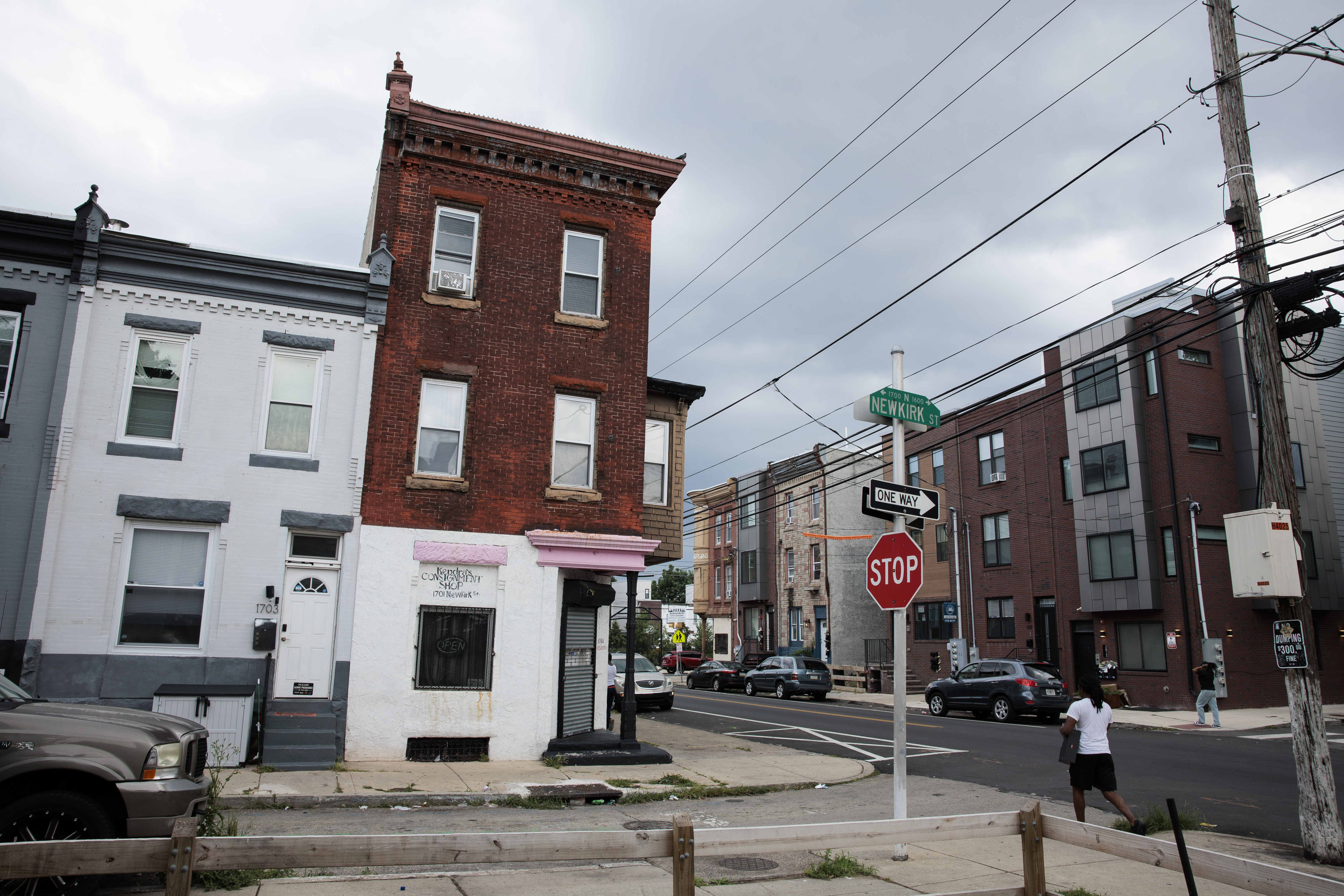
The 1700 block of North Newkirk Street on Aug. 20. On this block in Strawberry Mansion, some homeowners saw their property assessments double.Monica Herndon / Staff Photographer
Fair value
Over in Allegheny County, home to Pittsburgh and many of its suburbs, the courts have ordered local officials to begin a full property reassessment, which must be completed by 2032. Pennsylvania is unique in not requiring regular reassessment.
Pittsburgh’s values were last set in 2012, but more than a third of the state’s counties haven’t been reassessed since the 20th century. This leads to wildly out-of-whack and unfair tax bills for some residents.
Of course, Philadelphians can tell you that regular reassessment is not a panacea for discontent. The city’s most recent valuations have set off a firestorm of consternation, especially given how many lower-income areas saw big increases. It doesn’t help matters that the neighborhoods Cherelle L. Parker used to represent on City Council, and powered her election as mayor, saw some of the smallest boosts in valuation.
As tempting a story as the mayor favoring her core supporters while squeezing the city’s poorest neighborhoods may be, that is not an accurate assessment.
Given the massive decrease in shootings and consistent efforts to clean and green the city, it is not surprising to see increased demand for neighborhoods like Kensington, Grays Ferry, and Fairhill. While there is still a long way to go on public safety, higher valuations are a sign of progress.
It also should remind Council members that their theory that development drives property appreciation is faulty. Many of the neighborhoods with higher appreciation have seen little to no new development. In Northern Liberties/Fishtown, one of the city’s hot spots for new construction, values increased by just 1.7%.
Additionally, the city has a powerful tool for protecting low-income homeowners: the homestead exemption. While the city’s stated property tax rate is 0.013998, owner-occupants pay a much lower rate. For a home valued at the city’s median of $260,000, the total tax bill is $2,239.68, or 0.008614. In Fairhill, where the median home value is $80,000, the homestead exemption eliminates the total tax liability for many residents. Boosting the exemption from $100,000 to $110,000 or $120,000 would ensure more low-income homeowners are protected from rising tax bills.
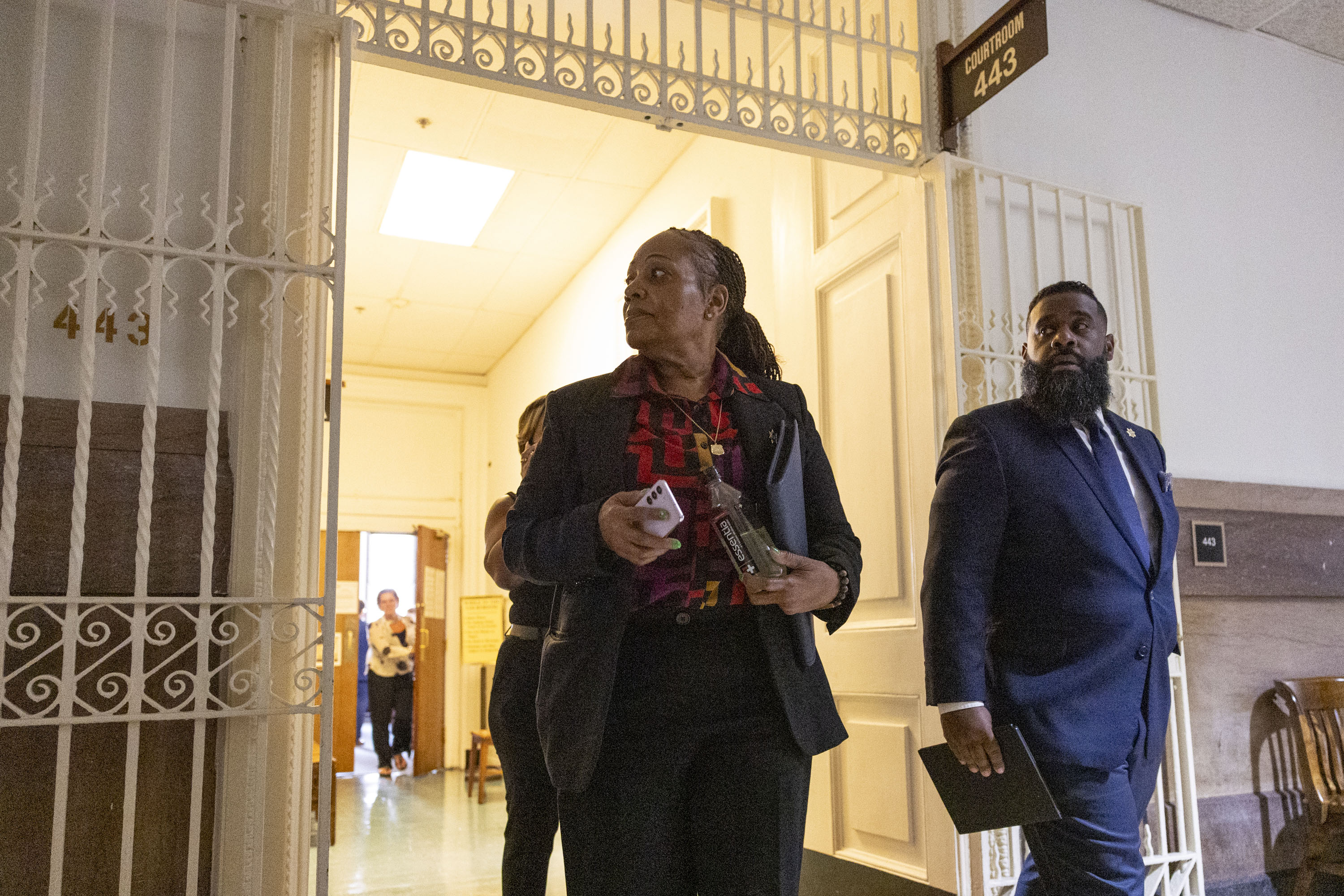
Sheriff Rochelle Bilal is seen exiting a courtroom at City Hall on Wednesday.Tyger Williams / Staff Photographer
Bilal’s babysitter
Mayor Parker wouldn’t do it. City Council wouldn’t, either. Accountability for the Philadelphia Sheriff’s Office instead came from Common Pleas Court Judge Paula A. Patrick.
After listening to a list of excuses and promises, it was clear Patrick had her fill of incompetence. The beleaguered department, which had been ordered to produce a specific set of documents months ago, suddenly released thousands of pages the night before the hearing.
Instead of putting officials before the court with direct knowledge of why a backlog in processing property deeds began, Sheriff Rochelle Bilal instead sent Steven Wakefield, a deputy undersheriff who was hired just two months ago. Wakefield was tasked with testifying about past events he was not privy to, despite repeated warnings from the judge.
As for Bilal herself, she claims to have “limited personal knowledge of the underlying facts.”
Issuing deeds is one of the core functions of her job, but apparently the sheriff had no idea what was going on. Instead, Wakefield tried to scapegoat a former employee named Melissa Simpson, who had apparently been handling the entire process on her own without oversight from anyone.
This testimony led to an agreement in which Bilal will have to identify someone to oversee deed sales for six months. A babysitter, essentially.
While it is good to see someone holding the sheriff accountable for once, a temporary babysitter is only a partial solution. The office should be abolished.
Sadly, that seems unlikely. Bilal may struggle to perform her day job, but she has thrived at building up political allies. She has been invited to news conferences by District Attorney Larry Krasner, remains a political player after her years running the Guardian Civic League, and faces next to no criticism from City Council. She was even honored by the Phillies as a “hometown hero.”
Troublingly, Bilal does not even seem to have an opponent in next year’s elections, despite the continued public mismanagement of her office. That, at least, should change.
Perhaps the Ambitious Abingtonian can find a Perspicacious Philadelphian willing to take on the challenge of replacing Bilal.