The battle over data centers and the artificial intelligence they power has officially reached Philadelphia City Hall.
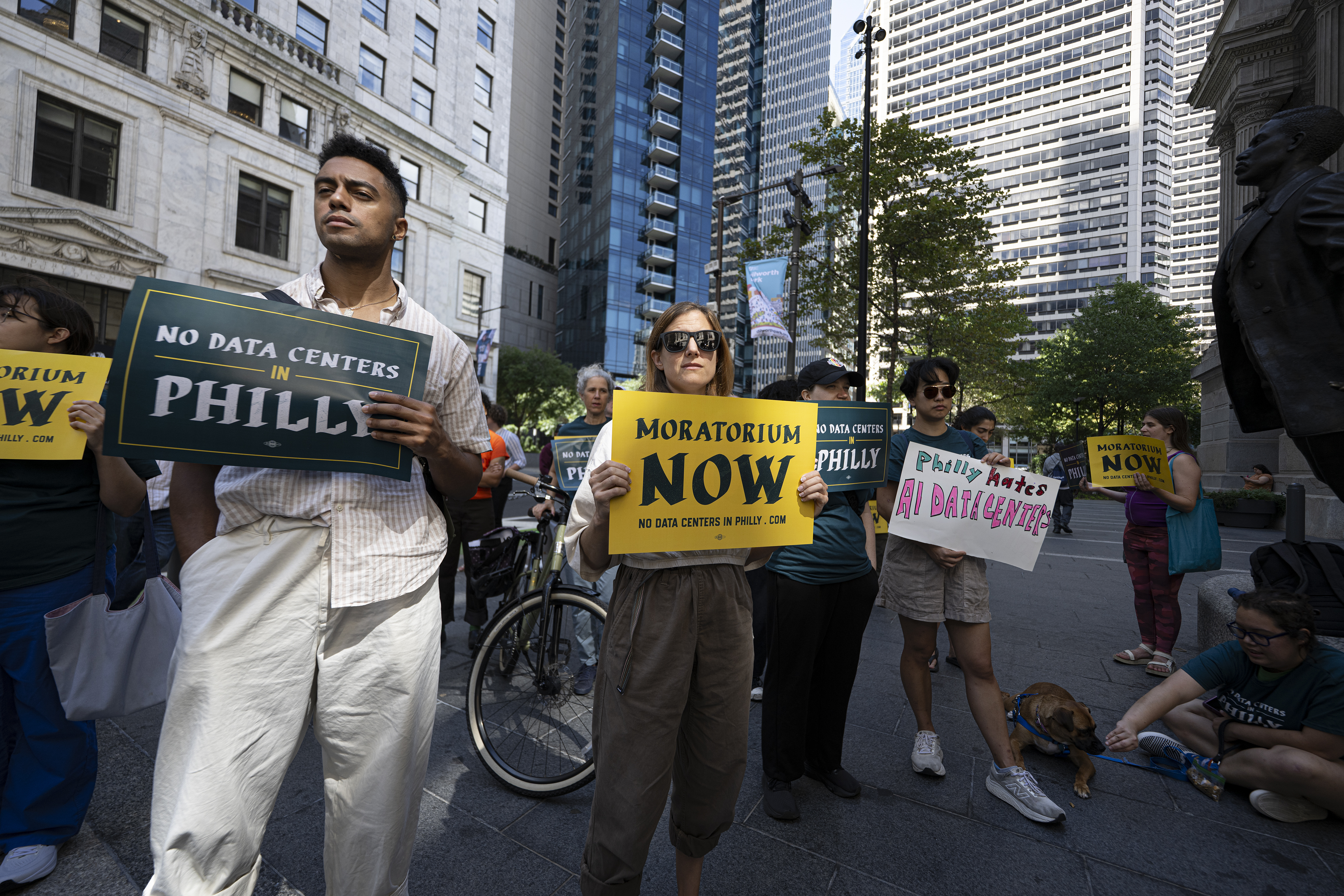
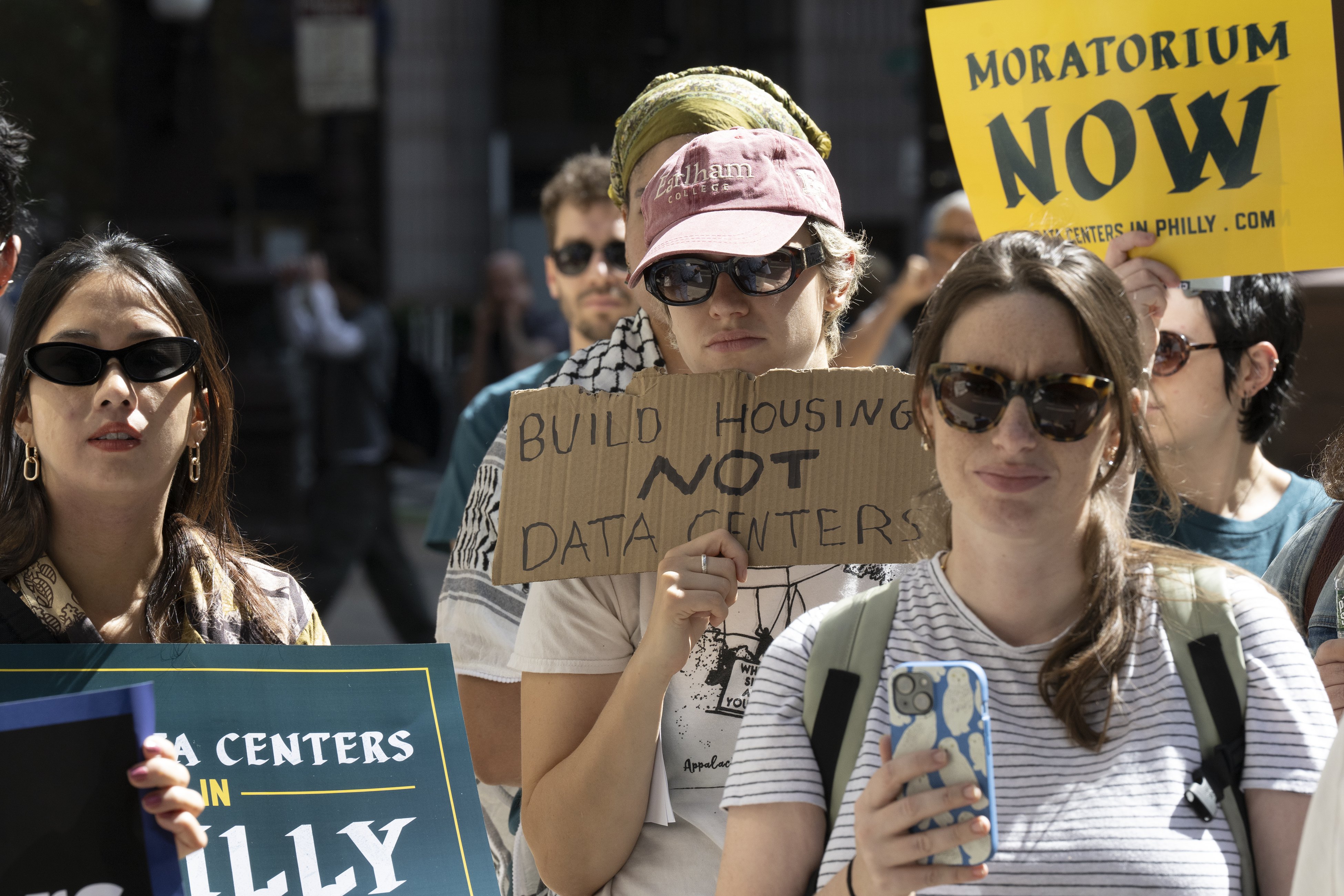
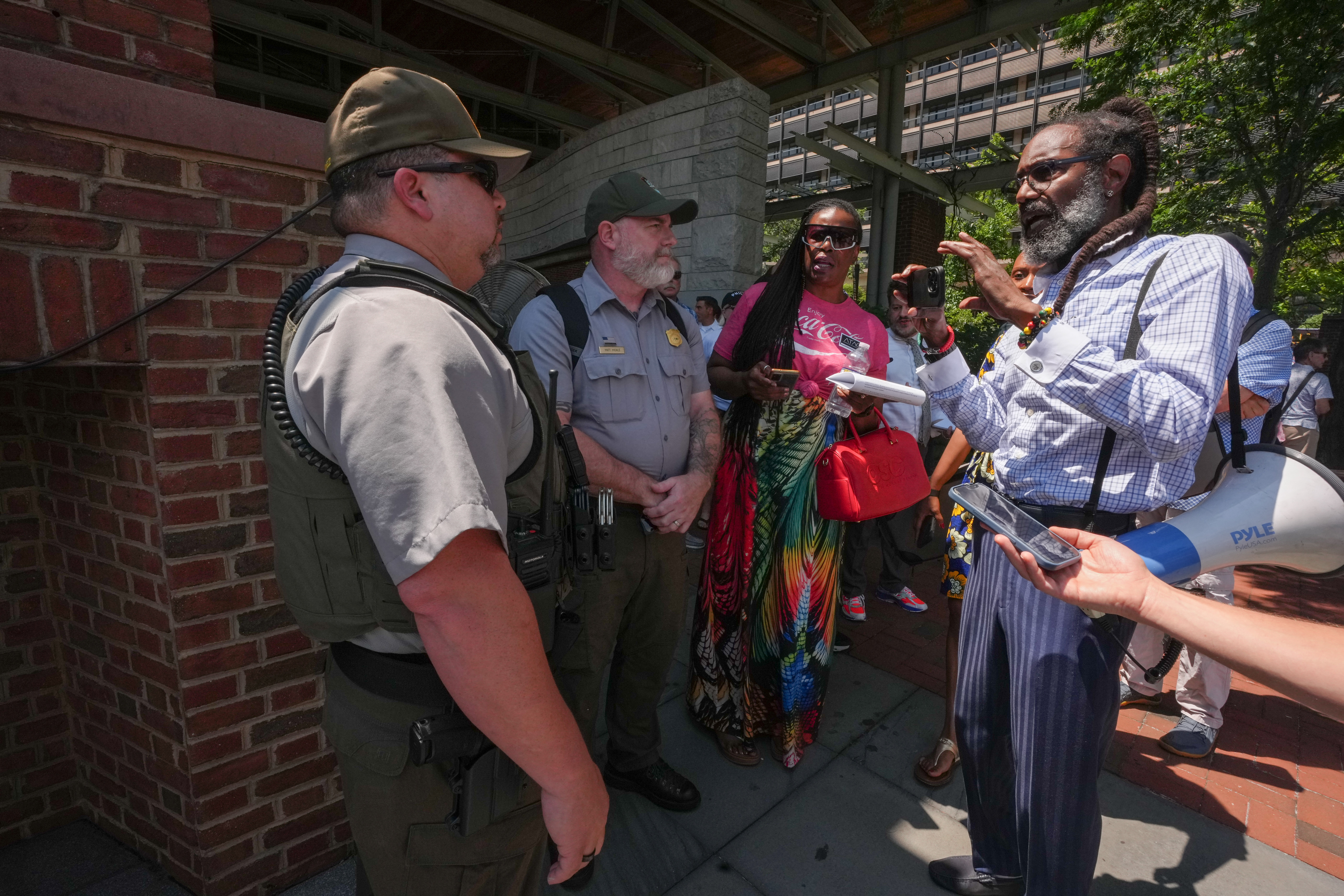
A coalition of activist groups and environmental advocates gathered at City Hall Monday to call on local lawmakers to pass a moratorium on data center construction in the city, the opening salvo for the group’s public pressure campaign to oppose the projects that it says could hike energy rates and drive pollution.
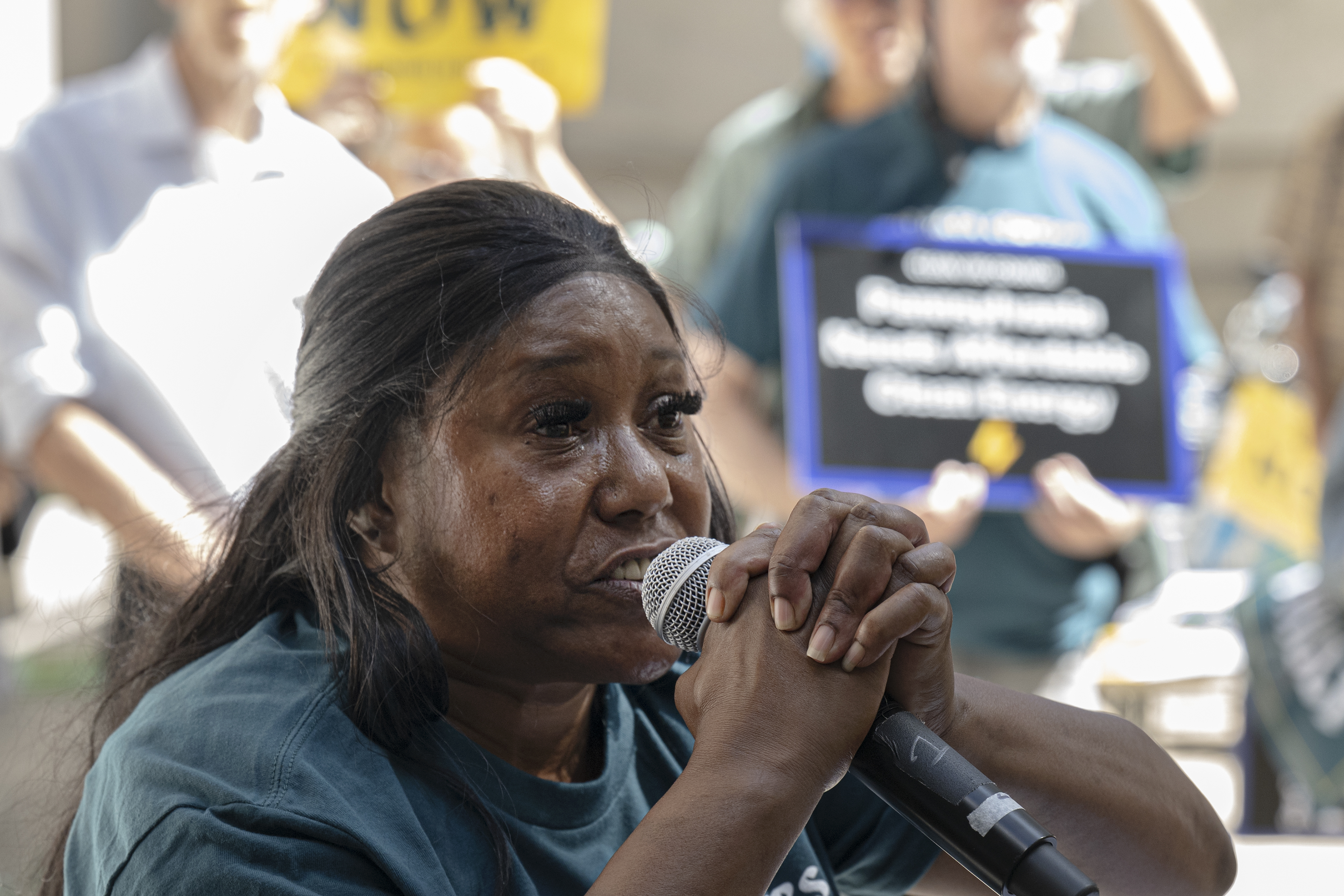
“There’s way too much at stake to let data centers expand without guardrails,” said Sonya Sanders, board president of Philly Thrive, an advocacy group for racial, economic, and environmental justice.
The coordinated push could put Mayor Cherelle L. Parker and members of City Council in a politically tricky spot as they gear up to run for reelection in the spring. Data centers have proven deeply controversial and have drawn bipartisan backlash, but some unions that see job-creating potential support their construction.
There is no specific data center proposal currently under consideration by City Council, andno member has said that they will introduce a moratorium bill. A spokesperson for Council President Kenyatta Johnson said that Council members and Parker’s administration are in “discussions on the future of data centers in the city.”.
Any data center legislation would have to run through Parker, a centrist Democrat who has not staked a position on the issue. She is allied with the unions that represent construction workers and has generally been pro-development. However, she positioned herself as an opponent of Big Tech earlier this year when she advocated for new taxes on companies like Uber and Airbnb.
Parker said in a statement Monday that she would sign an executive order this week to “formalize” a task force she convened over the summer to explore potential standards for data center development, and she vowed that the city would put “rigorous guardrails in place.” She did not specify a timeline.
Grays Ferry resident Sonya Sanders speaks during a rally at Philadelphia City Hall on Monday, calling on City Council to pass a citywide data center moratorium and kicking off the No Data Centers in Philly campaign.Jose F. Moreno / Staff Photographer
The data centeractivists’ event in Philadelphia came as fear of AI’s rapid development and increasingly humanlike capabilities has spread substantially and as leaders of the nation’s largest AI developers over the weekend signaled support for a global slowdown.
On Saturday, Anthropic chief executive Dario Amodei wrote that the technology is advancing more rapidly than leading companies can implement safeguards. Several of his top rivals, including Sam Altman of OpenAI and Elon Musk of SpaceX, endorsed his call for a slower pace of growth.
Meanwhile, talks of regulation have gripped Washington, with lawmakers from both major parties drafting plans to rein in tech companies and add layers of oversight to AI development. Any proposal faces an uncertain future, as President Donald Trump has said the country should remove barriers to AI development and accelerate advancement in order to outpace China.
On Monday morning, Trump posted on his Truth Social platform: “The only control or ‘guardrails’ that AI needs is a STRONG AND SMART (High IQ!) PRESIDENT, and the U.S.A. has that, in spades!”
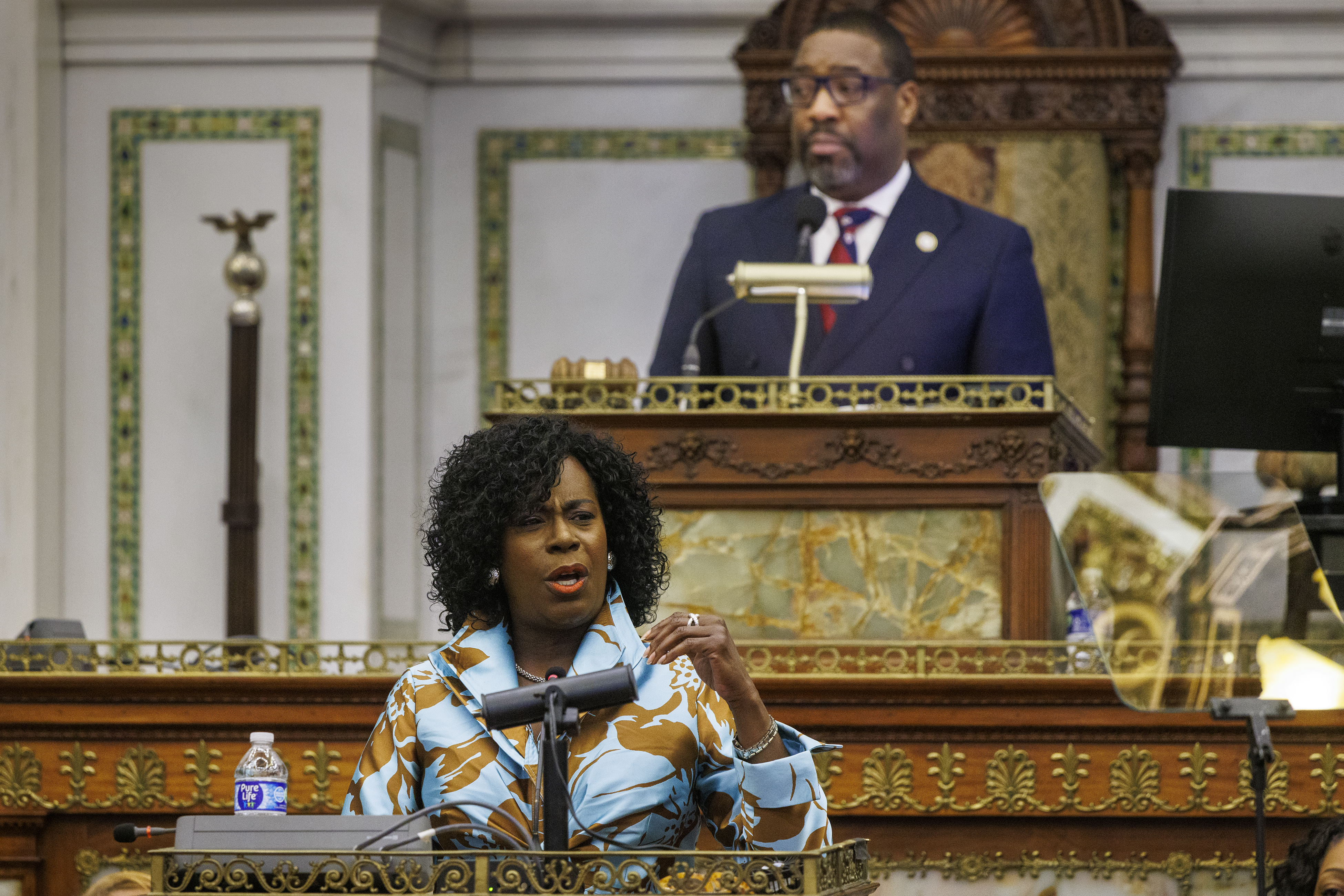
Philadelphia Mayor Cherelle L. Parker start to make her budget presentation to City Council in Council Chambers on March 12. In the background is Council President Kenyatta Johnson.Alejandro A. Alvarez / Staff Photographer
Inaction in Washington has left an opening for states and cities to regulate the construction of data centers, which produce the massive amount of computing power needed for artificial intelligence. They have become increasingly unpopular — a July poll found that 3 in 4 Pennsylvanians don’t want a data center in their backyard.
Municipalities in Pennsylvania, including Philadelphia, now have more power than ever to slow or halt the development of data centers. Gov. Josh Shapiro, a Democrat who is considered a potential presidential contender and who had previously courted data center projects, last month signed an executive order requiring local approval for any project to receive a state permit.
Philadelphia is already home to eight data centers that were constructed before the issue was widely controversial. The existing data centers are far smaller than the newer “hyperscale” projects that are meant to power AI and have faced opposition in communities across the country.
In July, the city’s planning commission said there are only two locations in the city that could support an industrial-size data center: the former South Philly refinery site known as the Bellwether District and 2600 Grant Ave., a city-owned plot adjacent to the Northeast Philadelphia airport.
Planning commission officials emphasized that they were not asked to consider a specific proposal to build a data center at either of those sites.
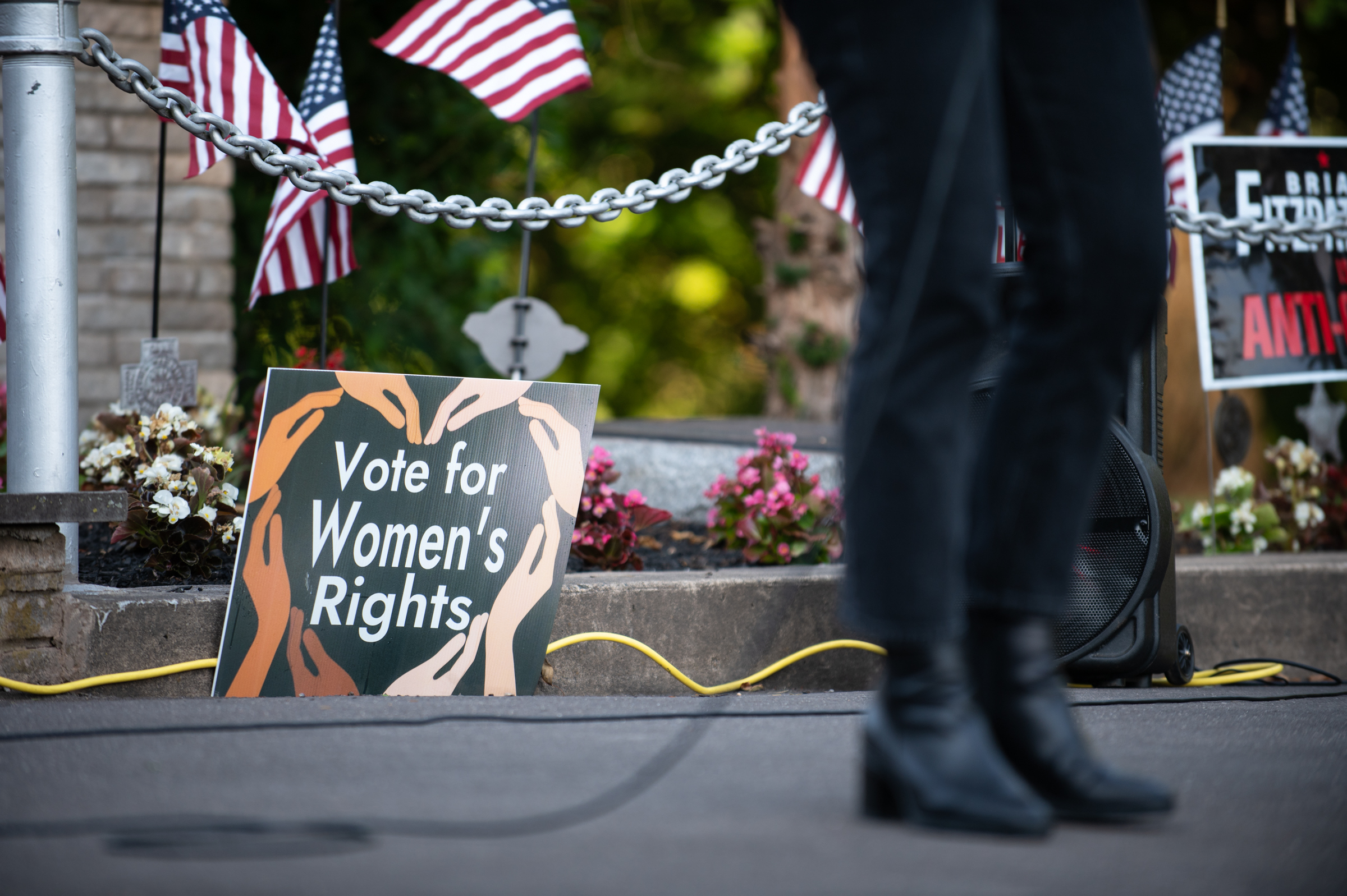
People hold signs opposing data centers during a rally at Philadelphia City Hall on Monday, calling on City Council to pass a citywide data center moratorium and kicking off the No Data Centers in Philly campaign.Jose F. Moreno / Staff Photographer
City Council has thus far not taken action on data centers, aside from passing a resolution authored by Councilmember Rue Landau earlier this year to hold hearings on the issue. A hearing has not yet been scheduled.
Council, which is led by a supermajority of Democrats, will convene Thursday for the first meeting of the fall session.Members are unlikely to green-light a controversial data center project ahead of the primary election in May, when every Council seat will be on the ballot.
But activists said Monday that city lawmakers must take proactive steps to ban data centers temporarily while they draft a regulatory framework and a system for considering public input on proposed projects.
Shawmar Pitts, the managing co-director of Philly Thrive — which is rooted in the communities that surround the former South Philly oil refinery — said Council members are “on notice.”
“Don’t put a moratorium in place, and your seat will be taken,” he warned.
Senia Lopez, a Northeast Philly resident and an organizer with the advocacy group 215 People’s Alliance, said people in neighborhoods surrounding any future hyperscale data center would be saddled with higher utility costs and “increased threats to our health.”
“City Council must chose whose interests it represents,” Lopez said. “It can side with Big Tech companies seeking to extract from our communities, or it can stand with the working people who have built and sustained them.”
Jefferson County’s coroner is updating a death certificate to note that a “probable” case of measles led to the death of a 40-year-old woman over the weekend.
The woman’s death certificate initially had stated that she died of respiratory failure due to a “suspected” case of measles and other underlying conditions. She also had clinical signs of measles, including a rash and fever, coroner Greg Furlong said Monday.
Furlong said he had paperwork confirming that the woman had been exposed to a person who had a positive lab test for measles and subsequently decided to change the death certificate.
The woman’s death marks the third reported amid an ongoing measles outbreak in Pennsylvania that has sickened nearly 700 people. State officials announced last month two other measles-related deaths and say they’re investigating the death reported in Jefferson County.
Here’s what to know about the case and the ongoing outbreak.
(function(){function e(){window.addEventListener(`message`,function(e){if(e.data[`datawrapper-height`]!==void 0){var t=document.querySelectorAll(`iframe`);for(var n in e.data[`datawrapper-height`])for(var r=0,i;i=t[r];r++)if(i.contentWindow===e.source){var a=e.data[`datawrapper-height`][n]+`px`;i.style.height=a}}})}e()})();
What are the details of the death in Jefferson County?
Jefferson County’s coroner reported Sunday the death of a 40-year-old woman in the county.
The woman, who died Saturday, was unvaccinated and had serious respiratory issues, requiring her to use supplemental oxygen 24 hours a day, Furlong said.
Her death certificate initially listed her cause of death as “acute on chronic hypoxemic and hypercapnic respiratory failure” due to “suspected measles,” chronic obstructive pulmonary disease, and asthma, Furlong told The Inquirer, though he is updating the death certificate to read “probable measles.”
The certificate also lists “supplemental oxygen dependence” as a “significant condition contributing to death but not resulting in the underlying cause.”
The woman also had hypertension and high cholesterol, Furlong said.
Furlong said the woman had declined a measles test while she was alive, but his office tested her for measles after her death and was waiting on results on Monday.
Can respiratory issues put you at higher risk for death from measles?
Yes, measles is especially risky for people with respiratory conditions, says Paul Offit, a physician and vaccine expert who heads the Children’s Hospital of Philadelphia’s Vaccine Education Center.
“This person was particularly compromised, with chronic obstructive pulmonary disease and asthma,” he said on Sunday. “That’s a person who could well die from this virus.”
In young children, complications from pneumonia, or infection of the lungs, are the most common cause of death from measles, the CDC says.
How are state officials responding to the case?
Officials at the state health department are aware of the coroner’s report and conducting a “thorough review” of the case, they said in a statement Monday.
According to the health department’s measles outbreak website, Pennsylvania defines a “measles-associated death” as one that occurs within 30 days of symptom onset in a person with clinical evidence of infection and a positive laboratory test.
The state also considers additional information on a case, including a person’s medical records and whether they were exposed to measles before their death.
Deaths without lab evidence of infection, deaths of people who have fully recovered from measles before death, and deaths from unrelated causes, like a car crash, are not counted as measles-associated.
How are federal officials responding to the case?
Since last month, state and federal officials have clashed over whether two other deaths reported in Pennsylvania were tied to the state’s measles outbreak.
In its latest update Friday, the CDC still had not listed two deaths reported by the state on its website highlighting data on ongoing measles outbreaks around the country.
In announcing the two deaths, Democratic Gov. Josh Shapiro criticized President Donald Trump’s Health and Human Services secretary, Robert F. Kennedy Jr., for spreading misinformation about vaccine safety through his longtime anti-vaccine activism. Kennedy then accused the state of “fabricating” the deaths, although he later acknowledged one had been caused by measles.
Lancaster County’s coroner has said he investigated one death caused by measles, in an infant with a severe genetic disorder, and another in an infant who contracted measles before birth and died shortly after.
CDC director Erica Schwartz said in a statement Monday that state officials had not notified the agency about the death in Jefferson County.
“Despite repeated offers of assistance, Pennsylvania has not requested a CDC Epi-Aid, which would deploy epidemiologists and provide on-the-ground measles outbreak support,” she said.
Several other states, including Texas and South Carolina, requested such assistance when dealing with large outbreaks over the last year and a half, she said, adding that the CDC will respond with Epi-Aid support if the state officially requests it.
State officials said in a statement Monday that the health department “maintains a strong working relationship” with CDC professional staff and meets regularly with them.
“We will continue to evaluate any additional CDC support as this outbreak contributes,” the statement read.
Earlier this month, they said the department meets regularly with CDC staff and has discussed the details of the two previously reported measles-associated deaths with them.
They added that the CDC requested records about the cases that contained identifiable information, which the state did not share, a decision in line with past practices.
State officials have maintained that privacy laws keep the department from releasing more information on the cases. Earlier this month, they said the CDC had not provided them with a case report form that would allow them to share de-identified information about the deaths with the agency.
Can you get measles if you’ve been vaccinated?
Nearly all of the 693 measles cases reported so far this year in Pennsylvania have been among people who were not fully vaccinated against the disease.
But last week the state identified four people — three adults and a child — who were “appropriately vaccinated for their age” and still contracted measles. These “breakthrough cases” are rare, accounting for less than 1% of the cases reported in Pennsylvania, and typically result in milder symptoms and less risk of spreading the disease.
People born before 1957, before the first measles vaccines became available, are generally considered protected against measles through natural immunity — because the disease was once prevalent in children.
Between 1968 and 1989, most children in the United States received one dose of the MMR vaccine, which is about 93% effective against the virus.
In 1989, measles cases among vaccinated schoolchildren prompted health officials to recommend children receive two doses of the vaccine, which together are 97% effective against the virus, a change that also prompted some older children to get a second shot.
How do you get a measles vaccine and who is eligible?
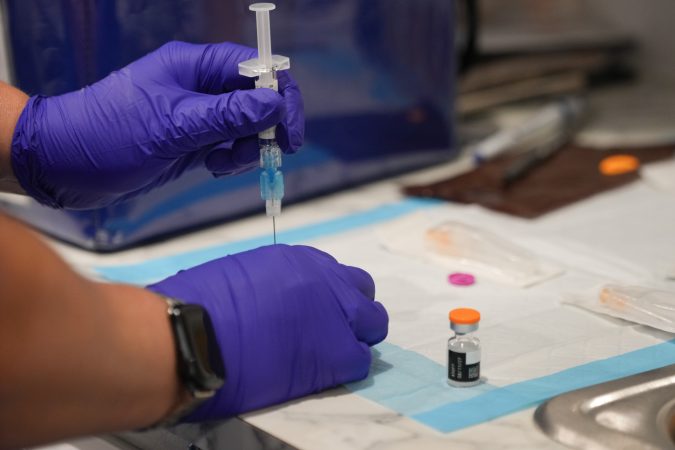
The measles, mumps, and rubella vaccine is available at many doctors’ offices, urgent care centers, pharmacies, federally funded health centers, local health departments, and health centers run by the state health department. The state has also hosted pop-up clinics in affected areas during the outbreak.
People interested in getting a vaccine for themselves or their children should call ahead to providers to check availability, the state says.
Typically, the MMR vaccine is given in two doses, one at around a year old, and one between 4 and 6 years old. Amid the measles outbreak, state health officials are now recommending that parents in affected areas vaccinate children early to protect them against the highly contagious disease, which can infect up to 90% of unvaccinated people exposed to it.
Babies between six and 11 months who live in, or will travel to, affected areas, can get an early dose of the MMR vaccine, then a second dose at 12 to 15 months and a third at 4 to 6 years old, the state says.
Children over a year old who haven’t received any MMR shots should get one dose now, and a second at least 28 days later. Children with one dose of the MMR vaccine should get a second dose now, provided it’s been 28 days since their first shot.
Adults and teenagers who have never had measles or a measles vaccine should get two doses at least 28 days apart.
Infants younger than six months cannot receive the vaccine. People with severely weakened immune systems, those with a history of severe allergic reactions to the MMR vaccine or a vaccine component, and pregnant women should talk to their doctors about their options, the state says.
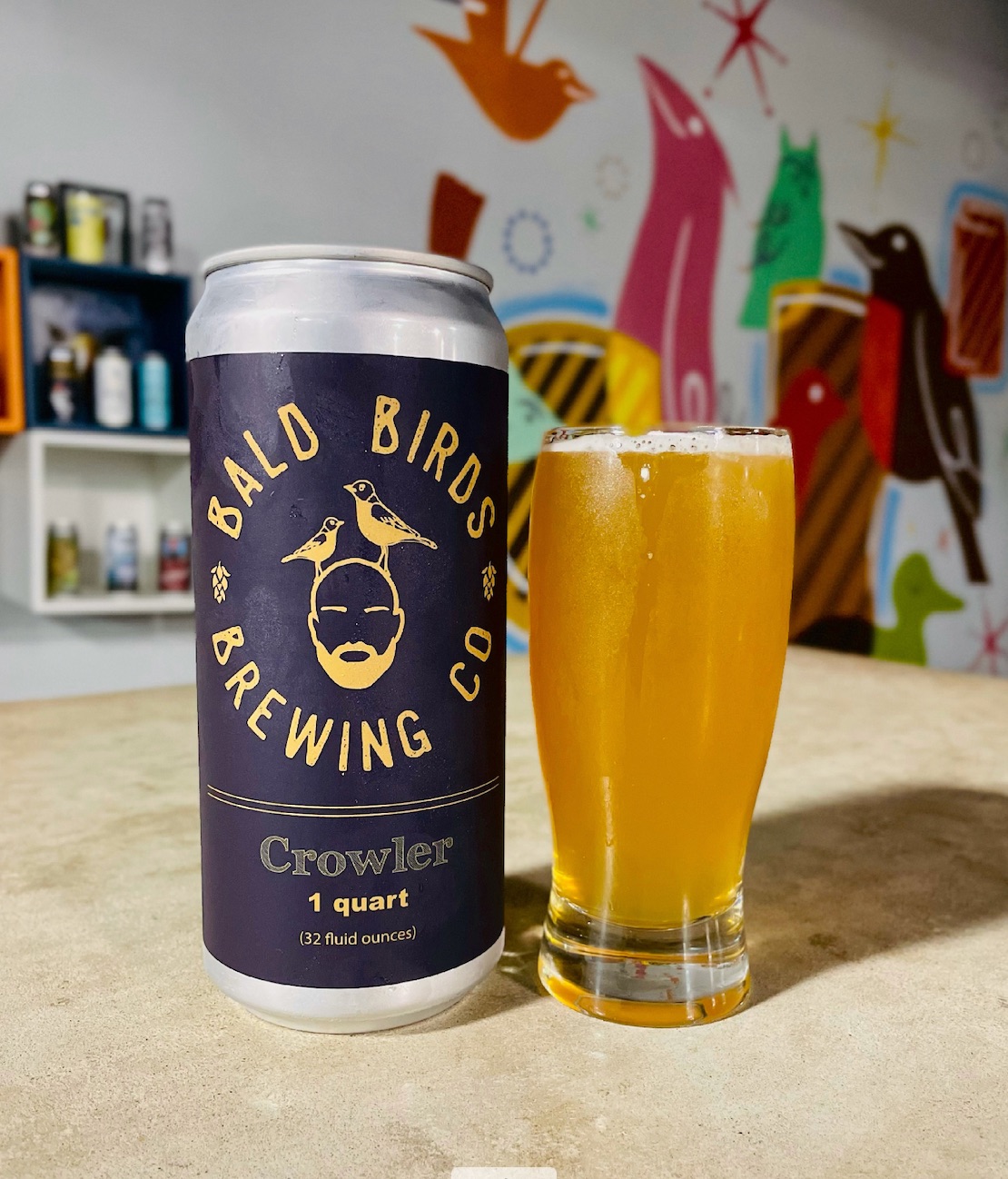
State regulators on Thursday announced that Bald Birds Brewing Co. violated state wage law at its Montgomery County and Lycoming County locations, and that the state recovered what amounted to several thousand dollars per worker.
But the brewery is taking issue with that description, contending that it voluntarily paid back staff after a payroll delay.
Gov. Josh Shapiro’s administration says it recovered more than $500,000 in wages and an additional more than $64,000 in damages for Bald Birds workers through an investigation by the Pennsylvania Department of Labor & Industry.
Brewery owner Joey Feerrar said the business made those payments without “any enforcement action,” and “calculated the penalties itself.” Feerrar says the department “did not recover anything.”
All this took place during what seems to have been a time of change for Bald Birds. The company closed its taprooms in Audubon and King of Prussia over the summer, as it refocuses on manufacturing and distribution, according to the website Breweries in Pennsylvania. That work is done through a partnership with Yards Brewing Co. and Connecticut’s Two Roads, called B3 Beverage Co.
“There was no agreement. No settlement, order, or payment plan was ever proposed or signed,” Feerrar said in a statement.
State regulators said they started receiving complaints from Bald Birds workers in January. They directed the company to pay the late wages in August and the company did so a few days later, a department statement said.
“After reviewing the complaints and conducting an audit of the employer’s records, L&I determined Bald Birds Brewery failed over the course of several months to pay employees on time,” the statement reads.
The total paid was nearly $583,000 to 124 workers including wages and damages. Under the state’s wage law “liquidated damages may be assessed when wages remain unpaid for more than 30 days beyond a regularly scheduled payday,” according to L&I.
The state said many workers went five weeks without paychecks.
A state announcement Thursday put the total at nearly $650,000, but the Department of Labor & Industry corrected its own statement Friday.
“The Department’s irresponsible description of these events has had an immediate and significant impact on the company, including jeopardizing the livelihood of every employee they claim to be championing,” Feerrar said in a statement.
“We worked in good faith and transparency with the Department, striving to do the right thing in a difficult situation, and that diligence was erased in a few keystrokes,” Feerrar said
Bald Birds Brewing Company got its start in 2018 with a location in Audubon. Owner Feerrar joined the B3 partnership with Yards last year.
HARRISBURG — For more than two decades, Gov. Josh Shapiro has worn it almost every day.
The small, thin accessory affixed to his lapel — a compressed version of the 50 stars and 13 stripes — may require one to squint to see. But it carries significant meaning to the Democratic governor, with an origin story that began on Sept. 11, 2001, when Shapiro was a young staffer on Capitol Hill.
Shapiro was working in Washington when he experienced the pain and confusion of the deadliest terrorist attack in the nation’s history, he said in a June interview.
He was just steps away from the U.S. Capitol building in then-U.S. Rep. Joe Hoeffel’s office, where he served as chief of staff, when he watched as the Today show anchors announced a plane had hit the World Trade Center. And then another.
He realized, like thousands of Americans, that the nation was under attack — with Washington as a potential target. Less than an hour later, Shapiro said, he saw the smoke coming from the Pentagon. Staff were given mixed signals on whether to evacuate before ultimately being told to hunker down in legislative buildings until the situation was clear, he said.
When Shapiro arrived on Capitol Hill the next day, a woman who worked in the Capitol gift shop was giving out American flag pins to anyone who passed by — the “typical gift shop” pin depicting a waving flag that President George W. Bush and other politicians began to wear in the aftermath of the 9/11 attacks, he said.
The pin became a part of Shapiro’s daily business uniform. He wore it every day, even after he left D.C. and began working at a law firm in Montgomery County while preparing to run for state representative — his first foray into elected office and the start of a decades-long career.
When Shapiro was knocking on doors for his 2004 run for the state House, a veteran in Glenside told him his gift shop pin wasn’t cutting it. The veteran gave Shapiro a nicer one: an image of the American flag in a thin, metal bar.
“And I’ve worn it basically every day since,” Shapiro said in June ahead of his appearance at a special session of the U.S. House at Independence Hall to commemorate America’s founding 250 years ago. Widely rumored to be a future presidential contender, Shapiro often talks about his pride in America and its ideals, and his fears that the country is becoming too divided and straying from the founders’ aspirations.
“I am a proud, patriotic American,” he said, referencing his pin. “I don’t think patriotism belongs to one party. I don’t think it should ever be partisan.”
Over the years, Shapiro has made slight changes to the flag accessory; he shaved down the pin stem and made it into a magnet.
“It was destroying my suits,” he added.
He said he once lost the pin when it fell off a jacket that he had hung up on a plane.
“I freaked out. I literally freaked out,” he said.
He said he and the flight attendant were on their hands and knees trying to find it in the plane’s closet. They found the pin, but never found the backing, which was replaced much more easily.
“I found the most important thing, and I just got another magnet,” he said.
Shapiro will appear at the Flight 93 Memorial near Shanksville, Pa., alongside members of President Donald Trump’s administration, includingU.S. Interior Secretary Doug Burgum, for a service on Friday to commemorate the 25th anniversary of the attacks, in which more than 2,900 people were killed.
United Airlines Flight 93, a San Francisco-bound passenger plane flying out of Newark, was hijacked on Sept. 11, 2001. It was believed to be headed to the White House or U.S. Capitol, near where Shapiro was working at the time — before its 40 passengers attempted to retake control and crashed the aircraft in a field near Shanksville.
One year ago, Utah Gov. Spencer Cox was on his way to deliver one of the most sobering speeches of his political career.
The conservative activist Charlie Kirk had been assassinated at a university in the state, and the nation was teeming with emotion — grief, vengeance, and celebration all mixed together.
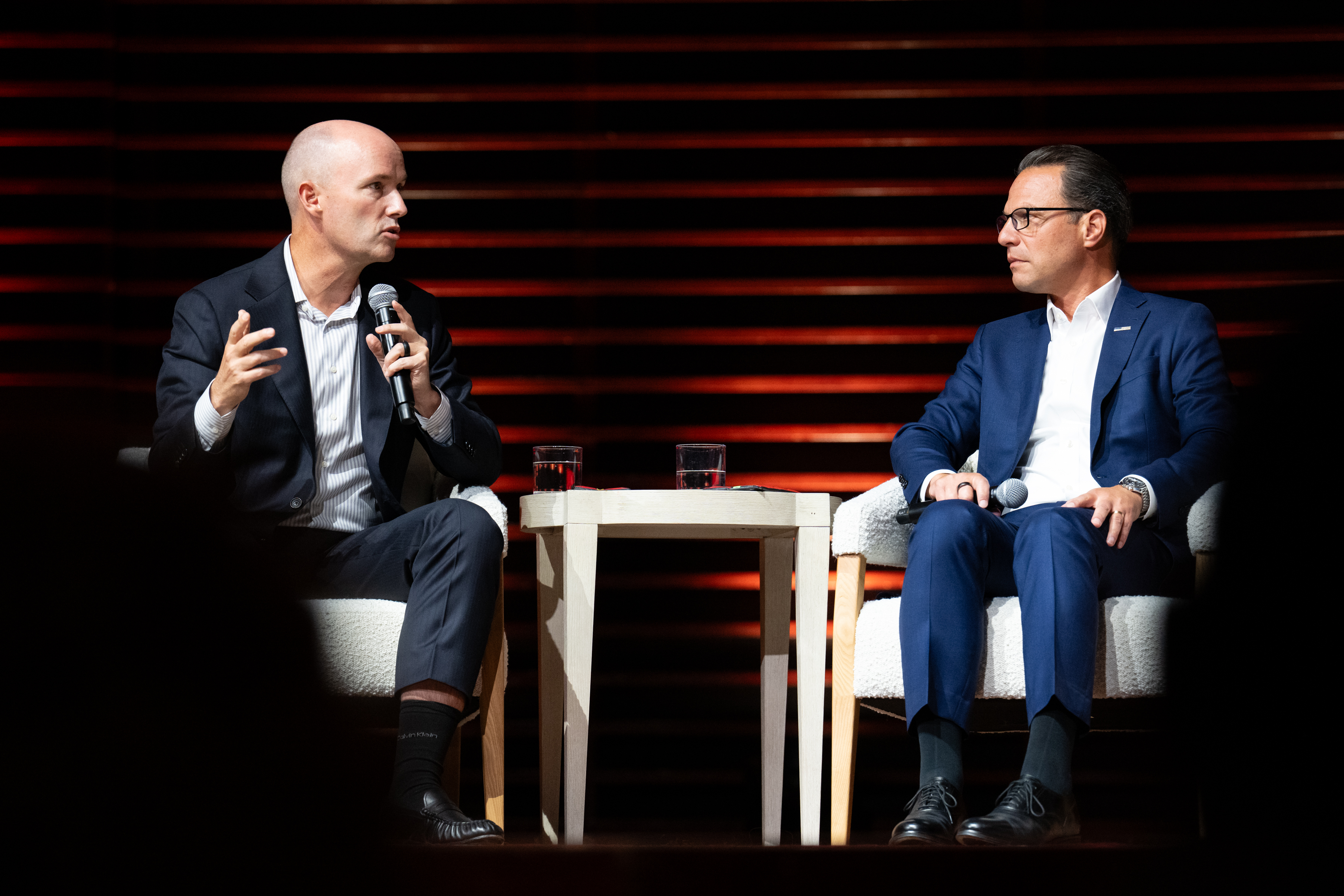
Amid a flurry of messages of support from other leaders, Cox, a Republican, said he spoke to Pennsylvania’s Democratic Gov. Josh Shapiro, who had experienced political violence of his own, and offered advice on how Cox could comfort a jostled community.
“I called him on the way to the press conference, and he told me to ditch my talking points and to speak from the heart,” Coxrecalled on the eve of the anniversary of Kirk’s killing. “I’m grateful for that advice. I took it, and it was really important in that moment.”
The event, moderated by New York Times journalist Lulu Garcia-Navarro, centered on how all members of society can hold respectful and productive conversations, even with people with whom they disagree. It comes less than two months before the midterm elections,as Democrats and Republicans wage heated campaigns for control of Congress and governors’ offices around the country, including in Pennsylvania.
Shapiro, who along with his family narrowly escaped an arson attack on the governor’s mansion last yearwhile they were staying there to celebrate Passover, said Americans should be “deeply concerned” about political violence and should not allow it to be rewarded or take deeper root in our nation.
Since that April 2025 attack, threats have persisted, largely related to his Jewish faith, he said.
“We’ve had six different people arrested in the last six or seven months for making terroristic threats against me and my wife, against our family, and oftentimes it’s rooted in an attack on me because of how I worship,” he said.
“I have a like a split-screen in my brain. I know that the incidents of political violence are rising. I know that the incidents of hate speech and hate crimes are rising, particularly against American Jews,” he said.
Angrier rhetoric, he said, gets rewarded with online engagement and campaign donations.
“Yet the other side of my brain gets to be governor in the greatest place, I think, in this nation, in the toughest swing state in the union, and as I go all across this commonwealth, I am met by good, decent people who offer prayers to my family, in ways that I don’t worship,” he said.
“The talk of celebrating this man’s death, no matter how profound a disagreement over a policy should be, he left behind a wife and two children,” Shapiro said at the time. “No one should be celebrating that. No one. I think that kind of rhetoric is unhelpful on every level.”
“I would say to my friend Governor Cox,” he said, “I hope he recognizes the power that he has from the perch that he occupies and the respect that you’ve earned across the country, and you use that power to help heal our politics and bring us closer together.”
Cox, who has said Trump is “not interested in uniting the country” despite endorsing him in 2024, has ruled out a 2028 presidential run of his own but quipped Shapiro may be interested.
“Somebody someday is going to run for president,” he said. “By the way, I just want to be clear, it may be somebody in this room. It’s not me.”
The audience cheered for Shapiro, who smiled and said “Cox for president” into his microphone.
Cox also praised Shapiro’s ability to “get stuff done” with a divided legislature, using the Pennsylvania governor’s signature slogan.
“That’s going to be on a campaign ad,” Garcia-Navarro said.
DALLAS — In an arena littered with President Donald Trump’s image — from the photos that lined the concourse to the gift shops selling merch depicting the president as a cowboy — one of Pennsylvania’s most vulnerable Republican lawmakers this fall went all-in.
U.S. Rep. Rob Bresnahan, running for reelection in a Scranton-based district that is one of the most competitive in the nation, addressed the Republican Party’s first-ever midterm convention during its opening night on Wednesday.
His decision to attend “Trump-a-palooza” (as the RNC has described it) at all was notable. Some Republicans in tight races decided to stay away out of concerns of associating themselves with a president with low approval ratings. U.S. Rep. Brian Fitzpatrick (R., Bucks), for example, is not attending and has distanced himself from parts of Trump’s agenda.
Bresnahan promoted Trump’s signature tax policy in a brief speech focused on supporting workers and their families.
“Tax relief matters,” Bresnahan told hundreds of party loyalists at the American Airlines Arena in a speech that followed Ken Paxton, the controversial Trump-backed U.S. Senate candidate in Texas. “In Northeastern Pennsylvania, we work until the job is done. And those extra hours should mean more money in your pocket.”
Democrats have used Bresnahan’s vote for the One Big Beautiful Bill Act, which included cuts to Medicaid and food assistance, as a wedge against Bresnahan and other vulnerable Republicans. But Bresnahan contended the income tax cuts and other policies in the legislation, like no tax on tips, are paying dividends for families.
Two other Pennsylvania GOP lawmakers in similar situations, U.S. Reps. Ryan Mackenzie (R., Lehigh) and Scott Perry (R., York), are also attending the two-day convention, with Mackenzie slated to speak Thursday.
Bresnahan spoke to a somewhat sparse crowd compared with Republican National Conventions during presidential election years, which served as a model for the novel midterm convention this year as the party looks to energize its base of voters while seeking to defend narrow majorities in the House and Senate.
Delegates, clustered by state on the convention floor, cheered and waved signs reading “Keep the majority” and “Republicans are fixing Democrats’ mess.” The stands in the roughly 19,000-person arena remained largely empty, at least for the first few hours before Trump’s speech.
Merchandise shops were packed with Trump’s typical MAGA merchandise, copies of his son Eric Trump’s book, Under Siege, and new mugs and shirts showing Trump on a horse in cowboy gear. Red, white, blue, and — in an unmistakable nod toward the president — gold balloons waited in the rafters for the grand finale on Thursday.
“I’m asking you to pretend that I’m on the ballot. I’m on the ballot, just one more time,” Trump told the cheering crowd in prime time, noting there were about 35 “swing” races the party was prioritizing.
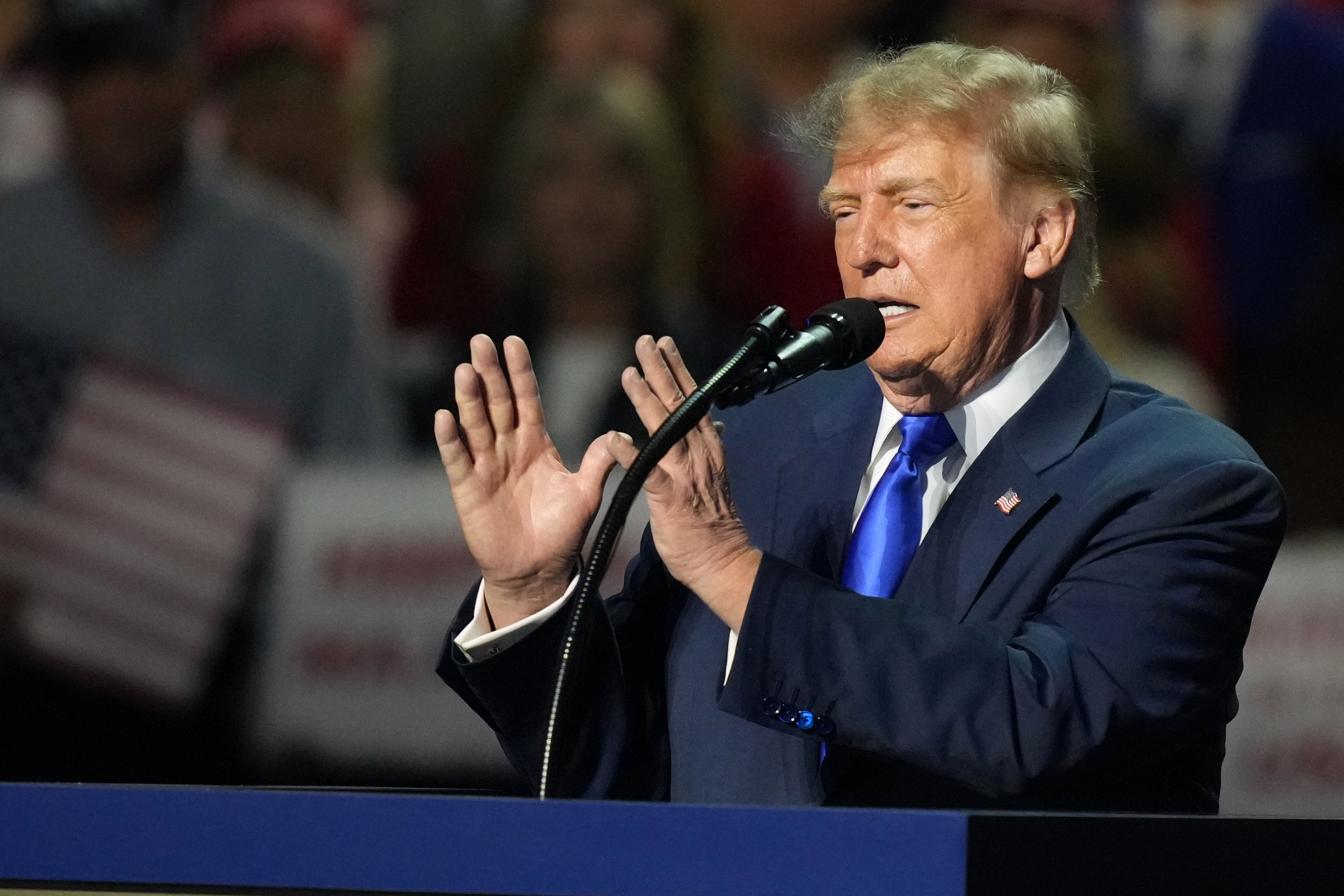
President Donald Trump speaks at the Republican convention Wednesday, Sept. 9, 2026, in Dallas. (AP Photo/Alex Brandon)Alex Brandon
About 1,500 miles away, in another town called Dallas, one of Bresnahan’s constituents hatched a plan to tune in.
On the opening night of the annual Luzerne County Fair — in a booth yards from deep-fried Oreos, flying elephant kiddie rides, and life-size cardboard cutouts of Abraham Lincoln, Donald Trump, and Jesus — Dwayne McDavitt fiddled with his tablet to see if he could stream the convention.
The symmetry of Dallas, Texas, and Dallas, Pa., was “too good to pass up,” said McDavitt, the head of a conservative group called Thunder and Liberty PAC and also the Pennsylvania chapter of Bikers For Trump.
He said he supports Bresnahan, who lives in Luzerne County, over Scranton Mayor Paige Cognetti, the Democratic nominee.
“He shares our values of faith, family, and freedom — meaning free and fair elections,” McDavitt said.
Interviews with other voters in the district on Wednesday underscored the potentially risky nature of Bresnahan’s leaning into the Trump administration.
Malcolm Mabry, 28, of Wilkes-Barre, said he had been victimized by a “Trump bait and switch” as a Republican who voted for the president two years ago. He picked Trump, believing that better policing of the Southern border was paramount.
And while Trump has been using ICE to “grab up people,” as he said, Mabry said much of what else the president promised, like lowering prices and avoiding war, has not occurred.
“Trump just said what he had to, to get into office,” said Mabry, who was unaware of the convention happening at the same time.
A campaign about workers and affordability
Bresnahan won his seat by less than 2 percentage points in 2024 to take down a six-term Democrat in the northeast corner of the state. Trump won the district by more than 8 percentage points.
His Democratic challenger, Cognetti, has garnered high-profile supporters like Gov. Josh Shapiro, who is also up for election, and she has repeatedly targeted Bresnahan for trading stocks while in office despite his previous statements that he would not do so.
Bresnahan, the former head of a family-run electrical contracting business, has made jobs and the workforce a top focus in his campaign and in his brief congressional career.
On a few occasions, he has broken with House Republican leaders to support bills that would strengthen union protections for federal workers. He has said that he hopes his party changes tactics to support those kinds of bills.
“We need the unions that have trained generations of some of the most skilled workers in American history,” Bresnahan said onstage Wednesday. “We have those workers in Northeastern Pennsylvania, and communities across this country are ready for the same opportunity.”
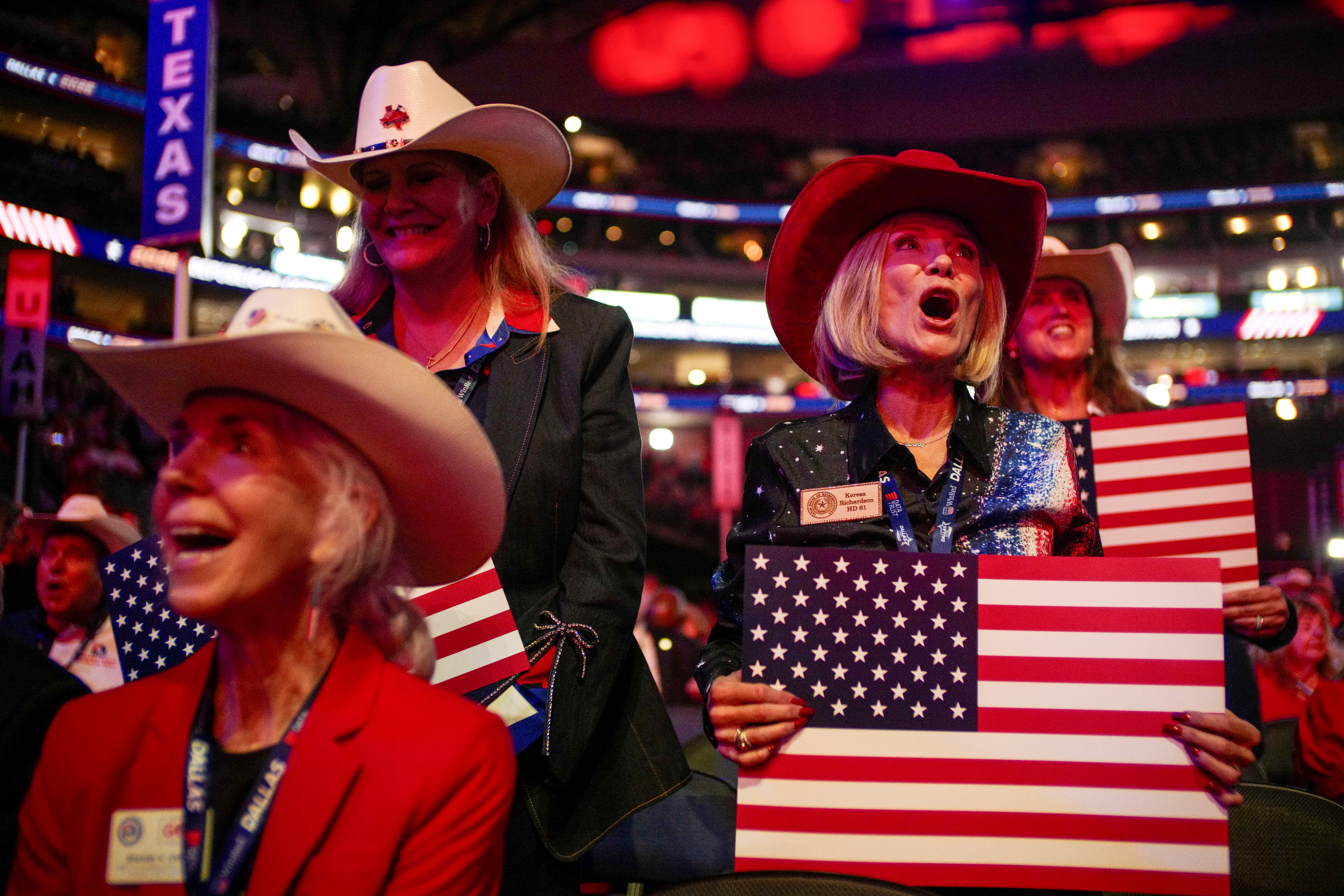
Texas state Rep. Keresa Richardson (R), right, attends the GOP midterm convention. (Joel Angel Juárez/For The Washington Post)Joel Angel Juárez
Bresnahan has racked up a series of union endorsements that are otherwise rare for Republicans. While major unions like the AFL-CIO and the Pennsylvania State Education Association have backed Cognetti, he has won support from organizations like the American Federation of Government Employees and the Teamsters — groups that, in a region with a long history of union issues, could make a difference in a close race.
In his speech, Bresnahan talked generally about supporting workers and manufacturing in the U.S. He spoke about tax policies that put “more money in your pocket” and help “build communities where people can stay, raise a family, and build a life.”
They and other speakers did not address other affordability issues that Democrats have seized on and that polls show voters have top-of-mind heading into early voting.
Trump has mocked the Democratic attacks on the issue as a hoax, including in a speech in Bresnahan’s district last year. But it is a message, and a reality, that has resonated with voters in Pennsylvania, according to polls and interviews.
“I’m on a fixed income,” Bill Dudeck, 83, of Nanticoke in Luzerne County, said Wednesday. “But under Trump, gas, groceries, and utilities are skyrocketing.”
Trump promised a lower cost of living, “but now all our money is out the window,” said Dudeck, a Democrat and former construction worker in Bresnahan’s district.
Bresnahan, whose campaign said earlier this week that he was looking forward to bringing “NEPA to the national stage,” appeared onstage instead with a sheet metal worker and mother of seven from Baltimore.
Cognetti’s campaign noted the pairing in a comment Wednesday that criticized Bresnahan, in part, for trading stocks in office.
“That’s probably why he didn’t have a Pennsylvanian on stage with him tonight,” a Cognetti campaign spokesperson said in a statement. “His speech is just more empty words to try and distract from his broken promises.”
Nora Pruitt, who joined Bresnahan, had previously been recognized by the White House as a beneficiary of Trump’s second term. Listed on the agenda as an “everyday American, factory worker, working mother and manufacturing success story,” Pruitt said “things have really improved for our family since President Trump returned to office.”
“We are so grateful President Trump and Republicans in Congress like Congressman Bresnahan vote for families like ours,” she said.
Key figures in Pennsylvania Republican politics — including the state’s top elected federal GOP official and several lawmakers in the middle of heated reelection campaigns — will participate in their party’s first-of-its-kind midterm convention this week in Dallas.
The gathering, spurred and heavily promoted by President Donald Trump, arrives as Republicans look to defend their control of Congress this fall amid difficult circumstances. Trump’s approval ratings, including on key issues such as the economy and the war in Iran, have sunk, including in Pennsylvania.
After Trump successfully won the White House and ushered in a wave of downballot Republican wins just two years ago, the convention — described as “Trump-a-palooza” by Republican National Committee chairman Joe Gruters — is aimed at energizing the base at a critical time.
Pennsylvanians, representing a swing state that has been key to Trump’s success in the past, will play a role.
U.S. Sen. Dave McCormick (R., Pa.) and a pair of House lawmakers in competitive districts — U.S. Reps. Ryan Mackenzie (R., Lehigh) and Rob Bresnahan (R., Luzerne) — are among the more than 100 scheduled speakers over two days, starting Wednesday.
Their speaking slots were among the first to be announced. Underscoring the Keystone State’s role in keeping the House Republican majority, only the host state of Texas had more representatives on the initial list of elected officials scheduled to address the crowd.
The Pennsylvania Republican Party, meanwhile, has orchestrated a “full slate” of 55 delegates and alternate delegates.
“The Republican Party of Pennsylvania is excited and honored to be a part of the first ever RNC Midterm Convention in Dallas,” spokesperson James Markley said in a statement. “It will be a tremendous opportunity to hear from everyday Americans about how this administration has changed their lives for the better.”
The state party had not provided the names of the delegates as of Tuesday, though the list is expected to include party activists and other elected officials. State party leaders had encouraged Pennsylvanians to attend the gathering.
Democrats, who see the president’s lagging approval ratings as a key to their success in the midterms, were quick to blast Pennsylvania Republicans for attending. Their response includes plans to send a small group of House Democrats, including U.S. Rep. Madeleine Dean (D., Montgomery), to Dallas to push back against the GOP messaging.
“While swing seat House Republicans try to hide from their record of raising costs on working families, gutting Medicaid to fund tax breaks for billionaire donors and supporting a reckless war of choice in Iran, House Democrats will be present to hold them accountable,” House Minority Leader Hakeem Jeffries, the New York Democrat in line to become House speaker if his party wins the majority, said in a statement.
Fitzpatrick skips as other Pa. Republicans take center stage
Four of Pennsylvania’s 10 Republican-held U.S. House seats are considered key battlegrounds as the GOP looks to maintain its four-seat advantage nationwide.
Of those, only U.S. Rep. Brian Fitzpatrick (R., Bucks) has distanced himself from parts of Trump’s agenda and is not planning on attending the convention.
Mackenzie and Bresnahan, on the other hand, will be among the featured speakers, and U.S. Rep. Scott Perry (R., York) will attend.
Perry, a close Trump ally, has routinely won reelection in a Harrisburg-based district but is running this year against Democrat Janelle Stelson, a former local television anchor who nearly defeated him two years ago.
Freshmen Mackenzie and Bresnahan were elected to Congress in 2024 afterthey each defeated incumbent Democrats by less than 2 percentage points. Local, state, and national Democrats have rallied behind their challengers — union leader and retired firefighter Bob Brooks in the Lehigh Valley, and Scranton Mayor Paige Cognetti in the district that covers the northeast corner of the state.
Bresnahan campaign spokesperson Samantha Bullock said the lawmaker was “excited to bring NEPA to the national stage because these are the people driving his work in Washington.”
Mackenzie, in a statement that referenced his work to bring federal funds to his district and support areas like local healthcare and tax relief, said he was “looking forward to talking to the people of the Lehigh Valley, the Poconos, and the entire nation about these accomplishments, and how we can build on them in the years ahead.”
Brooks said Mackenzie was “flying to Dallas to kiss the ring of Donald Trump and his party bosses.”
“This is exactly why people are fed up with a broken Washington that isn’t working for working people,” Brooks said in a statement.
Mackenzie’s campaign has similarly criticized Brooks for campaigning with national Democrats — calling an event Brooks had with Jeffries in July a sign that “establishment backers” were trying to “bail him out.”
The convention will feature six hours of programming each night.
Topics that speakers will highlight include the elements of Trump’s signature One Big Beautiful Bill Act, which Republicans have rebranded as the Working Families Tax Cuts Act.
A “candidate showcase” that will highlight “key candidates in target districts” and contrast them with their “extreme” opponents is set for Wednesday night. And an “opposition contrast” to “[deliver] the night’s sharpest partisan case against the extreme liberal Democrats” is slated for Thursday night, according to the agenda.
Besides Trump, the members of his administration scheduled to speak include Vice President JD Vance, U.S. Attorney General Todd Blanche, Centers for Medicare and Medicaid Services Administrator Mehmet Oz, and Health and Human Services Secretary Robert F. Kennedy Jr., who has engaged in a war of words with Pennsylvania Gov. Josh Shapiro over the state’s measles outbreak.
National Republicans have described the convention as a way to energize voters in a tough election year.
The poll found that 51% of likely voters said they were more likely to vote for a Democrat for Congress and 53% said they would want to see the House flip to Democratic control, though the polldid not ask about specific congressional races.
For anyone who noticed I was gone, I’m back. It was a weird two weeks of flex time — half vacation, including jaunts to a couple of Jersey Shore points (see below) and an OG family reunion in the Hudson Valley, and half working on my biggest investigative reporting project in several years. It’s coming very soon. Stay tuned.
On the 25th anniversary of 9/11, anti-Islamic hate is getting worse
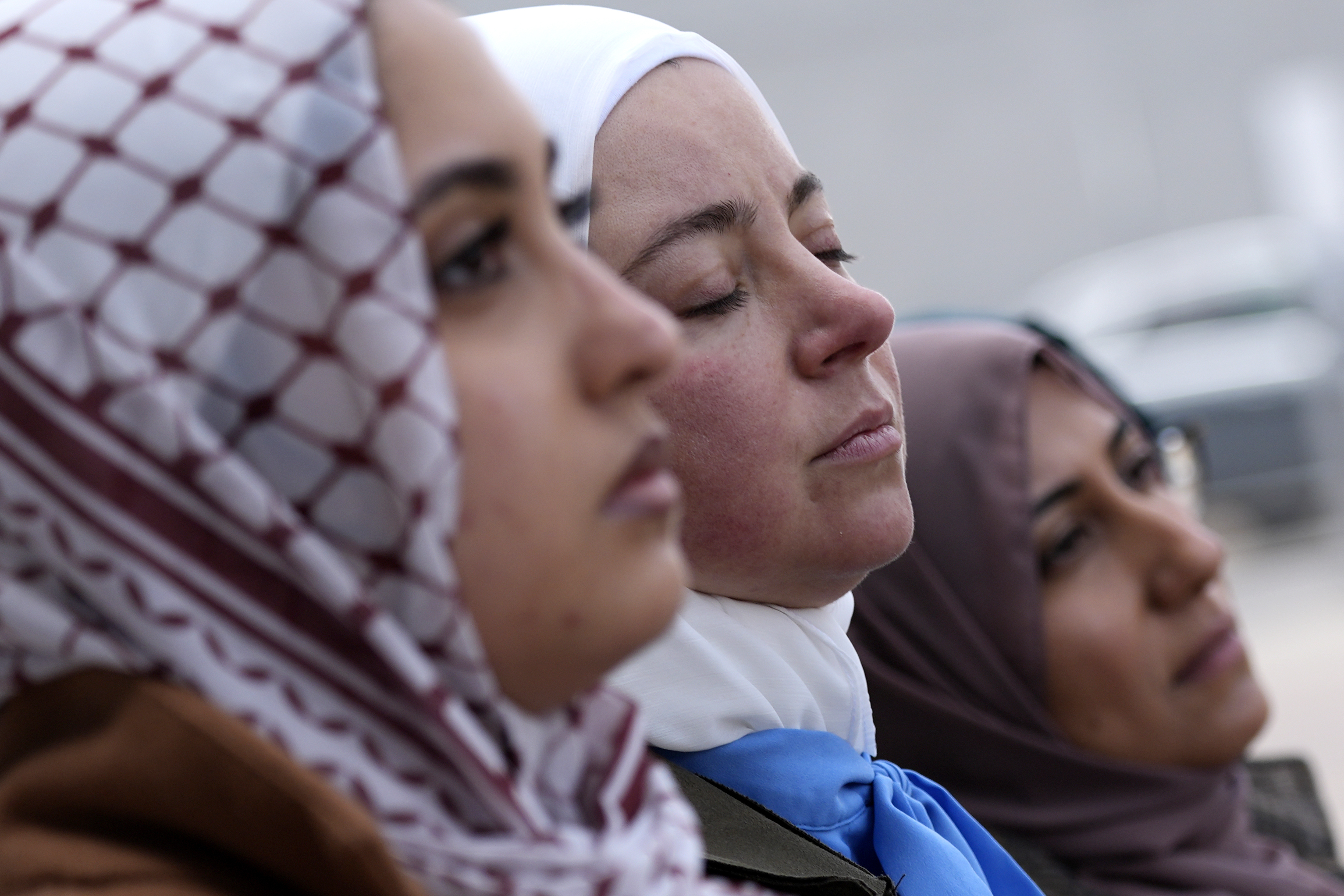
Amina Barhumi (center), the advocacy and policy lead of the Muslim Civic Coalition, prays with members of the Council on American-Islamic Relations outside the Will County Courthouse in Joliet, Ill., where a jury found defendant Joseph Czuba guilty of murder and hate crime charges in February 2025.Nam Y. Huh
The footprints of the World Trade Center’s twin towers are now a memorial attached to a well-attended museum. Osama bin Laden is dead, and the last U.S. combat troops finally left Afghanistan five years ago. But there is one thing that spiked immediately after the attack and never really went away.
In fact, anti-Islamic hate is a bigger force in our politics than it ever was. Republicans, desperate to cling to power in an election when all the cards — including another “dumb war” in the Middle East and sky-high gas prices — are stacked against them, are frantically waving the bloody shirt of 9/11 and the Islamophobia it inspired.
You can see it in Lower Manhattan, where the man who was New York City’s mayor in 2001, Rudy Giuliani, is now saying that the idea of the current mayor — Zohran Mamdani, the first Muslim American to hold the post, who was only 9 years old on the morning of the attack — attending the 9/11 memorial ceremony “offends me.” His comments were part of a bigger racist diatribe that somehow tied Mamdani to a Muslim plot aimed at “taking over certain parts of America and certain parts of Europe.”
You can see it in Michigan, where a wave of anti-Muslim hate has surged after an Islamic doctor and public health expert, Abdul El-Sayed, won the Democratic primary for U.S. Senate. This includes events like “the Christian Crusader March” organized by the Donald Trump-pardoned Jan. 6, 2021, insurrectionist Jack Lang, which flooded the city council of majority-Muslim Dearborn with anti-Islam placards and even a Nazi flag.
And you can read all about it when a sitting congressman like Tennessee’s Andy Ogles has no problem taking to the cesspool of Elon Musk-owned X last March to write that “Muslims don’t belong in American society.” The fact that the fanatically pro-Trump Ogles lost his GOP primary a couple of months later could have been a warning to his fellow Republicans to dial it back, but few seem to have gotten the memo as Sept. 11, 2026, arrives.
To be clear, I don’t believe Islamophobia is the only permanent scar from the day the United States was attacked by four planes and their 19 hijackers who were followers of bin Laden’s Islamist brand of extremism. It’s been five years — although it feels like yesterday — since the 20th anniversary of the attacks, when I wrote that the fear and loathing of the 9/11 aftermath hadn’t evaporated but instead metastasized.
I could write that exact same column today … so I won’t. The role the attack played in pointing America toward fascism hasn’t changed, but it is striking after five more years that while many overt symptoms of a 9/11 hangover have subsided over the years, the virus of Islamophobia has only grown more persistent.
Prejudice toward Muslims existed, of course, yet it exploded after the attacks on the World Trade Center, the Pentagon, and the fourth jetliner that crashed in Shanksville, Pa., in ways both large and small.
Large: On Sept. 15, 2001, a Dallas-area neo-Nazi killed a Pakistani immigrant working in a convenience store — the same day a Sikh native of India was also murdered at a Mesa, Ariz., gas station by a man who believed the victim was Muslim. Smaller but not insignificant: Islamic schoolchildren from coast to coast were bullied and slurred by classmates who called them “terrorists” or just “Osama.”
At the highest levels of the U.S. government, there was schizophrenia. Many recall that the president, George W. Bush, visited the Islamic Center of Washington, D.C., to insist that U.S. Muslims “love America as much as I do,” had no connection to the foreign extremists, and that “Islam is peace.”
Less well-remembered is the federal operation that targeted thousands of Muslims and South Asians — especially men under the age of 45 — in the weeks immediately after the attacks. They were detained, interrogated, fingerprinted, or subjected to deportation proceedings.
In a new piece, the “war on terror” historian Spencer Ackerman chronicled how agents went through a Brooklyn neighborhood known as Little Pakistan, dropping cards under doors with instructions such as: “This is the FBI. This is the INS. This is the NYPD. We need to talk. I have questions. Call me. ASAP.” It’s believed that thousands found the post 9/11-climate so hostile that they left Little Pakistan … and the United States.
Islamophobia has managed to both persist and change over the last quarter century. Certainly one can’t imagine Trump going to a mosque and acknowledging that Islam is a peaceful religion; the man who entered national politics by calling for — and partially enacting — a “Muslim ban” just last month labeled Democratic candidates in the midterms as “jihadists.” Today, the fish stinks from the head, and those middle-school punks who called their classmates “terrorists” are all grown up and running for office in November.
To some extent, it’s one step up and one step back for American Muslims. The stunning success of Mamdani, who’s more popular than ever after eight months in City Hall, and the rise of El-Sayed and other mostly progressive young Muslim American politicians is a next chapter of immigrant success that seems to have rattled the ancient U.S. hierarchies around race and religion.
But mostly it feels like Republicans — seeing that the crowd doesn’t want to hear the new stuff like the Iran war or data centers — have reverted to playing the hits, like railing against “men in women’s sports” in a desperate bid to get an unearned encore.
That’s pathetic yet predictable, but one thing I find appalling is that a news media that ought to know better keeps going along with this malarkey. That includes grilling every Democrat who appears on TV about what they think about a Turkish American Twitch streamer named Hasan Piker, even as most voters have never heard of Piker while some subjects of these inquisitions have never met him.
Last week, CBS News — purchased by a pro-Trump billionaire who put the over-her-head conservative opinion writer Bari Weiss in charge — ran one of the most irresponsible pieces of journalism I’ve ever read, implying there was something sinister about El-Sayed’s anodyne early 2020 social media comments that America should take the coronavirus seriously because it had killed (at that time) as many people as died on 9/11. One CBS staffer told the website Status that the dubious hit piece on El-Sayed was “shameful,” adding, “The racism is overt.”
The staffer was being kind.
Someday — hopefully in my lifetime — there’ll be a U.S. president who won’t only call Islam a religion of peace, but will also stop dropping bombs on Muslim countries. Until then, demagogues are going to demagogue, but the media needs to be calling out the racists, not empowering them. If we keep giving in to our worst instincts, then — as folks used to say 25 years ago — the terrorists will have won.
Yo, do this!
One reason my two-week hiatus passed so quickly was that I immersed myself (and thus finished too quickly, perhaps) in this month’s riveting audiobook, Housewives of the Underground: The Untold Story of the Women Who Made the JFK Assassination Our Most Enduring Mystery by the Atlantic writer Kaitlyn Tiffany. The book tells the story of how the majority of Americans came to doubt the Warren Commission’s official story of John F. Kennedy’s 1963 murder in Dallas through the persistence of very average citizens — including the three middle- or nearing-middle-age women of the 1960s at the center of Tiffany’s compelling narrative. This is not “another Kennedy assassination book,” but rather a robust and much-needed tale about regular folks successfully challenging their government to do better that resonates in the Trump era.
I did somehow find time to make the short drive (90 minutes from Center City Philadelphia) to Long Branch, N.J., for a Bruce Springsteen pilgrimage centered on a visit to the new and impressive Bruce Springsteen Center for American Music. It was just our luck that our tickets were for the day afterthe Jersey rock icon stunned fans with a surprise visit there (and also popped on stage that night at Asbury Park’s Stone Pony). But the collection of artifacts — amplified by a film and listening booths, and illuminating not only Springsteen’s 60-year career, but the artists from soul, country, and early rock ‘n’ roll who inspired a legend — is well worth the trip. Augment the day, as we did, with a trip to Asbury Park’s revived boardwalk and a drive-by of Bruce’s childhood homes in nearby Freehold. Bonus: Springsteen’s remarkable “Land of Hope and Dreams” show that wrapped up his 2026 tour at Philadelphia’s Xfinity Mobile Center in May was recorded for a full-length film that begins streaming Wednesday!
Ask me anything
Question: Given the current outbreak of measles in Pennsylvania and the start of the school year, how long will it be until the first case of polio is diagnosed? — @mcsween66.bsky.social via Bluesky
Answer: Hopefully a long time, or never, although polio has not been completely eradicated and there was a case earlier this year in Rockland County, N.Y. (here’s a good explainer of how that happened and what it means). Experts are right to be worried if low U.S. vaccination rates persist. But right now I’m more worried about something else that your question hints at: a stunning lack of information about the measles outbreak in Lancaster County, which seems to have caused two deaths, and which I know much more about from reading an article in the Atlantic than from our public health officials. At the core of this seems to be the politics of a Democratic governor in Josh Shapiro and a Trump-y GOP, including the elected county coroner in Lancaster County as well as in Washington. Public health is way too important to get tangled up in political spin.
What you’re saying about …
My question from late August about transgender politics in the November election drew a spirited response from readers, most of whom agree with me that Democrats should openly embrace transgender rights and not either run away or equivocate on the issue. The most passionate response came from Zoë Sparks, a transgender woman, who wrote it would be best for Dems if they “stood up boldly, made it an issue of civil rights, pointed out that history, statistics, science, and medicine are all on our side and MAGA has only fake history, fake statistics, pseudoscience, and quack medicine in their favor …” But Arlene Stach argued that it’s commonsense politics to support keeping transgender athletes who were born with male biology out of women’s sports. She wrote, “If the Democrats think this will win for them, they are mistaken!”
📮 This week’s question: The passage of Labor Day means it will be Election Day in what will feel like the blink of an eye. Democrats seem all but certain to gain at least the handful of seats needed to retake the House, but the Senate is up for grabs. Do you think Dems will win at least 51 Senate seats, and why? What are the key races? Please email me your answer and put the exact phrase “a Democratic Senate” in the subject line.
Backstory on the mysterious masked men of Dover
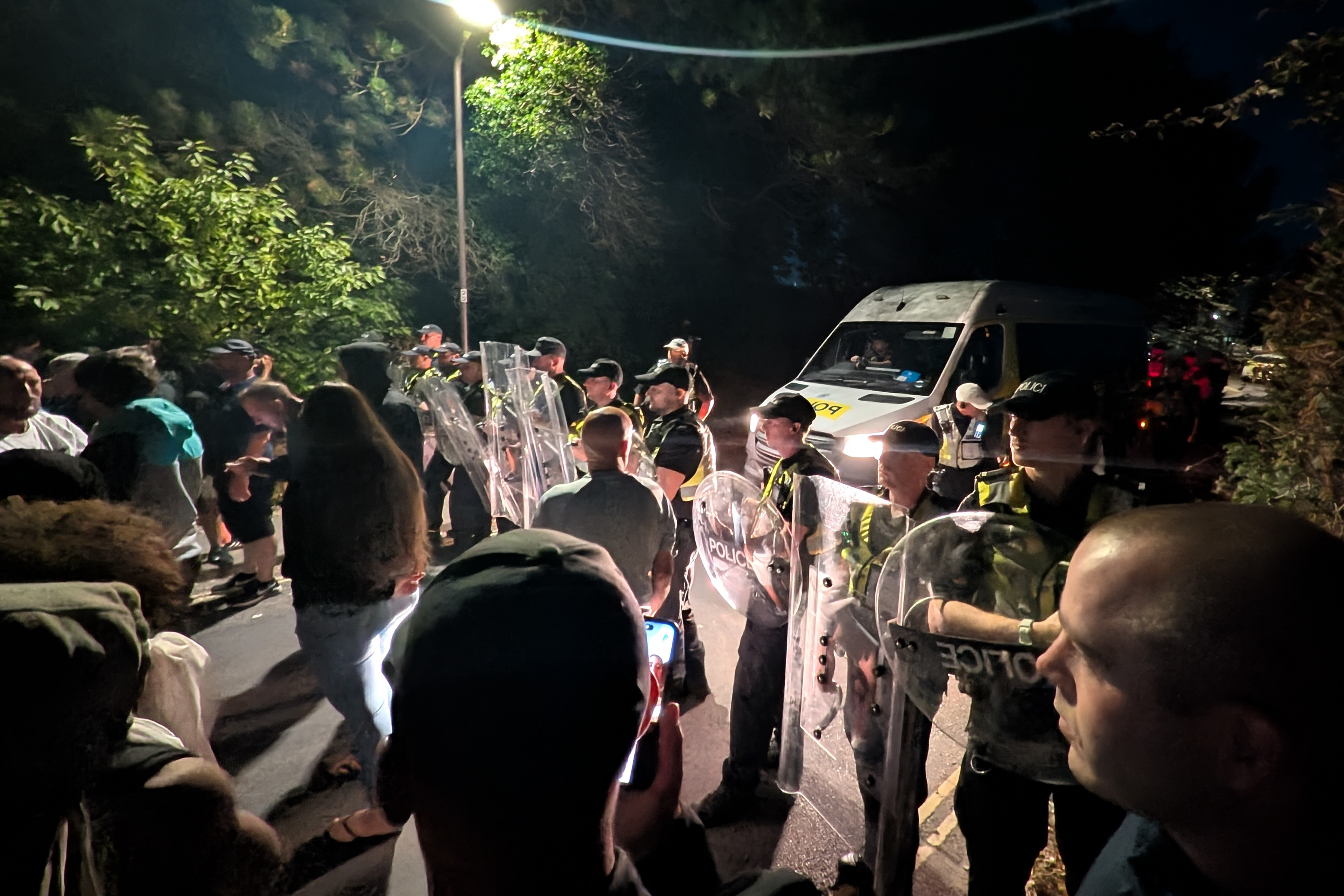
Police officers form a line to block protesters near Eastney Beach, in Portsmouth, England, on Sunday.PA
The myth that nothing ever happens on Labor Day weekend was punctured repeatedly in 2026, including the gruesome Miami crash of a cargo jetliner that killed five people on the ground and an armed man lunging at Ohio Democratic gubernatorial candidate Amy Acton at a campaign event. But the weekend’s most puzzling and arguably most alarming news was barely covered on American television: the sudden appearance in two British port cities — Dover and Portsmouth — of hundreds of black-clad, right-wing male protesters, their heads covered in balaclavas, there to cause chaos and protest the arrival of migrant boats.
The mysterious men — eventually tied to a self-proclaimed Christian group called the Patriot Platform, led by a former associate of the anti-Islamic, far-right political activist Tommy Robinson — attempted to block lifeboats carrying migrants from landing, and also tried to blockade their buses once on shore, while snarling local traffic as Dover’s famed white cliffs loomed in the background. The protests were a dramatic public illustration of the rising tide of right-wing reaction — much of it xenophobic rage over refugees — that has increasingly roiled politics in the United Kingdom, posing a threat to the milquetoast, inept Labour government.
But, in the spirit of the U.K.’s most famous fictional detective Sherlock Holmes, the real mystery along the British seacoast was the dog that did not bark. Although police did eventually restore order in the two port cities, the authorities were painfully slow to respond to such a large-scale civil disturbance, and few or no arrests were made. That’s in stark contrast to the frequent images over the last year of grandmothers and other peaceful, placard-carrying protesters getting dragged away by British bobbies when protesting for a free Palestine.
The reaction from the government of new Labour Prime Minister Andy Burnham was equally languid. A Burnham spokesperson, pressed by a reporter for a political response, would only call the shocking protests “an operational matter for the police to set out their response to the protests on the ground. So I will leave them to respond to that.” Winston Churchill, who (despite his many flaws) famously promised to fight fascists “on the beaches,” must have been spinning in his grave.
Speaking of Nazis, the protests and the sudden police embrace of pacifism coincided with a regional victory in a battered former industrial corner of eastern Germany for the extreme right AfD (Alternative for Germany) Party, the unholy heirs to Adolf Hitler’s legacy. This weekend’s echoes of Western Europe’s failed appeasement of the Nazis in the late 1930s are almost as troubling as the thuggish extremism itself. The coddling needs to end, or else we are condemned to repeat the absolute worst of our past.
What I wrote on this date in 2016
The protests in South Dakota, led by its Indigenous people, against the Dakota Access oil pipeline that erupted in the late summer of 2016 were a peak moment of 2010s political activism, and a lost cause (the pipeline opened the following year, after Donald Trump became president) that was totally worth fighting for. On this date 10 years ago, I was crusading — also unsuccessfully — for the Pennsylvania State Employees’ Retirement System (PSERS) to drop its roughly $192 million investment in the pipeline owner. I wrote, “Pennsylvania doesn’t have a great track record of environmental leadership — but there’s no reason why that history can’t be altered.”
I’ve mentioned it before in this space, but no one has done more to keep the tradition of the great American sports columnist alive than The Inquirer’s Mike Sielski. Last week he published a remarkable — and remarkably timely — deep dive into the case of a then-19-year-old from Pennsylvania Amish country whose addiction to online sports gambling and social isolation led him to make a bomb threat against the U.S. Open tennis tournament. The case was hardly an isolated incident, but the hallmark of an alarming trend: the growing number of threats not just against major sporting events but individual athletes, as more and more people — especially vulnerable young men like the one Sielski chronicles here — get addicted to the ubiquitous, heavily advertised betting sites. The piece is a reminder that great storytelling doesn’t need to be a dying art — but also that in-depth journalism requires time and your support. You provide that — and get some great reads in return — when you subscribe to The Inquirer.
By submitting your written, visual, and/or audio contributions, you agree to The Inquirer’s Terms of Use, including the grant of rights in Section 10.
We have never had so many ways to speak. Yet rarely has speaking felt so fraught.
A defining feature of this moment in history is its extraordinary capacity for speech. Social media offers direct pathways to audiences. Generative tools can now help us refine our own voices. The barriers to speaking have never been lower.
But the expansion of our ability to speak has not necessarily strengthened the conditions for free expression or led to more meaningful exchange. The same technologies that connect us to vast audiences also keep us within communities of shared views. And even as avenues for expression have multiplied, many Americans feel less certain that they can speak freely.
Just 54% say they feel “very” or “mostly” free to express their political views without government interference or punishment. Asked to think back 10 years, 72% said they had felt that free. Looking ahead 10 years, only 42% expect to. While some among us may feel this more or less acutely than others, the pessimistic outlook holds across a host of different demographic and partisan groups.
There may be more ways to speak than ever, but Americans are increasingly uncertain about participating in our nation’s public conversation. This should alarm us all.
The First Amendment protects our right to speak, but free expression also depends on venues where people can actually use that right. In recent decades, we have invested enormously in technologies that increase the quantity of expression while neglecting the places — whether civic institutions, public spaces, or so-called third places — where we cultivate social trust. The spaces where constitutional rights grow into habits of forthrightness, curiosity, listening, and mutual respect; where we learn to recognize one another as participants in a shared civic life.
The First Amendment gives us the framework. It’s up to us to foster the spaces where it comes to life.
Critical infrastructure
Our civic institutions are part of the critical infrastructure of free expression. They create opportunities for discovery and encounters that enrich our understanding. Museums invite us into the complexity of the past, revealing the stories, context, and perspectives that give history texture and meaning. Universities bring competing ideas into conversation and subject them to scrutiny, an aspiration that has always been messier in practice than in principle. Libraries give us the freedom to follow our curiosity, pursue knowledge on our own terms, and venture beyond the familiar. Where they still exist, local newsrooms surface stories that might otherwise go untold.
None of these institutions gets it right every time. But their value lies partly in creating environments that welcome people in while making room for the friction that meaningful inquiry inevitably produces: disagreement, challenge, surprise, and sometimes a change of mind.
The same technologies that connect us to vast audiences also keep us within communities of shared views.
The information economy generated enormous investment in the technologies that have reshaped our civic life. But investment in the institutions that help us make sense of these changes has not kept pace.
Philanthropy has an important role in this work. It can invest where markets won’t and governments can’t. It can absorb the risk that comes with genuine experimentation in new approaches to civic learning and engagement. It can identify and bring to scale emerging, community-led models that renew the institutions, relationships, and face-to-face experiences that remain essential to democratic life, even as more of our lives move online. And it can help institutions lower barriers and welcome new audiences.
A new partnership between the National Constitution Center and Knight Foundation is one effort to put these ideas into practice. On Wednesday, the center will host its inaugural First Amendment Day, inviting visitors to explore our expressive freedoms through history, conversation, creativity, and civic engagement. They will have opportunities to exercise their own rights, encounter the perspectives of others, and join conversations about the changing landscape of speech being shaped by new technologies. Later that evening, Govs. Josh Shapiro (D., Pa.) and Spencer Cox (R., Utah) will discuss free expression and civic dialogue at the Kimmel Center. And to ensure this special programming is available to as many people as possible, admission is free to all.
The goal is not simply to teach what the First Amendment says, but to practice the culture it makes possible.
Philadelphia has a rich history of civic discourse and debate. It is here that these ideas took root. The Civic Decade ahead, as we celebrate the 250th anniversaries of the Constitution and the Bill of Rights, offers us a chance to invest anew in our institutions of self-government. Building a culture of free expression should be part of that work.
We have more ways to speak than any generation before us. We must be just as ambitious about nurturing the spaces that remind us not to take our First Amendment rights for granted.
Julie Silverbrook is the chief content and learning officer of the National Constitution Center. John Sands is vice president of information and society at the John S. and James L. Knight Foundation.
In what might have been unheard of just two years ago, the Democrat in Bucks County’s key congressionalrace does not mention abortion or reproductive rights by name on hiscampaign website.
Instead, Bob Harvie, the county commissioner challenging U.S. Rep. Brian Fitzpatrick (R., Bucks) in the crucial 1st Congressional District race, largely highlights affordability issues, like tax cuts for the middle class and raising the minimum wage, on his list of 12 priorities.
It’s not that Harvie is suddenly against abortion — he has been vocal about his support forreproductive rights — but it exemplifies a broader shift in how Democrats are fine-tuning their message for must-win races in the county this fall.
Once a top-line issue for Democratic candidates in Bucks — one of theswingiest counties in Pennsylvania — discussion of abortion and reproductive rights has faded into the background in local political campaigns in favor of issues related to the economy and the cost of living.
“People [are]feeling that right now they’re living in an America that’s not fair for them,” Harvie said.
The issue has also been so far been absent from Fitzpatrick’s campaign and his website. The Republican currently holds a moderate view on abortion, though he has previously voted for restrictions.
For Harvie, discussions surrounding access to affordable healthcare — which is his No. 1 listed campaign priority — includes abortion. All of these issues reflect a broader struggle, he argued.
“They’re losing their rights, they’re losing their power over their own futures, they’re losing the American dream, all of that is combined,” Harvie said.
It’sa noticeable shift from Fitzpatrick’s last challenger Ashley Ehasz’s strategy in 2022 and 2024 whenabortion and reproductive rights served as the focal point in both of her campaigns, which followed thebacklash to the U.S. Supreme Court’s decision to strike down Roe v. Wade in 2022.
“Folks are pretty pragmatic when it comes to the politics here, and if something isn’t working, we’re not going to just keep doing it over and over again,” said Kierstyn Zolfo, co-leader of the progressive group Indivisible Bucks County, which supported Ehasz and is now backing Harvie.
Pennsylvania voters’ overwhelming disapproval of President Donald Trump and his handling of economic-related issues, as highlighted in a recent Inquirer/New York Times/Siena University poll, offers Democrats an opportunity as they target key state Senate seats in addition to the congressional contest.
“The point is to move the needle with the voters,” Zolfo said.
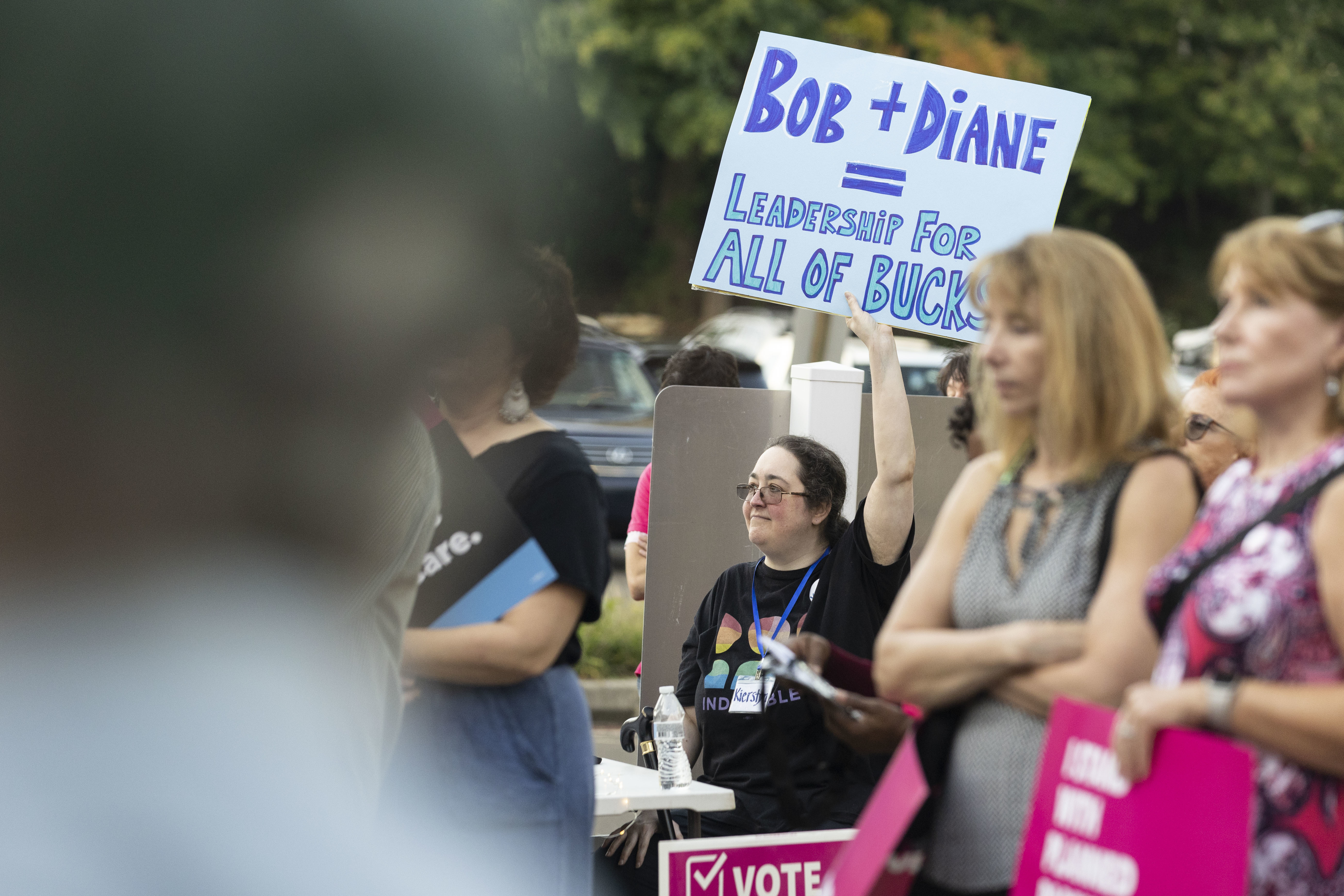
Kierstyn Zolfo, from Indivisible Bucks County, holds a sign that reads “Bob + Diane = Leadership for All of Bucks,” during a rally outside of the Middletown Township Police Department and Administrative Offices in Langhorne on Oct. 5, 2023. Harvie was running for county commissioner.Monica Herndon / Staff Photographer
How abortion became a ‘dormant’ issue in the midterms
The League of Women Voters of Pennsylvania has thousands of volunteers and members talking to voters across the state ahead of the midterm elections.
And leaders of the nonpartisan organization are hearing very little about reproductive rights. Instead, they’re getting feedback on crucial cost-of-living issues and concerns about democracy.
Abortion has become a “dormant” issue, said Amy Widestrom, executive director of the League of Women Voters of Pennsylvania.
“Nobody’s coming to us saying I need talking points on reproductive health in Pennsylvania,” Widestrom said.
The shift reflects a national trend, with ads related to abortion drastically receding amid Democrats’ focus on bread-and-butter issues, NOTUS reported.
The midterms are mainly about serving as a “referendum” on Trump’s economic agenda and foreign policy, said State Sen. Steve Santarsiero, chair of the Bucks County Democrats, though reproductive rights “must always be a central plank” of the party and its candidates, noting that majority of the country support a woman’s right to choose.
“Affordability is really the key issue, so you would expect candidates to talk about that, and then you know they’re obviously going to talk about other issues as well, and abortion rights would be one of those,” said Santarsiero, who is also up for reelection this year.
In The Inquirer/New York Times/Siena poll, Pennsylvania’s likely voters in November’s gubernatorial election between Shapiro and Republican challenger Stacy Garrity indicated that the economy and the cost of living were the two most important issues.
Abortion was ranked fourth.
Democrat Eileen Hartnett Albillar, a social worker and the county’s clerk of courts who is running to unseat state Sen. Frank Farry in the 6th state Senate district, said she doesn’t see abortion and the economy as “competing issues,” though conversations with voters have primarily focused on making ends meet. People, she said, will engage in discussion over protecting abortion rights and related topics if she raises the issue.
“They want to protect reproductive freedom,” Hartnett Albillar said. “But you know, the cost of living is just so incredibly crushing for so many people. Just because they’re quiet about it, doesn’t mean it’s not important.”
Reproductive rights took center stage in the 2022 election after several GOP-led states enacted restrictions on abortion following the Supreme Court’s decision to overturn Roe v. Wade.
In Pennsylvania, the issue helped motivate voters to turn out for Democrats Josh Shapiro and John Fetterman in the contests for governor and Senate. But as the procedure remains protected in the state under Shapiro, the topic has faded from focus.
Lehigh County Controller Mark Pinsley, a Democrat who is challenging GOP State Sen. Jarrett Coleman in the 16th district straddling Bucks and Lehigh Counties, still believes reproductive rights can motivate voters. But while he thinkshis party doesn’t talk about abortion enough, he acknowledged the dynamic is different now than it was then.
“I think you could win on that issue by itself,” Pinsley said. “I don’t think that’s true in the moment.”
Brianna Twofoot, vice president of organizing, elections and campaigns at Planned Parenthood Votes, said abortion and reproductive rights still matter to voters even if it’s not taking center stage this year.
“We’re not asking for anyone to make abortion or reproductive healthcare the number one issue, but we do think that voters want to hear about it,”Twofoot said. “And we do think that elected officials should be standing publicly on the issue.”
But any discussion of abortion will come amid what’s shaping up to be an apparent rebrand of the topic, folded into conversations about access to basic needs.
Signe Espinoza, executive director at Planned Parenthood Pennsylvania Advocates, said it’s key to look at reproductive rights through the lens of affordability, especially if health centers are defunded or closed.
“If Planned Parenthood doors close, where are you going to get your healthcare?” said Espinoza, whose organization is planning some days-of-action in Bucks. “It’s going to become more expensive. Everything’s going up.”
Bucks County Commissioner Bob Harvie hosts a veterans roundtable in May at Middletown Township Building in Langhorne.William Thomas Cain / For The Inquirer
How is the issue playing out in Harvie vs. Fitzpatrick?
Past elections in the Bucks County swing district have shown the abortion argument does not work against Fitzpatrick, who has been known to survive blue wave after blue wave.
Harvie, a twice-elected county commissioner backed by groups like Reproductive Freedom For All and Planned Parenthood Action Fund, said voters in the district already know where he and Fitzpatrick stand on abortion. The Democrat criticized Fitzpatrick and the Republican Party for supporting “pretty extreme restrictions on abortion.”
“I think that’s the reason why you’re not hearing it very much because everybody knows the positions and knows who’s on what side,” Harvie said.
Heather Roberts, a spokesperson for Fitzpatrick, said the Bucks County Republican has long supported “full reproductive freedom” for the first five to six months of pregnancy, as is outlined by Pennsylvania law.
“We also note that the Congressman’s position is the position held by the overwhelming majority of PA-1 residents,” Roberts said.
His campaign also noted Fitzpatrick’s backing of legislation in recent years that aimed to protect the right to cross state lines for an abortion as well as bills that protect access to contraception and in vitro fertilization and support of pregnant workers and women’s rights.
Rep. Brian Fitzpatrick (R., Pa.) speaks to reporters on June 3 on Capitol Hill after the House passed an Iran war powers resolution.Haiyun Jiang
But he has also voted for abortion restrictions, including a 20-week abortion ban in 2017 and twice against the Women’s Health Protection Act, which would have codified protections to access abortion into law.
The issue is absent from Fitzpatrick’s campaign website, which does not reference abortion in sections about healthcare or empowering women.
Widestrom, the executive director of Pennsylvania’s League of Women Voters, said Fitzpatrick has found a way to “neutralize” issues related to his position on abortion by continuing to win races where his opponents wage such arguments and refraining from touting a “hardcore pro-life” agenda.
“By not staking a claim, by not talking about it, it loses saliency in voters’ minds,” Widestrom said.