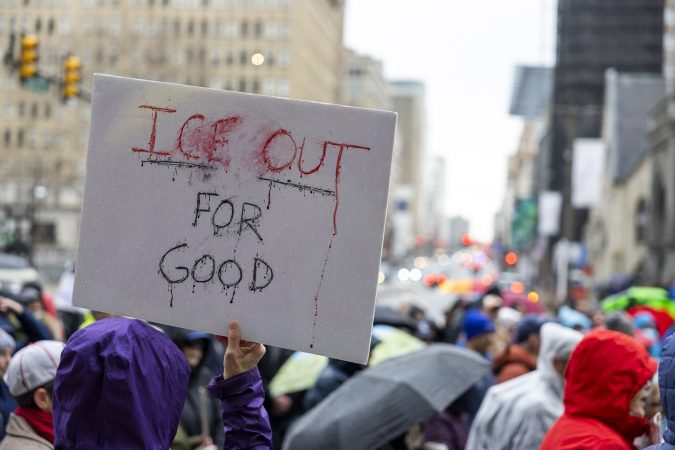
The U.S. Department of Homeland Security has formally reversed its plans to establish two ICE detention centers in Pennsylvania that were intended to hold up to 9,000 immigrants, Gov. Josh Shapiro said Wednesday.
The decision, which comes amid opposition from the state and from local communities, marks the end of efforts to convert warehouses in Berks and Schuylkill Counties, as the Trump administration works to offload some sites that were intended to support its mass-deportation agenda.
Shapiro, a first-term Democrat seeking reelection this year, told DHS officials in February he would “aggressively pursue every option to prevent these facilities from opening,” and his administration later denied permits to update local water and sewage systems to handle thousands of additional people.
On Wednesday, Shapiro praised the federal decision and credited his administration’s work to block the facilities.
“From the beginning, I’ve been clear that these warehouses should not be used as ICE detention centers because they are not suitable for people and converting them to detention centers would have posed serious risks to the health, safety, and infrastructure of the surrounding communities,” he said.
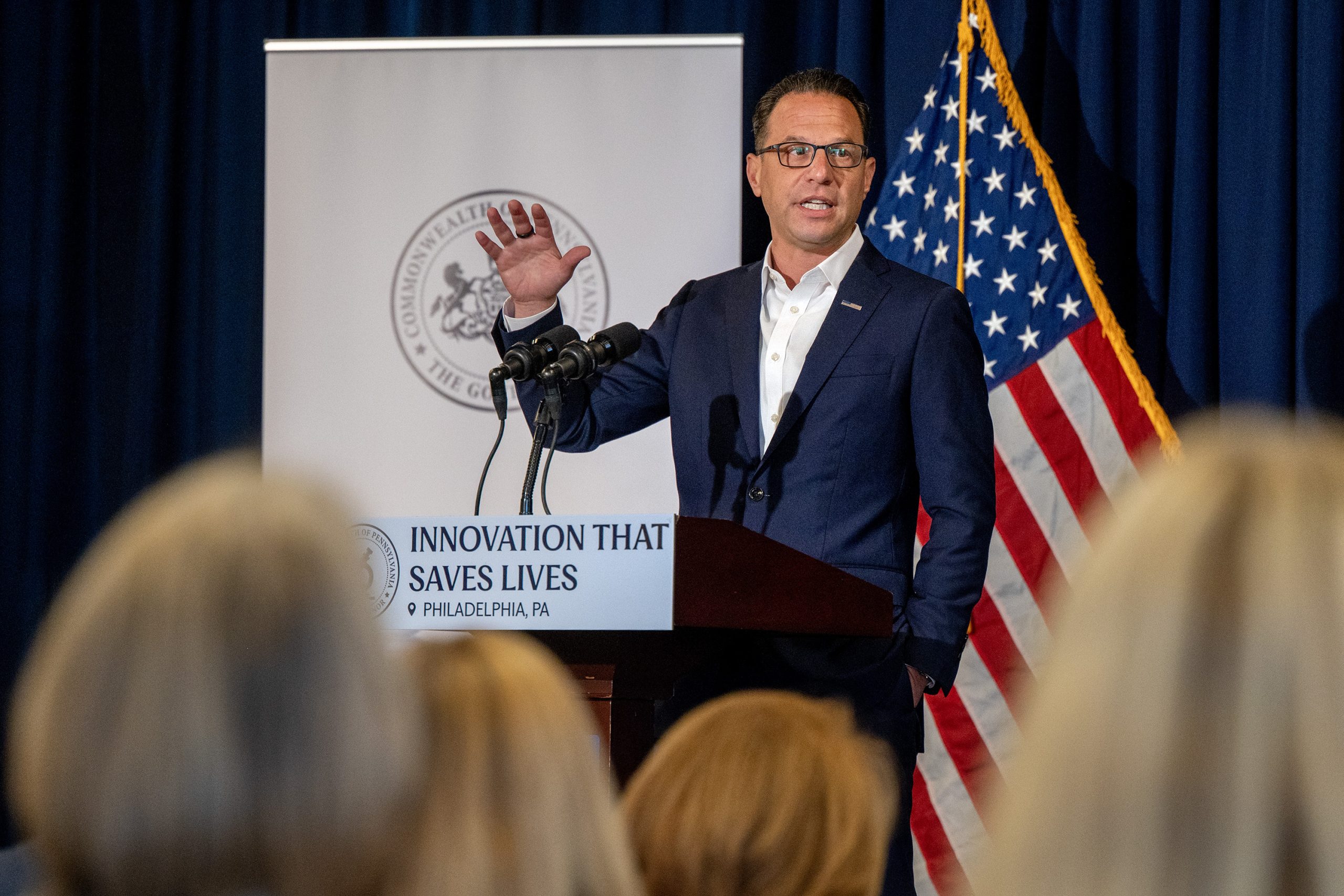
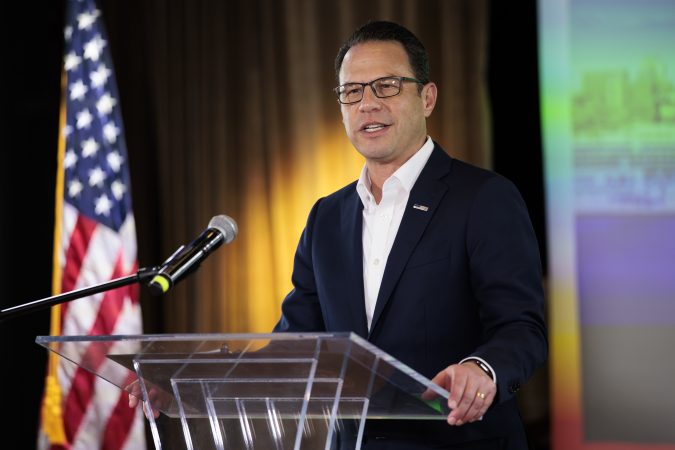
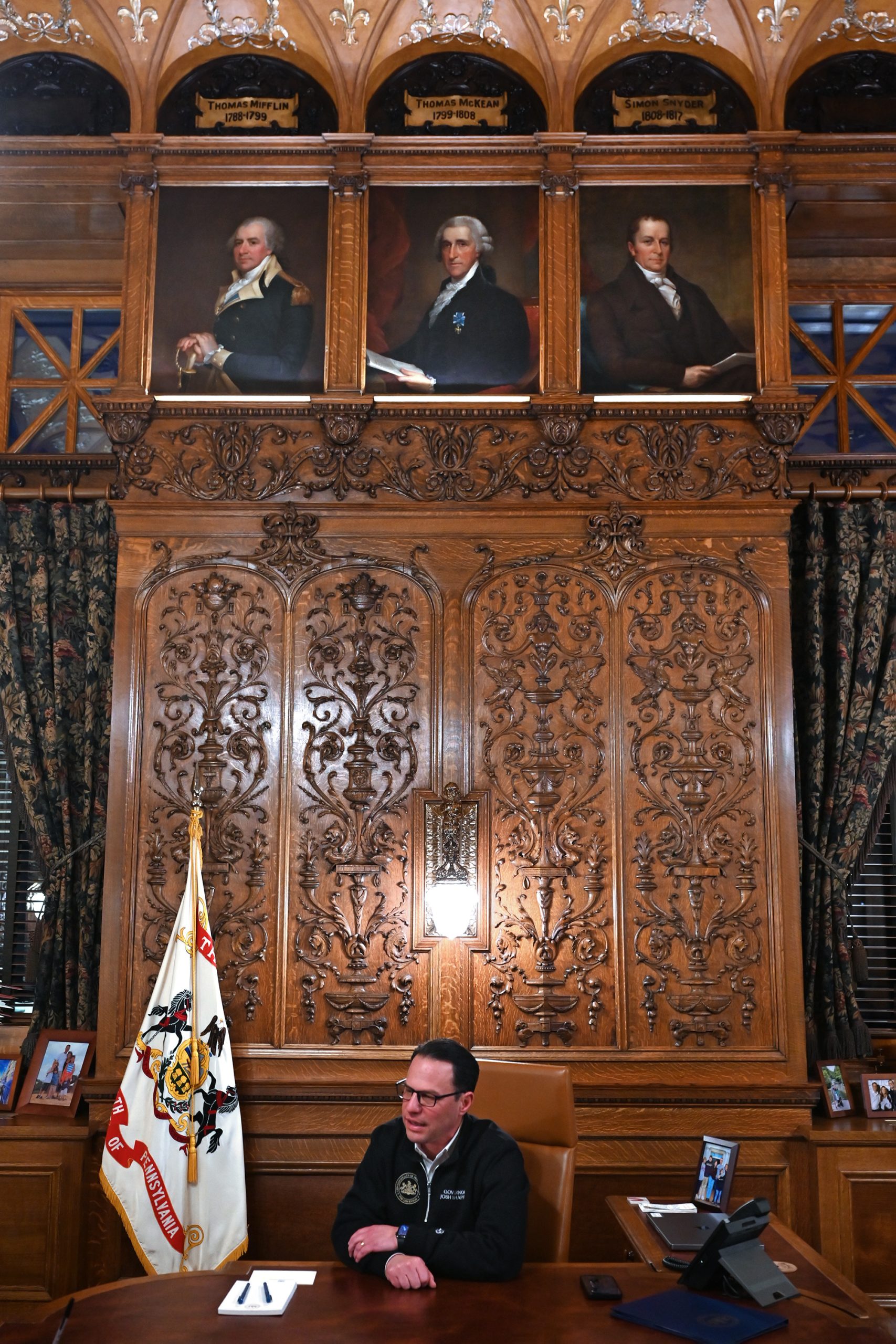
Gov. Josh Shapiro on July 21.Tom Gralish / Staff Photographer
ICE confirmed its plans to withdraw its permit requests in a filing Wednesday to the Pennsylvania Environmental Hearing Board, as well as in a July 13 letter from DHS Assistant Director James Ingalsbe.
News emerged earlier this year that U.S. Immigration and Customs Enforcement planned to spend more than $38 billion to buy warehouses and retrofit them as detention centers that would hold tens of thousands of immigrants. Those two dozen properties, including the two in Pennsylvania, would be located across the country, with some holding as many as 10,000 detainees.
In Pennsylvania, the Berks County project would have held 1,500 detainees, while the Schuylkill County one would have held 7,500.
An expanded ability to confine immigrants was central to Trump’s plan to deport as many as 1 million people a year. The additional space was necessary to help ICE respond to White House demands for greater numbers of arrests.
As of July 11, ICE held 65,765 people in detention, up from 60,311 in April, but below the record high of 70,766 set in January, according to Syracuse University professor Austin Kocher, who studies immigration data.
During Trump’s first year in office, the government fell short of his million-deportation goal, removing 622,000 people through mid-December, fewer than the 778,000 deportations carried out in President Joe Biden’s final fiscal year, according to the American Immigration Council in Washington.
While some around the country saw the conversion of empty warehouses as a chance for new jobs, others were opposed over humanitarian concerns, the impact on water and sewerage use, and the potential loss of tax revenue.
Earlier this summer, it appeared likely that the plans in Pennsylvania were being discarded.
The New York Times reported in June that ICE planned to offload its two properties in Pennsylvania and a third in New Jersey, which were purchased for more than $336 million. Those were among seven warehouses across the nation that would be sold or handed off to other federal agencies, according to the Times.
The same month, U.S. Sen. John Fetterman (D., Pa.) said that detention-warehouse plans would not go forward in Tremont and Upper Bern Townships andthat Homeland Security Secretary Markwayne Mullin had “recognized the negative impacts these facilities would have in Pennsylvania.”
Only one House Democrat from Pennsylvania voted against an amendment on Wednesday that would have ended aid to Israel.
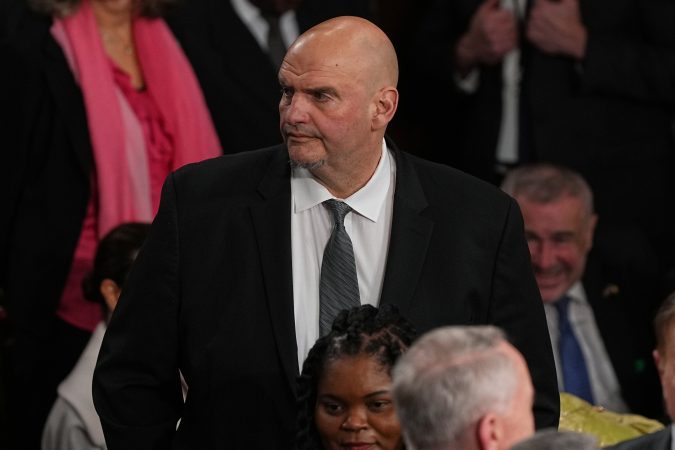
The rest backed the measure, along with a plurality of Democrats in the chamber, highlighting shifts and factions within the party. The vote also inches closer to crossing a line that Democratic Sen. John Fetterman of Pennsylvania says could cause him to abandon the party.
The amendment, which would have cut $3.3 billion in military and humanitarian aid to Israel, was offered by U.S. Rep. Thomas Massie, a Kentucky Republican who has clashed with President Donald Trump and was the only member of his party to support the measure.
Massie’s amendment failed in a 104-314 vote, but it showed shifting sentiment around Israel in the Democratic Party.
U.S. Rep. Brendan Boyle,who represents parts of Philadelphia, was the only Pennsylvania Democrat who voted against the amendment.
Boyle said that the U.S. should push back against the actions of Israeli Prime Minister Benjamin Netanyahu’s government, but that the amendment was too broad to present a viable solution.
“This amendment would have forced the closure of the U.S. Embassy in Israel, ended refugee resettlement programs, cut off vital humanitarian and diplomatic efforts, and weakened our ability to combat terrorist organizations,” Boyle wrote in a statement to The Inquirer. “The United States must change course in response to the far-right Netanyahu government’s conduct, the settler violence, and the devastating suffering of Palestinian civilians. But this sweeping amendment was not the answer.”
The six other Pennsylvania Democrats supported the measure, while all Republicans present from the state voted no; U.S. Reps. Scott Perry of York County and Ryan Mackenzie of Lehigh County missed the vote.
The share of Democrats voting for the amendment showed a striking difference from two years ago, when a similar amendment from U.S. Rep. Summer Lee, a progressive from Pittsburgh, garnered only 37 Democratic votes and 21 GOP votes.
“Thousands and thousands of Palestinians have been killed using our tax dollars,” Lee wrote on X. “This shift in the party is a testament to the movement but it’s still unconscionable for any member of Congress to justify sending any aid to fuel Israel’s genocide.”
The Israel-Hamas war started in October 2023 after a Hamas-led attack killed 1,200 Israelis. Since then, the Palestinian death toll has surpassed 73,000, the Associated Pressreported.
Fetterman, a staunch supporter of Israel, said that though he has no current plans to leave the Democratic Party, ending support for Israel is a line that could push him out of the party.
“If our party ever becomes — and just makes it official — the anti-Israel party, that’s when I would leave because that’s been a moral clarity for me,” Fetterman said to the Hill on Wednesday.
Fetterman has been insistent that he is still a Democrat, publishing an opinion piece in the Washington Post in May emphasizing he is still “pro-choice, pro-weed, pro-LGBT, pro-SNAP, pro-labor and even pro-rib-eye over bio slop.”
But recently, more and more of Fetterman’s support has been coming from across the aisle.
The poll also found that more than half of registered Pennsylvania voters want Fetterman to leave the Democratic Party altogether — a number that reflected majorities of voters from both parties.
U.S. Sen. John Fetterman has insisted he has no plans to leave the Democratic Party, despite continued attempts to sway him.
“I remain strongly pro-choice, pro-weed, pro-LGBT, pro-SNAP, pro-labor and even pro-rib-eye over bio slop,” the Pennsylvania lawmaker wrote in an opinion piece published in the Washington Post in May.
But if he were to change his mind, a new poll shows he might have a home in Pennsylvania’s GOP.
Just under half of registered voters in the state approve of how Fetterman is handling his job as a U.S. senator, according to a Quinnipiac University poll released Wednesday.
But the vast majority of the first-term Democrat’s support comes from voters in the opposing party: 77% of surveyed Republicans said they approve of Fetterman, while just 19% of Democrats do.
That is a higher share of voter support than even U.S. Sen. Dave McCormick, Fetterman’s Republican colleague from Pennsylvania, received from his own party, with 68% of surveyed Republicans approving of his job performance.
Fetterman also faced more ire from Democrats than his GOP counterpart — with 69% of Pennsylvania Democrats disapproving of their party’s senator, compared with 52% who disapprove of McCormick.
The Quinnipiac survey, conducted June 9-13, polled 895 registered Pennsylvania voters and has a 4.3-percentage-point margin of error.
President Donald Trump appears at a Defense and Innovation Summit hosted by U.S. Sen. Dave McCormick (left) at the US Army War College in Carlisle Wednesday, July 15, 2026.Tom Gralish / Staff Photographer
Since Fetterman began casting key votes in support of President Donald Trump and publicly criticizing progressives in his party, conservatives have been leaving the door open and, at times, rolling out a welcome mat.
(function(){function e(){window.addEventListener(`message`,function(e){if(e.data[`datawrapper-height`]!==void 0){var t=document.querySelectorAll(`iframe`);for(var n in e.data[`datawrapper-height`])for(var r=0,i;i=t[r];r++)if(i.contentWindow===e.source){var a=e.data[`datawrapper-height`][n]+`px`;i.style.height=a}}})}e()})();
State Sen. Greg Rothman, chair of the Pennsylvania GOP, said he could consider supporting Fetterman’s reelection if he switched parties, and Fox News’ Sean Hannity said Trump himself urged Hannity to coax Fetterman into becoming a Republican in exchange for the president’s support.
During an interview Wednesday at the Hill Nation Summit in Washington, Fetterman said the Democratic Party’s stance on Israel could push him out.
“If our party ever becomes — and just makes it official — the anti-Israel party, that’s when I would leave because that’s been a moral clarity for me,” he said.
Democrats, meanwhile, have mostly taken a hands-off approach. The Pennsylvania Democratic Party has previously declined to comment on Fetterman’s positions and actions, including his new joint fundraising committee with McCormick. The venture, announced earlier this month, allows them to split money from donors who want to give to both of their campaigns, a boost for Fetterman, who has reported raising significantly fewer campaign dollars on his own.
Democratic Gov. Josh Shapiro has also avoided directly criticizing Fetterman, but admits their relationship is estranged.
In an interview with Politico in May, Shapiro said it had been “probably years” since he had seen Fetterman at an event in Pennsylvania.
“I’m not saying he hasn’t been at one, but I haven’t seen him and I’m at most things,” he said.
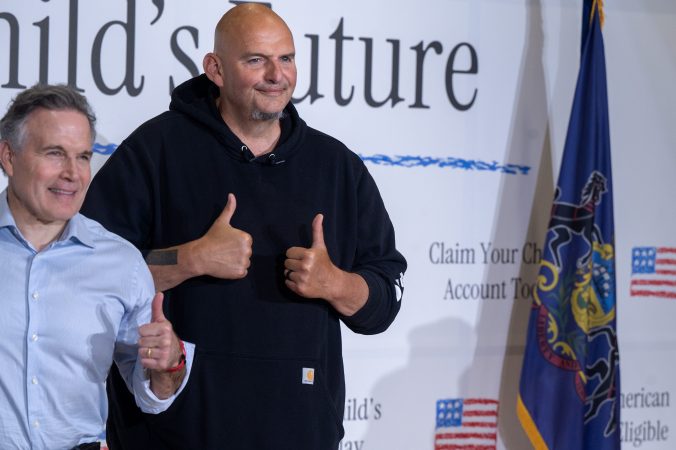
Fetterman was most recently in Philadelphia at an event with McCormick to promote Trump Accounts, the new federally backed savings accounts for kids that became law with Trump’s signature One Big Beautiful Bill Act.
More than half of registered Pennsylvania voters want Fetterman to leave the Democratic Party altogether, according to the Quinnipiac poll.
It is a figure that represents both push and pull: 57% of Democrats surveyed said they want him to leave, and 55% of Republicans do, too. The poll did not ask whether he would be welcomed into the GOP.
“The Democrats would like to show him the door. The Republicans seem to be welcoming him in. Thus is the political irony of Sen. John Fetterman,” Tim Malloy, a polling analyst at Quinnipiac, said.
(function(){function e(){window.addEventListener(`message`,function(e){if(e.data[`datawrapper-height`]!==void 0){var t=document.querySelectorAll(`iframe`);for(var n in e.data[`datawrapper-height`])for(var r=0,i;i=t[r];r++)if(i.contentWindow===e.source){var a=e.data[`datawrapper-height`][n]+`px`;i.style.height=a}}})}e()})();
Fetterman, who is likely to face a primary opponent, has not yet disclosed whether he plans to seek a second six-year term in 2028. U.S. Reps. Brendan Boyle (D., Philadelphia) and Chris Deluzio (D., Allegheny) and former U.S. Rep. Conor Lamb, a Western Pennsylvania Democrat who lost the Senate primary to Fetterman in 2022, are all considered to be potential contenders.
Malloy called Fetterman’s approval among Republicans “stunningly high.”
“He’s a maverick,” he said. “He is certainly one of the most unique politicians in the country.”
“Being an independent voice that works with the other side to deliver for Pennsylvanians might put me at odds with the party that I have stayed committed to and have no plans to leave — but I will continue to put the commonwealth and the country first,” Fetterman wrote in the Post.
A journalistic mentor of mine back in the 1980s told me that Harry Truman, pressed for a comment on the passing of a political enemy, finally said, “It’s a damn shame when anybody dies.” Of course, like most perfect quotes, HST probably never actually said this, yet I find occasion to think of these words often. On Saturday night, South Carolina GOP Sen. Lindsey Graham — whose moral compass went haywire in the 2010s when a brief moment of truth–telling about Donald Trump melted into embarrassing capitulation — died suddenly from heart problems. He was just 71. It’s a damn shame.
Dems need to give up on fake blue-collar campaigns like Platner’s
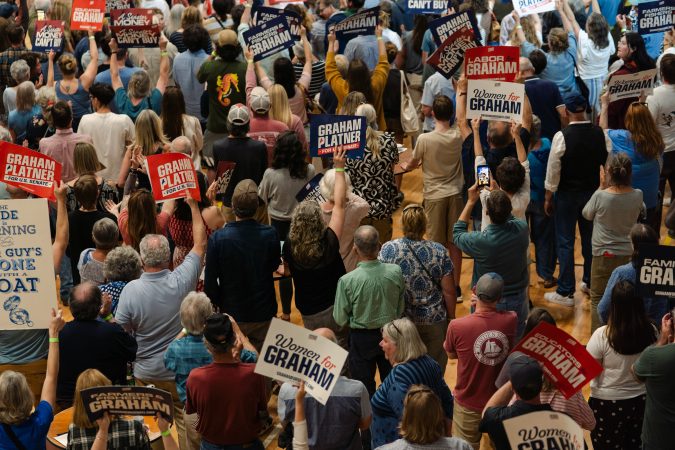
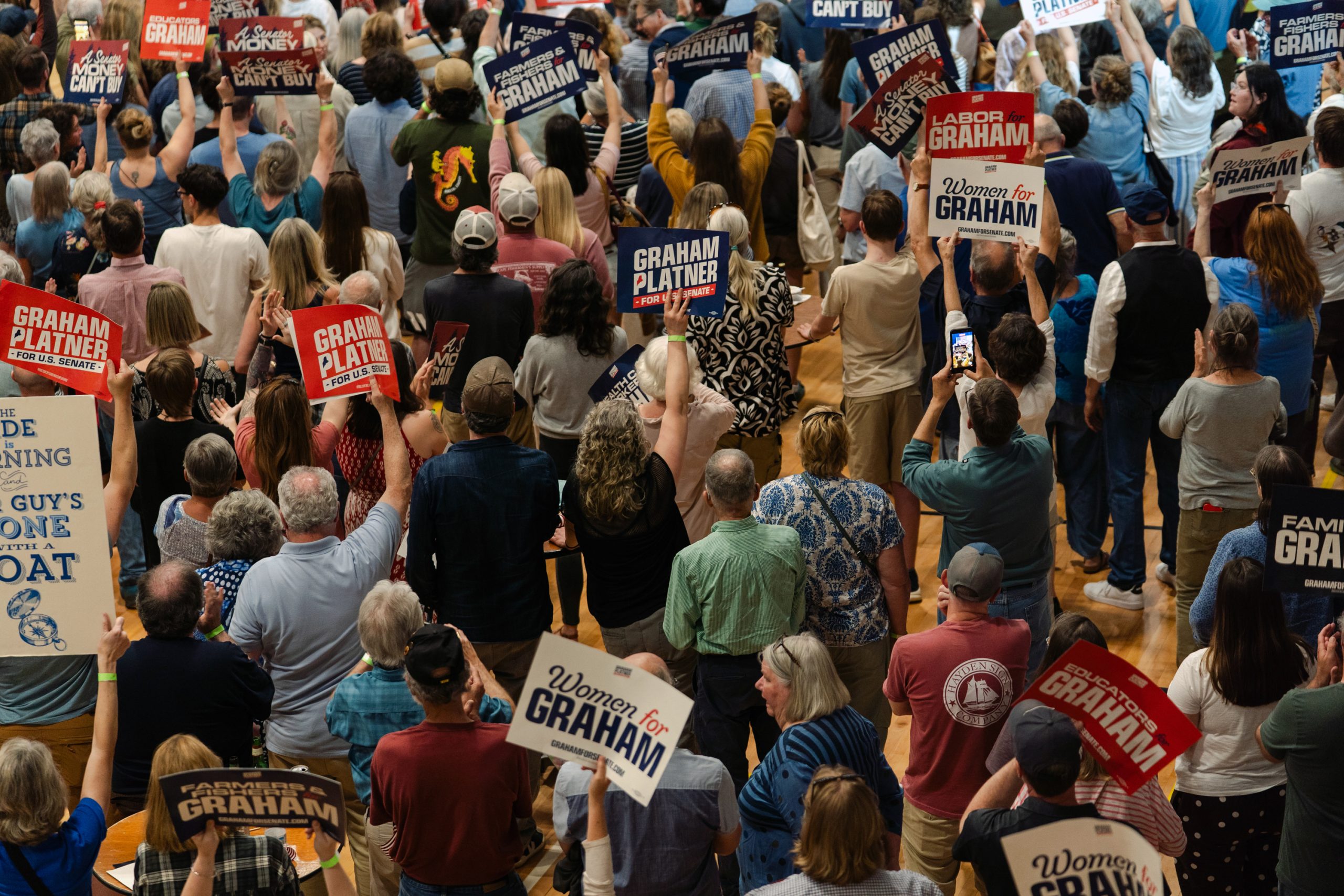
Supporters cheer for Graham Platner in Blue Hill, Maine, after he won the Democratic Senate primary on June 9. Platner’s bid for the Senate inspired progressive Democrats. But the campaign, which he suspended July 8, was messy, disorganized and ultimately doomed by a steady drip of scandal. SOPHIE PARK
Graham Platner, the failed Maine Democratic Senate candidate, was introduced to most of us outside of the Pine Tree State less as a human being than as a fully formed narrative.
The ruggedredhead with angry eyes was an ex-Marine from the Iraq and Afghanistan wars who became an oyster farmer and then a political outsider with all the right words for an electorate that’s mad as hell and isn’t going to take it anymore.
We now know that Platner’s origin story — compelling, but larded with omissions and sprinkled with lies — belonged on the fiction shelf. But even after the Democrats’ scandal-scarred June primary winner accepted the inevitable and ended his candidacy on Friday, he lives on as an avatar upon which everyone with a stake in a badly broken Democratic party can project their distrust and rage toward others — folks who ought to be their allies in an all-out war against fascism.
Days later, the Platner discourse is almost as toxic as the candidate himself. People who voice their opinions, even in 280 characters on social media, get called everything from sexist Bernie-bro rape apologists to Quislings who want big corporations to keep running the Democrats into the ground, and all the rest in between. Don’t even mention Israel. In fact, don’t @ me after this is posted.
Having said all that, there is a conversation that must be had by the Democrats, and probably a wider circle. And the disappearance of Platner himself from the picture makes that easier, because I think we can all stipulate that as a human being he was clearly not worthy to be a U.S. senator, even in the Senate’s current morally diminished state.
There is another Graham Platner somewhere on Earth 2 who also suffered PTSD and developed a drinking problem fighting in pointless wars, and who also got a Nazi tattoo and posted wretched stuff on Reddit, but turned his life around in a glorious redemption song. But that’s not the Platner we got on here on Earth 1. Instead of an apology, he was weirdly defensive about his past, because — we now know — he was hiding stuff that was even worse than that.
Although Platner has denied the most serious charge of a sexual assault, there should be zero tolerance in the Democratic Party for the type of sexual misconduct that’s been confirmed, let alone what’s been additionally alleged. That’s not just the only proper moral stance, but it sets Dems apart from a twisted GOP that nominated Trump three times. Platner’s disappearance is a blessing to everyone.
But even with that matter resolved, we still haven’t answered the bigger question that I posed the only other time I wrote about Platner back in the spring: Why did a majority of Maine Democrats — roughly 150,000 voters — ignore the party establishment to back this guy?
But first Democrats — and just about everyone, frankly — need to do a better job understanding not just the “why” of Platner supporters, but the “who.” Baked into the Platner myth was this notion that in running a gruff-sounding ex-Marine and oyster farmer, Democrats had found a key to regaining the long-lost white working class.
Two huge problems with this. First — and this will sound familiar here in Pennsylvania where shorts-and-hoodie-wearing Sen. John Fetterman grew up upper middle class before donning a blue collar — Platner comes from a fairly privileged background. He’s the son of a lawyer and upscale restaurant owner and grandson of a famous architect; he started high school at the super-elite Hotchkiss School.
Which brings us to the crux of the problem: the notion that Platner’s pre-implosion success was his ability to win back working-class voters in an overwhelmingly white state. Polls exposed this all as a lie. A late June survey from the New York Times/Portland Press Herald/Siena showed Platner losing white, non-college educated voters by a whopping 21% to the GOP incumbent Sen. Susan Collins. So what gave him a shot at winning? A massive 37% edge among college degree holders.
Look, we all know that it’s been the obsessive mantra of the political pundit class that Democrats will never fully win back America without restoring the working-class coalition that elected Franklin Roosevelt four times during the New Deal era. I hate to be a contrarian here, but what if that’s not true?
A society that over a half-century has once again made higher education an elite sport and now has a right-wing media and demagogues like Trump to heighten working-class grievances and blame the wrong people has created voters who — at least for now (hold this thought) — arguably aren’t worth chasing after.
The frayed alliance of progressives and liberals who comprise the core of the Democratic base do some dumb stuff — opposing new units that could lower housing costs, or “nice white parents” leading to de facto school segregation — that should stop.
An America that’s not inclusive and that isn’t fair when it comes to gross income inequality, not to mention who gets to see a doctor or send their kid to college, isn’t a cause worth fighting for. And there’s already a healthy number of working-class people — not the majority, not yet — who would agree with this.
Platner was a bad guy but he appealed to voters who wanted good things. Let’s not bemoan the fact that his movement was based on educated people. Let’s build on that. Instead of lowering our values to win elections, let’s play the long game to lift more people up to a better place.
It’s way past time for college-educated progressives and our allies to stop apologizing for the things we believe in. The current push to find a candidate who can replace Platner and fight for all the right stuff — without the personal baggage of their predecessor — is a great place to start. Maybe it’s even time to revive the old cliché: As Maine goes, so goes the nation.
Yo, do this!
Tuesday is the folk-music legend Woody Guthrie’s 114th birthday. I use the present tense because it very much feels like the singer who influenced living icons from Bob Dylan to Bruce Springsteen is still with us. Now, a friend, the pioneering rock journalist Greg Mitchell, has directed a new documentary about the musician, his political activism in the mid-20th century, and his lasting influence: Woody Guthrie and the Ghost of Tom Joad. It’s now streaming on PBS.org and will also be popping up on PBS stations this summer. You can — and should! — stream it here.
Monday night I read a remarkable piece of journalism that I feel compelled to share. Last week, a lot of America was talking about a photo from July 4 that showed a young Black woman on a D.C. Metro train surrounded by masked members of the white supremacist Patriot Front. There was so much commentary about what this woman must be feeling and thinking, and almost all of it — as shown by some remarkable reporting by former Inquirer journalist Ellie Silverman, writing for NOTUS — was wrong. The truth is heartbreaking.
Ask me anything
Question: Why do we not know what’s going on with (ailing Kentucky Sen. Mitch) McConnell? What is the Republican endgame? What’s the benefit to prolonging the process of determining a replacement? What is that process (seems to be in dispute)?
Answer: We know a little more now than we did when I addressed this issue last week. His staff on Sunday released a brief statement and what is being called a “proof of life photo” — with that morning’s Washington Post sports page visible in the shot — seeking to explain McConnell’s month-long hospitalization and hoped-for return to the Senate. There were, of course, immediate conspiracy theories that the photo was artificial intelligence, but there’s no compelling evidence of that. The biggest mystery is, why doesn’t the 84-year-old McConnell just quit, with only about six months left until he leaves office in January? Kentucky has changed its Senate replacement law a couple of times, mainly because GOP lawmakers don’t want Democratic Gov. Andy Beshear making the pick. The new law requires a special election, but there probably will not be one if McConnell stays in office through Aug. 3. Republicans seem desperate to avoid the special election, and I’m not sure why, since McConnell surely isn’t helping advance the Trump agenda from his hospital bed.
What you’re saying about…
You really didn’t think I could go a whole newsletter without mentioning soccer, did you? Last week’s question about Trump’s FIFA intervention and the reversal of the American Folarin Balogun’s red-card suspension drew a unanimous response: The president was wrong to get involved, and he seemed to create a negative vibe around the U.S. team before it got blown out of the World Cup by Belgium, 4-1. “To me, it appeared to be the wrong call, but the ref called it.” wrote ex-soccer mom Suzanne Urban Ryan. “We had to live with it. Trump getting involved was just really poor judgement based on his need to win a game that he is not even a player.” Added Jordan Lang: “I’m sure his corrupted meddling negatively affected the psychology of the U.S players.” Yup.
📮 This week’s question: Trump plans to address the nation in prime time Thursday with ginned-up information about his bogus and debunked claim that the 2020 election was stolen from him. He is laying the groundwork for November, and election interference on a scale to rival the Jim Crow South. How can Congress, the courts, the media, and everyday citizens respond to this dire threat before it spirals out of control? Please email me your answer and put the exact phrase “Trump election meddling” in the subject line.
Backstory on why ICE is killing immigrants, again
A vehicle with a damaged window is transported away from the scene of a shooting involving U.S. Immigration and Customs Enforcement, Monday in Biddeford, Maine. Robert F. Bukaty
The fight against police brutality against African Americans in the late 2010s found its rallying cry when New York City police choked and killed a street peddler named Eric Garner, whose last words were. “I can’t breathe!” Now, Monday’s latest fatal shooting by U.S. Immigration and Customs Enforcement agents that shattered the morning calm of Biddeford, Maine has produced a new mantra. As 26-year-old Joan Sebastian Guerrero lay dying on the pavement — shot in the head, then dragged from his car and handcuffed — a bystander heard him say in anguish: “I tried to stop.”
Moments earlier, the man, reported to be a Colombian national with a U.S. work permit, had left his home, possibly with his daughter, in a white Kia sedan, which was hemmed in by ICE agents in their vehicles. Although the Department of Homeland Security changed the wording of its statements over the course of the day, it ultimately reported that an ICE agent shot Guerrero because the driver attempted to flee and the officer was “fearing for public safety.” But ICE and DHS, whose officers have now shot and killed at least 11 people since Donald Trump returned to office, have repeatedly seen their versions unravel as more video and witnesses emerged. The two most recent attacks — Monday’s assault on Guerrero and last week’s Houston shooting of 52-year-old Mexican national Lorenzo Salgado Araujo — happened on working-class residential streets without clear videos of the shootings, and with ICE agents not wearing body cams.
Still, a pattern is starting to emerge as DHS and its new leader, the former Oklahoma senator Markwayne Mullin, put a flood of new, barely trained ICE recruits on the streets in attempt to make mass arrests of immigrants without the same level of hoopla and backlash that happened in cities like Minneapolis and Chicago under Mullin’s predecessor, Kristi Noem. In both the Houston and Biddeford shootings, ICE began the morning in what it claimed was a targeted operation seeking a specific immigrant with a removal order, only to try to arrest and ultimately kill men, in Salgado and Guerrero, who were not the supposed targets.
It’s quickly becoming clear that ICE’s new strategy is a recipe for disaster. Both Salgado and Guerrero, according to what we know from witness accounts, didn’t seem to know what exactly to do when their vehicles were surrounded by unmarked vans and yelling men. In both cases, ICE agents interpreted the predictable panic and chaos as aggression, and made a split-second decision to end a human life forever. It increasingly looks as if the federal agents — facing an impossibly ambitious goal from the Trump regime of arresting and deporting 1 million people a year — insist they have a name on a sheet of paper, when in reality they are racially profiling brown-skinned men driving to blue-collar jobs.
Like so many projects of our current government, the new ICE scheme is not only inhumane but also dumb and counterproductive. Mullin’s apparent new strategy was to meet the high arrest quotas sought by Trump and his immigration guru Stephen Miller without generating the kind of public protest and backlash that all but drove DHS out of Minnesota this winter. It’s not working. Even before Guerrero’s name was released, angry demonstrators took to the streets in Biddeford and stormed the office of the state’s GOP Sen. Susan Collins, who recently voted for a $70 billion cash infusion for immigration raids.
The tactics may have changed slightly, but the repulsive devaluation of human life has not. Mass deportation is a failure — strategically, politically, and morally.
What I wrote on this date in 2019
Some days my past writings read like Nostradamus, but more often than not they reveal how fleeting our political moments can be. On this date seven years ago, this columnist joined a lot of progressive voters in swooning over the early-stage presidential ambitions of Massachusetts Democratic Sen. Elizabeth Warren, who had just spoken at the left-wing convention Netroots Nation here in Philadelphia. “With her slam-dunk performance Saturday,” I wrote, “Elizabeth Warren became president … of the American progressive movement, anyway.” But Sen. Bernie Sanders had other ideas about that, and then Joe Biden and South Carolina voters came along with different ideas about Warren, Sanders, and control of the Democratic Party. Read the rest: “Netroots Nation was the day Elizabeth Warren became president of the American left.”
Recommended Inquirer reading
It was a full week for me, and for American outrage. First, I tackled the Houston ICE killing of 52-year-old Mexican national Lorenzo Salgado Araujo and the return of ambitious immigration raids to American cities. I noted that the new ICE strategy aimed to ramp up arrests without generating public outcry, and I urged readers not to go to sleep on mass deportation. Over the weekend, I wrote about the similarities between the Trump regime and the disastrous ancient reign of the Roman emperor Caligula. I detailed how Trump’s growing paranoia that he will be assassinated in office is causing new bloodshed in the Persian Gulf and inspiring fresh efforts to quash civil liberties here at home.
Kenesaw Mountain Landis must be spinning in his grave. He was the former federal judge who tried Chicago’s notorious “Black Sox” for throwing the 1919 World Series at the behest of New York gamblers, then became baseball commissioner to clean up the national pastime. For decades, Major League Baseball shunned even the slightest whiff of gambling connections that might taint the sport — but times have changed. My Inquirer colleague David Gambacorta — one of the best investigative reporters in the business — last week broke a remarkable story about how the lucrative betting site FanDuel egged on a local addicted gambler to keep playing until he lost some $1.5 million. Plot twist: FanDuel’s effort includedhaving Phillies slugger Bryce Harper send a personalized video to please the local bettor. It’s disturbing that a) Harper, with a 13-year $330 million contract, also feels the need to peddle $899 videos on Cameo and b) he has a relationship with people at a gambling website. But FanDuel is now “the official sports betting partner” of MLB — an appalling relationship that only encourages morally dubious behavior like the Harper video. The rank corruption of modern American society, including sports, is why we need investigative reporters like Gambacorta. You can read the next installments in this saga, and support his work, when you subscribe to The Inquirer.
By submitting your written, visual, and/or audio contributions, you agree to The Inquirer’s Terms of Use, including the grant of rights in Section 10.
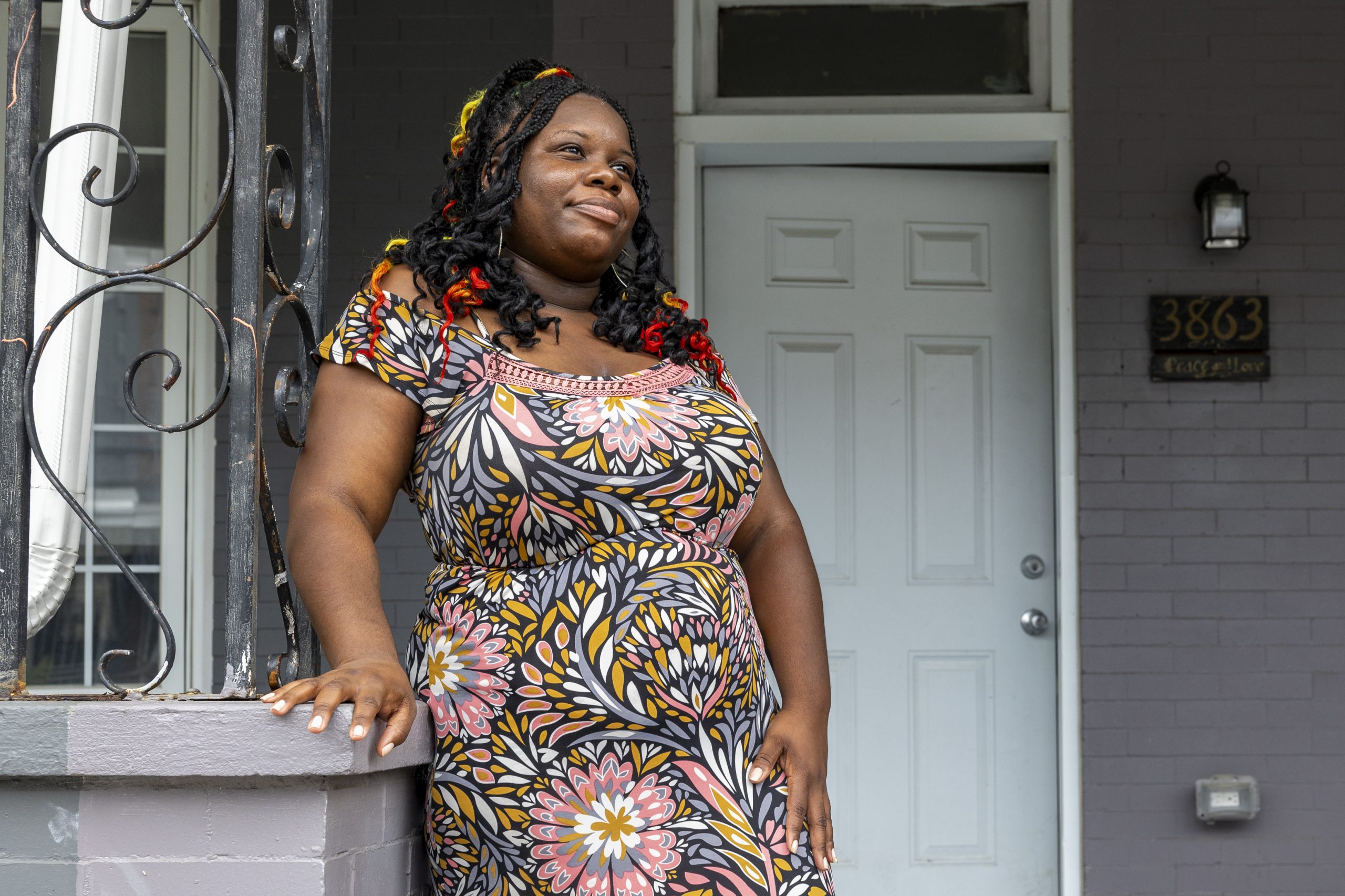
Michelle “MiMi” Gravley changed addresses frequently during her childhood in the 1990s, but rarely with a moving truck.
With her belongings in boxes and plastic bags, she would often find herself lodging at others’ houses in rooms her single mother could afford to rent. So it meant the world to Gravley, herself a single mother, last fall when she bought her first house, a rowhouse in North Philadelphia.
Gravley, 38, is no longer battling housing instability. But she has spent much of her adult life poor, including nearly two decades straight of government assistance, and wants a different fate for her three children. So she’s looking at wealth — specifically her house and her high-yield savings accounts — as something that can help her children avoid poverty as adults.
“I just want them to be OK,” Gravley told me, referring to her daughter, Buttons, 17, and her sons, Chippy, 14, and Boots, 11. “And when they have their kids, their kids is OK. And just, just breaking up generational curses.”
Gravley is one of the parents I spoke with recently in the Philadelphia area who wants to help their children build wealth to break the cycle of poverty in their families. Their goal is to bequeath something — whether it be modest savings or a piece of real estate — to help counter the pull of intergenerational poverty.
They face long odds: Only 16% of children who spend at least half their childhood poor go on to be economically successful, one study found. But there are emerging ideas and policies designed for children that some believe could improve those odds.
I’ve been a business reporter for more than a decade, with a keen interest in how wealth is built and deployed. I’ve had conversations with people from across the economic spectrum, from workers earning minimum wage to C-suite executives and billionaires. I closely follow developments about wealth and personal finance. And lately, I’ve been noticing growing momentum and innovation around wealth-building policies for children — some of which could impact the children or grandchildren of people like Gravley.
In my reporting, two relatively new wealth-building programs stand out. The first is baby bonds, which are government-run trust funds designed to benefit poor children. The other program is Trump Accounts, which are private investment accounts available to all children that allow nonprofits, philanthropic groups, and other entities to target contributions at low-income zip codes. Each has its pros and cons.
Because the creation of baby bonds and Trump Accounts are relatively recent developments (Connecticut approved the first statewide baby bond program in 2021; Trump Accounts were launched this year), there aren’t yet any long-term studies that directly assess their impact on poor populations. But advocates of early wealth accounts, as they are often called, point to supporting evidence from similar initiatives, including Education Savings Accounts. They also argue that structural changes in the economy necessitate a new kind of social contract with America’s young people.
Of her children’s financial future, MiMi Gravley says, “I just want them to be OK.”Aidan T. Gallo / Staff Photographer
“Younger generations face economic headwinds that older generations have not — student loans, unaffordability of housing, starting a family, probably declining Social Security benefits,” said Ray Boshara, a senior policy adviser with the Aspen Institute and Washington University in St. Louis who helped design the framing for Trump Accounts and a similar precursor plan by former Sen. Bob Casey, 401Kids.
He added: “They face a transformed economy. So part of the real purpose of Trump Accounts, I think, is … to give them start-up capital at age 18 to counter these economic headwinds.”
Gaining steam
Across the country, efforts rooted in baby bonds or Trump Accounts are either active, forthcoming, or undergoing serious consideration.
The framework for baby bonds was proposed in a 2010 paper by Darrick Hamilton, founding director of the Institute of Race, Power and the Political Economy at the New School, and William Darity Jr., an economist and social scientist at Howard University and Duke University.
Connecticut launched its CT Baby Bonds program in 2023. It automatically enrolls children whose births are covered by Medicaid. The idea is straightforward enough: When participants turn 18 and complete a financial literacy course, they can claim at least a five-figure sum that can only be used for specified wealth-buildingactivities, such as buying a home or starting a business.
Trump Accounts, also known as 530A accounts, were signed into law last year and took effect this month. Children who are enrolled in the program by their parents could potentially receive $1,000 from the U.S. government. When the enrollee turns 18, the account becomes a traditional IRA and can be used for a variety of purposes, though the tax consequences are lower if used for postsecondary education, a first home, or retirement.
Unlike baby bonds, Trump Accounts were not specifically designed for poor children. And one criticism is that wealthier families will likely contribute more than poor families, which would worsen wealth inequality. But what’s notable about them is that they allow third parties such as employers or philanthropists to contribute cash or stock directly to children in low-income neighborhoods.
For instance, the Dell family pledged funds for every American child in specific zip codes, while the Dalio family and financier Brad Gerstner pledged funds to children in Connecticut and in Indiana, respectively.
Attention in the Keystone State
It’s still early, but for now, the idea of helping poor children build a foundation of capital for the future appears to be drawing bipartisan interest. And in Pennsylvania, policymakers have started paying attention.
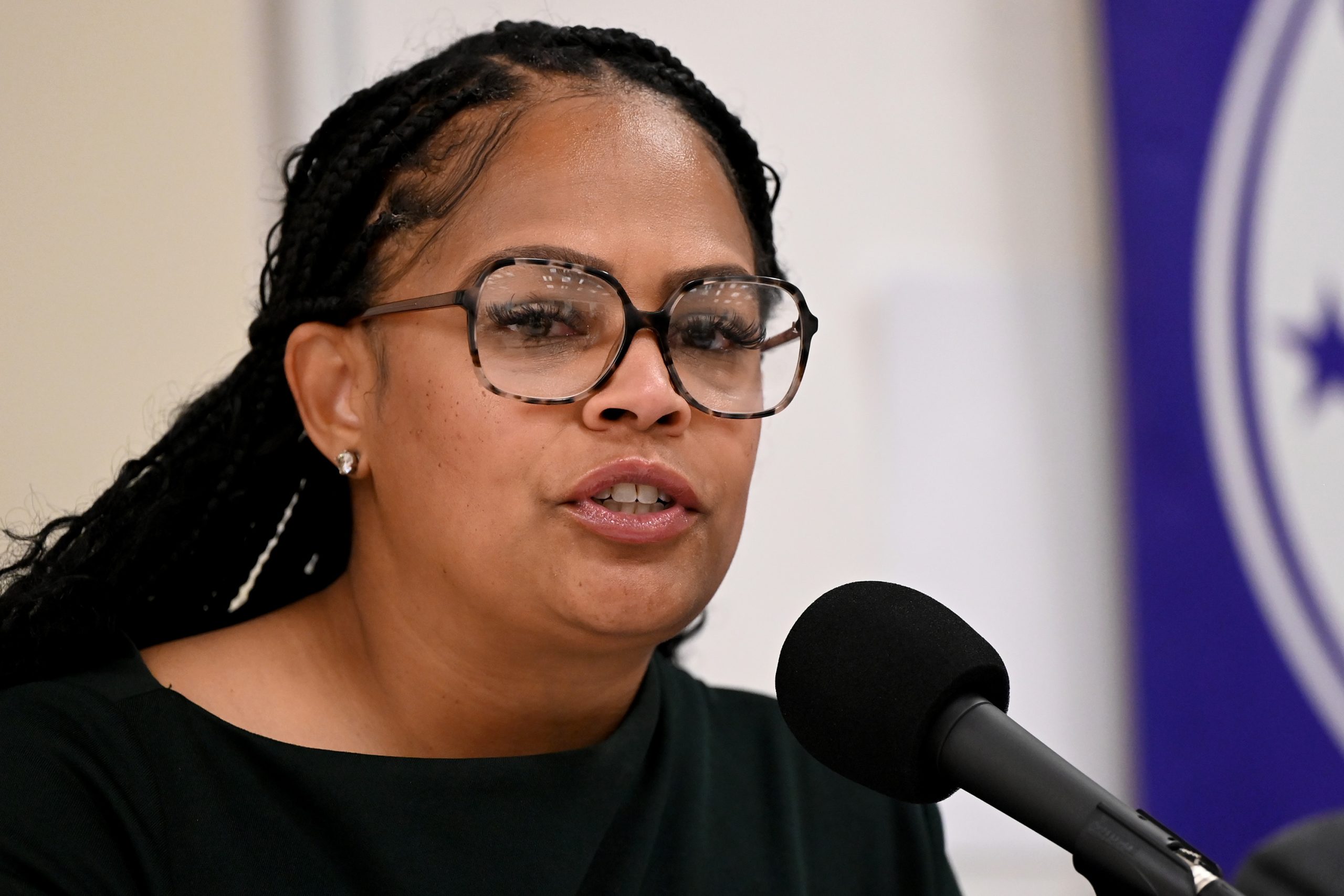
“Baby bonds have been a topic of a lot of focus because we all want to make sure that we are creating long-term economic mobility and really breaking the cycles of financial insecurity early,” said State Rep. Morgan Cephas, a Democrat whose district covers West Philadelphia. “So these are some models that we’ve been looking at … and are absolutely looking to do more.”
State Rep. Martina White, a Republican whose district covers Northeast Philadelphia, said Trump Accounts can be a “great tool for working families” and planned to look further into the concept of baby bonds.
Her initial preference, she said, would be to model baby bonds like a college endowment, in which the funding source for the program would come from interest or investment earnings, as opposed to directly from taxpayer dollars.
“I think that the fact that more legislative bodies and governments are looking into ways that we can provide the tools for working families to build their wealth — I think that’s phenomenal, and we should be doing more of that,” White said. “But also helping make sure that government is getting out of the way, too.”
Democratic State Rep. Morgan Cephas said baby bonds have been a focal point for her party “because we all want to make sure that we are creating long-term economic mobility.”Tom Gralish / Staff Photographer
Although baby bonds haven’t been proposed in Pennsylvania’s legislature, the state does have an early wealth initiative through its Keystone Scholars program, which puts $100 into an account that Pennsylvania students can use toward their education costs.
In Philadelphia, there aren’t any initiatives specifically targeting wealth building for children. But there are programs that aim to advance overall wealth access and accumulation. One of the latest is Philly Saves, which, upon implementation, would give workers a way to save for retirement if their current jobs don’t offer retirement plans.
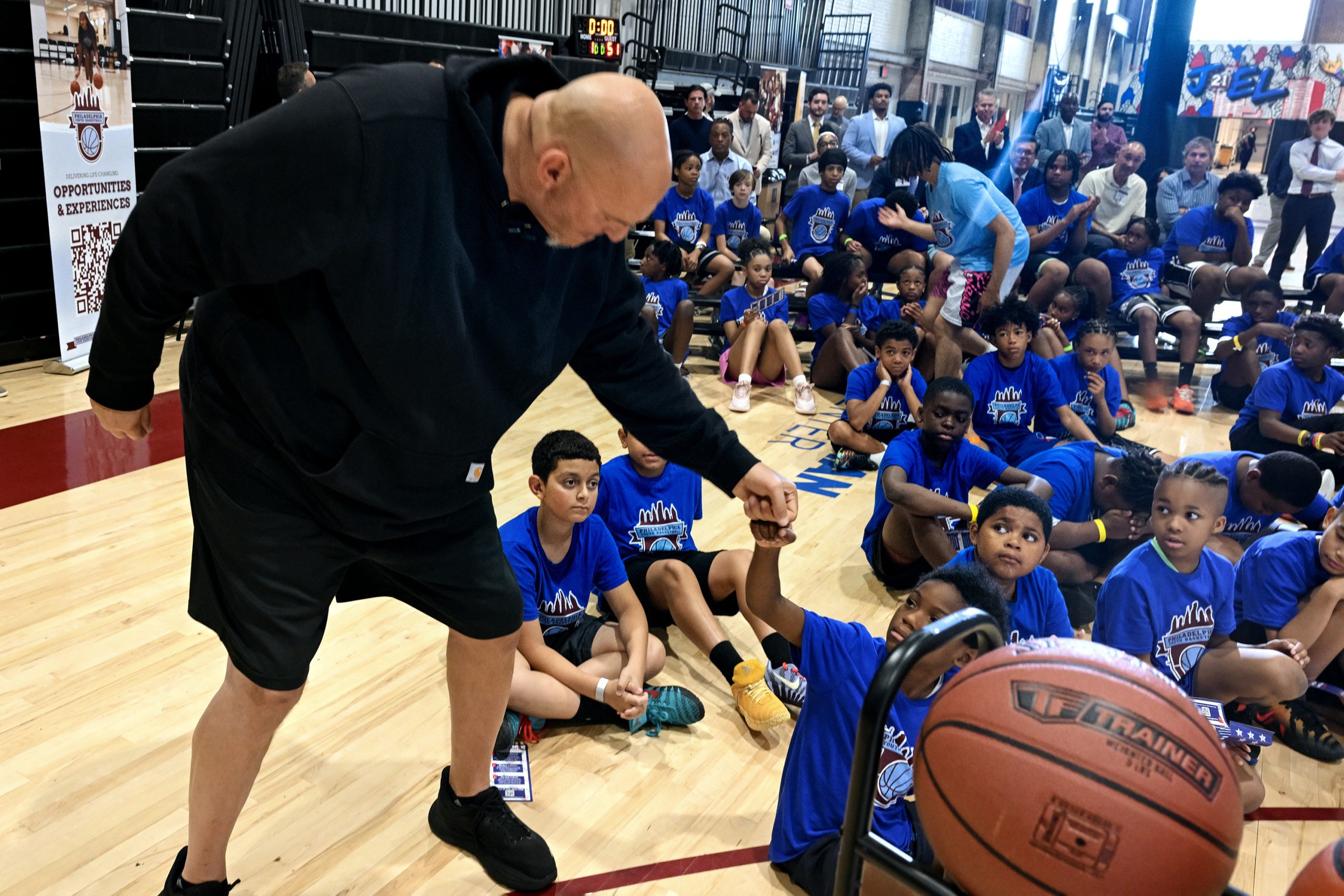
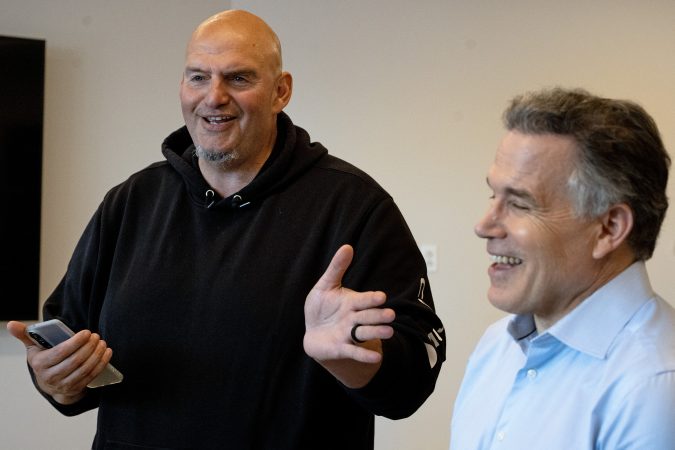
Last month, Sens. John Fetterman and Dave McCormick made a joint appearance in Nicetown, where they urged parents to sign up for Trump Accounts. Fetterman seemed to anticipate that some listeners might be dubious about the program and presume it is politically partisan because of its name.
“Do not fall into that political trap,” Fetterman said. “This isn’t some radical thing. … Do this for your child.”
Even if early wealth initiatives arrive soon in Pennsylvania, it may be too late to have a big impact on older children because the accounts need time to grow.
For Gravley, that means early wealth policies could impact her children but will likely yield larger sums for her future grandchildren. Gravley said she welcomes them as long as there’s some kind of financial literacy involved.
“If you give these children … $10,000 with no instructions, good luck with that,” she said. “It has to be instructions with it, but I think it could be a big stepping stone.”
Darity, the social scientist who helped conceive the idea for baby bonds, said early wealth accounts will have different maximum outcomes based on their design, even if they each grew at 1% above the inflation rate.
For instance, the baby bonds plan he coauthored would turn $60,000 into $72,000 over 18 years at that growth rate (no annual contributions allowed). A federal baby bonds plan proposed by New Jersey Sen. Cory Booker ($1,000 deposit; maximum yearly government contributions of $2,000) would grow to about $41,000 at those terms. For Trump Accounts, a $1,000 deposit and maximum yearly private contributions of $5,000 would grow to $100,000 in 18 years.
While Trump Accounts have the highest growth potential, low-income families who don’t have thousands to contribute annually won’t have “a transformative sum of money at the end of the 18 years,” Darity said.
Because both programs are still so new, we’re decades away from seeing the results of any long-term studies on the efficacy of baby bonds or Trump Accounts once participants reach adulthood. But research into other programs suggests that external interventions in wealth building can have positive outcomes.
For instance, a long-term study of Oklahoma’s SEED OK program found that newborns who randomly received $1,000 in state funds had, by age 14, higher educational expectations, greater social-emotional development, and more family-contributed savings for college compared with those who didn’t.
A 2015 global study of roughly 10,000 households found that asset interventions — like giving impoverished families an income-producing asset, cash assistance, and skills training — had positive economic outcomes well after the program stopped.
Those findings are part of a growing body of evidence from other asset-building experiments that “already points in a consistent direction,” said William Elliott, founding director of the Center on Assets, Education, and Inclusion at the University of Michigan.
That direction, Elliott said, indicates that early wealth accounts should be a pillar of a new social contract with Americans — especially in an age when higher education debt can stall wealth creation.
“The current policy setup strongly favors those who already have wealth,” Elliott said. “And so you don’t have meritocracy happening. To get there, you can’t just give [people] a job anymore, because there’s a gap between wages and productivity. You also have to give them some wealth to make their effort and ability pay off.”
During an appearance in Nicetown with Sen. Dave McCormick, Sen. John Fetterman urged parents to sign up for child wealth-building accounts.Tom Gralish / Staff Photographer
The landscape in Philadelphia
There are more than 300,000 Philadelphians living below the poverty line, according to Pew Charitable Trusts — that translates to about $33,000 annually for a family of four. While the poverty rate here has declined to 19.7% from 26% over the past decade, Philadelphia still has the second-highest poverty rate among large U.S. cities.
Other figures show the prevalence of low-income households in our city.
Gravley, the only worker in her household of four, makes about $40,000 annually.
Raising Pennsylvania’s minimum wage above $7.25 may help workers locally; all of the commonwealth’s neighboring states have higher wage floors. But it could also be untenable for some small businesses.
For Gravley, her home is an asset that could help her family long term, but there’s little it can do to improve her economic prospects today. Despite holding three degrees — an associate in culinary arts, an associate in early childhood education, and a bachelor’s degree in leadership and organizational change — she still regularly grapples with the challenge of making ends meet.
As a program coordinator at Strawberry Mansion High School, Gravley said her expenses are usually about $2,200 per month, which means she typically has about $100 per month for the high-yield savings accounts she manages for herself and her children.
At one point she invested in the stock market but pulled out because she didn’t understand it.
It’s been this way for more than a decade for Gravley. As a recipient of Supplemental Nutrition Assistance Program and Medicaid benefits, she is making enough to cover needs, but financial security and financial growth for her family appear largely out of reach.
“[Welfare] helps, but it’s nothing programmed to get me out of the food stamp thing. Because you tell me to get the degrees and get the better job, and I’m trying to do that, or I did that, and it’s still not enough money. So where is the money?”
Jared Council is a business journalist based in Philadelphia. He was part of a team at the Wall Street Journal recognized as a finalist for the 2022 Pulitzer Prize in explanatory reporting for a series about the 1921 Tulsa Massacre. He is currently a program manager at Every Voice, Every Vote, a civic information and engagement program at the Lenfest Institute for Journalism.
The Inquirer is one of two dozen news organizations powering the Philadelphia Journalism Collaborative. Follow us at @PHLJournoCollab. This article is part of a national initiative exploring how geography, policy, and local conditions influence access to opportunity. Find more stories at economicopportunitylab.com.
As Democrats grapple with the fallout from Graham Platner’s scandal-plagued and ultimately canceled bid for U.S. Senate in Maine, a political consulting firm that worked on his race and that’s been heavily involved in Pennsylvania politics is at the center of many of the party’s frustrations.
Members of the firm weren’t the only ones advising Platner’s campaign. National operatives such as Daniel Moraff, who has also worked in Pennsylvania, have also fielded criticism for recruiting and not thoroughly vetting Platner, an unknown political outsider.
But both before and after the allegations of sexual assault that led to Platner’s exit from the race this week, other Democratic consultants and political observers blamed FIGHT for continuing to support him through multiple public setbacks.
Platner’s issues have also reignited anger about and drawn parallels to Fetterman, another candidate who ran as a working-class progressive. The Pennsylvania Democrat has lost much of the support from the base that elected him as he’s more frequently sided with Republicans in ways that some have described as a betrayal. He has not been accused of the same types of issues that plagued Platner’s run.
“I supported Graham at the beginning, despite the nagging voice in my head that kept saying ‘this feels familiar,’” Adam Jentleson, Fetterman’s first chief of staff who has become a staunch critic of the Pennsylvania Democrat, wrote on social media.
Jentleson was among those who questioned the FIGHT agency and the rest of the Platner team’s work and its handling of the collapse.
When Morris Katz, the FIGHT strategist on Platner’s campaign, said on social media that his team advised to end the campaign immediately after hearing the allegations Platner had raped a former girlfriend, Jentleson replied that the argument “strains credulity.” Platner and his team had continued to deny the allegations, Jentleson and others noted.
“Shading a narrative toward the positive is standard, lying is not,” Jentleson wrote, comparing the experience to working with Fetterman.
Fetterman, for his part, has heavily criticized Platner in recent months and celebrated his downfall this week.
“You will only be remembered as the accused rapist that got pushed out of your election. … Go back under the rock that you came from,” Fetterman said Wednesday on Fox News.
The Democratic Socialists of America, in a letter that mentioned the FIGHT staff’s work for Fetterman, called on candidates to refuse to work with Katz, The Intercept reported Friday.
FIGHT declined to comment for this story.
As Democrats look to regain their footing in this year’s midterm elections, the Platner saga and FIGHT’s role has also touched on the party’s broader goals of cultivating candidates who can win over the kinds of working-class voters President Donald Trump captured in recent years.
Platner, an oyster farmer and former bartender who suffered PTSD after serving in the U.S. Marines, pitched himself as deeply in-tune with working class voters in Maine. It was the type of profile, many Democrats hoped, would lead to a victory over longtime Republican incumbent U.S. Sen. Susan Collins and help the party win control of the U.S. Senate.
Democrats in Pennsylvania have taken a similar approach.
In a Lehigh Valley-based congressional district considered one of the likeliest seats in the country to flip from Republican to Democrat, the party has rallied behind Bob Brooks, a union leader and retired firefighter who coaches high school baseball and drives a snowplow.
“When you look at Brooks, one of the reasons he was recruited into this race and why Democrats have rallied around him is that there’s a belief that he might capture some of the [working-class Democratic] energy,” said Chris Borick, an adjunct professor of politics at Lehigh University.
The FIGHT agency, which primarily makes candidates’ television ads, has worked on Brooks’ campaign as well as the campaign of Paige Cognetti, the Scranton mayor and Democratic nominee in the Scranton-based 8th Congressional District.
There are no signs that Brooks or Cognetti are being advised by Katz, who has primarily worked on Platner’s campaign. In response to requests for comment Friday, Brooks’ campaign only confirmed that FIGHT makes its ads, and Cognetti’s campaign said, “Paige is glad Platner dropped out of the race.”
The Pennsylvania candidateshave not faced the same type of intense criticism for parts of their personal histories as Platner did throughout his 10-month campaign.
Brooks’ opponents in the 7th Congressional District primary criticized him for old social media posts that, for instance, downplayed the role of guns in a mass shooting. Brooks said the posts were “silly, maybe stupid.” He, like Platner, also faced accusations that he could be “another John Fetterman,” given his background and similar appearance.
Mike Mikus, a Pittsburgh-based Democratic strategist who has long opposed Fetterman, said Brooks was “the real deal” at a time when Democrats are “desperate” to correct their problem with white, working-class voters. Platner, on the other hand, appeared to be an “overcorrection” that involved consultants dismissing “obvious red flags,” Mikus said.
He said FIGHT may lose some future clients because of the misstep, which he largely blamed on Moraff, a consultant who does not work for FIGHT and has also been widely criticized for recruiting Platner.
“Everybody’s looking for authenticity,” Mikus said. “And you can’t workshop somebody into something they’re not.”
Created after Trump and the Republican Party’s sweeping victories in 2024, the FIGHT agency’s pitch since its launch has focused on authenticity. Its candidates have reflected not just voters’ desires for candidates outside the traditional political establishment, but campaigns intent on fighting Trump and advancing economic populism. Zohran Mamdani, the Democratic socialist who won New York’s mayoral race in 2025, has marked their largest success to date.
“Among progressives there’s a sense that the party has not been effective in trying to counter Trump … and we have to fight this battle internally in order to resist Trump,” said Stephen Medvic, an associate professor of government at Franklin and Marshall College. “So you’re getting groups in the last couple of years, like FIGHT Agency, being put together to try to tip the balance in their direction.”
But their approach — finding someone who meets the profile and aligns with their ideology — may not necessarily always produce a winning formula. Limitations may depend on the type of assessment and vetting that goes into recruitment, he said.
“You might get an AOC, but … you might get a Platner,” Medvic said. “A lot of Democrats are now regretting that they were so excited about Fetterman because he turned out to be something so different.”
In a rare move, Pennsylvania’s two senators have created a joint fundraising committeethat would allow them to split money from donors who want to give to both of their campaigns, despite being members of different parties.
As polls have shown him losing support among Democratic voters, he has also reported raising significantly fewer campaign funds on his own and has not said if he will run for a second term in 2028.
Common Ground PA, which filedpaperwork with the Federal Election CommissionMonday, lists four beneficiaries for the joint fund: Fetterman for PA; Friends of Dave McCormick; Every Vote PAC, which lists Fetterman as the PAC sponsor; and Pennsylvania Honor, which lists McCormick as the leadership PAC sponsor.
A joint fundraising committee, first enabled by the FEC in 1977, allows two or more candidates, PACs, or party committees to coordinate fundraising efforts to share donations and expenses.
A donor can abide by federal contribution limits while still giving one check that can be allocated to multiple campaigns. But since these groups typically involve party committees, it is rare for these joint ventures to be bipartisan.
Mike DeVanney, a spokesperson for McCormick’s campaign, called the PAC a donor-driven effort.
“This group of donors value the collaboration exhibited by Senators McCormick and Fetterman for Pennsylvania and want to support both of them,” he said in a statement.
The joint fundraising committee was first reported by Politico.
The two senators have spoken often about their cross-aisle friendship since McCormick took office in 2025, and they have repeatedly teamed up in recent months.
They appeared alongside each other last week in Philadelphia to promote Trump Accounts, the new federally backed savings accounts for kids that became law with President Donald Trump’s signature One Big Beautiful Bill Act.
Fetterman has routinely criticized his own party, feuding with progressives on a range of issues, including Israel and immigration enforcement.
In a fundraising email sent in May, McCormick referred to Fetterman as one of his “closest working partners,” a realization that he said surprised even him.
In that drive, which asked donors to support his efforts to “work across the aisle to get results for the people of Pennsylvania,” McCormick praised his Democratic colleague.
“Senator John Fetterman and I couldn’t look more different. We don’t agree on everything. But we both grew up in Pennsylvania. We both know what it means to fight for working families who feel like Washington forgot them. And we both refuse to let politics get in the way of getting things done,” he wrote.
McCormick told reporters in May his friendship with Fetterman is the most frequent topic of conversation he hears, and he gets positive feedback from it.
“We look for ways to work together. I think people want that,” he said.
Individuals could donate to Fetterman or McCormick separately. But joint fundraising committees, which are used widely by both parties, pull in large checks from donors and split the money across multiple committees using a formula that adheres to federal contribution limits, according to an analysis from the watchdog group OpenSecrets.
Typically, though, campaigns jointly fundraise with their party.
Common Ground PA is among the few coordinated efforts across the aisle. A former PAC, the Problem Solvers Patriots, raised funds for members of both parties in previous election cycles.
Former U.S. Rep. Conor Lamb, who lost the Senate primary to Fetterman in 2022 and has not ruled out a run in 2028, blasted the move online as “Another betrayal from Fetterman.”
U.S. Rep. Chris Deluzio, a Western Pennsylvania Democrat who says he has received “a lot of encouragement” to run for Fetterman’s seat, also questioned the creation of the PAC.
“Helping the Republicans raise money to spend against Democrats is bad, right?” Deluzio said on X.
However, Fetterman has been notching strong approval from Republicans, and Pennsylvania Republicans along with Trump himself said he could receive GOP support if he switched parties.
Fetterman’s Republican support has also been growing at the bank with contributions from prominent GOP donors, particularly through his other joint fundraising committee and leadership PAC. At the same time, his fundraising has plummeted overall, raising less than half his previous annual totals in 2025.
Staff writers Gillian McGoldrick and Sam Janesch contributed to this article.
WASHINGTON — It was blisteringly hot when I showed up at President Donald Trump’s much-ballyhooed Great American State Fair on the National Mall in honor of the nation’s 250th birthday.
As I headed off to check in as a member of themedia, a friend who’d accompanied me decided to wait at a lemonade stand.
At first, I was a little concerned, wondering how I was ever going to find her. A lemonade stand on the National Mall in Washington, D.C., was bound to be mobbed on a scorcher of a day like the one we had on Monday.
I needn’t have worried. It wasn’t that kind of party. Crowds were so thin that I quickly spotted her standing alone and eating a snow cone that cost a whopping $8. “Even on a hot day, there was no line at the lemonade stand,” pointed out my friend, Pamela Thomas of Pathfinders Travel, who had taken the train from Philadelphia with me.
That should give you a pretty good idea of how it was at the so-called Great American State Fair, brought to us by Freedom 250, an organization created by President Donald Trump.
The Great American State Fair was downright boring.
Oh, there was an 110-foot Ferris wheel borrowed from the Smithsonian Institution. I watched people stand unsheltered under the blazing sun as they waited for their turn. But that’s the only carnival ride I saw.
This wasn’t like any state fair I’d ever attended. Where was the merry-go-round? Where was the roller coaster? The cotton candy? The local beauty queens? The fair could use a quilting demonstration and band performances. I saw only one cornhole game.
The so-called Great American State Fair needs a whole lot more fun and a whole lot less Trump.
There wasn’t much for children to do besides have souvenir replicas of their new Trump passports stamped.
I managed to findsome shade while sitting on a folding chair inside an area called David’s Tent. As I cooled off, I listened to a woman onstage sing religious songs. Behind me was an aboveground swimming pool set up, ostensibly, for on-the-spot baptisms. In the spirit of inclusivity, there was also a candle-filled menorah positioned in the front of the tent.
At one point, we made our way over to the Hawaii booth. Inside, all we saw was a large mural of the Aloha State that included a picture of former President Barack Obama that someone had defaced.
A smiling woman offered to stamp our “passports.” There was nothing else going on in that booth. Not a flowered lei or macadamia nut in sight. No hula dance demonstration. No ukulele performance.
Same thing with the neighboring Alaska booth.
I made a point of checking out the North Carolina booth, which had been criticized for having images of Confederate flags on display on TV monitors. This one was a bit more inviting, with its colorful NASCAR displays. I didn’t see anything resembling a rebel flag — but I did see a bale of cotton just sitting on the floor, which can be seen as offensive becauseof its slavery connotations. The setup had been organized by private donors. One company, Mt. Olive Pickles, has since pulled out of the fair.
The D.C. booth had some upbeat music playing, a fake cherry blossom tree, and a giant map of the mall that attendees stuck pins into to represent where they lived. “No go-go music?” I asked an attendant, who assured me that some was in the playlist.
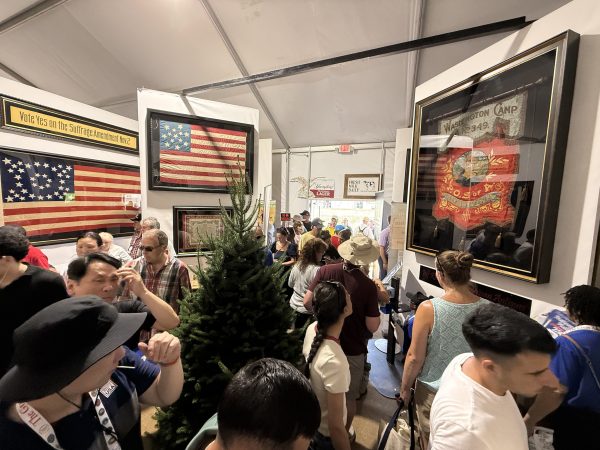
Pennsylvania’s pavilion showcases state history and memorabilia at the Great American State Fair on June 30 in Washington, D.C.Sam Janesch / Staff
Cape May County, a Republican stronghold, sponsored the New Jersey booth and brought in an impressive-looking eight-foot sand castle. But I noticed one small red plastic bucket of saltwater taffy that a kid was rummaging through. For an area as rich and diverse as the Garden State, the display felt incomplete.
Soon, I had had enough.
We stopped by the media table again on our way out and asked about what was on the schedule for later. The answer? A rodeo demonstration at 7 p.m. That was it.
I was stunned. America deserved more and better for its 250th birthday celebration.
So, if you decide to go experience the Great American State Fair before it is dismantled on July 10, don’t say I didn’t warn you.
This is the birthplace of democracy, and with it, comes the responsibilities that America’s founders left behind.
“The founders made clear that we have a real responsibility to do the work to constantly perfect our union,” Shapiro said in an interview this week, ahead of his speech before the ceremonial meeting of Congress, marking 250 years since the Declaration of Independence was signed in that same building. “And that the Congress of the United States has a unique responsibility in that to be a check on the executive branch.”
Those words come at a critical inflection point in America’s history, amid a tumultuous presidency, and as Shapiro is rumored to have aspirations of a White House bid in 2028. The first-term Democratic governor will appear before approximately 40 bipartisan members of Congress in Old City at the event convened by U.S. Rep. Brendan Boyle (D., Pa.), speaking to the lawmakers from across the country about their collective duty to the public. Shapiro will attend numerous other 250th celebrations across Philadelphia in the coming days, during which he said he plans to share his optimism for America’s future and deep concerns that President Donald Trump has led the nation astray from its founders’ design.
“I don’t think patriotism belongs to one party. I don’t think it should ever be partisan,” Shapiro said. “Unfortunately, Donald Trump routinely divides us, routinely injects partisanship into his definition of patriotism, and his actions, in many ways, are the opposite of patriotism.”
Assembly Room in Independence Hall (Pennsylvania State House) Monday, June 15, 2026. This is the exact space where the Second Continental Congress met and the Declaration of Independence was adopted.Tom Gralish / Staff Photographer
As Trump plans to spend America’s 250th birthday hosting a politicalrally on the National Mall — with no plans to visit Philadelphia, the city where the nation was founded — Shapiro sees his own role as a unifier, and in direct contrast to Trump. As attention shifts to Philadelphia this weekend, he’ll appear on the national stage from sunup to sundown at events and on frequent TV hits — all with a home-turf advantage for his 2028 presidential prospects, as the governor of the nation’s quintessential swing state and also most important to the country’s founding.
“[Celebrating the 250th] allow the spotlight to shine on Shapiro, even though it’s not entirely about him,” said Alison Dagnes, a political-science professor at Shippensburg University. “Do I think that helps his ambitions? Sure.”
‘Direct contrast’
Sitting with Shapiro in his Harrisburg office earlier this week, it’s undeniable that he’s a history nerd — another reason why he was built for the moment.
He casually quotes segments of The Federalist Papers, and references his favorite story about Benjamin Franklin‘s fixation on a half-sun on the back of George Washington’s chair during the 1787 Constitutional Convention, which Franklin remarked during the U.S. Constitution signing that “it is a rising and not setting sun.” Without having to look for its location, he points to his right to a portrait of Franklin, one of his predecessors as governor of Pennsylvania, hanging on his office wall. He notes lesser-known Pennsylvanians who played an important role inthe nation’s founding whom he plans to highlight over the coming days.
“You know, I hate to quote a guy not from Pennsylvania,” Shapiro said, returning to The Federalist Papers to recite James Madison’s concerns about giving an executive too much power.
Gov. Josh Shapiro in the Capitol in Harrisburg Feb. 21, 2023.Tom Gralish / Staff Photographer
“If Madison were here today, he’d be really concerned about how one man has accumulated so much power and is wielding it in really dangerous ways, and I hope that at this 250-year mark we find our way back to that balance and back to the constraints on the people who lead our government,” he said.
Shapiro sees his leadership style as a “direct contrast” to Trump’s, especially at this moment.
“[Trump] restricts peoples’ freedom and liberties,” the governor added. “He whitewashes our history. That doesn’t further a sense of community, that doesn’t further patriotism. All that does is divide us, and I refuse to participate in that.”
But for the next few days, Shapiro said his approach to the 250th celebrations is to: “Celebrate America, find ways to bring people together, and to have some fun in the process.”
Fair games
Despite his overtures of political unity, Shapiro has faced accusations from Republicans in recent days for playing partisan games over Pennsylvania’s participation in Trump’s 16-day Great American State Fair. Shapiro, in addition to several other Democratic governors last week, announced that Pennsylvania would not take part in the fair due to his administration being unable to secure any state businesses to sponsor the exhibit. Staffing and sponsoring the exhibit on the state’s dime would have cost $700,000 that would be better spent on in-state 250th events, he said this week.
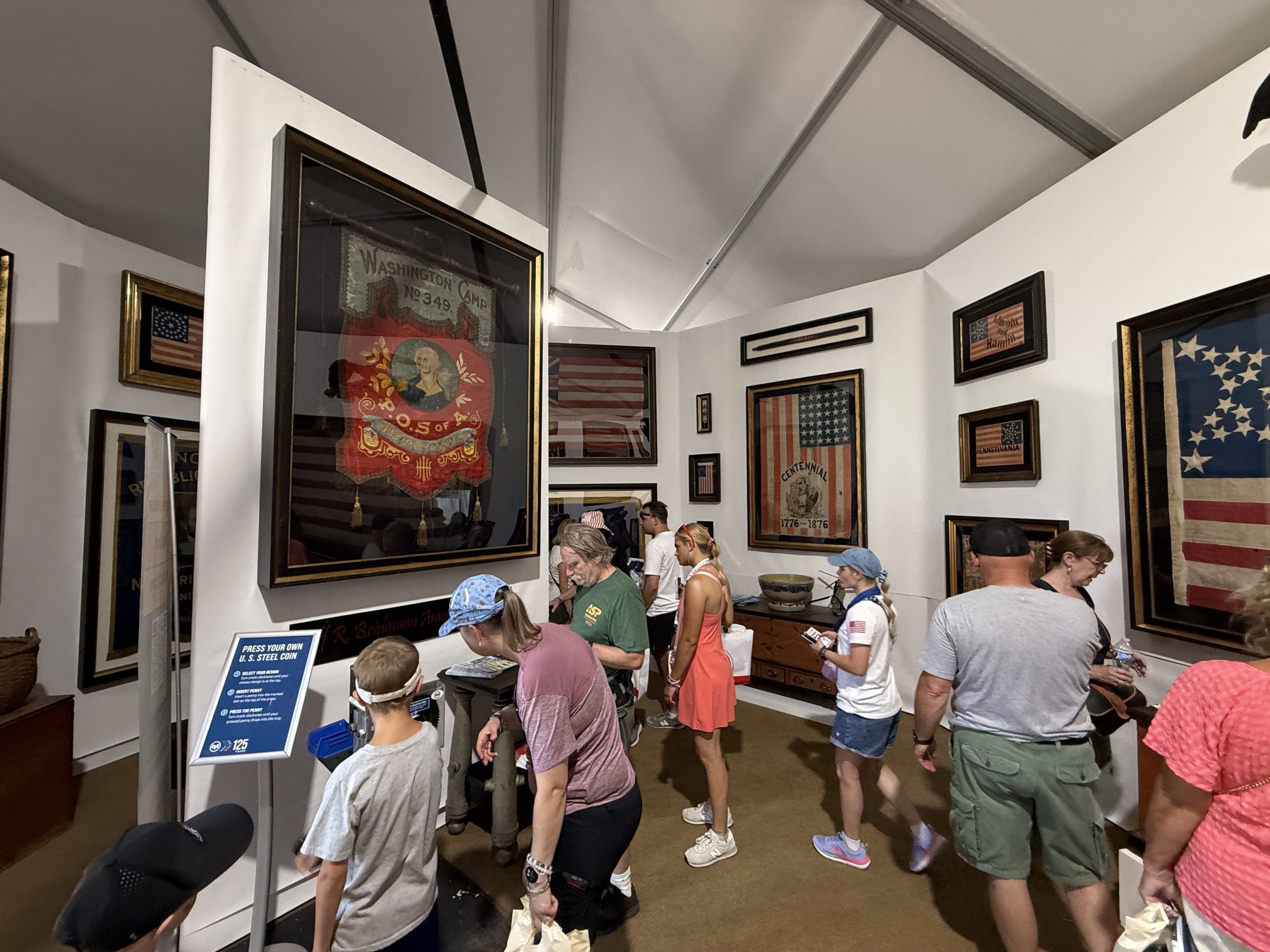
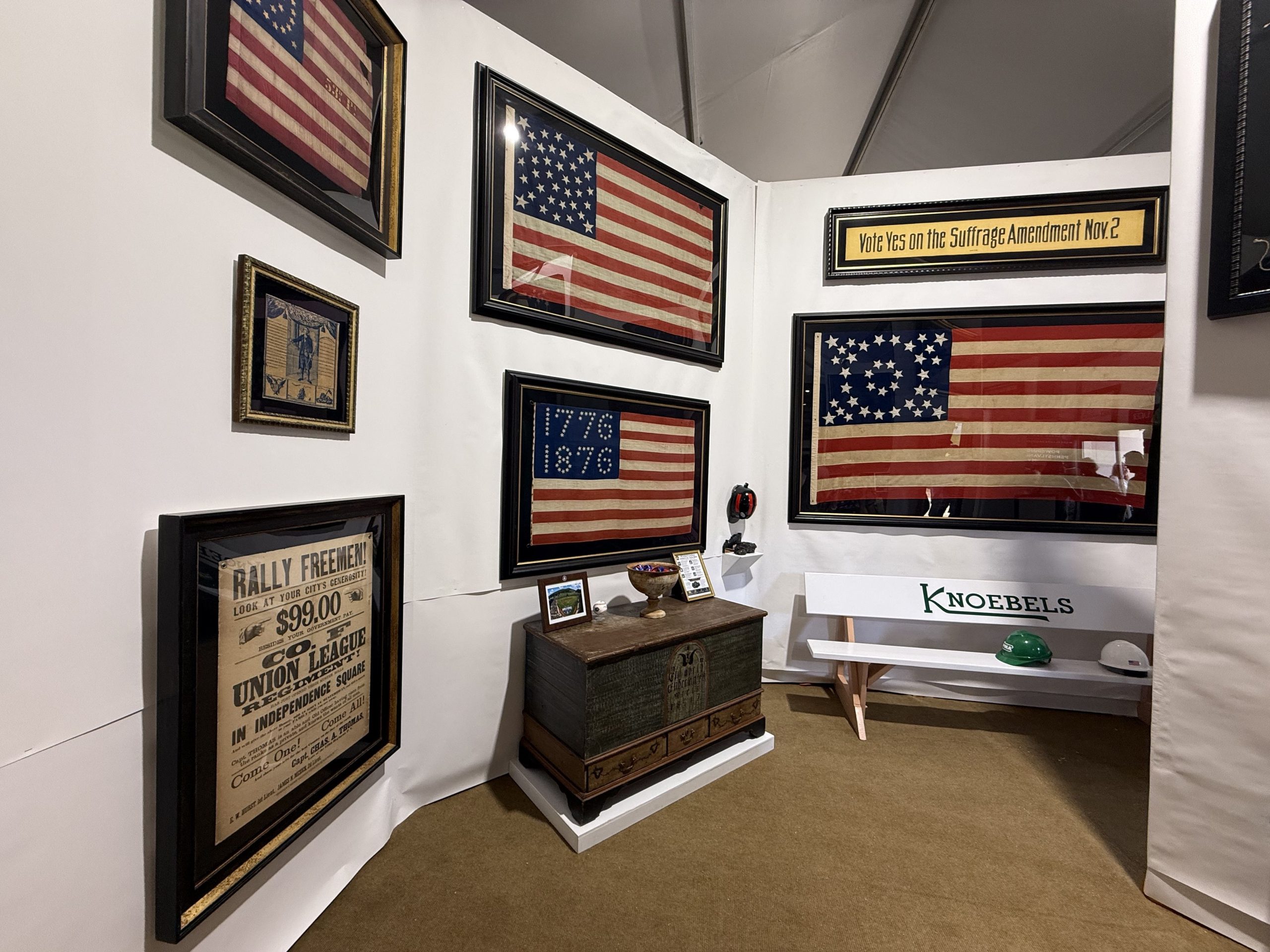
In the weekend that followed, Pennsylvania’s U.S. senators, Republican Dave McCormick and Democrat John Fetterman, made a push to fill the state’s empty exhibit. By Tuesday, it was filled with antique flags lent by a York County man, bags of potato chips from Snyder County, and a Christmas tree display from Fayette County, among other Pennsylvania-centric items.
Pennsylvania’s pavilion showcases state history and memorabilia at the Great American State Fair on June 30, 2026, in Washington, D.C.Sam Janesch / Staff
Some of the businesses originally told Shapiro’s office they didn’t have enough time to participate. But when McCormick and Fetterman approached them with the idea to fill the empty pavilion, they joined in.
“They obviously had a change of heart at the last minute. That’s fine,” Shapiro said about the revived Pennsylvania pavilion.
State Treasurer Stacy Garrity — Shapiro’s Republican challenger for governor, who has aligned herself with Trump — in a statement called Shapiro the “only career politician who has politicized America 250.”
“Josh Shapiro put his political ambitions above his commonwealth and his nation when he pulled Pennsylvania out of the national celebration of our 250th birthday in a pitiful attempt to score cheap political points with the liberal wing of his party,” Garrity said.
Beyond the 250th
Shapiro’s strength as a politician has always been his ability to appear “harmonizing” and bringing people together, dating back to his days as a Montgomery County commissioner, Dagnes said.
A careful politician, Shapiro is known to stick to his message and has faced criticism from some fellow Democrats for his well-rehearsed statements.
When Shapiro delivers his messages of unity and freedom to a broader audience in the coming days, voters are likely toview them as authentic — one of the most important qualities to any presidential hopeful, she added.
“If [California Gov.] Gavin Newsom is the guy who’s gonna punch Trump in the face, then Shapiro is going to be the guy who’s like, ‘No, let me offer you an alternative,’” Dagnes said.
“It’s what he should be doing right now, because this is what America is about,” she added.
WASHINGTON — A replica Liberty Bell, a Knoebels amusement park bench, hundreds of bags of potato chips, and dozens of sweating tourists packed into Pennsylvania’s location at President Donald Trump’s Great American State Fair on Tuesday — a stark turnaround from when the signature 250th anniversary event opened in Washington last week without a Keystone State presence.
Pennsylvania was one of the few Democratic-led states that — describing the two-week fair as too partisan — had either decided not to participate or failed to find another host to showcase local history and memorabilia.
The interest, Gov. Josh Shapiro said at the time, was just not there.
But after a weekend-long sprint initiated by U.S. Sens. Dave McCormick (R., Pa.) and John Fetterman (D., Pa.) to dredge up that interest, Pennsylvania’s pavilion opened Tuesday with nearly every inch of the space filled.
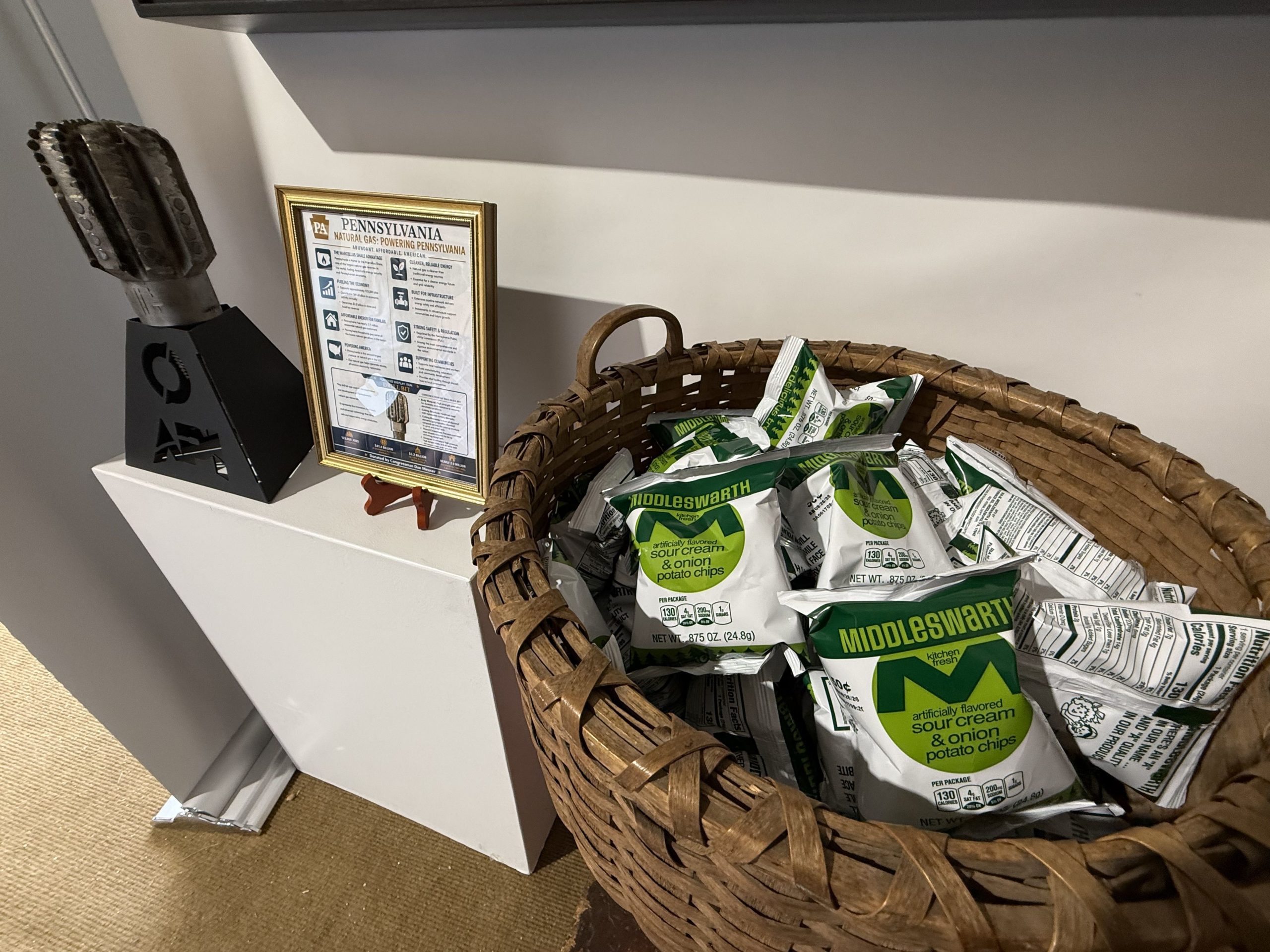
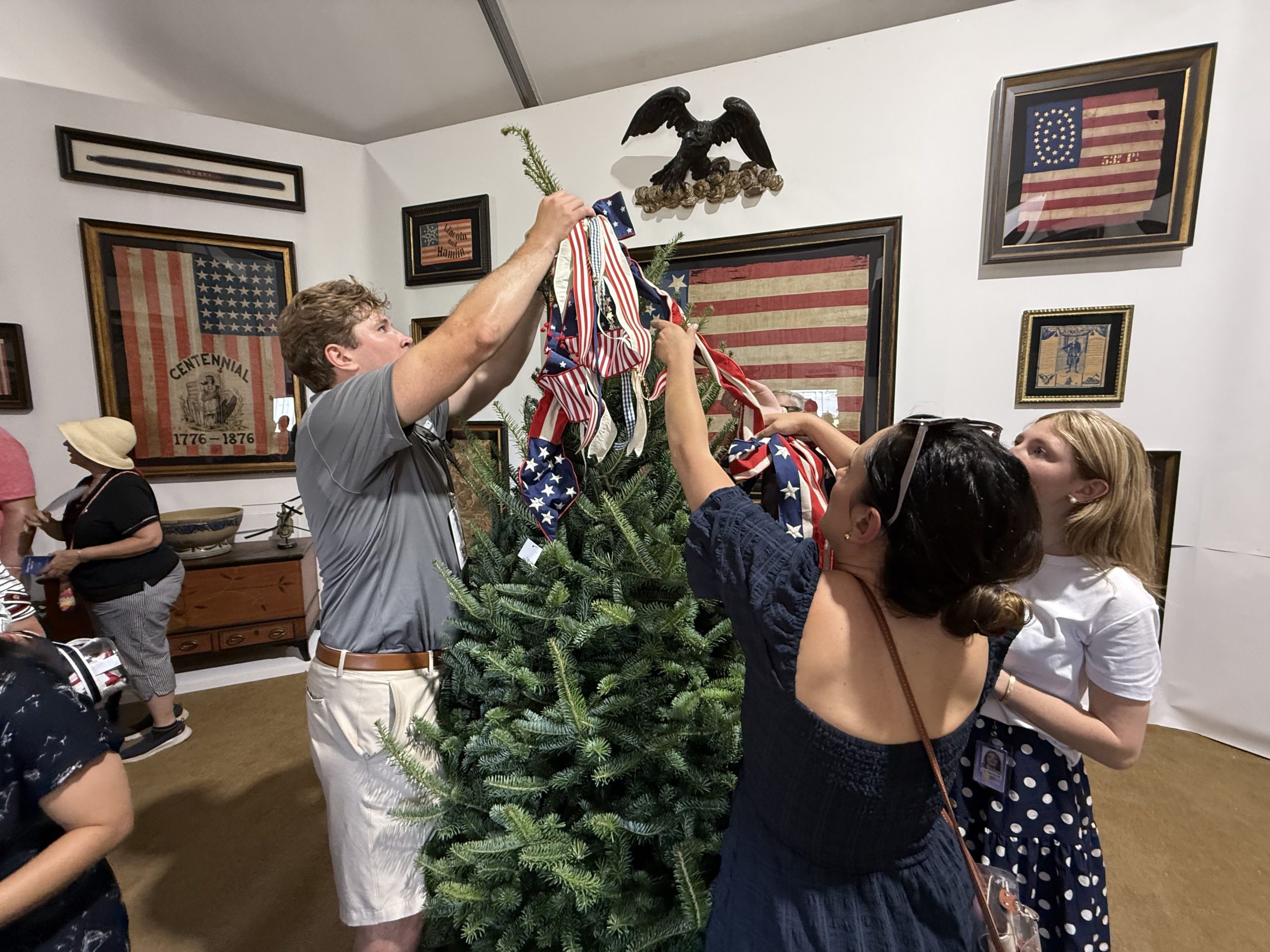
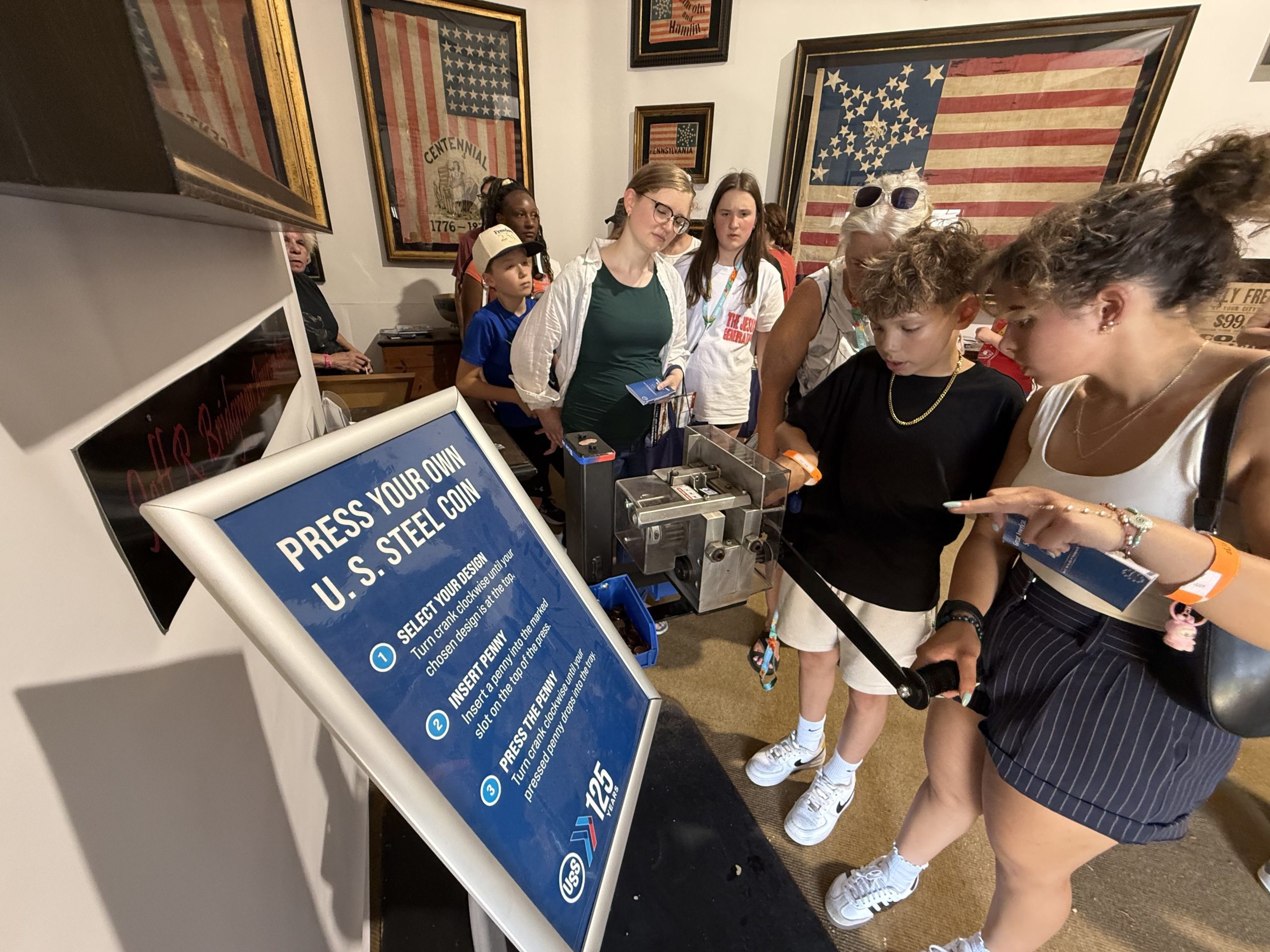
The walls were covered by antique flags and signs lent by York County’s Jeff R. Bridgman Antiques. Children stood in line for a U.S. Steel penny-press machine, grabbed bags of Middleswarth chips made in Snyder County, and Crayola crayons from Easton. (Additional chip donations from Utz and Martin’s will be arriving soon.)
Tourists collected pamphlets about Gettysburg and the Pennsylvania Farm Bureau. They took pictures of anthracite coal and a drill bit used for fracking, both of which were on loan from U.S. Rep. Dan Meuser (R., Luzerne).
Pennsylvania’s pavilion showcases a natural gas drill bit and Middleswarth chips at the Great American State Fair on June 30, 2026, in Washington, D.C.Sam Janesch / Staff
“I always look for an opportunity to highlight our industry,” Beth Ann Bossio, a Christmas tree farmer from Fayette County, said after driving three and a half hours to drop off a tree to display in the center of the space.
Pennsylvania is one of the largest producers of Christmas trees, and Bossio said it was important to her that both the state and its farmers were represented at the fair.
Beth Ann Bossio (front center), a Christmas tree farmer from Fayette County, helps staff from U.S. Sen. Dave McCormick’s office set up a tree she brought for Pennsylvania’s pavilion at the Great American State Fair on June 30, 2026, in Washington, D.C.Sam Janesch / Staff
“That was my vision to come here, to make sure that Pa. is being reflected of what we are, and what we represent,” she said before tying an American flag-themed bow on the tree. “Farmers are very proud of that. We’re patriotic. We take pride in our land and how we steward it.”
The packed room on the National Mall came together in a rush in recent days, after Shapiro joined Democratic governors from other states in declining to use state resources to create and staff a pavilion, which his office said would have run a tab of “hundreds of thousands of taxpayer dollars.”
He also said his administration’s search for another Pennsylvania host came up short. No companies or other kinds of groups were interested, he said, even as businesses and local governments stepped up to fill the spaces in other states.
While Shapiro last week blamed the lack of interest on the president’s polarizing impact on the 250th celebrations, he said in an interview Tuesday with The Inquirer that it “was never a political exercise. This was an exercise in practicality.”
Shapiro said Pennsylvania’s pavilion would have cost the state $700,000, all of which was money he saw better spent on the major events happening in Pennsylvania this year, including the NFL Draft, PGA Championship, MLB All-Star Game, the ongoing World Cup games, and a number of events across the state for the nation’s 250th birthday.
“My focus is on spending the taxpayer dollars here,” he said.
His administration spent two or three weeks reaching out to businesses and to the Pennsylvania Chamber asking them if they wanted to participate. None of them did, Shapiro said.
“They obviously had a change of heart at the last minute. That’s fine,” Shapiro said about the revived Pennsylvania pavilion.
Organizing the booth in Shapiro’s place were the state’s two senators, a bipartisan duo who have often worked together.
McCormick said he understood Shapiro’s desire not to spend taxpayer money, but when he found out there would be nothing to represent the state that is “the center of America’s history,” he sprang into action.
The freshman Republican said he and Fetterman spoke Saturday morning and quickly made calls to the Pennsylvania Chamber of Business and Industry, the Pennsylvania Farm Bureau, and individual businesses to donate time and resources.
“It’s just inconceivable that we wouldn’t have a booth that would represent all that Pennsylvania had to offer,” said McCormick, whose staff greeted guests at the pavilion all day Tuesday.
Fetterman, who has said Pennsylvania’s role as a purple state means he should consistently work across the aisle, said he was proud to work with McCormick on the effort.
“America’s turning 250 years old,” Fetterman said alongside McCormick during an appearance in Philadelphia on Monday. “Can’t we all just celebrate that and not just find new ways to fight about the politics and the dynamic right now?”
McCormick’s office listed 23 companies or groups that signed up to help, though only a few corporate sponsors were front and center in the space.
Two large signs showcase the Marcellus Shale Coalition, a natural gas advocacy group that has a significant lobbying presence in Harrisburg. And U.S. Steel, the Pittsburgh-based company that benefited from a Trump-approved takeover by a Japanese-owned company last year, offered the penny press and colorful wristbands reading “forging the future.” Hats and signage commemorating Yuengling and Mack Trucks were lent from the Pennsylvania Manufacturers’ Association.
Tourists use a U.S. Steel penny-press machine on display at Pennsylvania’s pavilion at the Great American State Fair on June 30, 2026, in Washington, D.C.Sam Janesch / StaffPennsylvania’s pavilion showcases state history and memorabilia at the Great American State Fair on June 30, 2026, in Washington, D.C.Sam Janesch / Staff
Some organizations have acknowledged earlier conversations with Shapiro’s office to participate that didn’t go anywhere.
A report from The New Republic that Pennsylvania would not be participating in the affair “caught us off guard because that was not our experience at all, nor was it what we had communicated to the [the governor’s] office,” said Jon Anzur, the senior vice president of public affairs for the Pennsylvania Chamber of Business and Industry. “It’s unfortunate that it occurred that way.”
He said the governor’s office approached the chamber less than two weeks out from the start of the fair to help get companies involved.
“It just seems odd that we were approached at the eleventh hour and now it sounds like the governor’s office is trying to point fingers when there was ample time to get ducks in a row,” he said.
The Hershey Co. is among the Pennsylvania-based companies that declined to participate.
“We were asked by Gov. Shapiro’s office in mid June and then again over the weekend by Sen. McCormick’s office,” said Todd Scott, a spokesperson for the chocolate business.
Both were told that the size of the ask and the limited amount of time to make it happen was not possible.
“We were asked so late in the game that logistically we couldn’t make that happen. We just cannot provide on a moment’s notice that amount of product that they would have been asking for,” he said.
But the summer weather was also a factor.
“There’s no refrigeration on the mall, and with extreme heat, chocolate doesn’t do well in 100-degree temperatures,” he said. “We always want to make sure that people have the best experience with our products that they can.”
But another candy company, Asher’s Chocolate Co. in Souderton, decided to join.
“Asher’s was asked to participate by the Chamber of Commerce [Monday] and agreed to donate prepackaged bite-size pieces of fudge, which were on hand,” said David Neff, who represents Asher’s. “Asher’s is deeply committed to America and celebrating America’s 250.”
“SAP is committed to the communities where our customers, employees, and partners live and work. SAP’s support of America’s 250th anniversary celebrations reflects our long‑standing commitment to supporting innovation, economic strength, and workforce development,“ SAP spokesperson Bridget Carroll said in a statement.
SAP software is used by the U.S. military and its NATO allies to track troop deployments, military supply chains, and equipment maintenance.
The military aircraft producer Lockheed Martin, which has engineering centers in King of Prussia and in Moorestown, N.J., is the top donor to Trump’s initiative, giving nearly $20 million.
This story has been updated to clarify Bob Asher’s role in Asher’s Chocolate Co.
Staff writer Joseph N. DiStefano contributed to this article.
This story was updated to clarify that Bob Asher is no longer involved in Asher’s Chocolate Co.