Tag: Jefferson Health

  • Jefferson Health sued IBX, claiming payment changes cost it nearly $100 million this year

    Jefferson Health sued IBX, claiming payment changes cost it nearly $100 million this year

    Jefferson Health says it has incurred nearly $100 million in financial losses this year because of policy changes by Independence Blue Cross in a lawsuit filed this week.

    The lawsuit, submitted Wednesday in Philadelphia Court of Common Pleas, detailed five policy shifts — including two impacting when IBX pays higher inpatient rates for hospital stays — that Jefferson says amount to breaches of the current contract between the region’s largest health system and its largest insurer.

    “IBX has attempted to use policy changes to — over time — effectively rewrite the contract” and pay less than agreed to in the contract, Jefferson’s lawsuit said.

    The suit comes less than six months before its IBX contract expires Dec. 31, adding pressure to negotiations over a new deal. Jefferson said it cared for more than 300,000 people with IBX insurance last year.

    In the last year, the nonprofit health system has shown its willingness to challenge major insurers at a time of increasing financial strain on both insurers and healthcare providers nationally.

    IBX introduced a series of payment changes impacting both commercial and private Medicare plans this year as it faces intense pressure from employers to slow the growth of healthcare expenses and from the federal government, which is trying to trim spending in Medicare Advantage plans.

    Independence declined in an email to comment on the claims in the lawsuit: “We value our provider partners, honor our contractual commitments with them, and regularly discuss any issues. It’s unfortunate that Jefferson chooses to do this in the public arena but if you’ve kept up with the news you can see this is typical of their playbook.”

    A series of reimbursement shifts

    The biggest financial impact came from IBX’s requirement, effective June 1, that certain procedures be performed in lower-cost freestanding ambulatory surgery centers, rather than in hospital outpatient departments, which often get paid twice as much for the same work.

    Jefferson estimated damages from the ambulatory surgery center rule at $35.4 million.

    Two policies affecting when IBX pays inpatient rates cost Jefferson a combined $35.5 million, according to the complaint.

    Jefferson sued Aetna in April over a similar policy that reduces payments for Medicare Advantage plans if Aetna considers patients not sick enough to qualify for full payment.

    The complaint says a policy that eliminated payment for hospital readmissions up to 30 days after discharge cost Jefferson $18.3 million. Since 2017, Penn Medicine has had a contract with IBX that does not pay Penn when patients return to the hospital within a month of being discharged.

    Finally, Jefferson said IBX has failed to pay more than $7.2 million owed under a controversial federal drug discount program known as 340B.

    “After trying to work directly with Independence Blue Cross to resolve these breaches of contract, we have been forced to take this action on behalf of our patients,” Jefferson’s vice president for payer relations, Allison Yudt, said in an email. “This action is the result of a pattern that has repeated itself time and again.”

    IBX said in its statement that it “acts in the best interest of our customers and members and protects their access to high quality affordable care.”

    Jefferson’s harder line with insurers

    Jefferson has expanded through acquisitions from three hospitals to 33 since 2015. The most recent acquisition was Lehigh Valley Health Network two years ago, creating a network that stretches from South Jersey to near Scranton.

    Amid significant losses in recent years, Jefferson has been taking an aggressive approach with insurers when it believes they are paying it less than contractually required.

    This year, Jefferson’s Lehigh Valley Health went out-of-network with UnitedHealthcare for commercial and Medicare Advantage plans. Last year, Jefferson went out-of-network with Cigna for a few weeks before reaching a deal.

  • Main Line Health is adding specialty physicians to reduce wait times

    Main Line Health is adding specialty physicians to reduce wait times

    In the last 16 months, Main Line Health has gone from employing no gastroenterologists to nine, with two or three more expected to start this summer.

    The hiring is part of a push by the nonprofit health system to reduce wait times for patients.

    “We are down to three weeks” from months of waiting for a GI appointment, Main Line CEO Ed Jimenez said in a June interview. The organization has also hired six GI physician assistants and nurse practitioners to speed up care.

    A similar move in urology is planned as the health system in Philadelphia’s western suburbs partially unwinds its traditional heavy reliance on outside physicians for specialty care, seeking to regain momentum after financial losses during the COVID era.

    In another shift, Main Line is replacing contracted Jefferson Health trauma surgeons with its own hires. Main Line is ending its contract with Jefferson at the end of this year.

    Overall, Main Line has hired 100 physicians since Jimenez became CEO in June 2025. About a third replace people who retired, but “two-thirds are brand new, accretive, so we’ve been very successful,” he said.

    Some of the hiring is related to the needs of patients coming to Main Line after last year’s bankruptcy collapse of Crozer Health. That includes eight OB-GYNs and one advanced practice provider hired from Crozer.

    Starting a urology department

    Christopher Hartman joined Main Line from Northwell Health on Long Island in January as medical director of urology. One of his jobs is to build the employed physician group. How big it gets will depend on its success in drawing patients.

    By targeting GI and urology, Main Line is putting itself into competition with private practices — U.S. Digestive Health and MidLantic Urology — it has had close ties with for years.

    MidLantic’s market president, Michael Hagg, is Main Line’s system chief for urology. Main Line said he oversees urologists who are not Main Line employees.

    “We continue to work and serve the communities of Main Line Health as we have for the past several decades as urologists, collaborators, and leaders across all four Main Line Health campuses, working with past and present CEOs and hospital presidents,” Hagg said in an email.

    Both MidLantic and U.S. Digestive Health grew substantially with the help of private-equity backing. U.S. Digestive was sold last year to a subsidiary of UnitedHealth Group, SCA Health, which declined to comment on Main Line’s move into gastroenterology.

    Bringing trauma surgery in house

    Main Line plans to hire at least a dozen trauma/critical care surgeons to replace the Jefferson Health physicians it has been relying on for those services. Main Line’s emergency departments at Lankenau Medical Center and Paoli Hospital are Level II trauma centers.

    “We appreciate the excellent care provided by these trauma surgeons. However, at this point, we believe the time is right to bring the program in house so we can continue to grow and enhance it,” Main Line said in an email.

    Main Line declined to say how many surgeons it had already hired. It can’t hire the Jefferson surgeons for contractual reasons, it said.

    Jefferson declined to comment.

  • Jefferson, Nemours, Temple, and St. Chris are exploring alliance to support the North Philadelphia children’s hospital

    Jefferson, Nemours, Temple, and St. Chris are exploring alliance to support the North Philadelphia children’s hospital

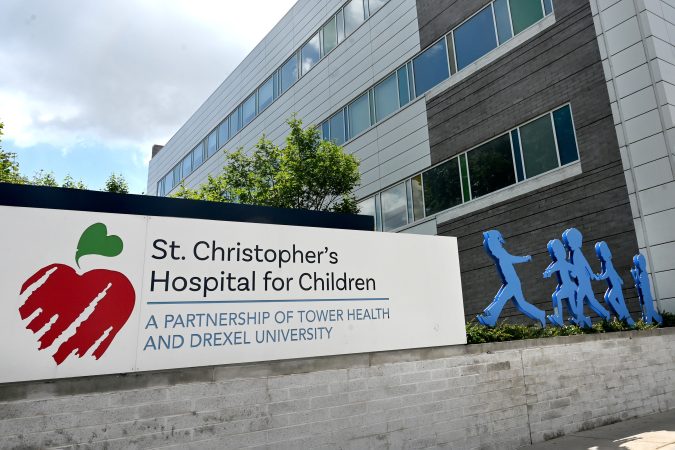
    Three major Philadelphia-area health systems are exploring an alliance to support financially struggling St. Christopher’s Hospital for Children in North Philadelphia, its leaders announced Wednesday.

    The proposed alliance would involve Nemours Children’s Health, Jefferson Health, and Temple Health, a St. Chris statement said.

    St. Chris’ ownership would not change from the current 50-50 partnership between Drexel University and Tower Health.

    Under the alliance, Wilmington-based Nemours would provide highly advanced, or tertiary, care. Nemours is Jefferson’s primary pediatric partner in the Philadelphia area.

    The preliminary agreement announcement provided no timeline to form the alliance. It also did not mention specific financial support for the North Philadelphia institution, which has received millions from local health players following a 2019 bankruptcy and steep losses during the pandemic.

    St. Chris’ board chair, P. Sue Perrotty, said the 150-year-old hospital will remain a “gateway” to care for families.

    “Our goal is to preserve what makes St. Christopher’s so special while strengthening our operations, so our community-focused mission will endure,” she said.

    “Whether care is delivered at St. Christopher’s or through our partners when clinically appropriate, our team will continue to coordinate every step of a patient’s journey, providing families with a seamless experience and a trusted guide throughout their child’s care.”

    Beyond the critical health services St. Chris provides, the institution also plays a vital part in medical education for area medical schools, including those at Drexel, Thomas Jefferson University, Philadelphia College of Osteopathic Medicine, and Temple University.

    It serves as a safety net for healthcare in some of Philadelphia’s lowest-income communities. About 85% of its patients in recent years have been insured by Medicaid, the highest percentage of any children’s hospital in the nation, according to St. Chris.

    Twice in the past four years, a coalition of Philadelphia nonprofits provided financial lifelines for St. Chris.

    Children’s Hospital of Philadelphia, Jefferson, Temple, Philadelphia College of Osteopathic Medicine, Independence Health Group, and private donors provided $50 million over two years starting in 2022. Two years later, the same group, minus Independence, contributed another $30 million.

    Jefferson and Temple were also part of a consortium that considered bidding for St. Chris in 2019 during its parent company’s bankruptcy. They backed out before the auction, which Drexel and Tower won with a $50 million bid.

    Nemours spokesperson Shelley Meadowcroft said there was no financial support included in the agreement.

    Nemours in recent years has lost affiliations with Main Line Health and ChristianaCare to CHOP. The alliance will strengthen “access to high-quality pediatric care in our region,” she wrote in an email.

    “This collaboration also strengthens Delaware’s role in pediatric care by positioning Nemours Children’s Delaware-based clinical operations as a central hub for advanced specialty care, education, and innovation,” she added, “while supporting the long-term strength and mission of St. Christopher’s Children’s Hospital and the communities it serves.

    In a statement, Temple University officials characterized the agreement as “non-binding letter of intent” to form an alliance “in support of St. Chris and its future.”

    “The proposed alliance reflects a shared commitment to securing a future for St. Christopher’s while preserving the mission, clinical excellence and community role that have made the hospital a resource for children and families in Philadelphia and across the region,” officials said.

  • Jefferson announces new Allentown medical school campus

    Jefferson announces new Allentown medical school campus

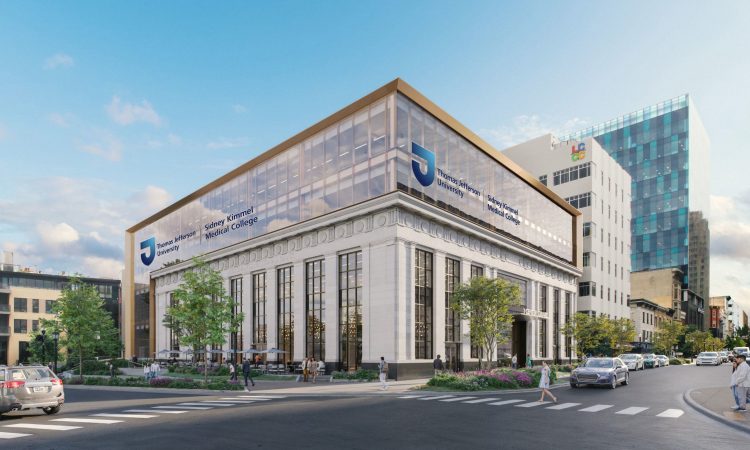
    Thomas Jefferson University is bringing its medical education offerings to Allentown, with a new four-year regional campus set to enroll students in 2029, officials announced Monday.

    The site will offer the same curriculum as Jefferson’s main campus in Center City, including the same assessment standards, learning objectives, and graduation requirements.

    Once opened, the Allentown location of the Sidney Kimmel Medical College will mark the school’s second regional expansion. The university announced plans last month to open Delaware’s first four-year medical school in 2028.

    University leaders hope the move will create pathways for workforce development in the Lehigh Valley and help meet regional healthcare needs.

    “Physicians are more likely to practice where they train,” Said Ibrahim, dean of Sidney Kimmel Medical College, said in a statement. “Establishing a four-year campus of Sidney Kimmel Medical College in the Lehigh Valley will expand opportunities for medical education, strengthen regional connections, and build a pipeline of physicians who are committed to serving this community for generations.”

    What is known so far

    The new regional campus will reside at One Center Square in downtown Allentown and span more than 54,000 square feet.

    Students will complete clinical training at Jefferson Health – Lehigh Valley region hospitals and outpatient practices.

    The regional campus will enroll 45 students starting in July 2029 — slightly more than the Delaware campus’ 40 students in 2028. Last year, the incoming class in Center City included 286 students.

    Jefferson declined to comment on the cost of the new regional campus.

    The university also announced plans in May to expand other academic programs to the Lehigh Valley this fall, including graduate-level nursing education, paramedicine, and respiratory therapy programs.

    Local politicians celebrated the expansion for its potential to recruit future healthcare workers to the region.

    “An Allentown School District student with a dream to be a doctor can do pre-med at Cedar Crest College and now stay in Allentown for her MD. A Muhlenberg College student who comes from Puerto Rico or Connecticut who falls in love with Allentown can become a doctor right here and stay here,” Allentown Mayor Matt Tuerk said in a statement.

  • Do metals found in tampons pose a health risk? A new FDA study provides an answer.

    Do metals found in tampons pose a health risk? A new FDA study provides an answer.

    A new study from the U.S. Food and Drug Administration detected heavy metals, including lead and arsenic, in popular tampon brands, but not enough to raise health concerns.

    “While trace metals are present in tampons, the amount released during use is too small to cause harm,” the agency announced this week.

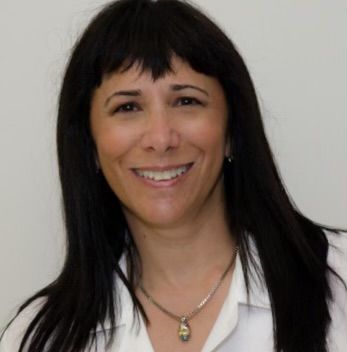
    The Inquirer spoke with Robyn Faye, an OB-GYN at Jefferson Abington Hospital, about what prompted the FDA study, what women should know about it, and the latest trends in menstrual products.

    Robyn Faye, a gynecologist at Jefferson Abington Hospital, specializes in menopause and sexual health.Courtesy of Robyn Faye

    What triggered worry about metals in tampons?

    A 2024 study by the University of California, Berkeley raised alarms after finding trace amounts of 16 metals — arsenic, cadmium, lead, mercury, nickel — in more than a dozen different tampon unnamed brands.

    The study found lead concentrations were higher in non-organic tampons, while arsenic was higher in organic tampons.

    Tampons are made with cotton, rayon, or both. Researchers believe cotton can absorb metals from water, soil, or industrial contaminants near fields. Some metal might get added to tampons during manufacturing.

    Metals have been linked to increased risk of dementia, cancer, kidney damage, and cardiovascular and neurological harm.

    The Berkeley study had a major shortcoming, however. It showed that metals exist inside raw tampon materials, but it did not test whether they leach out or get absorbed into the body, and if so, how much.

    “Obviously, there was a concern about what the exposure would be to women using these tampons,” Faye said. “So they needed to look into the potential toxicological risk.”

    What did the new FDA study find?

    The FDA-led study, recently published in the journal Toxicological Sciences, tested 11 tampon products from six different brands sold in the United States. It did not name the brands, nor test any scented tampons.

    The agency regulates tampons as “medical devices.”

    While FDA scientists detected 19 metals at trace levels in tampons, they found “negligible toxicological concern.”

    “The levels of metals released from tampons are not expected to result in adverse health effects,” the study concluded.

    Scientists created a “worst-case” exposure, using a testing method that extracted as much metal out of the fibers as possible, under circumstances far more intensive than normal tampon use.

    “They exaggerated the risk,” said Faye, who did not work on the study. “So the real-world exposure is probably even lower.”

    The bottom line, she said, is tampons are safe to use.

    What concerns do your patients have about tampons?

    Faye said older women still worry about “toxic shock syndrome,” a rare bacterial infection caused from an open cut or vaginal wound. Many women still mistakenly believe it is a common risk from wearing a tampon too long.

    Most younger patients, however, don’t use tampons.

    They prefer reusable menstrual cups, special absorbent underwear, or insertable discs, because they are environmentally friendly.

    “The trend in the younger women population is actually throwing out their tampons,” Faye said. “It’s interesting that the FDA is now doing a study on tampons when fewer girls are using them.”

  • Rothman Orthopaedics is refocused on Philly region, opening three new surgery centers

    Rothman Orthopaedics is refocused on Philly region, opening three new surgery centers

    Rothman Orthopaedics plans to open three new surgery centers over the next year and keep adding doctors in its Philadelphia-area market, as the large physician-owned group refocuses growth efforts on its original territory.

    “Our biggest priority in the near term is strengthening our core business here, in Southeastern Pennsylvania and New Jersey,” Rothman CEO Christian Ellison said. “We’re not gonna ignore opportunities. We’ll be opportunistic around things that make strategic sense.”

    The new approach comes after a now abandoned effort to break into the New York market, first in a partnership with Northwell Health in 2017 and then with NYU Langone Health. That foray ended last year with the sale of Rothman Orthopaedics of Greater New York and its three locations to NYU Langone.

    Rothman has seen more success after following the lure of fast population growth to Florida, where it opened offices in the Orlando area in 2020 in partnership with AdventHealth.

    “Florida has been a big success, because we’ve had the partnership down there with Advent Health that’s been kind of mutually beneficial,” said Ellison, who became Rothman’s CEO last fall.

    The Philadelphia draw

    The practice headquartered in Center City already has 24 locations in the Greater Philadelphia market. That number includes facilities that Rothman operates in partnership with Jefferson Health, Main Line Health, AtlantiCare, and RWJ Barnabas.

    Rothman located its newest office in West Chester, an area where Rothman had little market share, according to Ellison. He also sees opportunity in other parts of the Philadelphia region and contiguous markets.

    To make that growth possible, Rothman is partway through an effort to hire 41 physicians by the end of this year. That represents a 20% increase and will bring Rothman’s total to 214 physicians, the company said.

    The need for ambulatory surgery centers

    Rothman is a partner in nine surgery centers in Pennsylvania and New Jersey and two surgical hospitals (Rothman Orthopaedic Specialty Hospital in Benslam and Physicians Care Surgical Hospital in Limerick).

    Those outpatient facilities account for nearly two-thirds of Rothman’s surgeries. Even the surgical hospitals function primarily as ambulatory centers, Ellison said. The remaining third of surgeries takes place in acute-care hospitals.

    “We are challenged for operating room capacity right now, both in the acute care hospitals, as well as in our ASCs, and so we feel like we need to bring more operating rooms online,” Ellison said.

    What’s more, Medicare and private insurers want more procedures done in lower-cost surgery centers. In the future, insurers will pay the same price for an outpatient knee replacement whether its done in a hospital of freestanding surgery center, Ellison predicted.

    Rothman hasn’t finalized locations for the new surgery centers, but Ellison said he expects two to be in Southeastern Pennsylvania and one in New Jersey. The centers will likely be in areas where Rothman has an established patient base.

    The physician group prefers to open the new centers independently, as opposed to going through partnerships like it has historically. “We think we’re uniquely positioned to manage that patient experience in the surgical environment,” Ellison said.

  • NovaCare Rehabilitation’s parent, Select Medical, was sold in $3.9 billion private equity deal

    NovaCare Rehabilitation’s parent, Select Medical, was sold in $3.9 billion private equity deal

    NovaCare Rehabilitation’s parent company, Select Medical Holdings Corp., was taken private in $3.9 billion private equity deal this week.

    NovaCare has more than 100 physical therapy locations in the Philadelphia region, including some through a partnership with Rothman Orthopaedics.

    For 25 years, NovaCare sponsored the Philadelphia Eagles practice complex in South Philadelphia. Jefferson Health took over the sponsorship this year.

    Top management joined private-equity firm Welsh, Carson, Anderson & Stowe in the acquisition of Select Medical, which is based in Mechanicsburg, Pa. The sale was completed Wednesday. The price per share was $16.50 per share, an 18% premium to the latest close before the deal was announced in November.

    In addition to outpatient physical therapy through NovaCare and other subsidiaries at 1,850 locations in 36 states, Select Medical operates 104 long-term acute-care hospitals in 28 states and 38 rehabilitation hospitals in 15 states. The company has more than 45,000 employees and had $5.5 billion in revenue last year.

    Select Medical acquired NovaCare in 1999. Publicly traded NovaCare fell on hard times because of Medicare reimbursement changes under the federal Budget Reconciliation Act in 1997. The law capped reimbursement for speech, physical, and occupational therapy in nursing homes.

    The company, then headquartered in King of Prussia, lost $700 million in annual revenue because of those changes, The Inquirer reported at the time.

  • Jefferson Einstein nurses sign a new contract with raises, more staffing

    Jefferson Einstein nurses sign a new contract with raises, more staffing

    Nearly 1,200 nurses at Jefferson Einstein Philadelphia Hospital this week ratified a contract that includes raises and additional staffing at the Logan hospital.

    The nurses, part of the Pennsylvania Association of Staff Nurses and Allied Professionals union, reached a contract agreement with Jefferson Health officials after authorizing union officials to call a strike last week.

    Jefferson officials said in a statement that the three-year contract “reflects a thoughtful and collaborative approach, balancing the financial realities facing healthcare organizations today with our ongoing commitment to invest in the communities we serve.”

    Nurses had called for assurances that the hospital will not close departments; the health system announced plans earlier this year to close several pediatric outpatient clinics that are staffed by non-union nurses.

    As part of the new contract, union officials said in a news release, the hospital will add staff to behavioral health units. And a committee of nurses and nursing directors must agree with any plans to reduce staffing levels in any hospital department.

    The union negotiated wage increases of 10% to 14% over the course of the three-year contract. In addition, nurses who work weekends will also see higher pay rates to retain staffing levels on weekends.

    The hospital also agreed to continue contributing to nurses’ pensions, and cannot “negatively impact” sick and vacation time. The union said Jefferson employees will also save money on health insurance costs thanks to changes to pediatric-care coverage.

    “We’re trying to make Jefferson Einstein a more desirable place to work by enhancing our benefits,” said Jyll Kurczewski, a registered nurse in Einstein’s emergency department and the Einstein union’s co-president, in a statement.

    “There are many healthcare networks in the area where RNs can choose to work. We want them to want to be at Einstein and to stay at Einstein.”

    A Jefferson spokesperson said that wages and benefits in the contract are “consistent with Jefferson’s compensation philosophy and include the support we provide to all the dedicated professionals who deliver exceptional patient care every day.”

  • N.J. hospitals could lose an estimated $3.6 billion from Medicaid changes through 2032

    N.J. hospitals could lose an estimated $3.6 billion from Medicaid changes through 2032

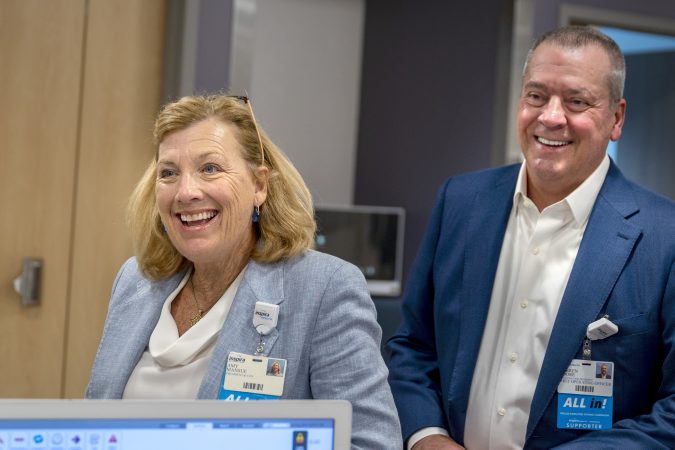
    New Jersey hospitals could lose an estimated $3.6 billion from Medicaid changes through 2032, forcing them to bring their expenses in line, Inspira Health Network CEO Amy Mansue said Friday during a panel discussion in Cherry Hill.

    “That will only happen with dramatic changes in how we look at our business,” she said during the Southern New Jersey Development Council’s Annual Health Care Leadership Forum at the Legacy Club of Woodcrest.

    Mansue predicted that health systems will close little-used programs. “There is no way to cut that much money out of the hospitals without doing some of that,” she said.

    The $3.6 billion estimate from the New Jersey Hospital Association does not include hospitals’ losses from the growing population of uninsured people who show up at emergency departments because they can’t afford to pay cash for a doctor visit.

    Already nearly 69,000 people have allowed their individual coverage from New Jersey’s Affordable Care Act marketplace to lapse after temporarily enhance tax subsidies expired at the end of last year. Thousands more are expected to lose Medicaid coverage next year when new requirements to stay enrolled take affect.

    New Jersey’s regulatory burden

    The hospital executives pleaded for state officials to reduce the red tape that makes it hard to implement programs needed to meet community needs.

    “We need to be more nimble, we need to be more adaptable, we need to be more flexible,” said Aaron Chang, president of Jefferson Health NJ, which includes hospitals in Cherry Hill, Stratford, and Washington Township.

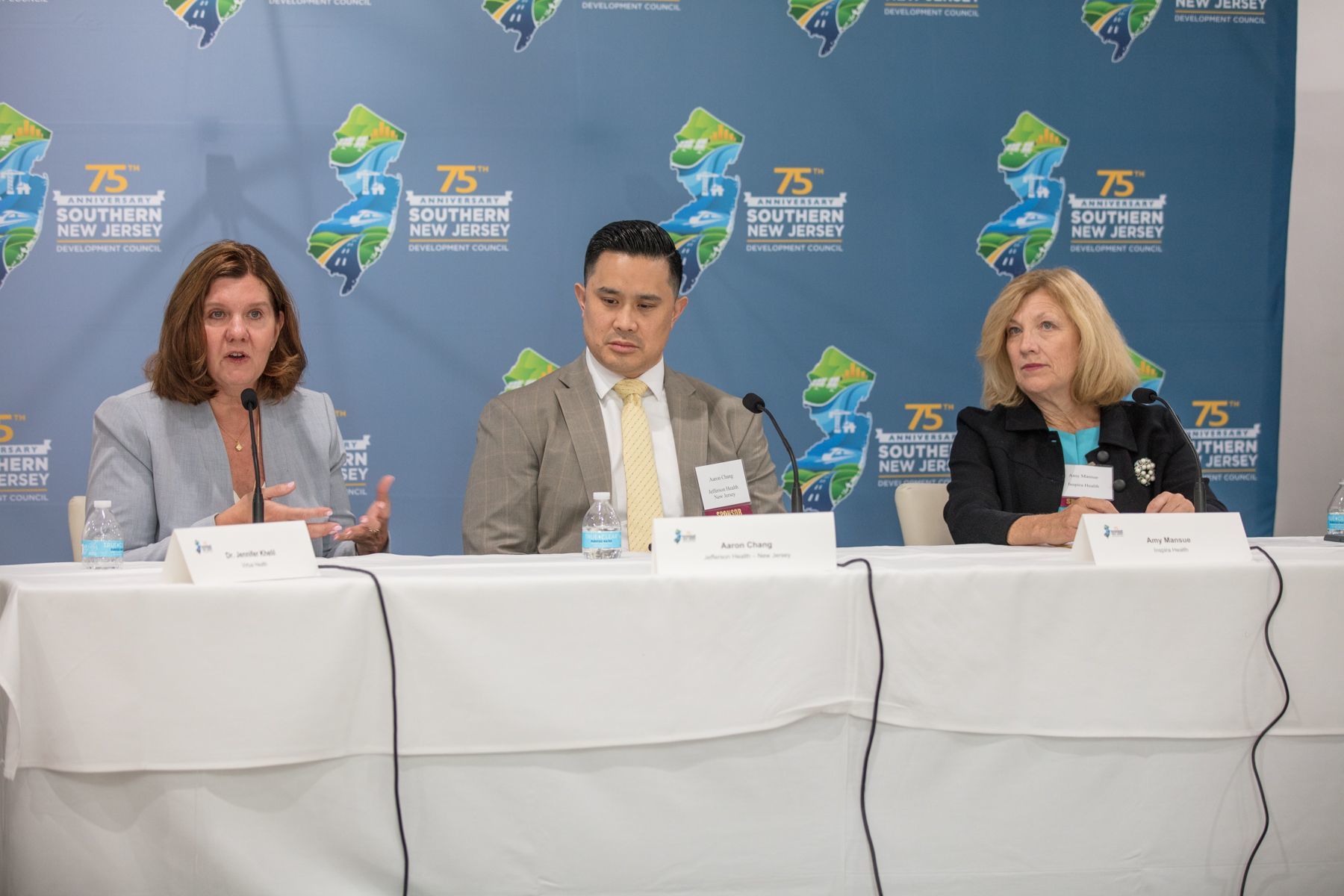
    Jennifer Khelil (left), Virtua Health’s chief clinical Officer; Aaron Chang (center), president of Jefferson Health New Jersey; and Amy Mansue, CEO of Inspira Health spoke Friday at the Southern New Jersey Development Council’s Health Care Leadership Forum.Southern New Jersey Development Council

    Inspira is adding a $220 million patient tower at Inspira Mullica Hill in Harrison Township, near the intersection of Routes 55 and 322. Construction is expected to be completed Oct. 1, Mansue said. “The reality is we’re not going to open until March” because it will take that long to get all the regulatory approvals, she said.

    Inspira operates three other hospitals in Cumberland and Salem Counties.

    Raynard E. Washington, who heads the N.J. Department of Health, spoke after the panel and said Gov. Mikie Sherrill is serious about making it easier to do business in the state. She told state agencies “to limit additional regulations and to look for opportunities to streamline,” he said.

    Workforce development is a top priority

    Six years ago, Virtua and Rowan University started working together to create the Virtua Health College of Medicine & Life Sciences out of Rowan’s School of Osteopathic Medicine, Rowan’s School of Nursing & Health Professions, and Virtua’s Our Lady of Lourdes Nursing School, plus a new school of translational biomedical engineering and sciences.

    The institution officially launched in 2022 with $85 million in support from Virtua and $125 million from Rowan and has seen its class sizes grow steadily.

    “We are now training about 360 nurse graduates every year, 300 medical students,” said Jennifer Khelil, Virtua’s chief clinical officer. Virtua operates five hospitals in South Jersey.

    Workforce efforts also reach into high schools, Chang said. Jefferson Cherry Hill Hospital has a relationship with Cherry Hill West High School that brings 12 to 15 interns to the hospital.

    “Because of the internship, their exposure to the hospital environment, whether it’s the ancillary departments and or the clinical areas, over 95% of those individuals get a healthcare job as a first foray into the workforce,” Chang said.

    Editor’s note: This story has been updated to correct the time period for the Medicaid cuts.

  • Project HOME adds new beds for homeless patients leaving the hospital

    Project HOME adds new beds for homeless patients leaving the hospital

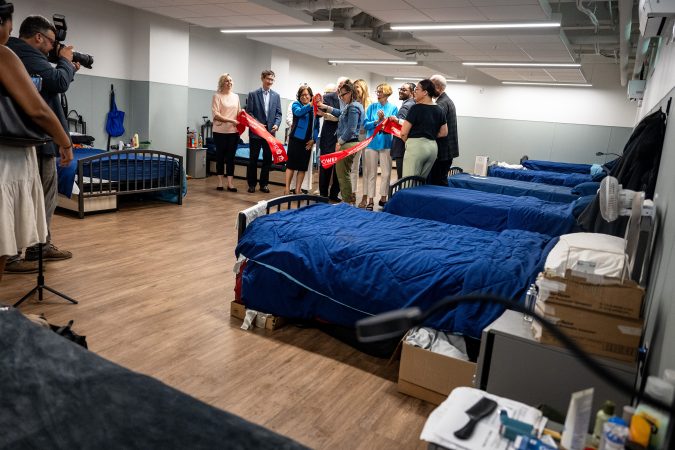
    Project HOME is adding 20 beds to a Hunting Park shelter to house hospital patients who have nowhere to go once they’re discharged.

    The new center, Hawthorne House Respite, expands the respite beds available at the housing nonprofit’s Sacred Heart Recovery Residence on Old York Road.

    Renovations to the building, a former nursing home for cancer patients run by Dominican nuns, added 20 beds in dormitory-style housing — 10 for men, 10 for women — and cost $3.4 million. Funds came in part from $2.3 million raised at the behest of Jon Bon Jovi, a longtime Project HOME collaborator, at the organization’s 35th anniversary gala in 2024.

    “We can’t stress enough how much housing is healthcare, and that respite beds at every level is so important as part of the ecosystem,” said Donna Bullock, Project HOME’s CEO, after a ribbon-cutting ceremony for the new beds Wednesday.

    “People need different levels of care for healing, different levels of housing for stability.”

    Sacred Heart, which also offers longer-term housing for people in recovery, already had 10 respite beds for residents.

    Now, providers can refer more patients directly from the hospital to Sacred Heart. The program is part of the Project HOME Collaborative, a partnership to address homelessness and substance use recovery with Jefferson Health, Penn Medicine, Temple Health, and Prevention Point.

    Project HOME officials say respite beds are in high demand and short supply across Philadelphia. Another respite program run by the Public Health Management Corporation in northwest Philadelphia offers 40 beds for patients with higher-level medical needs.

    “It’s not enough,” Bullock said.

    Gaps in the healthcare, shelter, and addiction treatment systems often make it difficult for homeless patients to heal after a hospital stay.

    Inpatient addiction rehabs and shelters often do not have the capacity to care for patients with ongoing medical needs, while hospitals cannot sustain long-term care for patients who have recovered enough to be discharged.

    “We know that recovery doesn’t stop when we discharge you and send you out into the community. Too often, individuals who are homeless face impossible challenges after they are discharged,” said Steve Carson, Temple Health’s senior vice president of population health.

    Patients placed in respite beds say such programs are crucial to their recovery and continued stability. Amber Moon arrived at Sacred Heart two years ago after she developed endocarditis from injection drug use, resulting in two heart surgeries.

    After months in the hospital, she was well enough to leave — but still needed support to heal. At Sacred Heart, staff arranged rides to doctors’ appointments and helped her navigate new medication regimens. Moon relished the opportunity to continue her recovery outside of a hospital room, surrounded by other residents who’d survived similar experiences.

    “I was happy that I was around other people — not just the girls that I was staying with, but staff that understood what I was going through,” she said. “They treat you with humanity, like a regular person.”

    Now a certified recovery specialist who helps other people with addiction navigate treatment, Moon is set to move into her own apartment soon.

    “I‘m very grateful to have met all the people I’ve met, and been through what I’ve been through, because now I’m able to help others who think that there’s no chance,” she said. “There always is.”