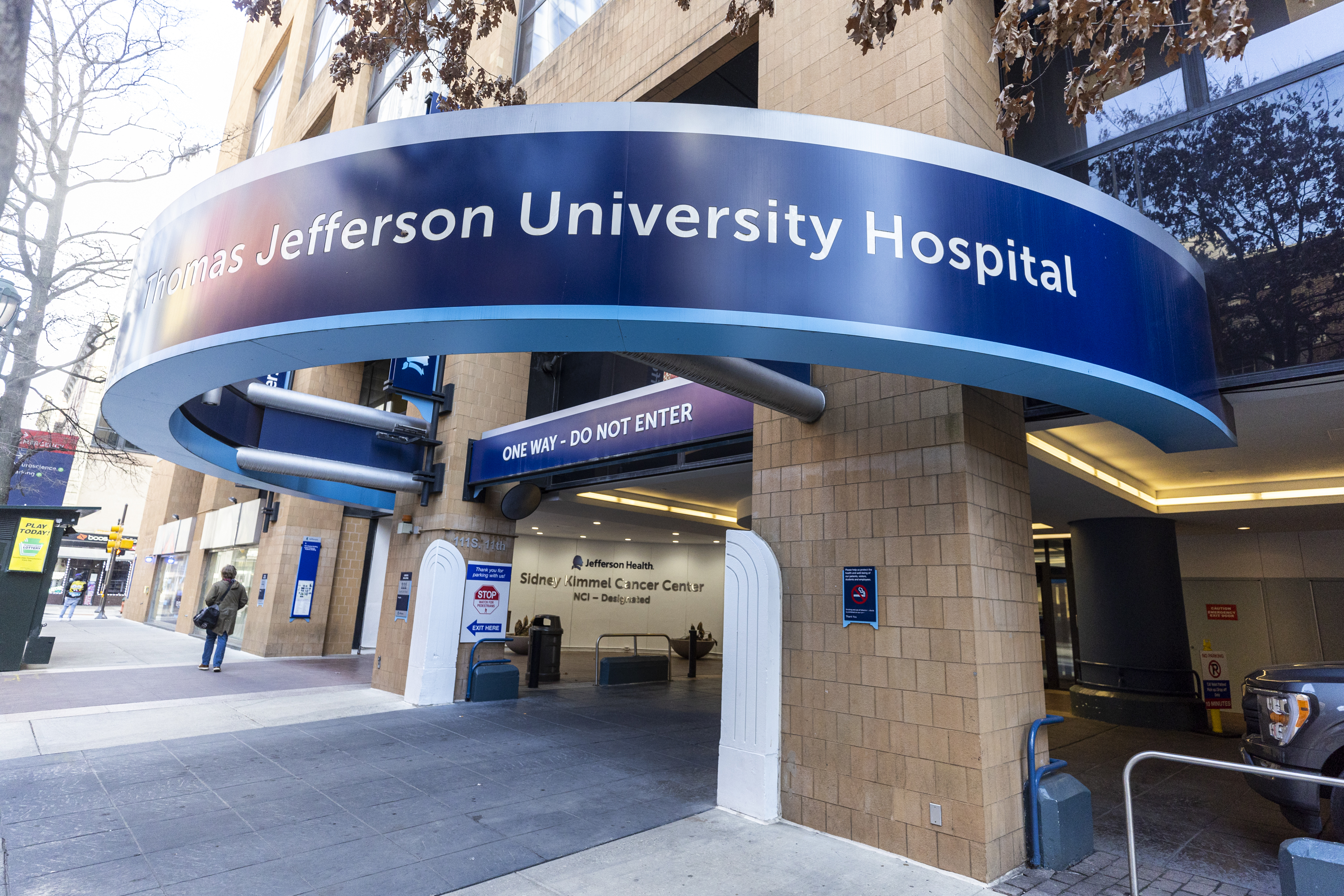
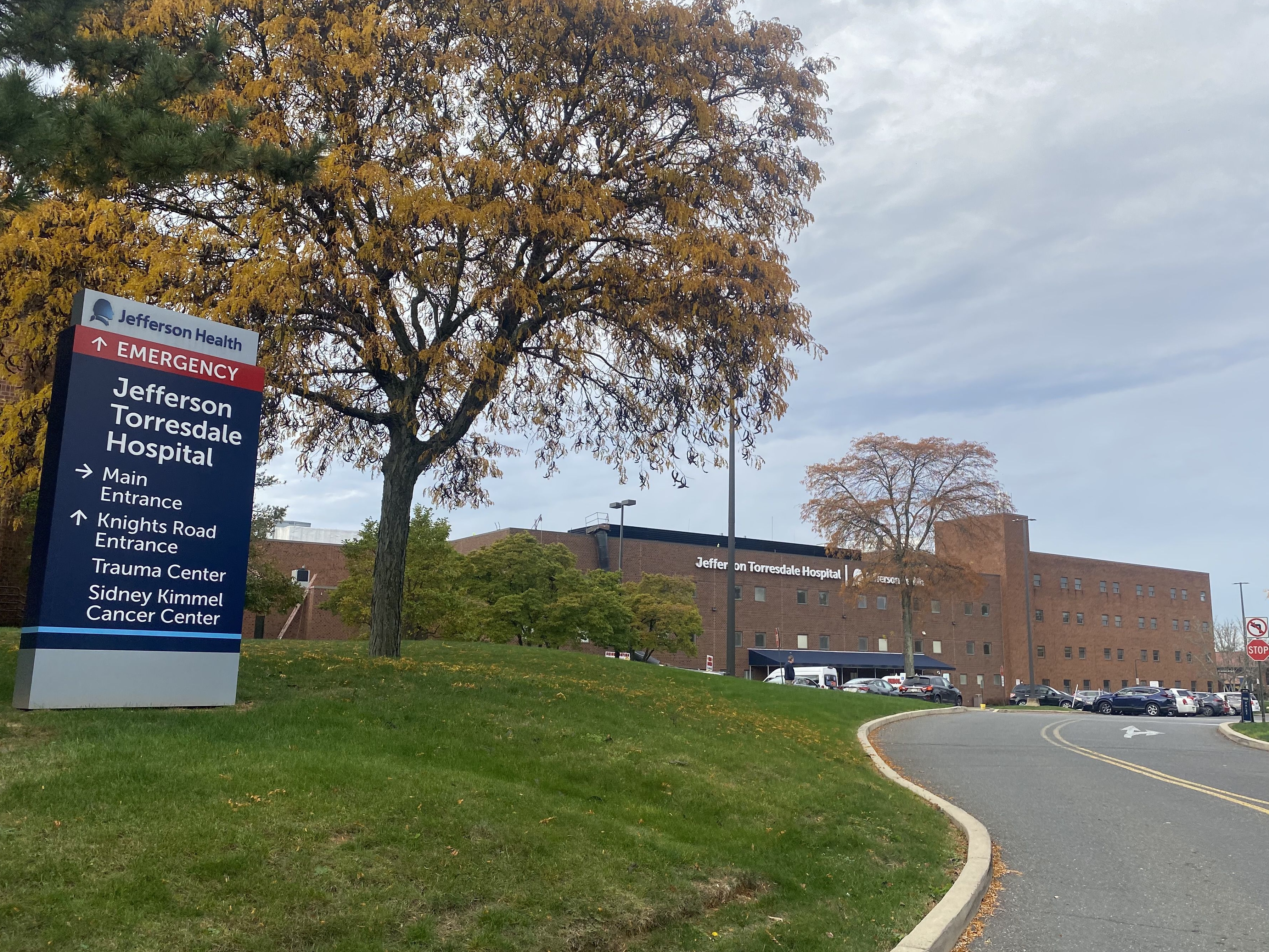
Nurses, techs, and other medical professionals at Thomas Jefferson University Hospital are exploring the possibility of forming a union after a similar organizing effort at the nonprofit health system’s Bucks hospital failed.
The Pennsylvania Association of Staff Nurses and Allied Professionals, a leading healthcare workers union in the Philadelphia region, confirmed nurses at Jefferson’s flagship hospital were in the early stages of reviewing options for organizing as a PASNAP chapter.
The workers involved at Thomas Jefferson University Hospital have not filed any paperwork with the National Labor Relations Board, and have no immediate plans to vote on unionizing.
PASNAP said it did not yet know how many workers would potentially be included in the new union chapter.
PASNAP has filed grievances with the NLRB over the effort, claiming Jefferson attempted to intimidate and discourage staff from organizing in advance of the Oct. 6 vote.
Jefferson Health accused PASNAP of “organizing campaigns run on misinformation,” and encouraged nurses to evaluate facts, ask questions, and make informed decisions.
“Jefferson’s nurses have always been best served by working directly with leadership to enhance the colleague and patient care experience,” Jefferson said in a statement.
PASNAP pointed to its success helping organize nurses at other Philadelphia hospitals, including Jefferson Einstein, as proof that healthcare workers aren’t getting what they need from hospital management.
“We don’t have to misinform people, because we have the truth on our side: We know that collective bargaining works,” the union said in a statement.
Interest in unionizing has surged among medical workers in recent years, with doctors showing interest in a labor movement that has traditionally represented nurses, techs, and other hospital workers. In 2025, thousands of resident physicians organized at hospitals owned by Jefferson Health, Temple Health, and the Children’s Hospital of Philadelphia.
Jefferson’s sprawling network of more than 30 hospitals across the Philadelphia region, New Jersey, and Lehigh Valley employs a mix of union and non-union workers.
Nurses at Jefferson Health — Center One, a primary care and outpatient facility in Northeast Philadelphia, and Willowcrest, a skilled nursing center at Jefferson Einstein Philadelphia Hospital, are also seeking membership in the existing nurses’ union at Jefferson Einstein Philadelphia. If approved, the move would add 43 nurses from Center One and Willowcrest to Einstein Nurses United.
The Pennsylvania Insurance Department last week detailed its plans to intervene in the contentious contract negotiations between Highmark, Independence Blue Cross, and Jefferson Health to ensure patients continue receiving care if the parties don’t have new agreements by Dec. 31.
The first step would be to suspend the contract terminations for up to six months and then schedule public hearings to investigate the reasons for the terminations, the department said in letters sent Friday to the CEOs of Highmark, Independence, and Jefferson.
The department, however, cannot force the insurers and the Philadelphia region’s largest health system to reach a deal under Act 94 of 1975, which gives regulators the right to take the planned steps. Jefferson also owns Lehigh Valley Health Network, which stretches from Allentown north. That’s an area where Highmark has a large share of the insurance market.
The department is regularly hearing from Pennsylvania residents worried about continued access to their doctors next year, the letters said.
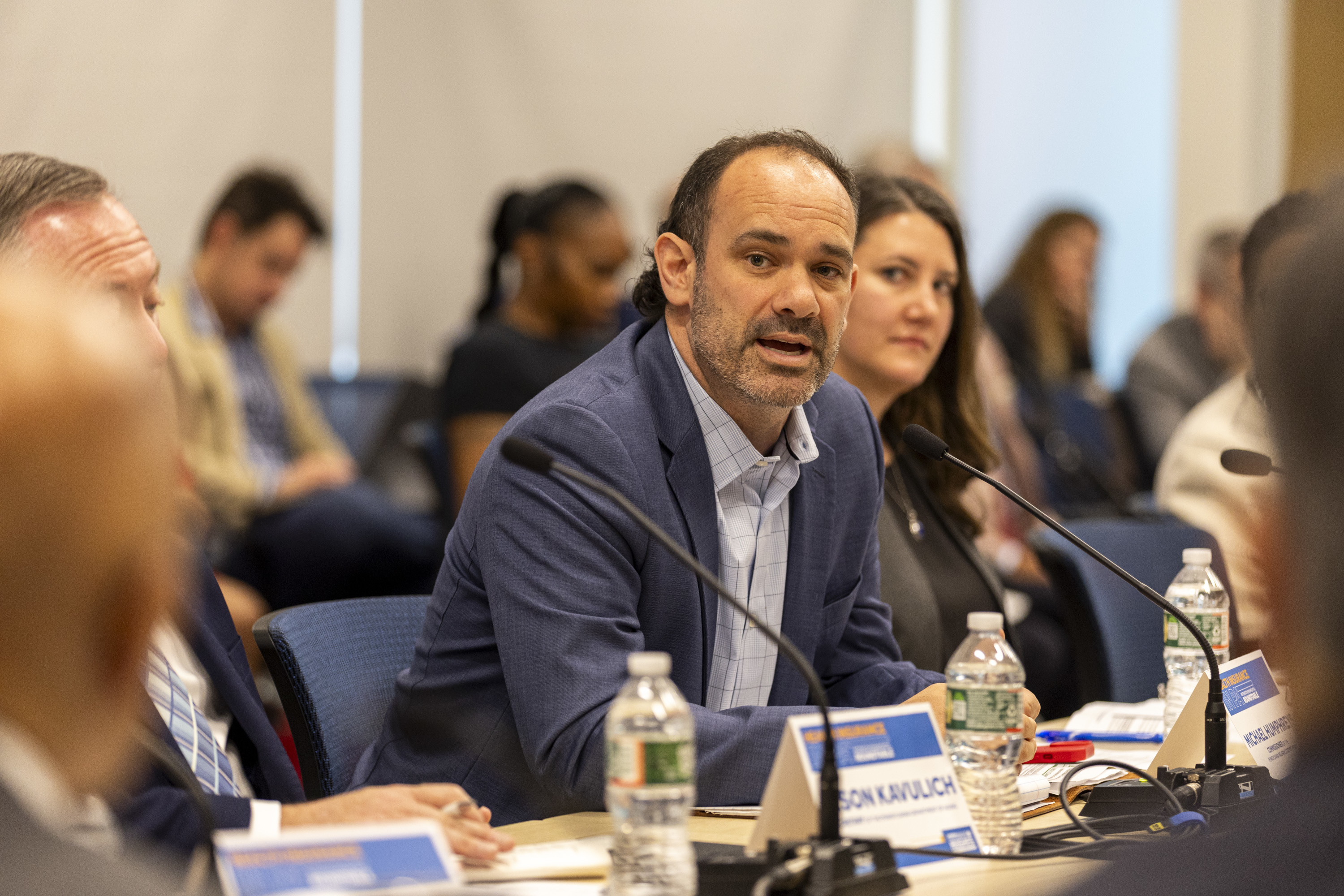
“The fear of not being able to continue to see an existing provider, or wondering how to find a new location for one’s next scan or preventive service will take place, is very real,” insurance commissioner Michael Humphreys said in the letters, which the department provided to The Inquirer.
The letters ask for lists of the Jefferson locations that acceptHighmark and Independence insurance, information on how the parties are handling appointments and preauthorization for next year, and contract negotiation updates every week starting Nov. 25.
It’s not unusual for contract talks to go down to the wire, but the negotiations between Jefferson and Highmark and Independence Blue Cross have been more public than most. Both Jefferson and Independence have advertised their positions to sway public opinion.
Highmark and Independence said they continue negotiating.
“We remain focused on our members and on negotiating an agreement with Jefferson Health that preserves access to quality care at an affordable cost. Consistent with the Commonwealth’s focus under Act 94 on consumer protection and continuity of care, we will continue working toward a resolution that shields our members and customers from unsustainable cost increases,” Independence said in an email.
Highmark provided a similar statement: “We remain focused on reaching a fair agreement with Jefferson Health. Our priority is to ensure access to quality, affordable care for the people we serve.”
“We welcome the commissioner’s engagement and support a transparent, independent analysis of the issues at the center of these negotiations. We’re hopeful in finding a sustainable approach that protects patients’ access to the physicians, hospitals and specialized services they depend on.”
Supermarket owner Joyce Lin jab-scrolled through her phone’s call history — five hours on hold, again and again, week after week. So frustrating, so aggravating, so upsetting.
If Lin wants to keep the doors open at her No. 1 Supermarket, pay the mortgage, pay the taxes, pay the electric bill that powers her refrigerator and freezer cases plus walk-ins down inthe basement, she’s got to get her merchants’ electronic benefits transfer (EBT) license back.
Dominic Brennan, SEAMAAC’s community building coordinator, looked on as Lin showed him the calls she made in vain to the government agency in charge. “I can help you with that,” he offered.
She needs his help.
After all, 75% of her sales come from customers using their EBT (food stamp) cards to buy groceries at her store on South Seventh Street, the heart of South Philadelphia’s Asian business district. She didn’t know the license had expired and that she would have to renew it.
Maybe Brennan can find the time to deal with a balky bureaucracy and wait on hold so Lin can run her business, a business that’s now barely hanging on.
SEAMAAC has gathered grants to pay for planters on the corridor, for motion-sensor lights to illuminate block corners at night, for bulbs strung across the street to add cheer and happiness. Brennan wrangled a forgivable merchants’ loan for Lin so she could buy several freezer cases and some shelving to hold produce.
The grants SEAMAAC (Southeast Asian Mutual Assistance Associations Coalition) manages to corral help to improve the neighborhood and give a hand to merchants like Lin. But they don’t pay for Brennan to help save Lin’s business — or her home, for that matter. She, her husband, and their three children live upstairs.
Administrative support is critical, but it’s that kind of support that many grants don’t often fully cover. Donations need to make up the difference.
Including Brennan, the majority of people who work for SEAMAAC are immigrants in an organization that began in 1984 by serving people from countries like Vietnam and Cambodia, and now assists all low-income and marginalized people, including immigrants from Asia, Africa, Europe, and South and Central America.
SEAMAAC serves its community in 55 languages with a wide array of programs. It partners with Jefferson Health to provide healthcare to the neighborhood. A lawyer from Community Legal Services can help people gain benefits. Many refugees come to Philadelphia from places where they experiencedtrauma, and there are culturally sensitive art groups to help them and victims of domestic violence. In its space in the former Bok High School, SEAMAAC offers English-language classes and social gatherings to combat isolation among the elderly. A new headquarters will open in January.
Brennan and his colleague, Sabia Afroz, community development program manager, work in SEAMAAC’s community development wing.
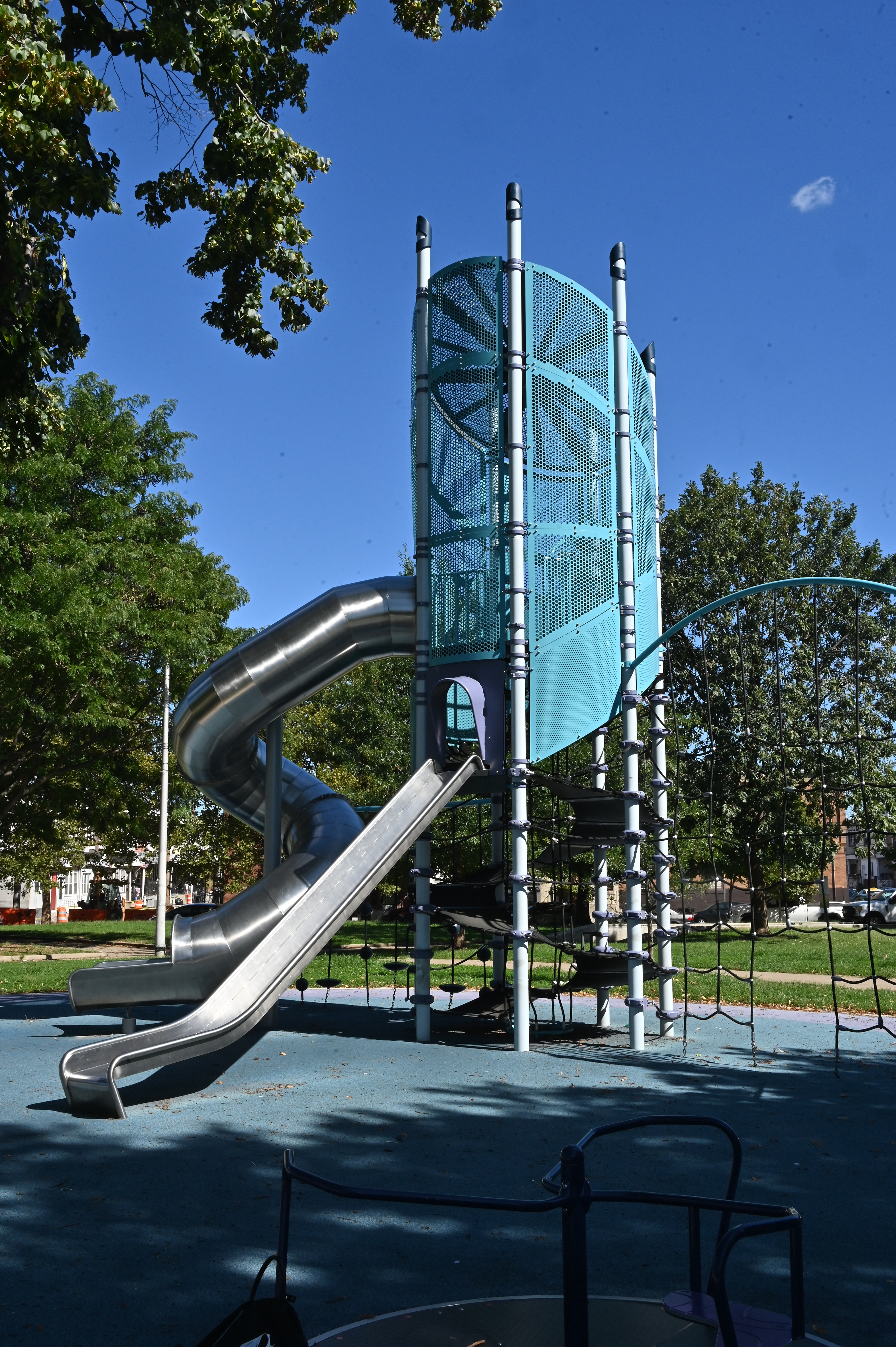
Together, they and partners raised funds for a wonderful new playground at Mifflin Square Park. Refurbished basketball courts are coming next.
To improve the cleanliness of the neighborhood, they partnered with an outside contractor to increase trash pickup. They added trash cans and mounted an educational campaign for merchants.
“They don’t understand the rules about the days, or the designated places because they can’t read the warning signs,” Afroz said. She’s proud that the campaign has paid off. The corridor, once one of Philly’s most trash-filled, has improved.
At the City Angkor Market, Sivteang Lor shows her rare produce. According to Sabia Afroz, they are: “The circular plant with the magenta/light purple flower is a water lily, and its stem is edible. The yellow flower is from a vining plant called bagbagkong, an edible wild vine flower. It is also known by regional names such as sabidukong, dukep, pusapusa, and kapas-kapas.”I. George Bilyk
“Grants cover the costs of planters and supplies, but not what it takes to build trust and relationships,” Brennan said. That takes time and shoe leather — many, many walks along the corridor — learning the different business challenges involved in running a fish market vs. a deli vs. a grocery, hair salon, or bike store.
“Many people have experienced systemic violence, and there’s a hesitancy and reluctance to trust, born of good reason,” he said.
Lin’s business, like others along the corridor, has been hit hard. Some immigrants, who used to shop, aren’t coming anymore, afraid of being targeted by U.S. Immigration and Customs Enforcement (ICE). Tariffs have raised the prices of some imports — which are valued by immigrant customers who come to Lin’s No. 1 Supermarket for food from home.
Lin now pays the person who delivers her milk a $4 gas fee, plus the wholesale cost of milk has increased.
She’s worried about a change in Philadelphia’s city business taxes. She used to be exempt from paying the city Business Income and Receipts Tax (BIRT) on the store’s first $100,000 in revenue. Now, though, she’ll owe taxes on all her revenue, hiking her tax bill even as her revenues decline.
She has had to lay off two employees, andknows that other merchants are doing the same. Where will those families get the money to patronize local businesses? It’s a downward cycle. Now it’s just her and her husband, working seven days a week and many more hours a day. “My children complain,” she said.
And then there are other complications. On-and-off border tensions between Cambodia and Thailand, half a world away, mean many Cambodians won’t buy Thai products. And so, packages of giant gourami fish from Thailand sit in the freezer.
Which is why, when Brennan offers his very practical help, it matters. “When I call him, he comes,” she said.
Walking the Seventh Street corridor from Porter to McKean Streets with Brennan and Afroz turns into a hugs-and-appliances tour — new refrigerators, new shelving, and new stoves — all acquired with help from SEAMAAC.
On the corridor, SEAMAAC’s help is friendly, but also practical and businesslike. The fees merchants pay for credit card transactions are expensive. So SEAMAAC helped business owners acquire ATMs so customers can pay in cash.
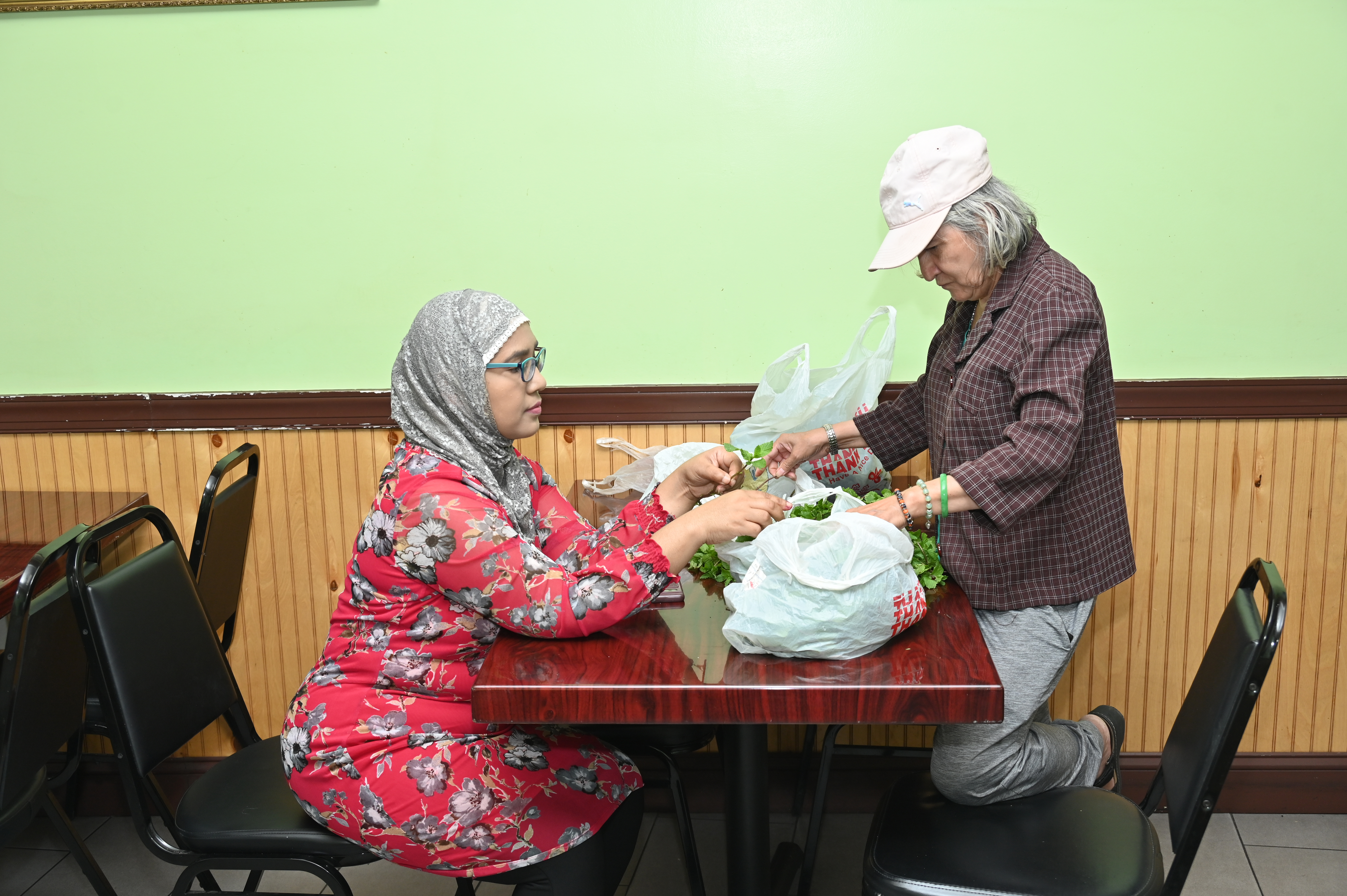
Sabia Afroz (left) helps Ha take mint leaves off stems at Phinga Trinh’s Vietnamese restaurant, Cafe Vinh Long. Ha did not want her last name used.I. George Bilyk
SEAMAAC works with 78 businesses along the corridor, helping merchants who speak 16 languages. At Cafe Vinh Long, Afroz sits across the table from an employee, helping her toseparate mint leaves from their stalks. The leaves will build a soup. The help builds trust.
Hor Chou, a citizen and leader among the Philadelphia Tse Chow group of Cambodian-Chinese, came to the United States many years ago via a refugee camp on the Cambodian-Thai border. He remembers seeing so many people massacred along the Mekong River that the waterway was clogged with bodies floating on top. Thirty people in his family were killed.
Chou, owner of New Happy Garden Chinese restaurant, now serves as an ambassador in his community, helping SEAMAAC organize events like community-wide Lunar New Year celebrations. His daughters have graduated from college. And thanks to SEAMAAC’s work, he points out a gleaming new three-wok stainless steel stove in the restaurant’s kitchen.
“It’s about build community — spend time together, learn together, and living in this community,” he said.
Community is also cultivated in SEAMAAC-organized gardens, aptly named “Growing Home Gardens.” On side streets, area residents apply for plots to grow food for their own use in what amounts to a United Nations of very specific produce.
The new playground equipment at Mifflin Square Park in South Philadelphia. SEAMAAC and other organizations helped to renovate the park.I. George Bilyk
For example, the Karen people from southern Myanmar plant lemon tulsi, while the Nepali and Bhutanese folks harvest Krishna tulsi, another variety. In the evening, the Nepalis use the Krishna tulsi in a prayer ritual to protect their homes from overnight evil.
At SEAMAAC, all the tulsis and their gardeners are welcome.
Afroz, a gardener herself, said that no matter where gardeners come from, they bond with each other, watering each other’s plots, examining each other’s plants, and sharing what they grow with friends old and new.
“They can grow something that is not available in any other place, or if it is, it’s very expensive,” she said. “In a city like Philadelphia, it gives them an opportunity to stay connected with their roots, with their culture, and with their cuisine.”
In October, SEAMAAC hosts a harvest at the community garden on Emily Street. “They share their food,” she said. “They share their recipes. They share their culture. They share their views. It brings them together.”
About SEAMAAC Inc., Philadelphia
Mission: To support and serve immigrants and refugees and other politically, socially, and economically vulnerable communities as they seek to advance the condition of their lives in the United States.
People served: 15,000 families
Annual spend: $3,793,384 in FY2025
Point of pride: SEAMAAC provides direct services to approximately 15,000 families annually through a variety of services and programs, supporting them through ESL classes, job readiness, domestic violence support, services for low-income elders, food security, public benefits, health and nutrition education, business development, and more. SEAMAAC plans to increase its impact to serve even more Philadelphians at its newly constructed main office and community center, located at 626 Snyder Ave., Philadelphia, PA 19148, which is scheduled to open in January.
You can help: Volunteer to beautify and improve Philadelphia’s neighborhoods through SEAMAAC’s urban gardening, neighborhood and public park cleanings, school and places of worship beautification, and tree-planting events.
How your donations support the communities we serve:
$50 provides toys for two children at SEAMAAC’s annual toy distribution.
$100 covers maintenance for an entire growing season and theannual registration fee for one gardener’s plot at SEAMAAC’s community garden.
$150 covers the full cost of supplies for one youth in SEAMAAC’s summer programs.
$200 covers four hours of ESL instruction.
$250 provides a family with emergency food, hygiene items, diapers, and social service support for one month.
$500 supports a domestic violence survivor’s move into safe housing by covering the cost of utility hookups and household supplies.
$1,000 covers the full cost for one high school student to participate in SEAMAAC’s eight-week summer career exploration program.
Thomas Jefferson University, which owns Jefferson Health, posted an operating loss of $81 million in the three months that ended Sept. 30.
Last year’s $104 million operating loss for the same period included $19.4 million in restructuring costs.
“Despite persistent inflationary pressures and commercial insurers’ unilateral changes to reimbursement policies, we are making meaningful progress on strengthening Jefferson’s financial performance while serving our communities and meeting the evolving needs of our patients,” Jefferson’s chief financial officer, Mike Harrington, said in an email.
He noted Jefferson is seeking higher payment rates as it currently negotiates contracts with several insurers. “We will continue to advocate for fair reimbursement from insurers to ensure our patients have access to the care they depend on.”
Jefferson, which has more than 30 hospitals stretching from South Jersey to near Scranton, has Dec. 31 contract deadlines with three major insurers: Highmark, Horizon Blue Cross Blue Shield New Jersey, and Independence Blue Cross. Jefferson and the insurers have warned patients that the deadline could pass without a new deal.
Here are more details on Jefferson’s latest results, shared with bondholders on Friday:
Revenue: Jefferson reported $4.34 billion in total revenue, up 8% from $4 billion last year. This is the first report since Jefferson’s acquisition of Lehigh Valley Health Network in August 2024 that has comparable figures for year over year results. Patient revenue was up 4%, insurance revenue climbed 21%, and unspecified other revenue rose 16%.
Patient volumes: The report showed mixed results for patient visits. Hospital admissions rose 2.3% to 64,370, but surgical procedures fell slightly to 47,700. The filing did not address the reason. Independence Blue Cross implemented a policy this year designed to steer selected surgeries to lower-cost ambulatory centers. That could have contributed to Jefferson’s loss of some procedures.
Notable: Jefferson’s operating results included $75 million in investment income in its revenue because it follows accounting rules for higher education, though the vast majority of its business is in healthcare. Without the investment income, its operating loss would have been $156 million.
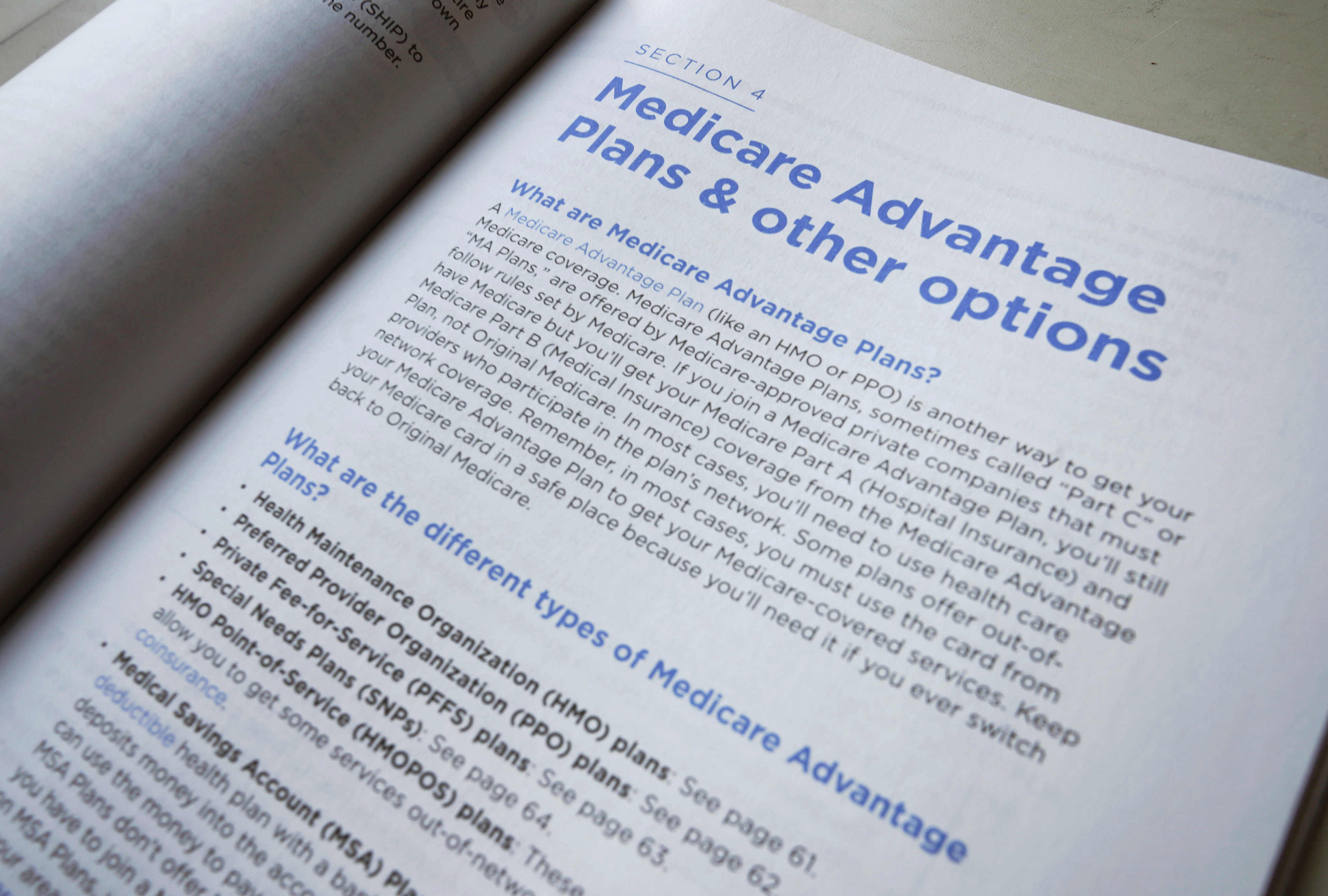
Jefferson Health Plans, the insurance arm of Thomas Jefferson University, has joined at least nine other Medicare Advantage insurers suing federal regulators over a drop in star ratings for 2027.
Jefferson’s lawsuit, filed last Wednesday in U.S. District Court for the District of Columbia, said the lower ratings would reduce by $43 million the quality bonuses it would otherwise receive in 2028.
“The harm suffered is not only financial, but reputational and competitive,” Jefferson’s complaint said. The ratings are widely used in market to attract shoppers for the private versions of taxpayer-funded insurance for people 65 and older.
“This case is not about quality of care or a challenge to the Medicare Star Ratings program itself,” Jefferson said in an email Monday.
“It is about ensuring fair and equitable treatment so that local, community-focused health plans are not placed at a competitive disadvantage that undermines our ability to reinvest in affordable coverage, enhanced benefits, and high-quality care for the members and communities we serve.”
The Centers for Medicare and Medicaid Services (CMS) declined to comment,citing the pending litigation.
Jefferson owns the region’s largest health system, but the Philadelphia nonprofit is a small player in Medicare Advantage with just 31,500 people enrolledin its plans in eastern Pennsylvania and South Jersey, according to its lawsuit.
CVS Health Corp., which owns Aetna and has a large Medicare Advantage presence in the Philadelphia region, said in its separately filed ratings lawsuit that the decline in star ratings for 2027 would cost it more than $2 billion in 2028.
A spate of Medicare Advantage lawsuits
Insurers began suing CMS on Oct. 9, the day after the agency released its 2027 star ratings. The ratings are designed to give people choosing a Medicare Advantage plan a way to compare quality.”
The lawsuits by Jefferson and other insurers, as tracked by the O’Neill Institute for National and Global Health Law at Georgetown University Law Center, have based their claims on a federal district court ruling in Georgia this year that CMS used 20 improper measures to calculate insurer Clover Health’s 2025 star ratings.
Jefferson is challenging the use of three of the measures related to medication adherence that were found unlawful in the Clover case. Jefferson sayssome of the measures relied on data that are not authorized by law, and others required a more rigorous adoption process.
The ratings for two of Jefferson’s plans fell to 3 stars from 3.5 stars. A third plan fell to 2.5 from 3 stars.
Her parents were home with their youngest children in Elkins Park around 7 p.m. on July 19 when her mom, Crystal Hilliard-Keith, went into sudden, painful labor with Isabella.
Only six months pregnant, Hilliard-Keith began preparing to drive to the hospital. But Isabella’s dad, Anthony Robinson, knew they wouldn’t make it. He called 911.
“She prayed,” Robinson said. “I prayed.”
Two veteran paramedics, Jessica Barto and Gerald Speed, were filling in for other EMTs that day. They were standing next to the truck, one mile away from the family’s house, when they got the call.
“There were people and things in places that, if even one of those things had been different, the outcome wouldn’t have been the way that it is,” Barto said.
CPR with one finger
Five minutes later, Barto and Speed arrived. Barto delivered Isabella, freeing her from the amniotic sac and clamping the umbilical cord while Speed notified Jefferson Abington Hospital. The baby was smaller than the palm of her hand, and she wasn’t making any noise.
Then, Barto saw Isabella’s ribs flare: She was trying to take her first breath.
“She’s a fighter,” Barto thought. “And we’re in this together.”
None of Barto’s equipment fit, so the EMT of 24 years improvised, using a smaller syringe hooked up to an IV catheter to clear Isabella’s nose. She started CPR, performing chest compressions with one finger.
Four miles away, neonatologist Erin Cipko’s team at Abington was alerted by Speed’s call that a baby born at 23 weeks would be arriving at the emergency room. Because it was after 4 p.m., Cipko was the only neonatologist in the neonatal intensive care unit.
She and her team grabbed the specialized tools they would not have in the ER, Cipko said, and started running.
Resuscitating a 23-week preemie born in the hospital is difficult enough, said Cipko, who has treated newborns for over a decade. A 2022 study found babies of that gestational age born at medical facilities had a survival rate of just 55%.
A 23-weeker born at home? Cipko had never seen that.
“I really didn’t think we had any chance of saving her,” she said.
Quran Frazier, a firefighter and EMT who had responded from the fire department, drove the ambulance as Barto continued CPR and Speed connected the baby to a heart monitor, finding a very slow pulse.
“Everybody knew what they were supposed to do and did it, really without us talking about it,” Barto said.
‘We were in shock,’ Abington doctor says
Meanwhile, Cipko, nurses, and ER staff were in the trauma bay preparing medications, hooking up oxygen, and locating other equipment.
Isabella arrived at the hospital, 25 minutes old and lighter than a cantaloupe, on an adult-sized gurney with Barto on board, continuing CPR. The clamp that Barto put on Isabella’s umbilical cord, Cipko said, had prevented the baby from bleeding out.
Hospital staff got to work — placing Isabella on a warmer, giving medication to restart her heart, and inserting a breathing tube. Because Barto had been delivering continuous CPR, Cipko said, her lungs inflated more quickly, and her blood flowed easily. Within five minutes, Isabella had a heart rate and stable oxygen.
“We were in shock,” Cipko said.
The doctor believes Isabella’s large size — heavier than the typical weight for 23-weekers, who are often under a pound — helped save her. Isabella was so large that Cipko assumed at first she must be older, until she noted the skin texture and other signs that confirmed Isabella’s extreme prematurity.
“I can’t even conceptualize what smaller would’ve looked like,” Barto said.
A wedding
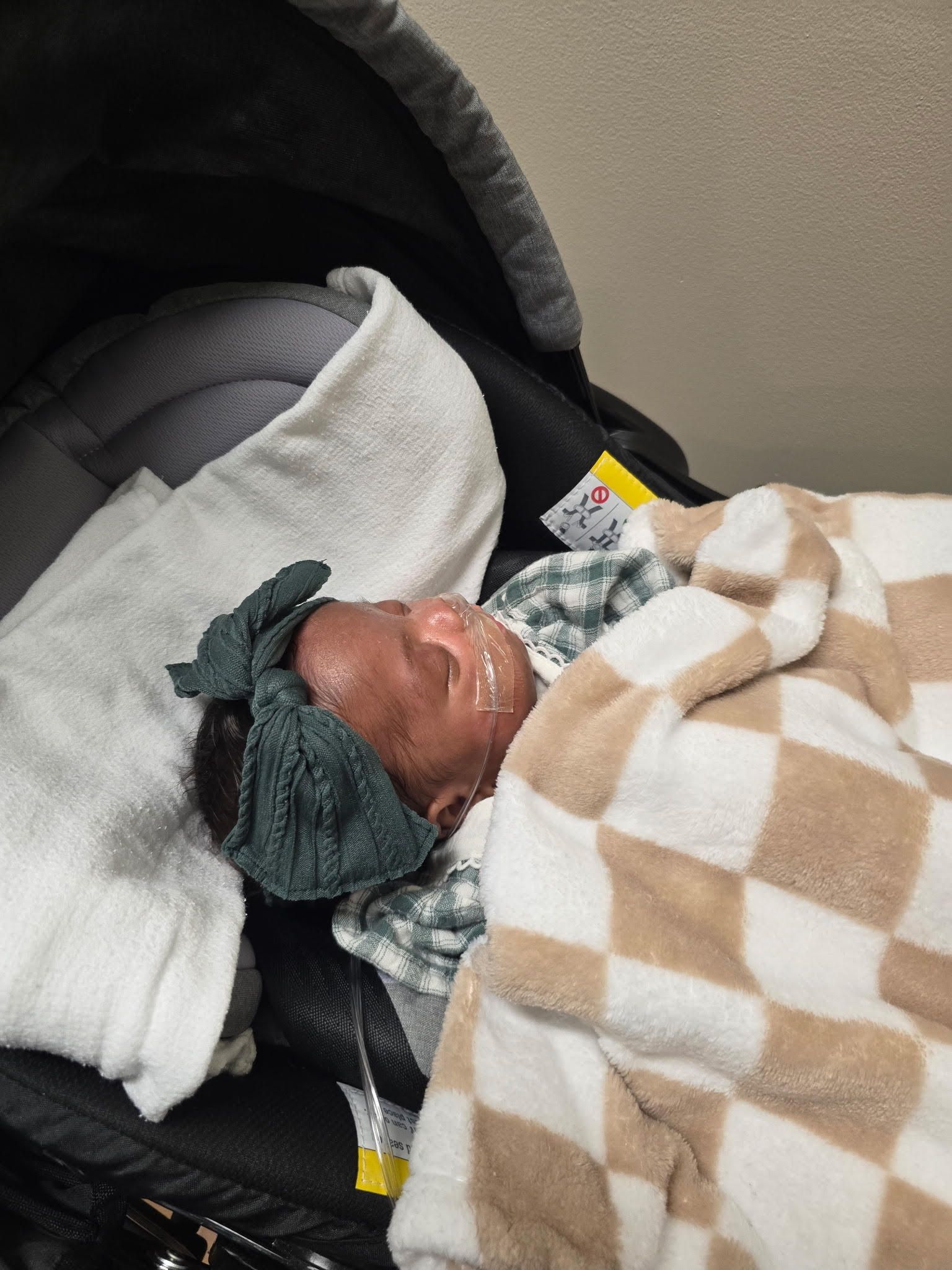
Almost four months later,Isabella is doing great, her parents and doctor said — she weighs over six pounds, eats almost everything by mouth, and is working on developing her heart. Isabella, who has four older siblings, is still in the NICU at Jefferson Abington Hospital.
“Life now, we look at it differently,” her mom, Hilliard-Keith, said. “It’s a blessing.”
Barto has stayed in touch with Isabella’s parents since the delivery — making sure the family is doing well, and even running an errand in an overwhelming postdelivery moment, Robinson said.
Weeks later, Barto visited Isabella. Through tears, she held her hand up next to the baby, unable to believe how small she once was.
“She’s so perfect,” Barto said. “She looks like a baby.”
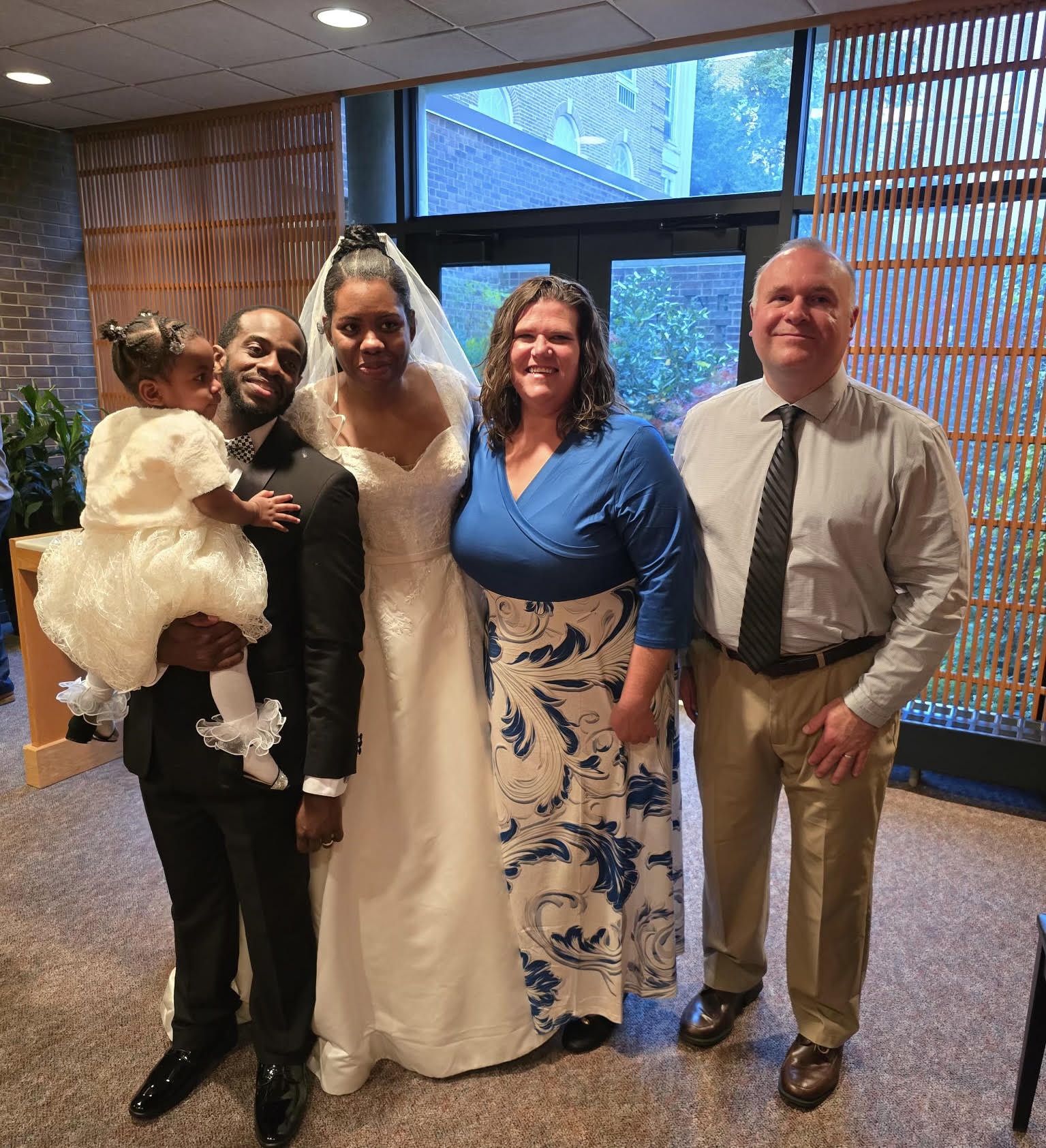
On Saturday — two days before Isabella’s due date — Barto and Speed attended Hilliard-Keith and Robinson’s wedding alongside Isabella, on a short field trip from the NICU.
Isabella was just 1.5 pounds when a Cheltenham EMT helped deliver her at home in July. Pictured four months later at her parents’ wedding, she has quadrupled her weight and is doing well, her parents and doctor said.Jessica Barto
Cipko and Barto both credited all of the medical staff, from paramedics to nurses to ER personnel, whose quick work made Isabella’s survival possible.
“A lot of people contributed to something so special,” Cipko said. “Without everybody, you can’t do that.”
This suburban content is produced with support from the Leslie Miller and Richard Worley Foundation and The Lenfest Institute for Journalism. Editorial content is created independently of the project donors. Gifts to support The Inquirer’s high-impact journalism can be made at inquirer.com/donate. A list of Lenfest Institute donors can be found at lenfestinstitute.org/supporters.
In 2024, Philadelphia’s emergency room doctors began raising alarms about opioid users in severe drug withdrawal who weren’t responding to the usual medications to ease their symptoms.
Within months, doctors and health officials had identified the likely culprit: Medetomidine, an animal tranquilizer never approved for human use, had infiltrated Philadelphia’s illicit opioid supply. Now present in more than 80% of opioids sold illegally on the street, it causes dangerous blackouts and slow heart rates.
People withdrawing from medetomidine often then experience skyrocketing blood pressure, high heart rates, shaking, nausea, and vomiting. In some cases, the effects are so severe that patients require hospital intensive care.
Until last month, doctors had few ways to track the rise inmedetomidine cases in their hospitals. That’s because there were no codes associated with them in the International Classification of Diseases (ICD) system, the standard for describing diseases, injuries, and other health information in patient records and for medical billing.
ICD codes are how doctors communicate what patients were treated for and how insurers are billed for their services. They are also crucial for tracking trends in public health.
Philadelphia health officials lobbied the Centers for Disease Control and Prevention for ICD codes to track medetomidine withdrawal and toxicity, the immediate aftereffects of the drug.
As of Oct. 1, doctors across the country can use an ICD code for medetomidine toxicity. By that date next year, the CDC will also institute an ICD code for medetomidine withdrawal.
The tracking will help doctors around the country to log patients’ symptoms more accurately, potentially improving care, said Daniel Teixeira da Silva, the director of the city health department’s Division of Substance Use Prevention and Harm Reduction.
“The goal of this is to be one part of the effort to improve care for people who use drugs,” he said.
Sharing best practices
Philadelphia’s health department learned from the city’s experience with xylazine, another animal tranquilizer that rapidly spread through the illicit drug supply several years ago. Xylazine, known as tranq on the street, caused extreme withdrawal symptoms and severe skin wounds leading to infections that could reach bones, spurring a rise in amputations.
Illicit drugs may be adulterated to enhance effects, save money, and other reasons. But with medetomidine, experts are not sure. Some have theorized that its use could be a response to the crackdown on xylazine, or a result of dealers attempting to entice customers with newer, stronger products.
Medetomidine is showing up in four out of five drug samples tested in the city’s most recent report this year, Teixeira da Silva said.
Philadelphia health officials and doctors also spearheaded efforts to create ICD codes for xylazine withdrawal and wounds, which went into effect last year.
“We have health systems that are adapting in real time,” Teixeira da Silva said. “They share what they’re doing, how they’re modifying withdrawal protocols and sharing best practices.”
Without specific ICD codes to track medetomidine symptoms, doctors had to cobble together other diagnoses on a patient’s chart to document their symptoms. But that still couldn’t give the full picture of a patient’s condition, said Kory London, the director of clinical operations at Jefferson Methodist Hospital.
For example, he said, patients would be admitted to the hospital for “opioid withdrawal,” a diagnosis that couldn’t capture the severe, life-threatening symptoms caused by medetomidine, a non-opioid sedative.
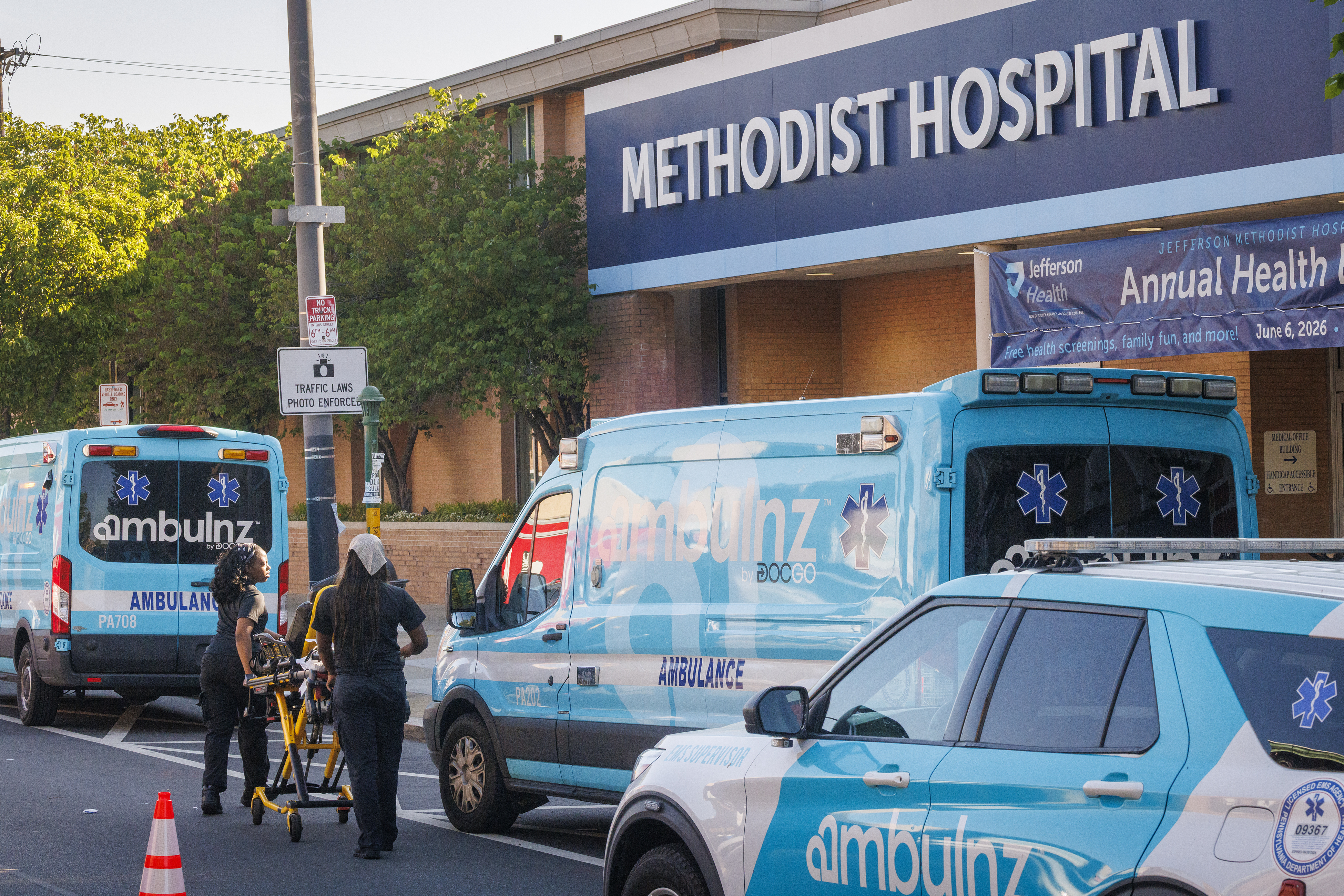
Jefferson Methodist Hospital regularly sees patients dealing with the effects of medetomidine, a powerful animal tranquilizer that has contaminated Philadelphia’s illicit opioid supply. Alejandro A. Alvarez / Staff Photographer
Before the rise of medetomidine, patients withdrawing from opioids stayed in the hospital for a shorter time and needed less medication and monitoring, said Phil Durney, the inpatient medical director of Jefferson’s addiction consult service.
“That same cohort is still coming to the hospital — but now they’re so critically ill that they’re requiring IV medication, having really dangerous blood pressure and heart rate shifts,” he said.
Frequently, patients need treatment in the ICU and require a completely different treatment regimen than a traditional opioid user, a challenge for doctors to document without a distinct ICD code.
“That’s really the blind spot,” Durney said.
The new codes will allow hospitals to understand the severity of a new drug crisis — and marshal resources to serve patients better.
“It’s really important that we are able to give the most accurate assessment of what’s happening with patients and what’s happening with the drug supply so we can try to act more efficiently in the future,” Durney said.
Medetomidine’s hold in Philadelphia
There’s little evidence cases are ebbing in Philadelphia, though the city did report a slight drop in emergency department visits for drug withdrawal in recent months.
(function(){function e(){window.addEventListener(`message`,function(e){if(e.data[`datawrapper-height`]!==void 0){var t=document.querySelectorAll(`iframe`);for(var n in e.data[`datawrapper-height`])for(var r=0,i;i=t[r];r++)if(i.contentWindow===e.source){var a=e.data[`datawrapper-height`][n]+`px`;i.style.height=a}}})}e()})();
Jefferson’s addiction medicine service mostly treats patients dealing with the effects of medetomidine, Durney said.
Even before the tracking code debuted last month, the health system had learned to identify medetomidine cases more quickly and treat them more effectively, he added. “But the majority of our patients are still requiring ICU-level care, experiencing really serious medical diagnoses,” Durney said.
And, London said, doctors and health officials are always on the lookout for a new adulterant in the supply.
“By the time a code is released, we have the potential of another adulterant,” Durney said.
Local addiction treatment providers have considered advocating for a catch-all ICD code that would allow doctors to track withdrawal from “new psychoactive substances.”
“I don’t think any of us have confidence this problem is going away,” London said. “The long term outlook is still [that] we’re waiting for the shoe to drop on the next adulterant.”
The Pennsylvania Insurance Department will intervene in the high-stakes contract disputes between Jefferson Health and two major insurers, Highmark and Independence Blue Cross, to protect consumers from losing access to their doctors and hospitals if the three parties cannot agree to new contracts by Dec. 31, state officials said this week.
Under a 1975 law, the insurance commissioner can suspend a contract termination for up to six months, hold public hearings on the conflict, and use an arbitrator to help the health system and the insurer reach a deal.
However, regulators can’t force the parties to make a deal.
In Southeastern Pennsylvania, the conflict pits the region’s largest health system against its largest insurer. Jefferson says Independence pays 40% below national averages and wants significant increases. The insurer has countered that the rates it pays Jefferson are competitive locally and that it has offered a significant increase.
Jefferson owns 33 hospitals from South Jersey to Scranton. Its operations include Lehigh Valley Health Network, which serves areas of Pennsylvania where Highmark has a large market share.
Jefferson said it seeks rates from Highmark “that fairly support the care provided by Jefferson Health physicians and care teams.”
Before the insurance commissioner gets involved, the hospital system or the insurer has to notify regulators they may terminate their contract.That has happened in Jefferson’s negotiations with both Independence and Highmark, as have notifications to insurance brokers and patients.
As relic of the 1970s, the law applies only to Blue Cross Blue Shield companies, not to other insurers like Aetna, Cigna, or UnitedHealthcare.
An insurance department official testified at a 2011 hearing held by the state House of Representatives — during a high-profile dust-up between Highmark and UPMC in Western Pennsylvania — that the law had only been invoked twice, in 1996 and 2008.
In both cases, the insurers and health systems reached a deal before the insurance department held hearings.
The insurance department did not respond to a question Thursday about whether the law had been used on other occasions. The state attorney general brokered an agreement between UPMC and Highmark more than a decade ago, bypassing the full use of the law, known as Act 94.
Dan Tropeano, president of Highmark’s Southeastern Pennsylvania market, said in an interview Friday that it is appropriate for regulators to protect the health and safety of Pennsylvania residents.
Tropeano remains hopeful that Highmark will reach an agreement with Jefferson.
“We’re still negotiating in good faith. We feel like we’re making incremental progress, and I’m still confident, at least from a Highmark perspective, that this will be resolved before it comes to termination,” he said.
Jefferson Health said in a statement that it “would welcome the insurance commissioner bringing all parties together if we don’t come to a fair and sustainable reimbursement for the physicians and caregivers who take care of our communities. We should all want an agreement that protects patient access to the doctors, hospitals and specialized care they rely on.”
Independence said that it had complied with the law by providing 90 days’ notice to the insurance department of the possible Dec. 31.
Act 94 passed after lawmakers saw the disruption caused by the expiration of a contract between a group of Philadelphia hospitals and Blue Cross of Greater Philadelphia, now known as Independence Blue Cross.
Jefferson Health and Horizon Blue Cross Blue Shield of New Jersey have reached in impasse in contract talks, leading both to warn patients that Jefferson’s three South Jersey hospitals will leave Horizon’s network on March 1 if they fail to reach a new agreement.
Insurers and health systems typically reach agreements before contracts expire, but Jefferson has been taking a particularly tough approach with insurers during a period of significant operating losses for the Philadelphia region’s largest health system. Jefferson’s Lehigh Valley Health Network went out of network with UnitedHealthcare in two phases last year and this year.
A Horizon website for commercial patients said that meeting Jefferson’s demands would cost Horizon members more than $185 million over the next three years and that New Jersey residents should not have to pay for Jefferson’s losses in Pennsylvania. Horizon, based in Newark, N.J., did not say how much of a percentage increase Jefferson is seeking.
A separate notice said that Jefferson had terminated its Medicaid contract with Horizon effective Sunday, but added that under New Jersey law patients will be able to continue receiving in-network care at Jefferson’s Cherry Hill, Stratford, and Washington Township hospitals through Feb. 28.
“It is particularly disappointing that Jefferson canceled the agreement we had reached for members who rely on Medicaid for their health coverage and is now using them as leverage. That is beyond unfair and unreasonable,” Horizon said in an email. “Horizon has offered an increase that reflects inflation, and we’re ready to negotiate an agreement that helps make care more affordable for the people we serve.”
Jefferson’s online communication to patients said that Horizon pays other South Jersey hospitals 146% more on average than Jefferson for inpatient care and up to 89% more for emergency care.
Jefferson said it wants Horizon to narrow the gap, not make it the highest-paid system.
“Jefferson was in active negotiations with Horizon when they decided to abruptly cancel all discussions,” Jefferson said in a statement. “They’re putting patients’ well being at risk by refusing to continue conversations with us. We stand ready to meet with Horizon any time, any day, any location on behalf of our patients.”
Neither Jefferson nor Horizon said how many patients would be affected if they can’t agree to a new contract. In New Jersey, cancer and psychiatric patients would be able to continue receiving in-network care from Jefferson for a year even without a new contract, Horizon said.
In its dispute with Independence Blue Cross in Southeastern Pennsylvania, Jefferson is not focused on local competitors but rather on what it says is Independence’s underpayment relative to national averages for the entire market.
Jefferson also issued a notice that it could go out of network with Highmark, Pennsylvania’s largest Blue Cross Blue Shield company, on Jan. 1.
Editor’s note: This article has been updated to note that Horizon posted separate notices for commercial and Medicaid patients and to clarify that Jefferson is comparing Horizon’s rates to other hospitals in South Jersey. Another update added a statement from Horizon.
Redeemer Health filed for bankruptcy protection late Sunday after the nonprofit board ofthe Catholic system decided to sell or close its money-losing Montgomery County hospital.
No immediate impact is expected for patients and employees of its 239-bed hospital in Abington Township. Holy Redeemer Hospital is the last independently operated general hospital in the Philadelphia region, following decades of consolidation.
“Holy Redeemer Hospital is unable to compete effectively with larger hospital systems in the area, rendering its future operations as an independent hospital unsustainable,” Redeemer’s interim CEO Jim Logue said in a court filing.
The hospitaland its physician network have recorded annual losses ranging from $31.6 million to $48.9 million during the last five years, with the year ended June 30 showing the biggest deficit, Logue said in his explanation of what led to the bankruptcy.
Patients should keep their appointments, Logue said.As is common in such proceedings, Redeemer’s bankruptcy is not expected to immediately affect patient care, nor the livelihoods of more than 3,000 employees. There’s no way to predict at this point how soon the hospital’s fate will be known.
Redeemer also operates local retirement communities, nursing homes, and home health services. There’s strong demand for those services, but they “operate at thin margins and will require investment and marketing to strengthen their market share to best ensure sustained operations,” Logue said in the filing.
Looking for a buyer
Even before the filing Sunday in Philadelphia court, Redeemer officials were exploring options with other area health systems.“We are deeply encouraged by the support being offered by major health systems in our region,” Bill Sasso, chair of Redeemer’s board, said in a news release.
Sasso, chair emeritus of Stradley Ronon, a Philadelphia law firm, did not identify the health systems that have offered support, nor provide details on what the systems are considering.
On Monday, The Inquirer contacted Jefferson Health, the University of Pennsylvania Health System, Temple University Health System, and Trinity Health for comment about their potential interest in Holy Redeemer. Penn and Jefferson had no comment. Temple and Trinity did not immediately respond.
The availability of alternatives sets Redeemer apart from other Philadelphia-area hospital bankruptcies in recent years.The bankruptcies of Hahnemann University Hospital and St. Christopher’s Hospital for Children in 2019 and ofCrozer Health last year affected underserved populations. Concern about losing needed safety-net careset off scrambles to find a way to save St. Chris, Hahnemann, and Crozer-Chester Medical Center. Only St. Chris remains in operation.
Logue noted that Holy Redeemer’s obstetrics and gynecology program has overseen more than 11,000 deliveries since 2021. The hospital has a neonatal intensive care unit in partnership with Children’s Hospital of Philadelphia.
An order of nuns from Germany, the Sisters of the Holy Redeemer, founded Holy Redeemer Hospital in the 1950s. In 2020, the nuns withdrew from their role as sponsors of the hospital after creating a new entity called Redeemer Ministries to ensure that the institution follows Catholic teachings.
Financial troubles in competitive market
Most hospital systems are under financial pressure from rising costs and resistance to higher reimbursement from government and employers. But Redeemer has the added challenge of stiff competition from Jefferson Health’s large hospital in Abington, just a few miles away.
Holy Redeemer is the only hospital in the Philadelphia region that is not part of a larger system, after the sales last year of Grand View Hospital to St. Luke’s University Health Network and Doylestown Hospital to the University of Pennsylvania Health System.
Its small scale made it difficult to achieve financial stability.
Redeemer’s latest financial report to bondholders showed a $29 million operating loss on $332 million in revenue in the nine months ended March 31. Financial documents included in the bankruptcy filing only go through April and showed a $34.6 million operating loss.
Redeemer has $119 million of long-term debt.
The health system notified bondholders Wednesday that its audited financial statements for the year ended June 30 was late. The lack of audited financial statements could make it difficult for potential buyers to evaluate the hospital.
Leadership in flux
Redeemer’s longtime CEO, Michael Laign retired in2024 after three decades. The same year, Redeemer hired Chicago consulting firm Kaufman Hall to help devise a financial turnaround plan.
Laign’sreplacement, Greg Wozniak, a former CEO of St. Mary Medical Center in Langhorne, resigned abruptly in September.
Logue, his successor, had been Redeemer’s chief transformation officer since Feb. 2025.
Now the system has hiredLawrence G. McMichael of Dilworth Paxson LLP torepresent Redeemer in the bankruptcy and Scott Victor of SSG Capital Advisors to find a buyer for the hospital.
Editor’s note: This story has been updated with additional information and comment on the bankruptcy protection filing.