Tag: Inquirer Local

  • Lower Merion picks a new school board member after 17 people applied for the vacant seat

    Lower Merion picks a new school board member after 17 people applied for the vacant seat

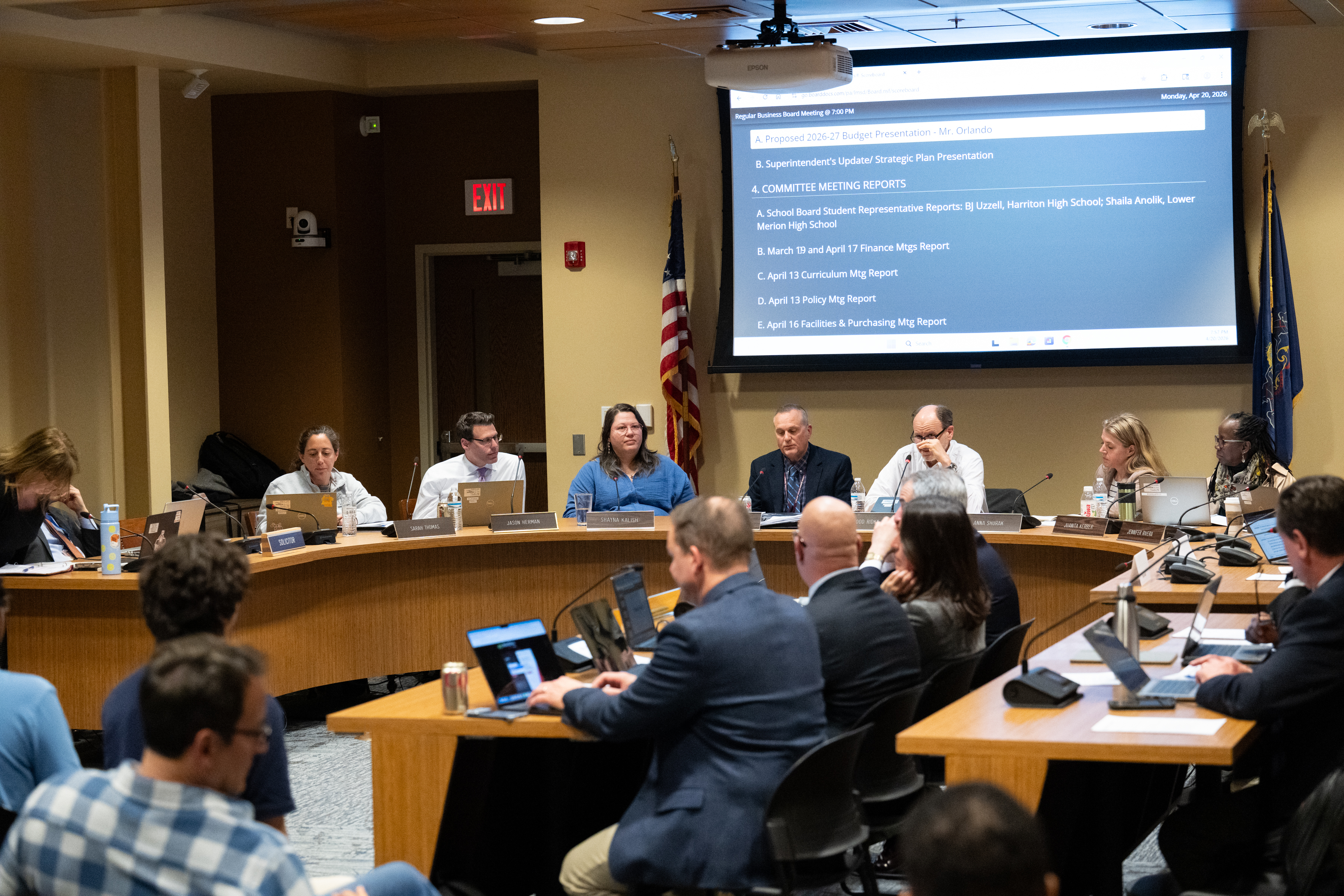
    The Lower Merion school board on Tuesday selected a Tredyffrin/Easttown teacher and former Narberth Borough Council member to fill a seat left vacant by a school board member who was arrested.

    The board picked Muna Elshakhs from a group of 17 applicants, after interviewing her and fellow applicant Andrea Gosfield during a special meeting Tuesday. The board had selected four candidates to be interviewed Tuesday, but two withdrew their names from consideration before the meeting.

    The board did not release their names, or the names of the other candidates who had applied to fill the seat. The position became vacant after Jen Rivera resigned after she was arrested last month on charges of stealing more than $50,000 from her employer.

    Some community members accused the board of a lack of transparency in appointing a new member to the term, which runs until December 2027.

    “Table this appointment, give the full list of applicants, and enter them into the public record,” Matthew Posey, who is among a group of parents challenging the district over its use of technology, said during public comment Tuesday, as he accused the board of “backroom deliberations.”

    District spokesperson Amy Buckman said before Tuesday’s meeting that the eight board members had “individually notified the board secretary of their top choices from among the applicants to be publicly interviewed.” The secretary tallied the selections, and “the applicants with the most selections” were scheduled to be interviewed, Buckman said.

    Those who were not selected included at least two people who ran for the Democratic-led board unsuccessfully in 2025: Rich Lester, who ran as a Democrat but was not endorsed by the local Democratic Party, and Deena Pack, who ran as a Republican.

    In an interview Tuesday, Lester said he was unsure how board members had made their selections for filling the vacant seat. He said he was told there was no scoring rubric used.

    “To have no sort of what we’re looking for is disappointing,” said Lester, who had proposed more accountability and financial analysis from the board.

    Pack, who addressed the school board during public comment Tuesday, said she was the only applicant who had received more than 7,000 votes, and had already been scrutinized by community members during the campaign process.

    “Should the board change its mind, I’m ready,” she said.

    When it was time for the board to nominate candidates, board president Kerry Sautner nominated Pack. But she did not vote for her.

    Sautner voted for Elshakhs, as did board vice president Todd Ridky and members Shayna Kalish and Sarah Thomas. Board members Anna Shurak, Juanita Rivera, and Jason Herman voted for Gosfield.

    Board member Abby Rubin, who has clashed with board leaders, including around the district’s technology policy, nominated and voted for Lester.

    That gave Elshakhs four votes, but five were needed for a majority. The board voted again with the same result.

    Elshakhs then withdrew her application, though some board members told her she did not have to do so, and solicitor Kenneth Roos told board members they could still vote for her.

    “There’s nothing wrong” with the board’s split, Sautner said, calling the debate “healthy tension.”

    “This is a good problem to have,” Ridky said, later adding, “I wish we had more seats to offer tonight.”

    Shurak said that Gosfield, a lawyer, had been involved in the district’s equity policy and had children in district schools that were not currently represented by other board members.

    Thomas credited Elshakhs’ perspective as a current teacher, though some board members questioned her ability to attend daytime committee meetings given her job. Sautner said the board could be flexible with scheduling.

    Shurak ultimately switched her vote to Elshakhs, saying she wanted to respect the majority of the board. Kalish accused Lerner of obstructing the process by continuing to vote for Lester; Lerner said she had a different opinion.

    After Elshakhs files a financial statement of interest, she will be sworn in and officially join the board, Roos said.

  • Reining in raucous student housing | Inquirer Chester County

    Reining in raucous student housing | Inquirer Chester County

    Hi, Chester County!

    After years of dealing with raucous student tenants, Tredyffrin Township officials have voted on a new ordinance aimed at better curbing problems. Here’s how it will work. Also this week, Vanguard has shifted its focus amid its mutual fund and exchange-traded industry peak and then decline, Phoenixville is temporarily morphing into Gilmore Girls’ beloved Stars Hollow, plus, we look inside a nearly $7 million Malvern property that’s for sale.

    — Lisa Dukart (chestercounty@inquirer.com)

    If someone forwarded you this email, sign up for free here.

    Tredyffrin Township takes on raucous student housing

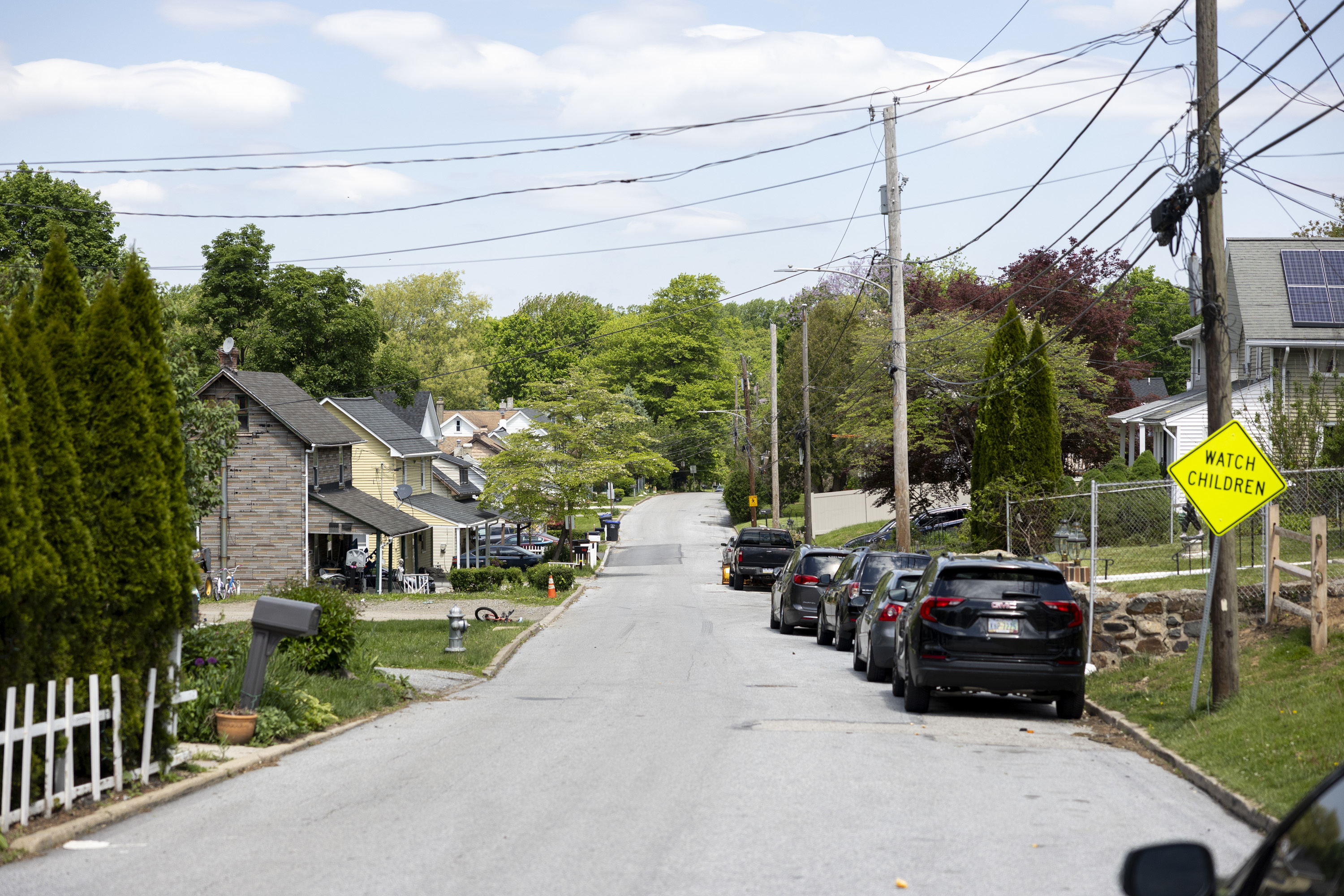
    Mount Pleasant Avenue has several homes rented to students. Tyger Williams / Staff Photographer

    Tredyffrin Township officials voted to approve a new ordinance this week aimed at giving them more power to address unruly student tenants.

    It allows the township to hold landlords “directly responsible” for the behavior of student tenants and their guests, including directing landlords to evict students with too many violations, and fining landlords for violations.

    The move comes after some residents have dealt with years of bad student behavior ranging from drunkenness and rowdiness to yards and streets strewn with detritus, something they worried could intensify thanks to Villanova University’s new nearby Cabrini campus.

    “I hope this makes a difference, and I hope that we can hold the landlords or the companies, whoever [owns] the property, responsible for this,” said board member Carlotta Johnston-Pugh.

    The Inquirer’s Brooke Schultz delves into the details and what prompted the change.

    📍 Countywide news

    💡 Community news

    • Malvern-based investment giant Vanguard has seen its share of the U.S. mutual fund and exchange-traded industry plateau in recent years and shrink this year, marking the end of an era of decades-long growth in the segment, as it shifts focus under a relatively new CEO. The Inquirer’s Joseph N. DiStefano explores the changes.
    • The Garces Foundation, which provides access to English classes, free healthcare, and other support for immigrants, regardless of their status, is expanding its free community health days to Kennett Square, where more than a quarter of the population is foreign-born. It’s also rebranding to Comunidad Garces.
    • Several businesses in Phoenixville will be transformed into ones straight out of Stars Hollow from beloved TV show Gilmore Girls this weekend, including Le Chat Club, Doose’s Market, the Dragonfly Inn, and Luke’s Diner.
    • A “magical” 15-acre Willistown Township property with walking paths, a waterfall, a meditation garden, and a more than 6,000-square-foot, four-bedroom fieldstone house is on the market for just under $7 million. Take a peek inside.
    • Several gold vehicles have been spotted at the Devon Tesla dealership recently, fueling speculation that the company is looking to expand its autonomous Cybercab program to the region. Here’s what we know so far.
    • Tredyffrin-Easttown Fire Commission has appointed Eric Felker as chief of fire and emergency medical services. Felker is a physician assistant who has a combined four decades of experience with fire and EMS departments.
    • A developer is looking to create a mixed-use residential community at 3200 Horseshoe Pike in Honey Brook. Planebrook Partners, LLC is proposing 35 townhomes and 34 twin homes on the roughly 18.6-acre parcel. Township supervisors will consider the proposal at Monday’s 7 p.m. meeting.
    • East Whiteland Township’s board of supervisors will consider adopting a curative amendment at tomorrow night’s meeting regarding future data center developments.
    • On Tuesday, West Brandywine Township’s board of supervisors will resume discussions about Imaging Associates’ and Toll Brothers’ plans to develop 500 Hibernia Rd. into 163 single-family homes and 74 twin homes. The meeting will take place at North Brandywine Middle School from 6 to 9 p.m.
    • Uwchlan Township officials will present master plans for Lionville and Rossi Parks tonight at 7 p.m.

    🏫 Schools briefing

    🍽️ On our plate

    • Beef and Bird Public House is taking over the former Slow Hand space in West Chester. The new concept at 30 N. Church St. is from the team behind Bar Avalon.
    • Wimpy & Dee’s Diner has reopened under new ownership at 5051 Horseshoe Pike in Honey Brook following a monthslong closure.

    🎳 Things to do

    🎭 Shakespeare in the Park: High school performers will take on the bard’s romantic comedy Much Ado About Nothing. ⏰ Friday, Sept. 25, 5 p.m. 💵 Free 📍 East Bradford Park amphitheater

    🍎 Cider Fest: Get a taste of fall at this annual festival featuring locally made apple cider, bread-baking demonstrations, and live music. ⏰ Saturday, Sept. 26, 10 a.m.-4 p.m. 💵 $5-$10 📍 Mill at Anselma, Chester Springs

    🍻 Bistro on Bridge Oktoberfest: Sip Bavarian-inspired beers and nosh on German-style eats at this celebration where lederhosen and dirndl are encouraged. ⏰ Saturday, Sept. 26, 11 a.m. 💵 Pay as you go 📍 Bistro on Bridge, Phoenixville

    🍂 Warwick Fall Fest: Celebrate the season with pumpkin painting, crafts, vendors, food trucks, and pony and highland cow rides. ⏰ Saturday, Sept. 26, 11 a.m.-4 p.m. 💵 Pay as you go 📍 Warwick County Park, Pottstown

    🍷 Catalina Wine Mixer: This Step Brothers-inspired 21-and-over event features local wines from Penns Wood, Chaddsford, East Cooke, and Harvest Ridge Wineries; Paradocx Vineyard; and Turks Head Wines, as well as beer from Locust Lane Brewery. ⏰ Saturday, Sept. 26, 2-6 p.m. 💵 $25-$50 📍 American Helicopter Museum, West Chester

    🖼️ Fall Arts Fest: Explore local arts and vendors, and grab a bite to eat at this festival benefiting the Chester County Mural and Arts Project. ⏰ Sunday, Sept. 27, noon-3 p.m. 💵 Pay as you go 📍 Kerr Park, Downingtown

    🏡 On the market

    A Kennett Square home with ample outdoor living space

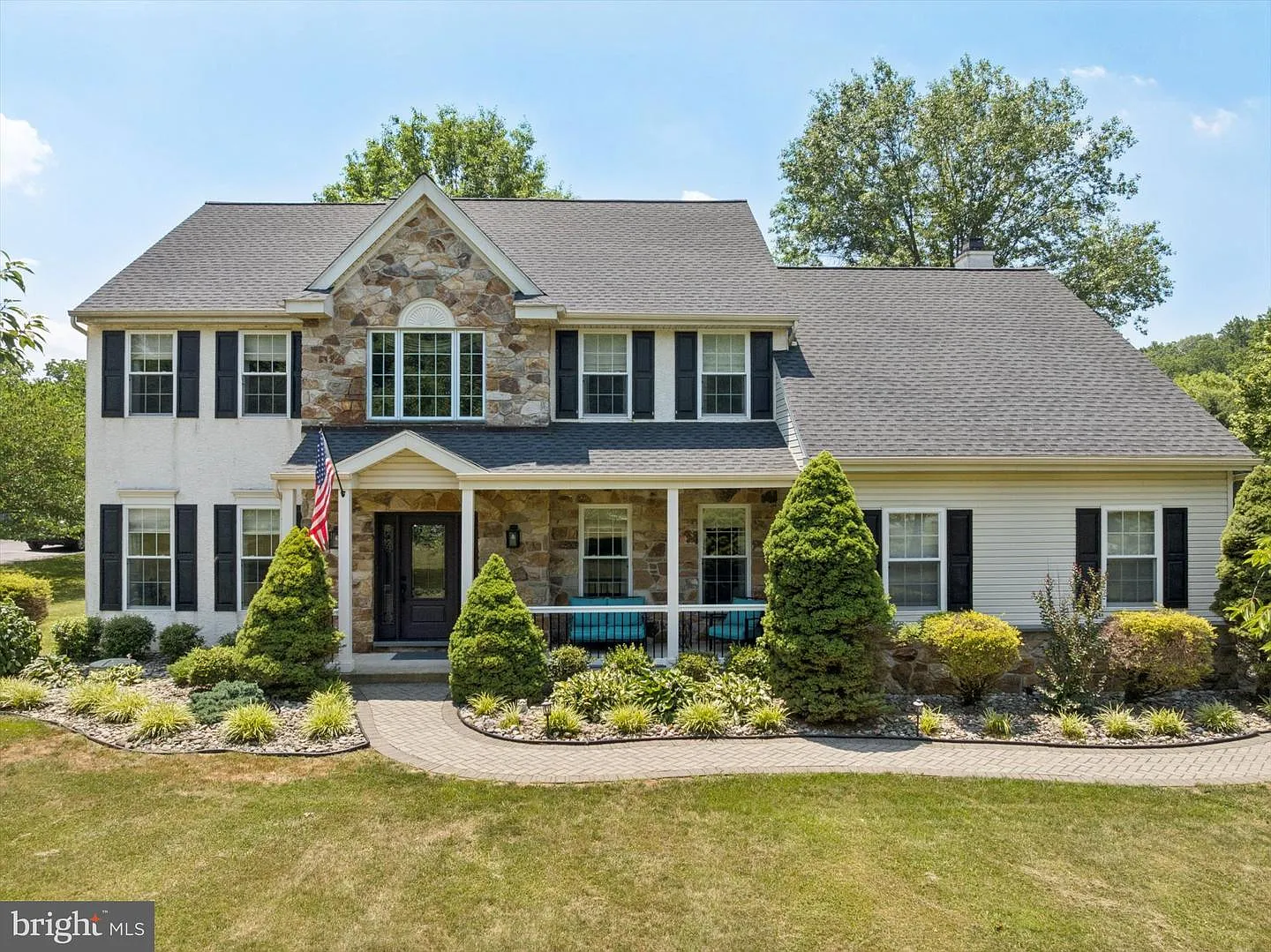
    This four-bedroom Kennett Square home has plenty of outdoor living space thanks to a covered front porch, a large back deck, a separate gazebo-covered patio with a hot tub, and a fire pit. Inside, the updated home has a striking dining room with a built-in buffet and beverage refrigerator, a kitchen with granite countertops, and a family room with vaulted ceilings and a stone fireplace.

    See more photos of the home here.

    Price: $919,000 | Size: 3,937 SF | Acreage: 0.83

    📈 Chester County market report

    • Median listing price: $599,000 (down $900 from July) 📉
    • Median sold price: $568,200 (down $41,800 from July) 📉
    • Days on the market: 33 (down one day from July) 📉

    This Chester County market report is published on a monthly basis. Above is data for August from realtor.com.

    🗞️ What other Chester County residents are reading this week:

    By submitting your written, visual, and/or audio contributions, you agree to The Inquirer’s Terms of Use, including the grant of rights in Section 10.

    This suburban content is produced with support from the Leslie Miller and Richard Worley Foundation and The Lenfest Institute for Journalism. Editorial content is created independently of the project donors. Gifts to support The Inquirer’s high-impact journalism can be made at inquirer.com/donate. A list of Lenfest Institute donors can be found at lenfestinstitute.org/supporters.

  • Flock cameras get axed | Inquirer Cherry Hill

    Flock cameras get axed | Inquirer Cherry Hill

    Hey there, Cherry Hill, and happy fall. 🍂

    The township will let its contract with controversial surveillance tech company Flock expire at the end of the year.

    Also in this week’s headlines, a quirky deal has been made between Cherry Hill and a local swim club, former Eagles cornerback and township resident James Bradberry is in his coaching era at Camden Catholic, and the Cherry Hill Mall is holding strong as others in the region struggle.

    — Laura Smythe (cherryhill@inquirer.com)

    If someone forwarded you this email, sign up for free here.

    Cherry Hill will ditch its Flock cameras at year’s end

    Cherry Hill will not renew its contract with controversial surveillance tech company Flock when it expires on Dec. 31, Mayor Dave Fleisher announced at a township council meeting last week.

    At that time, the township’s 10 cameras will “become inactive immediately” and be removed, marking the end of the two-year pilot program with Flock. The decision comes as public pushback against Flock’s camera network and the use of automated license plate readers grows in Cherry Hill and nationally.

    Now, the Cherry Hill Police Department is evaluating options for replacing the Flock cameras. The Inquirer’s Lacey Latch has the latest.

    💡 Community news

    • A deal between Cherry Hill and the Downs Farm Swim Club that enables the township to take over stewardship of a closed pedestrian bridge contains a twist. 70and73 has the details.
    • In case you missed it: Simone Goldsboro, a 37-year-old certified nurse’s aide, pleaded guilty to intentionally spraying a paralyzed Cherry Hill nursing home patient in the face and eyes with bleach.
    • Former NFL cornerback James Bradberry was released by the Eagles last year after earning a Super Bowl ring in 2024. He then sought a role that would keep him in his home of Cherry Hill. Now, “Coach JB” has started a new chapter in his football career at Camden Catholic High School.
    • South Jersey power broker and former Inquirer co-owner George E. Norcoss III filed a $100 million defamation and conspiracy lawsuit against the newspaper and one of its editors on Thursday. The lawsuit centers on notes from a 2019 interview with former Cherry Hill Mayor Susan Bass Levin.
    • Even as the Philadelphia suburbs stand to lose another mall, the Cherry Hill Mall appears to be thriving, with a handful of new stores opening recently or set to do so soon, reports The Inquirer’s Erin McCarthy.
    • Several roadway projects are underway across the township this week, bringing road closures to spots such as Cropwell Road and Kenilworth Avenue. Here are the specifics.

    🗺️ Other nearby news

    • Several citations issued last month by Bellmawr police to protesters demonstrating against President Donald Trump and his administration’s immigration policies have been dismissed after the American Civil Liberties Union of New Jersey intervened, the legal nonprofit said.
    • Mike Bowe, an Audubon resident and longtime local disc jockey and radio show host at stations such as WMGK, WPEN, and WHAT, died last week at 76.

    🏫 Schools briefing

    • Candidates for the Board of Education spoke to uncertainty around state funding, special education needs, communication with stakeholders, and other challenges the district is facing at a forum at Cherry Hill High School West last week, 70and73 reports.

    🍽️ On our plate

    • Goodbye, Sushi Boss; hello, Sushi Stars. The restaurant located at 2135 NJ-38 has changed its name, but promises its menu of sushi, hibachi, and boba is exactly what you remember.
    • Looking for a fall treat to commemorate the official kick off to the season? Springdale Farms offers the township’s lone cider mill, The Sun reports.

    🎳 Things to do

    🤍 Wedding Planning Expo: Lovebirds (or anyone who likes to plan ahead) can explore bridal showcases, wedding exhibits, and advice seminars. ⏰ Wednesday, Sept. 23, 5-8 p.m. 💵 Free 📍 Cherry Hill Mall

    🏞️ National Public Lands Day: Join the community in volunteering to clean up and tend to Cherry Hill’s parks, trails, and other outdoor spaces. ⏰ Saturday, Sept. 26, 9 a.m.-noon 💵 Free; registration required 📍 Croft Farm

    🪴 Fall Makers Market: Stock up on plants and handcrafted gifts from more than 25 vendors while reconnecting with nature in the shrub yard. ⏰ Saturday, Sept. 26, 10 a.m.-4 p.m. 💵 Pay as you go 📍 McNaughton’s Garden Center

    🩰 Ballet in the Park: Bring a blanket or chair and take in creative classic works from Swan Lake to La Esmeralda. ⏰ Saturday, Sept. 26, 3 p.m. (rain date: Sunday, Sept. 27) 💵 Free 📍 Croft Farm

    🗓️ Looking for more things to do? Check out our guide to ongoing South Jersey events.

    🏡 On the market

    A brick-front home with a sun room

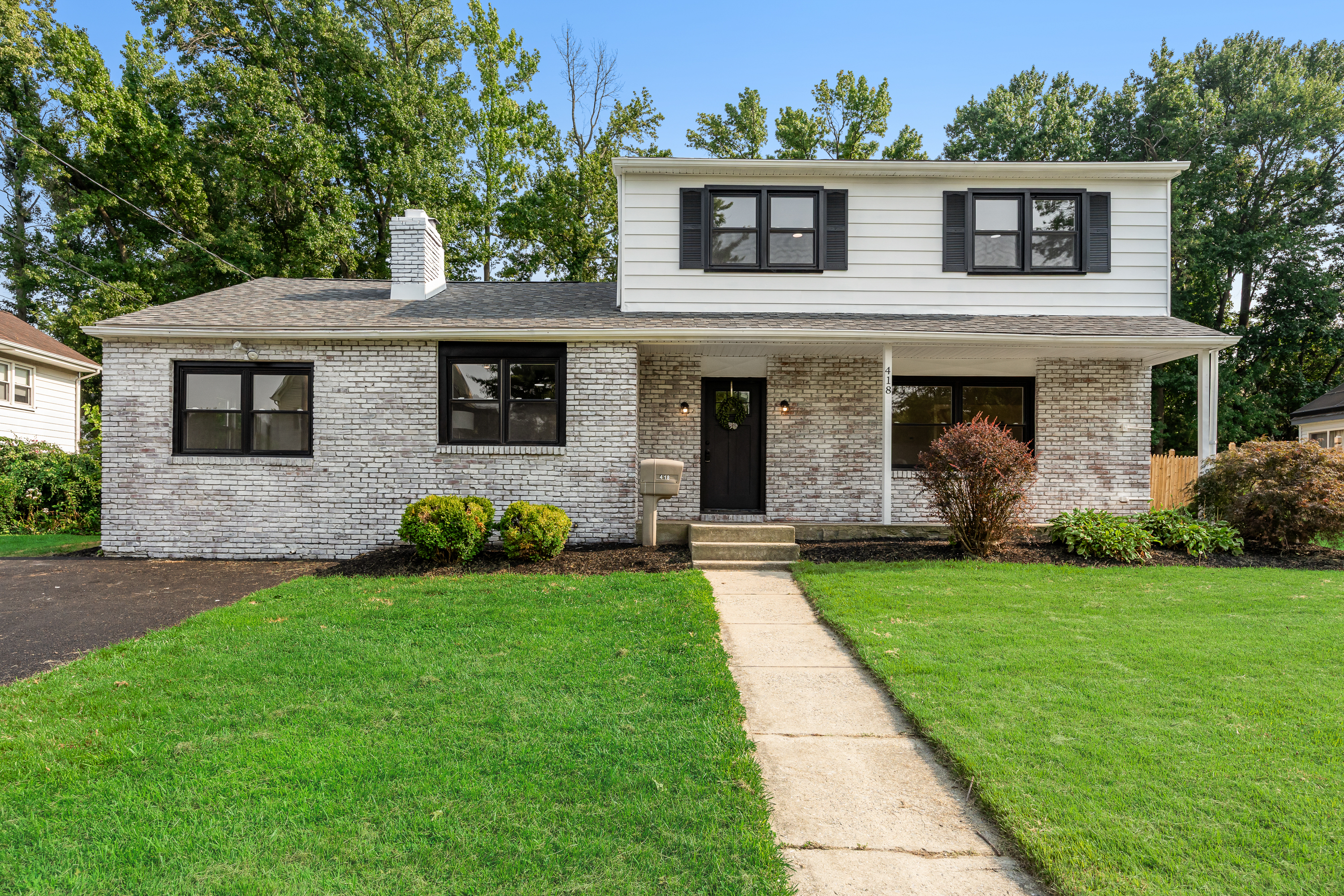
    418 Kingston Dr, Cherry Hill, NJ 08034

    This four-bedroom, three-bathroom house, built in 1956, features a brick front with a classic brick fireplace inside to match. It has a couple prime spots for a morning coffee: a front porch, as well as a sun room that connects onto the back deck. Updates completed this year include a new roof, air conditioner, furnace, and windows.

    See more photos of the property here.

    Price: $559,900 | Size: 2,048 SF | Acreage: 0.25

    📈 Cherry Hill market report

    • Median listing price: $515,000 (down $14,600 from July) 📉
    • Median sold price: $503,000 (down $37,000 from July) 📉
    • Median days on the market: 38 days (up four days from July) 📈

    This Cherry Hill market report is published on a monthly basis. Above is data for August from realtor.com.

    🗞️ What other Cherry Hill residents are reading this week:

    By submitting your written, visual, and/or audio contributions, you agree to The Inquirer’s Terms of Use, including the grant of rights in Section 10.

    This suburban content is produced with support from the Leslie Miller and Richard Worley Foundation and The Lenfest Institute for Journalism. Editorial content is created independently of the project donors. Gifts to support The Inquirer’s high-impact journalism can be made at inquirer.com/donate. A list of Lenfest Institute donors can be found at lenfestinstitute.org/supporters.

  • Raucous student housing has plagued a Chesco neighborhood. A new measure will hold landlords responsible.

    Raucous student housing has plagued a Chesco neighborhood. A new measure will hold landlords responsible.

    A new ordinance seeks to give Tredyffrin officials more power to address unruly student tenants, after quality-of-life issues have plagued a Chester County neighborhood for years.

    In a unanimous vote Monday, the municipality’s seven elected officials voted to approve a new ordinance regarding student housing that changes the enforcement mechanism, allowing them to go after the landlords who rent to students — rather than the students themselves.

    “I hope this makes a difference, and I hope that we can hold the landlords or the companies, whoever own the property, responsible for this,” said board member Carlotta Johnston-Pugh.

    The updated ordinance comes as neighbors — young families, lifelong residents, and aging seniors — on Mount Pleasant Avenue have struggled for years to live alongside a rotating cohort of Villanova University students.

    Residents have said previously that they have walked out in the morning to find vomit on their cars, beer cans strewn across the streets and yards, and students passed out on the porch. They’ve been kept up by loud parties, rideshare cars speeding down the street, or a lost drunk student trying to kick in the door.

    With Villanova’s new 112-acre Cabrini campus off Upper Gulph Road, putting it now within walking distance to the houses and the parties, residents worry that the problems could intensify.

    At least seven houses are rented to students, several along Mount Pleasant, and a few on nearby Henry Avenue, township officials said previously. Another house where students live isn’t zoned properly, which the township has been trying to address, officials said previously.

    Board member Hans van Mol said it bothered him, when he first joined the board less than a year ago, that the Mount Pleasant community felt that the township wasn’t responding to their concerns.

    “Our ordinance wasn’t suited to keep up with the issues that were going on that needed to be remedied,” he said. “I’m very glad that we finally got to this point here, if not even just for the potential that the township can actually promote a safer, stronger community, but that people can actually feel we’re working on it.”

    Tredyffrin first adopted a student housing ordinance more than a decade ago in response to concerns. The measure limited household occupancy to three students and prohibited the houses from being too close together, though the properties along Mount Pleasant were grandfathered in. But its power was somewhat limited.

    The new ordinance — a much more robust measure — notes that the owner of the student house will be “directly responsible” for the behavior of student tenants and their guests. It gives the township the ability to inspect the home, if there are suspicions that there are more than three students living in the house. It allows the township to direct the landlord to evict students if three violations occur within the same year. Landlords can be fined up to $1,000 for violations of the ordinance.

    Residents should keep calling the police when issues arise, “so that they can properly document it to be used against the landlord enforcement of this ordinance,” said board vice chair Sharon Humble.

    For some of the residents, it was a promising effort.

    “Yes, I have been one of those that have come and … voiced my concern about what has been going on,” said Mount Pleasant resident Shawn Jackson. “I read through the ordinance, and it’s very comprehensive, and I’m very happy about that.”

    Kevin Stroman, a longtime resident of the neighborhood who now runs a mentoring program at the historic Carr School/Mount Pleasant Chapel across the street from one of the student houses, has long tried to offset negative relationships with the students and the residents.

    “I think the climate in Mount Pleasant is so bad right now because of certain students getting out of control,” he said. “I like the idea [of the ordinance] because no doubt the owners have to have something that will make them look at who they rent to.”

    Others wished it went further. G. Hayward Simpson, a Mount Pleasant resident who lives in the Montgomery County portion, said that the students “have no need, want, will to be part of any community.” He wanted to see student housing entirely excluded from the neighborhood.

    “I’m not saying this with any kind of malice, or I don’t want these kids to have a good time. I just don’t want them to live on the block. I want to see single families,” he said.

    Jeff Hilliard, a landlord with a student rental on Mount Pleasant, said he “lay[s] down the law” with his tenants.

    When he first purchased the house for rentals, Hilliard said he gave his number to the neighbors so they could call him if they ever had a problem with the students. They’ve never contacted him, he said, but he knows the police have been called and “literally driven away because there was no issue whatsoever.”

    “So unfortunately, I think it’s just a couple bad tenants and a couple bad landlords that are causing this for these nice people of Mount Pleasant,” he said.

    This suburban content is produced with support from the Leslie Miller and Richard Worley Foundation and The Lenfest Institute for Journalism. Editorial content is created independently of the project donors. Gifts to support The Inquirer’s high-impact journalism can be made at inquirer.com/donate. A list of Lenfest Institute donors can be found at lenfestinstitute.org/supporters.

  • Cheltenham’s $4.5M pool project may be delayed by a resident’s lawsuit, a township official says

    Cheltenham’s $4.5M pool project may be delayed by a resident’s lawsuit, a township official says

    A legal battle over Cheltenham Township’s pool contract has bred tension at meetings and divided some neighbors, but a township official and the suing resident’s lawyer agree on one thing: It could take a while.

    The dispute centers on Cheltenham’s lease of land to a private developer for $10 per year to build a pool complex — the same land that the developer had given Cheltenham for free in December 2025.

    The agreement requires the township to pay up to $4.5 million for three public pools that a new entity, Melrose Pool LLC, will construct on that land, or rent the pools from that entity. The township had hoped to open the new complex at the former Melrose Country Club by 2027 to replace the aging Conklin Pool across town. The developer, meanwhile, is building houses and a medical facility next to the new pools.

    But Cheltenham resident Sam Thacker sued in July, and he argues that the ground lease was in fact a public construction contract and should be subject to a bidding process to determine the best provider.

    Cheltenham has argued that the township received estimates for replacing pools on other properties, and therefore determined that $4.5 million is a good deal for the Melrose project.

    The litigation has reached a stage that could take a year to resolve, Thacker’s lawyer said. And whether construction continues alongside the suit may depend on whether a court grants an injunction Thacker filed last week to halt the project. A long delay may scuttle the entire pool project, a township official said.

    Where the suit stands

    Thacker’s injunction request was denied by a judge last month who found he lacked standing, but he has appealed to Commonwealth Court.

    It could take six months to hear the case, said Thacker’s lawyer, Christopher McCabe, who specializes in construction and government contracts, and a year to get a decision.

    Thacker, who was representing himself until he hired McCabe this month after raising more than $6,000 from dozens of donors in a GoFundMe campaign, also filed a new injunction with the higher court to halt pool construction in the meantime.

    A long delay could mean the new pools do not happen, Township Commissioner Emily Cheramie Walz wrote in a social media post last week after delivering the same remarks at the Sept. 16 commissioner meeting.

    “There is a real risk that continued litigation could jeopardize the funding and timeline for the Melrose project,” Cheramie Walz wrote. “Families across the township who were excited about having a new pool could lose that opportunity.”

    Cheramie Walz’s comments echoed part of Cheltenham’s legal defense in the case, that halting the project would cause more harm to township residents than allowing the project to proceed — an argument the lower court judge agreed with.

    But McCabe asserted in the emergency injunction request filed last week that that logic does not hold up, because the Melrose agreement is a no-bid construction contract disguised as a land rental.

    “Then every municipality would simply argue that the object of an illegal contract will be greatly beneficial to their residents and the taxpayers,” McCabe wrote, and residents would be unable to stop an illegal contract.

    When the developer, an entity associated with BG Capital, gave 2.7 acres to the township last winter, the document referred to an unspecified “advantage” that the developer would receive by gifting the land to Cheltenham.

    Amee Farrell, a lawyer for the developer and a former chair of the township’s zoning board, has not answered questions about what the developer expected to gain from the land gift.

    “If [Cheltenham] owns the land free and clear, what prevented them … from putting out a request for bids?” McCabe said Monday. “You don’t know whether there was corruption here because you don’t know what the discussions were.”

    An ongoing topic at public meetings

    Although the township has repeatedly declined to comment on the details of the ground lease because of the lawsuit, Cheramie Walz addressed the subject of the suit directly in her post last week.

    “There is no secret no-bid deal,” she wrote. “We have spent an embarrassing amount of time and public resources dealing with this litigation — resources that could be going toward the work residents actually expect us to be doing.”

    Some residents have also expressed frustration over the suit and the controversy.

    “We want new centers for community to grow and businesses to develop and thrive,” resident Nick Steever said. “The bidding process isn’t what certain people are upset about, but rather the fact that [Conklin] Pool is closing.”

    Thacker and the township commissioners have exchanged tense words during public comment. When Thacker spoke at a Sept. 14 committee meeting, Cheramie Walz asserted that Thacker’s lawyer had told officials they should not speak directly to Thacker, so they would not.

    McCabe said Monday that he had told Cheltenham’s lawyers to communicate with him, not Thacker, now that he had legal representation, and was not referring to all township officials.

    Thacker said Monday that any delay or waste is on the township.

    “They are the ones who executed a no-bid construction contract,” he said. “I do not bear any responsibility for the costs incurred as they dig deeper into defending it.”

    Correction: This story was updated to reflect the status of Thacker’s case.

    This suburban content is produced with support from the Leslie Miller and Richard Worley Foundation and The Lenfest Institute for Journalism. Editorial content is created independently of the project donors. Gifts to support The Inquirer’s high-impact journalism can be made at inquirer.com/donate. A list of Lenfest Institute donors can be found at lenfestinstitute.org/supporters.

  • After decades of fund growth, Vanguard pivots

    After decades of fund growth, Vanguard pivots

    “Trees don’t grow to the sky,” the late Vanguard Group founder John C. Bogle Jr. was fond of warning — meaning that it’s a mistake to think happy days and profitable trends will go on forever.

    Malvern-based Vanguard itself seemed to defy Bogle’s warning. Led by Vanguard’s index funds simulating the S&P 500 and other broad market benchmarks, founded 50 years ago on Aug. 31, Vanguard grew relentlessly, even accelerating after the dot-com bust and in the Great Recession, when rival Fidelity and other investment firms shrank and cut staff.

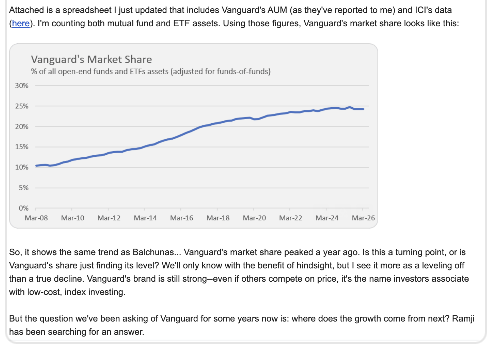
    But data posted by Morningstar Inc. and confirmed by other investment trackers show Vanguard’s share of the U.S. mutual fund and exchange-traded industry, a business that now totals $40 trillion, has plateaued in recent years and actually shrank to 27% from 28% over the past year.

    Vanguard Group’s market share of U.S. mutual funds and exchange-traded funds (EPS), as measured by Jeff DeMaso, publisher of the Independent Vanguard Adviser, using data collected from the Investment Company Institute and other industry sources. The text also references similar findings by Eric Balchunas, a Bloomberg investments analyst and author of a book on Vanguard’s founder, “The Bogle Effect.”Jeff DeMaso

    “SHOCK: Vanguard’s market share of US fund assets has begun to DECLINE after rising for 50 years,” Eric Balchunas, a Bloomberg LP fund analyst and author of The Bogle Effect, posted earlier this month on social media.

    It’s not that Vanguard took its eye off the ball, Balchunas said in an interview. Like other fund groups, Vanguard has shifted some retirement-plan assets — it won’t say how much — into other accounts that don’t show up in the publicly traded fund listings.

    But the shift marks the end of an era, he said, not so much a loss for Vanguard but “a dream realized” as the legacy of founder Bogle, who died in 2019. Fidelity, BlackRock, Schwab, and other Vanguard rivals “lowered fees and increased value” to shareholders because Vanguard’s strategy forced them to compete with low prices and simple products.

    “Vanguard’s market share peaked a year ago,” said Jeff Del Maso, publisher of the Independent Adviser for Vanguard Funds, after reviewing industry data. “I see it more of a leveling off than a true decline. But where does the growth come from next?”

    More Vanguard effects?

    Salim Ramji, a former BlackRock fund executive tapped by Vanguard’s board in 2024 as the company’s first “outside” CEO, has outlined in public interviews some other areas where Vanguard hopes to transfer its energy. He declined to be interviewed for this article.

    Under Ramji, Vanguard has:

    • Added dozens of new bond funds and other debt investments, which tend to attract investors when interest rates go higher, economic expansion slows, and stock prices slow.
    • Emphasized a new generation of cash savings accounts, years after Vanguard did away with its old bank-style checking accounts. Under Ramji, Vanguard has expanded promotion of its FDIC-insured Vanguard Cash Plus Account, with yields comparable to bank certificates of deposit in an effort to keep Vanguard customers from moving short-term money to banks and outside firms and to lure in new investors.
    • Added investor advice. Ramji’s predecessors built advisory services since the 1990s with phone-based, digital, and hybrid systems. Seeing a big still-untapped market, Ramji in August agreed to pay $4.6 billion for Altruist, whose founder, self-described Bogle disciple Jason Wenk, developed Hazel, an “AI-forward” financial tech and custody platform popular with independent investment advisers who sell Vanguard funds. Wenk will run the business, separate from Vanguard’s Digital Advisor and Personal Advisor units, when the deal closes.
    • Partnered with Wellington Management and Blackstone to launch private investment funds, starting in July. The WVB funds expect to report their holdings after Sept. 30. WVB All Markets and a smaller WVB Blackstone All Privates fund are being sold for now through Bank of America and its Merrill Lynch affiliates.

    But Ramji has stopped short of following other investment houses into predictions markets and cryptocurrency investments.

    “We believe investments deliver cash flows or have prospects of cash flows,” which these speculative investments don’t, Ramji said last month in an interview with Peter Mallouk of $800 billion asset, Kansas-based financial adviser Creative Planning LLC. Ramji compared such products to “a slot machine where the house always wins. That does harm to the individual investor.”

    Avoiding activism

    Under Ramji, Vanguard has promised not to use its extra clout — its funds own around 8% of most U.S. stocks — to pressure companies to change policies.

    Vanguard has backed off “environmental, social and governance” commitments. In March‚ Vanguard agreed to pay $30 million to Texas and other Republican-run states to settle litigation alleging that Vanguard violated antitrust laws when it joined environmentally minded groups that sought to reduce U.S. reliance on coal and other carbon energy sources.

    The settlement with the states helped lower Vanguard’s profile in the fraught world of political investing. Ramji went further than other firms. BlackRock and others sued by the states have so far declined to settle similar lawsuits.

    Analyst Balchunas is bullish that Ramji has cleared the way to reach more customers, extending “the Vanguard effect,“ even if its fund business has plateaued for a time.

    “The Vanguard effect is bigger than Vanguard now,” Balchunas said.

    This story has been updated to delete an incorrect figure for the WVB All Markets Fund.

  • Phoenixville will turn into ‘Gilmore Girls’ town Stars Hollow for one weekend

    Phoenixville will turn into ‘Gilmore Girls’ town Stars Hollow for one weekend

    As Kenzie Hamblin watched Gilmore Girls unfold in the fictional town of Stars Hollow, she looked around Phoenixville and thought, “I literally live in this town.”

    And now, that’ll be actually true — at least for a weekend.

    On Friday, Sept. 25 through Sunday, Sept. 27, a smattering of Phoenixville shops will transform into staples from the show in an event that Hamblin and business partner Mallory McDaniel organized.

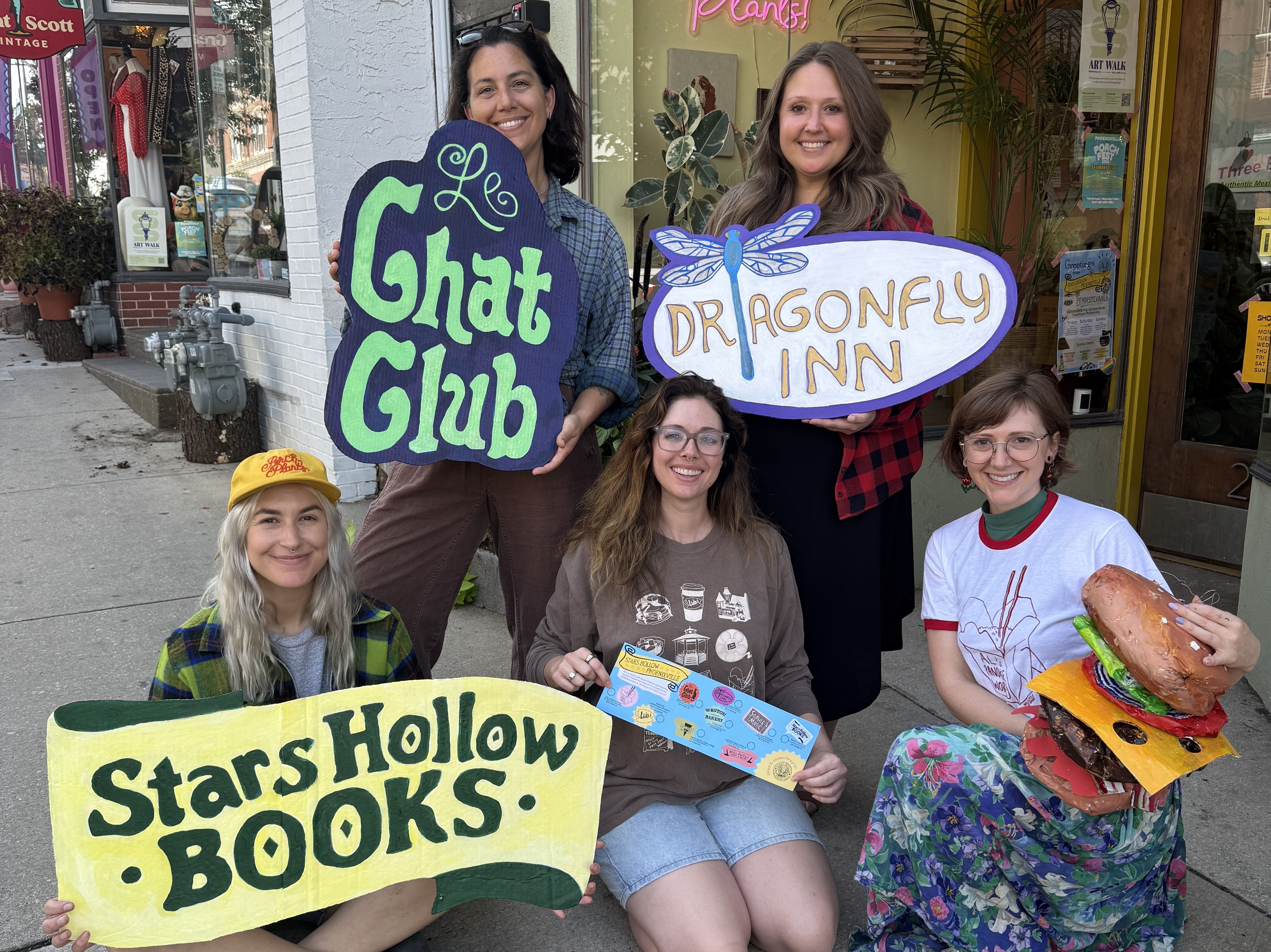
    All across downtown, existing shops will dress up as Stars Hollow storefronts, from Le Chat Club, to Doose’s Market, to the Dragonfly Inn, and, of course, Luke’s Diner. Hamblin’s shop, Silly Little Art Shop at 28 S. Main St., will become Al’s Pancake World, serving up piping hot art kits and more.

    Visitors can expect themed events, redecorated interiors and window designs, specialized merchandise, a map to collect stamps from participating shops for a prize, and maybe a handful of grumpy Lukes serving them coffee.

    The plan was sparked about a year ago, when Hamblin saw another similar pop-up in a nearby town. It was fun, she recalled, but she knew Phoenixville could do better. The borough has the bones to do so: There’s an “amazing creative, collaborative energy” among the small business owners, and a genuine investment from the community they serve, she said.

    “We have all this magic that exists in Phoenixville,” Hamblin, 35, said. “I want people to experience that, but then also get to have that fun of experiencing the magic of Stars Hollow — as much as any place can create that.”

    For the uninitiated, you may ask: What is it about Stars Hollow, the whimsical, quirky New England small town in which Gilmore Girls is set?

    The show, a quick-witted, comedy-drama that follows the lives of a mother and daughter, ran for seven seasons in the early 2000s and has amassed devoted fans since. Among those fans, the town has become a desirable, beloved place. It has it all: It’s close-knit, supportive, and yes — walkable. It taps into something people just seem to crave: connectedness and community, Hamblin said.

    “People live in suburban wastelands, where you live in a house, and you don’t really know any of your neighbors, and you don’t have a downtown; you have a shopping mall,” she said. “And I think people want to live somewhere like Stars Hollow, where it’s very community-oriented.”

    Kenzie Hamblin, left, and Mallory McDaniel, right, will transform their storefront, Silly Little Art Shop, into Al’s Pancake World later this month. Artist Emily White, middle, has designed a “Gilmore Girls” collection.Photo courtesy of Kenzie Hamblin

    And you may ask, what is it about Phoenixville?

    “I lived here before it was cool to be from Phoenixville,” said Julie Miller, whose pottery shop at 24 S. Main St. will become the Dragonfly Inn. “There’s such a strong community in the downtown, and a want for the downtown to survive, and a want for it to be this special, quaint little slice of heaven that it has become. I think that really equates with Stars Hollow.”

    And the response to the town coming to life has been pretty resounding. Hamblin organized a small group of businesses to participate in this year’s event, with the goal of drawing a couple hundred people downtown. When she posted the initial social media flier, though, it got more traction than she could have predicted — more than 100,000 views and 5,000 shares in the first 24 hours.

    Within the community, other businesses wanted to participate. And beyond the community, new customers have dropped by, scoping her shop out ahead of the event later this month, she said. (@starshollow.pa on Instagram is giving updates to the weekend’s offerings.)

    The business owners aren’t entirely sure what the magnitude of the turnout could be, but they’re excited.

    Miller, 36, said the enthusiastic response has been “amazing, and also a little terrifying in the best way.”

    She’s creating a line of dragonfly teacups and teaspoon rests. Themed pieces from other local artists will also be on offer in her shop. And to tap into the coziness of the inn, complimentary tea and cookies will welcome visitors.

    “It’s just really exciting for the potential,” Miller said. “Hopefully that just means that this is going to continue and be like another amazing thing that happens in Phoenixville that we get to do once a year.”

    Studio 323, at 323 Bridge St., will become Weston’s Bakery, offering fall-themed baked goods from a local microbakery on Saturday (“Who doesn’t love baked goods on a homemade plate?” owner Abby Wheeler, 31, noted), alongside other local artisans’ creations through the weekend.

    “As a creative space, a themed assignment to transform our space is what we live for,” Wheeler said.

    Though Jason Hafer, 48, isn’t overly familiar with the show himself, his staff is enthusiastically helping transform Reads and Company into Stars Hollow Books. There will be a Gilmore Girls-themed book display up front, and the staff plans to be decked out accordingly in plaid.

    Though a town might be content with its slate of other annual events, “we have like this great young business … and they’re bringing like their creativity and their passion to the town, which is I think what makes things so great,” Hafer said.

    And over at Al’s Pancake World, Hamblin and McDaniel, 34, will be dressed as waitresses, serving up art kits in takeout containers, alongside a collection of other merchandise they’ve made.

    “I deeply, deeply want our town to stay quirky and fun and strange and weird,” Hamblin said. “The only way for [small businesses] to stay and to grow and to be successful is if we can get people to come to town to ultimately enjoy themselves and spend money and enjoy Phoenixville for what it is and fall in love with it. If there’s any way I can be a part of that, to build success for our town in any small way, then that’s what I want to do.”

    This suburban content is produced with support from the Leslie Miller and Richard Worley Foundation and The Lenfest Institute for Journalism. Editorial content is created independently of the project donors. Gifts to support The Inquirer’s high-impact journalism can be made at inquirer.com/donate. A list of Lenfest Institute donors can be found at lenfestinstitute.org/supporters.

  • As tailors disappear, this Upper Bucks shop looks to a fifth generation

    As tailors disappear, this Upper Bucks shop looks to a fifth generation

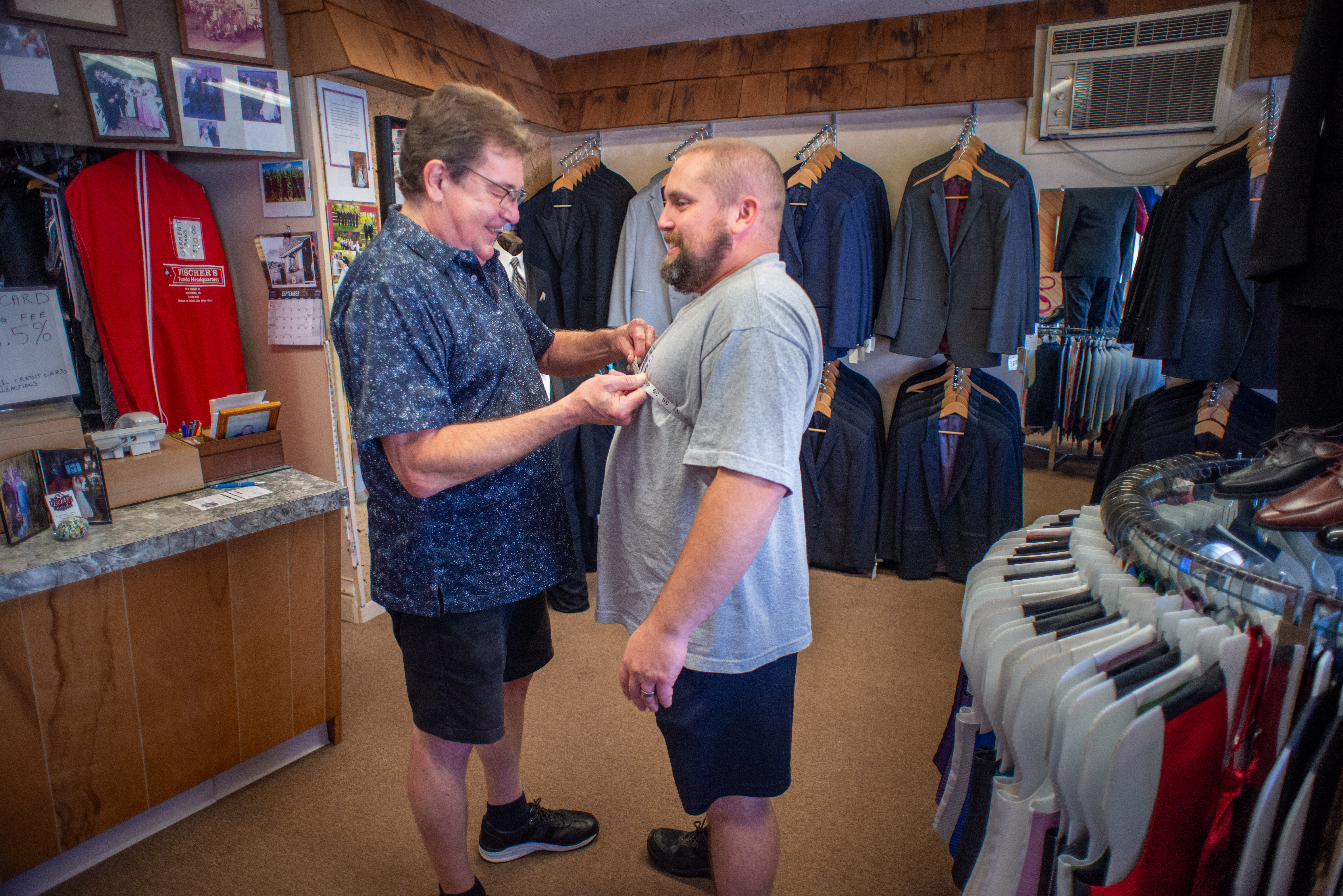
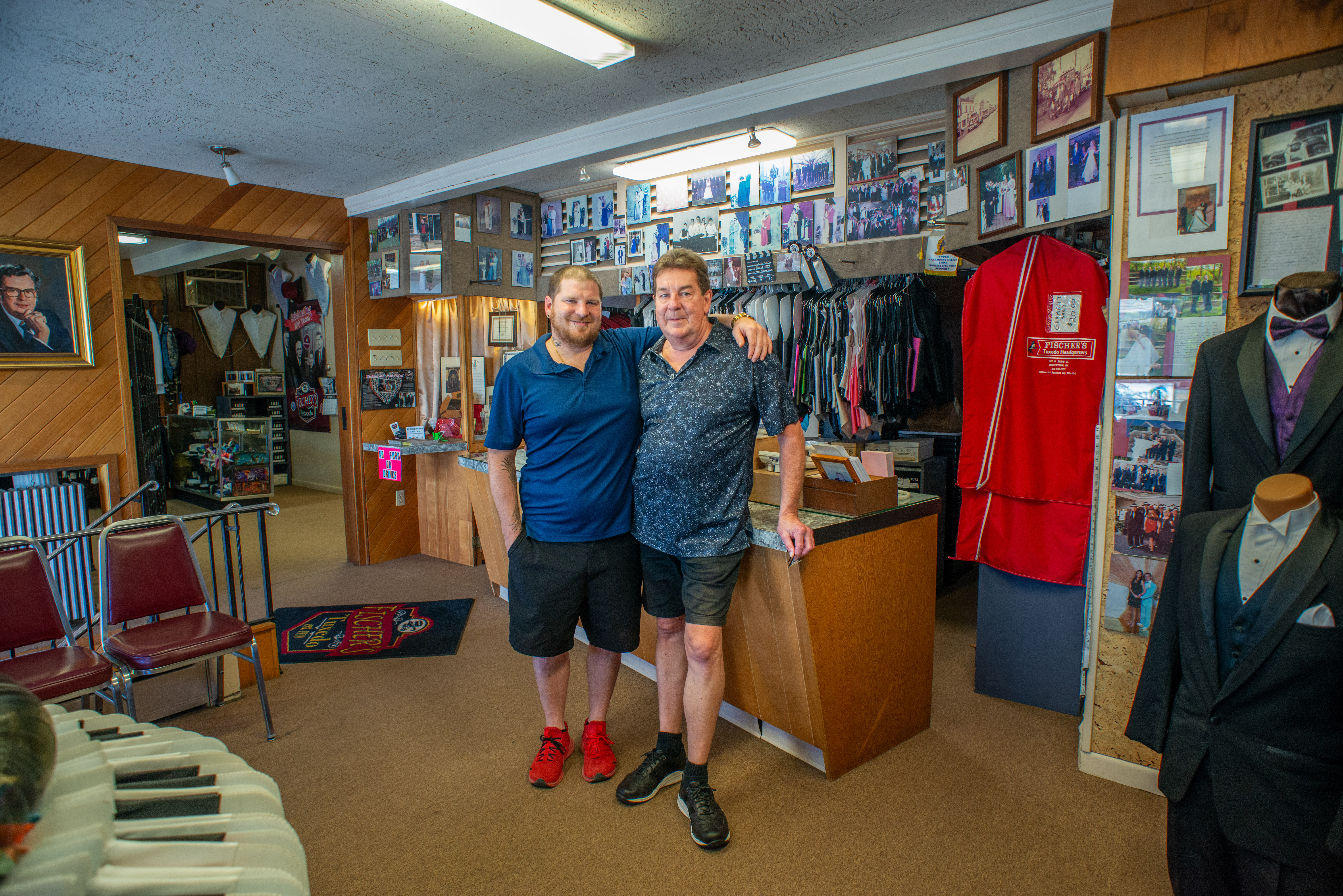
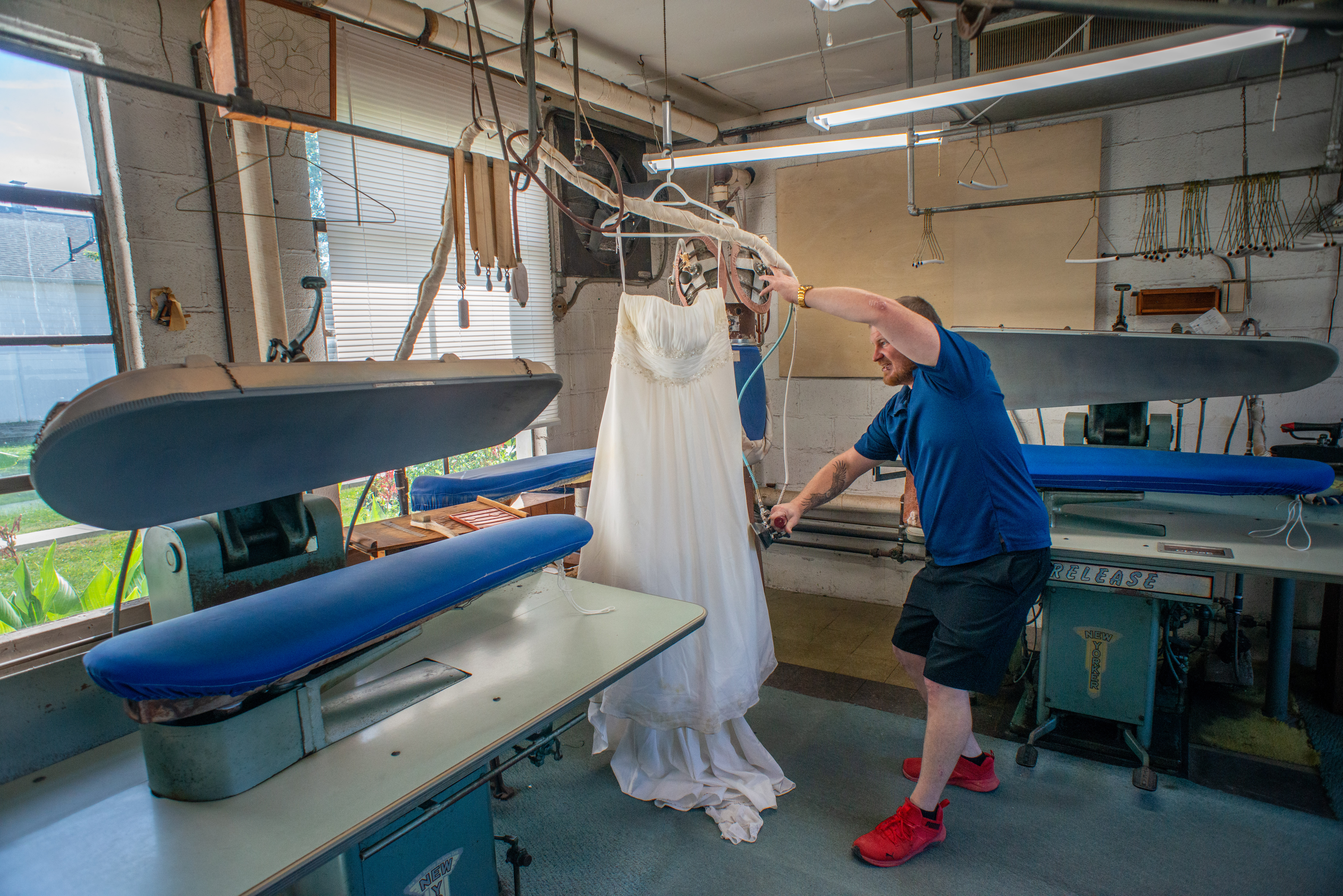
    Brett Fischer of Fischer’s Tuxedo in Quakertown learned tailoring as a kid, when his dad owned the store. Now, Brett runs the tailor and dry cleaning business with son Dustin, who learned from Brett.

    Dustin started out “shining shoes in the back, and then you know, little by little … sew a button on, shorten sleeves, just easy things,” Brett said.

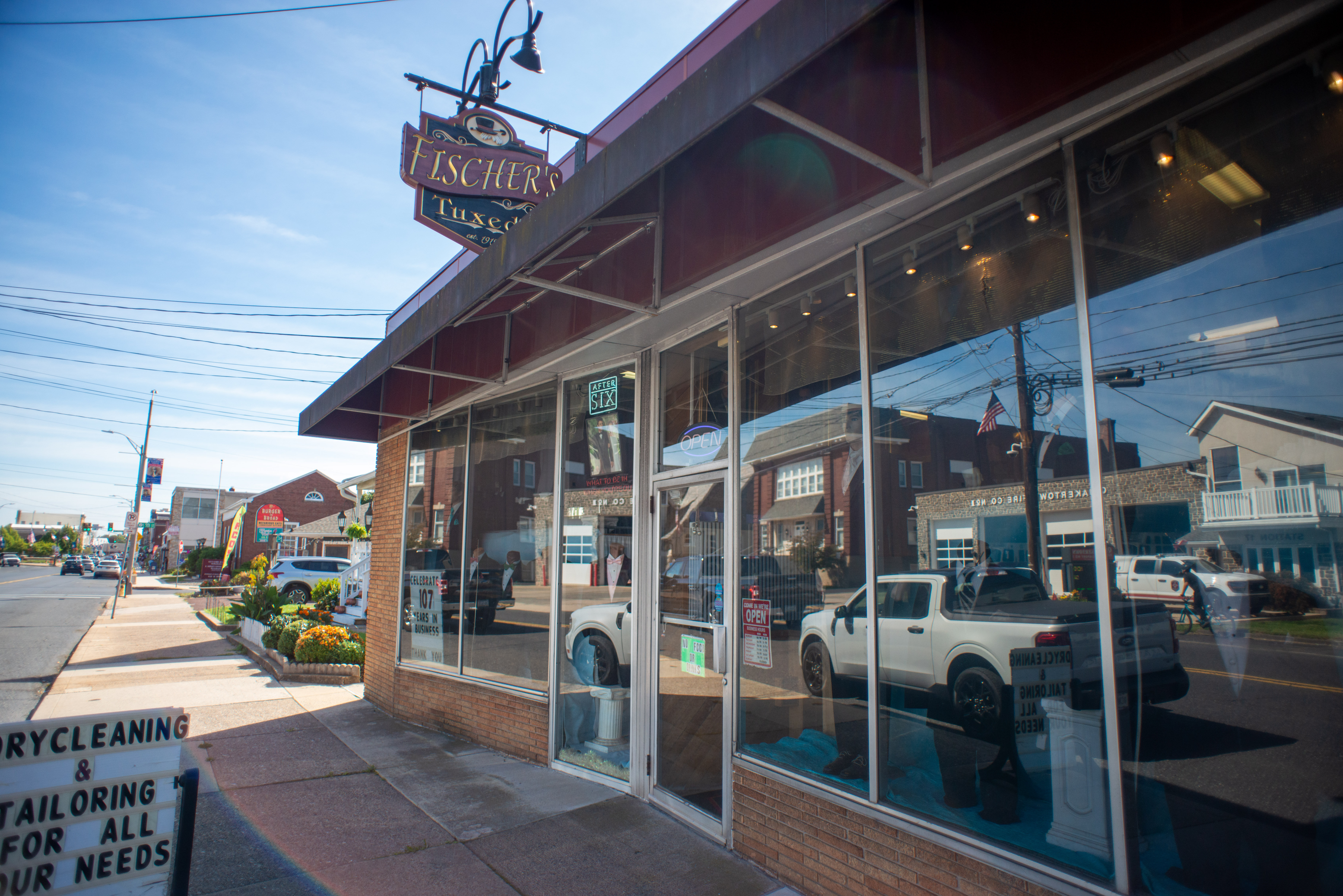
    Dustin is the fifth generation to run Fischer’s, started over a century ago by his German-Romanian great-great-grandfather in the same Broad Street location the family operates today.

    Owner Brett Fischer (right) and son Dustin Fischer pose for a photo in their store Saturday, Sept. 19, 2026, at Fischer’s Tuxedo in Quakertown. Tailors are disappearing, but this Upper Bucks shop is set to pass to a fifth generation.William Thomas Cain / For The Inquirer

    That’s “extraordinarily uncommon,” said Cindi Husbands, CEO of the American Tailors and Sewing Association.

    Across the country, tailors are disappearing as business owners reach retirement without anyone to replace them.

    Fischer’s offerings have changed over time. Services once included seasonal clothing storage because many home closets were too small to hold them, Brett said. His grandfather used to send clothes on the train to Philadelphia for dry cleaning, before he brought that service in-house.

    Fischer’s Tuxedo is seen Saturday, Sept. 19, 2026, in Quakertown, Tailors are disappearing, but this Upper Bucks shop is set to pass to a fifth generation.William Thomas Cain / For The Inquirer

    The store grew with it.

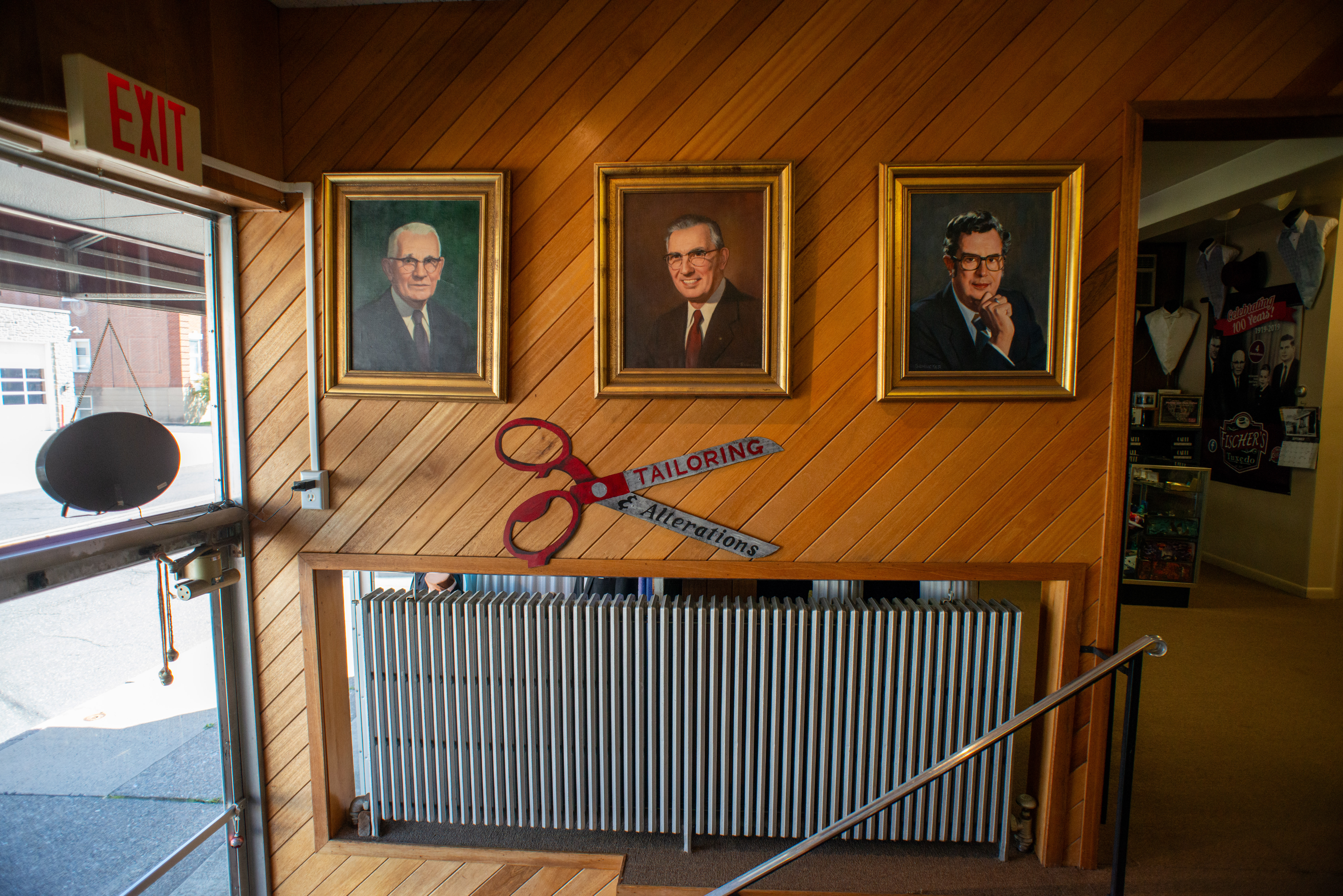
    Originally built as a twin home, the front porch is now an indoor reception area. The upstairs apartments became storage. On the wall by the entrance hang painted portraits of Brett’s father, grandfather, and great-grandfather.

    The generational wall of portraits is seen Saturday, Sept. 19, 2026, at Fischer’s Tuxedo in Quakertown, Pa. Tailors are disappearing, but this Upper Bucks shop is set to pass to a fifth generation.William Thomas Cain / For The Inquirer

    Today, weddings and other formal events are the heart of the business. There are 10,000 suits stored in the 5,900-square-foot shop, Dustin said. But, weddings are smaller than they used to be, he said, and people buy less formal clothing in general.

    “It’s a very dressed-down society. … They just wear what we’re wearing,” Dustin added, pointing to his blue polo shirt. “You can wash it in your laundry machine.”

    In towns without tailors, other businesses like bridal shops have absorbed some of the demand, Husbands from the trade association said, but it’s difficult to replace the skills and experience of a professional, full-service tailor.

    Her organization, along with major retailers like Nordstorm, are investing in tailor training programs to rebuild the workforce.

    Dustin Fischer hems pants Saturday, Sept. 19, 2026, at Fischer’s Tuxedo in Quakertown. Tailors are disappearing, but this Upper Bucks shop is set to pass to a fifth generation.William Thomas Cain / For The Inquirer

    With fewer tailors, Dustin expects to see higher costs and lengthier pants.

    “They’re going to charge you an arm and a leg for a simple job,” he said. “Or you just won’t get it done. You’re going to wear your pants, and they’re going to be nice and long.”

    Brett attributes his family’s long success to word of mouth, good customer service, and providing “a great product at an extremely fair price.”

    Dustin Fischer sews, irons, and presses clothing Saturday, Sept. 19, 2026, at Fischer’s Tuxedo in Quakertown. Tailors are disappearing, but this Upper Bucks shop is set to pass to a fifth generation. William Thomas Cain / For The Inquirer

    Father and son both worked other jobs before joining the family business full time. Brett made office furniture, and Dustin worked in restaurants, a car wash, and a chocolate factory.

    After 34 years at the helm, Brett is not sure when he’ll retire: “I’m probably gonna wake up one day and say ‘I’m just done.’”

    And Dustin doesn’t know yet whether he’ll keep the store running himself, though he expects someone in the family will.

    “But you never know,” he added. “Life’s weird.”

    This suburban content is produced with support from the Leslie Miller and Richard Worley Foundation and The Lenfest Institute for Journalism. Editorial content is created independently of the project donors. Gifts to support The Inquirer’s high-impact journalism can be made at inquirer.com/donate. A list of Lenfest Institute donors can be found at lenfestinstitute.org/supporters.

  • Lower Merion’s gas-powered leaf blower ban has led to 437 complaints and put ‘tremendous stress’ on staff, officials say

    Lower Merion’s gas-powered leaf blower ban has led to 437 complaints and put ‘tremendous stress’ on staff, officials say

    A gas-powered leaf blower ban in Lower Merion has put “tremendous stress” on township staff, as hundreds of complaints have piled up since its implementation this summer, officials said at a Sept. 9 meeting.

    Officials from Lower Merion’s department of building and planning told commissioners at a recent budget meeting that enforcement of the ban has strained resources as staff are pulled away from other work to address a growing collection of complaints. The department is asking to promote one part-time staff member to full-time and hire a seasonal code compliance officer to meet the increased demand.

    “There’s a significant amount of administrative time required to enforce the ordinance, and it’s just beyond our existing capabilities to do this,” Chris Leswing, Lower Merion’s director of building and planning, told commissioners.

    Leswing said investigating potential violations has pushed back other projects, requiring the department to pay increased overtime so staff can address their day-to-day responsibilities.

    Lower Merion received 437 complaints of leaf blower violations and issued 49 fines from June 1 to Sept. 9, according to Ernest Pendleton, assistant director of building and planning.

    In that same time frame, the department received 80 reports of all other standard property maintenance violations, including trash, debris, noise, lighting, high weeds, and grass issues.

    The proposed upgrade of the administrative clerk to full-time next year would add $48,000 to next year’s budget, and hiring a seasonal code compliance officer for 22 weeks of the year would add $35,000.

    Lower Merion commissioners passed the ban on gas-powered leaf blowers last fall, a move proponents said would help safeguard the environment and protect residents against harmful air and noise pollution.

    The ordinance phased out gas-powered leaf blowers on a seasonal basis, starting with a ban from June 1 to Oct. 1 this year, with an eventual all-out ban beginning in 2029.

    Enforcement is complaint-based. Residents are encouraged to report violations via Lower Merion’s LM Report-It app, email, or phone. Violators first receive a warning, then a $100 fine for a first offense, $250 for a second offense, and $600 for a third or subsequent offense.

    Enforcing the leaf blower ban presents a specific set of issues for staff, Pendleton said. Only around one-third of leaf blower complaints include enough evidence to be verified, meaning for the majority of infractions, a township staff member must conduct an independent investigation before deciding whether to fine a property owner. Investigations often include reviewing photos and videos and driving to the site of the violation. Complaints are doubly difficult to investigate as the department’s inspectors are often “scheduled out,” meaning no one is available to look into tips as they are being called in, according to Pendleton.

    “We don’t have any inspector sitting inside our building to run out to a site,” Pendleton said.

    Commissioners at the meeting said residents have reported feeling uncomfortable with the complaint-based system.

    “They’re feeling as though they’re being asked to report on one another in the absence of another type of system,” said Commissioner Chris McGuire, who said she is getting reports that “neighbors are quibbling because one has reported the other.”

    Pendleton said hiring a seasonal code compliance officer would help alleviate the fact that “neighbors aren’t liking to have to tell on neighbors,” though he noted that all of Lower Merion’s standard property maintenance complaints, with the exception of building codes, come in through resident reporting.

    “We don’t send anyone out to look for problems,” Pendleton said.

    Both commissioners and staff said they expect leaf blower complaints to drop in the coming years as residents and landscapers continue to transition to electric equipment. Pendleton said adding a seasonal officer would allow the township to have flexibility to shed the position should complaints drop off.

    Some commissioners seemed poised to fulfill the building and planning department’s staffing requests, but no formal votes were taken at the meeting.

    This suburban content is produced with support from the Leslie Miller and Richard Worley Foundation and The Lenfest Institute for Journalism. Editorial content is created independently of the project donors. Gifts to support The Inquirer’s high-impact journalism can be made at inquirer.com/donate. A list of Lenfest Institute donors can be found at lenfestinstitute.org/supporters.

  • Bookstores are so back in the Philly area. Booksellers say it’s a backlash to all that doomscrolling.

    Bookstores are so back in the Philly area. Booksellers say it’s a backlash to all that doomscrolling.

    Fishtown Books opened last weekend, the neighborhood’s fifth bookstore. In Manayunk, one couple opened two bookstores on the same street. The August opening of a West Chester fantasy shop wrapped a line around the building, ending early when the shelves were nearly emptied.

    Across Greater Philadelphia, bookstores are back.

    And despite the growing competition, many sellers said sales are up, mirroring national trends: The Association of American Publishers found the number of books sold via physical retail grew almost 34% over the past five years, outpacing online retail.

    “I did not plan for it to be so busy,” said Jackie Botto, 41, of Capricorn Books, which expanded its Jenkintown storefront in July. “We’ve almost doubled our business.”

    Capricorn Books owner Jackie Botto chats about the books and customers’ love of reading on Sept. 17 in her Jenkintown bookstore.William Thomas Cain / For The Inquirer

    Screen fatigue, a hunger for community, and a desire to support local businesses are fueling the surge, said sellers — many of whom are investing in niche genres and hosting creative events to meet their customers’ needs.

    Readers are reading, book people say

    The reading boom isn’t limited to stores. At Jenkintown and Abington libraries — which sit along the same corridor as Capricorn and a new Barnes & Noble — patronage is growing, and both libraries are mulling expansion.

    Adult print circulation is up 10% in Abington, and children’s circulation is up 50% since last year. “People are consuming more literature and media in general,” said Abington’s head of circulation, Marcus Palm.

    And parents are prioritizing reading for themselves and their kids, said the Abington library director, Elizabeth Fitzgerald: “There is a bit of backlash to the doomscrolling.”

    At Bookmarks in West Chester, some customers have tried ebooks and are returning to print.

    “They spend all day working on the computer,” owner Lisa Strohl said. “They’re tired of being on the screen.”

    But some apps like TikTok — and its algorithmic niche known as BookTok — are also driving readers to the stacks.

    BookTok and tailored offerings draw young readers

    “The screen is helping them get back into reading,” said Charity Herndon, owner of Austen’s Shelf in Bordentown. “[BookTok] was the only way to reach the younger generation of readers.”

    Charity Herndon, owner of Austen’s Shelf, stands in the entrance of her shop in Bordentown on June 13.Elizabeth Robertson / Staff Photographer

    Sellers like Herndon and Anthony Long — who opened Thrillerdelphia in Manayunk last year after helping his wife open romance-focused Cupid’s down the street — are using both digital and analog strategies to turn new customers into loyal fans by delivering the community hubs they crave.

    In a recent Instagram reel, a Thrillerdelphia staffer played a guitar riff to match each book cover he displayed. In November, the store is hosting the horror punk band Blitzkid, a member of which is also an author.

    “I know my customers,” Long said. “You can get the eyeballs, but you have to build the intrigue and make people want to come in.”

    Active support from local residents is key, many sellers said. Literary agent Eric Smith decided to start the Philadelphia Book Crawl a few years ago. It’s become a kind of Black Friday for bookstores; several said it’s their best day of the year.

    “I’m terribly invested in how things go for our local indie bookstores,” Smith said. “I want to see them thrive.”

    (function(){function e(){window.addEventListener(`message`,function(e){if(e.data[`datawrapper-height`]!==void 0){var t=document.querySelectorAll(`iframe`);for(var n in e.data[`datawrapper-height`])for(var r=0,i;i=t[r];r++)if(i.contentWindow===e.source){var a=e.data[`datawrapper-height`][n]+`px`;i.style.height=a}}})}e()})();

    Barnes & Noble is back

    Some credit TikTok with helping to revive a declining Barnes & Noble, which opened more than 60 stores last year and plans another 60 by the end of 2026 after years of losses and an acquisition.

    “[BookTok] was absolutely a key point, especially during COVID,” said Barnes & Noble vice president Janine Flanigan. “I’ve never seen the conversations around books the way we see them now.”

    The chain has taken notice of successful indies: A news release for the new store in Abington — where a Barnes & Noble had closed more than a decade ago — highlighted plans for local author events and book clubs.

    The Abington store’s stock will be selected more locally, Flanigan said. “The store managers are deciding what to put in front of their customer.”

    The private equity-owned company’s shift to localized control only highlights the value of independent sellers, said Buffy Hastings, a co-owner of Farley’s Bookshop in New Hope.

    “They got beat by us,” he said.

    Botto, who owns Capricorn Books near the new Abington Barnes & Noble and has fond childhood memories of the chain, is optimistic that there’s room for everyone.

    “Looking at our numbers we have no reason to be worried, which is great,” she said.

    People buying books despite affordability crisis

    Richard De Wyngaert, whose Queen Village store Head House Books opened during the online and big-box-bookstore boom of the early aughts, said those initial customers would always compare him to online vendors.

    “Price was all that mattered,” he said. “That two-dollar savings.”

    But a few years ago, he noticed a shift — “a new generation who wasn’t raised to think you had to match Amazon,” De Wyngaert said. “By then, we all knew the horrors.”

    Mila Panchev (center), 9, and her father, Nikolay Panchev, look at the book “The Scroobious Pip” by Edward Lear and illustrated by Charles Santore and Nicholas Santore before a reading by Nicholas Santore at Head House Books in the Queen Village neighborhood on Jan. 25, 2025. Nicholas Santore finished the illustration started by his father, Charles Santore.Yong Kim / Staff Photographer

    Sellers say book prices have shot up in recent months, but the customers keep coming.

    The relative price hike for other consumer luxuries like airfare may be part of the reason: The consumer price index for “recreational books” has yet to return to its 30-year peak in 2009.

    “I have seen this summer someone who’s like, ‘I can’t go on vacation, so I’m going to read about Italy,’” Herndon of Austen’s Shelf said.

    Readers want to ‘escape’, booksellers say

    The genres driving much of the growth in stores with broad selections, sellers said, are romance — especially when mixed with fantasy, a subgenre known as romantasy — and horror.

    There are also the blockbuster books they can’t keep in stock, like the sci-fi fantasy series Dungeon Crawler Carl, and a return to the classics.

    What these books have in common, sellers said, is they’re totally disconnected from everyday life — or, as Hastings put it, “the realities of living in America in 2026.”

    The bestsellers at Austen’s Shelf are “books that allow people to escape,” Herndon said. “People just want to tuck themselves into a different world.”

    When Head House Books opened in 2005, “people thought I was nuts,” De Wyngaert said. “Today you see bookstores … springing up everywhere.”

    It’s “good news,” he added, “for a world that needs some good news.”

    This suburban content is produced with support from the Leslie Miller and Richard Worley Foundation and The Lenfest Institute for Journalism. Editorial content is created independently of the project donors. Gifts to support The Inquirer’s high-impact journalism can be made at inquirer.com/donate. A list of Lenfest Institute donors can be found at lenfestinstitute.org/supporters.