Tag: Inquirer Local

  • Abington police end Flock surveillance network contracts after thousands of the department’s searches leaked

    Abington police end Flock surveillance network contracts after thousands of the department’s searches leaked

    The Abington Township Police Department is ending its contracts with the fast-growing surveillance start-up Flock Safety over data security concerns, officials said this week.

    “We’re sensitive to the issues surrounding Flock,” Lt. Joe Blei said, but the cameras also “bring a lot of value to what we do.”

    The suburban police department is seeking a supplier to replace Flock, a network of private and public surveillance cameras that log the license plates and other vehicle features, like bumper stickers, of every car that passes them.

    Abington has one permanent Flock camera up in the township and a few cameras the department keeps at the station and deploys as needed, Deputy Chief Ed Quinn said.

    One of the department’s two contracts expired this month, and Abington will let the second contract expire in February 2028.

    The contract expiring this month cost the township $9,225 per year for two years, Blei said, and the three-year contract ending in 2028 costs $10,500 annually.

    The department is currently negotiating with other vendors to replace Flock, Blei said Wednesday, and a future contract would need approval from the township commissioners.

    Abington concerned about Flock camera data

    Flock has raised privacy concerns with civil liberties groups because the network captures every vehicle that passes its cameras, and police can access data from cameras outside their jurisdiction.

    The network also uses artificial intelligence to identify cars that frequently drive together, and allows officers to search for vehicles by behavior, rather than plate number.

    Officers in other states have been accused of using Flock to track romantic interests.

    Unredacted search logs have also been released to the public through information requests and data leaks.

    Thousands of Abington search records leaked

    Thousands of Abington’s searches have appeared in public data dumps on sites like HaveIBeenFlocked.com, which is sponsored by the nonprofit Alternative Newsweekly Foundation, and 404 Media, which reported on a large dataset that anonymous researchers gleaned from a records request to Danville, Ill., police.

    Searches from other local departments, including Cheltenham, appear in some of the same datasets. Lt. Joseph O’Neill said Cheltenham has no contracts with Flock, but can access the national network through subscriptions held by businesses in the township with their permission for investigations.

    Though Abington’s Flock search logs are legally available through Right-to-Know requests, details of criminal investigations would normally be redacted.

    “We don’t want anybody’s personal data getting out into the public without their knowledge or permission,” Blei said. “The privacy concerns of American citizens are also of concern to us.”

    Abington has guardrails and oversight in place to prevent officers from misusing the cameras, Blei said.

    How Abington police use Flock cameras

    The network-connected cameras have been credited with tracking cross-county crime in Pennsylvania.

    Last year, a Berks County township’s camera flagged a stolen Bucks County license plate on a vehicle that was tied to a Montgomery County bank robbery.

    “They still are a great investigative tool,” Quinn said. “We can link together crimes we wouldn’t otherwise have known were linked.”

    That includes stalking and missing persons cases, Blei and Quinn said.

    “We have multiple cases of violent crime — shootings, armed robberies,” Quinn said. “It’s helped us make arrests.”

    All Abington officers who search Flock data have their own ID, Blei said. Flock keeps logs of officers’ searches that the department can audit as needed, though the department does not have a set schedule for auditing searches. Abington officers can search the cameras only for specific investigative purposes, Quinn and Blei said.

    Other police departments nationwide with Flock contracts also had access to Abington’s Flock cameras, the officers said, but the department no longer approves those requests now that it has become aware of the data risks.

    Abington does not have agreements in place with businesses to access private Flock cameras, Quinn said.

    The department approves access only for criminal investigations, Blei said, and would not allow access for civil matters, such as an immigration-related request from the Department of Homeland Security.

    This suburban content is produced with support from the Leslie Miller and Richard Worley Foundation and The Lenfest Institute for Journalism. Editorial content is created independently of the project donors. Gifts to support The Inquirer’s high-impact journalism can be made at inquirer.com/donate. A list of Lenfest Institute donors can be found at lenfestinstitute.org/supporters.


  • Fired historical commission strikes out on its own | Inquirer Chester County

    Fired historical commission strikes out on its own | Inquirer Chester County

    Hi, Chester County! 👋

    After being fired, all six members of Westtown Township’s historical commission are striking out on their own. Also this week, Oxford will disband its police department, future development at a contaminated Kennett Square site could be on the horizon, plus, what to know about the mysterious drone sightings over Wallace Township.

    If someone forwarded you this email, sign up for free here.

    Axed Westtown historical commission members form their own society

    All six former members of Westtown Township’s historical commission — who were fired last month amid disagreements with local officials over historic preservation — have formed their own independent society.

    Known as the Westtown-Brandywine Historical Society, the group’s mission is to protect local buildings and history, similar to what they did before. “I feel like we’ve continued without missing a beat,” one member said, adding she was crushed when they were dismissed.

    In just a few short weeks, the group has already planned several events, including historical tours of Oakbourne Mansion and Park and a discussion about the Darlington Inn. They believe the inn should be preserved, and their stance is why they think they were let go.

    The Inquirer’s Brooke Schultz explores how the group formed so quickly and what’s ahead for them.

    📍 Countywide News

    💡 Community News

    • Oxford’s borough council voted Monday to disband its police department and join the Southern Chester County Regional Police Department and Commission amid budgetary constraints. The change will go into effect next year. The borough will hold a town hall with the regional department’s police chief tomorrow.
    • Kennett Square’s council moved future development at the defunct National Vulcanized Fiber site one step closer to reality this week despite pushback, agreeing to advertise an ordinance that would allow for housing and businesses at the contaminated 22-acre former industrial property.
    • With limited housing inventory and a growing population, Kennett Square has decided to cap how many short-term rentals are allowed within the borough. Current units will be grandfathered in.
    • For the past month or so, the West Brandywine Police Department has been investigating drone sightings in Wallace Township, where one has been spotted repeatedly flying over homes and roads for several hours at night. Inquirer columnist and area resident Sabrina Vourvoulias offers her take.
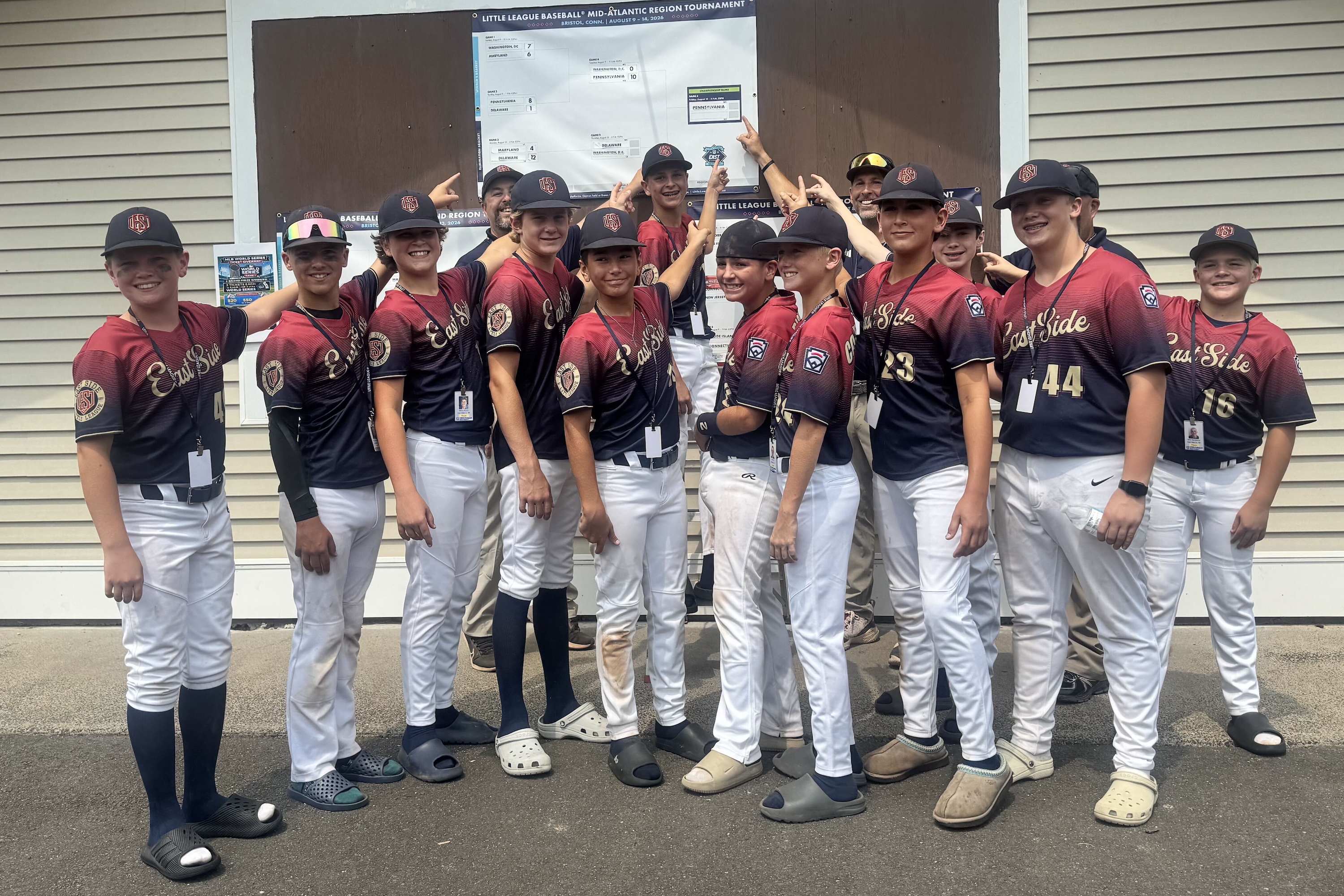
    • West Chester’s 12-and-under East Side Little League team has punched its ticket to the Little League World Series, which gets underway today in Williamsport, Pennsylvania. The team, representing the Mid-Atlantic region, is slated to compete Friday.
    • Several Phillies players sported one-of-a-kind cleats for last week’s Field of Dreams game in Iowa, which were created by Downingtown company NXT LVL Customs.
    • Longtime Phoenixville borough manager E. Jean Krack is planning to retire this coming spring after 18 years in the role. Council is working on plans to hire his successor.
    • Willistown Township is hosting a meeting tomorrow at 7 p.m. at General Wayne Elementary School to discuss the potential settlement agreement for Rock Hill Farm. A judge recently overturned a township ruling denying the property could be developed into luxury homes.
    • East Vincent Township’s planning commission is slated to continue discussions tomorrow at 6:30 p.m. about AQ Dev, LLC’s conditional use application to build 53 single-family homes at 446 Stony Run Rd.
    • West Brandywine Township is holding a conditional use hearing Tuesday at 7 p.m. for Imaging Associates’ and Toll Brothers’ proposed age-restricted community at 500 Hibernia Rd.
    • Nordstrom Rack is opening tomorrow at Main Street at Exton.
    • Leaves and Lore, a new fantasy-focused independent bookstore at 118 N. High St. in West Chester, is opening its doors on Saturday.

    🍽️ On our Plate

    🎳 Things to Do

    🏒 Flyers Community Caravan: Gritty is heading to Exton as part of a multi-stop tour that also includes the team’s in-arena host and Flyers alums. ⏰ Wednesday, Aug. 19, 5:30-7:30 p.m. 💵 Free 📍 Miller Park, Exton

    🍻 Summer Pop-Up Biergarten: Locust Lane Craft Brewery and Turk’s Head Wines will be pouring drinks, while food trucks Philly Hots! and Cousins Maine Lobster will dish up food. ⏰ Thursday, Aug. 20, 5-8 p.m. 💵 $10 in advance, $15 at the door 📍 Historic Sugartown, Malvern

    🎸 Tell Me Lies: The Fleetwood Mac tribute group will perform some of the band’s most iconic hits. ⏰ Friday, Aug. 21 and Saturday, Aug. 22, 7:30 p.m. 💵 $51-$61 📍 Uptown! Knauer Performing Arts Center, West Chester

    📚 Philadelphia Book Crawl: Several Chesco bookshops — Forage Books in Kennett Square, Wellington Square Bookshop in Exton, and Reads & Company in Phoenixville — are participating in the region-wide event. ⏰ Saturday, Aug. 22, times vary 💵 Pay as you go 📍 Locations vary

    🏡 On the Market

    A serene West Chester estate with a pool and two-story wine cellar

    The home sits on six acres.Virtual Vista | Courtesy of Holly Gross Group

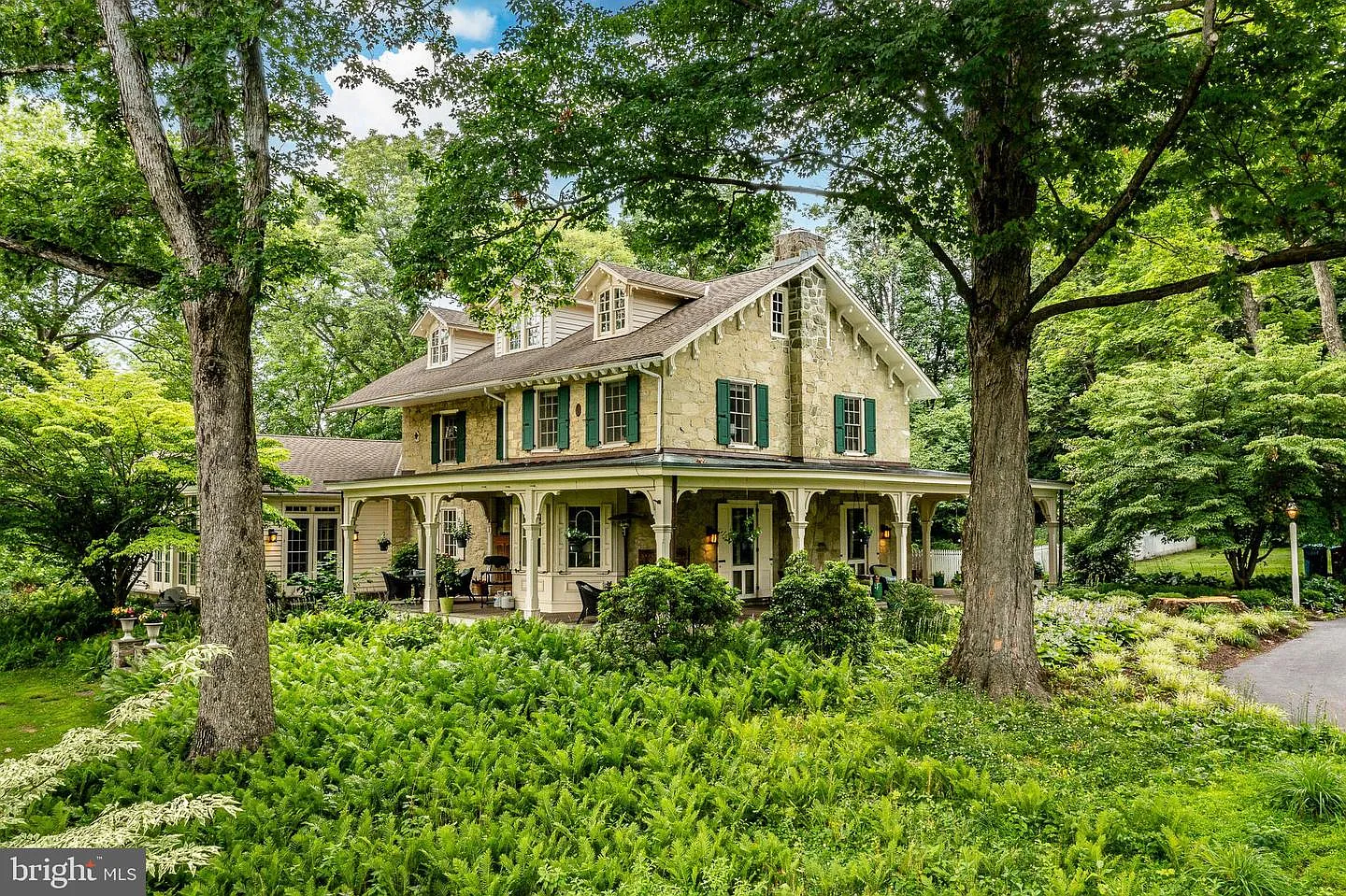
    Built in the 1800s, this stone West Chester estate — known as Fernbank Farm, and already under contract — features a number of original architectural details. Among its most unique is a former ice house that’s been converted into a two-story wine cellar that can hold 1,500 bottles and also has a tasting room. Other features in the six-bedroom home include a library and sunroom, in addition to outdoor living spaces such as covered wraparound porches, gardens, and a heated pool.

    See more photos of the property here.

    Price: $3.3M | Size: 5,397 SF | Acreage: 6

    📈 Chester County market report

    • Median listing price: $599,900 (down $17,100 from June) 📉
    • Median sold price: $610,000 (down $18,500 from June) 📉
    • Median days on the market: 34 (up six days from June) 📈

    This Chester County market report is published on a monthly basis. Above is data for July from realtor.com.

    🗞️ What other Chester County residents are reading this week:

    By submitting your written, visual, and/or audio contributions, you agree to The Inquirer’s Terms of Use, including the grant of rights in Section 10.

    This suburban content is produced with support from the Leslie Miller and Richard Worley Foundation and The Lenfest Institute for Journalism. Editorial content is created independently of the project donors. Gifts to support The Inquirer’s high-impact journalism can be made at inquirer.com/donate. A list of Lenfest Institute donors can be found at lenfestinstitute.org/supporters.
  • Inside a couple’s ‘peaceful retreat’ of a home | Inquirer Cherry Hill

    Inside a couple’s ‘peaceful retreat’ of a home | Inquirer Cherry Hill

    Hey there, Cherry Hill! 👋

    Allow me to introduce myself: I’m Laura Smythe, your new newsletter writer. I’ve been moonlighting in your inbox here and there over the last couple months alongside my colleague Lisa Dukart, but it’s a treat to formally meet you. I’m excited to pick up the baton from Lisa, who will continue to write and edit other Inquirer Local newsletters.

    One thing about me — I love reader feedback. You can let us know what’s on your mind by taking our survey or emailing us at cherryhill@inquirer.com.

    Now, time for the news.

    After half a century living in Delran, a couple shares their journey of starting fresh in Cherry Hill, and offers a glimpse inside their two-bedroom, two-bathroom abode in an amenity-filled community. Also this week, we take a look at the two-year redevelopment a Cherry Hill firm will undertake for Battleship New Jersey, a local banana trend benefiting a nearby café, and another retailer opening at the mall this weekend.

    — Laura Smythe (cherryhill@inquirer.com)

    If someone forwarded you this email, sign up for free here.

    After 50 years in Delran, this couple downsized to a Cherry Hill apartment

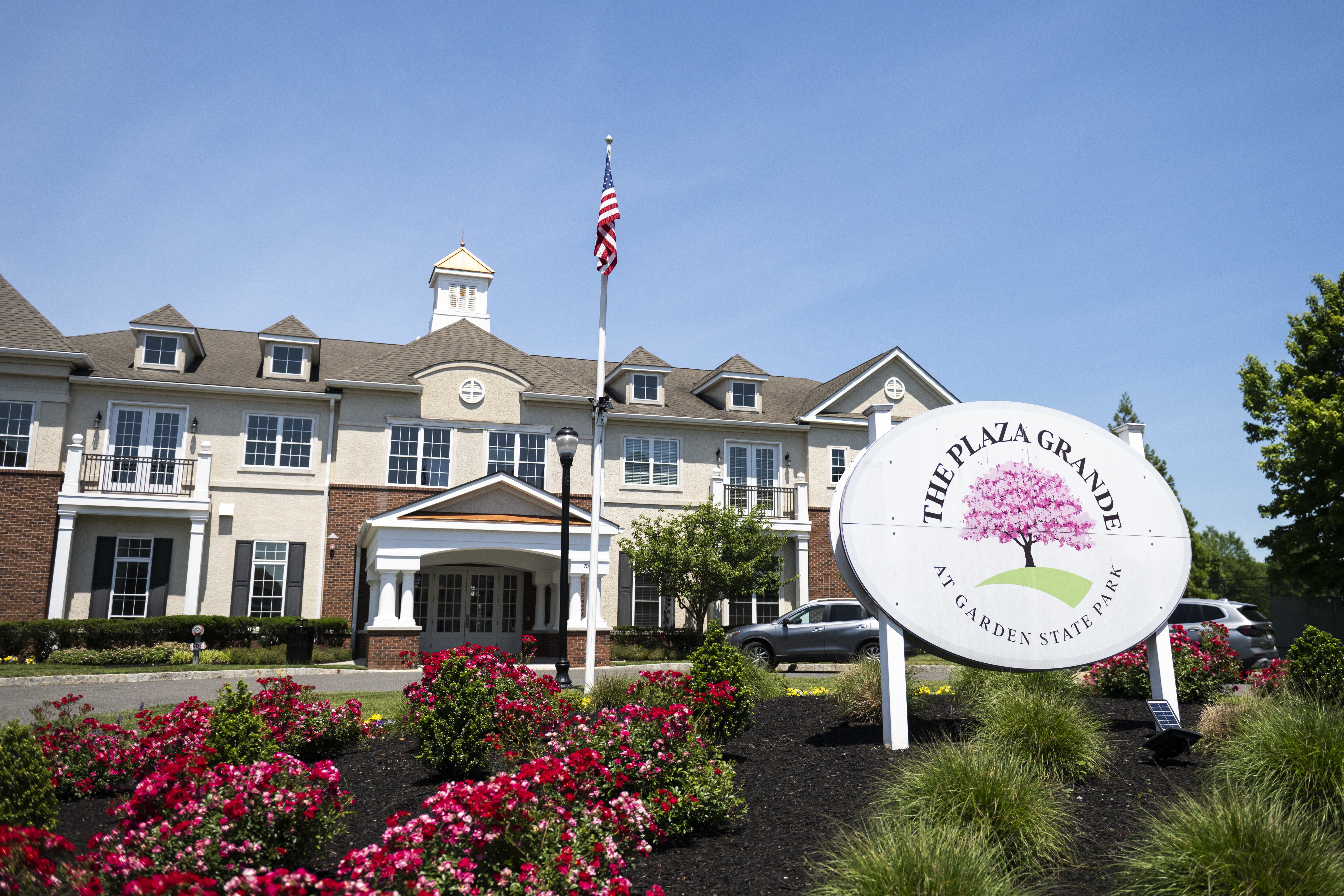
    Family photos and souvenirs from decades of travels decorate Fred and Barbara Zucker’s two-bedroom, two-bathroom apartment. The 1,150-square-foot abode, which also includes a den and a west-facing balcony, is part of Cherry Hill’s sprawling Plaza Grande community.

    Downsizing from a home in Delran, the couple sold off the bulk of their 50-years’ accumulation of belongings, and took to Raymour & Flanigan to outfit their new digs.

    The complex also offers indoor and outdoor swimming pools, a sauna, and massage rooms. But Plaza Grande’s family-like feeling is their favorite amenity, the couple says. It’s not uncommon to find Barbara in the kitchen cooking up a treat for a neighbor in need of some TLC.

    “Our home is a peaceful retreat for us,” she said. “It is sort of like summer camp.”

    The Inquirer takes a closer look at what “another day in paradise” is like at Plaza Grande.

    💡 Community News

    • Cherry Hill-based architectural and engineering firm PS&S is leading a $24.25 million redevelopment project at Battleship New Jersey in neighboring Camden, which will include a new visitor center, double the parking, and a new private event space on the ship’s main deck, among other upgrades. The Inquirer’s Sarah Nicell has the details.
    • Expecting to drive on Kresson Road or Kenilworth Avenue this week? You might need to alter your routes as roadwork continues.
    • Timberland will host its grand opening event at the Cherry Hill Mall this weekend, including a ribbon cutting at the 1,800-square-foot store on Friday at 9:30 a.m. and giveaways for shoppers. It’s one of a number of new spots the mall is expected to add in the coming months.
    • Registration is now open for the township’s lineup of fall class offerings, from oil pastels and pre-ballet for kids to soapmaking and woodworking for adults.

    🍽️ On Our Plate

    • The banana trend taking over Philadelphia’s food scene is also ripe among sweet-treat seekers in Cherry Hill. A banana pudding matcha latte is among the top-selling beverages at Ensōra, the Barclay Farms Shopping Center café’s owner, Michele Lin, told us. She said they make a small batch of banana pudding every day — folding fresh whipped cream between the pudding and layering in Biscoff cookies — that consistently sells out. Ensōra also offers a cookie butter banana pudding version of its pandan mochi waffles, and Lin is considering bringing back a banana bread latte later this year, as customers still request the now-phased-out spring special.
    • Cherry Hill is among the New Jersey expansion plans for LaScala’s Fire, the semicasual Italian concept from restaurateur Rob LaScala.

    🎳 Things to Do

    📽️ Oscar Movie Marathon: The library’s screenings of Oscar-winning and -nominated films continues with Hamnet today, Sentimental Value tomorrow, and Sinners on Friday. ⏰ Wednesday, Aug. 19 through Friday, Aug. 21, 2 p.m. 💵 Free 📍 Cherry Hill Public Library

    🦞 Seafood Night: Indulge in a seafood buffet, complete with a raw bar. ⏰ Wednesday, Aug. 19, times vary 💵 $49 for children, $99 for adults 📍 Randall’s Restaurant

    🤠 Country Music Skate Night: Don your cowboy hat and head to the rink for a themed skate night. ⏰ Thursday, Aug. 20, 6-9 p.m. 💵 $6 admission 📍 Hot Wheelz

    🎒 Skool Days: Wear your college gear to this themed day party, complete with old-school tunes. ⏰ Saturday, Aug. 22, 2-7 p.m. 💵 $19.03 📍 Vera

    🏡 On the Market

    A ranch with a sunroom and covered front porch

    16 Saint Martins Rd, Cherry Hill, NJ 08002
    16 Saint Martins Rd, Cherry Hill, NJ 08002@photos_by_daniel_james | REMAX Welcome Home

    This three-bedroom, three-bathroom home in the Colwick neighborhood includes a double-door main entrance, fireplace, new carpet, and bamboo flooring in the dining area. In ranch style, the home intertwines with the outdoors via a covered front porch and a sunroom, which opens onto a brick patio. The backyard also has a koi pond, gazebo, and hot tub.

    See more photos of the home here.

    Price: $529,745 | Size: 2,338 SF | Acreage: 0.36

    📈 Cherry Hill market report

    • Median listing price: $529,600 (up $4,600 from June) 📈
    • Median sold price: $540,000 (up $25,000 from June) 📈
    • Median days on the market: 34 (up three days from June) 📈

    This Cherry Hill market report is published on a monthly basis. Above is data for July from realtor.com.

    🗞️ What other Cherry Hill residents are reading this week:

    By submitting your written, visual, and/or audio contributions, you agree to The Inquirer’s Terms of Use, including the grant of rights in Section 10.

    This suburban content is produced with support from the Leslie Miller and Richard Worley Foundation and The Lenfest Institute for Journalism. Editorial content is created independently of the project donors. Gifts to support The Inquirer’s high-impact journalism can be made at inquirer.com/donate. A list of Lenfest Institute donors can be found at lenfestinstitute.org/supporters.
  • New technology policy at Lower Merion will scale back, keeping iPads out of kindergartners’ hands

    New technology policy at Lower Merion will scale back, keeping iPads out of kindergartners’ hands

    Kindergartners, first graders, and second graders in Lower Merion schools will no longer receive personal iPads and laptops, under a policy passed by the school board Monday scaling back on students’ technology use.

    The policy — which also specifies that third and fourth graders will not bring computers home and limits fifth and sixth graders’ use of computers at lunch and between classes — follows backlash from parents who have been confronting the board since spring about the use of screens in schools. These parents fault the district for providing their kids with devices they say distract them in the classroom, expose them to dangerous content, and fail to help them learn.

    “We heard legitimate concerns and undertook an unusually significant amount of time to really make substantial change,” Anna Shurak, the board’s policy committee chair, said at Monday’s meeting, noting that the district will also give teachers and parents new tools to monitor what kids are doing on their laptops.

    “What we actually will see will be much different when students walk into school this fall,” Shurak said.

    The changes come amid increasingly heated debate in the affluent Montgomery County district, as parents nationally demand more say in how their kids interact with technology in schools. A Lower Merion parent group that petitioned this spring for the ability to reject one-to-one devices — a request refused by the district’s superintendent — had urged the board not to adopt the new policy, arguing it did not go far enough.

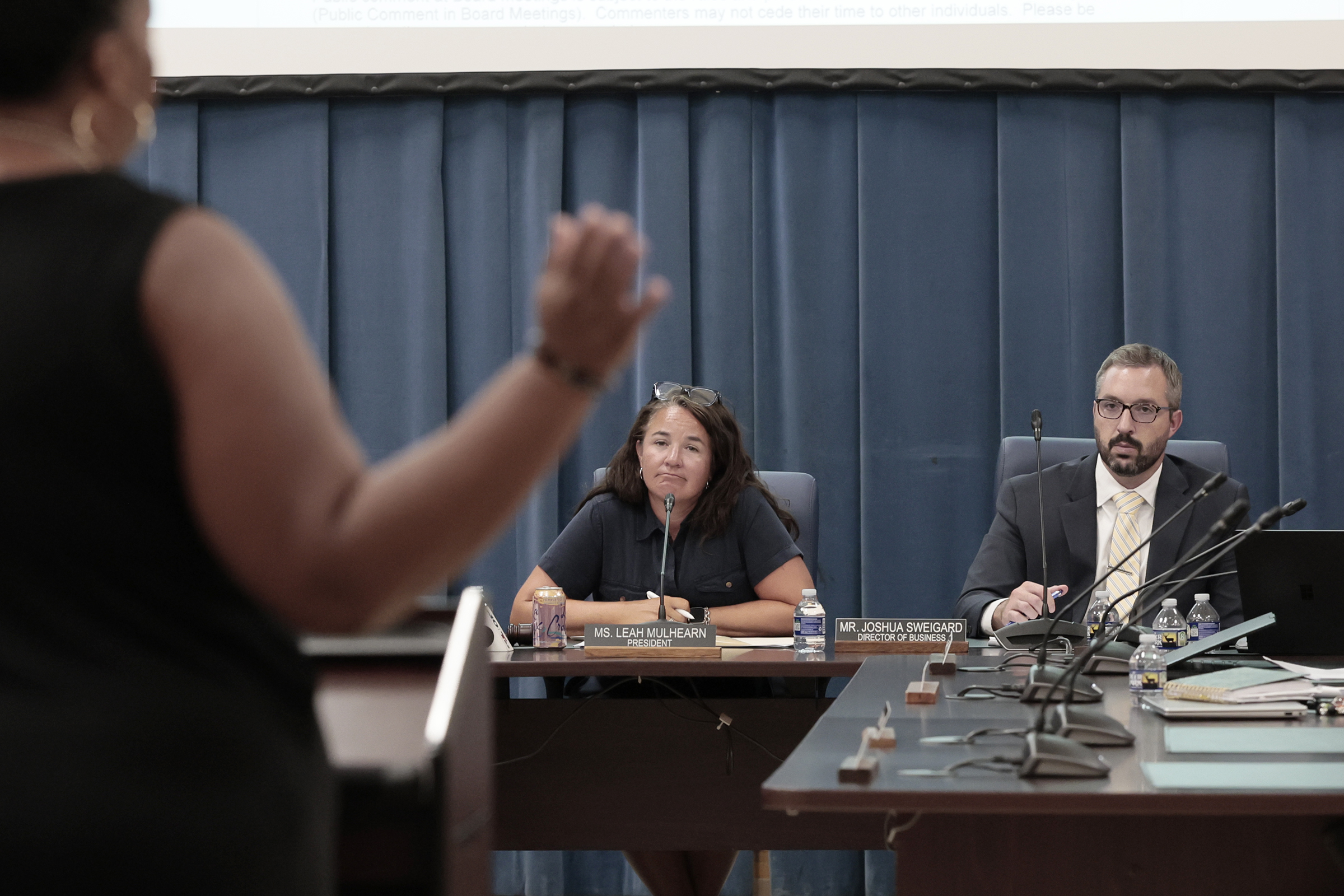
    After parents shouted at the board during a meeting earlier this month, it went into recess and moved the meeting online — and announced late last week that Monday’s meeting would be online only, citing disruptions and “threatening comments posted on social media pages.” The district has banned two parents from school board meetings for a year.

    “Over the past several months, Lower Merion school board members and our school district superintendent have been subject to threats, our meetings have sustained disruption over and over, and we have witnessed harassment during our public meetings,” board president Kerry Sautner said at the start of Monday’s meeting, adding that “our school team has had their home and families harassed.”

    “This is unacceptable,” Sautner said.

    District spokesperson Amy Buckman said that comments posted on the Facebook page for Pencils Over Pixels, the parent group pushing for less technology use, “included calls for both death and doxing of Lower Merion School District leadership.”

    The comments “were viewable for approximately 48 hours (and maybe longer),” Buckman said in an email.

    In a statement Monday, Pencils Over Pixels said it was “horrified by threatening, violent, or hateful comments directed at board members and district employees.” The group, which has enlisted a public relations firm to help promote its message and has gained national attention, said it did not believe the comments came from its members, and once it became aware of them, “we deleted and reported them.”

    The controversy, it said, reflected why the parents have been pushing back on screens in school.

    “What chance do children and teenagers have in this toxic digital environment while their brains, judgment, and emotional regulation are still developing?” the group said.

    The district is strengthening its filtering system to block kids from inappropriate sites, and parents will be able to restrict what kids can access on their school-issued devices in their homes, Shurak said.

    The new technology policy makes clear that “teachers and relationships are central to learning,” Shurak said. “Technology is a tool, not a substitute for instruction.”

    Tech changes by grade level

    The new policy ends Lower Merion’s practice of giving personal devices to kindergartners, first graders, and second graders.

    In the classroom, any use of devices at those grade levels “shall be minimal, highly structured, and limited to specific educational purposes such as diagnostic testing, whole-class demonstration, visual display, or, if applicable, state testing preparation,” the policy says. (Pennsylvania’s standardized tests, which start in third grade, are required to be done online.)

    In third and fourth grades, students will have “teacher-directed” access to devices that remain in the classroom, while starting in fifth and sixth grades, kids will be issued individual devices. But they will stay in classrooms unless parents want their kids to bring them home, according to the policy.

    By seventh and eighth grades, kids may take their devices to and from school under the policy, though they will not be penalized for not completing any computer-based homework, district officials have said.

    The policy describes giving students increased independence with devices to form “responsible digital habits,” preparing high schoolers for college and careers.

    Theresa Doggett, a parent of three children in district elementary, middle, and high schools, said the district was making substantial changes.

    Because of pushback from parents, “public narrative is making it sound like nothing’s being done,” said Doggett, an administrator at a charter school network in Philadelphia. With help from another parent, she wrote and circulated an open letter to support the board and administrators that read in part: “Enough is enough.”

    “We cannot continue creating conditions in which talented educators and leaders spend disproportionate amounts of their time responding to conflict, personal attacks, and the demands of whichever voices are loudest rather than leading our schools,” the letter says, noting high turnover in Lower Merion’s superintendent job.

    Questions about implementation

    But in comments submitted via chat and read aloud by the district’s solicitor during Monday’s meeting, parents continued to question how the policy would play out in practice.

    Some noted the lack of strict limits on screen time. Administrative rules accompanying the policy list guidelines for how much time students should “typically” spend on devices each day: less than 30 minutes for third and fourth grades, 60 minutes for fifth and sixth grades, 90 minutes for seventh and eighth grades, and 120 minutes for high school.

    The rules also describe “allowing reasonable flexibility based on educational purpose.”

    The policy “leaves devices in my 7-year-old’s classroom and sets no enforceable limit on how long she uses them,” said Akshaya Kumar, a lawyer who teaches at Columbia Law School. She also questioned a separate technology safety policy passed by the board Monday, noting it does not require the district to tell parents what it sees while monitoring student devices.

    Michael Post, a physician with two children in the district, said he had “never seen a group of people so adamantly disregard what is happening in front of them.”

    “The amount of research and data showing educational technology harms to our children are astronomical,” Post said. He called on the district to form an expert panel to advise it on technology use and “eliminate all technology for elementary and middle school.”

    One parent expressed an opposite concern — wondering if children would still be able to take home Chromebooks to do accelerated math, and if her fourth grader would have the same chance to learn how to create PowerPoint presentations as her seventh-grade son.

    “Our community does not have one perspective on technology,” Shurak said.

  • Lower Merion has banned two parents from school board meetings for ‘disruptive’ behavior. Can it do that?

    Lower Merion has banned two parents from school board meetings for ‘disruptive’ behavior. Can it do that?

    Rebecca Foscolo acknowledges she was “extra spicy” at a Lower Merion school board meeting in June, when the board voted to repeal a policy that let parents like her opt their kids out of school-issued laptops and iPads.

    Foscolo, who is part of a group of parents demanding that the affluent Montgomery County district scale back on screens, could not believe the board was moving ahead with the vote, after parents had pleaded for the option to say no to devices they said were imperiling their kids’ ability to learn.

    “All these educated people are telling you you are doing something wrong, and you are sitting there and doing nothing,” Foscolo yelled at the board, while seated in a row in the Lower Merion High School auditorium.

    Members of the district’s security came up to Foscolo, who left on her own.

    Now she is no longer allowed to attend Lower Merion school board meetings in person, for a year.

    After a second outburst during a board policy committee meeting on Aug. 3, Foscolo received a letter from the district’s solicitor, informing her she had violated Lower Merion’s civility policy.

    A second parent in the Pencils Over Pixels group, David Smyth, said he had received a similar letter after the meeting.

    In his Aug. 4 letter to Foscolo, Lower Merion solicitor Kenneth Roos wrote that at both the June 15 and Aug. 3 board meetings, she “displayed disruptive and bullying behavior, including yelling at school board members and administrators while they were conducting board business.” He said her conduct “contributed to the board needing to go into recess prior to the completion of each meeting.”

    The district on Friday announced that its meeting on Monday night, when the board is expected to approve a new technology policy, would be virtual only “due to disruptions at two recent meetings,” as well as “threatening comments on social media pages.” It did not say what the social media comments were.

    Foscolo, who shouted at the board that “the way you’re responding is ridiculous” after it cut off public comment on Aug. 3 before she had a chance to speak, accused the district of violating her constitutional rights.

    “They’re basically just trying to bully me and silence me,” Foscolo said in an interview. She and Smyth were banned from attending school board meetings until June 30, 2027. They can watch meeting live streams and submit written comments, Roos said.

    Rebecca FoscoloCourtesy of Rebecca Foscolo

    The bans come amid ongoing tensions between the Pencils Over Pixels group and the 8,500-student Lower Merion School District over school technology use, a battle that has received national attention amid a growing parental movement pushing back on screens in schools.

    ”While we would have preferred that everyone remained calm, and we recognize that the behavior may have been perceived as disruptive, we do not believe banning concerned community members from all future board meetings is an appropriate or productive response,” the group said in a statement.

    In another statement, Pencils Over Pixels said it was “disappointed” by the decision to make Monday’s meeting virtual.

    Any threatening comments “were not condoned by any member of this group and any threatening language is promptly removed,” the group said.

    Is it legal?

    First Amendment lawyers said the district’s actions in banning residents could be running afoul of their constitutional rights.

    “Unless there’s a threat of violence, there’s really no basis” to ban someone from public meetings, said Sara Rose, deputy legal director of the ACLU of Pennsylvania. A person who is “truly disruptive” can be removed from a meeting, she said, and if the district referred the matter to prosecutors, a court could decide to ban the person.

    “But the school district cannot unilaterally tell people they cannot attend future meetings,” Rose said, adding: “I haven’t found a single decision that says that’s permissible.”

    The ACLU in November 2024 sued the Souderton Area School District after it banned two parents and a student from school properties, accusing them of threatening a school board member. The parents and student, who were part of a group of demonstrators protesting the board president, said they were wrongly accused, and the district lifted the ban in March 2025.

    Other restrictions on speech during school board meetings have also led to legal battles. In 2022, the Pennsbury School District agreed to pay $300,000 to four men who had sued the district, saying their public comments at board meetings had been illegally curtailed. A federal judge had previously directed the district to stop enforcing a policy that prohibited abusive, offensive, or personally directed public comments.

    Melissa Melewsky, media law counsel at the Pennsylvania NewsMedia Association, questioned Lower Merion’s decision to end public comment after 45 minutes during its Aug. 3 policy committee meeting.

    While government agencies are allowed to have guidelines for how long public comment can last, “there has to be flexibility,” Melewsky said. If there is not enough time to hear every person on a controversial issue, she said, agencies are supposed to schedule another meeting to finish the public comment, and “any proposed action has to be put off as well.”

    Asked why the district believed its actions were legal, spokesperson Amy Buckman said that residents “were advised that intentionally disrupting a lawful meeting or the administration of a government function is a criminal offense in Pennsylvania.”

    She noted the board’s policy for committee meetings includes a 45-minute time limit for public comment on agenda items, “unless extended by the board for special circumstances.”

    Pencils Over Pixels said its members had been “assured by the board that the Aug. 3 meeting would be an opportunity to engage with the policy committee” and receive feedback to their questions about the district’s new technology policy.

    Signs reading, “Screens down, pencils up,” are seen a school board meeting at the Lower Merion School District Administration Building on Monday, May 11, 2026, in Ardmore, Pa. (AP Photo/Joe Lamberti)Joe Lamberti

    While Pencils Over Pixels said it had urged its members to remain “calm and professional,” some “were rightfully upset that they were unable to engage in dialogue with the committee as promised,” the group said. “Unfortunately, their emotions governed their behavior.”

    Frustrations around tech use

    Lower Merion parents have been appearing before the board to complain about school technology use since the spring, describing kids focused on gaming or visiting inappropriate websites instead of doing schoolwork. Others have criticized the district’s use of educational technology programs as low quality, and say they do not want their kids doing reading and math on computers. Hundreds of parents signed a petition in favor of opting out of computers.

    The district, which has said it is not possible to opt out of technology use, rescinded its policy allowing for that option and has been moving forward with a new version that places more limits on screens.

    Under the policy, which the board is expected to vote on Monday, kindergartners and first and second graders will no longer be issued personal devices, while third and fourth graders will have personal logins to computers in the classroom. The policy includes new guidelines for screen time by grade, and district officials say there will also be new tools for teachers and parents to monitor kids’ internet usage.

    Parents pushing for stricter limits have called for the district to release its contracts with educational technology companies and data on how long students are on screens during the school day.

    They also want more say in how technology is used, including through the creation of a committee to review the district’s educational technology programs.

    “They’ve not been really having good-faith personal conversations,” Smyth, who has a seventh and an eighth grader, said of the board.

    Smyth, who went up to the microphone after the board said that public comment was over Aug. 3 and called on the board to answer how many speakers remained, said in an interview he was “only disruptive to insist on continuing public comment.”

    Foscolo, who has a rising first grader and a 3-year-old, said that while she had previously addressed the board about the technology policy and had met with several board members, she had repeatedly asked to meet with the board’s president, Kerry Sautner, and the policy committee chair, Anna Shurak.

    When Sautner responded, she told Foscolo to come to the Aug. 3 meeting, Foscolo said. She was frustrated she was not able to speak then.

    To Foscolo, the board appears to be “placating” parents who have concerns about technology, rather than having genuine debate.

    “You have a bunch of parents who want to help, and you’re like, ‘Don’t talk,’” she said.

  • Cheltenham’s new police chief is a longtime crisis negotiator and played a key role in the Bill Cosby case

    Cheltenham’s new police chief is a longtime crisis negotiator and played a key role in the Bill Cosby case

    Cheltenham’s new police chief is a longtime crisis negotiator who led one of the township’s most famous criminal investigations.

    Richard Schaffer will be sworn in as Cheltenham’s new police chief next week to replace John Slavin, who is retiring after 37 years with the department. The salary range for the new chief was listed as $180,000 to $195,000 in the township’s job posting.

    Schaffer has led a variety of community policing efforts in his 26 years at Cheltenham, spending more than two decades as a crisis negotiator and heading the township’s gun violence task force.

    In 2024, he embedded a county mental health worker into the police department to assist in cases with behavioral health concerns.

    Schaffer, who holds a master’s degree in criminal justice from St. Joseph’s University, made the case for community policing in a speech at a school board meeting this week.

    The new chief takes the reins at a tumultuous time for Cheltenham School District, which has faced a range of safety concerns in recent years — most notably two alleged assaults in a high school locker room last year that led to criminal charges for four football coaches and six players.

    “We have not lived up to our shared ideals. We must acknowledge the victims from recent cases, and we must promise to do things better not only for them but for future students,” Schaffer said.

    “I would urge parents and the board to commit to a greater partnership with the police department.”

    Some Cheltenham residents have advocated for removing a physical police presence from schools in recent years.

    Schaffer pledged at the meeting to “push back on some of those who sought to drive the police from the schools.”

    “Police interacting with students, faculty, and staff is a good thing,” Schaffer said. “We want to be proactive by leveraging information and our relationships to get ahead of problems.”

    District spokesperson Kevin Kaufman did not answer questions Friday about the current status of security programs at Cheltenham schools.

    Schaffer also led the 2005 investigation into allegations that Bill Cosby drugged and assaulted Andrea Constand at his Cheltenham home.

    Although the Montgomery County district attorney declined to press charges at the time, the case was reopened in 2015, and Schaffer was eventually called to testify.

    He testified in 2018 that he had believed Constand’s allegations at the time, and still did.

    Cosby’s conviction was overturned in 2021 on procedural grounds.

    This suburban content is produced with support from the Leslie Miller and Richard Worley Foundation and The Lenfest Institute for Journalism. Editorial content is created independently of the project donors. Gifts to support The Inquirer’s high-impact journalism can be made at inquirer.com/donate. A list of Lenfest Institute donors can be found at lenfestinstitute.org/supporters.

  • West Chester team advances to the Little League World Series

    West Chester team advances to the Little League World Series

    East Side Little League, a 12-and-under baseball team from West Chester, is headed to Williamsport, Pa.

    On Friday, East Side defeated Wilmington’s Naamans Little League, 3-1, to punch its ticket to the Little League World Series. East Side was powered by pitcher Cole Warner, who allowed just one run on four hits and struck out eight in five innings.

    “Feels really good, just representing Pennsylvania,” Warner said on the ESPN broadcast. “Little kids who play for East Side, we set the example. Hopefully, they can carry on.”

    Warner set East Side up, but relief pitcher Ryan Donnelly made the game-clinching play.

    In the final inning, with runners on first and second, Naamans second baseman Joey DeCaro hit a short roller toward third base. Donnelly slid to grab the ball, and his throw beat DeCaro to first for the game’s final out.

    East Side went to celebrate, throwing their gloves and piling on top of each other, but a challenge delayed the party. Eventually, after an almost four-minute review, the call was confirmed. East Side was heading to the World Series, and the team got to celebrate for a second time.

    “It felt really good waiting there,” Warner said. “We all knew he was out.”

    East Side scored all three of its runs in the first inning. Center fielder Ryan Hennessey got his team started, launching a ball to center to bring in Donnelly and — following a Naamans error — Warner. East Side would score once more in the inning with third baseman Jack Cassidy hitting a single to bring Hennessey home.

    Naamans scored its run in the second when utility player Taj Amobi doubled in left fielder Charles Puit.

    East Side will look to become the first team from Pennsylvania since 1960 to win the Little League World Series, when Levittown American defeated Fort Worth, Texas, 5-0, in the championship game. However, a few area teams have reached the series in recent years: Glenmoore Eagle Little League (from Upper Uwchlan Township) last year, Council Rock Newtown Little League in 2024, and Media Little League in 2023.

  • A Main Line psychiatrist who had sex with a patient poses no threat to other patients, judge rules

    A Main Line psychiatrist who had sex with a patient poses no threat to other patients, judge rules

    A Main Line psychiatrist who lost her medical license after a state investigation found she had a yearslong sexual relationship with a young patient while prescribing him highly addictive psychotropic drugs may continue practicing while she appeals the revocation, a state judge ruled.

    In ruling in favor of Amy Mazza MacIntyre on Thursday, the judge agreed that she posed no threat to patients, who would likely suffer if their care was disrupted or if they had to find a new provider amid what Commonwealth Court Judge Stella Tsai acknowledged as a “shortage” of specialized child and adolescent psychiatrists in the Philadelphia region.

    Tsai also found that MacIntyre would be “irreparably harmed” if forced to close her Bryn Mawr practice because hundreds of current patients likely wouldn’t return, even if she later won her appeal to keep her license.

    MacIntyre’s “actions leading to the instant revocation, although spread over several years, were focused on a single individual,” Tsai wrote in her opinion. “In that time, she has treated thousands of patients without reported incident, and there is a purported shortage of psychiatrists with [MacIntyre’s] subspecialty.”

    MacIntyre, who specializes in treating young patients with complex psychiatric diagnoses, began seeing a then-17-year-old cancer survivor in 2004 when he was a senior at Lower Merion High School. She first had sex with him in 2011, when he was 24, and prescribed him powerful psychiatric drugs through mid-2017, according to an investigation by the Pennsylvania State Board of Medicine. The board found that the drugs, including Xanax and Adderall, were given to him without proper medical evaluations.

    The board revoked her medical license in May, finding she had engaged in sexual misconduct and inappropriate prescribing in violation of state medical licensing laws. She then appealed the decision to Commonwealth Court, where the case is pending. Last month, she asked Judge Tsai to temporarily lift the revocation so she can continue seeing patients while she fights the board’s disciplinary action.

    “We are extremely pleased by the judge’s decision and believe it to be appropriate,” MacIntyre’s lawyer, Gary Samms, wrote in a text message to an Inquirer reporter Friday. Samms declined to comment further, citing the appeal. He has advised MacIntyre not to talk to The Inquirer. MacIntyre, 52, did not respond to an email sent Thursday.

    Matt Heckel, a spokesperson for the Department of State, which oversees state licensing boards, said the judge merely granted MacIntyre’s request to continue seeing patients but did not address the larger question of whether her license should be revoked. The state is fighting her appeal, arguing that “no sanction short of a revocation would adequately protect the public.”

    The patient at the center of the case, Justin Kopicki, who is now 39 and in law school in Oregon, said the judge’s ruling was “extremely problematic,” opening up a “really dangerous can of worms.”

    “It says to other psychiatrists and practitioners that it is OK to violate the laws of their license and to take advantage of their patients,” Kopicki said in an interview on Thursday evening. “The court is basically saying that the public interest is not at risk here. Quite frankly, it’s an egregious position to take.”

    Kopicki, who gave The Inquirer permission to use his name, said it’s “a very large slap in the face against what I went through.”

    “It was not an isolated incident,” he said. “It was something that went on for six, seven years continuously.”

    Mixing sex and medications

    Kopicki was diagnosed with leukemia at age 4. He received chemotherapy treatments at Children’s Hospital of Philadelphia until age 7, when the cancer went into remission.

    In high school, he grew depressed and anxious. He isolated himself from peers. His mother worried his mental health problems stemmed from his childhood battle with cancer. She contacted CHOP, which referred him to MacIntyre, then 31.

    During his first appointment in 2004, MacIntyre diagnosed Kopicki with anxiety and agoraphobia. She suspected he also suffered from obsessive-compulsive disorder. She put him on medication.

    According to the board’s investigation, MacIntyre “became focused on [Kopicki’s] sexual activity” during treatment sessions in 2010. During a session in early 2011, she told him she “wanted to climb on top of him” and did so, kissing him, the board’s revocation order says.

    Soon after, they had sex for the first time at Kopicki’s father’s house. Although MacIntyre stopped charging him for sessions, she formally treated him through June 2013, writing patient notes in his medical record. From 2013 to 2017, she continued having sex with him while prescribing a revolving mix of up to 12 medications to him, without proper evaluations, according to the board’s order.

    The board’s investigation — based partly on emails, texts, and voicemail messages that MacIntyre sent Kopicki — revealed that she gave him a $5,000 saxophone and a Cartier watch, hired him to work in her office, proposed marriage to him, told him she miscarried his baby, sent him naked selfies, and took him on trips, including to Turks and Caicos and Walt Disney World.

    The board also found that MacIntyre prescribed medications to Kopicki’s mother and father, although they were not her patients.

    In an interview with The Inquirer last month, Kopicki said MacIntyre had “groomed” and manipulated him while prescribing “really large quantities” of stimulants and benzodiazepines, including “Xanax and Klonopin mixed together.” She would withhold his medication refills if he refused to go away with her or tried to end the relationship, he said.

    Kopicki cut off all contact with her in 2017, shortly after MacIntyre showed up at his father’s house, yelling and demanding to speak with Kopicki. His father called 911, the board found.

    Kopicki first complained to the state medical board in 2017. He also filed a medical malpractice lawsuit against her in Montgomery County Court. His lawyers did not want him to cooperate with state investigators while the case was pending, and the state dismissed his complaint.

    MacIntyre settled the case with Kopicki in 2020 for an undisclosed amount, and he again complained to the board in 2021. The board launched an investigation, interviewing Kopicki and reviewing “thousands of text messages” between the two.

    ‘One of the worst’ cases

    During the disciplinary proceedings, MacIntyre admitted to sexual misconduct, immoral and unprofessional conduct involving a patient, failure to maintain complete medical records, and fraudulent, reckless, or negligent practice. She had disputed claims that she engaged in improper prescribing, but the board found her culpable.

    In her appeal, MacIntyre is seeking a lighter discipline, such as probation. While not excusing her behavior, MacIntyre provided explanations to the board. She testified at a state hearing last year that she had been afraid of Kopicki and that he forced her to have sex. She said she tried to get a protection-from-abuse order against him, but didn’t qualify for one because they weren’t married or living together.

    The board rejected her arguments, citing a lack of evidence, finding her testimony not credible, and pointing to her “shifting explanations.”

    MacIntyre also cited “personal stressors” in her life at the time of the misconduct, including the birth of a child and her mother’s dementia.

    Samms argued that she has learned from her mistakes: She underwent an extensive evaluation with a psychologist who found her fit to practice, and she also went to therapy to address her behavior with Kopicki. Additionally, MacIntyre has limited her interactions with patients to mostly medication management, and has not violated any regulations for the last decade, Samms said.

    Samms told Judge Tsai during oral arguments last month that MacIntyre has treated about 15,000 patients without any incident since at least 2017, when contact with Kopicki ended.

    “While she acknowledged wrongdoing, it was an isolated patient due to isolated circumstances,” Samms said during the July 30 hearing. “There’s never been any other issues regarding her licensing or her practice.”

    Dana Archer, the lawyer representing the State Board of Medicine, argued that the reason so much time had lapsed between her misconduct and the board’s sanction is because “she did everything that she could to hide it.”

    “Just because you’re successful in hiding your inappropriate conduct doesn’t mean you should be rewarded and receive a lesser sanction because you were successful in keeping it a secret,” Archer told Tsai.

    Archer said MacIntyre took advantage of a vulnerable patient, who was “basically a child” when she began treating him. Her conduct was one of the board’s “worst” cases, she said.

    “It was one of the worst things that a psychiatrist can do to a patient,” Archer said.

  • Cheltenham is starting a new school year just weeks after locker-room assault charges. Parents and kids are nervous.

    Cheltenham is starting a new school year just weeks after locker-room assault charges. Parents and kids are nervous.

    Some Cheltenham families are anxious about the new school year that begins Aug. 31, because it feels like the last year, marked by uncertainty and pain for many, hasn’t ended.

    After a 15-year-old football player was allegedly assaulted twice in the locker room last August and September, the community hung in limbo for months, with no punishments for anyone involved while district and county investigations rolled out.

    Now, Cheltenham is heading into what would have been a fresh start just as a flurry of conclusions finally arrived: criminal charges for four coaches and six players, a grand jury report finding the district mishandled the assaults, and the superintendent’s resignation.

    Five of those charged are set to appear at a preliminary hearing on Aug. 27.

    “We are coming to school in the next three weeks. What is the plan for the morale of all the kids that have been affected?” Francis Brown, the parent of a senior, asked at a school board meeting this week. “Should the seniors expect to come and sit on the lawn for Senior Sunrise and see news cameras in their face?”

    Some families are afraid to say they’re from Cheltenham, residents said at Tuesday’s board meeting, which was the first public forum for the school community since the charges were brought.

    “Half our parents don’t want to wear anything that says Cheltenham on it, because they’re embarrassed,” Shelley Gaither, the president of Cheltenham Elementary’s parent-teacher association, said at the board meeting. “Because they get asked questions, they get looked down upon.”

    And the interim superintendent Chris McGinley, whose selection was announced at the meeting, will lead an administration that many families say has repeatedly failed to address safety concerns across grade levels.

    This year’s staff may include three people referred to the Montgomery County grand jury report as Employee #1, #2, and #3, one of whom texted about dissuading the victim’s mother from visiting the school. Texts also downplayed the assault allegations, according to the grand jury report.

    The district has not answered questions about the status of the three employees.

    Officials emailed parents on Aug. 13 that Vice Principal Mark Hoff — to whom the victim’s mother said she first reported the assault allegations — will be staying at the high school, instead of moving to Wyncote Elementary as planned, for continuity during a turbulent time.

    The school board said Tuesday an outside attorney will be reviewing all safety policies and the board will review all sports programs in the district in the coming weeks.

    The district has also enlisted the Bucks County Intermediate Unit to audit the human resources department, and Cheltenham is checking that all staff have current child abuse and criminal history clearances after the grand jury report found five of the coaches weren’t up to date last year.

    But families are still worried what the school climate will be like in September.

    “I asked [my kids] how they felt about going to school, and they’re nervous,” a member of the high school’s parent-teacher association said at the Tuesday meeting. “Not just for safety concerns, but for the environment of the school … My oldest said ‘I’m worried the teachers will be upset.’”

    A coalition of parent groups presented a list of joint demands at the meeting that includes a town hall on school safety, first-day assemblies on sexual assault, hazing, and bullying by age group, and a community-wide survey assessing district leadership.

    And the Saturday before schools starts, the Cheltenham African American Alliance plans to hold a “Together We Can Change Their Tomorrow” march at 8 a.m. from the administration building to the high school, president Ikysha Dearry announced Tuesday.

    “We have to take back our power as people,” Dearry said. “We have kids who will be coming through these doors in the next two or three weeks.”

    Staff writer Maddie Hanna contributed to this article.

    This suburban content is produced with support from the Leslie Miller and Richard Worley Foundation and The Lenfest Institute for Journalism. Editorial content is created independently of the project donors. Gifts to support The Inquirer’s high-impact journalism can be made at inquirer.com/donate. A list of Lenfest Institute donors can be found at lenfestinstitute.org/supporters.

  • Cheltenham made a deal with a developer to build a $4.5M pool complex. A lawsuit alleges they’re breaking bidding rules.

    Cheltenham made a deal with a developer to build a $4.5M pool complex. A lawsuit alleges they’re breaking bidding rules.

    Cheltenham Township is buying a pool complex from a private developer for up to $4.5 million, which a resident’s lawsuit alleges violates public bidding rules.

    The township commissioners approved a contract last month to lease 2.7 acres by Ashmead Road and Front Street to Melrose Pool LLC for $10 per year. Cheltenham agreed to pay up to $4.5 million for three public pools and a 5,000-square-foot building that Melrose Pool will build under the lease agreement.

    Matthew Areman, president of the seven-member Cheltenham commissioner board, vowed this week that the township would share additional details in the “coming weeks and months,” but a lawsuit filed July 22 in Montgomery County Court by Cheltenham resident Sam Thacker alleges the agreement is illegal. He claims it bypasses competitive public bidding laws that would normally apply to a town’s public pool, and wants a county judge to void the contract and issue an injunction to halt the project.

    A Montgomery County judge has given Cheltenham and Thacker until Aug. 21 to file their legal arguments, but time is short: Under the lease, the township has to decide on a final pool plan by the end of August.

    What the suit alleges

    Areman said last year the pool parcel is worth several million dollars, according to the commissioner board’s meeting minutes.

    If the township is leasing that land to the developer for just $10 per year, Thacker said, he believes the lease agreement also violates Cheltenham’s township code, which requires the use of “a system for obtaining independent appraisals … to assure that the township is obtaining adequate compensation” when skipping bidding on real estate leases. Thacker told The Inquirer he was unable to find a fiscal assessment for the pool project through Right-to-Know requests or a town spokesperson.

    Township officials declined to explain the legal reasoning behind the leaseback agreement with Melrose Pool.

    But in an FAQ posted this week, officials wrote Cheltenham had “received estimates from multiple pool consultants indicating that constructing a comparable standalone replacement pool would cost approximately $6-8 million.”

    Holly Fishel, the policy and research director for the Pennsylvania State Association of Township Supervisors, who did not comment on Cheltenham specifically, said she had heard of leaseback agreements with townships before but was not sure of the legal mechanisms. In situations where a township is doing construction work on land it owns, “you would need to be doing the bid,” Fishel said.

    But in this case, a private company is doing the work on land it has leased.

    “That can’t be right that you can just evade public bidding requirements by saying something is a lease when it’s clearly a public construction project,” Thacker said.

    Cheltenham is paying up to $4.5 million for three pools

    A preliminary plan for the Melrose plot includes three pools of different sizes, but the July 15 lease notes that the developer is to provide a final plan by this week.

    The township will then have two weeks to approve or deny the final pool plan.

    Upon completion of the work, Cheltenham would pay up to $4.5 million for the new pools, or pay an additional rent up to $382,500 per year until the township comes up with the $4.5 million.

    The two-week timeline for the township to approval a final pool plan is what led Thacker to file his lawsuit.

    “The contract is structured essentially to rush this forward as quickly as possible,” Thacker said. “We have no idea if $4.5 million is a good price.”

    The figure is cheaper than the $6.1 million estimated in 2023 to redo the Conklin Pool, which the Melrose pools would replace in 2027. The township has one other public pool, in Glenside.

    But other residents have questioned whether it is even possible to build three public pools for $4.5 million, given the Conklin pool estimate.

    Private development planned beside pool

    The pool is part of a larger redevelopment of the former Melrose Country Club — at 116 acres, one of the largest properties in Cheltenham — that includes new townhouses and commercial space.

    The lower price tag for the new Melrose pool comes in part from construction efficiencies, Cheltenham wrote this week, since the property will already require site preparation, grading, and utilities for the new buildings.

    The property’s developer, an LLC associated with BG Capital, gave the township the 2.7 acres for free last December to advance public welfare and for an unspecified “advantage” to the developer.

    BG Capital and the LLC’s attorney did not respond to a request for comment, but court filings Tuesday for Melrose Pool LLC argued that the bidding process Thacker cited under the state’s procurement code does not apply “to the landlord/tenant relationship” between Cheltenham and the LLC because the code applies only to state agencies.

    Melrose Country Club project changed

    Some residents, including Carl Freedman, have raised concerns at public meetings about the larger project. An earlier plan included both a pool and a community center, Freedman said, and would have allowed more much-needed commercial space.

    Cheltenham’s recently approved long-term township plan calls for bringing in more business to bolster the struggling tax base.

    Freedman, an architect who sits on the Cheltenham Planning Commission, said the panel no longer supports the project and is sending the township a letter to that effect.

    “The loss of the community center is what is making the retail unmanageable,” Freedman said, because the center would have drawn potential shoppers to the site. “This project has taken a left turn.”

    Chloe Mohr of the Montgomery County Planning Commission, which reviews local development projects and offers recommendations, said the county commission plans to release a new review of the revised plans late next week.

    This suburban content is produced with support from the Leslie Miller and Richard Worley Foundation and The Lenfest Institute for Journalism. Editorial content is created independently of the project donors. Gifts to support The Inquirer’s high-impact journalism can be made at inquirer.com/donate. A list of Lenfest Institute donors can be found at lenfestinstitute.org/supporters.