The Lower Merion school board plans to stop assigning personal laptops and iPads to kindergartners, first graders, and second graders after facing intense pushback from parents who say kids are getting too much screen time in school.
Members of the school board’s policy committee announced the plan during a meeting Monday, along with other proposed limits on technology use. Under policy changes going before the full school board for review next week, third and fourth graders would use electronic devices stored on carts in classrooms, while fifth and sixth graders would be permitted, but not required, to bring devices home.
But parents who have accused the district of overusing educational technology said the proposed changes did not go far enough — leaving too much room for interpretation around when technology should be used, and failing to adequately restrict kids’ access to inappropriate websites.
Some parents also expressed anger that the board is moving forward with repealing the current technology policy, which contains language accommodating families who opt out of district-issued devices.
“You are removing the escape hatch,” said David Smyth, a parent from Merion Station, who said the district had produced no data supporting its use of technology. “You know that ed tech is failing, it’s suboptimal, and you don’t want to be embarrassed.”
Here is what to know about the tech debate in Lower Merion, the board’s latest policy proposal, and what happens next:
More than 800 parents have signed a petition asking for the right to opt out of one-to-one devices, according to parent organizers in Pencils Over Pixels. The group, which started a GoFundMe campaign, has distributed lawn signs and enlisted a public relations firm as part of its advocacy efforts.
But district officials have repeatedly said that the technology policy’s language is dated, stemming from when Lower Merion first introduced one-to-one devices, and that it is not possible for families to opt out.
Instead, the board has been reworking the technology policy to address when and how devices should be used in classrooms.
A revised policy after meetings with parents
The latest policy proposal outlines guidelines for technology use at different grade levels, rolling back one-to-one devices for Lower Merion’s youngest students.
“Technology shall not be used for routine classroom instruction in these grades,” the policy says. “Any use shall be minimal, highly structured, and limited to specific educational purposes such as diagnostic testing or for teacher-directed, whole-class demonstration, visual display, or state testing preparation.” (Pennsylvania’s standardized tests, which start in grade 3, are required to be administered on computers.)
In grades 3-4, the policy says, students “shall have supervised, teacher-directed access to technology resources” that stay in classrooms, while in grades 5-6, students will be permitted to bring their devices home, but not allowed to use them between classes or at lunch.
The policy describes students in grades 7-8 and 9-12 as having increased responsibility for independent technology use, but says devices should be used only for school-related work.
The policy changes are “meaningful responses” to community feedback, said Anna Shurak, the chair of the board’s policy committee, who said board members had met with concerned families.
But some parents said the policy — which says teachers should use technology “only when doing so serves a clear educational purpose” — would not adequately limit an overreliance on screens in classrooms.
“The verbiage of this policy is very carefully crafted to say nothing,” said Eleanor Stanford, a parent and a writing professor at Bryn Mawr College, who also questioned why the district was still “dragging its feet” on imposing a bell-to-bell ban on cell phones in its high schools, even as legislation advances in Harrisburg to do so. (Shurak said the district would fully ban cell phones in 2027-28.)
Parent Matthew Posey quoted the policy’s language that technology belongs in the classroom when it “genuinely amplifies human curiosity.”
“Did Albert Einstein need Kahoot or iReady?” Posey said, referring to two educational technology programs. “Is this a public policy document, or a corporate marketing brochure?”
Some parents also questioned proposed administrative regulations that include suggested time ranges for technology use by grade level. In grades K-4, the guidelines are less than 30 minutes a day; by high school, they increase to less than 120 minutes a day.
Calculating the high school upper limit as about 40% of daily instructional time, “to me, that’s way, way too high,” said Sam Handlin, a parent and a professor at Swarthmore College. He said the only way teachers would approach that time limit was either by using technology “as a babysitting device” or letting students take notes on computers, “which is just a recipe for distraction.”
Shurak did not comment on the time frames specifically but told Handlin the administrative regulations still need to be revised.
When will changes take effect?
The committee endorsed sending the revised technology policy to the full board for review next week, along with a recommendation to repeal the current technology policy.
While the board may repeal the current policy at next week’s meeting, the new policy would need to be considered a second time to before it could go into effect.
The goal is to have the new policy in place in August, Shurak said. She said the board would be directing administrators to implement changes in time for the coming school year.
Board member Jason Herman, a member of the policy committee, said some of the new policy’s language should be revised to limit “ambiguity and subjectiveness.” He also questioned why the district could not move to a content filtering model where only certain websites were permitted for students to access, rather than restricting sites after problems are reported.
Officials did not address questions around content filtering Monday, or calls from the Pencils Over Pixels group for the release of district contracts with educational technology companies and a technology advisory board that would include parents.
Sautner said the board had more work to do, including around technology questions related to the district’s curriculum.
But “we cannot micromanage” administrators through policy language, she said.
Some expressed concern that the board could overreact in response to anti-tech opposition.
“Banning technology isn’t going to be the way to ensure that our kids critically think,” said Emma Benn, who urged the board to “take a step back” before passing a new policy. “This world is a technology-driven world, and we need to make sure our children can function within it.”
Five years later, the board debated whether the course should be dropped as a requirement in light of budget problems in South Jersey’s largest school system.
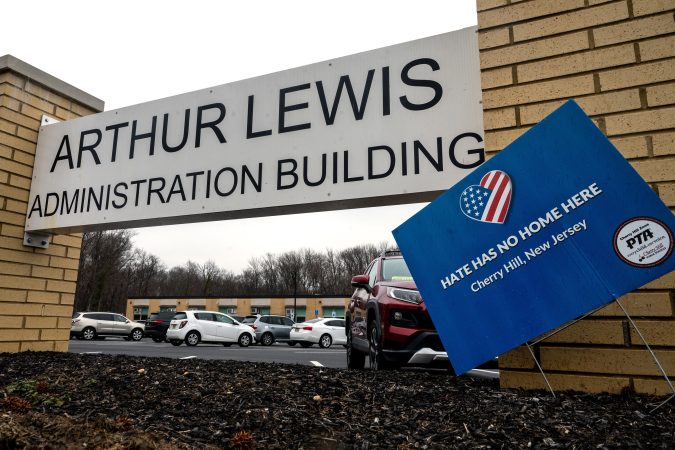
And while officials have assured the community that the course will remain part of the curriculum, the debate highlights the difficult choices that districts are facing during a tough budget year. In Cherry Hill, the board approved a budget that will cut 70 positions, increase class sizes, and raise property taxes to eliminate a $29 million deficit.
As that budget process played out this spring, board member Renee Cherfane suggested the district could reconsider African American history if future budget cuts are necessary. The idea drew pushback from students as well as community and civil rights leaders, who pledged to fight any attempt to roll back the requirement.
“Black history is an essential part of American history,” said Ma’isha Aziz, president of the Camden County East branch of the NAACP. “Teaching it helps ensure students gain a fuller understanding of the nation’s past and present.”
Cherry Hill High School East senior Skylar Adams, a member of the African American Cultural Club, said changing the course would send the wrong message. Black students make up about 10% of the district’s 11,000 students.
“In the world we live in today where the rights and voices of African Americans are constantly being challenged and minimized, now is not the time to make our history seem less important,” Adams told the board. “Making this course an elective instead of a requirement sends a message that learning about Black history is optional and not important enough for every student.”
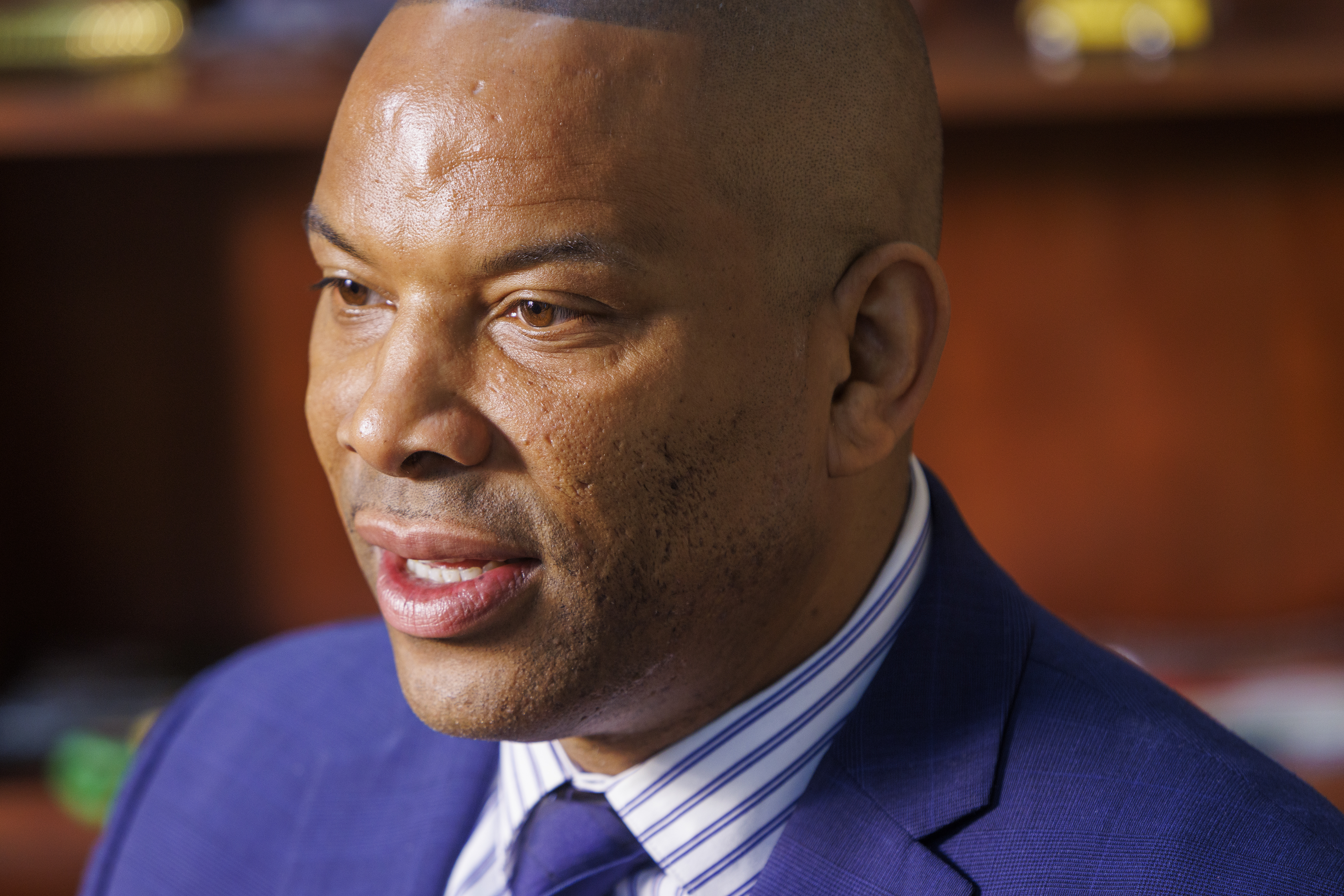
Superintendent Kwame Morton, the district’s first Black schools chief, praised students who made passionate appeals to the board to keep the course. He reassured them that the course was not in jeopardy.
“The board is not at this point taking action on any recommendation to eliminate that course. That’s not what’s happening,” Morton said.
Cherry Hill Superintendent Kwame Morton.Alejandro A. Alvarez / Staff Photographer
Here is what to know about the debate around the course:
How the issue unfolded
Cherfane sparked a heated discussion during a board meeting last month when she suggested making African American studies an elective instead of a required course. She cited the district’s $29 million deficit, which prompted layoffs and cuts.
In the event the board has to cut additional teaching positions in the future, having that class as a mandate limits options, she said. About 800 students are required to take the course every year, she said.
“It’s not about offering the class. It’s about requiring it,” Cherfane said. ”We wouldn’t be getting rid of it entirely.”
Other board members asked Cherfane to explain why she targeted that class. The district offers other electives, such as multivariable calculus, a high-level math course that few students take, that are not required by the state as a graduation requirement, said board member Miriam Stern.
Board president Gina Winters said any review examining potential cost savings should not be specific to one class. The African American history class was pitched by students and supported by the community, she said.
“I understand that it’s a tight budget, but we also have a responsibility as a board to educate our children on the things that our community thinks are important,” Winters said.
Cherfane did not respond to messages seeking comment.
How did the class get started?
By an 8-0 vote, the board approved the course as a graduation requirement in February 2021. Students who organized Black Lives Matter protests sparked by the killing of George Floyd in 2020 in Minneapolis by a white police officer asked for the class. They said Black history was mostly taught only in February.
Cherry Hill became the first district in the state with the requirement, according to the New Jersey Department of Education. New Jersey and Pennsylvania require history to be taught, but districts decide the content of their courses. Philadelphia and Camden schools also mandate a course in African American history to graduate.
The district developed a curriculum for a semester course and began offering it for the 2021-22 school year for freshmen and sophomores at its two comprehensive high schools. The district hired two teachers.
Teacher Jennifer LaShure said the course tackles topics that previously received little attention in U.S. history classes. She has included units on early African culture, arts, systemic oppression of today, anti-racism, and activism.
“I worry about the message that it sends to the students that something as important as history can be taken away,” LaShure told the board. “We see it all over, but it’s scary to see it happening right here.”
Community pushback
Former board member Corrien Elmore-Stratton, who was the only Black member of the board that approved the course as a requirement, said the need for it remains.
“… We are already having spaces and places where our students are being erased, torn down, no longer heard, misunderstood, and DEI has become a dirty word,” she said,referencing President Donald Trump’s attacks on diversity, equity, and inclusion. “It really is disheartening to hear that anyone on this board of education to think of to do.”
Carole Roskoph, a retired educator and former Cherry Hill council member, said she was “perplexed” by the discussion.
“It doesn’t make sense to me,” she said.
Motion withdrawn
Following the discussion, Cherfane made a motion to refer the issue to the policy committee to review possibly adjusting the graduation requirement for African American history. She withdrew the motion midway through voting, after a board member expressed unreadiness, and the discussion abruptly ended.
Cherfane did not reintroduce the motion at the May 26 meeting and it was unclear if the matter would be addressed again.
Other cuts, however, are moving forward in Cherry Hill and will take effect next school year.
John Linehan and Kobe Bryant used to talk. A lot. This would not have been unusual for other AAU teammates, but these two were fierce high school rivals.
Linehan was a scrappy point guard for Chester. Bryant was a relentless shooting guard for Lower Merion. Both were competitive, almost to a fault, and in the days leading up to big games, they’d get chippy.
The week before the 1996 PIAA Class AAAA District 1 title game, for example, the players talked every day on bulky landline phones, with Bryant often calling Linehan at his home in Chester.
“I just said, ‘You know, John, I haven’t won a championship yet, and you have,’” Bryant told The Inquirer in 1996.
Linehan knew what his friend was doing. The future NBA star did the same thing a few weeks later, on March 19, a day before the teams met again in the state semifinal.
“He was trying to get me to trash talk,” Linehan said. “I think he needed a little edge. I didn’t want to give him too much. I was like, ‘Man, you crazy.’”
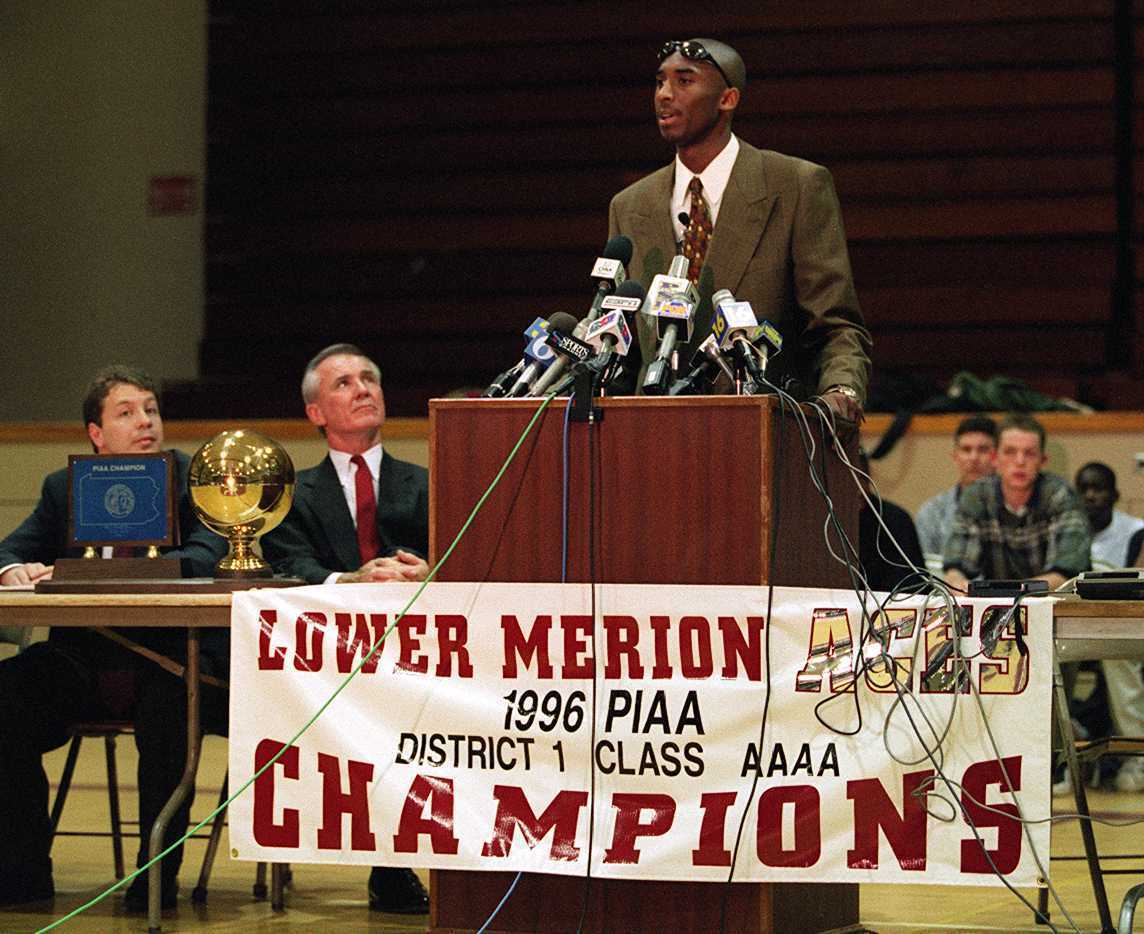
The late Kobe Bryant, a former Lower Merion basketball star, announcing he will go directly into the NBA draft out of high school.ALEJANDRO A. ALVAREZ / Staff Photographer
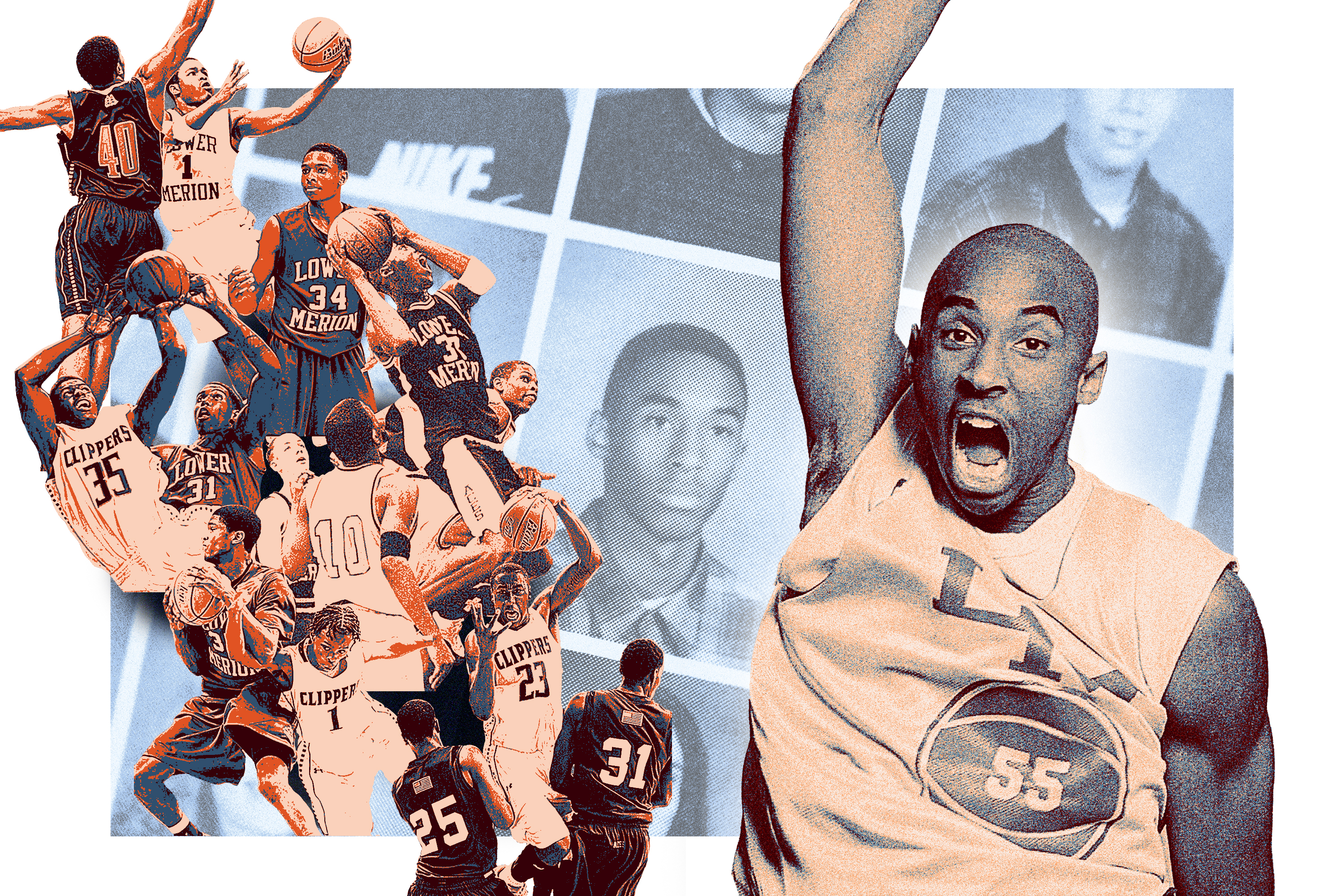
Lower Merion wasn’t a basketball school when Bryant arrived in the fallof 1992. It paled in comparison to the local powerhouses like Simon Gratz, Coatesville, and Chester.
But Bryant changed that. Even in his freshman year, a season in which the Aces went 4-20, he brought a new standard, working out before class and introducing a level of toughness that was foreign to his teammates.
Bythe mid-1990s, Lower Merion was among the best high school teams in the Philadelphia area. Its players were more confident, celebrating after big shots, and talking loud on the court.
The Aces didn’t play as many games against Coatesville, a rising power led by Rip Hamilton. They couldn’t consistently measure themselves against Gratz, which didn’t participate in the PIAA playoffs untilthe 2004-05 season.
But they could against Chester. And so, a decades-long rivalry was born.
From 1996 through the mid-2010s, Chester and Lower Merion put on some of the greatest high school basketball games in the area. They’d often sell out venues like the Palestra and Villanova’s Pavilion. Some fans would even scalp tickets.
Their communities were almost diametrically opposed. Chester was predominantly Black; Lower Merion was predominantly white. Chester was plaguedby poverty; Lower Merion was considered affluent.
Chester, with its Biddy League, had a legacy of basketball greatness, and a steady pipeline of talent. Lower Merion had nothing comparable. But these differences melted away on the court.
And while the rivalry is not what it once was, it lives on today.
“The pride and the intensity and the history will never fade,” said Lower Merion coach Gregg Downer. “I mean, if we played them tomorrow night, that would be an intense game.”
The Bryant-Linehan era
When Downer was named head coach in 1990, he already was well-aware of Chester’s tradition. He’d played youth basketball growing up in Media and had heard about the stars who’d come out of the Biddy League.
It was obvious that his team would have to go through the Clippers to win any sort of accolade. But it wasn’t until Bryant’s arrival that Downer’s aspirations became a real possibility.
The shooting guard, who was the son of former 76er Joe “Jelly Bean” Bryant, was mature for his age. He’d demand more, mentally and physically, of older teammates. Doug Young, a former Lower Merion forward, remembered seeing Bryant leaving the locker room at 7 o’clock one September morning in 1993.
He’d been at the high school gym since 5 a.m., working out by himself. To the Lower Merion basketball team, this was a “crazy” concept, so Young and his cohorts decided to join him.
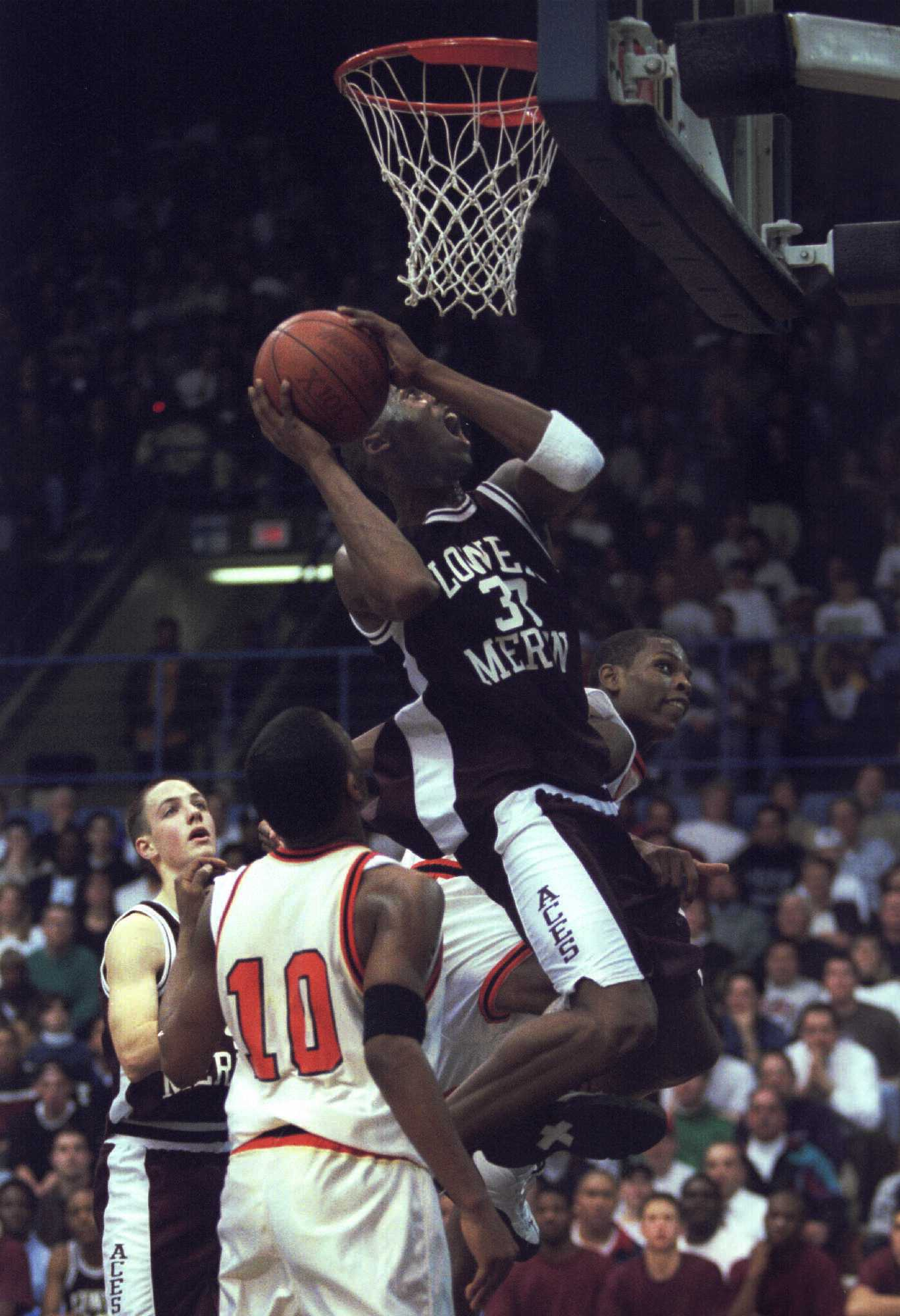
In the District 1 championship game against Chester, Kobe Bryant goes to the hoop over the Clippers’ John Linehan.Jay Gorodetzer / Staff Photographer
They arrived the next day at 5:06 a.m. The players knocked on the door. Bryant didn’t answer.
“He wouldn’t open it,” said Young, who graduated in 1995. “You’re either there or you’re not. We were six minutes late.”
His teammates waited outside until 6:30 a.m., when the school opened. They made sure to show up before 5 a.m. from that day on.
Downer was wired the same way. The coach — and his NBA-bound pupil — would push the team in practice. Losses were particularly tough. The players would go through endless sprints and rebounding drills that sent them running to the trash can.
It wasn’t fun. But over time, the method created a newfound tenacity.
“No one walked into high school saying, ‘Oh, yeah, I want to win a state championship,’” Young said. “But [Kobe] knew what that was. He was like, ‘I don’t know any other way. If we’re not going to win a championship, what the heck are we playing for?’”
Chester was always going to be an obstacle, so Downer tried to play into the battle. He’d use analogies for the tough, hard-nosed team, comparing it to an animal stalking its prey.
The coach began to screen movies to underscore this point. Together, in a Lower Merion classroom, Downer’s players watched Jaws and other tales of survival, like The Edge, a 1997 thriller about a plane that crashes in the Alaskan wilderness.
“This bear is stalking them, and the couple is saying, ’What are we going to do about this bear?’” Downer said. “And one of them says, ‘The only thing we can do is kill the bear.’
“And I remember being like, ‘We can do this.’ But the only solution is to — not to be overly graphic — but to kill them.”
(The bear in this analogy was Chester.)
He added: “We tried everything humanly possible to get through to this team.”
The first few games were ugly. In 1995, Lower Merion met the Clippers in the District 1 championship, only to lose by 27 points. But they came back with a renewed focus the following year, in 1995-96, going 25-3 in the regular season to earn a district final rematch against Chester.
The Aces showed up at the arena with “27″ printed on their warmup shirts. Bryant, armed with fresh bulletin board material from Linehan, dropped 34 points against the Clippers en route to a 60-53 Aces win.
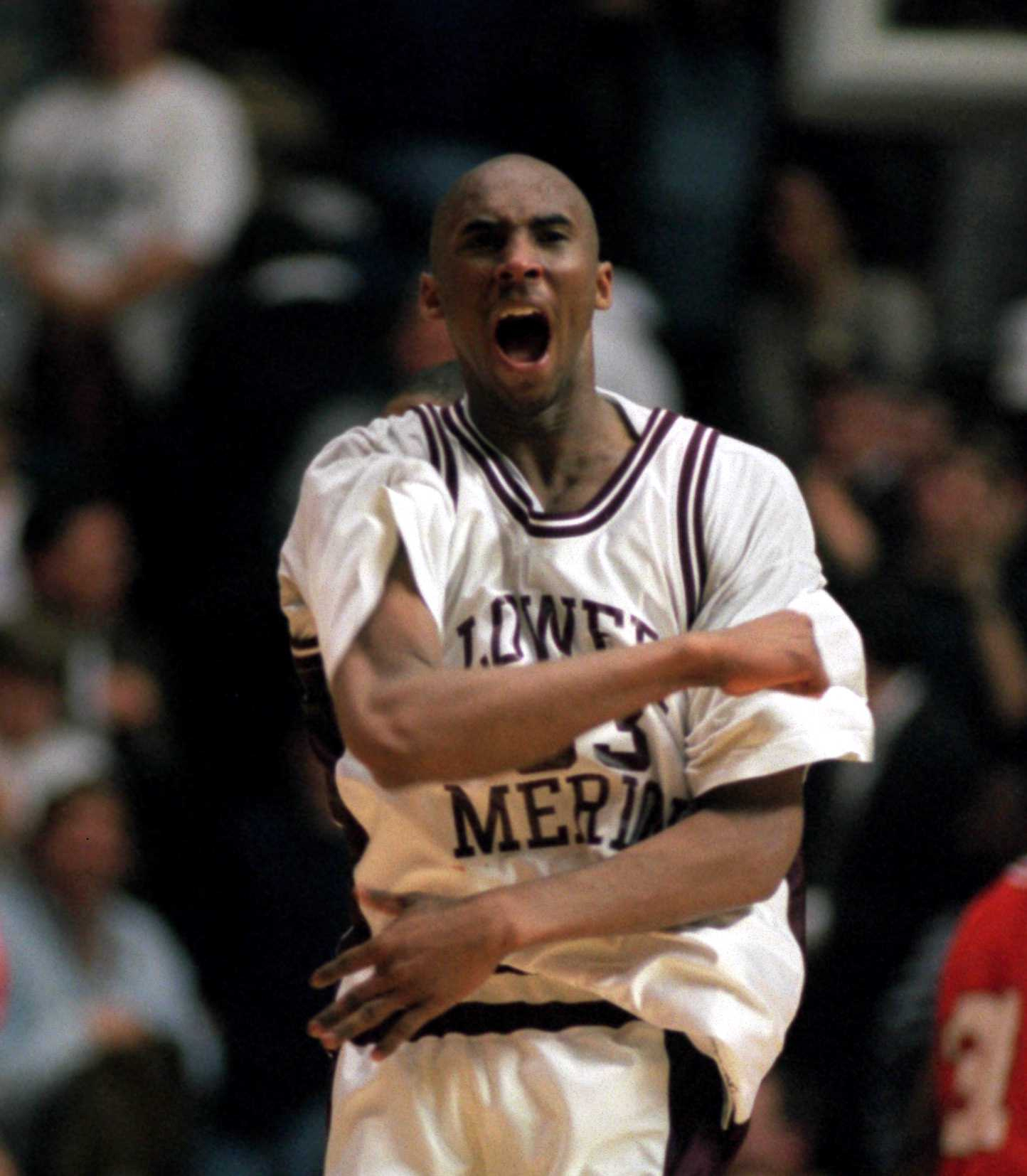
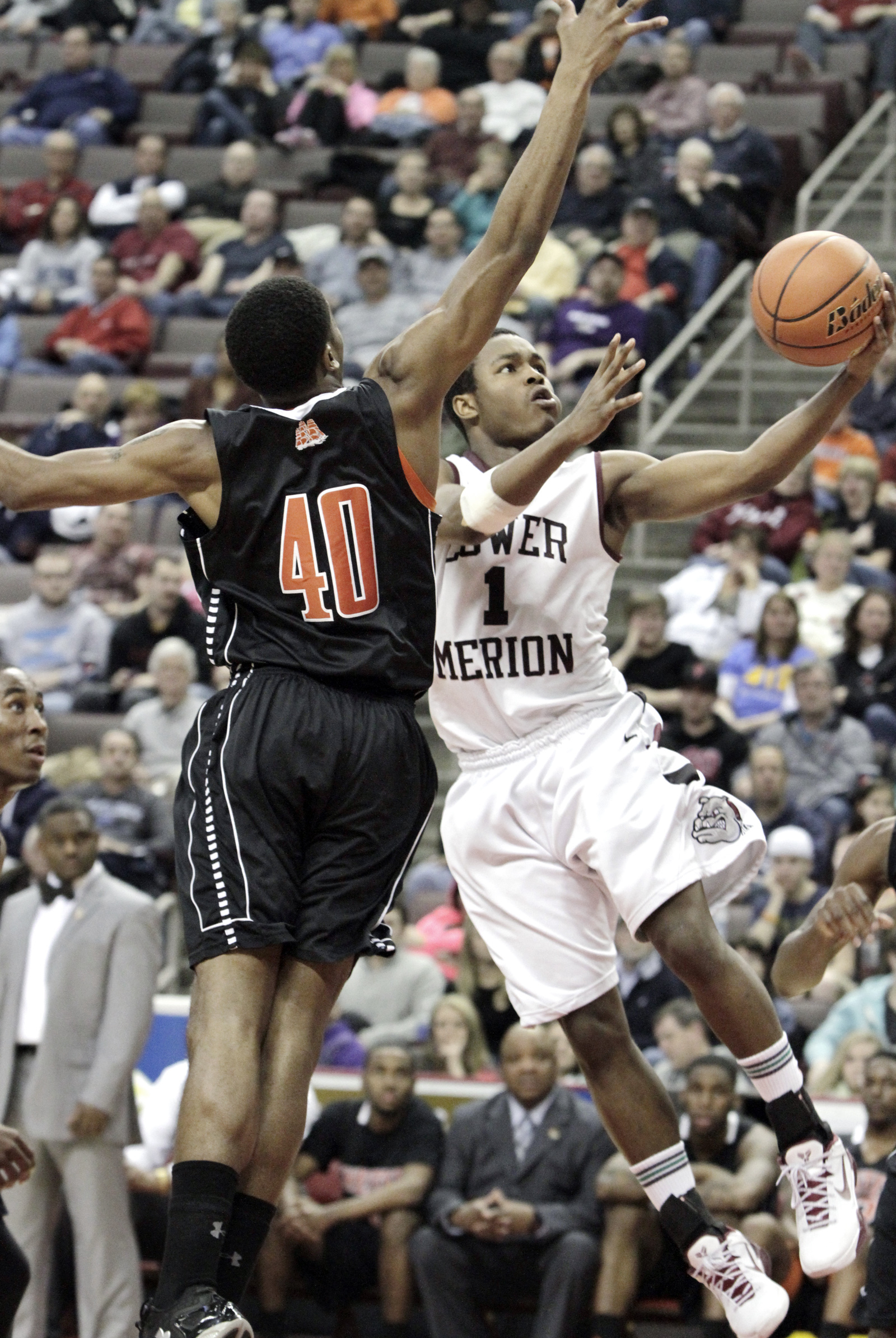
The shooting guard scored 39 points later that month — with a broken nose — in a 77-69 state semifinal win over Chester. Lower Merion went on to beat Erie Cathedral Prep, 48-43, to win its first state championship since 1943.
Kobe Bryant celebrates after defeating Chester at the Palestra in 1996 to advance to the state final.Ron Cortes / Staff Photographer
To Linehan, the difference Bryant made was obvious. He joked that he’d “never heard of Lower Merion” before his friend arrived. But once he did, Chester realized it would have to go to great lengths to prepare for the phenom.
Ahead of a big game against Lower Merion in the mid-1990s, the coaching staff reached out to Clippers alumnus Zain Shaw. He played at West Virginia and in Europe and possessed some of the same characteristics as Bryant — a tall frame and an athletic build with strong ballhandling skills.
The Clippers invited Shaw to practice, where he played the role of Bryant (to the best of his ability).
“Kobe was so special, we had to bring in a pro to help us prepare,” said Linehan, who later starred at Providence.
But there was another impact the future Lakers star had, one that had nothing to do with his own prowess. Linehan noticed that Bryant’s Lower Merion teammates started to take on some of his qualities. Suddenly, they were playing brash, confident basketball.
“We didn’t have reason to believe, until Kobe got there, that we belonged on the court with Chester,” Young said. “The fear was real. Teams were afraid of Chester because they’d run you out of the building.
“The idea of Lower Merion being on the court in a meaningful game against [them] was such a crazy thought. But then, you started to believe.”
The buzzer-beater heard ’round Chester
Bryant never got over the rivalry, even after he embarked on his Hall of Fame NBA career in 1996. Sometimes, he’d call the coaching staff before big games against Chester, leaving expletive-laden voicemails to use as motivation.
The Lakers shooting guard also created an incentive structure for his former team.
“You couldn’t get a pair of Nike sneakers unless you qualified for the playoffs,” Young said. “If you don’t earn it, you don’t get it.”
He became especially involved in 2005-06. After a lull in the early 2000s, Chester and Lower Merion found themselves neck-and-neck again. The Aces were led by the duo of Ryan Brooks and Garrett Williamson, and the Clippers boasted a deep roster, headlined by Darrin Govens. All of them eventually played in the Big 5.
(Chester was so stacked that it brought a 1,000-point scorer off the bench in Noel Wilmore.)
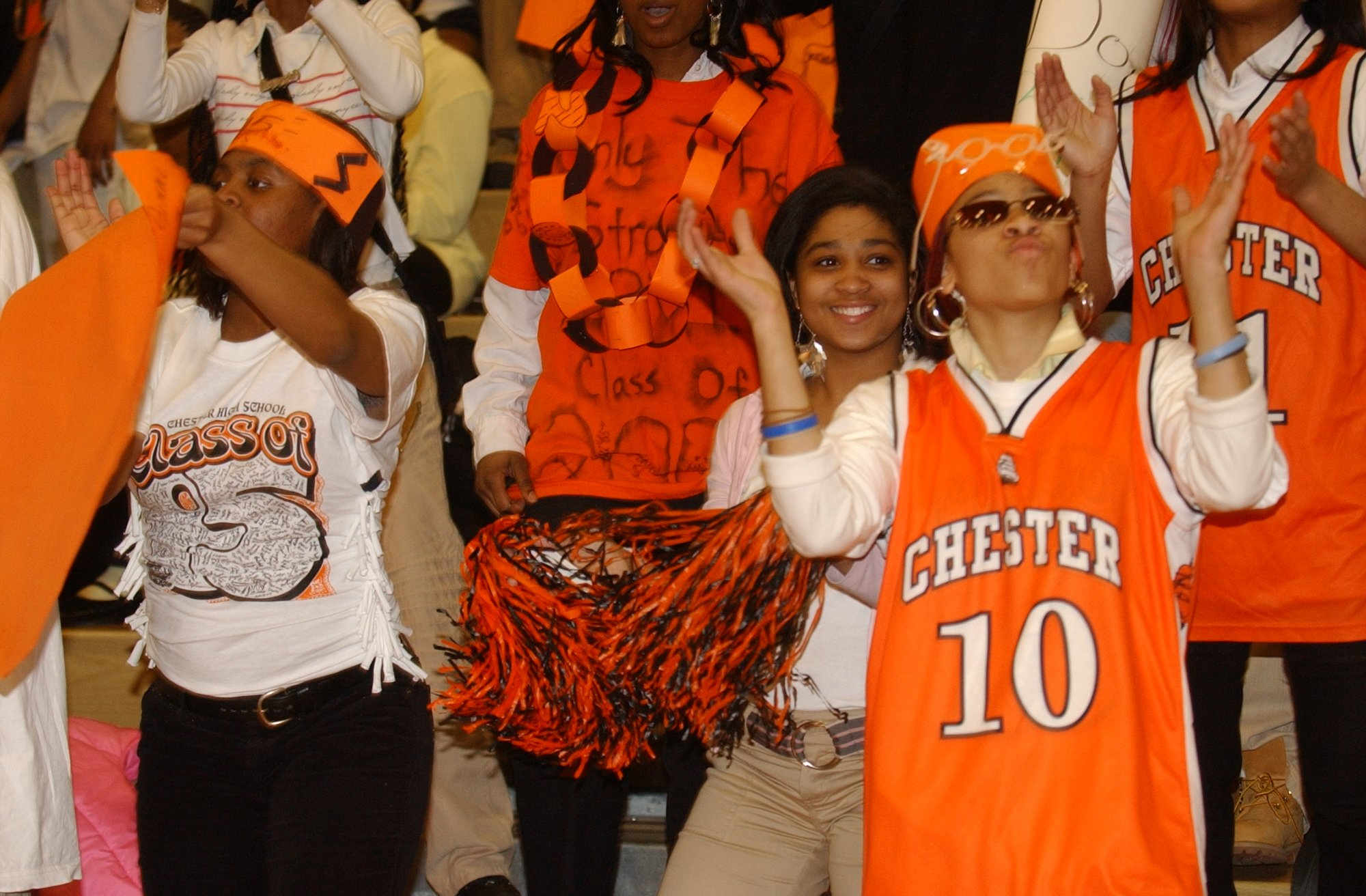
Students from the class of 2005 show their support as Chester and Lower Merion play in the state final. Hinda Schuman / Staff Photographer
The rivals met in the state championship on March 19, 2005. Despite strong performances from Williamson and Brooks, the Clippers pulled away in the second half thanks to a dominant third quarter from Govens. Chester won, 74-61.
The teams reconvened the following season with their competitive spark fully reignited. They faced each other three times that year. Chester took Round 1, a one-point regular-season victory on Dec. 27.
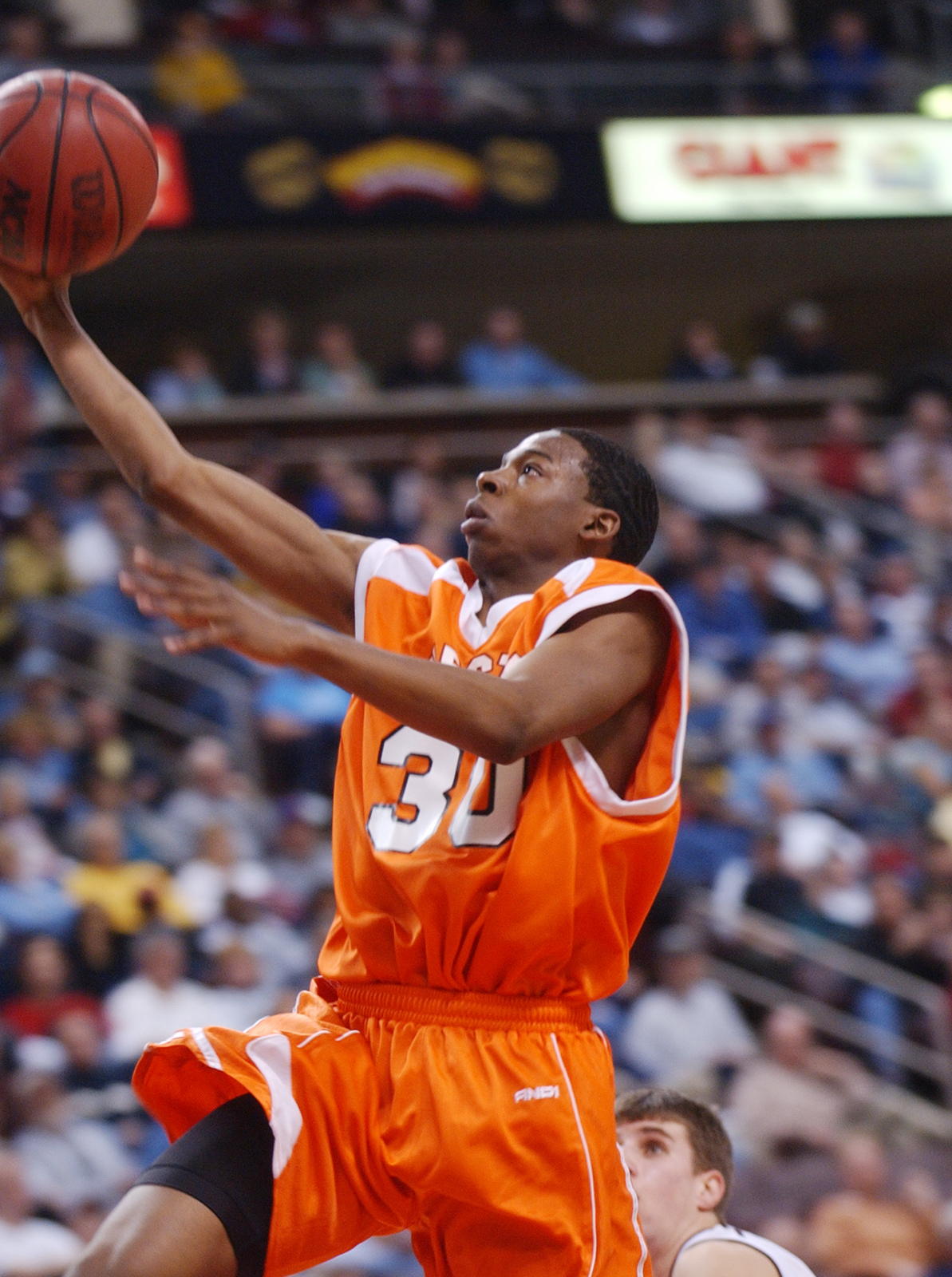
Round 2 was in the district final on March 3. Before the game, in front of a packed crowd at the Pavilion, Chester sophomore Karon Burton walked up to the layup line.
Lower Merion’s student section caught his ear with a chant about coach Fred Pickett’s stout stature.
The dig didn’t intimidate Burton. If anything, it fueled him. He grew up playing street ball in Chester and always loved trash talk.
Instead of cowering, like the crowd hoped, the sophomore delivered an unforgettable outing. The game went into overtime, and was tied at 80 with only a few seconds remaining.During a timeout, assistant coach Keith Taylor pulled Burton aside.
“He was like, ‘Hey, listen,’” Burton said. “They’re going to double Darrin. If you get that ball, do your thing.’”
Taylor’s words proved prescient. As Lower Merion’s defenders swarmed Govens, the Clippers inbounded the ball to Burton.
He took a pull-up jumper from beyond the arc and drilled it for an 83-80 win. The Chester fans stormed the court. Burton, who later joined Wilmore in the 1,000-point club, said he felt like a celebrity in his hometown.
“It was like watching a buzzer-beater in the NBA,” he said. “I just ran to my teammates, they picked me up. It was a crazy feeling.
“I’m a big Kobe fan, too. Kobe’s my favorite player ever. So when I came and I hit the game-winner on that team …”
Round 3 took place a few weeks later, in a state semifinal rematch at the Palestra on March 22. Bryant called Lower Merion’s coaches before the game.
“I don’t remember specifically what he said, but I’m sure there were a lot of [expletives] dropped,” said Young. “Like, ‘Don’t call me back if you don’t beat those [expletives].’ That was a line we heard from him a couple times.”
This one didn’t go Chester’s way. After trailing the Clippers, 47-37, at the end of the third quarter, the Aces came roaring back in the fourth and put up 33 points to eke out a 70-65 win.
The celebration in the locker room was cathartic. Water sprayed into the air. Players sat atop each other’s shoulders and turned the showers into a slip ‘n slide. Bryant called in, again, as other members of the 1996 team filtered through.
Darrin Govens scored his 1,000th point for Chester against Lower Merion in the state championship in 2005.Hinda Schuman / Staff Photographer
This was not how Govens wanted to end his high school career. And a few months later, when he arrived at St. Joseph’s on a basketball scholarship, he saw a familiar foe.
It was Williamson, his new Hawks teammate.
“We were sitting on the opposite side of the bench,” Govens said. “I didn’t want to sit next to him; he didn’t want to sit next to me. We’d kind of avoid each other and just head nod.
“Even in running drills, it was a competition. He looked to the left. I looked to the right. We tried to beat each other in sprints. But then we realized, ‘All right bro, we’re teammates now.’”
‘Hero status’
Chester had always rallied around its high school basketball team. Linehan said it was akin to playing for the Sixers. The teenagers were treated like professional athletes — especially those who had been a part of big wins.
The Clippers’ public address announcer, James Howard, called this “hero status.”
“All of a sudden, your money’s no good,” he said. “Barbers take care of you, make sure your hair looks nice before games. Free food. Little kids look up to you and ask for your autograph. That’s how it is.”
In Chester, there were plenty of heroes to draw from. There was Linehan, but also Jameer Nelson, who met a young Burton in the late 1990s. Nelson, a friend of Burton’s cousin, gave the aspiring basketball player a gift before he left for St. Joe’s: his MVP medal from the Chester summer league.
“He was one of the biggest guys in our city,” Burton said, “so it’s definitely something that I’ll always remember.”
By the early 2010s, when the rivalry was reignited for a third time, Lower Merion had built more of a basketball tradition. Aces guard Justin McFadden said he’d get stopped in Wawa before big games against the Clippers.
Chester celebrates its win over Lower Merion for the state championship in 2012. Steven M. Falk / Staff Photographer
“It became a community thing,” he said. “People would be asking, ‘What do you guys think about Chester? Do you think we can get it done?’”
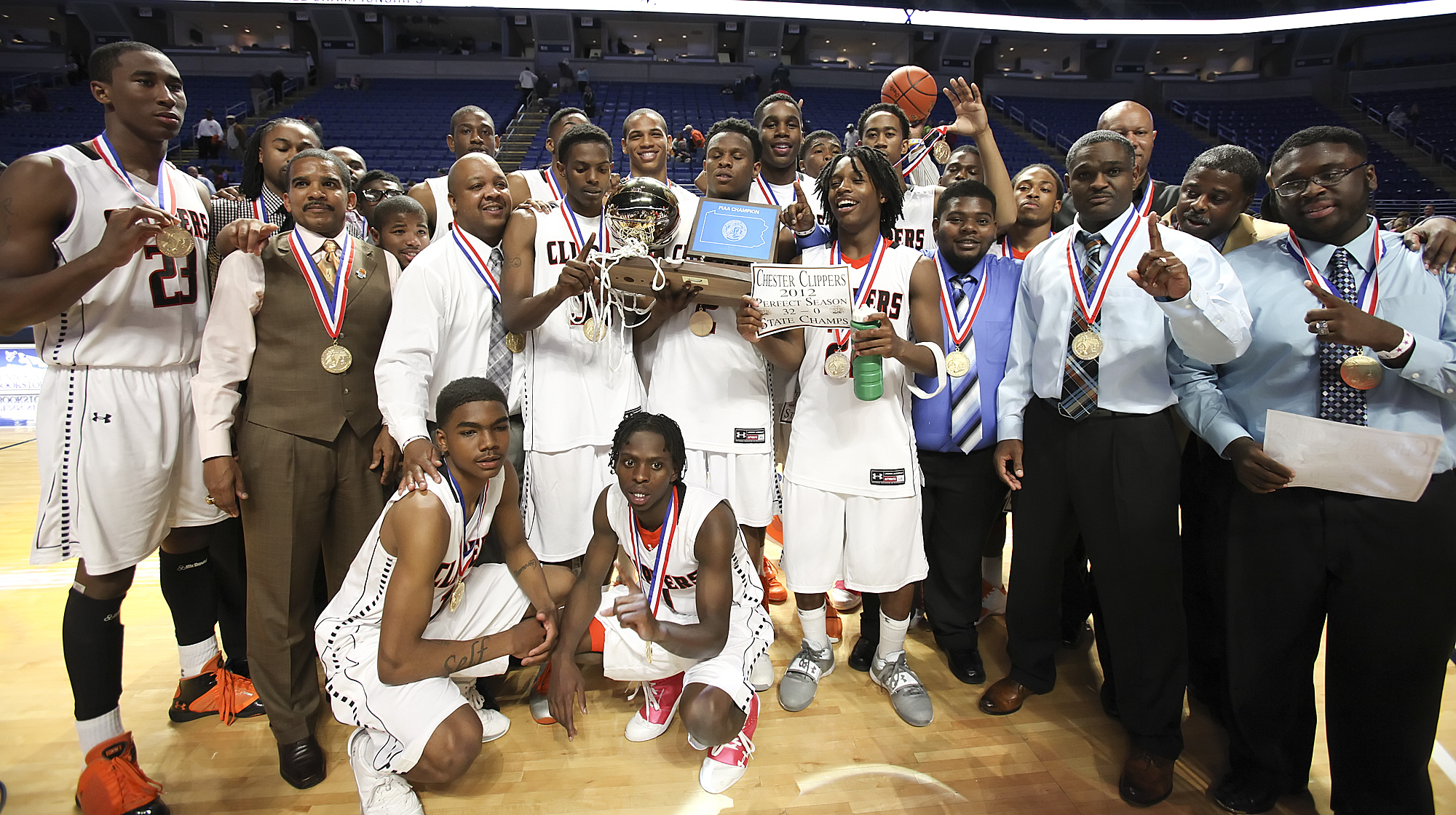
In 2012, the schools met in the state championship for the first time since 2005. Junior forward and future NBA starter Rondae Hollis-Jefferson put up a double-double to lead the Clippers to a resounding 59-33 win over the Aces. It was their second straight title and their 58th straight victory.
A year later, after going 17-0 in the Central League, the Aces met the Clippers in the state final again. Chester had won 78 straight games against in-state opponents. Snapping that streak would be daunting, but Downer had a plethora of motivational tactics at his disposal.
Just as they had in the 1990s, The Aces again spent pockets of the season watching Jaws, The Edge, as well as an addition: Al Pacino’s “Inch by Inch” speech in Any Given Sunday.
“He would have that fired up on YouTube, ready to go,” McFadden said. “Looking back, [your reaction] is a chuckle, but in the moment, it worked. We knew that this was the hill that needed to be climbed.
“And every time they played that speech, we got goose bumps. We were ready to fire.”
Chester got out to an early lead, but Lower Merion rallied behind a 22-point, 11-rebound performance from B.J. Johnson, who later starred at La Salle. The Aces snapped the streak and won their seventh state title with a 63-47 victory.
Lower Merion’s Jaquan Johnson goes to the net as Diamonte Reason guards him in the Chester-Lower Merion state championship game in 2013.Elizabeth Robertson / Staff Photographer
The Clippers then were coached by Larry Yarbray. Pickett, who was diagnosed with cancer in2010, was in declining health. Just before he died in 2014, Downer decided to say goodbye.
He and his former assistant coach Jeremy Treatman drove out to Pickett’s home in Chester. They went to his bedside.
“And we talked,” Downer said. “And we held hands. It was a really touching moment for me. This is a man that carried Chester on his back. That tried to carry Lower Merion on his back. And I knew it was the last time I was going to see Fred.
“We walked out the door, and we told each other that we loved each other. And I never thought he would say that to me, or vice versa. But it was just kind of like, ‘You know what? We’ve had some amazing battles, and there’s a lot of respect there.’”
Keeping the tradition alive
In recent years, the Chester-Lower Merion rivalry has diminished.
There was a brief period when the teams were in different classifications. Both programs have lost players to private schools that can recruit, and the addition of the Philadelphia Catholic League to the PIAA has made the state playoffs more competitive.
One place the Aces and Clippers could meet is in the district tournament, where they reunited in 2024. But they haven’t played each other since. And Howard says the contests don’t have the same feel.
“Both teams have lost D-I talent,” he said. “It’s not as high-flying, above the rim, as it was in the past. But still a great game. Sold out at Lower Merion, and at Chester, same thing.”
The history will always be there, though, and Burton is doing his best to keep it alive. His 8-year-old son, Karon Burton Jr., is playing in the Biddy League. His father is his coach.
Sometimes, they go on YouTube and watch old Clippers games. Junior’s favorite, of course, is the 2006 district final.
Burton believes that his son has a promising future, but isn’t sure of where he’ll go to high school yet. He doesn’t want Karon Jr. to feel obligated to follow his father’s path.
But if it worked out that way, what a story that would be.
“I’d love to be the first father and son to have 1,000 points,” Burton said. “With the same name? That would be crazy.”