Tag: Haverford

  • Haverford College and Jewish group settle lawsuit over antisemitism allegations

    Haverford College and Jewish group settle lawsuit over antisemitism allegations

    Haverford College and a Jewish group suing the school over its handling of antisemitism allegations have reached a settlement, according to federal court documents.

    The documents in the U.S. District Court for the Eastern District of Pennsylvania did not include details of the settlement, but a lawyer for the plaintiffs says Haverford President Wendy Raymond’s statement to the college community immediately following the settlement announcement Friday was part of it.

    “I want to take this opportunity to publicly acknowledge that those members of our community with a commitment to the state of Israel as the Jewish homeland have been deeply hurt by events that have transpired on our campus since Oct. 7, 2023, and that that constitutes a failure on our part,” wrote Raymond, who leads the 1,470-student highly selective liberal arts college on the Main Line. “We commit ourselves to doing better going forward.”

    The lawsuit was filed in May 2024 as tensions mounted on many college campuses, including Haverford, in the wake of the Israel-Gaza war, following Hamas’ 2023 attack on Israel. In their complaint, the plaintiffs, three students and the group Jews at Haverford, alleged that the college discriminated against Jews by tolerating antisemitic speech and failing to adequately support Jewish students, some of whom have been shunned on campus and prohibited from participating in group discussions where the war was discussed.

    They are represented by an attorney for The Deborah Project, a public interest think tank that defends the rights of Jewish people facing discrimination in the education system.

    Raymond, in her statement, repeatedly stated that students who support Zionism, which she defined as “the right of the Jewish people to self-determination and statehood in the land of Israel,” are welcome at Haverford and will have “equal access” to all educational programs and activities.

    “Harassing, excluding, or seeking to silence Jewish community members on the basis of their beliefs, their commitment to Jewish observance, or any other element of their Jewish identity, including Zionism, is anathema to the college’s core principles of trust, concern, and respect,” she wrote, noting that the policy applies to offices, classrooms, and student-led organizations and activities.

    She said such behavior is a violation of college policy and that those who engage in it would be subject to disciplinary action, and that no Haverford professor can discriminate against or treat differently students based on their commitment to Judaism, Israel, or Zionism.

    Support of Zionism has been a flashpoint in the debate over what constitutes antisemitism, with some arguing it’s wrong to conflate antisemitism with anti-Zionism.

    Lori Lowenthal Marcus, an attorney for The Deborah Project, which represents plaintiffs, called the settlement “fantastic.” She said Raymond’s statement was part of the settlement, and Marcus said she would be releasing more details on Saturday.

    “Plaintiffs are very pleased that they will be protected and respected on Haverford’s campus,” Marcus said Friday.

    Stating that students who support Zionism will be protected was important to plaintiffs, she said.

    “It’s a new form of antisemitism, saying, ‘Oh, no, I don’t hate Jews, I just hate Zionists,’” she said. “For a Jew to hear that was incredibly painful and led to students really hiding their identities when no one should be forced in any way to hide their identity, including Jewish students who believe in the right of Israel to exist as a Jewish state.”

    When the complaint was initially filed in May 2024, one student, Ally Landau, a women’s basketball player who has since graduated, was named in addition to the group Jews at Haverford. Since then, two others were added with their initials.

    In their complaint, plaintiffs said, the college failed to condemn Hamas’ attacks on Israel even though it had issued past statements in support of other minority groups, including Black people following the murder of George Floyd by police.

    Among other allegations, the group said that a professor called students who supported Israel “racist genocidaires,” which the college did not challenge, and that the school allowed students to host an event where it was asserted that Israel had intentionally infected Palestinians with the coronavirus.

    Haverford at the time declined to comment on the lawsuit.

    A federal court in February 2025 dismissed the lawsuit, calling the complaint “sprawling and disorganized,” but the plaintiffs refiled.

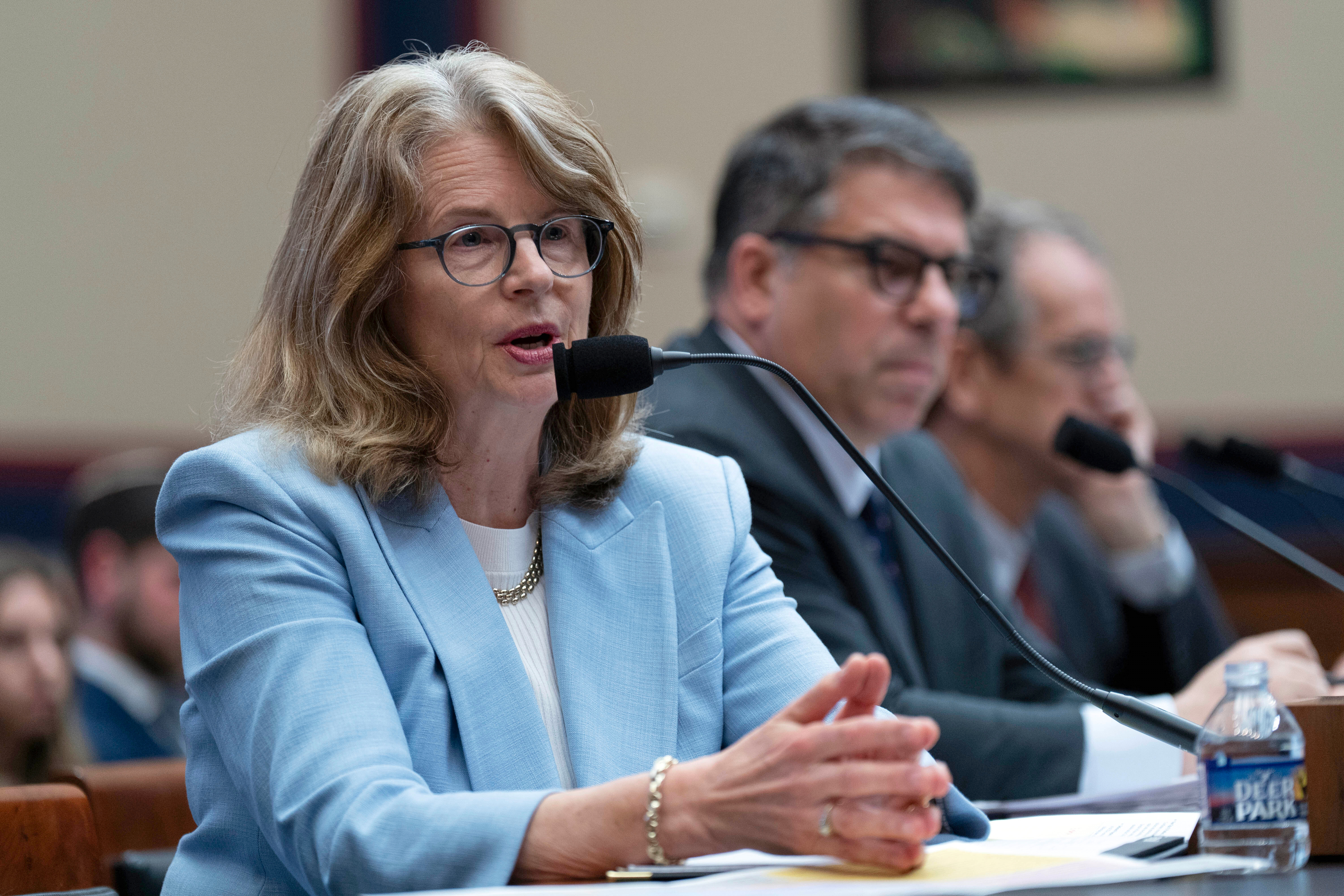
    In May 2025, Raymond was grilled by a congressional committee investigating colleges’ handling of campus antisemitism allegations. She drew fire for reluctance to answer questions about discipline in such incidents, especially in specific cases.

    She also issued a statement at that time, saying that the college “came up short” in dealing with the conflict and said both she and Haverford can do better.

    “To Jewish members of our community who felt as if the college was not there for you, I am sorry that my actions and my leadership let you down,” she wrote at the time.

    The Haverford chapter of the American Association of University Professors, a group of nine Jewish faculty and staff, and more than 50 Jewish students at Haverford had written letters to the committee or issued statements in support of Haverford.

    The faculty and staff group, noting they are diverse with some supporting Israel and others not, said at that time they “do not feel that our college is a hotbed of antisemitism.”

    “We are all deeply concerned by how you are weaponizing our pain and anguish for your own purposes …,” the students wrote to the congressional committee. “It is a blatant assault on our Black, Brown, transgender, queer, noncitizen, and Palestinian peers.”

    Since the congressional committee hearing, tensions have at times continued to flare. Earlier this year, Haverford vowed to make changes in its event policies after a talk by an Israeli journalist speaking on campus was disrupted, including by a protester who shouted through a bullhorn “Death to IOF,” or Israeli Occupying Forces, a name critics use to refer to Israel Defense Forces, and “Shame.”

    In her statement to the campus community Friday, Raymond said it is never acceptable to let disagreements over the policies and actions of government “descend into the realm of discrimination, harassment, or bias.

    “All members of the Haverford community who wish to express their considered perspectives must do so respectfully while allowing others to do the same.”

    The two sides said in court documents they agreed to settle in order “to avoid the further expense, disruption, and uncertainty of litigation, all without admitting liability.”

    Raymond, a molecular biologist who has led the college since July 2019, announced last November that she would step down in June 2027.

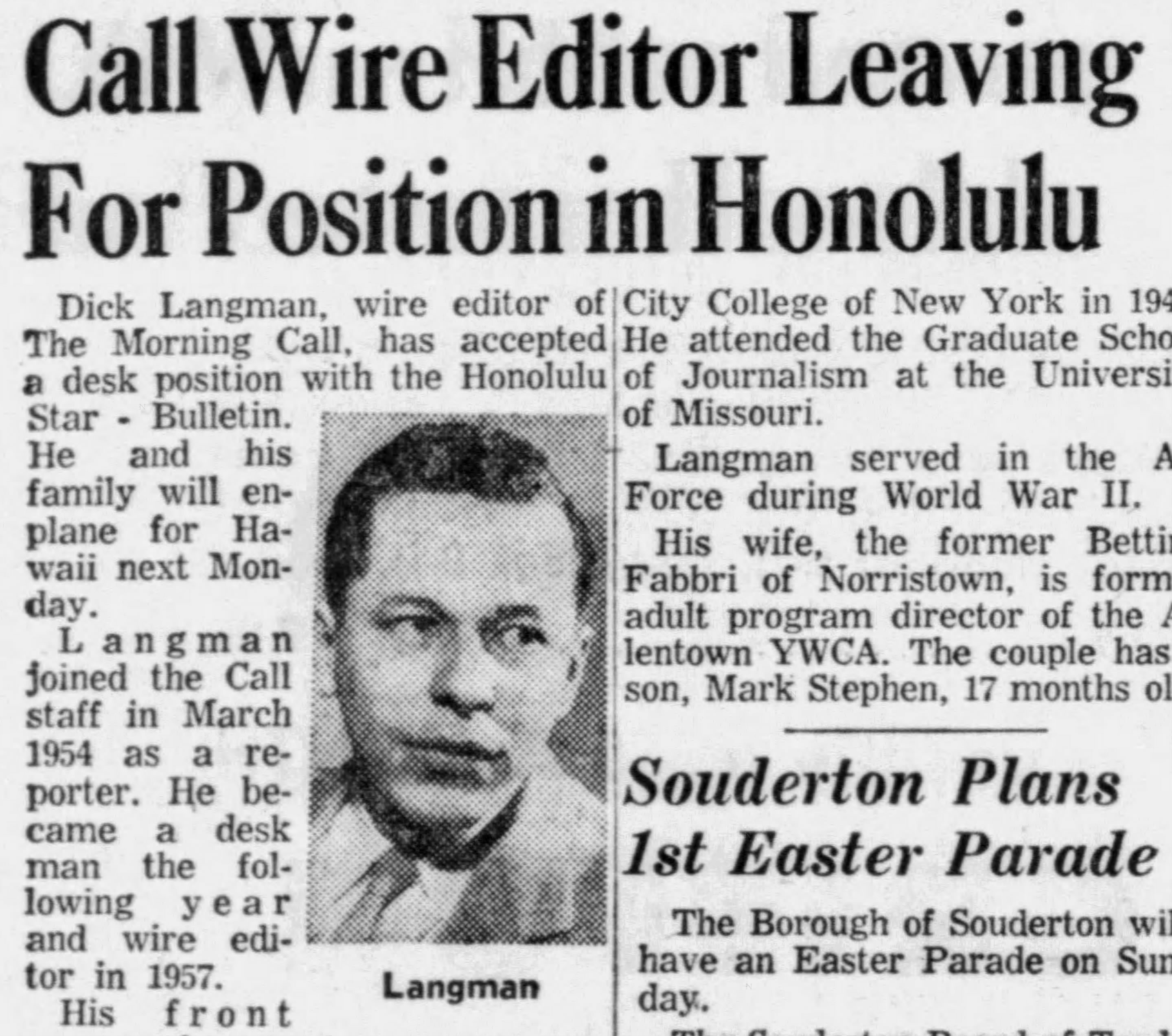
  • Dick Langman, retired award-winning editor at The Inquirer, has died at 99

    Dick Langman, retired award-winning editor at The Inquirer, has died at 99

    Dick Langman was always a wordsmith.

    Even as a boy in New York, he loved language, literature, and poetry. He earned a bachelor’s degree in English, took graduate classes at the University of Missouri School of Journalism, and could recite lines from Shakespeare, Wordsworth, and Frost on demand.

    He was generally calm and reasonable, too, his sons said. “He didn’t get upset easily,” his son Mark said.

    His vocabulary was extensive, and he could spell practically any word. So it is no surprise that he spent 50 years, from the early 1950s to his retirement in 2002, as an editor, page designer, and reporter for The Inquirer, the Bulletin, the Morning Call of Allentown, the Pottstown Mercury, the Honolulu Star-Bulletin, and the Evening Tribune in Hornell, N.Y.

    The Morning Call published this story in 1959 when Mr. Langman left to work in Hawaii.Newspapers.com

    He joined The Inquirer in 1981 and worked mostly nights for 21 years as a copy editor, assistant news editor, and suburban assigning editor. Former colleagues at The Inquirer called him a “meticulous” editor, “enormously patient,” and “a man of great integrity” in online tributes.

    He won an award from the old Pennsylvania Newspaper Publishers Association in 1957 for a front page he designed for the Morning Call and spent 20 years as assistant city editor and news editor at the Bulletin. “I’m glad that I had a chance to work with him,” a former Inquirer copy desk colleague said. “What a pro.” Another said: “I could not have had a better teacher.”

    On Saturday, June 13, Dick Langman died of complications from pneumonia at Bryn Mawr Hospital. He was 99.

    Long before he came to Philadelphia in 1961, Mr. Langman was a seasoned newspaperman. He honed his reporting skills as a writer at the Evening Tribune in New York and the Mercury in Pottstown.

    Mr. Langman and his wife, Betty, married in 1954.Courtesy of the family

    In January 1954, he opened a Page 1 story for the Mercury with: “From clomping around in wooden shoes in Holland to wearing modern footwear in Bechtelsville is a long way, and Mrs. LaVerne Fronheiser is glad to be home. She’s not too glad, however, because her husband had to stay in Germany, where he’s stationed with the infantry.”

    On Page 1 in March 1954, he wrote: “They had need of a chaplain yesterday at borough hall. He could have served well the 50 moaners and groaners whose cars were tagged for parking violations.”

    He moved on to the Morning Call and covered high school sports and other news. He left for Honolulu in 1959 and became sports editor at the Star-Bulletin. But he missed the East Coast and returned to work at the Bulletin in Philadelphia in 1961.

    “Hawaii is one of the loveliest places in the world,” he told the Morning Call. But his wife, Betty, had roots in Norristown, he said, and they both got homesick.

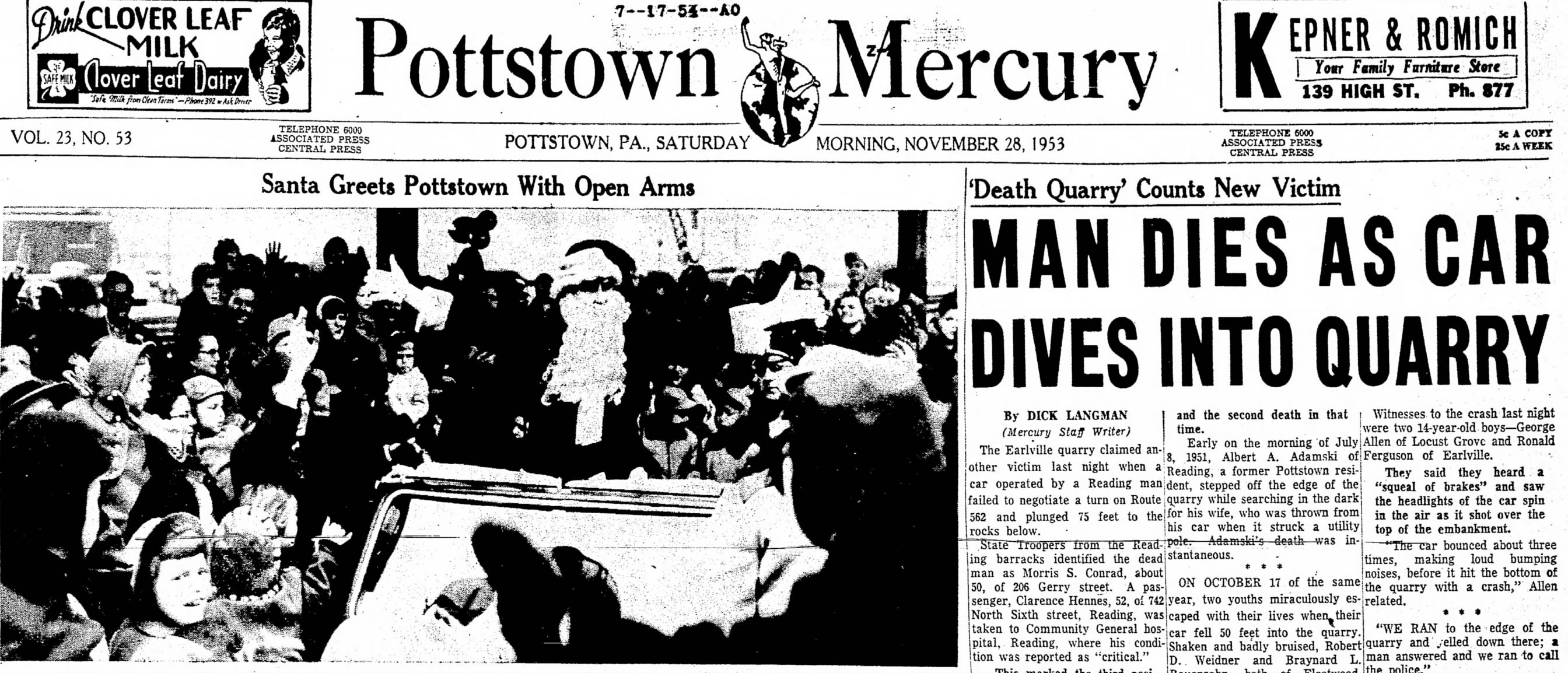
    Mr. Langman wrote this Page 1 story for the Pottstown Mercury in 1953.Newspapers.com

    Earlier, after college, Mr. Langman worked briefly for the Associated Press in New York and as a statistician for what is now the Elias Sports Bureau. He enlisted in the Army after high school in 1944, went to active duty in 1945, and served until the end of World War II.

    At The Inquirer, a former colleague recalled, Mr. Langman edited a story about a horse that had injured a leg. Naturally, he tried to find out which leg was hurt.

    “Dick was a painstaking editor,” his former colleague said on Facebook, “and a master in getting the details right.”

    Richard Langman was born Sept. 5, 1926, in New York. He graduated from Stuyvesant High School and earned a bachelor’s degree at City College of New York in 1948.

    Mr. Langman enjoyed cooking and shared his favorite recipes with colleagues at The Inquirer.Dick Langman

    He met Betty Fabbri, the society editor at the Mercury, and they married in 1954. The Morning Call announced their union in its Breakfast Chatter column by saying: “Best wishes to reporter Dick Langman, who walks the long mile in Norristown Sunday with Bettina.”

    He and his wife had sons Mark, Peter, and Andrew, and lived in Allentown, Ardmore, and the Quadrangle retirement community in Haverford. His wife died in 2017.

    Mr. Langman and his wife shared wanderlust, and they went to Russia, Austria, Hungary, Europe, and elsewhere. They visited Italy 10 times, France three times, and Cape May as often as possible.

    They liked to cook together, too, and he shared his favorite recipes with colleagues at The Inquirer. At the Bulletin, he became part of the “old bulls” lunch group.

    He submitted his own prewritten obituary to his funeral director long before it was needed and said: “He enjoyed classical music, poetry, mystery novels, and British mystery and comedy.” He also liked crossword puzzles, fishing, table tennis, classic movies, and duplicate bridge.

    He cheered for the New York Yankees baseball team and the Green Bay Packers and Penn State football teams.

    “He delighted in jokes and was a real fan of the Marx Brothers,” his son Peter said. “When we were children and a local movie theater would feature a Marx Brothers film for one night, my parents made sure that we went. Fond memories indeed.”

    In addition to his sons, Mr. Langman is survived by two grandchildren and other relatives.

    Services were held earlier.

    Donations in his name may be made to the Lenfest Institute for Journalism, 100 S. Independence Mall West, Suite 600, Philadelphia, Pa. 19106.

  • Garrett Brown, who made Rocky’s run up the Philadelphia Museum of Art steps possible, is the subject of a new documentary

    Garrett Brown, who made Rocky’s run up the Philadelphia Museum of Art steps possible, is the subject of a new documentary

    What is common to the Rocky run sequence up the Philadelphia Museum of Art steps, the hedge maze scene in The Shining, aerial shots of football games, and underwater footage of Olympic swimmers?

    They were all made possible thanks to the same Philadelphia-area inventor.

    Oscar-winning cinematographer Garrett Brown invented several camera systems, most notably the Steadicam, a wearable camera rig that allows for stable running shots without any shakiness. That creation, introduced in 1975, revolutionized filmmaking, and now the Philadelphia native’s story is the subject of a documentary Thank You, Mr. Brown.

    “He’s a really smart, wise individual, but also just a very humble down-to-earth guy who is very open about daring things and making sure he’s a part of the community,” said director Andrew Schwartz, a longtime friend of Brown’s.

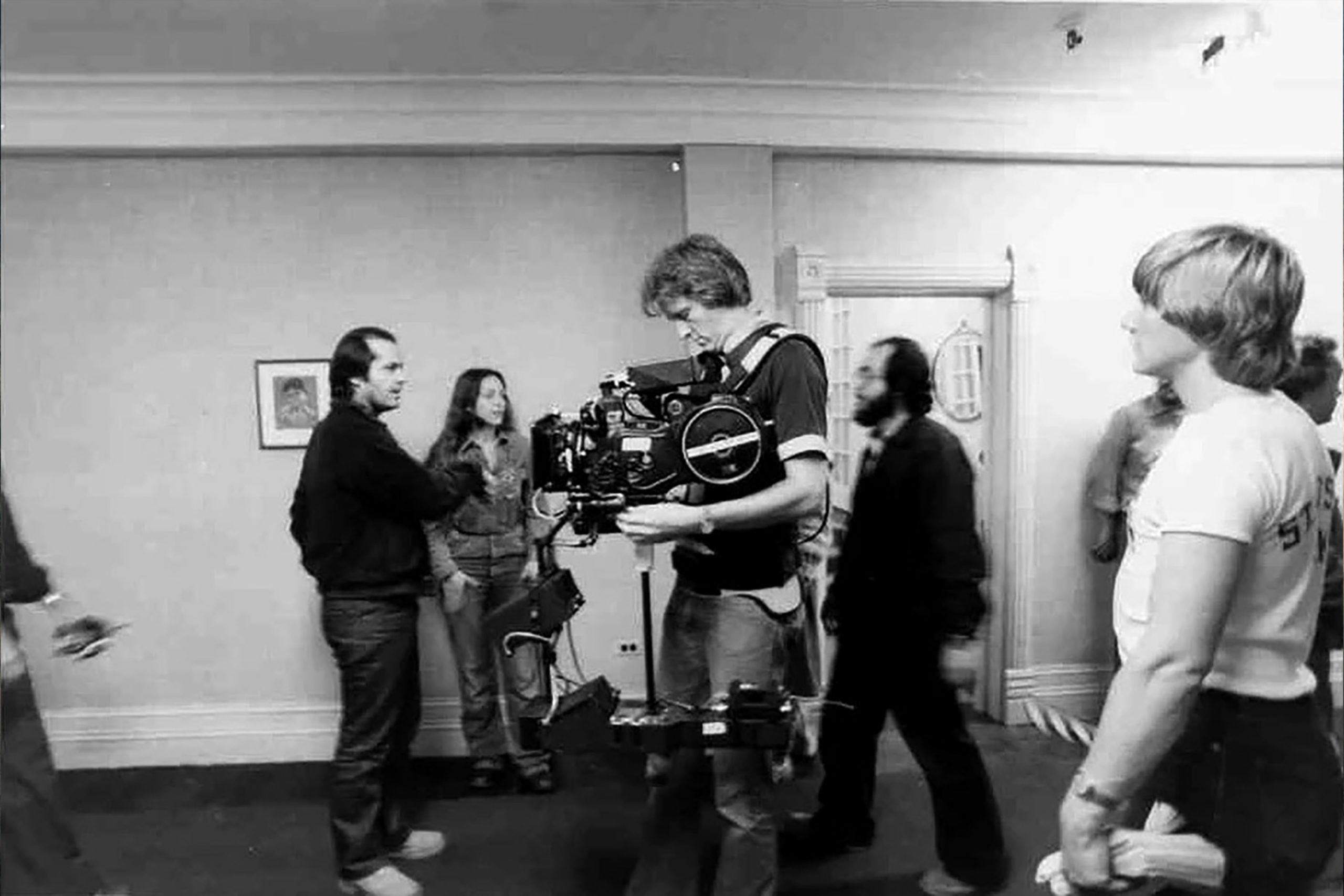
    Garrett Brown on set of “The Shining” (1980).Courtesy of Garrett Brown

    The two met when Schwartz started teaching at Steadicam workshops around two decades ago in Yellow Springs in Chester County. Brown was always present, he said.

    The documentary, currently being filmed in Philadelphia and produced by EBE Productions, includes interviews with Brown and other filmmakers, actors, sports broadcasters, and camera operators.

    This includes cinematographer Larry McConkey, best known for shooting the three-minute single shot of the Copacabana in Goodfellas. Francis Ford Coppola, who worked with Brown on One From the Heart, serves as an executive producer.

    “[Coppola] doesn’t normally do that for a lot of people and I think it just goes to demonstrate the type of relationship Garrett has fostered in the film industry and with people he worked with,” Schwartz said. “Knowing Francis’ career, this is another guy who’s really paved his own path in his own way and has demonstrated that same daringness and persistence toward his ideas with a somewhat relentless nature.”

    Brown, 84, was born in Long Branch, N.J., grew up in Haverford, and lives in the Philadelphia area. He was a folk singer until a friend gifted him a Bolex camera. Before long, Brown decided he wanted to work in the movie business and create something that had never been made before.

    “He basically locked himself in a motel room trying to figure out how to get a camera to be steady,” said William Forbes, one of the film’s producers. After creating a multitude of prototypes, Brown finally landed on something special.

    And that’s how the Steadicam was born.

    One of the earliest Steadicam shots is a demo reel of Brown’s wife, Ellen Shire, running up and down the steps of the Philadelphia Museum of Art, which convinced Rocky filmmaker, John G. Avildsen, to use Brown’s new contraption. The Shining followed, and Brown’s career got its jump start.

    Garrett Brown filming the hedge maze chase scene in “The Shining” (1980).Courtesy of Garrett Brown

    The Steadicam stabilizes a shot through three main components: the vest, the arm, and the sled. The vest is what the camera operator wears and the arm is what is attached to the vest. It allows the operator to move the camera around. The camera sits atop the pole-like “sled” and all of these come together to absorb the shock as the camera operator runs.

    “Everyone we talk to echoes the same sentiment, which is that there’s a before-Steadicam and an after-Steadicam when it comes to filmmaking and sports broadcasting,” said Forbes. “You can see the imprint of [Brown’s inventions] on all these new technologies that come out, from legacy movies like Avatar or smaller things like the GoPro, and all these little things that people are trying to be able to have new visual language in film.”

    Brown has patented several key camera systems that have been revolutionary in the world of sports broadcasting. The SkyCam, for example, shoots football games from above; the DiveCam tracks divers; and the MobyCam tracks Olympic swimmers underwater as they move across the pool.

    Michael Phelps, Forbes said, wouldn’t have won his gold medals if it weren’t for the MobyCam. The camera tracking “was able to show his fingertips touching just before another guy, which gave him his eight gold medals,” referring to Phelps’ historic sweep at the 2008 Beijing Olympic Games.

    Brown founded the Steadicam Operators Association in 1988, through which he and other camera operators teach workshops on using the machinery, working with new operators, and finding ways to alter the technology.

    More than 50 years after introducing the Steadicam, Brown is still not done tinkering with it.

    Garrett Brown being interviewed for “Thank You, Mr. Brown.”Courtesy of EBE Productions

    “We’ve made incredible movies that we tell each other on screen even through sports that we watch,” said Schwartz. “Garrett very much brought us closer to communicating that way with the tools he made.”

    A lot of Brown’s story, he said, “is one thing to the next and an evolution that was somewhat accidental at times because he was just going on an adventure. I hope people are inspired by his story as much as they are educated by it.”

    A release date for Thank You, Mr. Brown is yet to be announced.

  • South Philly’s former ‘micro-bookstore’ has a new and expanded storefront on Passyunk Avenue

    South Philly’s former ‘micro-bookstore’ has a new and expanded storefront on Passyunk Avenue

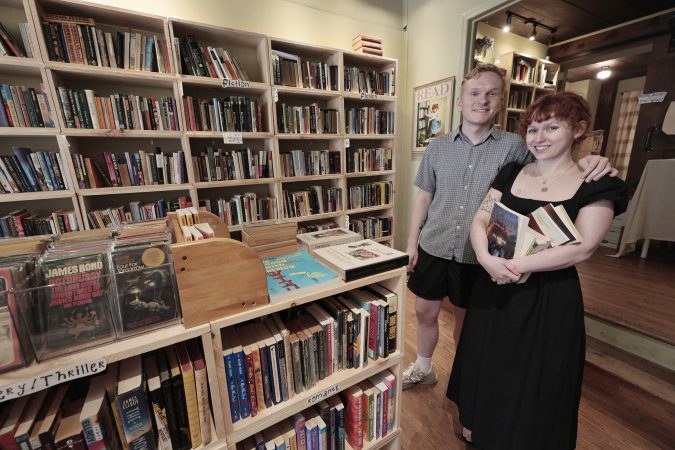
    When Ariel and Simon Censor opened their tiny used bookshop — Little Yenta Books — in the back of a South Philly children’s dressmaking shop in February, they knew it was an unconventional setup.

    What the couple — in life and now books — could not know is just how fast they would outgrow the space.

    And although they’re relinquishing the unofficial appellation as Philadelphia’s tiniest used book shop, the pair has moved their impressive literary thicket from their 150-square-foot loft space into a full-sized rented storefront on Passyunk Avenue.

    The problem was a great one: Business is booming.

    “People were telling us that they would walk by because it was way too crowded and they couldn’t fit,” said Ariel Censor, sitting behind the counter of the new shop, located at 1912 E. Passyunk Ave., home of the former Civil Stock General Store, which closed earlier this year. “We also just ran out of shelf space. We had way more books than we could fit.”

    Little Yenta Books co-owner Ariel Censor stocks the shelves with books at the new shop on East Passyunk Avenue in Philadelphia on Friday, July 17, 2026.Elizabeth Robertson / Staff Photographer

    The popular used bookstore — the only one along Passyunk — has nearly tripled its titles in the new storefront, which they opened last month. That means a whole lot more of the popular and literary fiction, classics, vintage sci-fi, poetry, and rare books customers have been buying up.

    “People really complimented our curation,” Censor, 27, said of the shop’s success. “People thought our taste was good, and our prices were good, and that they are really happy to have us.”

    The couple — Haverford College grads who live in the neighborhood — opened their initial tiny shop as a passion project, after holding used book pop-ups in South Philly bars.

    Simon Censor, of Providence R.I., and Ariel Censor, of New York City, opened Little Yenta Books, in East Passyunk in February. They have now moved into a larger space nearby.Tyger Williams / Staff Photographer

    Situated speakeasy-style, in a postage-stamp-sized loft above the Painted Lady children’s boutique, the shop burst with over 1,500 titles.

    Now, with its green-and-white striped awning, stained-glass light fixture, and charming decor, the new shop has a spacious, homey feel.

    “One thing we got with the little shop is that people really liked that it wasn’t overwhelming,” said Censor. “They could look at every book. We have tripled the amount of books but wanted to make it feel manageable and still have a real eye to curation. I’m really excited about the mix of modern and classics that we have.”

    The expanded shop comes with expanded hours, with Little Yenta Books now open every day except Tuesday and Wednesday.

    On a recent afternoon, Aine McCauley, 24, dropped in at the new shop on her way home from work. She perused the shelves before landing on a copy of André Aciman’s 2008 coming-of-age novel, Call Me by Your Name.

    “It’s so awesome,” she told Censor about the shop. “You have every good book in here.”

  • Access to therapy is about to get easier for Pennsylvania residents who travel out of state

    Access to therapy is about to get easier for Pennsylvania residents who travel out of state

    After giving birth to her first child, Jennifer O’Mara sought therapy for postpartum depression.

    But when O’Mara left her Delaware County home to visit her in-laws in North Carolina, her counselor had to cancel a virtual session because she wasn’t licensed to practice outside of Pennsylvania.

    “My therapist had always asked me if I was in Pennsylvania before a session started, and there was actually a time where I was not, and we couldn’t meet, and I didn’t understand why,” O’Mara said. “I was confused.”

    Unbeknownst to the new mother, Pennsylvania counselors need a separate license for each state they practice in.

    O’Mara, a Democrat elected as a state representative in 2018 and a co-chair of the legislature’s Mental Health Caucus, said she’s been working to change that regulation since that canceled therapy session.

    Four years later, O’Mara’s efforts are about to pay off under a bill expected to soon go to Gov. Josh Shapiro for his signature.

    The legislation would make Pennsylvania the 40th state to join the Interstate Counseling Compact. It enables counselors who are licensed in Pennsylvania to practice in any state that is part of compact.

    Pennsylvania will join already participating states, including Delaware, New Jersey, Maryland, Ohio, and yes, North Carolina.

    The bill only applies to licensed professional counselors, or LPCs. Pennsylvania separately participates in multistate healthcare compacts for psychologists, doctors, nurses, and physical therapists to provide inpatient care or telemedicine across state lines.

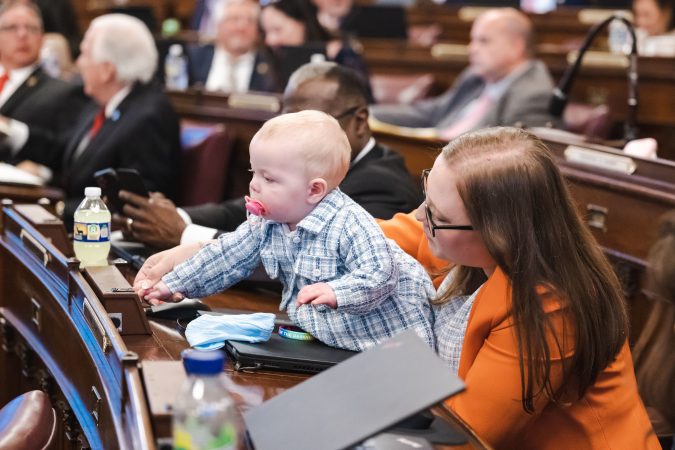
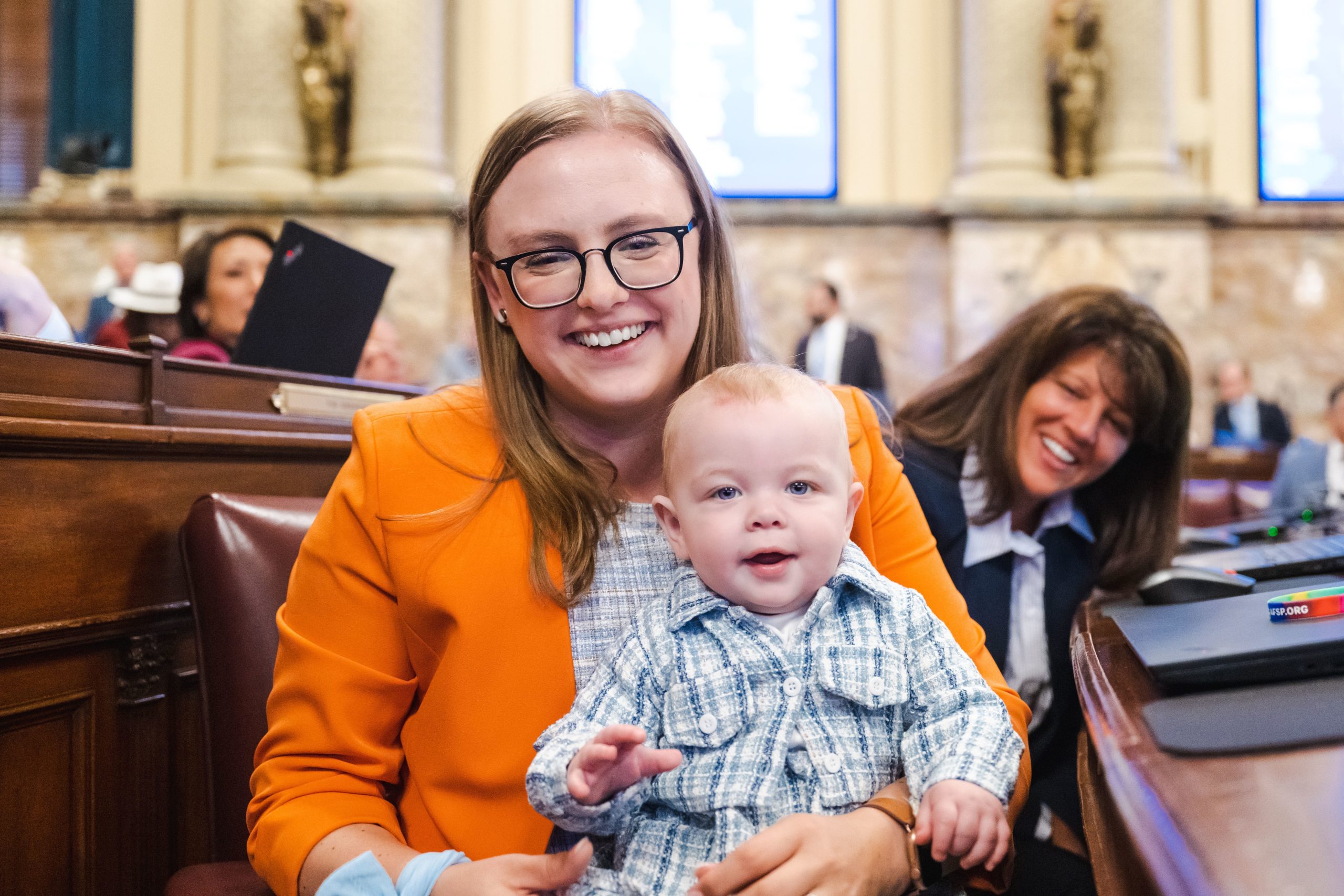
    State Rep. Jennifer O’Mara (D., Delaware County) with her daughter, Katherine, now 4, in 2023. O’Mara helped usher the Interstate Counseling Compact bill through the Pennsylvania House in late June. The bill would allow licensed professional counselors (LPCs) to practice across state lines. Courtesy of Jennifer O'Mara

    Shapiro plans to sign it

    O’Mara helped advance the bill in the House. The Senate had passed it in July 2025 by a 45-5 vote. The House approved it last week by an 188-to-14 vote.

    It now goes back to the Senate for a perfunctory, final signature by that chamber’s president before heading to Shapiro’s desk, according to a spokesperson for Sen. Lisa Boscola (D., Lehigh and Northampton), the bill’s prime Senate sponsor.

    O’Mara and leaders of the Pennsylvania Counseling Association (PCA), which has about 700 members statewide, said they expect Shapiro to sign the bill into law once it gets to his desk. A spokesperson for Shapiro confirmed on Tuesday that he plans to sign it.

    The bill aims to benefit recent high school graduates who want to keep the same therapist but plan to attend college out of state; active duty military members who are deployed outside Pennsylvania; and residents who physically work in New Jersey or Delaware and opt to do sessions during their lunch break, according to O’Mara.

    “This feels like a small bill that will make a big difference,” O’Mara said.

    Addressing a shortage of counselors

    Post-pandemic, the demand for mental health services has increased, and providers have struggled to keep up. The nation is expected to have a shortage of more than 40,000 counselors by 2030, and roughly 62% of Pennsylvania communities lack adequate mental health services, according to the PCA.

    The legislation is designed to ease that burden, said Nicole Palman, a counselor at the Main Line Counseling and Wellness Center in Haverford.

    “We’ll be able to continue to see clients when they move to New Jersey or when they move to Delaware without having to end care that may have been going on for years,” said Palman, a PCA member who advocated for the bill.

    It’s not always easy to find a new counselor, she noted.

    “A lot of people get discouraged,” Palman said. “The process is worse than dating to find a therapist you align with.”

    Editor’s note: This story has been updated to clarify that psychologists are included in Pennsylvania’s multistate compacts for health professionals.

    Inquirer staff writer Gillian McGoldrick contributed to this article.

  • Never-opened Amazon Fresh in Havertown set to become a Sprouts Farmers Market

    Never-opened Amazon Fresh in Havertown set to become a Sprouts Farmers Market

    A long-empty retail space in Havertown is set to become a Sprouts Farmers Market.

    The organic grocery chain has signed a lease for a 29,500-square-foot store in the Llanerch Shopping Center on the 400 block of West Chester Pike, according to Fred Snow, president of Brandolini Cos., which owns the complex.

    David McGlinchey, chief development officer of Sprouts, confirmed in a statement that the chain signed a lease at the site and is planning for an early 2027 opening.

    Sprouts is taking over a parcel that Amazon Fresh had rented for the past six years but never opened as a grocery store, Snow said. In February, the tech conglomerate abruptly closed all its physical Amazon Fresh locations, providing an opportunity for the landlord to terminate its lease in Havertown, Snow said.

    “It’s never really been vacant very long, but it’s looked vacant,” Snow said of the space, which was previously occupied by an LA Fitness that relocated before the pandemic.

    Once the property became available earlier this year, Snow said, Sprouts was “very aggressive,” and showed great interest in moving into such a densely populated, well-to-do area of Delaware County.

    In 10 square miles, Haverford Township has nearly 51,000 residents, with a median household income of more than $130,000, according to U.S. Census data. The township is surrounded by other populous, affluent suburbs, including Lower Merion and Radnor.

    The Havertown store is primed to be Sprouts’ first location in Philadelphia’s Western suburbs.

    A view inside the Sprouts in South Philadelphia, as seen in 2018.STAFF / GRACE DICKINSON

    “We’re just excited that they are going to provide offerings that aren’t in the area right now,” Snow said.

    Sprouts markets sell organic, gluten-free, and plant-based products, including private-label items, as well as vitamins, supplements, natural toiletries, and bulk nuts, coffee, and baking ingredients.

    Based in Phoenix, Sprouts opened its first Pennsylvania location in South Philadelphia in 2018, and has been expanding in the region.

    Sprouts now operates two Montgomery County stores in Upper Dublin and Montgomeryville; three South Jersey outposts in Haddon Township, Marlton, and West Deptford; and four city locations, including Roosevelt Mall in the Northeast and the new Rivermark complex in Northern Liberties.

    Sprouts has more local spots in the works, too, with stores under construction in Limerick and Washington Township.

    The extensive supplement section at Sprouts in South Philadelphia, as seen in 2018STAFF / GRACE DICKINSON

    Sprouts reported $163.7 million in net income in the first quarter of 2026, beating analysts expectations. While profits were down year-over-year, sales increased slightly, and the company opened six new stores.

    Sprouts plans to open at least 40 stores by the end of 2026, for a total of more than 500 markets nationwide, according to the report.

    “We’re seeing a great reaction as we enter new communities,” CEO Jack Sinclair said on the recent earnings call. “We’re sharpening site selection as we scale, expanding access to healthy foods.”

    Sprouts’ expansion comes amid uncertainty in the larger grocery industry. The market has appeared relatively resilient despite tariff pressure, continued inflation, and more competition.

    Yet some stores have struggled. After the Amazon Fresh shutdown in February, Grocery Outlet bargain market closed dozens of stores, including eight in the Philadelphia area.

    Sprouts executives said on the earnings call that they’re aware of customers’ financial pressures and are taking steps to make their products more affordable. They mentioned store promotions like $5 Sushi Wednesday, and said they recently reduced prices on some basics like coffee, which has become exorbitantly expensive amid extreme weather and global conflict.

    “We take the responsibility for affordability really seriously,” Sinclair said. “There’s a real opportunity for us to help people live and eat better.”

  • Danny’s Guitar Shop, a destination for Main Line musicians, has closed after 17 years

    Danny’s Guitar Shop, a destination for Main Line musicians, has closed after 17 years

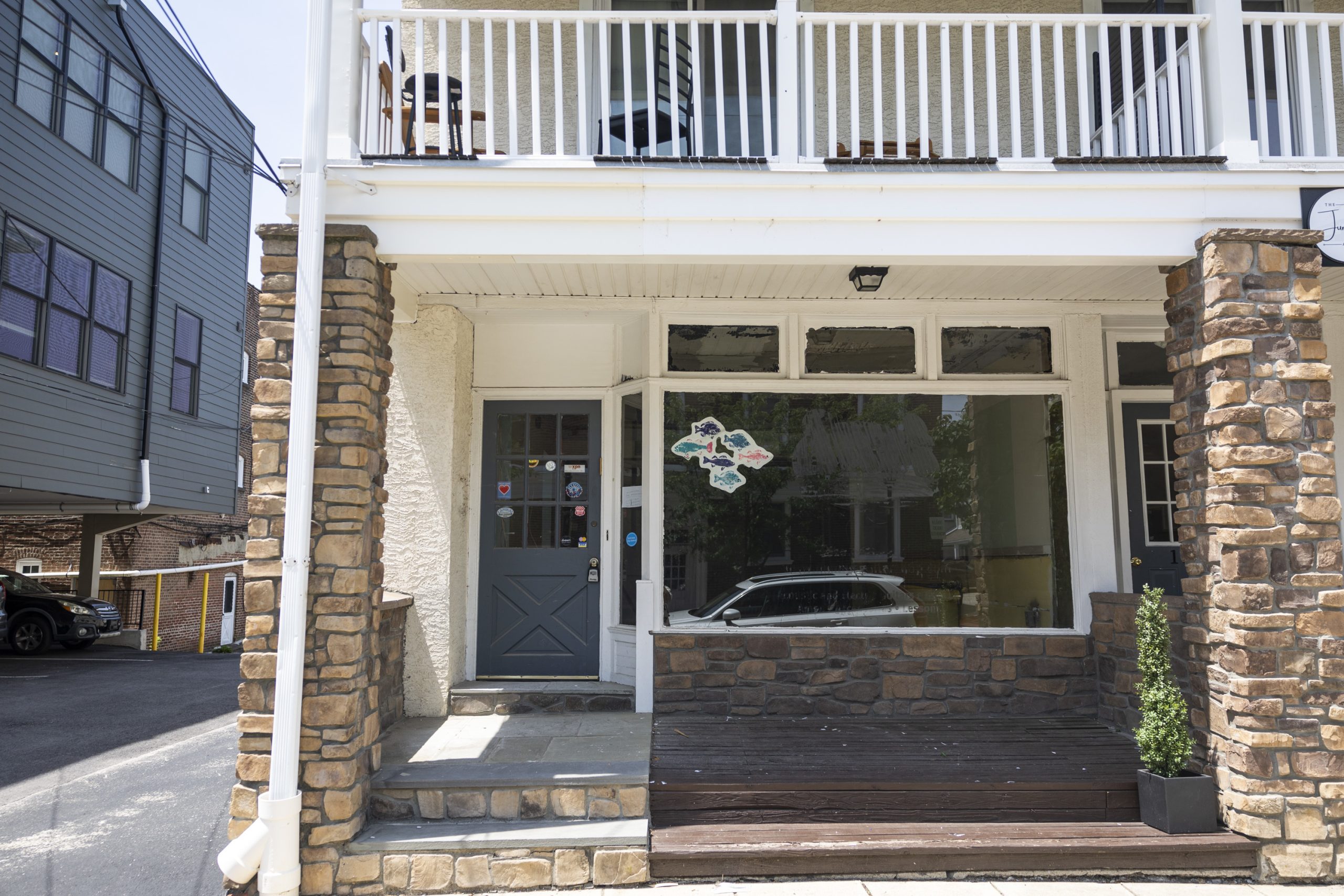
    Danny’s Guitar Shop, an independent guitar store and lesson center run by musician Dan Gold, closed its doors after 17 years in downtown Narberth.

    Over nearly two decades, Gold forged connections along the Main Line, sold guitars to celebrities, brought outdoor music to Narberth’s streets, and, briefly, starred in a TV show that drew on his talents as a self-proclaimed “kibitzer.”

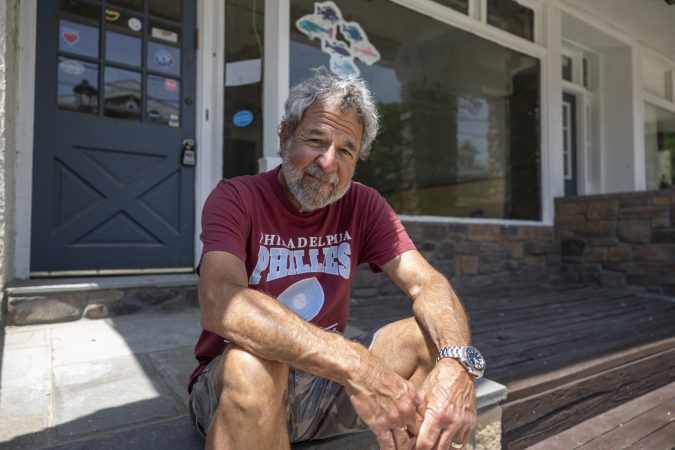
    Gold, 72, said retirement was already on his mind when his landlord raised the rent beyond what Gold could pay. Danny’s officially closed at the end of May. As Gold prepares for the next chapter, which will be filled with swimming, traveling, and playing bass in Broken Arrow, his Neil Young cover band, he said his time in Narberth was “just perfect.”

    The former storefront of Danny’s Guitar Shop in Narberth. Tyger Williams / Staff Photographer

    Gold opened Danny’s Guitar Shop in June 2009, right as the country had begun to dig itself out of the Great Recession. Guitar store Medley Music of Bryn Mawr had closed the year prior, and Center City’s 8th Street Music had moved across the bridge to New Jersey, leaving a vacuum for guitar lovers in Philly’s western suburbs.

    Gold, a Newtown Square resident, grew up in Havertown and graduated from Haverford High School and Temple University. He started his career as a schoolteacher before taking a gig as a district sales manager for Fender Guitars, traveling across the region, from rural Pennsylvania to North Jersey, selling instruments and accoutrements.

    Though it was risky to open a brick-and-mortar store at the heels of the financial crisis, Gold was bullish on the prospect. His mentors told him that as long as he ran guitar lessons, he’d be able to pay the rent. Gold had always loved Narberth’s “very distinct, charming personality” and was smitten with the Forrest Avenue storefront right away, with its ample natural light and welcoming front porch.

    When Danny’s opened in 2009, the Main Line Times described it as having promptly “established itself as that rare kind of clubhouse — the kind where everybody’s allowed in.”

    Over the years, the storefront’s shaded porch became the site of dozens of guitar recitals and summer evening jam sessions. Narberth residents gathered outside of Danny’s to talk about the news and the neighborhood gossip, and Gold always had treats for local dogs. Gold helped bring live music to Narberth during First Fridays and the annual July Fourth celebration. Ahead of a recital last fall, Gold posted on Facebook: “Students playin’ on the porch this Sunday 3:00! Bring a chair and come hang out!”

    “Danny is loved around here and for good reason,” said Ed Ridgway, president of the Narberth Business Association, who took guitar lessons at Danny’s.

    Ridgway described Danny’s as resembling an “old-timey barbershop.” If you asked Ridgway to make a list of 10 things that define Narberth’s downtown, he said Danny‘s would be on the list.

    “He was just such a good presence in Narberth,” said Tracy Tumolo, owner of Narberth art and gift shop Sweet Mabel Store.

    “This place,” Gold said. “It just fit me like a glove.”

    Danny Gold (center) pictured at Danny’s Guitar Shop in Narberth in 2018 with partners Larry Freedman (left) and Ron Stanford. LAURENCE KESTERSON / Staff Photographer

    Every once in a while, a star or two would stop into Danny’s Guitar Shop while visiting the area or prepping for a show at Ardmore Music Hall. The Eagles’ Timothy B. Schmit bought a few guitars and gave Gold backstage passes when the band played Atlantic City. Wilco’s John Stirratt stopped by, as did Dweezil Zappa, Frank Zappa’s son. Tumolo said Gold always encouraged them to shop at Narberth’s other businesses.

    In 2014, Gold starred in a 13-episode series on WHYY-TV’s YArts cable channel, which aimed “to do for guitars what Anthony Bourdain has done” for international cuisine or ”Mike Rowe for the art of cleaning septic tanks,” according to an Inquirer story from the time. In the series, Gold explored the origins of Klezmer music, interviewed the scholar who wrote the definitive book on the history of the accordion, and spent quality time with electric guitar giant Paul Reed Smith.

    Lessons were the biggest part of Gold’s business model at Danny’s, as his mentors predicted. He did a large consignment and secondhand business, as well, as he was mostly selling to first-time and beginner players.

    “The lessons made me a destination store. It’s never like I carried away wheelbarrows full of money, but we were able to make a modest living and enjoy doing what we were doing,” Gold said.

    Like many brick-and-mortar merchants, Gold said it became more difficult over time to keep up with the ubiquitous online marketplace. Consumers can now buy any model of guitar, in any color, at any time. Music stores across the country have shuttered in recent years, pointing to online shopping as a factor in their decline.

    On one hand, Gold feels somewhat liberated from the day-to-day responsibilities of running his namesake storefront. On the other hand, there’s a lot he’ll miss — the people, the borough, watching the neighborhood kids grow up.

    At the end of the day, Gold said, “It’s been a great run.”

    This suburban content is produced with support from the Leslie Miller and Richard Worley Foundation and The Lenfest Institute for Journalism. Editorial content is created independently of the project donors. Gifts to support The Inquirer’s high-impact journalism can be made at inquirer.com/donate. A list of Lenfest Institute donors can be found at lenfestinstitute.org/supporters.

  • Haverford parents are worried about chatbots in classrooms after a vote to buy AI tools

    Haverford parents are worried about chatbots in classrooms after a vote to buy AI tools

    A move by the Haverford Township School District to buy artificial intelligence tools for students and teachers has been met with protest from parents who fear the technology will erode learning.

    At a meeting last week, the Haverford school board voted 5-3 to approve contracts with School AI, which features AI “tutors,” and Brisk, which automates tasks for teachers, like developing quizzes and giving students feedback.

    While administrators said the tools wouldn’t supplant teaching and learning, critics said it was inevitable that AI would be used inappropriately — making it easier for kids to avoid work.

    “The idea of putting chatbots on computers — I don’t even care what age. I’m pretty disgusted by that,” said Christine Seewagen, a district parent of rising 12th and 7th graders.

    The district already struggles to manage technology in the classroom, said Seewagen, who said her older child has observed students run math questions through an AI tool on their phones. Her younger child, meanwhile, had a teacher who directed students to upload essays to an AI tool to get feedback, Seewagen said.

    “They’re just using AI, and not really being instructed on how to do it,” Seewagen said in an interview.

    Administrators said they were recommending buying AI tools in part because teachers are already using freely available versions, and they want to “eliminate free roaming around platforms,” Robert Anderson, the district’s technology director, said at the June 18 board meeting.

    Haverford’s superintendent, Matthew Hayes, said the School AI contract would “allow us to have a resource so that as we go through the process of the strategic plan and looking at all the implications down the line,” the district could begin teaching AI “thoughtfully, responsibly, ethically.”

    He added: “And also reducing screen time,” without providing further details.

    The controversy around AI in Haverford is the latest example of area parents pushing back on what they see as excessive and unchecked technology use in schools.

    In Lower Merion, parents have pushed to opt their kids out of district-assigned laptops or tablets; the district is planning changes to reduce usage for younger students, but has told parents they cannot opt out entirely. Parents in other districts are also raising concerns about too much Chromebook use.

    In Haverford, some parents said they were caught off guard by the proposal to adopt technology they felt posed risks to their kids.

    Patrick Burland, the parent of an incoming 10th grader and 6th grader, noted he’d had to sign numerous permission slips for his younger child to participate in end-of-year celebrations.

    “Apparently, sugar requires a signature, but cognitively rewiring her brain does not,” Burland told the board.

    Anderson said Haverford had been considering how to incorporate AI for years. He said the district sought feedback from teachers, including through an AI working group, before proposing the contracts.

    Board members who voted for the AI tools, meanwhile, said kids needed to learn how to use the technology responsibly.

    “Not acknowledging that it’s here … we don’t gain anything, right? We actually lose and we put ourselves farther behind because it’s not going anywhere,” said board member LaTonia Lee.

    But some raised questions about what the district was planning to do with the tools.

    Dave Schwartz, another board member, said he would support teaching kids about AI. But the district hasn’t said how it plans to do that, he said.

    “We’ve been talking very much in vague terms, and I can’t vote for something that I don’t understand,” Schwartz said.

    A district spokesperson did not respond to a question this week about examples of how School AI might be used.

    Board member Chris Shelton asked Anderson about criticism that the tool’s “historical figure” chatbots were giving students inaccurate information. (Last year, School AI acknowledged that responses from an Anne Frank character “didn’t provide critical historical details about the Nazis’ role in the Holocaust.”)

    Anderson called it “unfortunate” that the company had promoted the historical figures feature, but said the district “would have the option to potentially not use something like that.”

    John Flagler, a board member and English teacher, said he understood the burdens placed on teachers, “but I also believe there are lines that should not be crossed.”

    The suggestion that grading papers is a “menial task” that could be offloaded to AI “is an insult to both the teacher and the student,” Flagler said, calling grading essential to teachers learning about students.

    Administrators said Brisk wouldn’t be used for grading, but would provide “first-level feedback” — informing students they’re missing a topic sentence, for instance, said Meridith Herne, the district’s technology integration coordinator.

    “We insist that our teachers read it over and modify it so it’s in their own voice,” Herne said of Brisk’s feedback. Hayes said that 97 district teachers already use a free version of the tool.

    He said the tool was not meant to replace teachers.

    “That’s not my intent at all,” Hayes said, describing Brisk as “an option for individuals who want exposure to it.”

    He noted that the contracts with Brisk, for $22,260, and School AI, for $12,999, were each limited to one year.

    Teachers will be trained on the School AI platform, Anderson said; it will be up to them to decide whether they want to use it. He said the district envisions the platform being used in high school and “potentially” middle school, but isn’t planning for it to be used in elementary schools.

    Parents like Burland and Seewagen, who said like-minded parents have been organizing on social media, weren’t persuaded.

    “It does not feel like to me they have put any guardrails on,” Burland said in an interview. He questioned whether the district would have considered turning off School AI chatbots, for instance, had it not been asked at the board meeting.

    Seewagen said many parents who have learned about the AI plans aren’t happy.

    “It did not go under the radar,” she said.

  • How Haverford High’s national teacher of the year is coaching aspiring teachers, on topics from racism to connecting with students

    How Haverford High’s national teacher of the year is coaching aspiring teachers, on topics from racism to connecting with students

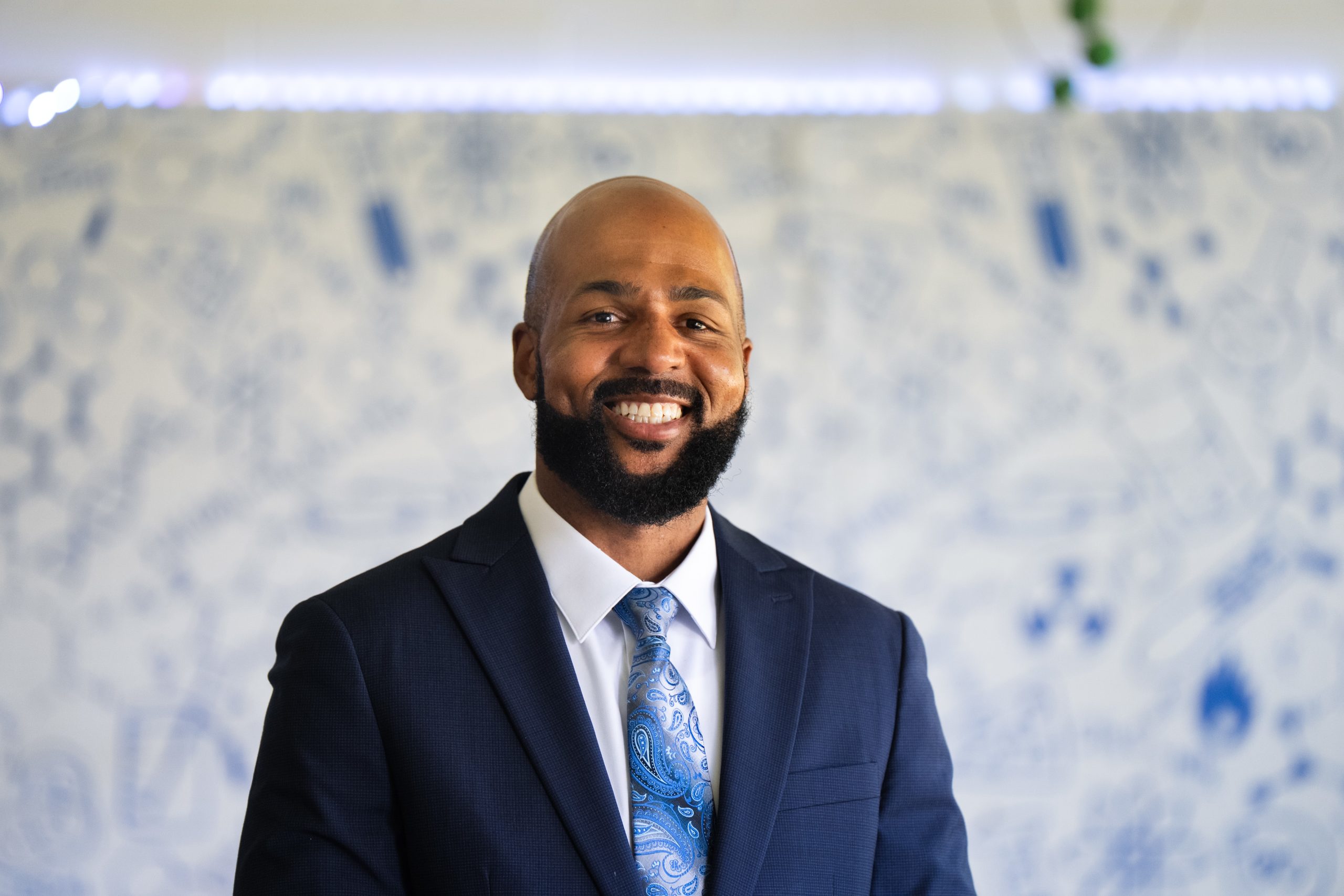
    As the newly appointed National Teacher of the Year, Haverford High School’s Leon Smith has been celebrated on television: from CBS Mornings and Good Morning America to the Kelly Clarkson Show.

    But as the lone Black teacher when he started teaching at Haverford 25 years ago, Smith got a different reception. He experienced racism, he told a group of young people interested in teaching, and if it weren’t for a Black vice principal that listened and supported him, he might not still be teaching today.

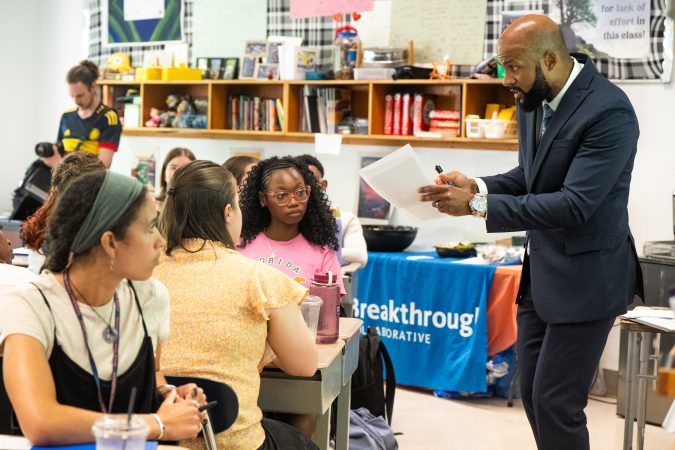
    “She would just be very honest with me, and be like, ‘First of all, you’re an excellent educator. … Keep being you. Somebody calls and says something crazy, I’m just hanging up,’” Smith told teaching fellows gathered in Germantown on Wednesday with Breakthrough of Greater Philadelphia, a nonprofit that trains aspiring teachers to lead enrichment programs for middle-school students.

    The event, sponsored by the Equitable Foundation, was just one of many for Smith during his yearlong stint as Teacher of the Year, a platform he was awarded in April by the Council of Chief State School Officers. In that role, he’s spending the year traveling the country to advocate for the teaching profession and growing its ranks.

    Smith, who teaches Advanced Placement U.S. History and Advanced Placement African American Studies at Haverford, spoke passionately to the fellows Wednesday about his motivation to be the teacher he didn’t have growing up, and the immense impact teachers can have on students’ lives — presenting the profession as a deeply rewarding opportunity to help kids recognize their talents.

    But he was also honest about the challenges. Fielding questions about his career from fellows gathered in an auditorium on the Germantown Friends School campus, Smith said he had struggled to find his way as a new teacher, staying up too late trying to perfect lessons.

    He described the sometimes lonely experience of being his predominantly white high school’s only Black teacher, and how he developed strategies to respond to racism, including learning when to walk away and when to speak out.

    He told fellows to find supportive colleagues and to be selective when they considered job offers.

    “Do your research. Make sure it’s a space that’s going to take care of you,” he said.

    Smith also described feeling self-conscious when he was younger about some of his lessons — worrying that students would say, “‘Oh, all he does is talk about Black history,’” Smith said. But he began hearing from students about how grateful they were to have learned about subjects that hadn’t been covered in other classes; an audit later identified African American studies as a class community members wanted to see added.

    ‘My why’

    His comments resonated with the teaching fellows, some of whom said they’re committed to careers in education.

    Dominique Sidae, a 23-year-old rising senior at Florida A&M University, is planning to become a special-education teacher. She said she was inspired by her appreciation for a teacher who helped her younger brothers, who have autism.

    Sidae said she is often the only Black person in teaching spaces. “It feels good to know this isn’t only happening to me,” she said. “You don’t really learn that in college.”

    Dominique Sidae, 23, a fellow with the Breakthrough of Greater Philadelphia, listens to a talk by Leon Smith last week.Jessica Griffin / Staff Photographer

    Miles Baldwin, an 18-year-old graduate of Harriton High School in Lower Merion, isn’t sure he wants to become a teacher. But he enjoyed working with students last summer in the Breakthrough program — “a lot of kids came in hating it, and left wanting more,” he said — and Smith’s pitch about being a mentor was compelling to him.

    “Honestly, yeah,” he said, when asked if hearing from Smith made him more interested in teaching.

    That’s part of the goal of Smith’s role as Teacher of the Year, as a dwindling pipeline has challenged recruitment efforts.

    Smith’s agenda this summer includes attending the National PTA Convention in Pittsburgh and giving a keynote speech at the Smithsonian’s National Education Summit. He also will be joining other state teachers of the year at Space Camp in Alabama and participating in professional development.

    But addressing the Breakthrough teaching fellows Wednesday “reminds me of my why,” Smith said in a brief interview. He said the fellows’ eagerness to ask questions “shows they want to be the best they can be,” and reflects qualities of good teachers: “You have to be curious, sometimes silent … often humbled,” Smith said.

    Leon Smith, a teacher at Haverford High School, was named National Teacher of the Year this spring.Jessica Griffin / Staff Photographer

    Teaching students to lead

    In a model lesson after his talk, Smith put some of those skills on display. He started by gathering the 34 fellows in a circle, asking them each to share their name and a brief story about it; the group periodically broke into laughter at humorous anecdotes.

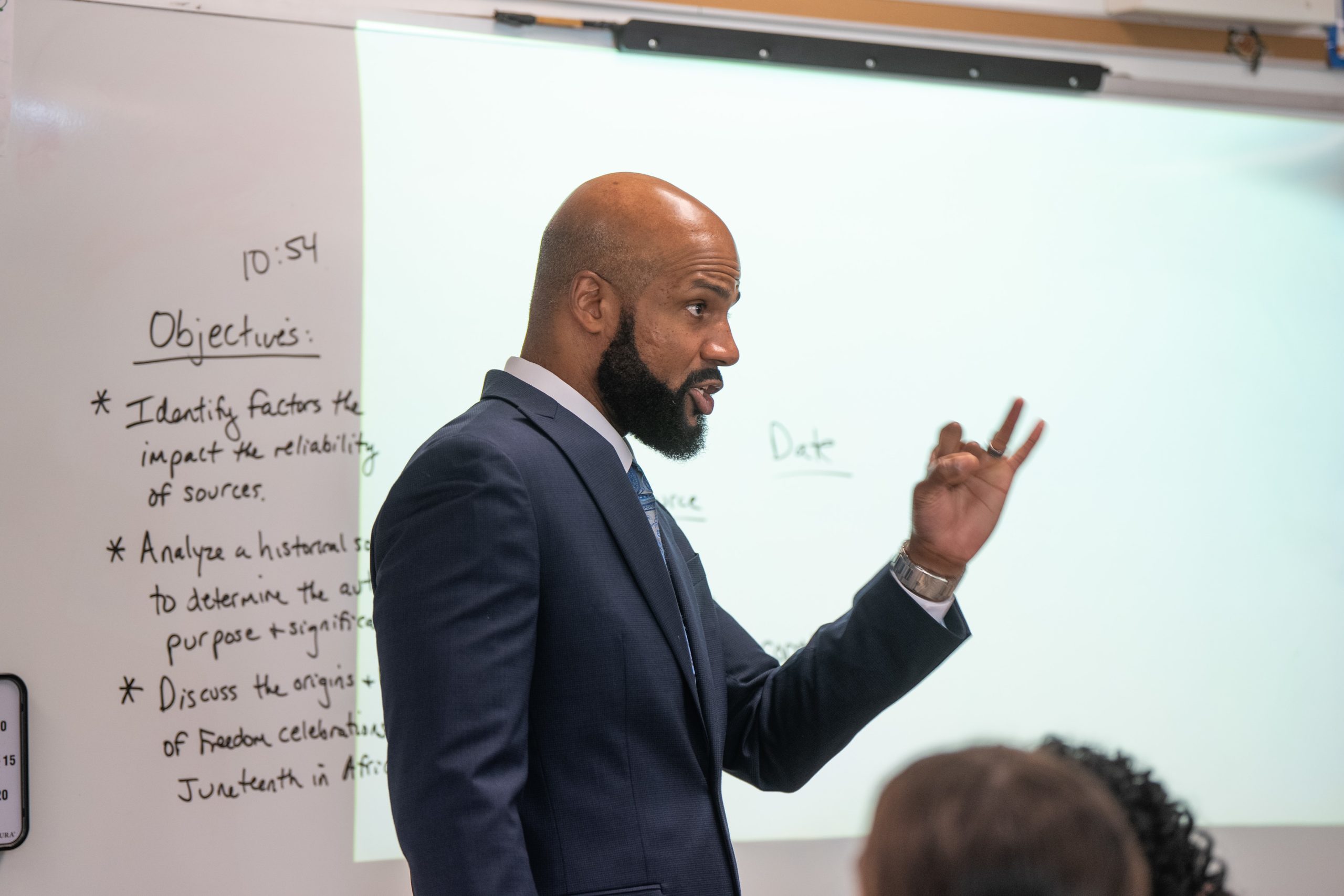
    Smith then outlined the objectives for his lesson about assessing the credibility of sources. He passed out copies of a photo, asking fellows to silently write and then discuss in small groups whether it provided strong evidence of the Fukushima power plant explosion.

    “I always tell my students, you want to be a leader,” Smith said, encouraging fellows to stand by their analyses, even if others disagreed. He then called on people, asking them to explain their thinking while challenging some of their points.

    Leon Smith talks to fellows at Breakthrough Collaborative last week.Jessica Griffin / Staff Photographer

    Matt Greenawalt, co-dean of faculty for the Breakthrough summer program and a teacher at Germantown Friends — which supports Breakthrough — was planning to breakdown Smith’s approach for the fellows after the lesson. He noted how Smith was walking through the room, engaging with the fellows as they talked, and Smith’s ability to affirm and redirect them when an answer wasn’t on point.

    Smith’s visit came on day three of a two-week orientation for the fellows, before they would begin teaching students during Breakthrough’s six-week free summer program.

    While access to academics is key for the program’s students, many of whom come from Germantown, “a big piece of it too is having role models,” Greenawalt said.

    Smith told fellows that when the students arrived, “they’re going to just admire you so much.”

    “You’re going to be able to see the light inside of them, and sometimes it just takes someone else to notice, right? … They’ll just kind of be doing their work, and then as you get to know them, you’ll notice certain characteristics and you’ll just pour into it.”

    What really helps make a connection with kids, Smith said, is “just you being yourself.”

    “You walking in there and walking in your own life, and bringing your passion and all the reasons why you wanted to become a teacher,” he said. “Your students are going to feel that.”

  • A group of Haverford alumni is pushing the college to remove Howard Lutnick’s name from library

    A group of Haverford alumni is pushing the college to remove Howard Lutnick’s name from library

    Haverford College students have publicly advocated for the school to consider removing U.S. Commerce Secretary and mega donor Howard Lutnick’s name from the library.

    Behind the scenes, an older group has been pushing, too.

    About a dozen vocal Haverford alumni have come out in strident disagreement with president Wendy Raymond’s decision in April not to take steps toward considering the removal of Lutnick’s name.

    Several in the group have called for Raymond’s resignation, while at least one said he had withheld his donation. Some were critical of Lutnick even before Department of Justice documents released earlier this year showed he had contact with sex offender Jeffrey Epstein as recently as 2018, long after Epstein pleaded guilty to obtaining a minor for prostitution and soliciting a prostitute.

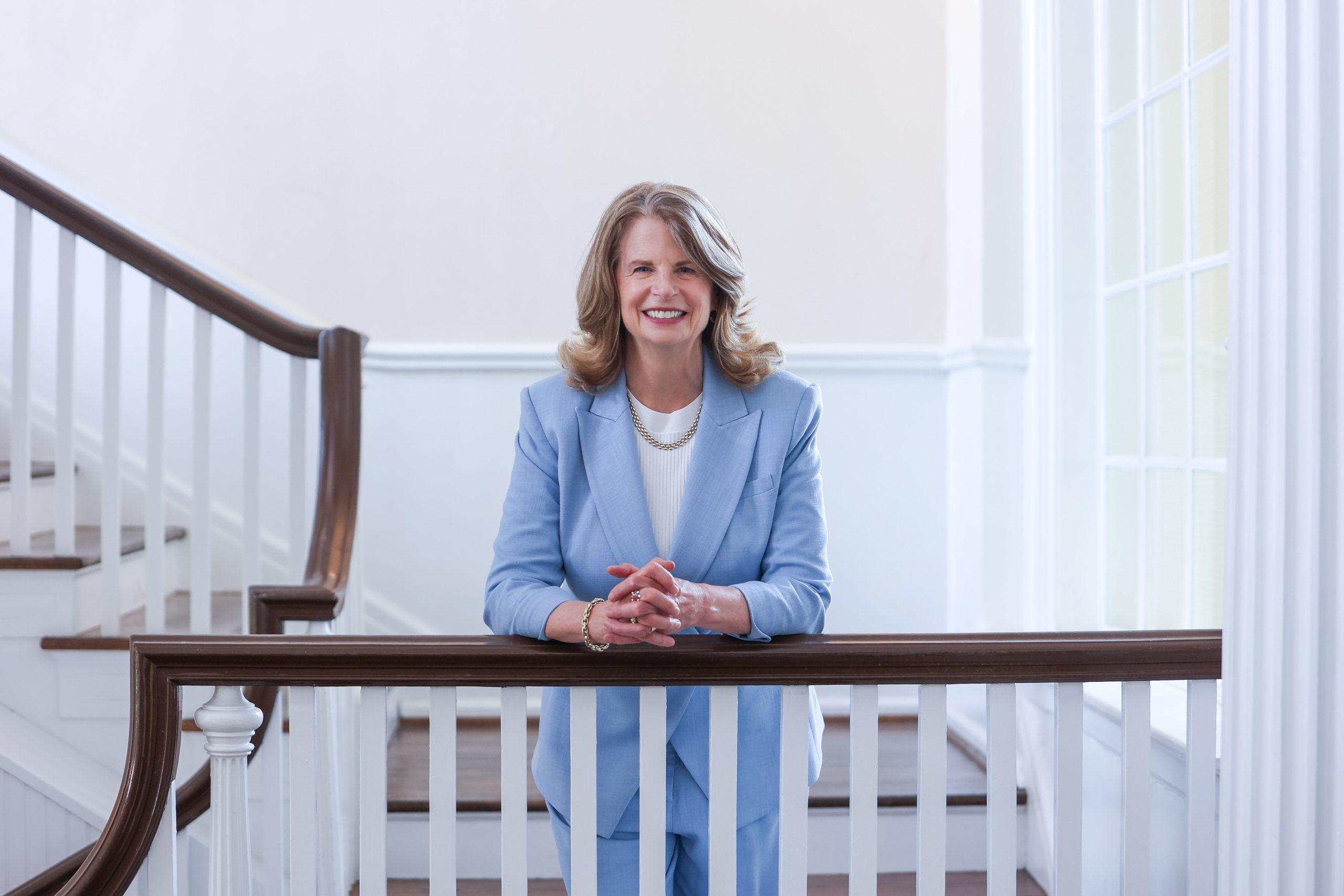
    Haverford College president Wendy Raymond has led the college for seven years and previously announced she would step down next June.Courtesy of Haverford College

    But Raymond stood by and explained her decision during a Zoom call last week with former board members, and the current board chair said Lutnick himself feels that he is being targeted in a witch hunt, according to accounts of the meeting.

    Among the concerned alumni is Norm Pearlstine, a 1963 graduate who served on Haverford’s board of managers from 1986 to 1989 and is a former editor of the Wall Street Journal, Forbes Magazine, the Los Angeles Times, and Time Inc. and former chief content officer at Bloomberg.

    “I am appalled,” Pearlstine wrote to Raymond on May 3, days after she announced she would not initiate a committee to consider removing Lutnick’s name from the library. “You should resign immediately so Haverford‘s board can replace you with a leader who puts principle ahead of principal.”

    Another alumnus wrote that he would not advise his grandchildren to attend Haverford.

    “I cannot imagine that my granddaughters or grandsons would want to enter the Lutnick library or the Lutnick cafe or for that matter, any other building on campus with his name on it,” wrote Joseph Schulze, a 1963 graduate and retired Michigan school superintendent who grew up in the Philadelphia area.

    Adi Ignatius, a 1981 graduate and journalist who is editor at large of the Harvard Business Review, said he donated to Haverford every year until 2025, when he withheld his money because of the Lutnick matter.

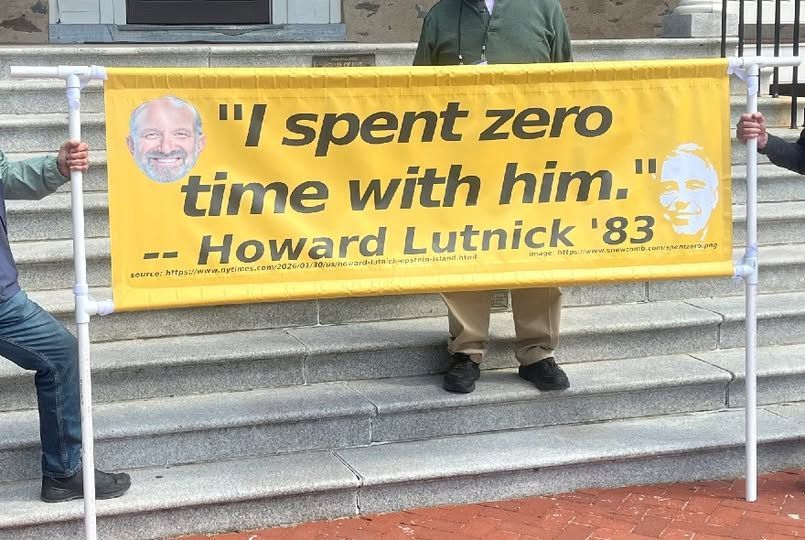
    Haverford College alumni from 1971 hold a banner on campus about Howard Lutnick during alumni weekend.Courtesy of Chuck Durante

    Haverford in a statement said many community members who oppose removing Lutnick’s name have also written to the college or told Raymond they are against the creation of a review committee that was requested through a student resolution this spring.

    “President Raymond felt it was in the best interest of the college to reject the resolution because she did not believe this matter met the threshold necessary to constitute a committee given the college’s established standards and the information available to us at that moment,” the statement said.

    But, the college said, “the matter is not closed.” Haverford is continuing to monitor “publicly available information” and “community sentiment” on the issue and Raymond or her successor could choose to initiate a committee, the college said.

    Haverford not ready to make an ‘indictment’

    Raymond, in the June 11 Zoom call with former board members, said she regarded creating a committee close to an “indictment” and did not think the threshold had been met, according to an email account of the meeting by Pearlstine obtained by The Inquirer. Some concerns about Lutnick are political, she said, and she is not willing to consider politics in her decision-making about a renaming committee, according to accounts of the meeting.

    Students and alumni have pointed out that Lutnick had previously said he had not been in a room with Epstein, whom he found “disgusting,” since 2005, yet he testified to Congress earlier this year that he had visited Epstein’s private island with his family in 2012 and exchanged emails with him in 2018.

    But Raymond, who has led the college for seven years and previously announced she would step down next June, said in Tuesday’s meeting that she did not think Lutnick’s lying about when he last had contact with Epstein was enough of a trigger.

    Some alumni, supporting Raymond’s decision, have noted there is no evidence Lutnick participated in Epstein’s crimes or improprieties.

    “I understand that students might feel strongly in support of wanting to change the name, but I don’t believe there’s a basis to do so,” said Robert Swift, a Philadelphia lawyer and former board member who was on the call Tuesday. “I have serious differences with Howard politically, but that’s not relevant either.”

    Swift, 79, a 1968 Haverford graduate who served on the board for 12 years, said Lutnick, a former chair of the college’s board of managers, was generous and served the board well.

    “His heart was in the right place,” Swift said.

    Some were calling for Lutnick’s removal even before the Epstein connection because they did not like his politics, said one alumnus who asked not to be named because of the sensitivity of the matter.

    “I don’t think it’s fair to remove someone’s name from a building simply because you don’t like their politics,” the alumnus said.

    George Parker, a 1960 alumnus and a professor of finance at Stanford’s Graduate School of Business, said Haverford should rely on its Quaker roots, which requires governing by consensus.

    “We do not have consensus,” Parker, a Quaker originally from the Philadelphia area, said of the Lutnick matter, “and where we do not have consensus, I do not think we should take action.”

    Lutnick’s relationship with Haverford

    Haverford has been in contact with Lutnick. Michael B. Kim, chair of Haverford’s board of managers and a private equity firm leader in Korea, said during the Zoom call that Lutnick communicated he is especially hurt that his alma mater is taking part in what he feels is a witch hunt, according to meeting accounts.

    Michael B. Kim, chair of Haverford College’s board of managers.Courtesy of Haverford College

    The board agrees with Raymond’s decision, he said.

    Lutnick’s relationship with the highly selective, small liberal arts college on the Main Line goes back decades. He lost his mother to cancer when he was in high school and then his father one week into his freshman year. Haverford’s president at the time waived his costs and he graduated in 1983 with an economics degree.

    Former chairman of financial firm Cantor Fitzgerald, he served on Haverford’s board for 21 years, the last three as chair, until 2015. His name was put on the library after a then-record $25 million donation he and his wife made in 2014. Lutnick has given the school $65 million and is one of its biggest donors.

    His Epstein ties gained scrutiny earlier this year. A Commerce Department spokesperson told the Associated Press that Lutnick had had “limited interactions” with Epstein, with his wife in attendance, and had not been accused of “wrongdoing.”

    A request to the Commerce Department’s press office to speak with Lutnick got no response.

    Under Haverford’s gift policy, the school can rename a building if “the continued use of the name may be deemed detrimental to the college, or if circumstances change regarding the reason for the naming.”

    Schulze, the former school superintendent, said he thinks that threshold has been met and a full discussion is needed.

    “Somebody else should take over if [Raymond’s] not ready to do that,” he said.

    Rob Riordan, a 1964 graduate and Trenton native who lives in Cambridge, Mass., said he was upset Raymond did not honor a request from an overwhelming majority of students at a plenary meeting who requested a committee be formed

    “To me, that felt like a violation,” said Riordan, 84, an educator who helped start charter schools in the San Diego area.

    Several alumni pointed out that nearby Bryn Mawr and Swarthmore Colleges have removed names of controversial figures from buildings in recent years.

    Pearlstine, who was on the Tuesday call, first wrote to Raymond and Kim in July 2025, urging that Lutnick’s name be removed. His concerns are not political, he said, but rather about behavior that conflicts with Haverford’s values.

    “Howard Lutnick is a powerful Trump administration cabinet officer who proudly helps the most lawless President in our country’s history implement policies that trample upon human rights, due process, rule of law, and respect for the independence and integrity of institutions of higher learning,” he wrote.

    It was not always that way. Ignatius, 67, who lives in Stonington, Conn., said he recalled interviewing Lutnick on stage at Haverford in 2015 and the good will in the audience toward him. Lutnick, who lost his brother and many of his company’s employees in 9/11, talked about the aftermath and how the company helped care for victims.

    “His trajectory since then has been similar to Rudy Giuliani’s,” Ignatius wrote to Raymond and Kim last August. “He has squandered the goodwill he built up after 9/11 and become a partisan troll, espousing values that are inconsistent with — and offensive to — the ideals that Haverford stands for.”