Tag: Gloucester County

  • Celebrate the season with these fall events across South Jersey

    Celebrate the season with these fall events across South Jersey

    Leaves are falling, cardigans are coming out of the closet, and pumpkin spice is on menus everywhere.

    In other words: Autumn is in full swing.

    With Halloween just around the corner, it’s the perfect time to get into the fall mood at events across South Jersey this month.

    Burlington County

    The Haunting on High Street

    The Burlington County Prison Museum is getting into the spooky spirit with a haunted walkthrough of the historic building and Halloween hangout in the courtyard.

    ⌚️ Friday and Saturday, Oct. 16-17, 23-24, and 30-31, 7-10 p.m. 📍 128 High St., Mount Holly 🌐 bloodshedfarmsfearfest.com 💵 Tickets for the walkthrough and hangout are $31; tickets for just the hangout are $13

    The Witches Bazaar

    The Mill Race Village Shops will once again welcome fire twirlers, stilt walkers, and witches for the bazaar. Come dressed in your best costume and try to win over the audience during the crowd-favorite costume contest.

    ⌚️ Saturday, Oct. 17, 4-10 p.m. 📍 Mill Race Village Shops, 5 Church St., Mount Holly 🌐 millraceshops.com 💵 Free; registration required for costume contest

    Chatsworth Cranberry Festival

    Celebrate New Jersey’s annual cranberry harvest at this rain-or-shine festival featuring a craft show with up to 150 vendors, more than a dozen food options, and live music. Organizers recommend that attendees bring cash as spotty cell reception makes credit card payments difficult. There will be ATMs available onsite, but expect lines to be long.

    ⌚️ Saturday, Oct. 17 and Sunday, Oct. 18, 9 a.m.-4 p.m. 📍 White Horse Inn area, Route 563 and Route 532, Chatsworth 🌐 cranfest.info 💵 Free

    Maple Shade Halloween Parade

    Maple Shade’s annual Halloween parade will start near Fellowship Avenue and travel along Main Street before ending at North Lippincott Avenue. The parade will be followed by a costume contest.

    ⌚️ Saturday, Oct. 24, 2:15 p.m. 📍 Main Street, Maple Shade 🌐 mapleshade.com 💵 Free

    Tricks, Treats & Thrills: Haunted High

    Willingboro is getting into the spooky spirit with a family-friendly night at the Kennedy Center. Expect candy stations, Halloween movies, music, and light refreshments in addition to tours of a Halloween-themed classroom.

    ⌚️ Friday, Oct. 30, 6-10 p.m. 📍 Kennedy Center, 429 John F. Kennedy Way, Willingboro 🌐 Willingboro Township Facebook 💵 Free

    Mount Holly Fall Fest

    Celebrate all things autumn at this annual event featuring the Howl-o-Ween Pet Pawrade, local vendors, and more in downtown Mount Holly.

    ⌚️ Saturday, Oct. 31, 11 a.m.-4 p.m. 📍 Downtown Mount Holly 🌐 Fall Fest Facebook 💵 Free

    Camden County

    Fintastic Pumpkin Glow

    Join more than 5,000 aquatic animals as they get into the Halloween spirit.

    ⌚️ Friday, Sept. 18-Sunday, Nov. 1 📍 Adventure Aquarium, 1 Riverside Dr., Camden 🌐 adventureaquarium.com 💵 General admission tickets start at $32.99 for adults and $27.99 for kids

    Howl-O-Ween Bash

    The Animal Welfare Association is once again hosting its annual all-ages Howl-O-Ween bash to fundraise for South Jersey animals in need. The event will include vendors, free kids activities, a trunk-or-treat, and spooky-themed cocktails and food.

    ⌚️ Friday, Oct. 16, 5-8 p.m. 📍 Animal Welfare Association, 509 Centennial Blvd., Voorhees 🌐 awanj.org 💵 Free; donations encouraged

    Voorhees Harvest Festival

    Enjoy a pumpkin patch, hayrides, children’s activities, a petting zoo, and more at this family-friendly event. Food trucks and vendors will also be on site for the festival.

    ⌚️ Saturday, Oct. 17, 11 a.m.-3 p.m. 📍 Voorhees Town Center, 2400 Voorhees Town Center, Voorhees 🌐 voorheesnj.com 💵 Free

    Pennsauken Fall Festival

    The 12th annual Pennsauken Township Fall Festival will be highlighting America’s 250th birthday in addition to carnival rides, games, music, and food.

    ⌚️ Saturday, Oct. 17, noon-4 p.m. 📍 Pennsauken Sports Recreation Complex, 1601 Bethel Ave., Pennsauken 🌐 pennsauken.gov 💵 Free

    Cherry Hill Harvest Festival

    Over 100 vendors will be at the historic Croft Farm for this family-friendly festival alongside pony rides, a petting zoo, free pumpkins, and a beer garden. Rain or shine.

    ⌚️ Sunday, Oct. 18, noon-4 p.m. 📍 Croft Farm, 100 Bortons Mill Rd., Cherry Hill 🌐 cherryhilltwp.com 💵 Free

    Haunted Haddon Market

    The third annual Halloween makers market will feature a wide variety of spooky vendors alongside a pop-up beer garden and a live DJ. This two-night, family-friendly event will also include fire pits with s’mores stations and a photo booth.

    ⌚️ Friday, Oct. 23 and Saturday, Oct. 24, 5-9 p.m. 📍 Haddon Square, 51 Haddon Ave., Haddon Township 🌐 shophaddon.com 💵 Free

    Haddon Heights Art Walk & Fall Festival

    Enjoy a day full of family-friendly entertainment featuring a wide range of local artists and craft vendors alongside live music, free activities for kids, and more.

    ⌚️ Saturday, Oct. 24, 10 a.m.-4 p.m. 📍 Station Avenue, Haddon Heights 🌐 visitsouthjersey.com 💵 Free

    Brews & Boos Crawl-O-Ween

    Nine Haddon Township restaurants with food and drink specials make up the route for this 21-and-over event. A free jitney will take riders to and from each participating location along Haddon Avenue in addition to the Westmont PATCO station.

    ⌚️ Saturday, Oct. 24, 2-10 p.m. 📍 Haddon Avenue, Haddon Township 🌐 shophaddon.com 💵 Pay as you go; no cover charges and no tickets required

    Gloucester County

    The Great Pumpkin Glow at Dalton Farms

    This new attraction features thousands of glowing jack-o’-lanterns along a festive pathway through huge pumpkin displays.

    ⌚️ Friday, Sept. 25-Saturday, Oct. 31, various evening times 📍 Dalton Farms, 666 Oak Grove Rd., Swedesboro 🌐 greatpumpkinglownj.com 💵 $22.95-$27.95

    Monroe Township Fall Festival

    Drop off your submission for the family pumpkin-carving contest by 10 a.m. before taking a pony ride or strolling through the pumpkin patch in Williamstown.

    ⌚️ Saturday, Oct. 17, 10 a.m.-2 p.m. 📍 Owens Park, 125 Virginia Ave., Williamstown 🌐 Monroe Township Parks & Recreation 💵 Free

    Elk Township Harvest Festival

    In addition to enjoying hayrides and a pumpkin patch, kids can get an early jump on this year’s trick-or-treating with Elk Township’s trunk-or-treat event at the Harvest Festival.

    ⌚️ Saturday, Oct. 17, 1-5 p.m. 📍 Elk Township Recreational Park, Glassboro 🌐 elktownshipnj.gov 💵 Free

    18th Century Field Day & Fall Festival

    Take a trip back in time with living history demonstrations, artillery and cannon drills, and meet-and-greets with Revolutionary War reenactors at Red Bank Battlefield. Vendors and food trucks will also be on site throughout the afternoon.

    ⌚️ Sunday, Oct. 18, 10 a.m.-4 p.m. 📍 Red Bank Battlefield Park, 100 Hessian Ave., National Park 🌐 gloucestercountynj.gov 💵 Free

    Halloween Food Truck or Treat Festival

    More than a dozen food trucks will be at Washington Lake Park for this daylong event full of food, music, candy, and costumes. Kids can trick-or-treat while families enjoy local vendors, mini golf, and face painting.

    ⌚️ Saturday, Oct. 24, 11 a.m.-6 p.m. 📍 Washington Lake Park, 626 Hurffville Crosskeys Rd., Sewell 🌐 Festival Facebook 💵 Admission is $5 at the gate; children under 5 years old get in for free
  • Warren Moore will succeed Amy Mansue as Inspira Health CEO in January

    Inspira Health’s chief operating officer, Warren Moore, will become the South Jersey health system’s next CEO, succeeding Amy Mansue in January, the nonprofit announced Tuesday.

    Mansue is retiring after six years leading the system with four hospitals in Gloucester, Cumberland, and Salem Counties. Inspira had $1.46 billion in revenue last year.

    Moore started at Inspira in January 2021 as executive vice president and chief operating officer. He was promoted to president at the beginning of this year.

    “Our commitment is to ensure people can receive the services they need, close to home, and to earn their trust every day,” Moore said in Inspira’s announcement.

    Moore’s immediate priorities include opening the new tower at Inspira Medical Center Mullica Hill and making sure that Inspira gets the most out of its new system for electronic medical records, Inspira said.

    Inspira adds to a run of new CEOs at Philadelphia health systems, starting with Main Line Health in June 2025, when Ed Jimenez took over for Jack Lynch.

    Since then, new CEOs have taken charge at Temple University Health System, ChristianaCare, and Children’s Hospital of Philadelphia.

  • Washington Township spent opioid settlement funds on license plate cams, police SUVs, according to NJ.com investigation

    Washington Township spent opioid settlement funds on license plate cams, police SUVs, according to NJ.com investigation

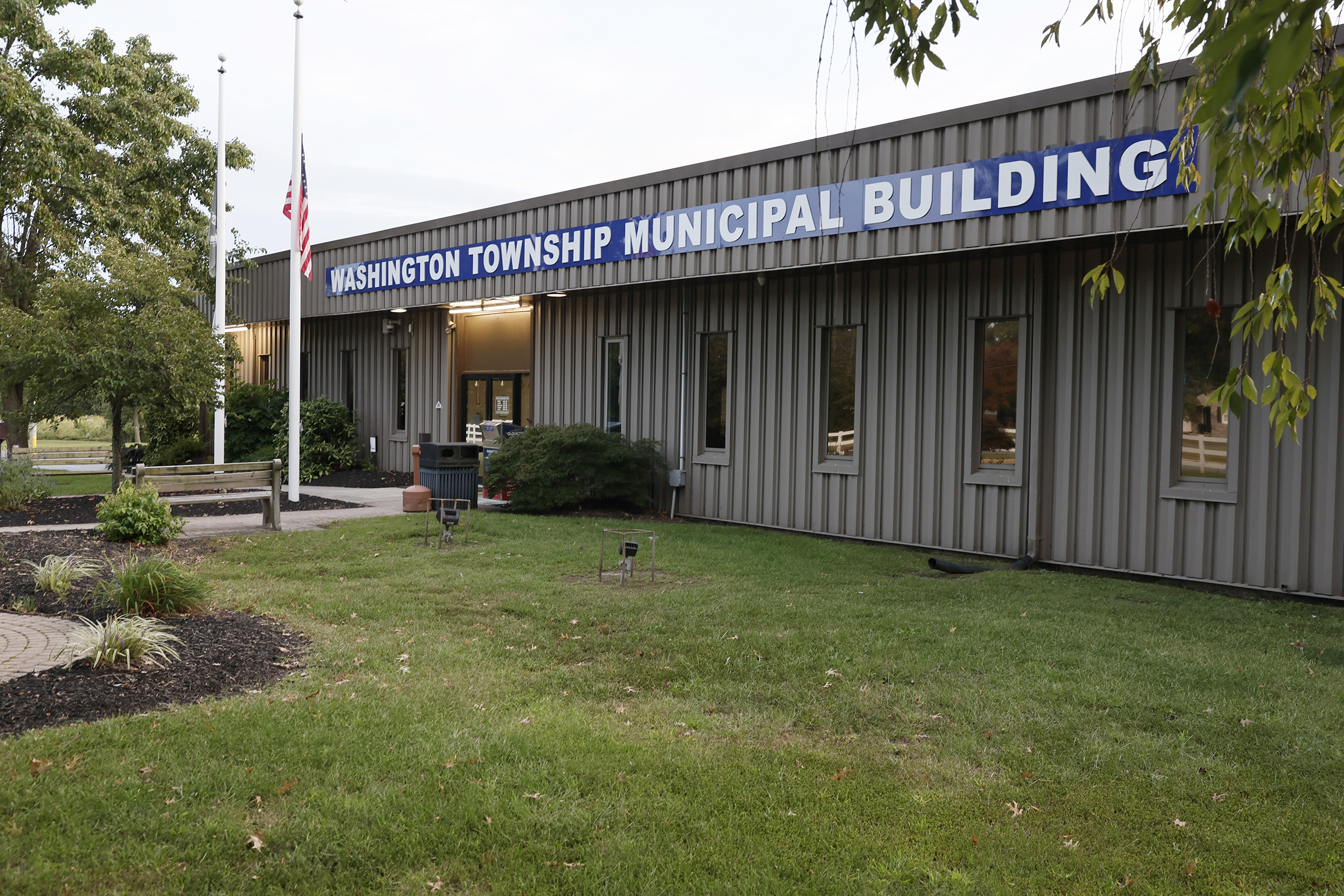
    Washington Township didn’t spend any of its opioid settlement money on drug education programming in 2024 and 2025, after telling the state it was investing in “drug education,” NJ.com reported Friday.

    Instead, the Gloucester County township bought SUVs and Flock surveillance cameras for its police department.

    According to state data in the NJ.com report, Washington Township, the most populous municipality in Gloucester County, had the highest number of treatment admissions for heroin use in the county in 2025.

    Plus, Washington Township “ranked among the worst 30% of municipalities” for heroin use treatment admissions per capita across the state during the peak of the opioid crisis, NJ.com reported.

    Settlement money first came to New Jersey, its counties, and municipalities in 2022, after federal lawsuits against pharmaceutical giants and others implicated in the decades-long opioid epidemic gave officials across the U.S. access to funds earmarked for drug treatment, prevention, and education.

    The New Jersey Office of the Comptroller reports that $1.1 billion will be distributed in the state by 2038, and about .25% of funds headed to New Jersey counties and municipalities has or will go to Washington Township.

    In 2024 and 2025, Washington Township told the state that it spent $170,446.70 in settlement funds on a “school-based narcotics and education program” and “drug education,” according to documents NJ.com obtained through records requests and while analyzing the town’s “bill lists, meeting agendas, meeting minutes, audit reports, and social media.”

    Township officials instead spent the money on “two 2024 Chevrolet Tahoe SUVs and 15 Flock surveillance cameras for its police department,” NJ.com reported. The township spent nearly $268,000 on the SUVs and cameras from November 2024 to April 2026, NJ.com reported, using the funding specifically allocated by the federal government for opioid remediation.

    Currently, towns and counties self-report to the New Jersey Department of Human Services how they spend the settlement proceeds and are not required to routinely provide receipts or documentation. DHS told NJ.com that the department is not responsible for ensuring that municipalities spend the settlement funds appropriately.

    There isn’t a clear process for tracking how municipalities spend opioid settlement dollars, NJ.com reported, or an accountability mechanism for when residents say their governments are spending the money wrong.

    Sandy Gibson, an addiction researcher and counselor education professor, told NJ.com that the state should be held accountable for the township’s “egregious” spending habits, especially given the number of people admitted for opioid use treatment in Washington Township. In 2025, Washington Township saw 95 admissions for heroin treatment reported to DHS, but the state doesn’t say whether the people treated were residents of the 50,000-person township.

    “I can’t see how there’s been no response or action taken to address that. Inaction at the level of the state is permission,” Gibson told NJ.com.

    At a council meeting in September, Patrick Gurcsik, the township’s police chief, explained that the police department intended for the license plate readers to “play a role in breaking the cycle of addiction-related crime” in Washington Township. He said other states have also used the funds for the readers.

    Local organizers across New Jersey have recently rallied against surveillance cameras, which track license plate data and store it for three years with state and local police departments.

    “Moving forward, we are developing a master plan that will identify the needs of our community and establish clear priorities for future use of these settlement funds,” Gurcsik said.

    On Sept. 23, the council passed a resolution, NJ.com reported, to advertise a request for proposals for “settlement fund consulting services.”

    And on Monday, Cody Miller, a Democratic state assemblyman representing Gloucester County, introduced legislation to make state and local opioid settlement spending more transparent, including by educating counties and municipalities on the approved uses of the funds through a training program.

    The state comptroller and Attorney General’s office reportedly declined to confirm to NJ.com whether Washington Township is under investigation for its spending.

  • The number of kids in Philly has dropped nearly 10% in 15 years

    The number of kids in Philly has dropped nearly 10% in 15 years

    Philadelphians can expect to see fewer children darting through water geysers in front of City Hall and paddling around the pond at Sister Cities Park in the coming decades.

    The city and suburbs are losing their populations of kids, and fast.

    Between 2010 and 2025, Philadelphia’s number of residents under 18 dropped by 31,038, to 312,490 children in 2025 — a decline of about 9%, according to an Inquirer analysis of Census Bureau data. That trend is even more dramatic for children under 5, whose population fell 12%. Those are notable shifts when compared with the city’s overall population gain of about 3%.

    This is not unique to Philly. In the last 15 years, nearly every major U.S. city has lost residents under 18, said Katie Martin, who directs research on Philadelphia trends and public opinion for Pew Charitable Trusts. And elsewhere in the Philadelphia region, every suburban county has seen its number of children decline during that span. The trend has the potential to become a big workforce and financial problem if it does not turn around.

    Demography experts say survey respondents often cite the climbing cost of living and political concerns as reasons for not having kids. Beyond logistics, people in the Philadelphian area say, the decision to not have children is driven by a desire for freedom and flexibility.

    “I feel like I wouldn’t have been able to do and experiment as much … if I had been responsible for other human lives,” said Maureen Ferguson, 44, of Souderton, Montgomery County, who has never looked back on her choice to not have kids, filling her life with artistic endeavors like music, theater, illustration, and stand-up comedy.

    The population and societal trends driving Philly’s drop in kids

    A confluence of changes in population trends is helping demographers piece together what is driving the drop in kids.

    For one, a reduction in teen pregnancies and births is changing the landscape. Teen births in Philadelphia fell from 3,072 in 2010 to 809 in 2025, according to data Martin and Pew sourced from the state.

    “That has been a huge change,” Martin said. “Not just in Philadelphia, but something you’re seeing nationwide.”

    It is a component of a larger trend of having children later in life, she said, which usually leads to each family having fewer children overall.

    The pandemic may have contributed as well, as the data show a particularly sharp decline in the number of children in the city between 2020 and 2023.

    The counties around Philly have likewise seen notable drops in their populations of children. Between 2010 and 2025, declines in the number of children ranged from 3% in Montgomery County to 12.7% in Bucks County.

    Finances have been a recurring theme, Martin said. In a survey Pew conducted last year in Philly, both women and families rated their financial situation as worse than during the pandemic.

    (function(){function e(){window.addEventListener(`message`,function(e){if(e.data[`datawrapper-height`]!==void 0){var t=document.querySelectorAll(`iframe`);for(var n in e.data[`datawrapper-height`])for(var r=0,i;i=t[r];r++)if(i.contentWindow===e.source){var a=e.data[`datawrapper-height`][n]+`px`;i.style.height=a}}})}e()})();

    Rising housing and childcare costs are likely contributing to the trend in Philly and beyond, said Genevieve Diebold, a senior planning data specialist with the Delaware Valley Regional Planning Commission. She added that fertility rates started decreasing meaningfully following the Great Recession of 2007-09.

    Costs are certainly one thing that have deterred Avery Walker, 32, who lives in Point Breeze.

    “I know how expensive children are,” she said. “They are a drain on all of your resources — mentally, emotionally, physically, financially — and I would have to give up a lot.”

    Prioritizing freedom and flexibility

    For Walker and others The Inquirer interviewed who do not have kids and do not plan to, the reasoning runs deeper than cost. It comes from a desire to live spontaneously and prioritize hobbies, health, and relationships with partners and friends.

    Walker, who works in supply chain, likes living on her own schedule, sleeping in, traveling, trying new restaurants, and attending concerts and does not want to give up or modify how she does those things in the ways she likely would need to if she had kids, she said.

    Jennifer Gamba, a 48-year-old paralegal in Fairmount, has been married to her husband for about 14 years. They never had strong feelings one way or another about having kids, Gamba said. Over time, the biological door began to close, and that was OK with them.

    “It just wasn’t really something we prioritized,” she said.

    Maintaining a good relationship with her husband, managing her rheumatoid arthritis, running marathons, and exploring national parks took precedence over kids.

    “I think you have to be all in, and I don’t know that I am all in,” Gamba said. “I think I could do it, but it might not have been the best version of me.”

    For Kelley Galloway, a 38-year-old real estate agent in Fishtown, finances and politics are factors. The idea of raising children, especially girls, in this political and economic climate is scary, she said. But those issues just reaffirmed the decision she had made long ago.

    Throughout her adulthood, Galloway has focused her energy on buying a home, creating a dinner club for women in Philly, advancing in her career, and traveling.

    “I went to three concerts this week, and none of them were planned,” Galloway said. “That’s something I could never do if I had children, and that’s why I moved to the city. I wanted to be able to enjoy my life and experience things.”

    Jessica Hawk, 57, always knew she didn’t want kids. She never liked playing with dolls as a child, preferring instead to play manager or teacher.

    “Whatever that maternal thing is that drives you to have a child, that is missing in me,” Hawk said.

    The retired English teacher in Glassboro, Gloucester County, has one million TikTok followers for her videos about education, but she started receiving attention from a different faction about six years ago when she began posting about being happily child-free. Her videos were seen around the world and resulted in her doing interviews for Russian and German media, she said.

    “I had so many women in my DMs saying to me, ‘I wish I could forgo having children but, in my culture or in my family or in my religion, I don’t have a choice,’” Hawk said.

    She spoke out, she said, to help women who don’t want kids understand just how many like-minded others are out there.

    What does this trend mean for the region’s future?

    This population shift could become even more stark, and eventually spell major issues for the city and the suburbs.

    Foreign-born residents have been driving the region’s population growth in recent years. Since those residents tend to have more children than people born in the United States, the immigrant population may be mitigating the drop in young residents and masking what would be an even more dramatic decline, said Letícia J. Marteleto, a sociology professor at the University of Pennsylvania.

    But that balance may be short-lived as President Donald Trump’s administration continues its dramatic efforts to curb immigration.

    An uneven distribution of younger and older residents could compromise bedrock systems designed to keep people financially secure and physically healthy into old age.

    Social Security and Medicare rely on contributions from those in the workforce. If there are fewer young people paying into the system and more older people extracting from it, it is increasingly difficult to cover each older resident.

    “The whole thing becomes very expensive,” Marteleto said.

    The healthcare system, she said, would become similarly imbalanced, an especially acute problem in a place that dubs itself a city of “eds and meds.”

    Those dire consequences are a long ways away, she said, but, at this point, it is hard to imagine the population trends turning around without significant government intervention like affordable childcare, housing, and healthcare.

    “If we don’t do the necessary things to provide women with the right circumstances for wanting to have more children,” Marteleto said, “we are going to keep getting what we are getting.”

    Correction: Philadelphia’s population change was previously misstated. Population grew by 3%.

  • New Jersey bill would limit employers’ ability to use AI to monitor workers or make changes to their jobs

    New Jersey bill would limit employers’ ability to use AI to monitor workers or make changes to their jobs

    As tech CEOs debate the looming threat of artificial intelligence to worldwide safety and economic stability, lawmakers in New Jersey have begun taking steps to protect the workforce from fast-moving changes that have already disrupted how many do their jobs.

    The state Senate Labor Committee last week voted unanimously to approve a bill that would regulate how employers use AI to monitor, evaluate, and ultimately replace workers.

    The bill, which comes amid a broader backlash to AI and surveillance technology, now moves to the Senate budget committee for consideration before a vote by the full chamber. The “Fair Act” would require private- and public-sector employers to provide 60 days notice before implementing AI that would impose significant changes to job expectations. Employers who eliminated jobs because of AI advances would be required to offer training, extended severance pay, and benefits, according to the bill.

    It would also regulate how employers use electronic monitoring tools to collect information about employees’ productivity, and how “automated employment decision-making systems” are used to hire, promote, and fire people.

    “It makes sure employers can’t spy on you when you are off the clock. Your boss should not be able to follow you home,” said Charle Wowkanech, president of the New Jersey State AFL-CIO, which represents 1 million public- and private-sector workers and their families, who spoke at a recent rally outside the Statehouse to draw attention to the bill.

    Artificial intelligence is already monitoring the productivity of thousands of people who work in grocery stores, factories, and cannabis operations in the state, said Daniel Ross, president of United Food and Commercial Workers Local 152, which represents workers in New Jersey, Pennsylvania, Delaware, and Maryland. “The time-test matrix is so unreasonable that workers skip bathroom breaks, they don’t take water breaks, to avoid falling behind,” Ross said.

    “Surveillance is not mainly harmless oversight, as it’s sold by employers,” Ross said. “Workers subjected to these practices experience elevated stress levels, declining mental health, and [increased] injury rates.”

    Other states have already taken up the issue.

    California, Colorado, Connecticut, Illinois, and New York have enacted various workplace protections from AI, according to Multistate, a clearinghouse for state legislation across the country. Pennsylvania has introduced its own bill to regulate AI in the workplace.

    However, New Jersey business and industry leaders urged the committee to rethink some of the most sweeping provisions of the bill.

    Most of the 1,300 members of the Chamber of Commerce Southern New Jersey are small businesses, which are not equipped with vast human resource or legal departments to implement the law, said Adam Guzjewski, president of Katz Government Affairs.

    The bill requires employers to comply with vague requirements to ensure AI does not undermine “an employee’s autonomy, dignity, or welfare.”

    But Jack Kelly, a lobbyist for the New Jersey Business and Industry Association, said it’s unclear how these requirements will be enforced for businesses.

    “Large corporations may have dedicated legal compliance and technology teams. Many New Jersey businesses do not. For small businesses, these requirements create significant barriers to entry,” Kelly said.

    New Jersey’s legislation is not out of step with how other states have regulated AI use, said Tony L.J. Lin, an associate professor of accounting at Rowan University who studies artificial intelligence in the workplace.

    “If AI materially restructures jobs, we need a mechanism for retraining and redeployment,” Lin said.

    States should push back on efforts to evaluate employees through invasive means like monitoring keystrokes, simply because this strategy likely does not fully show a worker’s productivity or value, Lin said.

    Lin said there is great potential to improve jobs using AI. A nurse-practitioner, for instance, would benefit from technology that handles automated tasks. But a nurse-practitioner will always be valued for the “human judgment, contextual understanding accountability” aspects of the job, he said.

    Debbie White, president of the largest nurses union in New Jersey, isn’t so sure.

    “Healthcare employers are increasingly using AI and electronic monitoring systems to track worker productivity, evaluate performance, and influence staffing decisions,” White testified during the Oct. 1 hearing in Trenton.

    However, White said these systems fail to measure “the reality of nursing care,” which often involves time comforting ailing patients and educating their families among other overlooked aspects of the job.

    “AI can be useful, but it can’t replace the judgment of a nurse at the bedside,” she said.

  • This couple is venturing to eat at every Garden State diner. They’re now onto South Jersey.

    This couple is venturing to eat at every Garden State diner. They’re now onto South Jersey.

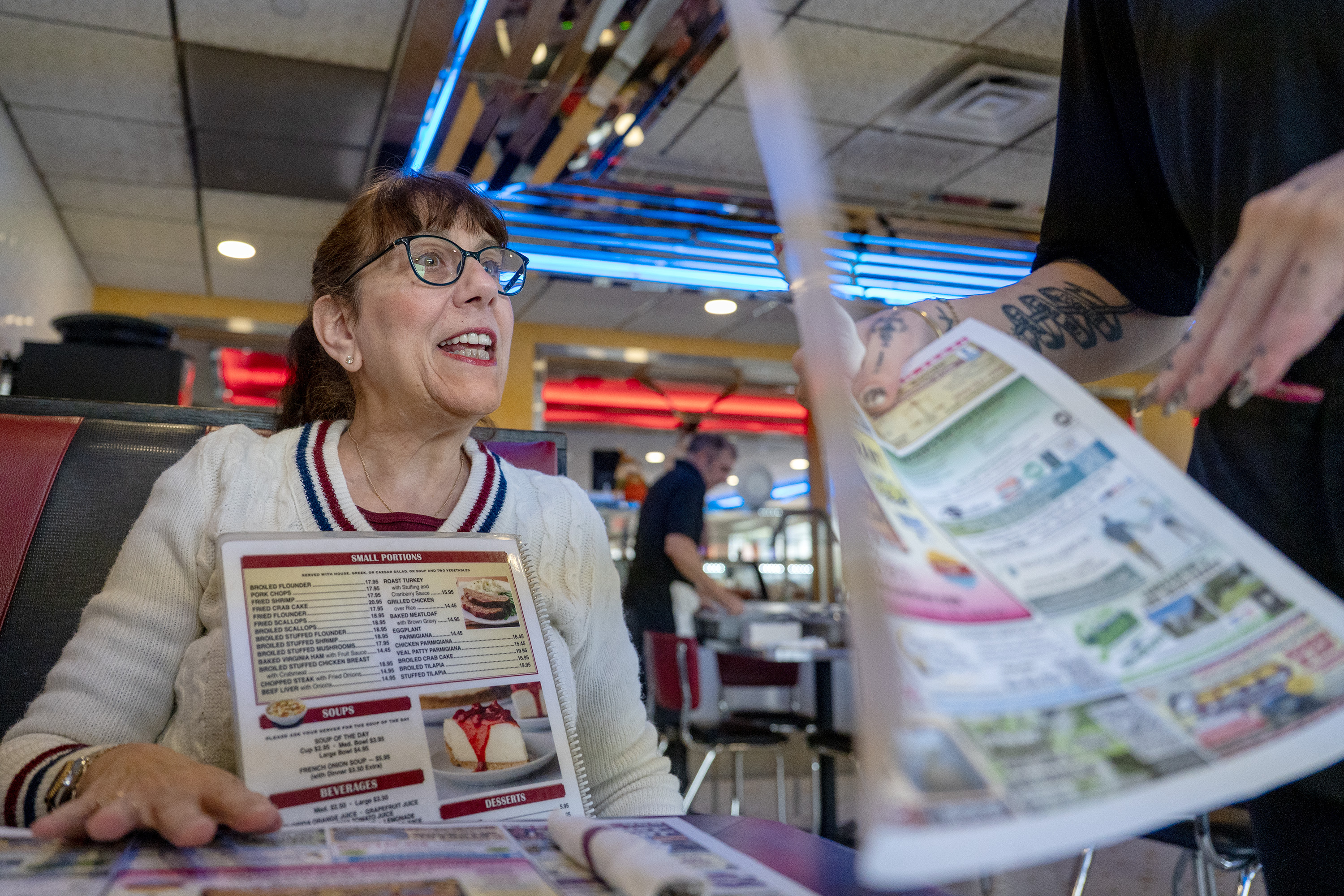
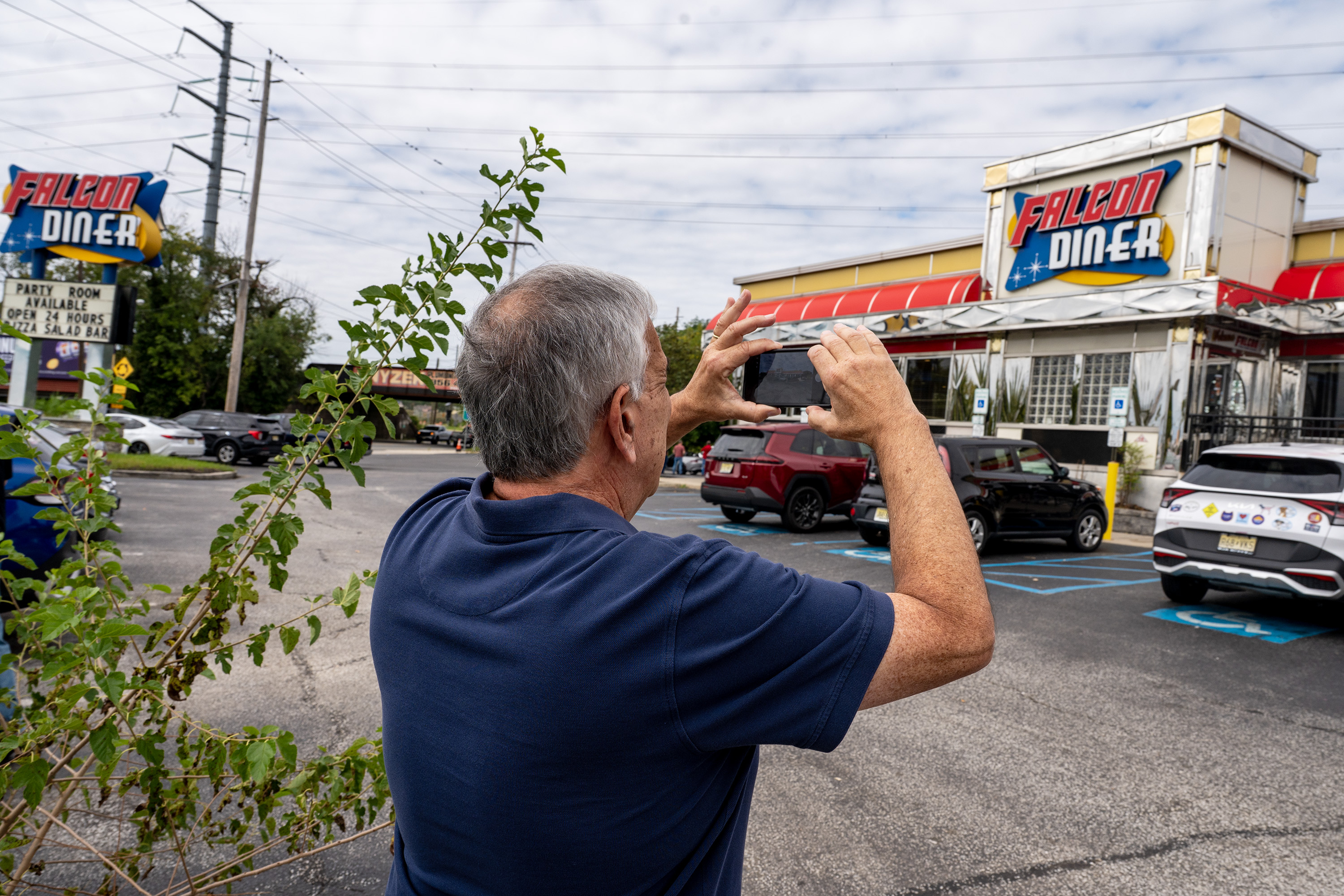
    Tucked into a booth toward the back of the Falcon Diner in Brooklawn in late September, Jon and Karri Ricklin fell into the routine they’ve come to perfect over the past decade.

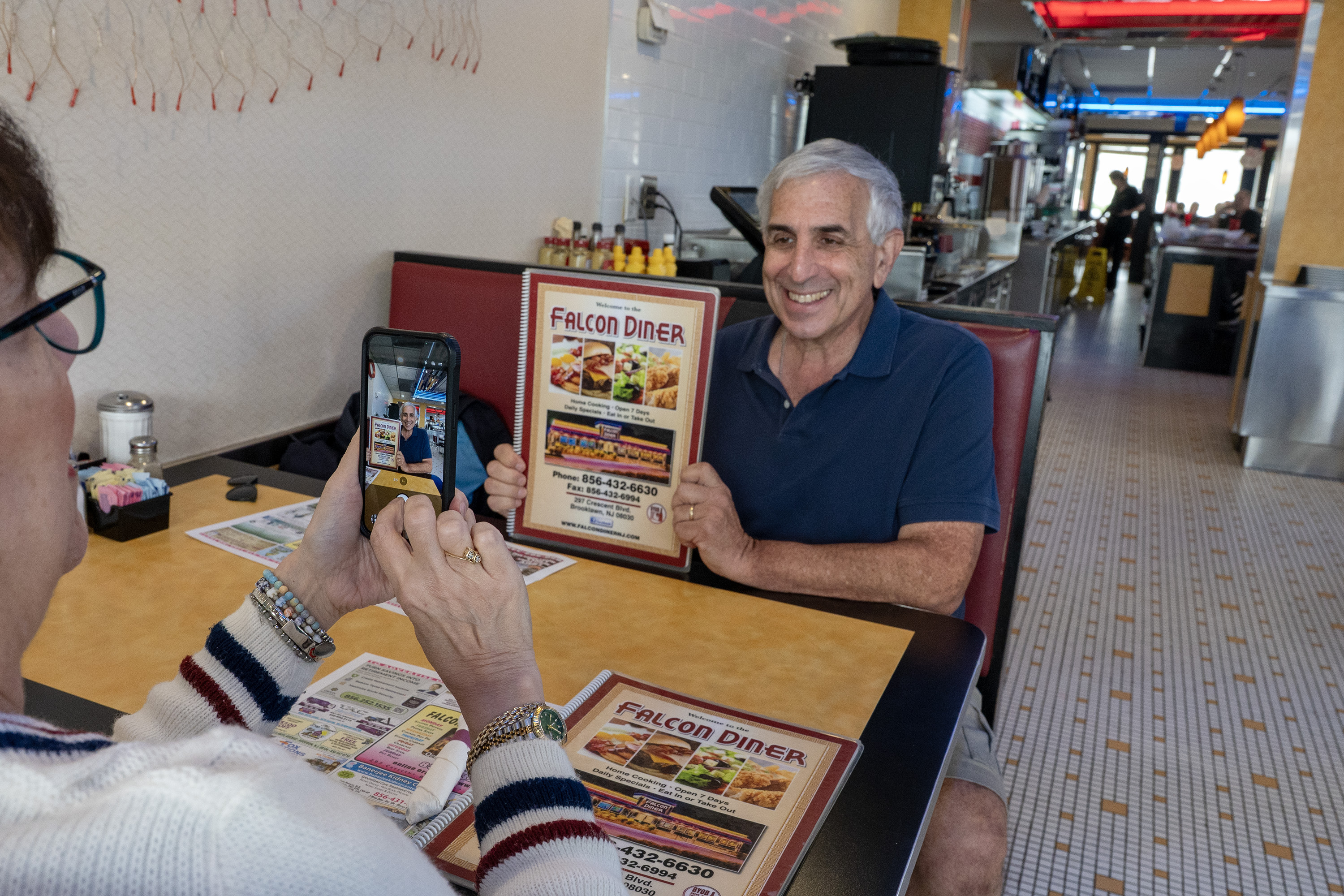
    As they took their seats, Karri captured a photo of her husband smiling brightly as he held up the multipage menu. This photo — the 331st of its kind — has become their trademark.

    The hundreds of nearly identical shots serve as a sort of digital passport for the pair as they venture to eat at every diner in New Jersey.

    And in a state dubbed the “Diner Capital of the World,” that has proven to be no easy task.

    The list is always changing as diners open, close, and change ownership, Jon said. But of 130 places they haven’t visited, the majority will bring them to South Jersey — stretching from the Philly suburbs to the Jersey Shore.

    At the same time, the longtime Bergen County residents are now considering a potential move a little further south, so far looking around Red Bank and Hamilton Township.

    After Karri’s recent retirement from a 40-year nursing career, the couple is hoping to downsize, and because of their yearslong effort, they “have no choice” but to stay in New Jersey — at least until they cross that final diner off their list, Karri joked.

    “It’s not because of the diner project,” Jon added, “but it’ll help with the diner project.”

    Keeping the tradition alive

    It all began in 2015 when the Hillsdale couple, married for 42 years this summer, stopped at the Livingston Diner in North Jersey after visiting with family in the hospital.

    Karri took the first of the now-famous menu photos to which Jon jokingly suggested, “Wouldn’t it be cool if we take this same picture at every diner in the state?”

    More than 11 years and 330 meals later, the couple is still chasing that goal, documenting the project on their Instagram, @NJDinerJourney, and as of a few months ago, a new website.

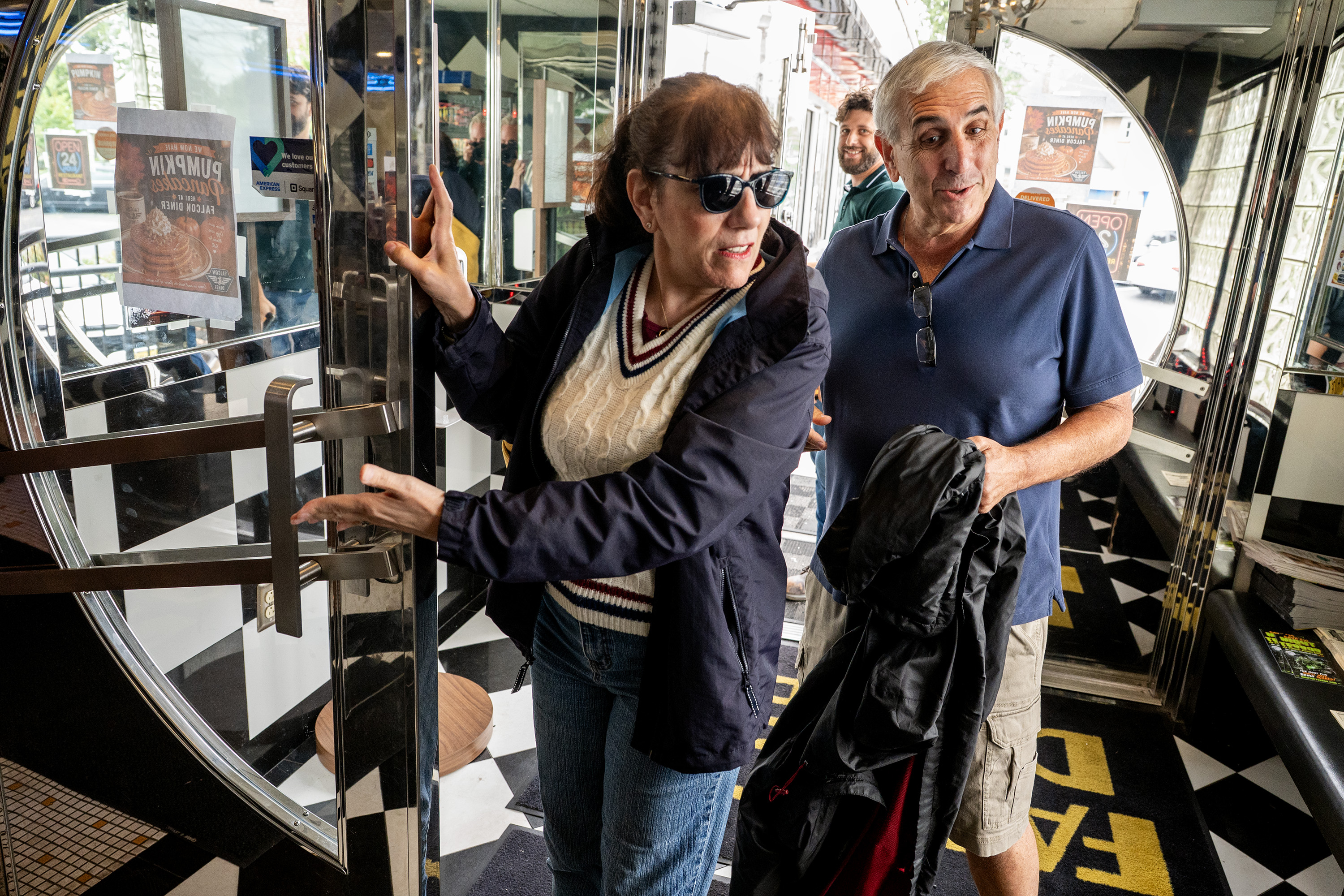
    Jon and Karri Ricklin arrive at the Falcon Diner in Brooklawn on Sept. 30. They’re on a mission to eat at every diner in the state of New Jersey.Tom Gralish / Staff Photographer

    Now with over 6,000 followers, Karri and Jon have become something of unofficial spokespeople for the preservation of diners and diner culture in New Jersey.

    “It’s been fun,” Jon said. “It feels good to be sort of an ambassador to the state. We just never expected it.”

    “Jersey is known for its diners, but you go to any small town anywhere in America, they’re going to have a little coffee shop or a little luncheonette and that’s their diner. So people can relate to that,” he said.

    When they first started their journey, the couple counted between 500 and 550 total diners in the state, Jon said.

    They have since watched that number fall to about 400, he said, with fewer than two dozen around-the-clock operations still standing — the retro-inspired Falcon Diner among them.

    Karri Ricklin inadvertently started the project when she casually grabbed a photo of Jon holding up his menu before a meal in 2015.Tom Gralish / Staff Photographer

    With its chrome trim and neon striping, the Falcon — which locals may know better under its previous names, most recently the Empire Diner and the Brooklawn Diner before that — is one of the few places still carrying on the “any food at any hour” ethos that has made the New Jersey diner so timeless.

    From construction workers grabbing a pre-sunrise breakfast to college kids looking for a late-night meal, the 24-hour diner has long been a central gathering place where everyone in the community is welcome to sit down for an affordable, filling meal, or simply a conversation and a cup of coffee (bottomless, of course).

    “We really want to keep that tradition alive and support small businesses,” Jon said. “Just about every one is a small business.”

    ‘How’s everything, hon’?’

    The couple’s trips are rarely planned more than a day or two in advance.

    Typically the conversation starts with some version of: “Will this be a Parkway day, a Turnpike day, or a Route 80 day?”

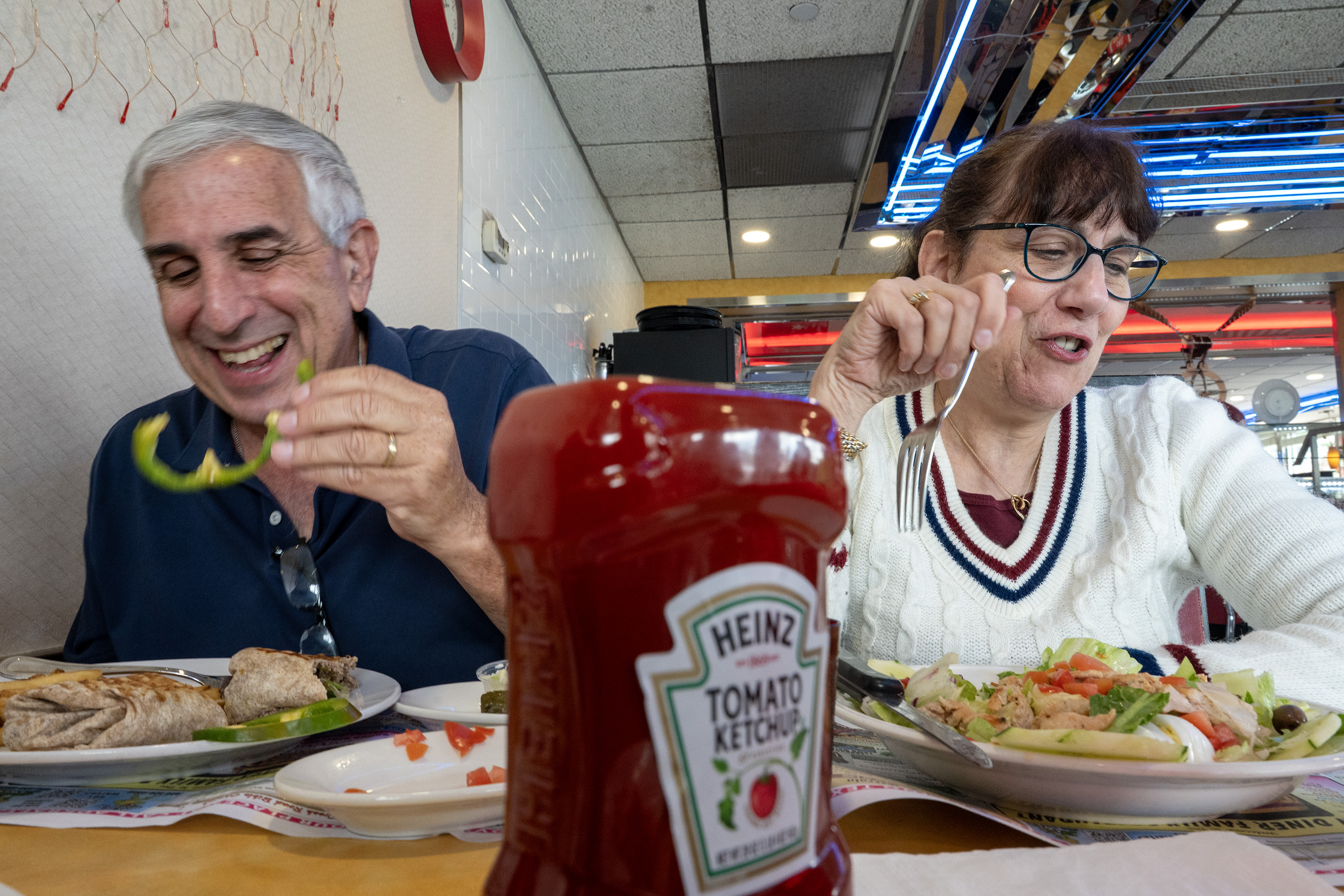
    Lunch at Brooklawn’s Falcon Diner was the 331st meal for Jon and Karri Ricklin as they venture to eat at every diner in the state.Tom Gralish / Staff Photographer

    They pick one, find a diner along the route, and then they’re off, they said.

    After quickly working their way through what Jon calls the “low-hanging fruit” — the diners closest to them in North Jersey — the couple has started venturing into South Jersey more often.

    “It’s been an interesting journey,” Jon said. “We’ve seen a lot of the state that we normally would not have seen.”

    Because their trips often take them to towns they’ve never visited, they also make an effort to check out the community before they head home, whether it be a stroll through a nearby park or a visit to a local farmers market or museum.

    After a recent visit to the Legacy Diner in Audubon, they perused downtown Haddonfield, where Karri fell in love with the English Gardener Gift Shop before they grabbed a drink at King’s Road Brewing.

    Jon and Karri Ricklin look at the flag-painted ceiling above the dessert display case at the Falcon Diner.Tom Gralish / Staff Photographer

    What qualifies as a diner?

    For the Ricklins, the criteria is pretty simple: If it’s called a diner or serves traditional diner food, it’s most likely going to make the list.

    For places that don’t have the word “diner” in the title, such as Maple Shade’s Maple Hill Restaurant or the White House Restaurant in Moorestown, it comes down to the type of food and experience they provide, Jon said.

    A few requirements: A menu offering “classic diner food,” American fare at minimum but often a lot more, including all-day breakfast. A brightly lit dessert display case. Pots of fresh coffee at the ready.

    Jon Ricklin grabs a photo of the retro-inspired Falcon Diner in Brooklawn, one of the many South Jersey diners left on their list.Tom Gralish / Staff Photographer

    Some Jersey diner purists they’ve heard from online approach the question differently and don’t agree with their methodology, he said, and they’re OK with that.

    The Ricklins’ main goal is to have fun together and support small businesses in the process, he said, so in his mind, the more the merrier.

    And as usual, North and South Jersey do things a little differently.

    Beyond the perennial debate about what to call pork roll, a few more regional quirks have emerged over the years. Meals get a bit pricier the further north you are, for instance, but they rarely come with the cup of soup that is customary in many diners down south, they said.

    They also noted South Jersey servers are quicker to throw out a warm “hon’” when greeting the table.

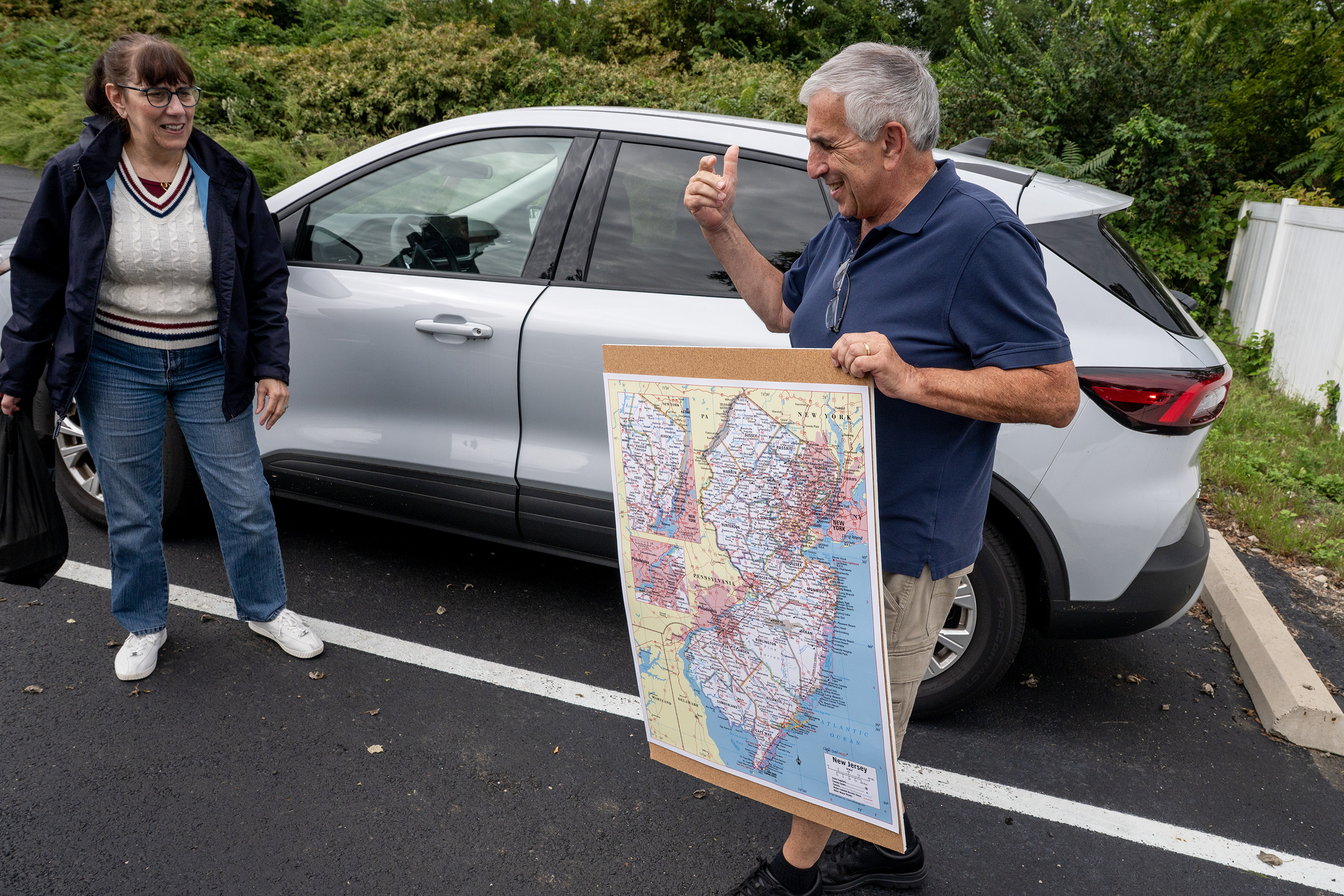
    The Ricklins travel with a map of the state with color-coded push pins marking each of the diners they’ve visited since they began their journey more than a decade ago.Tom Gralish / Staff Photographer

    As more people have taken notice of their journey, Jon said they sometimes get recognized when they’re taking the requisite menu shot. They were even invited to join former Gov. Phil Murphy and his wife for a diner lunch to celebrate National New Jersey Day in 2024, he said.

    But for the most part, they’re still anonymous, just another table of happy patrons chatting over a meal.

    And while they don’t expect anyone else to start their own diner journey, they are hoping that their story inspires people to try something new, even if it’s just a visit one town over.

    “Just get off the couch and go,” Karri said.

  • The Gaudreau brothers will be honored with life-saving equipment at a South Jersey park

    The Gaudreau brothers will be honored with life-saving equipment at a South Jersey park

    Washington Lake Park sees more than 100,000 visitors every year. Now there’s a new way to keep them safe — and it honors the lives of two South Jersey hockey players.

    The Aliver Foundation, a nonprofit that works to promote cardiac arrest prevention, donated outdoor automated external defibrillator equipment to the Gloucester County park in the spring. AEDs analyze the heart’s rhythm and deliver an electric shock to help recalibrate the heart if necessary, according to the American Red Cross.

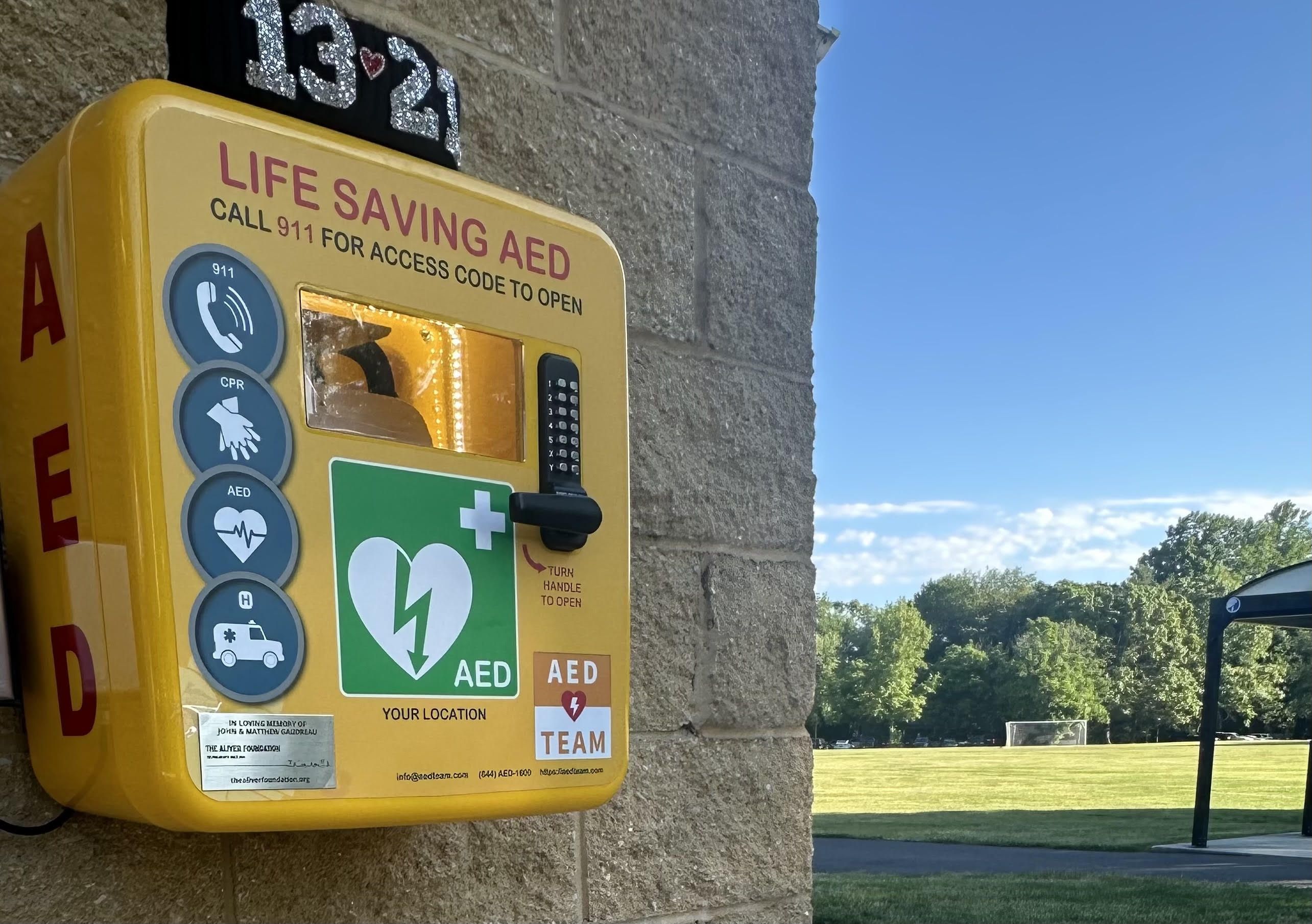
    The bright yellow enclosure, which keeps the AED in a climate-controlled environment, features a small plaque memorializing Johnny and Matty Gaudreau, Salem County natives and brothers who used to skate at a rink not far from the park.

    Johnny, an NHL player, and Matty, an American Hockey League alumnus, died in 2024 when they were struck and killed while riding their bikes in Salem County. Johnny was 31, and Matty was 29.

    Jane Gaudreau, Johnny and Matty’s mother, said she’s glad that something used to save lives is honoring her sons.

    “My sons were always there for everybody else. They always wanted to help other people,” Jane said. “They would take their shirts off their backs for someone.”

    Although the equipment has been up and running for months, the AED will be officially dedicated to the Gaudreaus at a community celebration at Washington Lake Park on Hurffville-Cross Keys Road on Sunday, from 10 to 11 a.m. There will also be AED and CPR demonstrations, children’s activities, and the chance to engage with first responders.

    Placed on the brick wall of Washington Lake Park’s ranger station, the AED equipment is in the same park where the Gaudreau family hosts an annual memorial 5K run, and less than two miles from Hollydell Ice Rink in Sewell, a place the brothers used to skate and where their father, Guy Gaudreau, teaches skating lessons for kids.

    To access the kit, visitors in need must call 911 to get a code to open the AED enclosure.

    Barbara Moore, Washington Lake Park’s events coordinator, said the park already has an AED, but the equipment isn’t outdoors and public-facing.

    “With the amount of youth sports, daily visitors and community events taking place at the park, having readily accessible outdoor AED equipment is an important additional safety measure that can be accessed while emergency responders are en route,” Moore wrote in an email.

    Five years ago, Jill Pall, Aliver’s founder, experienced cardiac arrest at a park in North Jersey. Her friend did CPR for nearly 15 minutes, and because there was no AED on site to use, Pall had to wait for first responders to arrive with the equipment.

    Since then, Pall’s organization has helped place more than 185 outdoor AEDs in 12 states, with the majority located in New Jersey.

    The Gaudreau family once needed the emergency equipment, too.

    In 2018, Guy collapsed while running up a hill during Philly’s annual Love Run, Jane said. Luckily, there was an AED on a nearby golf cart, and after a few days in an induced coma, he recovered.

    Jane said her husband still runs the Love Run, but he doesn’t push himself so hard on the hills. And now, runners who pass through Washington Lake Park for the Gaudreau 5K every spring will have life-saving equipment close by, too.

    “Anything we can do to keep John and Matty’s legacy alive, we’re for it,” Jane said.

  • Three animals in Gloucester County have tested positive for rabies this week

    Three animals in Gloucester County have tested positive for rabies this week

    One person and a dog were exposed to rabies in Glassboro after coming into contact with an infected bat on Tuesday — one of three animals in Gloucester County to test positive for the disease this week, according to public health officials.

    The Gloucester County Health Department announced that in addition to the bat near Joseph L. Bowe Boulevard, raccoons found near Florence Avenue in Pitman and Quest Court in Mantua both tested positive for rabies on Thursday.

    This week’s cases come not long after a rabid raccoon bit a Glassboro man in July.

    The agency is advising residents to make sure their pets are up-to-date on their rabies vaccinations and to avoid contact with wildlife and stray animals.

    Anyone bitten or scratched by a wild animal should wash the area with soap and water, seek medical attention, and contact local animal control or health officials.

  • How do you travel? Your regional planning commission wants to know

    How do you travel? Your regional planning commission wants to know

    The Delaware Valley Regional Planning Commission is collecting granular information about daily travel: Where did people go? Why? Did they drive, take transit, walk, bike, or use an electric mobility device?

    Planners working on the project aren’t nosy or trying to surveil anybody.

    They need real-time data to update DVRPC’s travel demand model for the nine-county Philadelphia area that will guide funding decisions about infrastructure projects and transportation plans for the next decade.

    “Compared to any other 10-year period that I can recall, there has just been so much transformation in how people travel,” said Mike Boyer, the agency’s director of regional planning.

    Information from a new household travel survey will show a clear picture of exactly how it changed and provide clues about where regional transportation might be headed. The last household survey was conducted in 2012 and 2013 and a final version was published in 2015.

    Typically, DVRPC conducts a travel survey every decade, but officials waited 13 years this time to allow transportation patterns to settle into a “new normal” after the massive disruptions of the pandemic.

    How do they find households to take the travel survey?

    Beginning in January, DVRPC has been recruiting participants by mailing postcard invitations to randomly selected households in South Jersey and Southeastern Pennsylvania. It has also used some social media posts.

    People cannot reach out to nominate themselves.

    Random invitations help ensure that respondents reflect the population of the region. Participants need to represent each of DVRPC’s nine counties, as well as a mix of households by income, size, number of workers, and other demographics.

    It is expected to take the rest of the year to get the 9,000 to 10,000 completed household surveys required for a good picture of the region’s habits, said Matt Gates, associate director of travel trends and forecasts for DVRPC.

    Based on typical response rates, it may take as many as 300,000 postcards to recruit enough participants, he said.

    Recruitment paused for the summer and started up again after Labor Day.

    DVRPC serves Burlington, Camden, Gloucester, and Mercer Counties in New Jersey as well as Bucks, Chester, Delaware, Montgomery, and Philadelphia Counties in Pennsylvania.

    Survey data will be held confidential and anonymized, used in the research but not attached to any specific household or phone number, Boyer said.

    “Data won’t be sold or used by any third party,” he said. “We want to be forthright about that.”

    What do participants do?

    Most will report household trips for one 24-hour period, starting around 2 a.m. or 3 a.m., using a smartphone app that runs in the background, tracking each trip via GPS.

    When it detects what might be a trip, it prompts the participant to confirm it and provide details such as the trip’s purpose and what type of transportation is used.

    “If you leave your house in the morning and go to work, and then you leave work and go somewhere for lunch, and then you go back to the office, and then, on the way home, you stop at the dry cleaner — all of those pieces of your daily travel are joined together,” said Gates, the chief travel modeler.

    That would be counted as a “tour,” broken into separate trips, each attached to a specific activity.

    The survey also asks for basic household information — size, ages, jobs, school attendance, income, and vehicles. E-bikes, e-scooters, personal mobility devices for people with disabilities, traditional pedal-powered bicycles, and walking will be counted as separate modes of travel.

    In the 2012-13 survey, walking and biking were separate options, but the travel model combined them in one category called “nonmotorized.” A catchall “other” category covered everything else.

    Participants who do not want to use the app can keep a paper travel diary and then either enter their trip information on a website or reach a call center, where a person will walk them through the questions and record the data.

    How will the information be used?

    After it is fed into the travel model, DVRPC will use it to help draft a Transportation Improvement Program (TIP). That is the federally mandated priority list for allocating federal and state funding of transportation, transit, and highway projects across the region.

    But that’s not all.

    Planners use it to decide on traffic safety projects, to chart where new recreational trails should go, and to test scenarios in response to events.

    Combining the data with information about the transportation network can provide insight into how people make decisions about, say, using a SEPTA train vs. driving between two points, Gates said. “Is it time? Is it cost? The number of vehicles available in a household?”

    A good travel demand model with those insights can help answer “what if” questions such as what effect a new train line or highway would have, or rising gas prices, transit fare increases, and service cuts, Gates said.

    It can help planners think about how the transportation network could accommodate a spurt of growth in Quakertown, Bucks County, for example, or Woolwich Township, Gloucester County.

    Last year DVRPC used existing data to project added motor vehicle traffic amid SEPTA service cuts, which began but were quickly rolled back.

    What trends are the experts looking for?

    • The extent to which hybrid work and e-commerce may be reducing trips per person or household. For example: How many shopping trips have been replaced by deliveries?
    • Transit changes: They want to understand SEPTA’s ridership recovery from COVID-19 and how often people are using transit for a mix of nonwork trips at different times, rather than just traditional commutes.
    • How are people using ride-hailing services like Uber and Lyft, which have mushroomed over the last decade?
    • How are micromobility options like e-scooters and e-bikes affecting traffic flow?
  • Here’s what a 34% hike in health costs could mean for Camden and hundreds of other N.J. school districts in 2027

    Here’s what a 34% hike in health costs could mean for Camden and hundreds of other N.J. school districts in 2027

    Health insurance premiums will cost 34.4% more for 300,000 public school and county college employees and their families across New Jersey next year as medical costs continue to escalate and the popularity of costly prescription drugs soars.

    The change will affect teachers and other school staff in Camden, Pemberton, Evesham, and nine other South Jersey districts, as well as six unions at four local colleges.

    What is to come for students, employees, and taxpayers may be just as dire. Cutting jobs, reducing transportation and student extracurricular activities, and raising property taxes are the most likely options school districts and colleges will consider, said Jonathan Pushman, advocacy director for the New Jersey School Boards Association.

    “The dilemma is there are limited options we can turn to,” Pushman said. “A lot of difficult decisions are ahead.”

    On Friday, the New Jersey School Employees Health Benefits Commission voted 4-2 to accept the premium increases forecast by the state’s actuary. Democratic Gov. Mikie Sherrill’s administration had warned that if the commission did not act, it would have closed down the insolvent program at the start of the new year.

    Instead, the rate hikes will take effect in January.

    The School Employees’ Health Benefits Program serves 212 school districts and county colleges, representing 300,000 employees, retirees, and their dependents.

    The local districts covered by the plan are Camden, Brooklawn, Beverly, Delanco, Evesham, New Hanover, Pemberton, Willingboro, Elk, Newfield, Camden County Technical Schools, and the Burlington County Board of Special Services, which serves special-needs students.

    It also provides coverage for employees of Camden County College, Rowan College at Burlington County, Rowan College at Gloucester County, and Rowan College of South Jersey, according to the New Jersey Treasury Department.

    There are a total of 590 school districts in New Jersey, with the majority of them, including Cherry Hill, obtaining health coverage outside the state plan. In recent years, steeper costs have compelled many districts to leave in search of a more affordable option. Those who stay tend to serve an older and sicker — and therefore a more expensive — population and cannot afford a better deal on the open market.

    These conditions have created a “death spiral” for the plan, actuarial and state officials say. The State Health Benefits Plan for state and local workers faces a similar crisis.

    As it is, the health benefits program owes the state $70 million to cover midyear shortfalls, according to Aon, the state’s healthcare actuary.

    The union-affiliated members on the commission voted against the premium hikes, insisting there had to be a way to cut costs.

    After the vote, New Jersey Education Association president Steve Beatty and other top officials said in a statement that their members on the commission “requested information, proposed specific steps to reduce the rates and sought greater transparency about the factors driving these increases. Unfortunately, the division has refused to meaningfully engage in that effort.”

    The rate hikes “threaten the resources available for students,” the union officials’ statement said. “They should not lose out because health care costs are out of control. When districts are forced to spend significantly more on health care, that leaves less money for the programs, staff and services our students rely on every day.”

    School officials huddled this week to consider the array of unpalatable options. Few were ready to say what comes next.

    Rowan College of South Jersey “will continue to evaluate the situation and make adjustments as necessary while keeping student success our priority,” said Susan Nardelli, vice president of communications, marketing, and enrollment management. “Every industry is facing the same healthcare struggle.”

    Union leaders said they are counting on state lawmakers to find a solution. They said they seek action on a proposed bill that would create a new health benefits trust, composed of union and management leaders, and establish a three-doctor medical advisory panel. Districts that join would not be permitted to leave, according to the bill.

    The new insurance trust would “provide greater transparency and accountability and is focused on controlling costs,” the union’s statement said.

    School boards agree that dramatic changes are necessary, Pushman said. This must include “honest conversations with unions,” he said.

    Schools — which are funded by taxpayers — bear 98% of the cost of health insurance compared with the 2% covered by employees, Pushman said. In the private sector, employers pay about 90% of the cost.

    A law enacted during the pandemic set specific limits on what school employees must pay for healthcare, based on their income level. That law, which expires at the end of next year, has limited the options for savings, Pushman said.

    “As much as we want to provide quality healthcare coverage, bearing the costs of these incredibly rich plans is getting to the point of unsustainability,” he said.

    State Sen. Troy Singleton (D., Burlington) agreed.

    “We have to be honest with … what the state can afford to provide sufficient coverage for employees. It’s not a bottomless pit for taxpayers,” Singleton said. “It’s become a frustrating point for all parties.”