Before Dave Palmer moved to Philadelphia and recorded the score to the new movie I Play Rockywith a team of all-Philly musicians, the jazz pianist and composer built an impressive music and movie industry résumé.
He scored several films for Oscar-winning and Phoenixville-born I Play Rocky director Peter Farrelly before making the music for the Anthony Ippolito-starring love letter to Sylvester Stallone’s 1976 ultimate underdog story that topped The Inquirer’s 2026 list of the most Philly-centric movies of all time. It helps stitch together the making-of-Rocky movie and its aspiring screenwriter and actor’s nonnegotiable favorite three words: “I play Rocky.”
Those movies include 2022’s The Greatest Beer Run Ever and this year’s Balls Up.
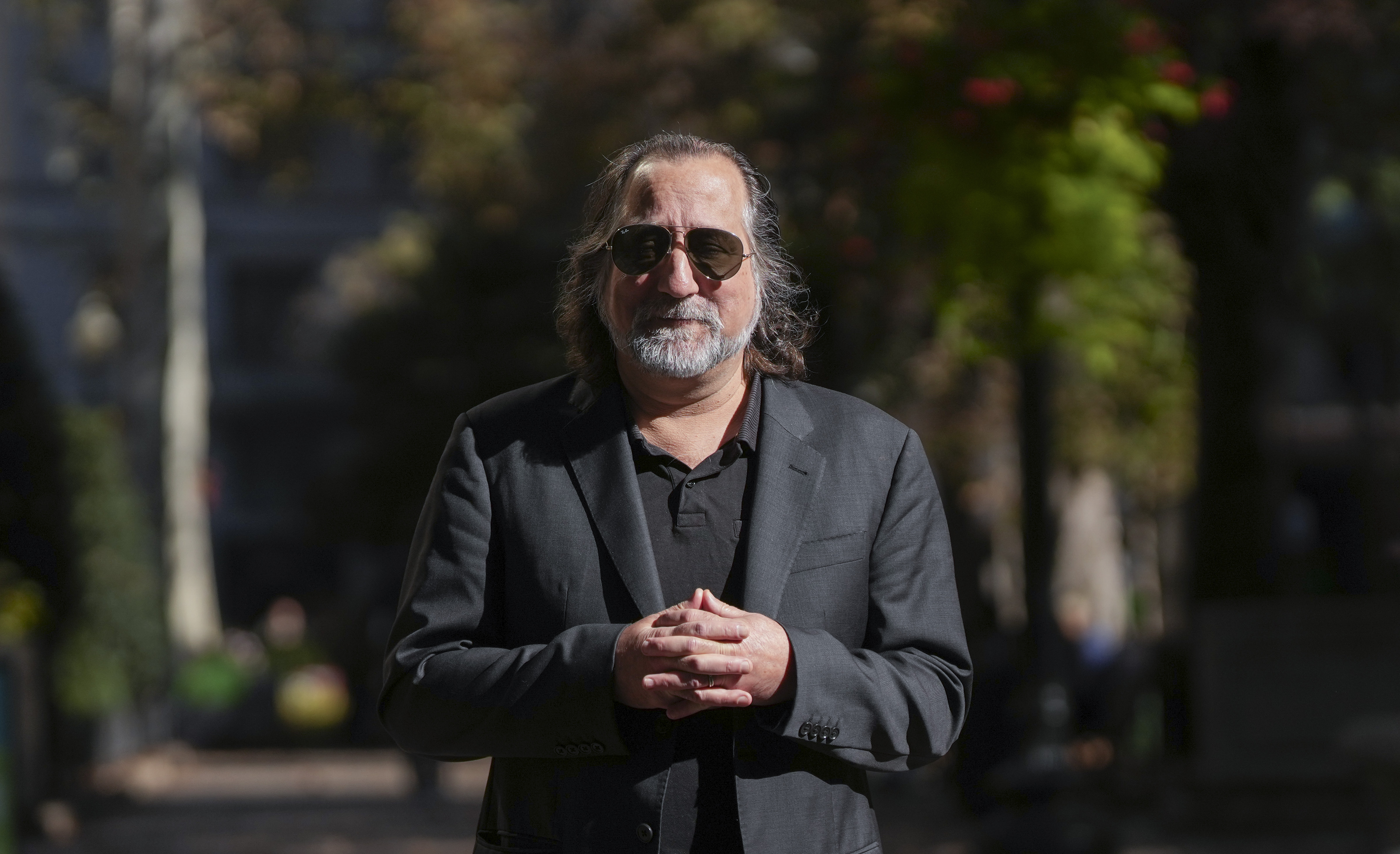
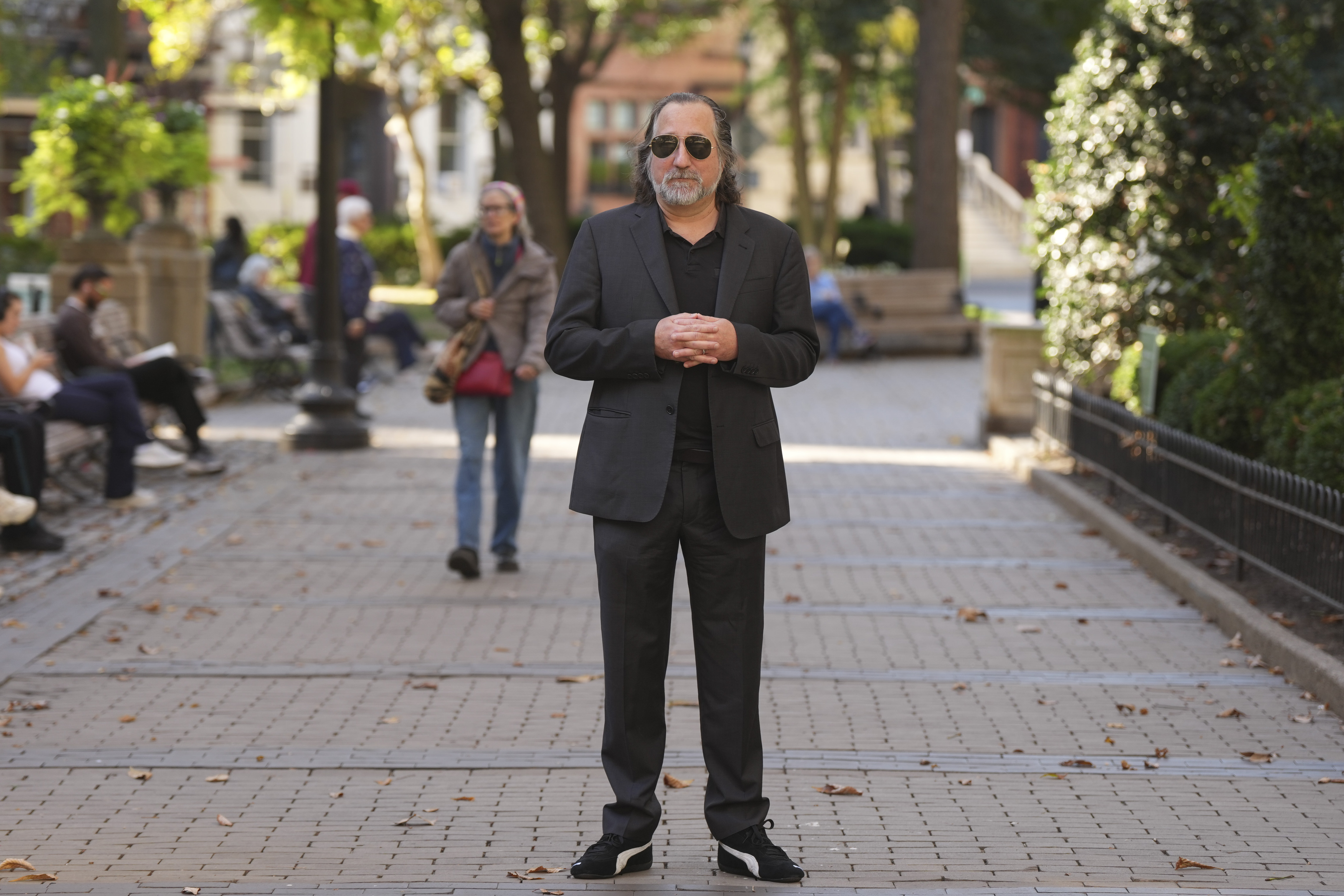
Hanging out on a recent sunny afternoon in Rittenhouse Square a few blocks from where he lives with his wife, Cheryl, Palmer shared the bullet points of a busy career that began when he hit the road with the band MC 900 Ft. Jesus in the 1990s.
Anthony Ippolito is Sylvester Stallone (left) and Stephen James is Carl Weathers, in “I Play Rocky.” (Claire Folger/Amazon MGM Studios via AP)Claire Folger
It has included stints touring and recording with Fiona Apple, Seal, Chris Isaak, Aimee Mann, Air, and Joe Henry. He has collaborated with hip-hop acts such as De La Soul, Twista, David Banner, and the artist formerly known as Kanye West.
In 2009, Palmer produced The Best Is Yet To Come, a tribute to Great American Songbook writer Cy Coleman featuring Apple, Patty Griffin, and Jill Sobule. And Dave Palmer Trio Plays Cy Coleman, an EP with vocalist Gaby Moreno, came out Friday, the same day I Play Rocky hit theaters.
Palmer didn’t need to be in Philly to create the score for that film — along with songs by the Spinners, Hall & Oates, and Todd Rundgren, and, of course, Bill Conti’s “Gonna Fly Now.”
But, as it happened, he already was.
A real estate story
Palmer had operated out of Los Angeles for the last two decades. But he and Cheryl, who grew up in Wilmington — “I married into being an Eagles fan,” he said — had already relocated to Philly when he got the assignment to score I Play Rocky.
Like so many other musicians whose moves to Philly have benefited the city’s fruitful music scene in recent years, the Palmers’ migration is a real estate story.
They were renting in Hollywood, shut out of an ever-escalating housing market. “I equate it to being on a hamster wheel,” Palmer said. Buying a home “keeps being out of reach.”
“My wife used to hang out in Philly, she knew the neighborhoods,” Palmer said. So while also considering moving to pricey entertainment industry cities like New York and London, the couple bought an apartment in Rittenhouse as an investment.
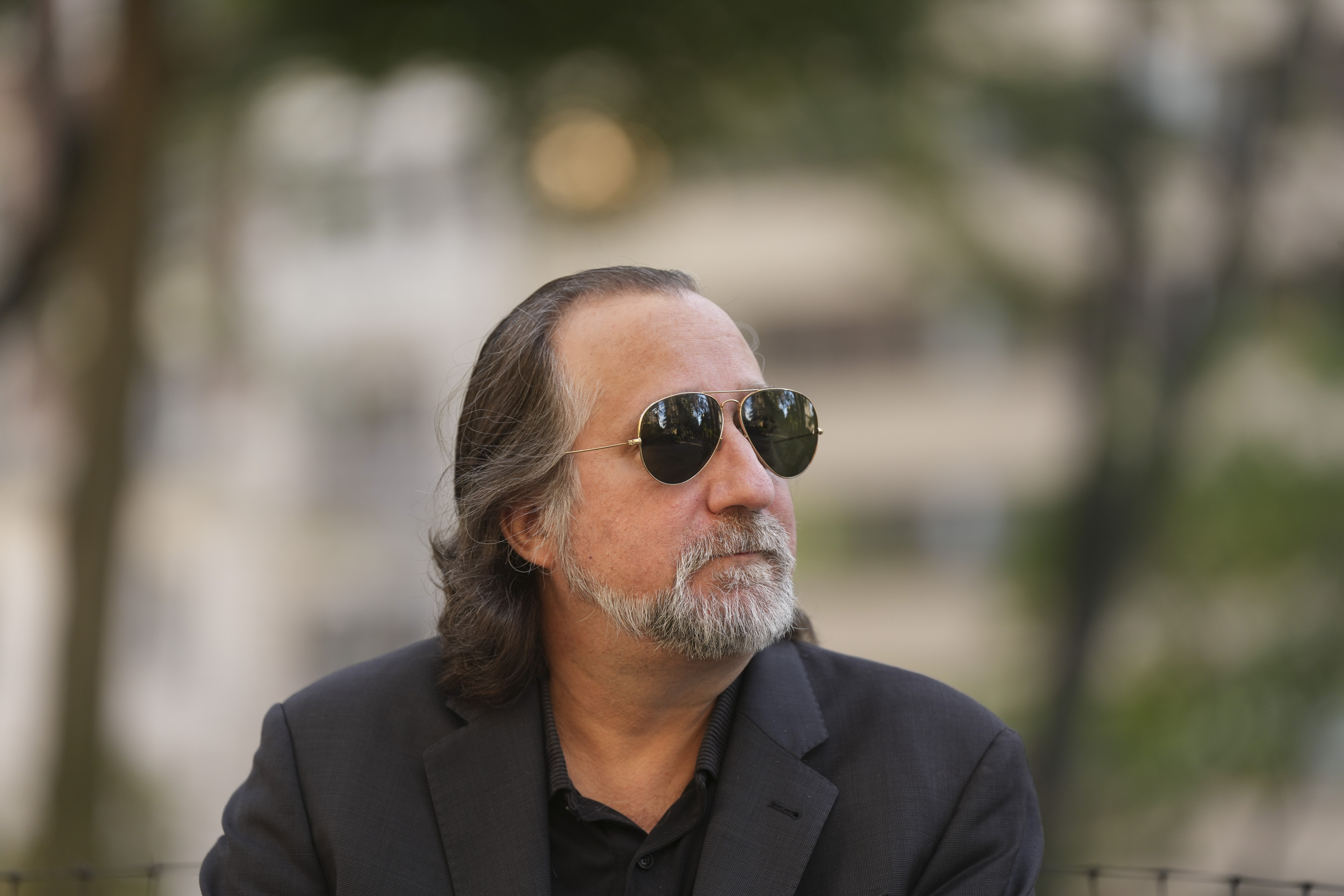
Dave Palmer, the jazz and rock pianist, bandleader and film score composer who’s behind the music in Peter Farrelly’s new Sylvester Stallone saga ‘I Play Rocky.’ In Rittenhouse Square, in Philadelphia, November 4, 2026.Jessica Griffin / Staff Photographer
They were unsure if they would move here permanently, but after the LA fires forced the couple to evacuate in early 2025, the Palmers decided to come east.
Palmer didn’t know anyone in the Philly music scene, “so I didn’t know what to expect,” he said. A bass-playing friend introduced him to Charlie Hall, the War on Drugs drummer and Philly Specials producer who is deeply connected in the local scene.
“Through Charlie, I started meeting all these people,” Palmer said, like guitarists Tom Spiker and Kevin Hanson, and percussionist Daniel Villarreal, with whom he played his first gig as a Philadelphian last October at the 700 Club in Northern Liberties.
Dave Palmer, the jazz and rock pianist, bandleader and film score composer who’s behind the music in Peter Farrelly’s new Sylvester Stallone saga ‘I Play Rocky.’ In Rittenhouse Square, in Philadelphia, November 4, 2026.Jessica Griffin / Staff Photographer
‘I love it here’
Palmer met Philly bandleader Don McCloskey that night, and has since produced the songwriter’s forthcoming album at Retro City Studios in Germantown. He also plays regularly with Spiker, Hall, Villarreal, and bass player Sandy Eldred in an aggregation called Tom Spiker’s Mobile Pleasure Lounge: Live Improvised Film Scoring.
The group performed at Black Squirrel Club in Fishtown last month, making up music as they went along, to clips from The Blues Brothers and other, more obscure films.
Dropping down into a scene where he had no contacts has turned out to be a seamless experience. And he’s smitten with his new hometown.
“I love it here,” he said. “It’s a big city, but at the same time, it’s kind of chill. All the neighborhoods are so different. And one thing I didn’t expect: People are really friendly. It’s way easier to get to know people and talk to them than in LA. And they’re not full of s—!”
Musically, he said, he didn’t know what to expect.
“I knew the history of the music. I knew there were good musicians here. But I’ve been working with top musicians in LA for 20 years. … And so far, it’s been amazing. I can do anything I need to do on any professional level in Philadelphia. 100%. Because the players are that good.”
Anthony Ippolito as Sylvester Stallone and the bullmastiff who plays Stallone’s dog Butkus in the new making-of movie “I Play Rocky.”Claire Folger / Courtesy Amazon Content Services LLC
Playing for ‘I Play Rocky’
For I Play Rocky, Palmer wrote mostly what he calls “utilitarian” music to heighten tension or amplify a mood in the movie, which also includes original music by Andrew Bird.
In an early scene in the movie, when Ippolito as a young and broke Stallone auditions for a role in a soft-core porn film, Palmer followed Farrelly’s instruction to create a funky, boogaloo-style piece of music inspired by Mel Brown’s 1967 jam “Chicken Fat.”
A pivotal scene involving Stallone and his dog Butkus required a Latin instrumental passage. To recreate the drama behind the scene in which Rocky pummels a slab of meat instead of a punching bag, “we used a lot of banging on pieces of metal, and low drones, and big smashing piano sounds. It’s about creating tension.”
Palmer recorded the score at Spiker’s Undercarriage Recording in Northern Liberties, with a crew of Philly players, some of whom he also worked with in producing a forthcoming album with Indianapolis songwriter Richard Edwards.
Palmer shouts out other Philly players like guitarists Ross Bellenoit and Erik Sayles, drummers Fred Berman and Adrian Harpham, and songwriter Dave Cope.
“I’m really meeting a lot of musicians,” Palmer said, adding with a laugh, “The easiest way to get to know musicians is to hand them some money.”
He’s been able to do that “because I’m controlling the budgets for these projects. And in the case of I Play Rocky, it was a decent-sized budget, so you’ve got several thousand dollars to throw around at people.”
Anthony Ippolito as Sylvester Stallone on Kelly Drive in the Peter Farrelly diredtred ‘I Play Rocky.’ Composer and pianist Dave Palmer scored the film using all Philly musicians.Claire Folger / Courtesy Amazon Content Services LLC
Looking at the musical landscape, he sees a Philly scene primed to expand, with studios like Spice House Sound in Fishtown, where he recorded the Cy Coleman EP with his bandmates Joey Waronker and Reggie Hamilton, as well as facilities like Will Yip’s Memory Music Studios in South Philly.
Palmer has quickly seen how Philly’s affordability fuels creativity.
“There’s so much flexibility in doing music like this in Philadelphia, because the costs are substantially lower on every metric,” he said. “But the quality is just as high. The musicianship, the studios. Everything.
“So many young bands are here because it’s one of the last cities that you can afford to be a young, punkish musician,” Palmer said.
“I’ve been fortunate to be in different areas at different times. I was in Seattle in the mid-’90s and LA in the ’90s and early 2000s. I’ve been around places where scenes really happen, and I see all the seeds of it in Philadelphia right now.”
Philadelphia’s rising ballet star fell in South Jersey.
One of the opera company’s top dancers,Mardee Vosseler, full of performance potential and all of 21, was being driven home after a New Jersey nightclub appearance on the morning of Nov. 3, 1941.
The car was filled with friends. Samuel Matthews, a 29-year-old shipfitter at the Navy Yard, was at the wheel, and Kitty Mason, a 36-year-old entertainer, was also in the car.
On their drive home, around 3 a.m., their vehicle collided, head-on, with another in the streets of Camden.
Police had speculated that “one of the two automobiles had skidded on an asphalt-paved bridge over Newtown Creek,” The Inquirer reported. “The rest of the boulevard is of rough-surfaced concrete.”
The other vehicle, occupied by two others, rolled over. And when it came to rest, “the motor lay on the front seat,” the paper reported.
Vosseler, born to dentist P.C. Vosseler in Germantown, was the protégé of Catherine Littlefield, the rowhouse-born choreographer and founder of the Philadelphia Ballet. She had been the prima ballerina of the Philadelphia-La Scala Opera company for two seasons.
But she had been unable to resume her role that year due to all of her nightclub bookings, supplemental to her dancing work.
Her even more famous dancing sister,Broadway performer Heidi Vosseler-Draper, who had recently married the famous dancer Paul Draper, flew in from New York to give a blood transfusion.
Mardee Vosseler would die a few days later from a skull fracture, an early end to a short career. The others in the two vehicles were injured but survived.
Vosseler’s dancing feet “were stilled forever,” The Inquirer wrote.
Nearly 400 students were sent home from a Chestnut Hill elementary school Wednesday after a disruption of water service.
J.S. Jenks Academy of Arts and Sciences, a Philadelphia School District school on Germantown Avenue, dismissed its students at 10:30 a.m. The school had no hot water on Monday, according to people inside the building; students were off Tuesday for Election Day, and at least parts of Jenks had no water at all Wednesday.
Students were told not to flush toilets, people with firsthand knowledge of the situation said, and had no access to running water to wash hands or fill water bottles.
“Earlier today, a loss of water service on the third floor and a leak in the domestic water line in the boiler room resulted in a loss of water pressure throughout the building,” Teresa Fleming, the district’s chief operating officer, wrote in a letter to families. “Facilities and Maintenance staff are on-site working to address the issue.”
Jade Ward, president of the Jenks Home and School Association, said she was frustrated by students spending three hours in a building with no running water, and she was worried about food safety — the school served breakfast and lunch before dismissal.
Jenks families received an email from the school at 8:15 a.m., an hour after children arrived, notifying them about the issue. Maintenance staff were on site assessing the problem, the letter said.
“Please note that we do not have authorization to relocate at this time,” the letter to families said. “Once our action plan is vetted and approved by the district, we will follow up with further updates and next steps immediately.”
Families were finally notified of the 10:30 dismissal minutes before it happened. Students were walked from school to a nearby recreation center, which does have running water, to wait for family members.
Ward, who picked up her own children from Jenks soon after she learned there was no water, reached out to central office staff herself on behalf of other families, and was frustrated by a lack of action and transparency, she said.
“Teachers were instructed not to tell parents that there was no running water in the building,” Ward said. “They were downplaying the issues in the building.”
Staff were able to fix the water problem, however; officials said in a letter to families sent Wednesday evening that school would be held as usual on Thursday.
Jenks’ facilities issue illustrates a larger problem in the district: Old buildings coping with years of deferred maintenance sometimes have major issues crop up that interfere with student learning.
Jenks, built in 1922, has a building rated “unsatisfactory” by the district’s own measure.
Those projects could happen only if the school system secures significant philanthropic or state funding, however, beyond the $1 billion it will spend for higher-priority projects.
“With even further government and/or philanthropic funding, design work would begin in SY2026-27 for an additional modernization project at this school site that moves its School Building Score out of the unsatisfactory or poor category,” Jenks’ facilities report reads.
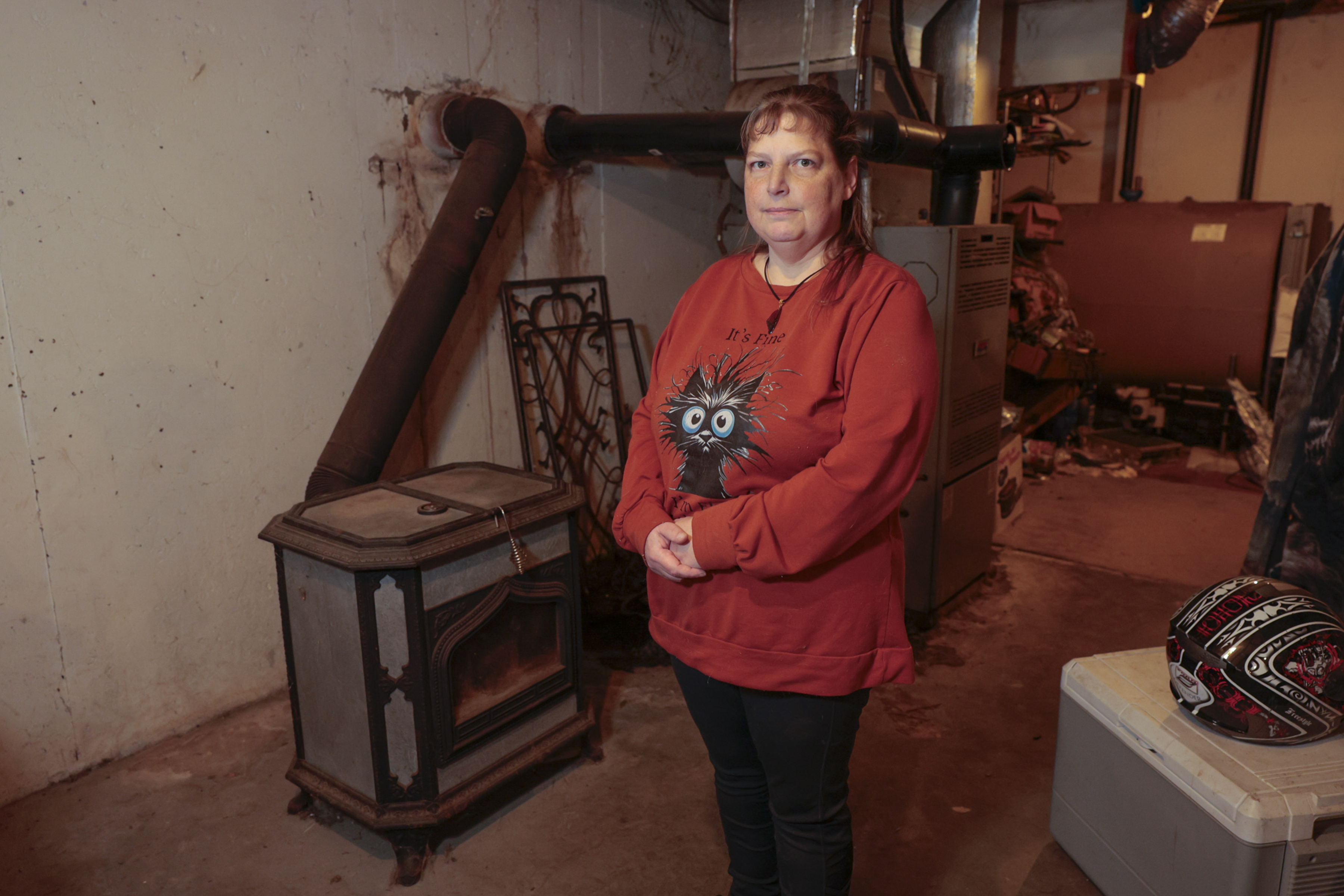
RICHMOND TOWNSHIP, Pa. — Golden leaves fluttered onto Jennifer Heller’s frost-covered lawn in rural Berks County recently, but she’d rather bundle up and cuddle with the dogs before filling the oil tank in the basement.
A hard winter is coming for Heller and the 685,000 other Pennsylvania households that use oil to heat their homes. As of late October, the average cost of a gallon of heating oil in the commonwealth was $6.048, the second-highest price ever recorded in the state.
The record, $6.066, was set earlier in the month.
“It’s going to be very tough,” said Jamie Van Nostrand, a fellow at the University of Pennsylvania’s Kleinman Center for Energy Policy. “People are going to be doing everything they can to prevent that oil heat from kicking on.”
Heller, 52, said she’ll wear more clothes around the house, fire up the oven more often, and use the clothes dryer at night, before bed. She’s also sealing cracks and holes and, possibly, weatherproofing her windows.
“Don’t underestimate the power of a dog and a few cats for body heat,” she said, laughing.
Jennifer Heller talks about her home heating oil bill at her home in Richmond Township, Berks County. Steven M. Falk / For The Inquirer
Elsewhere in the state, people are buying heating oil a few gallons at a time at gas stations to get them through cold spells. They’re chopping wood or ordering it, and, if they can afford it, installing electric-run heat pumps that can raise the temperatures in specific rooms as opposed to an entire house.
For Brendan Lydon, of Pottsville, Schuylkill County, filling a 500-gallon oil tank is a last resort.
“In November 2025, it would have cost us around $1,500. If I were to order today, it would cost us $2,654,” Lydon said.
Most energy experts attribute the drastic jump in oil prices to the conflict in Iran, which retaliated against the U.S. by tightening oil shipments through the Strait of Hormuz. According to the U.S. Energy Information Administration, 2026 prices started off at $3.348 per gallon in Pennsylvania. On March 2, just days after the U.S. conflict in Iran started, the price jumped to $4.065 and has continued climbing ever since.
A bird flies low over the water as cargo ships lie at anchor in the Strait of Hormuz off Bandar Abbas, Iran, on Oct. 24.Amirhosein Khorgooi
Some Republicans have acknowledged the Iran effect, with caveats. Many have said higher oil prices are a “temporary blip,” a hardship Americans must face for a safer world. Others have blamed Biden-era regulations, the Ukraine-Russia war, and decreased refining capabilities here in the United States.
Over half of all Pennsylvanians, and more than 70% of Philadelphians, use natural gas for home heat, and the U.S. Energy Information Administration’s “Winter Fuels Outlook” actually predicts stable or lower costs for most users this coming season.
That’s not the case for heating oil. The EIA expects costs to be 21% higher this winter. The issue is more pronounced in rural counties, which also vote overwhelmingly for Republicans. According to the U.S. Census Bureau, about 2% of Philadelphia households use oil heat. In rural counties like Schuylkill, Carbon, and Mifflin, however, over 40% of households use oil for heat. In Bedford County, almost half the households use oil.
In the Pennsylvania coal region, Michael Sedor has taken small containers to local gas stations to buy a few gallons of heating oil or diesel fuel to make ends meet. Sedor, a resident of Treverton, Northumberland County, said lines sometimes form at the gas stations when it gets colder.
“I still do it, I still go to the gas station cause I can’t pay $600 to fill my tank,” he said. “You seal up your house with plastic bags. You cut back. You do what you have to do.”
Sedor said proactive measures like installing new windows, investing in better insulation, or purchasing heat pumps are financially out of reach for many Pennsylvanians. In Philadelphia, homeowner Tony Albrecht researched an oil-to-natural gas conversion when he moved from Pittsburgh to West Mount Airy. The estimate was $10,000. He kept the oil heat.
“And that was in 2014,” he said of the estimate.
On the Coal Region Discontent Facebook page Sedor runs, people told him they plan to use electric blankets, credit cards, and to cut back on Christmas. Some seemed to have no answers.
“I am so screwed, hoping for a heat wave,” one person wrote.
In Chester County, Roisin Ferguson has a low oil tank but a whopping eight cords of firewood stacked up around her property in West Bradford Township. A cord of firewood can run anywhere from $150 to $350 depending on how long it’s been “seasoned” and delivery fees. Last year, the family went through three cords, but Ferguson hopes to cut back on other fuel sources this year, specifically their oil heater.
“We’ll set the oil to 62 and just burn the wood for the winter,” Ferguson said.
A “mountain of wood” sits in Roisin Ferguson’s yard in Chester County in preparation for the winter.Roisin Ferguson
At the Vine and Fig Tree, an intentional Christian community in Philadelphia, resident Aaron Wilson lives with about 10 others, including his wife, in multiunit dwellings in Germantown. The community uses an assortment of heating sources, including oil, Wilson said. The water heater, which everyone there uses for showers, baths, laundry, and dishwashing, runs on oil, and they haven’t collectively discussed switching it out to natural gas yet.
“The price of this might get insane, so we’re going to have to start budgeting for a replacement,” he said. “We have to look over the bills.”
Wilson said he’s been surprised that so few elected officials and candidates have been talking about the looming heating crunch.
A spokesperson for Gov. Josh Shapiro, who is seeking reelection, said “no one has reached out to the Governor’s Office on this issue” but mentioned that programs like the Low-Income Home Energy Assistance Program (LIHEAP) are available for residents.
Applications for LIHEAP opened Nov. 2, so there’s no way to know how many more people have applied for assistance this year.
Sen. John Fetterman’s office did not return multiple requests for comment about heating costs in Pennsylvania this winter. Representatives from the Democratic and Republican Parties in Pennsylvania also did not return requests for comment.
A spokesperson for Sen. Dave McCormick referred the Inquirer to statements he made recently on CNBC, in which he discussed fuel costs but not heating in particular.
“I think people see a lot of effort to try to bring down prices,” McCormick said. “And I think they appreciate that.”
Last month, the U.S. Department of Energy announced a plan to release 315,000 barrels of fuel oil from the Northeast Home Heating Oil Reserve to “mitigate supply chain challenges disrupting fuel oil supply.” Experts, including Van Nostrand, said that’s not enough to make any lasting impact.
Doug Woosnam, executive vice president of the Eastern Pennsylvania Energy Association, said a quick resolution in Iran would make the biggest difference for consumers.
Ships in the Persian Gulf, near the Strait of Hormuz, as seen from a plane near the United Arab Emirates on July 20.TOMAS MUNITA
“If the war ended this weekend,” he said before Halloween, “by the middle of November, consumers would be seeing relief, and that relief would continue to get better through the season.”
Heller said she didn’t want to get political about the issue and didn’t believe the war was a main cause of the price spikes.
“Last time, when Obama or Biden was in office, we were told we couldn’t blame the gas prices on him,” she said. “So the same thing goes with Trump.
Heller estimates there are 150 gallons left right now in her 250-gallon tank, but she plans to use it sparingly and avoid filling the tank.
“They won’t deliver less than 150 gallons,” she said. “So I can’t fill too early, and I can’t pick too late because then I’m down too low.”
Oil delivery companies in the region said many customers are cutting back and asking for smaller deliveries but shouldn’t gamble with very low tanks, which can require costly repairs due to sludge buildup.
“It’s an issue, and we really tried to get ahead of it this year,” said Michael Longo Jr., of 7 Oil, a New Jersey-based family business started in 1983. “We’ve really tried to be upfront and honest. We know everyone is not going to be able to pay an $800 bill. So if people say, ‘Just bring me 100 gallons,’ we work with them.”
Longo said his company delivers to 17,000 households, mostly in New Jersey, with some households in Pennsylvania. He regularly puts out YouTube videos giving tips for more efficient heating, like setting a thermostat to 68 instead of 70.
In one recent video titled “What’s been going on with Oil?,” Longo empathized with customers’ pain and told them to make their concerns known to the people they elected.
“Call your local representatives,” he said. “If you’re unhappy with what’s going on, we live in America; you should have a voice. Let them know your frustration. That’s the only way things change.”
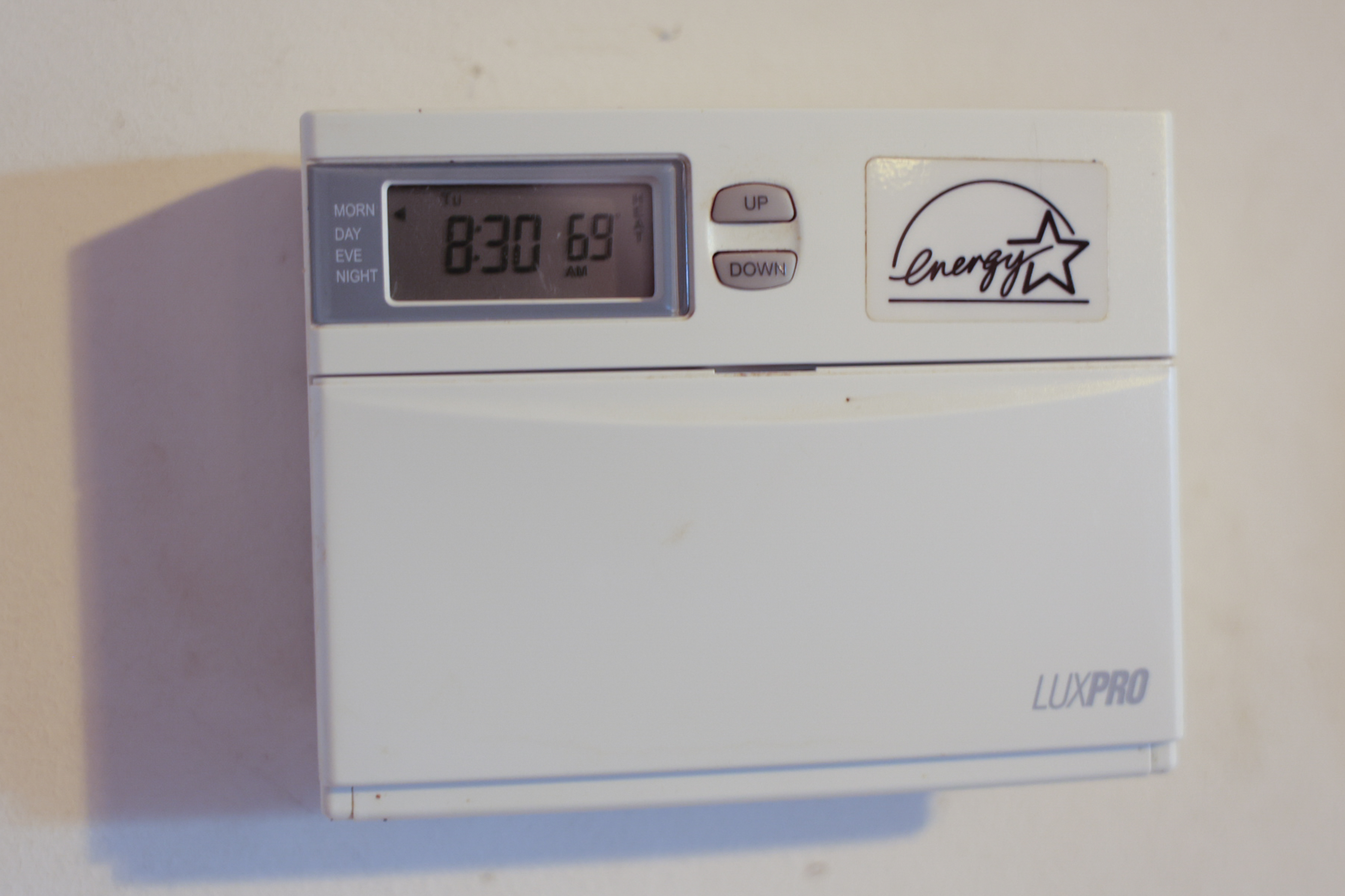
On a recent late-October morning in Berks County, Heller did have her oil heater on, with the thermostat set to 69, but she was hoping the afternoon sun would trap a little warmth. Soon, the days would grow darker, and she’d have to turn to her secret weapon: the rarely used wood stove and endless supply of firewood she gets from her father, who owns forested land.
If and when she needs more oil, Heller will have a hard conversation with her husband and children.
“It’s going to be oil,” she said, “or Christmas.”
Jennifer Heller keeps her thermostat at 69 degrees at her Berks County home.Steven M. Falk / For The Inquirer
A smattering of LeBrons, and one white guy in a LeBron jerseywhom host Jamir Griffin referred to exclusively as JJ Redick, gathered at Rittenhouse Square in front of a crowd of a few hundred spectators and Sixers fans for the latest Philadelphia look-alike competition.
The assembled LeBrons competed in a variety of challenges, including James’ signature chalk toss, who had the most LeBron-like hairline, and who had the best hops, whittling down the group as they went.
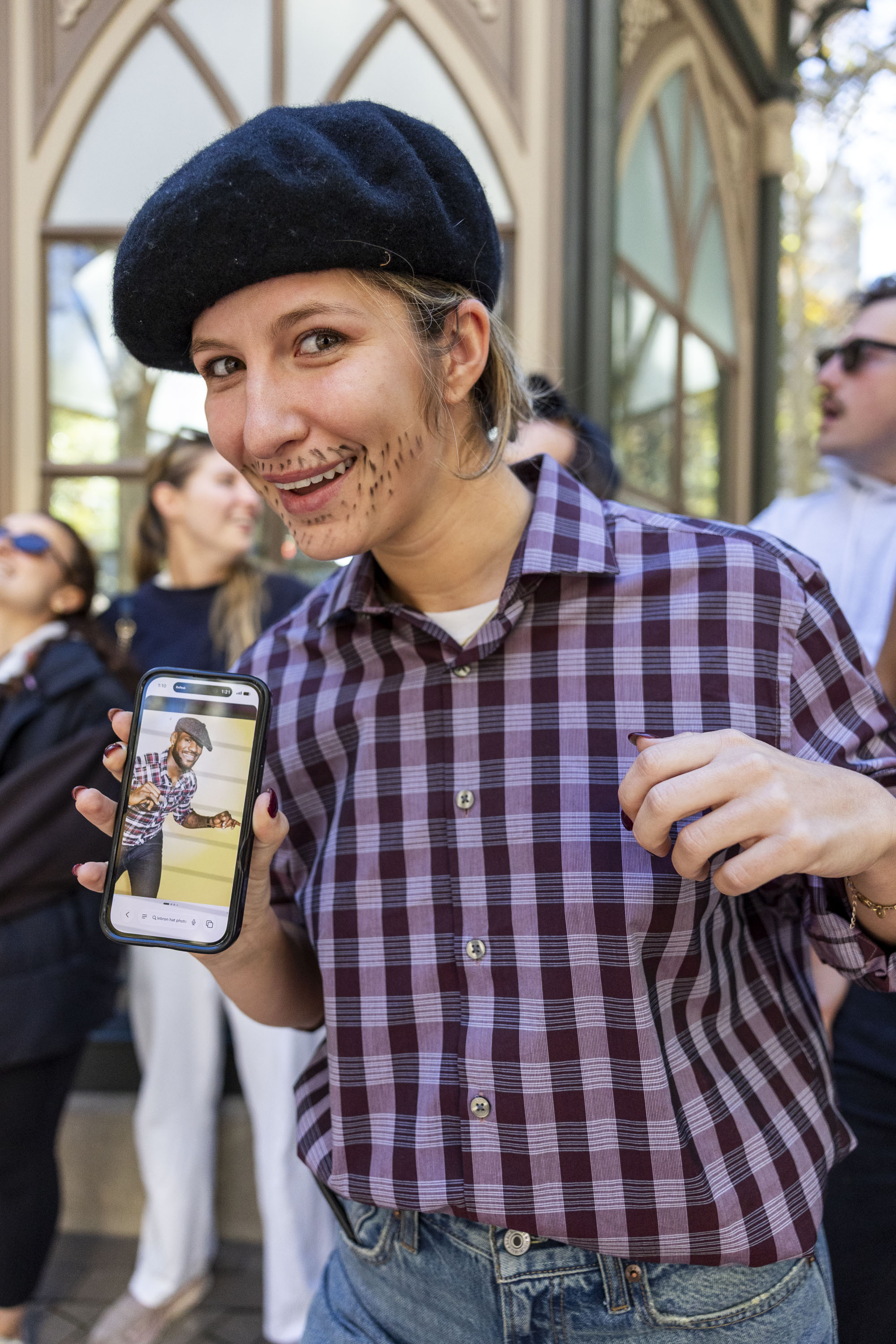
One LeBron, Hannah Russo, emulated one of James’ early-career GQ photoshoots.
Hannah Russo, 25, of Center City, poses for a photo dressed as the meme Art Studio LeBron James for the lookalike competition at Rittenhouse Square.Tyger Williams / Staff Photographer
“We love this photo; we send it back and forth,” Russo, 25, from Center City, said. “My boyfriend has a whole folder of LeBron memes on his phone. He loves LeBron. I’m grateful to him for passing his love of LeBron onto me.”
Her boyfriend, who competed in a standard James 23 jersey, was initially supposed to wear the get-up, but after he got dressed in his standard LeBron jersey, she decided she’d also throw her hat in the ring.
Nicknamed “Art School LeBron,” Russo was initially eliminated in the second round, but after fan outcry, returned to the competition. Russo and her boyfriend hit the LeBron-Joel Embiid handshake to celebrate her reinstatement.
“That is the beauty of the democratic system,” Russo said. “It’s a very ‘if you know, you know’ type of thing, and the people knew.”
Tiyana Smith, 29, of Fairmount, dressed as WNBA LeBron, does the infamous LeBron James pregame chalk toss for the LeBron James lookalike competition at Rittenhouse Square Park in Philadelphia, Pa., on Saturday, Oct. 31, 2026.Tyger Williams / Staff Photographer
One LeBron, dressed in a Lakers LeBron jersey and a king’s robe, was eliminated after being asked to demonstrate a flop because “LeBron is not a flopper.” He told the crowd he was not a Sixers fan but a LeBron fan, which resulted in loud boos.
The host winnowed the contestant pool down to two final LeBrons, Kenneth Martin from South Philly and Malik Fisher from Germantown, and put the two LeBrons to the test in a dribbling challenge. Martin easily won the dribbling challenge, and it looked like he was about to be crowned the winner, until a new contender emerged.
Periodically throughout the multistage competition, new LeBrons would join the lineup, including a bald-capped LeBron. One final LeBron, Chad Brown, arrived just as the host was crowning the winners. He dressed in a suit, emulating one of James’ most famous press conference moments.
Chad Brown, of West Oak Lane, shoots over Moyassar Eltigani, of Northeast Philadelphia, during the LeBron James lookalike competition at Rittenhouse Square on Saturday.Tyger Williams / Staff Photographer
He started dribbling the ball, but it didn’t look like he had a shot at beating Martin, until Brown insisted someone come and play defense on him. One of the other LeBrons squared up, and Brown easily crossed him out of his sneakers.
Ultimately, the contest ended in a three-way tie, between Martin, Brown, and Fisher. Each received their own unique prize, and so did the other entrants, sourced from South Philly vintage store Forbidden Closets.
Griffin, who hosted the event and the Jason Kelce look-alike contest years ago, hosts numerous events in the area to raise money for charity, for progressive political causes, and to bring people together, he said, and to put some of his favorite small businesses in the spotlight. As soon as James signed in Philadelphia, it felt like the perfect fit for the next look-alike contest.
The three LeBron lookalike contest winners (yes it was a three-way tie)
“They’re easy ways to bring people together,” Griffin said. “People make friends, people connect.”
Despite what some might have described as a robbery, Martin had a blast. “The crowd, they just wanted to give everybody a little love, but their hearts were for me,” he said.
The charter school dance teacher found out about the event through a coworker, who told him he looked a lot like James and should give it a shot. He came straight from the barber shop so that his shave would look good for the contest, but he didn’t expect all the extra stuff.
“I didn’t know we were going to be jumping and falling down and all the things, which was fun though,” Martin said. “I’m not mad. I like the pivot, but it caught me by surprise, man.”
An outspoken educator once lauded and entrusted by the Philadelphia School District to direct the social studies curriculum is fighting to keep his job as the district faces sustained political pressure over allegations of stoking anti-Israel sentiment.
Superintendent Tony B. Watlington Sr. disclosed the revelation to Congress at a hearinginitiated this fall as part of a federal probe of alleged antisemitism in the district —the second such investigation since the Oct. 7, 2023, Hamas attack on Israel and the war against Hamas that followed.
“Mr. Jimenez is in a termination proceeding,” Watlington told Congress, referring toIsmael Jimenez, the district’s social studies curriculum director, according to a transcript of the hearing released Oct. 21. After fielding complaints from some Jewish parents and outside groups, the district is now undertaking a “comprehensive review” of its social studies curriculum under the purview of a new chief academic officer he had hired, the superintendent said.
Watlington also said hehas ordered a review of some teachers’ personal social media posts.
The House Committee on Education and the Workforce report concluded the district teaches students to “hate Israel” and “embrace radical” ideas. The school district roundly rejects the allegations, which it says were “blatantly partisan.”
Jimenez filed suit against the school district Wednesday in federal court, alleging violations of his First Amendment rights. He said he has suffered financial loss, professional injury, and deterrence of protected expression” from the district’s “unlawful retaliation” over his personal social media posts.
Jimenez could be the first district employee to lose a job amid the furor over its handling of antisemitism allegations. Others in the city’s school district have been investigated over personal social media posts and allegations of expressing antisemitic or anti-Israel sentiments in a school setting, but only one other district educator has faced similar discipline.
Jimenez, whose name was invoked 33 times during the daylong hearing, said in an interview he believes the termination attempt and curriculum changes represent the district “kowtowing” to conservative politicians in power and their allies.
“I think it’s appeasing the authoritarian and the fascist tendencies that the Trump administration made possible, that embolden demagoguery of these politicians who are using claims of antisemitism to stifle any type of critical history, critical social studies,” said Jimenez, 45.
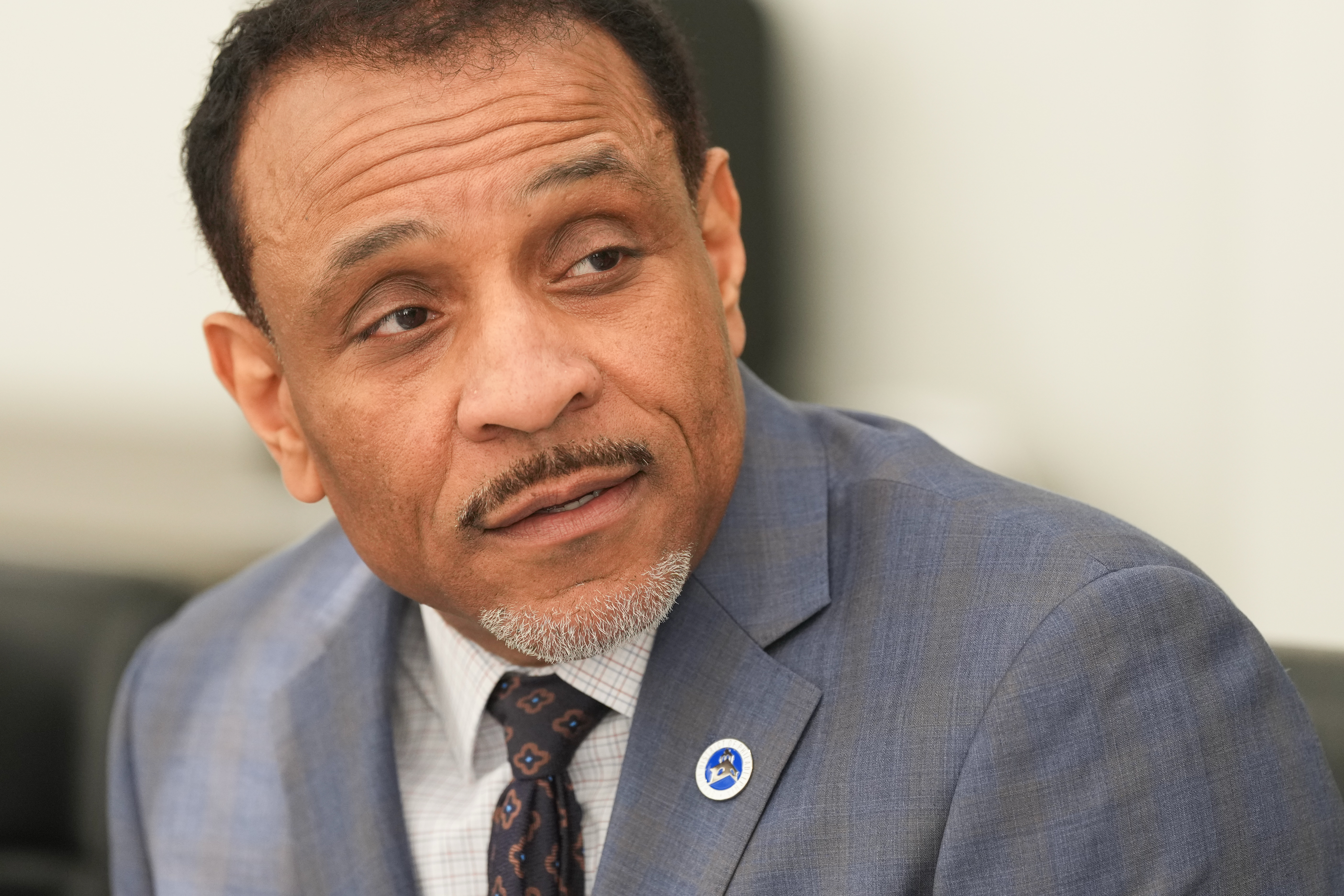
Superintendent Tony B. Watlington Sr. told Congress the district is attempting to terminate Ismael Jimenez, its director of social studies.Jessica Griffin / Staff Photographer
Jason Holtzman, chief of the Jewish Federation of Philadelphia’s Community Relations Council — an organization that has lodged multiple complaints about Jimenez to the district since 2024 — dismissed the notion that the district was reacting solely to the Trump administration.
“As director of social studies for the entire district, Jimenez made statements on camera that rationalized the Oct. 7 massacre and denied the Jewish people’s connection to the land of Israel,” Holtzman said in a statement.
“The Jewish Federation of Greater Philadelphia has raised concerns about Jimenez’s conduct for years, and Jewish parents in Philadelphia asked the district to address these issues more than two years ago, long before the congressional investigation. The concern is not simply how long it took the district to act, but why Jewish students and families had to wait so long for their experiences to be taken seriously.”
The House committee that grilled Watlington has caused ripples in Philadelphia before. In 2023, the University of Pennsylvania’s then-president Liz Magill was called to testify about the university’s handling of antisemitism on campus after Hamas’ Oct. 7 attack. She resigned after days of pressure and ire over her testimony.
A sharp U-turn
Hundreds of pages of documents related to Jimenez’s disciplinary hearings and termination proceedings, obtained by The Inquirer, paint a picture of an educator whose career took a sharp U-turn at the time outside groups began complaining about him.
Jimenez spent 12 years as a district social studies teacher, first at Germantown High, then at Kensington High School for the Creative and Performing Arts. He had no disciplinary incidents during that time.
In 2022, he was promoted to become a social studies curriculum specialist, and then the social studies curriculum director, a job that pays $137,669 annually. The district in 2024 pointed to him as an exemplary employee.
“Mr. Jimenez has invested in the deep and critical work of expanding our city and district’s knowledge and consciousness of the power that Black and African American people have always held, while also advocating for the resources that enable Black and African American communities to truly thrive,” district officials wrote in a February 2024 post celebrating standout Black educators, noting their “immense gratitude and admiration” for Jimenez’s work.
Later that year, in the wake of the Oct. 7 attack on Israel and the start of the politically divisive war between Israel and Hamas, a new group called the School District of Philadelphia Jewish Family Association began lodging complaints about Jimenez.
On March 13, 2024, the SDPJFA sent an email blasting Jimenez to the school board, Watlington, and the district’s chief counsel. Its members, who are not named, objected to what it said was Jimenez’s purchase and distribution of a book about the “colonization of Palestine” for his central office team. The book, the group said, was an attempt to “directly distribute controversial, political information to be shared in classrooms across the district,” which it considered biased, one-sided, and a violation of district policy.
Jimenez, in correspondence with a district official, said that the group’s claim was wrong — another curriculum team member purchased the books, not him. And the books were meant for and distributed only to his curriculum staff, not to schools or students, he said.
The group also objected to Jimenez’s personal social media accounts, which it said contained “antisemitic and anti-Israel views.” The group said they believed the accounts blurred the lines between professional and personal, as Jimenez disclosed his job title.
Jimenez, in the Inquirer interview, said the groups — and Congress — took personal posts out of context, including a post from 2020, when he was still a classroom teacher. In the 2020 post, Jimenez wrote that “Israel is a terrorist state,” which he said was a response to a specific killing.
“I was not talking about an ethnic group,” said Jimenez. “I was not saying, ‘Jewish people are evil,’ or something crazy like that. I literally said the state of Israel, so I was talking about a government, and I made it very clear.”
In April of 2024, the district commissioned an outside firm to investigate possible improprieties by Jimenez.
The Jimenez investigation concluded the educator did not purchase or approve improper or antisemitic learning material, and that the district did not “act indifferently in permitting the creation of a hostile environment in its schools with regard” to Jimenez.
Investigators also, at the time, found that while Jimenez’s personal social media posts were protected by the First Amendment, they violated district policy and were a “cause for concern,” according to the investigation report.
More scrutiny
Soon after that outside investigation concluded, Jimenez’s supervisors began reviewing social studies curriculum in ways they hadn’t before the outside complaints about his work, hesaid.
In June, an activist group backed by GOP donors accused Jimenez of antisemitism with a mobile billboard parked in front of district headquarters and Jimenez’s home. Around that time, similar billboards parked outside the University of Pennsylvania and schools in Central Bucks school district accused other educators of antisemitism.
Jimenez subsequently got written up multiple times, according to district records, with claims of insubordination and not following directives — such as one to respond to an email about proposed professional development sessions on antisemitism and Islamophobia. (Jimenez told his supervisor he had been instructed by his lawyer “not to touch” issues like that one, presumably because of the ongoing outside complaints.)
He was also cited for participating in a radio interview that was streamed on Facebook, and for “liking” posts on his personal account including “Zionism is Racism” and “… the connection of Israel with the system of white supremacy …”
Jimenez, in a response to one write-up, said the district’s social media policy was not clear on whether such passive engagements constituted endorsement or policy violations.
Jimenez that August made an internal complaint about a “toxic work environment,” citing pressure in the wake of the outside pressure and what he said was a lack of support from the district.
In a June 2025 written protest of another disciplinary report, Jimenez said the district’s “actions reflect a troubling pattern of increased scrutiny and appear to be influenced by external attacks on my character rather than any documented violation of district policy. Before the circulation of third-party defamation, there were no documented concerns regarding my work performance.”
Jimenez was eventually suspended with pay, and then without pay, before termination proceedings began in October 2025. Those proceedings are still ongoing, and he is fighting them.
But the scrutiny continues — in February, for instance, the Committee for Accuracy in Middle East Reporting and Analysis, a pro-Israel group, issued a report denouncing the district’s social studies curriculum, which it found is “grounded in a critical race theory framework” and “emphasizes a thematic ‘history of grievance,’ largely at the expense of chronological historical study.”
Jimenez, who has filed complaints with the Pennsylvania Human Relations Commission and the district’s Office of Inspector General, believes the shift from the district promoting him and praising his work to writing him up and now attempting to fire him “is connected to people being scared about these outside attacks,” he said in the interview.
Nearly 2,000 people have signed a petition urging the district to reinstate Jimenez.
“We are concerned that the district has capitulated to the racist, right-wing, and pro-Israel forces that have been attacking Ismael and other antiracist teachers in the school district,” said the petition, started by the Teacher Action Group and Philly Educators for Palestine, a group that recently disbanded.
Aaron Terr, vice president of public advocacy for the Foundation for Individual Rights and Expression, said he did not know enough about Jimenez’s specific case to speak to whether the district’s treatment of him is an attempt to placate political forces.
“The Trump administration has a history of wielding anti-discrimination law against educational institutions in ways that raise serious First Amendment concerns,” Terr said in a statement. “But whatever pressure they face, districts need to meet their dual obligations of addressing discriminatory harassment and respecting educators’ First Amendment rights.”
What Watlington told Congress
Watlington stands by the district’s curriculum, he told the House Education and Workforce Committee, led by U.S. Rep. Tim Walberg (R., Mich.).
Still, Watlington told Congress the district would not use teacher-written social studies curriculum going forward. Watlington said he gave his new chief academic officer, Michael Farrell, the charge to switch to a nationally vetted curriculum, following the standardization of math, English, and science curricula over the past several years.
Jimenez noted the teacher-written social studies curriculum now planned for replacement in the 2027-28 school year was nationally vetted — by the Council of Great City Schools.
“We spent years doing serious intellectual work, developing curriculum grounded in historical inquiry, evidence, and civic reasoning,” he said. “Teaching students about colonialism, resistance, economic inequality, or injustice is not indoctrination. These are essential parts of understanding history and the world we live in. The quality of our work should be judged by its historical accuracy, instructional design, sources, and assessments, not isolated excerpts used to advance a political argument.”
Members of Congress and their staff repeatedly grilled Watlington on posts and activities by individual district employees — not just Jimenez, but also some district teachers, including Hannah Gann, who recently made headlines for pretending to be Black and Palestinian. (She is white and Jewish.)
The stakes are high, as evidenced by Magill’s fate after the Penn congressional hearing.
Watlington said he had told his human resources department to conduct a “look-back” at some district staff’s personal social media posts that may have violated harassment and discrimination policies, even if those had already been probed.
The district was required to examine “any complaint received, regardless of source, related to discrimination based on national origin, shared ancestry,” Watlington told the committee. It agreed to do so in a voluntary settlement of a Department of Education complaint over allegations of antisemitism, but the superintendent said he went further “to do a comprehensive look-back” at any posts that were flagged between 2024 and the present.
“I want to know if anything was missed, quite frankly,” Watlington said. “I’ve asked for a look-back to ensure that things that were investigated, that we didn’t miss anything and that it was done properly.”
Congressional staff cited a 2025 chat on Signal, a private, encrypted messaging platform, started by some district teachers, but allegedly including some district students.
Gann, in the chat, advertised a rally for “rage” and “resistance” with a graphic showing a bulldozer breaking through a fence, as Hamas did during its Oct. 7 terror attack. Watlington was asked whether it was appropriate to share such an image with students
“Absolutely not,” Watlington said. “Let me be crystal clear — teachers have no business, under any circumstances, communicating with children on private chats. Period.”
Staff also pointed to social media posts by Gann and by Shaw MacQueen, another district teacher active in the group Philly Educators for Palestine, which disbanded recently after Gann’s deception was revealed.
Asked if Gann had been disciplined for her posts, Watlington said, “I do know that Ms. Gann, as well as some other individuals, are being reviewed currently.”
Gann declined to comment on the congressional investigation.
MacQueen, who remains a district teacher, said he was surprised to find himself mentioned in a congressional hearing.
He said he was concerned about “continuing attacks” on educators and critical race theory, and also expressed support for the district’s current social studies curriculum and Jimenez.
MacQueen said he was disappointed in the district, which in the past publicly committed to equity and antiracism work, but now is “just going to sit there and say what these people want you to say. I see it as just the continuation of an ongoing history of trying to scare individuals from speaking out, to stop them bringing a light to injustice.”
The sudden closing of the museum of the Academy of Natural Sciences of Drexel University was driven, in part, by a budget deficit, various leaders have said in the almost-two months since the decision was made to shutter the nearly two-century-old museum.
How big is that deficit? Two very different figures were presented in a City Council hearing this week focusing on the closure of the Academy’s museum.
“Last year, the Academy’s public programs cost $7.7 million but brought in only $3 million in revenue,” resulting in a $4.4 million deficit, said Melissa Richman, Drexel’s executive director of operations, who testified Monday about the university’s support of the Academy over the years.
But with that number, Richman was referring to the total amount listed on the Academy’s tax return that went to “public education” — which encompasses not just the museum itself, but also its educational programs.
In fact, looking at the deficit for just the museum, in fiscal year 2025, the shortfall came to less than $1 million, according to testimony Monday from Academy board chairperson Suzanne Biemiller. Academy financial documents obtained by The Inquirer showed estimated expenses of $3.66 million and revenue of $2.7 million, resulting in a $960,000 deficit.
Nonprofit experts contacted by The Inquirer said that’s a relatively small gap to cover. “Given their donors, their legacy in the community, and the loss to the city, a raise of the amount would be something they could do on a Friday afternoon,” said arts consultant Nancy Burd.
The William Penn Foundation has offered to cover the amount Drexel has been contributing toward the museum for about a year while a long-term solution could be studied. Drexel has neither accepted nor rejected the offer, and while the university has said it is open to discussions with the foundation, no talks have happened, a foundation spokesperson said.
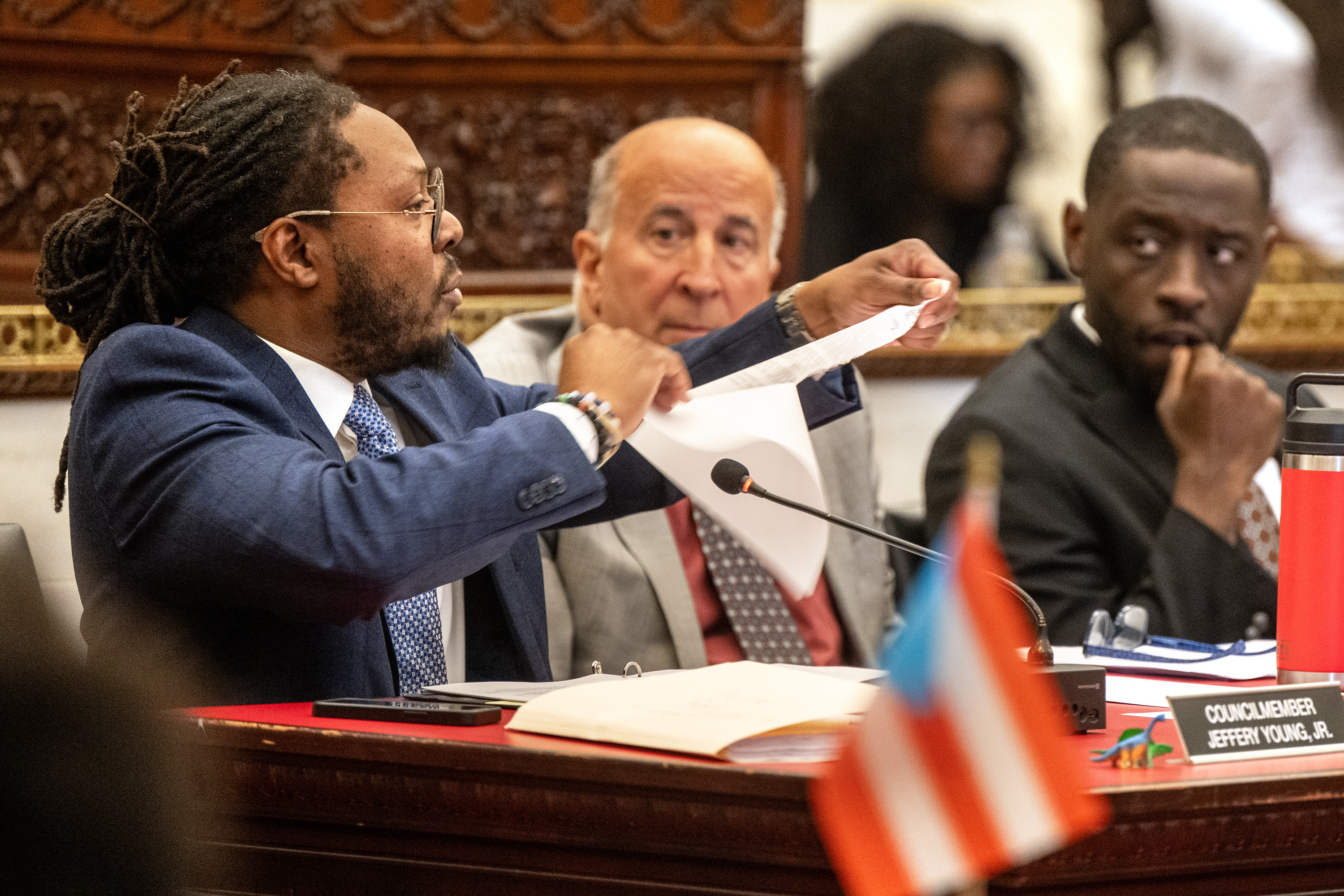
City Councilmember Jeffery Young, Jr. (left) rips up a statement from deputy mayor Patricia Wellenbach at Monday’s City Council hearing.Tom Gralish / Staff Photographer
Among the programs Drexel is counting in its larger deficit number quoted by Richman: a collaboration with Drexel’s Robert and Penny Fox Historic Costume Collection for an exhibition called “The Ecology of Fashion;” support for the Watershed, a climate resilience hub in Germantown in partnership with Mural Arts and the Philadelphia Water Dept.; the Academy education department’s programs for lifelong learning and lessons for students at Friends Select School; and work with Mantua Civic Association, Sloan Street Community Garden, and Lankenau and Olney high schools.
Drexel spokesperson Niki Gianakaris confirmed that the $7.7 million budget number cited in testimony “encompasses a full range of public activities, rather than the operation of the museum’s galleries alone.”
“The differing financial figures presented at the recent City Council hearing underscore the importance of understanding the full cost of the Academy’s public programming,” said Gianakaris, who added that the “operational imbalance, coupled with capital needs” contributed to the “difficult decision” to close the museum.
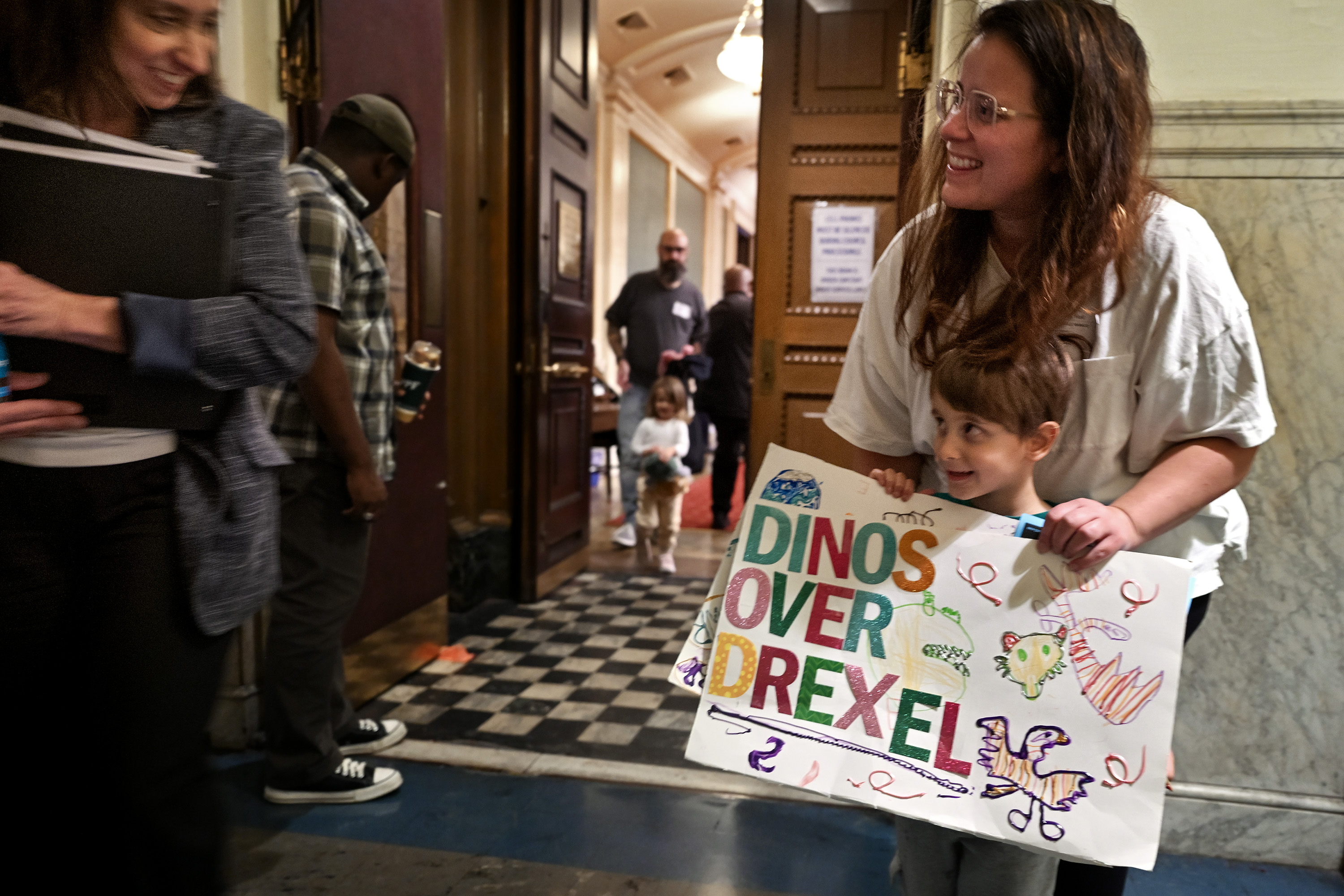
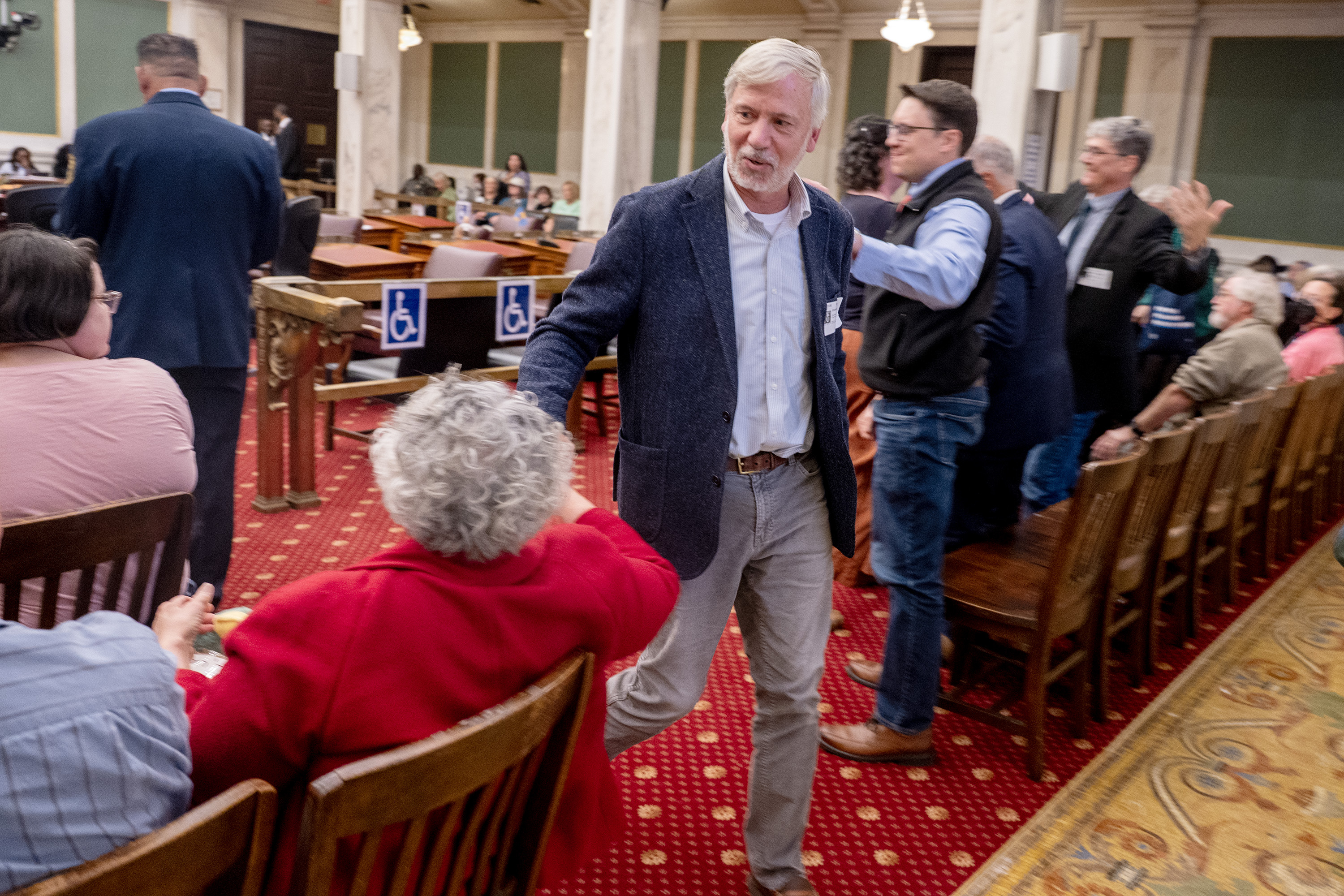
Leaving chambers, councilmember Rue Landau (left) pauses to see Augustus Mango, 5, and his mother, Marriele Mango, after they testified during City Council hearing Monday.Tom Gralish / Staff Photographer
“The museum can certainly be operated independent of community-located programs,” said Academy spokesperson Christine Reimert.“In fact, Drexel’s public education figures also include the 50-year-old Women in Natural Sciences high school program, which was consistently fully funded but was spun off as a separate organization in the spring of 2026 at Drexel’s insistence. All of this supports the need to have an independent financial analysis and feasibility study completed so that decisions can be made based on a single set of accurate numbers.”
Still, more than one City Council member at Monday’s hearing sounded astonished by the relatively small amount it would take to fund a reopening of the museum to five days per week. When asked that question by council members,Biemiller, the Academy chairperson, again cited the figures from fiscal year 2025 — $3.6 million in costs, offset by $2.7 million in revenue.
Said Councilmember Jeffrey Young Jr.: “We have a $7 billion budget [for the entire city] and we contribute millions of dollars to other cultural institutions in the city. I think that’s something that was very, very doable,” said Young.
Germantown’s historic YWCA is slated to be redeveloped into affordable senior housing by Councilmember Cindy Bass’ handpicked developer, 12 years after she shut down a similar plan by a different group.
This latest twist in the saga over the preservation and reuse of this city-owned building comes amid soaring interest rates and construction costs, ensuring the project is substantially more expensive than it would have been in 2015.
The YWCA at 5820-24 Germantown Ave. was one of the first to integrate in the country, and the four-story brick building is almost 112 years old. It’s been owned by the city since 2013, and vacant even longer.
When the Philadelphia Redevelopment Authority first put the building up for bid in 2014, the only offer was a collaboration between Mission First Housing Group and Northwest Philly-based developer Ken Weinstein for 50 low-income senior apartments.
But to transfer city-owned land to a developer, City Council must introduce legislation to allow the process. And the larger body defers to district representatives for properties in their territory, a tradition known as councilmanic prerogative.
In 2014, Bass refused to allow the sale — saying that affordable apartments for seniors would hinder the reinvigoration of Germantown Avenue.
Later,she championed Ohio-based developer KBK Enterprises and its 2016 plan for a mixed-income building, arguing that her choice would also boost a Black-owned business.
That project and another by the same company never came to fruition. Bass refuses to allow the city to transfer the property to any other developer.
“The proposals from 2015 are similar to where we are now, which is senior housing at this location,” said Bass at a neighborhood meeting on Wednesday night. “But the market has changed dramatically. Housing has changed dramatically from 2015 to where we are right now.”
Councilmember Cindy Bass in 2023.Tom Gralish / Staff Photographer
Germantown’s evolution
Germantown suffered decades of divestment and population loss as a result of white flight and discriminatory lending and in 2014 had seen little market rate development.
But in the 12 years since, the neighborhood has seen a modest burst of new building, and an increase in higher-income residents.
“The ability to do certain types of projects has changed,” said Bass, who is facing a tough reelection bid next year. “Nothing is as it was in 2015, and so I think that going forward, this project right now is the right thing to do.”
Bass was first elected to City Council in 2011. Her tenure has been marked by repeated delays in the redevelopment of city-owned properties like the Germantown Town Hall, the YWCA, and Ada H.H. Lewis Middle School due to her exercise of councilmanic prerogative. She will run for reelection in 2027, facing progressive challengers.
At Wednesday’s meeting, residents were highly skeptical of the assurances from KBK and Bass after so many years of disappointment.
KBK’s latest plan
At Wednesday night’s meeting, KBK’s president and CEO Keith Key informed residents of his company’s latest plans for 51 units of senior apartments, along with some commercial space.
He wants to put a mix of studio, one-bedroom, and two-bedroom units in the building. The smallest would be 500 square feet and the largest 850 square feet. The units would be affordable to those at 20% to 60% of area median income, or betweenroughly $17,000 and $50,000 for a one-person household.
However, the project’s funding is still not fully locked in. Key informed residents that his company had applied for Low-Income Housing Tax Credits in June and their petition had not yet been approved.
“Things look good, but obviously we won’t know until we know,” said Key.
The rest of the funding would come from equity, debt, and project-based housing vouchers. Key also described city funding that his company secured during earlier redevelopment bids.
KBK used “extensions of the applications that we’ve had in the past,” said Key. He said the funding comes from “the [Philadelphia Redevelopment Authority], the city funds, the Class 500 fund,” among others.
The old Germantown YWCA, which has sat vacant for decades.Ken Weinstein
Neighborhood discontent
Attendees expressed frustration that the Germantown YWCA’s redevelopment has been delayed, when the current proposal is so similar to previous plans from over a decade ago.
The Philadelphia Redevelopment Authority attempted to work with KBK on the YWCA in 2016, but first cut ties with the group in 2021. The redevelopment authority made another agreement with KBK at Bass’ urging in 2022, but that lapsed in 2024.
The agency does “not want to waste anyone’s time because it would not be fair to anyone if the Councilwoman was not willing to consider anyone else,” according to the Redevelopment Authority’s February 2025 board meeting minutes.
Weinstein, one of the developers who made the original 2014 bid, has sought to seize the building through the courts, using Act 135 which is meant toredevelop derelict property. But his suit failed two years ago.
“The first deadline for finishing this project was 2019,” said Ann Doley, a longtime member of the Friends of the Restoration of the Germantown YWCA group. “Then it’s 2025. What is it now? 2030? It’s so hard to have any confidence, any trust, that this is going to work out.”
On the last Sunday in October before a make-or-break midterm election, as campaign volunteers knocked on tens of thousands of doors from coast to coast and Donald Trump rallied in the autumn chill of Port Huron, Mich., where he praised Nicki Minaj’s “beautiful,” um, derriere, Philadelphia’s next new member of Congress had other ideas.
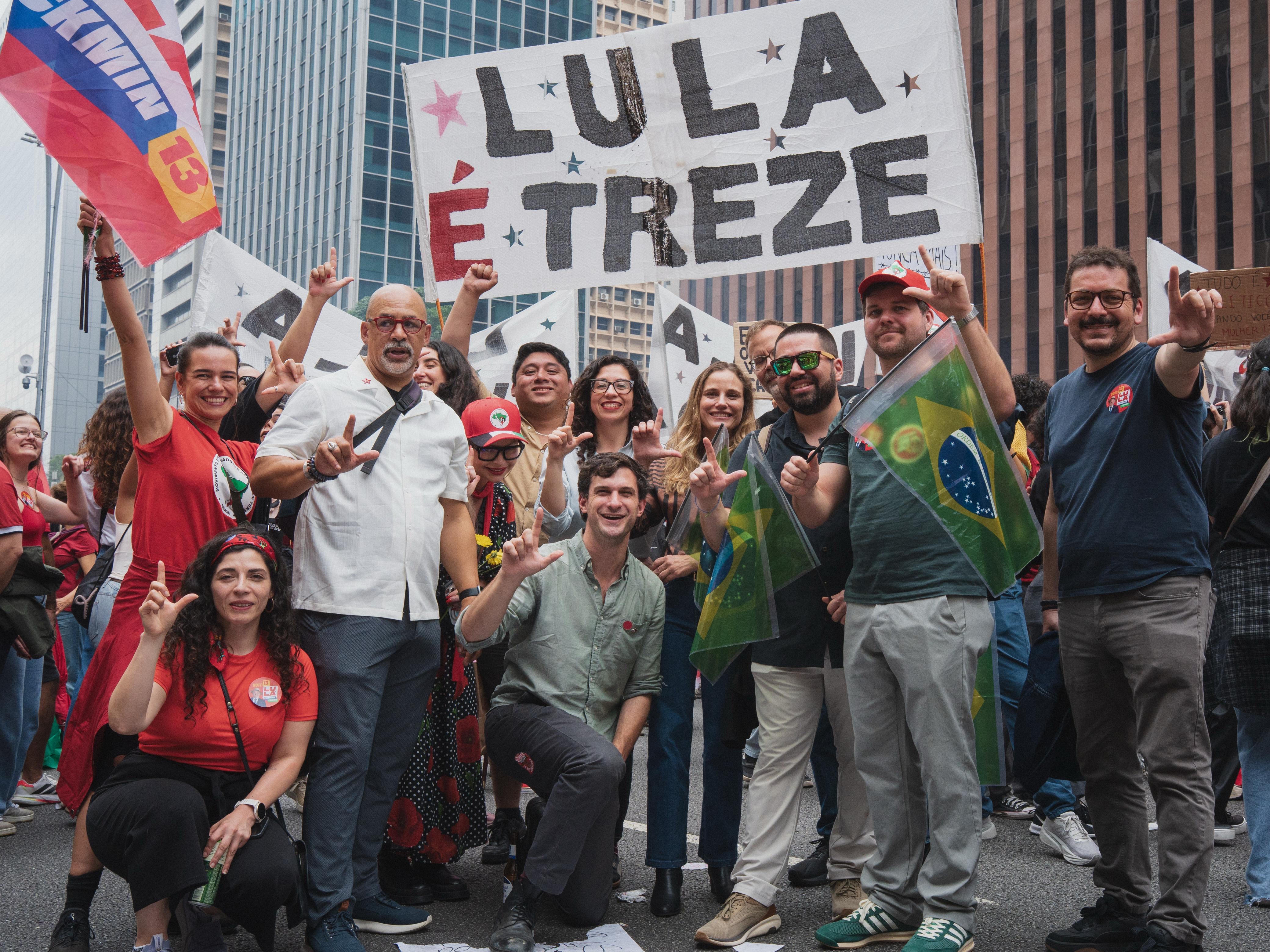
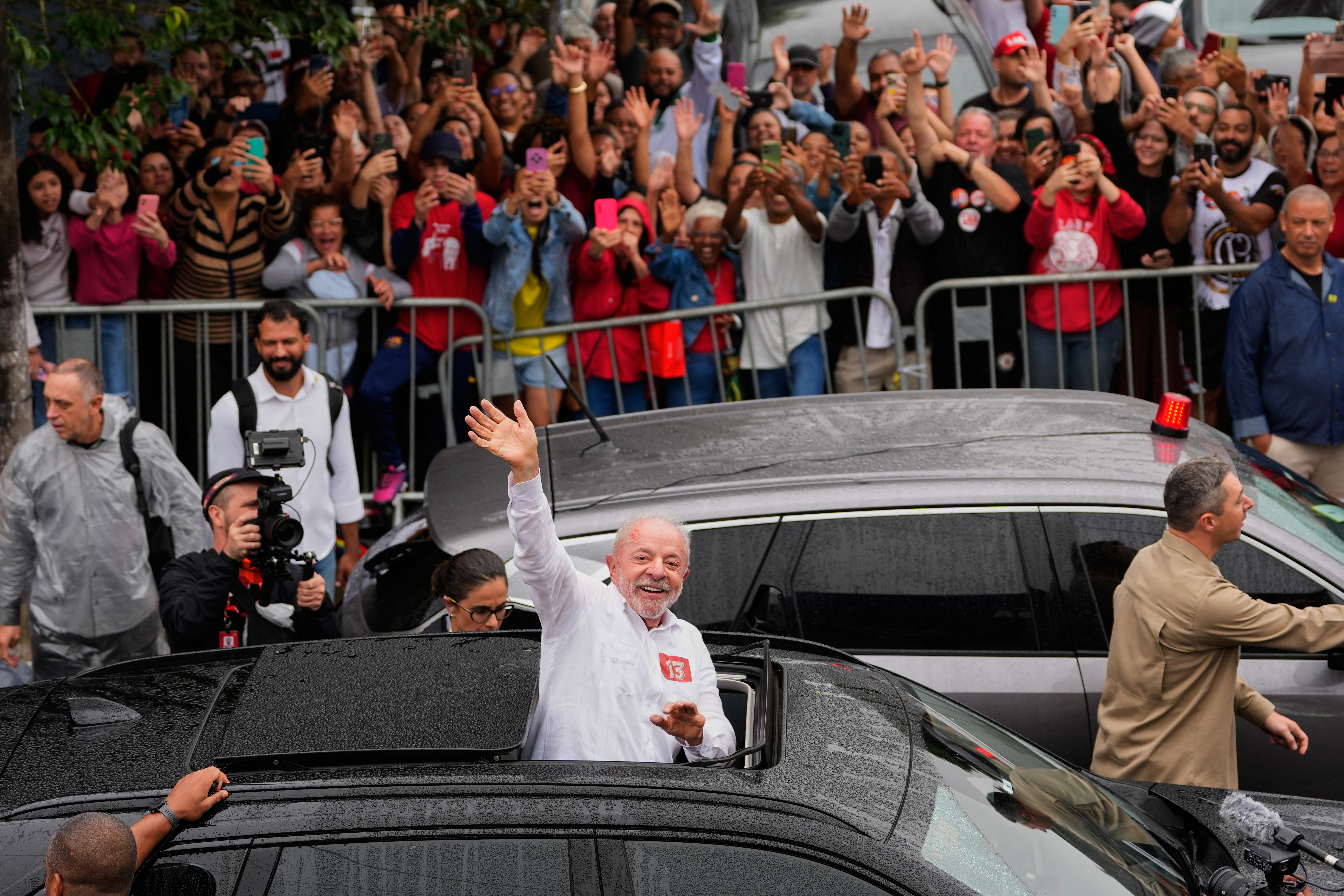
For Rabb, his presence on the side of the world stage capped a five-day journey to Brazil — where he’d lived for six months right after graduating from college in the 1990s — in which he visited a polling place and watched hundreds of thousands of Lula supporters march through the capital city. His trip, undertaken through the leftist group Progressive International, only heightened his belief that the fight against right-wing extremism in the U.S. and in Latin America is all the same struggle.
“We need more folks on the federal level who are committed internationalists, who are not isolationists — and also folks who openly oppose imperialism and militarism for the benefit of corporate greed,” Rabb told me on Wednesday, little more than 24 hours after he’d landed back in Philadelphia and hustled off to three local campaign events.
Rabb said he was especially drawn to Brazil both because of his time there — when he learned to speak Portuguese — and because he now considers that country the largest democracy in the Western Hemisphere. “Because I don’t believe the U.S. is a democracy anymore,” he explained. “I believe it’s a fascist state.”
And so the presumed future Congress member wanted to be there to watch a Brazilian movement led by young voters and labor unions “turn the tide after six consecutive wins for far-right administrations [across Latin America] since Trump got back into office.”
You’ve probably noticed by now that Rabb intends to be a radically different kind of U.S. representative from the nation’s founding city — a place that in the 20th century had defined the stereotype of the brass-knuckle ward-heeler congressman who cared not about big ideas but just about bringing home the bacon, usually with a few slabs for himself.
After winning a hotly contested Democratic primary in late May, Rabb — somewhat liberated by running in a district where Republicans aren’t even fielding a candidate — has been literally all over the map in showing his different style of repping Philly.
In August, Rabb also traveled to South America — with other leftist House hopefuls including New Jersey Democratic candidate Adam Hamawy, and a couple of sitting members — for a Pan-American Congress of progressives from 15 different countries who strategized in Uruguay about how to fight the rising tide of authoritarianism in Latin America and the United States.
In September, Rabb was making headlines in New York by speaking out at a rally outside the United Nations against the visit there by Israeli Prime Minister Benjamin Netanyahu, whom Rabb branded as “a war criminal” after the military campaign in Gaza that has killed more than 75,000 people in the last three years.
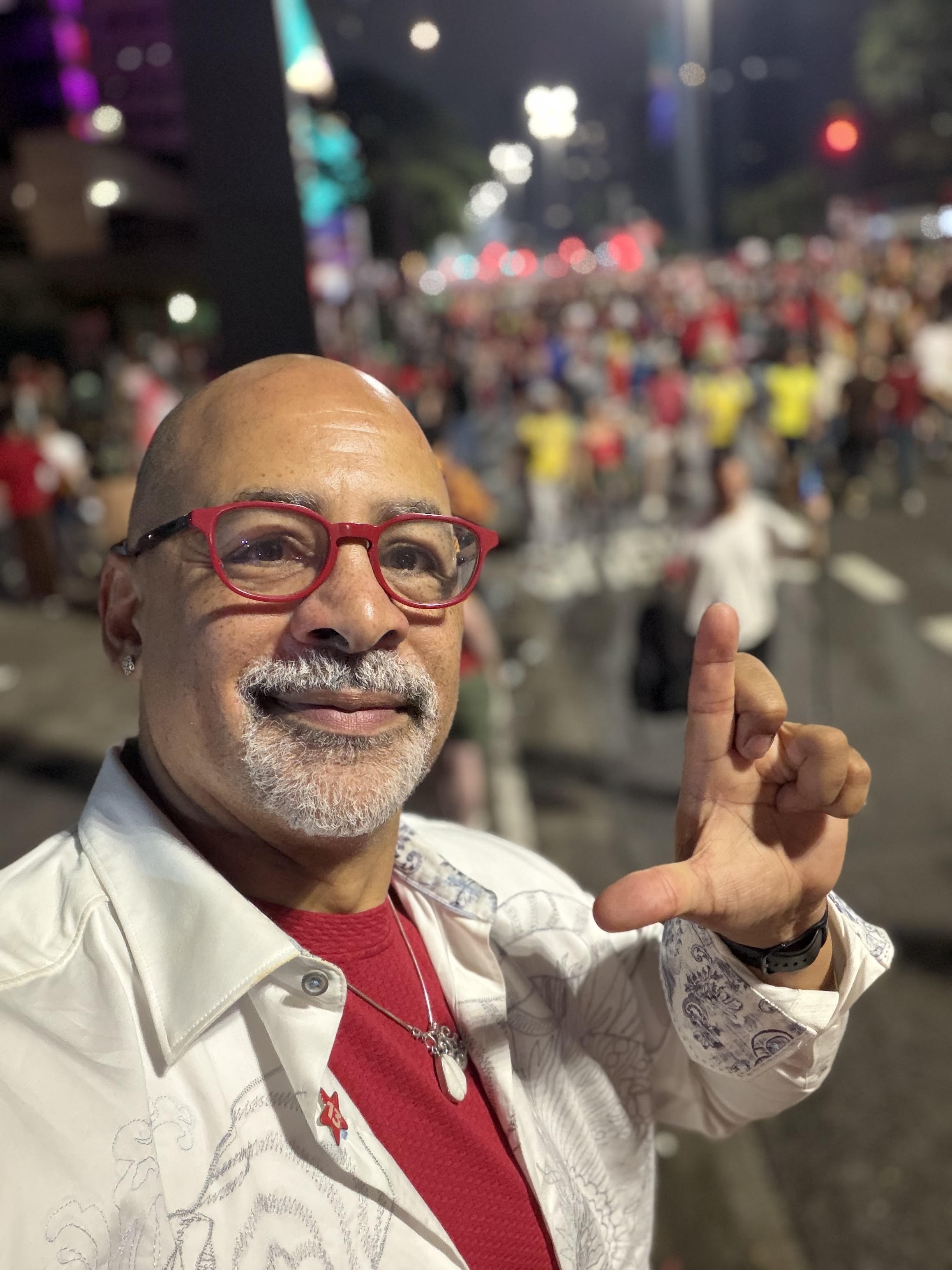
Pennsylvania State Rep. Chris Rabb, the Democratic candidate for Congress in the 3rd Congressional District, makes a victory sign for Brazilian President Luiz Inácio Lula da Silva in the streets of São Paulo after Lula’s election victory on Sunday.Handout art
The candidate’s globe-trotting has occurred during a political season that’s seen the average voter furious about skyrocketing gas prices and an affordability crisis here on U.S. soil. But to Rabb, a foreign policy defined under Trump by American imperialism and high prices at the pump in Germantown are all connected.
Rabb told me that he intends in Congress to be “very explicit about being anti-fascist and anti-imperialist and anti-militarism” — because pushing for an end to the Iran war, U.S. military aid for Israel, or adventurism in Latin America would free up more dollars for domestic programs — like offering Medicare for All.
“So for all those people who just want to focus on our own borders, when they ask for things that they say we don’t have the money for, we can say, ‘Well, we do have the money,’” he said, referring to the nearly $1 trillionPentagon budget. “We don’t have the political will.”
Rabb’s internationalist worldview, and his specific interest in Brazil, goes way back to young adulthood. Immediately after graduating from Yale in 1992, he spent six months in the Brazilian port city of Salvador to further his obsession with that area’s unique brand of jiujitsu called capoeira that is closely associated with Black resistance.
“I decided to live abroad for a while while I was young and unencumbered, and learn about other Afro-Atlantic communities outside the U.S. — and Brazil has the largest Black population outside of Nigeria,” Rabb said.
This past week, Rabb watched as Salvador and the surrounding Bahia region — more Black, and with a higher poverty rate than the nation as a whole — played a key role in delivering the 10 million additional votes that powered Lula to a runoff victory over Bolsonaro, after the son of Brazil’s now-imprisoned ex-president had led in the first round.
Mike Elk, a Pittsburgh-based labor reporter who also has close ties to Brazil and was there to cover the election for his Payday Report website, agreed with Rabb’s assessment that massive organizing — including large pro-Lula marches and clever use of messaging tools like WhatsApp — turned things around for Brazil’s left. They see lessons for pro-democracy advocates in the United States.
President Luiz Inácio Lula da Silva, who is seeking reelection, waves after voting in the presidential runoff in São Bernardo do Campo, Brazil, on Sunday.Andre Penner
“We need to start using WhatsApp more as a way to directly communicate with people,” said Elk, describing how millions of Brazilians in a group called Lula’s Army connected over their phones for actions like banging pots and pans during a Bolsonaro appearance on national TV. The channel bypassed political interference on other social media platforms.
Said Rabb: “They don’t have the resources of this wealthy nation we call the U.S. And yet they leveraged every tool, every technology to mobilize and make a difference.” He also marveled at the mechanisms such as a Sunday election, and universal registration and compulsory voting, that allowed for more than 128 million ballots, or a turnout of more than 80%.
Rabbhopes to leverage his connections to join the Congressional Brazil Caucus after he is sworn in on Jan. 3, in addition to signing onto the existing Block the Bombs Act that aims to cut off military aid to Israel.
That proposed legislation has a way to go before gaining enough support for passage, although the election of other left-wing candidates like Rabb would surely bring that goal closer. Indeed, political pundits say it’s looking all but certain that Tuesday’s election will give the Democrats a majority in the House, and possibly in the Senate, as well.
I wanted to ask Rabb not only about his Brazil adventure, but also his thoughts on just what his party’s priorities should be if the political prognosticators are right about Tuesday’s result. The Democrats’ 2024 nominee, former Vice President Kamala Harris, caused an online kerfuffle last weekend by arguing that the party should shun impeachment of Trump or his higher-ups, and focus solely on “getting stuff done.”
Rabb said it’s critical House Democrats investigate corruption and hold the regime to account even as it also presses affordability issues like a higher minimum wage. “When we’re worried about affordability,” he said, “it’s because the corrosive influence of money in politics, and both legal and then through the corrupt ways that people buy influence to this current fascist regime …”
And he believes the alliances he’s helping forge between the American left wing and global progressives will only help that agenda. One thing on Rabb’s wish list for after a Trump presidency is welcoming a Brazilian delegation to Washington, and maybe accomplishing one last thing that didn’t happen on his recent trip: meeting Lula in person.
“I was 50 feet away from him,” Rabb said.
Fifty feet from stardom, but getting ready for his ownclose-up in just over two months.
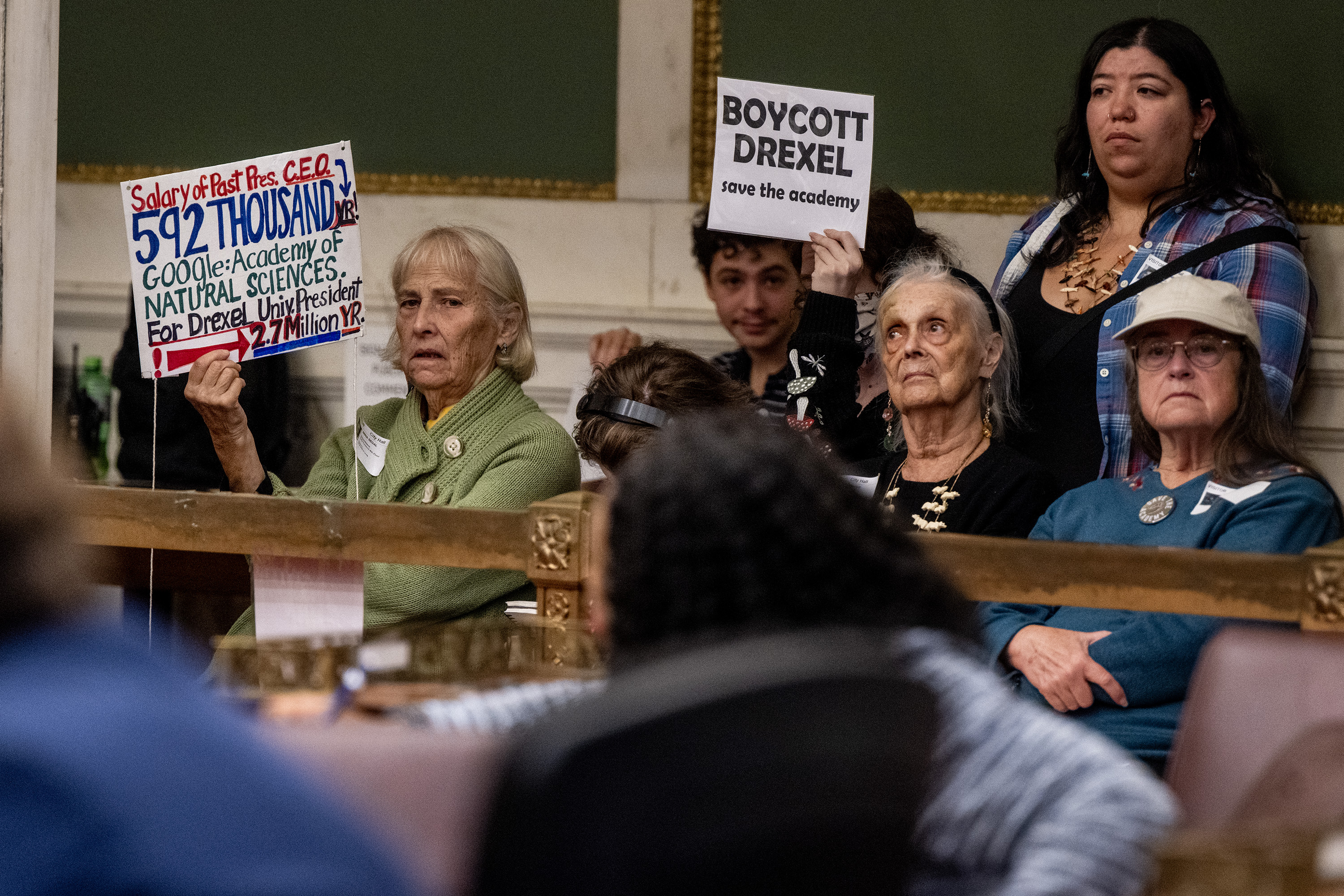
Philadelphia City Council’s hearing Monday on the closure of the museum of the Academy of Natural Sciences of Drexel University raised as many questions as it answered, following nearly four hours of testimony from experts, Drexel University and Academy representatives, and members of the public.
The hearing is set to resume Nov. 16 at 10 a.m., with Council members vowing to continue their probe on how to reopen the museum and why it was closed in the first place. Councilmember Nina Ahmad introduced a resolution at Council’s meeting Thursday to create a task force to explore reopening the museum.
Here is a look at some of the issues raised at the meeting.
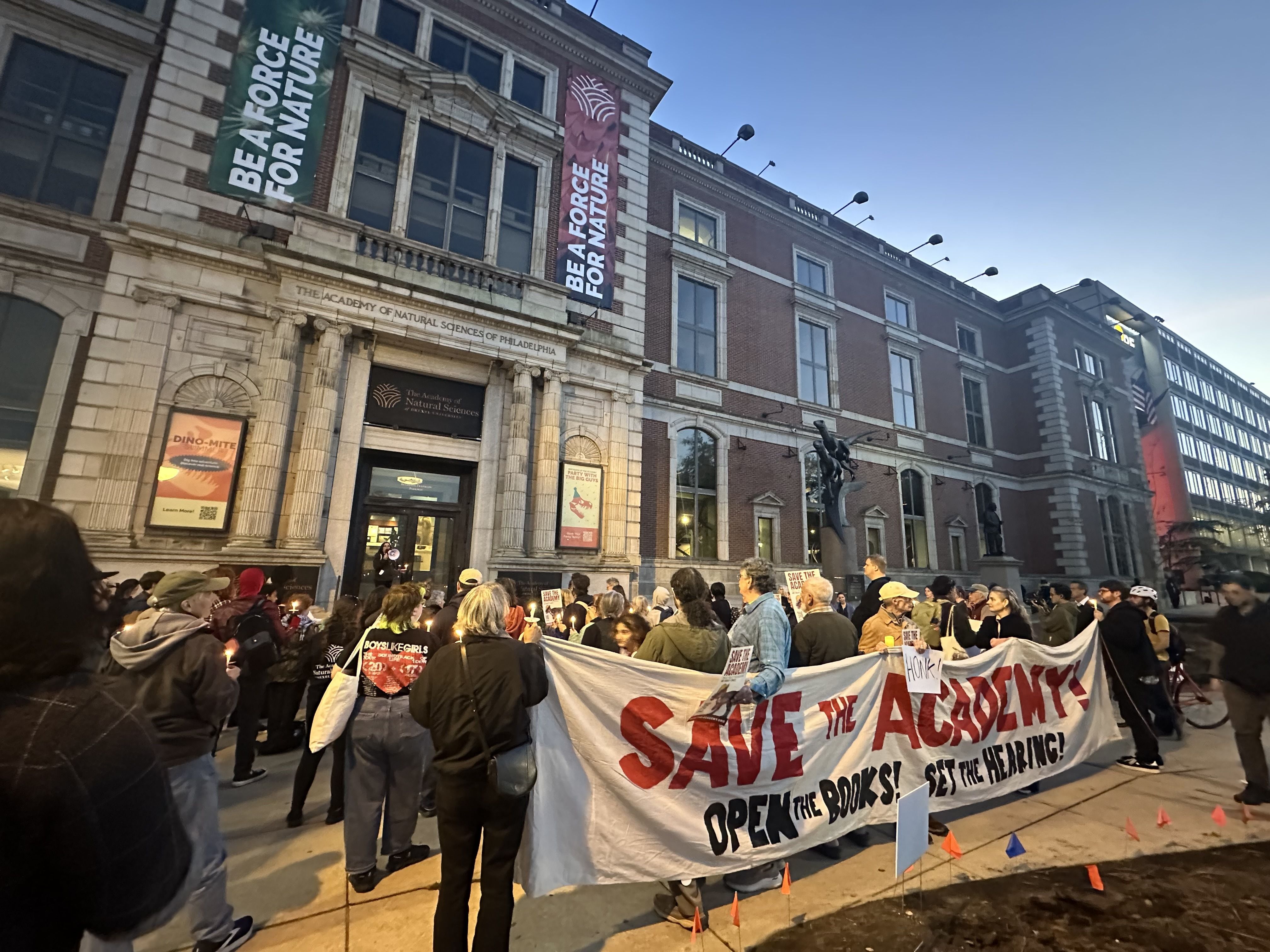
In front of the Academy of Natural Sciences of Drexel University’s historic building at 19th and the Ben Franklin Parkway, about 120 demonstrators gathered at twilight Tuesday for a candlelight vigil marking one month since the Academy’s museum was closed.Glenn Holsten
Why isn’t the Academy building on Philadelphia’s historic register?
Paul Steinke, executive director of the Preservation Alliance for Greater Philadelphia, told City Council that the Academy building at 19th and Race Streets belongs on the Philadelphia Register of Historic Places.
Inclusion on that list would require that any proposed changes to the property be reviewed by the Philadelphia Historical Commission, he said.
“Right now, that protection does not exist, and so the Academy is vulnerable to being irreparably altered or demolished,” he said.
The alliance has retained an architectural historian to prepare a nomination for the building’s inclusion on the register, he added.
“As the Academy of Natural Sciences considers its next chapter, its historic headquarters building must be treated as an essential part of the institution’s future, not as an obstacle to it,” Steinke told Council. “… The building embodies the Academy’s history and merits recognition as a significant Philadelphia and national historic landmark.”
Drexel University is planning to move the collections out of the building, which opened in 1876, and the building needs about $150 million in deferred maintenance, according to one estimate.
Steinke said the building is eligible for inclusion in the National Register of Historic Places, which would make it eligible for federal and state grants.
“That is a source of potential support that the Academy could be pursuing now.”
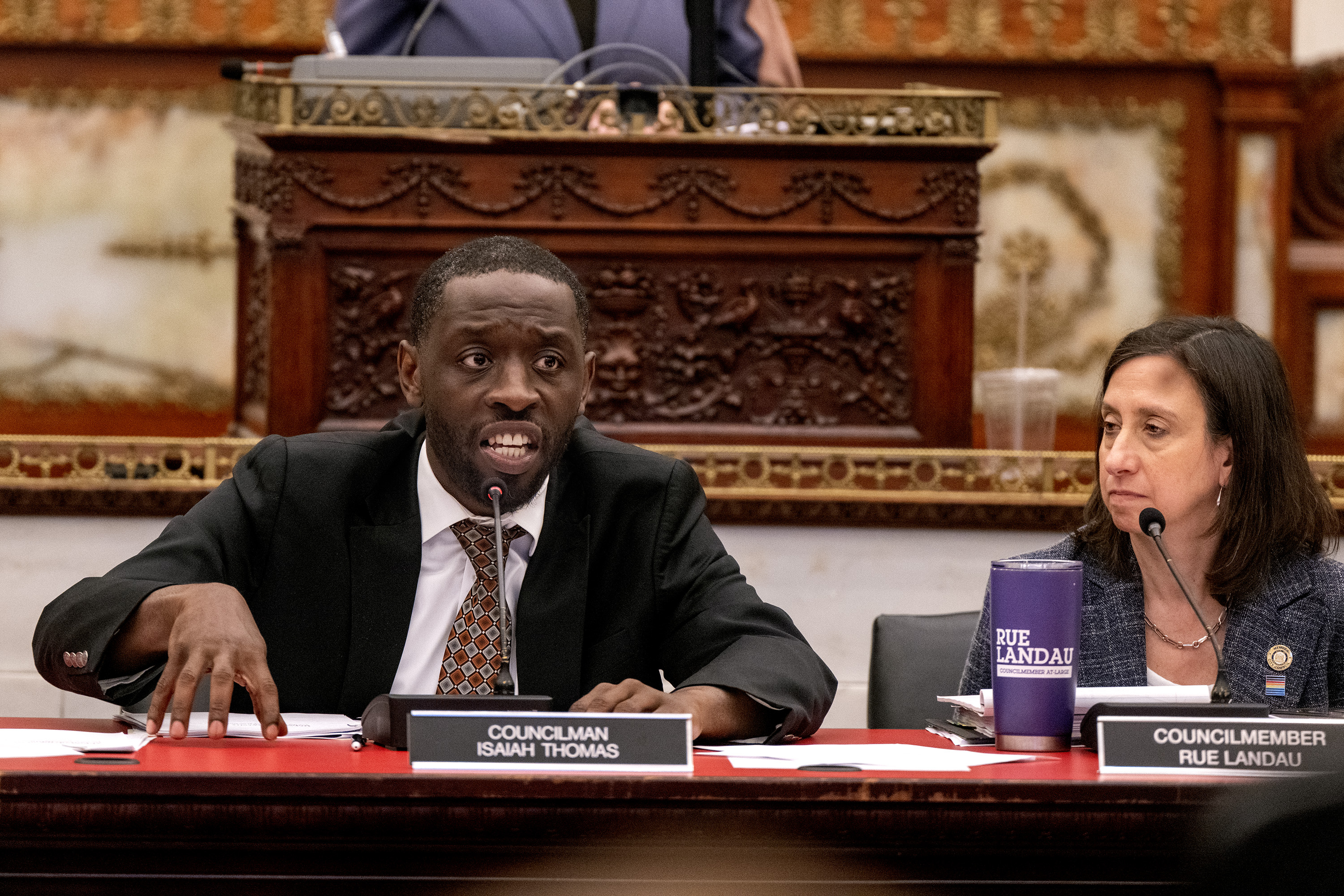
Councilmember Isaiah Thomas questions Drexel officers Monday as City Council holds a hearing on the closure of the museum at the Academy of Natural Sciences of Drexel University and the Academy’s ongoing negotiations with Drexel. Councilmember Rue Landau is at right.Tom Gralish / Staff Photographer
What is the future of the building?
Questions swirled at the Council hearing about what will happen with the Academy building if Drexel goes forward with its plans to relocate the collection.
“In the midst of talking to the hundreds of advocates who are concerned about this, they are pushing us to recognize that this is about the land, that Drexel wants the land … to help address deficits and financial issues,” Councilmember Isaiah Thomas, who heads the legislative committee, said at the hearing.
Melissa Richman, Drexel’s executive director of operations, testified that Drexel has been working with Mayor Cherelle L. Parker, Gov. Josh Shapiro, and former Comcast executive and U.S. Ambassador to Canada David L. Cohen on the issue.
Thomas asked if Drexel sought financial support from the mayor and was turned down.
“Again, we have been working,” Richman began, before she was cut off by Thomas.
“OK,” Thomas said. “I get it.”
Alex Palma, president of the Museum Council of Greater Philadelphia, also questioned what would happen with the building.
“I don’t think that another building filled with million-dollar condos on the Benjamin Franklin Parkway supports us as a world-class city,” he told Council.
Drexel has not said what it plans to do with the building ifthe collections are relocated.
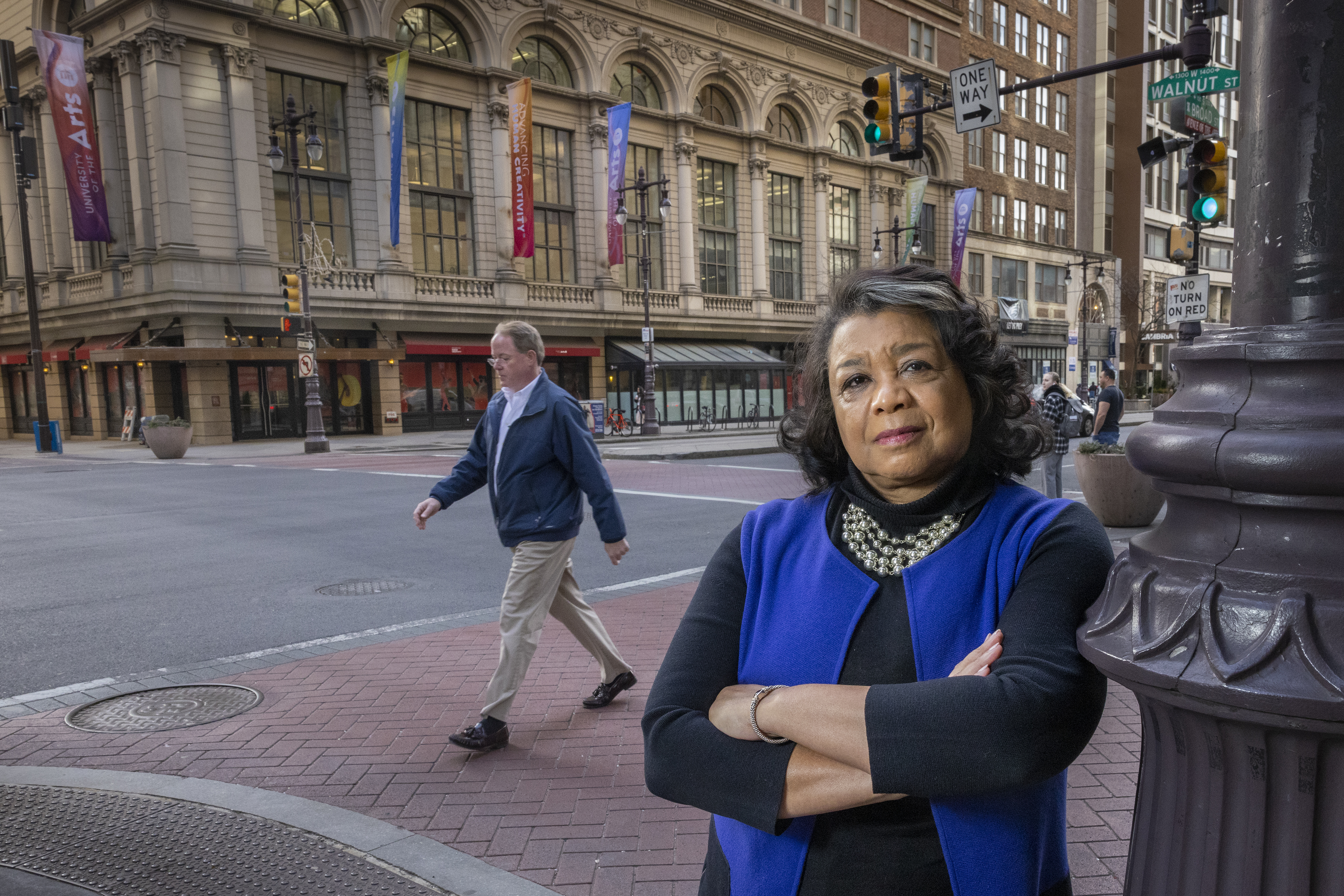
Patricia Wilson Aden, president of the Greater Philadelphia Cultural Alliance, at S. Broad Street and Walnut along the Avenue of the Arts.Alejandro A. Alvarez / Staff Photographer
A ‘larger crisis’ for cultural organizations
“Even as we focus on the Academy, we cannot ignore the larger crisis,” Patricia Wilson Aden, president and CEO of the Greater Philadelphia Cultural Alliance, testified. “Cultural organizations of every size and discipline are confronting rising costs, changing audience behaviors, chronic underinvestment, and crippling funding cuts at the federal, state, and local levels. … The crisis of the Academy is a bellwether that requires us to resolve to implement concrete solutions.”
She called on the city to make a stronger commitment to cultural institutions, including its museums, theaters, historic sites, libraries, cultural centers, and arts organizations. The city needs a “dedicated arts fund,” she said, similar to those in some other cities.
“It is up to all of us, the cultural community, the scientific community, you and other elected officials, all working together alongside the philanthropic community and other civic leaders to make an unflinching commitment to unlock the full potential of our creative sector,” she told Council.
A precedence in Yale University
Yale University received a $160 million gift from an alumnus in 2018 to renovate its Peabody Museum, a natural history museum. The renovation was raised at the Council hearing as a potential model for the Academy and Drexel. The Peabody was closed for four years while renovations occurred, and it reopened to the public in 2024.
“If New Haven can do it, so can Philadelphia,” Sarah McAnulty, a squid biologist whose nonprofit focuses on science education, as well as Philly Science Action and Green Philly, told Council. Yale is in New Haven, Conn.
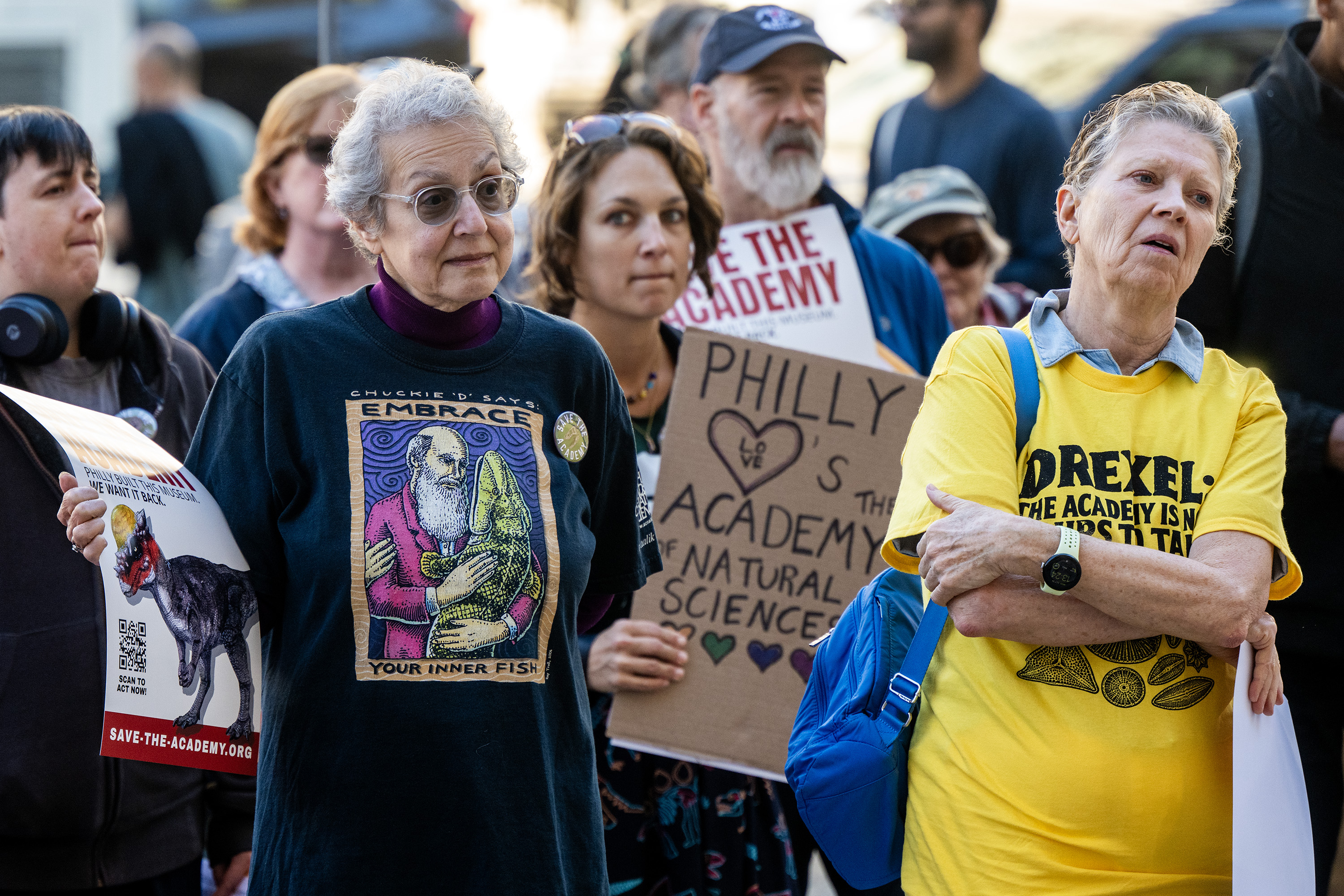
A sign held for a rally by the Save the Academy Coalition outside of City Hall Monday.Tom Gralish / Staff Photographer
Drexel’s crisis-causing ultimatum
A year ago, the Academy was given an “ultimatum” by Drexel: “Merge fully with Drexel or get a divorce,” said Suzanne Biemiller, chairperson of the Academy’s board of trustees.
Since the two institutions were joined in a 2011 affiliation agreement, the Academy had maintained an independent board, though its finances and many of its decisions ultimately fell to Drexel.
“Under a full merger, just to be clear, the Academy’s $80 million endowment, its building, and the priceless collections would all become Drexel’s assets,” Biemiller told Council. “Needless to say, this choice caused a crisis at the Academy, diverting the attention of the Academy’s leadership and financial resources from strategic conversations and fundraising.”
The ultimatum came after a year of strategic planning conducted by the Academy with input from Drexel leadership and joint trustee meetings, she said.
“In many ways, Drexel’s ultimatum upended and stymied that planning work,” she said.
Retired Academy paleontologist Ted Daeschler leaves after testifying at City Council.Tom Gralish / Staff Photographer
A seriously expensive move for 19 million specimens
“I suspect that the realities of moving and rehousing 19 million specimens has really not been envisioned with open eyes,” paleontologist Ted Daeschler said at Monday’s hearing. He was referring to the possibility raised by Drexel leaders and others of moving the Academy’s specimen collections out of the current building to an as-yet-unknown location.
Daeschler knows a thing or two about specimens. Professor emeritus, curator, and chair of vertebrate zoology at the Academy, Daeschler is renowned as codiscoverer in Arctic Canada of Tiktaalik roseae, a fossil fish significant for being an evolutionary bridge between fish and land-dwelling animals.
Each of the Academy’s irreplaceable specimens requires individual attention to be moved safely, to remain organized, and to keep its associated data, Daeschler told those attending the hearing.
Customized storage spaces — as well as health, safety, and security systems — must be designed.
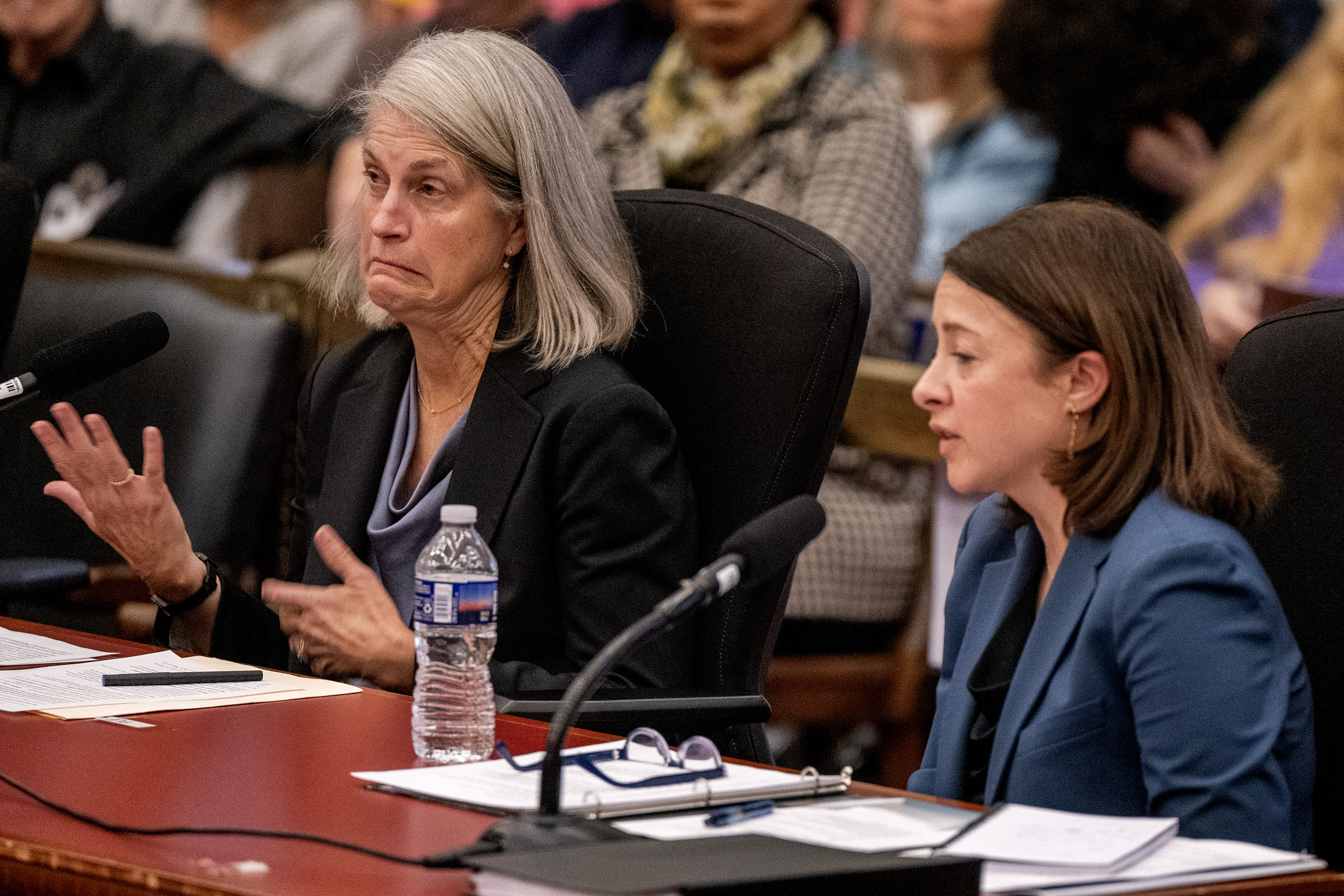
Academy board chairperson Suzanne Biemiller (left) and Melissa Richman, executive director of operations from Drexel University’s office of the president, at Monday’s City Council hearing.Tom Gralish / Staff Photographer
“None of these things are inexpensive,” he said.
Access to the collections for students and researchers must be maintained, and specialized specimen preparation facilities, offices, and laboratories must be in proximity to these collections, and be staffed.
“All of this adds up to probably more money than working on the Parkway building,” he said, referring to the cost of deferred maintenance to the specimens’ longtime home.