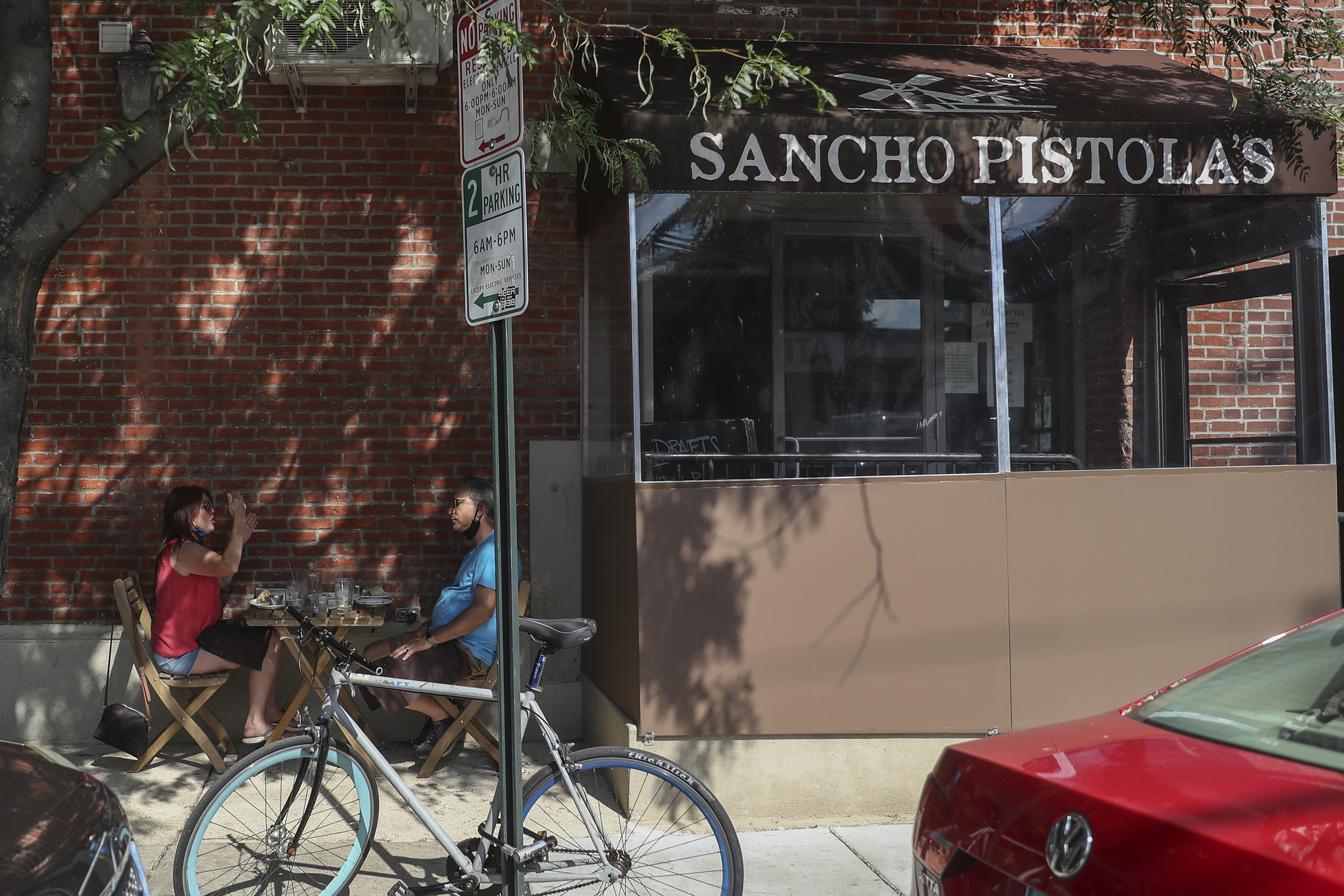
Sancho Pistola’s, the Mexican bar and restaurant that helped establish Fishtown as a destination for tacos, craft beer, and late-night dining, has closed after 12 years, less than two months after its owners shut down Jose Pistola’s in Center City.
The closing of Sancho Pistola’s, at 19 W. Girard Ave., leaves business partners Joe Gunn and Casey Parker with Pistola’s Del Sur on East Passyunk Avenue in South Philadelphia.
Gunn said Sancho Pistola’s continued to draw customers, but debt accumulated during the pandemic proved difficult to overcome. With the lease nearing its end, the partners faced a choice between committing to another five years or cutting their losses.
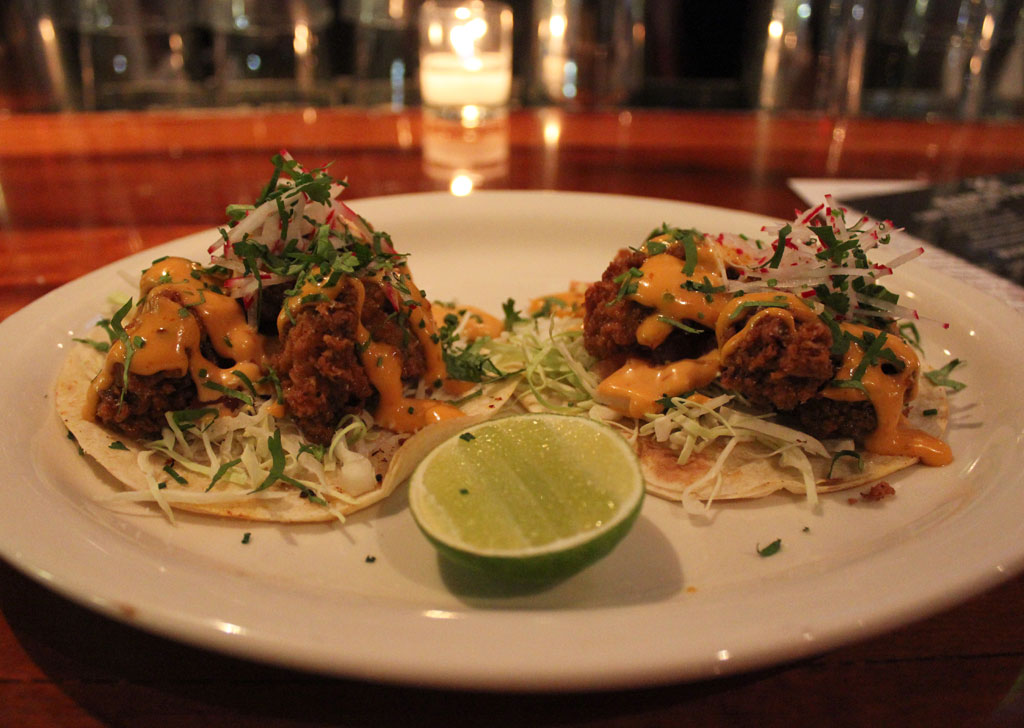
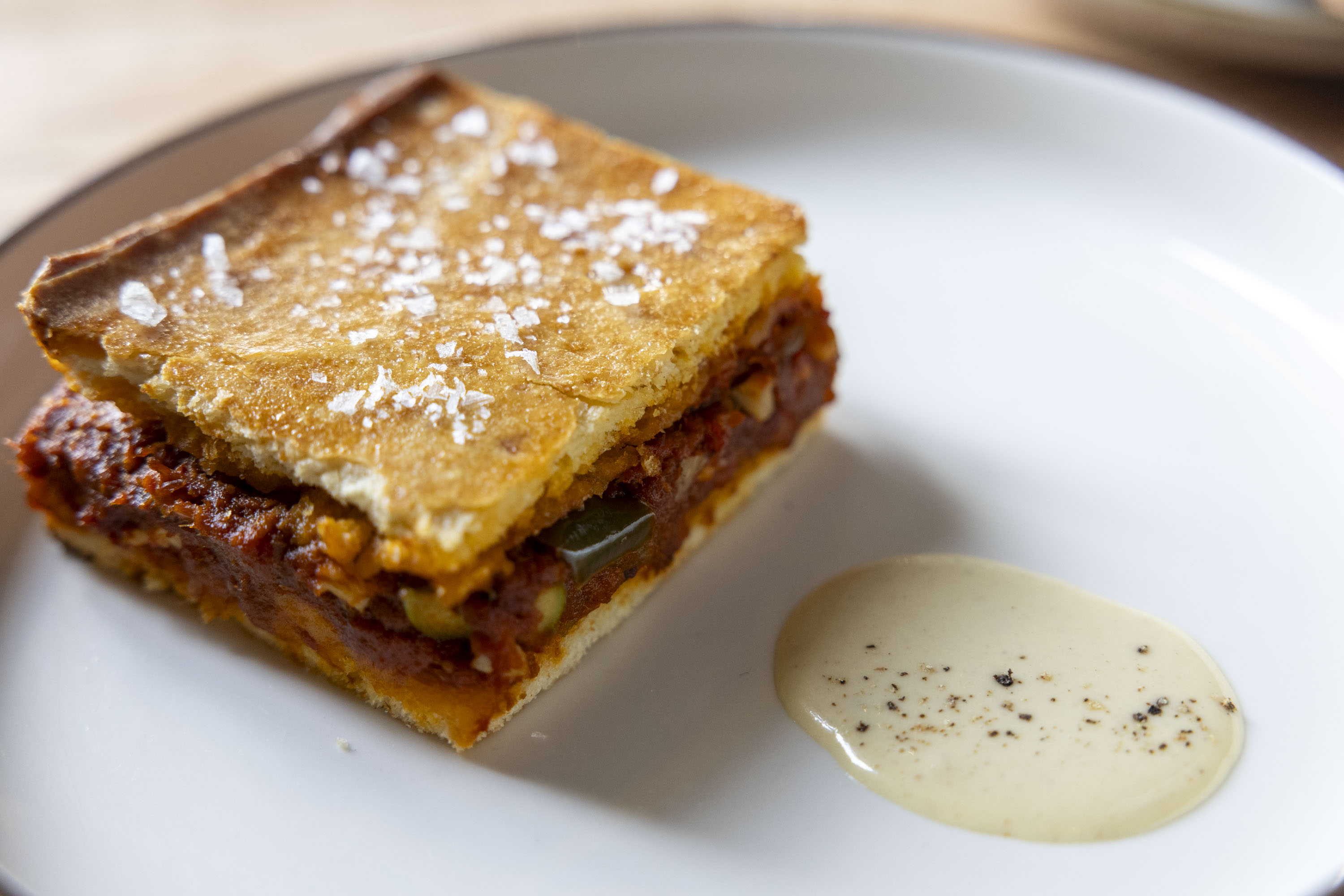
Oyster po’ boy tacos at Sancho Pistola’s, 19 W. Girard Ave.Michael Klein / Staff
“We fell behind during COVID, and we’ve been fighting like hell to dig ourselves out of it ever since,” Gunn said. “We could keep going, potentially making things worse for another five years, or we could cut our losses.”
The restaurant closed after service Sunday. Gunn said he and Parker made the decision Friday and informed the roughly 25 employees Saturday morning. The partners hope to place some at Pistola’s Del Sur and help others find jobs elsewhere.
Sancho Pistola’s opened in January 2014 at Girard Avenue and Leopard Street, in the former Bubba’s Texas BBQ. It followed the formula that had made Jose Pistola’s a Center City fixture: Mexican-inspired food, craft beer, cocktails, and a casual neighborhood-bar atmosphere. Its fish tacos, ceviche, and other seafood dishes attracted a late-night crowd, partly drawn from nearby concerts, Gunn said.
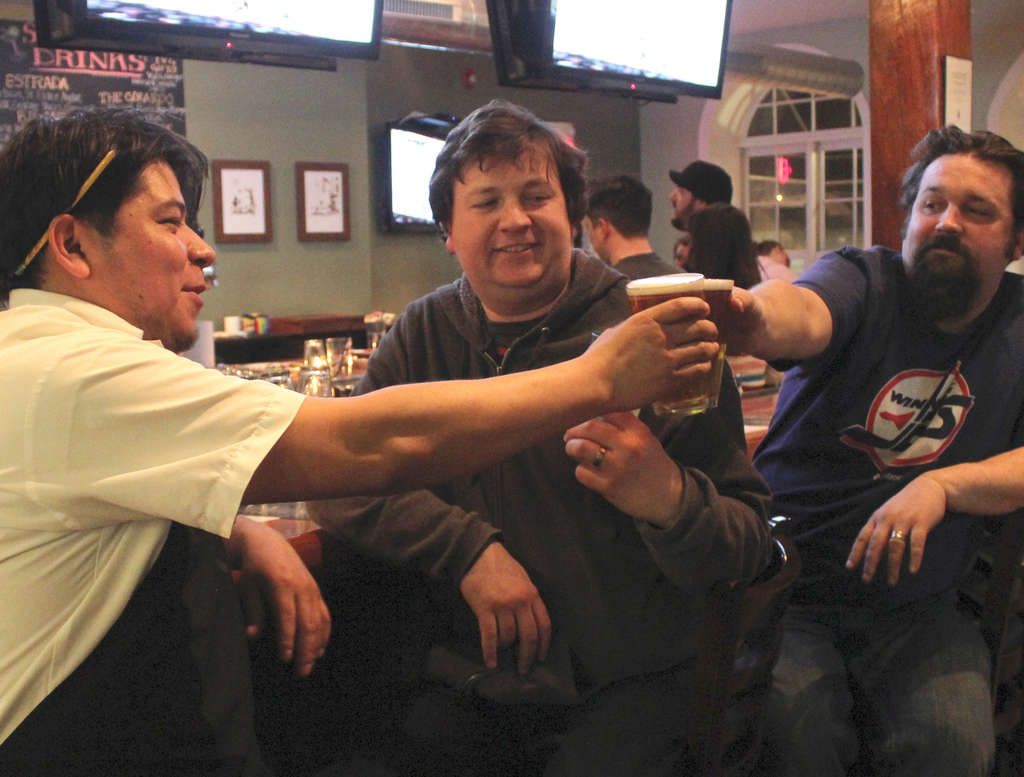
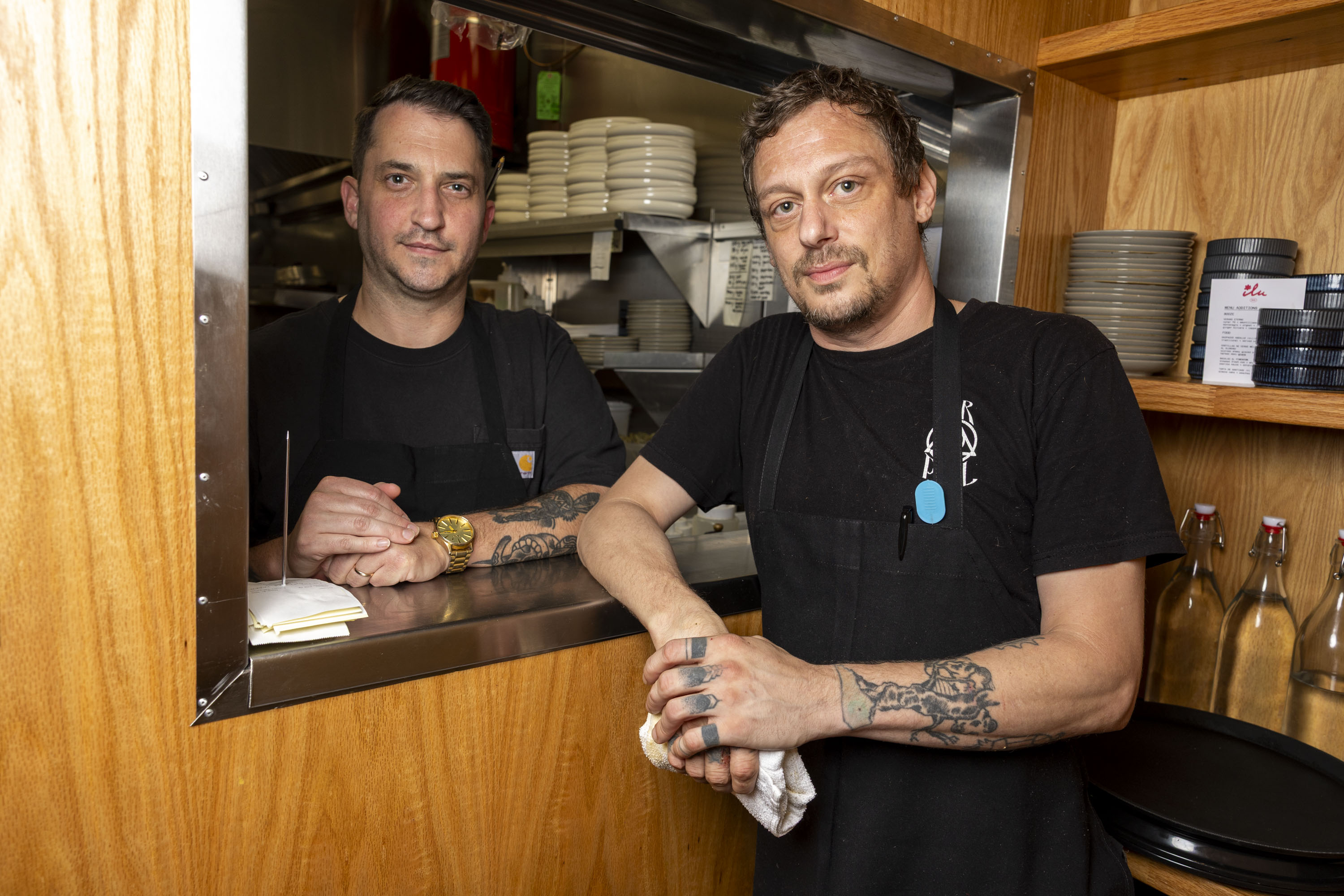
Partners (from left) chef Adan Trinidad, Joe Gunn, and Casey Parker at Sancho Pistola’s in 2014.Michael Klein / Staff
A third partner in Sancho Pistola’s was chef Adan Trinidad, a native of Puebla, Mexico, who had transformed the food at Jose Pistola’s before helping expand the business to Fishtown and South Philadelphia. Trinidad, 39, died in October 2021 after an apparent fall near his South Philadelphia home. His death was a major loss for the restaurants, where he had overseen the kitchens and mentored employees.
Jose Pistola’s, which opened in 2007 at 263 S. 15th St., closed in late August after Philadelphia Gas Works shut off its gas service. Gunn said the shut-off prompted a decision the owners had already been contemplating amid rising costs, declining late-night business, and lingering pandemic debt.
Sancho Pistola’s closed under different circumstances. Gunn said the partners wanted to avoid another long-term lease commitment while still paying down debt. He praised the landlord, saying the relationship had been good.
“It’s not like we’re closing because people stopped coming,” Gunn said. “Everything is so expensive. And people’s habits are different. They’re better, healthier habits. Young people, I don’t think they think about drinking as much.”
Each Pistola’s location faced different challenges. Jose Pistola’s had substantial overhead and lost much of the late-night trade that once kept it busy until 2 a.m. Sancho Pistola’s retained a late-night following, while Pistola’s Del Sur has a shorter peak business period because customers tend to turn in earlier, Gunn said.
Pistola’s Del Sur, which opened in 2017, remains open, with no immediate decision looming about its future.
For Gunn, a longtime Philadelphia bar operator, the challenge is keeping prices affordable while expenses continue to rise.
“We’re about as cheap as we can be, and it still feels like our prices are too high,” he said. “It’s crazy.”
Chef Liz Grothe was just starting to toy with the idea of breaking out of corporate America and getting behind the line when she walked into a tattoo shop.
“I thought, ‘If I get a tattoo on my hand, where it can’t be covered for interviews, I can start to force myself out of the safety of my office-job career,” she said. “And I can make the leap into becoming a cook-slash-bad boy.”
Grothe, now the chef-owner of Scampi in Queen Village, left her job as a food-safety specialist at Tyson Foods about five years ago. She soon after got a shrimp tattoo on her wrist. “This was big for me,” she recalled.
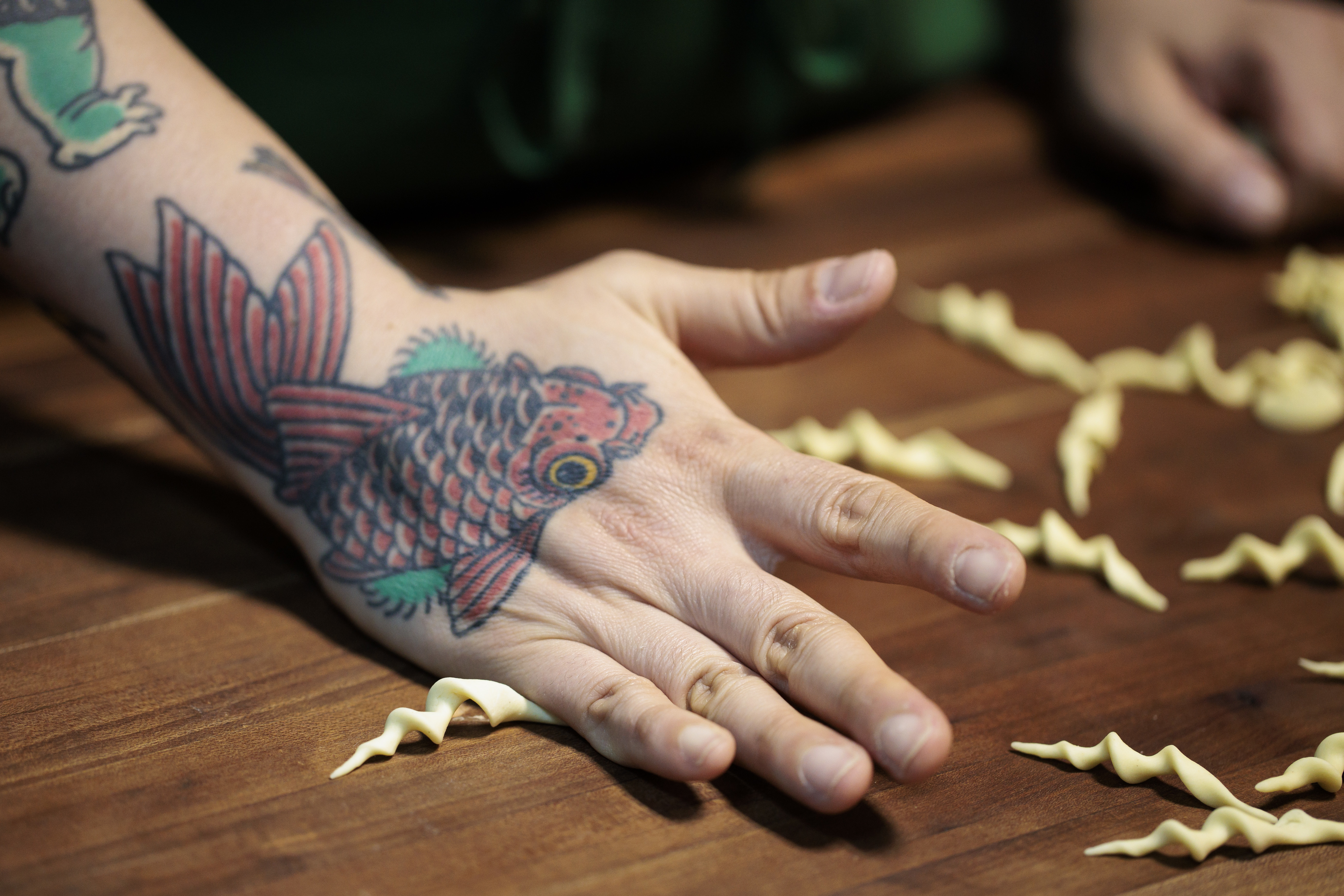
Today, neck-deep into her passion project, Grothe has added more tattoos to her collection. A fish on her hand is prominently in sight when she rolls out pasta. Going down her arm, there are frogs working with seafood as a cheeky self-portrait: one is wrestling a catfish, and the other is carrying an octopus to be butchered.
Chef Liz Grothe makes trofie pasta by hand at Scampi on Thursday, April 23, 2026 in Philadelphia.Monica Herndon / Staff Photographer
She recently went full-tilt, getting a chest piece with two symmetrical shrimp (a nod to a famous Sailor Jerry tattoo piece featuring matching swallows) as an ode to Scampi: the place, the ingredient, and “the experience of it all.”
Whether it’s a thoughtful tribute piece, a spur-of-the-moment filler, or something to cover an old burn mark from early kitchen days, tattoos historically go hand in hand with the food and hospitality industry — and they often come with fun stories.
“Tattoos are forever, but so is whimsy,” said Michelle Fecanin, a barista at La Colombe in Rittenhouse. “Some have heavy meanings, some are artistic masterpieces, and some are just because I wanted a Mountain Dew can on the back of my arm! Is that a crime?!”
We spoke with over a dozen industry pros nationwide about their favorite pieces and the memories behind them. Here are some of their stories.
Interviews have been edited for length and clarity.
I have a few on my legs that I hid from my parents for years. When my mom saw them, she threatened to scrape them off with a cheese grater (very Italian of her). When I was finishing up culinary school and somehow had extra cash, I got a few tattoos of Leonetto Cappiello posters on my arm with small illustrations that are in The Silver Spoon [an influential Italian cookbook] as gap fillers. I used and still use that book as a reference 20 years later. I got them over the course of a year at No Ka Oi Tiki Tattoo [near Fourth and South Streets]by Jackie Brown. She was the first person to ask if I was going to marry my wife! I have a tattoo for my wife of a Chicago-style hot dog. I don’t really like them, but my wife is from there. [I got it from] an old line cook, Amanda,whowas doing apprentice tattoos there while Royal Tavern was finishing up Dog Days. I wanted to support her journey, and she crushed it.
Michelle Fecanin
Barista at La Colombe Rittenhouse (Philadelphia, PA.)
I have a seemingly meaningless cup of coffee on the back of my arm. Let me paint the scene: I went to school, I got the degree, and found out it was all a scam. Entry-level office job for $15/hour or find the real meaning of it all. Being a barista sounded cool, and for the same hourly pay plus tips? It was a no-brainer. I started working at La Colombe. Being on my feet all day, learning the ins and outs of coffee, talking to hundreds of new, interesting people every day — it has its pros and cons for sure, but I fell in love. A year in, I really committed to it by getting a tattoo of La Colombe’s signature in-house mug, the Deruta cappuccino cup. Being a barista for the last four-plus years has changed my life in so many ways, and I’m so grateful. Shannon Keeley and Electric Artistry Tattoo [in Williamstown, N.J.] helped me bring the piece to life.
I was living in Santa Cruz, Calif., bartending at Surf City Billiards and Tattoo when my buddy Chris came in. I had just gotten back from a skate trip to Baltimore and drank my weight in Natty Bohs [shorthand for the city’s signature beer, National Bohemian]. He was hammered at my bar and started saying how I need a Boh tattoo, and I said, “On my el-boh!” Somehow, he woke up the next day at a decent time and texted me: “We doing this tattoo or what?” My wife, Jane Harbour, is also an amazing tattoo artist and works out of Eastern Pass Tattoo Co. [onEast Passyunk Avenue]. Tattoos are a huge part of our life and love story.
Tiffany Schleigh
Traveling food stylist (New York City, Pittsburgh, Philadelphia, Cleveland, and Chicago)
I think I’m up to 42 tattoos and they’re nearly all food. I wanted tattoos my whole life, and finally during the COVID-19 pandemic, I got a croissant tattoo that started out as a bet. The rest of my arm felt so empty; I ended up just giving a giant list of foods I love to the tattoo artist, and he filled my arm! We had mutual friends who got married down the block from his tattoo shop. I made their wedding cake, got to the venue, set up the cake, went to his shop, got tattooed for hours, and then we both changed and went to the wedding.
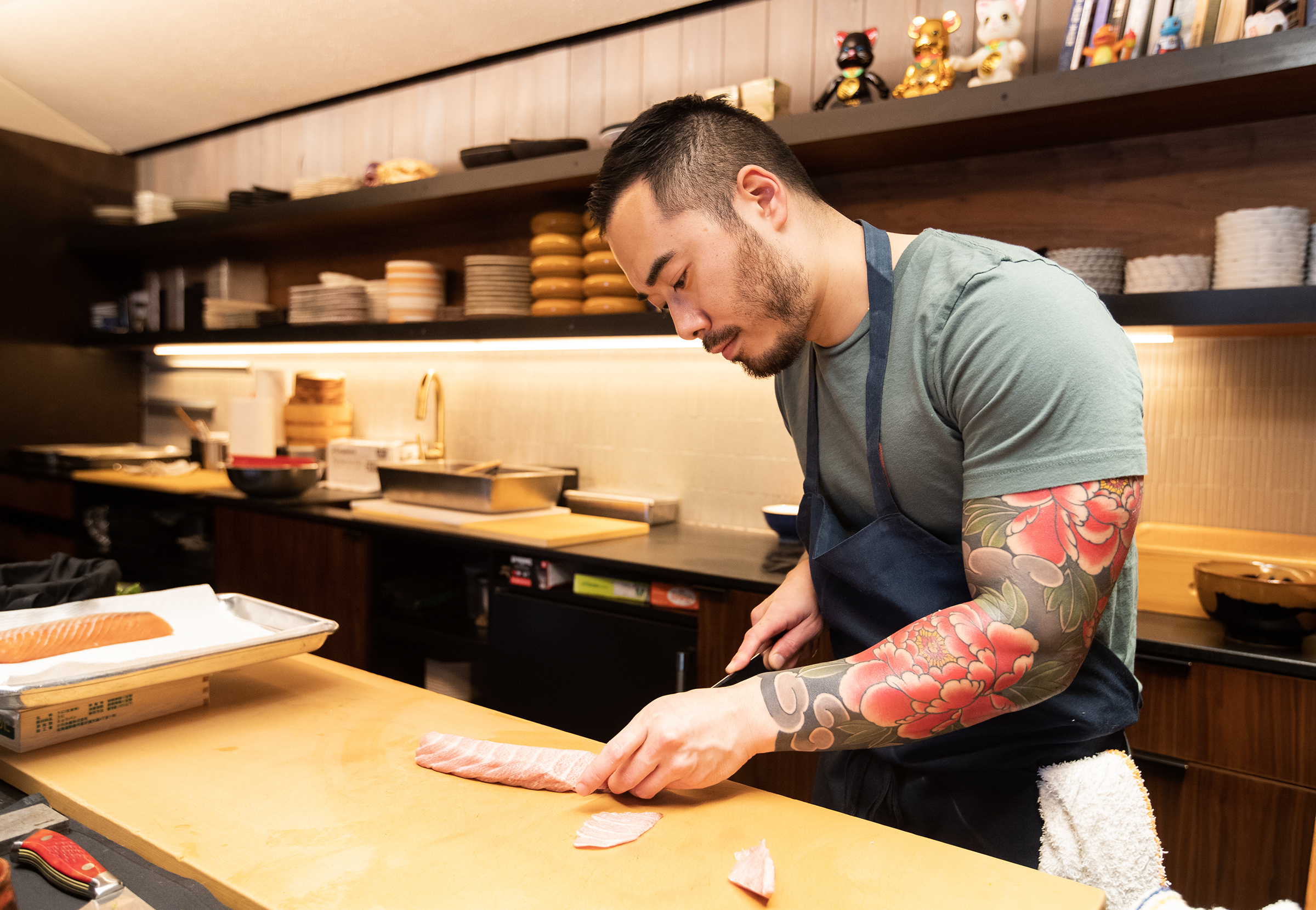
Chef-owner Jesse Ito at work at Royal Sushi & Izakaya on May 31, 2024.Charles Fox / Staff Photographer
My arm sleeves were done in London by Rodrigo Souto Bueno, who’s known for his Japanese-style freehand peonies. I went whenever I could get a few days off. My first session was Thanksgiving 2024. All in all, it took two and a half years, six trips, and 50 hours in the chair. My chest and stomach piece is a dragon done by a famous artist in L.A. I got it the morning after North America’s 50 Best ceremony in Las Vegas by the famous artist, Oozy. I left Vegas super-early and did a three-day, 20-hour blitz to get the piece done.
Francois Castro
Chef and co-owner of Chancho King (Jacksonville, Fla.)
Thirteen years ago, I was living in New York and thought a quick job at a restaurant would help pay the bills. Now, it’s my career, and I’m still falling in love with it. I have “YES, CHEF” on my thigh and an oyster in the ditch of my right knee. Oysters give so much: a treat, filtration, protected waters. Plus, every chef has shucked bags and bags of oysters. I can’t help but think of this labor of love.
My tattoo is of three cows on the inside of my right bicep. It’s industry-specific because I’m the marketing manager for a meat company, and before that, I was a whole-animal butcher. This tattoo was by Anna Outkin out of Philly, who already had a [pre-drawn] cow flash design. I asked her to do a custom version that was a recognizable steer, which eventually becomes beef — like the cows I work with — instead of a dairy cow. It’s a reminder of my roots in whole-animal butchery and my lifelong love of cows, plus it’s super-cute.
Casey Rebecca Nunes
Culinary Director at Sandy’s Muffalettas (San Francisco, Calif.)
I started getting tattoos when I was 18 and honestly, I can’t get enough of them. At least fourteen of mine are food-related. I have a logo of my friend’s restaurant, Lucky Danger, in D.C. that I’ve never been to. We knew eachother for five days and met at a chef event in Houston. The chefs wanted to get matching tatts — as we’re known to do — and the logo for Lucky Danger is kinda cute [it’s a cheeky character wearing a bear costume] so I said ‘why not?!’ He couldn’t believe I did it. Now I get free orange chicken for life — if I can make it across the country.
I have a pretty good amount of tattoos. One arm is based on food themes, including the Muppets’ Swedish Chef cooking Kermit the Frog with an apple in his mouth and everything. It took seven hours. I also have Remy from Ratatouille holding a hunk of cheese on the inside of my forearm. My most recent addition is a Wu-Tang waffle. And next up in the next few months is going to be a cartoon-style sandwich like the ones from the old Tom and Jerry cartoons. My opposite arm is a full Japanese sleeve. Pretty much all of my pieces were done to cover up old burn scars from the early days on the line.
I got my Fernet tattoo in 2020 when the brand partnered with Irwin’s and Forever Valentine. I was a host at Irwin’s at the time, and it was my first industry gig. I was probably only six months in and still learning about classic cocktails — I had yet to hear about little miss Fernet. Staff was allowed to get a free tattoo, and I didn’t think twice. I picked the eagle and globe design (Fernet’s logo) and officially became a living ad for a brand I’d never heard of. It wasn’t until my shift was over and I headed to the bar for my shift drink that I got to taste what all the hype was about. The whole ordeal was hilarious to my coworkers. Long story short: I tasted it and loved it. I realized I was pretty much branded with stolen valor, but went on to probably ingest a million ounces of the stuff. Today, I don’t drink anymore — but the tattoo still gets compliments, and I remain good friends with my coworkers who also got tattoos that day. A good lesson learned is do always get the free tattoo. I wouldn’t change it for the world, and I’d do it again.
It was research and development day at Milk Jawn, and Amy Wilson stared down a neat row of possible ingredients: a 5-ounce jar of soy sauce, a bunch of ripe bananas, two canisters of roasted unsalted peanuts, a bag of sweetened flaked coconut, sweet hojicha green tea cocoa powder, purple yam jam, and a bottle of Evan Williams bourbon.
Wilson, 49, has been the flavor maven behind Milk Jawn ever since she started the acclaimed South Philly-based ice cream company in her home kitchen in 2012.
Milk Jawn’s scoop shop has 20 flavors at a time, with up to six rotating out throughout the year.They range from the classic to the offbeat, but are never so odd as to feel like novelty tricks. When I tried the Lemon Curd with Blueberry Basil Swirl recently, it was a perfect spoonful of summer, like Willy Wonka’s chewing gum evoking a three-course meal. I wanted to understand how Wilson does it. (She co-owns the company with Ryan Miller and Cathryn Sanderson.)
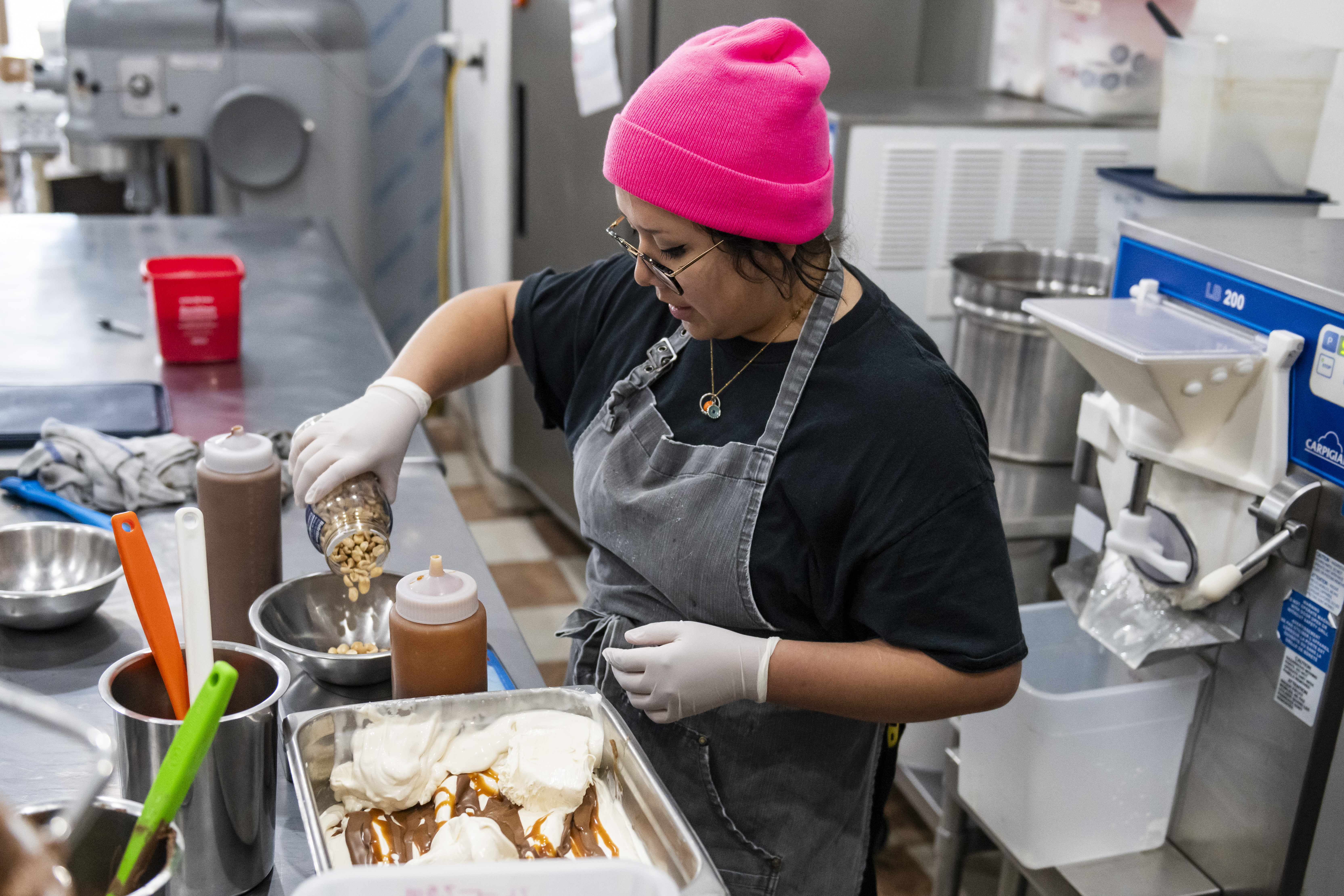
Jesi Laday, assistant production manager, poured peanuts into a bowl while testing a Snickers flavored ice cream for fall. Allie Ippolitio / For The Inquirer
The 2,400-square-foot commercial kitchen in the Italian Market was bustling on a recent Tuesday morning. Two employees scooped vanilla ice cream with fudge into half-moon-shapedwaffle cones to make a limited run of Choco Tacos, while another stirred a 16-quart steel pot of blueberries. The smell of basil wafted through the air.
The kitchen is surprisingly analog considering the brand has two scoop shops and pints available in more than a dozen stores across the city. It’s the kind of place where employees crack all the eggs by hand for lemon curd.
The ‘mad scientist’ phase
With Halloween approaching, Wilson wanted to develop a series of flavors inspired by Almond Joy, Snickers, and Mallo Cup candy bars. (“I whittled it down,” Wilson said of the list.) She also wanted to try out a Bourbon Caramel for the East Passyunk Witch Craft Crawl in October, and an autumnal Chocolate Chai.
She was working with assistant production manager Jesi Laday to test them out. Using a dairy ice cream base from a Lancaster farm, Wilson and Laday mixed and waited and tasted, adding a dash of coconut essence here and a handful of toasted coconut flakes there.
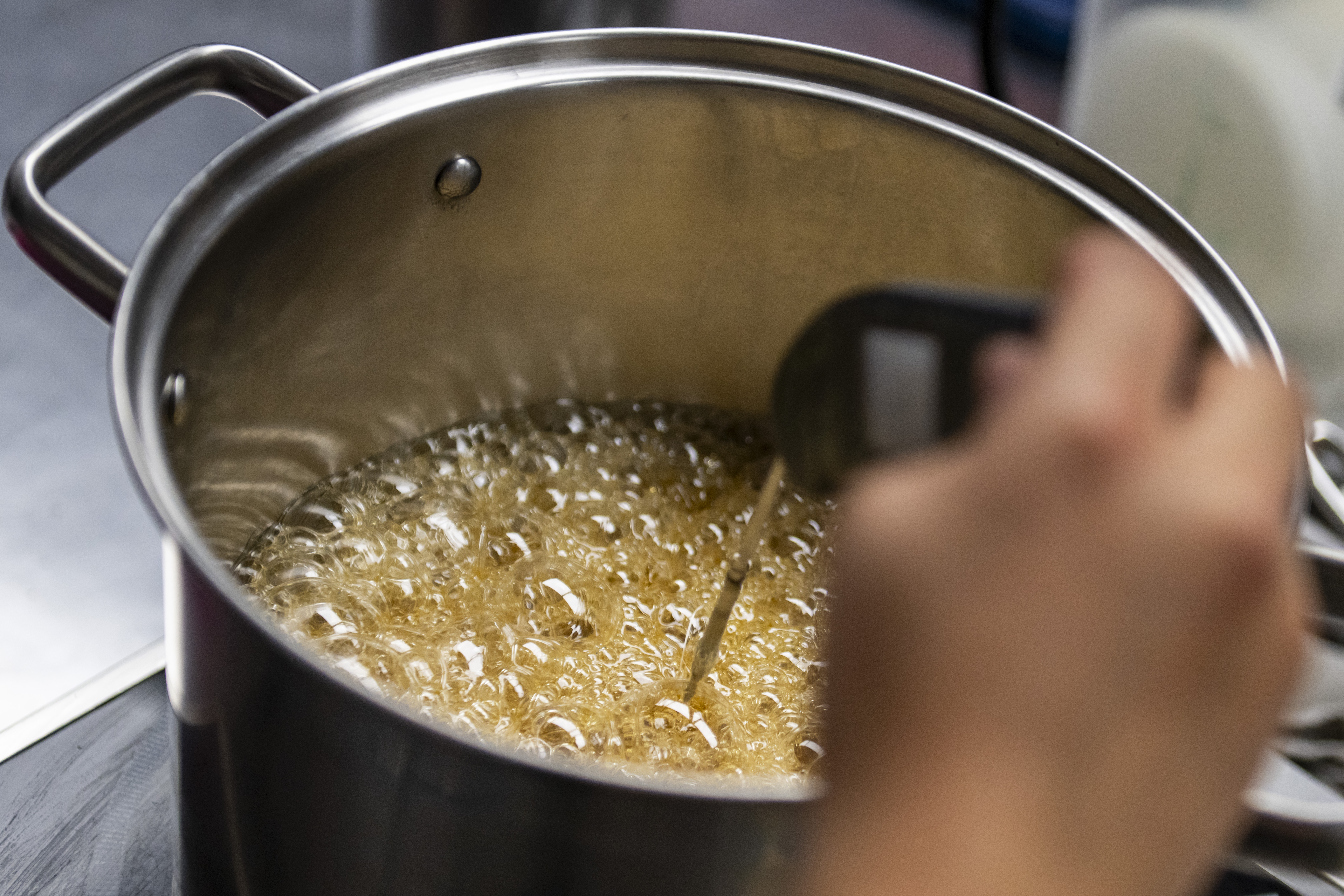
Jesi Laday tested the temperature for a potential bourbon caramel recipe. Because she and Amy Wilson were only creating a small batch for a neighborhood event, they had more room to play. Allie Ippolito / For The Inquirer
“It takes a long time to hit on something,” said Wilson, in pink sneakers and black skinny jeans, her blonde hair pulled into a ponytail. “That’s the mad scientist phase.”
Laday, in a pink knit hat and gray apron, was focused on a vegan version of the Almond Joy, but the chocolate was giving her trouble. Dark chocolate was too intense and oat milk chocolate, paired with almonds, made the whole thing taste like trail mix. Now Laday was testing a milk chocolate by the vegan brand EnjoyLife.
“It’s tastes vegan, a little bit,” she said after the first bite. That was not ideal.
Some experiments flop
It usually takes about three days to finish a flavor, which is mixed, steeped overnight, tasted and tweaked, and then frozen.After finalizing a recipe, it takes at least two weeks of production to make enough of any new flavor to get it to customers.
For the neighborhood Witch Craft Crawl, Wilson and Laday would only make a small batch, so they had room to play. They were stumped by the bourbon, though.
“That would be 9 tablespoons of bourbon, which feels like a lot,” said Laday as she heated up heavy cream, examining the recipe Wilson had written out.
“I have a feeling it won’t be enough,” Wilson said.
To devise new flavors, Wilson describes herself as a “collector.” She draws on cookbooks and New York Times articles, cocktail recipes and childhood memories. Some of the resulting flavors are deluxe versions of classics, like Milk and Cookies or Mint Stracciatella. Others are more imaginative, like a Harvest Corn made from local corn with Old Bay seasoning, or a Pink Chai & White Chocolate made with green tea and star anise.
Sometimes she’ll taste another dessert and become obsessed. After tasting Cake Life’s lemon blackberry cake at her brother’s wedding, she took home the extra (“I hoarded all of that flavored cake”), eventually using it as inspiration for her Lemon Curd with Blueberry Swirl.
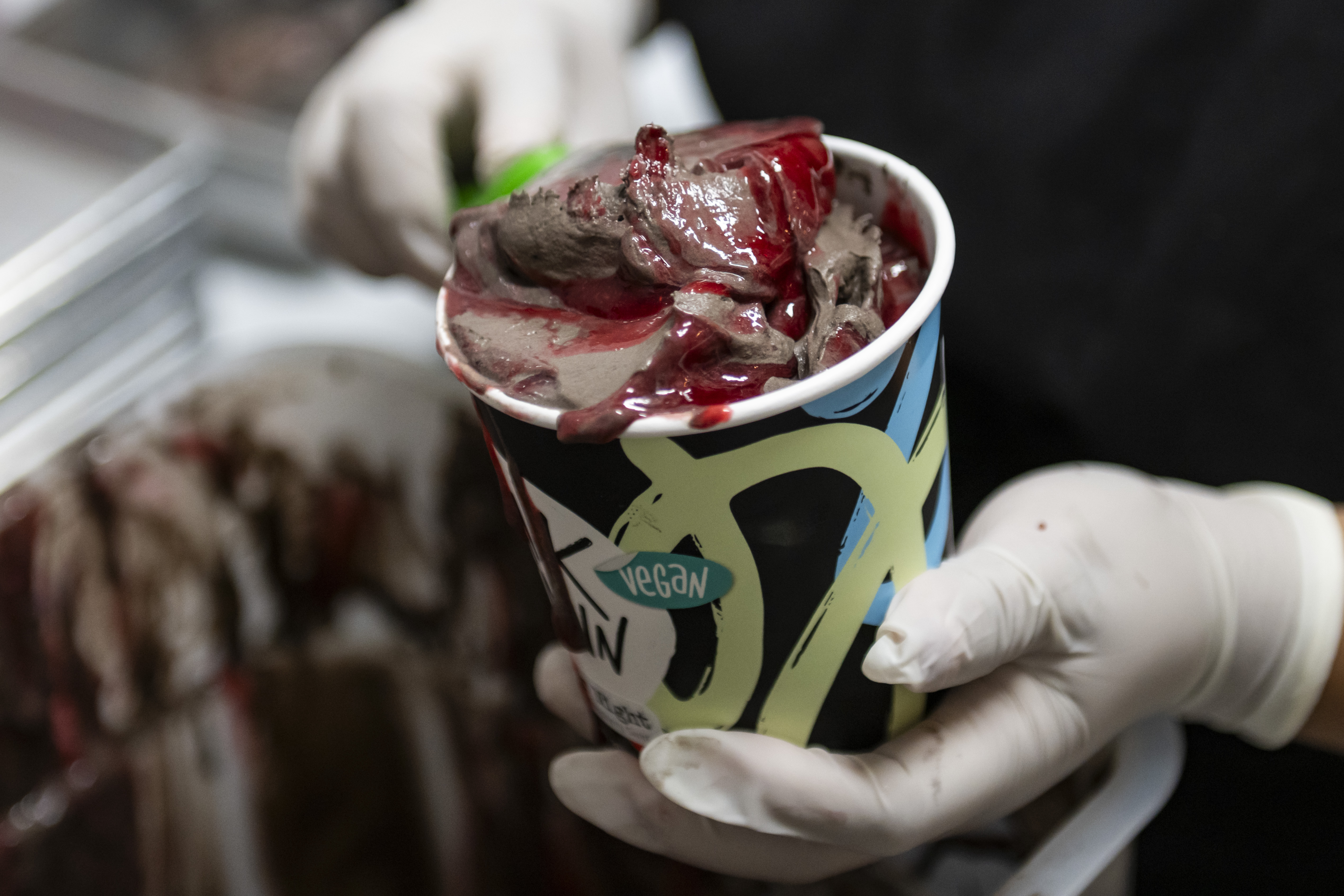
Employees at Milk Jawn fill pints by hand. This is a vegan Thriller Night, featuring chocolate and raspberry. Allie Ippolito / For The Inquirer
Aside from taste, there are business realities to consider: Some flavors are delicious but too expensive to make, like one infused with jasmine tea. Others, like the Salted Caramel, took months to perfect because the first version was made with a bitter dark caramel, which Wilson loved but thought might turn some customers off.
And of course there have been dreams that didn’t pan out. A lychee ice cream didn’t have enough oomph; a grapefruit olive oil cake flavor had a bad texture and a grapefruit custard that was too labor-intensive. Boba freezes solid, and they didn’t want to crack anyone’s tooth. Wilson and Laday are still trying to perfect a brown butter flavor, without making it taste like an actual stick of butter.
This fall’s Chocolate Chai has been elusive because Wilson and Laday were trying to conjure a specific flavor from scratch. They spent weeks fiddling with the recipe, changing the brand of tea, punching up the ginger, letting it steep overnight and tasting it again.
“It took a while to get there, because it wasn’t like we had something we were trying to imitate,” Laday said. It was a product of pure imagination, made real.
“I’m really hoping we can start spinning next week,” Wilson said.
Jesi Laday experimented with how much bourbon to add to a potential Bourbon Caramel flavor. Allie Ippolito / For The Inquirer
Making Almond Joy
For the Almond Joy, inspired partly by the candy bar and partly by the ice cream bar, Wilson pre-mixed a coconut ice cream base and split it into thirds. She infused each with varying levels of coconut flakes, some toasted, some not. After spinning the base in her two-pint tabletop ice cream maker — the same one she used at home when ice cream was just a hobby — she dug in with a small metal spoon. Laday watched closely.
“A lot of the times I’m waiting for a cue from Amy because Amy’s got crazy-sensitive taste buds,” Laday said.
Amy Wilson used her two-pint tabletop ice cream maker to test a toasted coconut ice cream base. It takes at least three days to develop a new flavor. Allie Ippolito / For The Inquirer
The version made with sweetened, untoasted coconut flakes was a letdown — too plain. Wilson paused for a few moments, moving her head slowly from side to side, thinking. She decided to experiment, adding a few drops of essence of coconut and respinning the ice cream.
“That little bit helped,” she said.
She tried another version, the coconut base with toasted flakes that had been strained out after 30 minutes the night before. She nodded, eyes ahead, considering. Something was working. She imagined what she could do with it, what to pair the rich coconut with, what the final Milk Jawn package might be.
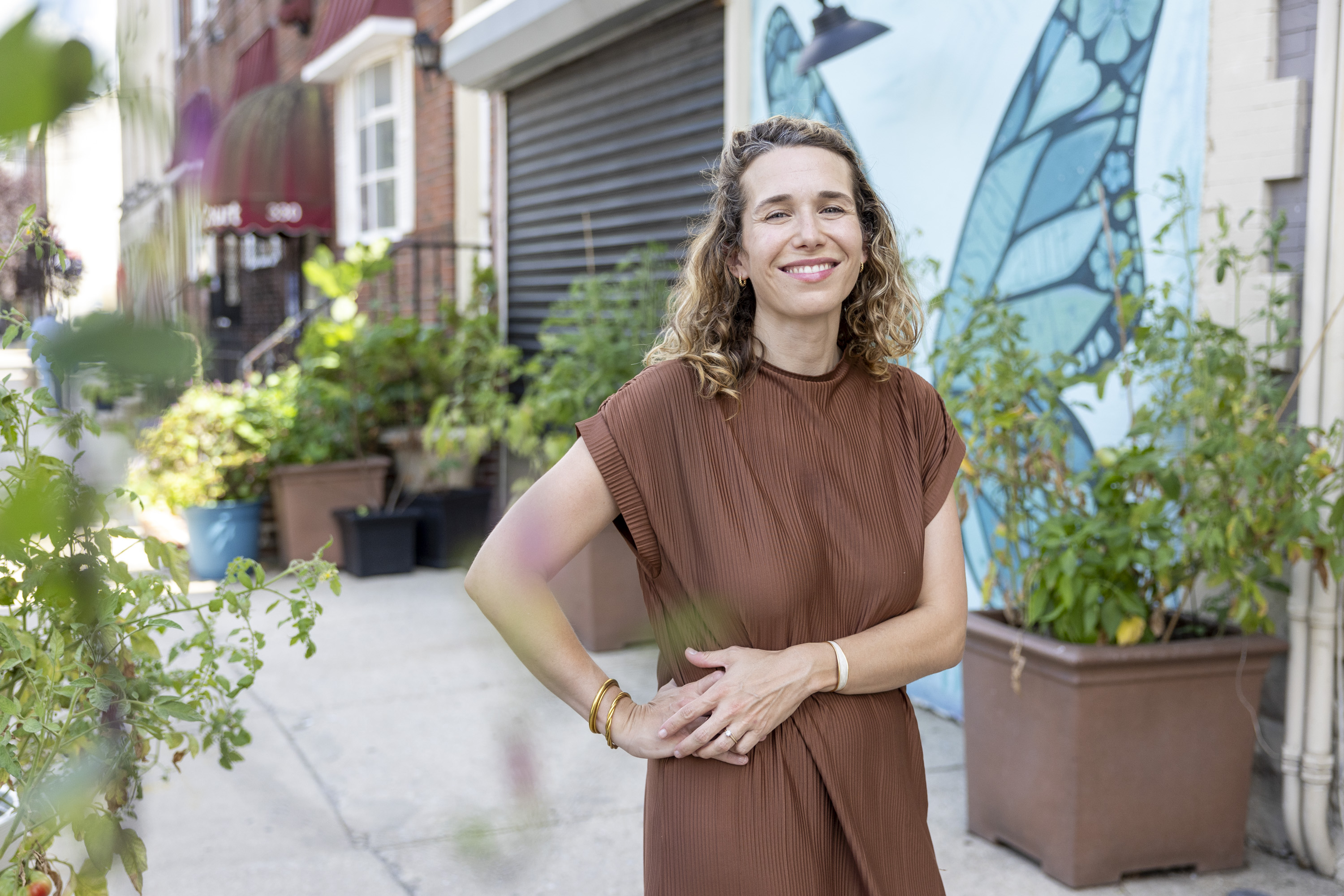
Lindsey Scannapieco is obsessed with unearthing the “dirty workspaces” hidden within Philly’s historical architecture.
Her requirements: Good bones for artists and makers to grow while making a few messes, and built-in meaning. Bonus points if it just so happens to be a school.
“I’m really interested in how you respect history without being bound by it,” Scannapieco told the Inquirer. “You can’t allow these places to be museums. They were living, breathing buildings.”
Scannapieco and her design firm, Scout, are best known for transforming South Philly’s Edward W. Bok Technical High School at 9th and Mifflin St, shuttered and sold off by the school district in 2015, into the Bok Building, a thriving makerspace with over 220 tenants and a rooftop bar that’s become a Philly destination.
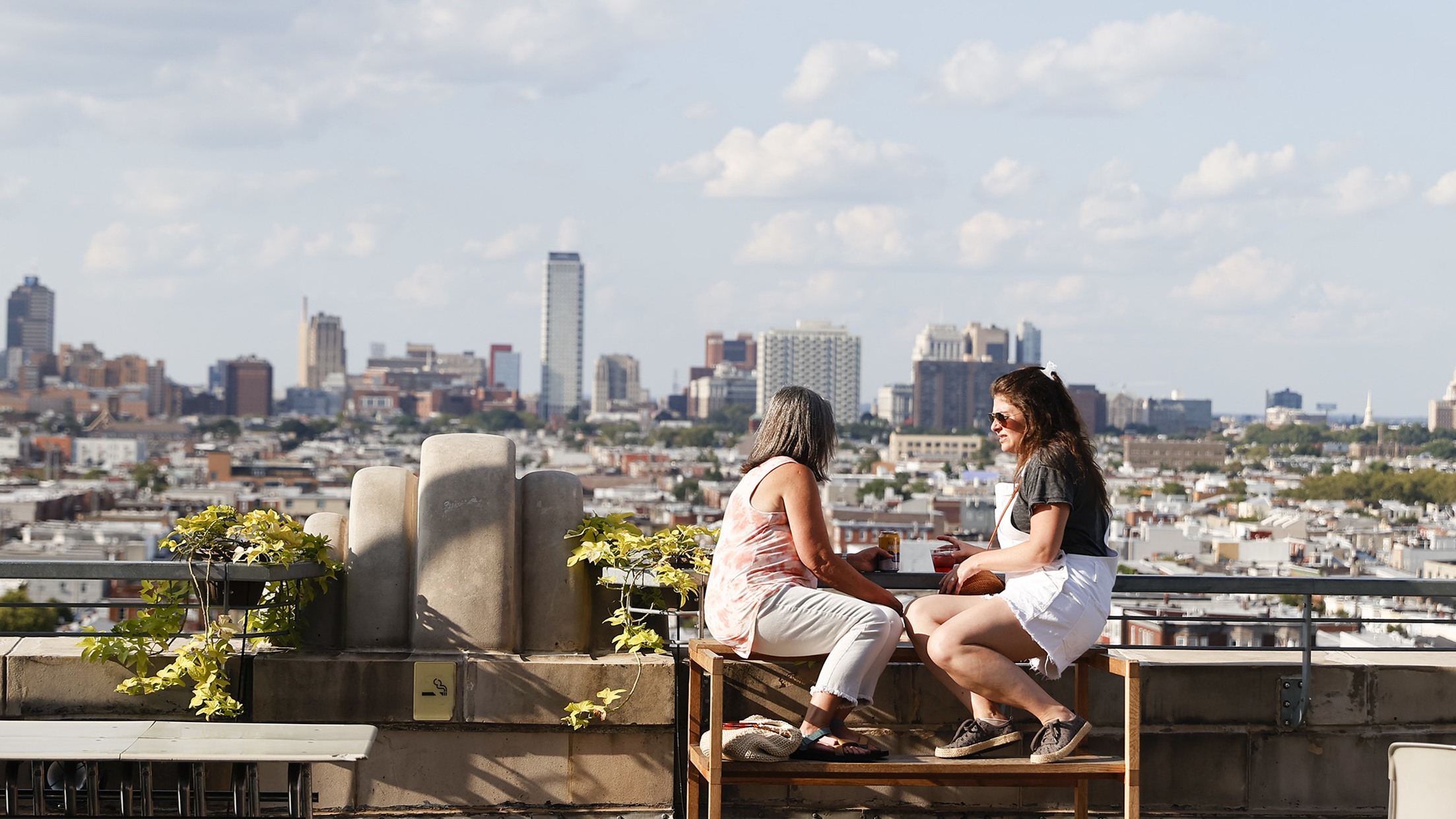
The view from the top of the Bok Building, which Scannapieco helped transform from an abandoned school into a vibrant makers space with 220+ tenants.Yong Kim / Staff Photographer
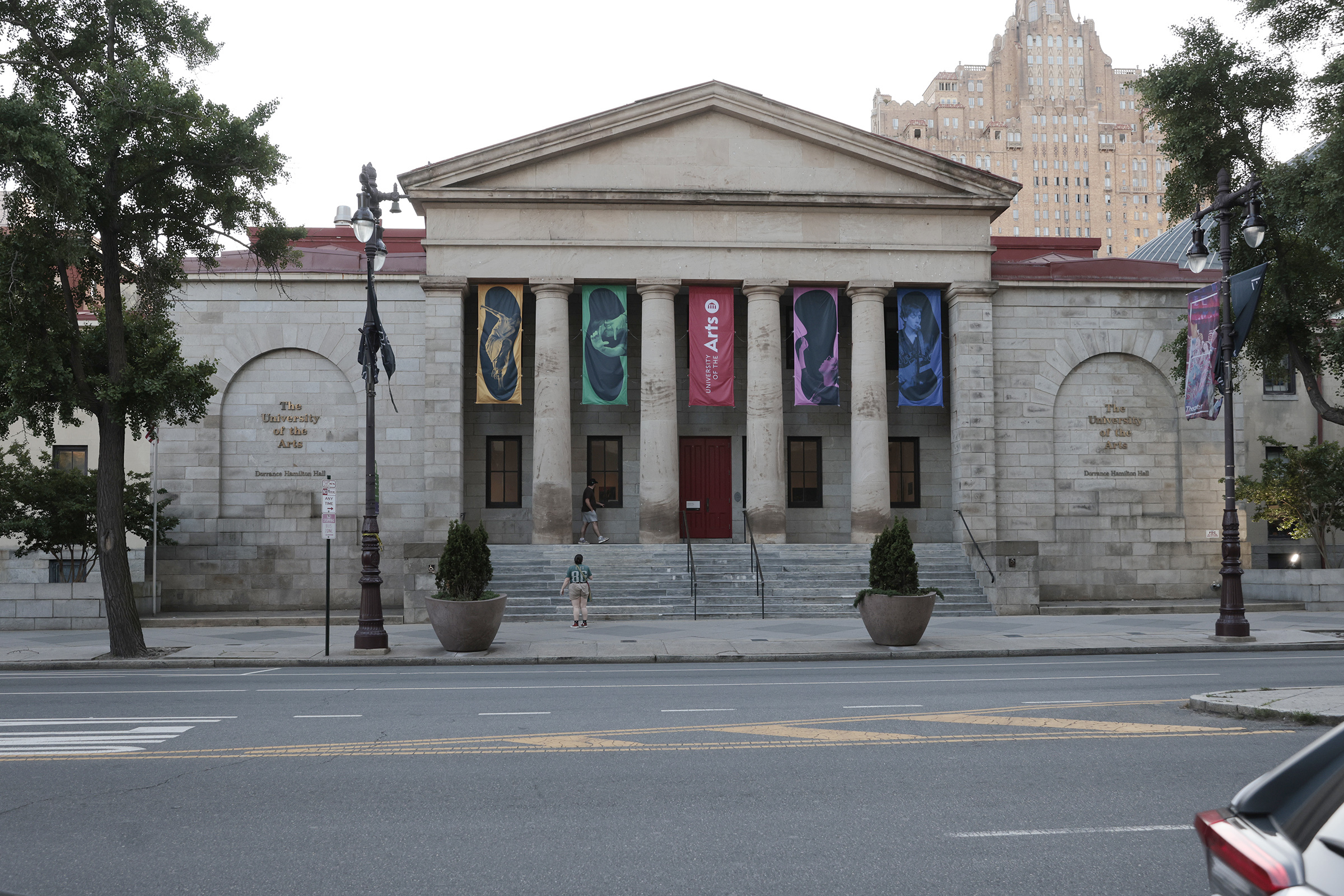
Earlier this year, Scout opened the Village of Industry and Arts (VIA) inside Hamilton Hall, the former home of the University of the Arts. Scout acquired the building and the adjoining Furness Hall in a dramatic bankruptcy auction, beating out a New York-based real estate firm. Furness Hall, once a UArts dormitory, is currently being transformed into 45 units of affordable housing for local artists. Set to be complete next summer, Scannapieco called it the “largest affordable housing [development] for artists ever done” in Philly.
Now called the Village of Industry and Arts, Scout and Scannapieco have transformed UArts’ iconic Hamilton Hall into another makers space with a focus on artists.Elizabeth Robertson / Staff Photographer
“It’s not a copy-and-paste of Bok,” Scannapieco said. “The buildings are different. The location is different. The tenants will be a bit different … I feel very indebted to the history and legacy of the artists who came through this space before us.”
In an ideal world, Scannapieco’s next project would be revitalizing the abandoned bathhouses in the southeast corner of FDR Park, where Scannapieco — who grew up in New Hope — said her grandparents went swimming as teens.
Admittedly, Scannapieco wasn’t always sold on building a life in Philly. After attending college at the University of Southern California, Scannapieco moved to London, where she worked on the Summer 2012 Olympics and fashioned an outdoor movie theater from a pile of discarded fridges.
It took years of convincing from Scannapieco’s father, also a real estate developer, to see Philly in a new light. On trips home,he’d show Scannapieco placeslike Global Dye Works as proof that Philly has its own brand of cool.
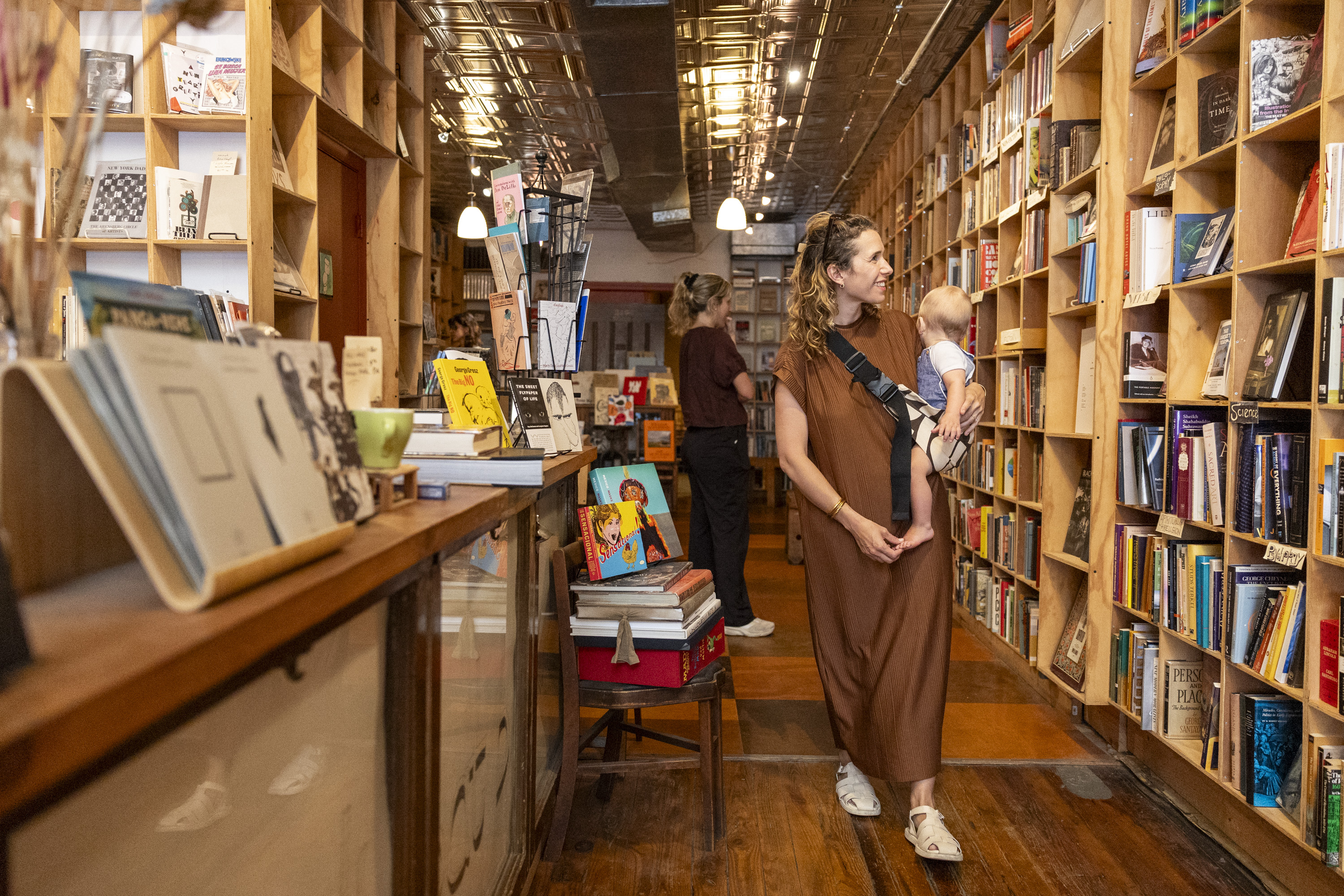
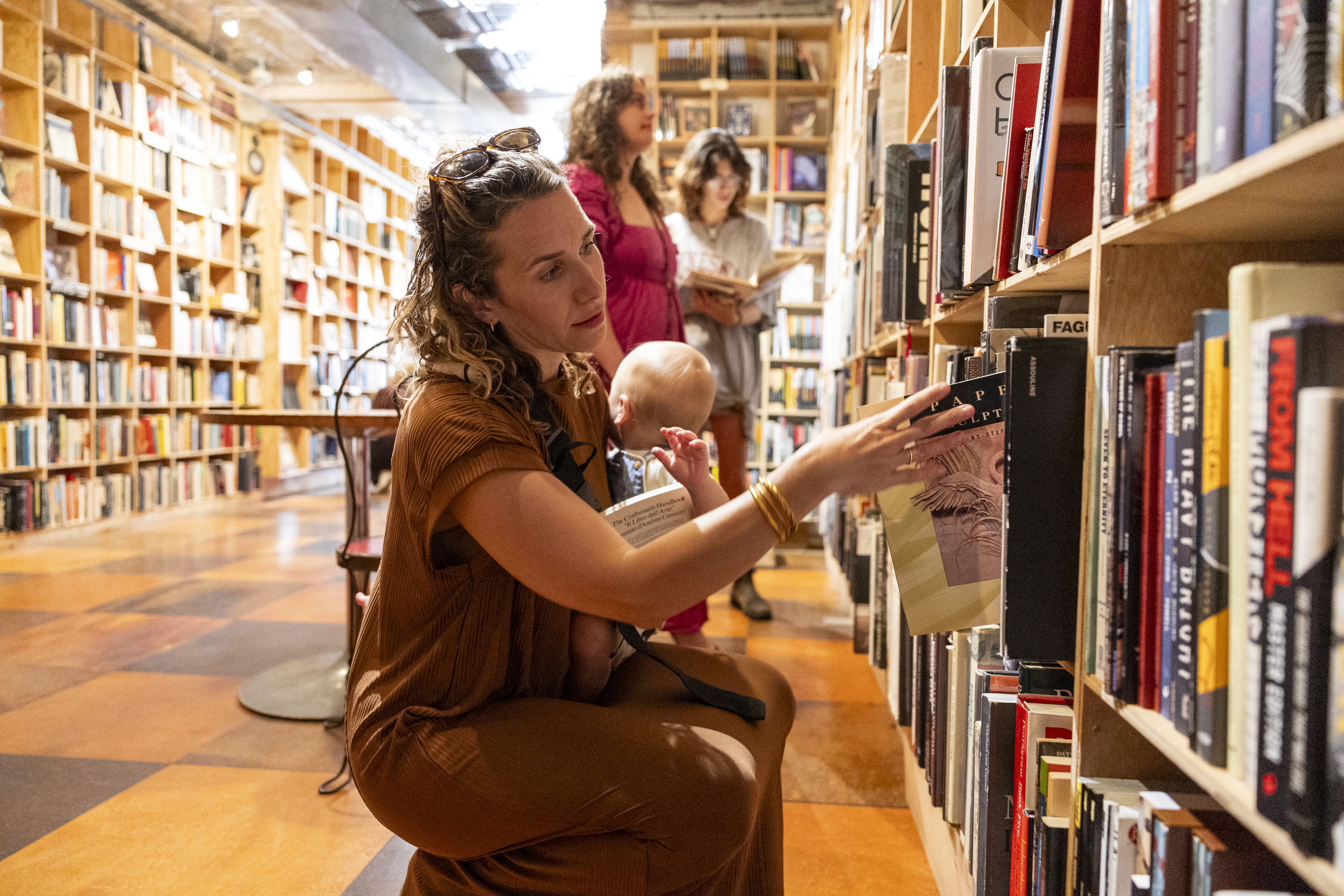
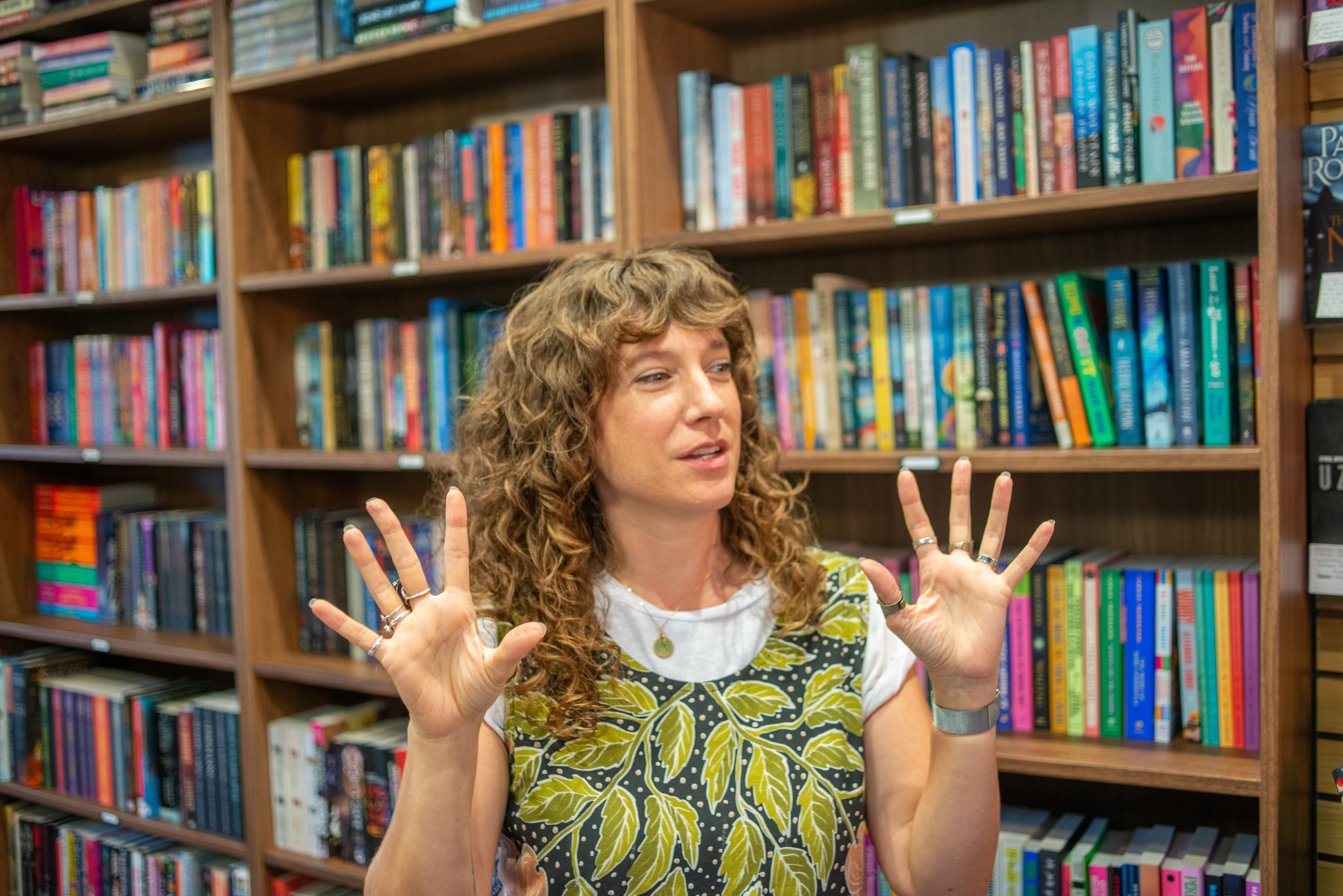
Lindsey Scannapiecco, who lives in Queen Village, and her son browse the shelves inside Brickbat Books.Tyger Williams / Staff Photographer
Now 40, Scannapieco can’t imagine having settled anywhere else.
“You can take a risk here,” she said. “And everyone participates. There’s a lot of passion for shaping our future here.”
Here’s how Scannapieco gets the most out of a perfect Saturday off in Philly — which, naturally, involves a Bok Bar sunset.
6 a.m.
I wake up early to get in some snuggles with my 11-month-old, baby George. One of my favorite parts of the morning is just hanging out in bed with him. He’s always so smiley and happy.
Then, I try to get in at least 15 minutes of movement and 15 minutes of reading before the day really starts. Right now, I’m making my way throughDon’t Build, Rebuildby Aaron Betsky — an adaptive reuse expert who just so happens to live in Philly — and The Twilight of Bohemia, about an affordable housing project for artists in NYC.
When it comes to movement, I’m lucky to get through a YouTube workout during the week, so I like to indulge on the weekend with a cardio box class at Together Athletics with [owner] Kate Connelly or a pilates private at The Balance Room in Queen Village. Both places are just bundles of wonderful energy.
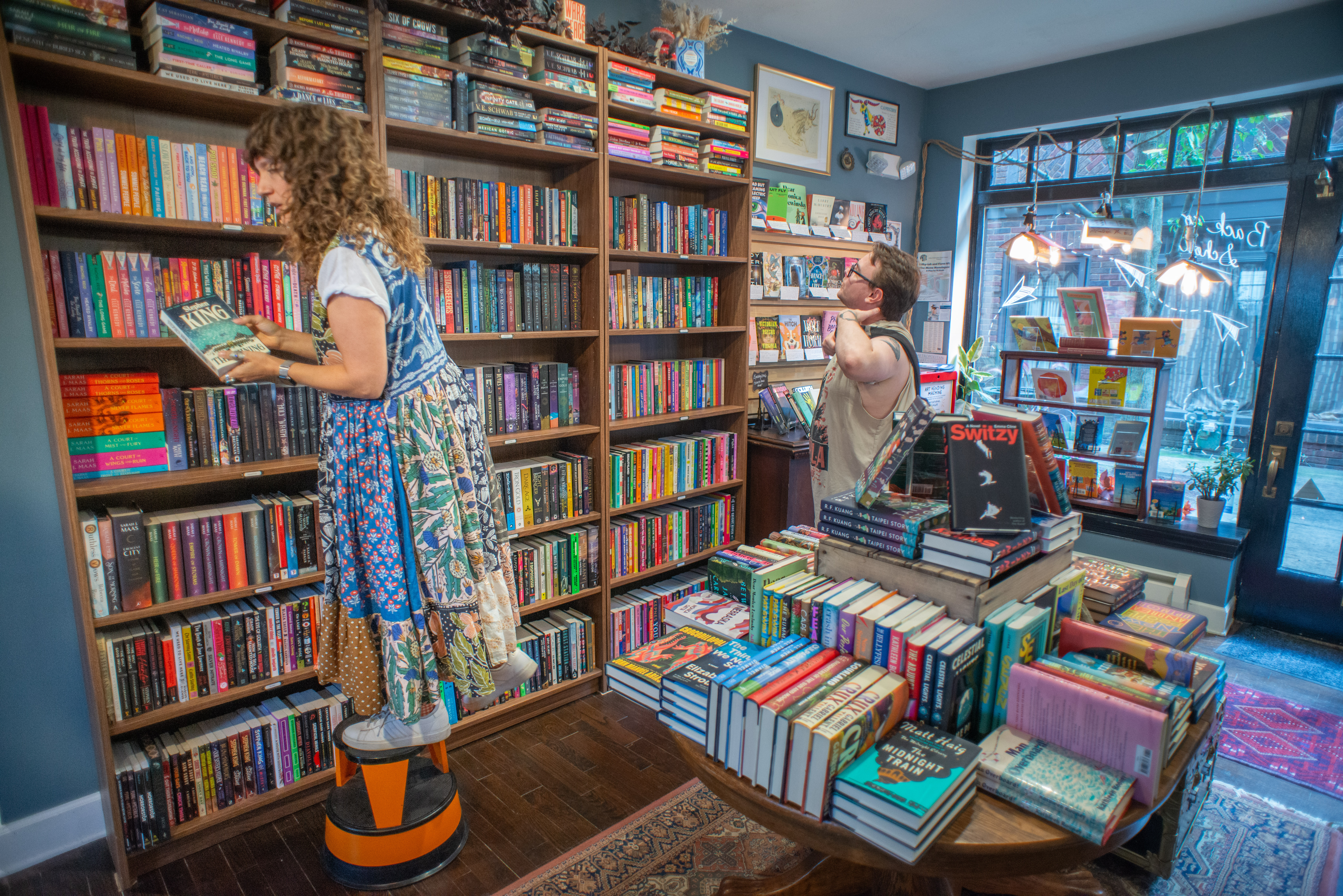
Lindsey Scannapiecco and her son shop inside Queen Village’s Brickbat Books, one of her favorite local bookstores.Tyger Williams / Staff Photographer
9:30 a.m.
I love an aimless wander, so my dream weekend involves traipsing around Queen Village without a destination.
First, I pop into Ace Outpostfor an oat milk cappuccino. I am “hot drinks, always” person, regardless of the weather, which I’ve been told is a little crazy. Then, I’ll probably head over to this children’s boutique calledNesting Houseto shop for George. Right now, I’m on the hunt for rompers and overalls.
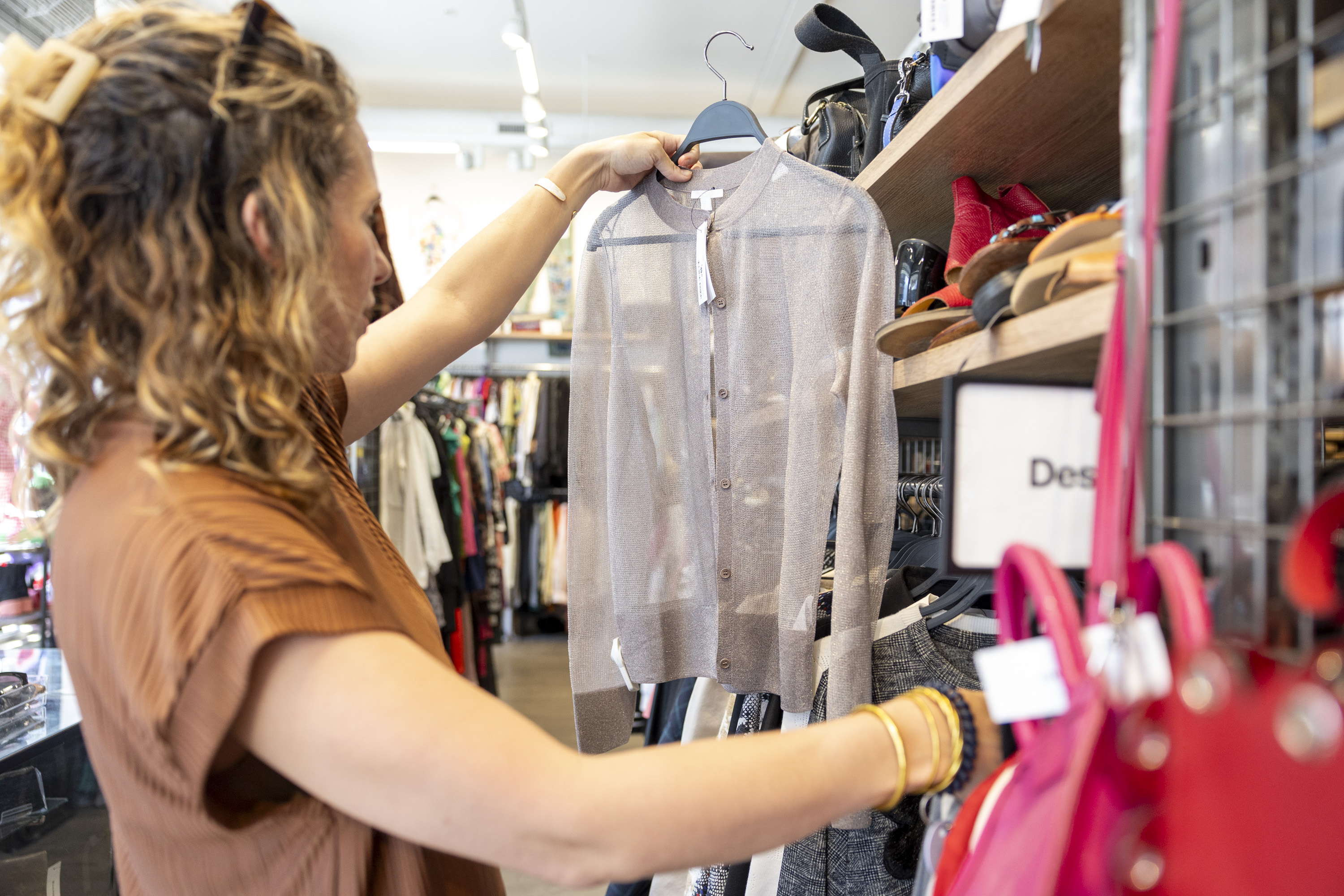
After, it’s time to shop for myself. I love to peruse the selection at Brickbat Books, but that’s really the warm-up for the main event: Second Street Thrift.
I love the search, so I prefer to thrift at places that require you to really dig for gems. I actually picked up the find of my life at Second Street: A pair black Christian Louboutin leather ballet flats. They had never been worn before, too. When I saw them, I gasped.
Lindsey Scannapiecco prefers to thrift at Second Street Vintage’s South Street location, where she once found a pair of unworn Christian Louboutin shoes.Tyger Williams / Staff Photographer
12:30 p.m.
My husband, Sandy, and I are going to go on a bike ride with baby George to the Southeast Asian Market at FDR Park. Biking around Philly is probably my favorite thing in the world — you’re kind of just breezing through the city. It’s freeing.
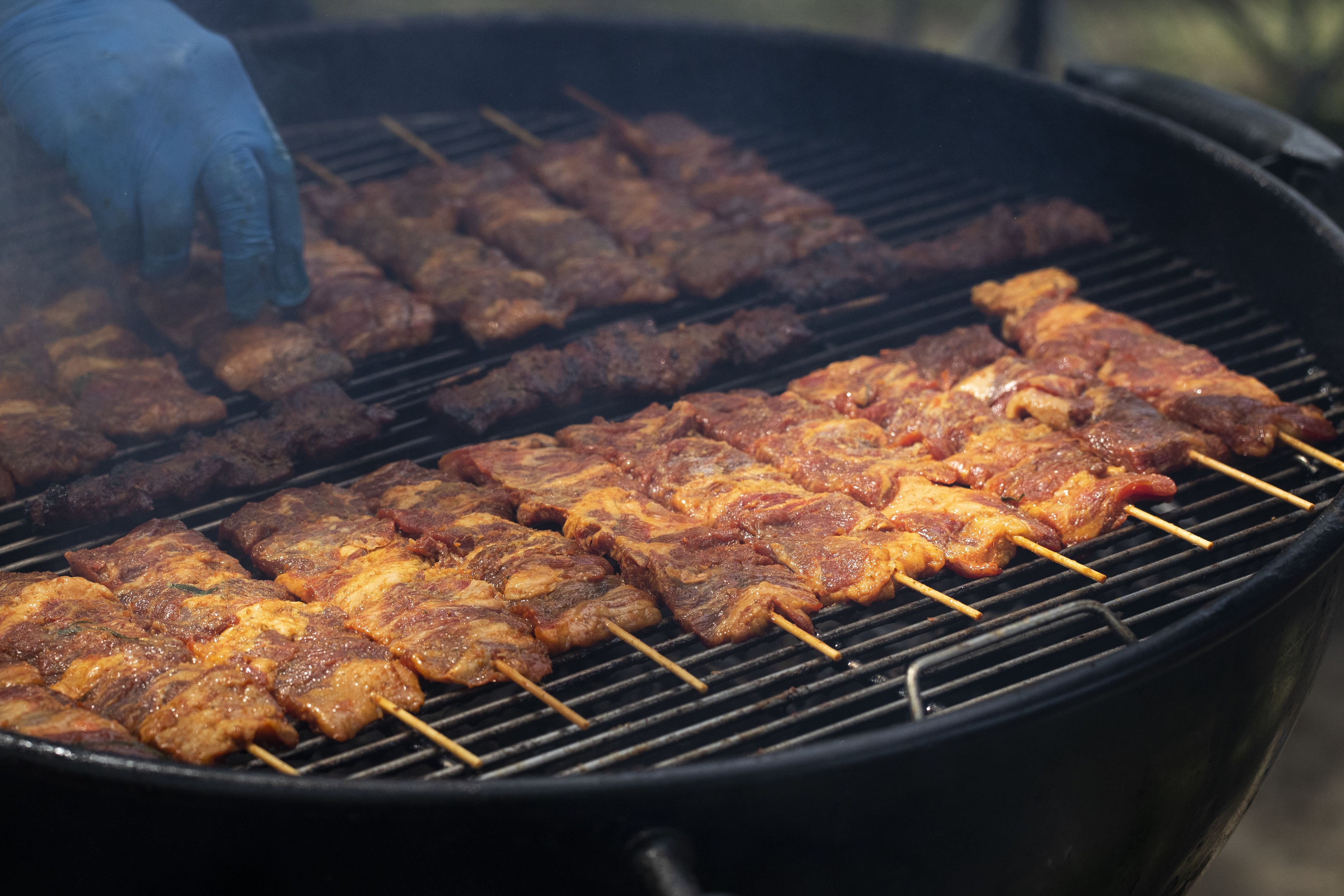
The Southeast Asian Market is one of those places where you have to go with a whole group to divide and conquer. There’s just too many things to try, but our non-negotiables are the beef skewers, the salted lemonade, and the [khao lam], or sticky rice in bamboo that you crack open.
Afterward, we’ll probably meander around the park. It’s such a special place for me. Sandy and I got married there. It was during COVID, so we had a picnic in the meadows. It was lovely.
Beef skewers — one of Scannpieco’s favorite snacks — on the grill at the Southeast Asian Market at FDR Park.Monica Herndon / Staff Photographer
4:30 p.m.
On the way home from the park, we stop at Sao, which I think is the best restaurant in Philadelphia. I wish I could just go there casually because it takes quite a bit of hustle to get a reservation. I could eat the oysters with the fish sauce mignonette endlessly. Same with the chirashi bowls.
6:30 p.m.
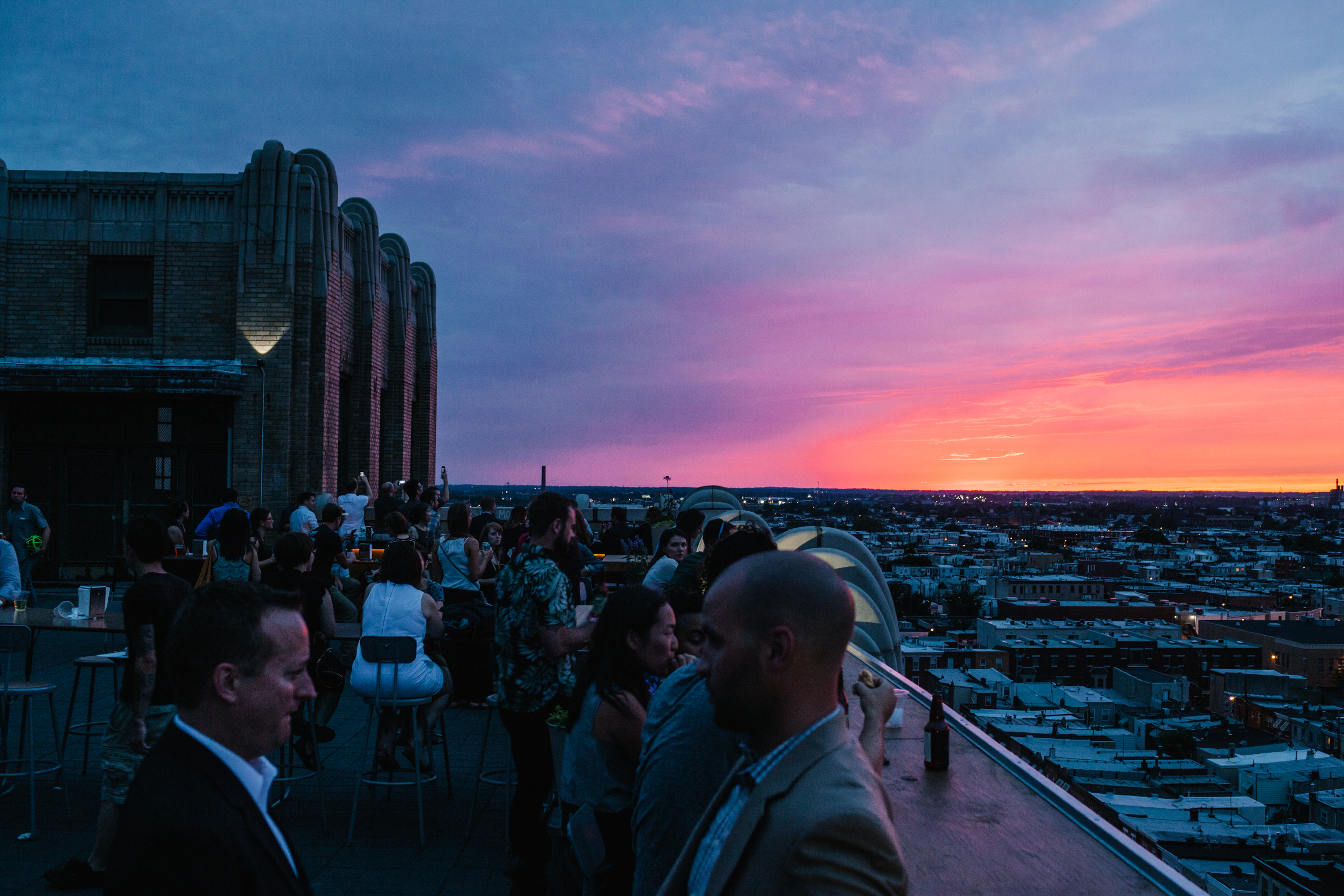
I know it’s corny, but I would go to Bok Barto see the sunset. It still brings me so much joy. I love the feeling I get when I’m in the elevator and I overhear people say, ‘Did you know this used to be a school?’, or “Wow,” when they see the view for the first time. There’s just a magic in the air.
A sunset over Bok Bar when it first opened in 2015 under the name Le Bok Fin.Michelle Gustafson
The best Bok Bar sunsets are always the day after it rains. I used to say that Bok Bar was like a kid for me because I’d just flip through my camera roll like a proud mom, pointing at indistinguishable sunset photos and saying each was more amazing than the next.
Bok is just this space where you see people from all over. Old people. Young people. People from South Jersey. I really want to see more places like that.
8 p.m.
We end the night with ice cream at Milk Jawn on Passyunk Avenue. I love the fact that their vegan ice cream is just as good as their regular ice cream, if not better.
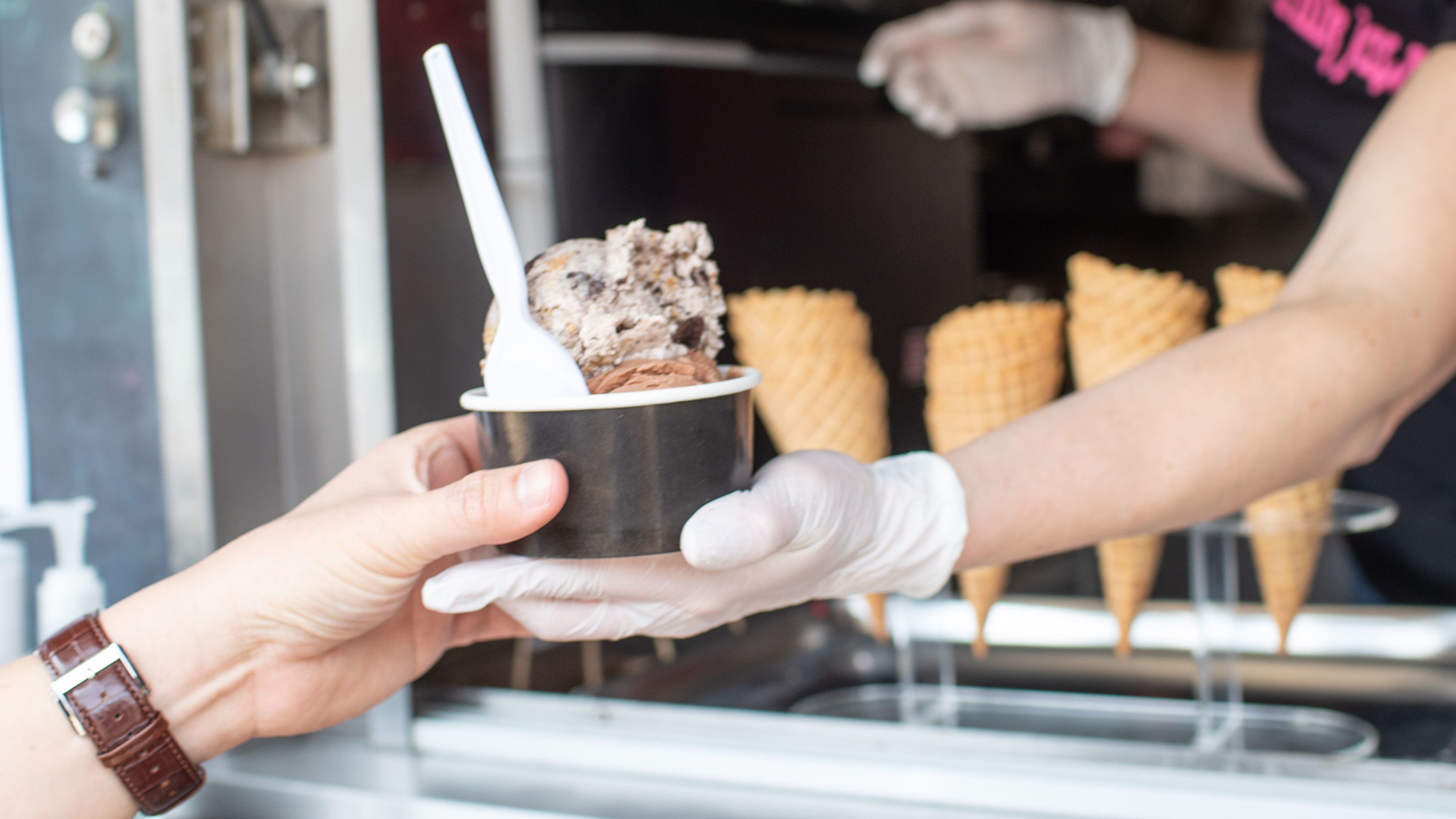
Milk Jawn ice cream served in a cup, just the way Scannapieco prefers.Courtesy of Milk Jawn
Not that I’m a vegan though — I just like knowing I have the option. I tend to go for the Earl Grey ice cream with honeycomb, and my husband gets the Tahini Fudge Swirl flavor.
We are cup people. I want to be cone person so bad, but I like to spend time with my ice cream. You can’t rush ice cream.
This interview has been edited for length and clarity.
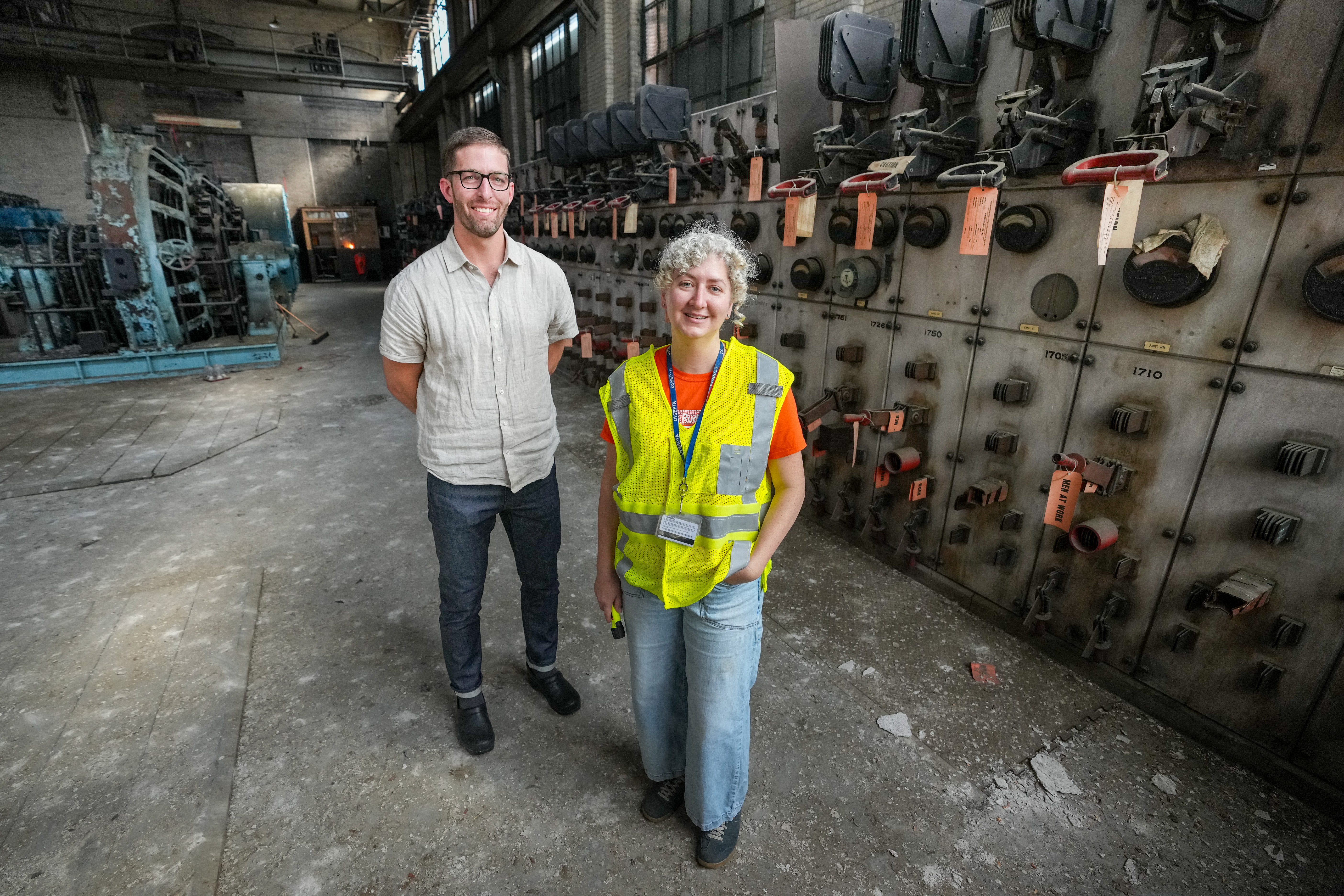
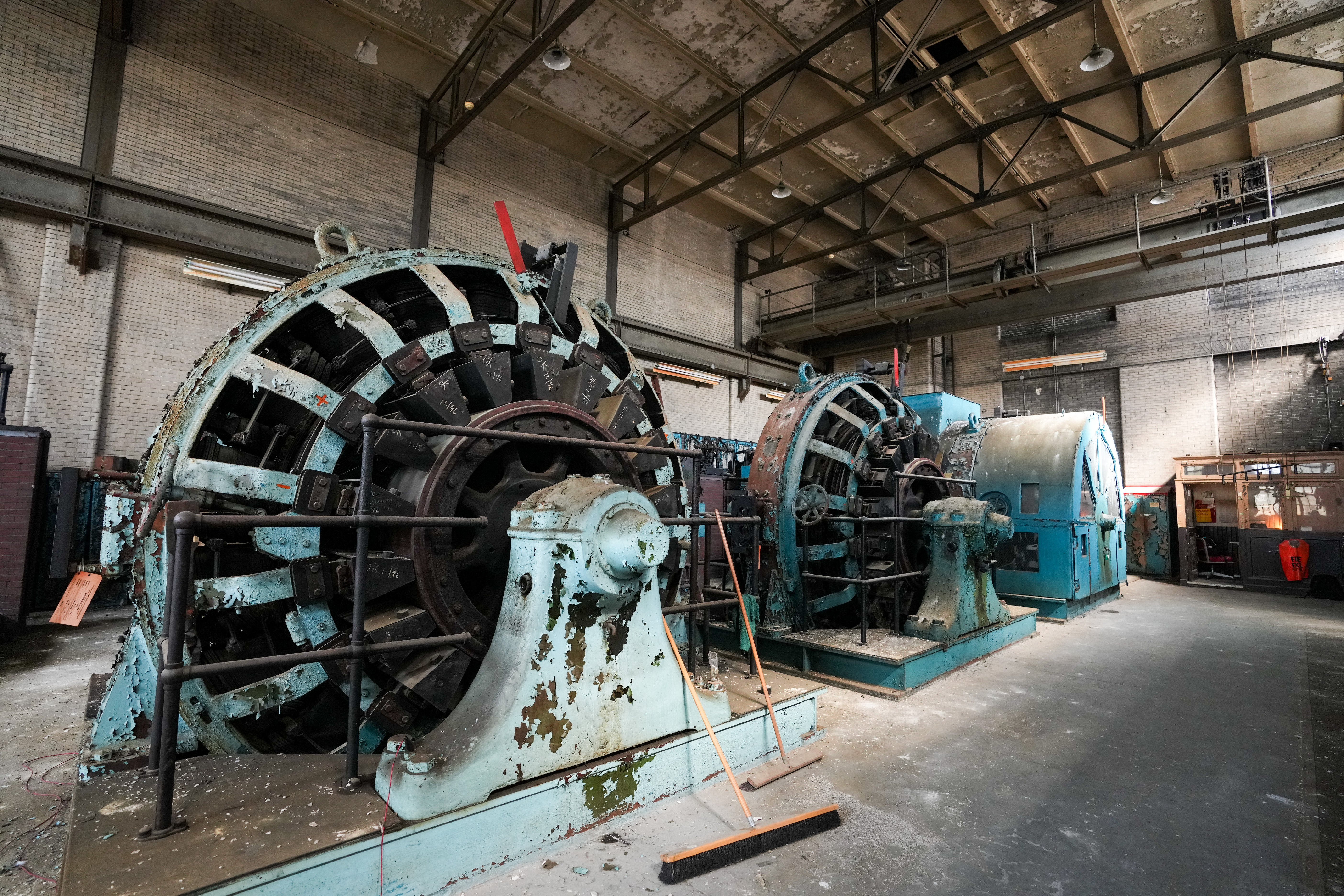
Inside the silent Mifflin Substation, afternoon light filtered by dust illuminated generators and artifacts left behind.
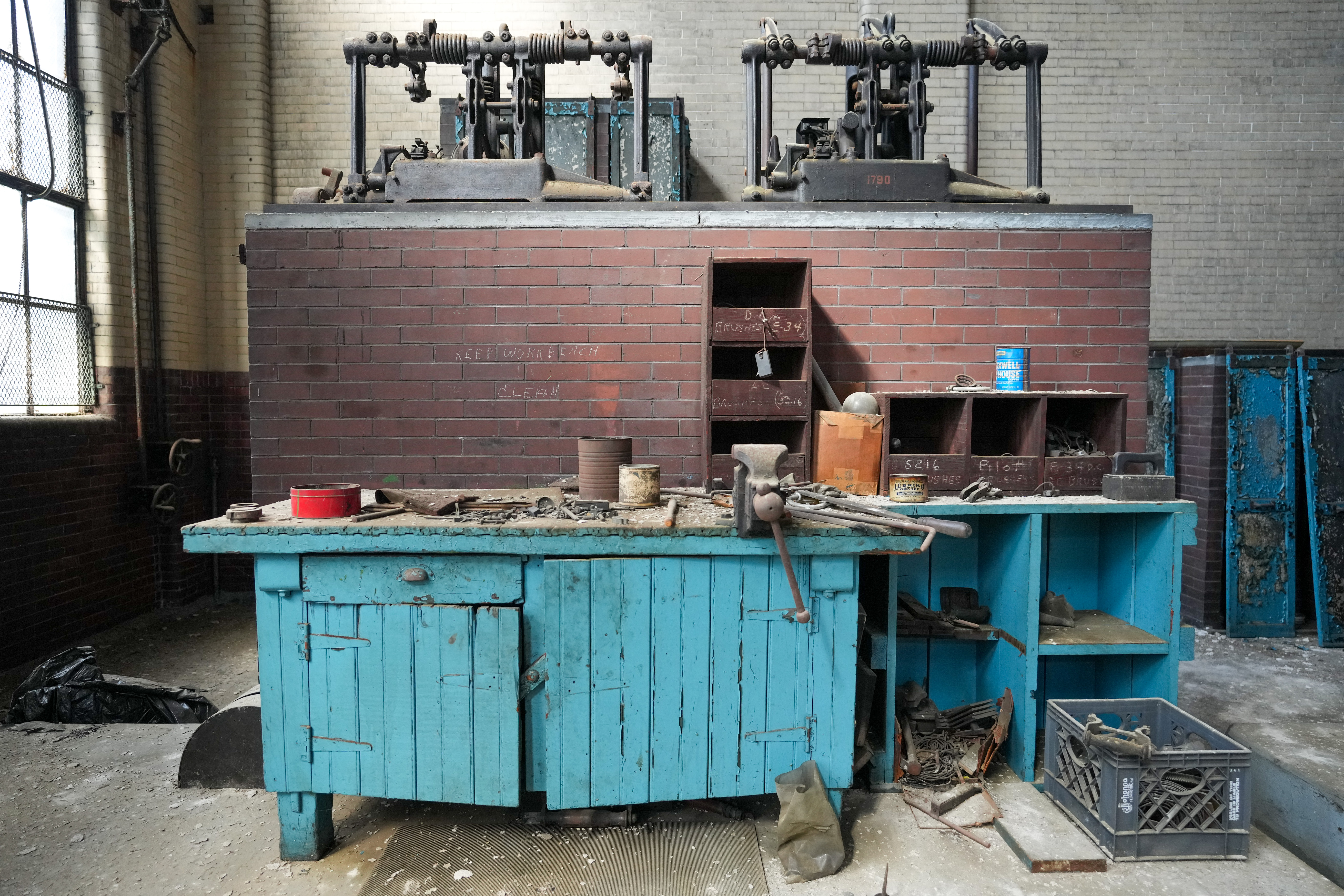
Tools, paper, pencils, a ruler, and paint chips littered a table despite a painted admonition to “Keep workbench clean.“
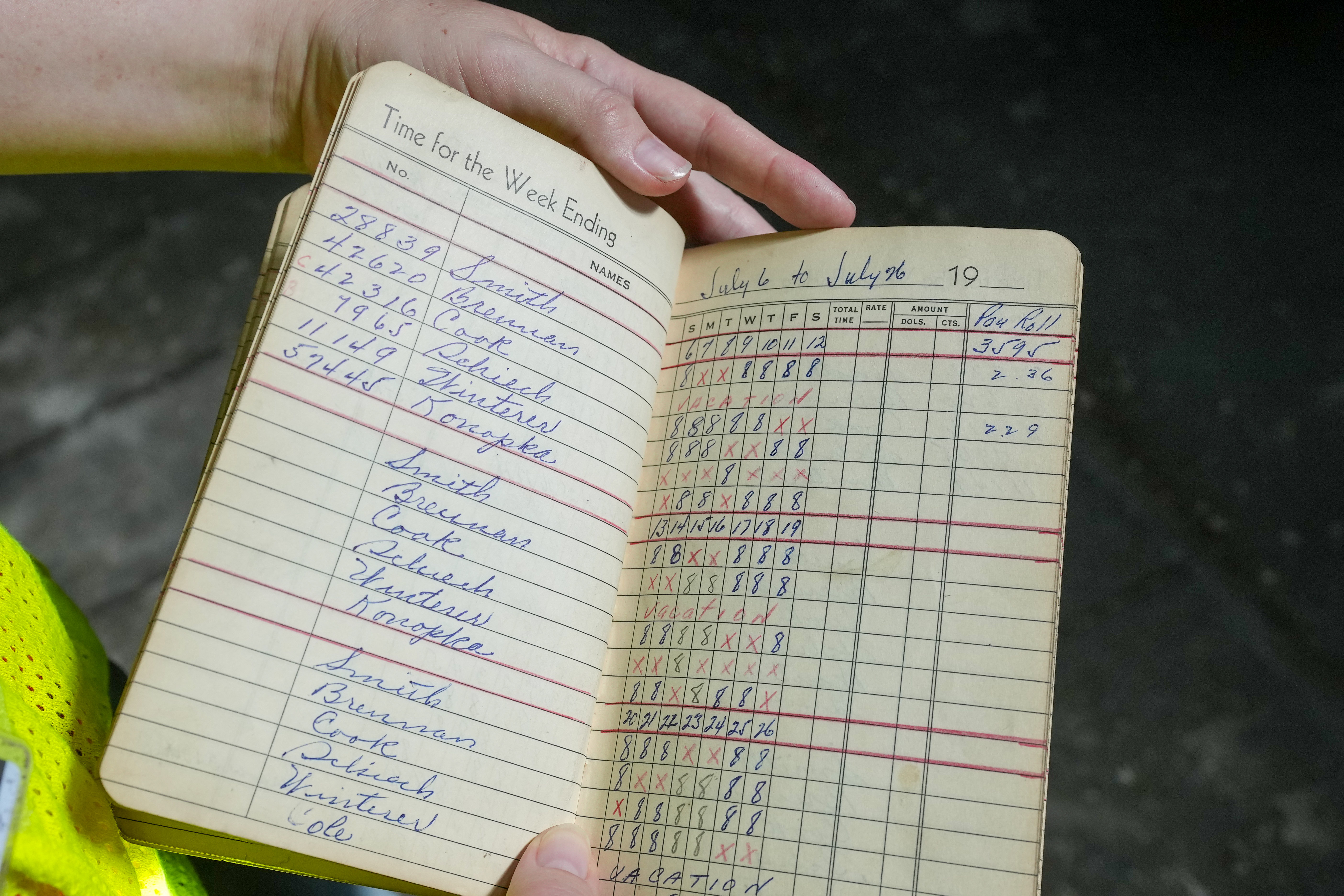
On another wall, cubbyholes held clothbound logbooks dating at least to the 1950s, with the hours worked by those who supplied electricity to trolleys recorded in the neat handwriting taught by old-school South Philadelphia nuns.
“It’s definitely a place of its time,” said Jennifer Dougherty, manager of real estate planning and development at SEPTA, during a tour of the 5,184-square-foot space last week.
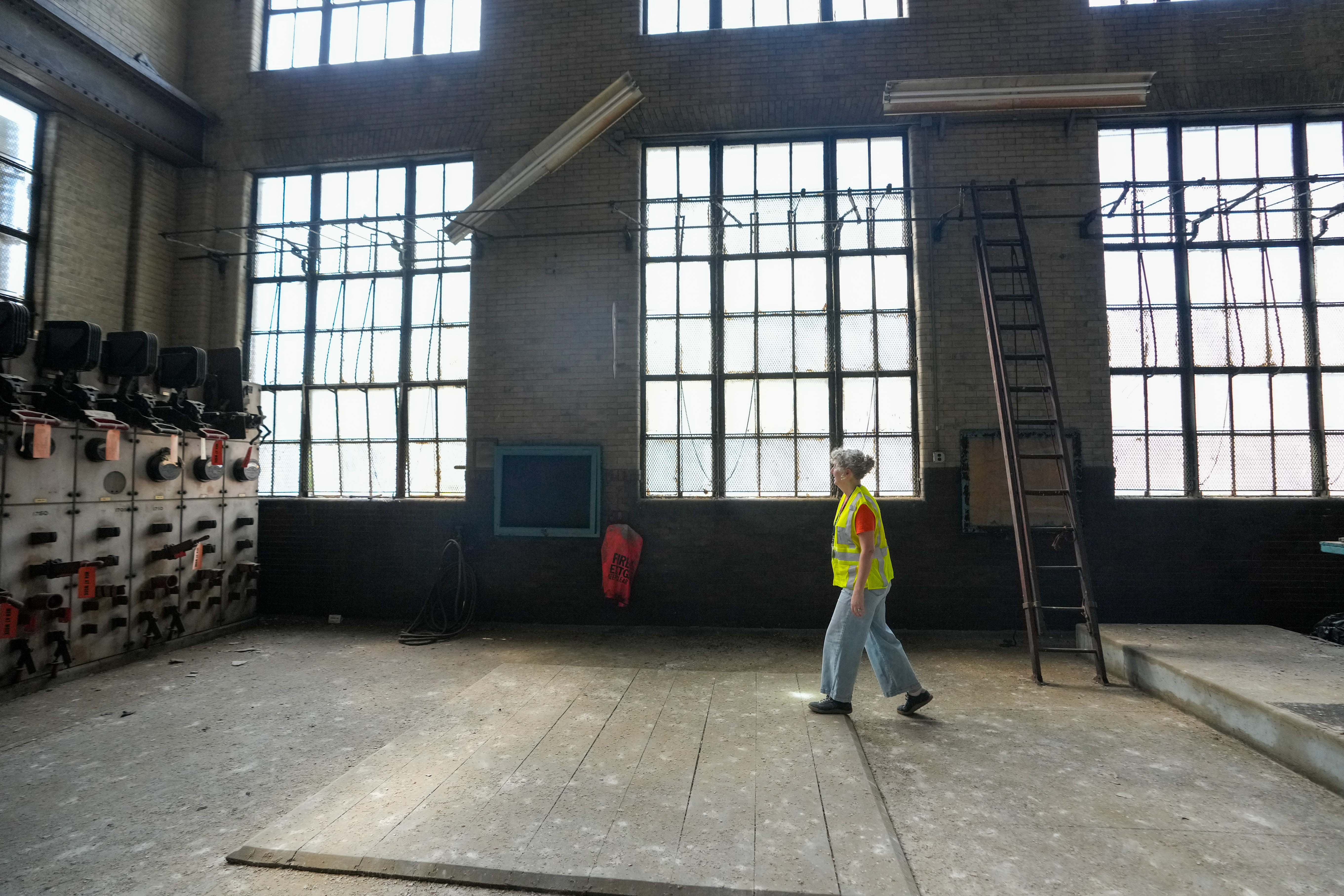
The transit agency is betting that the industrial brick-and-steel aesthetic of the Mifflin Substation — with its 35-foot ceilings, massive windows, and open main floor — can generate income for SEPTA and develop an empty building into a new asset for the East Passyunk Avenue area.
Time sheets for the workers were written neatly in clothbound log books. Dozens of them, some dating back 80 years, are still in the substation.Jessica Griffin / Staff PhotographerA workbench at Mifflin Substation cluttered with tools, cans of nails, bolts, and other debris abandoned at the end of the last shift.Jessica Griffin / Staff Photographer
Built in 1914 by the Philadelphia Rapid Transit Co., the station delivered electric power to trolleys for generations. PRT went bankrupt and reorganized in 1940 as the Philadelphia Transportation Co., in turn absorbed by SEPTA in 1968.
Route 23, the last fixed-track trolley in South Philadelphia, was replaced by diesel buses in 1992. Mifflin Substation was de-energized in 2003 when the Route 79 trackless trolley converted to buses.
A sense of the scale of the trolley power substation, which has 35-foot ceilings and two walls dominated by windows for natural light. Jessica Griffin / Staff Photographer
What could the space become?
Most of the other properties SEPTA has offered for development deals so far have been under- or unused parking lots or land parcels. It has several joint-development deals in the works for new multifamily housing around Regional Rail stations.
“Conceptually, this is more wide open,” said Michael Kendall, SEPTA’s assistant treasurer.
When he walked into the soaring room the other day, Kendall pointed to a generator encased in metal housing and said, “I could see this as a pizza oven!”
Some people have said it could be a venue for concerts or other entertainment, a brewpub, a climbing gym, a high-concept restaurant, or something cultural.
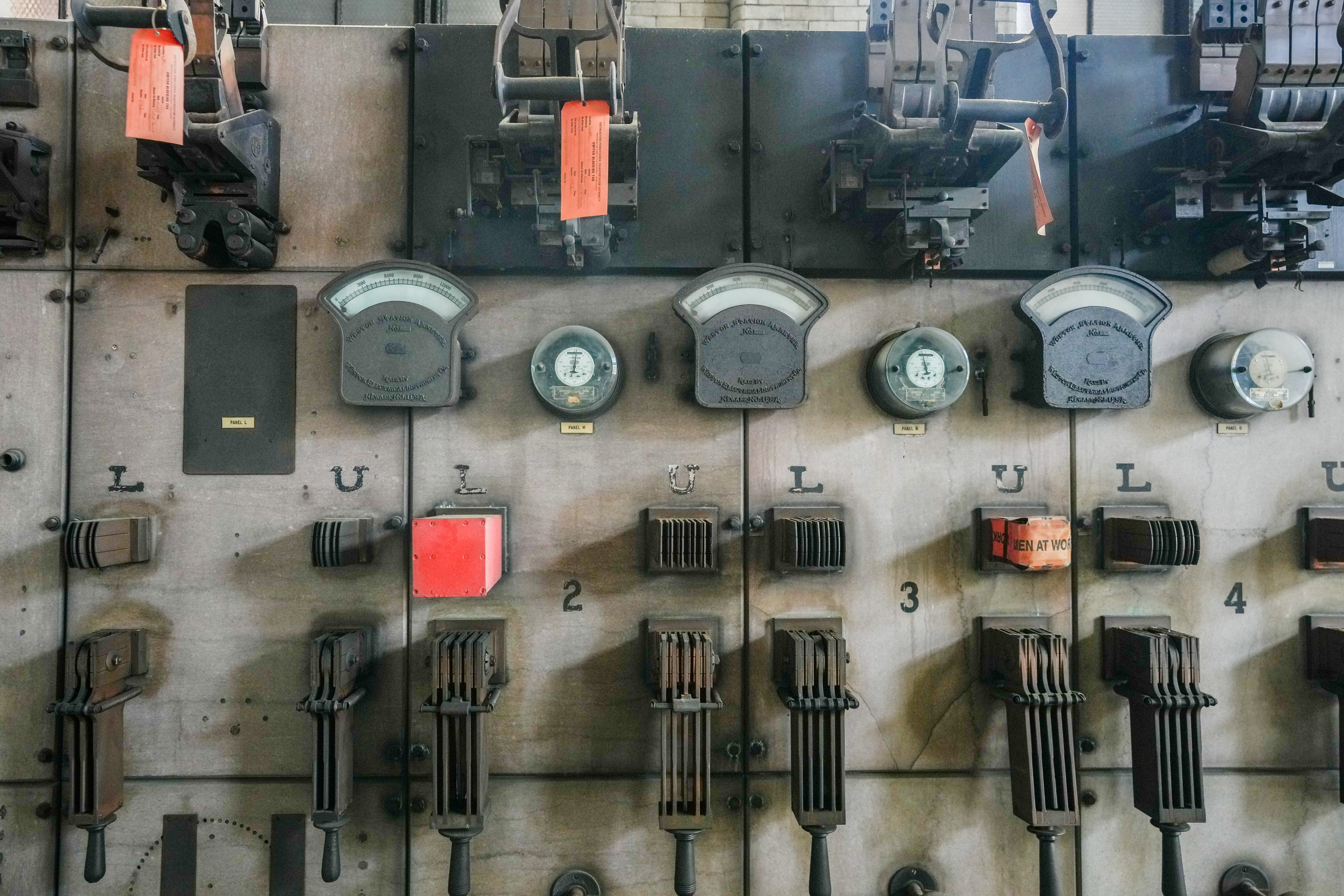
Gauges, switches, and cables in the Mifflin substation, where electric power was meted out to trolleys, which connect to overhead wires via mechanical arms.Jessica Griffin / Staff PhotographerGenerators that pushed power from the Mifflin Substation to wires above trolley routes.Jessica Griffin / Staff Photographer
SEPTA plans to invite the community to help shape an adaptive reuse concept for the plant at 1831-37 S. 13th St. Later, it will invite developers to compete for the job. The winner would lease the property from SEPTA and rebuild.
Some preliminary conversations have begun with business and community groups. A public brainstorming meeting is scheduled for Dec. 9 at the East Passyunk Community Center, 1025 Mifflin St., from 6:30 p.m. to 8 p.m.
Kendall and Dougherty said they’ve even heard a suggestion that the main room be turned into a facility for padel, a Spanish racquet game played on small courts with a squishy ball. “Think pickleball but with four walls,” Kendall said.
Frozen in time
Mifflin Substation sits where East Passyunk Avenue meets South 13th Street and Morris Street. The commercial corridor has a vacancy rate of just 2.4%, SEPTA says, with rents of about $20 per square foot.
Within a one-mile radius, median household income is about $78,700, with more than 3,200 businesses and 20,000 workers nearby, SEPTA says.
While the area has plenty of retail shops and restaurants, there are few entertainment-oriented places, and the transit agency believes that provides an opportunity.
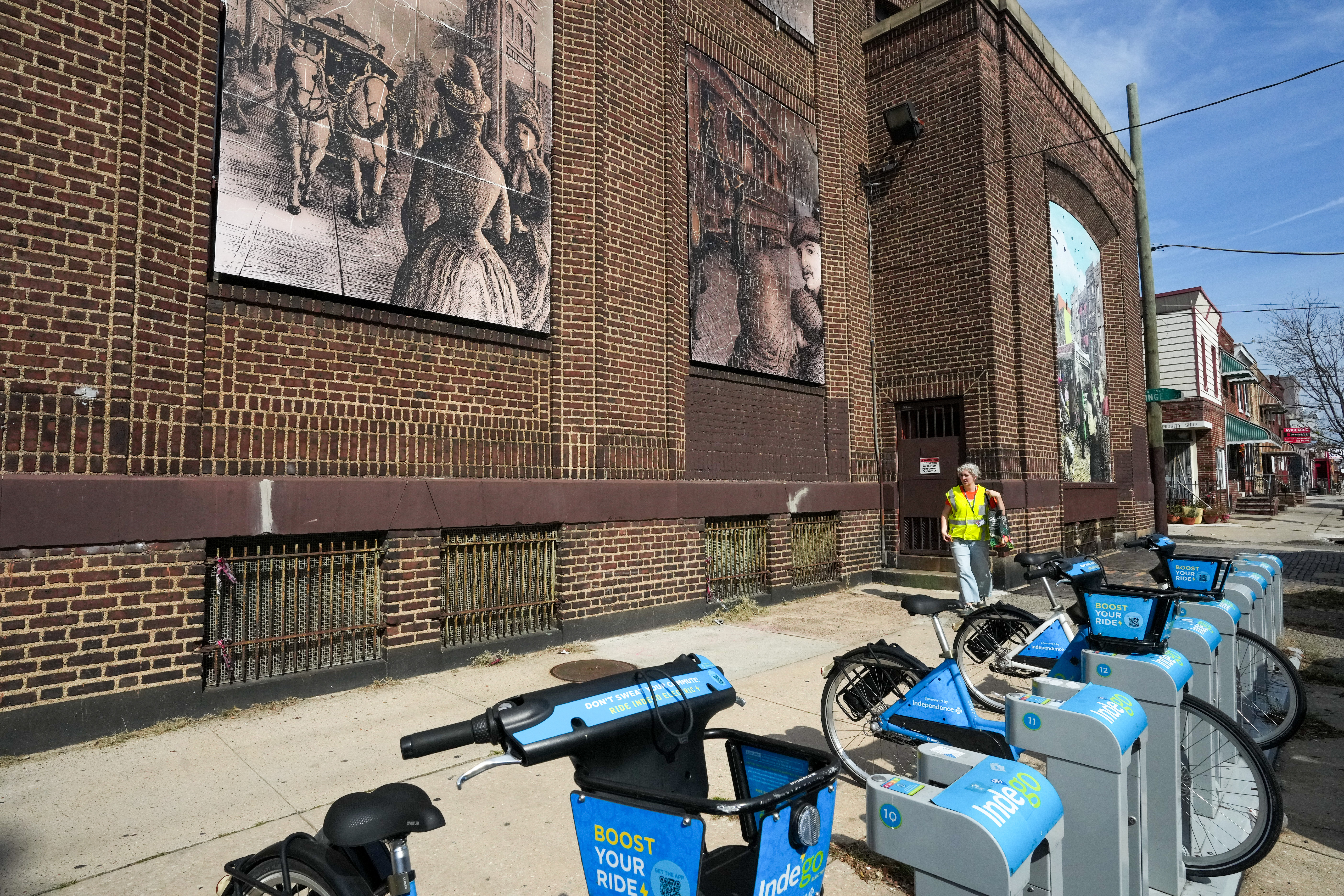
Constructed in 1914, the substation was used by trolleys for the Philadelphia Rapid Transit Co. and, much later, SEPTA. Massive windows currently are obscured by mural panels.Jessica Griffin / Staff Photographer
Adapting the substation will require some environmental remediation — there is asbestos and lead paint in the building, Dougherty said. It’s not known yet if there are PCBs, a toxic compound that historically was used to insulate in electric generating and transformer stations.
Salvageable metals and other materials may need to be removed.
For now the place is frozen in time.
Two dozen antique voltage gauges and dials, a row of manual iron switches, and cables that look like Dr. Frankenstein’s laboratory in a 1930s B-movie.
“These are literal museum pieces,” Kendall said.
“We don’t want to just scrap all this,” Dougherty said.
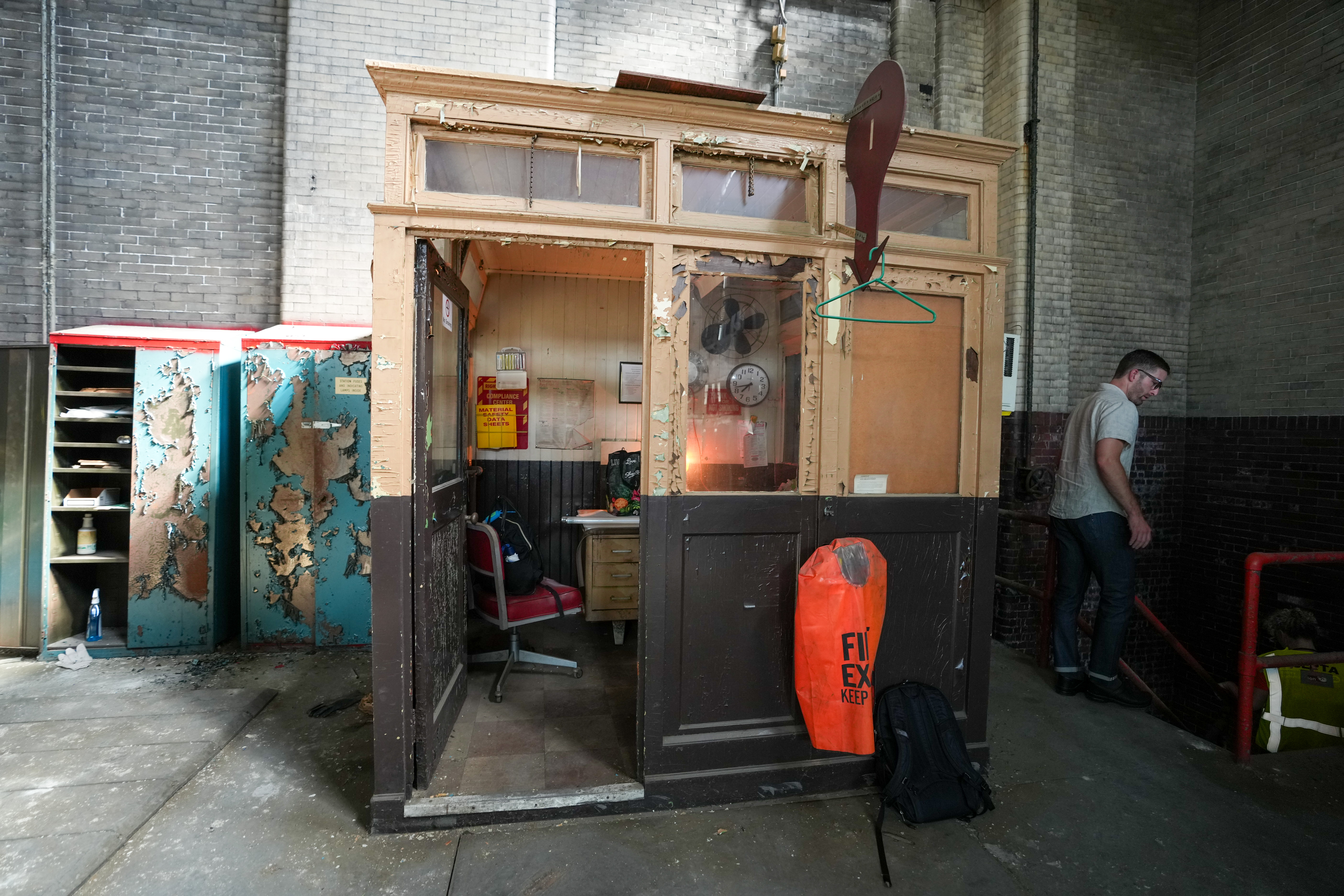
A landline telephone in the substation. Remember those?Jessica Griffin / Staff PhotographerMichael Kendall, SEPTA’s assistant treasurer, who oversees the real estate department, in the Mifflin Substation, in East Passyunk. A supervisor’s office is behind him.Jessica Griffin / Staff Photographer
SEPTA hopes to donate some of the equipment to an institution like the Electric City Trolley Museum in Scranton or the Pennsylvania Trolley museum in Washington, Pa., or perhaps the Railroad Museum of Pennsylvania in Strasburg, southeast of Lancaster.
The South Philadelphia substation is not listed on local or national historic registers, though a developer could seek such a designation to unlock tax credits.
“It’s not going to be demolished. That is off the table,” Dougherty said.
What the industrial relic becomes depends foremost on the imaginations of residents and real estate developers.
Editor’s note: This article has been edited to correct the time of the public brainstorming meeting on Dec. 9.
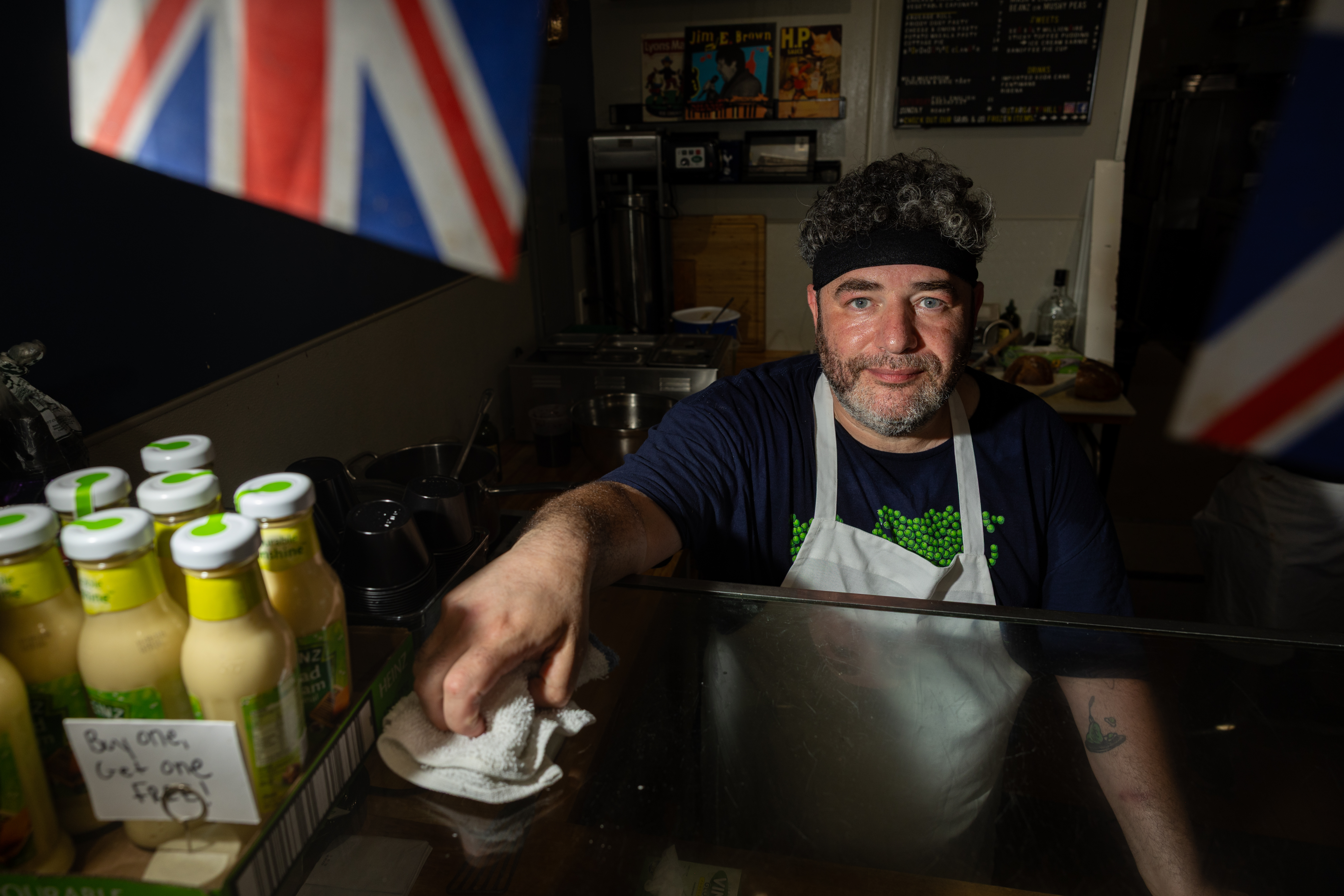
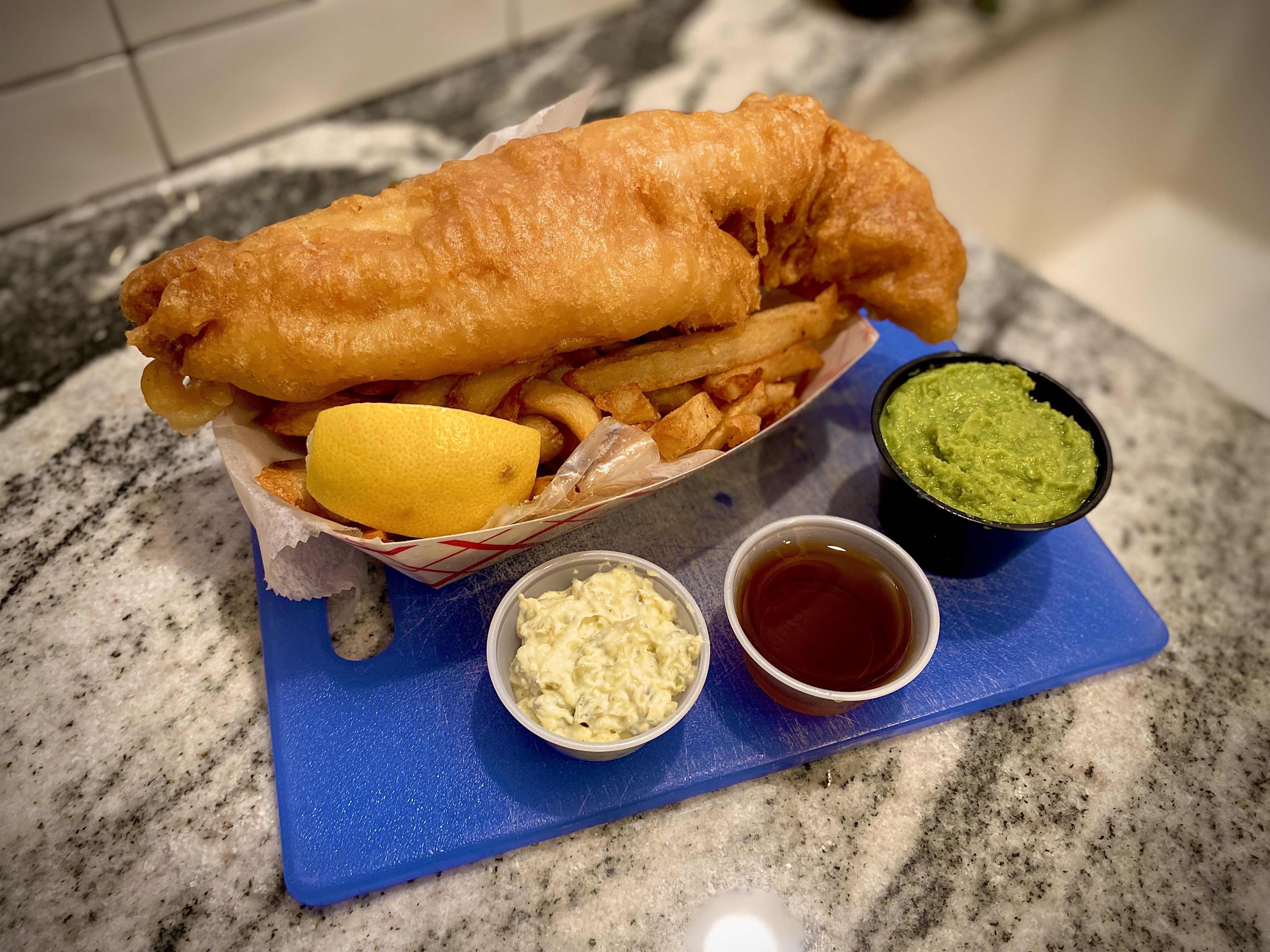
For the last eight years, Fridays at Stargazy on East Passyunk Avenue meant fish and chips, a weekly tribute to chef-owner Sam Jacobson’s East London roots.
That ended last month, when a city health inspection forced the English pie and mash shop to discontinue the special.
Stargazy had been cited twice in 2024 for operating its electric double countertop fryer without proper mechanical ventilation. But on Aug. 14, the Philadelphia Department of Public Health went further, citing the fryers as “unapproved” equipment and requiring Jacobson to submit plans for review before they could be used again. Translation: He’d need to install ventilation for his fryer if he wanted to continue slinging fish and chips.
The Friday fish and chips from Stargazy in 2021.Jenn Ladd / Staff
For restaurant owners, the consequences of an inspection can extend beyond whatever corrective action the city requires. Reports of closures, cease-operations orders, or serious violations — especially at popular restaurants — spread on social media, where the conversation often turns to claims that enforcement is unfair or not uniformly applied.
The health department disputes that contention, saying that there is no crackdown.
It’s in the process of rolling out a new Food Safety Inspection Guide, but while the format of the guide has been streamlined, the department said the underlying rules have not changed.
Inspections as a snapshot
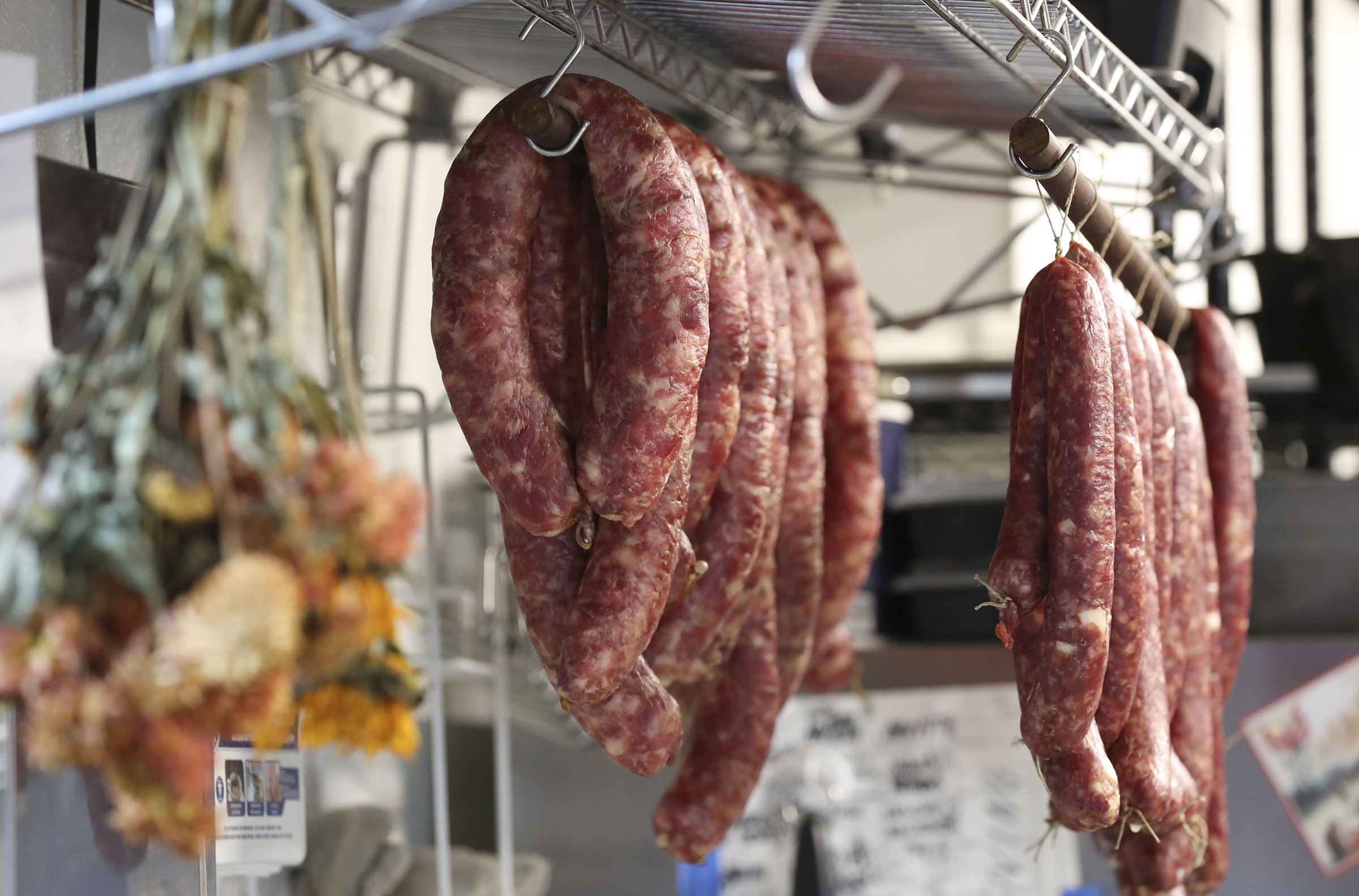
Last month at Heavy Metal Sausage Co. in South Philadelphia, a health inspector ordered owners Patrick Alfiero and Melissa Pellegrino to remove the shop’s eight indoor seats and stop preparing food in the basement. Inspectors determined that neither activity was consistent with the establishment’s plan review, approved in 2022.
Heavy Metal had passed previous inspections, including one four months earlier, and its owners told The Inquirer the operation had not changed between the two visits.
Heavy Metal Sausage Co. owners Patrick Alfiero and Melissa Pellegrino preparing for a dinner in 2022.Yong Kim / Staff Photographer
Health officials interviewed this month said the differing outcomes illustrate a basic principle of the inspection system: Each inspection reflects only a snapshot of what an inspector observes.
During the April inspection, the department said, the inspector did not observe indoor dining or food preparation in the basement. On Aug. 21, both were taking place and could be cited.
More broadly, officials said, the absence of a citation during an earlier inspection should not be interpreted as approval of a practice.
Stargazy had been previously cited
At Stargazy, the record is different. The fryer had been cited before.
Jacobson was in England when the sanitarian — as the inspectors are known — arrived at Stargazy on the afternoon of Friday, Aug. 14. It was the same sanitarian who had cited the fryer during two inspections in 2024.
Owner Sam Jacobson cooking at Stargazy on Sept. 18, 2026. Aidan T. Gallo / Staff Photographer
“I did look back at sales reports for the day of the April 5, 2024, inspection and we had a good fish day — so the fryer was definitely on and in plain sight,” Jacobson said.
Jacobson acknowledges that the inspector told him in 2024 that the fryers were “not approved.” That point is noted on the reports. But Jacobson said he did not understand that to mean he had to stop using them.
The Health Department gave a different account to The Inquirer this month. Officials said Jacobson was verbally instructed in 2024 not to use the fryers because they lacked mechanical ventilation.
When the sanitarian found the same fryer still in use at its next inspection more than two years later, the department said, Jacobson was told to install mechanical ventilation, which would require a plan review — a lengthy process. This time, Jacobson removed the fryer in response. (Historically, the health department does not levy fines, preferring that businesses correct violations.)
Jacobson said Stargazy had never undergone a plan review when he opened in 2015 after taking over an existing bakery. He said a city employee advised him at the time to treat the opening as a change of ownership, and the restaurant passed its preopening inspection.
“We never did any alterations or construction before opening,” Jacobson said. “I simply took over the lease of an existing bakery, gave it a lick of paint and some other cosmetic touches, and opened up.”
Besides the fryer, he said the restaurant’s only substantive changes were moving the counter in 2019 to create more room in the dining room and installing a customer hand sink during the pandemic at the city’s direction.
Sanitarians have not received new instructions to interpret the code differently, the department said. The department said it has committed significant resources to uniformity training, intended to ensure that every inspector reviews the same conditions in the same way in all food businesses.
Supervisors and managers also review inspection reports, and sanitarians are not supposed to exercise individual discretion in deciding whether a condition violates the food code.
The new Food Safety Inspection Guide supports the department’s position that the underlying food-safety requirements are not new.
Deputy Health Commissioner Dawn Kiesewetter said the guide has been under development for six or seven months with the Mayor’s Office of Policy Planning and Delivery, the Commerce Department, and business and community groups. It grew out of Mayor Cherelle L. Parker’s PHL Open for Business initiative, launched in April 2024 to simplify city permitting, licensing, and other requirements for businesses.
Food businesses were an early focus. When Open for Business was announced, city officials said food businesses averaged nearly 24 government approval steps to open and operate. The administration subsequently developed multilingual food-safety materials and other guidance for operators.
The city aims to inspect every food establishment once a year but does not always meet that target, the department acknowledged. About 60 Health Department employees are authorized to inspect Philadelphia’s 10,427 food establishments, according to the department. Reinspections follow violations, while complaint inspections and investigations of possible foodborne illness take place as needed.
Staffing and complaint volume have remained relatively steady in recent years, officials said, while the number of food businesses remains below its pre-pandemic level.
When a repeat problem is ‘new’
Stargazy’s fryer was cited as a “new violation” in 2026, two years after its first citation. The department’s terminology on inspection reports can sometimes label a recurring violation as new. Health officials said that designation is automatically applied when more than a year has passed since the earlier violation.
Jacobson said it would not make financial sense for him to install the ventilation needed to resume frying. A permanent hood would require construction, he said, while a freestanding ventless system could cost more than $20,000.
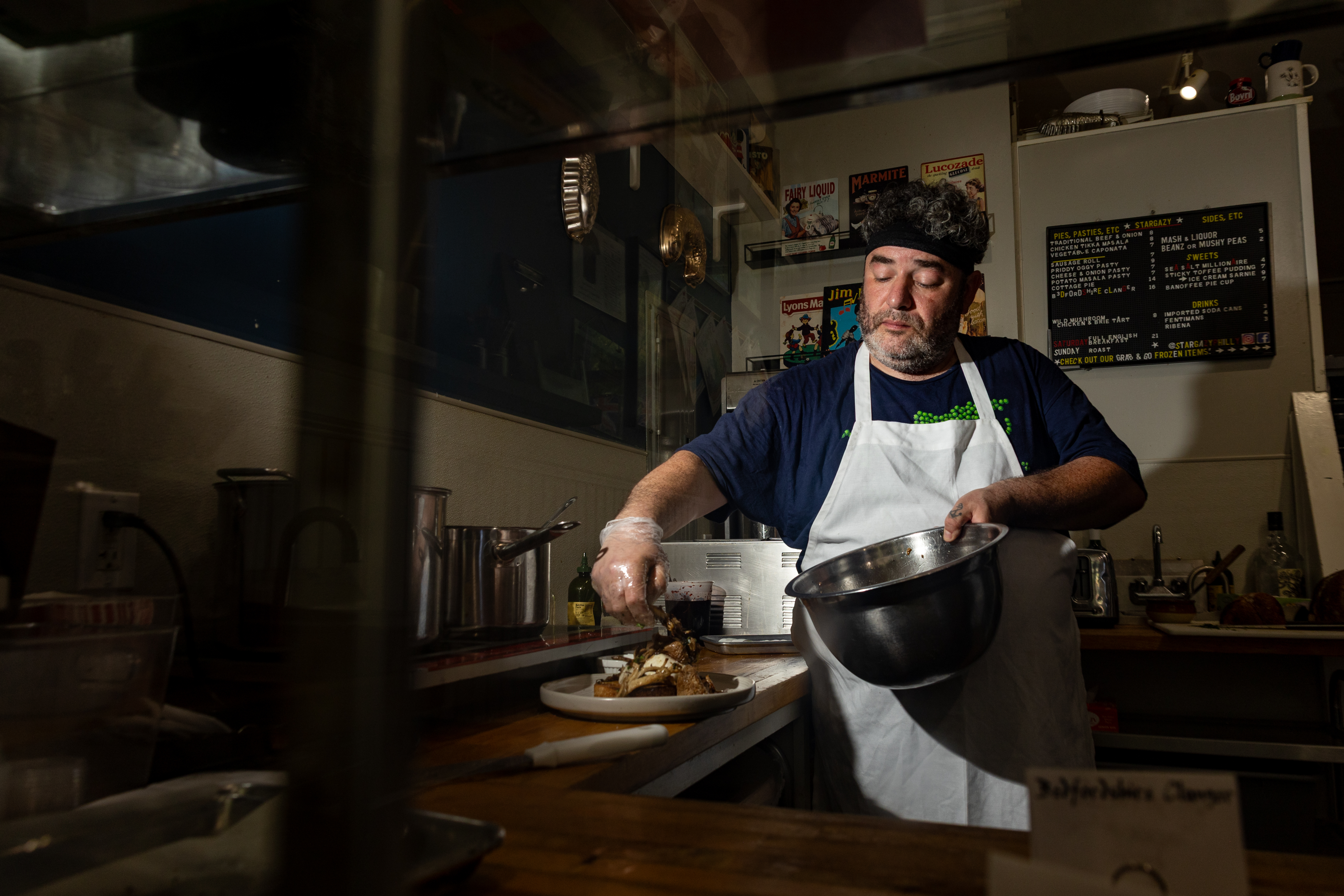
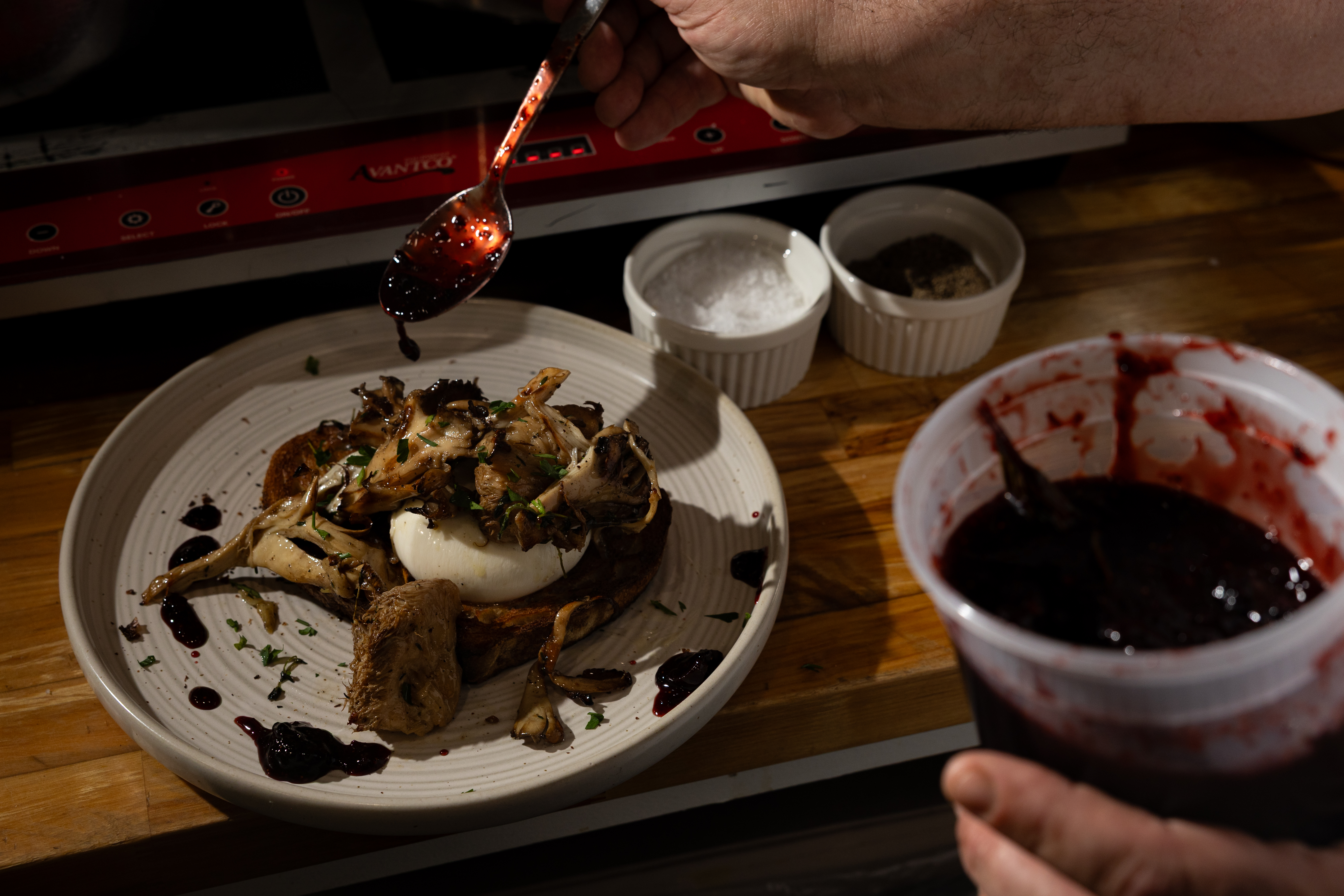
Stargazy owner Sam Jacobson adding blackberry and fig sauce to his wild mushroom burrata toast, a substitution for his fish fry.Aidan T. Gallo / Staff Photographer
Since removing the fryer, he is considering longer hours and fish-and-chips pop-ups elsewhere to replace some of the lost sales. On Fridays, he has been offering specials that do not require a fryer, including wild mushroom burrata toast.
The city says one purpose of the new guide is to reduce the likelihood of surprises during an inspection.
“The more they understand what they need to do, the more likely they’ll pass,” the Health Department said in a statement. “Our number one goal is to ensure that food businesses can stay open safely.”
Books are back, in Greater Philadelphia and around the country.
The industry saw modest revenue growth the last four years in a row, an Association of American Publishers report found. Brick-and-mortars saw more than twice the growth of online retail in 2025, and hardcovers outpaced ebooks.
Jackie Botto looks for a book on the shelves while chatting with a customer at Capricorn Books in Jenkintown.William Thomas Cain / For The Inquirer
Many Philly-area booksellers said they’re feeling the surge.
But what are they reading? Sixteen booksellers told us their favorites of 2026 so far.
Angel by Elizabeth Taylor and The Princess of 72nd Street by Elaine Kraf — Ariel Censor, Little Yenta Books in South Philly
Back for Blood: Never Whistle at Night Part II edited by Shane Hawk and Theodore C. Van Alst Jr.— Alex Schneider, A Novel Idea in East Passyunk
Discipline by Larissa Pham — Richard De Wyngaert, Head House Books in Queen Village
Exit Party by Emily St. John Mandel — Jackie Botto, Capricorn Books in Jenkintown
Message to the Blackman in America by Elijah Muhammad — Shaykh Anwar Muhammad, The Black Reserve Bookstore in Lansdale
Most Ardently Yours by Freya Sampson — Charity Herndon, Austen’s Shelf in Bordentown
Partita by Barbara Kingsolver — Elizabeth Young, Commonplace Reader in Yardley
This suburban content is produced with support from the Leslie Miller and Richard Worley Foundation and The Lenfest Institute for Journalism. Editorial content is created independently of the project donors. Gifts to support The Inquirer’s high-impact journalism can be made at inquirer.com/donate. A list of Lenfest Institute donors can be found at lenfestinstitute.org/supporters.
Sixty restaurants are on the slate for this fall in Philadelphia and its suburbs on both sides of the river, with cuisines that span the map: Vietnamese, Lebanese, Greek, Caribbean, Cajun-Creole, Palestinian, Mediterranean, and contemporary American cooking, along with bagel shops, bakeries, breakfast concepts, wine bars, and cocktail rooms.
Heavy Metal Sausage was ordered to stop serving dinner. Beatrice Forman says this may spell doom for the acclaimed South Philly butcher shop/restaurant.
The Michelin-starred Friday Saturday Sunday secured a $1.5 million state grant to expand into the rowhouse next door. Beatrice unpacked the process — and the reaction.
When does a tea shop require security guards? When it’s heytea —just one of a slew of hyped Chinese beverage chains hitting Philly. Kiki Aranita reports on the hottest thing going in Chinatown.
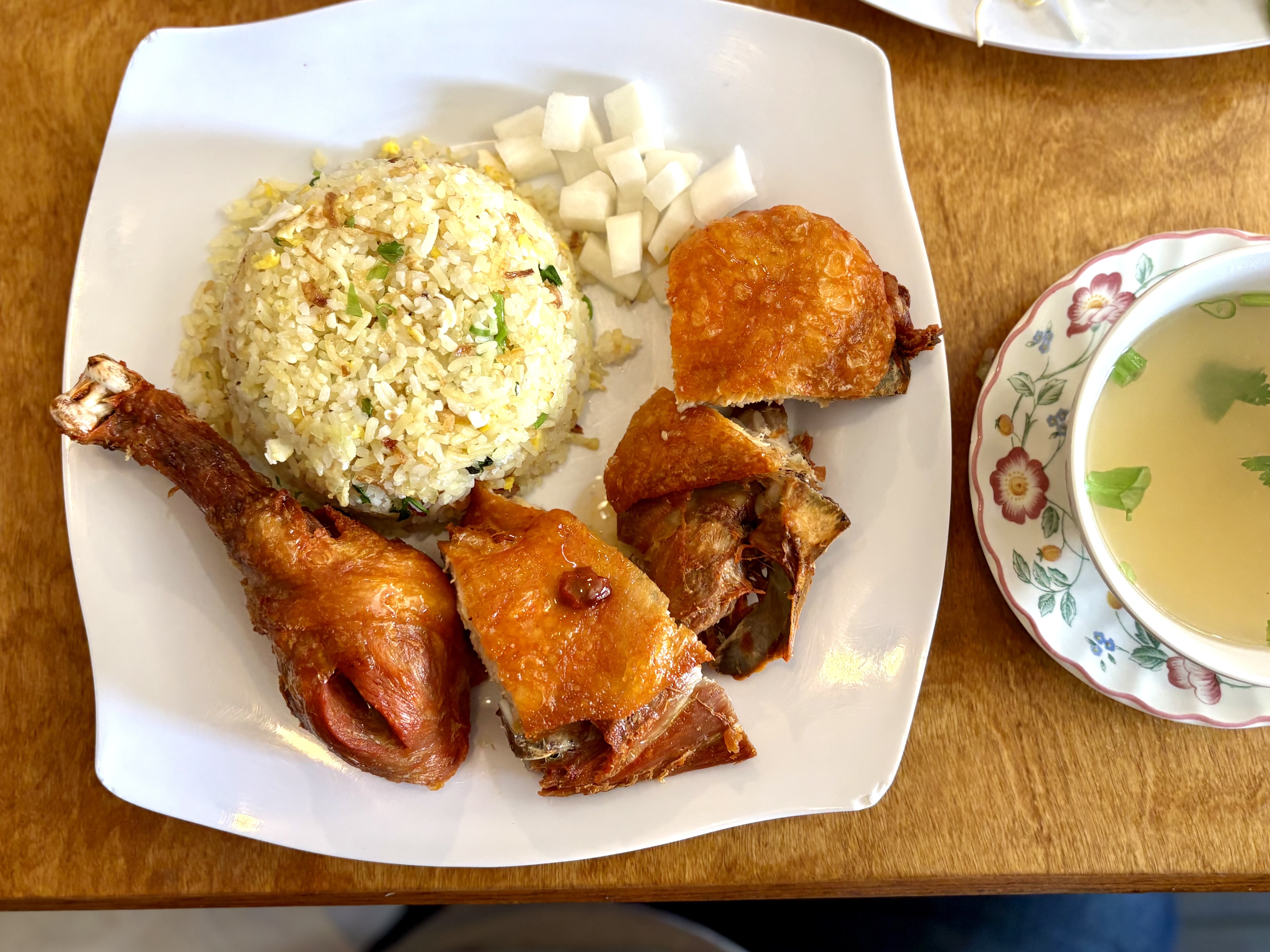
There was a lot of crunching going on as critic Craig LaBan tucked into the Vietnamese fried chicken platter at South Philly’s Phở Duyên — which he dubs “my No. 1 food deal for $15 in Philadelphia right now.”
Scoops
Edd’s & Flo’s Artisan Bakery Cafe plans to close its Lancaster operation on Sept. 20 in advance of a relocation to Fishtown next year. Meghan Young and Sebastian Schuck are still working on a lease, so the location is under wraps. Edd’s & Flo’s, which started in their hometown as Wish You Well Bakery in 2021, found its niche in croissants, savory pastries, and weekend brunch. This move will be a Philly comeback for Young, a Restaurant School at Walnut Hill College graduate who worked at Darling’s Cheesecake Cafe, Green Line Cafe, Barbuzzo, Suraya, John & Kira’s Chocolates, and One Shot Coffee. Young and Schuck rebranded in 2024 with a name that’s both a nod to life’s ebbs and flows and a tribute to Young’s childhood cats, named for the musical duo Flo & Eddie. Stay tuned.
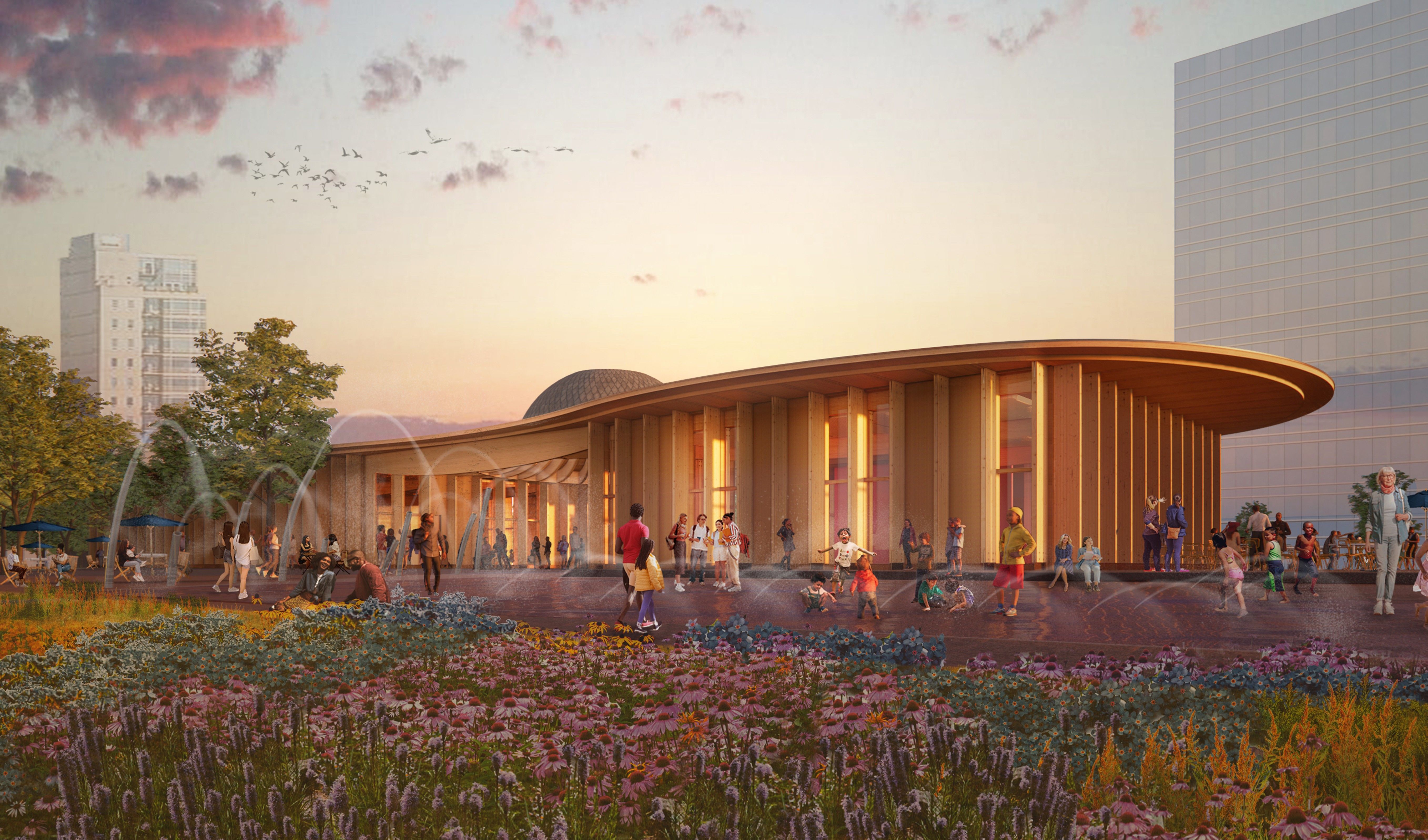
You’ve seen the months of construction along Columbus Boulevard at Penn’s Landing for the park that will cap I-95 and link Old City to the Delaware River. The Delaware River Waterfront Corp. just applied for building permits for the Pavilion and Café (rendering above), which will be part of Penn’s Landing Park when it opens in 2029-2030 at Market Street. The project’s operator has not yet been identified.
Restaurant report
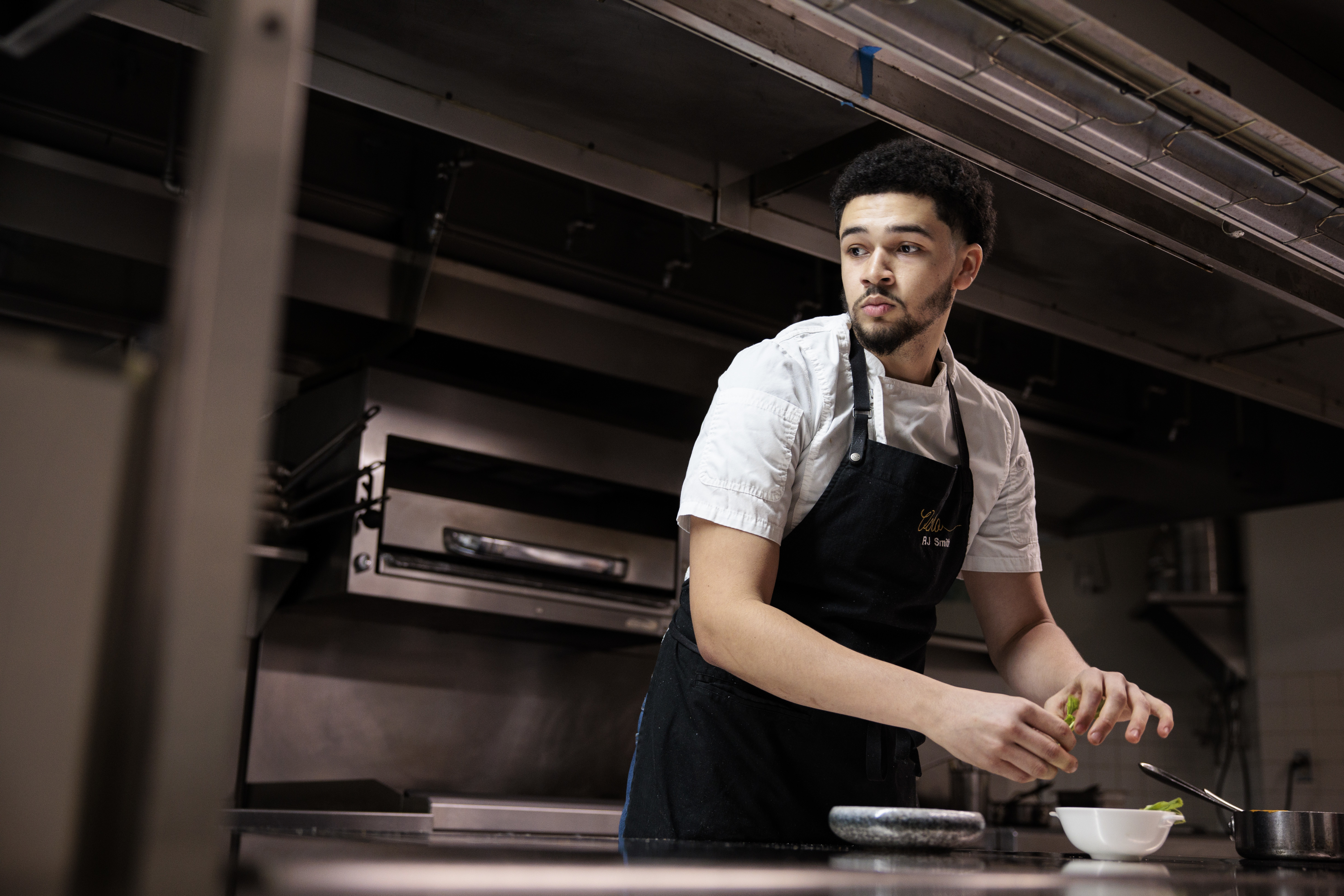
While chef-owner Liz Grothe of Scampi in Queen Village travels in Italy, chef RJ Smith of Ocho Supper Club will take over the restaurant for a five-course Afro-Caribbean tasting menu Sept. 18-21. The $130 menu includes curried oxtail, madai aguachile, plantain coco bread with crab, berbere-spiced duck breast, and turmeric tart. An optional Pennsylvania wine pairing is $50. Seatings are at 5 and 8 p.m., and à la carte dishes will be available on the patio. Reservations are on Resy and OpenTable. Smith is still leading his residency at the Rittenhouse Hotel; the space, which was Scarpetta, will become a steakhouse called Ruxton by next summer.
Old Original Nick’s Roast Beef sets up starting Thursday at Live! Casino & Hotel’s 10th Street Market, where it will follow South Philly Barbacoa’s residency. Besides roast beef, Nick’s will deal in roast turkey, roast pork, baked ham, broccoli rabe sandwiches, and long hot peppers. The pop-up will be open from 5 p.m. to midnight (or sellout) Thursday and Friday, noon to midnight Saturday, and noon to 9 p.m. Sunday, through the fall.
Briefly noted
The Big Dill will mark National Pickle Day with a nine-hour pickle festival Nov. 14 at Stateside Live! in South Philadelphia, closing its 2026 national tour there. More than 50 vendors will offer pickle-themed food and drinks, while 20 pickle brands serve unlimited samples of more than 100 varieties. Entertainment includes the World Pickle Eating Championship, brine-chugging, live music, DJs, games, and mechanical pickle rides. Organizers also hope to break a record by gathering more than 888 people dressed as pickles; the first 1,200 ticket buyers receive numbered costumes. The event runs from 1 to 9 p.m., with early entry at noon. Tickets go on sale Sept. 15 at bigdill.com/tour.
Mish Mish is launching Daydreamers, a quarterly series that will turn the East Passyunk restaurant over to chefs, makers, and other hospitality pros for one-night interpretations of their dream concepts. The first installment, with seatings at 5:30 and 8 p.m. Sunday, features sous chef Koby Epstein serving a six-course, late-summer tasting menu paired with Pray Tell Wines. Seatings, at 5:30 and 8 p.m., are $120 plus tax, tip, and drinks.
Kennett Square’s annual Mushroom Festival is set for Saturday and Sunday with foods and goods from 220-plus vendors, including Aimee Olexy’s Talula’s Table. Signature bite: The restaurant’s so-called “World Famous Riz-Mac,” which places mushroom risotto and mushroom mac and cheese side by side. Festival details are here.
Les Dames d’Escoffier Philadelphia’s Heritage Dinner is 4-7 p.m. Sunday at Glen Foerd, 5001 Grant Ave. More than two dozen chefs will participate, serving Sweet Amalia oysters, chicken mole, seared salmon, Vietnamese vegetable curry, beef tenderloin, and desserts honoring The Cake Bible author Rose Levy Beranbaum. Also honored are Canal House’s Christopher Hirsheimer and Melissa Hamilton and caterer Michele Leff. Tickets start at $200; a $300 ticket includes preferred seating and Beranbaum’s new memoir. Proceeds fund scholarships for women entering culinary and hospitality fields.
Bite for the Fight Food Festival returns for a seventh year from noon to 4 p.m. Sept. 19 at the Greater Philadelphia Expo Center in Oaks with tastings, cooking demos, and a silent auction benefiting the Fight On Makenna Foundation, which supports pediatric cancer patients and their families at Children’s Hospital of Philadelphia. Featured chefs are Brian Duffy, Ariane Duarte, Kenneth McDuffie, and David Schorn. Tickets start at $120.
Top Chef winner Nick Elmi will prepare smoked ribs, whole chicken wings, pork shoulder, brisket, cornbread, baked beans, mac and cheese, apple crisp, and soft-serve for the KB Foundation’s fifth annual BBQ Experience, Sept. 24 at the Pump House in Bala Cynwyd. VIP service begins at 6 p.m. with lobster pies, fried chicken with caviar and white barbecue sauce, smoked foie gras mousse, and oyster fritters; general admission starts at 7:30 p.m. Tickets: $175, or $250 for VIP. Proceeds support youth-mentoring programs.
Uchi in Rittenhouse will launch a fall collaboration series Sept. 24 with Kevin Yanaga of Yanaga Kappo Izakaya. He, Uchi head sushi chef Josephine Fry, and chef de cuisine Ford Sonnenberg will serve 10 courses starting at 6 and 8:30 p.m. Tickets: $175 at the sushi bar, $150 at tables, plus tax/tip; an optional sake pairing will be available. Additional dinners will follow in October and November.
Staff and friends of the recently shuttered Jose Pistola’s have organized a GoFundMe campaign for support (separate from an earlier one created by management).
❓Pop quiz
Name the $88 dish that Kiki Aranita checked out recently at a Philadelphia restaurant.
A) a tasting of New York strip steaks from Urban Farmer
Is ReAnimator Coffee really opening in Manayunk? — Jennie O.
ReAnimator, the Philly-bred coffee brand founded in 2010 by Mark Capriotti and Mark Corpus, has indeed committed to a Manayunk location at 4226 Main St., which was last an art gallery. Capriotti optimistically thinks opening is six months away. “We just opened in Mount Airy and it took us a year,” he said. “But we’re hoping we can learn from our experience.”
📮 Have a question about food in Philly? Email your questions to me at mklein@inquirer.com for a chance to be featured in my newsletter.
By submitting your written, visual, and/or audio contributions, you agree to The Inquirer’s Terms of Use, including the grant of rights in Section 10.
This fall’s restaurant openings reflect an industry hedging its bets: established operators expanding into the suburbs and repurposing familiar spaces, and newcomers pursuing narrowly drawn concepts built around omakase, caviar, Korean barbecue, cocktails, and live-fire cooking.
I count about five dozen restaurants in the region’s pipeline, with Italian concepts (no surprise), all-day service, and experience-driven dining recurring throughout the list. In addition to 60 restaurants opening between now and late December, two other restaurants are expanding: Lovat Square in Chestnut Hill is adding dinners and Palm Vintage across from City Hall is adding nighttime sushi service.
By comparison, last year’s fall roundup covered 53 restaurants. All of those opened except for three that are now a full year behind schedule: Adda in Fishtown is shooting for October, Ayat near Rittenhouse Square is aiming for November, and Brunch Bulls in Point Breeze is targeted for December. (Although this year has seen its share of closings, especially among longstanding restaurants, each of last fall’s restaurants is still open.)
Brand new and notable
Aogami (4343 Main St.): Underground sushi is coming to Manayunk as chef Tom LoMonte joins chef Moon Krapukthong to offer a 16-course omakase in a 20-seat BYOB setting beneath Krapukthong’s Yanako and neighboring Chabaa Thai Bistro, starting Sept. 25. LoMonte — a veteran of Zama, Izakaya by Yanaga, Pod, and Yanaga Kappo Izakaya — will lead the omakases at 6 p.m. Fridays and Saturdays; reserved sushi-bar seatings will run Wednesdays, Thursdays, and Sundays alongside hand rolls and à la carte service. LoMonte describes the atmosphere as energetic and less formal than typical omakase counters. Upstairs, Yanako will continue serving rolls, sushi platters, udon, tempura, and yakitori.
The Buttery (1099 Germantown Ave.): Malvern-based bakery and cafe the Buttery is preparing a Philadelphia location at Piazza Alta in Northern Liberties, near Scusi and Terra Grill. It recently opened a Bryn Mawr location and expanded its original Malvern operation into dinner service with Neapolitan pizza and shareable plates. An opening date has not yet been shared.
Nick & Nora’s Oyster Dive (560 Stokes Rd., Medford): Michael and Jeniphur Pasquarello (La Chinesca, Piccolina) are bringing a raw bar and American kitchen to a corner space with a large deck at Ironstone Village. The broader menu will include steak frites, burgers, fish, vegetables, and small plates, says Michael Pasquarello, who hopes to open in 60 to 90 days.
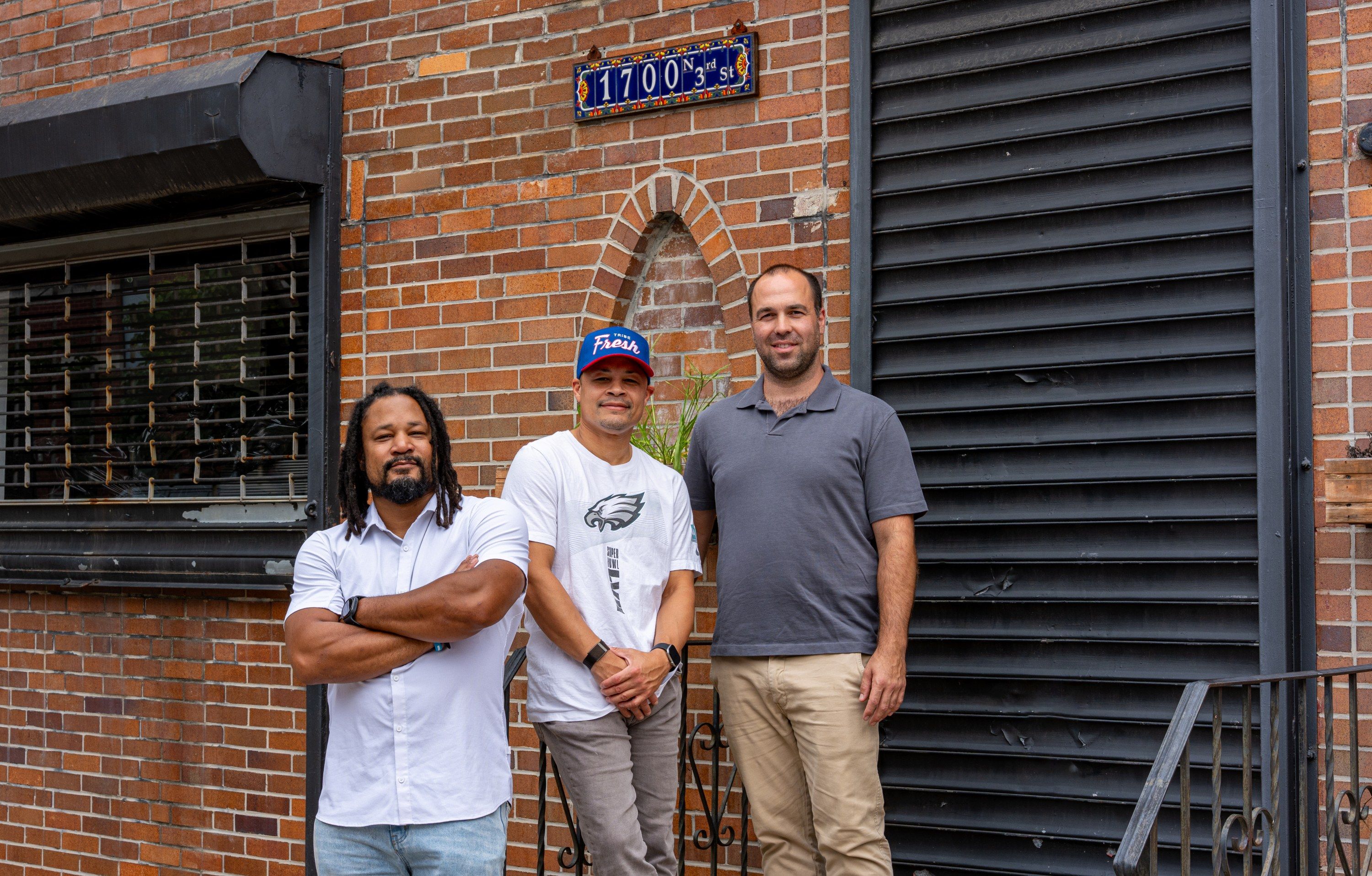
Chef Chaz Brown (left) is partnered with his brother Clifford Brown (center) and John Skeele in Rumblefish, 1700 N. Third St.Mike Prince
Rumblefish(1700 N. Third St.): Chef Chaz Brown is targeting November for this 900-square-foot, fast-casual Caribbean fish-fry restaurant at Third Street and Cecil B. Moore Avenue. Brown — a Trinidadian American chef whose resumé includes Nobu, Le Bec-Fin, Fatty Crab, and television’s Top Chef — will focus on invasive species such as lionfish, snakehead, green crab, and Chesapeake Bay blue catfish when available. (The catfish turned heads at the recent Oxtail Exchange at Forman Arts Initiative.) Brown uses gluten-free corn flour with Trinidadian spice blends and serves the fish on po’boy-style rolls baked by Angelo’s Bakery in Conshohocken. The mostly takeout operation will have counter seating, a 25-seat covered patio, slaws, fries, sea-moss drinks, and Solo Kola Champagne.
Pennsylvania suburbs
Alessandro’s Enoteca (915 W. Lancaster Ave., Bryn Mawr): Alex Fiorello’s third restaurant will bring a bar-focused Italian concept to the former Enoteca Tredici space in Bryn Mawr Village in mid-to-late October. Fiorello and culinary director Matt Arcomone, whose resumé includes Osteria, Vetri, and Palladino’s, are planning house-made pastas, wood-fired pizzas, live-fire cooking, and dry-aged meats. It’s intended to have a stronger evening and bar scene than Fiorello’s Wayne restaurants.
Bruzi (281 Montgomery Ave., Bala Cynwyd): Two couples with Calabrian roots plan to open this Southern Italian restaurant in the former Aldar Bistro in late fall. Expect house-made pastas and Calabrian dishes such as fusilli with slow-cooked meat sauce, baked lamb, and grilled tuna, plus cocktails and an opening list of about 100 Italian wines.
Capperini (137 S. Easton Rd., Glenside): Eastern Montco will get an upscale Italian-Mediterranean destination with a liquor license from Ilya Vorobey and partners including members of the team behind Capri in Queen Village. Vorobey is aiming for October or November.
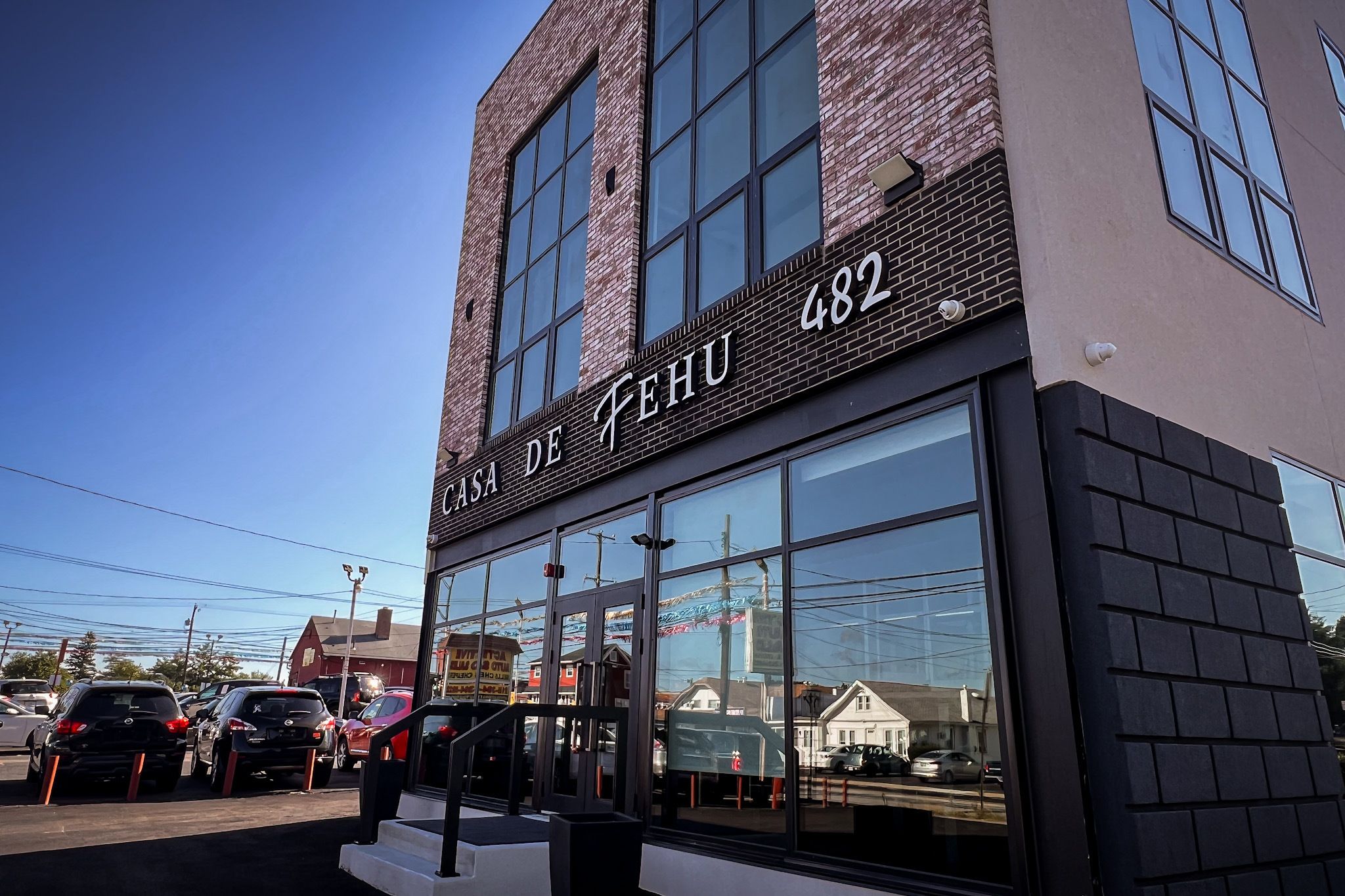
Casa de Fehu, 482 Jacksonville Rd., Hatboro.Michael Klein / Staff
Casa de Fehu (482 Jacksonville Rd., Hatboro): Hatboro couple Anthony Shalamov and Anastasia De Roy are developing this polished restaurant with European-inspired cooking and an upscale atmosphere, possibly with a tie-in to a local brewery that would allow alcoholic drinks. Shalamov is targeting an October soft opening.
Cecilia (266 E. Fourth St., Bridgeport): The team behind Blue Bell Inn and the Copper Crow is just about ready to open this contemporary American bar-restaurant in the extensively renovated former Taphouse 23. The roomy property includes a large patio and a wood-burning oven. The menu emphasizes familiar American dishes, positioning this as an all-purpose neighborhood destination.
Donatelli’s (1 Washington Ave., Newtown): Restaurateur Habib Troudi, who owns Panache and Ristorante Castelloin Blue Bell, is behind a top-to-bottom overhaul of the former Rocco’s at the Brick in downtown Newtown. He said he is hoping to open the Italian steakhouse in October.
Rendering of the Garden by Pieri Winery, 127 E. Elm St., in Conshohocken.Courtesy of Christina Pieri
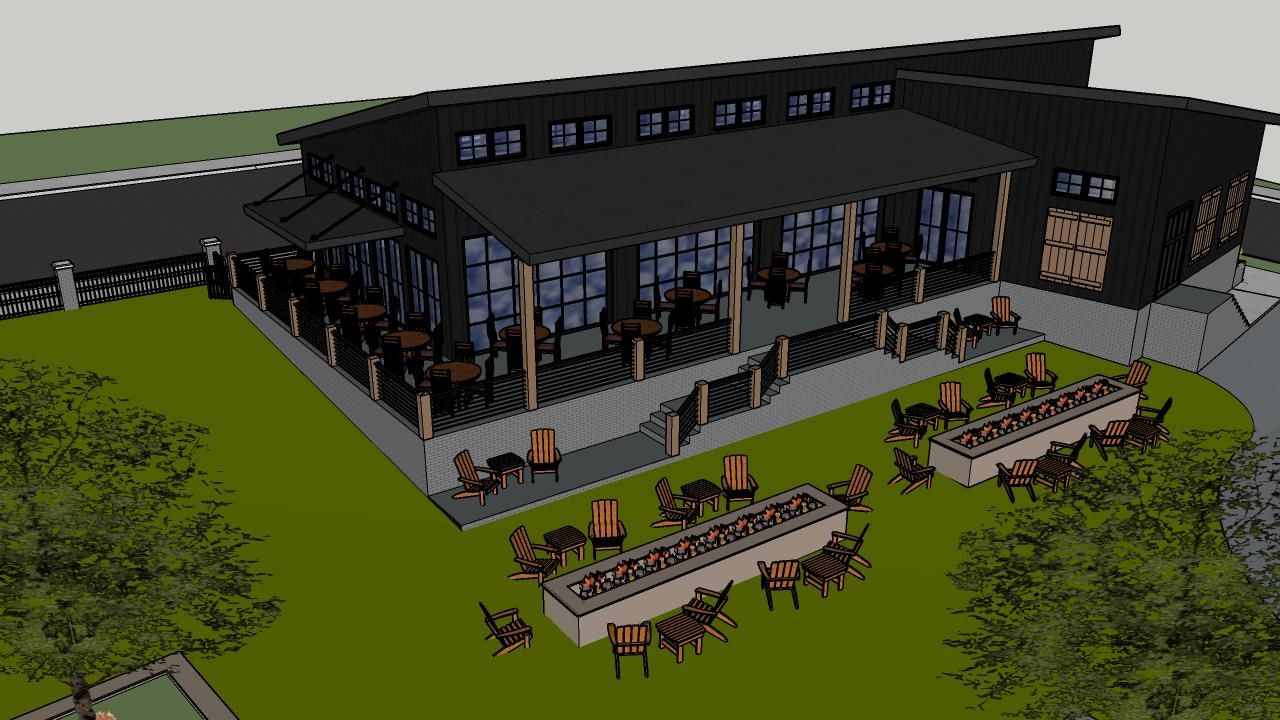
The Garden by Pieri Winery (127 E. Elm St., Conshohocken): Winery owner Christina Pieri and restaurateur Brian Pieri (StoneRose, Bar Lucca, Cerdo) are targeting a mid-October opening of their year-round indoor-outdoor restaurant beside the Schuylkill River Trail, an offshoot of Christina’s Coopersburg winery. A wood-fired kitchen will serve seasonal American food, including brick-oven pizzas, focaccia sandwiches, salads, steaks, and fish, at lunch and dinner Tuesday through Sunday. The property will include a covered patio, fire tables, a turf area, and pickleball and bocce courts.
The Hungry Hub (11 S. Orange St., Media): Media native Cassidy Moretti and her mother, Glenda, are taking over the former Rivalry Cafe with a family-run breakfast and lunch operation. The Hungry Hub also plans later hours and a late-night menu, broadening its role beyond that of a conventional daytime cafe. An Oct. 1 opening has been announced.
The Iron Oven (58 S. York Rd., Hatboro): Alex Nalbandian’s Southampton bar-restaurant — known for an expansive American menu, cocktails, craft beer, brunch, and dishes ranging from wings and burgers to flatbreads and entrees — is adding a second location in eastern Montco: the former Ross & Co. He’s aiming at November.
Lazy Dog(160 N. Gulph Rd., King of Prussia): The California-based bar, known for Rocky Mountain lodge imagery and a broad American menu, is targeting late 2026 at the King of Prussia Mall.
Luna (129 E. Butler Ave., Ambler): FineLine Hospitality, which recently opened Academy Grill in Fort Washington, is behind a stylish revamp of Dettera in downtown Ambler. Chef Marie Lavizzo-Mourey will base her menu on the 20-plus countries bordering the Mediterranean. The project is on track for fall.
Martini & Roz(523 W. Lancaster Ave., Wayne): Fearless Restaurants is turning Wayne’s former Bertucci’s into an ambitious, 300-seat Southern Italian restaurant named for founder Marty Grims’ parents, Martin and Roslyn. Menu will include crudo, oysters, steaks and chops, wood-fired pizzas, house-made pastas, and charcuterie. It will feature two open kitchens, a cheese cave, a tasting counter, and extensive outdoor seating.
Maru (2922 Conestoga Rd., Glenmoore): David Backhus and the team behind the former Oori restaurants are in the early days of a fast-casual Korean-inspired restaurant at their former Collective Coffee & Bakery. Think Korean fried chicken sandwiches, wings, and tenders, supplemented by mochi doughnuts and specialty Collective coffee.
Nudy’s Cafe (122 Park Ave., Willow Grove): Prolific suburban breakfast-and-lunch operator Ray Nudy hopes for late September for his latest diner, across from Marshalls in Willow Grove.
Old Friend (166 E. Lancaster Ave., Wayne): Childhood friends Larry Kagan and Chas McFeely are behind this contemporary American grill, with former Fork executive chef Sam Henzy leading the kitchen. The 86-seat restaurant will center on live-fire cooking in a Josper oven, with dry-aged fish, poultry, and larger proteins intended for sharing. Its compact wine list will be closely tied to the food. A late-fall opening is planned in the Apartments at Wayne Station.
Opus (201 Birch St., Kennett Square): Square Roots Collective will open this 125-seat New American restaurant Sept. 11 in the former temporary home of Hank’s Place, next to the Artelo hotel. Executive chef Matthew Anderson, formerly of Longwood Gardens and Winterthur, plans seasonal dishes, such as Kennett Square mushroom bisque, butternut squash agnolotti, herb gnocchi, and dayboat scallops. The two-story space includes a cocktail lounge, terraces, and work by local artists. Profits will support community projects and nonprofits.
Salt (840 W. Lancaster Ave., Devon): Rich Kim of North Wales’ acclaimed Salt predicts late December for his redevelopment of Devon’s former La Jonquille and Shiraz property into a second Korean barbecue concept, followed in 2027 by Yugo, a carousel sushi restaurant, upstairs.
The Still on State (18 W. State St., Doylestown): Only days open at the Doylestown Inn, this Irish pub-inspired bar/restaurant fills the former Hattery Stove & Still space; it’s paired with an on-site microdistillery called the Tilted Brim.
Taco Heart (120 Coulter Ave., Ardmore): Nano Wheedan is bringing his South Philadelphia breakfast-taco shop to the Ardmore Farmers Market, its first expansion beyond its East Passyunk-area home. Expect Austin-style flour tortillas and breakfast tacos built around eggs, potatoes, beans, bacon, brisket, and house salsas. Opening is set for Oct. 5.
Top Dog Cocktails (110 E. State St., Kennett Square, and 2012 Frankford Ave., Fishtown): Ken Smuckler’s cocktail company plans two vinyl listening rooms this fall inspired by Japanese jazz kissas. Kennett Square’s 750-square-foot space partners with local music venue Kennett Flash, while Fishtown’s 350-square-foot flagship — arguably the neighborhood’s smallest bar — will feature a 15-seat bar, two-turntable DJ station, and retail.
Tusk (50 N. Main St., Doylestown): Mike and Joy Grafenstine, owners of Roberts Block in Glenside and Bonnet Lane Family Restaurant in Abington, are taking over the former Water’s Edge wine bar, combining the martini-and-wine-bar airs of Roberts Block with approachable upscale American comfort food. Target is October.
Vintner’s Table (24 Cricket Ave., Ardmore): Andrea and Marco Folino, behind Kutztown’s Folino Estate Winery, are opening a third location of their Italian-inspired wine bar, salumeria, and lifestyle boutique in downtown Ardmore in October.
New Jersey suburbs
Akira 70 Omakase (249 Marlton Pike, Cherry Hill): Ming “Frank” Zheng is expanding his Japanese holdings — he owns Akira Sushi in Voorhees and Moorestown — with an omakase experience in a former fur salon.
Banjara Indian Bistro (687-689 Berlin-Cross Keys Rd., Sicklerville): Vaneet Chopra, whose family operates Cross Culture in Haddonfield and previously ran Banjara in Chestnut Hill, is bringing the Banjara name to Sicklerville; its dine-in starts Thursday.
Freckled Jawn Brewing(1003 N. Evergreen Ave., Woodbury): Woodbury residents John Wagner and Colleen Gibson are taking over the former Eight & Sand Beer Co., which closed in June after 10 years. Targeting the first week of October, the brewery will introduce new branding and a fresh lineup of approachable beers, emphasizing natural and locally sourced ingredients when possible.
Irishtown Steaks (155 S. Burlington St., Gloucester City): Donkey’s Placealumnus Dave Murphy is targeting Halloween for his steak shop, joining recent Gloucester City entries Lillo’s and Pudge’s Pub. Murphy will use rolls from Boaggio’s, which has a bakery in town.
Penny’s Bagels (212 Kings Highway East, Haddonfield): Chris Fetfatzes and the Happy Monday Hospitality Group (Wine Dive, Grace & Proper) are developing this long-delayed bagel shop in downtown Haddonfield, now with an October target.
Pizzeria Cusumano (872 Haddon Ave., Collingswood): Announced back in September 2021, this passion project from South Jersey’s Sal Cusumano is finally about to start offering his Roman-inspired squares and neo-New York rounds, but “I don’t want to box myself into a certain style.” Cusumano, a third-generation pizzaiolo, is planning a small shop with limited seating. This week, he said it will open in October for sure.
Philadelphia
Adda (1700 Frankford Ave.): New York’s Unapologetic Foods — behind Dhamaka, Semma, and the original Adda — is bringing its energetic Indian cooking to Fishtown, across from the 19125 post office. Expect regional dishes in an informal setting, continuing the restaurant group’s practice of pushing beyond familiar Indian American standards. Originally expected in fall 2025, the Philadelphia location is now targeting an October opening.
Ayat (2021 Sansom St.): Abdul Elenani’s New York-based Palestinian restaurant — first announced in spring 2024 — is looking at a November opening in the former Roxy Theater near Rittenhouse Square. Ayat is known for generous portions of mansaf, maklouba, mezze, grilled meats, and other homestyle Palestinian dishes.
The bar at Bar Caviar, 256 S. 16th St.Kenneth Schutz
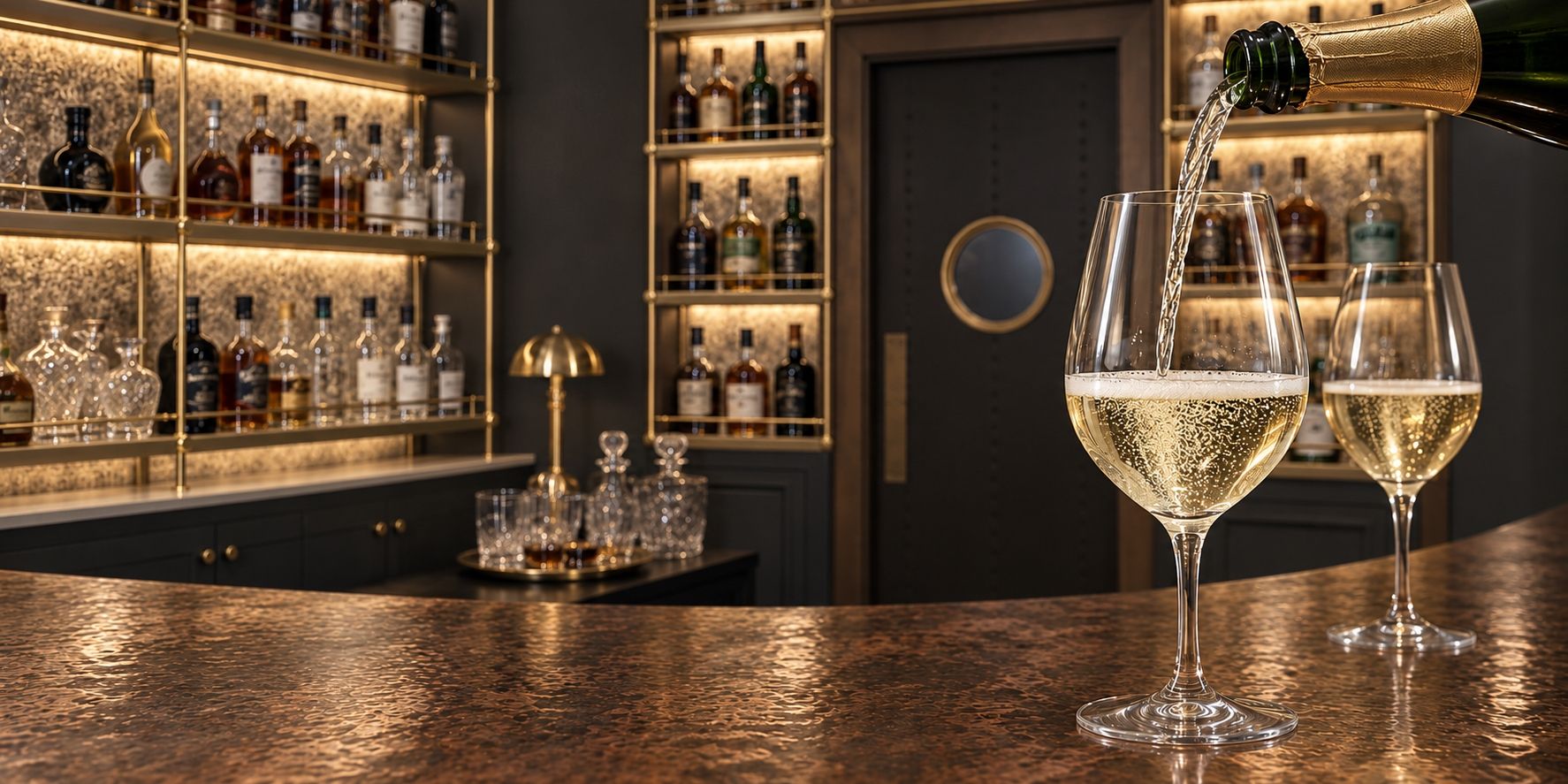
Bar Caviar (256 S. 16th St.): Opening in early October in the Dwight D Hotel in Rittenhouse, this bar will pair caviar and seafood with 50 varieties of Champagne and a full wine program in a setting that’s more neighborhood than hushed luxury lounge. Executive chef Greg Vassos’ contemporary American menu, informed by classical French technique and Japanese precision, will feature raw-bar selections, caviar-focused dishes, and seasonal small plates. The restaurant also will operate Parallel, a caviar program emphasizing careful sourcing and extended maturation. In 2027, Vassos plans to follow with Fall Line, a Mid-Atlantic-focused tasting-menu restaurant.
Brunch Bulls (1638 W. Passyunk Ave.): Brothers Derrick “Dee” Long and Jarrick “Jakk” Long are behind this all-day brunch/dinner/dessert restaurant in Point Breeze. They say they’ll be open by December.
Call Your Mother (262 S. 19th St., 1500 Frankford Ave., 12th and Sansom Streets): The lively, Washington-based “Jew-ish” bagel chain is making a three-location push into Philadelphia, starting this week with its Fishtown debut. Menu includes bagel sandwiches, schmears, latkes, coffee, and deli-inspired specials.
Carolyn’s Modern Vietnamese (2015 Walnut St.): This week, chef Carolyn Nguyen opens her deeply personal successor to Revolution Taco, which she co-owned in the space for a decade. Her menu brings together her family’s Vietnamese cooking, the seafood boils and Southern food of her Louisiana childhood, French culinary technique, and the freewheeling flavor combinations that defined her earlier ventures. The 33-seat restaurant serves dinner, and alcohol, in a spare, contemporary dining room.
Corte (1175 Ludlow St.):Corio partners Ryan Mulholland, chef David Feola, and James Smith are taking over the former Mulherin’s Pizzeria at East Market, between Iron Hill Brewery and Mi Vida. Feola will lead a menu built around house-made pastas plus proteins, vegetables, and small plates cooked in the large Mugnaini wood-burning oven. Mulholland will oversee daily operations and oversee an Old World-leaning wine list and cocktails inspired partly by forgotten recipes from century-old books. The dark-wood, earth-toned restaurant is targeting a fall opening.
DiDi (3748 Lancaster Ave.): DanDan owners Kevin and Catherina “Cat” Huang say they are “within a month or two” of opening their fast-casual pan-Asian concept at the Triad apartment building in Powelton Village. DiDi will join Kabobeesh, Karak Cha House, Shibam Coffee, Two Locals Brewing, and other businesses in the growing complex at 38th and Lancaster.
Divers Club (733 S. Fourth St.): Queen Village is in line to get a neighborhood wine bar from Susan Freeman, Chris Fetfatzes, and Heather Annechiarico (Grace & Proper, Wine Dive) in a former hair salon that sits on the same stretch as Famous 4th Street, Southwark, Ambra, and Fitz on 4th. Fetfatzes describes the mood as “dark, scrappy, and European — somewhere between a Paris backstreet wine bar and a graffitied Berlin hangout.”
Eggcetera Haus (625 S. Sixth St.): Husband-and-wife team Rey Tamaka and Vina Kencana soon will turn the former Redcrest Kitchen into an all-day bar-restaurant. Tamaka, previously the chef at an Old City brunch restaurant, plans breakfast, lunch, and dinner, moving from specialty coffee and morning dishes into pastas, steaks, cocktails, and comfort food at night. The couple expects daily service, giving the Queen Village-Bella Vista border another full-day neighborhood option.
Field Day (923 N. Second St.): James Beard Award-winning bartender and author Danny Childs and his wife, Katie, have a fall opening targeted for their casual regional cocktail bar in Northern Liberties, next to Cescaphe Ballroom. Childs’ drinks will use locally farmed, foraged, and fermented ingredients. Executive chef Melissa McGrath, known for her work at the idled Sweet Amalia Market & Kitchen, will offer Pennsylvania Dutch-inspired snacks, sandwiches, and tomato pies. Highballs, house-made sodas, boozy gelati, and walk-in seating will help keep the mood informal.
Habibi Supper Club (1515 E. Passyunk Ave.): Miled Finianos is giving his itinerant Lebanese dinner series a permanent home on East Passyunk — possibly by the end of year — serving late breakfast and lunch before he offers ticketed, multicourse suppers.
HYO (1222 Walnut St.): Nightlife veteran Justin Jordan plans an October opening for this Korean tabletop barbecue restaurant behind Hearsay, his indoor-outdoor sidewalk bar and listening lounge. Guests will enter HYO through a phone booth inside Hearsay. The restaurant is part of Jordan’s multilevel entertainment complex, which also includes Celine and the forthcoming Chancellor Room event space and karaoke lounge.
Jean (161 W. Girard Ave.): Emmett chef Evan Snyder and partner Julian van der Tak are going upstairs with a 15-seat tasting menu restaurant opening this fall. Snyder and chef de cuisine Antonio Pizzo will prepare a 12-course menu centered on a 7-foot wood-burning hearth, drawing on Algeria, Tunisia, coastal Morocco, and the southern Mediterranean for culinary influences. A tagine will roast throughout dinner before being served family-style.
Kato (1832 Frankford Ave.): Mei Meichef-owner Jay Ho is taking over the former Izakaya Fishtown space for a restaurant inspired by his Taiwanese father and the food Ho grew up eating. Influences from Korean, Thai, and Vietnamese cooking will broaden the menu. Ho, who hopes to open in late fall, plans to retain the front bar while replacing the rear sushi counter with additional seating that can double as a private dining area.
Lovat Square(184 E. Evergreen Ave.): Former Four Seasons sommelier Damien Graef and journalist Robyn Semien opened this Chestnut Hill wine shop and tasting room in February, offering small-production bottles, wines by the glass, and light fare. The couple, who also own Brooklyn’s Bibber & Bell wine shop, will debut a full dinner menu by the end of September.
Macaluso’s (3101 S. 13th St.): Realtor Joel Gruenke and restaurateur Mark D’Andrea, long-ago roommates at Valley Forge Military Academy, are looking at an early October opening of this white-tablecloth Italian restaurant at 13th Street and Packer Avenue, near the sports complex. D’Andrea’s family owns RoadHouse in Staten Island, N.Y. Gruenke says the moderately priced menu will stick to traditional Italian cooking and offer a full bar. Parking will be available across the street.
Mylar Bar (1636-38 S. Ninth St.): Hospitality veterans Liv Arterbridge and Gina Piccari are turning the former Dino’s Party Center into a festive neighborhood bar inspired by the building’s history. They promise something nostalgic, playful, and deliberately unserious. Drinks will include martinis, punches, classics, and draft beer. Chef Colin White, formerly of Sally and Emmett, will oversee shareable “party snacks,” larger plates, and desserts available late.
Nippy’s on South (1312 South St.): Nurse and first-time restaurateur Nikia Peterson has purchased the former Ms. Tootsie’s building for an ambitious restaurant and bar. Peterson plans a polished setting with seafood towers, steaks, Asian and Caribbean influences, a substantial happy hour, and weekend brunch. The project will revive a prominent South Street property that had remained closed since restaurateur KeVen Parker’s death in 2021.
O’Morrey’s (1720 Sansom St.): Chefs Biff Gottehrer and Kenjiro Omori are developing a cocktail bar on the former site of Genji, the Japanese restaurant created by Omori’s father. The name is a cheeky rendering of the Omori family name. Plans call for a comfortable neighborhood bar in the spirit of the Ripplewood, where both chefs work, with cocktails and a serious food component. Their second joint project, Tako Taco, is months away at the former Bing Bing Dim Sum in South Philadelphia.
Palm Vintage (1414 S. Penn Square): Houston Yang and Mike Beja, who opened this day-to-night cafe and cocktail bar across from City Hall in the Residences at the Ritz-Carlton, are close to expanding into a nighttime scene with cocktails, sushi, oysters, caviar, and light food in a lush, tropical-inspired room meant to offer an escape from Center City.
Panco (2300 S. Croskey St.): Chef Ryo Igarashi, whose background includes Tokio Global and Maru Global (noted for its takoyaki balls), is behind a corner shop in West Passyunk whose menu will focus on Japanese cutlets. He says it’s opening soon.
Philly Curio (2240 Frankford Ave.): Tattoo Arts Convention founder Troy Timpel is creating an intimate Kensington restaurant-bar around his private collection of curiosities (think tribal masks, skeletal displays, taxidermy, and glass-topped tables containing preserved animals). Inspired partly by Savannah’s Alligator Soul, Timpel has discussed a Cajun-Creole menu with small plates and unconventional proteins such as rattlesnake. Drinks are expected to include cocktails, wine, bottled beer, and limited drafts. Target is November.
Philly Po’Boy (102 W. Berks St.): Brothers Chris and Greg Lynch are bringing a taste of New Orleans to the storefront beneath the Berks station of the Market-Frankford Line. Chris spent years cooking in New Orleans, while Greg’s Philadelphia background includes Starr Restaurants and LMNO. Plans call for classic powdered-sugar-dusted beignets, gumbo, and a mix of classic and specialty po’boys like fried shrimp, oysters and roast beef “debris,” plus fries, Creole potato salad, and café au lait from coffee roasted by Applied Arts in New Orleans.
Santé Social(1546 E. Passyunk Ave.): Sommelier Daniel Solway is giving his roving dinner series a permanent home across from the Singing Fountain. The approximately 30-seat space will function less like a conventional restaurant than a flexible hospitality venue, hosting wine dinners, tastings, classes, collaborations, private events, and some walk-in service. Cocktails are being developed with Danny Childs of Slow Drinks and Field Day, while changing chefs and collaborators may shape the food programming.
Somedays Bakery (1601 Walnut St.): Hand-laminated croissants are the foundation of this Queens-rooted bakery, which deals in sandwiches, salads, soft serve, and coffee. It’s targeting the end of the month.
Thalassa (918 N. 28th St.): Matt Maltepes is looking at late October or early November for his Greek-inspired cafe in Fairmount that will serve baklava, croissants, and house-made ice cream in flavors that change weekly. Savory offerings will include small plates such as feta grilled cheese with honey, avocado toast, and bagels with cream cheese. The drinks menu will feature European-style coffee preparations, including frappes and Freddo espresso.
Looking ahead
Two major projects are now on the docket for January, as the owners don’t want to compete with the holiday-season madness:the Pelican Club, Stephen Starr’s flashy Greek-themed restaurant taking shape in the former Devon Seafood Grill on Rittenhouse Square, and the yet-to-be-named “punk French” restaurantthat chefs Justin Bogle and Arthur Cavaliere are creating at the former Winnie’s Manayunk.
The long-closed Mermaid Bar in Mount Airy will retain its name under the new ownership of pizzaiolo Dan Gutter and business partner Alex Carbonell of Circles & Squares and Pizza Plus. The project, announced earlier this year, is aiming at a summer 2027 rollout.
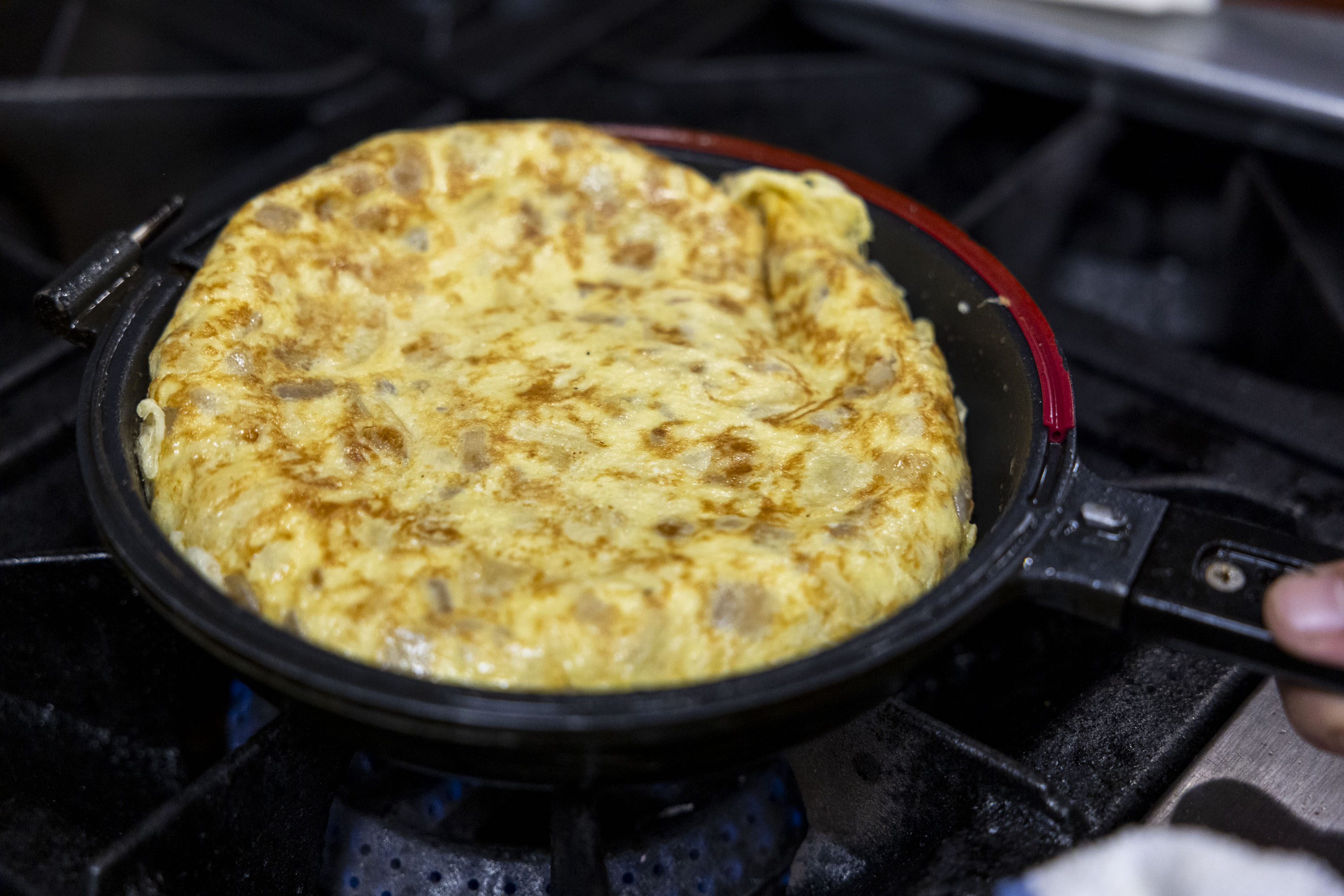
There are few Spanish bar snacks as satisfying — or so hotlydebated — as a properly made tortilla Española.
If you’re lingering in the hot southern cities of Andalusia, where the iconic potato-and-onion omelet is typically served room temperature or cold, the eggs are fully set.
“But from Madrid north to Basque Country, it’s traditionally made to order and served warm and custardy,” says Patrick Iselin, 50, the co-owner of BAR ilu, who spent half his childhood in Spain and now splits time between Philadelphia and the Madrid apartment once owned by his grandmother, Iluminada “Ilu” Prellezo Inchausti.
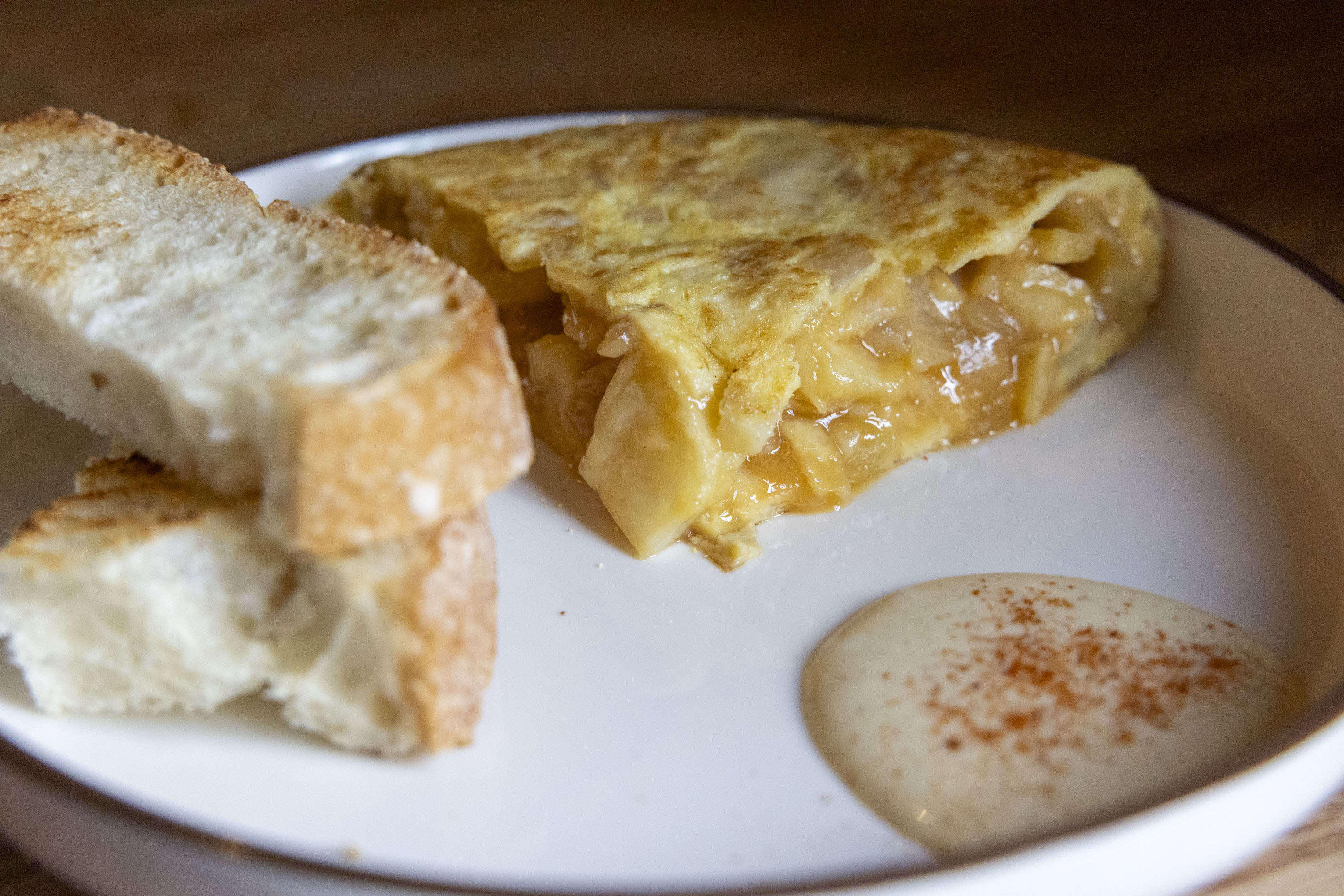
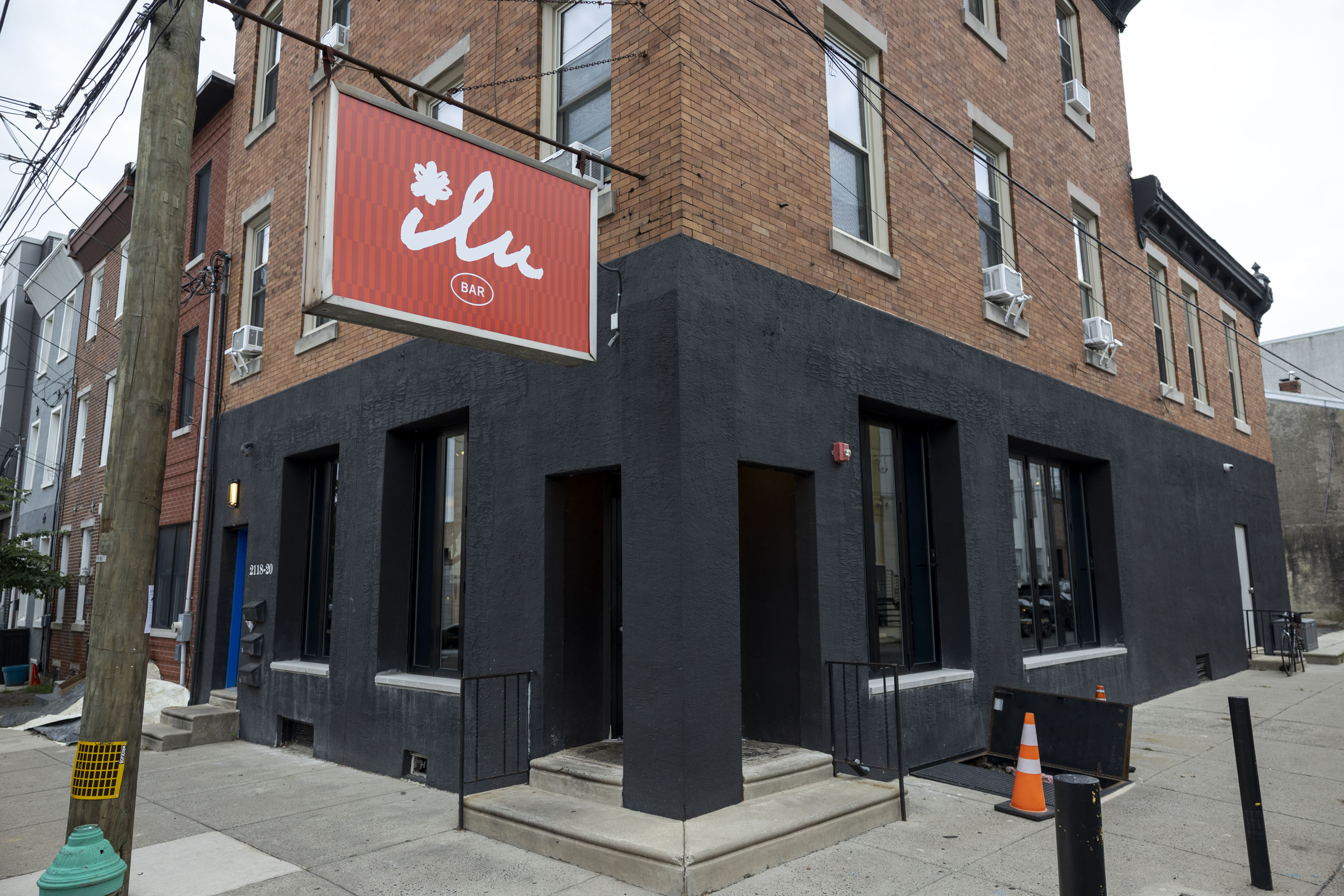
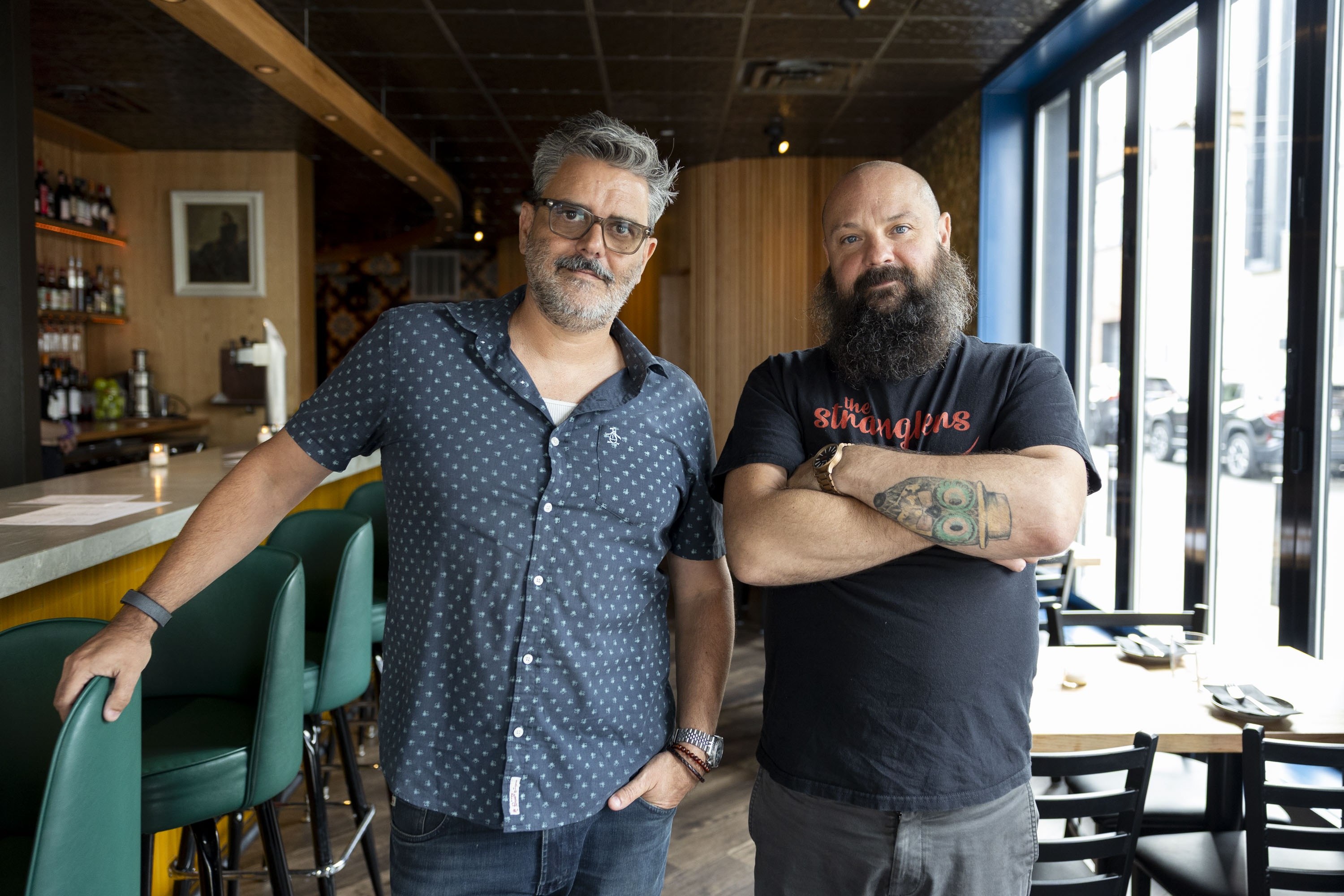
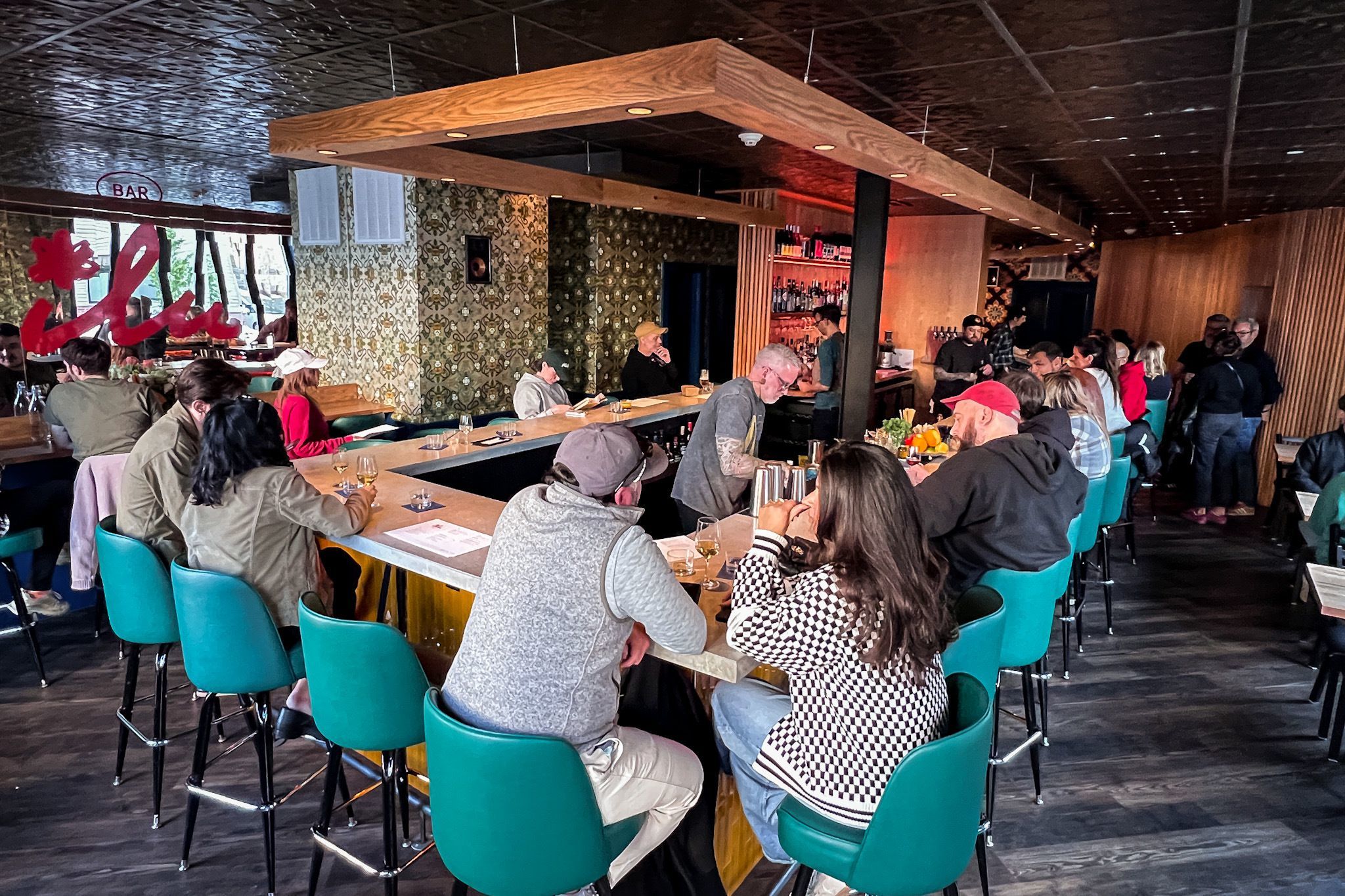
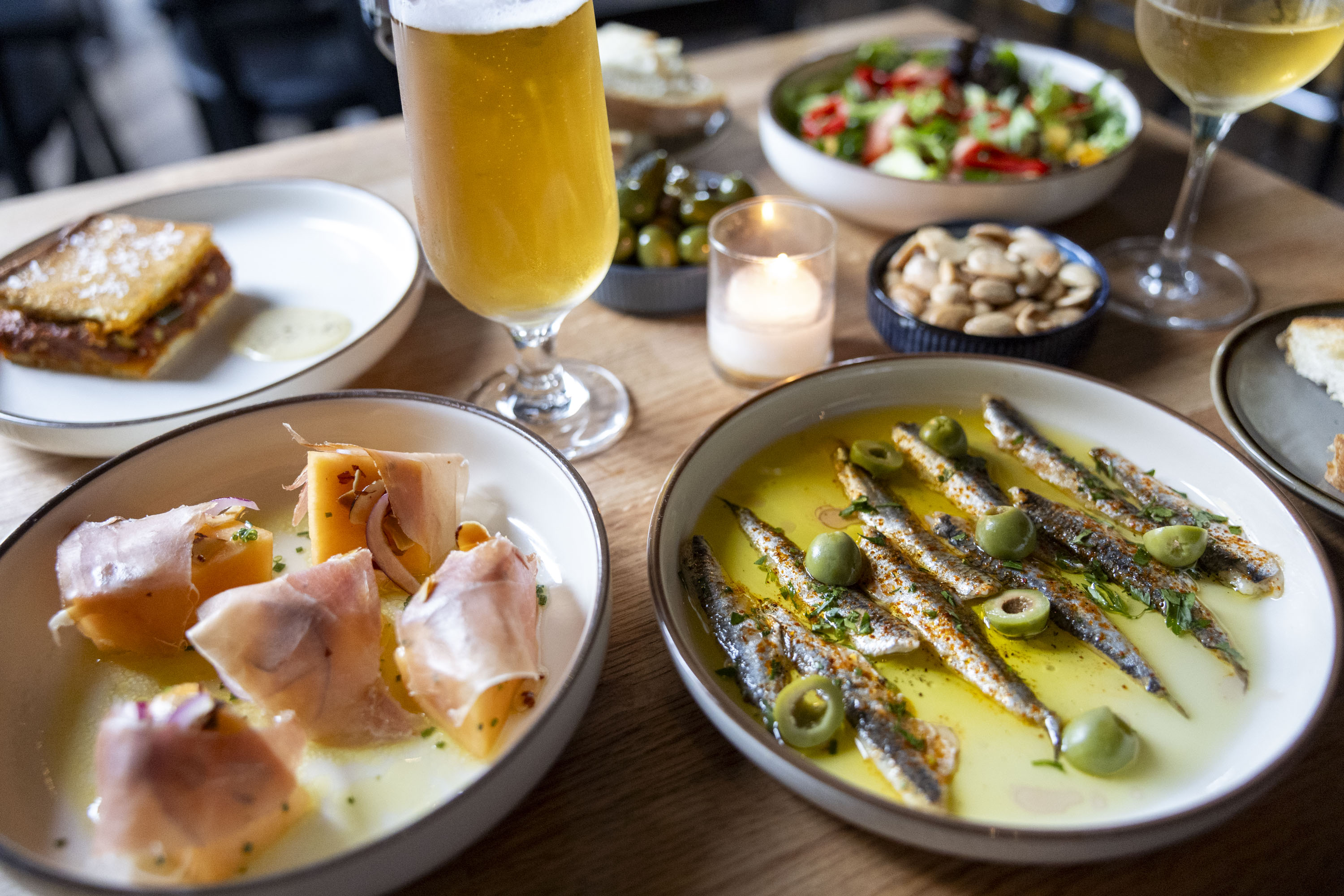
So it follows thatthe eponymousnew cornerbar at Dauphin and Martha Streets — which happen to share the 40th parallel north with Madrid — serves its tortilla Española with a loose and edgy Kensington flair: “runny af,” as noted on the menu. Served as a wedge, with olive oil-fried potato chunks and sweet onion laces bulging from its glossy middle, a warm forkful of this eggy wonder is as transporting as it gets.
Andrew Butler, chef de cuisine at BAR ilu, making the tortilla Espanola.Tyger Williams / Staff PhotographerThe tortilla Espanola at BAR ilu.Tyger Williams / Staff Photographer
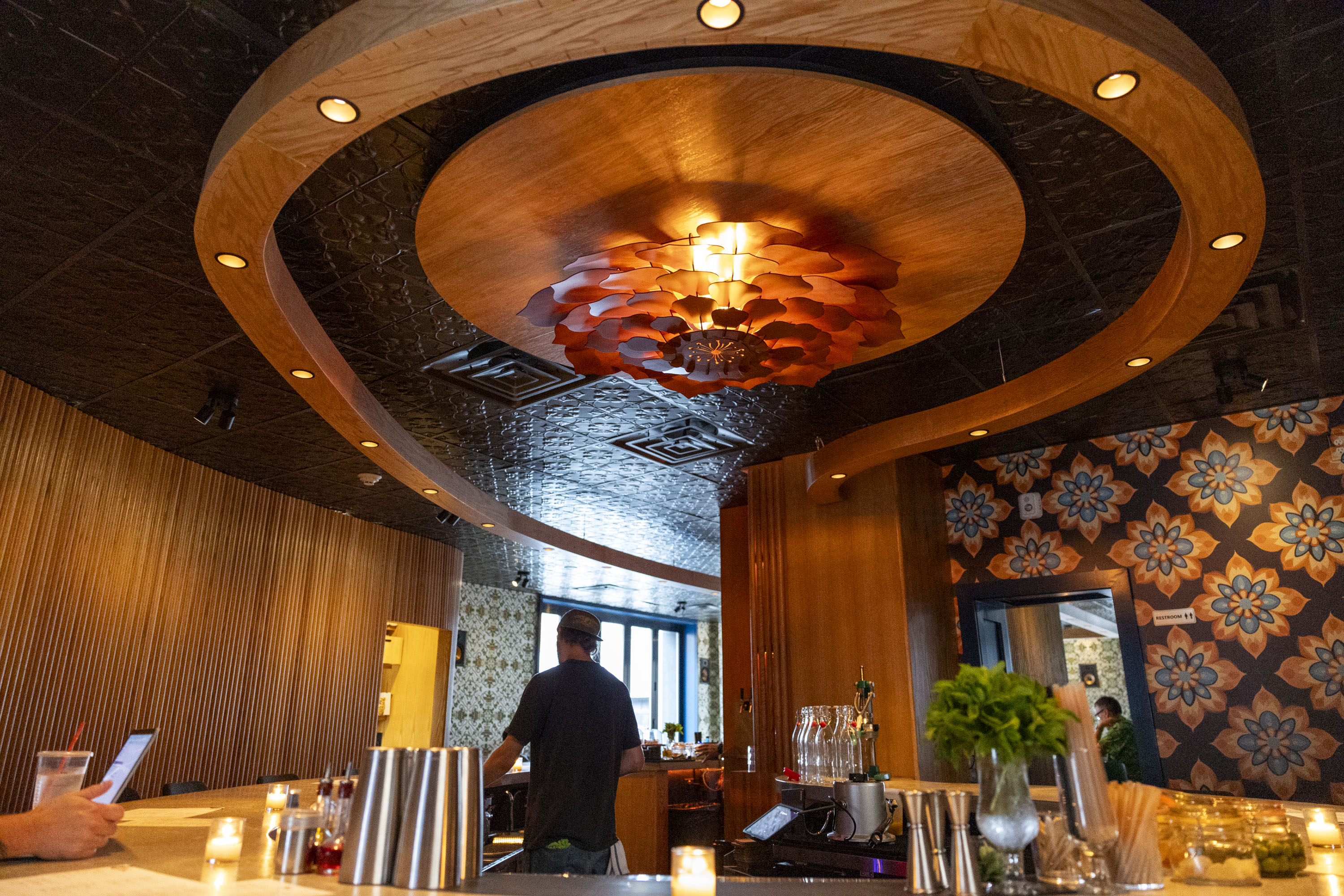
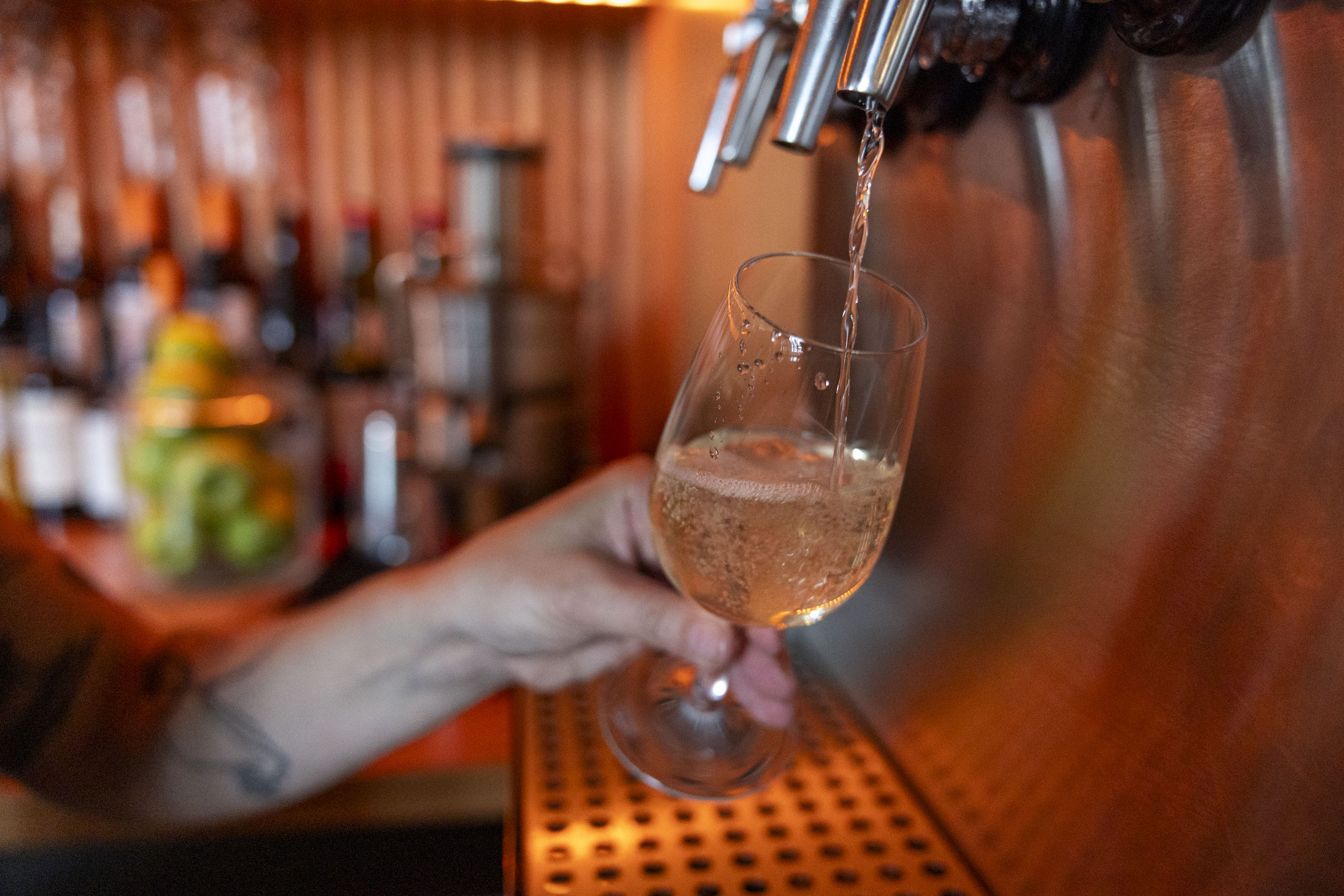
Wash it down with a bracingly crisp glass of La Gitana Manzanilla sherry on draft, plus a fistful of crunchy Marcona almonds, a forkful of tangy boquerones, and a crock of olives warmed with orange zest and herbs, and it’s hard to deny that BAR ilu is an appealing development for this rapidly changing corner of Kensington. It is perhaps also a little dissonant for those who know the neighborhood history. Thisstylish Euro concept, complete with its undulating circular bar and foam-topped glasses of vermouth, haslanded in a space previously occupied by the Old Philadelphia Bar, one of the last unreconstructed dive bars from what co-owner Scott Coudriet calls Kensington’s “pre-hip-storic” days.
Coudriet, who owns Fishtown’s Lloyd Whiskey Bar, is also partnered with Iselin at nearby Cormorant bar. Their other partners in ilu are Salvatore D’Amato and Jason Evenchik, whose Vintage Syndicate hospitality group operates Vintage, Starbolt, Time, Bar, three Garage locations, and the Goat Rittenhouse.
This veteran team is keenly aware of the sensitive dynamics of change at longstanding bars. That’s why Iselin was adamant about keeping prices reasonable for Kensington locals — no more than $14 a plate, and $16 for distinctive cocktails that would easily cost a few dollars more in Center City — while building this tribute to Spain in his adopted city.
The outside of BAR ilu on Thursday, Aug. 20, 2026, in Philadelphia.Tyger Williams / Staff PhotographerThe back bar area at BAR ilu on Thursday, Aug. 20, 2026, in Philadelphia.Tyger Williams / Staff Photographer
Iselin wanted to craft this 40-seater with as few clichés as possible (no hanging hams, no toro horns, no sangria), but rather the feel of a modern tapas bar he might frequent in Madrid today. He had no idea he was also tapping into the latest evolutionary trend for the Philadelphia bar.
Twenty years ago, the smoky old taverns of yore were being replaced by the gastropub movement of the early aughts, where local craft beers flowed and house charcuterie and pickle programs anchored ambitious seasonal menus that gave a cool new vibe to the neighborhood restaurant. In some cases, they helped redefine the neighborhoods themselves.
Philly’s bar scene is now officially in its grazing phase, with curated drink menus centered around culinary cocktails, natural wines, and nonalcoholic drinks with food offerings often so limited that a hungry fellow like me might need to order three-quarters of the menu to make a meal. Supérette, the charming French wine bar beside East Passyunk’s Singing Fountain, captured this development perfectly in 2025. Owners Chloé Grigri and Vincent Stipo described these snack-centric bars as a “generational thing” for 30-somethings who want a stylish place to hang for in-between meals with friends without committing to an entire evening.
Co-owners Patrick Iselin and Scott Coudriet of BAR ilu, pose for a portrait together on Thursday, Aug. 20, 2026, in Philadelphia.Tyger Williams / Staff PhotographerThe La Gitana Manzanilla Sherry at BAR ilu on Thursday, Aug. 20, 2026, in Philadelphia.Tyger Williams / Staff Photographer
A similar approach is at work through a Japanese lens at Almanac, the cutting-edge Japanese cocktail bar (with Wagyu hot dogs and kombu-cured celery sticks) above the omakase room at Ogawa. The food menu at Chris Kearse’s new cocktail bar in Washington Square West, Known Associates, lists only a dozen items, counting the cool ranch freeze-dried peas. Same with the recently opened Lillian’s Bar in Point Breeze.As Chris Fetfatzes told me about Grace & Proper, the Portuguese-inspired bar with “tasca” nibbles he debuted in 2022, this template — a distinctive drink program bolstered by a small menu that can be produced with limited service and light kitchen investment (i.e. no hood) — makes perfect business sense in the post-COVID era.
Of course, the Spanish have been doing this for centuries with tapas, a light-bite evening repast that reflects their cultural preference for a larger meal earlier in the day. And yes, Amada has been serving tapas here for 20 years, but always alongsidea much broader menu with large plates and paellas.
Considering all the new small-plate projects that have come online recently, including Bar Cicci, Ellen Yin’s all-day aperitivo bar, Philadelphians may have finally embraced the concept on its own snacky terms.
The front bar at BAR ilu, 2118 E. Dauphin St.Michael Klein / StaffThe various plates including The Boquerones, Melon with Ham, the Tuna Empanada, Tomato Salad, Almonds, and Olives at BAR ilu on Thursday, Aug. 20, 2026, in Philadelphia.Tyger Williams / Staff Photographer
BAR ilu has a slightly more substantial food menu than most.And part of its appeal is the natural ease with which it blends a Kenzo vibe (seethe mismatched thrifter style of its floral-print wallpaper, black tin ceiling, and teal barstools) with an inventive drink program and classic Spanish plates lightly updated by chef Andrew Butler.
Fig leaf oil adds a shade of coconut-vanilla to a familiar pairing of juicy cantaloupe with shaved serrano ham. Smoked olive oil brings a whiff of earthiness to ripe summer tomatoes with cucumbers and piquillo peppers. A juicy burger topped with Manchego cheese, pickled red onions, and aioli firmly anchors the menu with one can’t-miss comfort option that even the least Spanish-inclined customer will embrace.
But the Spanish flavors, both on the plate and in the glasses, are what have me hooked. Aside from the tortilla, there’s a double-crusted Galician-style empanada stuffed with tuna and cooked-down tomate frito. Plump head-on gambas al ajillo take on a flicker of chili oilheat. Crisp spheres of perfectly fried croquetas harbor lusciously creamy béchamel centers flecked with serrano ham or, my favorite, salty flakes of bacalao.
A Tuna Empanada at BAR ilu on Thursday, Aug. 20, 2026, in Philadelphia.Tyger Williams / Staff PhotographerPat Szoke, culinary director, and Andrew Butler, chef de cuisine, at BAR ilu.Tyger Williams / Staff Photographer
There were a few misfires. The patatas bravas were pale and lacking crisp. The flattened confit artichoke heart was mushy. The seared mushrooms were oversalted. But these were minor complaints compared to winners like the crusty bocadillo sandwich overstuffed with paprika-fried baby squid drizzled with lemony aioli and more tomate frito. Along with some tiny olives stuffed with briny anchovy, every morsel seemed deliberately calibrated to stoke a thirst.
I especially enjoyed BAR ilu’screative approach to sherry and vermouth, both in cocktails and poured neat. A crisp Manzanilla, already one of my favorite predinner quaffs in summer, added a bracing dryness to Cynar amaro and gin for Remember the Alimony. Vanilla-scented Licor 43 from Spain pairs with chilled Cafe Bustelo for a carajillo whose pebble ice is dusted with coffee-orange powder, and is now one of my top five coffee cocktails in the city.
The Carajillo at BAR ilu on Thursday, Aug. 20, 2026, in Philadelphia.Tyger Williams / Staff Photographer
The Fire Drill is a refreshing tropical blast of passion fruit swirling in mezcal smoke, with an herbal whiff of Lo-Fi gentian amaro to counter the fruity sweetness. A whole Granny Smith apple is juiced to order forthe simpleBooze & Juice, paired with the spirit of your choice (make it mezcal).
Meanwhile, unless you order a glass of dark, sweet-tangy Pedro Ximenez to cap your meal, try the Barquero vermut on draft and top it with orange foam, a combo that tastes like flat Coke dolloped with an orange-creamsicle cloud. There is actual dessert here, too: a perfectly fine almond cake with macerated peaches and cream. But that foamed vermouth was satisfyingly herbal, sweet, and mysterious — and one of the best things I drank all summer.
The Vermouth with Orange foam at BAR ilu on Thursday, Aug. 20, 2026, in Philadelphia.Tyger Williams / Staff PhotographerThe Bifana sandwich as served at Grace & Proper in Queen Village Wednesday, Mar. 8, 2023.Tom Gralish / Staff Photographer
Grace & Proper
If BAR ilu represents a modern interpretation of tapas culture in Philly, the vintage vibes at Grace & Proper’s Italian Market space reflect a different take on Iberian bar culture, this one influenced by the Portuguese roots of co-owner Chris Fetfatzes’ family.
Fetfatzes, his wife, Heather Annechiarico, and their Happy Monday Hospitality partner Susan Freeman, who also own Wine Dive and Sonnys Cocktail Joint, leaned into the antique charm of the distressed tin ceiling, tiled floor, and exposed brick walls that wereuncovered during renovations of the old pharmacy (and Italian deli) that once occupied this corner space at Eighth and Carpenter. Fetfatzes was hoping to create the cocktail counterpart to Fountain Porter, the 14-year-old craft beer destination in East Passyunk known for its $7 burgers and pickles that, perhaps, helped mark the beginning of the minimalist-nibble bar.
Given Grace & Proper’s compact space, with just 15 barstools and 26 table seats sidled into window banquettes (plus 30 more outside in fair weather), it’s amazing how its 200-bottle collection of amari, vermouths, ports, whiskeys, Madeiras, sherries, agave spirits, and indie Euro wines somehow fits into the tall shelves behind the bar. If you’re a fan of funky Asturian cider, there’s a proper porrón carafe to stream it directly into your mouth from an arm’s length away, ideally while watching Premier League or MLS soccer. Or try the Philly-Portugal Lisbon Wide hybrid, a draft of Super Bock Portuguese lager paired with a shot of ginjinha, a house-made cordial steeped from Morello sour cherries harvestedin Northeast Philadelphia.
The Lisbon Wide is Grace & Proper’s Portuguese twist on a Citywide, pairing Super Bock beer with housemade Ginjinha sour cherry liqueur.Craig LaBan / StaffThe Meat & Chips at Grace and Proper on Thursday, Aug. 3, 2023.Allie Ippolito / Staff Photographer
Grace & Proper doesn’t post a food menu online, but it’s substantial enough to anchor your table for a couple hours of snacking, from an irresistible pile of truffled potato chips feathered with spicy Calabrese salami to soulful onion soup infused with port and lardo, a crock of white bean stew with kale and breadcrumbs, piri piri-spiked Buffalo chicken dip, and sweet-tart-smoky bacon-wrapped prunes with black garlic aioli.
I didn’t care for the overly firm meatballs and their unbalanced blackberry romesco or, for that matter, the presentation of cheeses as crumbled nuggets. But these are all quibbles. Because there is really a single essential reason to visit Grace & Proper: the bifana, a classic sandwich of wine-marinated roast pork on a molete roll from Teixeira’s Bakery in Newark that comes perched over a paprika-orange pool of zesty gravy. Equal parts lemony, garlicky, winey, and scented with bay, that roasted pork essence is so good, the gravy is also offered as a chaser to the Piggy Backshot (oloroso sherry and Armagnac).
All you’ll need after that is a custardy sweet pastel de nata (also baked by Teixera’s, according to G&P’s recipe) and what might well be the best crema-topped shot of espresso at any bar in Philly. Grace & Proper is one of the precious few that actually adds fresh-pulled coffee to its espresso martinis, but I still prefer this coffee solo. I value the energy boost because, in these days of no-commitment sip-and-nibble bars, I’ve still got places to go.
The Pastéis de Nata at Grace and Proper on Thursday, Aug. 3, 2023.Allie Ippolito / Staff PhotographerVintage details of the former pharmacy and Italian deli have been preserved to add character to the bar at Grace & Proper.Craig LaBan / Staff
Menu available 4 to 11 p.m. Sunday, Tuesday through Thursday; 4 p.m. to midnight Friday and Saturday. Bar is open 4 p.m. to midnight Sunday, Tuesday, Wednesday; 4 p.m. to 1 a.m. Thursday through Saturday.
Plates, $4-$14.
Dining room is wheelchair accessible via a ramp off rear of building off Martha Street. Bathrooms are not accessible.
Not ideal for gluten-free diners, aside from some small snacks.
Menu highlights: croquetas (ham and bacalao); anchovy-stuffed olives; serrano ham and chips; tortilla Española; ham and melon; cheeseburger; gambas al ajillo.
Drinks: Cocktails built around sherry and vermouth are the most distinctive opening move, while straight fortified wines on draft, including La Gitana Manzanilla or Barquero vermut with orange foam, are also highlights. There are also 10 affordable Spanish wines by the glass.
Menu served 4 p.m. till midnight Monday, Wednesday, Thursday; noon to midnight Friday through Sunday. Bar is open till 1 a.m. on Friday and Saturday.
Plates, $7-$15.
Not wheelchair accessible.
About 40% of the menu is gluten-free or can be modified.
Menu highlights: bifana; bacon-wrapped plums; salami and truffled chips; Porto lardo onion soup; pasteis de nata.
Drinks: The vast 200-bottle collection is a sipper’s delight, from amari to fortified wines, extensive whiskies, and a surprising agave spirits collection. Don’t miss creative cocktails made with the company’s new house-distilled spirits, including a Chartreuse-inspired “Green Monk” or the ginjinha cordial, steeped from Northeast Philly sour cherries, served in the Lisbon Wide as a sidecar to a draft of Super Bock.