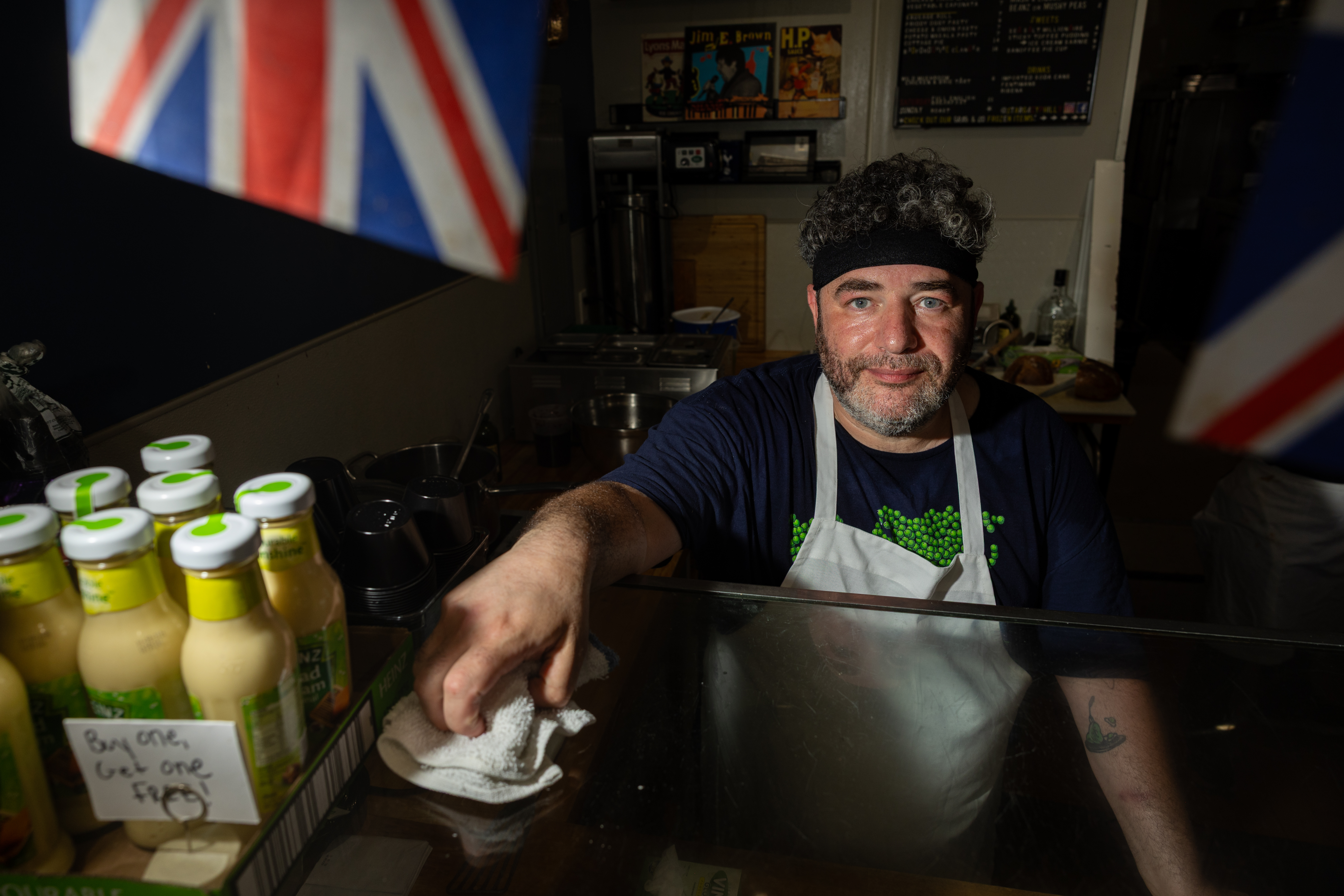
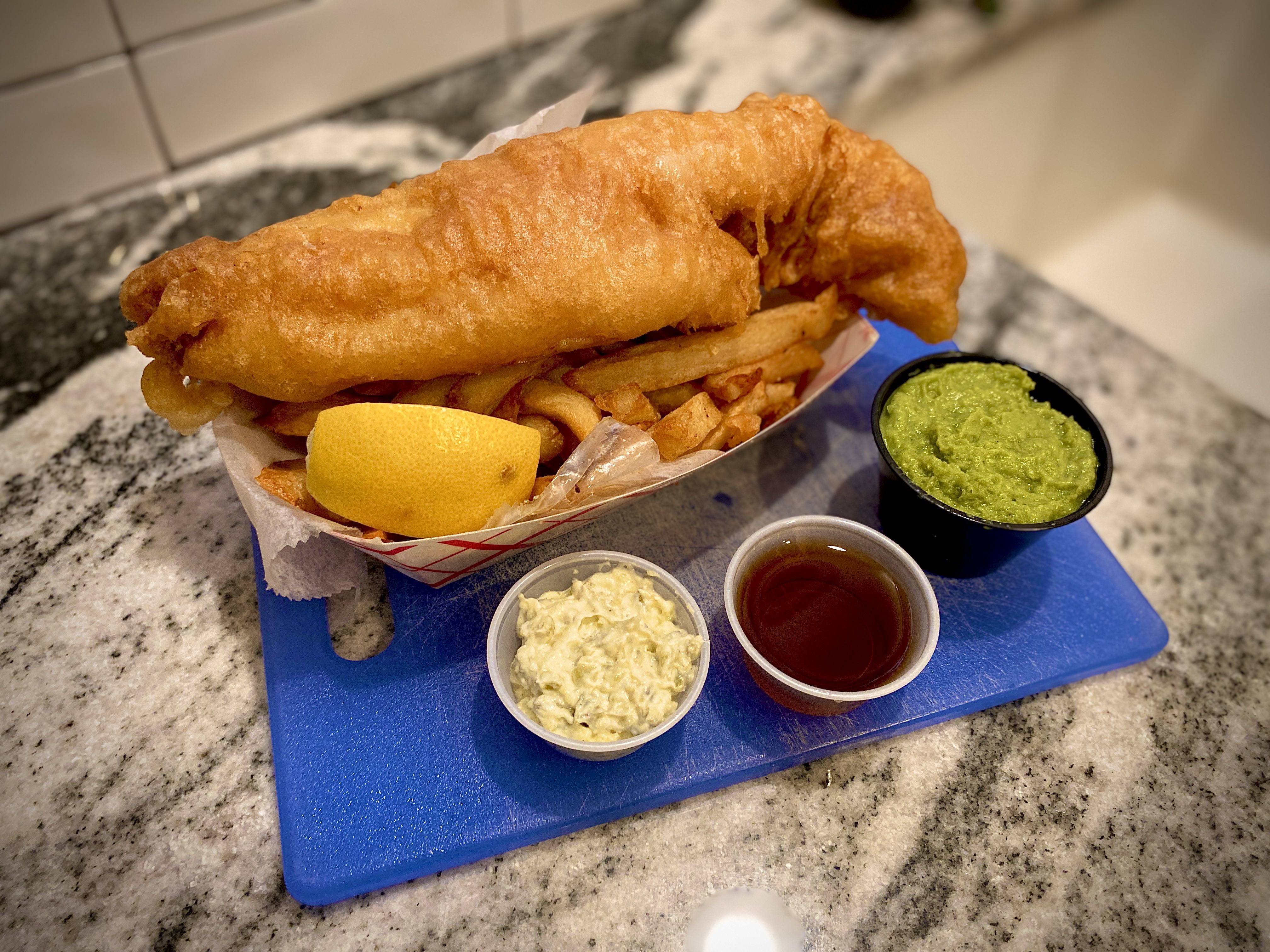
For the last eight years, Fridays at Stargazy on East Passyunk Avenue meant fish and chips, a weekly tribute to chef-owner Sam Jacobson’s East London roots.
That ended last month, when a city health inspection forced the English pie and mash shop to discontinue the special.
Stargazy had been cited twice in 2024 for operating its electric double countertop fryer without proper mechanical ventilation. But on Aug. 14, the Philadelphia Department of Public Health went further, citing the fryers as “unapproved” equipment and requiring Jacobson to submit plans for review before they could be used again. Translation: He’d need to install ventilation for his fryer if he wanted to continue slinging fish and chips.
The Friday fish and chips from Stargazy in 2021.Jenn Ladd / Staff
For restaurant owners, the consequences of an inspection can extend beyond whatever corrective action the city requires. Reports of closures, cease-operations orders, or serious violations — especially at popular restaurants — spread on social media, where the conversation often turns to claims that enforcement is unfair or not uniformly applied.
The health department disputes that contention, saying that there is no crackdown.
It’s in the process of rolling out a new Food Safety Inspection Guide, but while the format of the guide has been streamlined, the department said the underlying rules have not changed.
Inspections as a snapshot
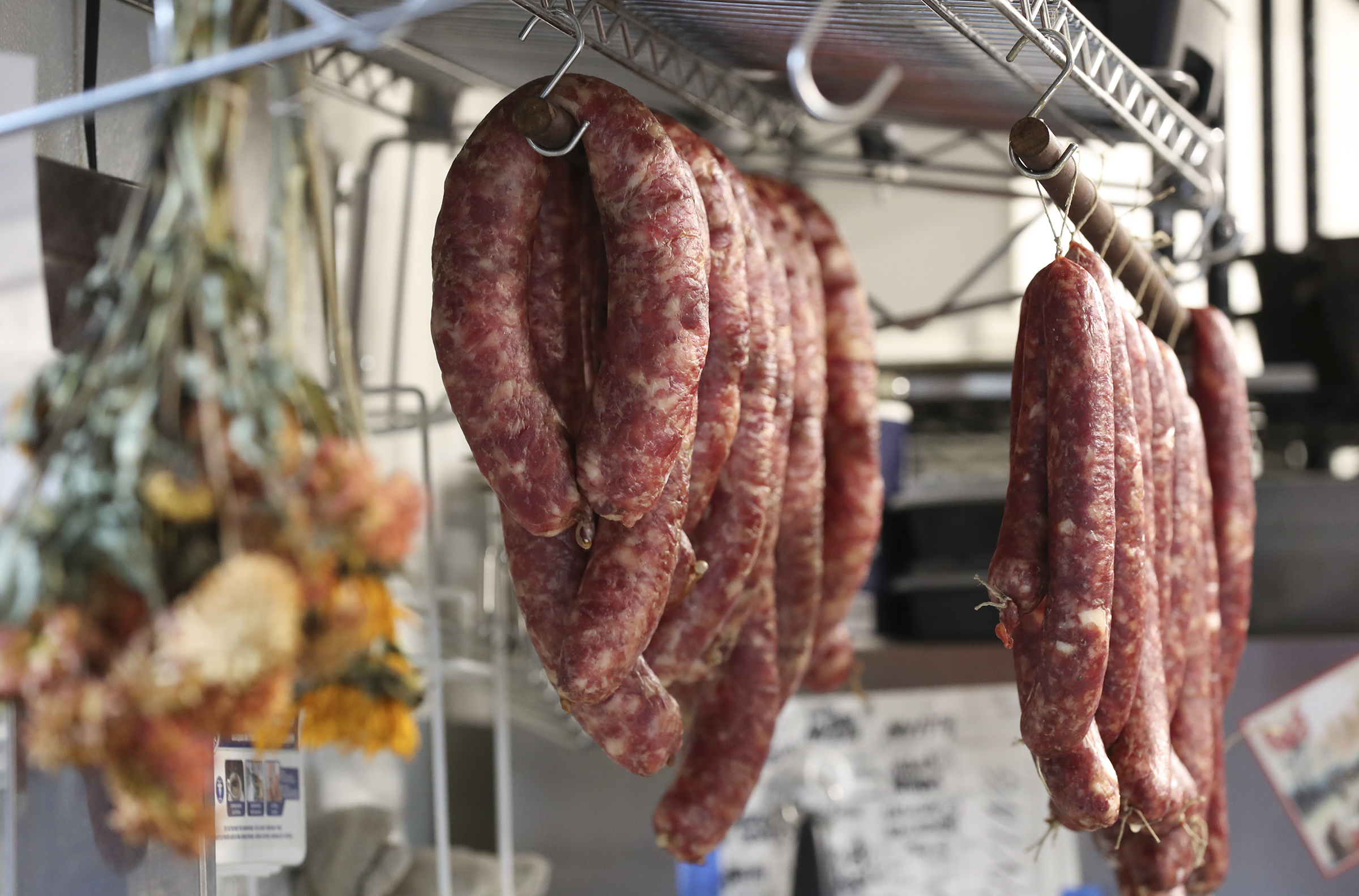
Last month at Heavy Metal Sausage Co. in South Philadelphia, a health inspector ordered owners Patrick Alfiero and Melissa Pellegrino to remove the shop’s eight indoor seats and stop preparing food in the basement. Inspectors determined that neither activity was consistent with the establishment’s plan review, approved in 2022.
Heavy Metal had passed previous inspections, including one four months earlier, and its owners told The Inquirer the operation had not changed between the two visits.
Heavy Metal Sausage Co. owners Patrick Alfiero and Melissa Pellegrino preparing for a dinner in 2022.Yong Kim / Staff Photographer
Health officials interviewed this month said the differing outcomes illustrate a basic principle of the inspection system: Each inspection reflects only a snapshot of what an inspector observes.
During the April inspection, the department said, the inspector did not observe indoor dining or food preparation in the basement. On Aug. 21, both were taking place and could be cited.
More broadly, officials said, the absence of a citation during an earlier inspection should not be interpreted as approval of a practice.
Stargazy had been previously cited
At Stargazy, the record is different. The fryer had been cited before.
Jacobson was in England when the sanitarian — as the inspectors are known — arrived at Stargazy on the afternoon of Friday, Aug. 14. It was the same sanitarian who had cited the fryer during two inspections in 2024.
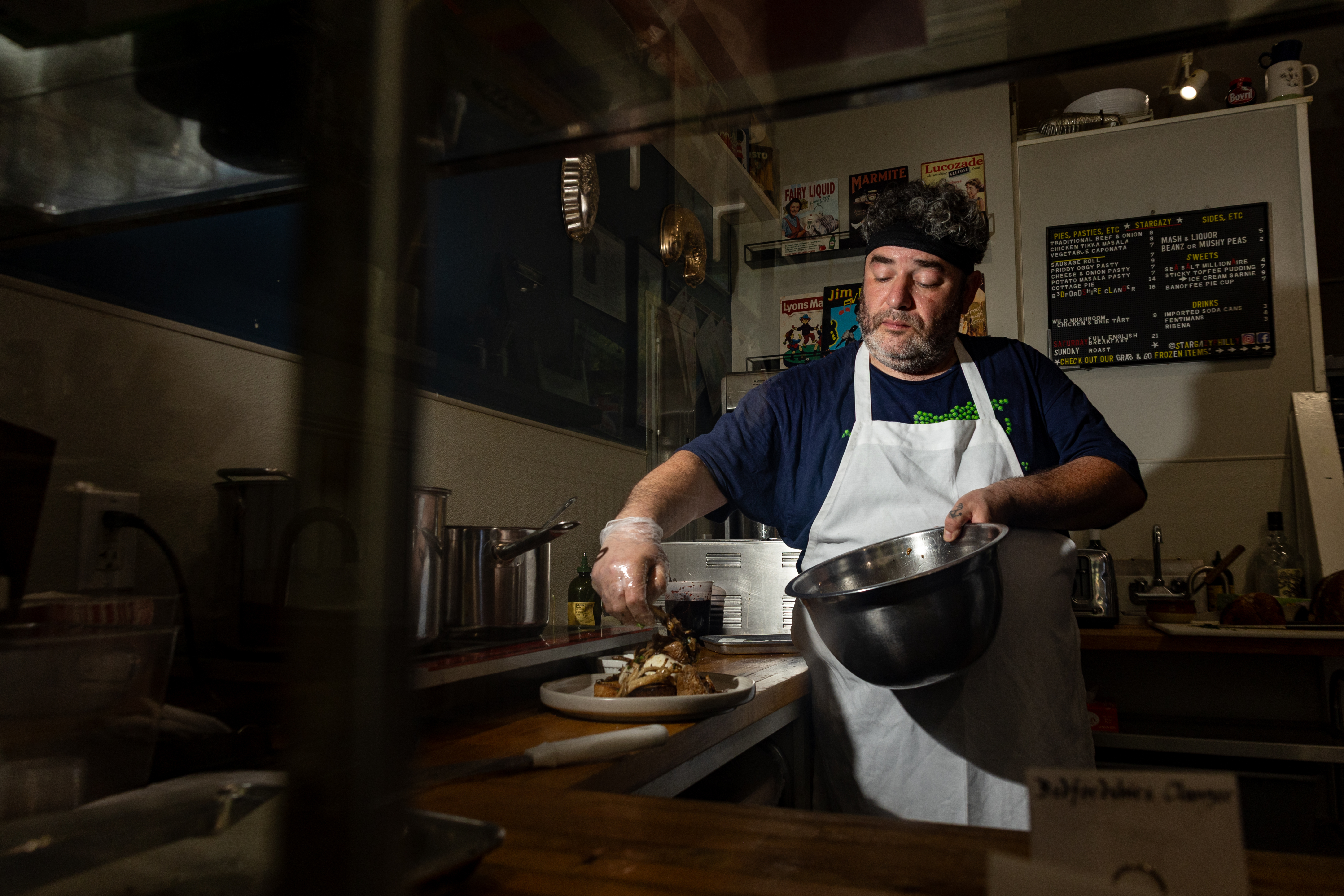
Owner Sam Jacobson cooking at Stargazy on Sept. 18, 2026. Aidan T. Gallo / Staff Photographer
“I did look back at sales reports for the day of the April 5, 2024, inspection and we had a good fish day — so the fryer was definitely on and in plain sight,” Jacobson said.
Jacobson acknowledges that the inspector told him in 2024 that the fryers were “not approved.” That point is noted on the reports. But Jacobson said he did not understand that to mean he had to stop using them.
The Health Department gave a different account to The Inquirer this month. Officials said Jacobson was verbally instructed in 2024 not to use the fryers because they lacked mechanical ventilation.
When the sanitarian found the same fryer still in use at its next inspection more than two years later, the department said, Jacobson was told to install mechanical ventilation, which would require a plan review — a lengthy process. This time, Jacobson removed the fryer in response. (Historically, the health department does not levy fines, preferring that businesses correct violations.)
Jacobson said Stargazy had never undergone a plan review when he opened in 2015 after taking over an existing bakery. He said a city employee advised him at the time to treat the opening as a change of ownership, and the restaurant passed its preopening inspection.
“We never did any alterations or construction before opening,” Jacobson said. “I simply took over the lease of an existing bakery, gave it a lick of paint and some other cosmetic touches, and opened up.”
Besides the fryer, he said the restaurant’s only substantive changes were moving the counter in 2019 to create more room in the dining room and installing a customer hand sink during the pandemic at the city’s direction.
Sanitarians have not received new instructions to interpret the code differently, the department said. The department said it has committed significant resources to uniformity training, intended to ensure that every inspector reviews the same conditions in the same way in all food businesses.
Supervisors and managers also review inspection reports, and sanitarians are not supposed to exercise individual discretion in deciding whether a condition violates the food code.
The new Food Safety Inspection Guide supports the department’s position that the underlying food-safety requirements are not new.
Deputy Health Commissioner Dawn Kiesewetter said the guide has been under development for six or seven months with the Mayor’s Office of Policy Planning and Delivery, the Commerce Department, and business and community groups. It grew out of Mayor Cherelle L. Parker’s PHL Open for Business initiative, launched in April 2024 to simplify city permitting, licensing, and other requirements for businesses.
Food businesses were an early focus. When Open for Business was announced, city officials said food businesses averaged nearly 24 government approval steps to open and operate. The administration subsequently developed multilingual food-safety materials and other guidance for operators.
The city aims to inspect every food establishment once a year but does not always meet that target, the department acknowledged. About 60 Health Department employees are authorized to inspect Philadelphia’s 10,427 food establishments, according to the department. Reinspections follow violations, while complaint inspections and investigations of possible foodborne illness take place as needed.
Staffing and complaint volume have remained relatively steady in recent years, officials said, while the number of food businesses remains below its pre-pandemic level.
When a repeat problem is ‘new’
Stargazy’s fryer was cited as a “new violation” in 2026, two years after its first citation. The department’s terminology on inspection reports can sometimes label a recurring violation as new. Health officials said that designation is automatically applied when more than a year has passed since the earlier violation.
Jacobson said it would not make financial sense for him to install the ventilation needed to resume frying. A permanent hood would require construction, he said, while a freestanding ventless system could cost more than $20,000.
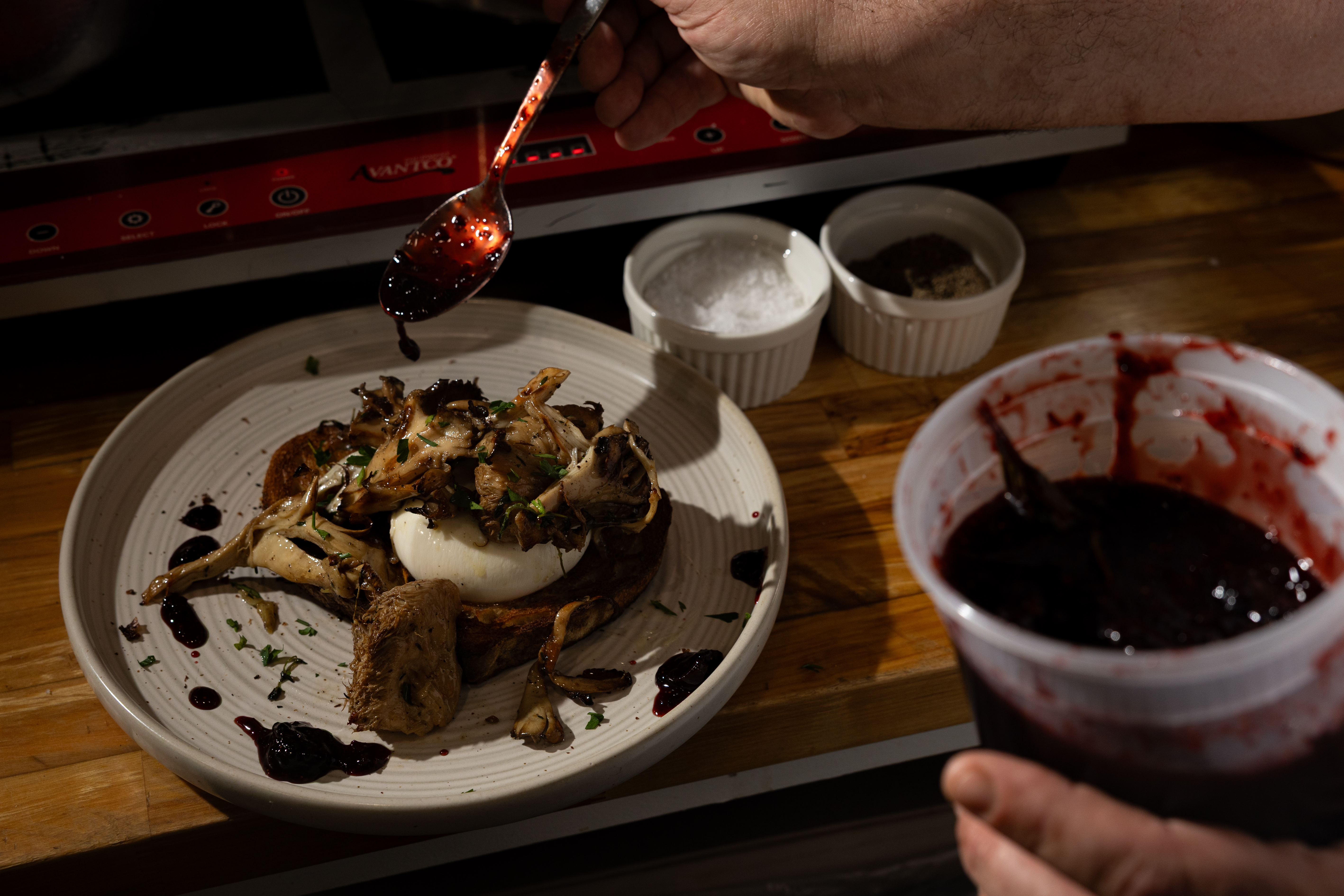
Stargazy owner Sam Jacobson adding blackberry and fig sauce to his wild mushroom burrata toast, a substitution for his fish fry.Aidan T. Gallo / Staff Photographer
Since removing the fryer, he is considering longer hours and fish-and-chips pop-ups elsewhere to replace some of the lost sales. On Fridays, he has been offering specials that do not require a fryer, including wild mushroom burrata toast.
The city says one purpose of the new guide is to reduce the likelihood of surprises during an inspection.
“The more they understand what they need to do, the more likely they’ll pass,” the Health Department said in a statement. “Our number one goal is to ensure that food businesses can stay open safely.”
Books are back, in Greater Philadelphia and around the country.
The industry saw modest revenue growth the last four years in a row, an Association of American Publishers report found. Brick-and-mortars saw more than twice the growth of online retail in 2025, and hardcovers outpaced ebooks.
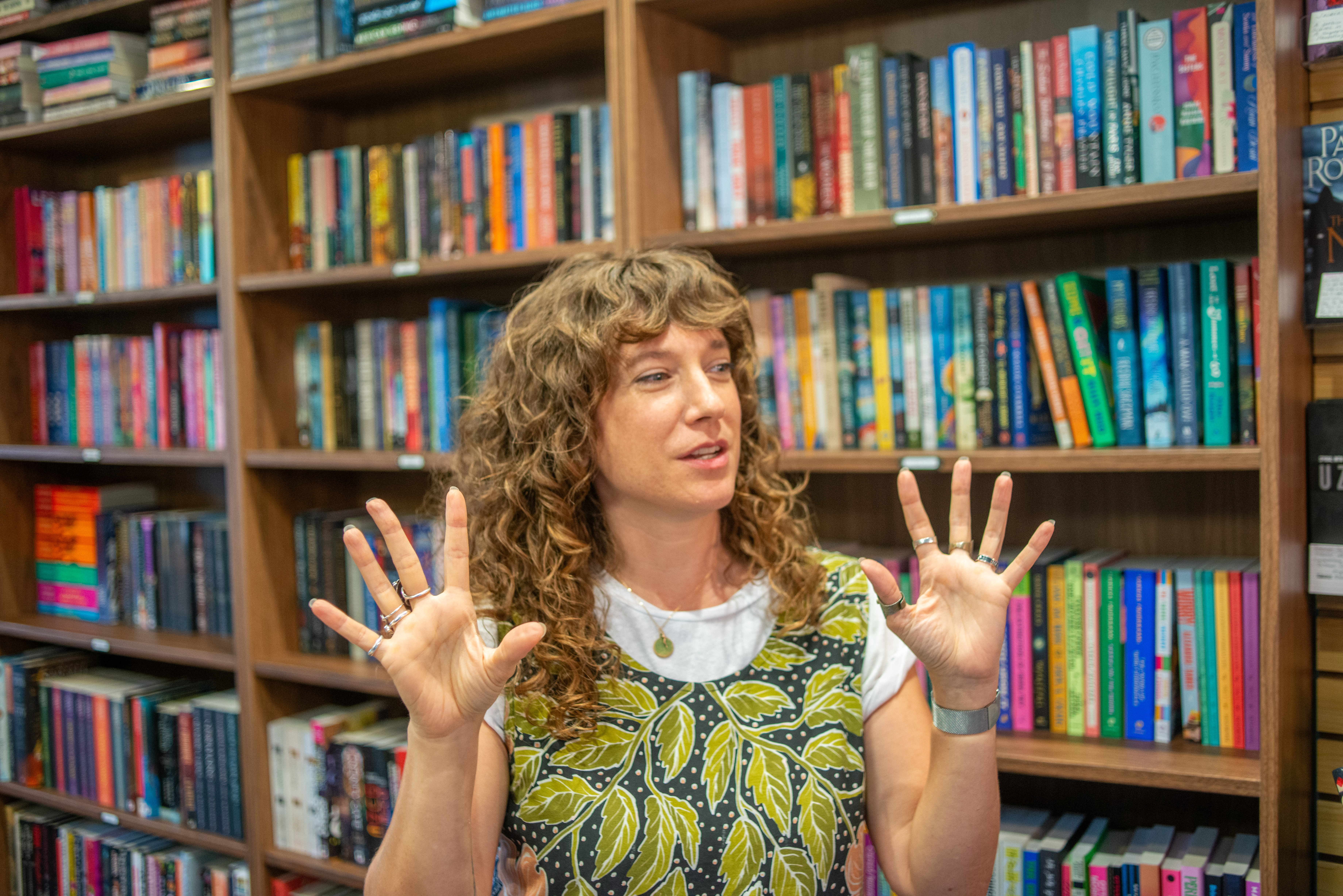
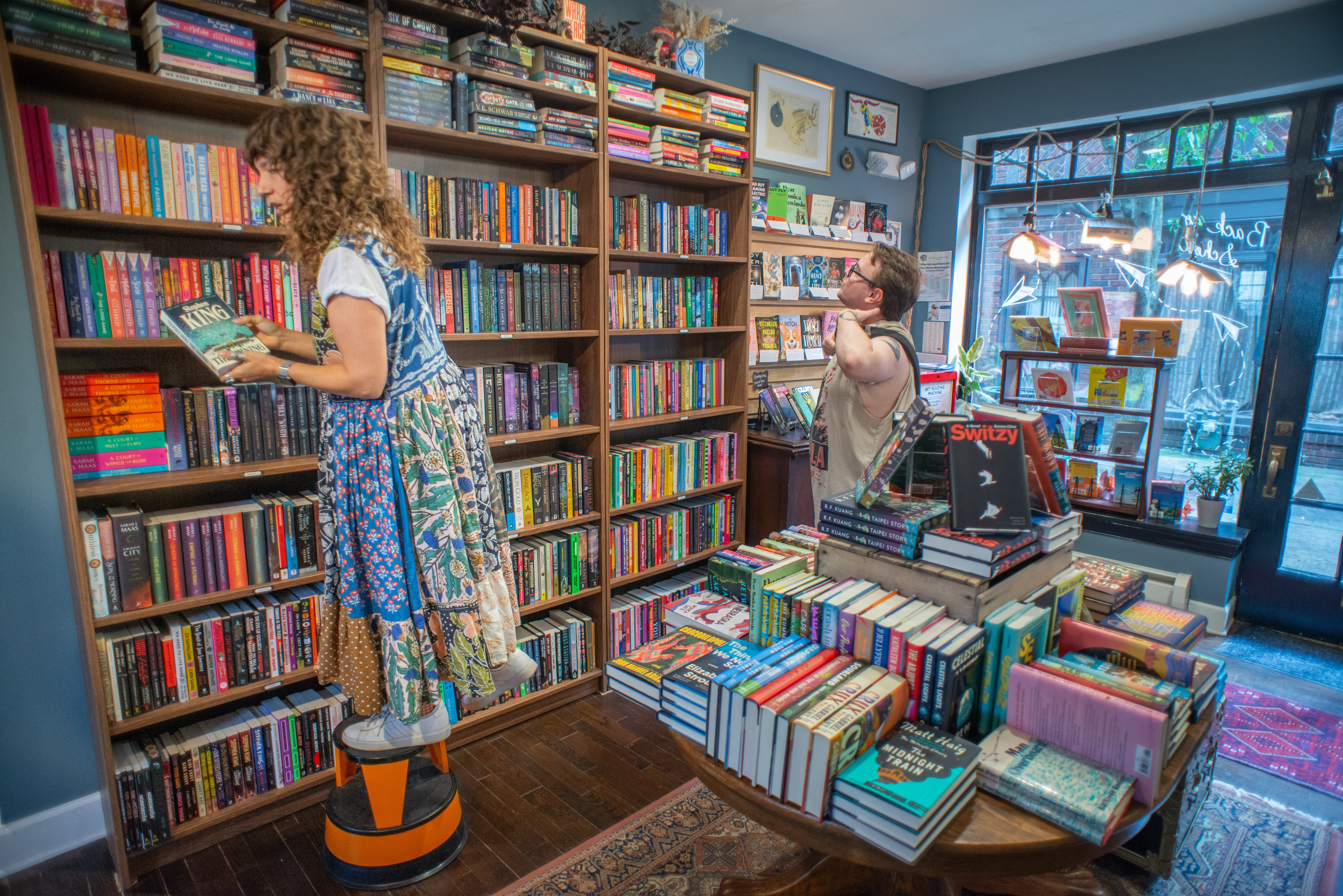
Jackie Botto looks for a book on the shelves while chatting with a customer at Capricorn Books in Jenkintown.William Thomas Cain / For The Inquirer
Many Philly-area booksellers said they’re feeling the surge.
But what are they reading? Sixteen booksellers told us their favorites of 2026 so far.
Angel by Elizabeth Taylor and The Princess of 72nd Street by Elaine Kraf — Ariel Censor, Little Yenta Books in South Philly
Back for Blood: Never Whistle at Night Part II edited by Shane Hawk and Theodore C. Van Alst Jr.— Alex Schneider, A Novel Idea in East Passyunk
Discipline by Larissa Pham — Richard De Wyngaert, Head House Books in Queen Village
Exit Party by Emily St. John Mandel — Jackie Botto, Capricorn Books in Jenkintown
Message to the Blackman in America by Elijah Muhammad — Shaykh Anwar Muhammad, The Black Reserve Bookstore in Lansdale
Most Ardently Yours by Freya Sampson — Charity Herndon, Austen’s Shelf in Bordentown
Partita by Barbara Kingsolver — Elizabeth Young, Commonplace Reader in Yardley
This suburban content is produced with support from the Leslie Miller and Richard Worley Foundation and The Lenfest Institute for Journalism. Editorial content is created independently of the project donors. Gifts to support The Inquirer’s high-impact journalism can be made at inquirer.com/donate. A list of Lenfest Institute donors can be found at lenfestinstitute.org/supporters.
Sixty restaurants are on the slate for this fall in Philadelphia and its suburbs on both sides of the river, with cuisines that span the map: Vietnamese, Lebanese, Greek, Caribbean, Cajun-Creole, Palestinian, Mediterranean, and contemporary American cooking, along with bagel shops, bakeries, breakfast concepts, wine bars, and cocktail rooms.
Heavy Metal Sausage was ordered to stop serving dinner. Beatrice Forman says this may spell doom for the acclaimed South Philly butcher shop/restaurant.
The Michelin-starred Friday Saturday Sunday secured a $1.5 million state grant to expand into the rowhouse next door. Beatrice unpacked the process — and the reaction.
When does a tea shop require security guards? When it’s heytea —just one of a slew of hyped Chinese beverage chains hitting Philly. Kiki Aranita reports on the hottest thing going in Chinatown.
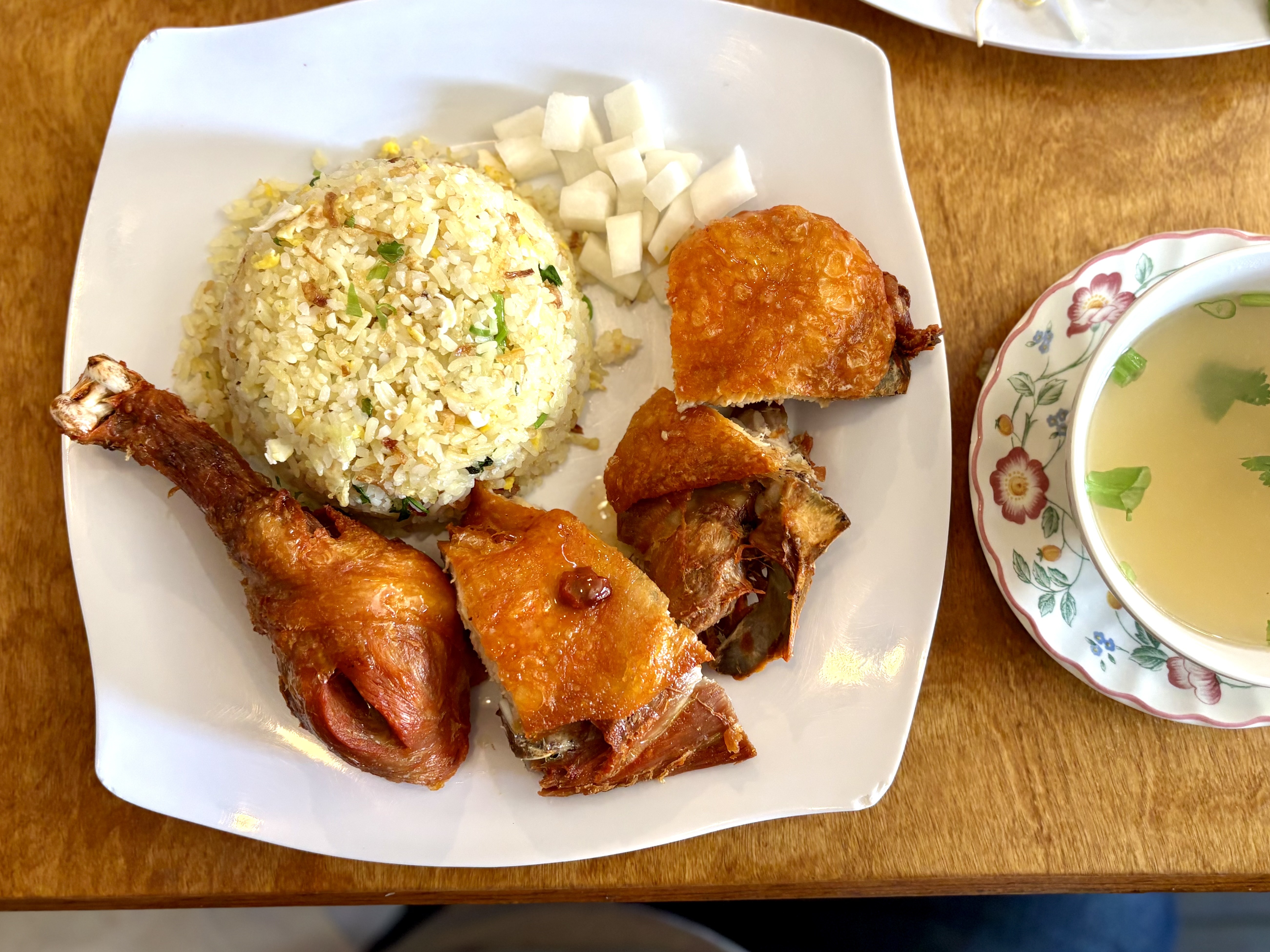
There was a lot of crunching going on as critic Craig LaBan tucked into the Vietnamese fried chicken platter at South Philly’s Phở Duyên — which he dubs “my No. 1 food deal for $15 in Philadelphia right now.”
Scoops
Edd’s & Flo’s Artisan Bakery Cafe plans to close its Lancaster operation on Sept. 20 in advance of a relocation to Fishtown next year. Meghan Young and Sebastian Schuck are still working on a lease, so the location is under wraps. Edd’s & Flo’s, which started in their hometown as Wish You Well Bakery in 2021, found its niche in croissants, savory pastries, and weekend brunch. This move will be a Philly comeback for Young, a Restaurant School at Walnut Hill College graduate who worked at Darling’s Cheesecake Cafe, Green Line Cafe, Barbuzzo, Suraya, John & Kira’s Chocolates, and One Shot Coffee. Young and Schuck rebranded in 2024 with a name that’s both a nod to life’s ebbs and flows and a tribute to Young’s childhood cats, named for the musical duo Flo & Eddie. Stay tuned.
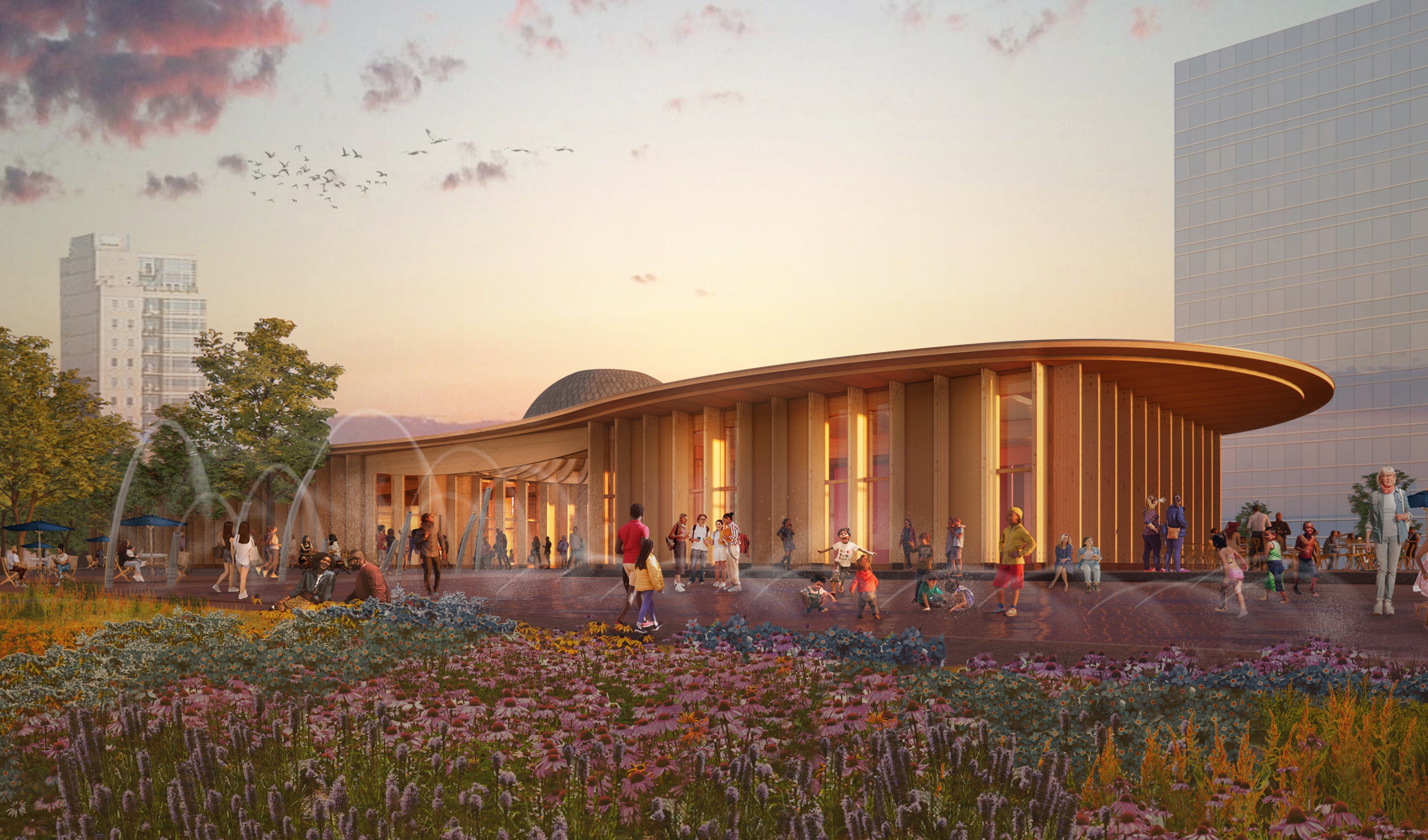
You’ve seen the months of construction along Columbus Boulevard at Penn’s Landing for the park that will cap I-95 and link Old City to the Delaware River. The Delaware River Waterfront Corp. just applied for building permits for the Pavilion and Café (rendering above), which will be part of Penn’s Landing Park when it opens in 2029-2030 at Market Street. The project’s operator has not yet been identified.
Restaurant report
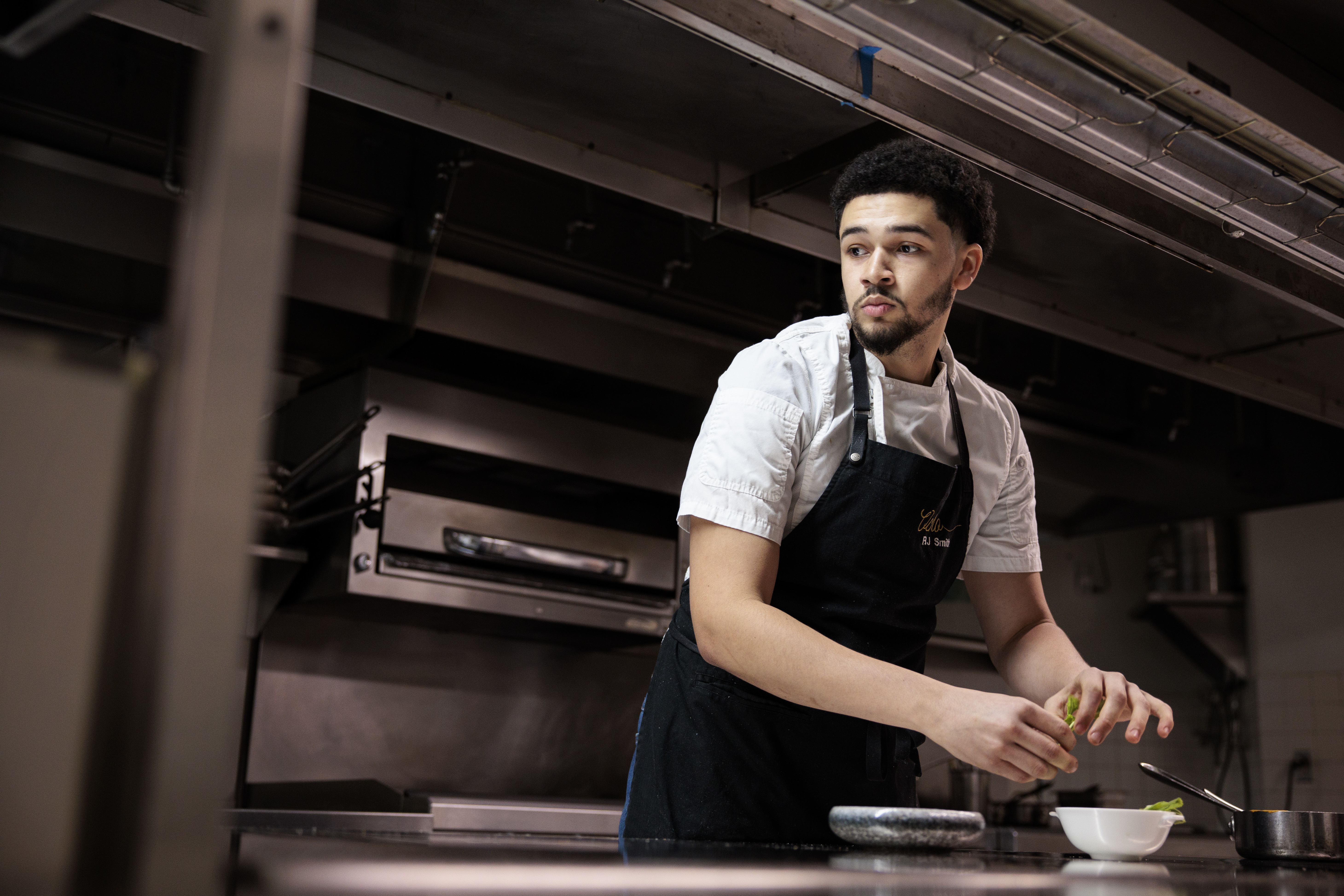
While chef-owner Liz Grothe of Scampi in Queen Village travels in Italy, chef RJ Smith of Ocho Supper Club will take over the restaurant for a five-course Afro-Caribbean tasting menu Sept. 18-21. The $130 menu includes curried oxtail, madai aguachile, plantain coco bread with crab, berbere-spiced duck breast, and turmeric tart. An optional Pennsylvania wine pairing is $50. Seatings are at 5 and 8 p.m., and à la carte dishes will be available on the patio. Reservations are on Resy and OpenTable. Smith is still leading his residency at the Rittenhouse Hotel; the space, which was Scarpetta, will become a steakhouse called Ruxton by next summer.
Old Original Nick’s Roast Beef sets up starting Thursday at Live! Casino & Hotel’s 10th Street Market, where it will follow South Philly Barbacoa’s residency. Besides roast beef, Nick’s will deal in roast turkey, roast pork, baked ham, broccoli rabe sandwiches, and long hot peppers. The pop-up will be open from 5 p.m. to midnight (or sellout) Thursday and Friday, noon to midnight Saturday, and noon to 9 p.m. Sunday, through the fall.
Briefly noted
The Big Dill will mark National Pickle Day with a nine-hour pickle festival Nov. 14 at Stateside Live! in South Philadelphia, closing its 2026 national tour there. More than 50 vendors will offer pickle-themed food and drinks, while 20 pickle brands serve unlimited samples of more than 100 varieties. Entertainment includes the World Pickle Eating Championship, brine-chugging, live music, DJs, games, and mechanical pickle rides. Organizers also hope to break a record by gathering more than 888 people dressed as pickles; the first 1,200 ticket buyers receive numbered costumes. The event runs from 1 to 9 p.m., with early entry at noon. Tickets go on sale Sept. 15 at bigdill.com/tour.
Mish Mish is launching Daydreamers, a quarterly series that will turn the East Passyunk restaurant over to chefs, makers, and other hospitality pros for one-night interpretations of their dream concepts. The first installment, with seatings at 5:30 and 8 p.m. Sunday, features sous chef Koby Epstein serving a six-course, late-summer tasting menu paired with Pray Tell Wines. Seatings, at 5:30 and 8 p.m., are $120 plus tax, tip, and drinks.
Kennett Square’s annual Mushroom Festival is set for Saturday and Sunday with foods and goods from 220-plus vendors, including Aimee Olexy’s Talula’s Table. Signature bite: The restaurant’s so-called “World Famous Riz-Mac,” which places mushroom risotto and mushroom mac and cheese side by side. Festival details are here.
Les Dames d’Escoffier Philadelphia’s Heritage Dinner is 4-7 p.m. Sunday at Glen Foerd, 5001 Grant Ave. More than two dozen chefs will participate, serving Sweet Amalia oysters, chicken mole, seared salmon, Vietnamese vegetable curry, beef tenderloin, and desserts honoring The Cake Bible author Rose Levy Beranbaum. Also honored are Canal House’s Christopher Hirsheimer and Melissa Hamilton and caterer Michele Leff. Tickets start at $200; a $300 ticket includes preferred seating and Beranbaum’s new memoir. Proceeds fund scholarships for women entering culinary and hospitality fields.
Bite for the Fight Food Festival returns for a seventh year from noon to 4 p.m. Sept. 19 at the Greater Philadelphia Expo Center in Oaks with tastings, cooking demos, and a silent auction benefiting the Fight On Makenna Foundation, which supports pediatric cancer patients and their families at Children’s Hospital of Philadelphia. Featured chefs are Brian Duffy, Ariane Duarte, Kenneth McDuffie, and David Schorn. Tickets start at $120.
Top Chef winner Nick Elmi will prepare smoked ribs, whole chicken wings, pork shoulder, brisket, cornbread, baked beans, mac and cheese, apple crisp, and soft-serve for the KB Foundation’s fifth annual BBQ Experience, Sept. 24 at the Pump House in Bala Cynwyd. VIP service begins at 6 p.m. with lobster pies, fried chicken with caviar and white barbecue sauce, smoked foie gras mousse, and oyster fritters; general admission starts at 7:30 p.m. Tickets: $175, or $250 for VIP. Proceeds support youth-mentoring programs.
Uchi in Rittenhouse will launch a fall collaboration series Sept. 24 with Kevin Yanaga of Yanaga Kappo Izakaya. He, Uchi head sushi chef Josephine Fry, and chef de cuisine Ford Sonnenberg will serve 10 courses starting at 6 and 8:30 p.m. Tickets: $175 at the sushi bar, $150 at tables, plus tax/tip; an optional sake pairing will be available. Additional dinners will follow in October and November.
Staff and friends of the recently shuttered Jose Pistola’s have organized a GoFundMe campaign for support (separate from an earlier one created by management).
❓Pop quiz
Name the $88 dish that Kiki Aranita checked out recently at a Philadelphia restaurant.
A) a tasting of New York strip steaks from Urban Farmer
Is ReAnimator Coffee really opening in Manayunk? — Jennie O.
ReAnimator, the Philly-bred coffee brand founded in 2010 by Mark Capriotti and Mark Corpus, has indeed committed to a Manayunk location at 4226 Main St., which was last an art gallery. Capriotti optimistically thinks opening is six months away. “We just opened in Mount Airy and it took us a year,” he said. “But we’re hoping we can learn from our experience.”
📮 Have a question about food in Philly? Email your questions to me at mklein@inquirer.com for a chance to be featured in my newsletter.
By submitting your written, visual, and/or audio contributions, you agree to The Inquirer’s Terms of Use, including the grant of rights in Section 10.
This fall’s restaurant openings reflect an industry hedging its bets: established operators expanding into the suburbs and repurposing familiar spaces, and newcomers pursuing narrowly drawn concepts built around omakase, caviar, Korean barbecue, cocktails, and live-fire cooking.
I count about five dozen restaurants in the region’s pipeline, with Italian concepts (no surprise), all-day service, and experience-driven dining recurring throughout the list. In addition to 60 restaurants opening between now and late December, two other restaurants are expanding: Lovat Square in Chestnut Hill is adding dinners and Palm Vintage across from City Hall is adding nighttime sushi service.
By comparison, last year’s fall roundup covered 53 restaurants. All of those opened except for three that are now a full year behind schedule: Adda in Fishtown is shooting for October, Ayat near Rittenhouse Square is aiming for November, and Brunch Bulls in Point Breeze is targeted for December. (Although this year has seen its share of closings, especially among longstanding restaurants, each of last fall’s restaurants is still open.)
Brand new and notable
Aogami (4343 Main St.): Underground sushi is coming to Manayunk as chef Tom LoMonte joins chef Moon Krapukthong to offer a 16-course omakase in a 20-seat BYOB setting beneath Krapukthong’s Yanako and neighboring Chabaa Thai Bistro, starting Sept. 25. LoMonte — a veteran of Zama, Izakaya by Yanaga, Pod, and Yanaga Kappo Izakaya — will lead the omakases at 6 p.m. Fridays and Saturdays; reserved sushi-bar seatings will run Wednesdays, Thursdays, and Sundays alongside hand rolls and à la carte service. LoMonte describes the atmosphere as energetic and less formal than typical omakase counters. Upstairs, Yanako will continue serving rolls, sushi platters, udon, tempura, and yakitori.
The Buttery (1099 Germantown Ave.): Malvern-based bakery and cafe the Buttery is preparing a Philadelphia location at Piazza Alta in Northern Liberties, near Scusi and Terra Grill. It recently opened a Bryn Mawr location and expanded its original Malvern operation into dinner service with Neapolitan pizza and shareable plates. An opening date has not yet been shared.
Nick & Nora’s Oyster Dive (560 Stokes Rd., Medford): Michael and Jeniphur Pasquarello (La Chinesca, Piccolina) are bringing a raw bar and American kitchen to a corner space with a large deck at Ironstone Village. The broader menu will include steak frites, burgers, fish, vegetables, and small plates, says Michael Pasquarello, who hopes to open in 60 to 90 days.
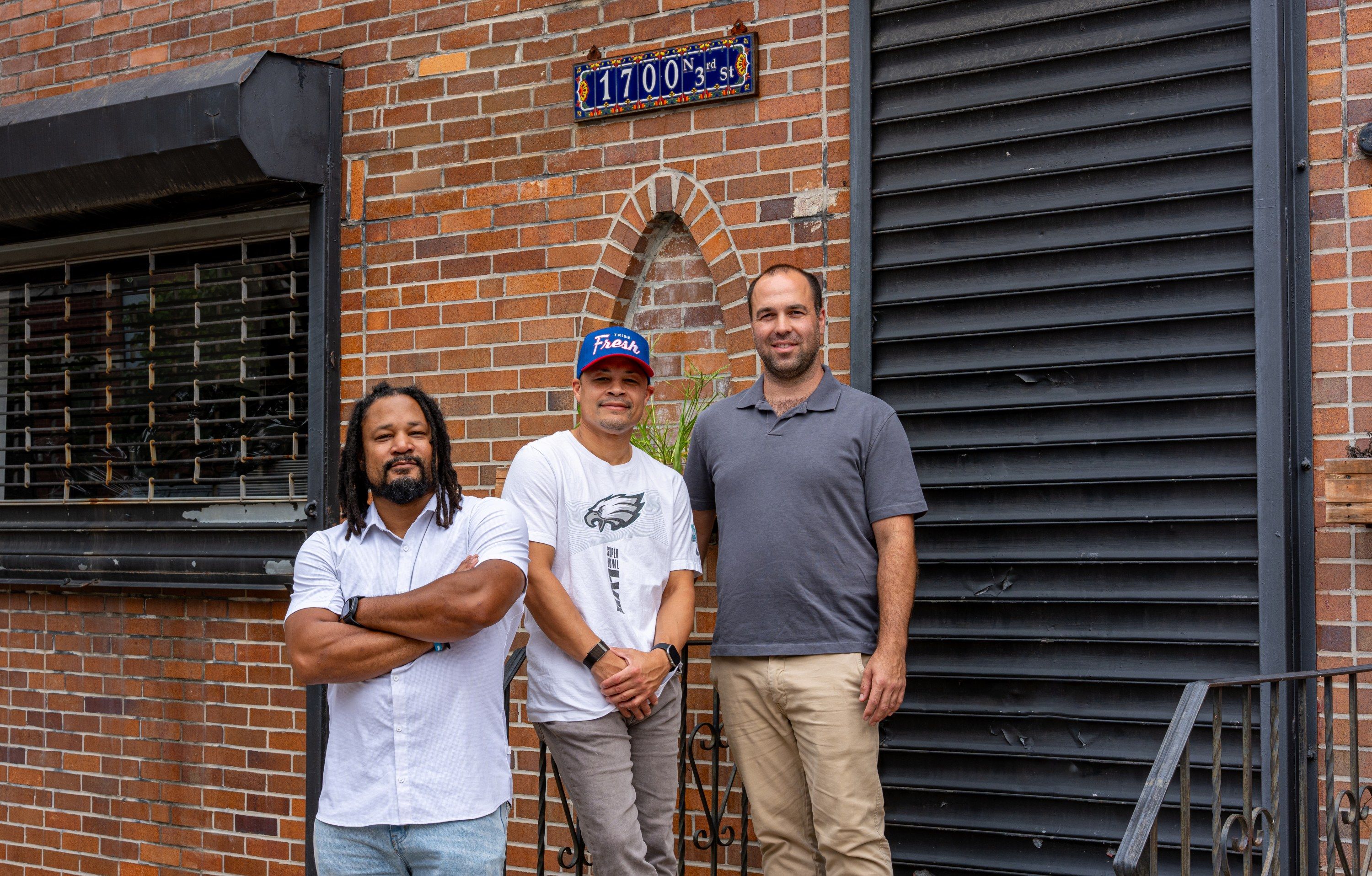
Chef Chaz Brown (left) is partnered with his brother Clifford Brown (center) and John Skeele in Rumblefish, 1700 N. Third St.Mike Prince
Rumblefish(1700 N. Third St.): Chef Chaz Brown is targeting November for this 900-square-foot, fast-casual Caribbean fish-fry restaurant at Third Street and Cecil B. Moore Avenue. Brown — a Trinidadian American chef whose resumé includes Nobu, Le Bec-Fin, Fatty Crab, and television’s Top Chef — will focus on invasive species such as lionfish, snakehead, green crab, and Chesapeake Bay blue catfish when available. (The catfish turned heads at the recent Oxtail Exchange at Forman Arts Initiative.) Brown uses gluten-free corn flour with Trinidadian spice blends and serves the fish on po’boy-style rolls baked by Angelo’s Bakery in Conshohocken. The mostly takeout operation will have counter seating, a 25-seat covered patio, slaws, fries, sea-moss drinks, and Solo Kola Champagne.
Pennsylvania suburbs
Alessandro’s Enoteca (915 W. Lancaster Ave., Bryn Mawr): Alex Fiorello’s third restaurant will bring a bar-focused Italian concept to the former Enoteca Tredici space in Bryn Mawr Village in mid-to-late October. Fiorello and culinary director Matt Arcomone, whose resumé includes Osteria, Vetri, and Palladino’s, are planning house-made pastas, wood-fired pizzas, live-fire cooking, and dry-aged meats. It’s intended to have a stronger evening and bar scene than Fiorello’s Wayne restaurants.
Bruzi (281 Montgomery Ave., Bala Cynwyd): Two couples with Calabrian roots plan to open this Southern Italian restaurant in the former Aldar Bistro in late fall. Expect house-made pastas and Calabrian dishes such as fusilli with slow-cooked meat sauce, baked lamb, and grilled tuna, plus cocktails and an opening list of about 100 Italian wines.
Capperini (137 S. Easton Rd., Glenside): Eastern Montco will get an upscale Italian-Mediterranean destination with a liquor license from Ilya Vorobey and partners including members of the team behind Capri in Queen Village. Vorobey is aiming for October or November.
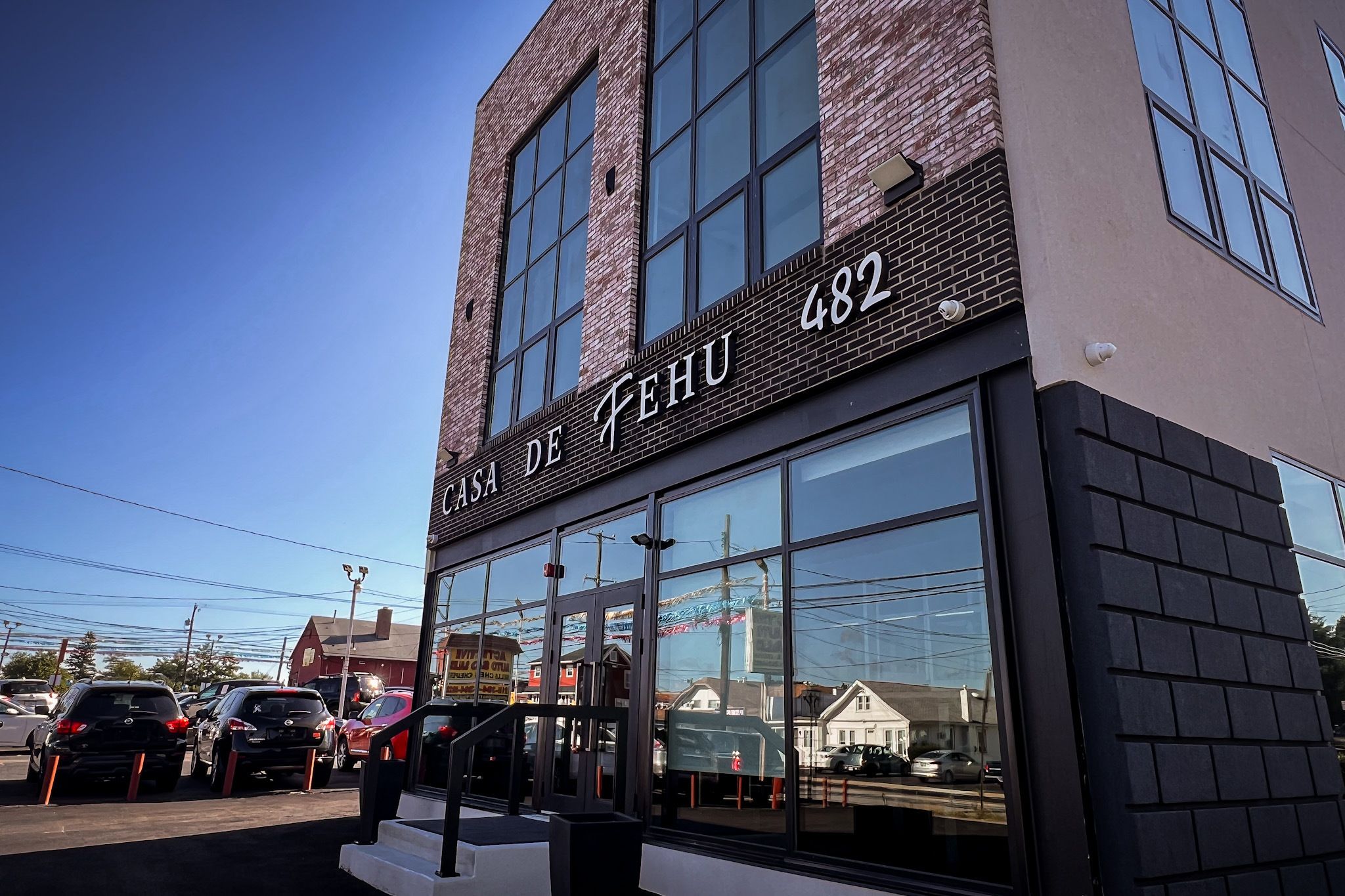
Casa de Fehu, 482 Jacksonville Rd., Hatboro.Michael Klein / Staff
Casa de Fehu (482 Jacksonville Rd., Hatboro): Hatboro couple Anthony Shalamov and Anastasia De Roy are developing this polished restaurant with European-inspired cooking and an upscale atmosphere, possibly with a tie-in to a local brewery that would allow alcoholic drinks. Shalamov is targeting an October soft opening.
Cecilia (266 E. Fourth St., Bridgeport): The team behind Blue Bell Inn and the Copper Crow is just about ready to open this contemporary American bar-restaurant in the extensively renovated former Taphouse 23. The roomy property includes a large patio and a wood-burning oven. The menu emphasizes familiar American dishes, positioning this as an all-purpose neighborhood destination.
Donatelli’s (1 Washington Ave., Newtown): Restaurateur Habib Troudi, who owns Panache and Ristorante Castelloin Blue Bell, is behind a top-to-bottom overhaul of the former Rocco’s at the Brick in downtown Newtown. He said he is hoping to open the Italian steakhouse in October.
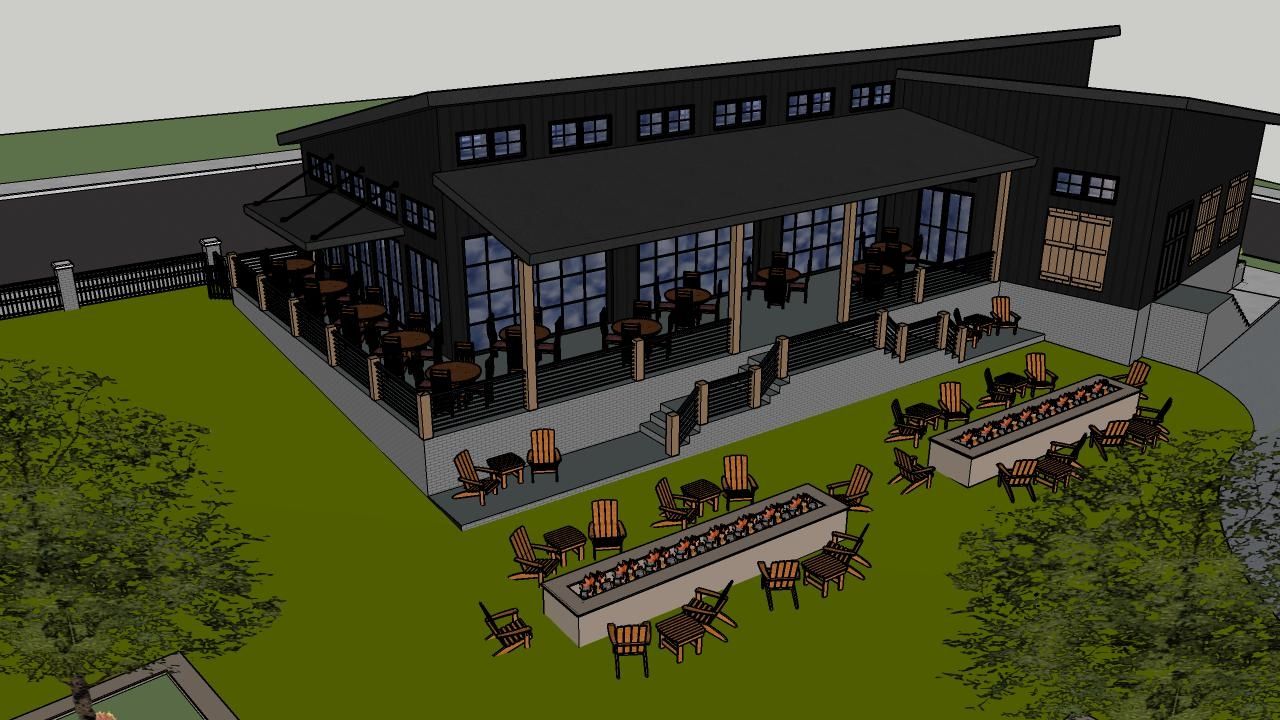
Rendering of the Garden by Pieri Winery, 127 E. Elm St., in Conshohocken.Courtesy of Christina Pieri
The Garden by Pieri Winery (127 E. Elm St., Conshohocken): Winery owner Christina Pieri and restaurateur Brian Pieri (StoneRose, Bar Lucca, Cerdo) are targeting a mid-October opening of their year-round indoor-outdoor restaurant beside the Schuylkill River Trail, an offshoot of Christina’s Coopersburg winery. A wood-fired kitchen will serve seasonal American food, including brick-oven pizzas, focaccia sandwiches, salads, steaks, and fish, at lunch and dinner Tuesday through Sunday. The property will include a covered patio, fire tables, a turf area, and pickleball and bocce courts.
The Hungry Hub (11 S. Orange St., Media): Media native Cassidy Moretti and her mother, Glenda, are taking over the former Rivalry Cafe with a family-run breakfast and lunch operation. The Hungry Hub also plans later hours and a late-night menu, broadening its role beyond that of a conventional daytime cafe. An Oct. 1 opening has been announced.
The Iron Oven (58 S. York Rd., Hatboro): Alex Nalbandian’s Southampton bar-restaurant — known for an expansive American menu, cocktails, craft beer, brunch, and dishes ranging from wings and burgers to flatbreads and entrees — is adding a second location in eastern Montco: the former Ross & Co. He’s aiming at November.
Lazy Dog(160 N. Gulph Rd., King of Prussia): The California-based bar, known for Rocky Mountain lodge imagery and a broad American menu, is targeting late 2026 at the King of Prussia Mall.
Luna (129 E. Butler Ave., Ambler): FineLine Hospitality, which recently opened Academy Grill in Fort Washington, is behind a stylish revamp of Dettera in downtown Ambler. Chef Marie Lavizzo-Mourey will base her menu on the 20-plus countries bordering the Mediterranean. The project is on track for fall.
Martini & Roz(523 W. Lancaster Ave., Wayne): Fearless Restaurants is turning Wayne’s former Bertucci’s into an ambitious, 300-seat Southern Italian restaurant named for founder Marty Grims’ parents, Martin and Roslyn. Menu will include crudo, oysters, steaks and chops, wood-fired pizzas, house-made pastas, and charcuterie. It will feature two open kitchens, a cheese cave, a tasting counter, and extensive outdoor seating.
Maru (2922 Conestoga Rd., Glenmoore): David Backhus and the team behind the former Oori restaurants are in the early days of a fast-casual Korean-inspired restaurant at their former Collective Coffee & Bakery. Think Korean fried chicken sandwiches, wings, and tenders, supplemented by mochi doughnuts and specialty Collective coffee.
Nudy’s Cafe (122 Park Ave., Willow Grove): Prolific suburban breakfast-and-lunch operator Ray Nudy hopes for late September for his latest diner, across from Marshalls in Willow Grove.
Old Friend (166 E. Lancaster Ave., Wayne): Childhood friends Larry Kagan and Chas McFeely are behind this contemporary American grill, with former Fork executive chef Sam Henzy leading the kitchen. The 86-seat restaurant will center on live-fire cooking in a Josper oven, with dry-aged fish, poultry, and larger proteins intended for sharing. Its compact wine list will be closely tied to the food. A late-fall opening is planned in the Apartments at Wayne Station.
Opus (201 Birch St., Kennett Square): Square Roots Collective will open this 125-seat New American restaurant Sept. 11 in the former temporary home of Hank’s Place, next to the Artelo hotel. Executive chef Matthew Anderson, formerly of Longwood Gardens and Winterthur, plans seasonal dishes, such as Kennett Square mushroom bisque, butternut squash agnolotti, herb gnocchi, and dayboat scallops. The two-story space includes a cocktail lounge, terraces, and work by local artists. Profits will support community projects and nonprofits.
Salt (840 W. Lancaster Ave., Devon): Rich Kim of North Wales’ acclaimed Salt predicts late December for his redevelopment of Devon’s former La Jonquille and Shiraz property into a second Korean barbecue concept, followed in 2027 by Yugo, a carousel sushi restaurant, upstairs.
The Still on State (18 W. State St., Doylestown): Only days open at the Doylestown Inn, this Irish pub-inspired bar/restaurant fills the former Hattery Stove & Still space; it’s paired with an on-site microdistillery called the Tilted Brim.
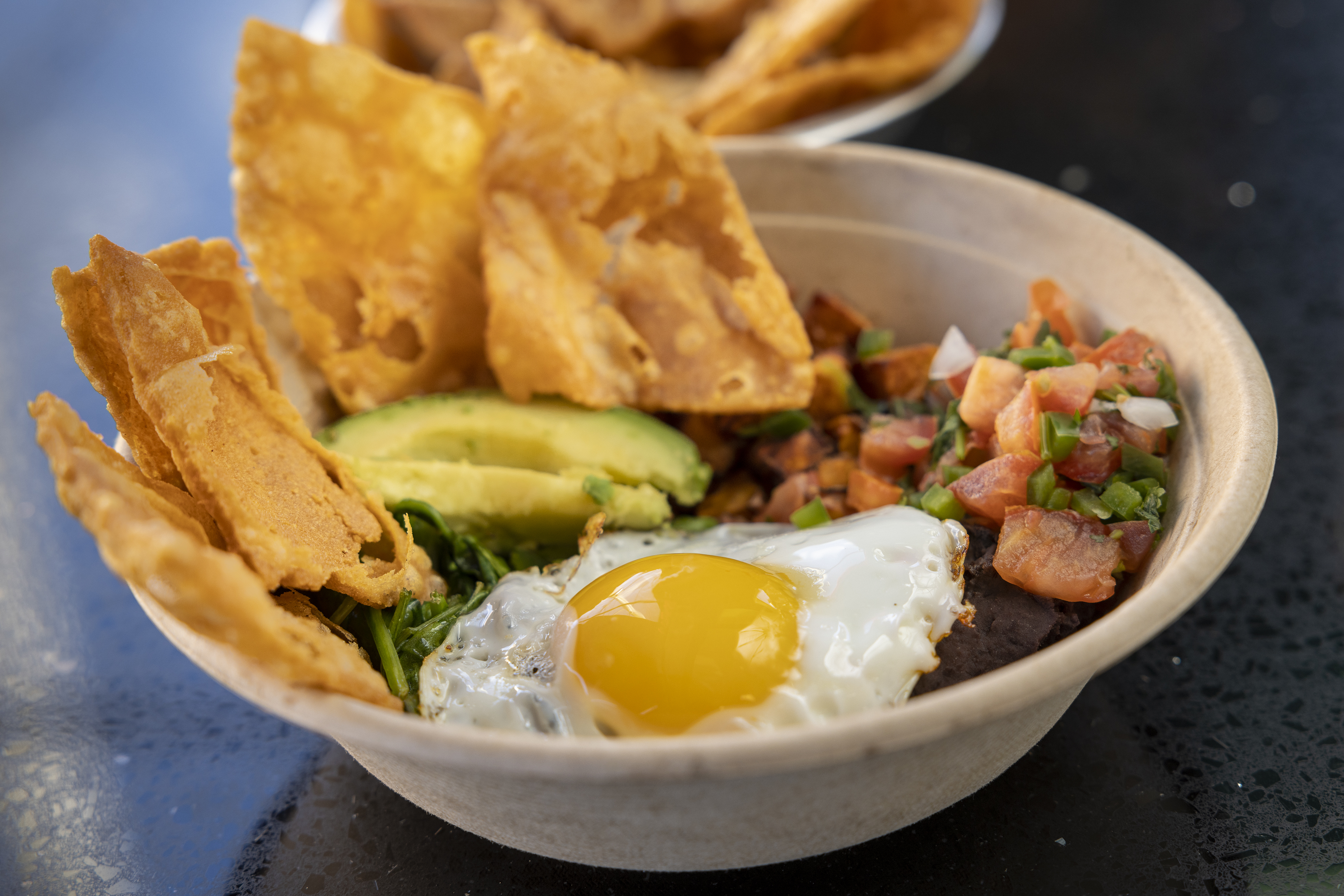
Taco Heart (120 Coulter Ave., Ardmore): Nano Wheedan is bringing his South Philadelphia breakfast-taco shop to the Ardmore Farmers Market, its first expansion beyond its East Passyunk-area home. Expect Austin-style flour tortillas and breakfast tacos built around eggs, potatoes, beans, bacon, brisket, and house salsas. Opening is set for Oct. 5.
Top Dog Cocktails (110 E. State St., Kennett Square, and 2012 Frankford Ave., Fishtown): Ken Smuckler’s cocktail company plans two vinyl listening rooms this fall inspired by Japanese jazz kissas. Kennett Square’s 750-square-foot space partners with local music venue Kennett Flash, while Fishtown’s 350-square-foot flagship — arguably the neighborhood’s smallest bar — will feature a 15-seat bar, two-turntable DJ station, and retail.
Tusk (50 N. Main St., Doylestown): Mike and Joy Grafenstine, owners of Roberts Block in Glenside and Bonnet Lane Family Restaurant in Abington, are taking over the former Water’s Edge wine bar, combining the martini-and-wine-bar airs of Roberts Block with approachable upscale American comfort food. Target is October.
Vintner’s Table (24 Cricket Ave., Ardmore): Andrea and Marco Folino, behind Kutztown’s Folino Estate Winery, are opening a third location of their Italian-inspired wine bar, salumeria, and lifestyle boutique in downtown Ardmore in October.
New Jersey suburbs
Akira 70 Omakase (249 Marlton Pike, Cherry Hill): Ming “Frank” Zheng is expanding his Japanese holdings — he owns Akira Sushi in Voorhees and Moorestown — with an omakase experience in a former fur salon.
Banjara Indian Bistro (687-689 Berlin-Cross Keys Rd., Sicklerville): Vaneet Chopra, whose family operates Cross Culture in Haddonfield and previously ran Banjara in Chestnut Hill, is bringing the Banjara name to Sicklerville; its dine-in starts Thursday.
Freckled Jawn Brewing(1003 N. Evergreen Ave., Woodbury): Woodbury residents John Wagner and Colleen Gibson are taking over the former Eight & Sand Beer Co., which closed in June after 10 years. Targeting the first week of October, the brewery will introduce new branding and a fresh lineup of approachable beers, emphasizing natural and locally sourced ingredients when possible.
Irishtown Steaks (155 S. Burlington St., Gloucester City): Donkey’s Placealumnus Dave Murphy is targeting Halloween for his steak shop, joining recent Gloucester City entries Lillo’s and Pudge’s Pub. Murphy will use rolls from Boaggio’s, which has a bakery in town.
Penny’s Bagels (212 Kings Highway East, Haddonfield): Chris Fetfatzes and the Happy Monday Hospitality Group (Wine Dive, Grace & Proper) are developing this long-delayed bagel shop in downtown Haddonfield, now with an October target.
Pizzeria Cusumano (872 Haddon Ave., Collingswood): Announced back in September 2021, this passion project from South Jersey’s Sal Cusumano is finally about to start offering his Roman-inspired squares and neo-New York rounds, but “I don’t want to box myself into a certain style.” Cusumano, a third-generation pizzaiolo, is planning a small shop with limited seating. This week, he said it will open in October for sure.
Philadelphia
Adda (1700 Frankford Ave.): New York’s Unapologetic Foods — behind Dhamaka, Semma, and the original Adda — is bringing its energetic Indian cooking to Fishtown, across from the 19125 post office. Expect regional dishes in an informal setting, continuing the restaurant group’s practice of pushing beyond familiar Indian American standards. Originally expected in fall 2025, the Philadelphia location is now targeting an October opening.
Ayat (2021 Sansom St.): Abdul Elenani’s New York-based Palestinian restaurant — first announced in spring 2024 — is looking at a November opening in the former Roxy Theater near Rittenhouse Square. Ayat is known for generous portions of mansaf, maklouba, mezze, grilled meats, and other homestyle Palestinian dishes.
The bar at Bar Caviar, 256 S. 16th St.Kenneth Schutz
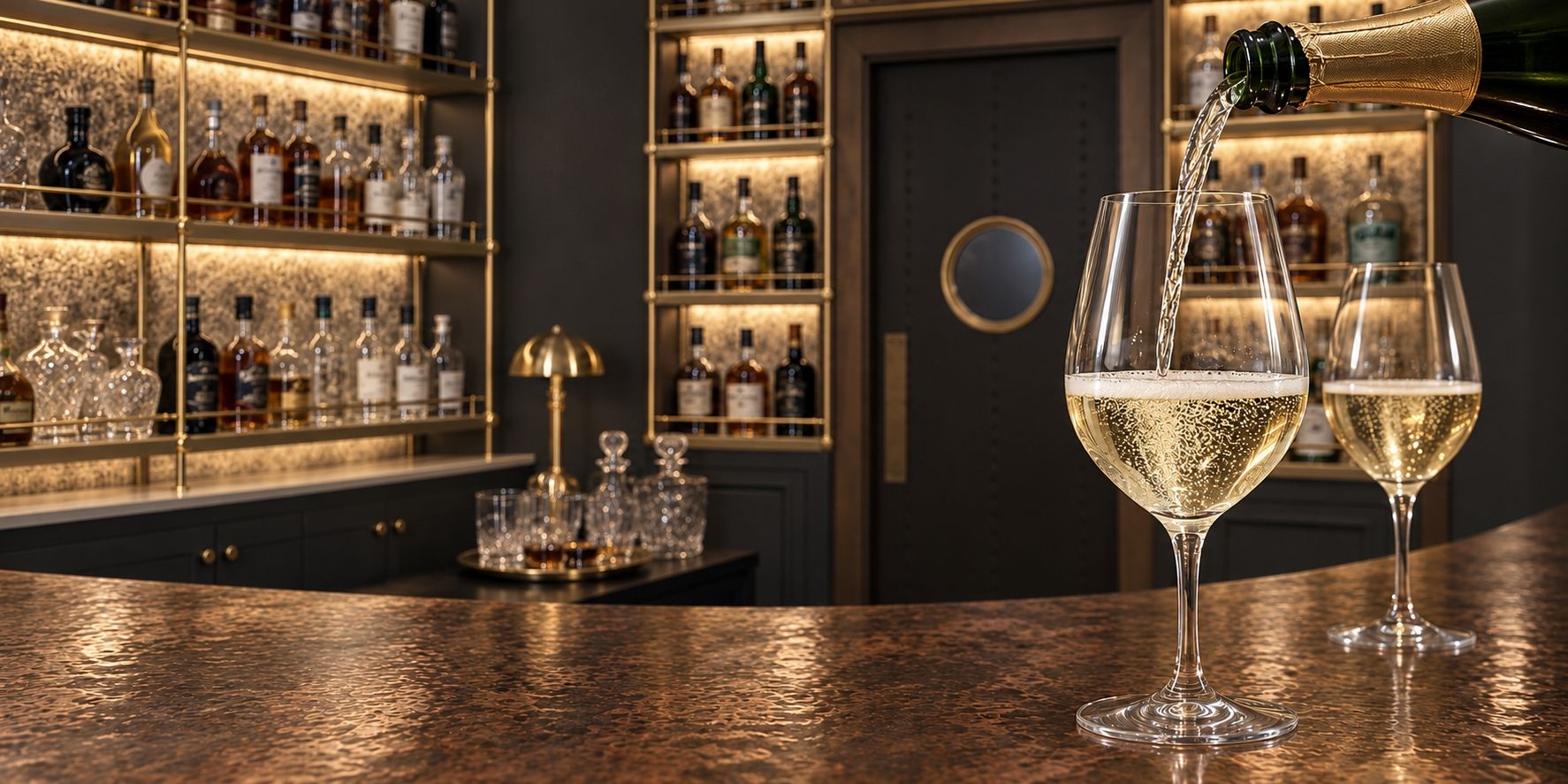
Bar Caviar (256 S. 16th St.): Opening in early October in the Dwight D Hotel in Rittenhouse, this bar will pair caviar and seafood with 50 varieties of Champagne and a full wine program in a setting that’s more neighborhood than hushed luxury lounge. Executive chef Greg Vassos’ contemporary American menu, informed by classical French technique and Japanese precision, will feature raw-bar selections, caviar-focused dishes, and seasonal small plates. The restaurant also will operate Parallel, a caviar program emphasizing careful sourcing and extended maturation. In 2027, Vassos plans to follow with Fall Line, a Mid-Atlantic-focused tasting-menu restaurant.
Brunch Bulls (1638 W. Passyunk Ave.): Brothers Derrick “Dee” Long and Jarrick “Jakk” Long are behind this all-day brunch/dinner/dessert restaurant in Point Breeze. They say they’ll be open by December.
Call Your Mother (262 S. 19th St., 1500 Frankford Ave., 12th and Sansom Streets): The lively, Washington-based “Jew-ish” bagel chain is making a three-location push into Philadelphia, starting this week with its Fishtown debut. Menu includes bagel sandwiches, schmears, latkes, coffee, and deli-inspired specials.
Carolyn’s Modern Vietnamese (2015 Walnut St.): This week, chef Carolyn Nguyen opens her deeply personal successor to Revolution Taco, which she co-owned in the space for a decade. Her menu brings together her family’s Vietnamese cooking, the seafood boils and Southern food of her Louisiana childhood, French culinary technique, and the freewheeling flavor combinations that defined her earlier ventures. The 33-seat restaurant serves dinner, and alcohol, in a spare, contemporary dining room.
Corte (1175 Ludlow St.):Corio partners Ryan Mulholland, chef David Feola, and James Smith are taking over the former Mulherin’s Pizzeria at East Market, between Iron Hill Brewery and Mi Vida. Feola will lead a menu built around house-made pastas plus proteins, vegetables, and small plates cooked in the large Mugnaini wood-burning oven. Mulholland will oversee daily operations and oversee an Old World-leaning wine list and cocktails inspired partly by forgotten recipes from century-old books. The dark-wood, earth-toned restaurant is targeting a fall opening.
DiDi (3748 Lancaster Ave.): DanDan owners Kevin and Catherina “Cat” Huang say they are “within a month or two” of opening their fast-casual pan-Asian concept at the Triad apartment building in Powelton Village. DiDi will join Kabobeesh, Karak Cha House, Shibam Coffee, Two Locals Brewing, and other businesses in the growing complex at 38th and Lancaster.
Divers Club (733 S. Fourth St.): Queen Village is in line to get a neighborhood wine bar from Susan Freeman, Chris Fetfatzes, and Heather Annechiarico (Grace & Proper, Wine Dive) in a former hair salon that sits on the same stretch as Famous 4th Street, Southwark, Ambra, and Fitz on 4th. Fetfatzes describes the mood as “dark, scrappy, and European — somewhere between a Paris backstreet wine bar and a graffitied Berlin hangout.”
Eggcetera Haus (625 S. Sixth St.): Husband-and-wife team Rey Tamaka and Vina Kencana soon will turn the former Redcrest Kitchen into an all-day bar-restaurant. Tamaka, previously the chef at an Old City brunch restaurant, plans breakfast, lunch, and dinner, moving from specialty coffee and morning dishes into pastas, steaks, cocktails, and comfort food at night. The couple expects daily service, giving the Queen Village-Bella Vista border another full-day neighborhood option.
Field Day (923 N. Second St.): James Beard Award-winning bartender and author Danny Childs and his wife, Katie, have a fall opening targeted for their casual regional cocktail bar in Northern Liberties, next to Cescaphe Ballroom. Childs’ drinks will use locally farmed, foraged, and fermented ingredients. Executive chef Melissa McGrath, known for her work at the idled Sweet Amalia Market & Kitchen, will offer Pennsylvania Dutch-inspired snacks, sandwiches, and tomato pies. Highballs, house-made sodas, boozy gelati, and walk-in seating will help keep the mood informal.
Habibi Supper Club (1515 E. Passyunk Ave.): Miled Finianos is giving his itinerant Lebanese dinner series a permanent home on East Passyunk — possibly by the end of year — serving late breakfast and lunch before he offers ticketed, multicourse suppers.
HYO (1222 Walnut St.): Nightlife veteran Justin Jordan plans an October opening for this Korean tabletop barbecue restaurant behind Hearsay, his indoor-outdoor sidewalk bar and listening lounge. Guests will enter HYO through a phone booth inside Hearsay. The restaurant is part of Jordan’s multilevel entertainment complex, which also includes Celine and the forthcoming Chancellor Room event space and karaoke lounge.
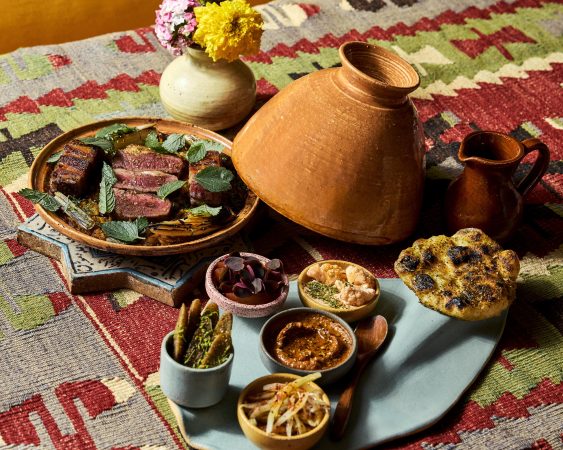
Jean (161 W. Girard Ave.): Emmett chef Evan Snyder and partner Julian van der Tak are going upstairs with a 15-seat tasting menu restaurant opening this fall. Snyder and chef de cuisine Antonio Pizzo will prepare a 12-course menu centered on a 7-foot wood-burning hearth, drawing on Algeria, Tunisia, coastal Morocco, and the southern Mediterranean for culinary influences. A tagine will roast throughout dinner before being served family-style.
Kato (1832 Frankford Ave.): Mei Meichef-owner Jay Ho is taking over the former Izakaya Fishtown space for a restaurant inspired by his Taiwanese father and the food Ho grew up eating. Influences from Korean, Thai, and Vietnamese cooking will broaden the menu. Ho, who hopes to open in late fall, plans to retain the front bar while replacing the rear sushi counter with additional seating that can double as a private dining area.
Lovat Square(184 E. Evergreen Ave.): Former Four Seasons sommelier Damien Graef and journalist Robyn Semien opened this Chestnut Hill wine shop and tasting room in February, offering small-production bottles, wines by the glass, and light fare. The couple, who also own Brooklyn’s Bibber & Bell wine shop, will debut a full dinner menu by the end of September.
Macaluso’s (3101 S. 13th St.): Realtor Joel Gruenke and restaurateur Mark D’Andrea, long-ago roommates at Valley Forge Military Academy, are looking at an early October opening of this white-tablecloth Italian restaurant at 13th Street and Packer Avenue, near the sports complex. D’Andrea’s family owns RoadHouse in Staten Island, N.Y. Gruenke says the moderately priced menu will stick to traditional Italian cooking and offer a full bar. Parking will be available across the street.
Mylar Bar (1636-38 S. Ninth St.): Hospitality veterans Liv Arterbridge and Gina Piccari are turning the former Dino’s Party Center into a festive neighborhood bar inspired by the building’s history. They promise something nostalgic, playful, and deliberately unserious. Drinks will include martinis, punches, classics, and draft beer. Chef Colin White, formerly of Sally and Emmett, will oversee shareable “party snacks,” larger plates, and desserts available late.
Nippy’s on South (1312 South St.): Nurse and first-time restaurateur Nikia Peterson has purchased the former Ms. Tootsie’s building for an ambitious restaurant and bar. Peterson plans a polished setting with seafood towers, steaks, Asian and Caribbean influences, a substantial happy hour, and weekend brunch. The project will revive a prominent South Street property that had remained closed since restaurateur KeVen Parker’s death in 2021.
O’Morrey’s (1720 Sansom St.): Chefs Biff Gottehrer and Kenjiro Omori are developing a cocktail bar on the former site of Genji, the Japanese restaurant created by Omori’s father. The name is a cheeky rendering of the Omori family name. Plans call for a comfortable neighborhood bar in the spirit of the Ripplewood, where both chefs work, with cocktails and a serious food component. Their second joint project, Tako Taco, is months away at the former Bing Bing Dim Sum in South Philadelphia.
Palm Vintage (1414 S. Penn Square): Houston Yang and Mike Beja, who opened this day-to-night cafe and cocktail bar across from City Hall in the Residences at the Ritz-Carlton, are close to expanding into a nighttime scene with cocktails, sushi, oysters, caviar, and light food in a lush, tropical-inspired room meant to offer an escape from Center City.
Panco (2300 S. Croskey St.): Chef Ryo Igarashi, whose background includes Tokio Global and Maru Global (noted for its takoyaki balls), is behind a corner shop in West Passyunk whose menu will focus on Japanese cutlets. He says it’s opening soon.
Philly Curio (2240 Frankford Ave.): Tattoo Arts Convention founder Troy Timpel is creating an intimate Kensington restaurant-bar around his private collection of curiosities (think tribal masks, skeletal displays, taxidermy, and glass-topped tables containing preserved animals). Inspired partly by Savannah’s Alligator Soul, Timpel has discussed a Cajun-Creole menu with small plates and unconventional proteins such as rattlesnake. Drinks are expected to include cocktails, wine, bottled beer, and limited drafts. Target is November.
Philly Po’Boy (102 W. Berks St.): Brothers Chris and Greg Lynch are bringing a taste of New Orleans to the storefront beneath the Berks station of the Market-Frankford Line. Chris spent years cooking in New Orleans, while Greg’s Philadelphia background includes Starr Restaurants and LMNO. Plans call for classic powdered-sugar-dusted beignets, gumbo, and a mix of classic and specialty po’boys like fried shrimp, oysters and roast beef “debris,” plus fries, Creole potato salad, and café au lait from coffee roasted by Applied Arts in New Orleans.
Santé Social(1546 E. Passyunk Ave.): Sommelier Daniel Solway is giving his roving dinner series a permanent home across from the Singing Fountain. The approximately 30-seat space will function less like a conventional restaurant than a flexible hospitality venue, hosting wine dinners, tastings, classes, collaborations, private events, and some walk-in service. Cocktails are being developed with Danny Childs of Slow Drinks and Field Day, while changing chefs and collaborators may shape the food programming.
Somedays Bakery (1601 Walnut St.): Hand-laminated croissants are the foundation of this Queens-rooted bakery, which deals in sandwiches, salads, soft serve, and coffee. It’s targeting the end of the month.
Thalassa (918 N. 28th St.): Matt Maltepes is looking at late October or early November for his Greek-inspired cafe in Fairmount that will serve baklava, croissants, and house-made ice cream in flavors that change weekly. Savory offerings will include small plates such as feta grilled cheese with honey, avocado toast, and bagels with cream cheese. The drinks menu will feature European-style coffee preparations, including frappes and Freddo espresso.
Looking ahead
Two major projects are now on the docket for January, as the owners don’t want to compete with the holiday-season madness:the Pelican Club, Stephen Starr’s flashy Greek-themed restaurant taking shape in the former Devon Seafood Grill on Rittenhouse Square, and the yet-to-be-named “punk French” restaurantthat chefs Justin Bogle and Arthur Cavaliere are creating at the former Winnie’s Manayunk.
The long-closed Mermaid Bar in Mount Airy will retain its name under the new ownership of pizzaiolo Dan Gutter and business partner Alex Carbonell of Circles & Squares and Pizza Plus. The project, announced earlier this year, is aiming at a summer 2027 rollout.
There are few Spanish bar snacks as satisfying — or so hotlydebated — as a properly made tortilla Española.
If you’re lingering in the hot southern cities of Andalusia, where the iconic potato-and-onion omelet is typically served room temperature or cold, the eggs are fully set.
“But from Madrid north to Basque Country, it’s traditionally made to order and served warm and custardy,” says Patrick Iselin, 50, the co-owner of BAR ilu, who spent half his childhood in Spain and now splits time between Philadelphia and the Madrid apartment once owned by his grandmother, Iluminada “Ilu” Prellezo Inchausti.
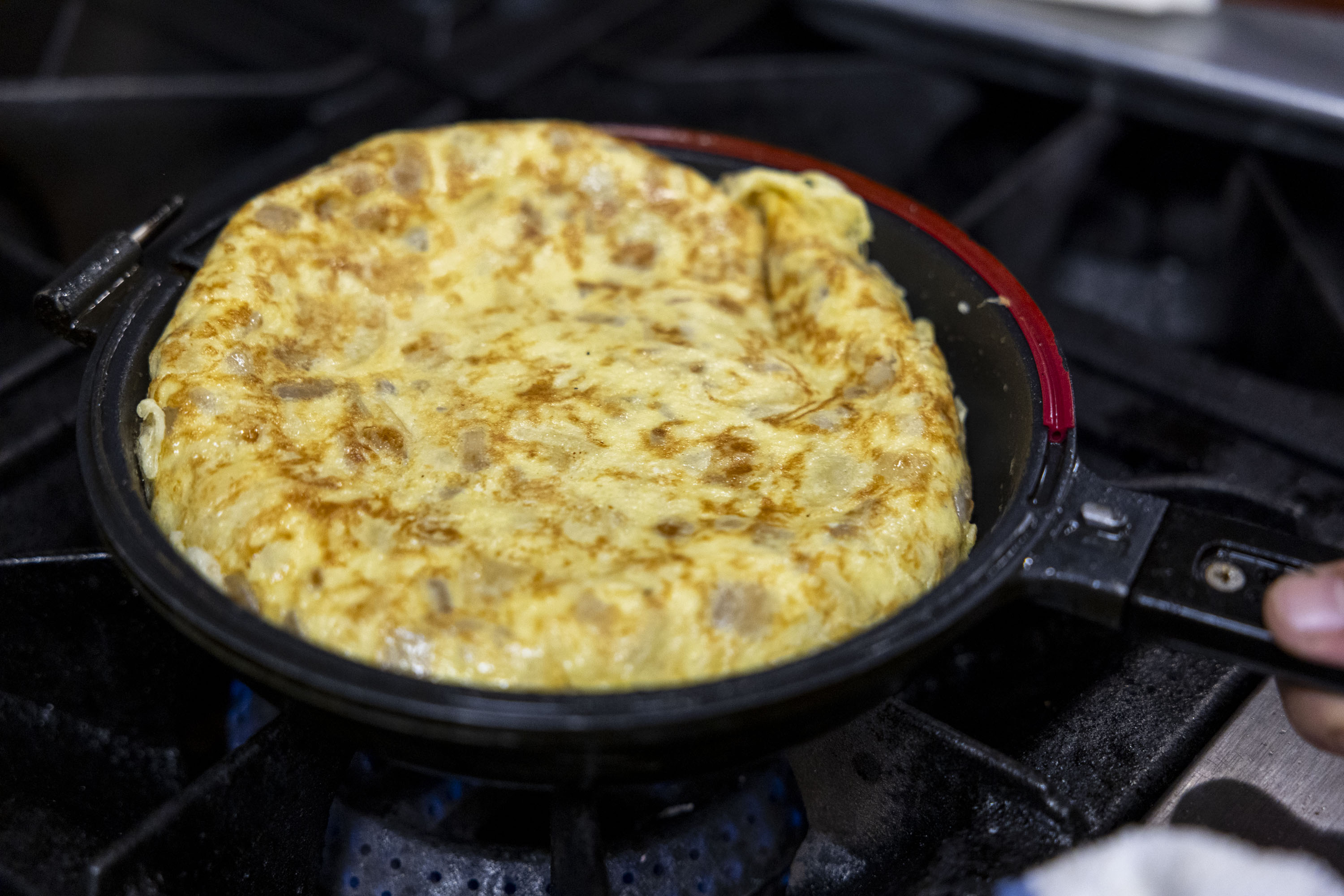
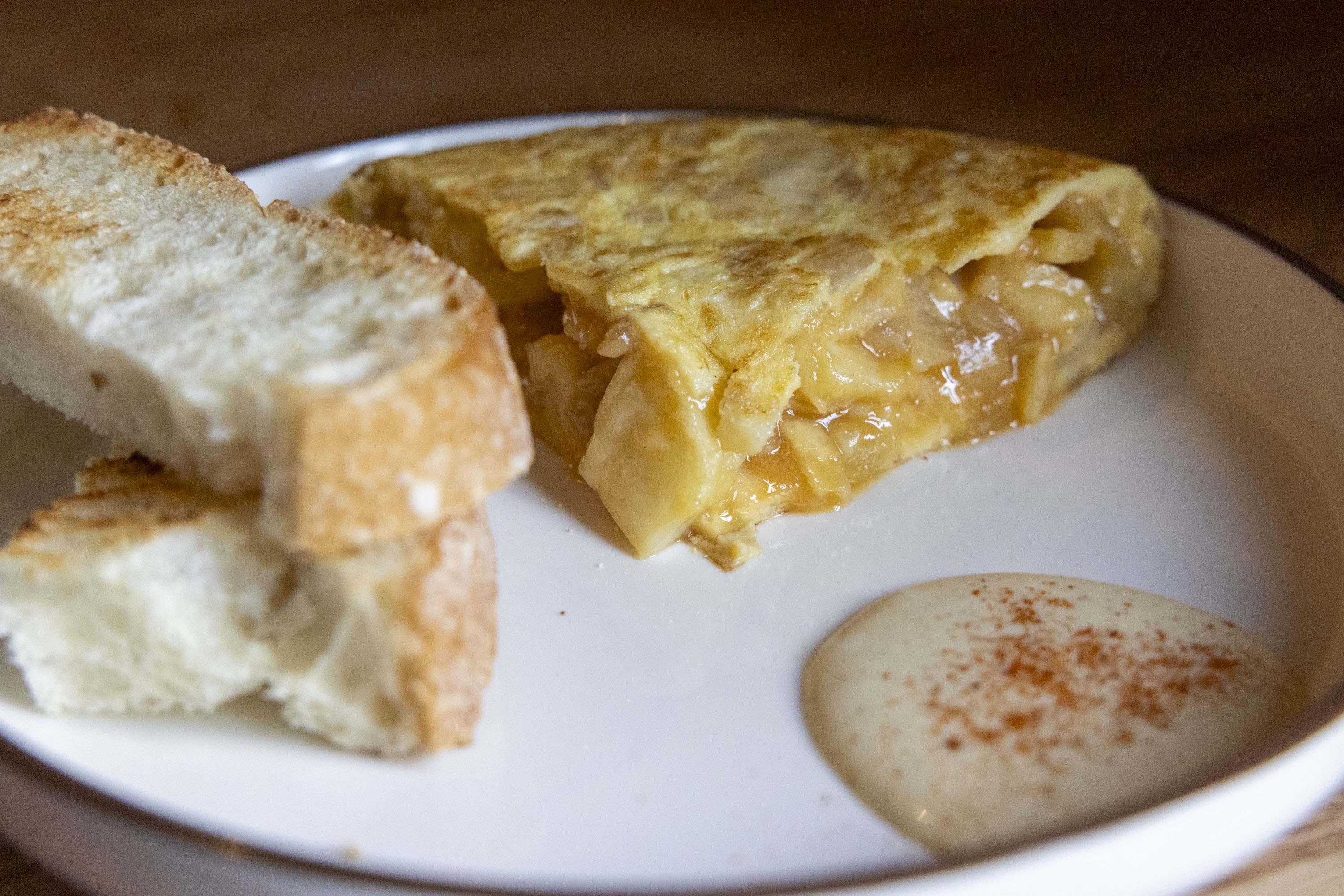
So it follows thatthe eponymousnew cornerbar at Dauphin and Martha Streets — which happen to share the 40th parallel north with Madrid — serves its tortilla Española with a loose and edgy Kensington flair: “runny af,” as noted on the menu. Served as a wedge, with olive oil-fried potato chunks and sweet onion laces bulging from its glossy middle, a warm forkful of this eggy wonder is as transporting as it gets.
Andrew Butler, chef de cuisine at BAR ilu, making the tortilla Espanola.Tyger Williams / Staff PhotographerThe tortilla Espanola at BAR ilu.Tyger Williams / Staff Photographer
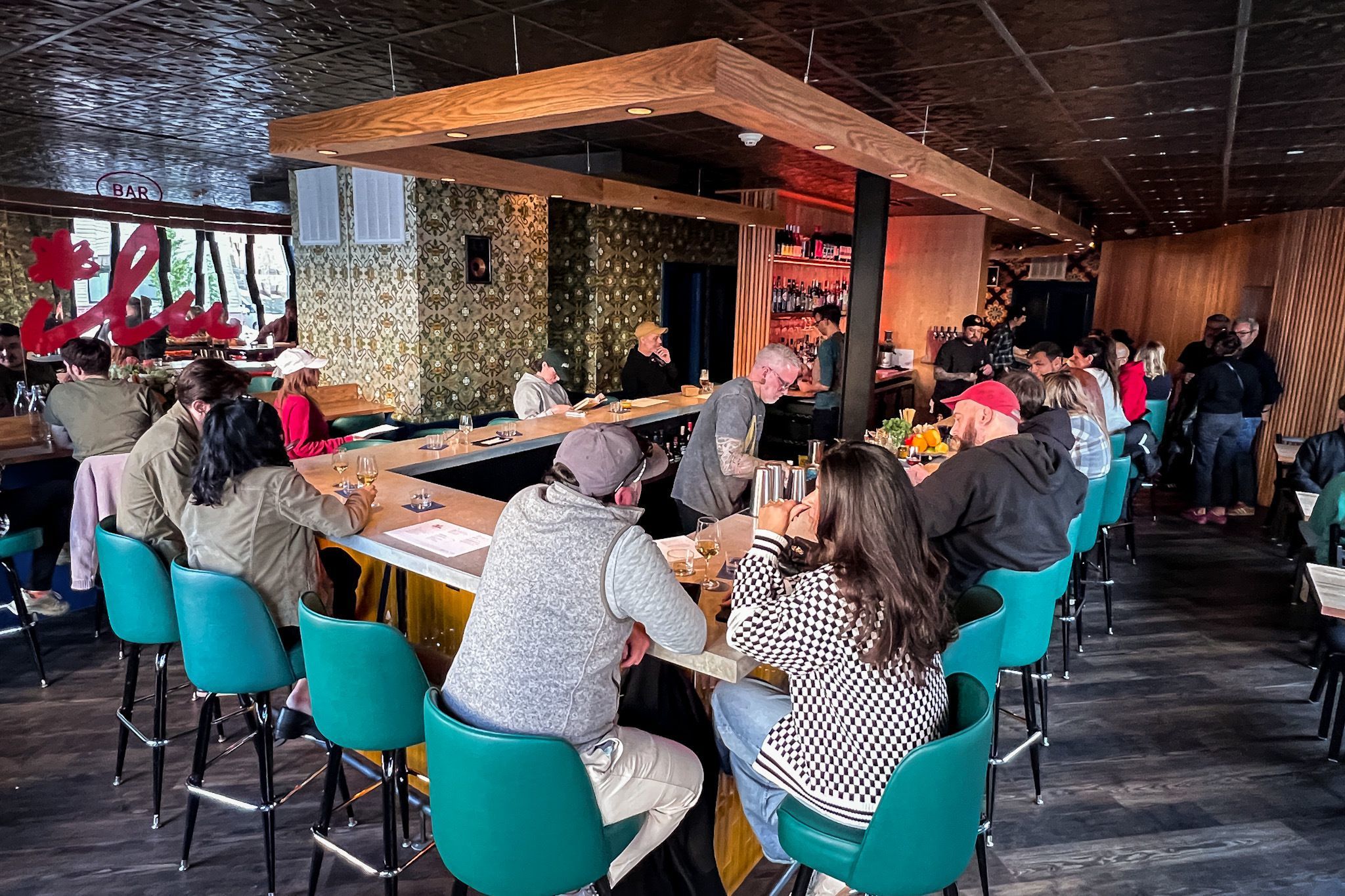
Wash it down with a bracingly crisp glass of La Gitana Manzanilla sherry on draft, plus a fistful of crunchy Marcona almonds, a forkful of tangy boquerones, and a crock of olives warmed with orange zest and herbs, and it’s hard to deny that BAR ilu is an appealing development for this rapidly changing corner of Kensington. It is perhaps also a little dissonant for those who know the neighborhood history. Thisstylish Euro concept, complete with its undulating circular bar and foam-topped glasses of vermouth, haslanded in a space previously occupied by the Old Philadelphia Bar, one of the last unreconstructed dive bars from what co-owner Scott Coudriet calls Kensington’s “pre-hip-storic” days.
Coudriet, who owns Fishtown’s Lloyd Whiskey Bar, is also partnered with Iselin at nearby Cormorant bar. Their other partners in ilu are Salvatore D’Amato and Jason Evenchik, whose Vintage Syndicate hospitality group operates Vintage, Starbolt, Time, Bar, three Garage locations, and the Goat Rittenhouse.
This veteran team is keenly aware of the sensitive dynamics of change at longstanding bars. That’s why Iselin was adamant about keeping prices reasonable for Kensington locals — no more than $14 a plate, and $16 for distinctive cocktails that would easily cost a few dollars more in Center City — while building this tribute to Spain in his adopted city.
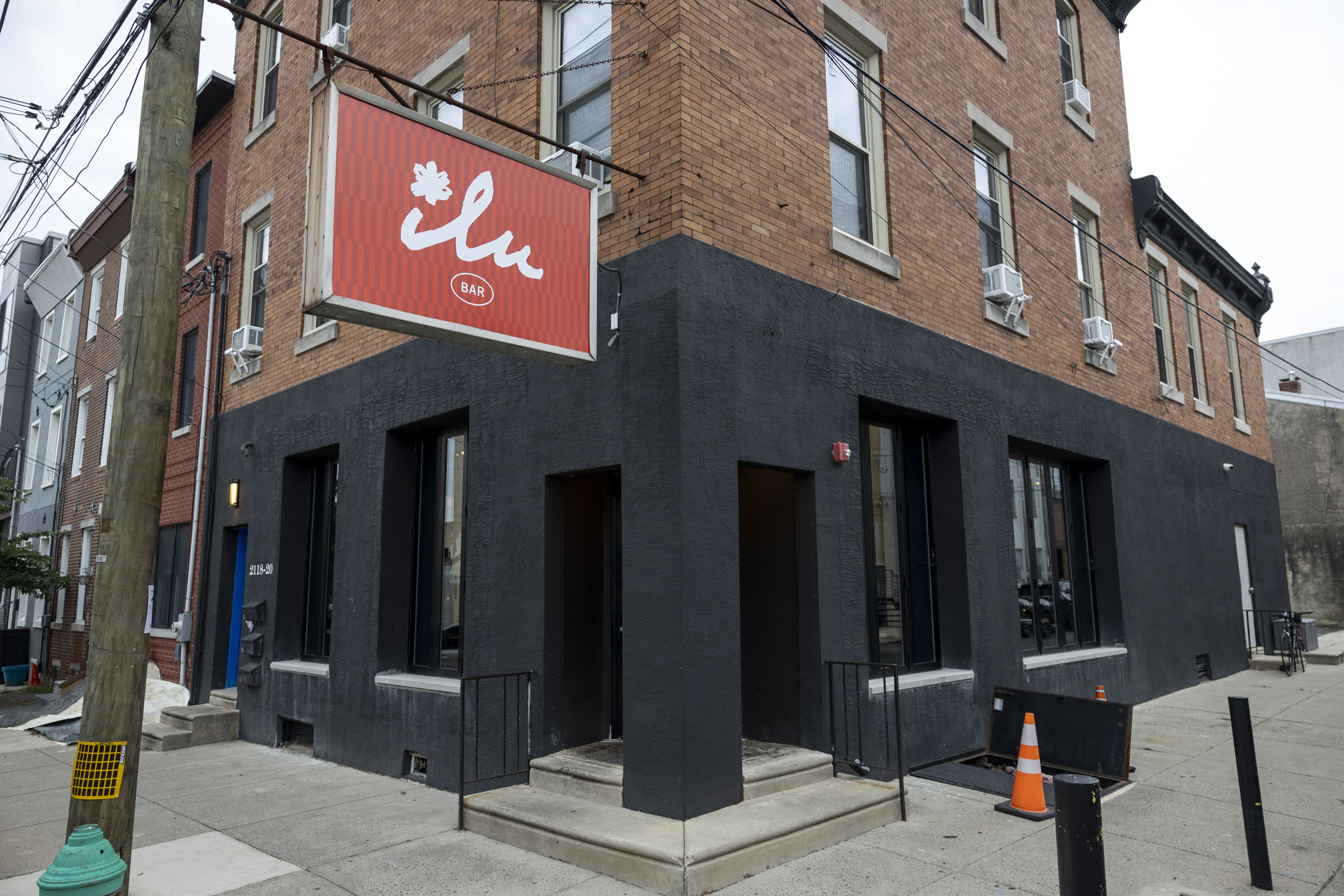
The outside of BAR ilu on Thursday, Aug. 20, 2026, in Philadelphia.Tyger Williams / Staff PhotographerThe back bar area at BAR ilu on Thursday, Aug. 20, 2026, in Philadelphia.Tyger Williams / Staff Photographer
Iselin wanted to craft this 40-seater with as few clichés as possible (no hanging hams, no toro horns, no sangria), but rather the feel of a modern tapas bar he might frequent in Madrid today. He had no idea he was also tapping into the latest evolutionary trend for the Philadelphia bar.
Twenty years ago, the smoky old taverns of yore were being replaced by the gastropub movement of the early aughts, where local craft beers flowed and house charcuterie and pickle programs anchored ambitious seasonal menus that gave a cool new vibe to the neighborhood restaurant. In some cases, they helped redefine the neighborhoods themselves.
Philly’s bar scene is now officially in its grazing phase, with curated drink menus centered around culinary cocktails, natural wines, and nonalcoholic drinks with food offerings often so limited that a hungry fellow like me might need to order three-quarters of the menu to make a meal. Supérette, the charming French wine bar beside East Passyunk’s Singing Fountain, captured this development perfectly in 2025. Owners Chloé Grigri and Vincent Stipo described these snack-centric bars as a “generational thing” for 30-somethings who want a stylish place to hang for in-between meals with friends without committing to an entire evening.
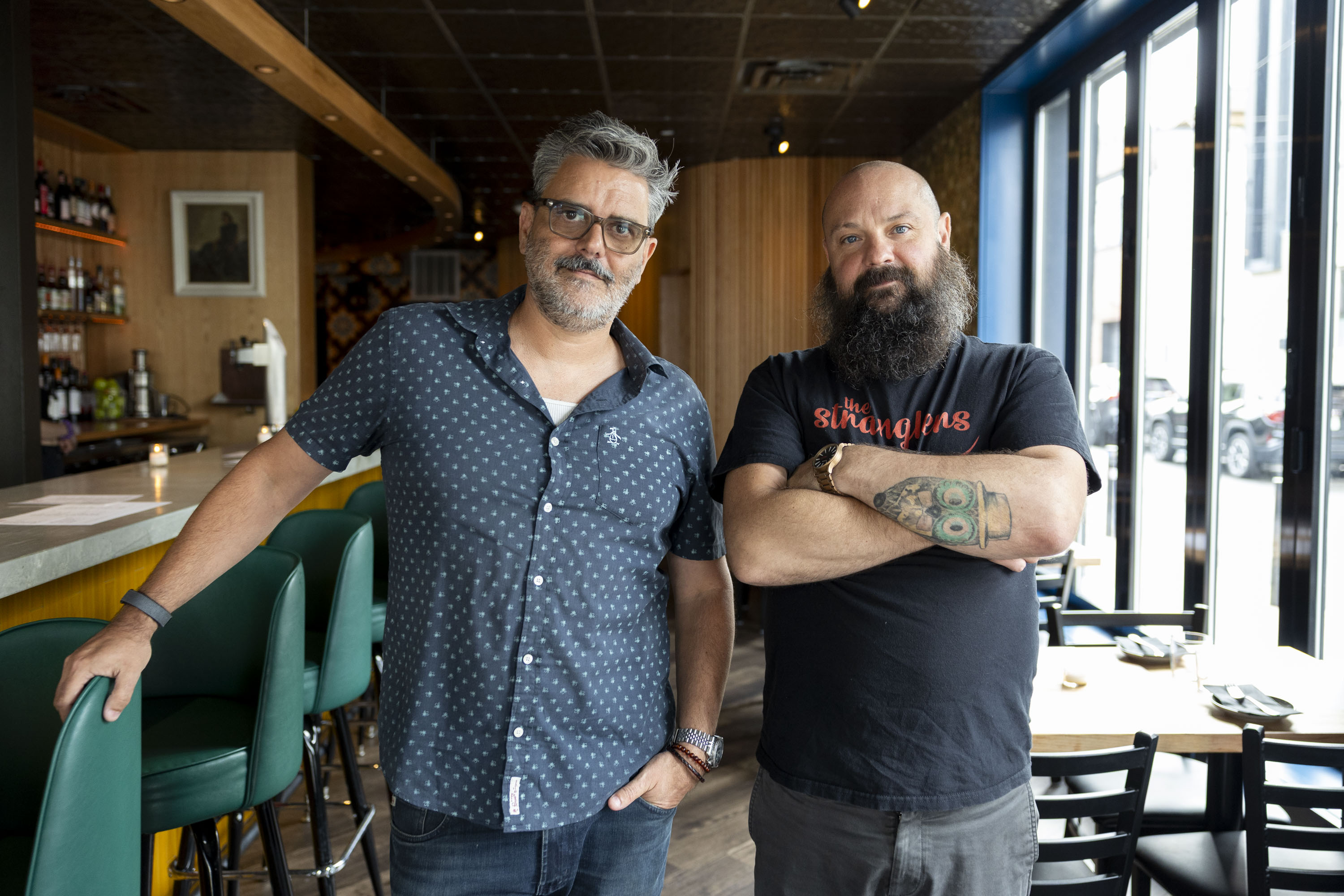
Co-owners Patrick Iselin and Scott Coudriet of BAR ilu, pose for a portrait together on Thursday, Aug. 20, 2026, in Philadelphia.Tyger Williams / Staff PhotographerThe La Gitana Manzanilla Sherry at BAR ilu on Thursday, Aug. 20, 2026, in Philadelphia.Tyger Williams / Staff Photographer
A similar approach is at work through a Japanese lens at Almanac, the cutting-edge Japanese cocktail bar (with Wagyu hot dogs and kombu-cured celery sticks) above the omakase room at Ogawa. The food menu at Chris Kearse’s new cocktail bar in Washington Square West, Known Associates, lists only a dozen items, counting the cool ranch freeze-dried peas. Same with the recently opened Lillian’s Bar in Point Breeze.As Chris Fetfatzes told me about Grace & Proper, the Portuguese-inspired bar with “tasca” nibbles he debuted in 2022, this template — a distinctive drink program bolstered by a small menu that can be produced with limited service and light kitchen investment (i.e. no hood) — makes perfect business sense in the post-COVID era.
Of course, the Spanish have been doing this for centuries with tapas, a light-bite evening repast that reflects their cultural preference for a larger meal earlier in the day. And yes, Amada has been serving tapas here for 20 years, but always alongsidea much broader menu with large plates and paellas.
Considering all the new small-plate projects that have come online recently, including Bar Cicci, Ellen Yin’s all-day aperitivo bar, Philadelphians may have finally embraced the concept on its own snacky terms.
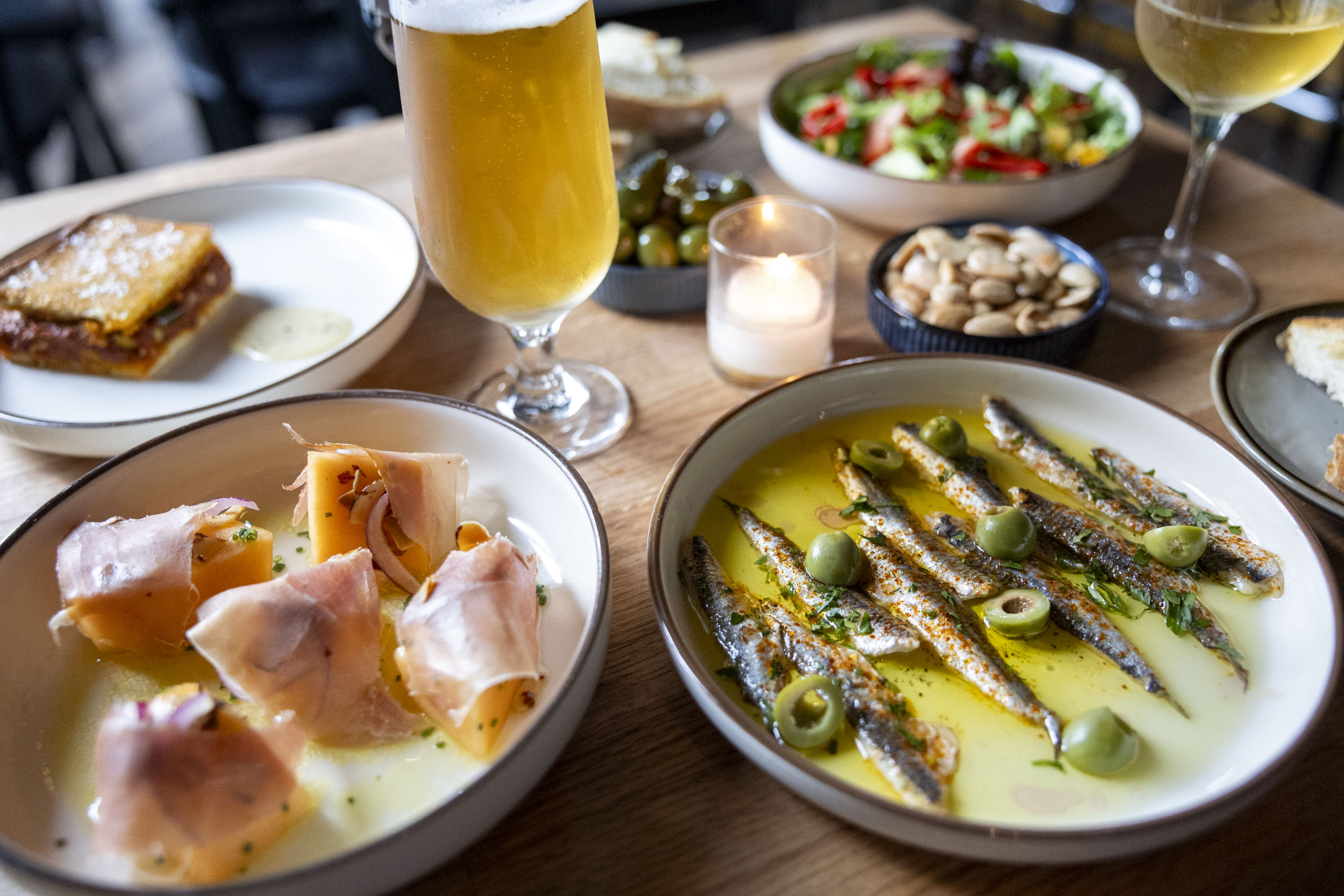
The front bar at BAR ilu, 2118 E. Dauphin St.Michael Klein / StaffThe various plates including The Boquerones, Melon with Ham, the Tuna Empanada, Tomato Salad, Almonds, and Olives at BAR ilu on Thursday, Aug. 20, 2026, in Philadelphia.Tyger Williams / Staff Photographer
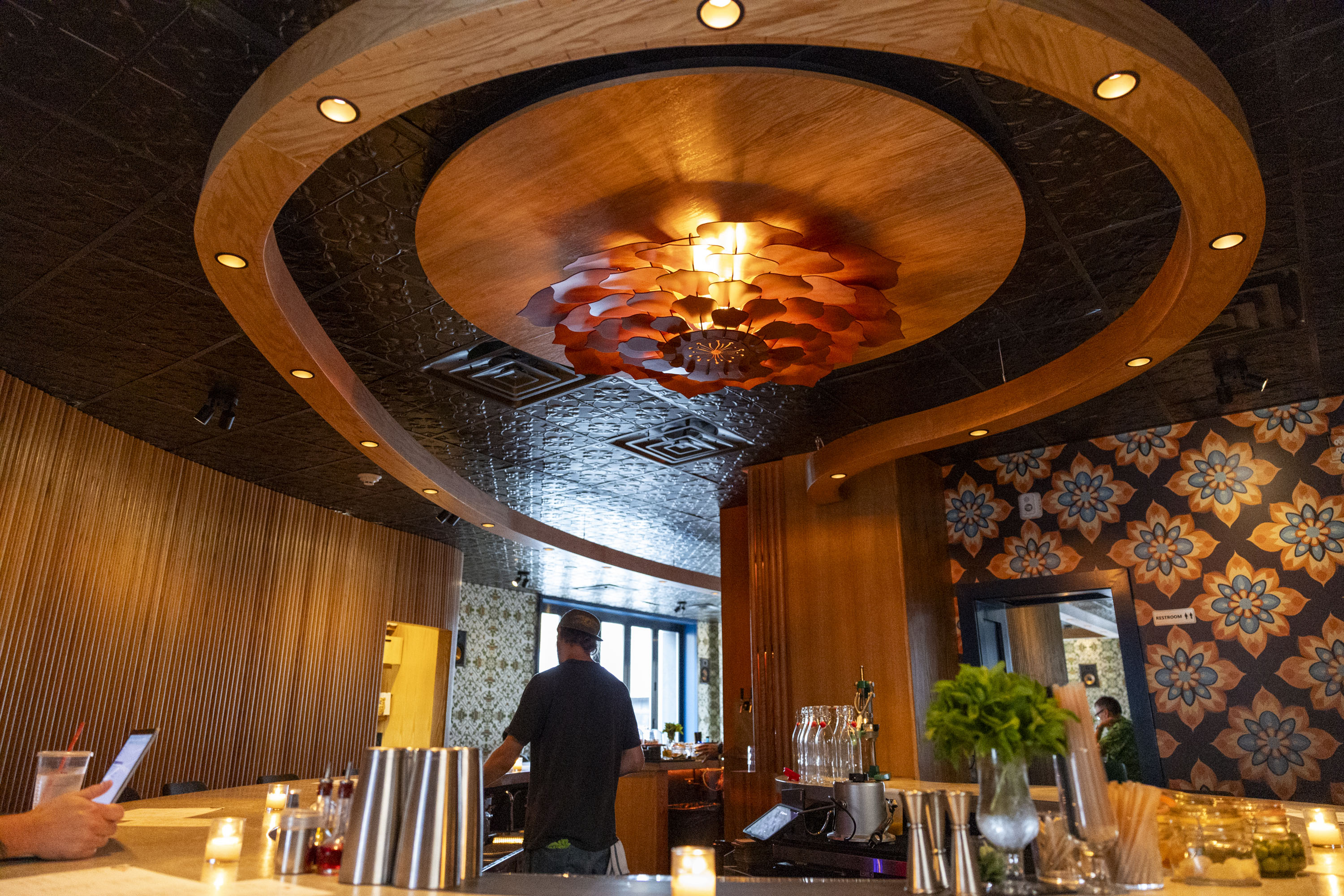
BAR ilu has a slightly more substantial food menu than most.And part of its appeal is the natural ease with which it blends a Kenzo vibe (seethe mismatched thrifter style of its floral-print wallpaper, black tin ceiling, and teal barstools) with an inventive drink program and classic Spanish plates lightly updated by chef Andrew Butler.
Fig leaf oil adds a shade of coconut-vanilla to a familiar pairing of juicy cantaloupe with shaved serrano ham. Smoked olive oil brings a whiff of earthiness to ripe summer tomatoes with cucumbers and piquillo peppers. A juicy burger topped with Manchego cheese, pickled red onions, and aioli firmly anchors the menu with one can’t-miss comfort option that even the least Spanish-inclined customer will embrace.
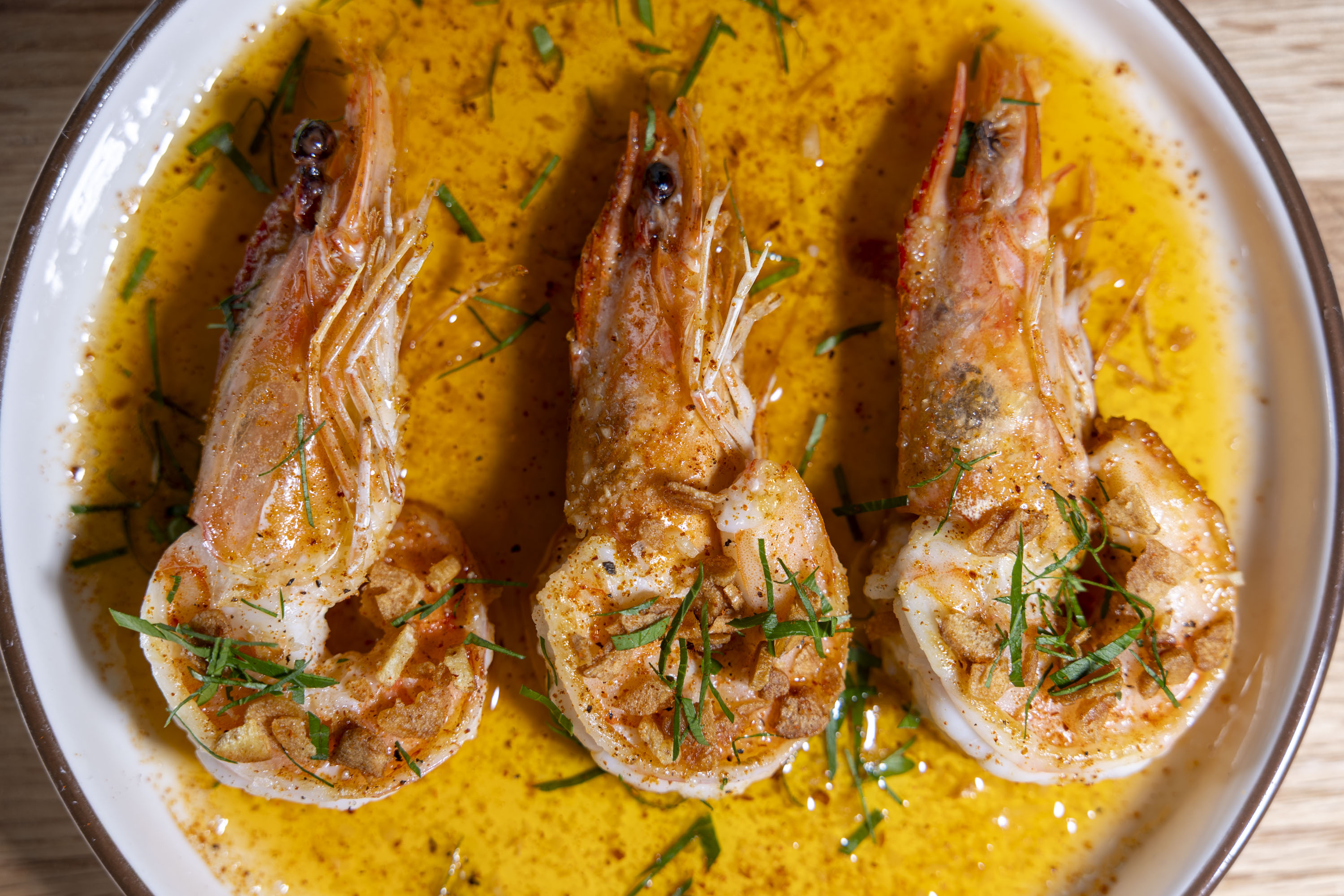
But the Spanish flavors, both on the plate and in the glasses, are what have me hooked. Aside from the tortilla, there’s a double-crusted Galician-style empanada stuffed with tuna and cooked-down tomate frito. Plump head-on gambas al ajillo take on a flicker of chili oilheat. Crisp spheres of perfectly fried croquetas harbor lusciously creamy béchamel centers flecked with serrano ham or, my favorite, salty flakes of bacalao.
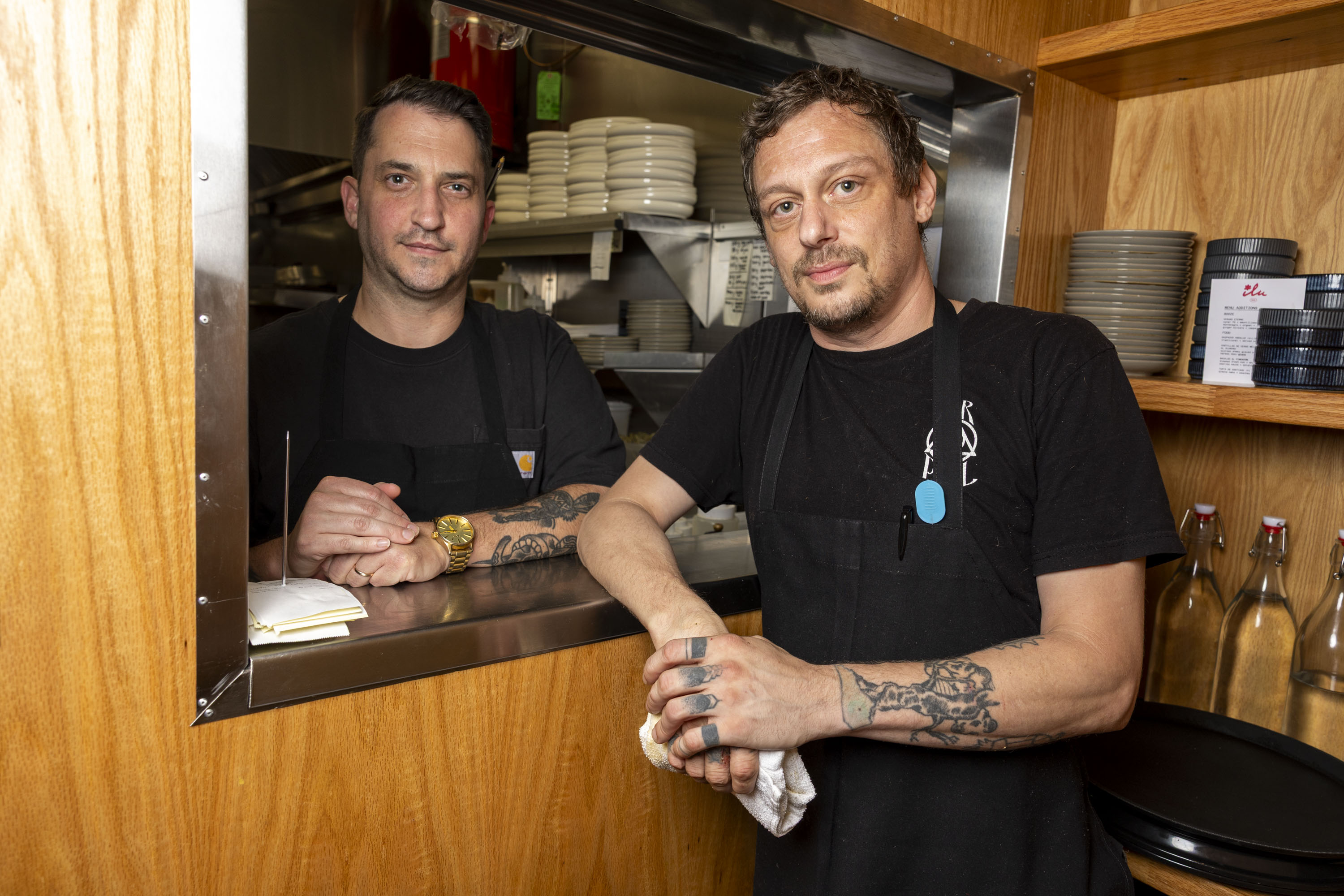
A Tuna Empanada at BAR ilu on Thursday, Aug. 20, 2026, in Philadelphia.Tyger Williams / Staff PhotographerPat Szoke, culinary director, and Andrew Butler, chef de cuisine, at BAR ilu.Tyger Williams / Staff Photographer
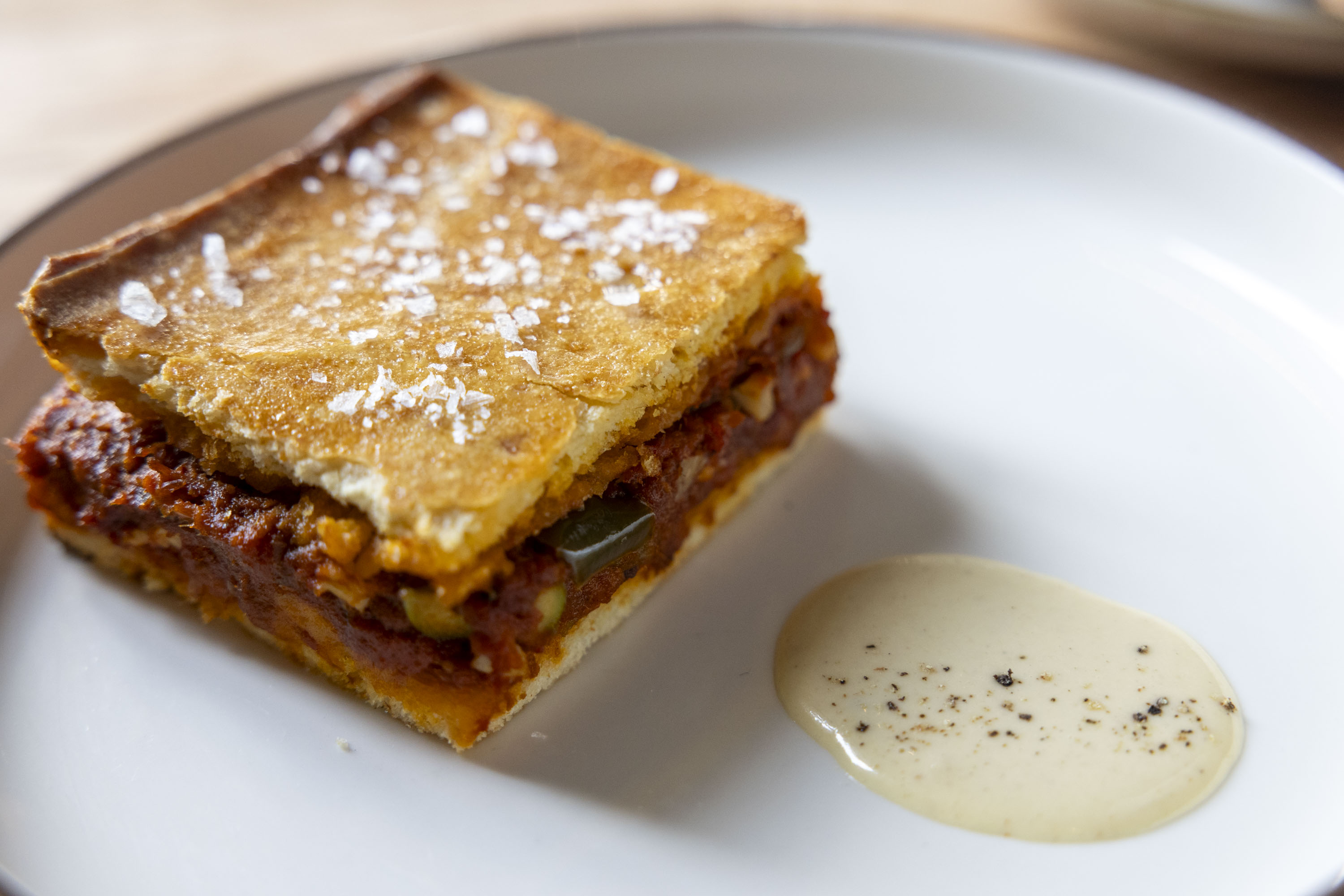
There were a few misfires. The patatas bravas were pale and lacking crisp. The flattened confit artichoke heart was mushy. The seared mushrooms were oversalted. But these were minor complaints compared to winners like the crusty bocadillo sandwich overstuffed with paprika-fried baby squid drizzled with lemony aioli and more tomate frito. Along with some tiny olives stuffed with briny anchovy, every morsel seemed deliberately calibrated to stoke a thirst.
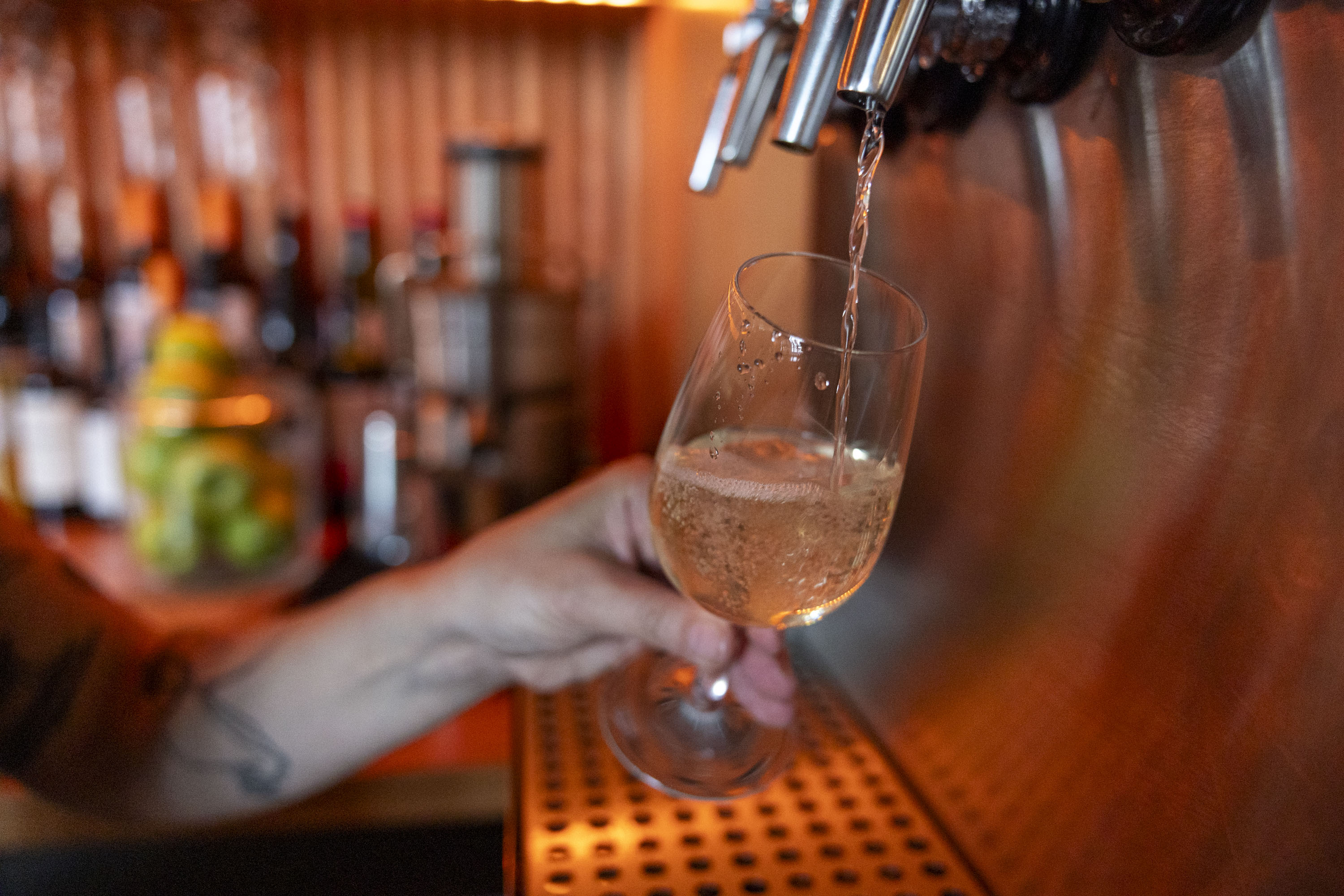
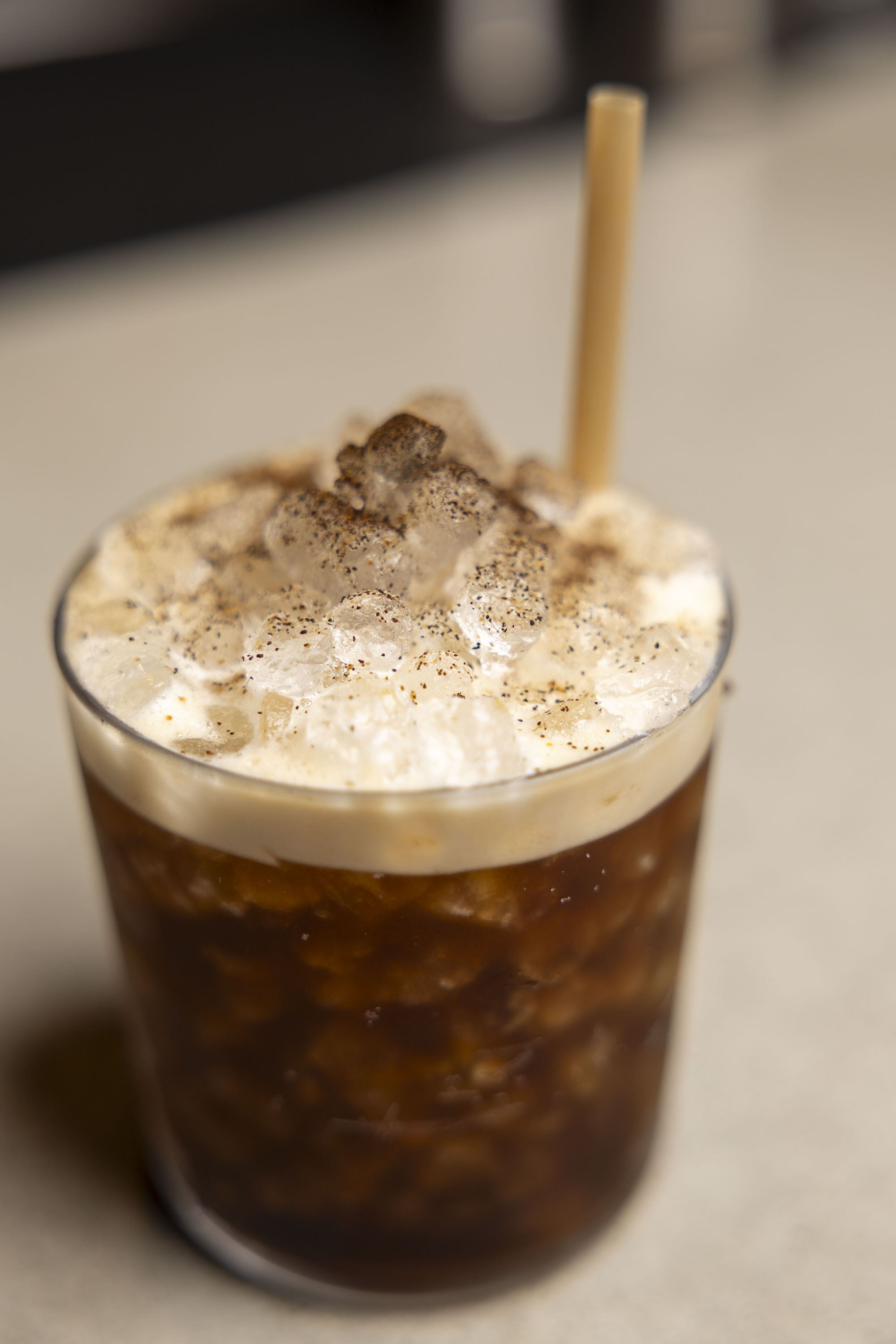
I especially enjoyed BAR ilu’screative approach to sherry and vermouth, both in cocktails and poured neat. A crisp Manzanilla, already one of my favorite predinner quaffs in summer, added a bracing dryness to Cynar amaro and gin for Remember the Alimony. Vanilla-scented Licor 43 from Spain pairs with chilled Cafe Bustelo for a carajillo whose pebble ice is dusted with coffee-orange powder, and is now one of my top five coffee cocktails in the city.
The Carajillo at BAR ilu on Thursday, Aug. 20, 2026, in Philadelphia.Tyger Williams / Staff Photographer
The Fire Drill is a refreshing tropical blast of passion fruit swirling in mezcal smoke, with an herbal whiff of Lo-Fi gentian amaro to counter the fruity sweetness. A whole Granny Smith apple is juiced to order forthe simpleBooze & Juice, paired with the spirit of your choice (make it mezcal).
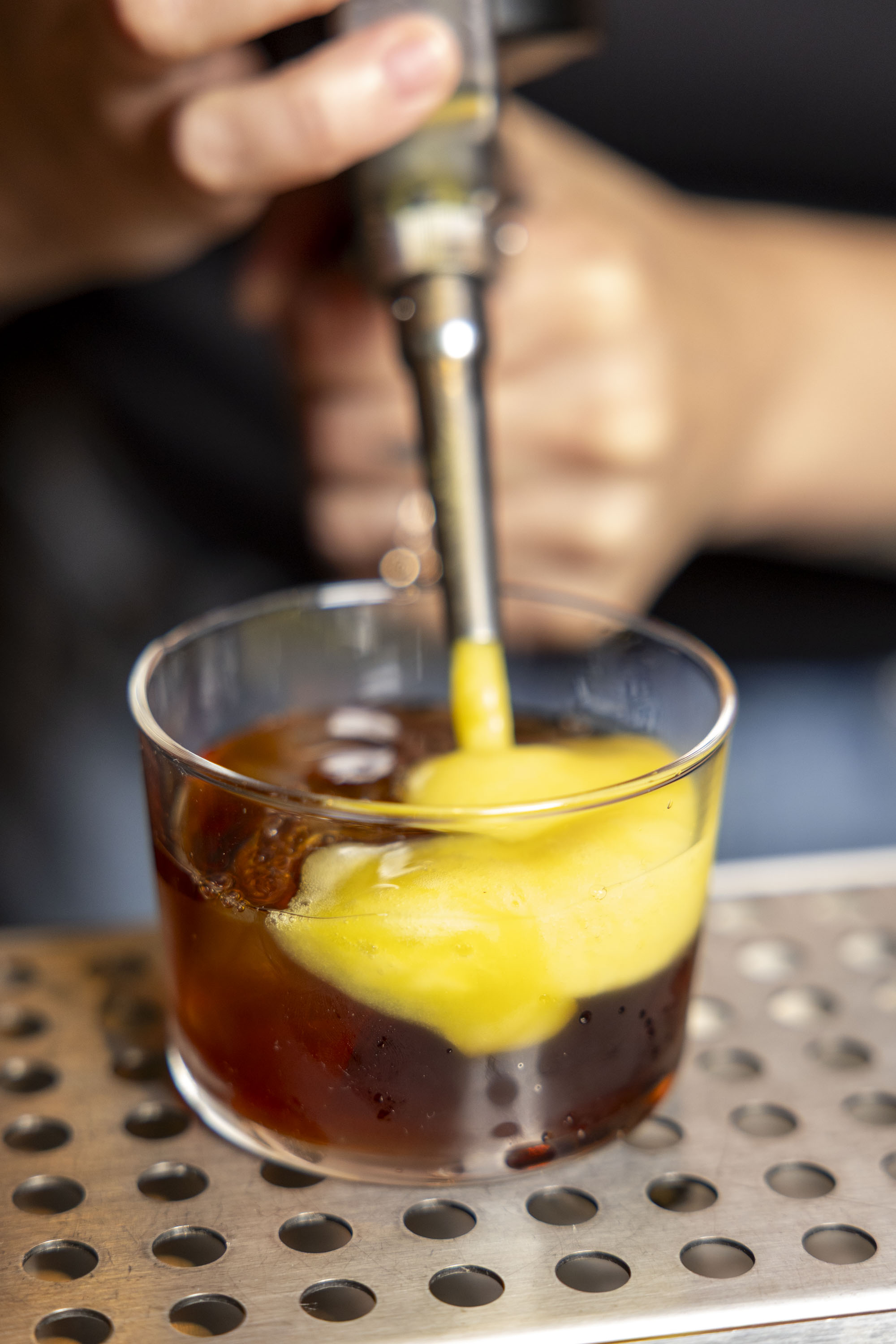
Meanwhile, unless you order a glass of dark, sweet-tangy Pedro Ximenez to cap your meal, try the Barquero vermut on draft and top it with orange foam, a combo that tastes like flat Coke dolloped with an orange-creamsicle cloud. There is actual dessert here, too: a perfectly fine almond cake with macerated peaches and cream. But that foamed vermouth was satisfyingly herbal, sweet, and mysterious — and one of the best things I drank all summer.
The Vermouth with Orange foam at BAR ilu on Thursday, Aug. 20, 2026, in Philadelphia.Tyger Williams / Staff PhotographerThe Bifana sandwich as served at Grace & Proper in Queen Village Wednesday, Mar. 8, 2023.Tom Gralish / Staff Photographer
Grace & Proper
If BAR ilu represents a modern interpretation of tapas culture in Philly, the vintage vibes at Grace & Proper’s Italian Market space reflect a different take on Iberian bar culture, this one influenced by the Portuguese roots of co-owner Chris Fetfatzes’ family.
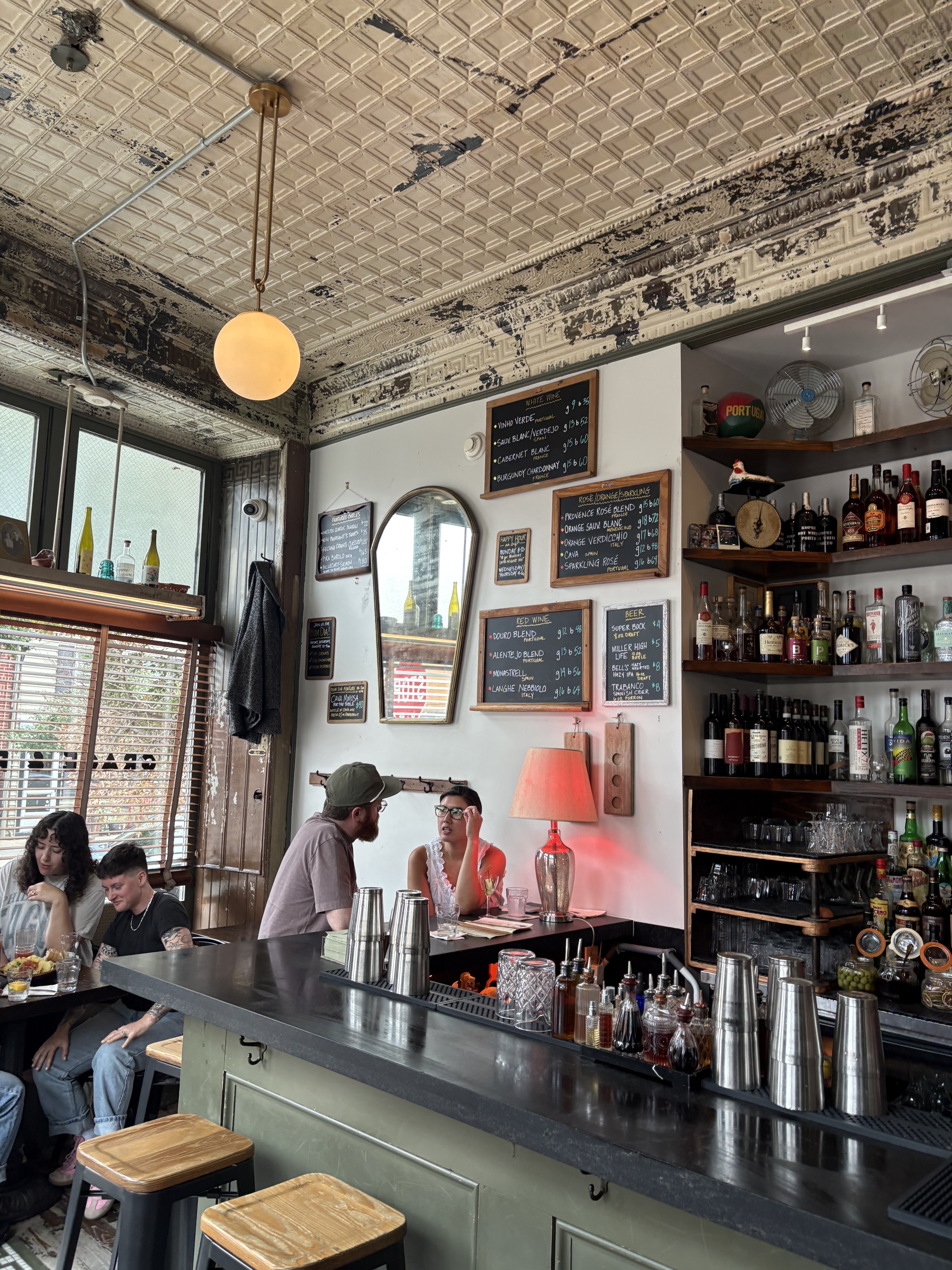
Fetfatzes, his wife, Heather Annechiarico, and their Happy Monday Hospitality partner Susan Freeman, who also own Wine Dive and Sonnys Cocktail Joint, leaned into the antique charm of the distressed tin ceiling, tiled floor, and exposed brick walls that wereuncovered during renovations of the old pharmacy (and Italian deli) that once occupied this corner space at Eighth and Carpenter. Fetfatzes was hoping to create the cocktail counterpart to Fountain Porter, the 14-year-old craft beer destination in East Passyunk known for its $7 burgers and pickles that, perhaps, helped mark the beginning of the minimalist-nibble bar.
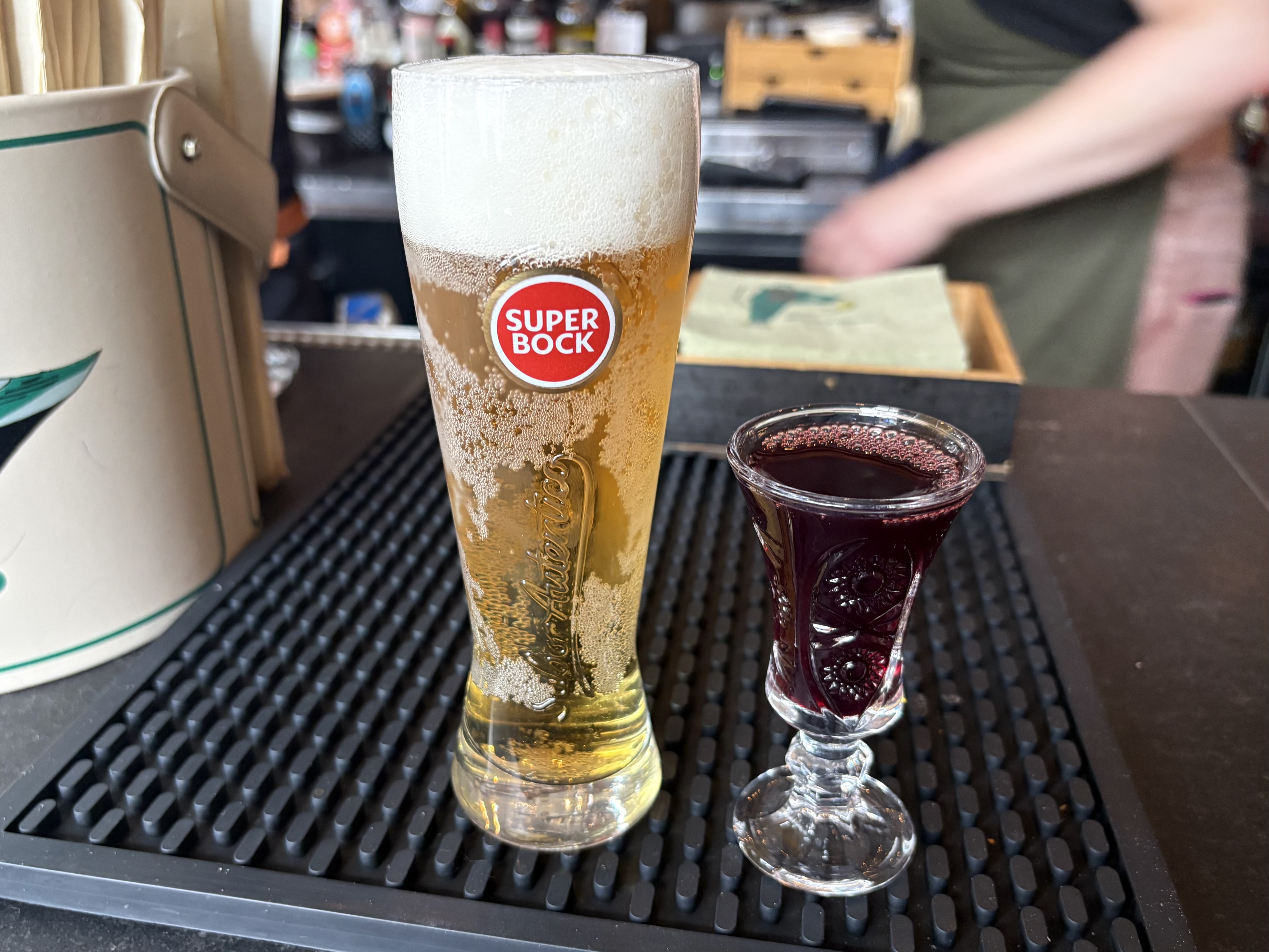
Given Grace & Proper’s compact space, with just 15 barstools and 26 table seats sidled into window banquettes (plus 30 more outside in fair weather), it’s amazing how its 200-bottle collection of amari, vermouths, ports, whiskeys, Madeiras, sherries, agave spirits, and indie Euro wines somehow fits into the tall shelves behind the bar. If you’re a fan of funky Asturian cider, there’s a proper porrón carafe to stream it directly into your mouth from an arm’s length away, ideally while watching Premier League or MLS soccer. Or try the Philly-Portugal Lisbon Wide hybrid, a draft of Super Bock Portuguese lager paired with a shot of ginjinha, a house-made cordial steeped from Morello sour cherries harvestedin Northeast Philadelphia.
The Lisbon Wide is Grace & Proper’s Portuguese twist on a Citywide, pairing Super Bock beer with housemade Ginjinha sour cherry liqueur.Craig LaBan / StaffThe Meat & Chips at Grace and Proper on Thursday, Aug. 3, 2023.Allie Ippolito / Staff Photographer
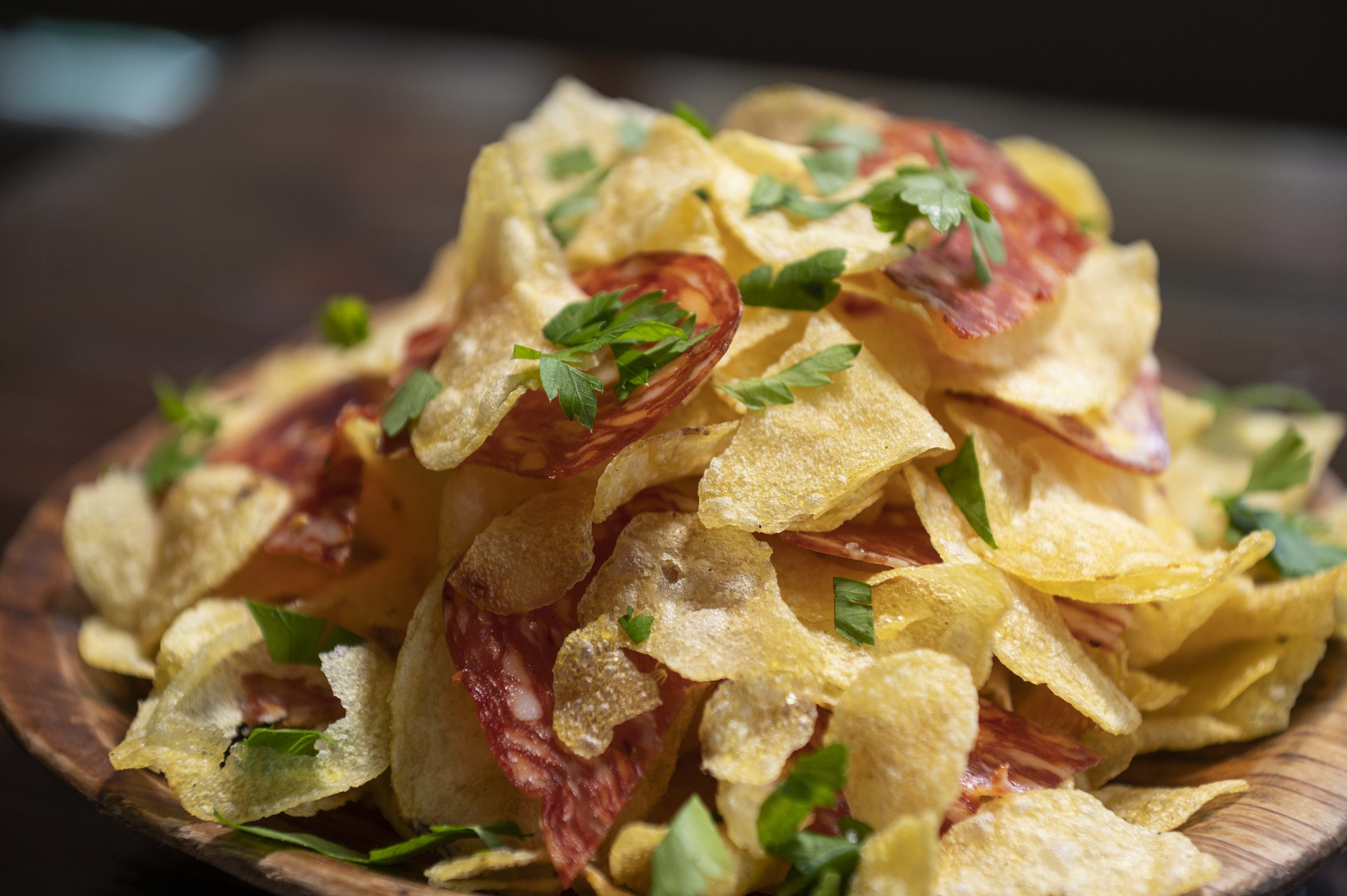
Grace & Proper doesn’t post a food menu online, but it’s substantial enough to anchor your table for a couple hours of snacking, from an irresistible pile of truffled potato chips feathered with spicy Calabrese salami to soulful onion soup infused with port and lardo, a crock of white bean stew with kale and breadcrumbs, piri piri-spiked Buffalo chicken dip, and sweet-tart-smoky bacon-wrapped prunes with black garlic aioli.
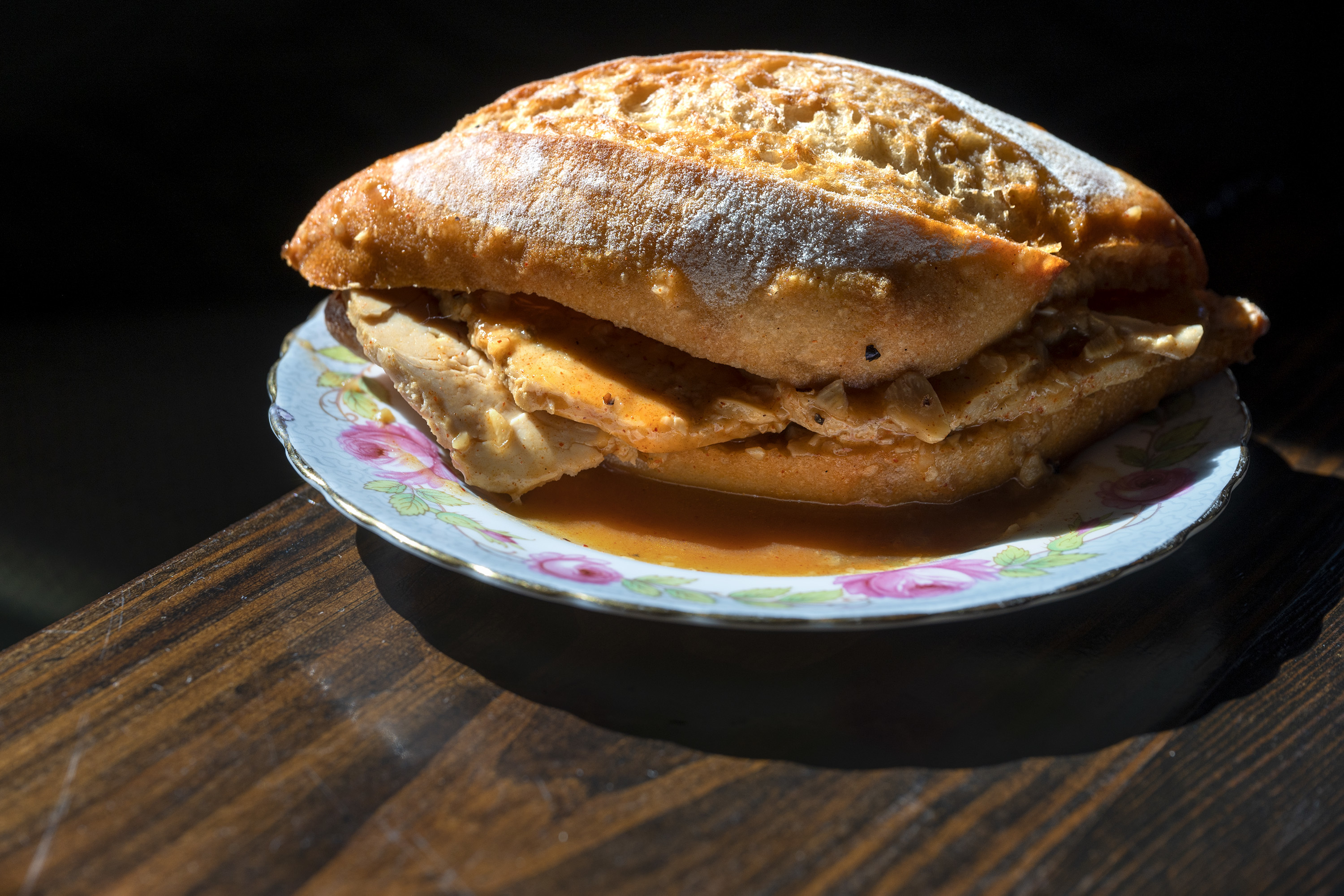
I didn’t care for the overly firm meatballs and their unbalanced blackberry romesco or, for that matter, the presentation of cheeses as crumbled nuggets. But these are all quibbles. Because there is really a single essential reason to visit Grace & Proper: the bifana, a classic sandwich of wine-marinated roast pork on a molete roll from Teixeira’s Bakery in Newark that comes perched over a paprika-orange pool of zesty gravy. Equal parts lemony, garlicky, winey, and scented with bay, that roasted pork essence is so good, the gravy is also offered as a chaser to the Piggy Backshot (oloroso sherry and Armagnac).
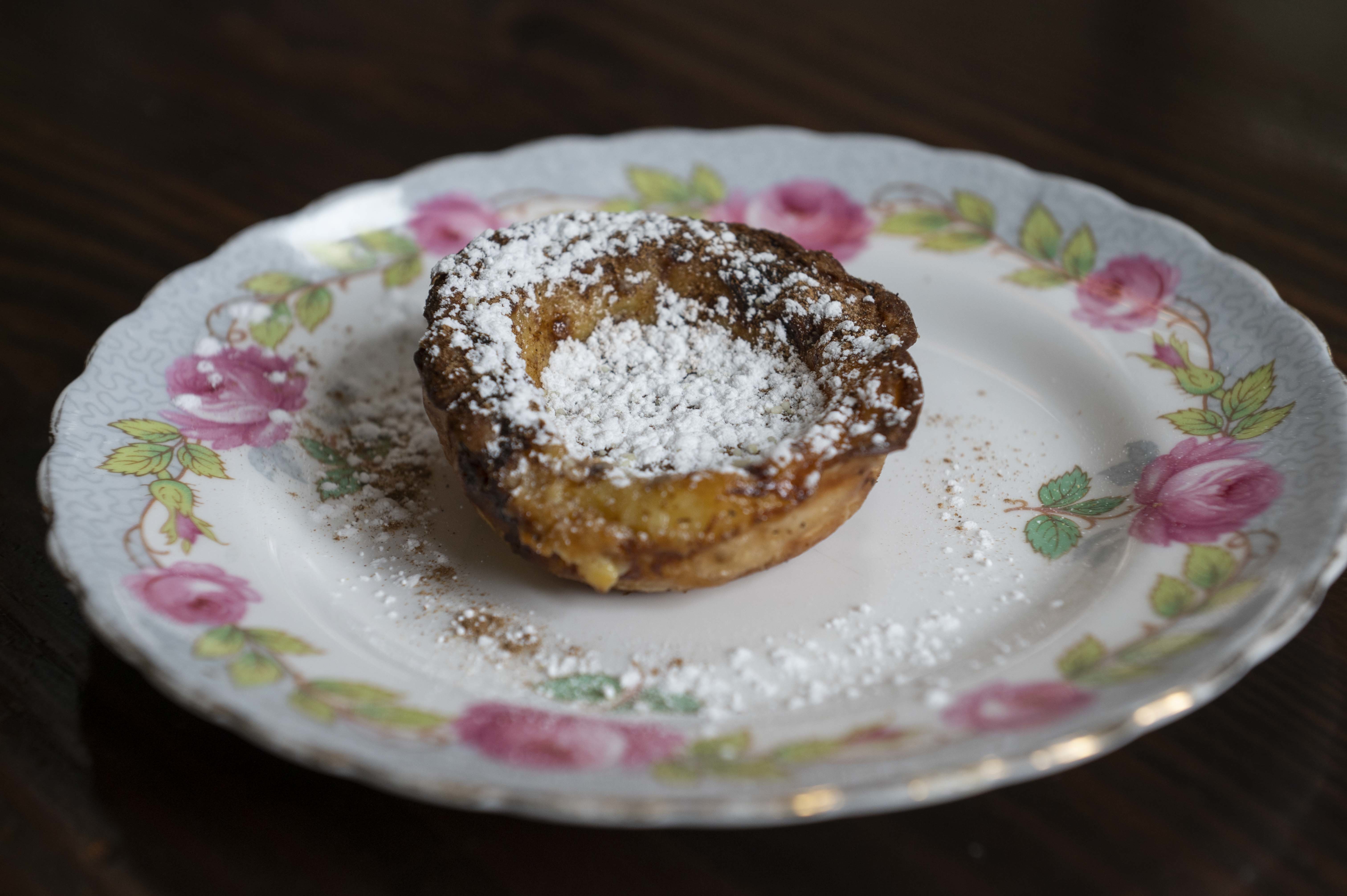
All you’ll need after that is a custardy sweet pastel de nata (also baked by Teixera’s, according to G&P’s recipe) and what might well be the best crema-topped shot of espresso at any bar in Philly. Grace & Proper is one of the precious few that actually adds fresh-pulled coffee to its espresso martinis, but I still prefer this coffee solo. I value the energy boost because, in these days of no-commitment sip-and-nibble bars, I’ve still got places to go.
The Pastéis de Nata at Grace and Proper on Thursday, Aug. 3, 2023.Allie Ippolito / Staff PhotographerVintage details of the former pharmacy and Italian deli have been preserved to add character to the bar at Grace & Proper.Craig LaBan / Staff
Menu available 4 to 11 p.m. Sunday, Tuesday through Thursday; 4 p.m. to midnight Friday and Saturday. Bar is open 4 p.m. to midnight Sunday, Tuesday, Wednesday; 4 p.m. to 1 a.m. Thursday through Saturday.
Plates, $4-$14.
Dining room is wheelchair accessible via a ramp off rear of building off Martha Street. Bathrooms are not accessible.
Not ideal for gluten-free diners, aside from some small snacks.
Menu highlights: croquetas (ham and bacalao); anchovy-stuffed olives; serrano ham and chips; tortilla Española; ham and melon; cheeseburger; gambas al ajillo.
Drinks: Cocktails built around sherry and vermouth are the most distinctive opening move, while straight fortified wines on draft, including La Gitana Manzanilla or Barquero vermut with orange foam, are also highlights. There are also 10 affordable Spanish wines by the glass.
Menu served 4 p.m. till midnight Monday, Wednesday, Thursday; noon to midnight Friday through Sunday. Bar is open till 1 a.m. on Friday and Saturday.
Plates, $7-$15.
Not wheelchair accessible.
About 40% of the menu is gluten-free or can be modified.
Menu highlights: bifana; bacon-wrapped plums; salami and truffled chips; Porto lardo onion soup; pasteis de nata.
Drinks: The vast 200-bottle collection is a sipper’s delight, from amari to fortified wines, extensive whiskies, and a surprising agave spirits collection. Don’t miss creative cocktails made with the company’s new house-distilled spirits, including a Chartreuse-inspired “Green Monk” or the ginjinha cordial, steeped from Northeast Philly sour cherries, served in the Lisbon Wide as a sidecar to a draft of Super Bock.
A distinctive stretch of 15th Street in Center City has lost both of its longtime bars within a year.
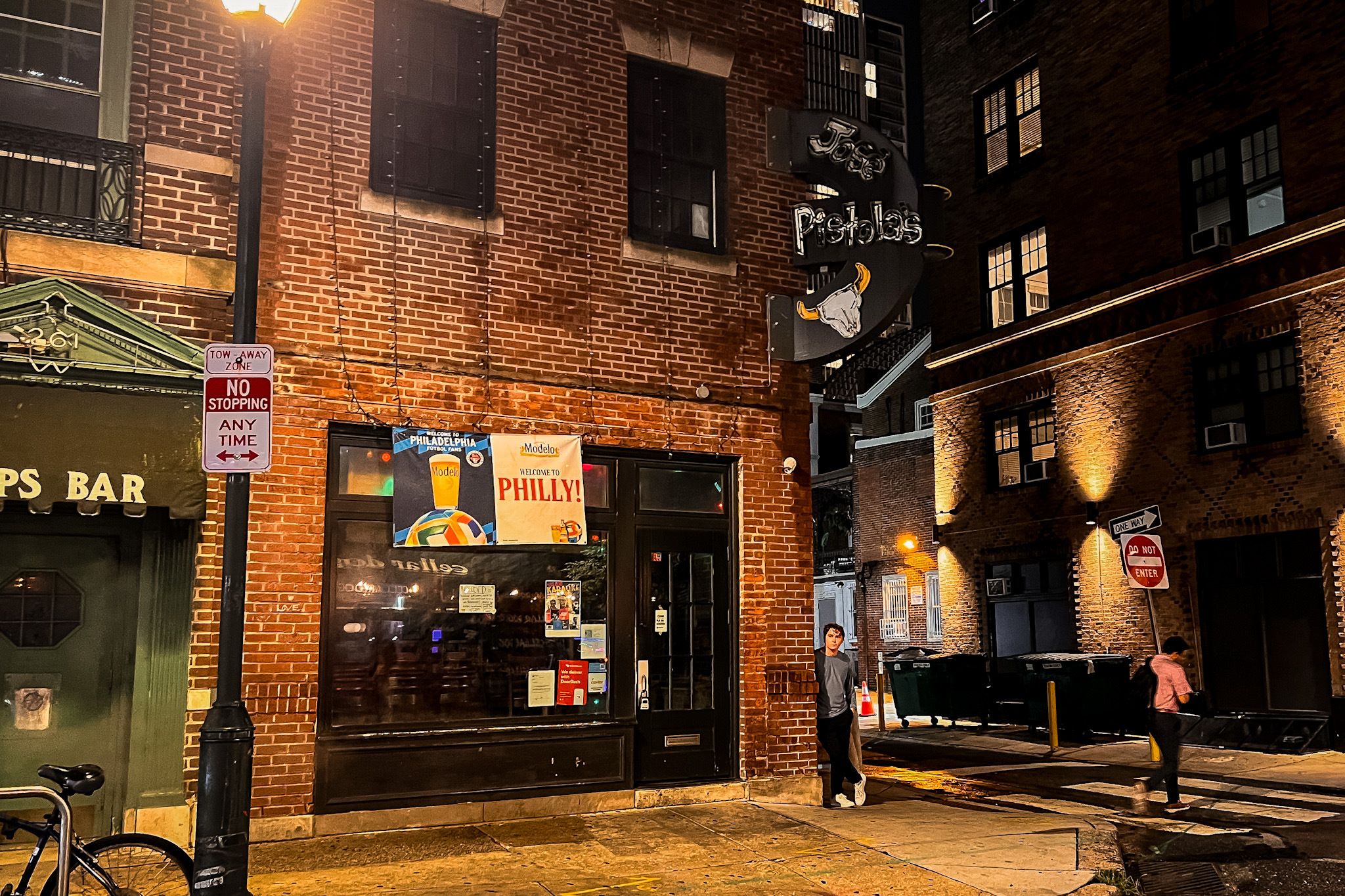
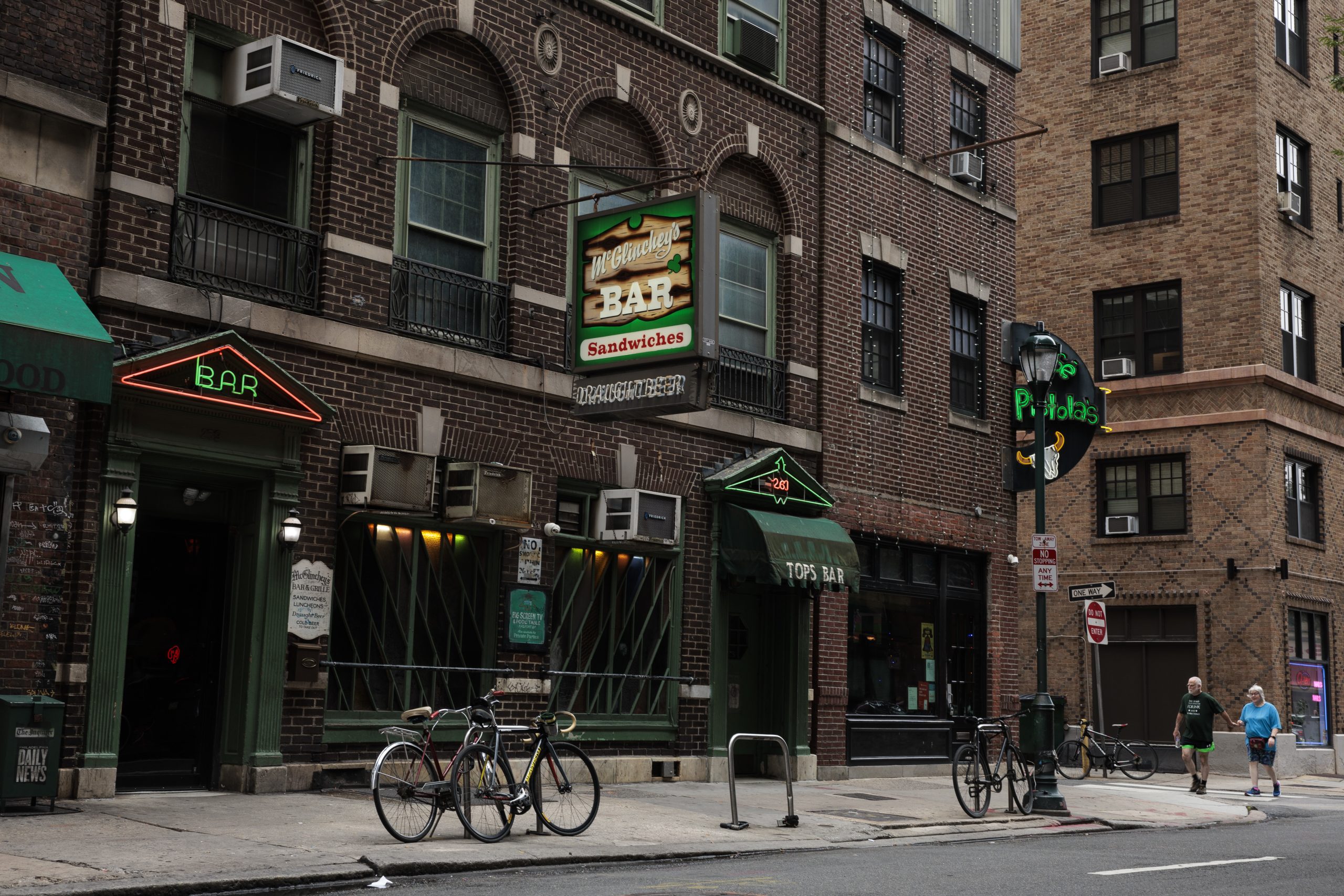
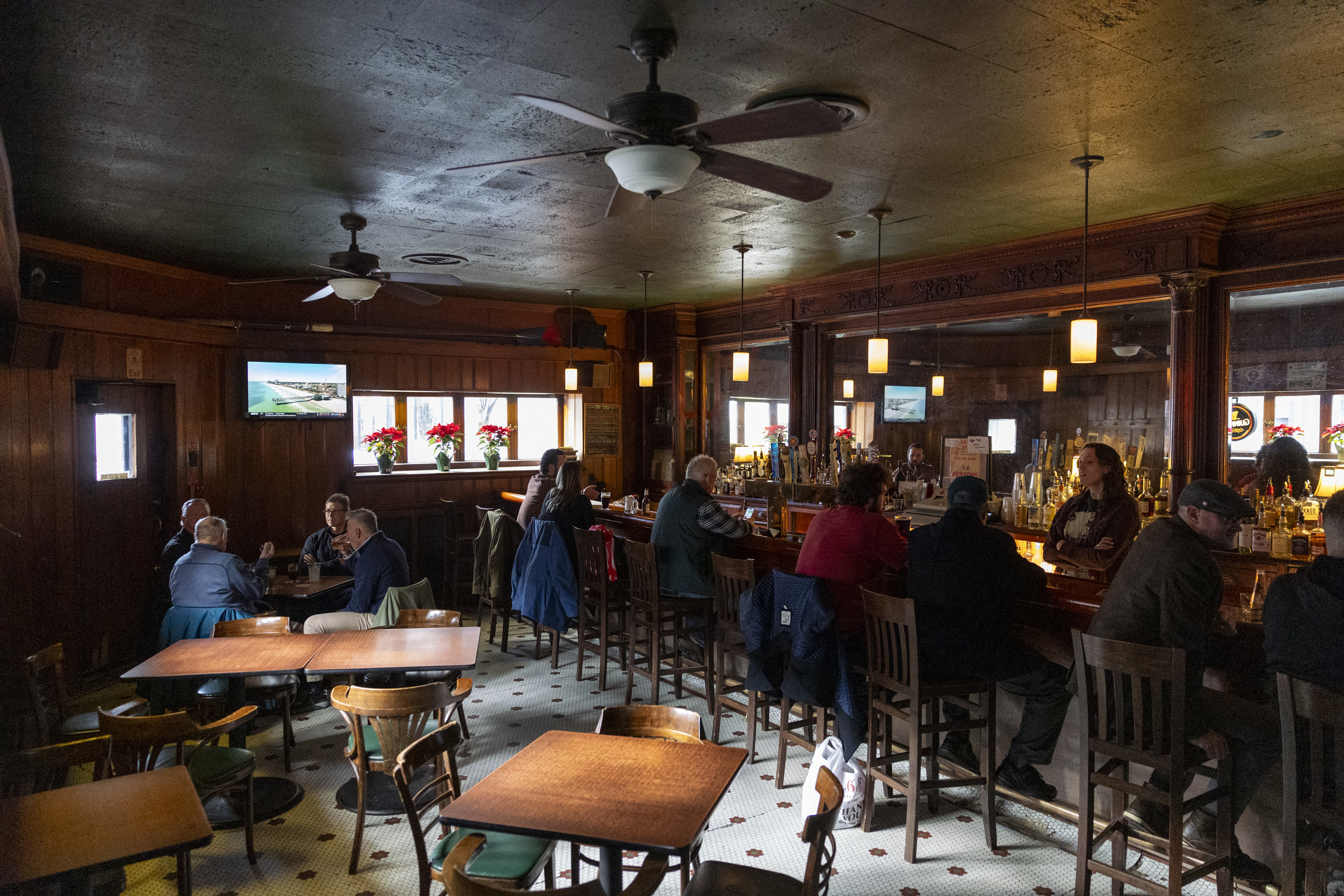
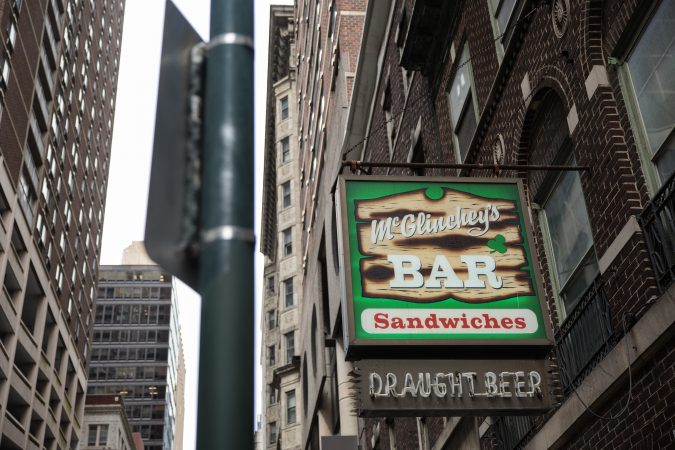
Jose Pistola’s, the Mexican-inspired craft beer bar at 263 S. 15th St., has closed after 19 years, following last August’s closing of its next-door neighbor, McGlinchey’s.
The closing of Jose Pistola’s came abruptly Tuesday amid a number of factors, including the Philadelphia Gas Works’ cutoff of its gas service. Although co-owner Joe Gunn said the business had made payments and was trying to resolve the issue, he said PGW would not restore service for three more days. . “That was the straw that broke the camel’s back,” Gunn said.
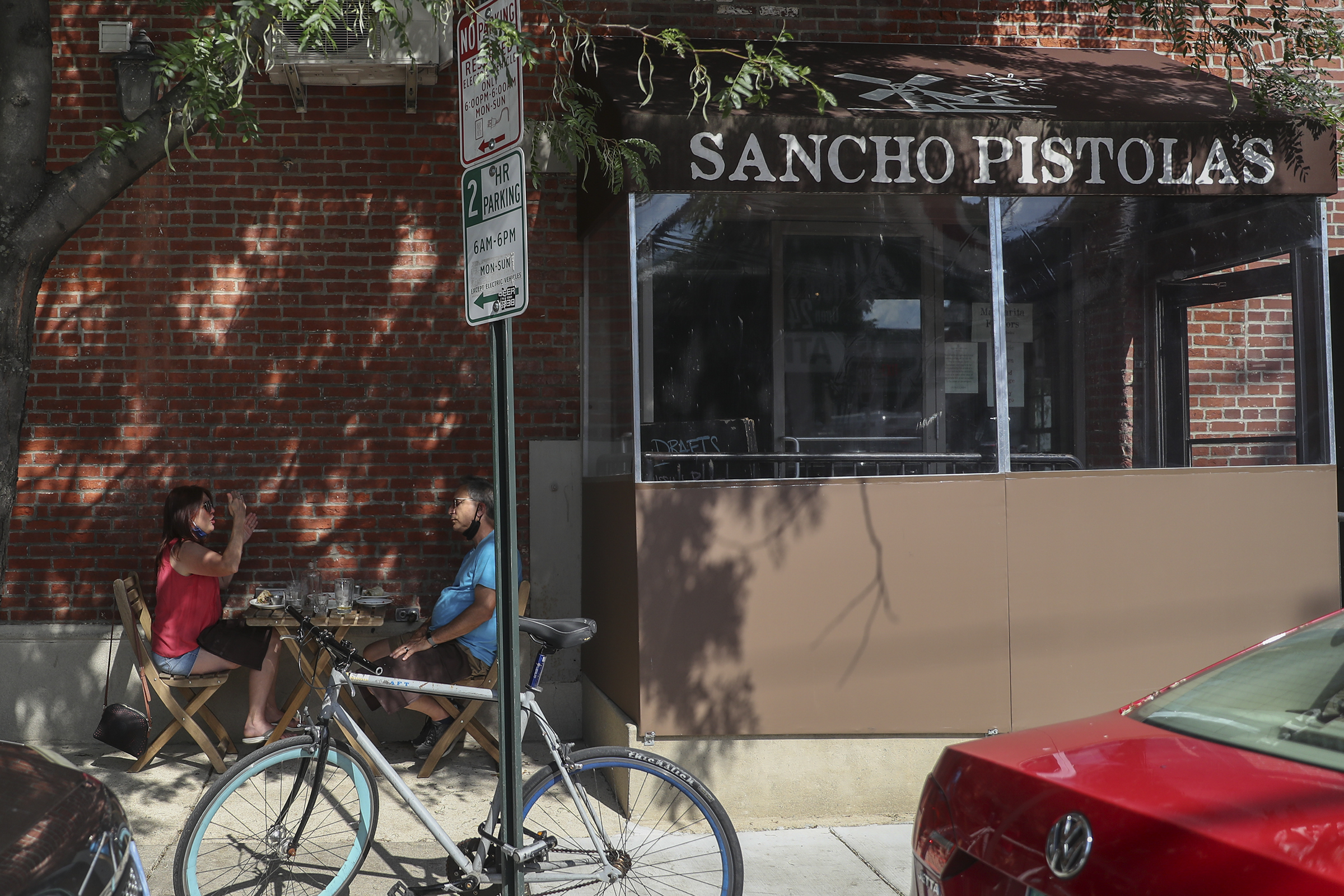
Sancho Pistola’s in Fishtown, which opened in 2014, is not affected by the Center City closing.Heather Khalifa / Staff Photographer
The closing does not affect Sancho Pistola’s on Girard Avenue in Fishtown, which opened in 2014, or Pistola’s Del Sur on East Passyunk Avenue in South Philadelphia, which opened in 2017. They are doing well, Gunn said. “They’re in no danger of going anywhere.”
In 2009, court records show, the City of Philadelphia, which owns PGW, obtained a judgment of nearly $48,000 against Jose Pistola’s. According to a 2025 court docket entry, the judgment was never satisfied. A PGW spokesperson on Friday declined to comment, saying it does not share information about individual accounts.
Gunn, saying that he did not want to blame PGW, said the interruption forced a decision that he and business partner Casey Parker had already been contemplating.
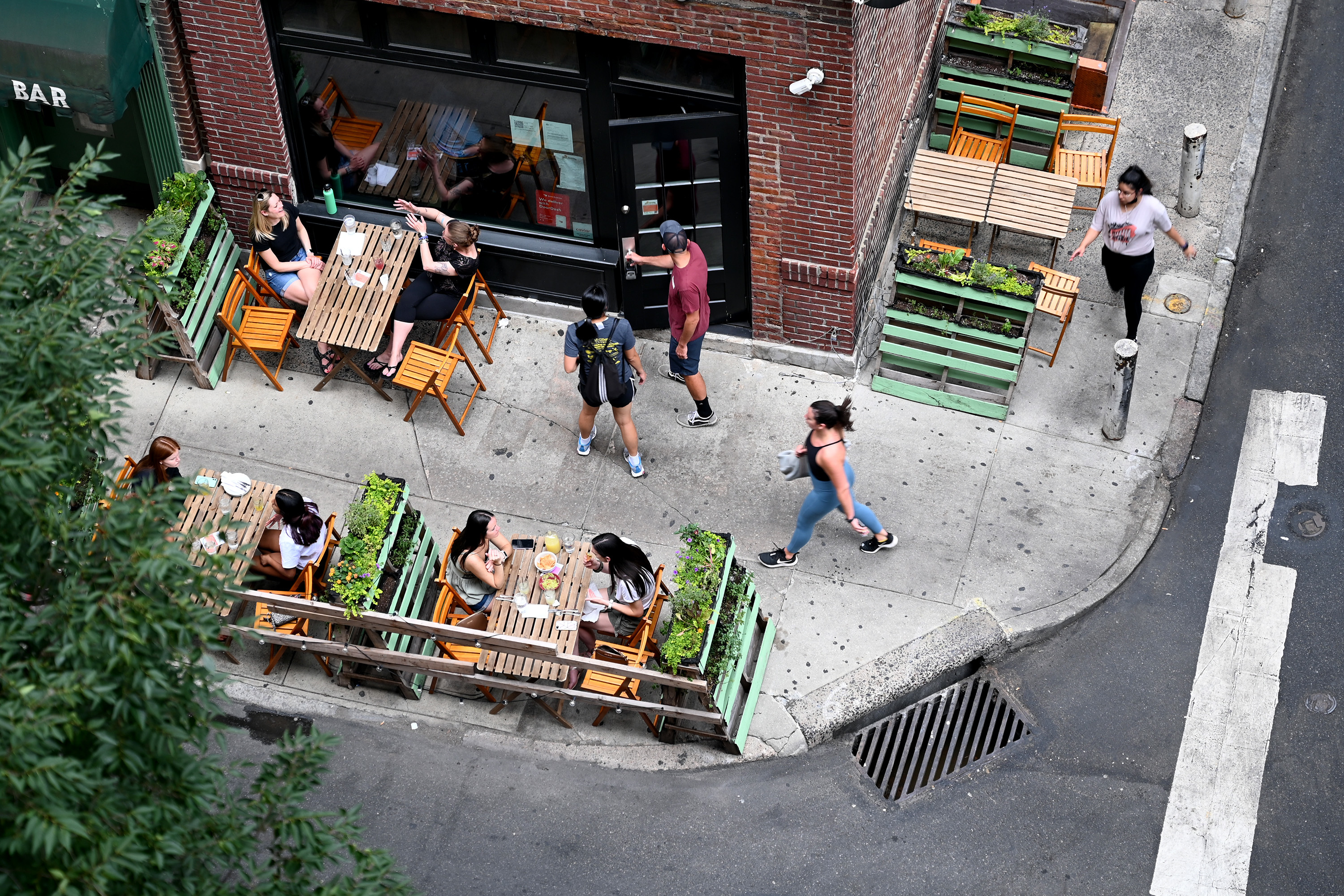
A view of Jose Pistola’s pandemic-era outdoor seating at 15th and Manning Streets in 2021. Tom Gralish / Staff Photographer
Gunn said they had about a year remaining on their lease and had been discussing a five-year renewal with their landlord. But with both Gunn and Parker now 51 and their children getting older, he said another long commitment seemed increasingly daunting. “It takes a lot of energy to play that game,” Gunn said.
The numbers were difficult, too. As other bar and restaurant owners have lamented, higher food and operating costs had squeezed the business, while the late-night trade that once helped sustain bars like Pistola’s has diminished.
“Frankly, [the bar] just never fully recovered from COVID,” Gunn said. “Coming out of COVID, the world was a different place — the price of goods, the cost of everything, and people don’t go out as much late. These younger generations are too smart to drink their life away.”
“It’s always been tight, but everything changed,” Gunn said. “And then people just don’t drink as much.”
About 25 people worked at Jose Pistola’s. Gunn said they had little warning because the owners themselves had not decided to close until the last minute. He said he and Parker are trying to place employees at their other restaurants or with friends in the industry.
“We’ll absorb what we can, obviously, in the other two places,” Gunn said. “We have a lot of friends in the business, so we’re aggressively trying to help them.”
Jose Pistola’s bar, as decorated in 2019 for its annual Jose Pistola’s Christmas Smackdown Bar Crawl.Tom Gralish / Staff Photographer
Jose Pistola’s — its name a loosely licensed Spanish rendering of Gunn’s first and last names — opened Aug. 29, 2007, taking over the longtime Copa, Too! space. Gunn and Parker were both veterans of Fergie’s Pub; Gunn had worked there for about seven years before leaving to open Pistola’s, while Parker had moved on by then.
The bar quickly established itself through its combination of craft beer, Mexican-inspired food, and an irreverent neighborhood-bar atmosphere. It became particularly associated with Philadelphia’s burgeoning craft beer movement and the early years of Philly Beer Week.
Its food grew more ambitious after Puebla-born chef Adán Trinidad joined the operation and eventually became a partner. Trinidad, whose resumé included El Vez and Alma de Cuba, brought to the menu such dishes as tortilla soup, goat sopes, carnitas-filled steamed buns, and Brussels sprout tacos that caught the attention of Inquirer critic Craig LaBan.
The partners later expanded the Pistola’s name to Fishtown and East Passyunk. Trinidad died after a fall in October 2021 at age 39.
Adán Trinidad was chef-partner until his death in an accidental fall in 2021.Rachel Delsurdo / Courtesy of Jose Pistola's
For most of Jose Pistola’s run, its next-door neighbor offered a study in contrasts.
McGlinchey’s — now on the market — was a cash-only dive bar known for low prices, dim lighting, smoke in the air, and an eclectic clientele. It endured by barely changing, while Jose Pistola’s brought craft beer and more ambitious food to an equally unpretentious neighborhood-bar sensibility.
The two businesses were nevertheless close.
“We had a great relationship with them,” Gunn said. “We loved them because of how funny they were. They were just kind of cranky, and they put up with us.”
McGlinchey’s, as seen in August 2025, was next door to Jose Pistola’s.Monica Herndon / Staff Photographer
Gunn said the McGlinchey’s closure was part of a broader change he has watched on this stretch of 15th Street between Locust and Spruce Streets.
“The whole corridor used to be more vibrant,” he said. “I think COVID wiped out a lot of those places. It changed everything for us.” The block is also home to Cellar Dog and Garage Rittenhouse.
As recently as Thursday, Gunn said, he and Parker were “still fighting to figure out a way to [save] it. But it just, I think, ran out of steam.”
Food magazine Bon Appétit released its annual best new restaurants list on Monday, and it includes two Philadelphia restaurants.
Honeysuckle, Omar Tate and Cybille St.Aude-Tate’s fine-dining restaurant in North Philadelphia, and Sao, Phila and Rachel Lorn’s East Passyunk oyster bar, were among the 19 establishments that made the cut.They joined restaurants in New York City, San Francisco, Chicago, Seattle, Nashville, and Birmingham, Ala., and more.
The unranked list defines new restaurants as those that opened between March 2025 and March 2026. Scouts visited restaurants in 43 U.S. cities and rated them according to seven criteria: flavor, technique, hospitality, ambiance, cultural significance, innovation, and sense of place.
To be considered the best, “a restaurant must serve dishes and drinks that are complete in terms of flavor and technique, from the pre-meal cocktails to dessert, like an album with no skips,” wrote Bon Appétit editor-in-chief (and former Inquirer food editor) Jamila Robinson.
Partners and chefs Cybille St.Aude-Tate and Omar Tate, who opened Honeysuckle at 611 N. Broad St. in April 2025.Clay Williams
Tate and St.Aude-Tate opened Honeysuckle at 611 N. Broad St. in April 2025. The restaurant’s five-course tasting menu evolved from the couple’s beloved West Philly café-market, Honeysuckle Provisions, which closed in 2024. The couple uses the menu to weave a dynamic and complex narrative about how the Black diaspora has shaped American food culture.
The Mawn Cutlet at Sao, the East Passyunk Avenue oyster bar from married restaurateurs Phila and Rachel Lorn.Monica Herndon / Staff Photographer
“Chefs Omar Tate and Cybille St.Aude-Tate deliver a showstopping walk through nostalgia, pop culture, Philadelphia, and Black American history through dishes that spark new reflection and conversation,” Robinson wrote of Honeysuckle.
Phila (left) and Rachel Lorn (right) own Cambodian noodle bar Mawn and oyster bar Sao. Bon Appétit has named Sao one of the country’s best new restaurants of 2026.Monica Herndon / Staff Photographer
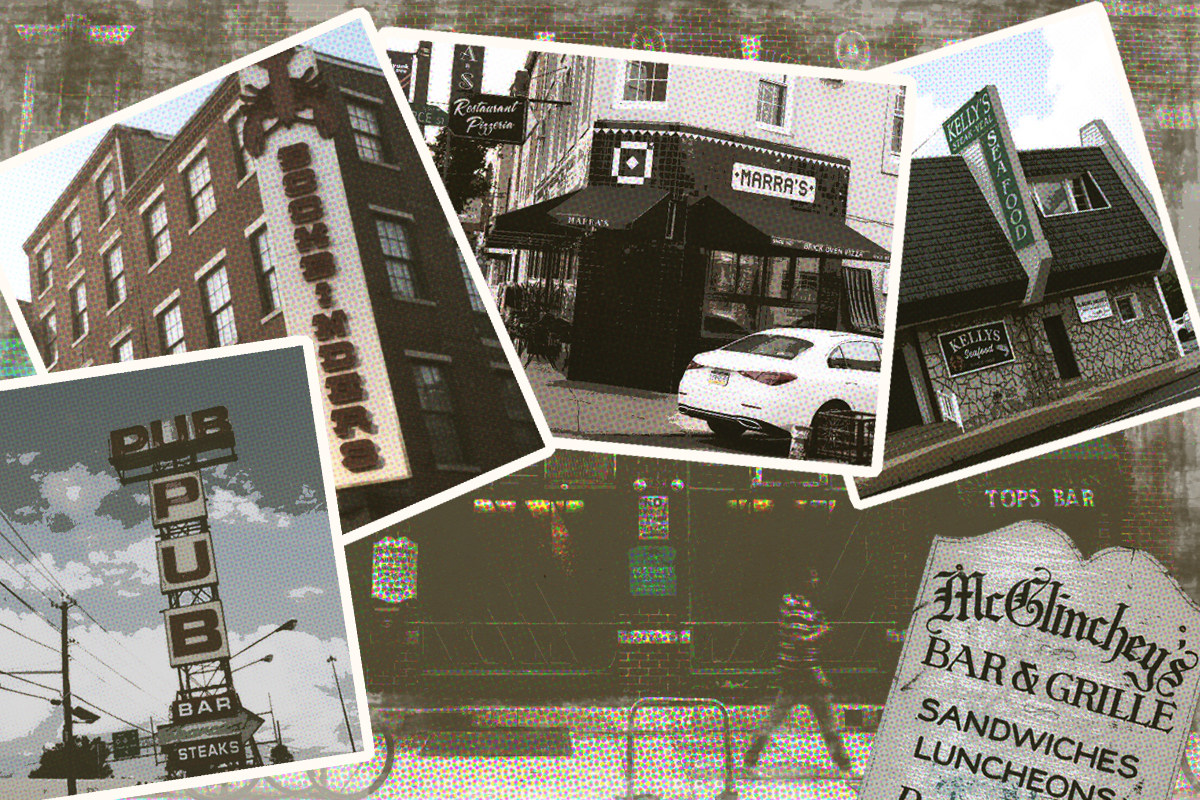
An unusually visible collection of Philadelphia-area restaurant institutions is reaching a turning point at the same time — with some closing for good and others seeking buyers as a generation of longtime owners reaches retirement age.
At Kelly’s Seafood, the end is definite. The Northeast Philadelphia restaurant will close this month as its owners retire, ending a run spanning three generations of the Kelly family. So will Steve Stein’s Famous Deli, whose history in the Northeast also reaches back nearly 70 years.
Elsewhere, the outcomes are less certain.
Cherry Street Tavern has been around for a century at 22nd and Arch Streets.Tyger Williams / Staff Photographer
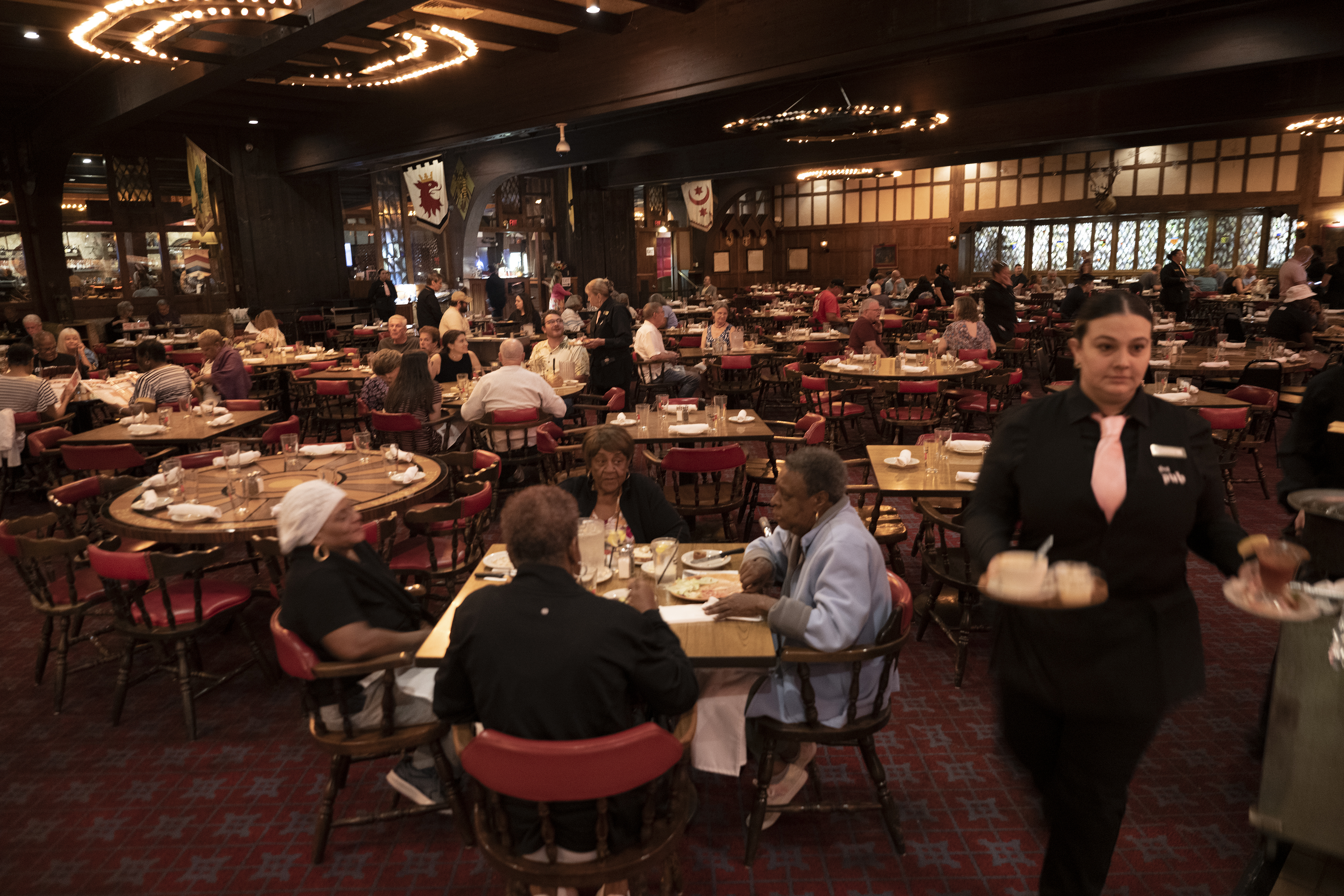
The Pub, the sprawling Pennsauken steakhouse known for its open hearth, medieval decor, and thousand-plus seats, is on the market. The restaurant, which dates to 1951, is not closing: It is on its customary summer break and is scheduled to reopen Sept. 18.
The owners of Cherry Street Tavern, the Logan Square bar that has operated for more than a century, are looking for a buyer after 50 years of stewardship by the Loughery family. The buildings that housed Mamma Maria’s, the East Passyunk Italian restaurant that opened in 1992, went up for sale this month. Aldar Bistro in Bala Cynwyd has been sold after 34 years and will give way to an Italian restaurant called Bruzi.
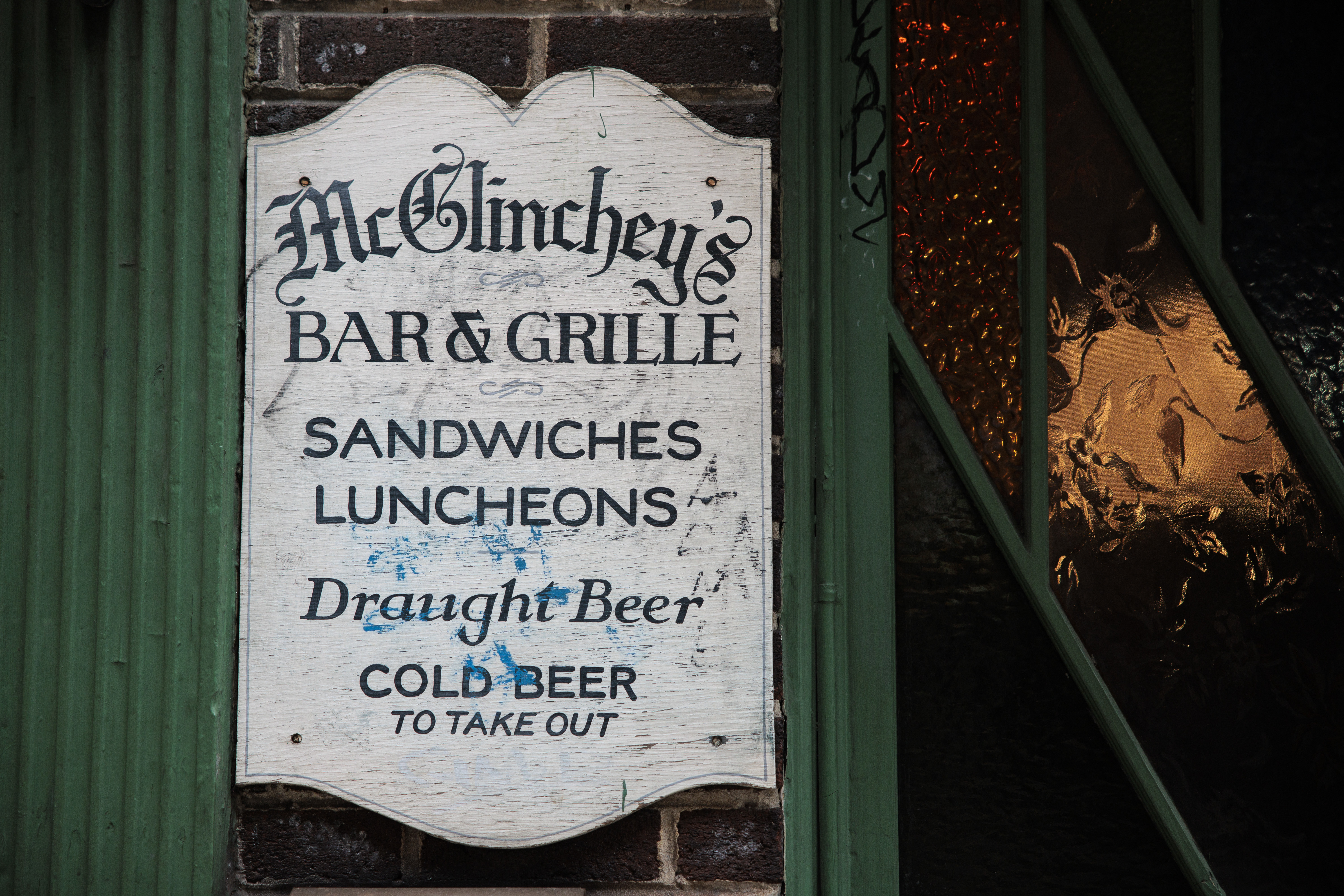
McGlinchey’s, the Center City dive that closed last year after nearly 90 years, is back on the market after a prospective buyer walked away from a deal for the building.
McGlinchey’s, at 259 S. 15th St., after its closing in August 2025.Monica Herndon / Staff Photographer
And the nearly 40-year-old Jake’s & Cooper’s Wine Bar in Manayunk is being marketed for sale as owner Bruce Cooper looks toward retirement.
Restaurants have always turned over, and the recent activity does not appear to reflect a restaurant market in retreat. The Inquirer counted 86 Philadelphia-area restaurant closings in 2025, while more than 100 new restaurants and bars were on the drawing board for 2026. What distinguishes many of the businesses now closing or being sold is their longevity: They survived for decades, weathering the pandemic and recent increases in food and labor costs, before their owners reached retirement.
‘The gray wave’
People in the restaurant, liquor, and real estate businesses say the turnover is part of a broader generational transition among small businesses as longtime owners reach retirement without children interested in taking over.
Jim Creed, handling Jake’s listing, calls it the “gray wave.”
“You’ve got operators who have been in business 40 or 50 years, and they don’t have heirs who want to take over the business,” said Creed, a senior vice president with CBRE.
His father, also Jim Creed, knows the issue from the other side. He opened Creed’s Seafood & Steaks in King of Prussia in 1982 and, at 78, has no immediate plans to sell. “I go to the restaurant every night,” he said. “It’s actually fun.” But when he does decide to close, he said, his children don’t want to take over.
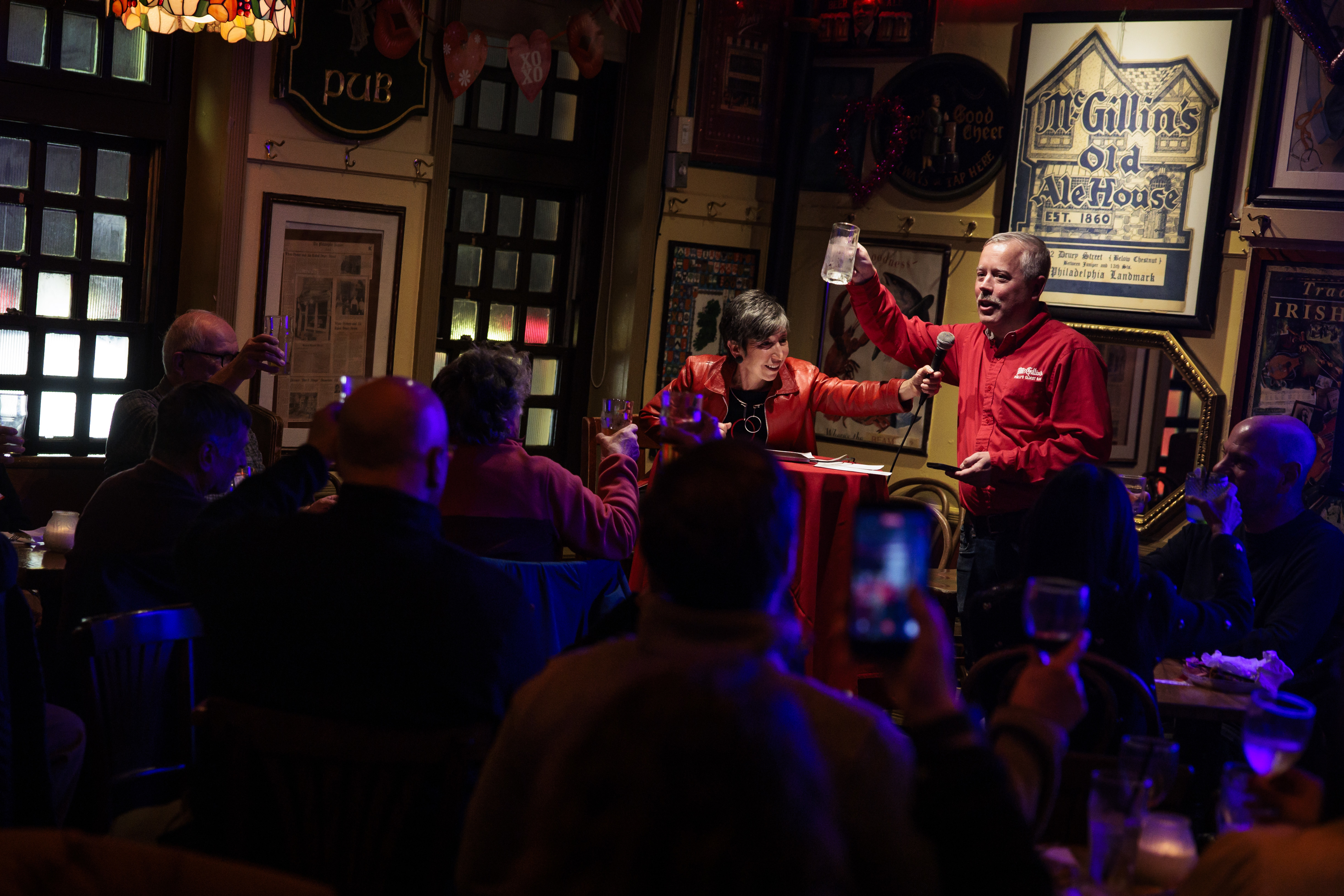
For the counterexample, consider McGillin’s Olde Ale House in Center City. Open since 1860, it has survived through generations of owners; the Spaniak family has run it since 1958, with Chris Mullins Jr. now the third generation involved. There are no plans to sell. “It’s part of my DNA, part of our customers’ DNA, part of our staff’s DNA,” Mullins told The Inquirer this year.
Irene Levy Baker and Chris Mullins Jr. lead a toast at McGillin’s on Tuesday, Feb. 3, 2026 in Philadelphia. Attendees gathered for a book talk on “Cheers to McGillin’s: Philly’s Oldest Tavern” on Tuesday.Monica Herndon / Staff Photographer
Ed Taraskus has watched generations of restaurant and bar owners come and go over 50 years of practicing liquor licensing law. He could not say whether the current number of sales and closings constitutes a statistical trend, but said the succession problem is familiar.
“The parents retire and the children don’t want to get into the business — because it’s a hard business,” he said.
Taraskus said the hours can be punishing for small family operators. His clients also complain about finding employees willing to work nights and weekends. Drinking habits have changed, he said, and some businesses are still feeling the effects of the pandemic.
Taraskus knows the succession question personally. His South Philadelphia family owned a small restaurant and tavern, but his father discouraged him from entering the business. When his parents retired in the 1960s, they sold.
Real estate on the line
Retirement can present a second question for operators who own their buildings: What, exactly, are they selling?
A restaurant may have value as a going business, but decades of appreciation can make the underlying real estate a substantial part of an owner’s nest egg. Sometimes the economics favor a different restaurant — or an entirely different use.
Douglas Green, a principal at commercial real estate brokerage MSC, said the value of restaurant real estate is closely tied to the sales a location can support and, consequently, the rent an operator can afford.
“The more volume they do, the more rent they can pay,” Green said.
That means a location can be worth more to another restaurateur if the existing operator is underperforming. And in some cases, Green said, a restaurant may no longer be the property’s most valuable use at all.
“At some point, perhaps the building becomes obsolete,” Green said. “Perhaps the highest and best use of the real estate is no longer a restaurant.”
Those possibilities are playing out among the region’s longtime establishments.
The Pub restaurant near the former Airport Circle in Pennsauken in 2024.Jose F. Moreno / Staff Photographer
At the Pub, the Gelman family is seeking a buyer for the restaurant and its roughly 6.3 acres on Kaighns Avenue near the former Airport Circle. The family has operated it since Marc Gelman bought it in 2000.
“I don’t think there’s one thing in general why we’re selling, but it’s time for a new steward — if you will — of the business, or the property,” Marc’s son David Gelman said.
At Cherry Street Tavern, at 22nd and Arch Streets, the Loughery family hopes to find a buyer who understands what generations of regulars value about the place.
McGlinchey’s illustrates the other possibility. Its nearly 5,000-square-foot property at 259 S. 15th St. is listed for $2.45 million, including the liquor license, bars, and McGlinchey’s name, as either a turnkey bar and restaurant or a redevelopment opportunity.
Decisions for buyers
Creed said longevity itself can tell a prospective buyer something about a restaurant property.
“Anytime you have operating longevity, that speaks to the real estate,” he said. “When you have a concept that has been in operation for 40 years, clearly the real estate has something to do with that, too.”
The retirement of one operator does not necessarily mean the end of restaurant use.
The former Mixto space is set to become the revival of South Philadelphia bar Toll Man Joe’s.Charles Fox / Staff Photographer
Mixto closed July 12 after nearly 24 years at 1141 Pine St. Within weeks, restaurateur Lori Penrose bought the property and announced plans to revive her former South Philadelphia sports bar, Toll Man Joe’s, there.
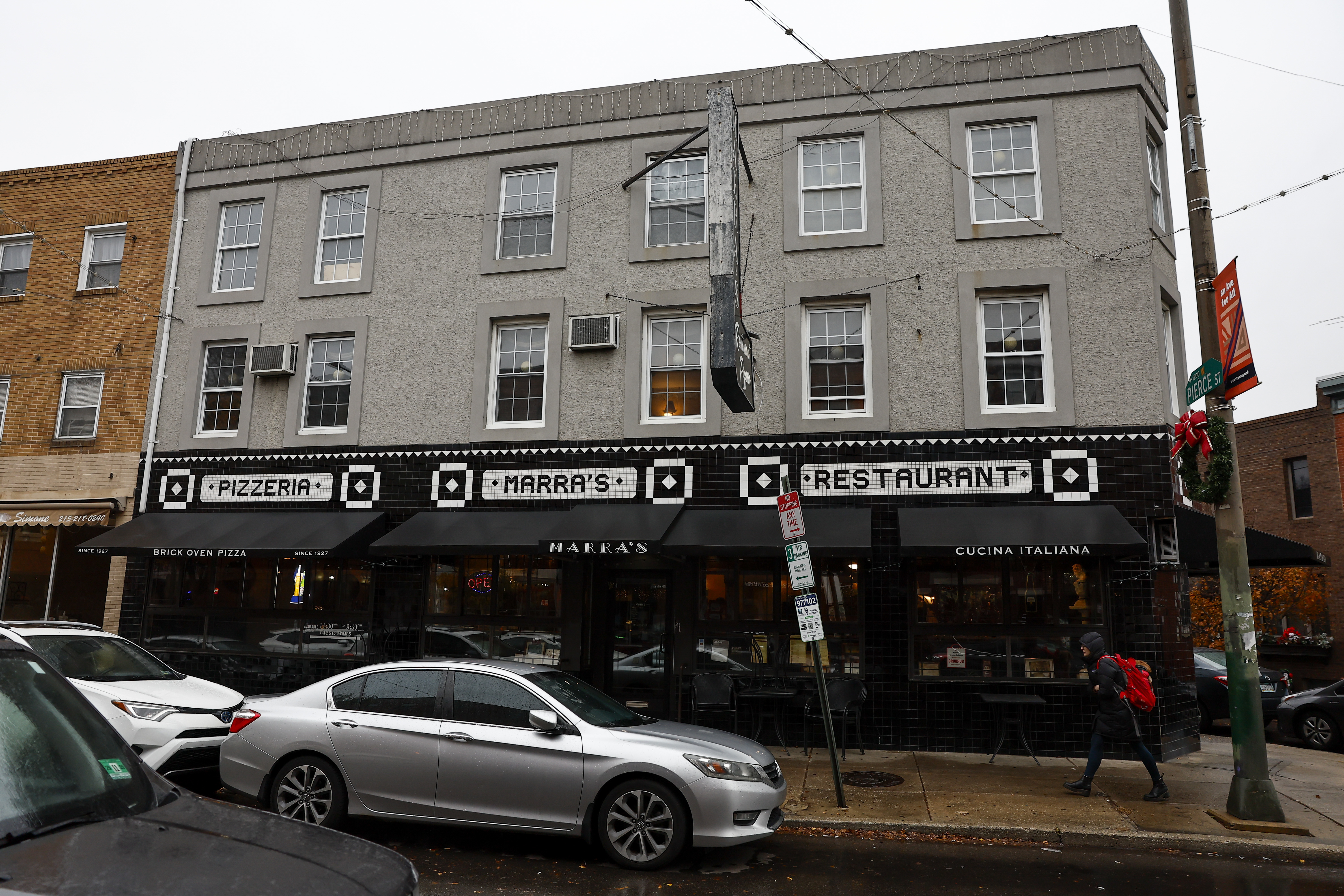
The exterior of Marra’s Restaurant on East Passyunk Avenue is due to become a branch of Dan Tsao’s burgeoning restaurant group. Monica Herndon / Staff Photographer
“There are pros and cons to both,” Tsao said of taking over an existing restaurant rather than starting with a new space. “But with an existing restaurant space, especially a legacy restaurant, it already has a place in the neighborhood, and a place in the memories and hearts of generations of customers.”
Such properties may also have much of the expensive infrastructure required to operate a restaurant.
But for Tsao, the attraction isn’t purely economic.
“I also like the idea of preserving some of that history,” he said, “while giving the space a new chapter.”
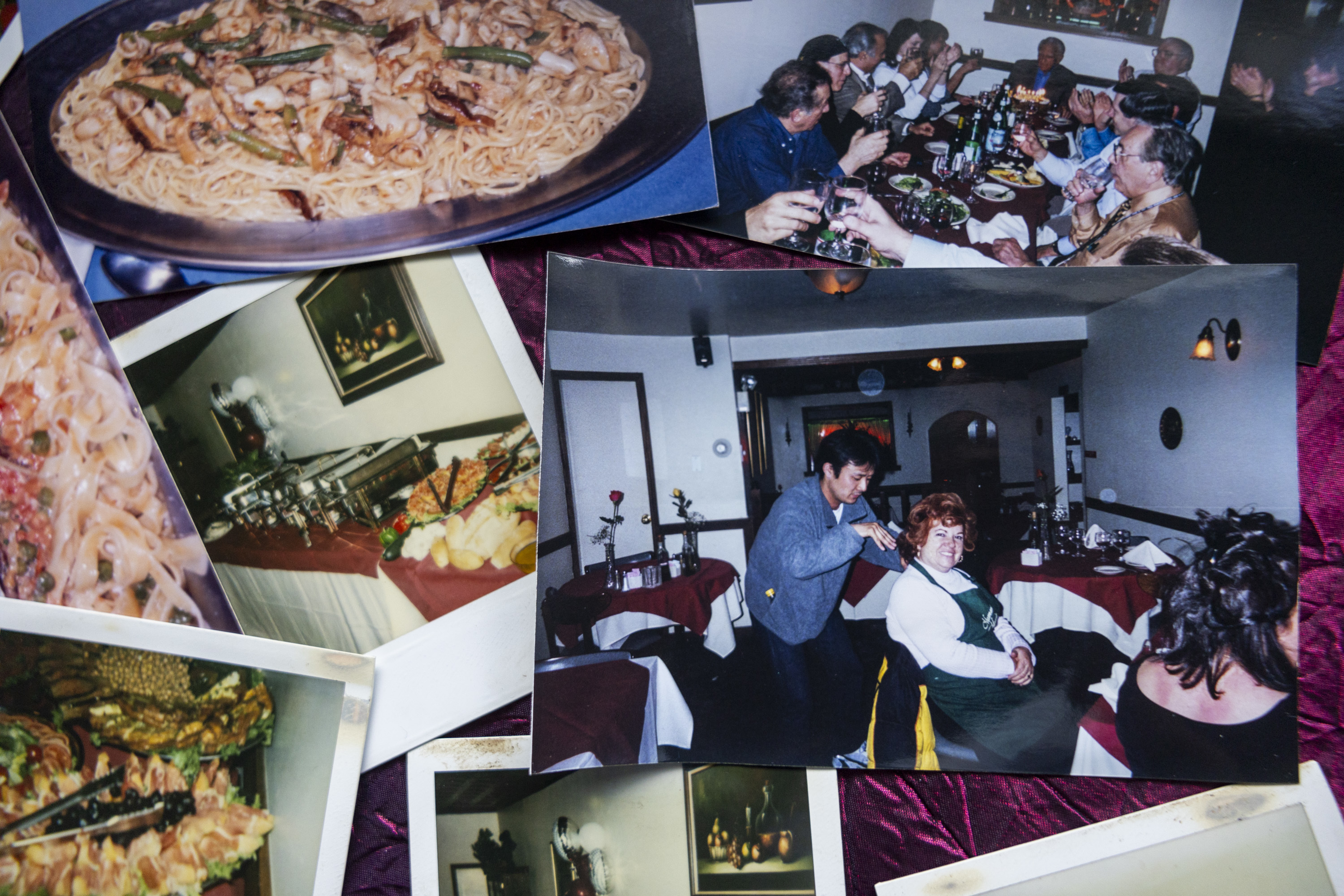
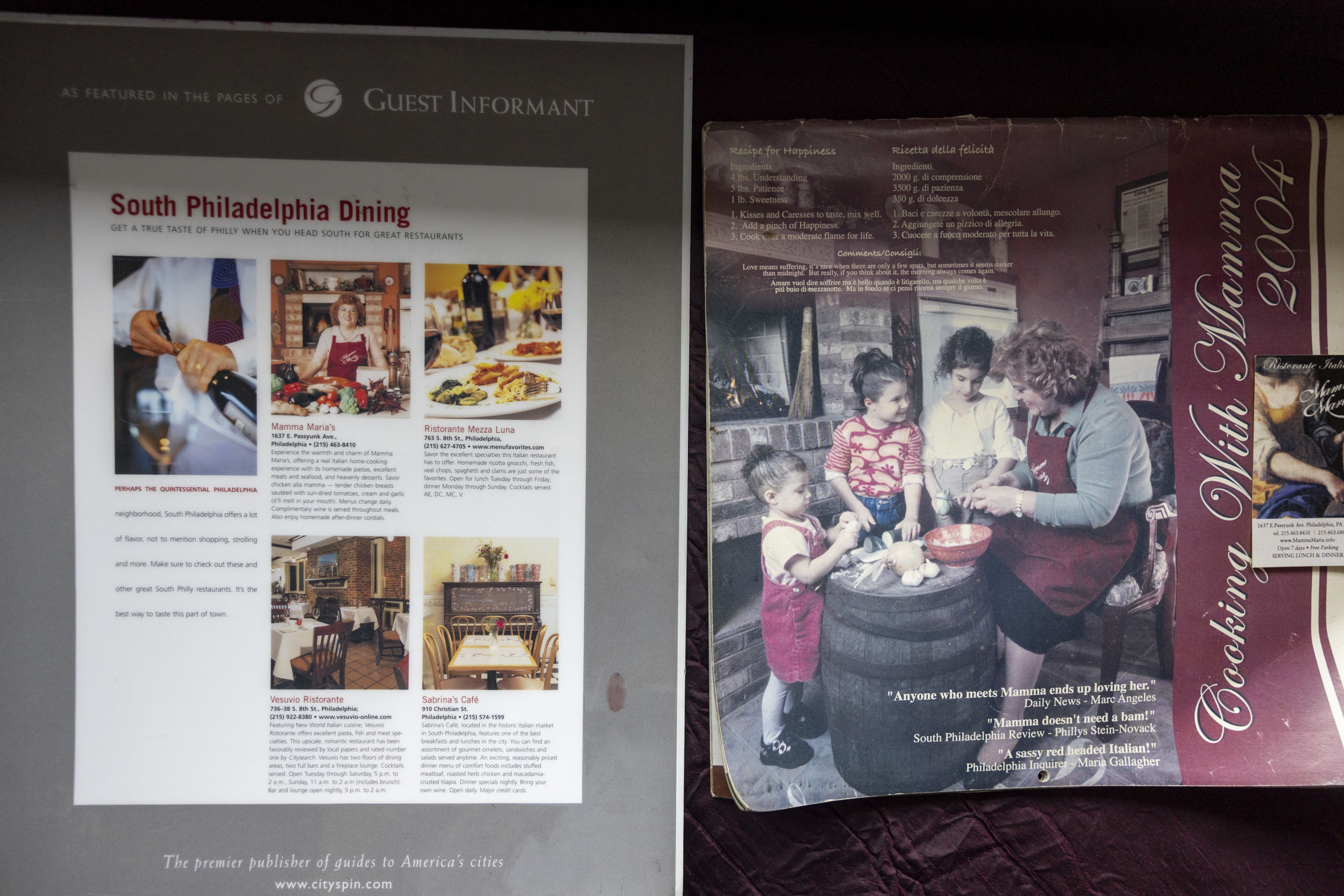
The tables at Mamma Maria’s have not been pushed aside for dancing in years, but the disco ball still hangs overhead.
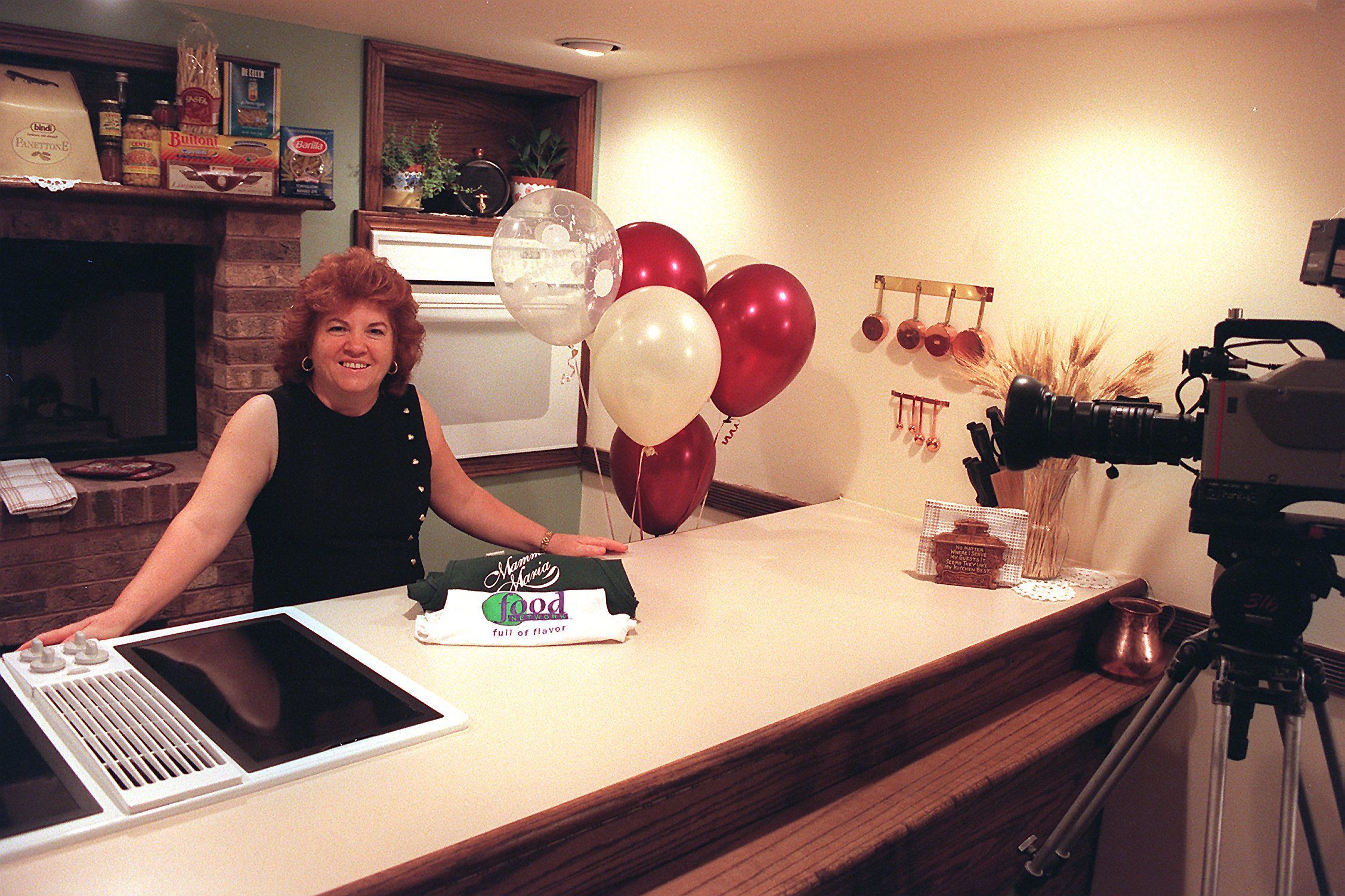
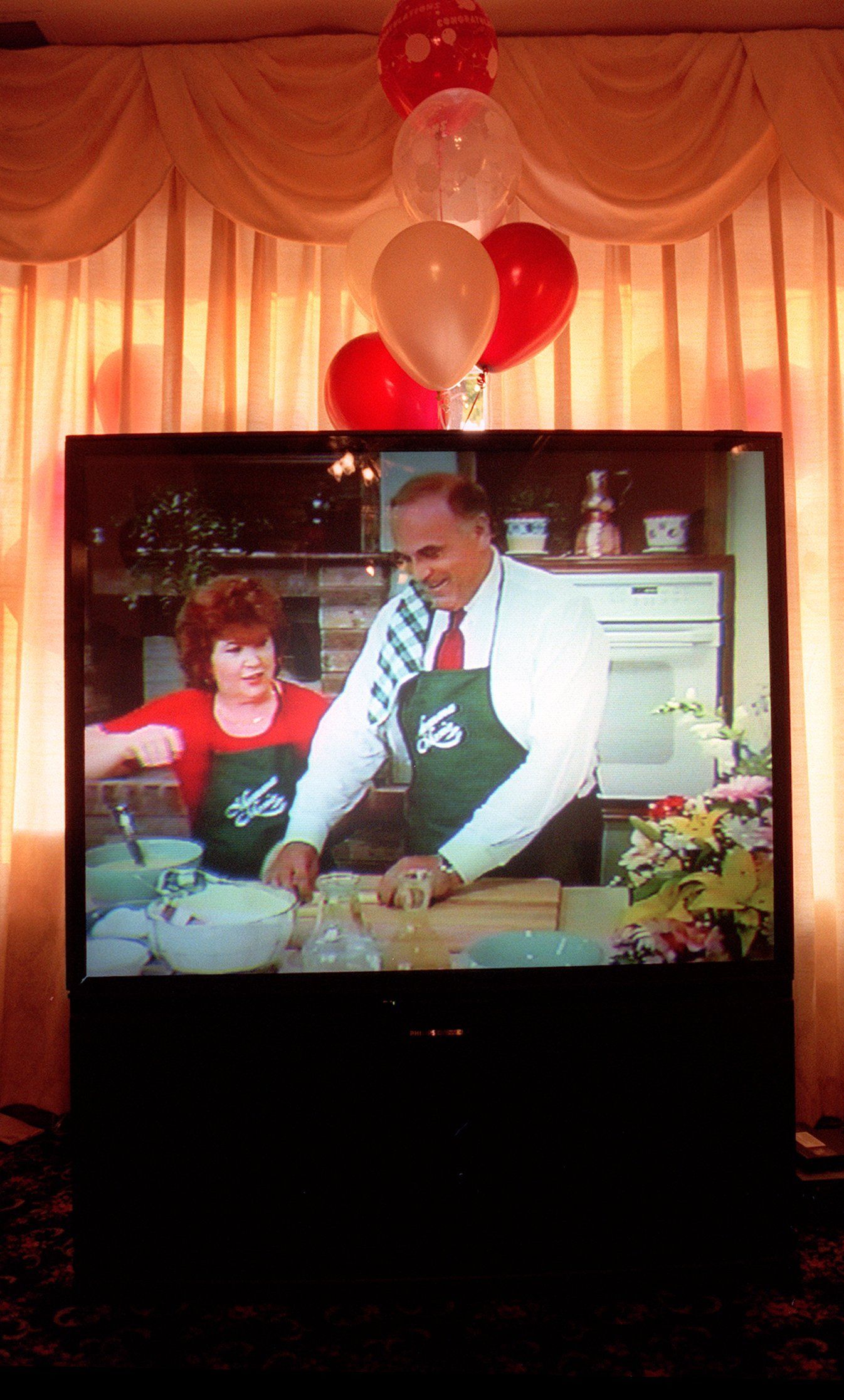
Still there, too, are the kitchen where Santa Maria “Mamma Maria” Chiavatti turned out feather-light gnocchi, the dining room where waiters carried trays of flaming sambuca, and the upstairs studio where Chiavatti taped a TV cooking show whose first guest in 1999 was Mayor Ed Rendell.
Santa Maria Chiavatti and family enjoyed a 28-year run at Mamma Maria’s.Tyger Williams / Staff Photographer
Now the collection of buildings that housed the East Passyunk restaurant for nearly three decades is for sale, marking the end of one of the Avenue’s more colorful links to its ′90s/’00s Italian-restaurant resurgence.
The former restaurant, closed for six years, is spread across three adjoining buildings on Passyunk Avenue and Jessup Street, all with apartments above. The asking price for 1637 E. Passyunk Ave., which houses one of the dining rooms, and 1632 S. Jessup St., which contains the kitchen, is $1.5 million. The building housing the other dining room, at 1639 E. Passyunk Ave., is offered for $2 million.
“The kitchen is still set up,” said Albert Perry of Century 21 Advantage Gold, who has the listing with Dave Lombardo. “When we went to the property for the listing appointment, I was sent home with food.”
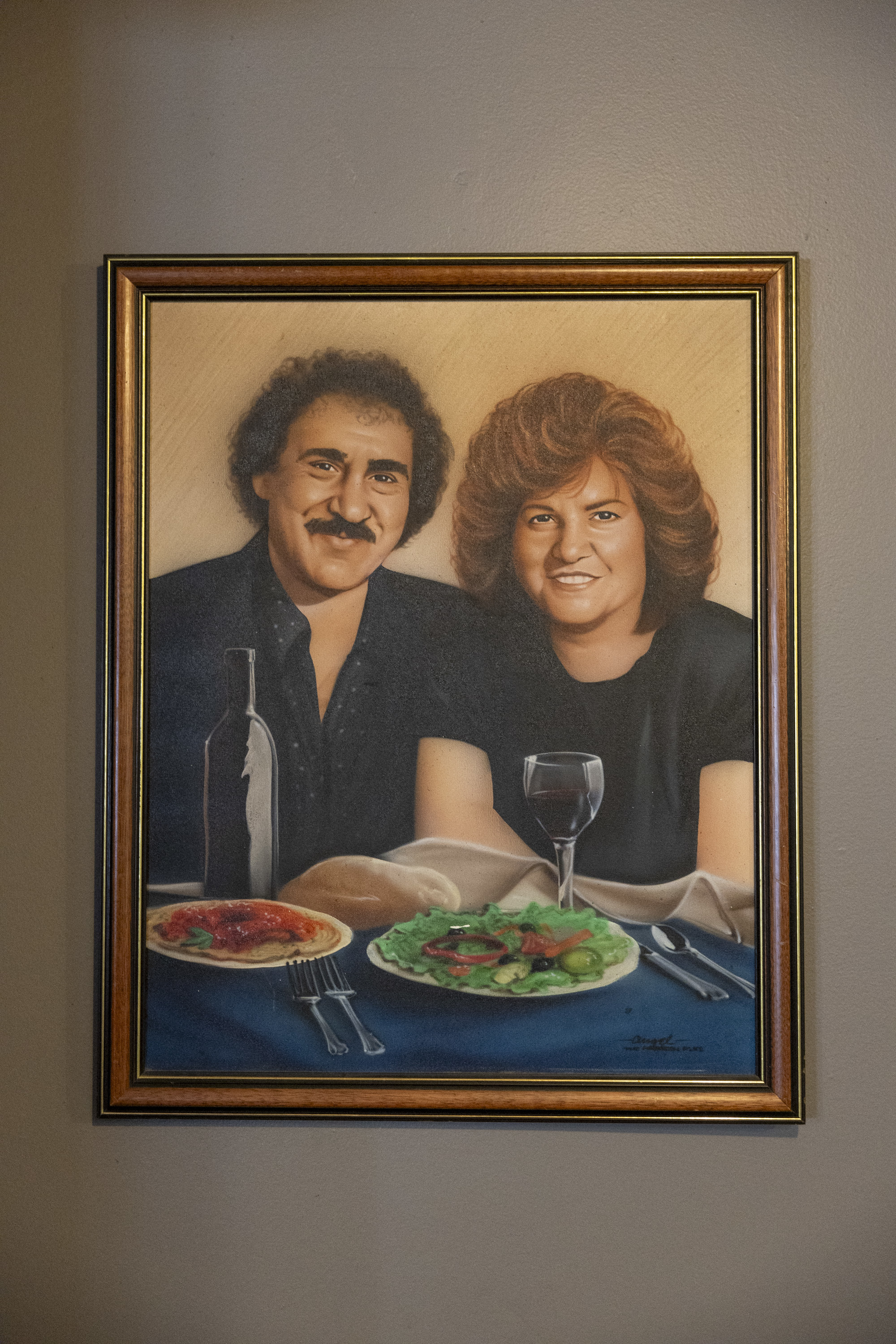
A portrait of Claudio and “Mamma Maria” Chiavatti hangs in the shuttered restaurant.Tyger Williams / Staff Photographer
Mamma Maria’s, which opened in 1992 and expanded into the adjoining property the following year, closed in 2020. But the Chiavattis said they couldn’t bring themselves to sell until now.
“We want to give somebody the chance to have what we had, but with their vision,” said Maria’s daughter Paola Chiavatti. “Our era is ending, and a new era can begin.”
A ‘vacation’ stop in Philadelphia
The Chiavattis’ Philadelphia era began almost by accident.
Maria and her husband, Claudio, came to the United States from Italy in 1992 for what their children believed was a vacation. The couple had already spent years in the restaurant business in Italy and Canada, and the family thought they had retired.
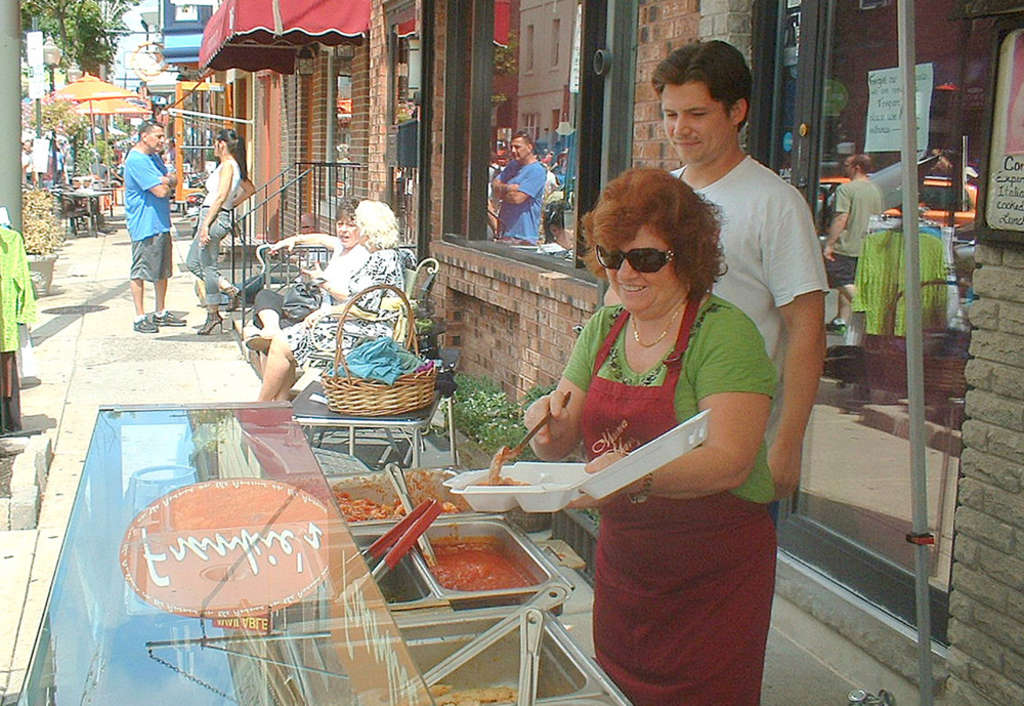
Maria Chiavatti serving food outside of the East Passyunk Avenue restaurant in 2012. Glamorosi
Then, while visiting relatives in Philadelphia, Claudio spotted a closed restaurant on East Passyunk Avenue and noticed the municipal parking lot across the street.
“I said, ‘Yes, but it isn’t your parking lot,’” Maria recalled.
Claudio’s answer was simple: “But it is there.”
The couple rented the building and opened Mamma Maria’s. Three months later, Claudio questioned why they were paying rent when they could buy it.
“That’s exactly what we did,” Maria said. “We bought it and made it beautiful.”
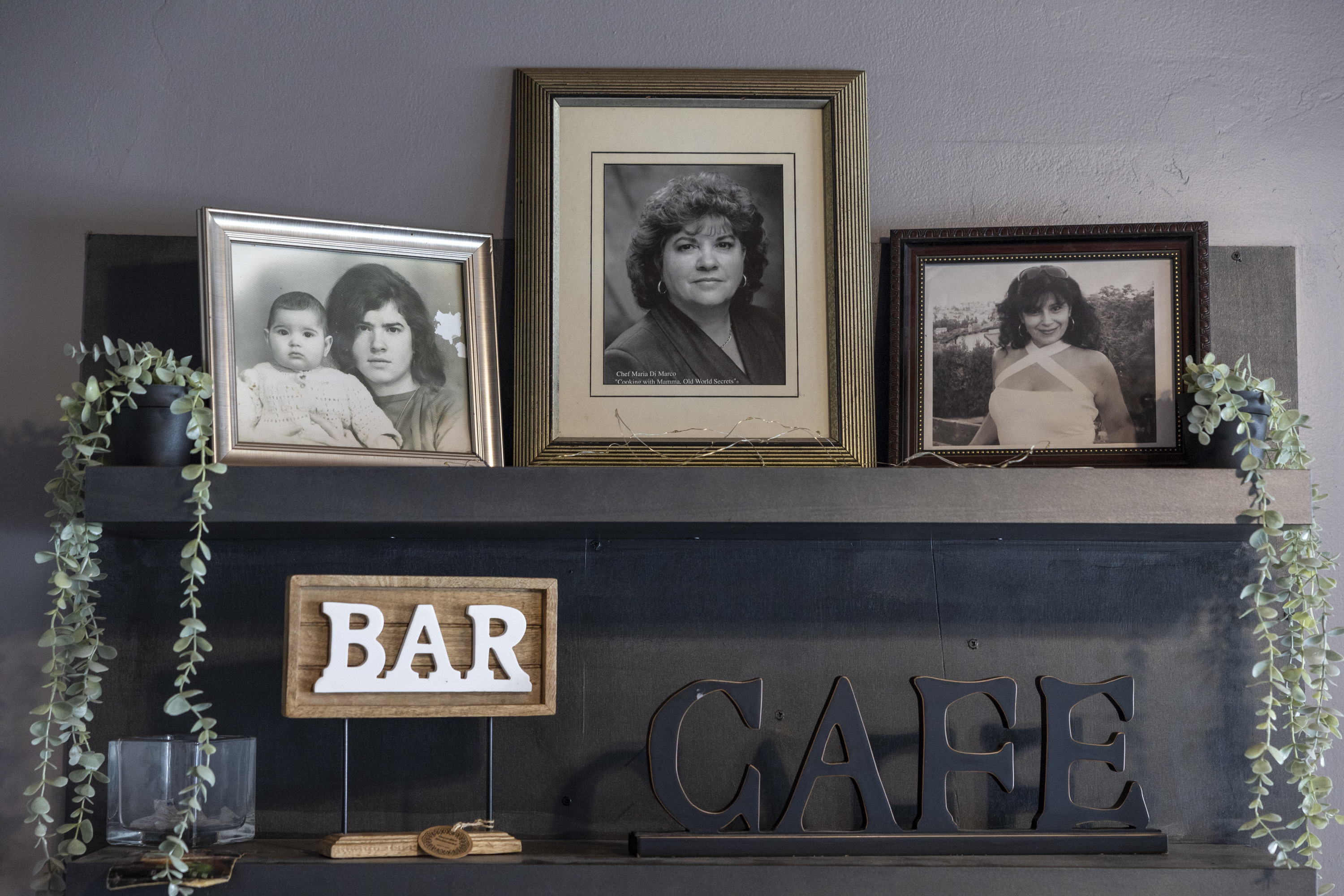
Photos of Santa Maria Chiavatti and her daughter Paola on the mantel at Mamma Maria’s.Tyger Williams / Staff Photographer
They built the menu around the food Maria knew from Abruzzo.
Paola, meanwhile, was still in Italy, working as an interpreter and language teacher. Her sister, Myrna, and brother, Gianni, came to visit their parents. Before long, everyone in the immediate family was in Philadelphia, except Paola.
That same year, her parents invited her over, ostensibly for a relative’s birthday party. Claudio picked her up at the airport and drove her to East Passyunk Avenue. She walked into the restaurant and saw a banner: “Welcome, Paola, to Mamma Maria’s.”
Mamma Maria’s memorabilia in the restaurant.Tyger Williams / Staff Photographer
Claudio told her that he and Maria had fallen in love with the neighborhood and the city. The restaurant, he said, would be something for their old age.
Paola said she understood what was expected of her. Arrivederci, Italy.
“Thirty-four years later, here I am,” she said.
The rise of Mamma Maria’s
Mamma Maria’s was a family operation in the most literal sense. Maria cooked. Claudio hosted, baked, prepped, and made sauces. Paola and Myrna worked the dining room.
For much of its run, Mamma Maria’s was known for an enormous fixed-price meal: antipasto, soup, multiple pastas, meat and seafood entrees, salad, vegetables, potatoes, and a dessert cart loaded with cakes, cannoli, and other sweets.
Wine was complimentary. So, at first, was flaming sambuca, served while an accordion player named Mario circulated among the tables.
“You sat down and you felt like you were having Christmas dinner or New Year’s Eve dinner at your house,” said Lilla Amico-Carlomango, Maria’s oldest granddaughter, who worked at the restaurant with sisters Dalia and Chiara Amico. “The staff, the clients, everybody was so happy to be here that it created one big family.”
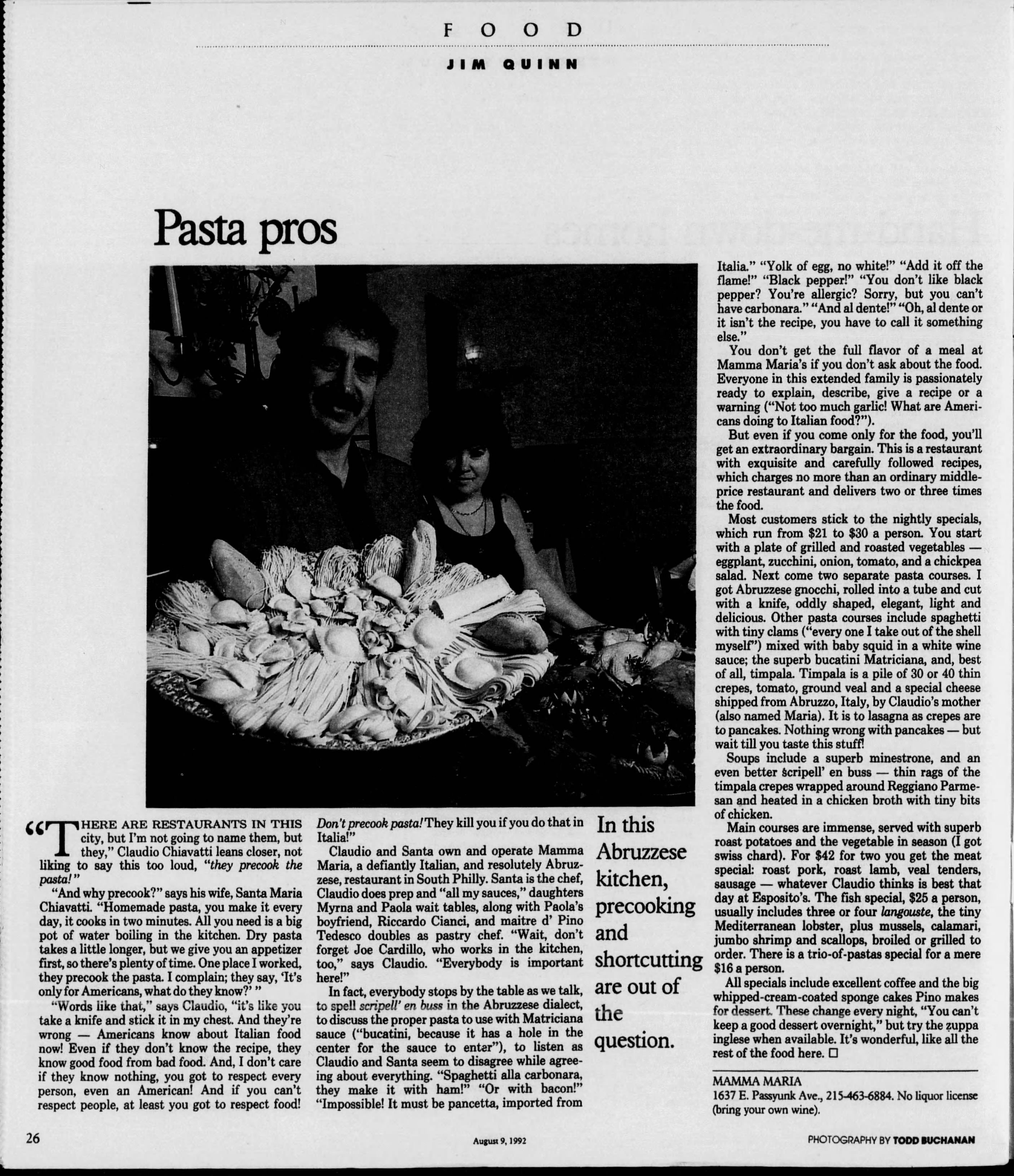
Shortly after it opened, Inquirer food critic Elaine Tait described the cooking as “homey, not haute, cuisine, the likes of which you might find cooked by someone’s talented Italian mom.”
The column by Jim Quinn in The Inquirer’s Sunday magazine on Aug. 9, 1992, that helped launch Mamma Maria’s.Newspapers.com
Inquirer columnist Jim Quinn was similarly enthusiastic. Maria didn’t know Quinn from Adam when someone told her there was a man from the newspaper in the dining room. “I said, ‘So what?’” she recalled.
After he returned three days in a row, she finally approached him.
“Sir, you really love my place,” she told him.
In 1997, an electrical fire forced the restaurant to close for eight months.
“In the restaurant industry, eight months is murder,” Paola said.
Mamma Maria’s reopened with a fundraiser for the Leukemia Society of America.
Santa Maria Chiavatti in September 1999 on the set of her food show during its launch party. The show aired throughout the Philadelphia region. Michael S. Wirtz / Staff Photographer
But one tradition did not return. The blaze was unrelated to the drinks, but Paola had lost her enthusiasm for open flames in the dining room, and the flaming sambuca was 86ed.
Two years later, Mamma Maria’s expanded to television. In 1999, the family bought a weekly half-hour slot on the Food Network for a self-produced program, Cooking With Mamma, Old World Secrets.
The show was taped in a studio kitchen above the dining room, with Rendell as Maria’s first guest. Maria used her maiden name, Di Marco, because the family thought it would be easier for viewers to pronounce.
A video of “Mamma Maria’s” cooking show, featuring Mayor Ed Rendell, was televised during the 1999 launch party at the restaurant.Michael S. Wirtz / Staff Photographer
Back at the restaurant, the fixed-price format endured. Claudio’s death in 2005 hit the family hard, as did the recession in 2008. In 2010, after 18 years of belt-stretching meals, Mamma Maria’s began allowing à la carte dining Monday through Thursday.
Life after the restaurant
Then the pandemic arrived.
Mamma Maria’s closed in 2020, along with the family’s food-truck operation. By the time restrictions had eased enough for the family to consider reopening, Maria’s health had become the priority.
Paola faced a choice: return to the all-consuming work of running a restaurant or help care for her mother.
“Restaurants, we’ve had many in our lives,” she said. “Mother, you only have one.”
The family hosted private events in the meantime. Now 79 and feeling fine, Maria is preparing to sell the property and, with her family, take Mamma Maria’s into another form.
Santa Maria Chiavatti (right) with three generations (from left): Great-granddaughter Paolina Carlomango, granddaughter Lilla Amico-Carlomango, and daughter Paola Chiavatti in the restaurant on Aug. 5, 2026.Tyger Williams / Staff Photographer
She has boxes of handwritten recipes, including dishes passed through the family for generations. She is working on an Italian-language cookbook, while Paola and Lilla are helping to translate, organize, and photograph the recipes. They envision a series of cookbooks and possibly a line of pasta, sauces, and Maria’s homemade limoncello.
That last item would be a particularly natural extension of Mamma Maria’s, Perry said.
“When you went to Mamma Maria’s, you were drinking limoncello whether you intended to or not — and usually you wanted to.”
For Maria, selling the buildings means giving up the restaurant, not the work that grew out of it.
“Just because the restaurant is finished,” she said, “doesn’t mean I’m finished.”
“Just because the restaurant is finished doesn’t mean I’m finished,” says Santa Maria “Mamma Maria” Chiavatti.Tyger Williams / Staff Photographer
The building housing the shuttered McGlinchey’s Bar is back on the market after a planned sale fell through. Chef-restaurateur Townsend “Tod” Wentz wants to sell the Hayes, the American tavern he opened in the former Irish Pub building on Walnut Street near 12th. And Cherry Street Tavern, another historic watering hole whose owners announced plans to sell earlier this year, appears close to finding a buyer.
The biggest surprise may be McGlinchey’s.
The building housing McGlinchey’s had been a bar for 90 years before last summer’s shutdown.Monica Herndon / Staff Photographer
In April, Alterra Property Group confirmed that it was under agreement to buy the building at 259 S. 15th St., home to McGlinchey’s for more than 90 years before the dive bar closed in summer 2025. But Leo Addimando, Alterra’s cofounder and managing partner, said Wednesday that the company “decided not to proceed.”
The building is listed by Nadia Bilynsky and Dennis Carlisle of MPN Realty at $2.45 million. The offering includes the liquor license, two bars, a stage, a small kitchen, and a shell-condition third floor. The property, which occupies nearly 5,000 square feet, is being marketed as a turnkey bar-restaurant opportunity or a redevelopment site.
A few blocks east, another familiar address is available.
Wentz has listed the Hayes, his 268-seat American tavern at 1123 Walnut St., through Veronica Blum and Joe Scarpone at MPN with an asking price of $2.93 million. City records show that it sold for $2.3 million in 2019.
The Hayes, at 1123 Walnut St., previously was the short-lived Pearl Tavern, after many years as the Irish Pub.Michael Klein / Staff
Wentz said he intends to keep the restaurant open until a sale.
Wentz said the decision reflects a personal shift after years of expanding his restaurant group with his wife, Gordana Kostovski. “I want to take advantage of the increase in the real estate market,” he said. “I think it’s time to capitalize on some things and put some money to work elsewhere in my private life.”
“I just kept opening restaurants instead of buying a shore house or buying a bigger home,” said Wentz, 58. “I don’t want to go into my 60s with that same mindset.”
The Hayes at 1123 Walnut St., seen on June 16, 2026, still has the original sign of the Irish Pub, its previous occupant.Michael Klein / Staff
The Hayes occupies one of Center City’s best-known tavern addresses.
Richard and Catherine Burke opened the Irish Pub there in 1980, bringing with them the concept they had established in Atlantic City. For nearly four decades, it was a gathering place for lawyers, police officers, theatergoers, and neighborhood regulars, known for its carved wooden back bar, inexpensive food, and walls covered with framed newspapers and playbills.
When longtime operator Mark O’Connor closed it in July 2019, he said he wanted to focus on the second Philadelphia Irish Pub location, at 2007 Walnut St.
Wentz bought 1123 Walnut later that year, briefly opened Pearl Tavern before the pandemic derailed those plans, then renovated the property and reopened it as the Hayes in 2023. He owns Oloroso next door as well as Caribou Café across the street, A Mano in Fairmount, and Oltremare in Rittenhouse. A sixth restaurant, Townsend on East Passyunk, is closed pending repairs from water damage after a fire next door in May.
The listing includes the 6,776-square-foot building, restaurant equipment, liquor license, and outdoor seating. The restaurant occupies the first two floors, while the upper levels contain office and unfinished space. The through-block property extends from Walnut Street to Moravian Street.
The Bards at 2013 Walnut St. closed in 2020.
The Hayes’ listing is the latest chapter in a broader reshaping of Center City’s pub scene. Over the last two decades, Philadelphia has lost a number of big names: Downey’s at Front and South Streets closed in 2016 after four decades. Finnigan’s Wake, the sprawling multilevel pub at Third and Spring Garden Streets, closed in 2014 and is now GoPuff’s headquarters. In 2020, the pandemic led to numerous shutdowns, such as Manny Brown’s at 512 South St. and the Bards at 2013 Walnut St.
The sister Irish Pub at 2007 Walnut St. also never reopened after the pandemic. Earlier this year, restaurateur Dan Tsao, owner of EMei, purchased the property for a future hospitality project. One of the remaining stalwarts, the Black Sheep at 17th and Latimer Streets, was closed by a fire in May, though owner James Stephens said he hopes to reopen by Christmas.
The former Irish Pub, 2007 Walnut St., on April 30, 2026.Michael Klein / Staff
Meanwhile, Cherry Street Tavern, whose owners announced plans to sell earlier this year, also appears headed toward new ownership. A manager told The Inquirer on Wednesday that a sale is believed to be close, though no agreement has been announced publicly.
Meanwhile, the longtime Bonner’s Irish Pub’s future is secure, said owner Danny Bonner, who opened at 23rd and Sansom Streets in 1994.
Bonner, 71, put the building on the market in 2024, hoping to attract a developer. Instead, he struck a deal with the owner of the property next door to pursue an apartment project that would incorporate a new Bonner’s into its lobby.
Bonner’s Irish Pub at 120 S. 23rd St. in April 2024.Elizabeth Robertson / Staff Photographer
Bonner said one preliminary plan calls for a roughly 3,200-square-foot Bonner’s, about 900 to 1,200 square feet larger than the current pub. There is no timetable for the development, whose price tag Bonner estimated at $45 million to $55 million. The existing bar will remain open until construction begins.
“Where I’m located, we’re fortunate,” Bonner said. “We get professionals, union guys, and loyal neighborhood customers.”
Bonner’s Irish Pub owner Danny Bonner chatting with patrons in April 2024. Elizabeth Robertson / Staff Photographer
Bonner hopes the project will allow the bar to outlast him.
“You have to leave some kind of legacy,” he said. “We’re losing too many mom-and-pop operations. All these big franchises are coming in. Philadelphia is still a city of neighborhoods, and we’re losing that. My customers walk in, and while I don’t know every single one, I probably know 70% of them by their first name.”
Staff writers Mike Newall and Jake Blumgart contributed to this article.