Tag: Dave Sunday

  • Joanna McClinton and Dave Sunday: Accountability is key to keeping our children safe

    Joanna McClinton and Dave Sunday: Accountability is key to keeping our children safe

    Protecting the public is government’s most fundamental duty. But when new threats to safety emerge and evolve, that duty demands more than awareness — it demands action that keeps pace with reality.

    Today’s children are growing up exposed to constant streams of content that can be disturbing, harmful, and frightening. It shapes how they see themselves and their peers in ways no previous generation has had to navigate. That is the reality we face — and it demands urgency and action.

    Today’s children are growing up exposed to constant streams of content that can be disturbing, harmful and frightening, write Joanna McClinton and Dave Sunday.Seth Wenig

    Last month, we served as panelists at an event in Montgomery County concerning the growing issue of AI-generated sexually explicit deepfakes in our schools. This discussion stressed the harmful, long-lasting impact that sexualized content can have on victims, but also what we should be doing to better protect our children and to prevent this new form of exploitation.

    First, let’s level set. Explicit deepfakes are not a joke, or “kids being kids.” They are serious and illegal invasions of privacy that can leave a victim feeling traumatized, angry, alienated, depressed, embarrassed, shameful, and violated. They need to be taken seriously, and they need to stop.

    To set the tone for the event, two courageous students shared their victim impact statements with the audience of parents, advocates, law enforcement officials, and others. Their testimony was simultaneously heart-wrenching and infuriating.

    Heart-wrenching because of the cycle of trauma a teenager must endure after having their privacy violated by a classmate. Trauma that does not stop when the school bell rings at the end of the day, but follows our children home. Infuriating because of the ease with which a child can create hypersexualized content of another child.

    Earlier this year, two 16-year-old boys in Lancaster County used artificial intelligence to create hundreds of nude images of female classmates at Lancaster Country Day School.Matt Rourke

    Deepfake sexualized images in schools is not an issue unique to Pennsylvania, with prominent cases emerging in states from California to Louisiana to Massachusetts, but it is one that the two of us — Joanna McClinton, as a lawmaker, and Dave Sunday, as the state’s chief law enforcement officer — are heavily invested in and are committed to defeating.

    In Pennsylvania, we’ve implemented new laws to respond to the growing danger some apps are enabling in our schools and elsewhere.

    In 2019, Pennsylvania was a leader in making sextortion — a crime where a perpetrator coerces a victim to comply with demands for sexual acts, images, or videos — a third-degree felony, punishable by up to seven years in prison, if the victim is under 18, or the perpetrator has shown a pattern of engaging in sexual extortion.

    In 2024 and 2025, Pennsylvania enacted new laws making it a crime to harass someone by distributing a deepfake nude or sex act image of them without their consent (the offense is more serious if the victim is a minor), or to create a forged digital likeness, a computer-generated image, video, or audio recording of a person, with the intent to defraud or injure someone.
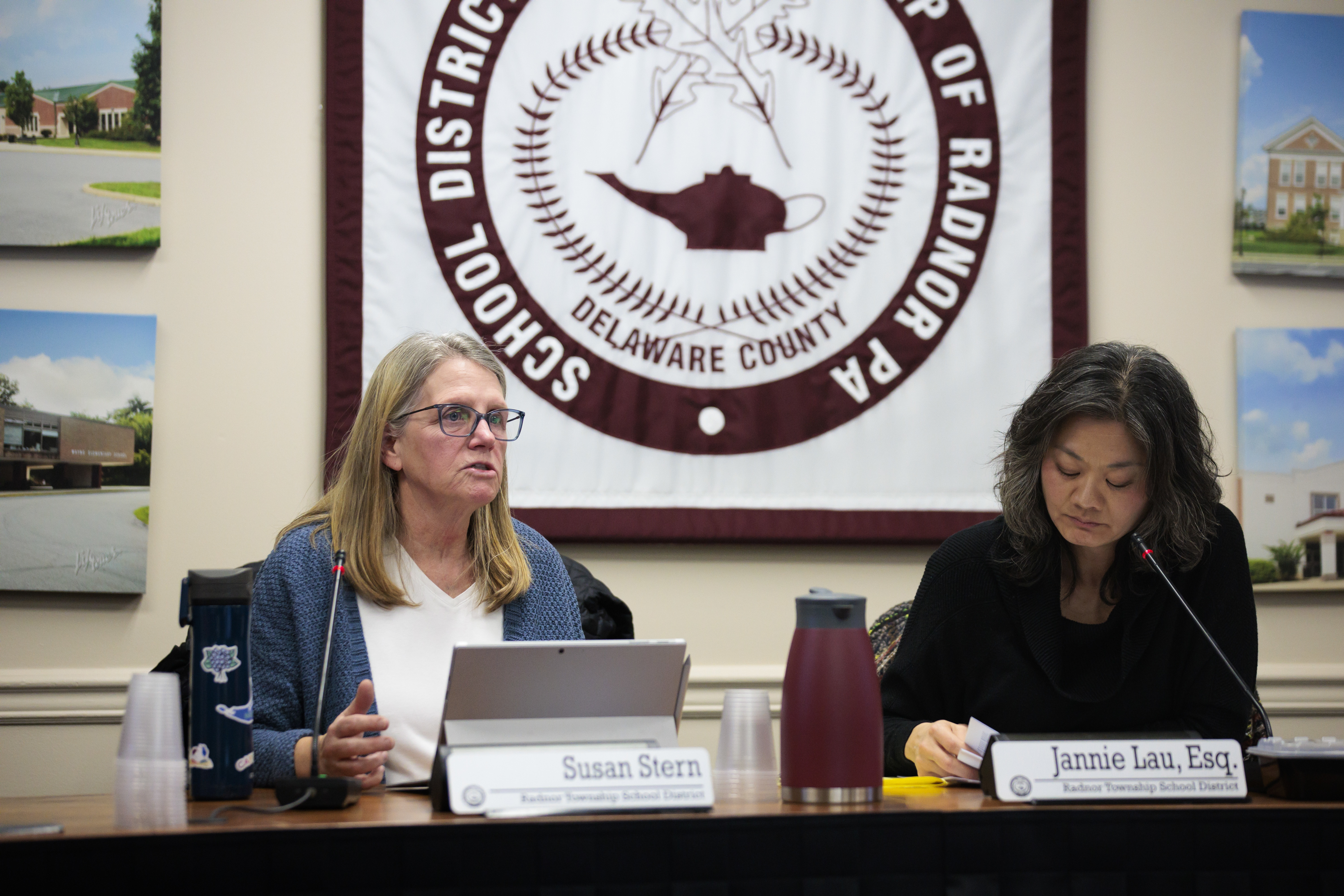
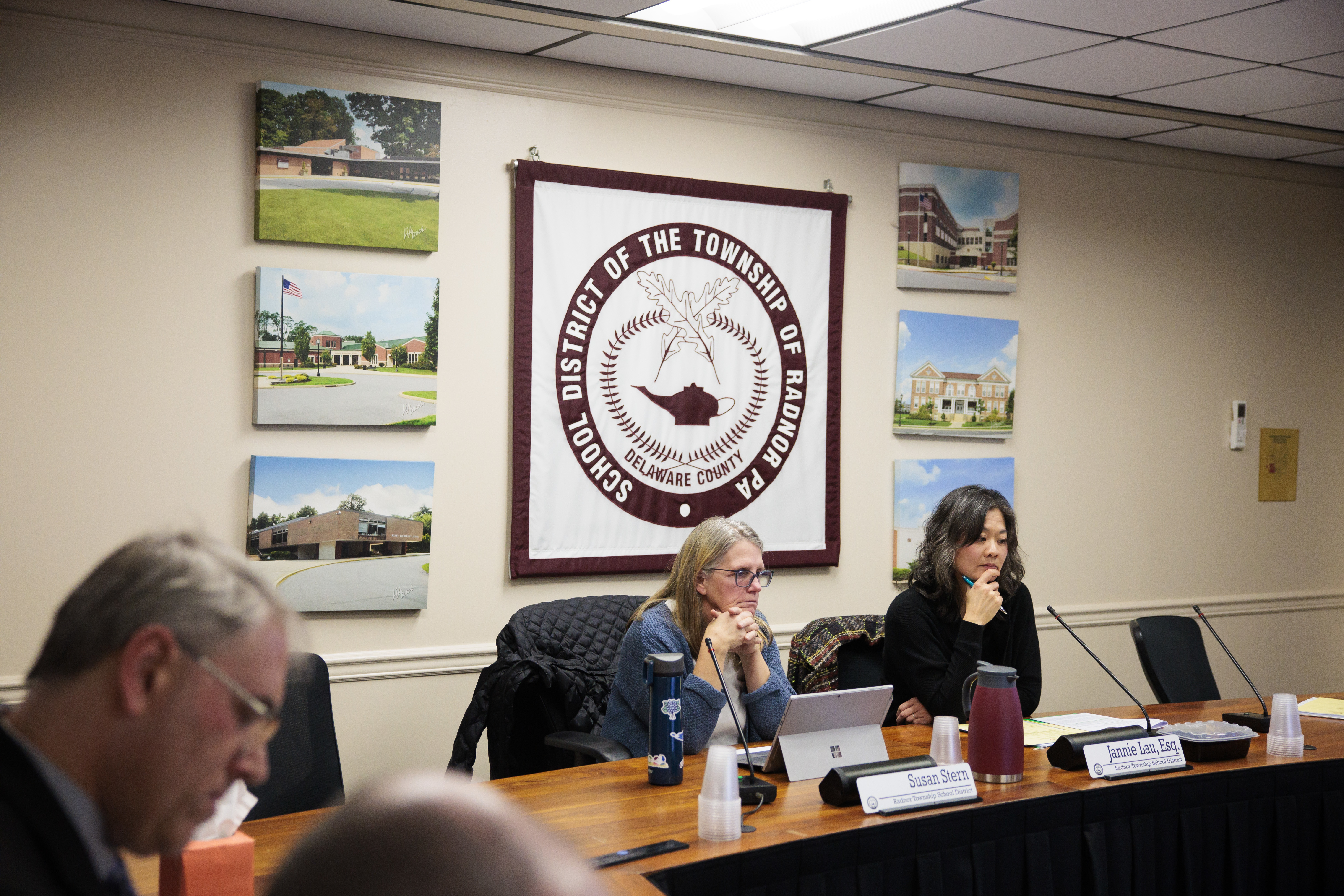
    In April, the Radnor school board explicitly banned the use of artificial intelligence to create sexualized images of another person, after a student made deepfakes of female classmates.Monica Herndon / Staff Photographer

    Finally, we learned from recent incidents in Lancaster and Delaware Counties that acting fast is critical to limiting the number of victims, stopping the circulation of deepfake child pornography, and maximizing law enforcement’s ability to investigate.

    To speed up the process, an additional measure is pending in the state Senate to require mandated reporters, like teachers, school officials, and healthcare professionals, to report suspected child sexual abuse materials or AI child sexual abuse materials to ChildLine, which will immediately alert law enforcement.

    A measure is pending in the state Senate to require mandated reporters, like teachers, school officials, and health care professionals to report suspected child sexual abuse materials or AI child sexual abuse materials to ChildLine, write Joanna McClinton and Dave Sunday.Andrey Rudakov

    We are also having ongoing conversations directly with students about social media and artificial intelligence, and how these tools make them feel in their day-to-day lives. Those perspectives matter, and they should inform how we approach this issue moving forward.

    We can be part of the solution through our offices and in Harrisburg, but it is just as important to hear directly from students in our hometowns and across the commonwealth.

    We also recognize that social media is not going away. This is not about banning platforms or telling kids to shut down their accounts, but about ensuring they understand and are aware of the very real dangers that can exist within them, and equipping families and schools to navigate them safely.

    While updating the law is an important step in keeping our kids safe, the real solution requires parents, educators, law enforcement, and even tech companies to act and to know what to do.

    Students need to know and feel comfortable telling an adult that a sexualized image has been sent to them.

    Parents and caregivers need to talk with their children to both understand what they are doing online and what apps they are using, and to reassure them that if they see something inappropriate, they should tell you or another trusted adult.

    Schools need to take incidents seriously, alert law enforcement immediately, and, most importantly, support the victims.

    Law enforcement needs to treat these cases seriously. They are crimes being perpetrated against children, and they are occurring in communities around the state. If your community hasn’t been impacted yet, it will soon.

    Technology today is transformative, and it is evolving at a faster and faster pace. When we were growing up, we didn’t have these powerful tools to contend with. But now that they are here, they need to be used responsibly.

    The stories from our brave students should be a call to action for each of us — from elected officials to law enforcement to parents and school leaders — to do everything we can to prevent the use of apps that allow children to create hypersexualized content of their classmates.

    We can’t allow hypersexualized content to become mainstream; we need to hold people accountable, from the students generating the deepfakes to the app developers who make the sexualized content possible.

    Joanna McClinton is the speaker of the Pennsylvania House of Representatives. Dave Sunday is Pennsylvania’s attorney general.
  • Pa. will pay for security upgrades to Gov. Josh Shapiro’s home but treasurer was right to initially deny $1 million payment for the bill, AG says

    Pa. will pay for security upgrades to Gov. Josh Shapiro’s home but treasurer was right to initially deny $1 million payment for the bill, AG says

    HARRISBURG — Pennsylvania Treasurer Stacy Garrity acted lawfully when she declined to pay more than $1 million in bills related to security upgrades made on Gov. Josh Shapiro’s personal home in Abington Township following an arson attack on his state mansion, the Pennsylvania Attorney General’s office announced Friday.

    In a memo detailing a settlement agreement between the state and the unpaid contractors who provided security upgrades to Shapiro’s private home, the attorney general’s office said that Pennsylvania would foot the $1 million bill “on a one-time basis,” noting the extraordinary circumstances and the threat on Shapiro’s life that led to the upgrades being requested.

    Current state law does not account for the increasingly dangerous position public officials face in today’s political climate, and the GOP-led state attorney general’s office encouraged the General Assembly to find a legislative solution for these issues going forward.

    However, Shapiro’s administration and Pennsylvania State Police failed to follow proper procurement processes and should have approached the legislature for approvals for the security upgrades, according to the memo authored by Executive Deputy Attorney General Eisenberg and Chief Deputy Attorney General Amy Elliott.

    “Going forward, we expect that such expenditures will result from specific legislative appropriation or new general laws,” they wrote in the memo. “We looked forward to working with the administration to accomplish these goals.”

    Shapiro’s personal home received more than $1 million in security updates, including a new security system and landscaping that Pennsylvania State Police determined was necessary after a man attempted to murder Shapiro by setting several firebombs inside the governor’s residence in Harrisburg while he and his family slept.

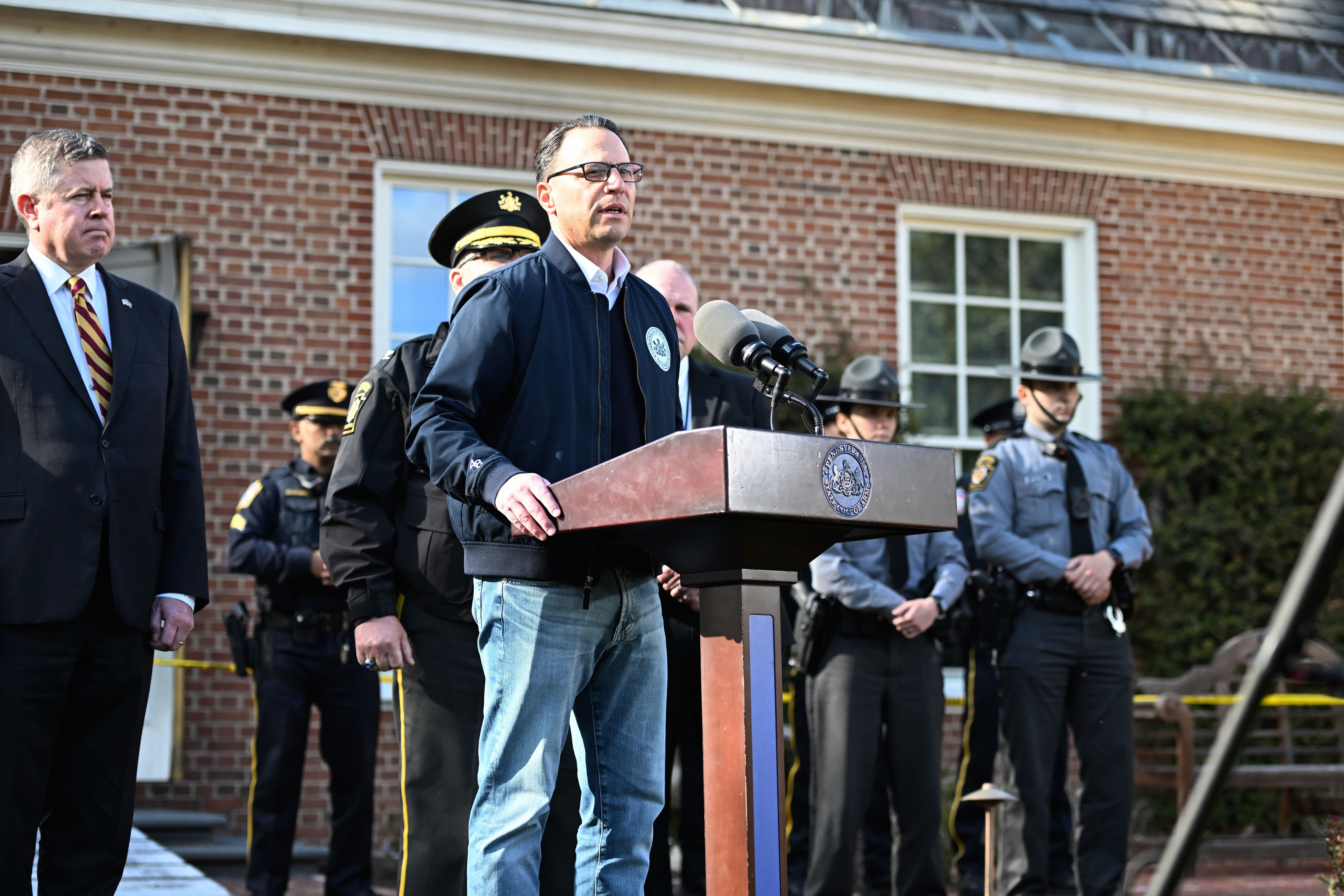
    Pennsylvania Gov. Josh Shapiro speaks during a news conference at the governor’s official residence about a suspected arson fire that forced him, his family and guests to flee in the middle of the night on the Jewish holiday of Passover, Sunday, April 13, 2025, in Harrisburg, Pa. (AP Photo/Marc Levy)Marc Levy

    Garrity, a Republican who is challenging Shapiro in November’s gubernatorial election, announced in April she could not pay the security upgrade bills, arguing that state law prohibits her from approving payment on work done on a privately owned property without legislative approval. The move was criticized by the incumbent Democratic governor’s office at the time, arguing it was a “shamefully political action.”

    In a statement Friday, a spokesperson for Shapiro said the governor appreciates the attorney general’s office acting “without political interference” to approve the settlement so the contractors can be paid.

    “As the Attorney General demonstrated, the safety of the governor and his family should never be weaponized for partisan gamesmanship, and our administration will continue to work with law enforcement and elected officials across the commonwealth to keep our leaders safe,” said Shapiro spokesperson Rosie Lapowsky.

    After Garrity declined to pay the bills, the state had two options to address the outstanding payments: a review and settlement by the attorney general’s office or legislative approval of the funds. Shapiro’s administration chose the review by the state AG’s office, which is led by Attorney General Dave Sunday, a Republican who supports Garrity’s bid for governor.

    Pennsylvania State Treasurer Stacy Garrity speaks to the audience after taking the oath of office for her second four-year term in the Forum Auditorium across the street from the Capitol, Jan. 21, 2025, in Harrisburg, Pa. (AP Photo/Marc Levy)Marc Levy

    The security upgrades on Shapiro’s personal home — plus $32 million in upgrades to the state-owned governor’s residence — were made under emergency contracts, which allow state agencies to quickly respond to emerging problems without waiting for legislative approval. However, Garrity argued — and the state attorney general’s office on Friday affirmed — that the emergency process does not allow the state to spend taxpayer funds on private property, such as Shapiro’s personal residence.

    “Current procurement law does not account for the increasing reality of threats to public officers and their families,” the AG’s office wrote in the settlement agreement. “Because the law does not allow for public funding of construction on private residences, the Treasurer had no legal option other than to deny payment.”

    In a statement Friday, Garrity said the settlement makes it clear “my sworn duty is to uphold the law, protect taxpayers, and only act with explicit legal authority.”

    Her office has not yet received a request to pay the contracts, she said. Once it does, she will “carefully review each one” and pay the outstanding bills.

    “Safety and security matter to everyone, but good intentions can never excuse ignoring the law,” Garrity added.

    Shapiro has faced scrutiny from some Republican lawmakers over his administration’s rapid and sweeping response following the arson, while Democratic lawmakers rallied around him to ensure his and his family’s safety. Republican legislators have said they believe Shapiro and his family should be safe, but should follow proper channels and regulations when spending taxpayer funds.

    A committee in the Republican-controlled state Senate in December took the unprecedented step to subpoena Shapiro over the security upgrades to his personal home, arguing that his administration had not been transparent in previous inquiries about how state taxpayer dollars were being used to upgrade security there.

    Shapiro’s personal property upgrades also resulted in a land dispute with one of his neighbors, who argued in federal court that Shapiro was violating their constitutional rights by using his power as governor to seize a portion of their property. Shapiro, in a separate suit filed in the Montgomery County Court of Common Pleas, argued that the disputed land had been his for years.

    Shapiro and his family split their time between the state-owned governor’s residence in Harrisburg and their Montgomery County home, where his two youngest children still attend school.

    This story was updated to note Sunday supports Garrity’s campaign for governor.

  • Radnor school district is looking to enlist outside experts to prepare for future deepfake incidents

    Radnor school district is looking to enlist outside experts to prepare for future deepfake incidents

    The Radnor Township School District is preparing for a possible repeat of a so-called deepfake incident last year that targeted freshman girls, looking to enlist outside help on how to better support victims.

    At a school board policy committee meeting Tuesday, administrators presented updated regulations around bullying and harassment, including that using artificial intelligence to create or share “sexualized, indecent, demeaning or intimate content involving another person” was prohibited.

    The new rules — which follow policy changes passed last month — also say the district will consider who should be present while interviewing students, in light of a student’s age, sex, and background and the issues being investigated. Parents had complained about many aspects of the district’s handling of last year’s incident, including that girls victimized by deepfakes were interviewed alone by male administrators.

    But more changes are possible, administrators said Tuesday. Scott Hand, the district’s director of technology innovation and instructional design, said Radnor “will be engaging outside professionals beginning this summer into fall” to review its policies and practices.

    Some board members also suggested the district retain outside help to be ready for another incident.

    “The statistics say, something like this will happen again,” said Susan Stern, who asked administrators to consider hiring “a resource we could have on hand.”

    “We’re going to work really hard to educate our kids that it doesn’t happen here in Radnor, but our best response is to be prepared,” Stern said.

    Schools have increasingly been forced to grapple with deepfakes as students use generative AI to manipulate photos of their peers — sometimes with tools that can convert clothed photos into naked ones. Pennsylvania has criminalized explicit AI-generated images as child sexual abuse material, and another measure advancing in Harrisburg would require schools to immediately notify law enforcement about AI incidents.

    Radnor drew intense criticism from some victims’ parents for its handling of the deepfakes, which came to light in December and resulted in a student being charged with harassment.

    District officials said no images were ever discovered. But parents said the district had failed to adequately investigate boys’ reports of pornographic videos and downplayed the incident in community messages, further harming victims.

    Parents also accused the district of failing to initiate a Title IX harassment investigation, arguing it was wrong to characterize the incident as “off-campus.”

    Radnor parents are organizing a panel discussion Thursday in King of Prussia, with deepfake victims from Radnor and Lancaster Country Day School, advocates, and state officials, including Attorney General Dave Sunday, describing risks and how schools can better respond.

    The rules presented to Radnor’s policy committee Tuesday specify that the district has authority over off-campus behavior when it “materially and substantially disrupts the operations of the school” — a common legal standard.

    Jannie Lau, the committee’s chair, said that given how online kids are, any online harassment would seem to meet that threshold.

    “That’s my takeaway — it would be extremely rare for this conduct to happen, and for us to come to the conclusion it doesn’t impact our operations,” Lau said.

    Lau said the district should consider hiring an outside law firm to conduct future Title IX investigations, to ensure more impartiality.

    “It’s just human nature — you don’t want to bite the hand that feeds you,” Lau said, noting that a district solicitor might have an interest in siding with the district, to avoid jeopardizing that relationship.

    In comments Tuesday, Audrey Greenberg, a parent of one of the victims, said she appreciated the rule changes, but that they didn’t go far enough. If a student reports AI-generated sexual content, she said, the district’s Title IX coordinator and central administrators should be notified immediately.

    She also said the description of “off-campus” behavior was too vague — saying deepfakes harm students’ attendance, friendships, and mental health — and argued that the rules wouldn’t prevent a poor administrative response.

    “It was so painful to get those emails calling the event rumors and speculation, when a crime occurred,” Greenberg said, referring to messages from Superintendent Ken Batchelor, including one that described the deepfakes as images made “to move and dance.”

    “For crying out loud, this is pornographic material,” Greenberg said.

    Stern, the board member, said earlier in the meeting that Radnor would be dealing with the fallout for a long time.

    “I don’t think that there’s anyone in this district who will ever hear the words ‘generative AI’ again, and not feel a little tug,” she said. “We had children who were harmed.”