Tag: Dave Sunday

  • Judge convicts leader of Philly sex trafficking ring

    Judge convicts leader of Philly sex trafficking ring

    A 54-year-old Philadelphia man was convicted of leading a human trafficking ring out of his home in the city’s Lawndale section, state Attorney General Dave Sunday said Friday.

    Following a one-day trial in Philadelphia, Terrance L. Jones, 54, was convicted Thursday by a judge of eight charges, Sunday said. Jones will be sentenced on Dec. 11.

    Sunday said the trafficking operation generated hundreds of thousands of dollars a year and Jones employed drivers to transport the female victims to “dates.” Jones also posed as a woman to recruit sex workers, Sunday said.

    Sunday said Jones ran the operation from his residence from 2012 through February 2023, luring vulnerable young women into working for the trafficking ring, then giving them drugs and forcing them to have sex with men across the region.

    Multiple other people charged in the trafficking case also have been convicted, Sunday said.

    “Human trafficking convictions are very challenging, and there was a long road to get to this point. I commend our partners with the Pennsylvania State Police for collaborating on a complex investigation that brought this long-running criminal enterprise to an end,” Sunday said in a statement.

    Jones advertised his business, called “GFE” or “the Girlfriend Experience,” online and connected with young women in their 20s, investigators said.

    Authorities learned about the ring in 2021 after a confidential informant contacted police and said they feared a friend was being trafficked.

    After meeting with woman, authorities launched a three-year investigation.

  • Pa. Supreme Court says SEPTA special prosecutor is constitutional, another blow to Krasner

    Pa. Supreme Court says SEPTA special prosecutor is constitutional, another blow to Krasner

    A 2023 Pennsylvania law creating a special prosecutor to pursue crimes on SEPTA is constitutional, a unanimous state Supreme Court ruled Thursday.

    All seven justices rejected District Attorney Larry Krasner’s argument that the law unconstitutionally strips the authority of an elected district attorney by granting jurisdictions to crime “within” SEPTA to a special prosecutor appointed by the Pennsylvania attorney general. But they did not unanimously agree on the reason.

    The special prosecutor can investigate crimes in all counties in which SEPTA operates, but can take over cases unilaterally only in Philadelphia.

    Chief Justice Debra Todd wrote in the majority opinion that the part of the special prosecutor law specific to Philadelphia serves a “legitimate state interest: promoting public safety through the protection of SEPTA employees and riders by supporting the prosecution of crimes within SEPTA, and specifically, SEPTA-related crimes in Philadelphia.”

    The law responds to “public safety concerns regarding increased SEPTA-related crime in Philadelphia, and the belief that such crimes were not being sufficiently prosecuted,” Todd wrote.

    State Attorney General Dave Sunday, who is authorized to appoint the special prosecutor, said the law “has paid great dividends in holding violent offenders accountable” for crimes on SEPTA.

    “Our mass transit prosecutor will continue to prosecute criminals who have killed and assaulted other individuals, perpetrated acts of gun violence, and stolen SEPTA property,” Sunday said in a statement.

    A spokesperson for the district attorney’s office did not return a request for comment.

    The special prosecutor’s office has become more active in the last year after a slow start. The office initially hired a sole attorney and did not prosecute a case until 2025, two years after its creation. The office has since taken on a portfolio of around two dozen cases, a spokesperson for the attorney general said. Serious crime on SEPTA has trended downward, according to the agency, falling around 20% in mid-2026 compared with the same period the previous year.

    Earlier this year, the special prosecutor, Michael Untermeyer, took on an assault case involving a woman accused of pepper-spraying and punching a conservative influencer during a viral confrontation on a SEPTA bus. And a representative for Sunday’s office said the prosecutor was preparing for a homicide trial in November, and the office was recently referred a case involving an assault on a SEPTA bus driver.

    The ruling is the latest in which the Supreme Court has shown willingness to take away from Krasner functions that county prosecutors traditionally have had sole discretion over. The justices in June found that Philadelphia prosecutors had engaged in a pattern of misleading judges when seeking to overturn murder convictions, and instructed judges to notify the state attorney general’s office so it can review cases when Krasner’s office makes such requests going forward.

    But the ruling on the SEPTA special prosecutor might be short-lived.

    The law that authorized the role is set to expire at the end of the year, and while Harrisburg lawmakers set aside $1.2 million for the special prosecutor’s operations next year, they have not yet agreed on extending the measure.

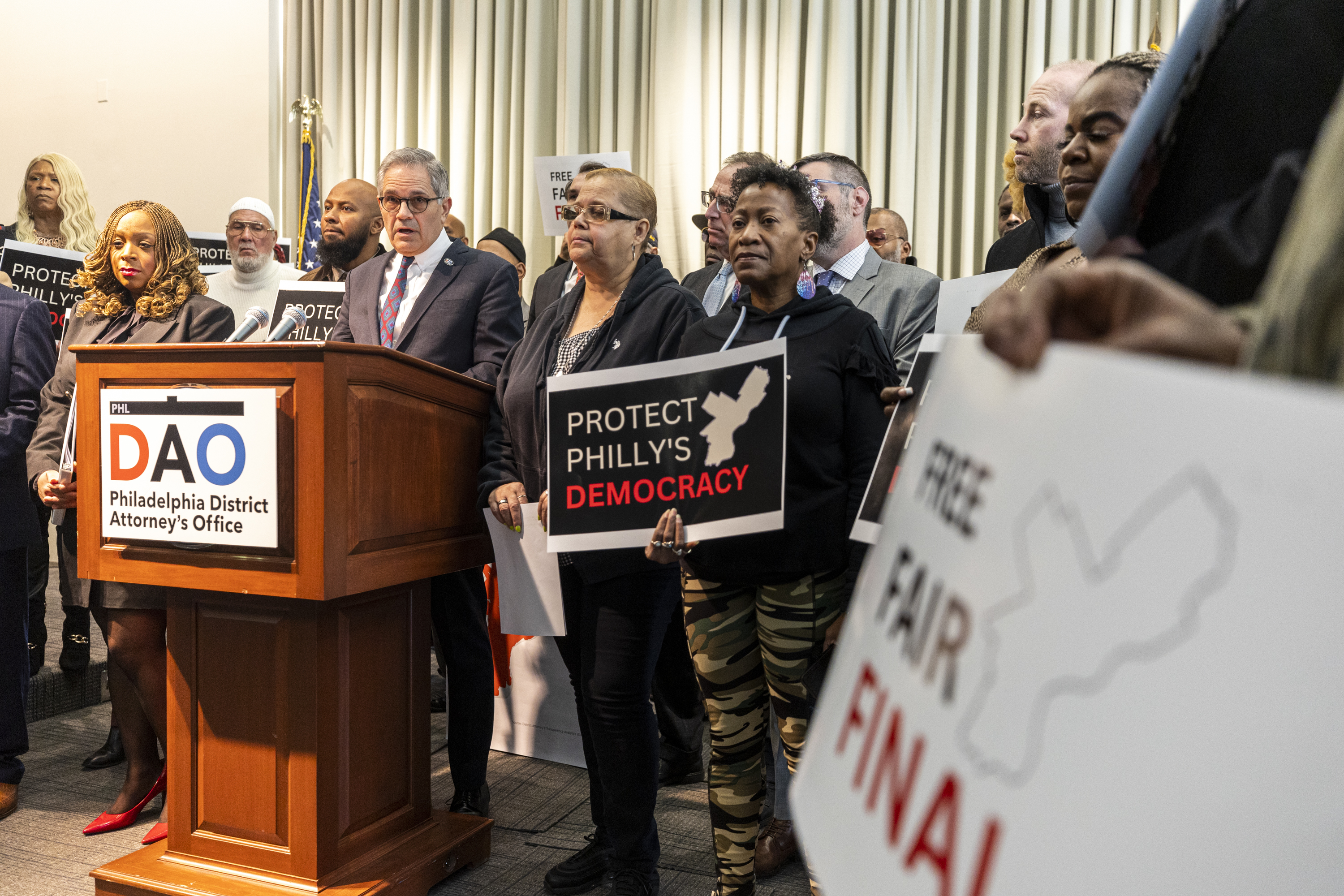
    Krasner filed a lawsuit in January 2024 attempting to quash the Republican-sponsored state law that gives a special prosecutor authority over crimes around SEPTA properties in Philadelphia. Gov. Josh Shapiro had signed the bill into law as part of a state budget deal in December 2023.

    Krasner’s lawsuit called the law an “unconstitutional, radical, and unprecedented measure” amounting to a “shocking usurpation of power.”

    In June, Commonwealth Court issued a 4-3 decision against Krasner, finding the law constitutional. In the majority opinion, Judge Anne E. Covey said the act “does not clearly, palpably, and plainly violate the Pennsylvania Constitution.”

    In a Thursday concurring opinion, Justice David Wecht emphasized the ways the special prosecutor law was tailored to Krasner specifically.

    The law disqualifies anyone who worked at the Philadelphia district attorney’s office as of roughly the beginning of Krasner’s tenure from serving as special prosecutor, the justice noted. And the measure was set to expire a year after Krasner’s second term ended (he has since won a third, which began in January).

    The special prosecutor law is “tailored to hamstring Philadelphia’s thrice-elected and sitting District Attorney’s customary prerogatives relative to crime within the jurisdiction that office serves,” Wecht wrote.

    “But none of that matters,” he said, because since 1951 the Pennsylvania Constitution has allowed for laws ”regulating the affairs of the City of Philadelphia.”

  • 11 Philly business owners stole funds from program for low-income women and children, prosecutors say

    11 Philly business owners stole funds from program for low-income women and children, prosecutors say

    Nearly a dozen Philadelphia-area small-business owners stole almost $1 million in public funds by defrauding a program designed to support low-income mothers and their children, authorities said Thursday.

    The businesses accused of fraud are small groceries or corner stores located throughout the city, according to the state attorney general’s office, which announced Thursday that it had charged 11 people with theft by deception, forgery, and related crimes.

    Prosecutors said the business owners submitted false claims for funds through the federal food assistance program WIC, the Special Supplemental Nutrition Program for Women, Infants, and Children. The program and funds are administered by Pennsylvania’s health department.

    Participating businesses are reimbursed through the state for purchasing food and infant formula, which is provided to recipients in stores using a benefits card. Prosecutors said the businesses abused their role as providers, submitting fraudulent claims for purchases — nearly 10,000 in all, they said.

    Investigators reviewed thousands of receipts and audited paperwork submitted by the businesses between 2021 and 2025, finding they were “forged and fabricated,” they said.

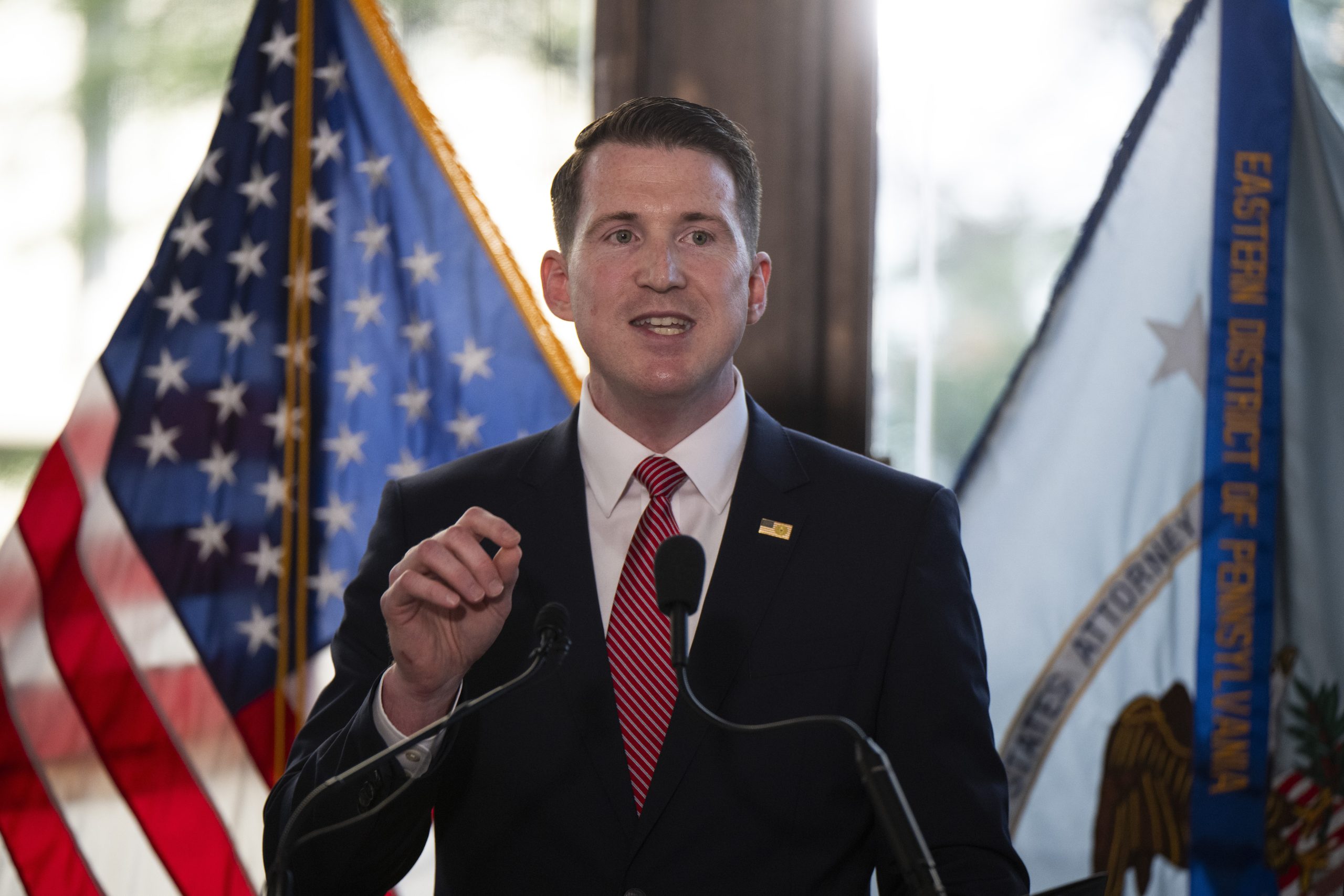
    Attorney General, Dave Sunday on March 13, 2025 in Philadelphia.Jose F. Moreno / Staff Photographer

    The fraudulent claims in several cases exceeded $100,000, and almost all amounted to tens of thousands of dollars. Most of the claims were fulfilled, prosecutors said, resulting in the loss of $985,000 in public money.

    The largest sum was paid to Felix Sosa, 35, of El Paisano Express Food in South Philadelphia, according to prosecutors. Sosa was reimbursed a total of $342,183 for such claims, they said, and was charged with theft and related crimes.

    He was arrested Wednesday and was being held on $25,000 bail. No attorney for him was listed in court records.

    Musa Barry, of Uncle Musa Grocery in Southwest Philadelphia, was charged with submitting fraudulent claims totaling $226,557. He was arrested Wednesday and has not hired an attorney.

    Nearly all of the remaining business owners are accused of stealing sums in the tens of thousands.

    Attorney General Dave Sunday decried the crimes in a statement Thursday, saying the business owners had “intentionally defrauded” state government for years.

    Nine of the merchants have been taken into custody, Sunday said.

    “This type of criminal activity doesn’t just victimize taxpayers by defrauding the government, it hurts the women and children who rely on the services programs like WIC provide,” he said.

    Officials estimate about 175,000 Pennsylvanians are enrolled in the WIC program, about 36,000 of them in Philadelphia. It is available for low-income women who are pregnant or have given birth within six months (if breastfeeding, up to 12 months), as well as children under 5.

    The announcement of the criminal charges comes at a challenging time for the Pennsylvania Bureau of Women, Infants, and Children.

    The bureau’s director, Sally Zubairu-Cofield, resigned last week, citing “significant and ongoing workplace challenges” and barriers to leadership. She had led the office since 2022 and was appointed during the administration of former Gov. Tom Wolf.

    She declined to comment Thursday.

    Zubairu-Cofield wrote in her resignation letter that she had faced “multiple allegations and investigations that I understood were subsequently determined to be unfounded” during her tenure, according to Spotlight PA.

    She did not elaborate on the nature of those allegations, according to the outlet.

  • Pa. attorney general files lawsuit over bogus spotted lanternfly permits

    Pa. attorney general files lawsuit over bogus spotted lanternfly permits

    An Idaho man scammed Pennsylvania residents and businesses into paying for bogus spotted lanternfly containment training and permitting, according to a newly filed lawsuit from the state attorney general’s office.

    Kevin Wardell and his company Diverse Solutions LLC allegedly operated the scheme under the banner of the “Spotted Lanternfly Commission” between last year and this year, sending deceptive, official-looking letters to at least 80 residents. The letters threatened recipients with civil and criminal penalties if they did not comply with the training, according to the lawsuit, which was filed in Dauphin County Court this week.

    According to the filing, the letter included a logo that was designed to look like the Great Seal of the United States, and referenced an “order by the Department of Agriculture” that “required compliance.” All the targets had to do, the letter said, was pay for the permitting at a website allegedly operated by Wardell.

    At least 80 Pennsylvania residents and businesses received the correspondence, but it was not immediately clear how many paid. The lawsuit alleges “numerous businesses” were alarmed by the letter, and added that “there may be consumers” who did not contact authorities.

    “Pennsylvania is working hard to stop the spread of invasive species such as spotted lanternflies, but they aren’t the only pests that are harming Pennsylvanians,” Attorney General Dave Sunday said in a statement. “Scammers peddling fraudulent trainings and fake permits do not help anyone keep their crops safe from this destructive species.”

    The Keystone State has a quarantine related to the insects active in most counties, and businesses moving products into or within those areas are required to be trained and permitted, according to Penn State Extension. But the permitting and training are offered free by the Pennsylvania Department of Agriculture and Penn State Extension.

    Wardell, the lawsuit alleges, charged $59 to $139 for his fraudulent training and permitting service. The trainings offered, the attorney general’s office said, consisted of three videos totaling seven minutes combined, and featured Wardell himself speaking generally about spotted lanternflies without providing information about preventing their spread. The legitimate training runs about three hours.

    The lawsuit alleges Wardell had no authorization from the state to offer the trainings, and could not issue legitimate permits. In doing so, Sunday’s office said, Wardell violated the Unfair Trade Practices and Consumer Protection Law.

    The attorney general is asking the court to bar Wardell and Diverse Solutions from doing business in Pennsylvania and to order restitution for victims who paid for the fraudulent permits and training.

  • State reps ask Pa. attorney general to investigate the Philly schools for alleged discrimination of Jewish students

    State reps ask Pa. attorney general to investigate the Philly schools for alleged discrimination of Jewish students

    A group of state representatives asked Pennsylvania Attorney General Dave Sunday to investigate whether a “systemic pattern of discrimination” against Jewish students occurs in the Philadelphia School District.

    Citing a congressional investigation into Philadelphia and other districts, and reports of antisemitic incidents against city students, members of the Pennsylvania House Republican leadership and Martina White, a Republican representing Philadelphia, wrote to the attorney general urging a probe.

    “The Office of Attorney General must ensure that Jewish students have a safe learning environment that is free from discrimination within the SDP,” the representatives wrote in the letter, which was sent Monday. “We ask you to investigate this matter to determine if any criminal activity occurred and take the appropriate action your office deems necessary.”

    Monique Braxton, district spokesperson, said the school system “strives to create welcoming and inclusive environments that allow our students to feel safe and heard” and has “taken steps to protect and educate students and staff against antisemitism and other forms of hate and remains committed to fostering learning environments where all students and staff feel safe and supported.”

    Sunday’s office did not immediately respond to a request for comment.

    The state representatives, in their letter, brought up allegations that some district educators “promote antisemitic content in their classrooms.”

    In 2024, the district agreed to a settlement with the U.S. Department of Education’s Office for Civil Rights after an investigation found it had not adequately investigated repeated claims of antisemitism, taken appropriate steps to respond to the claims, or maintained necessary records around the alleged acts.

    The incidents that prompted that settlement included a swastika drawn on a door, antisemitic slurs, and allegations of social media-based harassment by district teachers and administrators after Hamas’ Oct. 7, 2023, attack on Israel, and Israel’s subsequent military operation in Gaza.

    “Local parents have repeatedly indicated that these behaviors and this antisemitic atmosphere continue to persist throughout the SDP,” the representatives wrote. “Jewish students, like all students, should be able to learn in an environment that is free from discrimination.”

  • Montco joins thousands of others in suing social media giants over harms to teen mental health

    Montco joins thousands of others in suing social media giants over harms to teen mental health

    Montgomery County on Tuesday sued some of the nation’s largest social media companies in a Northern California federal court, joining nearly 3,000 actions from parents, school districts, cities, counties, and states that say the platforms are harming the mental health of children and teens.

    The social media giants have faced a flood of litigation in state and federal courts, part of a public reckoning over the negative impacts their products are accused of having on young people. The lawsuits allege that the companies have developed platforms that are addictive, especially to young people, and contribute to negative self-image and social isolation.

    Montgomery County is suing Meta, ByteDance, Snap, and Google on behalf of the county’s 148 schools and more than 180,000 minor students, the filing said. It accused the companies and their popular products — including Instagram, Facebook, Snapchat, and TikTok — of negligence and creating a public nuisance.

    “Too many young people are struggling with anxiety, depression, self-harm, and other serious mental health challenges,” Jamila Winder, chair of the Montgomery County commissioners, said in a news release Wednesday. “We believe social media companies must be held accountable for the role their products play in harming young people.”

    Montgomery County’s lawsuit is one of nearly 3,000 cases before a Northern District of California judge through a mechanism called multidistrict litigation. The process allows the federal court system to handle a large volume of similar complaints in one court, usually leading to a number of bellwether trials that help assess the value of a potential global settlement.

    The county’s suit is part of a larger partnership between its board of commissioners and its district attorney’s office “to proactively identify, investigate, and pursue cases against companies whose actions harm consumers or create illegal costs for taxpayers,” the news release said.

    The 2025 Pennsylvania Youth Survey found that 97% of youth respondents have a phone that can access the internet, 81% have a social media account, and 24% spend four or more hours on a school day on social media.

    Those habits are reflected nationwide. As many as 95% of American teens are on social media platforms, and a third report using them “almost constantly,” according to research cited in a 2023 advisory by the U.S. Surgeon General’s Office and highlighted by Montgomery County in its news release Wednesday.

    Teens who spend more than three hours a day on social media platforms have double the risk of depression and anxiety, and half of teens report that social media makes them feel worse about the way they look, according to the advisory.

    Spokespeople for TikTok and Snap did not immediately respond to requests for comment Wednesday.

    José Castañeda, a spokesperson for Google, said in a statement Wednesday that “the allegations in these complaints are simply not true.”

    “Providing young people with a safer, healthier experience has always been core to our work,” Castañeda said. “In collaboration with youth, mental health and parenting experts, we built services and policies to provide young people with age-appropriate experiences, and parents with robust controls.”

    A Meta spokesperson also objected to the allegations, saying the company is “confident the evidence will show our longstanding commitment to supporting young people.”

    “We’ve listened to parents, worked with experts and law enforcement, and conducted in-depth research to understand the issues that matter most. We’re proud of the progress we’ve made, and we’re always working to do better,” the spokesperson said.

    Jury selection began Wednesday in the first of the Northern California trials against the social media giants, part of a case against Meta brought in 2023 by 29 states, including Pennsylvania and New Jersey. The trial itself focuses on New Jersey and three other states.

    Meta said that damages in the case could reach $1.4 trillion, according to Reuters, which is not far from the $1.5 trillion market cap of the company that owns Facebook, Instagram, and WhatsApp.

    (In May, Meta settled for an undisclosed amount in a case brought by a rural Kentucky school district before jury selection took place. The case was slated to be the first bellwether trial in the centralized litigation.)

    In 2023, Bucks County also filed a lawsuit in the litigation concentrated in California federal court.

    The social media giants face legal challenges elsewhere, too.

    Also on Tuesday, Pennsylvania Attorney General Dave Sunday sued ByteDance, the company behind TikTok, in a Pittsburgh state court. That lawsuit accuses the company of creating an intentionally addictive platform and serving inappropriate content to teens as young as 13.

    The companies have argued in courts across the country that they are protected by federal laws that govern the internet, which were enacted before the advent of social media, complex algorithms, and personalized feeds.

    The social media platforms themselves cannot be held liable for the content other people post, the companies have argued in court. And, they said, social media addiction is not an established diagnosis and mental health harm cannot be directly linked to use of a platform, app, or website.

    But jurors in the first trials over social media’s harmful effects rejected most of the companies’ arguments. A New Mexico judge this month ordered Meta to pay nearly a billion dollars, combing a $567 million verdict and a $375 million civil penalty, after a jury found the company had committed 75,000 violations of the state’s Unfair Practices Act.

  • Federal and state officials highlight Medicaid fraud in Philadelphia

    Federal and state officials highlight Medicaid fraud in Philadelphia

    Federal and state officials including Mehmet Oz, head of the Centers for Medicare and Medicaid Services, and Pennsylvania Attorney General David Sunday were in Philadelphia on Tuesday to highlight efforts to combat the persistent problem of Medicaid billing fraud in home care.

    During a news conference in Center City, officials outlined Pennsylvania cases involving a personal-care assistant who billed Medicaid 1,000 times for more than 24 hours of work in a single day, another who billed for helping his father in South Philadelphia while being arrested in Chester, and an agency that billed Medicaid $225,000 for services provided by an aide who was dead.

    Federal and state prosecutors used the occasion to announce charges against 18 people and one agency in mostly unrelated cases for defrauding Pennsylvania’s Medicaid program of $4 million by billing for home-care services they did not provide. The alleged fraud occurred roughly over the last five years.

    The alleged fraud in these cases filed over the last two weeks is tiny compared with the size of the program. Pennsylvania spent $8.1 billion on home-care services last year, up from $2.3 billion in 2020, when the program expanded and thousands more people started getting paid to provide home care.

    “Used properly by honest citizens, the program allows those with physical ailments to be cared for by those they trust the most,” said Colin McDonald, of the Justice Department’s National Fraud Enforcement Division. “But infiltrated by greedy and deceitful opportunists, this program becomes a money tree, a gravy train for criminal fraudsters.”

    Colin McDonald, Assistant Attorney General, Department of Justice National Fraud Enforcement Division, speaks as federal and state law enforcement officials announce healthcare fraud charges, Tuesday, August 4, 2026 in Philadelphia.Joe Lamberti / For The Inquirer

    The U.S. Department of Justice shared details on six new cases. The Pennsylvania attorney general recently filed five new cases.

    The biggest case involved $1.5 million in billings from a personal-care assistant registered with 13 agencies who more than 1,000 times charged Medicaid for more than 24 hours in a single day, Sunday said. On one occasion, the aide billed for 126 hours in a single day, Sunday said.

    Federal prosecutors charged Benevolent Home Health Care with billing 600 times in 13 months for a personal-care aide who was dead. That case originated during the arrest of the husband of one of its owners on drug-trafficking charges, said David Metcalf, U.S. attorney for the Eastern District of Pennsylvania.

    As the man was being arrested, he told agents from the Drug Enforcement Agency that he had to clock out of his shift as a home-care aide, even though he was not providing services. When asked about it, according to Metcalf, he said: “Everybody is doing this. If that’s a problem, you’d have to arrest the whole city,”

    Attorneys for Khaleelah Williams and Saleemah Davis, Benevolent’s owners, said they had no comment.

    In other cases, defendants billed for providing services while they were in prison, working at one of Philadelphia’s sports stadiums, or vacationing in Saudi Arabia, Jamaica, or Colombia

    This story has been updated to correct the name of the agency Mehmet Oz heads.

  • Why Pennsylvania quietly repealed its 1929 midwifery law — and is now getting sued for it

    Why Pennsylvania quietly repealed its 1929 midwifery law — and is now getting sued for it

    HARRISBURG — Hidden deep in more than 600 pages of state budget documents, Pennsylvania lawmakers last month quietly repealed an unenforced 1929 law that allowed traditional midwives, the main group of midwives delivering home births, to practice.

    Now, traditional midwives — who differ from midwives usually found in hospitals, are not medically trained, and often serve religious minorities like the Amish — are worried they have no legal standing to work in Pennsylvania and are challenging the repeal and a new law in state court.

    The 1929 law had been on the books for nearly a century, asking traditional midwives to submit a paper application and a $10 fee to get a state certificate. But it had not been enforced for decades, and Pennsylvania, which has one of the highest rates of home births in the nation, was counted as one of 13 states that did not regulate the practice at all.

    Meanwhile, other forms of midwifery — such as nurse midwives and certified midwives, who are medically trained and are formally affiliated with a doctor or health system — are highly regulated by the state and its medical board. But these affiliations often prevent nurse midwives and certified midwives from offering home births, as the health systems see them as possible risks for medical malpractice lawsuits.

    The practice of traditional midwifery dates back to the Old Testament and has lived on through centuries of community knowledge and traditions. It can include Amish and Mennonite midwives, who are limited in the amount of education they are allowed to receive, as well as other unlicensed midwives who say they take only low-risk pregnancies.

    Some Pennsylvania traditional midwives say their practice is more necessary than ever, citing the United States’ maternal mortality and morbidity rate and cesarean section rates that outpace most of the rest of the Western world. They see their work as more holistic and personal than the American medical system, offering more personalized care to the new parent and baby for weeks after birth, as well as an answer to maternity care deserts as more hospitals and birth centers close.

    Medically trained midwives and physicians, who receive licenses from the state, argue the practice of traditional midwifery is potentially unsafe for mothers and babies, and requires little to no oversight in comparison to their medical training and licensure.

    A new law, and legal uncertainty

    There is no state law regulating home births — which are chosen by a variety of families for different reasons, from Amish who have religious beliefs about delivering at home to Black and brown women who have felt underserved or discriminated against by the modern healthcare system. But if traditional midwives — the primary group delivering babies in home births — cannot practice, some argue, home births will become inaccessible.

    The legal fight over midwifery began earlier this year, when the General Assembly approved changes to a separate law to include another class of midwife: certified midwives, who have all the same education training as nurse midwives except the nursing degree. To receive a certification from the Pennsylvania Board of Medicine, nurse midwives and certified midwives must provide proof of education and a collaborative agreement with a physician or medical institution.

    The law, the Midwife Modernization Act, was written to protect traditional midwives’ ability to practice, its author, Sen. Rosemary Brown (R., Monroe), said in a statement.

    Kate McHugh, a nurse midwife who has worked for a decade with lawmakers on updates to midwife regulations, said stakeholders approached traditional midwives during earlier iterations of the bill to see how they would like to be regulated. The different groups of traditional midwives could not agree, so the nurse midwives and certified midwives moved forward on their own.

    But the changes to Pennsylvania’s laws created a legal gray area, some midwives argued in a lawsuit filed last month.

    An anonymous group of two traditional midwives, a nurse midwife, and an Amish man whose family utilizes traditional midwifery filed a lawsuit in a state appellate court, challenging Brown’s law as unclear about their ability to practice, and asking the state to enforce the 1929 law already on the books.

    After the lawsuit was filed, legislators repealed the 1929 law as part of an overall state budget deal, creating more uncertainty for traditional midwives, according to their amended filing. Some lawmakers said they did not know they had voted to repeal the law, as the state budget is drafted in closed-door meetings among top leaders and fast-tracked through the legislative process with little time for rank-and-file members to review what they are voting on.

    The law was repealed as part of a request by Democratic Gov. Josh Shapiro’s administration, according to a source briefed on budget conversations. The administration works closely on legal matters with Republican Attorney General Dave Sunday’s office, which is defending the state in the case. Shapiro’s office declined to comment.

    “It’s not fair the way [the budget] is done,” said Rep. Dave Zimmerman (R., Lancaster), who said he unknowingly voted in support of the bill that repealed the 1929 law in an omnibus bill. “It concerns me a little bit that we repeal something in the fiscal code rather than right up front where it’s transparent.”

    “You have people in the Amish and Mennonite community that this is what they do. We have midwives that have been doing this for 30 and 40 years, They’re probably as good as anyone else doing it, certified or not,” Zimmerman added.

    The lawsuit

    The group of traditional midwives filed the lawsuit anonymously out of fear of retribution from the state for continuing to practice, said the group’s attorney, Jonathan Goldman, of the Goldman Law Team, based in Fort Washington. The midwives spoke with The Inquirer on the condition of anonymity for the same reason.

    One of the midwives, who serves south-central Pennsylvania with a largely Amish and Mennonite clientele, said she has delivered 1,600 home births over 38 years. She had practiced traditional midwifery in other states, before similar certifications were required there. At one point, she said, she was arrested and charged with a misdemeanor for continuing to practice home births in New York.

    Unlike medically trained nurse midwives and certified midwives, traditional midwives are prohibited from practicing medicine, which could mean dispensing medication or conducting medical procedures as simple as stitches. They have historically been investigated by state boards of medicine if this is called into question, making the group even more distrustful of state oversight.

    One of the anonymous traditional midwives, who has delivered an estimated 600 births around eastern parts of Pennsylvania, said her clients are often religious and want traditional models of care, such as no lab work and one ultrasound — a very hands-off approach compared to the highly surveilled pregnancies in modern medicine.

    The midwife, who delivered four of her 10 children in the hospital before finding an interest in home births, said her faith as a born-again Christian drew her to the “completely different model of care” that does not rely on pharmaceuticals, with a comfortable home setting and few restrictions like in a hospital.

    “In the hospital, it’s a fractured system. There are several midwives and physicians, you never know who you’re going to get, who is going to be on call,” said the midwife, who works with Amish and Mennonite populations in south-central Pennsylvania. “We are the community midwives. We know the secrets, we know the stories, we know what kind of care works. We know the family intimately. And it improves outcomes because knowing them intimately and emotionally allows us to provide that kind of specialized care.”

    Sunday’s office, defending the state in the suit, said in a July 24 filing that the midwives’ claims are a “misreading and misunderstanding of the current law,” and that traditional midwives “can continue to practice as lay midwives without certificates.” Sunday’s office did not respond to a request for comment.

    The case is scheduled for a preliminary injunction hearing to block the law from going into effect on Wednesday, where Brown and other lawmakers may be called to testify and a judge is expected to rule whether current laws prevent traditional midwives from practicing.

    Outside the medical system’s framework

    Obstetricians in hospitals and birth centers routinely work with certified midwives, who have an advanced degree in midwifery, and nurse midwives, who have a nursing degree in addition to specialized midwifery training.

    “As an OB-GYN physician, I absolutely respect somebody’s right to make a medically informed decision about how they take care of themselves in their pregnancy, and who they request assistance from in birth, and where they give birth to their babies,” said Holly Cummings, an OB-GYN in Philadelphia and chair of the Pennsylvania section of the American College of Obstetrics and Gynecology, a leading physician organization. “But I do also believe a hospital or an accredited birth center is the safest place to give birth. I don’t think in the U.S. in 2026 we can currently safely, uniformly support home birth.”

    ACOG does not support traditional midwives, who can also be known as lay midwives.

    But traditional midwives maintain they should be able to continue their work outside the medical system’s framework, citing it as a religious tradition and safe practice, and hope the judge rules in their favor.

    “Pennsylvania has a rich history of midwifery,” said the midwife listed in the lawsuit who serves parts of eastern Pennsylvania. “We have some of the highest home-birth numbers in the country. … It would be sad to see Pennsylvania not acknowledge the heritage in midwifery that we have here.”

    Staff writer Sarah Gantz contributed to this article.
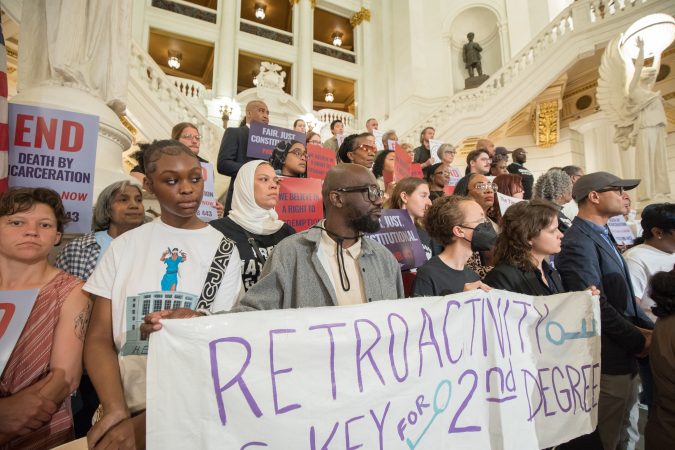
  • Pa. lawmakers can’t agree on how to sentence second-degree murder cases. The state Supreme Court may extend their deadline.

    Pa. lawmakers can’t agree on how to sentence second-degree murder cases. The state Supreme Court may extend their deadline.

    HARRISBURG — As state legislators failed to reach an agreement on a new sentencing structure for second-degree murder convictions on the eve of a deadline imposed by Pennsylvania’s highest court, the Allegheny County district attorney has asked the Pennsylvania Supreme Court to extend its deadline 120 days.

    Unless the court agrees, the state’s divided legislature is all but guaranteed to not reach a deal by the Friday evening deadline set by the court, which ruled in March that mandatory life sentences for crimes of that category were ruled unconstitutional.

    That means that judges would begin to sentence individuals across the state without legislative guidance — and likely tees up about 1,100 individuals already serving life sentences for lengthy litigation over what comes next.

    In a filing with the court Thursday afternoon, Stephen Zappala, the Allegheny County district attorney, requested that the judges give the General Assembly the ability to continue debating new sentencing guidelines when they return in September from summer recess.

    Lawmakers were not due back to Harrisburg until the fall, but Senate and House Republicans lambasted House Democrats for failing to pass any legislation on second-degree murder. The House returned to the Capitol for a special session Thursday to vote on a Democrat-backed plan for second-degree murder sentencing.

    The passage of that bill, however, did not bring lawmakers closer to a deal.

    “We still want to have a legislative solution, we believe it is going to be the most equitable way statewide to address the issue of people who are currently serving unconstitutional sentences,” said Roxanne Horrell, the legislative director for Straight Ahead, a decarceration advocacy organization. “We are ready and willing to come to the negotiating table.”

    The House-advanced plan, which passed 102-100, would allow individuals who have already been convicted of second-degree murder to seek parole after serving 30 years. A decision on new sentencing guidelines would be left to the state’s Sentencing Commission.

    In a brief statement to reporters, House Majority Leader Matt Bradford (D., Montgomery) said that bill “is a real attempt in the House to meet the Senate more than halfway.”

    In floor arguments that at times grew heated, House Republicans took issue with the outlining no minimum sentence for future cases and instead placing that decision in the hands of the Sentencing Commission.

    Republicans also criticized Democratic leadership for not taking a vote on the Senate-passed plan.

    That bill — which several Senate Democrats voted for — creates a sentencing minimum of 35 years to life for future cases. Individuals would be eligible for parole after serving 35 years, or after serving 20 years for those older than 70.

    “This is one of those issues that requires a great deal of thought, and it requires bringing in some of the stakeholders that we are hearing from that was opposed to this legislation today,” House Minority Leader Jesse Topper (R., Bedford) said. “Those are people who need to be in a room to come up with a solution, and unfortunately, that’s not what happened.”

    He called for party leaders, the state’s Fraternal Order of Police, Gov. Josh Shapiro, and Attorney General Dave Sunday to come together and reach an agreement instead of shuttling bills back and forth between both chambers.

    “When you don’t have that kind of collaboration to deal with an issue such as this,” Topper said, “nothing will be done.”

    Horrell said the decarceration organization would support discussions that include their input.

    In a letter on Thursday, the attorney general urged state representatives to vote against the plan backed by House Democrats.

    “This approach does not foster appropriate and thoughtful re-entry initiatives or put individuals on a path to success,” wrote Sunday, a Republican. “Thoughtful re-entry initiatives are necessary and important, and I support those initiatives. But not this approach, which ultimately fails to hold dangerous offenders accountable.”

    The plan advanced Thursday is the latest development in months of back and forth between Republicans and Democrats who have advanced differing visions for what the new sentencing parameters should be.

    Lawmakers were unable to reach a deal as part of budget negotiations that concluded earlier this month.

    “Today, the House took important action prior to the court-imposed deadline by passing a package to address this issue and it’s time for Senate Republicans to return to Harrisburg and bring this matter to conclusion rather than grandstand,” Shapiro said in a statement.

    The House-passed bill also expands the state’s compassionate release program. Under existing law, incarcerated individuals can only be candidates for release if doctors determine that they have less than a year to live.

    The bill would allow for an individual to be released if they have been diagnosed by a doctor with a terminal or life-threatening illness, or if a physician diagnoses them with an illness that could be treated better outside of a correctional facility.

    Democratic Rep. Rick Krajewski, who represents West Philadelphia, said that the program is designed for incarcerated individuals who are facing serious illnesses “that require real, complex medical care” that can’t be provided while an individual is serving out their sentence.

    “I am glad that the House was able to put a vision forward about how to fulfill our constitutional mandate and reform our carceral system generally,” he added.

    Several Republicans had supported Krajewski’s initial bill, which passed the house 111-92. The program is estimated to save $15 million a year in healthcare costs for incarcerated individuals, he said.

    Now that both the House and Senate have passed a bill, either could be amended and voted on by both chambers in a single day.

    “Instead of allowing a vote on either of the bipartisan bills passed by the Senate, [House Democrats] chose to engage in political theater and failed to produce any feasible product to protect our communities and victims’ families,” Senate Republican leaders wrote in a statement.

    A spokesperson for Senate Republican leadership did not respond to a request for comment on whether the chamber planned to return for a vote Friday.

    On Thursday morning, Topper morning said that he hoped the legislature could come to an agreement in the coming weeks if an agreement could not be reached by the deadline.

    However, speaking to reporters after the House adjourned, Topper said the decision to advance the House bill without a vote on the Senate bill on Thursday “sets things back considerably.”

    Ethan Young is an intern with the Pennsylvania Legislative Correspondents’ Association. He can be reached at ethanmyoung@gmail.com.

  • Philadelphia man charged with murder for the third time, Pa. Attorney General’s Office says

    Philadelphia man charged with murder for the third time, Pa. Attorney General’s Office says

    A Philadelphia man has been charged with fatally gunning down another man three years ago on a North Philadelphia street, authorities said Thursday.

    A grand jury on Wednesday indicted Richard Pridgen, 21, on charges of murder, attempted murder, and related crimes for the 2023 shooting death of George Smith, according to the Pennsylvania Attorney General’s Office.

    The case marks the third time state prosecutors have charged Pridgen with murder. He is currently serving a 17-year federal prison sentence for a separate crime.

    In a news release Thursday, state prosecutors said Pridgen is a member of the “Backblock” gang, a violent North Philadelphia group that has been at the center of joint investigations by the attorney general’s office, the Philadelphia Police Department, and the federal Bureau of Alcohol, Tobacco, Firearms and Explosives for years.

    Just before midnight on April 22, 2023, two people attacked Smith, 27, in the 2400 block of North 17th Street, state prosecutors said. Surveillance cameras captured the killing, and showed one of the men — whom state prosecutors identified as Pridgen — firing multiple shots into Smith’s body before fleeing in a vehicle driven by a third person.

    That vehicle, state prosecutors said, had been stolen at gunpoint the day before in the 2500 block of East Monmouth Street, less than four miles away.

    The two other homicides Pridgen is accused of committing also occurred in 2023 in Philadelphia, state prosecutors said.

    In one case, Pridgen is accused of shooting Hassan German, 31, and another man, who survived, on May 24, 2023, at the intersection of North Gratz Street and Susquehanna Avenue in North Philadelphia. The details of the other case were not immediately available on Thursday.

    “There are public dangers, and then there is Richard Pridgen — for whom killing, stealing, and harming people is a way of life,” Pennsylvania Attorney General Dave Sunday said in the news release.

    Pridgen has pleaded not guilty in both prior murder cases.

    A spokesperson for the Defender Association of Philadelphia, which is representing Pridgen in those cases, declined to comment.

    In February, Pridgen was convicted in federal court of two carjackings and sentenced to more than 17 years in federal prison.

    In the carjackings — which also took place in 2023 in Philadelphia — Pridgen robbed two men of their vehicles at gunpoint, federal prosecutors said. Neither man was injured.