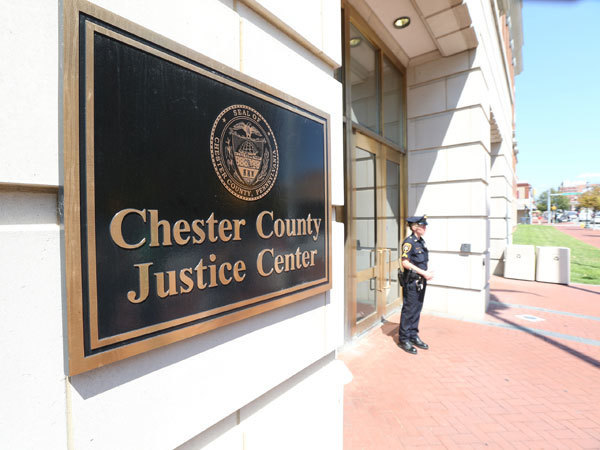
A Chester County man who forced two teenage girls, one of them a relative, to work long hours on a Kennett Square mushroom farm for no pay pleaded guilty Thursday to human trafficking, involuntary servitude, and related crimes.
Ramiro Caal Jolomna, 37, threatened to have the girls deported back to their homes in Guatemala if they did not comply with his demands, Senior Deputy Attorney General Zachary Mills Wynkoop said.
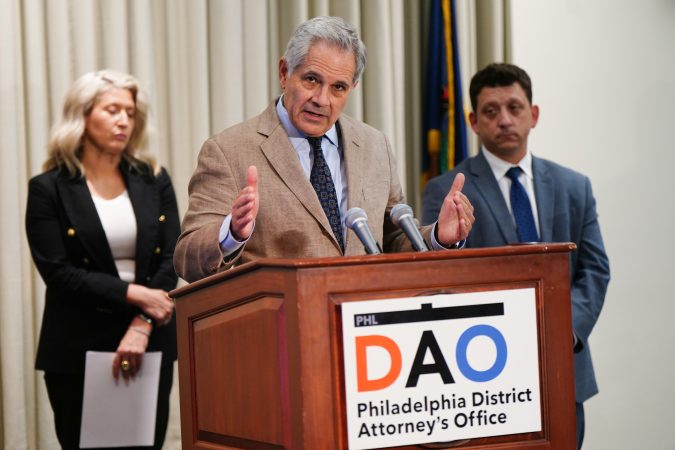
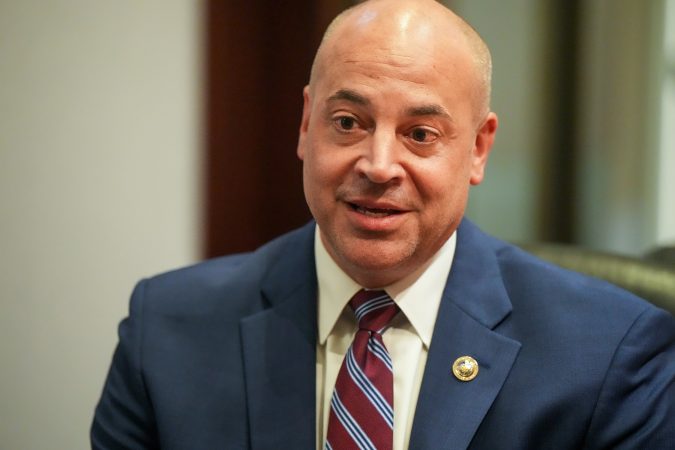
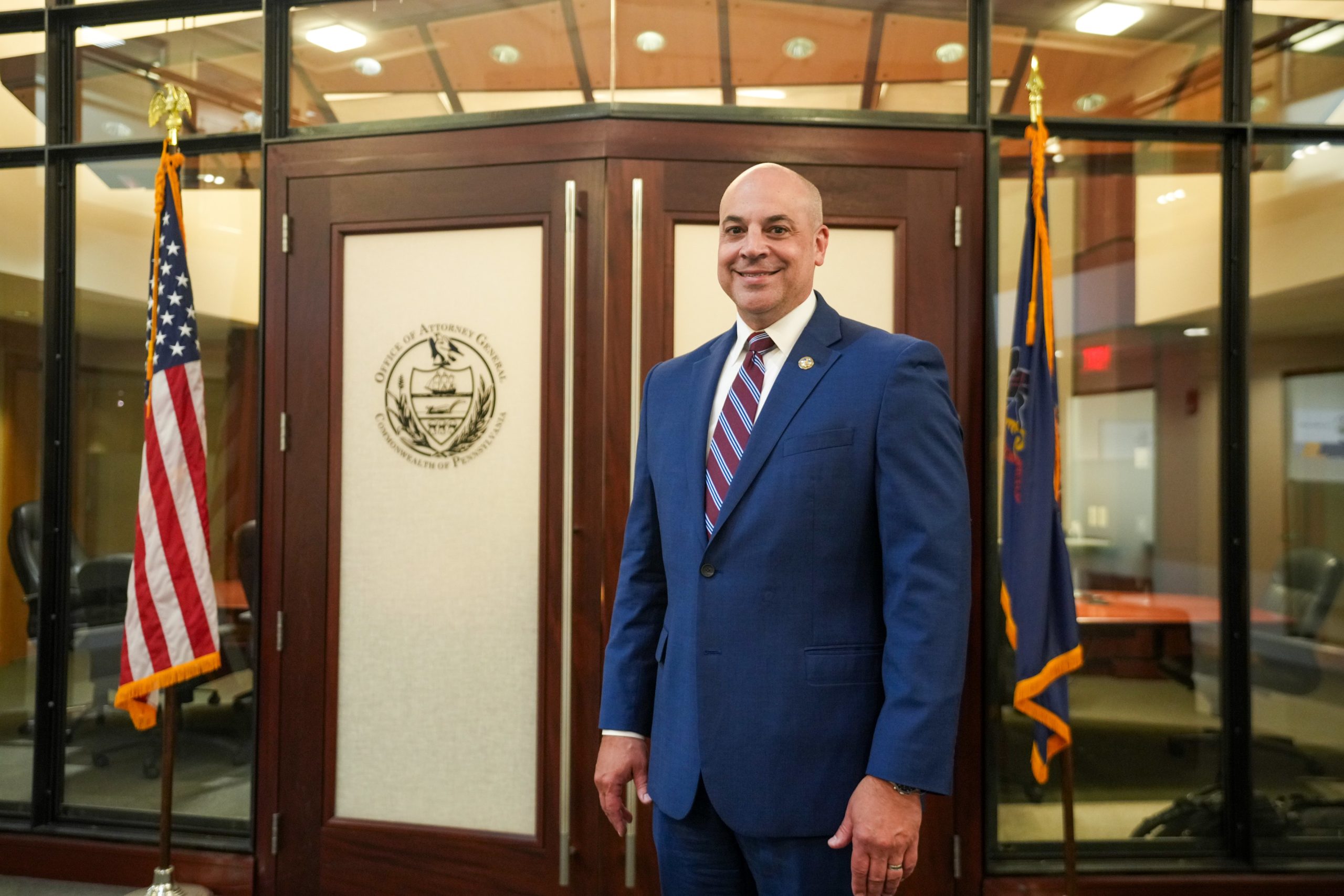
Pennsylvania Attorney General Dave Sunday, whose office investigated the case through its human trafficking division, called crimes like Jolomna’s “cruel and dehumanizing behavior that forces victims into a routine of helplessness and silence.“
The victims, who were 14 and 17 when interviewed by state investigators in 2024, said Jolomna helped transport them to Chester County with a promise of giving them better lives and the opportunity to earn money to send back to their families.
Instead, prosecutors said, Jolomna, of New Garden Township, took their salaries from the mushroom farm for himself.
The younger victim told investigators that she had been working on the mushroom farm since she was 12 years old, and that Jolomna had been signing her paychecks over to himself and his wife.
After working predawn shifts at the farm, the girl was forced to act as the couple’s housekeeper, and was not even given new clothing to wear, Wynkoop said.
The other victim told investigators Jolomna charged her rent to live in his home alongside nine other people and forced her to reimburse him for the cost of her flight to America. These debts prevented her from sending money home to her father, who was sick and unable to work, the prosecutor said.
At one point, Jolomna’s parents contacted the older victim’s parents and asked them for more money, according to the affidavit of probable cause for his arrest. The girl said she “did not know what would have happened if her parents said no,” the document said.
In an interview with prosecutors, Jolomna admitted to having debts from “smuggling” the girls into the country and to taking the girls’ paychecks to use for food and other items, according to the affidavit.
Jolomna will be sentenced in the coming months by Chester County Court Judge Debra Ryan.
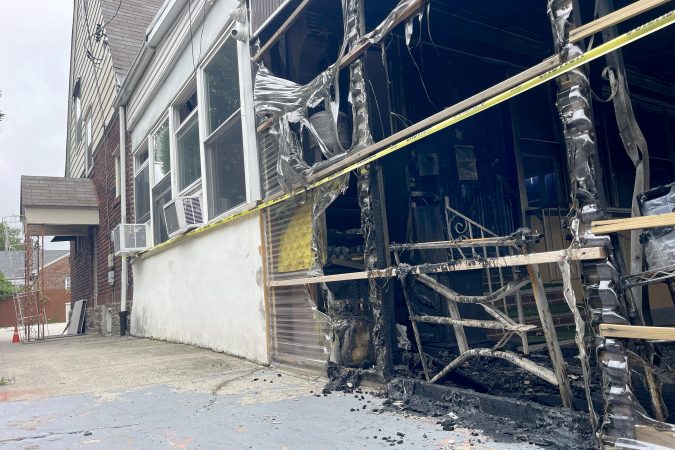
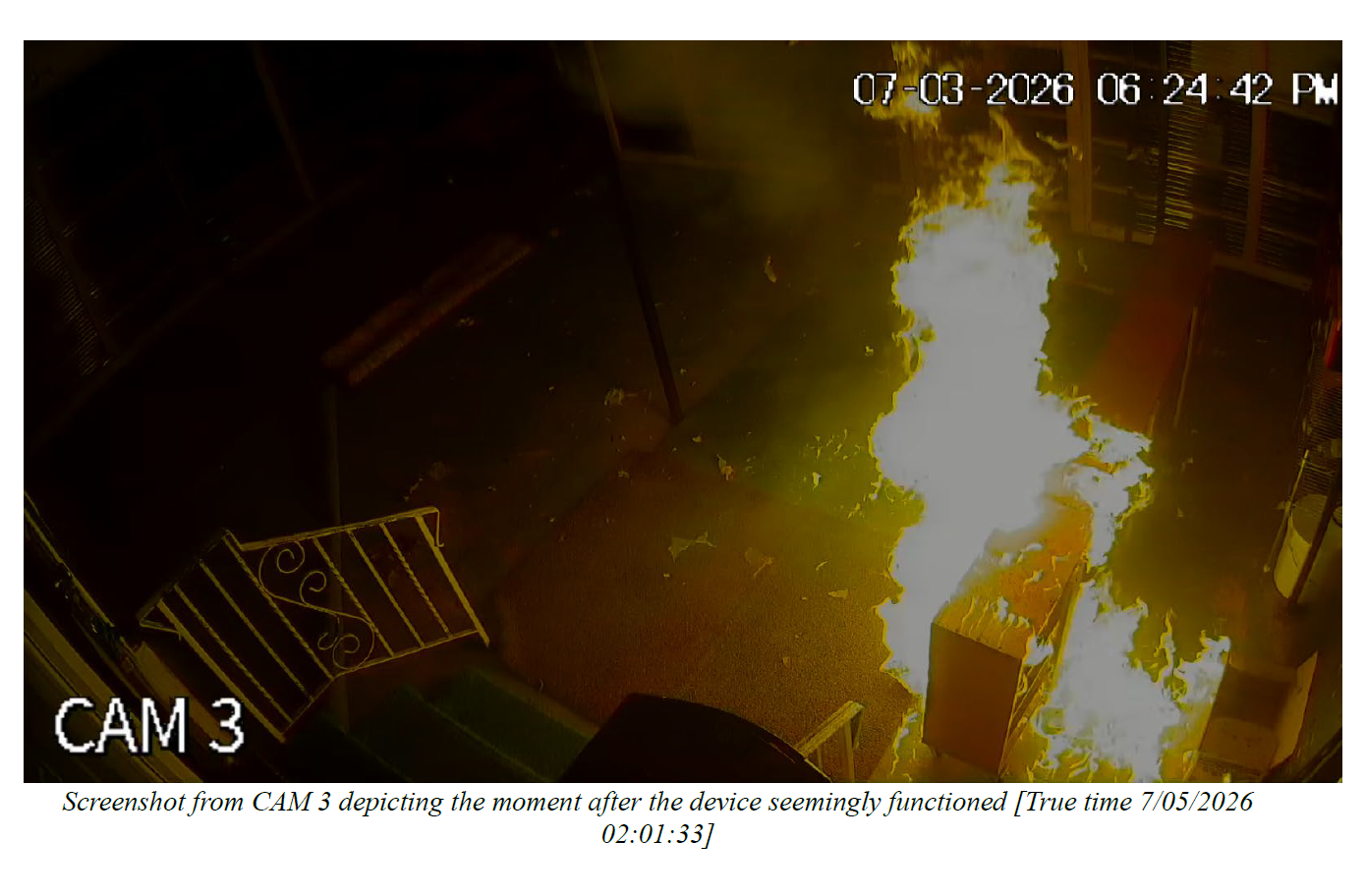
The same weekend America turned 250, I also watched a mosque burn in Northeast Philadelphia, a governor threatened with violence he’d already survived, and masked men march past the U.S. Capitol chanting “Reclaim America.”
None of it happened in the same city or involved the same people — and that is exactly why it matters.
This image provided by Commonwealth Media Services shows damage after a fire at the Pennsylvania governor’s mansion while Democratic Gov. Josh Shapiro and his family slept inside on April 13, 2025, in Harrisburg, Pa.Commonwealth Media Services
Read that twice. A man was arrested for describing arson against a governor’s family as an act of sympathy.
On the National Mall, hundreds of Patriot Front members, a group the Anti-Defamation League calls the most visible white supremacist organization in the country, marched in coordinated uniforms, carrying Confederate flags, chanting about reclaiming a nation they insist belongs to them alone. They did this in broad daylight, on Independence Day, and walked away unbothered.
It doesn’t have to be this way. Pennsylvania has offered a glimpse of the right response to hate.
After mailers went out to Upper Bucks County voters attacking a Democratic candidate as the pick of the “corporate, Israel-first Democratic party,” alongside a photo of State Sen. Steve Santarsiero, who is Jewish, with an Israeli flag under his face, he called the language exactly what it was: “an antisemitic trope that falsely implies Jewish Americans are disloyal to the United States.” Republican Attorney General Dave Sunday agreed, as did State Rep. Dan Frankel (D., Allegheny) and State Sen. Judy Schwank (D., Berks), who called the mailers “unacceptable and dangerous.”
That’s what the response to hate should look like every time, not because it’s convenient, but because antisemitic hate speech is hate speech, and in the end, it is incumbent on all parties and political leaders to speak out.
Extremism doesn’t wait for permission from a party platform. It shows up as a firebomb thrown into a mosque, a slur hurled at a governor, matching uniforms marching past the Capitol, a hateful symbol that doesn’t disqualify a candidate.
The only real defense is what happened with the mailer in Bucks County: leaders naming it immediately, without waiting to see who it benefits politically to stay quiet.
I have spent my career watching people search for the loophole: this hate doesn’t count, this extremist isn’t really one of ours, this symbol was just a tattoo. There is no loophole. Hate doesn’t get a partisan exception, and neither does our responsibility to name it the first time we see it.
Here is what I’d ask, whatever you believe and whomever you vote for:
Condemn it the first time, not the 10th.
Refuse the whataboutism. “The other side does it, too” has never made anyone safer.
Show up for communities that aren’t yours. A mosque needs the same solidarity a synagogue would after an attack, and vice versa.
Report what you see. Silence is how patterns become normal.
This year marks 250 years of a promise: that all people are created equal.
That promise doesn’t come with a partisan carve-out. Leaders in Pennsylvania showed us it doesn’t have to. The question is whether we follow that example, or wait for the next arson, slur, or tattoo before it finally matters.
Andrew Goretsky is the senior regional director for ADL Philadelphia.
The special prosecutor for crimes on or near SEPTA property will be funded through the end of the year as part of the newly approved state budget, Pennsylvania lawmakers said this week.
After that, the office’s fate is uncertain.
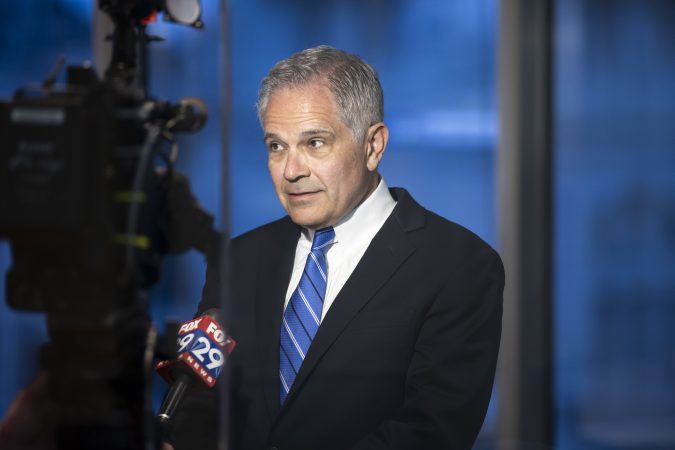
The controversial position is set to expire in December. It was championed by GOP lawmakers in Harrisburg, who for years have tried to limit Philadelphia District Attorney Larry Krasner’s powers and contended that the position was necessary because Krasner failed to prosecute crimes on the state’s largest transit system.
Senate Majority Leader Joe Pittman (R., Indiana), thetop Republican leader in Pennsylvania’s split legislature, where Democrats narrowly control the state House and Republicans lead the state Senate, said Democratic leaders repeatedly rejected GOP efforts to extend the position as part of the closed-door budget talks.
Krasner’s office has strongly opposed the law that created the special prosecutor position, calling it a “shocking usurpation of power” that unconstitutionally singled out Philadelphia and stripped an elected officials’ authority.
He could not be reached for comment Thursday.
The post has also faced opposition from Philadelphia-area lawmakers who say the effort is an affront to city voters who have reelected Krasner, a progressive prosecutor, three times.
“This is nothing more than voter suppression and an attempt to circumvent some of the extremely popular criminal justice reforms under this DA,” said Sen. Nikil Saval (D., Philadelphia), who chairs the city’s Senate delegation to Harrisburg.
Pittman, by contrast, said extending the special prosecutor is a critical component for Senate Republicans to agree to a new long-term funding source for SEPTA, which is approaching another fiscal cliff that could cause service disruptions when the state’s current short-term fix runs outnext year.
Asked about the future of the special prosecutor’s office, House Majority Leader Matt Bradford (D., Montgomery) said at Shapiro’s budget signing earlier this week that he hadn’t “given it much thought.”
Pennsylvania Attorney General Dave Sunday, a Republican who is tasked with overseeing the office, has lauded the special prosecutor’s work so far.
He said his office supports extending the position, calling it a “force multiplier” that has been effective in combating violent crimes against both SEPTA employees and riders.
“Our caseload reflects a range of very serious conduct — including murder and aggravated assaults — and we have secured results through convictions,” he said.
In one example of that effort, the special prosecutor will oversee the case of a 22-year-old woman charged with simple assault after authorities said she pepper-sprayed and punched a conservative social media influencer during a viral confrontation on a SEPTA bus.
Some House Democrats supported creating the role in 2023, as part of a state budget deal with the Senate GOP and Democratic Gov. Josh Shapiro, who was critical of Krasner when he served as attorney general.
Saval said Democrats shouldn’t use the position as a bargaining chip again.
“House Democrats who voted to suppress the will of Philadelphians should be ashamed of themselves, and should not support other attempts to do so,” Saval added. “This has nothing to do with the essential task at hand, which is to secure funding for mass transit.”
A spokesperson for Bradford said the House needs to “take a critical look” at whether the SEPTA special prosecutor is necessary. She noted SEPTA’s success in reducing crime and the size of its police force, but said the money used to fund the position may be better spent to reduce fare evasion by replacing gates to full-length ones that cost $40,000 each.
The funding was approved in the 2026-27 fiscal year budget “in the case of reauthorization,” and would be used to wind down the office, said Beth Rementer, Bradford’s spokesperson. Any unused funds would be returned to the general fund, she said.
A spokesperson for Shapiro declined to comment on the prosecutor role, but said Senate Republicans “need to do their jobs” to find a long-term funding solution for mass transit.
The office
The office is overseen by Special Prosecutor Michael Untermeyer, a former deputy attorney general and real estate investor who ran against Krasner in the 2017 primary.
Untermeyer did not respond to a request for comment.
The single lawyer employed by his office is investigating about 15 cases, including charges of homicide, aggravated assault, and robbery, according to a spokesperson for the attorney general’s office. That figure does not include cases the special prosecutor is considering taking on or are still under investigation, the spokesperson said.
Lawmakers could still choose to extend the position as part of their fall legislative session. It is among the several time-sensitive issues before the General Assembly ahead of the November election, in which Democrats hope to flip control of the state Senate for the first time in decades.
Krasner’s office has challenged the special prosecutor role from the beginning. His office filed a lawsuit in 2024 in an attempt to nullify the law, but was rebuffed by a 4-3 Commonwealth Court ruling that said legislators had not violated the state constitution in creating the post.
The office then appealed to the state Supreme Court, which has yet to decide the matter. As the high court heard oral arguments in the case last year, justices cited the Pennsylvania Constitution when suggesting that the legislature had been free to pass such a law, even if it interfered with the duties of an elected county official.
And lawyers for the attorney general’s office argued that the special prosecutor role did not strip Krasner’s power, but rather offered additional powers to a prosecutor appointed by the attorney general to handle cases involving crimes in and around SEPTA property.
The Philadelphia District Attorney’s Office has asked a state appeals court to block the Pennsylvania Attorney General’s Office from reopening a case that freed three men who spent nearly 30 years in prison for murder, saying state officials are overstepping their authority.
The request is the latest chapter in a legal fight over the scope of the attorney general’s newly expanded power in Philadelphia post-conviction cases. The dispute could determine whether the office can step in only before a judge acts — or whether it can challenge closed cases that are still within the window for appeal.
Common Pleas Court Judge Jennifer Schultz vacated the convictions of Marc Brittingham, Jermal Shuler, and Rasheed Turner in the 1997 killing of Essie Mae Thomas in May, after Philadelphia prosecutors and defense attorneys presented newly uncovered evidence that she said undermined confidence in the jury’s verdict.
The district attorney’s office declined to retry the men, and they were released from prison after 28 years.
Weeks later, after the Pennsylvania Supreme Court issued a landmark decision expanding the attorney general’s role in Philadelphia post-conviction cases, state prosecutors sought to intervene and appeal Schultz’s ruling.
In a motion filed Friday, the district attorney’s office said state prosecutors are twisting the high court’s decision and trying to bypass longstanding rules.
The decision gives the attorney general’s office the chance to weigh in before a judge grants a request supported by prosecutors to change a past conviction or sentence.
But Schultz issued her ruling in the men’s case weeks before the high court’s decision, and the window for state intervention had already closed, prosecutors Matthew Stiegler and Rebecca McDonald wrote in Friday’s filing.
In that interview, Sunday said that cases in which people have already been released from prison “are done.”
Attorneys for Brittingham, Shuler, and Turner made similar arguments in separate filings. They have also argued that reopening the case would unfairly upend the lives the men have begun rebuilding since their release.
The men were convicted of murder in 1998, a year after Thomas, 73, was found stabbed to death in her North Philadelphia home. But the testimony of the lone witness who placed them at the scene was discredited after new evidence upended Thomas’ time of death.
A spokesperson for the attorney general’s office did not immediately respond to a request for comment Friday.
In earlier court filings, the attorney general’s office has taken a different view, writing that the high court’s decision gave state prosecutors the right to independently review Philadelphia cases — even if a judge ruled before the office had an opportunity to participate.
And in his interview with the Inquirer, Sunday also said his office would “have to take a look” at “cases that are still going through the appellate process.”
Philadelphia prosecutors contend that the Supreme Court has already rejected that reasoning, citing past decisions in which justices said that a case is closed with a judge’s final order — regardless of whether the deadline to appeal has expired.
The attorney general’s office has not challenged the newly discovered evidence that prompted the district attorney’s office to support vacating the convictions.
That evidence included information about the disciplinary history of Bennett Preston, a former assistant medical examiner whose trial testimony about Thomas’ time of death helped to corroborate the account of the only witness who linked the men to the killing. Two independent forensic pathologists later concluded Preston had incorrectly estimated when Thomas died. The experts said Thomas was likely killed as many as two days later than Preston had said.
State prosecutors, however, said they found “troubling inconsistencies” between the findings of Preston and the other pathologists, and believe the case warrants review.
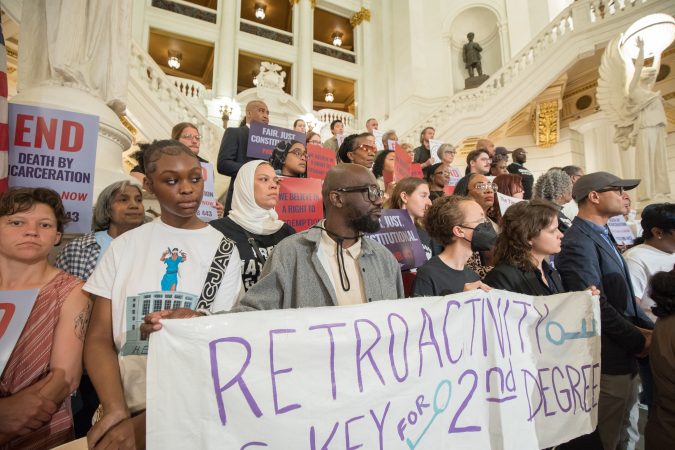
State lawmakers left Harrisburg on Sunday without approving a new sentencing structure for second-degree murder convictions, all but ensuring Pennsylvania will miss a court-imposed deadline to replace a law the state’s highest court struck down as unconstitutional because it barred judges from weighing individual culpability.
The legislature’s failure makes it exceedingly likely that judges across Pennsylvania will soon have to sentence people convicted of second-degree murder without a legislatively enacted sentencing range to guide them. It also sets the stage for what is expected to be years of litigation over the roughly 1,100 people already serving mandatory life-without-parole sentences.
The political stalemate leaves thousands of people — incarcerated Pennsylvanians, victims’ families, and attorneys — waiting to learn what happens next.
“In the absence of a law, there’s going to be a lot of chaos and a lot of confusion,” said Sean Damon, director of strategic partnerships for Straight Ahead, a decarceration advocacy organization.
Gov. Josh Shapiro said Sunday that he agreed with the Supreme Court’s decision striking down the mandatory sentencing law as unconstitutional, but had hoped lawmakers would reach a compromise before leaving Harrisburg.
Shapiro said he spent much of the final two days of session trying to bridge the divide between House Democrats and Senate Republicans. Though no agreement emerged, he said that House procedural maneuvering left a legislative vehicle available should negotiators eventually strike a deal before a July 24 deadline to rewrite thelaw.
“I’d like to see the legislature act on this and not just leave it up to every individual county to act,” Shapiro said.
‘Someone’s going to need to act’
Until the Pennsylvania Supreme Court ruling in March, the state was one of only two that still required life without parole for every second-degree murder conviction — a category of homicide that generally applies to deaths committed during certain felonies, including cases in which a defendant played a role in the crime that led to the death.
In their decision, the justices said courts must consider the facts of each case and the defendant’s culpability before deciding on a punishment.
But the high court stopped short of deciding whether its ruling applies retroactively to people already serving those sentences. And it delayed implementing its decision for 120 days to give lawmakers time to rewrite the law.
Since March, judges across the state have postponed sentencing defendants convicted of second-degree murder while awaiting action from the General Assembly.
That action never came.
Lawmakers adjourned for the summer with 12 days remaining before the Supreme Court’s stay expires and with no realistic path toward a compromise. Republicans and Democrats spent months advancing competing visions for replacing the unconstitutional law but failed to bridge deep disagreements.
Senate Republicans twice approved legislation that would replace the mandatory sentence with a minimum term of 35 years to life, allowing parole eligibility after 35 years — or after 20 years for prisoners at least 70 years old.
House Democrats backed legislation that would cap future second-degree murder sentences at 50 years while allowing many people already serving mandatory life-without-parole sentences to seek parole after 25 years. The proposal, supported by the Philadelphia Bar Association, the Defender Association of Philadelphia, and District Attorney Larry Krasner, never advanced to a vote in the House.
House Majority Leader Matt Bradford (D., Montgomery) said Sunday that Democrats have a legislative path prepared, so when they reach an agreement they can swiftly pass it and send it to Shapiro’s desk.
Asked whether that could happen before July 24 despite no additional voting days currently scheduled, Bradford replied: “We’re hoping to get something accomplished.”
Republican Attorney General Dave Sunday urged lawmakers this weekend to reach an agreement before the deadline, warning that failing to enact a new sentencing law would leave courts without clear guidance and could allow some people now serving life-without-parole sentences to become immediately eligible for release.
“It is dangerously inadequate for the House to allow the deadline to pass without a substantive and realistic proposal that includes sensible sentencing ranges with the option of a life sentence for the most serious offenders and protections for the victims of these horrible crimes,” Sunday said.
Sen. Wayne Langerholc (R., Cambria) voiced similar concerns during a committee meeting Saturday.
“Someone’s going to need to act in the House, or else this risks 1,100 violent offenders being released onto the streets of our commonwealth that we cannot afford to have,” he said.
A ‘free-for-all in the courts’
The Supreme Court cannot create a new sentencing range itself because establishing criminal penalties is the legislature’s responsibility. But advocates say Pennsylvania has already faced a similar situation.
After the U.S. Supreme Court ruled in 2012 that mandatory life-without-parole sentences for juveniles were unconstitutional, Pennsylvania enacted a new sentencing law that applied only to future cases. Four years later, when the high court ruled that decision applied retroactively, judges had to resentence hundreds of incarcerated people without legislative guidance.
Many attorneys expect a similar pattern after July 24. Judges will continue sentencing people convicted of second-degree murder on a case-by-case basis until lawmakers or appellate courts provide clearer direction. At the same time, attorneys representing people already serving mandatory life-without-parole sentences are expected to begin seeking new sentencing hearings.
Because the Pennsylvania Supreme Court did not decide whether the decision applies retroactively, that question is also expected to return to the justices.
“We reasonably believe that if this matter is brought to them [the justices] again, they will mandate mass resentencing,” said Damon, of Straight Ahead.
Some criminal justice advocates argue that individualized sentencing hearings before judges are preferable to replacing one mandatory sentencing scheme with another because judges are better positioned to weigh a person’s role in a crime, rehabilitation while incarcerated, and risk to public safety.
“Even though it will be a free-for-all in the courts,” said Celeste Trusty, a consultant for criminal legal reform organizations and former state legislative affairs director of FAMM, “people serving the now-unconstitutional mandatory life-without-parole sentences would also likely fare better” under individualized resentencing than under the failed bill.
Even so, the absence of a statewide framework is likely to place enormous demands on courts, prosecutors, and public defenders, particularly in Philadelphia, where more than 500 people are serving mandatory life-without-parole sentences for second-degree murder — about half the statewide total.
Keisha Hudson, chief defender of the Defender Association of Philadelphia, estimated each resentencing would require about $40,000 in attorney time, investigators, mitigation specialists, and other resources — roughly $24 million if every potentially eligible Philadelphia case returned to court.
She said defenders are expected to shoulder much of that work but lack the resources to handle the oldest cases, including about 30 that predate the creation of the office’s homicide unit in 1993.
Philadelphia District Attorney Larry Krasner did not respond to an interview request.
Lawyers for three Philadelphia men whose murder convictions were overturned in May are asking a judge to block the Pennsylvania Attorney General’s Office from intervening in the case in an effort to reverse that outcome.
Attorneys for Marc Brittingham, Jermal Shuler, and Rasheed Turner have asked Common Pleas Court Judge Jennifer Schultz to reject state prosecutors’ effort to appeal the decision that allowed the men to go free. The lawyers said the office did not have the right to intervene at this late stage.
On June 16 — three weeks after the men’s convictions were vacated — the Pennsylvania Supreme Court issued a landmark decision expanding the state’s role in Philadelphia’s post-conviction cases. But that ruling, the lawyers said, doesn’t apply retroactively.
At issue is whether the authority of the attorney general’s office extends to cases still within a window for appeal when the court issued its sweeping decision granting state prosecutors new power to step into post-conviction cases in Philadelphia.
The answer could determine how broadly the attorney general’s office can exercise its new authority.
Last week, the office sought to intervene in the case of Brittingham, Shuler and Turner, whose convictions in the 1997 killing of Essie Mae Thomas were vacated after Philadelphia prosecutors, defense attorneys, and the judge agreed that newly uncovered evidence had undermined their confidence in the jury’s verdict.
The attorney general’s office filed notices seeking to intervene and appeal 29 days after Schultz vacated the convictions, prosecutors withdrew the charges, and the men were released from prison after more than 28 years.
The move marked the office’s first effort to invoke the high court’s ruling, a sharply worded decision in which it accused Philadelphia District Attorney Larry Krasner’s office of repeatedly misleading courts while seeking to overturn convictions. The court ordered that, going forward, trial judges must notify the attorney general’s office whenever Philadelphia prosecutors concede post-conviction relief and give it an opportunity to review the case and potentially intervene.
The filings also underscore a complication the Supreme Court anticipated. The deputy attorney general assigned to the case, Hugh Burns, previously worked in the Philadelphia District Attorney’s Office, where he opposed earlier appeals by Brittingham, Shuler, and Turner to seek DNA testing in an effort to have their convictions reversed.
Justice Christine Donohue warned that the new intervention process could create conflicts when former Philadelphia prosecutors now employed by the attorney general’s office are asked to defend convictions they previously handled.
Defense attorneys say Burns’ involvement highlights that concern. They also described the attorney general’s effort as part of “an ongoing political and ideological battle” between state prosecutors and the district attorney’s office, arguing that Brittingham, Shuler, and Turner “should not be caught in the crossfire.”
The lawyers say the Supreme Court’s order forecloses the attorney general’s attempt to intervene. In its decision, the high court wrote that state prosecutors have “the right to intervene” in any case where the district attorney’s office concedes relief “before [a] ruling on the concession” is made.
The attorney general’s office, they said in the filings, is attempting to “change the rules after the fact.”
Attorney General Dave Sunday did not respond to questions about the case.
In a statement Tuesday, he said, “I don’t think that it benefits anyone for criminal justice leaders to editorialize a lot of the work we do. We intend to litigate in the appropriate venue — the courts.“
He added: “The last thing individuals who live in the community want to hear are elected officials yelling at each other. They want to see outcomes.”
In an earlier interview with The Inquirer, Sunday said that after the high court ruling, his office would be reviewing “cases that are still going through the appellate process.”
In this case, the district attorney’s office sided with the defense, saying in its own filing that the high court’s decision created a right to intervene “before [a] ruling,” not after. While prosecutors said they would comply with the court’s directive in future cases, they argued that nothing in the decision authorizes intervention in this case.
In a statement filed in the men’s case, Burns acknowledged that the state Supreme Court had not yet issued its ruling when Schultz granted the men their freedom. Even so, he asked whether the court should temporarily vacate its order to allow the attorney general to intervene.
Burns’ filing does not challenge the evidence that prompted prosecutors to support overturning the convictions.
That evidence centered on newly disclosed information about the disciplinary history of Bennett Preston, a former assistant medical examiner whose testimony at trial helped establish Thomas’ time of death — testimony prosecutors later concluded was unreliable.
Two forensic pathologists hired by defense attorneys and prosecutors also concluded that Preston had incorrectly estimated when Thomas died. Schultz found that the new information likely would have changed the outcome of the trial had jurors heard it before issuing their verdict.
The assault on healthcare for America’s most vulnerable is not only coming from Washington. It’s creeping into statehouses across the nation — even here in the commonwealth.
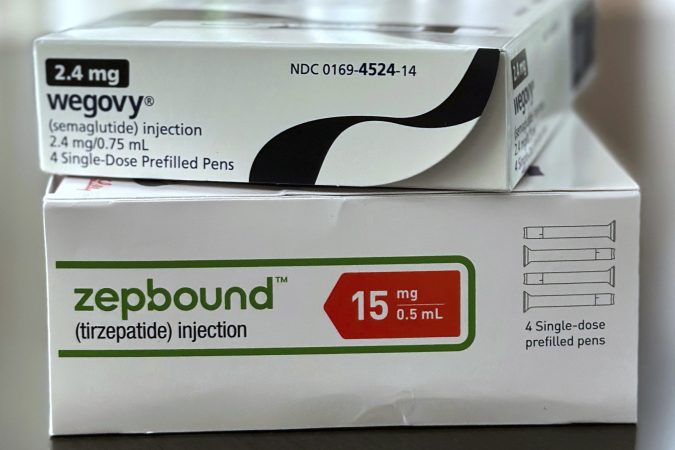
In Pennsylvania, Medicaid beneficiaries rang in the New Year without the obesity treatments they previously had access to, thanks to the actions of policymakers who moved to prohibit Medicaid coverage to meet tighter state budget benchmarks.
As a cardiologist who has spent my career treating many Black and brown patients, I have witnessed the consequences of unmanaged obesity play out in the most brutal and preventable ways: men in their 40s having heart attacks, women with decades of life ahead of them receiving stroke diagnoses, and heart failure caught too late for treatment to make a real difference. I have sat with families and explained that the disease that took their loved one was manageable — if caught earlier, with the right treatment. It’s devastating.
Pennsylvania has long been heralded as a champion of health equity, but our legislature is unintentionally sending a message that advances in medicine should be reserved for the privileged, the justification being cost. However, this rationale suffers from tunnel vision — the cost of untreated obesity and its complications is far greater. Treating obesity prevents its complications and saves money.
Obesity is not a lifestyle failure. It is a chronic disease that exacerbates cardiovascular conditions, already killing Black and brown Pennsylvanians at disproportionate rates. Obesity costs the U.S. nearly $173 billion annually in direct medical costs and more than $1.4 trillion in total economic impact. Cutting access to treatment will only worsen the obesity epidemic and continue to drive up costs.
Nearly 60% of Black women live with obesity, along with half of all Black and Latino adults. Pennsylvania is home to approximately 3.5 million adults living with obesity — one in three residents, irrespective of race or ethnicity. That number is projected to reach one in two by 2030. But for Black and brown communities, already burdened by decades of systemic underinvestment in preventive care and access to healthy food, the cardiovascular consequences of untreated obesity are the daily reality of emergency rooms and cardiac units across Philadelphia, Pittsburgh, Harrisburg, and everywhere in between.
Gaps in state budgets shouldn’t be closed by compromising the health of the underserved, communities of color, those with disabilities, and millions of others who depend on public healthcare coverage. Access to healthcare should be more than just a budget debate — it’s both a civil rights and a human rights issue.
At the same time, when patients cannot access FDA-approved obesity medications through Medicaid, they resort to whatever fills the void. Right now, that means a predatory market of unregulated, potentially unsafe, compounded GLP-1 drugs aggressively marketed to low-income communities.
Attorney General Dave Sunday has already warned Pennsylvanians about the dangers of these products. The Shapiro administration itself fined a Chester County pharmacy $1 million for producing unauthorized injectable weight-loss drugs. The state knows this market exists, but fails to see how cutting Medicaid coverage for FDA-approved treatments drives patients straight into it.
State Rep. Justin Fleming (D., Dauphin) has introduced the GLP-1 Safety Act, which would crack down on illegal compounders and protect Pennsylvanians from dangerous counterfeit medications. His bill deserves passage.
However, enforcement without access is not a health policy. It forces patients to choose between nothing and something dangerous. For Black and brown patients in Pennsylvania, this is not hypothetical, but their current reality.
Pennsylvania once led the nation by expanding Medicaid to cover chronic conditions like obesity. But now, with Washington dismantling Medicaid at the federal level — 310,000 Pennsylvanians are projected to lose coverage under federal cuts beginning this year — it’s important that the state moves in the right direction at the state level.
Choosing exclusion and shortsighted cuts is weak policy and will not achieve future healthcare savings. Pennsylvania can once again lead in equitable access to obesity treatment. Our shared progress in the fight against obesity is not negotiable.
Marietta Ambrose is a cardiologist in Philadelphia and is affiliated with the Hospital of the University of Pennsylvania and Penn Presbyterian Medical Center. She is a member of the Association of Black Cardiologists.
Attorney General Dave Sunday has spent 18 months as the state’s chief law enforcement officer, overseeing a sprawling office that handles criminal prosecution, civil litigation, consumer protection services, civil rights enforcement, and more.
In that time, the 51-year-old Republican and Harrisburg native says, he has taken on issues ranging from the opioid crisis to illegal crime guns. And last week, the Pennsylvania Supreme Court handed his office broad authority to review the efforts of Philadelphia prosecutors to overturn murder convictions they have called unjust, a signature initiative of District Attorney Larry Krasner’s office.
In a recent interviewat his Philadelphia office, Sunday talked about that and more.
What is your reaction to the Supreme Court ruling on the work of District Attorney Larry Krasner’s Conviction Integrity Unit?
Obviously, it’s an unprecedented ruling.
Oftentimes, the best outcome is through the adversarial process. We work with the Philly DA’s office in a lot of different areas, and I viewed this ruling as any other that provides me with instructions on a way on which I have to run my office.
Moving forward, the ruling requires your office to review any post-conviction concession that Krasner’s office aims to pursue. How will that work?
There are questions. How many times will we have to intervene? What will that do to staffing? Will we have the logistics and resources to do it appropriately? I think that process will unfold over the next month or so.
There’s no other real comparison for this ruling, and so what I can say very simply is this: It is absolutely crucial that there is a voice for the families of victims, and at the same time, I think it’s crucial to make sure that we protect the rights of individuals who are charged with crimes and convicted of crimes.
That balance is found in applying the law and the facts to the issue. That’s something we will enthusiastically do.
.Assistant General David Sunday, in Philadelphia, June 23, 2026.Jessica Griffin / Staff Photographer
Since Krasner first took office, his prosecutors have supported efforts to overturn around 115 convictions. Given the Supreme Court’s findings, do you now question whether some of those overturned convictions should be reconsidered?
Well, we have to look at the legal process there. For individuals who the court has already ruled in a manner in which they’re out of prison, those cases are done.
But with cases that are still going through the appellate process, individuals that are incarcerated, those are situations where we’re going to have to take a look at it. I mean, this is very serious, and when the Pennsylvania Supreme Court rules in this manner — not just the ruling itself, but the verbiage — I, as attorney general, take that extremely seriously.
We will do our job, and we’ll do our duty, and we’ll review it, but it’s also important to understand that this isn’t a quest to prove someone wrong. It’s a quest to ensure that all parties are zealously advocated for.
Krasner has strongly opposed the ruling. He’s likened this issue to the struggles of the Civil Rights Movement and said that the decision undermines the votes of those who elected him to office. What is your response to that?
I don’t think that it benefits anyone for criminal justice leaders to editorialize a lot of the work we do.
It’s critical that the citizenry knows and understands that their case will be dealt with by applying the facts to the law — and I know that’s not the most exciting answer, but there are things that are in my control and there are things that aren’t in my control, and his reaction to anything is completely out of my control.
The last thing individuals who live in the community want to hear are elected officials yelling at each other. They want to see outcomes.
Earlier this year, justices ruled that mandatory life sentences without parole for those convicted of second-degree murder are unconstitutional. What are your thoughts on that?
Third-degree murder, second-degree murder, those are cases where the acts resulting in the crime are vastly different case to case. As a prosecutor, I’ve tried horrific second-degree murder cases — one was an in-home burglary where an individual was left face down on the ground, duct-taped, and they ultimately died from positional asphyxiation, which really is torture.
At the same time, there are second-degree murder cases where you have multiple codefendants, and — this case is highlighted a lot — one of the codefendants pulls a gun out, kills an individual, and all those codefendants, because they were acting in concert and furthering some conspiracy, they’re all guilty of second-degree murder and they’re in for life.
So there are second-degree murder cases where the individuals should have an opportunity for parole, and at the same time, there are cases that are absolutely horrific, where individuals should spend the rest of their lives in prison.
The important place we’re in now is the legislative process, moving forward to ensure that the punishment is commensurate with the harm caused in the crime.
Violent crime has fallen dramatically from its pandemic-era highs in Philadelphia and across the state. Should the attorney general’s office get some credit for that?
There is no one individual or agency that can take credit for these outcomes. We’re with our federal partners, we work with everybody.
After I was elected, some of the very first calls I made were to the Philadelphia mayor and the police commissioner, and I made it very clear that we’re partners. I’m excited, let’s go. And that’s what we’ve done.
The Attorney General’s Gun Violence Task Force is a huge part. We do everything we can every day to go after gun traffickers, illegal straw purchasers. We’ve removed more than 500 crime guns off the streets [statewide] in 2025.
In addition to that, our Bureau of Narcotics works every day in Philadelphia. Last year, we removed 56 million doses of fentanyl from the streets, and a large portion of that was in the city.
The Commonwealth Court struck down a decades-old law that banned Pennsylvanians from using their Medicaid benefits to pay for abortions, and last month, your office appealed. Why?
A lot of people don’t understand the role of the AG in a lot of issues. In Pennsylvania, we have the Commonwealth Attorneys Act, the rules that dictate the job, and one of the rules in there is that the attorney general shall defend the constitutionality of statutes in Pennsylvania.
I have irritated the entire political spectrum, because I am defending statutes whether you like them or not. That’s literally my job. What a lot of people don’t understand is that the [Medicaid] law is part of the Abortion Control Act — the same law that allows abortions to occur up to six months of pregnancy, the very same law.
In that law is a subsection that also says that government funds cannot be used for abortions — so I’m defending the abortion law in Pennsylvania, just like I would any other section of that law.
Critics say that by appealing the ruling and prolonging this issue, you are denying Pennsylvanians of what the court called a “fundamental right to reproductive autonomy.” How do you respond?
Just like every law we defend — every single one — there are people that like it and don’t like it, and they will have commentary. I certainly respect their absolute right to have that commentary.
What I will say is, this decision has nothing to do with that. It is the job of the attorney general to defend the statute.
.Assistant General David Sunday, in Philadelphia, June 23, 2026.Jessica Griffin / Staff Photographer
What would you say has set your tenure apart from your predecessor, Gov. Josh Shapiro, and his appointed successor, Michelle Henry?
Very simply, I came into this job as a prosecutor. I ran on public safety. I wasn’t a legislator, so when I look at the office, I view it as a place where you follow the facts in the law, and you fight hard to keep people safe.
With that being said, I have hyper-focused on issues impacting citizens. We have huge crises in Pennsylvania that need to be addressed, specifically the mental health crisis.
When I came into office, I saw our prisons are full of people that have mental and behavioral health challenges. Individuals go to jail solely because they have a mental health crisis, and what I want to see are people getting treatment.
What we did was create a new initiative that gives police a toolbox, so when they come into contact with someone in a mental health crisis [who is committing a low-level criminal offense], they can get that person into treatment [if the person chooses to do so]. At the same time, that person can be charged, and the police have the flexibility to hold that charge.
This is brand-new, and we have nine counties that are already signed up and are rolling. We have five more lined up and ready to roll over the next few months.
President Donald Trump held a rally in Pennsylvania on Tuesday, and he was joined by some of the state’s other top Republican officials, such as Stacy Garrity. Is that an event you would have liked to attend?
In all candor, I have events that have been scheduled for months and months, and the reality is, a lot of these [presidential] events pop up pretty quickly.
On Tuesday, I had an event with the first elected attorney general in Pennsylvania, LeRoy Zimmerman. I was with him at a fireside chat, talking about what the AG’s office has looked like, and how it’s changed over the last 30 years.
The Pennsylvania Supreme Court’s decision to limit Philadelphia prosecutors’ ability to seek to overturn old convictions not only took aim at one of District Attorney Larry Krasner’s defining initiatives — it altered the work of an office he will one day leave behind.
The high court’s ruling adds an extraordinary new layer of oversight to an issue that helped make Krasner one of the nation’s most prominent progressive prosecutors: correcting what he has described as injustices of decades past.
But the newly established changes to the appellate processes in Philadelphia will outlive Krasner’s tenure and reshape the way the office reviews post-conviction cases for years to come. It could not only apply to high-profile exonerations in murder convictions, but also extend to cases that even Krasner’s more conservative predecessors were eager to undo, like drug and gun convictions linked to corrupt cops.
It also deepens a yearslong conflict between Krasner and his critics in the justice system. Several justices, in dissenting opinions, raised concerns that the change could inject politics into a high-stakes legal process.
Since taking office in 2018, Krasner has made post-conviction review a centerpiece of his reform agenda. His office said it has overturned the wrongful convictions of 59 people — almost all of them Black men. It has also struck deals that allowed defendants to plead guilty to lesser charges in dozens of other cases in which prosecutors did not say those charged were innocent, but agreed their original trials were unfair, often because of prosecutorial or police misconduct.
But the high court, in a forceful majority opinion written by Justice Kevin Dougherty, said Krasner’s prosecutors had misled judges in several of those cases, that the prosecutors were not acting as the necessary adversaries to test the cases’ merit, and that the courts could no longer trust his prosecutors’ word when deciding whether to overturn a conviction.
Pennsylvania Supreme Court Justice Kevin Dougherty greets supporters during an election night party in November 2025.Elizabeth Robertson / Staff Photographer
Moving forward, the justices ruled, if the district attorney’s office agrees to alter a sentence or overturn a past conviction, judges must ask the state attorney general’s office to review the case before proceeding. The ruling applies only to Philadelphia; prosecutors in every other Pennsylvania county can continue to evaluate cases on their own.
Krasner declined to comment this week. While it was not immediately clear whether he had a legal path to challenge the ruling, he said in a video statement last week that it “undermines the value of a vote in Philadelphia.”
He compared criticism of his post-conviction review efforts to attacks that have been leveled against other social and racial justice movements.
“We know where we are in the fight,” he said, “and once we get past the fight, we all win.”
But the Supreme Court’s ruling sharply curtails part of that effort, and it is expected to significantly reshape — and likely slow — one of the most consequential parts of Krasner’s agenda.
It was “an extraordinary remedy for something the court thought was an extraordinary problem,” said Aaron Marcus, chief of the appeals division at the Defender Association of Philadelphia.
But, he added, “the remedy might go beyond what was necessary in the court’s mind to address the problem in front of it.”
While the decision gives the attorney general broader authority to intervene when city prosecutors support post-conviction relief, it remains unclear how often — or when in the process — it will weigh in.
Brett Hambright, a spokesperson for the office of Attorney General Dave Sunday, a Republican, said in a statement this week that officials were still evaluating the order and its potential impact. Because of the many unknowns, he said, “it may be difficult to fully assess … until the process truly begins.”
Still, on Wednesday, Sunday’s office filed a notice of intervention in a murder case that Philadelphia prosecutors helped overturn just last month — setting up a potential test case for the new legal landscape around the issue.
Marcus, of the Defender Association, said the ruling could cause confusion — and delays — in cases that the conviction integrity unit does not typically handle, such as weapons and drug-possession cases, as well as more routine matters, like correcting prison sentences that had been miscalculated.
“There’s already too few attorneys with too little time and insufficient resources,” he said.
Marissa Boyers Bluestine, assistant director of the Quattrone Center for the Fair Administration of Justice at the University of Pennsylvania’s law school, said that because the courts did not set a timeline for how quickly the attorney general’s office must review each case, the added oversight could draw out an already yearslong appellate process filled with delays. And, she said, it could create “confusion on who exactly is representing the state.”
“Now you have two entities who are potentially in opposition to each other,” she said. “It raises confusion and diminishes the real trust in the criminal legal system.”
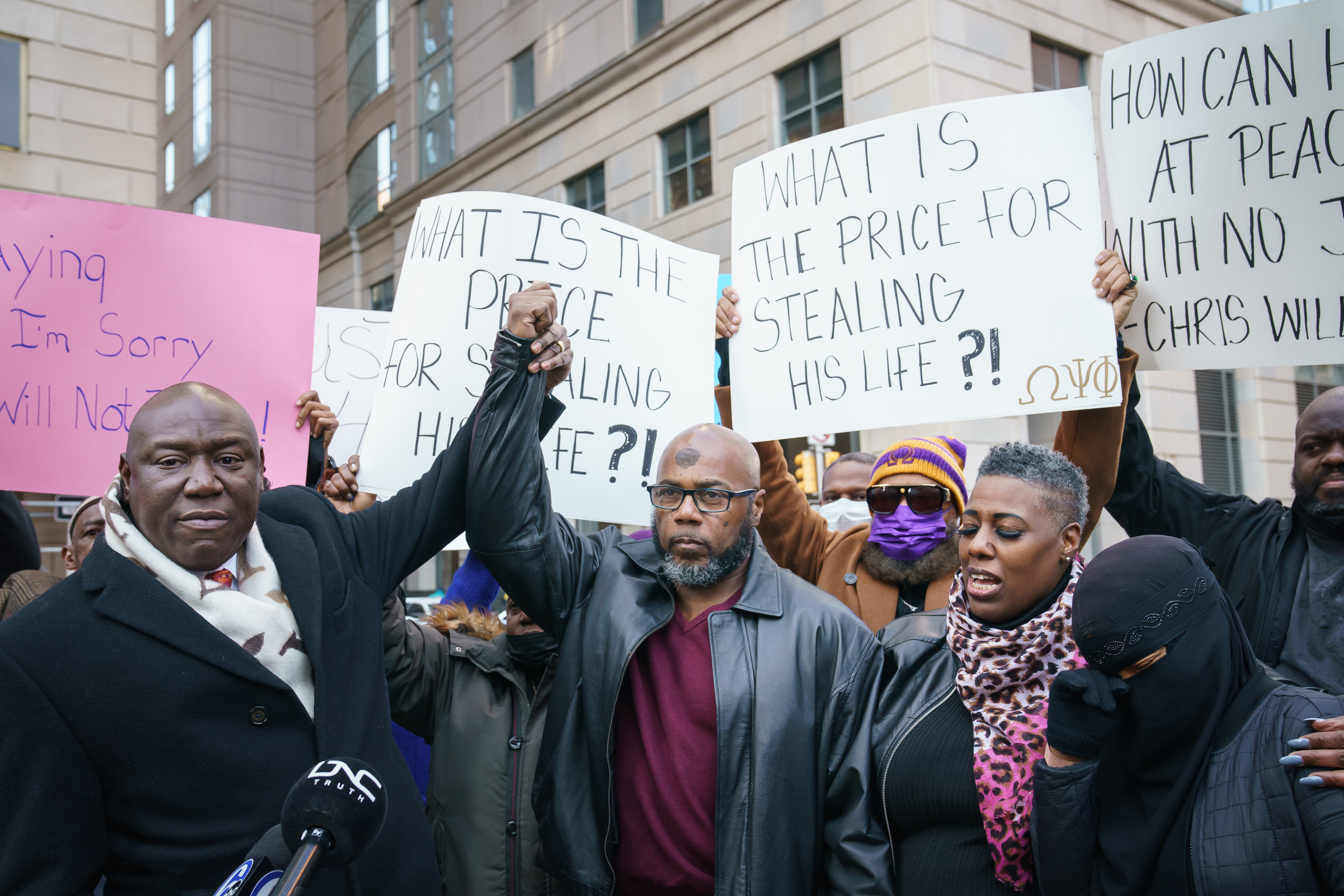
Dozens of people have been released from prison in Philadelphia after prosecutors agreed their trials were unfair. In this 2021 photo, Christopher Williams, center, gathered outside the Criminal Justice Center to announce a lawsuit against the city of Philadelphia, police and prosecutors. Williams was exonerated and released from prison in February 2021 after more than 25 years on death row.JESSICA GRIFFIN / Staff Photographer
Several defense lawyers who handle post-conviction cases were similarly concerned about the unknowns of the ruling — and said the majority opinion did not address the decades of problematic police and prosecutorial behavior that led to this moment.
Michael Wiseman said Krasner’s office has opposed most of his clients’ petitions over the years. Like other district attorneys before him, Krasner is not perfect, Wiseman said, but the high court “is vexing in its willingness to ignore all the times when Krasner’s office got it right.”
At the same time, he said, “It is similarly vexing for not recognizing the imperfections of past administrations, who, unlike Krasner, defended every conviction without regard to innocence or unconstitutional convictions.”
Adding to the complexity of the issue, some justices believed the majority’s decision could threaten to reignite long-running feuds between Krasner and prosecutors he has clashed with in the past.
In one of his first actions after taking office in 2018, Krasner fired dozens of veteran prosecutors, effectively describing them as unfit to serve in a reform-oriented administration. Some who were ousted then went on to work in the state attorney general’s office, and Krasner, in a remark that was widely criticized, jokingly referred to that office as “Paraguay,” a South American country where Nazis fled after World War II.
Justice Christine Donohue warned in a dissenting opinion that the majority’s ruling could threaten to inject personal disputes between rival lawyers into a process that is supposed to be unbiased. In addition, she said, giving the attorney general’s office authority in those cases could give some state prosecutors a role in defending convictions they helped obtain when they worked for the city.
“This is in stark contrast to acting as a friend of the court,” she said.
Ben Lerner, a former Philadelphia Common Pleas Court judge and former chief defender, said Krasner deserves credit for creating a meaningful system to revisit convictions — something he said previous administrations largely failed to do.
But state and federal courts have repeatedly raised concerns about the office’s methods, he said, including allegations that prosecutors excluded investigating officers and former trial attorneys from parts of the review process, and focused disproportionate attention on cases tied to prosecutors Krasner had clashed with during his years as a defense lawyer.
“In my view, it’s a shame,” he said, “because this was basically a very important thing that he was doing that previous district attorneys had had no interest in doing.”
HARRISBURG — So-called skill games, the slot machine look-alikes that have proliferated by the tens of thousands around Pennsylvania bars and corner stores, are slot machine devices and should be regulated as such, the state’s highest court ruled Monday.
The Pennsylvania Supreme Court ruling clears the way for widespread taxation and regulation by the state, as well as limits on where the machines are available, as a majority of justices ruled that both gambling law and the criminal code apply to the machines.
The majority recognized that the ruling could cause a “potential disturbance” for “business owners and other good-faith participants in the industry,” so the ruling will take effect after a 120-day “safe harbor” period. And if lawmakers in Harrisburg disagree with the opinion, the General Assembly “remains free at any time to take whatever legislative action it may deem appropriate.”
Pennsylvania’s gambling industry is highly regulated and taxed. If state law is unchanged after the 120-day waiting period, the estimated 70,000 skill game machines available across the state would need to be regulated and confined to specific locations like casinos that have the proper licenses.
Chief Justice Debra Todd and Justice Daniel McCaffery, both Democrats, joined the opinion in full, while Republican Justices Sallie Updyke Mundy and Kevin Brobson concurred with most of the majority’s reasoning but wrote a short dissent.
“Because chance predominates both the player’s eligibility for winnings and the magnitude of those winnings, the [skill games] device is a gambling device,” Donohue wrote.
Justice Kevin Dougherty, a Philadelphia Democrat, sat out the long-awaited decision.
Skill game operators have evaded taxation and regulation for more than a decade, operating in a legal gray area after lower courts ruled that the machines require a level of skill not necessary to play games of chance like slot machines.
The most influential player in the skill games industry, Georgia-based operator Pace-O-Matic, has asked the state on multiple occasions to regulate and tax the machines — but at a rate much lower than slot machines, arguing that their technology helps small businesses with small margins stay afloat as prices rise.
In a statement, Pace-O-Matic said it was disappointed by Monday’s ruling, which it said would have “far-reaching consequences” on Pennsylvania’s small businesses and fraternal organizations.
“[Small businesses] are now potentially left facing an impossible choice: cease operating these games and lose an important source of revenue, or endure a legislative solution that could bring excessive regulation and crippling taxation, which will force them to cease operating these games and lose an important source of revenue,” a spokesperson for Pace-O-Matic added.
Gov. Josh Shapiro, a first-term Democrat, has proposed regulating and taxing skill games at 52% — the same rate currently levied on slot machines and most other games of chance. He estimated taxing and regulating the machines could bring in $765.9 million for the state in new revenue in its first year, as part of his $53.2 billion February budget pitch.
Lawmakers have been waiting for the state Supreme Court to rule whether the machines are legally slot machines or not, as the split legislature considers whether to and how much to tax them as a way to create a much-needed new revenue stream.
Top legislators and Shapiro have convened over the last few weeks in closed-door meetings to finalize a state budget deal ahead of a June 30 deadline. Now, with the decision in hand, Senate President Pro Tempore Kim Ward (R., Westmoreland) and Majority Leader Joe Pittman (R., Indiana) said in a statement they believe gaming reform is a “critical piece of resolving this year’s budget.”
In Philadelphia, City Council banned skill games in 2023 over concerns that they attract crime, but a lower court blocked enforcement of the ban while several cases worked their way to the state Supreme Court.
A Philadelphia jury ordered Pace-O-Matic to pay $15.3 million last year to the estate of Ashokkumar Patel, a Hazleton store clerk killed during a 2020 robbery. And a Philadelphia store clerk shot last year during an armed robbery of Philly Market in Frankford, Ahmedine Maham, sued Banilla Gaming, a North Carolina-based skills game manufacturer, for enticing his assailants.
At the end of the 120-day waiting period, the machines will be subject to regulations like slot machines and restricted to specific locations licensed to house slot machines — unless lawmakers decide to change the law.
Pace-O-Matic, in its statement Monday, urged lawmakers to approve bipartisan proposals backed by rural GOP members and Philadelphia Democrats that would charge a $500 fee per skill game machine and would not restrict the machines to licensed slot machine locations, such as casinos.
In a statement, Pennsylvania Attorney General Dave Sunday, a Republican, praised the Supreme Court’s decision as a “significant victory for consumers, taxpayers, and the rule of law.”
“The Supreme Court recognized what our office has argued from the beginning — these machines operate as gambling devices and cannot legally exist without the same oversight, regulation and accountability as other forms of legalized gaming in the commonwealth,“ Sunday added. ”Pennsylvanians deserve protections that ensure games are fair, transparent and operated within the bounds of the law.”