Tag: Collingswood

  • Voters will have the final say about lifting Collingswood’s liquor license ban

    Voters will have the final say about lifting Collingswood’s liquor license ban

    After years of scattered discussion and debate, the future of Collingswood’s long-standing status as a dry town is officially in the hands of voters.

    The Collingswood Board of Commissioners passed a resolution Wednesday to add the question to the borough’s general election ballot in November, just days ahead of the Aug. 21 deadline giving the Camden County Clerk’s Office enough time to put it on the ballot.

    The three-person board was required to adopt the resolution after residents submitted a petition in favor of adding the ballot question that was signed by at least 15% of borough voters who participated in the last general election.

    Of the more than 1,100 signatures submitted, the borough verified that 1,019 came from recent Collingswood voters, officials said Wednesday, just eight more than the number of valid signatures required to place the referendum in front of voters.

    The signatures were collected in a hurry over the last three weeks by Booze on the Ballot, a group of residents who, after years of what they viewed as unproductive back-and-forth on the issue among borough officials, got together to finally give voters the chance to settle the debate, organizer Joe Sperlunto said.

    The bipartisan group did not explicitly take a position on the issue but rather emphasized this as an opportunity for residents to decide for themselves what they want for the future of their community.

    “We’ve just seen it kicked around a lot for a long time, and we just felt like it was time for the community to make a decision about it,” Sperlunto said.

    Petitioners equipped with clipboards and pens fanned out across town, collecting signatures wherever they could — among the crowds at the popular Saturday farmers market, in front of businesses along Haddon Avenue, and even knocking door to door, Sperlunto said.

    After the resolution was approved, Collingswood Mayor Daniela Solano-Ward noted that as Election Day approaches, there will be informational sessions for voters to learn more about the referendum as well as any others that may be on the ballot.

    “Just to give everyone the facts and the information,” Solano-Ward said.

    “You make your decisions as you wish, but we want to make sure that you have information from us as to what is real, what is not real,” she said. She added, for example, that BYOBs will still be permitted in the borough if liquor licenses are issued, contrary to a popular misconception.

    What could allowing liquor licenses mean for Collingswood?

    Repealing Collingswood’s liquor license ban would represent a historic shift for a borough that has prohibited alcohol sales by ordinance since the 19th century, linking back to its Quaker heritage.

    If the ban were lifted, the borough would have two options for how to award licenses, borough solicitor Caitlin Harney Norcia said during a commissioners meeting earlier this year.

    Collingswood could award licenses in a competitive bidding process, which could generate one-time revenue for Collingswood’s budget, she said, or the borough could enact an application and review process that includes annual fees and public presentations by prospective licensees.

    The number of liquor licenses permitted within the borough is limited by a state-mandated population-based cap. If voters decide to lift the ban, Collingswood could issue either a single distribution license for a liquor store or up to four retail consumption licenses that permit restaurants or bars to serve alcohol.

    Annual licensing and renewal fees could generate between $1,000 and $10,000 for the borough each year, Harney Norcia said.

    Proponents of lifting the longtime ban see liquor licenses as an opportunity to bolster Collingswood’s local restaurants while generating revenue for the borough.

    At the same time, borough administrator Cassandra Duffey previously told The Inquirer, some business owners are worried that existing Collingswood restaurants would be overlooked for licenses awarded through the public bidding process.

    If alcohol sales are ultimately permitted, Duffey said, the borough will work to not “disrupt the balance” of its established businesses.

    Just a few miles down the White Horse Pike, Haddon Heights is preparing to sell its first retail liquor license at a public auction next month after getting rid of its de facto ban on alcohol sales in 2024.

    The efforts in both towns appear to be in line with goals set forth in legislation signed in 2024 by then-Gov. Phil Murphy to increase the availability and affordability of liquor licenses statewide. The measure was touted as an unprecedented reform of New Jersey’s liquor laws, which have been criticized as being arcane and antiquated.
  • Owner of Zena’s American Mediterranean Cuisine in Collingswood released on bond from ICE detention

    Owner of Zena’s American Mediterranean Cuisine in Collingswood released on bond from ICE detention

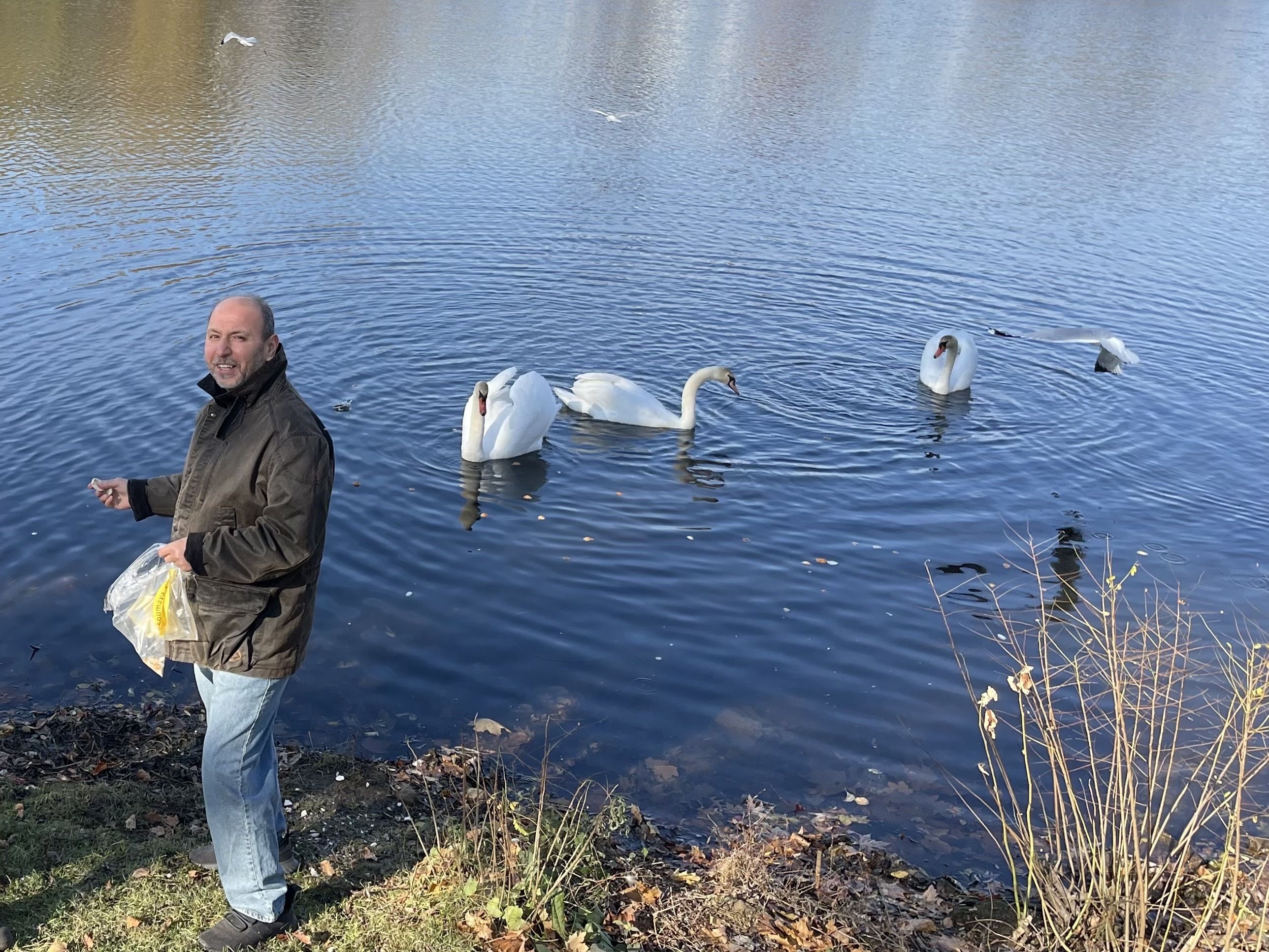
    Iemad Saifo, the 65-year-old owner of Zena’s American Mediterranean Cuisine in Collingswood, has been released after spending two weeks in ICE detention at Delaney Hall in Newark, N.J.

    Saifo emigrated to the United States from Syria in 2002 on a business visa and later sought asylum after the outbreak of the Syrian civil war. He was detained during a routine ICE check-in July 31.

    Saifo is the primary caregiver for his 12-year-old son, who has autism. The elder Saifo also has spasmodic dysphonia, a rare condition that makes it difficult for him to speak, as well as chronic kidney disease.

    Dozens of Collingswood-area community members wrote letters and signed a petition urging the court to keep him in South Jersey with his family.

    As President Donald Trump pushes his mass deportation agenda, routine check-ins have become increasingly risky for immigrants. Immigration advocates say many of those who have been arrested at ICE check-ins were simply following government protocols.

    Last week, New Jersey Attorney General Jennifer Davenport announced her office was investigating Delaney Hall after multiple detainees died there during the last year, raising concerns about the facility’s conditions and medical negligence. The privately operated detention center under contract with ICE has been the scene of fierce protests and political fights between the Trump administration and Democrats since its May 2025 reopening.

    U.S. Immigration and Customs Enforcement said in a statement that Iemad Saifo was arrested both because he does not have permanent status and because of a 2018 case in which he was indicted and found guilty of witness tampering and sentenced to five years’ probation.

    “Under President Trump and Secretary Mullin, ICE is targeting the worst of the worst,” a Department of Homeland Security spokesperson wrote. “Nearly 70% of ICE arrests are of illegal aliens charged or convicted of a crime in the U.S.”

    One of Saifo’s attorneys, Fiona Powell, credited the 150 notarized letters from community members testifying to his character with helping secure his release.

    “This was an outpouring of community support like I’ve never seen before,” she said.

    Those letters were authored last weekend during an event that friends, family, and community organizers hosted at his restaurant.

    Many in South Jersey know Iemad Saifo from his restaurant, which opened in 2011, and from the nearly 10 years he previously spent working at a local 7-Eleven, said his 27-year-old daughter, Zena Saifo, for whom the restaurant is named.

    Zena Saifo said she, her mother, and one of her brothers were granted asylum after the war began. Her father never heard back from the Department of Homeland Security on his asylum application, she said, so he later applied for permanent residency through his younger son, who was born in the United States.

    “He’s always willing to help people, to give,” Zena Saifo said of her father. “People are really enraged and disgusted by what’s happening and doing everything they can to support him.”

    Zena Saifo is still reeling from the day of his detention, she said, when she, her brother, and lawyers arrived at the Mount Laurel ICE office for the check-in around 7:30 a.m. and were made to wait until past noon. The Saifos’ lawyer notified Zena her father would be detained. She tearfully pleaded with the ICE officer to let her say goodbye to him but was denied, she said.

    “‘Was this the last time I saw my father?’” Zena Saifo recalled wondering in the moment. “It was just really, really devastating.”

    In the period since Iemad Saifo’s detention, two of his sons, ages 24 and 26, have taken over the restaurant. His wife has stayed at home and taken care of the youngest. He turned 12 last weekend without his father present.

    Zena Saifo said her father’s two requests of her in his absence were to water the family fig tree and to host a big celebration for her brother’s birthday.

    On Friday morning, the family was en route to pay the $7,500 bond and pick Iemad Saifo up from Delaney Hall, Powell said.

    The 2018 charge was brought up during the bond review, she said, but “in the end the judge was able to see that he’s an older man with a family who needs him and strong community ties and that he deserves to be home with his family.”

    Going forward, Iemad Saifo’s legal team will do all it can to secure permanent residency for him. In the interim, Powell said, immigrants are always at risk of detention regardless of their circumstances. The Trump administration has issued 46,000 orders of removal or voluntary deportation since the start of last year in Pennsylvania, New Jersey, and Delaware, more than in the entirety of former President Joe Biden’s term. In New Jersey’s courts, orders of removal or voluntary departure rose 47% just between May and June, from 2,348 to 3,446.

    However, to legally detain Iemad Saifo again, the government would need to show something about his situation has changed.

    “It could take potentially months or years more in order to get him permanent status here, but we will continue doing everything we can to keep him here,” Powell said.

  • Monroe Township has requested the dismissal of a $300 million lawsuit against its data center ban

    Monroe Township has requested the dismissal of a $300 million lawsuit against its data center ban

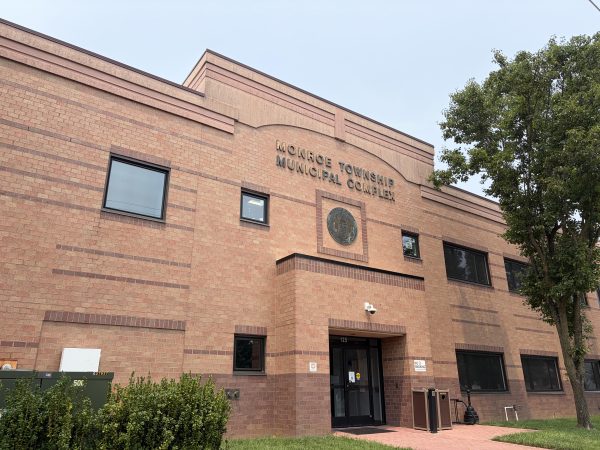
    Monroe Township officials requested in late July to dismiss a $300 million lawsuit by Princeton-based real estate developer Hexa Builders challenging the municipality’s data center ban.

    The Gloucester County case continues as other South Jersey municipalities consider and pass data center bans, including Cherry Hill, Millville, Medford, and, as of this week, Collingswood.

    The request for dismissal came less than a month after Monroe pushed Hexa Builders’ complaint from state to federal court under the claim that some of Hexa’s allegations fell under the U.S. Constitution and should be addressed federally.

    Some of the 20 counts alleged by Hexa include violations of the equal protection clause of the 14th Amendment and freedom of speech under the First Amendment.

    On July 28, Todd Gelfand, the attorney representing Monroe’s mayor and council, filed a four-page letter listing reasons that he said Hexa’s lawsuit against the data center ban is not valid.

    Gelfand rejected Hexa’s constitutional arguments, cited a lack of a physical contract promising data centers to Hexa, and argued Monroe had a right to amend a zoning ordinance based on public objections.

    “[The data center ban] does not regulate the content of speech, a speaker, a message, or Plaintiffs’ ability to engage in expressive activity. The fact that data centers support electronic communications does not transform a land-use regulation into a speech restriction,” Gelfand wrote.

    In response, Jim Maley, the attorney representing Hexa Builders, requested on Monday to push the majority of Hexa’s complaint — the parts that are not based on the Constitution — back to New Jersey state court. The next day, he asked the federal judge currently overseeing the case to reject Monroe’s request for dismissal.

    Maley said state courts have more expertise to consider the local land-use laws that affect Hexa Builders most, and Hexa’s federal claims should be considered second.

    “To further the federal claims, the constitutional claims, there has to first be determination of whether there was a violation of the land-use laws,” Maley said. “If land use wasn’t violated, that will hurt [our] federal claims.”

    U.S. District Judge Edward Kiel has not yet made official moves in reaction to the letters, which Maley said could take a while.

    Sandra Graise, Monroe Township’s solicitor, declined to comment and said the township does not speak about pending litigation.

    Hexa filed the original lawsuit on June 5 in New Jersey Superior Court shortly after Monroe officials denied its application to build a 1 million-square-foot data center and a warehouse at 3043 Black Horse Pike, a property the company has sought to develop since 2022.

    The denial followed months of public outcry at local government meetings after residents discovered that a change to Hexa’s redevelopment plan in early 2025 allowed the developer to propose a data center.

    Collingswood considers ordinance on data centers

    As the parties go back and forth, nearby municipalities have taken initiative to ban data centers before a proposal ever arrives.

    At a Monday night meeting in Collingswood, the Camden County borough’s three commissioners considered an ordinance amending Collingswood’s code to ban data centers and “computing nodes,” which the borough defines as modular units installed at residential or small commercial properties that supply computing capacity to third parties in exchange for payment or credits to the property owner.

    Maley, who represents Hexa in Monroe, is also a member of Collingswood’s board of commissioners.

    Two residents who attended the borough meeting brought up Maley’s connection to the Hexa case and asked whether Maley would recuse himself from the vote based on his employment as a private attorney supporting a potential data center nearby.

    In response, Collingswood solicitor Caitlin Harney Norcia said she could not find evidence that would disqualify Maley from voting under New Jersey’s Local Government Ethics Law, since Maley’s job as an attorney does not directly affect his work in Collingswood.

    While Maley decided to abstain from the vote, he said the borough should have a six-month waiting period to allow the borough planner time to consider standards for data centers, called the move “a ban of reaction,” and said the borough does not have room for a data center anyway.

    “We don’t prohibit airports. OK, that’s a permitted use. We don’t do that because there’s no place you can put an airport. There’s no place in this town you can put a data center,” Maley said in a live recording of the meeting on Facebook. “But the nodes are another issue.”

    When reached for comment Wednesday, Maley said he did not have to abstain from the vote, but he still chose to for nonlegal reasons.

    “Folks in the crowd, they’re working really hard to beat me up on a lot of different things. It’s a group that’s been against me for years. … Whatever my vote would have been, they would have been yelling and screaming about it and impacting my work,” Maley said.

    Collingswood’s two other commissioners voted to approve the data center and computing node ban on its second reading. The ordinance took effect immediately.

  • Collingswood wants you to license your pets to help other animals in the borough

    Collingswood wants you to license your pets to help other animals in the borough

    Collingswood is hoping to get more pets on the books as a way to help fund the borough’s animal control services.

    Per New Jersey law, all cats and dogs 5 months of age and older are required to be licensed with their local municipality, but borough officials say registration is lagging.

    Without the fees collected through licensing, Collingswood has to find the funding for animal control services from elsewhere in the budget, Deputy Mayor Amy Henderson Riley said.

    In 2025, the borough spent $33,305 on an animal control officer and other services, she said. But as of the June 17 commissioners meeting, Collingswood had collected only $5,740 this year through residential pet licenses, which cost between $5 and $20 each annually.

    Assuming animal control services will cost the same for 2026, that leaves a more than $27,000 gap to fill.

    “This isn’t meant to be, you know, a ‘nanny state,’” Henderson Riley said of pet licensing. “This is meant to help have a balanced budget in town. We can find the money elsewhere, but I’d much rather have that $27,000 for all the rest of the required and amazing things that we do in town.”

    The cost for a license in Collingswood varies by type of animal and whether it is spayed or neutered:

    • Spayed/neutered dog: $17.
    • Non-spayed/neutered dog: $20.
    • Spayed/neutered cat: $5.
    • Non-spayed/neutered cat: $8.

    Since 2020, Collingswood has struggled to collect even close to half the amount needed to pay for annual animal control services, averaging around $7,680 in fees paid each year, according to borough records.

    As of July 21, registrations were further behind than they were at this time last year, when the borough had already collected around 20% more in fees, totaling over $7,000.

    In response to the drop, the borough is planning a small informational campaign on social media and in town bulletins to spread the word and get licensing rates up, Henderson Riley said.

    She said she wants to better inform the public on how this money is used, including for euthanasia of critically injured animals and reunification services for lost pets.

    If the funding gap continues, she said, the borough will consider conducting a pet census, hiring staff members to go door-to-door counting the animals in town.

    And while Henderson Riley said she understands that many household budgets are already tight, she argues that a relatively small fee can go a long way in helping animals across the borough.

    “Affordability is the word of the year,” she said. “People are paying a ton in taxes, and I think sometimes they think, ‘Why should I be paying for a pet license for my 14-year-old dog?’”

    The money residents spend on licensing may not go directly to their pet, she said, “but it might help care for an animal who’s hurt or injured or who got loose from their house.”

    “That’s money well spent,” she said.

  • Audubon has opened its new history museum. Here’s what you’ll find there, from a New Century Theater seat to ‘Mudubon’ photos.

    Audubon has opened its new history museum. Here’s what you’ll find there, from a New Century Theater seat to ‘Mudubon’ photos.

    More than a century’s worth of varsity jackets, trophies, civic documents, photos, and more memorabilia from Audubon Borough have made their way into Camden County’s newest museum.

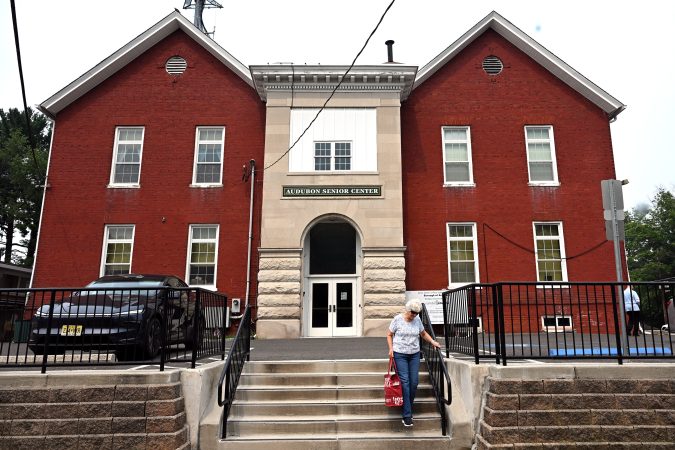
    The Audubon Historical Society Museum takes up much of Audubon Senior Center’s second floor, a red brick building that once served as Audubon School No. 1. The collection includes donated items from Audubon residents, including from the historical society’s own members, found in basements.

    Even though there are still more artifacts to put on display, from a 45-star American flag to thousands of pictures, Audubon’s rich history is already well represented. There’s memorabilia repping Joe Flacco, an NFL player and Audubon High School grad; an Audubon-themed Monopoly board created for a fundraiser; outdated land use maps; and an old police radio. A large section of the museum covers Audubon’s military history, including information about the borough’s three medal of honor recipients and two naval vessels named in their memory.

    The museum hosted its first public open house on July 4, and about 60 people came despite the heat, said Rob Jakubowski, Audubon’s mayor. Starting Aug. 8, the historical society will open the museum from 2 to 4 p.m. on the second Saturday of every month.

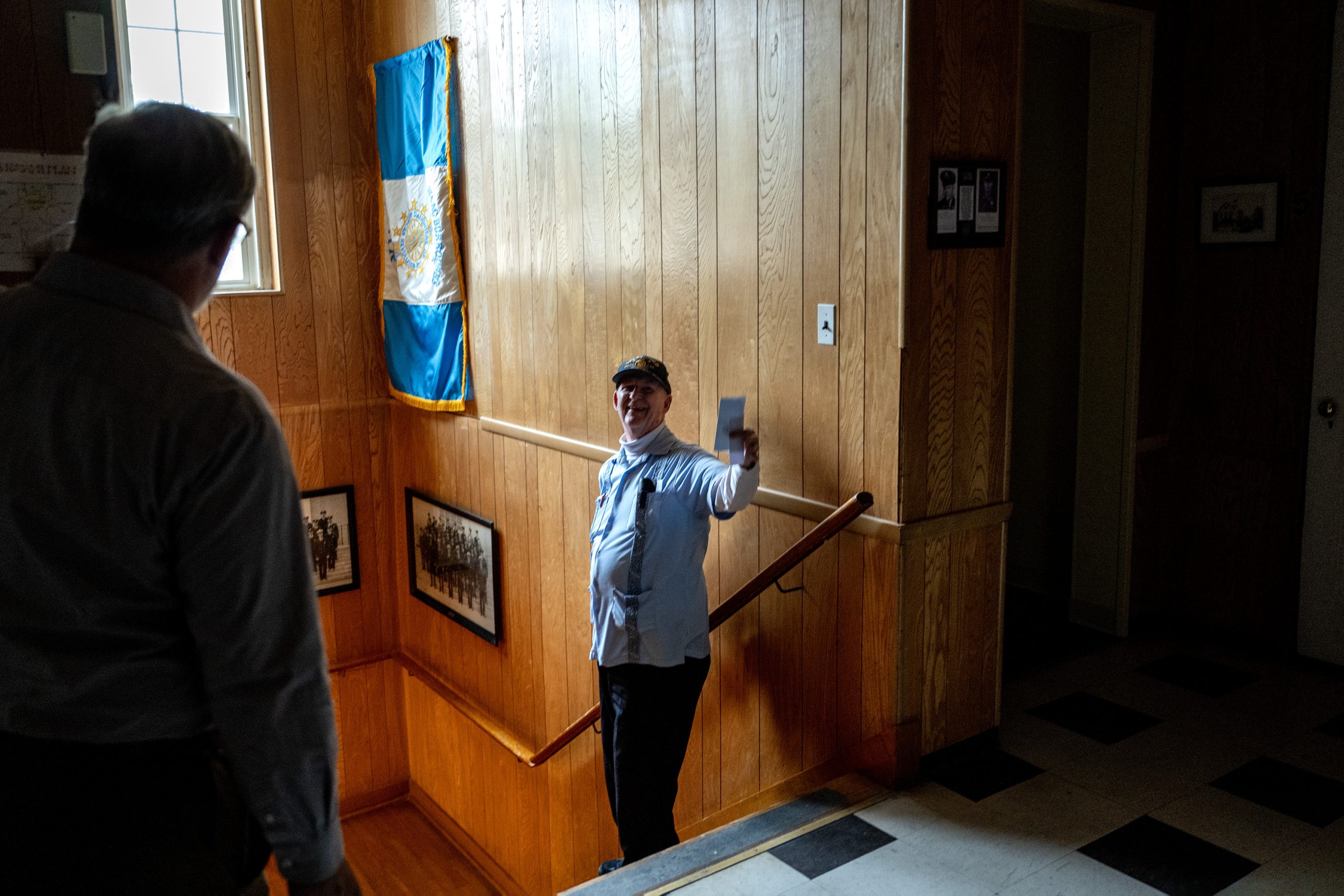
    Mayor Rob Jakubowski (left) and Craig E. Burgess on the stairs at the newly opened Audubon Historical Society Museum. They plan to use the wall space for more displays.Tom Gralish / Staff Photographer

    Jakubowski worked to develop the museum with a small group of Audubon Historical Society members, kept on task by corresponding secretary and longtime Audubon resident Nancy Whalen, 80. The museum, the brainchild of the late Walter Casebeer, a founding member of the society, came together 18 years after his death. Members sorted through four full closets of donated relics to establish the museum’s initial displays.

    “We were able to set up what is a really beautiful museum with a lot more work to do,” Jakubowski said.

    Though the senior center isn’t a schoolhouse anymore, the museum, funded by $40,000 in Camden County grants, was clearly once two classrooms, divided through the middle by chalkboard panels that pull out from the wall. The seniors running the museum hope to rotate the items on display as time passes, but for now, the group is proud to show off their hard work.

    Here are a few of the standouts.

    New Century Theater

    New Century Theater, founded in 1921, is no longer standing. The theater, renamed the Coronet in the ‘60s, was demolished in 2003. The space is currently being developed by a car wash company.

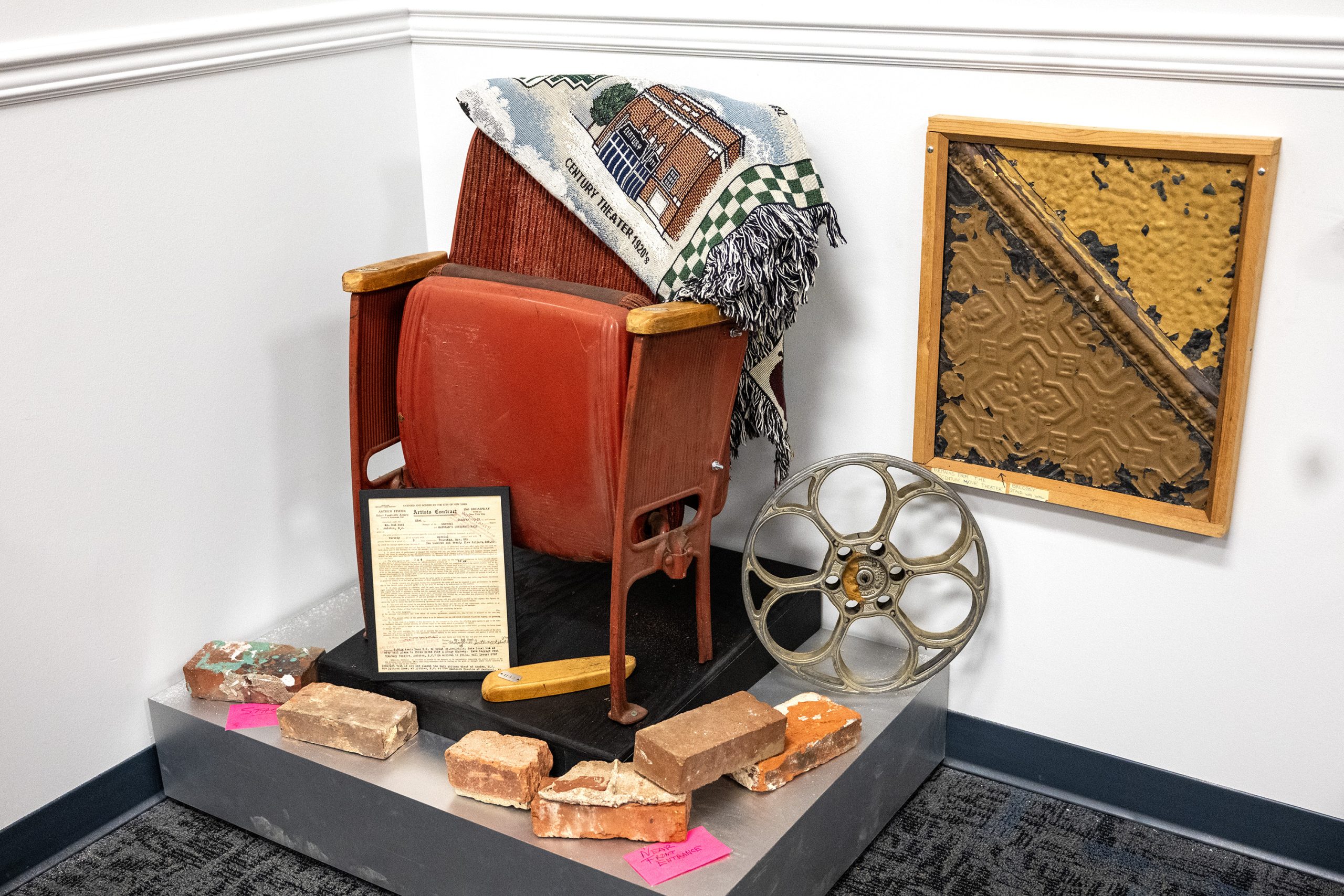
    But the historical society managed to acquire many keepsakes to remember the theater’s past. They have a seat someone rescued before the building got knocked down, a part of the wall, bricks, faint blueprints, and a movie reel Jakubowski said he found on eBay. A 1931 vaudeville contract is propped against the seat.

    Craig E. Burgess, 81, remembers when he could see a movie, a newsreel, a serial, and get candy, all for 10 cents at New Century Theater. When he found out the Audubon staple was going to be torn down, Burgess, who lived in the same house in Audubon for 73 years before moving to Collingswood, didn’t let the theater die without a last trip.

    “I stood in front of the door and said, ‘You don’t get in here until I get in to get some photos and get some video. If you won’t do that for me, then I will stay here, and you’ll have to push me over into the rubble,’” Burgess said. “And they believed me. I got in.”

    A theater seat and other memorabilia from the New Century Theater that opened in 1921, on display at the newly opened Audubon Historical Society Museum. Tom Gralish / Staff Photographer

    ‘Mudubon’

    Audubon, a part of Haddon Township until residents voted to become a borough, was incorporated in 1905. That was a couple of decades before paved roads boomed in the U.S., which made for a lot of wet dirt streets in the early 20th century in Camden County. Some photos at the new museum show those mucky roadways.

    Thus, the nickname Mudubon. It came from the mouths of delivery drivers trekking Audubon after bad weather, Jakubowski said.

    Burgess said ice trucks and milk trucks, along with the horses pulling them, used to get bogged down in the mud when it rained. He likes to tell a story about a boy who spent the summer away with his grandparents in the early 20th century, and returned home to paved roads — and confusion.

    “Mom took him out to visit his grandparents, came back on the bus to get off at Merchant Street. And he refused to get off the bus,” Burgess said. “He said, ‘This is not Audubon. I know my hometown.’”

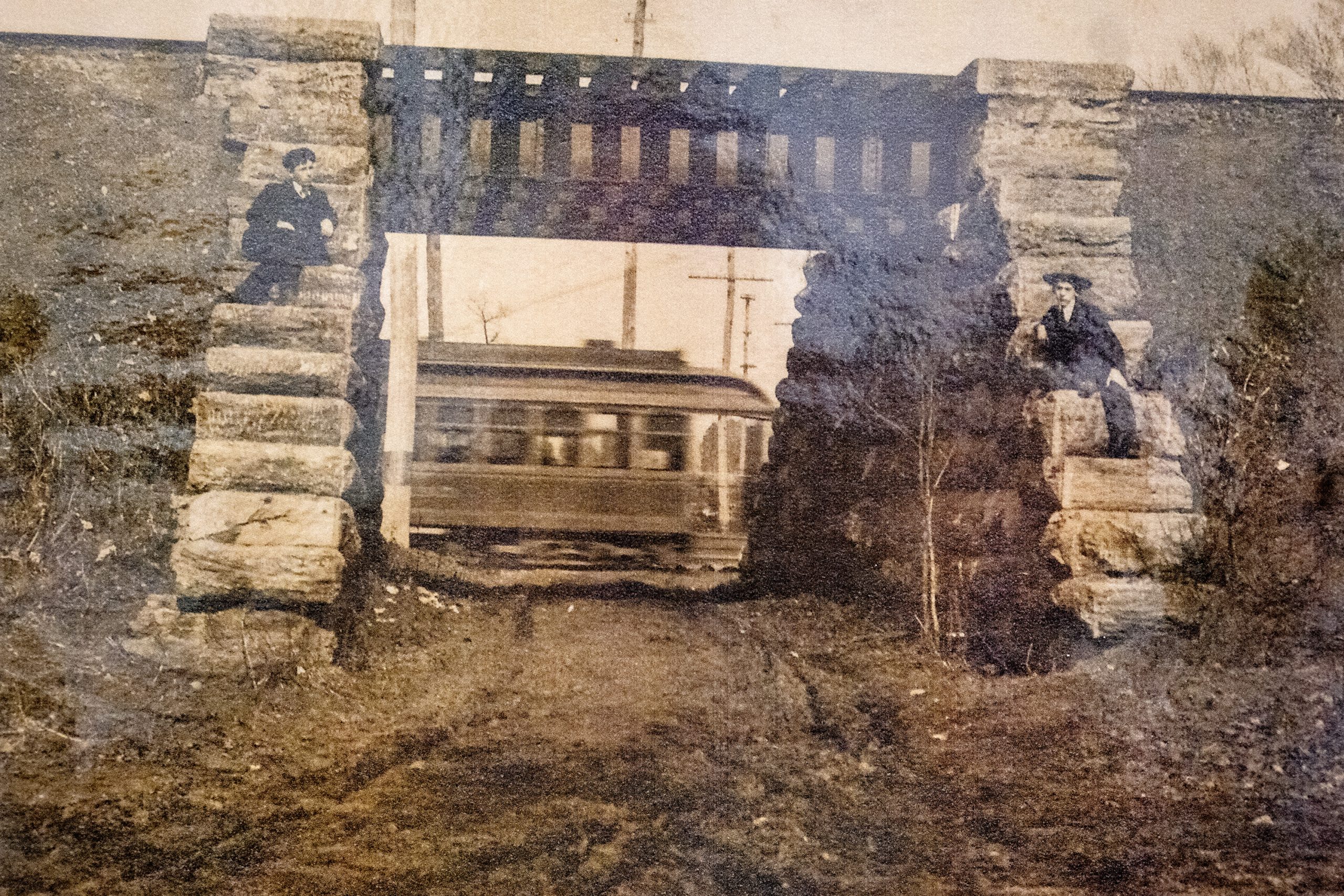
    An early 20th-century photo showing an unpaved Nicholson Road and the train overpass on display at the new Audubon Historical Society Museum. The trolley passing behind was on the line between Camden and Clementon Park that ran along East Atlantic Ave. The train line is no longer active, but Nicholson Road still goes under the bridge.Audubon Historical Society

    Nancy Ryan, 79, moved back to her native Audubon nine years ago to retire. She recalls stories from her father about the pavers coming in when he was 4 years old, watching the steam shovels digging up Cedar Croft in 1917 or 1918.

    Now, Ryan said, the only people who call the borough Mudubon are non-natives who like to make fun, like her husband. But Audubon residents know the borough has grown far beyond its muddy origins, Burgess said.

    “We’ve come a long way in the last 110 years, more or less,” Burgess said.

    100 years at Audubon High School

    Nearly a century ago, about 500 students took the first classes offered at Audubon High School on Edgewood Avenue in September 1926.

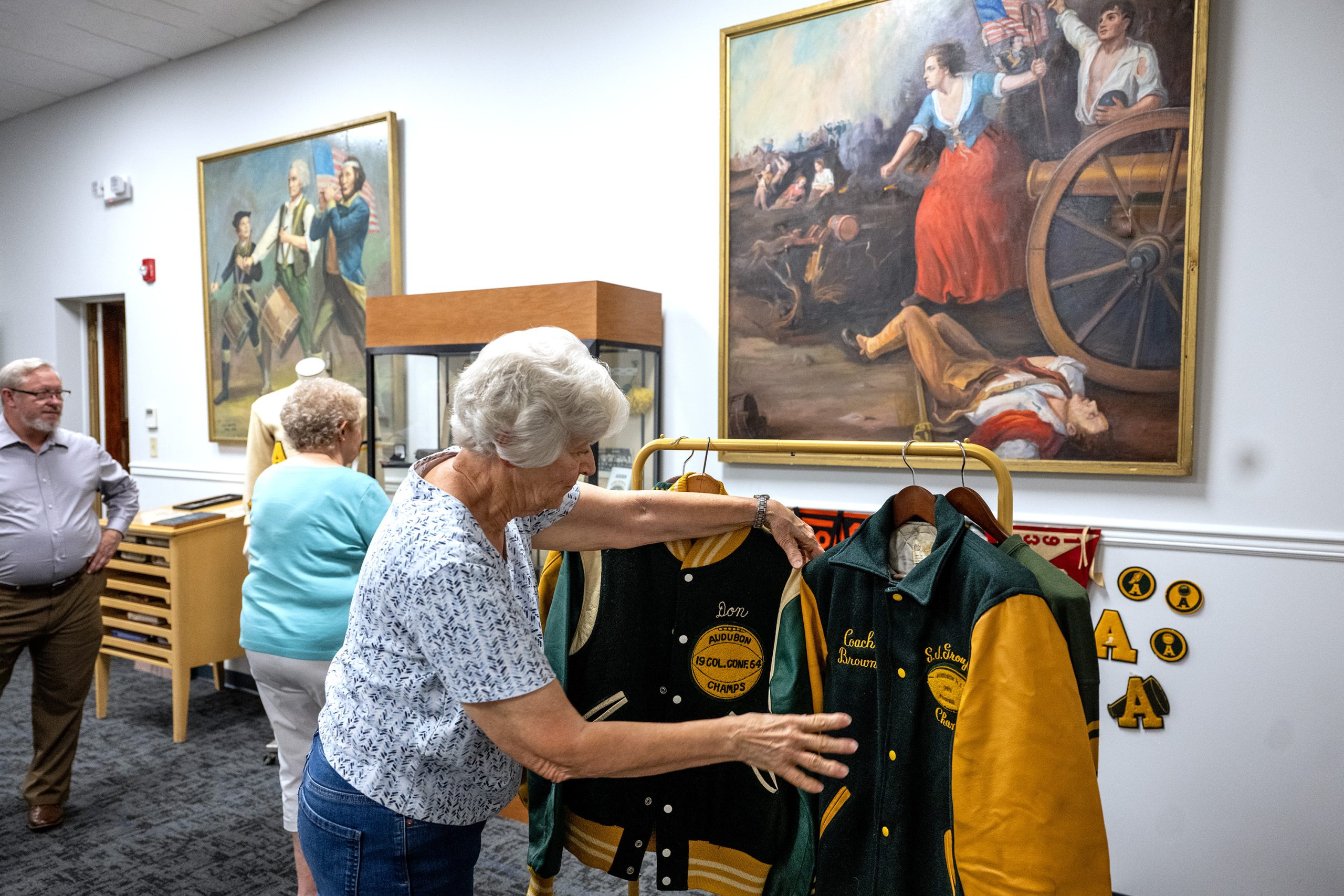
    Today, items spanning the high school’s history are on display: a booklet teaching children the 20th-century Palmer Method to learn cursive, pennants, a rack of letterman jackets, school handbooks, admission cards, and a cream varsity cardigan from 1966. A candlestick telephone used by the school’s first principal, Grace Kramer, sits at the bottom of a display case.

    Mayor Rob Jakubowski (from left), Nancy Whalen, and Nancy Ryan at the newly opened Audubon Historical Society Museum.Tom Gralish / Staff Photographer

    Three replica oil paintings recreated by the late Michael J. Miceli, a Mount Ephraim local, hang on the walls, too. They picture military drummers, fictionalized American Revolutionary War heroine Molly Pitcher, and French American artist and ornithologist John J. Audubon, the borough’s namesake. Their previous home was the Audubon High School auditorium, but when they were removed during recent renovations, a history teacher saved them, Jakubowski said.

    Plus, every high school yearbook available since the school’s founding line a bookshelf in a back room, in case anyone comes looking to do archival research.

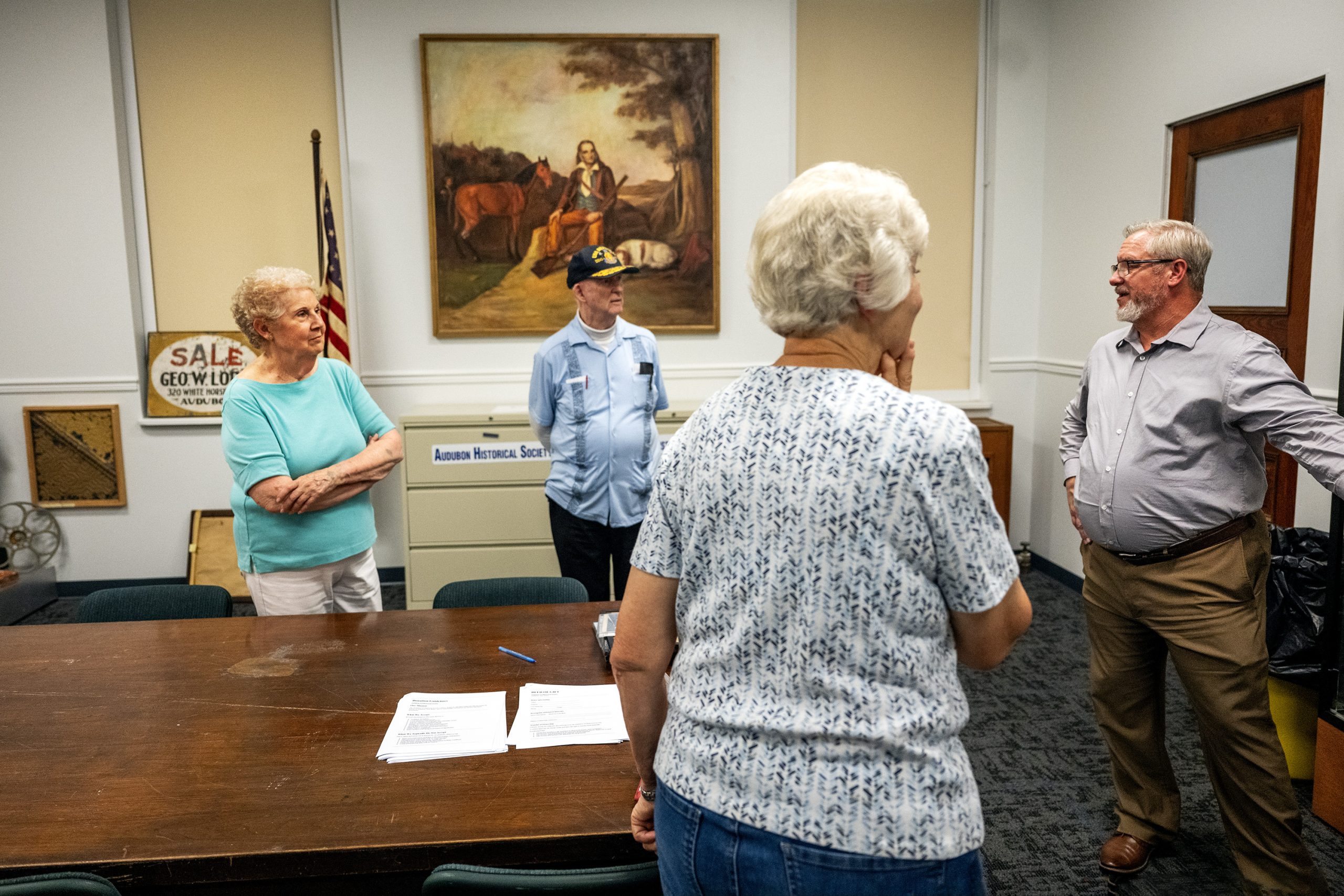
    From left: Nancy Whalen, Craig E. Burgess, Nancy Ryan, and Mayor Rob Jakubowski at the newly opened Audubon Historical Society history museum on the second floor of the Audubon Senior Center Thursday, July 16, 2026. Behind them is a painting of naturalist, ornithologist, and painter John James Audubon, for whom the town was named. Tom Gralish / Staff Photographer

    The group is still open to taking donated artifacts, though with their large existing collection, they’re not afraid to decline duplicates. In the meantime, the historical society will continue sorting their archives. It’s a lot of work, all volunteer.

    “But that’s what makes it fun,” Burgess said.

  • Collingswood, ‘a cat community,’ has officially opened its first cat cafe

    Collingswood, ‘a cat community,’ has officially opened its first cat cafe

    Two kittens with seemingly endless energy jump around the room in downtown Collingswood chasing their toys, their own tails, and their newest friend, 19-month-old Charlotte Kohlhas-DeMarsh. The toddler babbles excitedly as the kittens, Chicken Nugget and Onion Ring, leap at the feather attached to the wand she’s swinging around.

    The kittens are just two of the adoptable cats at Catmosphere Cafe & Lounge, a new cat cafe that opened at 557 Haddon Ave. on July 10.

    In partnership with Homeward Bound Pet Adoption Center in Blackwood, Catmosphere provides a temporary home for adoptable cats where they can comfortably sleep, play, and potentially meet their forever families.

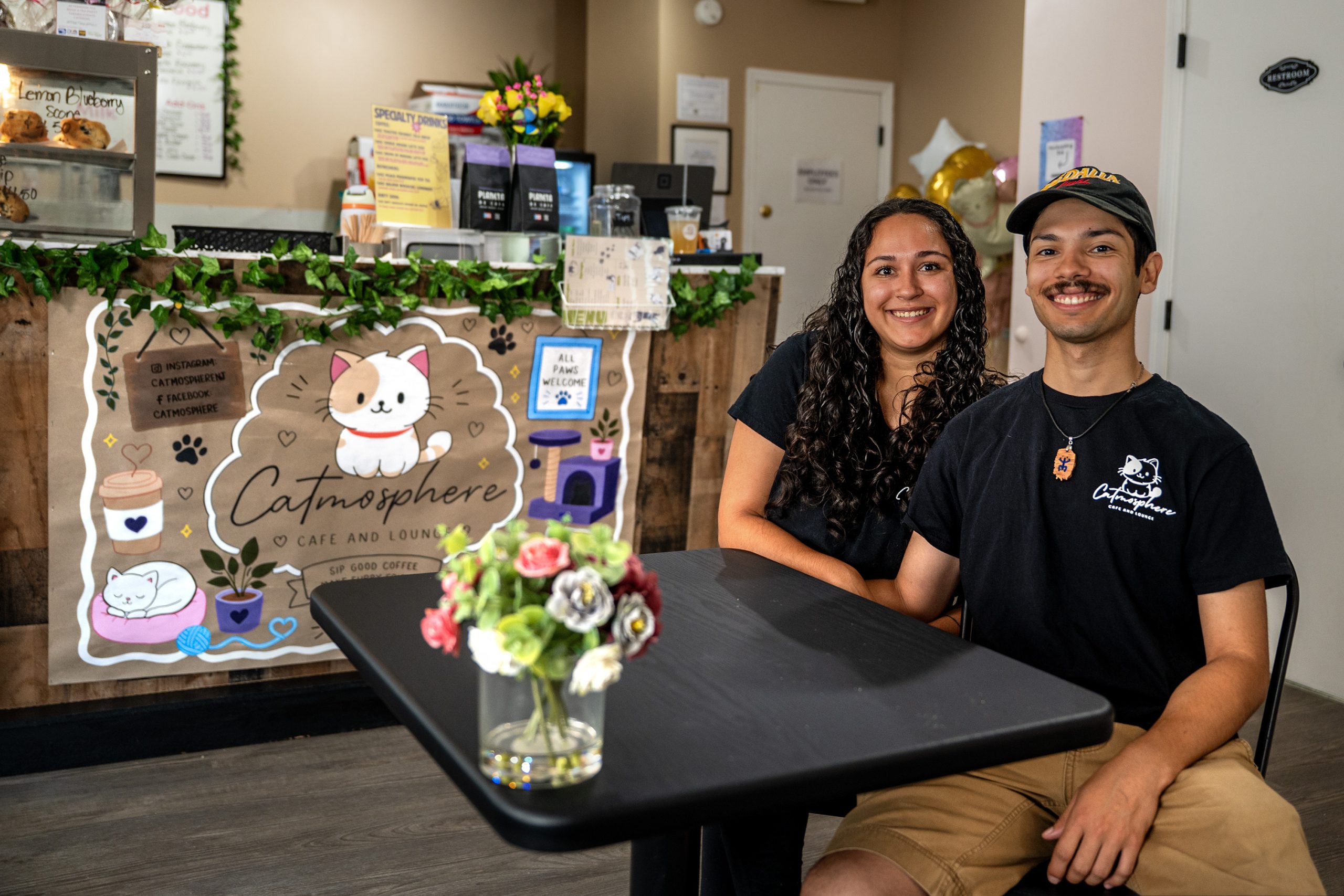
    Owners Sophia Coello and Marcus Tirado at their Catmosphere Cafe & Lounge on Thursday, July 16, 2026. Tom Gralish / Staff Photographer

    Within the first week, the business has already facilitated three adoptions.

    “Every cat has gone to a perfect family,” said Sophia Coello, cofounder of Catmosphere. “It has really been a perfect match with every single cat.”

    The new cat lounge fosters around six to eight cats and kittens at a time, helping to free up space for more intakes at Homeward Bound.

    Equipped with food, water, toys and countless beds, the lounge provides the cats with a less stressful environment than a traditional animal rescue. This gives them a chance to acclimate and eventually feel comfortable showing their real personalities, Coello said, which only increases their chance of being adopted.

    All proceeds collected from adoption fees — $150 for a kitten and $75 for an adult cat — go back to Homeward Bound.

    The idea for Catmosphere was originally inspired by a goat yoga session in December 2024, Coello said. As she was surrounded by the farm animals, Coello, who identifies as a lifelong cat person, couldn’t help but imagine what it would be like to be in a similarly relaxing environment — but accompanied by cats instead.

    “This is my calling,” she said. “I just love watching and understanding cats’ behavior because if you understand a cat’s behavior, you understand how to create a bond with them. I feel like anyone can create a bond with a cat.”

    “And once you form that bond and that trust, it’s actually the most beautiful connection that you could grow with an animal,” she said.

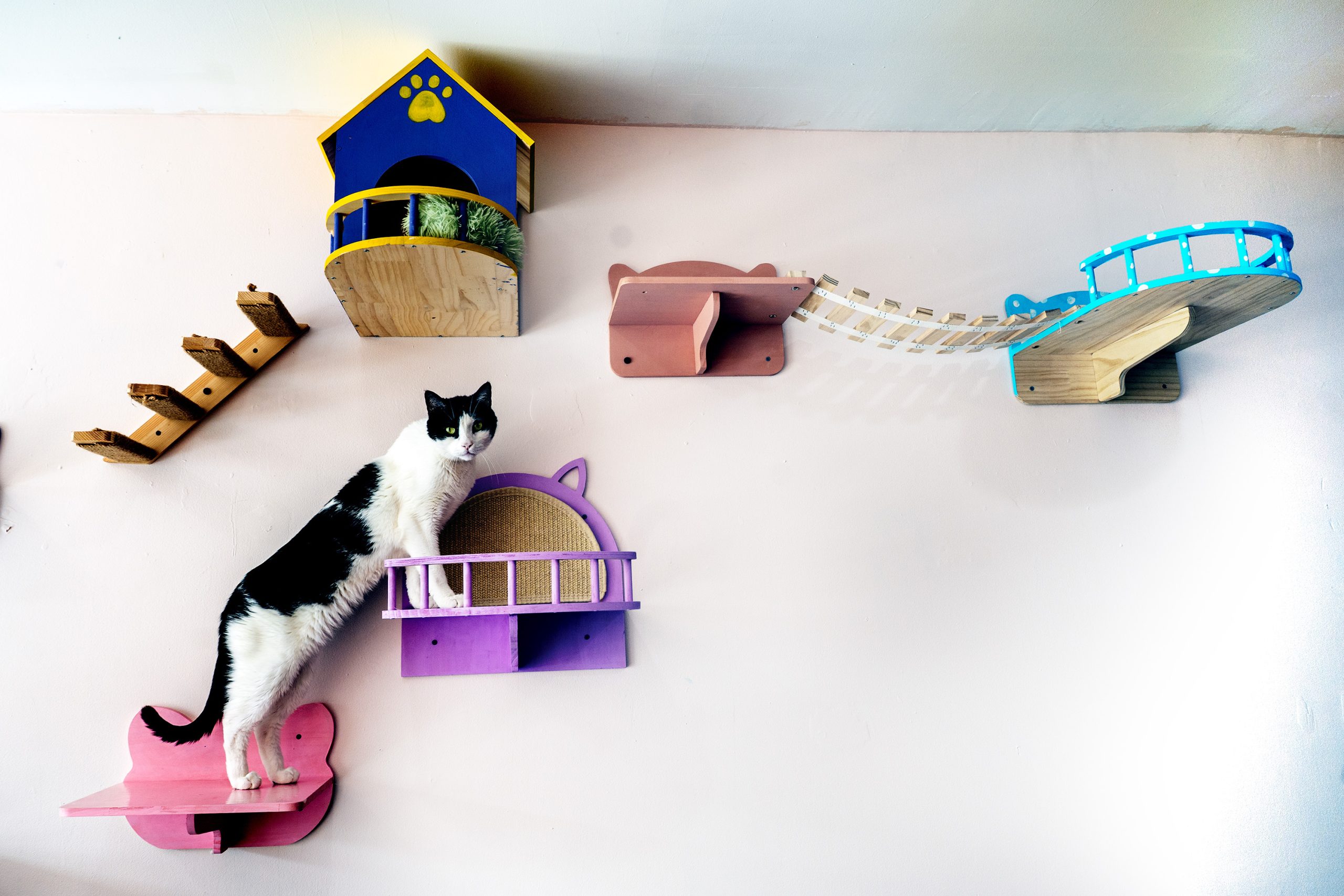
    Cats climb on the wall at the Catmosphere Cafe & Lounge on Thursday, July 16, 2026. Collingswood’s first cat cafe recently opened downtown.Tom Gralish / Staff Photographer

    Alongside her partner, Marcus Tirado, the pair of Rowan University graduates soon began looking for the perfect location to set up their new business — somewhere in an animal-loving community with lots of foot traffic. They eventually settled on Collingswood’s bustling Haddon Avenue, breathing new life into what was once a thrift store.

    “This is a cat community,” Coello said of the borough, where neighborhood cats are common and well taken care of, and residents are quick to come together when locating a lost pet.

    As head of construction, Tirado did the majority of the renovation work himself, leaning on friends and family to help transform the cluttered space into a bright cafe with sleeping kittens dreaming in the front window. The soft-pink walls are adorned with a hand-painted logo as Lego figurines in the likeness of the couple’s two rescue cats overlook the cafe, a reminder of their mission to connect as many cats as possible with loving homes.

    Charlotte Kohlhas-DeMarsh, 19 months, plays with cats at the Catmosphere Cafe & Lounge Thursday, July 16, 2026. She was visiting with her grandmother, Jenifer Kohlhas, at Collingswood’s first cat cafe recently opened downtown.Tom Gralish / Staff Photographer

    Catmosphere accepts both appointments and walk-ins for the cat lounge which currently costs $20 per hour. During some of the early bookings, Coello said they’ve helped kids remain calm and be gentle during their first interaction with a cat.

    As they get more established, they’re looking forward to expanding their business by hosting workshops, working with local schools, and more, they said.

    And if you’re allergic to cats, don’t worry. Catmosphere still has something for you.

    Entirely separate from the cat lounge, the cafe itself is hypo-allergenic, Coello said.

    Cat toys at the Catmosphere Cafe & Lounge Thursday, July 16, 2026. Collingswood’s first cat cafe recently opened downtown.Tom Gralish / Staff Photographer

    Large windows along the walkway from the front door create a “kitty drive-thru,” she said, where you can get a glimpse inside the cat lounge while remaining protected from any allergens.

    Located on the more residential end of Haddon Avenue, the pair also hope that Catmosphere, alongside neighboring businesses like the barber and ice cream shops across the street, can help strike up more activity in this part of downtown.

    “We would love to bring more events to this side of the community,” Coello said.

    They also hope the lounge can serve as an educational resource for the cat-loving community, helping to answer questions about adoption, common cat behaviors, and best practices.

    Charlotte Kohlhas-DeMarsh, 19 months, says goodbye to cats inside the front window as she leaves outside the Catmosphere Cafe & Lounge Thursday, July 16, 2026, She was visiting with her grandmother, Jenifer Kohlhas. Collingswood’s first cat cafe recently opened downtown.Tom Gralish / Staff Photographer

    As Kohlhas-DeMarsh happily followed her furry friends around the room Thursday morning, her grandmother Jenifer Kohlhas looked on, enjoying a drink from the cafe.

    They’ve been looking forward to Catmosphere’s opening and finally stopped in for the first time, in part to avoid last week’s dangerous air quality but also to give Charlotte a chance to interact with friendly cats, Kohlhas said.

    Their family has a formerly feral cat at home who isn’t particularly fond of the toddler, she said.

    “I thought this would be a great opportunity for her to just be with a kitten that actually lets her play with it,” she said, as Charlotte cheerfully waddled around the room. “And she’s having a blast.”

  • A real estate developer has sued a South Jersey township for $300 million over its data center ban

    A real estate developer has sued a South Jersey township for $300 million over its data center ban

    A real estate developer sued local officials in Monroe Township for $300 million shortly after the Gloucester County municipality banned data centers. Now, the case has moved to federal court.

    Hexa Builders, a Princeton-based real estate developer, has long sought to develop a property at 3043 Black Horse Pike. Hexa filed a lawsuit on June 5 in New Jersey Superior Court after Monroe officials denied its application to build a 1 million-square-foot data center and a warehouse on the property.

    The ban, put in place by two ordinances approved by the township on April 22, followed months of public outcry against Hexa’s potential project. Even after the ban was passed and officially took effect on May 13, Monroe Township residents packed the room when Hexa presented its application that still included a data center at a rowdy Special Planning Board meeting on May 22.

    In the filing against Monroe’s mayor, township, and planning board, Hexa claimed the application rejection and data center ban are arbitrary, violate freedom of speech rights and the 14th Amendment, and more. The Woodbury Warbler, a local news site, reported on the filing last month.

    Jim Maley, Hexa’s lawyer and a partner at Maley Givens in Collingswood, said he expects the ban to be overthrown, since he believes the ban in Monroe stems from trending public disdain for data centers.

    “Nobody is giving any testimonial, any scientific reasons for the good of the community. Everybody’s doing it,” Maley said. “It’s just a thing.”

    Debate around data centers, which opponents claim will lead to environmental problems and noise, are not new in South Jersey. A massive data center in Vineland is set for completion by the end of the year, while Medford Township passed an ordinance banning data centers in June. Millville in Cumberland County banned large-scale data centers in May after promotions for a new 66-acre “Millville Energy & Data Center Campus” circulated online. Cherry Hill‘s council scheduled a public hearing for July 27 to potentially adopt a ban across the township.

    For now, Maley said Hexa is at a standstill. But the company still wants to complete the project, even with the public’s pushback and what could be a lengthy court process.

    On July 6, the township moved for the case to be pushed to federal court, closing the Superior Court case, and no federal proceedings are on the docket yet.

    “The Township is committed to vigorously and zealously defending this lawsuit while remaining steadfast in its commitment to protecting the interests of the Township, its residents, and its taxpayers,” said Sandra Graise, solicitor for Monroe Township, in an email.

    Graise declined to further comment on the case or the data center ban, but the township wrote in a Facebook post last month that the lawsuit wasn’t a surprise.

    How the ban came to be

    Hexa, led by CEO Dipal Patel, officially obtained the property in a $5 million transfer of about 170 acres of farmland back in 2022. The township has included that land in a resolution for commercial redevelopment since 2019.

    The site was previously approved for the construction of hundreds of homes when Hexa bought it, Maley said, but the township ended up moving in a different direction. In 2022, the township approved a redevelopment plan that set the grounds for Hexa to build warehouse, storage, and distribution facilities on Black Horse Pike, but not data centers.

    That changed in early 2025, when the township passed an ordinance amending the redevelopment plan to allow data centers.

    It didn’t take long for residents to speak out about the impact a data center could have on water quality, pollution, and noise in their neighborhoods, even before Hexa officially added a data center to their plan.

    A planning board meeting in January 2026 dragged on for more than four hours because of resident objections, but the township still voted to approve a preliminary site plan for Hexa to move forward with its warehouse and distribution center project. The proposal didn’t include a data center at the time, though the lawsuit filed in June claims that Hexa had already expressed interest in developing one, and residents made it clear they weren’t fans of the possibility.

    The township drafted an ordinance in March to set standards for data centers, including noise restrictions and a closed loop cooling system to avoid groundwater withdrawal, but that ordinance was tabled and never moved forward.

    Instead, in April, Monroe passed two ordinances: one banning data centers altogether, and another repealing the 2025 ordinance that allowed data centers on Hexa’s property.

    “At the end of the day, this Township has now banned any data center use from ever coming to Monroe Township. I thank those residents who attended the many meetings and expressed their concerns. The process worked,” Mayor Greg Wolfe wrote in a May township newsletter.

    Two weeks before the ban was adopted, though, Hexa’s legal complaint claimed it submitted an amended application to the township to turn one of its proposed warehouses into a data center.

    Maley said the amendment was driven by “interest from the marketplace that began before Township passed the ordinance” that allowed data centers at 3043 Black Horse Pike last year.

    When Hexa sought approval for the new application on May 12, the township deemed the company’s application incomplete, prompting Hexa’s lawsuit.

    The lawsuit

    The $300 million sought by Hexa Builders accounts for financial losses related to the stunted data center project, Maley said.

    “The damages all come from real, actual commercial realities here. … It’s the loss of the value of the project,” Maley said.

    In its 102-page complaint, initially filed in Gloucester County court on June 5, Hexa claimed that Monroe violated the 14th Amendment by treating Hexa’s plan differently from similarly sized projects, like warehouses and other high water usage facilities, that it claims would have similar environmental and aesthetic impacts.

    Hexa also claimed that banning data centers violates the First Amendment and free speech rights, since the facilities could support artificial intelligence and social media communications in the area.

    Maley said the data center ban will have “an adverse effect on communications,” and the argument is an effort to adapt constitutional law to today’s tech.

    “Data centers are a medium of expression and banning data centers would impose a significant burden on the free speech rights of all citizens in the United States,” the complaint reads.

    Those are just some of the 20 counts alleged by Hexa, including that the township didn’t give the company ample notice of its ban as it prepared data center plans. Monroe Township officials have publicly shared their intention to keep mostly silent on the litigation as the case moves forward.

    Some residents have continued to speak out at meetings and ask questions about potential loopholes in Monroe’s ordinances to ensure their neighborhoods remain data center-free.

    At the township’s planning board session on July 9, Williamstown resident John Romano asked who allowed Hexa’s application to get so far in the first place, and whether Monroe will be able to hold a case against Hexa in court. He said the data center would be right in his backyard.

    “I’d like to sit out in my backyard and enjoy a stogie and a cold one and not hear noise and pollution and this and that,” Romano said. “I would like to be able to stay in Monroe Township, live out my golden years here, which was the plan. This has got my wife and I really concerned.”

  • Philly music this week with J. Cole, Death Cab for Cutie, Japanese Breakfast, and more

    Philly music this week with J. Cole, Death Cab for Cutie, Japanese Breakfast, and more

    This week in Philly music features Death Cab for Cutie and Japanese Breakfast in Fairmount Park, a pair of John Coltrane tributes, two nights of J. Cole concerts in South Philly, Trombone Shorty in Fishtown, and “Weird Al” Yankovic in Atlantic City.

    Thursday, July 15

    Earth, Wind & Fire + Lionel Richie

    These seasoned entertainers on the “Sing a Song All Night Long” tour are stars of Roots drummer Ahmir “Questlove” Thompson’s highly entertaining new HBO documentary, Earth, Wind & Fire (To Be Celestial vs. That’s the Weight of the World). EW&F and its founder and guiding light, Maurice White, are the subjects, and Richie, the American Idol judge and former Commodores leader, is an insightful talking head.

    White died in 2016, but three key original members of the band — singer Phillip Bailey, bassist Verdine White, and percussionist Ralph Johnson, are still in the band, so there’s no reason to think hits like “Shining Star” and “September” won’t sound as joyous as ever. And Richie showed just how much of a polished entertainer he is last year, when he played a rare intimate date at Union Transfer. 7:30 p.m., Xfinity Mobile Arena, 3601 S. Broad St., xfinitymobilearena.com

    Friday, July 17

    Joe Jackson

    Joe Jackson was grouped in with Elvis Costello and Graham Parker as an Angry Young Man when he first emerged with his albums Look Sharp! and I’m the Man in 1979, before the British songwriter diversified his musical palette to include Louis Jordan-style jump blues and polished Tin Pan Alley pop. Now, Jackson is feeling cranky again on his latest, Hope & Fury, which finds him again working with bassist Graham Maby. 8 p.m., Lansdowne Theater, 31 N. Lansdowne Ave., Lansdowne, lansdownetheater.com

    Death Cab for Cutie plays the Highmark Mann on Friday, with Japanese Breakfast opening.Ryan Russell

    Death Cab for Cutie & Japanese Breakfast

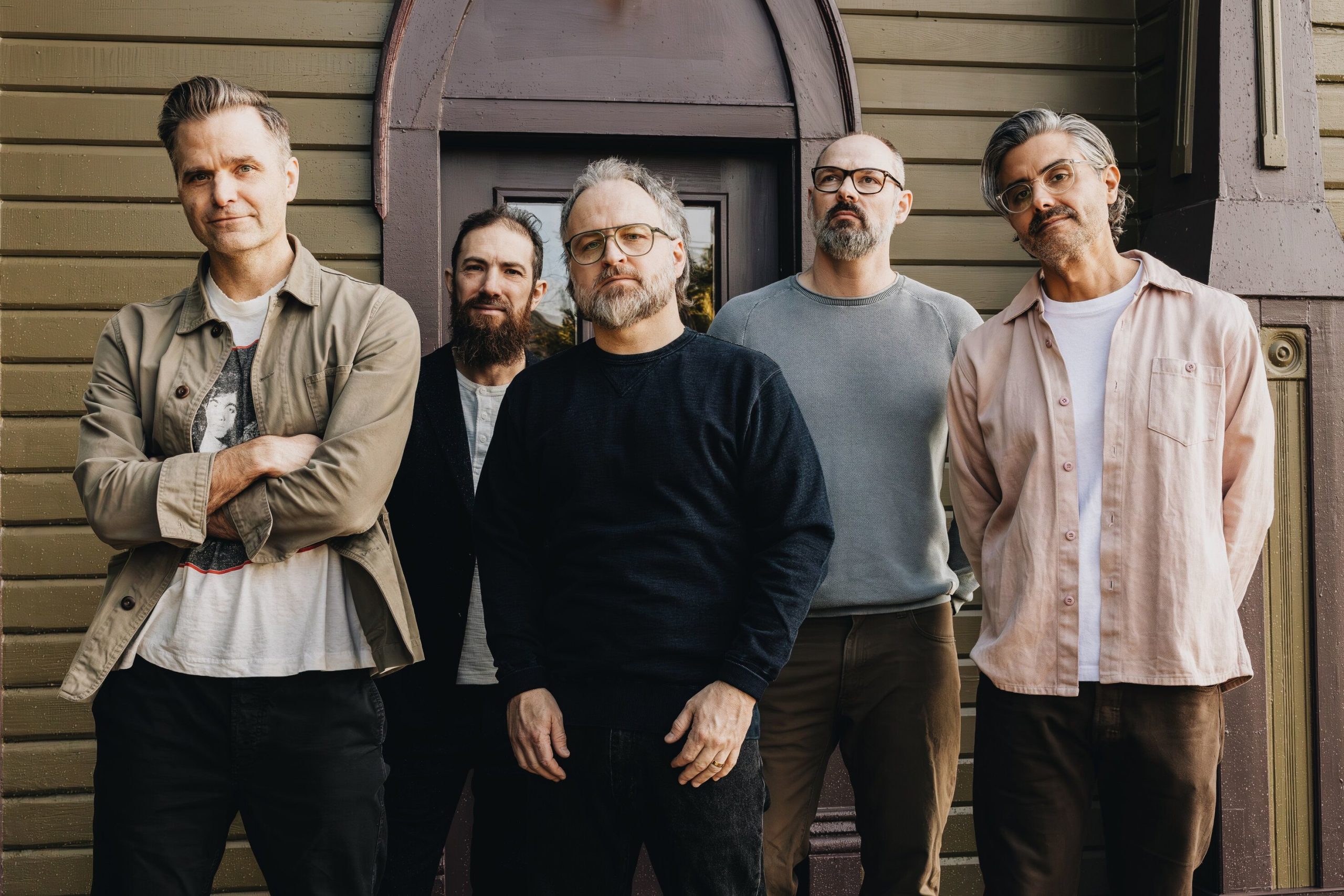
    I Built You a Tower, the 11th album by emblematic indie rockers Death Cab for Cutie, finds the Bellingham, Wash., band fronted by Ben Gibbard in fine fettle. They sounded sharp debuting the album at the Non-Commvention this spring. Michelle Zauner’s Philadelphia-born band Japanese Breakfast opens. 8 p.m., TD Pavilion at the Highmark Mann, 5201 Parkside Ave., highmarkmann.com

    Trombone Shorty & Orleans Avenue play the Fillmore Philly on Friday.Courtesy of the Artist

    Trombone Shorty

    Troy Andrews got his stage name playing in his family band when he was 4. Thirty-six years later, Andrews is carrying on the rich tradition of New Orleans funk, R&B, and second line rhythms. Bluesy Americana sister band Larkin Poe opens. 8 p.m., Fillmore Philly, 29 E. Allen St., thefillmorephilly.com

    Mikaela Davis plays Free at Noon at World Stage on Friday and Johnny Brenda’s on Friday night.Matthew Reamer

    Mikaela Davis

    Indie rock and alt-country harpist Mikaela Davis is playing two shows Friday. The Graceland Way and Grateful Shred songwriter is doing Free at Noon during the day, followed by a Fishtown gig that night. Noon, World Stage, 3025 Walnut St., xpn.org and 8 p.m., Johnny Brenda’s, 1201 N. Frankford Ave., johnnybrendas.com

    Taj Mahal

    Last year, the octogenarian bluesman born Henry St. Claire Fredericks Jr. released his 32nd album, Room on the Porch, a collaboration with Keb’ Mo’. That is a mostly acoustic affair, but he’s playing this show with the Phantom Blues Band. 8 p.m., The Grand, 818 N. Market St., thegrandwilmington.org

    Bebe Rexha

    The FIFA Fan Festival runs through Sunday’s Spain vs. Argentina World Cup Final, but the final show in its concert series, which has included shows by Leon Thomas, All-American Rejects, and Deadmau5, is Friday. The last star to grace the Lemon Hill stage will be Bebe Rexha, the dance-pop singer who has had hits with G-Eazy, David Guetta, and Florida Georgia Line. It’s free. FIFA Fan Festival, 1 Lemon Hill Drive, phillyfwc26.com

    “Weird Al” Yankovic in New York in 2025. He plays the Borgata in Atlantic City on Friday. John Nacion

    “Weird Al” Yankovic

    The ”Bigger & Weirder Tour” from the accordion-playing master of song parody is headed down the Shore. The “Amish Paradise” and “Eat It” singer will be supported by Puddles Pity Party. 8 p.m., Borgata Event Center, One Borgata Way, Atlantic City, borgata.mgmresorts.com

    Friday, July 17 and Saturday, July 18

    Patty Griffin and Kathleen Edwards

    A pairing of top-notch songwriters with two performances. Besides the 12 albums Patty Griffin has recorded under her own name, Griffin has had songs covered by the Chicks, Emmylou Harris, Bette Midler, and Philly’s Dave Hause as well as made her presence felt on Robert Plant’s 2010 Band of Joy. Kathleen Edwards returned after an eight-year break with Total Freedom in 2020 and released Billionaire, coproduced by Jason Isbell and Gena Johnson last year. 8 p.m., Friday, Scottish Rite Auditorium, 315 White Horse Pike, Collingswood, scottishriteauditorium.com and 8 p.m., Saturday, American Music Theatre, 2425 Lincoln Highway, Lancaster, amtshows.com

    Bassist Jamaaladeen Tacuma will play with Sun Ra Arkestra leader Marshall Allen at Grounds for Sculpture on Saturday.Sound Evidence

    Saturday, July 18

    Bobby Zankel’s Wonderful Sound 6

    Philly saxophonist Zankel is leading a notable tribute to John Coltrane. Along with Zankel, the band includes sax players Jaleel Shaw and Bryan Rogers, plus pianist Sumi Tonooka, bass player Sam Harris, and Nazir Ebo on drums. 8 p.m., Black Squirrel Club, 1049 Sarah St., blacksquirrelclub.com

    Judy Collins & Richard Thompson

    Folk singing legend Judy Collins is on a “Sweet Judy Blue Eyes: Farewell Tour,” named after the 1969 Crosby, Stills & Nash song she inspired. The opening act is British folk rock great Richard Thompson. 7 p.m., Lansdowne Theater, 31 N. Lansdowne Ave., Lansdowne, landsdownetheater.com

    The tour is also playing the Ocean City Music Pier on Monday.

    Creative Freedom: A Salon Experience

    Philly avant-garde bassist Jamaaladeen Tacuma pairs off with Sun Ra Arkestra leader Marshall Allen. They will debut new music from Allen’s upcoming album, 101: An Audio Odyssey, and be in conversation with artist Salvador Jiménez-Flores, whose exhibition Raíces & Resistencias is on view. 7 p.m., Grounds for Sculpture, 80 Sculptors Way, Hamilton, N.J., GroundsForSculpture.org

    Philly anti-folk hero Adam Brodsky’s new album is “American Epitaph.” S. Elfie

    Sunday, July 19

    Songs of Welcome: Concert for Immigrant Aid

    This afternoon event features an impressive array of Philly songwriting talent. Featured artists include John Faye, Cliff Hillis, Laura Mann, Adam Brodsky, Irene Lambrou, and Scott McClatchy. It benefits the Welcome Project, a Hatboro-based social service agency that provides assistance to immigrants in Philadelphia as well as Montgomery and Bucks Counties. 2 p.m., Fallser Club, 3721 Midvale Ave., thefallserclub.org

    Monday, July 20 and Tuesday, July 21

    J. Cole

    North Carolina rap star J. Cole says his new album, The Fall Off, is his final album. We’ll believe it when we don’t see a follow-up, but in the meantime, the 24-track double album is an impressive if uneven effort, with guest appearances by Tems, Future, Petey Pablo, and Erykah Badu. It’s also spawned a print publication, The Fall-Off Magazine. 8 p.m., Monday and Tuesday, Xfinity Mobile Arena, 3601 S. Broad St, xfinitymobilearena.com

    Downtown Boys play Johnny Brenda’s on Tuesday.Naomi Yang

    Tuesday, July 21

    Mike Campbell & the Dirty Knobs

    Tom Petty lead guitarist Mike Campbell has carried on after his former boss’ 2017 death, with four albums now with the Dirty Knobs, whose latest is Mission of Mercy. Sara Lee Guthrie, recently seen singing with Billy Bragg and Wilco at the Solid Sound festival in Massachusetts celebrating her grandfather Woody, is the opener. 8 p.m., Keswick Theatre, 291 N. Keswick Ave., Glenside, keswicktheatre.com

    Downtown Boys

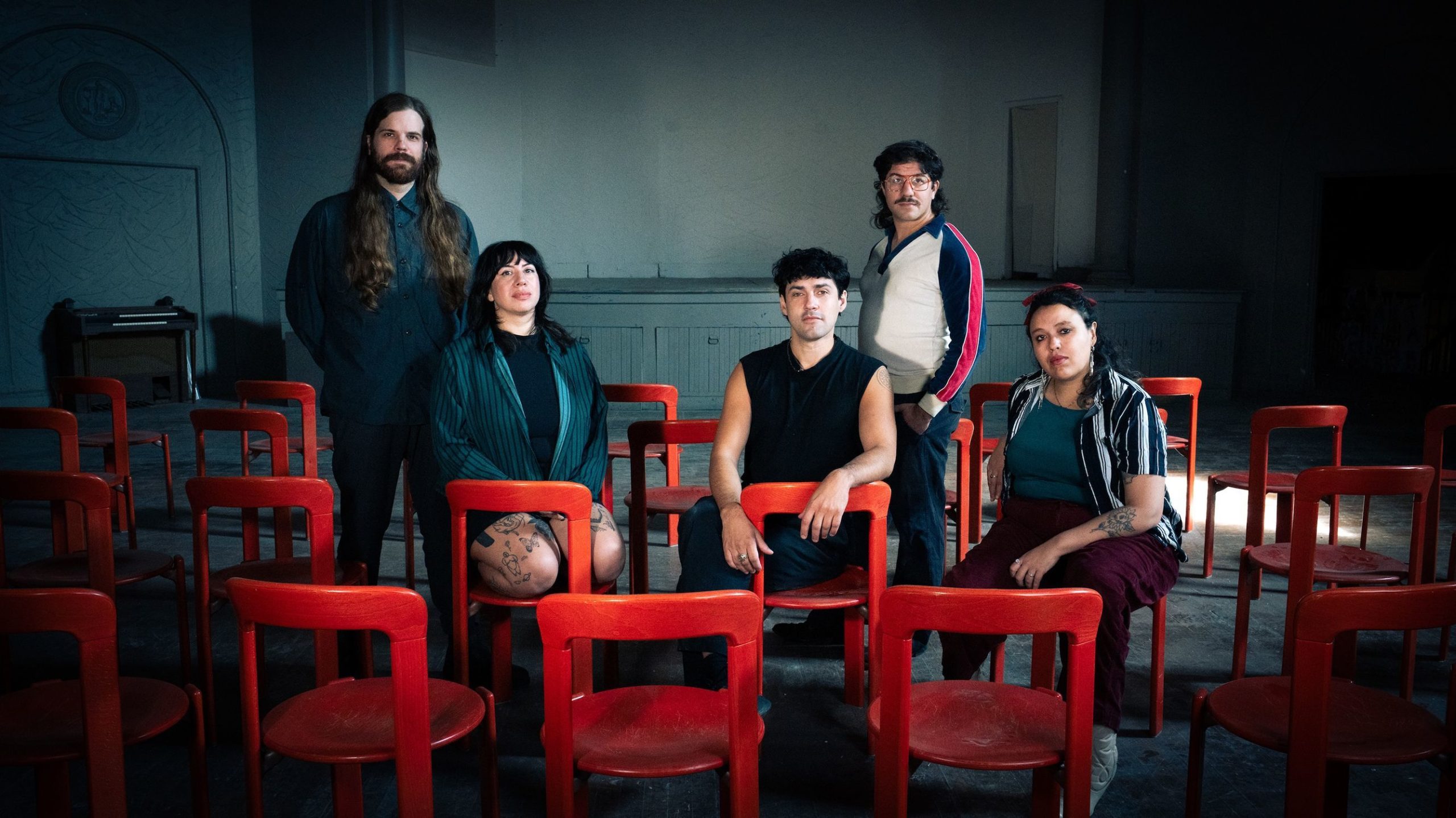
    It’s been nine years since fiery Providence, Rhode Island, punk band Downtown Boys’ last album, but the Victoria Ruiz-fronted fivesome have returned at full strength. The new bilingual Public Luxury comes out swinging with “No Me Jodas” — which translates as “Don’t [Mess] with Me” — and never lets up from there. They’re a fantastic live band. Pop Music Fever Dream opens. 8 p.m., Johnny Brenda’s, 1201 N. Frankford Ave., johnnybrendas.com

    Wednesday, July 22

    Coltrane 100: Legacy

    This Coltrane tribute features the saxophone great’s son Ravi Coltrane performing reimagined versions of his father’s classics with the Philadelphia Orchestra in advance of what would have been John Coltrane’s 100th birthday on Sept. 23. 8 p.m., TD Pavilion at the Highmark Mann, 5201 Parkside Ave., highmarkmann.com.

  • Camden County wants to spend $400M to make Cooper River swimmable and improve other waterways

    Camden County wants to spend $400M to make Cooper River swimmable and improve other waterways

    Camden County officials announced a $400 million master plan Tuesday to protect the county’s network of rivers, lakes, and streams such as the Cooper River.

    They are hoping voters will approve a referendum in the fall to help pay for it over the next decade.

    That waterway network is threatened by aging infrastructure, stormwater runoff, industry, and changing regulations that have left it degraded. A comprehensive plan is imperative, officials said.

    An ultimate goal, they say, is that residents may one day be able to swim safely in Cooper River Lake without a health risk.

    “Repair. Replenish. Recreate,” County Commissioner Jeffrey Nash said. “Those three words summarize the generational change that Camden County is about to embark on to improve the quality of our water bodies.”

    County, state, and local officials made the announcement at the Camden County Municipal Utilities Authority headquarters in Camden, backed by representatives from various environmental groups and nonprofits.

    To raise the money, officials are assembling federal, state, and government grants and loans, as well as help from private nonprofits.

    Voters could be key

    But they also said a planned voter referendum on increasing the county’s open space tax to $0.03 per $100 of assessed property value is key to secure permanent funding. Voters will weigh in on Election Day, Nov. 3.

    The rate would nudge up from $0.02. That means someone with property assessed at $500,000 would pay $150 a year toward open space, up from the current $100.

    Waterways that would see increased protection include:

    • Cooper River Lake, which spans Camden, Pennsauken, Cherry Hill, Collingswood, and Haddon Township.
    • Kirkwood Lake in Lindenwold.
    • Atco Lake in Waterford Township.
    • Pennsauken Creek, which runs through Pennsauken, Maple Shade, and Cherry Hill.
    • Big Timber Creek, which spans multiple towns.
    • Evans Pond and Wallworth Lake in Cherry Hill and Haddonfield.

    Nash said the county’s population growth over the last 100 years can be attributed to people drawn to the waterways. But increased population also resulted in the need for more sewer lines and attention to aging infrastructure.

    “We stand at a crossroads, and we have a choice to make: Either we’re going to shrug our shoulders and pass this problem on to the next generation, or we’re going to do something that is generational,” Nash said.

    The cost breakdown

    The plan calls for:

    • $200 million to fix aging combined sewer systems that overflow during storms.
    • $75 million for dredging and other methods to reduce sediment.
    • $50 million for rehabilitation of sanitary sewer systems across multiple towns.
    • $50 million to restore recreational lake areas.
    • $25 million for green infrastructure.

    And it includes an unspecified amount for continued planning, monitoring, and management.

    Scott Schreiber, executive director of the Camden County Municipal Utilities Authority, called the plan “a comprehensive strategy that addresses every major factor affecting the health of our rivers, lakes, and streams.”

    He said it represents a new way of thinking about water quality by coordinating across towns, rather than planning by one municipality at a time.

    “Water doesn’t recognize political boundaries or municipal borders,” Schreiber said.

    The biggest chunk of money will go to address combined sewer overflows (CSOs), which are now antiquated. A combined sewer system collects rainwater runoff and household sewage into one pipe. Normally, it can transport all of that to a sewage treatment plant. But storms can bring so much water that they can exceed the system’s capacity. When that happens, untreated stormwater and wastewater flow into bodies of water, such as the Delaware River.
    Schreiber said projects are being designed and built to capture and treat much more stormwater before it reaches the Delaware.

    Separately, money will be used to repair and rehabilitate aging sewer systems, reducing leaks and groundwater infiltration that pollutes waterways.

    He said the infrastructure money will also be used to install rain gardens, permeable pavement, and bioswales, which are typically sloped channels covered with vegetation and designed to capture or slow stormwater.

    The county will start a regular dredging operation to remove decades of accumulated and contaminated sediment in lakes and ponds to improve aquatic habitat, restore ecological function, and create overall healthier waterways.

    And the county plans to restore recreational lakes by improving public access, bolstering shorelines, and boosting overall water quality.

    Officials plan to finance part of the plan through the New Jersey Water Bank, an independent state authority that provides low-interest loans for water quality infrastructure projects.

    However, Schreiber said, the voter referendum will be key. If voters approve it, the referendum would provide $7 million per year that could be used to pay off that debt and pay for other improvements.

    ‘Vibrant waterfront communities’

    Don Baugh, founder of the nonprofit Upstream Alliance, which has helped Camden County build its first water trail, called the master plan a major step.

    “I feel like I should pinch myself,” he said. “This is the dream of restored waterways, swimmable waterways, kids playing in the water, and vibrant waterfront communities.”

    Daniela Solano-Ward, mayor of Collingswood, one of five towns that border Cooper River Lake, said the new coordination by the county is vital.

    “Collingswood can do very little to alter our geographic reality,” she said. “We are bordered by Cooper River to the north and Newton Lake to the south. Ultimately, protecting urban watersheds has fallen to local government. But with 35 municipalities in Camden County, the weight of this lift is too heavy for any one of us to shoulder alone.”

  • Collingswood’s vibrant downtown needs a weekday evening boost, business owners say

    Collingswood’s vibrant downtown needs a weekday evening boost, business owners say

    Nab a table at Collingswood’s Sabrina’s Cafe at 11 a.m. on a Sunday without a wait? Good luck with that.

    A dinnertime walk-in at one of the town’s many vaunted restaurants might be easier. On a weekday, you’ll practically be a shoo-in.

    Despite its reputation as a South Jersey dinner destination — owing to longtime red-sauce staples like Villa Barone and Il Fiore and newer fine-dining joints like Hearthside and June BYOB — restaurant owners on Collingswood’s popular Haddon Avenue say business isn’t booming on weeknights.

    With thinner margins brought on by the higher costs of food, supplies such as to-go containers, and labor, it’s getting harder for some of these spots to get by.

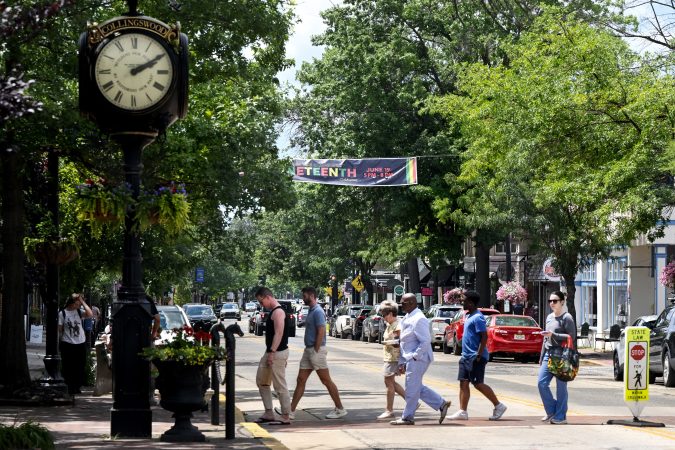
    The Camden County town of 14,000 is hopping with energy on weekend days thanks to the beloved Saturday morning farmer’s market, a bevy of city-organized events, and Collingswood’s variety of stores. But the energy on Haddon Avenue often fizzles come evening.

    Business owners of all types point to one main reason: Collingswood is dry.

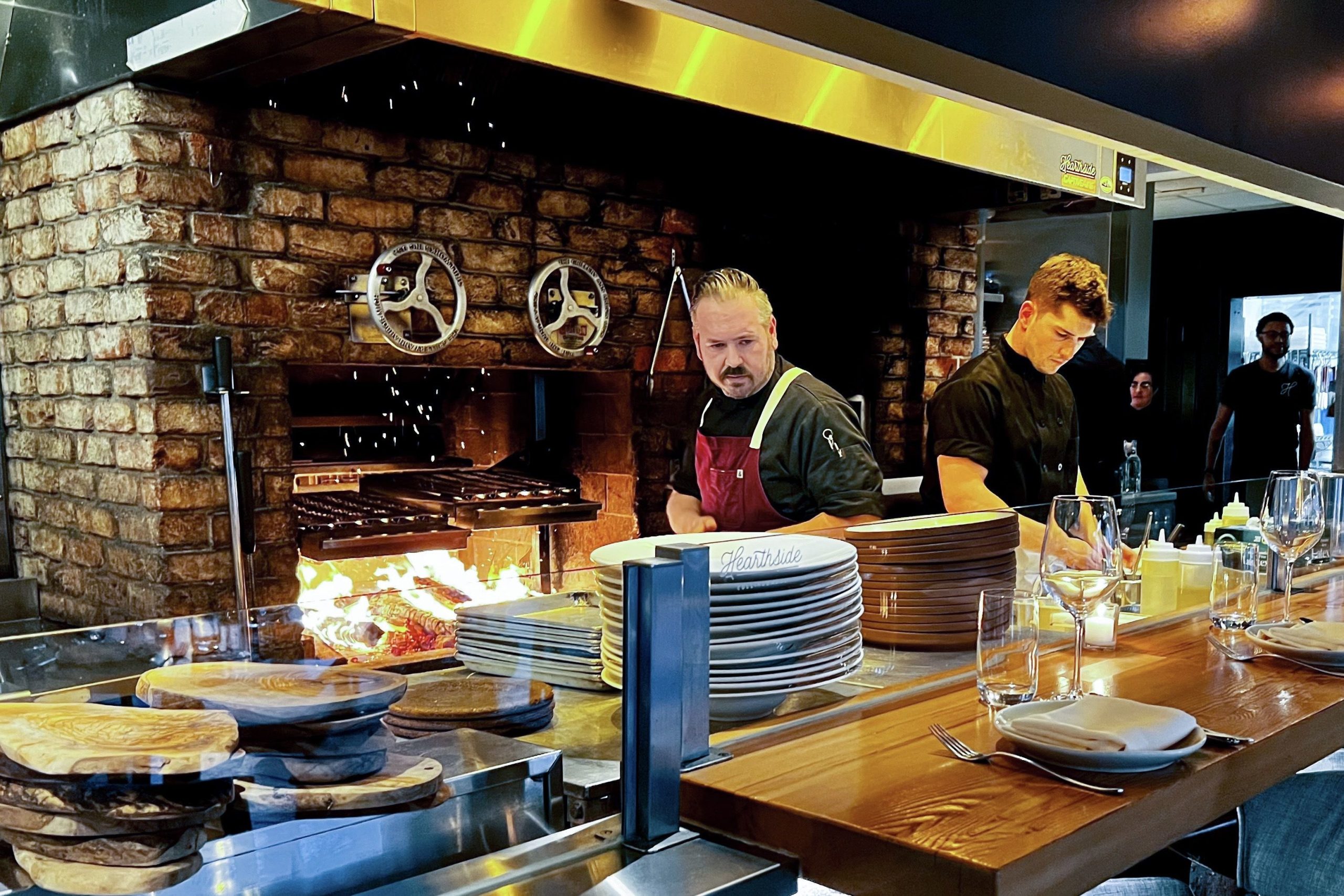
    “During the day on Saturday when we’re prepping, there are people walking around everywhere, but on the weekdays after 5 o’clock, there’s just nobody walking around,” said Dominic Piperno, chef and owner of Hearthside, which opened on Haddon Avenue in 2017.

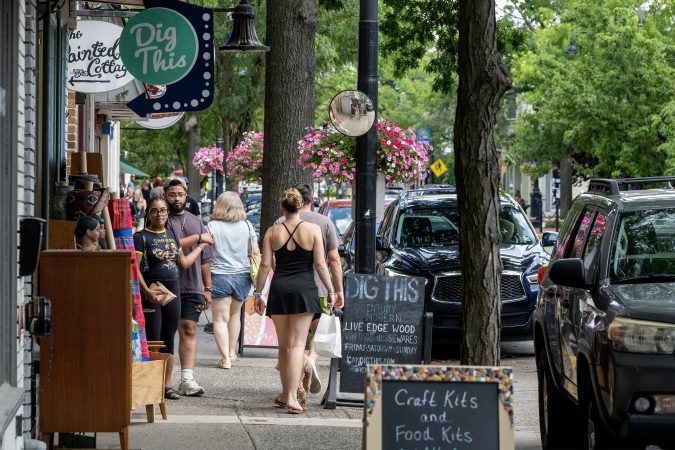
    People walk along Haddon Avenue in Collingswood. Elected officials and business owners say the town needs more experiential businesses.Tom Gralish / Staff Photographer

    Piperno said weekday evenings have become increasingly quiet in the past few years. There was a boom just after COVID-19 restrictions lifted, when folks were happy to get out of their homes, but it didn’t last. He and other Haddon Avenue restaurant owners say inflation and the rising cost of living are partly to blame, with disposable income for many out the window.

    Giovanni Barone, whose family has owned and operated Haddon Avenue Italian restaurant Villa Barone for 32 years, thinks the town could make some changes to support restaurants. He motioned toward nearby Haddon Township, which has long allowed alcohol sales and on-site consumption.

    There, “on a weekday night — Wednesday or Thursday, for example — I drive down the street and it’s packed,” Barone said. “We’re losing a bit of that piece of the pie.”

    A thriving daytime scene

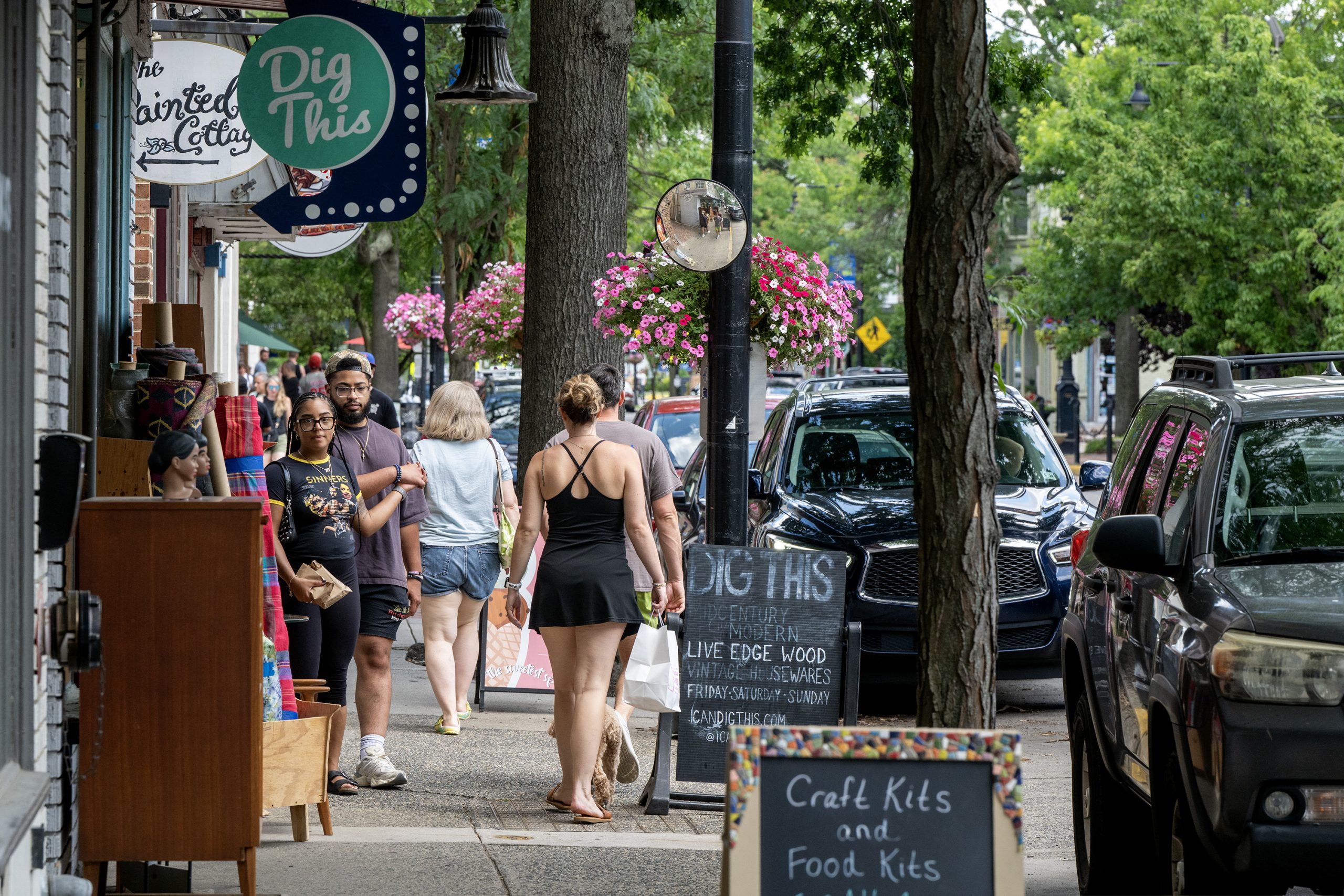
    Yet amid the challenges, Collingswood’s share of Haddon Avenue is experiencing a wave of new businesses filling long-vacant storefronts and injecting fresh daytime activity.

    Kaival Patel of John’s Friendly Market in nearby Haddon Heights is preparing to open a convenience store-like concept in Collingswood with a deli case and prepared foods in the former Wawa space, likely this summer.

    The business was courted by Collingswood Commissioner and Deputy Mayor Amy Henderson Riley. She campaigned with Mayor Daniela Solano-Ward on the promise of ensuring downtown continued to welcome diverse business owners and shoppers of various income levels. James Maley, a commissioner since 1989 and Collingwood’s mayor from 1997 until Solano-Ward took office, continues to serve as a commissioner.

    “We’re replacing Wawa in our own way,” Patel said. “We’ve heard that people used to get their groceries from Rite Aid next door that closed, too, so we’re going to try to add groceries as much as possible.”

    Nearby, a bank that has sat empty for years is primed for a new life as a three-storefront building topped with condos, said Keller Williams real estate agent Pat Ciervo. The parking lot will become public parking, Ciervo said — a perk for that end of downtown.

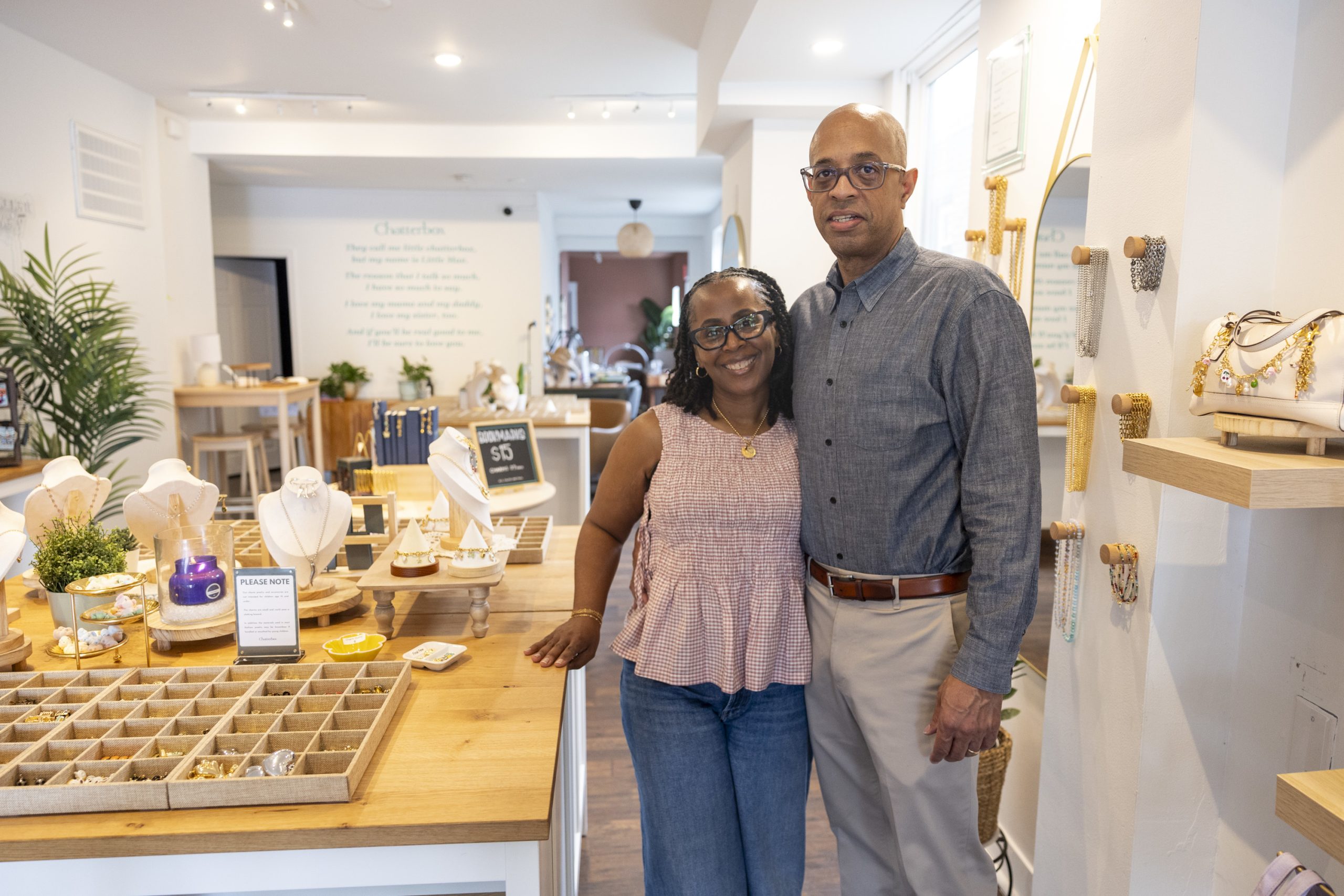
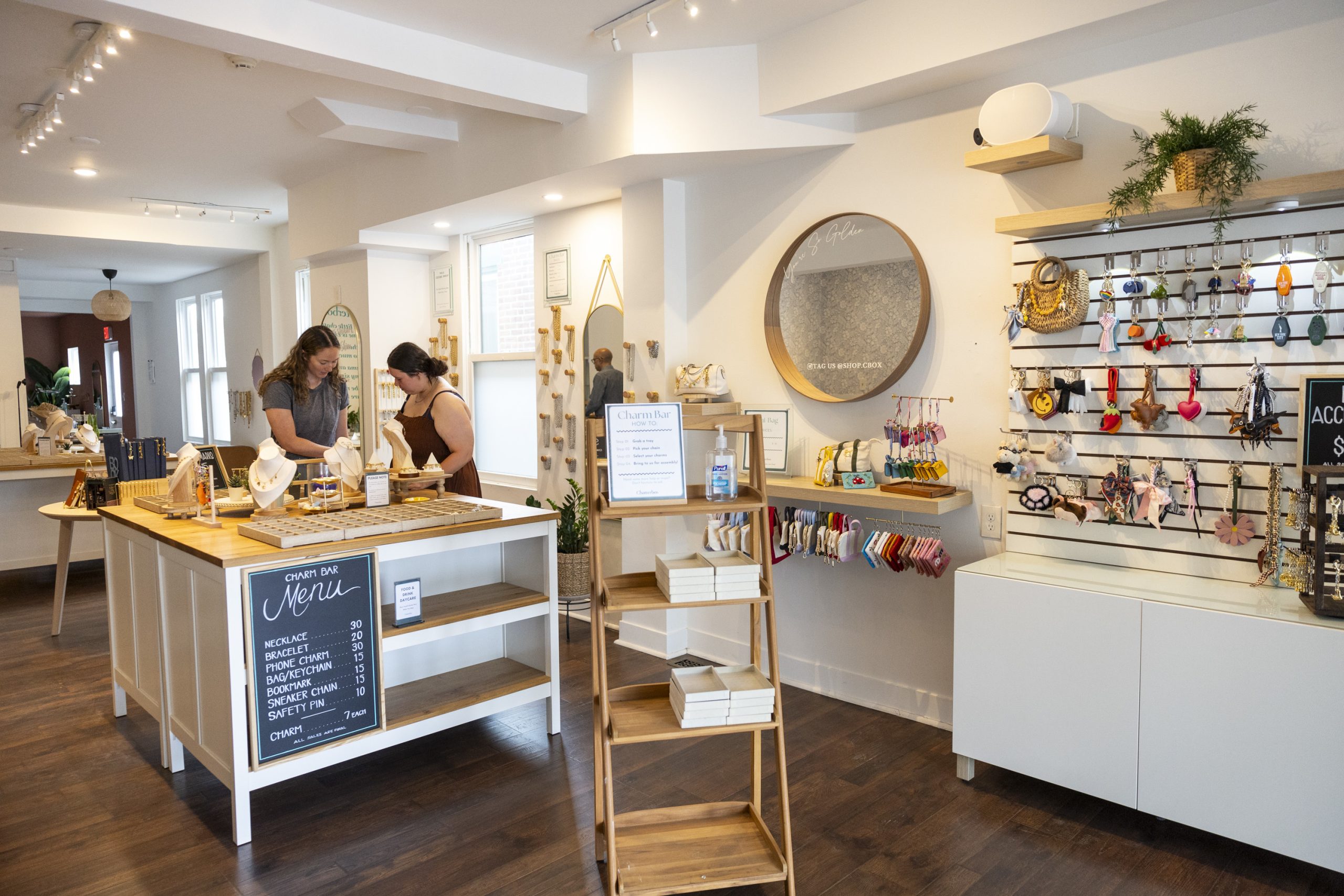
    Charm bar and permanent jewelry studio Chatterbox celebrated its first anniversary July 4. Business has been good for owners Douglas and Nikki Coleman. People are eager to support a Black- and family-owned business, Douglas Coleman said.

    Douglas and Nikki Coleman at their business Chatterbox in Collingswood.Tyger Williams / Staff Photographer

    “Weekends have been very steady for us,” he said. Weekday business fluctuates, “but this has become a destination for people, just the store in itself. We’ve had people come from Boston and Virginia.”

    Lindsey Ferguson, Collingswood’s director of business and community development, praised the store.

    “We have loved the addition of Chatterbox because, simply, their business model includes waiting for your jewelry, so people then walk around and shop” at other businesses on the avenue like suburban birding store House Finch or Occasionette gift shop, she said.

    Ferguson would like to see more so-called experiential businesses like Chatterbox and nearby pottery-painting studio All Fired Up! And she’d like to add nighttime businesses “that can kind of lift everybody up.”

    Ends of the Earth, a cigar lounge that recently debuted in Collingswood’s former fire station, is open until 7 p.m. on Thursday, Friday, and Saturday — a welcome evening addition, according to Ferguson.

    Ferguson said the chasm between daytime and nighttime foot traffic along Haddon Avenue dates to the pandemic years, when some businesses began closing earlier.

    But that lack of deep overlap between so-called daytime and nighttime businesses has left Collingswood’s restaurant scene in the lurch.

    The inside of Douglas and Nikki Coleman’s business Chatterbox in Collingswood.Tyger Williams / Staff Photographer

    ‘Let’s not mess this up’

    Liquor was prohibited by ordinance in Collingswood in the 19th century, dating back to its Quaker roots.

    Now Collingswood’s three-person Board of Commissioners, which includes Henderson Riley and Solano-Ward, is considering a resolution to put liquor sales on the ballot in November.

    “It’s a conversation we need to keep having as a community,” Henderson Riley said. “It would be an influx of cash into the town that would be up to voters to decide.”

    In 2015, Collingswood voted to allow craft breweries, and now Raccoon Taproom operates on Haddon Avenue under a state-issued limited brewery license. The license allows operator Swedesboro Brewing to serve beer in the taproom.

    Chef-owner Dominic Piperno (left) with line cook Christopher Ross at Hearthside in Collingswood in 2023.Michael Klein / Staff

    Henderson Riley said officials are concerned about how to equitably distribute the restaurant and retail liquor licenses. Collingswood would receive up to four, based on its population, which isn’t enough for all of its dinner-serving establishments. And if they are auctioned to the highest bidder, Ferguson noted, out-of-town restaurant groups could come in and create even more competition for licenses.

    “We want to keep restaurants open. We want to keep our downtown thriving,” Henderson Riley said. “We see neighboring towns that are open a little later than us, and the main reason is liquor.”

    And as a result, Henderson Riley said, the restaurants in those neighboring towns have a lower price point for their food.

    Nearby Haddonfield is also a dry town but allows businesses to operate under state-issued manufacturing licenses — not just for beer — and is now home to a brewery, a winery tasting room, and a distillery. Piperno, of Hearthside, sees how these businesses help feed the area’s restaurants, even if the restaurants can’t sell alcohol.

    “My wife and kids and I will walk Haddonfield at night, and like on a Monday, Tuesday, it’s jamming,” Piperno said. “It just has helped that downtown a lot, especially with younger families.”

    Piperno said Fridays and Saturdays at Hearthside are still “jammed,” but “it’s really hard to survive this industry with just two really busy nights.” The restaurant plans to relocate to Haddon Township in 2027, where it will have a liquor license.

    “It’s a bittersweet thing for us because we love Collingswood,” Piperno said, “but something has to change.”

    Still, for Collingswood, much already has. Former Mayor Maley is owed much of the credit, says Henderson Riley, the deputy mayor.

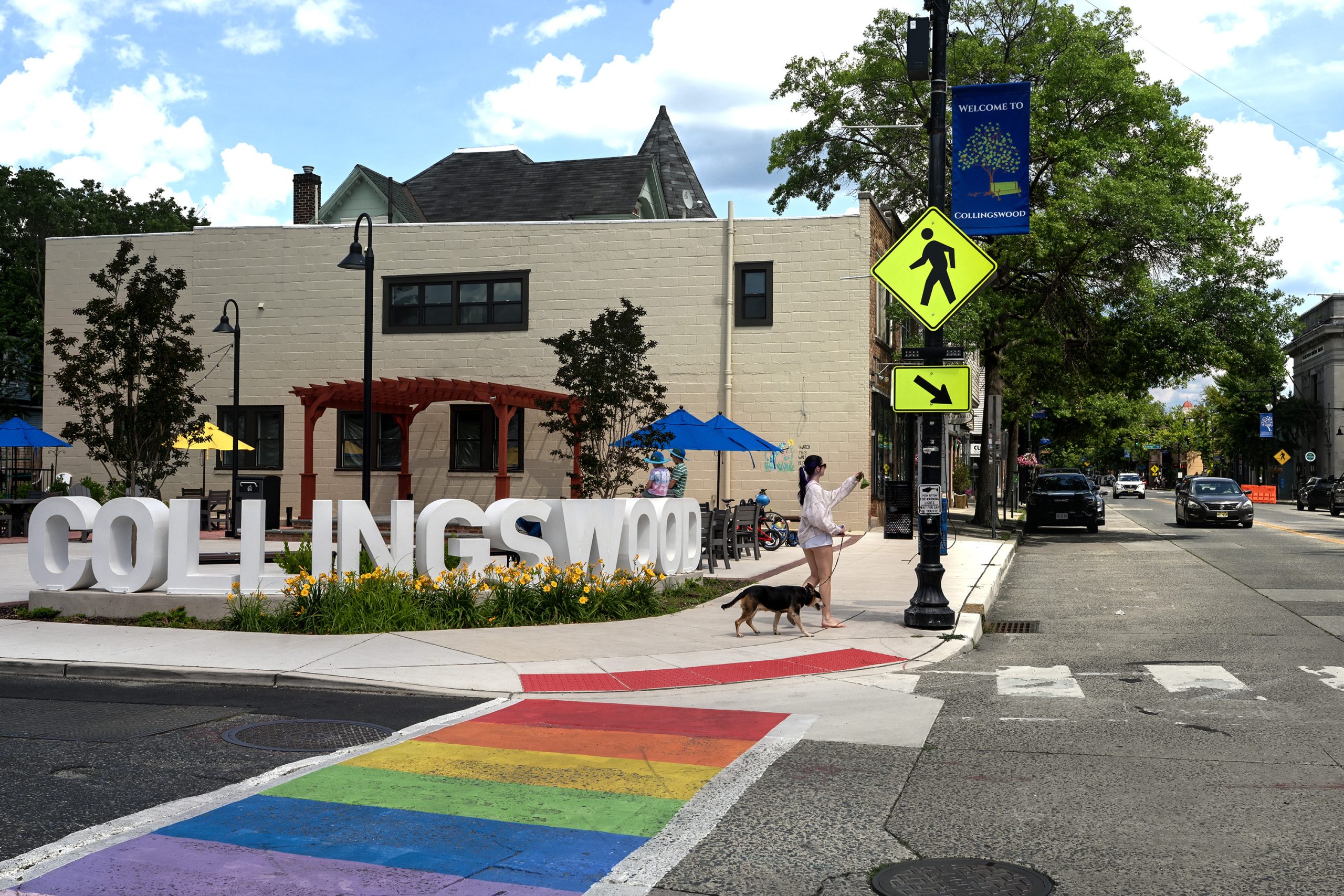
    The downtown pocket park with a “Collingswood” sign.Tom Gralish / Staff Photographer

    Henderson Riley recalled Maley’s efforts to attract new homeowners by incentivizing converting former duplexes into single-family homes, and appeals to Philadelphia’s LGBTQ+ population to move across the bridge.

    “Part of what drew us here was what he used to call the Collingswood story,” Henderson Riley, who has lived there for 15 years, said. The businesses and restaurants that germinated from it are the basis of Haddon Avenue’s reputation today.

    Nikki Coleman, of Chatterbox, grew up in Cherry Hill and has watched throughout her life as Collingswood’s downtown transformed from a dingy strip into a robust retail scene. She has shared her observances with her husband.

    “This has been a great case study for how to take a town and really bring a certain dynamic to it that I think a lot of other small towns wish they had,” Douglas Coleman said. “I don’t know if we’re doing anything wrong, but it’s more of a ‘Let’s not mess this up.’”