Vineland residents who are some of the first in the Philly area to know what it’s like to live next to a massive AI data center share their experiences.
And the Delaware Valley Regional Planning Commission wants to know where you’re headed every day — and how you get there.
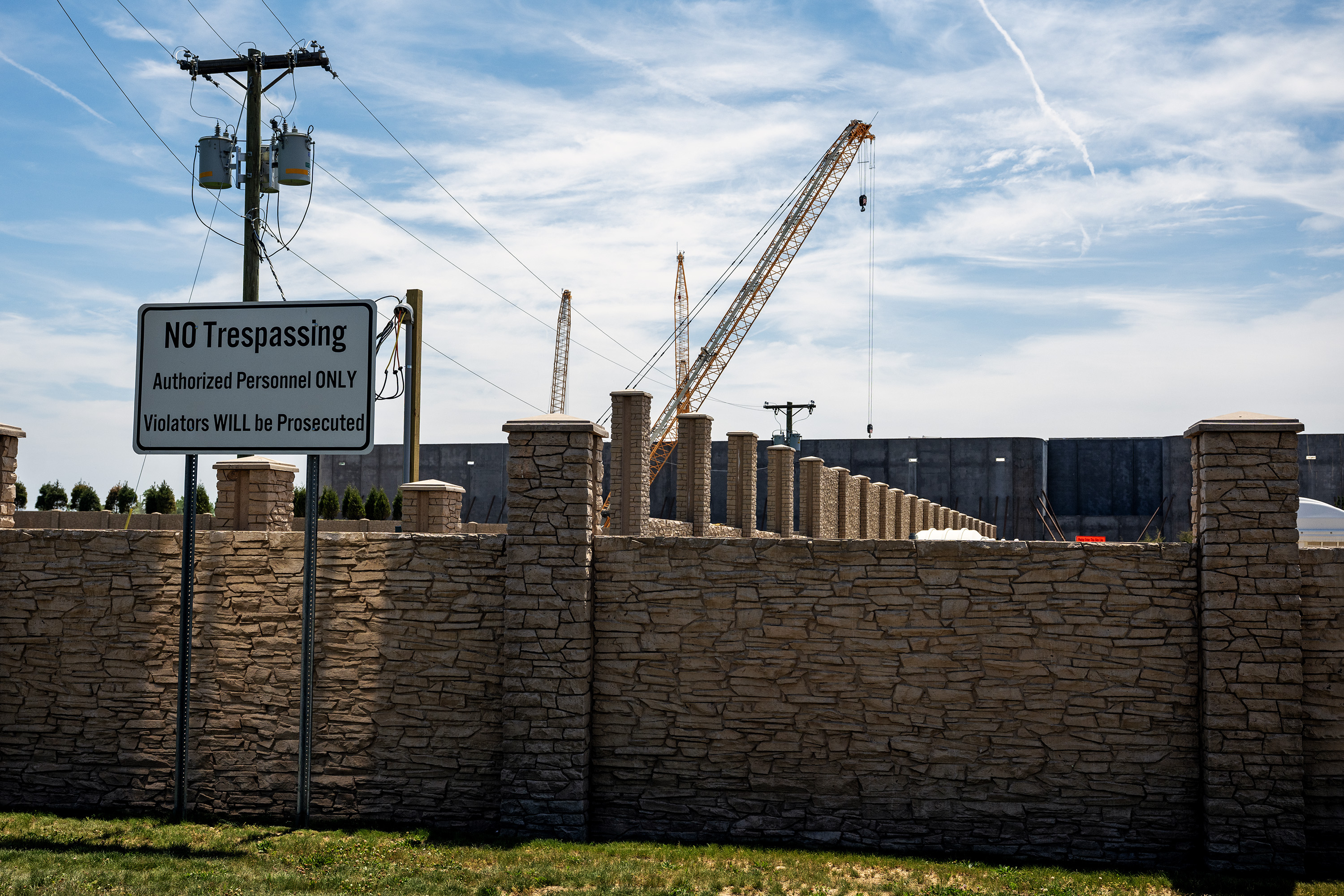
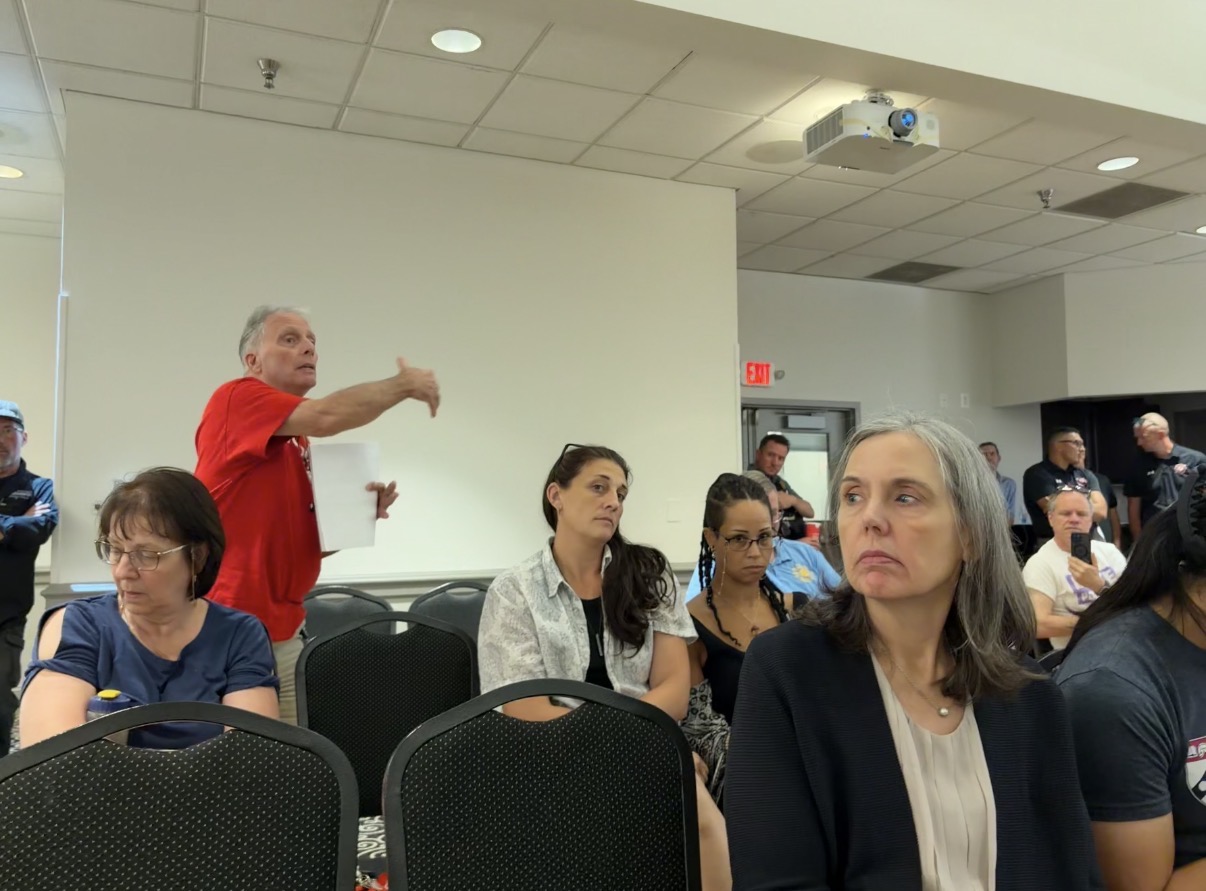
But a handful of local homeowners have the unique experience of seeing one from their houses — the DataOne facility in Vineland.
They used to have more neighbors before the data center developers and associates bought several homes that now appear to be abandoned.
Multiple residents commented on the excessive sound.
“I think of a prison, and I’m the prisoner with the noise,” said a homeowner of more than 47 years. “You get up in the morning and you’re in a foul mood.”
The DVRPC wants to know just about everything about people’s daily travel habits.
No, this is not about surveillance. After 13 years, the commission needs an updated survey to help guide funding decisions for infrastructure projects and transportation plans for the nine counties it serves, which include Burlington, Camden, and Gloucester.
Since January, it has been recruiting participants by mail to randomly selected households. Sorry, you can’t nominate yourself.
Those who opt in will have to track their household trips for 24 hours using a phone app. It’ll also ask the household basics: size, age, income, etc.
But how exactly will the experts use this information?
Five years after Clementon Park & Splash World was purchased at a bankruptcy auction, the recently shuttered 119-year-old amusement and water park is going back to auction this month.
Researchers have found microplastic pollution in every one of the 22 stream and river segments along the Delaware River tested in New Jersey, Pennsylvania, Delaware, and New York. This includes Cooper River in Camden County.
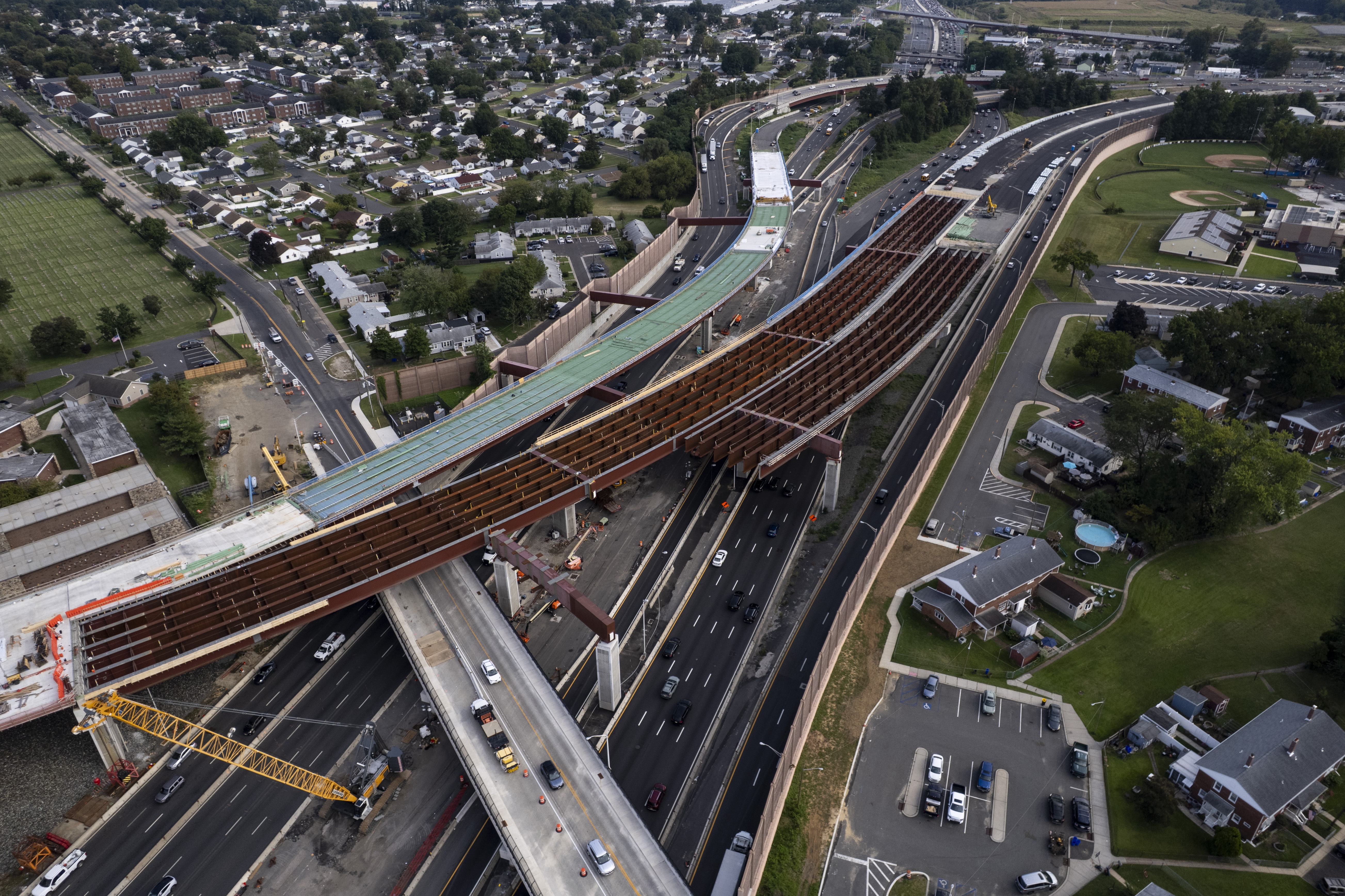
Residents in Camden and Cherry Hill should be aware of possible detours and prepare to take alternative routes because of roadway projects scheduled for this week.
The Inquirer’s editorial board, which is separate from the newsroom, wrote that Gov. Mikie Sherrill’s call for now-former Lt. Gov. Dale Caldwell to resign set “an ethical example for a corrupt era.”
🗓️ The best things to do this week
🔮 Boos & Brews Witches Market: Check out this witch-themed market full of themed vendors and activities. Stick around for food trucks, a costume contest, performances, and a beer garden. ⏰ Friday, Oct. 2, 5-9 p.m. 💵 Pay as you go 📍 Rancocas Woods Events and Shops, Mount Laurel
📚 Collingswood Book Festival: The 24th annual festival is back spanning six blocks of Haddon Avenue. Come to meet booksellers and stay for author and poetry readings, performances, and workshops. ⏰ Saturday, Oct. 3, 10 a.m.-4 p.m. 💵 Free 📍 Haddon Avenue, Collingswood
🎨 Cranberry Fest: The 36th annual cranberry fest returns with live music, a food court, a beer garden, and more than 100 artisans. 💵 Pay as you go 📍 Farnsworth Avenue, Bordentown
At least one Collingswood commissioner is eager to move forward with privatizing the borough’s ambulance services after a $40,000 study said it would help its understaffed fire department.
Amy Henderson Riley, a member of Collingswood’s three-person board of commissioners, said the borough should follow through on its plan to outsource ambulance transports that started, and abruptly ended, last year after fellow Commissioner Jim Maley sued the borough over alleged ethics violations.
“What I aim to do, at least in the short-term, is privatization,” Henderson Riley said last week. “That’s not to say it’s a long-term solution. We’re not looking to sell out to the hospital system. We’re looking to cut costs for residents pulled in every direction.”
In December, Henderson Riley and Mayor Daniela Solano-Ward, also a commissioner, voted to approve a one-year contract with Virtua Health to use the hospital system’s ambulance services.
The deal, at no direct cost to the borough, would have allowed Virtua to bill patients who ride an ambulance. Collingswood made about $407,000 from ambulance billing last year, according to its 2026 budget, and it is unclear exactly how much they spent to keep the EMS program running.
EMS is currently handled by Collingswood’s 19-person fire team, which also manages fire emergencies across the 14,000-resident borough and parts of Haddon Township.
The Virtua contract was voided when Maley, who voted against the agreement, sued, alleging that Solano-Ward’s vote was a conflict of interest because her husband works for Virtua. The borough settled the lawsuit and agreed that Solano-Ward should recuse herself from future EMS matters.
If Collingswood tries to outsource ambulance transport again, it would not be the first local municipality to successfully privatize EMS, according to Collingswood Fire Chief Geoffrey Joyce. For instance, Camden uses Cooper Health ambulances, Gloucester Township and Pine Hill each use Inspira Health, and Gloucester City uses Virtua.
The commissioners have not moved toward privatizing again since the borough settled Maley’s lawsuit in January. Henderson Riley said it would take time to put together a request to send out to bid, which would need to be reviewed by lawyers first.
With Maley still not sold on privatizing and Solano-Ward’s vote out of the running, the path toward privatization might be difficult. Commissioners do not reconvene until Oct. 5, and Henderson Riley said Thursday she was not sure how a vote would work for EMS without the mayor able to pitch in.
Plus, key officials think there is a better option for Collingswood’s firefighters that could take years to develop.
An overworked fire department
Collingswood contracted Manitou, a private public safety consulting firm, in June to conduct a four-month study examining whether the borough should privatize ambulance services or hire more firefighters to give the department some relief.
Borough officials have expressed concern that the fire department, which has lost all its part-timers in recent years and responds to about 4,000 annual calls, lacks the capacity to respond with a safe, and mentally well, team of firefighters.
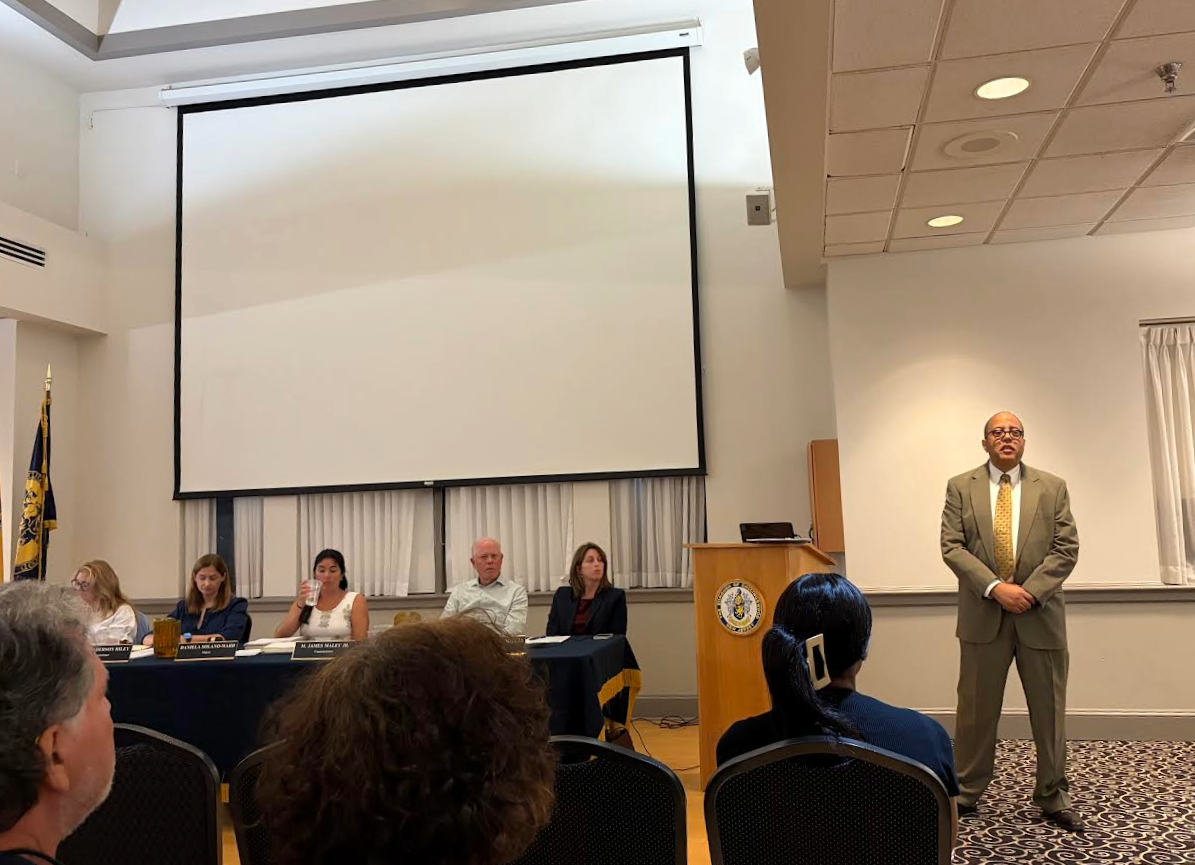
The study, presented at a public meeting on Sept. 8, was a condition of settling Maley’s lawsuit. The combined cost of legal fees and the study was about $70,000 in taxpayer funds, according to Henderson Riley.
Charles Jennings, a principal at Manitou, said at the meeting that having no part-time staff has led to an increase in hours for firefighters, and 80% of surveyed staff said they are working too much overtime. Firefighters also reported that the “trajectory of [the] job is getting worse.” Nearly half of current employees said they are considering leaving the Collingswood Fire Department.
Jennings said privatizing would bring the borough improvements, including cutting costs, more training time for firefighters, and a more competitive workplace. He said outsourcing would make it less likely that firefighters end up with too few staff on an engine to safely respond to emergencies.
The alternative option — hiring three more firefighters — would cost Collingswood $350,000 and would not fix the understaffing issue when personnel call out, Jennings said.
Joyce, the fire chief, said he has seen the department change significantly over his 24-year career. His hiring in 2002 was part of Collingswood’s effort to take over EMS from a private contractor. The borough had privatized after struggling to respond to emergencies on its own.
Growing responsibilities for firefighters have left the community in need of help again, he noted.
“If at the start of my career you told me I would one day have to receive training on weapons of mass destruction, active shooter threat response, and all of the other facets of emergency response that this career now demands aside from response to fires, I would have never believed you,” Joyce said in an email.
‘The most equitable solution’
With a long list of fire departments across Camden County’s 37 municipalities, Jennings said, the area is “ripe” for consolidation.
That, too, is Joyce’s ideal outcome. He calls regionalization, which would bring nearby fire departments under one, larger roof, “the most equitable solution.”
“My dream is that irrespective of whatever zip code you live in, or the wealth or lack thereof in your community, as a resident you should know that when you call 911 that the emergency services are going to arrive quickly and fix whatever your problem is efficiently without delay,” Joyce said.
Other departments in the Philly area have made moves to regionalize their fire and ambulance services in recent months, including in Kennett Square and Delaware County.
Solano-Ward, who became a commissioner in May 2025 alongside Henderson Riley, said that strategy would reduce expenses, but it would take a lot of time.
It took Haddon Heights 20 years to regionalize among three municipalities, she said. Plus, there is no guarantee that Collingswood would not get the short end of the stick.
“Everyone loves the idea as long as our staff remain, [and] our house is the main house. But guess what?” Solano-Ward said. “We can’t all have that.”
Henderson Riley, though, said regionalization could happen sooner than people think. She said she is in early talks with officials from three other nearby municipalities, which she declined to name, with interest in consolidation. As healthcare and other affiliated costs rise, she said, Collingswood has to move outside the box.
“If you’re interested in joining us, talk to us,” she said. “Let’s have everybody at the table together.”
‘I don’t think it’s a good idea’
Maley, who voted with his fellow commissioners to authorize a request for private ambulance proposals last September, said he wants the borough to keep control of its EMS services and has spoken out against privatization.
Earlier this month, he voiced concerns about losing the revenue that the medical services bring in annually.
“I don’t think it’s a good idea that a company that’s very interested in the bottom line would run our EMS,” Maley said at the public meeting.
Henderson Riley said Thursday that the financial impact is more complicated. By privatizing, Collingswood would not have to pay more than $150,000 in overtime wages for its firefighters, or pay a third-party provider more than $30,000 to handle ambulance billing, as it does now. The borough could also sell some of its EMS equipment, Henderson Riley said, and preserve the mental health of overworked employees along the way.
“These men and their mental health are critical,” she said.
Maley also said the study’s results should have been delayed due to “an internal investigation” into a fire incident in Collingswood this year.
Maley, Henderson Riley, and Joyce declined to give details on the investigation, but the borough approved Andrea Wyatt, a municipal lawyer based in Toms River, as special counsel to investigate back in June.
The Retrospect news organization reported that the incident in question occurred in April, when the department did not have enough staff to transport a 63-year-old injured resident to the hospital and handle a house fire at the same time.
Henderson Riley said last week that the investigation has “nothing to do” with Jennings’ work, and she doesn’t know why Maley would delay the results based on the investigation.
Maley declined to explain his thought process until the investigation concludes.
Some attendees spoke out against the delay in privatizing at the public meeting. Donna Helmes, a Collingswood resident, said it is disappointing that taxpayers paid for an outside source to tell officials to do the same thing they had already voted for with Virtua.
“I am not wealthy. I don’t want to raise my taxes any more, but I feel like these people will run into my house when it’s on fire to save me and my family, so I want them to be as well-resourced as possible,” Helmes said. “And I think we could have done this last year. It’s very upsetting that we’re still arguing this.”
Efforts to create safer conditions along Haddon Avenue began Monday — the first phase of Camden County’s $3.5 million pedestrian safety improvement project that stretches from Collingswood to Haddon Township.
Starting Sept. 21 at the intersection of Haddon Avenue and Cuthbert Boulevard, crews will be working between Strawbridge and Bryant Avenues for the next six to eight weeks, according to the county.
Drivers in the area should prepare for lane closures from 7 a.m. to 4 p.m. on weekdays for the duration of construction, county officials advised. During that time, there could also be restrictions and detours on some turns, they said.
Cuthbert Boulevard is one of four intersections along Haddon Avenue that are slated for traffic signal improvements as part of the project alongside Collings, Crystal Lake, and Maple Avenues.
Repairs at the intersections will also include upgrades to various pedestrian facilities such as fresh pavement and improved sidewalk ramps.
For this initial phase of the project, crews will repair the deteriorated pavement at the Cuthbert Boulevard intersection, county spokesperson Morgan Callan said in an email.
Once the new traffic signals and other equipment arrive next spring, Callan said, construction will then begin at all four intersections and is expected to last two to three months.
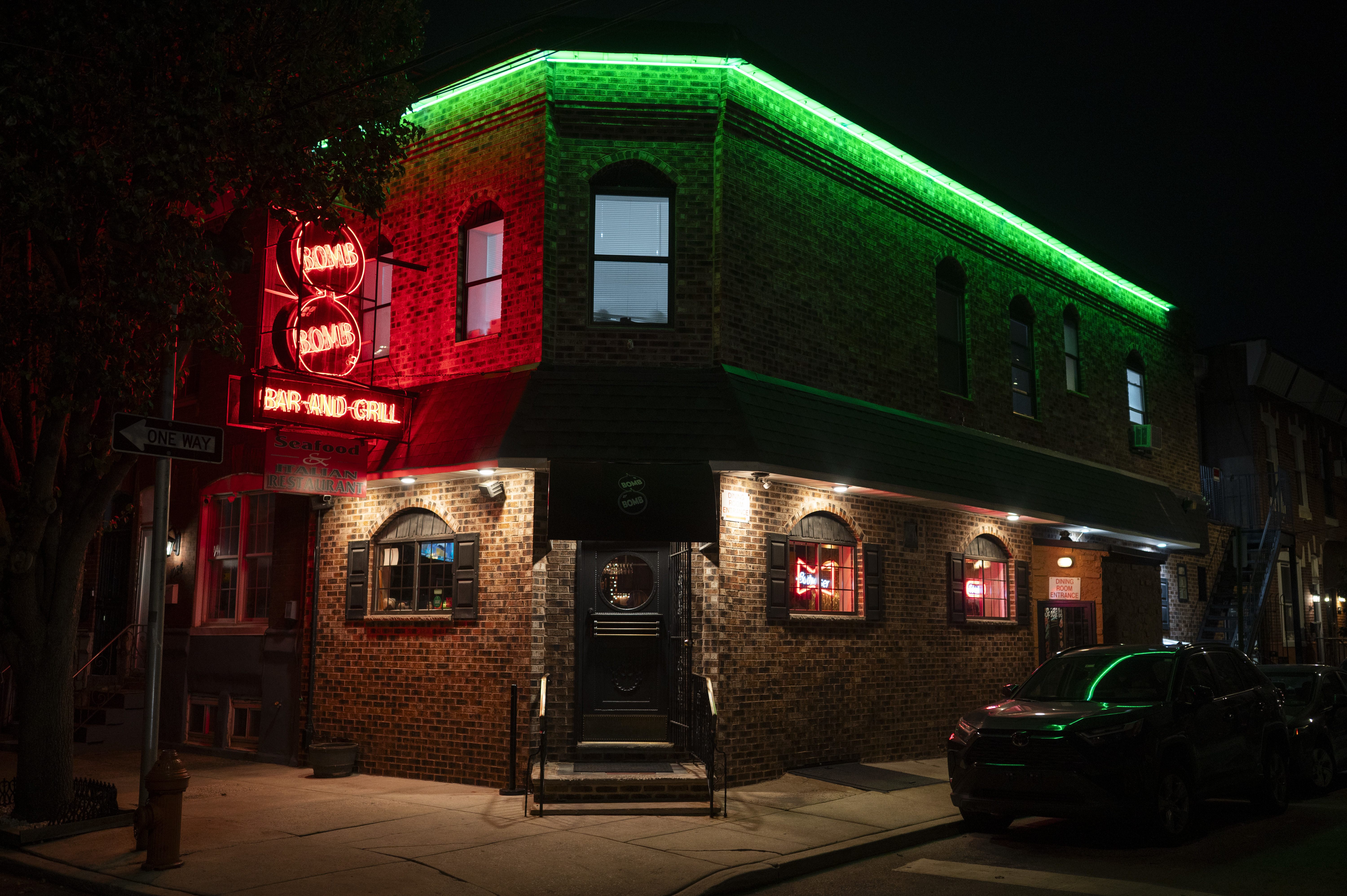
Bomb Bomb Bar, the old-time South Philadelphia tavern revived last year by chef Joey Baldino, has been named to the New York Times’ 2026 list of the best restaurants in America — Philadelphia’s only entry this year.
The city placed two restaurants — Mawn and Meetinghouse — on the list last year, Little Walter’s in 2024, and three — El Chingón, Kalaya, and My Loup — in 2023. Previous Philadelphia-area selections include Andiario, Gabriella’s Vietnam, Down North Pizza, Laser Wolf, and the now-closed Korshak Bagels.
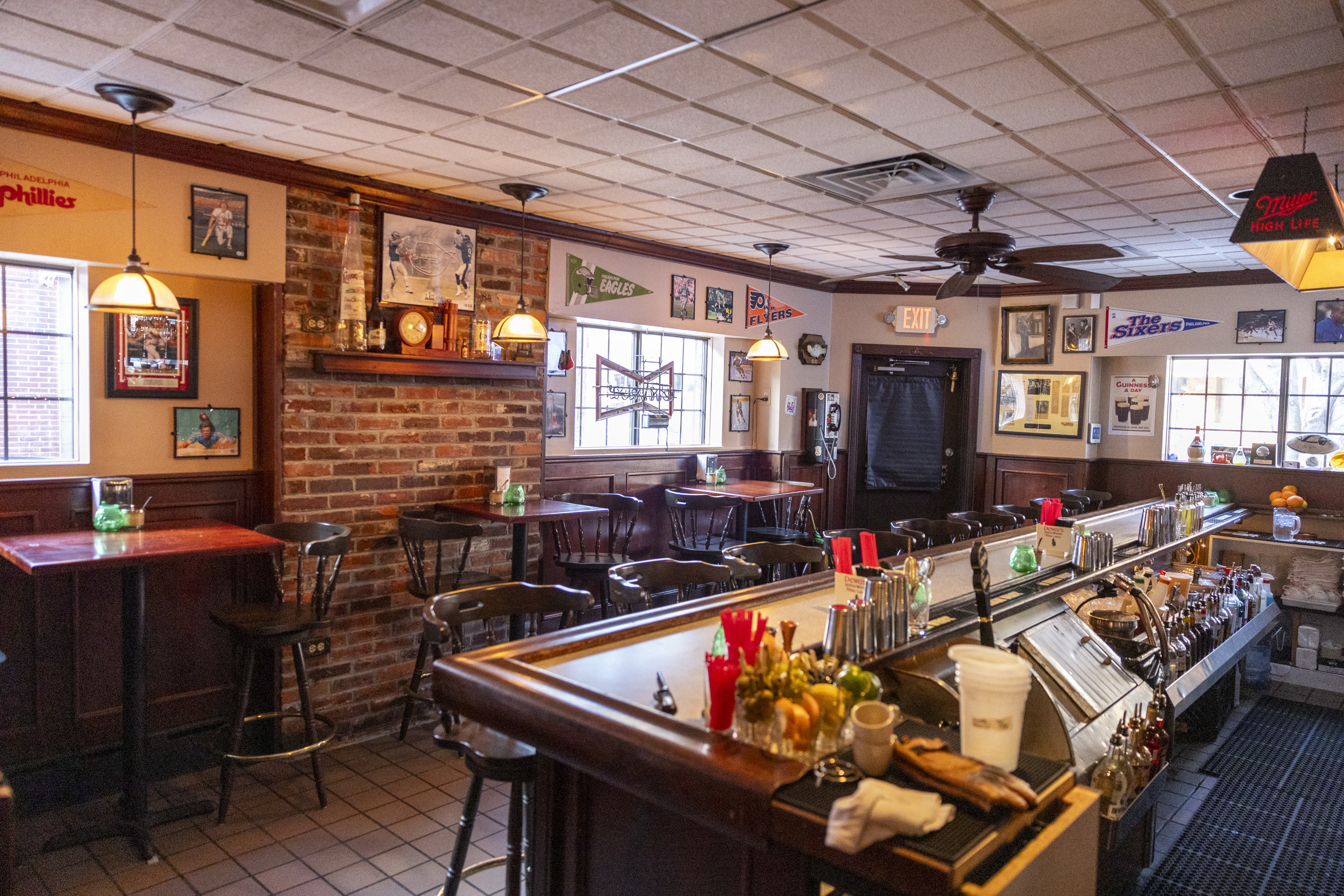
The front bar area of Bomb Bomb Bar.Tyger Williams / Staff Photographer
The Times praised Baldino’s ability to bridge old-school and contemporary red-sauce Italian cooking, describing him as a “singular talent” in the genre.
Baldino also owns Palizzi Social Club in Passyunk Square — itself a lovingly restored South Philly institution — and Zeppoli, a 35-seat BYOB in Collingswood.
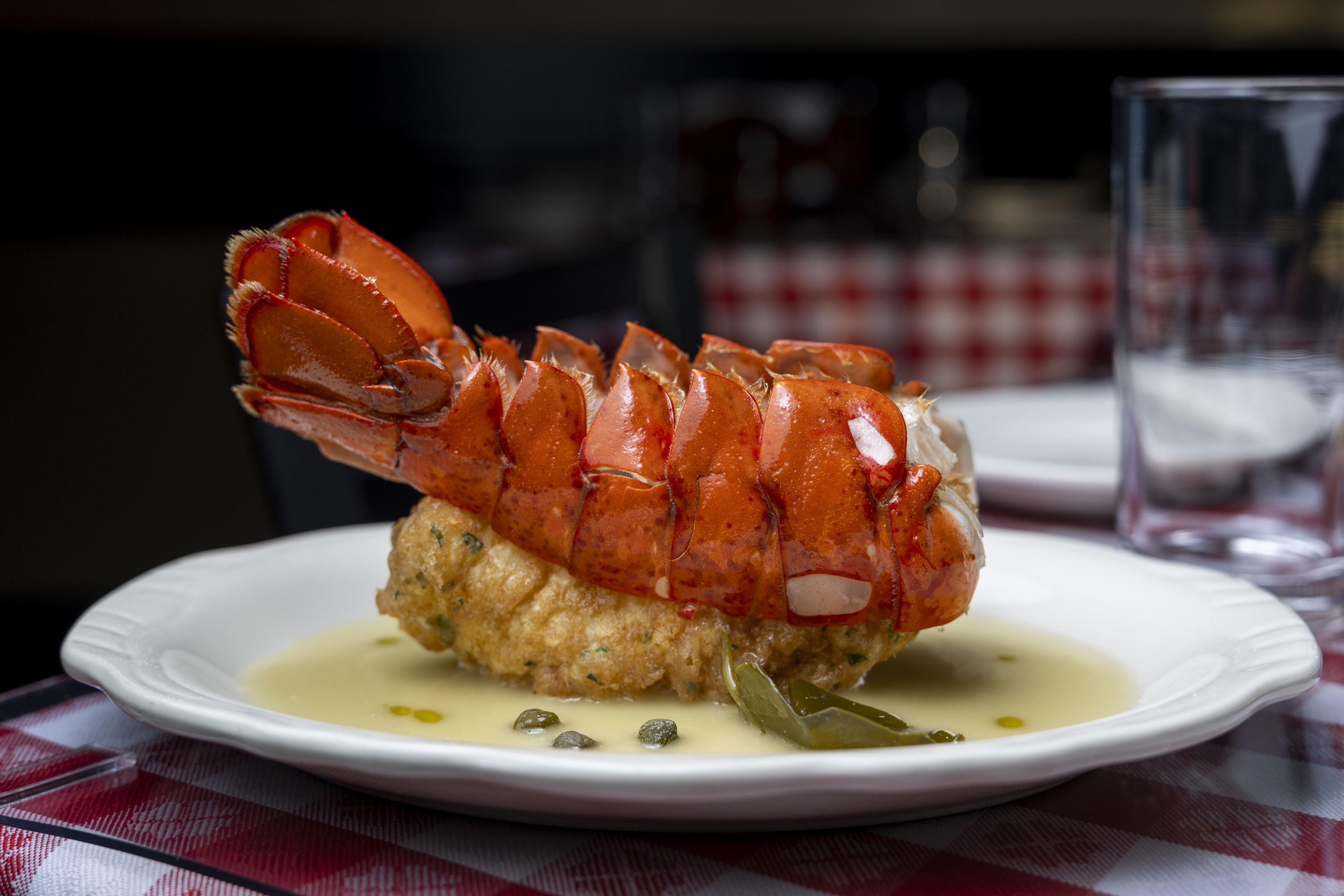
Bomb Bomb still looks much like the Lower Moyamensing neighborhood bar it has long been, but the Times said its stuffed calamari, mussels fra diavolo, and lobster francese reveal the transformation. It called those dishes “as poetically reverent as a heartfelt eulogy” and summed up the experience as finding a remembered neighborhood joint “better than ever.”
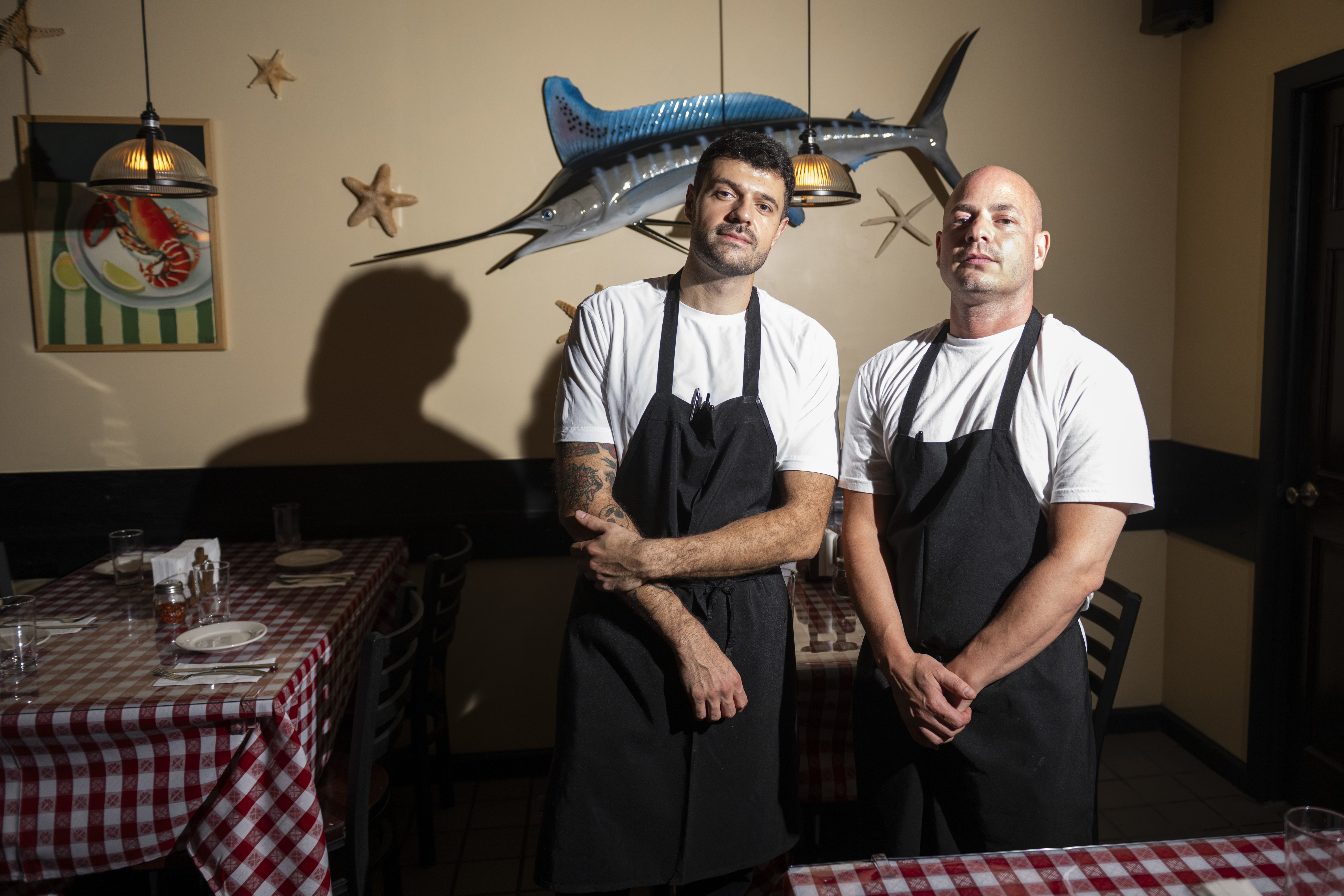
Bomb Bomb Bar owner Joey Baldino (right) with chef de cuisine Max Hachey in the dining room.Allie Ippolito / For The Inquirer
That assessment echoes Inquirer critic Craig LaBan’s February review, in which he called Baldino “Italian South Philly’s culinary preservationist-in-chief” and praised him for retaining Bomb Bomb’s essential character while elevating its seafood cooking and drinks.
Bomb Bomb’s rear dining room offers a $65 fixed-price menu, while the front bar is more casual. LaBan particularly admired the mussels fra diavolo — among the best versions he had eaten — along with the lobster francese, stuffed calamari, crab cakes, and black-ink spaghetti. Inquirer staffers later singled out Bomb Bomb’s crab cake and lobster shells among their best dishes of the week.
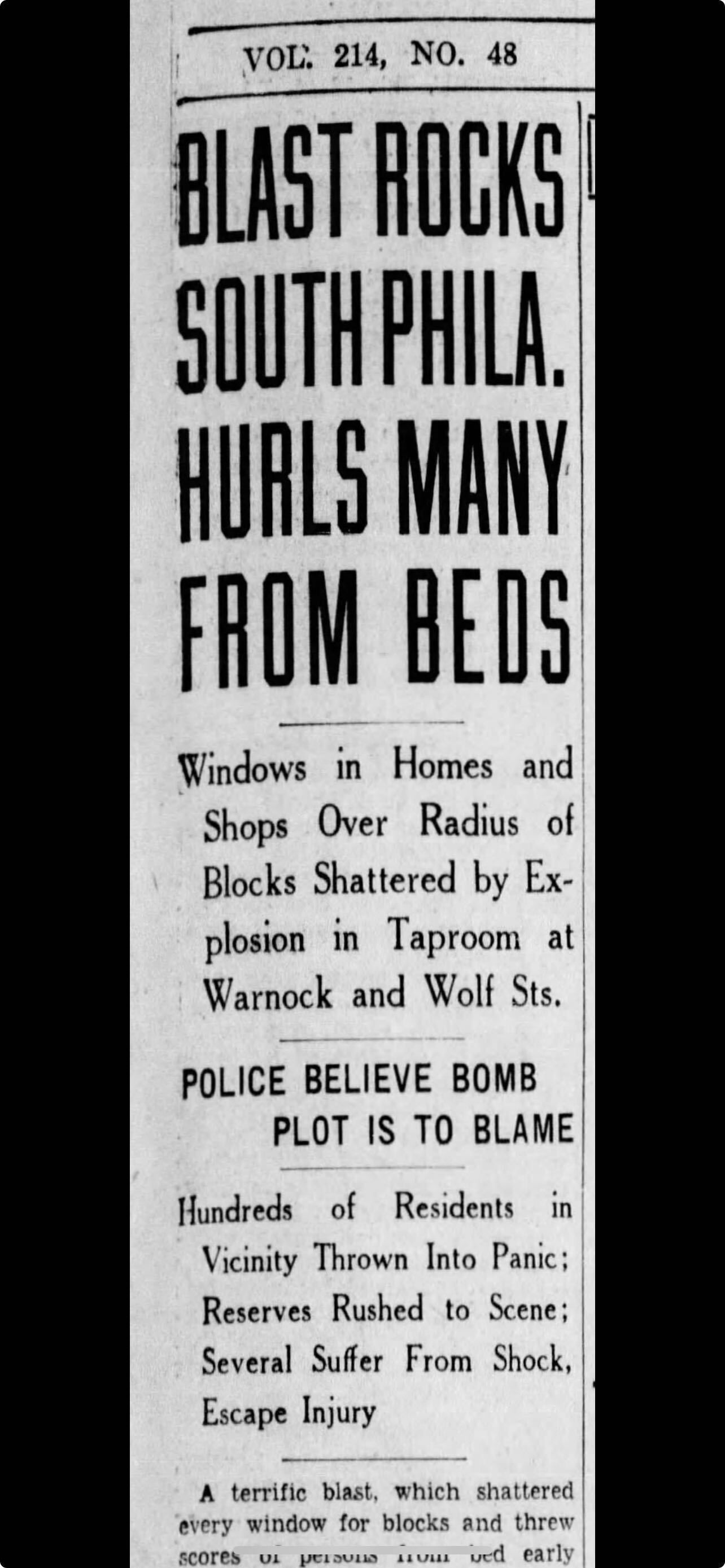
The acclaim adds another chapter to a South Philly institution with an unusually colorful back story. As The Inquirer reported in 2024, it dates from 1936, when a chef left his job at a South Philadelphia bar and grill to work at Bob’s, a new bar at 1026 Wolf St. His former boss ordered him to return. When the chef refused, Bob’s was firebombed in the middle of the night. No one was injured, but the blast shattered windows and “rocked houses to their foundations,” as a news article reported.
The Inquirer’s front-page story on Feb. 17, 1936, of a firebombing on the future site of Bomb Bomb Bar.Inquirer archives
When the chef rebuffed his former boss again, a second bomb went off. This time, according to lore, the chef returned to his old job.
By the time Frank Barbato Sr. bought Bob’s in 1951, everybody just called it the Bomb Bomb. Barbato began a 73-year family run built around seafood and red-gravy dishes and, later, barbecue, which was added to help the restaurant stand out. His son Frank Jr. and daughter-in-law, Deb, eventually took over.
The couple retired in late 2024, and Baldino bought the business in early 2025. He reopened it that October after a deliberately restrained renovation.
Reached by text Tuesday, Baldino called the Times recognition a “huge honor” and praised his staff, including chef de cuisine Max Hachey and manager Jack Kearney.
“We may have been blown up twice but we’re still cranking out some great food,” he wrote, adding two bomb emojis.
Bomb Bomb Bar at Warnock and Wolf Streets in South Philadelphia.Allie Ippolito / For The Inquirer
After more than a decade as a must-visit eatery for Mafia aficionados in South Jersey, Collingswood’s Kitchen Consigliere has run into some financial troubles.
“Like a lot of small businesses, we’ve gone through some very difficult financial periods,” Lutz said in a statement posted to social media Wednesday. “I made decisions along the way to keep our staff working, pay our vendors, keep the lights and gas on, and keep this restaurant operating.”
“We fell behind on certain obligations, including taxes owed to the State of New Jersey and I take full responsibility for that. We are addressing those obligations and have been working through a payment plan,” Lutz said, before emphasizing that the restaurant is operating as usual and all gift cards will be honored.
“The food, the recipes and the experience people have come to know and love are not changing one bit,” he said. “For me, this restaurant has always been more than the food. … It’s about the people who work here and the customers we love to serve — who have supported us over the number of years.”
Lutz first opened Kitchen Consigliere as an 11-table cafe in 2010, but it soon outgrew its original location on Powell Lane. Boosted by an online crowdfunding campaign, he was eventually able to expand to the restaurant’s current home at 700 Haddon Ave. in 2013.
Lutz’s culinary career began in earnest following a seven-year stint in prison on various charges related to organized crime.
When embarking on his second act, Lutz did not shy away from his criminal past — a consigliere is a trusted adviser or right-hand man to Mafia leadership, and the restaurant’s signage is styled to resemble the font used with The Godfather trilogy.
Now, Kitchen Consigliere Cafe LLC’s estimated assets total less than $50,000 while the company owes up to $500,000 to dozens of creditors, according to the bankruptcy filing.
The company’s largest outstanding debt, $117,663.73, is owed to S&M Provisions Inc., a West Philadelphia-based food and deli supply company.
Kitchen Consigliere is disputing the next two largest creditor claims listed in the filing: $102,000 owed to New Jersey’s taxation division and $58,503 owed to regional utility service provider PSE&G.
The next hearing in the case is a meeting of the creditors on Oct. 5 at 10:30 a.m., according to the court docket.
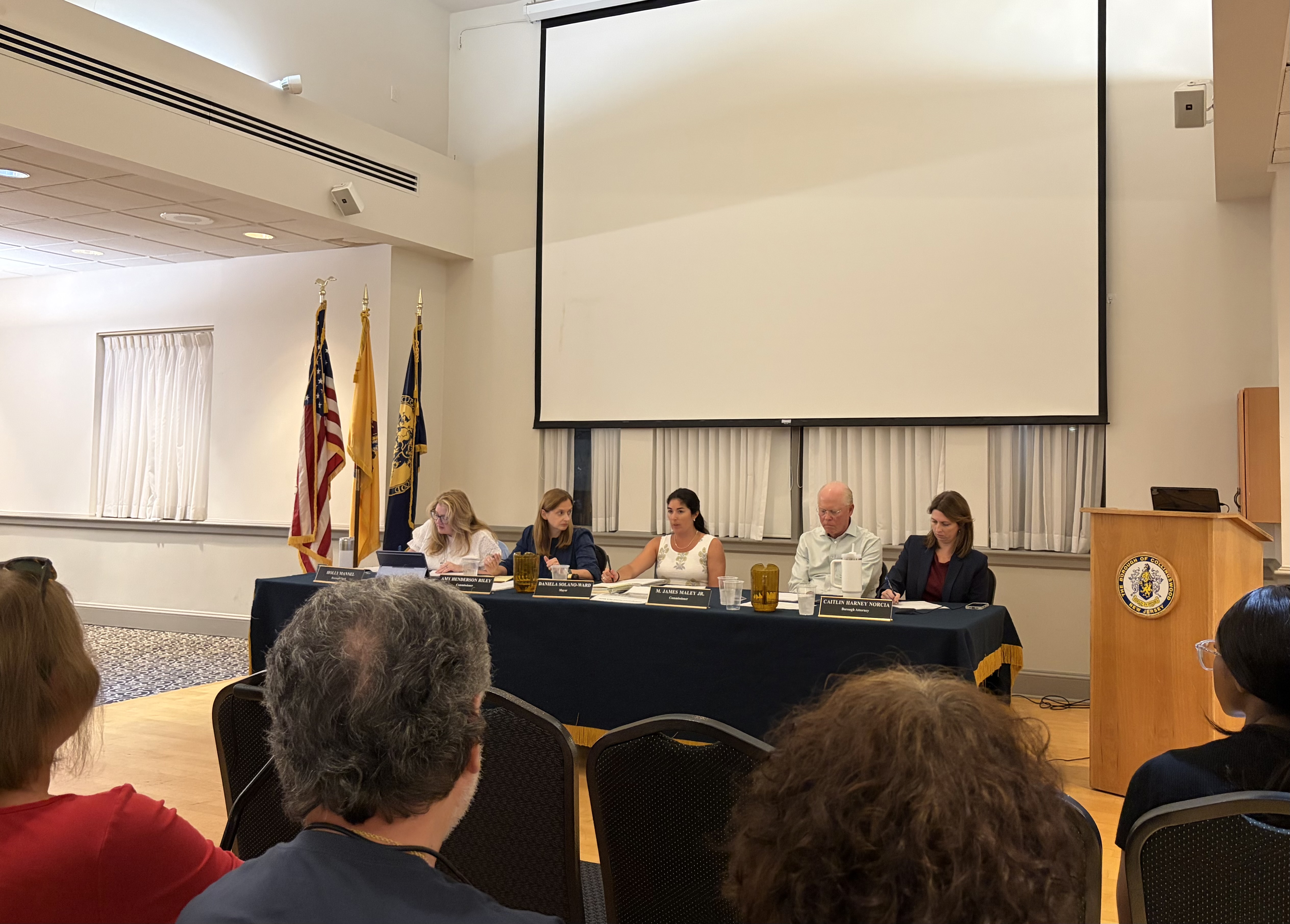
During their monthly meeting Tuesday, Collingswood’s three commissioners introduced a proposed amendment that would undo the ban on fowl passed back in 2008. Both Mayor Daniela Solano-Ward and Commissioner Amy Henderson Riley, elected in May, expressed support.
Solano-Ward said 19 other Camden County towns have allowed backyard hens with little issue. With their support, the ordinance will move forward for a vote next month.
“We don’t see any data or reason to stand in the way of it any longer,” Solano-Ward said.
Commissioner Jim Maley, a former mayor of Collingswood, long oversaw the borough’s previous fights for backyard chickens and helped pass the original 2008 ban. On Tuesday, Maley voted against moving the ordinance forward.
“No, I’m gonna go ‘no,’” Maley said. “The reason is because I believe that a change like this in our borough, there should be a requirement within the ordinance that there’s notification provided to neighbors.”
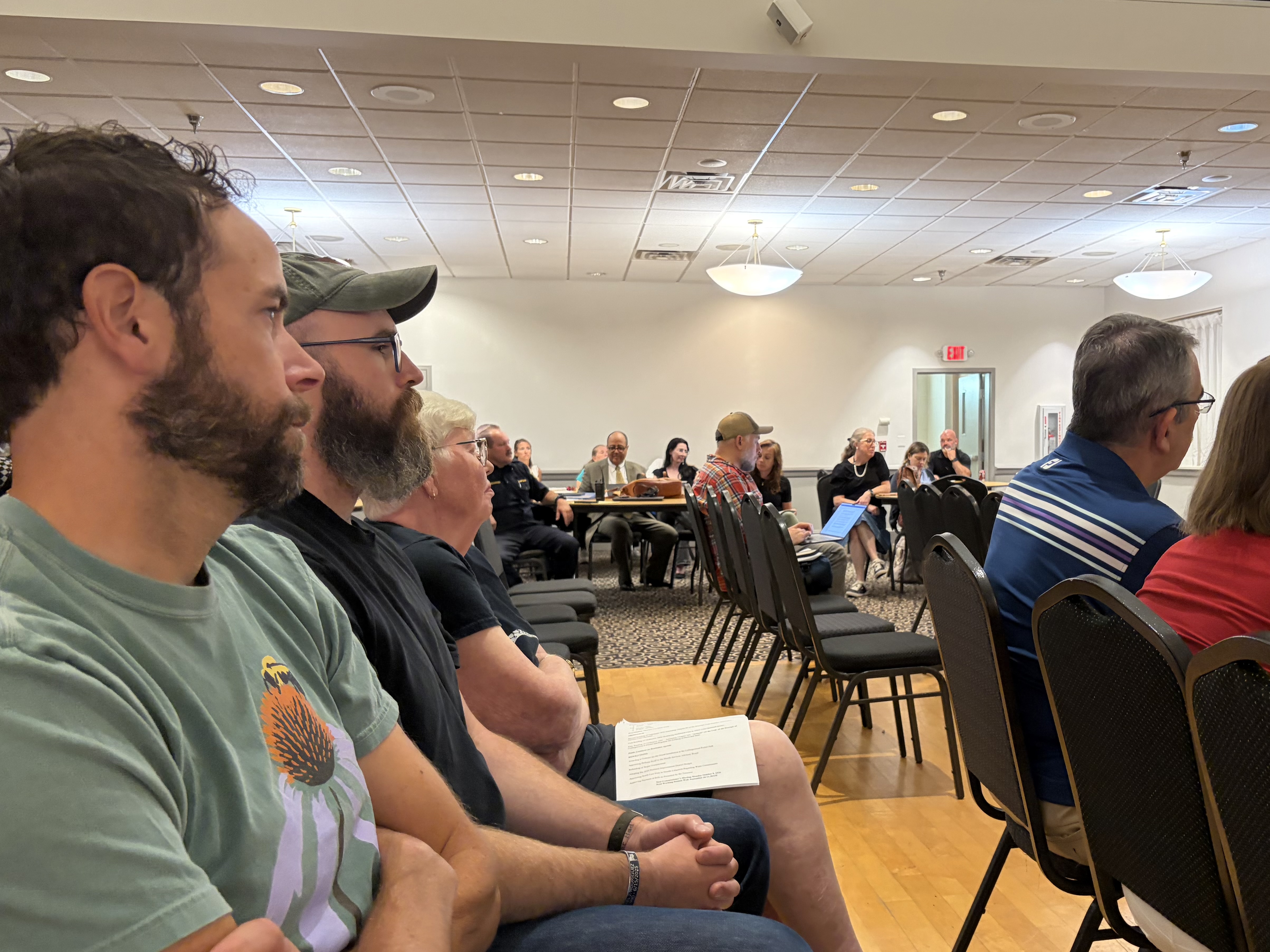
Collingswood Borough officials discuss ordinances at a monthly commissioners meeting on Tuesday, Sept. 8, 2026, at the Collingswood Senior Community Center.Sarah Nicell
The ordinance, like most other backyard chicken codes in the county, does not require notice to neighbors. But there are plenty of other rules, including taking an hours-long online course and undergoing inspections.
Collingswood could distribute only 30 total backyard chicken licenses at a time (among the borough’s estimated 6,500 households), and no roosters would be permitted. The number of hens allowed on a given property would depend on its size — a lot of fewer than 4,000 square feet could not have any hens, and a lot of 9,000 square feet or more would be capped at 12 hens.
The proposal also sets requirements for the coop’s structure and its distance from other property lines, bans the sale of eggs and the slaughter of chickens, and would create a resident-led Backyard Hen Advisory Board to monitor complaints and enforce rules. Violations could come with a fine of up to $1,250 or up to 90 days in prison.
Henderson Riley, who took the three-hour backyard chicken course to test the waters, said the ordinance does not make it easy to get hens.
“It required me to pay attention,” Henderson Riley said. “I didn’t get 100%.”
A few attendees spoke up with concerns about the pitched program, but worries about the chickens’ impact on health and neighboring homes were mostly addressed by conditions set in the ordinance.
Larry DiGiovanni, a Collingswood resident, asked the commissioners about oversight of potential chicken licensees and how bird droppings could create an unsafe environment for community members.
“I’ve known people who have done this, and it is kind of a daunting task because it’s a lot to take care of,” DiGiovanni said. “And sometimes, you can get a little bit out of control.”
Larry DiGiovanni, a Collingswood resident, speaks on backyard hens at a Collingswood commissioners meeting on Tuesday, Sept. 8, 2026, at the Collingswood Senior Community Center.Sarah Nicell
Graham Patterson, 35, sat quietly at the meeting Tuesday with two of his fellow Camden County chicken advocates, including the “Chicken Lady of South Jersey,” Gwenne Baile, who has fought for backyard hen ordinances across New Jersey since 2009.
When he moved to Collingswood in 2023, Patterson, a software engineer, wanted to start a chicken coop to give his two children the chance to take up more responsibility and get a closer look at the food they eat. If the proposal passes in October, Patterson will become the chairperson of the Backyard Hen Advisory Board.
Patterson said he does not think the program should require notice to neighbors, since residents would not have to bypass zoning rules to have a coop. His goal is to make sure the program makes the borough happy from the jump.
“If we bear a few bad eggs in the program, that’s not really advantageous for us,” Patterson said. “We want the program to be successful. We want to be compliant. We want neighbors to be completely indifferent to whether people have chickens on their property.”
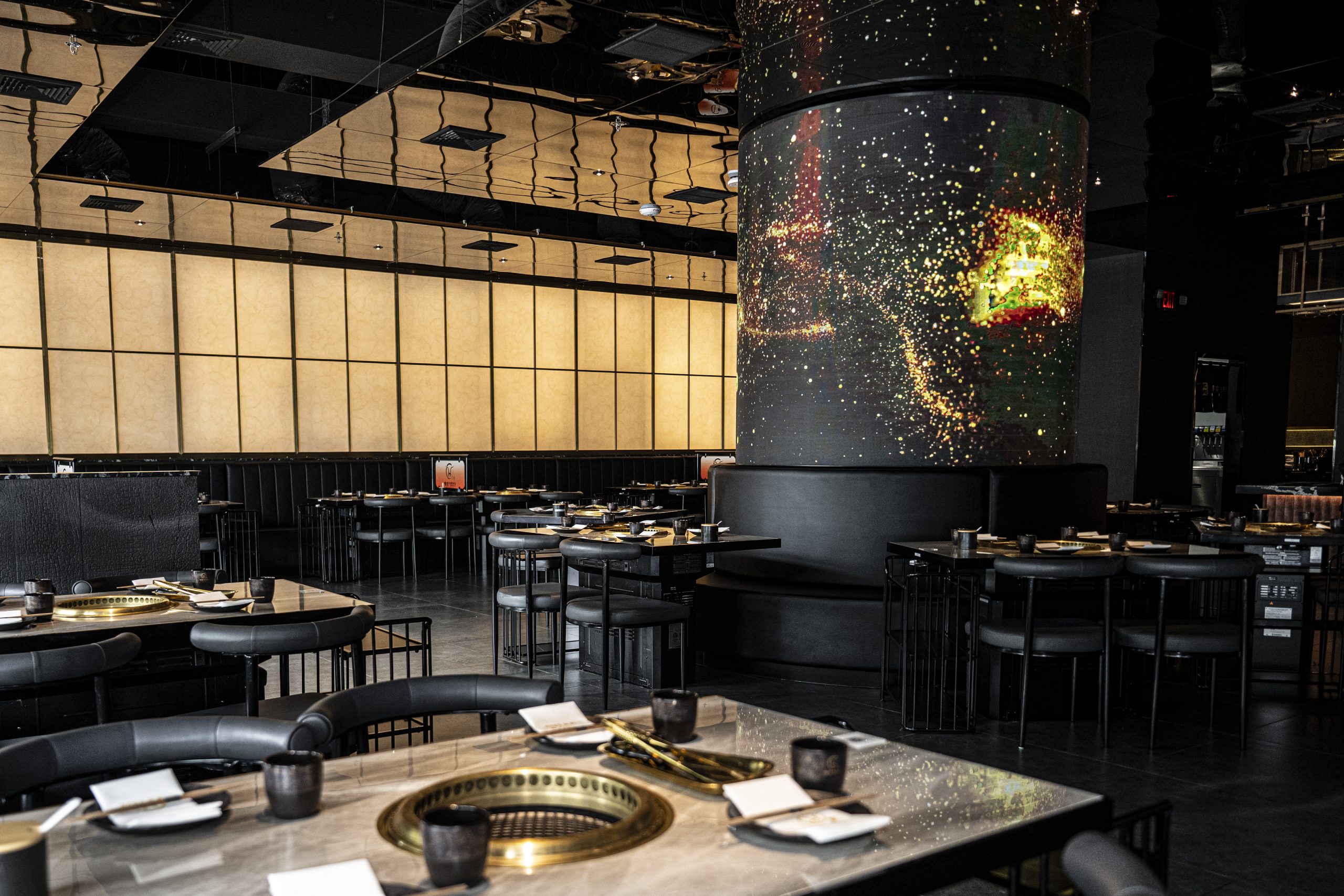
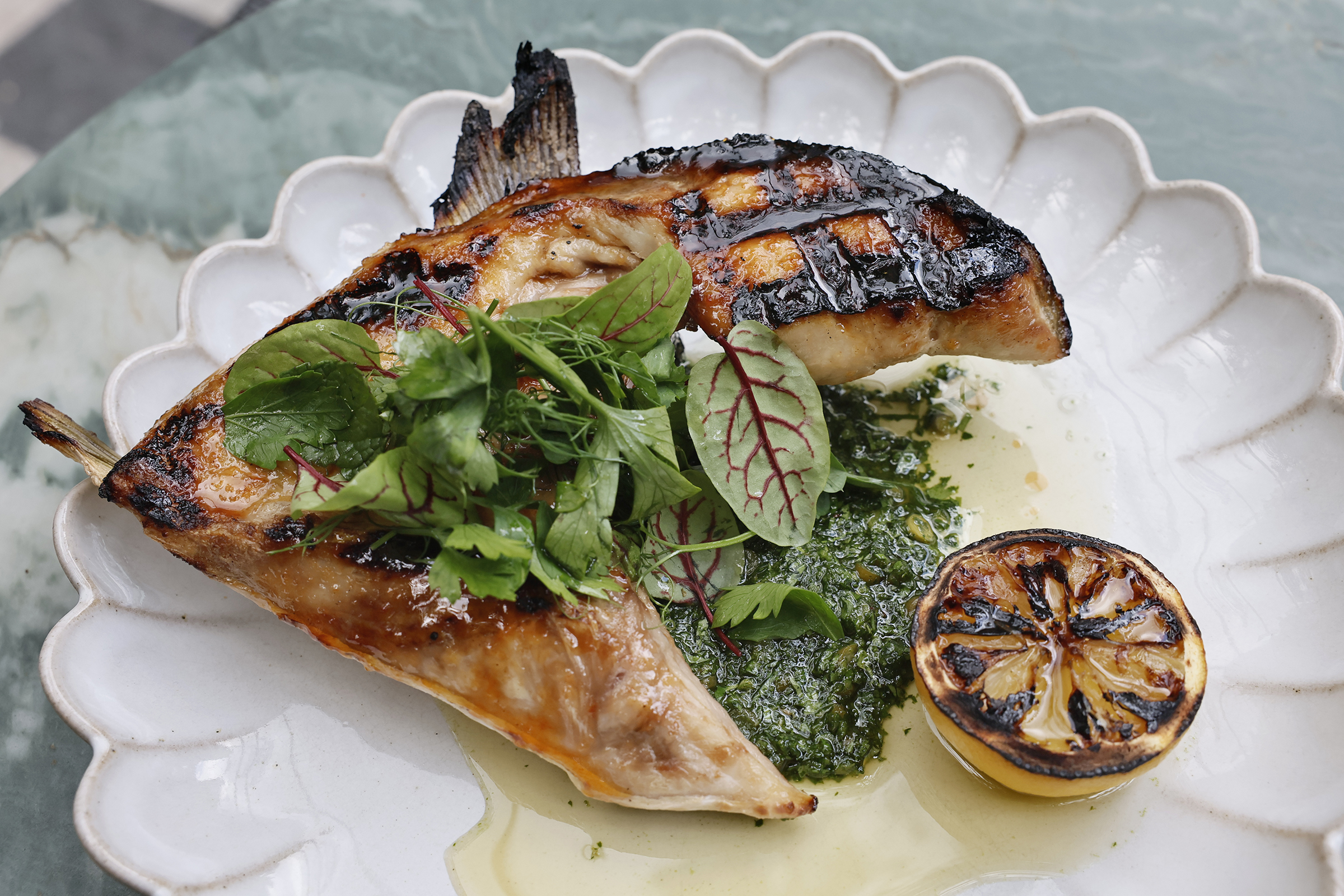
In our quest to keep you up to date on the restaurant scene, here are 12 spots that opened in the last few months. One example is Ogyu (shown above), which took over Ardmore’s former Iron Hill Brewing. It’s a grill-it-yourself Japanese steakhouse from the owner of the nearby Osushi.
You have to be in shape to lug around 100-pound salmon and tuna. Kiki Aranita found a group of sushi chefs who routinely lift weights. As they say in the maki game: no pain, no grain.
A couple didn’t want their local drinking spot to shut down for good. Sarah Nicell writes that they found a solution: They bought it.
The lines are long, and the branding is adorable. Kiki Aranita visits Kyo Matcha in Chinatown.
Pinot grigio is wildly popular for a good reason, and wine writer Marnie Old explains where the best ones come from.
Poe is expanding
Sandwichmeister N.A. Poe will expand the hours of his kitchen operation at Poison Heart next week while preparing to open a new Poe’s Sandwich Joint location by the end of the year.
Starting Tuesday, Poe’s will operate seven days a week out of Poison Heart, 931 Spring Garden St., where he’s run the cocktail bar’s kitchen since last September. Daytime service will be pickup, takeout, and delivery only; Poison Heart itself will not open for daytime bar or dine-in service.
Poe, the nom de plume of Richard Tamaccio Jr., is not disclosing the new joint’s location or opening date. “We look forward to the freedom to do things our way without interference or apologies,” he said.
The move follows Poe’s split with Human Robot Brewing Co., where he had operated since 2019. His last day at Human Robot’s Kensington location is Thursday. Cantina La Martina will take over Human Robot’s kitchens at both Kensington and Brewerytown. Poe also parted company with the Monto, a new Old City bar.
At Poison Heart, Poe’s will operate from 11 a.m. to 9 p.m. Sunday through Tuesday and 11 a.m. to 6 p.m. Wednesday through Saturday. Poison Heart’s regular Wednesday-through-Saturday evening service will continue, with Poe’s classics and specials added to the menu.
Two tasty bright spots of a staycation for Emily Bloch and her boyfriend included hamachi collar and poolside swordfish skewers. In other words: There’s great fish to be had in Fishtown.
Scoops
Old Friend, an upscale restaurant with a wood-fired grill and a chef with a Center City pedigree, is coming to the Main Line later this year.
Corte, on its way to the former East Market home of Mulherin’s Pizza, will have an Italian backbone, focusing on handmade pasta and cooking from the wood-fired oven. If that sounds like University City’s Corio, that’s because the same crew is behind it.
Big Charlie’s Saloon, the nationally known Kansas City Chiefs-theme bar in South Philadelphia that closed with the owner’s death last December, is under agreement of sale. The buyers’ plans don’t include NFL memorabilia.
Restaurant report
We’re in a New York state of mind:
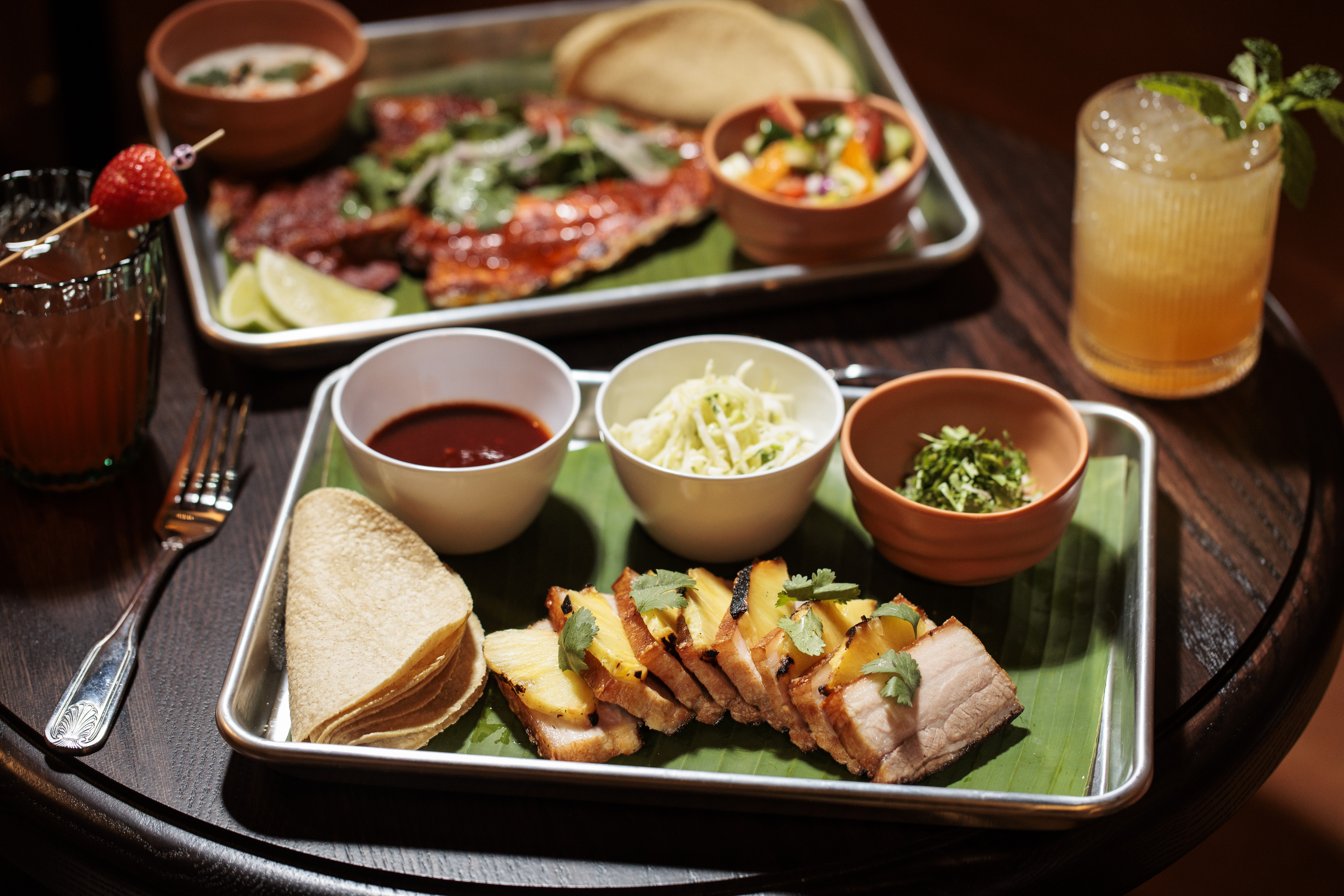
Dorade asado and pork belly al pastor (shown above) are two dishes offered at the new Mixteca, the Kensington offshoot of a Manhattan agave-focused coctelería from two James Beard Award-winning bartenders. Beatrice Forman heads to the former Martha for a look around.
Smash burgers and fries are the hook at 7th Street Burger, a fast-growing Manhattan-based burger chain that just opened the first of four Philadelphia-area locations in Fishtown. Kiki Aranita takes a bite.
Briefly noted
Jose Pistola’s 19-year run in Center City has ended. Its related bars in Fishtown and South Philadelphia are unaffected.
Mount Masala Himalayan Cuisine (300 White Horse Rd., Voorhees) will host a Nepal disaster-relief fundraiser on Thursday, Sept. 10 from 5 p.m. to closing under the auspices of South Jersey Food Scene. It’s a $25 buffet of Nepali-Himalayan dishes for dine-in or takeout, with all sales donated to the Nepalese government for flood relief.
🥂 New Jersey has permanently allowed the sale and delivery of to-go alcoholic beverages in towns that permit it.
Ask Mike anything
Did Philip Korshak ever open his store, Korshak Picnic Provisions? — Joan M.
Back in February, Phil Korshak, the poet-baker who left town in 2023 after closing his cult-favorite Korshak Bagels, thought he’d open his quirky corner store at 13th and Reed Streets by May. However, “you have no idea how many contractors, electricians, and plumbers go to Europe and Japan in the summertime,” he told me in June. This week, Korshak said the store — now called Korshak Parkside Provisions — is in the health department inspections queue and he’s expecting equipment deliveries. “Let’s call it October,” he told me.
📮 Have a question about food in Philly? Email your questions to me at mklein@inquirer.com for a chance to be featured in my newsletter.
By submitting your written, visual, and/or audio contributions, you agree to The Inquirer’s Terms of Use, including the grant of rights in Section 10.
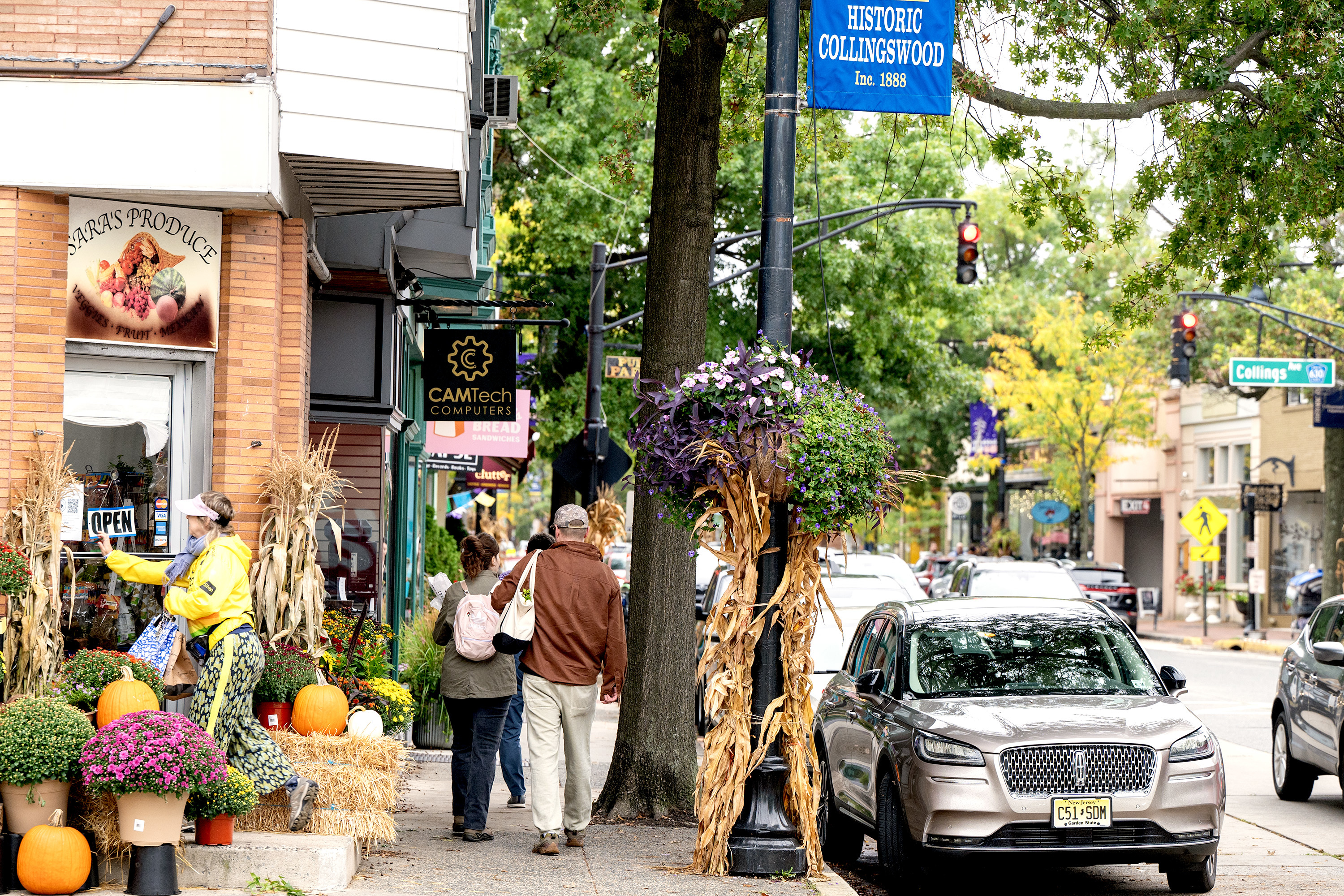
Legend has it that the continued ban of liquor sales in Collingswood, which dates back to 1873, was a stipulation when the park was dedicated in 1888. If alcohol sales were ever permitted, the story goes that the nearly 70-acre park would cease to be a public asset and would be sold to developers.
With Collingswood voters set to decide on the future of alcohol sales in November, questions about the potential impact on Knight Park have swirled on social media and reached borough officials.
“Knight’s Park [sic] existence depends on the longtime tradition of Collingswood being a dry town,” one person wrote on Facebook.
“I recall hearing that if Collingswood was no longer a ‘dry town’ they would lose Knight’s Park [sic] as that was part of the agreement when the family donated it. Anybody know if this is true?” another person asked.
So, is there any truth to the rumor? No, according to officials.
“It’s an old wives tale,” borough administrator Cassandra Duffey said in an email. “There is no relationship between Knight Park and liquor licenses.”
Duffey, a 20-year resident of the borough, said she’s not sure of the rumor’s origin and that it predated her arrival in Collingswood.
“I’ve had to dispel this rumor every year I’ve been here,” she said.
The triangle-shaped park in the center of the borough was gifted by businessperson Edward C. Knight, in memory of his parents, according to the park’s website.
The park has been overseen by an independent seven-person board of trustees that works with the borough to coordinate and run local sports leagues and public events.
Bordered by Browning Road and Collings and Park Avenues, Knight Park boasts athletic fields, a walking and biking path, a playground, and a pond. Over the years, the park’s popular gazebo has become a local destination for weddings and other celebrations.
Like other public parks in Collingswood and across South Jersey, alcohol is not permitted — though that appears to be the only alcohol-related rule officially connected to the property.
The future of Knight Park has no connection to liquor sales in the borough, Collingswood officials emphasized.
“It’s a persistent rumor, but only that,” Duffey said.
Since the beginning of 2025, nearly a dozen bagel shops have opened or leased space in Philadelphia and its suburbs, bringing new locations from local operators as well as fast-growing out-of-town brands that see the region as fertile ground for expansion.
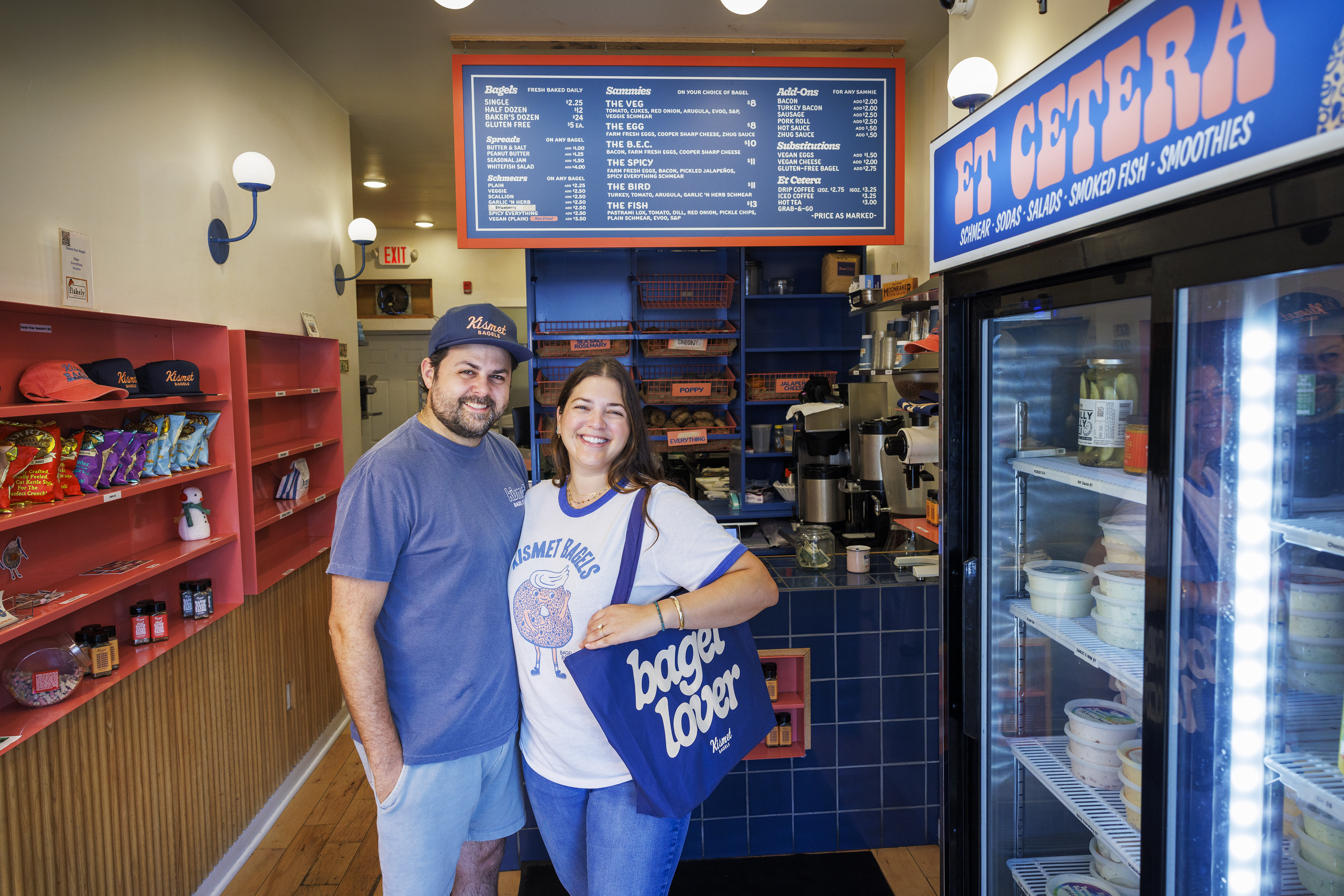
Jacob and Alexandra Cohen, owners of Kismet Bagels, at their location on Girard Avenue in Fishtown in 2024.Alejandro A. Alvarez / Staff Photographer
Kismet Bagels has opened its fourth and fifth shops, in Manayunk and Collingswood. Bart’s Bagels, which has shops in West Philadelphia and Bella Vista, recently expanded to the founders’ hometown of Bala Cynwyd. PopUp Bagels, the Connecticut-born chain that built a following on social media, made its local debut in Ardmore this spring and has signed a lease for a Rittenhouse shop as part of a larger regional expansion.
And Washington, D.C.-based Call Your Mother is preparing three soon-to-open Philadelphia locations — in Fishtown (due first), Rittenhouse, and Washington Square West — committing to all three before serving its first Philadelphia bagel.
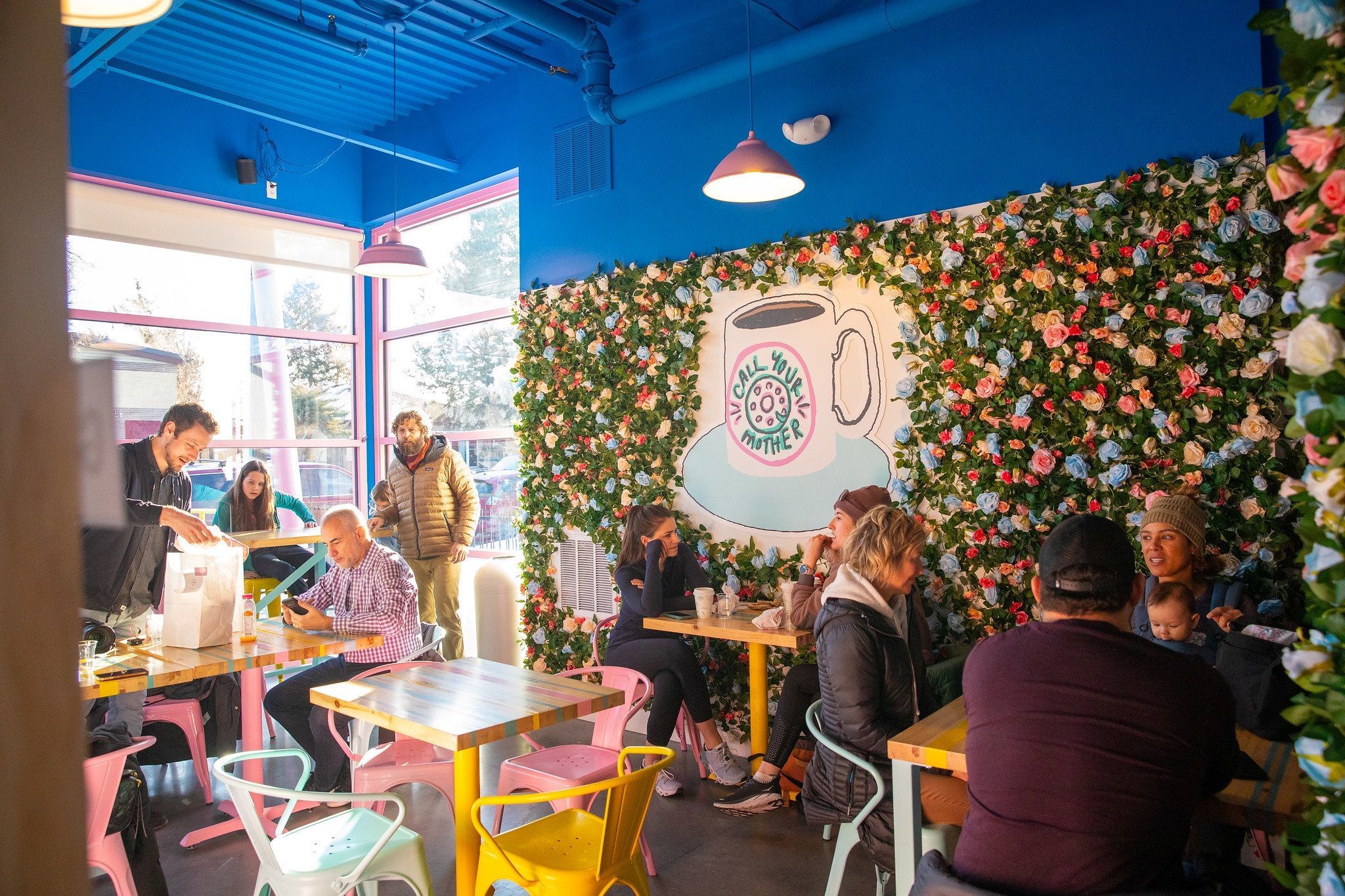
Call Your Mother bagel sandwich shops have a subtropical feel.Courtesy of Call Your Mother
That tally doesn’t include all of the stores that could follow. Florida-based Jeff’s Bagel Run has announced a 10-unit development agreement for Eastern and South Central Pennsylvania, while PopUp franchisee Brian Harrington is scouting additional territory in the Philadelphia suburbs.
All this raises an obvious question: How many bagels can Philadelphia eat?
Plenty, apparently — at least for now.
Jacob Cohen, who started Kismet six years ago with his wife, Alexandra, said the company has seen sales increase even as new bagel shops have entered the market. “I don’t think they’re just dividing the same customer base, because we’ve already had new shops open in Philadelphia and we haven’t seen a decrease in sales,” Cohen said.
But Cohen, who rapidly expanded Kismet before putting thebrakes on growth earlier this year, also sees a limit. “More is not always better,” he said. “I obviously don’t have a crystal ball, but I have a feeling that some of these private-equity bagel companies coming are going to learn that the hard way.”
Bagels are having a moment
Philadelphia is part of a much broader bagel boom. The U.S. bagel market generated an estimated $3.17 billion in revenue in 2025 and is projected to reach $4.51 billion by 2033, according to Grand View Research, a market-research firm. That represents annual growth of about 4.6%. Worldwide, the firm values the bagel market at $5.8 billion in 2025 and projects it will reach $8.6 billion by 2033.
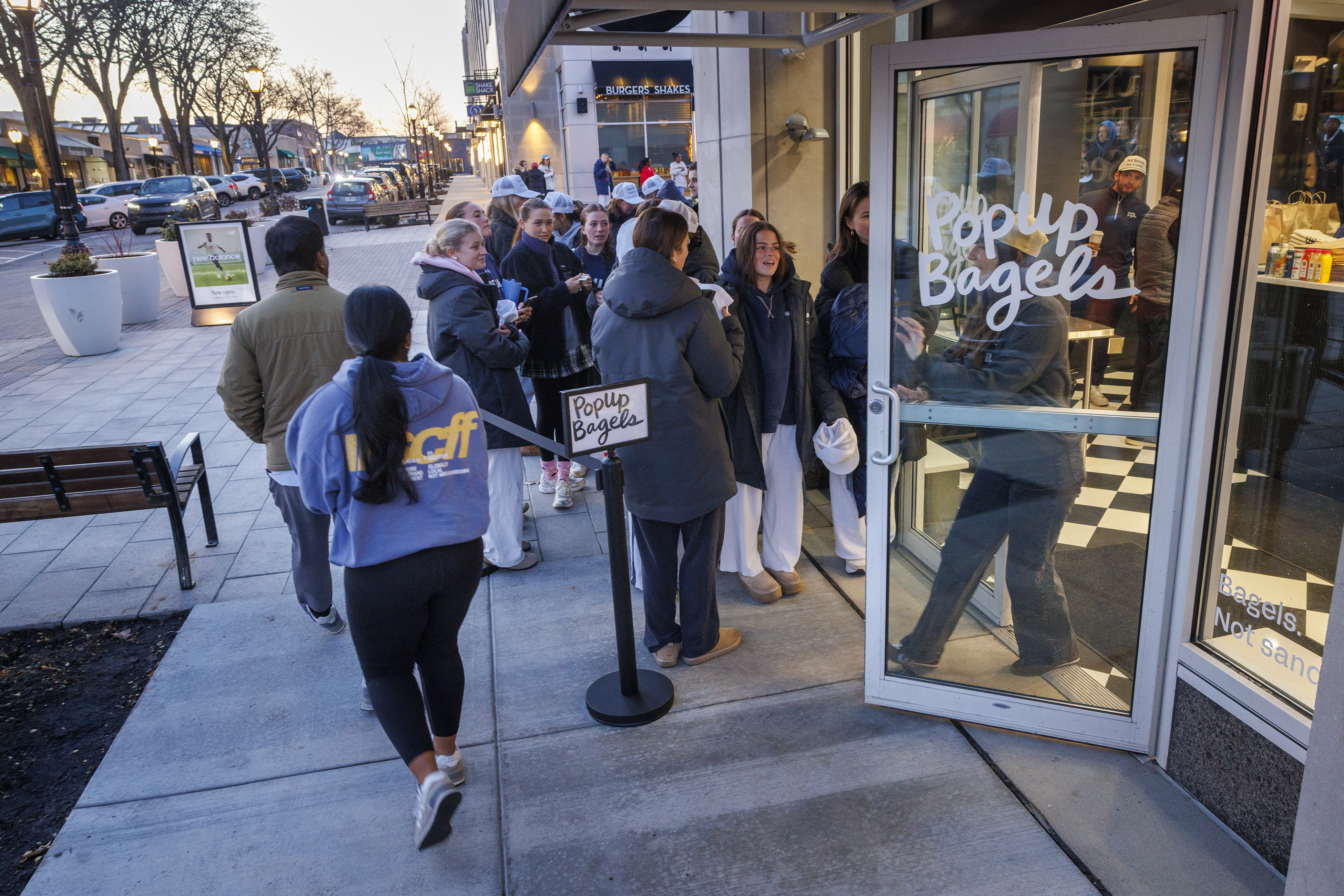
Customers lining up for the grand opening of PopUp Bagels in Ardmore in March.Alejandro A. Alvarez / Staff Photographer
Mike Kostyo, vice president of Menu Matters, a Vermont-based food-industry consulting firm, sees the current surge as the convergence of several trends rather than the sudden discovery of a new food. Artisan baked goods have been rising in popularity for years, he said, after the pandemic produced a generation of home bakers and pop-ups experimenting with sourdough and bagels. At the same time, café culture and the rise of the “little treat” have made consumers more willing to spend on premium versions of everyday foods.
“At its core, the bagel has always been a blank canvas for lots of flavors and toppings,” Kostyo said. “But now, instead of sesame seeds, you see them topped with Flamin’ Hot Cheetos.”
The traditional formula — bagels by the dozen, cream cheese, lox, and coffee — also has evolved into something closer to a breakfast-and-lunch fast-casual restaurant.
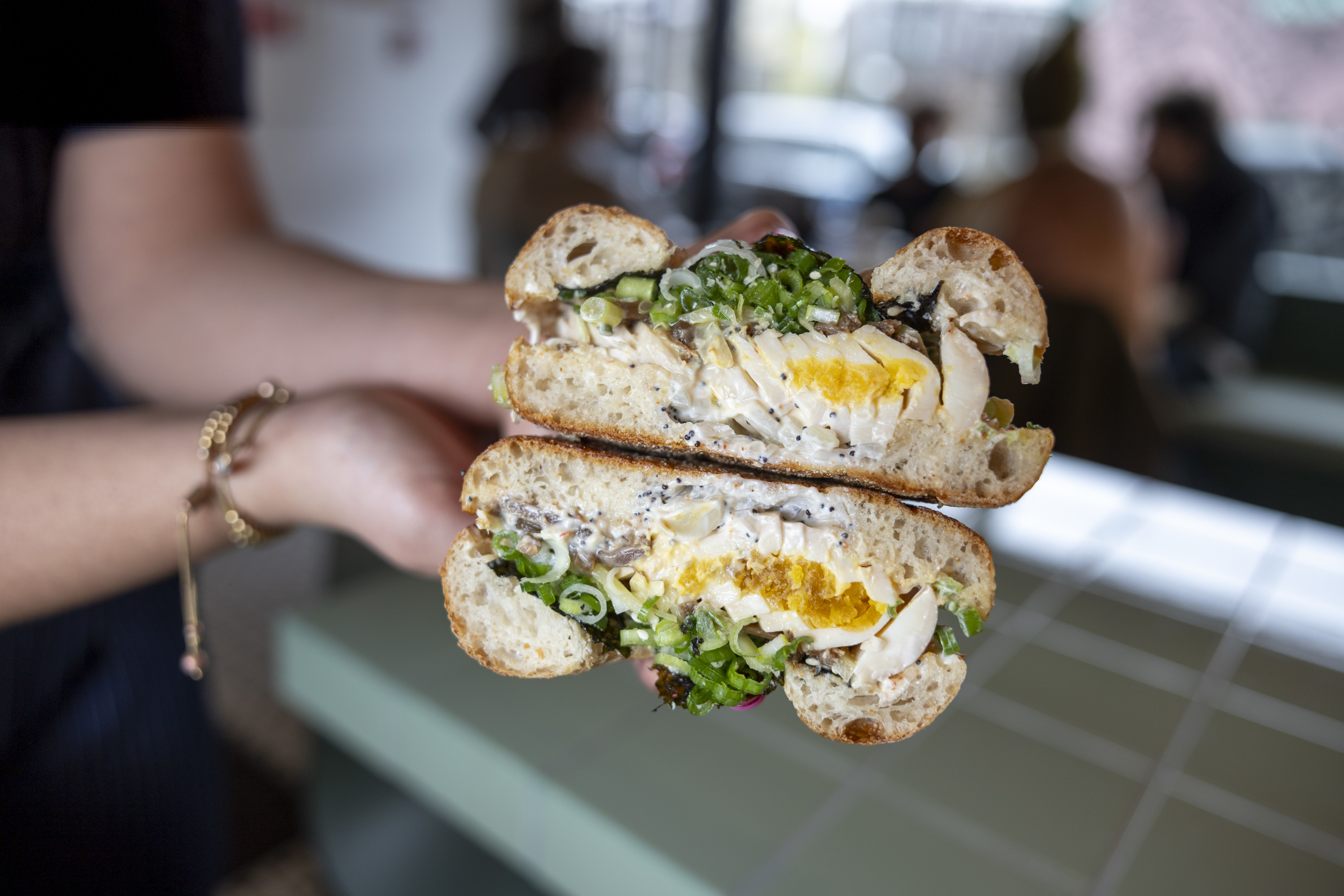
The Ramen Thing bagel sandwich from Cleo Bagels in West Philadelphia.Tyger Williams / Staff Photographer
Bagels become vehicles for egg sandwiches, smoked salmon, avocado, specialty cream cheeses, and elaborate combinations that can command substantially more than a plain bagel and schmear. And operators increasingly are looking beyond breakfast.
“The sandwich factor is so important,” Kostyo said. “You need something that you can sell across multiple occasions, not just to commuters in the morning.”
That versatility helps explain why investors have noticed.
“Investors are always looking for that next category that could blow up,” Kostyo said. “They want Call Your Mother or PopUp Bagels to be the next 7 Brew or Dutch Bros.”
From pandemic project to expansion vehicle
Some of the brands now expanding grew directly out of the pandemic.
The Cohens started Kismet as a pandemic project before turning it into a brick-and-mortar business and eventually growing to five locations — down from seven after the company shuttered a stand at Reading Terminal Market in 2025 and closed a shop in Ventnor earlier this year.
Jacob Cohen of Kismet Bagels holds an everything bagel.MONICA HERNDON / Staff Photographer
PopUp followed a similar trajectory. Founder Adam Goldberg began baking bagels at home during the pandemic and developed the idea into a business built around an unusually stripped-down concept: hot bagels and schmears, rather than the sprawling sandwich menus associated with many modern bagel shops.
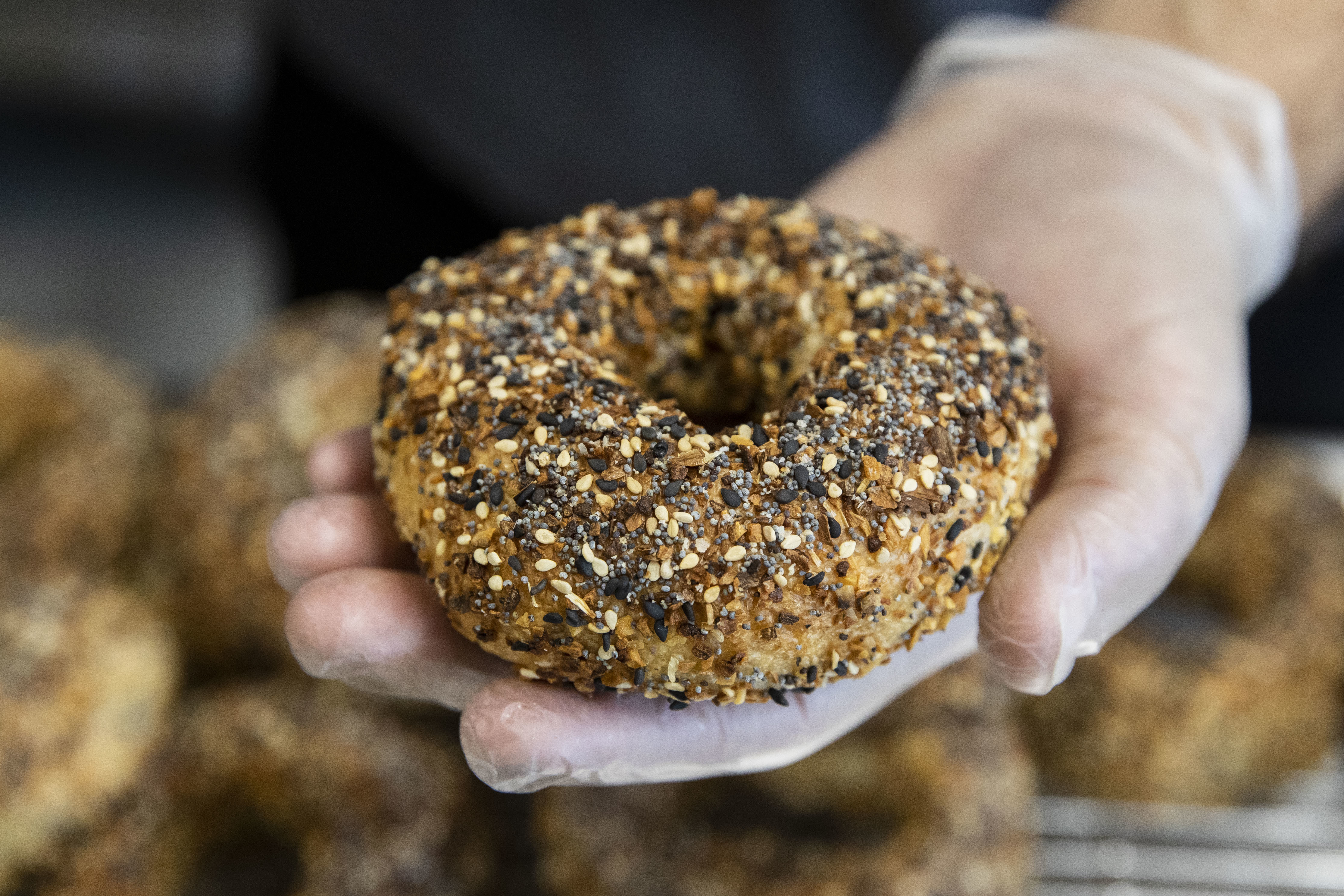
Customers are encouraged to “grip, rip, and dip,” tearing apart the bagels and dipping them into containers of cream cheese.
The company’s first Philadelphia-area shop opened in the spring in Suburban Square in Ardmore. Harrington, the franchisee developing PopUp in this region, said sales have remained strong even through the summer.
“We anticipated a little bit of pullback with a lot of our core [teen] clientele getting jobs in Avalon and down the Shore, and with vacations and things like that,” Harrington said. “But it’s been very, very steady.”
In more than 25 years in the restaurant business, Harrington said, he has typically seen sales soften in late June, July, and early August. “We’ve not seen that,” he said.
PopUp has signed for the former Starbucks at 1709 Chestnut St. in Rittenhouse, as reported by the Philadelphia Business Journal. Harrington said he has a deal for a location in Lawrence Township, N.J., near Princeton, that is awaiting its permits. Another South Jersey deal is close, he said, and he sees additional potential in Montgomery County.
Despite the influx of bagel shops, Harrington said he believes PopUp occupies a somewhat different niche.
“We’re not making sandwiches,” he said. “So far, people have found us and enjoyed the way that we do it, and it doesn’t preclude them from going and getting a bacon, egg, and cheese somewhere else.”
Three stores before the first bagel
Call Your Mother is making an even larger initial bet on Philadelphia. Founded in Washington in 2018 by Andrew Dana and his wife, chef Daniela Moreira, the self-described “Jew-ish” deli has expanded beyond the Washington area as New York investment firm Invus acquired a majority stake in the company in January 2025.
Call Your Mother has signed three Philadelphia leases: 1500 Frankford Ave. in Fishtown, the former Metropolitan Bakery at 262 S. 19th St. near Rittenhouse Square, and 12th and Sansom Streets in Washington Square West. Dana said the decision to enter Philadelphia was considerably less scientific than the three-store commitment might suggest.
“My mom grew up there, my grandparents lived there, and I’ve been there so much visiting my friends,” Dana said. “I’ve been in Fishtown on a Sunday when it’s popping, and I’ve been in Rittenhouse Square when it’s super-crowded on the weekend and the market’s going. A lot of it is just gut and feel.”
Dana does not believe Philadelphia lacks good bagels. On a recent trip, he tried Bart’s and came away impressed.
“I think a lot of people are doing a great product in Philadelphia,” he said, “but there’s always room for a different bagel shop. At least I hope so.”
Dana also rejects the idea that taking investment inevitably leads to runaway growth or declining quality.
He described Invus as “patient capital” and said the investment agreement carries no requirement that Call Your Mother open a prescribed number of stores.
“We’re going to do what we can do while still keeping the quality of the food and the service top-notch,” Dana said. “And if that ever slips, we have the ability to hit the pause button.”
Local operators dig in
For some Philadelphia bagel operators, however, the arrival of heavily financed brands is cause for skepticism.
Cohen, at Kismet, is particularly wary.
“I think it’s the rare exception when private equity marries itself to a food brand and they continue to do good things,” he said. “I’d like to keep private equity out of bagels.”
He stressed that Kismet remains owned solely by him and Alexandra, financed through bank loans rather than outside investors.
David Fine, owner of Schmear Bagel Parlor, is also watching the expansion. Fine entered the business in 2013 with his Schmear It food truck and has since acquired the shops owned by Philly Bagels, giving the company eight locations in Philadelphia.
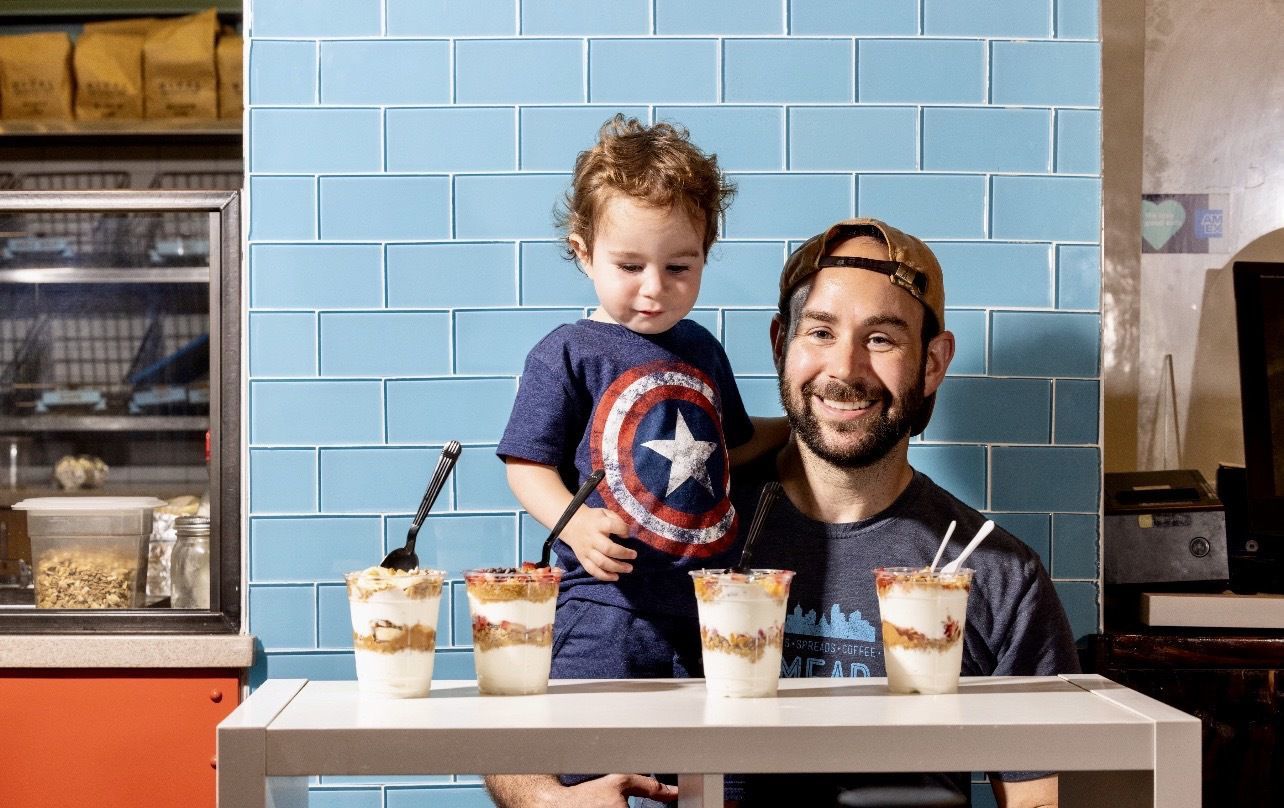
David Fine of Schmear with his son.Courtesy of David Fine
Fine said those stores have not appeared to steal business from one another.
He thinks part of the bagel’s appeal is almost mundane: It is familiar, relatively accessible, portable, and infinitely customizable.
“They’re comfort food at their very core, and they can really appeal to such a wide variety of customers,” he said.
He is less certain about the economics behind the rapid expansion of some competitors.
“The buildouts are expensive,” Fine said. “You have to be quite profitable for quite some time just to recoup that investment.”
Schmear is expanding, too, Fine said, renovating its original brick-and-mortar location at 36th and Market Streets. But he believes that being local gives the company an advantage as more national and regional shops arrive.
“There’s a keen allegiance to local brands,” Fine said.
Built for the feed
Bagels also have another quality particularly suited to the moment: They look good on a phone.
Kostyo points to the now-familiar image of a bagel sandwich sliced in half and held toward the camera, its fillings and schmear exposed.
“The visual factor is also so important in today’s social media age,” he said. “That picture … is the type of indulgent food that people go out of their way for today.”
The lines themselves become part of the marketing. A crowd outside a shop signals that the food is worth leaving home for, he said, while arguments over the proper density, crust, schmear, toppings, and even whether a respectable bagel can be made outside New York keep the category in the conversation.
“In the end, it’s all advertising and marketing,” Kostyo said.
But social media enthusiasm is fickle — witness the rise and fall of cookies and cupcakes — and Kostyo sees the flood of investment and expansion as carrying the seeds of an eventual shakeout.
“This is a pretty classic bubble where some of these brands that are doing a great job and really resonate with people will survive, but a lot will overexpand and shut down in the next few years,” he said.
Cohen, meanwhile, has decided not to test Kismet’s limits.
After years of opening shops, Kismet entered 2026 determined to improve what it already has rather than add more locations. The company is focusing on consistency, profitability, new products, employees, and customers, he said.
He is happy to see Philadelphia’s bagel culture growing and says he does not regard every new shop as a competitor. Years ago, Cohen recalled, Inquirer restaurant critic Craig LaBan told him that Philadelphia did not have enough bagels per capita.
“We might be starting to get there now,” Cohen said.
New Jersey Gov. Mikie Sherrill signed a bill Thursday that offers greater protections for reproductive and gender-affirming healthcare — both for patients and for providers in the state — by making it a crime to intervene against such care.
The new law strengthens existing reproductive healthcare protections and also broadens them to now include gender-affirming care. It is meant to cover residents as well as people traveling to the state.
“This is a very big deal. It’s amazing,” said Martha Madrigal, a transgender woman who leads the Collingswood chapter of PFLAG, a national advocacy group for the families of LGBTQ+ people.
She added that the law is a “solid declaration” that interfering with transgender rights “does not stand in New Jersey. We’re letting out an enormous sigh of relief today.”
The legislation expands New Jersey’s shield laws by expressly including gender-affirming care in the definition of “protected reproductive healthcare services.”
Essentially, the law creates a new crime for interfering with someone trying to access reproductive healthcare, such as an abortion, or gender-affirming care.
It is now a fourth-degree crime (a low-level felony like shoplifting, punishable by up to 18 months in prison) to injure, threaten, intimidate, or physically block patients or providers, or to damage property in an effort to interfere with such care.
The law would also protect providers from extradition to other states that have banned abortion or gender-affirming care for minors.
Sherrill said New Jersey is “standing firm in defense of reproductive freedoms — including the right to choose and the right to receive gender-affirming care.”
In comments after the signing, Sherrill referenced “attacks” and efforts to impose restrictions on access to abortion and gender-affirming healthcare by the Trump administration and Republican-led states.
She said the transgender community has been “relentlessly attacked” by the Trump administration.
“They’ve pulled tactics straight out of the ‘Red Scare’ playbook to restrict transgender people’s healthcare,” Sherrill contended.
Since returning to office last year, President Donald Trump has issued orders to block federal funding for gender-affirming care for people under 19, oust transgender military personnel, and prevent transgender people from using the gender they self-identify as on passports.
“We are not going to pay for our innocent children to undergo these barbaric surgeries and practices, which result in unthinkable and irreversible harm to their young bodies,” Trump said on Truth Social earlier this month after Medicaid ended reimbursement for hormone treatment and surgeries for minors.
Surgeries for minors are extremely rare. And fewer than 1 in 1,000 U.S. adolescents receive medication for gender-affirming care, according to a Harvard University study released last year.
State Sen. Teresa Ruiz (D., Essex), a chief sponsor of the bill and the Senate’s majority leader, said the bill makes New Jersey “a beacon of hope” in the nation.
“You can’t tell us what we can read on a library shelf but want to be up in our uterus in an exam room,” she said.
The law empowers patients and providers to take legal action against individuals who interfere with their access to or delivery of protected care.
And it protects healthcare providers from professional penalties or adverse actions involving their medical malpractice insurance for providing care that is legal in New Jersey.
Speaking for healthcare providers in New Jersey, Kristyn Brandi and Catherine Obando, doctors from Union who are preparing to open a clinic providing abortions and gender-affirming care, praised the law as an assurance that providers could deliver care without “risking their freedom or professional license” in the state.
“We are grateful to know that our patients and staff will be protected from criminalization and harassment,” Brandi and Obando said in a statement as founders of the Luminosas Wellness Collective.