Tag: Chester County

  • Measles cases in Pennsylvania top 200 as experts worry about back-to-school spread

    Measles cases in Pennsylvania top 200 as experts worry about back-to-school spread

    Before this year, many physicians at Lancaster General Hospital had only read about measles in textbooks.

    But now, as they treat pneumonia and brain swelling in patients infected with measles during Pennsylvania’s worst outbreak in three decades, they’re rapidly becoming experts on a disease once considered eradicated in the United States.

    “It feels surreal,” said physician Jeffrey Martin, the chair of the Department of Family and Community Medicine at Lancaster General Heath, which is affiliated with Penn Medicine. “You’re treating something you probably never saw before.”

    Pennsylvania’s measles outbreak continues to spread across the state, with 18 counties affected as of Monday and 232 cases reported this year, including more than two dozen in the Philadelphia region. Thirty-eight people have been hospitalized. In the last week alone, state health officials recorded 57 cases.

    At the center of the outbreak, Lancaster County has reported 133 measles cases this year — 125 of them since April. At Lancaster General, physicians are treating mostly adults, including pregnant women.

    About 35% of the state’s cases this year have been diagnosed in children, who are among the most vulnerable to serious complications. And many experts fear the risk of infection will rise when schools open beginning at the end of August.

    Lancaster County has among the lowest vaccination rates in the state, with just 87.6% of kindergartners and 83.3% of 7th graders vaccinated against measles, well below the 95% immunization threshold required to prevent community spread of a disease so contagious that up to 90% of unvaccinated people exposed will become ill.

    “I don’t want to be alarmist, but I don’t think we should be minimizing the risk,” said Lancaster County Commissioner Alice Yoder, a nurse who formerly worked as a Lancaster General administrator. “There will be a large number of children coming together every day, and measles is just extraordinarily contagious.”

    Back-to-school this year is “a very scary time,” she said.

    Cases outside Lancaster

    The outbreak increasingly poses a threat outside Lancaster, with several counties in central Pennsylvania reporting their first cases last week.

    Suburban Philadelphia’s Chester County, which borders Lancaster County to the east, has seen 22 cases of measles so far this year. And local cases are higher than reported, officials there say, adding that some residents with measles have refused to cooperate with the health department’s efforts to trace their contacts.

    Lancaster officials, too, say the outbreak has spread more widely than case counts indicate. “Every case we have, we know there’s another 10 or 20 behind it,” Yoder said.
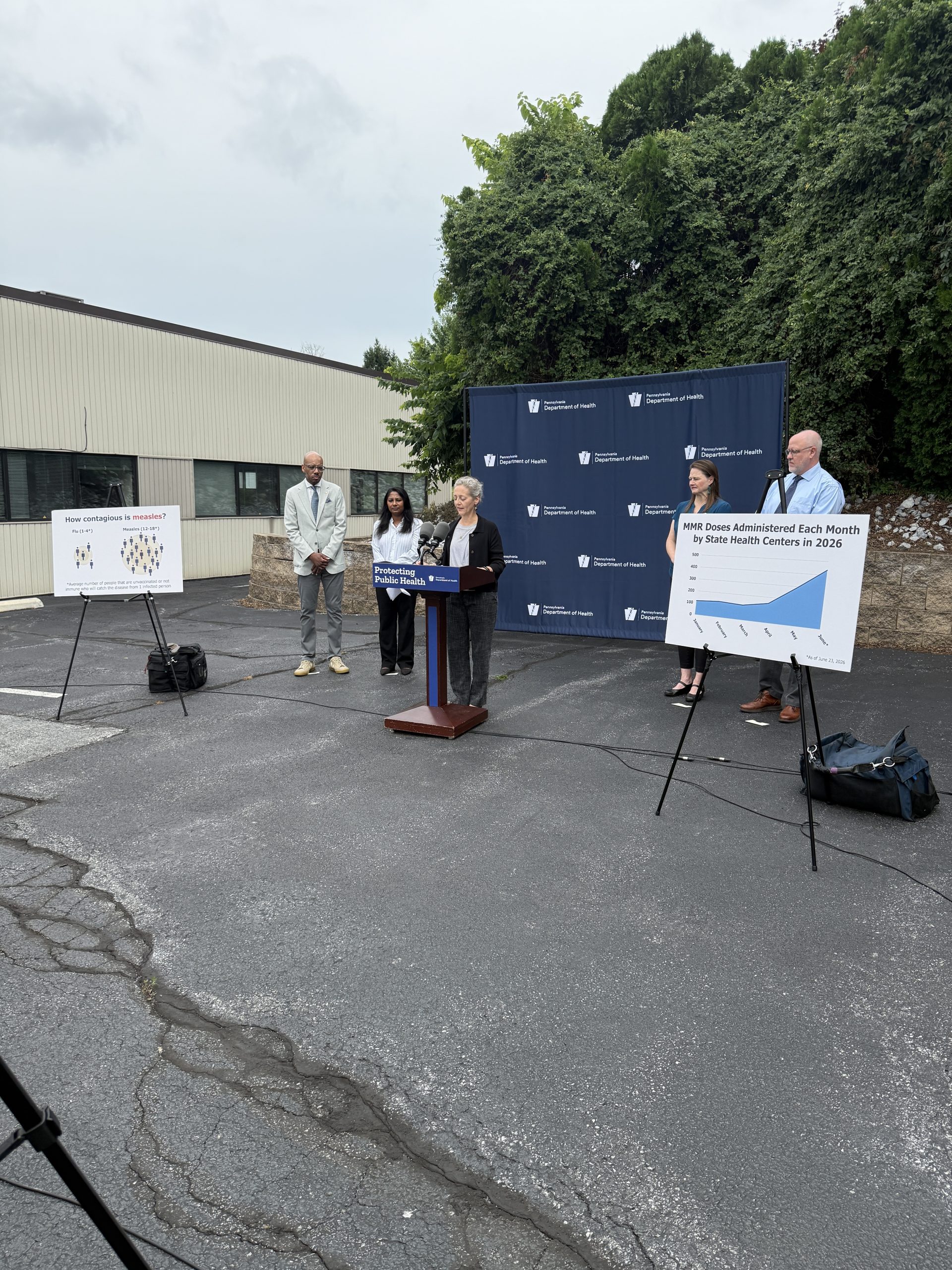
    Pennsylvania health secretary Debra Bogen speaks to the media at a press conference on the state’s measles response earlier this summer in Lancaster.

    New infections may also be coming from other places. Lehigh County reported its first two cases in two siblings last week, according to St. Luke’s University Health Network.

    The children, whose parents had opted against vaccinating them, had recently traveled internationally, St. Luke’s pediatrics chair Jennifer Janco said.

    St. Luke’s doctors first saw the children on video to avoid exposing other patients at a clinic and worked with state health department staff to test them for measles at home.

    “We don’t want someone with measles in a doctor’s office or urgent care waiting room,” Janco said.

    Eventually, one of the children was hospitalized at another area health system after becoming dehydrated, Janco said. “They became weak and sick to the point of dehydration — they couldn’t take enough fluids by mouth,” she said.

    Like Yoder, she is concerned about the threat to Pennsylvania children with the school year about to start.

    “The risk is real. This isn’t measles halfway across the country,” Janco said. “And measles doesn’t care about county lines.”

    ‘Do it for your neighbor’

    State officials for months have recommended accelerating the schedule for routine childhood measles vaccinations, giving infants their first measles, mumps, and rubella shot as early as six months.

    State health officials say their staff have administered more than 2,000 doses of the MMR vaccine this year, with more than 1,300 provided in June and July alone.

    At Lancaster General, Martin says he’s seen increased interest in vaccination from some parents who had previously refused MMR shots for their children.

    “There does seem to be a message that resonates here, and that is, if not for yourself, do it for your neighbor. Get the immunization to protect the most vulnerable,” he said.

    Still, he said, many county residents who are not connected to healthcare settings “vaguely hear there’s something going on with measles, but don’t fully understand we’re in an outbreak status.”

    And information about the measles from county government officials has been scarce.

    Yoder, a Democrat, said she has been unable to convince her fellow county commissioners, both Republicans, to publish more information about the outbreak and the importance of vaccination on the county website.

    Josh Parsons, one of the Republican commissioners, did not return a call for comment on the outbreak.
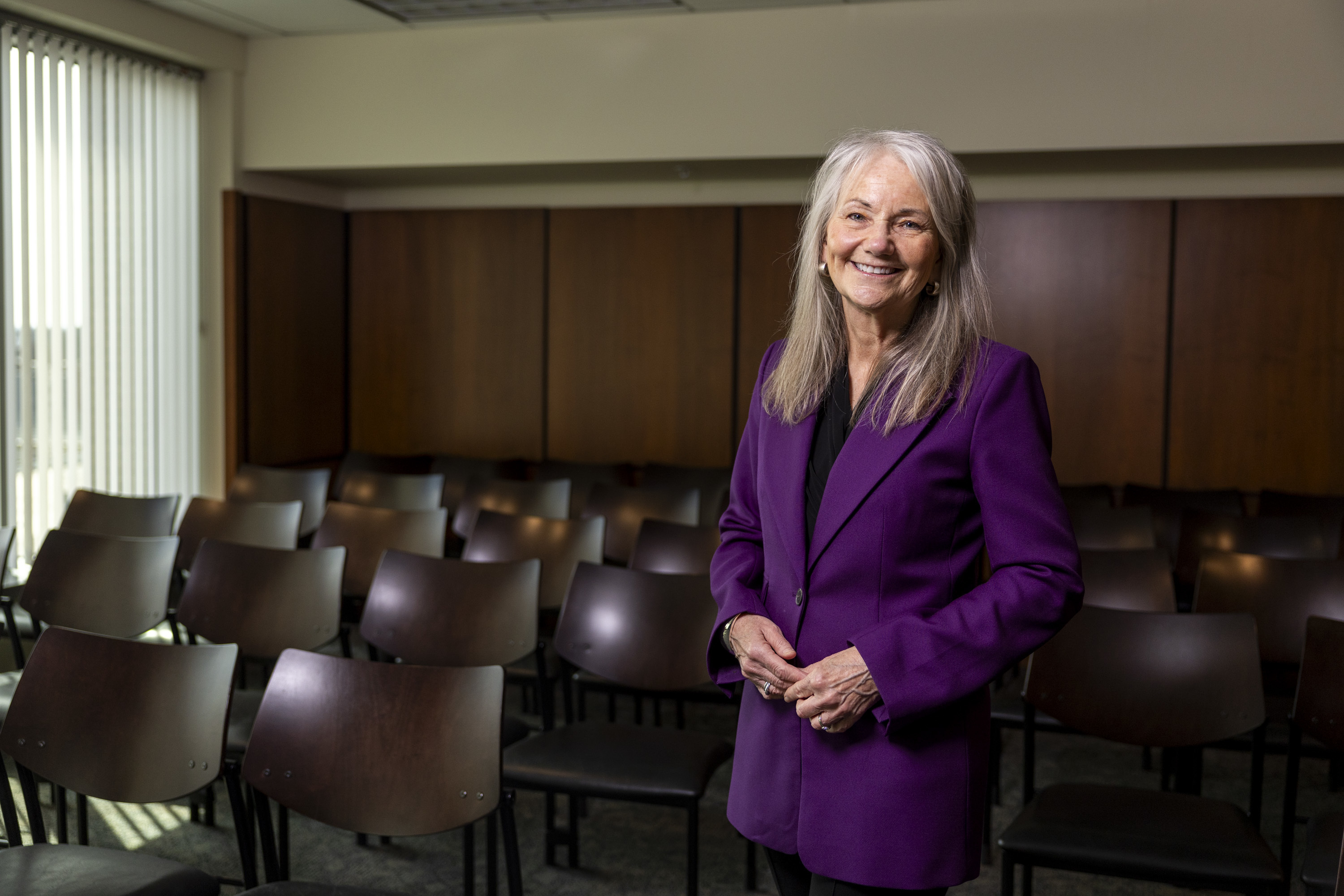
    Lancaster County Commissioner Alice Yoder has proposed forming a local health department to combat a growing measles outbreak in the area.Tyger Williams / Staff Photographer

    And the county health advisory council, which makes non-binding health recommendations for the county, did not discuss the outbreak at its meeting last month, said Martin, who serves on the council.

    State officials handling the outbreak have done “a fantastic job,” Martin said, but he believes stronger local health leadership could help combat the outbreak with a better understanding of the “complexity and diversity” of the county and its attitudes toward public health.

    Yoder says the county must do more to reach out to residents about the outbreak and has been advocating for Lancaster County to form a local health department.

    “The local government is typically a trusted place for people to go to. It would be so important and beneficial for us to come out stronger about the importance of vaccination,” Yoder said.

  • Jhoan Duran’s walkout, the Phillies pitch clock, and the scoreboard are sponsored. Why local companies invest in the ads.

    Jhoan Duran’s walkout, the Phillies pitch clock, and the scoreboard are sponsored. Why local companies invest in the ads.

    After Jhoan Duran was traded to the Phillies last summer, Robert Miller learned some fans were complaining that the closer’s “Durantula” walk-out wasn’t going to be shown on every broadcast.

    For Miller, managing partner at Wapner Newman law firm, it sparked an idea.

    He connected with NBC Sports Philadelphia and made his pitch: Wapner Newman could pay to sponsor the closer’s walk-out and get the firm’s branding on a viral moment. And fans at home would be able to experience Duran’s intro — complete with images of spiders crawling through fire on the outfield walls — during every home game.

    The lawyers figured “it’d be a fun thing for everybody that’s watching the game,” Miller recalled during a recent interview in his Center City office. And “we can help make this happen.”

    A deal was inked, with terms Miller declined to disclose, and for nearly a year, Wapner Newman has enjoyed greater name recognition.

    Potential clients sometimes mention the ads when they call the firm, Miller said, and occasionally, strangers on the street recognize him from the company’s midgame commercials. Miller said he is most heartened by the fact that more Philly fans now know about the personal-injury firm if they ever need legal help.

    Robert Miller, managing partner at Wapner Newman, appears in the law firm’s ads that run on NBC Sports Philadelphia during Phillies games.Courtesy Wapner Newman

    Brands “want moments of exclusivity, and that was the highest-profile opportunity,” said Bo Koelle, vice president of sales for NBCUniversal Local, which includes NBC Sports Philadelphia. “Everybody’s looking at when [Duran] is coming out” — and seeing Wapner Newman’s name on the screen next to him.

    The Phillies own 25% of NBC Sports Philadelphia, with NBC’s parent company, Comcast, owning the rest. But the Phillies and the regional sports network do not share all advertising partners.

    For dozens of local companies, advertising with the Phillies at Citizens Bank Park or with NBC Sports Philadelphia provides almost-unparalleled visibility in a rabid sports town like Philadelphia.

    Phillies fans arrive at Citizens Bank Park for opening day in March.Monica Herndon / Staff Photographer

    So how much does this visibility cost? Anywhere from $100,000 to several million dollars, according to executives from the Phillies and NBC Sports Philadelphia.

    That range includes advertising in the ballpark, on social media, or on TV, where hundreds of thousands of fans tune into each game. All Phillies sponsors with whom The Inquirer spoke declined to discuss how much they paid for their advertisements, citing the terms of their contracts.

    This year, in-stadium ad visibility was even higher because Philly hosted the All-Star Game, which drew more than 8.7 million viewers nationwide.

    The MLB All-Star Game at Citizens Bank Park drew 8.7 million viewers.

    But even in a normal year, the Phillies play many more home games than the city’s other pro sports teams.

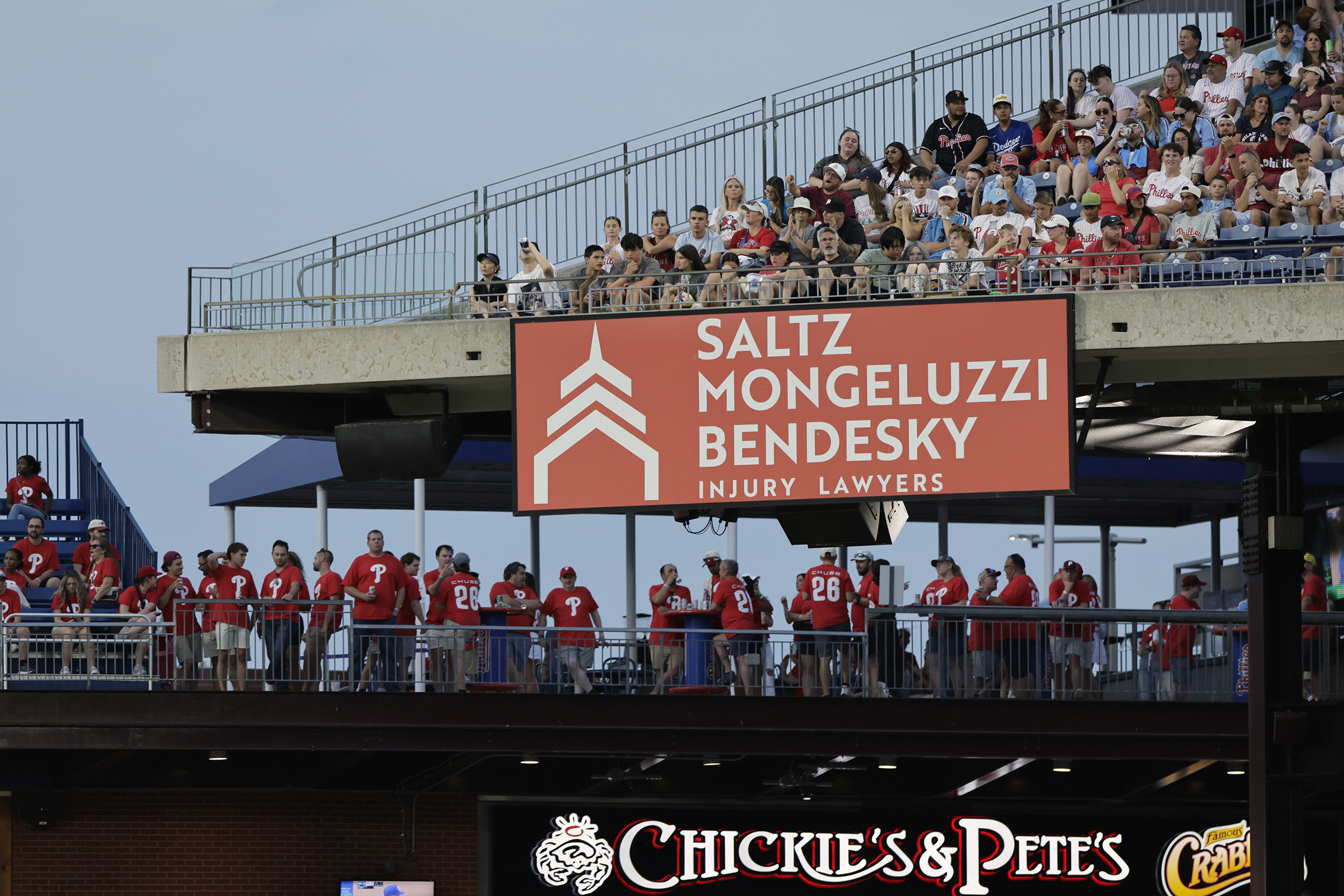
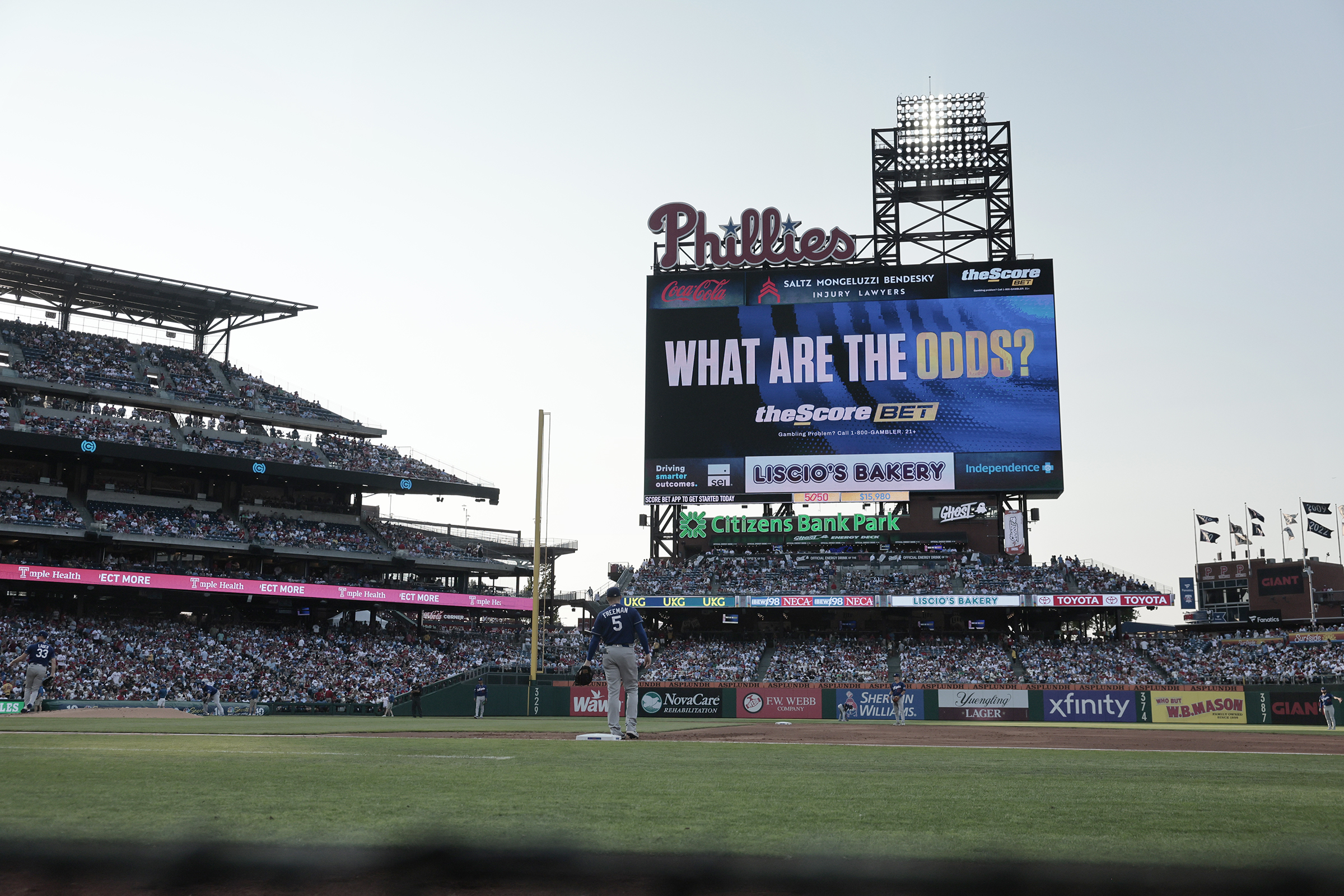
    “We’ve concentrated on the Phillies because they have 81 home games and for our in-park advertising we thought we’d rather be seen more frequently,” said Bob Mongeluzzi, founding partner at Saltz Mongeluzzi Bendesky, which has several stadium ads including at the top of the scoreboard.

    “I don’t think someone particularly chose us over any other lawyer just because we had an ad on the scoreboard,” Mongeluzzi said, “but it clearly reinforces our brand and keeps our name out there.”

    Another Saltz Mongeluzzi Bendesky ad is pictured in right field at a July game.Elizabeth Robertson / Staff Photographer

    Unique Phillies sponsorships drive revenue

    Each season, the Phillies have between 75 and 100 sponsors who advertise everywhere — the ballpark’s giant scoreboard, the outfield walls, the premium seating sections — according to Brian Fling, the Phillies’ vice president of corporate partnerships. He said ad sponsors serve as a major revenue driver, supporting player payroll and ballpark upgrades.

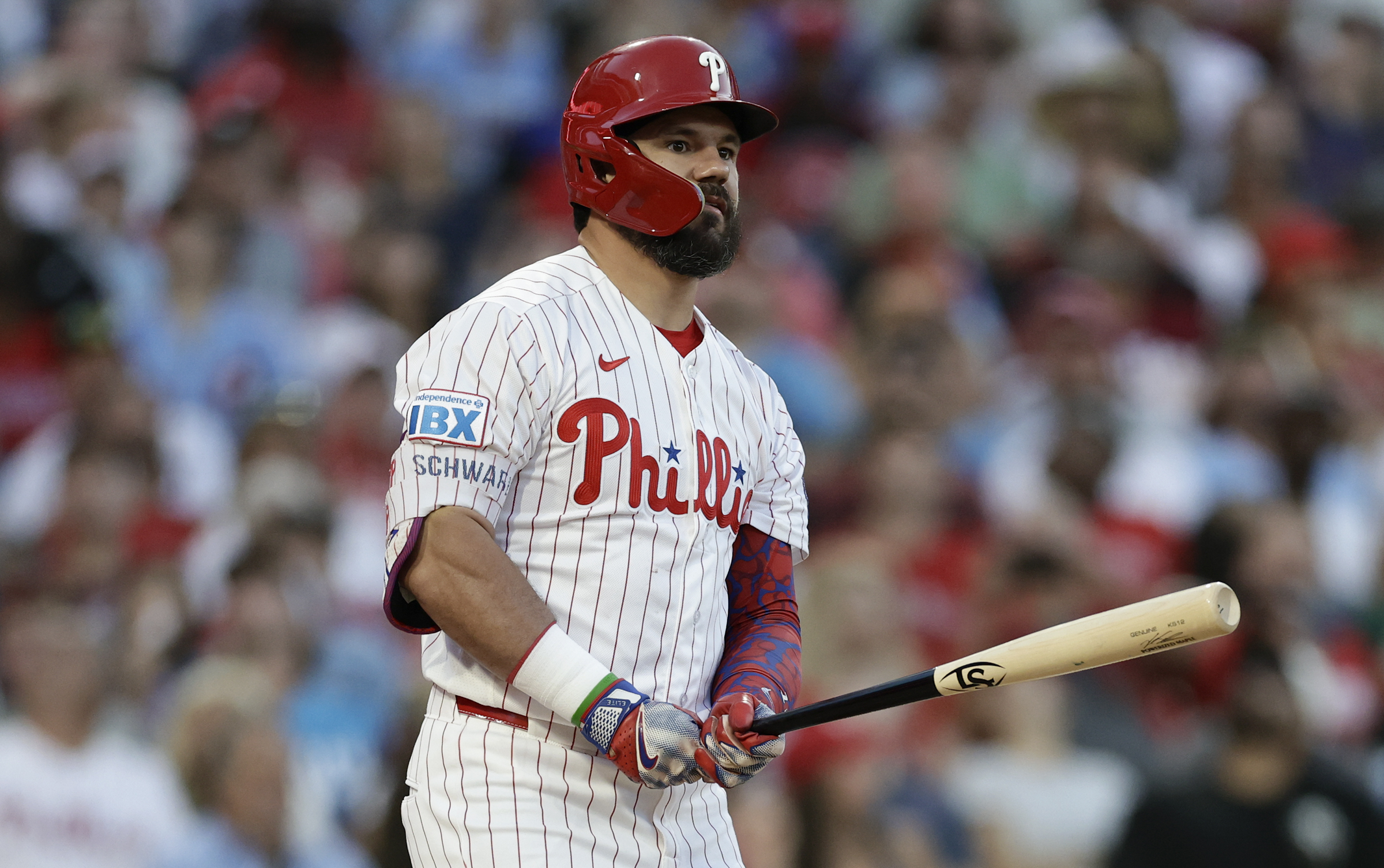
    “From Citizens [Bank] with their name on the building to Independence Blue Cross with their logo on the Phillies uniform, we work with a wide variety of companies looking to stand out in the Greater Philadelphia area,” Fling said in a statement.

    The blue Independence Blue Cross (IBX) sponsorship patch is seen on the arm of Kyle Schwarber during a June game.Yong Kim / Staff Photographer

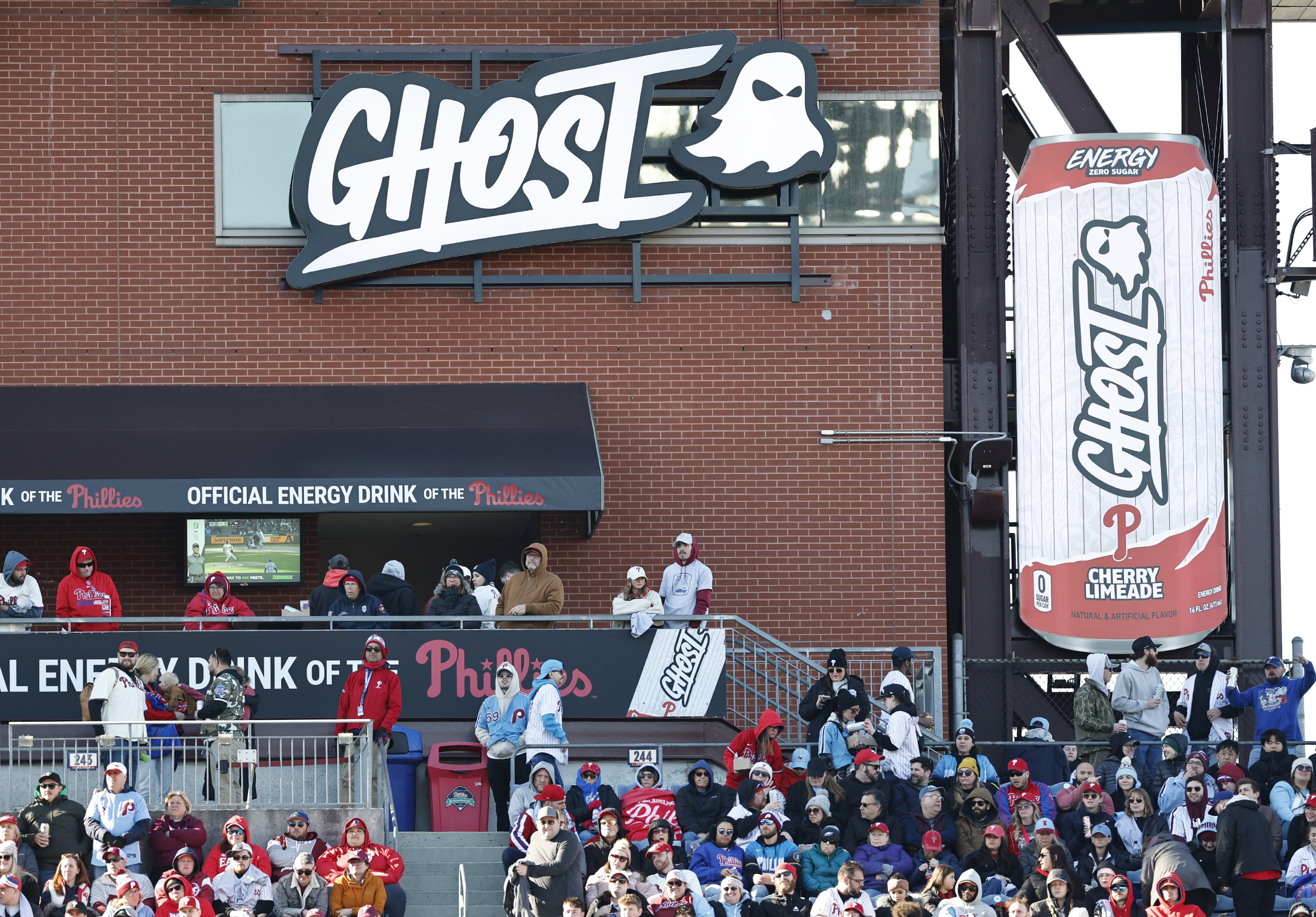
    One recent ad deal stood out due to controversy. In March, Eileen Kalas, widow of legendary Phillies broadcaster Harry Kalas, said the organization “betrayed” her husband by selling the naming rights of Harry The K’s to Ghost Energy. The eatery under the scoreboard had been named for her husband since the ballpark opened in 2004.

    At the time, Ghost Energy founder and West Chester native Ryan Hughes responded to fan criticism, saying, “We’re hoping to bring some new energy to the space while also never forgetting Harry Kalas and the legacy that he left.”

    Ghost Energy did not return a request for comment for this article.

    Fans at the Ghost Energy Deck, formerly Harry The K’s, during a March Phillies gameYong Kim / Staff Photographer

    Whether a Phillies advertiser is a longtime sponsor dating to the Veterans Stadium days or a newer partner, they “align with the team’s goal — championship-level baseball in a first-class ballpark where everyone feels welcome,” Fling said.

    Some advertisements are tailored.

    Doc Bresler’s Cavity Busters, a Philly-area chain of pediatric dental practices, has sponsored the ballpark’s “smile cam” and a nursing mothers’ lounge.

    An ad for Doc Bresler’s Cavity Busters and the Xfinity pitch speed clock light up the ballpark behind Phillies closer Jhoan Duran.Elizabeth Robertson / Staff Photographer

    King Swings, a Chester County swing set and playhouse company, recently built a playground for pint-sized fans inside the first-base gate.

    Comcast, the Center City-based telecom giant and Phillies sponsor since 2010, is behind the digital Xfinity Mobile pitch speed clock in the ballpark.

    “Pitch speed is one of the most closely watched real-time statistics in baseball, making it a strong fit for Xfinity’s focus on delivering fast, reliable connectivity for our customers,” Matt Lederer, Comcast’s vice president of brand partnership, said in a statement.

    Executives with several Phillies advertisers said the goal is not necessarily to gain customers on the spot. Instead, they said, they want to increase brand awareness and get fans to associate their company with a beloved hometown franchise.

    Some have seen tangible signs that this is happening. Philadelphia Insurance recorded a nearly 50% increase in website traffic since it started sponsoring the premium seating club, formerly known as the diamond club, earlier this season, said Brian O’Reilly, chief marketing officer for Philadelphia Insurance Cos. (PHLY).

    As part of the partnership, the company’s name and Liberty Bell logo are emblazoned on the blue headrests behind home plate.

    “It was amazing how many people texted and called me and said, ‘I saw Philadelphia Insurance during the Home Run Derby or All-Star Game,’” O’Reilly said.

    The headrests in the Philadelphia Insurance Club behind home plate bear the company’s logo and the name of its website. Elizabeth Robertson / Staff Photographer

    Philly sports ads create consumer ‘trust’

    Some Philly companies sponsor multiple local pro teams.

    Independence Blue Cross (IBX), the locally based health insurer, has been advertising with the Phillies for decades and has partnerships with all of the city’s major pro sports teams, many of the college teams, and NBC Sports Philadelphia, said IBX chief marketing officer Koleen Cavanaugh.

    In addition to advertising, this also gets IBX the ability to host events at stadiums, offer ticket and merchandise discounts to IBX members, and collaborate on philanthropic partnerships, such as a back-to-school supply drive with the Jesús Luzardo Family Foundation last week.

    Other Phillies sponsors are considering expanding their sports advertising portfolio, especially with the recent news of superstar LeBron James coming to the Sixers.

    The team “already reached out to us about season tickets and advertising,” said O’Reilly, of Philadelphia Insurance. “We were doing some business with them anyway, but maybe we’ll even do some more.”

    At NBC Sports Philadelphia, conversations about Sixers ad partnerships are now underway, earlier than usual, Koelle said. As soon as James news broke, the value of Sixers TV ads increased exponentially, Koelle said.

    Comcast, NBC Sports Philadelphia’s parent company, has a minority ownership stake in the Sixers, and recently acquired the naming rights of the team’s home stadium, now called Xfinity Mobile Arena.

    A challenge for the sports network now, Koelle said: Remaining loyal to companies who’ve sponsored Sixers broadcasts since the team’s rebuilding years — and not jack up those partners’ advertising rates.

    ”But for those that are new, they’ll certainly have to pay the new value,” Koelle said.

    Usually, it’s not hard to convince local companies of the value of advertising with any Philly team, he said.

    “If [advertisers] want to truly reach people — and reach them in a pipeline that is direct and meaningful — it’s professional sports in Philadelphia,” Koelle said. “If you want people to trust your brand immediately, it’s a great way of doing it.”

  • Oxford may soon disband its police department. The community is worried about losing its homegrown force.

    Oxford may soon disband its police department. The community is worried about losing its homegrown force.

    Oxford officials are inching closer to disbanding the borough’s century-old police department and joining a regional law enforcement agency, as increasing costs of maintaining the local force have outpaced revenue. But the plan has prompted worries from some residents.

    The seven-member borough council will review final agreements to join the Southern Chester County Regional Police Department at its Aug. 17 meeting, where officials are poised to cast their final vote to move ahead with regionalization.

    First responders represent some of the most expensive parts of a municipality’s budget, between salaries, health insurance, and pensions, as well as facilities and equipment costs. Oxford will join a smattering of other area municipalities that have moved to regionalization as a way to save money.

    But the prospect has sparked concerns in the community of roughly 5,800 people. Some fear that dissolving the borough’s department will increase emergency response times and potentially leave the municipality unprotected. And they worry about losing the officers who have grown up alongside them and understand their community. Some residents have called on the township to try to save the department by cutting costs in other ways.

    “These are people that literally would pull my kid over, give him a ticket, and ask how his dad is when he had cancer,” Oxford resident MaryAnn Riess said. “This is personal. This is a small town. These guys, all 11 of them, mean something to us. We buy them coffee. We buy them doughnuts. They are part of our extended family. This matters to us, and how they’re being treated matters to us.”

    Mayor Phil Harris does not disagree. But he says it is becoming impossible to maintain the department at its current level — let alone increase salaries or staffing.

    “We all want the same thing. I want our officers in a different uniform in our town doing the same job, with more equipment and more access to the tools they need to continue to perform at a very high level,” he said. “That’s the goal.”

    Years of deliberation

    When Oxford’s council casts its vote later this month, it will be after more than three years of studies and evaluations, the township said.

    In 2023, leadership found its police department — which consists of a police chief, 10 full-time officers, and several part-time officers — was the borough’s largest operating expense. It accounts for about half of the borough’s expenditures, with more than $2 million budgeted in 2026 for police.

    Meanwhile, the borough’s revenues were not keeping pace. Officials began exploring how they could sustainably provide public safety services long-term.

    Original fiscal forecasts were quite “bearish,” Harris said. But even when the borough performed better than earlier projections, the writing was still on the wall, he said.

    Its higher revenue was in part thanks to an influx of new homes with higher-than-expected earned income tax. But the largest indicator of why revenue rose was a 21% tax increase during the same period.

    “We’re seeing the operational and the structural imbalances continue within the police department,” he said. “We’re struggling on the operational side to be able to maintain what we currently have.”

    A July analysis from Keystone Municipal Solutions found that though Oxford’s financial status had improved, it levied the second-highest millage rate in the county, increasing by 21% since 2023, compared with the average of 12% across the county. Additional raises were seen as “counterproductive to the growth necessary for long-term fiscal stability.”

    The analysis evaluated five possible service alternatives: keeping the borough’s department, restructuring the existing department, reducing staffing and supplementing coverage with Pennsylvania State Police, relying entirely on the state police, and merging with the Southern Chester County Regional Department.

    At its July 29 meeting, the borough council voted 6-1 to authorize the council president, borough manager, mayor, and solicitor to negotiate with the regional department. They will present those agreements to the full council in August.

    If the council votes in the affirmative, the borough will join New Garden, West Grove, and Avondale in the regional department. Formed in 2017, the department employs 21 full-time officers.

    It is projected the regional department would add 12 more officers with the inclusion of Oxford. Oxford would receive 24-7 police services, with at least two officers on patrol at all times, like the current structure.

    Harris said the goal is for every officer who wants to go to the regional department to do so. But there are protections and a path for those who do not.

    Oxford is a ways further west from its partners; the borough is up to 16 miles away from them.

    To keep response times low, the borough would have a substation — though likely not in Oxford’s existing police building — with cars in the borough. Officers would start and end the clock within Oxford’s boundaries, so there would be no shift-change gaps. They hope to retain the administrative assistant and have a lieutenant stationed on duty at the substation, Monday to Friday.

    Officers would get new uniforms, the cars would be relabeled, and Oxford’s assets would become part of the regional department’s assets.

    According to the report, after an increase in costs associated with up-front transition costs in 2027, annual savings would range from $300,000 to $320,000 “before declining slightly toward the end of the projection period.” The report estimates cumulative savings through the projection period at approximately $1.4 million.

    “What you get by regionalizing is the economy of scale,” Harris said. “You get stability across those lines, and it’s predictability — and you can spread things out, and you can plan.”

    More regionalization

    The Southern Chester County Regional Department is part of a broader swell across the state of municipalities utilizing regionalized services to slash expenses, said John Brenner, executive director of the Pennsylvania Municipal League.

    You would be “hard pressed” to find a community that spends less than 50% of its budget on public safety, he said. And those costs continue to rise.

    “That puts pressure on local officials again to say, ‘OK, what is more efficient here? Is there a better way to do this?’ And I think a number of local officials throughout the state have said, ‘You know what? Regionalization might make a lot of sense,’” he said.

    It is not a perfect solution: Across the state, municipalities have joined and then withdrawn from regional services due to increasing costs under the agreement, according to the analysis by Keystone. Similarly, Kennett Square pulled out of the regional fire and emergency services commission that it had helped start after costs soared too high. It rejoined the commission earlier this year, having not found a cheaper alternative.

    In Chester County, some municipalities contract out with their neighbors’ forces. Oxford tried to embrace such a model, but its closest neighbors have relied entirely on the Pennsylvania State Police for public safety, at zero cost. Contracting Oxford’s force was an expense those communities could not take on.

    Across Chester County, more than 20 municipalities rely on the state police for full coverage. Around a dozen others use partial coverage.

    But that was not a direction Oxford wanted to go. While the state police do a “great job,” they are “not a community-based police department,” Harris said.

    “We were desirous of having a community-based police department that operates in a different model, that knows the neighbors, that knows the streets, that goes out to the festivals, that shakes the hands and goes to the schools and the nonprofits,” he said. “We felt like the [regional department] brings that model and it maintains that standard.”

    Residents are concerned

    Danny Graham grew up running around town with the men who would go on to become police officers in Oxford. There is a distinct “hometown” feeling to the force, he said. It feels like the officers know what to do, how to calm people down. And they respond almost immediately, he said, recalling an incident outside his home when they were there within 2.5 minutes.

    Oxford police responded to 4,406 calls for service in 2023, according to the most recent data in the Keystone report. A majority were for property and house checks, followed by traffic stops, medical emergencies, and more.

    Serious crime — such as larceny or violent crime — was “not prevalent,” according to the report.

    But residents worry about what regionalization will do to that community culture and speed of response.

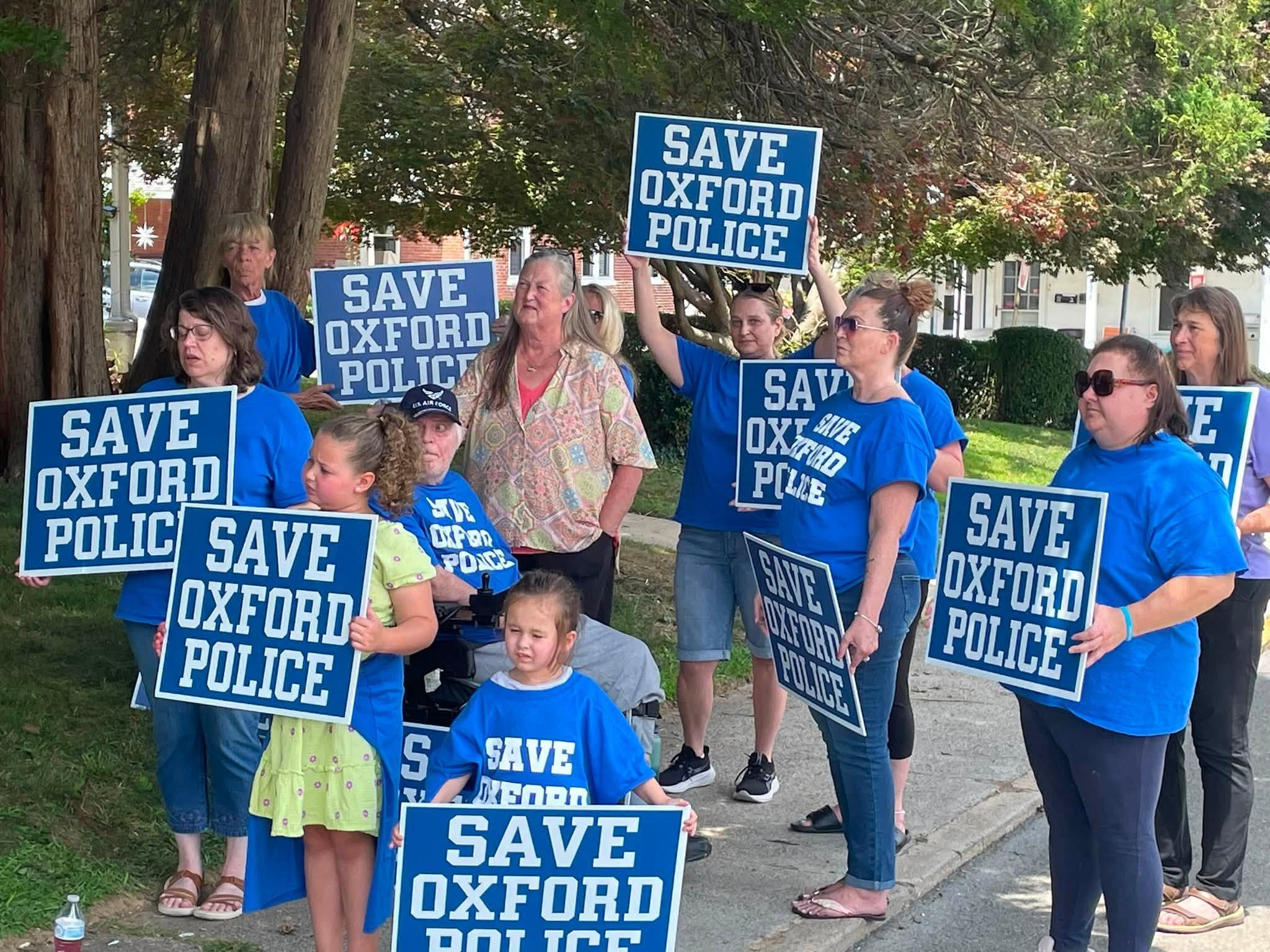
    In response, Graham created Save Oxford Police, a Facebook group that amassed nearly 1,000 members in recent weeks. A Change.org petition calling for saving the department has accrued hundreds of signatures.

    He said he did not understand how the borough could have enough cash flow for other expenses, but would not invest in the department.

    “Something stinks in Oxford, and we’re trying to find that smell,” he said.

    He hopes that, if enough people come to the Aug. 17 meeting, they can shut the regionalization effort down by postponing the vote, with the hope something could come up in the interim to save the department.

    But, if not that, “it’s no longer Save Oxford Police. It’s Save Oxford Police Officers, because now that means more than the department itself,” he said.

    Riess, who believes the Oxford police force is a greater extended family for the borough, said that sitting out on the patio at a restaurant recently, her group watched an officer test each business door, making sure they were locked.

    “Do you really think that’s going to happen [with regional]?” she said.

    “I’ve never seen regional do that, but I haven’t seen any officers really do that. Except Oxford,” Graham said.

    This suburban content is produced with support from the Leslie Miller and Richard Worley Foundation and The Lenfest Institute for Journalism. Editorial content is created independently of the project donors. Gifts to support The Inquirer’s high-impact journalism can be made at inquirer.com/donate. A list of Lenfest Institute donors can be found at lenfestinstitute.org/supporters.

  • Chester County police are investigating a shooting that left a woman dead, 9-year-old girl wounded

    A woman was killed and 9-year-old girl was wounded in a shooting at a home in East Goshen Friday morning, according to Chester County investigators.

    Officers from the Westtown-East Goshen Police Department were dispatched just before 11 a.m. to a unit at the Summit House condominium complex on West Chester Pike for reports of a shooting, Chief David Leahy said.

    Inside the unit, the officers found a woman in her 40s dead from a single gunshot wound, he said. Authorities did not release the woman’s identity. The girl, who was also shot, was treated at the scene by paramedics, and was alert, conscious and able to speak with investigators, he said.

    Investigators found a gun not far from the woman’s body that they believe was used in the shooting.

    There was no information available on a motive or a potential suspect in the case.

    District Attorney Chris de Barrena-Sarobe said there is no threat to the public, and declined to comment further, citing the active investigation.

    “We have just as many questions as you do, and we don’t want to put out any incorrect information,” de Barrena-Sarobe said.

    He said his heart goes out to the family of the victims.

  • QVC brings in old boss and digital-minded board members as it comes out of bankruptcy

    QVC brings in old boss and digital-minded board members as it comes out of bankruptcy

    QVC Group Inc. has replaced chief executive David Rawlinson, bringing back predecessor Mike George as interim boss as the West Chester-based remote-shopping pioneer comes out of bankruptcy and charts a future.

    The company also has named new directors with long retail and digital experience, replacing those who oversaw the company under billionaire media investor John Malone.

    With over 1,000 employees at its broadcasting campus, once one of Chester County’s top tourism draws, QVC has struggled with the decline of television and the fragmentation of digital media.

    George said in a statement that he is excited to reconnect with company veterans and to work with the new board. He promised “innovative shopping experiences” and better investor returns during the search for his permanent replacement.

    Having cut its crushing debt load in its bankruptcy reorganization, QVC still faces the challenge of adding young shoppers at a time when retailing has spread across social media platforms, streaming apps, and global e-commerce sites.

    QVC said it has emerged from Chapter 11 after cutting its debt load by over $5 billion and gaining access to $600 million in new credit.

    The stock will re-list on Nasdaq under trading symbol QVCG, replacing pre-bankruptcy shares that traded below $1 just before the bankruptcy.

    David Rawlinson was CEO of the QVC companies from 2021 to 2026 as the West Chester remote-shopping group struggled with shoppers’ migration to social media, logistics challenges, and financial stress.Qurate Retail Inc.

    The company filed for bankruptcy protection in April after years of losses and cost cuts. Those included the shutdown of rival-turned-affiliate HSN’s Florida campus last year. The companies had merged in 2017.

    The new financing is provided by hedge funds specializing in corporate turnarounds, led by Connecticut-based Strategic Value Partners LLC, whose past focus includes natural gas and building materials companies and the 2022 relaunch of airline Aeromexico and Los Angeles-based Oaktree Capital, a unit of Canada-based Brookfield Corp.

    Pennsylvania’s school pension fund, PSERS, is an investor in Oaktree. The New Jersey Division of Investment, which manages state, school, and local-government worker pension funds, is an investor in Strategic Value Partners.

    In a parting statement, Rawlinson praised “the resilience, commitment and execution our teams have demonstrated,” along with customers and investors. He noted QVC was “a TikTok Shop Seller of the Year for 2025″ and has been growing its streaming-media business rapidly. He added that it’s the “right time” for him to move on, and “I can think of no one better qualified” than George to take over.

    George departed after initiatives including his acquisition of Seattle online-shopping network Zulily failed to generate profits. Rawlinson shut the division in 2023.

    A fatal fire at QVC’s main warehouse in North Carolina during the 2021 Christmas season worsened COVID-era shipping delays early in Rawlinson’s tenure, making it tougher to pay down debt and endure the costs of new programs.

    George is a past chairman of the National Retail Federation, currently chairs the National Constitution Center in Philadelphia, and is a board member at AutoZone and Ralph Lauren. He was an executive at Dell Computer and McKinsey & Co. before joining QVC, and will chair the new board.

    Gone from that board are longtime allies of media billionaire John Malone, who invested in QVC in the 1990s, bought control of the company from Comcast in 2003, and had served as chairman. He left the board last year. His son Evan, a Philadelphia entrepreneur, and other longtime QVC board members have been replaced.

    Besides George, the new QVC board members are:

    • David Charles Boone, CEO of Michaels stores
    • Nicolas Le Bourgeois, a former Amazon and TikTok Shop executive
    • Jason Lee Horowitz, ex-head of marketing at Mattel
    • James A. Marcum, executive chair of David’s Bridal, the Conshohocken store chain downsized through two bankruptcies in recent years
    • Ann Mather, ex-Pixar CFO, who has served on the boards of Netflix, Google, and Airbnb, and as board chair for the Bumble dating service
    • Richard A. Mayfield, former CFO of Walmart and a senior adviser at McKinsey
    • Jonathan Zinman, former managing director at hedge fund Silver Point Capital, another major investor in QVC
  • A bridge replacement’s new repair timeline prompts concerns over increased traffic in Downingtown and other delays

    A bridge replacement’s new repair timeline prompts concerns over increased traffic in Downingtown and other delays

    A bridge replacement near Downingtown will stretch into next year, prompting a call to Gov. Josh Shapiro’s administration about the extended closure’s impact on traffic flow through the borough and the sequencing of other projects — including another bridge replacement.

    Replacing the nearly 60-year-old, three-span bridge that carries Boot Road over Amtrak in East Caln Township will now wrap up in early 2027, rather than in fall 2026 as initially projected.

    The elongated timeline is, in part, thanks to a change in the foundation design. After the original bridge was demolished, the Pennsylvania Department of Transportation found a different type of rock from what was anticipated, which required a new design, said Helen Reinbrecht, community relations coordinator for the department.

    The department expedited a redesign, which was completed in June. Construction is anticipated to be a bit slow into early August, as PennDot awaits proprietary materials, Reinbrecht said.

    In Downingtown, the delay will have ripple effects — prompting Mayor Erica Deuso to call on state leadership to approach this project with the “same urgency, accountability, and focus here” as when Gov. Josh Shapiro’s office quickly reopened I-95 in Northeast Philadelphia after a tanker crashed and a section of the bridge collapsed in 2023, and with the early completion of another bridge in Pittsburgh in July.

    Deuso said in a news release Tuesday that the public was prepared for a one-year closure of the Boot Road bridge, but that the extended timeline is “a serious failure with real consequences for everyone forced through Downingtown each day.”

    “Our roads, intersections, emergency routes, business district, and residents are paying the price,” she said.

    She requested a review of whether additional crews, work shifts, equipment, and engineering support could make up for the lost time, and asked for help addressing traffic signal adjustments, detour enforcement, pavement and bridge condition monitoring, emergency-response planning, “and assistance with extraordinary local public safety and infrastructure costs.”

    Following Deuso’s letter, PennDot press secretary Alexis Campbell said that the department “understands how vital the Boot Road Bridge is to the community and is expeditiously working to reopen the bridge as soon as possible.”

    “The Department expedited the new design of the bridge and is working with the contractor to accelerate construction by adding additional crews and working through the winter so long as the weather permits,” she said.

    The delayed bridge replacement has trickled down into the sequencing of other Downingtown projects, including the rehabilitation of the borough’s Lancaster Avenue bridge, which crosses the east branch of Brandywine Creek, due to its poor condition.

    That will not get underway until the detours from Boot Road and another effort — relocating the Downingtown train station half a mile to the east, where the Keystone Corridor crosses U.S. Route 322 — are completed, borough officials said. Deuso was concerned the Boot Road delays would also hamper the train station relocation.

    The Boot Road bridge replacement is a $13.3 million project that replaces the 193-foot three-span bridge with a 105-foot single-span structure. It carried roughly 12,000 vehicles a day before its closure, officials said.

    The full closure of the road, between Quarry Road and Southwind Lane, began in late September 2025. Motorists are being detoured to U.S. Route 322, Business U.S. Route 30, and Quarry Road. That is expected to continue until the work is fully completed next spring.

    The bridge was structurally deficient, Reinbrecht said.

    “I know it can be frustrating and time-consuming to have to use the detours. But this really will be safer and more efficient when the construction is completed,” she said.

    This suburban content is produced with support from the Leslie Miller and Richard Worley Foundation and The Lenfest Institute for Journalism. Editorial content is created independently of the project donors. Gifts to support The Inquirer’s high-impact journalism can be made at inquirer.com/donate. A list of Lenfest Institute donors can be found at lenfestinstitute.org/supporters.

  • Could auction-bound St. Peter’s get more housing? | Inquirer Chester County

    Hi, Chester County! 👋

    Could the auction for the majority of St. Peter’s Village mean more housing density? We look at some of the options on the table. Also this week, a new vinyl listening room is opening in Kennett Square, some Tredyffrin Township residents are concerned that a park conversion isn’t worth the hefty price tag, plus, work has resumed at a controversial data center site.

    We want your feedback! Tell us what you think of the newsletter by taking our survey or emailing us at chestercounty@inquirer.com.

    If someone forwarded you this email, sign up for free here.

    Could more housing be coming to St. Peter’s Village?

    There’s the potential for a future owner to add housing to St. Peter’s Village. Steven M. Falk / For The Inquirer

    Nearly two months out from an auction that will see the quaint St. Peter’s Village go to the highest bidder, some local business owners are excited, if a little apprehensive, about the prospect.

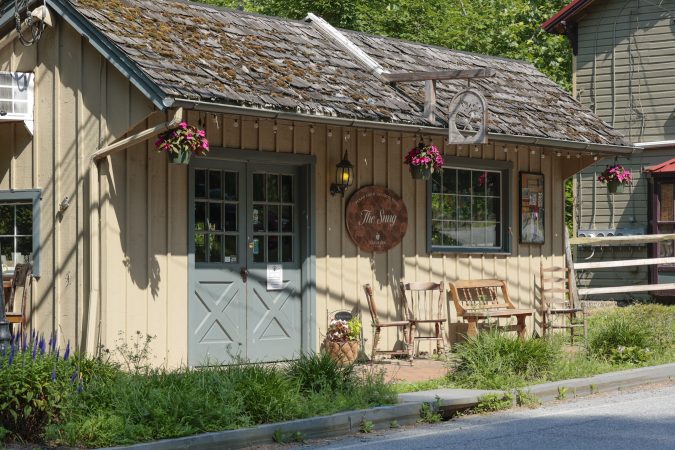
    “There is this rural charm there, and that is part of what the village has built its reputation on over the years,” said Doug Reeser, who owns Excursion Ciders at the Snug. “So, if development could be done with an eye towards preservation and minimal impact, I think that would be great.”

    There are several high- and lower-density housing developments on the table that could bolster it into a tiny town, but not without its challenges.

    The Inquirer’s Brooke Schultz looks at some of the potential outcomes.

    Kennett Square is getting a new vinyl listening room and bar

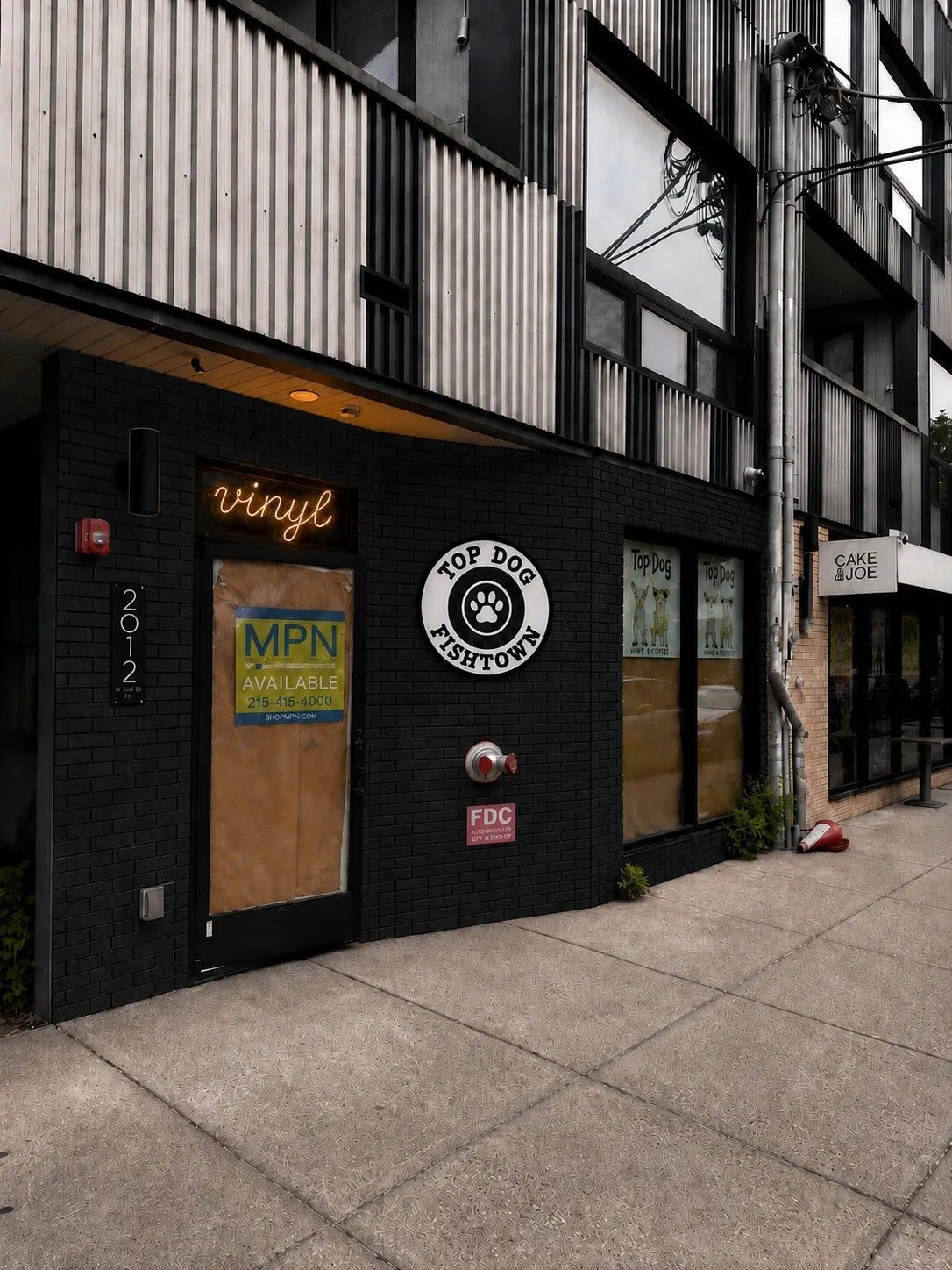
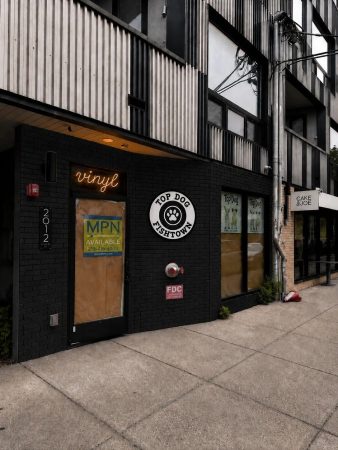
    Top Dog Cocktails is also opening a listening room in Fishtown. Courtesy of Ken Smukler

    Top Dog Cocktails is expanding its offerings in Kennett Square, with plans to add a Japanese-inspired vinyl listening room and bar.

    The ready-to-drink cocktail brand, which already has distilling operations at 110 E. State St., has hundreds of albums to spin, with a goal of offering “a quieter, safer, more sophisticated space to consume alcohol and listen to really good music,” founder Ken Smukler said.

    Top Dog also has plans to partner with nearby music venue Kennett Flash.

    Here’s what you can expect when the new concept opens.

    📍 Countywide News

    💡 Community News

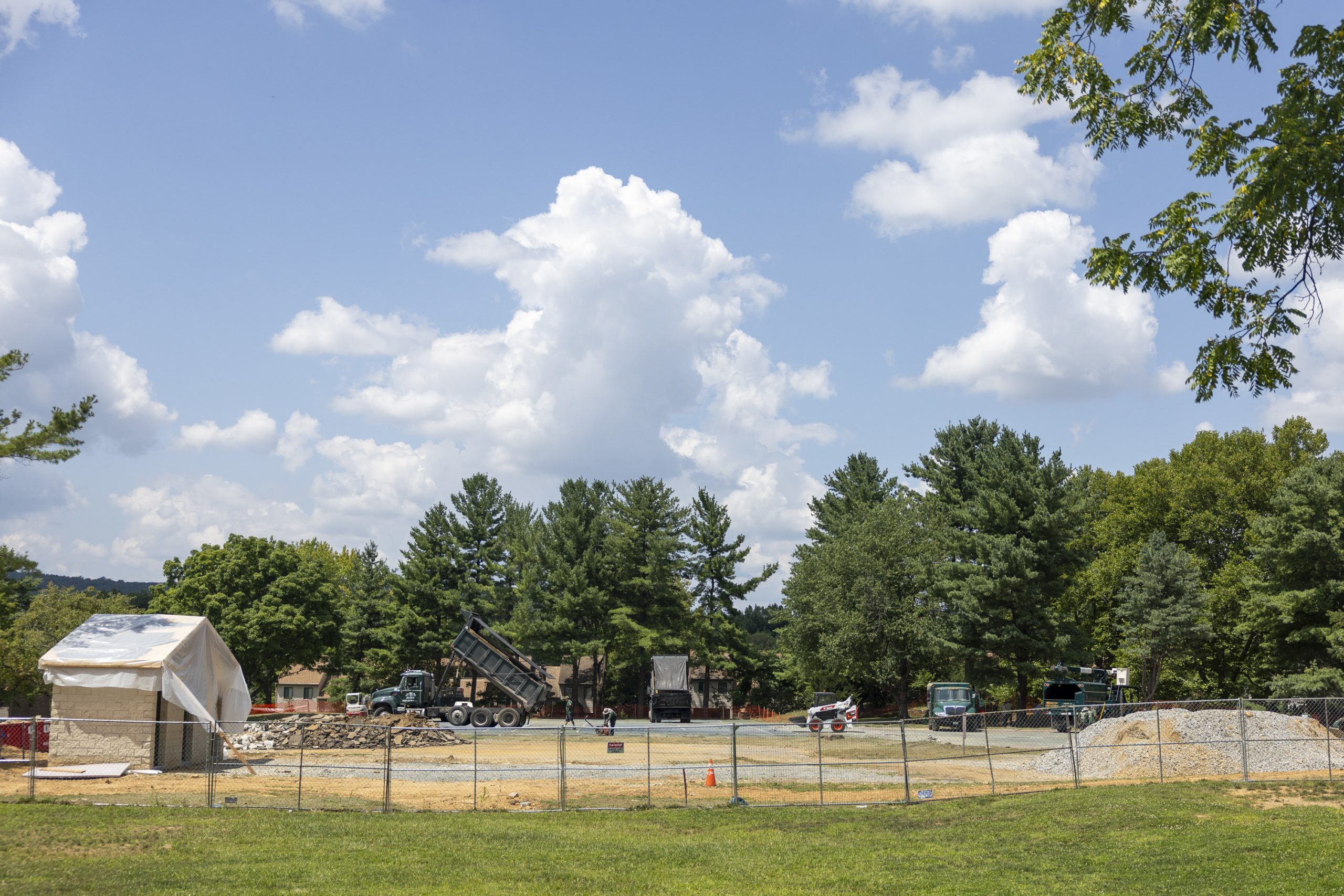
    The construction site at Chase Road Park in Tredyffrin Township.Tyger Williams / Staff Photographer
    • Tredyffrin Township residents are expressing concern after work to convert the dilapidated Chase Road Park has swelled from $725,000 in the first year to $1.7 million this fiscal year. Here’s what to know.
    • Work on the 1.5 million-square-foot data center at an East Whiteland Township Superfund site resumed last week after a temporary order halting work.
    • Tyler Humphreys, a 24-year-old Malvern man and former Sharon Hill police officer, was sentenced to nine to 20 years in state prison after admitting he raped and sexually assaulted three children.
    • A 20-year-old Coatesville man, Kevin Reza-Gonzales, has been arrested and charged with first- and third- degree murder, as well as strangulation, in the death of his girlfriend.
    • The University of Valley Forge, a Christian institution in Phoenixville, announced last week that it will suspend operations after the summer semester.
    • Oxford’s borough council voted last week to pursue joining the Southern Chester County Regional Police Department amid rising costs. At a special meeting Monday night, New Garden Township’s board of supervisors agreed to move forward with negotiations for Oxford to join the regional police department.
    • Caln Township’s board of commissioners approved E. Khan Development Corp.’s proposal to build a 97-townhome community on a roughly 29-acre parcel at 4109 Lincoln Highway.
    • Developer D.R. Horton is looking to build a 130-townhome community known as Meadowview at the nearly 30-acre site at 200 N. Church St. in Parkesburg. The borough will hold a zoning hearing tomorrow at 7 p.m.
    • Imaging Associates, LLC, along with Toll Brothers, is looking to build an age-restricted community on a nearly 119-acre site at 500 Hibernia Rd. in Coatesville. Plans call for 163 single-family homes and 74 twin homes. West Brandywine Township will hold a conditional use hearing for the project tonight at 7 p.m.
    • Speaking of Toll Brothers, the homebuilder recently opened Regency at Valley Creek, a 317-home 55-and-over community in Exton.
    • East Fallowfield swore in its new township supervisor, Robert Sparr, last week.
    • The Hot Spot, a pottery painting, candle-making, and mosaic concept, has opened at 34 S. Main St. in Phoenixville.

    🏫 Schools Briefing

    • Coatesville Area School District’s board voted last week to approve a bond resolution of up to $100 million, funding that will support the yearslong North Brandywine Middle School construction project.
    • The tracks at both Downingtown Area School District high schools are closed for renovations for several weeks. The Downingtown East track is expected to reopen Sept. 7, with the Downingtown West track to follow on Sept. 21.

    🍽️ On our Plate

    • Cutter and Cannon Spirits opened its new location at 104 E. Gay St. in West Chester over the weekend. The distillery’s new spot has a tasting room and bottle shop.

    🎳 Things to Do

    🎆 Phoenixville First Responders Appreciation Night: Rescheduled from the Fourth of July, the event includes water ice, pizza, and a fireworks show. ⏰ Thursday, Aug. 6, 6 p.m. 💵 Free 📍 Friendship Field, Phoenixville

    🚴 Tour-de-Trike: See teams of adults compete in tricycle races. ⏰ Friday, Aug. 7, 3:30-6 p.m. (rain date: Aug. 8) 💵 Free 📍 Gay Street, West Chester

    🎻 Old Fiddler’s Picnic: Now in its 97th year, the festival brings together performers for free concerts. There will also be food trucks, vendors, and yard games. ⏰ Saturday, Aug. 8, 10 a.m.-4 p.m. (rain date: Aug. 9) 💵 Free 📍 Hibernia County Park, Coatesville

    🥕 Phoenixville VegFest: Check out all things vegan at this festival, complete with food trucks and a beer garden. ⏰ Saturday, Aug. 8, 11 a.m.-6 p.m. (rain date: Aug. 9) 💵 Pay as you go 📍 Reeves Park, Phoenixville

    ✈️ 2026 Festival of Flight: See acrobatic flight displays, a drone show, and fireworks at this two-day event. ⏰ Saturday, Aug. 8, 2-10 p.m. and Sunday, Aug. 9, 10 a.m.-5 p.m. 💵 $13.57-$47.02 📍 New Garden Flying Field, Toughkenamon

    🏡 On the Market

    A century-old Honey Brook farmhouse with a modern interior

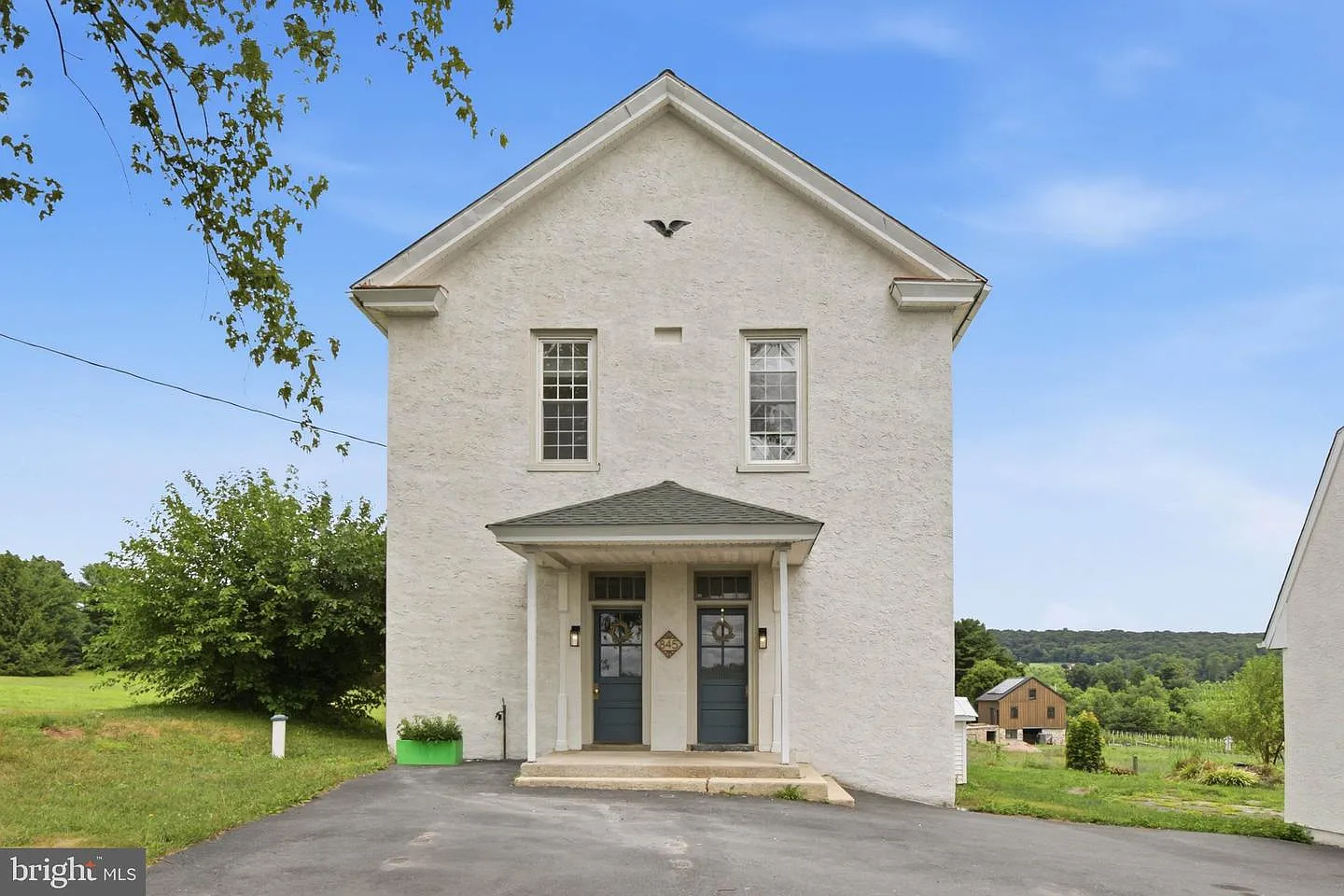
    The home also has a detached garage.Courtesy of Alex Whitt/Keller Williams Elite

    Built in 1900, this farmhouse has been renovated to bring it into the 21st century while retaining its historic-looking exterior. The first floor has an open-concept living and dining area that opens onto a kitchen, plus two bedrooms. There are two additional bedrooms upstairs, including a primary suite with a sleek, updated bathroom. The property also has a large detached garage with room for additional living space.

    See more photos of the home here.

    Price: $550,000 | Size: 2,128 SF | Acreage: 0.61

    🗞️ What other Chester County residents are reading this week:

    By submitting your written, visual, and/or audio contributions, you agree to The Inquirer’s Terms of Use, including the grant of rights in Section 10.

    This suburban content is produced with support from the Leslie Miller and Richard Worley Foundation and The Lenfest Institute for Journalism. Editorial content is created independently of the project donors. Gifts to support The Inquirer’s high-impact journalism can be made at inquirer.com/donate. A list of Lenfest Institute donors can be found at lenfestinstitute.org/supporters.

  • A vinyl and cocktail spot is coming to Kennett Square and Fishtown, bringing perhaps the neighborhood’s smallest bar

    A vinyl and cocktail spot is coming to Kennett Square and Fishtown, bringing perhaps the neighborhood’s smallest bar

    A new vinyl listening room and bar concept is coming to Kennett Square and Fishtown this fall, seeking to help people connect in person around music and over cocktails.

    Top Dog Cocktails, a ready-to-drink 12.5% ABV cocktail brand with a distillery based in Kennett Square, will open its first two brick-and-mortar locations in the coming months, embracing the Japanese jazz kissa model — a music cafe or bar that’s focused on listening to vinyl records.

    “It’s all to drive this analog feel in a digital world,” said founder Ken Smukler, a longtime political strategist who dipped his toe into the alcohol space roughly a decade ago. “It’s all about the community, listening and respecting music, and enjoying the cocktails at the same time.”

    Philly has had a history with listening rooms, with a flurry of openings starting in 2022 that then fell into a downtrend in more recent years. But the concept may now be making a comeback.

    With his distillery location in Kennett Square already tied to music, and a teeny space in Fishtown in a former ATM calling for some creative reimagining, Smukler saw opportunity.

    The locations will look a little different from each other, but the heart of both will be similar. There will be a small retail component, a bar that will double as recipe development for the brand, and, of course, an expansive catalog of music on rotation.

    Top Dog Cocktails is “designed for a more sophisticated consumer” who “recognizes what a craft cocktail is in a can,” he said.

    That vibe applies to these locations; Smukler envisions their demographic as cocktail appreciators, who want to unplug from their phones or TVs.

    “This is a quieter, safer, more sophisticated space to consume alcohol and listen to really good music,” he said.

    Smukler, a former political operative for then-U.S. Rep. Bob Brady, was first drawn to ready-to-drink cocktails in 2015, and began raising capital to launch his own brand. That early effort dissolved in 2019, when he went to federal prison for campaign finance law infractions.

    But while in prison during the COVID-19 pandemic, quarantined without much to do other than chat, he learned his cellmate’s brother worked in the alcohol industry. On his way out of prison, Smukler called his friends and family — and his former cellmate’s brother.

    “There’s literally a straight line from there into launching Top Dog,” he said.

    He reconstituted the investor group, and the brand launched in 2022. They’ve sold nearly 1.5 million cans, Smukler said, with distribution in Pennsylvania, New Jersey, and Florida.

    Options include a few variations of the margarita, an espresso martini, a vodka and grapefruit Greyhound, and a whiskey lemonade.

    The brand’s distillery operation is in Kennett Square, near Kennett Flash, a live entertainment venue. He first picked the spot, at 110 E. State St., because he felt there could be “synergy” between Top Dog’s tasting room and live music. The roughly 750-square-foot space will be the bigger of the two listening rooms.

    Smukler plans to work with the Kennett Flash in a joint venture; the nonprofit will be able to use the venue as a green room for performers, a space for music classes, or however they see fit. They’ll also get a cut from the retail sales.

    He’s looking to do something similar with the Fishtown location, but is still seeking a partner, he said. The location, at 2012 Frankford Ave., may be the smallest bar in Fishtown, at 350 square feet. It’ll have a 15-seat bar, a two-turntable DJ station, and a retail component.

    Fishtown feels like “ground zero” for the demographic they’re trying to reach, Smukler said. As for Kennett Square, he just happens to love it.

    “I just think it’s a gem, and I think if we can do something with the Kennett Flash … and for the community, that’ll pay back in spades for us,” he said.

    They’ll be able to test new drinks through the outposts, Smukler said. They’ve never had a gin or a rum product, for instance, and this will give them a chance for some R&D.

    As for music, they’ve amassed more than 500 albums ready to spin. Smukler’s creative director is planning themed nights to let them shine. Though the Japanese kissa model is usually jazz-forward, there will be a cross section of what gets played, he said.

    Moving the business into physical locations has been a creative challenge, but an exciting one, he added.

    “If you ask me, what is the most fun part of my job? It’s not trying to figure out how to sell more cases in Florida. I guarantee you, it is designing a kissa concept in Fishtown or working with a nonprofit in Kennett,” he said. “That’s the fun part.”

    This suburban content is produced with support from the Leslie Miller and Richard Worley Foundation and The Lenfest Institute for Journalism. Editorial content is created independently of the project donors. Gifts to support The Inquirer’s high-impact journalism can be made at inquirer.com/donate. A list of Lenfest Institute donors can be found at lenfestinstitute.org/supporters.

  • What happens when a village goes up for sale? St. Peter’s is ripe for more housing, but poses challenges.

    What happens when a village goes up for sale? St. Peter’s is ripe for more housing, but poses challenges.

    Doug Reeser first came to St. Peter’s Village as a youngster, running along the rocks at French Creek, like so many locals and tourists still do. As an adult, the charm of the quirky little village drew him and his partners to open a branch of their cidery business there three years ago.

    He’s one of many wondering what could change when the village goes up for auction in September, with more than a hundred home lots and a smattering of businesses available to the highest bidder.

    “There’s lots of positive energy around what’s happening, so I think generally everybody would love to be able to see that continue,” said Reeser, owner of Excursion Ciders at the Snug. “I know personally we’d love to stay there. We anticipate some changes with new ownership. We hope that we can absorb them, but obviously, it’s not unlimited change that we can handle.”

    The auction, scheduled for Sept. 30 at 2 p.m. at the Desmond Hotel Malvern, will put up for sale roughly 83 acres of the historic 19th-century village that sprung up in the Gilded Age, thanks to its rich mineral resources and its proximity to the creek. It became a recreational destination, one that people are still drawn to because of its scenic location. Visitors are able to take a dip, hike the nearby trails, and enjoy the artsy downtown.

    Nestled in Warwick Township — which has a population of roughly 2,600, according to newly released estimates from the U.S. Census Bureau — the small village could see a bump in residences, if initial development visions are seen through. The land, zoned for residential and neighborhood business, offers 121 subdivided home lots for development. A commercial core — which boasts dining and retail — is composed of both privately owned businesses and leased storefronts that will be picked up by the new owner. Thirteen commercial buildings, totaling about 43,500 square feet, are included in the auction, according to the site.

    The auction site teases mixed-land use development potential “suitable for major builders, venture capitalists, historic preservationists, and entrepreneurs.” The auctioneer, Douglas Clemens, said previously they had seen thousands of messages of interest — but who ultimately purchases the property remains to be seen.

    And concepts of high- and low-density housing from the previous owner — the Piazza family, which runs the Piazza Management Co. and owns multiple Main Line car dealerships, is listed on associated parcels — haven’t exactly come to fruition, and the site could be a challenge for new owners given its rural location.

    Reeser is among the renters who would love to see current businesses stay, and some rehabilitation of the historic buildings that have suffered some neglect in recent years, he said. He doesn’t think anyone would be opposed to more foot traffic in town, but too much could tip the scales.

    “There is this rural charm there, and that is part of what the village has built its reputation on over the years,” he said. “So, if development could be done with an eye towards preservation and minimal impact, I think that would be great.”

    The 83-acre St. Peter’s Village — a historic destination in Chester County will be sold at an absolute public auction to the highest bidder in September.

    What could residential development look like?

    The property offers an opportunity for someone to develop housing to the north and east on the available land, said Matt Edmond, executive director of the Chester County Planning Commission.

    Land development plans available through the auction site previously have laid a densely populated housing development near the commercial core on roughly 36 acres. Generally, that’s a good thing, Edmond said.

    “Our villages are kind of like small towns, and when they have a walkable commercial core, you want more dense housing in and around there to support those businesses to increase foot traffic,” he said of Chester County.

    An aerial view of one proposed development — which the current owner envisioned as a densely populated townhouse, twin, and single-family neighborhood — shows several completed homes.

    Eight buildings are unfinished, Clemens said. One finished building is occupied, and the lease would move over to the new owner.

    Farther back, on roughly 45 acres, a sketch plan posted on the auction site offers larger lots for lower-density housing. A unpaved road was established ahead of building.

    In the county’s comprehensive plan, there are areas called “rural centers,” built around larger villages, Edmond said. There are similarities among those places: a commercial corridor on a main road, with streets fanning out for walkable neighborhoods. St. Peter’s could become a rural center, if the previous vision was fulfilled. The growth would be somewhat akin to Marshallton or Unionville, other Chester County villages that people enjoy visiting.

    St. Peter’s scenic, rural location offers a bit of a unique problem. Though the village isn’t far from Elverson or Pottstown, it’s still a bit out of the way. Reeser, the business owner, has found the village to be seasonal, with business bolstered by an occasional social media post. In the winter, the cidery, open on Saturdays and Sundays, is frequented by locals.

    The 83-acre Saint Peter’s Village, a historic destination in Chester County, will be sold at an absolute public auction to the highest bidder in September.Steven M. Falk / For The Inquirer

    “The whole village, by and large, is somewhat off the beaten path. It’s not really near a highway. It’s certainly not near transit. There isn’t a whole lot around it,” Edmond said. “That’s probably one reason why the current owners couldn’t quite make it work, because the market just wasn’t quite there yet to do that sort of thing in that sort of place.”

    But just because the village has had challenges with finding footing for residential development, that doesn’t mean it’s ripe for other types of development — such as a data center, other industrial sites, or even a major shopping center.

    The village is listed on the National Register of Historic Places, which doesn’t necessarily safeguard it from demolition. But it provides some protections, particularly if government funds are being used.

    Plus, its current zoning would have to be changed, and the infrastructure and conservation easements don’t “lend itself towards intense development,” Edmond added.

    “I think a lot of people are worried about that because they do see other parts of the county developing more intensely,” he said. “Every community is different, and Warwick Township is still very rural, and so it wouldn’t be surprising if a new owner tried to develop consistent with the character and the nature of Warwick, and certainly Warwick leaders would be looking for that type of development within their boundaries as well.”

    The 83-acre St. Peter’s Village, July 2026.

    Rich in natural resources

    The auction site notes the property’s “valuable subterranean mineral rights, including documented iron ore deposits, adding a rare investment dimension.” Those materials once bolstered the village’s economy, transporting its iron to Philadelphia. But it also became a place of leisure: a getaway for city workers, a majestic retreat to a scenic place.

    The village is surrounded by outdoor recreation, with state game lands adjacent to the property. French & Pickering Creeks Conservation Trust holds easements on a portion of the land. The easements are perpetual, and must be honored.

    Karl Russek, conservation director at French & Pickering Creeks Conservation Trust, anticipates the organization will be in conversation with the prospective bidders, working closely with future owners “to help them understand those limitations, and [we] are open to seeing what they have to offer and how the conservation value of the property might be improved.”

    But “much remains to be seen” for what could come to the land, he said.

    “St. Peter’s Village, and the area around it, is a very special place and has been a very special place for generations of families in this area. I took my kids down there when they were little. My peers remember spending time there when they were younger,” Russek said. “It’s a community hub in many ways, and so obviously many folks in the area are very invested in what ultimately happens, as are we as an organization.”

    Reeser hopes to see a purchaser who understands all of what makes it beloved — its natural beauty, its historic buildings, and its unique setting.

    “Change is inevitable, most likely, in this situation,” he said. “But if we could keep sort of what’s made it special alive, I think that would be great.”

    This suburban content is produced with support from the Leslie Miller and Richard Worley Foundation and The Lenfest Institute for Journalism. Editorial content is created independently of the project donors. Gifts to support The Inquirer’s high-impact journalism can be made at inquirer.com/donate. A list of Lenfest Institute donors can be found at lenfestinstitute.org/supporters.

  • Pa. health officials release new data on measles vaccinations, showing slight drops in the Philly area

    Pa. health officials release new data on measles vaccinations, showing slight drops in the Philly area

    Pennsylvania officials on Monday released a new interactive tool where parents can look up vaccination rates at their children’s schools for the 2025-26 academic year.

    The tool’s release comes after months of reporting from The Inquirer and the Pittsburgh Post-Gazette showed falling vaccination rates over the last several years in counties and individual schools around Pennsylvania.

    “At a time when misinformation and conspiracy theories are sowing distrust in longstanding medical guidance, and reversing decades of science-backed progress, it’s more important than ever that [the state health department] provide Pennsylvanians with as much accurate information as possible,” state officials said in a statement.

    The tool was launched amid an ongoing measles outbreak in Pennsylvania. So far this year, the state has seen 176 measles cases in 14 counties, with 35 new cases reported in the last week. Nearly three dozen people have been hospitalized. None were fully vaccinated against the highly contagious virus, which can infect 9 in 10 unvaccinated people exposed to it.

    In all of 2025, the state reported 16 measles cases.

    Philadelphia-area vaccination rates

    The latest data on measles, mumps, and rubella vaccination coverage in the Philadelphia area show that vaccination rates for kindergartners dropped slightly, by less than 1%, in Philadelphia and three of four suburban counties between the 2024 and 2025 school years.

    (function(){function e(){window.addEventListener(`message`,function(e){if(e.data[`datawrapper-height`]!==void 0){var t=document.querySelectorAll(`iframe`);for(var n in e.data[`datawrapper-height`])for(var r=0,i;i=t[r];r++)if(i.contentWindow===e.source){var a=e.data[`datawrapper-height`][n]+`px`;i.style.height=a}}})}e()})();

    On the county level, no Philadelphia-area counties reported vaccination rates at or above 95% for kindergartners.

    That is the “herd immunity” threshold, the rate scientists say is necessary to prevent the spread of the virus.

    Bucks County had the lowest MMR vaccination rate for kindergartners, at 93.7%, down from 94.3% the year before.

    In Chester County, vaccination rates for kindergartners held steady at 94.5% for both 2024 and 2025. Chester has confirmed 20 measles cases this year and is the only Philadelphia-area county to report cases in the current outbreak, which began in April.

    Some counties saw slight rises in vaccination rates for seventh or 12th graders, but Delaware County saw slight drops in vaccination rates across grade levels.

    The newly released data also show more parents are using exemptions to opt out of vaccination. Pennsylvania has among the most permissive vaccination exemption provisions in the country; parents can opt not to vaccinate for religious, philosophical, or medical reasons.

    Medical exemptions decreased by 7% in the Philadelphia region between 2024 and 2025, but religious exemptions jumped by 14% and philosophical exemptions increased by 19%.

    Statewide vaccination rates

    Schools are required by state law to report their vaccination rates for kindergarten, seventh, and 12th grades; more than 90% of schools complied, state officials said.

    According to the new dashboard, schools reported vaccination data from 5,943 grades. The dashboard obscures data from grades with enrollment below 20 students to protect privacy.

    Statewide, more than half of reporting kindergartens had MMR vaccination rates above the herd immunity threshold, state officials said.

    Seventh- and 12th-grade classes were more likely to report vaccination rates at or above 95%, with 74% of seventh-grade classes and 83% of 12th-grade classes reaching herd immunity, officials said.

    Staff writer Sarah Gantz contributed to this article.