Tag: Cherry Hill

  • 🎉 Fall festivals to enjoy | Outdoorsy Newsletter

    🎉 Fall festivals to enjoy | Outdoorsy Newsletter

    Happy October, friends.

    How’s “false fall” treating you? If you pulled your sweaters out thinking summer was done and dusted, you’re not alone. Soon enough, it’ll start to feel like autumn (real autumn).

    As the clock ticks on, we’re losing roughly 2½ minutes of sunlight each day, The Inquirer’s weather whisperer Tony Wood reports. One sure way to combat the negative effects of shorter days? “Get outside and move your body daily,” an expert told Wood.

    You don’t have to tell me twice.

    Here’s today’s itinerary:

    ⛅ Your weekend weather outlook: A mix of sun and showers. Friday will be warm, but temps will cool off Saturday and Sunday.

    — Paola Pérez (outdoorsy@inquirer.com)

    If someone forwarded you this email, sign up for free here.

    From First Fridays to the Philly Bike Ride
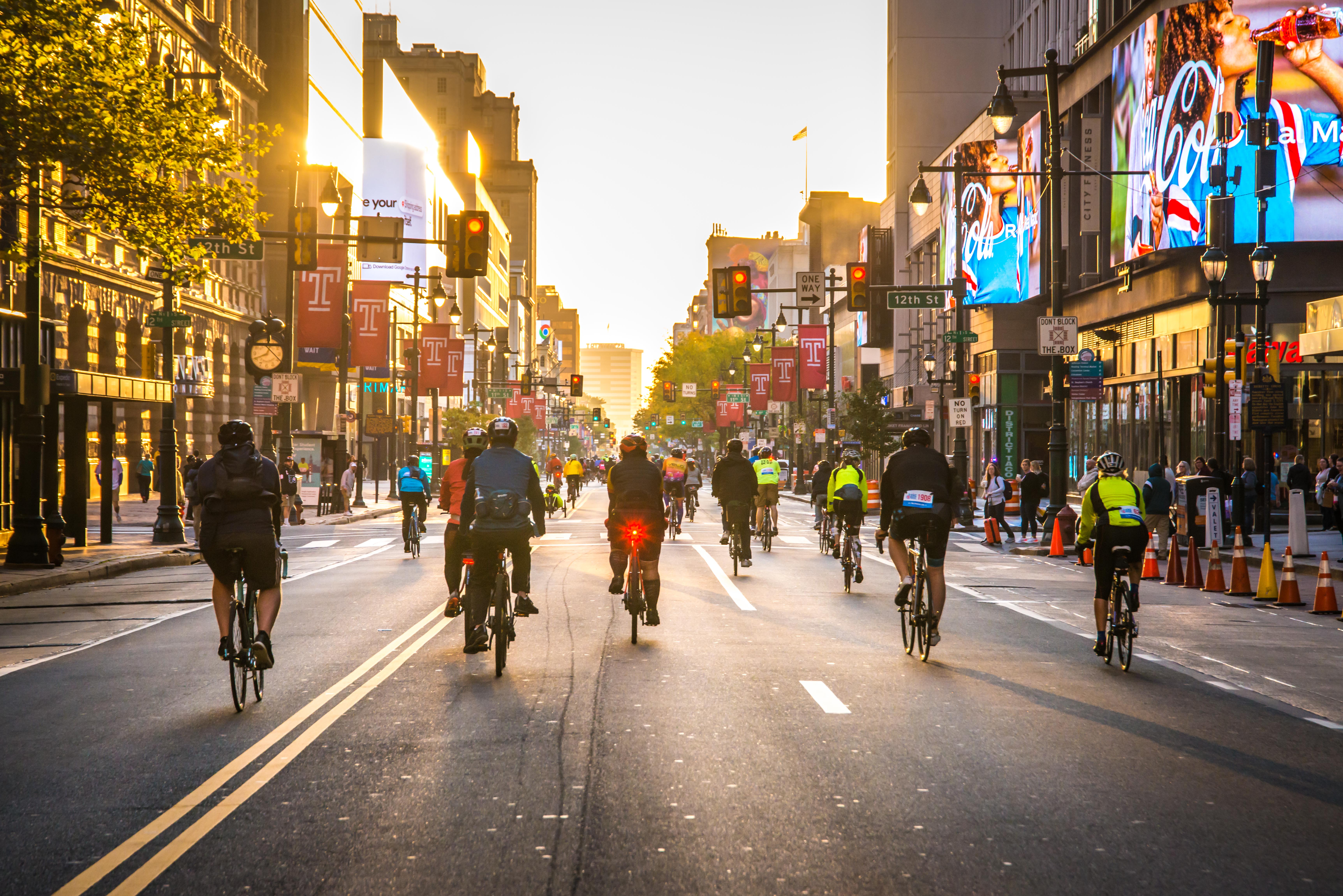
    In Philly and the surrounding region, we have a variety of fall festivals and markets to embrace the season in good company.

    Here’s a preview of some lively events to look forward to:

    🏺 Mt. Airy Arts Fest (Oct. 3) at Allens Lane Park will have stations for painting, printmaking, and ceramics to make art with your own hands, along with live performances and food to enjoy.

    🧀 Manayunk Fall Festival (Oct. 17) lets you mac-and-cheese-crawl your way through local vendors. Plus, just one neighborhood over, enjoy free pumpkin decorating and more fun for all ages at East FallsFest.

    🍁 Cherry Hill Harvest Festival (Oct. 18) at Croft Farm will host a beer garden, free pumpkins, and a petting zoo.

    See our full roundup.

    News worth knowing

    🌳 Your outdoorsy experience

    My colleague Sam Stewart recently spent a couple of days in the Poconos and was excited to share this with us:

    These pics are from the Little Falls Trail in Promised Land State Park! It was SO beautiful, lots of water along the trail (including a waterfall!), and it was a super easy, 1.5-mile loop. It was my first fall hike of the year, the weather was incredible and the sun was shining 🙂

    Such a spectacular sight! I’m already planning my own trip up there. Thanks, Sam.

    How about you, dear reader? What’s happening in your neck of the woods? Email me with your favorite adventures or special outdoor memories (and pictures, if you have them). You may see it featured here.

    Tapping into agritourism

    🎤 Here’s rural reporter Jason Nark.

    Pennsylvania is home to tens of thousands of farms, and Airbnb wants you to stay on them.

    The short-term rental giant is partnering with the American Farmland Trust and recruiting Keystone State farmers — and even offering grants — to host guests and tap into the growing agritourism industry. The average farm stay listing on Airbnb, the company said, can make an extra $9,600 per year.

    Valerie and Jeff Fellenbaum said they’re making much more than that at Pleasant Pines Stables, their horse farm dating to the early 19th century in Lancaster County.

    “Once we started, we never looked back,” Valerie Fellenbaum said. “I would say, from March to about the end of October, we’re anywhere from 85% to 90% booked.” — Jason Nark

    Discover how farms in Pennsylvania and beyond are looking to agritourism to stay profitable and find alternate sources of revenue.

    Paola’s picks

    🚣 An activity: Find a good spot to watch sailboats hit the Delaware for the annual Philadelphia Regatta Cup.

    👟 A shoutout: Look out for these runners at the Delco 10 Miler.

    🐕 A fun pup-ortunity: Join “The Dogist” for a walk along the Schuylkill Banks and up the Rocky steps on Sunday.

    💡 A fall fact: According to Merriam-Webster, the term “autumn” entered English in the 1300s, and “fall” became the shortened version of “the fall of the leaves” in the 1600s.

    🎵 A song: “Fall in Philadelphia” by Daryl Hall & John Oates.

    An unassuming view
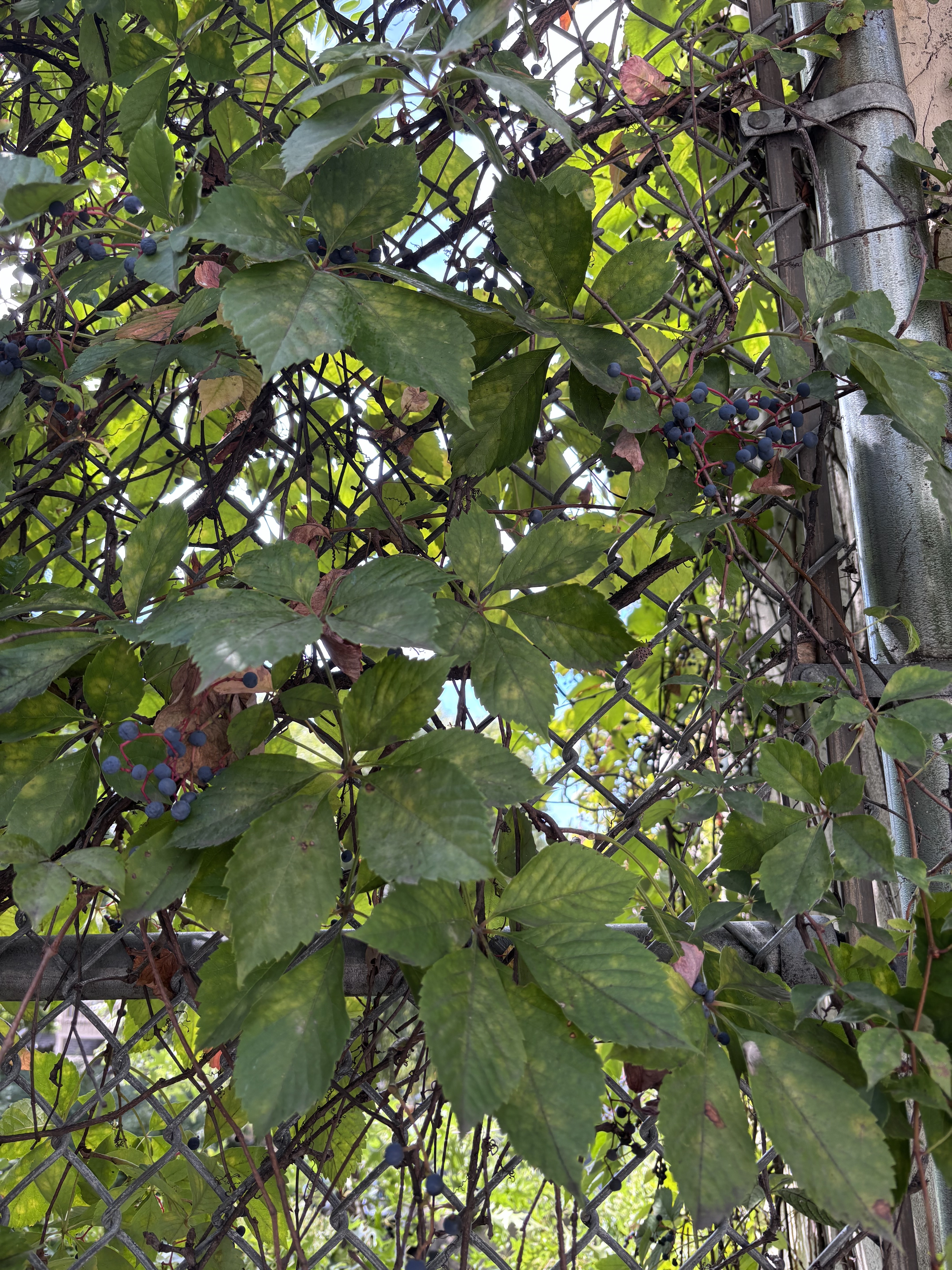
    There are spotted lanternflies hidden among these vines.Paola PĂŠrez

    I believe this is a Virginia creeper plant, also known as woodbine. It also bears some resemblance to poison ivy. Avoid its berries, though — while wildlife can feed on them, they are toxic to humans.

    👀 Can you spot a spotted lanternfly among the leaves? By my count, I think there are at least two.

    Speaking of the invasive species, my colleague Nick Vadala reported this week about a man tricking at least 80 Pennsylvanians into paying for fake trainings and permits to contain the invasive species. Be wary of scams like that, folks.

    👋🏽 Our next adventure awaits!

    By submitting your written, visual, and/or audio contributions, you agree to The Inquirer’s Terms of Use, including the grant of rights in Section 10.
  • What it’s like to live by a data center | Inquirer South Jersey

    What it’s like to live by a data center | Inquirer South Jersey

    Good morning, South Jersey. Welcome to October. Hopefully, the sun will return and it won’t be as gloomy as September.

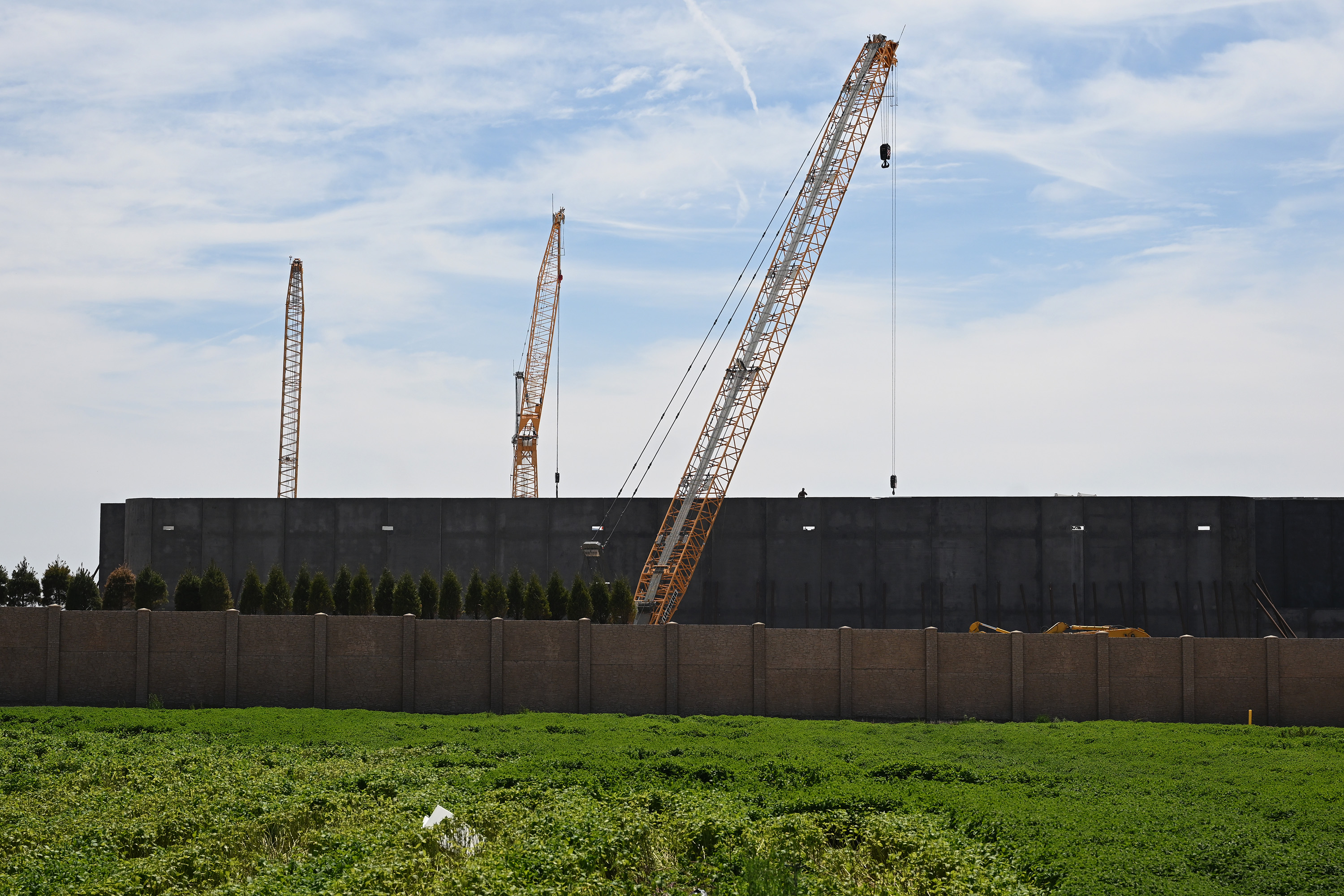
    Vineland residents who are some of the first in the Philly area to know what it’s like to live next to a massive AI data center share their experiences.

    And the Delaware Valley Regional Planning Commission wants to know where you’re headed every day — and how you get there.

    Plus, Clementon Park & Splash World is back up for auction, and more news of the day.

    — Taylor Allen (southjersey@inquirer.com)

    P.S. Submit a story idea via Curious South Jersey. Ask a question about the region, and the answer might just show up in a future article.

    If someone forwarded you this email, sign up for free here.

    When a data center is your neighbor

    Several South Jersey municipalities are considering or have already passed data center bans before any ground broke. Those include Cherry Hill, Collingswood, Medford, Millville, and Monroe Township.

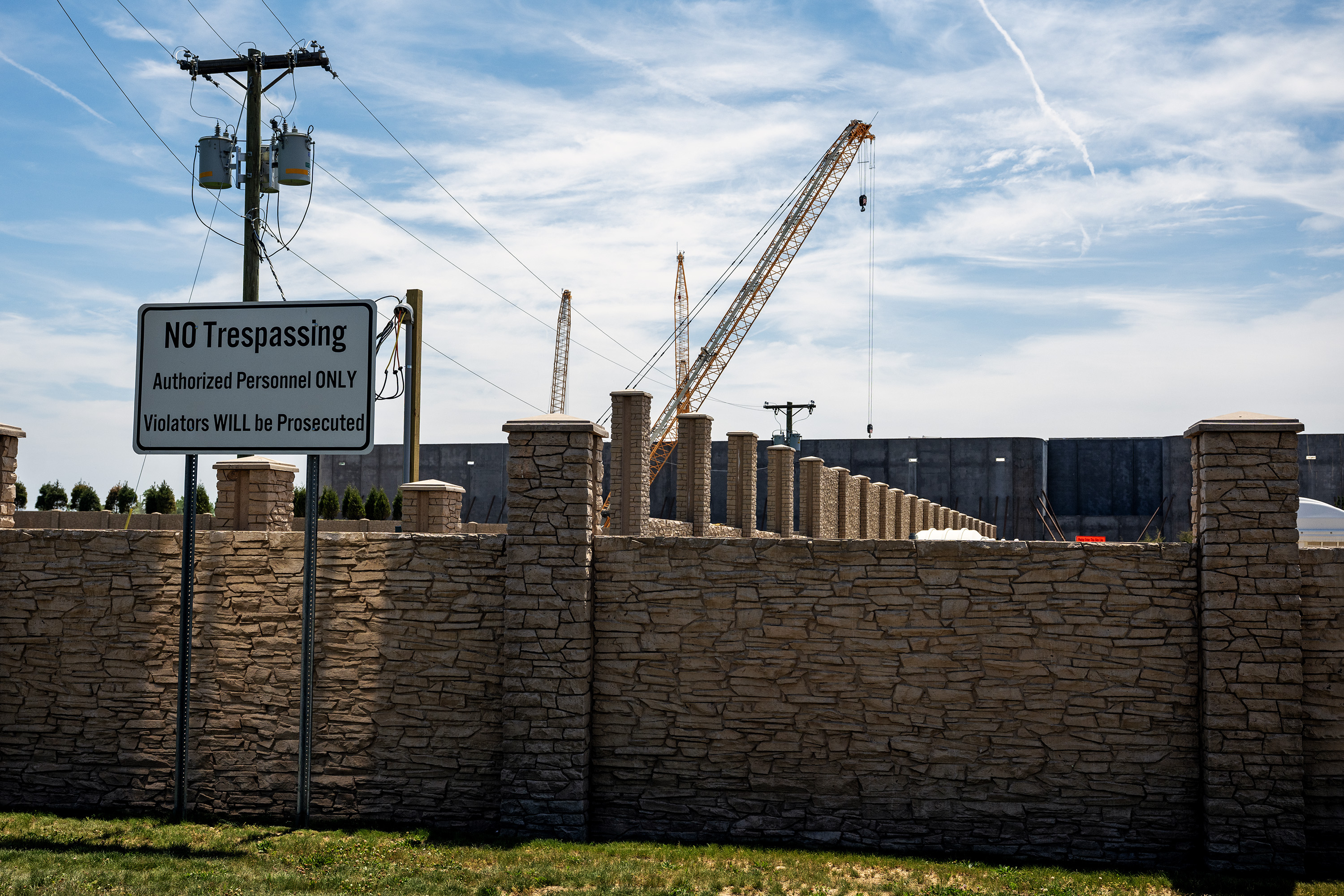
    But a handful of local homeowners have the unique experience of seeing one from their houses — the DataOne facility in Vineland.

    They used to have more neighbors before the data center developers and associates bought several homes that now appear to be abandoned.

    Multiple residents commented on the excessive sound.

    “I think of a prison, and I’m the prisoner with the noise,” said a homeowner of more than 47 years. “You get up in the morning and you’re in a foul mood.”

    Follow along as The Inquirer’s Erin McCarthy visits some of the few in the region with firsthand knowledge of living near a data center.

    🚗 Tracking daily travels

    The DVRPC wants to know just about everything about people’s daily travel habits.

    No, this is not about surveillance. After 13 years, the commission needs an updated survey to help guide funding decisions for infrastructure projects and transportation plans for the nine counties it serves, which include Burlington, Camden, and Gloucester.

    Since January, it has been recruiting participants by mail to randomly selected households. Sorry, you can’t nominate yourself.

    Those who opt in will have to track their household trips for 24 hours using a phone app. It’ll also ask the household basics: size, age, income, etc.

    But how exactly will the experts use this information?

    Transportation reporter Thomas Fitzgerald has that answer and more.

    What to know today

    • Five years after Clementon Park & Splash World was purchased at a bankruptcy auction, the recently shuttered 119-year-old amusement and water park is going back to auction this month.
    • Researchers have found microplastic pollution in every one of the 22 stream and river segments along the Delaware River tested in New Jersey, Pennsylvania, Delaware, and New York. This includes Cooper River in Camden County.
    • Willingboro will unveil its new 570-seat Performing Arts Center on Saturday with its first concert.
    • New Jersey’s minimum wage will increase to $16.48 for most employees beginning in the new year.
    • Residents in Camden and Cherry Hill should be aware of possible detours and prepare to take alternative routes because of roadway projects scheduled for this week.
    • The Inquirer’s editorial board, which is separate from the newsroom, wrote that Gov. Mikie Sherrill’s call for now-former Lt. Gov. Dale Caldwell to resign set “an ethical example for a corrupt era.”

    🗓️ The best things to do this week

    🔮 Boos & Brews Witches Market: Check out this witch-themed market full of themed vendors and activities. Stick around for food trucks, a costume contest, performances, and a beer garden. ⏰ Friday, Oct. 2, 5-9 p.m. 💵 Pay as you go 📍 Rancocas Woods Events and Shops, Mount Laurel

    📚 Collingswood Book Festival: The 24th annual festival is back spanning six blocks of Haddon Avenue. Come to meet booksellers and stay for author and poetry readings, performances, and workshops. ⏰ Saturday, Oct. 3, 10 a.m.-4 p.m. 💵 Free 📍 Haddon Avenue, Collingswood

    🎨 Cranberry Fest: The 36th annual cranberry fest returns with live music, a food court, a beer garden, and more than 100 artisans. 💵 Pay as you go 📍 Farnsworth Avenue, Bordentown

    See more event listings here.

    🧠 Trivia time

    How many dispensaries were open on the day New Jersey first began recreational cannabis sales in 2022?

    A) 25

    B) 20

    C) 12

    D) 3

    Think you know? Check your answer.

    What we’re …

    🍿 Watching: Netflix’s reboot of A Different World.

    🐕 Finding: A quality groomer.

    📚 Choosing: My next read at Words Matter Bookstore in Pitman.

    And that’s all I have for you today. Expect more news tomorrow morning. ☀️

    By submitting your written, visual, and/or audio contributions, you agree to The Inquirer’s Terms of Use, including the grant of rights in Section 10.
  • End of Route 70 roadwork in sight | Inquirer Cherry Hill

    End of Route 70 roadwork in sight | Inquirer Cherry Hill

    Hey there, Cherry Hill!

    After five long years, it’s nearly quitting time on all the roadwork along Route 70. Also in the news, New Jersey’s Supreme Court declined to hear an appeal over control of the Cherry Hill Democratic Committee, the township will use funds from a national opioid settlement for a youth mental health professional, and a group of seniors is on a quest for the best cheesesteak in South Jersey.

    — Laura Smythe (cherryhill@inquirer.com)

    If someone forwarded you this email, sign up for free here.

    Route 70 roadwork to wrap up soon, five years later

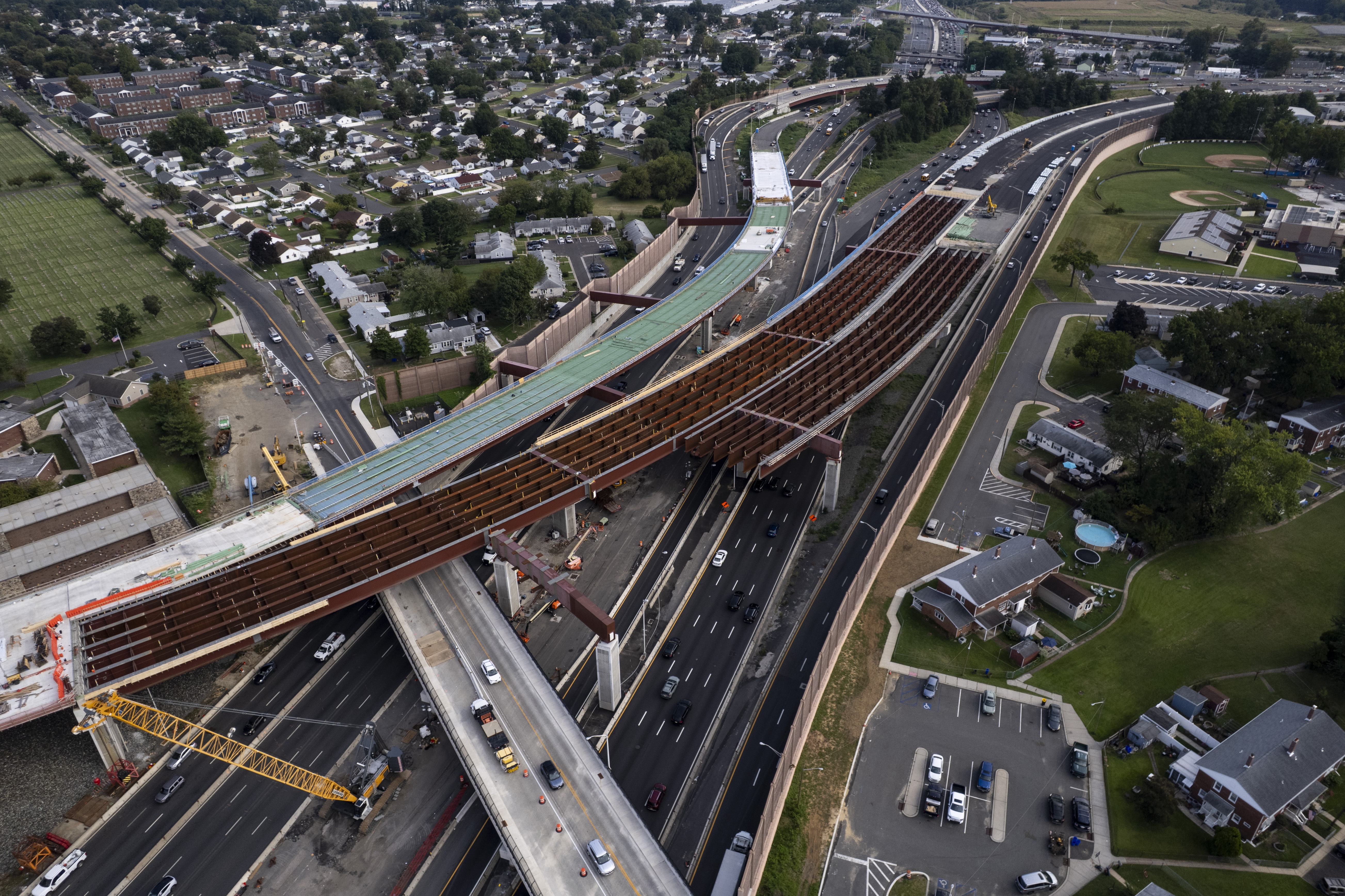
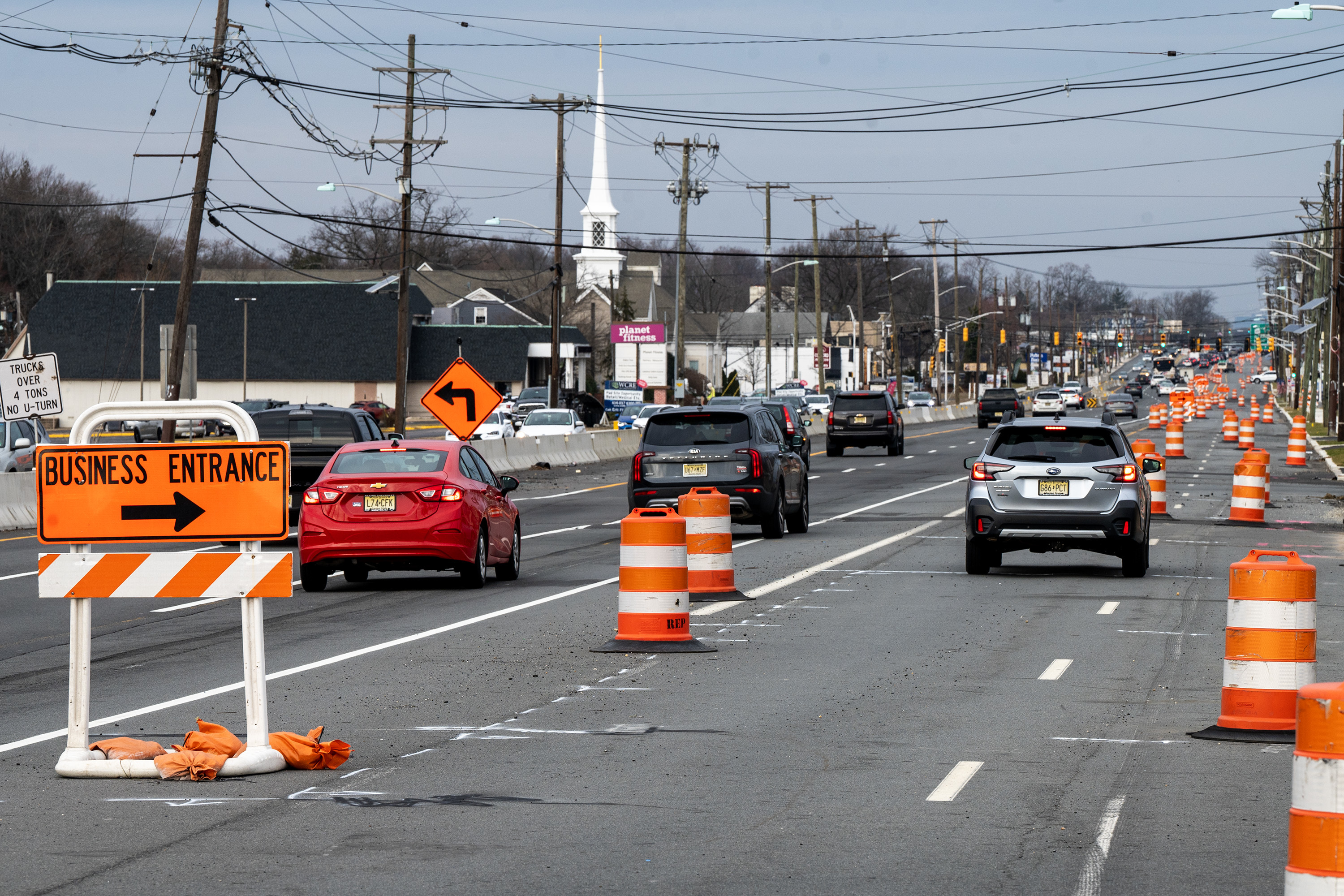
    Drivers, rejoice. The Inquirer’s Lacey Latch has received word that the (seemingly endless) construction along Route 70 will “essentially be complete this year,” per the New Jersey Department of Transportation.

    You may have grown unwillingly inure to the roughly $150 million safety improvement project that has marked up the thoroughfare since 2021. Now, updating some traffic signals and finishing up paving work are the only outstanding to-dos, though NJDOT has some additional landscaping work planned with Camden County in the spring.

    Here’s everything the five years of construction along Marlton Pike has yielded (aside from a headache).

    🚦 In other roadway news: Cherry Hill is at the center of multiple stretches of South Jersey highway that have seen the highest numbers of fatal car crashes in recent years.

    💡 Community news

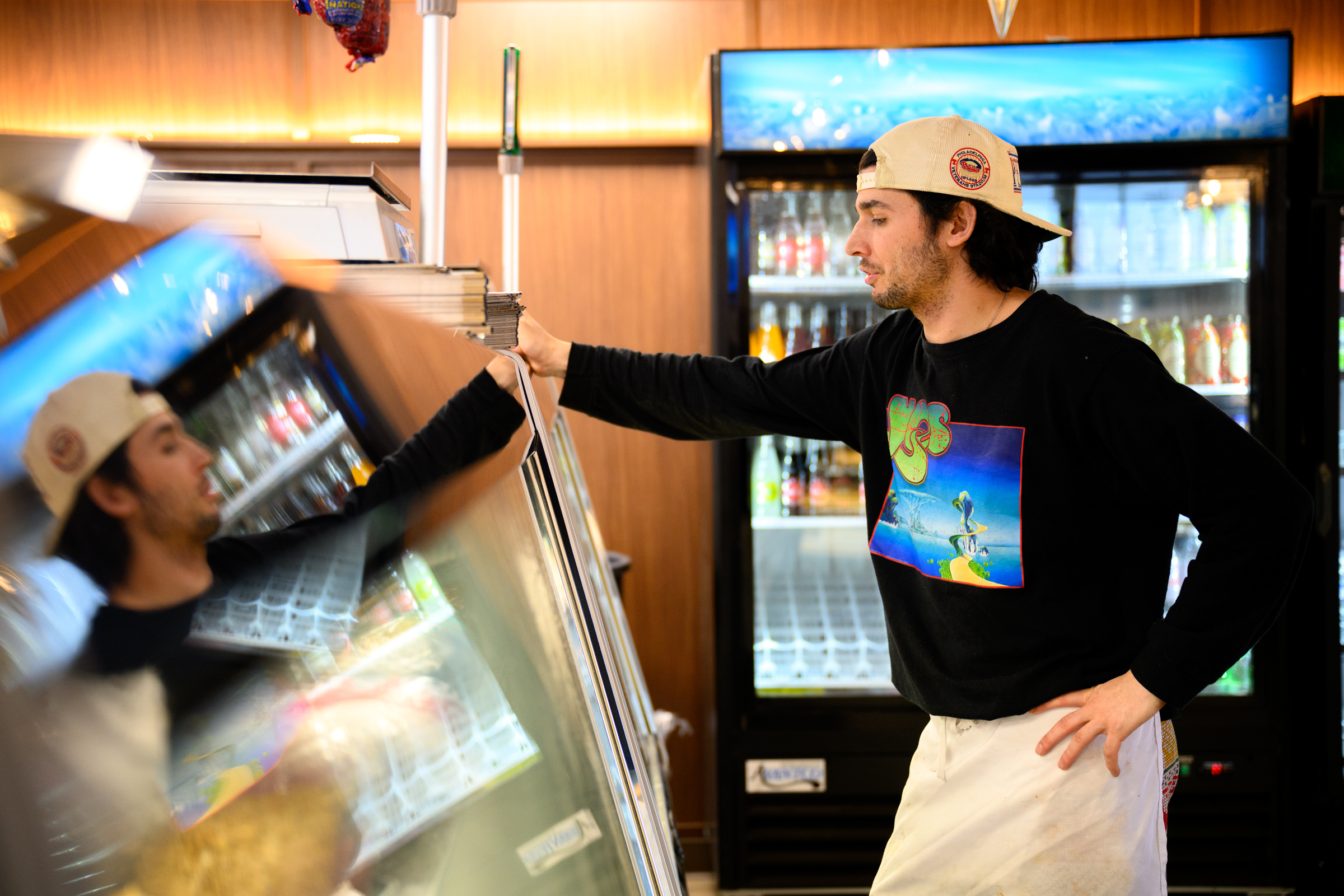
    • Brandon Parish, who manages the deli at the Kibitz Room’s original Cherry Hill location and previously owned the now-shuttered King of Prussia outpost, has filed for personal bankruptcy. The deli inside The Shoppes at Holly Ravine won’t be affected.
    • The New Jersey Supreme Court declined to hear an appeal aimed at unseating three members of the South Jersey Progressive Democrats — all Cherry Hill residents — who won in the June 2025 primary to control the Cherry Hill Democratic Committee, 70and73 reports. The Camden County Democrats, led by George E. Norcross III, had sued after losing the election.
    • Several roadwork projects are underway this week throughout the township, causing some road and sidewalk closures. Here are the specifics.
    • Police are advising drivers to make sure their car doors are locked and secure as groups target unlocked vehicles in Cherry Hill and other South Jersey locales, NBC10 reports.

    🗺️ Other nearby news

    • Mount Laurel may condemn and demolish nine hotels as part of a long-term push to build more affordable housing. One owner isn’t impressed by the township’s plan.
    • Collingswood is considering privatizing the borough’s ambulance services in an effort to help its understaffed fire department.

    🏫 Schools briefing

    • Cherry Hill will direct $240,000 to support a licensed mental health clinician position working with the township’s high schoolers, drawing the funds from its roughly $764,000 share of the national settlement with drug companies over the opioid epidemic. 70and73 has the details.
    • Cherry Hill Public Schools officials are looking to stem the rate of absenteeism after the latest district statistics indicate more than 1,500 students are chronically absent.

    🍽️ On our plate

    • A group of South Jersey seniors have been on a monthslong hunt to track down the best cheesesteak in the area, trying bites from Chick’s Deli in Cherry Hill, Donkey’s Place in Camden, and beyond.

    🎳 Things to do

    🕺 The Dance Loft Grand Opening: Try out a group class and take in performances by the team behind this new studio. ⏰ Friday, Oct. 2, 7-10 p.m. 💵 Free 📍 The Dance Loft NJ

    🎶 Jim Beer in Concert: Get a jump on commemorating Indigenous People’s Day by checking out a performance by Beer, a member of Lenape Nation of Pennsylvania, who will also share stories and history. ⏰ Sunday, Oct. 4, 1:30-3 p.m. 💵 Free; registration required 📍 Cherry Hill Public Library

    🎸 The Martin Experience: Pick at the iconic company’s instruments and maybe learn a thing or two at this event open to all guitarists. ⏰ Wednesday, Oct. 7, 5 p.m. 💵 Pay as you go 📍 Guitar Center

    🗓️ Looking for more things to do? Check out our guide to ongoing South Jersey events.

    🏡 On the market

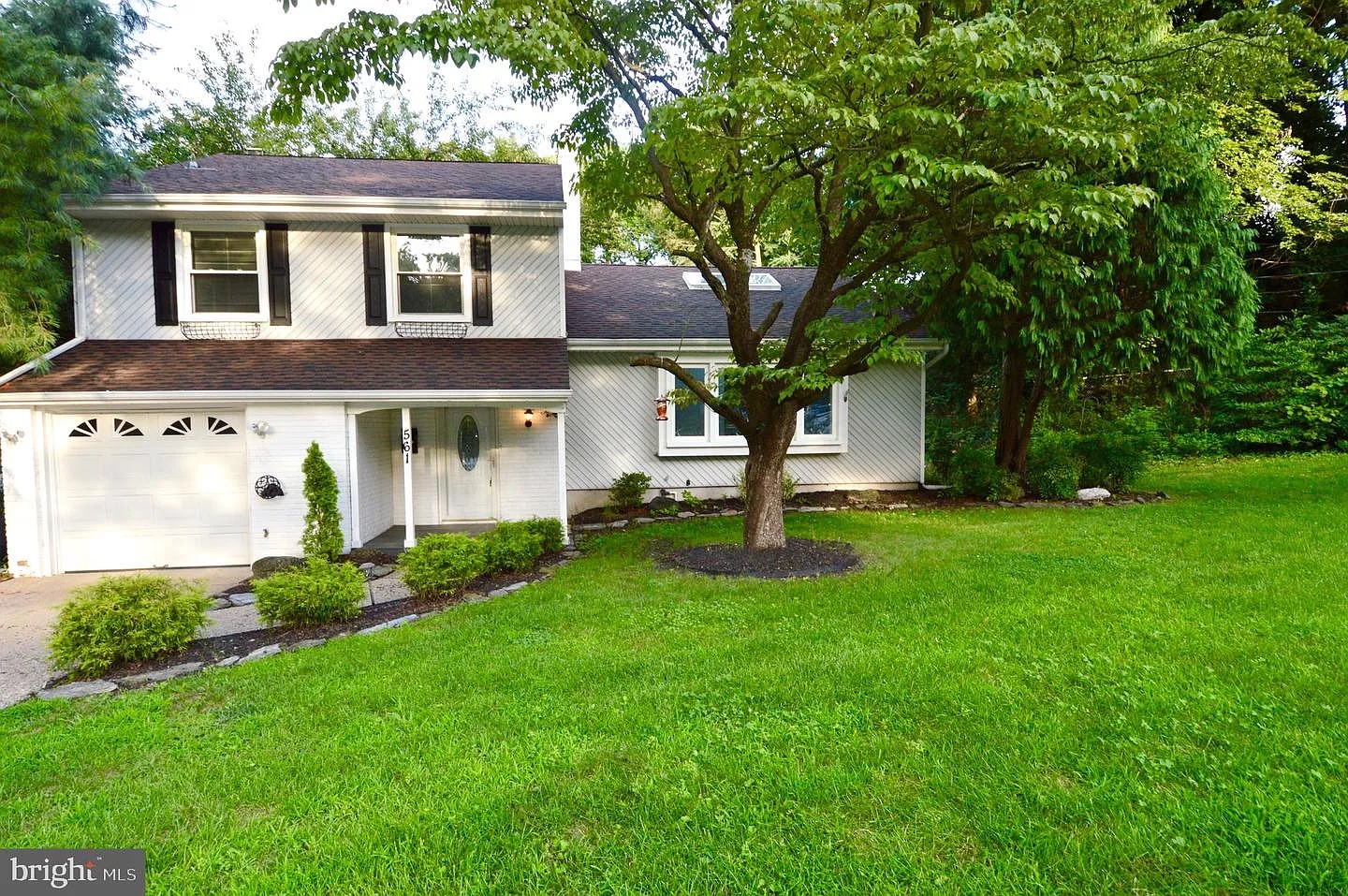
    An updated three-bedroom Barclay home

    561 Covered Bridge Rd, Cherry Hill, NJ 08034

    This home from 1960 sits in Cherry Hill’s Barclay neighborhood, offering three bedrooms and two-and-a-half bathrooms. It features an open layout, skylights to bring in natural light, and a brick fireplace. There’s an attached one-car garage, plus a fenced-in yard out back.

    See more photos of the property here.

    Price: $530,000 | Size: 1,679 SF | Acreage: 0.43

    🗞️ What other Cherry Hill residents are reading this week:

    By submitting your written, visual, and/or audio contributions, you agree to The Inquirer’s Terms of Use, including the grant of rights in Section 10.
    This suburban content is produced with support from the Leslie Miller and Richard Worley Foundation and The Lenfest Institute for Journalism. Editorial content is created independently of the project donors. Gifts to support The Inquirer’s high-impact journalism can be made at inquirer.com/donate. A list of Lenfest Institute donors can be found at lenfestinstitute.org/supporters.

  • Hiring youth sports officials in N.J. has become challenging, and new rules could exacerbate the problem

    Hiring youth sports officials in N.J. has become challenging, and new rules could exacerbate the problem

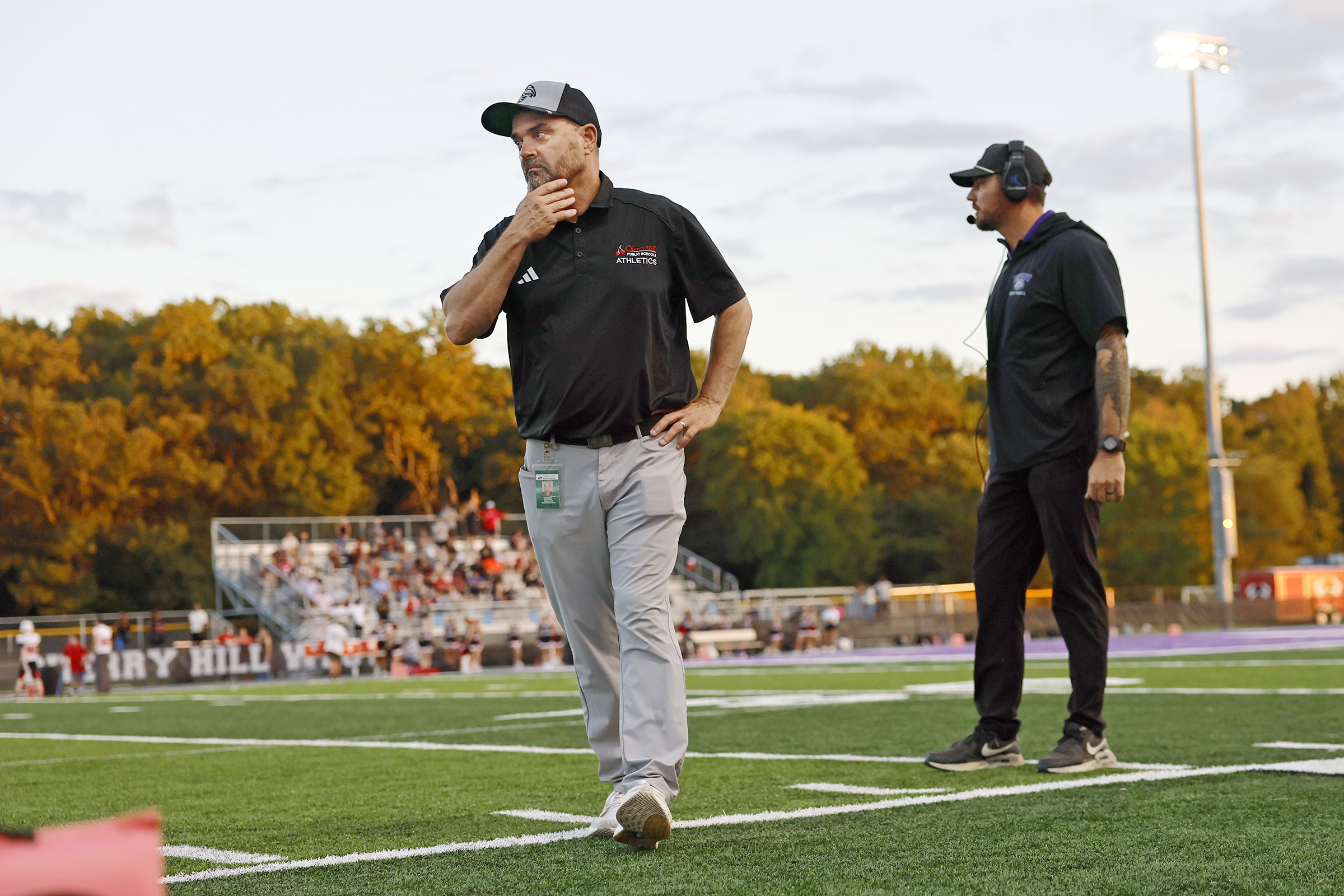
    Michael Beirao, the athletic director for Cherry Hill Public Schools, manages about 1,800 athletic events each academic year — with about $130,000 to pay referees for all of them.

    The cost of hiring a ref has increased, while the number of officials participating has declined.

    In Cherry Hill, Beirao oversees two large high schools, East and West, which have 63 varsity teams, plus another 60 or so junior varsity and freshman groups. The middle schools — Beck, Rosa, and Carusi — each offer 17 sports programs.

    His $130,000 — with $100,000 for the high school level and $30,000 for middle school — for officials is considered “a large budget,” Beirao noted.

    The change of officiating classification could be slow and gradual. However, it could mean eventual higher property taxes and cutting athletic programs from public schools if they can’t afford the cost, say South Jersey athletic directors.

    “It would be devastating, because I’ll use Cherry Hill Public Schools as an example; this year we had to cut our budget by $14 million,” Beirao said. “How do you make a decision between keeping a teacher during the day and having an official after school?”

    Meanwhile, Beirao noted, school sports programs face competition from clubs and private-equity-owned programs. Requiring schools to hire referees as employees would be an added “burden,” he said.

    “It wouldn’t be feasible, and it wouldn’t be a tenable situation,” Beirao said.

    Ken Schoudt, athletic director for the Delsea Regional School District, asked an umpire association how much it would charge for an official classified as an employee instead of an independent contractor. The cost tripled.

    “For one umpire at the varsity level, is $110. For them to break even and make the same amount of money, they would have to charge us close to $350,” Schoudt said.

    But a proposed bill could help. If passed, it would classify all officials as independent contractors under state law.

    What is New Jersey’s ABC test?

    The New Jersey’s Department of Labor and Workforce Development presumes all workers who make compensation in the state are employees, unless they satisfy all three prongs of the ABC test to be classified as an independent contractor. Some changes to the rule are set to take effect Oct. 1.

    New Jersey Sen. Kristin M. Corrado (R-District 40) said the system’s new regulations make it even more difficult to be classified as an independent contractor.

    Umpires, referees, and other officials are generally paid on a per-game basis and employed primarily in other occupations and supplement their income by officiating part time, according to the U.S. Bureau of Labor Statistics data.

    Most officials work through agencies for each sport. The high school and youth programs go to those agencies for assigning games.

    New Jersey Gov. Mikie Sherrill’s administration is instructing some agencies to classify their workers as employees. But for “100 years we’ve always been independent contractors,” said John Gallante, president of the New Jersey Umpire Alliance.

    The state’s labor department said it’s not targeting sports officials, but “whether a worker is an employee or an independent contractor depends on the specific facts of each individual’s working relationship, under New Jersey’s ABC test.”

    Michael Beirao is the athletic director for Cherry Hill Public Schools.

    New Jersey adopted the ABC test in 1936 under the state’s Unemployment Compensation Law.

    Thirty-three states use some version of the ABC test to determine worker classification. In New Jersey, paid workers are presumed to be employees unless they meet all three of the following:

    • Prong A: individual has been and will continue to be free from control or direction over the performance of services, both under the contract and in fact.
    • Prong B: the services are either outside the usual course of the employer’s business or are performed outside of all the employer’s places of business.
    • Prong C: the individual is engaged in an independently established trade, occupation, profession or business.

    The test is used to enforce wages, benefits, and labor protections. Misclassification can result in significant financial penalties for employers, according to the NJDOL.

    What are the new regulations?

    In May, the state labor department clarified the test’s rules with new regulations in response to court cases in recent years involving worker classifications.

    It is set to go in effect Oct. 1.

    The clarifications, according to New Jersey law firm Cole Schotz, include:

    • The business must prove it does not exercise control over the worker and has not “reserved the right to control the individual’s performance.”
    • Work is not outside the usual course of business if it is “integrated into the hiring entity’s business,” even if the work is done off premises.
    • The worker must have proof of their independent business, that would keep running even if they lost this specific contracted job.

    Corrado said the new regulations put further and narrower definitions on each of the prongs, making it more difficult to be an independent contractor in New Jersey.

    “The ABC test itself is not new and neither are the problems that come with it,” Corrado wrote in an email. “These regulations would exacerbate those problems.”

    How are amateur officials being impacted?

    Gallante, of the New Jersey Umpire Alliance, recalled that two years ago an amateur official incorrectly filed for unemployment.

    “The officiating association responded and said they don’t have any employees,” said Gallante, whose organization represents 13 certified baseball and softball officiating associations. “So that claim was denied. But then it prompted an unemployment audit of that association.”

    The department determined from its audit that all officials in the association should be classified as employees, Gallante said, and that the association should backpay unemployment dating back to 2020. That “would in essence put them out of business. They would no longer be able to function,” he said.

    Gallante added, “the Department of Labor has told us that in ‘fairness,’ they would examine all the other officiating associations in the state as well.”

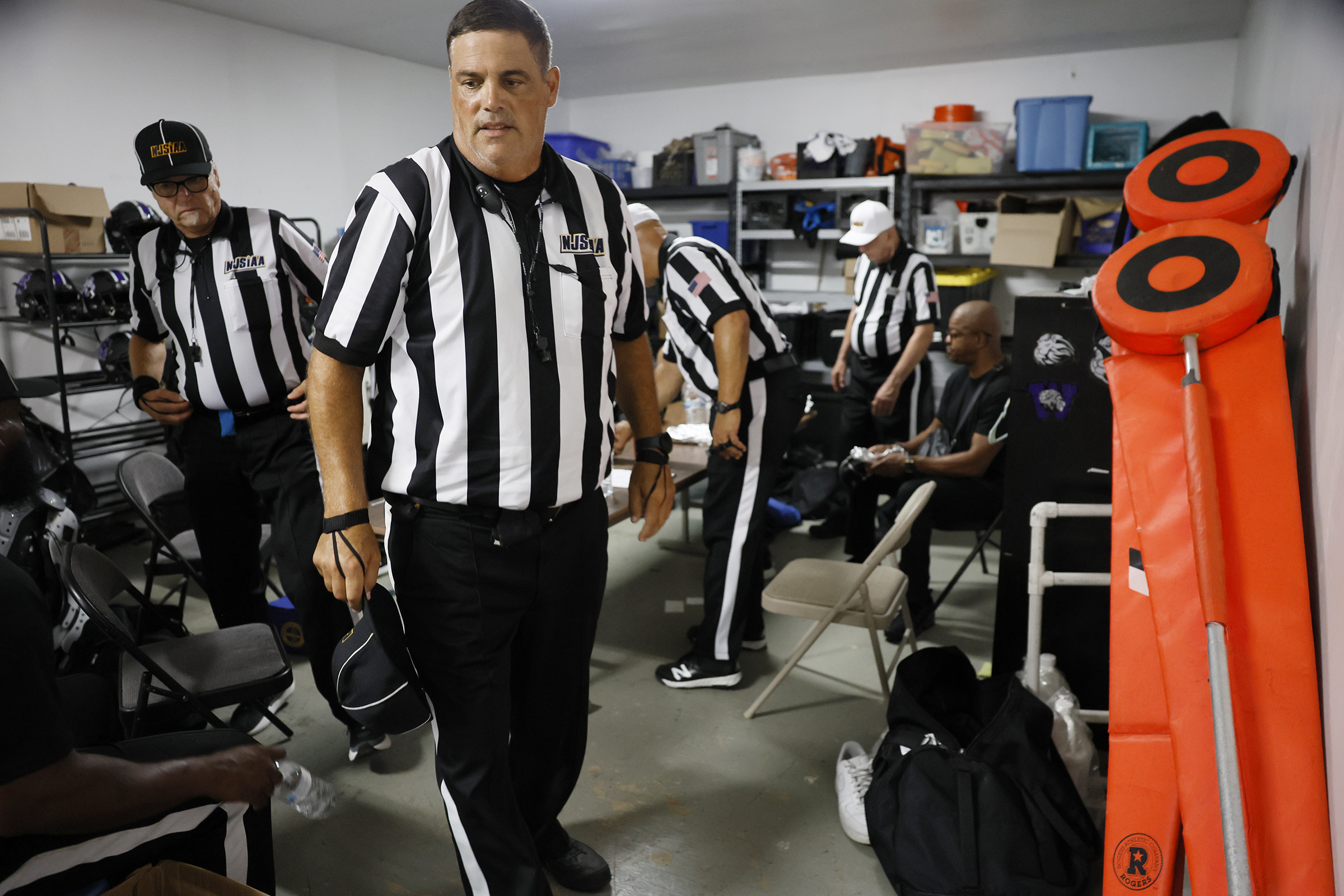
    NJSIAA officials John Lovenduski spots the football while Bruce Carter signals a first down during the Cinnaminson and Cherry Hill West game on Sept. 18.Elizabeth Robertson / Staff Photographer

    The state labor department said it “does not comment on ongoing legal or administrative proceedings.” And labor commissioner Kevin Jarvis said he could not give examples of what differentiates an employer from an independent contractor.

    Corrado said the Sherrill administration levied a fine that could put that association out of business, which would impact thousands of youth baseball and softball games.

    “Thankfully, the organization is standing strong against the Department of Labor and fighting this determination,” Corrado added.

    An organization with employees must account for payroll, unemployment, disability, workers’ compensation, wage and hour requirements, and other employment laws — all of which comes with a cost.

    Corrado emphasized the uncertainty is problematic: “A Little League, travel tournament, high school, or other organization should not need lawyers and accountants to determine whether classifying someone who officiates a few games qualifies as an independent contractor.”

    Who is trying to change this?

    Corrado introduced bill S4045 in March, along with Sen. Paul A. Sarlo (D-District 36) and Sen. Latham Tiver (R-District 8).

    If passed into law, it would specify that amateur sports officials are not employees under state employment laws.

    “It would ensure that youth sports officials are able to work when they want, where they want, and how much they want,” Corrado said. “It would also allow youth sports organizations and high schools to continue to pay the officials at the rates they are accustomed to, not needing to worry about the burden of payroll taxes or workers’ compensation insurance.”

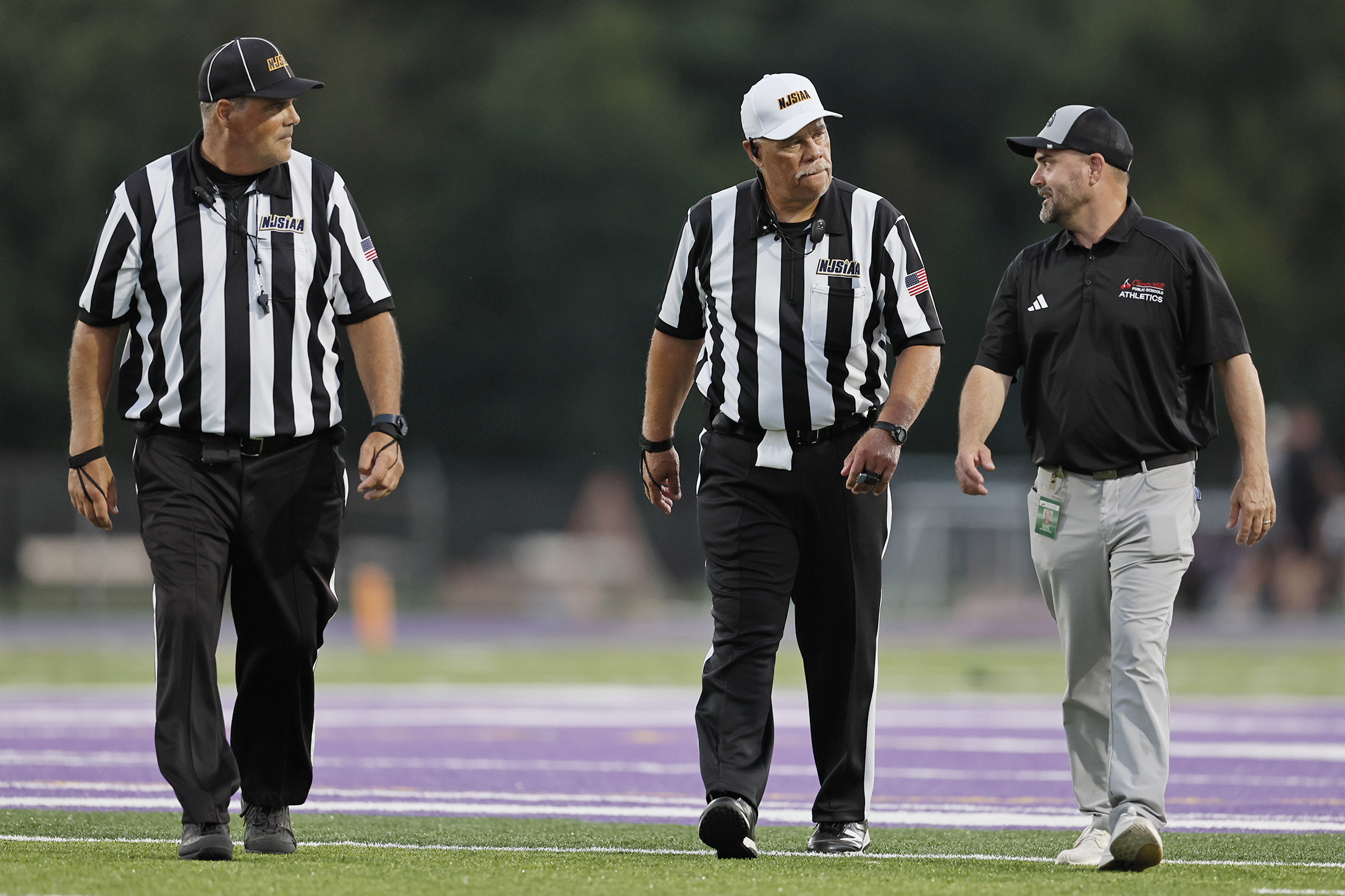
    NJSIAA official John Lovenduski (front) and the rest of the officiating crew head back to the field after a meeting at halftime during a game between Cinnaminson and Cherry Hill West on Sept. 18.Elizabeth Robertson / Staff Photographer

    The bill is pending in the Senate and Assembly labor committees.

    The New Jersey State Interscholastic Athletic Association (NJSIAA), which oversees and registers high school sports officials in the state, said in an email to The Inquirer that it is monitoring the issue and has been in conversations with lawmakers and regulators.

    “We recognize the potentially significant impact this could have on interscholastic athletics and continue to make sure policymakers understand the critical role officials play,” a spokesperson wrote. “Our position is clear: high school sports officials are independent contractors and should continue to be treated as such.”

  • Former Kibitz Room owner files for bankruptcy as he tries to repay debts from shuttered King of Prussia restaurant

    Former Kibitz Room owner files for bankruptcy as he tries to repay debts from shuttered King of Prussia restaurant

    Brandon Parish, former owner of the Kibitz Room in King of Prussia and deli manager at the original Cherry Hill location, has filed for personal bankruptcy, months after his Montgomery County restaurant closed amid mounting debts.

    Parish owes creditors nearly $1.8 million, including $1.2 million to Hanover Community Bank for a small-business loan, and has about $15,500 in assets, according to documents filed in U.S. Bankruptcy Court for the Eastern District of Pennsylvania.

    The 33-year-old King of Prussia resident filed for bankruptcy in early September, five months after he and his father, Neil, were evicted from their storefront in the Valley Forge Center on U.S. Route 202. Their landlord won a judgment for more than $194,000 in rent and fees.

    The restaurant was in business for a year.

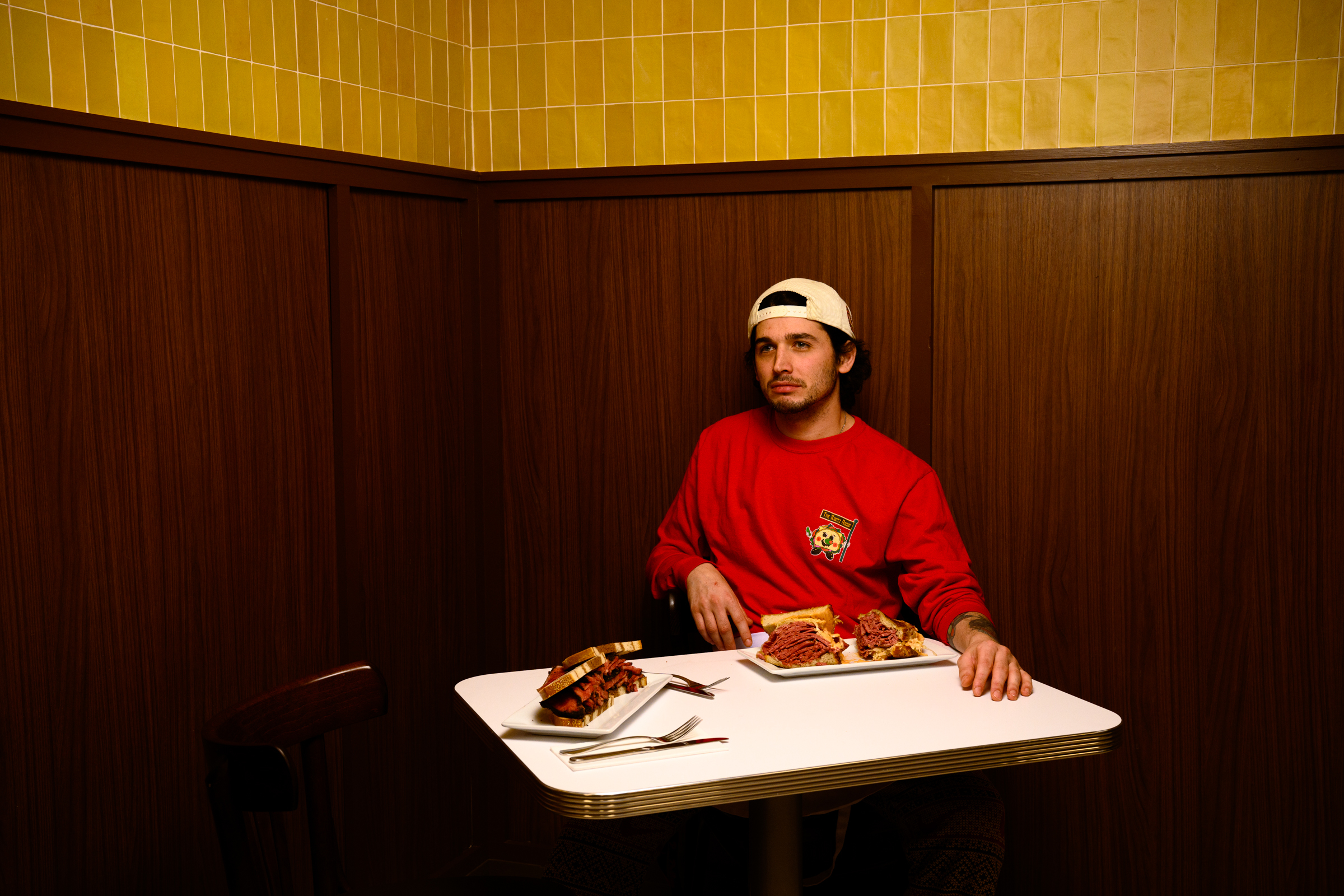
    Brandon Parish sits at a table at the now-closed Kibitz Room in King of Prussia in April 2025.Kriston Jae Bethel / For The Inquirer

    The restaurant also owed more than $135,000 to distributor Foods Galore, a debt listed in Parish’s personal bankruptcy filing alongside more than $140,000 owed to other business vendors and related services.

    The King of Prussia location’s debts are “going to take some work to clean up,” Brandon Parish said in April, noting the expansive full-service restaurant strayed too far from its over-the-counter roots. “Obviously, it’s been a disaster since day one. Nothing went as planned. But we’ll have to figure all that out.”

    Meanwhile, the Cherry Hill Kibitz Room — a separate business that had been owned by Brandon Parish’s mother, Sandy — abruptly closed and filed for bankruptcy earlier this year. Neil and Brandon Parish, backed by outside investors, negotiated a deal in bankruptcy court to buy the Cherry Hill equipment and sign a new lease there, though neither Parish would be an owner. The Springdale Road deli reopened in May, with the Parish men behind the counter.

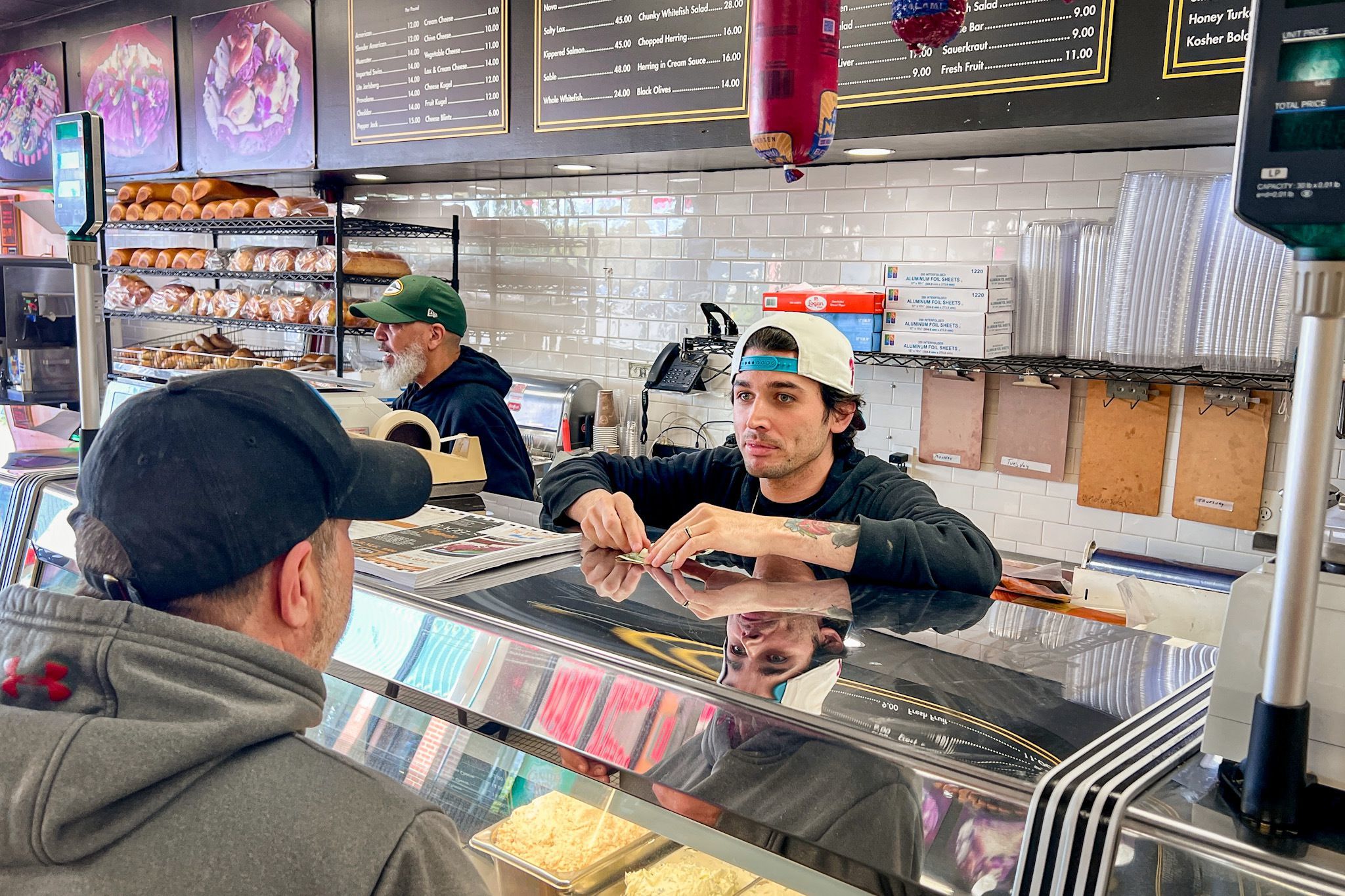
    Brandon Parish (right) waits on a customer at the Kibitz Room in Cherry Hill on May 1. Michael Klein / Staff

    Brandon Parish’s personal bankruptcy case will not impact operations at the Cherry Hill deli since he is only an employee, according to a spokesperson.

    The Kibitz Room has been part of the Parish family for more than two decades.

    In 2003, Neil Parish purchased the Cherry Hill spot from Russ Cowan, who had given the deli its name, a loose translation of the Yiddish chitchat. Cowan, a local legend, owned Philly’s Famous 4th Street Deli for 18 years and now owns Radin’s Deli in Cherry Hill.

    Brandon grew up at Kibitz, standing on milk crates to wash dishes for his father. Ever since he was a kid, delis were his “comfort zone,” Brandon said in 2025.

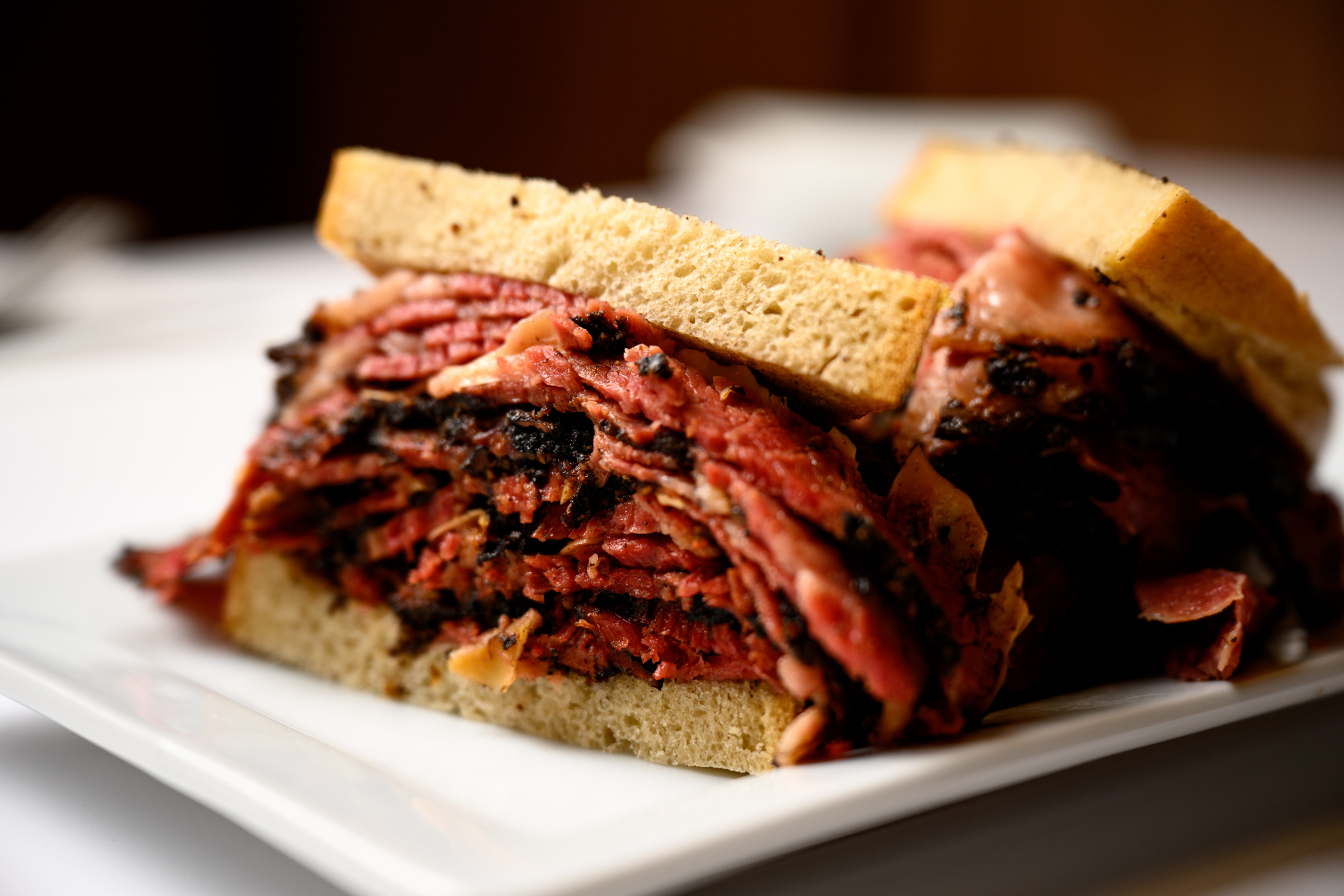
    A pastrami sandwich at the now-closed Kibitz Room in King of Prussia. Kriston Jae Bethel / For The Inquirer

    After Brandon’s mother and father split about a decade ago, his dad moved back to the Baltimore area, and Brandon continued to run the Cherry Hill restaurant with his mom. But he was itching to open his own place, he said.

    In 2025, Brandon left his post in Cherry Hill to open a Kibitz Room in the former Michael’s Deli in King of Prussia. The business was an independent venture with his father, who had returned to the Philly area from Baltimore. The senior Parish was in charge of the menu, but his son was the boss: “This is Brandon’s store,” Neil said at the time.

    The pair said they were excited to open a full-service restaurant that was about four times the size of the Cherry Hill deli and could seat 200 people.

    The Kibitz Room in King of Prussia was about four times the size of the original deli in Cherry Hill, a separate business not owned by Brandon Parish. Kriston Jae Bethel / For The Inquirer

    They created a giant menu full of staples like corned beef and pastrami sandwiches, matzo ball soup, knishes, and chicken pot pies, as well as elevated items like garlicky flank steak. They planned tableside chopped liver service.

    “I feel like this really encapsulates the Jewish deli as a whole experience,” Brandon Parish said at the time. “The old, the new, the vibe, the aesthetic, the personality, the quality, the menu mix.”

    And he scoffed at occasional reports that Jewish delis were going out of style: “I think if you do it well, then you never have to worry about failure.”

  • The micro Museum of the Philadelphian celebrates Philly’s macro personality

    The micro Museum of the Philadelphian celebrates Philly’s macro personality

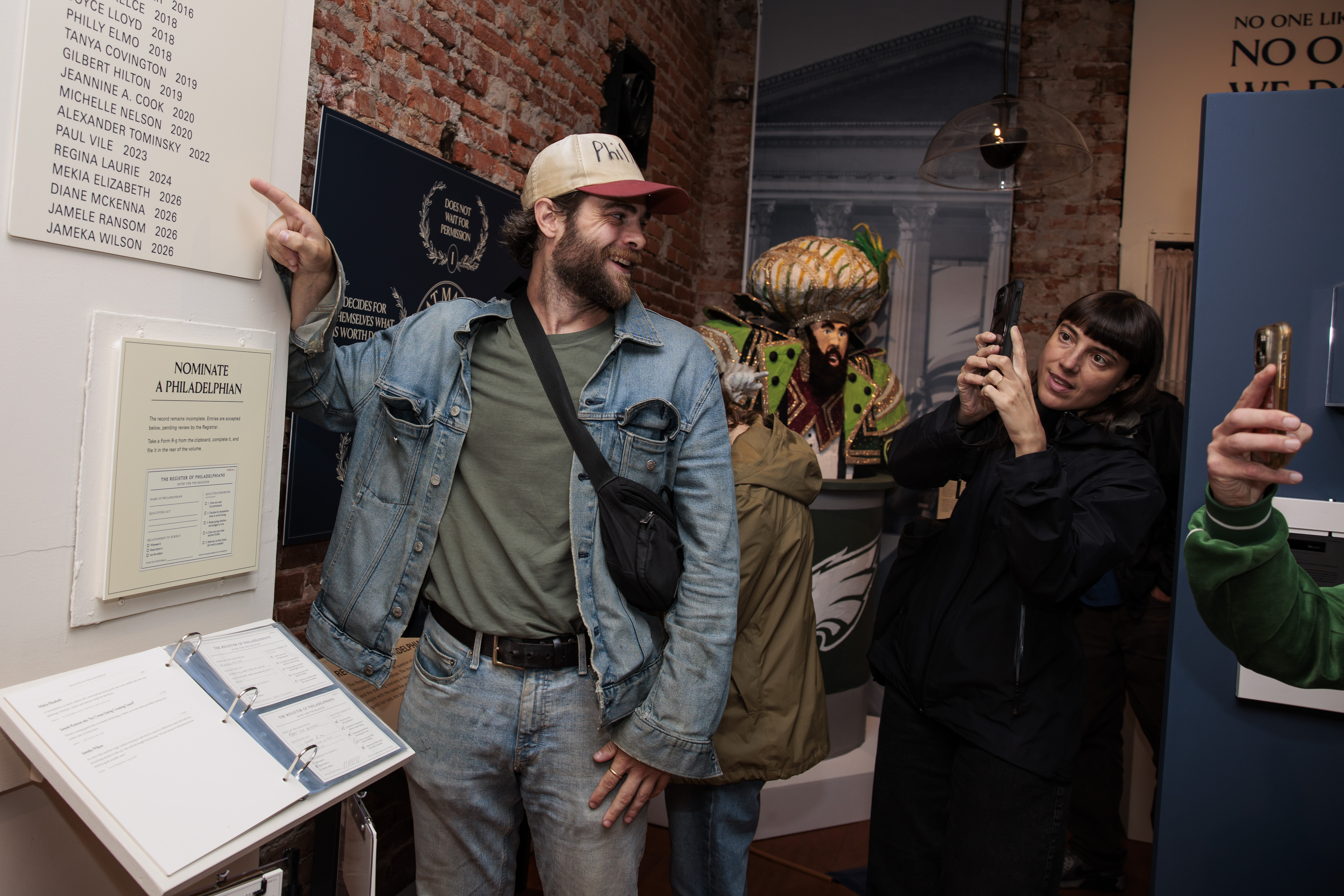
    Alexander “Chicken Man” Tominsky walked into the Museum of the Philadelphian in a Canadian tuxedo and a baseball hat with “Phillies” written on it in marker on Tuesday and was blown away to find his name on a plaque alongside other local legends like Benjamin Franklin and Philly Elmo.

    “No way! Oh my gracious! Who would have known when I was a little kid crying in my pillow something like this would happen,” he said, pointing to his name.

    Tominsky — who became renowned throughout the land in 2022 for eating 40 rotisserie chickens in 40 days, culminating with a public noshing of a chicken on an abandoned Walmart pier in South Philly — was invited to a preview opening for the museum by its founder and creator, Brian Adoff.

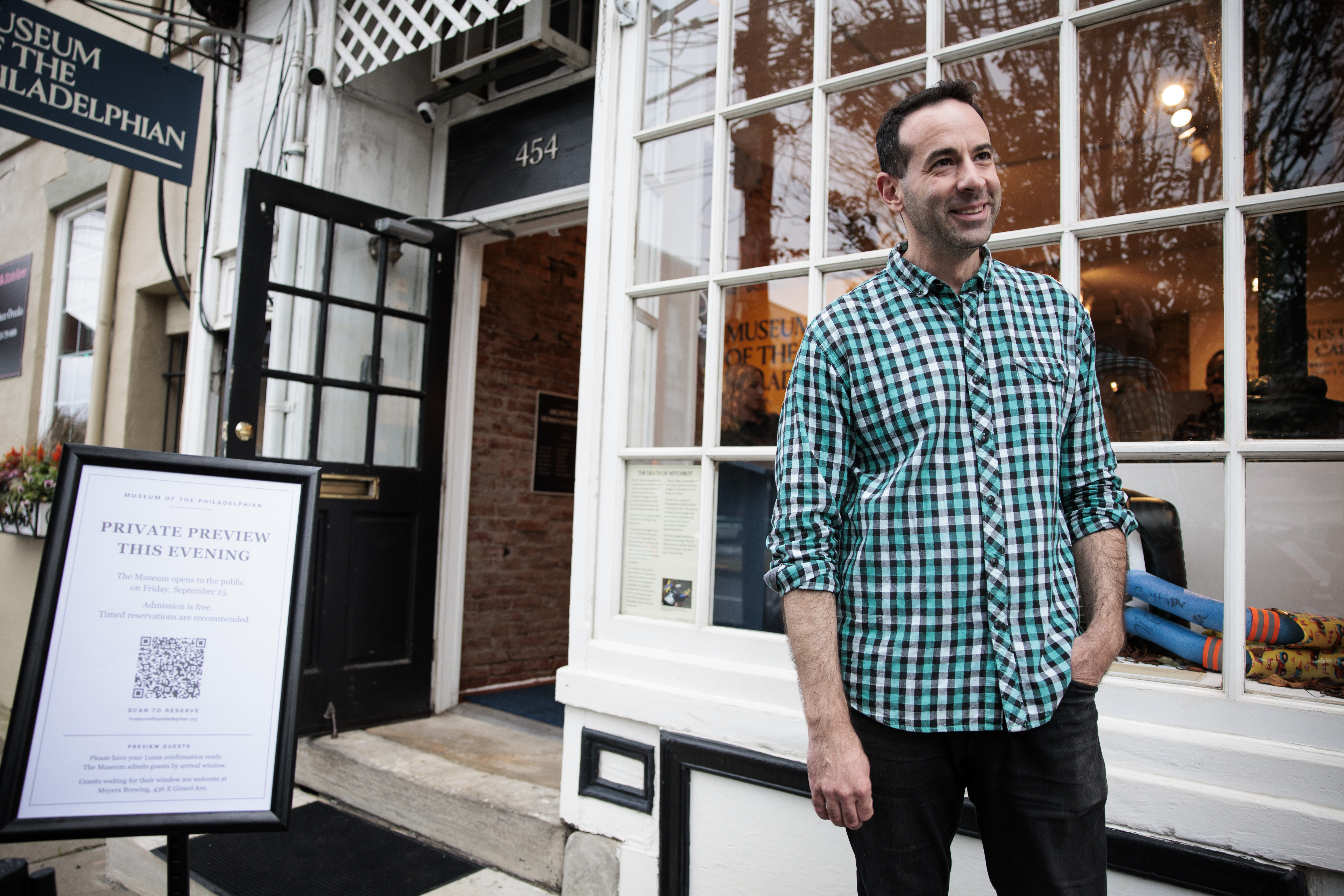
    Founder and creator Brian Adoff outside his Museum of the Philadelphian in Fishtown.Monica Herndon / Staff Photographer

    “The museum is about the personality and attitude and conduct of Philadelphians,” Adoff said. “My personal hope is that you leave inspired to really be the best version of yourself, the best Philadelphian you can be.”

    Located in a 300-square-foot storefront that was previously Adoff’s office on East Girard Avenue in Fishtown, the free, temporary “micro museum” is just down the road from another Philly landmark — the “I Hate Bank of America” sign. The large, yellow banner was put up by a homeowner in 2007, after the bank branch across the street ticked him off. The branch closed many years ago, but the sign remains, a grand tribute to Philadelphians’ spite.

    View on Threads

    What makes Philadelphians this way? And what makes it so oddly endearing? These are questions Adoff explores in his absurd and unexpectedly heartwarming museum, which opens Friday.

    “There’s an emotional narrative arc the museum takes in its 300 square feet, where it ends with literally a book of Philadelphians who exhibit five qualities that I’ve determined, with my crack team of curatorial advisers, that make up a Philadelphian,” Adoff said.

    As of a student of the Philadelphian who’s written hundreds of profiles of the everyday people who make me love this city more every day, I thought Adoff had set a lofty goal for himself when we first met earlier this month. How do you distill what it means to be a Philadelphian in 300 square feet? And how do you decide who makes the cut?

    At the preview Tuesday, I was pleased to find that over the course of about 20 exhibits in the space, Adoff skillfully addresses the Santa-hating-battery-throwing-robot-killing tropes that haunt Philadelphians, while also getting to the oddly-touching truths behind those, and other very Philly stories.

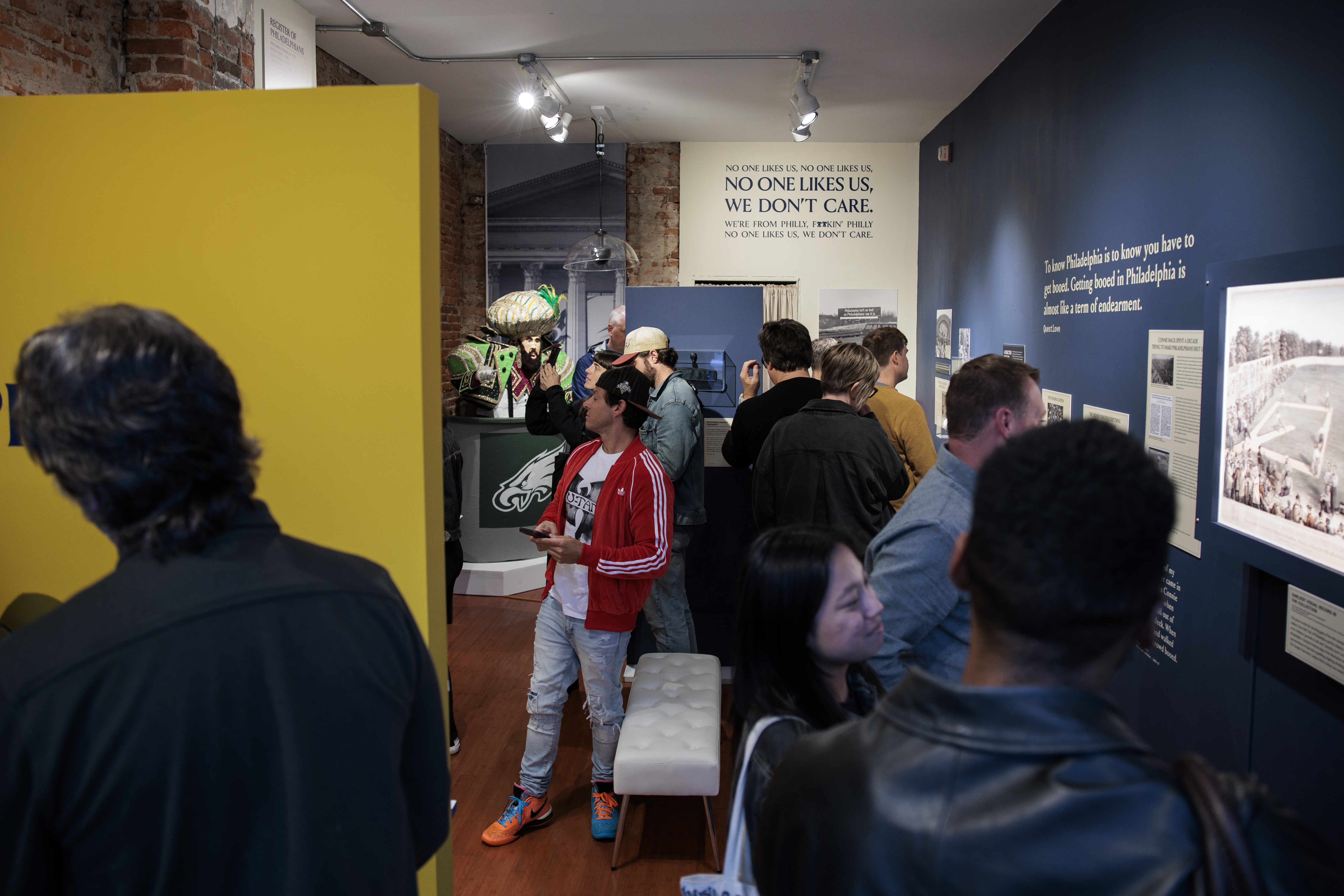
    Visitors browse the Museum of the Philadelphian.Monica Herndon / Staff Photographer

    And while Adoff and his team have compiled a “Register of Philadelphians” with more than 50 names and stories of local folk heroes who epitomize what it means to be a Philadelphian, their best decision may have been to include cards for visitors to nominate their own quintessential Philadelphian. Because if one thing is certain, Philly is going to have thoughts.

    Grease the pole

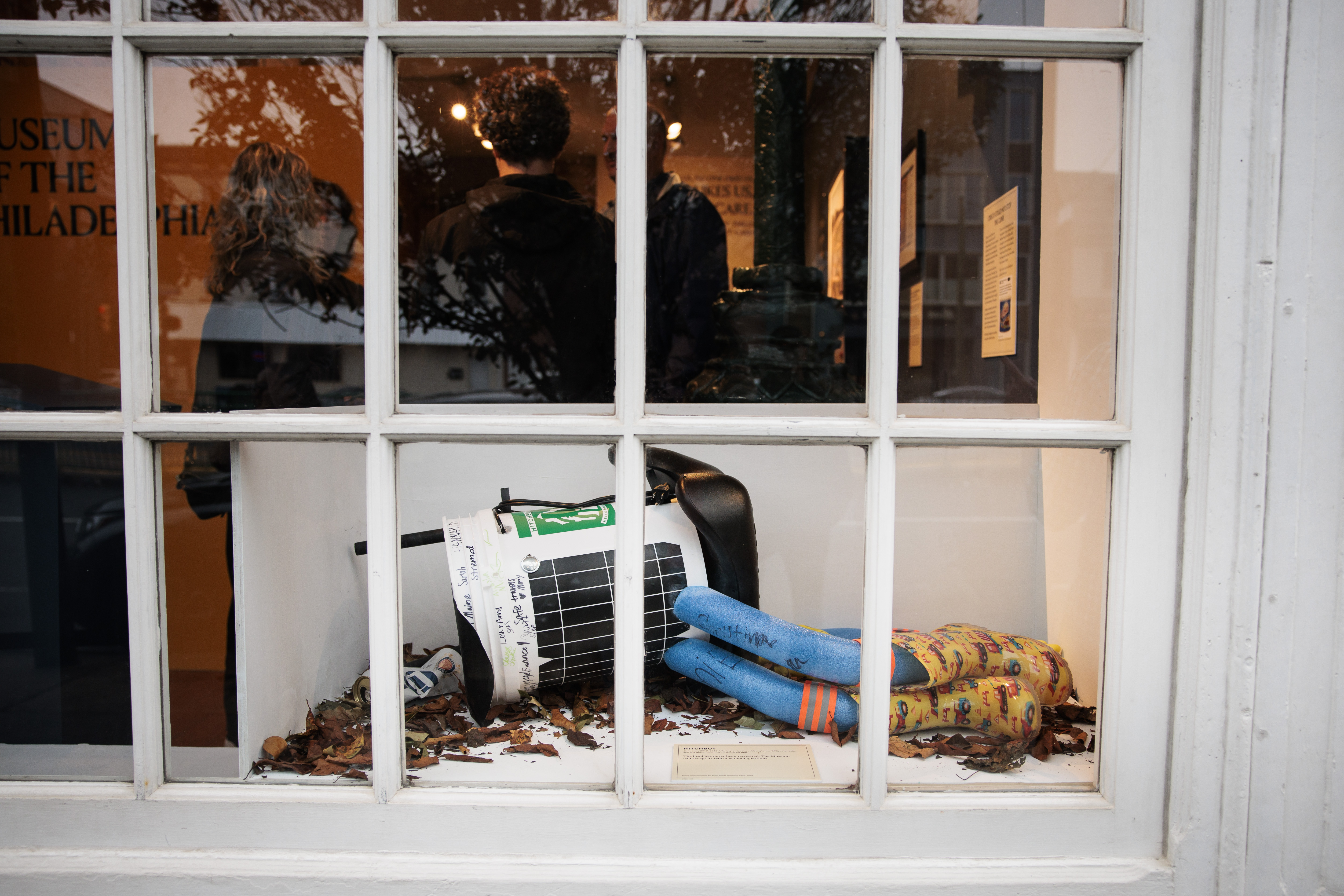
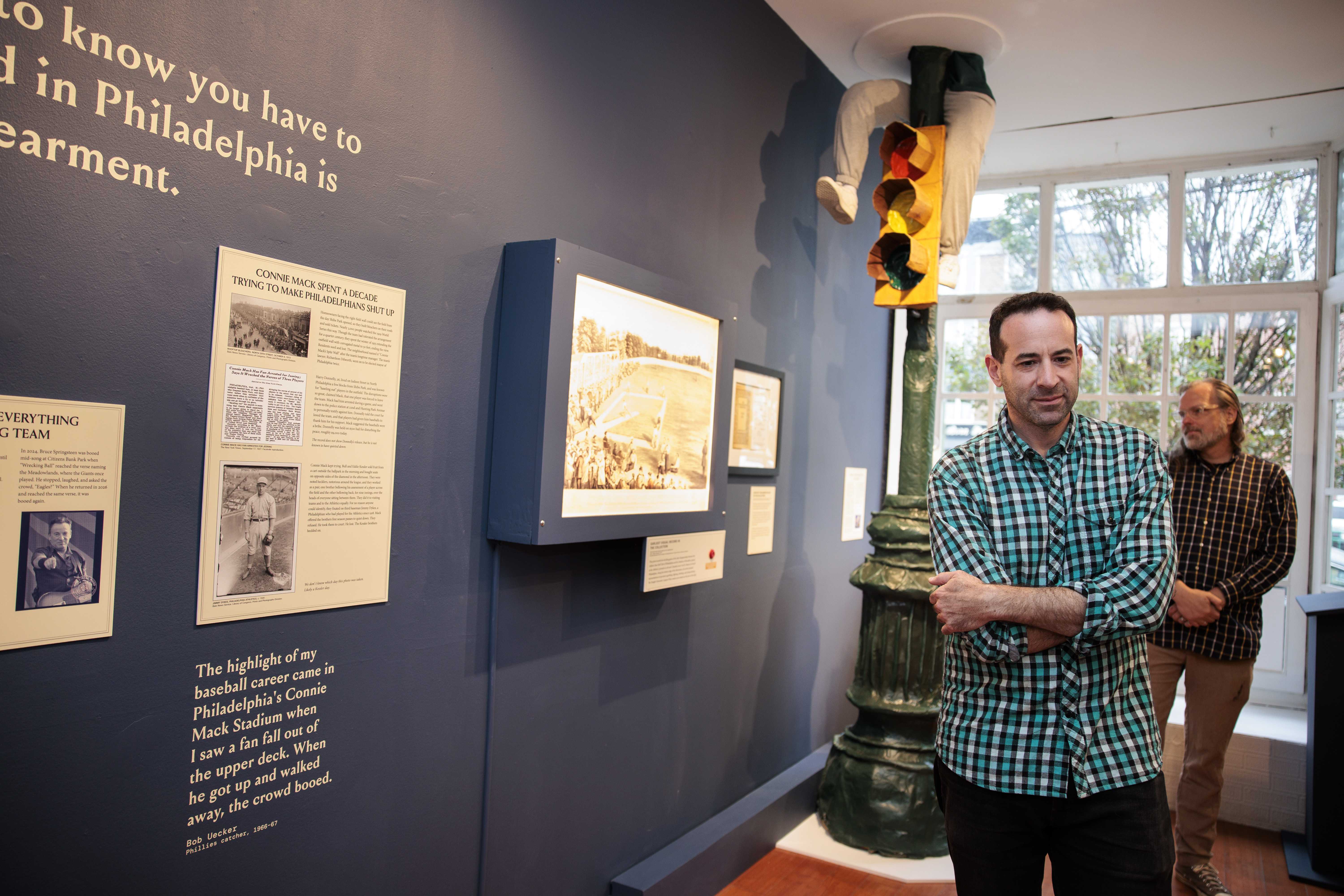
    Guests are greeted in the museum’s front window by a re-creation of the death of hitchBOT, the hitchhiking Canadian robot who traveled across the country on human kindness, only to be dismembered and beheaded in Philly. In the accompanying plaque, Adoff notes that Philadelphians offered to rebuild the robot, and that a Philly police detective jokingly blamed the crime on New Jerseyans.

    A re-creation of the death of hitchBOT is displayed in the front window of the Museum of the Philadelphian.Monica Herndon / Staff Photographer

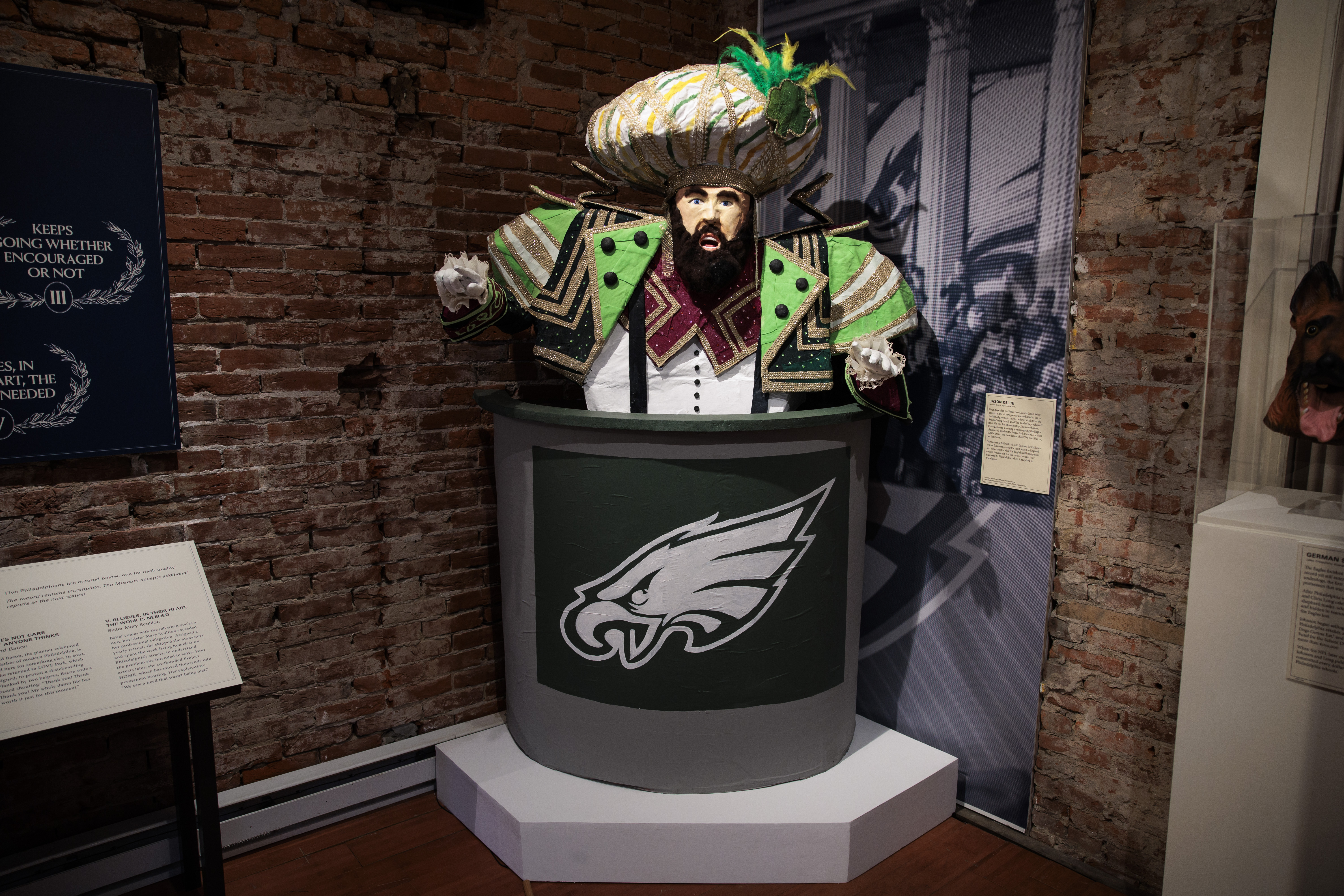
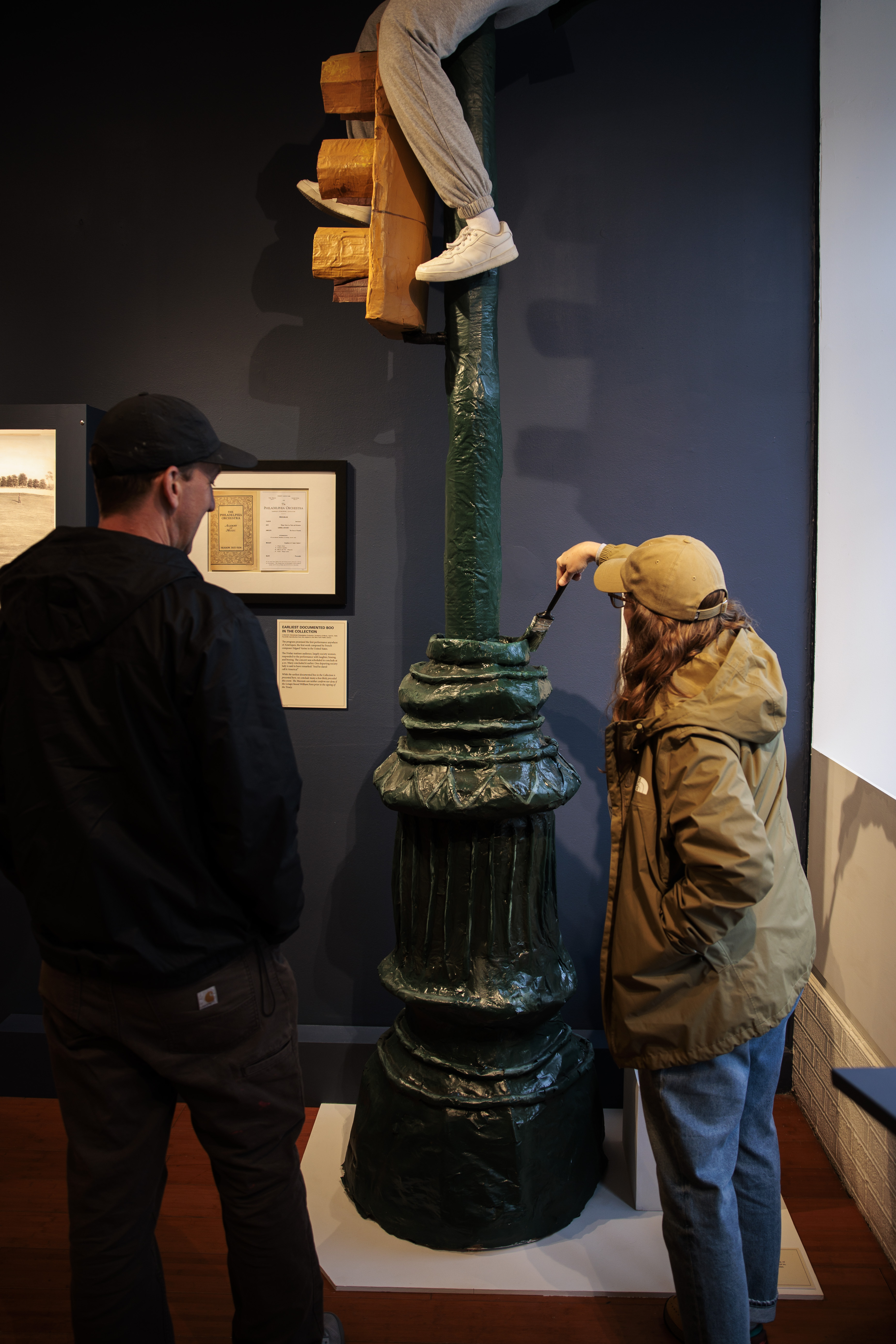
    Once inside the museum, two large papier-mâché sculptures immediately catch the eye — one, of a Philadelphian climbing a greased pole, and the other of Jason Kelce during his Eagles Super Bowl speech. In the first, guests are invited to “grease the pole” with a paintbrush and clear goo from a nearby can (you know I did it!), and at the latter, visitors can stand under a sound dome (fancy!) in front of the sculpture to hear Kelce’s “Hungry Dogs” speech.

    A papier-mâchÊ sculpture of Jason Kelce during his 2018 Eagles Super Bowl speech is featured in the Museum of the Philadelphian.Monica Herndon / Staff Photographer

    In the center of the room is a freestanding wall with a rearview mirror on it. The accompanying plaque tells the story of Ted Passon, whose parked car was flipped in the aftermath of the Phillies 2008 World Series win. Passon created a blog asking Philadelphians who enjoyed the spectacle to help pay for his vehicle, and through the generosity of donors, he was able to get a new car and give $3,000 to someone else whose car was flipped. On an iPad at the exhibit, visitors can play a YouTube video of the flipping and read Passon’s blog.

    I remembered the story well because I interviewed Passon about it in 2008. Seeing him at the event Tuesday was a full-circle Philly moment for both of us. Passon, who’s now an Emmy Award-winning documentarian, said he was happy to loan the mirror of the vehicle Philly claimed from him to the museum.

    “It’s an honor to be included in the story of Philadelphia,” he said. “If I can be a footnote in the city’s history, I did something right in my life.”

    ‘Booing is my love language’

    Other exhibits explore Philadelphians’ history with booing, our history of throwing things, and the five qualities Adoff and his team have decided make a Philadelphian, with number one being, “Does not wait for permission.”

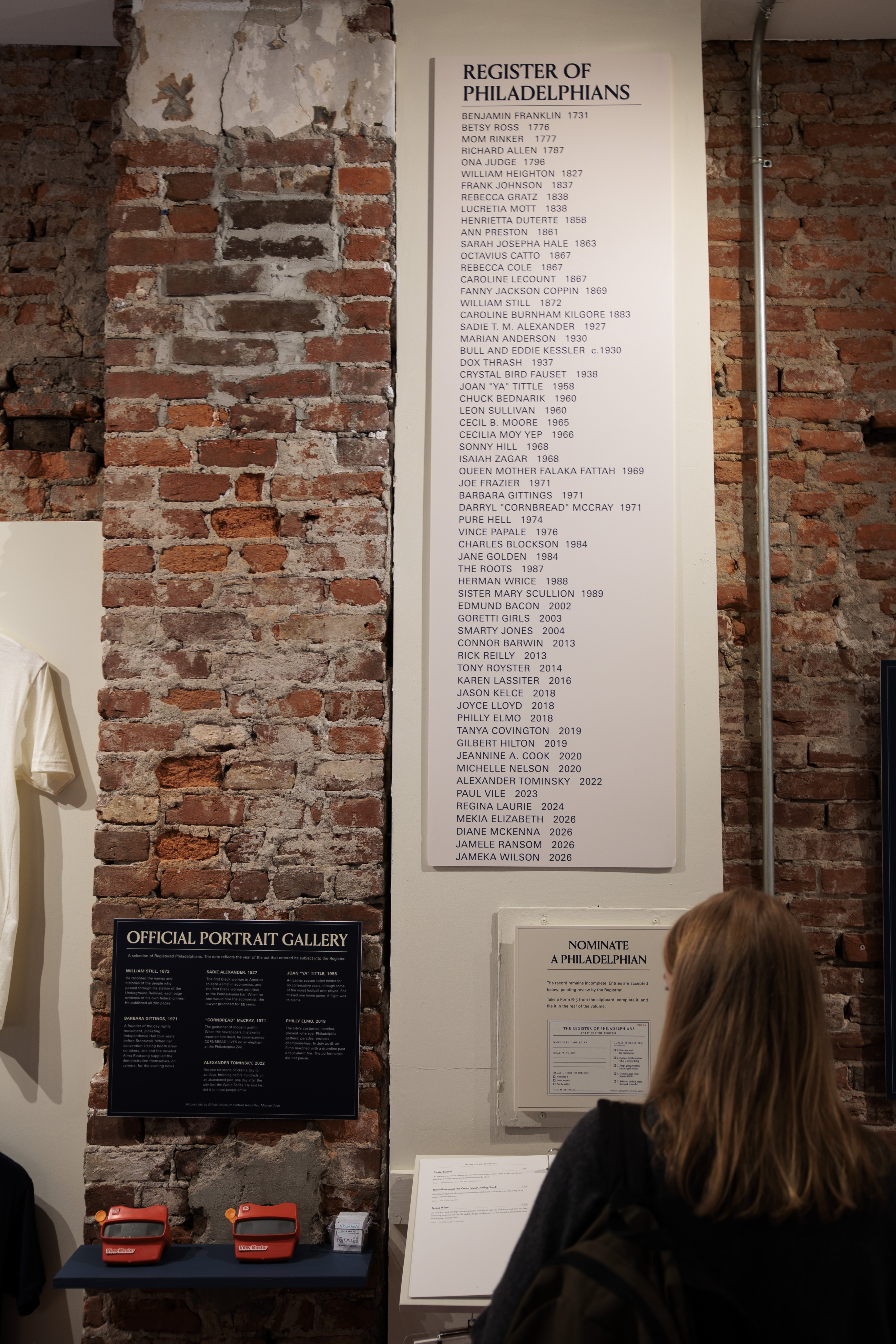
    The “Register of Philadelphians” on the wall and accompanying book begins in 1731 with Benjamin Franklin and ends this year, with Jameka Wilson, the woman who went viral for her TV interview about kicking a man in a Chucky mask who was terrorizing pedestrians.

    The Register of Philadelphians features notable Philadelphians ranging from Ben Franklin to Jameka Wilson. To the left of the register is the museum’s official portrait gallery, which can be seen through two ViewMasters. Monica Herndon / Staff Photographer

    I was excited to see a couple people I’ve written about on the list, including Paul “Jelloman” Vile and the late Gilbert Hilton, who turned heads across the city for years in his “Badillac” car, which was covered in items from Goodwill, and who was one of the most Philly people I’ve ever met.

    There’s also a portrait gallery by the Rev. Michael Alan of seven Philadelphians in the register that can only be seen through an old-school ViewMaster, which were a hit with the crowd.

    “It was a small space and this was a way to make something look bigger without being bigger,” Alan said.

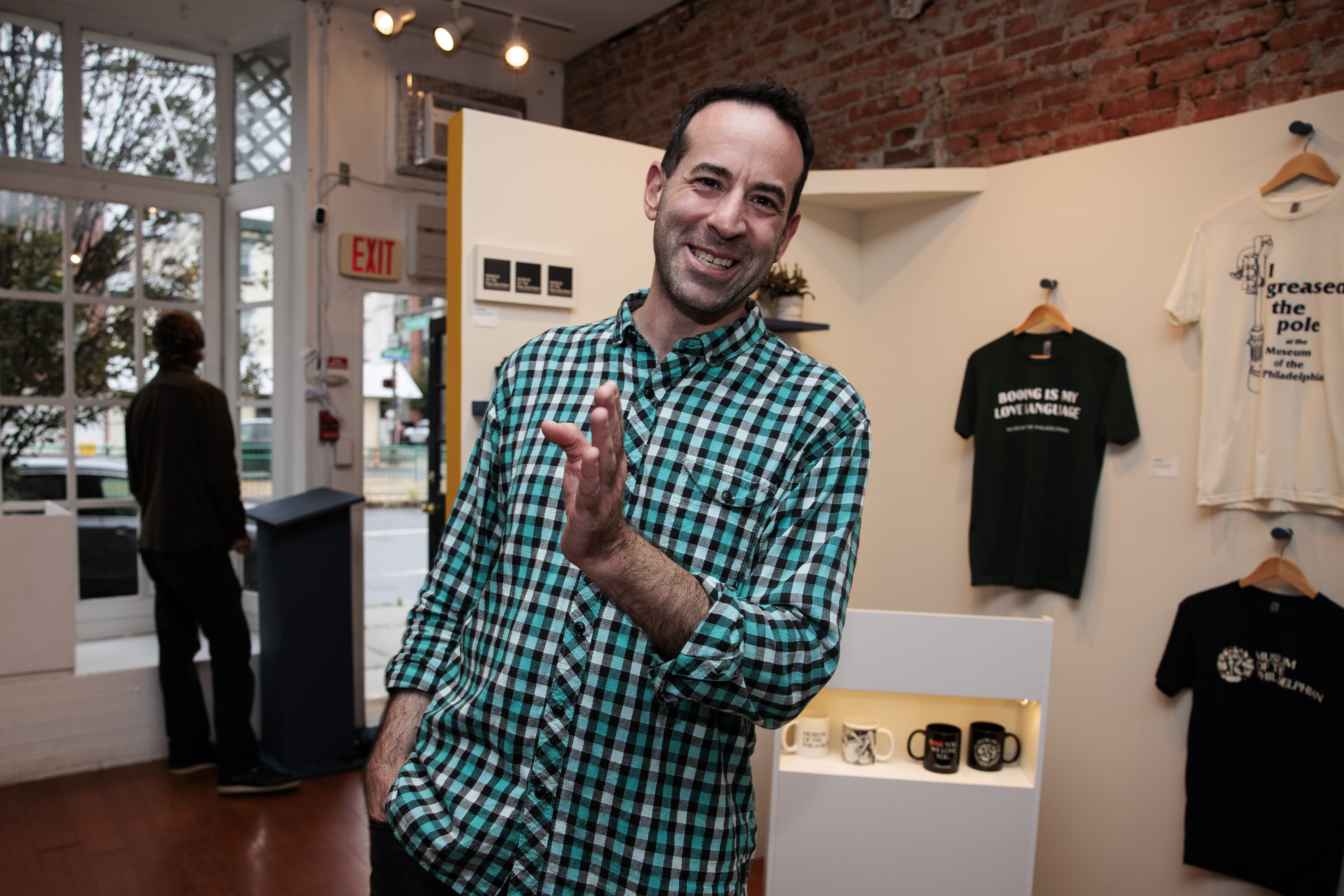
    Creator and founder Brian Adoff talks about the Museum of the Philadelphian in front of the museum’s gift shop. Monica Herndon / Staff Photographer

    The tiny museum even has a gift shop with shirts that say “I greased the pole at the Museum of the Philadelphian” and bumper stickers that read “Booing is my love language.”

    ‘The most Philadelphian thing’

    The museum was funded by Adoff through his experience design studio, Architects of Human Connection, and admission is free because he believes “the Philadelphian has paid enough.”

    The museum is a culmination of Adoff’s many endeavors over the years, from music, clowning, absurdist theater, and working as a tour guide for the Greater Philadelphia Film Office, to managing a software business and, most recently, creating events that connect Philadelphians.

    In 2023, he cofounded the Fishtown Choir,and last year, Adoff created Join Philly, which connects Philadelphians with area clubs and groups.

    The idea for the museum came to Adoff in June, as he was trying to think of uses for his storefront office space. With the help of five paid collaborators, Adoff built the museum in less than three months, which is impressive, given the amount of research that clearly went into the exhibits, plaques, and bios.

    “It started kind of absurd and silly until I was like, ‘Oh, this is just like everything else I do. It matters and it actually has heart and it has meaning,” he said.

    Brian Adoff in the Museum of the Philadelphian he created in Fishtown. Monica Herndon / Staff Photographer

    Here’s the potentially scandalous thing — Adoff isn’t a Philly native. He’s originally from Long Island, moved to Cherry Hill as a kid, and came to Philly to attend the University of Arts. He spent time in Chicago then returned to Fishtown 20 years ago, where now lives with his wife and son.

    Knowing how nativist Philly can be (my native colleagues said transplants can “never” say they’re from Philly if they moved after the age of 13), I had to ask Adoff what gave him the gall to open the museum.

    “Because I express the qualities that make a Philadelphian,” he said.

    “But you decided those qualities, right?” I asked. (They are: 1. Does not wait for permission 2. Decides for themselves what is worth doing 3. Keeps going whether encouraged or not 4. Does not care what anyone thinks 5. Believes, in their heart, the work is needed).

    “Yes, which is the most Philadelphian thing I could have done,” he said.

    Adoff wants people to leave his museum feeling as inspired as he did after watching the opening of the Obama Presidential Center on TV. He dreams of Rob Mac narrating an audio tour of the exhibit, like Steve Buscemi does for Eastern State Penitentiary. And his longterm goal is to open a more universal experience one day — a fart museum. Everybody isn’t lucky enough to be a Philadelphian, but everyone farts.

    I imagine Benjamin Franklin, a fellow Philly transplant who once wrote a satirical essay about flatulence, would think that’s a gas.

    Darrin Rowland (left), and Leslye Rowland grease the pole sculpture at the Museum of the Philadelphian on Tuesday. Monica Herndon / Staff Photographer

    Know before you go

    • The museum, 454 E. Girard Ave., is open Fridays (5 to 8 p.m.), Saturdays (noon to 5 p.m.), and Sundays (noon to 5 p.m.) Sept. 25 through Nov. 1.
    • Admission is free, but timed reservations online are recommended. Opening night is already booked and only a few spots remain for this weekend.
    • Like Philadelphia, there is a lack of public bathrooms at the museum, in that there are none.
    • The museum is wheelchair accessible via a temporary ramp. Email visit@museumofthephiladelphian.org prior to visiting so staff can have the ramp ready.
    • All ages are welcome, but some exhibits do include profanity.
  • N.J. Supreme Court refuses to hear appeal in Cherry Hill Democratic Committee battle over control

    N.J. Supreme Court refuses to hear appeal in Cherry Hill Democratic Committee battle over control

    Efforts by Democrats led by George E. Norcross III to unseat a dissident faction from control of the Cherry Hill Democratic Committee will not be considered by New Jersey’s highest court.

    The New Jersey Supreme Court on Sept. 16 denied a petition for certification filed by the Camden County Democratic Committee and committee chairman and State Sen. James Beach that would have challenged a state appellate court decision in April that allowed the South Jersey Progressive Democrats to name members of the committee.

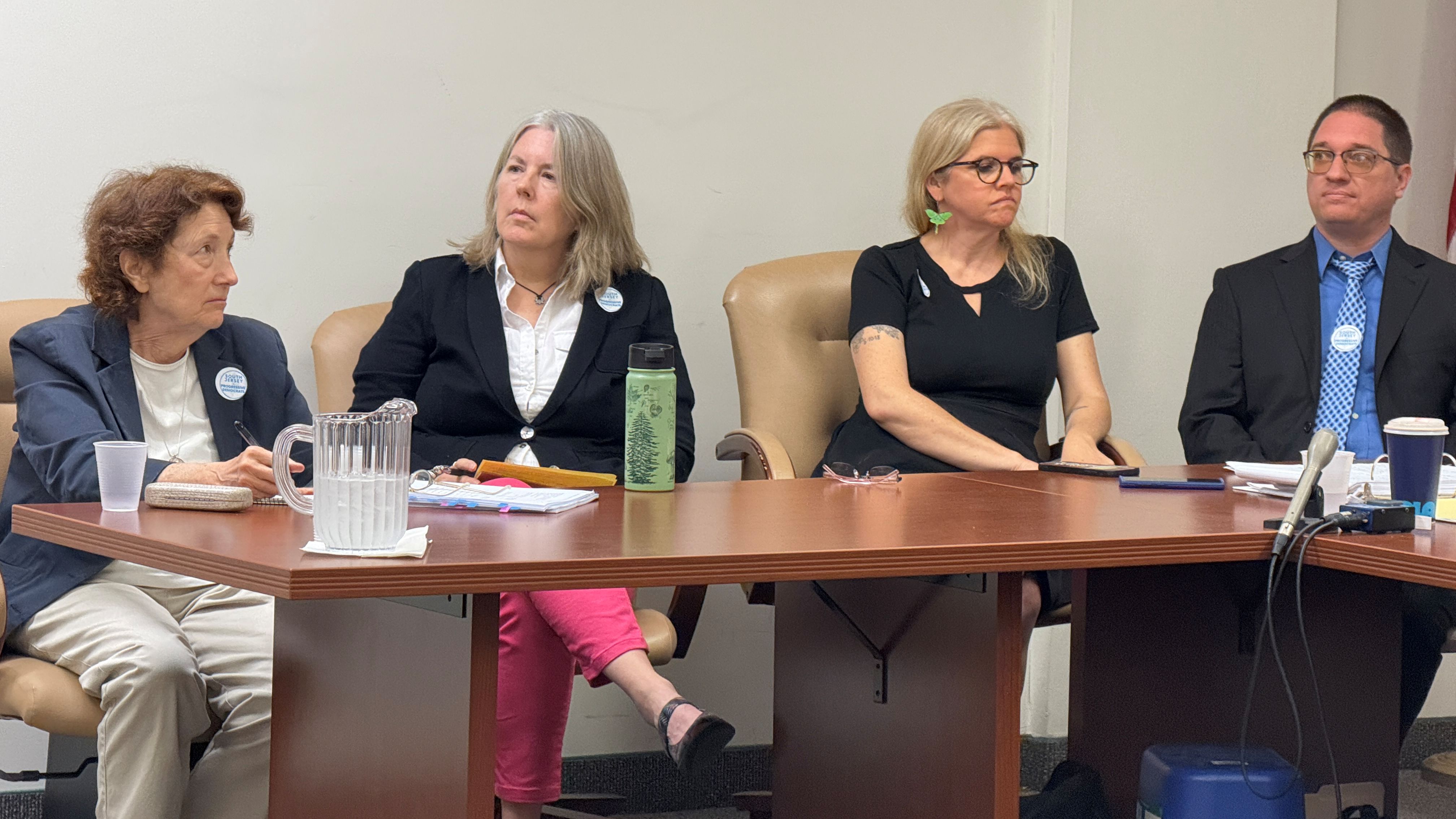
    Three Cherry Hill residents who are members of the South Jersey Progressive Democrats won the June 2025 primary, defeating the Norcross group, which ran with names for all 74 seats on the ballot. Voters voted once, either for the progressives or the Norcross group.

    After their loss, the Camden County Democrats sued, challenging the progressives’ right to fill the 71 vacancies with members other than those who were listed in the losing group on the ballot.

    Voters elected the progressives over the Norcross group by a vote of 5,547 to 3,350, or 62% of the votes cast.

    At stake is control of the powerful Democratic Party in Cherry Hill, including candidate selection and choosing citizens to fill elected offices when they become open between elections. The Cherry Hill unit is also the largest single faction on the 522-member Camden County committee, which has even more power.

    “Having read the appeals panel decision, I had complete confidence that the New Jersey Supreme Court would deny certification in our case, ending the Camden County Democratic Committee’s colossal waste of donors’ money attempting to overturn the will of Cherry Hill voters,” one of the three winners, Rena Margulis, said in an email on Wednesday. The other two winners were David Stahl and Susan Druckenbrod.

    Margulis said that as of early September, the group has 47 Cherry Hill Democratic Committee members. She said Cherry Hill residents are being recruited to run in the Democratic primary next June.

    A call to Camden County Democratic Party headquarters for comment on the decision was not returned.

    70and73.com is a hyperlocal news site focused on South Jersey, including the communities of Cherry Hill, Evesham, Mount Laurel, Voorhees, Medford, Medford Lakes, and Moorestown.

  • Ned Warwick, former TV news director and Inquirer reporter and editor, has died at 81

    Ned Warwick, former TV news director and Inquirer reporter and editor, has died at 81

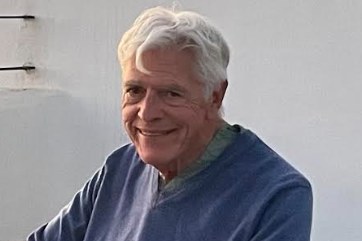
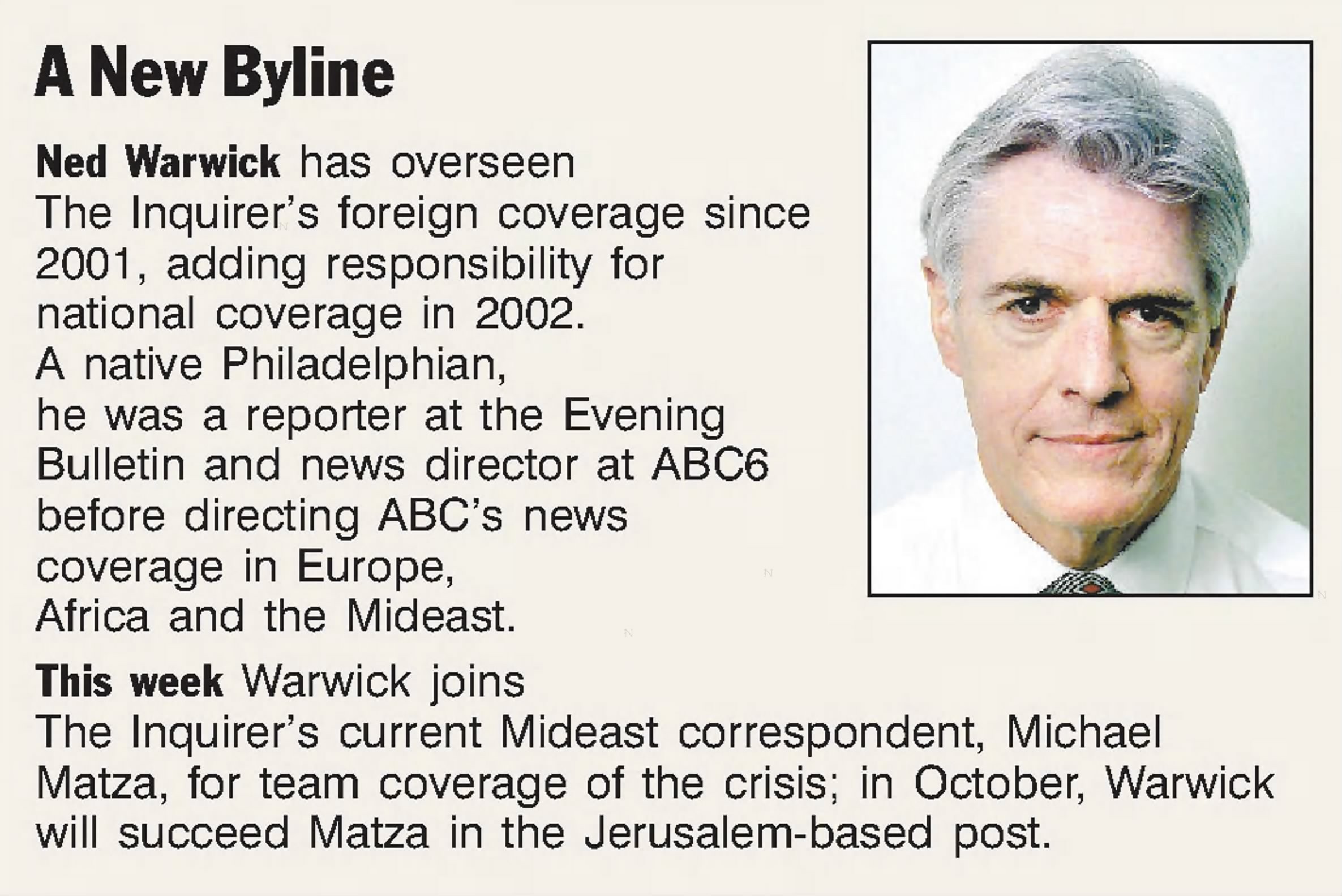
    Ned Warwick, 81, of Philadelphia, former foreign correspondent and foreign, national, and Pennsylvania editor for The Inquirer, former news director for WPVI-TV (Channel 6) and international news director for ABC-TV, former reporter at the Bulletin, mentor, sailor, pilot, and die-hard Phillies fan, died Monday, Sept. 14, of complications from Parkinson’s disease at his home near the Philadelphia Museum of Art.

    Born in Philadelphia and reared in Germantown and Mount Airy, Mr. Warwick graduated from Chestnut Hill Academy and attended Temple University. He knew he wanted to be a newsman when he was 16, his wife, Joan, said, and he spent much of his free time reading newspapers in the high school library.

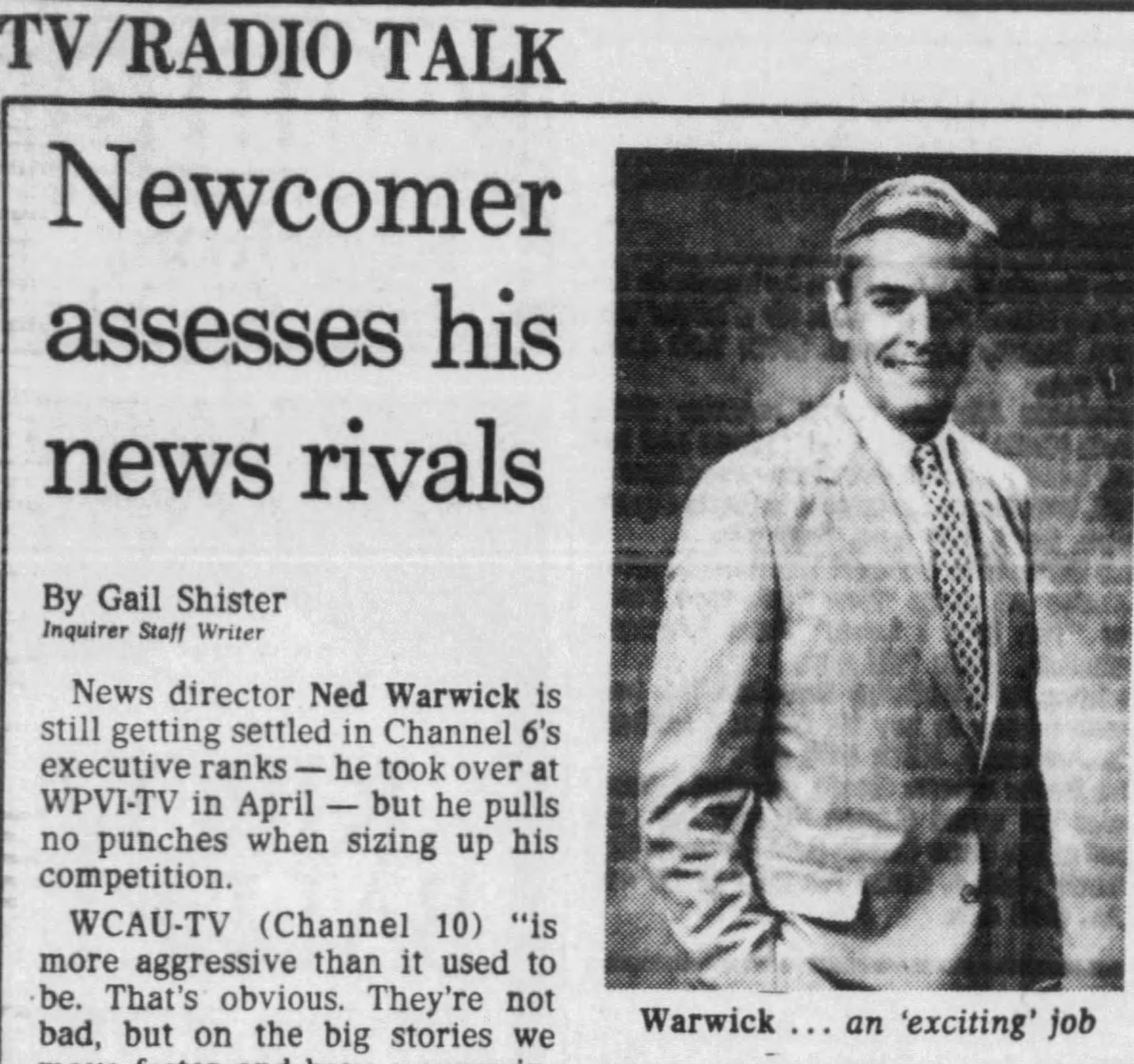
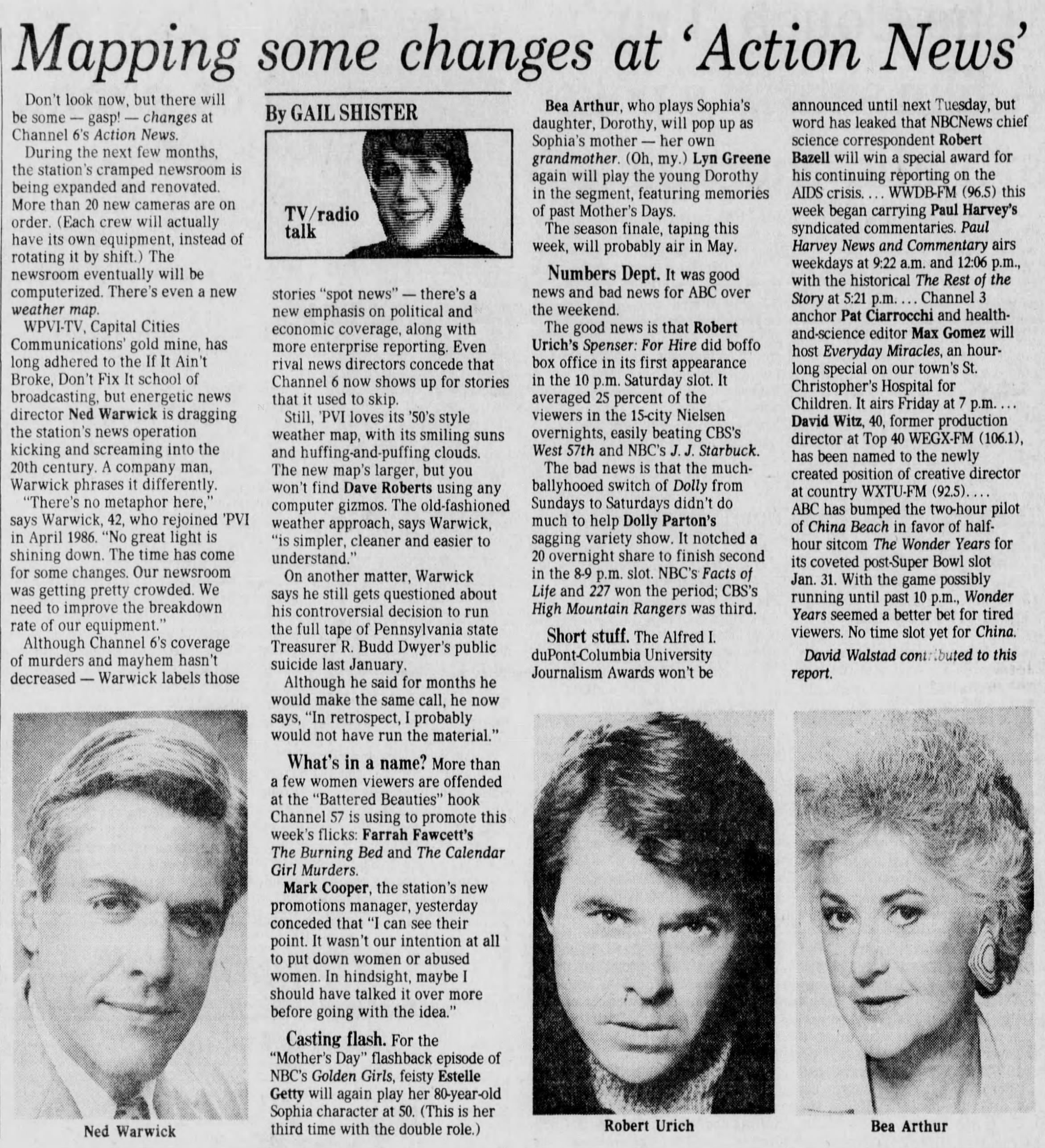
    He went on to work as a young city-side reporter for the Bulletin from 1969 to 1974 and a veteran editor and reporter for The Inquirer from 2001 to 2008. For TV, he was a news writer and assignment editor at WPVI from 1975 to 1981, news director at WTVD in Durham, N.C., from 1981 to 1986, and back as news director at WPVI from 1986 to 1990.

    Regarding the transition from print to TV work, he told Inquirer TV columnist Gail Shister in 1977: “The TV reporter’s job is more difficult because they have to be journalists and performers. It is in fact easier for a TV reporter to move over to print than vice versa.”

    Mr. Warwick became a foreign correspondent for The Inquirer in 2006.Newspapers.com

    From 1990 to 1995, Mr. Warwick was based in London as ABC’s director of news operations for Europe, Africa, and the Middle East. He worked with celebrated anchorman Peter Jennings, supervised dozens of other international TV types, and directed coverage of many of the world’s top stories.

    Actually, he told The Inquirer as he left for London, he did not expect the job to be much different from covering news in Philadelphia. “You can gather news around the corner or across the border,” he said. “But the essential business of newsgathering still remains the same. You’ve still got to get the story.”

    He nearly became the story in 1992 when he got pinned down in a gun battle while traveling in Somalia. “He always wanted to be a newsman and travel the world,” his wife said, “and he did. He loved the news. He loved ABC.”

    At The Inquirer, Mr. Warwick was the foreign and national editor for five years and a foreign correspondent in Jerusalem during and after the 2006 Lebanon war. He returned to Philadelphia in 2007 to be deputy business editor and Pennsylvania editor for a year.

    The Inquirer covered Mr. Warwick’s return to WPVI-TV in 1986. Newspapers,com

    “He was a good listener and could manage a reporter’s needs,” former Inquirer staff writer Miriam Hill said. Former Inquirer staff writer Sally Downey said: “He was a very classy guy.”

    In 2006, his byline appeared in The Inquirer over dozens of war zone stories from Gaza City, Bethlehem, Acre, Ramallah, Huwwara, Turmus Aya, and elsewhere in the Middle East. On Oct. 17, 2006, he opened his story from Kafr Qalil with: “The sharp heat of summer lingers on the stony hills of the West Bank, and the pale olives are still ripening on the trees, thirsting for just a little of the fall rains that won’t come for a few more weeks.”

    “He was a lyrical writer,” Hill said. Former Inquirer editor William K. Marimow called his style “fluid” and “very solid.”

    Mr. Warwick also reported on the royal family from London and reviewed books for The Inquirer. He worked briefly as an editor at large with Bloomberg News after leaving the paper in 2008 and retired in 2010.

    Out of the office, Mr. Warwick was a sailor and a pilot. Courtesy of the family

    He mentored others wherever he worked and with the Rittenhouse Writers’ Group, and completed a first draft of his own book. “His mind was always crafting a story, seeing a story, or preparing to tell one in a way that made everyone near him want to listen,” said his daughter Katie Bishop.

    “No matter what was going on,” said Nathan Gorenstein, a former colleague at The Inquirer, “he was a good human.”

    Out of the office, Mr. Warwick was a sailor and a pilot. In 1986, when he was news director at WPVI, Shister asked him whether flying an airplane or directing a newsroom was more challenging. “Clearly,” he said, “if you don’t pay attention in either business, you’re going to crash.”

    He cheered openly for the Phillies even during the lean years and continued to follow them closely after becoming ill. “One of the first things he would ask in the morning,” his wife said, “is who won the game.”

    Edward Ramsey Warwick was born May 19, 1945. The oldest of three children, he was the great-grandson of former Mayor Charles Warwick. He left Temple and earned a bachelor’s degree in history at the University of the South in Sewanee, Tenn., in 1969.

    Mr. Warwick’s local TV work was covered in The Inquirer in 1988. Newspapers.com

    He married Polly Price, and they had a daughter, Katie. After a divorce, he married Gayle Roth, and they had daughters Megan and Eliza.

    “He always made us feel like having three daughters was his greatest joy in life,” his daughter Megan Osborne said. “He taught us to throw a ball and let us braid his hair.”

    After a divorce, he married Joan Hunter, and they enjoyed museums, the theater, and the orchestra. They traveled the world together. He was a longtime runner and a fashionista, and studied Buddhism.

    He lived with Parkinson’s disease for eight years. But he refused to quit city living for the suburbs, his wife said, and he never lost his sense of humor and zest for life.

    Mr. Warwick was a longtime runner and a fashionista, and studied Buddhism. Courtesy of the family

    “Dad was a giant of a man in every sense of the word,” his daughter Eliza said. His wife said: “He never, ever complained. He made me a better person.”

    In addition to wife, daughters, and former wives, Mr. Warwick is survived by four grandchildren, a sister, a brother, and other relatives.

    A memorial service is to be from noon to 4 p.m. Saturday, Nov. 14, at the Germantown Cricket Club, 411 Manheim St., Philadelphia, Pa. 19144.

    Donations in his name may be made to Penn Medicine Neurology, 3535 Market St., Suite 750, Philadelphia, Pa. 19104; and the Katz JCC Parkinson’s Connection, 1301 Springdale Rd., Cherry Hill, N.J. 08003.

    Mr. Warwick “never, ever complained” his wife said. “He made me a better person.”Courtesy of the family
  • About 1,500 Cherry Hill students are chronically absent from school. School leaders are trying to fix that.

    About 1,500 Cherry Hill students are chronically absent from school. School leaders are trying to fix that.

    The Cherry Hill school district says it is moving to drive down its chronic absenteeism rate by working with students who have been consistently absent over the last three years.

    District statistics from 2023-24 through 2025-26 showed just over 1,500 students make up the group that is absent for 10% or more of the school days in a year.

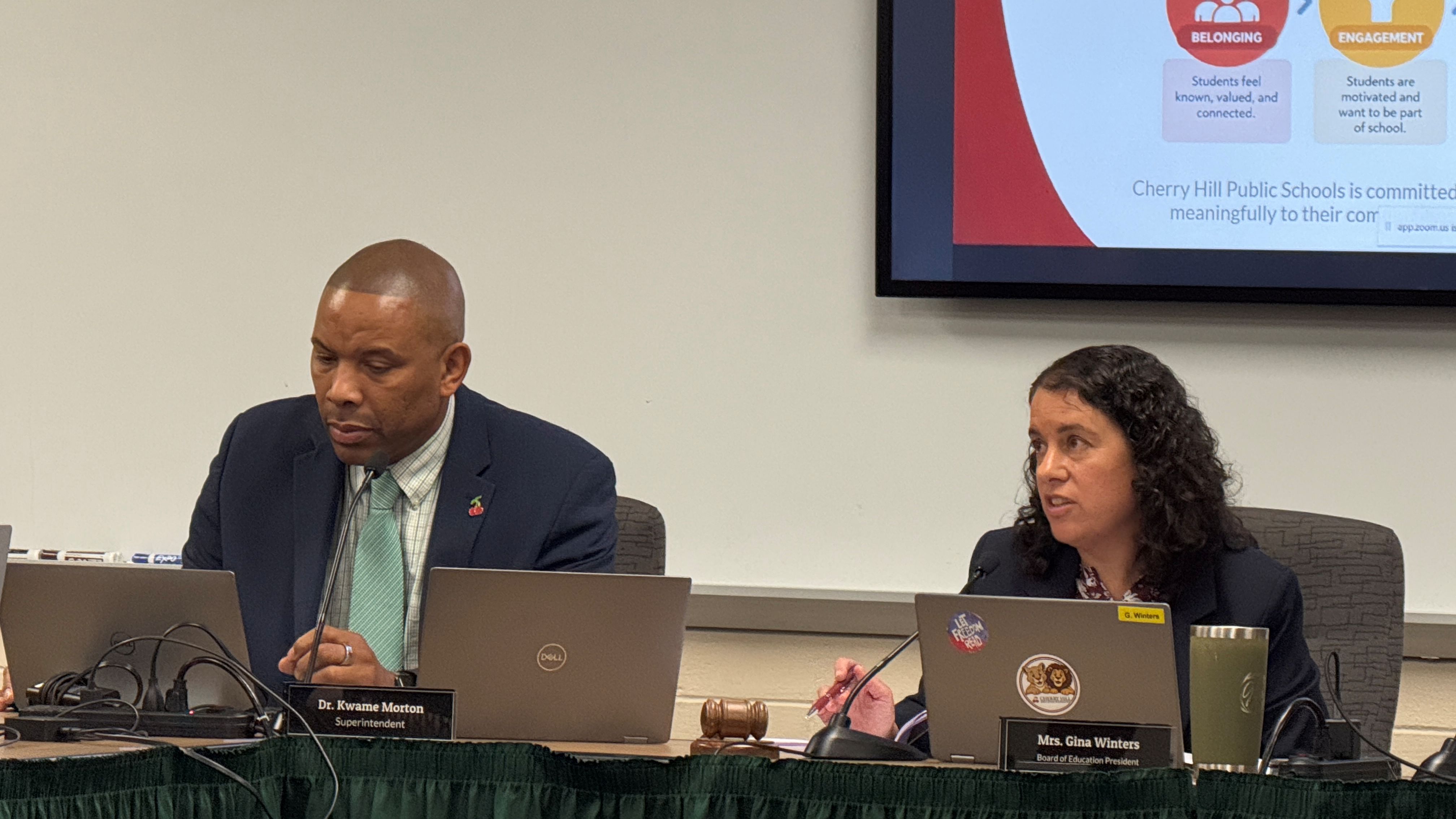
    The district hopes to lower the rate by working closely with chronically absent students and their families, and giving the students a sense of belonging to motivate them to be a part of the school, said Scott Goldthorp, the district’s director of special projects and student services.

    “While attendance isn’t working, ultimately attendance itself isn’t the ultimate outcome we’re looking for,” Goldthorp told the Cherry Hill Board of Education. “The larger goal is making sure students are connected to school, they have consistent access to supports, and that we’re able to connect them with opportunities and those supports that we do provide.”

    Students can be chronically absent due to a number of factors including health, transportation, family circumstances, academic challenges, student engagement, and life transitions, Goldthorp’s presentation noted.

    The Cherry Hill districtwide chronic absenteeism rate has consistently been lower than the state average, according to the New Jersey Department of Education’s School Performance Reports. In 2024-25, the most recent year with state-reported data available, the rate was 14% compared with the state average of 14.4%.

    However, several grades showed rates higher than the state averages.

    Although grade-level absenteeism data were not shared at the meeting, state data for 2024-25 showed chronic absenteeism rates for the sixth, seventh, eighth, and 12th grades in Cherry Hill exceeded the state averages.

    The highest absenteeism rate that year was 25.8% for 12th graders, followed by 23.5% for pre-K. The state averages were 21% and 29.9% respectively.

    Goldthorp emphasized the district’s approach to curbing absenteeism is not a “one-size-fits-all” solution.

    “Sometimes attendance is an academic issue, sometimes it’s a family issue, sometimes it’s a health or transportation issue, and sometimes it’s about a student’s connection to school,” he said. “Our response, then, has to be both systematic and individualized.”

    The New Jersey Department of Education limits what it defines as excused absences, according to the district presentation. Illnesses or physician appointments are not excused. However, religious observances, college visits, and “Take Our Children to Work Day” are among the excused absence reasons.

    Nine Cherry Hill schools lowered their chronic absenteeism rates between the 2023-24 and 2025-26 school years, according to the district data. Two remained relatively stable and six increased.

    Improving were Knight, Harte, Mann, Johnson, Sharp, Kingston, and Woodcrest elementary schools and Beck and Carusi middle schools. Increasing absenteeism rates were at Cooper, Kilmer, and Paine elementary schools, Rosa International Middle School, and both East and West high schools. Barton and Stockton rates were stable.

    Administrators are studying schools that cut their absenteeism rates to replicate the successes elsewhere, the presentation said. In one elementary school, the principal worked with district leaders to reengage chronically absent students and their families. Tangible rewards every week kept the students motivated and their attendance improved, according to the presentation.

    Absenteeism affects academic performance, the presentation noted.

    About 21% of students in middle and high school who were not chronically absent in 2025-26 had at least one failing course. That percentage is more than double (44%) for the chronically absent students in Cherry Hill.

    While about 19% of all students who were not chronically absent were involved with a disciplinary event, about 33% of chronically absent were exposed to discipline, according to the presentation.

    “When those students feel they belong, they’re motivated and want to be a part of school,” Goldthorp said. “When students are here consistently, they have access to high-quality instruction, support … and that ultimately is student success, which is why we’re all here.”

  • Cherry Hill sends $240,000 from opioid settlement to schools for mental health professional

    Cherry Hill sends $240,000 from opioid settlement to schools for mental health professional

    A large part of Cherry Hill’s share of the national settlement with opioid companies will be used to support a licensed mental health clinician working in the schools over two years.

    Township council last week voted to make a $240,000 contribution to the district from the fund’s balance of about $764,000.

    “We recognize that mental health is a national problem and certainly Cherry Hill is not immune,” Mayor David Fleisher said in an interview. “This is one way for us to take a bite out of that problem.”

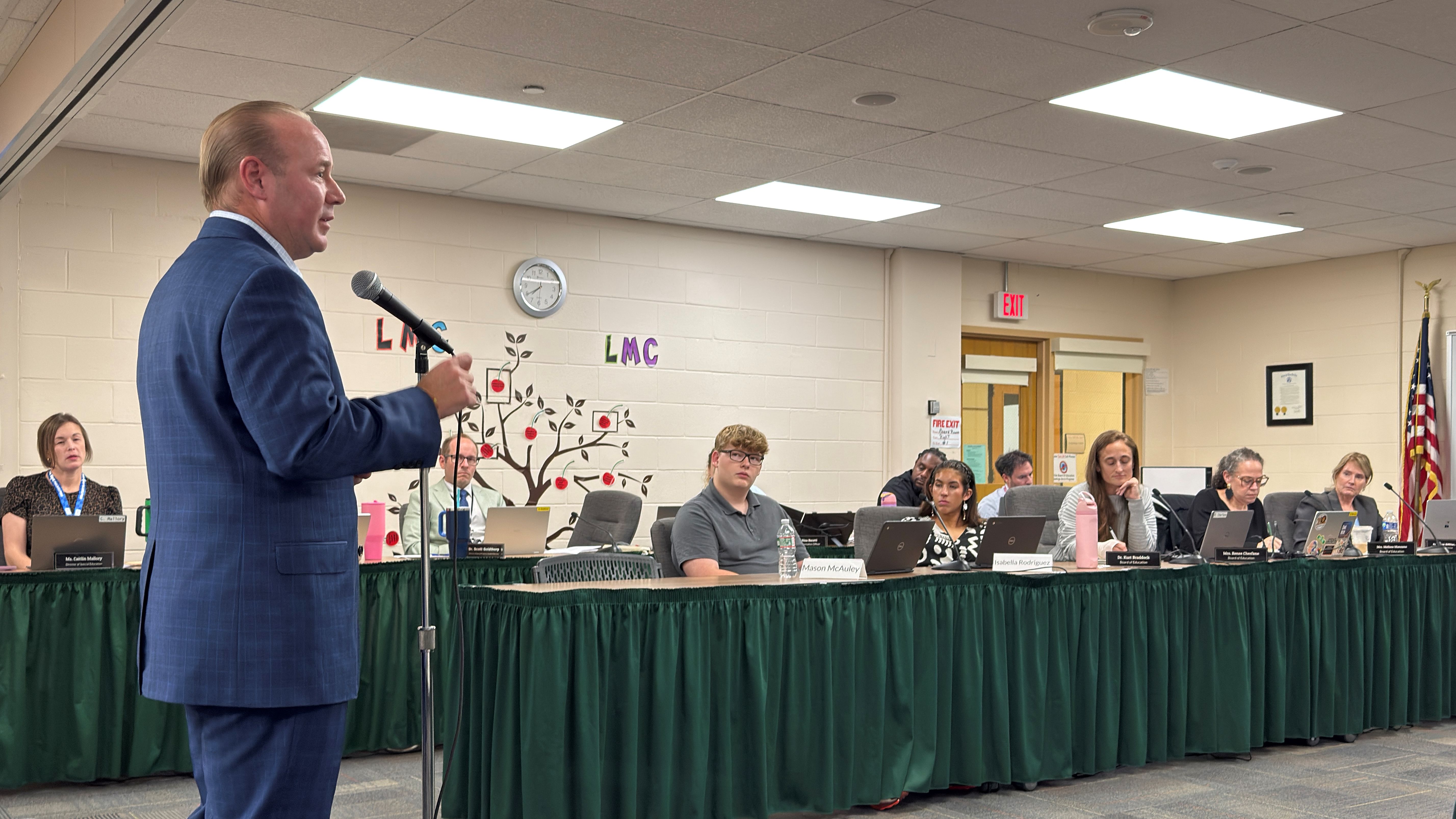
    Fleisher showed up at the Board of Education meeting on Tuesday to share news of the contribution.

    New Jersey’s share of the settlement with pharmaceutical manufacturers, distributors and retailers is $1.1 billon through 2038, according to the Office the State Comptroller. Half goes to the state and half to counties and municipalities to address opioid use disorder and mental health conditions.

    The mental health professional will be assigned to work with high school students, Fleisher told the board.

    He said the contribution is a “great example of where we have a very specific targeted need and we know the challenges of mental health.”

    70and73.com is a hyperlocal news site focused on South Jersey, including the communities of Cherry Hill, Evesham, Mount Laurel, Voorhees, Medford, Medford Lakes, and Moorestown.