Tag: Burlington County

  • A South Jersey wildlife refuge cares for thousands of animals each year. For the first time, it now has a full-time vet.

    A South Jersey wildlife refuge cares for thousands of animals each year. For the first time, it now has a full-time vet.

    In its 69 years as a wildlife refuge, Woodford Cedar Run in Medford has never had a staff veterinarian to care for the thousands of animals that come through its doors annually.

    The Burlington County rehabilitation center isn’t alone. Mike O’Malley, Cedar Run’s executive director, said he doesn’t know of any New Jersey wildlife refuges with staff vets. The shortage is a money problem.

    Yet less than two weeks ago, Amanda Cameron joined Cedar Run as one of very few full-time wildlife veterinarians in the tristate area. O’Malley said he hopes Cameron’s hiring will improve Cedar Run’s patient survival rates.

    “These animals are experiencing some of the most intense traumas you can imagine,” O’Malley said. “This will allow us to take on really complex cases and advance the care we’re providing to all of the animals.”

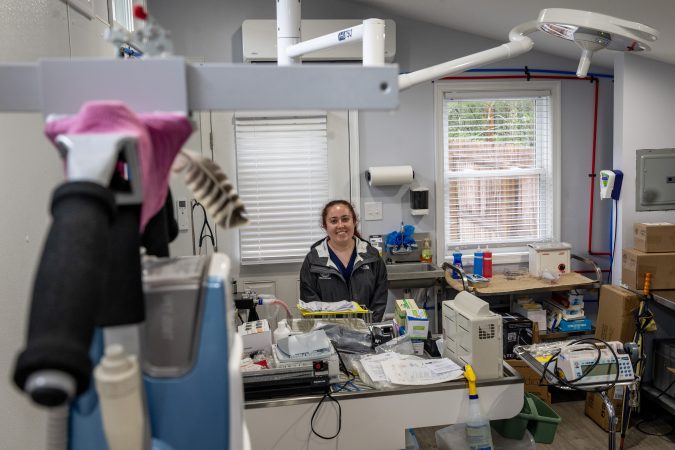
    Cameron, 27 and a Massachusetts native, doesn’t yet have a fully operational space to do exams and procedures on the 8,000 birds, raccoons, rabbits, turtles, and more that cycle through Cedar Run annually. Her main responsibility right now is ordering a laundry list of supplies to furnish a medical suite that has sat half-finished for years in the hopes that Cedar Run would someday have a doctor to use it.

    On Monday, items awaited sorting in the small clinic. And while Cameron has mostly been on desk duty, she’s already managed to get her hands on a few cases.

    In rain boots and scrubs, Cameron reached across the X-ray table to show the fractured wing of a red-tailed hawk. He’s not out of the woods yet, she said, but he’s on the right track. To survive in the wild, the wings of raptors need to be close to perfect.

    “Fortunately that is not surgical,“ Cameron said. ”So we’ve been able to just wrap them and give them some time with pain meds, and he’s doing really well.”
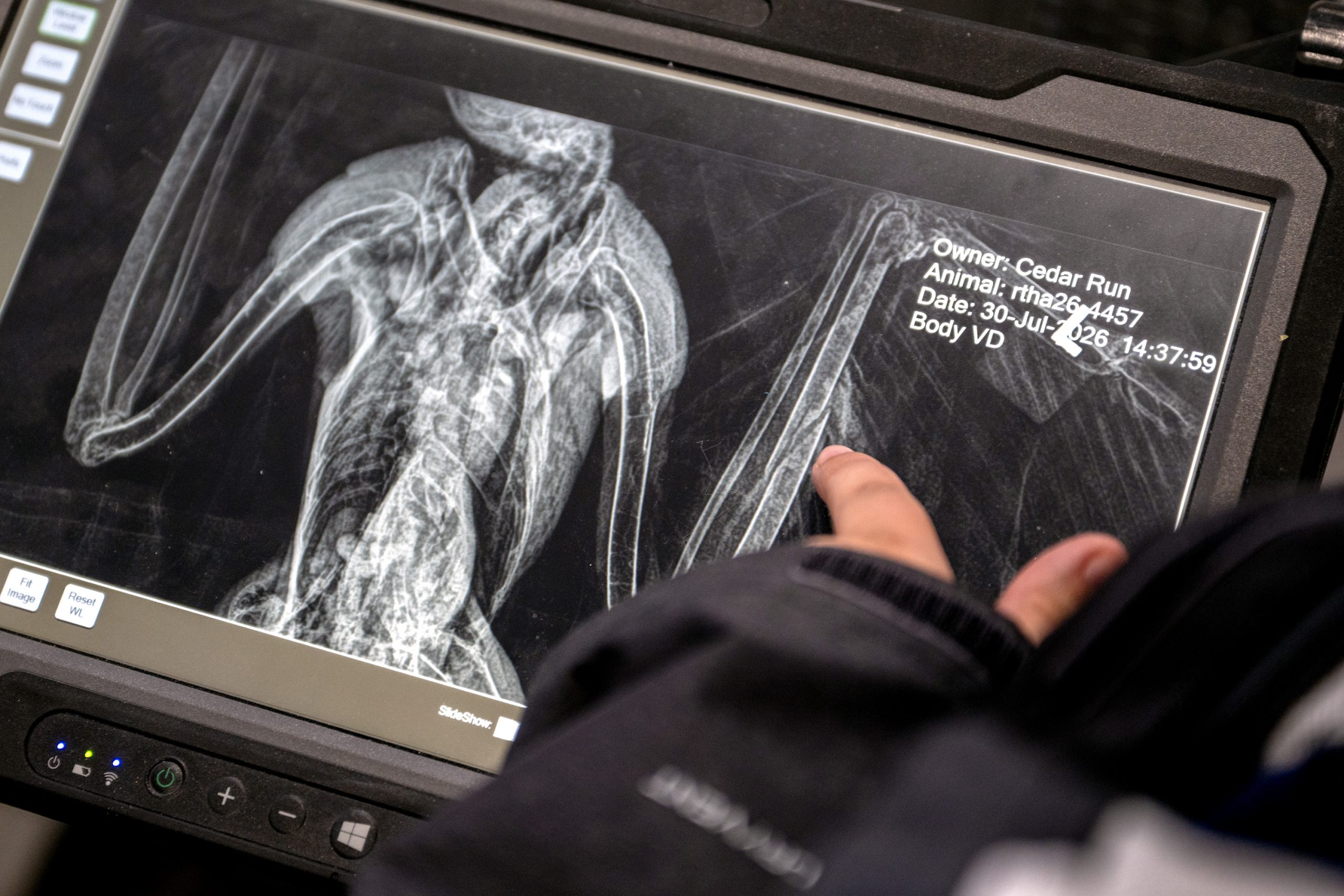
    Veterinarian Amanda Cameron looks over the X-ray of a red-tailed hawk with a broken wing bone that would not heal by itself in the wild.Tom Gralish / Staff Photographer

    ‘Not just today’

    Nonprofit wildlife centers often can’t afford to pay the salary of a full-time doctor, O’Malley said, nor buy expensive equipment to support them. Wildlife rehabs already have to foot the bill for the animals’ medical expenses since they don’t have owners to pay them. Plus, Cedar Run maintains 171 preserved acres in the Pinelands and pays to offer wildlife education services to the public.

    About 18 licensed wildlife rehabilitators serve New Jersey, and most specialize in a limited number of species. Only three are located in South Jersey, and O’Malley said Cedar Run is the tristate area’s “biggest and busiest.”

    In 2025, Cedar Run spent $710,000 on wildlife rehabilitation-related expenses, $172,000 more than the previous year, according to a 2025 audit provided to The Inquirer by O’Malley. Total salaries and wages were nearly $850,000, and O’Malley said the addition of Cameron will cost the center six figures annually. He declined to share the exact number, but said the cost to the nonprofit is “nothing to sneeze at.”

    To support Cameron’s salary, Cedar Run will have to keep a steady fundraising pace, but O’Malley said that shouldn’t be a problem with donor support and creative revenue streams, like hosting weddings.

    “We feel confident and able to raise the resources needed, not just today but tomorrow,” O’Malley said.

    Last year, Cedar Run earned $1.7 million in contributions, grants, and donations, a $780,000 boost from 2024.

    Rather than hiring full-time vets, places like Cedar Run typically outsource their medical needs through volunteer doctors, or transport animals to exotics vets nearby. Cedar Run partners with Animal & Bird Health Care Center in Cherry Hill, along with Rancocas Veterinary Associates in Mount Laurel and Rowan University’s new Shreiber School of Veterinary Medicine.

    But the extra stress from transport creates unnecessary risk, Cameron said. Some species, like rabbits, can’t handle loud noises. Other animals can injure themselves in panic.

    The rehabilitation center takes in almost any wildlife native to New Jersey, aside from black bears and domestic animals. When Jersey residents find an injured raptor, rabbit, or raccoon, Cedar Run’s 12 staff members and more than 200 volunteers do their best to make sure they are treated and released back into their native environments.
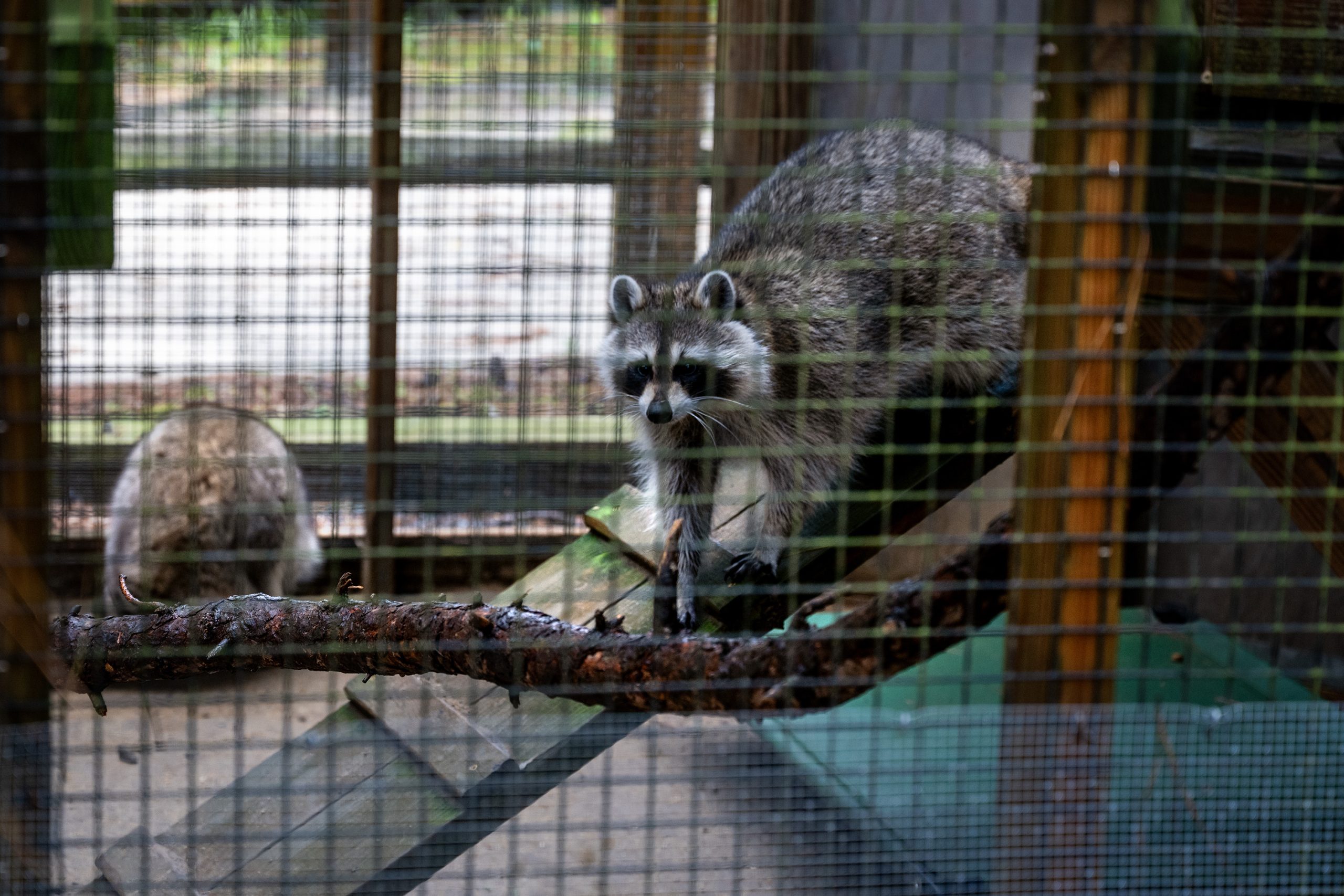
    Nonreleasable resident raccoons at Woodford Cedar Run Wildlife Refuge. The 12 staff members and more than 200 volunteers care for thousands of animals each year, including many who are unable to be returned to the wild.Tom Gralish / Staff Photographer

    Success is not easy to define. About 20% to 30% of all patients brought to Cedar Run survive, O’Malley said, a statistic exacerbated by bird flu and the fact that many animals brought to the center have endured traumatic incidents.

    Unlike domestic veterinarians, Cameron is not providing annual checkups, diabetes treatments, or allergy medications to her patients.

    “These animals are getting severed by lawnmowers. They’re getting poisoned. … If you remove those animals that need immediate euthanasia off the top, we’re more like 50%, which is obviously much better,” O’Malley said. “So there’s a lot of nuance.”

    ‘Now we can do this’

    Lori Swanson, director of wildlife rehabilitation, has worked at Cedar Run for more than 20 years. On Monday, Swanson stepped out of a fishy-smelling hospital to greet Cameron. Volunteers were preparing fresh seafood in the hospital kitchen for their patients, donated by an intern’s dad.

    “Heather is in there with an opossum,” Swanson said. “Which you’ll need to look at.”
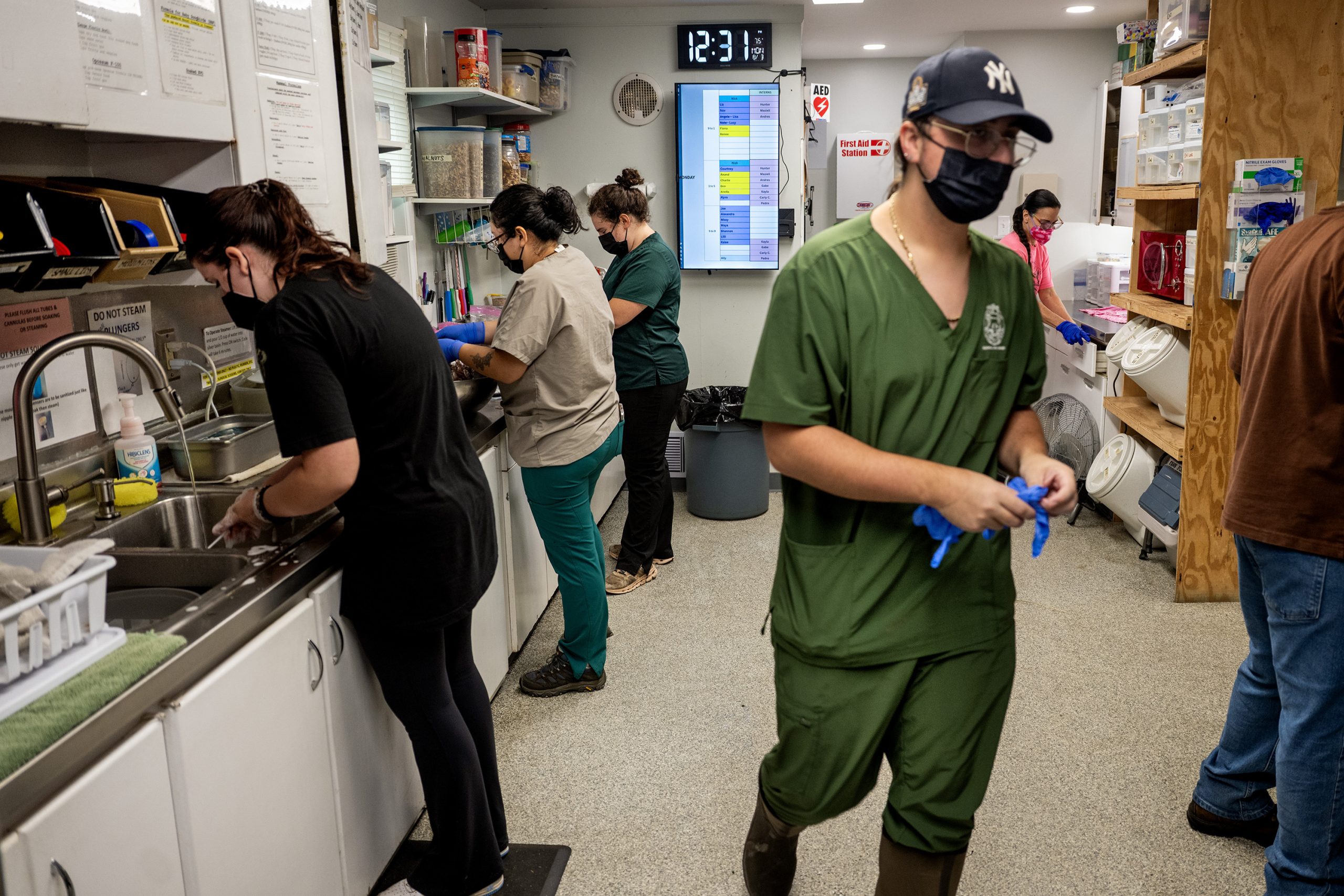
    The staff at Woodford Cedar Run Wildlife Refuge in Medford in the busy kitchen Monday, Aug. 3, 2026, preparing lunch for all the animals in their care.Tom Gralish / Staff Photographer

    As the only veterinarian on-site, Cameron will care for a variety of species with a vast range of traumas, from broken bones to blindness, along with helping to manage the health concerns of Cedar Run’s 60 nonreleasable residents. Cameron has already taken a first look at a resident skunk with heart disease, and a resident red fox with a cloudy eye.

    When the Shreiber School’s first round of vet students reach their externship year, students will shadow Cameron at Cedar Run, making Rowan one of only a handful of vet schools in the U.S. to have a wildlife center affiliate.

    Cameron grew up about a half hour from Tufts University in Massachusetts. During her undergraduate career at Purdue University, she found time to volunteer at Tufts Wildlife Clinic, and Cameron said her interest in wildlife grew from there. She graduated with her doctorate of veterinary medicine from Tufts in 2025 and finished her internship at the wildlife clinic a few weeks ago, before moving to Marlton, a short commute to the Medford refuge.

    She’s been working hard to teach Cedar Run’s rehabbers a bit of what she knows, and she said everyone is hungry to learn.

    “We’ve all gotten a little bit too excited,” Cameron said. “They’ve had me look at a couple of animals already, and everyone’s just like, ‘Oh, my gosh, now we can do this.’”

    Swanson is one of the excited ones. She said she hopes Cameron’s addition will mean less strain on the animals and on rehabbers’ time.

    “Well, this has been my dream for about 15 years,” Swanson said.

    It’ll take a while for Cameron to meet all the wildlife at Cedar Run. Monday was her first time encountering the refuge’s resident raccoons, Charlie and Gus, who were raised illegally by humans. But after decades of waiting, O’Malley and the rehabbers are eager to see what Cameron can do.

    “If we had our way, we would’ve had a vet 20 years ago, but it required many years of planning,” O’Malley said.

    “Sorry, Mike, I was too young,” Cameron said.

    “Yeah, you would have been in diapers, I think,” O’Malley said. “It’s taken quite a while to lay that groundwork.”

  • A civil complaint has been filed to unseat a jailed Willingboro council member

    A civil complaint has been filed to unseat a jailed Willingboro council member

    Though he’s currently behind bars at the Federal Correctional Institution at Fort Dix, Willingboro Township council member Nathaniel Anderson has not resigned from his position on council.

    Now, prosecutors have filed a civil complaint in New Jersey Superior Court seeking to remove Anderson from office, the Burlington County Prosecutor’s Office announced Friday.

    The action asks the court to declare that Anderson, who previously served as Willingboro’s mayor, has forfeited his ability to serve on the council.

    Anderson was reelected to a four-year council term last November before being convicted by a federal jury in January of conspiracy to commit wire fraud affecting a financial institution, bank fraud, and two counts of making a false statement on a mortgage application.

    He was sentenced in June to one year and one day in prison and ordered along with his co-defendant to pay about $221,000 in restitution to the victims.

    While state-level convictions trigger immediate, automatic removal from office upon a guilty verdict, prosecutors must petition the state Superior Court to remove an elected official who refuses to resign following a qualifying federal conviction.

    A hearing on the order to show cause is scheduled for Sept. 11.

  • New Burlington County shuttle bus will connect Philly suburbs with regional transportation options

    New Burlington County shuttle bus will connect Philly suburbs with regional transportation options

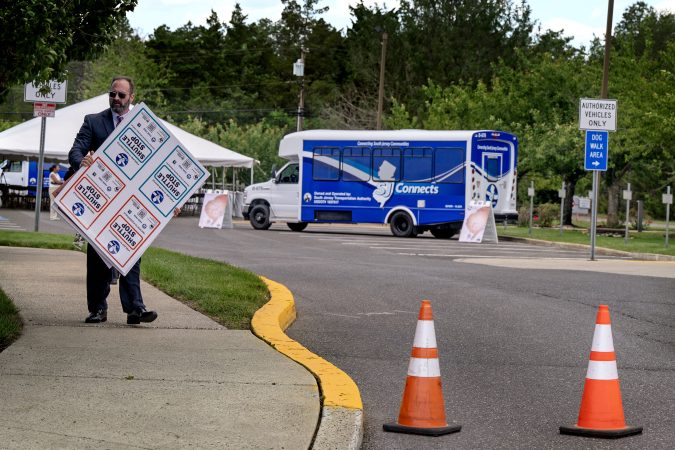
    A new free shuttle bus in Burlington County will be concentrated in a small slice of the county in some of the places closest to Philadelphia and Camden, according to a draft brochure for the service.

    But it’ll also serve as a transfer point for other residents in the area.

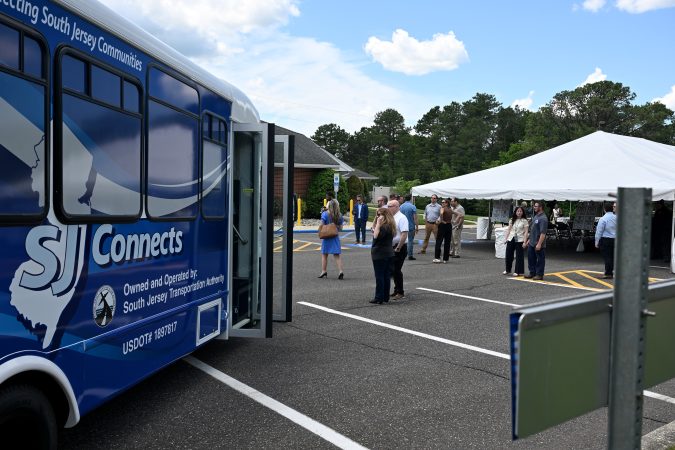
    SJ Connects, a free shuttle bus service run by the South Jersey Transportation Authority (SJTA), was granted $5 million under former Gov. Phil Murphy’s administration for an 18- to 24-month trial run to improve transit in the region. All of the service’s routes already began running except for Burlington County’s bus, which is expected to start service in September despite being included in a June 1 launch announcement.

    The SJTA has not yet posted the details of the Burlington County route but The Inquirer obtained its draft brochure through a public records request. The document shows that the planned 11-stop route connects Burlington County’s Palmyra, Moorestown, Cinnaminson, Mount Laurel, and Maple Shade with the Pennsauken Transit Center in Camden County.

    While it will most directly service the residents who live along the route, the planned route will also connect with existing transportation centers in the area to serve as a transfer point for riders.

    Locally, the bus is slated to stop at Cooper University Health Care‘s Moorestown campus, Moorestown Library and Town Hall, Cinnaminson Shop Rite, Fox Meadow Apartments, and the Mount Laurel Walmart Supercenter.

    Stops at the Moorestown Mall and Pennsauken Transit Center will connect riders to NJ Transit buses that go to Philadelphia’s 30th Street Station, Trenton, Camden County municipalities such as Cherry Hill, Haddonfield and Gloucester City, and other Burlington County locations such as Mount Holly and Willingboro. It will also link riders with the RiverLine and Atlantic City Rail.

    (function() {
    var l2 = function() {
    new pym.Parent(‘BURLCO28-A’,
    ‘https://media.inquirer.com/storage/inquirer/projects/innovation/arcgis_iframe/BURLCO28-A.html’);
    };
    if (typeof(pym) === ‘undefined’) {
    var h = document.getElementsByTagName(‘head’)[0],
    s = document.createElement(‘script’);
    s.type = ‘text/javascript’;
    s.src = ‘https://pym.nprapps.org/pym.v1.min.js’;
    s.onload = l2;
    h.appendChild(s);
    } else {
    l2();
    }
    })();

    Dominic D’Amico, director of transportation services at the SJTA, said the agency designed the routes to connect with NJ Transit’s existing infrastructure and the region’s “eds and meds.”

    Some parts of Burlington County that are excluded from SJ Connects — such as Pemberton and Mount Holly — have access to a separate, existing system called the BurLINK shuttle, which is administered by the county and run by a private company.

    The new SJ Connects route is not slated to directly connect with BurLINK. But riders can transfer between the two services using the River Line, for example.

    Assembly member Andrea Katz, a Burlington County Democrat, said in an interview earlier this month that she hopes SJ Connects will expand further into her district in the future. The long-term viability for the program will likely depend on whether its advocates can convince Democratic Gov. Mikie Sherrill and legislative leaders that it’s worth funding in future state budgets.

    “We have very little down here in Burlington County, and in South Jersey as a whole, but folks still have those issues that they need a ride to the hospital, they need a ride to a grocery store,” Katz said. “They need to get access to these things, and we’re finally starting to see this expansion into South Jersey.”

  • A presumed lightning strike forced 2 store closures on Maple Shade’s Main Street

    A presumed lightning strike forced 2 store closures on Maple Shade’s Main Street

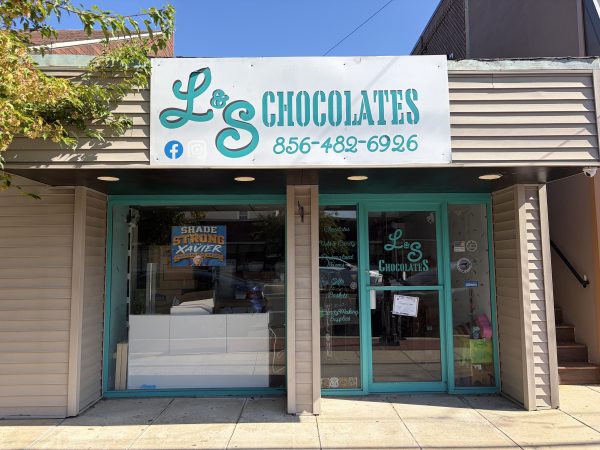
    From this past December to April, Julie Hause took only three days off. The rest of her time was spent on Maple Shade’s Main Street, transforming the longstanding chocolate shop she purchased in 2023.

    Hause spent months personally ripping up the worn green carpet by hand, installing laminate flooring, repainting, and more, breathing new life into the aging downtown staple.

    Now, her L&S Chocolates is closed with extensive smoke, water, and roof damage from a fire Tuesday night that is suspected to have been caused by lightning.

    “It was a group effort. My husband, my kids, my friends — everybody came in and we did it all ourselves. And that’s why I’m so devastated,” Hause said. “I put my blood, sweat, and tears into this. And now, I feel like it literally went up in smoke or washed away in a flood because that’s what I’m dealing with.”

    Hause was in her shop — which had been open for less than four months — when powerful storms rolled through South Jersey Tuesday evening and she heard a “very loud crack” that came from the back of the neighboring bakery, she said.

    The lights flickered in an unusual way, “a really quick stutter of flashing,” she said, before she smelled something burning. Hause quickly searched in her back workroom for the source of the fire before exiting the building and calling the fire department, she said.

    The official investigation into the cause of the fire is ongoing, Maple Shade Fire Marshal Matthew Orsini said.

    Firefighters responded to the scene at 5:53 p.m. Tuesday when they located the fire in “a small area involving the rear exterior wall and roof” of the bakery, Orsini said. The bulk of the fire was extinguished within 10 minutes, he said.

    “Damage was limited primarily to the vinyl siding on the rear exterior wall and an approximately 5-by-5-foot section of the roof,” Orsini said, noting that the concrete construction beneath the siding helped prevent the fire from extending into the interior of the building or the adjoining property.

    The National Weather Service confirmed there were lightning strikes in the area around the time of the fire but the agency does not collect the location-specific data needed to determine whether a particular building was struck or not, a meteorologist with the NWS office in Mount Holly said Thursday.

    Tis So Sweet, the adjoining bakery, posted on social media shortly after Tuesday’s storm announcing that it will be closed until further notice.

    “Unfortunately our Maple Shade store was struck by lightning during this evening’s storm and will be closed until we can clean up and repair damage,” the bakery wrote.

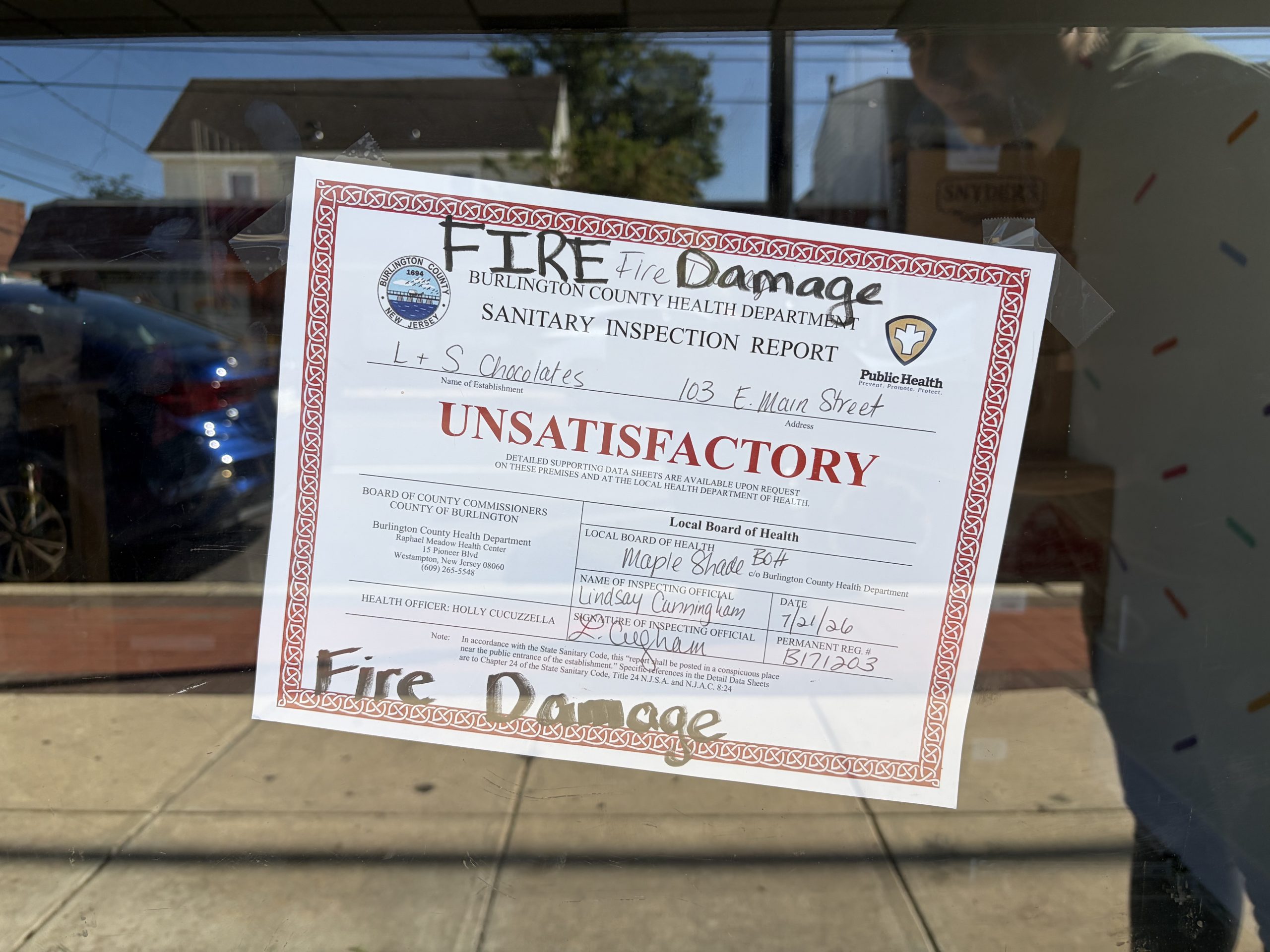
    By Thursday morning, cakes and cupcakes were still sitting in the display cases inside the shuttered bakery on the corner of Maple Avenue, and an “unsatisfactory” designation from the health department was taped to the front door. The bakery’s owners could not be reached for comment.

    L&S Chocolates is closed until further notice due to smoke and water damage from a suspected lightning-caused fire in Maple Shade on Tuesday.Lacey Latch

    Since the fire, Hause has spent nearly every waking moment trying to determine her next steps. Fielding visits and phone calls from the health department, multiple insurance adjusters, her landlord, and more, she said it will likely be at least four to six months before she can reopen the store.

    “It’s hard. I put so much work and effort into this. I cried most of last night, I’ve cried most of today,” Hause said Wednesday afternoon. “Maybe a couple days off of just breathing and relaxing, and then I’ll figure out my next steps.”

    Before the fire, Hause had begun developing ideas for classes and community events that she could host at the store, like cake decorating classes or a “Chocolate & Sip” wine night. Now, she’s just taking things “hour by hour” as she starts to rebuild.

    “I’m scared. I’m absolutely scared for my future now,” she said. “After putting everything into this and, overnight, it’s gone.”

  • Clean up underway after thousands of gallons of wastewater spilled at Burlington County landfill

    Clean up underway after thousands of gallons of wastewater spilled at Burlington County landfill

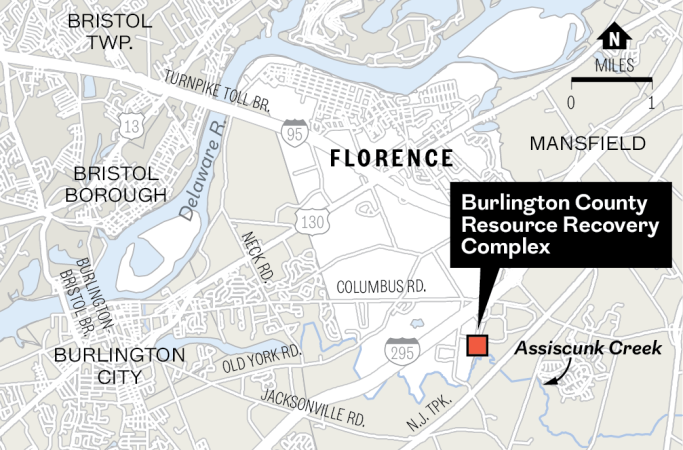
    Burlington County officials are working to clean up a major wastewater spill at a Florence Township landfill that could have entered a local waterway.

    Workers with a wastewater hauling company discovered a crack on the cap of a leachate cleanout pipe around 4 a.m. Tuesday, the county said. An investigation into the cause is ongoing.

    Officials estimate that as a result of the break, between 5,000 and 25,000 gallons of wastewater from the Burlington County Resource Recovery Complex had spilled onto the ground and then spread into a detention basin with an outfall to the Assiscunk Creek.

    “It’s possible some wastewater may have entered the water before the spill was contained; however, there are not anticipated impacts,” David Levinsky, a public information officer with the county, said Wednesday.

    No nearby residences or businesses were impacted by the spill.

    The Burlington County Department of Solid Waste and Recycling is working with the New Jersey Department of Environmental Protection to clean up the spill and remediate the area.

    The immediate area where the spill occurred has been treated and the county anticipated completing all remaining remediation actions on Thursday, the county said.

    The Assiscunk Creek is a 17-mile tributary of the Delaware River that is a popular fishing, kayaking, and birdwatching spot for South Jersey locals. Assiscunk Creek Park is a series of three preserves along the creek that are connected by walking and bike trails with sports fields, playgrounds, gazebos, and benches overlooking the creek.

  • Burlington County just got $500,000 to improve its trails. Here’s what the money is going toward.

    Burlington County just got $500,000 to improve its trails. Here’s what the money is going toward.

    Trail improvements are headed to Burlington County, though it will be years before they can be enjoyed by the public.

    The county will be using nearly $500,000 in grant funding for feasibility studies and engineering designs for multiple trail projects.

    Awarded at the end of June and funded by the nonprofit William Penn Foundation, the grants are just a fraction of the more than $4.5 million awarded for trail projects in New Jersey and Pennsylvania as part of the Delaware Valley Regional Planning Commission’s Regional Trail Program.

    “Burlington County’s parks and outdoor spaces are among our most important assets, and we are excited by the opportunities to expand the County’s network of trails into additional areas,” Burlington County Commissioner Deputy Director Allison Eckel said in a statement announcing the funding. “These new trails will enhance our parks and open spaces and improve mobility throughout our county.”

    What’s planned for Burlington County trails?

    The majority of the grant funding, about $400,000, will go toward the engineering design costs for a four-mile trail segment through Mount Laurel from the Rowan College at Burlington County campus across Route 38 to the Melvin and Florence Levin Nature Conservancy off Centerton Road.

    The grant covers about 40% of the total expected design costs for the project, the county said.

    Burlington County intends to cover the remaining design costs in its 2027 capital projects budget and will likely contract with a design consultant for the project in early 2027, according to county officials. During the 12 to 18 months in which permitting work is being done, the county will pursue additional grant funding to cover construction costs, with the goal of breaking ground in 2029.

    The remaining $85,000 in grant funding will pay for a feasibility study for an approximately nine-mile route on the Rancocas Creek Greenway Trail from Rowan College at Burlington County in Mount Laurel to Historic Smithville Park in Eastampton. The county will also study a Mount Holly-to-Medford trail spur to connect both communities’ downtown business districts.

    The county expects to have a consultant team on board by the end of the year for both studies. The work is expected to take about six months to complete, the county said, with results likely to be published next spring or summer.

    Both trails are expected to become part of the Circuit Trails network — a vast regional network of hundreds of miles of multiuse trails planned throughout South Jersey and Pennsylvania.

    The county has other trail projects in the works, including a new four-mile trail linking Willingboro Lakes Park with Mill Creek Park, a 13-mile extension of the Delaware River Heritage Trail, and a connecting 3.25-mile extension of the Kinkora Trail.

    Earlier this year, the county also completed an initial study to potentially create an additional 50 miles of trails through Mount Laurel, Moorestown, Evesham, Maple Shade, Medford, Tabernacle, Southampton, and Shamong.

  • Burlington County was left out of a new free shuttle bus launch in South Jersey. Here’s when and why that’ll change.

    Burlington County was left out of a new free shuttle bus launch in South Jersey. Here’s when and why that’ll change.

    Burlington County was left behind when a new free shuttle bus for South Jersey launched in June. That is going to change in September.

    The South Jersey Transportation Authority (SJTA) announced June 1 that a free shuttle bus program called South Jersey Connects was launching that day with routes in all seven southern counties: Atlantic, Camden, Cape May, Cumberland, Gloucester, Salem — and Burlington.

    But as the other routes launched, the promised Burlington County route never began. On the authority’s website, it is still marked as “coming soon.”

    That is because until recently, the transportation authority was not actually authorized to operate in Burlington County. The county considered operating its own route for the program but ultimately agreed to have the authority run it instead.

    But that required legislation.

    South Jersey lawmakers had proposed bringing Burlington County into the authority back in the 2022-23 legislative session, but it was not until the South Jersey Connects program was about to launch this year that legislators had the wherewithal to actually hit the gas pedal in Trenton.

    “We worked in partnership with our county commissioner, then the administration of Burlington County, and just realized we just couldn’t pull that off,” Sen. Troy Singleton, a Burlington County Democrat, said in an interview. “And speaking with the administration, they were like, look, we feel more comfortable running this through the SJTA, and we already had this legislative vehicle, so that’s when it took on a greater sense of urgency.”

    The bill to bring Burlington County into the SJTA passed the Assembly in mid-May and was approved by the Senate just a few days before the June 1 announcement. But Gov. Mikie Sherrill did not sign it into law until the night of the budget deadline — a month after the program had been announced.

    “The timing just didn’t work out,” Singleton said.

    The Burlington route is expected to start in September, said Dominic D’Amico, director of transportation services at the SJTA, but a start date has not been announced.

    The new shuttle’s path has been finalized but has not been shared publicly. D’Amico said in an interview that, like the other routes that launched June 1, it will connect with NJ Transit’s existing infrastructure and the region’s “eds and meds.”

    Burlington County Commissioner Felicia Hopson said the new shuttle will enhance the NJ Transit River Line and help residents access jobs, appointments, stores, and schools.

    “Stretching 820 square-miles, Burlington County is New Jersey’s largest county, making transportation essential but also challenging for residents without motor-vehicles,” she said in a statement.

    The idea of South Jersey Connects emerged from the Chamber of Commerce Southern New Jersey’s advocacy after former Gov. Phil Murphy implemented the 2.5% Corporate Transit Fee on businesses to fund NJ Transit in 2024.

    The project was granted $5 million for an 18-24 month pilot, and the future beyond that is uncertain. The South Jersey chamber unsuccessfully requested more money for the effort in this year’s budget, and proponents of the project are hoping to show that it is worth the investment during next year’s budget negotiations.

    The summer launch so far has been a little slow, which is to be expected, according to D’Amico.

    The authority has seen about 600 one-way trips in the first month of the program, he said, a number he expects to go up as people learn about the routes and as school starts in the fall. He wants to see the service hit at least 5,000 one-way trips each month.

    “It takes some time to spread the word, for the marketing campaign to reach the social media platforms, getting brochures delivered to each facility — all those types of things factor into what is a normal slow start,” he said.

    “It could be worse, it could be better,” he said.

    Why wasn’t Burlington County part of the SJTA before?

    Sherrill said in a statement that Burlington County deserves to be part of the authority as “a vital part of the region.”

    The reason Burlington County has not been included in SJTA is not because anyone was denying the county is part of South Jersey. Rather, the agency was set up to replace an entity that oversaw the Atlantic City Expressway, which does not go into Burlington, said David Zappariello, the authority’s director of communications.

    Along with adding Burlington County to the authority’s coverage zone, the new law allows Sherrill to appoint another member to its board. Members of the board represent the region as a whole, not their home county, Zappariello said, and there is already a Burlington County resident sitting on the board.

    Assembly member Alex Sauickie, an Ocean County Republican who also represents part of Burlington County, voted against the bipartisan legislation because it did not also add Ocean County to the authority.

    “I just don’t like it when you’re picking winners and losers for political reasons,” he said.

    Assembly member Andrea Katz, a Burlington County Democrat, said none of the South Jersey Connects routes will touch her district, where she has concerns about transit deserts. But she is hopeful about public transit expanding in the region and the county getting a seat at the transit table.

    “Burlington County now being included means that we’re going to get to have that voice,” she said. “We’re going to get to not be the one stuck in the middle there. We’re going to start to get our own access to public transportation.”

  • Mount Laurel schools name longtime Cherry Hill educator Neil Burti as new superintendent

    Mount Laurel schools name longtime Cherry Hill educator Neil Burti as new superintendent

    Mount Laurel public schools will start the next academic year with a new leader at the helm.

    Neil Burti will take over as superintendent of schools starting Aug. 1, succeeding George Rafferty, who is retiring after leading the district for a decade.

    After an extensive search, “Dr. Burti distinguished himself as the candidate whose experience, leadership style, and vision best aligned with the needs of the Mount Laurel School District,” Danielle Stuffo, president of the Mount Laurel Board of Education, said in an email.

    Burti has more than 25 years of experience as an educator and administrator and is a longtime employee of the Cherry Hill Public Schools. While there, he served at all levels of leadership and was most recently the director of secondary education for the district.

    Earlier this year, Burti also stepped in to handle the principal responsibilities during the second half of the school year at Cherry Hill High School East following a period of administrative upheaval in the school district.

    The shake-up came after a lawsuit filed last September alleged that East’s former principal, alongside the Cherry Hill Board of Education and two other top administrators, subjected a former assistant principal to discrimination and retaliation.

    A new principal at East, John Cafagna, took over this month.

    “We are confident [Burti] will build upon the district’s many strengths, work collaboratively with our staff and community, and continue our focus on providing an exceptional educational experience for every student,” Stuffo said.

    Stuffo said the district’s goals will largely remain the same under new leadership.

    She acknowledged that the district will need to address increasing financial pressures, as Mount Laurel has not been spared from the budgetary challenges affecting school districts across New Jersey.

    Like other districts, Stuffo said, Mount Laurel will work to continuously improve student experience and outcomes while adapting to evolving educational needs — and doing so within an increasingly limited budget.

    “Fortunately, Mount Laurel is well positioned, with excellent staff and strong systems already in place. As Dr. Burti becomes familiar with the district, he will have the opportunity to evaluate our organizational structure and administrative leadership and, if appropriate, make recommendations to the Board for consideration,” she said in the email.

    Burti was named the 2024 New Jersey Secondary School Principal of the Year during his time leading Cherry Hill’s John A. Carusi Middle School.

    Burti holds a bachelor’s degree in movement studies and exercise science from East Stroudsburg University, a master’s degree in educational leadership from Temple University, and a doctorate in innovation and leadership from Wilmington University.

  • Medford approves four housing projects with more than 200 affordable units to meet state mandate

    Medford approves four housing projects with more than 200 affordable units to meet state mandate

    Tackling what local officials called “one of the most significant matters” facing the Medford community, township council approved four redevelopment projects Tuesday night that will bring hundreds of affordable units to the township.

    All of the projects are part of Medford’s effort to meet their state-mandated affordable housing requirements. The housing obligations stem from a 1975 New Jersey Supreme Court ruling requiring that all municipalities develop a certain amount of affordable housing.

    Every 10 years, each municipality in the state is given a specific quota of affordable units to plan for over the next decade based on considerations that include population, income, and land capacity.

    The U.S. Department of Housing and Urban Development generally follows the 30% rule to determine affordability — any dwelling that costs 30% or less of a household’s gross income is deemed affordable.

    In New Jersey, affordable housing is restricted to households with earnings that must be at or below 80% of the area median income for the area. In Medford, the median household income is $157,969, according to the most recent data from the U.S. Census Bureau. That would mean any household earning less than roughly $126,375 per year would be eligible for the new affordable units.

    The state most recently determined Medford must build a total of 240 affordable units by 2035.

    The four development proposals that were approved would collectively add 226 affordable housing units as part of approximately 1,067 total new residential units within the township. All of the projects also plan for some type of on-site recreational amenity like playgrounds, pavilions, or picnic areas.

    As part of the agreements, builder D.R. Horton will pay the township a $3 million redeveloper’s fee and a $1.7 million recreational and community benefit contribution that will be split between local nonprofits and the Medford Youth Athletic Association.

    While the township has enough water infrastructure capacity for the new developments, D.R. Horton has also agreed to construct a water tower through the use of a $5 million special assessment bond with no cost to the township if it’s determined that water pressure is insufficient, Township Solicitor Patrick Varga said.

    Large housing developments are often contentious in South Jersey, especially in places like Medford where residents value open space and are concerned more families will overburden an already cash-strapped school district.

    In response to resident concerns about overbuilding, Medford Mayor Mike Czyzyk said Tuesday that the only residential communities that the township has approved in recent memory were related to the township’s affordable housing requirements.

    “Medford has had a history of not building residential unless it’s required by the state,” Czyzyk told attendees during the meeting. “So as it stands today, there are no large or small-scale residential tracts being developed. There may be parcels being developed for residential use, like on Mill Street and in different areas, but there’s no communities coming to Medford outside of the ones required to be built to satisfy our affordable housing need.”

    During Tuesday’s meeting, one resident questioned the township’s need to move forward with all of the projects at once, especially given that it is still so early in the 10-year window. But officials said that the timeline was out of their hands and they had a state deadline to meet.

    “Every town in the state of New Jersey was required to adopt and finalize how it was going to comply with its Housing Element and Fair Share Plan for the Fourth Round by March 15,” Varga said. “The Township of Medford was one of a handful of towns that received an extension.”

    Now that council has approved the redevelopment agreements, the township will be taking the plans before a judge who will determine if Medford is in compliance with their housing requirements.

    Here’s what’s included in each of the redevelopment plans:

    The Reserve at Ironbridge

    Located on a 64-acre parcel at the intersection of Church and Eayrestown Roads, the Reserve at Ironbridge will include up to 287 total units, 48 of which will be designated as affordable.

    Landing at Kirby’s Mill

    Not far away, a 61-acre lot at Church and Fostertown Roads will become the 198-unit Landing at Kirby’s Mill. Forty of these units will be affordable.

    Trollinger-Stonebridge

    The largest of the four projects, the Trollinger-Stonebridge project will total more than 164 acres northeast of Church Road and County Route 541. The project includes up to 48 affordable units out of a total of 300 new residences. This project also includes plans for a bike trail to be constructed and paid for by the builder, pending state approval.

    Flying W

    Planned for a 114-acre lot on Fostertown Road, Flying W includes the greatest affordable housing contribution among the four projects. With 90 affordable units, 31% of the 282 total units will be set aside for low-income residents. All market-rate units in the development will be age-restricted.

  • Poverty in New Jersey is three times higher than the federal measure, experts say

    Poverty in New Jersey is three times higher than the federal measure, experts say

    Dana Brown-Toure, 52, says her life is in a place “somewhere between drowning and surviving.”

    A former health aide living on disability benefits, Brown-Toure contends with diabetes that threatens to blind her, while rising bills continue to overwhelm her. Brown-Toure shares an arduous existence with her two children, ages 8 and 21, in the house they rent in Camden, made harder by her former husband’s recent stroke, which hampers his ability to contribute money.

    Still, despite their troubles, the family takes in enough money to place Brown-Toure just above the official federal poverty level.

    That the U.S. government does not consider her to be living in poverty is hard for Brown-Toure to believe. “Life’s a struggle,” she said Monday. “I would say this feels below the poverty line.”

    So would the Poverty Research Institute (PRI) of Legal Services of New Jersey, a statewide legal aid nonprofit that has released a new report asserting that the actual rate of poverty in the state is about triple what the U.S. government calculates.

    That means, the report says, the official number of residents living in poverty in New Jersey in 2024 — the latest statistics available — was close to 3 million, rather than the federal figure of 859,000. Brown-Toure did not want her exact income to be disclosed, but the federal poverty level for a family of three such as hers in 2024 was just over $25,000.

    A person living below the official poverty level can more readily qualify for various assistance programs, such as SNAP (Supplemental Nutrition Assistance Program), Medicaid, Head Start, and school meals. The problem, experts say, is that even people with incomes that are twice the poverty rate need help, according to the Center on Budget and Policy Priorities.

    The government “severely understates poverty for high-cost states like New Jersey,” PRI director Shivi Prasad said.

    New Jersey’s cost of living ranks third-highest among states, behind California and Hawaii, according to the U.S. Bureau of Economic Analysis in the Department of Commerce. It also has the highest real estate property taxes in the United States, according to the Tax Foundation, a nonprofit that analyzes tax policy. The average annual tax bill in the state exceeds $10,000, compared with a national average of around $3,119, the foundation said.

    As the issue of affordability continues to plague Americans, thrusting many deeper into poverty, it’s becoming clear that the government‘s methods to measure deprivation are inadequate, PRI explains.

    The report, released in June and titled “2024 Poverty Data at a Glance: How the Federal Measurement Falls Short for New Jersey,” says that “the hard reality is that poverty remains deeply entrenched with millions left behind — a paradox for a state considered among the wealthiest in the nation.”

    The PRI measures what it calls True Poverty Level, described as the minimum income working families need to afford basic necessities without any public or private support, without making tradeoffs such as eating less to make rent payments.

    The basic flaw of the official federal poverty level, according to the PRI and other experts, is that it is a simplistic standard based on computations from 1964.

    “It’s a super-inadequate measure, like the federal minimum wage of $7.25 an hour,” said Laura Napolitano, a sociologist at Rutgers University-Camden. “We’re looking at a dated calculation that’s been unchanged for years.”

    Back in the mid-1960s, poverty thresholds were derived by taking the U.S. Department of Agriculture’s calculation for the minimum cost of food, then multiplying it by three to account for other family expenses. The thinking was that food was one-third of a family’s budget. Each year, the poverty level is updated to keep up with inflation, but the equation has remained the same for more than 60 years.

    Importantly, Prasad said in an interview, as the decades have gone by, the federal poverty level has not accounted for the actual costs of housing, childcare, food, transportation, healthcare, and other aspects of everyday life. And the federal poverty level does not allow for geographic differences in cost across the nation. For example, the average monthly rent for a two-bedroom apartment in Manhattan ($5,746) is vastly higher than it is in Omaha ($1,441), according to Apartments.com.

    “We look at all these realistic costs to see how much a family really needs to make it,” Prasad said. “We want to see how much you’d need to survive on your own, without help from the government or from family.”

    To determine how much basic survival costs in New Jersey, Prasad noted that an average monthly rent in the state is around $1,800 for a two-bedroom apartment. That would make a year’s rent more than $21,000.

    Now look at childcare, Prasad said, where the maximum monthly rate that can be charged for a toddler is $1,417, according to the New Jersey Department of Human Services, which comes to around $17,000 a year.

    With rent and childcare adding up to almost $40,000 annually, even if you are making $50,000 — almost twice the federal poverty rate for a family of three — “you really don’t have enough to survive,” Prasad said.

    And that says nothing about skyrocketing food costs, she added. The Food Bank of South Jersey reported that over the last four years in Burlington, Camden, Gloucester, and Salem Counties, the number of meals distributed to compensate for increasing food expenses grew by 34%.

    “More of our neighbors are turning to us amid an affordability crisis that’s hitting a high-cost state like New Jersey harder than poverty measures may show,” Jane Asselta, the food bank’s president and chief executive officer, said in a statement.

    For a more detailed analysis of the area the food bank serves, Prasad focused on South Jersey data for The Inquirer. In Burlington County in 2024, the true poverty rate was 27.2%, Prasad said. Similarly, Camden County’s true poverty rate was 38%, while Gloucester County’s sat at 29%. All rates as calculated by the PRI were more than three times the federal poverty levels for the counties in 2024, figures show.

    Ultimately, Brown-Toure said, no matter how the government classifies poverty, the one constant she endures is that life’s hardships are wearing her down.

    “I’m feeling depressed,” she said. “I miss working and my weekly paycheck. And the dream I once had to own a house is all gone.

    “There’s a lot of struggle right now, a lot trauma. It’s hard. And the hardship never stops.”