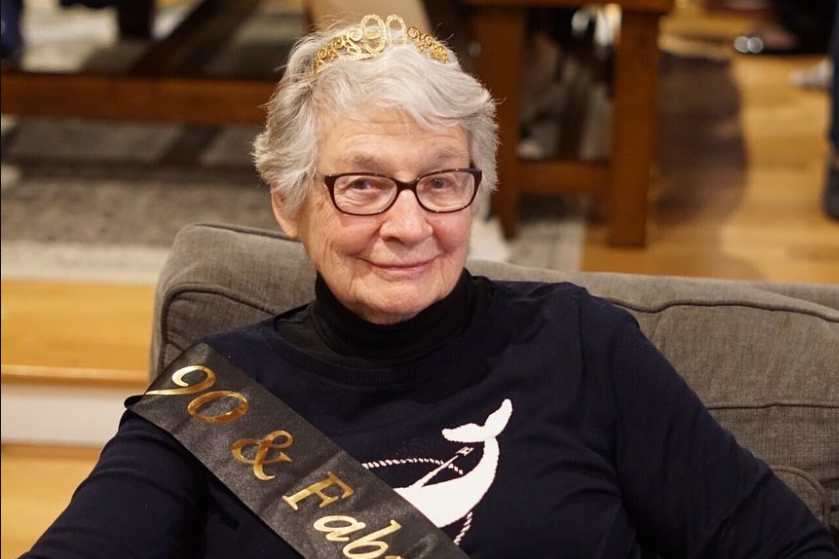
Barbara Lippincott Martin, 96, of Riverton, Burlington County, lifelong sailor, honorary commodore of the Riverton Yacht Club, community volunteer, and Delaware River waterfront matriarch, died Friday, Sept. 4, of age-associated decline at her home.
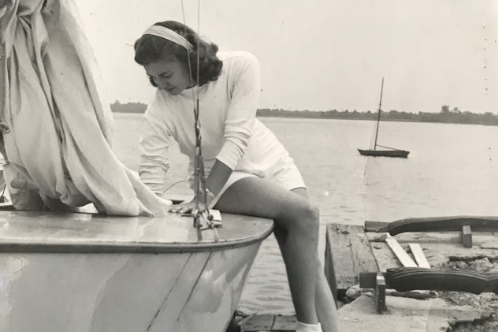
Born and reared in Palmyra, Burlington County, hard by the Delaware River, Mrs. Martin practically grew up on the water in the 1930s and ’40s. Her father, Howard Lippincott, was an avid sailor and head of what The Inquirer called the “famous Riverton sailing family.” He often navigated the family’s motor cruiser Pythagoras up and down the river, floating between the banks in South Jersey, Southeastern Pennsylvania, and Delaware to the Chesapeake Bay and back.
Years later, in the 1960s and ’70s, Mrs. Martin and her family sailed those same waters in their schooner Walter Mitty,and her children, as she did before them, crabbed and swam and learned how to row and sail. She lived near the waterfront on Bank Avenue, adjacent to the Riverton Yacht Club, for 50 years and routinely opened her home and property to family and friends on holidays, sailors and spectators during regattas, and artists during weeklong local workshops.
“The Delaware River shaped her childhood, her marriage, and her legacy,” her family said in a tribute.
Mrs. Martin won a room full of trophies and plaques over the years. Courtesy of the family
Mrs. Martin served as secretary for the yacht club and gave it permanent access to the tidal zone on her Bank Avenue property. Club officials awarded her a lifetime membership, named her honorary commodore in 2022, and said in an online tribute: “There are certain people whose lives become so intertwined with a family, a club, and a community that their influence is difficult to measure. Barbara was one of those people.”
In Facebook tributes, friends called her “a wonderful lady,” “an amazing person,” and the “Riverton Queen.”
As a young woman, Mrs. Martin, like her father, sister, and six brothers, embraced racing on the river. She finished sixth in a national race, placed first in many local regattas, and, in 1947, became the first woman to win the seasonal championship in the Duster class at the Riverton Yacht Club.
She was often the only woman in a race, and her victories and near victories were reported frequently in The Inquirer in the 1940s. She even finished one race after her boat was struck by lightning.
Mrs. Martin “became known throughout the region for her determination and skill,” her family said. Courtesy of the family
Officials at the yacht club called her “a fearsome competitor.” Her family said she ”became known throughout the region for her determination and skill.”
Her daughter, Barbara Smyth, said: “She made me realize that girls can compete with boys, and they can win.”
Barbara May Lippincott was born Jan. 3, 1930, in her family home. The youngest of eight children, she graduated from Palmyra High School, learned to sail on a homemade dinghy named Snapper, and called her own championship Duster-class boat Tanny Boo.
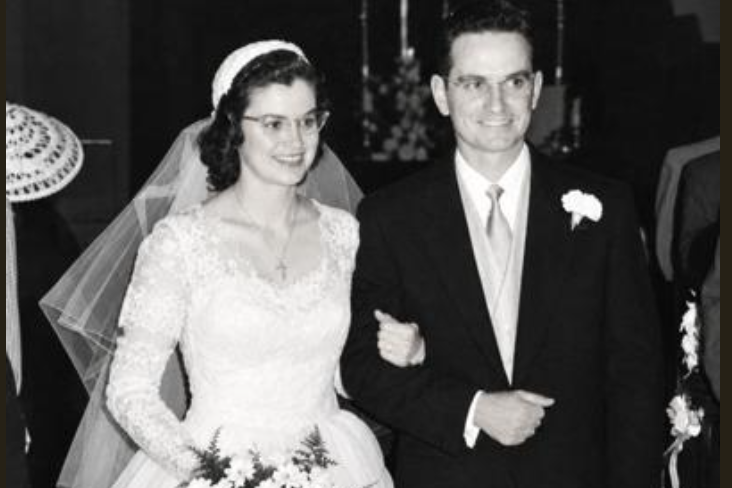
She met fellow sailor John Martin at a regatta, and they married in 1952 and had daughters Barbara and Jane, and sons John, Richard, and Robert. Her children became sailors, too, and she and her husband spent many weekends at regattas with them. Her husband died in 1984.
Mrs. Martin and her husband, John, were both longtime sailors.Courtesy of the family
Mrs. Martin played tennis and listened to classical music. She sang in the choir and was active at Christ Church in Riverton. In 2022, she was named marshal for the Riverton Fourth of July parade.
She volunteered at a seniors home in Cinnaminson Township and Zurbrugg Memorial Hospital in Riverside Township. She raised funds for the local library, hosted weddings at her home, and doted on her grandchildren and great-grandchildren.
She worked for years as a stenographer and bookkeeper for her brothers and husband, and for her son, John, until she was 87. “She was bulletproof,” her son said. “She gave love without expecting any benefit to her. She was the happiest person I knew.”
In addition to her children, Mrs. Martin is survived by 16 grandchildren, 10 great-grandchildren, and other relatives. Her sister and brothers died earlier.
Her son John said Mrs. Martin “gave love without expecting any benefit to her.”Courtesy of the family
Visitation with the family is to begin at 9:30 a.m. Saturday, Sept. 19, at Christ Church Riverton, 500 Fourth St., Riverton, N.J. 08077. A funeral service is to follow at 11.
Nearly two years after Chesterfield Township approved a plan to build a warehouse on a shuttered golf course, construction still has not begun.
The Old York Country Club was purchased by New Jersey-based real estate developer Active Acquisitions in 2022 with plans to build at least one warehouse totaling up to about 1.1 million square feet, according to the redevelopment agreement. The project currently includes plans for a single building, but a second warehouse could be permitted — with the two buildings totaling up to 1.3 million square feet — if it were to be dedicated to cannabis cultivation or manufacturing, according to the township.
Four years later, the developers are still working to obtain the final approvals and permits needed to start construction at 228 York Rd., with hopes to finally break ground early next year, Active Acquisitions founder Seth Gerszberg said.
The developers have not identified a tenant for the future site, but Gerszberg said that regardless of who moves in, the property will operate as a traditional warehouse or logistics center with large trucks coming and going from the building throughout the day.
The anticipated work at the 156-acre property was approved in November 2024 and comes more than six years after the township designated the site as an “area in need of rehabilitation” in May 2020.
The sprawling golf course closed in 2021 in part due to pandemic-era drops in revenue and memberships. In the years since, the township’s redevelopment efforts have drawn some public pushback.
Following the initial approval of a redevelopment plan for the site in October 2022, a neighborhood group called Save Old Yorkfiled a lawsuit against the township. While it was ultimately dismissed in court, the lawsuit argued that the redevelopment plan did not conform to the township’s master plan and amounted to “spot zoning” from agricultural to commercial.
But Chesterfield administrator George Jackson, who began working in the township in 2024, argues that the project presents a rare opportunity for the township to welcome a new taxpayer with deep pockets.
Much of Chesterfield’s 21 square miles is preserved farmland that is unable to be developed, Jackson said, which significantly limits new commercial development opportunities. The tax rates for preserved farmland are also much lower than the rates for residential or commercial properties, he said.
“You need the balance in your ratables,” Jackson said of the township’s tax base. The warehouse “could take some of the burden off of our residential taxpayers.”
In a town with a municipal budget of roughly $6.7 million in 2026, the potential yearly tax revenue generated by the new warehouse is expected to be around $2 million — roughly 30% of the total budget, he said.
“Our opportunities to increase our tax base are very, very limited, and this is an opportunity to really increase it dramatically,” he said.
As the developers work to secure an end user for the future warehouse, both Gerszberg and Jackson emphasized that the one thing they know for sure is that it won’t be an Amazon fulfillment center.
The redevelopment agreement specifically prohibits that type of warehouse use on the site, while also requiring that vehicles exiting the property make a left turn onto Old York Road in an effort to keep truck traffic out of the center of town, Jackson said.
Additionally, the site’s location about a half mile from Route 206 and adjacent to two existing warehouses across the street make it “a prime location for warehouse development,” Jackson said.
“The township went through some great measures to ensure that it doesn’t turn into a big commercial trucking route in certain areas of the township,” he said. “They want that traffic to go out to the highway.”
Voters in Clementon this week overwhelmingly rejected a $13.5 million school bond question that would have raised property taxes, while a $76 million referendum in Cinnaminson was too close to call.
If approved, the Clementon bond would have been used to build an early childhood center for preschoolers. The measure, according to officials, would have added about $243 annually to the tax bill for a home assessed at the borough average of $115,178.
Meanwhile, the outcome of Tuesday’s special election in Cinnaminson — the largest bond referendum in the district’s history — was too close to call, Burlington County election officials said.
Preliminary results indicate the school bond issue appears to be heading for defeat, officials said. There were 1,632 votes against the proposal and 1,610 in favor, with mail ballots and provisional ballots still being verified and counted, elections officials said. A final count is expected at the end of the month.
The Cinnaminson proposal, which included two questions, would add about $560 annually on a home assessed at the township average of $236,538, according to officials. The funds would be used for improvement projects, classroom additions, HVAC upgrades, new water fountains, and renovated bathrooms.
The first question had to pass for voters to consider a second question. However, the second question was defeated, 1,808-1,491.
Cinnaminson Township Public Schools Superintendent Stephen Cappello has said the district would regroup and figure out next steps if voters rejected the bond questions. Taxpayers are still paying down a 2014 referendum that added about $238 annually to local property taxes.
“The election numbers and the voter response will ultimately drive whether the Board seeks a future referendum,” Cappello said in a statement.
Tuesday was one of five times during the year that school boards may ask voters to approve a bond issue or special question. They are typically used to pay for projects districts cannot readily fund through their annual general operating budgets.
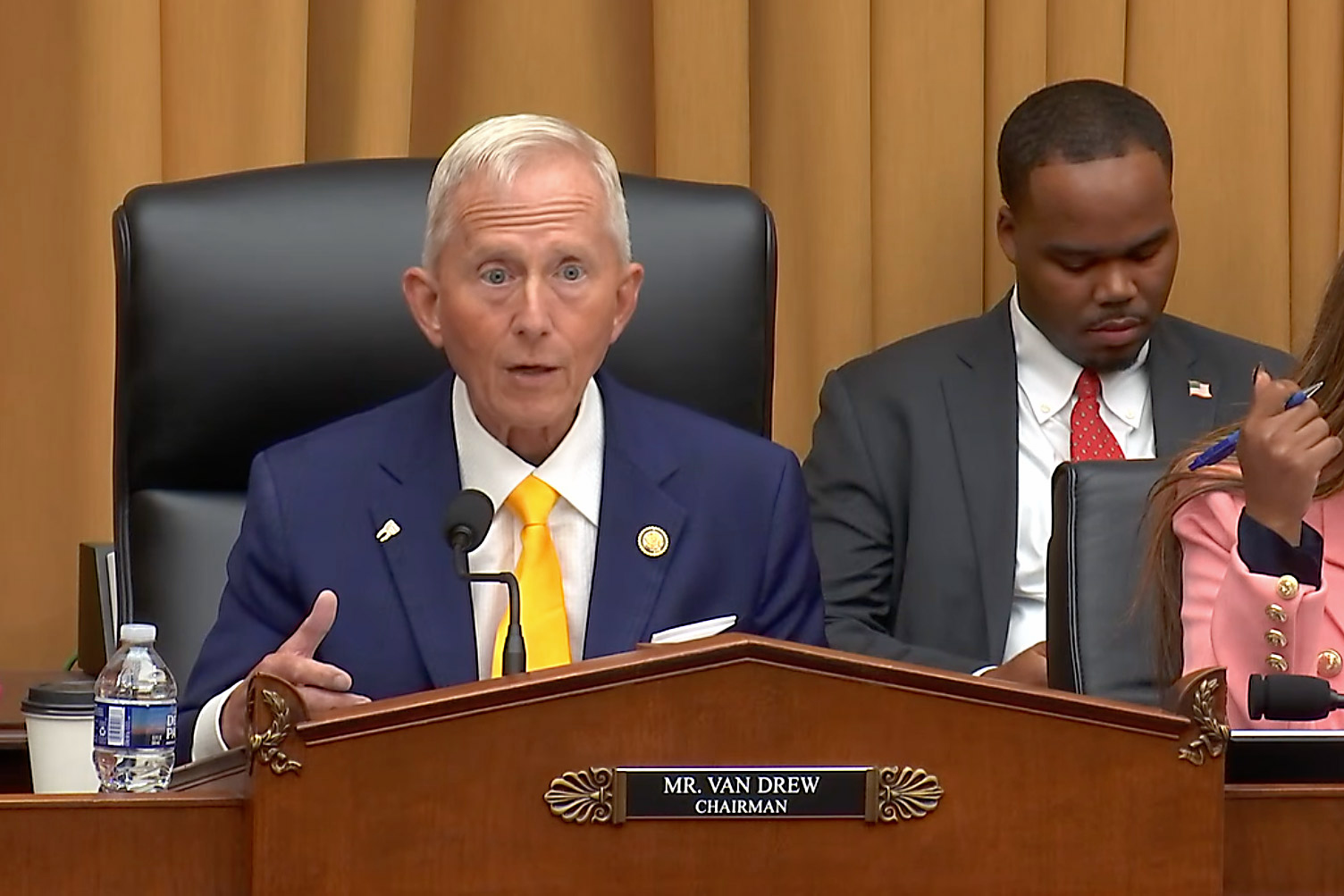
South Jersey Republican Rep. Jeff Van Drew tried to ramp up pressure on Democratic Gov. Mikie Sherrill over the state’s noncitizen voter registrations at a Tuesday hearing in Washington, which did not feature testimony from anyone in Sherrill’s administration.
“Whose side is New Jersey government on?” Van Drew said early in the congressional hearing as he airedgrievances about Sherrill and the state’s immigration policies. “That’s the question hanging over this entire hearing.”
None of the witnesses at the hearing were employees of New Jersey or IDEMIA, the software vendor which Sherrill has blamed for the issue, a point disputed by the company. Van Drew defended IDEMIA at the hearing and said the company is cooperating with his probe.
As he chaired the hearing, Van Drew repeatedly accused the state of New Jersey of knowing about the noncitizen registration issue since 2024.
“In political terms, that’s called a cover-up,” he said.
Van Drew, the chair of the House Judiciary Subcommittee on Oversight, has been a thorn in Sherrill’s side since she announced in July that about 6,600 noncitizens had been registered to vote due to an issue with the software used for the New Jersey Motor Vehicle Commission’s (MVC) voter registration program under former Democratic Gov. Phil Murphy.
Tuesday’s hearing came the day after the Supreme Court rejected President DonaldTrump’s mail ballot restrictions, allowing states to continue sending ballots under the same processes they have been using for years. Van Drew has been a vocal supporter of Trump’s efforts to overhaul national elections, including passing legislation to require proof of citizenship, like a birth certificate or passport, to register to vote.
Three witnesses, including the former chief counsel of the Republican National Committee, advocated for stricter rules around voting. A fourth witness,a former election official fromArizona, said the issue of noncitizen voter registration is incredibly rare.
Rep. Jeff Van Drew and President Donald Trump at a campaign rally in Wildwood, New Jersey, shortly after Van Drew switched parties.Heather Khalifa / MCT
Van Drew claims state knew of problem sooner
IDEMIA confirmed after the hearing that the company had met with staff from Van Drew’s office and “will continue to cooperate with congressional and state investigations to help ensure a complete and accurate understanding of the facts.”
Van Drew contended that internal documents show the state government had “tested and approved” the software that led to the improperregistrations.
“We also know that in 2024, IDEMIA received a request from New Jersey after the state finally realized that noncitizens were being registered to vote,” the Cape May County lawmaker said.
Van Drew spokesperson Paxton Antonucci told The Inquirer on Tuesday evening that the documents showed that New Jersey reached out to IDEMIA in June 2024 after noticing individuals who were registered to vote had missing information on their age and party affiliation. She said that information was missing because the software failed to flag thatthe group of individuals had selected they were not citizens, but were still allowed to registered to vote.
“The committee is working with IDEMIA to obtain additional information on how this was allowed to happen, and we are seeking documents from New Jersey as to why this error was never disclosed to the public prior to 2026,” she said.
Sherrill spokesperson Darwin Pham said the governor’s office “can’t speak” for the prior administration. Mahen Gunaratna, Murphy’s spokesperson, pointed to a previous statement on Tuesday that said Murphy “had no knowledge” of the issue and applauded Sherrill for investigating it.
Pham said in a statement Tuesday that congressionalRepublicans are weaponizing the issue “to advance Trump’s voter suppression agenda” while the governor “is focused on continuing to solve the problem she inherited from the previous administration.” He called the hearing “political theater.” Sherrill hired an independent firm to conduct an investigation that is ongoing. She said she will present the findings to the public.
Sherrill’s administration said earlier this summer that the state had removed roughly 4,000 voters from the rolls and left the rest to county election officials to verify whether they were citizens or not. Locally, Burlington and Camden Counties confirmed removing noncitizens from the rolls but did not specify a number.
Sherrill’s administration said fewer than400 of the noncitizens voted but did not affect the results of an election. Van Drew pushed back against this assertion on Tuesday, saying he still does not know the details of which elections these noncitizens voted in.
“Anybody knows if you follow local elections, they can be a handful of votes very often. It can even happen in Congress,” said Van Drew, who was elected as a Democrat in 2018 before declaring his loyalty to President Donald Trump and switching parties a year later. This November, he will face Democrat Zack Mullock, the Cape May mayor, at the ballot box.
Van Drew said that Lt. Gov. Dale Caldwell, the secretary of state, has been “somewhat cooperative” but that the state has broadly “done everything it can to not cooperate and stonewall the investigation.”
A Sherrill official said Tuesday her administration had provided the committee with public documents.Thegovernor haspledged to protect New Jerseyans’ data, and her administration has been in a legal battle with the Trump administration over providing the personal information of noncitizens.
At the hearing,Van Drew referred to Caldwell being under investigation without going into details.Sherrill has touted her transparency in disclosing the noncitizen voter registrations, but she has been criticized by some in her party for staying tight-lipped about a reported investigation into Caldwell and his alleged behavior with women.
Lt. Gov. Dale Caldwell (left) follows Gov. Mikie Sherrill off the stage following the celebration of their victory at an election night party in East Brunswick Tuesday, Nov. 4, 2025.Tom Gralish / Staff Photographer
Noncitizens removed from voter rolls in Burlington and Camden Counties
David Levinsky, a spokesperson for Burlington County, confirmed some ineligible voters were removed from the rolls in the South Jersey county but deferred to the state on specific numbers.
“The [Burlington County] Superintendent of Elections Office continues to follow all relevant state laws and guidance to ensure that all residents who register to vote are eligible,” he said.
Camden County spokesperson Dan Keashen also confirmed that the county received a list of voters to investigate. The rolls are up to date after noncitizens were removed, he said.
Stephanie Salvatore, the Gloucester County superintendent of elections, said Tuesday that the county had not been notified of any questionable voters due to the MVC issues from the state.
Salvatore, who has been in the election office for more thanthree decades, said the issue had come up “a handful of times” before.
“I have police powers over elections, and an investigator assigned full-time. We work closely with many agencies, including the FBI, the state police, the county prosecutor, among other agencies,” she said. “If I cannot verify the voter eligibility in question within my office, I send it to the professionals and/or the courts to decide.”
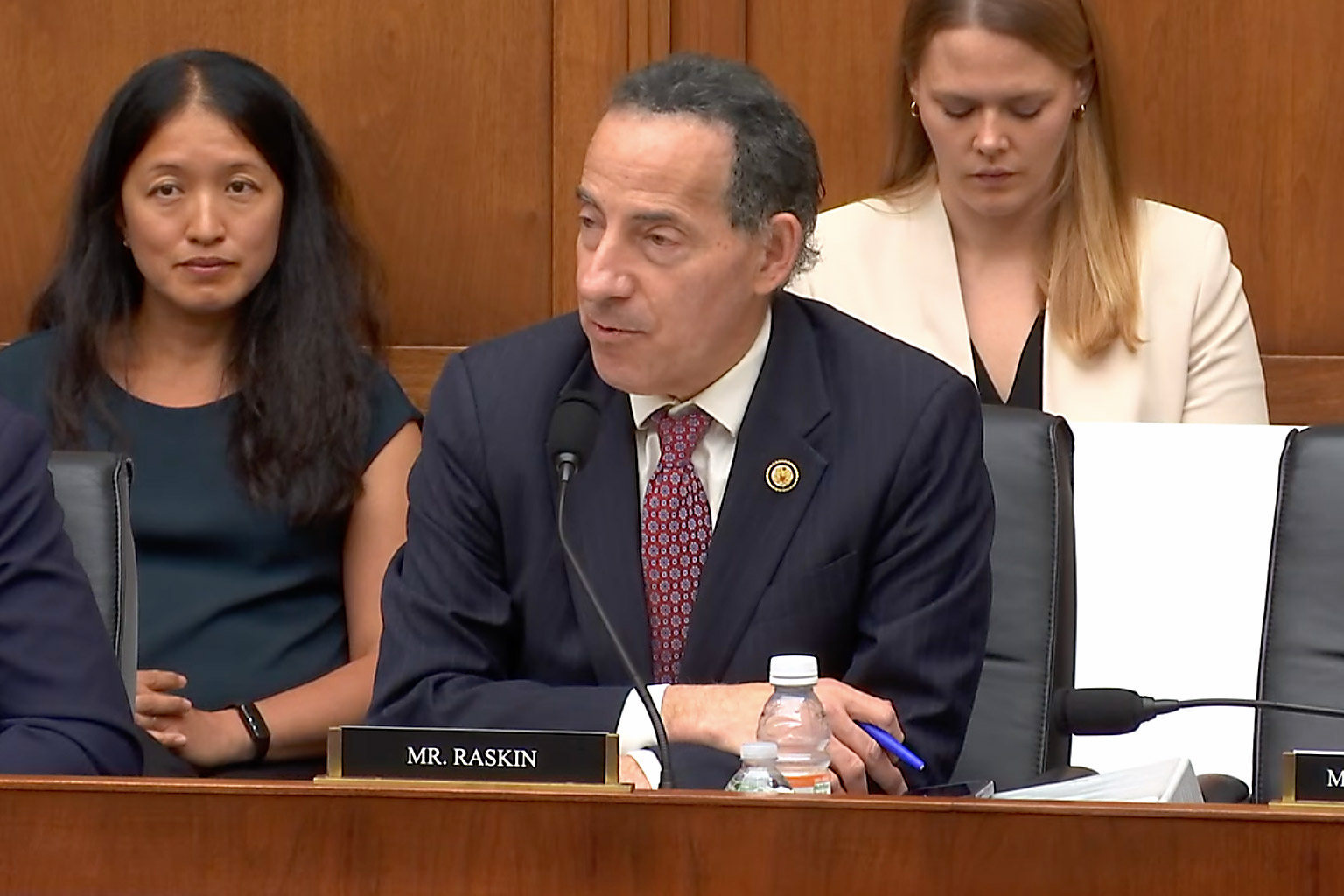
U.S. Rep. Jamie Raskin, a Maryland Democrat, speaks during a hearing on New Jersey noncitizen voter registrations. House Judiciary Subcommittee video
‘Worst-case scenario’
Stephen Richer, a legal fellow withthe libertarian Cato Institute’s Robert A. Levy Center for Constitutional Studies,was the one witness who strayed from Van Drew’s position on noncitizen voting. Richer, who previously served as a Republican responsible for voter registration in Maricopa County, Ariz., cited as an example an audit in Utah, which found that 0.001% of voters were noncitizens. He said New Jersey’s case is the worst he has seen.
“Even in this scenario, this worst-case scenario, noncitizens made up a fraction of a percent of voters,” he said.
Josh Findlay, a senior fellow for election integrity policy at the Trump-aligned America First Policy Institute, argued that every noncitizen vote cancels out a citizen’s vote.
“The default should be that voters must verify their eligibility before being added to lists, not that people are added to lists and then we hope that the state catches them,” he said. “Even small numbers matter.”
U.S. Rep. Jasmine Crockett, a Texas Democrat and ranking member of the subcommittee, called Trump “the biggest threat to democracy,” pushing back on the GOP messaging.
Van Drew contended that pressure from the federal government led to the noncitizen voterrevelation, but U.S. Rep. Jamie Raskin, a Maryland Democrat, emphasized that the error was discovered and disclosed by New Jersey itself.
“No matter how much our colleagues seek to inflate it, a clerical error is not structural corruption, much less is it a criminal conspiracy,” said Raskin, the top Democrat on the Judiciary Committee. “It does not rise to the level of, say, a violent insurrection deliberately incited and organized to overthrow a completed presidential election.”
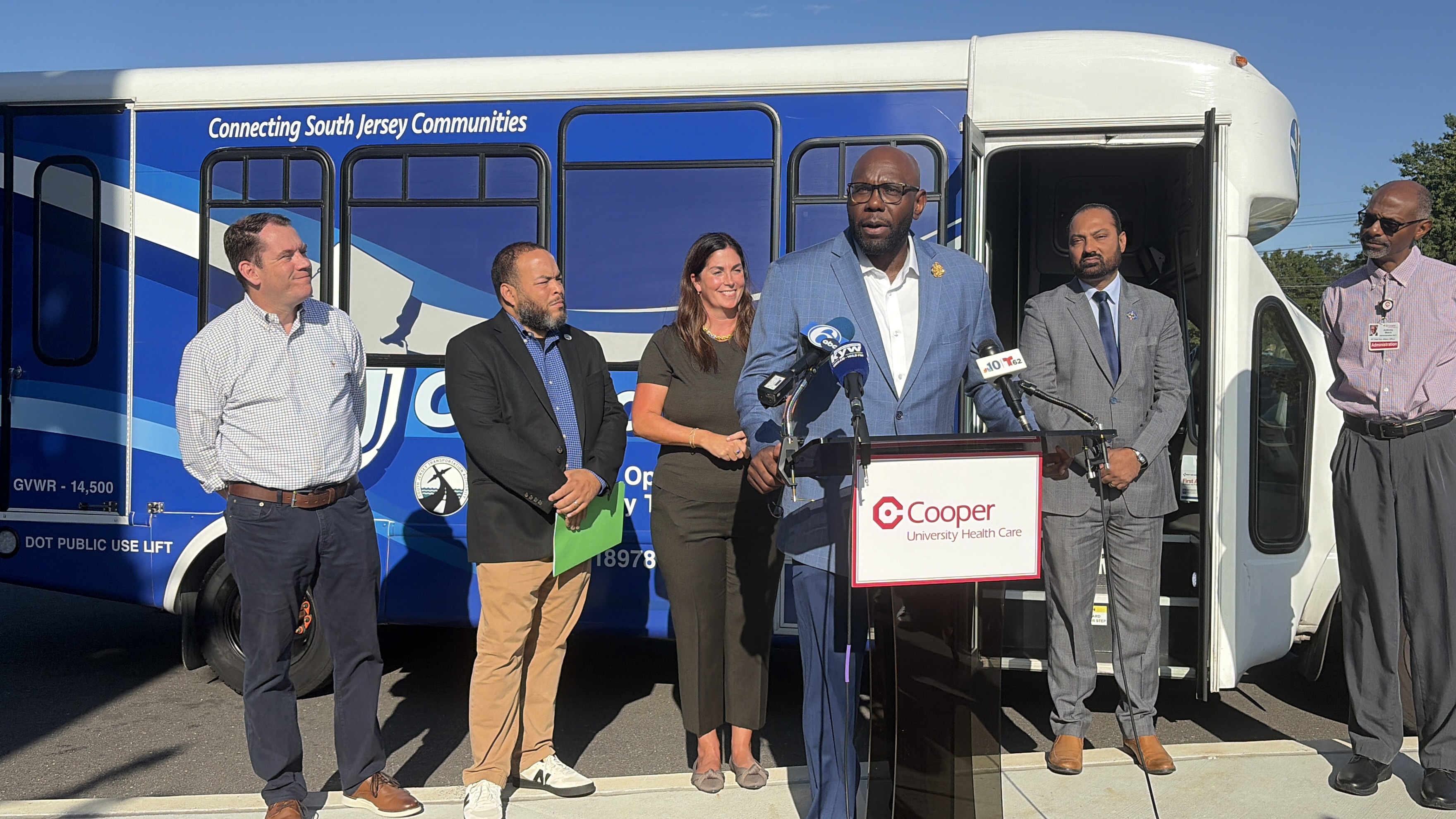
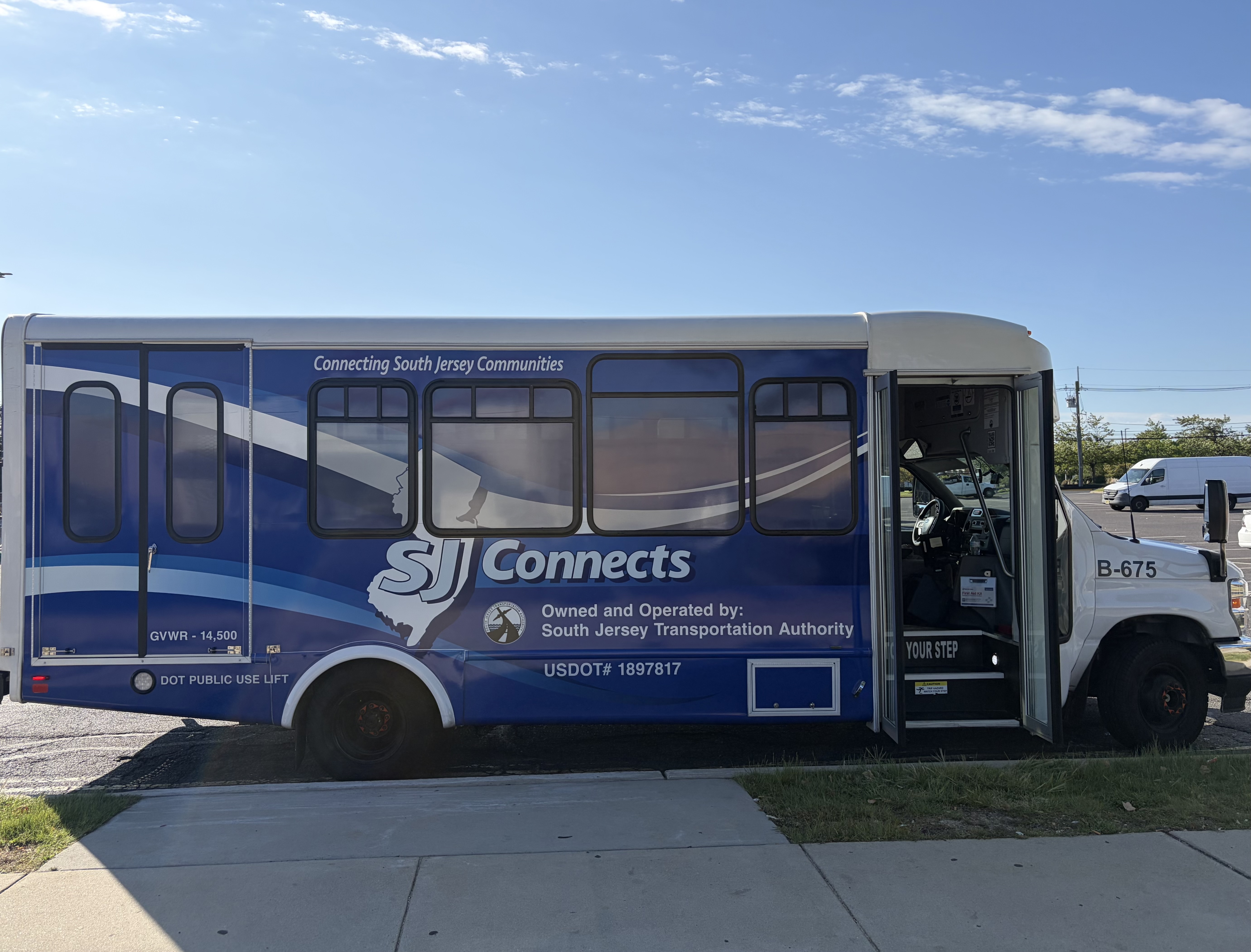
Some Burlington County residents might see an unfamiliar blue shuttle bus on the roads next week as the region welcomes its first new public transit option in more than two decades.
The new route will officially start service on Sept. 21, the last of six new shuttle lines that form SJ Connects, a free bus service run by the South Jersey Transportation Authority (SJTA). The first five lines were launched on June 1 while the transportation authority worked to get formal authorization to operate in the county.
Together, the shuttles can take riders from Cape May Court House to as far north as Palmyra with connections to other shuttles, SJTA routes, NJ Transit lines, and more sprinkled throughout.
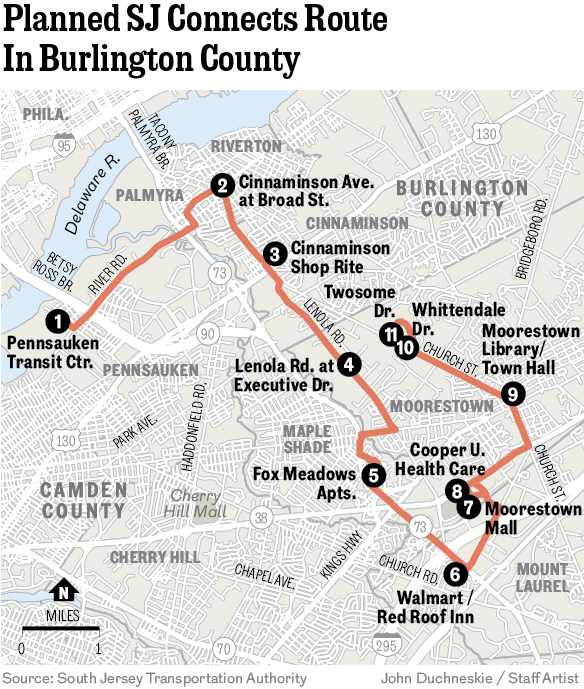
Though the newest route is called the Burlington County Shuttle, it technically begins over the Camden County line at the Pennsauken Transit Center before concluding 10 stops later at Twosome Drive and Church Street in Moorestown.
Along the new route, up to 20 riders per bus can hop on or off at various locations including the Cinnaminson ShopRite, Fox Meadow Apartments in Maple Shade, or at Cooper University Healthcare’s Moorestown Mall location.
Stretching from early morning to late evening, the shuttles will make a total of five visits to each of the stops along the route throughout the day.
The first shuttle leaves from the Pennsauken Transit Center at 7 a.m. with the final drop-off scheduled for 8:11 p.m., according to the SJTA schedule. A full schedule for the Burlington County shuttle is available online.
SJ Connects received $5 million in state funding from former Gov. Phil Murphy’s administration for an 18- to 24-month trial run to boost transit services in the region.
Map of planned SJ Connects route in Burlington County.John Duchneskie
The investment was secured in part thanks to the efforts of state Sen. Troy Singleton, a longtime Burlington County resident who called the county “the crown jewel of South Jersey.”
“Burlington County is the largest county by land mass here in New Jersey and being able to connect what was a lot of former farmland to economic and educational opportunities is critically important,” Singleton said during a ride-along of the new route Monday.
“We know that there’s enormous economic opportunity here in South Jersey as it connects to Philadelphia and connects to other parts of New Jersey so continuing that investment is one of my responsibilities that I take really personal,” he said.
Many of the stops along the SJ Connects routes were chosen to help South Jersey residents travel between medical centers, educational institutions, and other areas of interest, said Stephen Dougherty, SJTA’s executive director.
The Burlington County Shuttle will begin service on Sept. 21, 2026.Lacey Latch
The half-dozen routes include stops at multiple Cooper and Inspira locations in addition to the region’s various community colleges and universities. The routes also have stops located at or near large employers, Dougherty said, including Logan Township’s Pureland Industrial Complex, the second largest industrial park east of the Mississippi River.
“We know that these routes are crucial — based on the nature of what these stops are — to people’s everyday lives,” Dougherty said.
Now that all six of the SJ Connects shuttles are ready for riders, local leaders are simply asking South Jersey residents to hop on for a ride.
The more demand there is for this service in Burlington County, the more likely it will be for legislators to get state funding to keep the rides free and create more routes in the future, Singleton said.
“My hope and my ask of the public is to utilize this free resource — their tax dollars coming to their benefit — in order for us to try and expand it even more,” Singleton said.
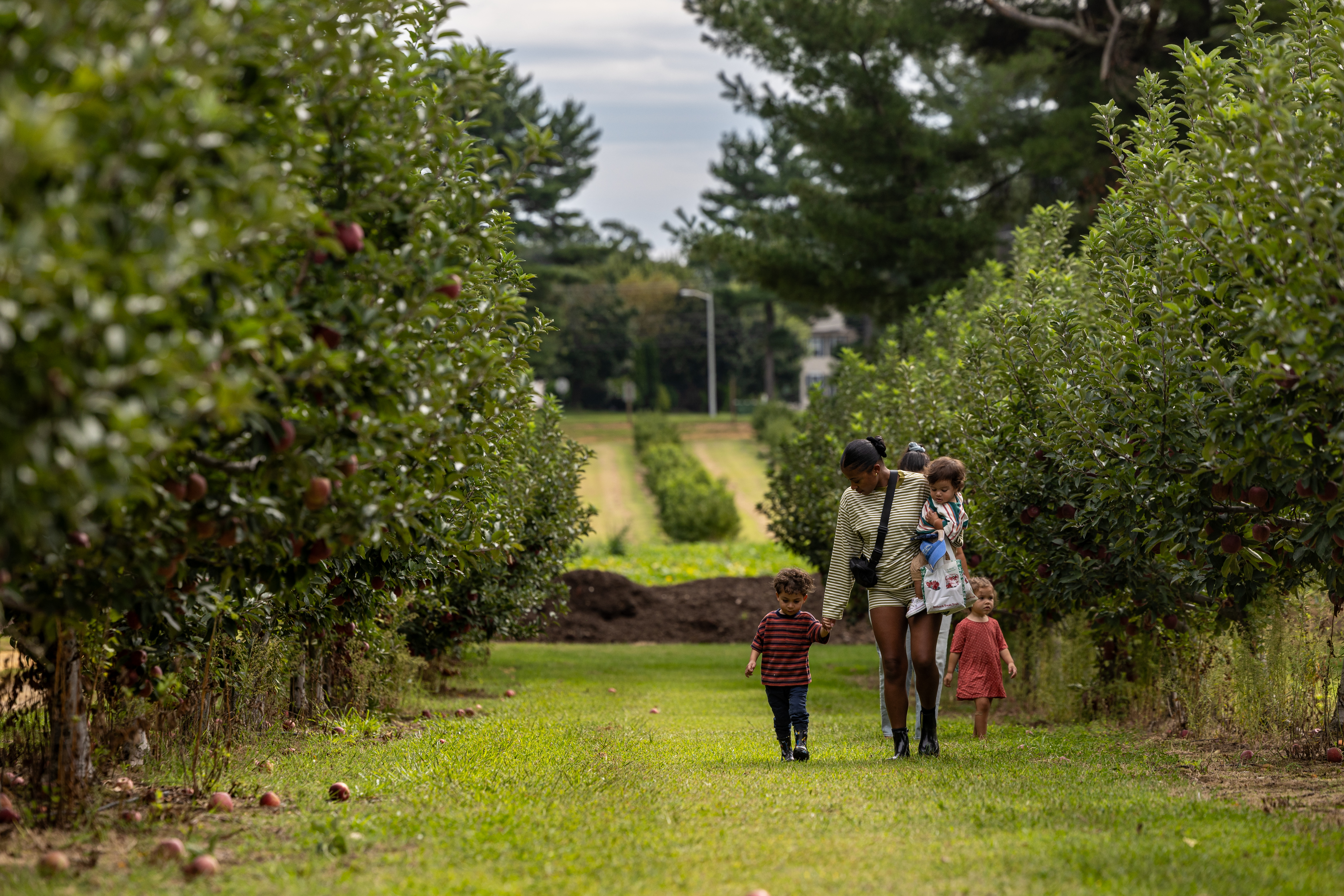
For many, a quintessential South Jersey fall includes apple picking, a warm cider, and sugared doughnuts.
But fall in the Garden State might look a little different this year after a spring freeze left farms across the region with damaged apple varieties and huge crop losses — at least $300 million worth, Gov. Mikie Sherrill said in May.
At Russo’s Fruit & Vegetable Farm in Tabernacle, which typically attracts visitors for six weeks of picking, the apple cropwas decimated by the freeze. The farm had to purchase apples from a farm in New York to sell this year, the most local they could get.
Third-generation owner Joann Gsell, 59, said she won’t know the extent of their lost profit until fall is over, but the farmers are doing their best to fill in the gaps.
Russo’s staff planted sunflower fields and popcorn plants for picking instead, both new experiments, along with their usual pumpkins. Gsell planned new events, too, spread across the picking season to draw in more customers.
“Even if we get the same amount of customers coming out, the per-dollar sale won’t be what it was when apples were available,” Gsell said. “But we really don’t know until we’re past it.”
Jersey’s apple harvest season typically begins in mid-July and wraps up by the end of October, according to a report by the state Department of Agriculture, but local farmers, who are still recovering from a tough summer of sparse berries and higher prices, say the season will likely be much shorter and will rely on success in their pumpkin fields.
Still, fall must go on, farm owners say, starting with their apple festivals.
17-month-old Rome Imbesi bites into a big apple next to his mother Kristen Imbesi, 34, of Haddonfield, after picking apples at Duffield’s Farm.Aidan T. Gallo / Staff Photographer17-month-old Rome Imbesi bites into his apple.Aidan T. Gallo / Staff Photographer
‘Figure things out’
Tracy Duffield, who has worked at Duffield’s Farm Market in Sewell for four decades, said the Gloucester County farm had to push back the start of apple picking by a month.
The freeze killed Duffield’s early apple cropplanted in January, and with half its crop remaining, it’s uncertain how long picking will last this fall.
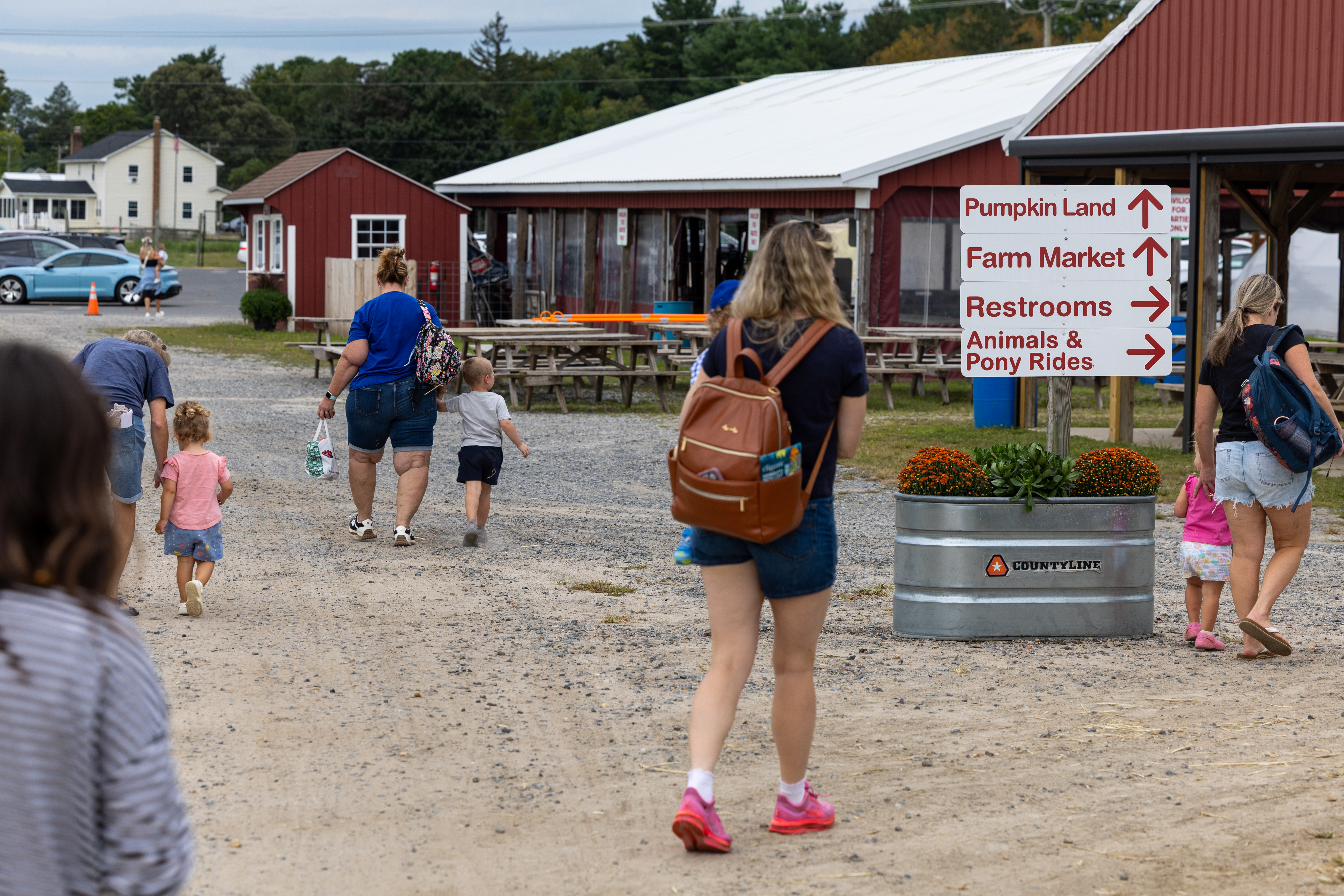
But that didn’t stop Duffield’s from hosting its annual Apple & Food Truck Festival on Saturday, featuring apple picking, pony and hayrides, and face painting. It’s the official launch of the farm’s apple season this year.
“I compare it to COVID. You have to get creative and figure things out,” Duffield said. “It is what it is. You just make the best of it.”
Calah Donato, 26, of Port Elizabeth, N.J., holds her son Neo, 1, while he picks an apple off an apple tree at Duffield’s Farm.Aidan T. Gallo / Staff Photographer
Duffield’s will still carry its beloved apple cider doughnuts this year, along with new apple-cider-doughnut-scented candles. But they did have to switch cider providers this year, buying from a Central Jersey-based farm instead of Mood’s Farm, 20 minutes away in Mullica Hill.
Mood’s is not making fresh cider this year, said co-owner Patti Mood, but they’ll have frozen cider from past apple seasons to get them through.
“We’ll just see how long it lasts,” Mood said. “We’re not sure what next year will look like.”
Kristine Duffield (center), the daughter-in-law of farm owner Tracy Duffield, hosts an apple-themed story time at Duffield’s Farm in Sewell on Friday, Sept. 11.Aidan T. Gallo / Staff Photographer
This fall, Mood’s doesn’t have enough quality apples to run its pick-your-own operation. At the farm’s own Apple Festival on Saturday, visitors gathered apples sourced from nearby states placed in bins in the orchard during discounted hayrides, instead of picking them off the trees.
Other farms have canceled their apple-picking operations this year. Neither Strawberry Hill Farm in Chesterfield nor Johnson’s Corner Farm in Medford have apples to pick.
Julian, who is two-and-a-half years old, makes a craft next to his grandmother Deb Carter, 69, of Washington Township, at Duffield’s Farm Market on Friday, Sept. 11.Aidan T. Gallo / Staff Photographer
Off the farm
Despite the shortage, apples are still being celebrated this year, on and off the farm. First Methodist Church of Moorestown is hosting its third apple festival on Sept. 18.
And Medford Historical Society will host its 47th annual Apple Festival on Oct. 10, their biggest fundraiser of the year.
Danny, 2, attempts to poke his sister Sosie, 4, with a piece of hay while being held by his great-grandmother Joan Ballah, 80, at Duffield’s Farm in Sewell on Friday, Sept. 11. The family is local to Sewell and comes to the farm often to participate in the farm’s activities and shop the farmer’s market.Aidan T. Gallo / Staff Photographer
Thomas Gerber, copresident of the historical society, said their usual supplier in Pennsylvania lost all their apples and couldn’t provide the 320 pounds needed for the festival, so they found a different farm in New Jersey.
Families wait to enter the hayride to pick apples out in the orchard at Duffield’s Farm in Sewell on Friday, Sept. 11.Aidan T. Gallo / Staff Photographer
Amy Zorn, an eighth-generation owner of Hunter’s Farm in Cinnaminson, said their farm market has been able to buy Jersey apples from other farms, but they’ve had to pay higher rates for smaller apples compared to previous years. She hopes customers continue to support their local farms through this year’s challenges.
“There are still Jersey fresh items out there,” she said. “You might not see as many apples, but there are fall squashes, sweet potatoes, and other things coming to Jersey. I encourage people to go out to their farmers markets.”
Families exit Duffield’s Farm after the apple-themed activities concluded on Sept. 11.Aidan T. Gallo / Staff Photographer
‘For the long run’
Mario Caltabiano, 31, has been farming since he was 6 years old. As the owner of MC Farms in Pilesgrove in Salem County, Caltabiano grows 14 varieties of apples, Asian pears, and several types of vegetables.
He said he’s used to freezes that take out large sums of fruit, but apples, “the hardiest things,” usually power through.
Caltabiano said one of his farms saw a total apple loss, and the other lost 90% of its crop. With about 20 apples clustered on each tree, and thousands of trees, Caltabiano said he’s not sure how long it’ll take the public to pick them all. Either way, Caltabiano has to continue to tend to the orchards to make sure the trees stay strong enough to produce fruit next season.
“This year, when fruit is 90% of your business, you have the same amount of bills. You have to take care of the trees to the very end,” Caltabiano said. “How do you make up for that?”
In recent years, MC Farms has ventured into the agritourism world, offering hayrides, barrel train rides for kids, cut-your-own flowers, and a wine garden settled in the orchards. Rising prices for fuel and fertilizer are still making work difficult, along with the destruction of most of his crops.
But Caltabiano said he plans to make it to next fall, and the one after that.
“I’m in it for the long run,” Caltabiano said. “I’m in it till I croak.”
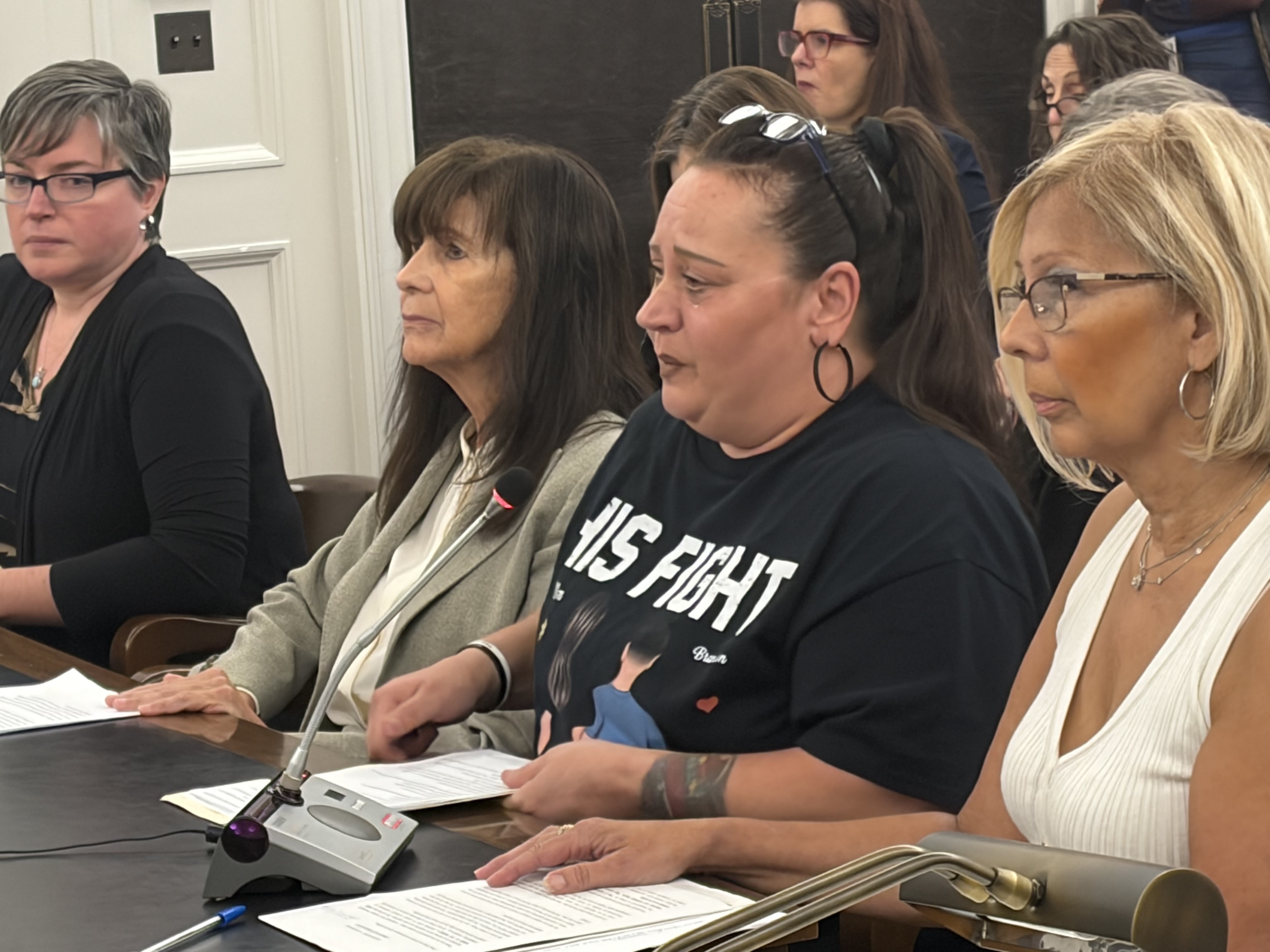
TRENTON — Parents of people with developmental disabilities tearfully pleaded with New Jersey lawmakers on Monday to mandate the installation of cameras inside state-licensed group homes to protect their children from abuse and neglect, which they say have become almost a routine occurrence.
A family’s frequent visits and vigilance are not enough to protect their adult children’s safety, said Priscilla Quesada of Egg Harbor Township, who testified that her son Brandon suffered broken bones and other injuries in group homes in Burlington and other South Jersey counties. He is now in a state-run facility.
“I never imagined I would have to stand before lawmakers and ask for something as basic as cameras to protect my child,” Quesada said.
“As his mother, I have had to fight for answers. I have had to look at medical records. I have had to ask questions about injuries and when they occurred,” Quesada said through tears. “And I keep asking myself one question: If there had been cameras, would we have known what happened to him? Maybe the abuse would have stopped sooner.”
The fight over cameras in group homes has gone on for more than six years without a resolution. And it has been nine years since the bill’s namesake, Billy Cray, died in his group home bedroom in Somers Point.
The Assembly Health Infrastructure Committeeheard nearly three hours of testimony for and against installed cameras in group homes. Chairman Sterley Stanley (D., Middlesex) said he would schedule another hearing after working with group home lobbyists, disability advocates, and family groups to reach a compromise.
“We are all committed,” Stanley said after the hearing. “Cameras in the homes would be a vital first step, but we also want to address the abuse that is happening.”
Several representatives from the group home industry insisted the issue is more complicated than it appears. People with disabilities deserve privacy, a civil right protected under federal law, argued Cathy Chin, executive director for the Alliance for the Betterment of Citizens with Disabilities.
“Common areas in private homes are neither public spaces open to the public nor institutional settings. They are homes, where a degree of individual and communal privacy is to be expected and protected in the same manner as any home or community,” Chin said.
About 30% of group homes already use cameras, Chin said.
“Individuals and their guardians consider this option before choosing a group home, which means they can make the choice freely, without pressure from their housemates or their guardians,” Chin said.
Libby Vinson, CEO of the New Jersey Association for Community Providers, said the camera systems run from $20,000 to $25,000 — which would blow a “huge hole” in the providers’ budgets. She said it made more sense to spend taxpayer money to improve staff training and prevent harm.
The legislation would require licensed group homes serving people with developmental disabilities to install cameras in living rooms, kitchens, and other common areas with the consent of all residents in the dwelling.
The cameras would record video but not audio, according to the bill. The group home operators must retain recordings for at least 90 days and share the recording with a resident or guardian upon request. The state would inspect the homes to ensure the cameras are installed and working properly.
The campaign for group home cameras emerged following the 2017 death of 33-year-old Billy Cray, whose body was found in his bedroom closet in his Somers Point group home. An autopsy said he died of natural causes, but his mother, Martha Cray, said she has never received satisfactory answers about his supervision and care.
The demand for cameras intensified in the last year following media reports detailing abuse and neglect inside group homes and the lack of consequences for the operators and staff.
Former Attorney General Matt Platkin last year charged Elwyn, a group home operator based in Media with facilities across multiple states, and an employee with neglect for allowing a resident who had fallen twice to remain on the floor for hours on two occasions in 2023 at a group home in Vineland.
Elwyn, one of the nation’s oldest providers of services for intellectually and developmentally disabled individuals, is based in Media, Pa. CHARLES FOX / Staff Photographer
Attorney General Jennifer Davenport, appointed in January by Gov. Mikie Sherrill, dropped the charges last month in exchange for Elwyn agreeing to be monitored by an outside firm.
Pennsylvania law permits the installation of cameras in group home common areas with consent from all residents. The group home operator must hang signs alerting people cameras are in use.
A new law took effect in New Jersey in July that for the first time gives the state department of human services authority to impose fines on abusive and neglectful group homes.
Families have argued that the state seldom substantiates claims of abuse and neglect. The evidence provided by cameras could help both residents and employees, who may be unfairly accused of wrongdoing.
Camden County resident Mary Jane Lovett said her son, Timothy, 36, endured 15 years of physical abuse — including some injuries requiring hospital care — at group homes in Pennsylvania. He recently moved to a state-licensed group home in Northfield, and she wants the comfort of knowing cameras are present.
“Video speaks for itself. There’s no bias, no way to deny an incident that is captured on video,” Lovett said.
“I never dreamed that I would be sitting in front of you, pleading with you to help keep my son safe in a group home funded by New Jersey taxpayer dollars, including my own.”
Cinnaminson School District Superintendent Stephen Cappello has big plans for his South Jersey school system — if voters approve a $76 million bond referendum, the largest in the district’s history.
It would allow the district to make desperately needed changes and improvements in all five of its schools. Voters head to the polls Tuesday to consider the proposal that would raise local property taxes.
“This is a big one,” Cappello said in an interview. “This will be an important part of where we are moving forward.”
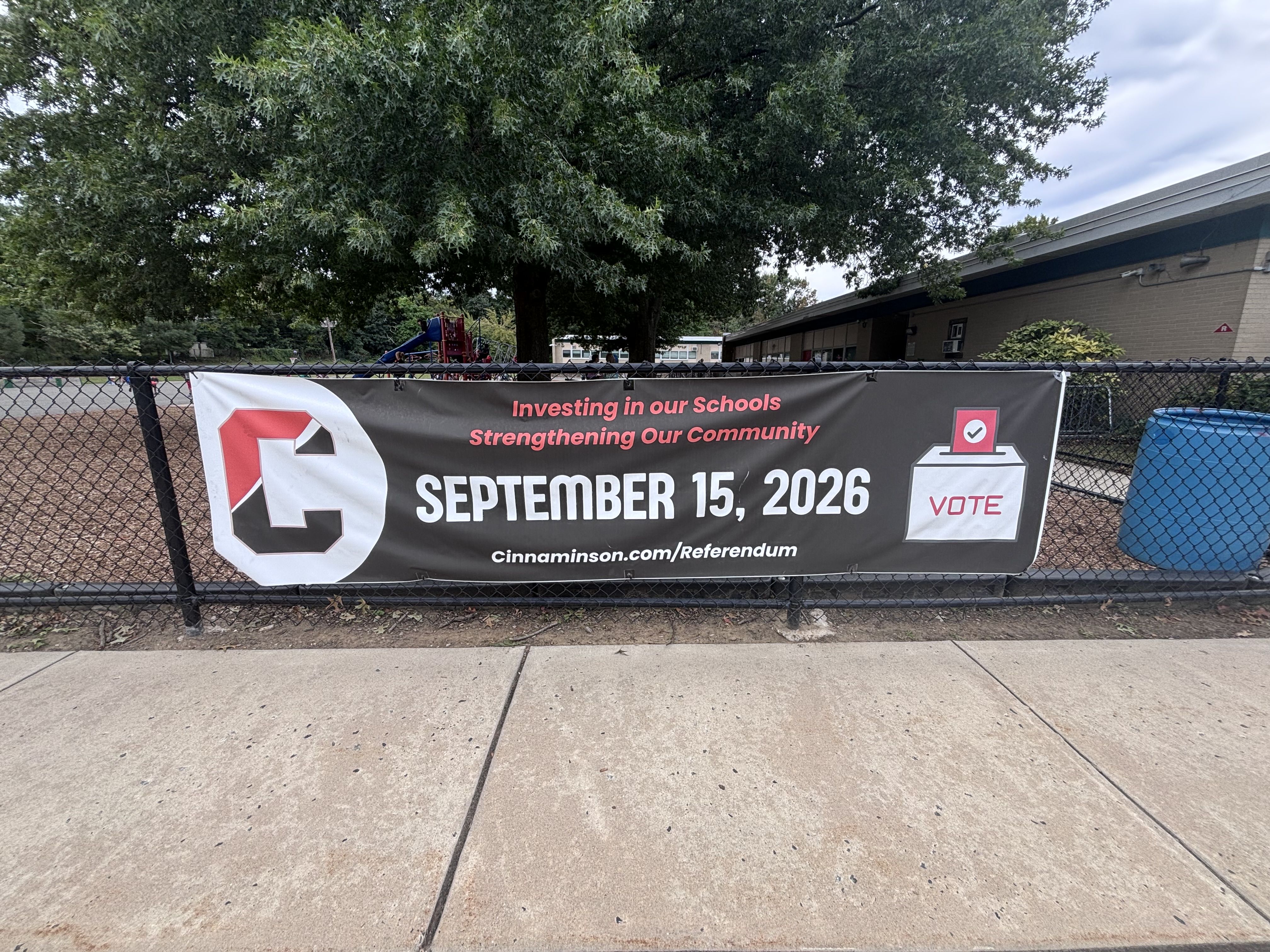
Cinnaminson voters will decide on two school bond referendums totaling $76 million during a special election on Sept. 15.Melanie Burney
If approved, it would help ease overcrowding at two elementary schools where some students attend classes in trailers, upgrade security systems, improve HVAC systems, and add new gyms and a high school stadium complex.
Cinnaminson in Burlington County and Clementon School District in Camden County are the only districts in the tri-county region with bond referendums in Tuesday’s special election.
Cappello acknowledged that referendum questions can be a tough sell especially amid tight economic conditions because they typically seek a property tax increase. Cinnaminson residents are still paying down a $40 million bond referendum in 2014 that added $238 annually to the average tax bill.
“No one takes those numbers lightly,” Cappello said. “We’re all sensitive about that.”
Cappello said the Burlington County district has been struggling with crowding in light of a growth explosion in the township. The district has about 600 more students than it had a decade ago, he said.
The district has spent millions to relocate students to six trailers the district calls “learning cottages.” It also leases space in a strip mall for administrative offices.
“There’s instruction happening in hallways, which is not our favorite,” Cappello said.
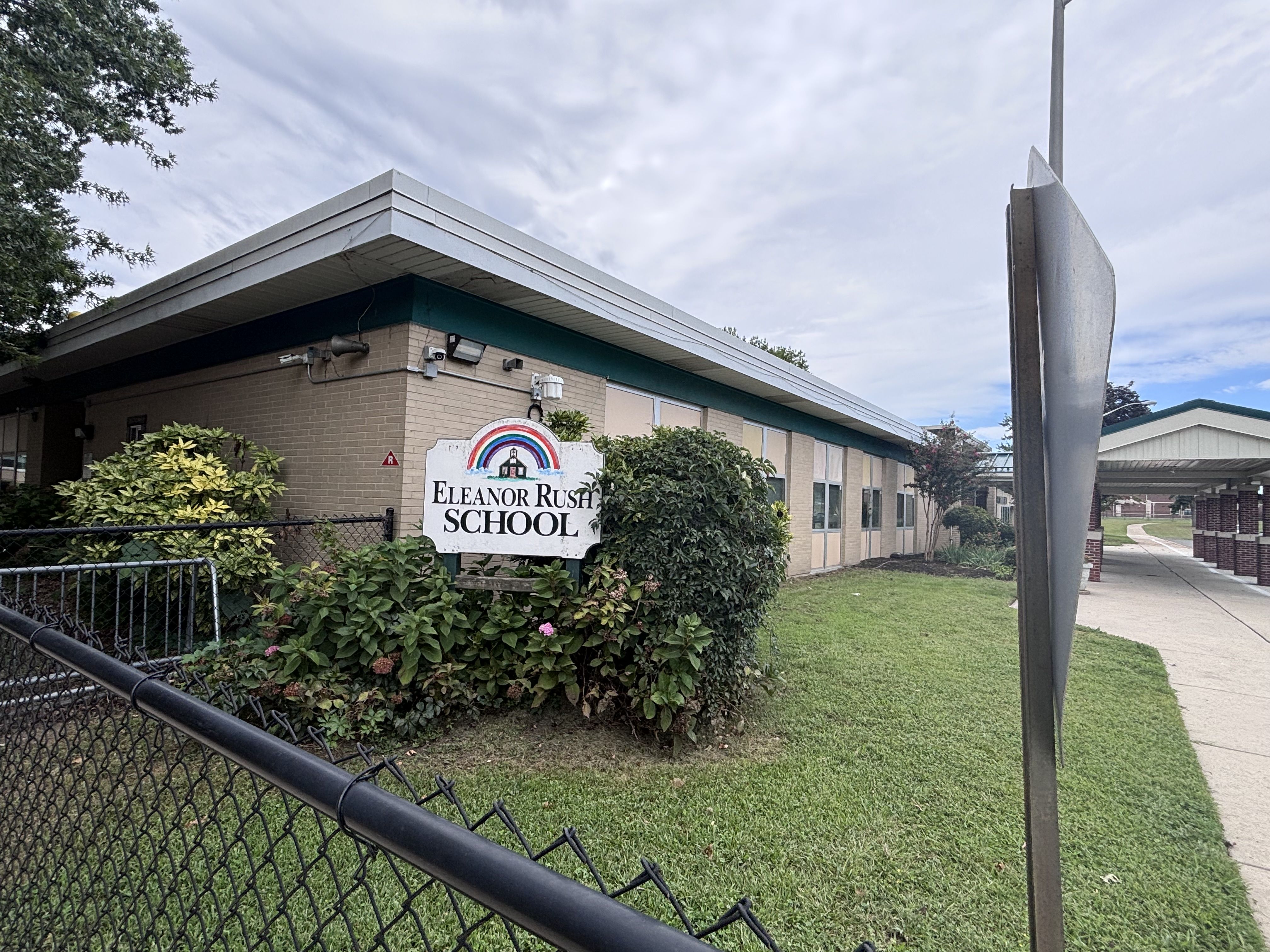
The Eleanor Rush School would get eight new classrooms and other improvements if Cinnaminson voters approve a $76 million bond referendum on Tuesday.Melanie Burney
The need is especially felt at Eleanor Rush Elementary where the all-purpose room is always bustling with activity. Because it is used for lunch, special classes including gym, music, STEM, and art cannot be held during the two-hour lunch period, presenting a scheduling challenge, Cappello said.
Tom Angelone, a STEM teacher at Eleanor Rush and a father of three in the district, said the district desperately needs more space. His classroom is located in one of several trailers on the complex.
Tom Angelone, a STEM teacher at Eleanor Rush Elementary.Melanie Burney
“I think we need to support the future generation,” Angelone said. “I will be voting yes on both questions. It’s a cup of coffee a day.”
Cinnaminson split its list of improvements into two bond questions. The first question includes a repaved parking lot at Memorial School, new fountains and renovated bathrooms at Eleanor Rush, six pre-K classrooms at New Albany School, a new esports arena and robotics classroom at the middle School, and a new roof and STEM lab at the high school.
Voters must approve question 1 in order to adopt the second question. It would fund a new one-story pre-K addition with six classrooms and bathroom additions at Memorial, a new gym addition at Rush, and a new turf field and track and field replacements at Cinnaminson High.
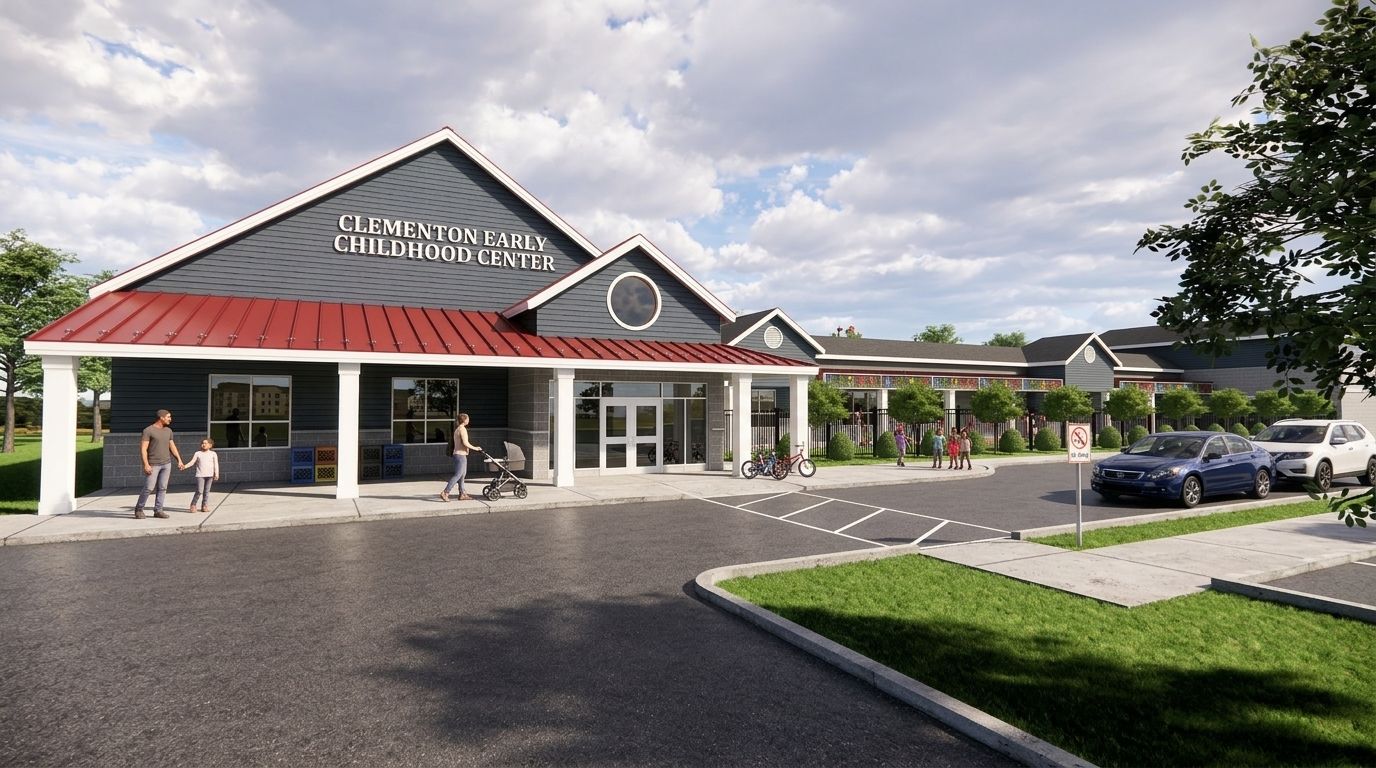
In Clementon, voters are deciding on a $13.5 million bond referendum to build a new early childhood center on a vacant lot. If approved, it would add about $243 annually to the tax bill for a home assessed at the borough average of $115,178.
The new center would include eight classrooms, a multipurpose room, and a playground area, according to the district’s website. Pre-K enrollment is expected to nearly triple to about 135 students for the 2027-28 school year, the district said.
An artist rendering of an Early Childhood Center proposed for the Clementon school district if voters approve a $13.5 million bond referendum in Tuesday’s special election.Clementon school disyrict
By shifting its youngest learners, the district said it would use the vacated space for other grade levels and electives, and add a dedicated sensory room for special needs students. The pre-K classes were temporarily moved this year to a site in Lindenwold, the district said. Clementon enrolls 621 students in kindergarten through eighth grades.
Statewide, voters in at least four other districts are considering 12 bond questions, according to the New Jersey School Boards Association. They allow districts to pay for projects that cannot readily be funded through their annual general operating budgets.
Tuesday is one of five times during the year that school boards may ask voters to approve a bond issue or special question.
The questions total more than $308 million with the state contributing about 40%, or roughly $122 million, if approved by local voters.
Kelly N. Moore, 46, of Burlington Township, award-winning clinical psychologist, founder of Moore Wellness LLC, director of the Center for Psychological Services at Rutgers University, graduate school clinical associate professor, former fellow at the University of Pennsylvania’s Center for the Treatment and Study of Anxiety, mentor, author, mental health activist, volunteer, and 2026 Willingboro High School Hall of Fame inductee, died Thursday, Aug. 20, of kidney cancer at Virtua Voorhees Hospital.
Adept at treating anxiety, depression, trauma, and perinatal disorders, Dr. Moorebecame director of the Rutgers Center for Psychological Services and a clinical associate professor in the Graduate School of Applied and Professional Psychology in 2020. As CPS director, she mentored hundreds of doctoral students regarding academic requirements and clinical procedures, and supervised the center’s community mental health clinic.
She significantly expanded the center’s services and outreach, Rutgers colleagues said in a Facebook tribute, and forged important partnerships on campus and in the community. Colleagues said: “Her warm demeanor, melodic voice, vibrant spirit, and calming presence made all who met, and were fortunate enough to know her, feel seen, welcomed, and heard.”
She spent two years as a fellow at Penn’s Center for the Treatment and Study of Anxiety after earning her doctorate in clinical psychology at Rutgers in 2011. During the COVID-19 pandemic, she founded Moore Wellness LLC and focused on helping women, children, and clients of color.
“Wellness does not mean you will never experience challenges,” Dr. Moore said in an online profile for Psychology Today magazine. “Rather, it means having the tools to manage the challenges when faced with them.”
Dr. Moore was an outspoken activist for mental health education and services. She spoke with groups often, organized workshops, and was featured in newspapers and magazines and on TV and podcasts. “Just trying to get people to understand as much as they can about the impact their mental health and well being have on their day-to-day lives,” she said in a 2026 podcast interviewwith the Multicultural Counseling Institute.
She belonged to the American Psychological Association and the New Jersey chapter of the Association of Black Psychologists. She was active with the Therapy for Black Girls podcast and the Leadership Institute for Women in Psychology.
Dr. Moore was a cheerleader and lacrosse player, and graduated from Cornell University in 2002.Courtesy of the family
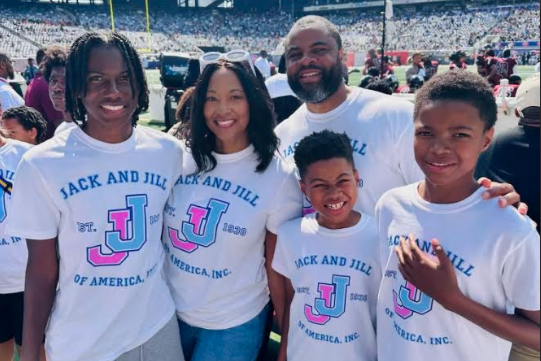
She earned leadership and achievement awards from the New Jersey Psychological Association, the National Council of Schools and Programs of Professional Psychology, and other groups. She was president and a board member of the Burlington County chapter of Jack and Jill of America Inc. Colleagues there called her “a beautiful example of leadership, service, grace, and love.”
Kelly Nicole Walker was born Aug. 20, 1980, in Philadelphia. Her family moved to Willingboro when she was 2, and she graduated from Willingboro High School in 1998.
She was a cheerleader and played lacrosse and viola as a teenager. Her mother, Diana, was a social worker, and she showed Dr. Moore up close how one person could impact their community.
“I was just fascinated by this concept,” Dr. Moore told the Multicultural Counseling Institute in the podcast interview. “It was already set at a young age that this was the kind of work I should be doing.”
She earned a bachelor’s degree in human development at Cornell University in 2002 and a master’s degree in education at Penn in 2003.
She met Melvin Moore through friends, and they married in 2004 and had sons Miles, Mason, and Matthew. They lived in Marlton and Delanco, and, since 2015, in Burlington Township.
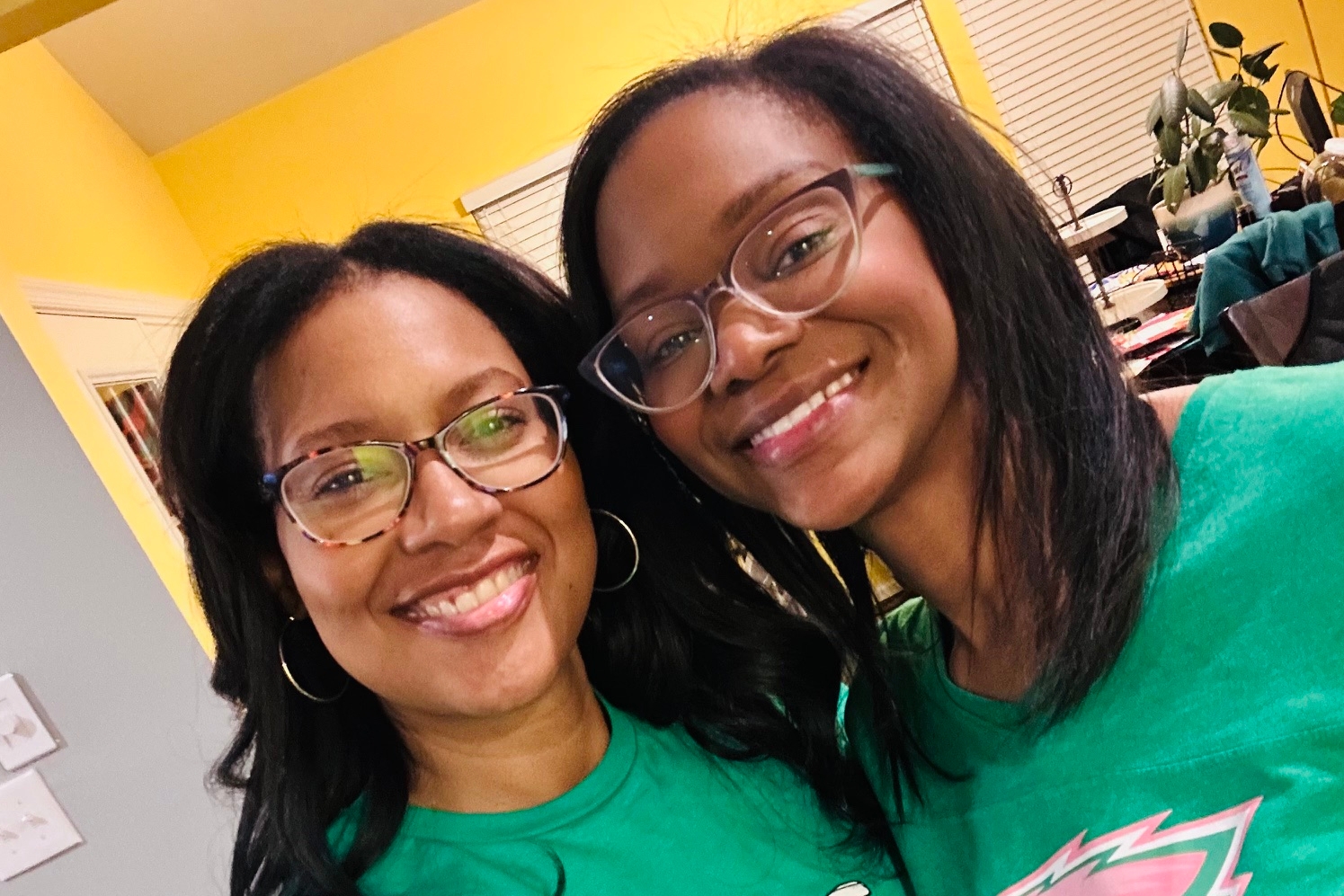
Dr. Moore was a longtime member and dance choreographer at the Gospel Tabernacle Church. She joined Alpha Kappa Alpha Sorority Inc. at Cornell in 2000 and was on the executive board of its Pi Mu Omega chapter in Willingboro.
Friends noted her “warmth, generosity, and kindness,” and called her “genuine” and “quietly brilliant” in online tributes. One friend said: “She sure made me proud to be from Willingboro.”
Dr. Moore and her husband, Melvin, married in 2004 and had three sons. Courtesy of the family
Dr. Moore doted on her sons and called them her “M & M’s.” She was an avid reader and led several book clubs.
She liked to garden, play piano, take photos, cook, and crochet. She was diagnosed with renal medullary carcinoma about a year ago and was determined, her husband said, to reach her 46th birthday. She did it.
Property tax breaks from Lumberton Township are part of the redevelopment agreement for Lumberton Village, a $77-million project of 857 proposed residential units on undeveloped farmland and wooded acreage in the relatively small town.
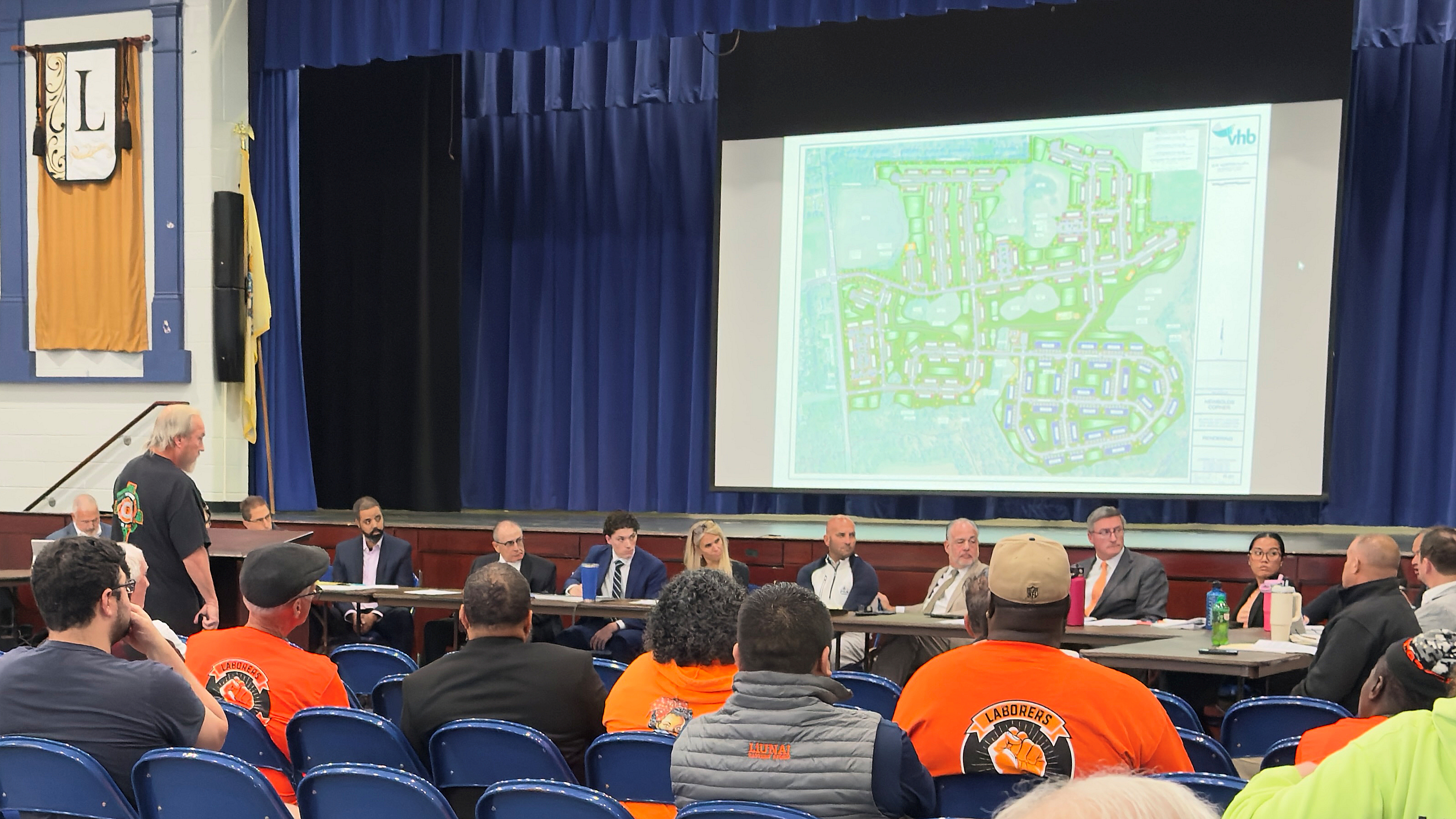
National homebuilder D.R. Horton Inc.’s project, which the Burlington County town maintains is an essential part of its commitment to affordable housing, is scheduled to go before the Township Land Development Board on Thursday at 7 p.m. for preliminary and final site plan approval.
Despite requiring board approval, the Horton project is viewed as a lock because of the affordable housing component, Township officials said at a community meeting.
“We’re stuck. We’re under court order. We have to proceed,” the Township affordable housing lawyer, Michael Herbert, of the Parker McCay firm, told residents at the May meeting in Bobby’s Run School. Herbert said the property at Newbolds Corner and Eayrestown Roads has been part of the township’s affordable housing plan for many years.
Lumberton Village would include 506 market-rate townhouses, 179 senior citizen townhouses, 92 affordable family apartments, and 80 age-restricted affordable apartments.
A 30-year Payment in Lieu of Taxes (PILOT) program for the 172 affordable and age-restricted apartments and a five-year tax abatement/exemption plan for the 179 age-restricted market rate units are included in the township redevelopment agreement, which was signed in August.
The project would increase the number of housing units in the town by about 17%. The Census Bureau’s American Community Survey estimated that Lumberton had 5,036 housing units in 2024, when the population was estimated at 12,882.
Under the plan, not all of the 412 acres that D.R. Horton purchases at the Lumberton site would be used for development. The Burlington County Commission in June approved spending up to $3.73 million to buy and preserve 226 acres at the southern end of the property under the Farmland Preservation program.
A traffic light will be installed at one of the development’s two entrances on Eayrestown Road. D.H. Horton’s traffic consultant, Shropshire Associates LLC of Atco, projects that the residential development will generate 449 trips during the weekday morning peak hour and 435 trips during the afternoon peak hour.
70and73.com is a hyperlocal news site focused on South Jersey, including the communities of Cherry Hill, Evesham, Mount Laurel, Voorhees, Medford, Medford Lakes, and Moorestown.