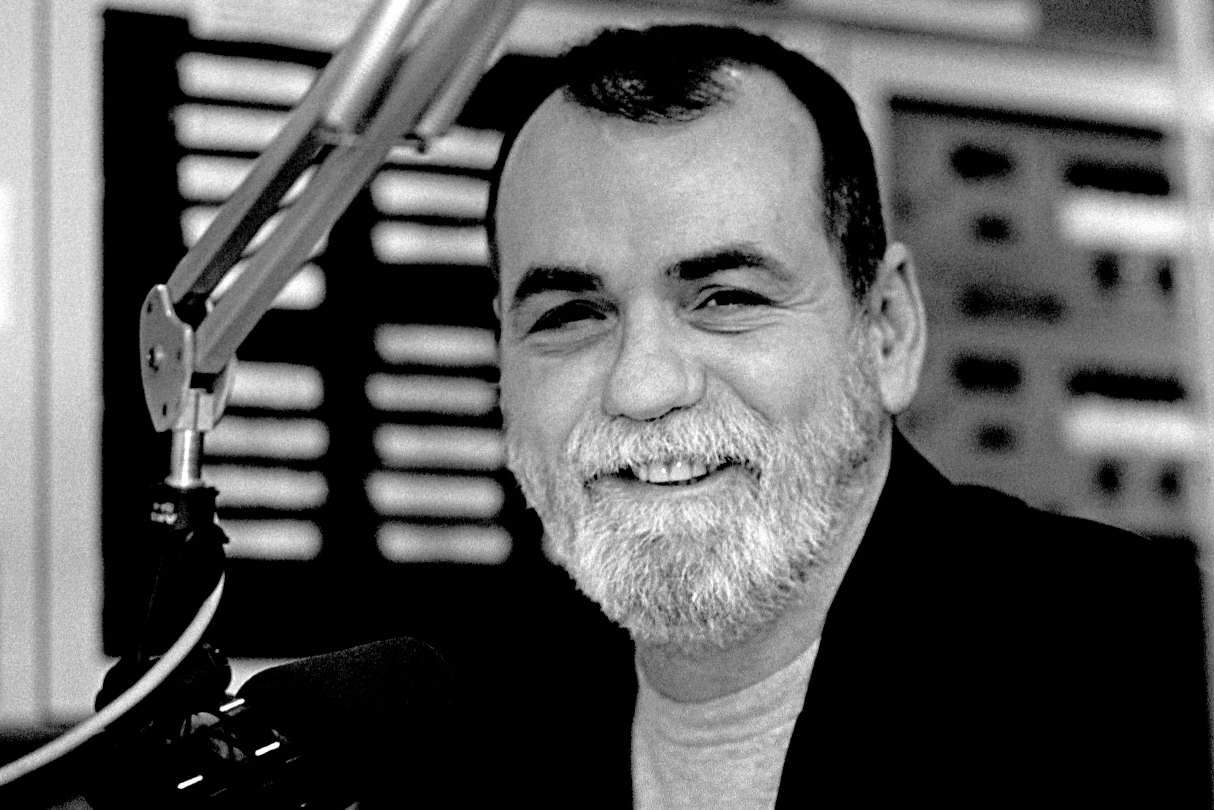
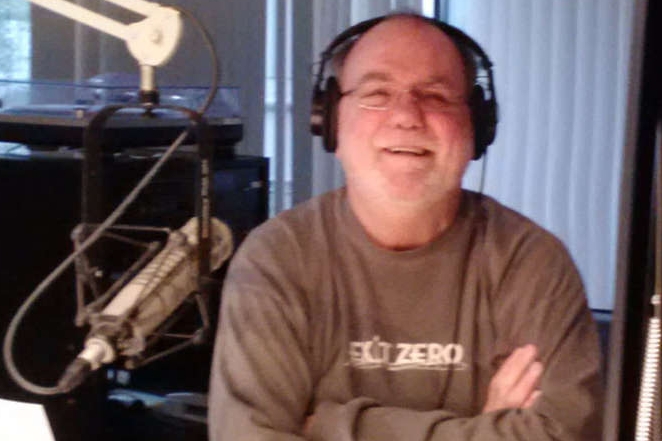
Mike Bowe, 76, of Audubon, Camden County, longtime local disc jockey and popular radio show host at WMGK, WPEN, WHAT and other stations, Army veteran, devoted Phillies fan, and proud son of Gloucester City, died Monday, Sept. 14, of complications from cancer at his home.
Mr. Bowe enjoyed music and socializing as a teen at Gloucester Catholic High School, and was skilled at chatting with people about their favorite songs and other interests. So he was a natural fit later as a radio show host and disc jockey for more than 40 years in studios and at remote appearances, dance parties, charitable fundraisers, and other events.
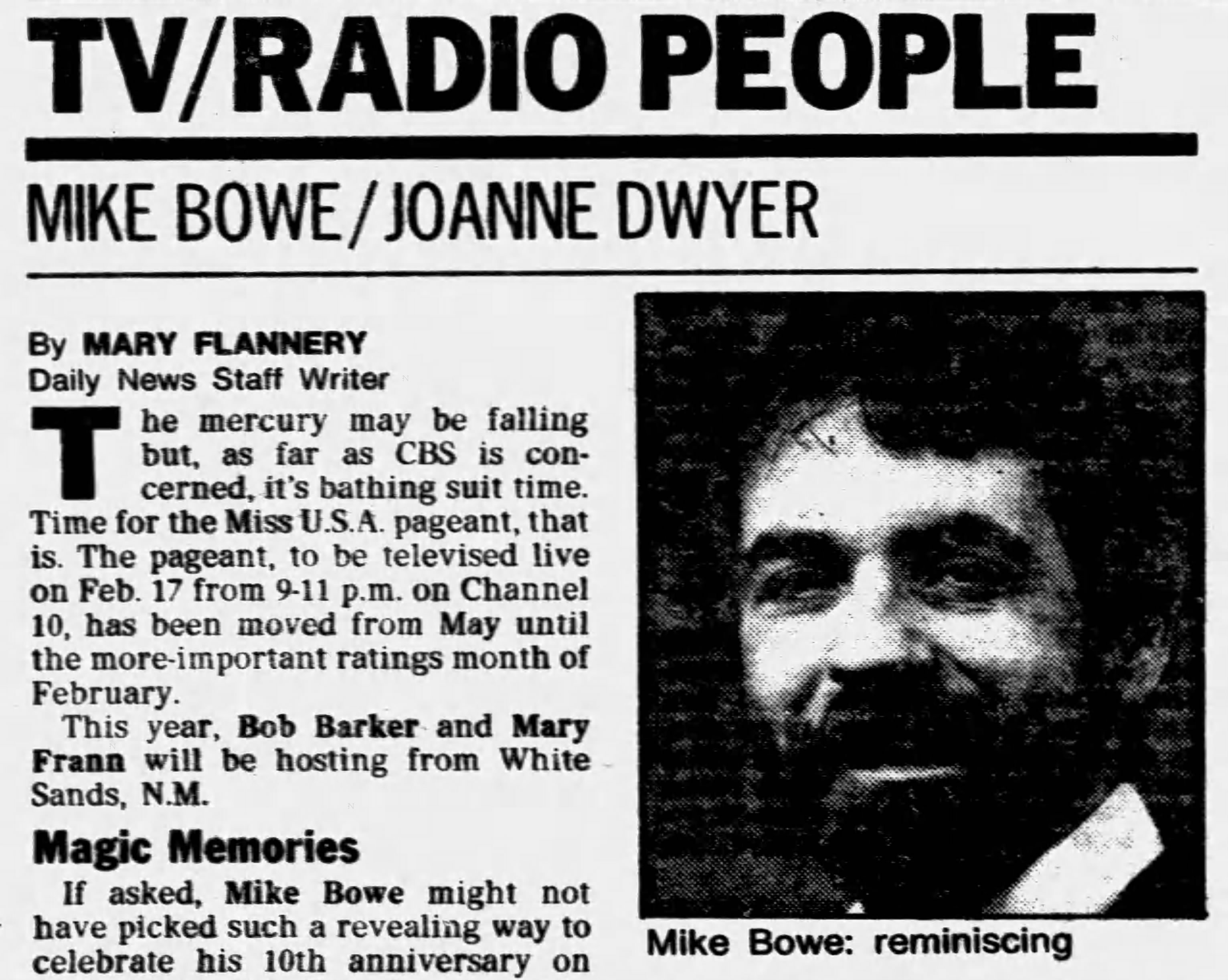
“I like to think I communicate with people,” he told the Courier-Post in 1987. “I think I can relate the same way to somebody whether he’s on Ninth Street in South Philly or at a bank in Center City.”
Fellow DJ Chris McCoy said. “He had something intangible. He made you feel like he knew you, and you knew him.”
Using what his fans and colleagues described as a “calming and smooth voice” and “velvet intonations,” Mr. Bowe hosted music shows at WMGK from 1977 through the early 2000s, at KISS 100 in the 1990s, and at WPEN and WHAT between 2000 and 2011. Colleagues called him “loyal, dedicated, witty” in online tributes, and praised his “down to earth and friendly style.”
They credited him with making WMGK’s Saturday Night ’70s show a hit in the mid-1990s. “He was the very foundation of that success,” McCoy said.
Listeners called him “truly a master of this craft,” “one of the best ever,” and “a memorable radio legend.” He worked after 2011 at other local stations and iRadioPhilly.com.
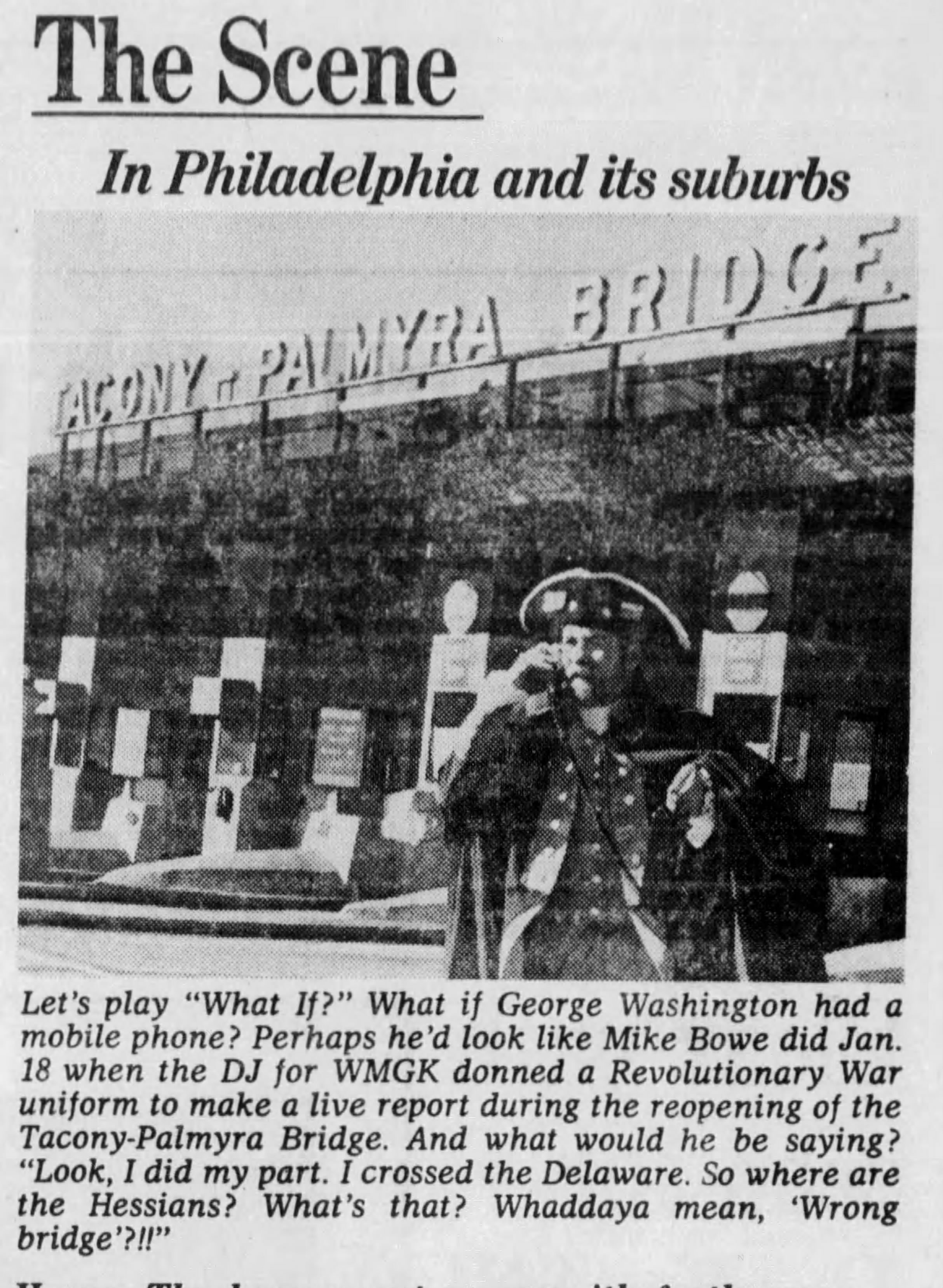
He teamed up with other popular DJs on morning, afternoon, and evening shifts, interviewed performers, took phone calls from listeners, and broadcast from Phillies games and charitable benefits. In 1989, he dressed up as George Washington to cross the Delaware River when the Tacony-Palmyra Bridge was finally reopened after repairs.
He liked to air remotely from his favorite clubs and pubs, and ride shuttle buses with listeners to concerts. He also worked DJ dance party gigs at nightclubs, holiday parades, and private events in Philadelphia and South Jersey.
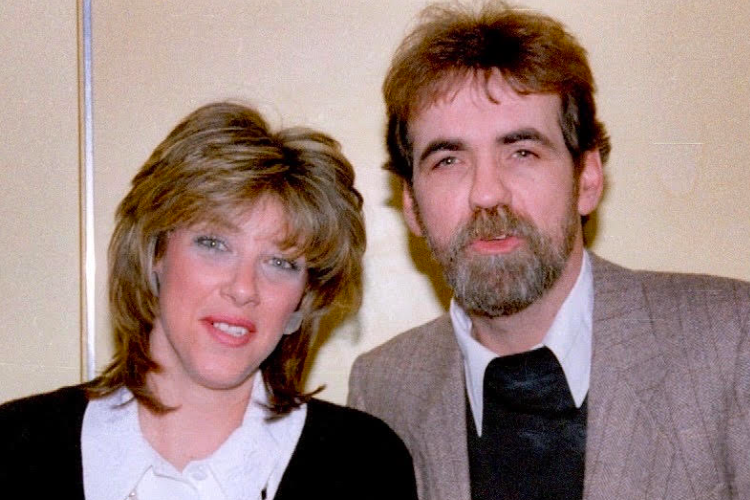
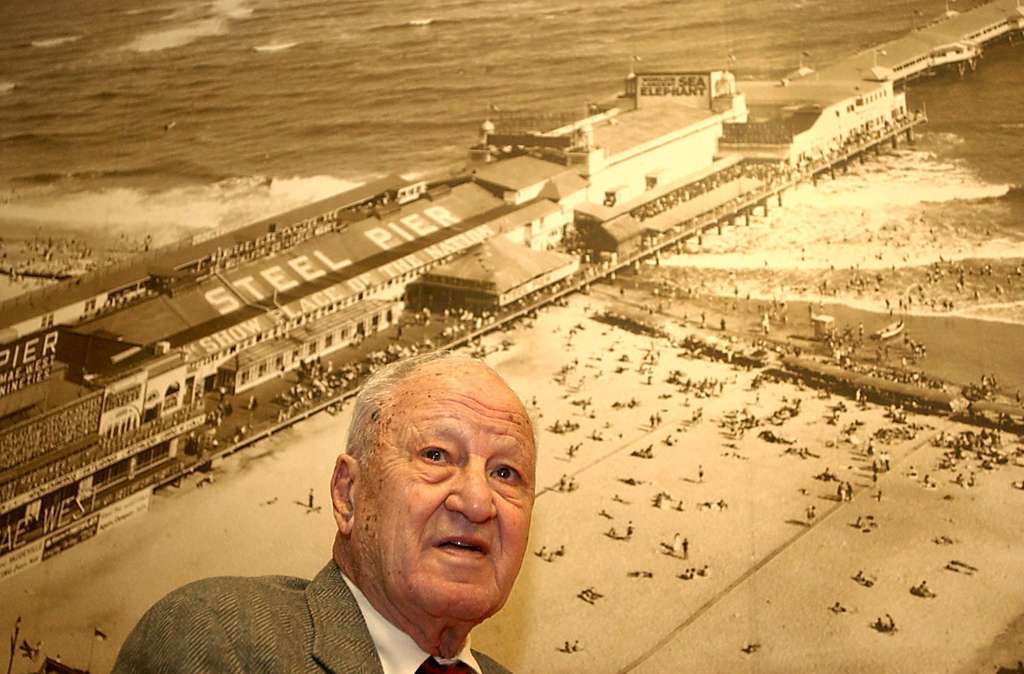
Mr. Bowe appeared often in The Inquirer and Daily News, including in 1987 (above) and 1989 (below.)Newspapers.com
His favorite song was “Ain’t No Woman (Like The One I’ve Got)” by his favorite group, the Four Tops. “He knew Philadelphia from A to Z,” McCoy said. “He brought a smile to your face.”
Mr. Bowe served three years in the Army, 11 months and 11 days in Vietnam in 1968-69, and earned several medals and service stars, and an achievement badge. Fellow DJ Sue Serio said online that she enjoyed annual Veterans Day lunches with Mr. Bowe, “a treasured tradition that we never took for granted.”
One day, a former WMGK colleague said online, Mr. Bowe took him to Mr. Bowe’s favorite three local landmarks: the Melrose Diner in South Philadelphia, Mel’s Italian restaurant in Bala Cynwyd, and the pool table at the VFW in Gloucester City.
“Mike was a gift to Gloucester City and to the Delaware Valley professionally and as a man,” longtime friend Patrick Healey said. Longtime friend F. Emmett Fitzpatrick III said: “He prized honesty of character above all else.”
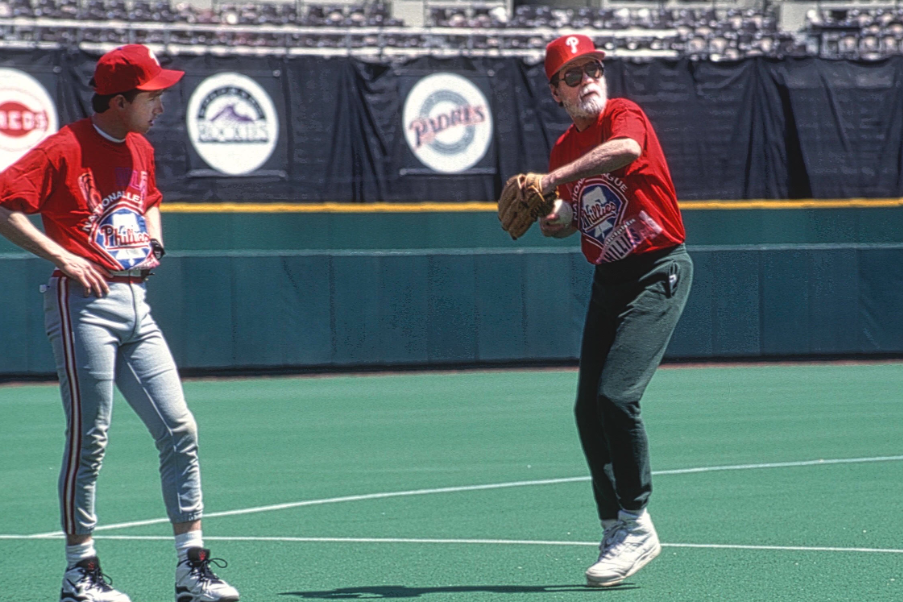
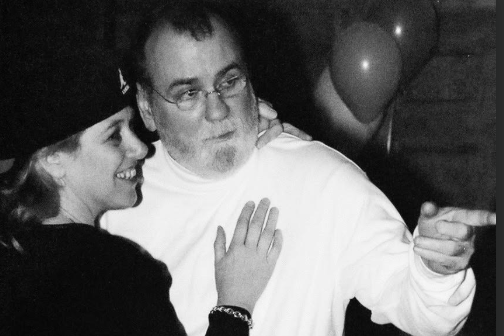
Mr. Bowe, right above, was an avid Phillies fan. Below, he worked morning, afternoon, and evening shifts in the studio.F. Emmett Fitzpatrick III
Mr. Bowe’s niece, Debra Ann Leblang, said: “He lived the ultimate American dream.”
Michael Joseph Bowe was born Nov. 4, 1949, in Gloucester City. He graduated from Gloucester Catholic in 1967, studied broadcasting in Minnesota, and worked his way through the radio ranks in South Jersey and Philadelphia.
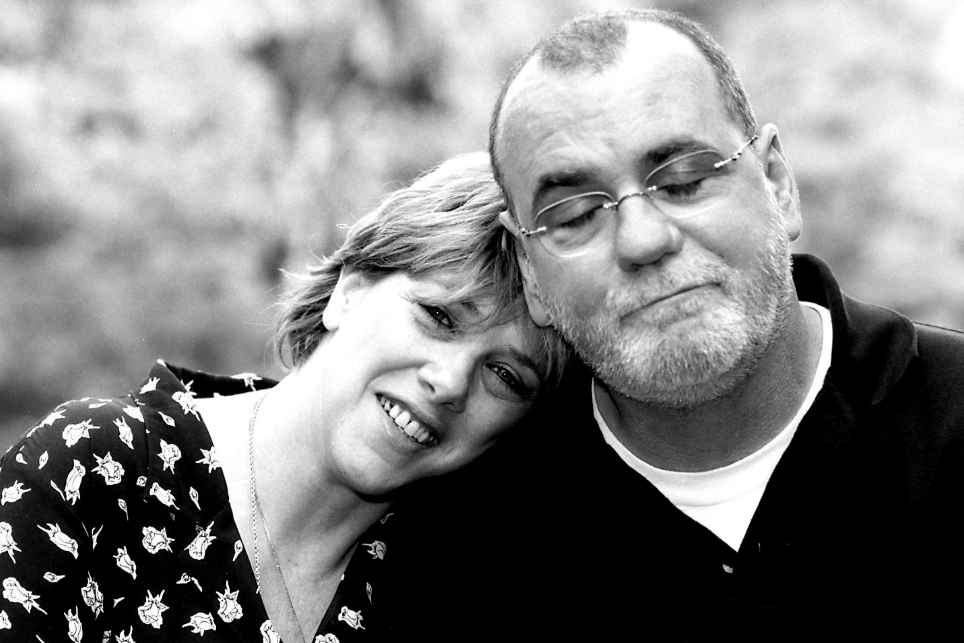
Mr. Bowe and his wife, Debbie, married in 1985. Where one of them went, family and friends all said, the other followed. F. Emmett Fitzpatrick III
Off the air, Mr. Bowe played softball and enjoyed visits to Atlantic City and Brigantine. He was a Sunday morning usher at St. Mary’s Catholic Church and belonged to the Townsend C. Young VFW post.
He used to take dates to Jim’s Pizzeria in Gloucester City, and he told The Inquirer in 1994 that he enjoyed the place’s acerbic camaraderie. “Gloucester’s always been like that,” he said. “People love it. It’s a sarcastic, get-under-your-skin kind of thing. You don’t even get to order your own food.”
His family said: “He was funny, quick-witted, sentimental, outspoken, and unforgettable. He carried his South Jersey roots with him wherever life took him.”
In addition to his niece, Mr. Bowe is survived by a sister, a brother, and other relatives. Two brothers died earlier.
Visitation with the family is to be from 8:45 to 9:45 a.m. Tuesday, Sept. 22, at the McCann-Healey Funeral Home, 851 Monmouth St., Gloucester City, N.J. 08030. Funeral services are to be at 11 a.m. at Brigadier General William C. Doyle Veterans Memorial Cemetery, 350 Province Line Rd., Wrightstown, N.J. 08562.
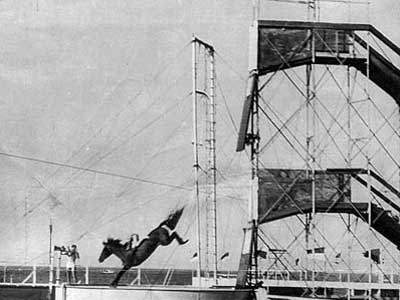
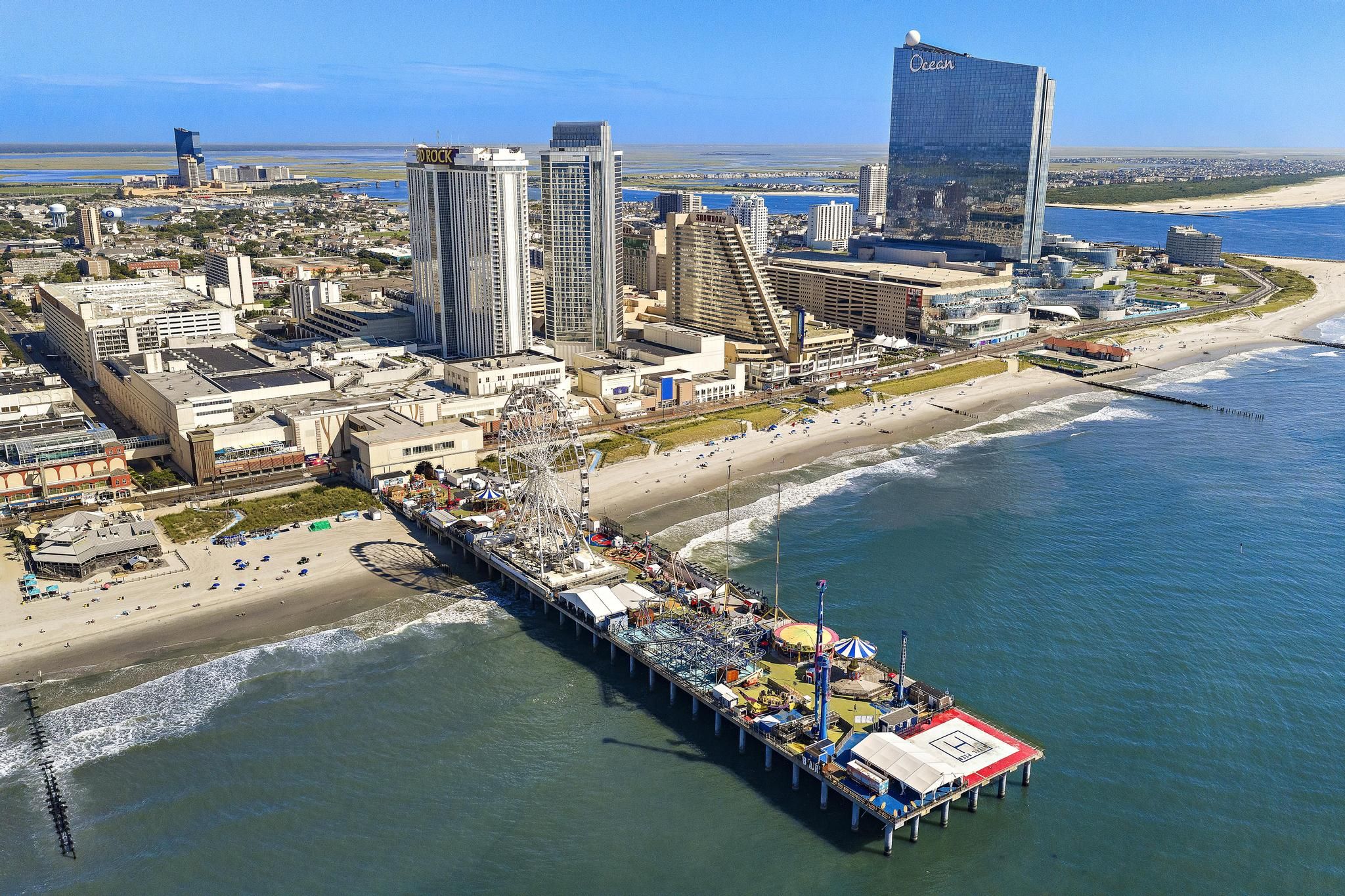
ATLANTIC CITY — The Steel Pier, home to some of Atlantic City’s most iconic spectacles, including diving horses and Miss America pageants, and lately an amusement pier, is up for sale.
Priced at $85 million, the pier, which was built in 1897, has been listed by the luxury New York City Serhant agency, whose owner, Ryan Serhant, is the star of Netflix’s Owning Manhattan.
The pier has been owned by the Catanoso brothers since 2011, but the family says the next generation is not interested in taking over. “It’s kind of a succession thing,” Anthony Catanoso said in an interview with The Inquirer.
The agency is targeting a buyer that envisions expanding the pier into a commercial hospitality venue, like a boutique hotel, a wedding venue, or an expanded amusement park, listing agent Michele Zyska said. She said luxury residential properties built over the ocean could also be a draw.
Mayor Marty Small Sr. said the prospect of the pier lacking amusements and entertainment would be “devastation.”
“The Steel Pier has always been the legendary part of the Atlantic City Boardwalk,” he said.
The pier structure measures 150 feet wide and 965 feet long and is anchored 90 feet into bedrock. A perpetual riparian grant permits it to extend up to 2,850 feet into the Atlantic.
“It’s like nothing else in the world,” Zyska said. “I keep saying that. It’s an iconic piece of American history. We’re thinking probably more hospitality, music, and maybe even residential. We do have interest in someone keeping it as an amusement park.”
Atlantic City’s historic Steel Pier is up for sale for $85 million.Real Estate Cinema
The Catanoso brothers originally leased the pier from Trump Entertainment after winning the lottery in 1993, and bought the pier for $4.25 million in 2011.
They built its Observation Wheel, now a distinctive feature of the city’s casino skyline, teetered on bankruptcy, and found some stability in recent years running the pier with various amusements, bars, and restaurants.
Catanoso said business has been good, although challenged by wage costs.
“We’re getting older, me and my brothers,” Catanoso said. “The kids aren’t taking it over. It’s time for the next chapter. It’s a big development opportunity for somebody.”
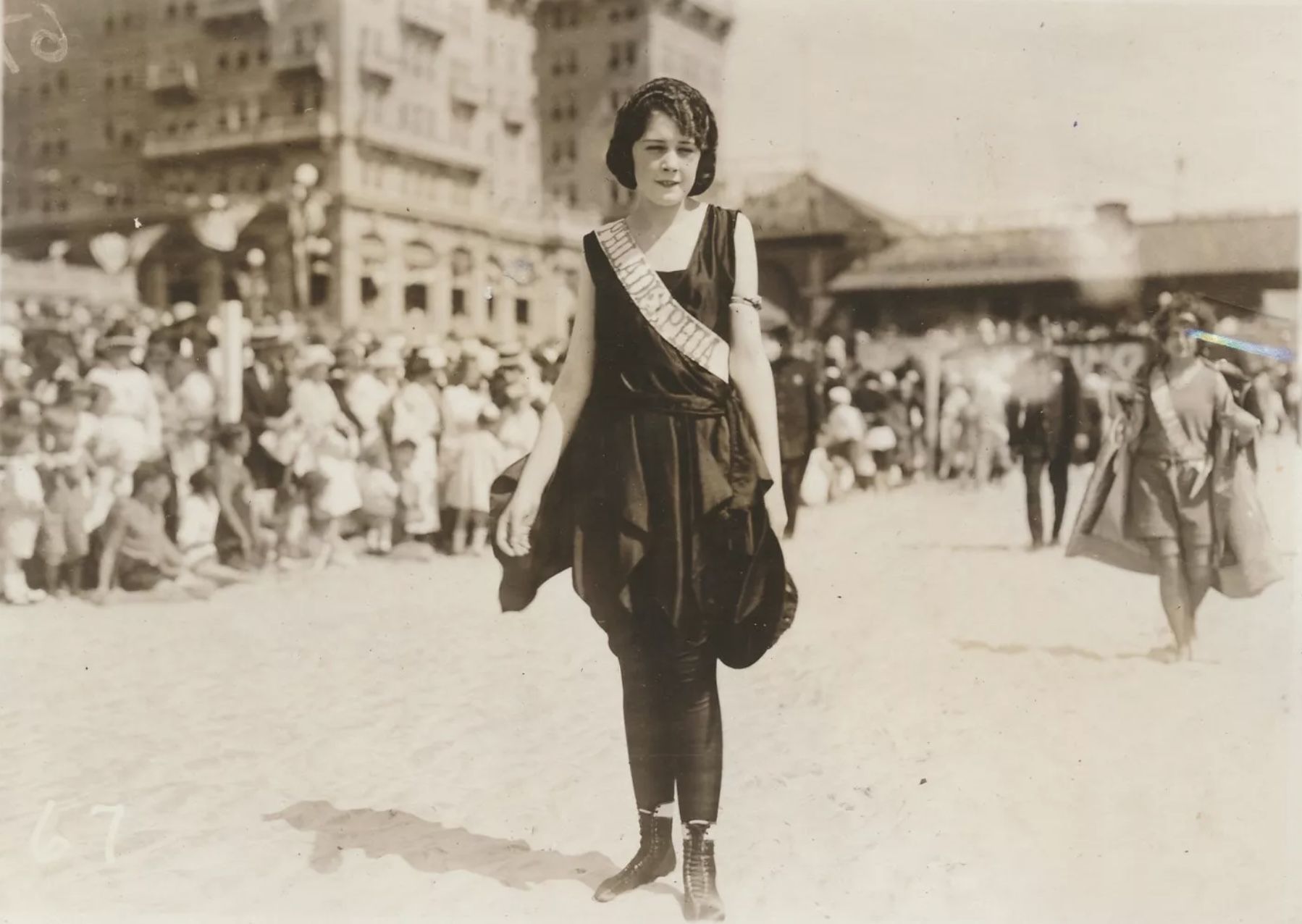
Miss Philadelphia Nellie Orr competes in the 1921 Inter-City Beauty Pageant held on Atlantic City’s Steel Pier. The Miss America Organization will mark the 100th anniversary, but not in Atlantic City. Orr finished second.Collection of Daryl Schabinger
Serhant calls the Steel Pier “one of the most recognizable landmarks on the East Coast.” The listing was first reported by the New York Post.
The agency notes the pier’s built-in helipad and previously obtained condo-hotel approvals.
“The Steel Pier is that rarest of offerings: a piece of developable American history extending straight into the Atlantic Ocean,” the company said in a release.
George A. Hamid Jr. built up his family’s Steel Pier in Atlantic City by finding hot new acts.SHARON GEKOSKI-KIMMEL / File Photograph
In addition to the amusement park, there is a 40,000-square-foot building, including a sky bridge and roof.
“How often does someone get to own a piece of the ocean?” Ryan Serhant said in a statement. “The Steel Pier isn’t just five acres on the most famous boardwalk in the world, it actually offers the chance to own the Atlantic itself and build something unforgettable on top of it.”
The company also noted new residential projects that are in the works in that end of Atlantic City, including Kushner Cos.’ Caspian Point, K. Hovnanian Homes’ South Inlet townhomes, Colosseo Atlantic City’s Chelsea townhomes, and Zoubek Properties’ Residences at the Orange Loop.
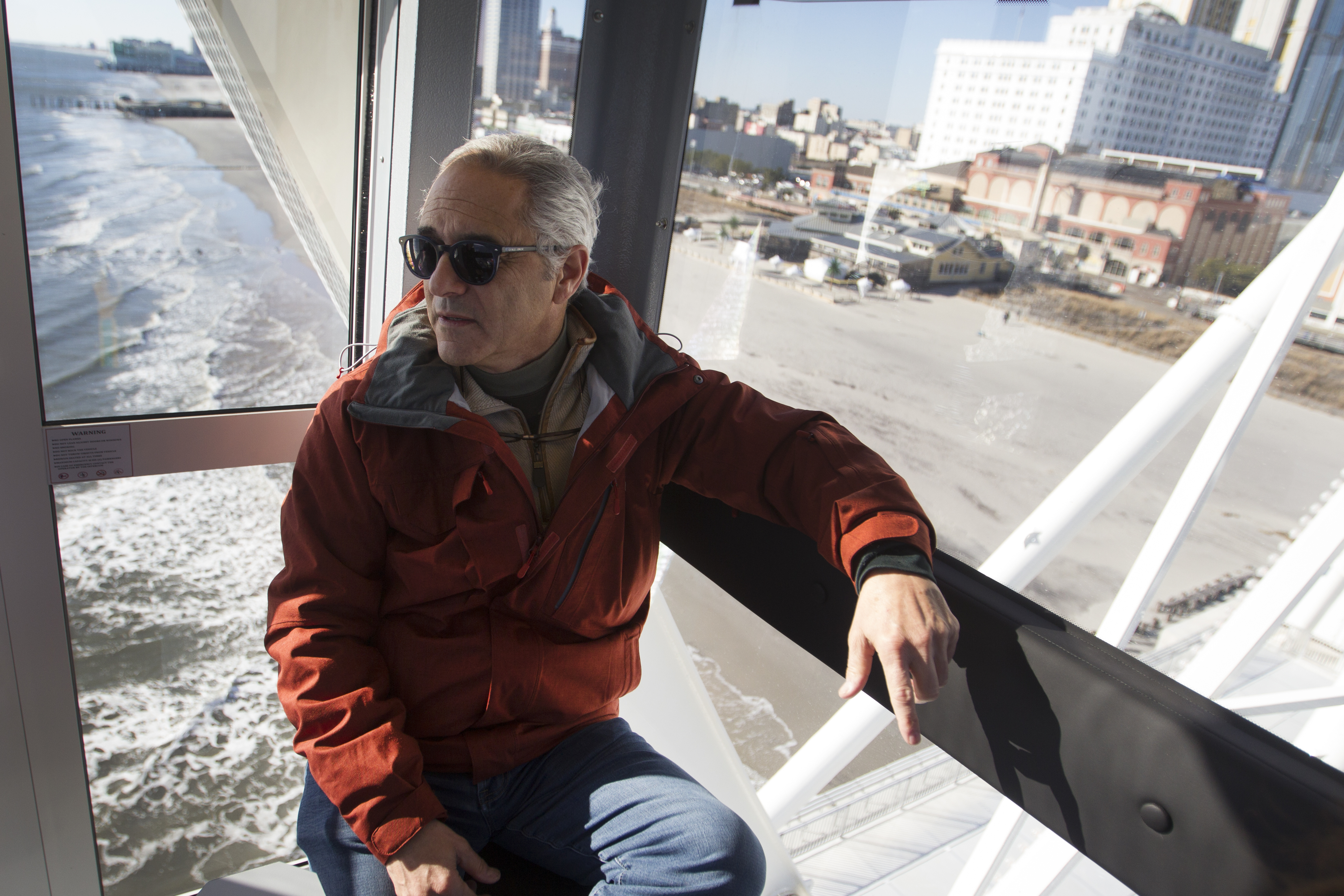
Anthony Catanoso, owner of Atlantic City’s Steel Pier, takes in the view from the Observation Wheel Tuesday, December 26, 2017.Jose Moreno / staff photographer
September is concert season. Summer tours are still going, while fall tours are just getting started. This week in Philly music features both Charli XCX and Rod Wave launching tours in South Philly, plus Lil Wayne in Camden, John Fogerty and Steve Winwood in Atlantic City, Iron Maiden in Hershey, and Margo Price in King of Prussia.
Friday, Sept. 11
Charli XCX
“Yeah, we’re on to the next, I think the dance floor is dead,” Charli XCX sings on the opening track of her new album. “So now we’re making rock music.” The pivot isn’t quite radical for the woman behind the Brat summer of 2024. There is still music you can dance to on Music, Fashion, Film, the whip-smart British pop star’s eighth album, which represents its three titular disciplines with a photo of John Cale, Marc Jacobs, and Martin Scorsese on the cover. What will this tour look and sound like? I can hardly wait to find out. 8 p.m. Xfinity Mobile Arena, 3601 S. Broad St., xfinitymobilearena.com.
Rapper Lil Wayne performs during the Roots Picnic Philadelphia at The Mann in Fairmount Park on Sunday, June 2, 2024.Elizabeth Robertson / Staff Photographer
Lil Wayne
Lil Wayne has released 14 albums since making his debut in 1999 with Tha Block Is Hot. Six of those releases have been Tha Carter iterations, most recently with Tha Carter VI in 2025. (The New Orleans rapper’s given name is Dwayne Michael Carter Jr.) Wayne is calling this concert trek, which has 2 Chainz as the opening act, the “Carter Classics Tour,” meaning he will focus on selections from those six albums, no doubt including cuts like “A Milli,” “Lollipop,” “Mrs. Officer,” and “Money on My Mind.” 8 p.m., Freedom Mortgage Pavilion, 1 Harbour Blvd., Camden, freedommortgagepavilion.com.
Mdou Moctar
Nigerien Tuareg guitar hero Mdou Moctar comes to Bryn Mawr for an outdoor show under a gazebo. This solo show is likely to draw from Tears of Injustice, Moctar’s 2025 reworking of his 2024 electric album Funeral for Injustice. Always intriguing Philly guitarist Tim Motzer opens. 7 p.m., Bryn Mawr Twilight Concerts, 9 S. Bryn Mawr Ave., Bryn Mawr, brynmawrtwilightconcerts.com.
John Fogerty & Steve Winwood
Last year, John Fogerty released Legacy: The Creedence Clearwater Revival Years, an album of new versions of his old songs. That might have seemed cheesy coming from another artist, but Fogerty spent decades battling to regain control of his music, finally winning ownership of his songs in 2023. For the “Legacy Tour,” the “Proud Mary” and “Fortunate Son” songwriter is teaming up with his late-1960s contemporary Steve Winwood, who has his own legacy with the Spencer Davis Group, Traffic, and his “Higher Love” solo career. 8 p.m., Ovation Hall, Ocean Resort, 500 Boardwalk, Atlantic City, theoceanac.com.
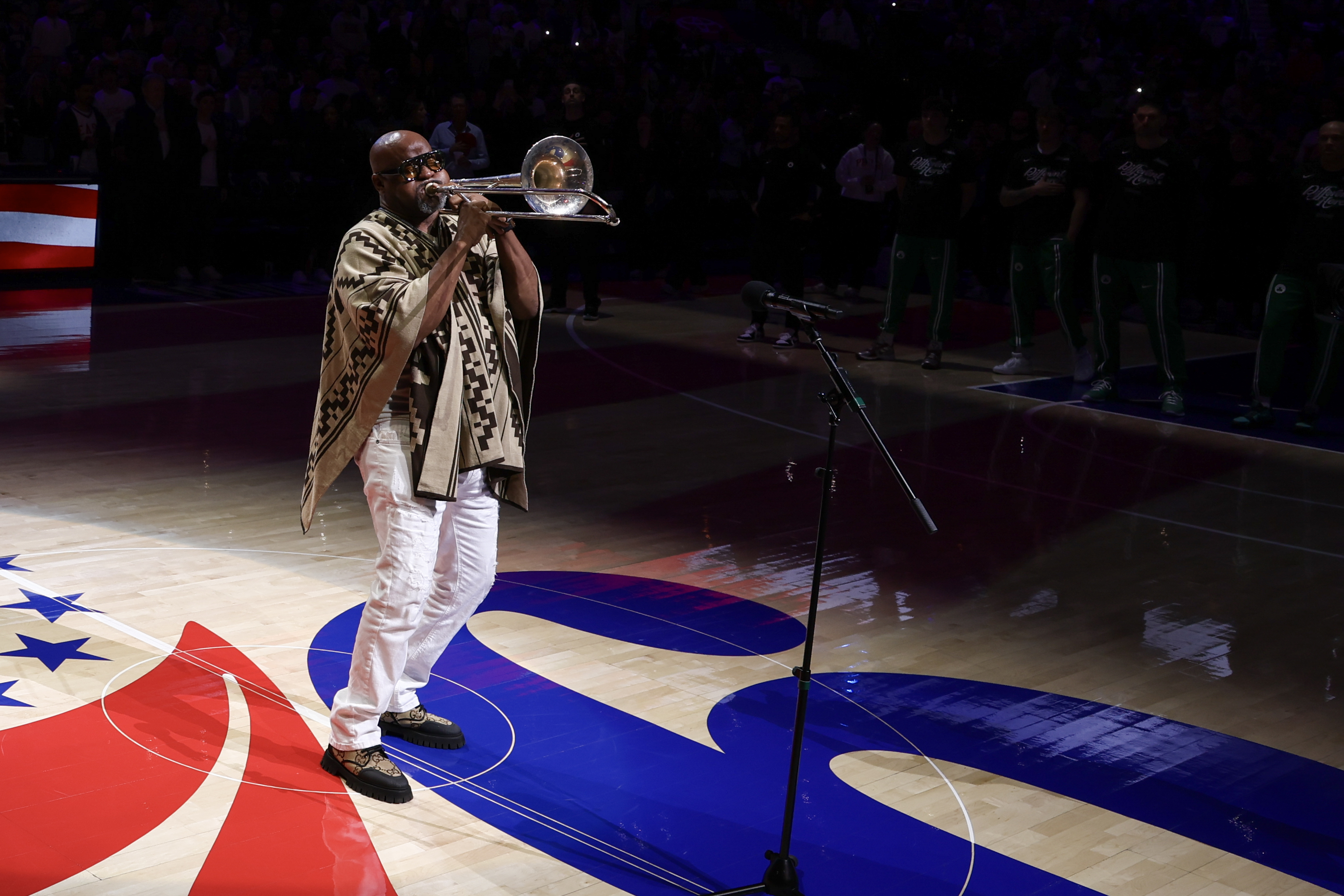
Jeff Bradshaw plays the National Anthem before Sixers play Game 6 against the Celtics in a first-round NBA playoffs basketball series Thursday, April 30, 2026, in Philadelphia. Bradshaw will perform as part of the Atlantic City Jazz Festival this weekend.Monica Herndon / Staff Photographer
Friday, Sept. 11 to Sunday, Sept. 13
Atlantic City Jazzfest
This smooth jazz weekend takes place at Sound Waves at Hard Rock Hotel & Casino Atlantic City. On Friday, Memphis sax player Kirk Whalum headlines a show hosted by Patty Jackson. Saturday, Philly trombonist Jeff Bradshaw tops the bill, and on Sunday morning, sax man Reggie E. Harris makes a jazz brunch go down easy. 7 p.m. Friday and Saturday; 11 a.m. Sunday at Hard Rock Hotel & Casino, 1000 Boardwalk, Atlantic City, theatlanticcityjazzfest.com.
Margo Price plays Concerts Under the Stars in King of Prussia on Saturday.Yana Yatsuk
Saturday, Sept. 12
Ray LaMontagne
Last week at the Ryman Auditorium in Nashville, Ray LaMontagne collapsed on stage, leaving audience members fearing for his life. But no worries: The cause apparently was dehydration, and the New Hampshire-born rustic rock songwriter, who is on tour celebrating the 20th anniversary of his Trouble album, was back on stage the next night in Louisville. Tara Lindeman’s environmentally conscious Canadian folk-rock band the Weather Station opens. 8 p.m., Met Philly, 858 N. Broad St., themetphilly.com.
Spring Garden Sunflower Fest
This third annual free fest — on Fairmount Avenue, not Spring Garden Street — will feature a full day of bands and DJs. Rising indie songwriter Maxwell Stern & the Good Light Band headline, and the lineup includes Celtic folk and Americana group the John Byrne Band, salsa group Un Toque de Cache, and a performance by the youngsters of Rock to the Future. Noon, Fairmount Avenue between 17th and 19th Sts., springgardensunflowerfest.com.
Margo Price
Margo Price got back to her country roots on Hard-Headed Woman, her 2025 album that includes a George Jones cover called “I Just Don’t Give a Damn.” It also offers some life advice with “Don’t Let the Bastards Get You Down,”which was written with her husband, Jeremy Ivey, and Rodney Crowell, plus a posthumous Kris Kristofferson credit. Price is calling this her “Wild at Heart Tour,” and Ivey opens the show. 7 p.m., Concerts Under the Stars, King of Prussia, 175 W. Valley Forge Road, King of Prussia, concertsunderthestarskop.com.
Saturday, Sept. 12 and Monday, Sept. 14
Rod Wave
Trap-soul rapper and singer Rod Wave — born Rodarius Green — has been rising so high of late it’s no wonder he’s titled his new album and tour “Don’t Look Down.” The St. Petersburg, Fla., native cites Tupac Shakur and Kanye West as influences on one hand, and Ed Sheeran and Adele on the other. He last played an arena show in South Philly in December, and now is back for two more to kick off the tour in support of the 24-track Don’t Look Down, which came out last month. Philly hip-hop singer Francis Leblanc — better known as Friday — is the opener. 8 p.m., Xfinity Mobile Arena, 3601 S. Broad St., xfinitymobilearena.com.
FILE – Sandra Denton, left, and Cheryl James, of Salt-N-Pepa, perform at the IHeartRadio Music Awards in Los Angeles on March 26, 2026. Salt-N-Pepa play the Freedom Mortgage Pavilion on Sunday. (AP Photo/Chris Pizzello, File)Chris Pizzello
Sunday, Sept. 13
TLC, Salt-N-Pepa & En Vogue
This triple bill — dubbed the “It’s Iconic Tour” — teams up three acts that were standout women in hip-hop and R&B beginning in the 1980s and into the 2000s. In their prime, TLC included Lisa “Left Eye” Lopes, who grew up in the Logan section of Philadelphia and died in a car crash in Honduras in 2002. Some dates on the tour so far have not included TLC’s Tionne “T-Boz” Watkins and have gone on with only Rozonda “Chilli” Thomas because Watkins has been ill with what the band’s manager called “a sickle cell crisis.” Hip-hop heroines Salt-N-Pepa, who were inducted into the Rock and Roll Hall of Fame in 2025, are co-headliners. Vocal group En Vogue opens. 7:30 p.m., Freedom Mortgage Pavilion, 1 Harbour Blvd, Camden, FreedomMortgagePavilion.com.
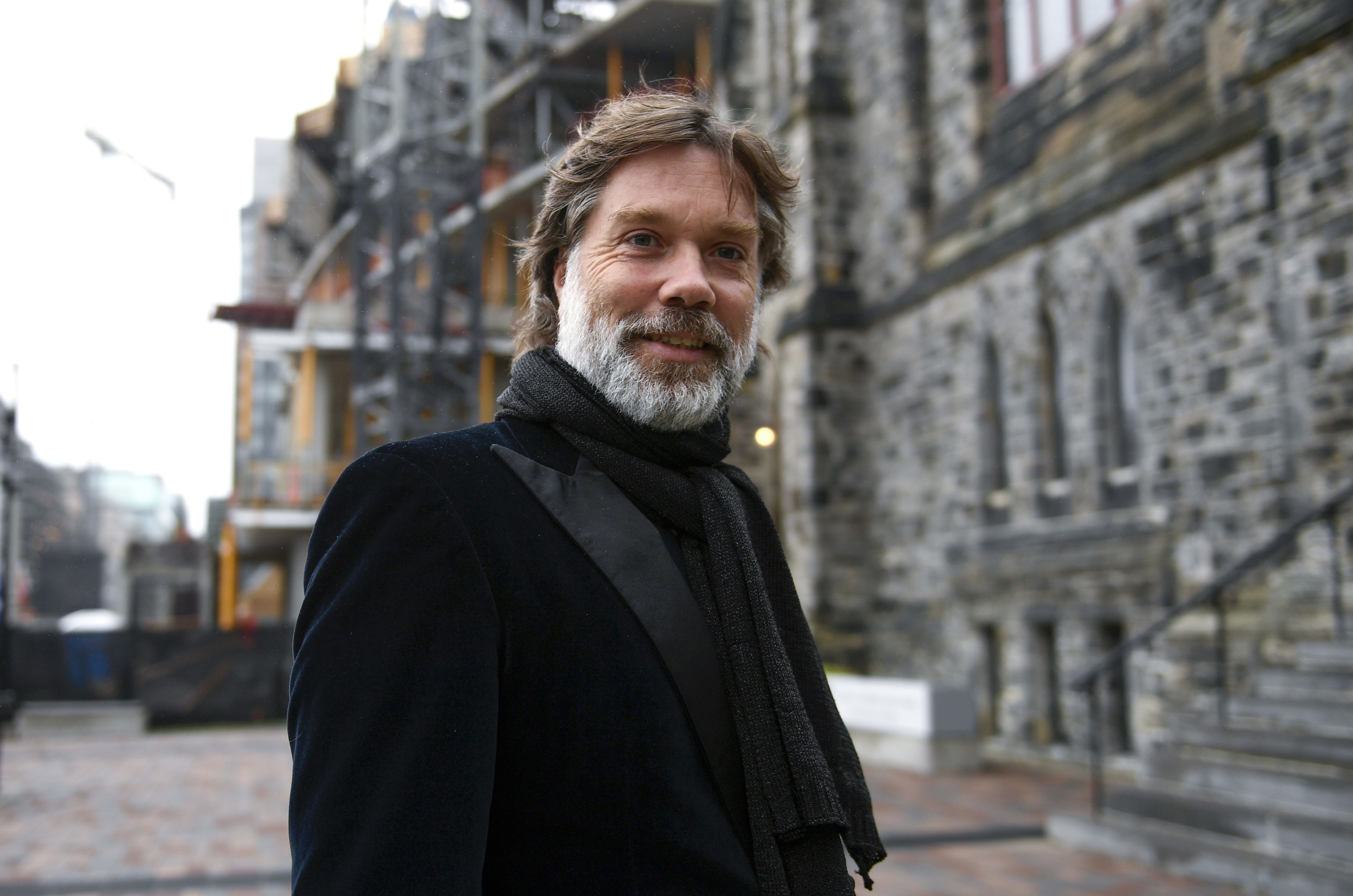
Canadian musician Rufus Wainwright returns after speaking to broadcasters outside Christ Church Cathedral for the National Commemorative Ceremony in honour of Queen Elizabeth II, in Ottawa, Ontario, on Monday, Sept. 19, 2022. He plays three nights at City Winery Philadelphia next week. (Justin Tang/The Canadian Press via AP)Justin Tang / AP
Tuesday, Sept. 15
Iron Maiden
British heavy metallers Iron Maiden was formed in East London in 1975. Now the Bruce Dickinson-fronted band is on its 50th-anniversary “Run for Your Lives World Tour,” which kicked off last year and makes its way to Hershey on Tuesday. Megadeth opens. 7:15 p.m., Hersheypark Stadium, 100 W. Hersheypark Drive, Hershey, hersheyentertainment.com.
Rufus Wainwright
Rufus Wainwright is always up to something interesting. There’s Hadrian, his opera about the last day of a Roman emperor, Dream Requiem, the singer and pianist’s work based on a text by Lord Byron, and recent albums like Unfollow the Rules in 2020 and Folkocracy in 2023, as well as projects like Rufus Does Judy (Garland), Rufus Does (Kurt) Weill. (How about Rufus does Kurt Vile? Now there’s an idea.) On Tuesday, Wainwright begins a three-night stand in which he can do whatever he wants. 7:30 p.m., City Winery Philadelphia, 990 Filbert St., citywinery.com/philadelphia.
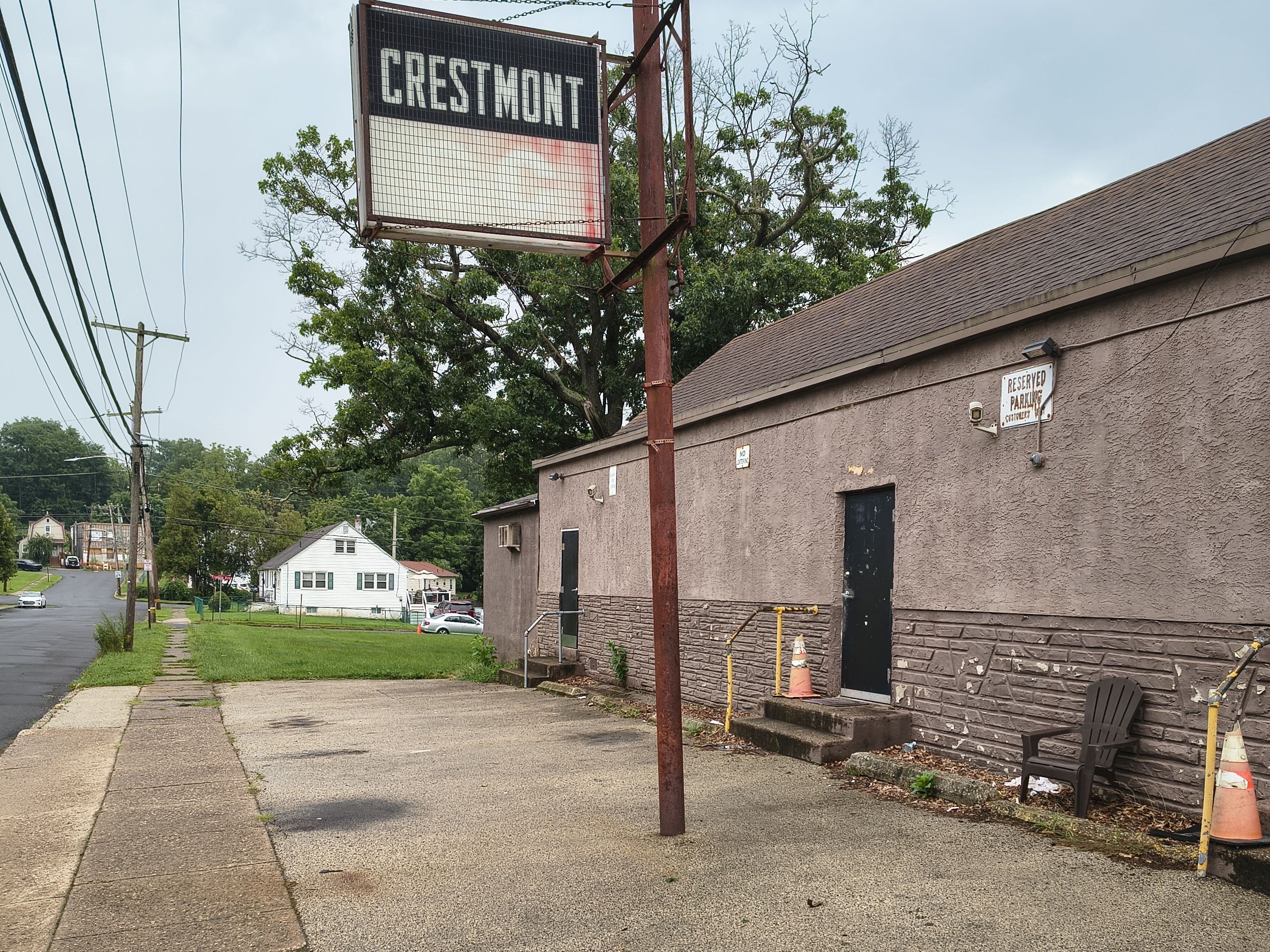
Before you can understand Abington Township’s historically African American unincorporated community of Crestmont, you have to understand Willow Grove Park.
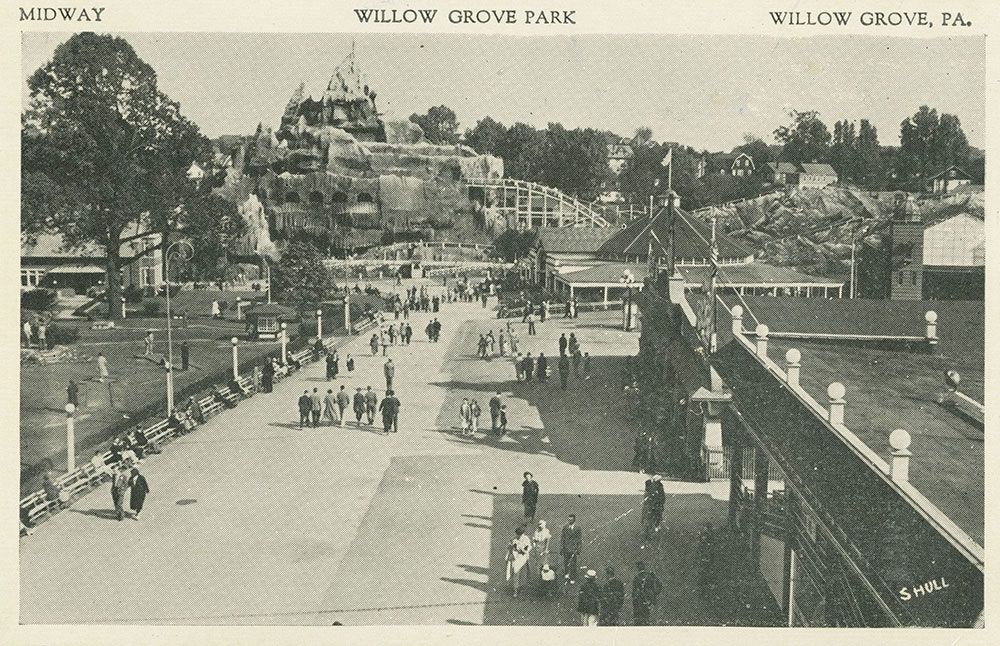
Not the mall with that name, but the Willow Grove Park that predates it: One of the largest and most famous amusement parks on the East Coast.
It opened in 1896, built by the Philadelphia Rapid Transit Co. It had roller coasters, a lake, restaurants, concerts, a massive music pavilion, and crowds pouring in.
It shaped the entire local economy and brought thousands of people out to the suburbs every week. A place like that needed labor. Real labor. Constant labor. And that’s where Crestmont’s story begins.
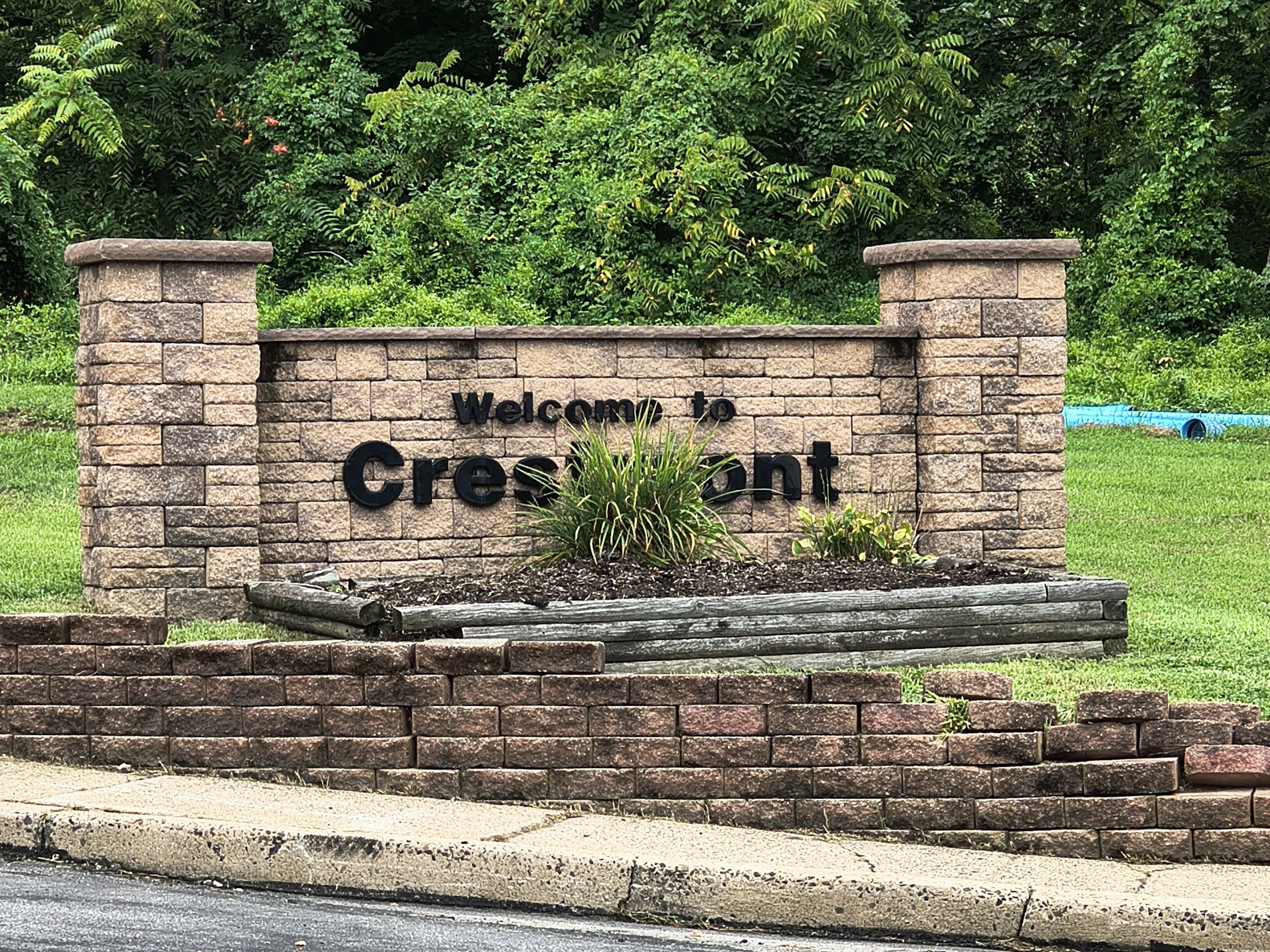
The “Welcome to Crestmont” sign sits directly across from the Willow Grove Mall.DJ Atkins
I didn’t grow up in Glenside or Willow Grove. I came out here for work, almost 15 years ago, and eventually I moved here. Eight years living in these suburbs gives you time to notice things, to ask questions, to wonder about the layout of the place. And one question kept coming back to me: Why is Crestmont, a mostly Black community, sitting right in the middle of overwhelmingly white suburbs?
If you know the area, you know exactly what I mean. Roslyn, Glenside, Willow Grove, Abington … they’re all majority white, and have been that way for generations.
Then suddenly, right next to the Willow Grove Mall parking lot, there’s Crestmont.
Houses closer together. A different feel. A different history. A different story.
Crestmont’s density, the layout, the architecture, the vibe, the community identity — all of it comes from early working‑class development, limited access to loans, limited access to improvements, township decisions, generational continuity, racial boundaries, economic exclusion, and the strength of the people who lived there, writes DJ Atkins.DJ Atkins
I started talking about Crestmont to people who grew up here. I started learning about Willow Grove Park, looking at the geography, thinking about the era, and the truth became impossible to ignore.
It’s a truth all of us need to hear, because it shows exactly how racism shapes the places we live.
Willow Grove Park opened only 31 years after slavery ended. That was the same year Plessy v. Ferguson legalized segregation. Old newspaper coverage, township references, and public history written about the park all describe a large-scale operation with ties to the trolley company, township officials, police, contractors, and local business owners.
A machine like that needed workers who could show up every day, early, late, and in all seasons. Black workers came to fill Willow Grove Park jobs and stayed because the work kept coming. In line with what the public record shows, people with long family histories in Crestmont talked to me about how common it was for their relatives and neighbors to all work at the park.
A vintage postcard showing the Willow Grove Park midway. Willow Grove Park opened in 1896; it was closed in 1975 and demolished a year later.Courtesy of D.J. Atkins
But many of those workers didn’t have cars, and walking through certain neighborhoods wasn’t safe. Black people weren’t welcome. Renting was restricted, and loans for home purchases were denied. Still, the workers needed to live close. Close to the park, close to the trolley line, close to the commercial strip that fed the park.
Exactly where Crestmont is.
Once a few Black families moved in, the neighborhood took shape. Word spread. More families followed. White buyers stayed away. Black buyers were directed toward the same area. The lots stayed small. The houses stayed close. The community grew through necessity, connection, and resilience.
People who grew up here remember the tensions between high schoolers. They remember buying packaged goods in Crestmont because they couldn’t get them elsewhere. They remember the social boundaries. They remember how Crestmont stood out from the surrounding suburbs. None of that is random. It’s the long-term result of how the neighborhood began.
Crestmont exists because Willow Grove Park existed. Segregation created the boundary. The park created the need. Together, they created the neighborhood.
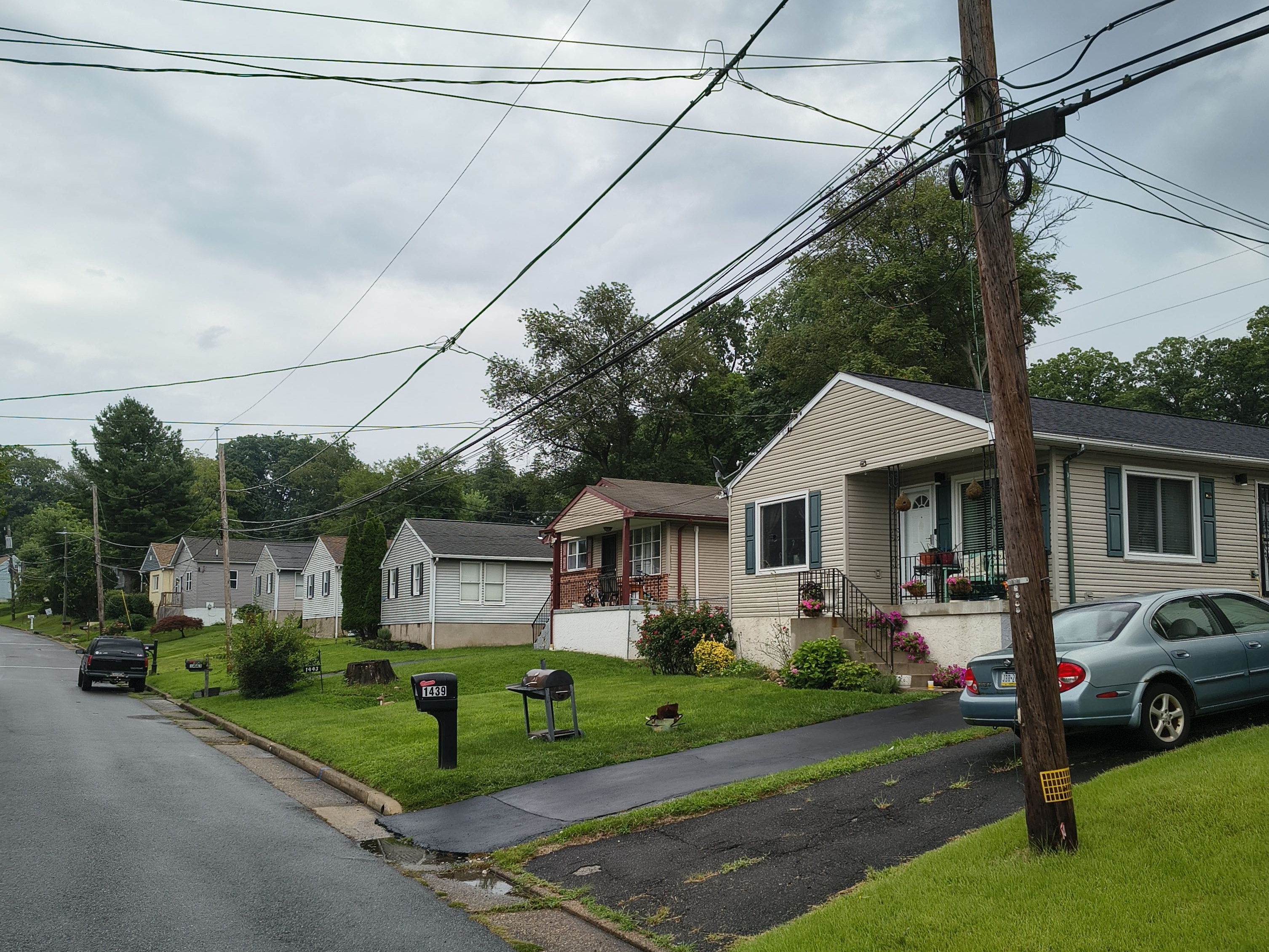
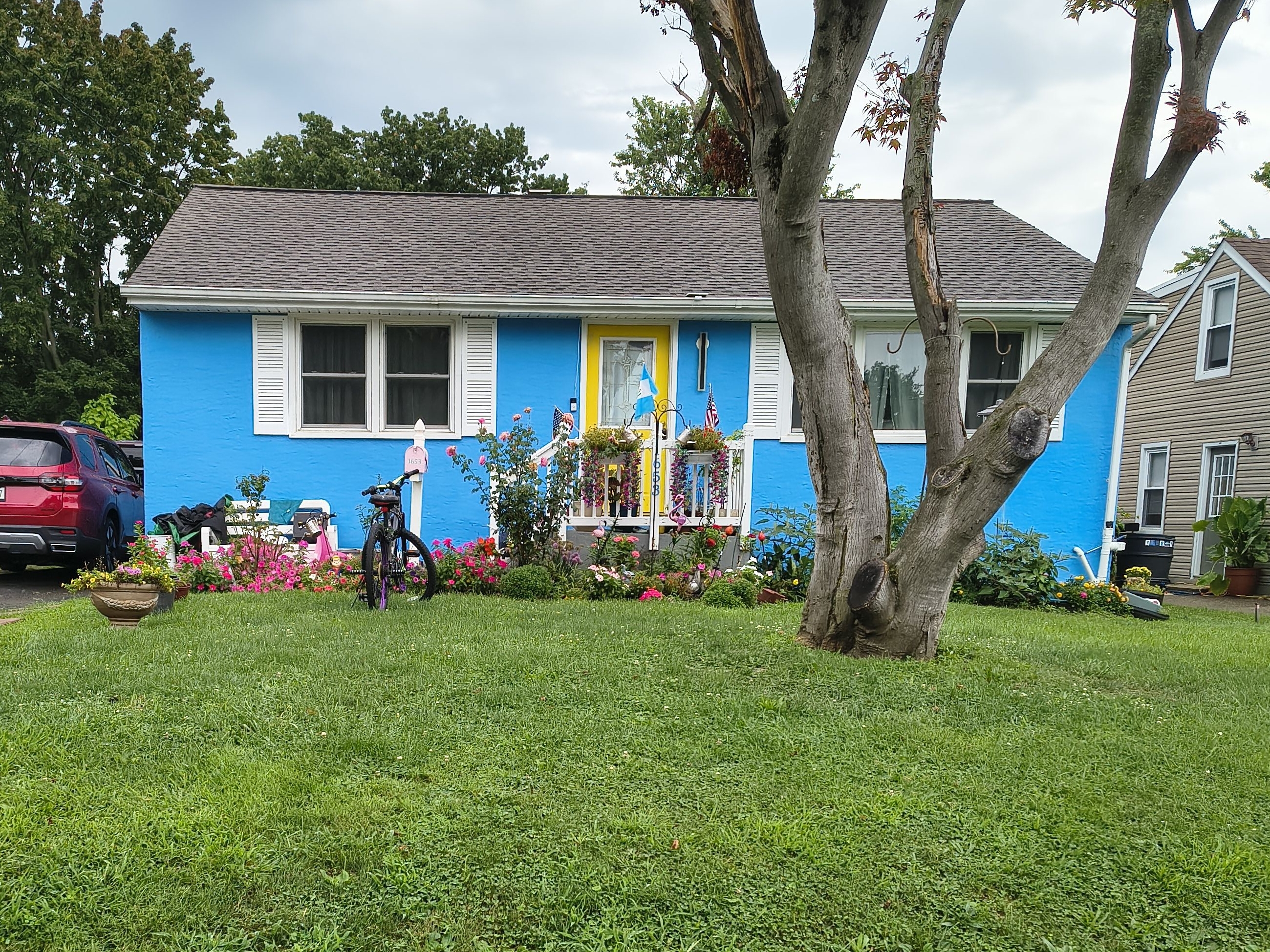
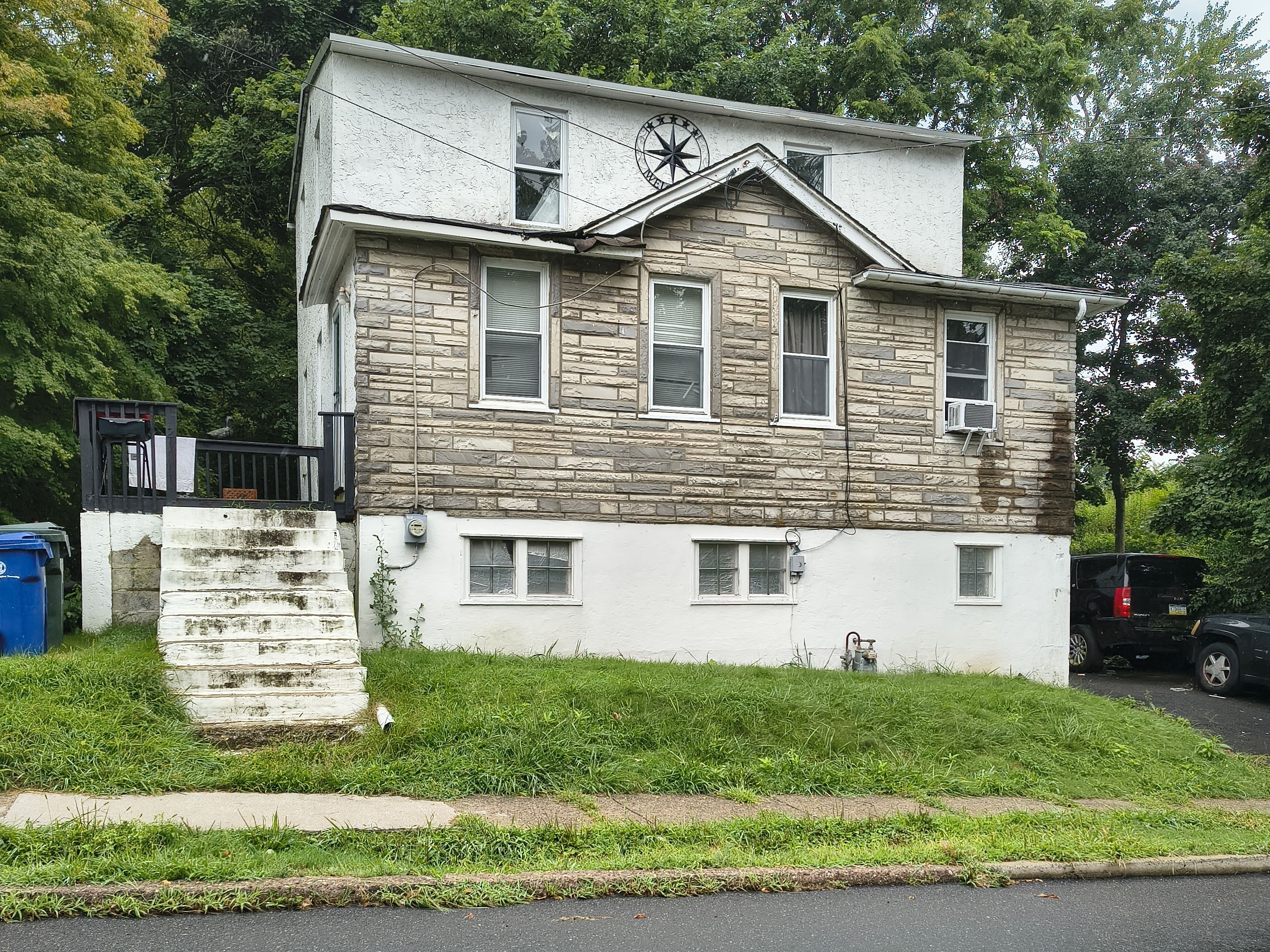
One of the homes in Crestmont, photographed in 2026.DJ Atkins
Crestmont isn’t unique.
Across the country, Black neighborhoods formed near major employers because segregation blocked housing everywhere else.
In Ardmore, Black families lived near the railroad and the estates they worked in. In Bryn Mawr, the Black neighborhood grew beside the service corridors of the Main Line mansions. In Atlantic City, Black workers lived near the Boardwalk hotels they kept running. In Pittsburgh’s Hill District, Black families settled near the steel mills and rail yards. In Baltimore, Black neighborhoods formed beside the shipyards and factories.
Wherever a big employer needed labor, and wherever white neighborhoods refused to open their doors, a Black community formed in the one pocket where the pressure made it possible — and they look the way they do today because of their origins.
One of the homes in Crestmont, an unincorporated community in Abington Township that owes its existence to Willow Grove Park and to housing segregation in the surrounding communities.DJ Atkins
Crestmont’s density, the layout, the architecture, the vibe, the community identity — all of it comes from early working‑class development, limited access to loans, limited access to improvements, township decisions, generational continuity, racial boundaries, economic exclusion, and the strength of the people who lived there.
It’s not a mystery. It’s not random. It’s not accidental. It’s a product of American racism and Black survival.
People around here know Crestmont. But they don’t necessarily know its origin or see in it an example of how racism shapes geography and how Black communities build life anyway.
Once you see that, you can’t unsee it.
DJ Atkins is a Philly‑area DJ, radio host, and cultural writer. He also works in poetry, blending storytelling, music, and community history in his creative work.
Chris Christie has been a two-time Republican presidential candidate, the governor of New Jersey, and a U.S. attorney. But history might show that he generated the most enduring national impact in a different role, as the godfather of legalized sports betting.
In 2012, when he was still New Jersey’s governor, Christie signed a bill that would allow customers to wager on professional and collegiate sports at 12 casinos and four racetracks.
He correctly predicted that the bill — which directly challenged a longstanding federal law that restricted legal sports betting to just a handful of states — would lead to him being sued by powerful opponents, and that over the long haul, his efforts would succeed.
But in a recent interview with The Inquirer, Christie said that even he did not imagine that sports gambling would evolve from a location-based attraction to phone apps that are readily accessible and open for business around the clock. Americans spent a record $165 billion on sports wagers in 2025, amid growing concern from health experts and lawmakers that mobile gambling is driving a health epidemic.
Nor did Christie — who now works as a strategic adviser to the American Gaming Association — envision the rise of prediction markets, some of which have been accused in lawsuits across the U.S. of running illegal sports betting operations. Christie, however, said he is unsurprised that two prediction market companies count Donald Trump Jr. among their advisers.
Christie’s sports gambling crusade began just two months after New Jersey voters approved a referendum in November 2011 to legalize sports betting in the state.
Casino industry lobbyists had long championed the type of bill that he signed, predicting that sports betting would be a double win for the state, attracting new customers to struggling casinos and generating revenue to benefit elderly and disabled residents.
But a federal law, the Professional and Amateur Sports Protection Act, had since 1992 restricted legal sports betting to Delaware, Montana, Nevada, and Oregon. Christie wasn’t deterred.
“Am I expecting there may be legal action taken against us to try to prevent it? Yes,” he told reporters in 2012. “But I have every confidence we’re going to be successful.”
Then the National Collegiate Athletic Association — along with Major League Baseball, the NFL, the NBA, and the NHL — sued Christie for violating the federal law, igniting a legal saga that would wind for years through district and circuit courts before reaching the U.S. Supreme Court in 2017.
Christie argued that PASPA had been a constitutional overreach that violated the Tenth Amendment’s “anti-commandeering” doctrine.
“We lost the first six times [in lower courts],” Christie said. “I had the sense that maybe I was wrong.”
In 2018, the Supreme Court voted to overturn PASPA, giving states the freedom to enact their own sports betting laws.
This interview with Christie, 63, has been edited and condensed for clarity.
Why was legalizing sports betting in 2012 a priority for you?
I was trying to differentiate Atlantic City, and give the casinos something new and different to offer, and to help preserve the horse racing business. I saw it at the time as an offensive and defensive measure. That was the motivation.
The leaders of professional sports leagues were critical of your efforts, and deeply opposed to legalizing sports gambling. What did you think of their position?
I thought that their opposition was both wrongheaded and hypocritical, and I told them so. [Then-NBA commissioner] David Stern was probably the most vehement against it, but [NFL Commissioner] Roger Goodell was a driving force, too. I told them, ‘[Sports betting] is happening anyway. You’d rather have people bet with illegal bookies — either mob-related, or offshore — than companies who are in the business and regulated by the state?’ It made no sense.
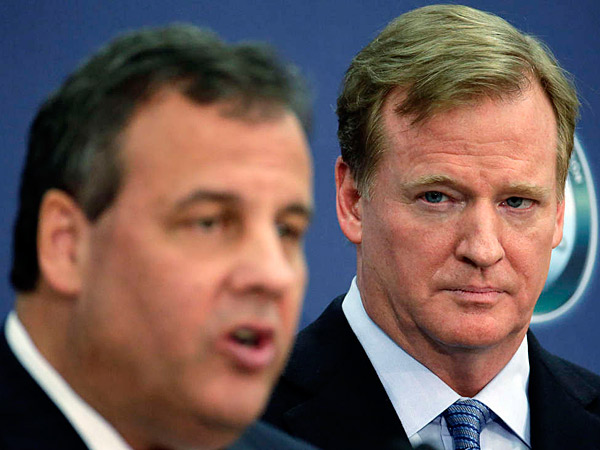
Along with his peers in other professional sports, NFL Commissioner Roger Goodell (right) was opposed in 2012 to an expansion of legalized sports betting.
Were you surprised to see those leagues later enter into lucrative partnerships with sportsbook companies?
I wasn’t surprised at all. The leagues have shown an extraordinary ability to chase a dollar. I’m still waiting for the statue that they’re going to build of me, or the thank-you note. [Legalizing sports betting] has helped their TV contracts as well. People who weren’t even necessarily interested in sports before are now extraordinarily interested because they have a little bit of a wager on it. It’s kind of amazing.
In the years since the Supreme Court overturned PASPA, NBA and MLB players have been arrested for conspiring with gamblers. An NFL executive was recently suspended for sharing inside information about the team’s draft plans.
It’s inevitable that was going to happen. But I think because there is such a great deal of transparency, the leagues can act quickly. That makes it much more different from when gambling was illegal, and you still had some athletes or people associated with sports interacting with [bettors]. The regulation brings about transparency, and transparency makes it easier to police.
Sports betting has evolved into a 24/7 mobile enterprise. Do you consider it to be a different product than what it was in 2012?
Completely. I don’t think I could ever have anticipated that it would be in everybody’s pocket. That’s a little bit disturbing to me, to tell you the truth, the proliferation of it. And obviously prediction markets have been very disturbing to me, particularly because they market to teenagers, which is strictly prohibited for the legal gaming companies.
Prediction markets have also faced backlash for allowing people to wager on U.S. military operations and the deaths of foreign leaders.
I think the whole thing is absurd, and not good for the public.
President Trump’s son, Donald Trump Jr., was reportedly given $300,000 worth of Kalshi shares in 2025, after becoming an adviser to the company. MARSHALL SCHEUTTLE
President Trump’s son, President Donald Trump Jr., is an adviser to Kalshi and has shares of the company, and his venture capital firm has invested in Polymarket. Those companies are regulated by the federal Commodity Futures Trading Commission. Does that seem like a conflict to you?
I think common sense gives you the answer to that. If it’s a money-making enterprise for the Trump family, then the odds are it’s going to face light regulatory action.
It’s betting. It’s not an investment. It’s not a commodity. The Supreme Court has ruled that states have the right to regulate sports betting. I think that it’s going to go to the Supreme Court, and I’m confident [the prediction markets] will lose.
We’ve interviewed addiction experts who say that sports gambling addiction is now a health epidemic, similar to tobacco and opioid abuse.
I always thought that a big portion of this [revenue] has to go toward addiction treatment, and I think that’s got to continue.
Elected officials in Pennsylvania, New Jersey and other states are exploring new regulations for sportsbook operators, like curtailing or eliminating in-game microbets or VIP programs. Are those kinds of reforms needed?
As long as [sports betting] is a venture that creates tax revenue, then the states are always going to be examining this issue. They’re partners. They can’t claim no responsibility. I don’t know how it’ll manifest, or where it’ll land. … I think all regulation should be rooted in evidence-based research. So if there are changes that we see that could help make [gambling] safer, they should be considered.
The Inquirer will continue to report on issues related to the growth of gambling addiction — among teens and adults — across Pennsylvania. If you or someone you know wants to speak with a reporter, please contact David Gambacorta or William Bender at dgambacorta@inquirer.com and wbender@inquirer.com
The Jersey Shore is like the old joke: Nobody goes there anymore, and also, it’s more crowded than ever.
It is true that many Shore stalwarts have been priced, or annoyed, off the beach. And that towns feel busier and sometimes tenser than ever: more cars, not enough parking, canopy-to-canopy beaches, prohibitive housing costs, that occasional rudeness.
Not to mention rising sea levels, nuisance flooding, and seemingly regular tornado watches.
To move from complaining to solutions, we racked our brains, asked experts, and solicited ideas from our readers for ways to improve the Shore experience for everyone.
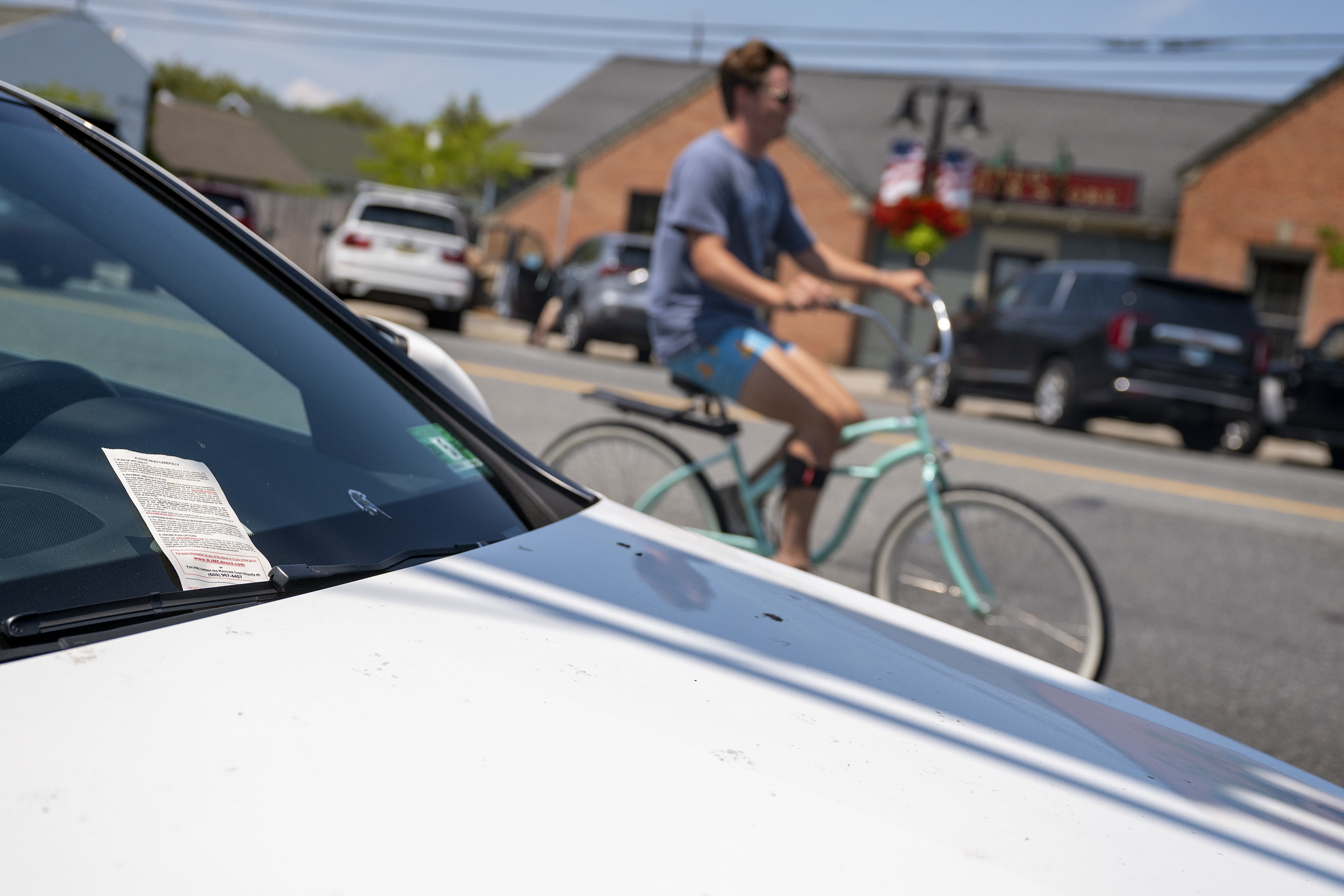
A car with a parking ticket on 96th Street, the main shopping and dining street in downtown Stone Harbor on July 12, 2023.Tom Gralish / Staff Photographer
Leave the cars off the island
So many of the suggestions had to do with reducing traffic and the sheer number of cars in beach towns during the summer.
Wrote one reader: “We need fewer cars on the island so bikers can safely travel — need to open lots on parkway and run shuttles.”
This reader proposed giving every homeowner two parking passes. “I live in Sea Isle,” the reader said. “Too many cars.”
Kara Cumiskey said that tenants brought seven cars to her four-bedroom rental in Ocean City.
“I think that there should be a ‘beach tag’ for cars,“ Cumiskey wrote to us. “Or some type of ‘congestion pricing’ for bringing your car onto the island. Something that gives people some pause for bringing a car for every person.”
While a mandatory ban or limit on cars seems unlikely, giving people the option of leaving their cars off the island and shuttling or Jitney Guy-ing into paradise seems like an interesting idea. The golf cart and e-bike rental business would definitely pick up. Fewer turtles would be squashed.
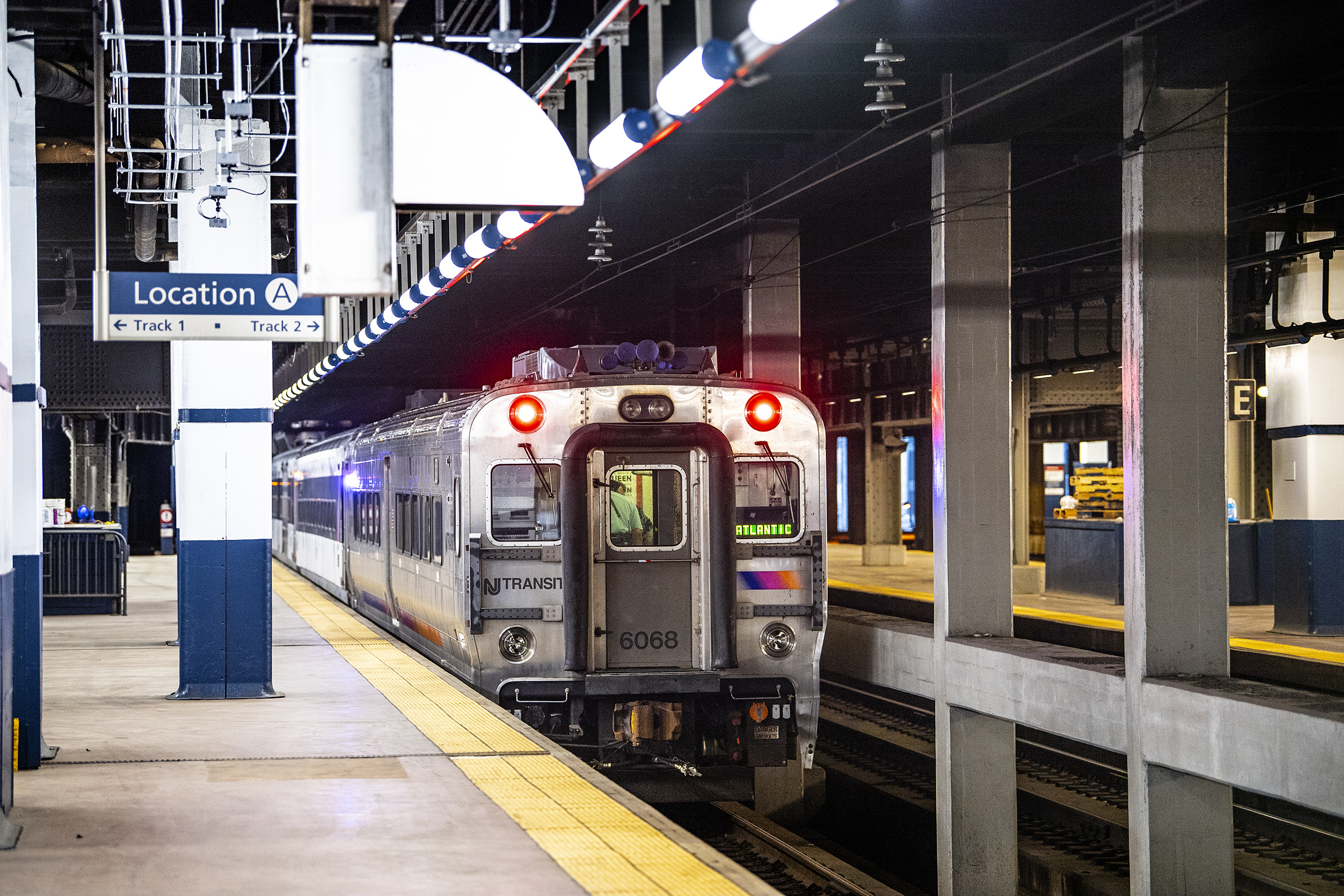
A NJ Transit train en route to Atlantic City is shown at 30th Street Station in Philadelphia on May 12, 2019.JOSE F. MORENO / Staff Photograp
We need more trains
Relatedly, there were calls to increase and improve public transportation to the Shore. The current NJ Transit train is fantastic to take (and from the Shore end, NJ Transit riders can park their car for free at the A.C. Convention Center), but man, is it slow.
An hour and 34 minutes at best between 30th Street Station and Atlantic City? Two hours between trains? Connections to the PATCO high-speed line only help a little. Still, I’ve noticed a lightness in the steps of the people who get off in Atlantic City with their suitcases and sunglasses. They’re onto something.
Others noted that train service once ran down to various towns in Cape May County. Wouldn’t that be lovely.
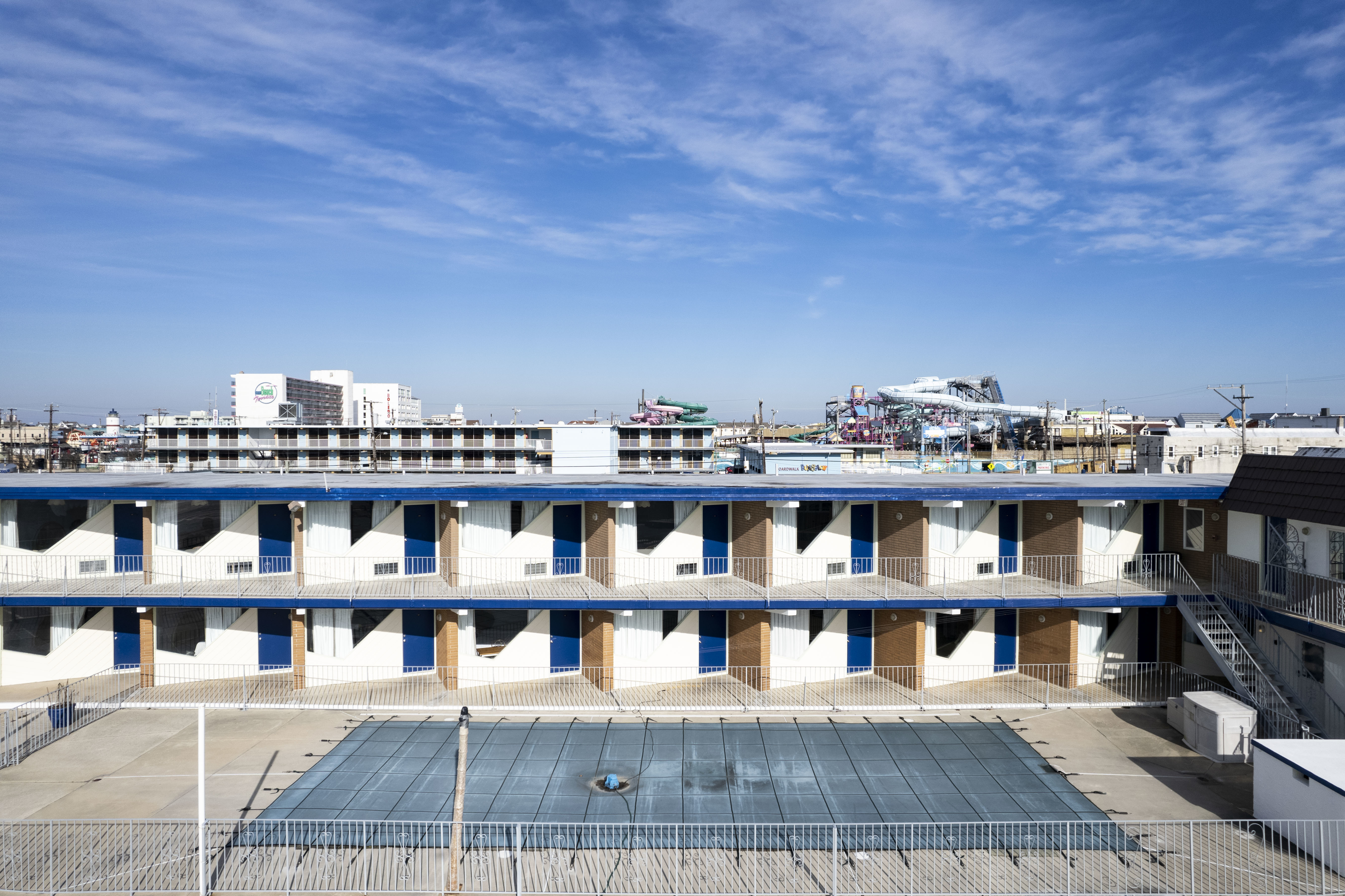
The Ocean Sands Motel at 3710 Ocean Ave. in Wildwood, N.J., on Tuesday, Jan. 24, 2023.Monica Herndon / Staff Photographer
Convert old motels to affordable housing
Ariela Rutbeck-Goldman, senior staff attorney at Fair Share Housing Center, says the Shore’s housing crisis is “increasingly a threat not just to affordability, but to the Shore economy itself.”
“The Jersey Shore can’t remain a place where the people who work in restaurants, hotels, shops, and other local businesses can’t afford to live,” she said.
Belmar, for instance, is “repurposing dilapidated motels and other underutilized properties to increase their housing supply,” she said.
“The goal shouldn’t simply be to create “employee housing,” so that workers can make it through the summer,” she said. “The Shore needs enough homes that teachers, nurses, service workers, young families, seniors, and other people who make these communities work can afford to live there year-round.”
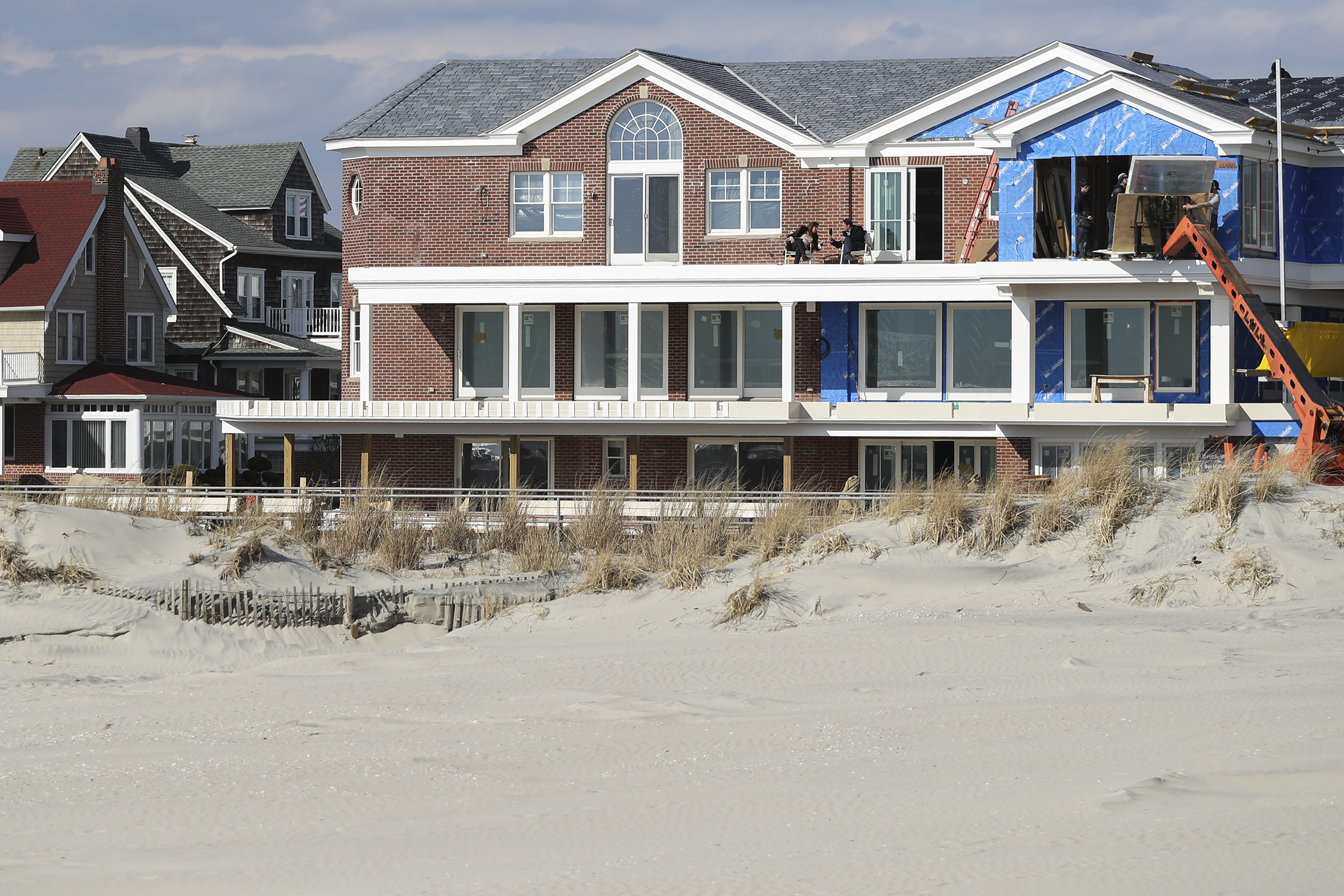
A shore home is under construction along the boardwalk by the Ventnor City Fishing Pier in the Jersey Shore town of Ventnor City, N.J., on Friday, Jan. 22, 2021.HEATHER KHALIFA / Staff Photographer
‘Stop the monster houses’
As one reader wrote, “Stop the monster houses being built. The charm of the shore is getting bulldozed one lot at a time. These new builds are ugly!”
Another noted the homogeneity of the new construction, in particular the white boxes with the black roofs and trim. In a lot of Shore towns, this ship has sailed. Sea Isle City, for example, is almost totally built out. But there is some hope for others, where the old Shore houses, whether they are the big turn-of-the-century Dutch colonials or the small ranchers of the Wildwoods, are hanging in there.
Fair Share Housing is advocating for programs that help nonprofits acquire and preserve older homes to protect housing for year-round residents, as well as expanding tenant protections to prevent evictions.
“Monmouth Beach, one of the Shore’s wealthiest communities, recently authorized the purchase of a two-bedroom condominium that will be deed-restricted and sold to an income-qualified household,” said Rutbeck-Goldman. “That’s a relatively small investment, but it demonstrates that municipalities don’t have to wait for a large development project to create affordable homes.”
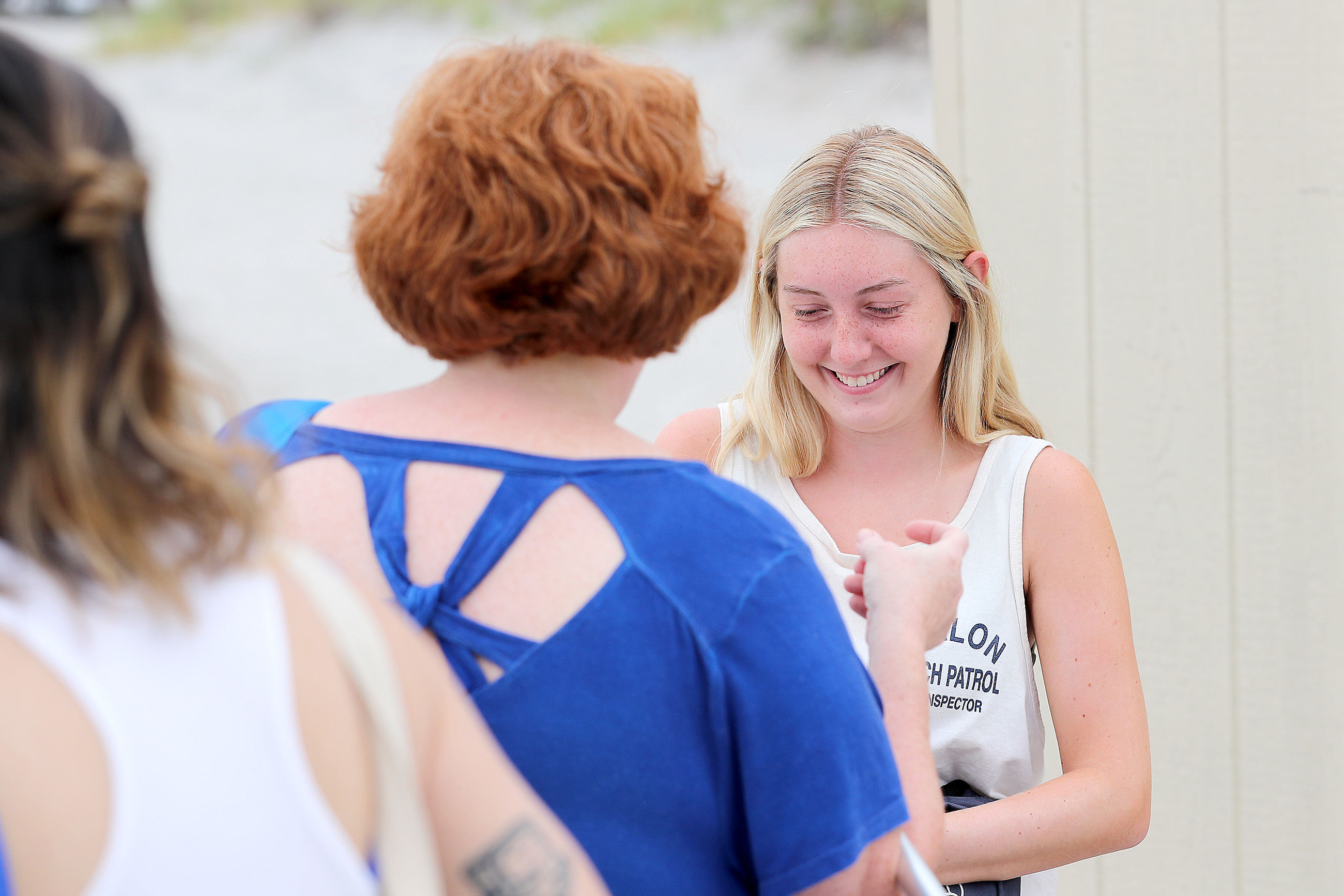
Shanna Killion, of Northeast Philly, works as a beach tag inspector in Avalon, N.J., on Sunday, Aug. 14, 2022. Killion said among the interesting items she has seen people carrying to the beach was an inflatable bed.DAVID MAIALETTI / Staff Photographer
Eliminate beach tags (or at least make them reciprocal)
Lots of people urged New Jersey beach towns to do away with beach tags. Dream on. Strathmere, one of the last three free beaches in the Philly area of the Jersey Shore, just voted to start charging $10 a day, $45 a season, or $30 if you buy a tag before Presidents’ Day. That leaves just Atlantic City and the Wildwoods beach-tag free.
One interesting idea was to make the beach tags reciprocal to other towns. Some towns, like Ventnor and Margate, do have reciprocity, but readers imagined a Cape May County beach tag, for instance, that would encourage exploring.
Related, a bill that would require towns to be transparent about where their beach tag revenue is actually going has stalled in the New Jersey legislature.
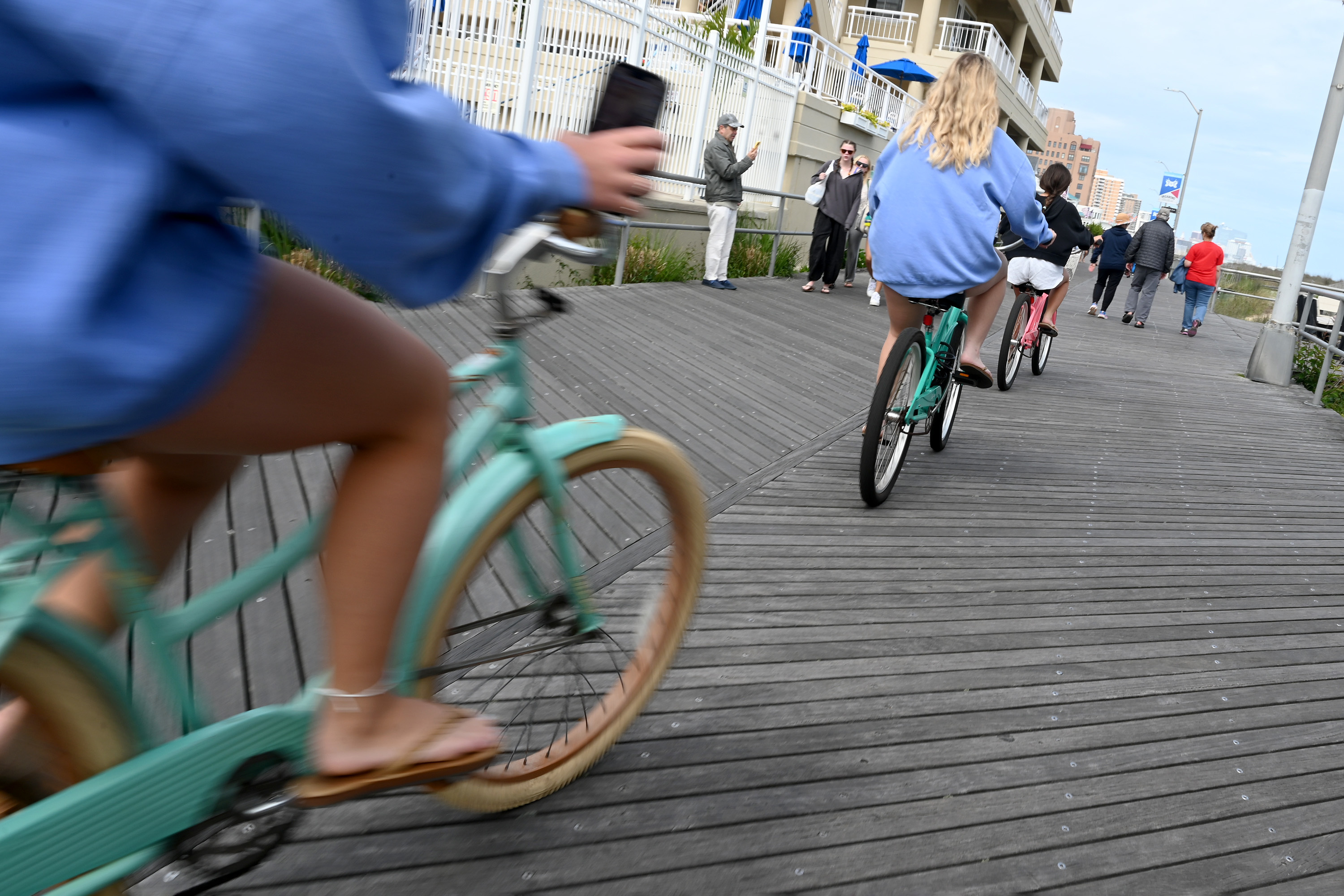
Bike riders on the promenade boardwalk in Sea Isle City at the Jersey Shore on May 24, 2023.Tom Gralish / Staff Photographer
Make the Shore better for bikers and pedestrians
Many towns have expanded bike lanes and redesigned roads to calm traffic. More of this, please! No matter the pedestrian laws, the reality is, it’s still a miracle if the cars stop for you as you start to cross, or if the bike lane isn’t clogged with runners going in the opposite direction.
Roads one block from the beach should be one lane in each direction, with traffic calming measures like flashing pedestrian lights and bright flags for the pedestrians to carry across. It will require a lot more patience than Jersey is known for. It’s OK! There should be a safe way to commute to jobs by bicycle and return home at night.
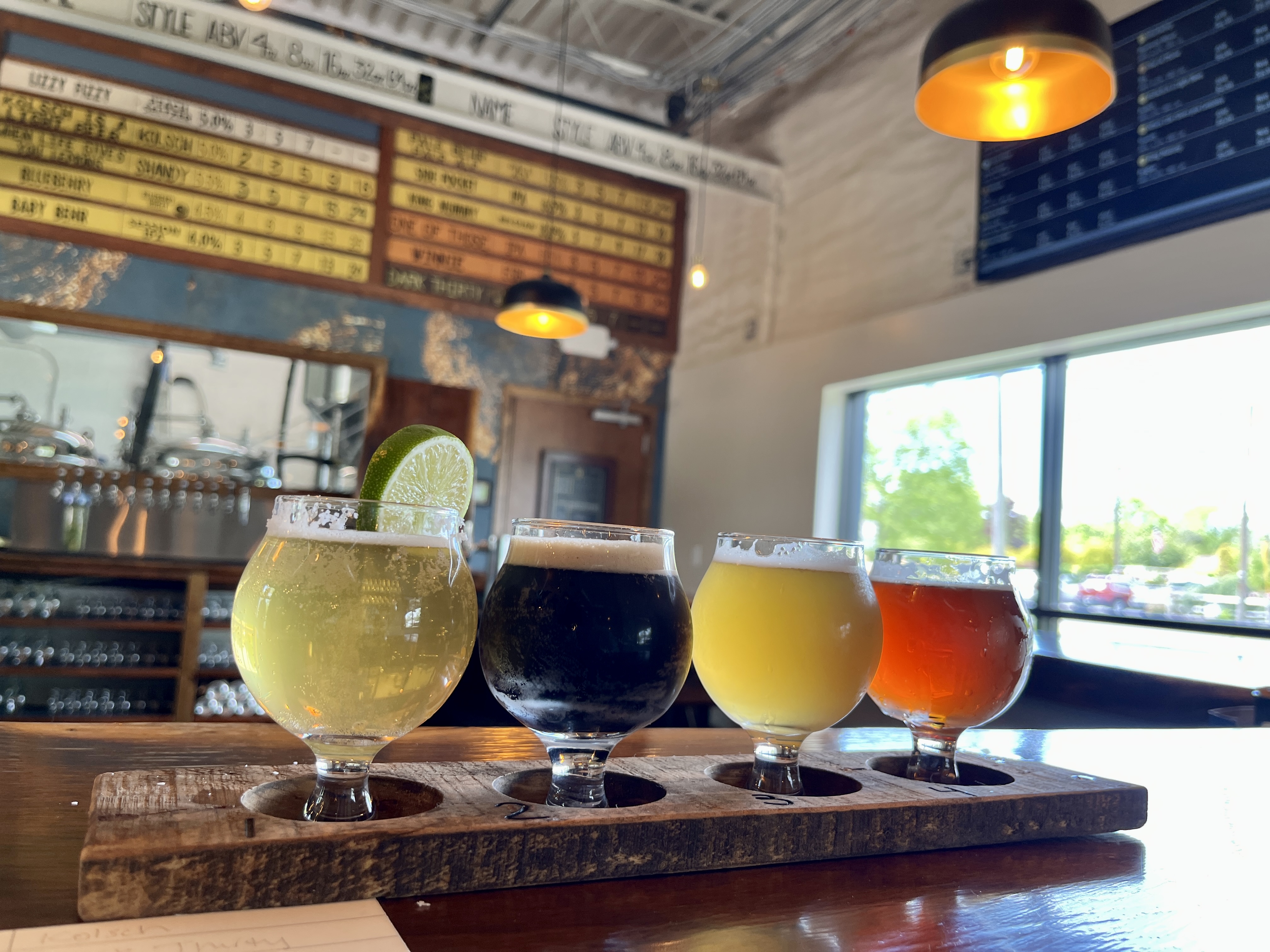
A flight at Behr Brewing in Cape May in 2023.Jenn Ladd / Staff
Let Ocean City BYOB already
I know this is not going to happen. But what a wonderful restaurant renaissance might follow! A mini Cape May! As one reader wrote, “I have had a place in OC for 25 years and other than [Ocean City Yacht Club], have never eaten dinner in OC because can’t even have a glass of wine!”
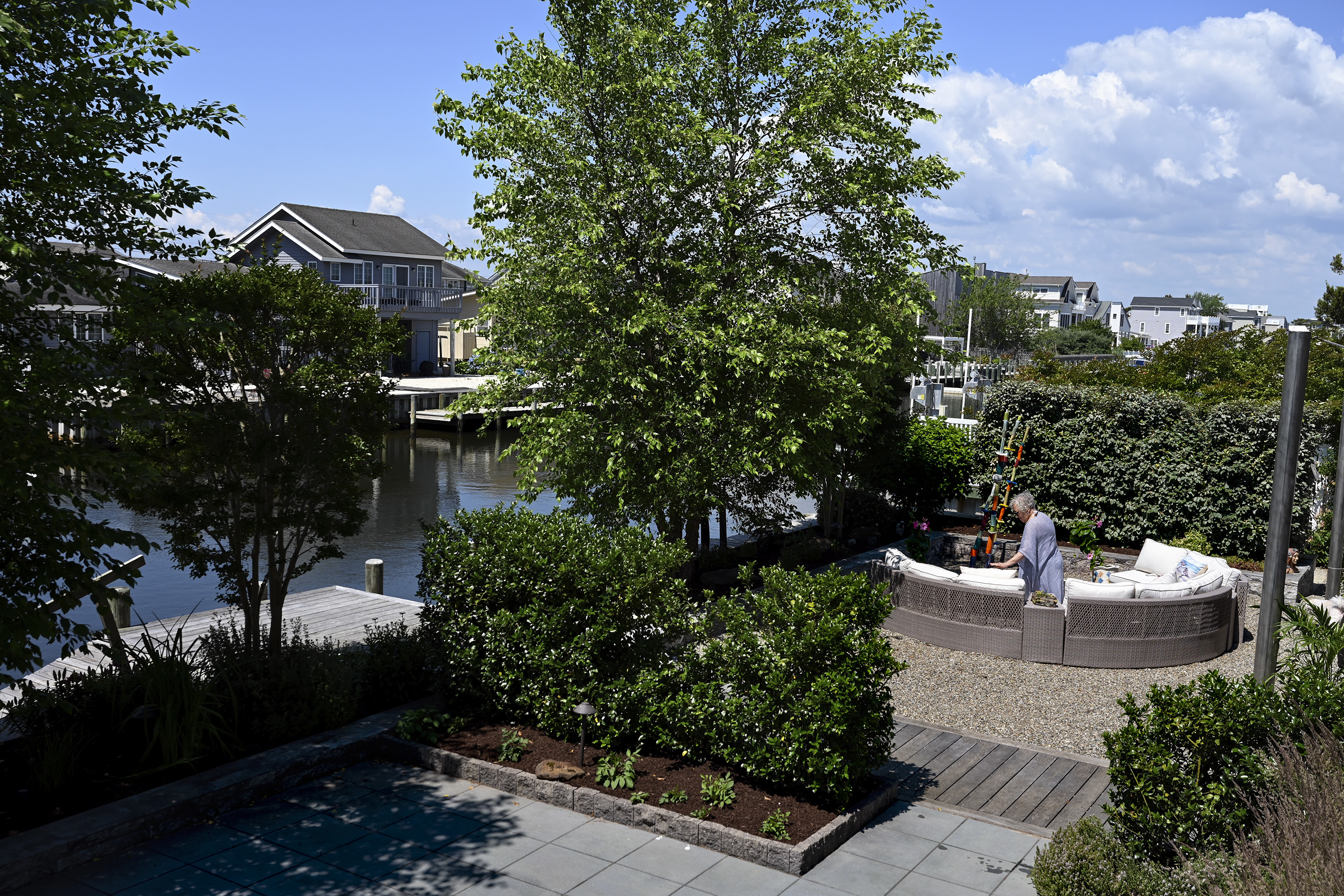
A backyard with access to the bay, at a Beach Haven, Long Beach Island home on June 13, 2024.Tom Gralish / Staff Photographer
Embrace ‘coastal naturalization’
Cindy Zipf, executive director of Clean Ocean Action, worries that the entire Jersey Shore is becoming more high-end resort, less natural coastline.
Zipf advocates a concept known as “coastal naturalization” and says residents and visitors must rally against the “overdevelopment and citification” of Shore towns. That includes expanding parks with native plants and trees, which Zipf says will increase both quality of life and resilience to storms.
Zipf advocates an end to “the unchecked paving and urbanization that erodes community character while contributing to increased flooding, polluted runoff, and litter.”
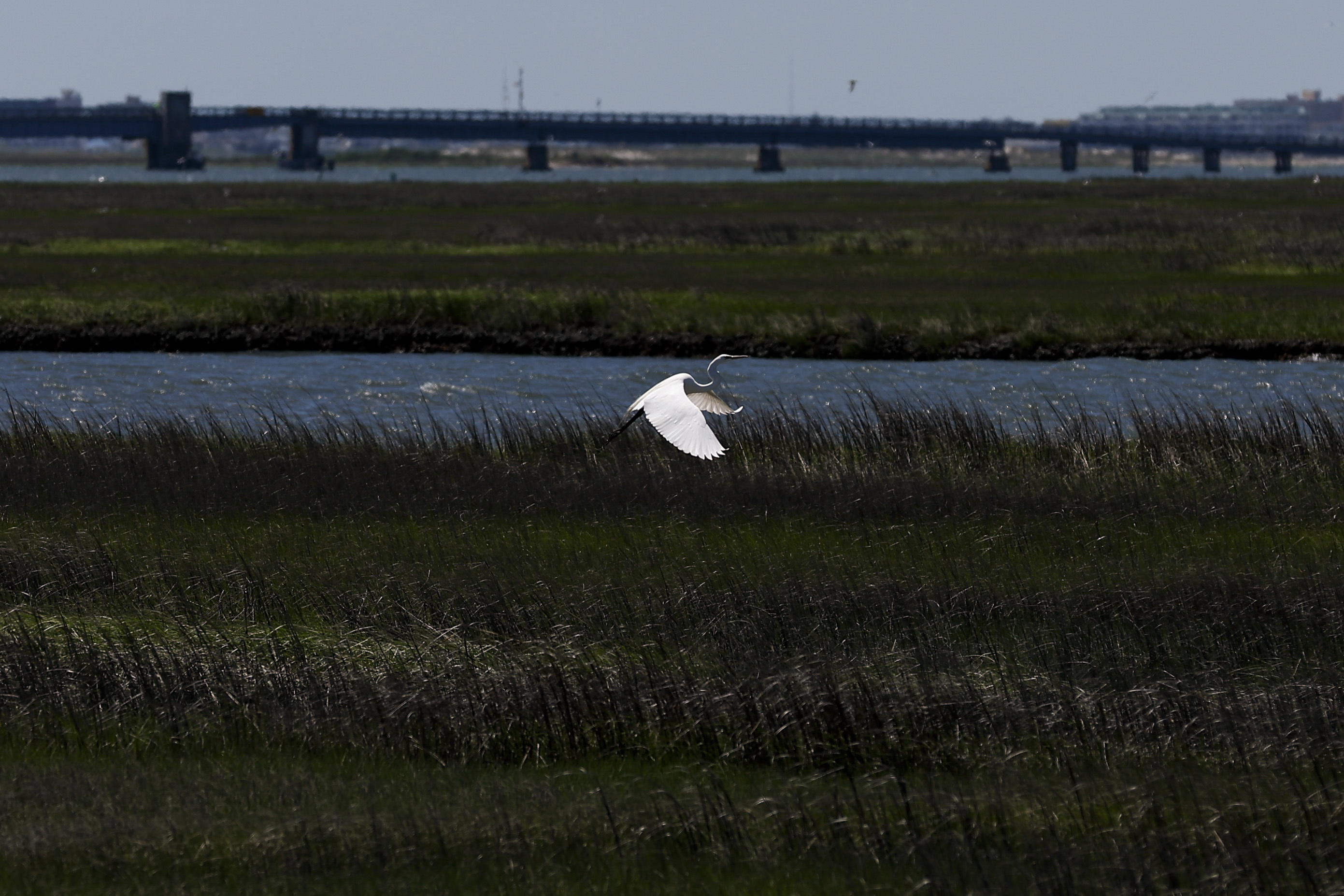
A snowy egret flies over the salt marsh at the Wetlands Institute on May 19, 2025, in Stone Harbor, N.J. Dredged material was used to raise the height of the marsh in the Scotch Bonnet Island project.Monica Herndon / Staff Photographer
Increased marsh restoration and flooding mitigation measures
Speaking of increased flooding: The Wetlands Institute announced that it’s temporarily retreating from its half-century headquarters on the Stone Harbor Causeway to rebuild its trails and building because of increased flooding.
The institute focuses on coastal resilience and marsh restoration, with nature-based solutions. It is elevating and widening its Salt Marsh Trail and creating a new high marsh designed for diamondback terrapin nesting and coastal birds.
Lenore Tedesco, the institute’s executive director, says marsh rescue is critical for storm-risk reduction.
“By elevating the Salt Marsh Trail, we are also creating a barrier to storm waves but unlike many coastal protection features that wall off people and wildlife, we are doing it in a way that benefits marshes and wildlife,” she said.
The Wetlands Institute is hoping other coastal communities learn from the approach.
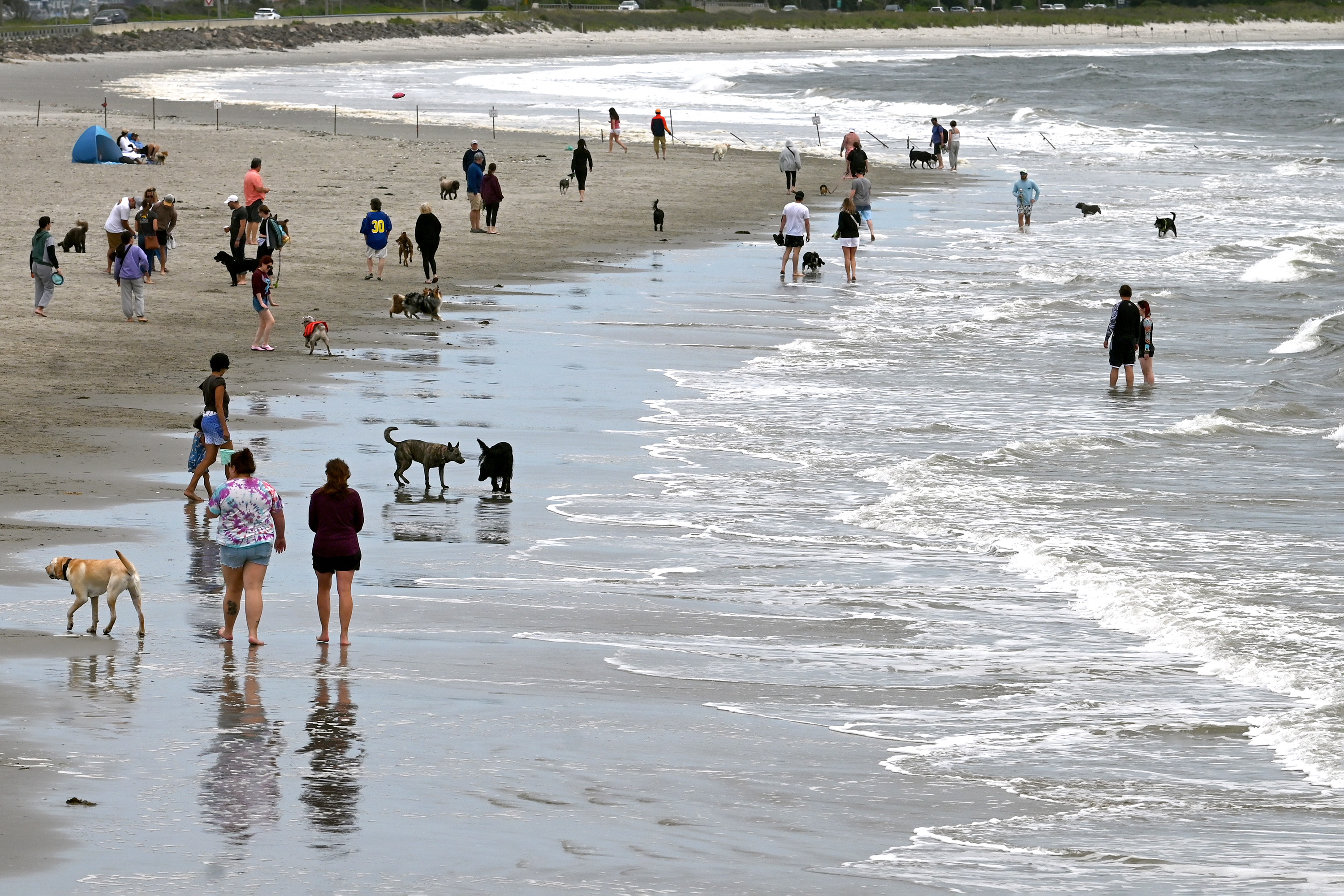
Dogs and their owners enjoy the sand and water at the Malibu Beach Wildlife Management area in Egg Harbor Township at the Shore during the Memorial Day weekend, on May 28, 2023.Tom Gralish / Staff Photographer
More dog beaches and dog hours
Are dogs so bad? What if every town, or every island, had a beach dedicated to dogs and their owners? What if there were dog hours … on the boardwalks? What if all the towns allowed dogs to run free on the beach before, say, 8 a.m. in the summer? As Bob Dylan wrote, “In harmony with the cosmic sea / True love needs no company / It can cure the soul, it can make it whole / If dogs run free.”
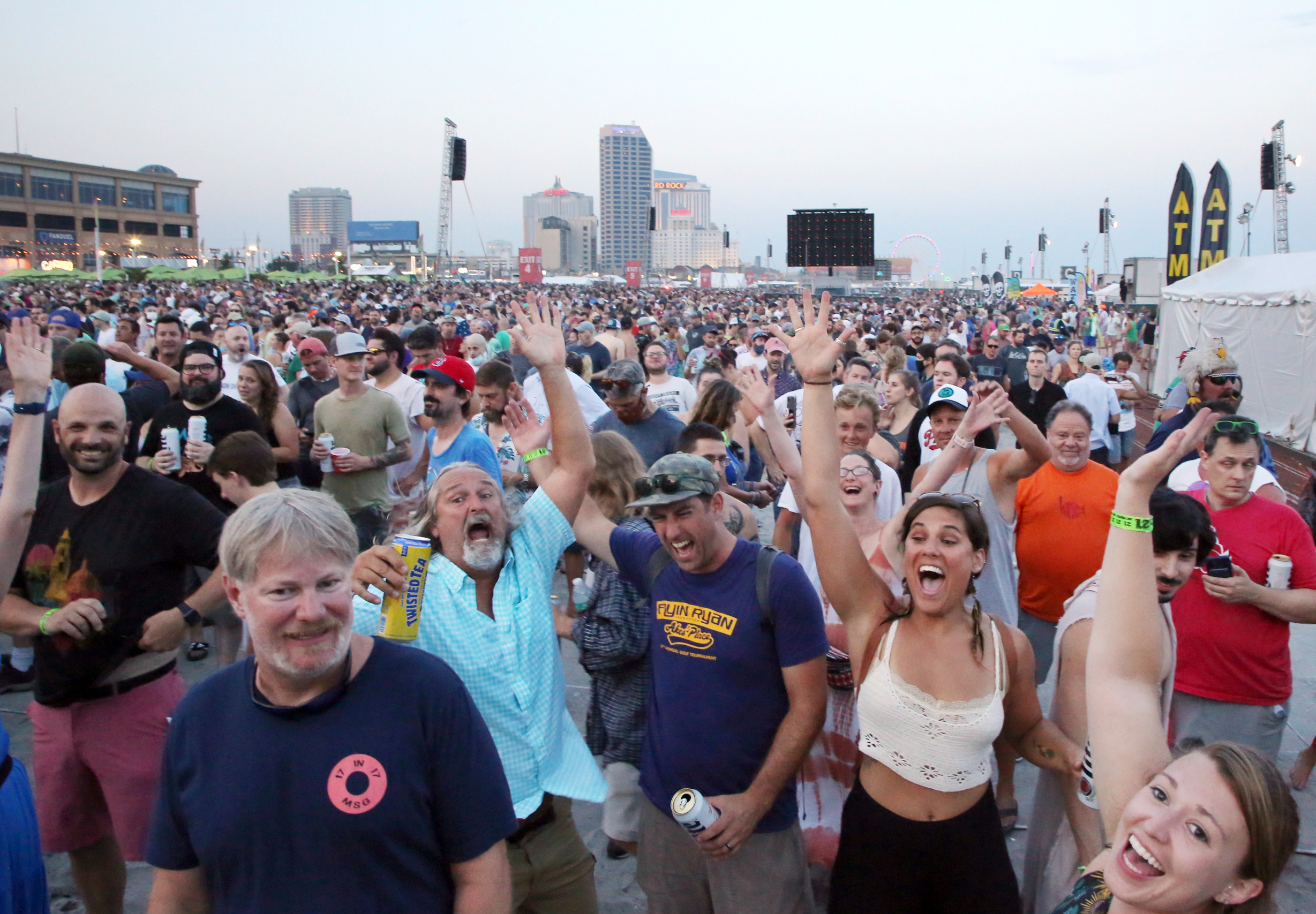
Fans pack the beach for blocks as Phish performs a beach concert in Atlantic City, Friday, Aug. 13, 2021.VERNON OGRODNEK / For The Inquirer
Fully fund A.C. concerts
There’s been a welcome uptick in big-name acts booked to A.C.’s estimable Boardwalk Hall, including Shakira, Phish, and Goose (also, Disney on Ice). Rüfüs du Sol performed on the beach this year. But the sophisticated and intimate Thursday night jazz concerts on the Atlantic City Boardwalk only started in August this year. In previous years, this popular tradition ran all summer long. There were a few A.C. beach concerts this summer and a couple jazz nights at Gardener’s Basin, but nothing like in past years.
On the upside, there is a robust food truck scene at the A.C. Seawall and at O’Donnell Park, and new housing construction projects in places that have long been vacant. And no beach tags. But the city is under increased pressure from expected job losses due to New York casinos. Will Atlantic City put the pieces together?
Have more ideas? Email us at downtheshore@inquirer.com!
Summer’s not over yet, at least when it comes to music schedules in and around Philadelphia. This is one of the busiest music weeks of the season, with big Bruno Mars and Chris Stapleton tours coming through, and Rufus Del Soul, Wu-Tang Clan, Squeeze, and Demi Lovato down the Shore.
Thursday Aug. 27
Swervedriver
Indie bands with a fuzzy guitar sound that embrace the shoegaze label have proliferated this decade. Swervedriver is among the 1990s originators of the style, and the members of the British band are celebrating the 35th anniversary of their debut album, Raise. 8 p.m., Underground Arts, 1200 Callowhill St., undergroundarts.org
Pinkshift
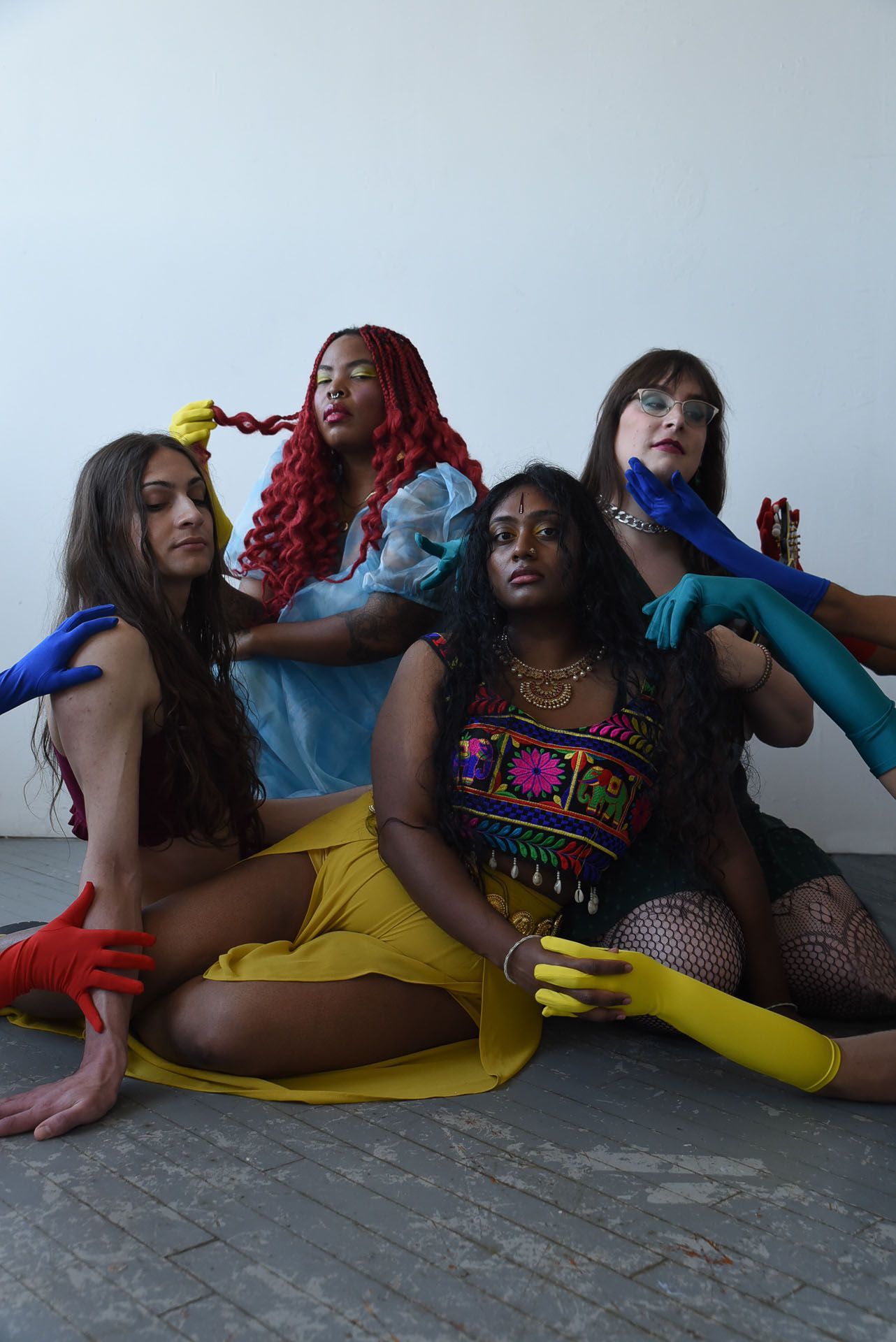
Pinkshift, the hard-hitting Baltimore punk band fronted by Ashrita Kumar, is celebrating an expanded version of their 2021 debut EP Saccharine. Two Philly bands will join them: Kulfi Girls, the foursome fronted by Abi Natesh that mixes hard rock with Indian classical influences, and Nicolle Maroulis’ emo outfit Hit Like a Girl. 8 p.m., Ukie Club, 847 N. Franklin St., 4333Collective.net
Kulfi Girls play the Ukie Club on Thursday, Aug. 27.Philly Music Fest
Good Flying Birds
Three winsome indie pop bands are on this free Live & Local show. Good Flying Birds, whose charming Talulah’s Tape came out in 2025, is a band of Midwesterners, who will be joined by two promising Philly quartets in Smarthearts and Heatloaf. Free. 6 p.m., Spruce Street Harbor Park, 301 S. Christopher Columbus Blvd., 4333Collective.net
Friday Aug. 28
Jerry Garcia Symphonic Celebration
The Grateful Dead guitarist would have turned 84 this month, and his family organized this tour in his honor. Together with the Philly Pops, the lineup includes Jerry Garcia Band veterans Melvin Seals on organ and Jacklyn Branch on vocals, Philly guitarist Tom Hamilton, Phil Lesh’s son Grahame Lesh on bass, drummer John Morgan Kimock, and singer Kanika Moore. 8 p.m., TD Pavilion at Highmark Mann, 5201 Parkside Ave, highmarkmann.org
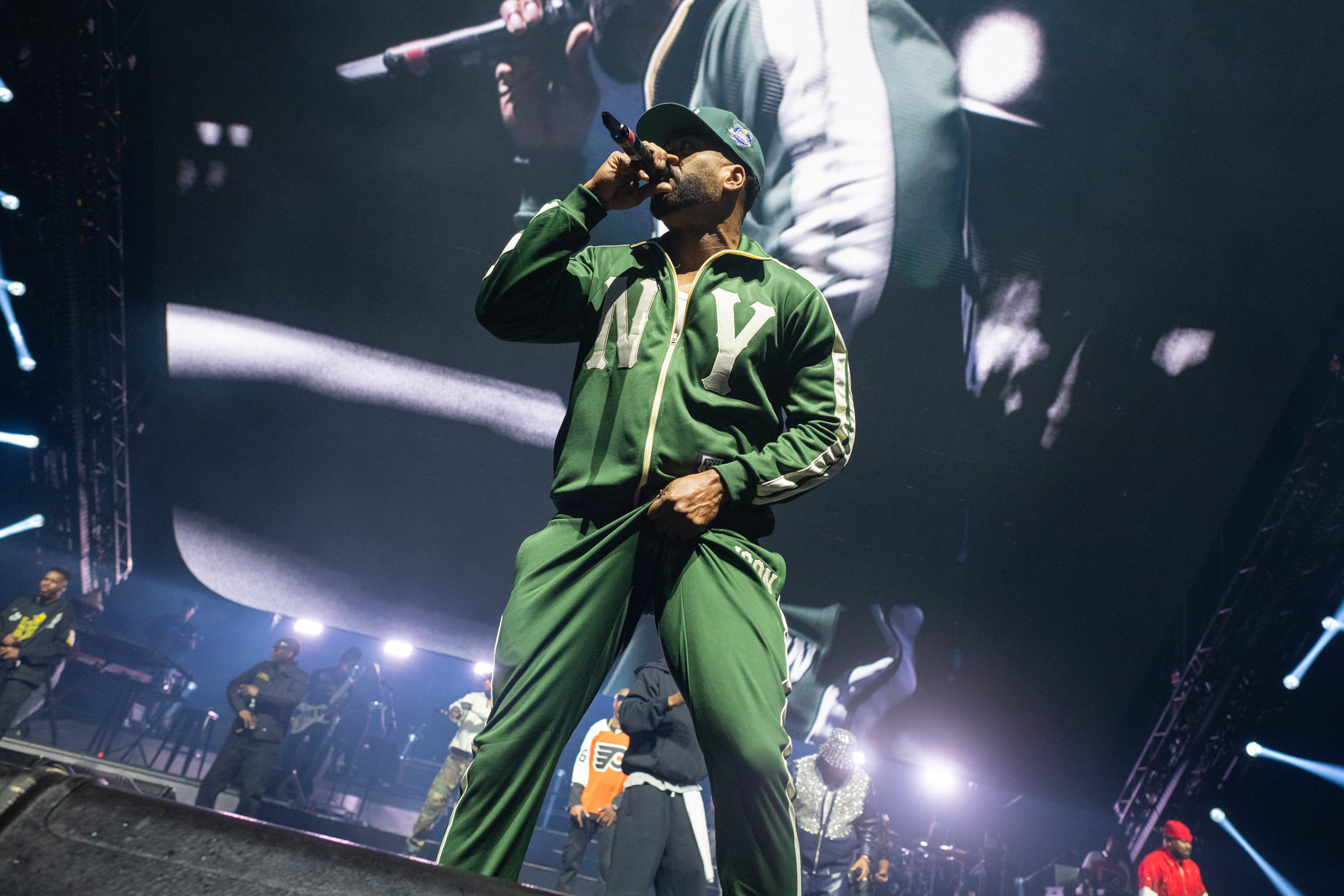
Wu-Tang Clan’s Method Man performs at the Wells Fargo Center in Philadelphia on July 18, 2025. The Staten Island hip-hop crew is in Atlantic City on Friday.Kaiden J. Yu / Staff Photographer
Before the band went on a run with albums like Argybargy in 1980 and Sweets From a Stranger in 1982, Squeeze songsmiths Chris Difford and Glenn Tilbrook wrote Trixies, a song cycle about a nightclub that was never recorded. Now 50 years on, they have released it as a full-length album produced by the band’s bass player, Owen Biddle, who is a former member of The Roots. Adam Ant and Haircut 100 are also on the bill. 8 p.m., Borgata Event Center, One Borgata Way, Atlantic City, borgata.mgmresorts.com
Demi Lovato
Former Disney child actress and pop singer Demi Lovato has pivoted from the punk-pop of the 2022 album Holy F— to return to a more dance pop sound on the new It’s Not That Deep. 8 p.m., Ovation Hall, the Ocean resort, 500 Boardwalk, Atlantic City, theoceanac.com
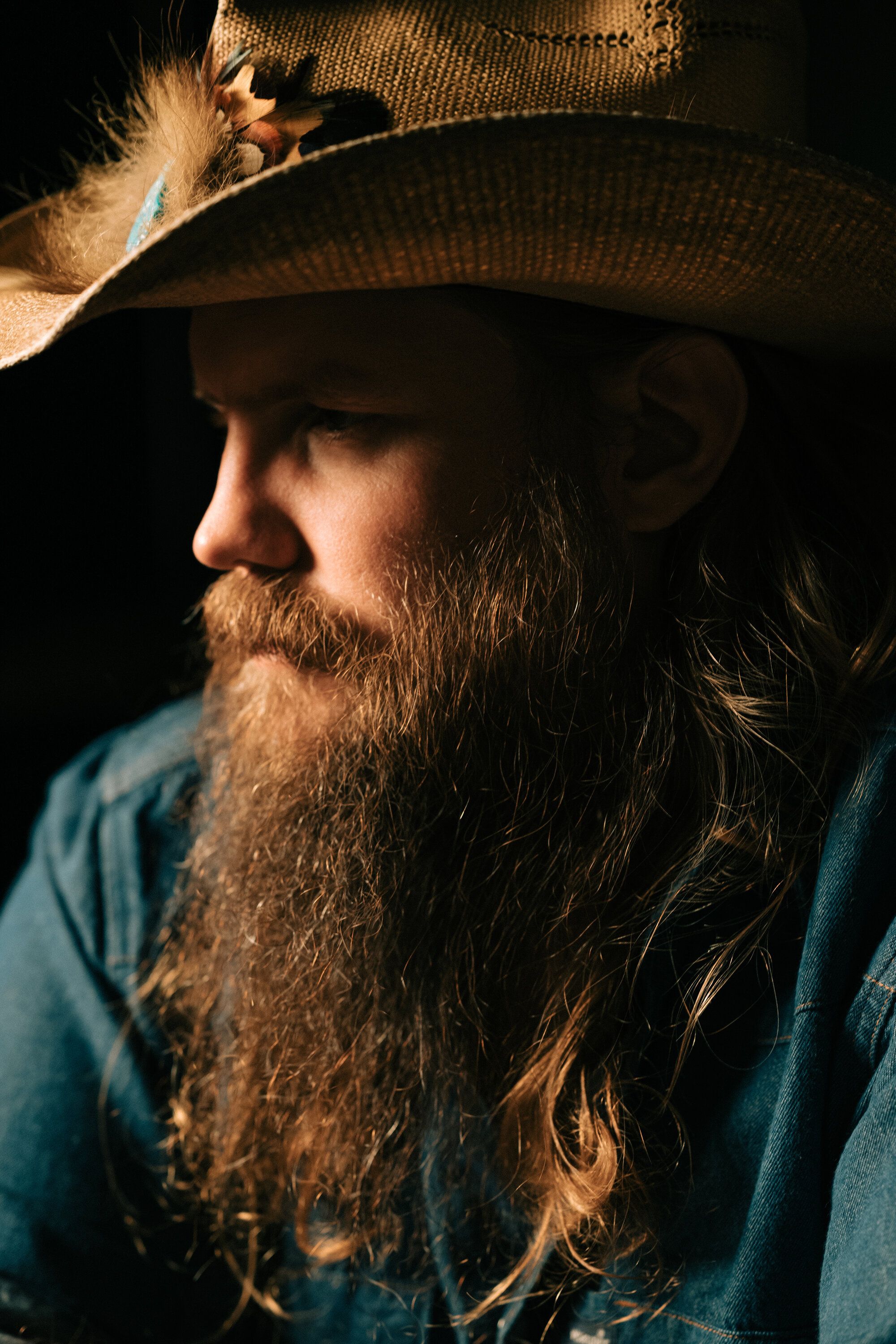
Chris Stapleton brings his All-American Road Show to the Freedom Mortgage Pavilion in Camden for two nights this weekend.Becky Fluke
Friday and Saturday Aug. 28-29
Chris Stapleton
Eleven-time Grammy winner Chris Stapleton has built himself a huge audience with his brand of beardy, rugged country-soul that’s rarely as slick as the manicured Nashville acts he rubs elbows with on the country charts. For this year’s two-night Camden stop on his “All-American Road Show,” he’s supported by North Carolina-born “Sex, Drugs and Country Music” singer Carter Faith. 8 p.m. Freedom Mortgage Pavilion, 1 Harbour Bvld., Camden, freedommortgagepavilion.com
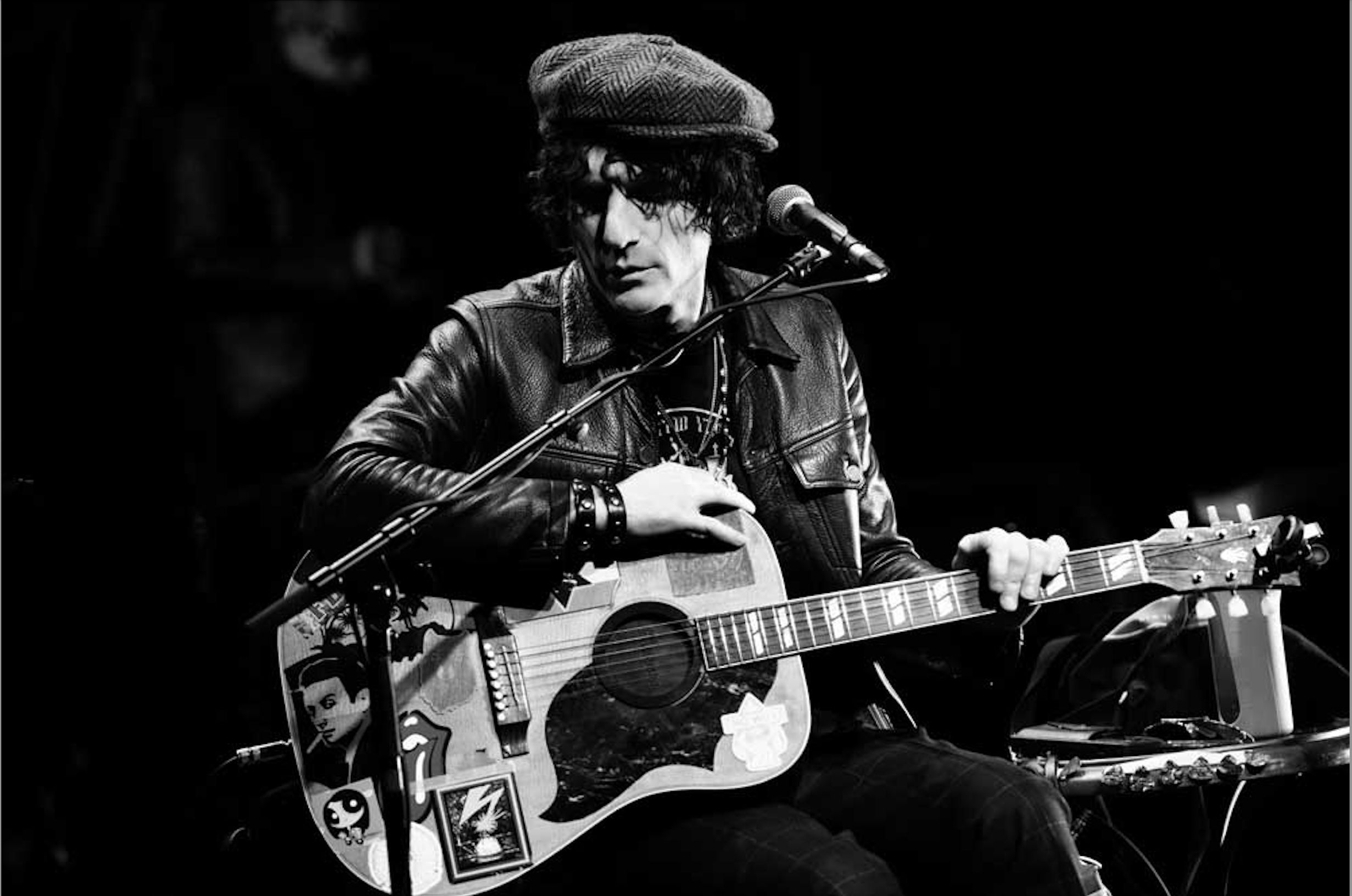
Jesse Malin will headline the Queen Jeans Ball in Wilmington on Saturday, Aug. 29. with Craig Finn and Tommy Stinson opening.Vivian Wang
Saturday Aug. 29
Queen Jeans Ball with Jesse Malin
New York songwriter Jesse Malin has always been a rock and roll true believer, dating back to his hardcore band Heart Attack (which he founded when he was 12). Then came D Generation and nine solo albums, including 2019’s Sunset Kids, which was produced by Lucinda Williams.
In 2023, Malin suffered a rare spinal stroke that left him paralyzed from the waist down. The next year, he was the subject of a tribute that featured Bruce Springsteen and Billie Joe Armstrong, among others. Now, he’s returned to the stage with his Silver Manhattan musical and is back to touring with his band.
Malin is headlining the annual Queen Jeans Ball in Wilmington, which benefits the nonprofit Donate Delaware. Craig Finn of the Hold Steady and Tommy Stinson will also perform and undoubtedly join Malin on stage. 8 p.m., the Queen, 500 N. Market St., Wilmington, thequeenwilmington.com
Australian electronic dance music act Rüfüs Du Sol will perform on the Atlantic City beach on Saturday, Aug. 29.Boaz Kroon
Rüfüs Du Sol
Dance music arrives on the Atlantic City beach with Rüfüs Du Soul, the Australian alt-pop band who mix live instrumentation and electronic beats. The band fronted by singer Tyrone Lindqvist is touring stadiums for its 2024 album Inhale / Exhale. The show marks a return to Live Nation booking toes-in-the-sand shows in tandem with Visit Atlantic City for the first time since 2023. Ben Bohmer opens. visitatlanticcity.com
Zac Brown Band
The official name of this tour is “Love & Fear Tour presented by Margaritaville at Sea.” So it’s safe to say the Georgia country-rock singer who sang the national anthem at the UFC Freedom 250 cage fight at the White House in June, will be giving Jimmy Buffett vibes. His album Love & Fear features Snoop Dogg, Marcus King, and the late great Dolly Parton. Grace Potter, who also plays Free at Noon on Friday, opens. 7 p.m., TD Pavilion at Highmark Mann, 5201 Parkside Ave, highmarkmann.org
Sam Sodomsky is The Bird Calls. He plays Young American Cider in Germantown on Sunday.Jake Fromm
Sunday Aug. 30
Cloud Nothings / Knifeplay
Cleveland-born indie band Cloud Nothings, fronted by now Philly-based guitarist-songwriter Dylan Baldi, released its eighth album, Final Summer, in 2024. Sharp-edged Philly band Knifeplay open. 7 p.m., Ruba Club, 416 Green St., 4333Collective.net
The Bird Calls
The Bird Calls is Sam Sodomsky, a Brooklyn songwriter raised in Philly whose new album, Take Leave, is due Friday. Sodomsky, also a contributing editor at Pitchfork, makes homespun, open-hearted folk rock about trying to find a place in the world with songs like “Clockwork” and “Ethan Frome” that linger in the imagination. He’s playing a hard cider tasting room in Germantown. Kristin Daelynn and Adeline Hotel open. 7 p.m., Young American, 6350 Germantown Ave., youngamericancider.com
Monday Aug. 31
Arlo Parks
The British singer and poet born Anaïs Oluwatoyin Estelle Marinho vaulted into stardom in the UK with her Collapsed Into Sunbeams debut, which won the prestigious Mercury Prize. Her third album, Ambiguous Desire, is a pleasant soul-searching work shaped by club culture, though it’s more likely to be heard by coffee shop latte sippers than dance floor denizens. 8 p.m., Union Transfer, 1026 Spring Garden St., utphilly.com
Raye performs at the BET Awards on June 28, 2026, at the Peacock Theater in Los Angeles. She opens for Bruno Mars on Tuesday and Wednesday, Sept. 1 and 2, at the Linc. (AP Photo/John Locher)John Locher
Tuesday and Wednesday Sept. 1-2
Bruno Mars & Raye
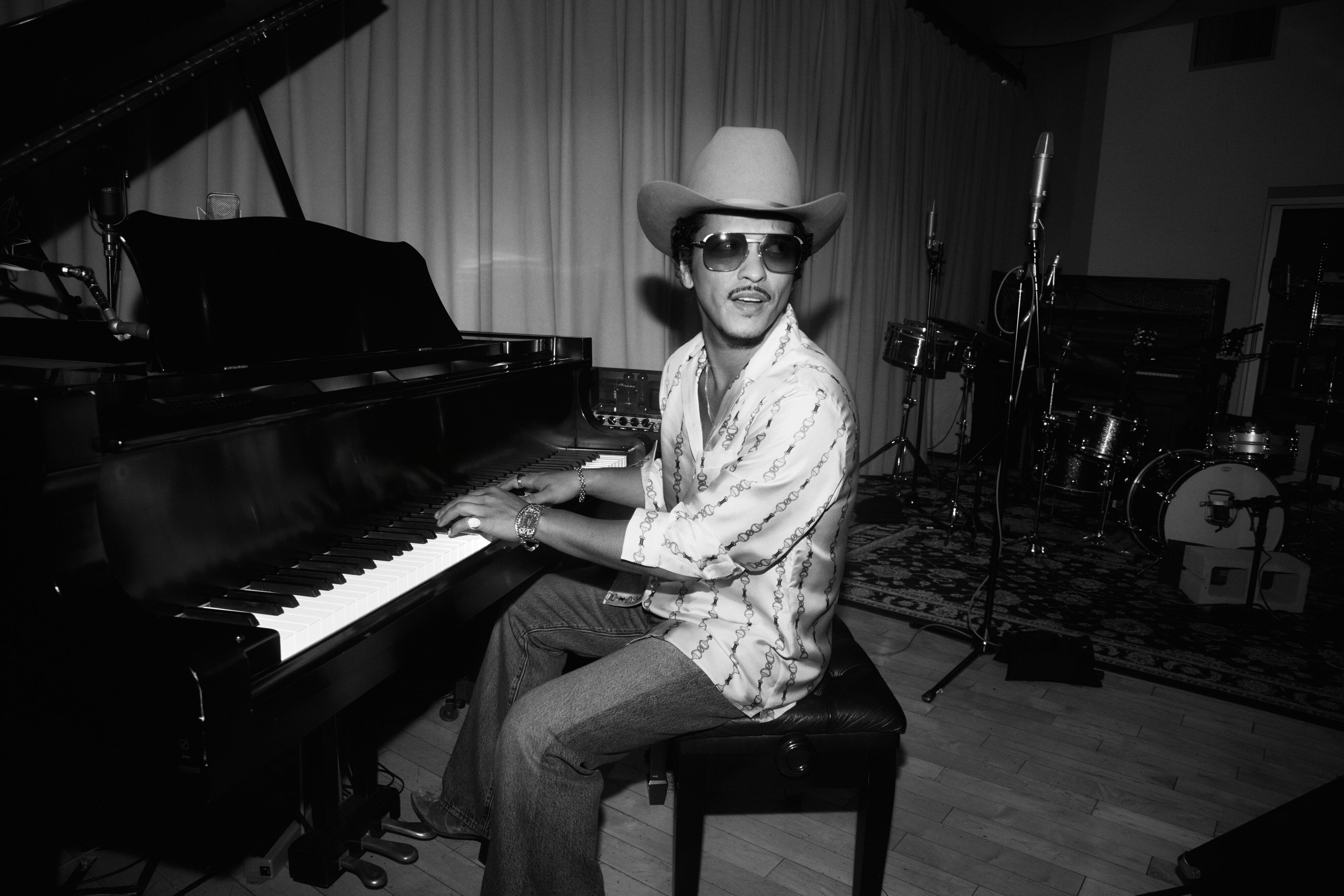
Bruno Mars has been making hits nonstop since his 2010 Doo-Wops & Hooligans debut. His 2024 chart toppers “Die With a Smile” and “APT.” — with Lady Gaga and Rosé, respectively — and this year’s “I Just Might,” from his new album Romantic are the most recent examples. Raye, the British singer who has a knockout stage show, opens. Things get going with DJ Pee. Wee, who is Mars’ Silk Sonic bandmate Anderson .Paak in disguise. Shopper alert: There will be a Bruno Mars x Hello Kitty pop-up at the Fashion District from Aug. 31-Sept. 2. 7 p.m., Lincoln Financial Field, One Lincoln Financial Way, lincolnfinancialfield.com
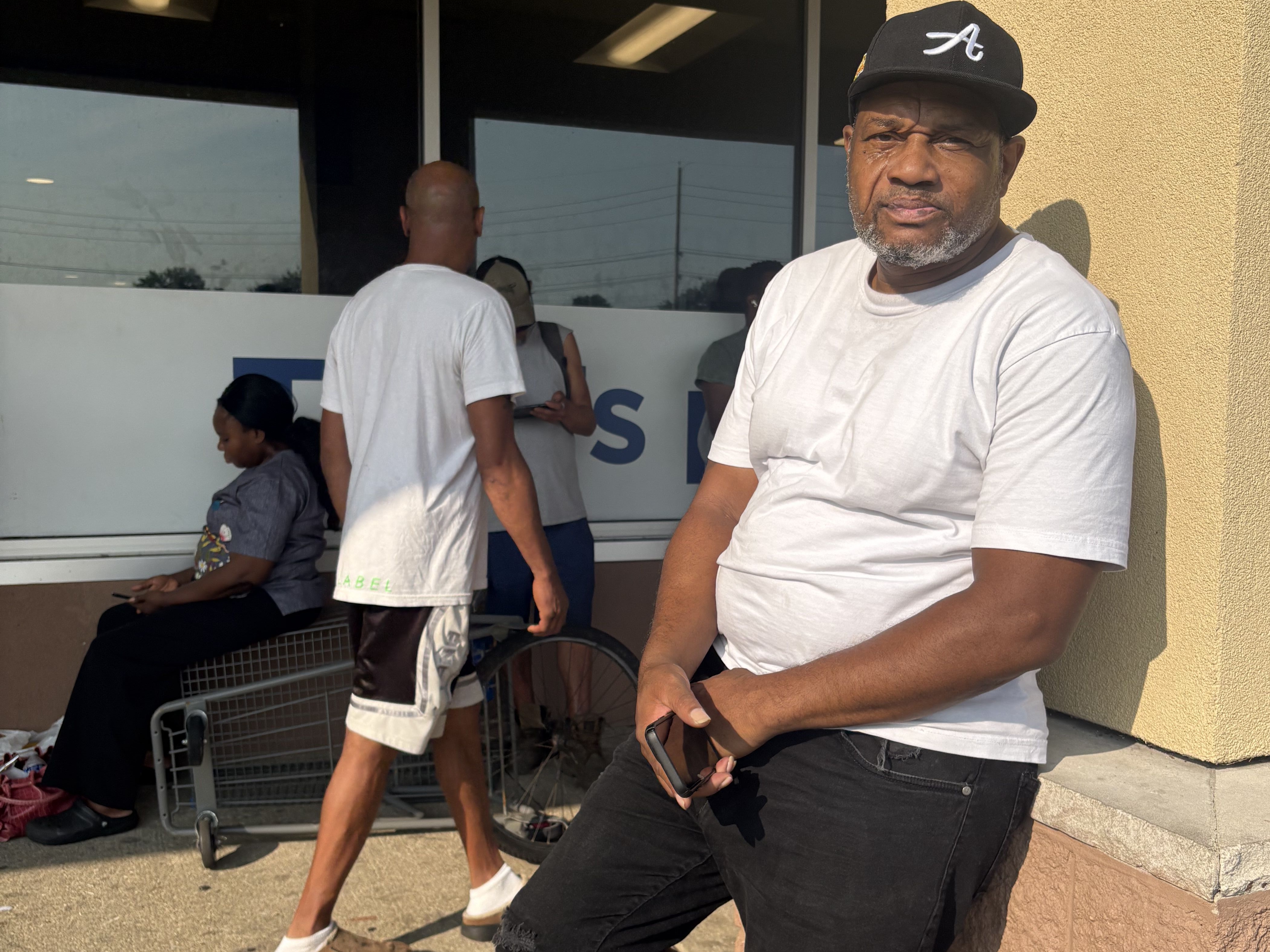
Maleka Evans waited outside Octapharma Plasma in South Jersey at 8:30 on a recent sweltering morning, sweat beading on her face. A dozen other prospective donors had arrived before her, and the line was still growing a half hour before doors opened.
One woman sat on an overturned shopping cart pilfered from the nearby Walmart. Another brought her own folding chair. A man held a bicycle tire, removed to protect his bike from being stolen once he was inside and hooked up to a machine that extracts antibody-rich blood plasma needed for medical treatments.
Every Monday and Friday for the last three years, Evans has trekked to the Audubon strip mall for what she considers her second job. She takes a 45-minute bus ride from her Willingboro home to Camden, then walks another 45 minutes to the donation site with a slogan posted in its window: “When it pays to give hope. That’s plasmagic.”
The 37-year-old single mom has noticed the lines growing in the last year, as others are seeing at donation sites elsewhere in the Philadelphia region and across the nation. The for-profit business is booming as more and more Americans, both poor and middle class, struggle to straddle the gap between stagnant wages and increased living costs.
Evans relies on the $50 that she typically earns for each plasma donation — loaded onto a prepaid debit card — to help with bills that she cannot cover with her $18-per-hour job packing boxes at a warehouse.
“Prices for everything — food, rent, transportation, electricity — are just getting higher and higher,” Evans said. “You have to work two jobs to make ends meet, and you’re still living paycheck to paycheck.”
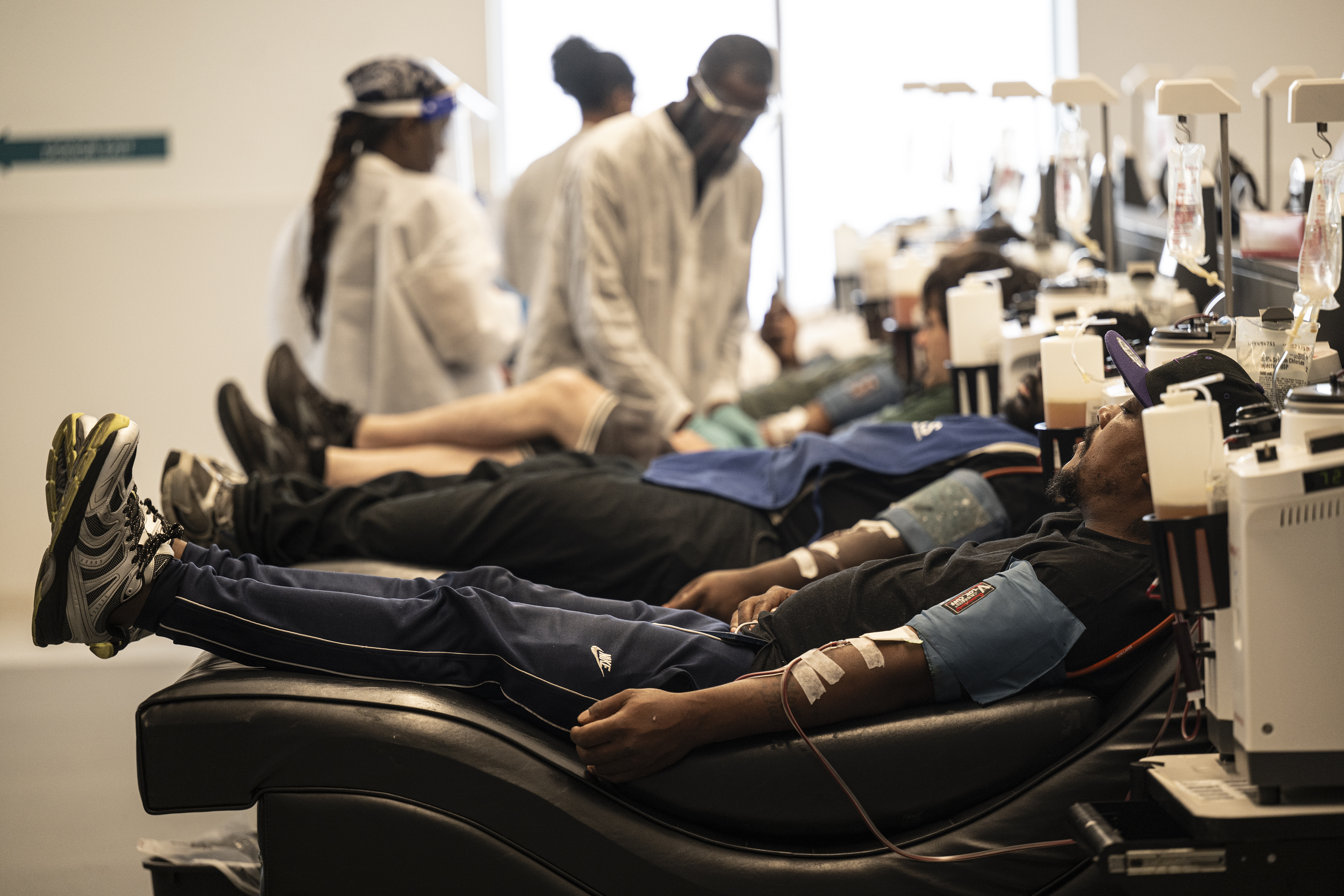
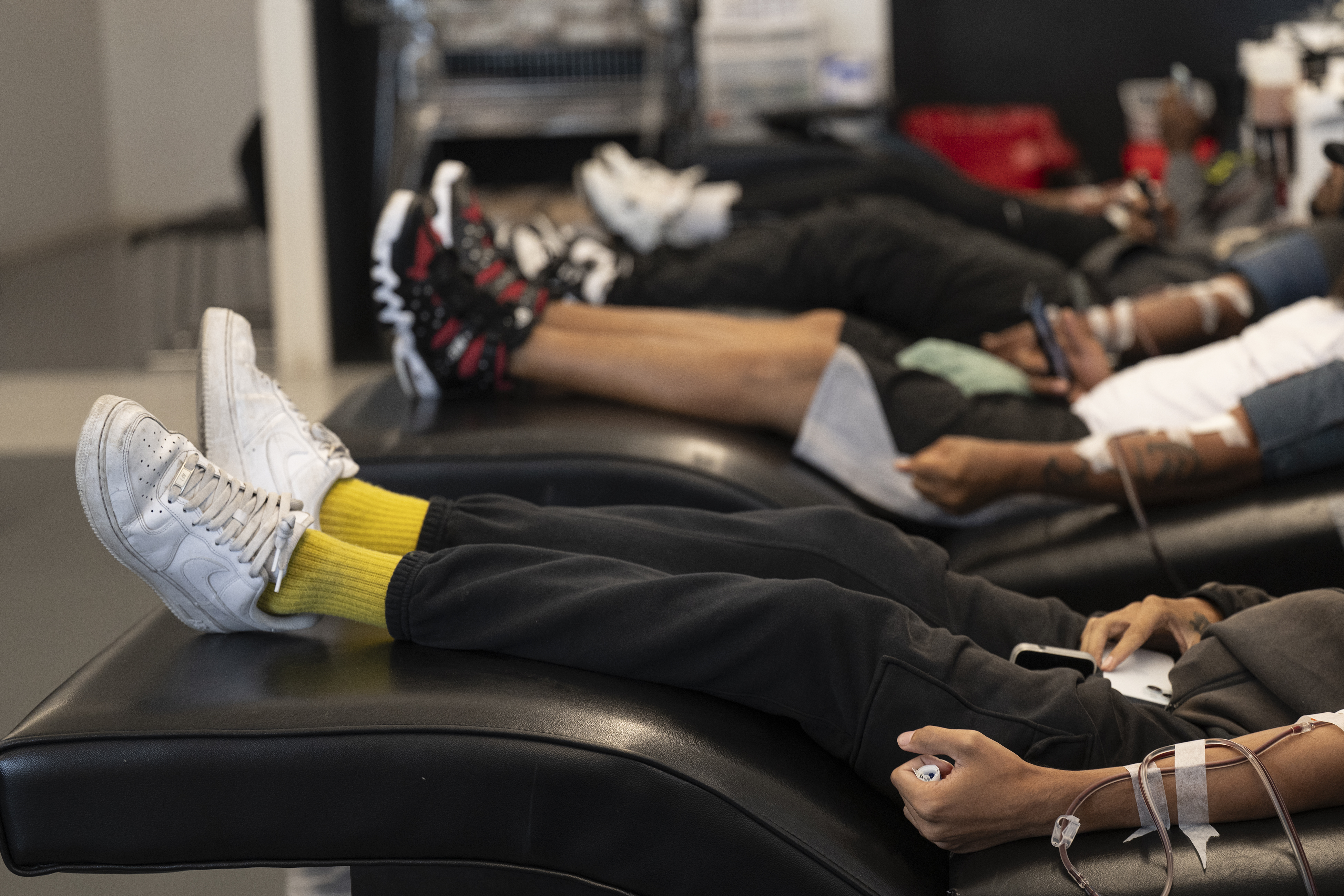
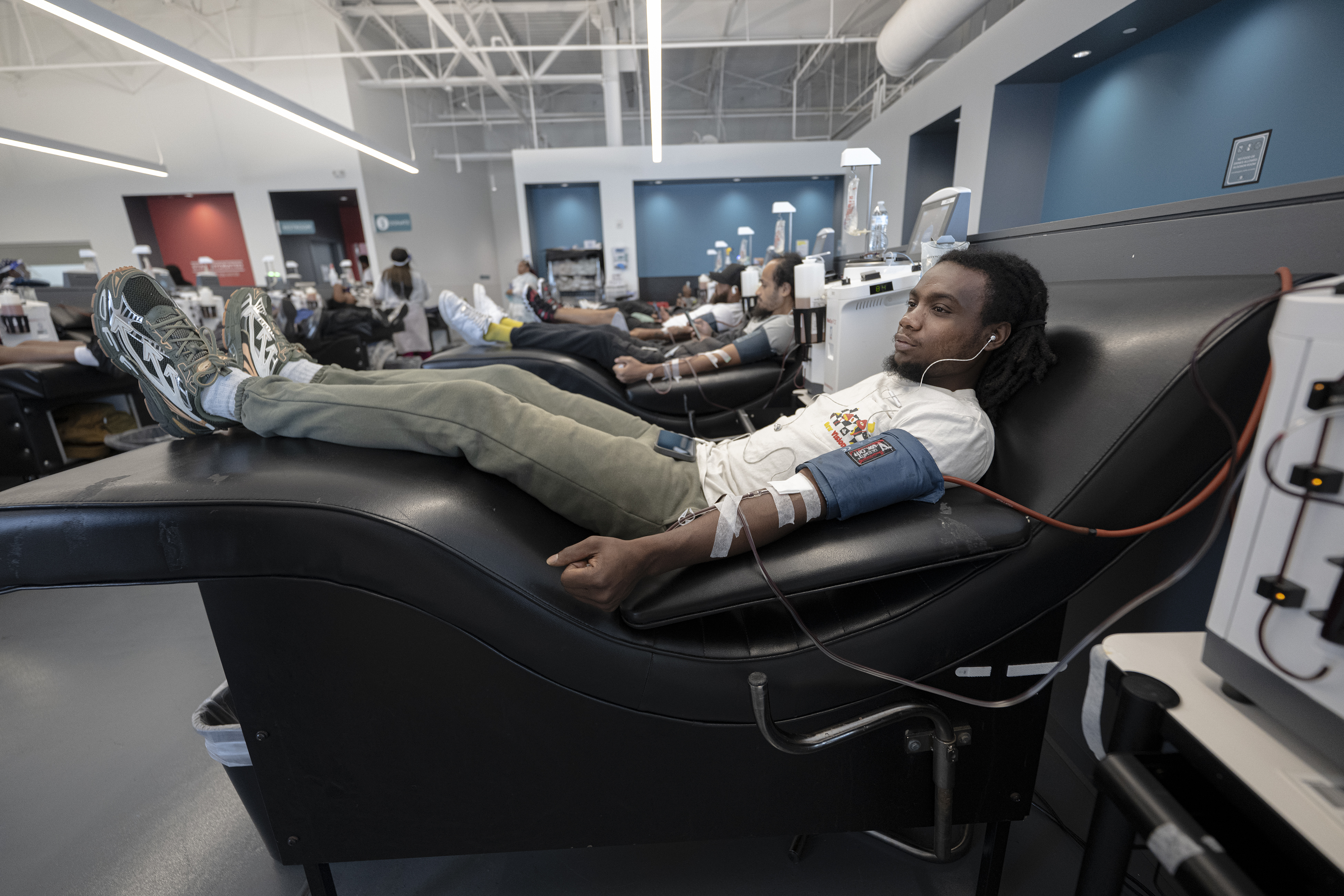
An increasing number of people in the Philadelphia region are selling their blood plasma for money. Here, local donors sit in recliners with needles in their arms at B Positive Plasma in Montgomery County.Jose F. Moreno / Staff Photographer
The U.S is one of about a dozen countries where it is legal to pay donors for plasma. It is among only three countries where people are allowed to donate two times over seven days, though not on back-to-back days, per U.S. Food and Drug Administration regulations.
Nearly 70% of the world’s plasma comes from donors in America, fueling a multibillion-dollar global industry. Plasma, a straw-colored liquid in blood, contains antibodies and other proteins used for treating a wide range of patients with immunodeficiencies, neurological conditions, kidney disease, and bleeding disorders.
Last year, U.S. donors produced 62.5 million liters of plasma — the highest volume ever collected and an 8% increase from the previous year. That trajectory has continued into this year, according to Georgetown University professor Peter Jaworski.
“When the price of most staples goes up, so does the amount of plasma donations,” Jaworski said. “If I fell on hard times, the very first thing I would do is become a regular plasma donor.”
Donating plasma is widely considered low-risk, with millions of people doing it each year without reported health problems. However, the long-term health effects of donating twice weekly for years have not been well-studied. Safety concerns raised by the deaths of two people in Canada who had recently donated at for-profit clinics run by the healthcare company Grifols haveprompted an investigation there.
In the U.S., an FDA investigation into 34 deaths of people who had donated plasma between 2016 and 2020 did not find a link between donations and fatalities.
Some donors experience lightheadedness, fatigue, bruising, bleeding, or dehydration. Drinking water and eating foods high in iron and protein can help alleviate those side effects, according to U.S. health guidance.
Security guard Danny Morales of North Philadelphia said he feels “tired” after donating. But that has not deterred him from heading to CSL Plasma in the city’s Olney neighborhood twice a week, as soon as he finishes his overnight shift at 6 a.m.
Morales can earn $520 a month donating plasma, which helps to offset rising expenses that have the 35-year-old father feeling ever more drained: The cost to fill up his Honda Civic’s gas tank jumped from $30 to $80 in the last year; a package of ground beef increased by $8; and even the brand of mac and cheese that his 8-year-old daughter and 2-year-old son enjoy costs about $1 more, he said.
“It’s just getting worse and worse,” said Morales, whose plasma donations supplement his $18 hourly security job wage. “Stuff is just getting so expensive. Groceries are ridiculous.”
CSL opens at 6 a.m., but a line starts to form around 4:30 a.m. In late July, it snaked past the building, wrapping around the corner. The sight caught the attention of nearby Olney resident Tony Reed.
“There’s always a line there, especially toward the end of the month and definitely on Monday mornings,” Reed said. “People are broke.”
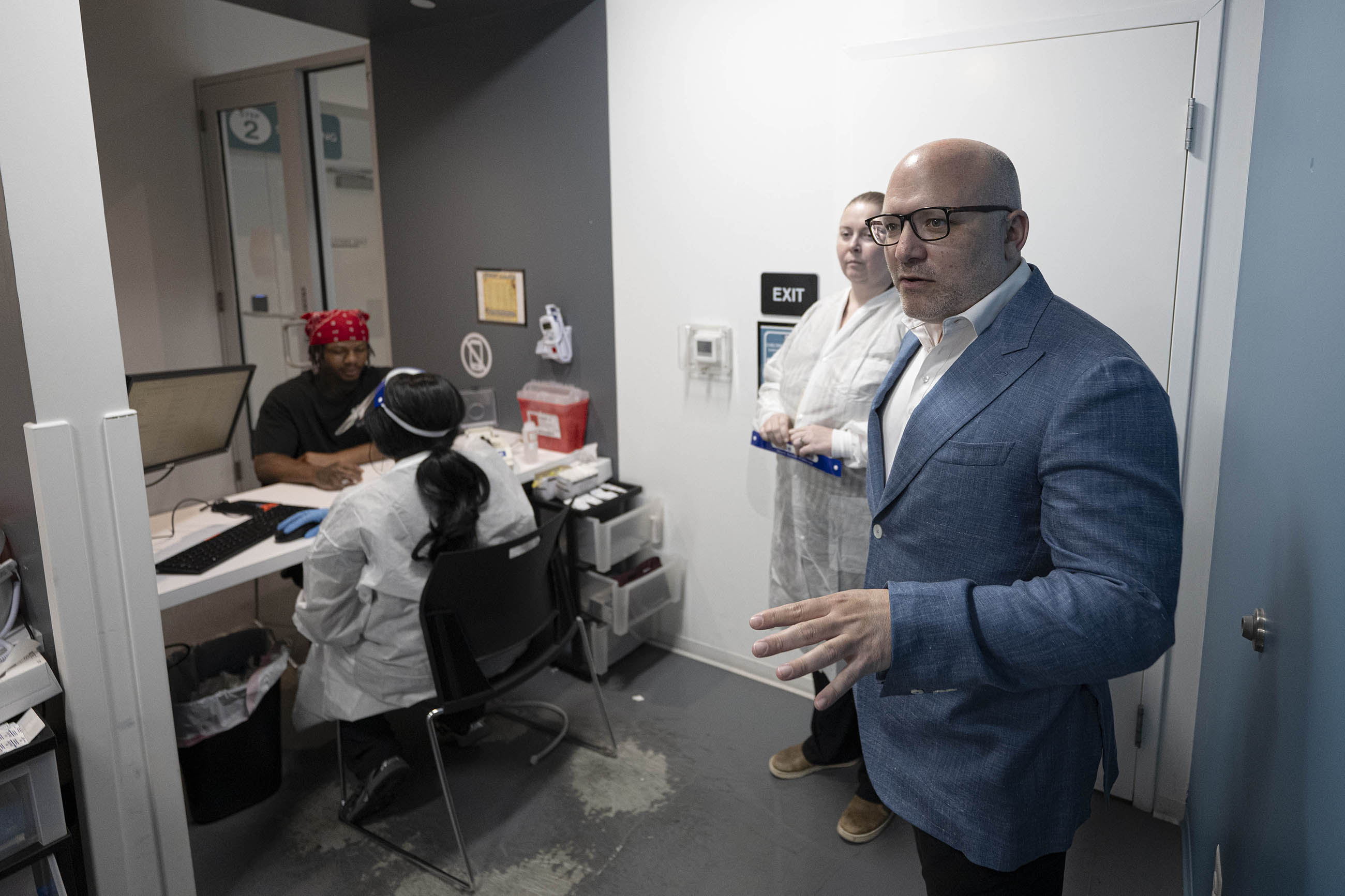
Ben Ruder, CEO and founder of B Positive Plasma, and Pearl Dixon, an assistant manager and phlebotomist, explain the donor intake process. Each donor fills out an extensive health questionnaire, undergoes a medical exam, and gets a finger prick to test their blood for iron and protein levels. Jose F. Moreno / Staff Photographer
Inside the booming industry
On a recent Wednesday afternoon at B Positive Plasma in Montgomery County, a steady stream of donors checked in at kiosks in the lobby.
After filling out an extensive health history questionnaire, each new donor undergoes an on-site medical exam by a licensed practical nurse. Repeat donors must get annual exams. At each visit, a medical tech checks their vitals, including blood pressure, pulse, and temperature, and performs a finger prick to test their blood for protein and iron levels. Donors must weigh at least 110 pounds.
“We make sure they’re healthy and well,” said Ben Ruder, founder and CEO of B Positive Plasma, noting that the plasma itself is tested for HIV and hepatitis B and C before being sold.
Next, plasma donors are hooked up to a machine that draws out blood, spins off the plasma, and then returns the red blood cells back to the donor, a process that typically takes 45 minutes to an hour.
At 2 p.m., 18 of the 24 cushioned recliners at the Wyncote location on Cheltenham Avenue were occupied by donors, each with a needle in one arm. They included a Philadelphia police officer who had donated more than two dozen times since May 2025; a casino cleaner who earns $120 a week donating to support his young daughter; and a home health aide who donates twice a week to help cover his $750 monthly apartment rent.
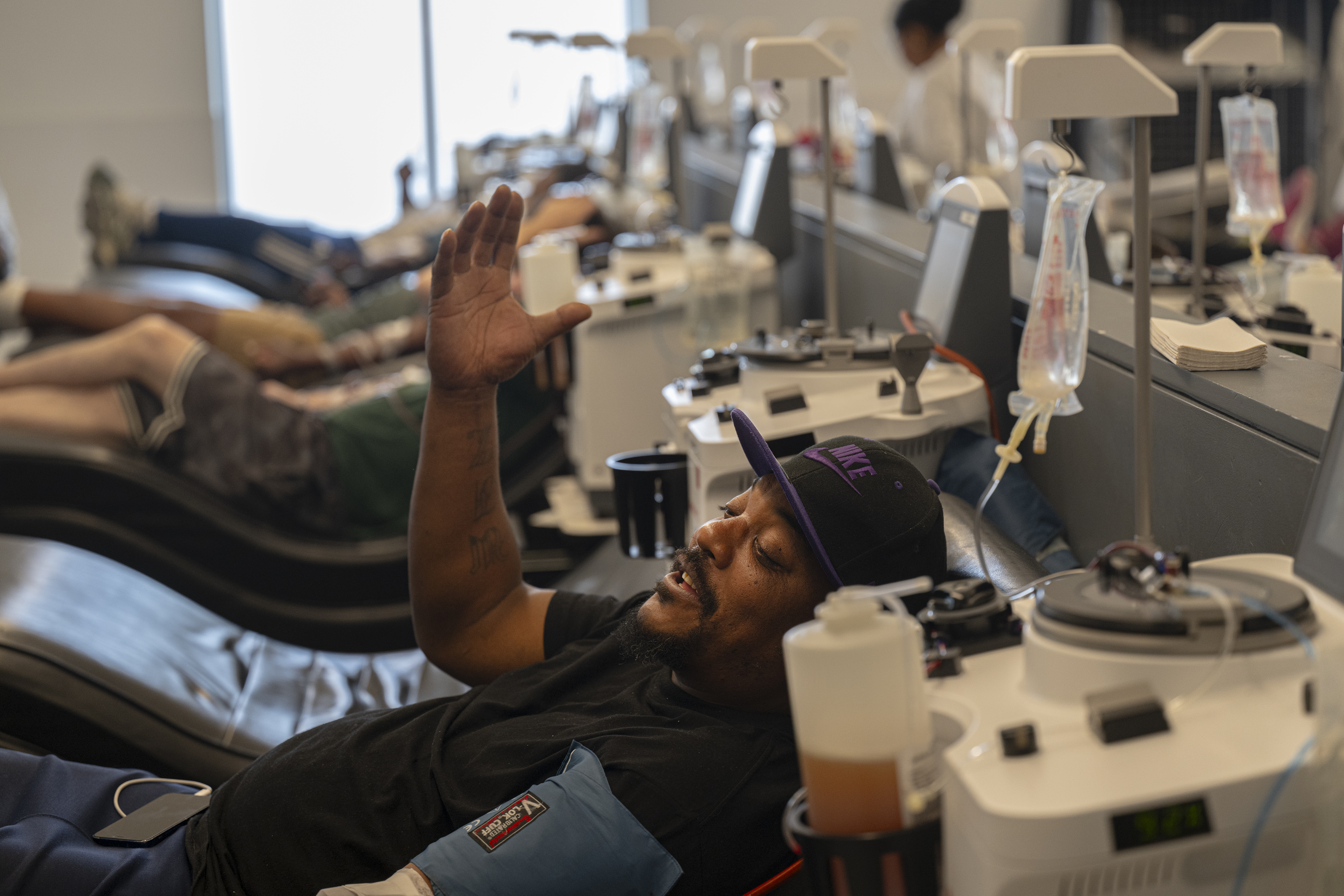
Jason Johnson, 29, of East Mount Airy, has donated plasma 68 times at B Positive Plasma in the past two years. He makes an extra $120 a week donating twice weekly. The money helps supplement the $17.80 an hour he earns as a cleaner at Live! Casino & Hotel Philadelphia. “In the beginning, I was doing it for the extra money, but once I learned that I’m helping people out in their life, it made me want to come back even more,” Johnson said. Jose F. Moreno / Staff Photographer
Plasma donation differs from whole blood donation, a faster process that relies on unpaid volunteers who can donate only once every 56 days in the U.S.
B Positive Plasma is on track to see a record year, with 180,000 donations, peaking this holiday season, when people need extra money for gifts. Last year, the company saw 150,000 donations at about 1 liter per person.
Ruder, 42, who lives in Center City, opened his first plasma donation center in Cherry Hill in 2012 and rapidly expanded to 12 locations in New Jersey, Pennsylvania, and Delaware. He plans to open two more sites in Maryland next year and another in Allentown later this year.
B Positive Plasma, like other plasma companies, structures payments to incentivize twice-weekly donors. For instance, donors whose weight and physical health yield the maximum amount of plasma — 1,001 to 1,200 milliliters — will receive $45 for the first visit and another $90 if they return that same week. Plus, the company offered a $50 bonus for anyone who donated eight times in August.
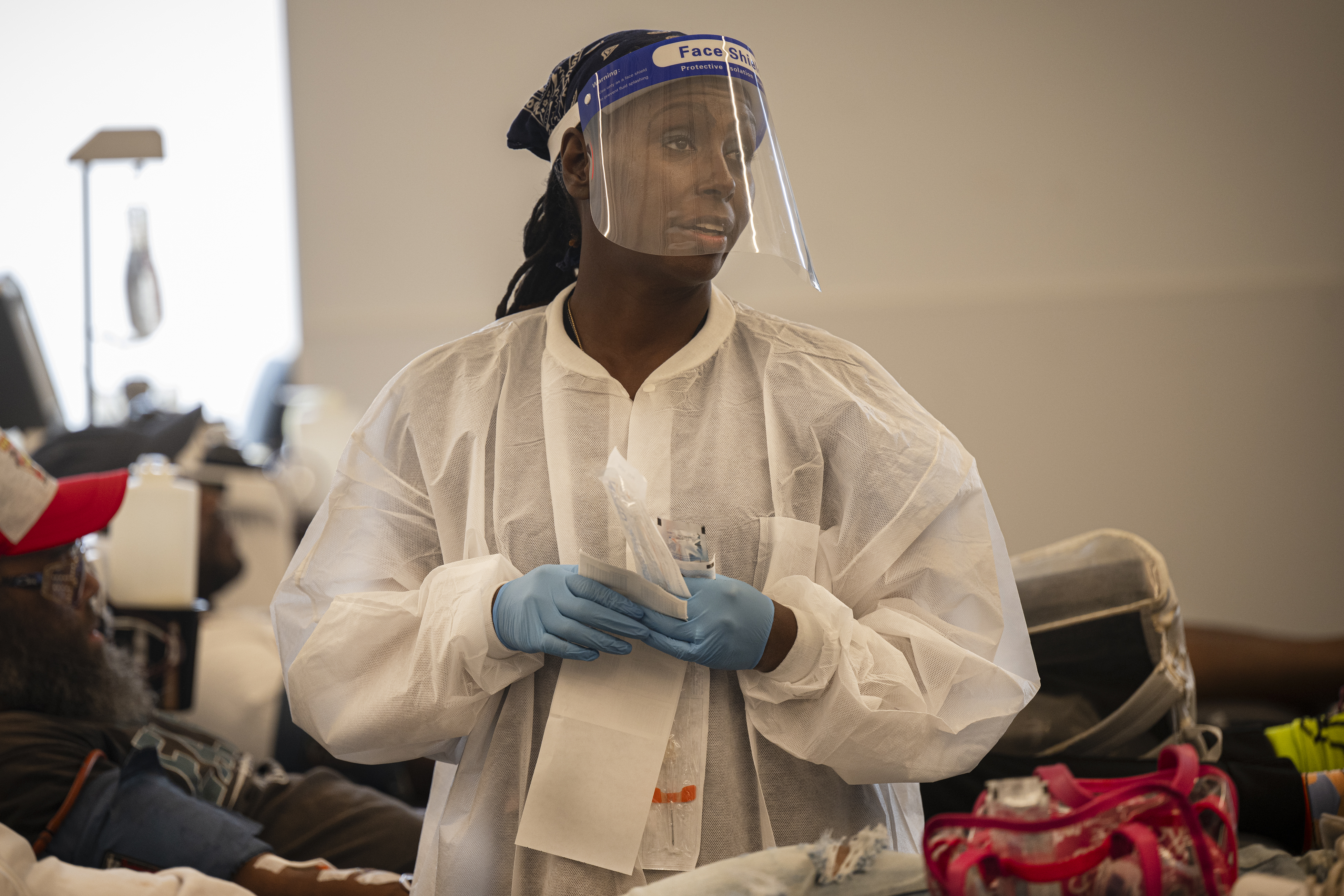
Donyele Wilkins, 48, a phlebotomist and medical assistant, works in the donation room at the B Positive Plasma in Montgomery County. She suffers from lupus, a chronic autoimmune disease for which she receives plasma-derived infusions to control her symptoms.Jose F. Moreno / Staff Photographer
Phlebotomist Donyele Wilkins works 12-hour shifts, four days a week, at B Positive Plasma.
For Wilkins, the paycheck is not the only benefit of working there.
The 48-year-old Northeast Philadelphia resident suffers from lupus, an autoimmune disease in which the body’s immune system attacks its own tissues and organs. Wilkins said she relies on plasma-derived medication, infused through an IV every four to five months, to help control symptoms like inflammation and joint pain.
Knowing how plasma is processed makes her feel “safe,” she said. She also likes getting to know “the regulars” who donate.
“It makes me feel like I know exactly where it’s coming from, and I know the people who are doing it,” Wilkins said. “A lot of them really need the money, so they’re helping me, on top of me helping them.”
‘Blood money’
Paying donors for plasma has sparked ethical debate, with some accusing the industry of exploiting poor people.
In her 2023 book, Blood Money: The Story of Life, Death, and Profit Inside America’s Blood Industry, Kathleen McLaughlin, a Montana-based journalist, found that donors in many U.S. regions are disproportionately Black and brown people.
McLaughlin, who has a rare autoimmune disease treated withmonthly plasma-derived infusions, said today’s rise in donations is “a symptom of our broken economic system.”
While the FDA regulates health safety at plasma centers, the pay rate is set by the companies, McLaughlin found. She thinks donors should be paid more and the amount should be standardized.
“Right now, it’s a capitalist free-market system, where the pricing isn’t transparent,” McLaughlin said. “The profit margins are crazy for these plasma companies, and it’s gamified to make you donate twice a week, every week, in perpetuity.”
Jaworski, the Georgetown University professor, said donors are compensated fairly. A donor whosits for an hour and a half makes “significantly more than” New Jersey’s $15.92 minimum hourly wage and Pennsylvania’s $7.25. Plus, he stressed, donors save “hundreds of thousands of lives.”
Wallace Smith, 45, of Upper Darby, prides himself on making an honest living. He earns $15 an hour as a home health aide. He makes an extra $130 a week selling his blood plasma. The money helps cover cigarettes, rent, and his phone bill. Jose F. Moreno / Staff Photographer
Recently published research suggests that communities can benefit when a new plasma center opens, because fewer young people take out high-interest payday loans and area crime drops, mostly driven by decreases in property and drug-related offenses.
“It helps you from having to do something wrong,” plasma donor Wallace Smith said.
When Smith was in his late 20s, he got arrested for selling drugs. Now 45, he is still struggling to find a job that pays a living wage, he said.
Smith, of Upper Darby, works three days a week, earning $15 an hour, as a home health aide. He earns $130 a week donating plasma, which helps pay for cigarettes, his phone bill, and rent, he said.
Like many donors, Smith said he likes the win-win of earning extra cash and helping patients who depend on plasma.
“They say there’s a job’s out here for everybody, but when you become a person who made mistakes in life, then they look at your background, so there’s only certain jobs you can do,” Smith said as his blood flowed into a spaghetti-thin clear tube at B Positive Plasma.
“With that being said, you don’t go back to your old ways,” he said. “You find better resources like this.”
On a hot August morning, donors line up outside Octapharma Plasma in South Jersey to sell their blood plasma for money. They arrive before the doors open at 9 a.m. to beat the wait. Donor Carl Davis, 56, of Camden, donates every Saturday and Monday, earning $70 each time. The extra money helps supplement his $900 monthly Social Security Income disability check. “I get SSI disability, but it’s not enough at all to pay my bills and buy food,” Davis said.Wendy Ruderman
Beach boardwalk fun
At Octapharma Plasma in South Jersey, the wait time can be as long as three hours, donors said. When a sewer pump broke and bathrooms stopped working earlier this year, the company trucked in a row of porta-potties to accommodate donors and staff.
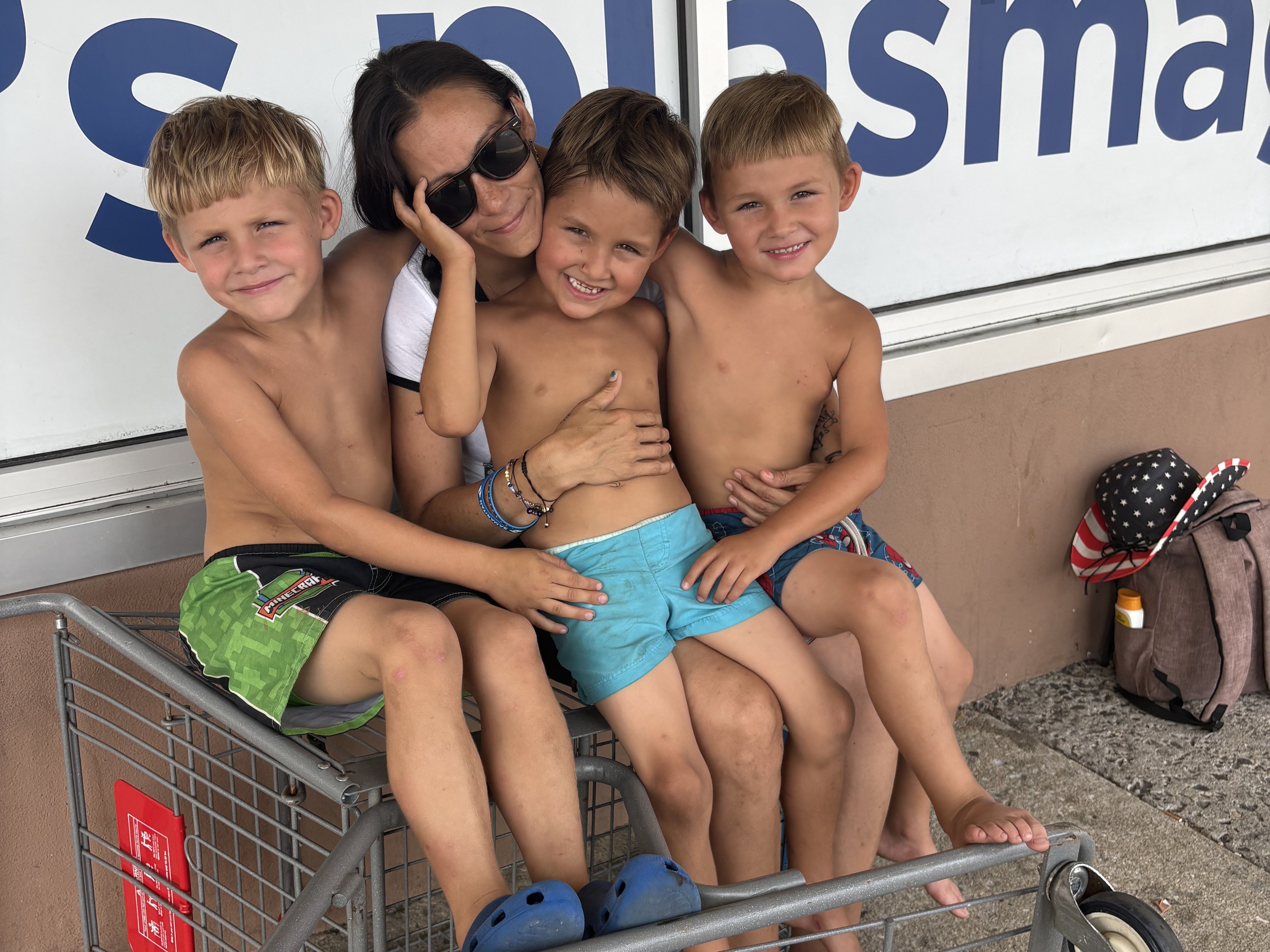
On a recent August morning, Brittany Barr, 36, and her three sons — 5-year-old twins and a 6-year-old — waited outside Octapharma as her husband donated. The family had walked roughly two miles from their Gloucester City home.
When Barr learned her friend had kidney failure and needed plasma infusions, she wanted to help. Barr was unable to donate plasma because she is anemic, so her husband agreed to do it.
In the month since Barr’s husband started donating, the family has earned more than $500. It has helped with groceries and their phone bills to supplement her husband’s income as a shipping manager.
“With only one income, money is tight these days,” Barr said. “Everything is messed up.”
The boys, clad in their bathing suits, climbed up on Barr as she sat on a tipped-over shopping cart. They were headed next to Atlantic City for a beach day.
“This week, the money is going toward fun. They’re going to play arcades and have ice cream or whatever their little hearts desire,” Barr said. “Next week, it’s going to school supplies.”
Brittany Barr, 36, seated with her boys (from left) Cooper, Cannon, and Colton, waits outside for her husband to finish donating plasma at Octapharma Plasma in Audubon, N.J. The family from Gloucester City was next headed down the Shore, where they planned to spend the extra money earned from donating plasma on arcade games and ice cream.Wendy Ruderman / Staff
Welcome America Inc., the nonprofit behind Philly’s Wawa Welcome America festival, has named Philly public relations executive Nicole Cashman as its interim CEO.
The founder and CEO of communications firm Cashman & Associates, Cashman will follow Michael DelBene, who served as CEO since 2019 and grew the July Fourth festival and other large-scale events to new heights and a wider audience. DelBene left the organization earlier this year.
Cashman & Associates has worked with Welcome America Inc. for 25 years as its marketing and communications arm. This long-standing relationship and intimate knowledge of the organization led to the decision to name Cashman as the new CEO, officials said.
“Nicole has spent her career helping tell Philadelphia’s story and bringing people together around the experiences that make our city extraordinary,” said Mayor Cherelle L. Parker, who chairs the Welcome America board of directors. “Nicole understands the important role Welcome America plays in our city, creating moments that bring together our communities, welcome visitors, and showcase Philadelphia on a national and international stage.”
Fireworks over the Philadelphia Museum of Art and the statue of George Washington at Eakins Oval during the Wawa Welcome America Festival on July 4, 2023 following a free concert featuring Demi Lovato and Ludacris on the Benjamin Franklin Parkway.
Cashman founded her agency in 2001 and has accumulated a portfolio of some of the city’s high-profile agencies and events, including Comcast, Adventure Aquarium, and Philabundance. She has also served in leadership roles at Atlantic City Alliance and Visit Philadelphia.
The PR exec will join Welcome America as it transitions between CEOs and prepares for the coming year’s slate of celebrated civic events and cultural experiences. Welcome America is a public-private partnership that receives city and state funding as well as corporate sponsorships. Parker and City Councilmember Mark Squilla are board members.
“I have had the privilege of working alongside Welcome America for 25 years and have seen firsthand the extraordinary impact this organization has on Philadelphia and the region,” Cashman said. “… Welcome America means a great deal to me, and I’m excited to help guide it through this next chapter as we reimagine the organization for 2027 and beyond.”
Welcome America will look for a permanent CEO, Cashman said, as she will not fill the position long term, just during the period between DelBene and the nonprofit’s next executive leader.
“Michael set the bar high. He was great to work with and I have enormous respect for what he accomplished — I want to build on that success,” Cashman said.
Cashman could not say who would run 2027’s Fourth of July concert but did say Welcome America would surely be a part of the 16-day festival thrown each year.
Besides the Fourth of July festival, Welcome America also oversees the city’s official holiday tree in Dilworth Plaza. The 55-foot concolor firs, planted decades ago and brought into Philly each December, serve as a meeting place for holiday shopping and traditions, amid the Christmas Village and other attractions scattered around City Hall.
This holiday celebration is what Cashman and Welcome America are moving full steam ahead on, with planning already underway, she said.
“We know how important this level of programming around the holidays is to the city, our partners, the public, and visitors,” Cashman said. “So I’m really focusing on finalizing those plans, and that is our primary focus for the remainder of 2026.”
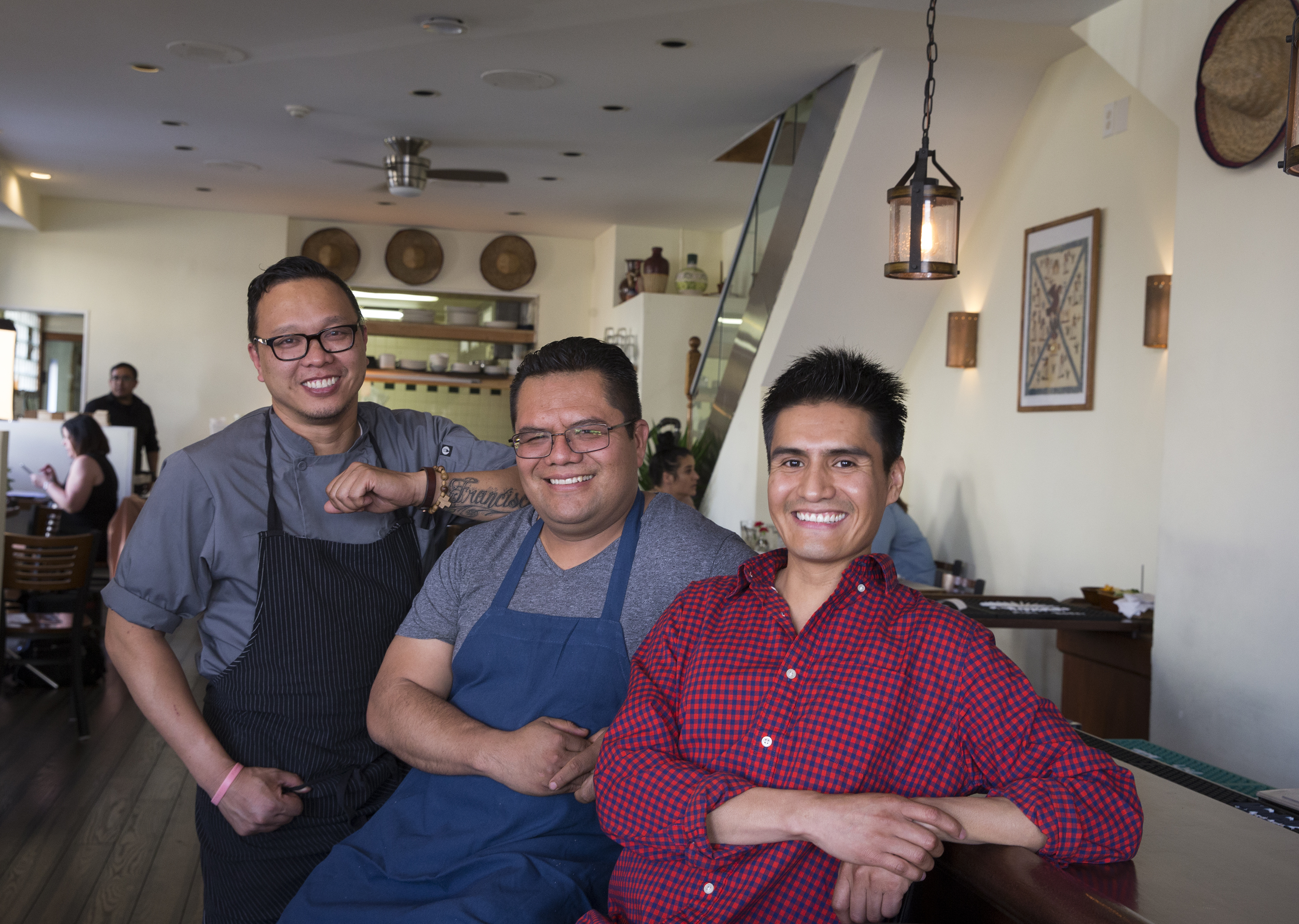
The owners of two Port Richmond restaurants plan to open a moderately upscale Mexican restaurant in Old City, banking in part on the impact of the forthcoming Park at Penn’s Landing, which will cap I-95 and — they hope — send crowds to their doorstep.
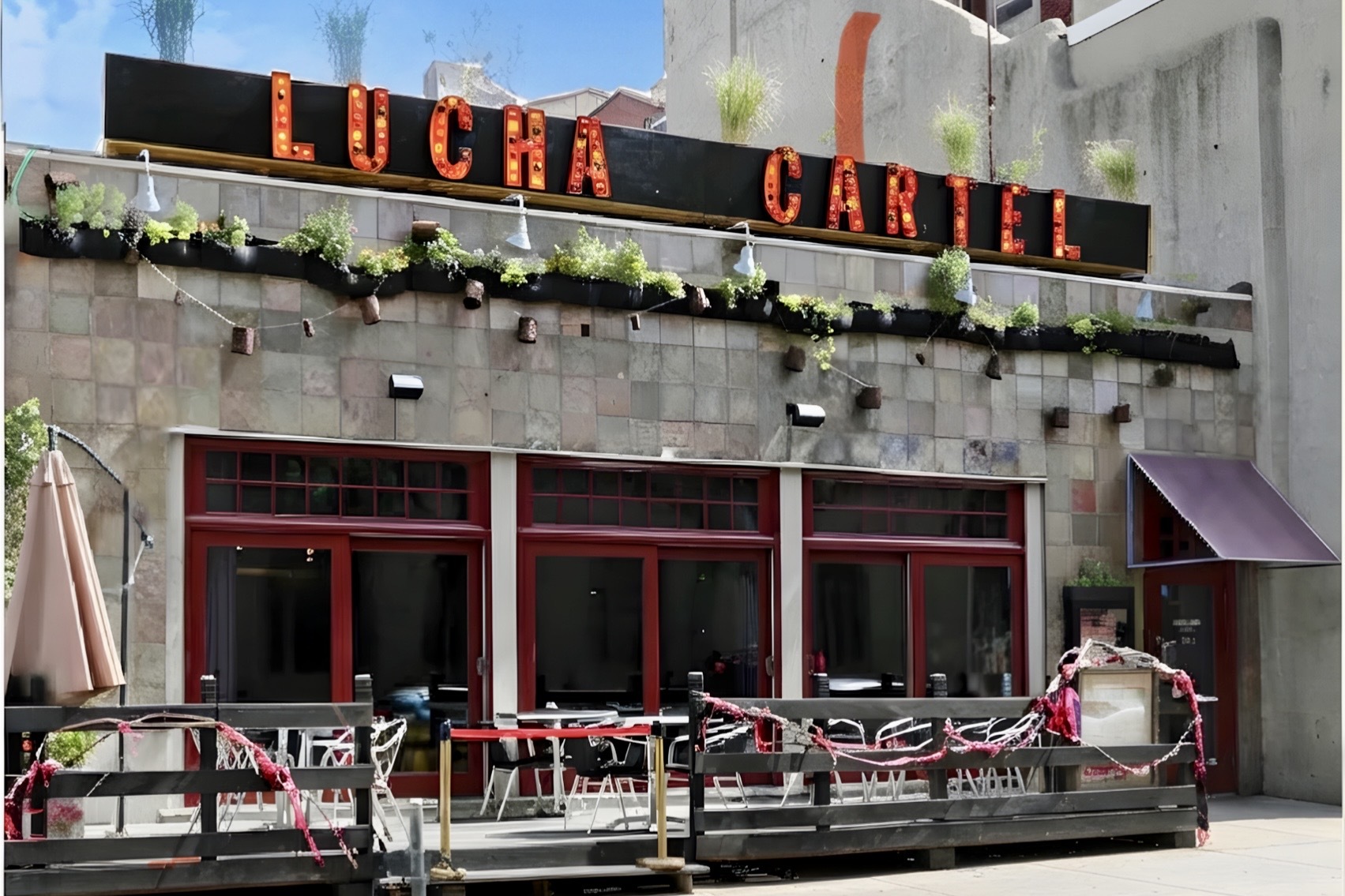
“It was an opportunity, and we decided to take a chance,” said chef Jesus García, a former executive chef at Lucha Cartel, which occupied the building at 207 Chestnut St. from 2013 until it closed last year. It was Philadelphia Fish & Co. from 1983 to 2009.
Chef Jesus Garcia (center) and Alejandro Fuentes (right) with Jasper Alivia at their restaurant Nemi in 2019. Charles Fox / Staff Photographer
García and Alejandro Fuentes, his partner in the Mexican restaurant Nemi and the cross-cultural La Roma, bought the property this week and plan to open a yet-to-be-named Mexican restaurant similar to Nemi, which Inquirer critic Craig LaBan has praised, particularly for its creative tacos.
Fuentes and García opened Nemi at Ann and Thompson Streets in 2018, and followed in 2022 with La Roma at Allegheny Avenue and Mercer Street, where the menu crosses Mexican, Italian, and other influences.
Their new restaurant will enter a pocket of Old City that already has several Mexican restaurants. La Catrachita Taqueria opened next door in May. Across Second Street, Buena Vista Mexican Restaurant & Bar opened last summer at 123 Chestnut St., while South Street’s Las Bugambilias moved to 15 S. Third St. in 2021.
Fuentes and García’s purchase of 207 Chestnut marks the end of a saga that had entangled the property in competing efforts to resurrect the name of Tun Tavern, considered the birthplace of the U.S. Marine Corps.
Montgomery Dahm, the Marine veteran who has operated a Tun Tavern in Atlantic City since 1998 and owns the trademark to the name, moved into Old City amid a trademark fight with the nonprofit Tun Legacy Foundation, which was planning its own historically accurate re-creation of Tun Tavern nearby.
In September, Dahm announced an agreement to take over Lucha Cartel at 207 Chestnut, about 400 feet from the foundation’s proposed site around the corner on Second Street. He told The Inquirer that he intended to spend $2.5 million to $3 million to turn the property into a Tun Tavern.
In November, Dahm added bunting and lightly renovated the restaurant for a party commemorating the Marine Corps’ 250th anniversary. Less than three months later, in February, Dahm and the foundation settled their trademark dispute. Dahm subsequently decided not to proceed with the Tun Tavern at 207 Chestnut, leaving the property available.
Billy Creagh of National Realty Commercial brokered the sale, whose terms were not immediately disclosed.
Fuentes and García’s timing coincides with one of the largest public-space projects in the city’s recent history. The Park at Penn’s Landing, being built over I-95 and Columbus Boulevard between Chestnut and Walnut Streets, will reconnect portions of Old City and Society Hill with the Delaware River waterfront for the first time since the 1970s. The project, anticipated to be completed in 2029, is expected to create nearly 12 acres of parkland and dramatically change the pedestrian approach to the waterfront.
For 207 Chestnut, the significance is geographic: The restaurant will sit only a few blocks from the new park, along one of the principal east-west streets connecting Center City and Old City with Penn’s Landing.
The Old City project will put Fuentes and García in a considerably different restaurant market from Port Richmond, with heavier tourist traffic, historic attractions, nightlife, and increasing competition for Mexican food.
“I think it’s a great neighborhood, even if sometimes it has some ups and downs,” Fuentes said. “But there are a lot of local customers, and there are also a lot of tourists who visit Old City.”