Winds whipped as a team from PolyGone Systems demonstrated what they and their Atlantic County partners say is the world’s first permanent installation of a machine designed to intercept microplastics at wastewater treatment plants.
In this case, they trap the particles before they reach the ocean.
Windmills, driven by those same winds, towered over the team’s stainless steel pod perched at the edge of the Atlantic County Utilities Authority’s (ACUA) wastewater treatment plant in Atlantic City.
Inside the chamber, known as a PolyPod, manifolds clutching specialized filters dropped into water below, attracting microplastics before they are released into the nearby Atlantic Ocean.
“Underneath that very simple, sleek design, there’s layers of engineering work,” said Yidian Liu, one of PolyGone’s founders.
The ACUA was a pioneer with its land-based windmills installed two decades ago to generate power.
The authority believes it is at the forefront again by installing the microplastics removal system in partnership with PolyGone Systems, which was founded in 2021 by Princeton University graduates Liu and Nathaniel Banks.
From pilot to program
Matthew DeNafo, president of the ACUA, said PolyGone had sent letters several years ago to treatment facilities about what it was trying to accomplish.
The ACUA was one of the only organizations that responded positively, and it began a pilot project with PolyGone in 2024.
That pilot project captured 580 million plastic particles a year from a facility that processes 40 million gallons of water per day, according to the ACUA.
Tuesday marked the announcement that the pilot had moved into a full-time operation.
The ACUAsays the system will safeguard water quality for over 200,000 residents, beach visitors, and marine ecosystems along the New Jersey coast.
Electric-generating windmills loom over churning waters of the Atlantic County Utility Authority’s wastewater treatment facility in Atlantic City.Frank Kummer
Simple design
DeNafo praised the unit’s simplicity.
“This is really a self-contained unit passive where we’re not having to pump anything,” DeNafo said. “We’re not having to worry about a lot of moving parts.”
The PolyPod is an enclosed filtration system built with silicone-carbon filters that attract microplastics — less than a grain of rice long — before they can make their way into the nearby Atlantic Ocean.
The project was funded by a $2 million loan with principal forgiveness from the New Jersey Infrastructure Bank to improve water quality.
The pod’s minimalist design stands out against the large concrete building and open tanks that filter out other contaminants and treat the water with chlorine.
It represents the final filtering before treated wastewater is released into a holding pond before eventually being released into the ocean.
Yueyu Yao, lead scientist for PolyGone, said the filters are silicone-based. They are designed to attract microplastics, unlike filters using carbon, mesh, or sand.
“That’s how we’re able to get the smallest microplastics,” Yao said.
She said the filters are capable of capturing 98% of microplastics, but the team will monitor the ACUA project to see what it captures.
How it works
Ariel Blumenberg, an electrical engineer at PolyGone, explained that the PolyPod works essentially like this:
The automated unit, housed in weatherproof-stainless steel, sits directly over water flowing from the treatment facility into the holding pond, without requiring complex piping.
Water flows naturally through the system, as a four-layer manifold drops the filter down into the wastewater flow.
The silicone filters capture nano- and microplastics ranging from submillimeter in length up to about 5 mm, or the size of a grain of rice.
An automated winch hoists up the filter once a day, or more frequently during storms for cleaning.
Jets from a high-pressure wash dislodge trapped plastics. An evaporation unit reduces the extracted plastics so they can be safely incinerated or recycled.
The filter, which needs to be replaced about once per year, is then redeployed back into the channel.
“All this is done right here from this handy operator panel,” he said, motioning to a digital screen.
The unit is built to last about 10 to 15 years.
Doug O’Malley, director of the nonprofit advocacy group Environment New Jersey, was on hand to watch Tuesday’s demonstration, as were officials from various other utility authorities.
“Every water department in the region, including the Philadelphia Water Department, should look at what PolyGone has done and figure out how to scale it,” O’Malley said.
Halloween is still more than a week away, but another holiday season has already begun at an old Best Buy outlet in Marlton.
That’s where the Philadelphia region’s first Spirit Christmas store has opened to eager shoppers who want to get their hands on Santa costumes, Rudolph inflatables, or Frosty animatronics.
Next month, the Egg Harbor-based Spirit — which also operates the popular Spirit Halloween stores — is set to open two more Christmas locations: one in a former Joann fabrics store at the Marple Crossroads shopping center in Springfield, Delaware County, and another in an old Bed Bath & Beyond at the Hamilton Commons in Hamilton, Atlantic County, just off the Atlantic City Expressway.
All Joann and Bed Bath & Beyond stores closed in recent years amid the companies’ bankruptcies. Bed Bath & Beyond has since been acquired by Overstock.com, which added Bed Bath & Beyond products to 98 locations of the Container Store, including Cherry Hill and King of Prussia.
The first Spirit Christmas pop-ups opened in 2024. At the time, the company converted 10 Spirit Halloween stores to Spirit Christmas locations and reopened them as the new concepts in mid-November. The first round of Spirit Christmas stores included locations in Marlton and Mays Landing.
“The holidays are so much more than what’s under the tree,” Kym Sarkos, executive vice president of Spirit, said in a statement. “They’re about the traditions families return to year after year and the magic of creating new ones. Spirit Christmas was created to celebrate that feeling.”
By expanding its focus on Christmas stores, Spirit is cashing in on the most lucrative season. U.S. consumers are expected to spend more than $1 trillion this November and December, which would be a 4.2% increase from the same period last year, according to the National Retail Federation, the country’s largest retail trade group.
Democratic Sen. Cory Booker took to the stage Thursday for a debate with Justin Murphy, the South Jersey Republican mounting a long shot campaign to unseat the well-funded incumbent.
As of June 30, Booker raised more than $33 million while Murphy raised just over $27,000.
There are nearly 865,000 more Democrats than Republicans in New Jersey. The state’s electorate, as of June, includes 38% Democrats, 35% unaffiliated voters, and 25% Republicans.
The debate, which was hosted by the New Jersey Globe and Rider University and broadcast nationally by C-SPAN, lasted about one hour.
The moderators focused much of their questions onTrump’s policies.Booker criticized congressional Republicans, who he said have “enabled” the president. Murphy, on the other hand, praised the current economy — a stark contrast to Democrats’ messaging this campaign season.
The two candidates were mostly civil, shaking hands and posing for a photo before getting started. Booker, who is bald, made a couple of jokes about Murphy’s voluminous head of hair.
The most raucous part of the debate was when audience members erupted during both Booker and Murphy’s remarks about the state’s sanctuary policy for immigrants.
Here are the highlights.
Sen. Cory Booker, left, and his South Jersey Republican challenger Justin Murphy, shaking hands on the debate stage Thursday night.Pete Borg / Rider University
Focus on Trump: His cabinet, Iran, and the Epstein files
Murphy supports Trump but said he’s not a “blind rubber stamp.” He admitted he is not well-versed on Trump’s cabinet picks or the Epstein files.
When asked about Trump’s cabinet members, the Republican said he trusts the president’s judgement but that he doesn’t know enough about them.
“I don’t know about their backgrounds. I couldn’t name them all for you right now,” he said.
“You’ve gotta be honest,” he added.
The Republican also said his knowledge is limited on the Jeffrey Epstein files, in which Trump is referenced thousands of times. Trump lobbied against releasing them to the public until it was clear he didn’t have enough support from his own party. Murphy said he supports the law that required the files to be released with redactions and exceptions — and supports an overall increase in transparency around them.
Booker had fierce criticism of the president on both subjects.
The incumbent said he voted for some of Trump’s appointees for his first term but the second time around, “something happened where it suddenly seemed like the standard he was creating for a cabinet position was loyalty to him.”
He said the Trump administration’s handling of the Epstein files was an example of Trump’s White House working to protect the president from valid inquiries “and as a sword to go after anybody that criticizes him.”
As for the Iran war, Murphy defended Trump but also said the president should wrap it up.
“Mr. President, put your cowboy hat on and get out there, and kick some … and get this done and done right,” he said to cheers from supporters.
Booker responded that Murphy’s attitude is precisely the problem, calling it a “false bravado.”
“We do not need yahoo policy,” Booker said. “We need sound people that use military force as a last resort, who know the power of diplomacy, who don’t insult your enemies and threaten to invade Canada and Greenland, but pull our allies together.”
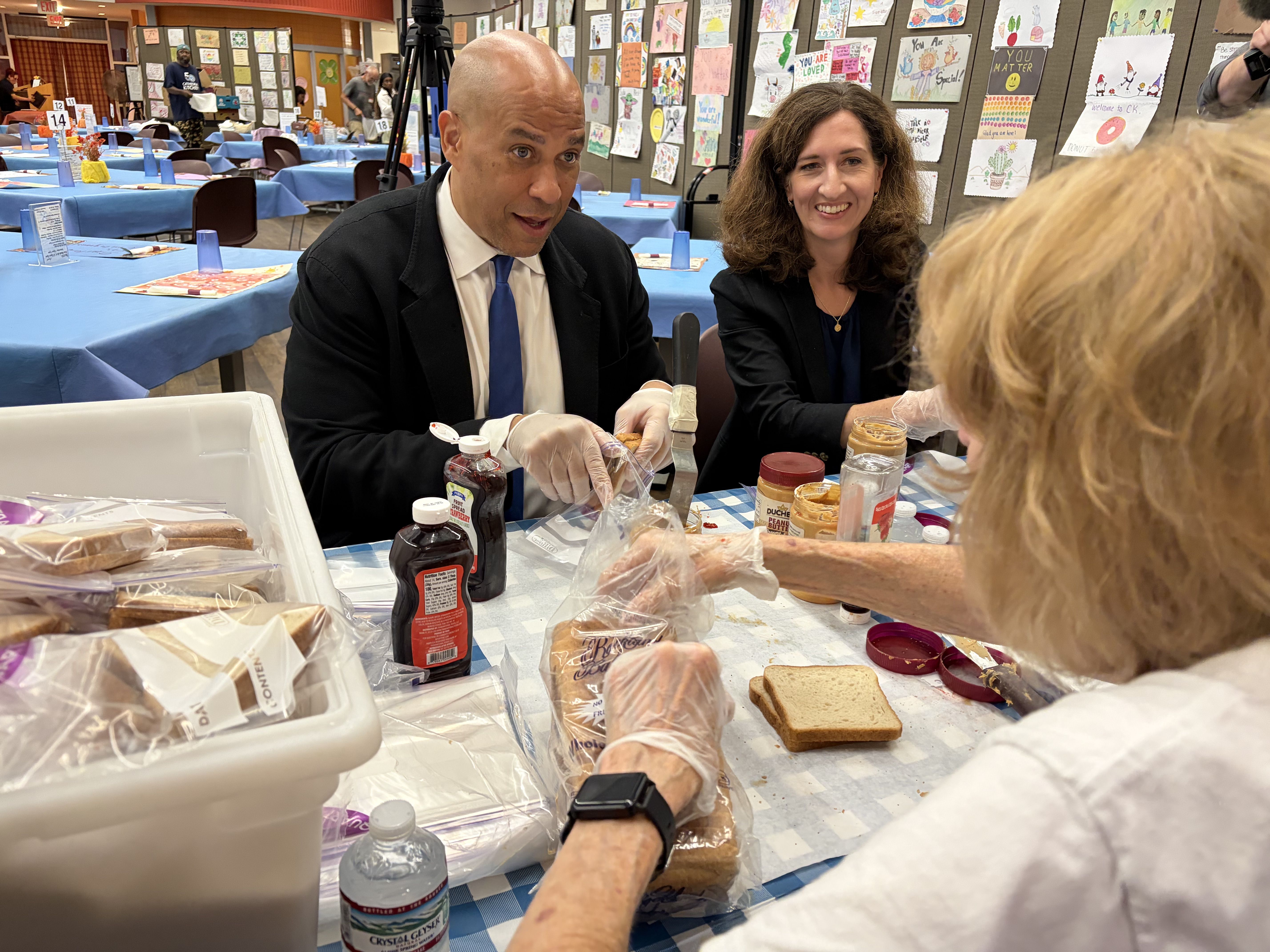
Sen. Cory Booker sits with volunteers at Cathedral Kitchen in Camden on Thursday, Aug. 27.Aliya Schneider / Staff
Housing policies
Sahmya Smith, a Rowan student and Passaic County voter, asked the candidates how they would address the racial wealth gap in New Jersey driven by home ownership disparities.
Booker touted bipartisan housing efforts including a new housing law and opportunity zones, the second of which he said resulted in affordable housing construction in Atlantic City.
“For me, as a guy who was the mayor of Newark, New Jersey, a majority minority city, we were able to double the production of affordable housing during the last housing recession we had in 2008, 2009, it’s something that I feel is really urgent right now,” he said.
He said that Trump’s trade war with Canada is driving up building costs.
Murphy said the best way towards home ownership “is being gainfully employed with low interest rates.” He said the Republican Party is providing the opportunity for the American Dream and that the country, referencing statistics from the Census Bureau that found that the median household income reached a historic high in 2025 since tracking began in 1967 and the poverty rate is the lowest it has been since tracking began in the 1960s.
That being said, the bureau also found that income inequality remained high, and the supplemental poverty measure — which considers non-cash benefits like food aid and household expenses — reached an all time low in 2021 under former President Joe Biden, AP reported.
“We continue to empower people through economic empowerment and betterment,” Murphy said, citing tax relief on tips, overtime, and Social Security benefits. He also noted that there should be more housing supply.
Candidate Justin Murphy, in the suit, at a Pinelands Republican Club event on Jan. 29, 2025.Aliya Schneider / Staff
Sanctuary state
New Jersey’s Immigrant Trust Directive, known as the state’s sanctuary policy, limits state law enforcement’s cooperation with federal immigration officers. Booker said the policy made immigrants feel more comfortable contacting law enforcement to report crimes, but that people feel unsafe again because of ICE immigration sweeps directed by Trump.
“My first priority is keeping New Jersey towns, municipalities, and cities safe, and to do that, I believe the policies of our state are good in keeping bright lines between what is a federal responsibility and what is a county and state and local responsibility,” he said.
Someone off camera shouted that they had to “butt in” and verbal chaos erupted with shouts from the audience.
Murphy said sanctuary policies “are a magnet for criminal illegal aliens,” even though “not every illegal alien is in this country to do us harm.”
“Sanctuary jurisdictions are a problem. They incentivize illegal immigration, and I don’t believe they help our state stay safe,” he added.
As he elaborated on his stance, another interruption erupted from the audience. Murphy responded by saying his position is “not xenophobia.”
Murphy recently received heat from Democrats for comments he made at an August town hall hosted by the Morris County GOP, saying “Islam creates a problem” in response to a question that mentioned a “big Muslim problem.”
Booker at the time called Murphy’s remarks “vile.” Murphy told Politico he intended to reference “radical Islam” and not all Muslims.
Louis F. Rose, 84, of Bala Cynwyd, retired award-winning periodontist, innovative physician and researcher, former clinical professor of periodontics at the University of Pennsylvania School of Dental Medicine, onetime chief of the Division of Dental Medicine and Surgery at the old Medical College of Pennsylvania, mentor, author, and Frank Sinatra superfan, died Wednesday, Sept. 30, of neurological disease at Sunrise of Haverford assisted living center.
Dr. Rose earned a degree in dental surgery at the Temple University School of Dentistry in 1968 and a medical degree from the Medical College of Pennsylvania, now part of the Drexel University College of Medicine, in 1972. He completed his graduate training in periodontics at Penn in 1970 and used his extraordinary dual dental and medical training to study how gum disease may affect diabetes, heart disease, premature birth, and other disorders that previously had not been linked to poor dental health.
That convergence of dental and medical research and care became so effective and pervasive that the American Academy of Periodontology and others endorsed Dr. Rose’s recommendations, and he developed and directed a groundbreaking program at Penn that placed dental and medical students in the same classes.
Steven G. Gabbe, former dean of the Vanderbilt University School of Medicine, taught a class he called the “Lou Rose Course.” Dr. Rose also pioneered the development of tooth implants, laser dental surgery, and improved safety procedures.
“He influenced generations of dentists and physicians,” his family said in a tribute.
He also taught at Harvard and New York Universities, and was a professor of medicine and surgery at Drexel University College of Medicine. He lectured to colleagues, students, and the public about healthcare issues across the United States and in Europe, Asia, the Middle East, South America, Africa, Australia, Canada, and Mexico.
He operated a private practice on South Broad Street in Philadelphia and counted socialite Grace Kelly as one of his patients. Friends praised his “friendly smile and kind words” and “confidence and strength” in online tributes. One said: “Such a brilliant man who lived a simply fascinating life that touched so many.”
Dr. Rose was onetime president of the American Academy of Esthetic Dentistry and the Northeastern Society of Periodontists. He was a director of the American Board of Periodontology and vice president for research of the Juvenile Diabetes Research Foundation.
Dr. Rose (above left) receives an award from his mentor and colleague, D. Walter Cohen. Below, he talks about the future of dentistry.Julia Zhogina Photography
He earned a lifetime achievement award from the Cohen Amsterdam Educational Foundation, alumni awards from Temple, Drexel, and Penn, and the Gold Medal award from the American Academy of Periodontology in 2013. He wrote articles, research papers, and books, including Periodontics: Medicine, Surgery, and Implants, in 2004. He was editor in chief of the Compendium of Continuing Education in Dentistry.
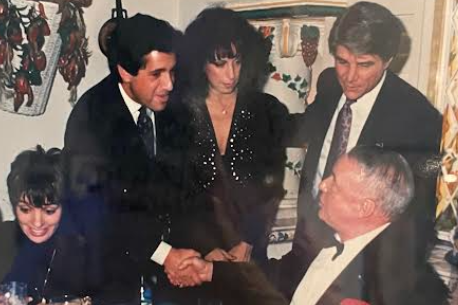
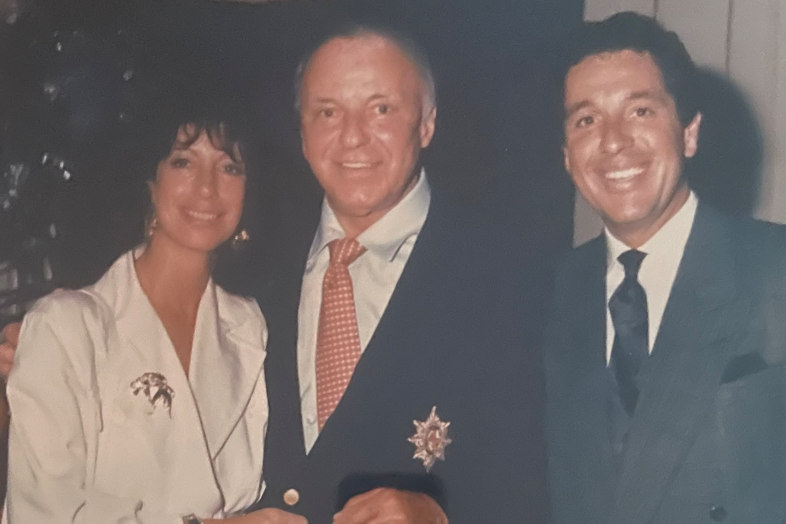
His mother, Mary, was a lifelong fan of Frank Sinatra, and Dr. Rose inherited her fascination with the singer’s music. He saw Sinatra in concert more than two dozen times, he told The Inquirer in 1990, and he and his wife, Claire, met Sinatra and became friends through a mutual friend in Atlantic City.
At his practice, Dr. Rose played only Sinatra songs. In 1992, to mark Sinatra’s 77th birthday, the Daily News listed 16 places in Philadelphia that had connections to the crooner. Number 7 was Dr. Rose’s office.
In 1995, Dr. Rose and his wife were recognized by the Juvenile Diabetes Research Foundation, and Sinatra called them “two wonderful people” in a letter to foundation officials and praised their “extraordinary accomplishments.”
Dr. Rose and his wife, Claire, married in 1965.Courtesy of the family
“Frank Sinatra’s music was the soundtrack of his life,” Dr. Rose’s family said. He told The Inquirer: “Sinatra relaxes me. If I feel good, the patient feels good.”
Louis Frank Rose was born Sept. 6, 1942, in Irvington, N.J., near Newark. He earned a bachelor’s degree at the University of Buffalo and moved to Philadelphia in 1965 to attend dental school at Temple.
He met Claire Aberbach in a high school geometry class, and they married in 1965. They had sons David and Michael, and lived in Philadelphia, Penn Valley, Haverford, and Bala Cynwyd.
Dr. Rose was funny and elegant, his wife said. He served in the Army Reserve, and he and his family made many memorable trips to St. Barts in the Caribbean. He passed on his love of Sinatra to his sons.
Dr. Rose shakes hands with singer Frank Sinatra (above) and poses with his wife, Claire Rose, and Sinatra (below).Courtesy of the family
“He was a fantastic father and grandfather, and an incredible role model,” his son David said. His son Michael said: “He did all that he did for his family. That’s what really drove him, to give to us all that he could.”
His wife said: “He was a people person. His patients loved him. He had friends everywhere.”
In addition to his wife and sons, Dr. Rose is survived by two granddaughters, three brothers, and other relatives.
Private services were held earlier.
Donations in his name may be made to the Alzheimer’s Association, 225 N. Michigan Ave., Floor 17, Chicago, Ill. 60601.
Dr. Rose, second from left above, and front, second from right below, enjoyed time with his family.Courtesy of the family
A fatal crash in Atlantic City early Sunday morning between a car and a pedestrian has rattled the community of fans of the jam rock band Phish.
Duncan Oldham, 69, of Geneva, N.Y., was struck and killed by a driver following Phish’s Saturday night show — a 3½-hour show and one of a three-night run at Jim Whelan Boardwalk Hall.
Oldham was a highly regarded “taper” — someone who records a band’s shows in their entirety and shares them — among the Phish fan base. The practice is embraced by the band, with its shows including a dedicated taper section with a recognizable sea of microphones.
“Duncan was a well-known Phish taper going back to the 90s,” one member of the Phish Subreddit wrote. “Many of his sources still circulate and are the best ones available for shows that haven’t been officially released by the band. It’s a huge loss to the community.”
Oldham attended and taped the band’s Friday performance. His recording had already been uploaded. At Sunday’s Phish show at Boardwalk Hall, the first following the crash, fans said the band’s crew acknowledged the loss, putting out a sign in the taper section.
Phish has not publicly commented.
Oldham was struck near the intersection of Iowa and Pacific Avenues around 12:05 a.m. Sunday, according to police. He was pronounced dead at the scene.
The driver remained at the scene, police said. No additional details have been released and no charges have been filed.
The Atlantic City Police Department and the Atlantic County Prosecutor’s Office were investigating the crash.
Emotions were raw as friends of Oldham, Phish fans, and fellow tapers processed the death.
“I watched my best friend die in front of me,” audio engineer Charlie Miller wrote on social media shortly after the crash. Miller was on the scene and gave a statement to police. “I’m devastated.”
According to Miller, who is well known among the Grateful Dead and Phish fan bases, he and Oldham were leaving the Tropicana after having post-show pizza when a car failed to yield for Oldham at the crosswalk.
“The Phish crew, Phish management team, Boardwalk Hall event staff, first responders, Clarion Inn staff and the Phish fans have all been very supportive,” Miller added. “Duncan’s last words before the accident were ‘that was a really good show.’”
Tributes to Oldham continue to mount online, celebrating his legacy as a taper along with his love for food and his pugs.
One Reddit user called him “Not just a taper, but a super nice guy. This [is] a loss not just to his close friends, but also those of us that casually knew him from shows. I’m still trying to wrap my head around this one.”
A former neighbor called him a constant at Phish concerts.
Another user remarked on Oldham’s willingness to share his taper archive treasures.
On Facebook, a fellow taper called him “a good man who cared about our taper community, and we gave our love back to him. A contributor to our community like Duncan will be sorely missed by all.”
At Phish shows since Oldham’s death, fans took Sharpies to yellow balloons, penning lyrics and tributes to Oldham on the spheres before tossing them into the crowd.
BRIGANTINE, N.J. — With its full moon and stacked high tides over multiple days, last week’s nor’easter left Shore towns with some of the worst flooding and erosion since Hurricane Sandy.
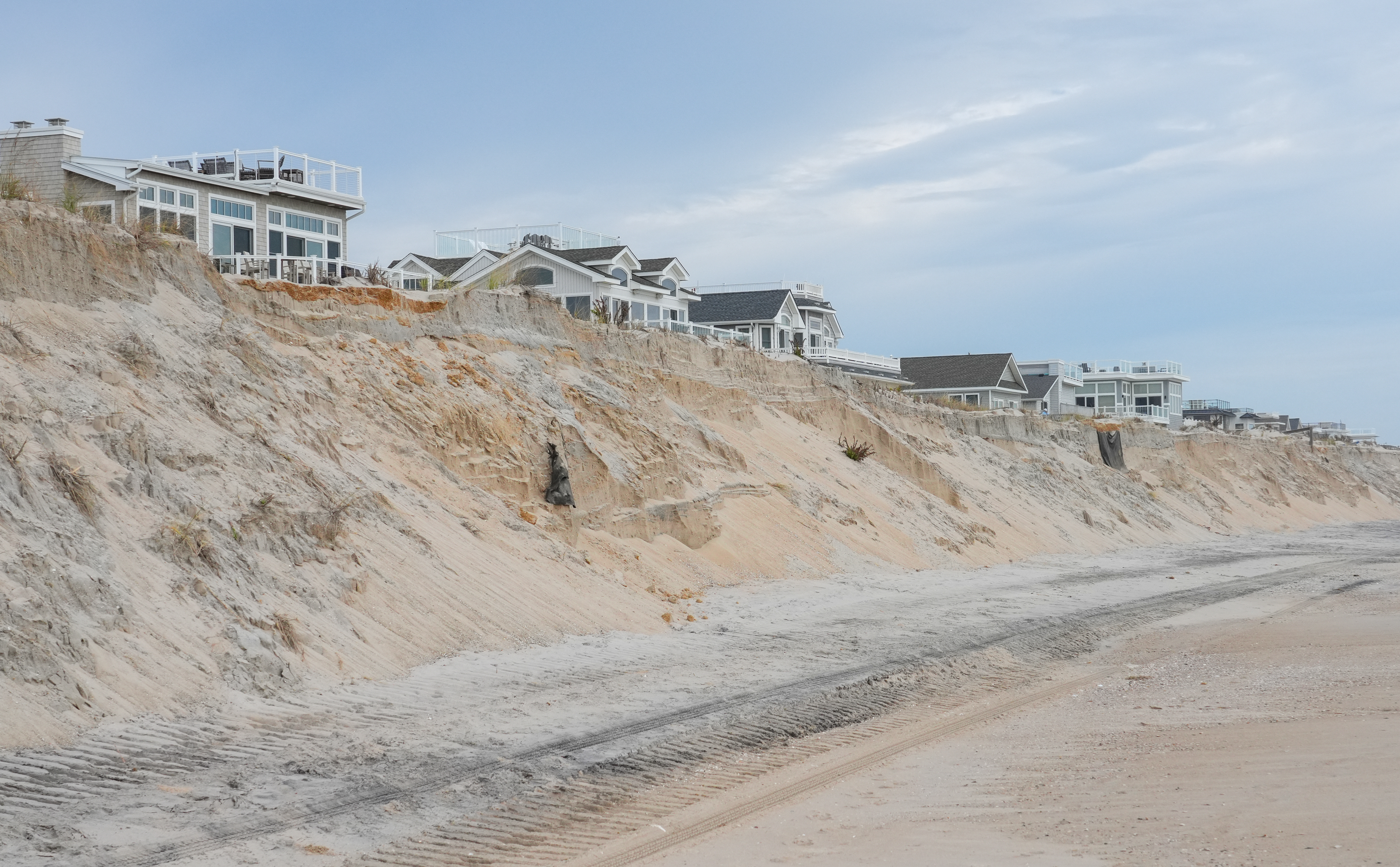
In dramatic fashion, the nor’easter produced some feared Shore scenarios: dunes sliced into cliffs, beaches vertically eroded, popular restaurants flooded to the point of closing altogether for the season, water lapping into ground floors, cars ruined. Days later, firefighters were responding to raging electrical fires, at least one of which was linked to a flood-soaked golf cart.
Still, the nor’easter was also a testament of what went right, a test of flood resilience tactics implemented in the 14 years since Sandy — a series of flood pumps in Brigantine, an elevated artery in Ocean City, raised homes throughout the Shore — that prevented a much worse outcome.
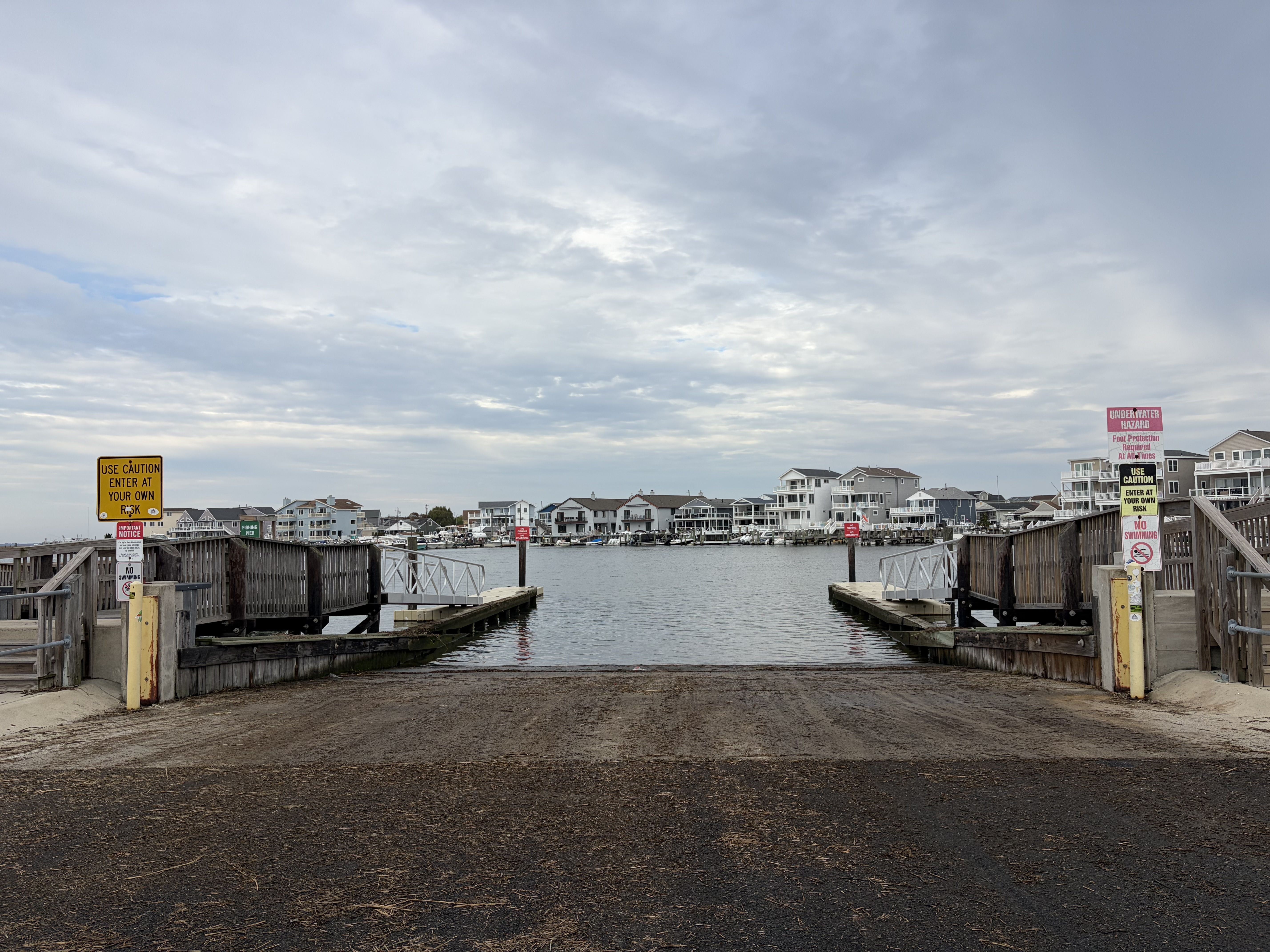
During the September 2026 nor’easter, metal floodgates were brought in to the city’s Municipal Boat Ramp by the city of Brigantine to physically block flood waters.John CunnionBrigantine’s municipal boat ramp was previously an entry way to devastating flooding. But city officials installed flood pumps and metal gates to keep the water off the island, and to drain the island between high tides.Amy S. Rosenberg / staff
‘Our girl took a beating’
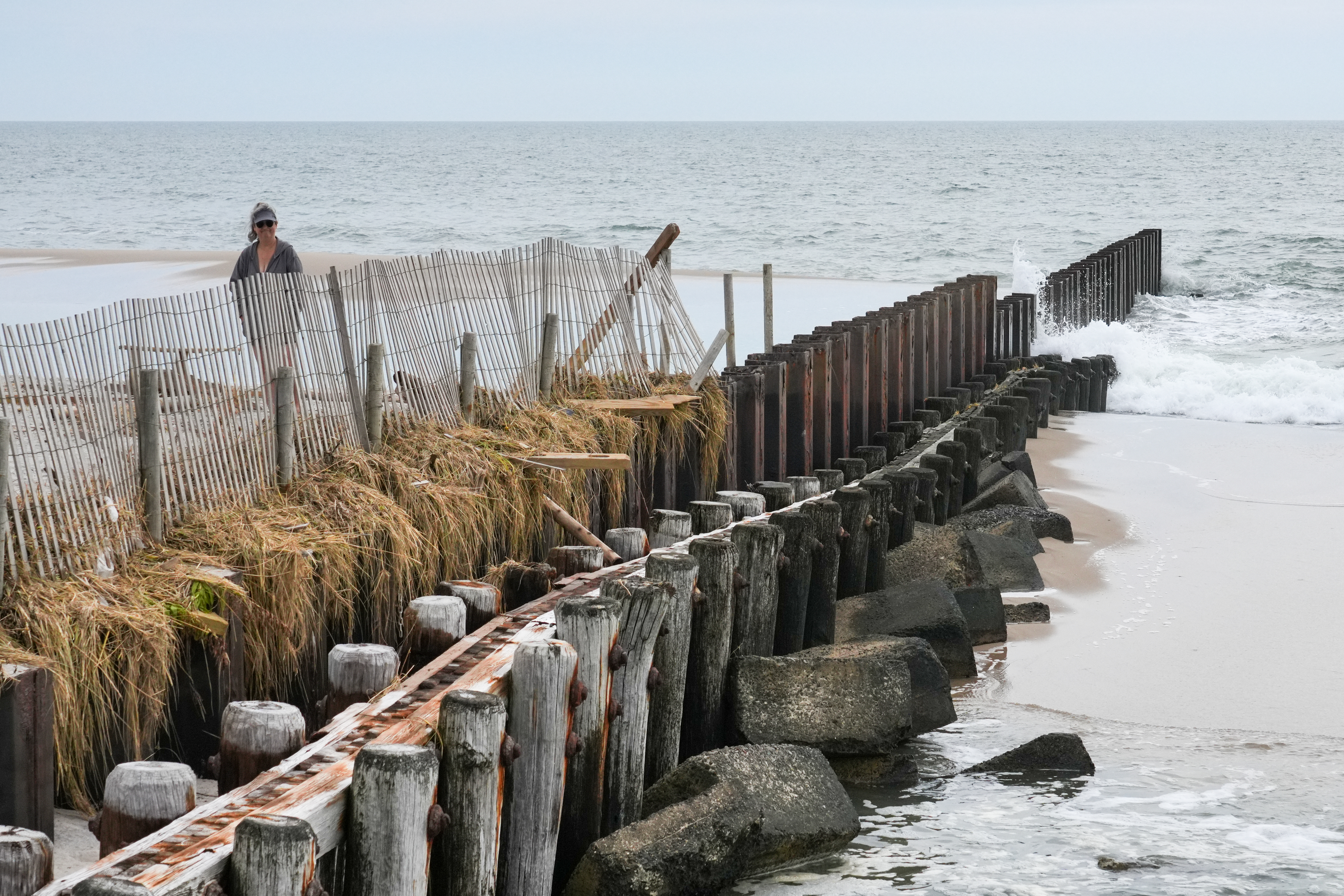
In parts of Holgate, Brigantine, Atlantic City, and North Wildwood, the storm left cliffs six feet or higher, cutting off access to the beach at multiple street ends. Vertical erosion uncovered old structures including rotting old wooden piers.
Streets in Long Beach Township, West Wildwood, and Atlantic City took on water through multiple days of high tide, damaging residential garages and other ground floor spaces.
Abby Mason, of Pottstown, looks at storm damage in Holgate on Thursday.Tim Hawk / For The Inquirer
On Sigsbee Avenue, contractor Vincent Allen of B. Grigoletto Contractors was ripping out ruined insulation and dry wall on two houses, both second homes.
He noted that since Sandy, a lot of the smaller homes had been torn down and replaced by elevated homes, where the ground floors are not, technically, living spaces. “Basically, if you lived on the bay, you got water,” he said. “This wasn’t as high as Sandy, nowhere near it.”
Owner Mike Franzoni at what’s left of his BLVD Pizza in Beach Haven, which was flood damaged days before a fire broke out.Amy S. Rosenberg / staff
On Long Beach Island and Atlantic City, numerous businesses were mopping up or closing early for the season after flood damage.
“We are truly sick to our stomachs, and it hurts,” Moments at Scannicchios, a restaurant on Fairmount Avenue in Atlantic City, said in a Facebook post. “In the end we will reopen.” The restaurant asked people to help out a nearby corner bodega, El Rinconcito Grocery, it said lacked similar resources.
On Long Beach Island, the ruined insides of the Dockside Diner were strewn across the front of the restaurant. “Our team, our family, is safe,” the owners wrote on Facebook. “But our old girl Dockside took a beating.”
Nearby, Mike Franzoni looked at the charred remains of BLVD Pizza’s Beach Haven location, which suffered flood damage and had a fire a few days later. Another location, in Surf City, was undamaged.
Storm damage in Holgate on Thursday.Tim Hawk / For The Inquirer
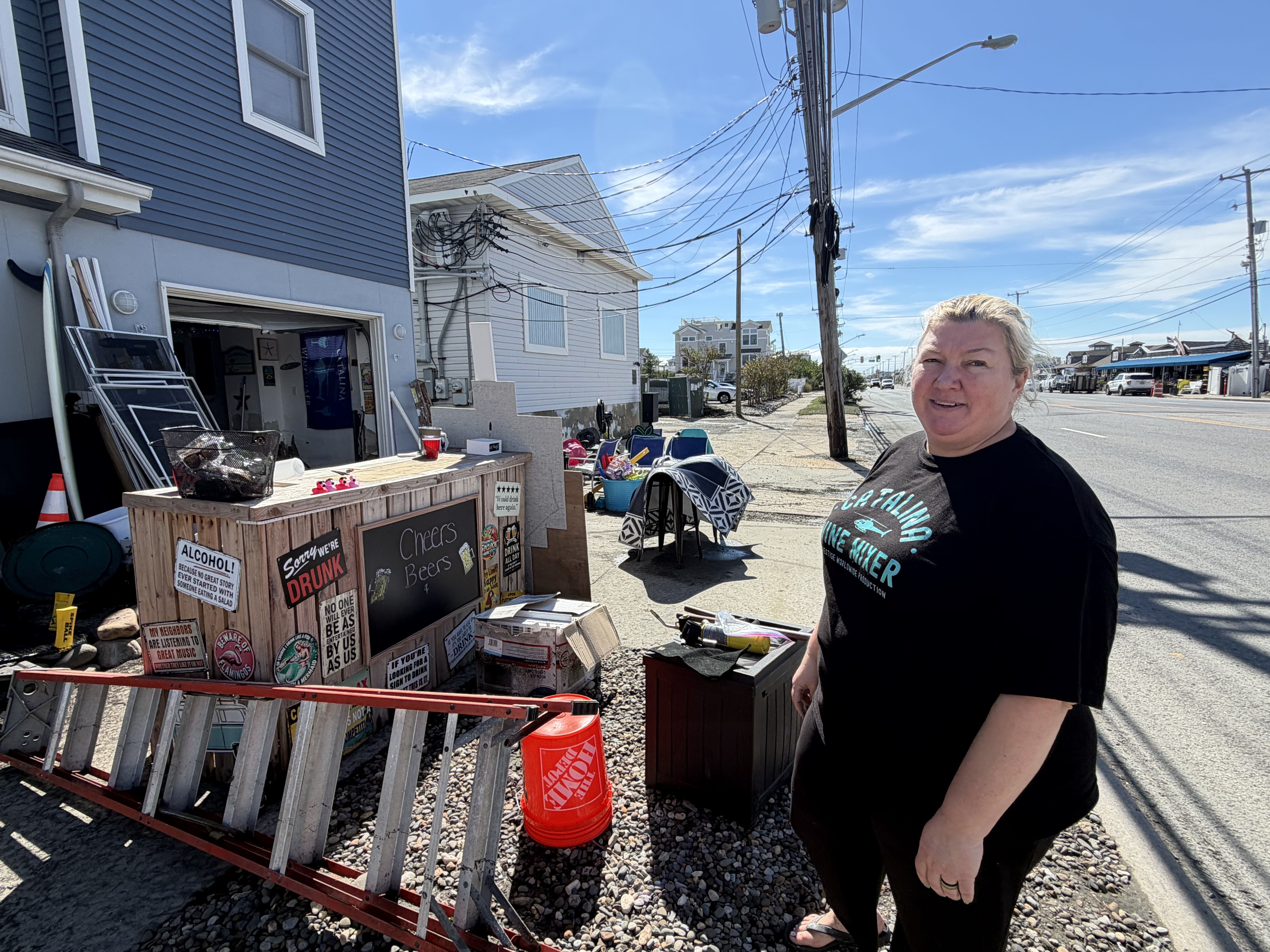
On Long Beach Island, the beloved “karaoke garage,” belonging to the family of Diane O’Donnell, 80, of Yardley, Pa., took on two feet of water, half of Sandy levels.
Last week, an Indigo Girls song was playing out of the space where Kelly Kolbjornsen and her family would recruit people to stop and sing karaoke on their way down Long Beach Boulevard.
“It’s part of having a beach house, but it’s a little overwhelming,” Kolbjornsen said.
‘A good gauge’
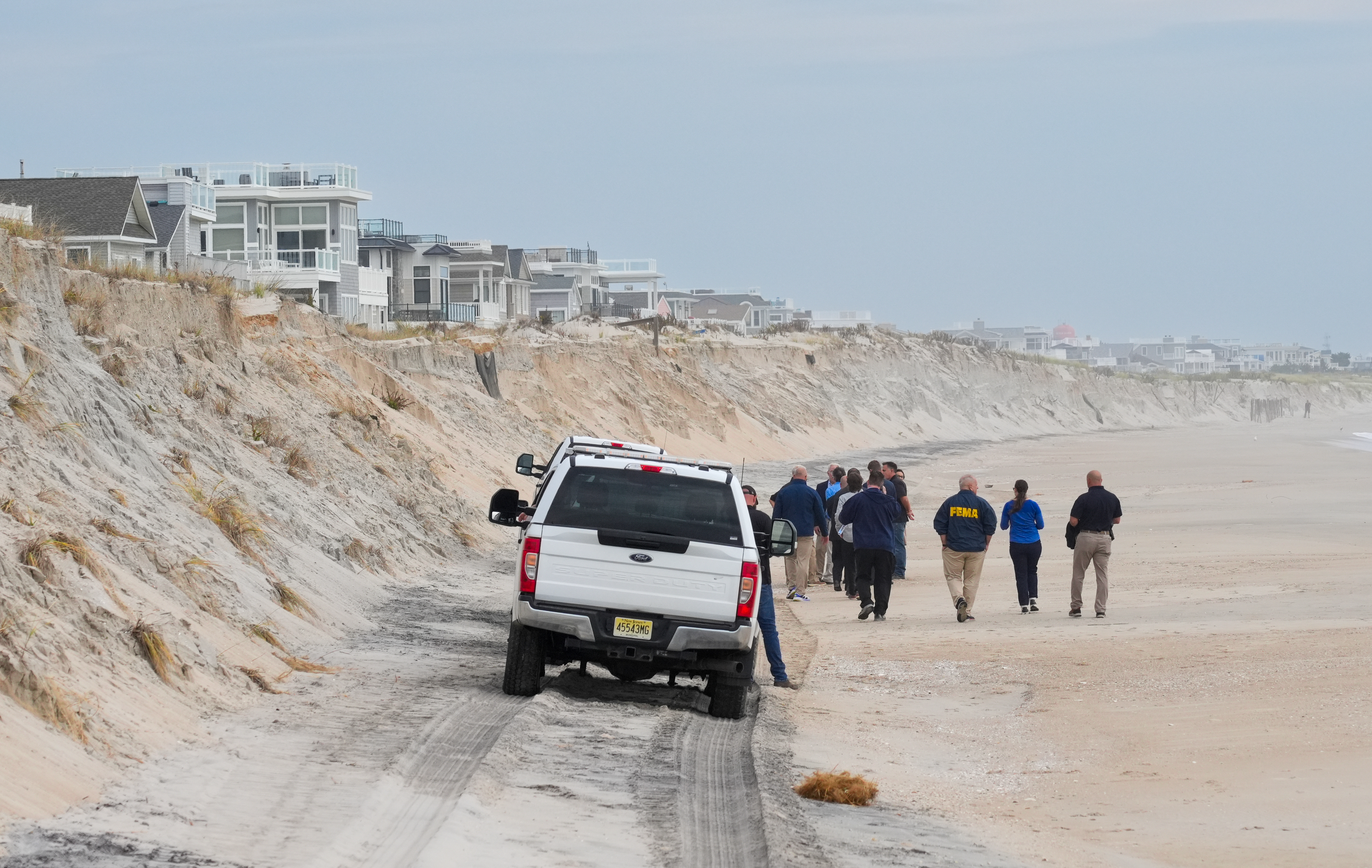
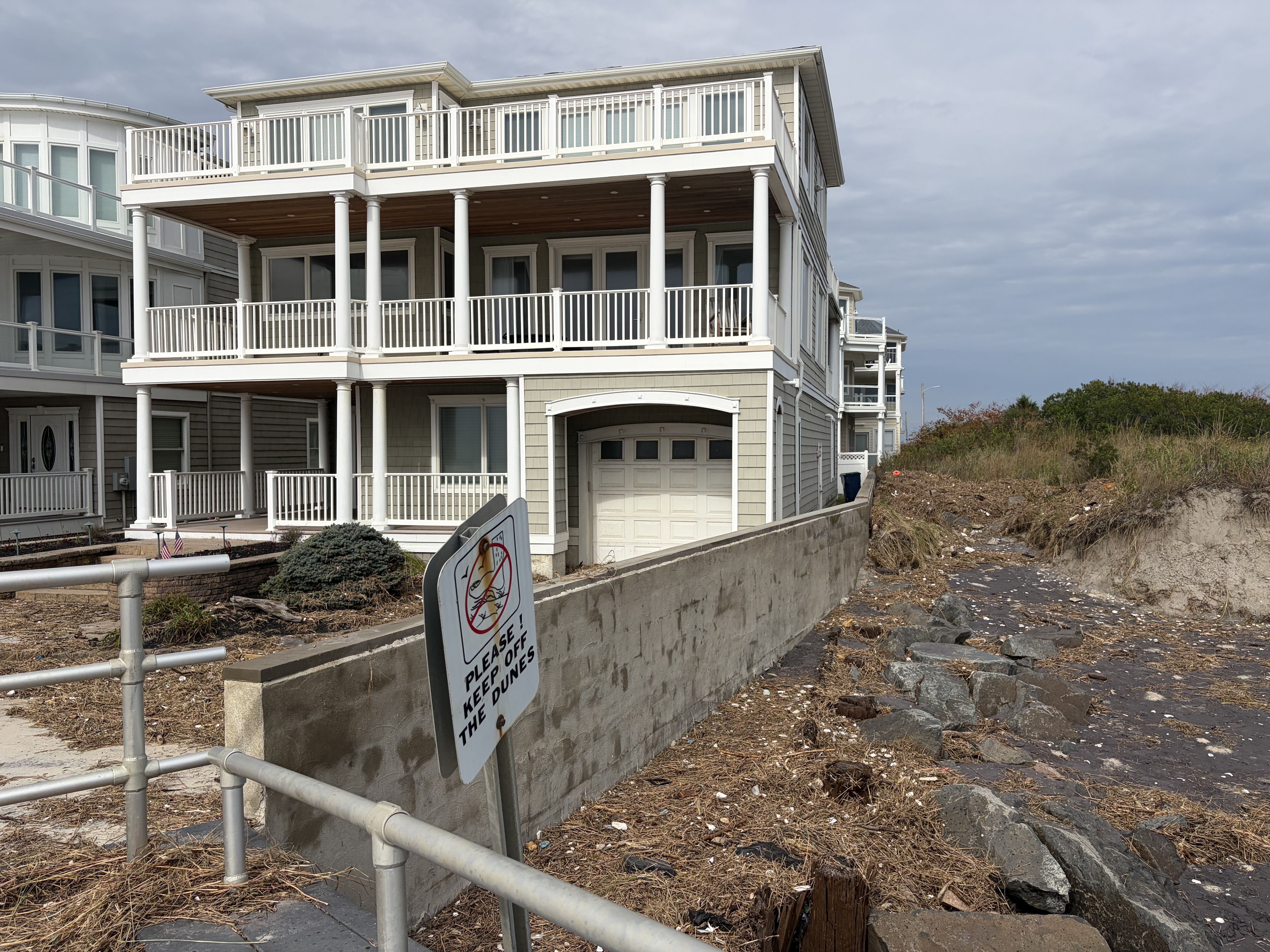
New Jersey Gov. Mikie Sherrill and U.S. Rep. Jeff Van Drew brought representatives from FEMA and the Army Corps of Engineers to focus on severe damage to ramps from Brigantine’s concrete promenade in the north end and the near breaching of a private retaining wall that was the only line of defense after surging waves destroyed dunes at the promenade’s edge.
But Mayor Vince Sera also pointed out that neighborhoods devastated during Sandy remained mostly damage-free.
“We put floodgates in before the storm came into Brigantine,” he said. “They closed all of the floodgates and prevented a lot of water from coming in. On each low tide, they let the water out to drain, and closed them again for the next high tide.
“Any water that comes into the streets, we have pumps around the island,” he said. “It pushes the water out over the bulkhead and back into the bay. It drains the island.”
Residents near those points of vulnerability took note.
“Without the pumps, it would have been horrible,” said Terri Cunnion, whose home sits on Bayshore Avenue across from the boat ramp, a major thoroughfare of flooding during Sandy (when the previous home on her lot was destroyed). “Without those gates, this block wouldn’t be.”
Through multiple high tides, last weekend’s floodwaters never got past the lip of the garage in the Cunnion’s house, whose living spaces are built 14 feet to new elevation standards.
Ocean City’s newly elevated Roosevelt Boulevard was also credited with mitigating damage from the nor’easter, staying above floodwaters and allowing an evacuation route, said Mayor Jay Gillian. The road was reconstructed so that portions were raised by 12 to 20 inches.
During Hurricane Sandy, bay waters roared right up Brigantine’s municipal boat ramp and surged across Bayshore Road, totaling houses with four feet of water.
Since the installation of eight permanent flood pumps and two portable flood buster pumps, vulnerable spots like Bayshore Drive and the neighborhood around the town’s golf course are newly fortified. In addition, bulkheads were raised.
U.S. Rep. Jeff Van Drew, together with federal, state, and local officials, tour storm damage in Holgate on Thursday.Tim Hawk / For The Inquirer
Atlantic City, similarly, installed pumps at its Atlantis Avenue station and rebuilt bulkheads in Chelsea and Chelsea Heights. It has yet to complete similar projects in its Ducktown neighborhood, which saw major flooding last weekend, leaving some businesses with tens of thousands of dollars in equipment and merchandise loss.
Van Drew pointed to other improvements since Sandy that protected utility infrastructure and homes. Homes that were elevated had ground levels that allow water to flow in and then out, he noted. He is advocating a permanent $1 billion “Coastal Trust Fund,” funded by revenue from federal offshore oil and gas leases to provide a stable source of funding for beach fills, dune restoration, and other coastal remediation.
“The good news is we’ve done a lot of good work,” Van Drew said. “We’ve hardened a lot of structures. When you look at electrical substations, in many cases, they’ve been raised. When you look at transmission lines, rather than being on wooden poles, they are now on industrial grade steel lines that are actually put on much, much stronger holes.”
Kelly Kolbjornsen looks at the damaged bar from her garage, where she and her family recuited passers by to sing karaoke, on Wednesday, days after the nor’easter.Amy S. Rosenberg / staff
‘Sacrificial sand projects’
On an Oct. 1 tour from Long Beach Island to North Wildwood, Van Drew made the case for continued beach replenishment funding, despite the storm eating through a good chunk of the $99 million in recent beach replenishment, most recently in Sea Isle City, Strathmere, Ocean City, Avalon, and Stone Harbor.
D. Lee Forsgren, the performing assistant secretary for the Army for Civil Works, who oversees the Army Corps, made a point of calling beach replenishment projects “sacrificial sand projects.” He compared the engineered beaches to your car’s “crumple zones” that are made to take the initial beating.
U.S. Rep. Jeff Van Drew (left) talks with Holgate Mayor Joseph H. Mancini in front of beach erosion in Holgate on Thursday.Tim Hawk / For The Inquirer
“We don’t put sand on these beaches to make them pretty beaches,” he said. “They are designed for storm damage reduction.”
Still, he cautioned Van Drew that “the best opportunity to really make progress would be with a supplemental appropriation associated with the storm because there’s not a lot of pocket change sitting around in the core budget.”
That will require a disaster declaration from Sherrill, who toured Brigantine on Tuesday.
Aside from more sand, Van Drew said the towns, state, and Army Corps were looking at funding hard structures — like jetties, groins, and seawall extensions — as ways to keep the elevated tides that accompany storms from overwhelming beaches.
A house on Brigantine’s north end belonging to Clay and Lori Goldsmid and other nearby homes were spared major damage during the recent nor’easter.Amy S. Rosenberg / staff
In Brigantine, Mayor Sera rode out the storm at the tip of the promenade, watching railings get blown off, dunes disappear, and the nearby retaining wall nearly buckle. He said city officials had compiled a list of who was in nearby homes in case of an emergency evacuation.
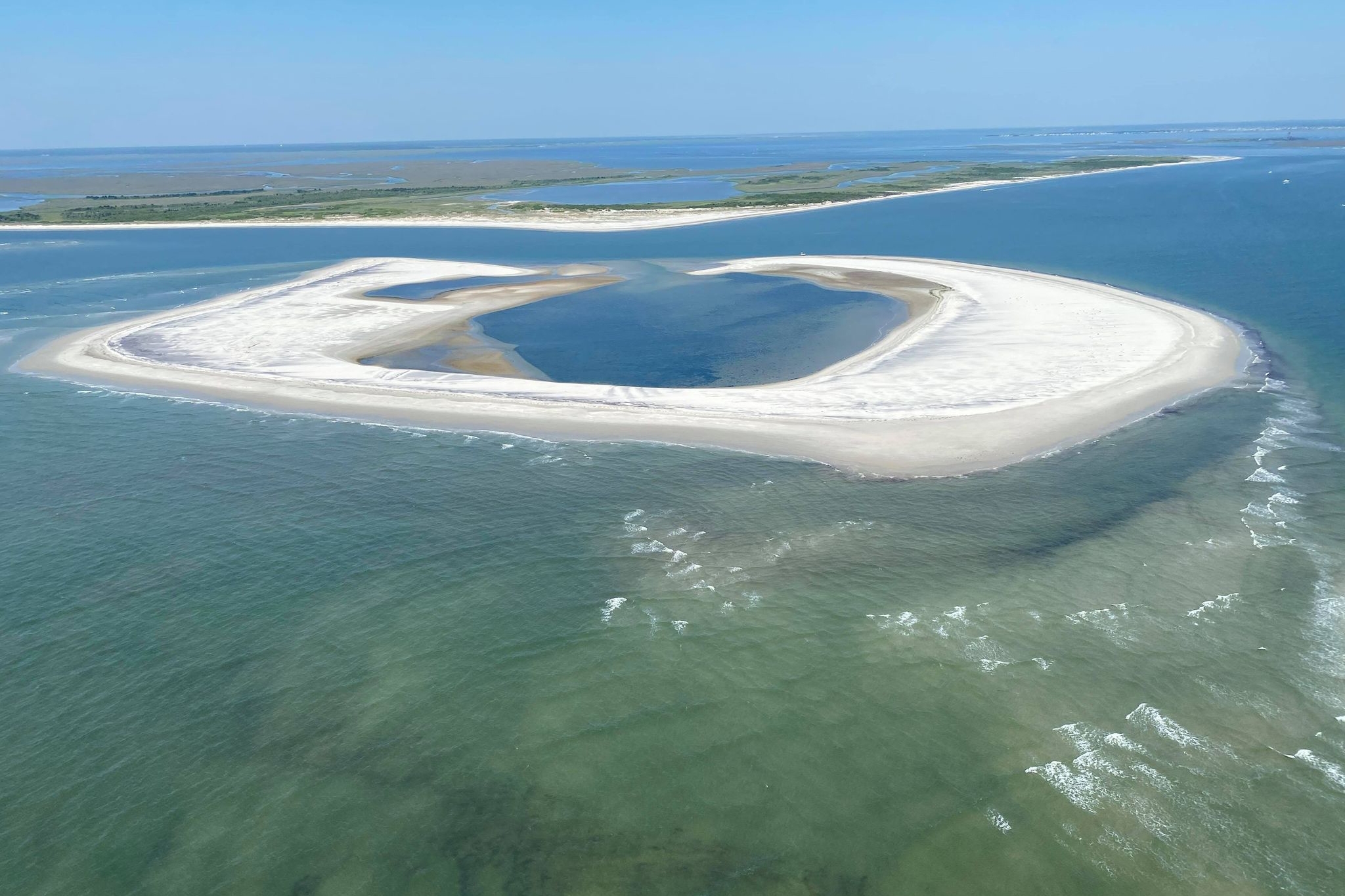
He is seeking to extend the promenade another 250 feet north, and says the state is studying whether adding hard structures to keep the sand in place will help a situation where a sandbar that has in recent years grown into what is now called Horseshoe Island is starving Brigantine of sand.
The city’s flood mitigation efforts since Sandy have resulted in a 25% discount for residents on flood insurance, he said. And he wholeheartedly recommends flood pumps and gates to other municipalities, like Ventnor, whose Ventnor Heights section was cut off at both ends by flooding for hours during high tides.
Sera and other knows the big storms will come again, probably this winter, with the El Niño warming in the equatorial Pacific.
With sea levels rising, some residents who came out to see the federal officials in Brigantine wanted to know about timelines.
“How fast is fast,” interrupted Louise Seitel, of nearby Absecon, as officials spoke of extending the seawall.
“A study is probably going to be 18 months,” Nate Barcomb, an Army Corps deputy district engineer based in Philadelphia, acknowledged.
“Government is tough,” Van Drew said.
Aerial photograph of New Jersey’s Horseshoe Island in June 2021.N.J. Department of Environmental Protection / U.S. Fish & Wildlife Service
New Jersey State Police have identified the remains of a man found off the coast of Atlantic City 45 years ago.
Glen Napoleon Burbage, a retired U.S. Coast Guard officer from South Carolina, was last seen in March 1981. Burbage, who was 59 when he disappeared, had flown to Atlantic City that month, and was never heard from again, officials said in a statement.
Two months later, on May 22, 1981, a group of boaters found a human body in the ocean about a mile off Raleigh Avenue in Atlantic City. At the time, investigators believed the man had died several weeks before his remains were recovered.
Police, however, were unable to immediately identify the remains. Previous DNA testing did not reveal any matches in the Combined DNA Index System, a national, federally managed DNA profile database. And lacking further leads, the case went unsolved for decades.
In April, authorities enlisted the help of Ramapo College’s Investigative Genetic Genealogy Center. Founded in 2022, the Mahwah center specializes in training students in an increasingly utilized field of DNA-based investigative technology that uses data from commercial genetic testing to identify previously unidentified victims and suspects.
That month, the center said, it had undergraduate students and law enforcement officials attending a weeklong boot camp examine the then-unidentified body’s DNA. Students built family trees and examined genealogical records in an effort to identify the man.
Following the boot camp’s end, they found a lead in Burbage, who had been missing since March 23, 1981. New Jersey State Police later conducted what they called a “one-to-one familial DNA comparison” with DNA collected from one of Burbage’s living children. South Carolina authorities also assisted in the case.
“For 45 years, Glen Burbage had a name and a family, even though investigators did not yet know who he was,” said centerdirector Cairenn Binder in a statement. “Investigative genetic genealogy gives us a way to revisit cases that once seemed to have reached the limits of available technology.”
Burbage’s case is not the first solved with help from Ramapo’s center. Perhaps most notably, in June last year, it identified through similar means the remains of Henry Goodsell, the captain of a schooner that wrecked off the coast of Brigantine in December 1844.
When it was solved, Goodsell’s case was among the oldest closed using investigative genetic genealogy, at more than 180 years old. Goodsell, having been unidentified for so long, and his remains discovered along a wide swath of the New Jersey coast, had become known colloquially as “Scattered Man John Doe.”
Investigative genetic genealogy differs from traditional DNA testing in that it is more expansive, and is able to identify more distant relatives. Regular DNA testing, meanwhile, looks at relatively little DNA information, Binder told The Inquirer last year.
With that additional information, genetic genealogists are able to reverse-engineer an unidentified person’s family tree to home in on the identity.
That investigative technique became widely known in 2018, when it was used to identify the Golden State Killer in California. Since then, it has been employed in notable cold-case identifications locally, including in identifying the so-called “Boy in the Box” and the Fairmount Park rapist.
Burbage’s death, however, remains under investigation, as authorities have not determined what led to his disappearance or demise. Officials have asked anyone with information about the case to contact the New Jersey State Police Missing Persons Unit at missingpinformation@njsp.gov.
Ruth Weisberg, 70, formerly of Philadelphia, longtime award-winning radio, TV, and online news anchor, features reporter, and show host; onetime voice of Shadow Traffic, Bell Telephone, and other voice-over clients; voice-over instructor, writer, speaker, pianist, art model, actor, Miss Greater Philadelphia 1980, volunteer, and stand-up comedian, died Wednesday, Sept. 2, of ovarian cancer in an assisted living center in Sarasota, Fla.
Reared in Oxford Circle and a graduate of Northeast High School and Pennsylvania State University, Ms. Weisberg was a prolific media personality for nearly 50 years in Philadelphia and Florida. She was the radio voice of Shadow Traffic in the late 1970s and early 1980s, a news anchor and features reporter at WXTU, WCAU, WIFI, WPEN, and WSNI radio in the mid-1980s, and a radio, TV, and online talk show host from the late 1980s until recently.
She hosted Frank Talk With Frank Rizzo on WCAU radio in 1988 and ’89, and told The Inquirer in 1989 that working with the former mayor was like flying a “careening aircraft for three hours.” She also hosted Storytime and Show ’n Tell with Miss Ruthon local cable TV and online in 2015, and Funny You Should Ask, a radio show and podcast about comedy, in Florida in 2023.
Always drawn to the theater and drama, she started producing TV and radio shows while studying special education at Penn State in the 1970s, and wound up cohosting a local rock and roll radio show as a senior exchange student in England. “All of the sudden,” she told The Inquirer in 1989, “I had this new-found love of radio. I never pursued it. It just came calling.”
Ms. Weisberg reported on all kinds of lifestyle issues and earned radio awards from the Associated Press, the Philadelphia Press Association, and other groups. In 1994, she was named member of the year by the Philadelphia chapter of the International Television Association.
She called herself Miss Ruth and Ruth Weisberg Philly on Facebook and reveled in her constant innovation and free spirit. She told The Inquirer: “I like to think sometimes that God is laughing at me. I imagine Him shaking His head and saying: ‘Weisberg, what are you up to?’”
As a voice-over narrator and actor, she recorded corporate training videos, audiobooks, and radio and TV commercials. Bell Telephone hired her to record “We’re sorry. Your call cannot be completed as dialed” and other phone messages in 1985 because, a top official told her in a letter, her voice was “congenial yet persuasive.” She also taught voice-over classes for organizations and individuals, and mentored others on whatever she was doing wherever she worked.
She modeled for artists — some called her their “muse” — at art centers and colleges, and starred in a short video called The Accidental Art Model. “I love being part of a creative, imaginary, intrinsically artistic world,” she said in the video. “I would like to think of myself as the inspiration and the template for the work that happens.”
Ms. Weisberg co-hosted a talk with onetime Mayor Frank Rizzo in 1988 and 1989.WCAU Radio
Ms. Weisberg was drawn to beauty pageants, she said on Facebook, by the glitz and glamour. She was named Miss Central Pennsylvania as a Penn State freshman in 1975 and Miss Greater Philadelphia in 1980.
She held seminars on career networking, spoke to groups often about radio and voice-over work, and read stories to children in bookstores. She wrote op-eds for The Inquirer and articles for the Main Line Welcomat and other publications.
She posted videos on YouTube. She cohosted the 2001 Miss Greater Philadelphia Pageant. Former Daily News columnist Stu Bykofsky called her “both an eyeful and earful.”
Ms. Weisberg was featured in The Inquirer in 2016 (above) and 1989 (below).Newspapers.com
She also acted in local stage productions and performed stand-up comedy routines in brewpubs and restaurants and at gatherings. She was featured several times in The Inquirer and Daily News, and moved to Sarasota in 2016.
“My work motto is that I will accept any job position that does not require wearing a hair net,” she said in a 2016 online interview. Her family said in a tribute: “Her life and influence were an inspiration and a sparkle of joy to so many people.”
Ruth Maxine Weisberg was born May 31, 1956, in Philadelphia. She was a cheerleader, was active in theater class, and got straight A’s at Northeast High School.
She and her mother, Libby, volunteered to entertain people in hospitals and nursing homes when she was young, and she knocked on neighborhood doors for Democratic presidential nominee George McGovern when she was 16.
Her family spent memorable summers in Atlantic City, and she earned a bachelor’s degree in special education at Penn State.
She married Peter Kerch in 1988, and they had a daughter, Talia. After a divorce, she married James Herbert, and they had a son, Elliott. They divorced later.
Ms. Weisberg liked crossword puzzles, collected classic telephones, and attended concerts and beach drum circles. She was a certified scuba diver and wore a hat emblazoned with “The Queen of Everything.”
Atlantic City’s top cannabis official is facing federal charges for a scheme to solicit cash bribes from a dispensary owner in exchange for fast-tracking their license and avoiding city fees.
Kashawn “Kash” McKinley, 42, commonly referred to as “A.C.’s Weed Czar” for his role overseeing the city’s legalmarijuana industry, was charged with honest services fraud and two counts of soliciting bribes, U.S. Attorney in New Jersey Robert Frazer announced Thursday.
In a statement, Atlantic City officials said that Mayor Marty Small Sr. had been apprised of the case and that McKinley had been suspended without pay pending the outcome of the case. Small “believes in the justice system, and Kashawn McKinley is innocent until proven guilty, like any other American,” according to the statement, which said the mayor promised transparency around the proceedings.
A public defender assigned to McKinley declined to comment.
As the director of Atlantic City’s constituent services, McKinley solicited more than $20,000 in cash and marijuana from the cannabis business owner, according to federal prosecutors.In exchange, McKinley assisted the owner, who was not identified by the U.S. Attorney’s Office, in opening a dispensary and resolving certain fees owed to Atlantic City.
The would-be dispensary owner contacted McKinley in late 2022 for guidance on opening a cannabis business in Atlantic City, prosecutors said. At McKinley’s direction, the duo first met in a parking lot of a defunct Atlantic City restaurant where McKinley told the owner that in exchange for $20,000, he could “help” resolve any issues with opening the dispensary in town, according to prosecutors.
“We all need to eat,” McKinley allegedly told the dispensary owner at the time.
The dispensary owner would go on to pay McKinley the $20,000 over the next few months in two installments. Soon after, the owner’s license was approved by the local oversight board, where McKinley is a member.
Two years after opening, the dispensary owner contacted McKinley in 2025 about the more than $25,000 in fees and taxes the owner owed to Atlantic City for operating the dispensary.
Prosecutors say that McKinley’s solution to the fees was to reclassify the dispensary from a standard mercantile license down to a “micro” license, which would result in the business needing to pay only $2,500 in annual fees and taxes.
As part of the reclassification scheme, prosecutors say, McKinley allegedly directed the dispensary owner to orchestrate the assault of a person who McKinley said was “disrespecting” another public official. When McKinley was later shown what prosecutors say appeared to be a photograph of the injured victim, McKinley allegedly “expressed pleasure” and assured the dispensary owner that they “don’t have to worry about nothing” in relation to the disputed city fees.
Throughout McKinley and the dispensary owner’s exchanges, the weed official would ask for “care packages,” which prosecutors believe to mean bribe payments and samples of weed.
Since McKinley and the owner were able to reclassify the dispensary down to a micro business license in January, the owner was owed a $25,000 refund from Atlantic City for previously paying the standard license fees. McKinley requested half of that refund from the dispensary owner, according to prosecutors. In March, the dispensary owner gave McKinley a $6,000 kickback from the refund, prosecutors said.
McKinley’s fraud charge carries a maximum sentence of 20 years in prison and a fine of up to $250,000. Each bribery charge carries a 10-year maximum prison sentence and a fine of up to $250,000.
I’m calling this a win (for my predictions score; people have very different views of the hotel). In June, Eustace Mita finally got his dream of a declaration that the old Wonderland Pier site at 600 Boardwalk in Ocean City is “in need of rehabilitation.”
The Icona developer is now in negotiations with Ocean City about a hotel proposal, which he says will be a scaled-down version of his initial seven-story, 252-room plan that called for saving the Ferris wheel and historic carousel. City council is vowing to be guided by recommendations from a Boardwalk subcommittee. Meanwhile, council hired a lawyer to defend against a lawsuit by citizens’ groups.
Eustace Mita talks about the construction of this beachfront Achristavest home on 116th Street in Stone Harbor on Tuesday, August 18, 2026.Vernon Ogrodnek / For The Inquirer
Atlantic City’s Irish Pub will rise again. ❌
Alas, not even the sale of the Irish Pub in Philadelphia appeared to jump-start any renovations in Atlantic City, where owner Cathy Burke has been in a stalemate with state inspectors over whether the iconic, beloved pub on St. James Place should be considered a high-rise. The pub has been closed since January.
Will locals have their fish and chips and Guinness on Christmas Eve as per usual? You never know. Burke did not answer a text message seeking an update. Asked about the Irish Pub’s status, Atlantic City spokesperson Andrew Kramer said he had “nothing new from my end on this one.”
But, in an upset, the city has begun paving Atlantic and Pacific Avenues, in a development Mayor Marty Small Sr. called “massive,” and said would be completed by year’s end.
Fran Cann (left) helps Debbie Stiles (#9, right) get through the door, since she can’t see as well wearing a “St. Nick” Foles bag over her head, as they celebrates Bag Day at the Irish Pub in Atlantic City Monday, Mar. 18, 2024. The friends, from Berlin, N.J.were attending their first Bag Day. The tradition got started when a late-to-the-party patron showed up to the 24-hour bar a day after St. Patrick’s, then put a bag on their head.Tom Gralish / Staff Photographer
Shore restaurants will tough it out, but struggle. ✅
Restaurants were stressed this summer. As is usual in late summer, many lost employees as the season wore on all the way to Sept. 7, and had to cut back seating or hours. Others pleaded with their clientele for patience. Still, there were lines down the block for coffee places, and booked up reservations for favorites like Steve & Cookie’s and Cafe 2825. New places were opening deep into summer, like Culina Mundi in Ventnor and Sabrina’s Kitchen in Atlantic City.
Bakeria 1010 owner and pizza savant Mike Fitzick posted a mock obituary for himself at summer’s end: “Welp that’s all she wrote folks. … Right from start I knew this season was gonna be rough. All the staff I tried to hire fizzled out and the staff I had last year were mostly gone. This summer was pretty treacherous in every aspect … June was trash, July was ok and we finally hit our stride in August. Better late than never, I guess. Unfortunately I have passed away due to self-inflicted cortisol poisoning. In lieu of flowers please donate to the Bakeria 1010 all winter. Jokes aside we WILL be open for lunch today…”
Kylie Kelce adds some money to the cash register during the Shore Birds celebrity bartending event in Sea Isle.
Taylor and Travis will not honeymoon in Sea Isle, but…? ✅ ❌
No, they did not honeymoon in Sea Isle, choosing instead Big Sky, Mont. (a lovely place), so that’s an easy one in my favor. But my leaving open the possibility that they would make an appearance in Sea Isle seems, on balance, ridiculous. Maybe they’re waiting for Jason and Kylie Kelce to finally make it off the waiting list for the Sea Isle Yacht Club. Maybe a celebrity bartending gig for Taylor at the Eagles Autism extravaganza next summer? Meanwhile, have fun in Ohio!
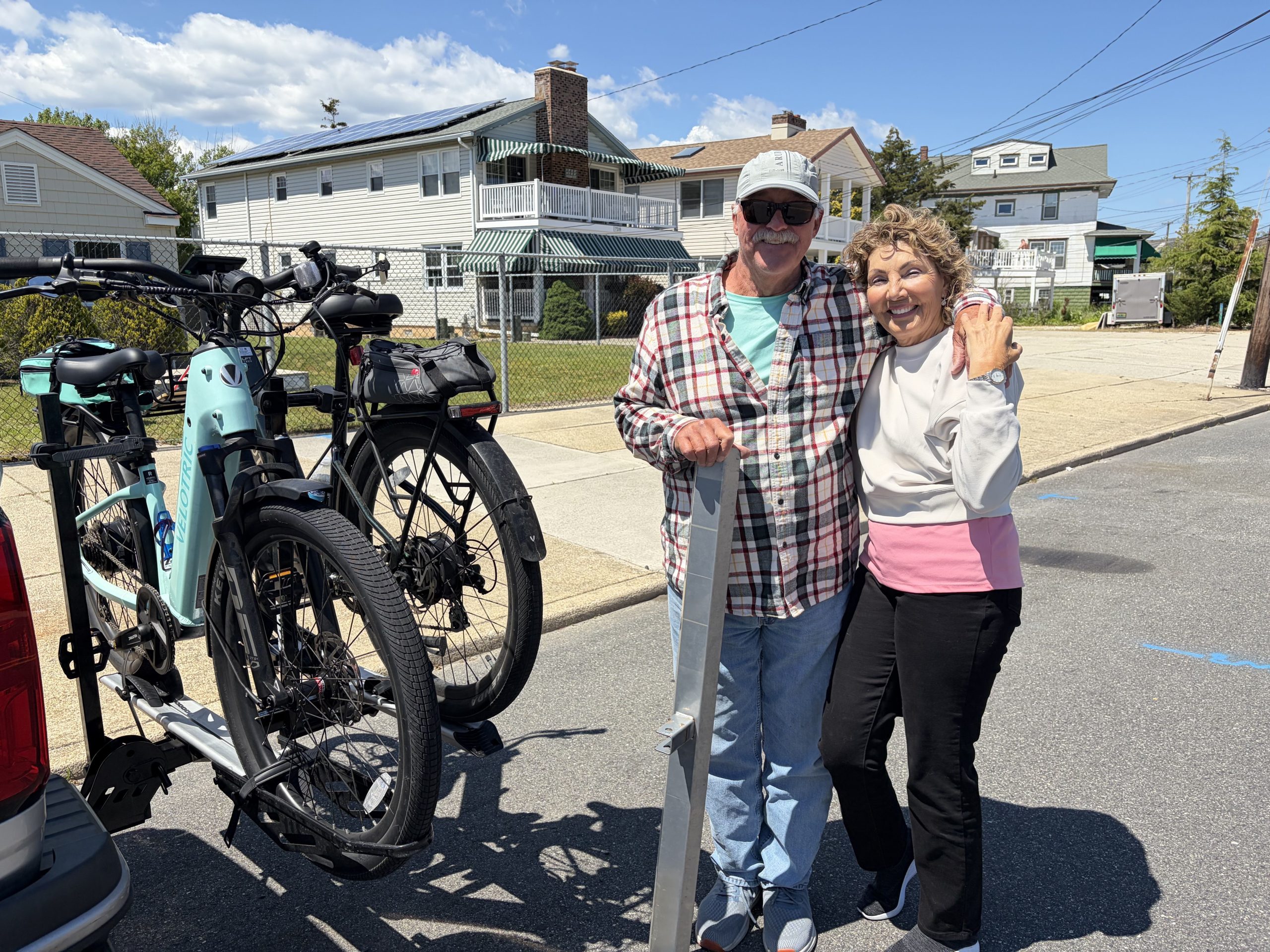
Mike and Annamarie Carr of Ventnor, owners of Jagielky’s candy shops, with the e-bikes they love to ride. Ventnor won’t allow them on its own Boardwalk. The couple drove to Ocean City on June 2 and started and ended from there.
E-bikers will be hauled off the boardwalks and fill municipal court Zoom hearings. ❌
There was a lot of confusion over the new e-bike law in New Jersey.
First the state Motor Vehicles Commission said Pennsylvania visitors shouldn’t sweat the new registration requirements, then they changed their mind and said visitors should start their week down the Shore with a trip to the DMV. Adding to the confusion, the MVC requirements explainer page that says out-of-staters should comply now also says, “This page is intended for New Jersey Residents.”
In all, the MVC has issued a total of 13,850 e-bike registrations, according to commission statistics; 365 of those for out-of-state residents.
But police were generally light-handed on enforcement measures for the new law, with departments focusing on safety issues, like helmets, and age restrictions, rather than registrations.
Doug Bergen, a spokesperson for Ocean City, said no citations were issued there this summer under the new law.
In Ventnor, Lt. Bryan Gaviria said between May 1 and Sept. 10, the department issued six curbside warnings to juveniles, 10 e-bikes on the boardwalk warnings, and one ticket for riding on the boardwalk.
“We’re still in the education phase,” he said.
Statewide, statistics show 628 total citations under the e-bike and motorized bicycle law for July and August, according to data supplied by the New Jersey Judiciary.
Of those, just 77 were given for low-speed electric bicycles, 22 citations were for failing to have the registration required by the new law, and two were for drivers being under 15. The rest of the citations issued were for motorized bicycles, the higher speed classification.
Retiring boomers will continue their takeover of Shore towns. ✅
Or how about this 17,684-square-foot house in the Avalon dunes, built on spec by Eustace Mita (see above), with the distinction of being Avalon’s largest house and an expected price tag in the tens of millions.
Rendering of a 17,684 square foot home being built as a spec house in the dunes in Avalon, at 5745 Dune Drive, by developer Eustace Mita. It will be the largest home in the borough.Courtesy Avalon Borough
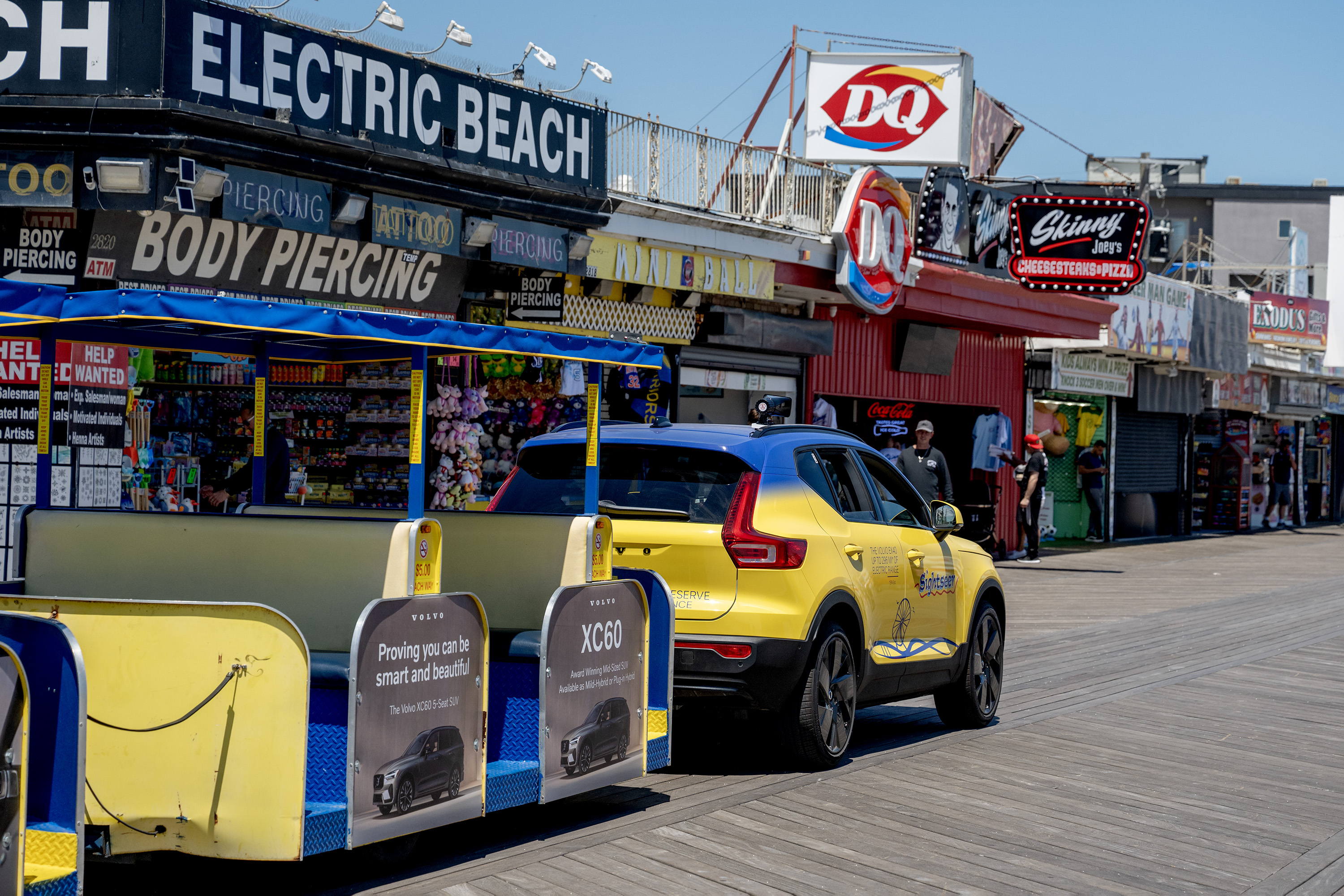
Wildwood boardwalk hours will again be expanded overnight, but all people will talk about are the electric Volvo SUVs driving the tram cars. ✅ ❌
Wildwood spokesperson Alicia Deluca says the hours remained curtailed, with the boardwalk closing between 1 and 5 a.m.
The grumbling over the new Volvo tram cars continued all summer, though. People do not like change. Meanwhile, though, Wildwood is preparing a 20-year redevelopment plan for its boardwalk that will see mixed-use projects, including hotels, apartments, condominiums, businesses, and centralized parking garages.
A Sightseer tram car is pulled by a Volvo EX40 electric vehicle on the Boardwalk in Wildwood Tuesday, June 2, 2026. The Wildwoods Boardwalk Special Improvement District struck a deal with Volvo to provide three free electric vehicles in return for ads placed on the individual tram cars. Four of the older engines remain in use for now.Tom Gralish / Staff Photographer
There will be a lot of complaining about changing parking regulations. ❌
I didn’t hear much over the din of loud music from Gully’s, and Facebook groups seemed preoccupied with other things: flies, shaming noise complainers, and finding the best chicken Parm.
The return of the day-tripper. ✅
This prediction was a good one. Costs continued to rise, making shorter trips and day trips appealing. I predicted Atlantic City would get renewed attention, and it did, with groundbreakings for new housing developments, a container retail park close to opening, and the enduring appeal of a wide, free beach and a relatively inexpensive real estate picture.
Obvious miss on the predictions front: Atlantic Avenue is finally being paved. The odds were very long on this one.
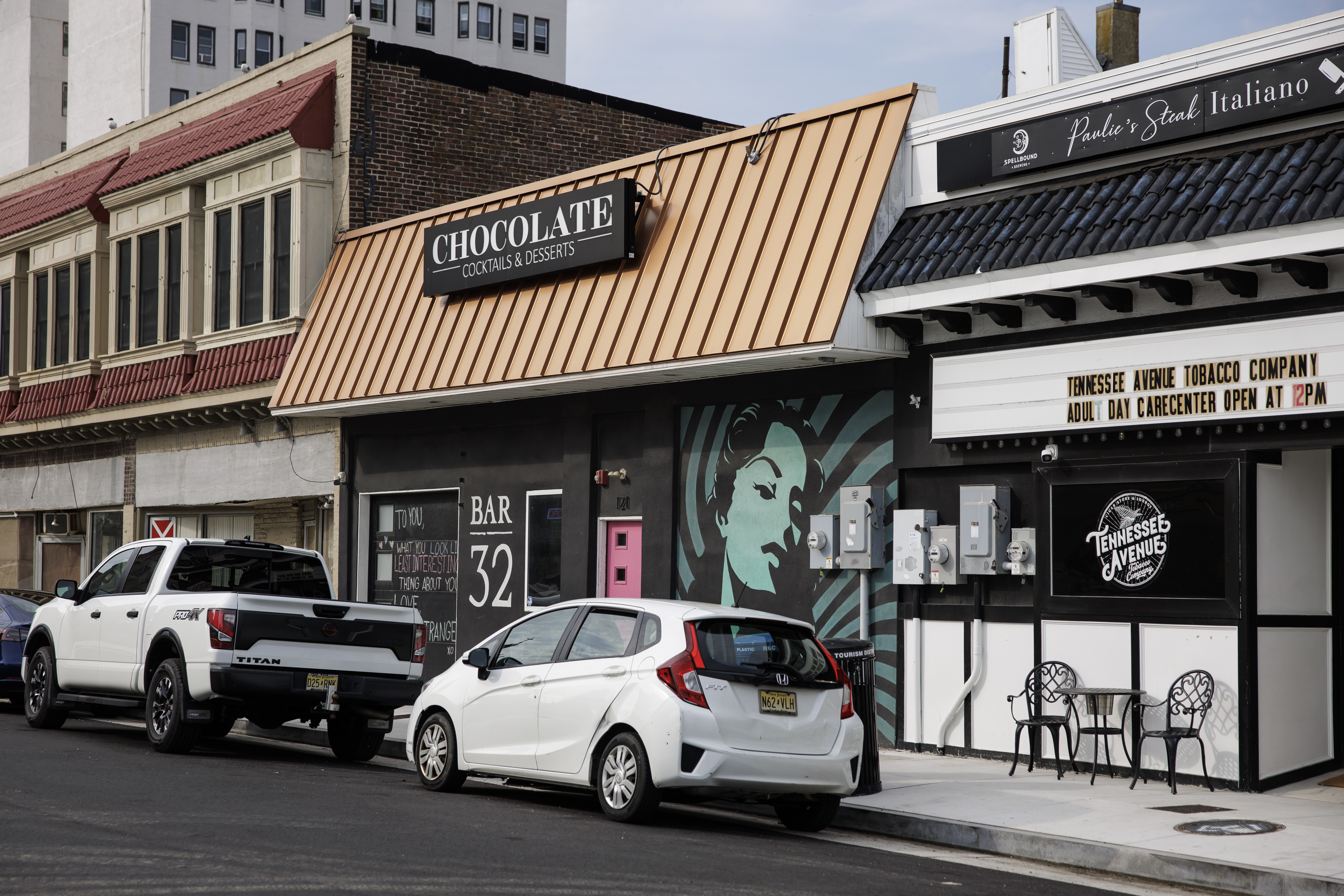
The exterior of Bar 32 on Thursday, June 11, 2026 in Atlantic City, NJ. Bar 32 offers bean-to-bar chocolate, handmade desserts, and craft cocktails.Monica Herndon / Staff Photographer
The summer will seem verrrrry long. ✅
So long. How long? Basically an extra week until the Sept. 7 Labor Day. Which left beach patrols, restaurants, and other business strapped for employees, and rewarded marathon beach lovers with two days of atrocious flies on the beach Sept. 4 and 5, worse than anyone had ever experienced, like, really terrible! See ya next year!
Total score: 6/10. We’ll get ‘em next summer, hopefully over a plate of lollipop meatballs at the Irish Pub.