Tag: Atlantic City

  • How Sandy prepared parts of the Jersey Shore for last week’s nor’easter

    How Sandy prepared parts of the Jersey Shore for last week’s nor’easter

    BRIGANTINE, N.J. — With its full moon and stacked high tides over multiple days, last week’s nor’easter left Shore towns with some of the worst flooding and erosion since Hurricane Sandy.

    In dramatic fashion, the nor’easter produced some feared Shore scenarios: dunes sliced into cliffs, beaches vertically eroded, popular restaurants flooded to the point of closing altogether for the season, water lapping into ground floors, cars ruined. Days later, firefighters were responding to raging electrical fires, at least one of which was linked to a flood-soaked golf cart.

    Still, the nor’easter was also a testament of what went right, a test of flood resilience tactics implemented in the 14 years since Sandy — a series of flood pumps in Brigantine, an elevated artery in Ocean City, raised homes throughout the Shore — that prevented a much worse outcome.

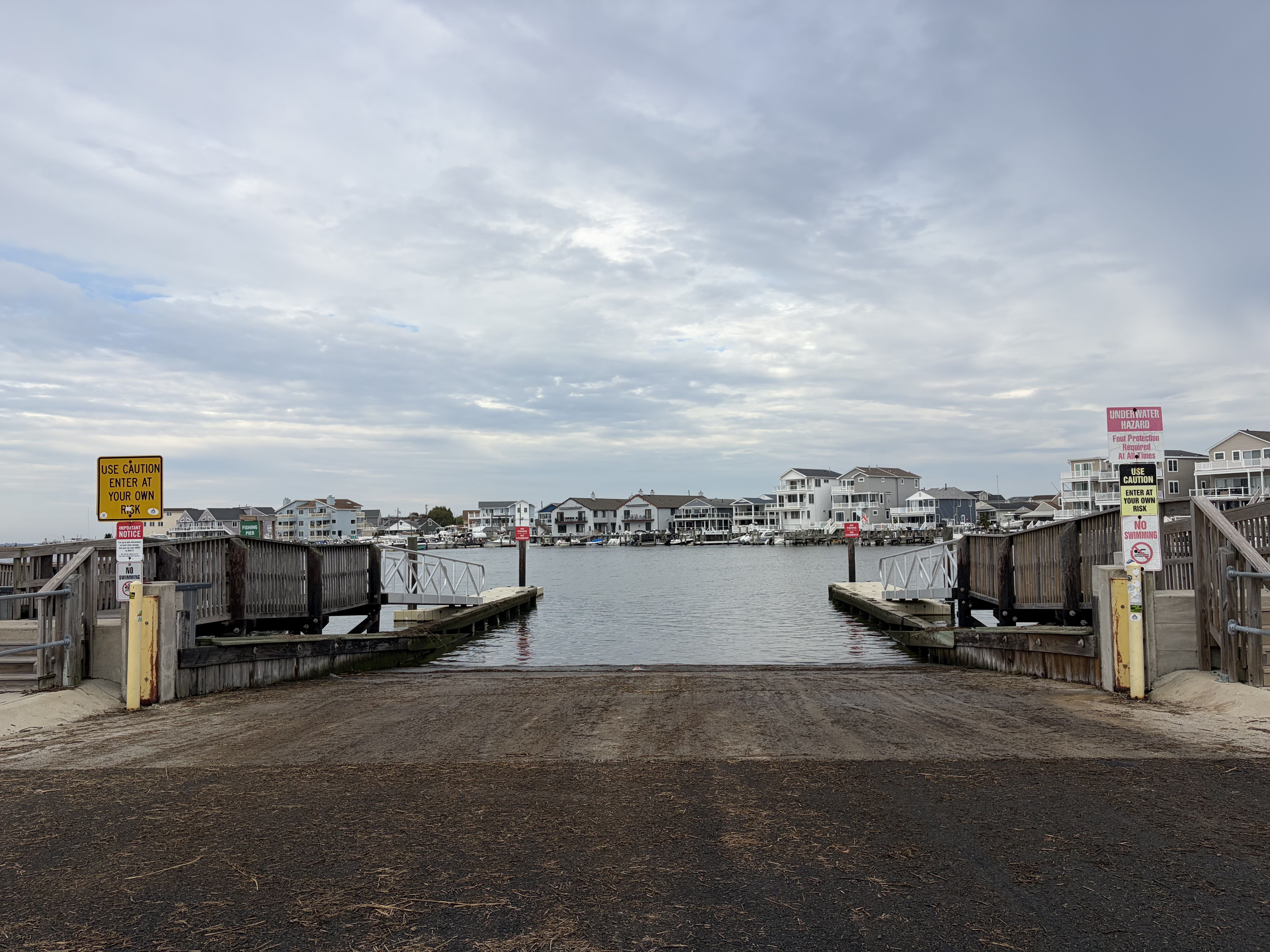
    During the September 2026 nor’easter, metal floodgates were brought in to the city’s Municipal Boat Ramp by the city of Brigantine to physically block flood waters.John Cunnion
    Brigantine’s municipal boat ramp was previously an entry way to devastating flooding. But city officials installed flood pumps and metal gates to keep the water off the island, and to drain the island between high tides.Amy S. Rosenberg / staff

    ‘Our girl took a beating’

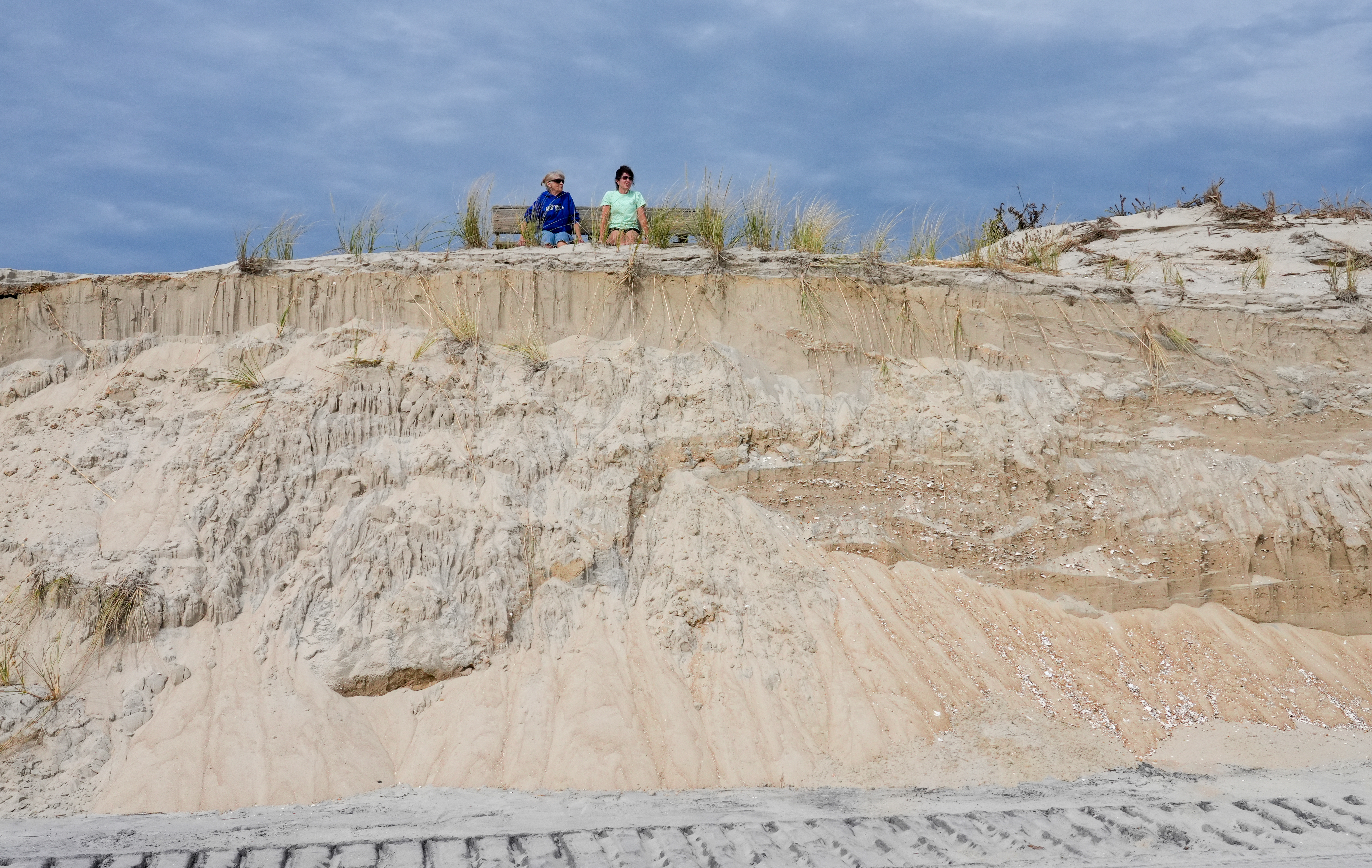
    In parts of Holgate, Brigantine, Atlantic City, and North Wildwood, the storm left cliffs six feet or higher, cutting off access to the beach at multiple street ends. Vertical erosion uncovered old structures including rotting old wooden piers.

    Streets in Long Beach Township, West Wildwood, and Atlantic City took on water through multiple days of high tide, damaging residential garages and other ground floor spaces.
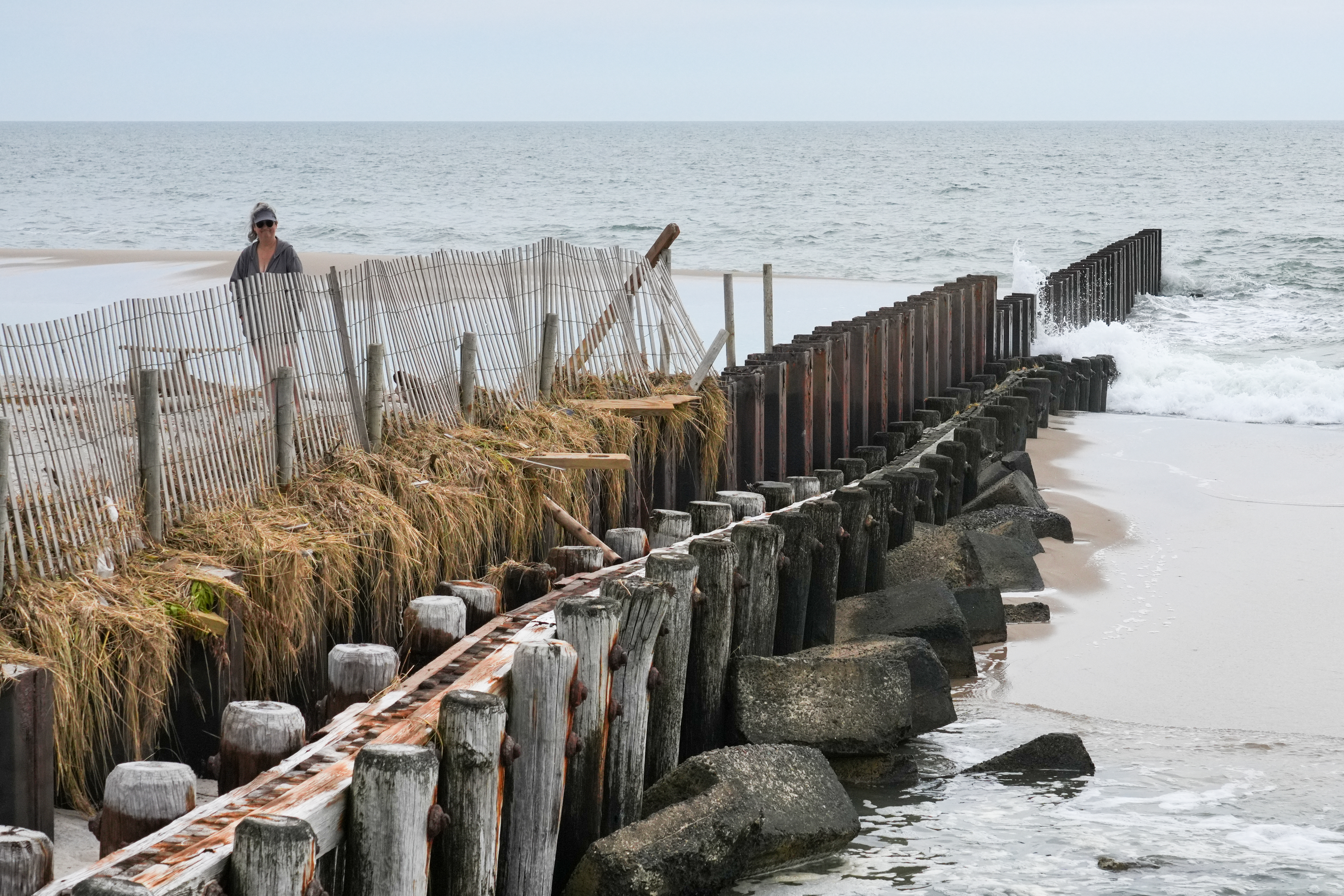
    Abby Mason, of Pottstown, looks at storm damage in Holgate on Thursday.Tim Hawk / For The Inquirer

    On Sigsbee Avenue, contractor Vincent Allen of B. Grigoletto Contractors was ripping out ruined insulation and dry wall on two houses, both second homes.

    He noted that since Sandy, a lot of the smaller homes had been torn down and replaced by elevated homes, where the ground floors are not, technically, living spaces. “Basically, if you lived on the bay, you got water,” he said. “This wasn’t as high as Sandy, nowhere near it.”
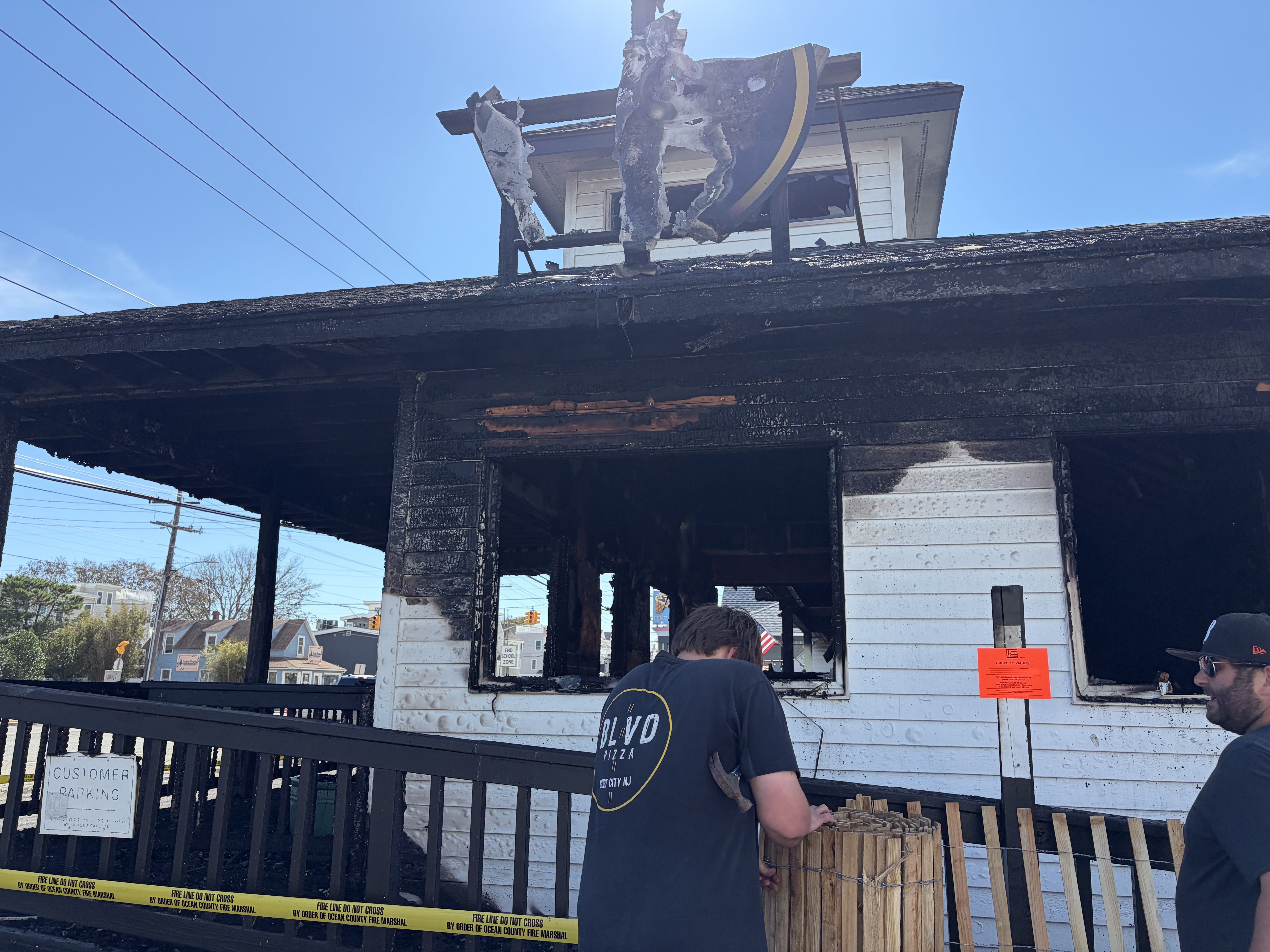
    Owner Mike Franzoni at what’s left of his BLVD Pizza in Beach Haven, which was flood damaged days before a fire broke out.Amy S. Rosenberg / staff

    On Long Beach Island and Atlantic City, numerous businesses were mopping up or closing early for the season after flood damage.

    “We are truly sick to our stomachs, and it hurts,” Moments at Scannicchios, a restaurant on Fairmount Avenue in Atlantic City, said in a Facebook post. “In the end we will reopen.” The restaurant asked people to help out a nearby corner bodega, El Rinconcito Grocery, it said lacked similar resources.

    On Long Beach Island, the ruined insides of the Dockside Diner were strewn across the front of the restaurant. “Our team, our family, is safe,” the owners wrote on Facebook. “But our old girl Dockside took a beating.”

    Nearby, Mike Franzoni looked at the charred remains of BLVD Pizza’s Beach Haven location, which suffered flood damage and had a fire a few days later. Another location, in Surf City, was undamaged.
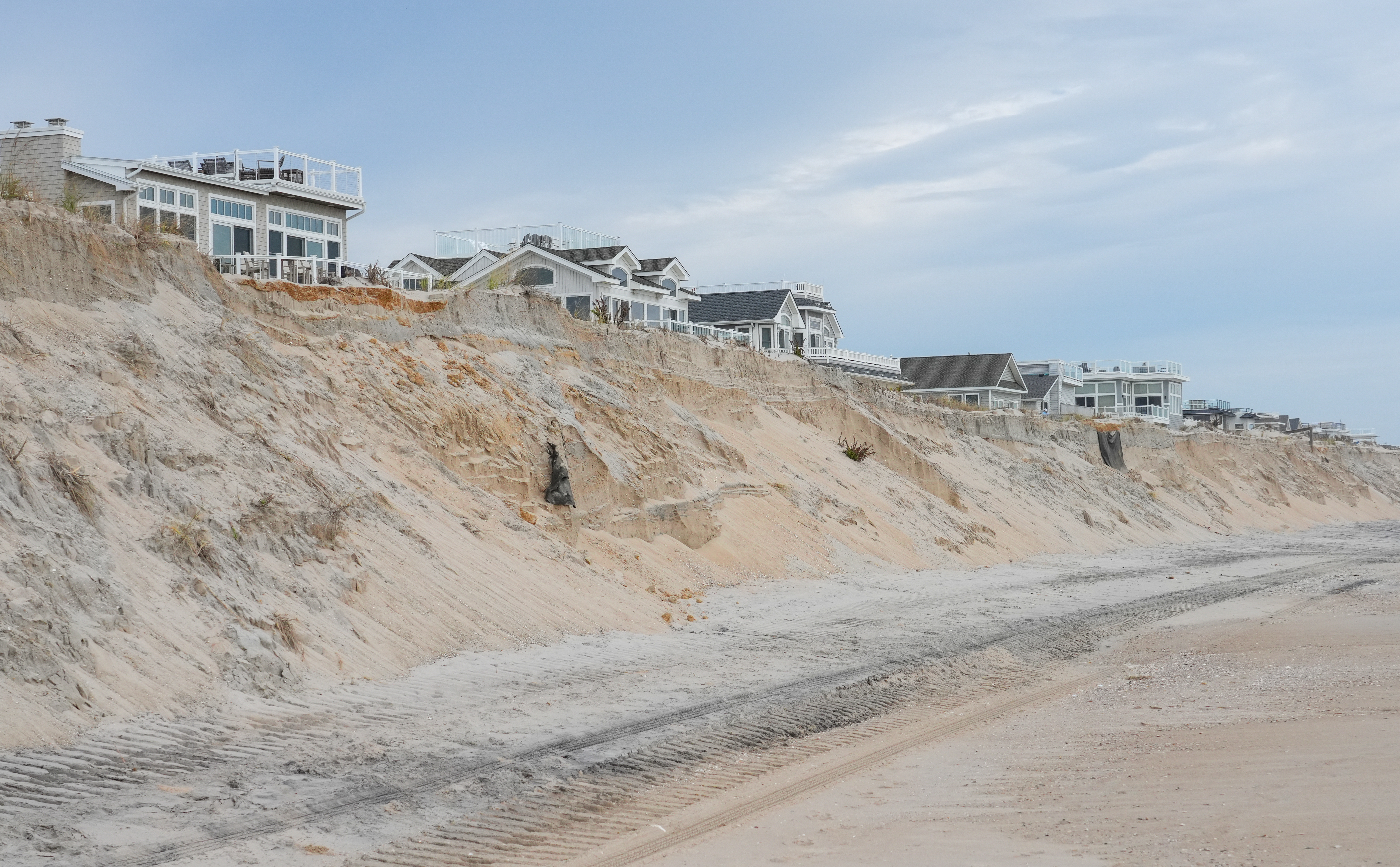
    Storm damage in Holgate on Thursday.Tim Hawk / For The Inquirer

    On Long Beach Island, the beloved “karaoke garage,” belonging to the family of Diane O’Donnell, 80, of Yardley, Pa., took on two feet of water, half of Sandy levels.

    Last week, an Indigo Girls song was playing out of the space where Kelly Kolbjornsen and her family would recruit people to stop and sing karaoke on their way down Long Beach Boulevard.

    “It’s part of having a beach house, but it’s a little overwhelming,” Kolbjornsen said.

    ‘A good gauge’

    New Jersey Gov. Mikie Sherrill and U.S. Rep. Jeff Van Drew brought representatives from FEMA and the Army Corps of Engineers to focus on severe damage to ramps from Brigantine’s concrete promenade in the north end and the near breaching of a private retaining wall that was the only line of defense after surging waves destroyed dunes at the promenade’s edge.

    But Mayor Vince Sera also pointed out that neighborhoods devastated during Sandy remained mostly damage-free.

    “We put floodgates in before the storm came into Brigantine,” he said. “They closed all of the floodgates and prevented a lot of water from coming in. On each low tide, they let the water out to drain, and closed them again for the next high tide.

    “Any water that comes into the streets, we have pumps around the island,” he said. “It pushes the water out over the bulkhead and back into the bay. It drains the island.”

    Residents near those points of vulnerability took note.

    “Without the pumps, it would have been horrible,” said Terri Cunnion, whose home sits on Bayshore Avenue across from the boat ramp, a major thoroughfare of flooding during Sandy (when the previous home on her lot was destroyed). “Without those gates, this block wouldn’t be.”

    Through multiple high tides, last weekend’s floodwaters never got past the lip of the garage in the Cunnion’s house, whose living spaces are built 14 feet to new elevation standards.

    Ocean City’s newly elevated Roosevelt Boulevard was also credited with mitigating damage from the nor’easter, staying above floodwaters and allowing an evacuation route, said Mayor Jay Gillian. The road was reconstructed so that portions were raised by 12 to 20 inches.

    During Hurricane Sandy, bay waters roared right up Brigantine’s municipal boat ramp and surged across Bayshore Road, totaling houses with four feet of water.

    Since the installation of eight permanent flood pumps and two portable flood buster pumps, vulnerable spots like Bayshore Drive and the neighborhood around the town’s golf course are newly fortified. In addition, bulkheads were raised.
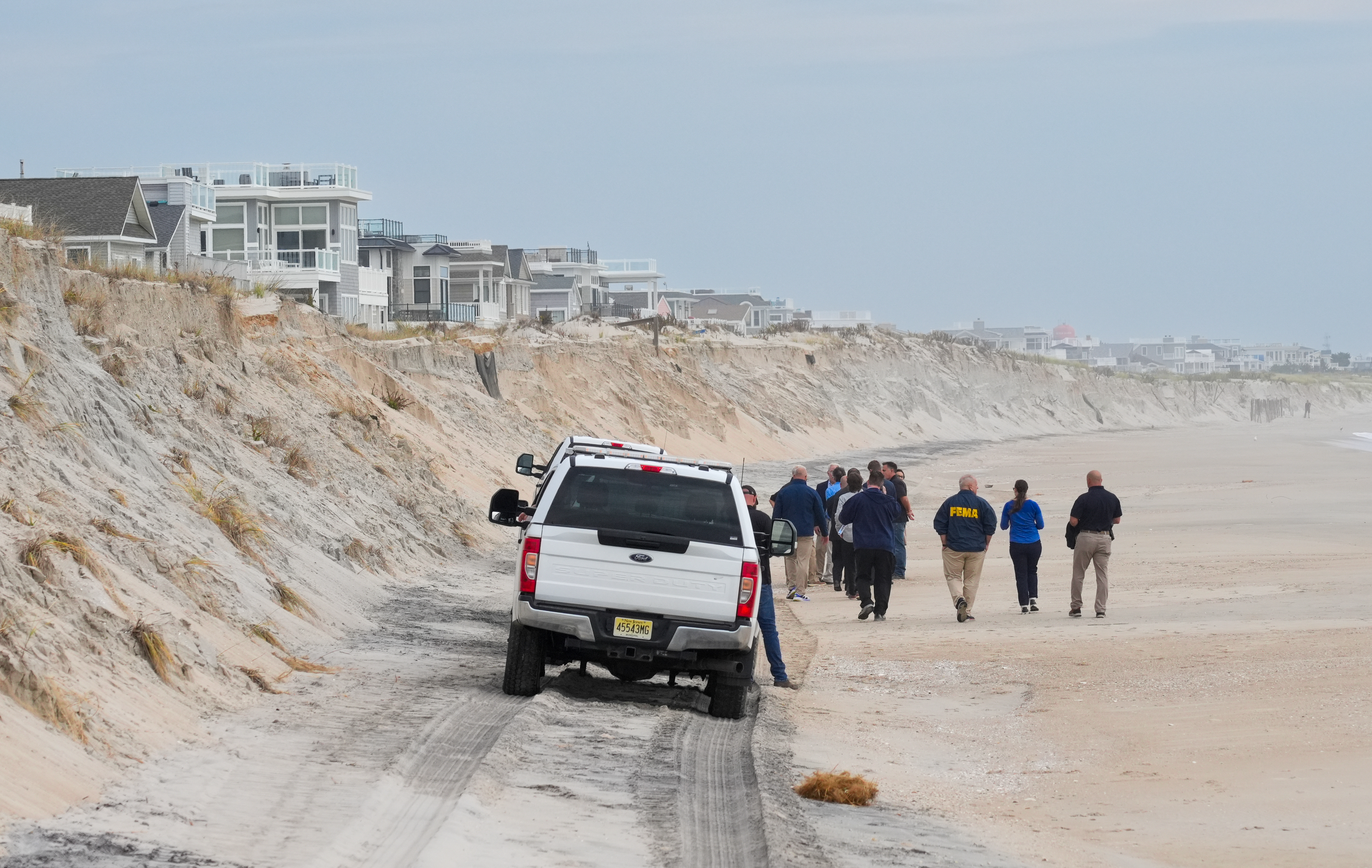
    U.S. Rep. Jeff Van Drew, together with federal, state, and local officials, tour storm damage in Holgate on Thursday.Tim Hawk / For The Inquirer

    Atlantic City, similarly, installed pumps at its Atlantis Avenue station and rebuilt bulkheads in Chelsea and Chelsea Heights. It has yet to complete similar projects in its Ducktown neighborhood, which saw major flooding last weekend, leaving some businesses with tens of thousands of dollars in equipment and merchandise loss.

    Van Drew pointed to other improvements since Sandy that protected utility infrastructure and homes. Homes that were elevated had ground levels that allow water to flow in and then out, he noted. He is advocating a permanent $1 billion “Coastal Trust Fund,” funded by revenue from federal offshore oil and gas leases to provide a stable source of funding for beach fills, dune restoration, and other coastal remediation.

    “The good news is we’ve done a lot of good work,” Van Drew said. “We’ve hardened a lot of structures. When you look at electrical substations, in many cases, they’ve been raised. When you look at transmission lines, rather than being on wooden poles, they are now on industrial grade steel lines that are actually put on much, much stronger holes.”
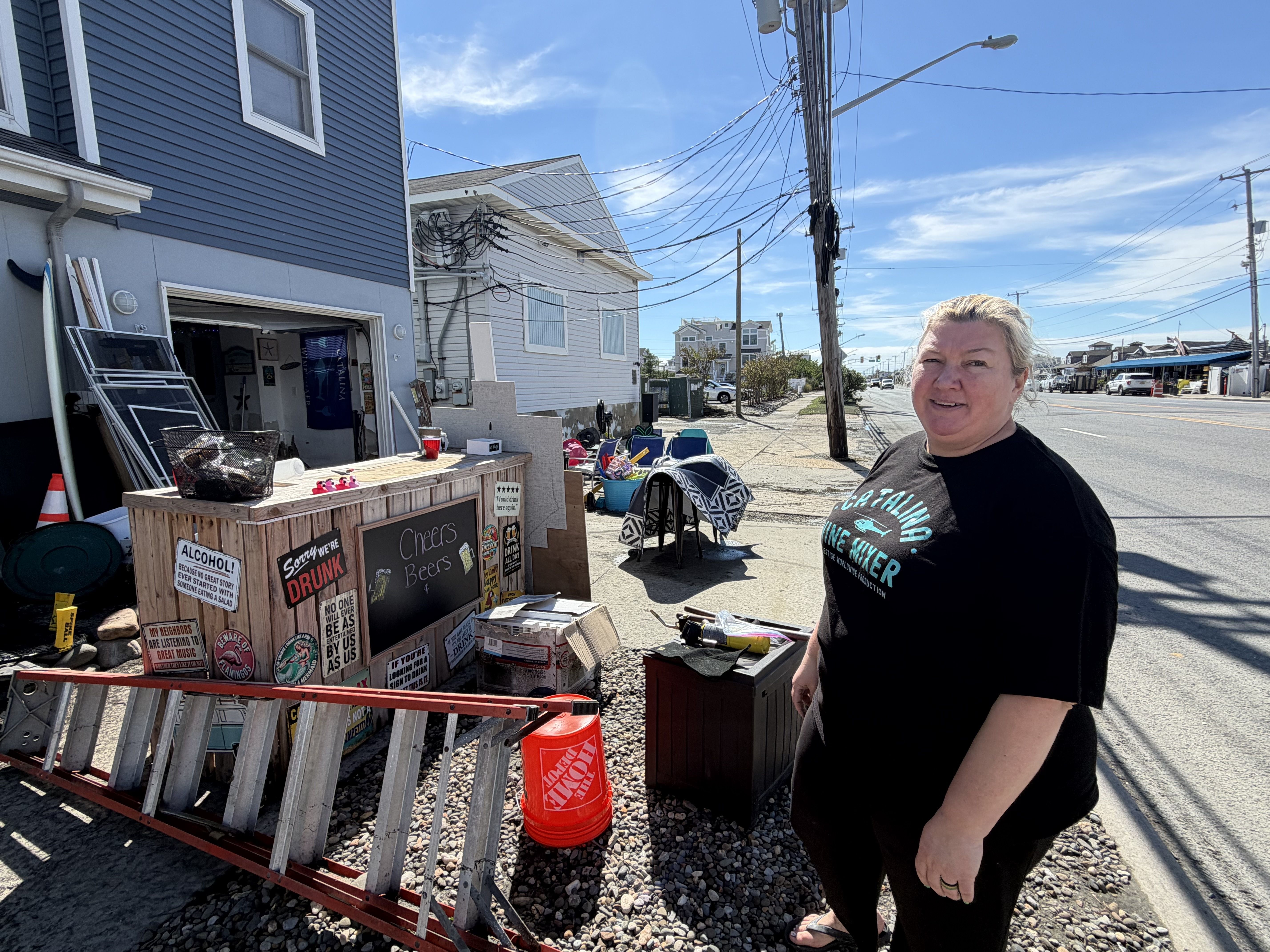
    Kelly Kolbjornsen looks at the damaged bar from her garage, where she and her family recuited passers by to sing karaoke, on Wednesday, days after the nor’easter.Amy S. Rosenberg / staff

    ‘Sacrificial sand projects’

    On an Oct. 1 tour from Long Beach Island to North Wildwood, Van Drew made the case for continued beach replenishment funding, despite the storm eating through a good chunk of the $99 million in recent beach replenishment, most recently in Sea Isle City, Strathmere, Ocean City, Avalon, and Stone Harbor.

    D. Lee Forsgren, the performing assistant secretary for the Army for Civil Works, who oversees the Army Corps, made a point of calling beach replenishment projects “sacrificial sand projects.” He compared the engineered beaches to your car’s “crumple zones” that are made to take the initial beating.
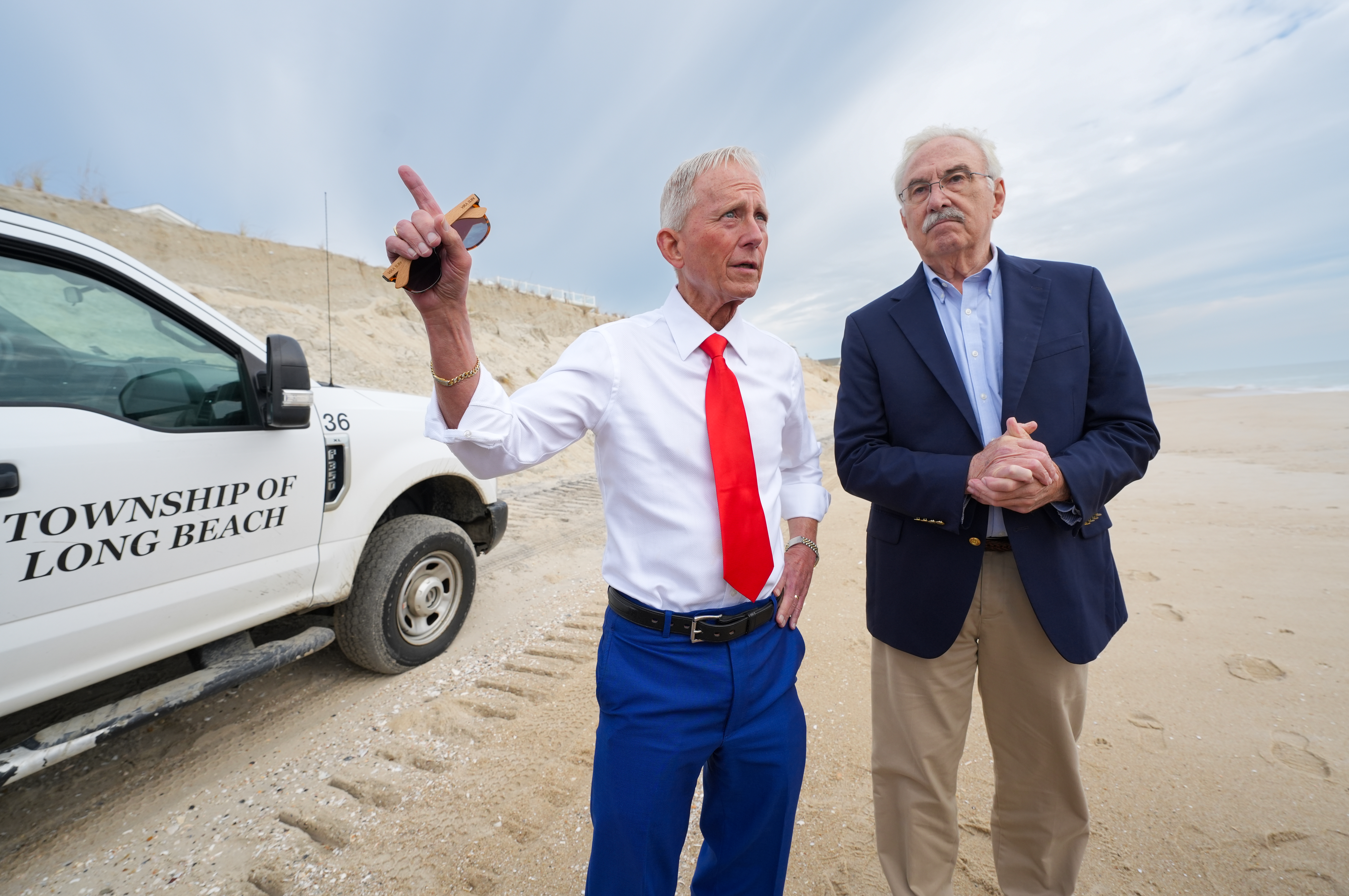
    U.S. Rep. Jeff Van Drew (left) talks with Holgate Mayor Joseph H. Mancini in front of beach erosion in Holgate on Thursday.Tim Hawk / For The Inquirer

    “We don’t put sand on these beaches to make them pretty beaches,” he said. “They are designed for storm damage reduction.”

    Still, he cautioned Van Drew that “the best opportunity to really make progress would be with a supplemental appropriation associated with the storm because there’s not a lot of pocket change sitting around in the core budget.”

    That will require a disaster declaration from Sherrill, who toured Brigantine on Tuesday.

    Aside from more sand, Van Drew said the towns, state, and Army Corps were looking at funding hard structures — like jetties, groins, and seawall extensions — as ways to keep the elevated tides that accompany storms from overwhelming beaches.
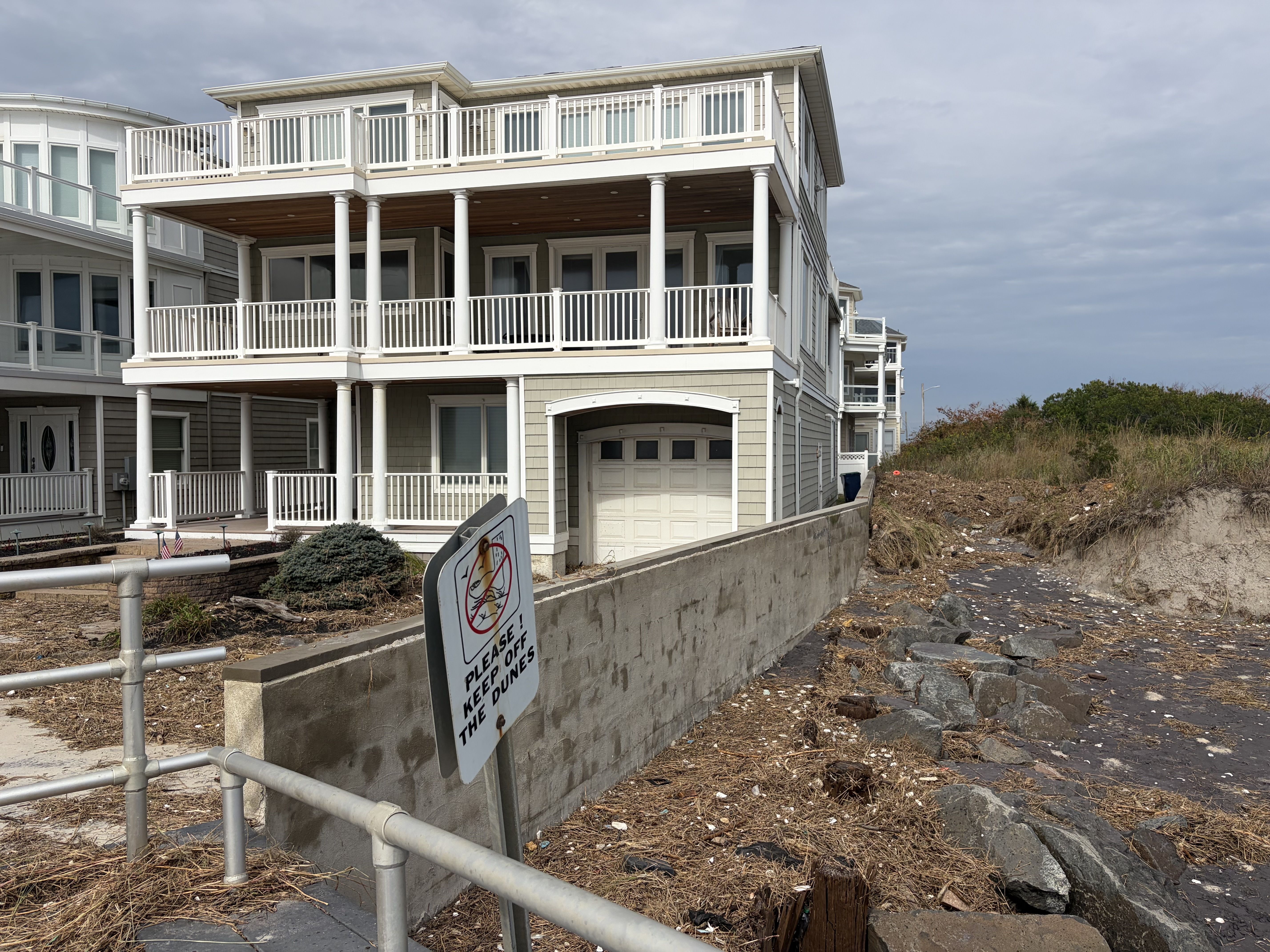
    A house on Brigantine’s north end belonging to Clay and Lori Goldsmid and other nearby homes were spared major damage during the recent nor’easter.Amy S. Rosenberg / staff

    In Brigantine, Mayor Sera rode out the storm at the tip of the promenade, watching railings get blown off, dunes disappear, and the nearby retaining wall nearly buckle. He said city officials had compiled a list of who was in nearby homes in case of an emergency evacuation.

    He is seeking to extend the promenade another 250 feet north, and says the state is studying whether adding hard structures to keep the sand in place will help a situation where a sandbar that has in recent years grown into what is now called Horseshoe Island is starving Brigantine of sand.

    The city’s flood mitigation efforts since Sandy have resulted in a 25% discount for residents on flood insurance, he said. And he wholeheartedly recommends flood pumps and gates to other municipalities, like Ventnor, whose Ventnor Heights section was cut off at both ends by flooding for hours during high tides.

    Sera and other knows the big storms will come again, probably this winter, with the El Niño warming in the equatorial Pacific.

    With sea levels rising, some residents who came out to see the federal officials in Brigantine wanted to know about timelines.

    “How fast is fast,” interrupted Louise Seitel, of nearby Absecon, as officials spoke of extending the seawall.

    “A study is probably going to be 18 months,” Nate Barcomb, an Army Corps deputy district engineer based in Philadelphia, acknowledged.

    “Government is tough,” Van Drew said.
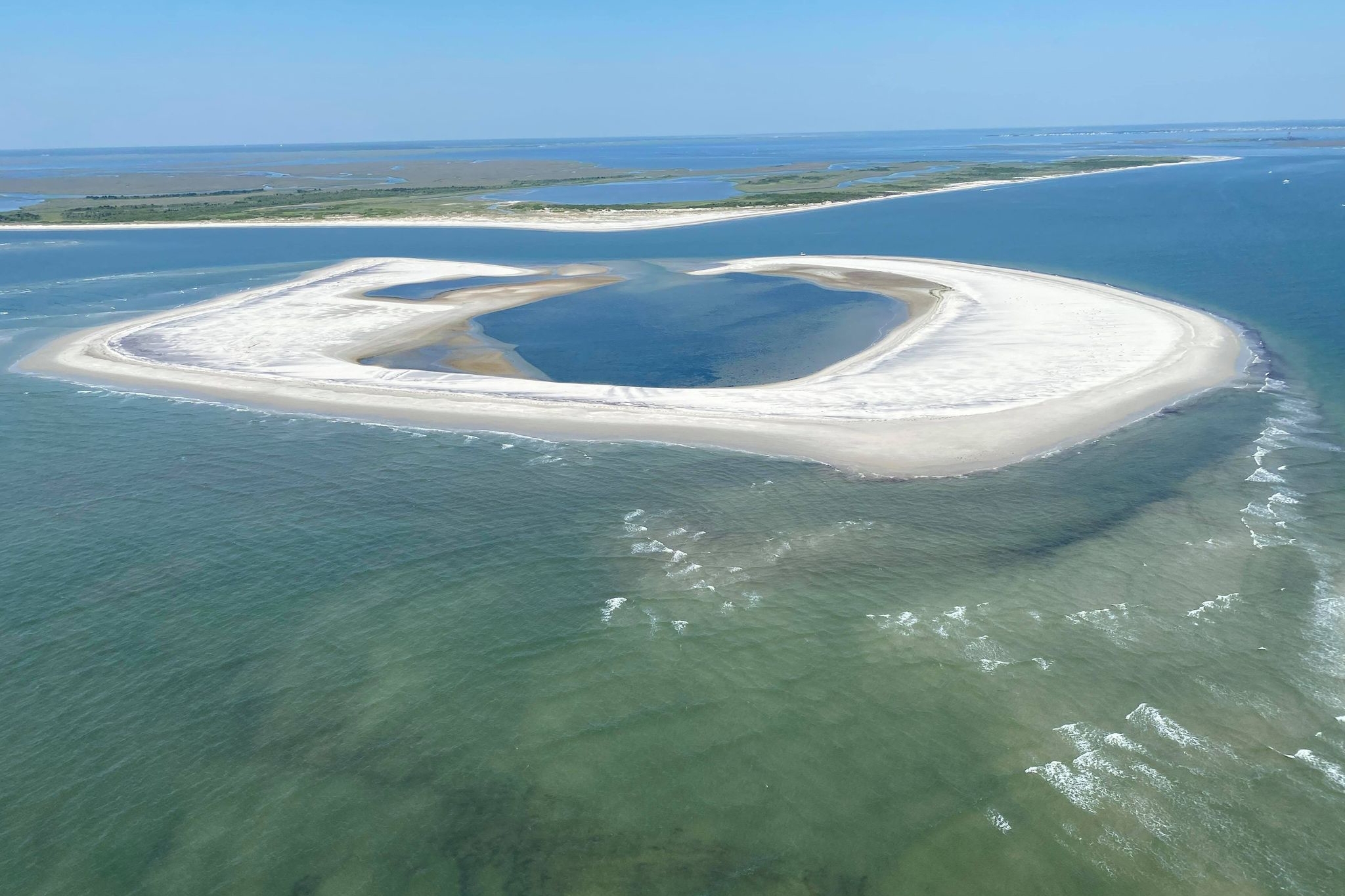
    Aerial photograph of New Jersey’s Horseshoe Island in June 2021.N.J. Department of Environmental Protection / U.S. Fish & Wildlife Service
  • Human remains found off Atlantic City 45 years ago identified as retired Coast Guard officer

    Human remains found off Atlantic City 45 years ago identified as retired Coast Guard officer

    New Jersey State Police have identified the remains of a man found off the coast of Atlantic City 45 years ago.

    Glen Napoleon Burbage, a retired U.S. Coast Guard officer from South Carolina, was last seen in March 1981. Burbage, who was 59 when he disappeared, had flown to Atlantic City that month, and was never heard from again, officials said in a statement.

    Two months later, on May 22, 1981, a group of boaters found a human body in the ocean about a mile off Raleigh Avenue in Atlantic City. At the time, investigators believed the man had died several weeks before his remains were recovered.

    Police, however, were unable to immediately identify the remains. Previous DNA testing did not reveal any matches in the Combined DNA Index System, a national, federally managed DNA profile database. And lacking further leads, the case went unsolved for decades.

    In April, authorities enlisted the help of Ramapo College’s Investigative Genetic Genealogy Center. Founded in 2022, the Mahwah center specializes in training students in an increasingly utilized field of DNA-based investigative technology that uses data from commercial genetic testing to identify previously unidentified victims and suspects.

    That month, the center said, it had undergraduate students and law enforcement officials attending a weeklong boot camp examine the then-unidentified body’s DNA. Students built family trees and examined genealogical records in an effort to identify the man.

    Following the boot camp’s end, they found a lead in Burbage, who had been missing since March 23, 1981. New Jersey State Police later conducted what they called a “one-to-one familial DNA comparison” with DNA collected from one of Burbage’s living children. South Carolina authorities also assisted in the case.

    “For 45 years, Glen Burbage had a name and a family, even though investigators did not yet know who he was,” said center director Cairenn Binder in a statement. “Investigative genetic genealogy gives us a way to revisit cases that once seemed to have reached the limits of available technology.”

    Burbage’s case is not the first solved with help from Ramapo’s center. Perhaps most notably, in June last year, it identified through similar means the remains of Henry Goodsell, the captain of a schooner that wrecked off the coast of Brigantine in December 1844.

    When it was solved, Goodsell’s case was among the oldest closed using investigative genetic genealogy, at more than 180 years old. Goodsell, having been unidentified for so long, and his remains discovered along a wide swath of the New Jersey coast, had become known colloquially as “Scattered Man John Doe.”

    Investigative genetic genealogy differs from traditional DNA testing in that it is more expansive, and is able to identify more distant relatives. Regular DNA testing, meanwhile, looks at relatively little DNA information, Binder told The Inquirer last year.

    With that additional information, genetic genealogists are able to reverse-engineer an unidentified person’s family tree to home in on the identity.

    That investigative technique became widely known in 2018, when it was used to identify the Golden State Killer in California. Since then, it has been employed in notable cold-case identifications locally, including in identifying the so-called “Boy in the Box” and the Fairmount Park rapist.

    Burbage’s death, however, remains under investigation, as authorities have not determined what led to his disappearance or demise. Officials have asked anyone with information about the case to contact the New Jersey State Police Missing Persons Unit at missingpinformation@njsp.gov.

  • Ruth Weisberg, longtime radio and TV show host, and voice-over actor, has died at 70

    Ruth Weisberg, longtime radio and TV show host, and voice-over actor, has died at 70

    Ruth Weisberg, 70, formerly of Philadelphia, longtime award-winning radio, TV, and online news anchor, features reporter, and show host; onetime voice of Shadow Traffic, Bell Telephone, and other voice-over clients; voice-over instructor, writer, speaker, pianist, art model, actor, Miss Greater Philadelphia 1980, volunteer, and stand-up comedian, died Wednesday, Sept. 2, of ovarian cancer in an assisted living center in Sarasota, Fla.

    Reared in Oxford Circle and a graduate of Northeast High School and Pennsylvania State University, Ms. Weisberg was a prolific media personality for nearly 50 years in Philadelphia and Florida. She was the radio voice of Shadow Traffic in the late 1970s and early 1980s, a news anchor and features reporter at WXTU, WCAU, WIFI, WPEN, and WSNI radio in the mid-1980s, and a radio, TV, and online talk show host from the late 1980s until recently.

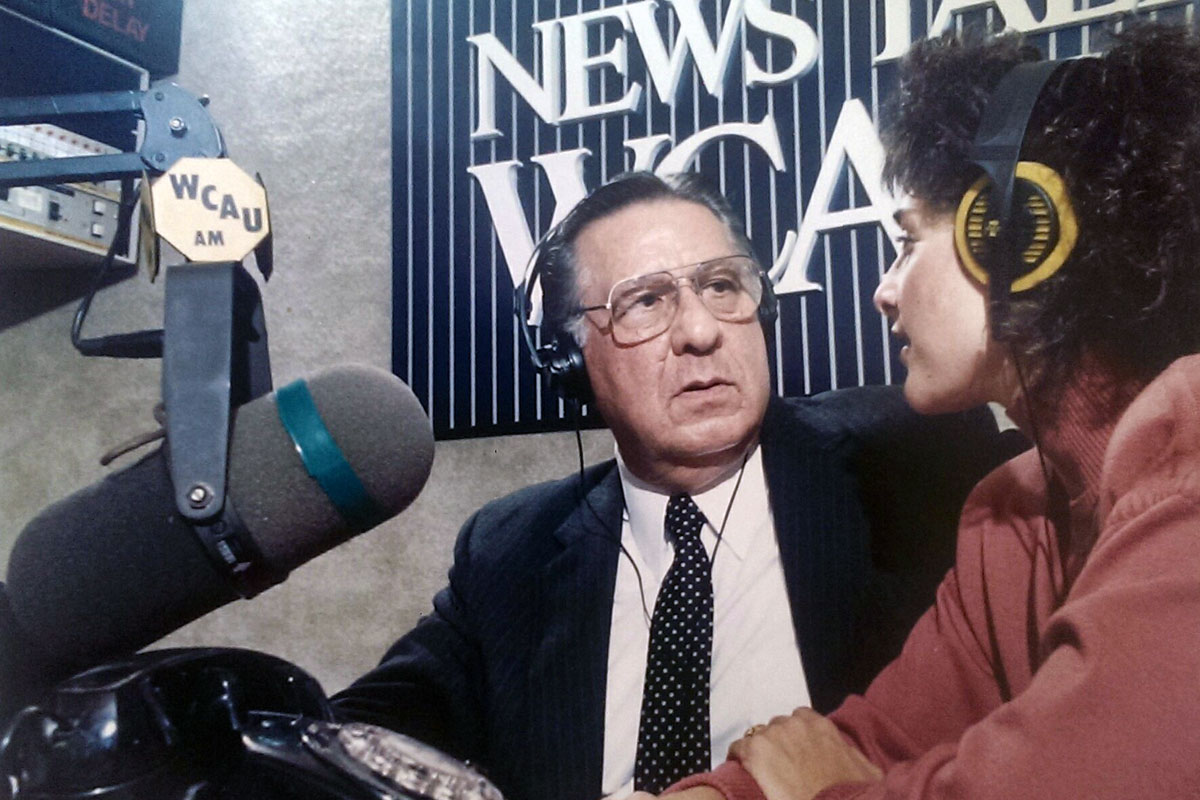
    She hosted Frank Talk With Frank Rizzo on WCAU radio in 1988 and ’89, and told The Inquirer in 1989 that working with the former mayor was like flying a “careening aircraft for three hours.” She also hosted Storytime and Show ’n Tell with Miss Ruth on local cable TV and online in 2015, and Funny You Should Ask, a radio show and podcast about comedy, in Florida in 2023.

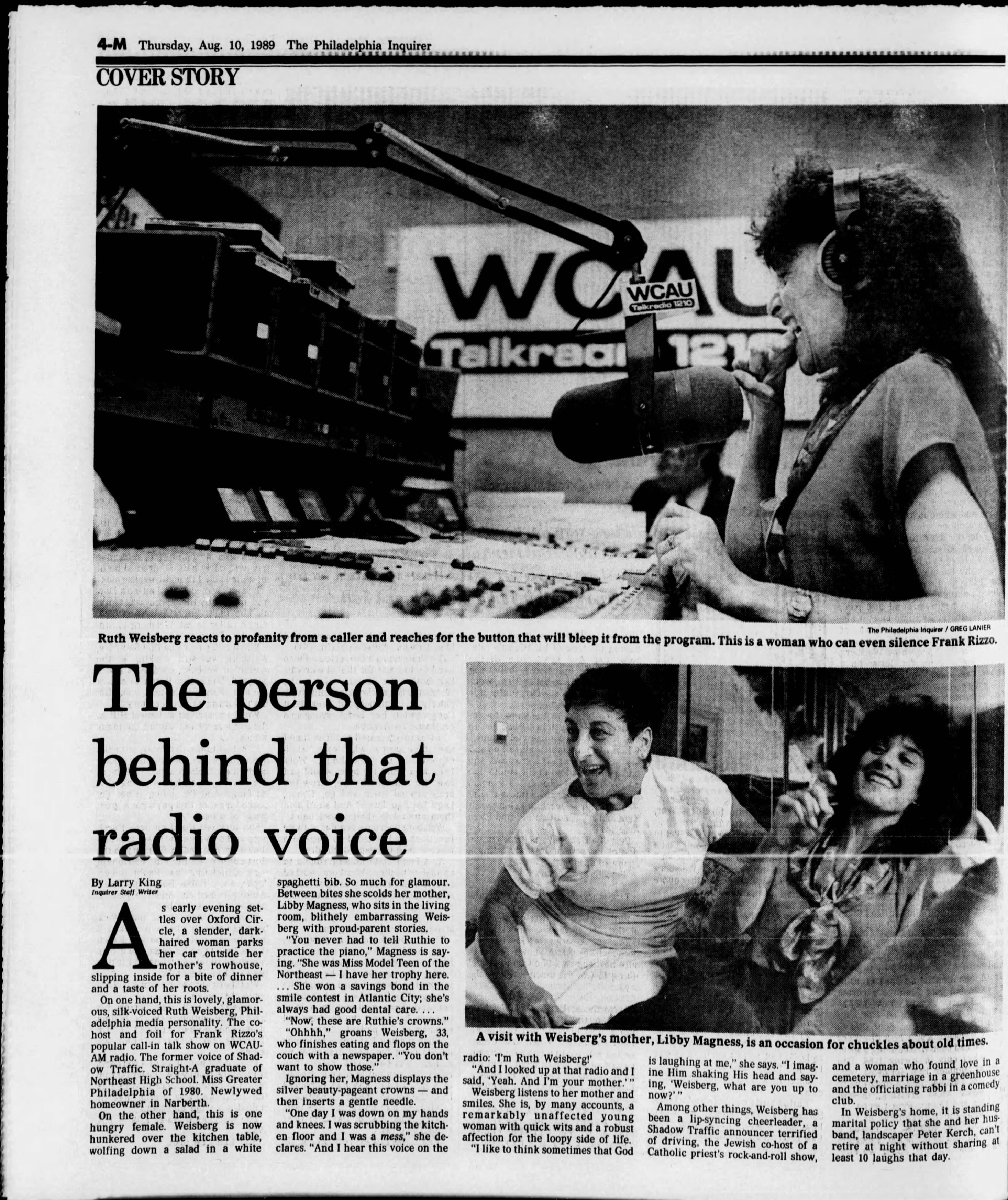
    Always drawn to the theater and drama, she started producing TV and radio shows while studying special education at Penn State in the 1970s, and wound up cohosting a local rock and roll radio show as a senior exchange student in England. “All of the sudden,” she told The Inquirer in 1989, “I had this new-found love of radio. I never pursued it. It just came calling.”

    Ms. Weisberg reported on all kinds of lifestyle issues and earned radio awards from the Associated Press, the Philadelphia Press Association, and other groups. In 1994, she was named member of the year by the Philadelphia chapter of the International Television Association.

    She called herself Miss Ruth and Ruth Weisberg Philly on Facebook and reveled in her constant innovation and free spirit. She told The Inquirer: “I like to think sometimes that God is laughing at me. I imagine Him shaking His head and saying: ‘Weisberg, what are you up to?’”

    As a voice-over narrator and actor, she recorded corporate training videos, audiobooks, and radio and TV commercials. Bell Telephone hired her to record “We’re sorry. Your call cannot be completed as dialed” and other phone messages in 1985 because, a top official told her in a letter, her voice was “congenial yet persuasive.” She also taught voice-over classes for organizations and individuals, and mentored others on whatever she was doing wherever she worked.

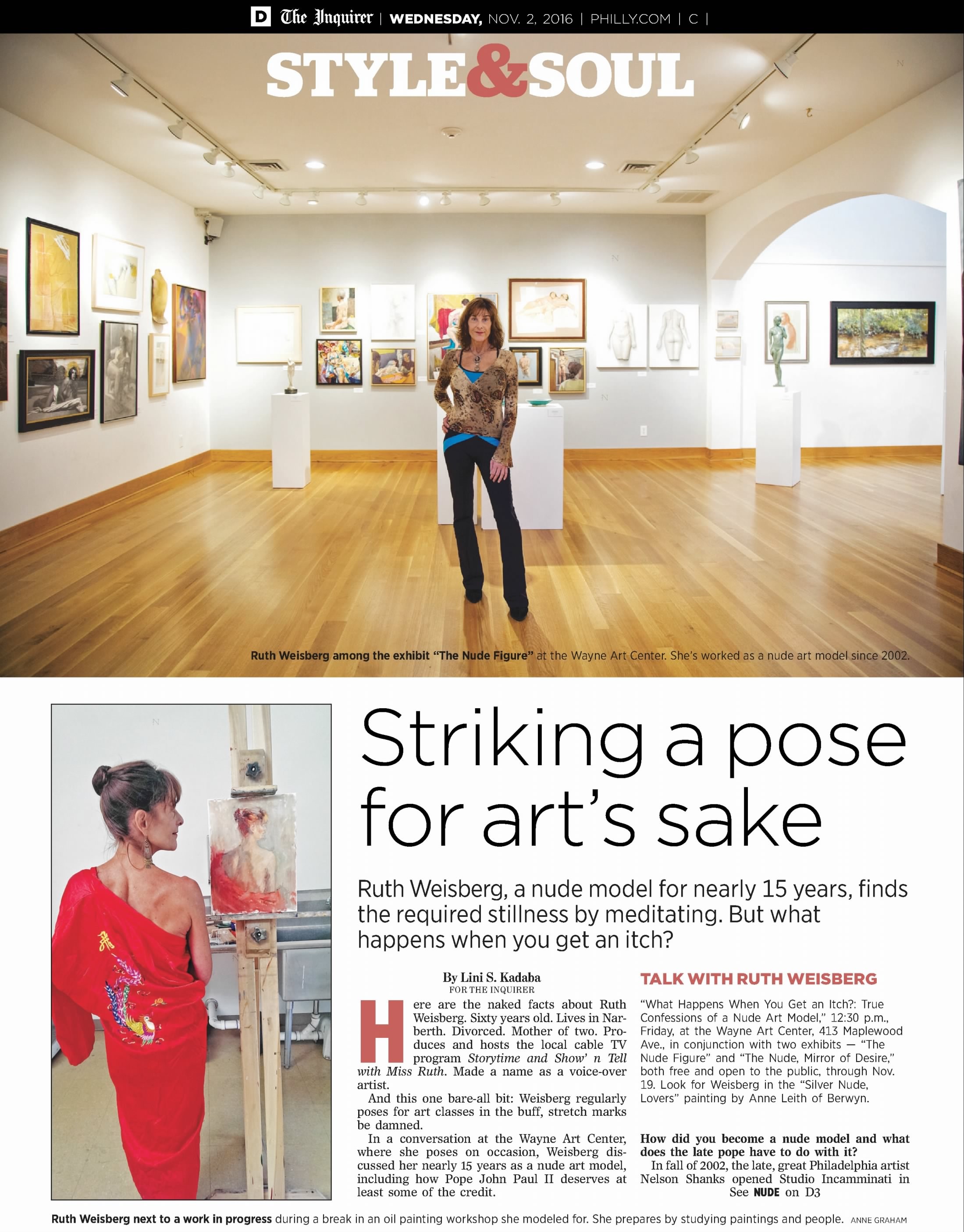
    She modeled for artists — some called her their “muse” — at art centers and colleges, and starred in a short video called The Accidental Art Model. “I love being part of a creative, imaginary, intrinsically artistic world,” she said in the video. “I would like to think of myself as the inspiration and the template for the work that happens.”

    Ms. Weisberg co-hosted a talk with onetime Mayor Frank Rizzo in 1988 and 1989.WCAU Radio

    Ms. Weisberg was drawn to beauty pageants, she said on Facebook, by the glitz and glamour. She was named Miss Central Pennsylvania as a Penn State freshman in 1975 and Miss Greater Philadelphia in 1980.

    “I never once felt objectified, exploited,” she said in a 2018 radio interview about the contests. “If anything, I felt celebrated for my talents and hard work.”

    She held seminars on career networking, spoke to groups often about radio and voice-over work, and read stories to children in bookstores. She wrote op-eds for The Inquirer and articles for the Main Line Welcomat and other publications.

    She posted videos on YouTube. She cohosted the 2001 Miss Greater Philadelphia Pageant. Former Daily News columnist Stu Bykofsky called her “both an eyeful and earful.”

    Ms. Weisberg was featured in The Inquirer in 2016 (above) and 1989 (below).Newspapers.com

    She also acted in local stage productions and performed stand-up comedy routines in brewpubs and restaurants and at gatherings. She was featured several times in The Inquirer and Daily News, and moved to Sarasota in 2016.

    “My work motto is that I will accept any job position that does not require wearing a hair net,” she said in a 2016 online interview. Her family said in a tribute: “Her life and influence were an inspiration and a sparkle of joy to so many people.”

    Ruth Maxine Weisberg was born May 31, 1956, in Philadelphia. She was a cheerleader, was active in theater class, and got straight A’s at Northeast High School.

    She and her mother, Libby, volunteered to entertain people in hospitals and nursing homes when she was young, and she knocked on neighborhood doors for Democratic presidential nominee George McGovern when she was 16.

    Her family spent memorable summers in Atlantic City, and she earned a bachelor’s degree in special education at Penn State.

    She married Peter Kerch in 1988, and they had a daughter, Talia. After a divorce, she married James Herbert, and they had a son, Elliott. They divorced later.

    Ms. Weisberg liked crossword puzzles, collected classic telephones, and attended concerts and beach drum circles. She was a certified scuba diver and wore a hat emblazoned with “The Queen of Everything.”

    Friends and colleagues called her “witty and supportive” and praised her “charm, humor, and kindness” in online tributes. One said she “always brought warmth and sunshine to wherever she was.”

    Her daughter said: “She was effervescent, exuberant, and whimsical.”

    Ms. Weisberg (left above and center below) took her voice-over students on a field trip in 2015. Emily Cohen / Staff Photographer

    In addition to her daughter, son, and former husbands, Ms. Weisberg is survived by two brothers and other relatives.

    A private celebration of her life is to be held later.

  • Atlantic City’s top cannabis official was charged in a scheme to solicit bribes from a weed business

    Atlantic City’s top cannabis official was charged in a scheme to solicit bribes from a weed business

    Atlantic City’s top cannabis official is facing federal charges for a scheme to solicit cash bribes from a dispensary owner in exchange for fast-tracking their license and avoiding city fees.

    Kashawn “Kash” McKinley, 42, commonly referred to as “A.C.’s Weed Czar” for his role overseeing the city’s legal marijuana industry, was charged with honest services fraud and two counts of soliciting bribes, U.S. Attorney in New Jersey Robert Frazer announced Thursday.

    In a statement, Atlantic City officials said that Mayor Marty Small Sr. had been apprised of the case and that McKinley had been suspended without pay pending the outcome of the case. Small “believes in the justice system, and Kashawn McKinley is innocent until proven guilty, like any other American,” according to the statement, which said the mayor promised transparency around the proceedings.

    A public defender assigned to McKinley declined to comment.

    As the director of Atlantic City’s constituent services, McKinley solicited more than $20,000 in cash and marijuana from the cannabis business owner, according to federal prosecutors. In exchange, McKinley assisted the owner, who was not identified by the U.S. Attorney’s Office, in opening a dispensary and resolving certain fees owed to Atlantic City.

    The would-be dispensary owner contacted McKinley in late 2022 for guidance on opening a cannabis business in Atlantic City, prosecutors said. At McKinley’s direction, the duo first met in a parking lot of a defunct Atlantic City restaurant where McKinley told the owner that in exchange for $20,000, he could “help” resolve any issues with opening the dispensary in town, according to prosecutors.

    “We all need to eat,” McKinley allegedly told the dispensary owner at the time.

    The dispensary owner would go on to pay McKinley the $20,000 over the next few months in two installments. Soon after, the owner’s license was approved by the local oversight board, where McKinley is a member.

    Two years after opening, the dispensary owner contacted McKinley in 2025 about the more than $25,000 in fees and taxes the owner owed to Atlantic City for operating the dispensary.

    Prosecutors say that McKinley’s solution to the fees was to reclassify the dispensary from a standard mercantile license down to a “micro” license, which would result in the business needing to pay only $2,500 in annual fees and taxes.

    As part of the reclassification scheme, prosecutors say, McKinley allegedly directed the dispensary owner to orchestrate the assault of a person who McKinley said was “disrespecting” another public official. When McKinley was later shown what prosecutors say appeared to be a photograph of the injured victim, McKinley allegedly “expressed pleasure” and assured the dispensary owner that they “don’t have to worry about nothing” in relation to the disputed city fees.

    Throughout McKinley and the dispensary owner’s exchanges, the weed official would ask for “care packages,” which prosecutors believe to mean bribe payments and samples of weed.

    Since McKinley and the owner were able to reclassify the dispensary down to a micro business license in January, the owner was owed a $25,000 refund from Atlantic City for previously paying the standard license fees. McKinley requested half of that refund from the dispensary owner, according to prosecutors. In March, the dispensary owner gave McKinley a $6,000 kickback from the refund, prosecutors said.

    McKinley’s fraud charge carries a maximum sentence of 20 years in prison and a fine of up to $250,000. Each bribery charge carries a 10-year maximum prison sentence and a fine of up to $250,000.

  • We made 10 Shore predictions for 2026. Here’s how we did.

    We made 10 Shore predictions for 2026. Here’s how we did.

    Things not on my 2026 Jersey Shore predictions bingo card: a canceled luau, and a dispute over live outdoor music featuring audio of 911 complaints posted to Facebook.

    But, at the start of the season, I did make 10 predictions on how the Shore summer would go.

    Here’s how I did.

    Full speed ahead for Icona in Wonderland. ✅

    I’m calling this a win (for my predictions score; people have very different views of the hotel). In June, Eustace Mita finally got his dream of a declaration that the old Wonderland Pier site at 600 Boardwalk in Ocean City is “in need of rehabilitation.”

    The Icona developer is now in negotiations with Ocean City about a hotel proposal, which he says will be a scaled-down version of his initial seven-story, 252-room plan that called for saving the Ferris wheel and historic carousel. City council is vowing to be guided by recommendations from a Boardwalk subcommittee. Meanwhile, council hired a lawyer to defend against a lawsuit by citizens’ groups.

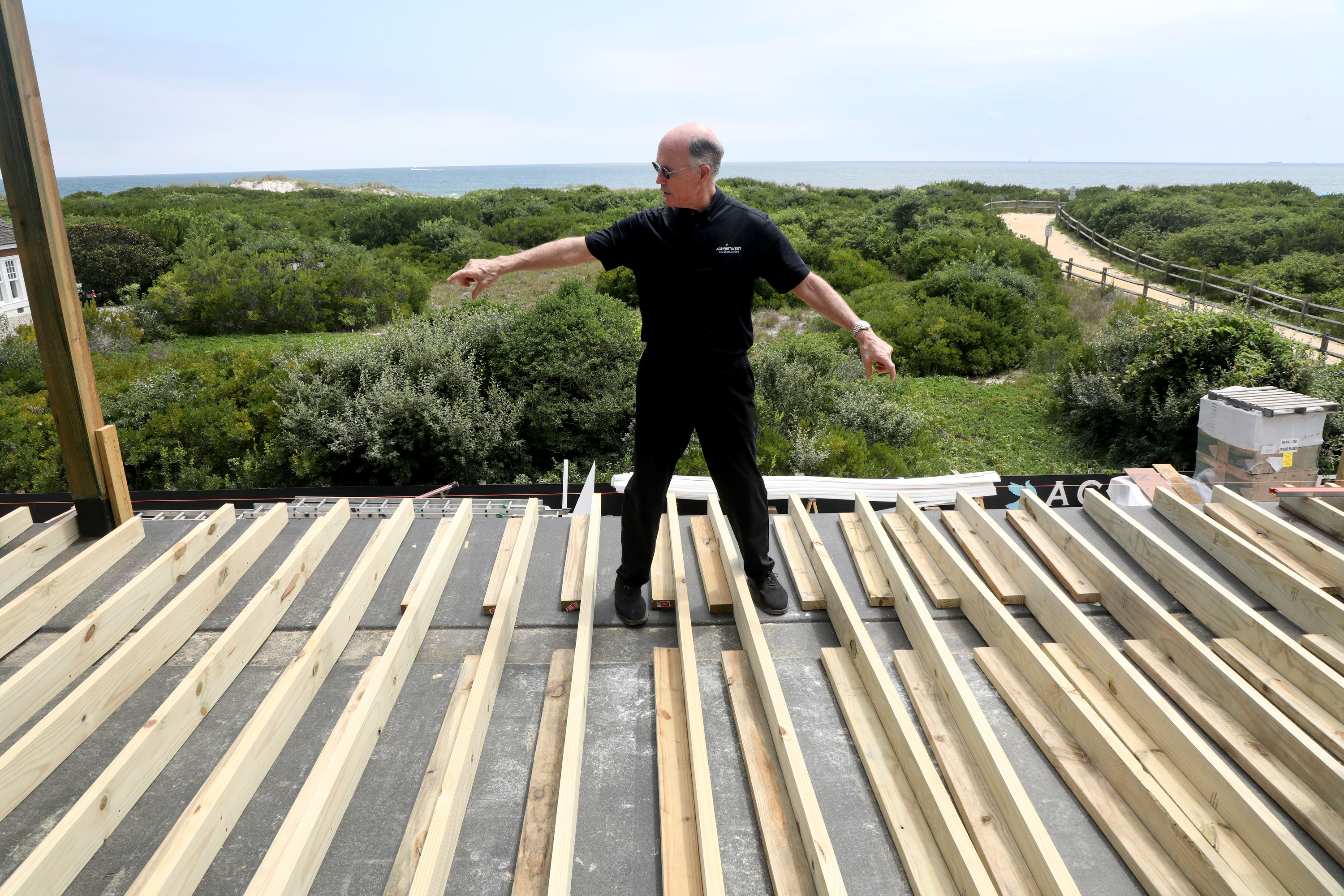
    Eustace Mita talks about the construction of this beachfront Achristavest home on 116th Street in Stone Harbor on Tuesday, August 18, 2026.Vernon Ogrodnek / For The Inquirer

    Atlantic City’s Irish Pub will rise again. ❌

    Alas, not even the sale of the Irish Pub in Philadelphia appeared to jump-start any renovations in Atlantic City, where owner Cathy Burke has been in a stalemate with state inspectors over whether the iconic, beloved pub on St. James Place should be considered a high-rise. The pub has been closed since January.

    Will locals have their fish and chips and Guinness on Christmas Eve as per usual? You never know. Burke did not answer a text message seeking an update. Asked about the Irish Pub’s status, Atlantic City spokesperson Andrew Kramer said he had “nothing new from my end on this one.”

    But, in an upset, the city has begun paving Atlantic and Pacific Avenues, in a development Mayor Marty Small Sr. called “massive,” and said would be completed by year’s end.

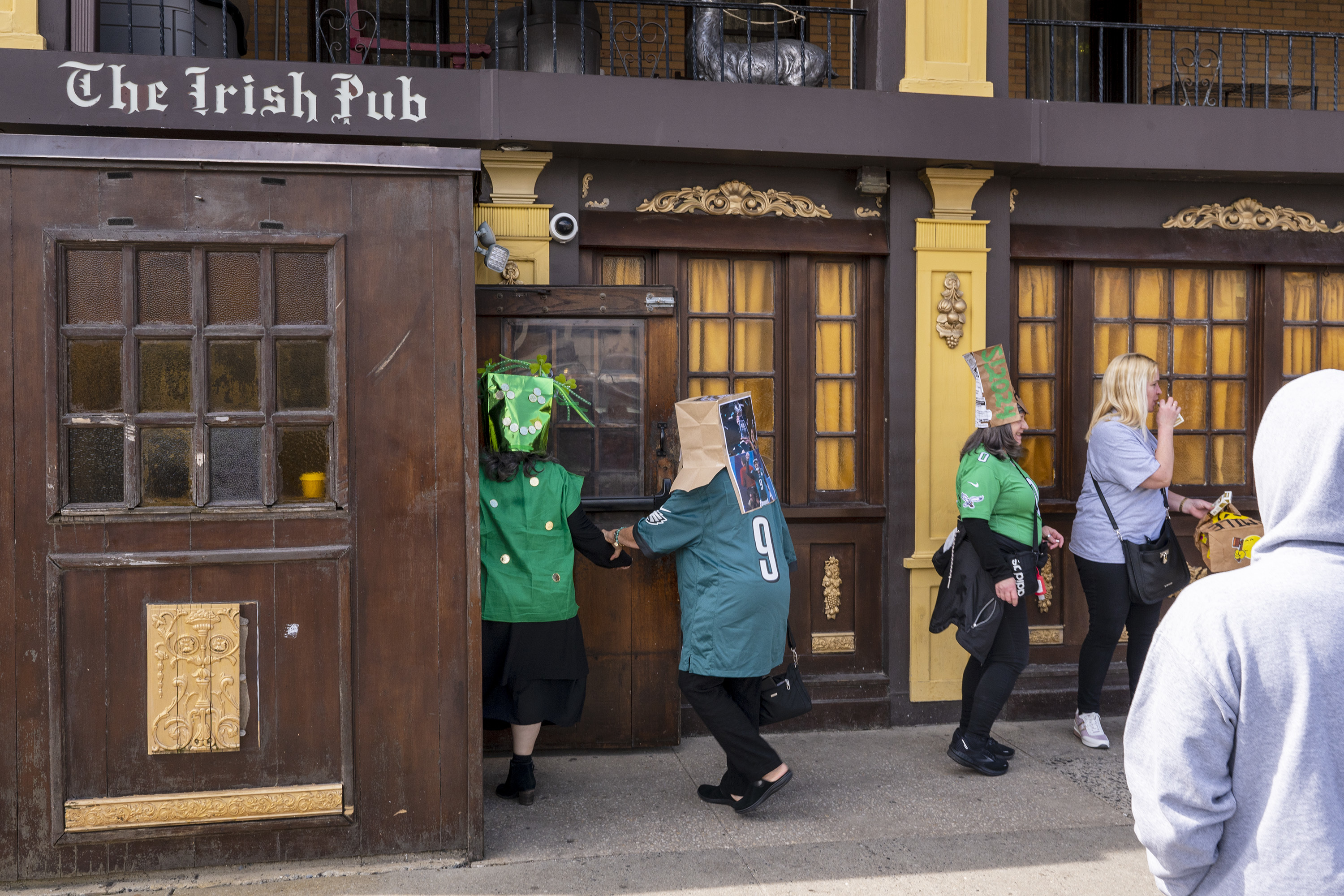
    Fran Cann (left) helps Debbie Stiles (#9, right) get through the door, since she can’t see as well wearing a “St. Nick” Foles bag over her head, as they celebrates Bag Day at the Irish Pub in Atlantic City Monday, Mar. 18, 2024. The friends, from Berlin, N.J.were attending their first Bag Day. The tradition got started when a late-to-the-party patron showed up to the 24-hour bar a day after St. Patrick’s, then put a bag on their head.Tom Gralish / Staff Photographer

    Shore restaurants will tough it out, but struggle. ✅

    Restaurants were stressed this summer. As is usual in late summer, many lost employees as the season wore on all the way to Sept. 7, and had to cut back seating or hours. Others pleaded with their clientele for patience. Still, there were lines down the block for coffee places, and booked up reservations for favorites like Steve & Cookie’s and Cafe 2825. New places were opening deep into summer, like Culina Mundi in Ventnor and Sabrina’s Kitchen in Atlantic City.

    Bakeria 1010 owner and pizza savant Mike Fitzick posted a mock obituary for himself at summer’s end: “Welp that’s all she wrote folks. … Right from start I knew this season was gonna be rough. All the staff I tried to hire fizzled out and the staff I had last year were mostly gone. This summer was pretty treacherous in every aspect … June was trash, July was ok and we finally hit our stride in August. Better late than never, I guess. Unfortunately I have passed away due to self-inflicted cortisol poisoning. In lieu of flowers please donate to the Bakeria 1010 all winter. Jokes aside we WILL be open for lunch today…”

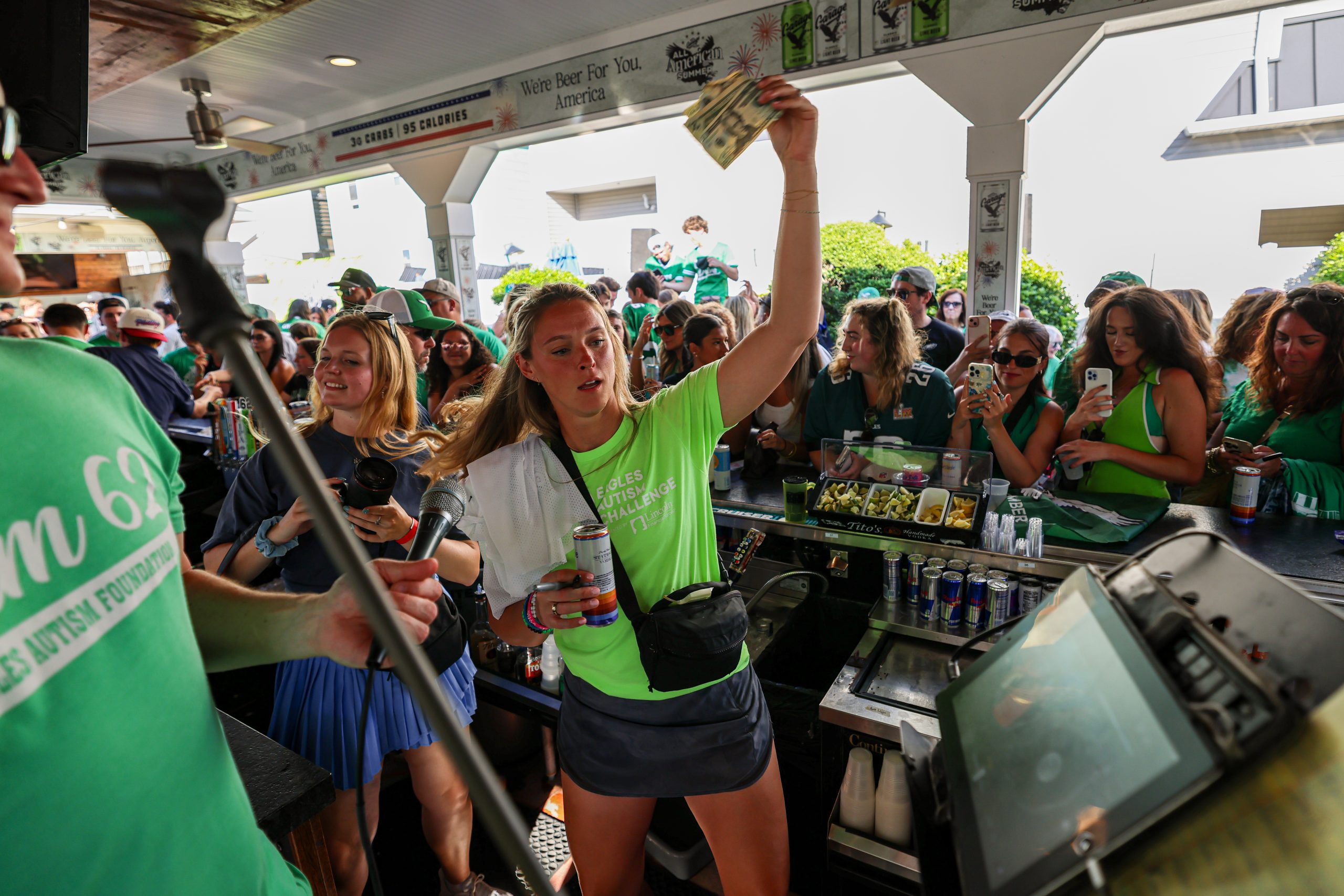
    Kylie Kelce adds some money to the cash register during the Shore Birds celebrity bartending event in Sea Isle.Courtesy of the Philadelphia Eagles

    Taylor and Travis will not honeymoon in Sea Isle, but…? ✅ ❌

    No, they did not honeymoon in Sea Isle, choosing instead Big Sky, Mont. (a lovely place), so that’s an easy one in my favor. But my leaving open the possibility that they would make an appearance in Sea Isle seems, on balance, ridiculous. Maybe they’re waiting for Jason and Kylie Kelce to finally make it off the waiting list for the Sea Isle Yacht Club. Maybe a celebrity bartending gig for Taylor at the Eagles Autism extravaganza next summer? Meanwhile, have fun in Ohio!

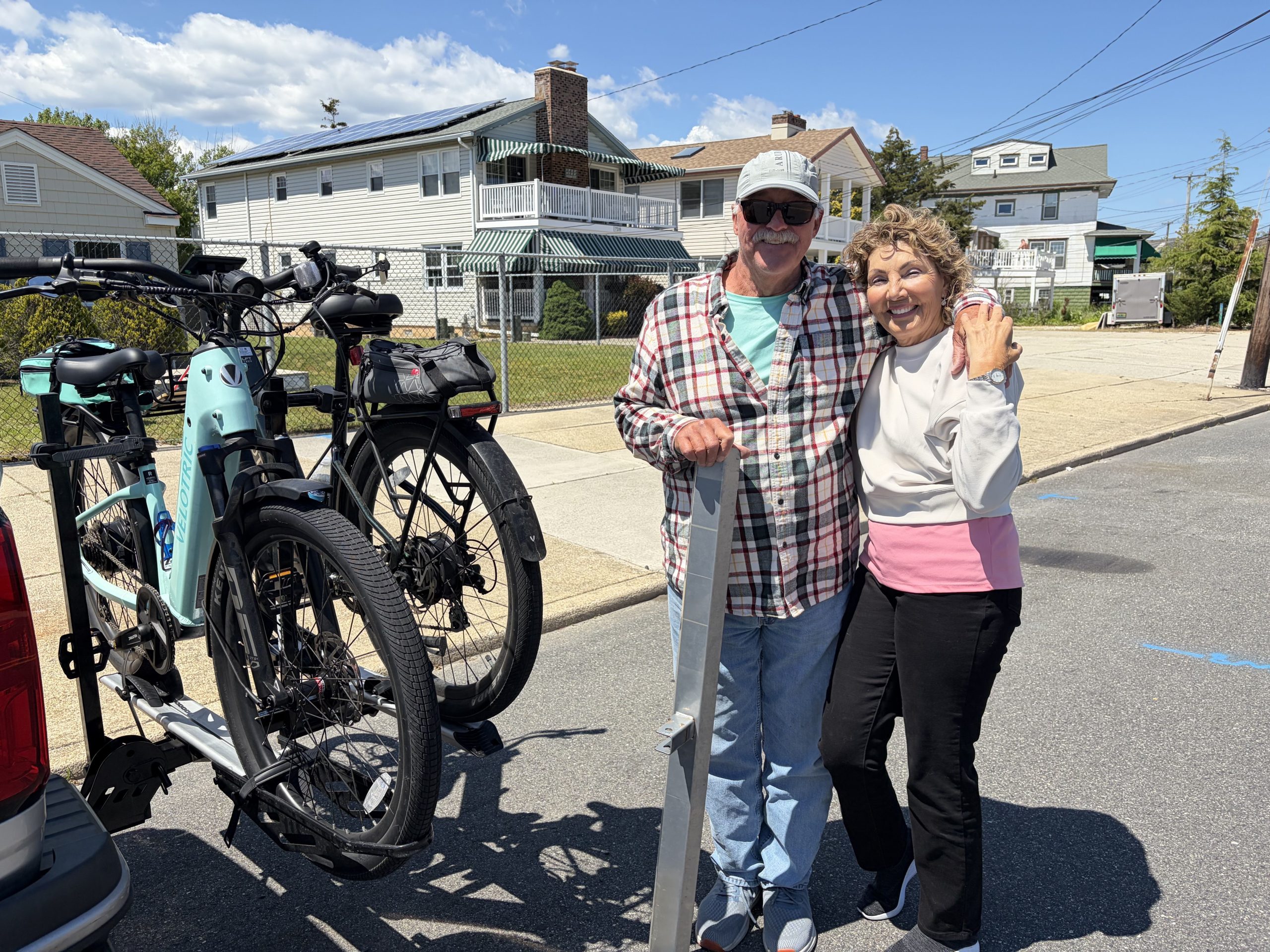
    Mike and Annamarie Carr of Ventnor, owners of Jagielky’s candy shops, with the e-bikes they love to ride. Ventnor won’t allow them on its own Boardwalk. The couple drove to Ocean City on June 2 and started and ended from there.Amy S. Rosenberg / staff

    E-bikers will be hauled off the boardwalks and fill municipal court Zoom hearings. ❌

    There was a lot of confusion over the new e-bike law in New Jersey.

    First the state Motor Vehicles Commission said Pennsylvania visitors shouldn’t sweat the new registration requirements, then they changed their mind and said visitors should start their week down the Shore with a trip to the DMV. Adding to the confusion, the MVC requirements explainer page that says out-of-staters should comply now also says, “This page is intended for New Jersey Residents.”

    In all, the MVC has issued a total of 13,850 e-bike registrations, according to commission statistics; 365 of those for out-of-state residents.

    But police were generally light-handed on enforcement measures for the new law, with departments focusing on safety issues, like helmets, and age restrictions, rather than registrations.

    Doug Bergen, a spokesperson for Ocean City, said no citations were issued there this summer under the new law.

    In Ventnor, Lt. Bryan Gaviria said between May 1 and Sept. 10, the department issued six curbside warnings to juveniles, 10 e-bikes on the boardwalk warnings, and one ticket for riding on the boardwalk.

    “We’re still in the education phase,” he said.
    Statewide, statistics show 628 total citations under the e-bike and motorized bicycle law for July and August, according to data supplied by the New Jersey Judiciary.

    Of those, just 77 were given for low-speed electric bicycles, 22 citations were for failing to have the registration required by the new law, and two were for drivers being under 15. The rest of the citations issued were for motorized bicycles, the higher speed classification.

    Retiring boomers will continue their takeover of Shore towns. ✅

    Yes, who else can afford to buy?

    Real estate prices remained mostly in rarified air, like this adorable yellow 760-square-foot North Wildwood cottage that sold for $1.7 million in mid-August. It’s a tear down, naturally.

    Or how about this 17,684-square-foot house in the Avalon dunes, built on spec by Eustace Mita (see above), with the distinction of being Avalon’s largest house and an expected price tag in the tens of millions.

    In related news, the home elevator, once considered a luxury, is now considered an essential amenity for new homes in Ocean City, N.J., among other towns.

    Rendering of a 17,684 square foot home being built as a spec house in the dunes in Avalon, at 5745 Dune Drive, by developer Eustace Mita. It will be the largest home in the borough.Courtesy Avalon Borough

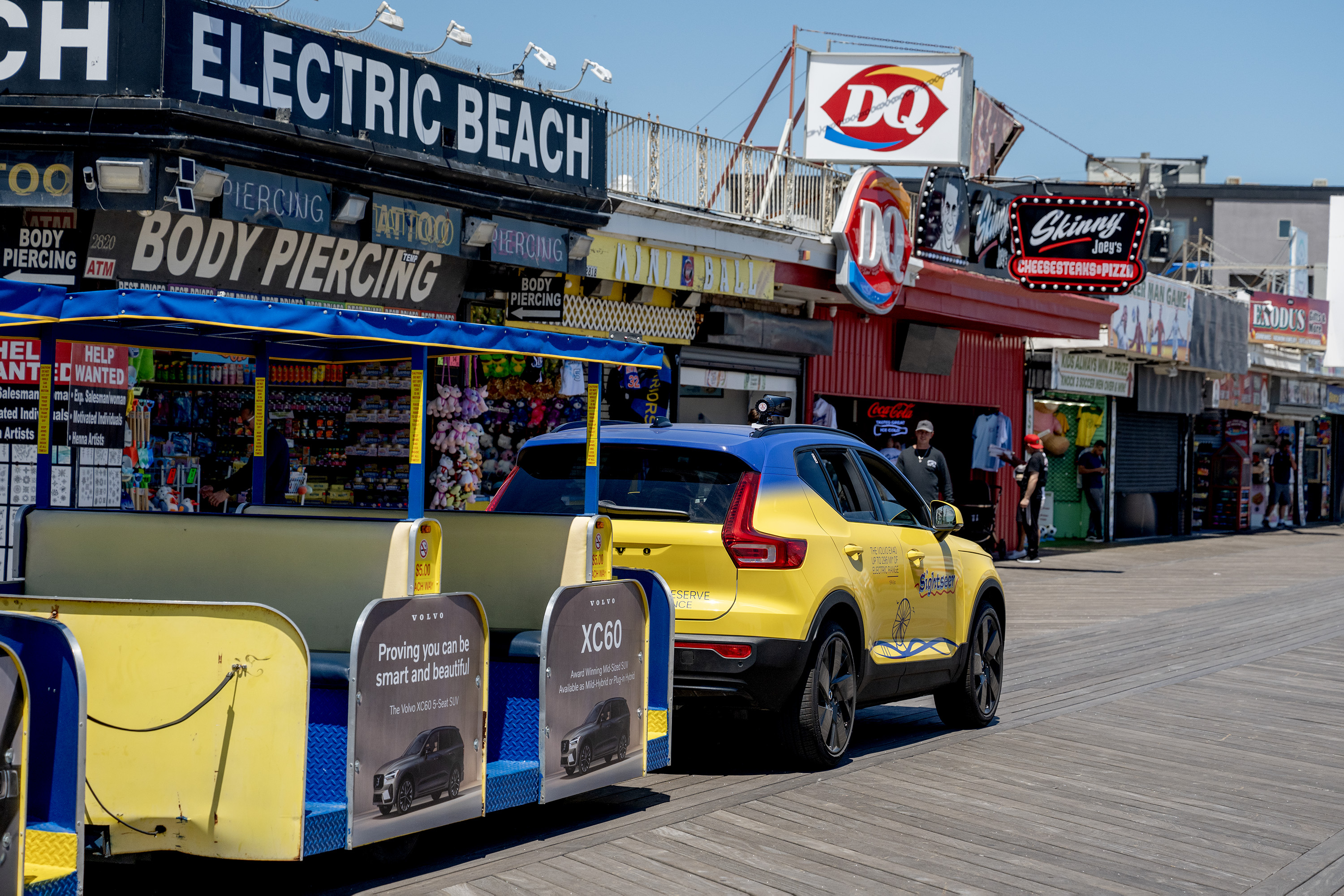
    Wildwood boardwalk hours will again be expanded overnight, but all people will talk about are the electric Volvo SUVs driving the tram cars. ✅ ❌

    Wildwood spokesperson Alicia Deluca says the hours remained curtailed, with the boardwalk closing between 1 and 5 a.m.

    The grumbling over the new Volvo tram cars continued all summer, though. People do not like change. Meanwhile, though, Wildwood is preparing a 20-year redevelopment plan for its boardwalk that will see mixed-use projects, including hotels, apartments, condominiums, businesses, and centralized parking garages.

    A Sightseer tram car is pulled by a Volvo EX40 electric vehicle on the Boardwalk in Wildwood Tuesday, June 2, 2026. The Wildwoods Boardwalk Special Improvement District struck a deal with Volvo to provide three free electric vehicles in return for ads placed on the individual tram cars. Four of the older engines remain in use for now.Tom Gralish / Staff Photographer

    There will be a lot of complaining about changing parking regulations. ❌

    I didn’t hear much over the din of loud music from Gully’s, and Facebook groups seemed preoccupied with other things: flies, shaming noise complainers, and finding the best chicken Parm.

    The return of the day-tripper. ✅

    This prediction was a good one. Costs continued to rise, making shorter trips and day trips appealing. I predicted Atlantic City would get renewed attention, and it did, with groundbreakings for new housing developments, a container retail park close to opening, and the enduring appeal of a wide, free beach and a relatively inexpensive real estate picture.

    Obvious miss on the predictions front: Atlantic Avenue is finally being paved. The odds were very long on this one.

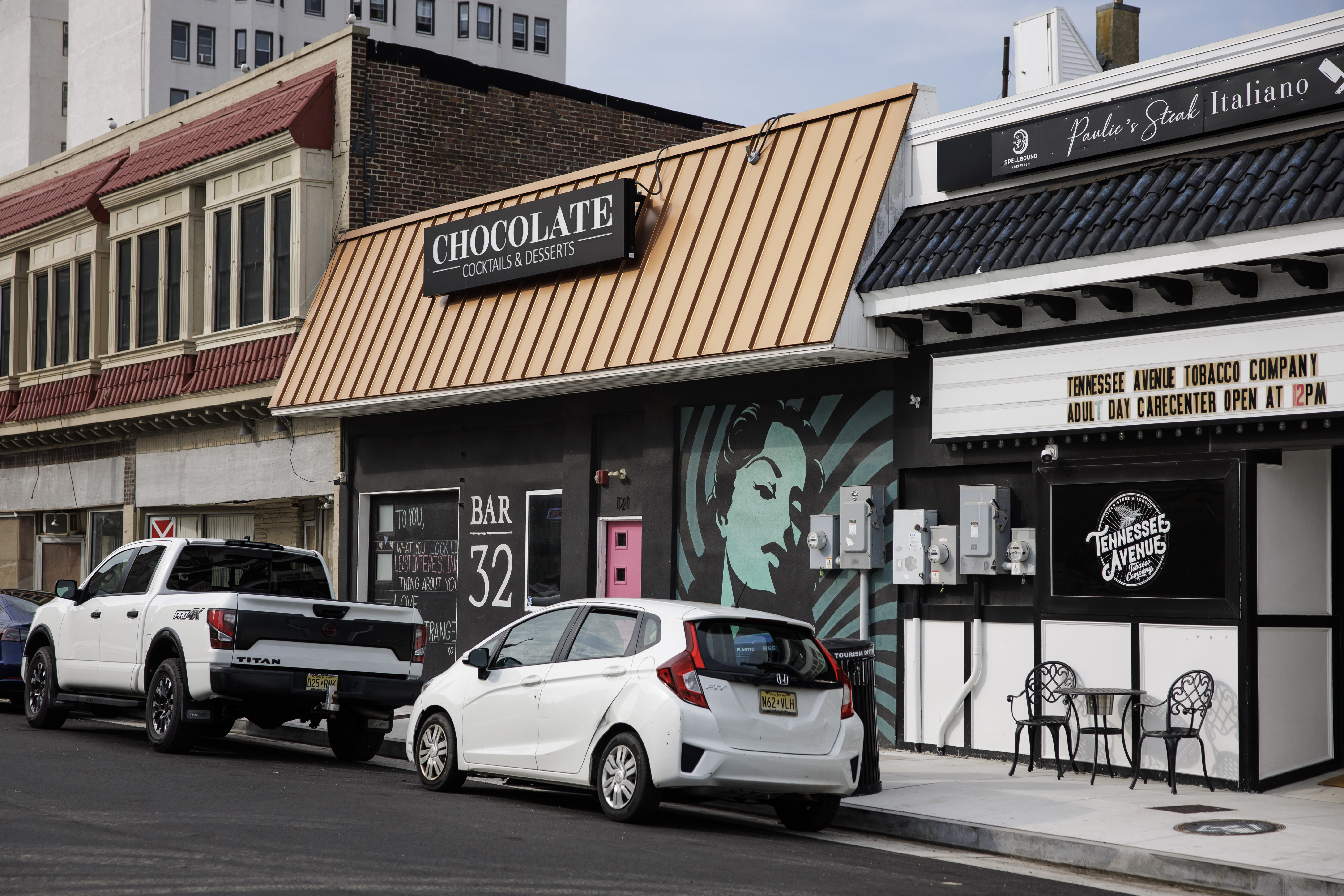
    The exterior of Bar 32 on Thursday, June 11, 2026 in Atlantic City, NJ. Bar 32 offers bean-to-bar chocolate, handmade desserts, and craft cocktails.Monica Herndon / Staff Photographer

    The summer will seem verrrrry long. ✅

    So long. How long? Basically an extra week until the Sept. 7 Labor Day. Which left beach patrols, restaurants, and other business strapped for employees, and rewarded marathon beach lovers with two days of atrocious flies on the beach Sept. 4 and 5, worse than anyone had ever experienced, like, really terrible! See ya next year!

    Total score: 6/10. We’ll get ‘em next summer, hopefully over a plate of lollipop meatballs at the Irish Pub.

  • Mike Bowe, popular longtime radio disc jockey, has died at 76

    Mike Bowe, popular longtime radio disc jockey, has died at 76

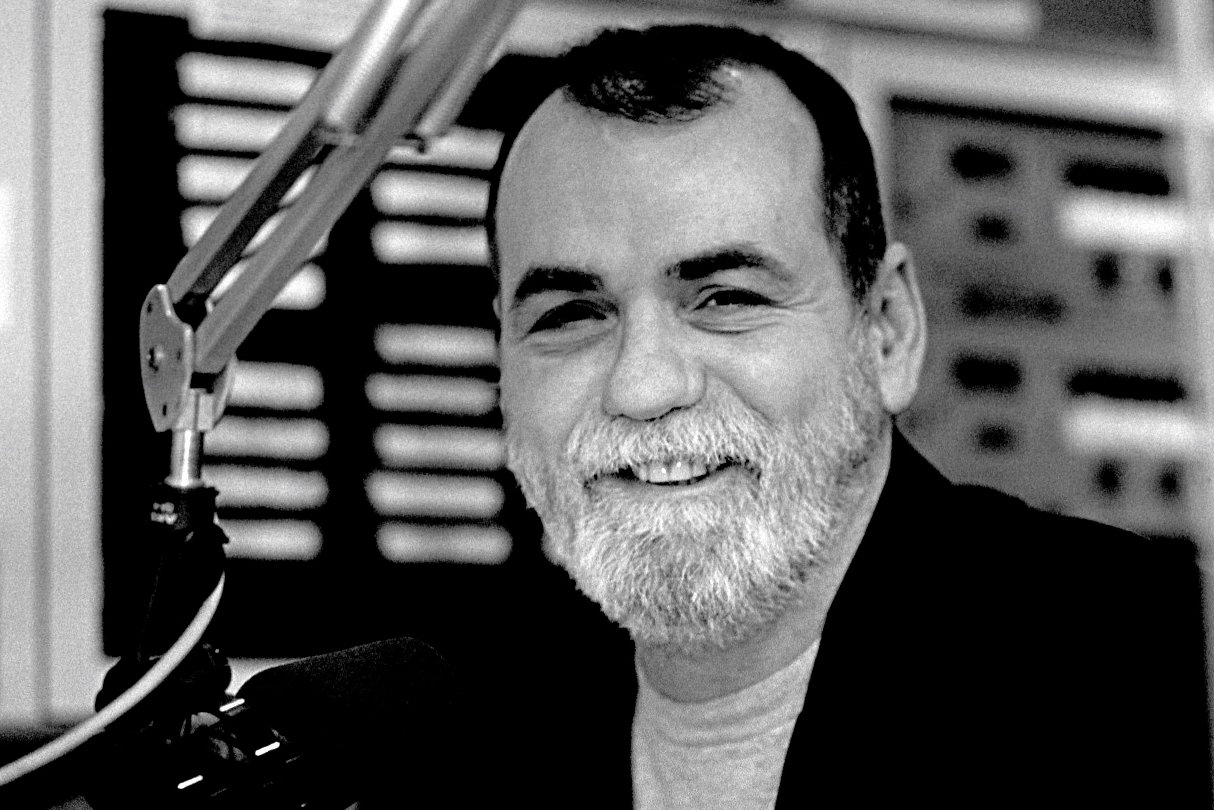
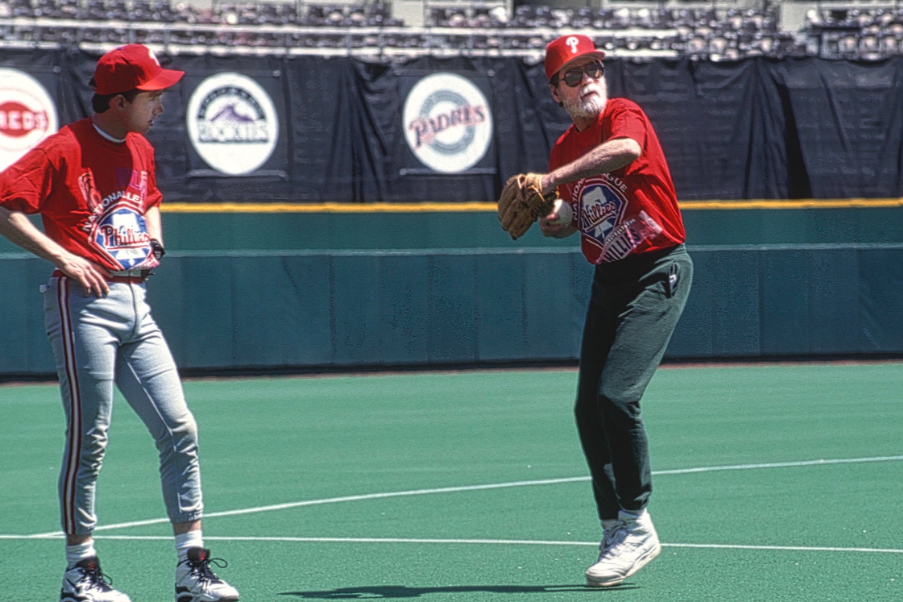
    Mike Bowe, 76, of Audubon, Camden County, longtime local disc jockey and popular radio show host at WMGK, WPEN, WHAT and other stations, Army veteran, devoted Phillies fan, and proud son of Gloucester City, died Monday, Sept. 14, of complications from cancer at his home.

    Mr. Bowe enjoyed music and socializing as a teen at Gloucester Catholic High School, and was skilled at chatting with people about their favorite songs and other interests. So he was a natural fit later as a radio show host and disc jockey for more than 40 years in studios and at remote appearances, dance parties, charitable fundraisers, and other events.

    “I like to think I communicate with people,” he told the Courier-Post in 1987. “I think I can relate the same way to somebody whether he’s on Ninth Street in South Philly or at a bank in Center City.”

    Fellow DJ Chris McCoy said. “He had something intangible. He made you feel like he knew you, and you knew him.”
    Using what his fans and colleagues described as a “calming and smooth voice” and “velvet intonations,” Mr. Bowe hosted music shows at WMGK from 1977 through the early 2000s, at KISS 100 in the 1990s, and at WPEN and WHAT between 2000 and 2011. Colleagues called him “loyal, dedicated, witty” in online tributes, and praised his “down to earth and friendly style.”

    They credited him with making WMGK’s Saturday Night ’70s show a hit in the mid-1990s. “He was the very foundation of that success,” McCoy said.
    Listeners called him “truly a master of this craft,” “one of the best ever,” and “a memorable radio legend.” He worked after 2011 at other local stations and iRadioPhilly.com.
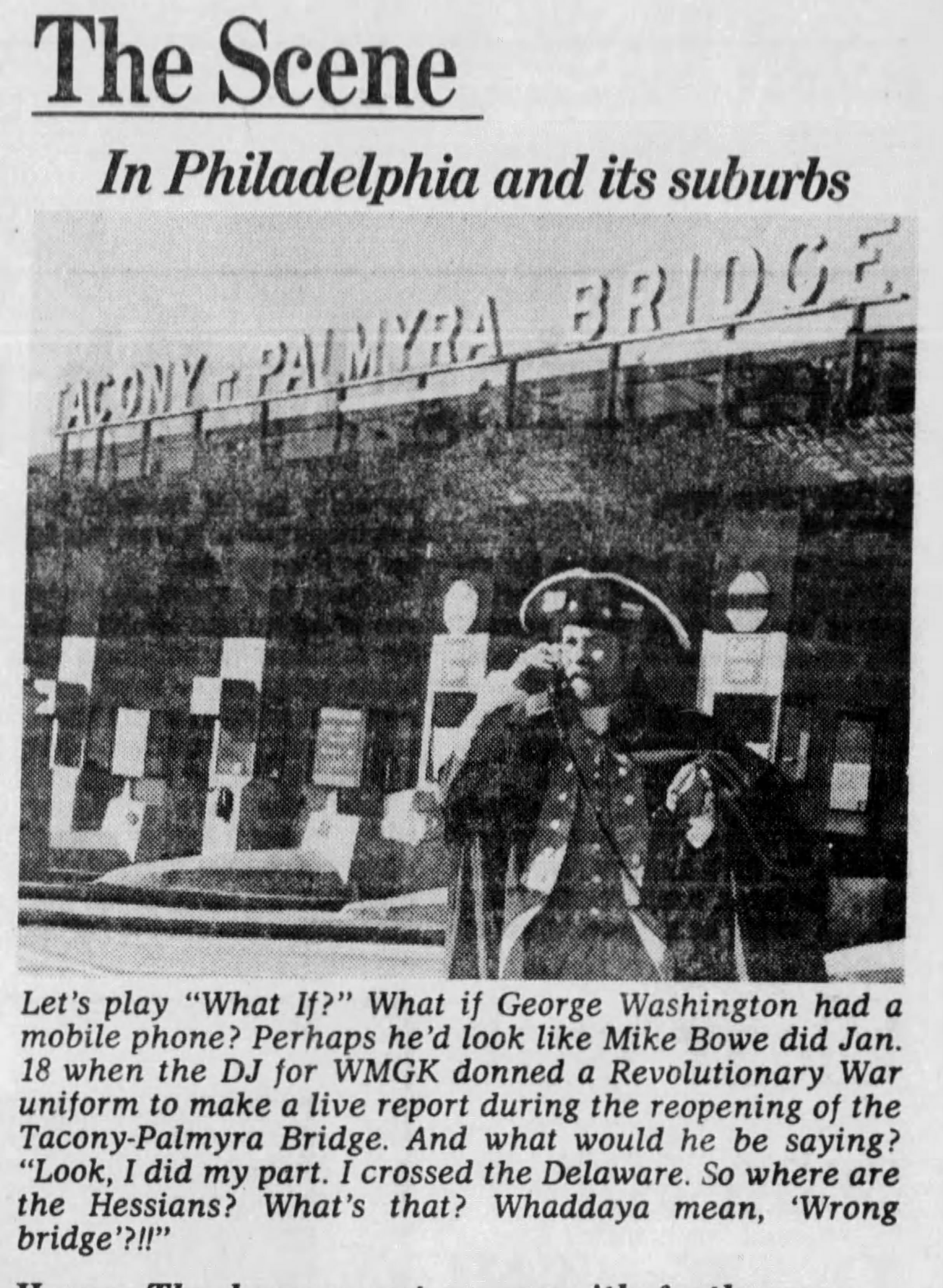
    He teamed up with other popular DJs on morning, afternoon, and evening shifts, interviewed performers, took phone calls from listeners, and broadcast from Phillies games and charitable benefits. In 1989, he dressed up as George Washington to cross the Delaware River when the Tacony-Palmyra Bridge was finally reopened after repairs.

    He liked to air remotely from his favorite clubs and pubs, and ride shuttle buses with listeners to concerts. He also worked DJ dance party gigs at nightclubs, holiday parades, and private events in Philadelphia and South Jersey.

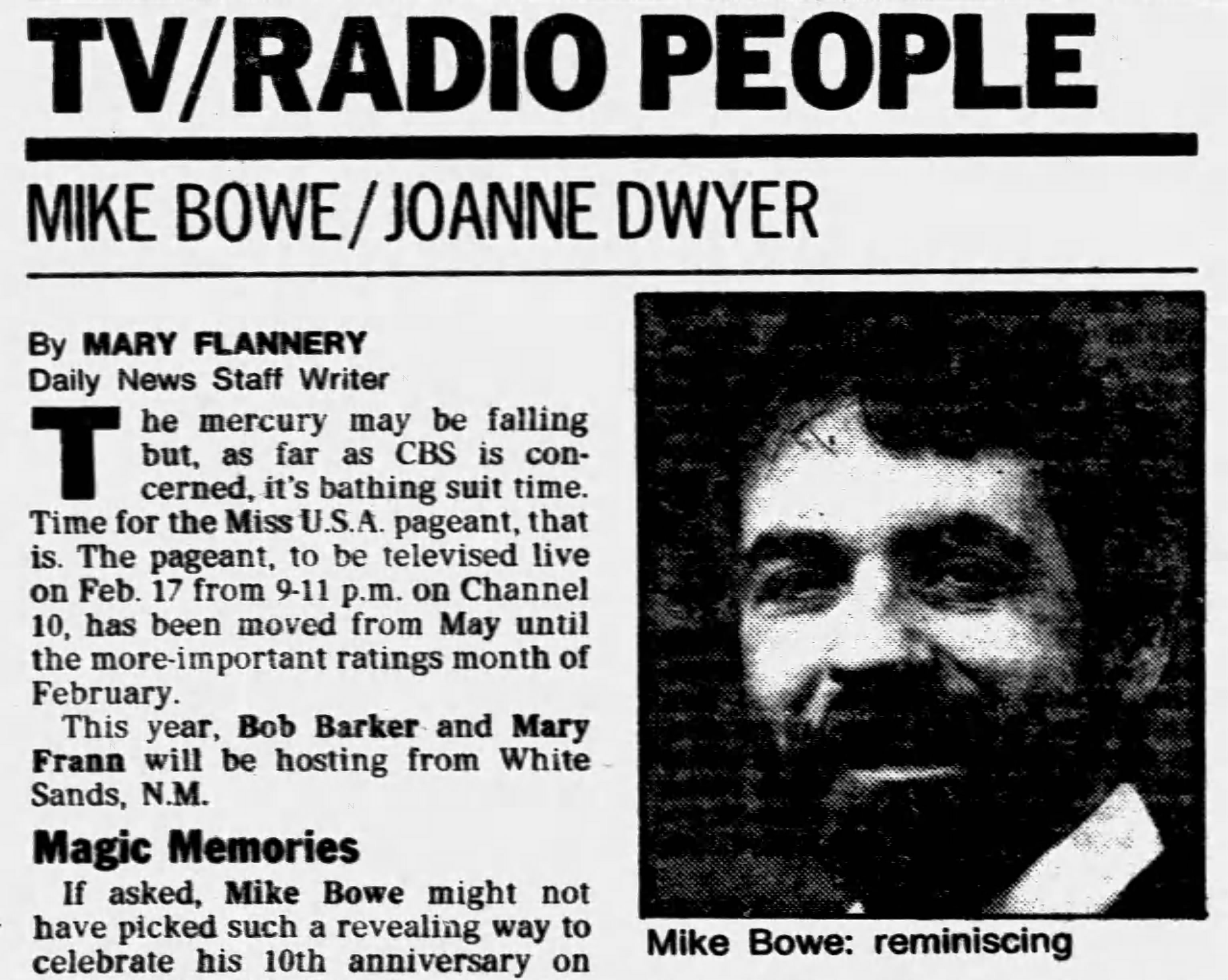
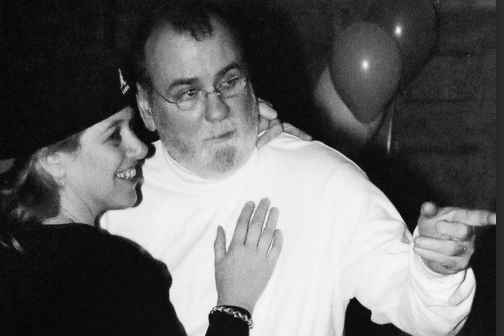
    Mr. Bowe appeared often in The Inquirer and Daily News, including in 1987 (above) and 1989 (below.)Newspapers.com

    His favorite song was “Ain’t No Woman (Like The One I’ve Got)” by his favorite group, the Four Tops. “He knew Philadelphia from A to Z,” McCoy said. “He brought a smile to your face.”

    Mr. Bowe served three years in the Army, 11 months and 11 days in Vietnam in 1968-69, and earned several medals and service stars, and an achievement badge. Fellow DJ Sue Serio said online that she enjoyed annual Veterans Day lunches with Mr. Bowe, “a treasured tradition that we never took for granted.”

    One day, a former WMGK colleague said online, Mr. Bowe took him to Mr. Bowe’s favorite three local landmarks: the Melrose Diner in South Philadelphia, Mel’s Italian restaurant in Bala Cynwyd, and the pool table at the VFW in Gloucester City.

    “Mike was a gift to Gloucester City and to the Delaware Valley professionally and as a man,” longtime friend Patrick Healey said. Longtime friend F. Emmett Fitzpatrick III said: “He prized honesty of character above all else.”

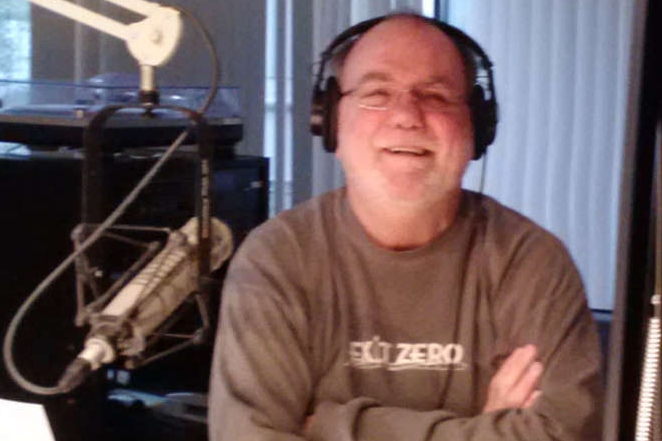
    Mr. Bowe, right above, was an avid Phillies fan. Below, he worked morning, afternoon, and evening shifts in the studio.F. Emmett Fitzpatrick III

    Mr. Bowe’s niece, Debra Ann Leblang, said: “He lived the ultimate American dream.”

    Michael Joseph Bowe was born Nov. 4, 1949, in Gloucester City. He graduated from Gloucester Catholic in 1967, studied broadcasting in Minnesota, and worked his way through the radio ranks in South Jersey and Philadelphia.

    He married Debbie Durso in 1985, and they lived in Audubon. Where one of them went, family and friends all said, the other followed.

    “They were partners, companions, and best friends,” his family said in a tribute. His wife died in June.

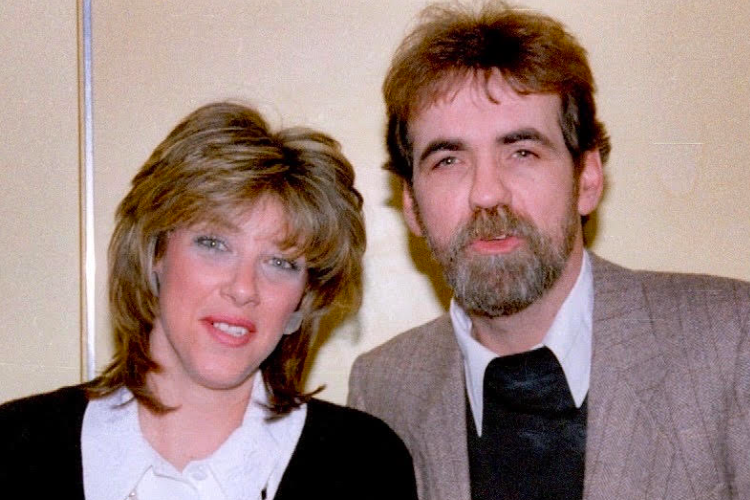
    Mr. Bowe and his wife, Debbie, married in 1985. Where one of them went, family and friends all said, the other followed. F. Emmett Fitzpatrick III

    Off the air, Mr. Bowe played softball and enjoyed visits to Atlantic City and Brigantine. He was a Sunday morning usher at St. Mary’s Catholic Church and belonged to the Townsend C. Young VFW post.

    He used to take dates to Jim’s Pizzeria in Gloucester City, and he told The Inquirer in 1994 that he enjoyed the place’s acerbic camaraderie. “Gloucester’s always been like that,” he said. “People love it. It’s a sarcastic, get-under-your-skin kind of thing. You don’t even get to order your own food.”

    His family said: “He was funny, quick-witted, sentimental, outspoken, and unforgettable. He carried his South Jersey roots with him wherever life took him.”

    In addition to his niece, Mr. Bowe is survived by a sister, a brother, and other relatives. Two brothers died earlier.

    Visitation with the family is to be from 8:45 to 9:45 a.m. Tuesday, Sept. 22, at the McCann-Healey Funeral Home, 851 Monmouth St., Gloucester City, N.J. 08030. Funeral services are to be at 11 a.m. at Brigadier General William C. Doyle Veterans Memorial Cemetery, 350 Province Line Rd., Wrightstown, N.J. 08562.

    Donations in his name may be made to the Wounded Warriors Project, Box 758516, Topeka, Kan. 66675; and St. Mary’s Roman Catholic Church, 426 Monmouth St., Gloucester City, N.J. 08030.

    Off the air, Mr. Bowe played softball and enjoyed visits to Atlantic City and Brigantine.F. Emmett Fitzpatrick III
  • Atlantic City’s iconic Steel Pier is up for sale for $85 million

    Atlantic City’s iconic Steel Pier is up for sale for $85 million

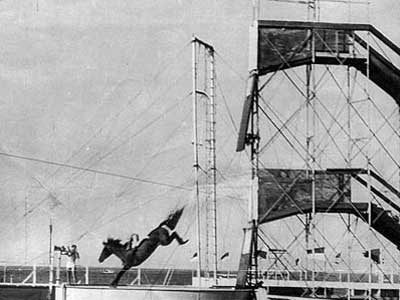
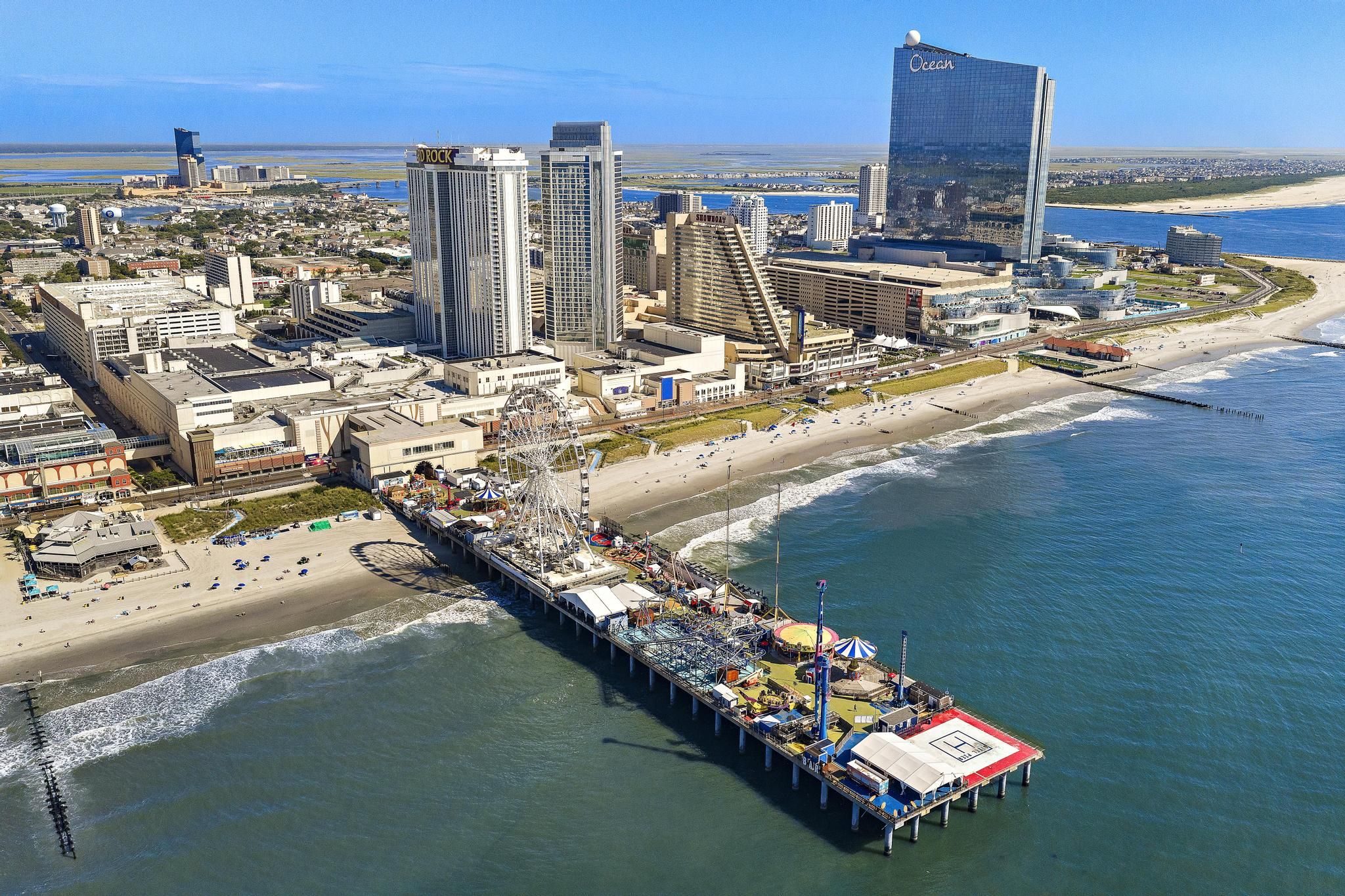
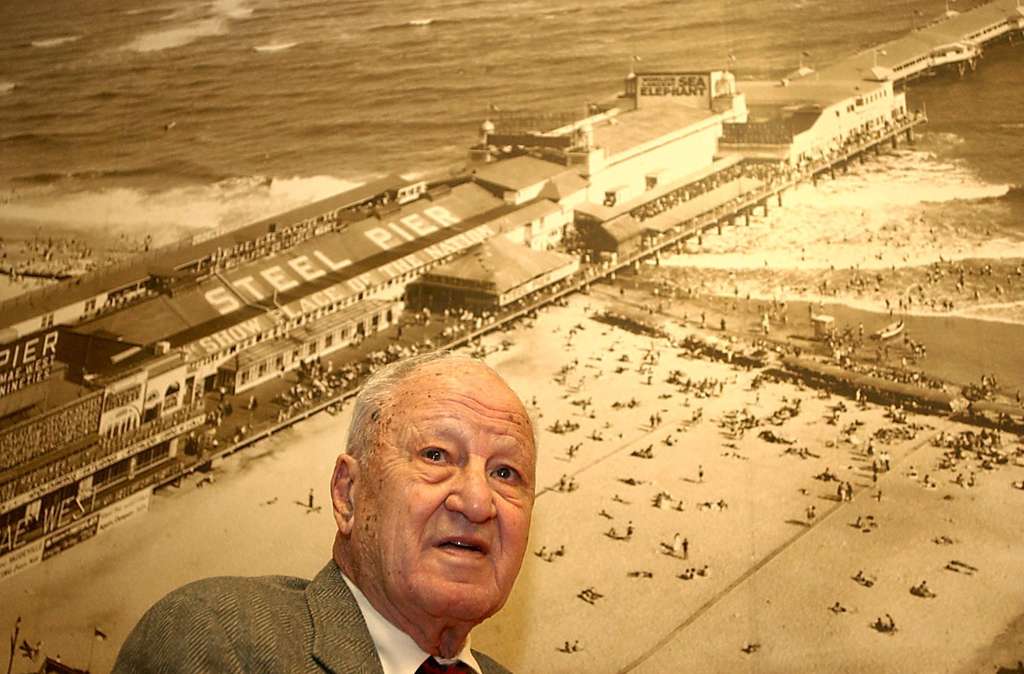
    ATLANTIC CITY — The Steel Pier, home to some of Atlantic City’s most iconic spectacles, including diving horses and Miss America pageants, and lately an amusement pier, is up for sale.

    Priced at $85 million, the pier, which was built in 1897, has been listed by the luxury New York City Serhant agency, whose owner, Ryan Serhant, is the star of Netflix’s Owning Manhattan.

    On his Instagram story Thursday, Serhant called the listing “maybe our coolest listing ever??”

    The pier has been owned by the Catanoso brothers since 2011, but the family says the next generation is not interested in taking over. “It’s kind of a succession thing,” Anthony Catanoso said in an interview with The Inquirer.

    The agency is targeting a buyer that envisions expanding the pier into a commercial hospitality venue, like a boutique hotel, a wedding venue, or an expanded amusement park, listing agent Michele Zyska said. She said luxury residential properties built over the ocean could also be a draw.

    Mayor Marty Small Sr. said the prospect of the pier lacking amusements and entertainment would be “devastation.”

    “The Steel Pier has always been the legendary part of the Atlantic City Boardwalk,” he said.

    The pier structure measures 150 feet wide and 965 feet long and is anchored 90 feet into bedrock. A perpetual riparian grant permits it to extend up to 2,850 feet into the Atlantic.

    “It’s like nothing else in the world,” Zyska said. “I keep saying that. It’s an iconic piece of American history. We’re thinking probably more hospitality, music, and maybe even residential. We do have interest in someone keeping it as an amusement park.”

    Atlantic City’s historic Steel Pier is up for sale for $85 million.Real Estate Cinema

    The Catanoso brothers originally leased the pier from Trump Entertainment after winning the lottery in 1993, and bought the pier for $4.25 million in 2011.

    They built its Observation Wheel, now a distinctive feature of the city’s casino skyline, teetered on bankruptcy, and found some stability in recent years running the pier with various amusements, bars, and restaurants.

    Catanoso said business has been good, although challenged by wage costs.

    “We’re getting older, me and my brothers,” Catanoso said. “The kids aren’t taking it over. It’s time for the next chapter. It’s a big development opportunity for somebody.”

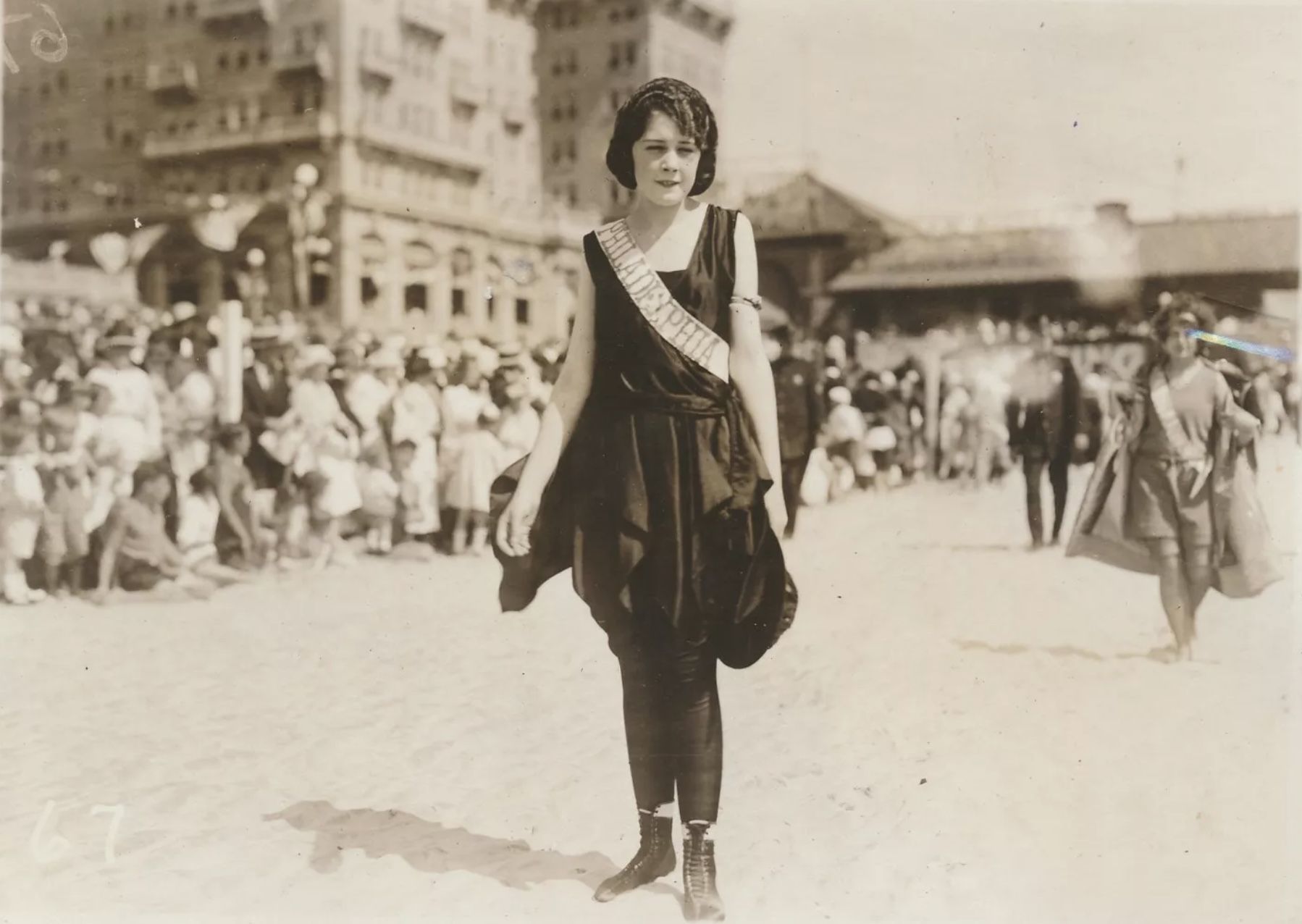
    Miss Philadelphia Nellie Orr competes in the 1921 Inter-City Beauty Pageant held on Atlantic City’s Steel Pier. The Miss America Organization will mark the 100th anniversary, but not in Atlantic City. Orr finished second.Collection of Daryl Schabinger

    Serhant calls the Steel Pier “one of the most recognizable landmarks on the East Coast.” The listing was first reported by the New York Post.

    The agency notes the pier’s built-in helipad and previously obtained condo-hotel approvals.

    “The Steel Pier is that rarest of offerings: a piece of developable American history extending straight into the Atlantic Ocean,” the company said in a release.

    George A. Hamid Jr. built up his family’s Steel Pier in Atlantic City by finding hot new acts.SHARON GEKOSKI-KIMMEL / File Photograph

    In addition to the amusement park, there is a 40,000-square-foot building, including a sky bridge and roof.

    “How often does someone get to own a piece of the ocean?” Ryan Serhant said in a statement. “The Steel Pier isn’t just five acres on the most famous boardwalk in the world, it actually offers the chance to own the Atlantic itself and build something unforgettable on top of it.”

    The company also noted new residential projects that are in the works in that end of Atlantic City, including Kushner Cos.’ Caspian Point, K. Hovnanian Homes’ South Inlet townhomes, Colosseo Atlantic City’s Chelsea townhomes, and Zoubek Properties’ Residences at the Orange Loop.

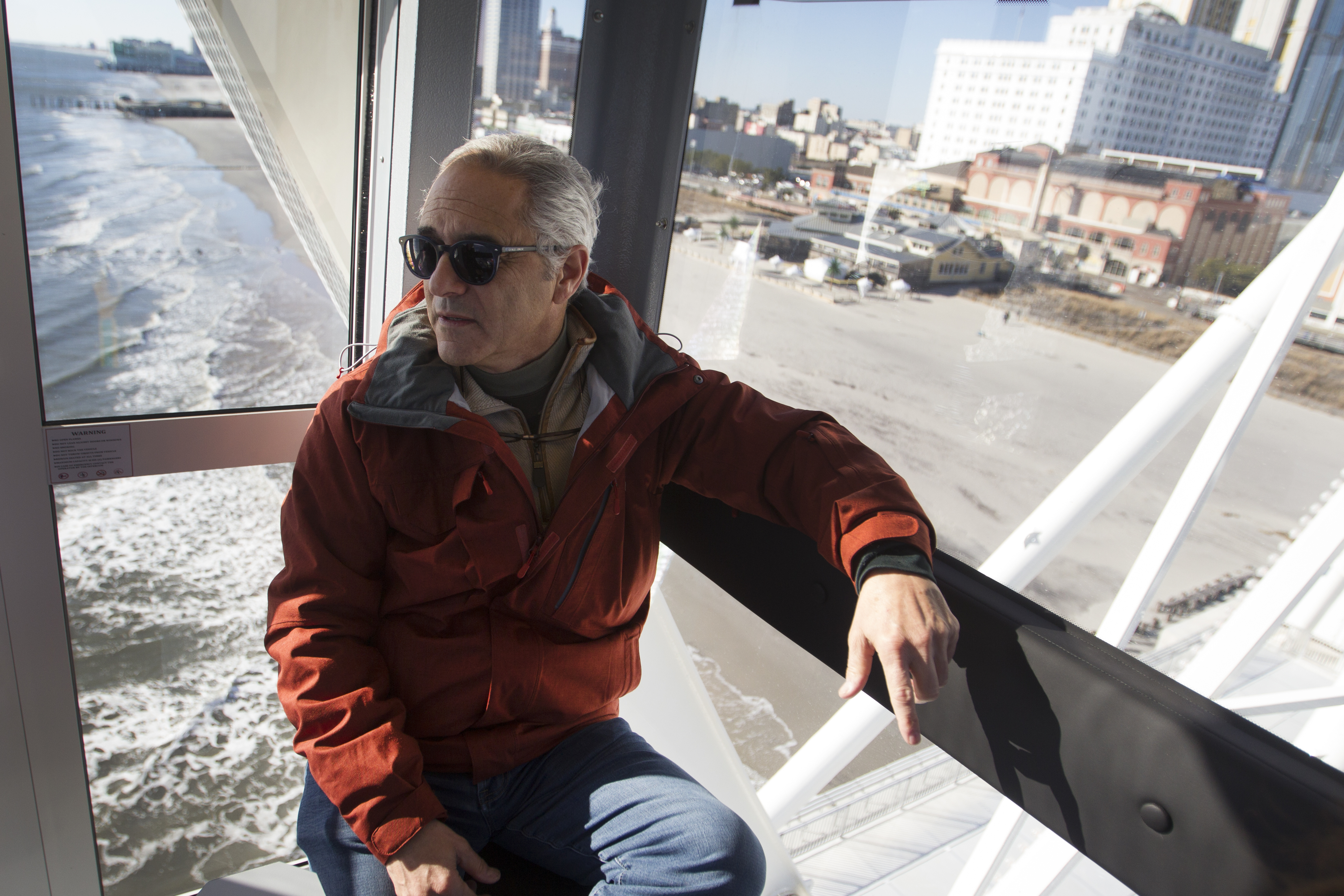
    Anthony Catanoso, owner of Atlantic City’s Steel Pier, takes in the view from the Observation Wheel Tuesday, December 26, 2017.Jose Moreno / staff photographer
  • Philly music this week with Charli XCX, Lil Wayne, Rod Wave, Margo Price, Iron Maiden and more

    Philly music this week with Charli XCX, Lil Wayne, Rod Wave, Margo Price, Iron Maiden and more

    September is concert season. Summer tours are still going, while fall tours are just getting started. This week in Philly music features both Charli XCX and Rod Wave launching tours in South Philly, plus Lil Wayne in Camden, John Fogerty and Steve Winwood in Atlantic City, Iron Maiden in Hershey, and Margo Price in King of Prussia.

    Friday, Sept. 11

    Charli XCX

    “Yeah, we’re on to the next, I think the dance floor is dead,” Charli XCX sings on the opening track of her new album. “So now we’re making rock music.” The pivot isn’t quite radical for the woman behind the Brat summer of 2024. There is still music you can dance to on Music, Fashion, Film, the whip-smart British pop star’s eighth album, which represents its three titular disciplines with a photo of John Cale, Marc Jacobs, and Martin Scorsese on the cover. What will this tour look and sound like? I can hardly wait to find out. 8 p.m. Xfinity Mobile Arena, 3601 S. Broad St., xfinitymobilearena.com.

    Rapper Lil Wayne performs during the Roots Picnic Philadelphia at The Mann in Fairmount Park on Sunday, June 2, 2024.Elizabeth Robertson / Staff Photographer

    Lil Wayne

    Lil Wayne has released 14 albums since making his debut in 1999 with Tha Block Is Hot. Six of those releases have been Tha Carter iterations, most recently with Tha Carter VI in 2025. (The New Orleans rapper’s given name is Dwayne Michael Carter Jr.) Wayne is calling this concert trek, which has 2 Chainz as the opening act, the “Carter Classics Tour,” meaning he will focus on selections from those six albums, no doubt including cuts like “A Milli,” “Lollipop,” “Mrs. Officer,” and “Money on My Mind.” 8 p.m., Freedom Mortgage Pavilion, 1 Harbour Blvd., Camden, freedommortgagepavilion.com.

    Mdou Moctar

    Nigerien Tuareg guitar hero Mdou Moctar comes to Bryn Mawr for an outdoor show under a gazebo. This solo show is likely to draw from Tears of Injustice, Moctar’s 2025 reworking of his 2024 electric album Funeral for Injustice. Always intriguing Philly guitarist Tim Motzer opens. 7 p.m., Bryn Mawr Twilight Concerts, 9 S. Bryn Mawr Ave., Bryn Mawr, brynmawrtwilightconcerts.com.

    John Fogerty & Steve Winwood

    Last year, John Fogerty released Legacy: The Creedence Clearwater Revival Years, an album of new versions of his old songs. That might have seemed cheesy coming from another artist, but Fogerty spent decades battling to regain control of his music, finally winning ownership of his songs in 2023. For the “Legacy Tour,” the “Proud Mary” and “Fortunate Son” songwriter is teaming up with his late-1960s contemporary Steve Winwood, who has his own legacy with the Spencer Davis Group, Traffic, and his “Higher Love” solo career. 8 p.m., Ovation Hall, Ocean Resort, 500 Boardwalk, Atlantic City, theoceanac.com.

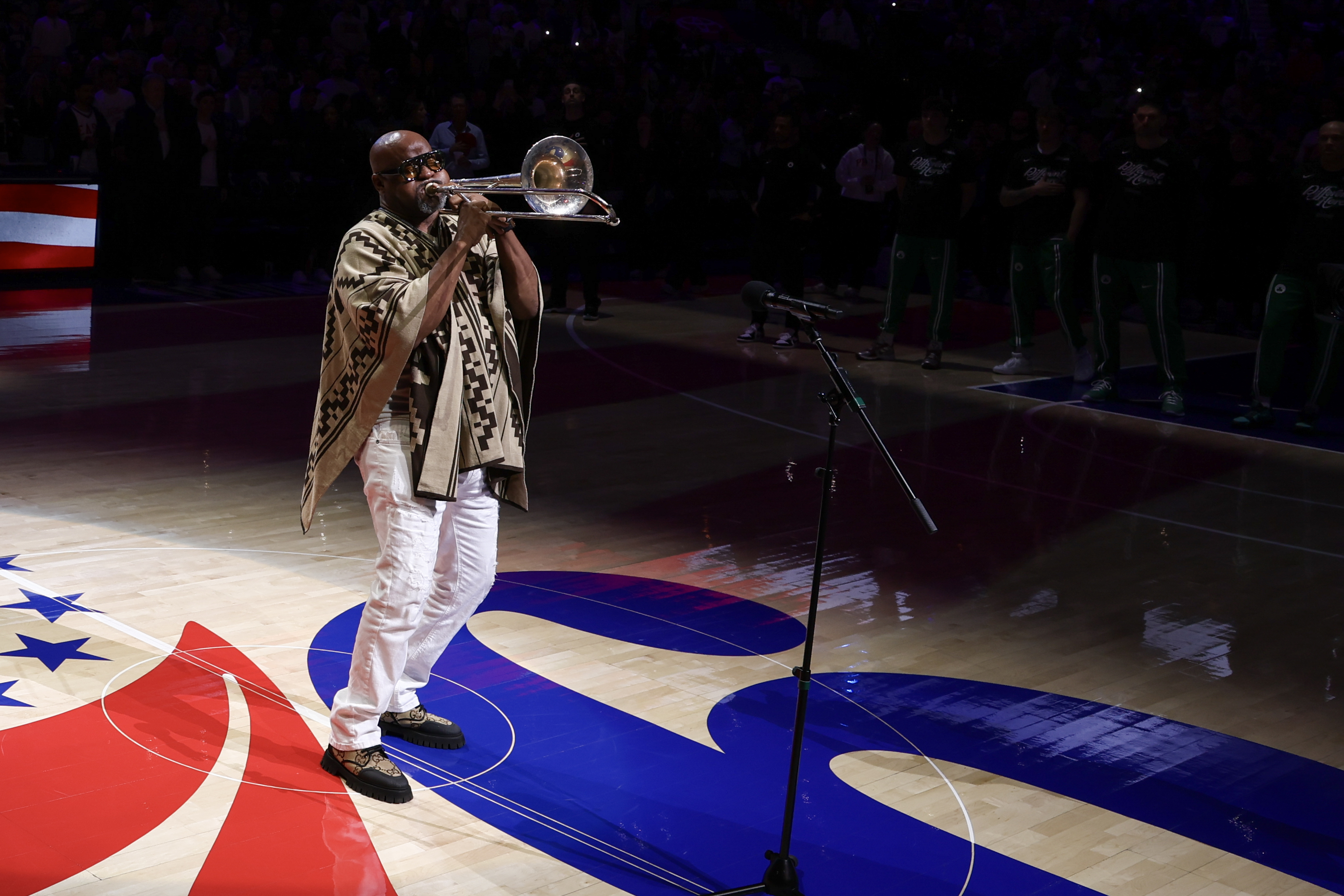
    Jeff Bradshaw plays the National Anthem before Sixers play Game 6 against the Celtics in a first-round NBA playoffs basketball series Thursday, April 30, 2026, in Philadelphia. Bradshaw will perform as part of the Atlantic City Jazz Festival this weekend.Monica Herndon / Staff Photographer

    Friday, Sept. 11 to Sunday, Sept. 13

    Atlantic City Jazzfest

    This smooth jazz weekend takes place at Sound Waves at Hard Rock Hotel & Casino Atlantic City. On Friday, Memphis sax player Kirk Whalum headlines a show hosted by Patty Jackson. Saturday, Philly trombonist Jeff Bradshaw tops the bill, and on Sunday morning, sax man Reggie E. Harris makes a jazz brunch go down easy. 7 p.m. Friday and Saturday; 11 a.m. Sunday at Hard Rock Hotel & Casino, 1000 Boardwalk, Atlantic City, theatlanticcityjazzfest.com.

    Margo Price plays Concerts Under the Stars in King of Prussia on Saturday.Yana Yatsuk

    Saturday, Sept. 12

    Ray LaMontagne

    Last week at the Ryman Auditorium in Nashville, Ray LaMontagne collapsed on stage, leaving audience members fearing for his life. But no worries: The cause apparently was dehydration, and the New Hampshire-born rustic rock songwriter, who is on tour celebrating the 20th anniversary of his Trouble album, was back on stage the next night in Louisville. Tara Lindeman’s environmentally conscious Canadian folk-rock band the Weather Station opens. 8 p.m., Met Philly, 858 N. Broad St., themetphilly.com.

    Spring Garden Sunflower Fest

    This third annual free fest — on Fairmount Avenue, not Spring Garden Street — will feature a full day of bands and DJs. Rising indie songwriter Maxwell Stern & the Good Light Band headline, and the lineup includes Celtic folk and Americana group the John Byrne Band, salsa group Un Toque de Cache, and a performance by the youngsters of Rock to the Future. Noon, Fairmount Avenue between 17th and 19th Sts., springgardensunflowerfest.com.

    Margo Price

    Margo Price got back to her country roots on Hard-Headed Woman, her 2025 album that includes a George Jones cover called “I Just Don’t Give a Damn.” It also offers some life advice with “Don’t Let the Bastards Get You Down,” which was written with her husband, Jeremy Ivey, and Rodney Crowell, plus a posthumous Kris Kristofferson credit. Price is calling this her “Wild at Heart Tour,” and Ivey opens the show. 7 p.m., Concerts Under the Stars, King of Prussia, 175 W. Valley Forge Road, King of Prussia, concertsunderthestarskop.com.

    Saturday, Sept. 12 and Monday, Sept. 14

    Rod Wave

    Trap-soul rapper and singer Rod Wave — born Rodarius Green — has been rising so high of late it’s no wonder he’s titled his new album and tour “Don’t Look Down.” The St. Petersburg, Fla., native cites Tupac Shakur and Kanye West as influences on one hand, and Ed Sheeran and Adele on the other. He last played an arena show in South Philly in December, and now is back for two more to kick off the tour in support of the 24-track Don’t Look Down, which came out last month. Philly hip-hop singer Francis Leblanc — better known as Friday — is the opener. 8 p.m., Xfinity Mobile Arena, 3601 S. Broad St., xfinitymobilearena.com.

    FILE – Sandra Denton, left, and Cheryl James, of Salt-N-Pepa, perform at the IHeartRadio Music Awards in Los Angeles on March 26, 2026. Salt-N-Pepa play the Freedom Mortgage Pavilion on Sunday. (AP Photo/Chris Pizzello, File)Chris Pizzello

    Sunday, Sept. 13

    TLC, Salt-N-Pepa & En Vogue

    This triple bill — dubbed the “It’s Iconic Tour” — teams up three acts that were standout women in hip-hop and R&B beginning in the 1980s and into the 2000s. In their prime, TLC included Lisa “Left Eye” Lopes, who grew up in the Logan section of Philadelphia and died in a car crash in Honduras in 2002. Some dates on the tour so far have not included TLC’s Tionne “T-Boz” Watkins and have gone on with only Rozonda “Chilli” Thomas because Watkins has been ill with what the band’s manager called “a sickle cell crisis.” Hip-hop heroines Salt-N-Pepa, who were inducted into the Rock and Roll Hall of Fame in 2025, are co-headliners. Vocal group En Vogue opens. 7:30 p.m., Freedom Mortgage Pavilion, 1 Harbour Blvd, Camden, FreedomMortgagePavilion.com.

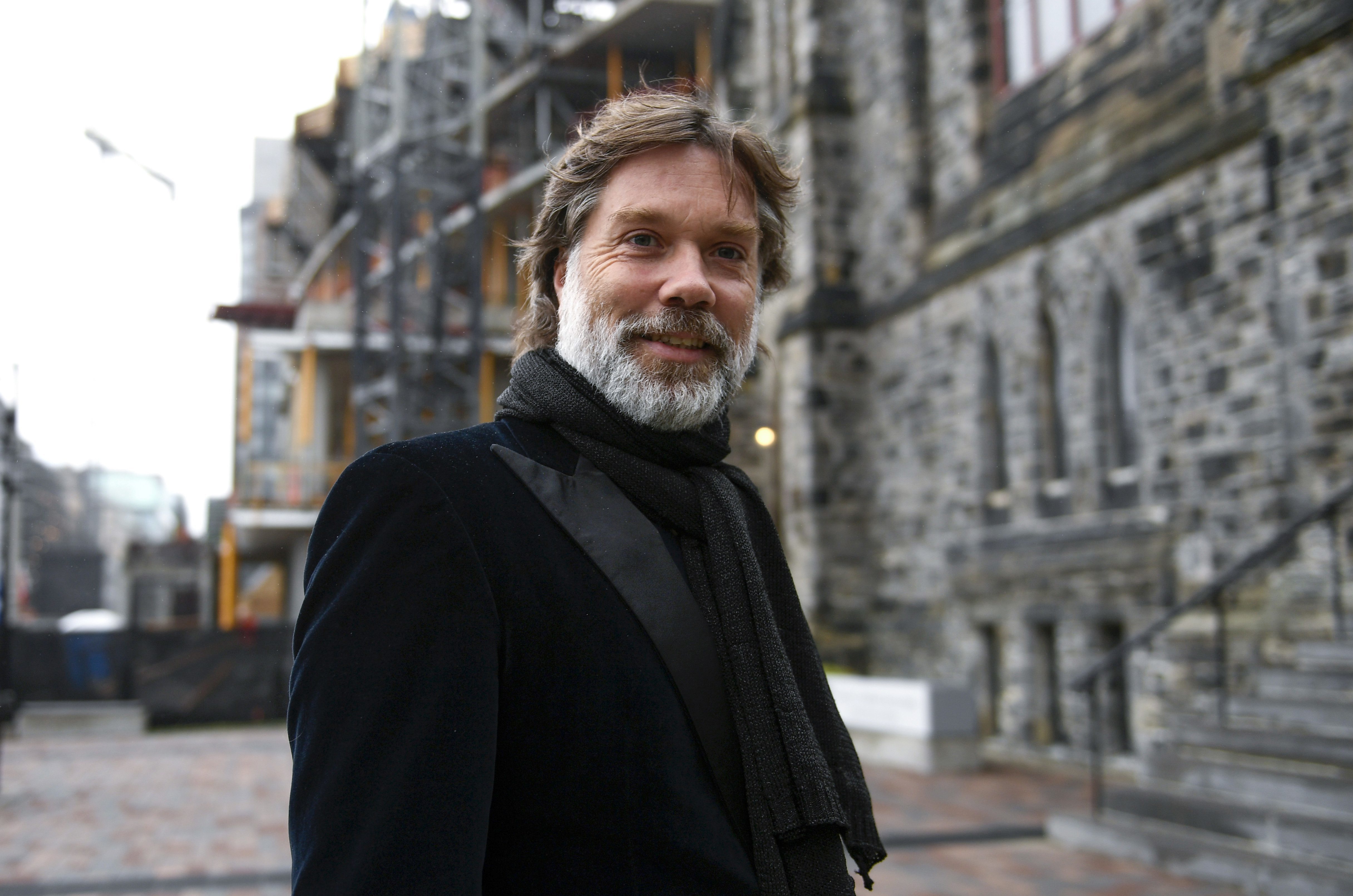
    Canadian musician Rufus Wainwright returns after speaking to broadcasters outside Christ Church Cathedral for the National Commemorative Ceremony in honour of Queen Elizabeth II, in Ottawa, Ontario, on Monday, Sept. 19, 2022. He plays three nights at City Winery Philadelphia next week. (Justin Tang/The Canadian Press via AP)Justin Tang / AP

    Tuesday, Sept. 15

    Iron Maiden

    British heavy metallers Iron Maiden was formed in East London in 1975. Now the Bruce Dickinson-fronted band is on its 50th-anniversary “Run for Your Lives World Tour,” which kicked off last year and makes its way to Hershey on Tuesday. Megadeth opens. 7:15 p.m., Hersheypark Stadium, 100 W. Hersheypark Drive, Hershey, hersheyentertainment.com.

    Rufus Wainwright

    Rufus Wainwright is always up to something interesting. There’s Hadrian, his opera about the last day of a Roman emperor, Dream Requiem, the singer and pianist’s work based on a text by Lord Byron, and recent albums like Unfollow the Rules in 2020 and Folkocracy in 2023, as well as projects like Rufus Does Judy (Garland), Rufus Does (Kurt) Weill. (How about Rufus does Kurt Vile? Now there’s an idea.) On Tuesday, Wainwright begins a three-night stand in which he can do whatever he wants. 7:30 p.m., City Winery Philadelphia, 990 Filbert St., citywinery.com/philadelphia.

  • Crestmont is the product of American racism and Black survival

    Crestmont is the product of American racism and Black survival

    Before you can understand Abington Township’s historically African American unincorporated community of Crestmont, you have to understand Willow Grove Park.

    Not the mall with that name, but the Willow Grove Park that predates it: One of the largest and most famous amusement parks on the East Coast.

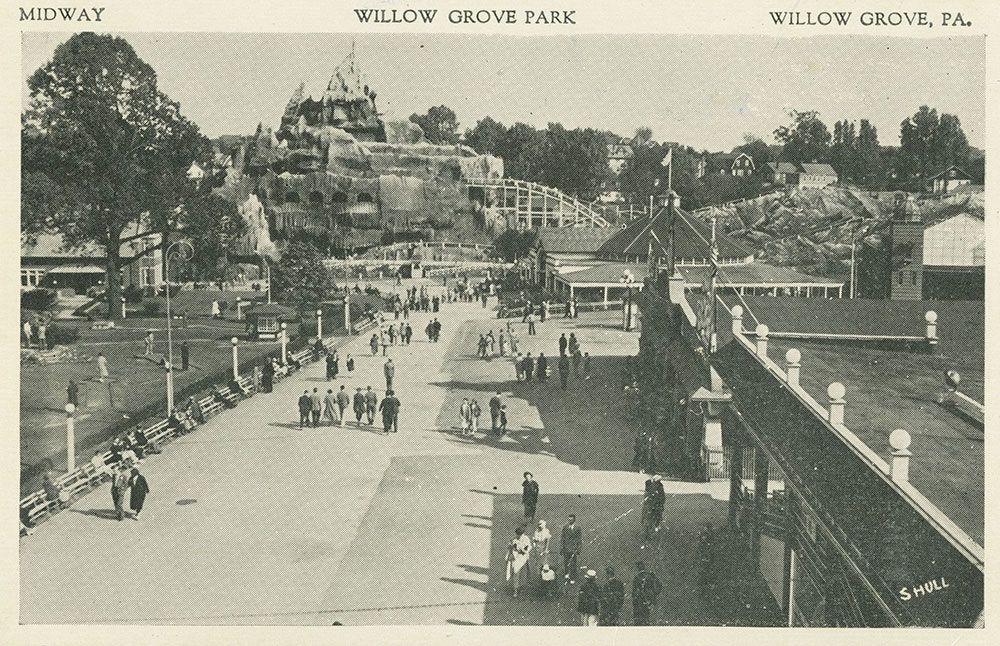
    It opened in 1896, built by the Philadelphia Rapid Transit Co. It had roller coasters, a lake, restaurants, concerts, a massive music pavilion, and crowds pouring in.

    It shaped the entire local economy and brought thousands of people out to the suburbs every week. A place like that needed labor. Real labor. Constant labor. And that’s where Crestmont’s story begins.

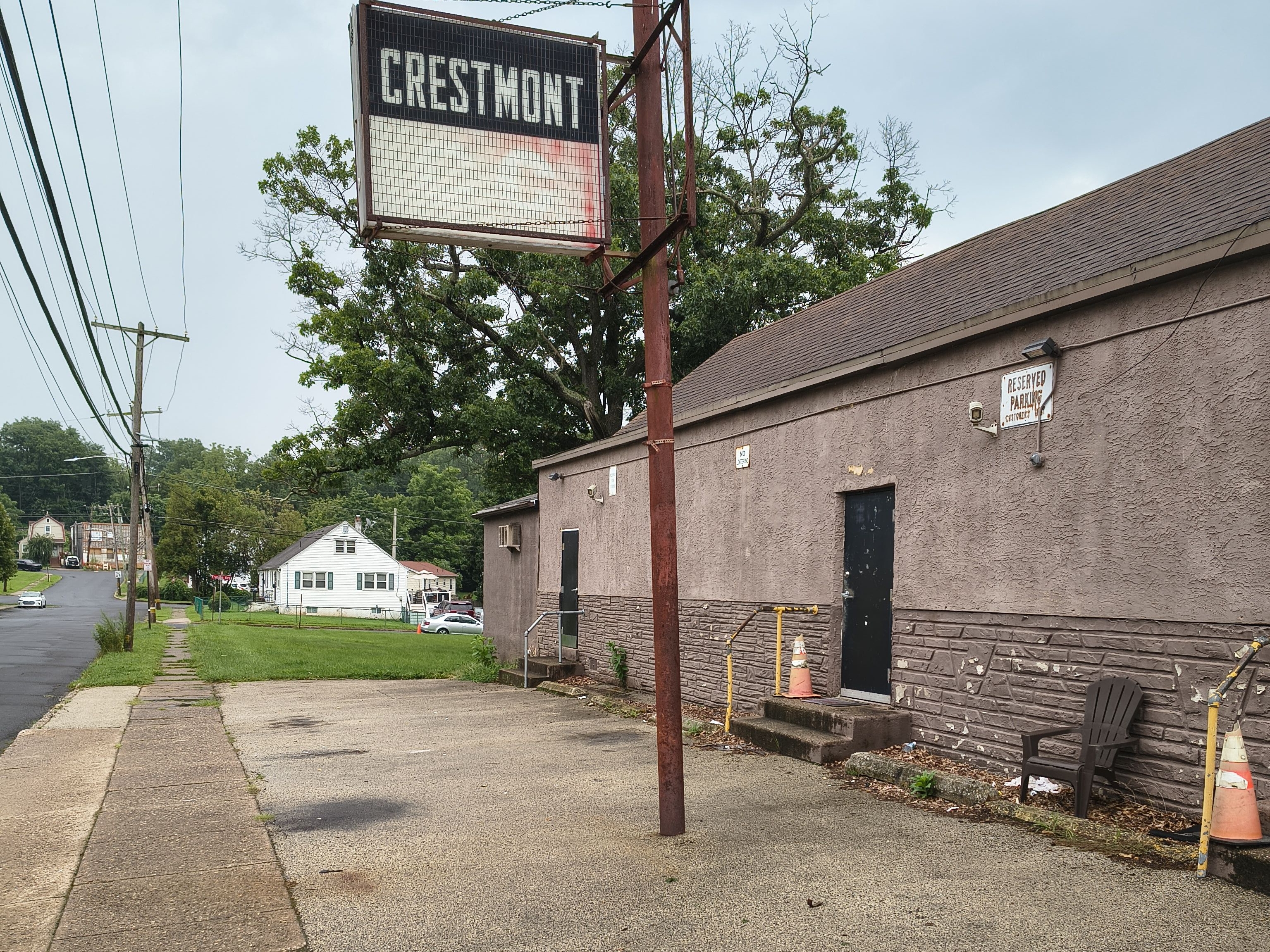
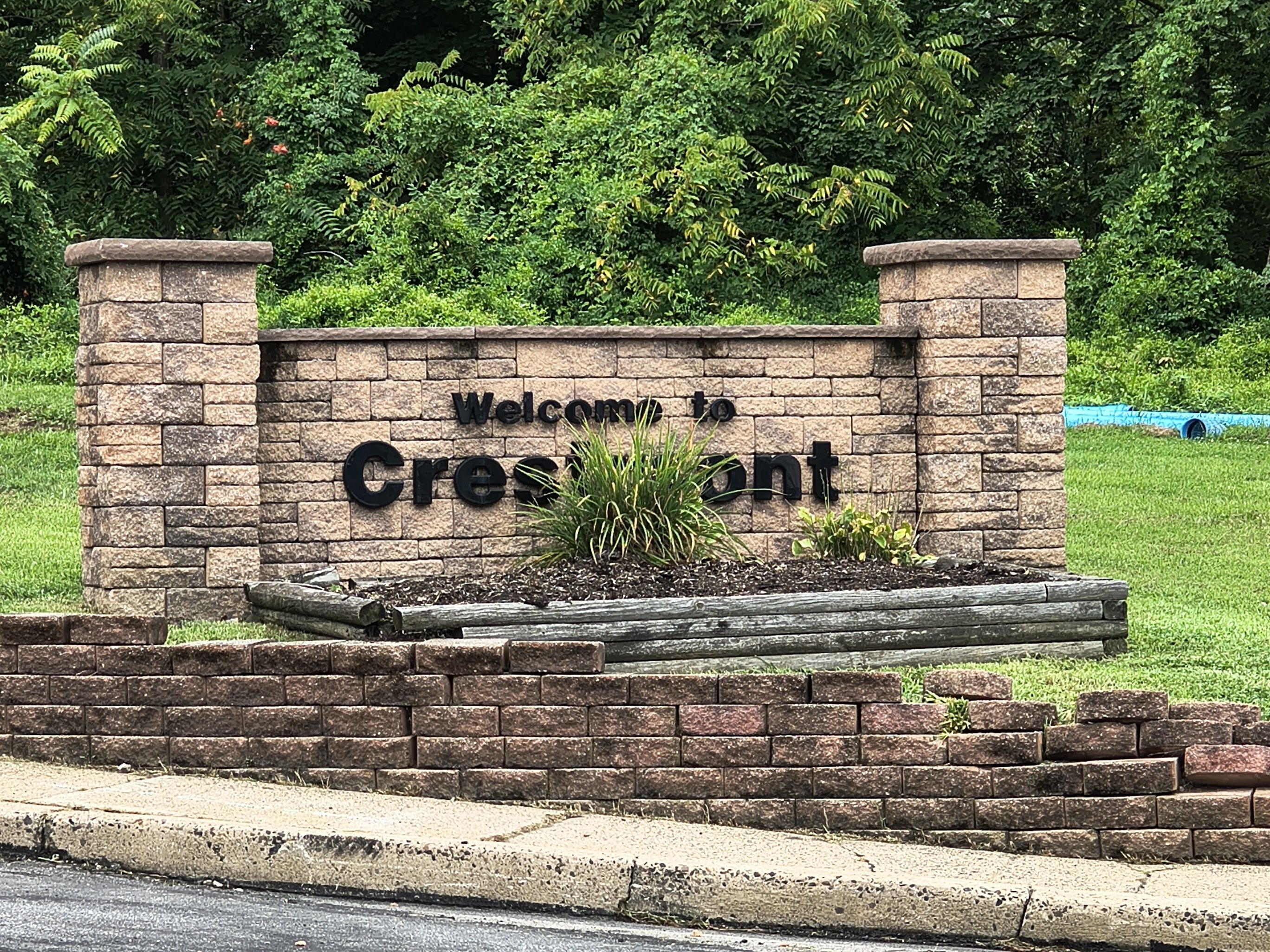
    The “Welcome to Crestmont” sign sits directly across from the Willow Grove Mall.DJ Atkins

    I didn’t grow up in Glenside or Willow Grove. I came out here for work, almost 15 years ago, and eventually I moved here. Eight years living in these suburbs gives you time to notice things, to ask questions, to wonder about the layout of the place. And one question kept coming back to me: Why is Crestmont, a mostly Black community, sitting right in the middle of overwhelmingly white suburbs?

    If you know the area, you know exactly what I mean. Roslyn, Glenside, Willow Grove, Abington … they’re all majority white, and have been that way for generations.

    Then suddenly, right next to the Willow Grove Mall parking lot, there’s Crestmont.

    Houses closer together. A different feel. A different history. A different story.

    Crestmont’s density, the layout, the architecture, the vibe, the community identity — all of it comes from early working‑class development, limited access to loans, limited access to improvements, township decisions, generational continuity, racial boundaries, economic exclusion, and the strength of the people who lived there, writes DJ Atkins.DJ Atkins

    I started talking about Crestmont to people who grew up here. I started learning about Willow Grove Park, looking at the geography, thinking about the era, and the truth became impossible to ignore.

    It’s a truth all of us need to hear, because it shows exactly how racism shapes the places we live.

    Willow Grove Park opened only 31 years after slavery ended. That was the same year Plessy v. Ferguson legalized segregation. Old newspaper coverage, township references, and public history written about the park all describe a large-scale operation with ties to the trolley company, township officials, police, contractors, and local business owners.

    A machine like that needed workers who could show up every day, early, late, and in all seasons. Black workers came to fill Willow Grove Park jobs and stayed because the work kept coming. In line with what the public record shows, people with long family histories in Crestmont talked to me about how common it was for their relatives and neighbors to all work at the park.

    A vintage postcard showing the Willow Grove Park midway. Willow Grove Park opened in 1896; it was closed in 1975 and demolished a year later.Courtesy of D.J. Atkins

    But many of those workers didn’t have cars, and walking through certain neighborhoods wasn’t safe. Black people weren’t welcome. Renting was restricted, and loans for home purchases were denied. Still, the workers needed to live close. Close to the park, close to the trolley line, close to the commercial strip that fed the park.

    Exactly where Crestmont is.

    Once a few Black families moved in, the neighborhood took shape. Word spread. More families followed. White buyers stayed away. Black buyers were directed toward the same area. The lots stayed small. The houses stayed close. The community grew through necessity, connection, and resilience.

    People who grew up here remember the tensions between high schoolers. They remember buying packaged goods in Crestmont because they couldn’t get them elsewhere. They remember the social boundaries. They remember how Crestmont stood out from the surrounding suburbs. None of that is random. It’s the long-term result of how the neighborhood began.

    Crestmont exists because Willow Grove Park existed. Segregation created the boundary. The park created the need. Together, they created the neighborhood.

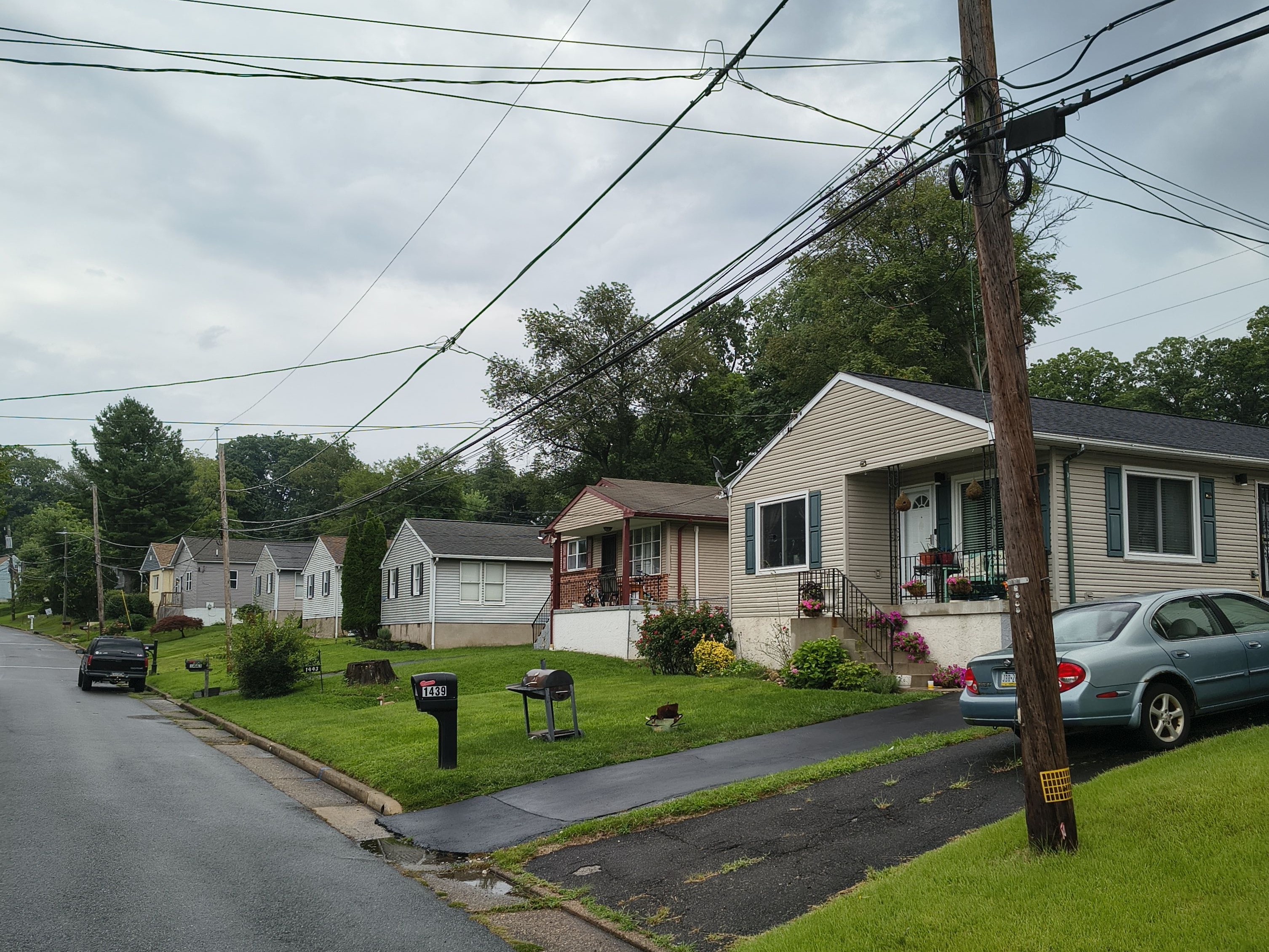
    One of the homes in Crestmont, photographed in 2026.DJ Atkins

    Crestmont isn’t unique.

    Across the country, Black neighborhoods formed near major employers because segregation blocked housing everywhere else.

    In Ardmore, Black families lived near the railroad and the estates they worked in. In Bryn Mawr, the Black neighborhood grew beside the service corridors of the Main Line mansions. In Atlantic City, Black workers lived near the Boardwalk hotels they kept running. In Pittsburgh’s Hill District, Black families settled near the steel mills and rail yards. In Baltimore, Black neighborhoods formed beside the shipyards and factories.

    Wherever a big employer needed labor, and wherever white neighborhoods refused to open their doors, a Black community formed in the one pocket where the pressure made it possible — and they look the way they do today because of their origins.

    One of the homes in Crestmont, an unincorporated community in Abington Township that owes its existence to Willow Grove Park and to housing segregation in the surrounding communities.DJ Atkins

    Crestmont’s density, the layout, the architecture, the vibe, the community identity — all of it comes from early working‑class development, limited access to loans, limited access to improvements, township decisions, generational continuity, racial boundaries, economic exclusion, and the strength of the people who lived there.

    It’s not a mystery. It’s not random. It’s not accidental. It’s a product of American racism and Black survival.

    People around here know Crestmont. But they don’t necessarily know its origin or see in it an example of how racism shapes geography and how Black communities build life anyway.

    Once you see that, you can’t unsee it.

    DJ Atkins is a Philly‑area DJ, radio host, and cultural writer. He also works in poetry, blending storytelling, music, and community history in his creative work.

  • Former N.J. Gov. Chris Christie discusses his legacy as the godfather of legal sports betting, prediction markets, and the Trumps

    Former N.J. Gov. Chris Christie discusses his legacy as the godfather of legal sports betting, prediction markets, and the Trumps

    Chris Christie has been a two-time Republican presidential candidate, the governor of New Jersey, and a U.S. attorney. But history might show that he generated the most enduring national impact in a different role, as the godfather of legalized sports betting.

    In 2012, when he was still New Jersey’s governor, Christie signed a bill that would allow customers to wager on professional and collegiate sports at 12 casinos and four racetracks.

    He correctly predicted that the bill — which directly challenged a longstanding federal law that restricted legal sports betting to just a handful of states — would lead to him being sued by powerful opponents, and that over the long haul, his efforts would succeed.

    But in a recent interview with The Inquirer, Christie said that even he did not imagine that sports gambling would evolve from a location-based attraction to phone apps that are readily accessible and open for business around the clock. Americans spent a record $165 billion on sports wagers in 2025, amid growing concern from health experts and lawmakers that mobile gambling is driving a health epidemic.

    Nor did Christie — who now works as a strategic adviser to the American Gaming Association — envision the rise of prediction markets, some of which have been accused in lawsuits across the U.S. of running illegal sports betting operations. Christie, however, said he is unsurprised that two prediction market companies count Donald Trump Jr. among their advisers.

    Christie’s sports gambling crusade began just two months after New Jersey voters approved a referendum in November 2011 to legalize sports betting in the state.

    Casino industry lobbyists had long championed the type of bill that he signed, predicting that sports betting would be a double win for the state, attracting new customers to struggling casinos and generating revenue to benefit elderly and disabled residents.

    But a federal law, the Professional and Amateur Sports Protection Act, had since 1992 restricted legal sports betting to Delaware, Montana, Nevada, and Oregon. Christie wasn’t deterred.

    “Am I expecting there may be legal action taken against us to try to prevent it? Yes,” he told reporters in 2012. “But I have every confidence we’re going to be successful.”

    Then the National Collegiate Athletic Association — along with Major League Baseball, the NFL, the NBA, and the NHL — sued Christie for violating the federal law, igniting a legal saga that would wind for years through district and circuit courts before reaching the U.S. Supreme Court in 2017.

    Christie argued that PASPA had been a constitutional overreach that violated the Tenth Amendment’s “anti-commandeering” doctrine.

    “We lost the first six times [in lower courts],” Christie said. “I had the sense that maybe I was wrong.”

    In 2018, the Supreme Court voted to overturn PASPA, giving states the freedom to enact their own sports betting laws.

    This interview with Christie, 63, has been edited and condensed for clarity.

    Why was legalizing sports betting in 2012 a priority for you?

    I was trying to differentiate Atlantic City, and give the casinos something new and different to offer, and to help preserve the horse racing business. I saw it at the time as an offensive and defensive measure. That was the motivation.

    The leaders of professional sports leagues were critical of your efforts, and deeply opposed to legalizing sports gambling. What did you think of their position?

    I thought that their opposition was both wrongheaded and hypocritical, and I told them so. [Then-NBA commissioner] David Stern was probably the most vehement against it, but [NFL Commissioner] Roger Goodell was a driving force, too. I told them, ‘[Sports betting] is happening anyway. You’d rather have people bet with illegal bookies — either mob-related, or offshore — than companies who are in the business and regulated by the state?’ It made no sense.

    Along with his peers in other professional sports, NFL Commissioner Roger Goodell (right) was opposed in 2012 to an expansion of legalized sports betting.
    Were you surprised to see those leagues later enter into lucrative partnerships with sportsbook companies?

    I wasn’t surprised at all. The leagues have shown an extraordinary ability to chase a dollar. I’m still waiting for the statue that they’re going to build of me, or the thank-you note. [Legalizing sports betting] has helped their TV contracts as well. People who weren’t even necessarily interested in sports before are now extraordinarily interested because they have a little bit of a wager on it. It’s kind of amazing.

    In the years since the Supreme Court overturned PASPA, NBA and MLB players have been arrested for conspiring with gamblers. An NFL executive was recently suspended for sharing inside information about the team’s draft plans.

    It’s inevitable that was going to happen. But I think because there is such a great deal of transparency, the leagues can act quickly. That makes it much more different from when gambling was illegal, and you still had some athletes or people associated with sports interacting with [bettors]. The regulation brings about transparency, and transparency makes it easier to police.

    Sports betting has evolved into a 24/7 mobile enterprise. Do you consider it to be a different product than what it was in 2012?

    Completely. I don’t think I could ever have anticipated that it would be in everybody’s pocket. That’s a little bit disturbing to me, to tell you the truth, the proliferation of it. And obviously prediction markets have been very disturbing to me, particularly because they market to teenagers, which is strictly prohibited for the legal gaming companies.

    Prediction markets have also faced backlash for allowing people to wager on U.S. military operations and the deaths of foreign leaders.

    I think the whole thing is absurd, and not good for the public.

    President Trump’s son, Donald Trump Jr., was reportedly given $300,000 worth of Kalshi shares in 2025, after becoming an adviser to the company. MARSHALL SCHEUTTLE
    President Trump’s son, President Donald Trump Jr., is an adviser to Kalshi and has shares of the company, and his venture capital firm has invested in Polymarket. Those companies are regulated by the federal Commodity Futures Trading Commission. Does that seem like a conflict to you?

    I think common sense gives you the answer to that. If it’s a money-making enterprise for the Trump family, then the odds are it’s going to face light regulatory action.

    Some state attorneys general have sued Kalshi. They allege that the company is running an unlicensed, illegal sports betting operation. Kalshi insists it is a commodity exchange. Will this end up being decided by the Supreme Court?

    It’s betting. It’s not an investment. It’s not a commodity. The Supreme Court has ruled that states have the right to regulate sports betting. I think that it’s going to go to the Supreme Court, and I’m confident [the prediction markets] will lose.

    We’ve interviewed addiction experts who say that sports gambling addiction is now a health epidemic, similar to tobacco and opioid abuse.

    I always thought that a big portion of this [revenue] has to go toward addiction treatment, and I think that’s got to continue.

    Elected officials in Pennsylvania, New Jersey and other states are exploring new regulations for sportsbook operators, like curtailing or eliminating in-game microbets or VIP programs. Are those kinds of reforms needed?

    As long as [sports betting] is a venture that creates tax revenue, then the states are always going to be examining this issue. They’re partners. They can’t claim no responsibility. I don’t know how it’ll manifest, or where it’ll land. … I think all regulation should be rooted in evidence-based research. So if there are changes that we see that could help make [gambling] safer, they should be considered.

    The Inquirer will continue to report on issues related to the growth of gambling addiction — among teens and adults — across Pennsylvania. If you or someone you know wants to speak with a reporter, please contact David Gambacorta or William Bender at dgambacorta@inquirer.com and wbender@inquirer.com