Blog

  • The lights go out at Novaya Gazeta, Russia’s bravest newspaper

    The lights go out at Novaya Gazeta, Russia’s bravest newspaper

    MOSCOW — Outside a five-story office building on Potapovsky Lane in Moscow, a group of journalists took down a metal plaque and installed a plastic one in its place: Novaya Gazeta Lived Here. White carnations, the flower that Russians associate with mourning, were placed on top of it.

    Novaya Gazeta, Russia’s most daring independent newspaper for decades, closed its doors Monday, the latest blow to Russians who value freedom of expression and human rights.

    Its forced closure is emblematic of the Kremlin’s erasure of opinions, ideas, and people that do not conform to its views. That process has been underway for years, but it has dramatically accelerated since Russia launched its full-scale invasion of Ukraine in 2022.

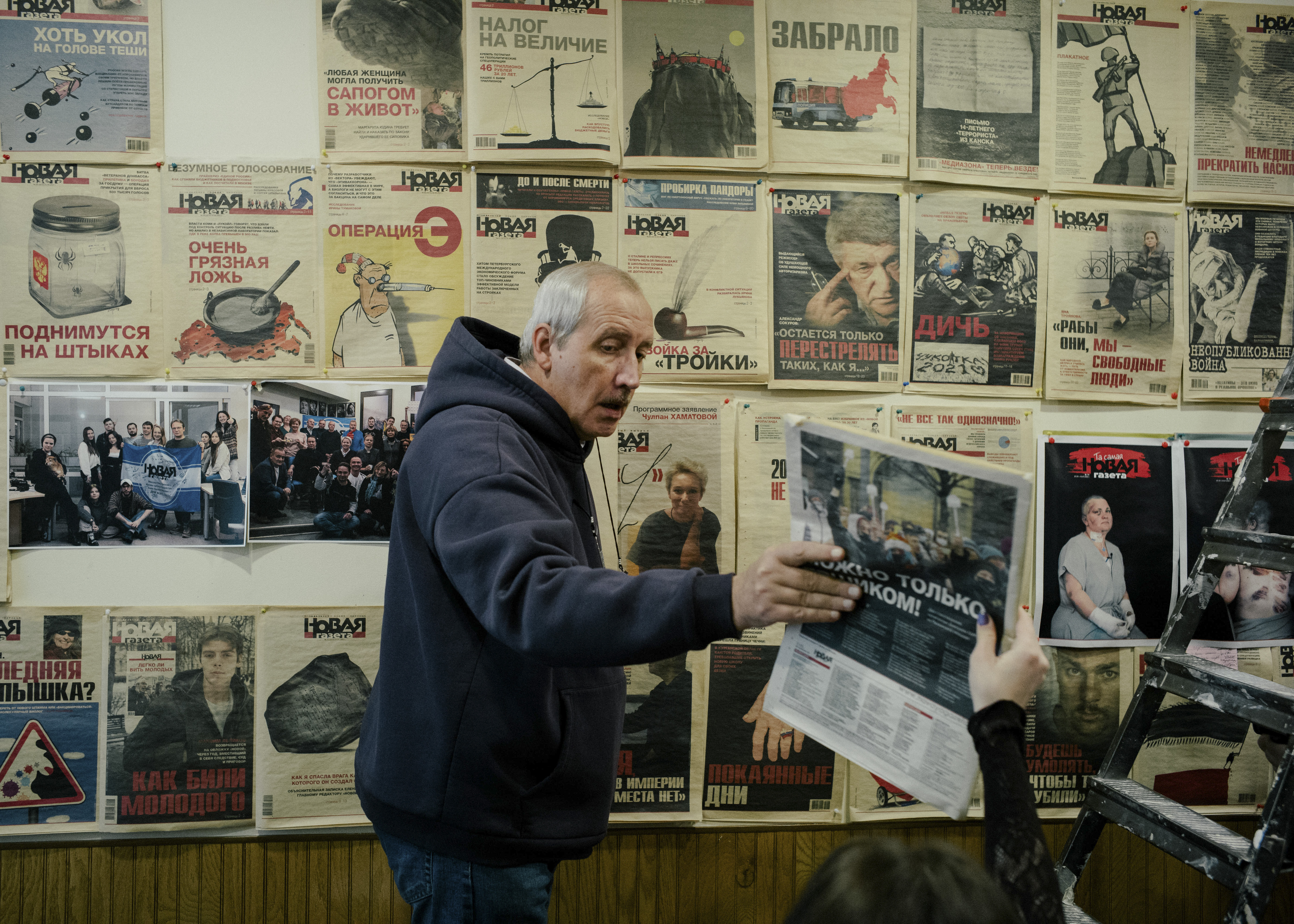
    Novaya Gazeta’s journalists were packing up their offices when I visited Monday. Its co-founder Dmitri A. Muratov, who shared the Nobel Peace Prize in 2021 for defending press freedom, was giving away personal items to colleagues and well-wishers.

    He handed his emerald banker’s lamp to one of the paper’s last recruits, a video journalist. He kept for himself a fire evacuation floor plan, on which he asked staff members to sign their names where their offices had been.
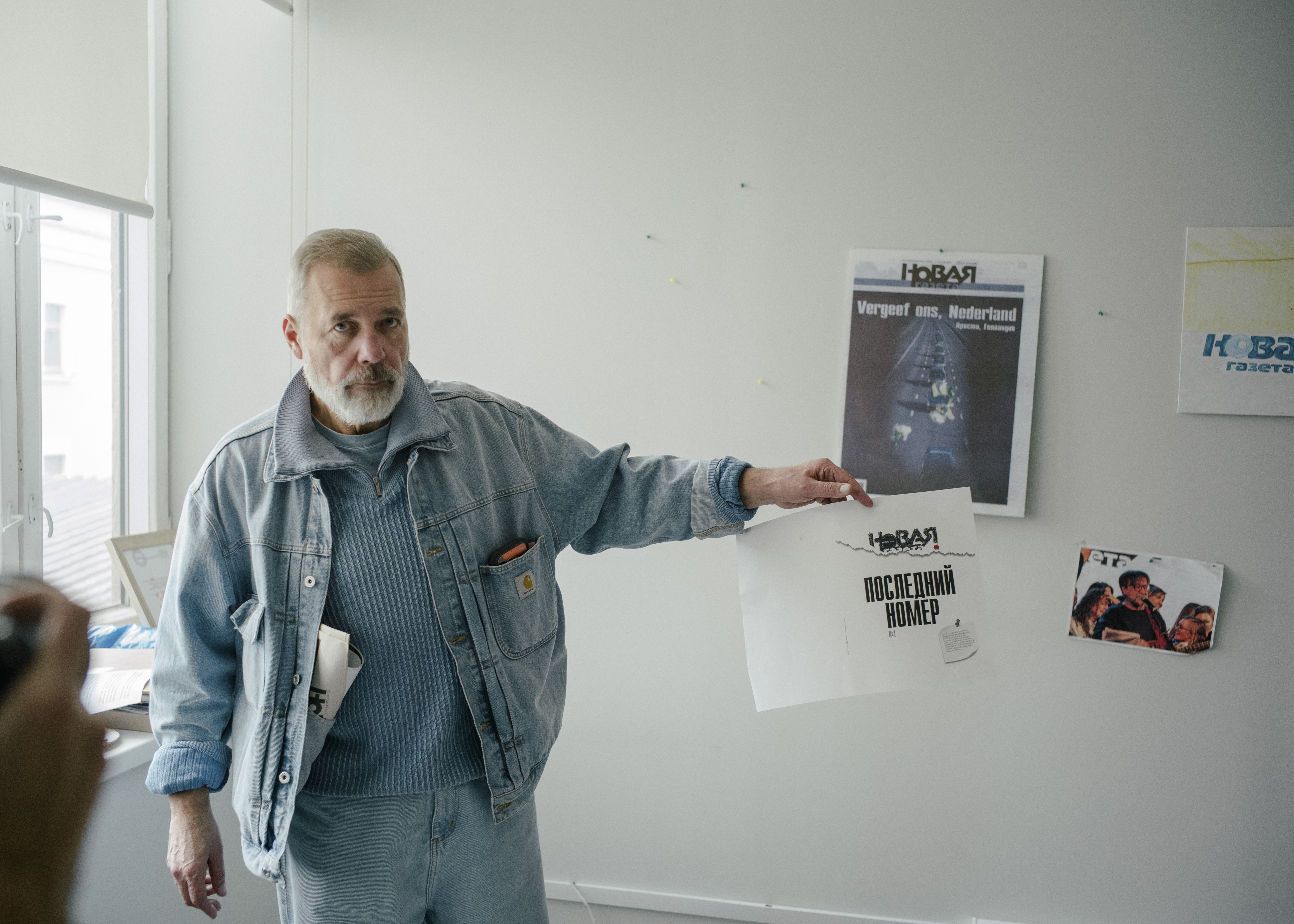
    “The people in our country who stand for peace were not given the opportunity to read what they want,” said Dmitri A. Muratov, a founder of Novaya Gazeta.Nanna Heitmann

    The office once occupied by Anna Politkovskaya, an investigative journalist and Kremlin critic who was gunned down on President Vladimir Putin’s birthday in 2006, had already been cleared out. Her computer, eyeglasses, and notebooks, left in place for 20 years after her murder, are now in storage.

    While the occasion was somber, the journalists were not despondent. In many ways, it was a miracle that the newspaper had survived for as long as it had.

    After its start in 1993, less than two years after the fall of the Soviet Union, Novaya Gazeta chronicled Russia’s chaotic 1990s, its consumerist 2000s, its increasingly repressive 2010s, and Putin’s near-total consolidation of power in the 2020s.

    It carried on even as six of its journalists were killed and others violently attacked. It kept publishing after its website was blocked, its media license revoked, its printing press seized, and one of its journalists detained.

    But it could not, at least in its current form, outlast Russia’s war in Ukraine. The double death blows came last month, when its landlord refused to renew the lease and the banks that had processed reader donations, the paper’s sole form of income, said they would stop doing so. None of the journalists consider this a coincidence.

    “No one is in shock here,” one of the paper’s journalists, Tatiana Britskaya, said as she walked the halls amid the boxes and plastic wrap. “The process of silencing us started many years ago.”

    The journalists had tried to adapt to Russia’s wartime reality. They did not report about what was happening on the front lines, because censorship laws passed in March 2022 had made it a crime to use anything but government sources for such reports.

    Internally, they debated whether it made sense to keep operating under those conditions, and the newsroom had been divided about it, said Britskaya, 43. But she said their readers overwhelmingly wanted them to continue, even if they had to abide by the new laws.

    “They said, ‘Continue, because many of us are post-Soviet people, and our entire lives were spent reading between the lines. What matters to us is that you stay with us,’” Britskaya said.

    The paper published front pages with the word “war” blurred out. But its journalists wrote unflinchingly about lives that were taken or forever damaged by the conflict. With philanthropy and activism at the core of its mission, Novaya Gazeta also encouraged readers to help those in need of assistance and organized fundraisers of its own. The paper made its anti-war position eminently clear, withstanding the pressure until it became insurmountable.

    At noon Monday, the journalists gathered for their final editorial meeting, as dozens of reporters — mostly foreigners — filmed the scene. The editor-in-chief, Sergei Sokolov, listed the articles and columns that would run in the final issue.
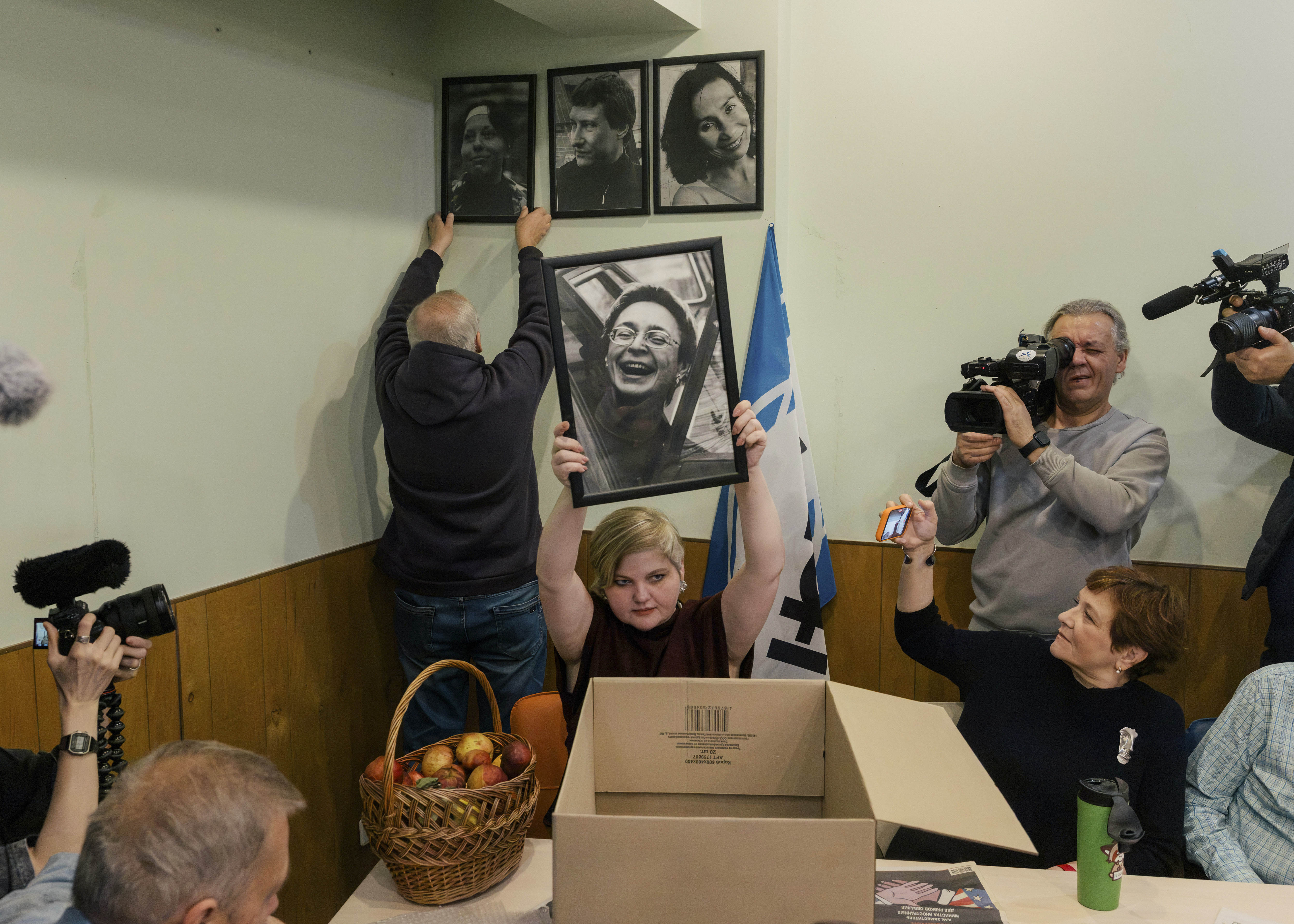
    Tatiana Britskaya, a Novaya Gazeta journalist, held up a picture of Ms. Politkovskaya before it was packed away on Monday.Nanna Heitmann

    There was an investigation into an orphan rescued from an abusive psychiatric hospital, who was subsequently drafted and killed in the war. An article about teenagers who had fallen prey to scammers. A report on representatives from the anti-war Yabloko party taking office in the parliament of Nizhny Novgorod, the only region of Russia that allowed the party to field candidates.

    After announcing that Novaya Gazeta’s website and social media channels would stop being updated with new content at midnight, Sokolov recalled the words of exiled Orthodox priest Andrei Kordochkin, a columnist for the paper who was stripped of his Moscow congregation because of his anti-war position. Despondency, Kordochkin had said, is the seventh sin.

    Slowly, the journalists took down portraits of their six slain colleagues that had watched over every editorial meeting: Igor Domnikov, Yuri Shchekochikhin, Stanislav Markelov, Anastasia Baburova, Natalia Estemirova, and Politkovskaya.

    “We are not saying goodbye,” Sokolov said. “We definitely will return, because Novaya Gazeta is not a newspaper, not a website — it is an idea, a way of life for those who work here. And it is impossible to kill and impossible to close. We will live. I am sure that society, caught in this terrible time, will finally stir.”

    The journalists went outside for a final photo as “Eto Vsyo” (“That Is All”), a popular rock ballad, played on a sound system. The song, a hit in 1994 for Russian rock band DDT, is about loss and mourning, but also about the triumph of love. Its lead singer, Yuri Shevchuk, recorded a new acoustic version in honor of Novaya Gazeta after it announced that it would close.

    Shevchuk is Russia’s Bruce Springsteen. After declaring that he opposed the war, he was interrogated, charged with “discrediting the Russian armed forces” and effectively blacklisted from performing in Russia. Now he only tours abroad, like all of Russia’s anti-war singers. The Kremlin has instead promoted nationalist artists who sing about the country’s greatness.

    Muratov used the media coverage of the paper’s closure to call for distinguishing Russian authorities from the people of Russia.

    “This is not a war of Russia with Ukraine — it is a war of the Kremlin with Ukraine,” he said. “The people in our country who stand for peace were not given the opportunity to read what they want — we see this today — or to vote for the anti-war party, Yabloko, that they would have liked to vote for.”
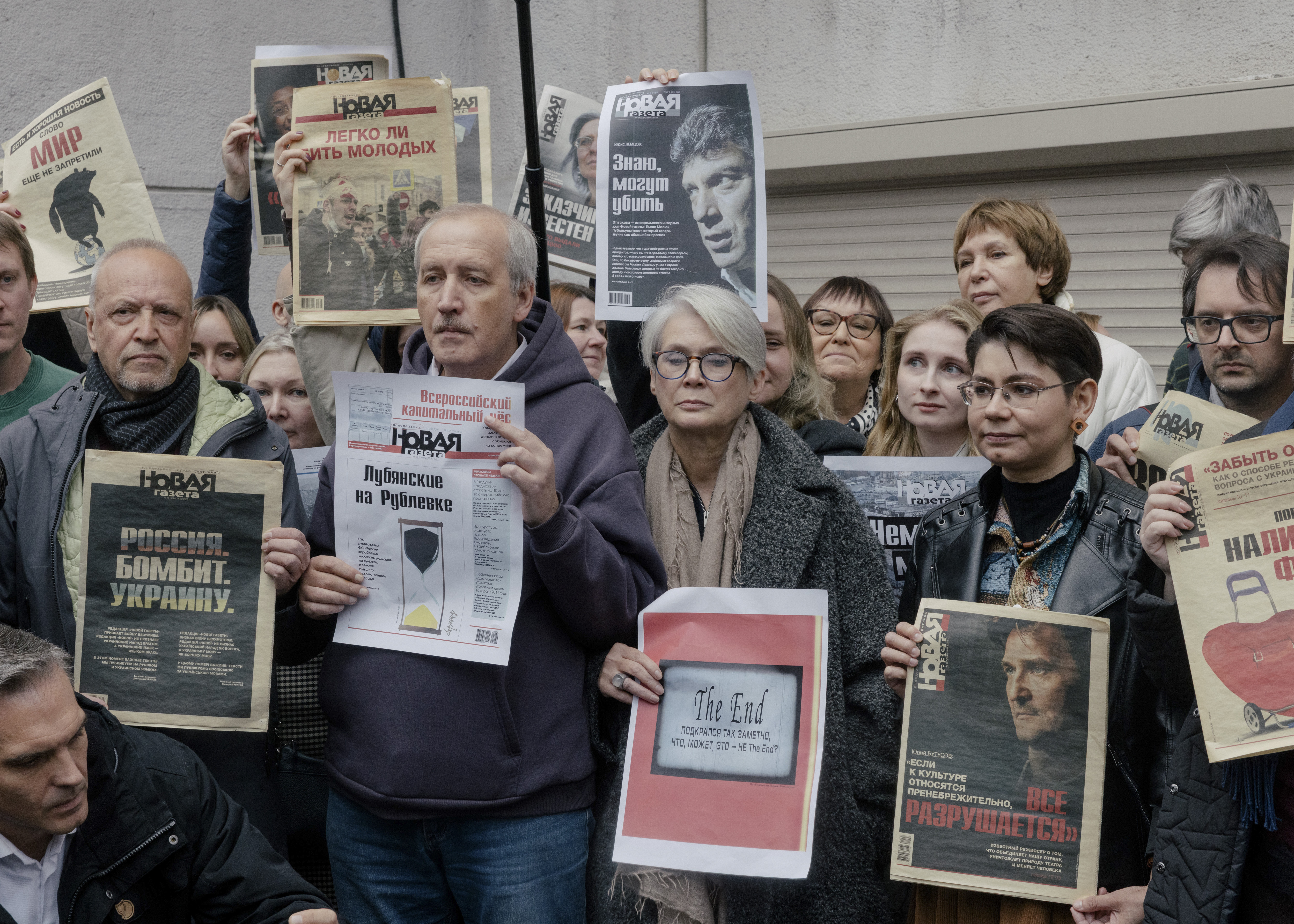
    Novaya Gazeta journalists in front of the building on Monday. Sergei Sokolov said it was not a newspaper but an idea, “impossible to kill and impossible to close.”Nanna Heitmann

    He called for freedom for Russia’s thousands of political prisoners and for humanitarian evacuations for Ukrainians trapped by the war. “This madness, this slaughter must be stopped,” he said. In contemporary Russia, those are dangerous words.

    Among those who came to bid farewell was Yan Rachinsky, the former head of Memorial, the Russian rights group that shared the 2022 Nobel Peace Prize. Memorial, which was created to preserve the memory of those persecuted by the Soviet regime, was officially labeled “extremist” in April, making it a criminal offense to be affiliated with the group.

    A small museum that was operated by Memorial, with rotating exhibits about life in the Soviet gulag, is now closed. Since Memorial was labeled an extremist group, memorials to victims of the gulag in public squares across Russia have been dismantled.

    Russian authorities have also gone after nonconformist communities. “Promoting” LGBTQ+ relationships or a “child-free” lifestyle has been illegal for years. Police in Moscow recently carried out raids in the neighborhood of Kitai Gorod, a popular gathering place for counterculture youth.

    Kremlin spokesperson Dmitry Peskov called the closure of Novaya Gazeta a “normal process of turnover.”

    “Of course, every year some media outlets close, and new ones take their place,” he said Monday during a call with reporters.

    “We are the antidote to tyranny,” reads the headline on this 2021 issue of Novaya Gazeta, featuring Dmitri A. Muratov and the Philippine journalist Maria Ressa after they were awarded the Nobel Peace Prize.Nanna Heitmann

    But Novaya’s journalists, and many of its readers, know this was not a matter of economics.

    “When voices like these disappear from public life, it starts to feel like there are fewer and fewer people who think differently, like you’re alone in what you believe,” said a 21-year-old reader, Danila, a recent university graduate with a degree in computer programming. He asked that his last name not be published, to avoid trouble with authorities.

    “The less you hear people expressing views different from the official narrative,” he said, “the harder it gets to speak up yourself.”

    This article originally appeared in the New York Times.
  • The geezer of graffiti art, Barry McGee, goes ‘another round’ in Los Angeles

    The geezer of graffiti art, Barry McGee, goes ‘another round’ in Los Angeles

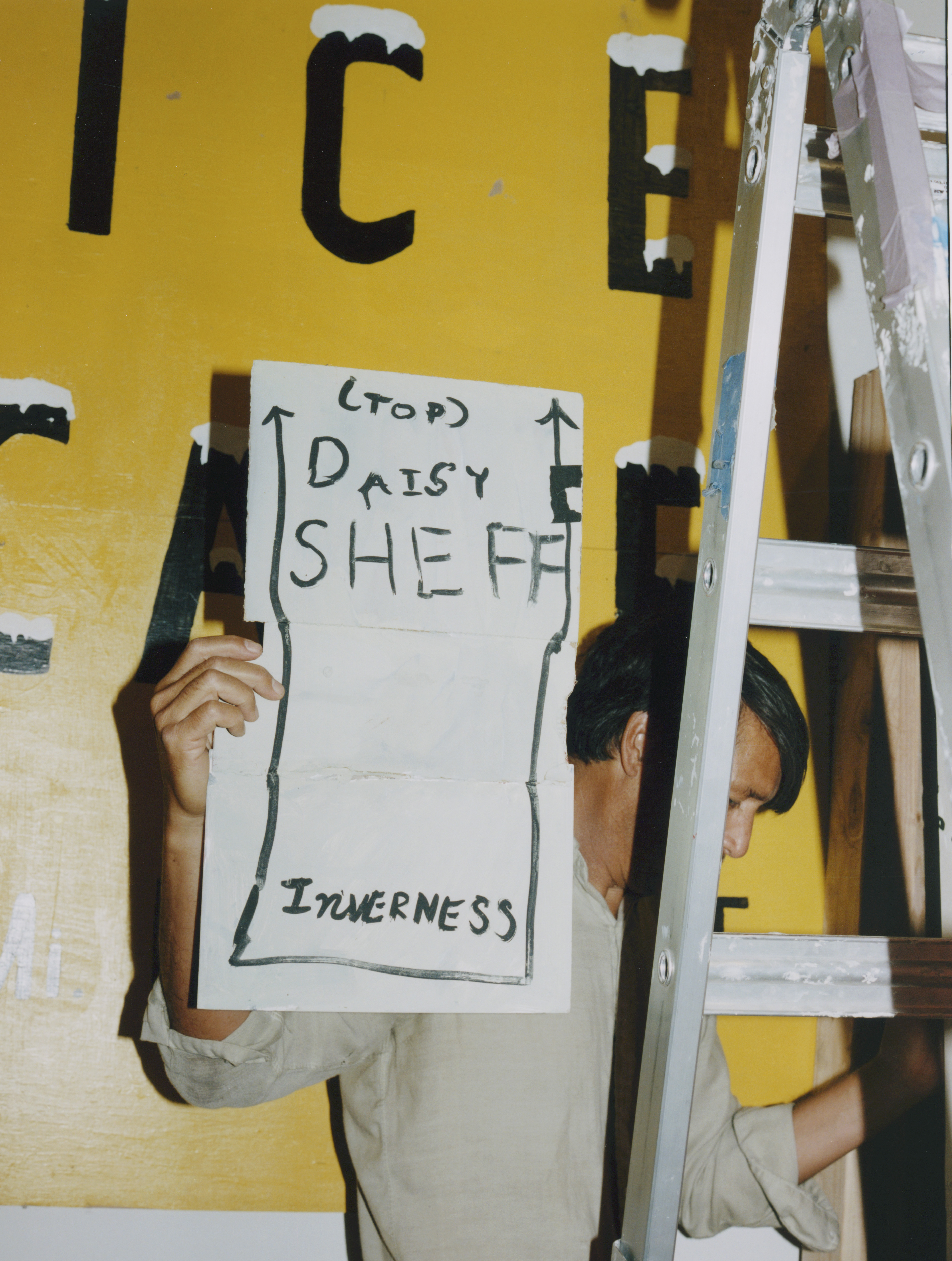
    When Barry McGee drove his Chevy Astro van from his home in Marin County, Calif., to Los Angeles in October to install his exhibition at Jeffrey Deitch gallery, he stopped in train yards along the way to write invented graffiti monikers on the sides of the freight cars with a white crayon.

    McGee is an aficionado of this old-fashioned genre of graffiti. Since the 1800s, long before “wildstyle” throw-ups and spray-painted subway trains, itinerant men have written their names or insignia on the boxcars they hopped all across this country.

    McGee cut his teeth as a graffiti writer in San Francisco in the early 1980s under the pseudonym Twist. He then found success in the next decade showing paintings and drawings in galleries under his own name. Along with colorful paintings of tessellated grids and hand-lettered signs for fictional businesses, in his 20s, he began making pictures (both legally and on public walls) of older men with melting features and exhausted expressions: geezers, as he calls them.

    McGee, 60, has become one of street art’s elder statesmen, an influential and well-loved figure who has retained his credibility with a younger generation despite exhibiting in blue-chip galleries and doing corporate collaborations with brands such as Meta, Adidas, and Beats by Dre. In his packed exhibition, “Another Round,” which opened Oct. 30, alongside more than 200 of his paintings, sculptures, and photographs, he includes the work of scores of artists decades younger than himself and a few who are older.

    On one of several recent video calls with the artist in the small hours (he’s a night owl), I asked if he identifies with the geezers he paints and with the train-hopping itinerants on whom many are based. “Unfortunately, yes I do,” he replied.

    These days, McGee spends most of his time at his home in Bolinas, Calif., five minutes from the beach. He says he was tired of getting parking tickets and having to lock his doors in San Francisco: “I became an old person, is what happened.”

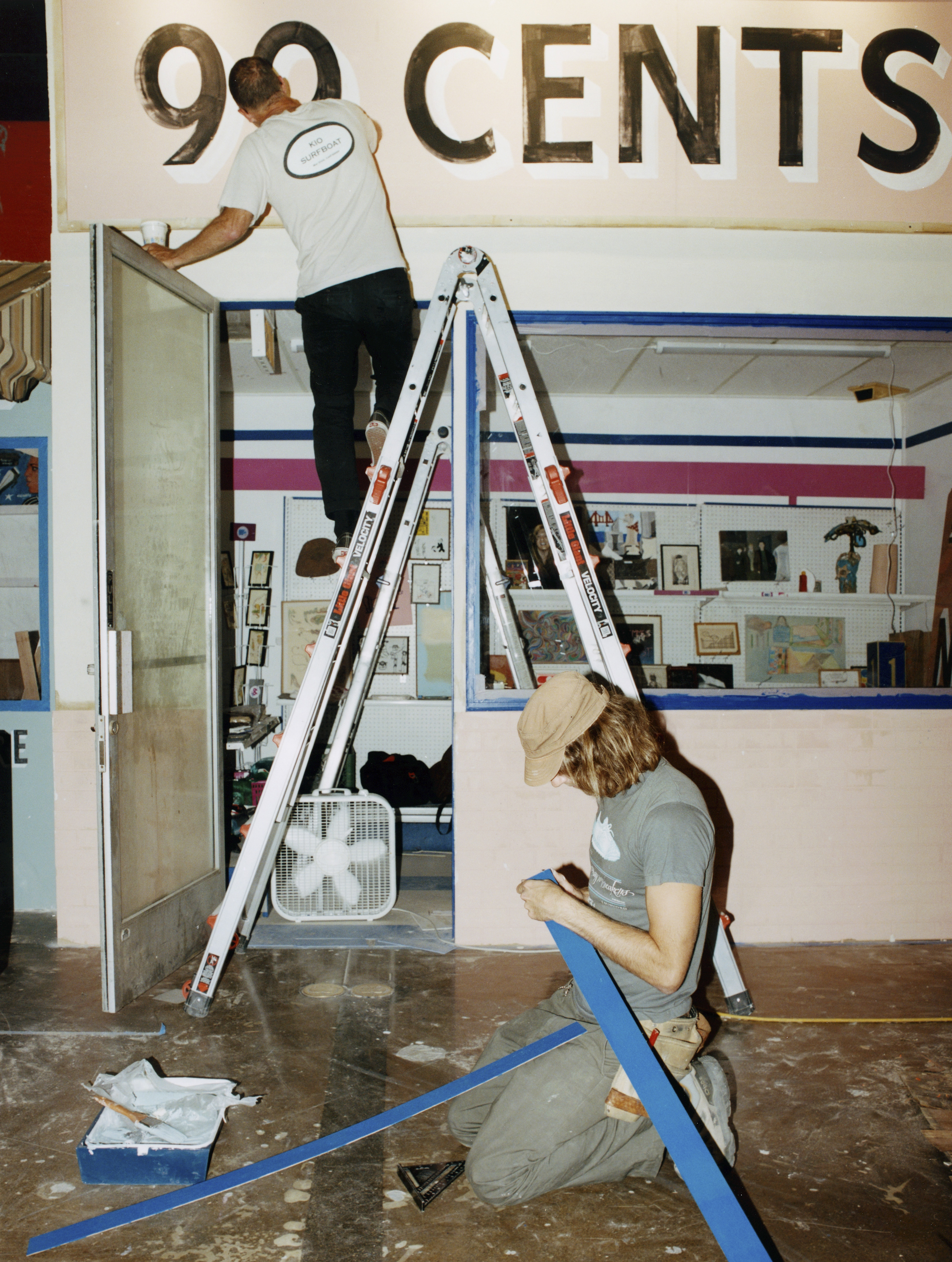
    In a subculture defined by youth, McGee still holds sway. In February, in collaboration with the Hole gallery, he organized a pop-up exhibition in a 99-cent store on Wilshire Boulevard, a stone’s throw from the Los Angeles County Museum of Art and the Academy Museum of Motion Pictures. It was a chaotic triumph; more than 200 artists showed up with just a day or two of notice to cram their work onto the supermarket’s empty shelves. (They also graffitied most of its writable surfaces — and walls in the surrounding neighborhood, to the chagrin of residents.)

    Barry McGee enlisted the help of the artist Alexis Ross to fabricate a storefront facade inside the gallery, based on an imaginary 99-cent store and using materials salvaged from his prior exhibit, “99CENT.”Jack Bool

    “99CENT” was a rude riposte to the Frieze Art Fair, which opened in Los Angeles a few days later. It satirized the commercial contemporary art world with creations of uneven virtuosity by diverse makers and dabblers, many of whom do not aspire to careers as professional artists. Nevertheless, most of it was for sale.

    Graffiti, when McGee started out, was staunchly anticapitalist. But views have evolved, said Aaron Rose, a Los Angeles-based artist and writer who showed McGee’s work in the 1990s at the Alleged Gallery in New York. “In the late ’90s and even into the early aughts, Barry and most of the artists from that scene were reluctant to collaborate with brands,” he said. “But the world changed, and the whole idea of ‘no sellout’ kind of went out the window.”

    One of the artists in “Another Round” is graffiti writer, designer, and artist Chito, who has collaborated with brands including Adidas and Crocs. Chito, 30, said he admired how McGee maintained a separation between his work for the street, for galleries, and for brands. “He never made his graffiti corny, because he’s always kept it real on both sides, you know?”

    Others cite McGee’s willingness to use his success to elevate the artwork of others in his community. “99CENT” was a case in point; so, too, is “Another Round.”

    “In graffiti,” McGee said, “if someone cuts a hole in the fence, everybody goes through that same hole. Just like, if I have an opportunity at Jeffrey Deitch’s space, everybody’s coming in with me.”

    Deitch has witnessed McGee patiently signing books, T-shirts, and skate decks for crowds of fans. “He’s like a Pied Piper,” the gallerist said. In one week, “99CENT” drew an estimated 25,000 visitors; Frieze, by comparison, counted 32,000.

    “Another Round” continues a thread through McGee’s exhibitions since 2015, when he built his first “Healing Arts Center” in a former check-cashing business in San Francisco. Since then, he has created several such installations, which he fills with art and artifacts by his friends and peers.

    “Art’s healed me,” McGee said. “It’s helped me as much as anything in my life.”

    “I just wanted to feel good and have others feel good about art and coming together as a local community,” he added.

    “99CENT,” McGee said, “was the biggest version of a healing.” He was struck by how it brought together people who might, in the territorial graffiti scene, have been “warring factions” because they were from different neighborhoods.

    For “Another Round,” McGee worked with artist Alexis Ross to create two mock storefronts in the gallery. One is a condensed refabrication of the 99-cent store, with the same linoleum floor and pegboard shelving, dressed with artwork from that show and some fresh additions. Adjacent is a bookshop that offers zines, obscure books, T-shirts, and McGee’s favorite granola. It’s operated by Matthew James-Wilson of Heavy Manners Library, a lending library, bookstore, and event space in Echo Park.

    Artist Henri Paul Broyard, 37, who participated in “99CENT,” contributed a maquette for a “Healing Arts Center” built from cardboard and an old paint palette. Broyard said he understood McGee’s healing arts concept as “both sincere and kind of tongue-in-cheek.”

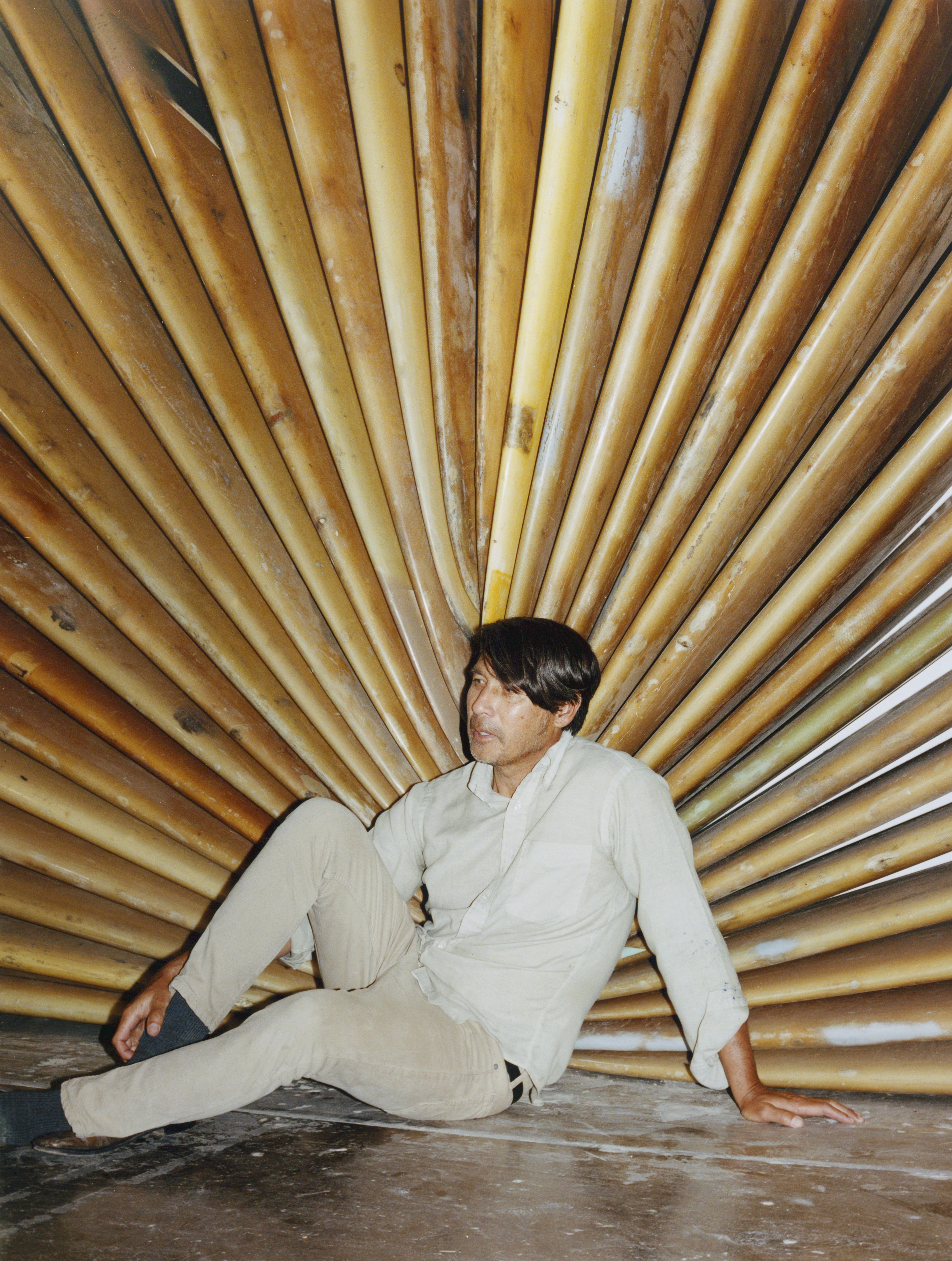
    Barry McGee in front of an untitled sculpture made from fanned surfboards for his new show at Jeffrey Deitch. The graffiti artist still aims for his work to be inclusive of underrepresented voices.Jack Bool

    In the wake of the collaborative “99CENT” exhibition — for which McGee insists he “was pretty hands-off” — his latest show hews closer to a loosely authored, collective model. As he toured me around the gallery by video, he seemed surprised to encounter objects — like two spray-painted tumbleweeds — that artists had simply left there.

    The space was busy with visitors, many of whom greeted McGee. They wove around plinths topped with ceramics and his painted, papier-mache sculptures; a custom motorbike that once belonged to Kenny Howard (better known as Von Dutch); and an ornate tricycle that McGee’s hot-rodder father had tricked out for him when he was a kid.

    McGee’s ballpoint pen drawings of baleful faces, from early in his career, can be found farther along. There’s plenty of new work too, including shaped abstract paintings and decorated plates.

    It is hard not to notice that most of the artists in the exhibition — as in the broader graffiti scene — are male, although McGee said he is working on making the gender balance more equal in his shows.

    “He has a crew of boys who help him do everything. They adore him,” said artist Ruby Neri, an old friend of McGee’s associated with the Mission School group of San Francisco in the 1990s. Neri moved from graffiti to paintings and painted sculptures, often depicting ribald female nudes. Her deft early painting of two faces, on a scrap of plywood, features in the 99-cent-themed section of this show.

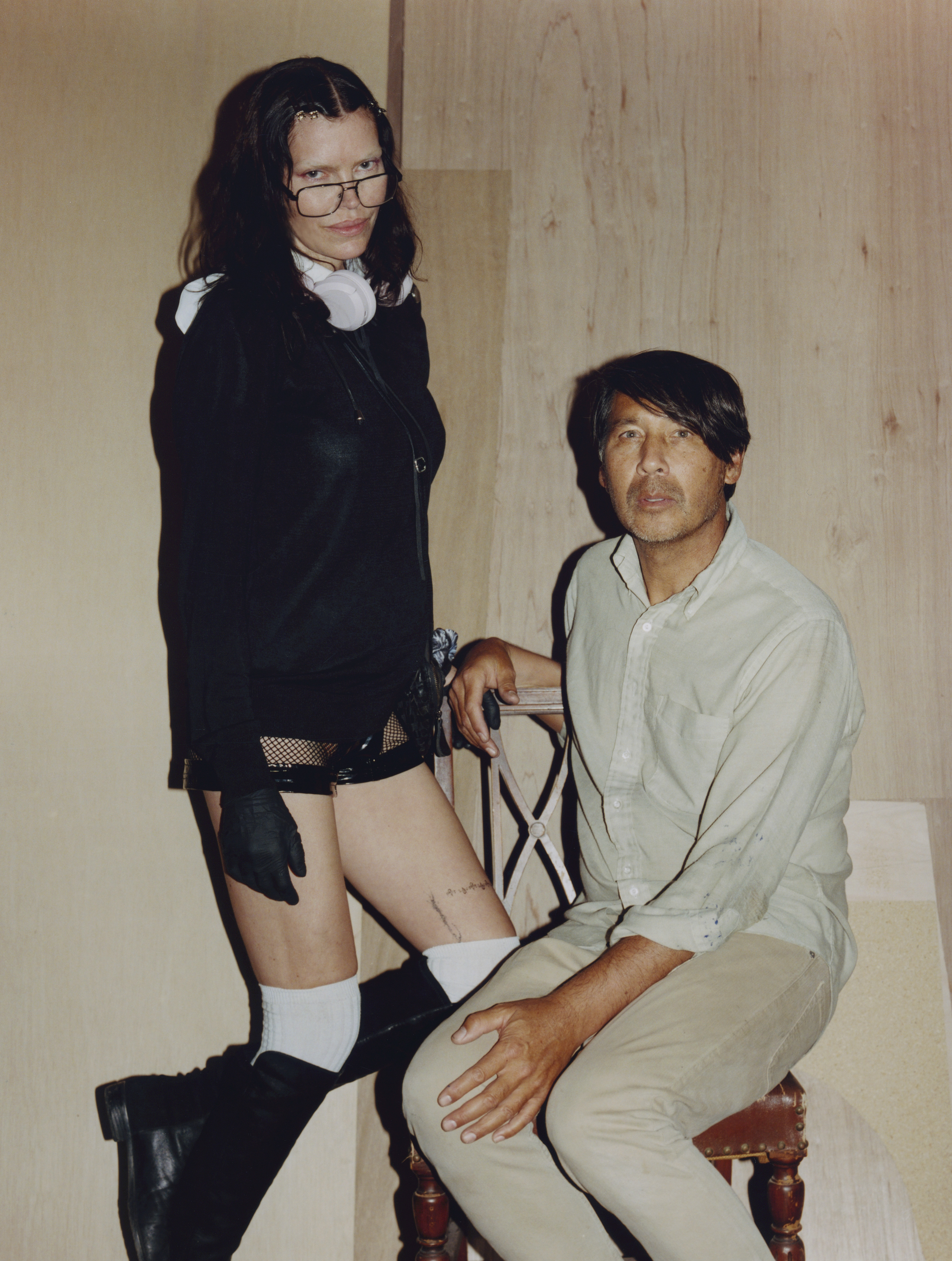
    Barry McGee and Sorat May Andersen during the exhibition’s installation.JACK BOOL

    Other female artists, including McGee’s first wife Margaret Kilgallen, who died in 2001 at 33, are included. There is a photograph of Kilgallen drawing on a boxcar, and a print by McGee and Kilgallen’s daughter, Asha, 25. A carbuncular gray sculpture, made from spray-painted pom-poms, is by McGee’s current partner, Sorat May Andersen. As with “99CENT,” this exhibition seems less concerned with scrupulous aesthetic discernment than with generosity of spirit, with the warm embrace of friends and family.

    During his visit, McGee was painting on walls all around Los Angeles, though he declined to reveal where. McGee is intent on leaving his mark on trains, on walls, on sneakers, on skate decks, on posters, and in galleries throughout the world, sending signals, as he said, that he’s “alive and breathing.”

    “I just have this urgency — I want to draw on something and have it outlast me, and let it sit in a field in Missouri or Utah,” he said of his train tags. To be influential, to encourage another generation of artists, is surely the ultimate way of leaving your mark.

    This article originally appeared in the New York Times.
  • Letters to the Editor | Nov. 12, 2026

    Letters to the Editor | Nov. 12, 2026

    Targeted boycott

    I was very disappointed to see The Inquirer’s one-sided reporting on the recent boycott bike ride against the Israeli genocide. While antisemitism is a genuine social plague, conflating anti-Zionism with antisemitism was disingenuous.

    The boycott was clearly meant to bring attention to vocal Zionist business owners, not all Jewish businesses. (Not all Jews are Zionist!) Israeli Zionists are specifically criticized because they believe Palestine belongs to the Jewish homeland, which they use to justify the annexation and killing of their Arab neighbors.

    Many Philadelphians are rightfully outraged and feel powerless to stop such far-away tragedies, but one of the few tangible ways we can show global solidarity is through voting and boycotting.

    I joined the boycott for the same reason I boycott the MAGA-owned Angelo’s Pizzeria: because I believe businesses that do not reflect my values do not deserve my money.

    To be clear, Jewish folk belong in Philadelphia. We should not place the burden on Jewish businesses to openly condemn Israel more than we would other faiths, but any business that chooses to publicly support Israeli Prime Minister Benjamin Netanyahu’s genocidal administration deserves a boycott.

    Jon Shanfelder, Philadelphia

    . . .

    Those who oppose Israel’s mass slaughters, ethnic cleansing, and expansion recognize that Israel will only curtail its crimes against humanity if the United States stops providing aid. Thus, we must focus all our efforts on pressuring the newly elected Congress to pass legislation to achieve that goal.

    In contrast, publicly targeting Jewish businesses through tactics like the “Boycott Ride” is counterproductive, smacking of Nazism and feeding into the false narrative that our stance is antisemitic.

    Carol Stein, Philadelphia

    . . .

    The boycott of Jewish-owned restaurants in Philadelphia on Sunday should concern anyone who believes in religious freedom and fairness.

    While people have every right to criticize foreign governments, targeting neighborhood businesses because their owners are Jewish crosses the line into identity-based discrimination. Small-business owners should not have to defend government policies simply because of their heritage.

    As an Ahmadi Muslim, my faith teaches, “Love for all, hatred for none.” Growing up in Pakistan, I witnessed firsthand how destructive cycles of boycotts and division harm ordinary, innocent people. Human rights do not come with religious exceptions. Antisemitism, Islamophobia, and all forms of bigotry deserve the same firm rejection.

    A Jewish American is no more responsible for a foreign government’s actions than a Muslim American is for distant political regimes. We can stand with Palestinians and demand accountability without intimidating ordinary people trying to earn a living. Peace will never be achieved by deciding which community deserves to feel welcome in our neighborhoods.

    Justice must be universal, or it is not justice at all.

    Farid Ahmad, Easton

  • Dear Abby | Siblings quarrel over friendship with ex

    Dear Abby | Siblings quarrel over friendship with ex

    DEAR ABBY: My sister, “Randee,” and I are experiencing a falling-out with our older brother, “Darren,” which has left us hurt and confused. We come from a large, tightly knit family, and there’s always some sort of celebration happening. We siblings are in our 40s and 50s, so there are also lots of nieces and nephews.

    Darren and his wife planned a small graduation party for their son and invited Randee’s ex-husband, who was a complete monster during their recent divorce. Randee and I didn’t want to be around him at all. Darren and his wife were aware of this but invited him anyway. Although Darren has a long-term friendship with Randee’s ex, we were still upset that he chose him over us. When I approached Darren about the situation and asked him nicely to have us come earlier and the ex come later, he reacted with anger and told us not to come at all! He later told us never to contact him again and that we are cut off from his children as well.

    It has been nine months, and he hasn’t shown up to any family functions. When I saw my nephew at the park, he ignored me as if I didn’t exist. That hurt a lot, considering how close we always were. Darren refuses to apologize or make amends, and he stews in anger over it. His wife and children have joined his anger-fest as well. My parents spent their whole lives keeping us all together and making the holidays and celebrations special. They are heartbroken as well. How do we proceed?

    — BROKEN IN NEW YORK

    DEAR BROKEN: From what you have written, I suspect there may be more turmoil in your family than you mentioned in your letter. Start trying to mend fences by apologizing to Darren for dictating who he could or could not entertain at his son’s graduation celebration. Darren did not choose his friend over you and Randee. He chose all three of you, and you chose to create drama where it didn’t need to exist.

    As the host, he, not you, was rightly in charge of his guest list. To enjoy the same graduation party as Randee’s ex, all you had to do was avoid talking to him without making an announcement or making it obvious. This is what polite people do if they fear they will encounter an uncomfortable situation.

    ** ** **

    DEAR ABBY: What is the rule of etiquette for waving to neighbors? I wave to some who never return the wave. Is it OK to stop waving to them? Should I wait until somebody waves to wave back? I feel like a fool waving to the same people who never wave back.

    — NEED WAVE GUIDANCE

    DEAR WAVE: There’s no harm in waving to someone who doesn’t reciprocate, but if it makes you uncomfortable, there’s also no reason to continue. Are you otherwise on good terms with these neighbors? Do you ever pause for a chat or have them over for dinner? If you rarely or never speak to them, they may not feel your relationship warrants a wave.

  • Horoscopes: Thursday, Nov. 12, 2026

    Horoscopes: Thursday, Nov. 12, 2026

    ARIES (March 21-April 19). You were once very good at something you’ve since abandoned. How much of that skill is still there? Quite a lot, as it turns out. You’ll pick it up again and get right back into your old rhythm.

    TAURUS (April 20-May 20). Revisit the place you once loved, even if only in your memories or pictures. Perhaps now the menu has changed, the neighborhood looks different or the era is simply over — but it’s fortifying to acknowledge that bygone season.

    GEMINI (May 21-June 21). You have a question you should have asked ages ago. The person who knows the answer is still around, and you’ll get your chance. One conversation will clear up a misunderstanding that’s been influencing your decisions.

    CANCER (June 22-July 22). The past comes a-callin’, and you’ll pick up a conversation that you thought you’d ended years ago. You’ve both lived a little since then. You’ll have new stories to tell and a fresh appreciation for what brought you together.

    LEO (July 23-Aug. 22). You once turned down an invitation because the timing was wrong. Well, circumstances have changed. You’ll get another chance to participate, and this time you’ll have the freedom to enjoy the experience to its fullest.

    VIRGO (Aug. 23-Sept. 22). You’ve been putting up with an inconvenience for so long that you barely notice it anymore. Today you’ll remember how things used to work and realize you can restore that arrangement. One adjustment will improve your everyday life.

    LIBRA (Sept. 23-Oct. 23). An old photograph will remind you of a version of yourself you liked very much. What were you doing then? Who were you spending time with? You’ll bring a little of that era into your present life, with delightful results.

    SCORPIO (Oct. 24-Nov. 21). Remember when you lacked the money, contacts or experience to pursue your terrific idea? Not anymore. If only the younger you could see you now, with access to tremendous resources and the freedom to take this all the way.

    SAGITTARIUS (Nov. 22-Dec. 21). Just because you’ve held an opinion for years doesn’t mean you can’t reconsider. What you’ve recently learned makes the old conclusion seem incomplete. You’ll enjoy testing a different point of view, especially when it leads to a lively conversation.

    CAPRICORN (Dec. 22-Jan. 19). You lent someone a hand long ago and thought little of it afterward. Today you’ll discover how much your help meant. The story has continued without your knowledge, and you’re going to love hearing the latest chapter.

    AQUARIUS (Jan. 20-Feb. 18). The unfinished project still has potential. Now you’ll see exactly what to do next. Better yet, the part that once seemed impossible will be among the easiest things to accomplish.

    PISCES (Feb. 19-March 20). You’ll remember a promise you made to yourself during a very different chapter of your life. You still want what you wanted then. A small act of follow-through will feel wonderful, especially because you’ve waited so long.

    TODAY’S BIRTHDAY (Nov. 12). In your Year of the First Pick, you put yourself out there for opportunities you’re so right for and it works. You’ll be chosen and celebrated with votes of confidence that keep putting you in prime positions. More highlights: A hobby with an addictive learning curve, spectacular tickets and five sales that increase your income considerably. Leo and Aquarius adore you. Your lucky numbers are: 5, 16, 27, 39 and 48.

  • Flyers push the Oilers to overtime, but lose 3-2 on Evan Bouchard’s game-winner

    Flyers push the Oilers to overtime, but lose 3-2 on Evan Bouchard’s game-winner

    EDMONTON, Alberta ― The Flyers said on Wednesday morning they had moved on from the past few days.

    They moved on from the Nick Seeler-Matvei Michkov argument on the bench Monday night in Vancouver. They moved on from Tuesday’s report that Michkov would likely want a fresh start.

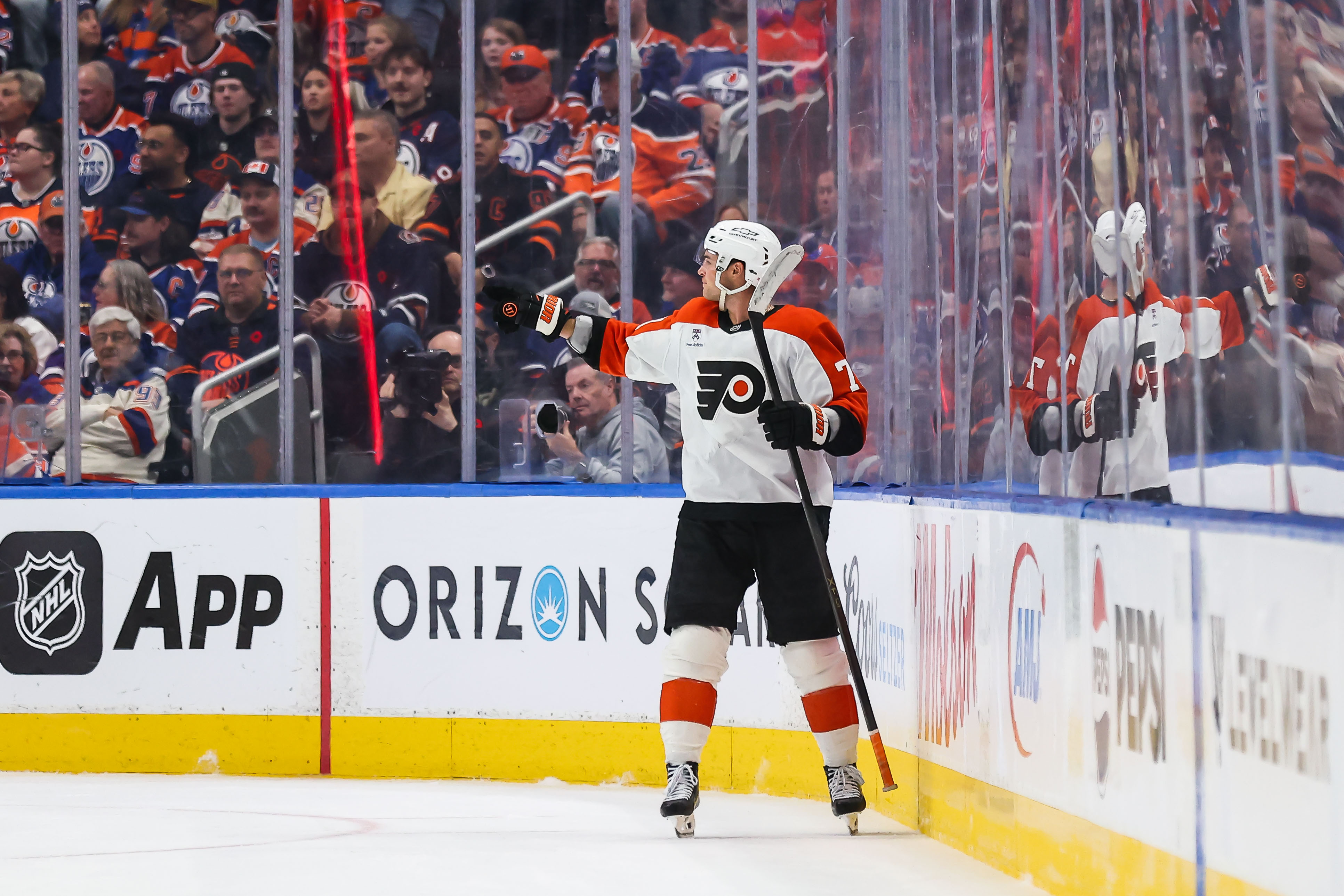
    But those are words. Actions speak louder. And although they lost on Wednesday to the Edmonton Oilers, 3-2 in overtime on a goal by Evan Bouchard, they played like a united team on the ice.

    The Flyers followed up a structurally sound game against the Vancouver Canucks with a similar effort at Rogers Place. However, they also continued a recent trend of missed opportunities.

    In the first period, the Flyers outshot the Oilers 13-6 and had 11 scoring chances to Edmonton’s six. Noel Acciari was stopped atop the crease, later Tyson Foerster batted at the puck, and Michkov made an exceptional cross-ice pass to Jamie Drysdale, who was robbed by Oilers goalie Tristan Jarry. And with under five minutes to go in the opening frame, Seeler put a slap shot on goal, but Porter Martone couldn’t bury the rebound.

    Goalie Dan Vladař came up big when needed in the first period, because, well, it is the Oilers. As his team played smart defense, picking up cutters and cross-crease pass attempts, the Czech netminder moved well and tracked the puck.

    But despite it all, the Flyers trailed 1-0 less than five minutes into the second period.

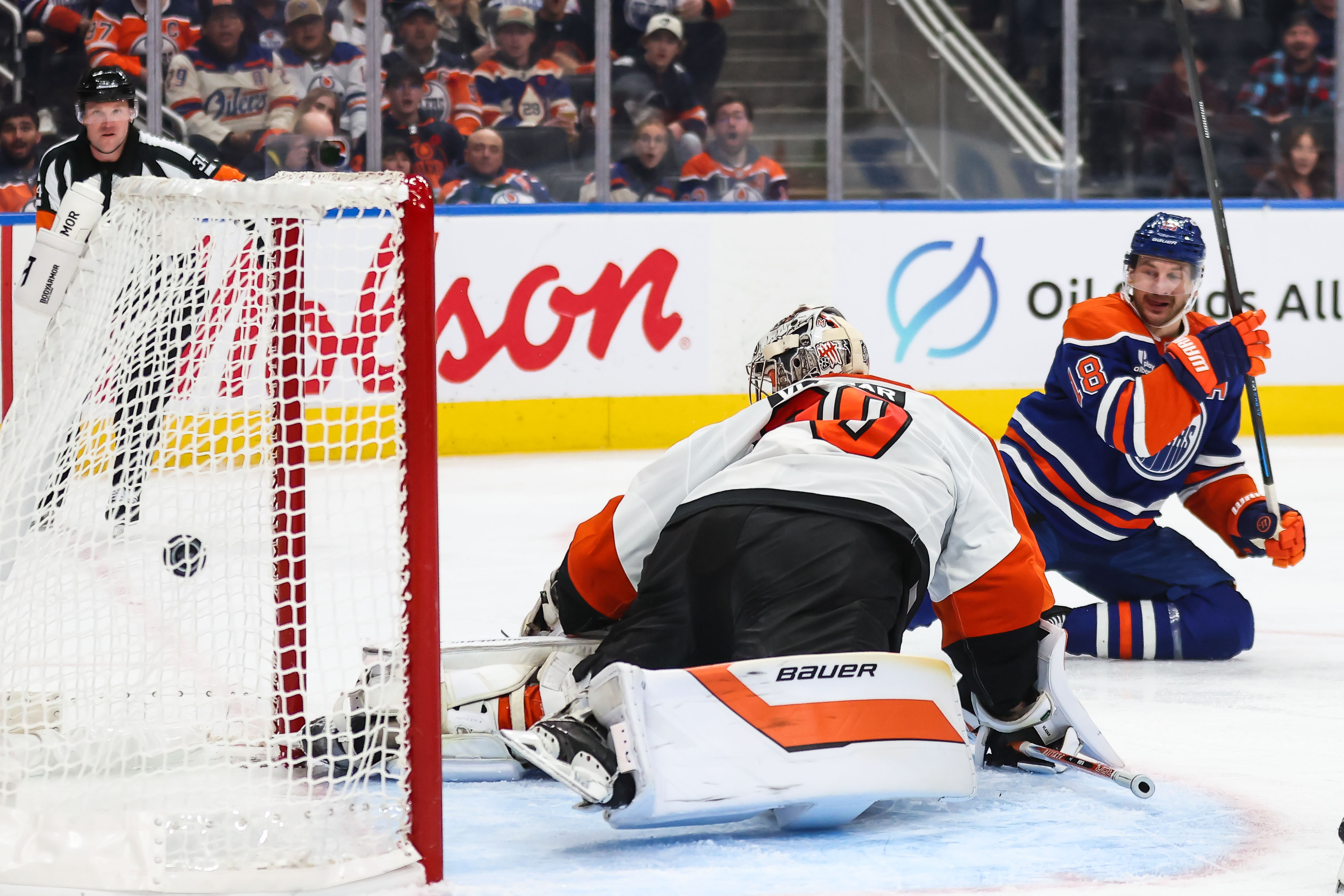
    Edmonton Oilers’ Zach Hyman (18) scores against Philadelphia Flyers goaltender Dan Vladař during the second period on Wednesday night. Codie McLachlan

    On the goal, the Flyers seemed to have everything under control as they regrouped in their own end before the Oilers pressured, forcing Travis Sanheim to send a D-to-D pass behind the net to Oliver Bonk. The rookie blueliner was then forced to go back to Sanheim, but the Manitoban was starting to turn up the ice and couldn’t secure the puck.

    Edmonton worked the puck around the boards, and it eventually got to Mattias Ekholm at the left point. The Swedish defenseman sent a slap shot toward the net but missed, and it ricocheted off the kick plate right to Zach Hyman on the right side of the crease.

    The Oilers winger sent it right past Vladař on the Oilers’ seventh shot on goal as the Flyers netminder tried to get back into position.

    Philly came close to tying the game less than two minutes later when Travis Konecny cut down the middle, and his shot got through Jarry; however, Edmonton’s Owen Michaels knocked it away before Konecny could push the puck over the goal line. Just over a minute later, Martone rang one off the post.

    The Flyers then found themselves in a 2-0 hole with Hyman scoring on a power play. Connor McDavid sent a centering pass through Cam York to Hyman atop the crease for the tap-in. Edmonton entered the night with the third-best power play in the NHL (32.4%), and the interference call on Bonk was the only penalty the Flyers took all night.

    But just over two minutes later, the Flyers cut into the lead with their own power-play goal. Acciari drew a tripping call on Jarry as he cut to the net with Sanheim trying to hit him with the pass. Acciari slammed into the boards and did not return due to an upper-body injury.

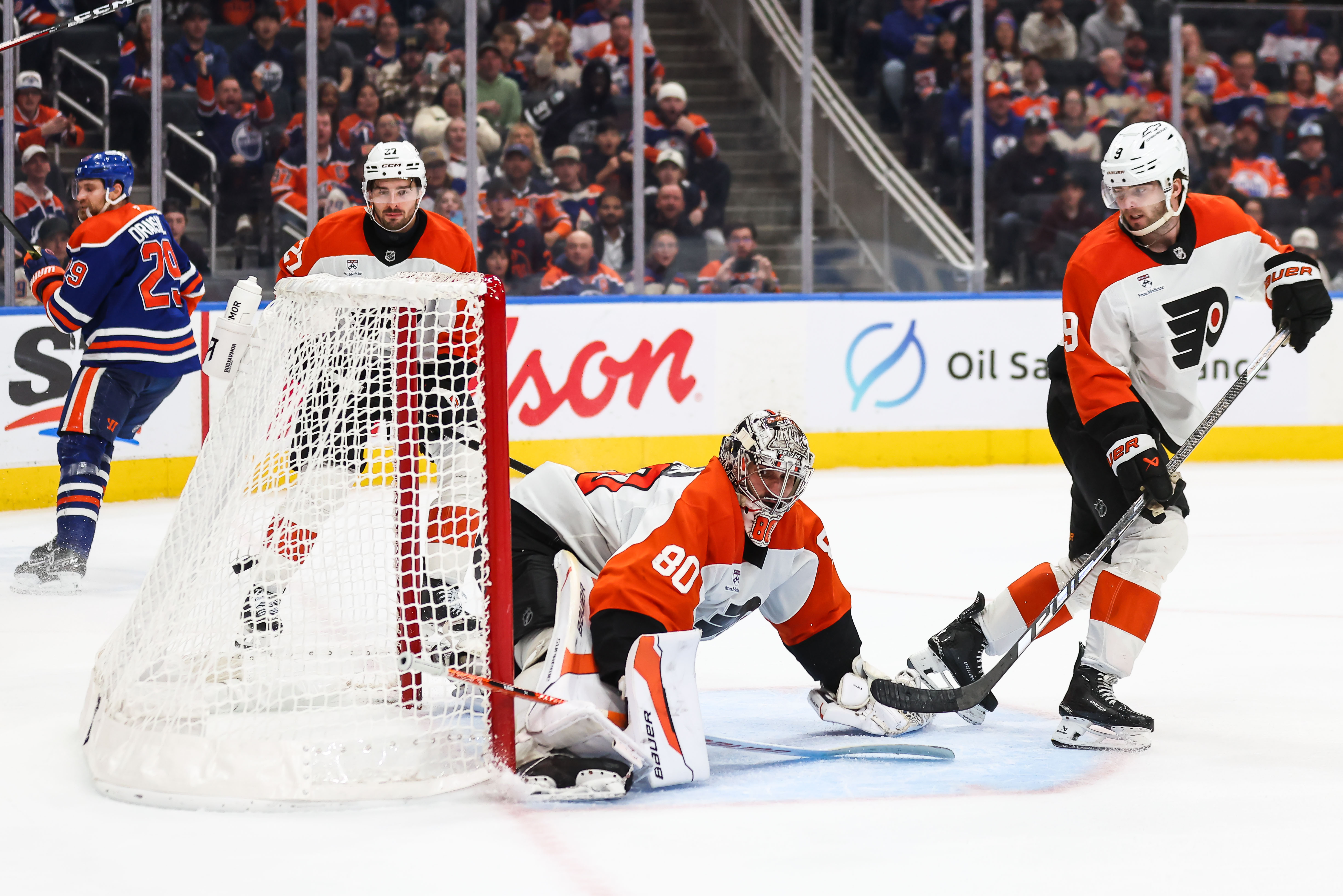
    Flyers’ Tyson Foerster celebrates his second period goal against the Edmonton Oilers on Wednesday night.Codie McLachlan

    On the ensuing power play, Konecny gained the zone and dished the puck over to Christian Dvorak on the left boards. The center sent the puck across the ice — past the stick of Owen Tippett — and right on to the tape of Foerster, who snapped it from the right circle.

    The goal is Foerster’s fourth of the season and the Flyers’ third goal on the man advantage in as many games. Philly entered the night tied with the Boston Bruins for the 23rd-best power play in the NHL (18.3%).

    And while they only put four shots on goal in the third period and allowed nine against, the Flyers got on the board to tie the game 2-2 on a goal by Sanheim.

    Rasmus Ristolainen, playing in his first game since Oct. 24 and second since Oct. 3, put a shot on goal that went wide. Sanheim got to the puck on the right boards and dropped down, beating Alex Formenton down the boards and across the goal line.

    With Noah Cates battling in front with Michaels, Sanheim squeezed through and scored five-hole on Jarry. Oilers head coach Mike Babcock challenged for goaltender interference with Cates in front and Sanheim crashing the net, but video review confirmed no interference occurred.

    The goal was Sanheim’s third of the year, his second in as many games, and the 68th of his career, passing Tom Bladon for the third-most goals by a defenseman in Flyers history. Michkov, who played 20:44, got a secondary assist on the goal.

    Breakaways

    With Ristolainen’s return, defensemen David Jiříček and Simon Benoit were healthy scratches. Forward Cole Knuble was a healthy scratch for a second straight game. … Philly has lost four of five and has five wins in the first 21 games of the season. … McDavid’s assist on Hyman’s second goal extended his point streak to 20 games to start the season. … The Flyers are 0-6 in games that do not end in regulation, with one a shootout loss.

    Up next

    The Flyers travel to Columbus, Ohio, on Thursday and will practice Friday before taking on the Blue Jackets on Saturday (7 p.m., NBCSP) in the first of a back-to-back. The Flyers play the Oilers again Sunday at home (7:30 p.m., NBCSP).

  • Phillies’ Zack Wheeler wins National League Comeback Player of the Year award

    Phillies’ Zack Wheeler wins National League Comeback Player of the Year award

    LAS VEGAS — When Zack Wheeler was diagnosed with venous thoracic outlet syndrome in August 2025, there were some external questions about whether he would ever pitch again.

    Not from Wheeler himself, even though the surgery he underwent to address the thoracic outlet syndrome had ended pitchers’ careers before. But the Phillies right-hander was always sure he would eventually return, as dominant as ever. And when Wheeler was named Comeback Player of the Year at the MLB Awards on Wednesday night in Las Vegas, he had been proven right.

    In 162 innings this season, Wheeler posted a 3.00 ERA and racked up 193 strikeouts.

    “That was probably the fun part of the season, was battling back with all these guys,” Wheeler said after the Phillies were eliminated from the wild-card series. “Everybody had to step up, and everybody did. Made it to the playoffs. Didn’t make it far as we wanted, obviously, but you got to take the good and bad from everything.”

    Wheeler’s 2025 season ended abruptly after a blood clot was identified near his right shoulder following a start in Washington. He was having another Cy Young-caliber year, which was suddenly brought to a halt. After the clot was removed, he underwent thoracic outlet decompression surgery, which involved the removal of one of his ribs — which he kept as a souvenir.

    Following a lengthy rehab process, Wheeler was reactivated from the injured list on April 25 and made his first start of the season that night against the Braves. He did not miss a start for the rest of the season.

    He is the first Phillies player to win the award since Brad Lidge in 2008.

    Wheeler was also previously named the Players Association’s Comeback Player of the Year, which was voted on by his peers.

  • A very, very slow and final bon voyage for the SS United States along the Florida Panhandle

    A very, very slow and final bon voyage for the SS United States along the Florida Panhandle

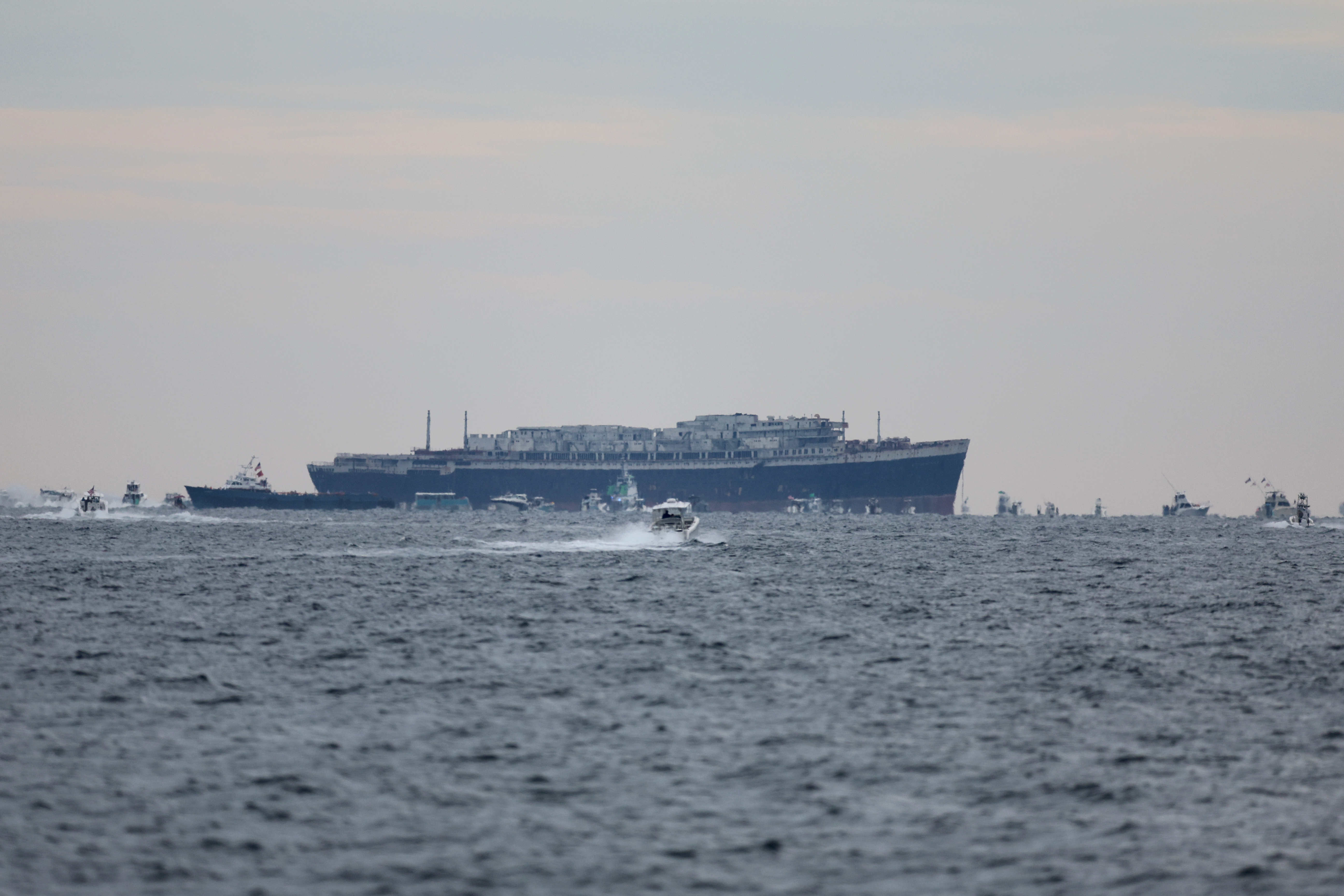
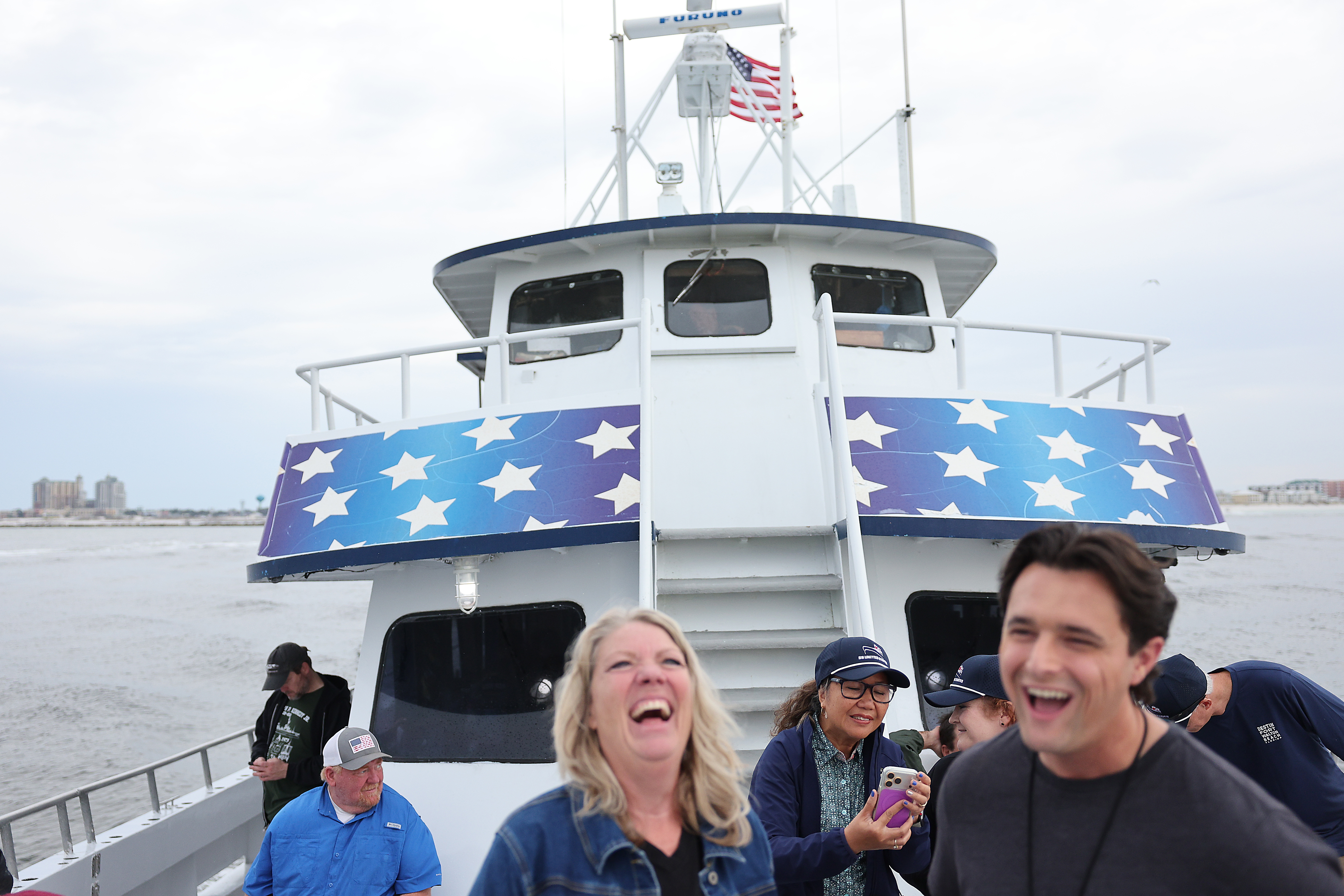
    DESTIN, Fla. — The SS United States broke speed records crossing the Atlantic in its heyday. It did not break any records for what ended up being a very, very slow sink to the bottom of the Florida Panhandle.

    It was a spectacle of a retirement full of 11th-hour dramas, including lawsuits and a longer-than-expected sinking process, worthy of a vessel used to a life of celebrity and notoriety.

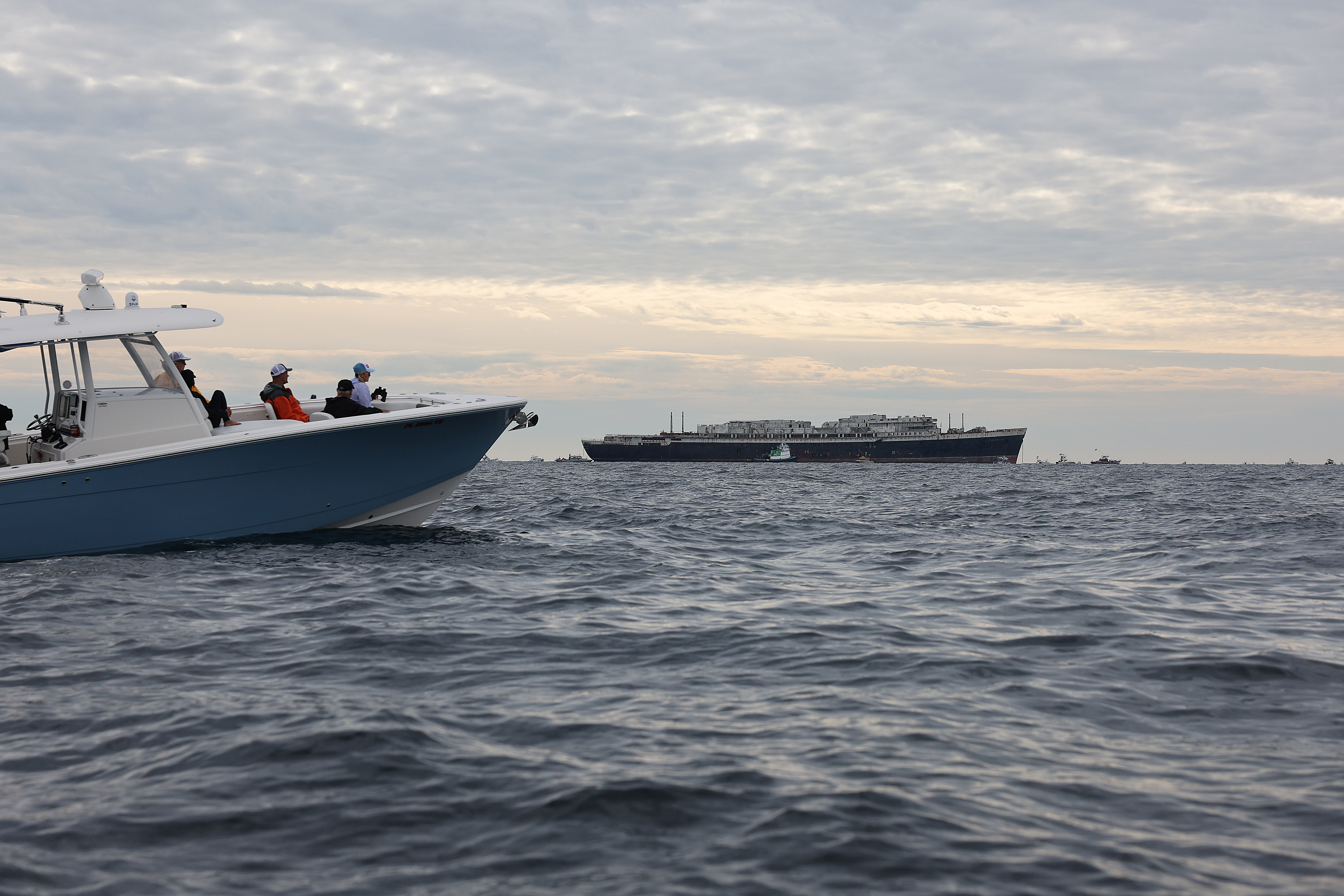
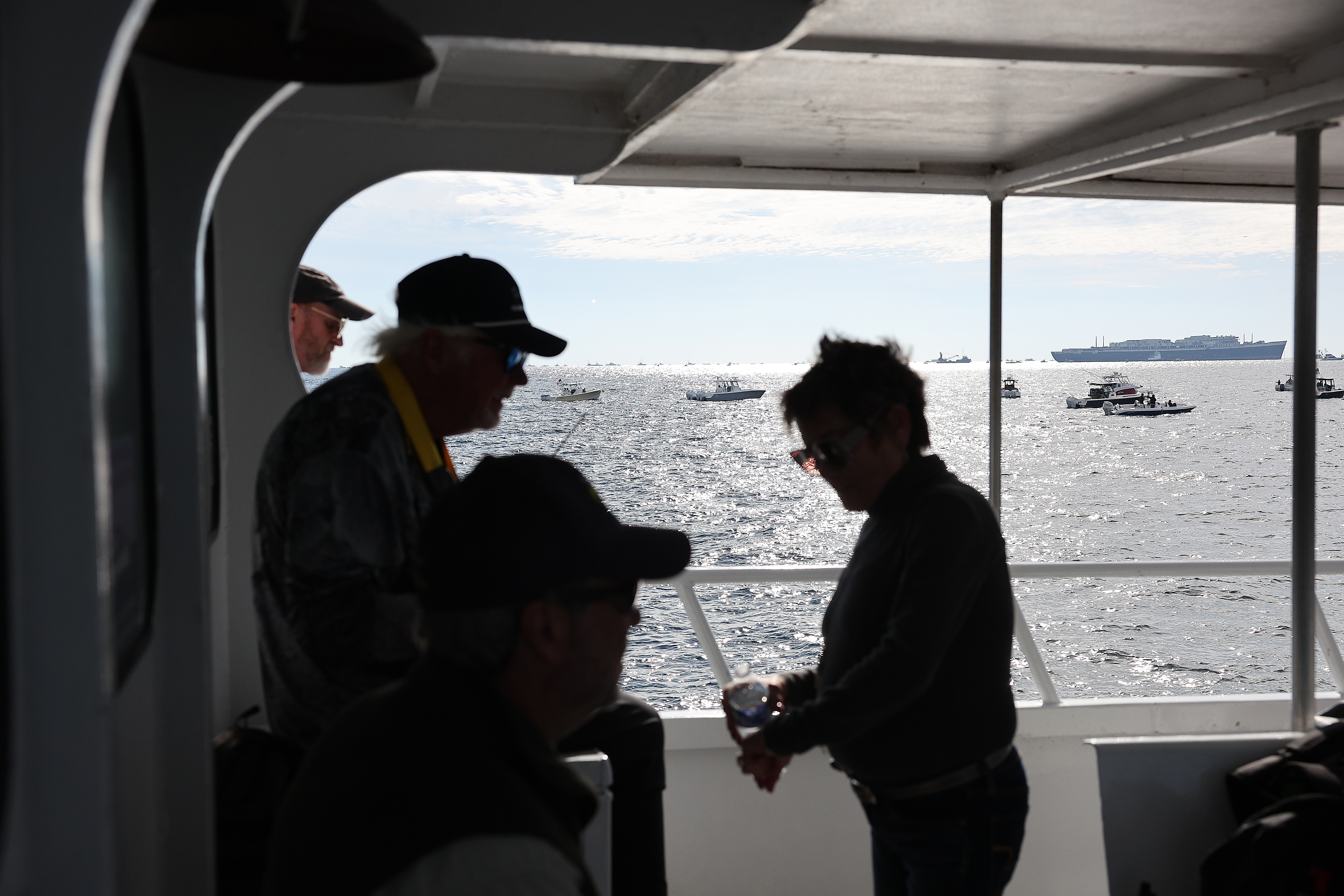
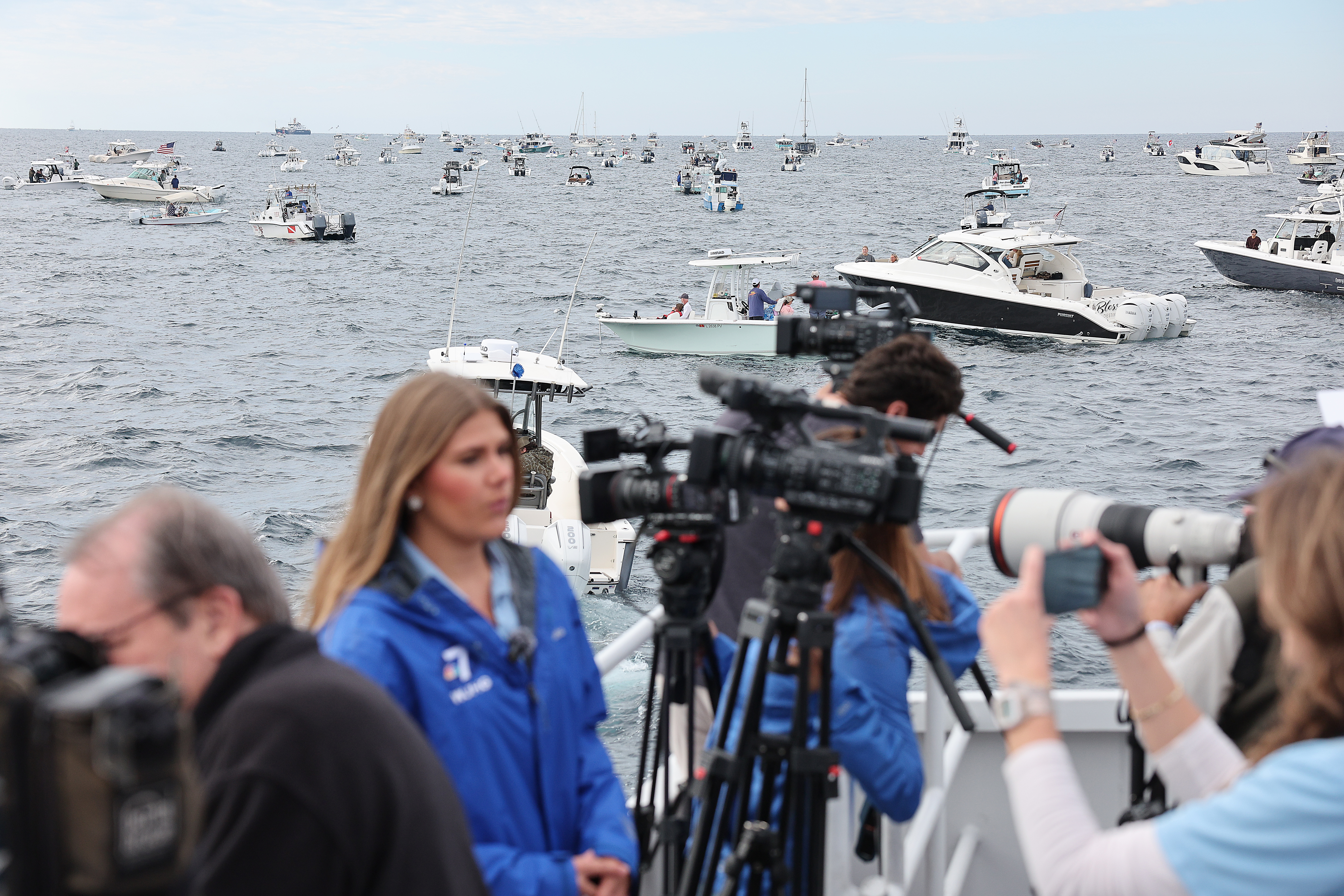
    Hundreds of boats tried to get as close as the U.S. Coast Guard would let them, angling for a better view of the slow drop into the Gulf of Mexico, with some passengers coming from as far as California and Philadelphia.

    At about 10 p.m. Philly time, the ocean liner finally submerged to take its place on the Gulf floor. The ocean liner’s final moments, scored by sweeping string music, had a cinematic feel as the water overtook one side of the vessel and then the rest.

    “This is history,” said Panama City Beach resident PJ Hughes, knowing little else about what her day had in store aboard the Gulf Breeze and unknowingly foreshadowing the unexpected delays. “I’m just like a little puppy dog. We might be out there for about six hours, I don’t know.”

    For many, the trip to sea was much longer than that.

    The ocean liner had to undergo some last-minute prep when it was supposed to begin the controlled flooding. The sinking was then much slower than expected when it finally began, submerging inches by nightfall, not feet. It was not immediately clear when the process would end, said the Okaloosa County officials in charge. Many captains took the news as a sign to turn back, with floodlights doing little for those trying to see the vessel slowly dropping into the sea.

    It was an anticlimactic return to shore as buzzes wore off and light sunburns set in.

    The event had drawn media from across the country. Reporters descended on Destin to cover the once-unthinkable sinking of one of the last and fastest ocean liners the United States ever produced.

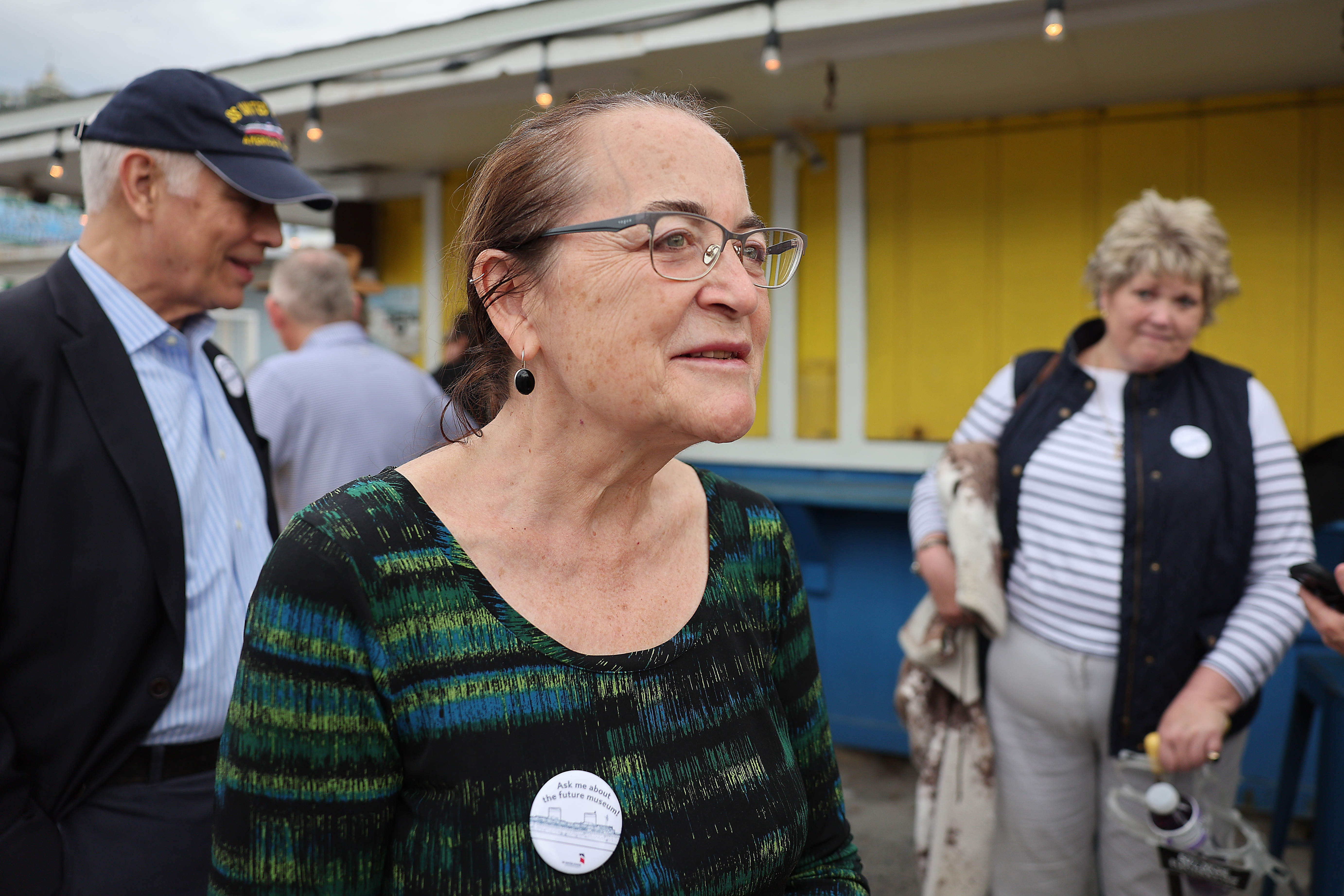
    “It is very emotional,” said Susan Gibbs, granddaughter of the vessel’s designer, who desperately fought for redevelopment as the head of the SS United States Conservancy.

    “It’s almost overwhelming. We tried for decades to save the ship, keep her afloat. But this is a poignant, poignant transition, and may she rest in peace.”

    Susan Gibbs, who is the granddaughter of the architect of the SS United States, talks about the sinking of the SS United States outside Destin-Fort Walton Beach, Fla. on Wednesday, Nov. 11, 2026. The ship will become the world’s largest artificial reef.David Maialetti / Staff Photographer

    Gone were the days when the ship carried close to 8,000 quarts of ice cream and 500 pounds of caviar for guests looking to travel in luxury. A household name like Marilyn Monroe, Judy Garland, or Grace Kelly had not stepped aboard its decks in decades. And the SS United States, stripped of its furnishings and gutted, would not be considered a secret military weapon by anyone — it once could transport 14,000 troops.

    The SS United States spent close to 30 years as a Philadelphia resident that locals loved or loved to hate. Stripped of its remaining interiors in the 1990s, its frame acquired the rusty patina of a shipwreck, deemed an eyesore by many, dubbed the Ikea boat because of its proximity to the Swedish big box store’s South Philadelphia location.

    Various owners sank more than $40 million into buying, maintaining, and unsuccessfully reimagining the SS United States during its time in Philly. But they all eventually learned the gutting of the ocean liner only made redevelopment ambitions all the more difficult to pitch.

    The SS United States could not move on its own and required extensive environmental remediation. Restoration was estimated to run to the tune of $400 million.

    No one took the bait.

    The conservancy took to selling its namesake for $1 million in 2024 as an alternative to sending it to the scrap heap. It is now focusing its advocacy efforts to fundraise and build a museum in Okaloosa County, Fla., that will feature more than 10,000 artifacts, including the first-class bar. The conservancy also has possession of the vessel’s two iconic, once red-and-white smokestacks.

    Warren Jones is one of the conservancy members who is now directing his energy to building the museum.

    He noted the irony of waiting for the SS United States to sink aboard a boat named the American Spirit. Even so, he maintained the sinking was a rebirth better than the scrapyard or, worse, a purgatory on some pier — not unlike how the vessel existed in Philadelphia.

    “That would be disrespectful,” he said, looking onto the vessel. “You know that would be what people would remember the ship as, and that’s not right.”

    Onlookers like David Heath, 62, put it more bluntly.

    “This is probably the best outcome rather than it being made into razor blades,” he joked.

    Some of the most fervent critics of reefing the vessel also appeared resigned to the idea Wednesday. No protesters showed, as once suggested, and the final lawsuit to stop the sinking was dismissed Friday.

    A fresh start

    Okaloosa County jumped at the opportunity to sink the SS United States 22 nautical miles southwest of Destin-Fort Walton Beach. The area has undergone a bit of an artificial reef renaissance in the last decade under Alex Fogg, the county’s natural resources chief.

    Unlike the Florida Keys or the Caribbean, Destin-Fort Walton’s shores do not have natural reefs.

    “We rely on artificial reef habitat, things we intentionally deploy to be reef habitat for the fish to thrive, for people to have places to go fishing, and for places for people to go diving,” Fogg said earlier this year.

    Okaloosa County has deployed hundreds of concrete structures and smaller ships in the last decade but by reefing the SS United States, the county aims to cement its place as a diving attraction.

    “Divers are going to have that place completely swamped up for the first four or five years,” mused Jim Westbrook, captain of the American Spirit, a charter boat.

    Westbrook welcomes what hosting the world’s largest artificial reef will mean for tourism, but as someone who would visit for fishing, he knows he will have stiff competition.

    “I expect to maybe fish it in 2030,” he joked. “I’ll have to go out when it’s nasty. Otherwise, there’ll be 20 and 30 dive boats anchored up on it every day.”

    David Landsman, who was a visitor on the SS United States as a kid, waits to depart on a charter boat for the sinking of the SS United States outside Destin-Fort Walton Beach, Fla. on Wednesday, Nov. 11, 2026. The ship will become the world’s largest artificial reef.David Maialetti / Staff Photographer

    The vessel is expected to draw divers of all abilities. Because the SS United States’ main deck is expected to hover about 60 feet underwater, it will be perfect for those starting out. Meanwhile the bottom is about 175 feet, ideal for the technical diver.

    Local diving companies confirm people are already booking trips for this month. People have the all-clear to explore the gutted vessel as early as Thursday, weather permitting. Marine life will be limited in the first few weeks, limited to bait fish. But scientists expect groupers, snappers, amberjacks, and sea turtles within the year.

    As the American Spirit headed back to shore full of dejected spectators, Jones, the member of the Conservancy, couldn’t help but laugh.

    A quote by William Francis Gibbs, the vessel’s designer, came to mind, he said. Gibbs used to say the vessel couldn’t catch fire, sink, or be caught.

    “Well, we’ve caught her, but she hasn’t caught fire, and she definitely hasn’t sunk yet,” Jones joked, as the American Spirit headed back to shore.

  • Cristopher Sánchez and Jhoan Duran finish second in NL Cy Young and Reliever of the Year awards

    Cristopher Sánchez and Jhoan Duran finish second in NL Cy Young and Reliever of the Year awards

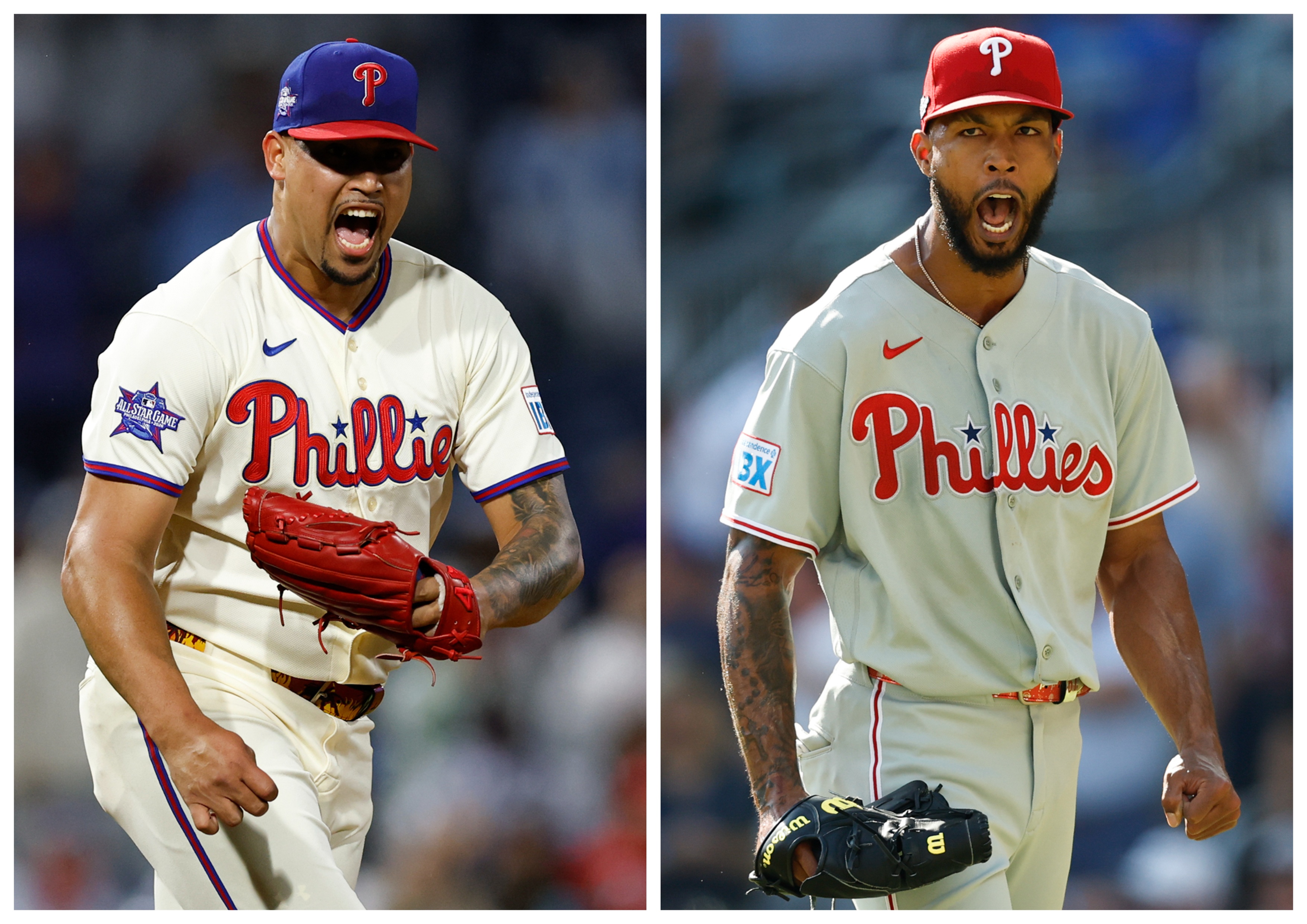
    LAS VEGAS — For the second consecutive season, Phillies ace Cristopher Sánchez was the runner-up for the National League Cy Young Award.

    A year after a second-place finish to the Pirates’ Paul Skenes, Sánchez finished second in the NL Cy Young voting behind the Brewers’ Jacob Misiorowski, who won unanimously. Sánchez appeared on all 30 ballots, receiving 17 second-place votes to edge out Atlanta’s Chris Sale by one point. Jesús Luzardo also received votes and finished fifth.

    The award, which is voted on by members of the Baseball Writers Association of America, has not been won by a Phillie since Roy Halladay in 2010.

    Sánchez posted a 2.91 ERA, 1.203 WHIP, and racked up 231 strikeouts this season. He was a workhorse for the Phillies, and his 207 innings were the second-most of any pitcher in baseball this year. It wasn’t quite enough to overcome Misiorowski’s historic season, however. The Brewers ace had a 1.80 ERA, 0.802 WHIP, and 252 strikeouts in 174⅔ regular season innings.

    He also led Milwaukee to its first World Series title, though postseason performance is not factored into voting.

    Phillies closer Jhoan Duran also finished as runner-up to the Padres’ Mason Miller for the BBWAA’s inaugural NL Reliever of the Year Award. Miller, who had a 1.67 ERA and 38 saves in 2026, was the unanimous winner.

    Duran received 24 second-place votes and appeared on 29 of 30 total ballots. He put up a 1.82 ERA, 0.994 WHIP, and earned 33 saves.

    In the American League, Cam Schlittler (Yankees) and Louis Varland (Blue Jays) took home Cy Young and Reliever of the Year honors, respectively. Schlittler also won unanimously.

    At Wednesday’s MLB Awards in Las Vegas, both Sánchez and Luzardo received All-MLB honors, based on a fan vote and selections from a panel of media, former players, and baseball officials. Sánchez was named a starting pitcher on the All-MLB first team, while Luzardo was named to the second team.

  • Baseball gears up for a player movement frenzy as a lockout looms. Here’s where the Phillies stand.

    Baseball gears up for a player movement frenzy as a lockout looms. Here’s where the Phillies stand.

    LAS VEGAS — For two days, executives from the 30 major league teams got in their steps by walking from lobby to lobby in this sprawling resort and casino.

    Now, the sprint begins.

    Because with the general managers’ meetings wrapping up Thursday, everyone here knows what’s coming next. At 11:59 p.m. on Dec. 1, the collective bargaining agreement will expire, the owners will lock out the players, and the sport will plunge into a deep freeze.

    No free-agent signings. No trades. No 40-man roster transactions of any kind.

    The Phillies are counting on youth in 2027 | Gameday Central
    Video: The Phillies are counting on youth in 2027 | Gameday Central

    And for those executives here, no time to waste.

    “We just need to be ready to go,” Tampa Bay Rays president of baseball operations Erik Neander said. “We’ve made plenty of deals via trades at these meetings. We’ve done free-agent signings early. We usually have a few things circled, and we chase hard and we try to get them done.”

    OK, but let’s be clear: This hardly qualifies as “business as usual” in a sport where the offseason drags through the winter and into spring. Five years ago, before the last work stoppage, teams spent nearly $2 billion on free agents in the days leading up to the lockout. Many executives and agents are bracing for a similar frenzy.

    The Phillies have a list of needs — a slugging outfielder, a left-handed setup reliever, a backup catcher, maybe another reliever, starting pitching depth — and won’t fill them all before Dec. 2.

    Garrett Stubbs believes the players will remain unified during CBA talks | Phillies Extra
    Video: Garrett Stubbs believes the players will remain unified during CBA talks | Phillies Extra

    Did they make progress on any of those fronts?

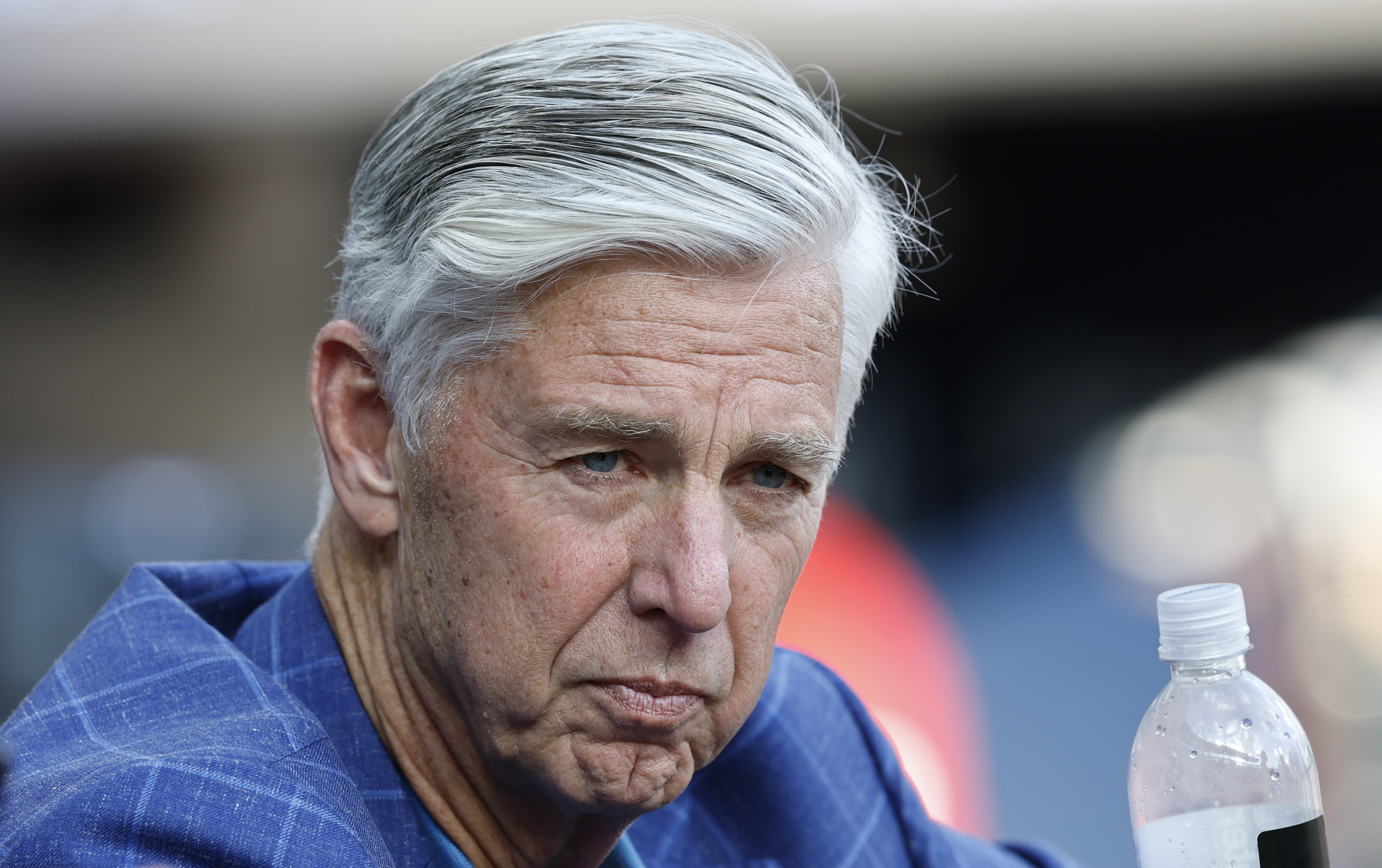
    “Well, it’s productive in that we have more information,” Dave Dombrowski said. “I can’t tell you that we’re any closer to anything. All of a sudden something could happen and you’re not anticipating it. But I can’t tell you that’s overly developed over the last couple of days.”

    The Phillies are discussing free-agent outfielders Randy Arozarena and Seiya Suzuki, multiple sources said, though Dombrowski is mindful of adding another thirtysomething to an aging roster. Arozarena and Suzuki will play at age 32 next season and are expected to command four- or five-year contracts in the range of $20 million to $25 million per year.

    But both players possess right-handed power at a time when sluggers from that side of the plate are in short supply across the sport. Scott Boras, Arozarena’s agent, called his client “a model of consistency in a market [Seattle] where right-handed hitters go to die.”

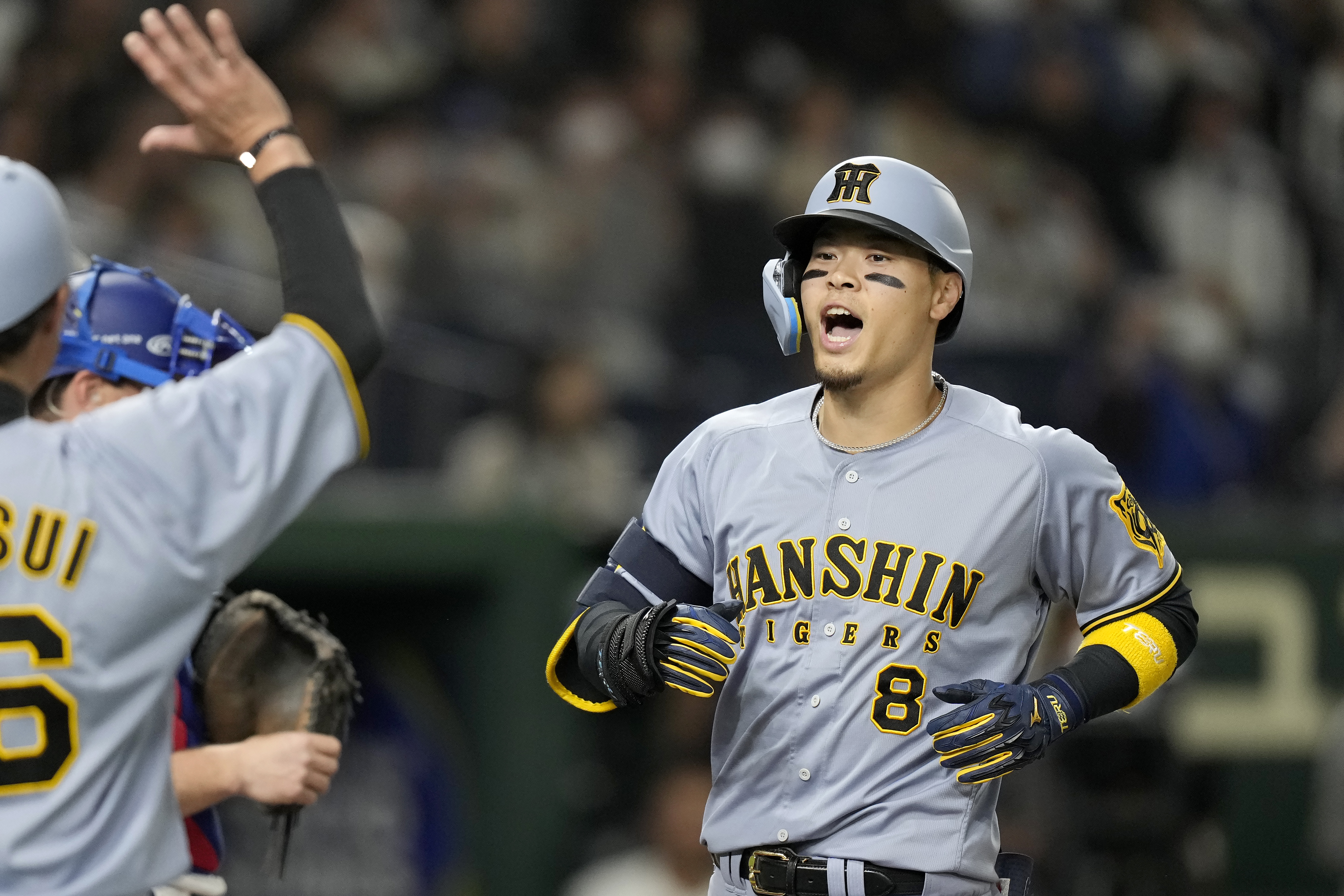
    Teruaki Sato won the triple crown last season in Japan’s Nippon Professional Baseball.Hiro Komae

    “All of the teams,” Boras said, warming up for one of his signature pun-filled sales pitches, “frankly, they’re feeling really randy.”

    Boras negotiated megacontracts for star clients Corey Seager, Marcus Semien, and Max Scherzer before the 2021-22 lockout. This time around, he said he senses that teams are “very concerned about losing the opportunity to sign select key players.”

    Signing either Suzuki or Arozarena would require the Phillies to give up their second- and fifth-highest 2027 draft picks and $1 million in international bonus money.

    Would that be a deal-breaker?

    “I’m not reluctant to do that if you think it’s the right deal to make,” Dombrowski said. “I’ve made deals in the past that you’ve given up your draft choices. You prefer not to, and it does weigh into what you’re doing, no question about it. But am I reluctant to ever do it? No.”

    Japanese left-handed slugger Teruaki Sato is younger (he turns 28 in March), not tied to draft-pick compensation, and of interest to the Phillies as a left fielder, according to two sources who aren’t authorized to speak publicly.

    But the Phillies have never signed a player directly from Japan. Compared to teams that have been more active in the Far East, they don’t have as many deep-rooted relationships in the region.

    Sato also must be signed before Dec. 2. His 45-day posting window runs through Dec. 16, but the lockout will effectively shorten the time for teams to decide if he fits their needs without knowing how drastically the sport’s economic system will change in the next CBA.

    As Dombrowski put it, echoing comments from his end-of-season news conference, “I don’t know what the rules will be.”

    But the looming fight over a salary cap — and the threat of missing games in 2027 — figures to have an even bigger impact on the trade market.

    Consider: The low-payroll Guardians have a history of trading players — ace pitcher Corey Kluber, shortstop Francisco Lindor, and first baseman Josh Naylor, to name three — as they enter their final year before free agency. The small-market Brewers did the same with starters Corbin Burnes and Freddy Peralta and closers Josh Hader and Devin Williams.

    Brewers closer Trevor Megill could be a trade candidate as he enters the final year before free agency.Gregory Bull

    But if Cleveland puts left fielder Steven Kwan on the block, or if Milwaukee dangles closer Trevor Megill, as they enter their walk years, interested teams could contend that the return shouldn’t be as much if they won’t be getting those players for a full season.

    “That has not been our experience so far,” Guardians president of baseball operations Chris Antonetti said. “But we haven’t done any trades, so it’s hard to say how it’s impacted.”

    It also isn’t slowing trade talks. If anything, the conversations have been “more robust,” according to Diamondbacks general manager Mike Hazen.

    The Phillies could turn to the trade market to fill some of their holes, in which case they must decide how to place a value on a potential target. Given all the uncertainty, it’s a challenge.

    Phillies Extra: Aidan Miller is ready to play third base if needed
    Video: Phillies Extra: Aidan Miller is ready to play third base if needed

    “I’m not saying it’s not in the back of people’s minds, but the other thing is I think everybody feels at some point you’re going to have a season,” Dombrowski said. “And so, even if you have a shortened season, if you got a guy that helps you win a championship, you’re happy with it.”

    In any case, executives are expected to be busy over the next two weeks before the sport goes dark.

    Let the sprint begin.