Blog

  • Trump defends his economic policies in Michigan, where new Canadian tariffs may sting

    Trump defends his economic policies in Michigan, where new Canadian tariffs may sting

    MILFORD, Mich. — In a visit to Michigan on Monday, President Donald Trump argued that his economic policies have revived the auto industry and American manufacturing even as many businesses contend that the sweeping tariffs he’s imposed against Canada and the rest of the world have hurt the state.

    Trump defended his policies while visiting a General Motors facility in the Detroit suburb of Milford that is a testing ground for its vehicles. He pumped a fist after watching Corvette, Cadillac, and Hummer vehicles compete in a series of drag races.

    In a speech, Trump cheered GM’s plans to expand production domestically in coming years and declared himself a president who was standing up for auto workers “at long last.”

    “I’ve done more for you than your parents, OK?” he said.

    After being led on a tour of vehicles from different eras of GM, some of which he sat in, Trump claimed the tariffs have helped the automaker.

    “They’ve come a long way,” he said to reporters about the Detroit-based automaker. “It’s amazing what tariffs are doing for GM.” Trump said he’s been good to the company but he declined to say more.

    “The rest of the world doesn’t love me, but that’s OK,” he said, alluding to tariffs. “It’s called ‘America first.’”

    Trump’s visit is close to Michigan primary on Aug. 4

    Trump called out several Republican candidates and invited them onstage during his remarks Monday.

    Republican Mike Rogers is unopposed in the Senate primary, but the GOP gubernatorial contest pits Trump-backed Rep. John James against Perry Johnson, a businessperson turned politician who has launched unsuccessful campaigns before, including for president in 2024.

    Johnson is now trying to style himself in the president’s mold — despite missing out on his endorsement.

    The Democratic Senate primary between Rep. Haley Stevens and progressive Abdul El-Sayed has drawn national attention for the right to face Rogers, who was narrowly defeated by Democrat Sen. Elissa Slotkin in 2024.

    Early voting is underway.

    Trump’s new Canada tariffs could hurt Michigan

    Michigan was one of the 2024 battlegrounds Trump flipped after it backed Democrat Joe Biden in 2020. But the state has seen parts of its economy affected by the president’s tariffs, including those on imported cars and auto parts.

    A new round of steep import levies is taking effect on dozens of U.S. trading partners. But Trump has singled out Canada with tariffs as high as 50% on a wide array of its products, including cars.

    The GM facility is in Oakland County, which encompasses much of Detroit’s northern suburbs. Once a Republican stronghold, it has increasingly leaned Democratic, backing Biden against Trump in 2020 and Vice President Kamala Harris against Trump four years later.

    GM says its facility is the oldest dedicated vehicle testing operation in the United States, where 4,200 employees work to refine nearly every vehicle the company makes before they reach consumers.

    Michigan’s economy relies heavily on Canada, however, meaning the new tariffs — coupled with inflation still running high and gas prices rising again as the already unpopular war in Iran continues — have created additional economic concerns statewide.

    Those come at a time when voters across the country were already increasingly dissatisfied with Trump’s handling of the economy.

    Jason Roe, a former executive director of the Michigan Republican Party who tried unsuccessfully to distance it from Trump’s Make America Great Again movement in 2021, said that more than coinciding with his new round of tariffs, Trump’s visit is a function of Michigan’s relatively late primary and is meant to ensure that James secures the nomination.

    But Roe also said it was a risk for the president to tie himself too closely to top Republicans before the general election, calling it “kryptonite to November voters.”

    Trump, who won the White House on a promise to lower the cost of living, also has seen his approval ratings sag, meaning kitchen table issues could be a liability for Republicans trying to hold control of Congress in the Nov. 3 elections.

    “We’re happy to have the president here, campaigning with Republicans. We think it highlights the fact that the only thing they care about is Donald Trump and refuse to stand up to him,” said Curtis Hertel, chairperson of the Michigan Democratic Party. ”It’s good for us every time the president is here because he’s incredibly unpopular.”

    U.S. and Canada have squabbled over a new border bridge

    The Supreme Court struck down many of Trump’s sweeping tariffs, but his administration has tried to find ways around that, including by arguing that he can impose them on Canada because that country is discriminating against American exports of products including automobiles.

    But Trump’s latest round of tariffs came after he voiced frustration with Canada for having retaliated and imposed its own levies on U.S. imports in response to Trump’s initial tariffs last year. Trump launched the first round after alleging Canada should do more to stop fentanyl smuggling.

    It is Trump’s third trip to Michigan in his second term.

    In January, he visited a Ford plant in Dearborn and addressed the Detroit Economic Club, offering a defense of tariffs even as auto industry leaders blamed them for increasing the cost of doing business.

    The president marked his second term’s first 100 days with a rally in Warren, where he mostly mentioned grievances left over from the 2024 campaign,

    His latest visit coincides with tensions between his administration and Canada that have marred the opening of a new bridge linking Detroit and Windsor, Ontario.

    Canada on Friday held its own event hailing the opening of the $4.7 billion Gordie Howe International Bridge instead of a planned celebration with officials in the U.S. after Trump announced the new Canadian tariffs.

    An earlier, joint ceremony had been set for June but was scrapped after Trump suggested the U.S. wanted a “better” deal on the bridge it co-owns with Canada.

    That eventually led to an agreement on splitting tolls that was supposed to allow for the rescheduled joint U.S.-Canada celebration — until the new tariffs derailed that, too.
  • Trump’s border czar says vetting of ICE officer is under internal review after Maine shooting

    Trump’s border czar says vetting of ICE officer is under internal review after Maine shooting

    WASHINGTON — President Donald Trump’s border czar said Sunday that the vetting of an immigration officer involved in the deadly shooting of a Colombian native in Maine is under internal review after relatives revealed to The Associated Press that he had a history of serious mental health struggles and violent behavior.

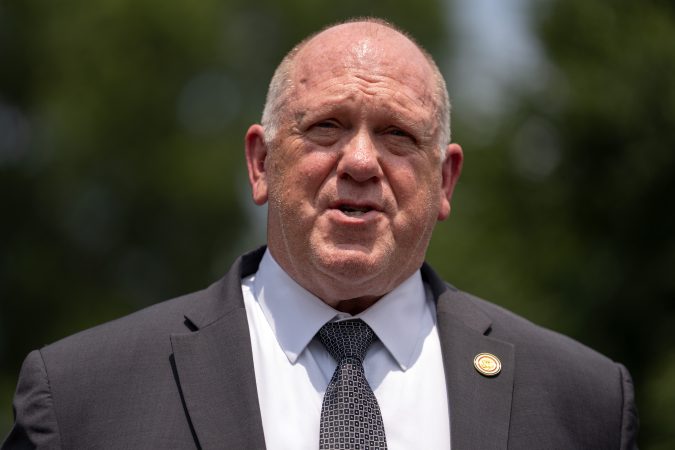
    Tom Homan said if the allegations against the Immigration and Customs Enforcement officer are true, “I don’t think he should ever have cleared vetting.”

    “There’s several things under review,” Homan said on CNN about the officer, Army veteran David Brouillette. “The training is under review. I know this specific case, as far as the vetting, is under review by the internal affairs section.”

    Questions about the Department of Homeland Security’s rush to hire, train and deploy thousands of new ICE officers to carry out Trump’s immigration crackdown have come into stark focus after back-to-back fatal shootings of immigrants in Maine and Houston.

    Homeland Security Secretary Markwayne Mullin ordered a pause in vehicle stops after the fatal Maine shooting, but Trump almost immediately reversed course and insisted the stops resume as a necessary tool in his campaign to round up and deport immigrants who are in the U.S. without current legal status.

    Homeland Security did not immediately respond Sunday to a request for comment about the internal review.

    ICE issues new requirement for body-worn cameras during vehicle stops

    Homan said that “changes have been made” and that acting ICE director David Venturella has issued a new directive that body-worn cameras must be in use if officers make a vehicle stop.

    “Right now, on all vehicle stops, there’s at least one body camera on site to record the entire event,” he said.

    He said Venturella “sent an instruction out that he wants at least one body camera on those vehicle stops, so we have everything on video.”

    It’s unclear whether the steps that the department is taking will be enough to quell the concerns coming from certain lawmakers in Congress over Homeland Security’s training and tactics as tries to reach Trump’s mass deportation goals.

    Lawmakers push for answers but have more questions

    Lawmakers from both parties have raised concerns.

    Democrats pressed ICE officials during a closed-door briefing for the House Homeland Security Committee last week, leaving some with more questions than answers.

    Lawmakers were told during the briefing that there have been 56 complaints of excessive force against ICE officers — 32 were cleared, and one was referred for disciplinary action.

    No discipline had yet been handed out, the lawmakers said they were told. The rest of the incidents are still under investigation.

    Republican Sen. Susan Collins of Maine, chair of the powerful Senate Appropriations Committee, has pushed for the use of body-worn cameras and ensured funding for the effort. She had said it was “extremely unfortunate” that the officer involved in the shooting in her home state was not using a camera.

    Homeland Security is under scrutiny but also faces pressure to increase deportations

    The Trump administration has failed to meet its goal of deporting 1 million people a year, despite an intense immigration enforcement crackdown that has resulted in violent scenes in cities nationwide.

    At least 10 people have died in encounters with immigration officers since the start of Trump’s mass deportation campaign.

    While the Trump administration insists it is targeting the “worst of the worst” criminals, that has not always been the result, and American citizens also have been among the deaths.

    The ICE officer shot 25-year-old Johan Sebastián Durán Guerrero, a Colombian national who was killed in his car near his home in the coastal city of Biddeford.

    In Houston, Lorenzo Salgado Araujo was killed July 7 when ICE officers chased his white work van through the streets, then shot him through the window in front of his work crew, including his brother.

    Earlier this year, two Americans protesting ICE actions in Minneapolis, Renee Good and Alex Pretti, a 37-year-old nurse, were killed, sparking a backlash nationwide.

    Democrats launched the longest agency shutdown in history earlier this year when they refused to fund Homeland Security in a largely failed attempt to force the administration to impose various restraints on the officers.

  • N.J. sees largest drop in death rate in the U.S.

    N.J. sees largest drop in death rate in the U.S.

    The nation’s death rate may have fallen to a historic low last year as many of the killers of young people such as drug overdoses, gun homicides and traffic accidents continued receding in 2025, according to new federal statistics.

    States have not shared equally in the success, though, according to a Stateline analysis of provisional data by state. And the low ebb may reflect the effects of past health care expansion efforts that are threatened by today’s Trump administration moves to curtail Medicaid expansion and cut funding for rural hospitals.

    Some states in the Northeast have seen death rates drop by the most between 2015 and 2025 — led by New Jersey (down 8.3%), Rhode Island (down 8%), New York (down 7.9%), Massachusetts (down 7.4%) and the District of Columbia (down 7.0%). Some experts credit states’ attention to health care, traffic issues and gun violence.

    New Jersey has taken the lead in decreases because of a long-term commitment to expanding health care to people with low incomes, said Stephen Crystal, director of Rutgers University’s Center for Health Services Research.

    Even before Medicaid expansion under the federal Affordable Care Act, New Jersey and Massachusetts, among other states, were pooling funds with hospitals to cover more low-income residents, Crystal said.

    “New Jersey has been doing this for a long time, and you’re seeing the effects in the lower mortality rates for the big killers,” he said.

    The state stands out for having less than half the national rate of firearm deaths, both suicide and homicide, as well as deaths from heart and kidney diseases caused by high blood pressure. The rate of traffic accident deaths is also well below the national rate.

    There’s also a more confrontational attitude toward speeding and less tolerance for guns in the Northeast, he said.

    “Here’s something that annoys a lot of New Jerseyans. The state troopers have the cojones to pull you over if you’re doing 90 on the turnpike. This is not the case in Wyoming,” Crystal said. “Also if you go out West where gun possession is very high, then the firearm suicide deaths become enormous.”

    Nationally most of the decrease between 2024 and 2025 came from young age groups. The things most likely to kill them dropped after spiking during the early pandemic, including drug overdoses, traffic accidents, gun violence and suicide, according to an analysis of death counts by Mary Pat Campbell, an actuary and life insurance analyst in New York state.

    Northeastern states have an advantage in tackling those problems based on wealth, she said.

    “There has been an increasing separation of mortality outcomes by socioeconomic status,” Campbell said, noting that traffic accidents are rarer in places like New Jersey partly because so many people commute on public transportation.

    “For New Jersey, a lot of it really is that there are a bunch of high-income people who have lower-than-average mortality, just like people on Long Island and the rich parts of Westchester [in New York state],” she added.

    Some states have not improved since 2015 in the provisional statistics analyzed by Stateline, which may change as the federal Centers for Disease Control and Prevention makes new age adjustments at the state level.

    New Mexico had an age-adjusted death rate 9% higher last year than 10 years ago, as drug overdose deaths continue to plague the state at more than twice the national rate.

    In June, New Mexico Democratic Gov. Michelle Lujan Grisham called for restitution from the federal government over allegations that U.S. Drug Enforcement Administration officials knowingly let fentanyl shipments into the state during multiple presidential administrations. In one case, a whistleblower alleged, agents stood by while 1.8 million fentanyl pills were trafficked in hopes of catching higher-ranking dealers and suppliers down the line.

    New Mexico also struggles with higher death rates from alcoholic liver disease and gun homicide. Neighboring Arizona, where the death rate is 5% higher than 10 years ago, also stands out for a high overdose death rate and a high gun suicide rate.

    Iowa and Oklahoma death rates are also up 5% from 2015. Iowa stands out for a higher-than-national rate of fall-related deaths, typical of an aging rural population with little day-to-day supervision. Oklahoma has a similarly high rate of fall-related deaths, as well as almost four times the national rate of deaths from high blood pressure and hardening of the arteries — both problems that can be controlled with medication.

    Iowa “recognizes fall-related deaths as a significant public health concern,” wrote a spokesperson for the state Department of Health and Human Services, Danielle Sample, in an e-mail statement. Those falls are associated with older age groups and possibly rural access to health care and preventive services, she said.

    The state has a falls prevention program that stresses exercise to maintain mobility and monitoring excessive medication that could cause dizziness, poor vision and unsafe home conditions.

    Almost two-thirds of the national death rate improvement for 2024 to 2025 came from people between the ages of 15 to 44, Campbell told Stateline.

    Improvements were especially large for young people 25 to 34, a group including younger Millennials and older Gen Z, a demographic hard hit by homicides and drug overdose deaths early in the pandemic, Campbell told Stateline. The rate for accidents, a category that includes drug overdoses, gun accidents and traffic accidents, dropped 6% in one year, and the homicide rate dropped 14%, she said.

    It’s hard to be sure how much death rates really changed between 2024 and 2025 because the methodology changed, Crystal noted, accusing the CDC of “grabbing for a good news headline” by reporting the apparently historic decrease prominently in a blog item.

    For 2025, the CDC used different methods to calculate rates, including more adjustments to 2020 census data used as a basis for age adjustment, noting in the report that the results could change and “should be interpreted with caution.”

    Asked about the issue, the CDC said in a statement to Stateline that “as this is a provisional report, we did not go in depth about the change in population denominators” and that it is “planning a brief report that will show the impact” of the changes on death rates and birth rate in new statistics.

    In any case, the Trump administration likely can’t claim credit for current decreases in death rates, which would reflect policy changes from years ago that slowly take effect, Crystal said.

    “This is not the time to see the effect of what Trump is doing now. It’s going to take five years,” Crystal said.

    One killer of young people has not dropped: The rate of gun suicide has increased 14% since 2015, according to the Stateline analysis. Suicide has affected Gen Z young people more than previous generations.

    Over the past 10 years, rates for Black and Hispanic people have increased while rates for other groups have gone down, according to the Stateline analysis.

    “As a country we are improving. We should celebrate that. But many segments of the population are left behind,” said Ali Mokdad, a professor of health metrics sciences at the University of Washington.

    Mokdad credited some medical advances for decreases in heart disease that came in spite of increased obesity.

    “That decline in cardiovascular disease was due to better controlled blood pressure,” Mokdad said. “Blood pressure medication, when it came out, was very expensive. Now blood pressure medication is so cheap you can get a three-month supply for less than the price of a cup of coffee.”

    This story originally appeared on New Jersey Monitor.

  • Secret Service agent charged with felonies in beatings police say were fraternity hazing

    Secret Service agent charged with felonies in beatings police say were fraternity hazing

    A U.S. Secret Service agent and two other men have been arrested and charged with violent felonies in the Miami area, where authorities say they committed brutal beatings as part of a fraternity hazing ritual in April that left two people hospitalized with severe injuries.

    One of the men charged, 29-year-old Marquez Christopher Pinder, works in the Secret Service’s Miami field office and is described in an arrest warrant as a “dean of pledges” for a Miami chapter of the Kappa Alpha Psi fraternity.

    The Secret Service said it’s cooperating with investigators and has placed Pinder on administrative leave. He was released from jail after posting a $75,000 bond Monday and faces arraignment before a judge Sept. 24.

    The three men were charged last week after police uncovered evidence of “alleged hazing incidents involving prolonged and repeated beatings with canes and paddles,” the Miami-Dade County state attorney’s office said in a news release.

    Police said in court documents that a University of Miami graduate student and another young man had injuries that could have been fatal had they not been treated. One required skin grafts to his backside and suffered kidney damage, the documents said, while the other had a tube placed in his windpipe to help him breathe.

    Accused agent has worked for Secret Service since 2023

    Charges against the three men include felony counts of hazing with a deadly weapon, aggravated battery with great bodily harm, and attempted manslaughter.

    “In Florida, hazing is abuse and it is a crime,” Katherine Fernandez Rundle, state attorney for Miami-Dade County, said in a statement Sunday. “Its victims too often lie in their graves and in hospital beds.”

    An attorney for Pinder, Justin Beckham, did not immediately return phone and email messages seeking comment Monday. Court and jail records did not list attorneys for the other two men.

    Pinder has worked as a Secret Service agent since 2023, agency spokesperson Matt Fagiana confirmed Monday.

    “Any misconduct will be addressed swiftly and appropriately upon completion of the investigative and judicial process,” Michael Townsend, the special agent in charge of the Secret Service’s Miami field office, said in a statement.

    A spokesperson for Kappa Alpha Psi did not immediately return a phone message left at the fraternity’s Philadelphia headquarters.

    Arrest warrant describes bloody paddling, emergency medical care

    According to Pinder’s arrest warrant, the graduate student told police that he and another young man had their backsides beaten by Pinder and the other defendants during four nights in early April at an apartment and a home off-campus. The paddling started when the victims failed to correctly answer questions about the fraternity and its history, a police investigator said in an arrest warrant filed in court.

    The warrant did not name either victim.

    The beatings stopped on the fourth night when one of the victims had blood seeping through the seat of his pants, according to the warrant. It said fraternity leaders ordered both victims to strip off their clothes and place them in garbage bags before going home.

    One of the victims suffered vomiting, fevers, and intense pain before being admitted to a hospital, where he required skin grafts on his buttocks and treatment for kidney damage, according to police.

    Without emergency medical treatment, the warrant said, “his injuries would have resulted in renal failure leading to death.”

    The second victim told police he knew the other victim from the fraternity. He denied being paddled, the warrant said, but acknowledged receiving emergency medical care in April.

    That person’s medical records showed he had been hospitalized with injuries to his backside and “was intubated during his stay in the hospital to prevent further physical deterioration and death,” the arrest warrant said.

    Florida lawmakers in 2005 made hazing a felony punishable by up to five years in prison if it results in serious injury or death. The law was spurred by the 2001 death of Chad Meredith, a University of Miami freshman who drowned after drinking alcohol and then attempting to swim across a lake at the urging of campus fraternity leaders.

  • Company at center of N.J. voter registration scandal has multiple state contracts

    Company at center of N.J. voter registration scandal has multiple state contracts

    The French company under fire after Gov. Mikie Sherrill blamed it for allowing non-citizens to register to vote holds three multimillion-dollar contracts with the state of New Jersey.

    Besides the contract with the state Motor Vehicle Commission that is at the center of the voter registration debacle, the company, Idemia, also holds contracts to handle fingerprinting for the New Jersey State Police and a third one to provide fingerprinting, background searches, and other services for various state agencies, state records show.

    State taxpayers have paid the company about $61.1 million so far total, the records show.

    A spokesman for Gov. Mikie Sherrill, who said last week that her administration is moving to terminate Idemia’s contract with the motor vehicle agency, declined to say whether the other two contracts are in jeopardy. Idemia, which has denied responsibility for registering non-citizens, did not respond to a request for comment.

    Assemblywoman Dawn Fantasia (R-Sussex), who is among the Republicans who has called for a bipartisan legislative committee to investigate the voter registration matter, said it doesn’t make sense for the Sherrill administration to target only Idemia’s contract with the Motor Vehicle Commission.

    “If Idemia really was the problem here and lost the state’s confidence, why would we be concerned with that and not actual background checks?” she said.

    Sherrill last week announced that about 6,600 non-citizens had been added to the state voter rolls for a year starting in June 2023 because of what she called a software glitch on Idemia’s part. She said non-citizens who were prompted at the agency to say whether they were citizens would respond no, but the software identified them as citizens anyway. About 400 of them cast ballots, she said.

    Sherrill said Thursday that the motor vehicle commissioner had moved to end Idemia’s work with the agency because the company “was at the heart” of the agency’s failures.

    “The commissioner was already in the process of removing them for their incompetence,” Sherrill said.

    Idemia’s contract to assist with enhanced driver’s licenses was issued in January 2010 and ends in January 2027. It has been paid $35.7 million so far, records show.

    It also holds a contract with the State Police related to an electronic fingerprinting system, a contract that started in January 2019, runs through January 2027, and has cost the state roughly $3.8 million so far, the records show.

    Another contract that began in May 2019 and expires in May 2027 allows Idemia to provide electronic fingerprinting for background checks and other “noncriminal justice purposes” for agencies across state government. New Jersey has spent about $21.6 million on that contract to date, the records show.

    Fantasia thinks moving to sever Idemia’s contract now would be a mistake. She said she does not believe Sherrill’s story that the 6,600 non-citizens were registered because of a software error.

    “Without an investigation, I think we’re setting ourselves up for a serious lawsuit,” Fantasia said. “If the flag we’re carrying is we’re getting rid of them because of this software glitch, that has yet to be proven. That’s an assertion by the governor. The vendor denies it. So to me, that’s hardly irrefutable evidence.”

    The company is also a contractor with the federal government. Rep. Josh Gottheimer, a Democrat, last week requested a government-wide audit of every federal contract involving Idemia, suggesting there could be a deeper problem as the company “sits at the center of the federal government’s identity, screening, and border infrastructure.” He pointed to contracts for TSA PreCheck, U.S. Customs and Border Protection’s biometric entry-exit system, and identity operations at the U.S. Department of Defense, including contracts with driver’s license systems in 36 states.

    “A ‘small’ software issue like what happened in New Jersey could, right now, be allowing improperly vetted individuals to enter our airports and board our airplanes,” Gottheimer told federal budget officials last week.

    Sherrill has blamed the administration of her predecessor, Phil Murphy (D), in addition to Idemia because the problem started when he was governor. Sherrill took office in January.

    Murphy spokesman Mahen Gunaratna said Friday that Murphy was unaware of this issue before Sherrill brought it to light this week.

    The registration matter has drawn national attention, including criticism from President Donald Trump. The Trump administration is suing New Jersey over the state’s refusal to hand over unredacted voter roll information. U.S. Homeland Security Secretary Markwayne Mullin has alleged that more than 35,000 noncitizens are registered to vote in New Jersey.

    Dana DiFilippo contributed reporting.

    This story originally appeared on New Jersey Monitor.

  • LeBron James reportedly plans to film a ‘Last Dance’-style documentary about his final season

    LeBron James reportedly plans to film a ‘Last Dance’-style documentary about his final season

    LeBron James is set to film a documentary tracking his final seasons in the NBA, according to Marc Stein of The Stein Line.

    James has already been shooting with a camera crew for multiple seasons, so a potential documentary could contain much more than just his time with the Sixers.

    “Andy Thompson, acclaimed executive producer and principal videographer from The Last Dance docuseries that so unforgettably told the story of Michael Jordan’s final season in Chicago — and so much more leading up to it — has been a notable presence at James’ games since the 2022-23 season at least,” Stein wrote.

    The documentary could also include livestreaming components, Stein said. James said his decision to join the Sixers on a two-year contract will be his “final decision,” and expects to end his NBA career in Philadelphia. Stein said the windfall from the documentary could help compensate for the veteran minimum salary that James was prepared to accept from any team that signed him.

    James has not announced any official plans to produce a documentary, so there’s no information about length or where it could potentially be distributed. James is signed through 2027-28, so this might not even be his final NBA season.

    Philly sports stars have been the subject of numerous recent documentary projects, including the Eagles’ turn on the in-season edition of Hard Knocks, Saquon Barkley’s documentary on Prime Video in 2025, and Jason Kelce’s Prime Video series Kelce, and the recent 30 for 30 chronicling the “Philly Special” 2018 Super Bowl run.

  • Trump administration urges Supreme Court to allow order targeting mail-in voting before midterms

    Trump administration urges Supreme Court to allow order targeting mail-in voting before midterms

    WASHINGTON — The Trump administration asked the Supreme Court on Monday to clear the way for an executive order from President Donald Trump that could dramatically change mail-in voting ahead of November’s midterm elections.

    The Justice Department asked the justices to halt for now lower court decisions blocking work to implement the sweeping changes in nearly half the country.

    The request comes shortly after Trump delivered a primetime address elevating his yearslong push to raise doubts about the legitimacy of elections, and could be one of several voting-related challenges before the court ahead of the high-stakes midterm contest.

    Trump ordered the government in March to create a “state citizenship list” of eligible voters and deliver mail ballots only to people on that list.

    Democratic officials in 23 states and the District of Columbia sued, saying the Constitution gives states and Congress the authority to set election rules, not the president. Their attorneys have said Trump’s proposed changes are ripe for abuse and could cause chaos.

    A judge in Massachusetts blocked the order for the plaintiff states, and a divided 1st U.S. Circuit Court of Appeals panel left her ruling in place over the weekend.

    The executive order issued in March calls for U.S. Citizenship and Immigration Services and the commissioner of the Social Security Administration to create a federal list of eligible voters. It tells the U.S. Postal Service to deliver mail ballots only to people on that list.

    The order also calls for ballots to have secure envelopes with unique bar codes for tracking. Federal funding could be withheld from states and localities that don’t comply.

    The appeal argues that Trump’s order lays out “general policy guidance” and doesn’t directly dictate how states run their elections. Solicitor General D. John Sauer asked the high court to freeze the judge’s order as lawsuits play out, calling it indefensible.

    “And the injunction is especially indefensible because the agencies are still deliberating over how (if at all) to implement the Order, yet the district court preemptively decided that whatever the agencies may choose to do will necessarily be unlawful,” Sauer wrote.

    He urged the high court to move quickly, arguing that any new policies would have to be in place as soon as August to be effective for the November elections.

    A response to the appeal is due Aug. 3.

    Trump promoted the proposed changes as safeguards to keep non-U.S. citizens from voting. Noncitizen voting has been shown to be rare, and is a felony that can be punishable by deportation.

    U.S. District Court Judge Indira Talwani in Boston, who was nominated by Democratic President Barack Obama, agreed in June to halt implementation for the Nov. 3 elections.

    Her ruling differed from that of another federal judge based in Washington. U.S. District Judge Carl Nichols, who was appointed by Trump, found in May it was too early to block the order because it had not yet been implemented.

    The office of California Attorney General Rob Bonta, who is leading the lawsuit, did not immediately comment on the Trump administration’s appeal. New York Attorney General Letitia James’ office declined to comment.

    the Postal Service also would not discuss its plans regarding implementing Trump’s order or its rule, citing the ongoing litigation. In Kansas, Secretary of State Scott Schwab’s office said it has not yet heard from the Postal Service about plans going forward.

  • Delaware County launches vaccine campaign as Pa. measles cases reach highest level in more than 30 years

    Delaware County launches vaccine campaign as Pa. measles cases reach highest level in more than 30 years

    When Robert Barclay’s two daughters moved from Africa to live with him in Delaware County, getting them up-to-date on their vaccines was at the top of his list.

    His daughters, 14-year-old Albertine and 20-year-old Ruth, were among the first clients at the Delaware County Health Department’s new mobile clinic, which launched earlier this summer. The sisters did not bring their vaccination paperwork when they moved here from Africa earlier this year.

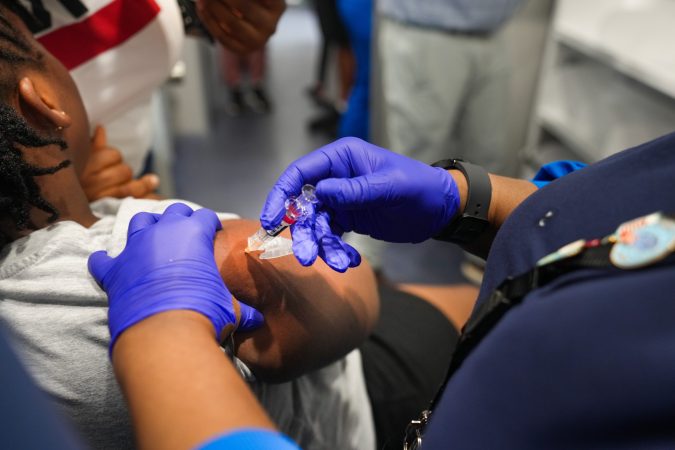
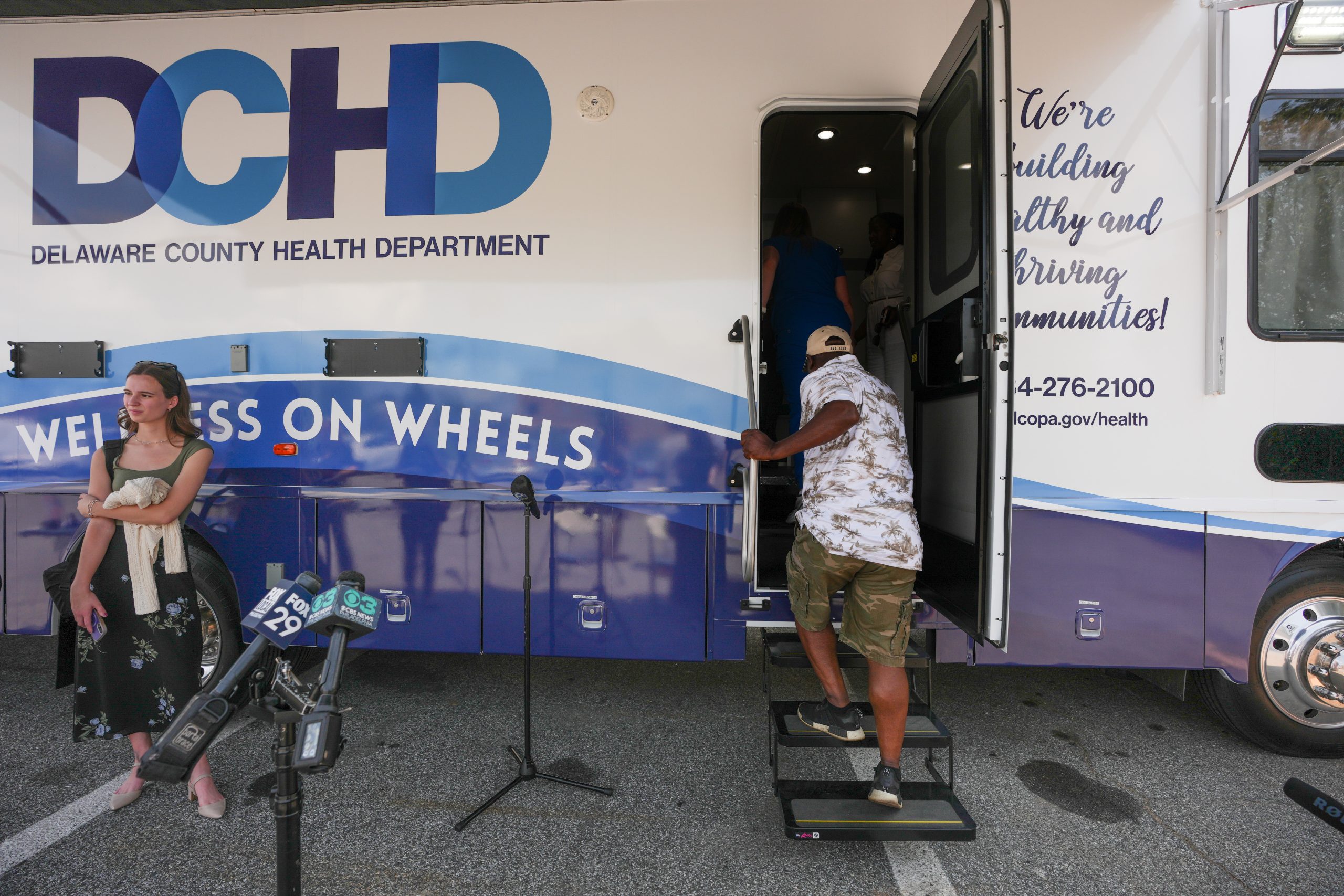
    On Monday, the 33-foot-long RV trailer was set up at Observatory Park in Upper Darby to mark the beginning of the county’s back-to-school vaccination campaign. As part of the campaign, the mobile clinic will make stops across the county to provide vaccines, physicals, and STI testing.

    Encouraging families to vaccinate and hosting clinics in advance of a new school year is a time-honored tradition for health departments. But vaccination efforts have extra urgency this year: Measles cases have reached their highest rate in more than 30 years in Pennsylvania, with a total of 142 cases reported as of Monday.

    The highly contagious virus has not yet been reported in Delaware County, but cases are mounting in Chester and Lancaster Counties, as well as in the state of Delaware.

    At the same time, vaccination rates across the state are declining. And parts of Delaware County have among the lowest measles vaccination rates in Pennsylvania.

    “We don’t have to have measles here,” said Lora Siegmann Werner, director of the Delaware County Health Department.

    The key, she said, is boosting vaccination rates before the virus begins to spread locally.

    “This is really only a matter of time,” Werner said Monday of the possibility that the current measles outbreak reaches Delaware County. “This is our window to prevent it.”

    Measles vaccination challenges

    In Delaware County, 94.3% of kindergarten students had received the measles, mumps, and rubella vaccine in the 2024-25 school year — just below the “herd immunity” rate that scientists say is required to prevent the spread of the disease. But the Philadelphia region is dotted with schools with lower vaccination rates, pockets of vulnerability that put communities at higher risk for an outbreak.

    Getting more children vaccinated is a complex and evolving public health challenge. In many cases families have access to vaccines, but do not want them.

    About 740 families in the five-county Philadelphia region opted out of vaccination for religious reasons in 2024, a 76% increase over five years. An additional 568 families claimed philosophical exemptions in 2024, a 49% jump from 2019, according to an Inquirer analysis.

    The measles vaccine is typically given in two doses: when children are 1 year old and before they enter kindergarten. Pennsylvania requires students be vaccinated to attend school, but also allows medical, religious, or philosophical exemptions, making it among the easiest places to opt out. Recently, state health officials have recommended parents vaccinate children early if they live in or plan to travel to counties where measles is circulating.

    Public health leaders across the region are beginning to rethink the way they reach vaccine-hesitant families. But in Delaware County, access remains a primary barrier.

    The county lost its leading healthcare provider when Crozer Health shuttered its two remaining hospitals last year.

    Initiatives like the county’s new mobile clinic, called Wellness on Wheels, are designed to bring care where it is needed.

    Vaccine outreach in Delaware County

    On Monday, the clinic vaccinated just three people, including 9-year-old Kayle. Her mother, Pearl, a nurse who declined to give her last name for privacy reasons, said she had heard about the mobile clinic from Delaware County’s health center, and had brought her daughter to get up-to-date on shots before starting fifth grade in the fall.

    Robert Barclay heads into the mobile clinic behind his two daughters, who received follow-up vaccine doses during the clinic’s stop in Upper Darby on July 27. Jessica Griffin / Staff Photographer

    Aside from directly providing shots, Werner hopes the clinic’s presence will put vaccination top of mind for families who see the RV parked in their neighborhood.

    “We don’t need to be the ones doing it — we just want people to get vaccinated,” Werner said.

    Barclay, who works in corrections in Delaware County, said the clinic’s spot at Observatory Park was a convenient place for his daughters to get their second doses of needed vaccines on Monday.

    The sisters moved from Africa in the spring and did not have the paperwork needed to prove to their school that they had been vaccinated as younger children.

    Barclay did not hesitate to get them scheduled for the necessary vaccines.

    “I care about my children,” he said.

  • Mediators see progress in efforts to halt Iran war as drone attacks rattle region

    Mediators see progress in efforts to halt Iran war as drone attacks rattle region

    CAIRO — Mediators have achieved progress in getting the United States and Iran back to negotiations, regional officials said Monday, after both sides paused attacks following a period of rapidly escalating tensions. But scattered attacks by armed groups across the region underscored the lingering tensions.

    Saudi Arabia said it had shot down drones fired by Iran-backed militias in Iraq that had targeted its petroleum facilities. Iran-backed Houthi rebels in Yemen meanwhile claimed to have attacked Saudi oil facilities as part of a separate but related conflict. It was unclear if they referred to the same attack.

    Neither the U.S. nor Iran reported carrying out any attacks for three days — a respite after about two weeks of sustained bombardments that had led to increasing fears of a return to all-out war.

    U.S. President Donald Trump said Iran had asked for more discussions, reaching out directly “because we’ve been hitting them very hard.” Iran has said there are no direct talks underway.

    “We’re having good talks, so we’ll see what happens,” Trump told reporters Monday on Air Force One. “I think there’s a good chance that something could happen. And if it does, good. if it doesn’t, we go back to doing what we were doing two days ago.”

    The two regional officials, who spoke on condition of anonymity to discuss the closed-door talks, said mediators led by Qatar and Pakistan were working to bridge the gap between Washington and Tehran to return to an interim ceasefire deal that had collapsed after the exchanges of fire.

    No strikes over the weekend

    In addition to the attack on Saudi Arabia, two drone attacks were reported against a Kurdish Iranian dissident group in Iraq on Monday, and Jordan said it had shot down two drones, without saying where they originated. There were no reports of casualties or damage.

    Iran and Ukraine, meanwhile, have been publicly feuding since Ukraine fired on at least one Iranian vessel in the Caspian Sea over the weekend. Iran, which said a sailor had been killed in the attack, is an important ally of Russia in its war against Ukraine and helped Moscow build up its drone expertise.

    The U.S. paused attacks after targeting Iranian coastal areas and infrastructure in a nearly two-week escalation sparked by Iran’s firing at ships trying to transit the Strait of Hormuz, a crucial waterway for global oil shipments. Iran had responded to the strikes with missile and drone attacks on countries hosting U.S. troops, killing at least three service members at a base in Jordan and one in Iraq.

    Asked if the U.S. munitions stockpile was running low, Trump said both that it was “in very good shape,” and “I’d like to have more, to be honest.” Experts have questioned how long both the U.S. and Iran can afford to keep up attacks.

    Iran halted its attacks following the American pause, Tehran’s army spokesperson told Iranian state TV on Sunday.

    Regional officials cite progress in talks

    One of the regional officials who spoke to AP on Monday described the progress made in mediation efforts as “significant.” He said mediators were working with Iran and Oman on a mechanism for managing vessels’ transit through the Strait of Hormuz, the flashpoint for the latest strikes and counterstrikes.

    Iran’s Foreign Ministry spokesperson, Esmail Baghaei, said during a news conference in Tehran on Monday that “mediators may convey messages to us from the American side” but that there were no direct negotiations.

    He said Iran and Oman, which lies on the other side of the Strait of Hormuz, had already held talks on Friday and Saturday on how to manage ship traffic through the waterway.

    Their aim is to “develop mechanisms to ensure safe navigation through the Strait of Hormuz while respecting the sovereign rights and sovereignty of both coastal states, as well as Iran’s security and national interests” Baghaei said. He stressed that the waterway remains closed.

    Tehran has asserted that the interim deal with the U.S. allows it to manage shipping on the waterway and potentially charge fees, and it has objected to U.S. efforts to support an alternative route that passes close to Oman. The strait was open to all without fees before the war.

    The U.S. military on Monday said its recently reimposed naval blockade against Iran continued, with 17 commercial ships redirected, two disabled, and two boarded.

    The 60-day period established by the interim deal in mid-June is now well into its second half, and major issues that were meant to be negotiated — notably Iran’s nuclear program at the heart of tensions — have been set aside as mediators try to keep both sides talking.

    Shipping traffic on the strait is at a 3-week low

    Concerns have grown about shipping through another crucial waterway in the region, the Bab al-Mandeb strait to the Red Sea. The Houthis last week threatened a blockade of Saudi shipping there, and fired on at least one Saudi tanker, setting it alight.

    Global energy supplies and the economy remain in the balance as gasoline prices have risen again.

    Commercial shipping traffic in the Strait of Hormuz was at a three-week low, a maritime body overseen by the U.S. Navy said Sunday, adding that no new attacks had been confirmed in the past 72 hours. It said traffic remained steady through Bab el-Mandeb.

    Netanyahu says he ‘fully’ backs Trump’s efforts

    Meanwhile, Israeli Prime Minister Benjamin Netanyahu said he plans to meet with Trump in Washington on Tuesday. They last met in Washington in February, weeks before they launched the war on Iran that killed senior leaders, including Supreme Leader Ayatollah Ali Khamenei.

    The Iranian-backed Hezbollah militant group in Lebanon fired at Israel two days after the war began, and Israel responded with airstrikes and a ground invasion. Since then, the U.S. has supported landmark direct talks between Lebanon and Israel to try to calm that front and find a way to disarm Hezbollah.

  • New CEO of Philadelphia steel company dies suddenly

    New CEO of Philadelphia steel company dies suddenly

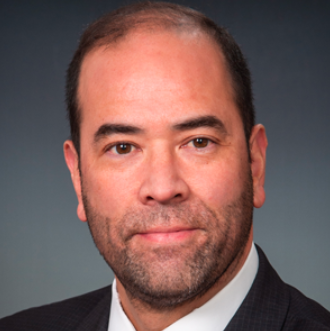
    Brian J. Malloy, chief executive officer of Philadelphia-based Carpenter Technology Corp., died “suddenly and unexpectedly” Friday, July 24, three weeks after he was promoted to run the company, which employs 4,500, Carpenter said in a statement. He was 59.

    Malloy made “significant contributions” to the growth of Carpenter, a 137-year-old, $3 billion-a-year company that makes stainless-steel alloys for aerospace, medical, military, and industrial uses at its plants in Berks County, Western Pennsylvania, and Alabama.

    “We are deeply saddened at Brian’s passing,” the company said.

    Tony Thene, Malloy’s predecessor as CEO and executive chairman, has stepped back in to replace Malloy.

    Malloy had been scheduled to report recent results to Carpenter’s investors and discuss its prospects in a conference call Thursday. The call will go ahead on schedule. Shares fell about 4% to around $580 in trading Monday on word of the new CEO’s death.

    The stock had been trading over $600, its highest ever, for the past month, on the expectation that Carpenter would profit on higher U.S. military spending and new space orders.

    Malloy studied engineering at Virginia Tech and held an MBA from the College of William and Mary, as well as certifications in AI from Northwestern University and digital transformation from MIT. He is listed on five patents.

    He joined Carpenter in 2015, heading a unit that includes titanium products and powdered metals. In 2023, he was named chief operating officer before succeeding Thene as CEO when Thene retired earlier this month.

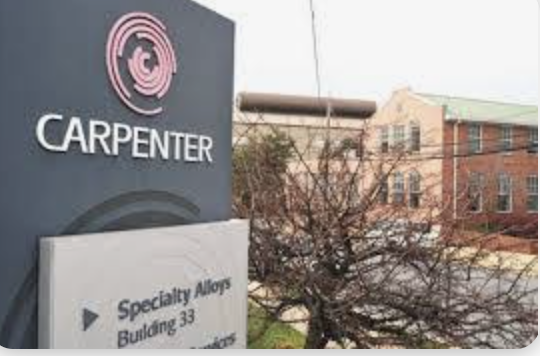
    Part of the Carpenter Technology complex in Reading. The Philadelphia-based specialty steelmaker also has operations in western Pennsylvania and Alabama, and a finishing plant in China.

    Before joining Carpenter, Malloy was an executive at Berwyn-based Ametek and for Alcoa.

    Carpenter moved its headquarters to Philadelphia from Spring Township near Reading, the year after Malloy joined the company, one of several upstate Pennsylvania companies that moved to Philadelphia in hopes of attracting management and technical talent.