Blog

  • She fought to bring the man she loves home from prison after a landmark court ruling. But lawmakers’ inaction has left her in limbo.

    She fought to bring the man she loves home from prison after a landmark court ruling. But lawmakers’ inaction has left her in limbo.

    The phone rang at lunchtime, the way it did every day. Carisia Magobet answered within seconds.

    An automated voice spoke first: This call is from a Pennsylvania state correctional institution.

    Then his.

    “May the peace, mercy, and blessings of Allah be with you, my love,” Matthew Garcia said in Arabic.

    They had only 15 minutes, and for once, Magobet did not spend the first of them on small talk. There was no good way to tell him what she knew: State lawmakers had gone home the night before without taking the vote that the couple had hoped would bring him home.

    Garcia was 18 in 1998 when he and four friends set out to rob a Hunting Park bar. He said he was the lookout and did not have a gun.

    One of the teens pointed a sawed-off shotgun at a bartender and demanded cash. A retired Philadelphia police officer, Frank King, was inside the bar and grabbed for the gun. Another teen shot him with a pistol. King died on the floor.

    By that time, Garcia said, he had already run.

    It didn’t matter.

    All five were convicted of second-degree murder — a killing committed during a felony, no matter who pulled the trigger — and sentenced to the only punishment Pennsylvania law allowed: life without the possibility of parole.

    Magobet, who had known Garcia since they were kids in Hunting Park, was in the courtroom on June 21, 2000, the day he was sentenced. For decades, they did not see each other again.

    Then, about two years ago, she found Garcia’s Facebook account, where he shared his writing and his work inside State Correctional Institution-Chester, the prison he called home. She reached out.

    Garcia told her about a case before the Pennsylvania Supreme Court that could mean freedom for people serving life sentences in cases like his.

    Derek Lee, a Pittsburgh man sentenced to life in prison for his role in a fatal robbery in which a coconspirator fired the fatal shot, had challenged the mandatory punishment as unconstitutional, saying it failed to account for individual culpability.

    In March — six months after Magobet and Garcia wed in a prison visiting room — the high court struck down mandatory life sentences for second-degree murder.

    It gave lawmakers until July 24 to write new sentencing guidelines for future cases and determine how, or whether, the ruling would apply to the roughly 1,100 Pennsylvanians already serving that sentence.

    On Friday, the deadline arrived, but a resolution did not. On July 12, the legislature had adjourned without voting on a fix. And fresh efforts last week failed to produce a bill that Democrats and Republicans could agree on.

    The stalemate places in limbo everything Magobet, 40, and Garcia, 45, have spent the last two years assembling in anticipation of a freedom both yearn for but neither can control.

    Building together

    She loved him first.

    Magobet was 13 when Garcia’s sister got married and they were both in the wedding party. He was supposed to walk her down the aisle. But at the last minute, the pairs were swapped, and she walked with his brother instead. Magobet decided, quietly, that she was owed that walk one day.

    She never told him. Not before his arrest, not for years after he went to prison. She found his social media accounts and saw what his life had become in prison.

    He had earned college credits, started programs for young people, and launched a podcast to share his story.

    In a prison foster-cat program, Garcia adopted a calico, named her Lil Mama, and fed her until the name stopped fitting. “It’s not Lil Mama now,” he said in a recent interview. “It’s Fat Mama.”

    Prison reform advocate Carisia Magobet shows photos of her husband, Matthew Garcia, who is serving a life sentence for second-degree murder, at her home in Northeast Philadelphia.Sarah Silbiger / For The Inquirer

    The orange-and-black foster fail appeared often in Instagram photos. In one, a full-bearded Garcia wrote: “Me and Lil Mama, patiently waiting on our moment.”

    By then, Magobet had four children, a house, a dental office she managed by day, and a commercial cleaning business she ran at night. Yet she found herself thinking often about Garcia. Seeing him there — older, broader, smiling beside a chubby cat — made him less a memory and more real. She emailed him.

    Not long after, she took over his social media accounts.

    Together, they began building a growing audience for Garcia’s work, a network of supporters, and, eventually, a life that felt shared despite the prison walls that separated them.

    She posted his poetry. She built a website explaining the Lee case and a guide to contacting lawmakers about sentencing reform. He wrote children’s books, including one about Lil Mama that Magobet’s 21-year-old daughter, a digital arts student, illustrated.

    A chance for ‘FREEDOM’

    Garcia proposed on Aug. 1, three months after they reconnected. But it didn’t feel fast to Magobet. She had been carrying that moment since the wedding party.

    They wed on Aug. 23. She is still waiting on prison paperwork to make it legal. But to them, Magobet said, it’s official.
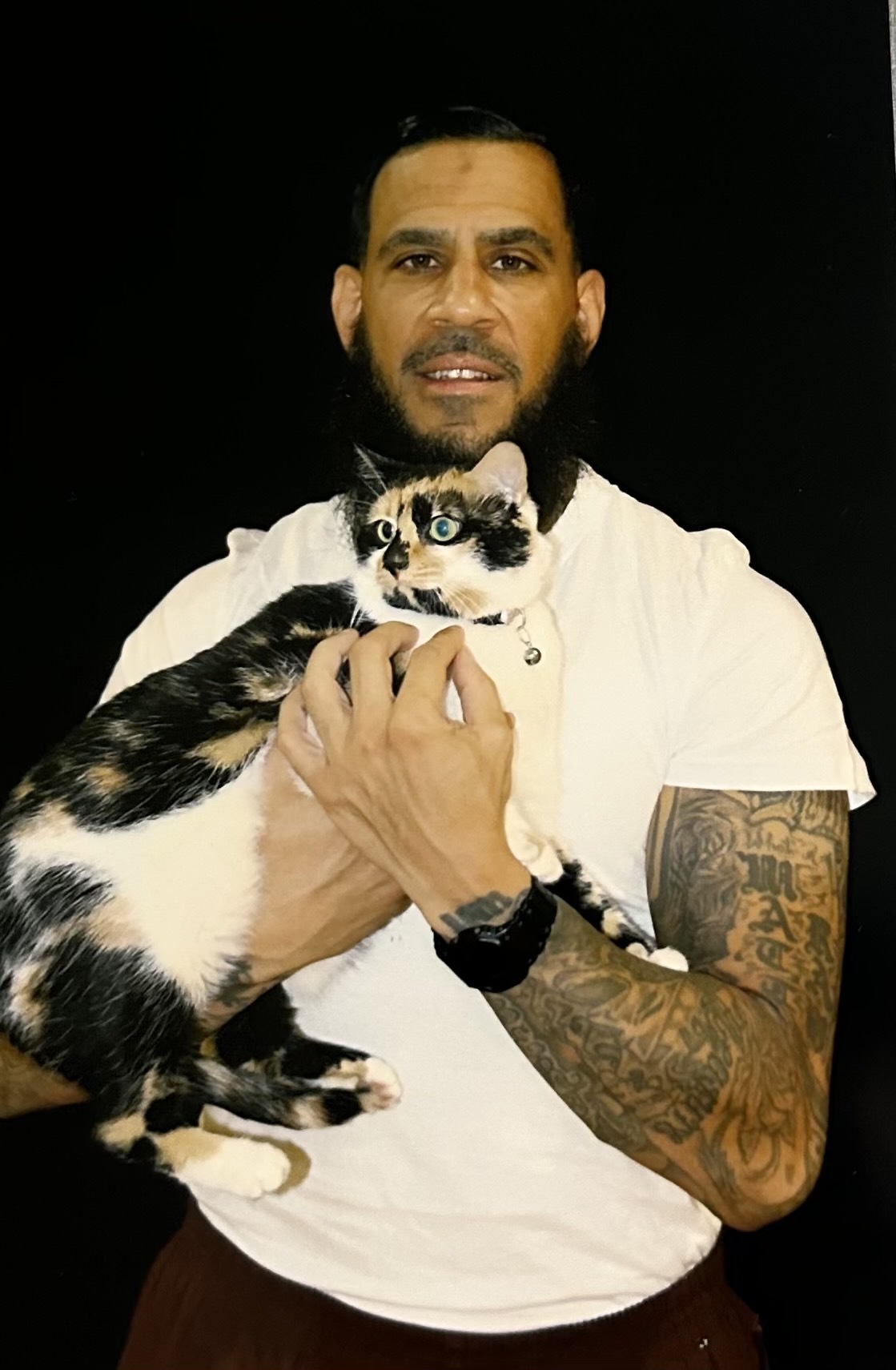
    Matthew Garcia and Lil Mama.Courtesy of Carisia Magobet.

    He calls at least four times each day — when his cell door opens at 7 a.m., at lunch, after his work shift at the prison’s reentry program, at night. Each call lasts 15 minutes, the maximum allowed under prison policy, plus six video calls and four in-person visits a month.

    On a video call last month, the couple discussed Magobet’s plan to join other families, formerly incarcerated people, and advocates in Harrisburg to support legislation in response to the high court’s decision that would allow people like Garcia to seek parole after serving at least 25 years. Not guaranteed release, but a chance to make their case.

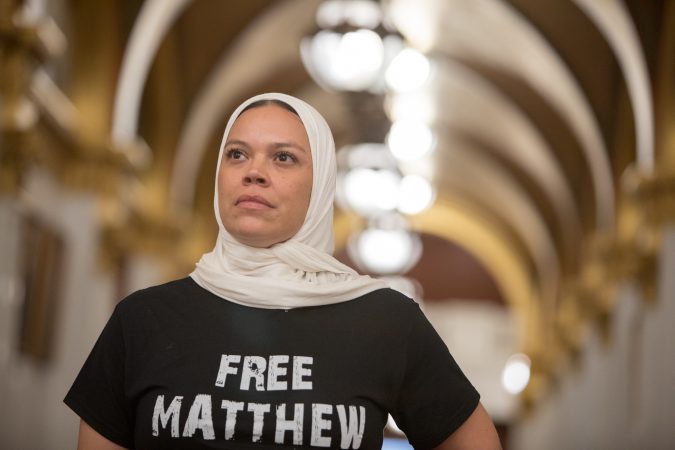
    She told him about a poster she had printed to bring, with a photo of him holding Lil Mama and “FREEDOM” written in all capital letters. She had ordered a custom T-shirt, too, but it had not arrived yet.

    “Will it come in time for Monday” for the trip to the Capitol? Garcia asked.

    The call cut out before she could answer.

    ‘Do your job and legislate’
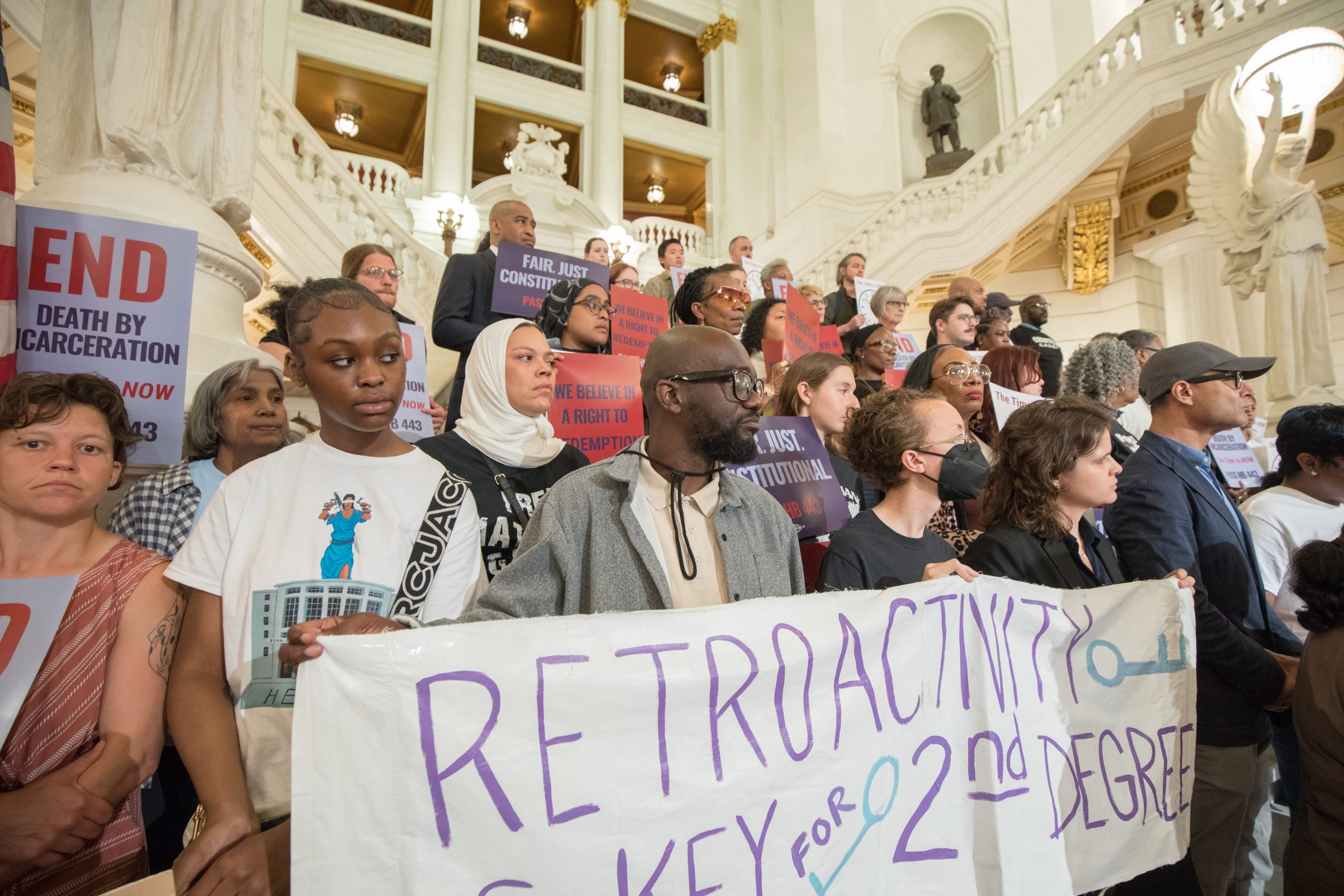
    Carisia Magobet participates in a rally at the state Capitol in Harrisburg.

    Magobet wore the T-shirt to Harrisburg two days later.

    Beneath the Capitol rotunda, Magobet met Saleem Holbrook, the executive director of the Abolitionist Law Center, which represented Lee before the Supreme Court. He told Magobet he knew Garcia from their years in prison together.

    “If there’s a person who’s earned being able to come home,” he said, “it’s Matt.”

    In State Rep. Nikki Rivera’s office, Magobet read a speech from her phone. Her voice broke only once, when she told Rivera (D., Lancaster) that Garcia was her husband.

    In the lobby of House Majority Leader Matt Bradford’s office, Magobet joined several others in a chant — “the time is getting late, do your job and legislate!” — that prompted the Montgomery County Democrat’s chief of staff to take Magobet and another person back to her office. The staffer had listened, Magobet said, promised nothing, and blamed the other side.

    But Lil Mama made her laugh.

    “The cat gets everyone,” Magobet said afterward. “We gotta get Lil Mama T-shirts for next time.”

    Holding onto hope

    Five weeks later, there was no next time to plan for.

    Magobet learned that lawmakers adjourned July 12 without voting on the Democratic-sponsored measure she had supported, or the stricter Republican proposal.

    She told Garcia on a phone call, and before the 15 minutes were up, he told her he couldn’t keep talking. It was the first time he had ever done that, she said.

    A new measure, introduced by Democrats in an emergency session last week, did not earn a vote in the Senate.

    The Supreme Court’s 120-day stay on new sentencings in second-degree murder cases expired on Friday, and judges can again hand out life sentences to people convicted of second-degree murder, but only in limited circumstances. But without a new law, there are no mandatory minimums or clear guidelines.

    On Thursday, the Allegheny County District Attorney’s Office asked the high court to extend its stay until September, when lawmakers are scheduled to return to the Capitol. As of Monday, the court had not ruled on the request.

    In the meantime, the next chapter will likely unfold in the courts for the more than 1,000 people already serving mandatory life sentences.

    Bret Grote, an attorney with the Abolitionist Law Center who represented Lee in the Supreme Court case, said the high court has been asked in a separate case to determine whether the ruling applies retroactively.

    He called the situation “a constitutional crisis.” But even under the most optimistic timeline, he said, a resolution could take years.

    In the meantime, attorneys expect a wave of challenges from incarcerated people seeking relief. More than half of those serving the sentences are from Philadelphia.

    Garcia said he will meet with his attorney to determine his next steps.
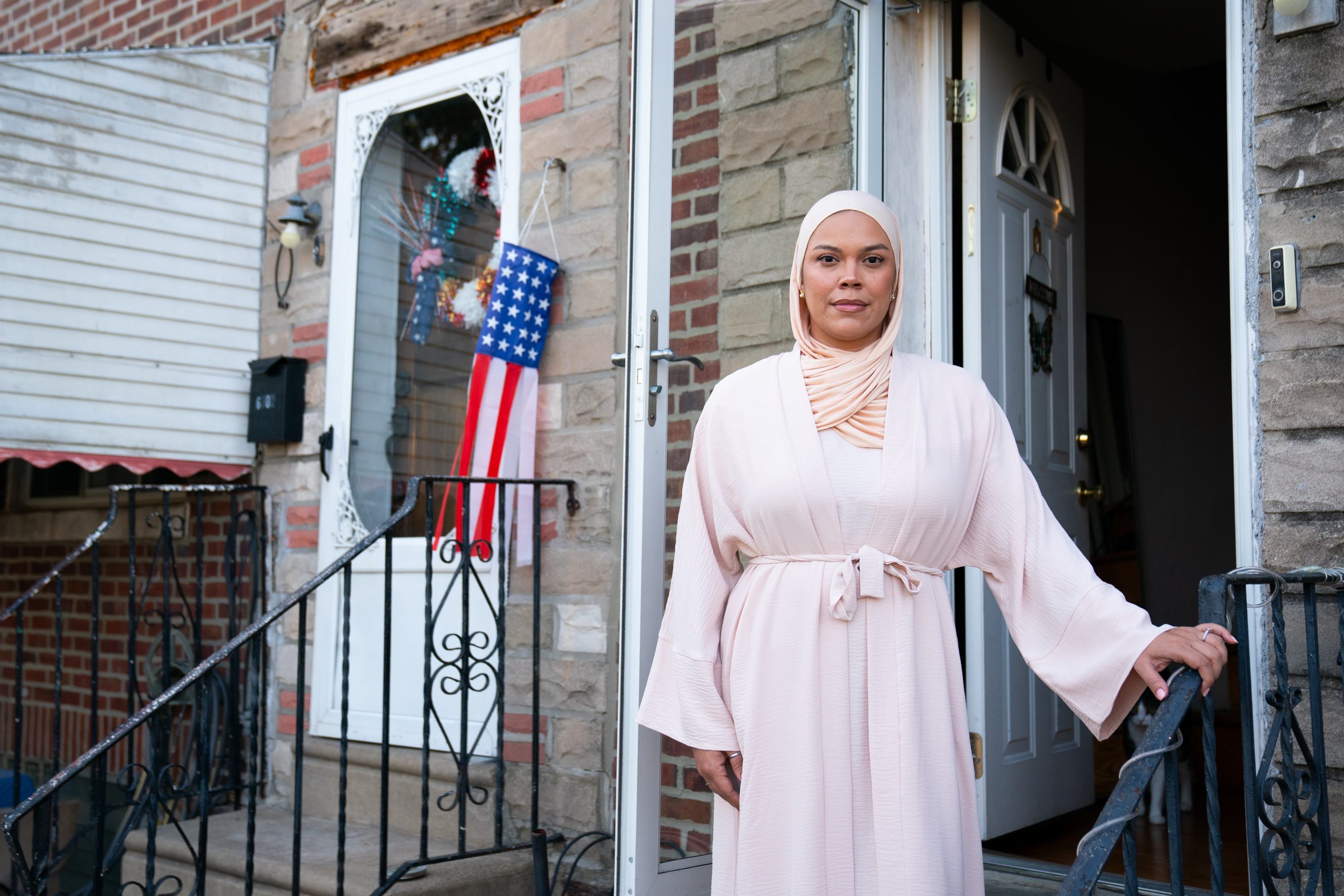
    Prison reform advocate Carisia Magobet poses for a portrait at her home in Northeast Philadelphia.Sarah Silbiger / For The Inquirer

    Magobet said she is holding on to hope — for the smaller things.

    Walks together.

    Coffee he brewed waiting for her in the morning.

    Afternoons at a pool. (Garcia has not been in water deeper than a shower in nearly three decades.)

    For months they talked about those plans as though they were approaching.

    Now they wait. Again.

  • He was assaulted by teammates in Cheltenham High’s locker room. Nearly a year later, his mom says he ‘can’t escape the situation.’

    He was assaulted by teammates in Cheltenham High’s locker room. Nearly a year later, his mom says he ‘can’t escape the situation.’

    The mother knew something was wrong the night her son came home from football practice last September and quietly went to his room.

    Four days later, she took him to the doctor after he told her his teammates had jumped him inside the Cheltenham High School locker room after that practice, injuring his genitals.

    It was not until she got a call from police later that month that the mother learned that teammates had used a broomstick in the alleged attack, an act his lawyers described as attempted sexual assault.

    Her son, who was 15 at the time, told her teammates had tried “to mess with his manhood,” the mother said.

    He told her that the school’s football coaches, who knew that his teammates had jumped him, had called him that night and told him not to tell his parents.

    “He didn’t want to talk about it,” said the mother, who spoke to The Inquirer on the condition of anonymity to protect her son’s identity. Her son, she said, “was trying to put it in the back of his head. He was traumatized.”

    Cheltenham abruptly canceled its football season last October, citing hazing allegations. In January, the district said it had confirmed that a “student-on-student assault” took place in its football locker room on Sept. 3, and that nearly 20 students had watched without trying to stop it.

    A video of a locker room attack that investigators thought matched the student’s description of the alleged attack in September surfaced in the fall and was obtained by the district. The teammates who assaulted the student are identifiable in the video, said Gabrielle Turley, a lawyer representing the student. She said the student provided their names to Cheltenham police.

    But this spring, detectives determined the footage actually had been taken in August, according to the student’s lawyers — prompting the student to reveal he had been assaulted more than once.

    Eleven months later, no charges have been filed. A spokesperson for the Montgomery County District Attorney’s Office said it is still investigating but declined to comment further.

    The incidents have reverberated throughout the suburban community, even as the school district has provided few specifics about what happened in the locker room.

    The district announced in May it was canceling the forthcoming football season for the Panthers, but has not disciplined any students.

    A Title IX investigation — which schools are required by federal law to conduct into sexual misconduct allegations — is ongoing. “Unfortunately, the district received extremely limited cooperation from students,” Superintendent Brian Scriven said in a statement in response to questions from The Inquirer about the assaults. Any discipline for students will be imposed once the investigation is done, Scriven said.

    The district in April approved a separation agreement with the team’s head coach, Terence Tolbert, who had been Cheltenham’s top football coach since June 2025.

    Scriven noted that the district also in April approved a separation agreement with another football coach, Darian McFadden. None of the coaches from the 2025-26 season are still affiliated with the district, the superintendent said.

    Scriven declined to address specific questions about the alleged assaults, saying the district attorney’s office had asked school officials not to comment.

    Brian Scriven, superintendent of the Cheltenham School District.Courtesy of Cheltenham School District

    As the new school year approaches, some football players and their families have criticized the district’s cancellation of another season as unfair punishment for a situation they had no part in.

    But students who participated in or witnessed the alleged assaults have been able to move on with their lives, graduating from the 1,450-student Wyncote school or transferring to other schools, the mother of the victim said. Her son has not.

    He was taunted by peers after the September assault and switched to virtual school in the district, where he struggled and was isolated, his mother said. After getting harassed by kids at his local basketball court, he avoids going outside, she said.

    “He can’t escape the situation,” she said.

    Inside the locker room

    Video footage from the August incident after a football training camp at Cheltenham High School shows the student being dragged by his shirt on the floor of the locker room, according to his lawyers.

    About “seven or eight students are making physical contact” with him, while other students are standing by lockers, some with their phones out, said Alan Yatvin, one of the lawyers.

    The video shows one young man holding a broomstick, which is being “poked or thrust at [the student’s] genitals and backside,” Yatvin said.

    Turley, the other lawyer representing the student, said the video shows teammates trying to pick the student up by his shirt, which is ripped, while the student tries to remain seated on the floor.

    “There’s no other reason to be in that area, unless you’re trying to sexually assault somebody,” Turley said of the broomstick she saw in the video of the alleged attack.

    The student did not tell anyone about the August incident because he was embarrassed, his lawyers said.

    But then on Sept. 3, he was assaulted again. The student had taken someone’s shoulder pads because his were missing. Coaches made players run as a punishment, and they blamed the student, the lawyers said.

    Yatvin said that as the student tried to leave the locker room, he was thrown on the floor and punched and kicked in the head and testicles. He said the student reported there were “three main people hitting him.”

    The altercation lasted about five minutes, and the student heard someone say, “‘Get the broomstick,’” Yatvin said. He said the student tried to ball up on the ground and “sat in such a way to avoid the broomstick being stuck in him.”

    A couple of teammates intervened, and the fight broke up, Yatvin said. He said one player went to get a trainer, while another got the student ice.

    A volunteer coach drove the student home. That same night, three coaches, including then-head coach Tolbert, called the student, according to Yatvin.

    “They told him that he shouldn’t tell his mom, because they would handle it. He believed that,” Yatvin said.

    Reached by phone earlier this month, Tolbert declined to comment.

    A mother pushes for answers

    The student’s mother recalls taking her son to an urgent care center four days after the Sept. 3 incident because he was “complaining his pee was burning a little bit,” she said.

    She texted the vice principal, Mark Hoff, to let him know what had happened. “I was very upset,” the mother said. Hoff called her; the school opened an investigation the next day, Yatvin said.

    It was about 12 days later when Cheltenham police called her about a tip that had been submitted through the state’s anonymous Safe2Say line, about a broomstick being used during an assault.

    “I know that’s like a sexual assault — trying to sodomize somebody,” the mother said, noting she works at a prison. “What was going through my mind was, ‘Where did these kids get this from?’”

    At the end of September, lawyers said, the district contacted the mother to ask if she wanted to open a Title IX investigation, given the sexual nature of the allegations. She said yes.

    At the time, the mother did not know her son had been attacked more than once.

    No one had shown her and her son the video of the alleged assault that the district obtained — which had circulated through the school community, Yatvin said — until the spring. Had they seen it earlier, he said, they would have known it was from August, based on the student’s hairstyle at the time.

    The mother said her son was “scared to come forward.”

    “He didn’t want to go through none of this,” she said. “But I kind of pushed the issue.”

    Waiting for accountability

    On Oct. 17, a Friday, Cheltenham announced that it was postponing that night’s football game.

    “Today, the district received anonymous information regarding allegations of hazing in the football program,” Scriven said in a statement. The season was temporarily suspended, he said, and the district had “engaged an external investigator.”

    By that Sunday, Scriven had announced that the season was canceled. The district had received a report “approximately three weeks ago” of a locker room assault, he said in the announcement, and that Friday, it “received additional information, including reports indicating multiple team members engaged in hazing through physical contact.”

    Asked why it took until Oct. 17 for the district to suspend the season when the mother had reported the assault Sept. 7, Scriven drew a distinction between hazing and a “singular incident of assault.”

    The district’s external investigation, which was completed in January, determined there was insufficient supervision in the locker room and “a failure to prioritize student safety by the coaching staff and/or adult volunteers,” as well as a “a toxic and negative culture within the current football program.”

    Scriven said he expected the Title IX investigation to be completed “in the near future.”

    Yatvin believes more students know what happened to his client than have come forward.

    “If all the necessary information was available, there probably would have been something happening with the school’s investigation, and something happening with the district attorney’s investigation,” he said.

    The student’s mother, who is considering filing a lawsuit, said she wants people held accountable for what happened to her son. No one from his school has called and checked on his well-being, she said.

    “You’ve got parents on the news, worrying about their football team, but not necessarily worried about what happened,” she said. “Nobody is focused on what happened to him.”

  • The Eagles enter training camp with a number of intriguing storylines. We ranked their importance.

    The Eagles enter training camp with a number of intriguing storylines. We ranked their importance.

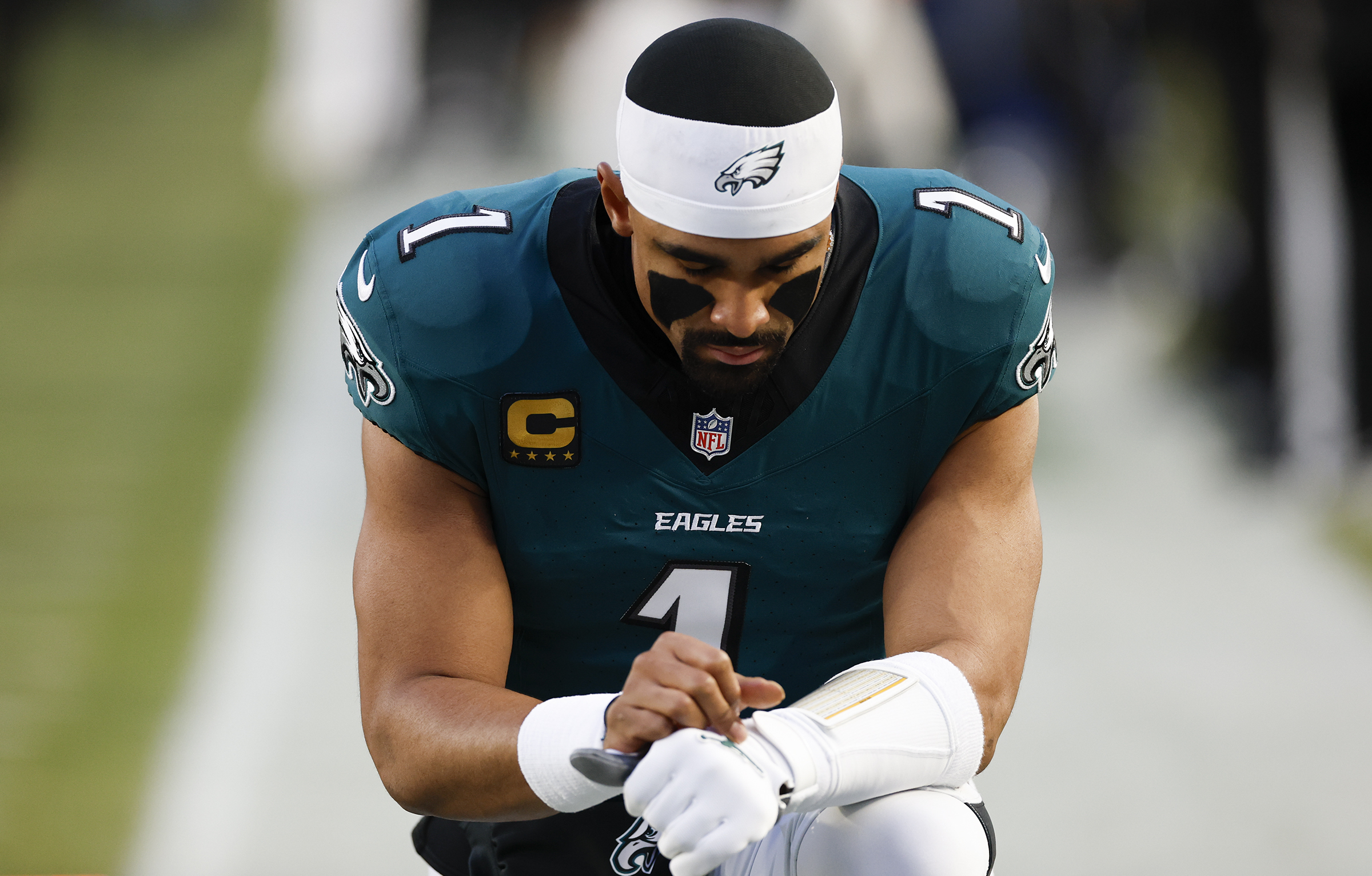
    The Eagles report to training camp on Tuesday, with their first practice set for the Jefferson Health Training Complex on Wednesday. In advance of that event, reporters Olivia Reiner, Jeff Neiburg and Ryan Novozinsky identified 11 storylines that will be worth tracking in the coming weeks — then ranked them in order of priority.

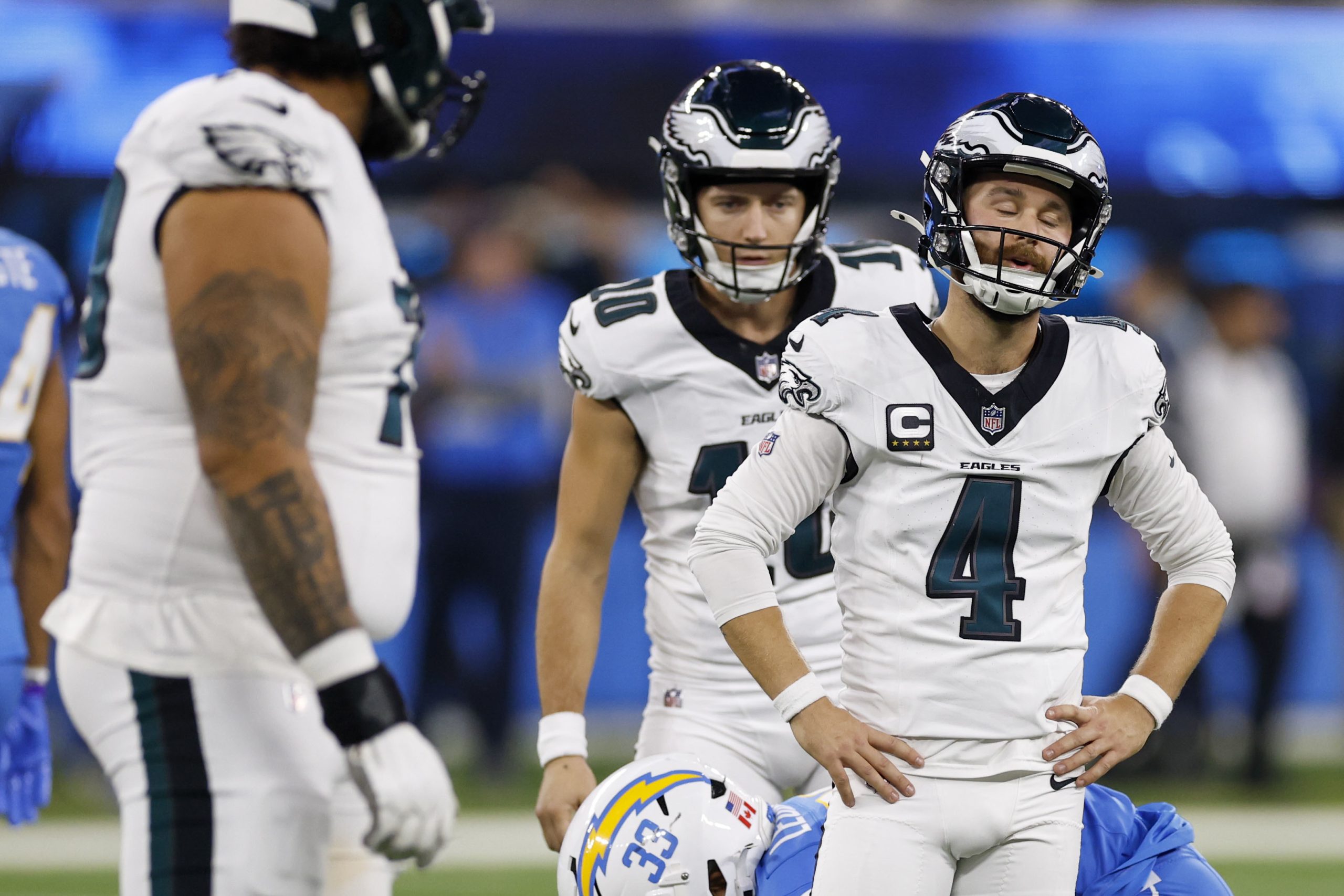
    Jake Elliott (4) was less dependable than usual during an inconsistent 2025 season. Yong Kim / Staff Photographer

    11. Kicker Jake Elliott’s progress after a shaky 2025.

    The two-time Super Bowl champion struggled at times last season, going 20-for-27 on field goals and 4-for-8 from 50-plus yards. Over the past two seasons, Elliott is 5-for-15 from 50-plus yards out, which is dead last in the NFL among the 35 kickers with at least five attempts.

    The Eagles showed faith in their longtime kicker when they restructured his contract in March, but if he doesn’t return to form, he might find his way off the roster sometime soon. A rock-solid training camp showing should ease any concerns the organization may have in the 31-year-old. It’s on Elliott to prove he’s still got it. — Novozinsky

    What will the presence of Jonathan Greenard mean for Nolan Smith Jr.’s playing time off the edge?Monica Herndon / Staff Photographer

    10. How the reps will be divided within an altered edge rusher rotation.

    Out is Jaelan Phillips, in is Jonathan Greenard. That’s the big change at the top of the depth chart, and the only two returning edge rushers in the rotation are Jalyx Hunt and Nolan Smith Jr. Two from that trio will be on the field most of the time for the Eagles, and Hunt may continue to see a higher workload than Smith. But beyond them, the position is an interesting one to watch in camp.

    Arnold Ebiketie is the clear No. 4 as camp begins based on his one-year deal worth more than $7 million. But he’ll face some competition for snaps from players looking to make an impression and claim a spot on the 53-man roster. A.J. Epenesa wants to prove he still has more in the tank. Keyshawn James-Newby, the rookie seventh-round pick, wants to show that he has the skill set to make up for his lack of size. Jose Ramirez is still fighting to stay in the NFL.

    The top trio is going to eat up the first-team reps, and Ebiketie likely will get some looks there, too, but how the Eagles divvy up reps among the unit will be something to monitor as camp gets rolling.

    Plus … will Brandon Graham’s return be necessary? — Neiburg

    Cooper DeJean (33) goes from All-Pro nickel to All-Pro nickel with additional safety responsibilities. Nick Wass

    9. The impact of new faces — and altered duties — in the secondary.

    Vic Fangio’s defense doesn’t have many holes. It may not end up having any holes. It’s a defense with stars at every level, at every position. Still, it’s the defensive back group that will be the most fascinating thing to watch on Fangio’s side of the ball during camp.

    Quinyon Mitchell, an All-Pro last year, is one of the best cornerbacks in the league. Riq Woolen, who signed a one-year deal with $12 million guaranteed, has flashed potential and was one of the standouts of the offseason program. Cooper DeJean, meanwhile, is an All-Pro nickel. But the Eagles plan to use DeJean at safety in their base defense next to second-year safety Andrew Mukuba, and the battle for the second safety spot may be one of the most exciting of the summer.

    The Eagles are only in base about 20% to 25% of the time, which means the safety not named DeJean is going to be on the field pretty often. Right now, that spot is Marcus Epps’ to lose. But Epps is 30, has dealt with injuries, and wasn’t a starter last year until the Eagles needed him after Mukuba went down. Will Michael Carter II take to a position change from nickel and push Epps? Can veteran J.T. Gray, a career special teamer, finally have a breakthrough? Will Andre’ Sam show all that he’s learned in Fangio’s defense the last few seasons? Will rookie Cole Wisniewski go from seventh-round pick to a key role? Undrafted free agents Kapena Gushiken and Maximus Pulley want their names in the mix, too.

    All of this is without mentioning the battle that will take place for the depth-chart spots at corner behind the top three. Veteran Jonathan Jones may be a lock for a spot, and Kelee Ringo has the special teams chops to claim a job. What does that mean for Mac McWilliams and Jakorian Bennett? Time will tell. — Neiburg

    Can Makai Lemon give the receiving game a jolt after missing mandatory minicamp due to injury?

    8. The impact of the Eagles’ top three 2026 draft picks.

    Our first look at the top three draft picks was a bit incomplete during the offseason program. Wide receiver Makai Lemon was held off the field for minicamp with a hamstring injury. Tight end Eli Stowers had a sleeve on his right leg at one point and didn’t go through the entirety of the workout. Then tackle Markel Bell missed the final workout of the spring with an undisclosed injury.

    All three are expected to be at 100% when camp opens this week, which means all three will be under the microscope as the new-look offense takes shape.

    Their importance for the 2026 Eagles is ranked in draft order. Lemon will be expected to take on a pretty significant role in the offense as the Eagles begin life without A.J. Brown. Stowers, meanwhile, won’t have the same kind of pressure. Dallas Goedert is still in town, and Johnny Mundt was brought in to be a blocking specialist. But the Eagles have raved about Stowers’ athleticism and his ability to create mismatches. Will we see some of that in camp?

    As for Bell, the tallest player on the roster (6-foot-9) got the first crack at filling in for Lane Johnson during OTAs. Will he be the preferred swing tackle? Or is that job still Fred Johnson’s? — Neiburg

    Could Tanner McKee’s days in Philly be numbered?David Maialetti / Staff Photographer

    7. The QB depth chart, and how many the Eagles will keep at the position.

    By the end of training camp, the Eagles will have to make a decision about how many quarterbacks they will keep on the initial 53-man roster.

    Typically, that quantity would be three. A fourth quarterback would land on the practice squad. Last season, for example, Tanner McKee and Sam Howell filled out the active-roster depth behind Jalen Hurts, while Kyle McCord signed to the practice squad.

    This year could be different. McKee, 38-year-old Andy Dalton, and fifth-round rookie Cole Payton round out the depth behind Hurts. It seems unlikely that the Eagles would cut Payton, given he was a fifth-round pick. Could the Eagles opt to move McKee or Dalton ahead of the regular season? Or, could they see the value in carrying all four quarterbacks on the initial 53, at least to start the season?

    The Eagles also must choose a primary backup to Hurts by Week 1. McKee held that role last season. The Eagles acquired Dalton from the Carolina Panthers this offseason, seemingly identifying their QB3, but the 15-year NFL veteran split second-string reps with McKee during the offseason program. Dalton didn’t exactly separate himself from McKee in a very early, limited window during OTAs and minicamp. Still, the competition between the two depth quarterbacks could continue in training camp. — Reiner

    A Jalen Carter contract extension has been in the wind throughout the 2026 offseason. Yong Kim / Staff Photographer

    6. Jalen Carter’s health, and his contract.

    (Note: Carter signed a record extension on Tuesday, hours after the publication of this story.) Answers about Carter’s health and the status of a prospective contract extension could be straightforward. Carter, 25, dealt with shoulder injuries last season and missed time as he recovered from procedures. In late May, Fangio said Carter’s shoulders are “fine,” adding that “he’s in a better spot now than he was [last season].” If that is still the case two months later, then there shouldn’t be much concern about Carter’s ability to fully participate in camp.

    Carter did not participate in team drills during the Eagles’ two-day mandatory minicamp in June, however. Was his lack of participation injury-related, or was it something of a hold-in, given Carter is eligible for a contract extension? Nick Sirianni declined to offer an explanation during mandatory minicamp.

    After the Eagles picked up Carter’s fifth-year option this offseason, he has two years left on his rookie deal. The Eagles could theoretically tag him, too, when the time comes to keep him under contract for a third. It isn’t necessarily imperative that the Eagles sign Carter to a new deal before the season.

    But GM Howie Roseman is typically proactive about extending key players. He has also said he prefers not to do new deals during the season. Time is of the essence, as Carter will likely reset the defensive tackle market when he signs his next contract. (Tennessee Titans defensive tackle Jeffery Simmons leads interior defensive linemen at $35.3 million per year.)

    Why has Roseman waited to extend Carter? He likely has his rationale, but he tends not to comment on ongoing or upcoming contract negotiations.

    If Carter is on the field Wednesday fully participating in all drills, then there might not be anything to see here. Perhaps the Eagles want to see another year from Carter before they make a long-term commitment, even if his market value increases in the meantime. If he’s missing or sitting out, bigger questions could arise, either about Carter’s health or the status of his future in Philadelphia. — Reiner

    The Eagles’ fortunes rose and fell at times on the availability of Lane Johnson last season. Monica Herndon / Staff Photographer

    5. The health of Lane Johnson and other veterans coming off injuries.

    Is there a bigger storyline in camp than the health of the offensive line? Sure, you may counter and say duh, it’s the Sean Mannion offense, dummy! But I would counter by saying none of it matters if Lane Johnson, Cam Jurgens, and Landon Dickerson aren’t healthy. Heck, Kevin Patullo might still be the coordinator if the line was healthy, because one would assume that the Eagles, with a sturdier line, would have been able to run the ball a lot better, which means they would have faced a lot fewer third-and-long situations, and so on.

    Johnson is coming off a season-ending foot injury. Jurgens and Dickerson, meanwhile, flew to Colombia separately this offseason to get stem cell therapy treatment to manage pain. Jurgens has had back issues. Dickerson has had many lower-body ailments. How the three of them look during the early stages of camp will be informative.

    Then there are others, like Mukuba, who fractured a fibula and had his rookie season stopped early. Jalen Carter got injections in his shoulders to help him finish out the rest of the 2025 season. Nolan Smith aggravated his triceps injury and was limited to 12 games. Jihaad Campbell spent some time this offseason recovering from a shoulder injury. And Greenard, the major acquisition of the offseason, had his 2025 season ended early due to a shoulder injury.

    All eyes will be on the offensive line, but there are some other Eagles worth monitoring as the training camp workload dials up. — Neiburg

    Can Saquon Barkley (right) find more running room in an offense that has moved away from ex-assistant Jeff Stoutland’s blocking principles?Jose F. Moreno / Staff Photographer

    4. The work of Saquon Barkley and the running game in Year 1 A.S. (after Stoutland).

    The Eagles have a new offensive line coach, Chris Kuper, for the first time in 16 years. Jeff Stoutland’s departure, along with the hiring of a new offensive coordinator in Mannion, is going to have massive ripple effects across the organization — especially in the run game. Barkley, who took a step back last season after a historic 2024, is at the center of these changes.

    Mannion’s new playbook implements a wide zone scheme with concepts that look similar to the schemes of Sean McVay and Kyle Shanahan. Wide zone blocking concepts will stretch opposing defenses horizontally. On paper, Barkley should thrive in a system like this. The onus is on the offensive line to stay healthy and execute the new blocking style properly. If Kuper lives up to the hype — and the early reviews have been positive — the latter point shouldn’t be a concern at all. — Novozinsky

    DeVonta Smith stands to receive more scrutiny from defenses that no longer have to account for A.J. Brown. Yong Kim / Staff Photographer

    3. The post-A.J. Brown pass-catching situation.

    Roseman spent the offseason bolstering the Eagles’ receiving corps ahead of Brown’s trade to the New England Patriots in June. He drafted Makai Lemon in the first round out of USC, acquired and extended Dontayvion Wicks, and added Hollywood Brown in free agency.

    No single player will replace Brown’s precise role and responsibilities on the team, which will feature a revamped offensive scheme under first-time play-caller Mannion. DeVonta Smith is poised to become WR1, but he and Brown possess different body types, skill sets, and strengths. Compensating for the loss of Brown will ultimately be a group effort.

    But how will the targets break down among Eagles receivers during the season? Training camp will offer a peek into the pecking order among Smith, Lemon, Wicks, Brown, and some of the bubble receivers including Elijah Moore, Johnny Wilson, and Darius Cooper. Tight ends Dallas Goedert and second-rounder Eli Stowers and running back Saquon Barkley will factor into the passing game, too. The next couple of months will also offer more insight into how each of those players will be utilized within the scheme. — Reiner

    Fans have high hopes for new coordinator Sean Mannion, despite his relative inexperience. Elizabeth Robertson / Staff Photographer

    2. The Sean Mannion offense.

    The Eagles should be the most prepared team in the league when it comes to transitioning to a new offense. That’s because the Birds have had six offensive coordinators in the past seven seasons.

    But the addition of Mannion feels different — and for good reason. The Eagles brought him in to overhaul an offense that often failed to ignite under Kevin Patullo. Mannion, a disciple of the McVay/Matt LaFleur coaching tree, is hoping to modernize their play-calling with the implementation of outside zone and far more motion.

    How is the install going so far? According to tackle Jordan Mailata, it’s “very easy to follow along, but hard to remember, just because there’s so much to setting up the plays.” There are going to be growing pains — especially during training camp — but if Mannion’s offense works the way it should, the Eagles’ 2026 ceiling becomes limitless. — Novozinsky

    With a new scheme to run and an altered supporting cast around him, Jalen Hurts enters 2026 under more pressure than ever. Yong Kim / Staff Photographer

    1. Jalen Hurts.

    Was there an NFL player under a bigger microscope than Hurts this offseason? Between the ESPN report that detailed friction concerning Hurts, the A.J. Brown saga, the constant debates over his standing among NFL quarterbacks, Hurts dominated headlines all offseason.

    So can he block out that noise and silence his doubters with a strong camp? It’d be easy to say “yes” and just move on, but the reality is that Hurts is at a crossroads. He’s learning another new offense and it’s drastically different from the last one he ran. His new OC gushed about him in his first news conference, but can that honeymoon phase survive a weak training camp/slow start to the season? That’s not to mention the fact that Hurts has a handful of unproven new weapons trying to replace a No. 1 wide receiver in Brown.

    How Hurts deals with these hurdles is easily the most intriguing camp storyline. His future in Philadelphia will be in question all season. He can quell some of that noise with a decent July and August. — Novozinsky

  • Sports bar Toll Man Joe’s will replace Mixto in Washington Square West

    Sports bar Toll Man Joe’s will replace Mixto in Washington Square West

    Toll Man Joe’s is coming back to Philadelphia, nearly five years after the South Philadelphia sports bar closed during the pandemic.

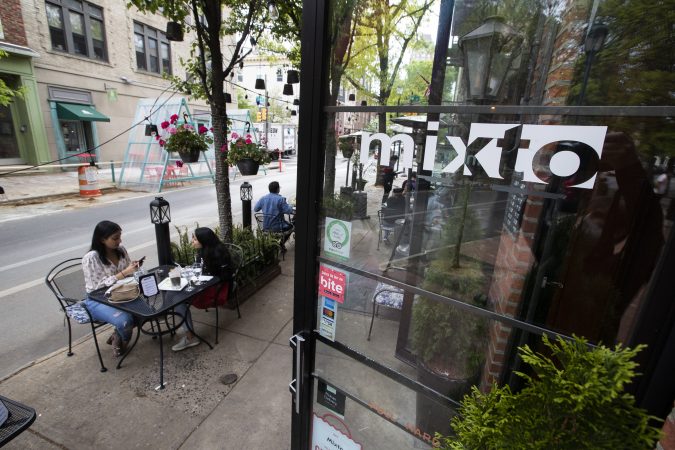
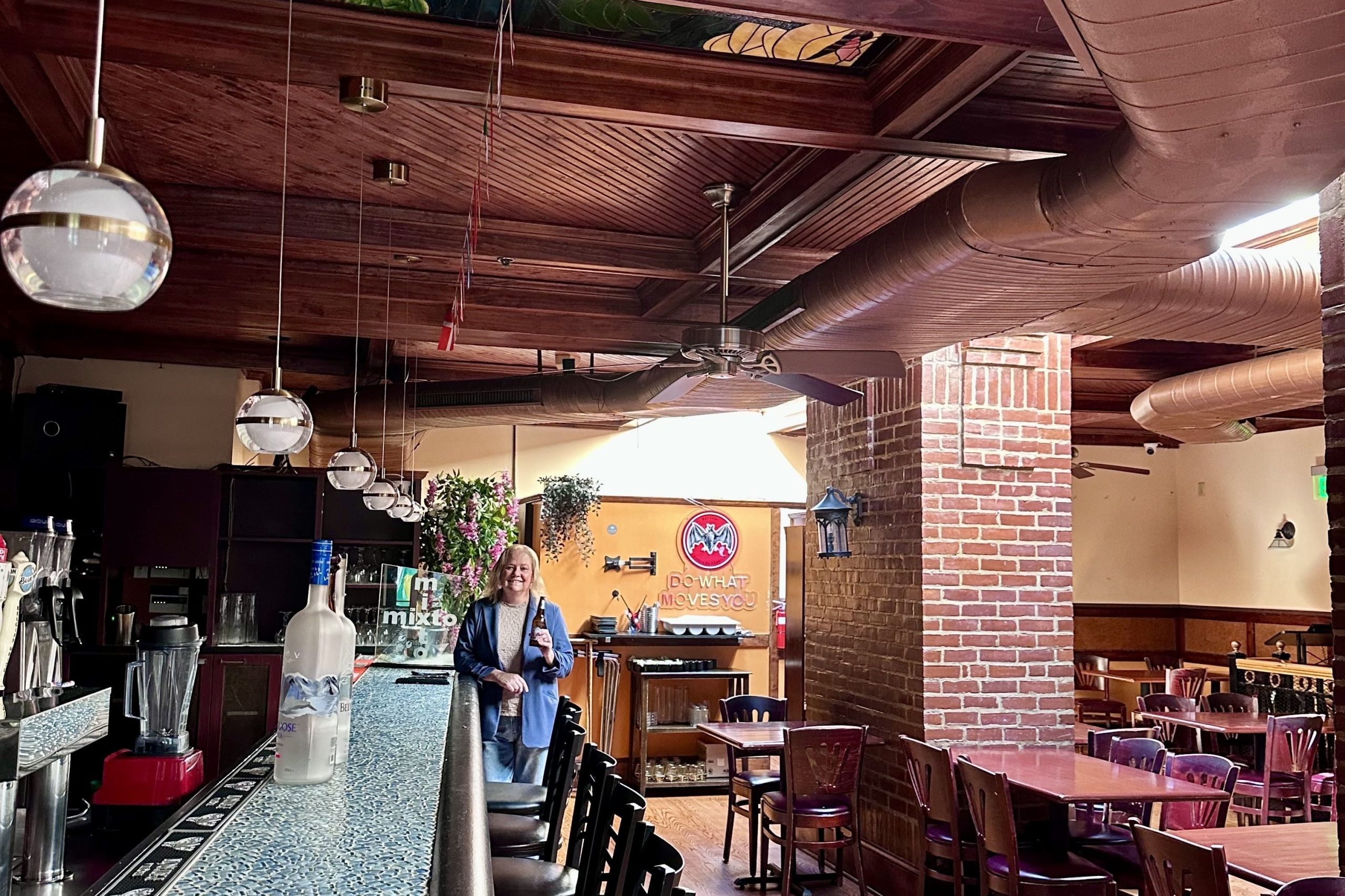
    Founder Lori Penrose has purchased the former Mixto at 1141 Pine St. in Washington Square West, which closed July 12 after a nearly 24-year run. She said she plans to open as Toll Man Joe’s in three or four weeks, timed to the start of football season.

    New owner Lori Penrose of Toll Man Joe’s inside the former Mixto, 1141 Pine St.Lori Penrose

    The two-story property, last listed at $2.1 million, spans a pair of circa-1860 rowhouses and is up the block from Chibanos, the new Chinese-Cuban sandwich shop that replaced Effie’s, and across the street from Kiddo.

    Mixto’s owners, Jose Mosquera and his family, continue to operate the Latin restaurant Tierra Colombiana in Feltonville, which made The Inquirer’s 2024 list of 76 essential restaurants.

    The new Toll Man Joe’s will operate as a full-service restaurant and bar serving its signature wings alongside lunch and dinner menus blending comfort food with global influences. Breakfast and brunch also are planned, along with cocktails, local beers, and wine.

    For Penrose, the opening caps a comeback that began in 2023 with a small food operation inside a coffee shop in Woolwich Township, Gloucester County.

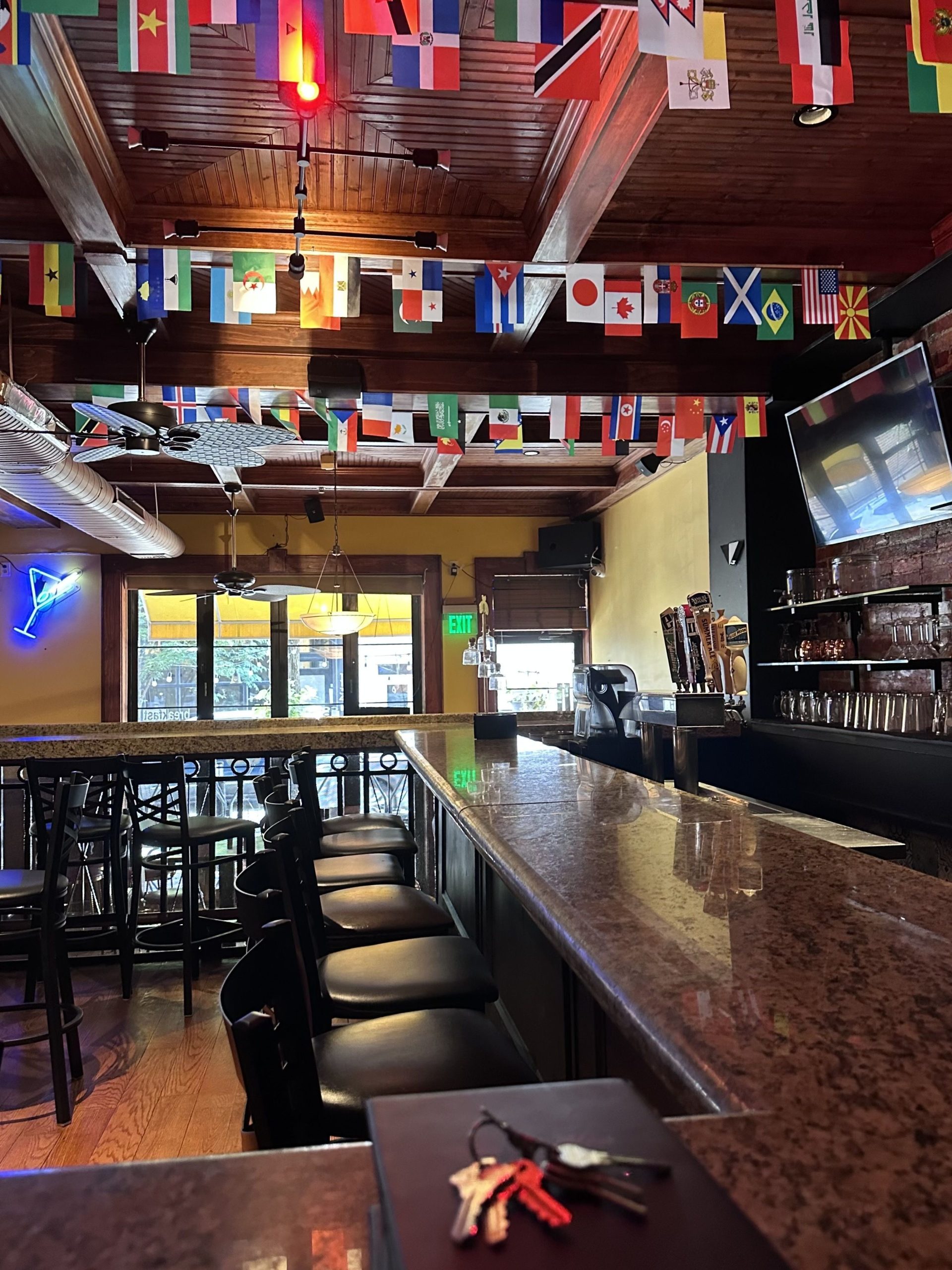
    The bar at Mixto, 1141 Pine St.Lori Penrose

    Toll Man Joe’s has since grown into a neighborhood BYOB with dine-in service in nearby Woolwich Center. Penrose said it will remain open after the Philadelphia restaurant debuts.

    She said she had long promised her daughter, Shannon, and executive chef Arturo Bermudez Luna that she would return to Philadelphia if the right opportunity arose. Bermudez Luna was the original chef at the South Philadelphia restaurant and remained involved after its closure, helping develop menus and train staff.

    The original Toll Man Joe’s, at 26 E. Oregon Ave., was named for Penrose’s uncle, Joseph “Toll Man Joe” Paul, a longtime Pennsylvania Turnpike employee at the Norristown Interchange who won WIP’s Wing Bowl VIII in 2000 by eating 90 wings — the record for the fewest wings consumed by a Wing Bowl champion. Paul died in 2012.

    The opportunity arose after Shannon Penrose, who lives in Washington Square West, spotted the Mixto property on the market. Lori Penrose said she initially hoped to lease the building but instead decided to buy it. Billy Creagh of National Realty Old City handled the sale.

    Shannon Penrose will serve as general manager and director of brand and operations, while Bermudez Luna will return as chef.

    The restaurant plans to open daily, initially serving lunch, happy hour, and dinner before adding weekend brunch. Weekday breakfast and grab-and-go offerings also are planned, using the existing espresso bar to serve nearby hospital workers and commuters.

    While Toll Man Joe’s remains best known for its wings, menu favorites including the cheesesteak, Nashville hot chicken sandwich, short rib grilled cheese, grilled chicken Caesar wrap, and arugula pear salad, also will return. Bermudez Luna, who is from Costa Rica, plans to expand the dinner menu with steaks, seafood, healthier lunch options, and Latin-inspired dishes acknowledging Mixto’s legacy.

    Penrose said the goal is to create a neighborhood restaurant rather than a late-night destination, with plans to close around midnight.

  • FanDuel and DraftKings seek dismissal of lawsuit at the center of Bryce Harper video controversy

    FanDuel and DraftKings seek dismissal of lawsuit at the center of Bryce Harper video controversy

    FanDuel and DraftKings have each asked a Philadelphia judge to dismiss a lawsuit that accuses the companies of profiting from practices that two bettors say caused them to develop gambling addictions.

    The sportsbook operators, as well as the National Football League and the data company Genius Sports, were sued in March by the nonprofit Public Health Advocacy Institute on behalf of Terry Thompson and Christopher Sage, men from the Philadelphia suburbs who allege that they compulsively placed in-game microbets through FanDuel’s and DraftKings’ apps and were enticed to continue gambling by rewards that VIP managers offered, even after they displayed signs of addiction.

    But attorneys for FanDuel and DraftKings argue that the lawsuit — which claims that the companies violated Pennsylvania’s consumer protection law, and were negligent in protecting Thompson and Sage from harm — is inherently flawed, according to preliminary objections that were filed July 15 in Common Pleas Court in Philadelphia.

    “Courts around the country, including courts that sit in this Commonwealth, have held that there is no duty of care to protect customers from their own lawful wagering, even where such wagering is alleged to be compulsive,” wrote attorney Erin L. Leffler, who represents FanDuel.

    Phillies first baseman Bryce Harper said he didn’t know FanDuel intended to use a Cameo video that he recorded in 2024 as a reward for a VIP bettor. Elizabeth Robertson / Staff Photographer

    Thompson, of Montgomery County, placed his first bet with FanDuel in 2020 and went on to lose nearly $1.8 million, his lawsuit alleges. He planned to die by suicide earlier this year rather than confess the scope of his losses to his family, the lawsuit says.

    Sage, of Delaware County, began wagering with DraftKings in 2019 and eventually lost about $175,000. To fund his gambling, he alleges, he stopped making payments on his mortgage and truck, and borrowed money from loan sharks.

    Lawyers for FanDuel and DraftKings wrote that Thompson and Sage knew about their addictions for longer than the state’s two-year statute of limitations for product liability lawsuits.

    Yet the sportsbooks contend that they should not even face product liability claims, because they do not sell an actual product but instead offer customers a free online app.

    The Public Health Advocacy Institute declined to comment Monday.

    The lawsuit attracted national attention following a July 9 Inquirer report that revealed Bryttanni Morgan, a FanDuel VIP manager, had sent a personalized video of Phillies first baseman Bryce Harper to Thompson in November 2024. (Morgan, who is named in the lawsuit, was also a VIP manager for Sage.)

    Harper later wrote on Instagram that he had recorded the message through the paid video service Cameo but had not known that FanDuel intended to use it as a reward for a VIP gambler who had an addiction.

    The Phillies star is not named in the lawsuit. The Pennsylvania Gaming Control Board — which regulates casinos, online gambling, and sports wagering — has said it is reviewing the Harper video.

    FanDuel and DraftKings, in their preliminary objections, suggested that Common Pleas Court Judge Gwendolyn N. Bright could pause the case to allow the gaming control board to evaluate elements of the case that fall under its regulatory purview, like in-game microbets.

    The board has not yet reviewed the court records, a spokesperson, Doug Harbach, wrote in an email Monday.

    “With that said, the PGCB’s role as the regulator of gaming in the Commonwealth is, first, to make sure that all persons and entities licensed by us to engage in that activity have and maintain suitability through a showing of ongoing good character, honesty and integrity,” he said.

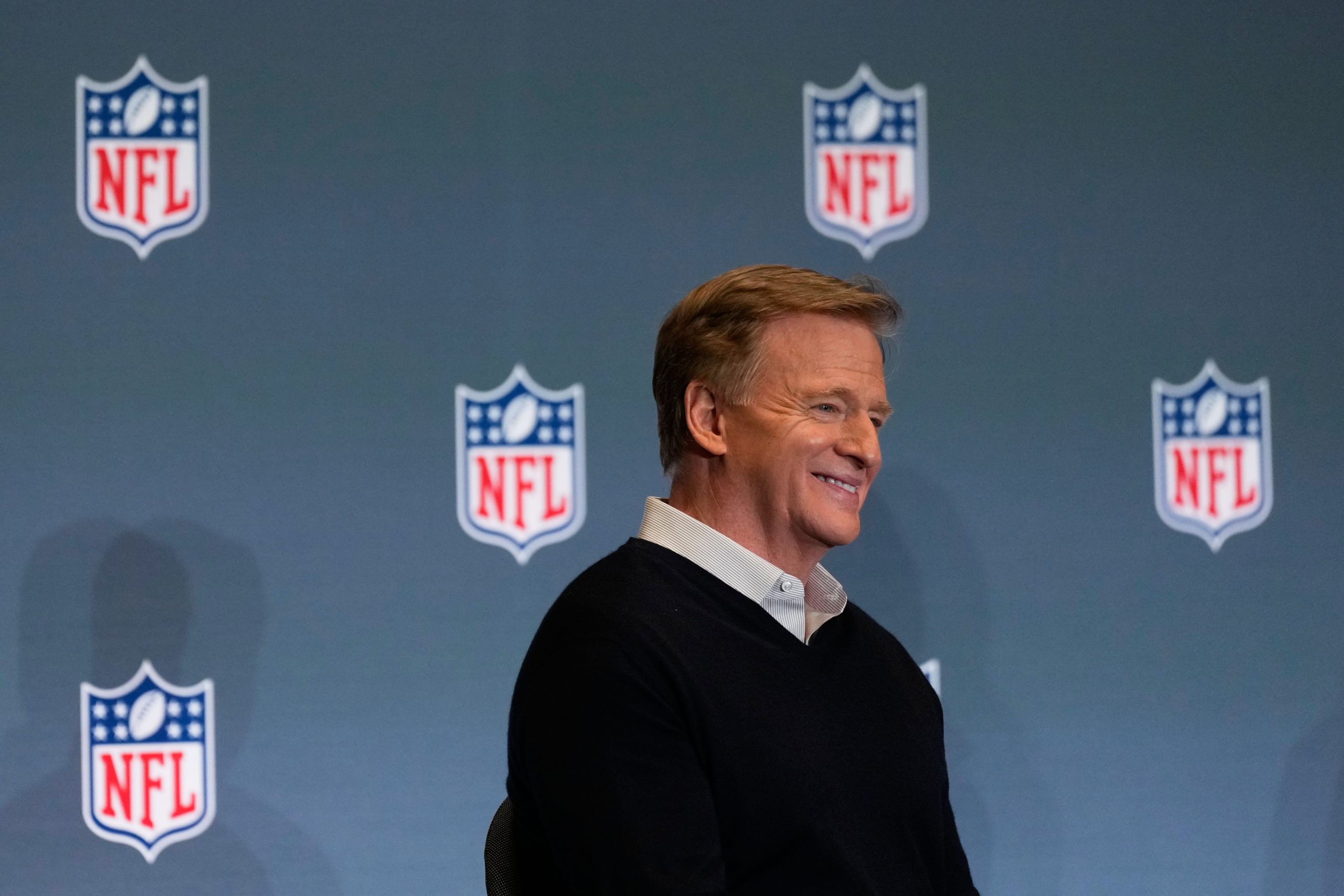
    NFL commissioner Roger Goodell, pictured in February prior to the Super Bowl. Lawyers for the league argued that Terry Thompson’s lawsuit should be dismissed. Matt York

    One of the defendants, London-based Genius Sports, licenses official statistics and data from the NFL, the NCAA, and other leagues, and supplies that information to betting markets. The company also earns commissions on gamblers’ microbets, Thompson’s and Sage’s attorneys have alleged, a revenue stream that reached more than $125 million in 2025.

    In addition to licensing its data to Genius Sports, the NFL has also owned as much as 8.7% of the publicly traded company’s stock, making it Genius Sports’ largest shareholder.

    Genius Sports and the NFL are also seeking to have Thompson’s and Sage’s lawsuit dismissed.

    Attorneys for Genius Sports wrote that the company is “merely an upstream data supplier” and has no control over sportsbook apps.

    The NFL argued that the court has no jurisdiction over the league, which had no “relevant contact of any kind” with the plaintiffs.

    Other possible resolutions

    In a separate court filing, FanDuel’s attorneys argued there is a more proper path to resolving the case.

    “This dispute belongs in arbitration, not in court,” the lawyers wrote.

    After creating accounts with FanDuel, Thompson and Sage each agreed to the company’s terms and conditions, which require customers to resolve complaints through mandatory, multistep arbitration.

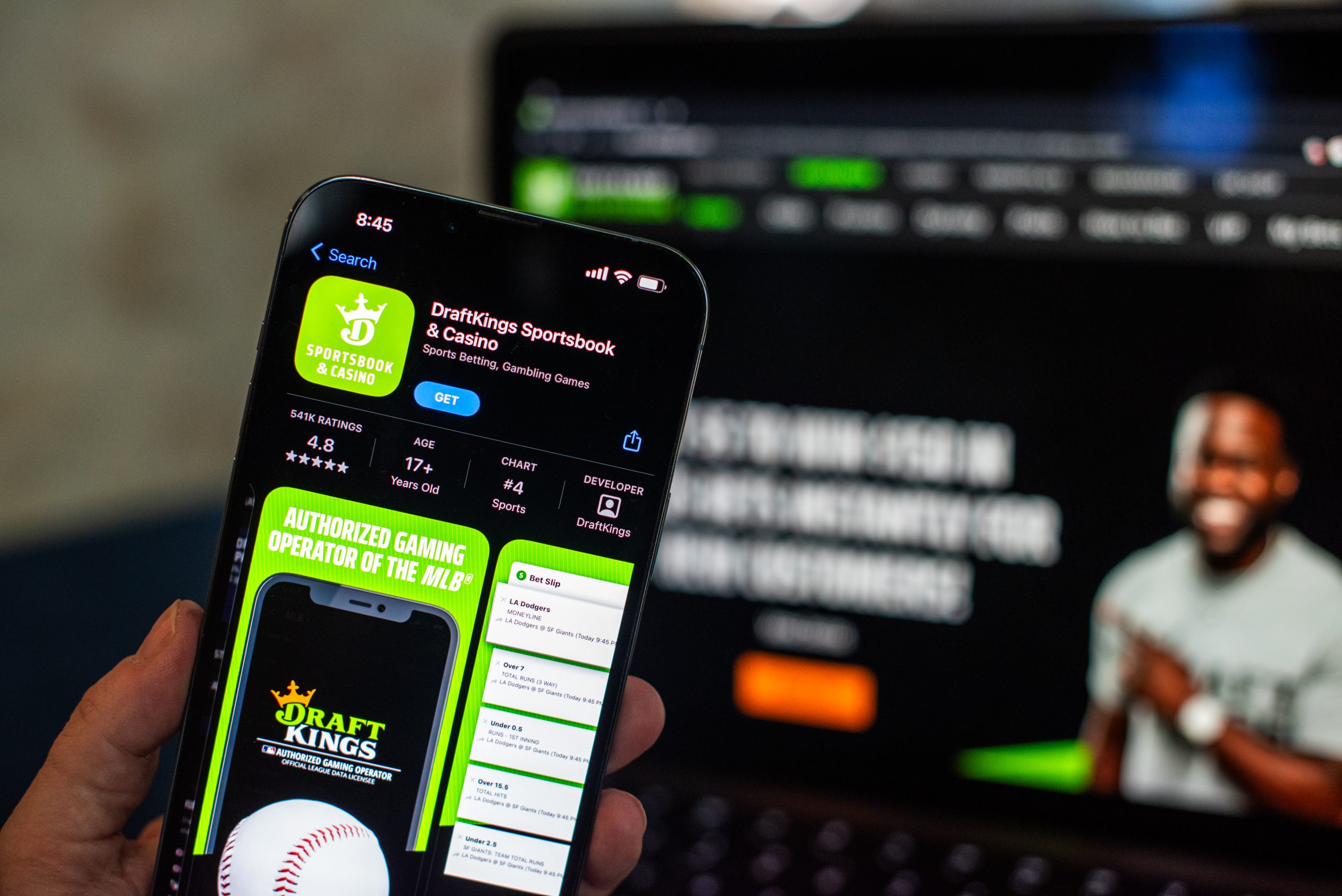
    The DraftKings app on a smartphone arranged in Hastings-on-Hudson, New York, US, on Monday, July 31, 2023. MUST CREDIT:Tiffany Hagler-Geard

    “The arbitration agreement was not hidden in the terms,” reads part of the response to the lawsuit. “It was prominently disclosed at the outset.”

    FanDuel successfully argued for arbitration earlier this year in the Southern District of New York, where a former Jacksonville Jaguars executive, Amit Patel, sued the sportsbook operator for $250 million, claiming it worsened his gambling addiction, according to a report in Sportico, a sports business web site.

    Patel was sentenced in 2024 to more than six years in federal prison for embezzling more than $22 million from the Jaguars. He used some of the money to place online wagers.

    FanDuel later agreed to pay $5 million to the NFL, in “the interest of being a good partner with the league,” ESPN reported.

    The Inquirer will continue to report on issues related to the growth of gambling addiction — among teens and adults — across Pennsylvania. If you or someone you know would like to speak with a reporter, please contact David Gambacorta or William Bender at dgambacorta@inquirer.com or wbender@inquirer.com

  • Letters to the Editor | July 28, 2026

    Letters to the Editor | July 28, 2026

    Fairway First

    As of Sunday, Donald Trump has gone golfing 116 days out of the 554 days he has been in office. That’s 20.9% of his time in office. That is one out of every five days.

    America is at war with Iran, and he’s golfing.

    America’s standing in the world is decreasing, and he’s playing golf.

    America’s economy is suffering, and he plays golf.

    And when he isn’t golfing, he is babbling incoherently, and his cabinet pretends everything is OK. Who is running this country? What is our long-term plan to keep our place as an economic powerhouse and the most powerful nation in the world?

    Susan Thompson, Media

    Election integrity

    Your recent analysis of the SAVE America Act and election integrity says more about The Inquirer’s disconnect with Pennsylvanians than the issue itself.

    Americans want secure, transparent, and trusted elections. They believe only U.S. citizens should vote in American elections, and according to Pew Research Center polling, 95% of Republicans and 71% of Democrats support requiring voters to show government-issued photo identification before voting. This isn’t a partisan issue. It’s common sense.

    Unfortunately, your reporting ignores reality. It dismisses the 6,600 noncitizens registered to vote in New Jersey as “fuel” to the rhetorical fire, ignoring that voting is a right reserved only for American citizens.

    The American people know better. They understand the importance of election integrity, and support practical, commonsense measures to ensure only American citizens vote in American elections. Dismissing these concerns as fringe or manufactured ignores what voters have said for years.

    This isn’t about making it harder to vote. It’s about making it harder to cheat, increasing confidence in our elections, and ensuring every legal vote counts. That’s why these reforms continue to earn support.

    I support the SAVE America Act and implore your readers to look elsewhere for a more thoughtful and honest appraisal of what the bill does.

    Dave McCormick, U.S. senator for Pennsylvania

    Deficit denial

    Peter Dobrin’s reporting on the Philadelphia Museum of Art’s record budget deficits should concern every Philadelphian who loves that institution. As a lover of the PMA — and a financial turnaround specialist — I read it with growing unease.

    Daniel H. Weiss, the museum’s director and CEO, is confident the budget will balance in three years, yet five of his six “keys to solvency” sit on the revenue side. His own CFO concedes the problem: Functional revenue has grown 0.3% annually over the past decade, “effectively flat.” The only levers management fully controls today are on the cost side. Yet, the museum insists there is “not a ton of opportunity” to reduce expenses. Its own tax filings say otherwise: Since fiscal year 2021, expenses have grown from $64.2 million to $83.9 million in FY 2025, all against a revenue line that hasn’t been able to keep pace. When revenue is structurally flat, an above-inflation cost trajectory is a deficit-creating machine.

    In my turnaround work, I call this the fundraising fairy myth: the belief that philanthropy, government, or a donor who “falls in love with us” will arrive on schedule. To its credit, the museum has avoided the other classic traps that doom turnarounds. But hoping revenue rescues you while declaring the budget uncuttable is how three-year plans become 10-year crises. Cut first. Stabilize. Then build back and fundraise from a position of strength. In that order.

    Larry Bomback, Philadelphia

    The writer is the former CFO of the Curtis Institute of Music and the founder and CEO of Strategic Nonprofit Finance. He led the financial turnaround of Albright College and is currently the interim CFO at Muhlenberg College.

    Join the conversation: Send letters to letters@inquirer.com. Limit length to 150 words and include home address and day and evening phone number. Letters run in The Inquirer six days a week on the editorial pages and online.

  • Horoscopes: Tuesday, July 28, 2026

    ARIES (March 21-April 19). Write out your idea before you talk about it because putting your thoughts on paper helps you discover what you actually think. Conversations are better when you’ve already done a little thinking alone.

    TAURUS (April 20-May 20). It seems like rules would limit your creativity, but they actually help it. The limits give you a direction by eliminating options. It’s easier to choose the best option of three than 103.

    GEMINI (May 21-June 21). Draw it before you write it. You’ll use different parts of your brain. A quick sketch can uncover relationships that words haven’t found yet. You don’t have to be an artist for pictures to help you think.

    CANCER (June 22-July 22). To broaden your perspective, take a picture of the problem and look at it again later. The time gap will give your mind a chance to let go of some assumptions and notice what escaped your attention the first time.

    LEO (July 23-Aug. 22). Explaining your idea to someone outside the situation takes courage, and it pays off — not because they buy or love the idea, though they might, but because their questions expose assumptions you’re unaware of and point out the path of improvement.

    VIRGO (Aug. 23-Sept. 22). Familiar territory offers few surprises, not because the mysteries aren’t there but because your brain stops looking for them. Assuming you already know makes it easy to miss what’s right in front of you. Step out of your element.

    LIBRA (Sept. 23-Oct. 23). Try the bad idea first. It lowers the stakes and gets you moving. Once something exists, it’s much easier to improve that than it is to start with a blank page. Give yourself permission to make something imperfect and progress from there.

    SCORPIO (Oct. 24-Nov. 21). Anyone can use the wrong tool when they don’t have the right one. But it’s creatively brilliant to use the wrong tool on purpose. This forces you to solve problems in new ways. The result is different, too, and maybe “different” in a very cool way.

    SAGITTARIUS (Nov. 22-Dec. 21). How would a child see this situation? How would you explain it to an alien? How would someone from 1726 solve it? You’re good at making these leaps of imagination that give you fresh perspective.

    CAPRICORN (Dec. 22-Jan. 19). It’s amazing how one small change can spark a whole new level of creativity. Rearrange the order. Swap the color. Shorten the sentence — now you’re getting somewhere. Or better yet, ask a different question entirely.

    AQUARIUS (Jan. 20-Feb. 18). Here’s a trick for honoring your influences and finding your own voice in one fell swoop: copy something you admire, then change half of it. Every artist begins by learning from someone else. Your own style appears in the changes you make.

    PISCES (Feb. 19-March 20). It seems the work would be better if you had more time, but today the opposite is true. Give yourself 10 minutes instead of an hour. A short deadline leaves less room for overthinking. A quick start becomes a finished piece of work.

    TODAY’S BIRTHDAY (July 28). It’s your Year of the Relay, when someone passes you something of value, and you pass it on. The exercise repeats time and again, giving you a sense of belonging, purpose, responsibility and pride. More highlights: You’ll love with new abandon, letting go of rules and experiencing a wider emotional range. Exceptional dining experiences and two merit-based bonuses. Aries and Sagittarius adore you. Your lucky numbers are: 11, 15, 5, 28 and 19.

  • Dear Abby | Wife’s dream trip wouldn’t include her grumpy husband

    DEAR ABBY: I have just retired and want to spend the summer taking a long road trip from Florida to Alaska and back. I’ve dreamed about it all my life and finally have the time and money to do it.

    My husband hates long road trips, and I don’t want to take him. He would be miserable and make me miserable in the process. Further, he has a list of demands — no more than six hours of driving per day, a nice hotel every night rather than camping out, which I prefer, and leasing a gas-guzzling SUV rather than my energy-efficient midsized car — that would triple the amount of time and money this will cost. I suspect some or all of his demands are passive-aggressive because he really doesn’t want the trip to happen.

    I understand my husband not wanting to sit at home alone for six weeks while I enjoy myself photographing bears, moose and elk in the Yukon Territory, and I do worry about his ability to take care of himself and the house. Honestly, though, I’m not sure our marriage could survive this trip. I’m seriously considering just sneaking out the door and sending him postcards. Any ideas?

    — SOLO TRAVELER

    DEAR SOLO TRAVELER: This is your dream trip. If you don’t go, or if you let your husband spoil it with his demands and complaints, you will end up resenting him. You don’t need to sneak out. Instead, leave detailed instructions on caring for the homestead, and arrange for a friend or family member to check in on him regularly while you’re away. If you set him up for success, you won’t come home to a pile of smoking rubble or a steaming husband.

    ** ** **

    DEAR ABBY: I have been in cancer treatment for the past 10 years. I have infusions, monthly MRI and CT scans, six doctors and nine medications. No one other than my psychologist ever asks me how I am. I do look OK, so even my mother never asks. My sister overheard Mom ask my other sister to find out what I’m doing to my hair. My hair looks thicker because it became coarse due to the chemo.

    I don’t want to be a crybaby, but I would appreciate it if someone just acknowledged that I have cancer. When I once complained to my mom that I have to take too many drugs, her response was, “Well, you have money!” Do you have any suggestions?

    — GLOSSED OVER

    DEAR GLOSSED OVER: Please allow me to offer my sympathy over your struggles with cancer. The reason your family doesn’t bring it up may be because it makes them sad, and they worry that talking about it may upset you.

    You have the right to press them on the matter. Tell your mom you need her support and would like to be able to talk about your health issues with her. If you wish to bring your sisters into the circle, talk to them all together. The more family you have in the loop, the stronger you will be for the remainder of your treatment.

  • George Norcross is donating $100 million to Cooper University Health Care

    George E. Norcross, longtime Cooper University Health Care board chair and political powerbroker, is donating $100 million to the South Jersey health system and its MD Anderson Cancer Center at Cooper, the nonprofit announced Tuesday.

    The gift, in honor of Norcross’ parents, is Cooper’s largest and among the largest ever to a nonprofit health system in New Jersey. It comes at a time when Cooper’s financial condition is stronger than it has been in decades and as the nonprofit pursues a $3 billion expansion in Camden.

    Cooper said it would add Norcross to its name but didn’t specify how.

    “For more than 50 years, our family has been dedicated to Cooper, and we are so proud to make this contribution to ensure that Cooper and the thousands of talented, committed professionals who make a difference every day for the people of Camden and South Jersey can continue the important work of investing in their future and in Camden’s continued renaissance,” Norcross said in the announcement.

    Norcross, chairman of insurance brokerage Conner Strong & Buckelew and a former owner of The Inquirer, was not available for an interview, a spokesperson said.

    The money will be used for investments in Camden and throughout Cooper’s South Jersey service area, which stretches to Cape May County since the acquisition of Cape Regional Health System two years ago. Priorities will be education and community programs that create jobs and training, Cooper said.

    Cooper had $2.9 billion in revenue last year and $144 million in operating profit. In June 2025, Standard & Poor’s raised Cooper’s credit rate to A+, its highest level ever and a substantial turnaround for a system that was near bankruptcy 25 years ago. The system has more than 14,000 employees.

    Norcross’ gift in context

    Norcross’ donation matches a $100 million gift in 2021 to St. Barnabas Medical Center in Livingston, now called Cooperman Barnabas Medical Center in honor of the donor, Leon Cooperman, a billionaire hedge fund manager.

    Holy Name Medical Center in Teaneck received a $75 million gift last year.

    The Norcross contribution to Cooper is bigger than gifts to other health systems in South Jersey.

    Virtua Health said last year that a $5 million pledge from the Marvin Samson Foundation was its largest gift ever. Marvin Samson, a local pharmaceutical entrepreneur, pledged the money for Virtua’s education and workforce development programs, Virtua said.

    Deborah Heart & Lung Center received a $5 million gift in 2019, which it called its largest ever. The specialty hospital in Browns Mills received $4 million in 2024.

    In Philadelphia, Comcast CEO Brian Roberts and his wife, Aileen, are giving Children’s Hospital of Philadelphia $125 million and will have their name on the nonprofit’s new $2.59 billion patient tower expected to open in late 2028, CHOP said last year. It was CHOP’s largest gift ever.

    Also last year, Penn Medicine received a $120 million gift from Catherine and Anthony Clifton and renamed its new, $1.6 billion Pavilion at the Hospital of the University of Pennsylvania the Clifton Center for Medical Breakthroughs.

    Norcross family ties to Cooper

    The Norcross family has deep ties to Cooper starting with Norcross’ father, George E. Norcross Jr., a labor leader who was on the Cooper Hospital board from 1976 to 1983. He died in 1998.

    Norcross III joined the Cooper board two years later and has been chair since 2006.

    Norcross’ mother, Anne Carol Conner Norcross, gave birth to four sons — George, John, Donald, and Philip — at Cooper. She devoted years of her life to helping seniors and underserved Camden residents, Cooper said. She died in 2016.

    Philip A. Norcross is vice chairman of Cooper’s board of directors and chairman of the Cooper Foundation. Alessandra “Lexie” Triem Norcross, George Norcross III’s daughter, is also on the Cooper Foundation board.

    Cooper’s expansion

    In addition to acquiring Cape Regional and embarking on a major expansion of its Camden campus, Cooper has been expanding its network of outpatient facilities in suburban South Jersey.

    It spent $150 million to open a three-story facility in a former Sears at Moorestown Mall in late 2023. In the year following the Cape Regional acquisition, Cooper added cardiology, oncology, and orthopedics specialists care to those offices in Cape May County.

    In June, Cooper said it plans to build a $300 million outpatient facility in Gloucester Township and expects to start seeing its first patients in specialties like cardiology, neurology, and oncology in 2029.

  • A shootout that killed 3 at a food festival near Seattle’s Space Needle may have been gang-related

    A shootout that killed 3 at a food festival near Seattle’s Space Needle may have been gang-related

    SEATTLE — There were at least three suspects involved in a shootout at a crowded food festival near Seattle’s Space Needle over the weekend, police said Monday. One of them was among those killed in the violence.

    In a document filed in juvenile court in Seattle, where a 15-year-old arrested in the case waived his initial appearance Monday, police said they believe there were at least three shooters, rather than two: the 15-year-old, an acquaintance who died at the scene and “at least one other unknown suspect.”

    Nicole Powell, the Seattle Police Department’s assistant chief of investigations, told a news conference Monday afternoon that investigators believe the shooting may have been gang-related, with two groups firing at each other. The deceased shooter was 19.

    A judge ordered the 15-year-old held in juvenile detention for investigation of firearms violations and first-degree assault. The King County prosecutor’s office said it expected to receive the case from Seattle police on Wednesday for a charging decision.

    The gunfire erupted around 6 p.m. Sunday in the waning hours of the Bite of Seattle, leaving three people dead and at least four others, including a toddler, injured. The annual three-day festival draws hundreds of food and retail vendors and performers to Seattle Center, a sprawling park in the shadow of the Space Needle. Many attendees rushed into campus buildings or ran from the park at the sound of the shots.

    Officials provided confusing statements about the shooting

    News that there were at least three suspects followed a series of confusing statements from city officials concerning the shooting.

    On Sunday, the police department waited five hours to share with the public that one shooter had been arrested and that they believed another to be on the loose. Earlier, Mayor Katie Wilson had announced two people were in custody, a statement she retracted.

    At a news conference before the court hearing Monday, Police Chief Shon Barnes said investigators weren’t sure if the second shooter was among the dead. Neither he nor the mayor made any reference to additional shooters. Barnes had been out of town Sunday, attending a conference of Black law enforcement executives in Dallas.

    The officials defended their handling of the case, saying they were trying to ensure they provided accurate information about chaotic events.

    The victims included a father of three

    The King County Medical Examiner’s Office on Monday identified the dead as Carlos Israel Sanchez Villalba, 44; Ashley Whitehead, 56; and Junior Cee Niko Semo, 19.

    Villalba was a husband and father of three known for his kindness and willingness to help others, according to a GoFundMe campaign launched Monday to help his family with funeral expenses. He died from a gunshot wound to his torso, while Whitehead died from a gunshot to her pelvis and Semo died from multiple gunshot wounds, according to the medical examiner’s office.

    The four wounded included a 2-year-old boy, who was in satisfactory condition Monday. The others — two men, ages 23 and 27, and a woman, 39 — were discharged, a hospital spokesperson said.

    One of the victims was walking a bicycle when struck, the court document said. The toddler was with his mother.

    Vendors were allowed to clean up Monday

    Vendors were allowed to return to the campus Monday morning to collect their equipment. Skewered squid on grills, roasted ducks in ovens and plates full of food were among the items left behind as people fled.

    Near the spot of the shooting, a stain of what appeared to be blood was still visible. A candlelight vigil was planned Monday night at the center’s International Fountain.

    Dozens of officers were providing security at the event and responded in seconds, at least one observing a suspect firing, authorities said. Police searched an IMAX theater on the grounds where they initially believed a second shooter had fled.

    Adam Lombardo, who had a Burmese food stand at the festival, described the panic of fleeing people as a “stampede.” As he gathered his equipment Monday, he described how police escorted food vendors back to the crime scene to turn off their ovens and stoves.

    “It’s really sad because you think that three innocent people aren’t getting up with their families,” he said. “They just came to enjoy a food festival with people, with friends, with new friends, and they lost their lives in just what sounds like meaningless bloodshed.”

    Attendees describe chaos at a joyful event

    Festival attendee Faith Adia Hunter said she and her friends had just gotten food from a crepe vendor when gunfire broke out. They sheltered in the nearby Seattle Children’s Museum.

    “We were about to start eating, then heard someone yell something, then we saw people start to run,” Hunter said. “So we took off running, too.”

    Moises Perez, 30, was cooking in his apartment next to the Seattle Center when he spotted people running and yelling outside his window. When he opened his door, he heard gunshots and started ushering more than a dozen people, mostly women and children, inside.

    “I was like, ‘OK, we need to help these people,’” said Perez, a construction worker who had attended the food festival that morning. He said losing his brother to gun violence in Mexico years ago made him determined to help the people trying to get to safety.

    He and his roommate, William Large, 25, made sure the door was locked and started directing people to the bathroom and hallway, and told them they could stay as long as they needed.

    “They were definitely in shock. I know that a lot of people were crying, people were screaming, people were just in complete fear,” said Large, who works in social services.

    About 30 minutes later, Perez walked out to see what had happened. He found a woman shot in the leg being helped by emergency officials.

    The festival started in 1982 and draws 350,000 attendees, according to its website.