Blog

  • Trump sticks with Pulte for intel job as risk grows of lapse in spy powers

    WASHINGTON — A lapse in a law that allows the U.S. to gather intelligence abroad grew more likely on Wednesday as President Donald Trump resisted calls from Republicans and Democrats on Capitol Hill to immediately name a permanent head of the nation’s intelligence agencies.

    Trump has doubled down on his temporary pick for director of national intelligence, federal housing finance regulator Bill Pulte, even though he has little experience for the job. Democrats say they won’t support the renewal of Section 702 of the Foreign Intelligence Surveillance Act, known as FISA, unless he withdraws Pulte’s appointment and nominates a permanent replacement.

    The impasse could soon result in limitations on what intelligence the U.S. government can collect abroad just as World Cup games begin in cities around the country and ahead of celebrations for the nation’s 250th anniversary. The law expires on Friday at midnight.

    Trump on Wednesday asked Congress for a short-term extension of the law to “provide time for the selection and confirmation” of a permanent director.” But he stuck with Pulte as the acting head and said he wants to begin downsizing intelligence agencies.

    “We can’t let them extort us,” Trump said of Democrats.

    Senate Republicans floated a two-week extension of the law after Trump’s request, but it was immediately rejected by Democrats who argued that it’s up to the president to replace Pulte.

    As the bill stalled in the Senate, Speaker Mike Johnson announced the House would hold a vote Thursday on a two-week stopgap even as the chances of passage appeared slim.

    “We’re going to ask every member here to do the right thing,” Johnson said. “We cannot allow that to go dark.”

    House Democratic leader Hakeem Jeffries said if Trump wants a shot at a short-term extension, he needs to pull the Pulte appointment. Pulte is a “disgraceful individual” and a “partisan political hack” who is deeply unqualified for the job, Jeffries said.

    GOP leaders lobby the White House, to no avail

    Congressional Republicans have lobbied Trump all week to quickly nominate a permanent replacement. But he said he needs more time to do so.

    Senate Majority Leader John Thune (R., S.D.) said Wednesday that Republican leaders have “made our views known” to the White House about the easiest way to get the bill passed, and “we’re just doing what we can here to ensure that the White House understands what will be necessary in order to make that happen.”

    Trump said on Friday that he is interviewing five candidates for his pick to lead the agency permanently and that all have a national security background.

    “It’s an important position and one that I think will be filled by a highly qualified person,” said Johnson, who met with Trump twice this week to talk about the FISA impasse.

    Trump made it very clear, Johnson said, that Pulte will serve a “very short term — a sort of renovation role” to help the Office of the Director of National Intelligence be “renovated and downsized.”

    To unlock votes for FISA, the pick would have to be soon — and Trump’s choice would have to satisfy both Republicans and Democrats.

    One of several possible replacements could be Pete Hoekstra, Trump’s ambassador to Canada and a former chairman of the House Intelligence Committee. The White House has reached out to Hoekstra about the job and conversations are ongoing, according to a person familiar with the outreach who requested anonymity to discuss the private conversations.

    FISA will lapse at midnight Friday

    Section 702 of FISA allows agencies such as the CIA, National Security Agency, and FBI to collect communications from foreign targets overseas without a warrant.

    While members of both parties who cite privacy issues have long wanted to limit the authority, there was broad bipartisan support to renew it, especially after Republicans and Democrats recently worked out a compromise bill.

    Virginia Sen. Mark Warner, the top Democrat on the Senate Intelligence Committee, has worked with Republicans on the compromise legislation to renew the authority. But he called Pulte’s appointment to replace outgoing DNI Tulsi Gabbard “a live hand grenade” as they were trying to pass it. Republican leaders tried to start the process last week, but seven Republicans joined nearly all Democrats in blocking a long-term extension after Pulte was appointed.

    Warner said Wednesday that the only way he’ll support a short-term extension of the surveillance law is if the principal deputy director of national intelligence, Aaron Lukas, is the acting leader during the duration of that extension.

    Sen. Tom Cotton, the chairman of the Senate Intelligence Committee, and Sen. Chuck Grassley, chairman of the Senate Judiciary Committee, have warned the administration that the spy tool is likely to lapse.

    The administration should prepare “for a potential significant gap in foreign intelligence collection,” they wrote in a letter.

    Trump doesn’t back down on Pulte

    After bipartisan pushback to Pulte’s temporary appointment, Trump said last week that he would not permanently nominate him to the position. But Democrats, and some Republicans, want his appointment pulled immediately and for Trump to nominate a replacement that can be confirmed by the Senate.

    On Tuesday, though, Trump announced that Pulte would not only take over as acting director — he’d also start earlier than expected, on June 19.

    And he stuck with Pulte on Wednesday, posting that he needed more time to find a permanent replacement and telling reporters that the agencies need to be downsized.

    Both Republican and Democratic senators skeptical of Pulte have pointed to his lack of intelligence experience and also his record at the Federal Housing Finance Agency. In the position, the Trump loyalist has been linked with criminal referrals over allegations of mortgage fraud by public officials Trump sought to punish, including New York Attorney General Letitia James, a Democrat; Sen. Adam Schiff (D., Calif.); and Lisa Cook, a board member of the Federal Reserve.
  • Philadelphia declares a heat health emergency starting Thursday with World Cup kicking off

    Philadelphia declares a heat health emergency starting Thursday with World Cup kicking off

    As Philadelphia launches festivities around the World Cup, the city has declared a heat health emergency beginning at 11 a.m. Thursday.

    A heat health emergency is declared when temperatures are high enough that vulnerable people, like elderly or homeless residents, are at a higher risk of becoming sick or dying from heat.

    Heat indexes could reach 103 degrees outside on Thursday and Friday, the National Weather Service warned. The city’s emergency declaration will last until 8 p.m. Friday but could be extended, health officials said.

    More than 50 Philadelphia schools will dismiss early Thursday because of the heat, and city officials said they are ensuring fans in town for the World Cup are prepared for the heat wave ahead.

    The city activates a number of special programs to protect residents during a heat health emergency, including the suspension of water shutoffs and increased outreach to people at risk.

    How heat exacerbates health issues

    Extreme heat can quickly overstress the bodies of people with certain conditions, including chronic illness and pregnancy, city officials said. Older adults and small children, as well as people who take medications that affect body temperature and people who use drugs or alcohol, are also at risk.

    The city warned that strenuous physical activity, working in a hot environment, or simply not having an air conditioner can become risky in a heat emergency.

    “The best way to protect our loved ones is to make sure they can get into air-conditioning during the hottest part of the day,” Health Commissioner Palak Raval-Nelson said in a statement, urging residents to check on friends, family, and neighbors over the next few days.

    Residents should drink lots of water and avoid caffeine and alcohol to prevent dehydration. Those relying on fans should open windows.

    People attending outdoor events are encouraged to bring water and identify shady or indoor, air-conditioned spots to rest. They should also wear sunscreen.

    Lightweight, light-colored clothing can help, as can showering in water that is close to skin temperature.

    Older people, children, and pets should never be left alone in cars.

    Early warnings of heat stress include decreased energy, slight loss of appetite, faintness, lightheadedness, and nausea.

    Rest in a cool environment, remove excess clothing, and drink fluids if you experience these symptoms, and call a doctor or 911 if there is no improvement.

    Serious signs of heat stress include unconsciousness, a rapid heartbeat, headache, dry skin, chest pain, mental confusion, irritability, vomiting, diarrhea, muscle cramps, staggering, and trouble breathing. These symptoms warrant an immediate 911 call and medical attention.

    World Cup visitors

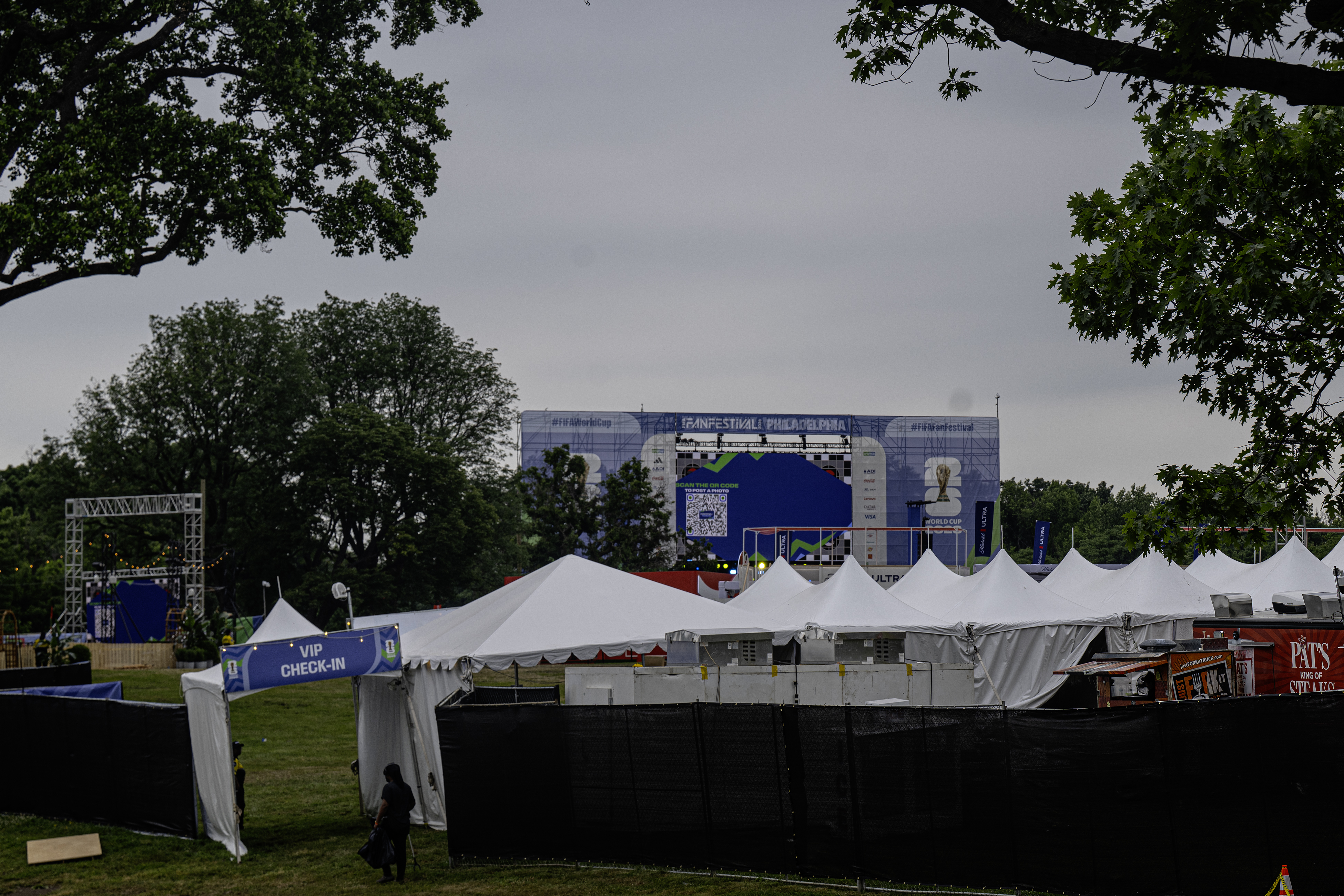
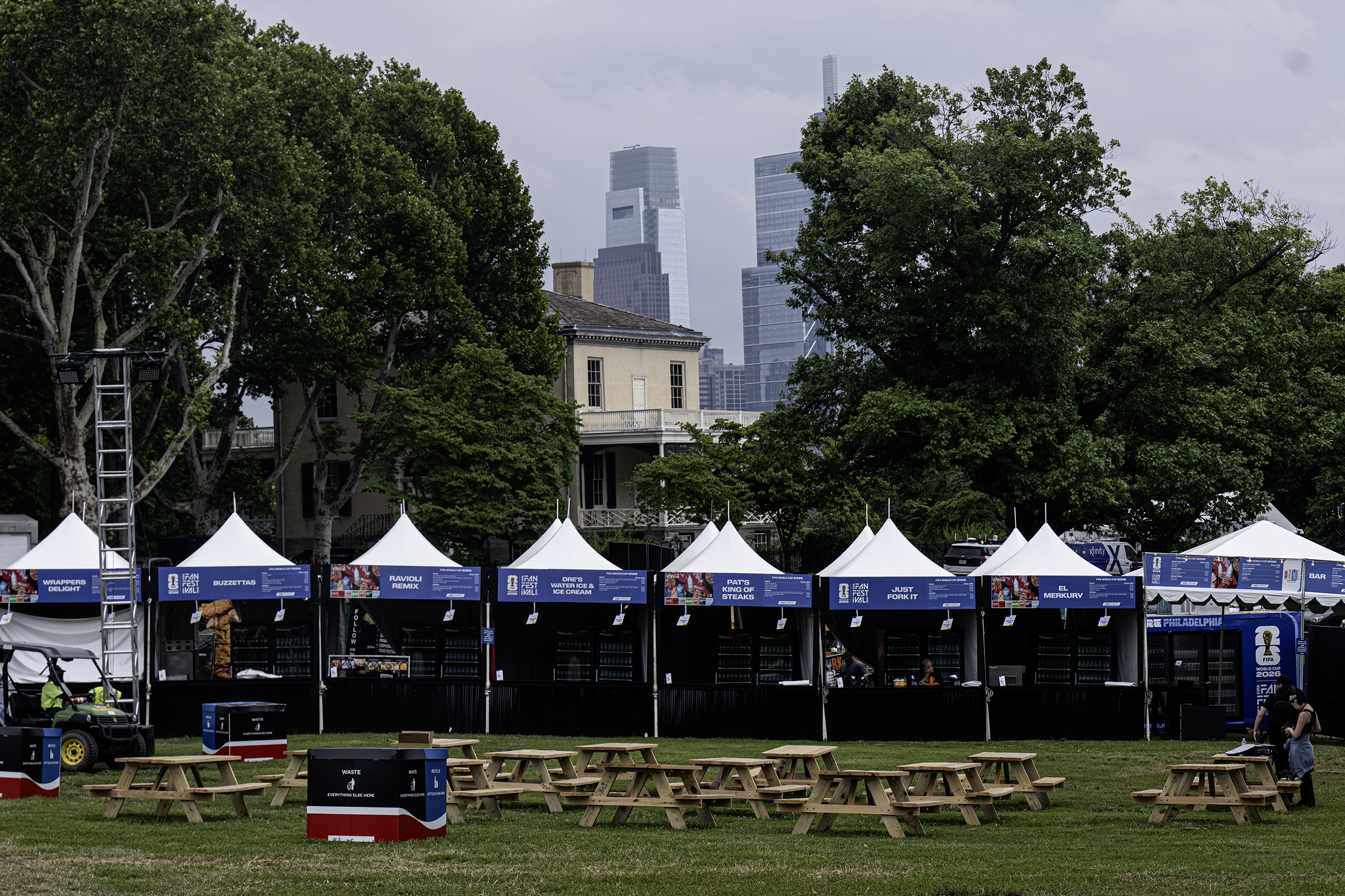
    The FIFA Fan Festival at Lemon Hill, a massive gathering spot for World Cup fans to watch games, opens on Thursday. The site has two tents with fans and misters, multiple water stations, and picnic tables in shady areas to rest.

    The city is operating four hospitality hubs between City Hall and Lemon Hill with shade, water, and misting stations between 10 a.m. and 8 p.m. every day.

    Residents and visitors alike can text CUPPHL to 888-777 for free text alerts or follow the Philadelphia Office of Emergency Management’s WhatsApp channel for updates during the World Cup.

    They can get year-round alerts by texting READYPHILA to 888-777.

    Shelter from the heat

    On Thursday and Friday, the city will open cooling centers with extended hours at community centers and libraries. Residents can also call 311 for information on the nearest center.

    Philadelphia Parks and Recreation’s older adult centers will all be open with air-conditioning from 9 a.m. to 6 p.m.

    Pools across the city will open on a rolling basis starting Friday. The city keeps a list of pools on its website.

    The Philadelphia Corporation for Aging will also operate a hotline at 215-765-9040 for heat emergency questions from 8:30 a.m. to 8:30 p.m. Thursday and Friday, with nurses on hand to answer medical questions.

    Homeless outreach

    Street teams will patrol the city to offer shelter and other services to people sleeping outside. Anyone who sees someone outside in need of help can call a 24-7 outreach line at 215-232-1984.

  • Steamy weather threatens fan fest, and Philly’s 1st World Cup game won’t feel like home to either team

    Steamy weather threatens fan fest, and Philly’s 1st World Cup game won’t feel like home to either team

    No matter what else happens at the World Cup’s FIFA Fan Festival events Thursday and Friday on Fairmount Park’s Lemon Hill, expect hot times.

    After setting four high temperature records since April, two more could fall this week in Philadelphia as a very warm June picks up steam and the mercury heads to the mid-90s on both days, while the atmosphere turns to soup.

    “It’s going to be very uncomfortable,” said Bob Oravec, senior branch forecaster at the Weather Prediction Center in College Park, Md.

    The National Weather Service in Mount Holly said heat indexes could reach 103 on Thursday and 105 on Friday in the city, and the Philadelphia Department of Public Health has declared a heat emergency.

    With the increase in water vapor and an approaching front, thunderstorms also could pop up, and festival organizers are well aware of the potential at what will be a “rain-or-shine event,” said Philadelphia Soccer 2026 spokesperson Melissa Ferdinand.

    Conditions are due to improve on the weekend, with lower humidity and just an outside chance of showers during the Sunday night match between Ecuador and Ivory Coast in South Philly.

    The weather outlook for the fan fest activities

    When the fan festival gets underway at 2 p.m. Thursday, chances are excellent that Philly will be chasing a record, with a Friday encore. The all-time high for both Thursday and Friday in Philly is 95 degrees.

    Thunderstorms are possible both afternoons, with about a 15% chance that they reach severe status — with wind gusts near 60 mph — according to the Storm Prediction Center in Norman, Okla.

    Soccer matches will be televised throughout the festival, including Sunday’s game in Philly, and in the event of severe weather, the screens will carry evacuation orders, along with announcements and text communications, Ferdinand said. “Our highest priority is the safety of our guests,” she said in an email.

    On Saturday, conditions should improve markedly, with daytime highs several degrees lower and the mugginess backing off. On Sunday, temperatures are expected to climb back to the low and mid-90s, but the humidity should not approach the Thursday and Friday levels.

    The weather outlook for Sunday’s game

    Temperatures around game time are forecast to be in the upper 80s with comfortable humidity and a breeze under 10 mph.

    The only caution flag would be the chance of a shower, said Mike Lee, a meteorologist at the weather service office in Mount Holly, but “it looks like it’s going to be on the hit-or-miss side of things.”

    It should be comfortable for the fans, but upper 80s would not be a cool dip in the pool for the players, who can run six miles or more during a match — no home run trots in soccer. Throughout the tournament, heat and humidity certainly are going to be players, said Ryan Calsbeek, a runner and Dartmouth College biological sciences professor.

    He allowed that running this week was an ordeal. Granted, it got up to only 85 degrees where he lives in New Hampshire, but it was the first warm shot of the season, and his body let him know it was not enjoying the adjustment. Acclimatization certainly will be a challenge to the World Cup participants at the venues across the United States, Canada, and Mexico, he said.

    The atmospheric conditions on Sunday in Philly are not going to feel much like home to either team.

    The Ecuadorians may even get a little homesick. They play in Quito, right on the equator, but their stadium is at an elevation of more than 9,000 feet — 1.7 miles. Temperatures decrease with height, and the average high in June in Quito is 70 (the same as it is in January).

    Conversely, the Ivory Coast team’s home field is in Abidjan, a city of more than six million on the south-central Atlantic coast. The region gets prodigious amounts of rain as storm waves move across east to west across the continent, said Tom Kines, senior meteorologist with AccuWeather Inc. And is it ever muggy.

    Les Elephants might view South Philly as a vacation spot.

  • Philly School District will not make 340 classroom job cuts after all, mayor announces

    Philly School District will not make 340 classroom job cuts after all, mayor announces

    Philadelphia School District officials are restoring 340 classroom-based jobs that were slated to be cut, despite top district leaders saying last week that they did not have the recurring funding needed to keep the positions.

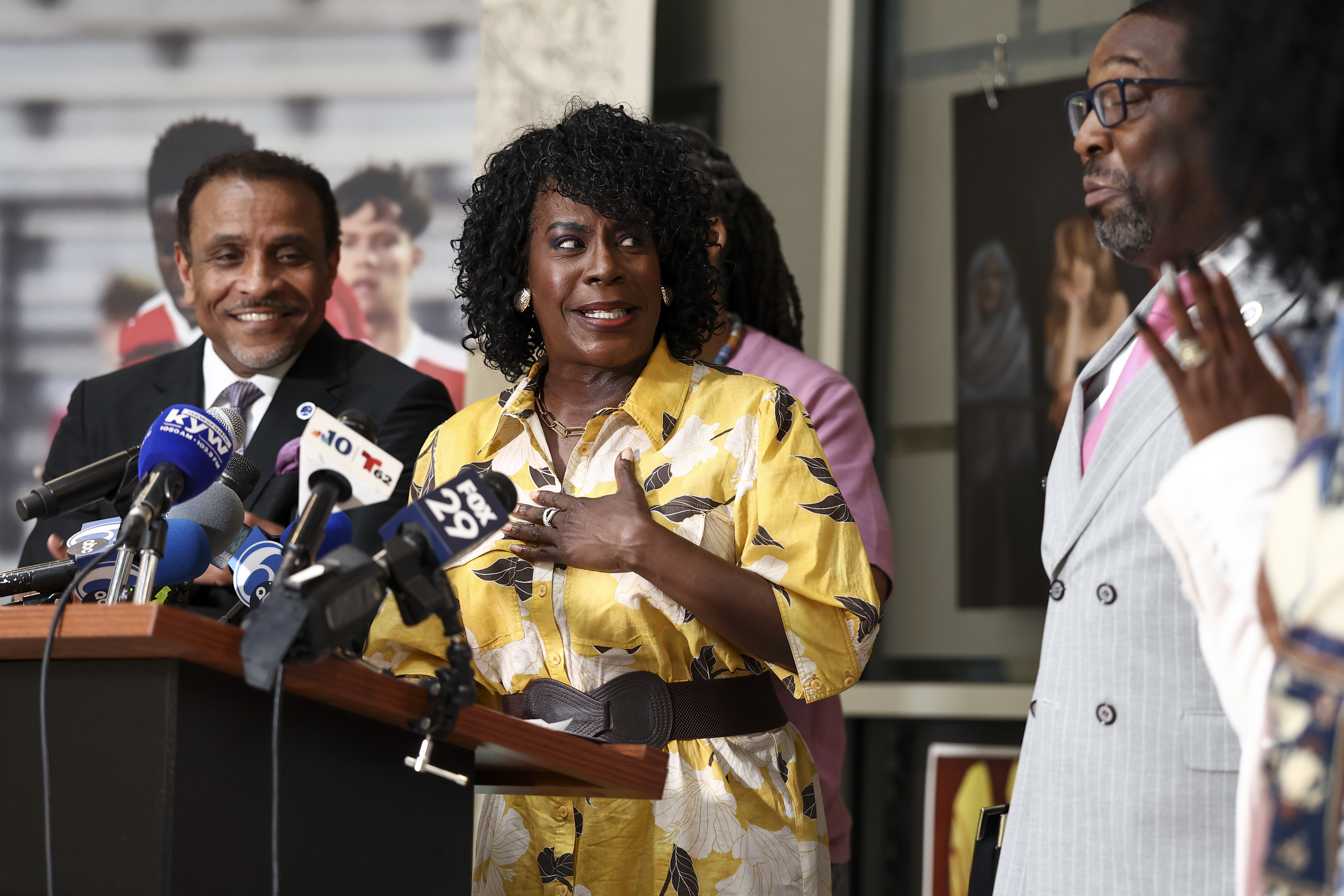
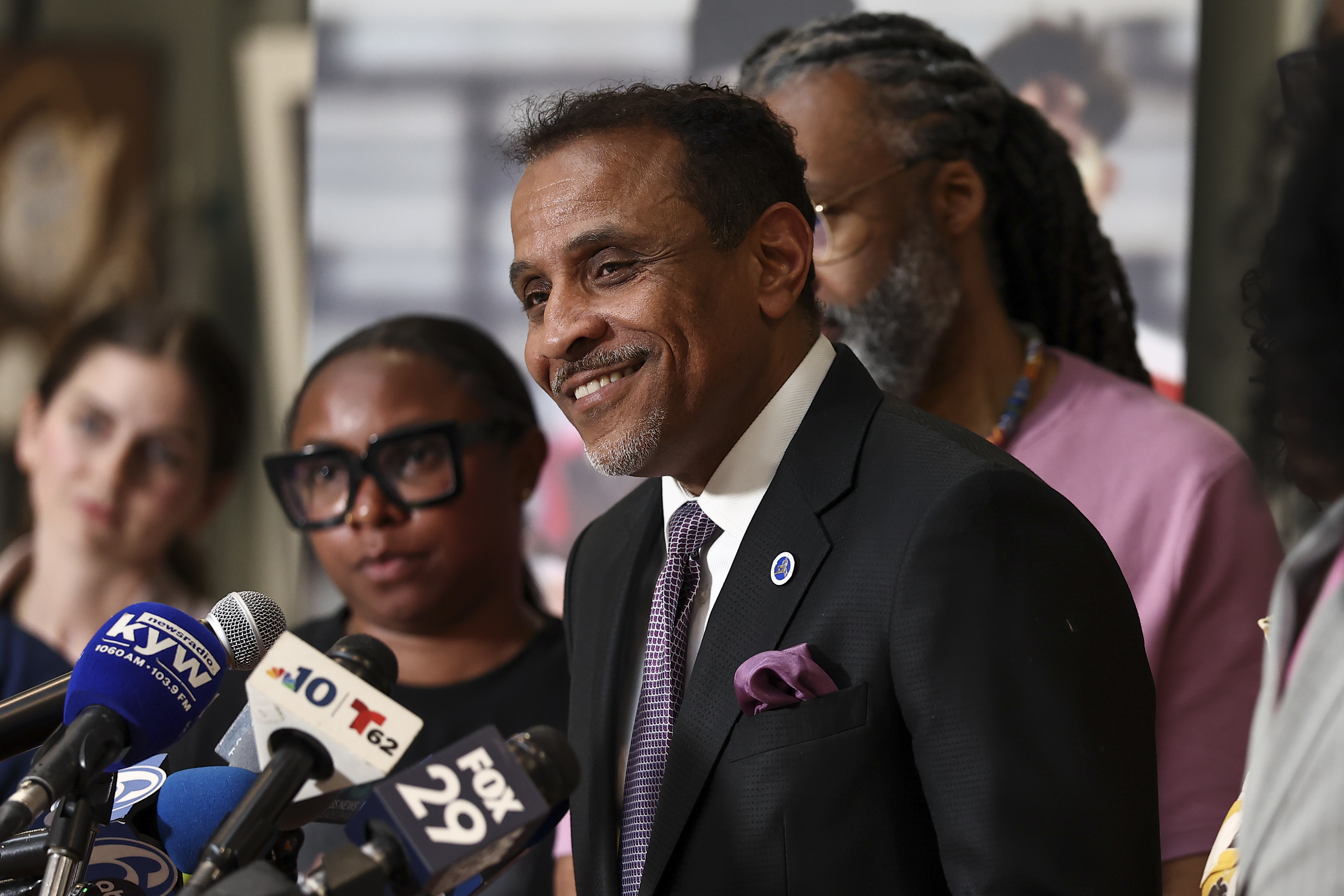
    In a surprise, dramatic announcement late Wednesday, Mayor Cherelle L. Parker — flanked by Superintendent Tony B. Watlington Sr., school board president Reginald Streater, and Council President Kenyatta Johnson — said the city had identified enough money in the existing budget to stave off the cuts.

    “We have delivered for the School District of Philadelphia today,” Parker said. The mayor added that the city “made some tough decisions” to save the positions of 149 teachers, 130 climate staff, and 23 counselors.

    Parker and Johnson pledged $216 million over five years to keep funding the school workers.

    Officials said the $48 million in new money the city is providing for the 2026-27 school year is the floor, and not a one-time fix.

    The administration will look to new, recurring revenue sources in the future, Parker and Johnson said, but if those are not found, the money will come from the city’s capital spending and other areas the mayor said she would release Thursday.

    “Everything is on the table” for those new funding streams, Parker said, though she did say that raising property taxes was a nonstarter.

    Superintendent Tony B. Watlington Sr. speaks during an announcement at the School District of Philadelphia Headquarters on Wednesday, June 10, 2026 in Philadelphia. Philadelphia School District officials will move to restore 340 classroom-based jobs that were slated to be cut, despite top district leaders saying last week that they did not have the recurring funding needed to keep the positions.Monica Herndon / Staff Photographer

    The mood at district headquarters, where leaders gathered for a hastily arranged news conference, was positively jubilant.

    “It’s Christmas in June,” Johnson said. Thursday is the last day of school for district students, and Johnson said he was thrilled that teachers and staff “will have an opportunity to remain in the schools that will continue next year, in the years beyond, to support our young people.”

    “I can’t stop smiling,” Streater said.

    An about-face

    The move was an about-face from last week, when Watlington wrote in a letter to Council that the system — which is facing a longstanding $300 million structural deficit — could not restore the 340 positions “without a commitment to recurring and predictable funding over multiple years.”

    After that grim moment, Parker said, members of her team, Johnson’s office, and district officials worked “around the clock” to find a way to cobble funds together to save the jobs, which were imperiled amid a $300 million district budget deficit. City Council last week rejected Parker’s proposed $1-per-ride tax on rideshare services like Uber and Lyft, which she said would generate about $48 million a year in revenue for the district to cover the classroom cuts.

    Instead, legislators and the mayor’s administration agreed last week to use money in the existing budget to increase the city’s annual contribution to the school district by $48 million this year.

    Council members gave initial approval to that plan last week and are expected to take a final vote on the budget on Thursday.

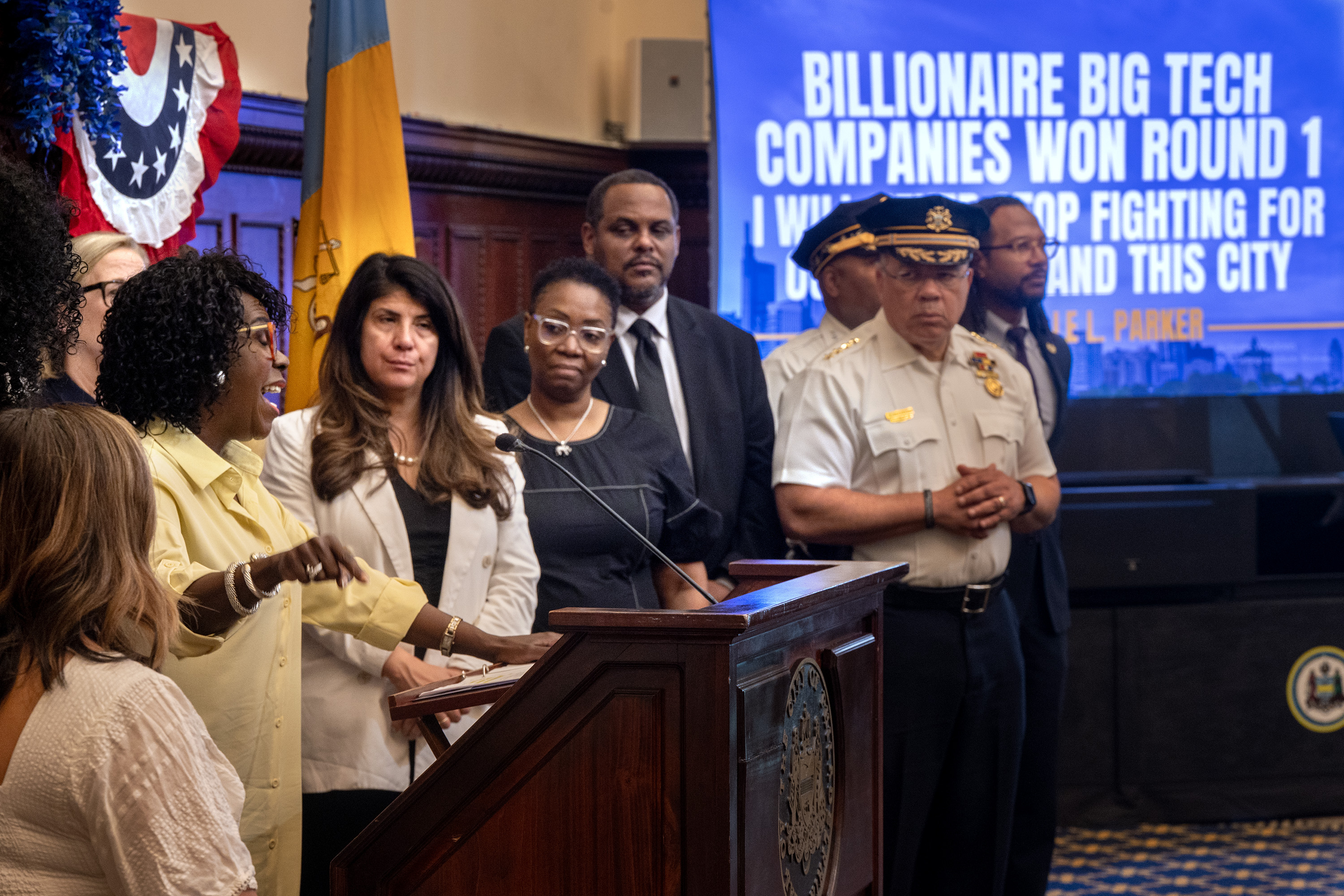
    After Parker’s tax plan collapsed, she held a fiery news conference, casting one-time money for the city’s public schools as a Band-Aid and saying that the lawmakers did not “offer an alternative plan for recurring revenue.”

    “Our children deserve better. They deserve more,” Parker said. “We didn’t meet the moment here in the city of Philadelphia.”

    “Billionaire big tech companies just won round one in this process,” says Mayor Cherelle L. Parker at City Hall Thursday, June 4, 2026 after City Council rejected most of her tax proposals for the city budget.Tom Gralish / Staff Photographer

    But Council members, already frustrated with the school board for voting in April to advance a plan to close 17 schools, were up in arms.

    Council leaders said that they had been under the impression that the school district would not make the job cuts if the city came through with an additional $48 million this year, regardless of whether the money came from a new tax or the city’s existing coffers.

    “We wouldn’t have gone to the lengths that we went to to come up to what we thought was an agreement with the administration for the district to then say that was not adequate,” Majority Leader Katherine Gilmore Richardson said in an interview Friday.

    The union that represents Philadelphia teachers and other schools advocates also implored Watlington to change course. Arthur Steinberg, president of the Philadelphia Federation of Teachers, said last week that it was “deplorable and really absurd” that the district was opting to move forward with staff cuts despite getting $48 million in new money from the city.

    No ‘tricky math’

    Parker on Wednesday said she did not regret waiting for a guarantee on paying for the positions going forward.

    “I don’t know how they do math in other cities, Mr. President, but I know here in the city of Philadelphia, we can’t have tricky math,” the mayor said, addressing Johnson. But, she said, “we were committed to ensuring that politics of any kind were not going to stand in the way of us doing what we’re supposed to do as elected representatives for the city, and that is delivering for our school district.”

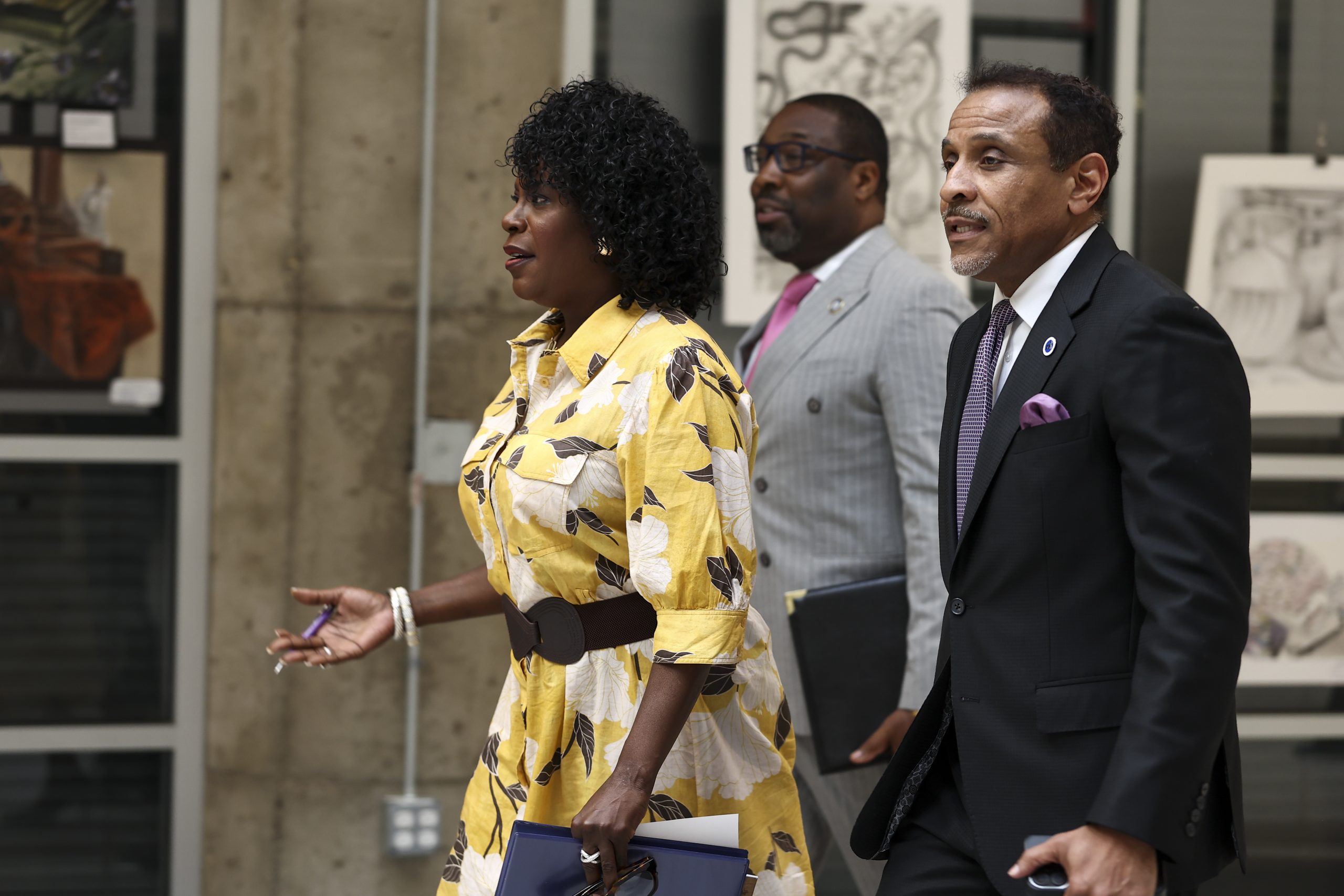
    Mayor Cherelle L. Parker, Council President Kenyatta Johnson and Superintendent Tony B. Watlington Sr. arrive for an announcement at the School District of Philadelphia Headquarters on Wednesday, June 10, 2026 in Philadelphia. Philadelphia School District officials will move to restore 340 classroom-based jobs that were slated to be cut, despite top district leaders saying last week that they did not have the recurring funding needed to keep the positions.Monica Herndon / Staff Photographer

    The district must now shift immediately to figuring out how to restore the 340 positions. Schools built their budgets based on the cuts, and the teachers, counselors, and climate staff who believed their positions were ending either found new jobs or, in the cases of some, left the district altogether in what has been an especially chaotic school-hiring season.

    It was not immediately clear what would happen, logistically, with the positions, but Watlington said he would be delighted to figure it out with representatives of the Philadelphia Federation of Teachers and the principals union.

    “I can guarantee you’re going to work through all those issues,” Watlington said. “It’s not a problem.”

  • Philadelphia’s new floating art installation finally arrives on the Schuylkill at Bartram’s Garden

    Philadelphia’s new floating art installation finally arrives on the Schuylkill at Bartram’s Garden

    FloatLab, a public art feature that will offer an eye-level view of the Schuylkill, finished its voyage up the East Coast from North Carolina to Southwest Philly on Wednesday.

    The 75-foot-wide floating structure arrived at its permanent home at Bartram’s Garden amid cheers from officials, who have been waiting 10 years for this project to come to fruition.

    Expected to open in September, the semisubmersible structure was created through a partnership between Mural Arts Philadelphia, the nation’s largest public art program, and Bartram’s Garden, Kingsessing‘s 50-acre public park.

    Without that partnership, “we couldn’t be here today making FloatLab a part of one of the most vibrant sections of riverfront in the city,” said Maitreyi Roy, executive director of Bartram’s Garden.

    The project cost $5.5 million, funded by both public and private assistance from organizations such as the William Penn Foundation, the Pennsylvania Redevelopment Assistance Capital Program, the U.S. Department of Housing and Urban Development, and the City of Philadelphia, among others.

    FloatLab represents a collaboration between ecology and art.

    Bartram’s Garden’s more than 125,000 annual visitors will be able to participate in outdoor art programs, boating, fishing, and other riverfront activities. Additionally, officials anticipate the space serving as a classroom where students can learn about this section of the Schuylkill’s unique tidal wetland ecosystem.

    FloatLab arrives at Bartram’s Gardens in Southwest Philadelphia.Aidan T. Gallo / Staff Photographer

    “The possibilities are endless,” said Jane Golden, the founder of Mural Arts. “It’s really a platform where great things can happen — both that are educational, that are performative, and that are also just about the beauty that is all around us.”

    Designed by artist J. Meejin Yoon and Höweler + Yoon Architecture, FloatLab is the country’s first tide-responsive public space, utilizing a ballast system to keep the structure at water level, with a portion submerged underwater. At FloatLab’s highest point, visitors will be positioned above the surface of the river as if they are standing on a dock; however, as they continue along the circular ramp, a declining sectional tilt brings visitors eye level with the Schuylkill.

    Judy Hellman, the director of special projects at Mural Arts, said that at the structure’s lowest point, she can reach over the wall and touch the river. “It just totally changes one’s perception of the river and this landscape.”

    As crews moored FloatLab to four steel columns on Wednesday, officials with Bartram’s Garden and Mural Arts hugged and shouted “finally!” — indicative of a long-awaited plan manifesting before their eyes. The project originated from a grant received from the William Penn Foundation for implementation in 2016. Then, Mural Arts entered into a contract with North Carolina-based East Coast Steel Fabrication, who oversaw the creation of FloatLab.

    FloatLab departed from North Carolina on May 20, a decade after the first grant was obtained, and traveled north via a tugboat called the Island Trader and a barge. After a three-week journey, FloatLab arrived at its destination — the southernmost point of the Schuylkill — where Commerce Construction will complete the installation, which is expected to take approximately six weeks.

    Roy emphasized that FloatLab will celebrate the efforts of those who have worked to make the river cleaner, and spark community engagement with the area’s natural environment.

    “I firmly believe that people care for and will take care of things that they love,” Roy said. “So the more they have those relationships, the more they’ll speak up when bad things happen. They feel that they are truly stewards.”

  • Pope honors Barcelona’s Sagrada Familia as masterpiece of stone, color, and light on Gaudí centenary

    BARCELONA, Spain — Pope Leo XIV celebrated the Sagrada Familia Basilica as a masterpiece of “stones, colors, and light,” as he marked the centenary of the death of its architect, Antoni Gaudí, with a Mass on Wednesday to inaugurate its final soaring sandcastle spire.

    Leo called Gaudí’s unfinished temple, one of the world’s most visited monuments, a “sign of unity and harmony for all of Spain,” an ongoing building project like the lifelong journey all Christians make to find God.

    “We are all the living stones of this edifice,” Leo said from the altar of the basilica, with Spanish King Felipe VI and Queen Letizia sitting to his side and a hundreds-strong choir filling the basilica with song.

    The service marked the highlight of Leo’s weeklong visit to Spain, the first by a pope in 15 years to the once staunchly Catholic European country that, like many others, has experienced secularizing trends.

    The trip, though, has underscored how the country of 50 million people, which experienced a religious crisis after its 20th century dictatorship ended, still has plenty of faithful Catholics who have turned out in droves to welcome the American pope.

    An estimated 120,000 people lined the streets around Sagrada Familia for the event, with streets closed to traffic and a heavy police presence, given the attendance of the royal couple and Prime Minister Pedro Sánchez. The crowds remained after Mass to watch as Leo inaugurated the basilica’s final Tower of Jesus Christ that has made it the world’s tallest church.

    Speaking in Catalan and Spanish, Leo blessed the tower and its illuminated ceramic cross from outside the basilica, surrounded by bishops craning their mitre-capped heads to look up. An angelic boy’s choir sang as a spectacular light show lit up the basilica’s stained glass windows from the inside and fireworks shot off its facade.

    Honoring Catalonia’s Christian traditions

    Earlier Wednesday, Leo celebrated a more ancient sacred monument, traveling to Montserrat, a mountain complex outside the city that is dear to many Catalans. The complex, which includes an 11th-century Benedictine abbey and a 16th-century basilica, is revered for its Black Madonna statue and is home to a boys choir that has existed since the 13th century and is Europe’s oldest.

    Thousands of faithful arrived early at the monastery, with groups of nuns and schoolchildren singing and waving signs and photographs of the pope outside the basilica. Bells rang out over the spire-like rock formations that top Montserrat and the valley below as Leo arrived in a golf cart.

    In recent years, the Montserrat abbey has faced numerous accusations from survivors of clergy sexual abuse and was included in the Spanish ombudsman’s 800-page report on the crisis in 2023. The report found 15 victims and three alleged perpetrators linked to the abbey.

    “It’s very painful because there are members of the church who committed errors,” said the Rev. Cesario Escarda, a Toledo priest, as he waited for Leo at the abbey. “What the pope wants to do is shine a light on the truth and ask forgiveness and bring in the victims and listen to them and accompany them.”

    The Bible carved in stone

    The highlight of Leo’s visit, though, was his Mass at Sagrada Familia to commemorate the 100th anniversary of the death of its famed Catalan designer, Gaudí, who died at age 73, three days after he was hit by a tram.

    A century after construction began during the pontificate of Leo’s namesake, Pope Leo XIII, the basilica has become one of the world’s most visited but unfinished monuments, annually drawing upward of 5 million visitors a year.

    Commemorating Gaudí’s death, Leo said he wanted to give thanks to all the supporters, artists, and workers who “cooperated in the construction of an architectural masterpiece, which is also an eloquent catechesis made of stones, colors, and light.”

    Gaudí, who is on the path to possible sainthood, spent four decades designing and building the temple as the summary of the Christian faith carved in stone. The most important stories of Jesus’ life, the Nativity and Passion, are etched into the basilica’s east and west facades. A third facade facing south, the Glory, will serve as the basilica’s main entrance when finished.

    The temple is an architectural and geometrical masterpiece inside and out, an art nouveau celebration in form and symbol of Christianity and God’s creation through stone and light.

    “Much more than a monument, the Basilica of the Sagrada Familia remains a work in progress today, reminding us that the Christian life is always a journey, because it is a project that God is carrying out,” Leo said in his homily.

    A total of 18 sandcastle spires rise up from the top and pierce Barcelona’s skyline: 12 to symbolize Christ’s 12 apostles, four for each of the four Evangelists who recorded Christ’s life in the Gospels, one topped with a star over the apse honoring the Virgin Mary and, tallest among them, the Tower of Jesus Christ.

    When the final Christ tower was finished last year at a height of 564 feet, it made Sagrada Familia the world’s tallest church.

    “The entire structure of the Sagrada Familia is striking,” said Laura Rincón, who was on hand outside along with two friends for the Mass, after she finished work in a nearby shop. She said that she was sure the pope would be impressed by the church she marvels at every time she passes by.

    “If you look at it just for its architecture, it is amazing,” she said. “Inside, its columns make you feel like you are inside a forest.”

    An interior that looks like a forest

    The cross-shaped interior, with the altar at the apse, is an homage to light and nature. Treelike columns soar to the sky, colored by constantly changing light filtered through stained glass windows like the sun poking through leaves in a forest.

    “Nature is my teacher,” Gaudí once said. “Everything comes from the great book of nature, always open that we must read.”

    The colors of the window glass have meaning: The blues and greens of the eastern portal windows, where the facade depicts Christ’s birth, look more joyful and are most brilliant when the sun rises and light passes through. The coarser shades of red and orange, illuminated by the setting sun on the western portals, color the side of the basilica that depicts Christ’s Passion. Behind the altar and above the cross are yellows and gold that glimmer in the noonday sun.

    Historian Mònica Santín, who leads tours of the basilica, said that in designing Sagrada Familia, Gaudí was guided by two books: the Gospels and nature.

    “The way he lets in the natural light is also an invitation to the Christian mystery,” she said, citing the three facades depicting Christ’s birth, death, and glory.

    “And when you enter inside, it is all light,” Santín said. “What is that the symbol of? We can’t see God, but we perceive his light all around us. I think that is how you can read this message, and it is fascinating.”

  • Delco-based medical logistics company American Expediting is closing and laying off 86 workers

    Delco-based medical logistics company American Expediting is closing and laying off 86 workers

    An Upper Providence-based medical logistics company that arranged transport for specialized items including organs, blood, and drugs ceased operations last week, eliminating dozens of jobs in Delaware County.

    American Expediting Logistics is permanently closing its facility at 1400 N. Providence Rd., north of Media. It is also laying off all employees, including 86 who work in or report to its Media location, according to a layoff notice filed last week to the Pennsylvania Department of Labor and Industry, as is required by the federal WARN Act. The company expects all layoffs to occur between June 4 and June 30. All employees were notified of the layoff on June 3.

    American Expediting was founded in 1983 by Wharton graduate Victor Finnegan as a one-man courier operation, growing to more than 300 employees across over 40 locations.

    American Expediting partnered with independent contract drivers, many of whom carried specialized certifications to transport medical and life science materials, including pharmaceuticals, animals, and organ, blood, and tissue shipments. The company also provided air services, distribution and warehousing, facilities and fleet management, and logistics services.

    American Expediting was purchased by private equity firm AEA Investors in 2019.

    Under the WARN Act, companies are required to give 60 days’ notice before closing or laying off staff. Companies can, however, sidestep the 60-day notification requirement in specific cases, including unforeseeable business circumstances, a caveat cited by American Expediting.

    The company has been “operating in a challenging environment” with “reduced healthcare spending and ongoing pressures across the transportation sector,” Katie Petrie, American Expediting’s vice president of human resources, wrote in the notice to the state.

    The company in recent months attempted unsuccessfully to secure funding from an outside investor or lender. American Expediting believed there was a “realistic opportunity” to secure financing and that providing WARN notices while it was seeking funding would have hurt the effort to secure financing, according to the WARN notice.

    Representatives from American Expediting did not respond to a phone and email message left on Wednesday.

    A notice on American Expediting’s website says the company will complete shipments in its possession as of June 3 and will no longer accept new shipments. Customers were expected to transfer shipments to a different logistics provider, and warehouse customers were asked to contact American Expediting and arrange to pick up inventory immediately, according to the company’s website.

    “Our thoughts are with the employees, drivers, agents, customers, and partners who have been part of this company and this community. For many, this announcement brings uncertainty, disappointment, and difficult conversations about what comes next,” a post from American Expediting on LinkedIn read.

    This suburban content is produced with support from the Leslie Miller and Richard Worley Foundation and The Lenfest Institute for Journalism. Editorial content is created independently of the project donors. Gifts to support The Inquirer’s high-impact journalism can be made at inquirer.com/donate. A list of Lenfest Institute donors can be found at lenfestinstitute.org/supporters.

  • ‘I’m ready,’ USMNT star centerback Chris Richards says as he finishes his comeback from injury

    ‘I’m ready,’ USMNT star centerback Chris Richards says as he finishes his comeback from injury

    IRVINE, Calif. — It only took two words for one of the U.S. men’s soccer team’s most important players to get everyone talking.

    “I’m ready,” star centerback Chris Richards said before Wednesday’s practice, and after a few days on the field, where he looked good in his recovery from torn ankle ligaments.

    “It’s a World Cup, so I’ll make myself ready regardless,” he continued as he stood in front of a big pack of media, a sign of the World Cup’s arrival and his importance. “I’m feeling good. Maybe a little swollen, but nothing tape can’t help. … If there’s any time to sacrifice yourself, it’s now. I want to play Friday, but I’m not the one making the decision.”

    Richards suffered the injury on May 17, playing for his club team, England’s Crystal Palace. He hasn’t featured in a game for club or country since then, which is four total: the May 24 Premier League finale, the May 27 UEFA Europa Conference League final, and the U.S.’s two World Cup warmup games.

    Chris Richards running during Wednesday’s practice.Jonathan Tannenwald

    “When I first came out of the injury, I was pretty devastated, and I was honestly fearing the worst,” he said, later adding: “The first time I could probably relax was when I did get the diagnosis. After the game, my ankle was huge, and I came off in a boot and crutches. When I saw the diagnosis I was like, ‘All right, cool — whatever it takes, I have to make it for this first game.’”

    He made the bench for the Conference League final, and the TV cameras caught him running onto the field at the final whistle to celebrate with teammates. That was a good sign. But it’s still nothing like a live game, and that’s now the question.

    “I think the first time I really realized that I would be 100% for Friday was probably last week,” Richards said. “It was a lot of massages, a lot of ice, a lot of compression, things like that. But once I was finally on the pitch, it felt good. And I think that was the main thing.”

    It also helps that the U.S. will have seven days between its first and second group games, with the latter June 19 against Australia in Seattle. The Americans’ World Cup opener is Friday vs. Paraguay (9 p.m., Fox 29) in Inglewood, Calif.

    Chris Richards getting up close with the ball during a drill.Jonathan Tannenwald

    “We have enough time between the games where I can get some recovery in,” Richards said. “So for me, if I can start on Friday, it’s not going to put the rest of the tournament in jeopardy for me.”

    Granted, that was his opinion, and he has given it to U.S. coaches when asked.

    “Every time they’ve asked me, I’ve told them I’m good — even when I first got into camp, I told them I’m good,” Richards said. “I think they’ve seen the progression over the last few weeks, and they’ve definitely seen me personally. I think I look good on the pitch now. Hopefully it’s been a good sign for them … Whatever they decide on Friday, I’ll back them, but I want to be on that field on Friday.”

    He added that he has not been told if he’ll be subject to a minutes limit in the game.

    Chris Richards (left) hasn’t played in a live game since May 17.Jonathan Tannenwald

    “I’ve done full practices the last few days, and I think y’all have seen the intensity of our practices — they’re not light,” the Alabama native said. “So I feel good, no reaction to it, and I’m confident for what’s to come.”

    Richards noted the minor controversy that arose when U.S. manager Mauricio Pochettino accused Crystal Palace of not being fully transparent about his status. He tried to be sympathetic to both sides.

    “Palace wanted me to potentially be available for the Conference League final — which I understand, it’s a final — and it took me two days to get here [to U.S. camp] as well,” he said. “I expected it. I’ve had ankle injuries before, and there wasn’t really any setback. It was just a case of getting swelling down, then seeing what it’s like being on the pitch, and it just sometimes can take a little bit longer than expected.”

    He said, “the initial diagnosis was day to day, but I think for me I was a bit more two to three weeks. We were right on schedule, and I feel good right now.”

    Richards’ teammates know how much he means to the group. Fellow centerback and longtime friend Mark McKenzie spoke about that soon after Richards’ turn at the mic.

    “To see that live, to see the rehab work he’s put in, whether it’s on the field and working with a lot of the performance coaches, trying to get that ankle exposed to as many different actions as possible,” the Union alumnus said, “and then off the field, you talk about recovery, you talk about every modality you could possibly think of and modalities you probably don’t even know about. Doing everything possible to get himself as fit as he could be for this game.”

    As Richards spoke, former U.S. centerback Marcelo Balboa stood nearby. Now a media member, recalled his own race to make the 1994 World Cup after tearing his ACL in April 1993 — an era when recoveries could last over 12 months.

    But he made it just in time to play in the tournament, started all four U.S. games, and almost scored an all-time goal when a bicycle kick attempt against Colombia went just wide.

    “Never trust a player,” Balboa said with a laugh, but also some seriousness. “A player will always tell you he feels great and he’s ready to go. I think they have to evaluate how he is in training, if he’s full contact, if he’s ready to go 90 minutes, or is it better to make sure he’s ready for the rest of the tournament.”

    He also emphasized that for a player, “mentally is the biggest part.” Judging by Richards’ remarks, he certainly seemed ready — even as Balboa’s words are a good reminder of the big picture.

    “I wouldn’t put myself in the position if I didn’t think I could do everything 100%,” Richards said. “Part of playing this sport is you’re going to have some pain at some point, and I’m totally OK with that as long as functionally I’m good. That’s the No. 1 thing for me.”

  • Texas Tech defends playing QB Brendan Sorsby amid gambling addiction, says ‘it’s not murder’

    HOUSTON — Sports leadership at Texas Tech on Wednesday defended their plans to play quarterback Brendan Sorsby next season while he treats his gambling addiction, insisting they are not trying to “engineer his eligibility” through the courts and dismissing widespread criticism that includes the president of the NCAA.

    Speaking to the Houston Touchdown Club, coach Joey McGuire acknowledged the “rage” surrounding the situation, with athletic directors across college football saying that the NCAA ban on players who gamble should remain sacrosanct and a court order won this week by Sorsby crossed a line that should never be crossed.

    “For some reason, as a society, we’ve been OK with other things that happen and allowing players to play, and this has been the one thing that has united people, that they were against,” McGuire said. “It’s crazy because it’s not murder, it’s not beating somebody — so there’s a lot of things that we’re working through. None of this is OK.”

    Athletic director Kirby Hocutt also released a statement to “offer a few facts that seem to be getting lost in the noise” and noting the school is not part of Sorsby’s lawsuit against the NCAA.

    “A young man in treatment for a clinically diagnosed addiction exercised his legal right to seek a remedy in court and a judge agreed with him,” Hocutt said. “Our role has been to support his recover, not to engineer his eligibility.”

    Under the court order, Sorsby will be suspended for the first two games of the season. The NCAA plans to appeal the ruling, with President Charlie Baker telling reporters in Las Vegas that the case illustrated “a new low” in college sports.

    McGuire likened Sorsby recovering from his addiction to fellow Texas Tech quarterback Will Hammond’s recovery from knee surgery.

    “He’s recovering,” McGuire said. “I’ve sat down with this young man multiple times and the things that he is going through and what he’s been through, it’s serious.”

    “And I have a number of people in my family that were addicted to different stuff and so I’ve seen what addiction does to people,” he said. ”And so, us even saying to the point before we get to the legal part, that he could be ready in Week 3 against Houston is still a stretch because guess what, he’s still recovering.”

    McGuire added that Sorsby was “back in the building” after spending some time away from the facilities while he was dealing with his issues.

  • Trump’s judicial nominee from Philly got slammed by a Senate panel for hesitating ‘to tell the truth’

    Trump’s judicial nominee from Philly got slammed by a Senate panel for hesitating ‘to tell the truth’

    WASHINGTON — Antonio Pozos, a Philadelphia lawyer nominated by President Donald Trump to become a federal judge in the Eastern District of Pennsylvania, told a Senate panel on Wednesday that former President Joe Biden won the most Electoral College votes in 2020 — though he declined to say whether Biden won the popular vote or if the Capitol was “attacked” two months later.

    In a confirmation hearing alongside three other judicial nominees, Pozos said Biden was certified as the president in 2020 and that he’d seen videos from Jan. 6, 2021 in which it “appeared that there was violence and trespass.”

    “It’s profoundly troubling and I abhor violence,” said Pozos, a partner at Faegre Drinker Biddle & Reath and a lecturer at the University of Pennsylvania’s Carey Law School.

    But in the back-and-forth with U.S. Sen. Richard Blumenthal (D., Conn.), Pozos said he would “hesitate to characterize what occurred at the Capitol” when the senator asked directly if the building was “attacked” during the certification of votes.

    “You hesitate to tell the truth here,” Blumenthal responded before shifting to the next nominee.

    The line of questioning has become many Democrats’ main litmus test for those nominated by Trump for lifetime judicial appointments.

    For years, the president has insisted without evidence that widespread voter fraud led to his defeat in 2020, despite Biden winning the popular vote by more than 7 million votes that year on top of his Electoral College win.

    Trump’s history of spreading misinformation about elections has fueled fears that he’ll do it again during November’s midterm elections — as he did after the California primary just last week — and that his judicial appointees will undermine a system of checks and balances.

    When all of the nominees facing the Senate Judiciary Committee on Wednesday echoed each other in only saying Biden won the Electoral College, Blumenthal accused them of having “a new script, a new pre-negotiated effort to thread the needle [and] avoid the question.”

    “You are protecting the lie by failing to acknowledge the truth,” Blumenthal said. “If you’re unwilling to show us you’re independent of the president at this early stage of your service, you disqualify yourself as judicial nominees.”

    At least one Democrat who has signaled he doesn’t believe Pozos should be disqualified is U.S. Sen. John Fetterman.

    The Pennsylvania Democrat decided against blocking his nomination during a traditional process that gives senators the opportunity to approve or reject a federal judicial nominee in their state.

    It was the first time any Democrat declined to use that courtesy — in a process known as a “blue slip” — since Trump’s second term began in January 2025.

    Two other Democratic senators, Elissa Slotkin and Gary Peters, of Michigan, however, followed Fetterman in returning a blue slip for a separate nominee in their state before Wednesday’s hearing. They said their decision was in part because of the nominee’s assurances to them that Biden won in 2020, that there was an attack on the Capitol, and that Trump cannot run for a third term.

    Pozos also acknowledged during the hearing that Trump could not constitutionally win another term, which is something the president himself has declined to say.

    Fetterman, from the 2020 election through Trump’s second election in 2024, frequently and forcefully rejected Trump’s claims of election fraud in Pennsylvania. His office did not provide a comment in response to questions from The Inquirer about why he allowed Pozos’ nomination to advance. The senator has also not said whether he will vote to confirm Pozos when the Republican-controlled Senate decides on the appointment.

    But Fetterman’s move so far in the process was the latest in a series of high-profile moments in which he sided with Trump and the Republican Party while infuriating parts of his own base.

    Demand Justice, a Washington, D.C.-based organization that is critical of Trump’s nominees because of their statements on the 2020 election, joined in the criticism of Fetterman and promised to launch a six-figure ad campaign against him because of the blue slip.

    “John Fetterman just cleared the path for a Trump lifetime judicial nominee,” one of the digital ads states alongside an image of Trump and Fetterman with hearts around them.

    “Our message to Senate Democrats is clear: greenlight Trump’s puppet judges, and we will call you out. No exceptions,” it continued.

    That threat elicited bipartisan criticism at the beginning of the hearing Wednesday.

    U.S. Sen. Katie Britt, an Alabama Republican speaking on behalf of committee chair U.S. Sen. Chuck Grassley, called Demand Justice a “progressive dark money group” that “sought to undermine the blue slip practice and sew further division in our country.”

    U.S. Sen. Dick Durbin of Illinois, the top Democrat on the committee, also said the group was wrong to target senators who work toward agreement across party lines.

    “If we can get bipartisan cooperation for the appointment of lifetime judges, we should do it,” said Durbin, who has voted for Trump’s judicial nominees more than any other Democrat, according to Demand Justice.

    Each of the committee leaders commended Fetterman, Slotkin, and Peters for their decision — with Durbin praising them for “working in good faith with the White House.”

    U.S. Sen. Dave McCormick (R., Pa.) also thanked Fetterman and said Pozos was nominated because of a recommendation from a commission that the pair of Pennsylvania senators put together to vet judicial nominees.

    “Tony’s a successful attorney, a strong Pennsylvanian, a decorated public servant, and he’s eminently qualified for this role,” McCormick said during the hearing.

    Pozos, 44, is a graduate of Harvard College and the University of Michigan Law School who worked as federal prosecutor before becoming a partner at Faegre Drinker in 2018.

    As a trial attorney in the Criminal Fraud Section of the Department of Justice, he focused on corporate and individual healthcare fraud cases. McCormick said he had a “formidable track record of rooting out fraud, prosecuting those who abuse taxpayer dollars, and protecting Americans from predatory healthcare systems.”

    In a questionnaire published by the Senate Judiciary Committee, Pozos also listed active memberships in the Federalist Society — the legal organization that has sought to appoint conservative judges across the country — as well as the Union League of Philadelphia and the Merion Cricket Club.

    In addition to the election-focused inquiries, Pozos also faced questions about applying the False Claims Act — which penalizes individuals and companies from defrauding the government — and the controversial Section 230 of the Communications Decency Act that protects online platforms from liability for what their users post.

    U.S. Sen. John Kennedy (R. La.) grew frustrated when he believed Pozos was not fully answering his question about whether, under Section 230, Facebook should be protected and if it should have the ability to decide what users see. Pozos, like other judicial nominees who say they cannot weigh in specifically on the types of cases they may have to rule on, began answering when Kennedy said he had “no idea what you’re talking about.”

    “You’re better off just answering the question, you really are,” Kennedy said.

    Asked by the Democratic chair about the importance of diversity — which Trump has widely sought to diminish — Pozos said he has mentored young lawyers “from a wide range of backgrounds” and that it was important to “get all pockets of talent wherever they may be in our country and welcome them into the legal profession.”

    Pressed by Durbin if diversity is important in filling positions in the legal system, Pozos said, “If we are true to seeking out excellence wherever it may be, that question will be moot.”

    “I doubt it,” Durbin responded.