Blog

  • Artist Miguel Horn’s sculptures will adorn new Avenue of the Arts median

    Artist Miguel Horn’s sculptures will adorn new Avenue of the Arts median

    The Broad Street Avenue of the Arts makeover project, which broke ground in January, is inching its way to completion.

    The remaking of the median on South Broad Street in front of the Kimmel Center, part of the larger AveArts 2.0 project, will now include the installation of a pair of sculptures by artist Miguel Horn.

    The South Philly-based artist, who is behind several public sculptures in the city, including Center City’s ContraFuerte, sought approval for the sculptures’ concept review in a Philadelphia Art Commission meeting on Wednesday.

    The sculptures are scheduled to be installed this fall and remain in place for five years.

    Artist Miguel Horn at Tacony Creek Park, 1101 E. Cayuga St., in the Juniata Park section of Philadelphia on Tuesday, September 13, 2022.Alejandro A. Alvarez / Staff Photographer

    The Broad Street renovation project involves reconstructing the median into a raised planter, adding landscaping, restoring pavement, and installing pedestals and lighting for the public art. The median construction is scheduled to be completed this month, while Horn’s sculptures will be installed in the fall.

    Made of bright yellow powder coated steel, Horn’s sculptures will display a blurred image of moving pedestrians. The concept for the design, Horn said, came from him making Light Detection and Ranging (lidar) scans of buildings around Philadelphia. He began to notice something interesting when people walked in front of the scanner.

    “This section of the Reading Terminal Market at Filbert Street was flooded with pedestrians walking by, and these movements of pedestrians across this space created this tapestry of figurative elements, abstraction, and I just fell in love,” Horn said at Wednesday’s meeting.

    A rendering shows the median on South Broad Street in front of the Kimmel Center, part of the larger AveArts 2.0 project, which will include sculptures by artist Miguel HornCourtesy of OJB & Miguel Horn

    He then proceeded to go through the scans and select different movements to create the final sculpture design of walking pedestrians.

    “This Muybridge-like study of movement for me was the most compelling thing sculpturally I’ve seen rendered on a computer screen in years,” he said, referring to the pioneering photographer best known for creating The Horse in Motion (1878).

    Horn’s design did raise some concerns among attendees on Wednesday, including potential sight line blockages for motorists.

    In the meeting, he assured that there was no concern for safety. His presentation to the Arts Commission claimed that the sculptures would still allow for a 215-foot sight line of incoming traffic on either side of the median.

    A rendering shows the median on South Broad Street in front of the Kimmel Center, part of the larger AveArts 2.0 project, which will include sculptures by artist Miguel HornCourtesy of OJB & Miguel Horn

    “There will not be an interruption to any visual sight lines,” he said.

    Design Advocacy Group (DAG) vice-chair David Brownlee, who did not attend Wednesday’s meeting, considers planting trees in the median impractical.

    “No one has ever said to me that the problem with Broad Street is there’s no shade in the middle of the street,” he said. “Or that’s the problem with Broad Street is you get out of the street and you look up and see that tower of City Hall.”

    Rather than placing trees and sculpture in the middle of the road, Brownlee suggested widening of sidewalks and installing art on each side so pedestrians can view them while walking.

    Horn’s concept review for the sculptures was approved by the Arts Commission, with a final review expected at a later date.

    A rendering shows the median on South Broad Street in front of the Kimmel Center, part of the larger AveArts 2.0 project, which will include sculptures by artist Miguel HornCourtesy of OJB & Miguel Horn

    The AveArts 2.0 project aims to beautify Avenue of the Arts into a cohesive streetscape. The plan is to renovate all 10 blocks between City Hall and Washington Avenue at a cost of $15 million per block.

    Funding for the project is expected to be a mix of public money, corporate and individual donations, and foundation support.

    “I find this to be a reclamation of our public space through this figurative artwork,” Horn said. “I’m constantly trying to find opportunities to bring the human experience to the forefront of these public spaces.”

    A previous version of the article misstated the median project’s timeline. It will be completed this month.

  • In Umbria, sweet white wines still reign

    In Umbria, sweet white wines still reign

    White wines with a subtle touch of sweetness do not get the respect they deserve. This delightfully fruity example from Umbria hovers on the boundary between fully dry and overtly sweet in a way that can be written off as unserious among Italian whites. It is seriously delicious though, with a succulent pearlike flavor profile that makes it an ideal partner for many of the acidic and bright delights from neighboring Tuscany, like panzanella or pappa al pomodoro.

    Sweetness in white wines is often unfairly associated with the cheapest boxed wines, since a hint of sweetness can mask the weak flavors of low-quality grapes very effectively. However, there are some regions that have a longstanding tradition of making their wines taste faintly sweet simply because they like it. The Umbrian town of Orvieto, for example, has been known since the Middle Ages for a hyper-sweet dessert wine once prized by popes and kings. That historical association led the region to produce semi-sweet and faintly sweet versions using a similar mix of grapes, with the local grechetto and trebbiano varieties taking the lead in the blend.

    This particular example of Umbrian wine is on the drier side. It tastes light, fresh, and just faintly sweet, at a similar level to that found in most Italian prosecco. This whisper of sweetness adds a dessertlike quality to its flavors of fresh-picked orchard fruits — think wine-poached pears with pistachio custard cream. Specific, but it works. This kiss of sugar also helps the wine partner brilliantly with foods that contain sugar or spice, from brunch classics to Asian sauces that have a kick.

    Ruffino Orvieto ClassicoCourtesy of Ruffino

    Ruffino Orvieto Classico

    Umbria, Italy; 12.5% ABV

    PLCB Item #5724 — $10.39 through July 5 (regularly $11.39)

    Also available at: Canal’s in Mt. Ephraim ($11.99; mycanals.com), Moorestown Super Buy Rite in Moorestown ($11.49; moorestownbuyrite.com), and Total Wine & More in Wilmington and Claymont, Del. ($11.49; totalwine.com).

  • Forget coders. The real AI threat is in the back office.

    Forget coders. The real AI threat is in the back office.

    If artificial intelligence disrupts the job market, which workers will be most vulnerable?

    The obvious answer, and the one that has dominated public debate over AI job loss in recent months, is that the workers most at risk are programmers, software engineers and other tech industry employees. They have borne the brunt of the mass layoffs by Meta, Block and other Silicon Valley companies. Their skills are the ones that AI systems have mastered first.

    But many economists are more concerned about a different, larger group of white-collar workers: customer service representatives, bookkeepers, payroll clerks and human resources specialists who fly under the radar but collectively account for tens of millions of jobs.

    Some of these workers have college degrees. Many do not. They are spread across the country and throughout the economy, working in every industry, in big cities and small towns, at major corporations and mom-and-pop businesses. They are disproportionately — overwhelmingly, in some occupations — women.

    These jobs typically offer a middle-class salary or a pathway to achieving one — much as manufacturing jobs did for men before decades of globalization and automation wiped many of them away.

    “I worry that AI will be to high-school-educated women what deindustrialization was to high-school-educated men,” said Molly Kinder, a former researcher at the Brookings Institution who is starting an organization focused on AI’s impact on workers and the economy.

    For now, such an outcome is a fear, not a forecast. Despite high-profile layoffs in tech and finance, there is little firm evidence that AI has hurt the labor market as a whole.

    Economists have become increasingly convinced that disruptions are likely, but they say it is too early to know where or how widespread they will be. They remain broadly skeptical of claims that the technology will lead to mass unemployment in the near future. Some AI industry leaders have walked back such predictions in recent weeks.

    But given the extraordinary pace at which companies are adopting AI — and at which the technology is improving — economists say policymakers need to consider the potential effects on the labor market. And they say they are concerned that the public debate has focused too much on software engineers and a relative handful of other high-status careers — lawyers, consultants, economists — rather than the workers who could be most vulnerable.

    Back-office jobs deserve more attention in the AI discussion, said Mark Muro, an economist at Brookings who has studied the impact of the technology.

    “These are the kind of anchor jobs for families and households,” he said. “We really need to keep our eye on what is occurring across the entire labor market and in all of these occupations.”

    Good jobs at risk

    Software engineers have dominated the public discussion of AI partly because they have been the first to adopt it in their work. Measures of AI exposure that are based on how people are using the technology, therefore, inevitably show programming jobs as among the most at risk.

    But as the technology spreads through the economy, a broader set of roles could be affected. For companies, the promise of AI is that it will save them money, and back-office jobs are an obvious place to look to cut costs.

    “If you think about the back office, that’s not the main function of the company, so they might think of it as a cost center,” said Jung Ho Choi, an accounting professor at Stanford University.

    Economists at Northwestern University recently recalculated measures of AI exposure based on the makeup of the total workforce, not just the people using the technology. Administrative and front-line roles, such as customer service representatives, rose to the top of the list.

    “The most affected jobs are secretaries, are routine clerks,” said Michelle Yin, one of the working paper’s authors. “They’re not computer scientists or data scientists at all.”

    Widely cited measures of AI exposure, she added, “give the wrong impression” about who will be most affected — and, in particular, tend to understate the impact on people without college degrees, older workers and people of color.

    Kinder gave the example of medical records specialists, a job that pays about $50,000 a year and typically doesn’t require a college degree. More than 90% of the jobs are held by women, many of whom work from home, making it an ideal role for many mothers with young children.

    Other examples include billing and payroll clerks, and customer service representatives — jobs that pay at or near middle-class salaries without requiring a college degree. All of them are dominated by women. And all of them are, by various measures, vulnerable to substitution with AI.

    “My worry is that the lesson from deindustrialization is that many of these women will be able to get another job, but it might be a much worse job,” Kinder said. “It might be more precarious.”

    Vanishing options

    Such workers are also more vulnerable in another way: They will have a harder time recovering if they do lose their jobs.

    In a recent paper, researchers at GovAI, a nonprofit focused on AI policy, sorted occupations into categories based on not only how exposed they were to AI displacement but also their ability to adapt to a job loss, using factors like age, education and income.

    The good news: Many of the workers most exposed to AI right now are relatively well positioned to adjust. They tend to be younger, giving them more time to shift directions in their career. They generally have more education and live in cities with more job opportunities. And they are more likely to have higher incomes, giving them the resources to sustain them through a job search.

    The workers to be most concerned about, the authors argue, are the ones who are both at high risk of displacement and have little capacity to adapt: customer service agents, secretaries and other back-office workers.

    “If AI does lead to displacement, then these are the folks that you might want to consider paying special attention to,” said Sam Manning, one of the authors. Policymakers, he said, should “think about what sort of additional support they might need to manage a job transition, compared to the managing partner at a consulting firm or a lawyer or software engineer who’s similarly exposed, but if they lose their job, they have lots of things that might make them better positioned to find a new one.”

    Fewer rungs on the ladder

    Back-office workers are hardly strangers to technological disruptions. Word processors displaced typists; spreadsheet programs and accounting software displaced bookkeepers; online booking sites displaced travel agents.

    Those changes came gradually, however, giving workers a chance to adapt. Women, in particular, responded to the disappearance of many secretarial jobs in the 1980s and 1990s by attending college in record numbers, opening pathways to better-paying careers.

    U.S. businesses employ far fewer secretaries than they did 50 years ago, but the jobs that remain are more complex and better paid than they used to be.

    Women who didn’t attend college, however, have been pushed into retail, hospitality and healthcare — sectors in which jobs tend to be physically demanding and poorly paid, with few opportunities for advancement.

    “College-educated women are the ones who came out on top from this,” said Eliza Forsythe, an economist at the University of Illinois who has studied earlier waves of white-collar automation. “They’re the ones who experienced the employment gains without the wage declines. Everyone else are the ones who didn’t do as well from this technology.”

    The risk with AI is that it will move too quickly for workers to adapt — and that, this time, a college degree won’t protect against displacement. Indeed, many of the jobs that women transitioned to during the computer revolution of the 1980s and 1990s, like accounting and human resources, are now vulnerable to AI displacement.

    Forsythe said AI was also likely to create new jobs, as did earlier technological revolutions. And it is too soon to know to what degree AI will displace workers rather than make them more productive, potentially allowing them to earn more.

    “I would be cautious about just focusing on what are we losing as opposed to what are we going to gain on the other side,” Forsythe said.

    Even if AI doesn’t destroy jobs, there could be lasting consequences for workers caught in the transition. Muro, the Brookings economist, has studied how AI threatens jobs that have traditionally served as “gateways” between low-paying, entry-level work and more sustainable careers.

    Someone who starts as a receptionist, for example, might move into a customer service job that pays only modestly better but offers a chance to move into a much better job in human resources or even management. If AI eliminates that middle step, it could be harder for workers to move up the career ladder, said Justin Heck, a co-author on a recent article with Muro.

    “What happens if we’re no longer building those skills on the job? Where is there available to move up?” Heck asked. “What are the ramifications three years from now, when workers remain stranded in low-wage work, and employers are struggling to fill high-wage roles because we’ve carved out the middle?”

    This article originally appeared in The New York Times.

  • 2026 Infiniti QX60: New look, new engine, new experience?

    2026 Infiniti QX60: New look, new engine, new experience?

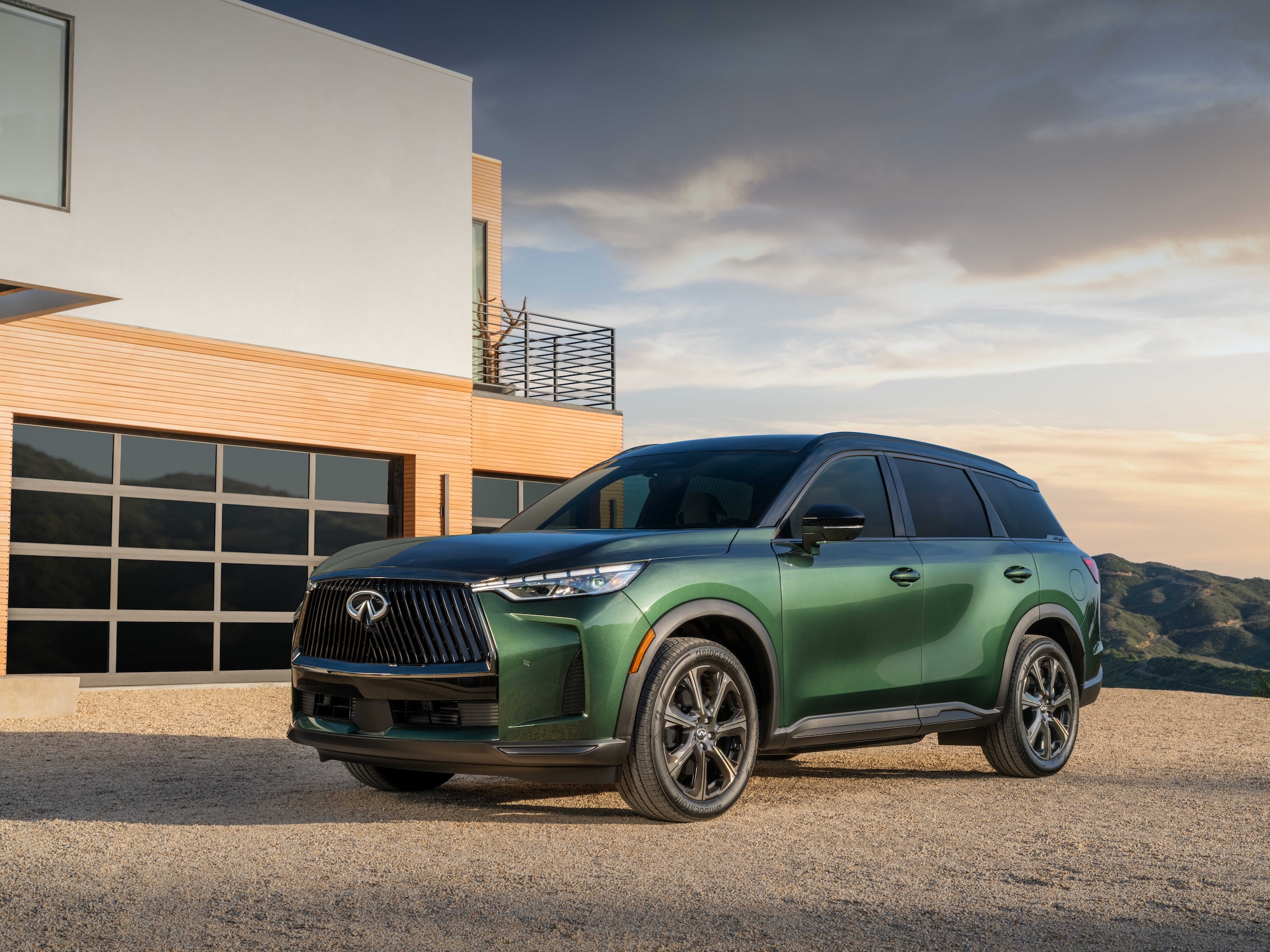
    2026 Infiniti QX60 Sport AWD: New stuff is better, right?

    Price: $65,750 as tested.

    What others are saying: “Pros: Classy, high-feature interior, well utilized screens, best-in-class third-row accessibility. Cons: Not a Sporting bone in this body; VC-Turbo drivability still disappoints; poor lane keep, auto stop/start systems,” says Motor Trend.

    What Infiniti is saying: “Designed with distinction — inside and out.”

    Reality: Sometimes new stuff is just new.

    What’s new: The QX60 is redesigned for 2026, adding mass and presence in its new look, as Infiniti touts. (Never do cars redesigned for the American market get more svelte or subtle.) The vehicle also adds more smart tech.

    The Sport grade tested is also new for 2026, and it jazzes up inside and out.

    The VC-Turbo four-cylinder replaced the old V-6 in 2025, and there’s a lot to say about that power plant below.

    Competition: Acura MDX, Audi Q7, BMW X7, Cadillac Escalade, Cadillac XT6, Land Rover Range Rover, Lexus GX, Lexus TX, and Volvo XC90.

    Up to speed: I can be as focused as the next car guy on 0-60 times, but years of testing have proven time and again that there’s so much more. The 0-60 time of 6.9 seconds, according Motor Trend, is respectable among premium three-row SUVs.

    But if I stopped here, you’d being missing a lot.

    This is the QX60’s second year featuring 268-horsepower VC-Turbo 2-liter four-cylinder engine name, which sounds pretty cool in a Marvin Martian kind of way. Much like the Illudium Q-36 Explosive Space Modulator!, though, this VC-Turbo is still in beta testing.

    Each standing start revealed the QX60 had more hesitation than Mr. Driver’s Seat trying to explain a dent on a test vehicle. I’d press the accelerator and for easily a second, the QX60 would hem and haw. Frightening.

    The denouement came while turning left from a parking lot onto a 50-mph stretch of U.S. 322. Even in Sport mode, I was sweating getting to 50 mph quickly enough, let alone 60.

    I had much better success with a 3.5-liter V-6 in a 2022 QX60, although I’m trusting that “some hesitation” back then was far better than this time around.

    Good to go: Not everything about the drive was terrible. On the first day behind the wheel, I found the QX60 to feel somewhat sporty and fun. It seemed to have a bit of a kick to it, almost Jeep Wranglerlike in its roughness. But that got old really fast, especially in light of the unpredictable accelerator.

    Shifty: The 9-speed automatic transmission operated seamlessly while driving, but it also revealed one weird habit while getting in gear: It rolled back quite a bit. In fact, its rolling could almost match clutch driving. This seemed more prominent in Sport mode. Presumably there’s an auto hold button I could have engaged, but I haven’t needed to in 40 years of driving.

    The shifter is modeled on Lexus’ long-ago handle, a square top that pulls back or pushes forward depending on where you want to go.

    If you want to shift your own gears, though, it’s paddle city for you.

    On the road: The handling of the QX60 never got me excited. Curves and turns came and went, and I sought out enjoyment, but was left disappointed. At least the vehicle felt small and athletic for a three-row SUV.

    Sport mode, though, was a rough one on the highways; any road seams of note set the QX60 to shaking.

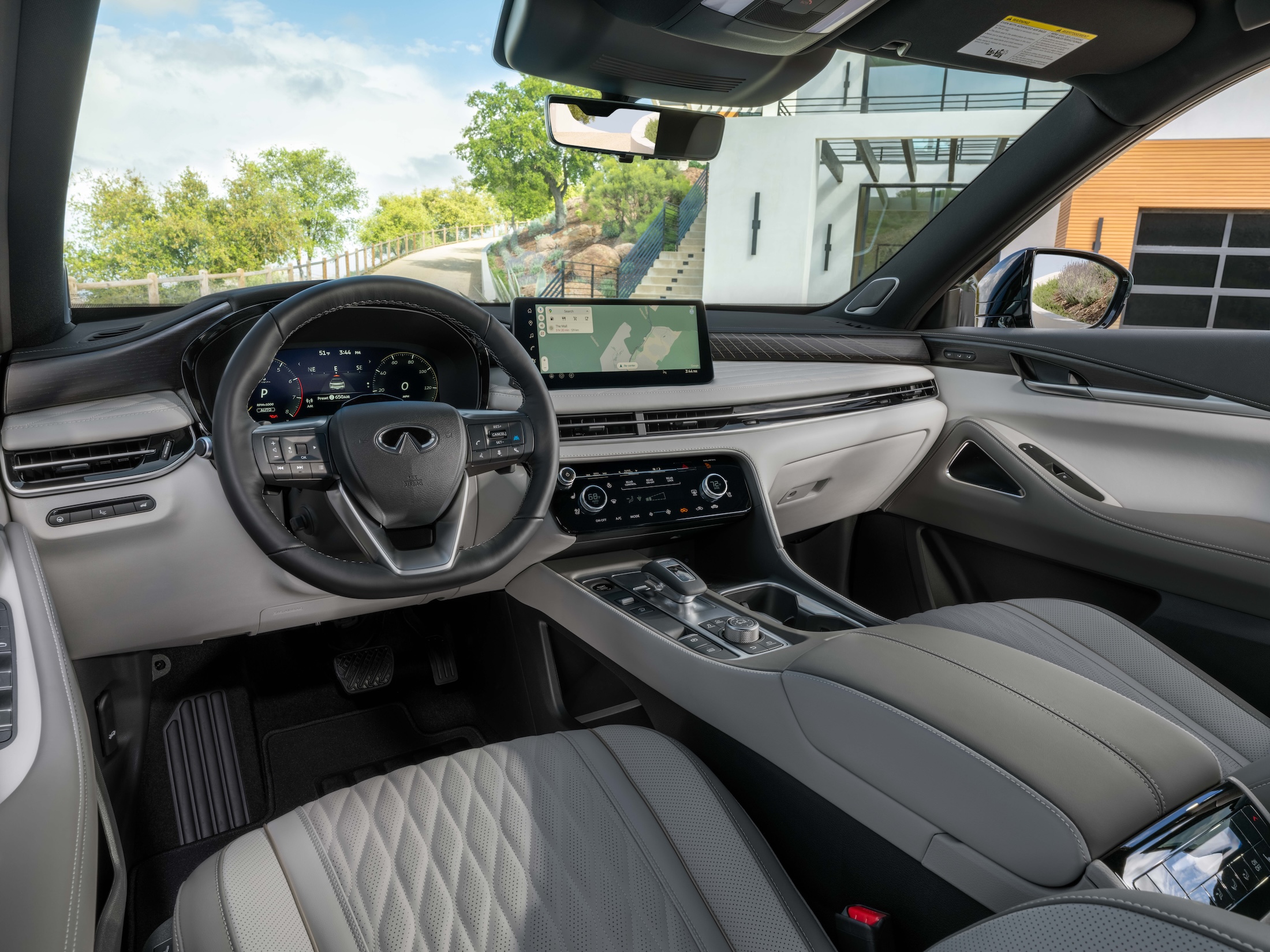
    The interior of the 2026 Infiniti QX60 looks inviting, but rear-seat passengers may feel like they’re visiting the grandmother’s house where kids aren’t allowed in the living room.TIM SUTTON

    Friends and stuff: The second row provides comfortable enough captains’ chairs, with decent space overall.

    But the third row is only for youngsters. Getting back there is hard, clambering past the second-row seats. Foot room in the rear is pitiful, even with the middle row scooched up a bit. I had to twist my size 12s with my hand to turn them into place. Finally, the door is narrow, and hopping out feels as death-defying as Lindsey Vonn’s last ride.

    Cargo space is 14.5/41.6/75.4 cubic feet, depending on the ups and downs.

    Driver’s Seat: The cockpit felt very Nissan-esque, with the usual controls and gauges found on the lesser make’s models. Granted, Nissans do generally feel more luxurious than they have a right to, but we’re paying for Infiniti luxury here.

    The seat was comfortable enough but no oohs and aah were emitted during test week.

    Play some tunes: Sound from the system was disappointing for the model level, about a B.

    A dial for volume and another for tuning make the system a little easier to control than many nowadays. The 12.3-inch touchscreen is par for the vehicle class.

    Keeping warm and cool: An ebony touchpad has Audi-style haptics, where you have to press hard enough to register your feelings. So it’s good for not accidentally setting off unwanted features as you slide around the pad, but in the Infiniti there’s no feel, so you still have to look.

    Fuel economy: The QX60 averaged just under 21 mpg.

    Where it’s built: Smyrna, Tenn.

    How it’s built: Consumer Reports had no guess for the new model’s reliability, but 2025’s was a 4 out of 5.

    In the end: Most of the vehicles in the competition list lack space in the rear, but the QX60 is exceptionally difficult.

    But if the engine hesitation was not just a test-model problem, I’d write it off. I’m surprised reading how much I liked the Lexus GX, so I’d probably start there.

  • Trump’s new Fed chief may soon have to raise interest rates

    President Donald Trump’s new Federal Reserve chair, Kevin Warsh, previously argued that the Fed had room to cut interest rates, a message that made him attractive to a president who has long viewed cuts as a top priority.

    Only weeks into his role as chair, Warsh is confronting rekindled inflation that may eventually force him to do the opposite on rates, defying President Donald Trump, to exercise the Fed’s strongest tool to fight inflation.

    This week’s consumer price index showed inflation topping 4 percent on an annual basis for the first time in three years. The hot inflation report landed about a week before Warsh chairs his first regularly scheduled policy meeting and one that could set the early terms of his tenure. And the news follows a stronger-than-expected jobs report reflecting resilience in the labor market, the other part of economy the Fed watches.

    The Fed is designed to operate independently of the White House, setting interest rates based on its best assessment of the economy rather than short-term political pressure. That independence has long been considered a cornerstone of the central bank’s credibility — and a source of tension with some presidents, especially Trump, who wants dramatically lower borrowing costs.

    “A critical test for Warsh in the early going will be whether he delivers the cuts Trump so strenuously demanded,” said David Wilcox, an economist at Bloomberg Economics and the Peterson Institute for International Economics. “Depending on how economic circumstances unfold, Warsh and his colleagues may be put in the difficult position of having to defy Trump by not delivering rate cuts and conceivably even hiking them.”

    The logic behind a potential rate increase is straightforward: With the economy running hot, punctuated by the surprisingly solid jobs market, higher interest rates would raise borrowing costs on an array of loans, cooling demand and preventing the economy from overheating. It is the Fed’s classic role, in the words of a former chair, to take away the punch bowl just as the party gets going. The question is whether Warsh will pull that lever, and when.

    The Fed is almost certain to hold rates steady at its meeting next week. But investors increasingly predict the central bank will move toward higher rates before the end of the year.

    The Fed’s short-term benchmark rate ripples through the financial system, shaping what millions of Americans pay for mortgages, car loans and other forms of borrowing. The Fed doesn’t directly set those interest rates, though it does influence them.

    Warsh is unlikely to telegraph his next move, and he may in fact begin a shift toward communicating less about his projections about the economy. One subtle move: He may cut language in the Fed’s policy statement that has suggested a rate cut is more likely than a rate increase. That change alone would reflect a meaningful shift for the financial markets that closely parse every word emanating from the central bank.

    Some Fed officials have signaled growing impatience with the hope that inflation will simply fade on its own. Cleveland Fed President Beth Hammack said last week it “may soon be appropriate to act” on inflation — language widely read as a signal she could push for a rate hike this summer. Dallas Fed President Lorie Logan has also indicated openness to higher rates.

    Vincent Reinhart, a former Fed official who spent years drafting the Fed policy statements, said he thinks Warsh can navigate the politics without ever getting to a hike — at least for now. By stripping out existing language in its post-meeting statements that has signaled a bias toward rate cuts, Warsh can satisfy the inflation “hawks” on his committee.

    “There is a practical political benefit from cutting out the guidance,” said Reinhart, now at BNY Investments. “It makes the target you put on your back smaller.”

    Warsh can also signal he is an agent of change simply by reworking the post-meeting statement that has accumulated decades of boilerplate language that adds little value and takes up a big chunk of the document, Reinhart added.

    At his White House swearing-in ceremony last month, Warsh pledged to lead a “reform-oriented Federal Reserve.” He has yet to comment publicly on interest-rate policy. Warsh has since tapped two conservative policy veterans as interim advisers, one of whom helped write the chapter on overhauling the Fed in the conservative Project 2025 blueprint.

    Trump said he wanted Warsh to be “totally independent,” while adding what he hopes that independence will yield. “You get the interest rates down, everybody’s going to be very, very happy,” he said after Warsh’s swearing-in ceremony. Asked on NBC’s “Meet the Press” whether he would support a rate increase, Trump said he wanted Warsh to “do whatever he wants.” Then he added, “We should actually lower interest rates.”

    Veteran Fed watchers say Trump misunderstands how monetary policy actually works. The president tends to think of interest rates the way a real estate developer would, from the borrower’s side, rather than as a macroeconomic tool. If Warsh were to cut rates now, longer-term rates set by the market would likely rise in response, as investors demand higher returns in anticipation of higher inflation. That pushes up mortgage rates and undermines the very relief Trump craves. The bond market, already in a sour mood, would punish the move.

    The inflation toll is showing up in the data. Consumer sentiment has fallen to its lowest level on record, while inflation expectations remain elevated and are moving in the wrong direction.

    Though inflation has been fueled by successive supply and energy shocks, compounded by fiscal stimulus, it’s the Fed that now has a credibility problem: It is the institution specifically charged with price stability, and inflation has remained above target for more than five years, said Diane Swonk, chief economist at the accounting and consulting firm KPMG. She projects the Fed will raise rates twice this year.

    “At the end of the day, the Fed’s job is to make sure that does not continue,” she said.

  • Too sick to work, but can they prove it? New Medicaid rule worries patients

    NEW YORK (AP) — On hot afternoons, DeAnna Brandon’s three dogs zag around while she splashes in a backyard kiddie pool with her grandkids. These are the moments the 48-year-old blood cancer survivor cherishes — and wonders if she’ll get to have in the years to come.

    Brandon, who lives in Rockwell, North Carolina, is worried that new Medicaid work requirements starting next year could jeopardize her health coverage. She had expected to qualify for a medical frailty exemption, but new guidance introduced by President Donald Trump’s administration last week has thrown that into question.

    The interim final rule released by the Centers for Medicare and Medicaid Services means being sick with extreme exhaustion and memory challenges related to her treatments may not be enough for Brandon to evade the new work requirements. She’ll have to attest and later prove that those symptoms “significantly impair” her ability to fulfill the new mandates.

    If the government doesn’t accept her case, she could lose her coverage — and the twice-monthly maintenance chemotherapy that keeps her multiple myeloma in remission. Working is “outside of the realm of possibility for me,” she said in an interview.

    “I was always a push-through-it person — you know, ‘Oh, you’re tired. Push through,’” Brandon said. “It’s hard to explain to people you can’t push through it.”

    Health analysts have sounded the alarm about the Republican Trump administration’s newest guidance, which differs from what states had been expecting. Experts said it will put more Americans at risk of losing their health insurance and force states to scramble in their already harried efforts to implement the changes on time.

    “This will mean more paperwork for Medicaid patients — specifically for the sickest Medicaid patients,” said Adrianna McIntyre, a professor at Harvard University’s school of public health. That, she said, “is going to push in the direction of more people needlessly losing coverage.”

    Medical frailty rules may mean paperwork nightmares for sick people

    The new Medicaid restrictions were part of Trump’s big tax and policy law in 2025. The change affects those covered through an expansion, which most states chose to make, that gave more lower-income people access to the government’s safety net healthcare program.

    Expansion enrollees aged 19 to 64 will have to show that they work or do community service at least 80 hours a month or are in school at least half the time. There are exceptions for those considered medically frail or in addiction treatment programs, among others.

    Last week’s announcement from CMS caught states off guard with a new definition of medical frailty. The law had said medically frail people include those who have substance use disorders, disabilities or serious medical conditions. But the CMS rule last week went further, saying someone’s condition must “significantly impair” their ability to work, volunteer or attend school at the rates required in the law for them to be granted an exemption.

    In 2027 and once in 2028, the patient can attest that they meet this definition. But when they try to renew coverage in 2028, they’ll need to prove it.

    Advocates said it’s unclear what kind of documentation could prove that point. They said doctor notes may be required — something some providers don’t feel comfortable writing. Medicaid enrollees fighting disease may carry the bureaucratic burden.

    Brandon, who tried to prove she couldn’t work to access disability benefits during her active cancer treatment and failed, said she’s worried about the hoops she and other patients may need to jump through.

    “It’s not that easy — you may have to go through four doctors,” Brandon said. “If you’re already battling an illness like this, you don’t have the physical or the mental or the emotional energy to do that all the time.”

    States and advocates are confused by the government’s approach

    States have been planning to use Medicaid claims data and other data sources to automatically exempt eligible enrollees whenever possible.

    CMS Administrator Dr. Mehmet Oz on a call with reporters last week endorsed that approach, saying he hoped most people would be helped “without ever having to talk to anybody.”

    Asked to clarify how the rule should be implemented, CMS told The Associated Press in an emailed statement that the agency “chose not to allow states to categorically exclude individuals from work requirements based solely on a diagnosis or condition type.” For renewal in 2028, it said, “verification through claims data or other documentation will generally be required.”

    But state Medicaid officials and consultants said Medicaid claims data doesn’t prove someone is significantly impaired from working, and they don’t know of any existing data that does. That has left them confused about how to honor the government’s rule.

    “States are going to be asked to make a determination using information that doesn’t exist in their systems,” said Kinda Serafi, a partner at the consulting firm Manatt Health who is working with states to make the changes.

    One state, Nebraska, started the new Medicaid work requirements ahead of schedule. But it used diagnostic codes to identify people who are medically frail, and it therefore will likely have to rework its system, said Sarah Maresh, healthcare access program director at the advocacy group Nebraska Appleseed.

    Maresh said she was concerned doctors in the rural state who are already reluctant to take Medicaid patients may decide to stop.

    “They’re already drowning in paperwork, so to require them to do an additional step of certifying whether someone is able to work, I think is concerning,” she said.

    Preparing for the Jan. 1 kickoff of the new policies is an immense and expensive task. A $200 million federal allotment is flowing to states to help, and CMS has partnered with technology companies to provide free and discounted services, but the tab for the additional technology requirements and more staff is likely to exceed $1 billion, according to an AP analysis. That extra cost will be borne by a mix of federal and state tax dollars.

    Republicans say the rules will save Medicaid for those who need it most

    Republicans promoting the new rules say they are commonsense measures to eliminate government freeloading and preserve benefits for people who need them most. Oz last week, citing a report by the conservative American Enterprise Institute think tank, said able-bodied people on Medicaid spend an average of 6.1 hours a day “watching TV or just hanging out.”

    “This is a concern, not a criticism,” he said. “Work requirements are going to turn this around, we hope.”

    But current enrollees who don’t meet the work requirement threshold said that’s a misrepresentation of their experience.

    Mids Meinberg, a 42-year-old freelance writer from New Jersey who lives with chronic depression and diabetes, said that even with his health issues, he’s proud to have found a meaningful career. But his conditions make him unable to work 80 hours a month. He said he thinks there are many people with disabilities who are “too disabled to work but not disabled enough for the state to think they can’t work.”

    Brandon, in North Carolina, said she wants the government to understand that she’s “not just sitting around wasting time or being a drain on society.”

    “I’m pouring into my grandchildren,” she said. “We’re valuable, and we can still contribute to our communities even if it’s not working.”

  • Could the FIFA World Cup reduce U.S.-South African tensions?

    Could the FIFA World Cup reduce U.S.-South African tensions?

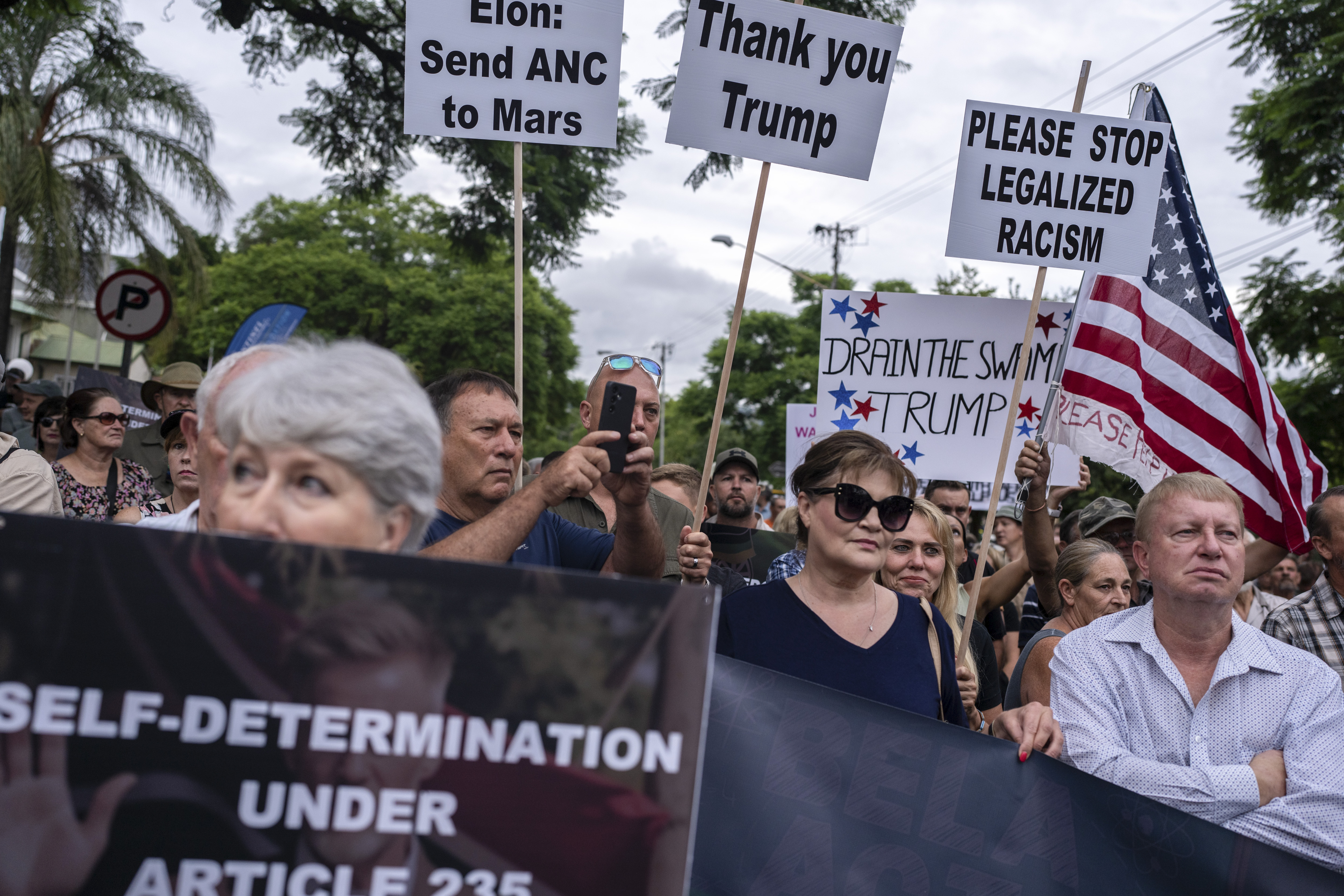
    The Trump administration has adopted a confrontational approach toward long-time ally South Africa. Washington has spent the past year spreading falsehoods about “white genocide,” cutting crucial HIV funding and blocking South Africa from the G20 while threatening its trade relationships. The United States has also made a point of resettling white Afrikaners as refugees, while excluding nearly all other refugees around the world.

    With the FIFA World Cup approaching, some may hope for a new chapter of “sports diplomacy” to relieve tensions between the countries. When South Africa’s national football team takes the field this summer, it marks Bafana Bafana’s first World Cup appearance in 16 years. But U.S. visa policies initially threatened South Africa’s ability to travel. At nearly every turn, the Trump administration is sending a clear message: it is hostile to a Black-led South Africa and sympathetic to its white minority. The domestic politics of race and white supremacy, long an undertone of U.S.-South African ties, animate the current bilateral relationship.

    The Trump administration’s embrace of white South Africans and the tensions with the African National Congress (ANC), the liberation movement-turned-political party that currently governs South Africa as part of a coalition, are not without historical precedent. Throughout the Cold War, Washington maintained close ties with apartheid South Africa’s white minority regime. Race was always part of the equation, but it was camouflaged in the language of anticommunism and strategic interest. Today, with the Cold War long over, racial politics are more exposed.

    From the early years of the Cold War, anti-Communism and race were entangled features of the U.S.-South African relationship. For Washington, South Africa’s white minority government was a reliable ally: rich in strategically important natural resources, home to a crucial shipping route and a bulwark against the Soviet Union in southern Africa.

    This relationship continued despite the formal consolidation of apartheid in 1948. The Afrikaner-led National Party systematically implemented apartheid, a draconian patchwork of racial segregation policies that stripped Black South Africans of their land and citizenship while blunting Black mobility. Despite this odious lack of democracy, Washington actively encouraged friendly relations with the white-minority-ruled South Africa. Cold War objectives overpowered moral arguments against apartheid.

    But the Cold War also shaped racial politics in unexpected ways. Just as Washington tolerated apartheid abroad, it was contending with its own system of racial segregation under Jim Crow. The Cold War created a powerful incentive for the United States to manage its image on race at home and abroad. The Soviet Union eagerly broadcast U.S. racial violence to newly decolonizing nations across Africa and Asia, undermining U.S. claims to lead the free world. This exposed Washington’s liability and motivated federal policymakers, becoming a key driver of civil rights victories and landmark decisions, such as school desegregation.

    These dynamics had the potential to threaten U.S. support for South Africa. After all, how could the self-proclaimed leader of the free world maintain its alliance with a government built on white supremacy? The answer, for most of the Cold War, was to turn a blind eye. And in the early Cold War years, domestic pressure campaigns to halt support for apartheid South Africa faced charges of communist subversion, severely blunting their impact and reach. While the Cold War opened the door to domestic civil rights gains, its politics in the early years also stymied avenues of resistance that could force Washington’s hand.

    Yet cracks eventually began to show. The rising tide of decolonization further exposed the hypocrisy of U.S. support for South Africa. In 1960 alone, 17 African nations gained independence from European colonial rule. Another turning point was the 1960 Sharpeville massacre, in which South African police killed 69 Black protesters, shocking international opinion and placing the evils of the apartheid state on full display. In turn, African leaders frequently criticized apartheid at the United Nations, placing Washington on the defensive. South Africa faced mounting international isolation, and Washington had to decide between its Cold War alliance with white-led South Africa on the one hand and its credibility with the decolonizing world on the other.

    The Nixon and Ford administrations resolved that tension by drawing Washington ever closer to South Africa’s white minority in the 1970s. Even as demands mounted from groups like the Congressional Black Caucus and the blossoming anti-apartheid movement for mandatory economic sanctions and a formal severing of U.S. ties to the regime, Washington remained steadfast. They concluded that gradual, constructive change, which they claimed to desire, could only come from white South Africans themselves not from U.S. pressure. It was an argument that conveniently absolved Washington of any responsibility to pressure Pretoria—and revealed U.S. policymakers’ views that Black South Africans were not credible leaders of their own liberation. Washington’s continued support became more exposed when, in 1974, South Africa was expelled from the United Nations General Assembly.

    Following the June 1976 Soweto massacre, where South African police killed over a hundred protesting students, international opinion grew more outraged, adding urgency to calls for sanctions. Winds of change arrived, albeit briefly, when the Carter administration initially took an aggressive approach to apartheid, aligning U.S. foreign policy with an interest in promoting human rights abroad. That agenda changed in the 1980s. President Reagan rejected calls for economic sanctions, instead endorsing “constructive engagement,” the argument that crippling the South African economy would hurt rather than liberate Black South Africans. Critics such as Desmond Tutu rejected this logic, arguing that Black South Africans had repeatedly called for sanctions. The U.S. Congress was also unconvinced. On October 2, 1986, a bipartisan majority overrode Reagan’s veto of the Comprehensive Anti-Apartheid Act, imposing economic sanctions and severing Washington’s formal ties to the regime.

    Made By History sponsors. FOR USE ON MADE BY HISTORY STORIES ONLY.Inquirer Staff

    Following decades of pressure, South Africa held its first multiracial elections in April 1994, bringing the ANC and Nelson Mandela to power. Washington warmly welcomed a democratic South Africa, which it now saw as a model for a peaceful transition to majority rule. In a post-Cold War world, the strategic rationale for supporting white South Africa largely disappeared; the U.S. no longer needed its defense against Soviet expansion.

    But the Trump administration’s hostile stance today is a signal that the Cold War relationship with South Africa was never purely animated by military necessity; a willingness to accept white minority rule undergirded the U.S.-South African relationship and was consistently reflected in policy. Now, those racial politics have become far more visible. The “white genocide” myth, Afrikaner refugee exception and hostility toward South African diplomats are driven by racial politics and a consistent willingness to privilege the concerns of South Africa’s white minority, unmediated by Cold War necessity.

    Whether or not the U.S.-South African relationship can be improved remains to be seen. Sport, which often reaches audiences that diplomacy cannot, also serves as a potential arena for reconciliation. The history of democratic South Africa suggests that sport has, more than once, progressed more rapidly than politics. The 1995 Rugby World Cup was perhaps the most celebrated example, when Mandela used the tournament to signal reconciliation, a moment immortalized in the Clint Eastwood film Invictus.

    South Africa’s first participation in the World Cup since it hosted in 2010, on American soil no less, symbolizes that potential. And yet, until Washington reckons with the racial politics driving its relationship with South Africa, both past and present, the World Cup is more likely to highlight the divide than to heal it.

    Mattie Webb, PhD, is an assistant professor of history at the Virginia Military Institute (VMI) and a Nonresident Fellow with the Institute for Global Affairs at Eurasia Group.

    Made by History takes readers beyond the headlines with articles written and edited by professional historians. Opinions expressed do not necessarily reflect the views of The Inquirer.

  • The body of a Philly teen who disappeared on a class trip to Wildwood has been recovered

    The body of a Philly teen who disappeared on a class trip to Wildwood has been recovered

    The body of a Philadelphia teenager who vanished earlier this month while swimming in the ocean at the Jersey Shore has been recovered, the Wildwood Police Department said.

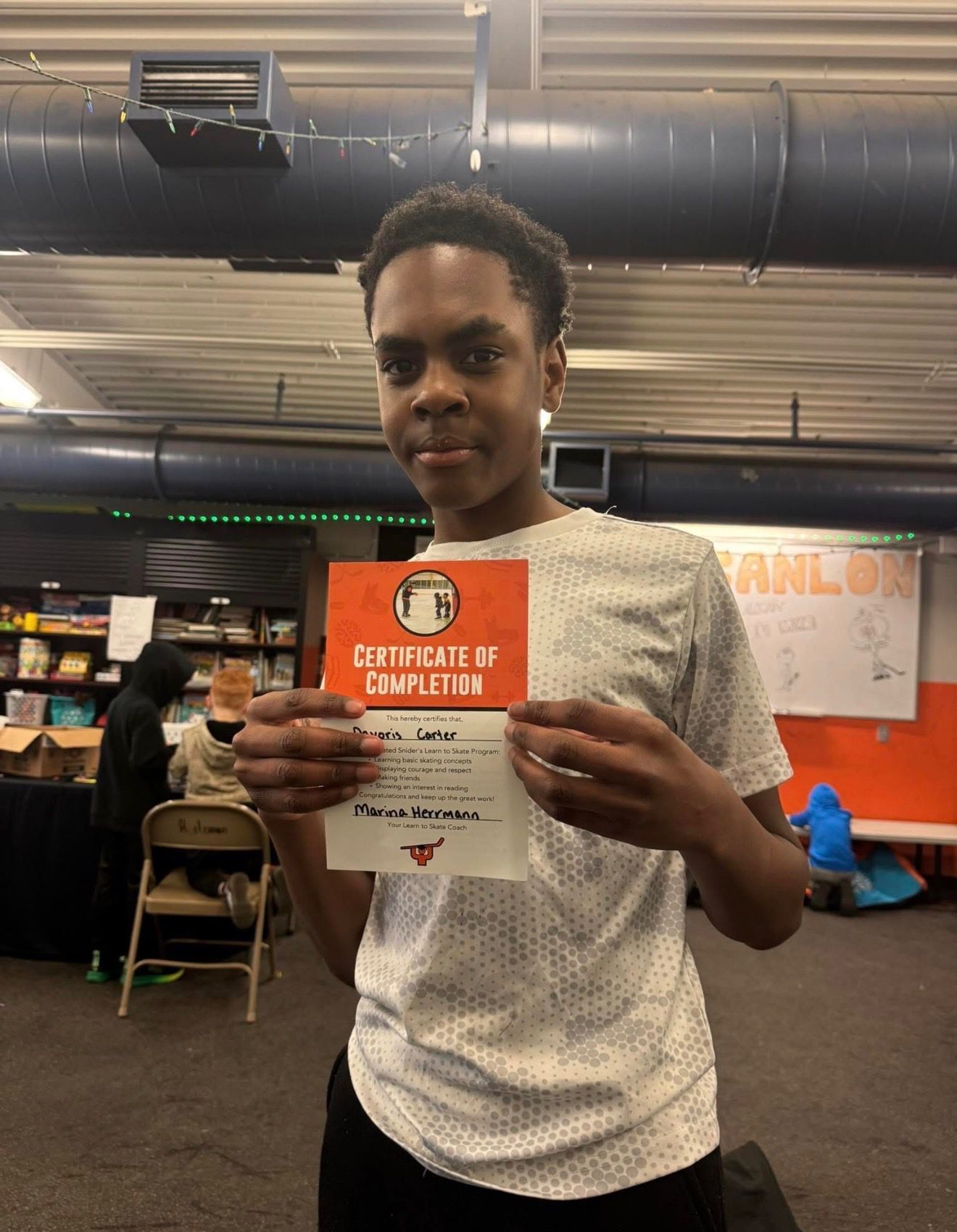
    Davoris Carter III, 14, was on a class trip to Wildwood when he disappeared on the afternoon of June 1. Carter’s body was found Tuesday near the U.S. Coast Guard Training Center in Cape May, and a forensic analysis confirmed it was that of the missing teen.

    “Our sincere condolences are with the juvenile victim’s friends and family during this very difficult time,” Wildwood police said in a statement.

    Shyara Hill, Carter’s mother, told The Inquirer her son and other special-needs students traveled to the beach with school staffers to celebrate graduating eighth grade from Delta School in Philadelphia.

    Davoris Carter was recently accepted into the Philadelphia Police Department’s “Explorer Cadet” program, according to his mother. Courtesy of the family

    There were no lifeguards at the beach when the students entered the ocean, and around 1:30 p.m. on June 1, police responded to several swimmers in distress. Officials said three were rescued, but Carter disappeared.

    Delta School did not respond to a request for comment. The school’s director of education told NBC10 last week school officials were cooperating with the investigation and that the class trip was “appropriately supervised with the right number of staff members.”

    The school said in a message posted on its website: “Delta School is heartbroken over the recent loss of student Davoris Carter III. As we navigate this difficult time, we continue to hold Davoris, his family, and every member of our school community in our thoughts and prayers.”

    Carter, the oldest of four siblings, was a good student and a kind and funny kid, Hill told The Inquirer. She said he was recently accepted into the Philadelphia Police Department’s “Explorer Cadet” program, which introduces young people to aspects of law enforcement, as well as the Philadelphia City Rowing program.

  • 🌊 Should houses be 4 feet higher? | Down the Shore

    🌊 Should houses be 4 feet higher? | Down the Shore

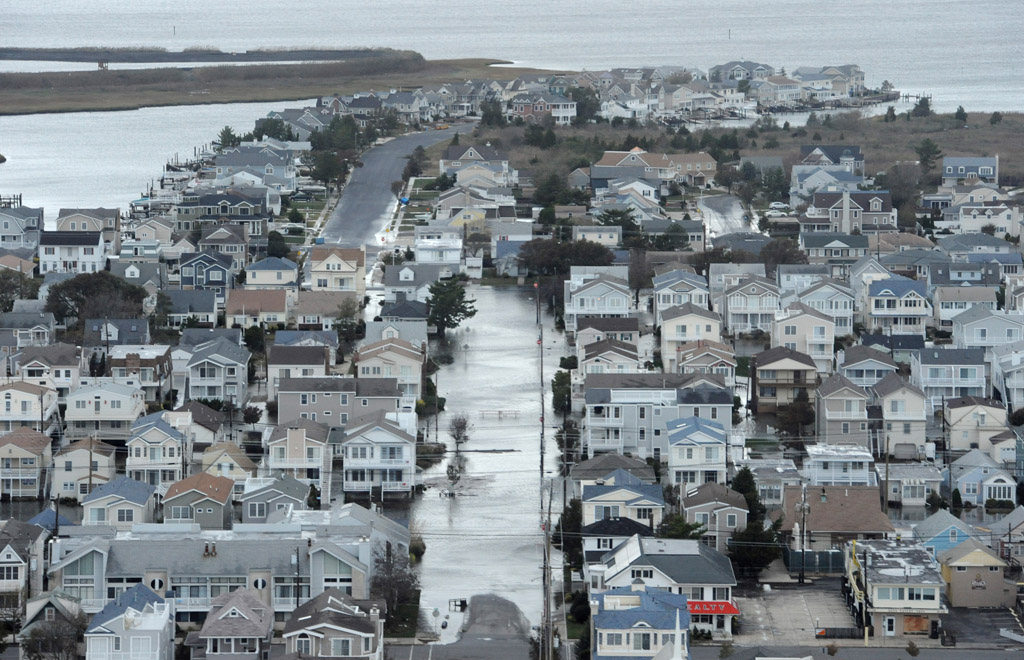
    In Sea Isle City this week, the U.S. Army Corps of Engineers was hard at work on a last-minute-funded beach replenishment project. The project will go into the summer, which is going to annoy everyone. From there, the Army Corps will head to Avalon and Stone Harbor. Ocean City is also being replenished on its north end. Together, the projects will cost $56.9 million, with about 5 million total cubic yards of sand being dredged from the ocean and brought to the beaches, the Army Corps says.

    The urgency of the beach replenishment was at odds with Gov. Mikie Sherrill’s recent one-year delay for new rules that would require new homes, and those being substantially improved, to be built 4 feet above current FEMA elevation standards in expanded state flood and coastal zones. That’s on top of earlier FEMA requirements that caused houses rebuilt after Hurricane Sandy to be raised, in some cases by 14 feet, to better guard against damage from increasing flooding.

    The regulations, known as the Resilient Environments and Landscape (REAL) rules, were adopted on the last day of Gov. Phil Murphy’s term and set to go into effect July 20, over objections from builders, business groups, and elected officials. The decision to wait a year was denounced by environmentalists.

    “There is no more time to lose,” said Anjuli Ramos-Busot, citing sunny day flooding down the Shore. “New Jerseyans are at risk, property is at risk.”

    The state said it will now be taking the year to reconsider and listen to public comment. What do you think? Let us know.

    In other news, Margate has a favorite son in the NBA finals: Knicks superstarJalen Brunson, who according to property records and local scuttlebutt, likes to pop into Aversa’s for a turkey hoagie, tool to the Wawa in a golf cart, play mini golf, and visit his spacious new-construction $7 million home a block from the beach. Earlier this spring, while the Knicks were making quick work of the Sixers, Steve & Cookie’s hosted a dinner for Brunson and his teammates, and there have been past sightings at local basketball courts.

    My colleague Alex Coffey, meanwhile, writes that another Nova Knick, Mikal Bridges, made his mom’s predictions come true with a Shore house in Avalon.

    📮 Do you want to see new building rules for Shore flood zones? Did the proposed rules go too far or is that what’s needed to deal with sea level rise?

    Let me know what you think by replying to this email, and I’ll include the most interesting responses in a future newsletter. (See below for your thoughts on who gets to be a local.)

    Have ideas or news tips about the Shore or this newsletter? Send them to me here.

    ⛈️ Beaches were packed last weekend with the hot weather, and the steamy weather will continue this weekend.

    — Amy S. Rosenberg (Find me at @amysrosenberg, or on Instagram 📷 at @amysrosenberg. 📧 Email me here.)

    If someone forwarded you this email, sign up for free here.

    Shore talk

    🇭🇹 Les Grenadiers, the World Cup team from Haiti, landed at the Atlantic City Airport and settled in at its base camp at Stockton University. Chef Jackie Jean of A.C.’s Gouté Créole, which made Craig LaBan’s top 25 Shore restaurants last summer, told Fox29 he was “overwhelmed” at the chance to cook some Haitian specialties for the team. Jonathan Tannenwald profiled Haiti team member and Penn grad Duke Lacrois, a native of Ocean County. And columnist Sabrina Vourvoulias writes about the joy felt by Philly’s local Haitian community. Haiti plays Brazil in Philly on June 19.

    💰 The privately owned Margate Bridge is increasing its tolls June 16.

    💔 The mother of Davoris Carter III wants answers after her 14-year-old son went missing in the ocean in Wildwood while on a field trip.

    🔊 Neighbors are complaining about decibel levels from the Oar House in Sea Isle.

    🔊 Wildwood added commercial properties to its noise ordinance.

    What to eat/What to do

    🇧🇷 Check out some Brazilian street food and ambiance in West Cape May’s DeckSide Boteco.

    🥙 Craig LaBan is still savoring the grill platter and pan-Middle Eastern flavors of Ruhani Kitchen on the Black Horse Pike.

    🚒 Ocean City is hosting the Emergency Responder 5K on June 13.

    🐢 Avalon’s upgraded Bay Park Marina, compete with a “turtle retention barrier,” is officially open.

    🎡 Hear the final report about the future of the Ocean City boardwalk at 6 p.m. at the Tabernacle on June 12.

    ⛯ Is Wildwood’s Pacific Avenue getting some love? The folks at the new Lighthouse Kitchen and Cafe are all in.

    🍩 Federal Donuts opened a store at the Hard Rock Hotel and Casino in Atlantic City.

    Shore snapshot

    Art the Clown, the mascot from Spirit Halloween and the “Terrifier” movies, made an appearance on the Wildwood boardwalk on June 5, 2026.Amy S. Rosenberg / staff

    Your thoughts on: Who’s a local

    There were plenty of opinions about who gets to call themselves a local, and how long the process takes. (Is there a tribunal in the back of Robert’s in Margate where such decisions are made?)

    Here’s a sampling:

    Susan Wessel: I am a transplant to the Jersey shore myself. Born and raised in Philly. I have never and will never consider myself a local even though through the past 43 years I’ve lived in Barnegat, Manahawkin, Brant Beach and Galloway.

    Tom DeAngelo: I live & work in North Cape May for 36 years. My native Cape May friends say I can call myself “A local” but never “a native.” My 3 children were born in Philly. All my grand kids are born here. Native? Local? It’s all very confusing!!!

    Brian Steiner: As far as I’m concerned, anyone who pays property taxes is a local. PS… We should get free beach tags.

    Mary DeCotiis: I am truly from the shore. I was born at Fitkin Hospital in Neptune, now Jersey Shore University Medical Center, in 1956. I have lived in Belmar, 2 blocks from the beach my entire life. Soon I will have lived at the shore for 70 years. Can’t get any more local than that! I plan to remain here until the day I pass away and move on to the Ocean in the sky!!!

    🧠 Trivia time

    Soccer’s U.S. Men’s National Team member Brenden Aaronson was married in this Jersey Shore town at the base of a causeway bridge. Was it:

    A. Rio Grande (outside of Wildwood).

    B. Manahawkin (outside of LBI)

    C. Cape May Court House (outside of Stone Harbor).

    D. Linwood (outside of Margate).

    If you think you know the answer, click on this story to find out. Or take a guess and email us with the answer here.

    Ask Down the Shore: Beach flags

    Our trusty Shore Line group chat followers had a lot of thoughts this week about beach flags. (Join the conversation!)

    We asked: Should political flags be allowed on the beach? Are any flags acceptable?

    Here’s a sampling:

    Political flags are not my thing, but people are free to express themselves. Honestly, it’s the beach and everyone should be chilling. Live and let live regardless.

    My humble opinion about political flags on the beach is…ABSOLUTELY NOT!! I go to the beach to relax, not to discuss politics, religion or any other issues our country may have. PLEASE… NO FLAGS!!

    I’m a Phillies fan but flags on a beach infringe on the space of others.

    My husband I grew up on opposite sides of the state. It’s all about togetherness, never divisiveness. That’s why we made our own Steagles flag from a t-shirt and printed heat transfer.

    A reader sent us this homemade combination Steelers-Eagles flag to fly on the beach in the spirit of togetherness. The topic of flags on the beach is a controversial one.Provided

    Hmm. Not sure about that one. Have a Shore etiquette question you’d like to see us tackle? Please reply to this email.

    Your Shore memory: A hurricane and a ham

    John Judge of Ocean City writes:

    The first we hear of the Great Atlantic Hurricane of 1944 was when a massive ocean wave crashed into the second floor of our Long Beach Island rental.

    The war time government had banned coastal weather forecasts lest German U-BOATS prowling the Jersey Coast take advantage of meteorological data. My parents and four-year-old me survived but the storm reduced the house to driftwood.

    Also not surviving was my father’s salt-water swamped 1930s Pontiac. While dad was sad to lose a hard-to-come-by car during wartime scarcity, mom was madder to lose a ham bought with hard to come by ration stamps.

    Send us your Shore memory! In 200 words, tell us how the Shore taps into something deep for you, and we will publish them in this space during the summer.

    Staff writer Ryan W. Briggs contributed to this newsletter.


    By submitting your written, visual, and/or audio contributions, you agree to The Inquirer’s Terms of Use, including the grant of rights in Section 10.

  • Murals grace these homes | Real Estate Newsletter

    Murals grace these homes | Real Estate Newsletter

    A few years ago, friends from California came to visit me for their first trip to Philly. As we waited to get into a restaurant for brunch, one of them noticed a mural on a wall across the street and asked me what it was. I said, “It’s a mural.”

    I realized later I should have told them about Philly’s strong tradition of murals and that the city is known for them. (Sorry, Katie.)

    It’s easy to take for granted that our city is full of murals. But as a residential real estate reporter, I recently thought it’d be fun to talk to some of the homeowners who’ve turned their properties into giant canvases for artists’ creations.

    Keep scrolling for that story and more in this week’s edition:

    📮Each week, one of my colleagues highlights the story of how a homebuyer in the Philly region made their purchase happen. Did you recently buy a home in the area? Whether you have an inspiring or cautionary tale to share, tell us how you did it.

    — Michaelle Bond

    If someone forwarded you this email, sign up for free here.

    These owners turned their homes into art

    I pass the Baldwin Locomotive Works mural on North 20th Street all the time. It’s impossible to miss. It takes up the whole side of a house and has a train that looks like it’s coming at you.

    But now I know a secret that I’ll share with you: If you ever stop to look at the mural and think you hear a faint whistle coming from inside, it’s not your imagination. The homeowner told me she likes to blow her own personal train whistle when she sees the mural getting attention.

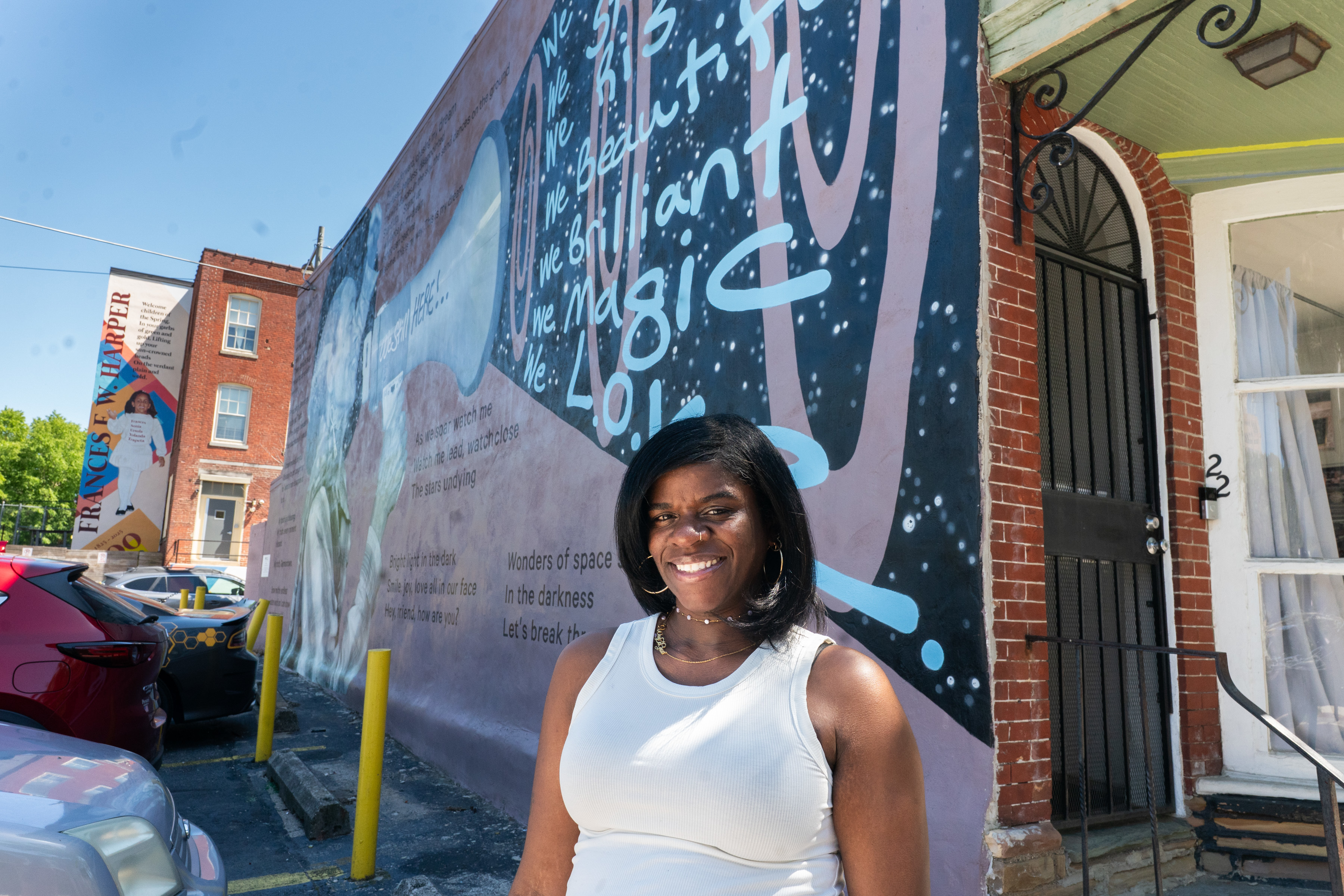
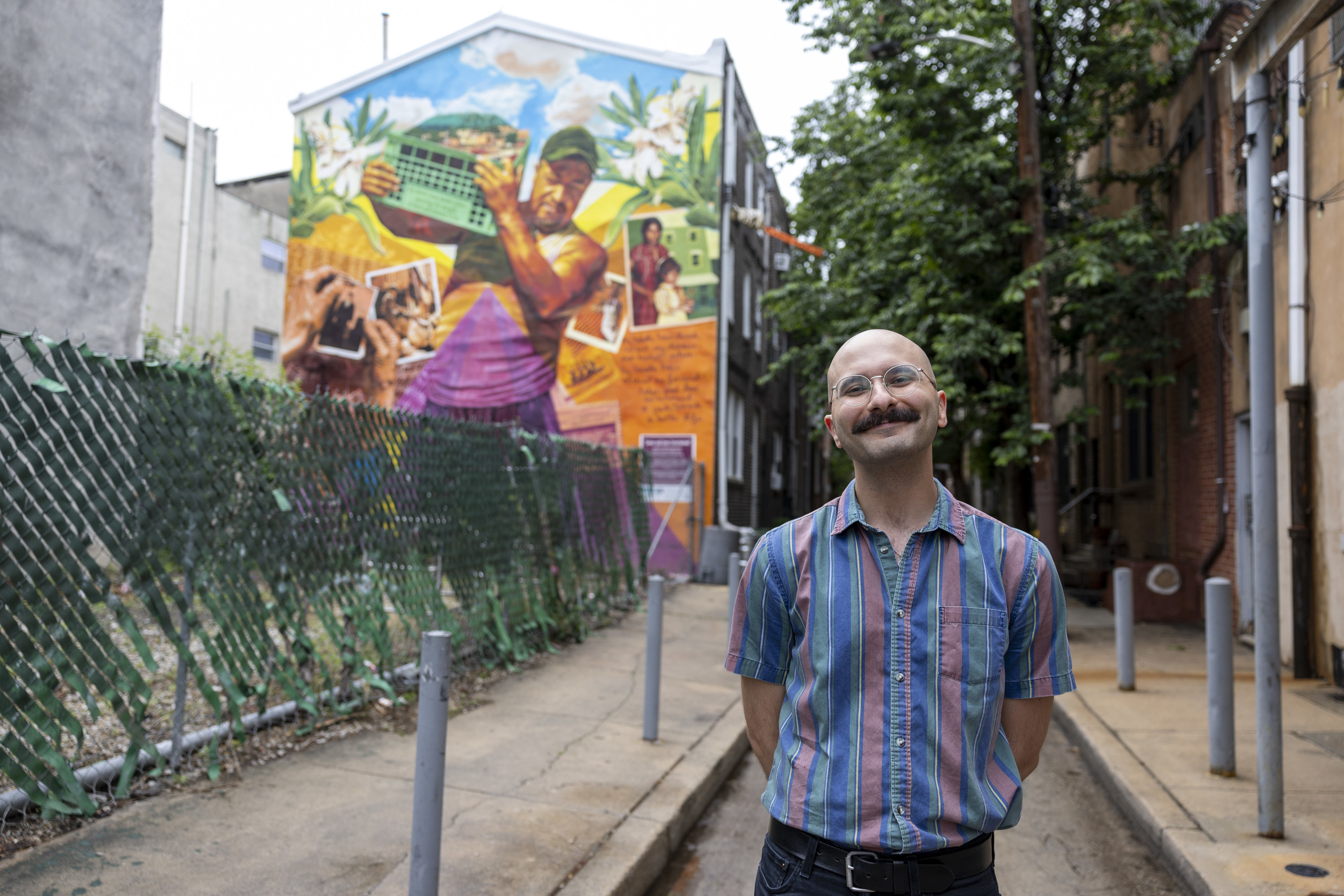
    Across the city, roughly 1,000 murals are on someone’s home through partnerships with Mural Arts Philadelphia. That number doesn’t include the homeowners who put art on their walls themselves or pay an artist to do it, like an owner I talked to in Fishtown who has a giant fish on her brick wall.

    As the founder of Mural Arts told me, in Philly, “people 100% absolutely love public art.” The organization has a long waitlist filled with people who have a mural idea or a wall to fill.

    I talked to six Philly homeowners about why they wanted their properties to join the city’s rich tapestry of murals. Here’s what they told me.

    The latest news to pay attention to

    Home tour: A Fairmount loft with history

    Allison Langer and her husband, Mark Paulson, were intrigued by the converted apartment building next to Langer’s yoga studio.

    They’re both fans of historic preservation and could tell from the street that they loved the windows in the old headquarters of the AF Bornot Dye Works Co. They could see themselves living there.

    But the four-story building was full, so they had to wait a few months to get an apartment.

    Once they moved in, they saw they were right about the windows, which are now the couple’s favorite feature. Langer, Paulson, and their cat are treated to lots of natural light and daily sunset views.

    Both the windows and high ceilings make their apartment feel bigger than it is.

    Take a peek inside their home and learn about their lamp collection and personally meaningful pieces of art.

    📊 The market

    Mortgage interest rates were higher at the end of last month than they’ve been since last summer.

    Elevated rates are sidelining some buyers who want to purchase their first home or who don’t have a lot of money to spend.

    The buyers driving the market in the Philly area are those with higher incomes. And it’s not looking like that will change anytime soon.

    In the Philadelphia metro area in May, pending home sales and prices were up, and more homeowners put their properties on the market.

    According to the multiple listing service Bright MLS:

    🔺New listings were up about 6.5% from last May, to roughly 8,000.

    🔺The overall number of homes for sale increased 9.5% from a year ago, to about 12,800 active listings.

    🔺New pending sales increased 4% from last year, to about 7,050.

    🔺The median sale price was $405,000, up 2.5% from the same time last year.

    📷 Photo quiz

    Do you know where this guy is lounging?

    📮 If you think you do, let me know.

    Last week’s quiz featured a photo taken at North Second Street and Elfreth’s Alley in Old City.

    Shout-out to David N. and Ben S. for being two of the first to answer correctly.

    Enjoy the rest of your week.

    By submitting your written, visual, and/or audio contributions, you agree to The Inquirer’s Terms of Use, including the grant of rights in Section 10.