Blog

  • Former Sixer James Harden arrested in Houston on misdemeanor charge

    Former Sixer James Harden arrested in Houston on misdemeanor charge

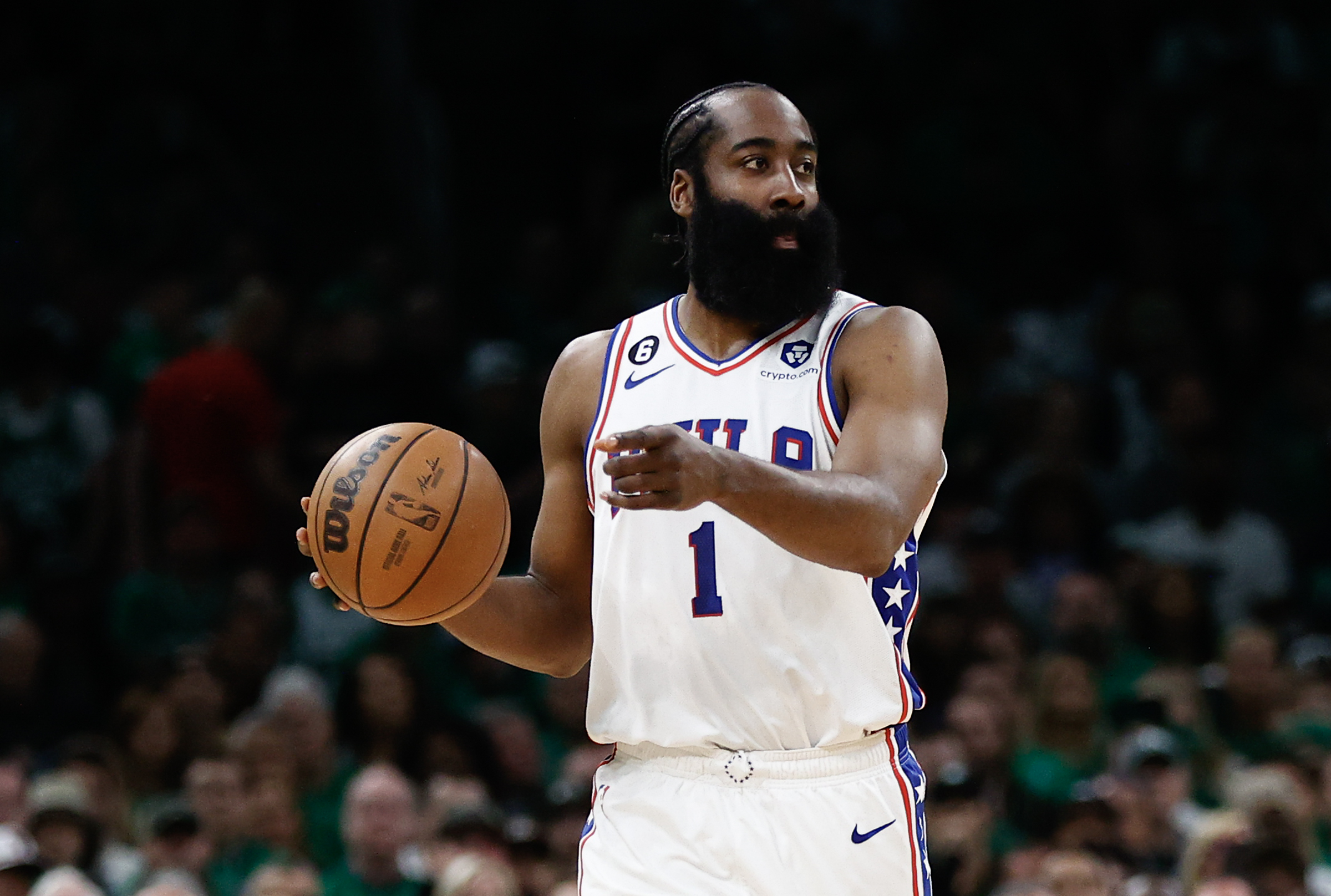
    Cleveland Cavaliers guard James Harden was arrested on Saturday in Houston on a misdemeanor charge of unlawful carrying of a weapon in a motor vehicle, according to the Harris County District Clerk’s Office.

    Harden was arrested at 3:41 a.m. and booked just before 5 a.m., then posted $100 bond and was released from police custody, according to charging documents, which said he had a handgun in plain view that was not in a holster.

    His arraignment is scheduled for June 22, according to the clerk’s office website. Harden is listed as a Houston resident in court documents.

    “The Cleveland Cavaliers are aware of the arrest of James Harden this morning and are in the process of gathering additional information,” the team said in a statement. “We are in contact with James and his representation and will continue to monitor developments as they become available. At this time, we will have no further comment.”

    A message sent to Harden’s representatives from the Associated Press seeking comment was not immediately returned.

    Harden, 36, just finished his 17th NBA season and has the right to exercise a $42.3 million option to return to the Cavaliers next season. He indicated when Cleveland’s playoff run ended with a loss to the New York Knicks in the Eastern Conference finals that he would like to remain with the team, which would suggest he’s willing to forgo the option in favor of a longer contract with the Cavaliers.

    Harden is an 11-time All-Star and an eight-time All-NBA selection who earned MVP honors in the 2017-18 season while playing for the Houston Rockets and is averaging a career 24 points, 7.3 assists, and 5.6 rebounds. After being acquired in the Ben Simmons trade, he played for the Sixers from 2022 to 2023 and averaged 21 points, 10.6 assists, and 6.4 rebounds in 79 games before he was traded to the Los Angeles Clippers on Oct. 31, 2023.

  • President’s House exhibits should be restored in time for July 4, another federal judge rules

    President’s House exhibits should be restored in time for July 4, another federal judge rules

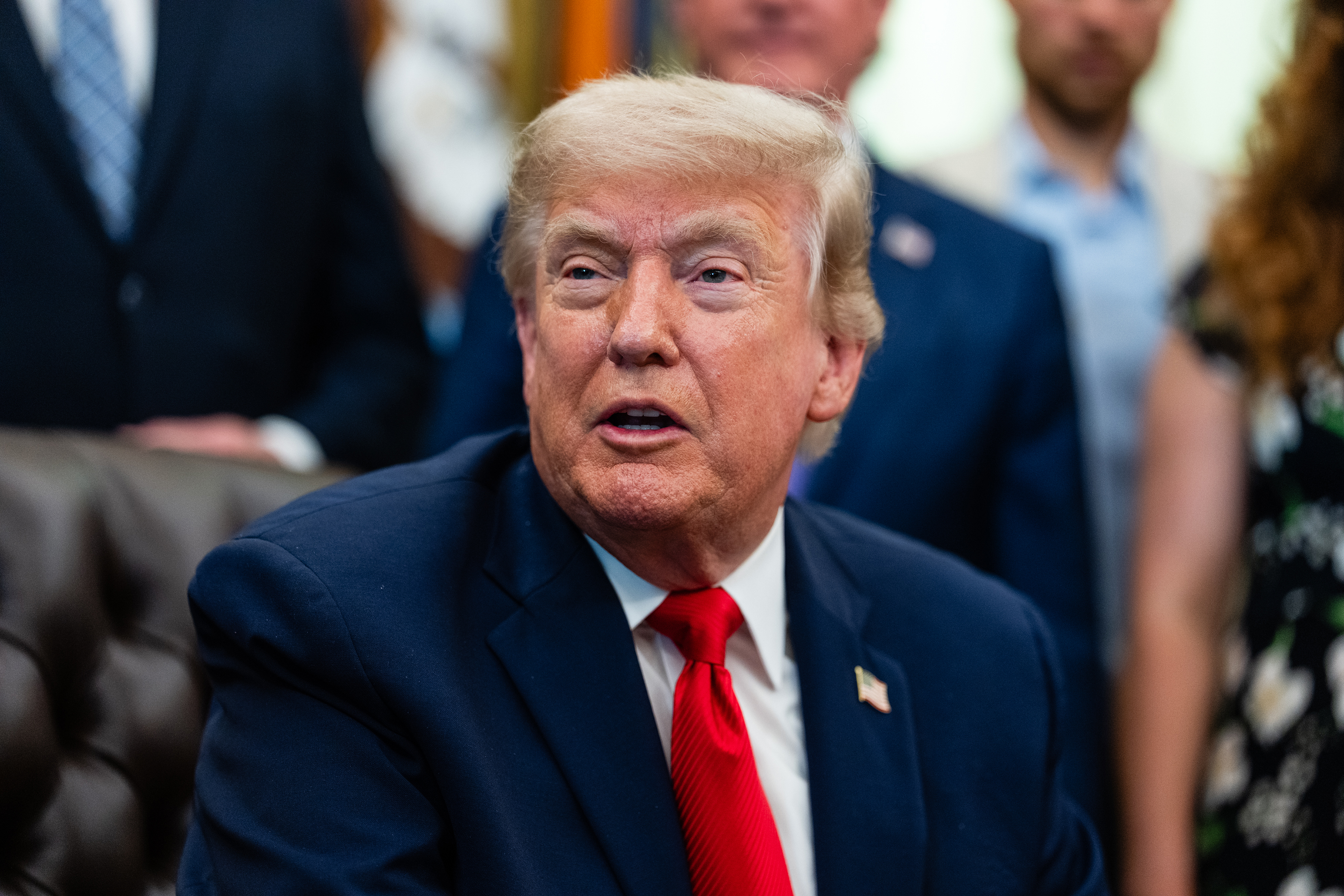
    President Donald Trump’s administration must restore the remaining missing displays to the President’s House Site in time for July Fourth, a federal judge in Massachusetts ruled Friday evening.

    U.S. District Court Judge Angel Kelley’s decision, which came three weeks ahead of the United States’ roaring celebrations for its 250th birthday, temporarily blocks the National Park Service from removing or altering content at parks across the country and gives the agency 21 days to restore any exhibits that had been removed or changed.

    “Because Defendants deemed it important to strip the parks of these undeniable truths in anticipation of the 250th Anniversary of our great Nation, it is equally important that our shared history be honestly told and fully restored by the 250th Anniversary to properly honor the remarkable achievements of the United States,” wrote Kelley, a nominee of former President Joe Biden.

    The ruling comes as the City of Philadelphia and the federal government, including the Department of Interior and the National Park Service, are engaged in their own legal battle over the fate of the President’s House, a memorial dedicated to the nine people George Washington enslaved in Philadelphia during the founding of the U.S.

    Both parties are waiting for a ruling from the U.S. Court of Appeals for the Third Circuit on whether a February injunction ordering the administration to restore the site of America’s first executive mansion should take effect. Depending on how the Third Circuit rules — and when — the new ruling could add an extra level of complexity to the litigation.

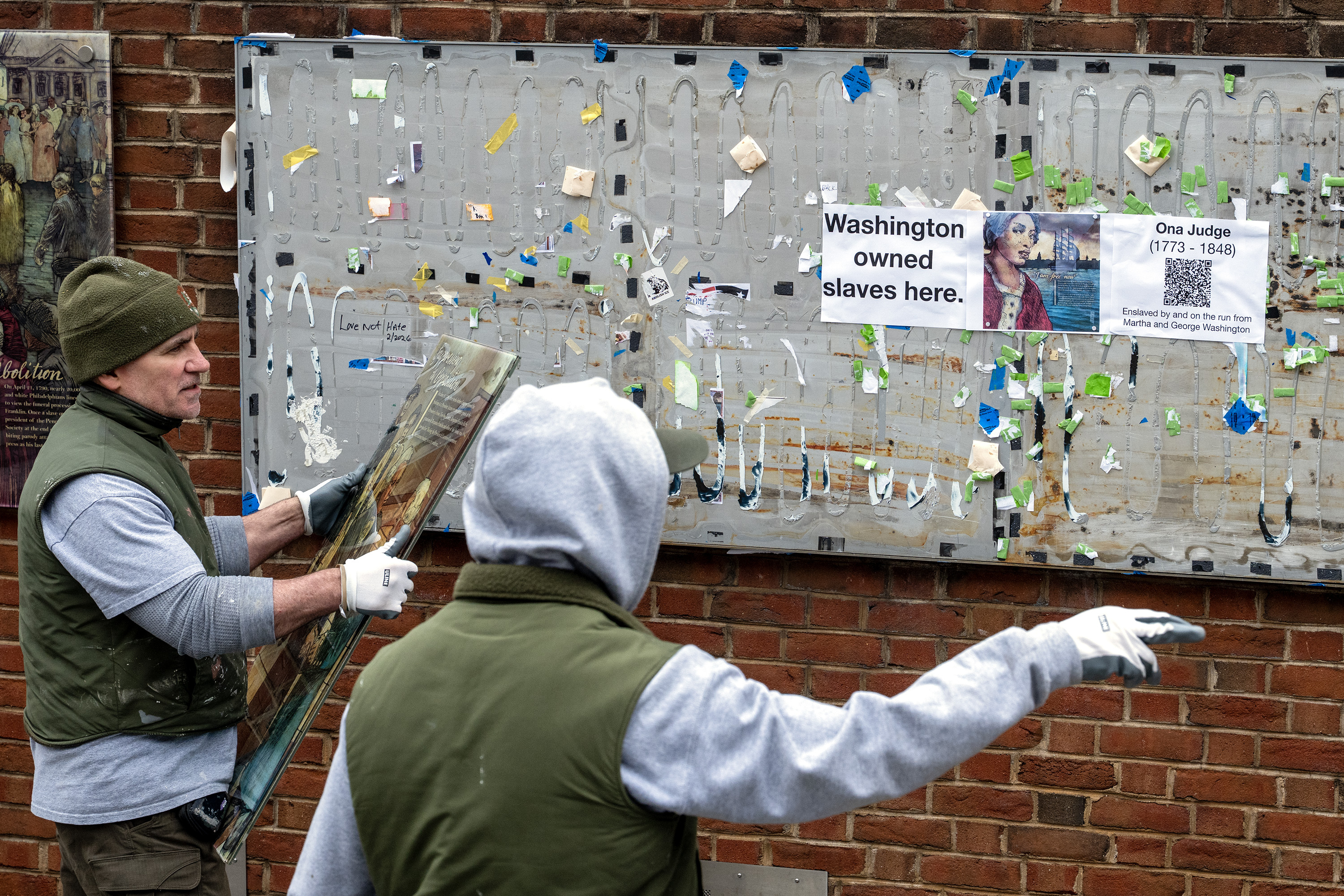
    Workers rehang panels at the President’s House in Independence National Historical Park on Feb. 19. Tom Gralish / Staff Photographer

    In a statement to The Inquirer Saturday, a spokesperson for the Interior Department called Kelley a “liberal activist judge” and said the government will be considering its appeal options “while we celebrate UFC Freedom 250 on the South Lawn of the White House this weekend in honor of our nation’s 250th,” referring to the controversial UFC fight that Trump is hosting at the White House on his birthday Sunday.

    The city did not immediately respond to a request for comment.

    Friday’s decision is the latest development in what has become both a bipartisan local and national effort to protect history at the President’s House and parks across the country. Directives from Trump and Interior Secretary Doug Burgum prompted the President’s House to be abruptly dismantled earlier this year.

    The federal government later proposed its own version of history for the Sixth and Market site, which the Trump administration said it’s ready to install should it get the legal green light.

    In a court hearing earlier this month, the administration said it would take roughly three weeks to restore the exhibits or install the new panels.

    The ruling out of Massachusetts came in a case that challenged the basis for the removals of exhibits more broadly. A coalition led by the National Parks Conservation Association argued in its lawsuit that Burgum’s 2025 order implementing Trump’s directive to ensure that no national parks’ exhibits “inappropriately disparage Americans past or living” was unlawful. The conservation groups asked Kelley to issue a stay on the order and reverse all removals that already took place.

    Plaques at other national parks were also impacted by the orders, including signage regarding climate change at Fort Sumter and the mistreatment of Native Americans at the Grand Canyon.

    “Under the guise of promoting American dignity, this Administration seeks to share a limited history by ordering the removal of all signs, displays, and interpretive exhibits at National Parks that do not align with its preferred narrative, thereby telling half-truths,” Kelley wrote.

    An electronic billboard from the Avenging the Ancestors Coalition is parked at the President’s House on Feb. 19, following a rally after the return of some of the slavery exhibits that the National Park Service removed in January.Tom Gralish / Staff Photographer

    Alan Spears, senior director for cultural resources for the National Parks Conservation Association, applauded the ruling in a statement. He said “it will help protect national parks from the administration’s unprecedented campaign to erase history and science at these one-of-a-kind places.”

    The deadline to restore any missing materials ahead of July Fourth is notable, especially in Philadelphia, where a deluge of tourists will visit for Semiquincentennial festivities. But, as it stands, visitors to Independence National Historical Park are seeing a half-finished version of history at the President’s House.

    In February, Philadelphia District Judge Cynthia M. Rufe ordered the park service to restore the dismantled exhibits at the site, but a few remain uninstalled after the Justice Department appealed the injunction and obtained an administrative stay on further restorations.

    Outside of the legal proceedings, President’s House stakeholders have continued to defend the site by holding rallies and engaging Philadelphians via social media. Last month, the site was designated endangered by the National Trust for Historic Preservation, awarding the Preservation Alliance for Greater Philadelphia a $25,000 grant to produce a mobile digital exhibit near the embattled site.

  • Olympic gold medal-Stanley Cup double is at stake for Americans in the final

    Ken Morrow liked to consider himself the answer of a trivia question as the only hockey player who won an Olympic gold medal and hoisted the Stanley Cup in the same year. He was part of the 1980 U.S. “Miracle on Ice” team and then joined the New York Islanders for their first of four titles in a row.

    A half-dozen Canadians have done it since the NHL started sending players to the Olympics, but at this moment, more Americans have walked on the moon than accomplished what Morrow did. He is the only one.

    That will soon change, no matter how the Cup final ends. After the U.S. won gold at the Olympics for the first time in 46 years, Carolina’s Jaccob Slavin is one victory away from joining Morrow, unless Vegas wins Games 6 and 7 to put Jack Eichel and Noah Hanifin in that exclusive club.

    “I’ve had my 46 years,” Morrow told The Associated Press by phone Friday. “I’m always one that likes to see new people win the Cup, guys get a chance to do something that they’ll remember the rest of their lives. And for whoever does it this year, yes, I think it’s great.”

    Morrow won the Stanley Cup four times in a row as part of that Islanders dynasty. Eichel is the only U.S. player in the final with a Cup ring, and he had a major part in the Golden Knights’ championship run in 2023.

    After helping the U.S. win gold in Milan in February, Eichel says there are similarities and differences to those journeys.

    “One’s nine, 10 months; one’s two weeks,” Eichel said. “One of them is winner-take-all of just one game at a time. These are seven-game series, so it’s different in that sense. I think from an emotional standpoint and a mentality, I think there’s a lot of similarities: just the investment in winning and the feeling in the room and everything that comes with it.”

    The single-elimination element is a good way of thinking of playoff hockey, Eichel said, though Hanifin pointed out that it is drastically different preparing for a game at a time at the Olympics than enduring the ups and downs of a postseason.

    “When you’re playing seven-game series, you can kind of build over time and if you hit a little bit of a setback or some adversity, you can kind of learn from it and build and come back better,” Hanifin said. “Whereas Olympics, when you get into those medal rounds, it’s a one-and-done situation, so it’s different in that regard.”

    If the Hurricanes win, it would be some measure of retribution for Seth Jarvis, who played for Canada in the final and lost to the U.S. in overtime on Jack Hughes’ winning goal.

    When Carolina had him, Slavin and bronze medalist Sebastian Aho pose for a photo with their medals in their Olympic jerseys, Jarvis in a behind-the-scenes video quipped about reliving his nightmares and brought up the stuffed animal versions of an Olympic mascot that IOC officials gave to a group of players after losing the biggest game of their lives.

    Before the start of the final, Jarvis acknowledged the events are two separate things.

    “Obviously, losing in the gold medal is going to suck forever,” Jarvis said. “But now I get a chance to be a winner and win something big here with a group of guys that I’ve been grinding with for five years, been through the ups and downs of it and people that I just really care about.”

    Two more losses would put Jarvis back in the same spot, albeit without another stuffie. One more defeat by the Golden Knights would mean losing twice in a final this year for Mitch Marner, Shea Theodore and Mark Stone.

    Before the series began, Slavin was working hard to keep his brain from drifting to the possibility.

    “It crosses my mind,” Slavin said. “But we’ve got to go out and do a job first, so not trying to give it too much thought.”

    In the nearly five decades since Morrow completed the Olympic gold-Stanley Cup double, the entire situation has changed. The NHL has participated in the Olympics six times since 1998, so players are already professionals.

    Morrow at age 23 went less than a week and a half between beating the Soviet Union in the “Miracle on Ice” in Lake Placid, New York, visiting the White House, having his first practice with the Islanders and making his NHL debut.

    “I was trying to earn a living,” Morrow said. “I had to kind of really change focus quickly into trying to earn a job with the New York Islanders, and it wasn’t a sure thing for me when I first came to them right after the Olympics. Am I going to be able to play in the league? Those were questions that I was facing in trying to make a living. And these guys certainly didn’t have that facing them after the Olympics.”

    They just had to get back to doing their job, which was a challenge in itself. Vegas and Carolina each finished atop its division and got through three rounds of the playoffs.

    That gave Eichel, Hanifin and Slavin an opportunity to join Morrow, Steve Yzerman and Brendan Shanahan from Detroit in 2002, Jonathan Toews, Brent Seabrook and Duncan Keith from Chicago 2010, and Drew Doughty from Los Angeles in 2014 in the history books.

    “For myself, it’s been a pretty surreal year: Winning gold was awesome, and then having the chance to play for a Stanley Cup is awesome,” Slavin said. “I take it as a blessing and just thankful for it.”

  • Fox News host fact-checks John Fetterman: ‘Senator, we haven’t confirmed that’

    Fox News host fact-checks John Fetterman: ‘Senator, we haven’t confirmed that’

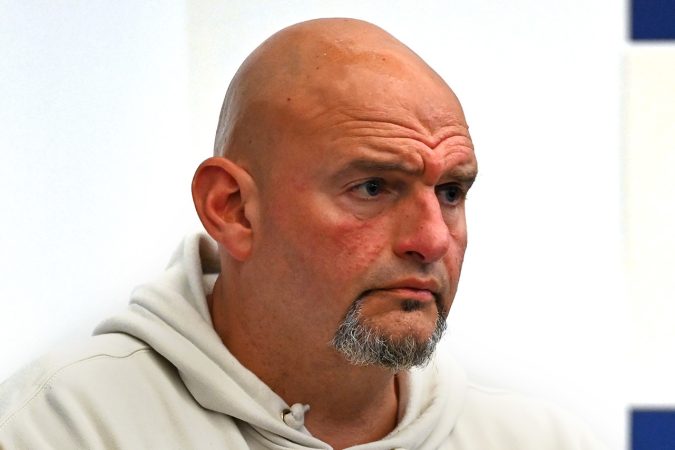
    Sen. John Fetterman (D., Pa.) was back on television Friday attacking a familiar target: controversial Maine Democratic Senate candidate Graham Platner. This time, he received some fact-checking pushback from a Fox News host.

    Despite sharing political parties, Fetterman has been an outspoken critic of Platner, who reportedly exchanged explicit text messages with other women during the early days of his marriage and is accused of volatile behavior by several ex-girlfriends. Platner has denied being physically threatening.

    The criticism followed earlier questions about a death’s-head tattoo that Platner had that was similar to a World War II SS symbol, and various comments he posted on Reddit.

    “He’s a bona fide dirtbag,” Fetterman told Philadelphia native Kristen Welker on NBC’s Meet the Press NOW Friday. “The Nazi tattoo, and the insane things that he said online. … What’s his resumé?”

    Democrat Graham Platner is taking on incumbent Republican Sen. Susan Collins in Maine. Sophie Park

    Fox News opinion hosts have been more than happy to welcome Fetterman in recent months, especially if it’s to criticize a fellow Democrat. He was just on the network last week bashing Platner, telling host Sean Hannity, “I’ll never carry water for that mess.”

    But on Friday night, during an appearing on The Ingraham Angle, host Laura Ingraham had to interrupt Fetterman after he accused Platner of sending sexually explicit pictures as recently as last year.

    “Senator, we haven’t confirmed that,” Ingraham said. “Fox has not confirmed that he sent these pictures.”

    The interruption caused Fetterman to fumble a bit before calling on Platner to “clear it up” by releasing all the messages he allegedly sent.

    Amy Gertner, Platner’s wife, admitted the two had worked through issues in their marriage and acknowledged seeking help from both marriage and personal counselors.

    “No marriage is perfect, and I don’t want a perfect marriage,” Gertner said in a video shared on social media last month. “I want my marriage, and I want to be married to Graham.”

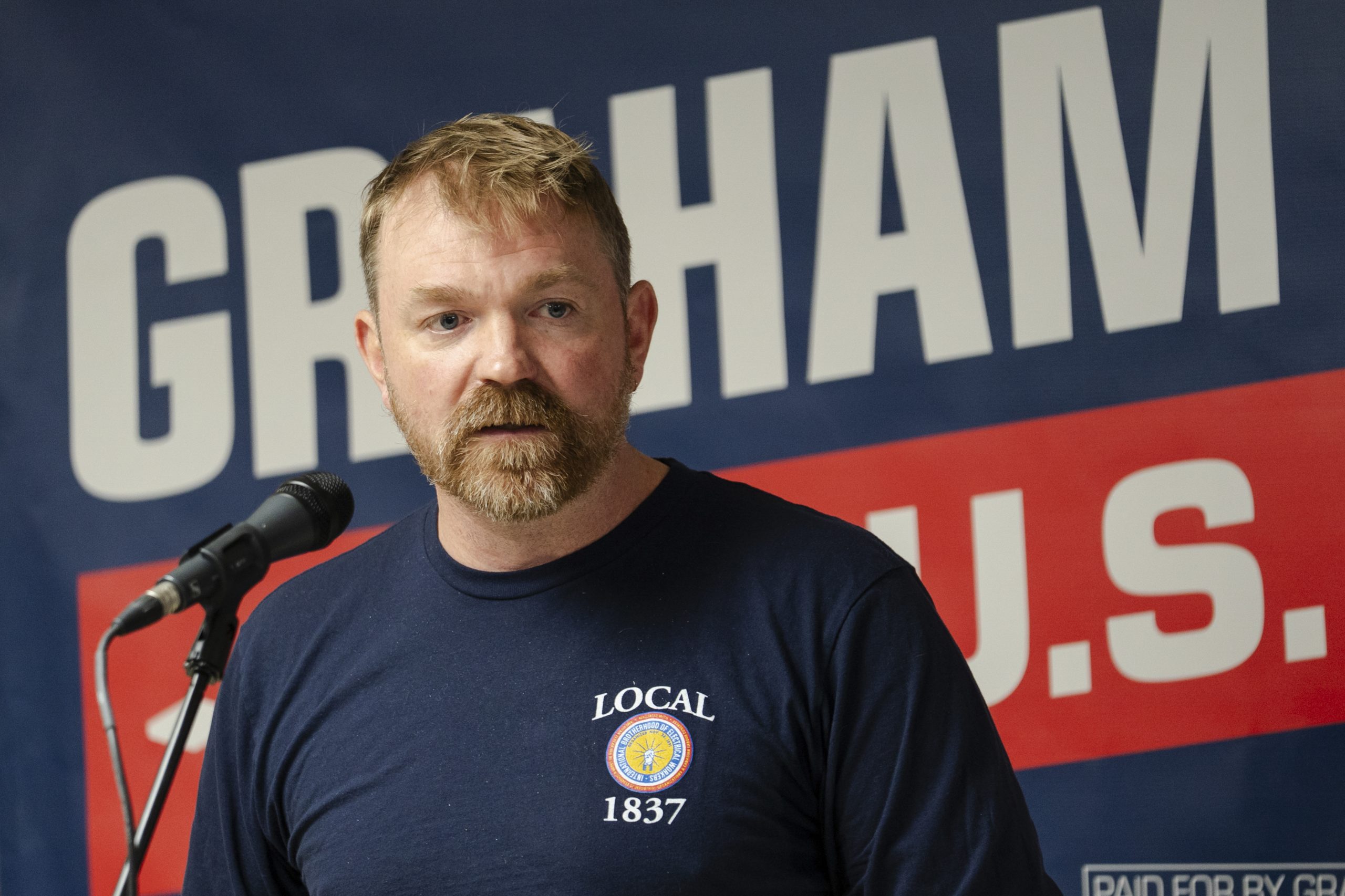
    Platner recently took a shot at Fetterman on the campaign trail, criticizing the Pennsylvania senator’s work ethic during a town hall in Portland, Maine, last weekend.

    “I got a lot of criticisms about the way this government functions. But in order for us to make it functional, we’re going to have to do stuff,” Platner said, according to The Hill. “And you can’t just go down there and be John Fetterman and … just sort of be an a-hole.”

    “Oh, I’m devastated,” Fetterman joked on NBC. “I’ll take everything he says as a badge of honor.”

    Platner is taking on incumbent Sen. Susan Collins (R., Maine) this fall for a seat Democrats are targeting as part of their effort to take back control of the Senate. Republicans currently control the Senate 53-47, with two independents caucusing with Democrats. So Democrats would need to gain at least four seats in the 2026 midterm elections, and right now political analysts are focusing on six states: Maine, North Carolina, Texas, Ohio, Alaska, and Iowa.

    While Fetterman won’t be supporting Platner and has veered to the right to become a key backer of some of President Donald Trump’s priorities, don’t expect to see him campaigning for Collins.

    “I am a Democrat,” Fetterman told Ingraham on Fox News. “We have different views on things.”

  • Gene Shalit, film critic bristling with hair and puns, dies at 100

    Gene Shalit, the Muppet look-alike who reviewed movies and other cultural arts with a whimsical bent and a shtick for puns as the resident wit on NBC’s Today show for four decades, one of the longest tenures on an American television program, died Friday at 100.

    NBC reported the death, citing a family statement. No further details were immediately available.

    For millions of Americans tuned in to the Today potpourri of news, interviews, entertainment, and weather, a dose of literate, wacky commentary from Mr. Shalit’s “Critic’s Corner,” often with cackles of appreciation for his own incorrigibility, was as much a part of the morning as a cup of coffee.

    With his handlebar mustache, bushy hair, black-rimmed glasses, and extravagant bow ties, he was one of the nation’s most recognizable characters, a composite caricature of Groucho Marx, William Howard Taft, and a Jim Henson puppet. His punchy, wry wit may have borrowed from Woody Allen and Mark Twain, but it played well in Peoria.

    “Ishtar ish tarrible!” Mr. Shalit concluded in a review of Elaine May’s 1987 comedy about two lounge singers looking for work in Morocco and stumbling into Cold War machinations.

    After seeing The Longest Yard, a 1974 flick in which Burt Reynolds organizes a prison football team, he suggested: “This movie should be penalized half the distance to the goal — twice.”

    And joining a chorus of critics panning Hudson Hawk, a 1991 Bruce Willis world-domination vehicle, he warned: “This movie is awful, spelled o-f-f-a-l.”

    His most controversial criticism came in a negative review of Brokeback Mountain, the widely acclaimed 2005 Ang Lee film depicting the romantic and sexual relationship between two men in the American West. Shalit called Jake Gyllenhaal’s character, Jack Twist, a “sexual predator” who “tracks Ennis (Heath Ledger) down and coaxes him into sporadic trysts.”

    The Gay and Lesbian Alliance Against Defamation, now known as GLAAD, accused Mr. Shalit of promoting anti-gay prejudice and demanded an apology. Mr. Shalit, the father of six children, including a gay son, replied with a letter expressing regret, acknowledging that he had “angered, agitated and hurt many people,” and saying that he had had “no intention of casting aspersions on anyone in the gay community or the gay community itself.”

    Besides reviewing movies, books, plays, and other cultural offerings, Mr. Shalit interviewed authors and entertainers, including Barbra Streisand, Warren Beatty, Robert De Niro, and Sophia Loren. He did cameos of himself in several movies and television shows, and was a familiar figure on television game and talk shows and charity fundraisers.

    On Today, a program sensitive to ratings and notable for personnel changes, Mr. Shalit was the durable mainstay in a cast that over the years included Barbara Walters, Jim Hartz, Tom Brokaw, John Chancellor, Hugh Downs, Joe Garagiola, Deborah Norville, Jane Pauley, Katie Couric, Bryant Gumbel, Al Roker, Willard Scott, Matt Lauer, and Ann Curry.

    Mr. Shalit joined Today in 1968 as a book reviewer, became a regular in 1970, and was the culture critic from 1973 until he retired in 2010.

    His producer, Guy Ludwig, reflecting on Mr. Shalit’s long career in 2010, recalled seeing Mr. Shalit, late in his career, entering a theater for a screening with a look of glee on his face.

    “My God, how could you?” he said. “You’ve seen 2 million movies.”

    “Yeah,” Mr. Shalit replied, “but I’ve never seen this one!”

    Eugene Theodore Shalit was born in New York City on March 25, 1926, to Latvian immigrants, Isadore and Anna (Michelovich) Shalit. He grew up in Newark and Morristown, N.J., where his father owned a drugstore. He graduated from the University of Illinois in 1949.

    Arriving in New York City in 1951, he was hired by a press agent to attend stage shows at the Paramount and laugh at the comics for $5 a day. “They weren’t funny,” he recalled in a 2012 interview for this obituary. “I couldn’t laugh. One other person was laughing. He got $5 too.” Mr. Shalit quit after one day.

    He next landed in the publicity department of Look magazine, doing promotionals with “two other kids” — Lawrence K. Grossman, who became president of NBC, and Marvin Josephson, who founded the talent agency International Creative Management.

    Mr. Shalit was married to Nancy Lewis from 1951 until her death in 1978, and they had six children: Peter, Willa, Emily, Amanda, Nevin, and Andrew. Emily died in 2012. A complete list of survivors was not immediately available.

    In the 1950s and early ’60s, Mr. Shalit wrote columns and culture reviews for Ladies’ Home Journal and Look magazine. An NBC executive spotted his writing and, worried about how audiences might react to his mustache and hair, hired him in 1967 for network radio work. A year later, NBC took a chance, and he began appearing on the Today show.

    “Once Gene was on, he’d get letters like, ‘Who is this part-time anarchist that you have on television?’” Ludwig recalled. “But what resonated above his unusual appearance was his incredible wit, his remarkable intelligence.”

    From 1970 to 1982, Mr. Shalit produced a daily essay for NBC Radio, “Man About Anything,” which was heard on more stations than any other NBC network feature. He was an occasional panelist on What’s My Line?; hosted programs on the Masterpiece Mystery series; and wrote for TV Guide, Cosmopolitan, Seventeen, Glamour, McCall’s, the New York Times, and other publications.

    Laughing Matters: A Celebration of American Humor, a compendium of works by 200 authors, scriptwriters, and cartoonists selected by Mr. Shalit, was published in 1987. Mr. Shalit loved classical music, played the bassoon, and performed with the Boston Symphony in Boston, at the Berkshire Music Center at Tanglewood near his home in Stockbridge, Mass., and at Lincoln Center in New York. He once conducted the Pittsburgh Symphony in a full concert. He liked to say that in none of these venues was he ever invited back.

    In 1974, Jim Henson’s Muppets appeared on the Today show with Bert gussied up in Shalit-style hair and mustache. Side by side, they looked like fraternal twins. In 1983, he appeared in the Great Muppet Look-Alike Contest in Muppet magazine’s first issue, and in 1996 he contributed a recipe for Movie Crumb Cake for the cookbook In the Kitchen With Miss Piggy.

    Mr. Shalit wrote many letters to the Times about baseball. In 2003, he suggested help for the New York Mets lineup: Sign Rickey Henderson, then in his last season.

    “With his walks, bunts and an occasional extra-base hit, he will get on base far more often than the current troupe,” he wrote. “And when Rickey gets to first, he’ll soon be on second. Sure, he’ll be stranded there, but won’t it be fun to see a Met in scoring position?”

    This article originally appeared in the New York Times.
  • Trump administration says it will restart asylum and immigration processing

    Trump administration says it will restart asylum and immigration processing

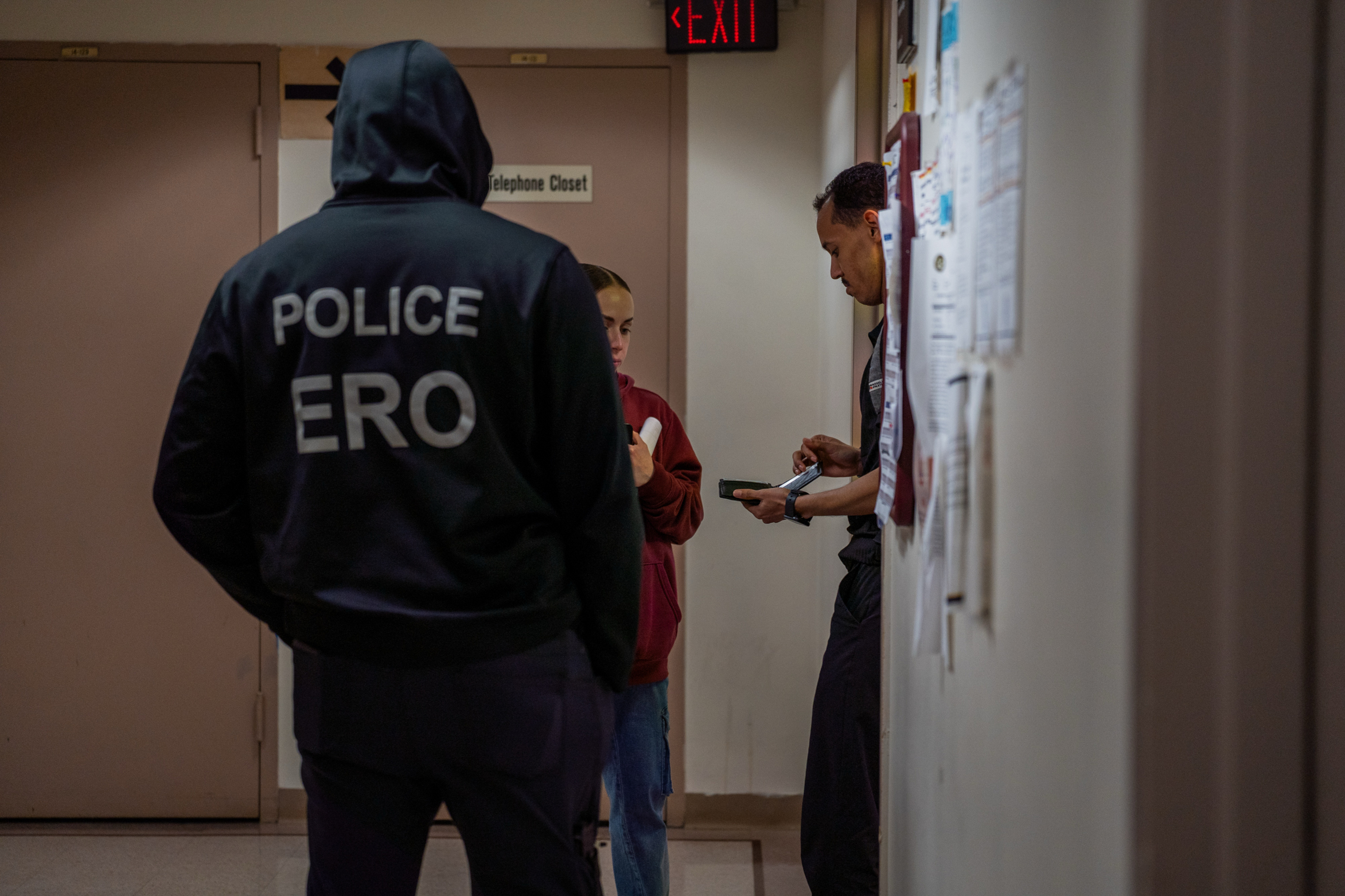
    WASHINGTON — The Trump administration said Friday that it would comply with a court order to restart processing asylum and other immigration applications filed by a broad swath of people who had been left in legal limbo for months.

    The move comes after a federal judge in Rhode Island last week struck down a suite of policies imposed by U.S. Citizenship and Immigration Services, a major blow to the administration’s expanding efforts to restrict legal immigration. The policies included a global hold on asylum applications filed with the agency and a freeze on immigration applications filed by people from 39 countries, largely in Africa and the Middle East, that are subject to President Donald Trump’s travel ban.

    More than 1 million applications had ground to a halt as a result, preventing many people from obtaining green cards, citizenship, and other immigration benefits. The halt also disrupted people’s ability to legally work and left them waiting indefinitely for decisions on their applications.

    In a court filing Friday, Angelica Alfonso-Royals, deputy director of U.S. Citizenship and Immigration Services, said the agency instructed employees to treat the policies “as if they are no longer in effect.” The agency also said in a memo posted on its website that it “strongly disagrees with the court’s order” but that it would “follow its terms pending possible further judicial review.”

    As of Friday evening, it was unclear whether the agency had restarted making immigration application decisions. Also on Friday, the administration filed an appeal with the 1st U.S. Circuit Court of Appeals seeking to pause the decision.

    The response came after Judge John J. McConnell Jr. rebuked the Trump administration for failing to immediately comply with the order he issued last week.

    The administration argued in a filing Tuesday that the initial order by McConnell, an appointee of President Barack Obama, was preliminary and therefore had not “become effective,” indicating that the department had yet to resume making application decisions.

    In response, McConnell quickly entered his judgment Thursday, ordering the government in blunt terms not to stall any further.

    “There is no excuse this time,” he wrote. “The government has an obligation to immediately comply with this order.”

    McConnell gave the administration until Friday evening to file an update “advising the court as to what specific steps it has taken to comply.”

    Democracy Forward, the legal organization representing the assorted unions and immigration aid groups, had accused the government of playing procedural games to deliberately dodge last week’s court order.

    “The Trump-Vance administration’s cruel immigration policies have been about chaos, confusion, and inefficiency, and we are proud to challenge these unlawful measures and to have secured a court order blocking the policies,” Skye Perryman, the organization’s president, said in a statement. “The federal government cannot shut down lawful immigration pathways or discriminate against people based on where they come from.”

    The policies at the center of the case were issued in November after authorities said an Afghan national had shot two National Guard members in Washington. The man, Rahmanullah Lakanwal, has pleaded not guilty.

    In his searing 135-page opinion last week, McConnell wrote that the policies effectively made it impossible for many people to remain in the country and that they were improperly fueled by “anti-immigration sentiments.”

    This article originally appeared in the New York Times.

  • A Tren de Aragua leader is killed in a joint strike, U.S. and Venezuela say

    A Tren de Aragua leader is killed in a joint strike, U.S. and Venezuela say

    A joint strike by the United States and Venezuela killed a leader of the Tren de Aragua transnational gang, President Donald Trump and officials in both countries said Friday, dealing a blow to a syndicate the Trump administration has blamed for an influx of violent crime and illicit drugs.

    The strike took place this past week alongside Venezuelan security forces, Defense Secretary Pete Hegseth said, without providing a precise date. He said it targeted a compound housing Hector Rusthenford Guerrero Flores, a founder of Tren de Aragua.

    A statement from Venezuela’s communications ministry said the operation took place in Venezuela, in the southeast of the state of Bolívar. Hegseth and Venezuelan officials said Guerrero Flores had been killed in the strike.

    Guerrero Flores, 43, was better known by the alias Niño Guerrero, meaning “warrior child.” He was wanted in the United States on federal charges of directing acts of terrorism, alongside other charges.

    The CIA, which has dedicated expanded resources to Latin America during Trump’s second term, supplied the intelligence that led to the strike, according to a senior administration official, who spoke on condition of anonymity given the sensitivity of the operation.

    Trump said on social media that the U.S. military’s Southern Command had conducted the strike at his direction as part of his pledge to dismantle foreign gangs. His administration designated Tren de Aragua as a foreign terrorist organization last year.

    Trump said the operation had been conducted with the Venezuelan government, which has become more cooperative with the United States since the United States captured former Venezuelan leader Nicolás Maduro and helped install a more pliant replacement, Delcy Rodríguez.

    Trump posted a video of a building exploding and invoked the names of crime victims in Georgia and Texas, calling the operation “retribution” for their families.

    Trump has often railed against the gang, using it to push his deportation agenda and to justify his military strikes on vessels purportedly ferrying illegal drugs from Venezuela to the United States. Critics have questioned whether Tren de Aragua has truly played the dangerous role that Trump says it has.

    Gen. Francis L. Donovan, who leads U.S. Southern Command, thanked Venezuelan security forces in a social media post for their support in what he described as a joint operation.

    The Venezuelan government said in a statement Friday that a combined operation had targeted organized crime structures. The operation was based on the exchange of intelligence between the two countries, the statement said.

    Tren de Aragua originated as a prison gang in Venezuela in the mid-2000s and has since expanded across Latin America and several U.S. cities. The organization is one of the most notorious in the region, focused on sex trafficking, human smuggling and drugs, drawing intense scrutiny from U.S. law enforcement.

    The Biden administration in 2024 issued a reward of up to $5 million for information leading to Guerrero Flores. He was charged last year in a New York federal court under the second Trump administration with racketeering, terrorism, drug importation and firearms offenses.

    This article originally appeared in the New York Times.
  • Villanova men’s basketball to sign 7-foot-3 Italian center Luigi Suigo

    Villanova men’s basketball to sign 7-foot-3 Italian center Luigi Suigo

    In search of its next center, Villanova went to northern Italy.

    The Wildcats will sign 7-foot-3 Italian professional Luigi Suigo, the school announced Saturday afternoon.

    Suigo, a 19-year-old from Tradate, in the Lombardy region, went through the NBA draft process and attended the combine but decided to withdraw his name from the pool and will play college basketball instead. Suigo faced a Saturday deadline to withdraw and maintain NCAA eligibility for the 2026-27 season.

    The draft projections for Suigo, who played professionally this past season with Serbia’s Mega Basket, were at the back end of the first round and into the second round. One mock draft at The Ringer recently had Suigo going 27th to the Boston Celtics. Another mock draft at ESPN had Suigo going off the board at No. 39.

    The Ringer’s scouting report called Suigo a “huge piece of clay just scratching the surface of his two-way impact.” His strengths include his major paint presence on the defensive end, where his 7-foot-6 wingspan is disruptive. That size also is useful in the pick-and-roll game. The scouting report notes that Suigo has soft hands and that his shooting form is better than his shooting percentages.

    In 26 games with Mega Basket this season, Suigo posted averages of 7.9 points, 5.1 rebounds, and 1 block in 18.8 minutes. He shot 64.9% on his 111 two-point shots, 27.1% on 48 three-point attempts, and 64.7% on 34 free throws.

    Suigo, who reportedly considered signing with BYU, also has experience representing Italy in international competitions.

    Suigo is part of a growing trend of European pros coming to the U.S. to play college basketball in the modern world, where Division I hoops effectively is professional basketball. The Final Four in April featured multiple former European professionals, most notably on Illinois’ roster.

    The NCAA, according to a report from Sports Illustrated, recently distributed “eligibility requirement guidance” that could affect the eligibility of international professionals. It’s unclear how the guidance will be enforced, and when, or if players from the ABA League, in which Suigo played, will face difficulties with eligibility.

    For now, Suigo is the latest international player to choose college basketball in an era when the higher levels of the sport offer paydays that oftentimes exceed a player’s earning potential in the pros. The 30th and final pick in the first round of the NBA draft makes just over $3 million in his rookie season. Wooing Suigo to put off the draft to play in college may have a price tag higher than that, though it’s unclear what Suigo will earn at Villanova during the 2026-27 season. Financial agreements between players and schools are not made public.

    Villanova was among multiple high-profile programs in pursuit of Suigo. In addition to BYU, others included Illinois, Indiana, and Purdue.

    Perhaps the Wildcats used their season-opening game in Rome in part of their pitch. Surely money talked, too.

    Suigo will slot in as the starting center, which was the missing piece of Villanova’s roster overhaul this offseason. He’ll have 6-foot-10 power forward Kwame Evans Jr., an Oregon transfer, next to him, and 6-foot-6 Ohio State forward Devin Royal rounding out the frontcourt. Elijah Crawford (Illinois-Chicago) likely is the starting point guard with returning leading scorer Tyler Perkins the other starter in the backcourt.

    Suigo’s addition brings Villanova’s roster to 12. Villanova added another portal player Friday night in Towson forward Abdou Samb. Samb figures to fill out a deep reserve role for the Wildcats, who will have a solid bench rotation. That bench includes returning forward Matt Hodge, who is recovering from ACL surgery, transfer guards Jake Fiegen and Buddy Simmons, incoming freshman guards Adam Oumiddoch and Carter Fisk, returning reserve center Nico Onyekwere, and Samb.

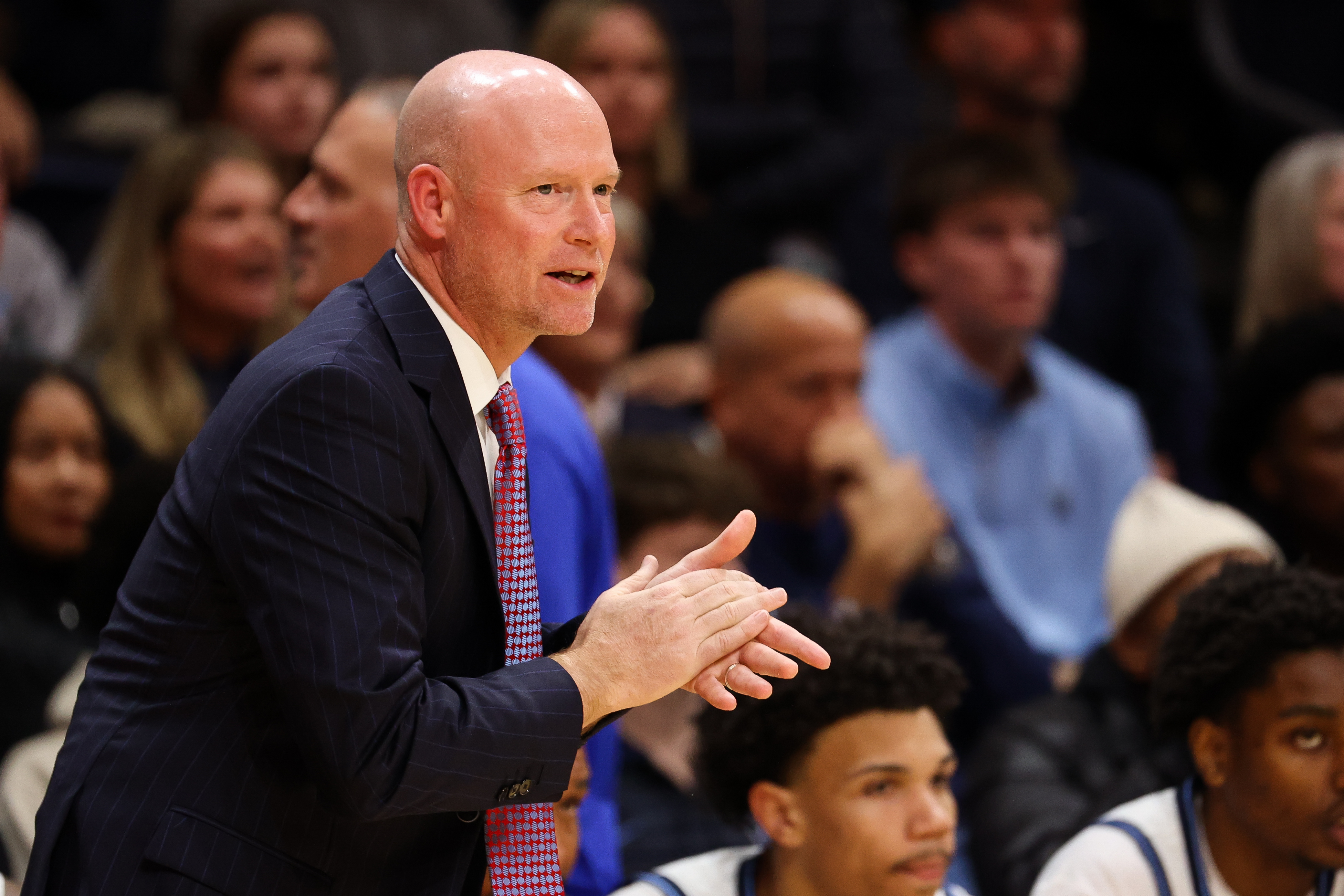
    Coach Kevin Willard wanted to get bigger and more experienced after his younger Wildcats struggled at times against the top teams on their schedule last season. The roster rebuild accomplished that. Suigo may not check a box in the experience category, but there won’t be many bigger players in college basketball next season.

  • Trump, Pakistan say Iran deal could be signed Sunday

    ISLAMABAD — Key mediator Pakistan on Saturday said a deal to end the Iran war was closer than ever and U.S. President Donald Trump asserted it would be “signed tomorrow,” while Iran made some of its most optimistic statements yet but indicated a bit more time was needed.

    Trump said the Strait of Hormuz would open immediately after the signing.

    Pakistani Prime Minister Shehbaz Sharif said a deal was expected to be finalized within 24 hours. Each side was expected to sign electronically. Pakistan’s foreign ministry said the signing ceremony was scheduled for Sunday but did not provide details.

    Iran foreign ministry spokesperson Esmail Baghaei in statements carried by state media said the signing “will not happen tomorrow,” but “the likelihood of finalizing the memorandum of understanding in the coming days is high.”

    A tenuous ceasefire has been in place since April 7. Trump has asserted multiple times in recent weeks the countries were on the cusp of a deal.

    Iran has long expressed wariness in negotiations, pointing out that previous talks with the U.S. last year and early this year ended with attacks by the U.S. and Israel.

    Trump to discuss demining the strait at G7 summit

    Trump was expected to discuss demining the Strait of Hormuz during the Group of Seven summit that starts Monday.

    A senior U.S. official, who briefed journalists on condition of anonymity under rules set by the White House, said Trump planned to meet on the G7 sidelines with the leaders of Egypt, Qatar, and United Arab Emirates to discuss efforts to wind down the war.

    G7 members Britain and France have expressed interest in assisting with demining once the conflict is paused.

    It was not clear how many mines are in the strait that Iran has effectively controlled since shortly after the war began, virtually shutting down oil and natural gas shipments from the Persian Gulf. The U.S. has blockaded Iranian ports in response.

    The nuclear issue remains elusive

    Iran’s foreign ministry spokesperson said the memorandum of understanding under discussion was focused on ending the war and “at this stage, it has been decided that there will be no discussion of the nuclear issue.”

    Iran’s nuclear program and highly enriched uranium have long been at the center of tensions with the U.S. and Israel and an international source of concern.

    Trump on social media asserted that “when all is calm,” the U.S. would go in and “downblend and destroy” the enriched uranium in Iran or in the U.S.

    The apparent breakthrough in negotiations came after Iran exchanged fire with the U.S. and Israel earlier in the week, threatening to rupture the ceasefire and push the Middle East back into full-scale war.

    Iranian Foreign Minister Abbas Araghchi posted on X on Friday that an agreement “has never been closer.” Trump on Thursday claimed significant progress in negotiations, hours after he threatened to seize Iran’s oil industry.

    Iran’s former supreme leader will be buried in July

    Iran’s state-run television said funeral ceremonies for former Supreme Leader Ayatollah Ali Khamenei, killed in the war’s opening attack, will take place in July.

    The funeral, burial, and farewell events for Khamenei will occur between July 4-9 during Muharram, a traditional period of mourning in the Shiite Muslim calendar.

    Khamenei is succeeded by his son, Mojtaba, who is considered less compromising and has not been seen publicly since the war began.

    Funeral ceremonies are expected to begin in Tehran and move to Qom, a stronghold of many senior Shiite clerics, then to Mashhad, Khamenei’s birthplace. He’ll be buried there at the Imam Reza Shrine, considered the holiest place among Shiite devotees.

    Khamenei remolded the Islamic Republic following the death in 1989 of Ayatollah Ruhollah Khomeini, the fiery, charismatic ideologue who led the overthrow of the shah and installed rule by Shiite Muslim clerics.

    Khamenei ruled far longer than Khomeini. He greatly expanded the Shiite clerical class and built the paramilitary Revolutionary Guard into the most important body underpinning his rule. The Guard became a military and business behemoth, the country’s most elite force and head of its ballistic missile arsenal — a key target for Israel and the U.S. in the war.

  • Trump’s name gone from the Kennedy Center’s facade

    WASHINGTON — The curtain may have come down for President Donald Trump at the Kennedy Center but the tarp stays up for now.

    Matt Floca, executive director and chief operating officer of the performing arts venue, told a federal court Saturday that the institution had complied with an order to remove Trump’s name from the facade. In a filing, Floca said the board of trustees and the center had removed “all physical signage on the Kennedy Center building and grounds, including the front portico, that purports to rename the Kennedy Center after President Trump.”

    But for onlookers who have gathered on the plaza in front of the center over the past day hoping to witness a dramatic moment symbolizing the limits of Trump’s power, it was virtually impossible to see whether the signage was gone. A tarp hung over the scaffolding constructed for workers to perform that task. It was unclear when the tarp might be removed to reveal the original lettering that had endured for decades: “The John F. Kennedy Memorial Center for the Performing Arts.”

    A reporter was able to peer through a slight opening in the tarp, which was pulled tightly against the wall, and saw that the letters for Trump’s name were no longer affixed to the building.

    By the end, the Kennedy Center’s leadership had dug in against a federal judge’s order to erase Trump’s name from the building. Two courts rejected the institution’s last-minute request to retain Trump’s name pending an appeal. After severe thunderstorms raked Washington on Friday evening, the Kennedy Center sought one more extension before complying with a noon Saturday deadline.

    Those who pushed for the scrubbing of Trump’s name were in a celebratory mood. Rep. Joyce Beatty (D.,Ohio), an ex officio member of the board who sued to remove references to the president from the building and the center’s operations, was spotted in the plaza late Friday and Saturday morning. She posted a video to social media that purported to show her performing the “Trump dance” in one of the Kennedy Center’s great halls.

    “Today’s victory is the beginning of returning the Kennedy Center to the American people,” Beatty said in a statement. “The rule of law prevailed, and that is worth celebrating.”

    Leo Bartholomaus, a recent graduate of Syracuse University who lives in Virginia, said he was walking by the Kennedy Center on Friday afternoon after visiting the National Mall to see events related to this weekend’s UFC match at the White House. He said he was not happy that Trump added his name to the building.

    “My grandmother had a big love of the arts,” he said. “I’ve been here to see The Lion King. I wasn’t a fan of Donald Trump putting his name on it. I thought it was better as the Kennedy Center.”

    Closing an unusual chapter

    The removal of Trump’s name closes one of the more unusual chapters in the history of the Kennedy Center, which began construction in 1964 and was dedicated to the memory of the slain president, Democrat John F. Kennedy. At what is typically one of the few relatively nonpartisan spaces in Washington, Trump has wielded tremendous influence over the venue during his second term.

    Though he rarely discussed the Kennedy Center during his 2024 campaign, Trump moved quickly to oust the institution’s leadership when he returned to office in January 2025 and replaced it with a board of trustees that named him chairman. His name was quickly added to the building.

    While the removal of his name marks a setback for Trump, he is moving forward with plans to reshape the physical landscape of the nation’s capital in ways that have few modern parallels.

    He demolished the East Wing of the White House and is building a controversial ballroom in its place. He remodeled the Lincoln Memorial Reflecting Pool and plans extensive renovations of a golf course in East Potomac Park, moves that could significantly reduce the public’s access to running and biking paths. He is also moving forward with a triumphal arch that will sit near Arlington National Cemetery across the Potomac River in Virginia.

    Indeed, as Trump’s name was being removed from the Kennedy Center, the South Lawn of the White House has been transformed into a venue for a UFC match intended to celebrate the 250th anniversary of American independence but also coinciding with Trump’s birthday on Sunday.

    Questions linger about the Kennedy Center’s future

    Back at the Kennedy Center, there are many questions about the institution’s future. The same May court decision that ordered Trump’s name to be removed from the building also blocked a planned two-year closure for renovations that was set to begin next month.

    The Kennedy Center’s calendar for the weeks ahead include performances of Moulin Rouge! The Musical and Bluey’s Big Play. Comedian Bill Maher is to be awarded the Mark Twain Award for American Humor during a ceremony on June 28.

    But little is scheduled for the stages beyond that and, after substantially reducing staff, it is unclear how quickly the Kennedy Center could build out a robust performance list. Trump, angered by the court’s order to remove his name, has said he would turn the Kennedy Center over to Congress and has suggested it might simply shutter because of public safety concerns.

    In its unsuccessful appeal on Friday seeking a pause on the order removing Trump’s name, the Kennedy Center’s leadership argued, in terms that seemed similar to the president’s speech patterns, that the lower court was interfering with needed renovations.

    “The District Court is not allowing us to close in order to properly fix up and repair the Building, including potentially life threatening structural damage like beams and parking garage ceilings that are rusted, and in serious danger of falling onto people below,” according to the appeal. “Indeed, total collapse!”

    The institution also suggested that the president’s name could return to the building if the Kennedy Center later wins its appeal.

    If the court denied the venue’s request for a pause, the Kennedy Center argued it would “be forced to squander time and money — by both removing the signage and then potentially returning it after appeal.”