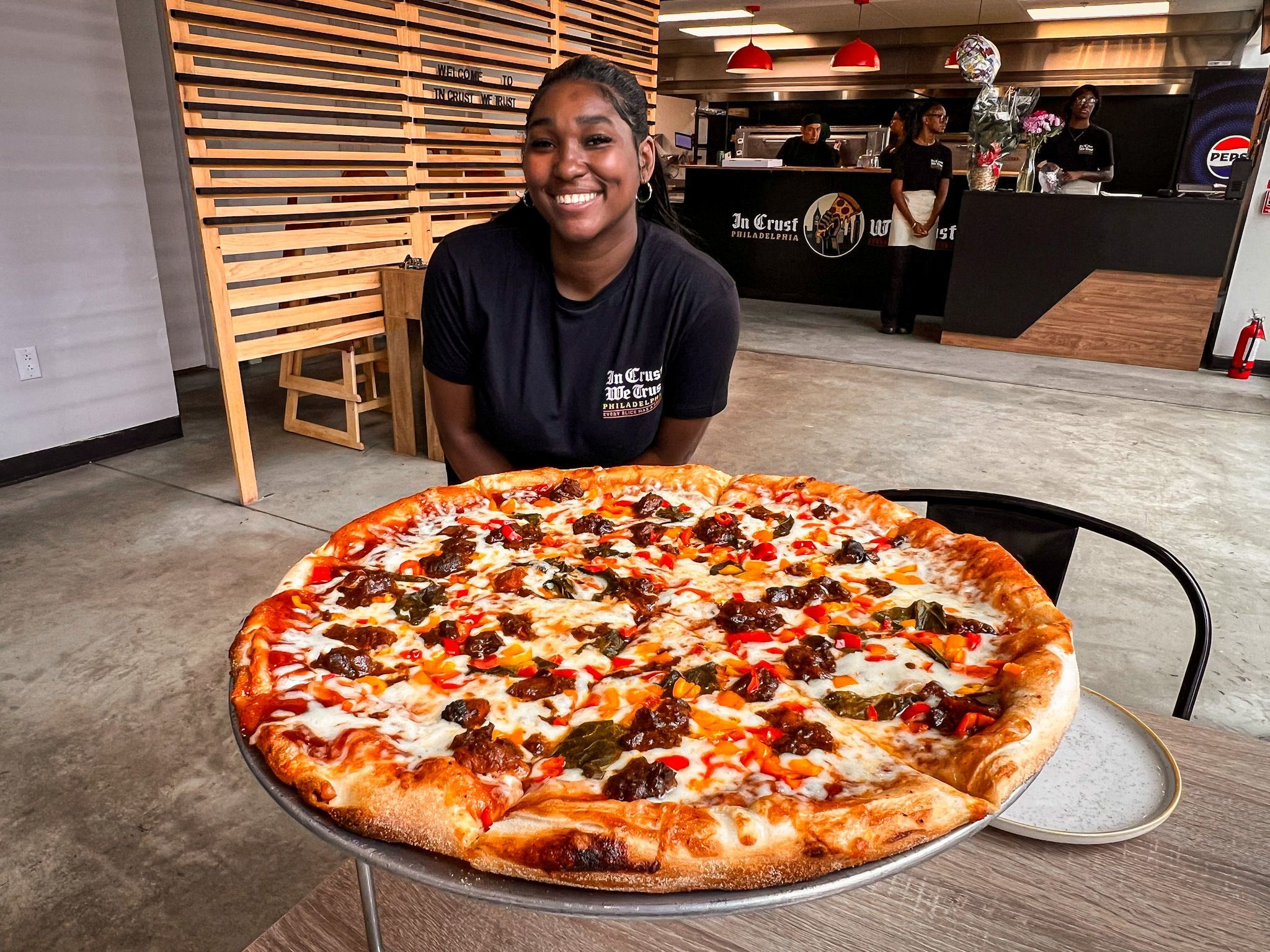
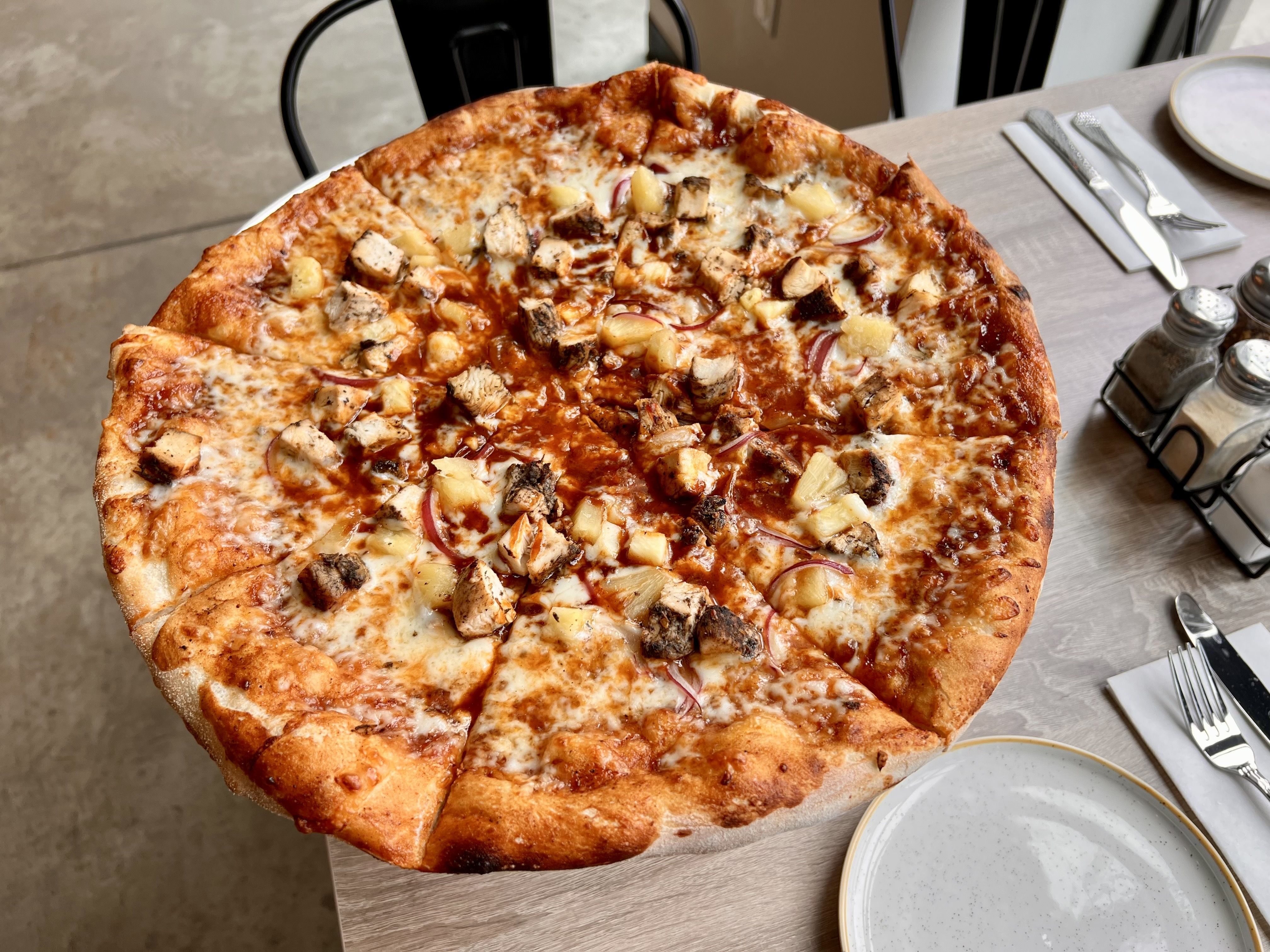
You can eat quite well at the nearby Pizzeria Beddia, Liguria, Marina’s, Shackamaxon, D’Oliva, Scusi, Rustica, Urban Village, and Bar1010. But no other pizzeria in Fishtown offers pies topped with oxtail and collard greens, Cajun shrimp with broccoli and grits, or jerk chicken with pineapple and mango glaze.
The Bottom (jerk chicken, mozzarella, pineapple, and mango glaze) at In Crust We Trust.Michael Klein / Staff
In Crust We Trust, which opened Aug. 1 in the former Vince’s Pizzeria at Frankford Avenue and Richmond Street, across from the Fillmore, is the first solo restaurant from Anyae Wilson-Worley, 25.
Though she grew up around restaurants and learned the business from her mother, restaurateur Felicia Wilson, Wilson-Worley is emphatic that In Crust We Trust is distinctly her own.
Pizzaiolo Jose Maria worked with Wilson-Worley on intentional menu combinations for the New York-style pies. She said she wanted to bring Black culture into the recipes while creating a dining room that reflects it. “When people walk in, I want them to feel like a story is being told — taking them back to a Harlem Renaissance type of thing,” she said.
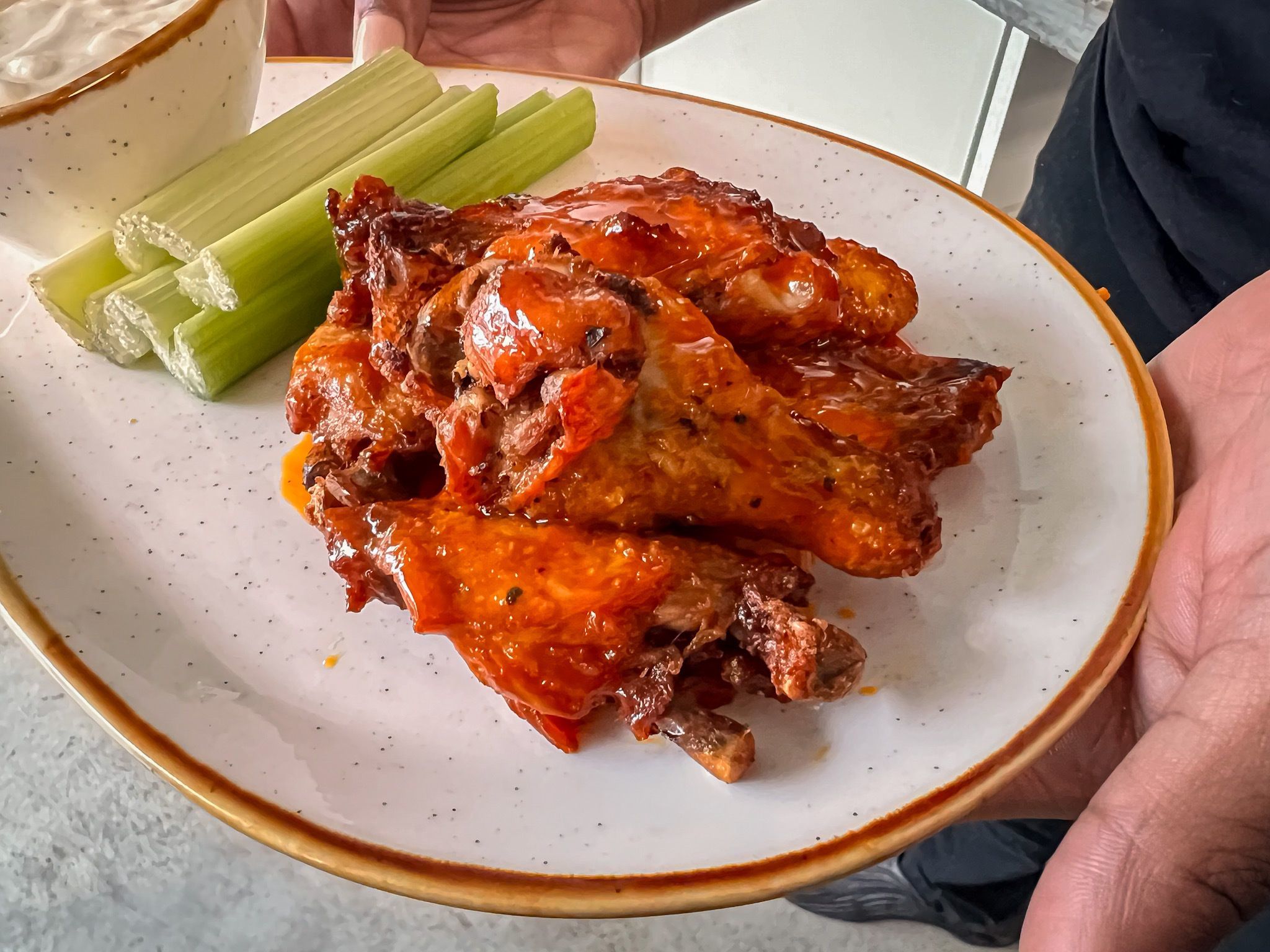
Corner store wings, topped with cayenne pepper and peri peri, at In Crust We Trust on Aug. 2.Michael Klein / Staff
The roughly 80-seat restaurant offers table service as well as a takeout counter and delivery. Beyond pizza, the menu includes wings, two salads, cheesy collard greens, and desserts (including a chocolate chip-oatmeal raisin-sugar cookie baked in a cast-iron skillet and topped with vanilla gelato) — all made with halal ingredients.
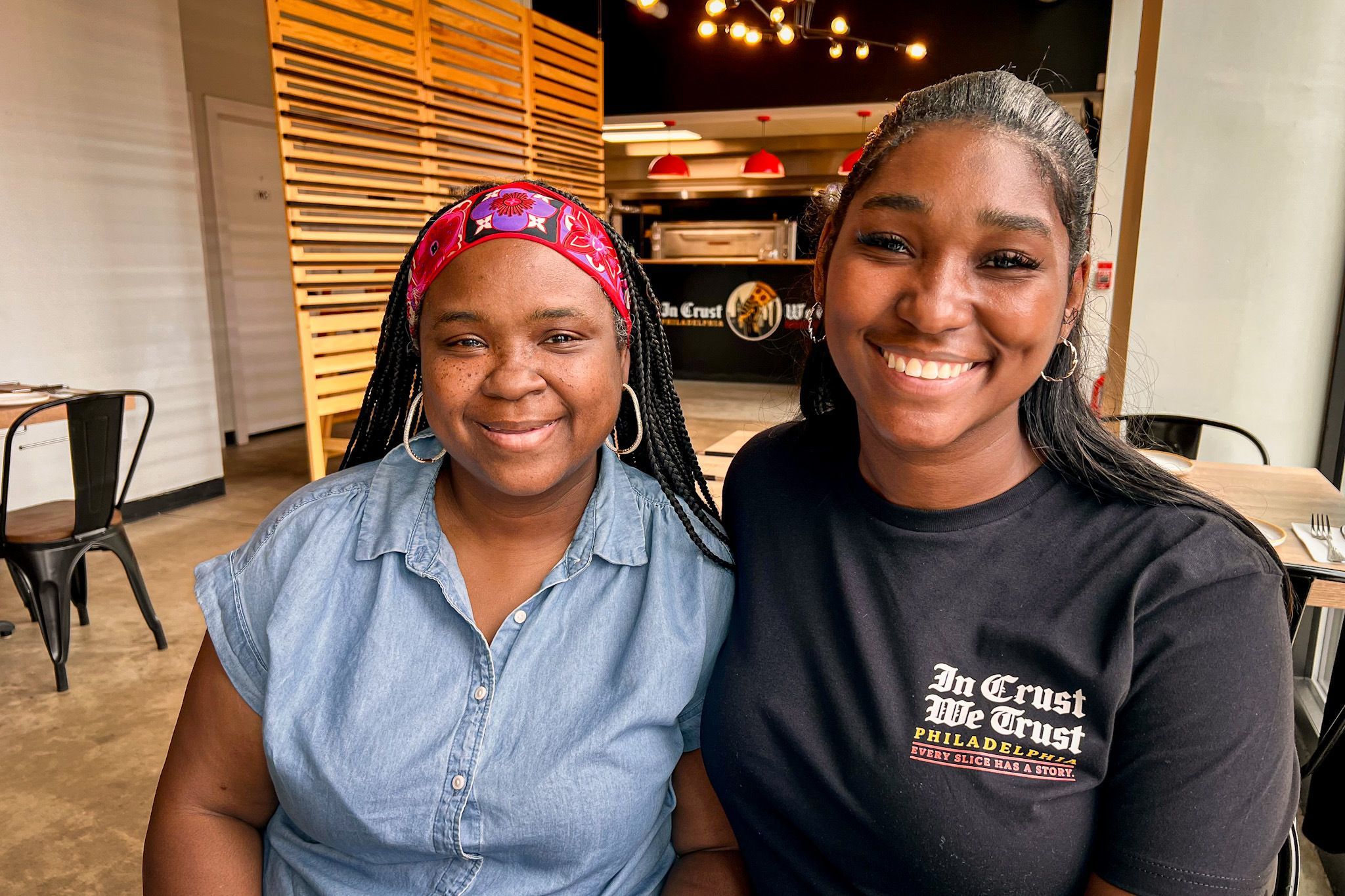
Wilson-Worley is the oldest of Felicia Wilson’s three children. Her mother owns Amina, Avana, Fia, First Daughter Oyster & Co., and BlackHen. “She’s been much more than a role model,” Wilson-Worley said. “I definitely wouldn’t be in this position without my mother.”
Still, restaurants were not part of Wilson-Worley’s original plan.
She attended the University of Miami, where she majored in health sciences on the pre-med track. She said she was lucky enough to come out of school with no debt. “I took that as an opportunity to seize what was around me,” she said. “At the time [four years ago], my mom was in the height of opening all of her restaurants.”
Anyae Wilson-Worley (right) with her mother, Felicia Wilson, at In Crust We Trust on Aug. 2.Michael Klein / Staff
While finishing school, she regularly flew back to Philadelphia to help with the expanding restaurant group. Eventually, she decided to stay to help her mother run the business.
“Anyone who knows me can tell you that ever since my mom opened the restaurant, I always said, ‘This is not what I want to do. I don’t want to be here,’” Wilson-Worley said. “But now this has become my life.”
Her mother provided the example and the education, but Wilson-Worley said the concept, menu, and identity of In Crust We Trust reflect her own perspective.
Wilson-Worley describes Philadelphia as a city whose Black culture is foundational but not always fully recognized. Through the restaurant, she hopes to celebrate that culture while encouraging others to pursue their own ambitions.
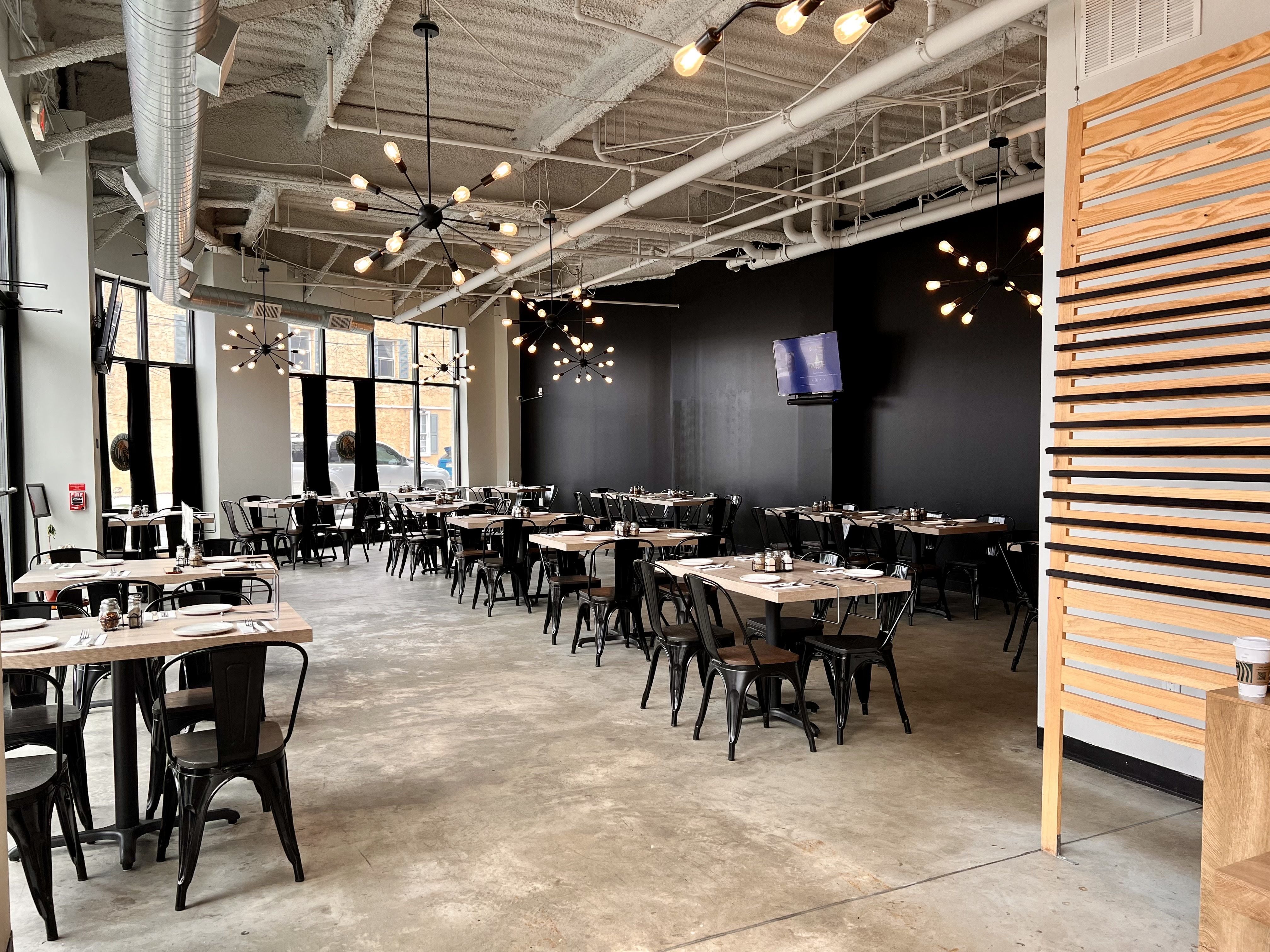
Dining room at In Crust We Trust.Michael Klein / Staff
“I hope to create a pathway for other Black people like myself to get involved,” she said. “Not only through food, but through anything.”
The menu draws from years spent observing professional kitchens.
“I’ve learned a lot from being around the chefs,” she said. “Watching them, listening to them, and working alongside them has expanded my culinary knowledge. I took everything I learned from them and applied it to create a menu that I’m really proud of.”
Wilson-Worley also sees common ground with Down North Pizza, the Black-owned North Philadelphia pizzeria known for hiring formerly incarcerated employees. Both restaurants emphasize community engagement, though she said she does not view them as competitors.
“I’m all about Black empowerment and working with other people like myself in this industry to contribute to the greater good of hospitality,” she said.
Ultimately, she said, her goal is more immediate than making a statement with every slice.
“I want people to feel loved and appreciated,” Wilson-Worley said. “When someone dines here, I want them to walk away thinking, ‘I’ve never had pizza like this before.’”
In Crust We Trust, 965 Frankford Ave. Hours: 11 a.m. to midnight Monday to Thursday, 11 a.m. to 3 a.m. Friday and Saturday, and noon to 11 p.m. Sunday.
Two years after a Learn to Row program at Boathouse Row, Maurice Scott was reintroduced to the sport when his father took him to his first race. As a spectator, Scott carefully observed each competitor as they walked toward the water.
And as they competed, it wasn’t the technique or the speed of the athletes that stood out to him most. Instead, Scott, who was 14 at the time, was focused on the fact that nobody looked like him and nobody shared his background as a Black kid from Northwest Philadelphia. When he voiced his concerns to his father, Maurice Scott Sr., he responded, “You know, that doesn’t mean that you can’t do it.”
Those words have lived with the younger Scott for the past 18 years.
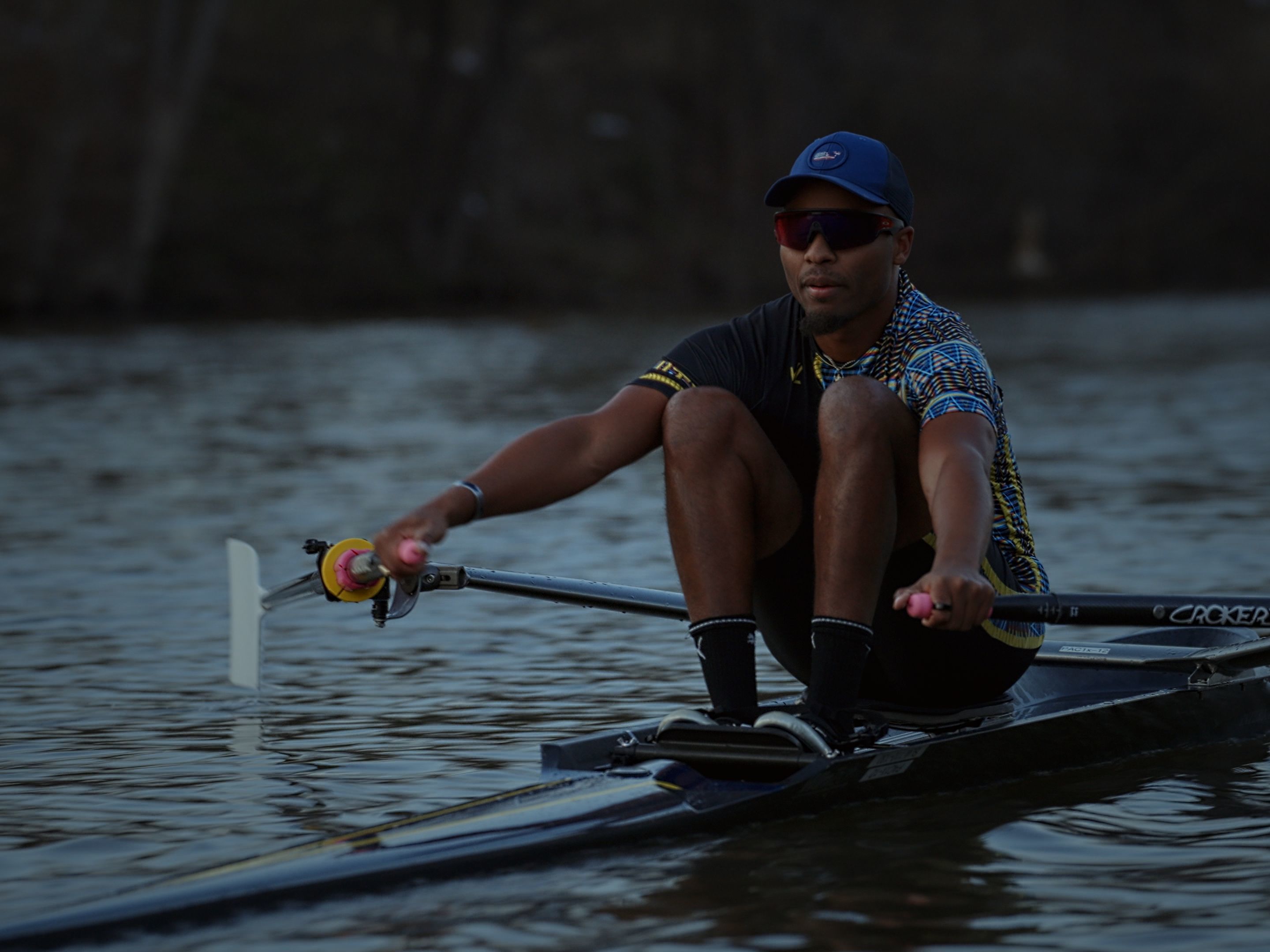
Since then, he’s become a Philadelphia city champion and a four-time national champion, has notched multiple Head of the Charles wins, made history as the first Black governor of the Potomac Boat Club, and was honored in the “Philadelphia Rowing: Breaking Barriers” display at the Independence Seaport Museum.
Now Scott, 32, is making a push to compete in the 2028 Olympics in Los Angeles. And as he embarks on his journey to chase his Olympic dream, he’s inspiring other inner-city kids who have a desire to compete in a sport lacking representation.
“It was just silencing the noise on both ends,” Scott said. “And continuing to believe in what I knew and believing that I belong there. That this is where I needed to be. And so just really staying focused on that and keeping the main thing the main thing; Jalen Hurts always said that. That’s legit. And knowing that later down the road, my story will be a story for others to see and to follow and know that it’s no longer a joke. We’re actually legit in the sport, too.”
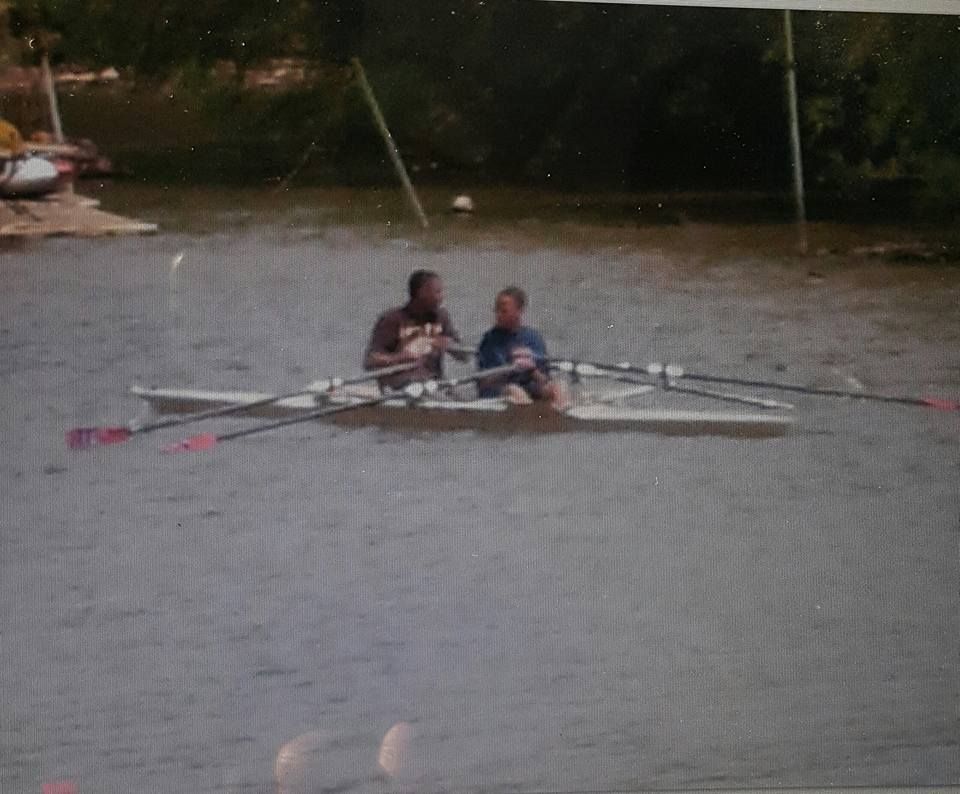
Maurice Scott’s father, Maurice Scott Sr., reintroduced him to the sport at a young age.Maurice Scott
‘I was the black sheep’
Scott acknowledged the challenges when you don’t see yourself represented.
“It’s just like, ‘Why is that? Is it because the sport wasn’t made for me?’” Scott said. “And when I did step into the realm, people were looking at me sideways because I’m an anomaly. People [didn’t] see athletes of color within the sport of rowing back then. It wasn’t a thing.”
Even his peers questioned why he wasn’t playing basketball or football.
“It became a joke, honestly,” Scott said. “Like, people would laugh at me actually doing this sport. When people like a sport that isn’t a part of the ‘culture,’ people kind of look at them like, ‘Yeah, whatever.’ I can guarantee you folks laughed at Venus and Serena. I can guarantee you folks laughed at Tiger Woods.
“I was like the black sheep. I didn’t fit the mold. So for me personally, being around the water and doing something around the water gave me strength and provided me something that I could be proud of because I knew that I could be good at it.”
‘A safe haven’
At just 7 years old, Scott witnessed his first drive-by shooting. He’s been robbed, had people close to him killed by gun violence, and stepped over bullet casings as he walked through neighborhoods.
He felt safe in only two places: in church and on the water.
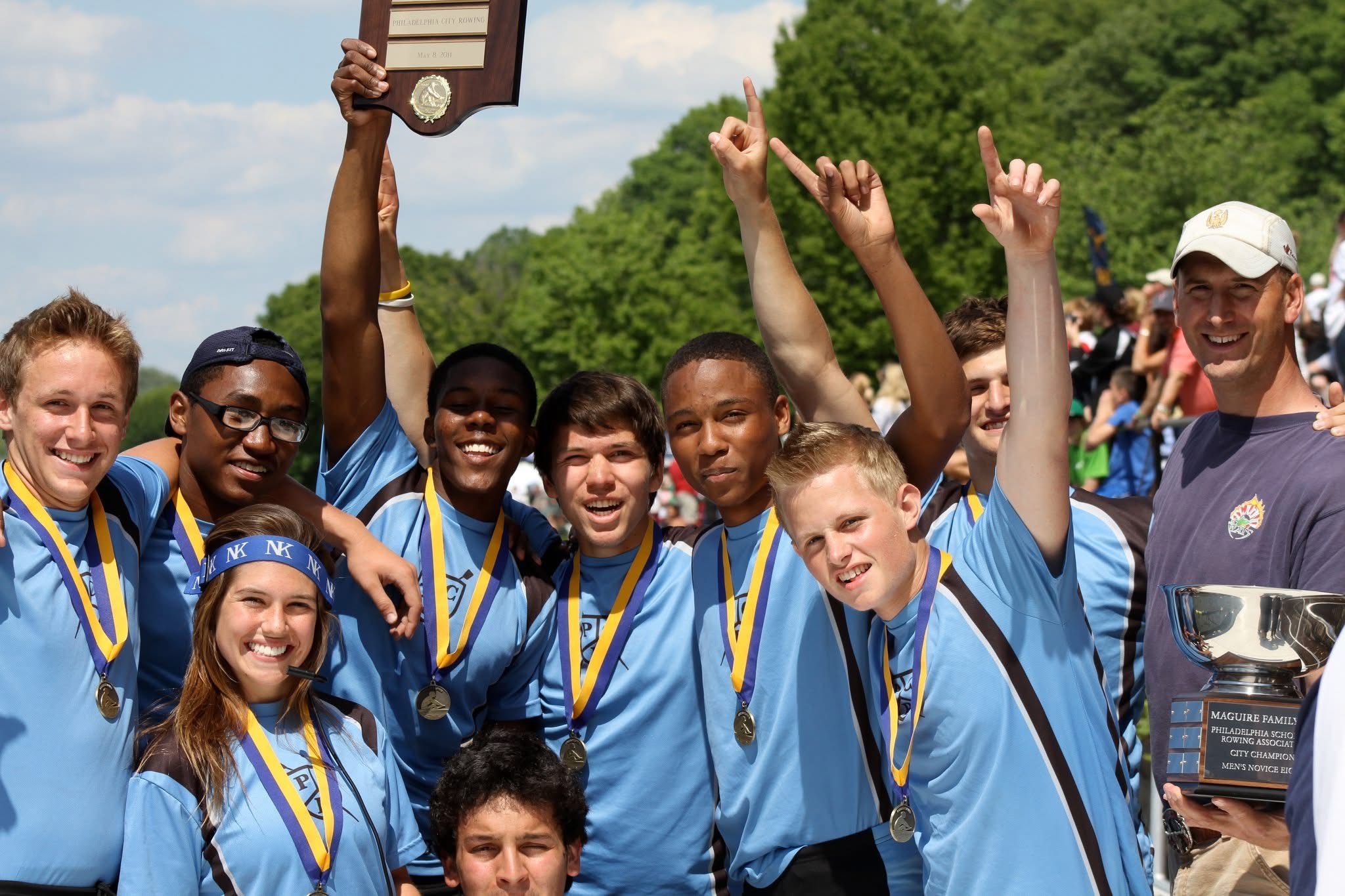
Maurice Scott was one of the first students to join Philadelphia City Rowing, the nonprofit designed to create access to the sport for inner-city youth.Maurice Scott
”Being in church, it was like a safe haven, a safe place that I can be myself, and I’ve also created a community there,” Scott said. “I was surrounded by a lot of wrongdoing, but it allowed me to really have that confidence to make sure that I did the right thing as I carried myself through my younger childhood years.
“And rowing was one of those outlets where I can really just get away from all of that. I was scared to go off to school or walk to the bus. I mean, it was that bad. Finding that outlet is important because it just takes your mental state out of the negativity and the picture that’s being painted of the city that you constantly see on a daily basis.”
As Scott struggled to find his place among his community, he always felt a connection to the water.
“The water has always been part of me,” Scott said. “Anytime I’m around it, I just feel strength and happiness. So that’s what kind of drew me to the sport itself.”
Scott grew up sailing, swimming, kayaking, and rafting. So in fifth grade when he heard about the Learn to Row program at Bachelors Barge Club on Boathouse Row, he thought he would give it a shot. But after the two-week program ended, he didn’t know where to go next with the sport.
“[My father] knew that I just loved the water and he knew how much fun I had when I initially did it,” Scott said. “But it was pretty closed off back then. Boathouse Row in general was very pretentious; there weren’t really wide-open doors. But I think he may have felt something was coming later down the line, and he just wanted to make sure that I didn’t forget it.”
‘Building that one heartbeat’
Philadelphia City Rowing was founded during Scott’s junior year of high school. The nonprofit was designed to provide access to the sport for inner-city youth. He was one of the organization’s first athletes, and it inspired his commitment to diversity in rowing.
“We try to eliminate a lot of the barriers and obstacles that a lot of kids may face in trying a new sport,” said George Rowley, the director of programs and community inclusion at PCR. “I think it’s important to really highlight [alumni] pathways to provide some inspiration for the kids that are just starting out.”
Maurice Scott joined the Naval Academy before accepting a scholarship to Arcadia.Maurice Scott
PCR quickly became part of Scott’s family.
“It was all about rowing together and having that unit and having that rhythm and building that one heartbeat within the boat,” Scott said. “And that was something that I really loved and enjoyed because there was no other sport that is really like that, at least that I’ve done. And trauma bonding. Rowing is a painful sport. Rowing started off as a form of torture, and we’re doing it for fun.
”We didn’t look like any other boat on the water. We literally had kids from all over the city. And it was really cool because I got to meet people that weren’t just from my neighborhood, but were from all over and all walks of life.”
After his first year with PCR, Scott was recruited to the Naval Academy. But a few weeks before graduating from the Naval Academy Preparatory School, he was told he had a sleep disorder. They said he could graduate but wouldn’t be able to move on. So he decided to accept a scholarship from Arcadia and graduated from there in 2017.
While there, he studied abroad in Australia (2015-16) and competed with the University of South Wales.
As people left the nightclubs at 4 a.m. in Australia, Scott would be heading to the gym. That discipline, which sustained him throughout college, is powering his dream of competing at the LA Olympics in 2028.
Scott moved to Long Beach, Calif., in March 2024 to train at Belmont Shore for beach sprints, a fast, head-to-head race that combines sand runs with a 250-meter slalom boat course. The race will make its Olympic debut in 2028.
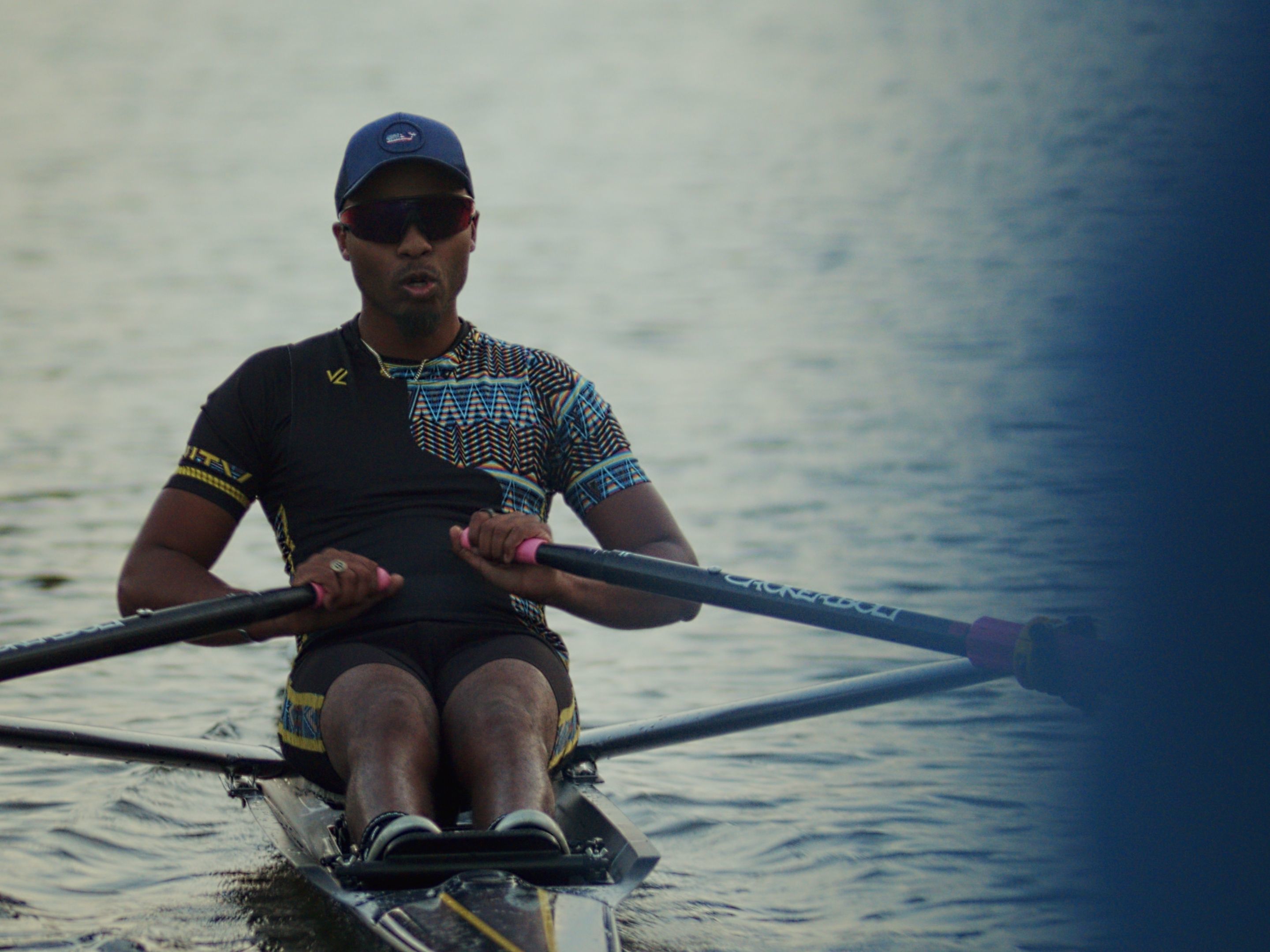
Maurice Scott, 32, is acting as inspiration to other inner-city kids who have a dream to compete in a sport lacking representation.Maurice Scott
“There’s no better way than training on the actual course and really understanding what goes into beach sprints,” Scott said. “One day, I’ll be doing a total of 16 to 30,000 meters depending on what’s going on. One day I could be doing an 8×500, which is full sprints, just back-to-back sprints.”
Growing the sport
Through his talent and telling his story on social media, Scott received a number of sponsorships and partnerships. Now, he’s trying to help other athletes do the same through his name, image, and likeness agency, Rowfluencers.
And he is bringing even more eyes to the sport with his four-part docuseries, FORGED: The Kid from Philly,onNBC Sports Philadelphia.
“Representation is so important,” Scott said. “So, I’m hoping they see this and are like, ‘Hey, it doesn’t have to be wrong. But this challenges me to really find what I like to do and not care about what other people think about because I’m going to do this and be a trailblazer for it and bring in others with me to allow them to not only just live, but thrive within whatever space that may be.’”
After a week and a half of Eagles training camp, it’s time to check the stock market.
Plenty of players have flashed, including the usual notables Jalen Hurts and Saquon Barkley. But who else is turning heads? And who has more work to do to carve out a role on the team by the end of camp and the preseason?
Here are our early risers and fallers:
Stock up 📈
OLB Jalyx Hunt
With Jonathan Greenard sidelined due to a pectoral strain, Hunt has stepped up and taken advantage of his increased opportunities. He has had his pass-rush wins — either in team drills or one-on-ones — against starting tackles Lane Johnson and Jordan Mailata. Defensive coordinator Vic Fangio said at the beginning of training camp that Hunt is “very capable” of having a big year in his third season with the team, and it’s become increasingly clear why.
DT Jalen Carter
The Eagles have high expectations for Carter, as evidenced by their decision to sign him to a four-year, $152 million contract extension at the start of camp. He’s setting the groundwork to meet those expectations, notably after recovering from shoulder procedures last season and sitting out during the offseason program. Carter continues to flaunt his game-wrecking ability, most recently when he beat Cam Jurgens on a rep during Saturday’s mock scrimmage and forced Hurts to scramble. Fangio said Wednesday that Carter is in good shape, which is allowing him to do “the little things better.”
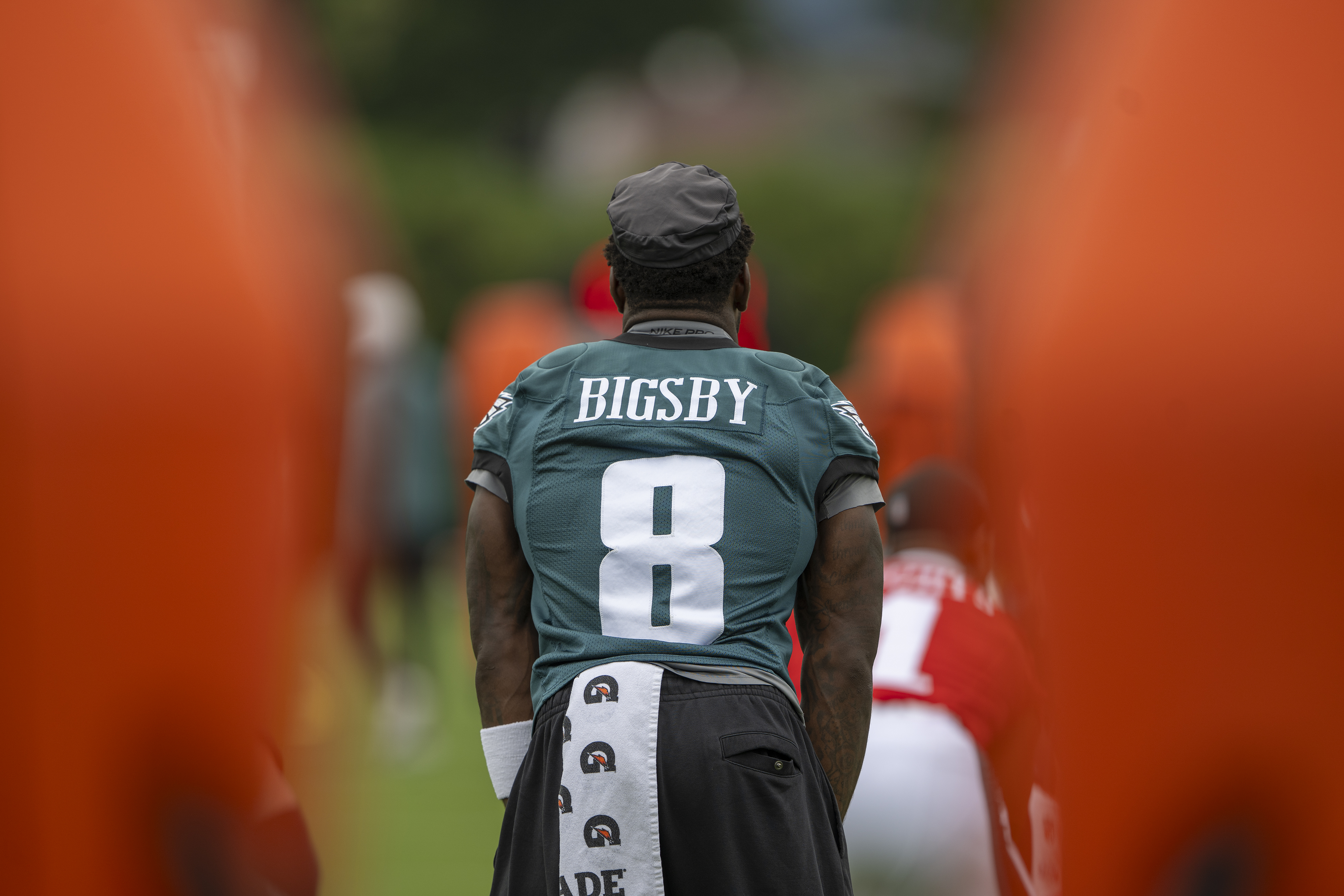
RB Tank Bigsby
Barkley is the Eagles’ feature back, but Bigsby is making his case for more touches in his second season with the team. Most of his reps were with the second-string offense on Saturday, but he has had opportunities to spell Barkley with the starters in the first week and a half of camp. His energetic play style stands out. Bigsby has had his ups and downs in pass protection, and Saturday was a microcosm of that, as he kept a blitzing Ambry Thomas away from Andy Dalton on one play and got beat by Jihaad Campbell on the next.
C/G Drew Kendall
Kendall, the 2025 fifth-rounder out of Boston College, is Jurgens’ likely backup at center, but he has also been cross-training at guard in camp. He has taken reps with the starters, filling in for Landon Dickerson at left guard on Wednesday when the veteran took a rest day. Kendall spelled Dickerson occasionally on Saturday, then took some reps at center when Jurgens exited the field early and headed indoors with a trainer. Kendall hasn’t looked out of place. Defensive tackle Jordan Davis said on Friday that Kendall has displayed a “tremendous” amount of growth since his rookie season.
WRs Dontayvion Wicks, Elijah Moore, and Darius Cooper
DeVonta Smith and Makai Lemon have missed time with hamstring injuries, leading to opportunities for other receivers. Wicks, Moore, and Cooper in particular have had their standout moments. Wicks has popped from the start as he makes his case for WR2, highlighted by his leaping grab over a pair of defensive backs on a deep ball from Hurts on the second day of camp.
Moore and Cooper are more unlikely risers. Moore had a relatively quiet start to camp, but his chemistry with Hurts is steadily growing. He was wide open in the end zone for a successful catch on a two-point conversion during a red zone period on Saturday. Still, Moore has his work cut out for him to make the initial 53 in a crowded room.
Cooper, the 2025 undrafted free agent out of Tarleton State, has been a reliable option for Hurts. He has made several impressive plays, including a diving catch on a pass over the middle of the field from Hurts in 7-on-7s at the outset of camp. The 28-year-old quarterback noted that Cooper is a “strong-hands guy” in an interview with the NFL Network on Wednesday.
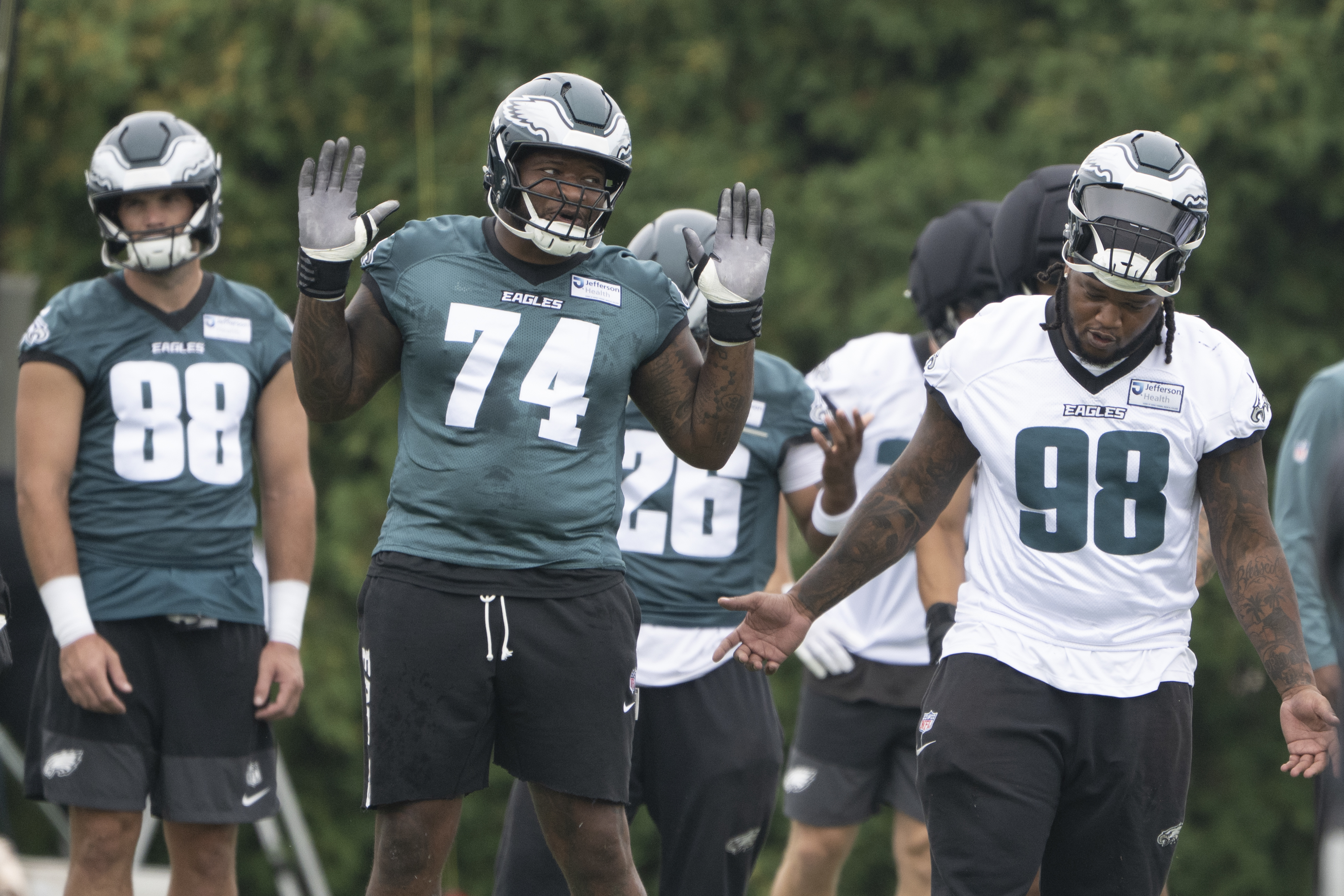
Fred Johnson (74) will have to withstand some tough competition for the swing tackle role. Jose F. Moreno / Staff Photographer
Stock down 📉
This section comes with the caveat that the Eagles are in the early stages of training camp. Just because a player’s stock might be trending downward at this moment doesn’t mean it’s time to sound the alarm.
OT Fred Johnson
Johnson has been the Eagles’ top backup swing tackle for the last few seasons. This year, he has a competitor. Markel Bell, the third-rounder out of Miami, has asserted himself as the first tackle off the bench, primarily to fill in for Lane Johnson at right tackle. On Saturday, the elder Johnson was still ramping up after he missed four practices for personal reasons, so Bell occasionally filled in for him during the scrimmage. It shouldn’t come as a surprise that the Eagles want their third-round pick taking those snaps with the starters, especially in light of the 36-year-old Johnson announcing Saturday that this is “probably” his final season.
WR Makai Lemon
Perhaps the best characterization of Lemon’s stock is neither up nor down. The first-round receiver out of USC has missed the last four practices with a hamstring injury. While that may put him behind compared to his peers, offensive coordinator Sean Mannion acknowledged on Saturday that Lemon has been “super engaged” in the meeting room and in walkthroughs as he follows along with the script.
Lemon isn’t the first highly touted Eagles rookie to sustain an injury during training camp. Cooper DeJean missed most of the summer in 2024 with a hamstring injury and made his preseason debut in the third and final game. Smith missed time during training camp his rookie year with an MCL sprain, returning for the second preseason game.
DT Ty Robinson
Robinson, the 2025 fourth-rounder out of Nebraska, had a slow start to camp, taking reps early on with the developmental group. He has fared better lately, including on Saturday when he won a rep in one-on-ones against Kendall. Preseason will offer more opportunities for Robinson to prove why he deserves a roster spot with Carter, Davis, Moro Ojomo all locks ahead of him.
It is officially audition season in the Phillies’ bullpen.
Are there any candidates?
It is a daunting question. It is also the question that will end up defining Don Mattingly’s stint as interim manager.
The Phillies somehow managed to sneak out a 7-6 win over the Blue Jays on Sunday, but it took them 12 innings, and they made a whole lot of not-so-good memories along the way.
At the top of that list was Orion Kerkering’s latest implosion. This one occurred in the eighth inning, almost immediately after Jesús Luzardo put a bow on one of the finer starting pitching performances you’ll see. The Phillies lefty looked like he did last postseason: seven innings, five baserunners, 12 strikeouts, two runs. Most importantly, he held a 5-2 lead. It would have taken a drastic turn of events to dampen the buzz at Citizens Bank Park. The Phillies bullpen rose to the challenge.
Sunday was Orion Kerkering’s fourth outing allowing two-plus runs in his last 20 appearancesMonica Herndon / Staff Photographer
Two batters into the eighth, Kerkering was one out away from delivering a three-run lead to Jhoan Duran in the ninth. Four batters later, the game was tied. There was some bad luck involved, with Ernie Clement’s RBI double the only extra-base hit. Still.
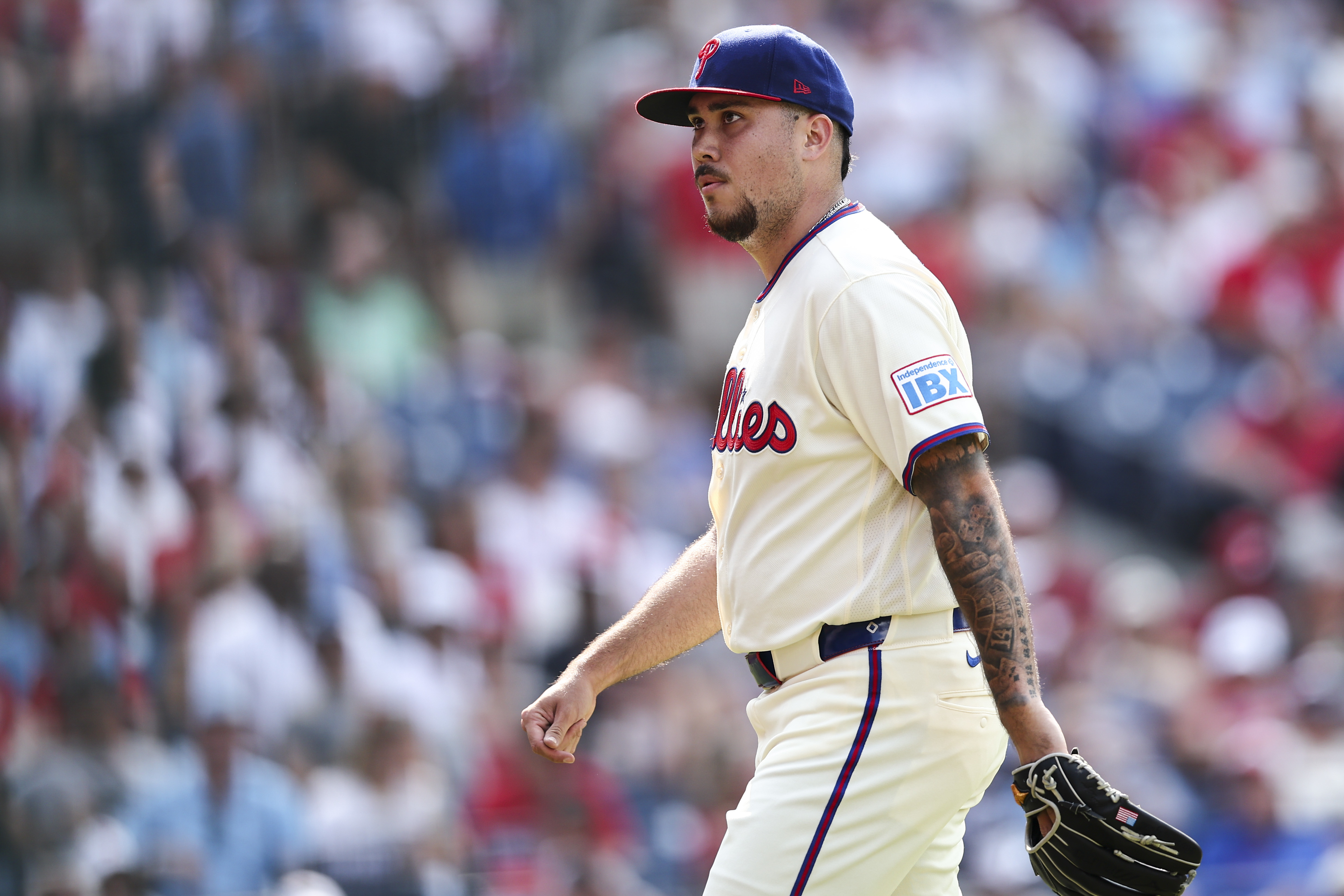
This was Kerkering’s fourth outing allowing two-plus runs in his last 20 appearances. Opposing batters are now reaching base at a .360 clip against him in high-leverage situations. Only five relievers have averaged as many pitches per plate appearance (4.17) in as many or more innings (45⅓) as Kerkering. The same is true of José Alvarado, who is averaging 4.18 pitches per PA in 43⅔ innings.
In fact, everything you can say of Kerkering is true of Alvarado. On Saturday, the lefty blew a save situation that sunk the Phillies against Toronto. He has allowed multiple runs in seven of his last 28 outings. The peripheral numbers have begun to catch up to his 5.77 ERA. In his last 13 games, he has 13 strikeouts against 10 walks/HBPs.
Mattingly needs to figure this thing out. If you believe the odds, the Phillies remain in the driver’s seat for one of the six NL playoff spots up for grabs. If you believe your eyes, it won’t matter if they get to October.
Even if righthander Jonathan Bowlan continues to perform in his new high-leverage role, that still leaves Mattingly one dependable arm short of avoiding offseason ulcer surgery.
Tim Mayza isn’t an option. Before Sunday’s scoreless inning, the journeyman lefty had faced just 48 batters in high-leverage situations over the last three seasons. Nearly half had reached base, including 11 of 27 in 2026.
Caleb Kilian might not be an option after suffering an oblique injury at some point in the top of the 11th.
“It didn’t look good,” Mattingly said afterward.
The Phillies’ one hope might be newly acquired lefty Brooks Raley, who pitched a scoreless 11th on Sunday. Raley last pitched in the postseason in 2022 while with the Rays. He retired three of the five batters he faced and did not allow a run in extra innings of a tie game.
Good luck finding any relevance there. Same goes for his earlier postseason action with Houston. Four of the seven earned runs he allowed came in a couple of outings where the Astros were down six. Otherwise, he has allowed one earned run in 8⅔ innings since the start of the 2020 ALCS. That’s not much of a sample upon which to render judgment.
But that’s more than we can say for Kerkering. His sample size is robust enough to leave little doubt that Mattingly can’t continue to factor him into his high-leverage decision-making.
The Phillies have plenty of other headaches. Bryce Harper and Kyle Schwarber combined to reach base seven times on Sunday. They combined to score two runs, both of them driven in by Schwarber himself. It’s a good thing that Schwarber snapped the second-longest homerless streak of his career, and that he did it exactly how you’d expect.
But Sunday was another answer to the question that so many had asked over the previous 17 games. What’s wrong with Schwarber? Well, what’s wrong is that the Phillies can rarely afford for him to not hit home runs. The problem wasn’t that he hadn’t hit a home run in over two weeks. The problem was that it was so conspicuous.
Kyle Schwarber hit two homers against the Blue Jays on Sunday.Monica Herndon / Staff Photographer
Same goes for Harper. After striking out in the first inning, the Phillies’ new right fielder drew a walk in four of his last five plate appearances. Three of them came with less than two out. He reached second base once, on a double steal on a Luis Arraez strikeout. J.T. Realmuto struck out to end the inning. In the 11th, Harper drew a one-out walk to load the bases, then watched right fielder Nathan Lukes gun down pinch-runner Garrett Stubbs at the plate on an Arraez fly-out to end the inning. The lack of punch in the middle of the order is nothing new.
Compounding matters are the defensive concerns in the wake of the Phillies’ attempt to accommodate their deficiencies in the middle of the order. Bryson Stott has been excellent at third base, and maybe that will ultimately make up for Harper in right field and Alec Bohm at first base. But Bohm was charged with another error on Sunday.
Plenty of teams have won playoff series, even championships, with bullpens that looked as leaky as Mattingly’s does right now. One needn’t look any further than the 2023 Diamondbacks, who slopped it together well enough to overtake the Phillies in seven games in the NLCS. Baseball is a sport where the odds are overwhelmingly in the favor of even an average-to-below pitcher. It isn’t unreasonable to hope that those odds string themselves together in the right order in the postseason. But it is a much tougher ask when a pitcher is backed by a defense that gives away outs and a lineup that has all of the balance of a fat man on a seesaw.
Mattingly’s challenge right now is to find out who his pros are, assuming he has any. Raley and Bowlan in the seventh and eighth isn’t how the Phillies would have hoped to be drawing it up at this stage of the game. The odds are hardly healthy that it will end up looking much better than what they’ve seen thus far. But they at least must look.
Helmet cams and virtual reality sets have transitioned from experimental to becoming more of a standard tool for NFL coaches. It certainly adds another layer of learning.
For the Eagles, with four quarterbacks trying to learn a new offense, those methods have become a valuable resource in camp.
The VR sets are used as visualization tools as the Eagles install Sean Mannion’s new scheme. It allows players to select any stadium, go through his play calls, break the huddle, and simulate a real play.
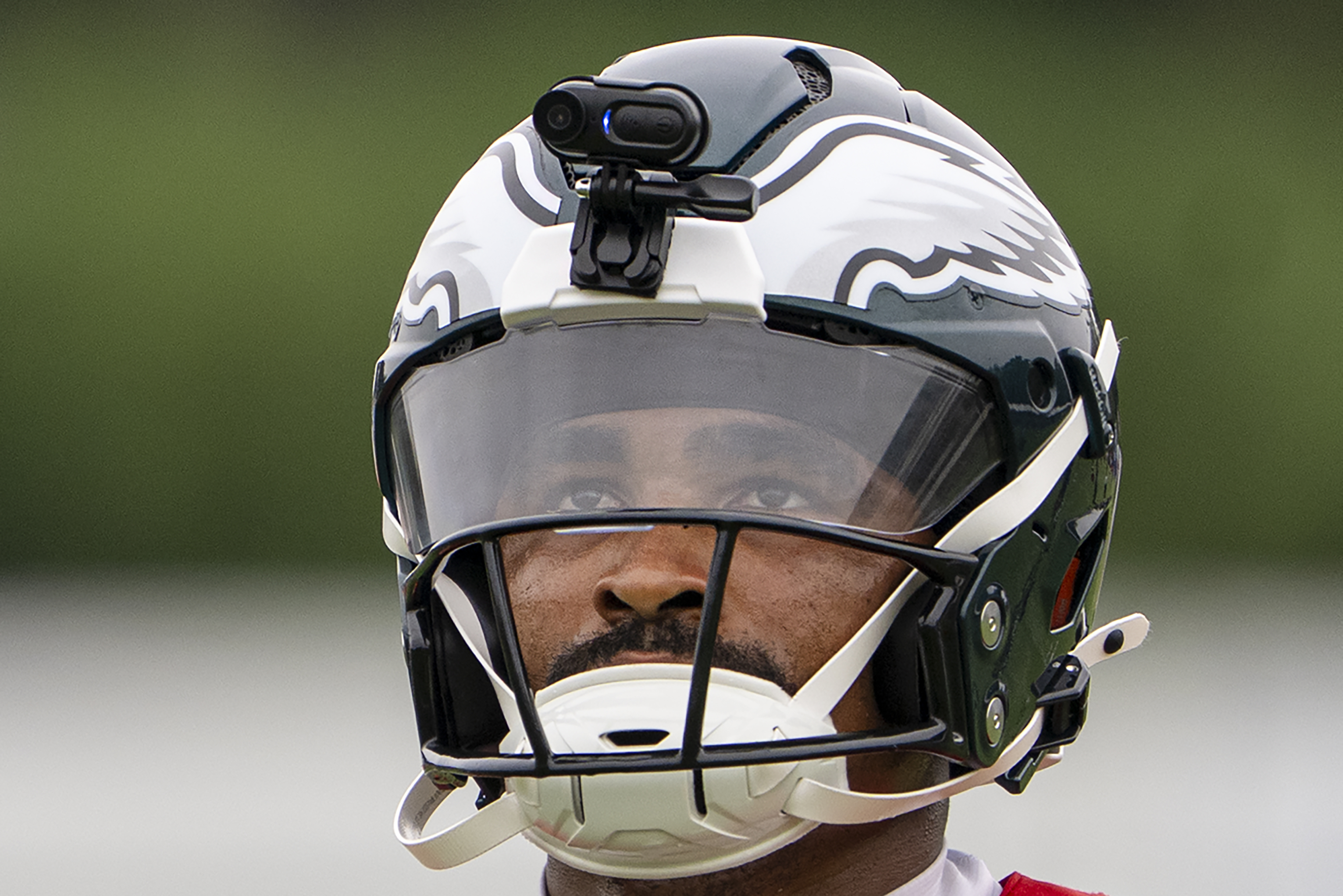
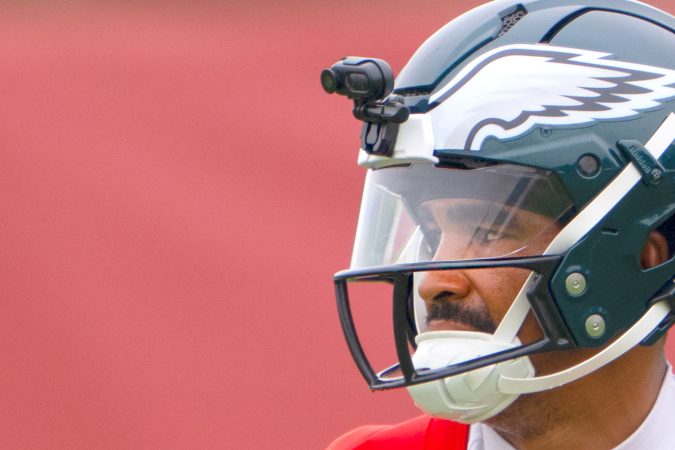
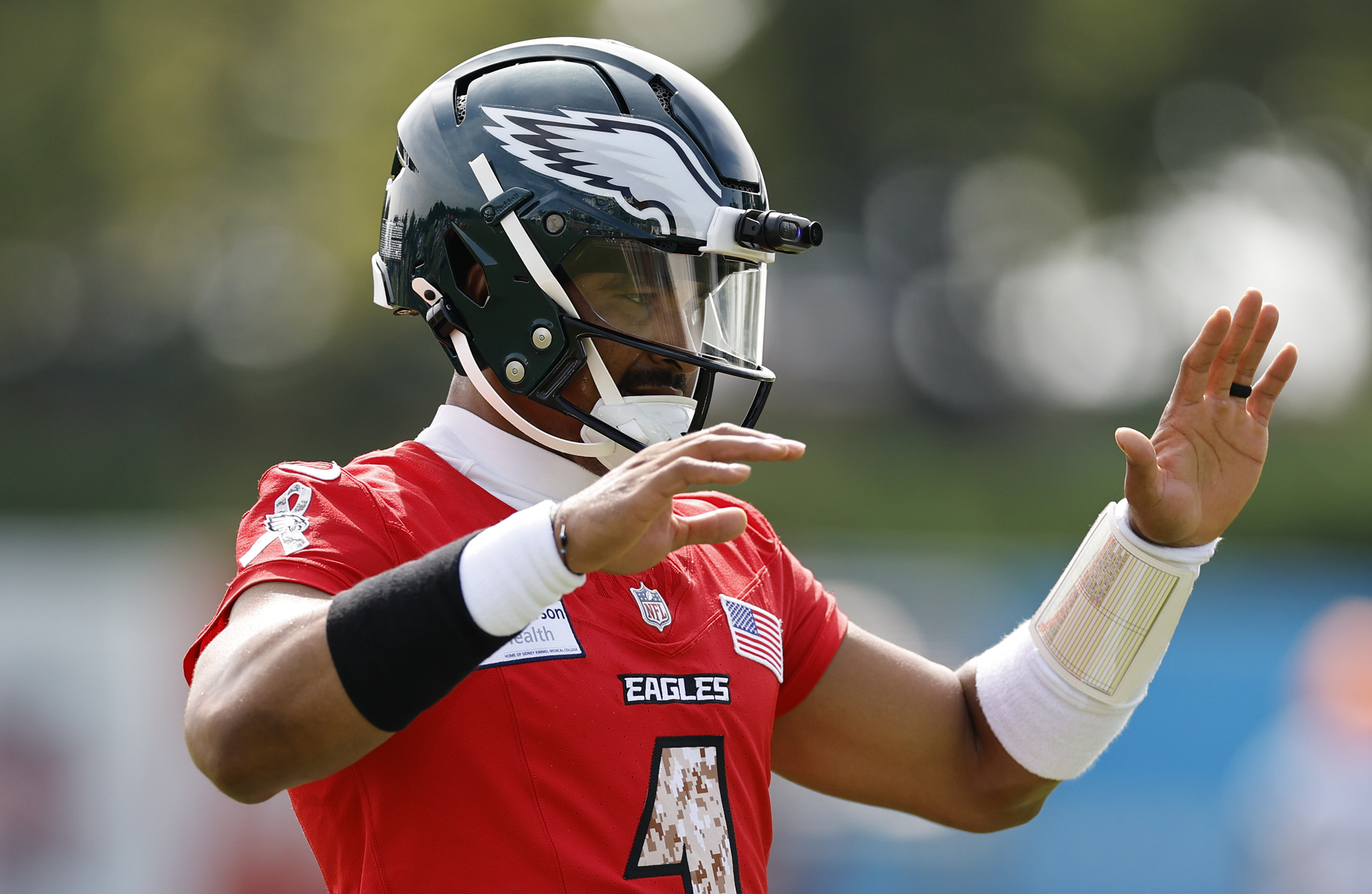
The extra piece of hardware on the QB’s helmets gives a first-person view of what each player is seeing on the field. Jalen Hurts says the cameras provide “insight and accountability in the huddle.”
We’ll see how effective those tools have been during the Eagles’ preseason opener Saturday in Baltimore. In the meantime, let’s check the stock market. After a week and a half of Eagles training camp, Olivia Reiner weighs the early risers and fallers.
And Lane Johnson announced that he is considering retiring following the 2026 season. The 36-year-old, who is entering his 14th NFL season, has been a mainstay of the Eagles offense for over a decade. His eventual successor will have hefty shoes to fill.
Jonathan Bowlan has a 2.81 ERA in 44 appearances this season.Yong Kim / Staff Photographer
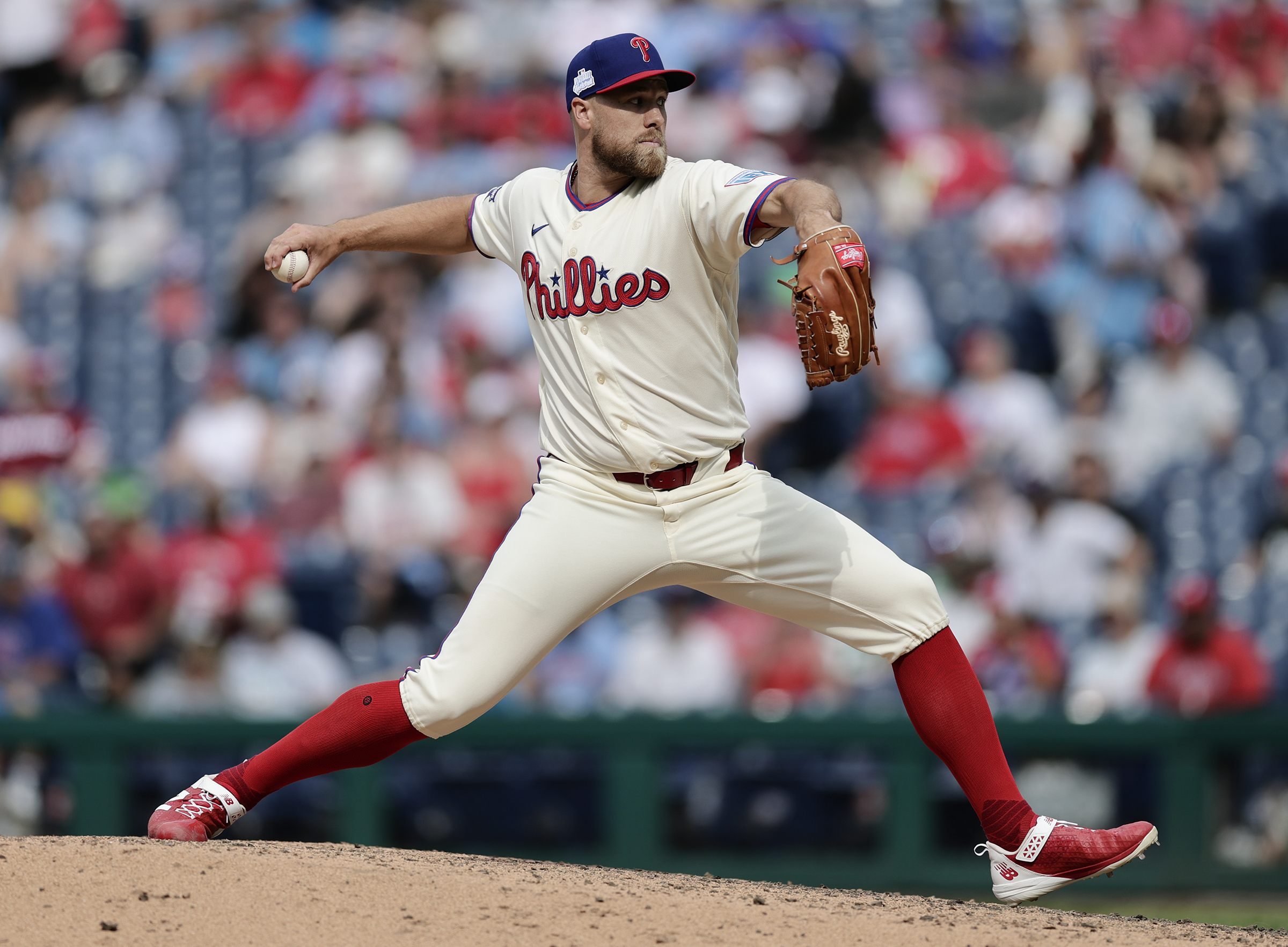
Jonathan Bowlan was a lower-profile addition to the Phillies bullpen in December from the Royals for lefty Matt Strahm. After setup man Brad Keller needed Tommy John elbow surgery that figures to sideline him well into next season, Bowlan stepped into his role.
And he’s been effective. He’s throwing his changeup about twice as often as last year, which makes his fastball appear harder. Bowlan’s fastball averaged 95.5 mph in 2025. This year, it’s up to a 97.2. Maybe the setup reliever job could be his to keep.
On Sunday, the Phillies managed to sneak out a 7-6 win over the Blue Jays, thanks to Derek Hill’s walkoff hit.
But it took 12 innings to get there. If you believe the odds, the Phillies remain in the driver’s seat for one of the six NL playoff spots up for grabs. If you believe your eyes, it won’t matter if they get to October, writes columnist David Murphy.
What we’re…
🔍 Analyzing: After the Eagles’ eighth practice, Jeff McLane filled us in on what he saw on Saturday, including Jihaad Campbell making several plays.
🤔 Wondering: Jhoan Duran’s walkout, the Phillies pitch clock, and the scoreboard are all sponsored.Why are these local companies investing in the ads?
🏌️ Preparing: The U.S. Amateur Championship is coming to Merion Golf Club in Ardmore this week. Here’s everything you need to know.
🏈 Learning: How Penn State will look this season under first-year coach Matt Campbell, who is making every player earn their Week 1 spot.
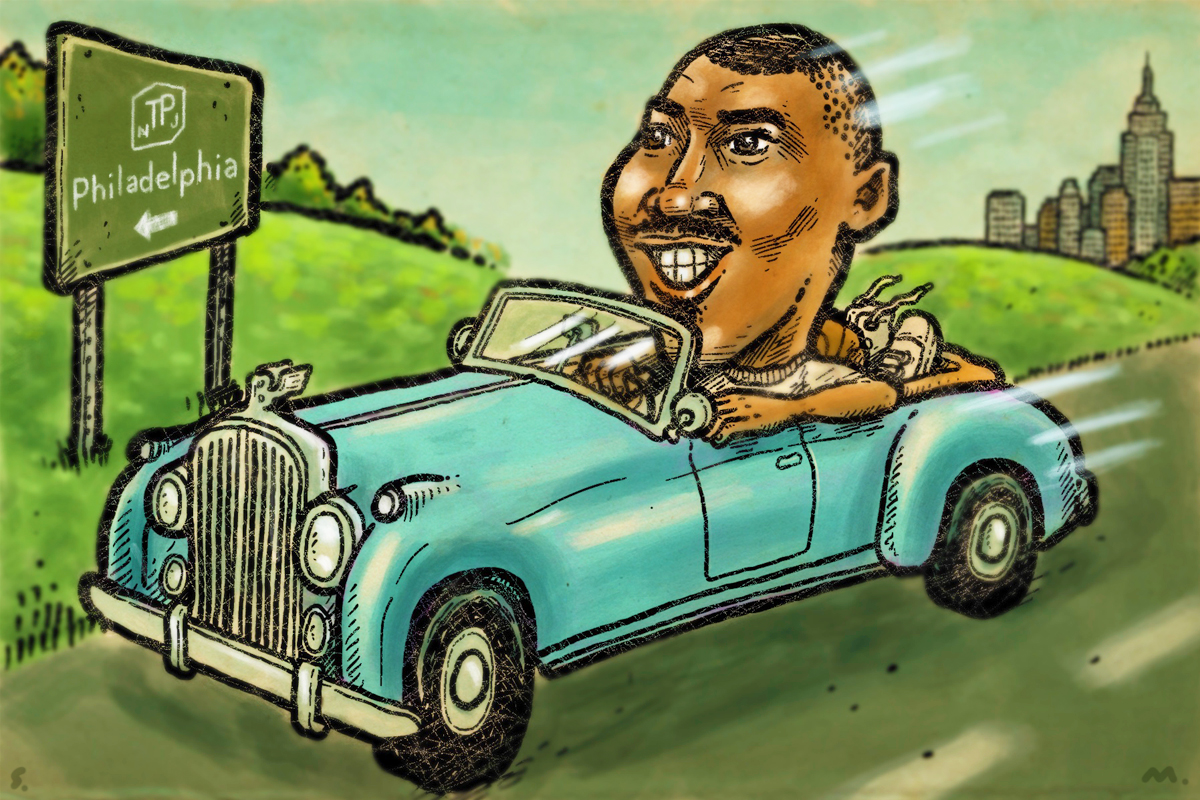
Wilt Chamberlain “would do 90 to 100 [mph] all the way up the turnpike” on his commutes from New York City to Philadelphia to play for the Warriors and Sixers.Steve Madden
There’s a chance that LeBron James could live in New York while playing in Philly. More than 60 years ago, Wilt Chamberlain did it first, as he opted for luxury cars along with a heavy foot in his commute for games and practices.
Chamberlain lived in an apartment overlooking Central Park while playing in Philadelphia. He maintained a residence in his native Philly but spent most nights in New York and owned a popular club in Harlem. “He would do 90 to 100 [mph] all the way up the turnpike,” said Wilt’s close friend Tom Hoover.
And Tyrese Maxey hosted his third annual Friends & Family weekend. Here are some of the highlight moments from his events.
Maurice Scott, 32, hopes to inspire other inner-city kids who have a dream to compete in a sport lacking representation.Maurice Scott
Maurice Scott has built a name for himself in rowing. The Northwest Philadelphia native has notched multiple Head of the Charles wins, made history as the first Black governor of the Potomac Boat Club, and is a Philadelphia city champion and a four-time national champion in the sport.
Now Scott, 32, is making a push to compete in the 2028 Olympics in Los Angeles. And as he embarks on this journey, he’s inspiring other inner-city kids.
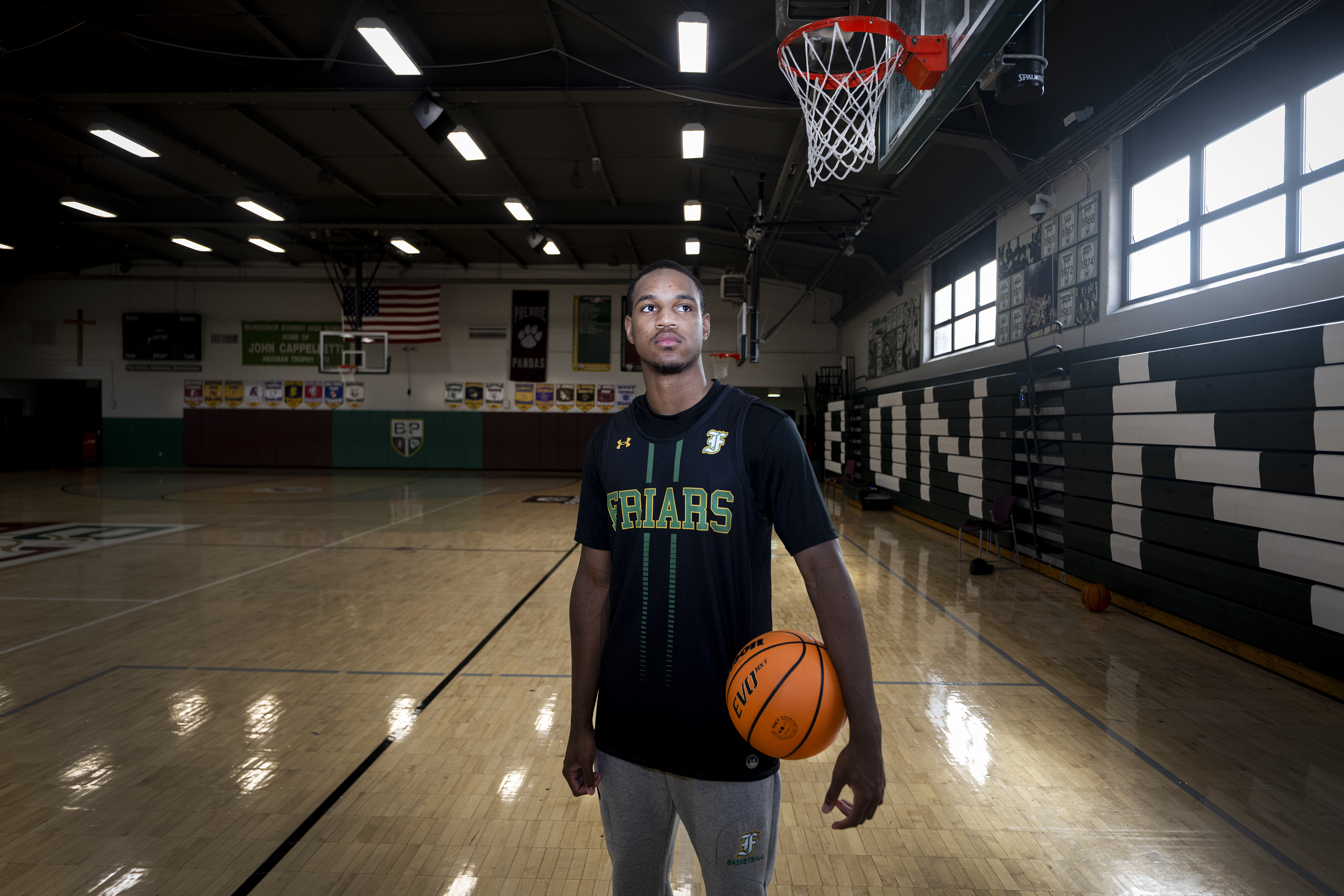
Bonner-Prendie’s Korey Francis has become one of the state’s most competitive and complete basketball players in the class of 2027.Jose F. Moreno / Staff Photographer
Korey Francis is one of the state’s top recruits in the class of 2027, and he’s helped transform the Bonner-Prendergast boys’ basketball program. He was named Catholic League MVP last season, after leading Bonner-Prendie to a PCL semifinal appearance and its first PIAA 5A state championship in program history.
He has more than 19 college scholarship offers, but Francis is more focused on guiding the school to its first Catholic League title since 1988.
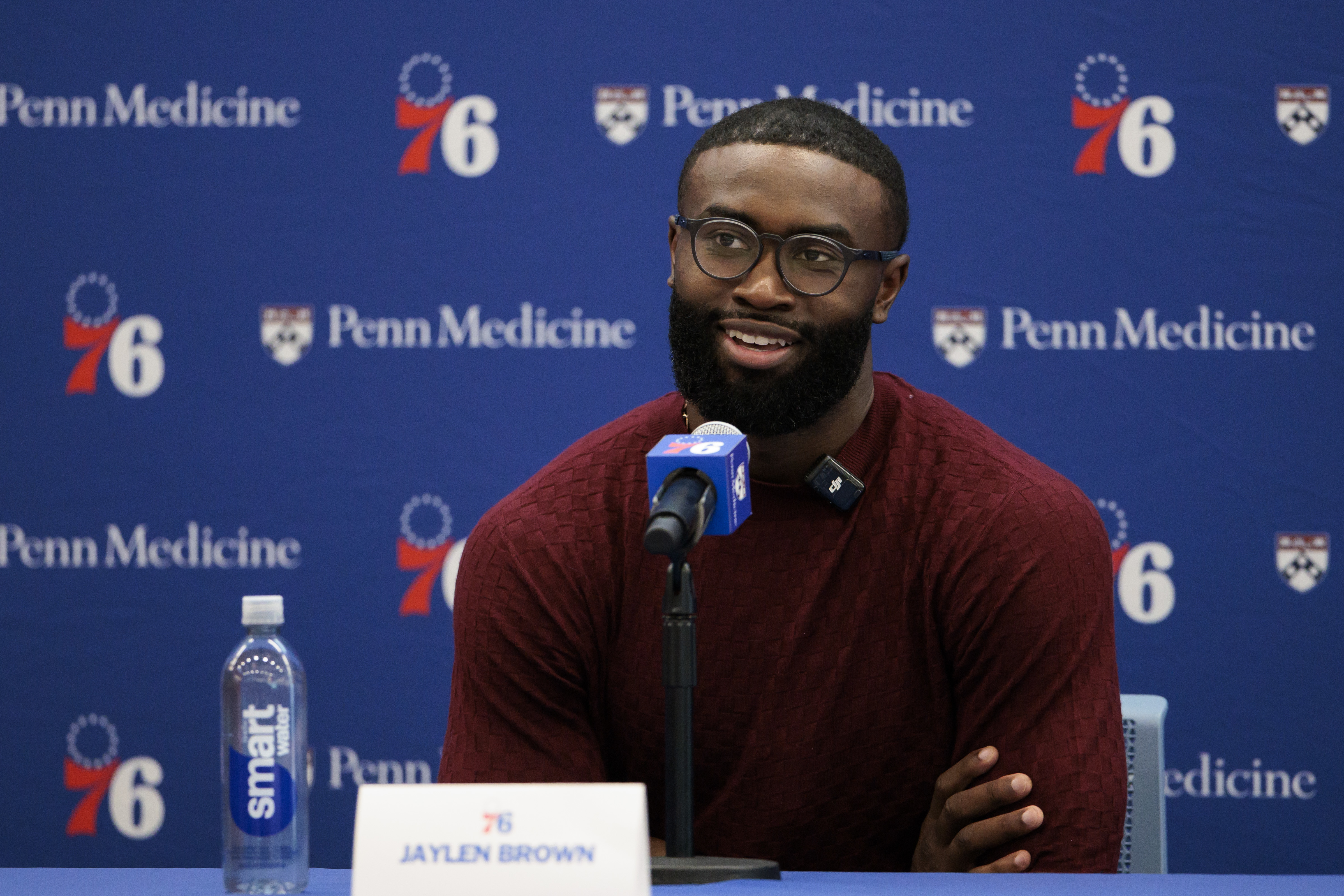
New Sixers forward Jaylen Brown speaks during his introductory press conference at the Francis Myers Recreation Center on Thursday.Monica Herndon / Staff Photographer
The trade for Jaylen Brown and LeBron James’s decision to sign here has given the Sixers more than just two outstanding players. They now have two players who have shown they can handle and thrive in big-time moments. That experience goes a long way in tempering premature expectations, writes columnist Mike Sielski.
We compiled today’s newsletter using reporting from Matt Breen, Mike Sielski, Jeff Neiburg, Olivia Reiner, Jeff McLane, Scott Lauber, Ryan Novozinsky, Erin McCarthy, Lauren Jones, Ariel Simpson, and Lexie Linderman.
By submitting your written, visual, and/or audio contributions, you agree to The Inquirer’s Terms of Use, including the grant of rights in Section 10.
As always, thanks for getting your week started with me. I’ll catch back up with you in Tuesday’s newsletter. — Bella
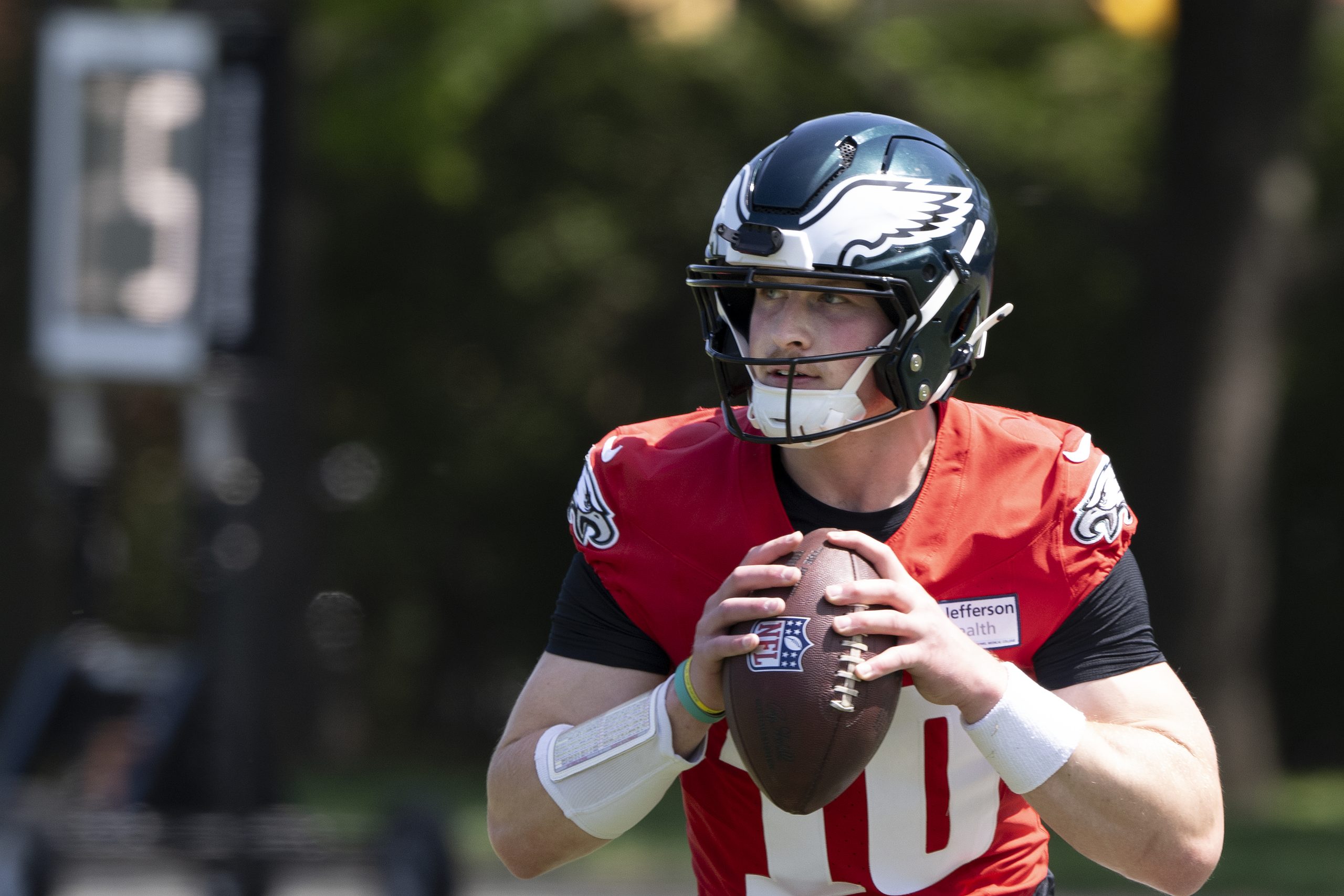
The Eagles have four quarterbacks in training camp, and when you’re the fourth man on the totem pole like rookie fifth-round pick Cole Payton, getting on the field for extensive work during 11-on-11 team drills can occasionally be difficult.
The team is committed to Payton’s development, but they’re also learning a new offense under first-year coordinator Sean Mannion. Jalen Hurts and the first-team offense need as many reps as possible, as do potential backup quarterbacks Andy Dalton and Tanner McKee.
So Payton, a dual-threat quarterback out of North Dakota State, often is on the field late, after practice ends, working with quarterbacks coach Parks Frazier and sometimes Mannion on his footwork and technique. Payton called those post-practice sessions “huge,” but the on-field portion of camp is only part of the on-the-job training Payton is going through as he navigates his first NFL training camp.
Cole Payton is going through his first NFL training camp with the Eagles.
The Eagles were off Sunday, but Payton said he has spent some off days strapping a virtual reality headset on to get “mental visualization reps.” The tool, Payton said, was introduced to him by Frazier, who last year was the pass game coordinator and this year moved to quarterbacks coach. The Eagles, Payton said, had the sets last year, too.
Payton can turn on the VR, select any stadium, go through his play calls, break the huddle, and simulate a real play.
“It’s not live footage, it’s animated, but it’s a really good tool to visualize and see things,” Payton said Saturday.
The VR sets are only part of the visualization tools the Eagles are using as they install Mannion’s new scheme. All through the offseason, Eagles quarterbacks have had an extra piece of hardware affixed to their helmets, giving a first-person view of what each player is seeing on the field. That extra footage is yet another angle for the quarterbacks and the coaching staff to analyze in the meeting rooms.
Hurts said on Wednesday that the cameras provide “insight and accountability in the huddle” and said “there’s an aspect of that that is very valuable.”
Jalen Hurts participates in training camp practice with a video camera mounted on his helmet.Jose F. Moreno / Staff Photographer
Accountability because the camera is recording sound, too. Wide camera angles of the field often used for film review can’t get inside the huddle to hear the way a quarterback calls a play or what he’s seeing when he makes a check at the line of scrimmage, but the helmet cams can.
“It’s been really cool,” Payton said, “not only for myself but just to hear what Jalen is saying in the huddle, what Andy is saying in the huddle, and Tanner, and the reminders they’re giving to the guys and just how crisp and clean the operation needs to be. We’re working and we’re building.”
The Eagles aren’t the first team to use either technology, despite the tools being new to the building. HBO’s Hard Knocks provided a look at Tua Tagovailoa utilizing the helmet camera technology two seasons ago. Russell Wilson wore one at times when he played in Seattle, as did Kenny Pickett in Pittsburgh. There are other examples, too. The Arena Football League introduced helmet cameras in 2014, and while that usage was mostly for entertainment purposes for the viewing audience, other NFL teams and college programs have been using the cameras for teaching purposes for years.
“I think it was more for the coaches to see where your eyes are at,” Nathan Peterman, who used the technology in college and the NFL, told ESPN in 2023. “And also, some of it, was to get a feel for what goes on in the huddle, for the coaches to see the communication of how things are going. That’s what I know [then-Raiders coach Jon] Gruden was looking at, to see the communication in the huddle and checks at the line.”
Like helmet cameras, the use of virtual reality among quarterbacks has been going on. Tom Brady, for example, used VR when he played for Tampa Bay. Penn State quarterbacks use them. And the latest season of the Netflix docuseries Quarterback gave some insight into Jayden Daniels’ use of the technology, which the Washington Commanders quarterback was open about during his standout rookie season in 2024.
Daniels first started using VR in college at LSU, and he would routinely turn the speed up to force himself to process plays even faster.
“It moves faster within the VR than actual human beings,” Daniels told reporters in 2024. “Once you get out there, everything slows down. I know this is coming. I’ve seen this before, [and] it moved more than 20 times faster in VR.”
His former offensive coordinator Kliff Kingsbury embraced the technology, having used versions of virtual reality while coaching at Texas Tech dating back to 2016. According to The Athletic, Kingsbury changed his daily schedule with the Commanders to spend up to an hour narrating play calls into a recorder so Daniels could hear Kingsbury’s voice in the VR headset.
“[Pilots] don’t go get trained in real planes,” Kingsbury told The Athletic. “They do their flight simulators. … [Jayden] has that thing on all the time. He can see our reads and routes and hears my voice in it. It’s as real as you can [get to] getting game reps, and your mind doesn’t know the difference. Your mind thinks you’re doing it.”
Jalen Hurts is one of a number of recent NFL quarterbacks who has utilized helmet video technology as part of the learning process. Yong Kim / Staff Photographer
This offseason, the Commanders, like the Eagles, added the helmet cameras to their toolbox as they implemented a new offense under first-year coordinator David Blough.
In Philadelphia, the helmets are another layer of learning. Hurts hasn’t often taken snaps from under center, but this offense will ask him to utilize play action from under center, which means his back will briefly turn to the line of scrimmage before he gets into position to read the field. The cameras, then, could help Hurts train his eyes to be looking in the optimal spot after the handoff fake.
For Payton, the point-of-view angles could help the rookie continue to work through the struggles of his first training camp. On Saturday, a throw to the sideline that may have been a throwaway attempt resulted in Payton’s fifth interception of camp. Perhaps the camera later would show what Payton saw when he released the ball.
As long as the camera hadn’t been knocked off focus.
“Sometimes the angle is funny,” said Payton, who is wearing a helmet camera for the first time. “You’re seeing the clouds or you’re seeing our feet. When the angle is right, I think it’s beneficial.
The best amateur golfers in the country are coming to the Philadelphia area this week for the 126th U.S. Amateur Championship from Monday to Sunday.
The tournament will be held at the historic Merion Golf Club in Ardmore for the first time since 2005. Philadelphia Country Club in Gladwyne will serve as the co-host for the first two days of stroke play.
Here’s what to know before the competition begins.
What is the U.S. Amateur?
The U.S. Amateur is the oldest tournament held by the United States Golf Association, starting in 1895. It is one of the most prestigious events in amateur golf and has produced a long list of golf’s best, including Tiger Woods, Jack Nicklaus, Arnold Palmer, and Bobby Jones, who won the amateur at Merion in 1930 and won the Grand Slam.
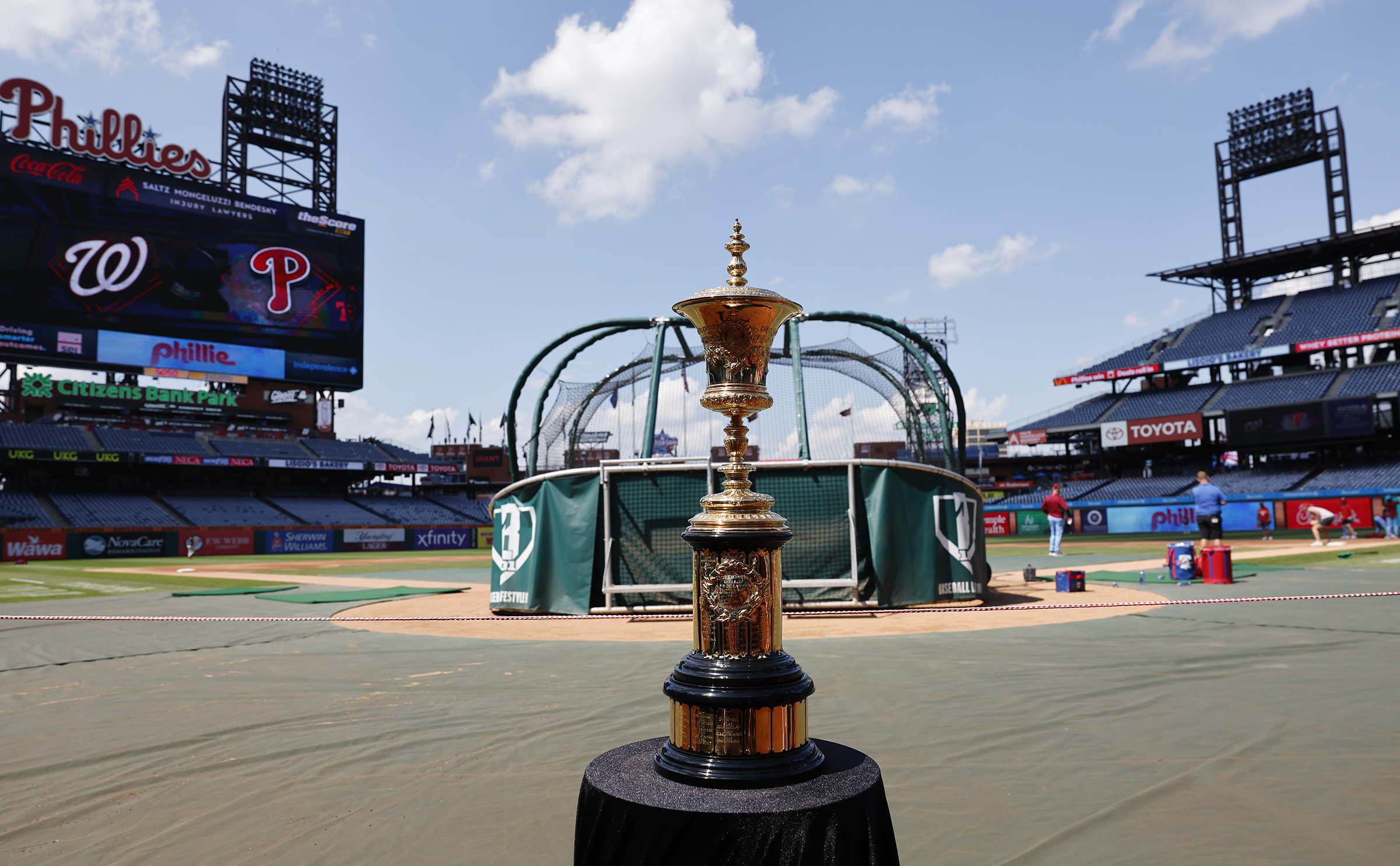
The tournament is open to amateur golfers with a Handicap Index of 0.4 or better. There are 312 players competing for the Havemeyer Trophy this year, with the field determined through a two-stage qualifying process with 5,111 entries.
Forty-seven of the top 50 in the Men’s World Amateur Golf Ranking are in the field this week. No. 1 Preston Stout, the current Division I NCAA individual champion with Oklahoma State, No. 3 Tyler Watts, and No. 4 Miles Russell, who finished runner-up at the U.S. Junior Amateur at Saucon Valley Country Club, will play together at 1:30 p.m. on Monday at Merion and 7:33 a.m. on Tuesday at Philadelphia Country Club.
Mason Howell, the reigning U.S. Amateur champion, will look to defend his title. Howell was 18 years old when he won at The Olympic Club in San Francisco. He defeated University of Tennessee’s Jackson Herrington in the 36-hole final to become the third-youngest champion in tournament history.
Forty-five states and 36 countries are represented in the field. There are 12 past USGA champions and 13 runners-up.
Mike McCoy, 63, is the only player in the field to have competed in the 2005 U.S. Amateur at Merion.
How many locals are in the field?
Ten players from Pennsylvania will compete in the championship, with many from the Philly area. Drue Nicholas, 23, of Egg Harbor Township is the only Merion member competing in the field this week.
Nicholas, who graduated from Drexel, recently won his second straight Philadelphia Open, becoming the second player in history to sweep the Philadelphia Open and the Philadelphia Amateur in the same year.
Nicholas Gross, 19, of Downingtown; Hunter Stetson, 20, of Newtown Square; Charlie Barrickman, 18, of West Chester; Michael Lugiano, 20, of Jackson Township; Patrick Isztwan, 23, of Huntingdon Valley, and Joshua Ryan, 22, of Norristown are all competing.
How does the tournament work?
The U.S. Amateur is decided through both stroke and match play.
The first two days, Monday and Tuesday, are stroke play. Every player will play 18 holes each day, with one round at Merion’s East Course and one at Philadelphia Country Club.
After 36 holes, only the 64 lowest scores will advance to match play.
The Round of 64 begins Wednesday, the Round of 32 and 16 on Thursday, followed by the quarterfinals Friday, the semifinals Saturday, and the championship match Sunday.
The final match is 36 holes and the eventual champion will have to win six consecutive match-play rounds to claim the title.
The event will air live on Peacock and NBC. Here’s the television schedule:
Wednesday
Round of 64: Peacock/NBCSN, 3 p.m.-6 p.m.
Thursday
Round of 16: Peacock/NBCSN, 3 p.m.-6 p.m.
Friday
Quarterfinals: Peacock/NBCSN, 3 p.m.-6 p.m.
Saturday
Semifinals: Peacock, 3 p.m.-4 p.m.
Semifinals: NBC, 4 p.m.-6 p.m.
Sunday
Championship Match (Afternoon 18), Peacock, 3 p.m.-4 p.m.
Championship Match (Afternoon 18): NBC, 4 p.m.-6 p.m.
Tickets to attend the tournament are available on the USGA’s website.
What does the champion receive?
The championship comes with significant benefits.
Along with a gold medal and the Havemeyer Trophy, the winner will receive exemptions into the next 10 U.S. Amateurs, the 2027 U.S. Open at Pebble Beach and the 2027 Open Championship at St. Andrews in Scotland, as long as one remains an amateur. The winner is also likely to receive an invitation to the 2027 Masters.
No. 9 on the East Course at Merion Golf Club in Ardmore.(Copyright USGA/John Mummert)
What’s the history behind Merion?
Merion’s East Course opened in 1912 and was designed by Hugh Wilson. It has hosted some of the most important tournaments in golf history, including 20 USGA championships.
Ben Hogan won the 1950 U.S. Open at Merion and Justin Rose won in 2013.
The U.S. Amateur has been played at Merion five previous times. In 2005, Italy’s Edoardo Molinari defeated Dillon Dougherty in the championship match.
Merion will host the U.S. Open in 2030 and the U.S. Women’s Open in 2034.
New Jersey Gov. Mikie Sherrill made a bold statement on a social media post last week.
“The best cheesesteaks actually aren’t in Philly,” she said. “They’re right here in Jersey, and we’re about to go have one.”
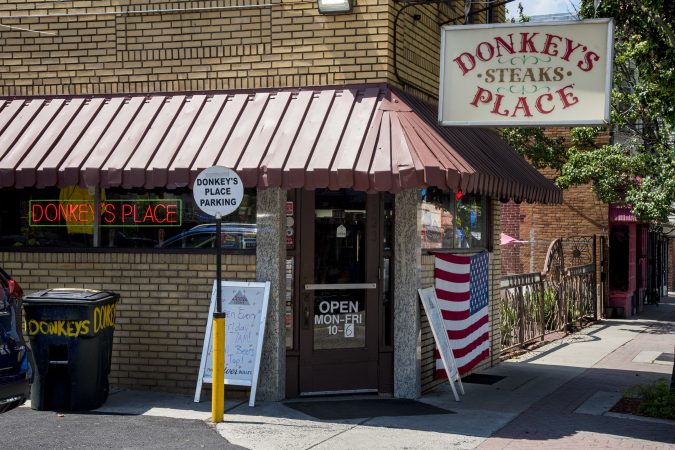
She was talking, of course, about Donkey’s Place — the Camden cheesesteak staple that has long been a point of pride for South Jersey.
Founded in 1943 by Olympic boxer Leon “Donkey” Lucas, Donkey’s earned its name from Lucas’ hard-hitting fists. “They said he had a punch like the kick of a donkey,” says Rob Lucas Jr., the third-generation owner of Donkey’s Place after his father, Bob, and grandfather Leon.
Donkey’s has long been a favorite of locals and foodies in the know — Anthony Bourdain stopped by for his show in 2015.
Lucas sources the rolls from Del Buono’s Bakery in Haddon Heights. Customers old and new cite it as a secret to the sandwich’s success.
“I like it a lot,” says Bryan Neill, a real estate developer from Jenkintown who — after getting out of work from Moorestown early — decided to make the commute to Donkey’s for the first time. “You know, I don’t like too much bread. It’s a very thin roll. You get some flavor with the bread and the poppies, but a lot more focus on the meat and the onions.”
John Lynch, a warehouse owner from Maple Shade, who has been coming to Donkey’s for roughly 25 years, agrees. “His rolls are the best. Most rolls get soft and break apart — not these. You can eat a whole sandwich and the roll never deteriorates. It’s such a difference.”
The seeded roll has had some detractors — in a 2002 profile of Donkey’s in The Inquirer, food writer Rick Nichols noted that some “customers who are on probation worry the [poppy] seeds will taint their urine tests.”
So why a seeded roll? Lucas has a theory. “I think they put the poppy seeds on so it wouldn’t slide out of your hands when you were trying to eat it, to give it a little traction,” he said. “It’s just so much better. Hard on the outside, soft on the inside, and the poppy seeds really put it over the top.”
The father of a Philadelphia man who was killed in an ATV crash this spring said police officers pursued his son moments before he drove the wrong way down a one-way street, ran a red light, and collided with a sedan.
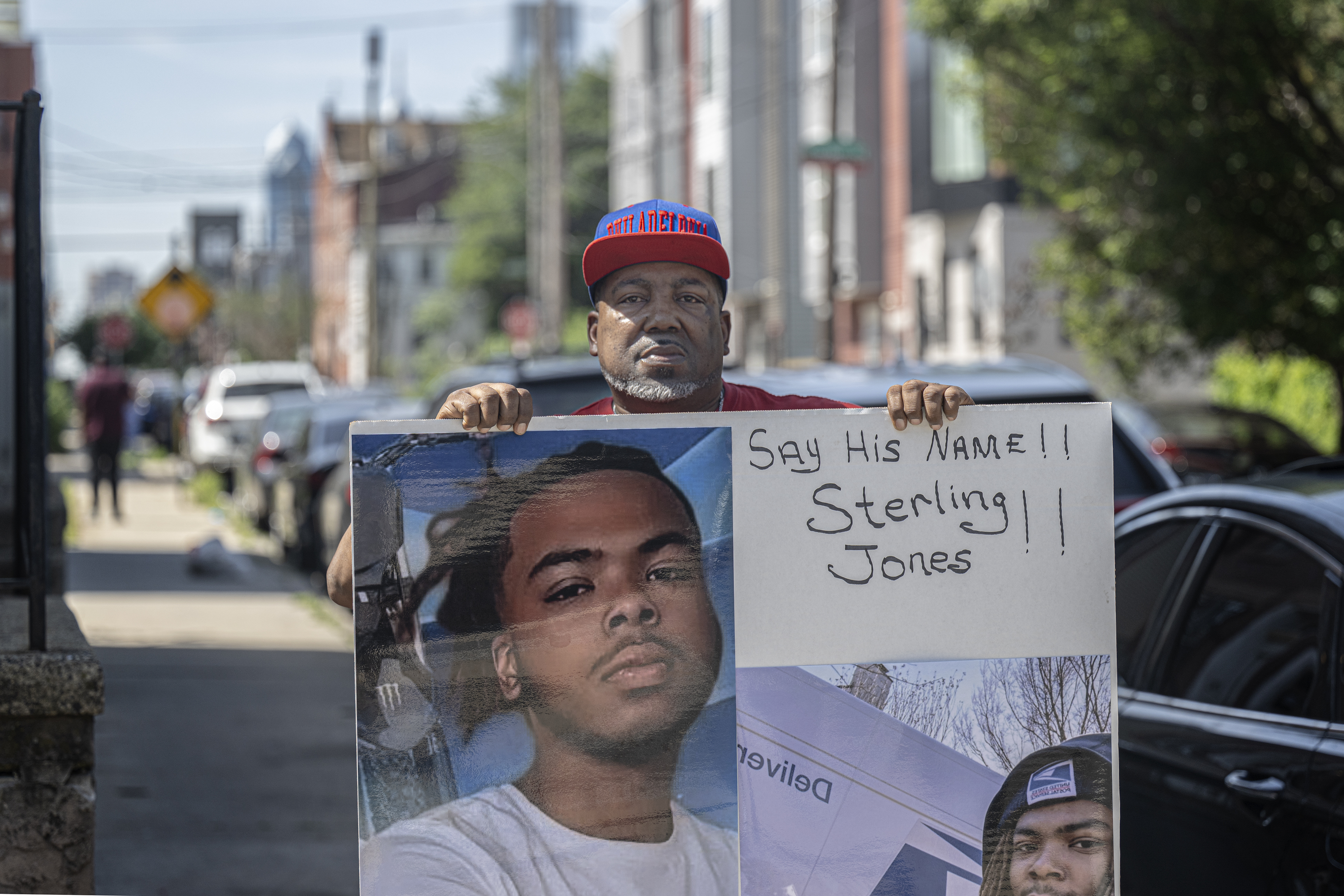
Sterling Jones, 22, was killed on May 9 after the crash in North Philadelphia, according to police.
Lawyers for Jones’ father, Sterling Lamont Jones Sr., said his son and a group of friends had been riding off-road vehicles near Broad Street and Fairmount Avenue when officers from the police ATV and dirt bike detail spotted the young men popping wheelies and began a pursuit.
They followed Jones up Broad Street to West Thompson Street, the attorneys said. There he briefly sped in the wrong direction down the one-way street and ran a red light before striking an Uber driver’s Toyota sedan at the intersection as it turned onto 15th Street.
He was taken to Temple University Hospital and pronounced dead shortly after his arrival.
Sterling Jones Sr., 57, has since hired a team of attorneys to investigate the incident. Late last month, they filed a notice of intent to sue the city, alleging that the officers and the department violated Jones’ constitutional rights when they chased him and caused his fatal injuries.
Sterling Jones, a 22-year-old who lawyers say was killed in an ATV crash after being chased by police officers.Courtesy of Sterling Lamont Jones Sr.
Riding ATVs and dirt bikes on public streets in Philadelphia is against the law, and police have increased efforts to crack down on that behavior in recent years.
But the incident raises questions about whether the officers followed a department directive barring vehicular pursuits for all but the most serious offenses — a policy enacted because of the public safety risks posed by such chases, particularly in densely populated areas.
The initial police account of the incident did not mention that officers had been pursuing Jones before the crash. It could not be learned whether the department had since concluded that officers were engaged in a pursuit and whether it was conducted a high rate of speed, as the lawyers contend.
Sgt. Eric Gripp, a police spokesperson, said the incident is under investigation by the department’s internal affairs bureau. He declined to comment further, referring questions to the city’s law department.
A spokesperson for the law department said the city does not comment on pending litigation.
Surveillance footage gathered by lawyers for Jones’ father and viewed by The Inquirer showed at least eight police officers on dirt bikes, a squad car, and a tow vehicle tailing Jones that evening.
Around 9:23 p.m., Jones was seen cutting through a Sunoco gas station and speeding down West Thompson Street with dirt bike officers close behind. Within seconds, his ATV careened into the driver’s side of the sedan.
Under police department policy, vehicular chases are allowed only in situations in which officers believe they can prevent imminent danger to others, or if a suspect is either fleeing after committing a violent felony or in possession of a deadly weapon used in a crime.
And while riding off-road vehicles violates city code, attorneys for Sterling Jones Sr. say that type of infraction still should not trigger a police chase.
“The police department’s policy is, in our view, clearly violated,” said Thomas Kline of Kline & Specter, which is handling the case alongside the firm Hill & Associates.
A 2025 Inquirer investigation found police in Philadelphia and across Pennsylvania were conducting hazardous and unnecessary chases, disproportionately endangering young people. Roughly half of all reported pursuits conducted by city police were not justified under department policy, the investigation found.
A police department spokesperson attributed the increase in chases to the COVID-era surge in violent crime, and said the department investigates every crash for policy violations.
Between 2020 and last year, records show, the city had paid out $20 million in crash- or chase-related settlements as a result of such chases.
In 2017, a 6-year-old girl and her great-aunt were seriously injured when they were struck by a dirt bike rider who was being chased by Philadelphia police into Upper Darby Township. The city settled a lawsuit with their attorneys for nearly $3 million last year.
Sterling Jones Sr. said that while he was planning to sue, no amount of money could make up for the loss of his son.
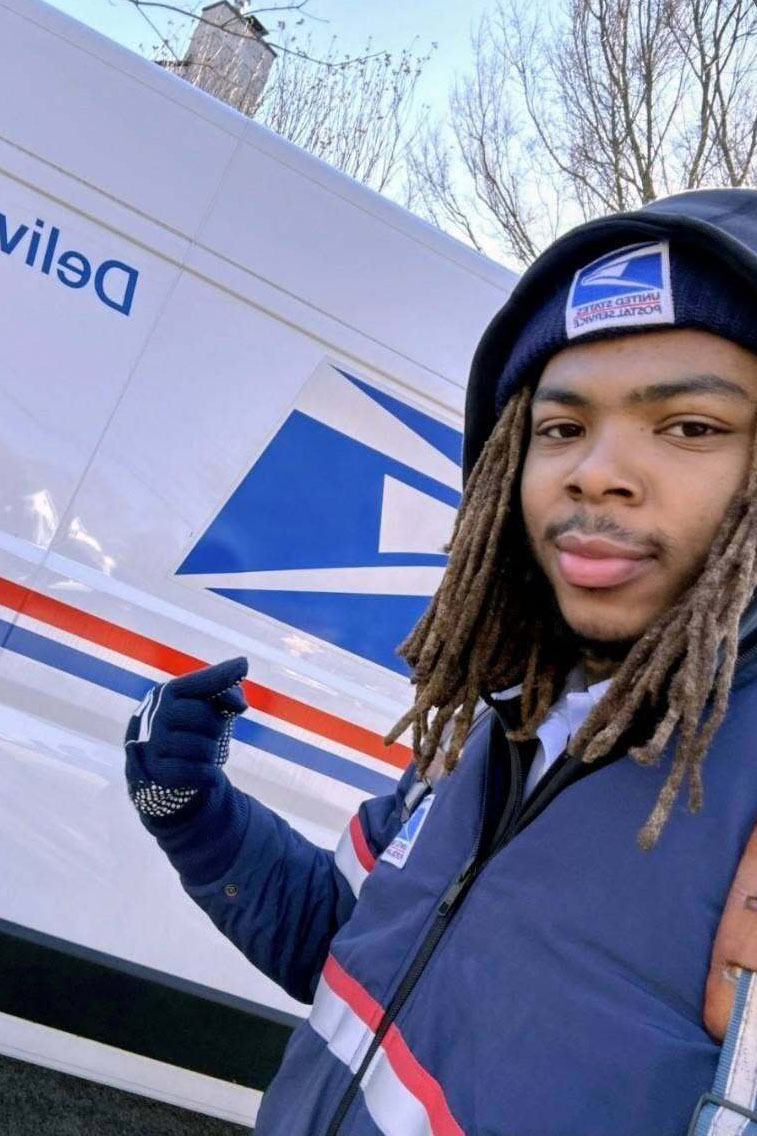
The young man was a graduate of Hunting Park Christian Academy and had been working for two years as a delivery driver for the U.S. Postal Service before his death. He had bought the ATV with money from that job, his father said.
“He wasn’t a criminal. He had a license,” he said.
Jones Sr. learned of the crash in the early morning of Mother’s Day, when his son’s mother came to his house to tell him Jones was dead.
He said he hired lawyers with the aim of ensuring that the officers who pursued his son would be reprimanded and removed from the beat.
“They killed my only son,” he said. “I just want justice.”
The former Cabrini University campus has undergone a more than $100 million, Villanova-fueled rebirth, and students will begin attending classes and living there this month.
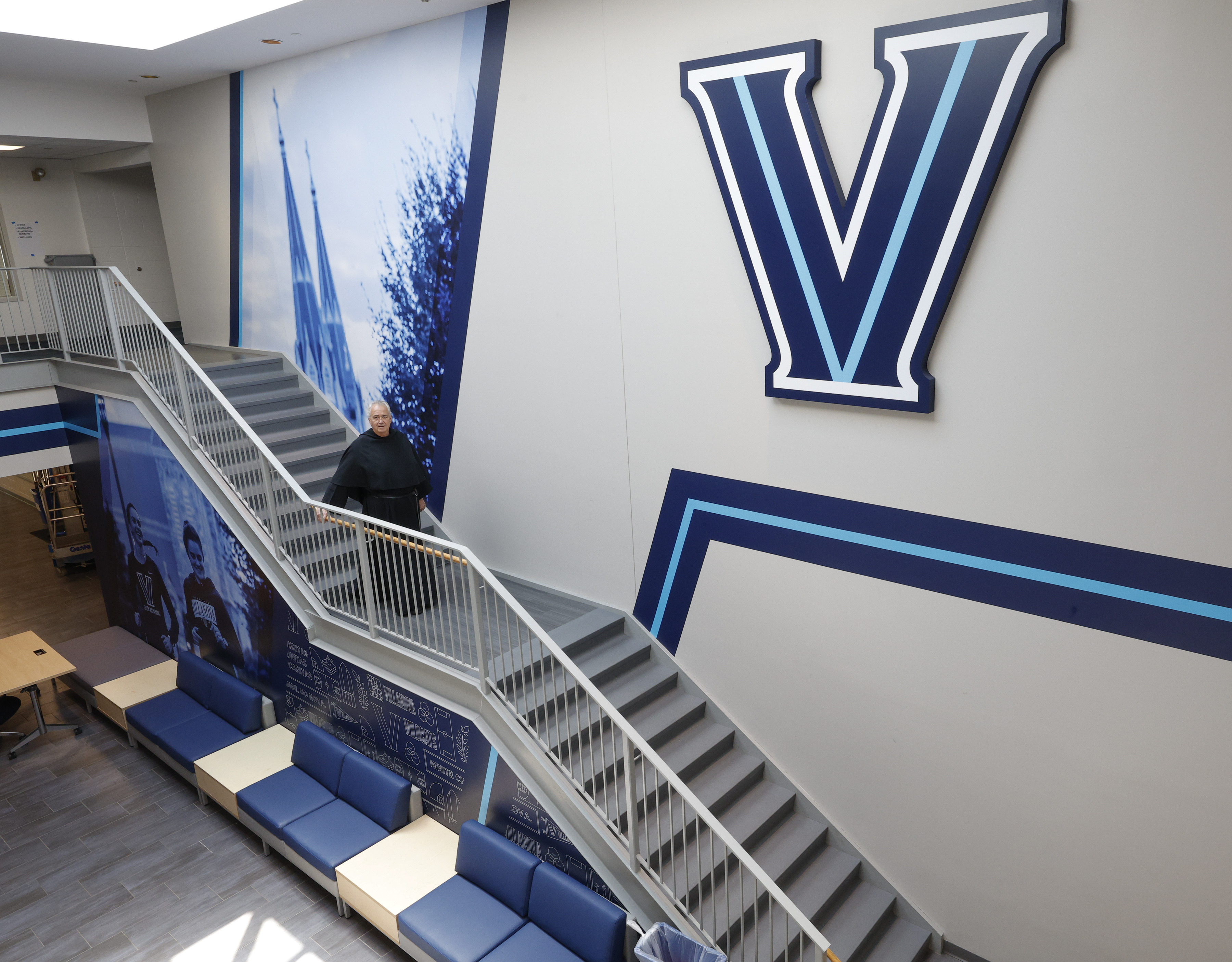
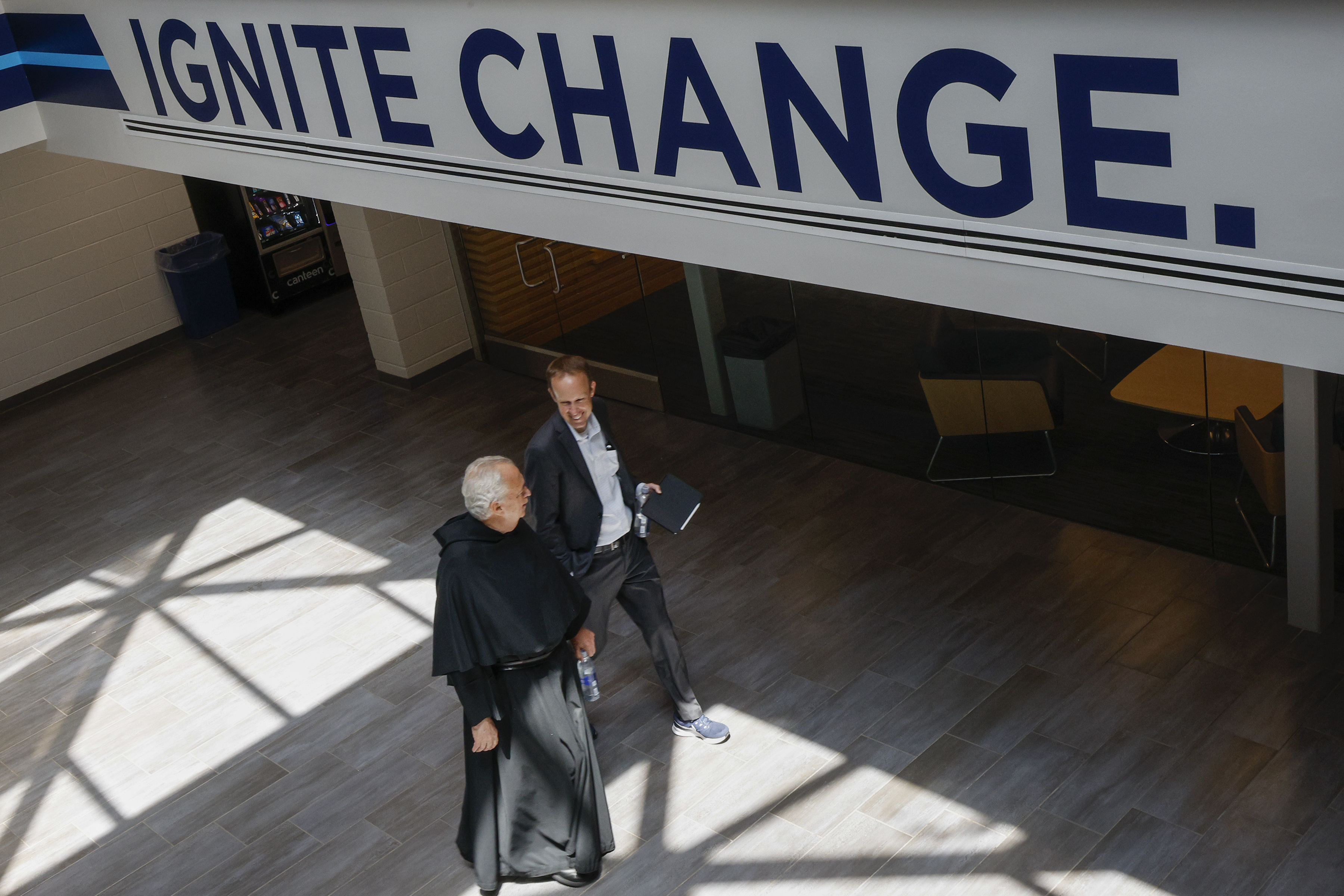
Large signature blue and white V’s for Villanova University are everywhere. “Ignite Change. Go Nova,” says a wall in the student recreation center. Beds in the residence halls now have navy blue sheets, and many of the buildings have been renamed to honor Villanova’s Augustinian heritage.
The Radnor campus once in dire need of maintenance sports a fresh look, including new light poles, landscaping, painting, furniture, boilers, roof repairs, a running fountain, pickleball courts, and restored architectural flourishes, in addition to upgraded educational technology for classrooms.
The university removed dead trees, installed firepits on the campus green, and connected the two campuses’ phone and internet systems.
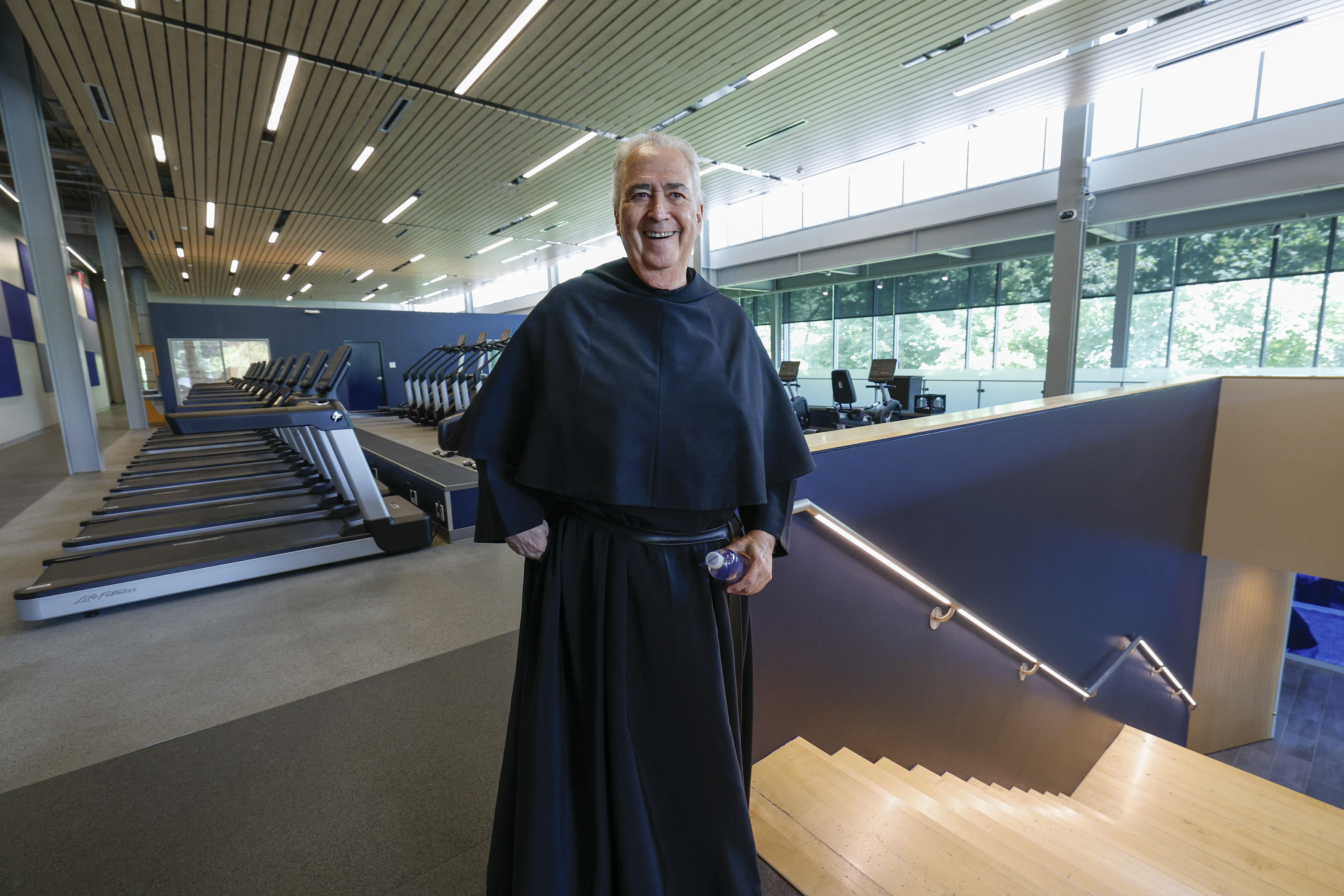
Villanova President Rev. Peter M. Donohue walks down the stairs at the Dixon Center, which has been covered in Villanova signage and colors. Steven M. Falk / For The Inquirer
It is all part of Villanova’s effort to make the 112-acre campus that it acquired from the shuttered Cabrini look and feel decidedly Villanovan. The campus has been closed for the last two years as the planning and upgrades took place.
“It’s always been a beautiful campus, but it looks very Villanova now,” said Kelly Tuzio, assistant director of Villanova’s graduate nursing program, who worked at Cabrini from 2005 to 2011.
“You can feel the change,” she said, helping to ready the Iadarola Center, the building she works in, for the opening. “Everything is just done to perfection.”
Some things remain largely untouched, like the signature statue of Mother Cabrini on the green and the Mansion, Cabrini’s former administrative building, which is on the National Historic Register. It was renamed Montefalco Hall. Masses will continue to be celebrated in the chapel: Cabrini was a Catholic university, as is Villanova.
Villanova University purchased the nearby campus of the now shuttered Cabrini University two years ago and has had the site closed for remodeling. But this fall, students will live and study there. Steven M. Falk / For The Inquirer
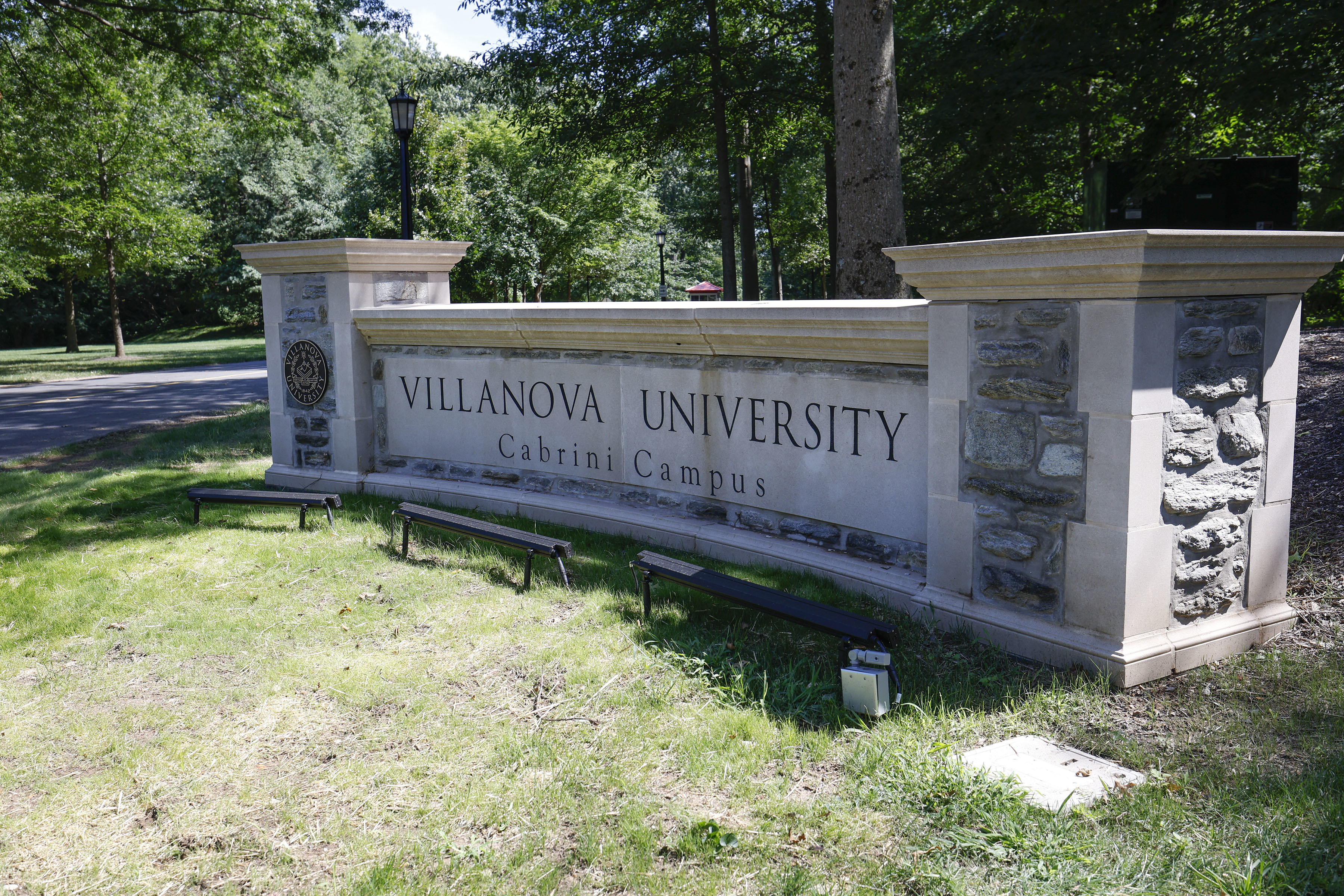
And signs at the entrance to campus say: Villanova University, Cabrini Campus — a nod to Villanova’s larger promise to retain Cabrini’s legacy.
A new era of growth
The acquisition of the campus, which officially opens for fall classes Aug. 24, marks an era of new growth for Villanova.
As many other colleges have lost enrollment in recent years, Villanova plans to grow its undergraduate student body, now at about 7,000, to 8,000 over the next four years, said the Rev. Peter M. Donohue, Villanova’s president. That growth started this year with about 250 additional freshmen. And the school plans to maintain its selectivity; it admitted just 29% of applicants for this fall’s class and saw more than a 10% surge in applications over the last year.
Villanova, which has a 260-acre main campus, will expand 43% in size with the addition of Cabrini.The university’s acquisition of Rosemont College — which will be complete in 2028 — will add 58 acres, increasing Villanova’s total to 430 acres.
The Cabrini campus will house five academic departments: psychological and brain sciences, graduate nursing, education and counseling, ethics, and part of communication. About 75 faculty — 10% of the total — will be based there.
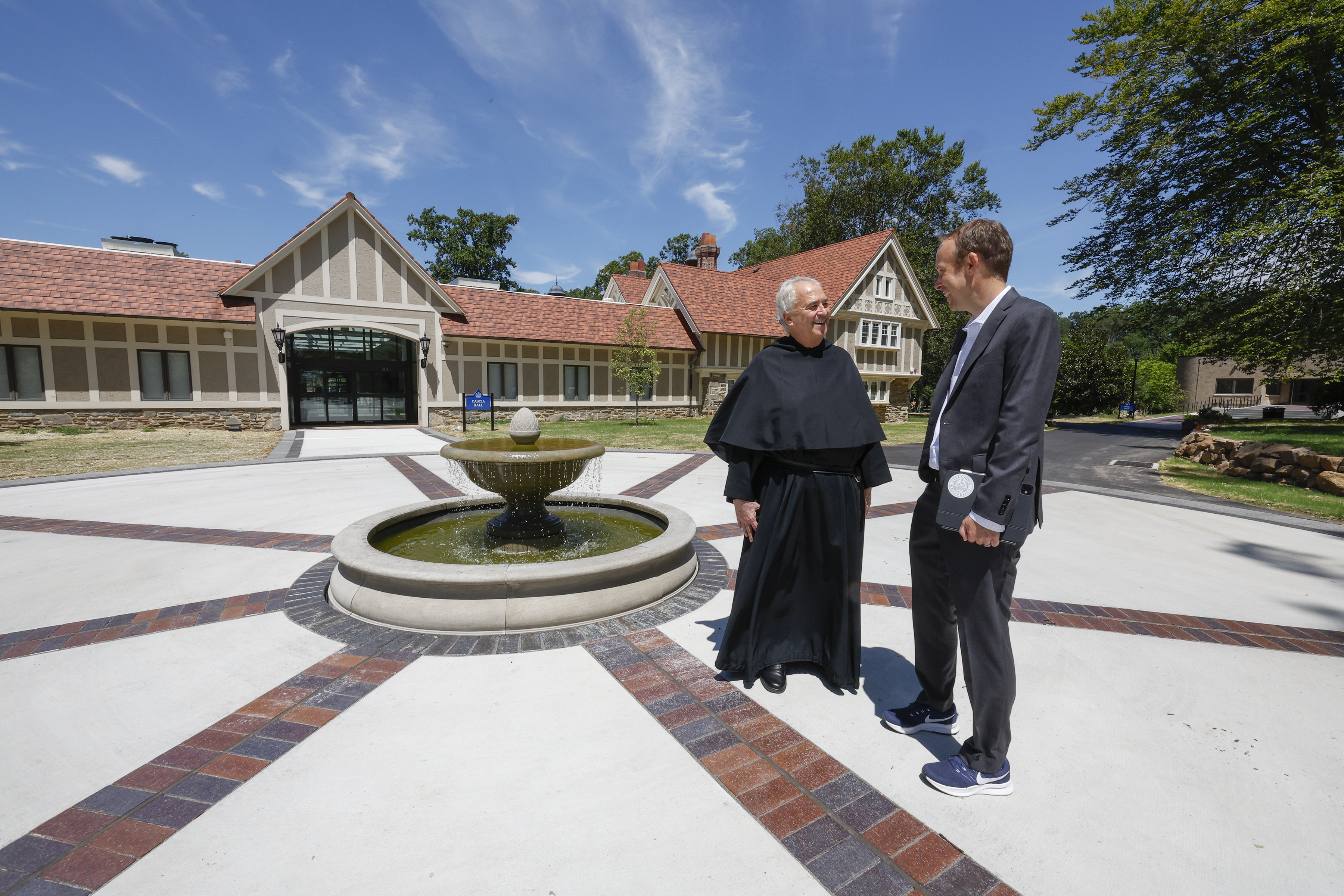
Villanova University President the Rev. Peter M. Donohue left, and Timothy Hoffman, vice provost for finance and administration, stand in front of a newly installed fountain outside Cascia Hall, which received a lot of renovations inside and out. It houses the student center. Steven M. Falk / For The Inquirer
About 900 sophomores — roughly half of those enrolled at Villanova — will live on the campus, expanding the percentage of undergraduates who live on Villanova’s campuses to more than 80%.
In addition, more than 2,000 undergraduate and graduate students — about a fifth of Villanova’s overall student population — will take classes at the Cabrini campus in the fall, said Timothy Hoffman, vice provost for finance and administration.
“I’m just excited to see life again on the campus,” said Michelle Filling-Brown, formerly dean of academic affairs at Cabrini and now associate vice provost for the integrated student experience at Villanova.
She has been designing themed living and learning communities for the new Cabrini campus.
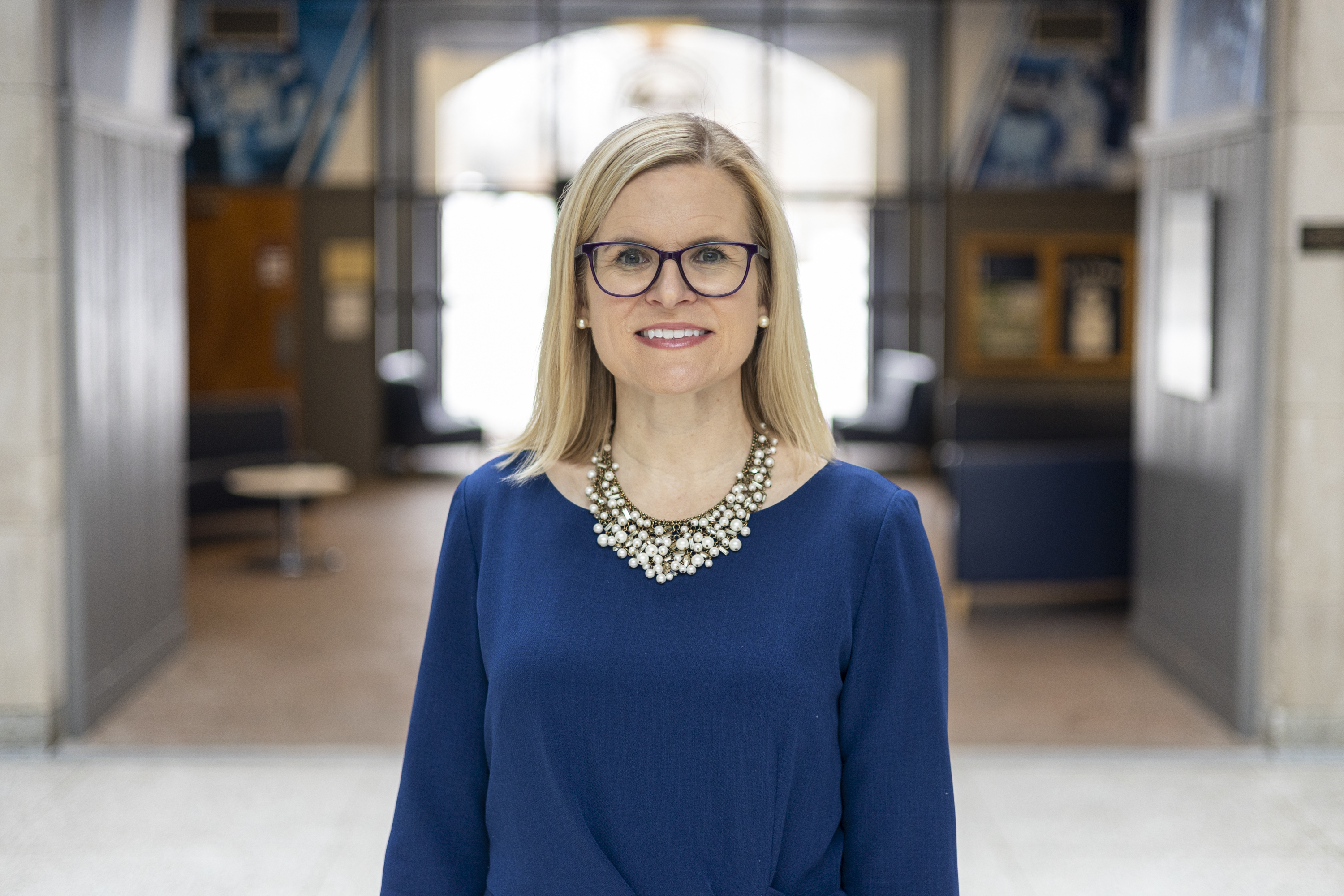
Michelle Filling-Brown, a former top administrator at Cabrini, now works at Villanova.Tyger Williams / Staff Photographer
Started in 1957, Cabrini was the only college founded by Sister Francesca Cabrini’s Missionary Sisters of the Sacred Heart. The university announced in 2023 it would shut the next year and Villanova would take it over, giving students and employees a year to find a new runway. The decision came as enrollment plummeted, finances tightened, and deferred campus maintenance mounted.
Donohue said Villanova has not yet made specific plans for Rosemont.
A classroom with new educational technology at the Iadorala CenterSteven M. Falk / For The Inquirer
Before beginning renovations, Villanova invited Cabrini alumni to collect memorabilia, Donohue said. The school also donated truckloads of old furniture and materials that it did not plan to use to nonprofits.
A $170 million-plus investment
The university has invested more than $170 million into the Cabrini purchase, including the $70 million it paid to close out Cabrini’s debt and acquire its land, buildings, and assets, and more than $100 million on renovations. Donohue said it will take just four years for the school to recover that money through the operation of the campus.
The university was able to keep $15 million of Cabrini’s $42 million endowment, the school said.
Though the campus has not officially opened yet, a few students have begun to move in. Last Tuesday, a group of young staff members huddled in a room, planning grand-opening activities. Others unpacked and organized nursing equipment.
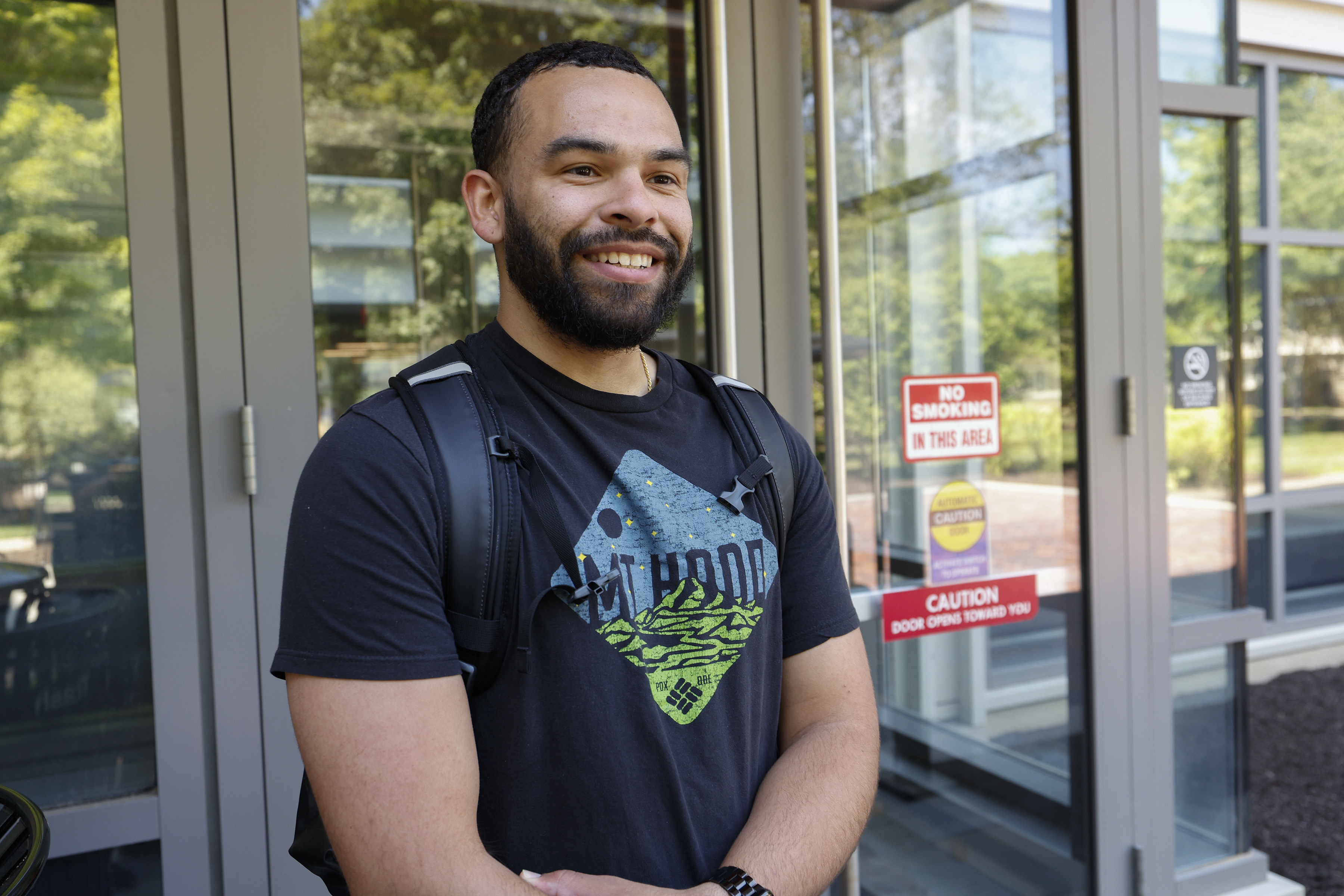
Graduate student Curtis Wesley stops by the Iadarola Center where he will study this fall.Steven M. Falk / For The Inquirer
Curtis Wesley, 26, an incoming graduate student in the nurse anesthesia program, strolled out of the building where his classes will be.
“I just wanted to come and check it out,” said Wesley, who is from Kansas. “I was excited to see all the new technology.”
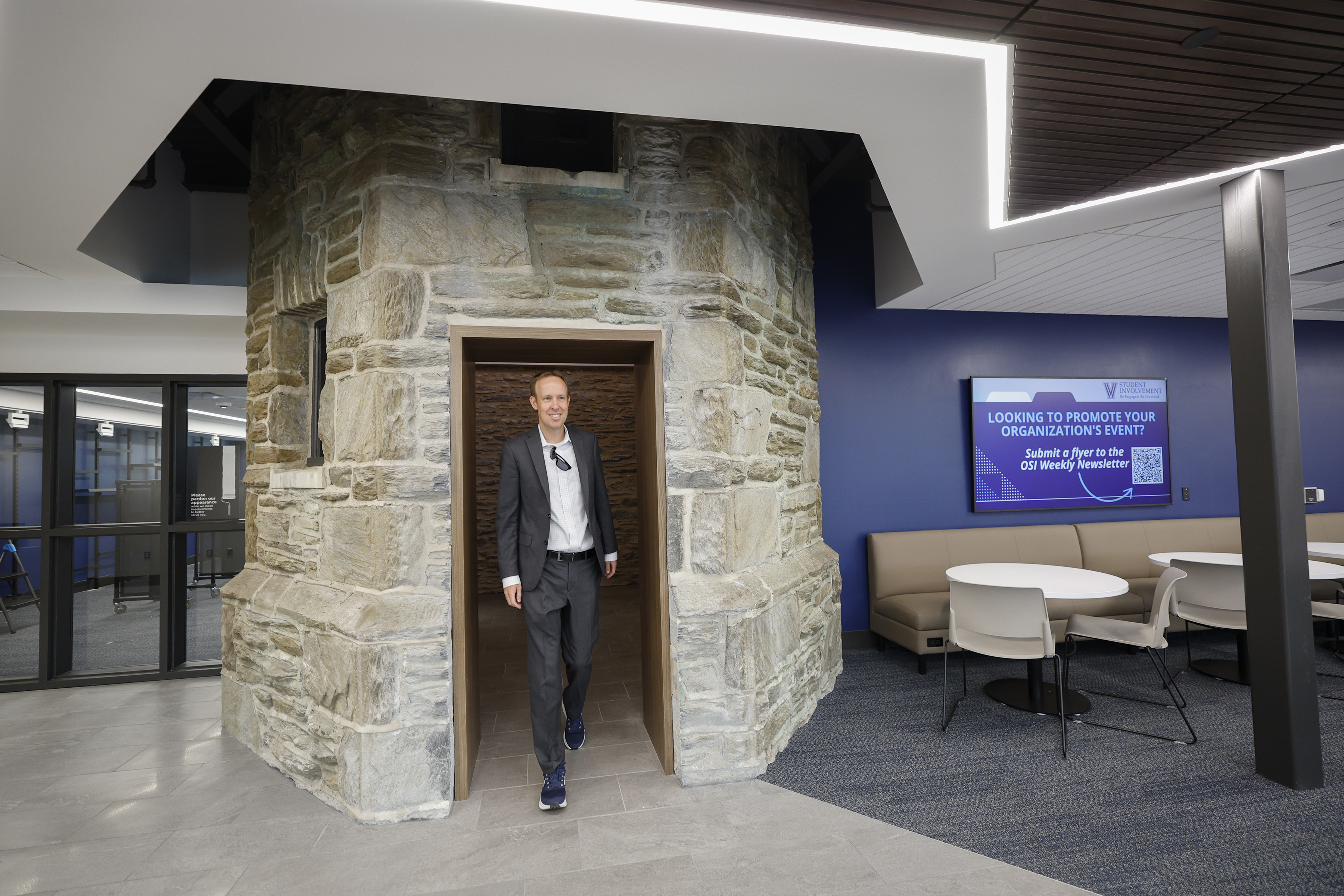
Timothy Hoffman, vice provost for finance and administration, emerges from the stone-walled turret leading to what will be a Villanova apparel shop. The turret was uncovered during remodeling at Cascia Hall. Steven M. Falk / For The Inquirer
One of the buildings that received the most renovation was the former Grace Hall, now Cascia Hall, home to the student center. The building used to be a stable house for the Woodcrest Mansion. Over the years, Cabrini put up drywall and turned much of it into office space.
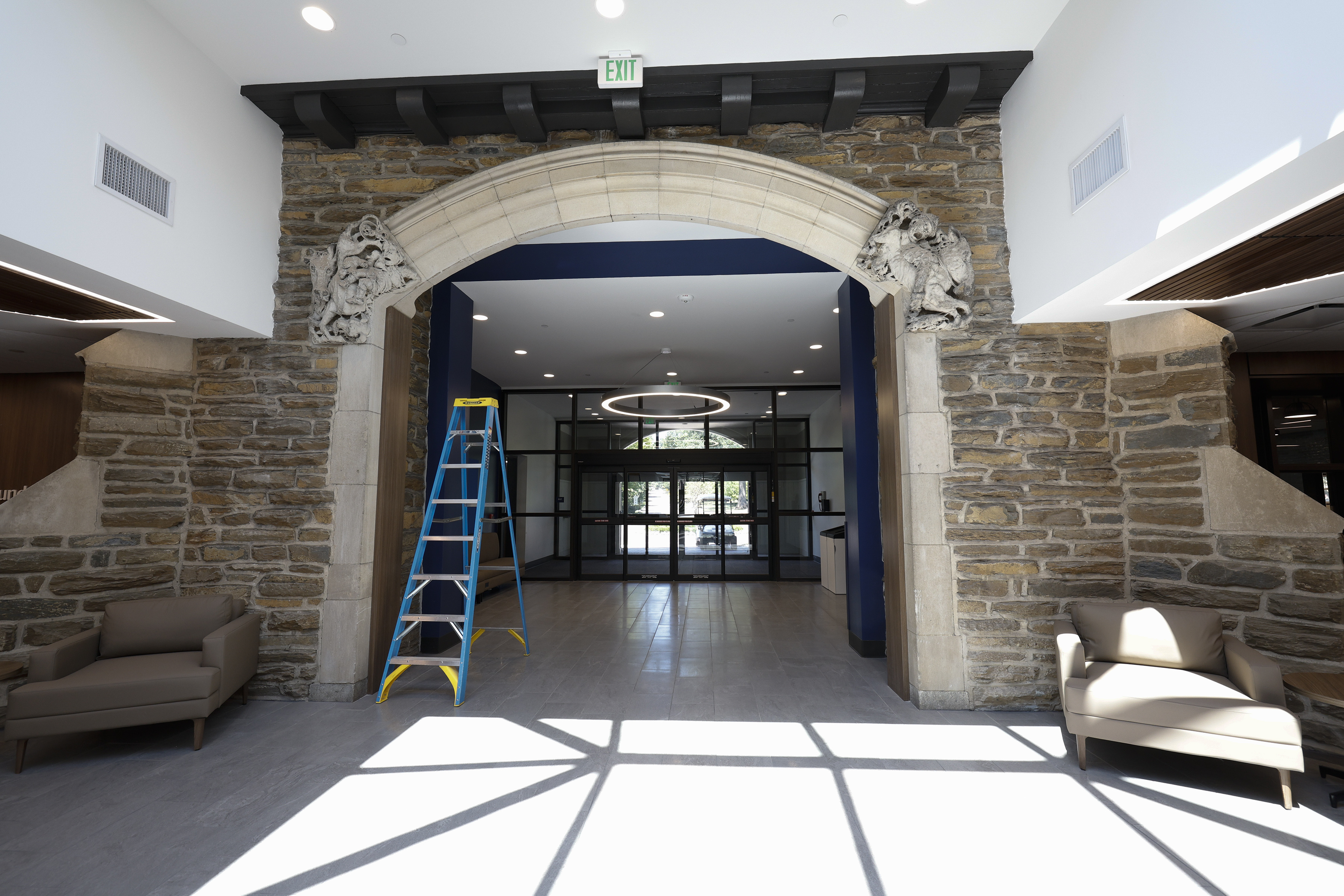
Villanova knocked those walls down and uncovered architectural flourishes including gargoyle-like stone carvings and a cavernous, stone-walled turret with a wooden-framed doorway, leading to what will be a Villanova apparel shop.
Renovations at Cascia Hall uncovered some architectural flourishes, including these stone carved gargoyles. Steven M. Falk / For The Inquirer
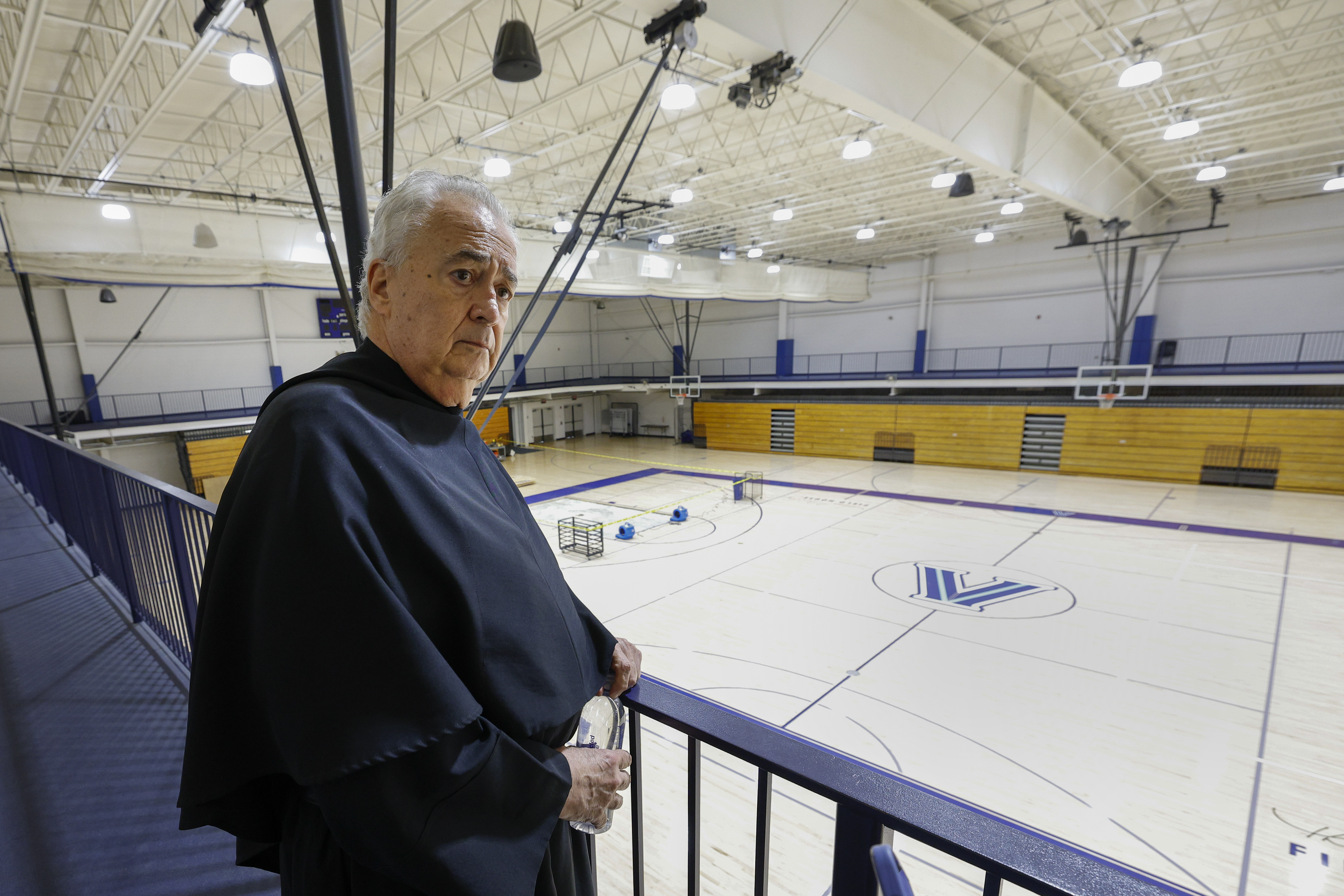
The Dixon Center will remain an athletic facility, but now the basketball court has a large V in the center and the smoothie bar will offer treats such as the Brunson, named after Villanova Wildcats basketball star-turned-New York Knicks standout Jalen Brunson, and the Father Peter Power, honoring the university president.
Donohue couldn’t name the ingredients in his new signature drink.
“I didn’t know it existed,” he said.
The facility, which also got new cardio equipment and reupholstered weight benches, will be used for non-varsity sports recreation.
Villanova President the Rev. Peter M. Donohue overlooks the basketball court at the Dixon Center. Steven M. Falk / For The Inquirer
“Our intramural basketball activity goes into the wee hours because we’re limited in our number of courts, so we are delighted to have this space,” Hoffman said.
The Iadarola Center, Cabrini’s former science building, includes a new nursing simulation facility that Cabrini had recently finished. But Villanova added upgrades, including a vivarium for psychology department research and more space for the brain science program. The former Cabrini library has been converted into student study space.
‘Many more dorm options’
Seven residence halls will house students, including two that had been closed amid Cabrini’s enrollment decline. One of them had a malfunctioning boiler — not anymore.
Sophomores were given the choice of living at Cabrini. Villanova ran tours of the campus for students last academic year. Those who chose Cabrini said they were attracted to the renovated dorms and larger room configurations that allow them to live with several roommates and share a bathroom. Options on main campus for sophomores are largely limited to doubles with a large bathroom shared by an entire floor or wing.
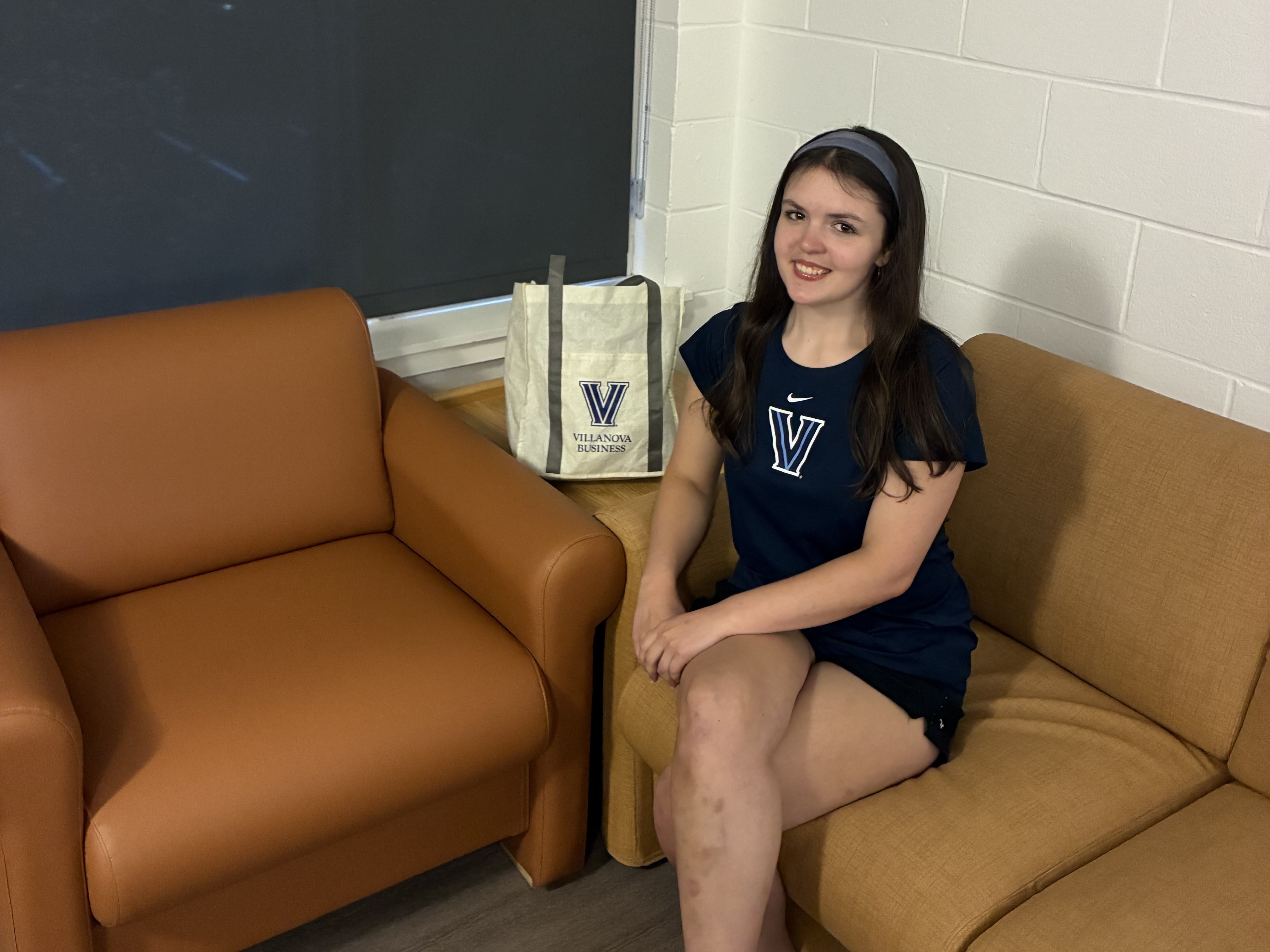
Villanova University sophomore Molly Dunphy-Culp has moved into her new apartment on the Cabrini campus.Courtesy of Molly Dunphy-Culp
“With Cabrini, there are so many more dorm options,” said Molly Dunphy-Culp, 19, a sophomore who was born in Boston and grew up in Abington.
She will be sharing an apartment in Lecceto Hall with three classmates.
She acknowledged that she will have to take the shuttle to main campus for classes, but said the short ride will be worth it. Dunphy-Culp also has a job on Cabrini as a recreation center supervisor — another plus for living there.
About half the students on campus will be allowed to have cars. Sophomores do not have that option on main campus.
“Two of my close friends are both going to have cars on campus,” said Ella Hayman, 19, a sophomore from just outside Boston. “This will give us a little more freedom we didn’t have last year. That was a big motivation.”
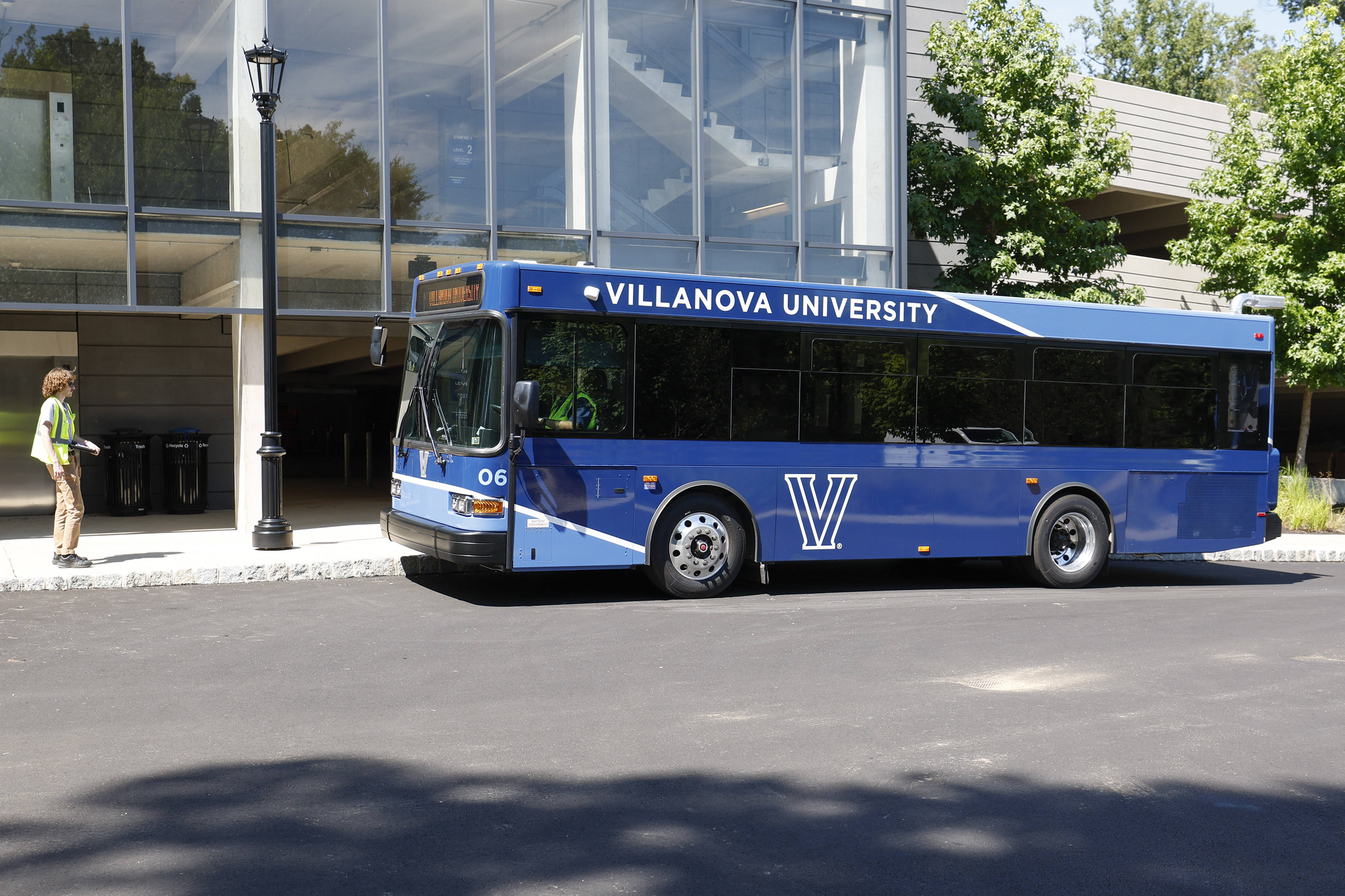
Shuttle buses including this one will transport students between Villanova’s main campus and the Cabrini campus 1.9 miles away. Steven M. Falk / For The Inquirer
Thirteen shuttle buses will transport students between the two campuses, which are 1.9 miles apart — a seven- to 12-minute ride, Hoffman said. A team of Villanova employees over the last couple of years visited five universities with multiple campuses, including Lehigh and George Washington, to learn how best to integrate them. They looked closely at models for a shuttle system that would keep students informed of where and when buses would be arriving and departing, Hoffman said.
Among new dining options on the campus is the restaurant-style Table 1842, named for Villanova’s founding year, where students can order off a menu. It is located in the former Founder’s Hall, now Bellesini Hall, which also was heavily renovated, including the installation of a new entrance that leads directly into dining facilities so people do not have to climb as many steps.
Bellesini has become the third-largest classroom building at Villanova. Some of the nearly 30 classrooms on the Cabrini campus had to be expanded to accommodate slightly larger class sizes, Hoffman said. Cabrini’s classes were 12 to 14, and Villanova starts at 16, Hoffman said.
Villanova University President the Rev. Peter M. Donohue left, and Timothy Hoffman, vice provost for finance and administration, walk through the Dixon Center. Steven M. Falk / For The Inquirer
Some improvements are still to come, including renovations to the former Mansion, which will be costly, and a nature trail, Donohue said.
Villanova named Francesca and Xavier Halls for Mother Cabrini and is continuing Cabrini’s Center for Immigration; Villanova converted it to the Mother Cabrini Institute on Immigration. Villanova also launched an elementary education major in honor of Cabrini’s former program.
Preserving a legacy
“They had a strong desire to make sure some of their legacy lasted, and we wanted to protect that,” Donohue said.
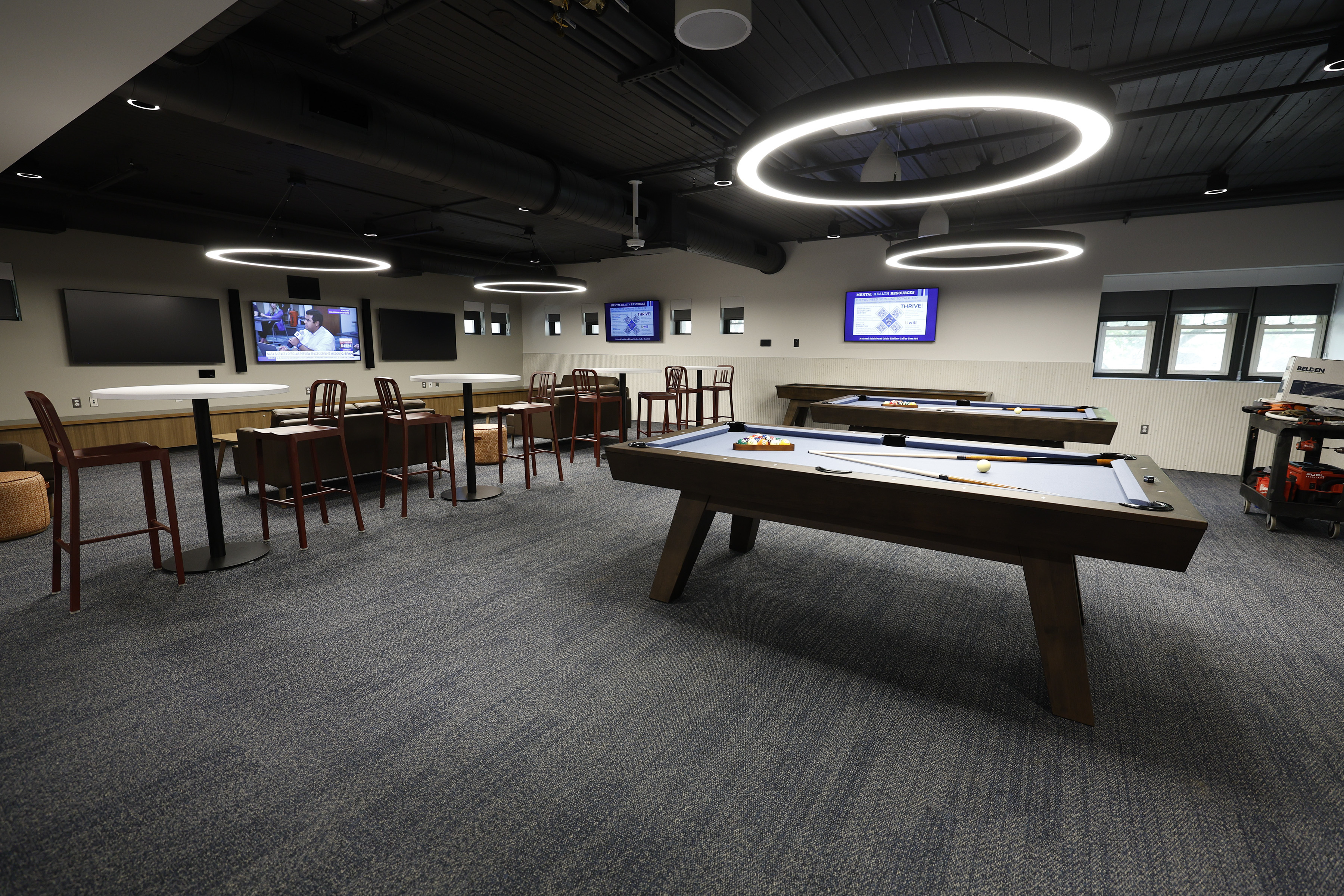
The game room at Cascia HallSteven M. Falk / For The Inquirer
Coincidentally, there is a stained glass window of St. Augustine — namesake of Villanova’s founding order — in Cabrini’s chapel and a stained glass window of Mother Cabrini in Villanova’s Corr Hall chapel.
Filling-Brown, the former Cabrini administrator now at Villanova, said it seems meant to be.
“It’s beyond my wildest dreams for the campus,” Filling-Brown said. “It’s the best outcome to see Catholic higher education continue on that campus.”
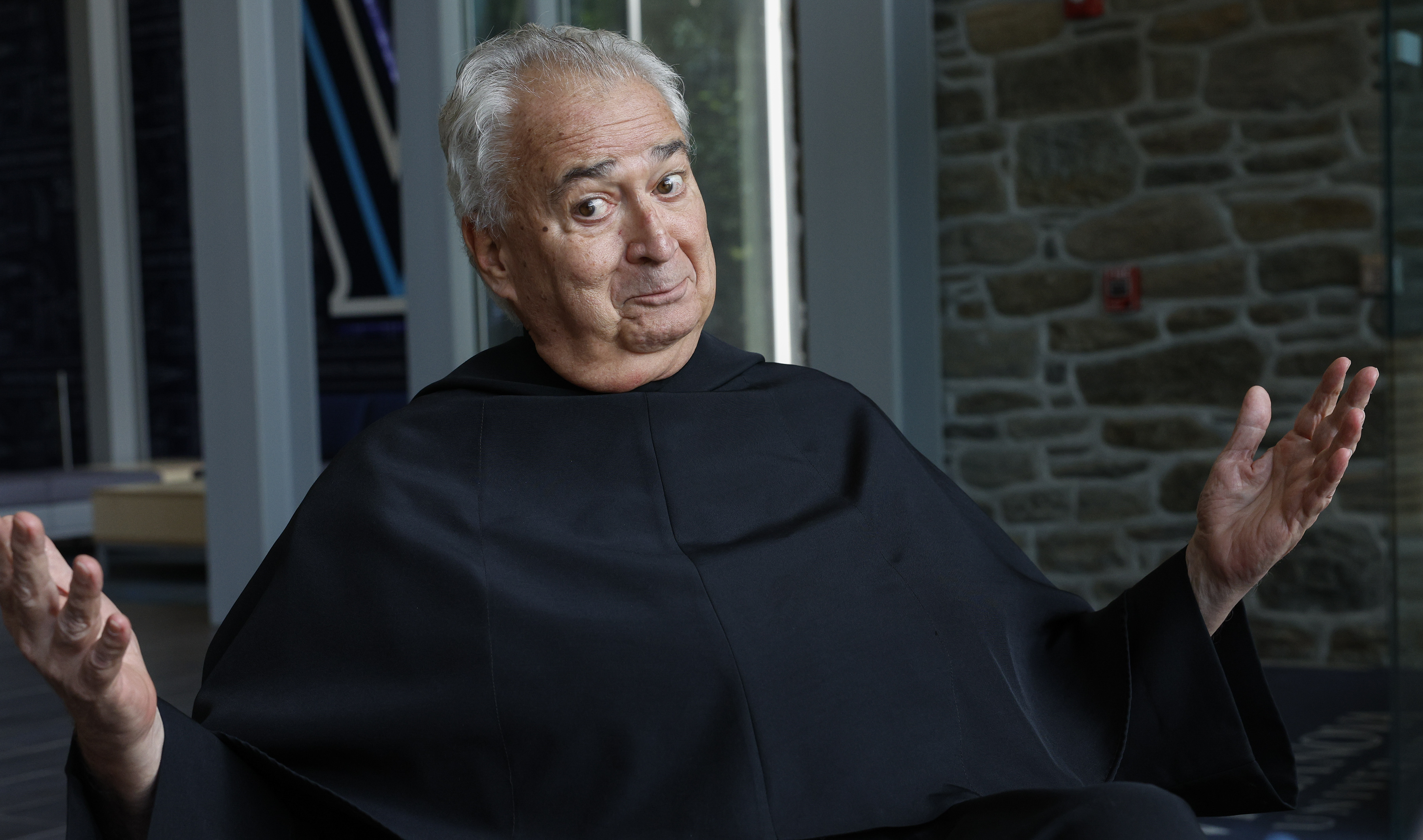
Villanova President the Rev. Peter M. Donohue discusses all it took to remodel the Cabrini campus. Steven M. Falk / For The Inquirer