Shane Victorino and Larry Bowa will serve as managers for the 2026 All-Star Futures Game, Major League Baseball announced Wednesday.
The Futures Game showcases baseball’s top minor league prospects in a seven-inning game. Victorino will be at the helm of the National League team, while Bowa will manage the American League prospects. The Futures Game will be held on July 12 at Citizens Bank Park as part of the All-Star week festivities.
Victorino and Bowa won the World Series with the Phillies during their playing careers. Victorino was a key member of the championship core in 2008, while Bowa was the starting shortstop when the franchise captured its first title in 1980. Following his 16-season playing career, Bowa transitioned to coaching and won Manager of the Year in 2001 with the Phillies. He serves as a senior advisor to baseball operations with the team.
Last year, the Phillies were represented by catcher Eduardo Tait, who was later dealt to the Twins as part of a trade package for Jhoan Duran. Andrew Painter was also included on the National League roster but did not make an appearance.
BOSTON — Generations of Boston families played and picnicked on the grassy, sloping lawns of the Bunker Hill Monument.
Musket balls and other artifacts from one of the American Revolution’s most consequential battles were buried just below their feet the whole time.
Inspired by a centuries-old map, archaeologists have been digging in the park that sits on the site where American patriots hastily constructed an earthen fort to slow advancing British forces at what became known as the Battle of Bunker Hill.
Ground-penetrating radar identified potential locations for the fort in Boston’s Charlestown section. Soon after digging the first trench, the team led by Joe Bagley, the city of Boston’s archaeologist, found definitive signs of a ditch constructed hours before the battle on June 17, 1775, one of the first of the American Revolution.
“The part that’s really crazy to me is that we get to stand in the same ditch,” said Bagley, standing over one of the two dig sites, where soil is removed about 4 inches at a time, put in buckets and filtered through screens. Any items found are bagged up and identified.
Tea cups and wig curlers
So far, the dig has uncovered musket balls and parts of a musket from the battle. They also found objects likely left behind by British troops who occupied the area after the battle — including tea cups, tobacco pipes, sleeve buttons, and a wig curler. There were nearly 150 combatants who died there but no human remains have been found, though a forensic archaeologist is on site to identify any bones.
“Everything about the ditch is from 1775. You’ve got musket balls, gun flints. It’s what you would expect to see,” Bagley said. “It’s pretty powerful because these things are being dropped in the middle of the battle.”
The start of the American Revolution is often associated with the Battle of Lexington and Concord, skirmishes fought on April 19, 1775. But many scholars cite Bunker Hill and June 17 as the war’s first significant battle.
Historic battle
Rebels intended to hold off a possible British attack by fortifying Bunker Hill, a 110-foot-high slope in Charlestown across the Charles River from British-occupied Boston. But for reasons still unclear, they instead took a position on a smaller and more vulnerable ridge known as Breed’s Hill, where most of the fighting took place.
The battle ended with the rebels in retreat, but not before the British had sustained more than 1,000 casualties. Bunker Hill is often portrayed as an American victory, since the British failed to win decisively and it served to galvanize the colonies against the British.
Today, a 221-foot white obelisk atop Breed’s Hill memorializes the battle.
On Wednesday, a church service in Charlestown will be followed by a procession that makes its way to the Bunker Hill Monument. A remembrance ceremony will be held there that includes a wreath-laying, moment of silence and musket firing demonstration. The dig also ends Wednesday.
Musket balls tell stories
At the dig site, Joel Bohy, a battlefield archaeologist who specializes in identifying American Revolution weaponry, marveled at what had been pulled from the dirt. One volunteer held in her hand two jagged stones — the gray one was an English gun flint while a beige one was a French gun flint. When the trigger on the musket was pulled, flint struck the steel, producing sparks that ignited the gunpowder.
They also found eight marble-sized musket balls from both sides in the battle. The markings and shape of some bullets showed they had been fired from a distance but didn’t hit anyone. If they had, the balls would have been deformed.
“You can see the ramrod mark from when the soldier rammed it down. You can the little ring on the top where it was pushed down,” Bohy said, adding that “marks on the edge of the ball” show that it had been fired.
Where was the fort?
Using pick axes and shovels, more than 1,000 provincials and residents dug through the night to construct a ditch that was 3 feet deep and over 6 feet wide. They shoveled the soil in front of the ditch to make a 6-foot-high wall or parapet that reached 150 feet long on each of the four sides.
A map drawn by Henry Pelham two months after the battle showed a square redoubt on Breed’s Hill. But it wasn’t until the dig that anyone had confirmed the shape in the map was accurate. Previous digs in the 1990s had found items related to the battle and some evidence of the ditches.
“If you come to the site, we have the monument, we have a lot of maps on display, and the landscape is beautiful. But you can’t really see the fort, the fortifications that were built,” Bagley said. “Very little of what’s here visibly is from 1775. So, this trench is the reason why all of this is here.”
History comes alive
Beyond locating the fort, the dig also provides visitors a chance to hold “a piece of the battle in their hand,” Bohy said. “In a way, it makes the history more dimensional when you look at these objects from the battle itself.”
Several tourists from Colorado stopped by to watch the dig. One visitor, Greg Nockleby, who had spent a week in Boston learning about American history, said watching the archaeologists at work was a “wonderful surprise.”
“A live dig happening right now to uncover our nation’s history is amazing,” he said. “To see that there has been people here who have died for our freedom and our nation is very immersive.”
RIVERHEAD, N.Y. — After decades waiting for justice, relatives of women murdered by New York’s Gilgo Beach serial killer laid into him Wednesday before he was sentenced to life in prison. He told them: “I am responsible” for the crimes.
“The words I would say would have no meaning,” added Rex Heuermann, the Long Island architect who lived a secret life of violence for years before admitting he killed eight women.
The sentencing capped an extraordinary investigation that solved one of New York’s most perplexing mysteries. The seemingly unconnected and largely overlooked disappearances of young women became the focus of true-crime documentaries, books, and podcasts after police began discovering the victims’ skeletal remains in the sandy scrub along a coastal parkway.
Heuermann, 62, will have no possibility of parole.
But “a million years isn’t enough,” Jasmine Robinson, a cousin of victim Jessica Taylor, said. “Nothing will ever make this right.”
“You fill me with so much repugnance, I can’t stand it,” Robinson said.
Judge calls Heuermann ‘despicable’
As a series of victims’ kin spoke, Heuermann sat with his hands on the defense table, looking straight ahead and lightly tapping his fingers. Then Amanda Funderburg, victim Melissa Barthelemy’s sister, urged Heuermann to look at her.
He glanced in her direction, but his eyes were slightly downcast.
“I hope you suffer,” said Funderburg, who recounted getting a taunting phone call from him days after Barthelemy disappeared, when Funderburg was 15 years old.
JoAnn Mack, the mother of victim Valerie Mack, told the killer that her daughter “had dreams, and you took them all away from her.”
“Justice has been done, but it can’t replace what has been taken,” Mack said. Valerie Mack had worked as an escort in Philadelphia.
Heuermann pleaded guilty in April to charges that he murdered seven women: Barthelemy, Mack, Taylor, Megan Waterman, Amber Lynn Costello, Maureen Brainard-Barnes, and Sandra Costilla.
Heuermann also admitted in court to killing an eighth victim, Karen Vergata, though he was never charged in her death. He said he strangled his victims, many of them sex workers, and dismembered some of their bodies.
“Are you at least a little sorry?” Judge Timothy Mazzei asked him Wednesday in a loud, indignant voice.
Heuermann nodded and appeared to mouth “yes.”
“You are disgusting — a despicable man, if you are a man at all,” the judge said, his voice rising. “And you are a coward.”
As Heuermann was led away in handcuffs, spectators in the packed courtroom seemed to jeer.
Victims’ children recount a confounding loss
Most of the women disappeared between 2000 and 2010, and most of their remains were found on a parkway not far from Long Island’s Gilgo Beach, some 50 miles from Manhattan.
Costilla’s remains were found in 1993, more than 60 miles away in the Hamptons, while Vergata’s remains were found in 1996 on Fire Island, more than 20 miles east of Gilgo Beach.
Brainard-Barnes’ two children, who were 7 and 1 when she disappeared in 2007, underscored Wednesday how her absence shaped their lives and how she never got to know the adults they grew up to be. Her sister, Melissa Cann, said she lived with “survivor’s guilt” for decades, wondering whether she could have done something more to protect Brainard-Barnes.
“It was a weight I carried everywhere,” Cann said, sobbing deeply. But, she said, that guilt is “not mine to carry. It is for Rex and Rex alone.”
Liliana Waterman was 3 when her mother, Megan Waterman, vanished. The daughter said she didn’t fully understand what had happened until she was about 9.
“In an instant, my world was shattered,” she said. “Was she in pain? Was she scared?”
How the Gilgo Beach serial killer was caught
The case spilled into view in 2010, when investigators started to find remains along Ocean Parkway while looking into the disappearance of another sex worker, Shannan Gilbert, whose death was ultimately ruled an accidental drowning.
The case went cold until 2022, when detectives linked Heuermann to a pickup truck that a witness reported seeing when one of the victims disappeared in 2010.
Investigators amassed other evidence, including cell phone and tracking data showing Heuermann arranged meetings with some victims shortly before their disappearances.
After Heuermann’s 2023 arrest, prosecutors recovered what they described as a “blueprint” for the killings from his computer files. Among the documents was a series of checklists with reminders to limit noise, clean the bodies and destroy evidence.
Calling the man “a monster,” Suffolk County District Attorney Ray Tierney declared there was nothing Heuermann could say to mitigate his deeds.
As part of his guilty plea, Heuermann agreed to cooperate with the FBI’s behavioral analysis unit to help catch other serial killers.
Heuermann spent the last three years alone in a segregated cell at the Suffolk County jail, reading crime novels, occasionally being visited by his lawyers or family, and striking up a brief correspondence with the infamous “Happy Face Killer,” according to Sheriff Errol Toulon.
Through their lawyers, Heuermann’s ex-wife and two grown children said they did not attend the sentencing out of respect for the victim’s families.
If you’re in a church and the ceiling starts pulsating and streaks of lightning splinter down the walls, it’s usually a good sign that more than the homily is about to go down.
But at Luminiscence, it’s all part of a new immersive experience that uses light to alter one of Philadelphia’s most famous altars — at the Cathedral Basilica of SS. Peter and Paul.
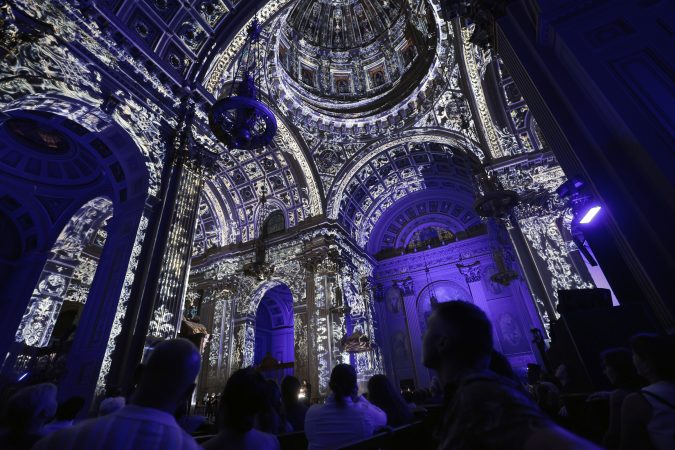
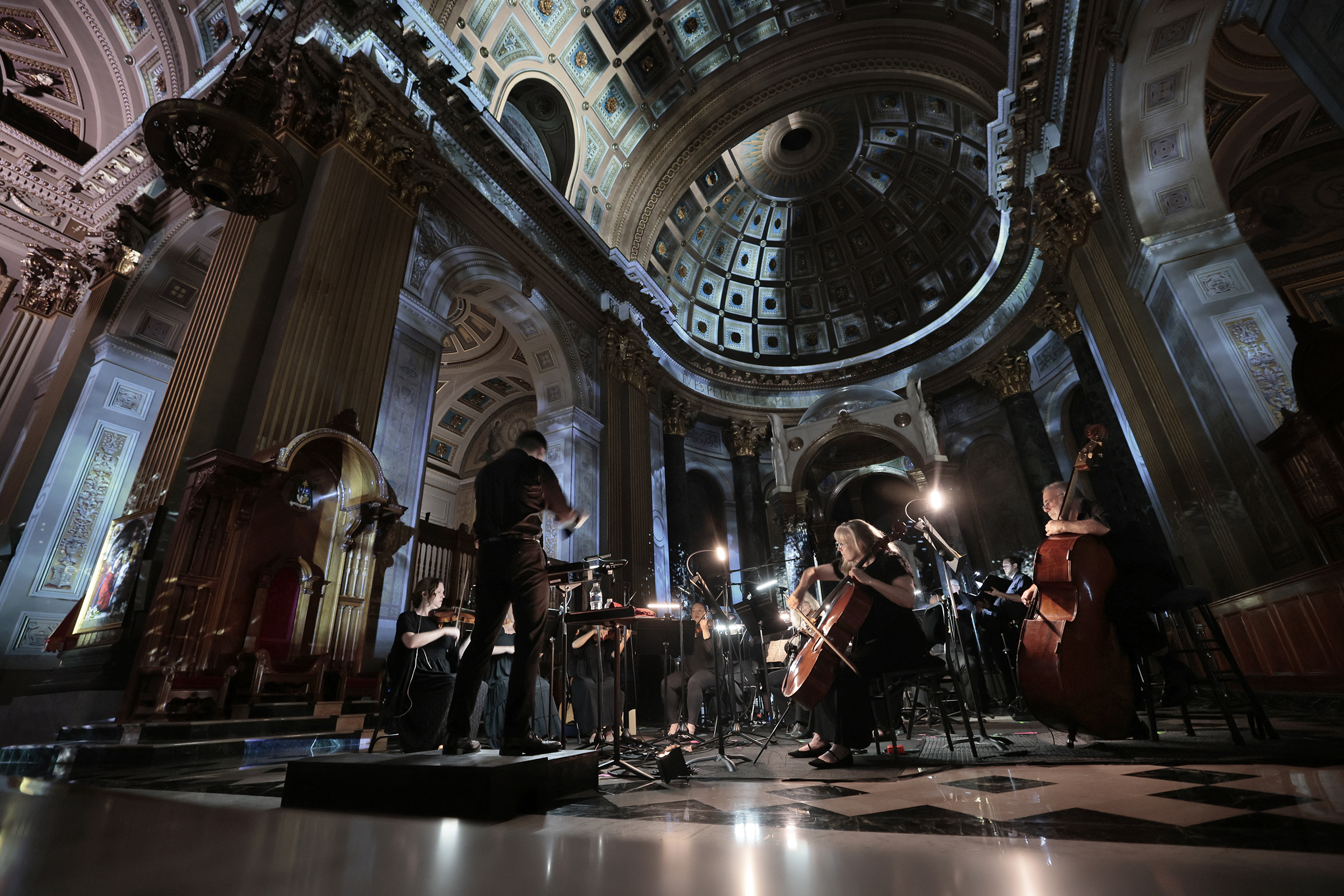
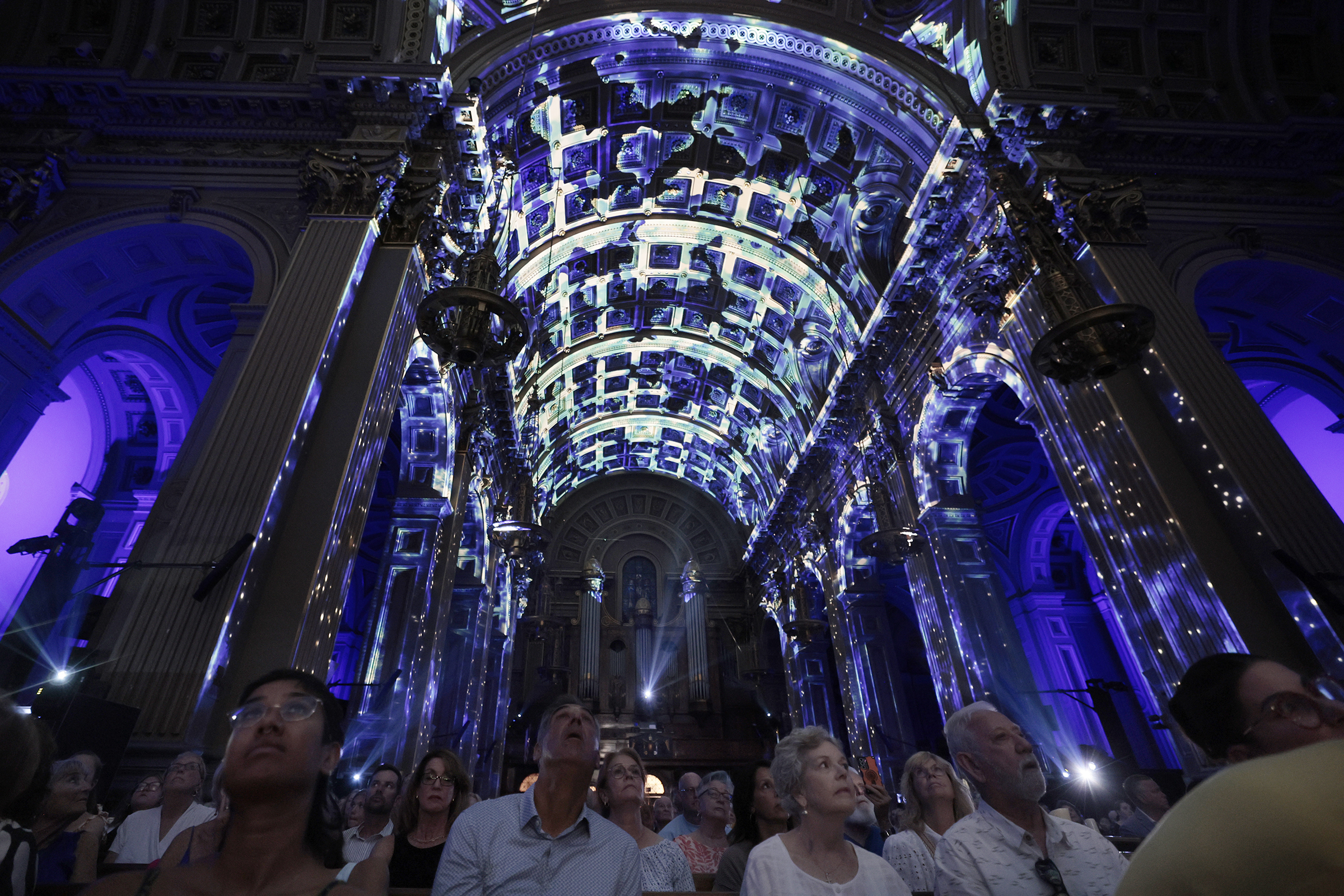
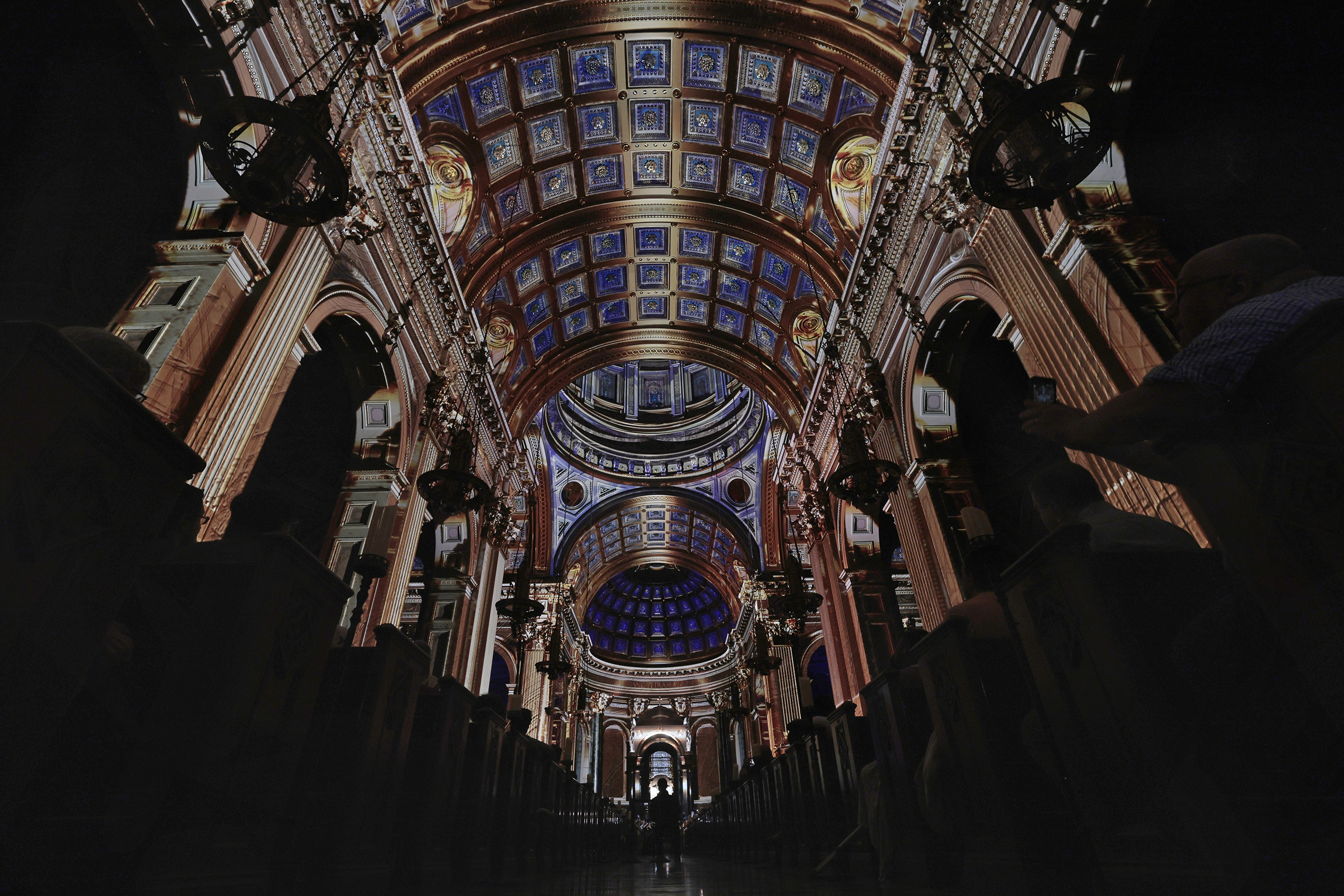
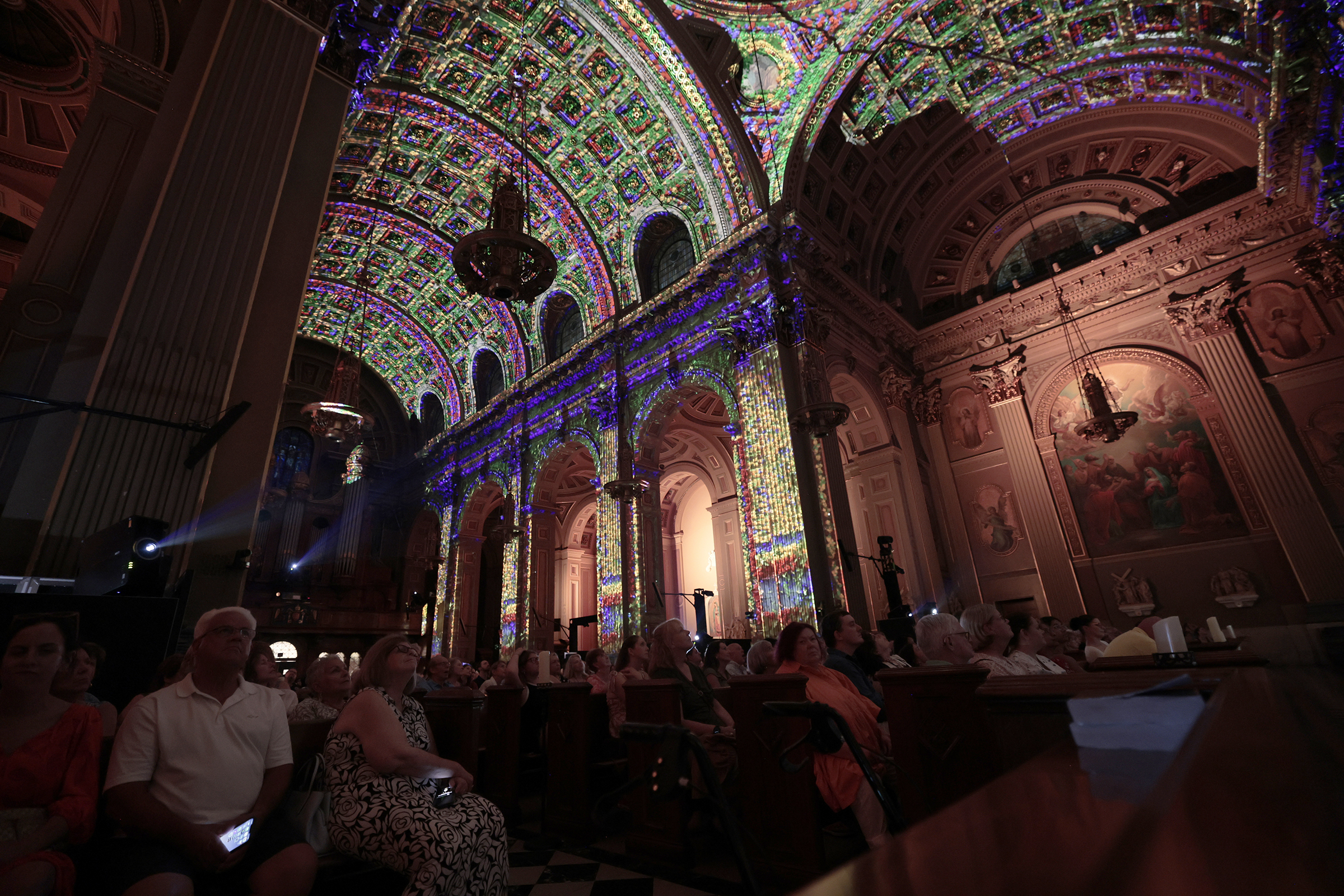
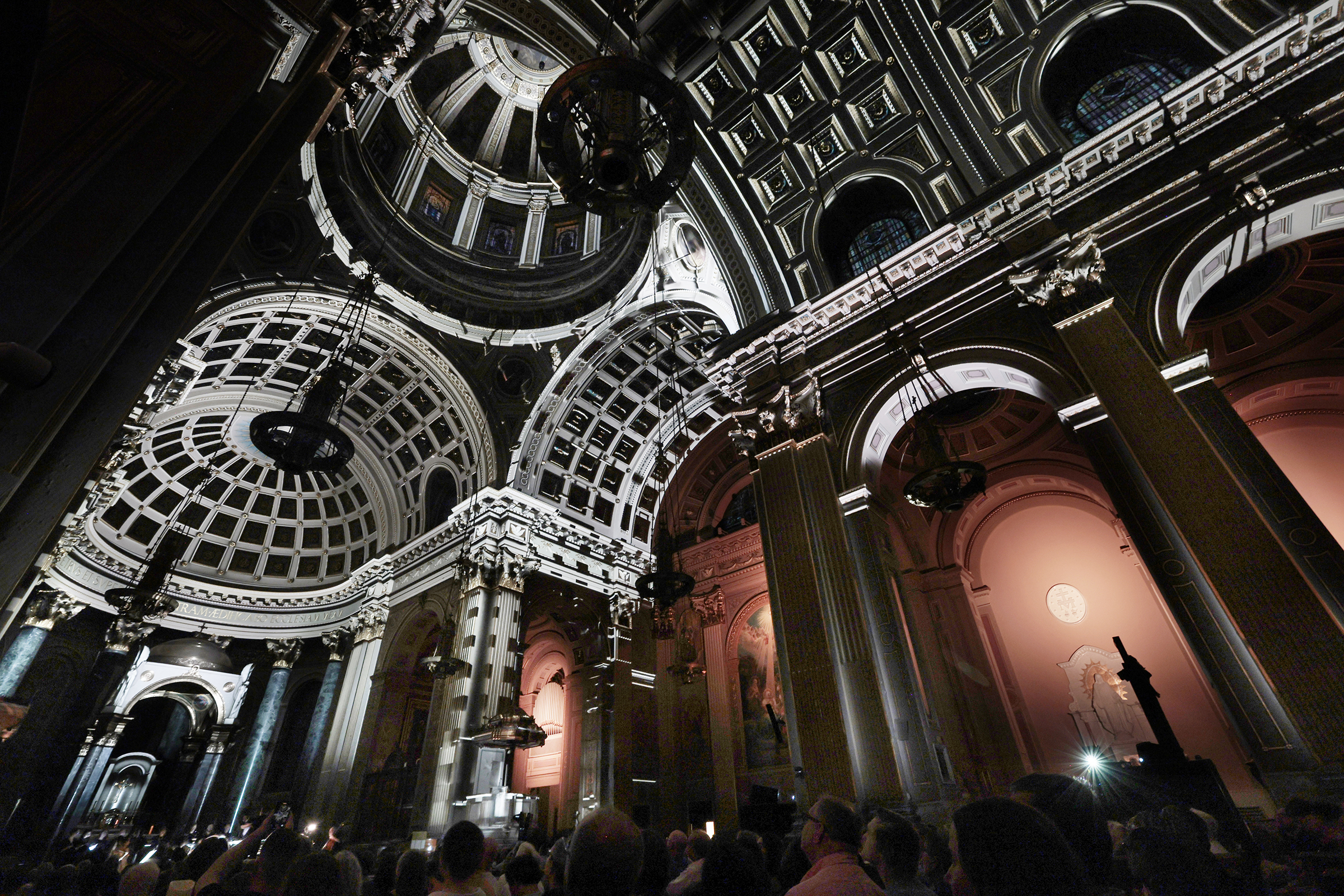
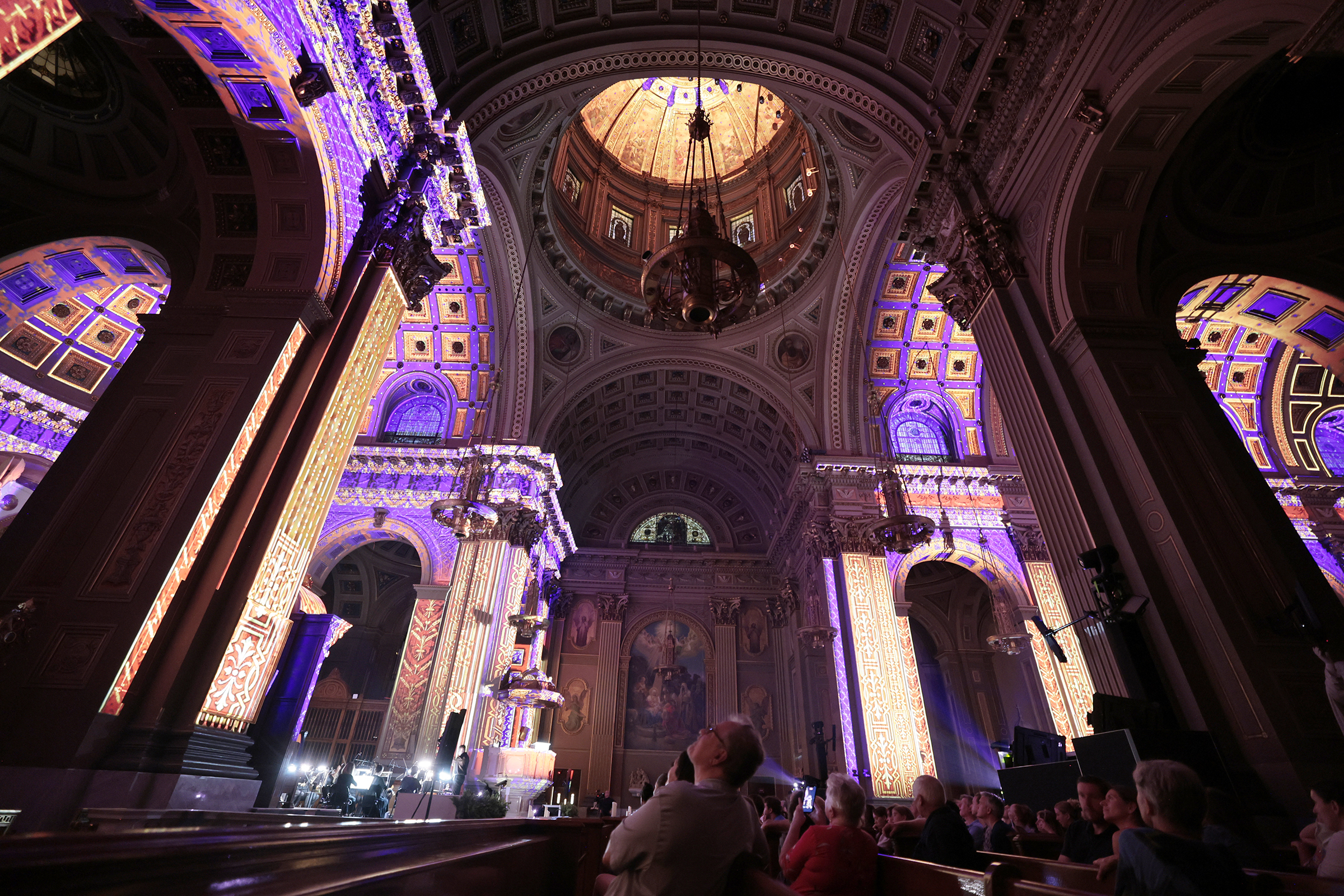
On select evenings through August, Luminiscence brings the interior walls of the 164-year-old mother church of the Archdiocese of Philadelphia to life with 25 high-definition projectors, 360-degree video mapping, and accompanying performances by a live choir and orchestra on select dates.
The orchestra plays during the June 11 premiere of Luminiscence at the Cathedral Basilica of SS. Peter and Paul.Elizabeth Robertson / Staff Photographer
This sacred space where two popes have celebrated Mass, countless Philadelphians have been laid to rest, and the remains of a saint are enshrined is now host to a visual and auditory odyssey that tells the history of the cathedral as high-definition lights trace every nook and cranny of its walls.
Think of it as a laser light show for the digital age and mature palette. Instead of spacing out with Pink Floyd in a planetarium, you’re basking in bright lights with Bach in a basilica.
“We really wanted to see the building come alive and be featured in ways that it hasn’t ever been seen before, together with music that really illuminates the soul,” said Clayton Ferguson, executive producer and general manager for Banijay Americas Live, the media and production company behind show.
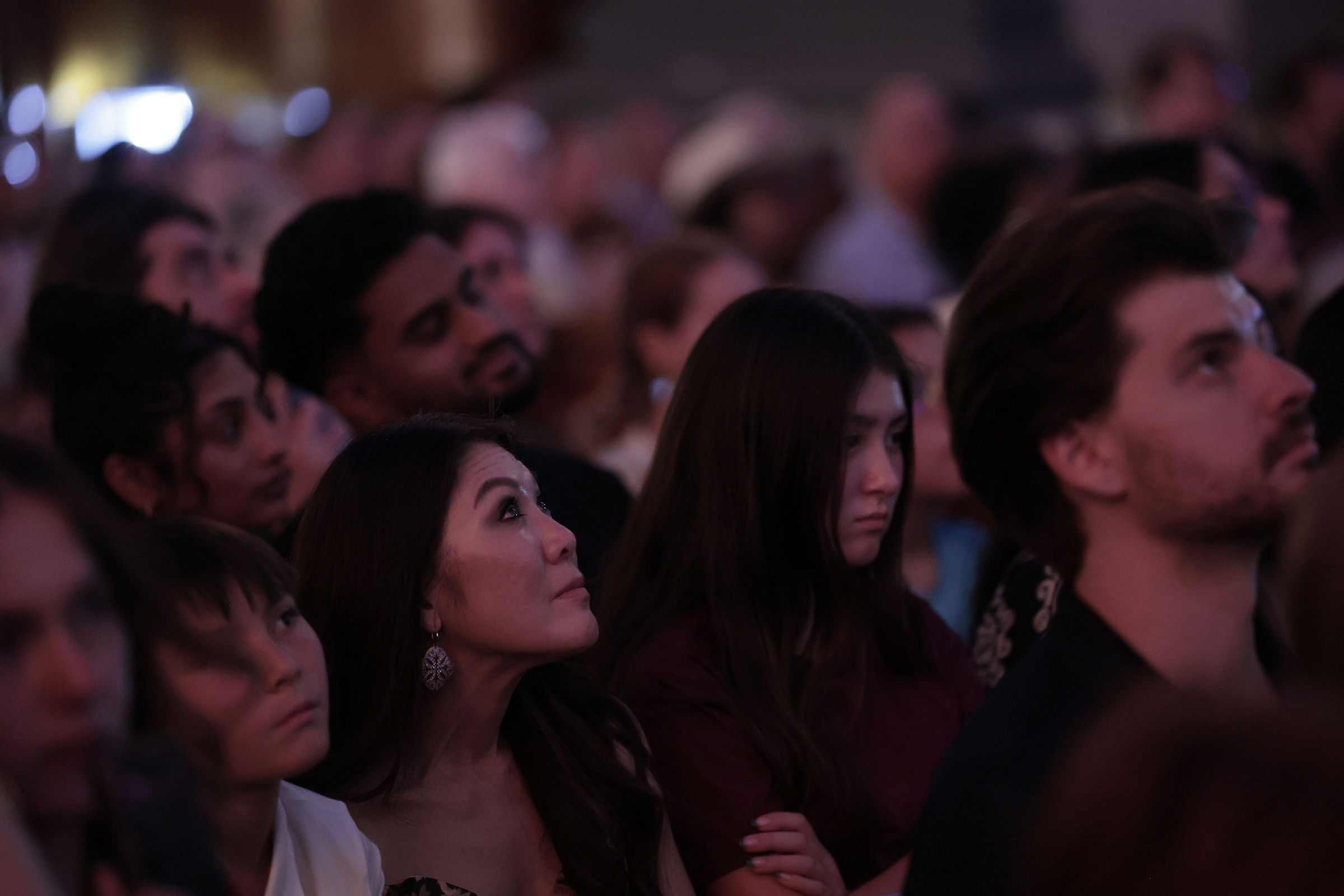
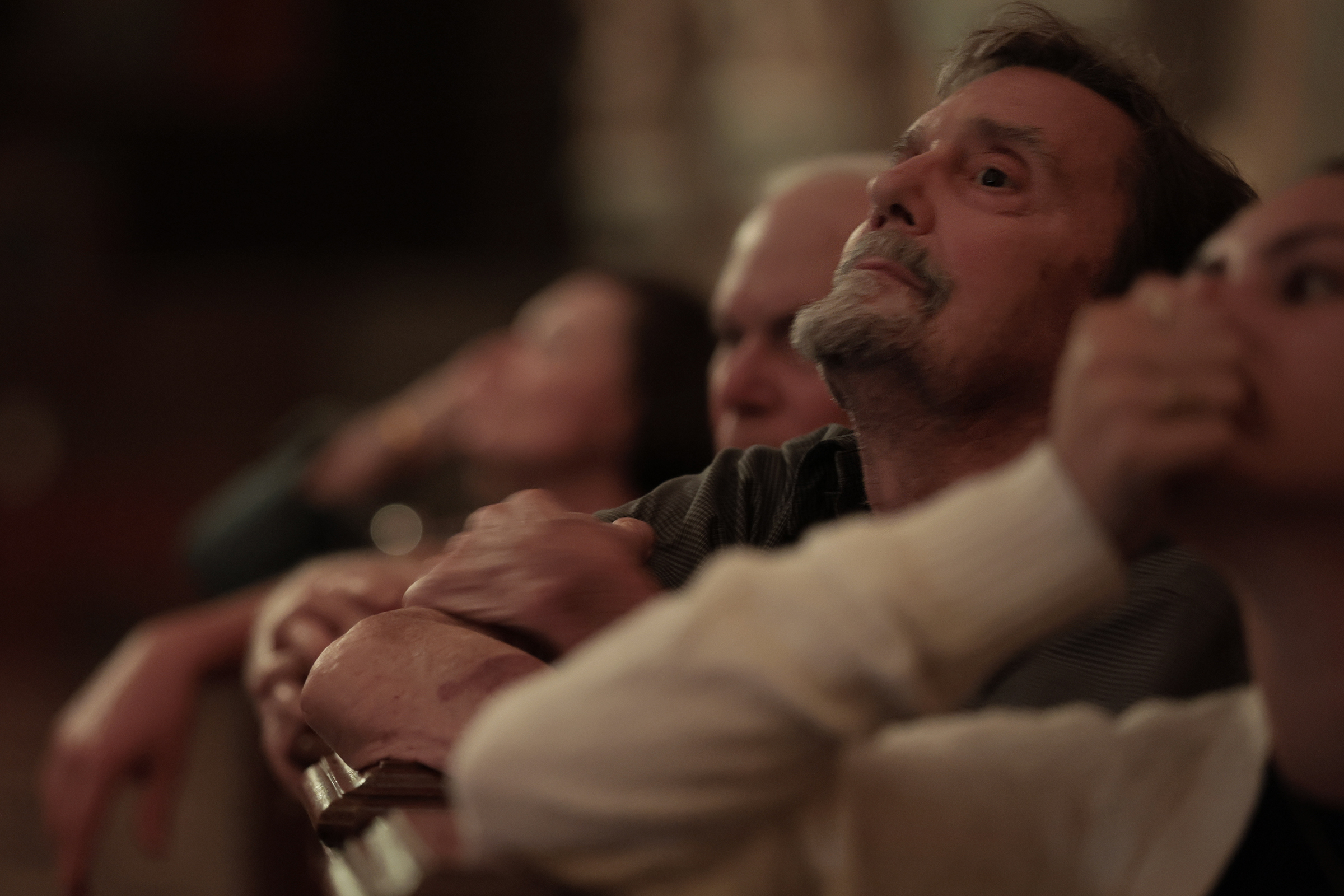
Guests watch the opening night performance of Luminiscence at the Cathedral Basilica of SS. Peter and Paul on June 11.Elizabeth Robertson / Staff Photographer
‘Respecting the cathedral’
Father Dennis Gill, rector of the Cathedral Basilica, said he was approached about hosting the production a little less than a year ago.
“They were very impressed by our cathedral building and they thought it would be a wonderful place to highlight with light,” he said. “It took some convincing. My primary concern was respecting the cathedral. The primary ministry of the cathedral is the worship of God and I wanted to make sure Luminescence would protect and promote that.”
Luminiscence events — which are specifically designed for cathedrals and basilicas — began in France, where Banijay Americas Live parent company, Banijay Entertainment, is headquartered. Philadelphia is only the second U.S. city to host a production. The first was held at the Basilica of Saint Mary in Minneapolis last year.
People watch the opening night performance of Luminiscence on June 11.Elizabeth Robertson / Staff Photographer
“It’s about sacred spaces, but it is not a faith-driven show, so it is absolutely for all audiences,” Ferguson said. “I wouldn’t say that it’s a secular story or a religious story. I think that it is about beauty and hope and creativity.”
This isn’t the first time projection mapping has been used to transform an iconic Center City building. For years, Philadelphia’s own Klip Collective brought the exterior of City Hall to life during the holidays with its free Deck the Hall Light Show. But Luminiscence is the first time an immersive experience like this has been done in the Cathedral Basilica, or in any Catholic church in Philly.
Gill said he had three reasons for agreeing to participate.
“My first reason was it would highlight the architectural beauty of our cathedral. Second, it would draw people to church, and my third reason was it would bring us some financial assistance,” he said.
A portion of the ticket sales goes to the Cathedral Basilica, but Ferguson declined to detail how much.
A purpose
Last week, entry lines snaked around the building as people packed the pews for the first performance. Prior to the start of the show, the basilica’s domed ceiling was bathed in a dark cerulean light dotted by hundreds of stars. Human silhouettes walked slowly and methodically along the walls high above the crowd.
Joseph Blanch of Havertown watches the opening night performance of Luminiscence on June 11. Elizabeth Robertson / Staff Photographer
Ferguson and Gill offered brief opening remarks, with the latter also offering a blessing.
As I sat listening in a pew, I tried to think of the last time I was in the basilica. Was it really 11 years ago when Pope Francis was in town? I often visit churches in Europe just for their beauty and architecture, but not those in my own backyard. Maybe I feel like I need a purpose when it’s so close to home.
Luminiscence at the Cathedral Basilica of SS. Peter and Paul on opening night on June 11. Elizabeth Robertson / Staff Photographer
“Talking it through, everybody kind of understood how it would really, really help get more people through the doors,” Ferguson said. “I mean, this building is stunning. It’s incredible. How many people have maybe walked past it over all of the years and not even had a chance to walk inside?”
‘Goosepumps’
The show began with a narration welcoming us to “prepare to board on a timeless journey.” Over the next 45 minutes, the basilica was transformed into a night sky, a golden palace, an architect’s drawing board, a stormy sea, stained glass, a garden of falling petals (that defied the laws of gravity and rose upward), a kaleidoscope, a cloudy sky filled with angels, and, for a brief moment, a black-and-white scene that looked straight out of a Tim Burton movie.
“Wow!” and “Oh my God!” I can hear myself saying on my video recordings (probably should have rethought that last exclamation in a Catholic church).
“Goosepumps” I wrote in my notebook (hey, it was dark).
The opening night performance of Luminiscence on June 11.Elizabeth Robertson / Staff Photographer
The visuals were stunning and the live orchestra and choir of local musicians sounded lovely, even if I only recognized a few of the pieces of classical music being performed, like “Ode to Joy” from Beethoven’s Symphony No. 9.
I did struggle to follow along with the narration and tenuous storyline though, which mostly focused on the creation of the Cathedral Basilica but also tried to tie in the founding of the United States and Philadelphia. Ferguson called it a “poetic love letter to Philadelphia and the cathedral.”
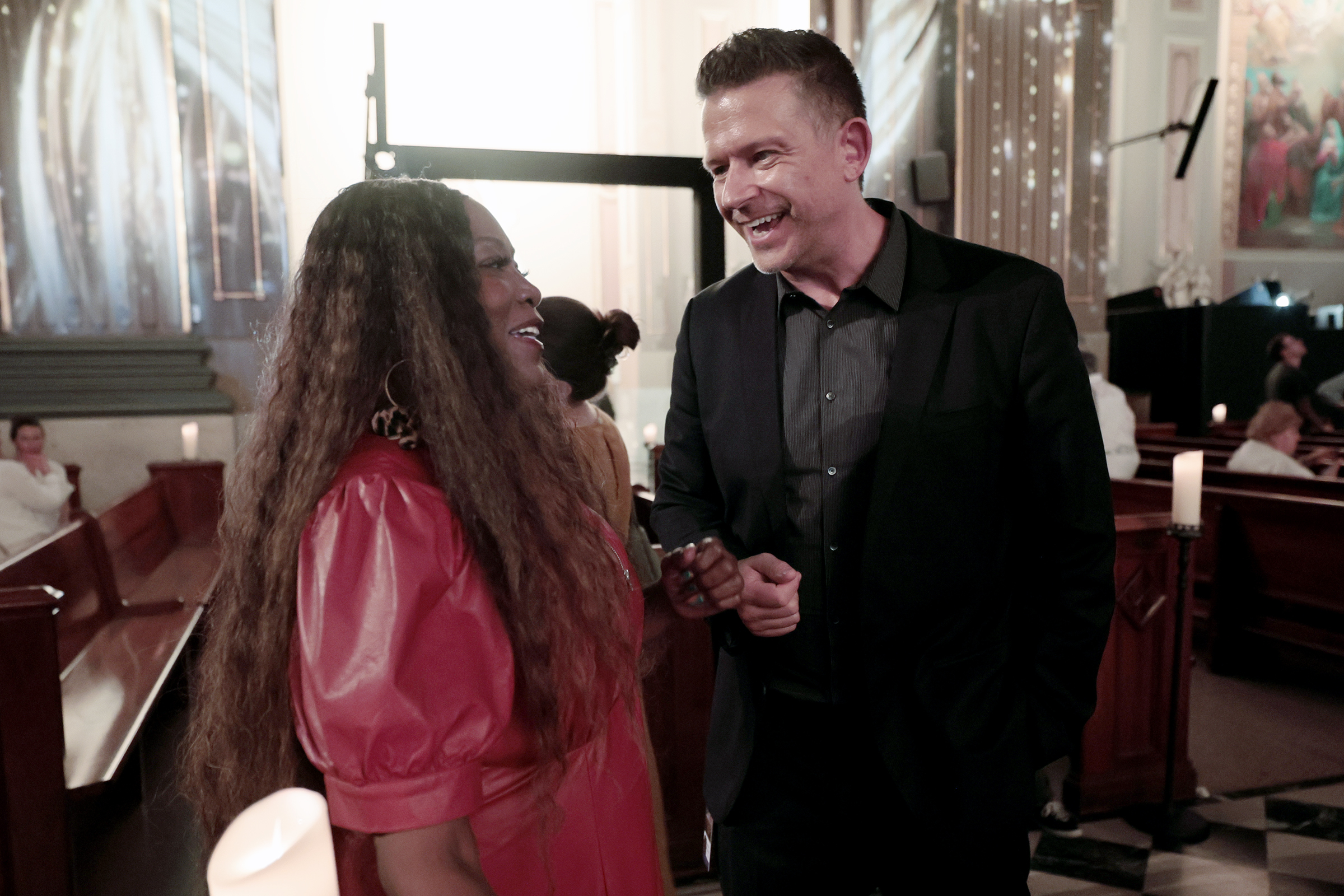
Crystal Safford of Philadelphia and Luminiscence executive producer Clayton Ferguson talk after the opening night performance.Elizabeth Robertson / Staff Photographer
“It’s really about less is more,“ he said. ”We try to use as few words as possible to elevate the senses along the way.”
God and the church feature prominently in the narration, which perhaps is to be expected, given the setting, but it also makes the program feel less than secular. I didn’t find it off-putting, but I can see how some people may.
Faith and wonder
The strength of this show lies firmly in its visuals, which helped me to see one of Philadelphia’s most storied edifices in a new way — alive.
But it’s always alive, every day, with people and services. That was one of the biggest difficulties Ferguson and his crew faced when setting up Luminiscence.
The opening night performance of Luminiscence lights up the interior of the Cathedral Basilica of SS. Peter and Paul in Philadelphia on June 11. Elizabeth Robertson / Staff Photographer
“One of the hardest challenges is how do we kind of disappear so people don’t see speakers everywhere,” he said. “So that’s actually our biggest challenge — staying out of the way.”
If you’ve been staying out of the way of the Cathedral Basilica (or have never visited), Luminiscence is a great excuse to step inside. I’ve felt wonder in grand places of worship over the years — the Sagrada Familia in Spain, the Cao Dai Temple in Vietnam, and the Basilica of San Clemente in Italy — but it’s been a long time since I’ve felt wonder in a church on my own soil. Luminiscence gave me that.
“It’s a very positive, beautiful, uplifting experience and it’s able to be both about faith and about wonder,” Gill said.
People watch the opening night performance of Luminiscence on June 11.Elizabeth Robertson / Staff Photographer
Know before you go
Three types of shows are available: with a live choir and orchestra, with just a live choir, and with an audio recording.
Adult ticket prices are $29 to $85 depending on the type of show, your chosen seating, and the day of the week. Tickets are available through Feverup.com.
Shows start late, with the earliest beginning at 8:15 p.m., to limit external light during performances.
For the best views, sit as far back as possible.
Do not, like me, bring your leftover dinner from Urban Farmer or you will be forced to throw it away, even if you promise you have no intention of eating mac-and-cheese in a church.
You will be looking up a lot, so if you suffer from neck issues maybe bring an airplane pillow?
Photos and videos are permitted, but limit yourself for your own enjoyment and for those around you. Nobody wants to watch the show through your phone.
The Union waived defender Olivier Mbaizo on Wednesday morning, marking the club’s first publicly announced roster move since it fired former manager Bradley Carnell and removed the interim tag from sporting director Jon Scheer in May.
Mbaizo, 28, spent nine seasons with the Union but made just one appearance in the first 15 games of the 2026 MLS season. Mbaizo was signed to the team through the end of this season and was set to be paid $502,875 in guaranteed compensation, according to the MLS Players Association’s salary guide.
The defender was part of Cameroon’s national team for the 2022 FIFA World Cup in Qatar, but Mbaizo did not make it onto the pitch before Cameroon exited the tournament in the group stage.
He signed with the Union from Cameroonian side Rainbow FC Bamenda in 2018. He split time between the Union and Bethlehem Steel, the Union’s former developmental team, before becoming a part of the Union’s main rotation in 2020.
Mbaizo made 122 MLS appearances with the Union, including 96 starts. His role with the team peaked in 2021, when he appeared in 30 league matches, made 28 starts, and logged more than 2,400 minutes on the pitch.
“We want to thank Olivier for his time spent with the club,” Scheer said in the team’s release. “We are grateful for his dedication, professionalism, and impact on the organization and wish him all the best going forward.”
Olivier Mbaizo (left) played in 122 games over his nine seasons with the Union. Philadelphia Union
Mbaizo’s role with the team dwindled when Carnell took over for Jim Curtin as manager in 2025. Mbaizo appeared in nine matches in the Union’s run to the Supporters’ Shield in 2025 and appeared twice for the Union in the first half of 2026.
He made a start at right back in the team’s 7-0 win over Trinidad & Tobago’s Defence Force FC in the opening round of the Concacaf Champions Cup and entered as a substitute in the Union’s 2-1 loss to the New England Revolution.
The league currently is on a break for the FIFA World Cup but will resume on July 16. The Union’s first match after the break will be against the New York Red Bulls on July 22 at Subaru Park (7:30 p.m., Apple TV).
Police identified the man who is suspected of shooting two teens, killing one, Tuesday afternoon inside Wilmington Hospital as a23-year-old from New Castle, Del.
JohnWallace-Bey was arrested Tuesday night in Philadelphia and is pending extradition to Delaware, Wilmington police said in a statement. He was expected tobe charged with first-degree murder, attempted first-degree murder, possession of a firearm during the commission of a felony, and carrying a concealed deadly weapon.
Wallace-Bey is accused of shooting two 19-year-old men, one of whom died from his injuries the night of the shooting and one of whom remained in critical condition. Police did not identify the victims.
Wilmington police believe this was “a targeted, isolated incident,” according to the statement, which did not say more about what might have led to the shooting.
Police responded to reports of the shooting at the hospital at 501 W. 14th St. around 3:30 p.m., Police Chief Wilfredo Campos said at a Tuesday evening news briefing.
The hospital, which is run by ChristianaCare, was locked down until police cleared the buildinglater Tuesday, Campos said.
California is no stranger to earthquakes, but the Los Angeles area may be at an increased risk of a more substantial quake in the years ahead.
A recent study in the journal Advancing Earth and Space Sciences found seismic stress is accumulating on key faults near the greater Los Angeles metro area, in some sections reaching peak levels. And the findings reveal what researchers are calling an “earthquake gate” lurking just northeast of the city.
While swarms of smaller quakes have rattled Los Angeles over the past century and a half, the last devastating quake to strike the city was on Jan. 9, 1857. Known as the Fort Tejon quake, the violent magnitude-7.9 tremor ruptured a 225-mile stretch on the southern part of the San Andreas Fault.
But that portion of the fault has since remained largely dormant, with stress continuing to build elsewhere along the fault, as well along the neighboring San Jacinto Fault.
Researchers analyzed 1,000 years of paleoseismic data, or a reconstruction of past tectonic activity. They found that stress along multiple portions of the faults is the highest it has been in at least a millennium, including along the Mojave South segment of the San Andreas Fault and the San Jacinto Bernardino segment of the San Jacinto fault.
The San Andreas and San Jacinto fault systems are the largest in California, and run parallel to each other east of Los Angeles. They meet at a point called Cajon Pass, an “earthquake gate” of sorts.
“The simplest way to think about an earthquake gate is a junction in a road network,” Liliane Burkhard, the study’s lead author, said in an email. “Most of the time, traffic follows one road and stops when it hits the junction. But under certain conditions, it can cross over and continue down a second road, covering much more ground. At Cajon Pass, the San Andreas and San Jacinto faults approach each other closely but do not directly connect at the surface.”
That means seismic activity on one fault can cross the pass and affect the other.
“Whether a rupture on one fault crosses over to the other appears to depend on how similarly stressed the two systems are at the time,” wrote Burkhard, who is also a researcher at the University of Bern in Switzerland. “When their stresses rise together in concert (not necessarily at the same level), the gate tends to open and the rupture can propagate across both faults. When their stress levels are mismatched, the rupture tends to stop at the junction.”
During the 1857 Fort Tejon quake, the rupture did not cross Cajon Pass. But Burkhard referenced the 1812 Wrightwood earthquake, which ruptured both faults. Now, concern is increasing that a similar event could unfold again.
“Right now, both systems are highly stressed and their levels are converging, which makes the current situation worth paying attention to,” Burkhard cautioned.
Both the San Andreas and San Jacinto are “strike-slip” faults, with segments of the Earth’s crust sliding horizontally. Others may be “normal,” “reverse,” or “thrust” faults; the last of these is the most effective at producing tsunamis.
While a significant quake may be overdue, the extent of any future rupture, and subsequent quake magnitude, is impossible to predict. But the researchers’ findings indicate that, when one fault ruptures, both will.
“The stress conditions we model suggest that a joint rupture of both systems is likely and maybe more than at any point in the past millennium, which is the more important and less well-understood dimension of the hazard,” Burkhard said.
The tricky part about predicting earthquakes is that there’s no magic stress threshold that results in a quake.
“You can think of it less like a light switch and more like a pressure gauge that has historically tended to trigger in a certain range,” Burkhard said. “What we can say with confidence is that current stress levels are at or above the high end of those ranges, which tells us that the system is in a state we have not seen in the past 1,000 years.”
But is 1,000 years of data enough to draw conclusions?
Harold Tobin, the director of the Pacific Northwest Seismic Network and a professor at the University of Washington, says yes.
“I think this 1,000-year simulation spans enough time to support a meaningful and useful conclusion,” Tobin, who was not involved in the recent study, said in an email. “[The] record is really short in North America, so paleoseismic evidence — geologic sleuthing — has to be used. The thousand-year paleoseismic record for the Southern California San Andreas and other faults that they use in this study (the “MRM”) is already a phenomenal achievement. … [It’s] enough to capture quite a few earthquake recurrence cycles on the relevant segments of the San Andreas fault system.”
So when might the next big quake occur? Tobin said the complex nature of California’s fault systems makes for limited predictability.
“Major quakes on major fault systems tend toward some degree of periodic recurrence, but that’s variable,” he wrote. “For example, evidence tends to favor more regular periodicity of recurrence for the truly giant subduction zone earthquakes, or for very straight, geometrically simple faults (an example is the Alpine Fault in New Zealand).”
But in Southern California, he said, the complex of interacting faults “may exhibit a more chaotic recurrence pattern.”
NAIROBI, Kenya — As spiking ocean temperatures are devastating reefs around the world, a handful of scientists have found a reason for cautious optimism. They’ve used artificial intelligence to detect sheltered pockets where cool currents, reduced exposure to sunlight, and locations outside cyclone paths mean corals are more likely to survive.
The study, led by the Wildlife Conservation Society and presented on Tuesday at the Our Ocean Conference in Mombasa, Kenya, is currently undergoing peer review for publication in the journal Environmental Research Letters.
Five scientists identified 42 factors that create the conditions for the coral havens, called refugia, and then ran those through a program with nearly 38,000 human observations of coral cover and composition gathered over 65 years. The program identified more than 5,800 square miles of climate-resilient ocean in 72 countries.
The work found three times as many refugia as a landmark 2018 assessment known as the 50 Reefs Study, the first paper to systematically identify areas around the globe where coral might still be saved. Scientists and environmentalists said the new assessment offered a more nuanced picture of the state of the world’s reefs and could help fine tune conservation priorities.
“This study sharpens decades of work on reef resilience to climate change,” said David Obura, a former chairperson of IPBES, the global intergovernmental scientific panel on biodiversity, who was not involved in the new research. “It focuses attention on the critical question: Will climate refuges comprise 10%, 1%, or even less of the former extent of coral reefs?”
Coral reefs are crucial ecosystems. They nurture an estimated quarter of ocean species at some point during their life cycles, supporting fish that provide protein for millions of people and protecting coastlines from storms.
They are also vulnerable to bleaching, which occurs when heat causes corals to lose the algae they need to survive. Bleached corals can recover, but if the water they live in stays too hot for too long, they die.
“Every tenth of a degree warming drives reefs to the limit,” Obura said.
According to Australian researchers who study ocean heat, the demise of the Great Barrier Reef could occur within a generation unless humanity acts with far more urgency to rein in climate change. A study published in 2025 found that virtually all the corals in the Atlantic Ocean will stop growing and could succumb to erosion by the end of the century if global temperatures continue to rise.
The newly identified refugia are not evenly spread around the world. More than half are in five countries: the Bahamas, Cuba, Australia, Indonesia, and the Philippines. Others cluster around small islands in places like Vanuatu, American Samoa, Christmas Island, and the Chagos Archipelago.
These havens can protect coral from the effects of warming, but their concentration makes them vulnerable to other threats like overfishing and pollution. Although most are found in nominally protected zones, lack of funding means many of those areas are only “paper parks” lacking practical protections.
The research is expected to fuel a central conservation debate: How much funding should go to protect refugia, some of which may eventually fail as the oceans heat further; how much into restoration work; and how much into halting greenhouse emissions and pollution?
Despite warnings from scientists and pledges from world leaders, countries are burning more fossil fuels than ever and greenhouse gas emissions continue to rise.
Traditionally, reef research has focused on areas that have avoided the worst overheating. Such reefs are usually dominated by large branching corals like Acropora, an expansive genus incorporating species like the staghorn and the flamethrower; or plating corals like Montipora, whose delicate whorls spiral out from a central stem. Globally, their numbers are crashing.
But the new research broadened the focus to corals that could also resist and recover: the helmet-shaped towers of the Porites lutea or the luminous ridges and bumps of Echinopora. Coral communities dominated by fast-growing weedy varieties, such as the lime and flamingo pink Pocillopora, are also often more resilient.
They will need to be. Subsurface conditions across the tropical Pacific are already significantly warmer than average, according to the World Meteorological Organization. And, an El Nino weather pattern that recently formed in the Pacific could exacerbate those hot conditions.
“It’s not to say the maps are perfect, but they are better than starting with nothing,” said Joseph Maina, an associate professor at Macquarie University in Sydney, who helped coordinate the data analysis. “Governments shouldn’t use the maps blindly, but get their own experts to look here first.”
NEW YORK — The WNBA is expanding its schedule to 50 games per team next season — the most in the league’s 30-year history.
The new collective bargaining agreement that was ratified earlier this year allows the league to play up to 50 games for the next two seasons. There can be up to 52 regular-season games in 2029 and for the rest of the CBA.
“Demand for the WNBA has never been greater, and expanding to a 50-game regular season reflects the extraordinary momentum we are seeing across the league,” WNBA commissioner Cathy Engelbert, a Collingswood native, said in a statement.
“This move reflects our commitment to growing the game and creating more opportunities for fans to watch the best players in the world and experience the extraordinary talent and competition that define the WNBA.”
The league is playing 44 games again this season. Over the next few seasons, the WNBA is adding three new teams through expansion. Cleveland is joining in 2028, Detroit in 2029, and Philadelphia in 2030. Connecticut is moving to Houston next year.
When the league first started in 1997, teams only played 28 games. That’s grown over the past three decades with the exception of 2020 and 2021 because of the COVID-19 pandemic.
Engelbert has said she’d love to play games overseas starting next season. The league expanded its footprint to Canada this year with the addition of the Toronto Tempo — the first WNBA franchise outside of the United States.
The WNBA has added a lot of new TV and streaming partners over the past few years including ION, USA Sports, NBC, and Amazon to go along with ESPN and CBS.
President Donald Trump met with Ukrainian President Volodymyr Zelensky at the Group of Seven summit in France on Tuesday and expressed exasperation as Russia’s war in Ukraine crept back into Washington’s focus with no end in sight.
“It’s sort of the same thing,” Trump told reporters at the summit. “They just keep going fighting, losing soldiers. They lose so many soldiers.”
“Not since World War II has anything like this happened,” Trump said, before invoking his exaggerated claims as a global peacemaker.
“I settled eight wars,” he said. “This was the one I told you was going to be the easiest to settle, but they just, there’s a lot of dislike between the two leaders.”
During his campaign, Trump said he would end the war within 24 hours. In France on Tuesday, he voiced unhappiness with the number of deaths but said that the United States is ultimately not affected.
“We have nothing do with it,” he said. “We sell weapons to them. … The European Union pays us full price for weapons. … This has no impact on us other than we sell weapons. We’re thousands of miles away.”
For four months, the conflict largely dropped off the White House agenda as Trump and his team focused on their own war against Iran.
Trump meetings with Zelensky on Tuesday followed a call with Russian President Vladimir Putin on Sunday. Trump urged Putin to make a deal but said there was little sign of one. “I don’t like to see 25,000 young people die every month. They go to this front and get blown up.”
He added, “The whole thing is ridiculous.”
Zelensky, who attended the summit at the invitation of French President Emmanuel Macron, is hoping to reengage Trump, and European leaders have urged the president to break the impasse by hosting direct talks between Zelensky and Putin in the United States.
Ukraine officially opened negotiations with Brussels this week over its bid for European Union membership. That step marks the start of a long and complex path in Ukraine’s ambition to join the EU, a process that Kyiv has urged the bloc to fast-track.
Zelensky is expected to join leaders of the EU’s 27 nations at a summit in Brussels on Thursday.
Since U.S.-led negotiations to end the Ukraine war fell by the wayside in recent months, Zelensky has been pushing to revive talks with a more prominent role for his European backers, led by France, Germany, and Britain.
Some European nations have conveyed that they are willing to engage with Moscow in negotiations, while also warning of new Russia sanctions and sending military aid to Ukraine.
At the summit, Zelensky also briefed G7 leaders on the damage to the Kyiv Pechersk Lavra church complex, one of the holiest sites in Eastern Orthodoxy, which caught fire last week following a Russian airstrike, according to local officials.
The briefing came amid a broader escalation in the war. Ukraine has knocked out key Russian energy facilities, causing fuel shortages across multiple regions, while Kyiv and other Ukrainian cities have endured some of the war’s deadliest missile and drone strikes.
The United Nations reported last week that at least 274 civilians were killed and nearly 1,800 injured in Ukraine in May, more than in any month since April 2022.
Zelensky promised retaliation after visiting the church complex Monday. On Tuesday, Moscow officials reported shooting down dozens of Ukrainian drones approaching the capital. Ukraine also hit a key oil refinery in Kapotnya in the Moscow region, setting of a major fire.
The extent of the damage was unclear, but the facility supplies up to 40% of the capital’s gasoline needs and about 50% of its diesel and could compound fuel shortages already affecting multiple Russian regions.
Several of Russia’s largest gas stations are rationing fuel sales following months of sustained damage to major refineries that process crude oil, local media reported Tuesday.
Zelensky is also hoping to step up pressure on Putin to hold direct, face-to-face talks, which have not occurred since Russia’s invasion began in 2022.
Putin and other senior Russian officials, however, have dismissed such talks as pointless unless Zelensky is prepared to sign a final deal meeting Russia’s maximalist demands. They have also invited him to Moscow, which Zelensky has rejected, accusing Russia of “playing games” and insisting that any meeting take place in a neutral country.
During their phone call Sunday, Putin congratulated Trump on his 80th birthday, according to the Kremlin.
Trump called for an end to the war in Ukraine, and the two leaders agreed that U.S. envoys Steve Witkoff and Jared Kushner would visit Russia again in the near future.
Putin had repeatedly offered help mediating between the United States and Iran given the close cooperation Moscow forged with Tehran in recent years, but Trump rebuffed those offers, telling Putin he should focus on resolving his own war.
The recent deal to end the war against Iran could hinder Russia’s efforts to shore up its wartime budget, which has partly benefited from disruptions to Middle Eastern fuel supplies. In March, the Trump administration temporarily lifted sanctions on Russian oil exports seeking to keep global fuel prices in check.
On Tuesday, during a bilateral meeting with the president of the United Arab Emirates, Trump appeared to suggest the U.S. could let the sanctions waiver lapse when it expires on Wednesday, though he stopped short of giving a timeline.
“Soon, we’ll be able to do that because the oil is now flowing,” Trump said when asked whether the U.S. planned to tighten sanctions on Russia. “We took sanctions off because obviously we’re not looking to impede the oil, but we’re in a position to do that soon.”