The World Cup has arrived in Philadelphia and out of town visitors are flocking to the games, and learning about Rocky’s curse.
But how much of the money they’re spending will actually stay in Philadelphia?
The World Cup games were originally expected to generate a $770 million economic impact in the Philadelphia region, Axios reported in 2024. But just $30 million to $90 million is likely to stay in the region and benefit the local economy, according to estimates in a new report by the Economy League of Greater Philadelphia.
Thousands have visited the Lemon Hill FIFA Fan Festival since it kicked off on June 11, and used SEPTA after the first Philly-hosted match earlier this month. Philadelphia International Airport also estimated a bump in travel through the airport around the June 19 game between Brazil and Haiti.
But not all spending is equal.
U.S. cities are spending hundreds of millions of dollars to host World Cup matches, but are limited in how much revenue they can amass from the events, according to a ProPublica analysis of host city contracts, including Philadelphia’s.
Some of the money coming into the city during the World Cup would have been spent in Philadelphia anyway, but perhaps differently, the Economy League report indicates.
While the city is gaining World Cup visitors, it may be losing out on regular business travelers and others that would have come toPhiladelphia if not for the World Cup, the report said. Meanwhile, some who are spending money to enjoy the tournament in Philadelphia are residents, who would be spending money in the city anyway. And some fan spending is flowing directly to FIFA and other platforms, rather than to the city’s economy.
The report highlights three areas seeing most of that spending: The stadium district, Center City hotels and restaurants, and the Fan Festival at Lemon Hill.
“The commercial corridors beyond this core, which make up most of the city, are unlikely to see much benefit without deliberate effort, because visitor spending follows the path of least friction — toward where people sleep, arrive, or already intend to go,” the report says.
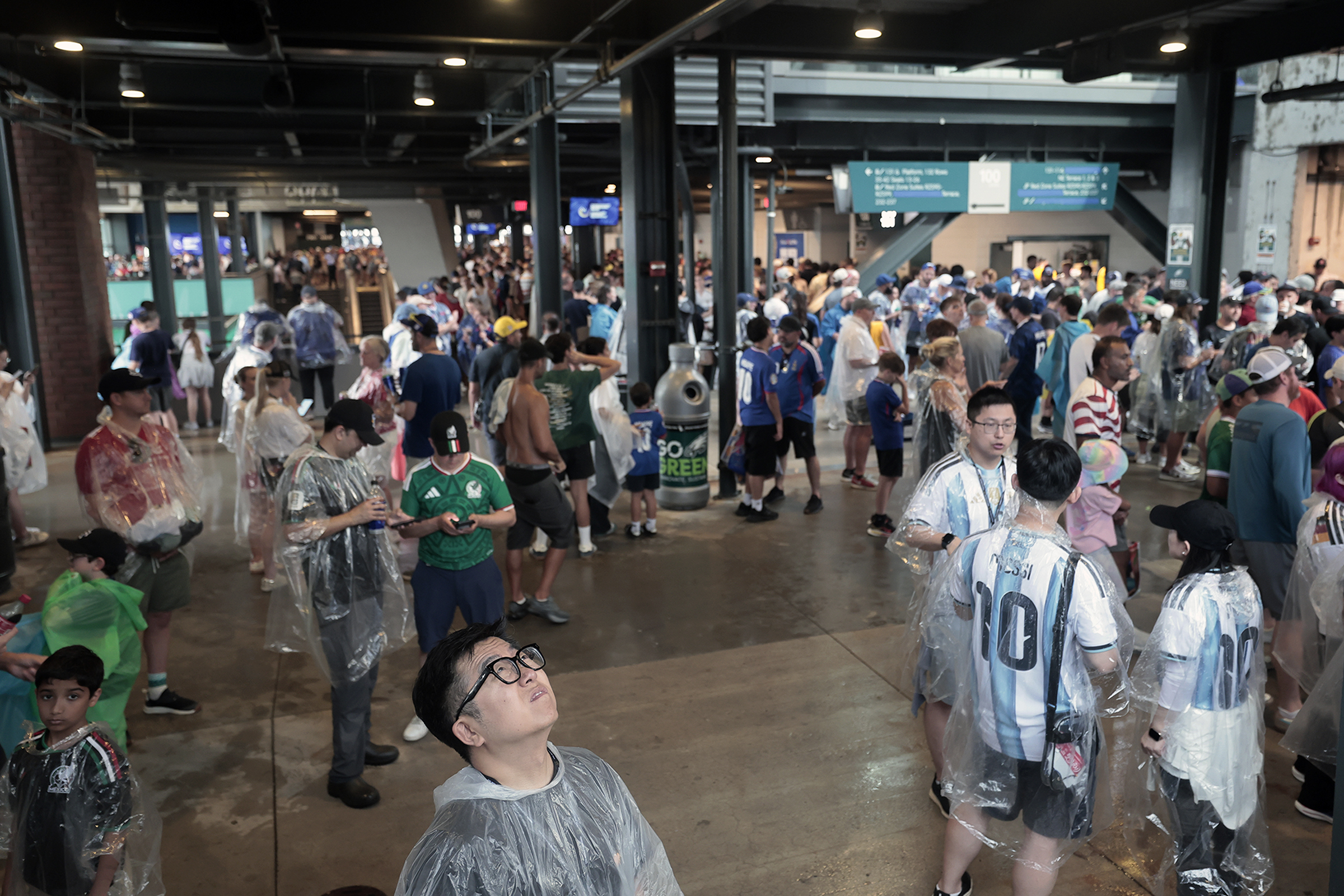
A man looks to the skies during the rain delay of the France vs. Iraq 2026 FIFA World Cup Group 1 soccer match at Philadelphia Stadium on Monday.Elizabeth Robertson / Staff Photographer
In the stadium district, where customers have bought tickets to attend games, they’re spending on merchandise and concessions — but few of those dollars trickle down to local independent businesses.
In Center City, hotels and restaurants are benefiting most, but it’s not as though they wouldn’t be getting business without the games, the report notes.
Some local food trucks and independent vendorscan make money at the FIFA Fan Festival at Lemon Hill. But because the venue is gated, surrounding businesses only profit if visitors leave the festival site.
And locals are paying the price of hosting the World Cup in other ways.
Residents who live around the Fan Festival at Lemon Hill are unable to catch a Lyft or Uber from homebecause of festival restrictions, and parking in the area requires applying for a special permit. The Philadelphia Parking Authority dolled out thousands of tickets in the first few days of the festival.
Still, the report outlines, much can be gained locally through the World Cup. Lemon Hill is set to receive $4 million in improvements, and some other benefits are harder to quantify.
“Philadelphia has shown it can move large crowds and stage a global event capably, and the reputational and civic returns, while hard to value, are real,” the report outlines.
We take paper for granted now. But in the late 1600s, when Pennsylvania’s founder William Penn recruited German papermaker and preacher William Rittenhouse to manufacture the writing parchment in the New World, paper was a luxury.
England’s King William III made it difficult for his subjects — at home and in the Americas — to have it. Like many monarchs of his day, he believed it was the Crown’s duty to record history.
The English imported paper from other European countries. So, to make matters worse, colonists who managed to appeal to the king for paper were double and triple taxed. They got fed up and went about securing their own paper to document the goings on in the government, inform citizens, record history, and ultimately plan a revolution.
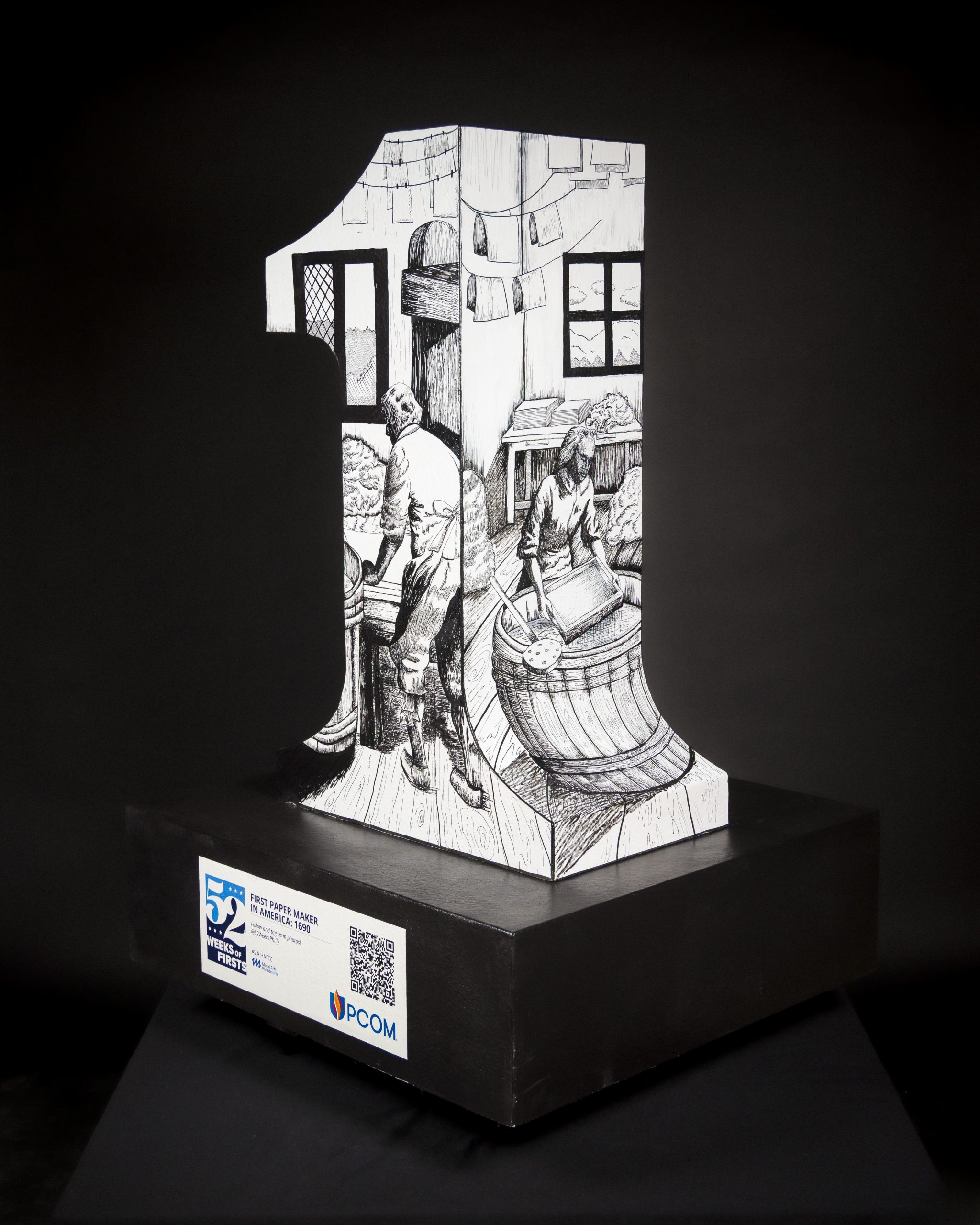
Artist Ava Haitz’s No. 1 honors the country’s first paper mill, celebrating the invention and craftsmanship that made widespread written communication possible.Ava Haitz for Colibri Workshop
In 1690, Rittenhouse partnered with Philadelphia’s first printer, William Bradford, to build America’s first paper mill, situated in northwest Philadelphia and powered by the Monoshone Creek, a tributary of the Schuylkill.
The paper mill will be celebrated this Saturday at Historic RittenhouseTown, part of a series of weekly “Firstival” celebrations. Firstivals are the Philadelphia Historic District’s yearlong birthday nod to places and events with Philadelphia roots. The day parties are a hallmark of this year’s Semiquincentennial fetes.
At the Rittenhouse mill, paper was made from linen rags fashioned from flax grown in Germantown, that were broken down and shaped into sheets. The mill grew quickly as Rittenhouse, America’s first Mennonite bishop, provided paper for Bibles and Quaker and Mennonite texts in German.
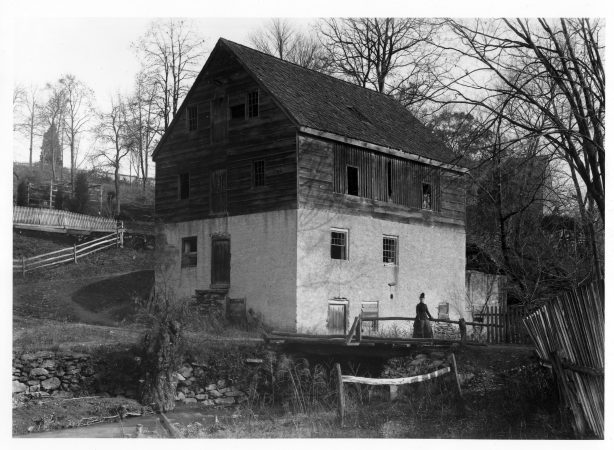
An aerial view of RittenhouseTown circa 1840-1860. The site eventually grew to more than 200 acres.Historic Rittenhouse Town
Rittenhouse’s first paper mill was destroyed by a flood, said Alexander Jones, preservation and education manager at Historic RittenhouseTown.
Then “Rittenhouse rebuilds and he buys out his partner,” Jones said. “The paper mill becomes his sole enterprise. Instead of hiring workers, he recruits his family and it becomes a giant company town. There is a church, a blacksmith, stone houses, a bake house, and more than 40 buildings with five or six of them under what is now Lincoln Drive.”
RittenhouseTown’s paper mill was the only source of paper in America for more than 40 years, Jones said. It would grow to more than 200 acres.
David Rittenhouse — Rittenhouse’s great-grandson and the astrologer, clockmaker, and first director of the U.S. Mint after whom Rittenhouse Square is named — was born in his family’s RittenhouseTown homestead in 1732.
The town thrived for more than a century.
By the mid-1800s, the paper mill began to slow down as dyes from textile and carpet manufacturers and chemicals from blacksmithing started to pollute the Schuylkill. The filthy water made it nearly impossible to produce good quality paper at the mill.
The Fairmount Park Commission began acquiring parts of RittenhouseTown through a series of purchases and donations from 1890 to 1917. The city demolished many of the town’s buildings, including a barn that, Jones said, was razed and rebuilt within a year.
RittenhouseTown’s homestead and bakehouse. The first permanent home for the Rittenhouse family and birthplace of David Rittenhouse, great-grandson of William Rittenhouse for whom Center City’s Rittenhouse Square is named.Al Cassidy for Historic Rittenhouse Town
By that time, however, the Rittenhouse family had spread throughout the Philadelphia region from Center City to Blue Bell, Jones said.
Today, RittenhouseTown spans 20 acres nestled in Fairmount Park right behind Lincoln Drive. Six of the original buildings remain, serving as a reminder that RittenhouseTown was the first building block of American industry.
“The paper mill really got the ball rolling for Philadelphia,” Jones said. “And from that first came so many other American firsts in Philadelphia: the first Mennonite bishop, the first company town, and America’s first director of the U.S. Mint.”
This week’s Firstival is Saturday, June 27, 11 a.m.-1 p.m., at Historic RittenhouseTown, 208 Lincoln Drive.
Councilmember Curtis Jones Jr. and City Representative Jazelle Jones, who are married, are poised to collect up to $752,000 in combined payouts from Philadelphia’s widely criticized Deferred Retirement Option Plan, an early retirement incentive that two decades ago sparked a major scandal in City Hall.
But neither of the city officials is actually retiring.
DROP is available to all city workers. But both of the Joneses are using the program in a way that is not available to a vast majority of municipal employees:temporarily retiring and immediately returning to their jobs, allowing them to receive their DROP payouts before the end of their city government careers.
Curtis Jones, 68, who has represented the 4th District for 18 years, is able to access that perk because he is a long-serving lawmaker. Jazelle Jones, 70, a high-ranking appointee of Mayor Cherelle L. Parker, received an exception from the mayor to be rehired after her DROP retirement.
Following her one-day retirement, Jazelle Jones also received a $97,000 payout for unused sick and vacation time, a benefit normally reserved for employees permanently departing from city government.
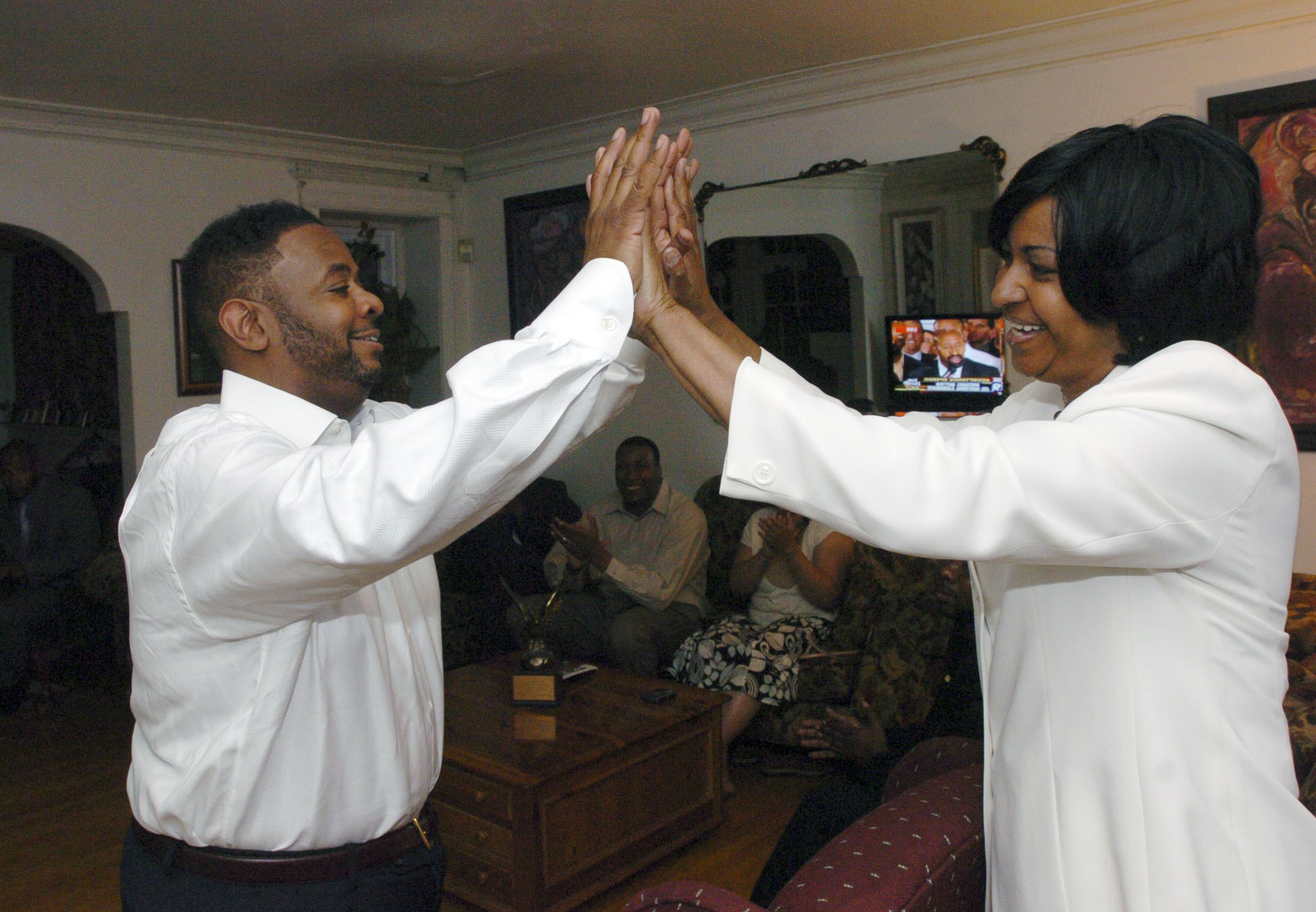
FILE – Curtis Jones, Jr. declares victory with his wife Jazelle and his family in the Council race in his home in West Philadelphia on Tuesday, May 15, 2007.Gina Gayle / Staff Photographer
Lauren Cristella, president of the government watchdog group Committee of Seventy, said the administration’s handling of the situation further undermines public confidence in the DROP program.
“Rehiring an employee to the same position the day after she collects a DROP payout defeats the purpose of the program,” Cristella said. “DROP exists to manage workforce transitions, not to serve as a bonus for employees with no intention of actually leaving.”
Established in the late 1990s during Mayor Ed Rendell’s administration, DROP was originally pitched as a cost-neutral way to give the city predictability over retirements and entice high-earning employees to step down early.
But the program ended up costing the city far more than expected, andvoter frustration withelected officials’ enrollment in DROP was credited with ending the political careers of several Council members.
At the height of that controversy in 2010, Curtis Jones voted to enact a law banning future elected officials from accessing DROP. But he and others already serving at that time were “grandfathered” in, Curtis Jones said.
He would be eligible to collect a $432,000 lump-sum DROP payment in August 2028. However, Curtis Jones said he plans to run for a sixth Council term in 2027, using the loophole to briefly retire to collect the payout before resuming his post.
In interviews, the Council member, who earns $165,000 annually, said he instead plans to retire in December 2027, collecting a reduced DROP payment closer to $350,000. If he is reelected, the maneuver would allow him to hang on to his Council seat for another four years by being sworn back into office the following month.
He justified his enrollment in DROP by saying that times have changed since the 2010 vote — both for the city’s finances, which have dramatically improved, and for his health. He said he is suffering from glaucoma, an incurable disease that causes vision loss.
“Over the years, I’ve had four surgeries on my eyes,” said Curtis Jones, who represents the Northwest and West Philadelphia-based Council district. “I’ve actually lost 40% of my vision.”
Curtis Jones said he enrolled in DROP “so that if I was blind, I wouldn’t have been without resources.”
A centrist Democrat, he endorsed Parker’s 2023 campaign for mayor and is viewed as her most reliable ally on Council.
His wife, Jazelle Jones — who receives a $199,000 annual salary for serving as an ambassador for the city and planning special events — temporarily retiredfor one day last year and was then immediately rehired by the city with a $4,000 raise.
The Philadelphia Administrative Board, which oversees personnel matters, granted her an exception to return to her job. That board is led byParker, a staunch defender of DROP, and other top officials in her administration.
The mayor said she personally asked Jazelle Jones to return to work, and defended the decision.
Parker cited Jazelle Jones’ “lived experience” and the potential disruption her departure could cause for major events this year, like the city hosting World Cup games.
“The essential nature of her role is why I asked” Jazelle Jones to continue working, Parker said Tuesday in a phone interview. “And I’m unapologetic about asking. It’s one of the most important decisions I’ve made as mayor.”
Jazelle Jones was originally scheduled to retire in September 2024. Instead, in a departure from typical DROP procedures, she continued to work as the city representative through that date and took her one-day retirement a year later, in September 2025.
None of those changes appear to have been approved at the time they occurred by the city’s administrative board. It was not until March 2026 when the board retroactively approved exceptions allowing Jazelle Jones to receive an extra year of DROP — resulting in the 2025 retirement date — and her rehiring, according to board minutes.
Parker declared an emergency in order to approve the extra year of DROP for Jazelle Jones, the mayor’s office said. The move effectively increased her retirement payout by almost 20%, to nearly $320,000.
Parker’s office did not respond to questions about the deviation in the approval timeline.
Jazelle Jones did not respond to a request for comment through the mayor’s office.
‘Tools in the toolbox’
When city employees enroll in DROP, they select a mandatory retirement date no more than four years in the future. Between the time they sign up for the program and their selected retirement date, the city pays their regular salaries and makes pension payments as if they had already retired.
The deferred pension payments are deposited into an interest-bearing account that each city worker collects in a lump-sum payout four years after enrolling. The departing employee then begins to receive standard monthly pension checks, which are calculated based on when they entered DROP.
City workers make contributions from their salaries to the municipal pension fund. But their contributions do not cover all of the pension fund’s liabilities, let alonethe added costs associated with DROP, which ultimately come out of taxpayer coffers.
Philadelphia’s original DROP law created a loophole in which elected officials, who generally serve four-year terms, can enter into the program, retire a day before their terms end, and rejoin the city workforce when they are sworn in again the following day.
The revelation that many members of Council had enrolled in DROP rocked City Hall in the early 2000s. The scandal was credited for several members’ decisions to not run for new terms in 2011 and was widely seen as the reason former Councilmember Frank Rizzo Jr. lost reelection that year.
A 2017 city controller report found that, cumulatively, the program had cost the city in excess of $277 million despite initially being projected as budget-neutral.
While DROP programs were once common in cities across the country, the Government Finance Officers Association — a national organization that Philadelphia officials regularly cite for best practices when shaping the city budget — in 2020 warned they led to unpredictable costs and detrimental impacts on municipal pension funds.
“Government defined benefit plans should not include deferred retirement option programs for a variety of reasons,” the GFOA said a statement.
Parker, however, has defended the program as a valuable recruitment and retention tool.
“Government doesn’t pay you as much as the private sector, so we offer a great benefits package,” Parker told reporters in March. “DROP, the defined-benefit pension — I’m never going to be for taking away any of the tools in the toolbox that would allow the city of Philadelphia to compete.”
‘Semi-hypocritical’
In 2008, when Council was in the early stages of considering a ban on elected officials enrolling in DROP, some wanted the prohibition to apply not just to future officeholders, but current ones as well.
Curtis Jones, a freshman legislator at the time, agreed.
“It would be semi-hypocritical if I say [end it] for only future elected officials,” he said then.
The bill that Council eventually passed did not prohibit current members from enrolling in DROP. Now, Curtis Jones is set to become the first lawmaker to benefit from the program in years.
“At the time, when I was 20/20 vision, [banning lawmakers from using DROP] was my decision. And now that I’ve had some surgeries, I’ve changed that position,” Jones said Monday. “It’s an earned benefit that I contributed to that I would like to receive.”
Cristella, of the Committee of Seventy, accused Jones of hypocrisy.
“Being grandfathered in is not the same as acting with integrity,” she said.
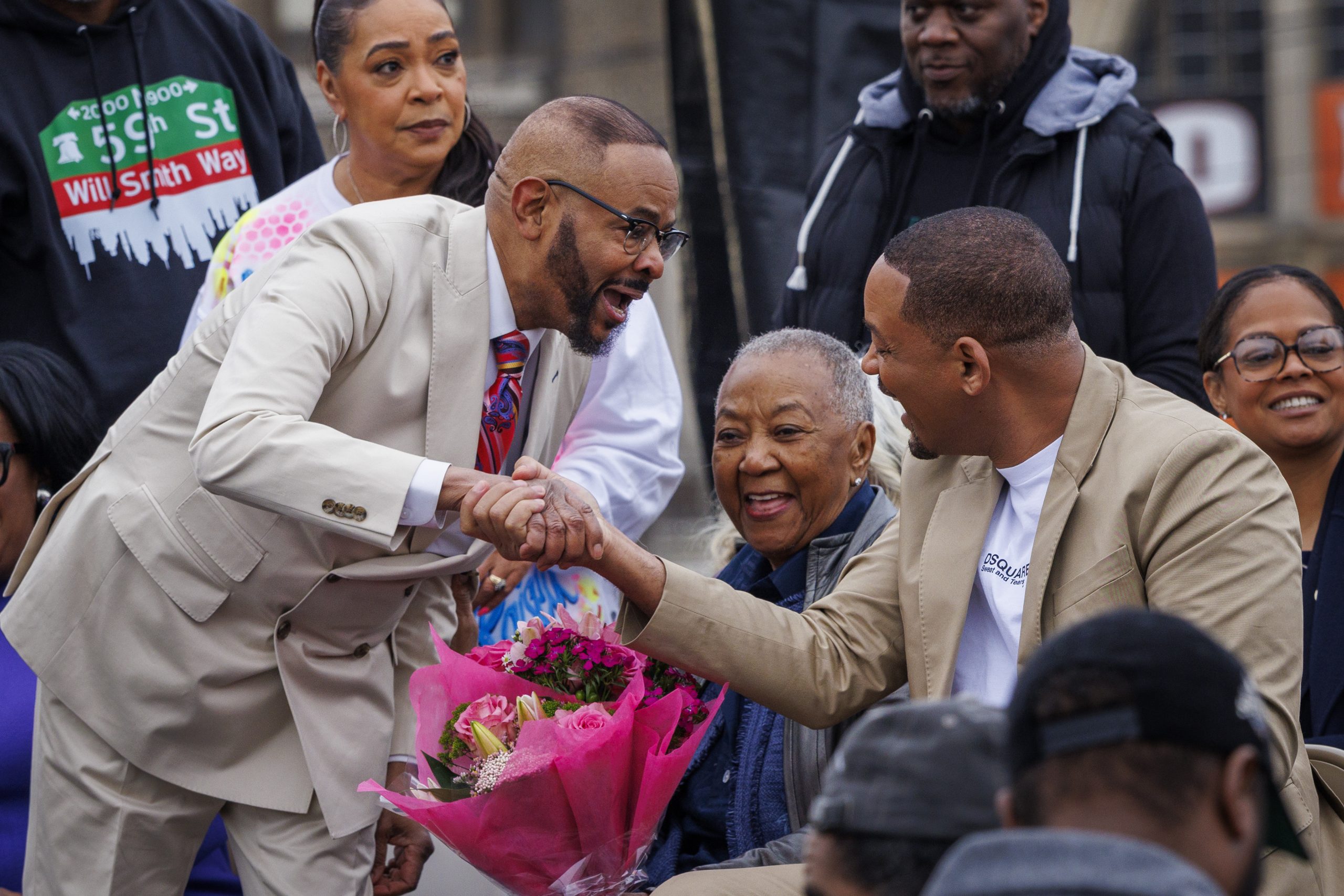
At left is Councilmember Curtis J. Jones Jr. shaking the hand of actor and rapper Will Smith who was honored with a street naming, Will Smith Way, at N. 59th and Lancaster, across from Overbrook High School, Wednesday, March 26, 2025.Alejandro A. Alvarez / Staff Photographer
Curtis Jones enrolled in DROP in August 2024, meaning he is required to retire no later than August 2028. He has made no secret of his intent to run for a sixth term next year, even publicly musing about delaying bridge repairs in his district so as not to subject potential voters to traffic jams.
Were he to win reelection and collect his maximum $432,221 DROP payout, Curtis Jones’ scheduled retirement date would fall within the first year of his next four-year term.
However, the lawmaker said in an interview that he intends to complete his next Council term. To achieve that, he said he would instead resign in December 2027, after the November election but just before he would be sworn into a new term in January 2028.
“I am going to resign, then be sworn in [if], God willing, I’m reelected,” he said.
In this scenario, Curtis Jones said, he would receive a reduced DROP payout by forgoing the final nine months of payments into his interest-bearing account by taking his brief retirement early. He would be effectively rehired to his city job by being sworn back into office.
He added that he hopes State Rep. Morgan Cephas, a West Philadelphia Democrat, will succeed him in the 4th Council District after the 2031 elections.
Cephas declined to comment.
In 2023, Curtis Jones ran for Council president, but lost to Kenyatta Johnson. He said he is now relieved he did not win.
“I am functional. My staff kind of helps to keep that good,” Jones said. ”I am thankful to God that I did not get elected [Council] president. Do you know how much reading they do? I could have not kept up with all of the numbers and stuff like that, so I know my limitations.”
‘I had heard whispers’
During Jazelle Jones’ one-day retirement in 2025, the 25-year city employee earned a $319,757 DROP payout and cashed out nearly 1,000 hours of unused sick and vacation time, worth $97,000, as all city workers are entitled to do upon their last day of service.
The very next day, she was back on the job, with a small raise that brought her salary to about $199,000.
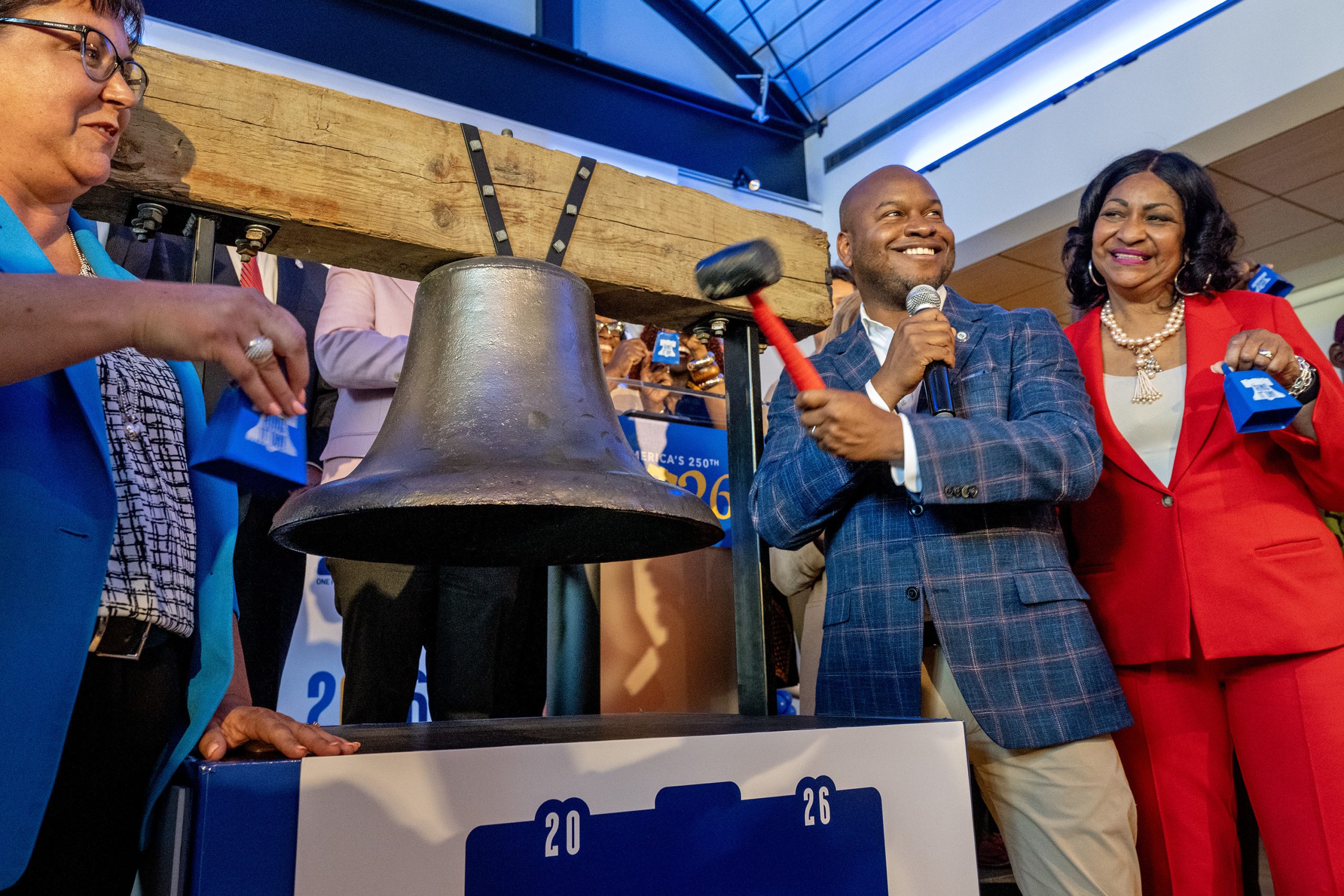
Michael Newmuis (center), the city’s 2026 Director Philadelphia, rings the bell to kick off the city’s “Ring It On! One Philly, A United Celebration” at Independence Visitor Center Wednesday, Sept. 3, 2025. Mayor Cherelle L. Parker announced the new initiative that puts city neighborhoods at the forefront of the city celebrations of America’s 250th birthday in 2026. At right is Jazelle Jones, City Representative and Director of Special Events.Tom Gralish / Staff Photographer
Despite saying Jazelle Jones was needed to coordinate the city’s 2026 festivities, Parker has also appointed a separate 2026 director, Michael Newmuis, to a $175,000 position to also oversee this year’s major events.
The mayor said Jazelle Jones was irreplaceable given her experience managing large events like the 2015 papal visit, the 2016 Democratic National Convention, the 2017 NFL Draft, and the Eagles’ Super Bowl wins.
“Could we have hired five to 10 people to try to do the job Jazelle does?” Parker asked. “We could have tried, but there would be no reason for me to do that when I had the best person.”
Parker indicated she was aware of the steep price tag required to keep Jazelle Jones working through 2026 when the mayor first appointed her as city representative shortly after taking office in 2024.
“I had heard whispers,” Parker said. “They said, ‘You’re going to lose Jazelle.’”
City personnel records show Jazelle Jones enrolled in DROP in September 2020, meaning her first planned retirement date was September 2024, just nine months after Parker appointed her to the role.
Jazelle Jones’ $97,000 payout for unused paid time off was deposited into her account this month, four days after The Inquirer contacted the mayor’s office about her rehiring. The mayor’s office did not respond to a question about the delay in her payment.
Unlike most newly hired city employees, who are entered into a hybrid 401(k)-style pension plan, she was granted an exception allowing her to continue paying into an older, more generous pension plan.
Cristella, from the Committee of Seventy, said the decision to hire Jazelle Jones into a vital role months prior to her mandatory retirement date was irresponsible.
“It is also deeply troubling that the city would retain a high-salaried senior official with full knowledge that a large DROP payout was imminent,” Cristella said. “If city leadership knew and proceeded anyway, that is a failure of fiscal stewardship that demands explanation.”
Staff writer Max Marin contributed to this article.
Merakey USA, based in Lafayette Hill, is acquiring Boundless, an Ohio nonprofit that provides services for people with intellectual and developmental disabilities and behavioral health needs, in a deal that leaders of both organizations described this week as a model for their industry.
“It’s the marriage of two financially stable organizations” that are preparing for turbulence in the human services sector, said Merakey CEO Joseph S. Martz. More typically human services deals happen because one nonprofit needs a financial rescue, as happened with Philadelphia’s Resources for Human Development in 2024.
Merakey and Boundless planned to announce the news Thursday.
Martz and the CEO of Boundless, Patrick Maynard, both said the size of the combined organization — more than $1 billion in revenue — would enable it to invest in the systems, technology, training, and workforce development needed to be financially sustainable.
The deal, expected to close in July, will create an organization that supports 50,000 individuals and families annually in 12 states and employs 11,000 people.
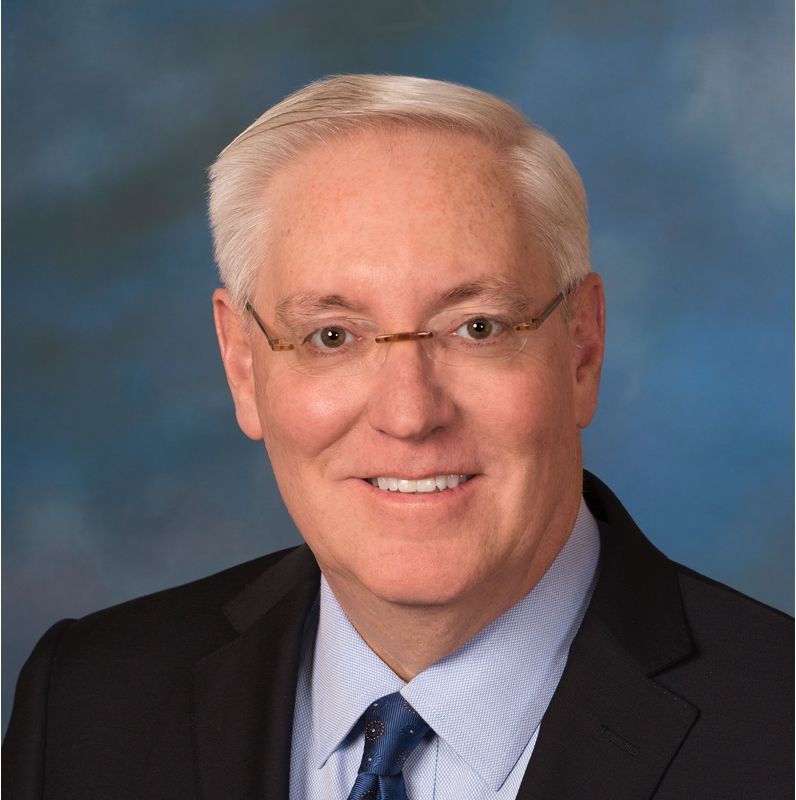
Joseph S. Martz is CEO of Merakey USA, which is acquiring Boundless, a human services provider based in Columbus, Ohio.Merakey USA
The executives cited pressures from an expected change in how their organizations get paid. A shift is underway to payment for results rather than for straight volumes of services. Looming cuts to Medicaid over the next decade are also forcing human services providers to rethink how they operate.
“We’re entering a time when resources are going to be a lot tighter, and I think organizations need to be thinking differently about how they approach that. We’re seeing some other pretty large consolidations,” said Chuck Ingoglia, CEO of the National Council for Mental Wellbeing, a Washington nonprofit advocacy group.
Origins of the Merakey-Boundless deal
Stacy DiStefano, CEO of Consulting for Human Services, a Philadelphia-based adviser firm, introduced Martz and Maynard to each other in July 2024.
That led to a series of conversations about issues the two organizations were spending money to solve and the realization: “Why don’t we just come together and use the combined resources of our organizations to solve that problem,” Martz said.
Merakey and Boundless had already been growing through acquisitions, though Boundless has grown more dramatically. In the last seven years, the nonprofit made five acquisitions that helped increase its annual revenue to an expected $200 million this year from $20 million, Maynard said.
“My goal was to create sustainability in a broken system where most of us are living off of Medicaid, which comes nowhere close to providing the resources that cover the costs,” Maynard said.
Patrick Maynard is CEO of Boundless, a Ohio human services provider that is merging into Merakey USA, of Lafayette Hill.Boundless
The added scale enabled Boundless to add healthcare and dentistry for its clients, but the Medicaid shortfall for those dental services is $75,000 a month, Maynard said. That kept Maynard looking for even bigger partners, like Merakey.
Maynard cited Merakey’s expenditure of $18 million for Workday software, a system for human resources and financial management as an example of something Boundless could never afford. At $200 million in annual revenue, Boundless struggled to spend $2 million on a system for electronic health records, he said.
A new structure
Merakey, which started as the Northwest Center in the Mount Airy section of Philadelphia in 1969, remains firmly rooted in Pennsylvania. The state is expected to account for more than half its $850 million in revenue for the fiscal year that ends this month, Martz said.
States where Merakey operates include Indiana, Kentucky, Ohio, Michigan, and Wisconsin. A new division called Boundless Midwest, led by Maynard, will assume responsibility for Merakey’s operations in that region when the deal is done.
Both boards have approved the transaction, which remains under review by the Ohio Attorney General.
Martz said he expect Boundless to continue growing though acquisitions and the development of new programs with the support of Merakey.
“We are going to be a big organization, but it’s really about being a better organization, about the quality of care that we provide,” Martz said. “If you’re not culturally aligned, bigger for bigger sake, just doesn’t make any sense to me.”
No city does history quite like Philadelphia — and it’s all on full display this summer for the nation’s 250th. From museums and historic houses to outdoor experiences and more, here are some must-dos over the coming days, weeks, and months.
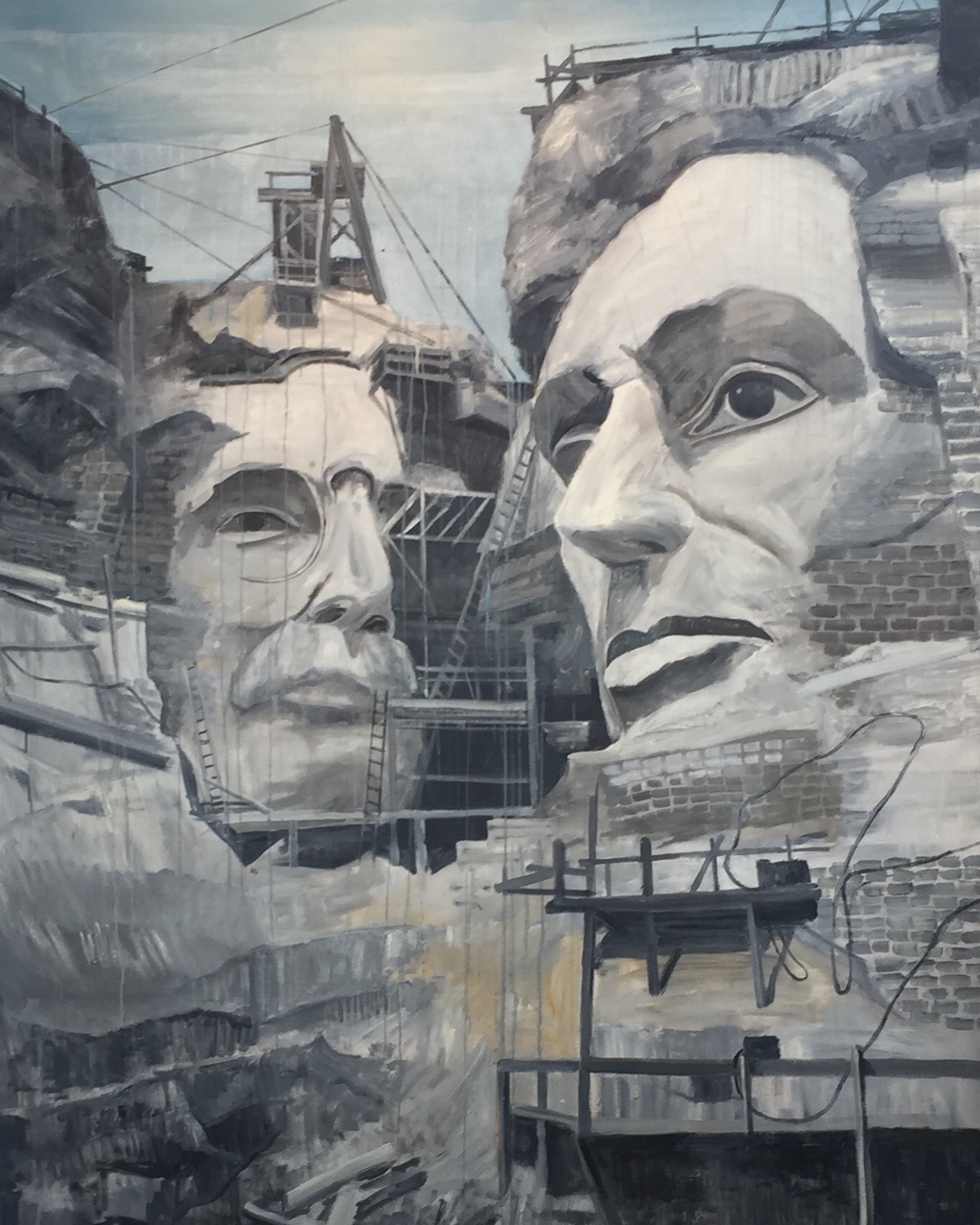
“Rushmore,” a 2016 painting by Tom Judd, is part of the “Arc of Promise” exhibit at the Woodmere Museum.Woodmere Museum
‘Arc of Promise’
Woodmere Museum
Examine how Philadelphia artists have imagined America — from earlier perspectives to modern day — in paintings, sculptures, and other media. Inspired by local artist Jerry Pinkney (1939-2021), whose “arc of promise” concept was influenced by America’s painful histories of slavery, displacement, and injustice, while holding onto the belief that renewal is still attainable.
Weitzman National Museum of American Jewish History
Explore events surrounding Nov. 16, 1776, the day the Dutch governor of St. Eustatius welcomed a ship flying the new American flag into the harbor — making the first recognition of the new nation by a foreign entity. A critical thruway for commerce between Europe and North America, the island’s Dutch leaders offered Jews a relatively high level of religious tolerance. Highlights include a 1761 Hanukkah lamp.
View works by artist Sky Hopinka featuring personal perspectives of Indigenous homelands and landscapes. In recognition of the 250th anniversary of the signing of the Declaration of Independence, these works of art thoughtfully explore and interrogate the American experience and its histories.
A fedora owned by Franklin Delano Roosevelt is part of the “Governing the Nation” exhibit at the National Constitution Center.National Constitution Center
‘Governing the Nation’
National Constitution Center
Explore how the American system of government functions through immersive media, dynamic projections, and 3D models of the U.S. Capitol, the White House, and the U.S. Supreme Court. View a pamphlet written by Alexander Hamilton on the constitutionality of the National Bank, as well as Franklin Delano Roosevelt’s fedora.
A view of “Proving Ground: The First 250 Years of the American Experiment,” at Highmark Mann Satell Centennial Wall East.Mylin Batipps
‘Proving Ground: The First 250 Years of the American Experiment’
Highmark Mann Center for the Performing Arts
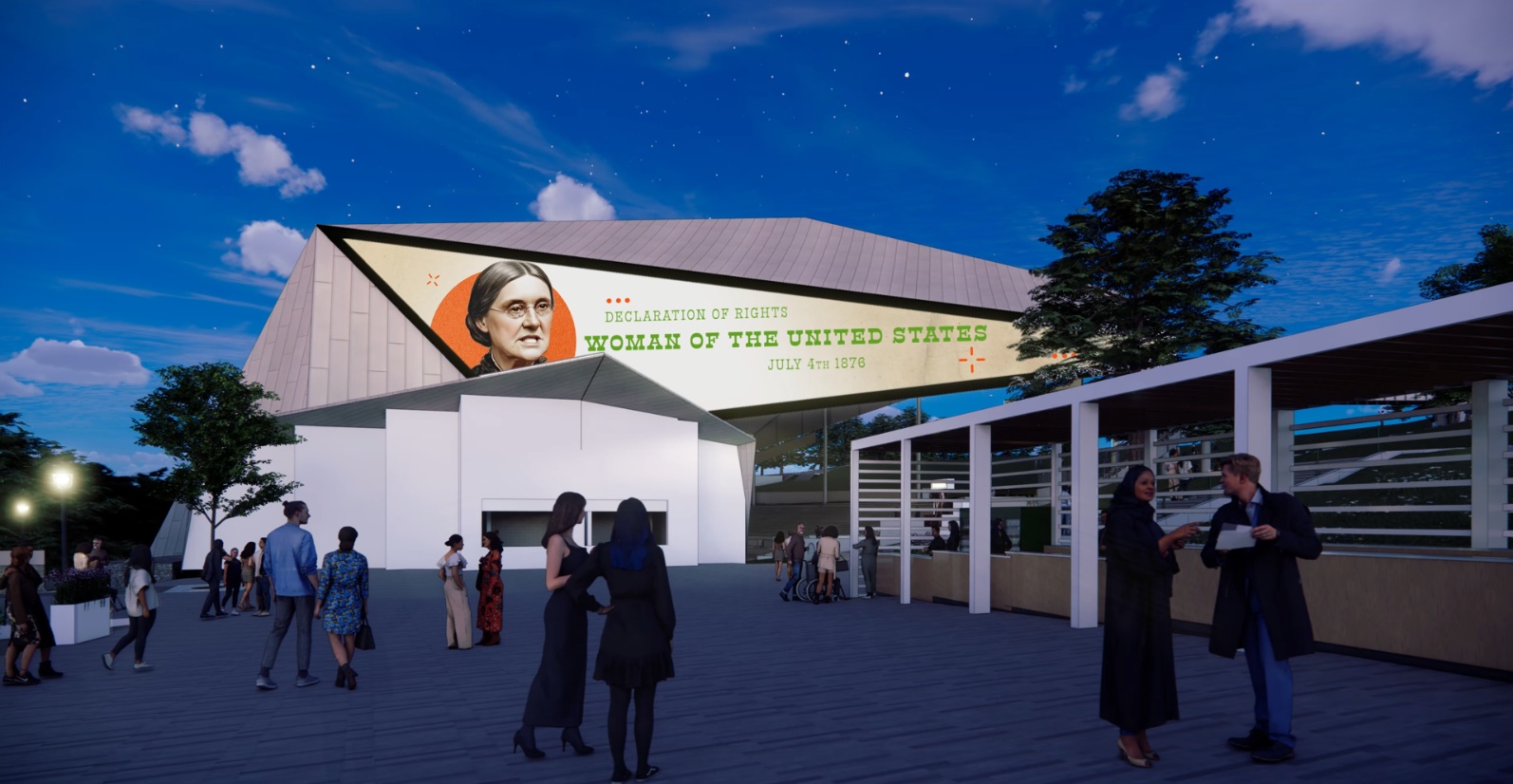
Enjoy an outdoor film experience with the 4,500-square-foot immersive LED canvas at the entrance of Highmark Mann on its new Satell Centennial Wall East. This massive storytelling canvas features cinematic visuals, motion design, music, and historical imagery that immerse visitors in Philadelphia’s role in shaping the American story.
‘Revolutionary Family: The Biddles and American Independence’
Andalusia Historic House
Explore historical art and documents based on the Biddles, one of America’s most prominent colonial families. Discover what happened at the Andalusia site during the time of the American Revolution, including the military activity that surrounded the area, and view the beautiful painted portrait miniatures of Clement and Rebekah Biddle.
‘Freedom Through Faith: Judaism at Eastern State and Beyond’
Eastern State Penitentiary
Discover how religious freedom, one of the “unalienable rights” stated in the Declaration of Independence, was strongly represented and practiced in America’s first penitentiary, especially by its Jewish inhabitants. A restored synagogue is a central feature of the exhibit and is the first synagogue in a U.S. prison.
2027 Fairmount Ave., opening July 2 for permanent display, easternstate.org
‘Creating a City of Medicine’
Mütter Museum
Explore 250 years of Philadelphia’s impact on health and healing in the U.S., including medical education, technological innovation, and community-based healing practices. Featuring well-recognized Philadelphia leaders as well as lesser-known figures, the exhibit will educate visitors on the vital role Philadelphia played in American medicine and medical education.
Barbara Bates Center for the Study of the History of Nursing at the University of Pennsylvania
In celebration of America 250 at Penn, this exhibit showcases rare materials and reproductions surrounding Revolutionary-era nursing. Explore the influence of Black and Indigenous people on the profession, and the influences of African healing and Indigenous practices on early American medicine.
Explore the history of trade between the U.S. and China, as it relates to the birth of the United States and the long history of trade between them. View a bowl purchased by a Philadelphia merchant for George and Martha Washington, decorated with an unbroken circle and chains representing the strength of the new nation.
This exhibit traces the American Declaration of Independence’s global influence across 250 years, including political and social change. Featuring 120-plus artifacts from almost 20 nations, it explores how leaders from the Rev. Dr. Martin Luther King Jr. to Gandhi used the declaration’s words as inspiration to inspire political revolutions and civil rights movements worldwide.
Located next door to Independence Hall, this new exhibition shows that the declaration was a process, and continues to evolve and shape the nation. This exhibit displays 19 rare early printings of the declaration — including one handwritten by Thomas Jefferson, and a copy from July 4, 1776.
View 140 rare, original materials tracing how American colonists transformed from loyal British subjects to revolutionaries. Highlights include a letter written by John Adams the day after the adoption of the Declaration of Independence, praising a Massachusetts woman as a “historiographer” of the revolution, and view early drafts of the Constitution.
Pennsylvania Academy of the Fine Arts and Philadelphia Museum of Art
Two of Philadelphia’s premier institutions have united for this landmark exhibition. At PAFA, works made from the late 18th century to modern day showcase scenes of westward expansion and the rise of industry. At PMA, view American art from 1700 to 1960, identifying global connections that inspired artistic and technological innovation. Featuring more than 1,000 works — including pieces from the private Middleton Family Collection, and by Georgia O’Keeffe and Andy Warhol.
PAFA, 118-128 N. Broad St., now through Sept. 5, 2027; PMA, 2600 Benjamin Franklin Parkway, now through July 5, 2027; anationofartists.org
‘America Today: Voices in Contemporary Print’
The Print Center
Explore the current state of democracy through contemporary printmaking from 38 artists. This free exhibition was inspired by the New Deal of the 1930s and 1940s, when printmaking was used for political commentary. View works from generations of artists who use printmaking as an art form to explore and express the issues we face today.
The Pennsylvania Hospital Museum, which opened in May, transforms the historic Pine Building of America’s first chartered hospital, founded by Benjamin Franklin and Thomas Bond in 1751, into a public museum. Discover breakthroughs in brain health, and trace medicine from herbal healing teas to one of the most groundbreaking medical innovations: CRISPR gene editing.
Connect today’s Philadelphia to 1876, when Philadelphia made history as the first city in North America to host the World’s Fair. At this free exhibit, explore that period and see how far technology has taken us. Use your cell phones to capture a replica of Alexander Graham Bell’s first telephone.
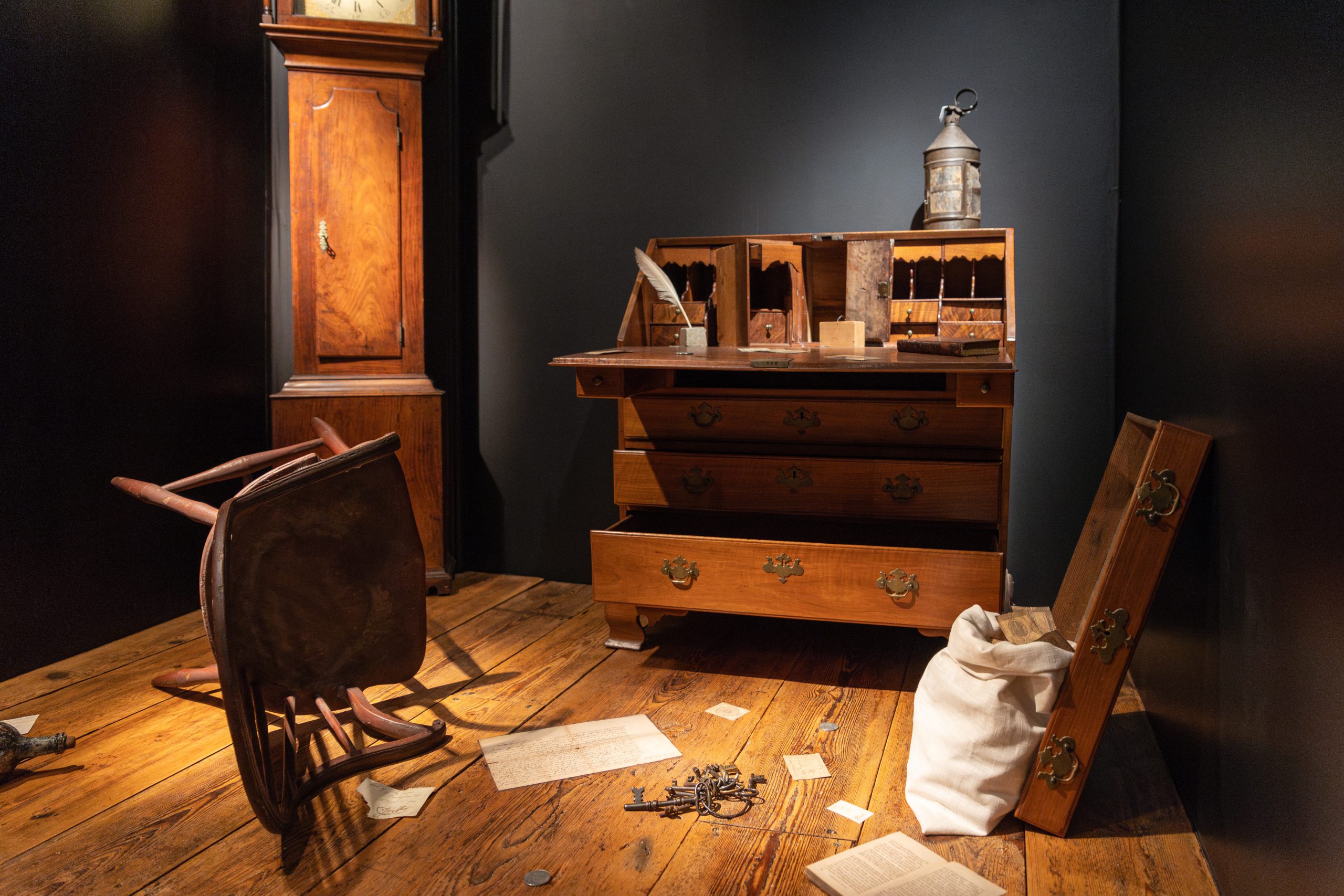
Part of “The Doan Gang: Outlaws of the Revolution” exhibit at the Mercer Museum.Kevin Crawford
‘The Doan Gang: Outlaws of the Revolution’
Mercer Museum
Explore your rebellious side with these known enemies of the Founding Fathers, the Doan Gang, who were loyal to British rule in the colonies. This exhibit is from the perspective of Loyalists, who opposed American independence. Discover the untold stories that combine espionage, legendary robberies, and mythical lost treasure.
View powerful works by artists that invite viewers to immerse themselves in the memories, dreams, and histories of Black Americans from the past and present. Reflect on how Americans of color have shaped identities and created spaces of resistance, joy, and resilience in the face of systemic oppression. Featured artists include Philadelphia-based David Hartt and Tourmaline.
This summer, the Delaware River Waterfront transforms into a free, outdoor gallery called “Where Freedom Flows.” Highlights include “Let Freedom Ring” by Paul Ramírez Jonas — where visitors can strike a 600-pound bell to sound the final note of “My Country, ’Tis of Thee,” connecting Philadelphia’s historic waterfront to the nation’s evolving story of freedom.
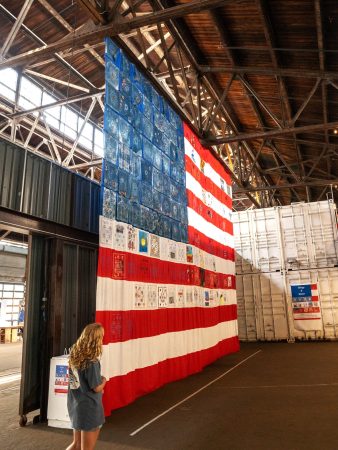
Set your sights on this beautiful community-driven artwork installation by GrioXArts — artists Duwenavue Santé Johnson and Kara Mshinda. The textile centerpiece is a reimagined American flag composed of hand-embroidered bandannas created during a previous public workshop. It reflects personal and cultural narratives of BIPOC voices into Philadelphia’s evolving story and history.
‘At Liberty: Life in the City of Brotherly Love During the Early Republic’
Arthur Ross Gallery at the University of Pennsylvania
Explore fine art during our forefathers’ time with holdings from the University of Pennsylvania, the Pennsylvania Academy of the Fine Arts, the Winterthur Museum, and the Metropolitan Museum of Art. Curated by Gwendolyn DuBois Shaw, it features paintings, sculptures, and watercolor drawings of notable figures, including Benjamin Franklin.
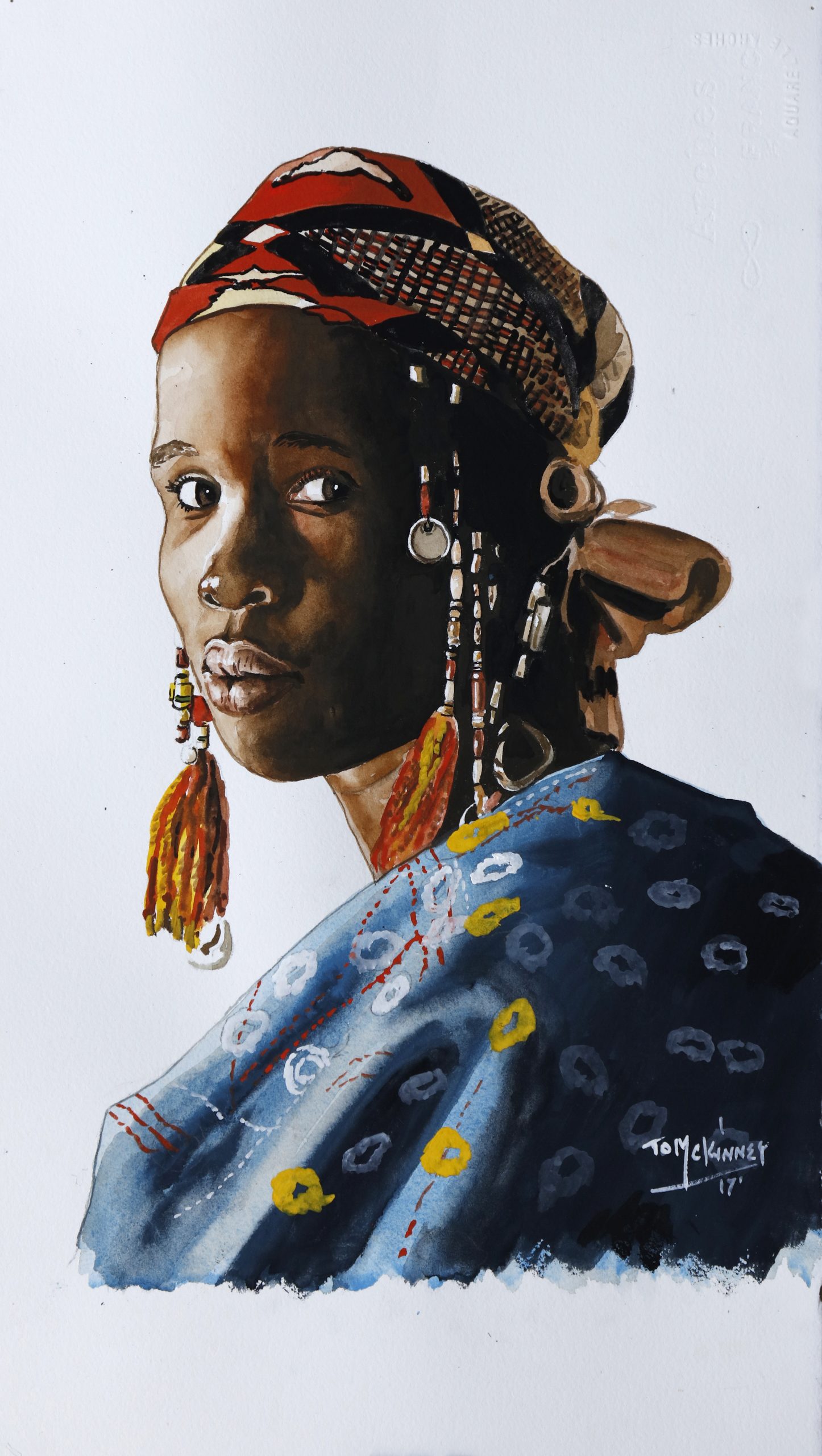
A portrait by Tom McKinney is part of the “From Invisible to Invincible” exhibit at the Historic Strawberry Mansion.Historic Strawberry Mansion
‘From Invisible to Invincible: Honoring the Art of Color’
Historic Strawberry Mansion
This exhibit recognizes both the 250th anniversary of the founding of America and the 100th anniversary of the Committee of 1926, a women-led organization formed during the 1926 Sesquicentennial International Exposition, and dedicated to preserving the history and heritage of this mansion. It will showcase artists who did not get a fair opportunity to shine in the original 1926 exposition due to systemic inequities.
Americans deserve a just outcome of the war that Donald Trump began with Iran. Trump recklessly and without provocation ordered the attack on the sovereign country of Iran. Although our national pride is trying to convince us to believe we should be getting a “good deal,” we should be searching for a just deal.
A just deal requires that we pay retribution to Iran for this attack, the Iranian lives lost, sacred and historical sites ruined, and the destruction of infrastructure. A just deal also requires that Trump and his enablers be held accountable for the suffering Americans experienced, including lives lost, life-altering injuries received, financial hardships endured, and billions of hard-earned tax dollars wasted.
A just deal will only be delivered to Americans if we, as a nation, agree that the justice we deserve will not come from something Iran cedes to us. Justice will come only from our country paying for the destruction caused by this war of choice, and from Americans holding Trump and his Republican enablers accountable for the harm they brought to Iran, our country, and others around the world. Justice will come when we, as Americans, insist that they are prevented from executing such a harmful whim again.
Donna Nawalkowsky,Philadelphia
Hatred finds voice
You don’t need to search too far to find examples of distrust and dislike among Americans. At a recent conference I attended, a white woman fingered her cross necklace, telling me she was shaken when a prominent speaker said twice, “Some of my best friends are white,” a statement that led to a nodding, laughing agreement from hundreds of audience members. “This is the statement traditionally used by those who hate Jews … the word Jew is used, rather than white,” she explained. An unnecessary explanation, as I am Jewish. Soon after, I heard about the Cornell University student who turned down a potential job at a tech start-up because the founders are Jewish. He has received more than $19,000 from supporters who blame Jewish people for trying to “ruin” his reputation. I was even more sickened by the vicious remarks made about Michelle Obama by one of the fighters brought to the White House lawn in celebration of Donald Trump’s 80th birthday, as our 47th president sat silently.
Following the conference, I contacted a Black colleague, asking how best to address entrenched hatred. We spoke about the necessity of intense, far-reaching grassroots efforts to bring people together, including truthful examinations of our history. We also agreed on the necessity of deep listening to the experiences of others, in which we all do our best to free ourselves from bias and assumptions.
A neighbor recently asked if I thought today’s ugliness and dangers were new. My response was that the potential toward hate, a virulent, contagious, ever-sleeping monster, has always been there. The difference today is that the monster is being awakened, courted, and embraced by officials who will do all possible to destroy a precious, hard-won, ever-vulnerable democracy. They will stop at nothing to maintain their power and control, including the use of a war they instigated to call off a forthcoming presidential election.
SaraKay Smullens, Philadelphia
Join the conversation: Send letters to letters@inquirer.com. Limit length to 150 words and include home address and day and evening phone number. Letters run in The Inquirer six days a week on the editorial pages and online.
ARIES (March 21-April 19). Your gift to relationships is thoughtfulness. You express affection through practical care, reliability and sincerity. Don’t let perfectionism in. Remember that people feel closest to you when they can relax around you. Love lets you relax the controls.
TAURUS (April 20-May 20). Your gift to relationships is devotion. You protect, uplift and celebrate the people you love with remarkable consistency. Don’t confuse being needed with being valued. Remember to leave room for mystery. Love will adore you “as-is,” no performance necessary.
GEMINI (May 21-June 21). Your gift to relationships is emotional courage. You’re willing to care deeply and create real intimacy. Don’t carry the entire emotional weight of the relationship alone. Remember that support is meant to flow both ways. Love will wrap you in tenderness.
CANCER (June 22-July 22). Your gift to relationships is leadership. To initiate takes boldness and a willingness to be vulnerable. You move forward and show the other person it’s OK to trust you. Remember to take turns. Love will delight you with surprising reciprocity.
LEO (July 23-Aug. 22). Your gift to relationships is compassion. With great empathy, you imagine emotional worlds that others can barely articulate themselves. Don’t lose your center trying to merge and bond. Remember that boundaries protect the specialness. Love teaches you to trust yourself.
VIRGO (Aug. 23-Sept. 22). Your gift to relationships is encouragement. You notice potentials and breathe life into unrealized talents and dreams. Remember to live in the present. Don’t focus exclusively on what could be. Love shows you the beauty that already exists between you.
LIBRA (Sept. 23-Oct. 23). Your gift to relationships is unparalleled attentiveness. You reflect, study and adore your partner’s unique way of moving through the world. Don’t let things get asymmetrical. Remember to receive. Love will reveal your own originality to you.
SCORPIO (Oct. 24-Nov. 21). Your gift to relationships is depth. You crave honesty and have a rare ability to make others feel emotionally seen and profoundly desired. Don’t test people unnecessarily. Remember that trust grows more easily when it’s offered freely. Love rewards gentleness.
SAGITTARIUS (Nov. 22-Dec. 21). Your gift to relationships is openness. You bring humor and a perspective that makes life larger and more alive. Don’t run from stillness. Remember that commitment can expand your world instead of limiting it. Love has both roots and wings.
CAPRICORN (Dec. 22-Jan. 19). Your gift to relationships is understanding. You can see multiple perspectives at once. Don’t lose yourself trying to maintain harmony. Remember that honesty is more intimate than politeness. Love will help you discover the strength of your own desires.
AQUARIUS (Jan. 20-Feb. 18). Your gift to relationships is loyalty. You commit wholeheartedly to building something meaningful over time. Don’t become so responsible that vulnerability disappears. Remember that softness creates trust, too. Love will reward you when you allow yourself to be fully known.
PISCES (Feb. 19-March 20). You don’t distance yourself from emotional intensity. You give people room to be complicated, unconventional and entirely themselves without judgment. Remember that connection requires participation, not just understanding. Love will meet you with the same freedom and acceptance you offer others.
TODAY’S BIRTHDAY (June 25). It’s your Year of Following Footsteps as the well-worn path welcomes you and you don’t have to work to figure out what to do; you only have to step in the imprints. Because the basics are made easy for you, your creative mind will whir with ways to elevate your work. More highlights: You’ll plan and create games. Extraordinary relationships feel enchanted, as though they’re of another reality. Work awakens dormant talents. Aries and Virgo adore you. Your lucky numbers are: 12, 8, 19, 33 and 2.
DEAR ABBY: I have worked with “Bev” for 12 years. She is insufferable. I love my job and my other co-workers, but they all feel the same way as I do. Bev is a domineering, bullying, entitled woman in her late 50s. She has two “friends” in the entire facility and, unfortunately, considers me one of them, as well as our boss, “Janet,” who I am sure merely tolerates her as I do.
Bev calls me incessantly during the day to talk about her personal life. She demeans people and is controlling and rude. She says she is “so busy,” but other people end up doing her work for her while she takes all the credit. When my phone rings and it’s her, I can feel the life being sucked out of me, and I want to throw my phone at the wall.
The problem is that her other “friend” is Janet. Bev constantly says that nobody can say anything about her because the boss will tell her, which makes it hard for the rest of us who all feel the same way about her. It is affecting my mental health. She calls no fewer than 10 times a day, and then she complains about how busy she is, after she has kept me on the phone 15 minutes or more talking about her personal life. I feel like one day I’m going to explode, and I do not want to lose my job. Help!
— VAMPIRE VICTIM
DEAR VAMPIRE VICTIM: Do you know for a fact that Janet considers Bev a friend? You may see them talking frequently, but that doesn’t mean Janet is enjoying it. If, as you say, everyone else in the workplace dislikes her, it’s hard to believe the boss hasn’t noticed.
Have a private chat with Janet. Tell her about the long, unwelcome chats, the bullying and the rudeness. Be as specific as you can. Ask her if she really supports Bev’s habit of invoking their friendship to avoid social consequences. If Janet takes Bev’s side in everything — which is doubtful — at least you’ll know where you stand.
** ** **
DEAR ABBY: I have a male friend I would really like to get to know better. I would love to date him. We are both divorced and have relatives who no longer speak to us. I know he’s single and not seeing anyone.
I haven’t had a relationship in three years. I sometimes wonder what’s wrong with me. I’m a bit overweight but I have a great personality. I can’t understand why I can’t get a man interested in me. What can I do to get this man (or any man) interested in me?
— READY IN NORTH CAROLINA
DEAR READY: You say your personality isn’t the problem. Not every man finds skinny women attractive. However, if you suspect that your weight is what’s keeping him (and other men) away, it may be time to address it. Talk with your doctor about a healthy eating plan and join a gym.
WASHINGTON — Kyle Schwarber and Derek Hill were down in the batting cages together underneath Nationals Park when the ninth inning began.
Schwarber had been on the bench for the last two days with tightness in his lower back, but he started to feel like himself again by the seventh inning on Wednesday night. He let interim manager Don Mattingly know he was available to pinch-hit if needed.
The Phillies, trailing the Nationals by one run, hoped they would have an occasion to use him. And when right-handed pitcher Orlando Ribalta came out for the ninth, Schwarber knew they would.
He stepped into the box with two outs, representing the Phillies’ last chance. The Nationals convened on the mound to discuss how to approach him.
“You’re just trying to stay within yourself, stay in the zone, and just trying to find a way on base,” Schwarber said.
It took 10 pitches, but Schwarber got there. He fell behind 1-2, and then fouled off four pitches and held off on three more to draw a walk.
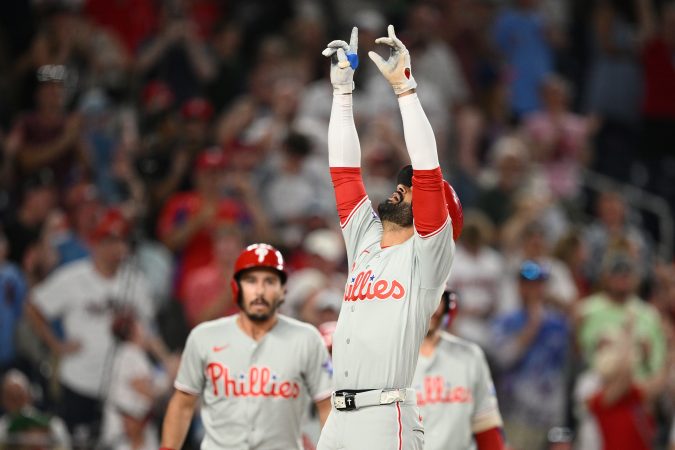
And when the Nationals brought in lefty Richard Lovelady, it was Hill’s turn. The outfielder, who the Phillies acquired earlier this month, delivered a pinch-hit, go-ahead two-run homer for a 5-4 win over Washington.
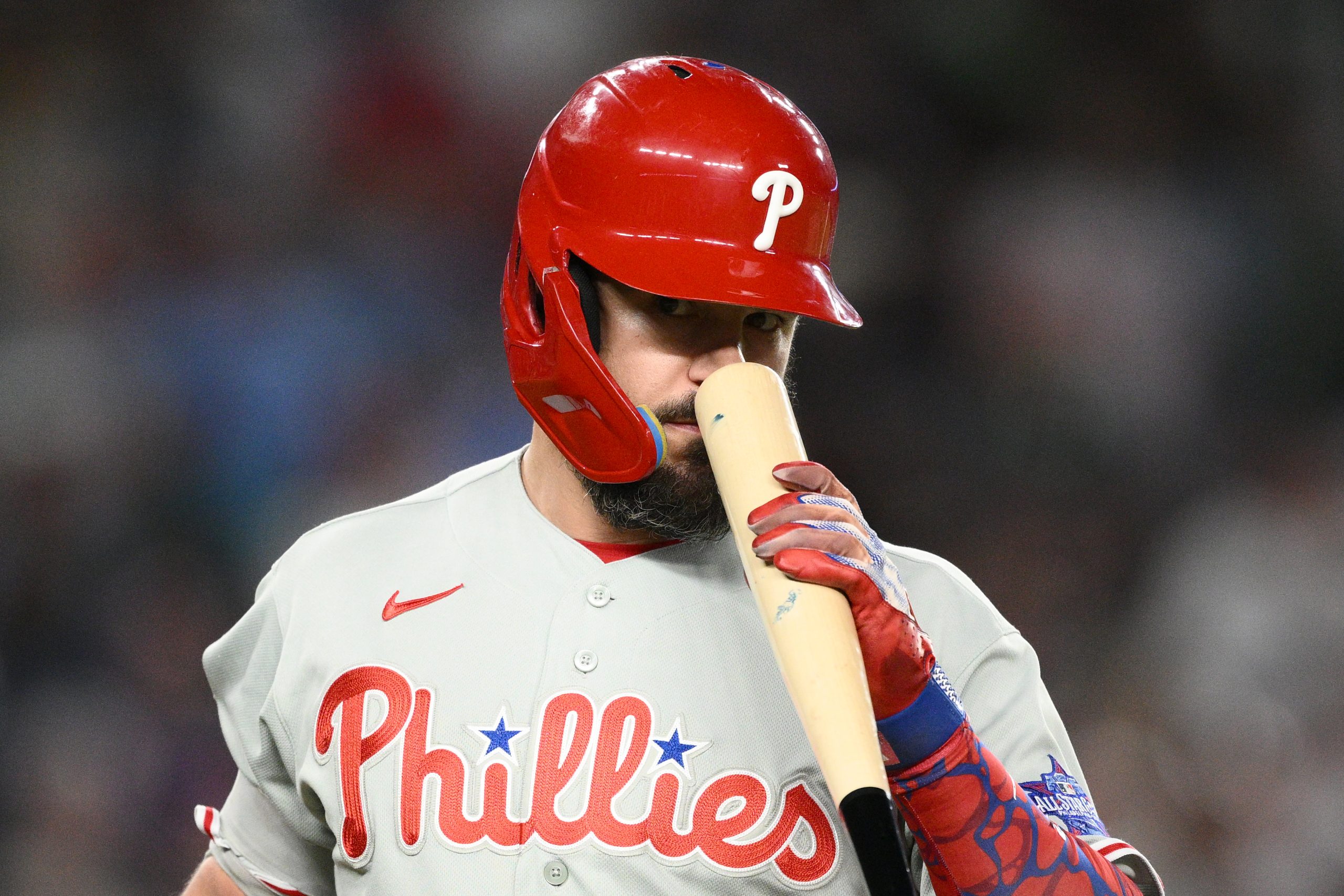
Kyle Schwarber, who was out of the starting lineup the last two days with lower back tightness, worked a 10-pitch walk in his pinch-hit appearance in the ninth inning on Wednesday. Nick Wass
“I’m just trying to go up there and just execute the plan that the hitting department has laid out for us,” Hill told the Phillies radio broadcasters. “And, obviously, tonight they gave us a pretty dang good one.”
In both at-bats, the Phillies were down to their last strike. And neither Schwarber nor Hill had an automated ball-strike challenge to fall back on, as the Phillies burned both by the fifth inning.
Hill, who left the clubhouse before reporters entered postgame, has plenty of experience coming off the bench in his six-year career. This season, he has 17 pinch-hit plate appearances between the Phillies and the White Sox.
But for an everyday player like Schwarber, it’s a much rarer occurrence. Schwarber has 61 career pinch-hit plate appearances, his last coming in 2024.
“It’s never easy,” Schwarber said. “It’s the hardest thing to do in the game, I think, is being a pinch-hitter and having to go up there and taking an at-bat.”
Schwarber watched the Phillies’ furious ninth-inning comeback on Tuesday night inside the visitors’ clubhouse. Due to his back tightness, he’d been unable to contribute as the Phillies went down to their final strike of the game and then rallied back to score eight runs.
As it unfolded, Schwarber had to keep himself from jumping up and down in excitement.
“It’s been a couple of crazy nights here,” said Mattingly.
On Wednesday, the Phillies once again fell behind early. The Nationals built a 2-0 lead on solo home runs off Aaron Nola in the first and second innings. Washington stacked eight lefties — including two switch-hitters — in its lineup. But by the time the Phillies offense jumped ahead in the fourth, Nola appeared to find a rhythm.
“I just tried to keep the guys in the game as long as I could,” he said.
He got ahead in the count more often, throwing first-pitch strikes 62% of the time. Nola successfully shut down Nationals star James Wood in all three of his plate appearances against him, striking him out in the third inning with a knuckle curve. It was one of five strikeouts Nola recorded over five innings.
“He’s the kind of guy I’ve learned to appreciate more and more, just the way he continues to fight, continues to make pitches,” Mattingly said. “He may bend a little bit, but he just doesn’t give in and stop pitching.”
The Phillies punched back, capitalizing on two singles, a double, a fielding error, and a sacrifice fly to score three runs and take the lead in the fourth. Alec Bohm, who ultimately reached first base on the error, fouled a ball off his foot in his at-bat and appeared to be in some pain. He played through it and remained in the game, but Mattingly said afterward that Bohm will get X-rays to ensure there isn’t a break.
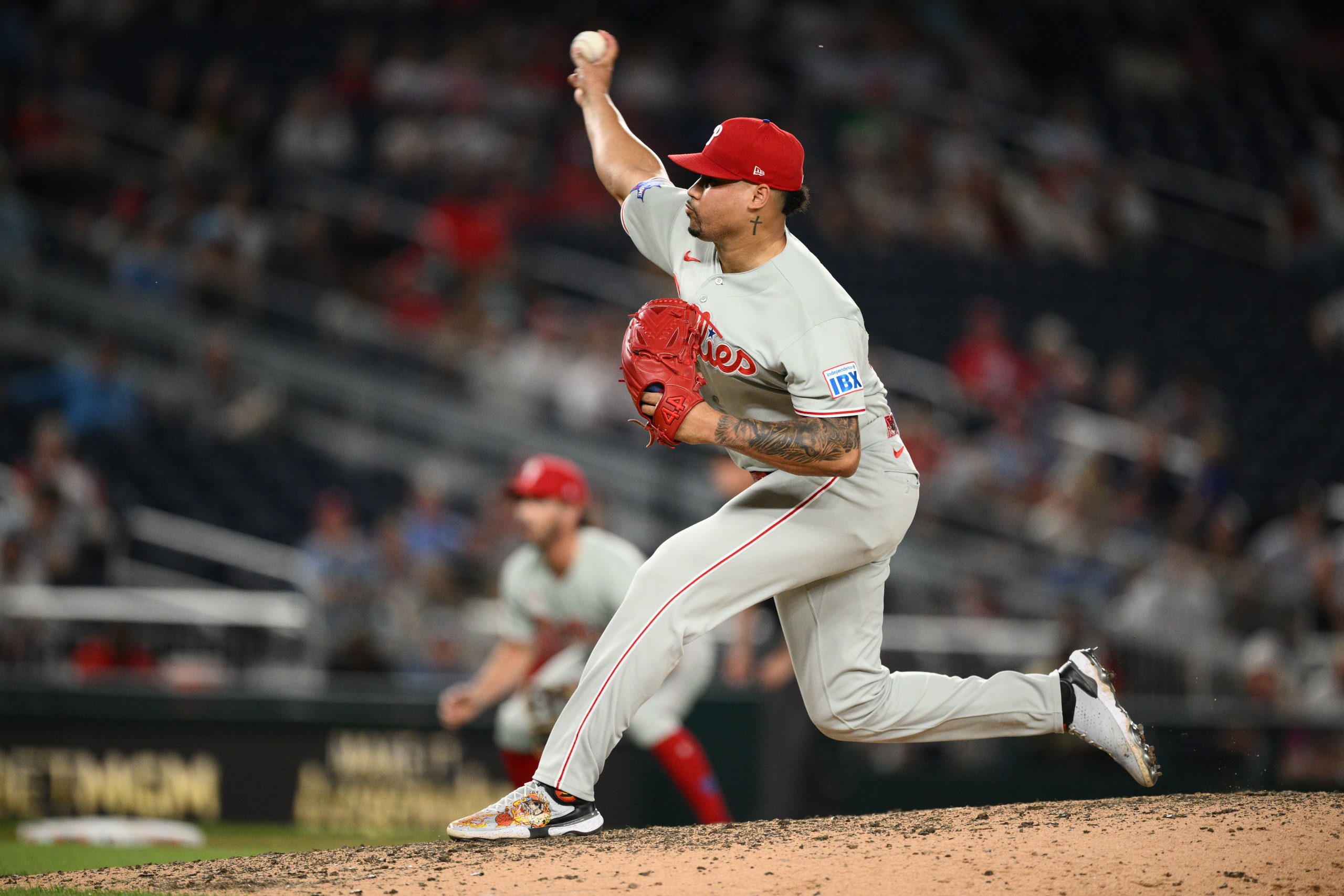
Some managerial maneuvering backfired on Mattingly in the sixth as the Nationals jumped back in front. When Curtis Mead stepped up to pinch-hit against Phillies lefty Kyle Backhus, Mattingly countered by bringing in Jonathan Bowlan. As a righty, Bowlan had the advantageous matchup on paper against Mead, a right-handed hitter.
But Bowlan served up a first-pitch sweeper to Mead, who blasted it over Brandon Marsh’s head and into the left field seats for a two-run homer.
Things worked out, however, after a similar countermove in the ninth. After Schwarber’s walk, the Nationals brought in the left-handed Lovelady to face Justin Crawford, prompting Mattingly to call on Hill.
“He’s been making some really good adjustments since he’s gotten to us,” Schwarber said of Hill. “He works extremely hard, and he fits right in with our group. And to see him go out there and have that big swing, put us ahead, it’s really cool.”
Mattingly also used Garrett Stubbs as a pinch-runner for Schwarber, and Stubbs remained in the game to play third base for the bottom of the ninth.
Phillies closer Jhoan Duran struck out the Nationals in order in the ninth inning to pick up his 19th save of the season.Nick Wass
He was not tested defensively, though, because Jhoan Duran struck out the side to earn the save and seal the Phillies’ second straight ninth-inning comeback.
“It’s them understanding that this game’s never over,” Mattingly said. “ … I think that’s important for our club to know that we can score a lot, we can score a little, we can score in different ways. I think these wins are very important.”
Jason Kelce must have learned that “no shirt, no shoes, no service” applies to pants as well.
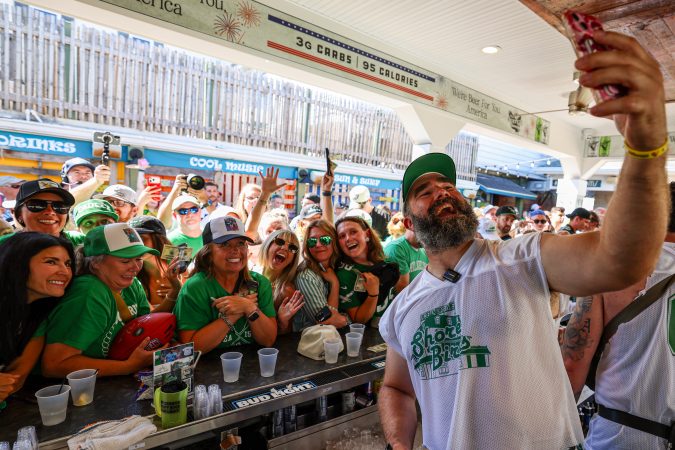
After starting last year’s fundraiser with tear-away shorts and a Speedo, Jason Kelce was comparatively reserved this year for his entrance when he and wife Kylie Kelce hosted the sixth annual “Shore Birds” event at the Ocean Drive in Sea Isle City benefiting the Eagles Autism Foundation on Wednesday.
— NBC Sports Philadelphia (@NBCSPhilly) June 24, 2026
Local social media influencer Katie Begley, also known as Popstar Katie, led the workout, which took place on the grass at Sea Isle City’s Excursion Park.
While most of the other current and former football players opted to sport their own names and numbers on their jersey, Allen, who played with the Eagles across four seasons from 2014-17, instead represented one of his former teammates.
Allen, a staple at the Team 62 fundraiser, not only had a new jersey, but he also had a new job this year, helping Donna Kelce serve — or in Allen’s case, eat— water ice, alongside Eagles edge rusher Jalyx Hunt.
Cornerback Cooper DeJean, defensive tackle Ty Robinson, and safety Andre’ Sam were also in attendance, along with chief of security for the Eagles Dom DiSandro, and Cole Peterson, assistant to the head coach.